


Abstract
Self-centering energy dissipative braces (SCEDB) have emerged as a promising seismic-resilient structural component by combining energy dissipation with the ability to reduce residual deformation and facilitate post-earthquake recovery. Over the past two decades, substantial advances have been made in the development of SCEDB configurations, self-centering mechanisms, energy dissipation technologies, and their applications in building structures. However, the rapid diversification of SCEDB has also resulted in considerable variations in mechanical behavior, performance evaluation, and engineering applicability, while a systematic understanding of their development and remaining challenges is still lacking. This paper presents a critical review of the development, mechanical characteristics, structural applications, and future prospects of SCEDB. Based on the source of self-centering capacity, existing SCEDB are classified into four major categories: shape-memory alloy-SCEDB, tendon-SCEDB, spring-SCEDB, and composite-based SCEDB. Their working mechanisms, hysteretic characteristics, self-centering capacity, energy dissipation, stiffness, strength, deformation capacity, and practical limitations are comparatively examined. Particular attention is given to the transition from component-level development to building-level applications, including moment-resisting frames, hinged steel frames, and rocking structural systems, as well as emerging performance-based seismic design approaches. The review further identifies key challenges associated with fabrication and assembly tolerances, long-term reliability, limited system-level validation, insufficient engineering applications, and the lack of mature design and codification frameworks. Finally, future research directions are proposed toward more reliable, replaceable, scalable, and performance-oriented SCEDB, with emphasis on integrating component-level innovation with building-level seismic resilience and post-earthquake functional recovery.
1. Introduction
The traditional seismic design concept emphasizes enhancing structural ductility and energy dissipation capacity (EDC). For conventional seismic provisions, the design basis earthquake corresponds to the life safety performance objective, while the maximum credible earthquake targets collapse prevention [1]. Although a seismic structure with good ductility and energy dissipation has good seismic performance and a high collapse margin, if the main force components of the structure or the additional seismic isolation components produce irreversible plastic deformation, the whole structure will also accumulate residual deformation. The influence of a main shock on the post-earthquake function of a structure is shown in Figure 1. As the number of buildings nears saturation, design priorities have shifted from merely focusing on low cost and high quality to emphasizing resilience and self-centering in existing structures [2]. The seismic fortification approach has evolved from traditional guidelines about no damage in small earthquakes, repairable after moderate ones, and collapse prevention in large ones to a more flexible, adaptive strategy. The new concept of disaster prevention and mitigation advocates that the structure remains elastic under small earthquakes, not damaged under moderate earthquakes, can be repaired under large earthquakes, and can prevent collapse under rare earthquakes [2,3]. This evolution aims to promote the development of resilient structures and resilient cities that can withstand earthquakes.
Figure 1.
Influence of a main shock on the post-earthquake function of a structure.
Resilience refers to the ability of system to maintain or restore its original function after being disturbed, which is used to measure and evaluate the functional resilience of buildings after major natural disasters in urban and architectural fields. Sinc the concept of resilient communities was introduced in 2003 [4], earthquake-resistant structures capable of being used with minimal repairs or even without repairs after strong earthquakes have quickly been developed and adopted in the construction industry [5,6]. In recent years, with the introduction of the novel concept of disaster prevention and mitigation in the new era, ensuring that buildings, communities, cities, and even the whole society can maintain normal operation or quickly restore their normal use functions after strong earthquakes, has become a hot topic of close attention and extensive discussion in academic and engineering circles [7,8]. The recoverable functional structure is a kind of representative structure developed under this guiding ideology, which has attracted the close attention and extensive research of many scholars at home and abroad in the past few decades.
The promotion and application of recoverable functional structures is of great practical importance and social value for reducing the economic losses caused by earthquakes and ensuring the safety of people’s lives and even the development of resilient cities. It is in line with the development requirements and international trends of the concept of disaster prevention and mitigation in the modern world. It can be said that it is the main direction and inevitable trend of the future development of the construction industry. The self-centering frame structure is one of the main systems of a recoverable functional structure, which mainly includes a self-centering joint bending frame, self-centering brace frame (SCBF), self-centering steel plate shear wall frame, and self-centering module frame. Among them, the SCBF structure system has been widely considered by the academic circle and engineering community because of its advantages of coordinating the brace deformation mode with the frame structure, effectively reducing structural damage by concentrating the energy consumption and damage on brace parts, and convenient installation and maintenance [9,10]. Conventional energy-dissipating braces, such as buckling-restrained braces (BRB), have been extensively developed and widely applied due to their stable hysteretic energy dissipation capacity. Meanwhile, the utilization of advanced materials, including low-yield-point steel, provides additional opportunities for improving ductility and energy dissipation efficiency. However, these systems generally rely on inelastic deformation of structural components to dissipate seismic energy, which may result in significant residual deformation after strong earthquakes. To address this limitation, self-centering braces or dampers have been proposed by integrating energy dissipation mechanisms with self-centering capabilities. More importantly, the development of SCEDB provides a new direction for the research and application of self-centering structural systems, which have broad development prospects and innovation space [5,11]. Over the past two decades, research on SCEDB has been advanced by several leading research groups, as shown in Table 1. Teams in Canada, the United States, China, Japan, and New Zealand have carried out pioneering studies covering mechanical mechanism testing, numerical simulation, and seismic performance verification, which greatly promoted the development and engineering implementation of SCEDB.
Driven by the needs of this industry and social background, scholars at home and abroad have developed a variety of self-centering braces (SCB) and dampers with both self-centering ability and EDC. The structural forms and design ideas of self-centering devices proposed by different researchers have their own advantages. While these devices effectively reduce residual deformation and dissipate seismic energy of structures, some limitations and drawbacks remain inevitable [12,13,14]. Focusing on the development design and application evaluation of SCEDB, researchers have accumulated rich scientific research results in the past few decades and have guided the application of SCEDBs in several practical projects. The purpose of this paper is to review the development history and trends of SCEDB, review the important progress that the industry has made, summarize the research status of the development and application of SCEDB in the modern world, and analyze and summarize the problems existing in the research on SCEDB and the future development directions.
Table 1.
The development history of milestone events.
2. Research Foundation and Development Process
2.1. Research Foundation and Basic Composition
Scholars developed a certain number of self-centering dampers in the 1990s, using the superelasticity of spring systems or shape-memory alloys (SMAs) to achieve self-centering and control residual deformation after earthquakes. The development of such dampers has laid a good foundation for the research of SCEDB. Filiatrault et al. [15,16] developed a self-centering damper with a ring spring group and conducted experimental verification, as shown in Figure 2. The design advantage of this damper is that whether the damper is in a tensile or compressive state, the same ring spring group is always in a compressive state through the structural design of the device. The test results show that the load–displacement curve of damper has self-centering characteristics, repeatability, stability, and tension–compression consistency. The hysteresis curves at the test frequency are almost identical. Aiken et al. [17,18] and Nims et al. [19,20] developed a self-centering damper with a disc spring group and wedge block group and verified the rationality of the structural design of the damper through a series of experiments. Dolce et al. [21] and Zhu et al. [22,23] also proposed self-centering dampers assembled with SMAs, as shown in Figure 3. A series of studies have shown that SMA dampers have good performance in controlling structural response and reducing residual deformation of structures. The proposal of these self-centering dampers is considered the development source of early SCEDB.
Figure 2.
Ring spring self-centering damper [16].
Figure 3.
SMA self-centering damper [22].
Although the above self-centering dampers perform well in controlling the structural response and reducing residual deformation, they do not seem to provide sufficient lateral stiffness and support capacity for structures [5]. Therefore, the application of these dampers as the main lateral force-resisting components in the structural system was not considered in the early period. In 2008, Christopoulos et al. [24,25] proposed the concept of a self-centering energy dissipation brace and successfully designed a self-centering device that does not rely on SMA materials and spring groups to provide self-centering and can provide sufficient lateral bearing capacity and stiffness for the main body of a structure. The publication of these studies highlights the birth of the concept and initial device of self-centering energy dissipation brace in a strict sense. To date, the self-centering energy dissipation brace has basically followed the design concept in structural design. The basic structure is mainly composed of the main body, the self-centering system, the energy dissipation system, and the auxiliary device, as shown in Figure 4. In general, the main body of a brace is ordinary high-strength steel, and no yield failure occurs under normal working conditions. The self-centering system relies on the elastic deformation of the reset material itself to provide the restoring force and deformation for the brace. The energy dissipation systems can use viscous energy dissipation, friction energy dissipation, or metal yield energy dissipation to provide sufficient EDC for the brace. Auxiliary devices, including bolts, sliders, welded plates, baffles, and other components, are usually used to improve the integrity of braces and assist in achieving the expected functions.
Figure 4.
Basic constitution of SCEDB [24].
2.2. Mechanical Properties and Evaluation Indices
The theoretical load–displacement curve of the self-centering energy dissipation brace is a flag-shaped curve, which is usually formed by the superposition of the self-centering system and the energy dissipation system, as shown in Figure 5. When the brace is in equilibrium or the load is less than the sum of the prestress P0 of the self-centering system and the maximum resistance Fd of the energy dissipation system, there is no relative displacement between the energy dissipation system and the self-centering system. The initial stiffness K0 of the brace is provided by the main body of the brace, and the deformation mainly comes from the elastic deformation of high-strength steel. Significantly, the main body stiffness of the brace is much greater than the sum stiffness of the energy dissipation system and the self-centering system when the load of the brace is equal to the sum of P0 and Fd, so the stiffness and deformation will be provided by the energy dissipation system and self-centering system. The self-centering energy dissipation brace experiences a yield phenomenon, and the yield load is equal to the sum of the prestress P0 and the maximum resistance Fd. When the load of the brace is greater than the sum of P0 and Fd, relative displacement of the energy dissipation system and the self-centering system occurs. The post-yield stiffness Ky and deformation of the brace are essentially provided by the energy dissipation system and the self-centering system. In theory, its stiffness should be equal to the sum stiffness of the self-centering system and the energy dissipation system. When unloading, the self-centering system provides the restoring force to drive the component back to the original position, and the residual deformation should be zero in theory.
Figure 5.
Theoretical mathematical model of SCEDB.
The performance indices and evaluation methods of the SCEDB used in existing reports can be roughly divided into two categories. The first category is inherited from the performance evaluation method of buckling restrained braces, which was widely accepted and relatively matures in the early stage. That is, the secant stiffness, single-loop energy consumption, equivalent viscous damping ratio, and residual deformation [31,32] are used as the evaluation criteria for the SCEDB, as shown in Figure 6. The detailed indicators are defined as follows:
Figure 6.
Mechanical properties index I.
- (1)
- Secant stiffness, KX, is calculated as follows (1):where Fmax and Fmin represent the maximum and minimum values of load under a cycle, and δmax and δmin are the maximum displacement and minimum displacement of a cycle, respectively.
- (2)
- Single cyclic energy dissipation WH, represents the area surrounded by the load–displacement curve of the self-centering energy dissipation brace under single cyclic loading.
- (3)
- Equivalent viscous damping ratio ξeqv, can be expressed as:
- (4)
- Residual deformation Dr characterizes the ability of the SCB to be restored.
The other is a mechanical performance evaluation method based on the characteristic load and characteristic stiffness as reference indices for SCB with regular load–displacement curves in recent years [13,14,26,27]. This method does not include the traditional secant stiffness and residual deformation into the reference range but uses several characteristic points (load and displacement), characteristic lines (stiffness), and characteristic surfaces (absolute energy dissipation and equivalent viscous damping ratio) on the load–displacement curve of SCEDB as evaluation indices, as shown in Figure 7. The detailed indicators are defined as follows:
Figure 7.
Mechanical properties index II.
- (1)
- Yield load Fy is the load corresponding to the intersection of the load–displacement curves of the unactivated section and the post-yield section.
- (2)
- Yield displacement δ0 is the displacement corresponding to the intersection of the load–displacement curves of the unactivated section and the post-yield section.
- (3)
- Initial stiffness, K0, is determined by the equivalent secant stiffness from the origin to the yield point, which is theoretically determined by the size and material properties of each component.
- (4)
- Post-yield stiffness Ky is the equivalent stiffness after activation during the loading process.
- (5)
- Restoring stiffness Krst is the equivalent stiffness before balance during the unloading process.
- (6)
- Restoring force Frst, the self-centering capacity of the brace, can be evaluated by restoring force Frst, which is the load corresponding to the intersection point of the unloading section and the unactivated section of the load–displacement curve.
- (7)
- Equilibrium displacement δ0′ is the displacement corresponding to the intersection of the unloading section and unactivated section in the load–displacement curve.
- (8)
- Single absolute energy WD and equivalent viscous damping ratio EVD are the same as those of the first category of evaluation methods.
3. Development of Self-Centering Energy Dissipation Brace
According to the existing research reports, the developed SCEDB can be divided into single-stage working types and multistage working types according to the theoretical model and working mechanism [33,34]. From the perspective of the energy dissipation mechanism, they can also be divided into friction energy dissipation types, metal yield energy dissipation types, viscoelastic/viscous damping energy dissipation types, and magnetorheological fluid energy dissipation types [3,5]. However, the above two types of bases and footholds are essentially inherited from the division concept of BRB, and the structure and performance characteristics of the SCB cannot be clearly highlighted. After a comparative analysis and careful consideration, it can be found that dividing the existing self-centering energy brace according to the source of its self-centering ability is more meaningful. From the point of view of the self-centering components (mainly considering the provision of self-centering ability), the SCB can be basically divided into four types: shape-memory alloy self-centering energy dissipation braces (SMA-SCEDB), tendon self-centering energy dissipation braces (T-SCEDB), spring self-centering energy dissipation braces (S-SCEDB), and composite type self-centering energy dissipation braces (CT-SCEDB). The classification and structural characteristics are shown in Figure 8, and the comparison characteristics is shown in Table 2. The following will summarize the research status of SCEDB from the perspective of providing self-centering capacity and the synergy between self-centering systems and energy dissipation systems.
Figure 8.
Classification of SCEDB.
Table 2.
The comparison characteristics of SCEDB.
3.1. Shape-Memory Alloy Self-Centering Energy Dissipation Brace
SMA is considered promising new materials for self-centering devices because of its unique ability to restore deformation, such as superelasticity and shape-memory effects [35,36], and its application in enhancing civil engineering components has received extensive attention [37,38]. The early SMA self-centering device mainly used SMA wire to provide a self-centering ability for the device, and its structure mostly used two sets of SMA wires to bear the load under tension and compression. For example, Dolce et al. [21,39] proposed self-centering dampers in which self-centering coils and energy dissipation coils are made of SMA materials, which provide self-centering ability and EDC, respectively. The friction damping brace proposed by Zhu et al. [22,23] also uses two sets of prestressed SMA wires to provide restore and EDC for the device, as shown in Figure 3.
Devices that use multiple sets of wires to work under tensile and compressive loads have a high cost and low SMA utilization [40,41,42]. To address this problem, researchers have further developed a self-centering device that uses the same set of wires to provide stiffness and bearing capacity under tensile and compressive loads. Qian et al. [43] developed a new type of superelastic SMA friction damper (SSMAFD) by combining prestretched SMA wires and friction devices, as shown in Figure 9. Furthermore, the shaking table test of a scaled building structure with an SSMAFD was carried out. The results show that an SSMAFD can effectively suppress the dynamic response of building structures under strong earthquakes and provide good additional energy dissipation for building structures. Under different seismic loads, the ability of a building structure to withstand strong earthquakes without obvious residual displacement can be ensured because the SSMAFD method has good self-centering ability. Soul et al. [44] proposed a new type of deformation recoverable SMA damper and a new type of adjustable fixture, which solved the problem of difficult anchoring of the SMA wire.
Figure 9.
Superelastic SMA friction damper [43].
Although the above studies have shown that the devices equipped with SMA wires can exhibit the expected self-centering ability and EDC, the low bearing capacity of SMA wires leads to problems such as low overall bearing capacity, low stiffness, and poor EDC of the above devices. It is very challenging to expand and apply the scale of these devices further. To solve this problem, researchers began to introduce SMA bars and SMA strands into self-centering devices to provide greater load bearing and energy consumption. Araki et al. [45] developed a self-centering damper by connecting steel bars and SMA rods and verified the hysteretic performance of the SMA self-centering device through quasi-static tests. Issa and Alam [46] developed a piston SMA-SCB equipped with an SMA screw in the sleeve piston to provide self-centering capability. The test results show that the piston SMA-SCB has good self-centering ability and EDC. On the basis of oblique section slip theory, Qiu et al. [47,48] developed an SMA sliding friction damper and carried out a series of experimental tests and numerical calculations, as shown in Figure 10. The results show that the load–displacement hysteresis curve of the SMA sliding friction damper is smooth and stable flag-shaped under axial loading, showing superior self-centering ability and good EDC.
Figure 10.
SMA sliding friction damper [47,48].
Sun et al. [49] developed a new SCEDB using an SMA wire and a Q235-B low-carbon steel bar in China, which uses an SMA wire as the self-centering device and a tensile steel bar as the energy dissipation device, as shown in Figure 11. The experimental and numerical analysis results reveal that the SCEDB has a slip double-flag hysteretic response, a high deformation capacity, and high axial strength but limited energy dissipation. In addition, the samples with the combination of SMA strands and Q235-B low-carbon steel bars have the same self-centering ability as the samples with all the SMA strands, and the former has greater economic benefits and bearing capacity. Li et al. [50] and Shi et al. [51,52] also carried out a series of studies on the production, anchoring, and application of SMA strands, which promoted the application of SMA strands in self-centering devices.
Figure 11.
SMA–steel self-centering brace [49]: (a) schematic diagram; (b) component diagrams.
Significantly, in addition to the abovementioned SMA-SCB and dampers, SMAs have also been widely used in other seismic equipment and components, including beam–column connections [53], foundation isolators [54], and bridge bearings [55]. SMA materials, with their advantages of superelasticity, high damping, shape-memory effects, corrosion resistance, and fatigue resistance, have broad application prospects in self-centering components [56]. Although the above research shows that SMA materials can provide excellent self-centering ability and EDC for self-centering devices at the same time, their problems of high temperature sensitivity, low performance stability, and relatively high cost have not been effectively solved, and further application in the construction industry is still subject to many restrictions at present.
3.2. Tendon Self-Centering Energy Dissipation Brace
Christopoulos et al. [24,25] proposed the concept of a self-centering energy dissipation brace and successfully designed an SCB device that does not rely on SMA materials or springs to provide a restoring force and can provide sufficient support capacity and stiffness for the main structure. The device is considered to be a typical representative of the initial self-centering energy dissipation brace. The advantage of its structural design is that regardless of whether the self-centering energy dissipation brace is in a tensile state or a compressive state, the internal prestressed tendon is always in a tensile state, as shown in Figure 12. Since then, many scholars have carried out a lot of research work on the structural optimization of SCEDB on the basis of this design concept. Erochko et al. [57] improved the structure of the self-centering energy dissipation brace proposed by Christopoulos and proved that the improved device had better hysteretic performance through cyclic load tests. Shen et al. [58] proposed a new self-centering buckling restrained brace aimed at solving the problems of complex structure, sensitivity to machining errors, and uncertain mechanical properties of the traditional multi-tube self-centering buckling restrained brace.
Figure 12.
First generation of tendon self-centering energy dissipation braces [24].
Chou et al. [59,60,61] developed a dual core self-centering BRB and carried out experimental verification. The test results show that the double-core self-centering BRB still has good reset performance and EDC at a 2.5% interstory displacement angle. The residual deformation after unloading is very small, and its bearing capacity and EDC under low-cycle fatigue loading are still relatively stable. Zhou et al. [62] also proposed an SCB using fiber-reinforced composite ribs as reset elements. The variations in the response correction coefficient, stiffness ratio, strength ratio, and activation displacement with the peak displacement of the structure are further obtained via finite element analysis. A design method for SCBs based on equivalent linearization theory is proposed. At the same time, SCEDB using different materials, such as aramid fibers tendons [63], carbon fiber tendons [64], E-glass fiber tendons [64,65], and composite fiber tendons [62,66], to provide reset capacity have also been developed and verified. However, the early development of such SCEDB equipped with tendons generally has problems such as contradictions between the reset system and the energy dissipation system, insufficient elongation capacity, high initial prestress requirements, and unclear long-term prestress loss, which hinder their large-scale application in practical engineering.
In recent years, Xiao et al. [28,67,68] proposed a new design concept and structure of a low-prestressed, self-centering energy dissipation brace on the basis of the working principle of ratchet teeth, aiming at addressing the problems of high prestress, contradiction between self-centering systems and energy dissipation systems, and insufficient elongation ability of the abovementioned SCB, as shown in Figure 13, and carried out a series of theoretical studies, experimental tests, and numerical analyses on the design concept and device structure. The related research results show that the design concept of a new low-prestressed, self-centering energy dissipation brace successfully solves the problems of high prestress, contradiction between the reset system and the energy dissipation system, and insufficient elongation capacity, which can effectively control the maximum response and residual deformation of a building structure under strong earthquakes. Combined with the existing research reports, the ratchet system of a low-prestressed, self-centering energy dissipation brace can perfectly avoid the contradiction between the two systems and the limited elongation ability, which has broad research value and application prospects. Notably, the existing ratchet system is relatively complex, and its convenience, reliability, safety, and economy in practical engineering applications need to be further studied and verified.
Figure 13.
Low-prestressed, self-centering energy dissipation brace [68].
3.3. Spring Self-Centering Energy Dissipation Brace
In addition to the use of tendons and SMAs as the reset elements of SCEDB, the use of a spring system as the reset element can also provide good self-centering ability for the device. According to existing research reports, spiral springs, disc springs, and ring springs (or friction springs) can provide good self-centering ability for SCEDB. Ma et al. [69,70] carried out an experimental study on the self-centering devices assembled with spiral springs. The tests show that the damper can maintain the initial reaction force of the two groups of SMA steel wire rings equal to the spring preload when the middle anchor moves less, and it has good EDC and self-centering ability. Xu et al. [71,72] proposed an SCB for assembling disc spring sets, established the restoring force theoretical model of the SCB, and carried out a series of experimental verification and optimization studies. Wang et al. [73] proposed a preloaded disc spring SCEDB with a disc spring and friction plate. They experimentally demonstrated that the SCEDB sample exhibited a very stable flag-shaped hysteresis performance, which was almost undamaged after the test loading was considered and was completely reusable.
Wang et al. [74] also developed an SCEDB with a disc spring to provide self-centering and a friction plate to provide energy dissipation and verified the rationality of the structural design of the SCEDB through a series of experimental studies and numerical analysis. In addition, the references [75,76,77,78] reported the development and testing of other new SCBs equipped with disc springs. In general, although spiral springs and disc springs can provide good self-centering performance for the brace, the EDC of spiral springs and disc springs is poor. The SCEDB with spiral springs and disc springs needs additional energy dissipation devices to increase the EDC. However, after the energy dissipation device is added, the SCEDB not only needs to apply a large initial prepressure but also may cause a large residual deformation (the self-centering system and the energy dissipation system of the brace after adding the energy dissipation device are contradictory, and the energy dissipation and the self-centering capacity are negatively correlated).
In view of the above problems, Liu et al. [13,14,79,80,81] proposed a self-centering variable friction energy dissipation device with a wedge block group and spiral spring or disc spring and carried out experimental tests and numerical analysis verification, as shown in Figure 14. The device provides self-centering ability with a spiral spring, and the friction between the outer wedge block group and the middle cylinder provides the EDC. The friction between the wedge block group and the outer cylinder not only compensates for the problem of insufficient energy consumption of the spiral spring and disc spring system but also amplifies the stiffness and bearing capacity of the spring system through the wedge block group. The results show that the self-centering variable friction energy dissipation brace has the expected EDC and self-centering capacity, its load–displacement curve shows a typical flag-shaped characteristic, and there is almost no residual deformation after multiple cyclic loadings. This finding shows that the SCEDB device is completely recoverable and has the ability to resist multiple earthquakes.
Figure 14.
Self-centering variable friction energy dissipation brace [81].
In addition to the application and development of the abovementioned assembly spiral spring or disc spring SCB, the ring spring has also been applied to a certain amount of research in the field of shock absorption. As early as the end of the last century, Filiatrault et al. [15,16] developed a self-centering energy dissipation damper based on annular springs and carried out systematic research on its static and dynamic performance tests. In recent years, Wang et al. [26,27,82] developed self-centering seismic dampers based on a high-strength steel ring spring group and carried out a series of experimental studies and theoretical analyses. The results show that the theoretical prediction model of a self-centering damper with a high-strength steel ring spring group is in good agreement with the experimental results. Wang et al. [83] proposes an innovative self-centering beam–column joint that integrates replaceable ring-spring self-centering friction dampers with a novel decoupled shear-moment transfer mechanism. The seismic performance of the self-centering beam–column joint was systematically investigated through cyclic loading tests, theoretical modeling, and finite element simulations. Fang et al. [84] carried out the related research on SMA materials with ring springs and reported that SMA ring springs have better EDC than high-strength steel ring springs do. However, the severe degradation performance and high economic cost of SMA materials are still the main problems hindering their wide application. Yang [85], Montazeri [86], Hu [87], and others have also carried out the development and experimental research of SCB with ring springs, which has promoted the diversified development of spring SCEDB. The ring spring provides not only provide a good self-centering ability for SCEDB but also provide a certain EDC. As the reset element of a device, it has considerable development prospects and application value. However, the current processing and application of the ring spring is not yet mature (due to a lack of relevant production and testing standards), which leads to problems such as a snap spring, severe wear of the friction surface, insufficient control of the machining accuracy of friction surface, and easy deformation of elements in practical applications. From the point of view of practical application, the processing, detection, and application technology of ring springs need to be further unified, standardized, and standardized.
3.4. Composite Type of Self-Centering Energy Dissipation Brace
The CT-SCEDB refers to a device that uses more than two sets of self-centering systems simultaneously to provide self-centering capacity or a device that uses a set of self-centering systems but uses multiple sets of energy dissipation systems. Although the latter does not have a composite self-centering system, its self-centering system needs to work with two sets of energy dissipation systems at the same time during the working process, so it can still be regarded as a composite brace. These include the rotary friction damper proposed by Dong et al. [88], the two-stage friction self-centering damper proposed by Yang et al. [29,34,89], the composite damping self-centering support proposed by Xu et al. [90,91], and the SMA spring system [92,93,94].
The CT-SCEDB is characterized by a multiple-set system with simultaneous operation of self-centering systems and energy dissipation systems. One of its main research purposes is to improve the bearing capacity, EDC, and self-centering ability of devices. For example, the composite damping SCB proposed by Xu et al. [90,91] uses a combination of a friction energy dissipation system and a viscous damping system to consume energy at the same time, which can dissipate more seismic energy and meet the energy consumption requirements under earthquakes of different intensities. The self-centering energy dissipation brace developed by Ma et al. [95] simultaneously provides self-centering capacity with springs and SMA bolts, which increases the bearing capacity of the damper and reduces the residual deformation. Xiao et al. [28,67,68] developed a new type of low-prestressed SCEDB based on the working principle of ratchets, which uses a disc spring group and a prestressed tendon to provide self-centering ability for the brace at the same time. The self-centering energy dissipation device developed by Ma et al. [69,70] provides self-centering capability with helical springs and SMA wires. Luo [96] proposed the SMA screw–ring spring self-centering damper and the SMA screw–disc spring self-centering damper. The device can make the internal SMA screw and the spring devices on both sides work at the same time, which greatly improves the bearing capacity and self-centering ability of the SMA self-centering damper. In addition, to improve the EDC of the spring system, some researchers [84,94,95,96] have also carried out experimental research and numerical analysis on SMA ring springs, SMA disc springs, and SMA spiral springs by combining the material advantages of SMAs and the performance advantages of springs. The results show that although the SMA spring can compensate for the insufficient energy consumption of ordinary springs, the processing technology and performance degradation of SMA materials are still inevitable [84].
In addition to the above research on the bearing capacity and self-centering ability of devices, another major breakthrough in the development of CT-SCEDB is reflected in the realization of multistage (variable stiffness) damping control of SCBs. For example, Wang et al. [33] proposed a self-centering variable friction damper (SC-VFD) assembled with pretensioned basalt fiber-reinforced composite bars and variable friction dampers (VFDs). The variable stiffness mechanism and sliding force of the SC-VFD are theoretically and experimentally analyzed, as shown in Figure 15. The test results reveal that the load–displacement curve of the SC-VFD sample has a stable and normal flag shape before the second activation. When sliding in the slope section, the load–displacement curve of the SC-VFD sample shows a variable friction force and a large post-yield stiffness at the second activation. Compared with the VFD samples, the SC-VFD samples have the same EDC, but the residual displacement is smaller, and the equivalent viscous damping is lower. The self-centering two-stage buckling restrained brace developed by Zhang et al. [97,98] consists of a set of disc springs and two sets of steel strands in series, and its design concept is similar to that of Wang et al. [33].
Figure 15.
Self-centering variable friction damper [33].
Dong et al. [88] proposed a new type of rotary friction sliding damper with variable hysteresis characteristics, which dissipates energy through friction and realizes the self-centering function of the second stage by using disc springs. Different from other existing SCBs, the rotary friction sliding damper is only used as a pure energy dissipation component when the deformation is small and as a self-centering energy dissipation component when the deformation is large to achieve graded seismic resistance. Similarly, Yang et al. [29,89] developed a new type of two-stage energy dissipation self-centering friction damper (DESFD), which only provides EDC via a plane friction damper and does not provide self-centering capacity in the first stage (low-intensity earthquake action). In the second stage (strong earthquake loading), the wedge-shaped surface friction damper provides both self-centering ability and EDC, as shown in Figure 16.
Figure 16.
Two-stage energy dissipation self-centering friction damper [29].
The developed CT-SCEDB can be roughly divided into two categories. One is to improve the EDC and self-centering capacity of the device, reduce its residual deformation, and solve the problem of conflict or inconsistency between the self-centering system and the energy dissipation system. Another research goal is to improve the bearing capacity and axial stiffness of self-centering devices and realize the coordination of multistage energy dissipation and self-centering. According to existing reports, the structural design and working mechanism of the CT-SCEDB are generally more complex, and its processing and application costs may be relatively high because of the addition of more (self-centering and energy dissipation) components. However, most CT-SCEDB have ideal self-centering capacity and EDC, and their high bearing capacity and large post-yield axial stiffness can meet the actual engineering requirements of building structures.
In addition to friction-based and yielding-based energy dissipation mechanisms, viscous damping devices have also been incorporated into SCEDB to provide velocity-dependent energy dissipation and improve seismic response control. CT-SCEDB combining multiple energy dissipation mechanisms have recently attracted increasing attention due to their enhanced adaptability under different seismic intensity levels. Although different SCEDB configurations exhibit distinct mechanical characteristics, their performance cannot be directly ranked because existing experimental investigations were conducted under different loading protocols and design conditions. Therefore, the selection of SCEDB types should be based on the target structural performance requirements rather than a single performance indicator.
4. Application of Self-Centering Energy Dissipation Brace
The SCEDB evolved from the early BRB and dampers, so its application scope is mainly to address the buckling-restrained brace frame range. Similar to BRB, SCEDB, as self-centering structural members, usually need to work together with beam and column systems (frame systems). Their main function is to provide lateral force resistance for a structure while consuming seismic input energy and restoring the structure after an earthquake to reduce the time and cost of post-earthquake repair while ensuring the safety of structure. Although some studies have also reported research on self-centering dampers in the field of bridges [88], it seems that this view has not attracted the attention of academic circles for the time being. According to the existing research reports, relatively few studies exist on the application of SCEDB, and they are limited to the scope of traditional brace-frame structure systems (including rigid moment-resisting frame structures and non-moment frame systems).
The application of early SCEDB is focused on the application of rigid moment-resisting frame structures, mainly to increase structural energy dissipation and reduce residual deformation. For example, Christopoulos et al. [25,99] simulated the nonlinear seismic response of an SCB and a BRB frame structure. The results show that although the EDC of SCEDB is lower than that of the BRB, the SCEDB can effectively reduce the displacement response and residual deformation of a structure, which is better than that of BRB. Eatherton et al. [100] carried out a time history analysis of 15 building structures with different structural forms and different SCB design parameters. The research shows that there is almost no residual deformation in the SCB–steel frame structure after an earthquake. Jiang et al. [101] verified the effectiveness of a new SMA damper in enhancing the recoverable deformation capacity of a structure via a quasi-static test of a steel frame model equipped with a new SMA damper. The test results show that the yield load and yield displacement of the frame equipped with the SMA damper are improved, the hysteresis curve is fuller, and the EDC is better. Xu et al. [102,103] also carried out research on the seismic performance of 16-story frame structures equipped with BRB and different forms of SCEDB and proposed a performance-based SCB-frame structure design method and related design suggestions.
Although existing studies have verified the beneficial performance of SCEDB when applied to rigid moment-resisting frames (MRF), the vulnerable joint regions of rigid MRFs may restrict the self-centering capacity of SCEDB. Tremblay [25] reported that although the SCB effectively reduces the residual displacement, the weak EDC may amplify the peak acceleration, interstory displacement, and local plastic damage of the structure, which, in turn, damages the non-structural components. Therefore, the application and promotion of SCEDB have gradually shifted from the traditional rigid moment-resisting frame structure to the (non-moment) hinged frame structure system and the rocking frame structure system in recent years [104]. Shu [105] designed a hinged steel frame-SCEDB substructure and carried out a quasi-static test to verify the feasibility of SCEDB-hinged steel frame structures in practical engineering applications and promoted the application and development of low-damage SCEDB-hinged steel frame structure systems. Wang et al. [30,106,107] developed a new type of double-stage variable friction SCB and carried out a shaking table test of an SCB-hinged steel frame structure, as shown in Figure 17. The results of the experimental study and numerical analysis show that the SCB-hinged steel frame structure has the advantages of low damage, small residuals, reusability, and no need for replacement. Qiu et al. [108,109] also studied the seismic performance of an SCB-hinged steel frame structure through shaking table tests and numerical analysis and provided useful conclusions and design suggestions. These studies preliminarily investigated the seismic performance of the SCEDB-frame structure scale model. However, such system-level investigations for SCEDB remain relatively limited in the current literature. Similar to BRBs, SCEDB should not be evaluated solely based on isolated brace tests. The subassemblage testing requirements specified in ANSI/AISC 341-22 [110] highlight the importance of considering brace-to-frame interaction and connection performance when assessing seismic reliability. Therefore, further studies focusing on subassemblage testing and structural-system validation of SCEDB would be of significant importance and represent a promising direction for future research.
Figure 17.
Shaking table test of the non-moment frame equipped with self-centering braces [30].
Significant, there are also some new advances in the design methods of non-moment frame structure systems equipped with SCB. Xu et al. [111] proposed a direct displacement-based parameter design method for SCB–steel frame structures and used this method to design and analyze the brace parameters of a six-story SCB–steel frame structure. The results show that the SCEDB stiffness without considering the equivalent damping ratio design is conservative and that its bearing capacity demand is too large, whereas the SCEDB stiffness and bearing capacity requirements considering the equivalent damping ratio design are relatively small and can ensure that the structure meets the predetermined performance objectives. Under the same performance target, the SCEDB stiffness ratio has little effect on the displacement response of the structure. The brace parameters designed according to the proposed stiffness ratio interval can ensure that the structure meets the deformation limit requirements. Zhou et al. [112] proposed the SCB–rocking frame structure system and its displacement-based seismic design method. Taking a four-story structure as an example, a calculation example of a displacement-based design method under a four-level seismic fortification target is given. The numerical model was further established via ABAQUS finite element software, and elastic–plastic time history analysis was carried out. The research results show that the SCB–rocking frame system designed according to the method in this paper can meet the seismic fortification objectives of the recoverable functional structural system and meet the requirements of various performance indicators.
Liu et al. [113] noted that although a non-moment frame structure equipped with an SCB has excellent seismic performance, such as low damage, small residual, and reusability, the problem of reserved clearance in the process of processing and assembly is still a major problem that hinders its application, as shown in Figure 18. These reserved clearance problems may cause the SCB–moment-free frame structure to be unable to be applied in engineering construction. Although several design approaches have been proposed for SCEDB, including displacement-based and mechanics-based methods, a unified design framework and qualification protocol have not yet been established. Undoubtedly, the development of these studies has greatly promoted the progress and development of the theoretical system and design method of the SCEDB-frame structure. Nevertheless, current research on the design theory and methods of SCEDB–steel frame structures is still extremely scarce. Thus, innovative research and implementation verification of structural systems and the development and application of high-performance post-earthquake recoverable steel frame structure systems are urgently needed.
Figure 18.
Quasi-static test of a self-centering brace (hinged) steel frame structure [113].
5. Shortcomings and Prospects
Since the concept of SCEDB was introduced, significant progress has been achieved in improving self-centering mechanisms, energy dissipation strategies, structural configurations, and experimental validation. However, despite these advances, several critical evidence gaps remain before SCEDB can be widely implemented in practical engineering. The following research priorities are identified based on the current limitations of existing studies:
- (1)
- Optimization of self-centering and energy dissipation mechanisms
Existing SCEDB still face challenges in achieving an optimal balance between self-centering capability, energy dissipation capacity, stiffness, and load-carrying capacity. Increasing the energy dissipation capacity may compromise the recentering ability, while improving the self-centering ratio may reduce hysteretic energy dissipation. Therefore, future studies should focus on developing more efficient hybrid mechanisms and establishing quantitative relationships between key design parameters and target seismic performance.
- (2)
- Establishment of reliable design and qualification frameworks
The SCEDB is a multi-tube structure, and its assembly and application are complex. The anchorage and collision of components, material properties, and connection reliability cause many uncertain problems in the performance of braces. For example, the most typical uncertainty problem is that the machining error of brace parts and the connecting fixed parts leads to the initial stiffness being obviously small (the error can reach 10 times or even more than 10 times [13,14,63,113,114]).
Although various SCEDB configurations have been proposed, unified design methodologies and qualification procedures have not yet been established. Current studies mainly rely on device-specific analytical models and experimental observations, limiting the general applicability of existing approaches. Future research should prioritize the development of standardized design procedures and performance-based qualification criteria.
- (3)
- Limitations of the application scope
At present, most of the research stops at the development level of SCEDB components. The research reports on SCEDB-frame structure systems are not only very scarce, but also the published reports are mostly limited to simulation analysis, and the experimental data and practical engineering application reference cases are extremely limited. In addition, the types of existing SCEDB-frame structure systems are scarce, and the design methods are immature. The related research is still in its infancy, and the research and analysis are not comprehensive enough. This severely restricts the wide application and development of SECDBs in building structures.
- (4)
- Lack of breakthroughs in research
(1) Most of the developed devices are passive devices that lack intelligent perception and feedback control ability, and real-time monitoring and adaptive adjustment of the structural state is difficult [1,3]. (2) There are few large-scale structural model tests and long-term service performance tests in existence [105,108,113], resulting in insufficient verification of the theoretical models and low credibility of numerical simulation results, especially for the brace frame structure. (3) Although some successful applications exist, the number of overall engineering cases is limited, and the accumulation of large-scale and multi-type engineering practices is lacking, which limits the maturity and promotion speed of technology [101,102,103,111,112]. (4) Although SCEDB are expected to reduce residual deformation and improve post-earthquake reparability, quantitative assessments of economic benefits, life-cycle performance, and environmental impacts remain insufficient. Future studies should incorporate cost analysis and life-cycle assessment to clarify the practical advantages and limitations of SCEDB.
6. Conclusions
The development history of SCEDB over recent decades has been reviewed in this paper. Existing SCEDB are classified according to the self-centering mechanisms and components employed. The evolution of structural configurations, hysteretic behavior, experimental investigations, numerical modeling approaches, and engineering applications has been summarized. Based on the identified achievements and knowledge gaps, the following conclusions can be drawn:
- (1)
- Early self-centering devices mainly focused on achieving self-centering capability but were limited by insufficient lateral stiffness and load-carrying capacity. Nevertheless, these pioneering developments established the fundamental concepts of restoring force mechanisms and energy dissipation strategies, providing the basis for the subsequent development of SCEDB. Recent SCEDB have achieved significant improvements in hysteretic behavior, structural configuration, and the integration of self-centering and energy dissipation components.
- (2)
- According to the self-centering mechanisms and components adopted, existing SCEDB can be generally categorized into four groups: SMA-SCEDB, T-SCEDB, S-SCEDB, and CT-SCEDB. This classification provides a clearer understanding of the relationship between self-centering mechanisms, structural configurations, and seismic performance characteristics.
- (3)
- Existing evaluation approaches originally developed for BRB have been widely adopted for SCEDB; however, some conventional indices cannot fully capture the unique mechanical characteristics of SCEDB, particularly their self-centering capability and flag-shaped hysteretic behavior. Evaluation methods based on characteristic loads and stiffness parameters provide more effective descriptions of SCEDB behavior, although their applicability remains limited for devices with irregular nonlinear responses.
- (4)
- Previous studies have demonstrated that SCEDB systems have potential advantages in residual drift control, post-earthquake reparability, and damage mitigation under appropriate design conditions. However, the current evidence is mainly obtained from component-level investigations, and systematic comparisons with conventional structural systems under consistent design conditions remain limited. Further subassemblage and system-level investigations are required to validate the practical benefits of SCEDB.
- (5)
- Although substantial progress has been achieved in SCEDB development, several critical challenges remain before widespread engineering implementation is possible, including the establishment of unified design methodologies, standardized qualification procedures, system-level validation, and quantitative assessment of life-cycle performance. Future research should prioritize these evidence gaps to facilitate the transition of SCEDB from innovative devices to reliable engineering solutions.
Author Contributions
Data curation, T.L. (Tong Liu) and W.W.; formal analysis, T.L. (Tong Liu); writing—original draft, T.L. (Tong Liu); visualization, W.W.; writing—review and editing, W.W., H.Z., M.X., and T.L. (Tingting Lu); resources, H.Z.; conceptualization, M.X.; methodology, T.L. (Tingting Lu). All authors have read and agreed to the published version of the manuscript.
Funding
This research was funded by the Xijing University Talent Special Fund project (XJ25B15).
Data Availability Statement
No new data were created or analyzed in this study. Data sharing is not applicable to this article.
Acknowledgments
The authors would like to acknowledge the financial support received from the Xijing University Talent Special Fund project (XJ25B15).
Conflicts of Interest
Author Wenhai Wang was employed by China Construction Eighth Engineering Division Corp., Ltd. (China). The remaining authors declare that the research was conducted in the absence of any commercial or financial relationships that could be construed as a potential conflict of interest.
References
- Fardis, M.N. Seismic Design, Assessment and Retrofitting of Concrete Buildings: Based on EN-Eurocode 8; Springer: Berlin/Heidelberg, Germany, 2009. [Google Scholar]
- Jafari, A.; Dehcheshmeh, E.M.; Varaee, H.; Zhou, Y. Developing a framework for reliability-based seismic objective performance assessment: Implementation and application. Eng. Struct. 2025, 329, 119821. [Google Scholar] [CrossRef] [Scilit]
- Qian, H.; Luo, H.B.; Shi, Y.F.; Lü, Q.Q.; Umar, M. A review and comparative study on the performance of self-centering damping devices based on SMA. Structures 2025, 71, 108027. [Google Scholar] [CrossRef] [Scilit]
- Bruneau, M.; Chang, S.E.; Eguchi, R.T.; Lee, G.C.; O’Rourke, T.D.; Reinhorn, A.M.; Shinozuka, M.; Tierney, K.; Wallace, W.A.; Von Winterfeldt, D. A framework to quantitatively assess and enhance the seismic resilience of communities. Earthq. Spectra 2003, 19, 733–752. [Google Scholar] [CrossRef] [Scilit]
- Zhou, Y.; Shen, J.; Xiao, Y. State-of-the-art on self-centering energy dissipative braces. J. Build. Struct. 2021, 42, 1–13. (In Chinese) [Google Scholar]
- Englekirk, R.E. Design-construction of the paramount—A 39-story precast prestressed concrete apartment building. PCI J. 2002, 47, 56–71. [Google Scholar] [CrossRef] [Scilit]
- Ferraioli, M.; Concilio, A.; Molitierno, C. Seismic performance of a reinforced concrete building retrofitted with self-centering shape memory alloy braces. Earthq. Eng. Eng. Vib. 2022, 21, 785–809. [Google Scholar] [CrossRef] [Scilit]
- Zhang, R.; Hu, S. Optimal design of self-centering braced frames with limited self-centering braces. J. Build. Eng. 2024, 88, 109201. [Google Scholar] [CrossRef] [Scilit]
- Ke, K.; Yam, M.C.H.; Zhang, H.; Lam, A.C.; Zhou, X. High-strength steel frames with SMA connections in self-centering energy-dissipation bays: Insights and a multimodal nonlinear static procedure. Smart Mater. Struct. 2020, 29, 125020. [Google Scholar] [CrossRef] [Scilit]
- Shi, F.; Yuan, W.; Ozbulut, O.E.; Zhang, C.; Zhou, Y. Performance assessment of steel frame buildings with hybrid self-centering braces under extremely rare far-field earthquakes. Thin-Walled Struct. 2024, 195, 111456. [Google Scholar] [CrossRef] [Scilit]
- Liu, X.; Yang, Y.; Li, Y.; Feng, S.; Hao, N.; Li, X.; Meng, Q. Assembled self-centering brace with replaceable friction damper for seismic resilience: Development and mechanical behavior research. Eng. Struct. 2025, 322, 119034. [Google Scholar] [CrossRef] [Scilit]
- Bai, H.; Zhou, Y.; Xiao, Y. Performance enhancement of low-prestressed self-centering braces: An experimental study. Eng. Struct. 2025, 342, 120947. [Google Scholar] [CrossRef] [Scilit]
- Liu, T.; Zhu, L.H.; Dong, Y.-R.; Luo, J.W.; Li, Z.J. Experimental and mathematical model of the variable friction adaptive self-centering energy dissipative brace. Earthq. Eng. Struct. Dyn. 2023, 52, 4660–4680. [Google Scholar] [CrossRef] [Scilit]
- Zhu, L.; Liu, T.; Dong, Y.; Luo, J.; Li, Z. Theoretical model and experimental verification of variable friction self-centering energy dissipative brace. China Civ. Eng. J. 2025, 58, 1–11. (In Chinese) [Google Scholar]
- Filiatrault, A.; Cherry, S. Performance evaluation of friction damped braced steel frames under simulated earthquake loads. Earthq. Spectra 1987, 3, 57–78. [Google Scholar] [CrossRef] [Scilit]
- Filiatrault, A.; Tremblay, R.; Kar, R. Performance evaluation of friction spring seismic damper. J. Struct. Eng. 2000, 126, 491–499. [Google Scholar] [CrossRef] [Scilit]
- Aiken, I.D.; Nims, D.K.; Kelly, J.M. Comparative study of four passive energy dissipation systems. Bull. N. Z. Soc. Earthq. Eng. 1992, 25, 175–192. [Google Scholar] [CrossRef] [Scilit]
- Aiken, I.D.; Nims, D.K.; Whittaker, A.S.; Kelly, J.M. Testing of passive energy dissipation systems. Earthq. Spectra 1993, 9, 335–370. [Google Scholar] [CrossRef] [Scilit]
- Nims, D.K.; Pickett, M.A.; Richter, P.J. Application of the energy dissipating restraint damper to a nonductile reinforced concrete frame. In Fourth DOE Natural Phenomena Hazards Mitigation Conference; National Technical Information Service US. Department of Commerce: Springfield, VA, USA, 1993; Volume 10, pp. 349–358. [Google Scholar]
- Nims, D.K.; Richter, P.J.; Bachman, R.E. The use of the energy dissipating restraint for seismic hazard mitigation. Earthq. Spectra 1993, 9, 467–489. [Google Scholar] [CrossRef] [Scilit]
- Dolce, M.; Cardone, D.; Marnetto, R. Implementation and testing of passive control devices based on shape memory alloys. Earthq. Eng. Struct. Dyn. 2000, 29, 945–968. [Google Scholar] [CrossRef]
- Zhu, S.Y.; Zhang, Y.F. Seismic behavior of self-centering braced frame buildings with reusable hysteretic damping brace. Earthq. Eng. Struct. Dyn. 2007, 36, 1329–1346. [Google Scholar] [CrossRef] [Scilit]
- Zhu, S.Y.; Zhang, Y.F. Seismic analysis of concentrically braced frame systems with self-centering friction damping braces. J. Struct. Eng. 2008, 134, 121–131. [Google Scholar] [CrossRef] [Scilit]
- Christopoulos, C.; Tremblay, R.; Kim, H.J.; Lacerte, M. Self-centering energy dissipative bracing system for the seismic resistance of structures: Development and validation. J. Struct. Eng. 2008, 134, 96–107. [Google Scholar] [CrossRef] [Scilit]
- Tremblay, R.; Lacerte, M.; Christopoulos, C. Seismic response of multistory buildings with self-centering energy dissipative steel braces. J. Struct. Eng. 2008, 134, 108–120. [Google Scholar] [CrossRef] [Scilit]
- Wang, W.; Fang, C.; Zhang, A.; Liu, X. Manufacturing and performance of a novel self-centering damper with shape memory alloy ring springs for seismic resilience. Struct. Control Health Monit. 2019, 26, e2337. [Google Scholar] [CrossRef] [Scilit]
- Wang, W.; Fang, C.; Zhao, Y.; Sause, R.; Hu, S.; Ricles, J. Self-centering friction spring dampers for seismic resilience. Earthq. Eng. Struct. Dyn. 2019, 48, 1045–4065. [Google Scholar] [CrossRef] [Scilit]
- Xiao, Y.; Eberhard, M.O.; Zhou, Y.; Stanton, J.F. Proportioning of self-centering energy dissipative braces. Earthq. Eng. Struct. Dyn. 2021, 50, 2613–2633. [Google Scholar] [CrossRef] [Scilit]
- Yang, Y.; Xue, J.; Luo, Z.; Liu, R. Manufacturing, testing and simulation of novel dual-stage energy-dissipation and self-centering friction damper. J. Constr. Steel Res. 2024, 222, 108949. [Google Scholar] [CrossRef] [Scilit]
- Wang, Y.; Zeng, B.; Zhou, Z.; Huang, L.; Yao, J. Shaking table test of a three-story frame with resilient variable friction braces. J. Constr. Steel Res. 2022, 192, 107252. [Google Scholar] [CrossRef] [Scilit]
- Iwata, M.; Murai, M. Buckling-restrained brace using steel mortar planks; performance evaluation as a hysteretic damper. Earthq. Eng. Struct. Dyn. 2006, 35, 1807–1826. [Google Scholar] [CrossRef] [Scilit]
- Oviedo-Amezquita, J.A.; Jaramillo-Santana, N.; Blandon-Uribe, C.A.; Bernal-Zuluaga, A.M. Development and validation of an acceptance criteria and damage index for buckling-restrained braces (BRB). J. Build. Eng. 2021, 43, 102534. [Google Scholar] [CrossRef] [Scilit]
- Wang, Y.W.; Zhou, Z.; Xie, Q.; Huang, L. Theoretical analysis and experimental investigation of hysteretic performance of self-centering variable friction damper braces. Eng. Struct. 2020, 217, 110779. [Google Scholar] [CrossRef] [Scilit]
- Yang, Y.; Xue, J.; Liu, R. Experimental and numerical study on hysteresis behavior of a novel dual-stage friction damper. Structures 2024, 70, 107911. [Google Scholar] [CrossRef] [Scilit]
- Qiu, C.X.; Zhu, S. Performance-based seismic design of self-centering steel frames with SMA-based braces. Eng. Struct. 2017, 130, 67–82. [Google Scholar] [CrossRef] [Scilit]
- Wang, B.; Zhu, S.; Casciati, F. Experimental study of novel self-centering seismic base isolators incorporating superelastic shape memory alloys. J. Struct. Eng. 2020, 146, 04020129. [Google Scholar] [CrossRef] [Scilit]
- Choi, E.; Kim, D.J.; Chung, Y.S.; Kim, H.S.; Jung, C. Crack-closing of cement mortar beams using NiTi cold-drawn SMA short fibers. Smart Mater. Struct. 2015, 24, 015018. [Google Scholar] [CrossRef] [Scilit]
- Eatherton, M.R.; Fahnestock, L.A.; Miller, D.J. Computational study of self-centering buckling-restrained braced frame seismic performance. Earthq. Eng. Struct. Dyn. 2014, 43, 1897–1914. [Google Scholar] [CrossRef] [Scilit]
- Dolce, M.; Cardone, D. Theoretical and experimental studies for the application of shape memory alloys in civil engineering. J. Eng. Mater. Technol. 2006, 128, 302–311. [Google Scholar] [CrossRef] [Scilit]
- Ozbulut, O.E.; Hurlebaus, S. Application of an SMA-based hybrid control device to 20-story nonlinear benchmark building. Earthq. Eng. Struct. Dyn. 2012, 41, 1831–1843. [Google Scholar] [CrossRef] [Scilit]
- Lafortune, P.; McCormick, J.; DesRoches, R.; Terriault, P. Testing of superelastic recentering prestrained braces for seismic resistant design. J. Earthq. Eng. 2007, 11, 383–399. [Google Scholar] [CrossRef] [Scilit]
- Ozbulut, O.E.; Roschke, P.N.; Lin, P.Y.; Loh, C.H. GA-based optimum design of a shape memory alloy device for seismic response mitigation. Smart Mater. Struct. 2010, 19, 065004. [Google Scholar] [CrossRef] [Scilit]
- Qian, H.; Li, H.N.; Song, G.B. Experimental investigations of building structure with a superelastic shape memory alloy friction damper subject to seismic loads. Smart Mater. Struct. 2016, 25, 125026. [Google Scholar] [CrossRef] [Scilit]
- Soul, H.; Yawny, A. Self-centering and damping capabilities of a tension-compression device equipped with superelastic NiTi wires. Smart Mater. Struct. 2015, 24, 075005. [Google Scholar] [CrossRef] [Scilit]
- Araki, Y.; Shrestha, K.C.; Maekawa, N.; Koetaka, Y.; Omori, T.; Kainuma, R. Shaking table tests of steel frame with superelastic Cu-Al-Mn SMA tension braces. Earthq. Eng. Struct. Dyn. 2016, 45, 297–314. [Google Scholar] [CrossRef] [Scilit]
- Issa, A.S.; Alam, M.S. Experimental and numerical study on the seismic performance of a self-centering bracing system using closed-loop dynamic (CLD) testing. Eng. Struct. 2019, 195, 144–158. [Google Scholar] [CrossRef] [Scilit]
- Qiu, C.; Yang, Y.; Liu, J.; Jiang, T. Test of a novel self-centering brace using SMA slip friction damper. J. Constr. Steel Res. 2023, 204, 107872. [Google Scholar] [CrossRef] [Scilit]
- Sun, S.; Qiu, C.; Xiao, F.; Du, X.; Liu, H. Seismic response analysis of SDOF systems with disc spring-or shape memory alloy-based self-centering slip friction dampers: A comparative study. Structures 2025, 71, 107968. [Google Scholar] [CrossRef] [Scilit]
- Sun, G.H.; Liu, H.; Liu, W.Y.; Yang, W. Development, simulation, and validation of sliding self-centering steel brace with NiTi SMA wires. Eng. Struct. 2022, 256, 114065. [Google Scholar] [CrossRef] [Scilit]
- Li, R.; Shu, G.; Liu, Z.; Ge, H. Research and development of an innovative self-centering energy dissipation brace. Struct. Des. Tall Spec. Build. 2018, 27, e1514. [Google Scholar] [CrossRef] [Scilit]
- Shi, F.; Saygili, G.; Ozbulut, O.E. Probabilistic seismic performance evaluation of SMA-braced steel frames considering SMA brace failure. Bull. Earthq. Eng. 2018, 16, 5937–5962. [Google Scholar] [CrossRef] [Scilit]
- Shi, F.; Zhou, Y.; Ozbulut, O.E.; Cao, S. Development and experimental validation of anchorage systems for shape memory alloy cables. Eng. Struct. 2021, 228, 111611. [Google Scholar] [CrossRef] [Scilit]
- Wang, W.; Fang, C.; Yang, X.; Chen, Y.; Ricles, J.; Sause, R. Innovative use of a shape memory alloy ring spring system for self-centering connections. Eng. Struct. 2017, 153, 503–515. [Google Scholar] [CrossRef] [Scilit]
- Mondal, P.D.; Ghosh, A.D.; Chakraborty, S. Control of underground blast induced building vibration by shape-memory-alloy rubber bearing (SMARB). Struct. Control Health Monit. 2017, 24, e1983. [Google Scholar] [CrossRef] [Scilit]
- Zhou, P.; Liu, M.; Li, H.; Song, G. Experimental investigations on seismic control of cable-stayed bridges using shape memory alloy self-centering dampers. Struct. Control Health Monit. 2018, 25, e2180. [Google Scholar] [CrossRef] [Scilit]
- Ning, Q.J.; Zhu, L.H.; Han, W.; Zhao, C. Experimental study on mechanical properties of large NiTi superelastic shape memory alloy bars. Smart Mater. Struct. 2022, 31, 015024. [Google Scholar] [CrossRef] [Scilit]
- Erochko, J.; Christopoulos, C.; Tremblay, R. Design, testing, and detailed component modeling of a high-capacity self-centering energy-dissipative brace. J. Struct. Eng. 2015, 141, 04014193. [Google Scholar] [CrossRef] [Scilit]
- Shen, M.; Zhou, Z.; Liu, J.; Wang, L.; Huang, W. Hysteretic behavior and resilience analysis of a new self-centering buckling restrained braces. Soil Dyn. Earthq. Eng. 2023, 173, 108131. [Google Scholar] [CrossRef] [Scilit]
- Chou, C.C.; Wu, T.H.; Beato, A.R.O.; Chung, P.T.; Chen, Y.C. Seismic design and tests of a full-scale one-story one-bay steel frame with a dual-core self-centering brace. Eng. Struct. 2016, 111, 435–450. [Google Scholar] [CrossRef] [Scilit]
- Chou, C.C.; Chung, P.T.; Wu, T.H.; Beato, A.R.O. Validation of a steel dual-core self-centering brace (DC-SCB) for seismic resistance: From brace member to one-story one-bay braced frame tests. Front. Struct. Civ. Eng. 2016, 10, 303–311. [Google Scholar] [CrossRef] [Scilit]
- Chou, C.C.; Chung, P.T. Development of cross-anchored dual-core self-centering braces for seismic resistance. J. Constr. Steel Res. 2014, 101, 19–32. [Google Scholar] [CrossRef] [Scilit]
- Zhou, Z.; Xie, Q.; Lei, X.C.; He, X.T.; Meng, S.P. Experimental investigation of the hysteretic performance of dual-tube self-centering buckling-restrained braces with composite tendons. J. Compos. Constr. 2015, 19, 04015011. [Google Scholar] [CrossRef] [Scilit]
- Erochko, J.; Christopoulos, C.; Tremblay, R. Design and testing of an enhanced-elongation telescoping self-centering energy-dissipative brace. J. Struct. Eng. 2014, 141, 04014163. [Google Scholar] [CrossRef] [Scilit]
- Chou, C.C.; Chen, Y.C. Development and seismic performance of steel dual-core self-centering braces. In Proceedings of the 15th World Conference on Earthquake Engineering (15WCEE), Lisbon, Portugal, 24–28 September 2012. [Google Scholar]
- Chou, C.C.; Chen, Y.C.; Pham, D.H.; Truong, V.M. Steel braced frames with dual-core SCBs and sandwiched BRBs: Mechanics, modeling and seismic demands. Eng. Struct. 2014, 72, 26–40. [Google Scholar] [CrossRef] [Scilit]
- Xie, Q.; Zhou, Z.; Huang, J.H.; Zhu, D.P.; Meng, S.P. Finite-element analysis of dual-tube self-centering buckling-restrained braces with composite tendons. J. Compos. Constr. 2017, 21, 04016112. [Google Scholar] [CrossRef] [Scilit]
- Xiao, Y.; Eberhard, M.O.; Zhou, Y.; Stanton, J.F.; Shen, J. Experimental investigation of a low-prestressed self-centering energy dissipative brace. Earthq. Eng. Struct. Dyn. 2022, 51, 1457–1476. [Google Scholar] [CrossRef] [Scilit]
- Xiao, Y.; Eberhard, M.O.; Zhou, Y.; Stanton, J.F.; Shen, J. Low-prestressing self-centering energy dissipative brace. Earthq. Eng. Struct. Dyn. 2022, 51, 2837–2857. [Google Scholar] [CrossRef] [Scilit]
- Ma, H.W.; Cho, C. Feasibility study on a superelastic SMA damper with recentering capability. Mater. Sci. Eng. A 2008, 473, 290–296. [Google Scholar] [CrossRef] [Scilit]
- Ma, H.W.; Yam, M.C.H. Modeling of a self-centering damper and its application in structural control. J. Constr. Steel Res. 2011, 67, 656–666. [Google Scholar] [CrossRef] [Scilit]
- Xu, L.H.; Xie, X.S.; Li, Z.X. Development and experimental study of a self-centering variable damping energy dissipation brace. Eng. Struct. 2018, 160, 270–280. [Google Scholar] [CrossRef] [Scilit]
- Xu, L.H.; Fan, X.W.; Li, Z.X. Cyclic behavior and failure mechanism of self-centering energy dissipation braces with prepressed combination disc springs. Earthq. Eng. Struct. Dyn. 2017, 46, 1065–1080. [Google Scholar] [CrossRef] [Scilit]
- Wang, W.; Fang, C.; Shen, D.; Zhang, R.; Ding, J.; Wu, H. Performance assessment of disc spring-based self-centering braces for seismic hazard mitigation. Eng. Struct. 2021, 242, 112527. [Google Scholar] [CrossRef] [Scilit]
- Wang, Y.; Zeng, B.; Zhou, Z.; Xie, Q. Hysteretic and seismic performance of dual self-centering variable friction damper braces. Soil Dyn. Earthq. Eng. 2021, 147, 106774. [Google Scholar] [CrossRef] [Scilit]
- Sano, T.; Shirai, K.; Suzui, Y.; Utsumi, Y. Dynamic loading tests and seismic response analysis of a stud-type damper composed of multiple friction units with disc springs. Earthq. Eng. Struct. Dyn. 2020, 49, 1259–1280. [Google Scholar] [CrossRef] [Scilit]
- Noureldin, M.; Memon, S.A.; Gharagoz, M.; Kim, J. Performance-based seismic retrofit of RC structures using concentric braced frames equipped with friction dampers and disc springs. Eng. Struct. 2021, 243, 112555. [Google Scholar] [CrossRef] [Scilit]
- Avci-Karatas, C.; Celik, O.C.; Eruslu, S.O. Modeling of buckling restrained braces (BRBs) using full-scale experimental data. KSCE J. Civ. Eng. 2019, 23, 4431–4444. [Google Scholar] [CrossRef] [Scilit]
- Li, T.; Men, J.; Wang, R.; Guo, M. Development and application of replaceable self-centering energy dissipative braces. J. Constr. Steel Res. 2025, 226, 109198. [Google Scholar] [CrossRef] [Scilit]
- Liu, T.; Zhu, L.H.; Luo, J.W.; Dong, Y.R.; Li, Z.J. Experimental, mathematical model, and simulation of a dual-system self-centering energy dissipative brace equipped with SMA and variable friction device. J. Constr. Steel Res. 2023, 211, 108219. [Google Scholar] [CrossRef] [Scilit]
- Zhu, L.H.; Liu, T.; Li, Z.J.; Dong, Y.R.; Luo, J.W. Development, verification, and simulation analysis of variable friction self-centering energy dissipative brace. Soil Dyn. Earthq. Eng. 2024, 179, 108537. [Google Scholar] [CrossRef] [Scilit]
- Liu, T.; Zhu, L.H.; Wang, S.G.; Dong, Y.R.; Chen, B.W.; Xue, T.; Cao, J.C. Mathematical model and experimental verification of self-centering energy dissipative brace equipped with disc spring and wedge block. Structures 2024, 70, 107791. [Google Scholar] [CrossRef] [Scilit]
- Fang, C.; Wang, W.; Zhang, A.; Sause, R.; Ricles, J.; Chen, Y. Behavior and design of self-centering energy dissipative devices equipped with superelastic SMA ring springs. J. Struct. Eng. 2019, 145, 04019109. [Google Scholar] [CrossRef] [Scilit]
- Wang, J.; Han, J.; Xu, J. Hysteretic behavior of a novel self-centering beam-column joint with enhanced resilience. Eng. Struct. 2026, 347, 121751. [Google Scholar] [CrossRef] [Scilit]
- Fang, C.; Yam, M.C.H.; Yam, A.C.C.; Zhang, Y. Feasibility study of shape memory alloy ring spring systems for self-centering seismic resisting devices. Smart Mater. Struct. 2015, 24, 075024. [Google Scholar] [CrossRef] [Scilit]
- Yang, H.; Wu, G.; Ma, Y.; Zhao, G.; Liu, W.; Huang, H.; Yang, Z.; Wang, J.; Liu, L. Experimental and seismic analysis of a novel ring spring vertical isolation bearing with central ring. Structures 2025, 79, 109424. [Google Scholar] [CrossRef] [Scilit]
- Montazeri, M.; Namiranian, P.; Pasand, A.A.; Aceto, L. Seismic performance of isolated buildings with friction spring damper. Structures 2023, 55, 1481–1496. [Google Scholar] [CrossRef] [Scilit]
- Hu, S.; Wang, W.; Qu, B.; Alam, M.S. Self-centering energy-absorbing rocking core system with friction spring damper: Experiments, modeling and design. Eng. Struct. 2020, 225, 111338. [Google Scholar] [CrossRef] [Scilit]
- Dong, H.; Wang, Y.; Bi, K.; Du, X.; Han, Q. Hysteretic Behavior of a Multifunctional Phased Self-Adaptive Rotational Friction Damper. J. Struct. Eng. 2025, 151, 04025031. [Google Scholar] [CrossRef] [Scilit]
- Yang, Y.; Xue, J.; Luo, Z.; Liu, R. Experimental and numerical investigation on a novel dual-stage friction self-centering damper. Eng. Struct. 2025, 326, 119606. [Google Scholar] [CrossRef] [Scilit]
- Xie, X.; Xu, L.; Ji, X.; Bi, K. Development and seismic behavior of an assembly composite damping self-centering brace. Earthq. Eng. Resil. 2023, 2, 180–193. [Google Scholar] [CrossRef] [Scilit]
- Xu, L.; Yang, Z.; Xie, X. Study on the hysteretic performance of a self-centering composite damping energy dissipation brace. J. Vib. Shock 2024, 43, 29–36. (In Chinese) [Google Scholar]
- Yang, S.Y.; Niu, J. Numerical analysis on isolation effect of the SMA-disc spring three-dimensional composite bearings. Adv. Mater. Res. 2012, 374–377, 2245–2249. [Google Scholar] [CrossRef] [Scilit]
- Heidari, B.; Kadkhodaei, M.; Barati, M.; Karimzadeh, F. Fabrication and modeling of shape memory alloy springs. Smart Mater. Struct. 2016, 25, 125003. [Google Scholar] [CrossRef] [Scilit]
- Lee, J.H.; Chung, Y.S.; Rodrigue, H. Application of SMA spring tendons for improved grasping performance. Smart Mater. Struct. 2019, 28, 035006. [Google Scholar] [CrossRef] [Scilit]
- Ma, H.; Wilkinson, T.; Cho, C. Feasibility study on a self-centering beam-to-column connection by using the superelastic behavior of SMAs. Smart Mater. Struct. 2007, 16, 1555–1563. [Google Scholar] [CrossRef] [Scilit]
- Luo, J. Study on Mechanical Properties of Self-Centering SMAbar-Disc Spring Damper; Xi’an University of Architecture and Technology: Xi’an, China, 2024. (In Chinese) [Google Scholar]
- Zhang, C.; Guo, X.; Luo, J.; Chen, S. Seismic design and performance evaluation of steel braced frames with assembled self-centering buckling-restrained braces. J. Build. Eng. 2023, 76, 107056. [Google Scholar] [CrossRef] [Scilit]
- Zhang, C.; Guo, X.; Zhao, Y.; Liu, Y. Development of an innovative assembled self-centering dual-stage yield buckling-restrained brace for improving seismic resilience. Eng. Struct. 2025, 329, 119804. [Google Scholar] [CrossRef] [Scilit]
- Christopoulos, C.; Filiatrault, A.; Folz, B. Seismic response of self-centering hysteretic SDOF systems. Earthq. Eng. Struct. Dyn. 2002, 31, 1131–1150. [Google Scholar] [CrossRef] [Scilit]
- Eatherton, M.R.; Fahnestock, L.A.; Miller, D.J. Self-centering buckling restrained brace development and application for seismic response mitigation. In Proceedings of the 10th US National Conference on Earthquake Engineering: Frontiers of Earthquake Engineering, Anchorage, AK, USA, 21–25 July 2014. [Google Scholar]
- Jiang, X. Research on Mechanical Properties of a New Type of Recoverable Deformation SMA Damper; Shenyang Jianzhu University: Shenyang, China, 2020. (In Chinese) [Google Scholar]
- Xu, L.H.; Fan, X.W.; Li, Z.X. Seismic assessment of buildings with prepressed spring self-centering energy dissipation braces. J. Struct. Eng. 2020, 146, 04019190. [Google Scholar] [CrossRef] [Scilit]
- Xu, L.H.; Xie, X.S.; Li, Z.X. Seismic performances of magnetorheological flag-shaped damping braced frame structures. Smart Mater. Struct. 2020, 29, 075032. [Google Scholar] [CrossRef] [Scilit]
- Chen, P.; Xu, L.; Xie, X. Enhanced design and experimental investigation of disc spring-based self-centering buckling-restrained braces with a compounded combination mode. Earthq. Eng. Struct. Dyn. 2023, 52, 3053–3073. [Google Scholar] [CrossRef] [Scilit]
- Shu, G.; Li, R. Experimental study on seismic performance of pin-connected steel frame-self-centering-energy-dissipation bracing substructure. J. Southeast Univ. 2021, 51, 187–194. (In Chinese) [Google Scholar]
- Wang, Y.; Zhou, Z.; Zhang, L.; Xie, Q. Quantification of higher mode effects of steel frame and control method using dual self-centering variable friction damper brace. Eng. Struct. 2021, 240, 112368. [Google Scholar] [CrossRef] [Scilit]
- Wang, Y.; Zhou, Z.; Ge, H.; Yao, J.; Xie, Q. Experimental validation and numerical simulation of a dual-self-centering variable friction braced frame under strong ground motions. J. Build. Eng. 2022, 56, 104761. [Google Scholar] [CrossRef] [Scilit]
- Qiu, C.X.; Zhu, S. High-mode effects on seismic performance of multistory self-centering braced steel frames. J. Constr. Steel Res. 2016, 119, 133–143. [Google Scholar] [CrossRef] [Scilit]
- Qiu, C.X.; Zhu, S. Shake table test and numerical study of self-centering steel frame with SMA braces. Earthq. Eng. Struct. Dyn. 2017, 46, 117–137. [Google Scholar] [CrossRef] [Scilit]
- Standard’s ANSI/AISC 341-22; Seismic Provisions for Structural Steel Buildings. American Institute of Steel Construction (AISC): Chicago, IL, USA, 2022.
- Xu, L.; Yang, F. Direct displacement-based brace parameters design and analyses of steel frame with self-centering braces. Eng. Mech. 2019, 36, 141–148. (In Chinese) [Google Scholar]
- Zhou, Y.; Xiao, Y.; Gu, A. Self-centering braced rocking frame systems and displacement-based seismic design method. J. Build. Struct. 2019, 40, 17–26. (In Chinese) [Google Scholar]
- Liu, T.; Zhu, L.H.; Zhang, M.M.; Dong, Y.R.; Lyu, Y.Y. Experimental investigation and numerical simulation of steel frame substructure equipped with self-centering energy dissipative braces. Structures 2025, 75, 108770. [Google Scholar] [CrossRef] [Scilit]
- Liu, T.; Zhu, L.H.; Lyu, Y.Y.; Cao, J.C. Development and verification of a variable friction self-centering damper. E3S Web Conf. EDP Sci. 2024, 579, 01001. [Google Scholar] [CrossRef] [Scilit]
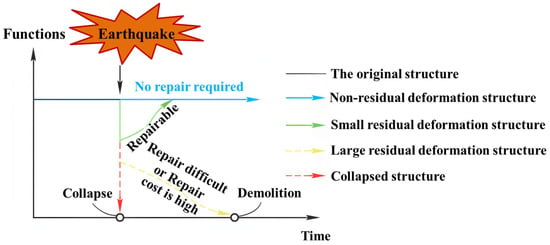
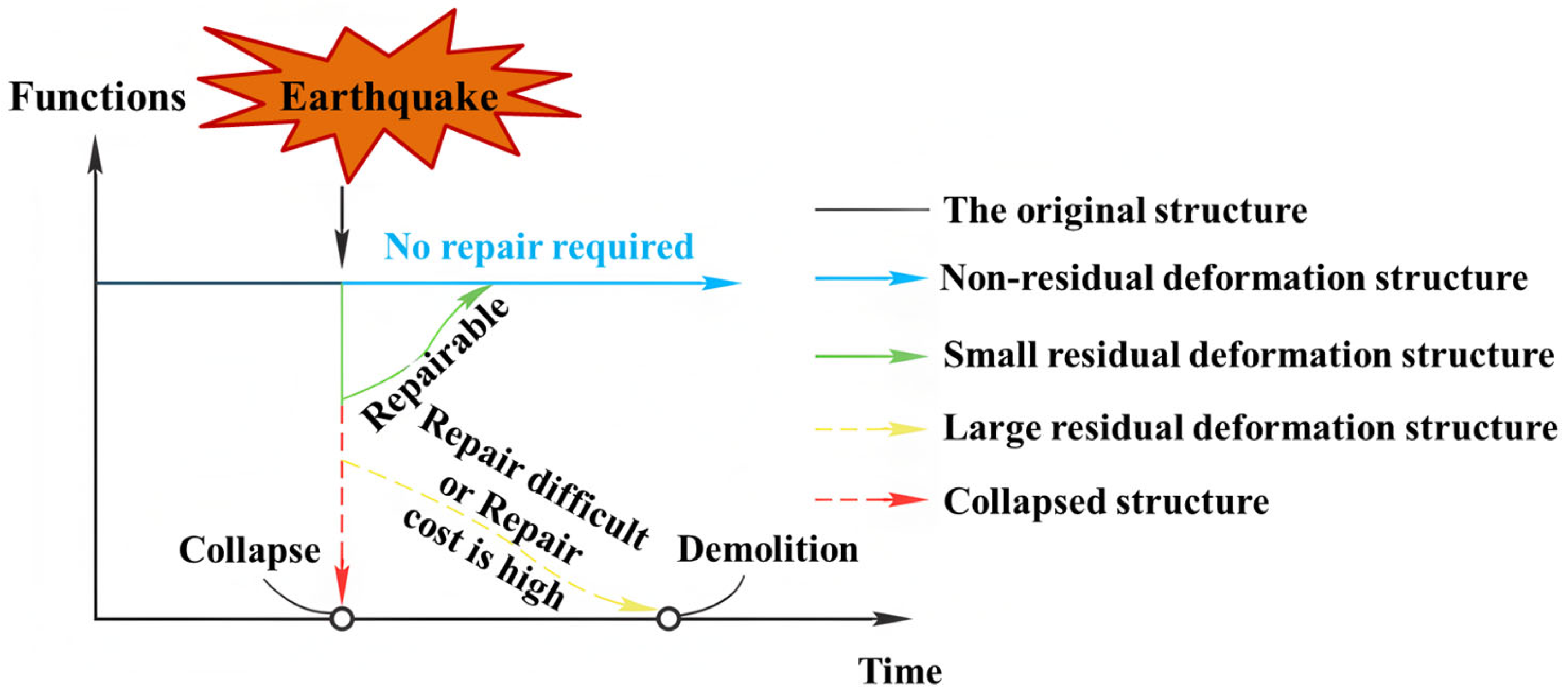
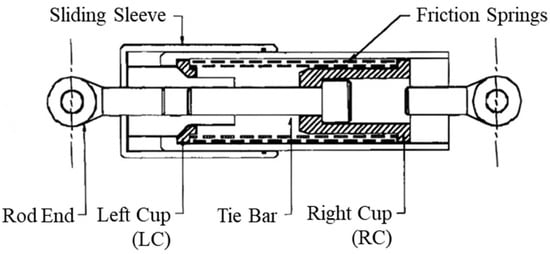
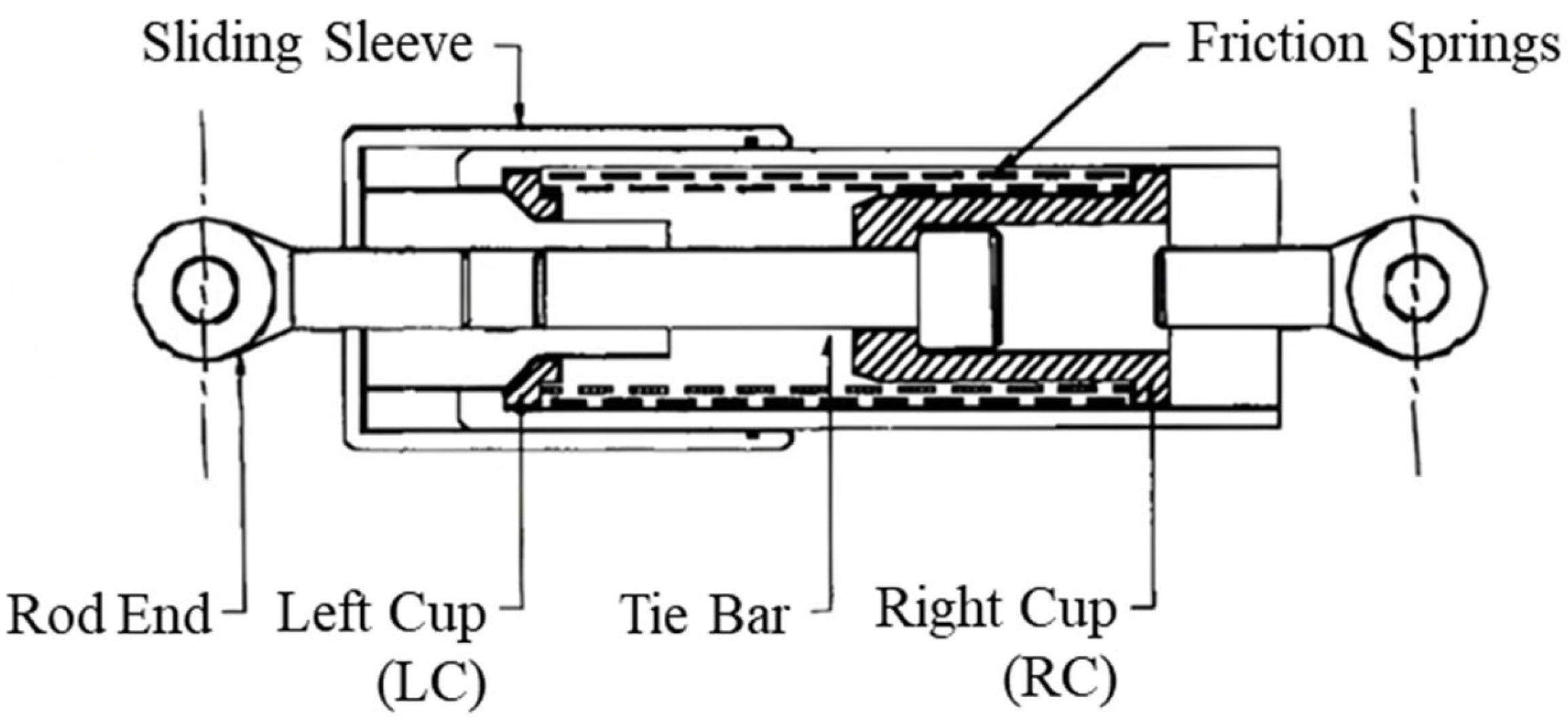
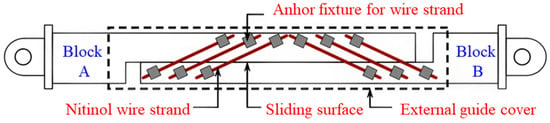
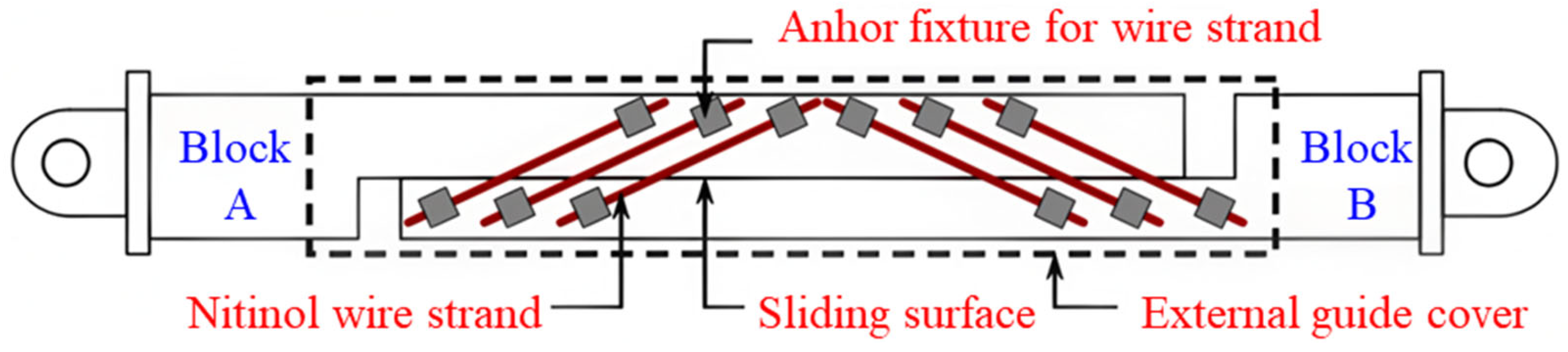
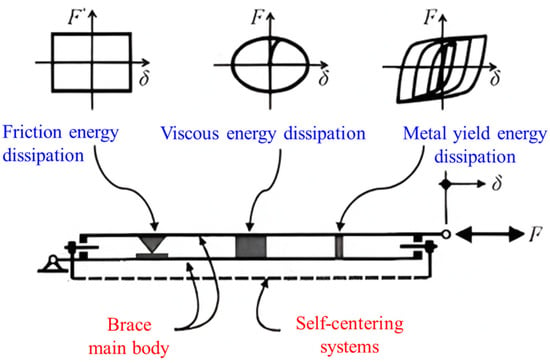
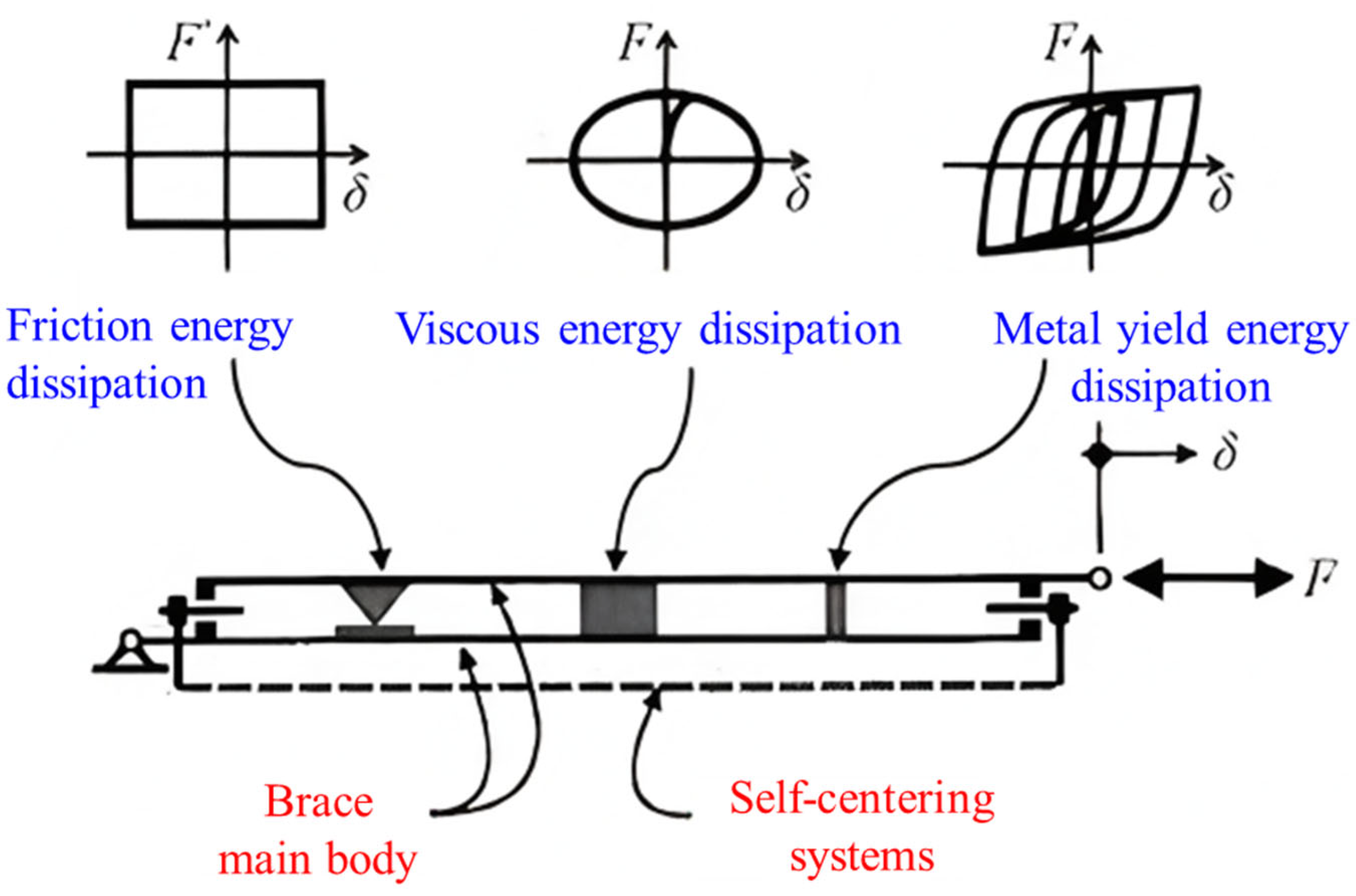
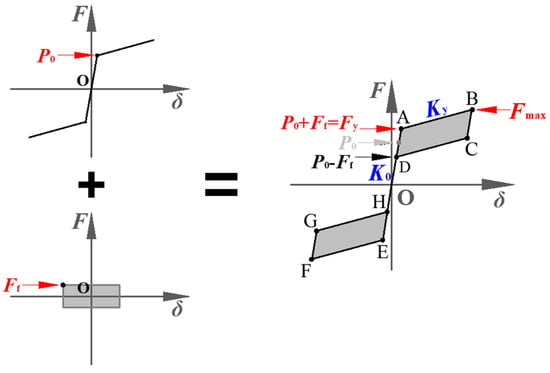
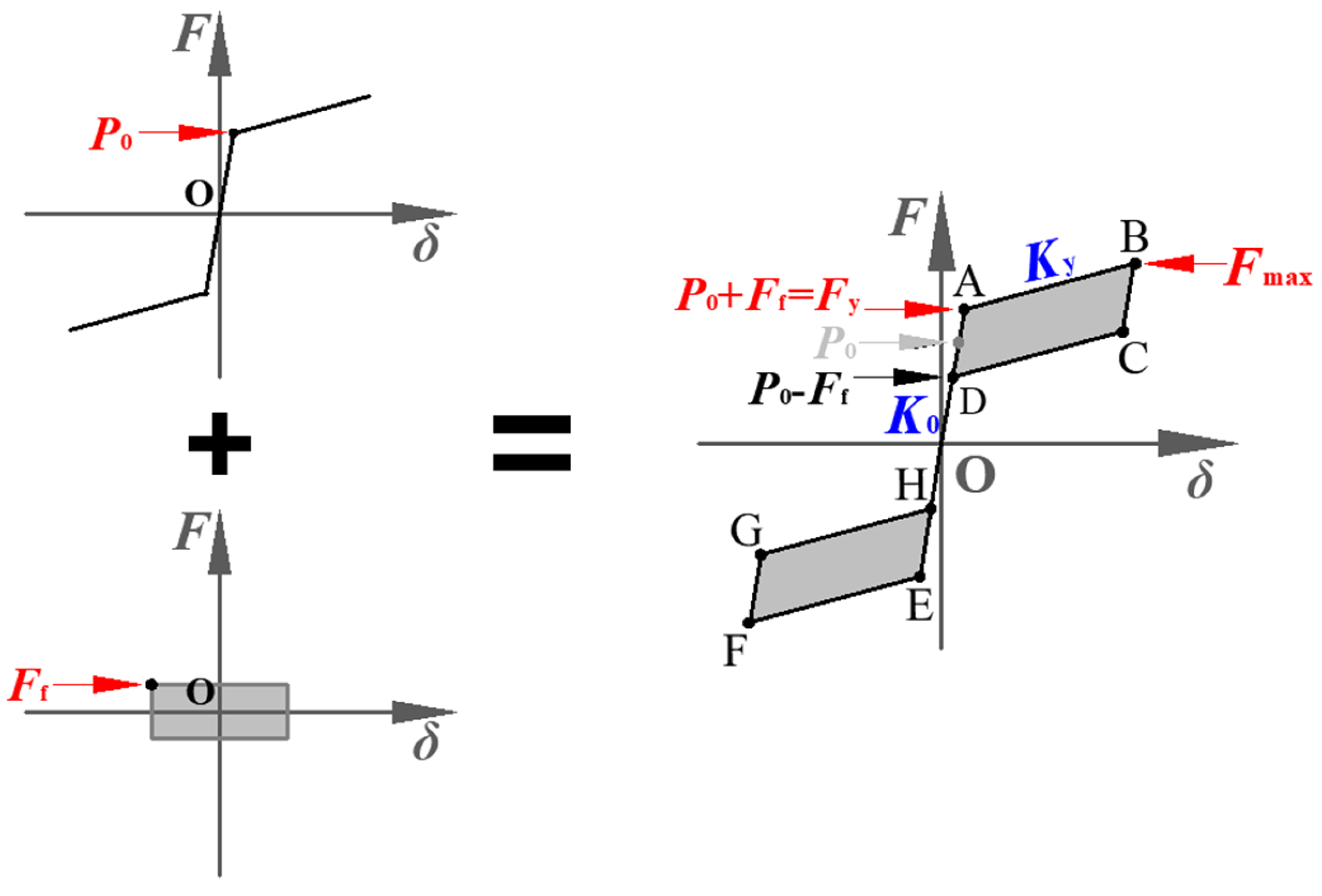
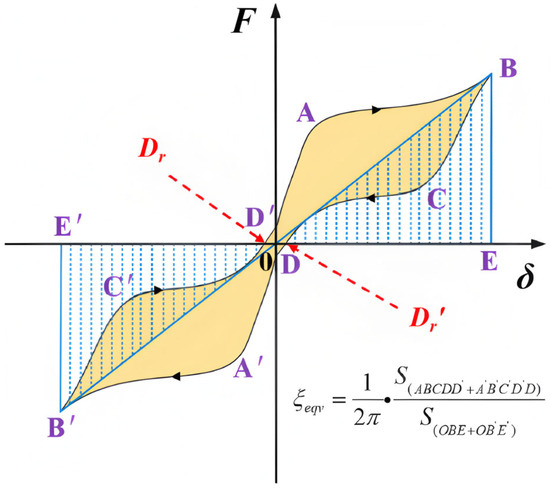
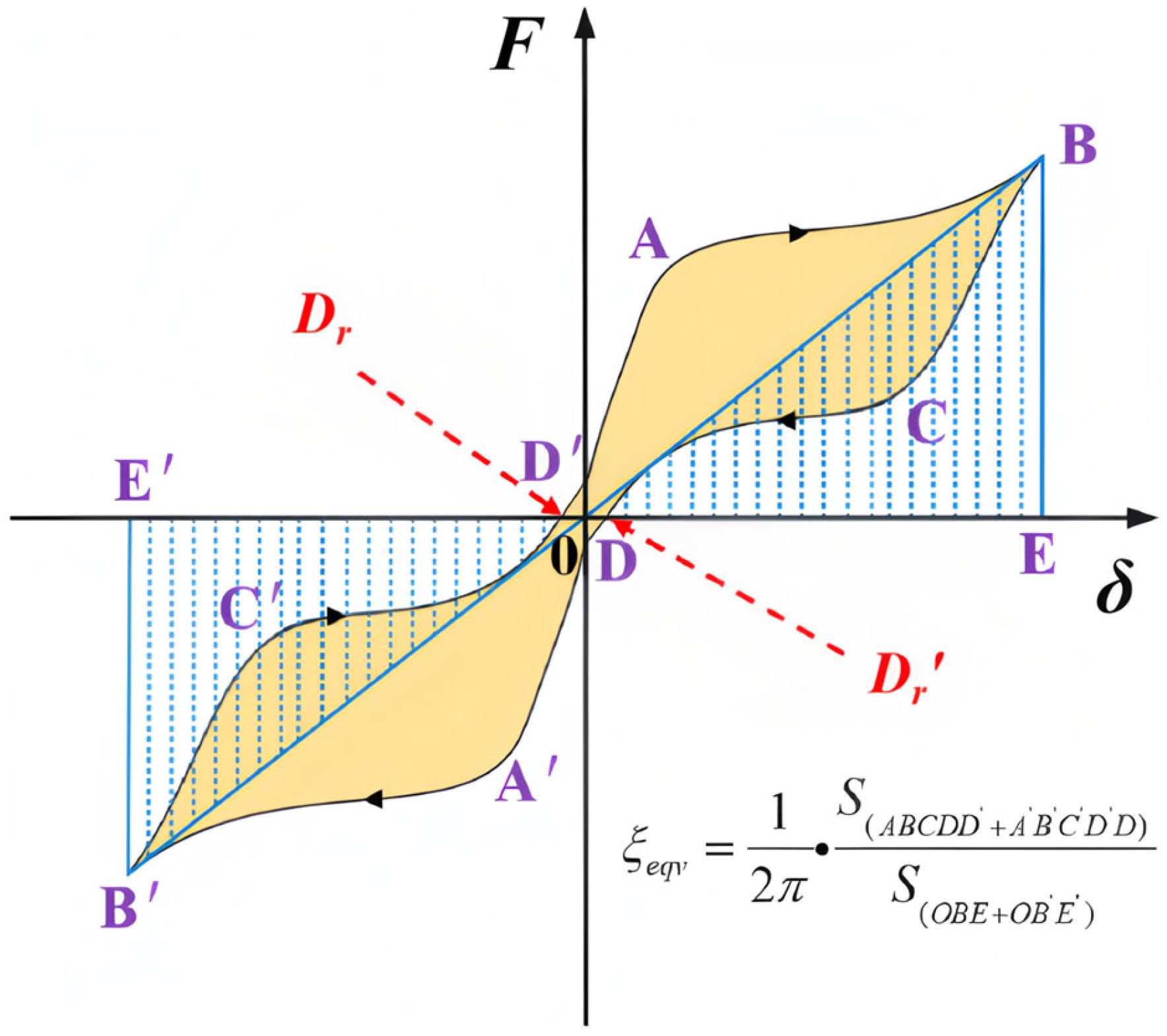
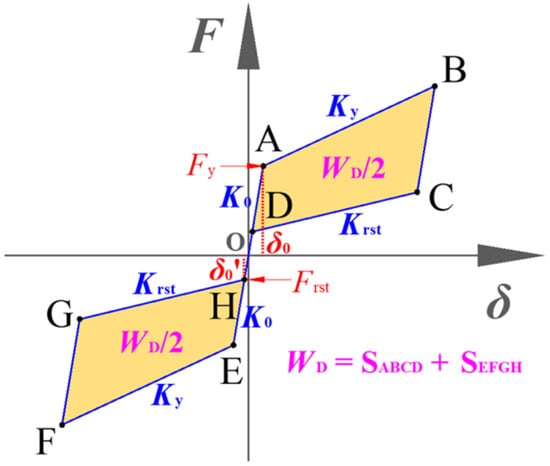
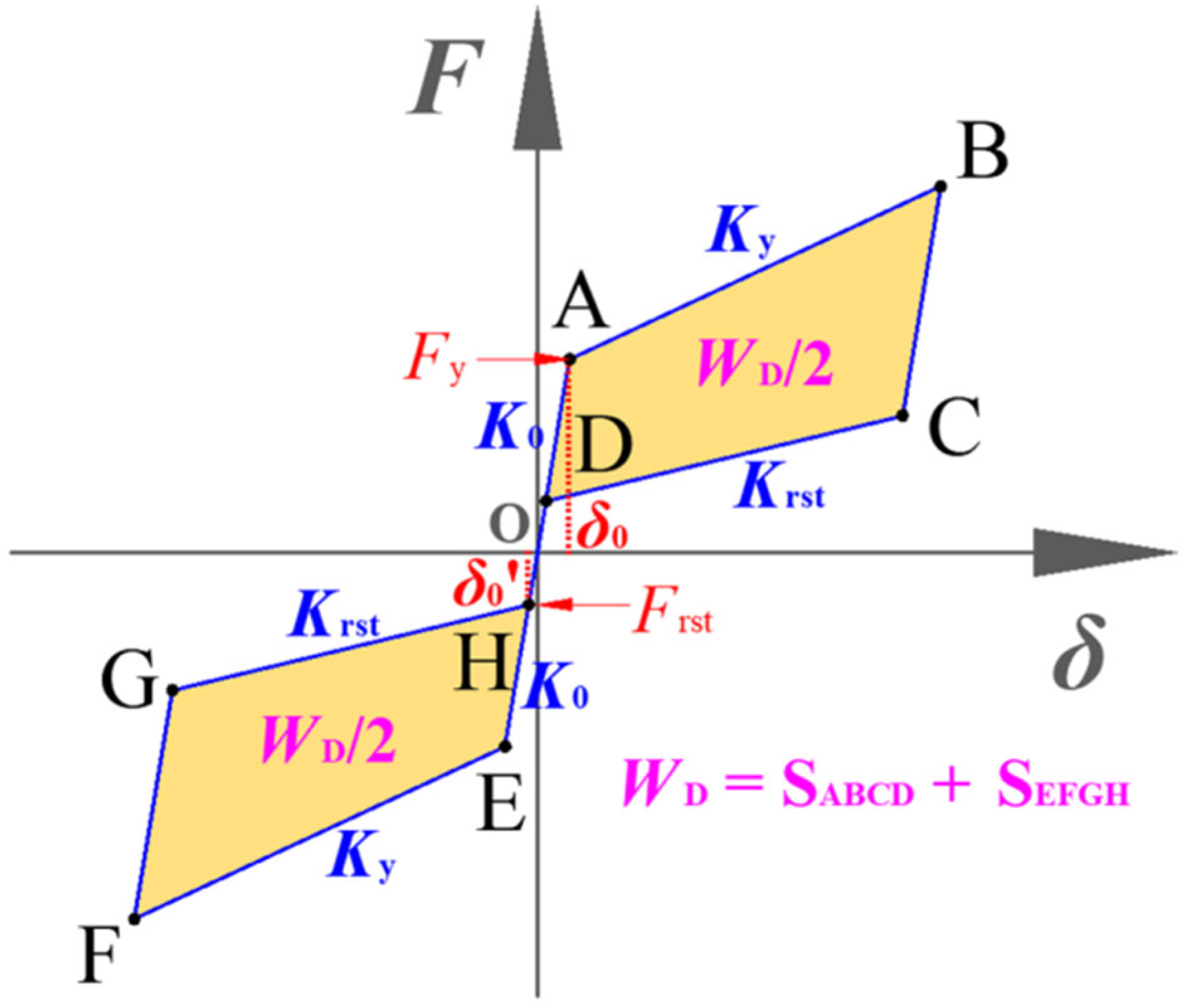
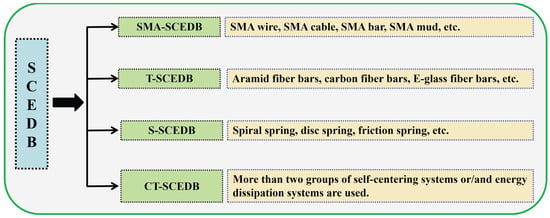
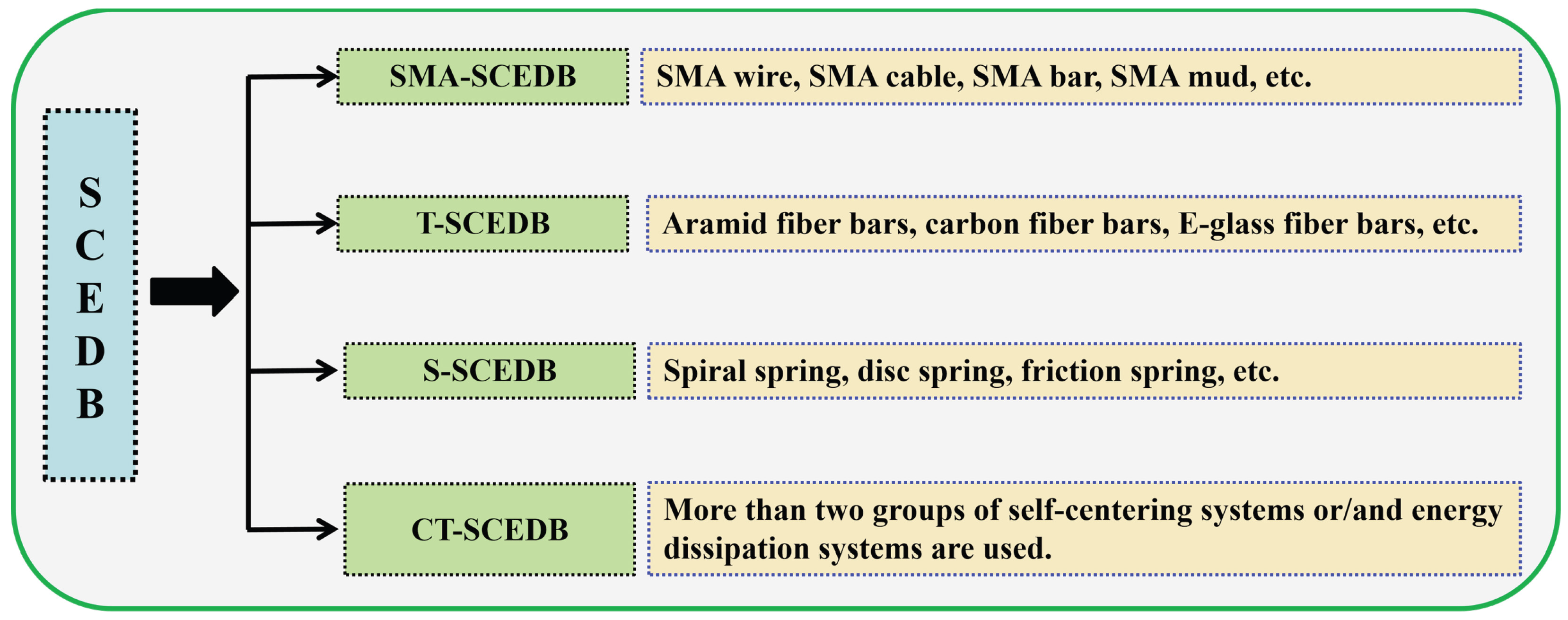
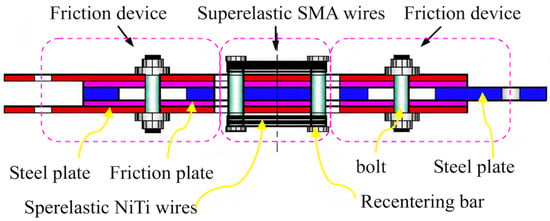
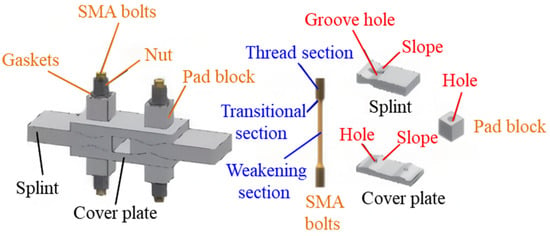
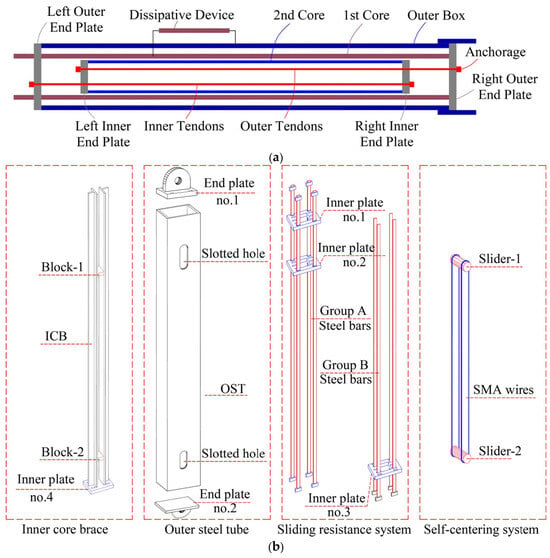
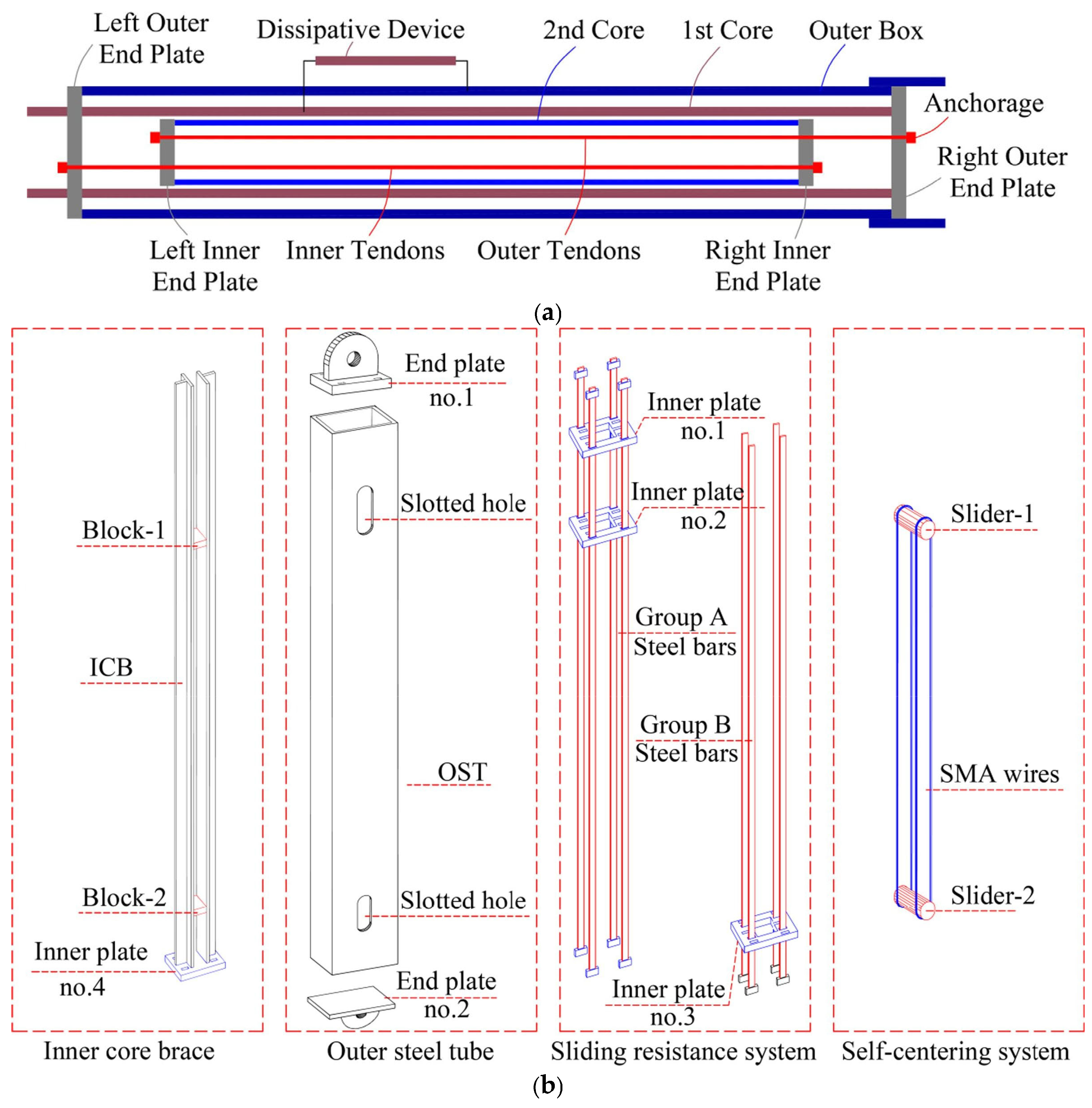
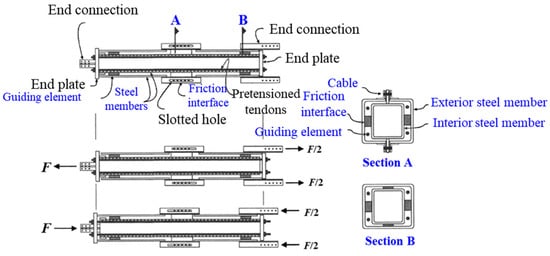
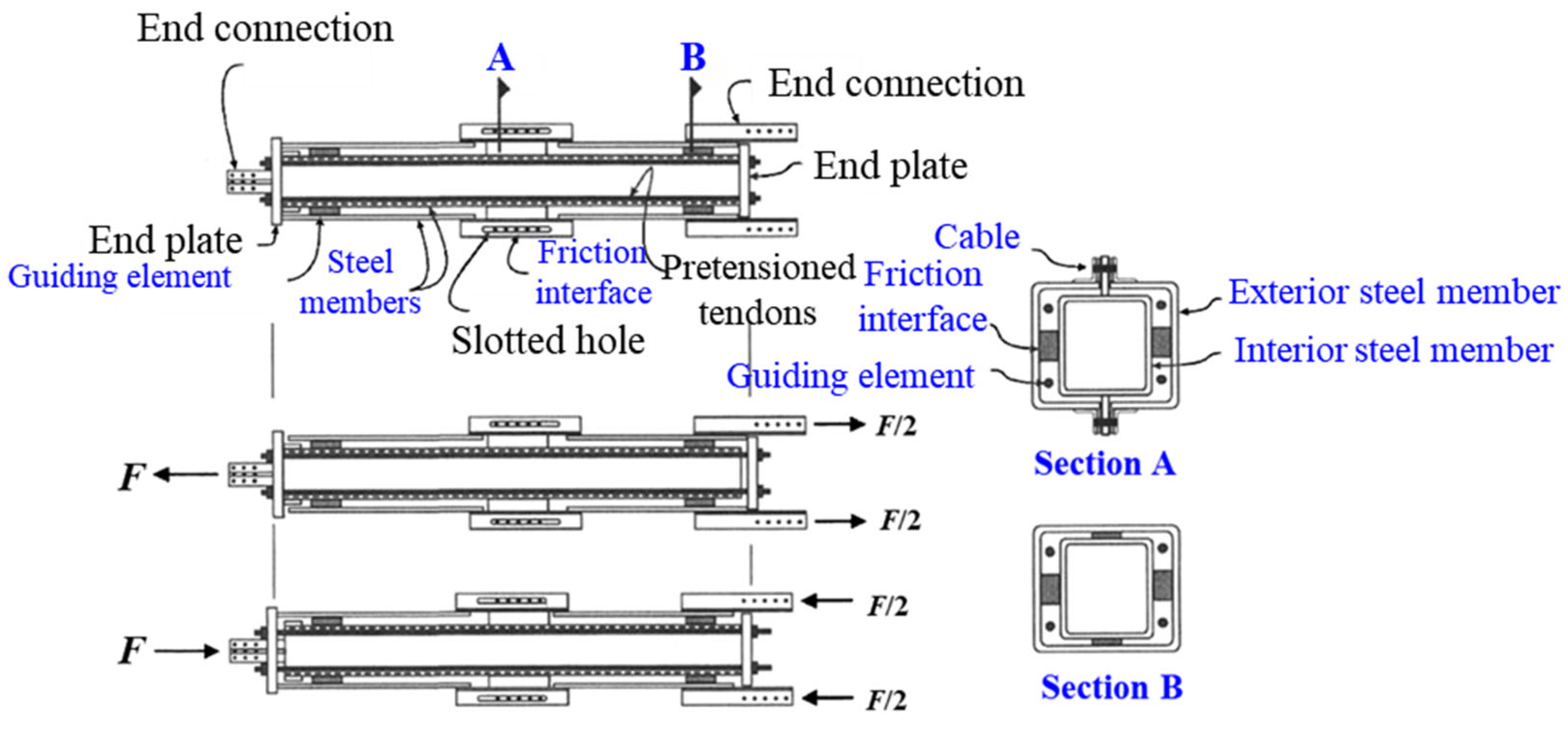
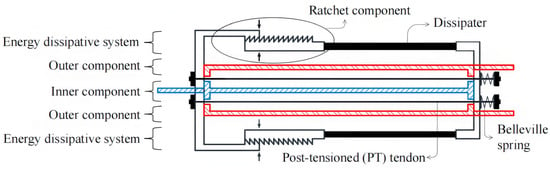
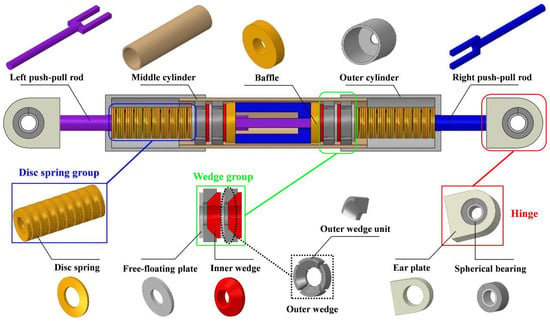
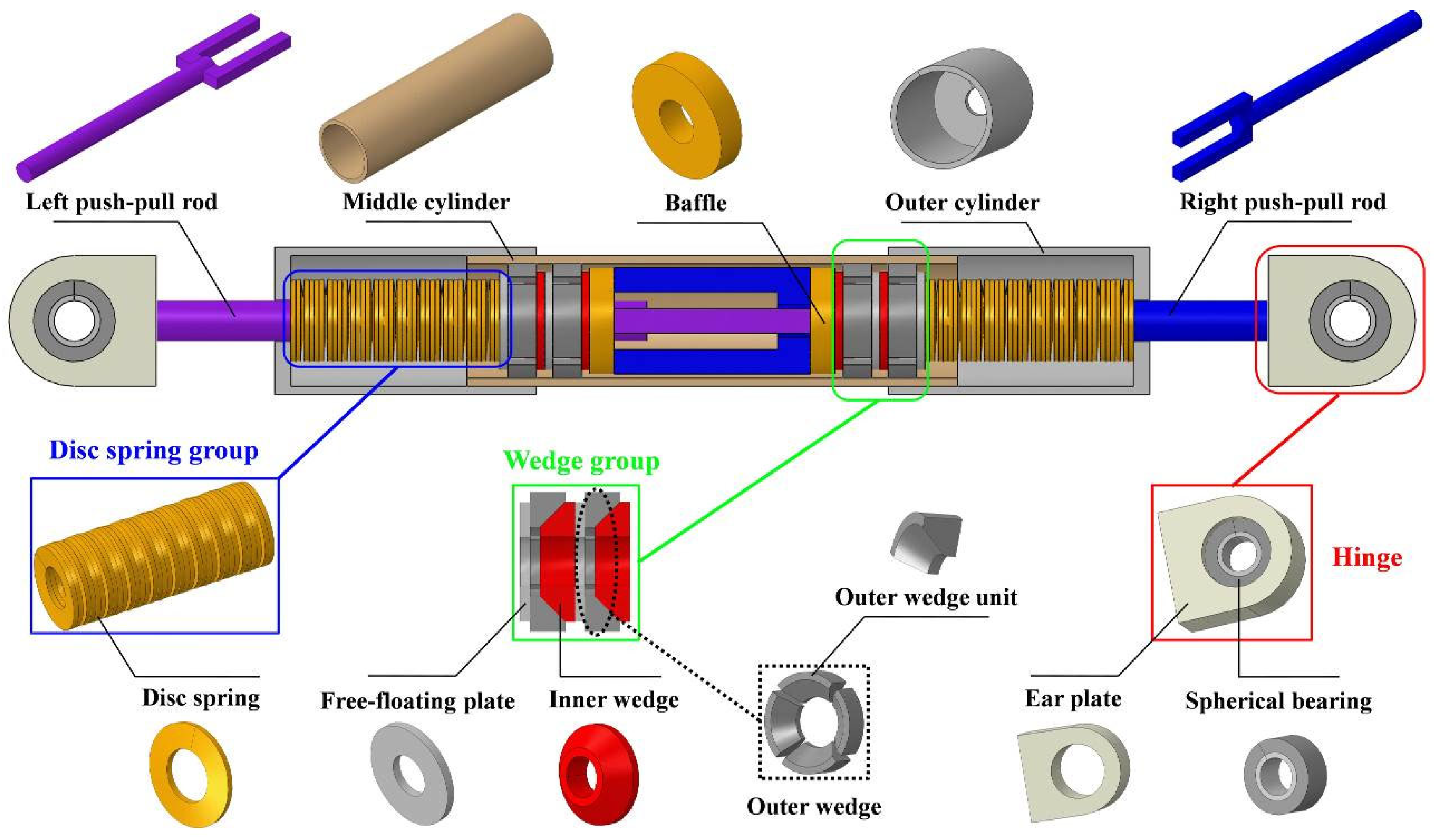
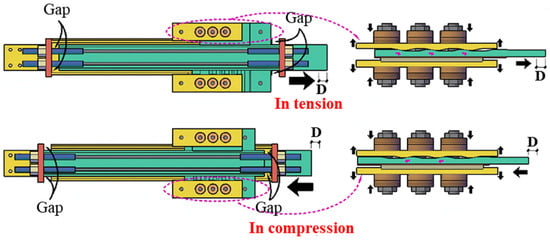
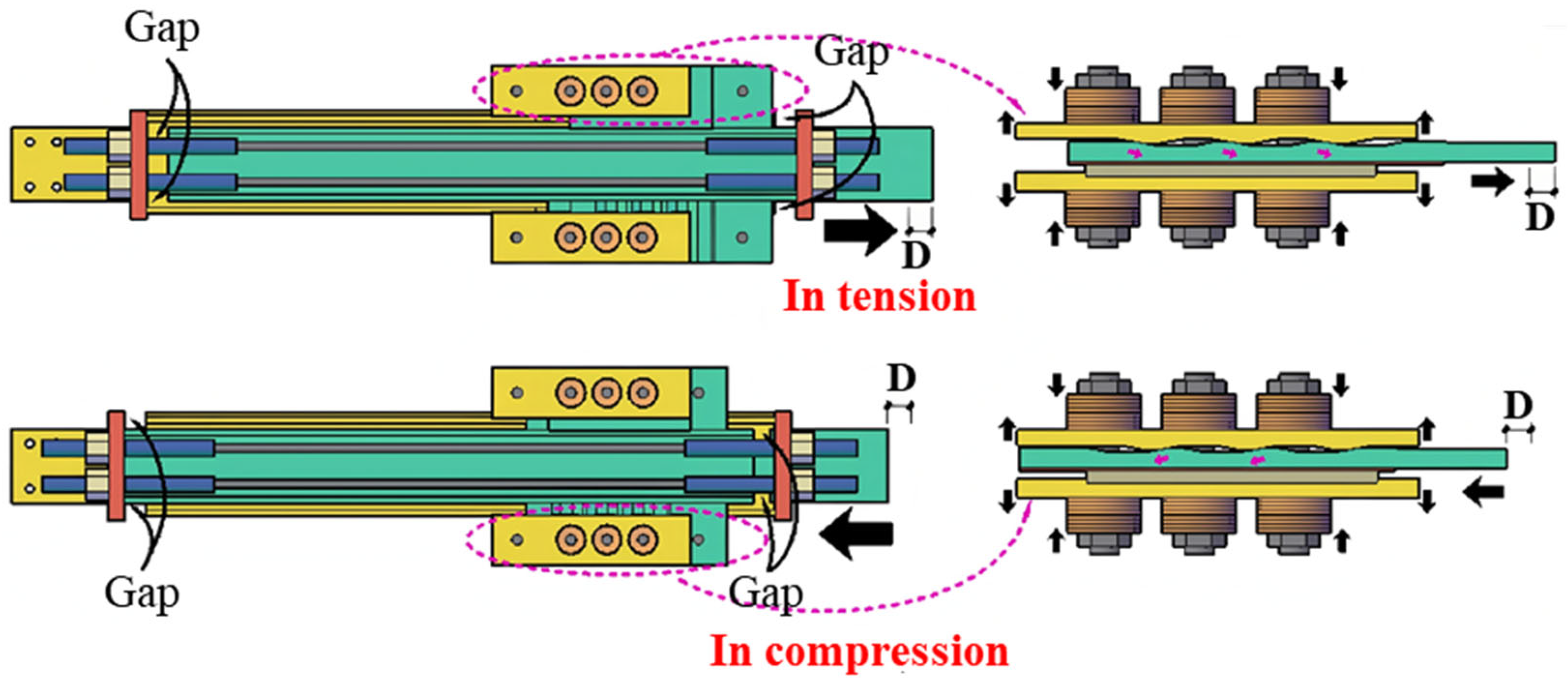
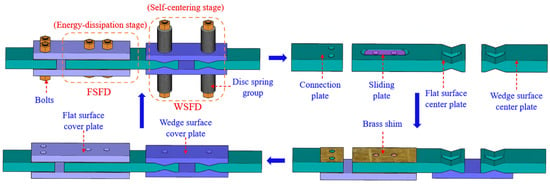
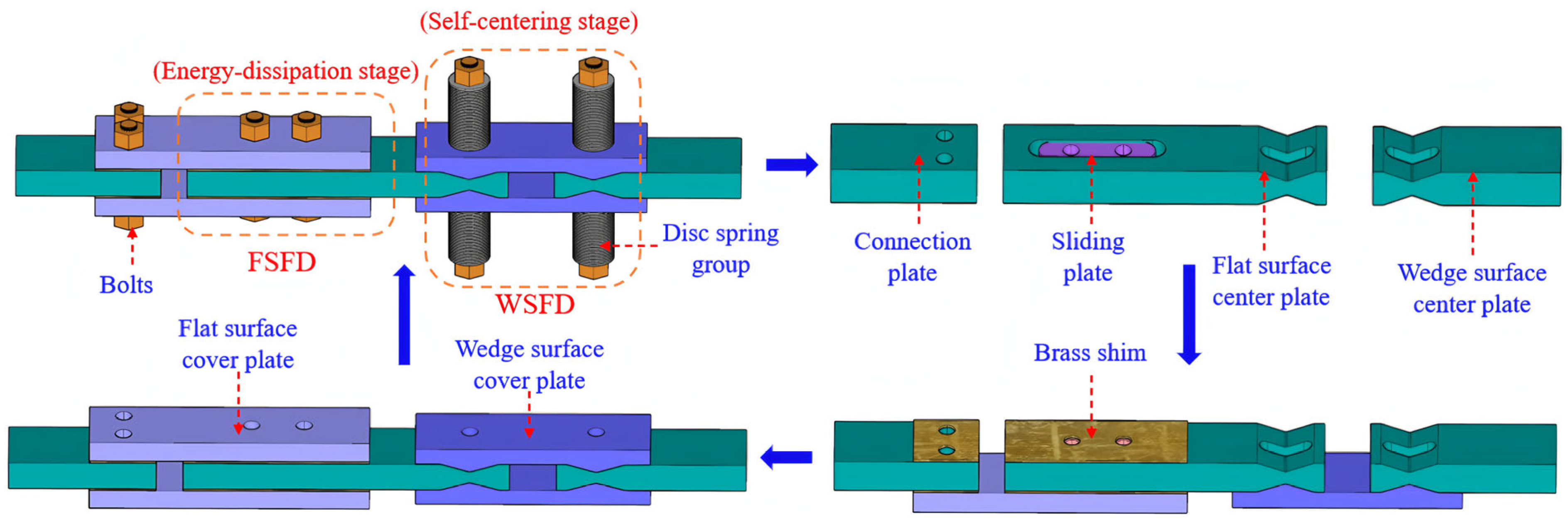
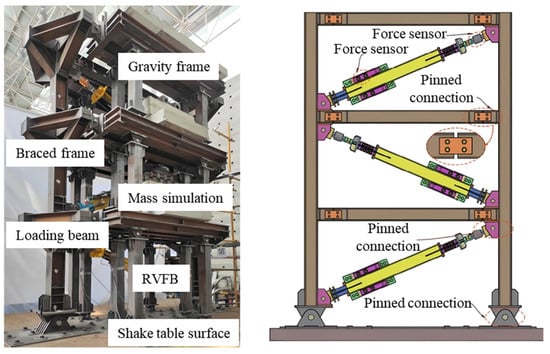
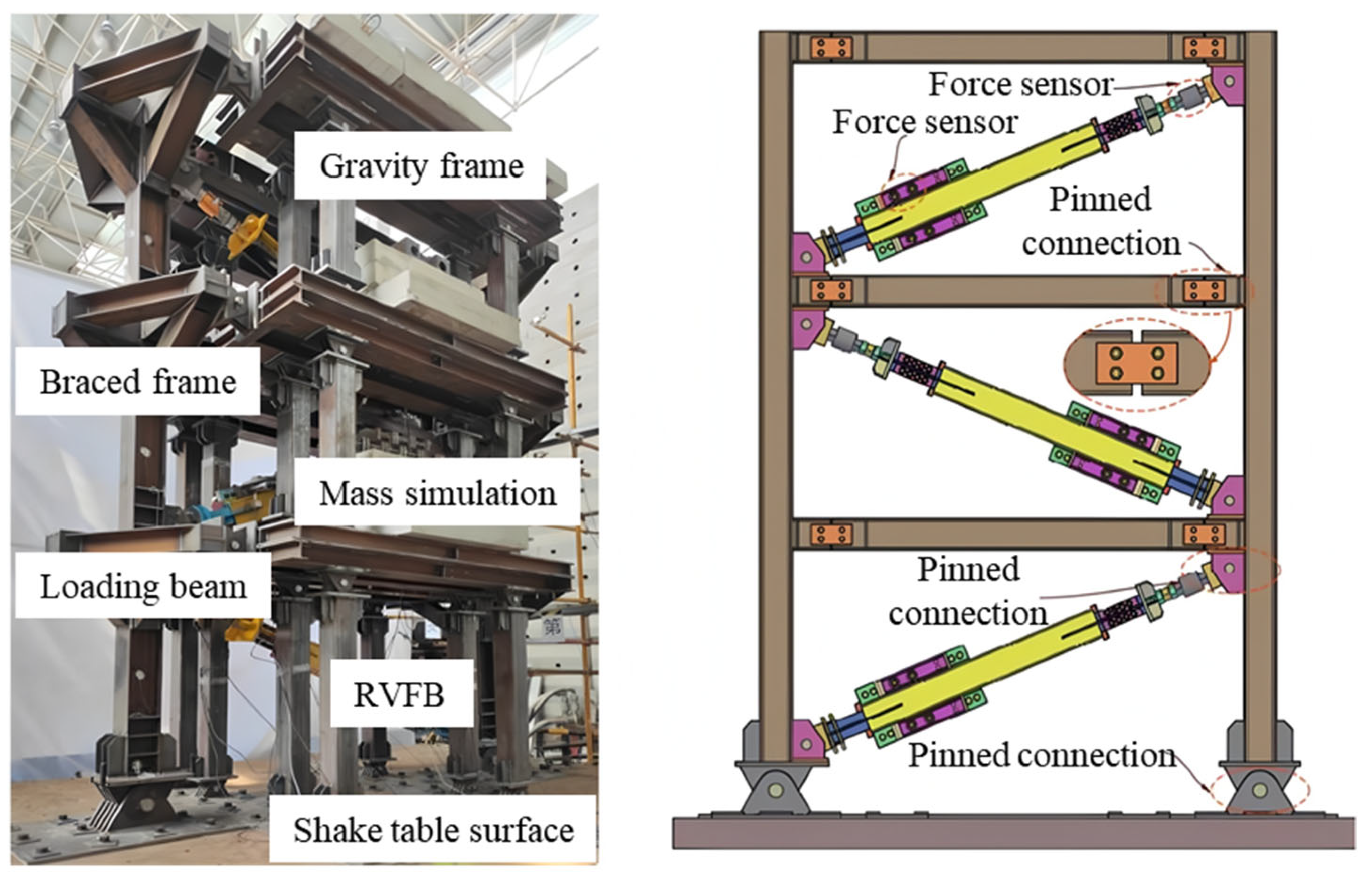
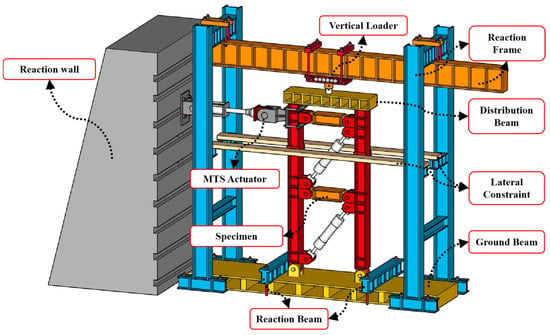
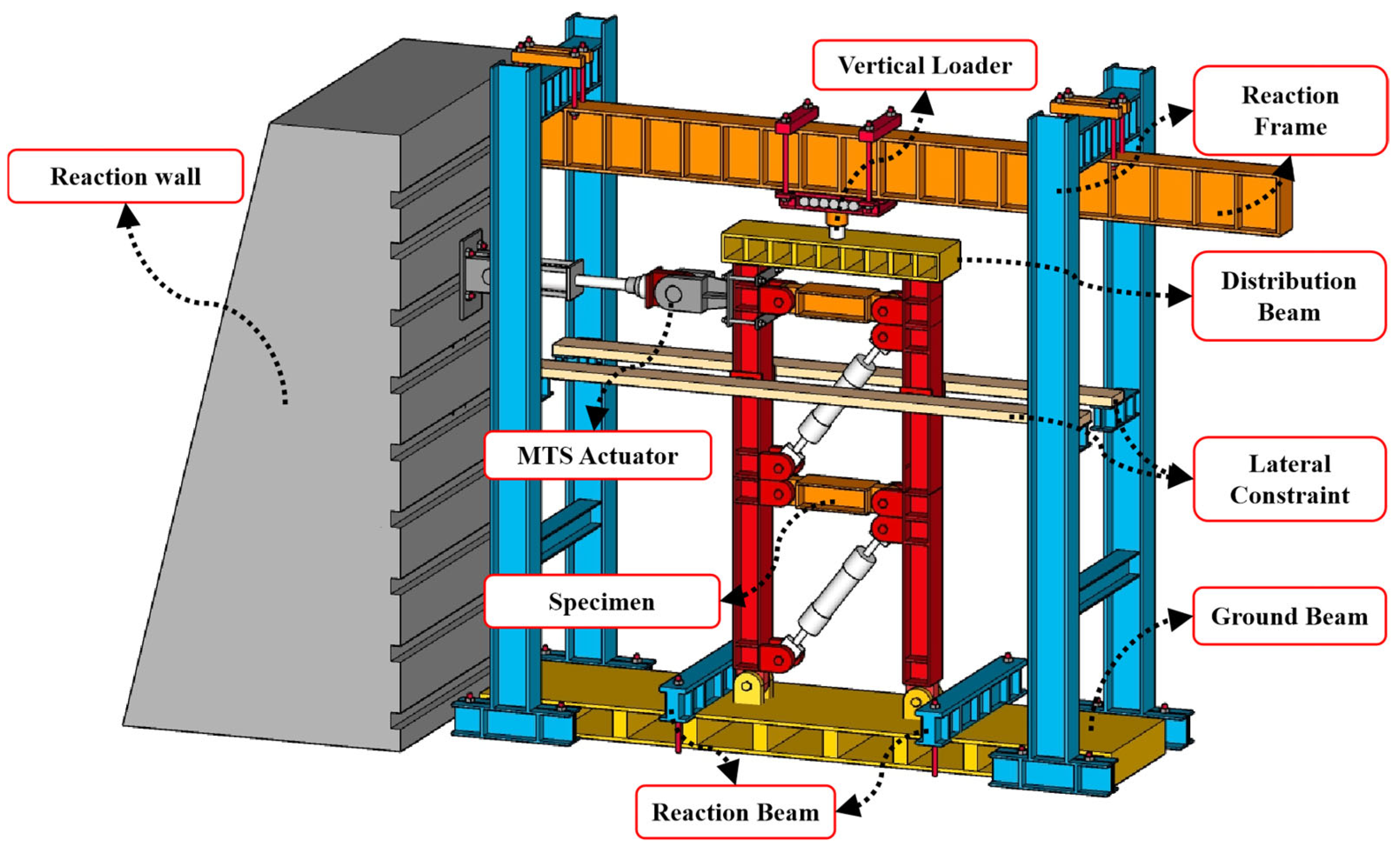

Disclaimer/Publisher’s Note: The statements, opinions and data contained in all publications are solely those of the individual author(s) and contributor(s) and not of MDPI and/or the editor(s). MDPI and/or the editor(s) disclaim responsibility for any injury to people or property resulting from any ideas, methods, instructions or products referred to in the content. |
© 2026 by the authors. Licensee MDPI, Basel, Switzerland. This article is an open access article distributed under the terms and conditions of the Creative Commons Attribution (CC BY) license.