


Abstract
Combining multiple industrial waste streams as alkali-activated precursors provides compositional complementarity but also creates complex interactions that cannot be explained by bulk chemistry or final performance alone. This review examines precursor compatibility through three coupled processes: dissolution, elemental competition, and phase selection. Precursor reactivity is interpreted hierarchically in terms of bulk composition, potentially reactive composition, and the composition actually dissolved under specific reaction conditions. In multi-source systems, asynchronous release of Ca, Si, Al, Mg, and associated anions continuously modifies pore-solution chemistry, saturation states, nucleation, and interfacial transport. Dissolution therefore becomes mutually coupled, while released species compete for incorporation into binding gels and secondary phases. Their temporal availability, transport, and structural accommodation ultimately govern phase selection and spatial heterogeneity. Because increased strength or heat release alone is not a unique signature of chemical coupling, precursor compatibility should be established by linking changes in precursor-specific reaction kinetics with effective elemental supply and partitioning, phase evolution, and macroscopic response. This mechanism-based perspective reframes precursor compatibility as a conditional compatibility window, and shifts multi-source alkali-activated materials design from empirical precursor proportioning toward coordination of reaction time windows, elemental supply, and targeted phase formation under specified activator chemistry, pH, temperature, precursor proportion, curing conditions, and reaction time. Future studies should quantify time-resolved elemental balances and phase-competition boundaries and integrate them with reaction–transport models to identify robust compatibility windows under realistic precursor variability.
1. Introduction
Alkali-activated material (AAM) technology offers a promising route for valorizing industrial solid wastes as low-carbon cementitious materials. In this review, AAMs are used as the broad term for binders produced by alkaline activation of aluminosilicate or calcium-aluminosilicate precursors. Geopolymers refer to the low-calcium subset of AAMs in which alkali-aluminosilicate (N-A-S-H-type) gels dominate. The term “multi-source AAMs” denotes systems formulated from two or more distinct solid precursors that react in a shared alkaline pore solution. Geopolymer and AAM are therefore not used interchangeably. Fly ash, ground granulated blast-furnace slag, metallurgical slags, mining wastes, and other Si–Al- or Ca-rich byproducts can serve as alternative precursors to conventional cementitious raw materials [1,2,3]. However, industrial wastes are not compositionally uniform aluminosilicates. Their bulk chemistry, glass content, crystalline phases, local network structure, particle characteristics, and soluble salt contents vary substantially with source. Consequently, the reactive elements and dissolution kinetics provided by a single waste stream may not satisfy the chemical requirements throughout the entire alkali-activation process. Provis et al. [4] emphasized that alkali-activated materials cannot be regarded as direct substitutes for ordinary Portland cement under all application scenarios, and that their practical implementation requires coordinated consideration of local raw materials, mixture design, activator-related environmental burdens, and quality control. For example, blast-furnace slag generally exhibits high ambient-temperature reactivity but may suffer from rapid workability loss, fast setting, and shrinkage, whereas low-calcium fly ash reacts more slowly, develops strength later, and is more sensitive to curing conditions [5]. More broadly, the compositions, reactivities, and environmental constraints of municipal, agricultural, mining, and industrial wastes vary widely, indicating that suitability for alkali activation does not necessarily imply the ability of a single waste to independently form a stable and optimized cementitious system [6,7].
This limitation has driven precursor design from maximizing the replacement level of individual wastes toward exploiting complementary chemical and kinetic functions among multiple solid wastes. Calcium-rich components can modify the ambient-temperature reaction pathways of low-calcium aluminosilicate systems, whereas Si- or Al-rich components can adjust the elemental supply required for gel formation. Wastes containing Mg, sulfate, carbonate, or readily soluble alkalis may further modify pore-solution chemistry and participate in secondary phase formation. The extensively studied fly ash–slag system illustrates this principle, where the rapid early reaction of slag complements the longer reaction window of fly ash for aluminosilicate reactions [5]. Similar concepts have been extended to all-solid-waste and multi-solid-waste binders incorporating steel slag, red mud, calcium carbide slag, coal gangue, and desulfurization byproducts as precursors, calcium sources, alkali sources, or salt-based activators. Recent reviews have therefore identified “multi-waste synergy” and synergistic design of multi-source wastes as important directions, including approaches based on multi-scale activation, salt–alkali interactions, gel evolution, data-driven mixture optimization, and life-cycle considerations [8,9,10]. These reviews provide valuable system-level syntheses, but they mainly address synergy at the activation, performance, or sustainability level. They do not resolve the cross-precursor interactions that arise when multiple precursors coexist. Such coexistence transforms the binder into a chemically coupled system containing multiple reactive phases, asynchronous elemental release, and competing precipitation pathways.
Existing reviews have established important frameworks for understanding precursor reactivity, dissolution, and product formation in alkali-activated systems. Table 1 compares the scope of representative previous reviews with the present review. Duxson and Provis et al. [11] highlighted the importance of precursor design and showed that glass network structure, network-modifying ions, and the state of Al can govern precursor reactivity and subsequent reaction pathways. Reviews of geopolymerization mechanisms have further emphasized precursor dissolution, aluminosilicate-species release, polycondensation, and structural rearrangement as key stages linking precursor characteristics with gel formation [12]. Kamseu et al. [13] systematically related precursor properties, amorphous-phase content, available Si and Al, dissolution behavior, and macroscopic performance, while also distinguishing active, semi-active, pozzolanic, and relatively inert precursor fractions. Mineralogical reviews have subsequently shown that reaction participation is not restricted to amorphous aluminosilicates, because some semi-crystalline and crystalline phases may also dissolve and contribute to new phase formation [14]. More recent analyses have therefore argued that precursor reactivity cannot be predicted reliably from bulk oxide composition alone and should instead be evaluated together with structural disorder, elemental occurrence states, and actual leaching behavior [15]. Collectively, these studies have shifted precursor evaluation from empirical bulk-composition descriptors toward phase-, structure-, and dissolution-resolved descriptions of reactivity.
Table 1.
Comparison of representative previous review articles and the present review.
Nevertheless, a major mechanistic gap remains when multiple precursors coexist within the same reaction environment. Previous reviews have primarily described the intrinsic dissolution behavior of individual precursors or interpreted the final products of blended systems; in contrast, this review focuses on the cross-component feedback that arises when different precursors share a common pore solution. This cross-component feedback has not been fully integrated into previous frameworks. Dissolution is not necessarily independently additive: species released from one precursor can alter pore-solution alkalinity, chemical potential, saturation state, nucleation, and interfacial transport, thereby promoting or suppressing the dissolution of another precursor. Meanwhile, Ca, Si, Al, Mg, and associated anions released from different precursors compete for incorporation into binding gels and secondary phases. Their solid-phase partitioning is therefore governed not only by total elemental availability but also by release timing and structural accommodation limits. How such asynchronous elemental supply dynamically regulates the selection between dominant binding gels and competing crystalline phases has not yet been integrated into a unified framework for multi-source precursor systems.
These mechanistic uncertainties also make the conventional identification of “synergy” problematic. Improved compressive strength or increased heat release in blended systems is often treated as direct evidence of synergy, but such macroscopic enhancements can also arise from physical filling, heterogeneous nucleation, or other non-chemical effects. Chemical compatibility therefore cannot be established from final performance alone; it requires evidence linking deviations from a non-interacting reference to precursor-specific reaction behavior, elemental supply and partitioning, phase evolution, and spatial structure. These criteria are developed in Section 4.
Before proceeding, three terms are defined for clarity. Chemical interaction denotes a measurable, mechanistically attributable change in one precursor’s reaction behavior caused by coexistence with another. Precursor compatibility denotes the favorability of the resulting coupled system state within a specified condition window. Synergy denotes a positive system-level deviation from an appropriate non-interacting reference that is not predominantly due to physical effects. Their identification criteria and evidence requirements are detailed in Section 4.
The literature discussed here was identified through searches of Web of Science and ScienceDirect using keywords such as multi-source alkali-activated materials, alkali-activated material, precursor compatibility, coupled dissolution, elemental competition, phase selection, fly ash–slag system, pore-solution chemistry, reaction kinetics, and gel structure. No strict time limit was applied, but the reviewed literature spans 2005–2026, with emphasis on 2015–2026. Titles and abstracts were screened for relevance to precursor dissolution, reaction kinetics, elemental partitioning, phase evolution, spatial heterogeneity, or compatibility in multi-source systems. Full texts were included when they provided mechanistic evidence for at least one of the three coupled processes discussed here. Non-peer-reviewed studies, purely macroscopic performance reports, and systems outside geopolymer/alkali-activated binders were excluded. This is not a systematic review, but a focused synthesis of representative mechanistic evidence.
Against this background, this review addresses one central question: Under what conditions does the coexistence of multiple precursors produce genuine chemical compatibility rather than merely apparent macroscopic enhancement? To answer this question, the review examines precursor compatibility in multi-source alkali-activated materials through three interrelated processes: coupled dissolution, elemental competition, and phase selection. Rather than inferring compatibility from bulk precursor proportions or final performance alone, the review establishes a mechanism-based causal framework linking precursor-specific dissolution behavior, effective elemental supply and partitioning, phase and spatial-structure evolution, and macroscopic response. The overall mechanistic framework developed in this review is summarized in Figure 1. Compatibility is therefore treated here as a conditional system response that can be mapped as compatibility windows within a parameter space defined by activator chemistry, pH, temperature, precursor proportion, curing conditions, and reaction time. This perspective aims to shift multi-source alkali-activated materials design from empirical precursor proportioning toward coordinated reaction time windows, effective elemental supply, and targeted phase formation.
Figure 1.
Mechanistic framework linking precursor characteristics, coupled dissolution, elemental competition, phase selection, and macroscopic performance in multi-source alkali-activated materials.
It should be emphasized that most time-resolved mechanistic evidence currently available comes from fly ash-slag systems and synthetic model glasses. These systems are used here as reference cases rather than universal templates. The proposed framework is conceptually transferable because coupled dissolution, elemental competition, and phase selection are expected in any multi-source alkaline system, but the specific dissolution windows, elemental partitioning pathways, phase-selection boundaries, and compatibility windows remain system-specific. For steel slag and calcium carbide slag, high Ca availability, possible free CaO, and rapid early reaction may shift early Ca release and carbonate/sulfate partitioning; red mud introduces high alkalinity, Fe, Na, and soluble salts; coal gangue and waste ceramics depend strongly on activation degree and the crystalline/amorphous phase ratio; biomass ash can release soluble K, Cl, and sulfate early and thus modify the initial pore-solution chemistry. Generalization to these systems therefore requires matching or independently validating the controlling variables—reactive phase assemblage, activator chemistry, pH, temperature, liquid-to-solid ratio, curing regime, and reaction time—and testing the framework through precursor-specific dissolution, time-resolved elemental supply, phase evolution, and spatial product distribution, rather than assuming that fly ash–slag behavior applies directly.
2. Coupled Dissolution and Elemental Competition
2.1. Inherent Characteristics Governing Precursor Dissolution Behavior
In this review, a precursor is defined as a solid component that undergoes alkaline dissolution and contributes reactive Si, Al, Ca, Mg, and/or Fe to binding gels or secondary phases under the specified reaction conditions. Components that mainly modify pore-solution chemistry, provide nucleation sites, act as fillers, or release readily soluble salts are not treated as precursors unless they also satisfy this criterion. Accordingly, reactive precursors, weakly reactive or supplementary precursors, fillers, soluble salts, internal alkali sources, and nucleation seeds are distinguished by their dominant function. This classification is operational and condition-dependent: the same waste may change class with pH, temperature, activator chemistry, particle size, and reaction time, and a component may have dual roles. In this review, precursor compatibility refers specifically to interactions among reactive precursors. Effects involving fillers, soluble salts, internal alkali sources, nucleation seeds, or weakly reactive additions are treated as additive or modifier effects unless those components also contribute reactive elements to the binding phases.
Before cross-precursor interactions develop in a multi-source system, each reactive precursor exhibits an initial dissolution tendency governed by its chemical composition, phase structure, and interfacial accessibility. No single descriptor, including bulk oxide composition, amorphous-phase content, or particle size, can independently represent precursor reactivity because elemental occurrence states, local structure, and surface conditions jointly determine the fraction that can actually dissolve [16,17]. Precursor evaluation should therefore distinguish total elemental reserves from potentially reactive fractions and from the species ultimately released under a given reaction environment. This distinction provides the basis for understanding why precursors with similar bulk compositions may exhibit markedly different dissolution behavior.
2.1.1. Bulk Chemical Composition and Effective Reactive Composition
Bulk chemical composition defines the theoretical elemental inventory of a precursor but does not directly represent the fraction that participates in dissolution and subsequent reaction. Si, Al, Ca, and Mg measured by XRF may occur in soluble glass, weakly reactive crystalline phases, or highly stable minerals, and their actual contribution therefore depends on elemental occurrence state and releasability under specific alkalinity, temperature, and reaction time. Alkaline-leaching studies on fly ash have shown that dissolved Si, Al, and Fe provide a more direct indication of the reactive fraction involved in geopolymerization [18], while aluminosilicate materials with similar bulk compositions can display markedly different reaction behavior because of differences in Al and Ca availability [19].
The distinction becomes particularly important in multi-source systems. Min and Burris et al. [20] showed that Si and Al dissolution from Class C and Class F fly ashes varies strongly with precursor type, pH, and temperature even under undersaturated conditions. Thus, bulk Si/Al, Ca/Si, and related ratios are more appropriately regarded as boundary conditions for potential elemental supply rather than as the effective ratios governing reaction. What participates in coupled dissolution and subsequent competitive partitioning is the time-dependent supply of dissolved species from each precursor, not the total elemental inventory of the raw materials. Operationally, effective elemental supply is defined here as the time-resolved, precursor-specific flux of dissolved species into the shared pore solution. It should not be equated with the instantaneous pore-solution concentration, because the latter is the net result of dissolution, precipitation, complexation, adsorption, ion exchange, and transport. Its experimental quantification is outlined in Section 4.3.
A further distinction should be made among total elemental concentration, dissolved concentration, chemical activity, and aqueous speciation. Total concentration defines the bulk elemental inventory but not the fraction that can dissolve. Dissolved concentration quantifies what is present in the pore solution, but in highly alkaline and concentrated systems it does not directly represent chemical availability or thermodynamic driving force. Chemical activity, which depends on ionic strength and specific ion interactions, governs saturation states and dissolution-precipitation equilibria. Aqueous speciation determines which dissolved species can actually participate in gel formation or secondary-phase precipitation, such as silicate monomers and oligomers, aluminate species, Ca-bearing complexes, and carbonate or sulfate species. This review therefore treats total concentration, dissolved concentration, chemical activity, and aqueous speciation as distinct levels of description, with the latter two most directly linked to phase selection.
2.1.2. Phase Structure and Intrinsic Dissolution Tendency
The conversion of bulk composition into potentially reactive composition is primarily controlled by the phases hosting individual elements and by their atomic-scale structural stability. Although amorphous-phase content is widely used as an indicator of precursor reactivity, the amount of amorphous material should be distinguished from its intrinsic reactivity per unit mass. In Ca-Al-Si glasses, increasing Ca generally depolymerizes the network and enhances dissolution, whereas Ca and Mg, despite both acting as network modifiers, do not produce equivalent kinetic effects. Structural descriptors based on bonding energy and topological constraints can therefore outperform simple bulk-composition indices, although their ability to capture specific compositional substitutions remains incomplete [16,21,22,23].
The amorphous fraction itself may also be chemically and structurally heterogeneous. Studies of Class F fly ash have identified amorphous domains with different reactivities [24,25]. The elemental stacking maps in Figure 2 reveal distinct Si-Al-Ca/Fe/Na/K/Mg compositional domains, demonstrating that the amorphous aluminosilicate fraction cannot be treated as a chemically uniform reactive phase [25]. Accordingly, amorphous-phase content mainly defines an upper bound of potentially reactive material, while network polymerization, local coordination, and bond stability determine its actual dissolution tendency.
Figure 2.
Three-element compositional maps of raw Class F fly ash: (a) Si–Al–Ca, (b) Si–Al–Fe, (c) Si–Al–Na, (d) Si–Al–K, and (e) Si–Al–Mg. Green, red, and blue represent Si, Al, and Ca/Fe/Na/K/Mg, respectively. Reprinted with permission from Ref. [25]. 2023, Elsevier.
Conversely, crystalline phases should not be treated uniformly as inert. Mullite in low-Ca fly ash is associated with undissolved fractions, whereas mechanically activated feldspar and biotite can undergo structural disordering and enhanced Si and Al release more readily than quartz [26,27]. Waste ceramics provide a useful example of this continuum: reactive amorphous aluminosilicates contribute to alkali activation, while crystalline quartz and mullite predominantly act as relatively inert microaggregates [28]. Precursor phases are therefore better represented as a continuum from dissolution-prone to kinetically stable structures rather than by a simple amorphous/reactive versus crystalline/inert binary classification.
2.1.3. Particle, Surface, and Soluble-Species Accessibility
Whether potentially reactive structures are converted into effective elemental supply also depends on their accessibility to the reaction medium. Particle refinement generally increases solid–liquid contact area and shortens diffusion paths, but the increase in reactivity caused by mechanical activation cannot be attributed to particle size alone. Grinding simultaneously changes particle-size distribution, specific surface area, structural disorder, surface chemistry, and defect density, while excessive grinding may induce agglomeration and reduce the additional activation benefit [29]. Increased Si and Al dissolution after mechanical activation of granite waste has likewise been associated with both particle refinement and structural disordering [27]. Consequently, D50 should not be treated as an independent intrinsic reactivity parameter. Single-particle SEM–EDS and Raman analyses further reveal substantial heterogeneity in morphology, crystallinity, and polymerization state [30,31], indicating that particle size, surface area, morphology, and surface defects should be considered collectively as interfacial-accessibility factors.
For wastes containing readily soluble salts, accessibility also includes species that enter the pore solution without requiring extensive framework depolymerization. Biomass fly ash, for example, can provide soluble K that increases alkalinity and may enhance metakaolin dissolution; washing reduced its K content from approximately 8.0% to 1.84% and was accompanied by lower reaction degree and performance [32]. Municipal solid waste incineration fly ash likewise contains highly soluble Cl, whereas sulfate removal is more sensitive to liquid-to-solid ratio [33]. Thus, for salt-rich wastes, water-soluble Na, K, Cl, sulfate, and other readily released species may be more relevant to the early reaction environment than their total XRF contents. Such behavior is precursor-specific and should not be generalized to all solid wastes, but it illustrates that some wastes simultaneously act as reactive solids and as internal modifiers of pore-solution chemistry.
2.1.4. From Intrinsic Dissolution Tendency to Environment-Dependent Reactivity
The preceding factors can be viewed within a hierarchical framework of precursor reactivity. Bulk chemical composition defines the elemental resources potentially available for reaction, while phase assemblage and local structural characteristics determine which fraction of these elements is hosted in reactive or relatively stable phases. Particles and surface properties then regulate the accessibility of these phases to the reaction medium. The composition that is ultimately released into solution reflects the combined effects of these intrinsic material characteristics and the surrounding reaction conditions, including pH, ionic composition, temperature, and reaction time. This framework helps explain why reactivity indices derived solely from bulk oxide composition, amorphous-phase content, or particle size often lack consistent predictive capability across different precursor types.
Importantly, precursor reactivity is not a fixed material constant. Briki et al. [34] showed that the reaction rate of the same slag decreased markedly when the NaOH solution was saturated with Ca(OH)2, demonstrating that solution chemistry can alter the apparent reactivity of an otherwise identical solid phase. Blotevogel et al. [17] similarly found that the effects of CaO, MgO, Al2O3, and TiO2 on GGBS reactivity vary among Portland cement, alkali-activated, and super sulfated environments. These observations distinguish intrinsic dissolution tendency, defined by phase assemblage, atomic structure, and interfacial state, from environment-dependent apparent reactivity, which reflects how that initial potential is expressed under a particular pH, ionic composition, temperature, and dissolution-precipitation regime.
This distinction is especially important for multi-source systems. Reactivity measured for an isolated precursor provides an estimate of its initial dissolution tendency but cannot be directly extrapolated to its contribution when other precursors coexist. Once the shared liquid phase is modified by the dissolution and precipitation of multiple components, the apparent reactivity of each precursor becomes dynamically coupled to that of the others. This dynamic coupling underpins the asynchronous dissolution, cross-precursor interactions, and evolving elemental supply that characterize multi-source systems.
2.2. Dissolution Sequence and Asynchronous Elemental Release
When multiple precursors coexist, their reactive phases generally dissolve over different time scales, producing asynchronous elemental release into the shared pore solution. Model-glass studies show that composition and network structure strongly influence this intrinsic dissolution behavior. Ca-rich glasses resembling blast-furnace slag typically react more rapidly than Si-rich aluminosilicate glasses resembling fly ash, while increasing Al content can also enhance glass reactivity. In CaO–Al2O3–SiO2 glasses, higher CaO contents are associated with lower network polymerization and faster reaction rates [21,35]. Thus, the dissolution sequence of multi-source systems should be understood primarily as differences in the reaction kinetics of individual reactive phases, which determine the time windows over which Ca, Si, Al, and other species become available in the liquid phase.
Ca-rich reactive phases commonly dominate the early reaction window. Schöler et al. [35] reported reaction degrees of up to approximately 60 wt.% for high-Ca glasses after 7 d, compared with no more than about 20 wt.% for Si-rich glasses under comparable conditions. However, Ca content alone does not determine dissolution kinetics, because Al content and local structure also exert substantial effects. Minute-scale liquid-phase measurements by Newlands et al. [36] further showed that many Ca-bearing glasses exhibit an early Ca concentration maximum within approximately 30 min, followed by a rapid decline as dissolution becomes coupled with surface precipitation. Their behavior is therefore better described as high early reactivity with a rapid dissolution–precipitation response rather than sustained rapid dissolution.
Low-Ca aluminosilicate phases generally exhibit a slower but more extended reaction window. Long-term dissolution studies at pH 13 showed that their dissolution rate and soluble fraction depend strongly on Al/Si ratio and structural scale [37]. Similar temporal differentiation occurs in blended systems: in alkali-activated slag–fly ash binders, slag contributes more strongly at early ages, whereas the reactive fraction of fly ash becomes increasingly important at later ages [38]. Accordingly, slow reaction should not be interpreted as uniform inactivity; rather, reactive fractions of low-Ca precursors may remain available over a longer period after highly reactive phases have already initiated matrix formation.
The temporal release pattern is also element-specific. Under identical alkaline conditions, waste glass powder can release more Si and Ca than fly ash, demonstrating that Si-rich glass phases may provide soluble Si independently of conventional low-Ca fly-ash glass [39]. Likewise, bulk Al2O3 content does not directly predict the timing or extent of Al participation. Deng et al. [40] showed that although fly ash contained more total Al2O3 than slag, the slag system generated a larger amount of Al-bearing reaction products under the investigated alkaline conditions. These observations reinforce that elemental supply in multi-source systems is governed by the soluble fraction, release rate, and release timing of individual reactive phases rather than by bulk oxide contents alone.
Readily soluble salt phases can introduce an even earlier stage of elemental release before substantial dissolution of the main aluminosilicate framework occurs. In gypsum-bearing alkali-activated slag, rapid gypsum dissolution was followed by the formation of Ca(OH)2 and Na2SO4, together with a decrease in pore-solution pH and slower slag dissolution [41]. In slag–steel slag–circulating fluidized-bed fly ash systems, early gypsum dissolution and sulfate release likewise preceded subsequent Ca-bearing phase formation and aluminosilicate reactions [42]. These observations indicate that soluble salts can establish an initial ion-release window that is temporally distinct from glass dissolution. However, the direction and magnitude of their effects remain highly system-dependent, and current time-resolved evidence is substantially stronger for sulfate-bearing systems than for carbonate-bearing wastes.
The initial dissolution sequence is not fixed throughout the reaction because products formed at early stages can progressively modify the accessibility and subsequent reaction of other precursor particles. Fang et al. [43] used in situ X-ray μCT to track the three-dimensional morphological evolution of slag and fly ash particles during alkali activation. As shown in Figure 3, reaction fronts and inner products progressively develop around fly ash particles, while the accumulation of reaction products within the original particle boundaries increasingly limits the penetration of the pore solution and restricts further dissolution of the unreacted cores. These morphological observations are consistent with the interpretation that intrinsic precursor reactivity mainly determines the initial kinetic advantage, whereas the subsequent dissolution sequence is progressively modified by the evolving solid–liquid interface and product accumulation. Accordingly, a simple ranking of precursors as “fast” or “slow” is insufficient for multi-source systems. A more mechanistically meaningful description is to identify the elemental release windows of different reactive phases and to consider how these windows subsequently overlap and interfere. Such overlap and interference among elemental release windows provide the basis for subsequent cross-precursor coupling, elemental redistribution, and competitive phase development.
Figure 3.
Three-dimensional microstructural evolution of a fly ash particle in alkali-activated fly ash–slag paste observed by X-ray μCT. Reprinted with permission from Ref. [43]. 2021, Elsevier.
Table 2 shows that representative studies differ substantially in precursor combination, activator chemistry, dosage basis, liquid-to-solid ratio, curing temperature, sealing condition, and reaction age. These differences directly affect dissolution windows, elemental release rates, and phase-selection boundaries. Consequently, reported “synergy” or “compatibility” cannot be compared across studies unless these conditions are matched. This supports the view that precursor compatibility should be treated as a conditional compatibility window rather than a fixed material label. Recent studies further illustrate this condition dependence, where NaOH molarity, curing temperature, GBFS/GGBFS content, and recycled steel tire wire content jointly control mechanical and microstructural performance under ambient and oven curing [44,45].
Table 2.
Comparison of precursor systems, activator chemistry, and curing conditions in representative studies.
2.3. Coupled Dissolution, Elemental Supply, and Competitive Interactions in Multi-Source Precursor Systems
The asynchronous elemental release of different precursors continuously modifies the shared pore-solution environment over partially overlapping reaction windows. Their dissolution can therefore no longer be treated as a simple superposition of independent single-precursor reactions. Instead, precursor reactivity becomes coupled through changes in pore-solution chemistry, dissolution–precipitation equilibria, ion transport, and the evolution of solid–liquid interfaces. In situ X-ray tomography of fly ash–slag systems shows that particle-scale morphological changes and product accumulation are relatively limited during the first 1–3 d but become increasingly evident at later ages, with reaction products accumulating within the original particle boundaries [43]. Thus, the influence of one precursor on another is neither inherently promoting nor inhibiting, but represents a time-dependent net response arising from continuous modification of the shared chemical and interfacial environment.
Moreover, in this review, the bulk pore solution denotes the solution extracted or expressed from the paste and analyzed as an average over many pores, particles, and reaction domains. The local pore-solution environment denotes the chemical condition immediately adjacent to a dissolving particle, within a product layer, or within a precursor-derived reaction domain. Bulk pore-solution chemistry provides system-level elemental budgets and temporal trends, whereas local pore-solution environments govern interfacial dissolution, nucleation, and phase selection. The two are coupled by transport but are not equivalent.
2.3.1. Liquid-Phase Modulation and Dissolution–Precipitation Feedback
The most direct pathway for cross-precursor coupling is modification of the shared pore-solution chemistry. Aluminosilicate depolymerization is strongly dependent on alkalinity, and increasing NaOH concentration can substantially enhance Si and Al release from low-calcium fly ash [52]. In multi-source systems, such alkalinity changes may originate from another solid component rather than solely from the external activator. For example, calcium carbide slag added to Na2CO3-activated slag promotes cation-exchange reactions that increase OH− availability and pore-solution pH, thereby enhancing slag dissolution [49]. This provides direct evidence that one solid component can modify the dissolution kinetics of another through liquid-phase chemical regulation.
The effect of dissolved Ca, Si, and Al is more complex because these species do not act as universal promoters. Systematic dissolution experiments on Class C and Class F fly ashes showed that dissolved Ca and Al can suppress the dissolution of low-calcium Class F fly ash, whereas dissolved Si strongly suppresses dissolution of high-calcium Class C fly ash [20]. Their effects therefore depend on the composition and structure of the dissolving phase. Rather than classifying individual dissolved species as inherently promoting or inhibiting, they are better regarded as modifiers of species activities, saturation states, and the thermodynamic or kinetic driving forces for dissolution.
Liquid-phase modification is also coupled with precipitation. Addition of C-S-H/C-A-S-H seeds to alkali-activated fly ash–slag systems can promote fly ash dissolution while providing heterogeneous nucleation sites for subsequent precipitation. However, the net kinetic effect depends on activator chemistry, with acceleration observed in hydroxide-activated systems but retardation under silicate activation [53]. This demonstrates that nucleation cannot be separated from the surrounding solution environment and that early solid formation may alter both precipitation and subsequent precursor dissolution.
Precipitation can also modify precursor dissolution by removing dissolved species from the pore solution and thereby altering the saturation state of the system. In fly ash–slag systems, effective dissolution reflects the balance between surface bond breaking and species release, and the concurrent consumption of dissolved species through gel formation [43]. In Na2CO3–calcium carbide slag–slag systems, the progressive formation of carbonate- and carboaluminate-bearing products is likewise accompanied by changes in aluminosilicate dissolution [49]. These observations are consistent with dissolution–precipitation coupling through continuous modification of pore-solution chemistry. However, direct time-resolved evidence demonstrating that ion consumption associated with the reaction of one precursor quantitatively drives the continued dissolution of another remains limited. Therefore, this pathway should be treated as a plausible, system-dependent coupling mechanism rather than a generally established rule [43,49].
Ionic strength provides an additional background constraint. Class C and Class F fly ashes exhibit different reaction responses in concentrated NaCl and CaCl2 environments [54], indicating that both ionic strength and specific ion identity can influence dissolution behavior. Because these effects are strongly coupled with pH, ion type, and precursor structure, ionic strength is more appropriately treated as a factor modifying species activities and dissolution equilibria rather than as an independent promoting mechanism.
2.3.2. Reactant Depletion, Interfacial Passivation, and Transport Limitations
Liquid-phase coupling may initially accelerate reaction, but rapid consumption of reactive species can subsequently create unfavorable conditions for continued dissolution. During geopolymerization, OH− participates in aluminosilicate depolymerization, and increasing reaction degree is generally accompanied by decreasing residual alkalinity [55]. Li et al. [56] showed that replacing 10–20% of slag with metakaolin decreased pore-solution pH and the concentrations of Na+, OH−, and Ca2+, while extending the induction period and delaying C-A-S-H formation. These observations indicate that incorporation of a second precursor can alter the chemical environment required for continued reaction of the first. Nevertheless, direct quantitative evidence for competition for OH− between individual precursors remains limited; decreases in bulk pore-solution alkalinity should therefore not automatically be interpreted as precursor-specific OH− competition.
Water availability may impose an additional constraint at later ages. In Class F fly ash geopolymers, free water retained within connected pores supports continued oligomer formation and polymerization between 28 and 56 d, whereas reaction becomes strongly limited when residual water falls below a critical level [57]. This confirms the importance of water availability for sustained reaction but does not yet demonstrate independently quantifiable competition for free water among different precursors. Accordingly, both OH− depletion and water limitation are chemically plausible constraints, but their cross-precursor contributions require further direct verification.
Stronger experimental evidence exists for interfacial passivation. Alkali activation of low-calcium fly ash progressively shifts from dissolution-controlled toward diffusion-limited behavior as reaction precipitates accumulate on particle surfaces [52]. As shown in Figure 4, the progressive formation of surface precipitates provides direct morphological evidence that continued dissolution becomes increasingly restricted as the reaction proceeds [52]. In situ X-ray tomography of fly ash–slag systems similarly provides morphological evidence of product accumulation within the original particle boundaries [43], while studies of fly ash–ladle slag binders demonstrate that product layers formed around Ca-rich particles can impede interfacial ion transport [48]. These observations support a generalized description of passivation as the formation of chemically system-specific surface precipitate layers that increase transport resistance. Their composition should therefore be determined experimentally rather than assumed a priori to be universally Si-rich or Ca-rich.
Figure 4.
SEM micrographs of alkali-activated low-calcium fly ash treated with 2 M NaOH for different soaking times: (a) raw fly ash, (b) 3 h, (c) 72 h, (d) EDS spectrum of precipitates, (e) hollow sphere and (f) 672 h. Reprinted with permission from Ref. [52]. 2018, Springer Nature.
Selective precipitation induced by accompanying anions can further modify interfacial transport and elemental availability. In Na2CO3-activated slag, Ca2+ is initially immobilized through precipitation of carbonate-bearing phases such as CaCO3 and gaylussite, while slag dissolution remains relatively slow under moderate alkalinity. As CO32− is progressively consumed, the reaction subsequently shifts toward a more typical alkali-activated slag pathway [50]. In calcium carbide slag-modified Na2CO3-activated slag, successive formation of CaCO3 and carboaluminate phases modifies the distributions of Ca, Al, and carbonate species and can exert different effects on aluminosilicate dissolution at different reaction stages [49]. Sulfate shows a similarly condition-dependent response: moderate sulfate contents may participate in activation, whereas excessive sulfate can increase ionic strength and promote rapid precipitation that restricts water and ion transport to unreacted surfaces [58]. Thus, carbonate- and sulfate-bearing species should not be treated simply as inhibitory impurities. Their effects depend on which elements are selectively immobilized, whether continuous surface precipitates develop, and how these reactions modify subsequent solution chemistry and transport.
Bulk transport properties may provide an additional kinetic constraint. Rheological studies of metakaolin geopolymers show that increasing NaOH content, decreasing water-to-solid ratio, and incorporating sodium silicate can substantially increase paste viscosity [59]. Higher viscosity is expected to reduce ionic mobility and thereby increase mass-transfer resistance, but direct multi-source dissolution experiments that independently vary viscosity while controlling pH, ion composition, and liquid-to-solid ratio remain scarce. The role of viscosity in cross-precursor dissolution should therefore be regarded as a plausible transport-related mechanism rather than an experimentally established universal limitation.
2.3.3. Effective Elemental Supply and Competitive Partitioning
The species released through coupled dissolution do not remain freely available in the pore solution. Their effective supply is continuously modified by concurrent precipitation, interfacial restriction, and incorporation into newly formed solids. In compositionally controlled CaO–MgO–Na2O–Al2O3–SiO2 systems, the availability of reactive Mg directly affects the formation and composition of hydrotalcite-type phases and C-(N)-A-S-H [60]. In fly ash–ladle slag systems, interfacial product layers can likewise reduce effective Ca availability relative to that inferred from bulk composition [48]. Pore-solution measurements further show that Si, Al, Ca, Mg, and Fe concentrations evolve continuously with activator chemistry, temperature, reaction time, and precursor combination [46]. As shown in Figure 5, the temporal evolution of pore-solution concentrations in slag and slag–fly ash systems directly illustrate that dissolved elemental supply results from the simultaneous effects of precursor dissolution and solid-phase precipitation. Consequently, bulk Si/Al, Ca/Si, or Mg/Al ratios describe only the initial compositional boundary and cannot substitute for the effective elemental ratios available during reaction.
Figure 5.
Elemental concentrations in the pore solutions of: (A) alkali-activated slag–fly ash blend paste and (B) alkali-activated slag paste. In the graphs, N and S denote the dosages of Na2O and SiO2 supplied by the activator, expressed as weight percentages relative to the total precursor mass. Thus, the label NxSy denotes x wt% Na2O and y wt% SiO2 relative to the total precursor. The suffix B denotes a blended slag–fly ash precursor, whereas samples without B denote pure slag. The panel labels (A,B) are independent of the sample-code suffix B. The curing temperature was 20 °C. The water to precursor ratio was 0.4. Reprinted with permission from Ref. [46]. 2019, Elsevier.
Competitive partitioning becomes evident when several solid phases can accommodate the same element. Selective dissolution and solid-state NMR analyses of co-activated slag–fly ash systems show that both precursor reaction degrees and gel structures deviate from those expected by simple superposition of the corresponding single-precursor systems [47]. Al provides a clear example of this competition. In compositionally controlled Ca–Al–Si systems, additional Al is not incorporated exclusively into the principal binding gel but can also partition into AFm phases and N–A–S–H [61]. Equilibrium studies of synthetic C–S–H/C–A–S–H further show that Al uptake by the main gel is limited: at low Al/Si, most available Al can be incorporated into C–S–H, whereas increasing Al supply promotes precipitation of phases such as strätlingite and katoite, limiting further Al incorporation into the gel [62]. Thus, increasing elemental supply does not necessarily produce a proportional increase in its concentration within the dominant binding phase.
Mg further illustrates competition for Al among coexisting solid phases. Under sufficient Ca availability, increasing Mg promotes formation of hydrotalcite-type phases, thereby reducing the Al available for incorporation into C–(N)–A–S–H [60]. Studies of alkali-activated phosphorus slag likewise indicate coupled interactions among Si, Al, Ca, and Mg, with changes in soluble silicate speciation affecting surface passivation and the [Al]/([Ca] + [Mg]) ratio in pore solution [63]. These results show that Ca, Si, Al, and Mg should be treated as a coupled network of elemental supply and solid-phase uptake rather than as independently acting compositional variables.
Fe represents a special case because its reactive contribution depends strongly on phase occurrence and oxidation state. Synchrotron nanoprobe XRF has shown that discrete Fe-rich particles in slag may remain largely unreacted after alkali activation [64], whereas studies of synthetic Fe-rich slags demonstrate increasing reaction with increasing amorphous-phase content [65]. In situ total-scattering/PDF measurements further provide evidence for dissolution of Fe-silicate clusters and formation of Fe-containing binding phases involving both Fe2+ and Fe3+ [66,67]. Total FeO or Fe2O3 content therefore cannot directly represent effective Fe participation; phase state and oxidation state must also be considered.
Accompanying anions further modify elemental partitioning by selectively stabilizing particular solid phases. Carbonate can temporarily reduce effective Ca availability through preferential formation of carbonate-bearing phases while simultaneously modifying pore-solution chemistry [68,69]. Its effect should therefore be interpreted not simply as Ca consumption but as redistribution of Ca between the liquid phase, carbonate-bearing products, and the principal binding gels. Sulfate primarily affects Al partitioning through formation of Ca–Al sulfate-bearing phases. In Na2SO4-activated slag, AFt coexists with C–A–S–H and Mg–Al layered double hydroxide (LDH), and continued AFt formation consumes a substantial fraction of available Al [51]. Sulfate supply can therefore divert Al from the principal gel toward sulfate-bearing secondary phases.
Chloride provides a further example of competitive anion uptake. In simulated alkali-activated slag pore solutions, Mg–Al hydrotalcite-type phases and Ca–Al AFm phases can both bind Cl−, although the dominant mechanisms differ between surface adsorption and interlayer ion exchange [70]. As shown in Figure 6, increasing the [CO32−]/[OH−] ratio substantially decreases chloride uptake, demonstrating direct competition between carbonate and chloride for binding within Al-bearing layered phases. Chloride partitioning therefore depends not only on Cl− concentration but also on the available Ca–Al/Mg–Al host phases and the concentrations of competing anions.
Figure 6.
(A) Chloride binding capacities of the Mg-Al LDH (calculated with respect to the mass of the calcined Mg-Al LDH used) in various chloride-rich simulated pore solutions, where the error bars correspond to one standard deviation among three replicates and (B) the [Cl−]/[OH−] molar ratios at equilibrium vs. their initial values in each solution [70].
Evidence for phosphate is more system-specific. In a low-Ca MgO–Al2O3–SiO2–P2O5 model system, phosphate was found predominantly in water-soluble Na-bearing phases or adsorbed on solid surfaces, while incorporation into LDH became evident only at high P2O5 contents and prolonged curing [71]. These observations provide useful information on phosphate partitioning in that particular low-Ca system but do not establish a general Ca–P versus Al–P competition mechanism for high-Ca multi-source alkali-activated materials.
Overall, coupled dissolution determines which species become available and when, whereas competitive partitioning determines where those species are subsequently incorporated. Effective Ca, Si, Al, and Mg availability is continuously redistributed among binding gels and secondary phases, while carbonate, sulfate, chloride, and other anions further modify these partitioning pathways. Elemental supply therefore does not map uniquely onto a single reaction product. Instead, the resulting phase assemblage emerges from competition among multiple thermodynamically and structurally accessible sinks. This establishes the mechanistic connection between elemental competition and subsequent phase selection.
2.3.4. Dynamic Balance and Implications for Precursor Compatibility
The evidence reviewed above indicates that coupled dissolution in multi-source precursor systems can be interpreted as a dynamic balance between promoting and inhibiting feedback. Highly reactive components may enhance the reaction of other precursors by increasing alkalinity, modifying dissolved-species concentrations and saturation states, and providing heterogeneous nucleation interfaces. The same rapid reactions may subsequently restrict continued dissolution through reactant depletion, selective precipitation, product-layer accumulation, and increased mass-transfer resistance [43,49]. Consequently, promotion and inhibition should not be assigned as fixed properties of individual precursor combinations; their net effect evolves with reaction time and solution chemistry.
This distinction is critical when assessing precursor compatibility. Improved strength, heat release, or total reaction degree does not by itself demonstrate chemically beneficial coupling. A stronger mechanistic criterion is whether incorporation of one precursor measurably changes the dissolution kinetics or effective elemental supply of another and whether the physicochemical pathway responsible for that change can be identified. Relatively well-supported coupling mechanisms include modification of pore-solution alkalinity by reactive solid components, migration of dissolved species between precursors, Ca-mediated regulation of aluminosilicate reactions, nucleation effects associated with C–S–H/C–A–S–H interfaces, and transport limitations caused by reaction-product accumulation [43,49,53].
Other proposed pathways remain less directly verified. These include quantitative cross-precursor competition for OH− or free water, dissolution of one precursor driven specifically by ion consumption through precipitation associated with another, and viscosity as an independently controlling factor for cross-component mass transfer. Establishing these mechanisms requires experiments that simultaneously resolve pore-solution chemistry, precursor-specific reaction degrees, phase formation, and particle-scale interfacial evolution. Such time-resolved evidence is essential for distinguishing true chemical compatibility from apparent macroscopic enhancement and for defining compatibility windows—i.e., condition ranges within which coupled dissolution and elemental partitioning support the intended phase assemblage. Outside these windows, the same precursor pair may become neutral, inhibiting, or phase-diverting.
3. Phase Selection and Spatial Heterogeneity
Coupled dissolution and competitive partitioning determine which reactive species become available, when they enter the pore solution, and how their availability evolves with reaction. However, effective elemental supply does not uniquely determine the resulting phase assemblage. The precipitation of principal binding gels and secondary phases is further constrained by solution chemistry, saturation state, structural accommodation, nucleation kinetics, and local transport. Consequently, phase selection in multi-source alkali-activated materials is governed not only by chemical availability but also by the structural nature of the forming gels, competition among secondary phases, and spatially heterogeneous reaction environments.
Phase selection is governed by thermodynamic, kinetic, and transport constraints operating at different levels. Thermodynamic stability defines the phases that are chemically feasible, whereas nucleation and precipitation kinetics determine whether these phases can form within the relevant reaction time. Their development may be further restricted by local transport and interfacial barriers. Accordingly, thermodynamic predictions should not be interpreted as direct evidence of experimentally realized phase formation.
Figure 7 presents an original integrative map of phase selection and the conditional compatibility window in multi-source AAMs. The horizontal axis represents effective Ca/(Si + Al), and the vertical axis represents pH/alkalinity. The map synthesizes the coupled dissolution, elemental competition, and phase-selection processes discussed in Section 2 and Section 3. Within the dashed compatibility window, the time-dependent elemental supply and partitioning support the intended binding gel assemblage. Outside this window, the same precursor combination may become neutral, inhibiting, or phase-diverting. The boundaries and window shape are schematic and must be validated experimentally for specific systems.
Figure 7.
Original integrative conceptual map of phase selection and the conditional compatibility window in multi-source alkali-activated materials [43,46,49,50,51,58,61,68,70,72,73,74,75,76,77,78,79,80].
3.1. Selection of Principal Binding Gels
In multi-source alkali-activated systems, the principal binding gels typically range from low-Ca N–A–S–H to Ca-rich C–A–S–H and intermediate C–(N)–A–S–H compositions. Their selection is not governed simply by bulk CaO content or nominal Si/Al ratios, but by the effective availability of Ca, Si, Al, and alkalis under the prevailing activator environment. In slag–fly ash systems, pure slag predominantly forms C–A–S–H, whereas low-calcium fly ash primarily forms N–A–S–H. When the two precursors are blended, both gel types may coexist, and their relative contributions evolve with precursor proportion and reaction age [72].
Ca availability provides a primary chemical constraint on gel selection, but its effect is mediated by both elemental supply and structural accommodation. Composition-controlled precursor studies show that increasing Ca favors Ca-rich C–(N)–A–S–H with lower Al contents and shorter silicate chains, whereas increasing Al promotes greater Al incorporation and can also favor additional N–A–S–H formation [61]. As conceptually summarized in Figure 7, increasing effective Ca/(Si + Al) shifts the system from N-A-S-H toward C-A-S-H or C-(N)-A-S-H, while pH/alkalinity further modifies the boundary between these domains. However, total Ca content does not necessarily correspond to the Ca accessible to the forming gel, because interfacial product layers can restrict Ca migration and create locally Ca-poor reaction domains [48]. Gel selection is therefore governed by effective rather than nominal Ca availability.
The timing and composition of soluble species can further alter the sequence of gel formation even when precursor chemistry is unchanged. For the same slag, NaOH activation can rapidly induce C–A–S–H formation, whereas silicate activation introduces a higher initial Si supply and may lead to early N–A–S–H formation followed by C–A–S–H. Under Na2CO3 activation, early Ca is preferentially consumed by carbonate-bearing phases, again allowing N–A–S–H to form before C–A–S–H [81]. These observations demonstrate that gel selection depends not only on precursor composition but also on the temporal availability of effective Ca, Si, and Al.
Alkali incorporation further modifies the structure of Ca-bearing aluminosilicate gels. Synthetic C– (N, K)–A–S–H and equilibrium C–A–S–H studies show that decreasing Ca/Si ratios and increasing alkali concentrations favor Na or K uptake, accompanied by changes in interlayer Ca and aluminosilicate crosslinking [73,82]. These results indicate that Ca and alkalis jointly regulate gel composition and local structure. However, current evidence does not support a universal stoichiometric model in which Na and Ca compensate framework charge according to a fixed ratio.
At intermediate Ca availability, the distinction between high- and low-Ca binding gels becomes less straightforward. Controlled systems can contain both C–(N)–A–S–H and N–A–S–H [61], while slag–fly ash binders show distinguishable C–A–S–H and N–A–S–H at early ages whose chemical differences may decrease with time [72]. Conversely, restricted Ca transport can preserve spatially separated Ca-rich and Ca-poor gel domains [48]. Thus, Ca availability, Si/Al supply, activator chemistry, and transport collectively determine whether N–A–S–H and C–A–S–H form as separate phases or evolve toward compositionally intermediate gel domains. A key issue is therefore whether such intermediate compositions represent genuinely homogeneous mixed gels or arise from the spatial averaging of distinct gel phases.
3.2. Structural Nature of Mixed Gels
Intermediate Ca–Na–Al–Si compositions are frequently reported in multi-source systems, but such compositions do not by themselves demonstrate the existence of a chemically homogeneous C–(N)–A–S–H phase. Available evidence indicates several possible structural states, including coexistence of discrete N–A–S–H and C–A–S–H gels, intimate nanoscale mixing of the two phases, and locally heterogeneous Ca-modified aluminosilicate networks. Consequently, microscale average composition must be distinguished from nanoscale phase identity and local atomic structure.
At one end of this spectrum, N–A–S–H and Ca-rich silicate gels can coexist as chemically distinguishable phases. Yip et al. [74] directly observed N-A-S-H gel together with C–S–H in metakaolin–slag systems, with their relative formation controlled by alkalinity and precursor ratio. Ismail et al. [72] similarly identified both C–A–S–H- and N–A–S–H-type binding phases in slag–fly ash binders. These observations demonstrate that intermediate bulk composition does not necessarily require formation of a single intermediate gel.
At smaller length scales, chemically distinct gels may become intimately mixed. Walkley et al. [61] reported closely intermixed gel regions under intermediate-Ca, high-Al conditions. García-Lodeiro et al. [75] further examined directly mixed pre-synthesized N–A–S–H and C–A–S–H gels. As shown in Figure 8, part of the EDX dataset after 28 d falls between the compositions of the two original gels. However, phase-equilibrium analysis indicated that these intermediate measurements could arise from intimate mixing rather than from formation of a new homogeneous intermediate phase. Walkley et al. [83] similarly showed that when the spatial scale of gel mixing is smaller than the SEM–EDX interaction volume, individual measurements may represent an average of multiple nanoscale gel domains. Continuous Ca/Si, Na/Si, or Al/Si distributions obtained by SEM–EDS therefore cannot alone establish the existence of a homogeneous C–(N)–A–S–H phase.
Figure 8.
CaO–Al2O3–SiO2–H2O compositional projection showing EDX analyses of gels obtained after direct mixing of pre-synthesized N–A–S–H and C–A–S–H gels. Reprinted with permission from Ref. [75]. 2011, Elsevier.
A third possibility is that compositionally intermediate gels themselves contain multiple local structural environments. Multinuclear 29Si, 27Al, and 23Na NMR analyses of synthetic Al-rich C–(N)–A–S–H have identified local environments associated with C–A–S–H, C–(N)–A–S–H, and N–A–S–H within materials that remain macroscopically amorphous [84]. Thus, an apparently single amorphous gel may still possess substantial nanoscale structural heterogeneity. Resolving these possibilities requires complementary characterization across multiple length scales. SEM–EDS is useful for identifying microscale compositional gradients but may average nanoscale phase separation within its interaction volume. TEM/STEM–EDS can directly probe nanoscale spatial distributions, while solid-state NMR provides local coordination information on silicate, Al, and alkali environments. Total-scattering/PDF analysis further resolves short- and medium-range atomic ordering in amorphous gels. For example, X-ray PDF studies have shown that slag composition significantly alters short-range ordering in C–(N)–A–S–H [85], while time-resolved PDF measurements indicate markedly different structural correlation lengths for N–A–S–H and C–(N)–A–S–H, of approximately 10 and 40 Å, respectively [86]. No single technique is therefore sufficient to establish the structural identity of an intermediate gel.
However, thermodynamic databases have important limitations for N–A–S–H and C–(N)–A–S–H [61,73,75,82,84]. These phases are poorly crystalline, non-stoichiometric, and compositionally variable in Ca/Si, Al/Si, alkali and water contents [73,82] Most databases were developed for hydrated Portland cement and describe C–S–H/C–A–S–H better than N–A–S–H or mixed C–(N)–A–S–H [87]. N–A–S–H is often approximated by zeolitic or hypothetical end-members, and mixed gels by idealized solid solutions [87]. They cannot fully capture alkali uptake, short-range order, or distinguish homogeneous C–(N)–A–S–H from nanoscale N–A–S–H/C–A–S–H mixtures [75,84,86]. Calculated saturation indices and phase boundaries involving these gels should therefore be treated as indicative and validated experimentally, especially in concentrated alkaline pore solutions [46,69].
Overall, intermediate Ca–Na–Al–Si compositions should not be automatically assigned to a single homogeneous C–(N)–A–S–H phase. Multi-source alkali-activated materials may instead span a structural continuum from discrete N–A–S–H/C–A–S–H coexistence, through nanoscale intimate mixing, to compositionally intermediate gels containing multiple local environments. Demonstrating a true mixed gel therefore requires convergence between microscale composition, nanoscale spatial evidence, and local atomic-structure characterization rather than EDS composition alone.
3.3. Selection of Secondary Phases and Competition with Principal Binding Gels
Elemental competition determines the availability of Ca, Al, Mg, and associated anions for incorporation into the principal binding gels and secondary phases. However, elemental availability alone does not uniquely determine the resulting phase assemblage. Once multiple candidate phases become chemically feasible, their formation is governed by the combined effects of solution composition, saturation state, nucleation and precipitation kinetics, and local transport. Thermodynamic stability therefore defines the set of possible phase sinks, whereas the experimentally realized assemblage represents only those phases that are kinetically and transport-accessible within the relevant reaction window. Competition among these phases can, in turn, redistribute reactive elements and modify the composition and evolution of the principal binding gels.
AFt and AFm phases illustrate how changes in solution chemistry redirect Al toward different secondary products. In Na2SO4-activated slag, AFt forms together with C–A–S–H and Mg–Al LDH, and thermal analysis indicates substantial Al consumption during AFt formation [51]. This secondary-phase diversion corresponds to the AFt/AFm/LDH and carbonate/sulfate diversion regions shown in Figure 7, where high effective Ca/(Si + Al) and elevated pH promote the partitioning of Ca, Al, and Mg into phases competing with the principal binding gel. However, sulfate supply alone does not uniquely determine the product. In composition-controlled Ca–Al–Si systems, increasing Al can promote its simultaneous incorporation into C–(N)–A–S–H, AFm-type phases, and additional N–A–S–H [61]. In mixed Na2CO3–Na2SO4 activation, monosulfoaluminate may form preferentially over AFt as the aluminate/sulfate ratio and pH change [61,88]. Thus, secondary-phase selection reflects not simply elemental presence but the chemical ratios and solution conditions controlling relative phase stability.
Carbonate-bearing systems provide a clear example of temporal phase selection. Carbonate initially immobilizes Ca through precipitation of carbonate-bearing phases, delaying the availability of Ca for formation of the principal Ca-rich gel. As shown in Figure 9, early slag dissolution and carbonate precipitation precede progressive formation of gel-like C–(A)–S–H and subsequent matrix densification [76]. Gaylussite is detected within the first day and becomes more prominent at 2–3 d together with hydrotalcite, whereas C–(A)–S–H is identified only after approximately 3 d. Pore-solution analyses further show that carbonate-bearing phases can precipitate before hydrotalcite and C–A–S–H even when the latter approach supersaturation at much earlier times [69,76]. This indicates that phase selection is controlled not only by thermodynamic supersaturation but also by nucleation kinetics and the temporal sequestration of reactive Ca.
Figure 9.
SEM images showing the temporal microstructural evolution of anhydrous slag and Na2CO3-activated slag paste from 1 h to 7 d. Reprinted with permission from Ref. [76], 2017, Elsevier.
Zeolite formation represents a different phase-selection pathway. In Na2SO4-activated fly ash cured at 85 °C, sulfate was reported to delay part of the initial N–A–S–H precipitation while accelerating subsequent zeolite crystallization [89]. In this specific low-Ca, high-temperature system, zeolite formation was interpreted as further ordering and crystallization of an initially amorphous aluminosilicate gel rather than direct competitive precipitation from the pore solution. Secondary phases therefore need not all originate through the same competition mechanism; some may emerge through structural transformation of previously formed gels.
Phase selection in multi-source systems therefore cannot be predicted from bulk Ca/Si, Si/Al, or anion content alone. Coupled dissolution first establishes a time-dependent elemental supply, while competitive partitioning constrains which species remain available. The final phase assemblage is then selected through the combined effects of ionic ratios, saturation state, nucleation kinetics, and possible structural transformation of earlier amorphous products. Consequently, identical or similar bulk compositions may follow different phase-evolution pathways when the temporal sequence of elemental availability or solution chemistry changes.
3.4. Spatial Phase Partitioning and Interfacial Evolution
The phase-selection processes described above do not occur uniformly throughout a multi-source binder. Spatially resolved XCT and elemental mapping show that precursor dissolution, species migration, and product formation remain strongly dependent on particle origin and local transport distance [43]. Consequently, the pore solution should not be treated as a chemically homogeneous reservoir at all relevant length scales. Bulk extracted pore solution averages multiple local environments and therefore cannot fully resolve the chemical conditions experienced by individual precursor particles or within distinct reaction domains.
Quantitative EDS mapping in alkali-activated slag–fly ash systems has distinguished slag-derived, fly ash-derived, and mixed reaction products, with both product chemistry and spatial location correlated with the parent precursor [90]. Hyperspectral EDS mapping similarly reveals complex spatial distributions of precursors, reaction products, and elemental migration pathways [91]. These observations demonstrate that compositional differences inherited from precursor origin can persist at the microscale rather than being immediately homogenized through the shared pore solution.
Interfacial transport further determines whether such local reaction domains remain distinct or become chemically homogenized. In Class F fly ash–ladle slag systems, product layers around ladle-slag particles restrict Ca diffusion into the surrounding matrix [48]. As shown in Figure 10, SEM-EDX phase mapping ithentifies twochemically and spatially distinct binding regions: a low-Ca geopolymer gel and a Ca-enriched gel preferentially associated with ladle-slag particles. The persistence of these adjacent gel domains demonstrates that local phase selection can remain controlled by finite-distance elemental transport even when different precursors share the same bulk reaction medium.
Figure 10.
SEM image (left) and EDX-based phase map (right) of a representative alkali-activated fly ash/ladle slag sample [48].
Spatial heterogeneity is not generated solely by differences between precursor types. Even individual reactive particles can develop internal reaction zoning. Long-term SEM/TEM observations of alkali-activated slag revealed hydrotalcite-rich regions near original particle boundaries, adjacent C–(N)–A–S–H-rich regions, and subsequent formation of additional Mg-rich zones as the reaction rim thickened [92]. Thus, local phase partitioning can arise from both inter-precursor differences and diffusion–precipitation gradients within individual particles.
Related transport-driven compositional evolution has also been observed at aggregate–paste interfaces in alkali-activated fly ash–slag concrete. Local precursor packing, alkali availability, and subsequent migration of Ca-, Si-, and Al-bearing species alter gel composition and mechanical properties with age [93,94]. Although aggregate–paste interfacial transition zone is not equivalent to interfaces between precursor particles, these observations provide supporting evidence that finite-distance ion transport can continuously reconstruct local phase chemistry.
Overall, spatial heterogeneity in multi-source alkali-activated materials arises from the combined effects of asynchronous precursor dissolution, local phase selection, interfacial product formation, and finite-distance elemental transport. Consequently, compatibility cannot be evaluated solely from bulk phase assemblages or average elemental ratios. Spatially resolved evidence is therefore required to determine whether species released from one precursor reach and modify the reaction domain of another, whether chemically distinct gel domains persist, and whether cross-precursor chemical coupling extends across particle interfaces.
3.5. Long-Term Evolution and Service-Related Implications
The phase assemblages and spatial domains established at early age should not be regarded as final. Gel composition and local structure can continue to evolve through alkali uptake and changes in Ca/Si, Al/Si and silicate chain length [47,72,73,82]. Secondary phases such as AFt, AFm, hydrotalcite-type LDH, carbonate-bearing and zeolite-type products can form or transform over time, and carbonate, sulfate and chloride species can redistribute Ca, Al and Mg among these phases [70,76,89]. Spatially distinct gel domains and product layers may also persist or develop further, modifying local transport and phase partitioning [92,93,94].
For building materials, these long-term changes mean that precursor compatibility should be assessed not only by early-age strength or reaction degree but also by later-age phase assemblage, pore structure, transport properties and durability under the intended exposure. Therefore, compatibility should be reported as a time-dependent and performance-specific window rather than a fixed early-age label.
3.6. Modelling Approaches for Precursor Compatibility
Thermodynamic modelling provides a useful framework for interpreting pore-solution speciation, saturation states, phase stability, and competition among potential reaction products in alkali-activated systems. By combining measured or estimated solution compositions with thermodynamic databases, such calculations can identify chemically feasible phase assemblages and evaluate how changes in pH, ionic ratios, and activator chemistry shift phase stability [95,96]. However, equilibrium predictions do not explicitly account for nucleation barriers, finite reaction rates, or local transport limitations and therefore should not be interpreted as direct evidence of experimentally realized phases. Their reliability also depends strongly on the completeness and applicability of the underlying thermodynamic database [87], particularly for poorly crystalline and compositionally variable binding gels, as discussed in Section 3.2.
Beyond equilibrium thermodynamics, several complementary modelling approaches are relevant to precursor compatibility. Aqueous-speciation calculations resolve the distribution and activities of dissolved species and provide a basis for interpreting saturation states and elemental availability. Kinetic dissolution models describe time-dependent precursor release and can explicitly account for the effects of solution chemistry, particle characteristics, and transport on dissolution rates [97]. More integrated numerical models further couple precursor dissolution, ionic diffusion, nucleation, precipitation, and thermodynamic phase selection, allowing spatially heterogeneous reaction processes to be simulated [98]. Reactive-transport modelling extends this framework by coupling chemical reactions with species transport and evolving pore structure, and has recently been applied to alkali-sulfate-activated slag systems to predict spatially resolved phase evolution, pore-solution chemistry, and transport properties during carbonation [99]. These approaches are therefore complementary rather than interchangeable: speciation and equilibrium models constrain chemical feasibility, kinetic models describe reaction rates, and reaction–transport models address the coupling between reaction and mass transfer. Their predictive value ultimately depends on experimentally constrained kinetic parameters, reliable thermodynamic data, and validation against time-resolved pore-solution, phase, and spatial measurements.
4. Identification and Evaluation of Precursor Compatibility
4.1. Manifestations and Types of Precursor Interactions
Based on the coupled dissolution, elemental competition, and phase-selection processes discussed above, coexistence of multiple precursors can generate interactions at different mechanistic levels. Because a unified classification of precursor interactions has not yet been established, these interactions are classified here according to the principal level at which they are expressed: chemical interaction, kinetic interaction, and physical contribution. These categories are not mutually exclusive, and a given precursor combination may exhibit several types of interaction simultaneously. Their relative importance may also evolve with reaction time. Importantly, the occurrence of an interaction does not by itself demonstrate favorable precursor compatibility or positive synergy.
These three categories are distinguished by the level at which the blended system deviates from an appropriate non-interacting reference, rather than by the magnitude of strength, heat release, or final reaction degree. The reference represents the response expected if each precursor retained its independently characterized reaction behavior under comparable activator chemistry, pH, temperature, precursor proportion, curing conditions, and reaction time. A chemical interaction is identified when precursor coexistence changes the reaction pathway or solid-phase outcome, specifically when a precursor-specific change in reaction behavior is accompanied by altered elemental partitioning, gel chemistry/structure, or crystalline phase assemblage. A kinetic interaction is identified when the rate, induction period, reaction-stage sequence, or effective reaction window of an individual precursor deviates from the reference, even if the principal product chemistry is not necessarily changed. A physical contribution is identified when the observed change can be attributed mainly to packing, filling, dilution, surface area, liquid-to-solid ratio, or heterogeneous nucleation, while the principal binding chemistry and product structure remain essentially unchanged. Heterogeneous nucleation is therefore treated as a predominantly physical contribution only when its principal role is to provide additional precipitation surfaces without measurably altering pore-solution chemistry, elemental partitioning, or product selection. When nucleation modifies precipitation pathways, interfacial solution chemistry, or the subsequent dissolution behavior of coexisting precursors, it should instead be regarded as a coupled physicochemical effect. These categories are not mutually exclusive: a rate change without a change in product chemistry may reflect a physical or kinetic effect, whereas a rate change accompanied by elemental redistribution or structural modification indicates chemical–kinetic coupling. Strength, cumulative heat, and final reaction degree alone cannot distinguish these categories.
Chemical interaction occurs when precursor coexistence changes the reaction pathway or solid-phase outcome relative to the corresponding independently reacting components. Such changes may involve precursor-specific reaction degree, elemental partitioning, gel structure, or crystalline phase formation. Gao et al. [47] combined selective dissolution with 29Si and 27Al MAS NMR and demonstrated that the reaction degrees and silicate structural distributions of co-activated slag–fly ash systems deviate from those expected from the corresponding independently activated components. As shown in Figure 11, the silicate compositions of the blended system differ from those reconstructed from the independently activated precursors, demonstrating that precursor coexistence produces a non-additive structural response rather than a simple linear superposition. Ye and Radlińska [100] further showed that co-activation can modify the nanostructure and chemical composition of amorphous gels and alter the formation of crystalline phases. Ismail et al. [72] similarly identified systematic differences in phase-evolution pathways between slag–fly ash blends and the corresponding single-precursor systems. Collectively, these observations provide evidence of chemical interaction because precursor coexistence modifies both precursor reaction behavior and the resulting solid-phase structure.
Figure 11.
Comparison of the silicate compositions of co-activated slag–fly ash systems and the corresponding independently activated components. Reprinted with permission from Ref. [47]. 2017, Elsevier.
Kinetic interaction refers to changes in reaction rate, induction period, reaction-stage sequence, or effective reaction window caused by precursor coexistence. In situ XCT observations of slag–fly ash systems show that particle-scale morphological changes and product accumulation evolve with age and become increasingly evident as their reaction progresses [43]. Calorimetric studies similarly indicate substantial differences in temperature-dependent reaction kinetics among slag-rich, fly-ash-rich, and blended systems [101]. Reddy and Subramaniam [102] further showed that although the early reaction of an equal-mass low-Ca fly ash–slag system is dominated by slag dissolution, Na and soluble Si in the liquid phase can substantially modify reaction kinetics and product formation; in the presence of soluble Si, early C–S–H formation may even precede appreciable slag dissolution. Kinetic interaction should therefore be identified from changes in precursor-specific reaction rates, induction behavior, or reaction windows relative to appropriate reference states, rather than from final reaction degree alone.
Physical contributions arise when blending modifies particle packing, bulk density, effective solid volume, or heterogeneous nucleation without clear evidence that the added component substantially alters the principal chemical reaction pathway or the chemistry of the main binding products. Rakhimova et al. [80] showed that limestone can behave predominantly as a physically active filler in alkali-activated slag, improving packing and macroscopic performance without substantial incorporation into the principal gel. Studies of alkali-activated slag–fly ash grouting materials similarly indicate that limestone powder can act mainly through filling and heterogeneous nucleation [77]. Related studies further demonstrate that limestone or dolomite may modify early reaction and bulk performance while remaining largely inert or weakly reactive under the investigated conditions [78,79]. These observations show that improvements in strength, reaction rate, or heat release may arise without substantial chemical restructuring and should therefore not be interpreted automatically as chemical synergy.
In summary, precursor coexistence may generate chemical, kinetic, and physical responses simultaneously. These categories describe how precursors influence one another, but they do not by themselves establish favorable compatibility. Because they depend on activator chemistry, pH, temperature, precursor proportion, curing conditions, and reaction time, they should be mapped as a window or domain rather than used as permanent labels. The distinction between these interaction types and apparent macroscopic enhancement is addressed in Section 4.2.
4.2. Distinguishing Chemical Interaction from Apparent Enhancement
Blending multiple precursors frequently increases compressive strength, shifts calorimetric peaks, increases cumulative heat release, or produces a denser pore structure. However, none of these responses is a unique signature of chemical interaction. Particle filling, improved packing, heterogeneous nucleation, dilution, and changes in the effective liquid-to-solid ratio can modify reaction kinetics and macroscopic performance without requiring substantial chemical participation of the added component. Consequently, macroscopic enhancement should be regarded as phenomenological evidence that blending has altered the system response, rather than as independent proof of chemical compatibility.
Limestone-containing systems clearly illustrate this distinction. Gao et al. [79] found that the addition of limestone to an alkali-activated slag–fly ash system slightly accelerated reaction and, at suitable dosages, increased compressive strength. However, the characteristics of the principal gel remained essentially unchanged, and no additional crystalline products attributable to substantial limestone reaction were detected. Thus, enhanced strength and accelerated reaction in this case cannot by themselves demonstrate chemical synergy.
Dai et al. [103] likewise showed that the high specific surface area and nucleation effect of limestone accelerated early reaction and structure formation in slag–fly ash–limestone binders. Nevertheless, limestone was interpreted predominantly as an inert component, and increasing its content did not necessarily improve final compressive strength. This demonstrates that an earlier reaction peak or increased cumulative heat release may result from heterogeneous nucleation without corresponding beneficial chemical interaction. A similar distinction applies to dolomite-containing systems. Ye et al. [78] found that at ambient temperature dolomite acts mainly as a relatively inert filler in alkali-activated slag. Within a certain dosage range, it can influence early reaction and bulk performance through physical effects without undergoing substantial chemical reaction. Therefore, an increase in overall reaction degree does not necessarily mean that the secondary component has chemically entered the binding network or fundamentally altered the reaction pathway.
Strength itself is particularly unsuitable as a stand-alone indicator of precursor compatibility because it depends simultaneously on reaction chemistry, porosity, particle packing, and activator conditions. Gao et al. [104] showed that in slag–fly ash systems, compressive strength was strongly affected by slag content and activator modulus, while the principal binding product within the investigated range remained C–A–S–H with broadly similar structural characteristics. Accordingly, the mixture exhibiting the highest strength does not necessarily correspond to the system exhibiting the most favorable chemical interaction between its precursors.
Apparent enhancement should therefore be distinguished from chemical interaction. Improvements in strength, cumulative heat release, setting behavior, or pore structure demonstrate that precursor blending has altered the overall response of the system, but they do not identify the origin of that change. Such macroscopic indicators are useful for screening potentially beneficial combinations, whereas chemical interaction requires additional evidence that precursor coexistence modifies component-specific reaction behavior, elemental redistribution, or product structure. Whether these interactions ultimately constitute favorable precursor compatibility requires a mechanistic assessment.
Compatibility is also performance specific. A precursor combination that improves compressive strength may simultaneously reduce workability, accelerate setting, increase shrinkage, or impair durability, while a mixture optimized for durability may not maximize early strength. These properties are governed by different combinations of reaction kinetics, phase assemblage, pore structure, and transport behavior. Depending on the intended application, relevant target responses may include compressive strength, shrinkage and dimensional stability, resistance to carbonation, sulfate or chloride exposure, thermal stability, and contaminant immobilization. Consequently, different performance objectives may correspond to different compatibility windows within the same parameter space. Precursor compatibility should therefore be evaluated and reported with respect to the intended service requirement, with trade-offs among competing performance objectives made explicit rather than concealed by a single compatibility label.
4.3. Mechanistic Criteria and Evidence Framework for Precursor Compatibility
Evaluation of precursor compatibility should move from macroscopic phenomenon identification toward mechanistic verification. The first requirement is to establish an appropriate non-interacting reference. In practice, this reference is constructed by activating each precursor separately under conditions matched to the blend, including activator chemistry, total alkali and silicate dosage per unit total precursor mass, pH or alkalinity, temperature, curing regime, liquid-to-solid ratio, and reaction time. The same response variables are measured for each single-precursor system and for the blend, and the reference is estimated from the individual responses according to the precursor mass fractions. Because filling, dilution, and heterogeneous nucleation can also cause deviations, an inert-filler physical reference should be used when such effects are significant. Only deviations that persist after accounting for these physical contributions should be considered as potential evidence of chemical interaction and further verified by mechanistic characterization. For quantitative evaluation, a relative deviation parameter can be defined for each response variable as DR = (Rblend − Rref)/Rref, where R denotes the response variable of interest, Rblend is the value measured for the blended system, and Rref is the corresponding non-interacting reference estimated from the single-precursor systems. DR is calculated separately for each response variable and is not a single universal compatibility index. A positive value indicates enhancement relative to the non-interacting reference, whereas a negative value indicates suppression. However, a positive DR alone should not be interpreted as synergy unless physical contributions have been excluded and the deviation is supported by mechanistic evidence of cross-precursor interaction. When experimental uncertainty is available, DR may be normalized by the combined standard uncertainty, and deviations within the corresponding uncertainty range should be regarded as statistically insignificant.
The next step is to determine whether coexistence causes measurable changes in the reaction behavior of individual precursors. Gao et al. [47] combined selective dissolution with 29Si and 27Al MAS NMR and showed that co-activation of slag and fly ash decreased the reaction degree of slag while increasing that of fly ash. These changes were accompanied by variations in Qn distribution, Si/Al ratio, and the mean chain length of C–A–S–H, directly linking precursor-specific reaction changes with gel-structure evolution. In slag–metakaolin systems, solid-state NMR and reaction-degree analyses similarly showed that slag addition can increase the reaction degree of metakaolin and modify the structure of the resulting Ca-bearing reaction products [105]. In situ XCT provides a complementary particle-scale perspective by resolving average reaction changes into spatially heterogeneous precursor interactions [43]. Accordingly, the criteria below prioritize precursor-specific reaction degree and rate over total heat release or final strength.
Changes in precursor reaction degree alone, however, do not identify the physicochemical origin of an interaction. Mechanistic attribution requires evidence that coexistence alters elemental supply, liquid-phase chemistry, or cross-particle elemental migration. Operationally, effective elemental supply can be quantified as the time-resolved, precursor-specific flux of elements released into the shared pore solution. This requires combining several complementary measurements. Pore solutions extracted at selected reaction times can be analyzed by ICP-OES or ICP-MS for Si, Al, Ca, Mg, Na, and K, by ion chromatography for Cl−, SO42−, and CO32−, and by pH/titration for alkalinity, yielding dissolved concentrations and their temporal evolution [46]. Pore-solution extraction yields bulk-average net dissolved concentrations. These data support system-level mass-balance analysis but cannot resolve local pore-solution environments; local coupling claims require spatially resolved evidence. These concentrations are net observable: they reflect the balance between release from dissolving phases and consumption by precipitation, gel formation, secondary-phase formation, adsorption, and ion exchange. They therefore cannot be equated with the precursor-specific elemental supply. Precursor-specific reaction degrees can be obtained by selective dissolution, quantitative XRD/Rietveld analysis, and solid-state NMR, allowing the contribution of each precursor to the dissolved pool to be distinguished [47]. Combining these results with bulk elemental inventories provides a time-resolved mass balance of elemental release, partitioning into binding gels and secondary phases, and residual solution concentration. Spatially resolved SEM-EDS and XRF can further determine whether species released from one precursor migrate into the reaction domain of another and modify local gel chemistry [43,48]. X-ray μCT/XCT provides complementary particle-scale morphological information on product accumulation and boundary evolution, but it cannot by itself resolve elemental migration or chemical interaction. XCT should therefore be classified as a spatially resolved morphological technique. It can establish where reaction products accumulate and how particle boundaries evolve, but it cannot identify which elements migrate or which chemical reactions cause the observed morphology. Chemical interaction claims should therefore be based on combined evidence from XCT, pore-solution analysis, selective dissolution, NMR/XRD, and EDS/XRF mapping. Effective elemental supply is therefore not a single measurable parameter but a time-resolved, precursor-specific flux that must be constructed from complementary experimental evidence. When component-specific reaction changes can be correlated with dynamic pore-solution composition or cross-particle elemental transport, the interaction can be attributed more confidently to modification of the shared chemical environment rather than to a purely physical effect.
A further requirement is to determine whether altered dissolution and elemental redistribution are translated into distinct solid-phase outcomes. Phase-evolution analysis can identify changes in the sequence and assemblage of binding gels and crystalline products [72], while solid-state NMR can link precursor-specific reaction changes to variations in the local structure of the binding gel [47]. Spatially resolved EDS analysis can further distinguish precursor-derived and mixed reaction regions and relate their compositions to the original particles [48]. The evidential value of techniques such as XRD, NMR, EDS, or XCT therefore does not arise from the technique itself, but from whether the resulting data establish a continuous causal connection among precursor-specific reaction changes, elemental redistribution, phase evolution, and spatial structure.
On this basis, chemical interaction, precursor compatibility, and synergy should be distinguished conceptually. Chemical interaction refers to a measurable modification of the reaction degree, kinetics, elemental partitioning, or product structure of one precursor caused by coexistence with another. Such interaction can be either promoting or inhibiting and is therefore not inherently beneficial. For example, co-activation of slag and fly ash can simultaneously increase the reaction degree of fly ash while decreasing that of slag [47].
Within a given compatibility window and for a specified engineering application, favorable precursor compatibility is defined as a system state in which cross-precursor interactions support the formation and structural evolution of the phase assemblage, microstructure, and macroscopic performance required by that application and exposure condition. Chemical interaction or a given phase assemblage alone is not sufficient, because the preferred phase evolution depends on the intended engineering application. An increase in reaction degree alone is therefore insufficient to establish favorable compatibility. Outside this window, the same precursor pair may show neutral, inhibiting, or phase-diverting behavior. Luo et al. [48] showed that changes in activator conditions can promote precursor reaction and Ca-rich gel formation while simultaneously altering interfacial compatibility between chemically distinct gel regions, demonstrating that accelerated reaction does not necessarily correspond to favorable structural evolution.
Within a specified compatibility window, synergy imposes a further requirement. The actual blended system should exhibit a positive deviation from an appropriate non-interacting reference, and this positive response should not be explained predominantly by filling, dilution, particle packing, or other physical contributions. Chemical interaction is therefore a mechanistic concept, precursor compatibility describes the favorability of the resulting coupled reaction state within a defined condition window, and synergy represents a positive system-level outcome relative to an appropriate reference.
Taken together, these requirements define a minimum experimental evidence package for claiming precursor compatibility: single-precursor baseline → blended system → precursor-specific reaction degree → pore-solution evolution → phase evolution → spatial mapping → macroscopic response. Table 3 synthesizes the proposed mechanisms and classifies the strength of evidence. Mechanisms classified as still hypothetical, including cross-precursor competition for OH− or free water and viscosity-controlled cross-component mass transfer, require further direct verification. The blended system should first be compared with an appropriate non-interacting reference; precursor-specific reaction degrees and rates should then identify which components interact; time-resolved pore-solution composition should clarify the chemical origin; phase and spatial characterization should determine how elemental redistribution translates into solid-phase structure; and macroscopic performance should be interpreted only after these mechanistic relationships have been established.
Table 3.
Synthesis of proposed mechanisms and strength of evidence.
These requirements also highlight a broader issue of characterization uncertainty. The mixed-gel example in Section 3.2 shows that intermediate Ca–Na–Al–Si compositions from SEM–EDS cannot alone establish a homogeneous C-(N)-A-S-H phase [75,83]. In addition, the main techniques used to assess compatibility each have important limitations. Selective dissolution gives operationally defined reaction degrees but depends on extractant and conditions and cannot cleanly separate amorphous, crystalline, and secondary-phase contributions. XRD/Rietveld quantifies crystalline phases but is insensitive to amorphous and poorly crystalline gels; peak overlap and preferred orientation further limit quantification. SEM–EDS provides microscale spatial composition, but its interaction volume may average nanoscale domains; beam damage, alkali migration, carbonation, and sample preparation can bias results, and it cannot alone establish phase identity. NMR resolves local coordination and polymerization but lacks direct spatial resolution; Fe, relaxation, quadrupolar broadening, and overlapping signals complicate quantification. Pore-solution extraction yields net dissolved concentrations at selected times, not precursor-specific elemental fluxes, and extraction, filtration, dilution, and CO2 exposure may alter speciation. Calorimetry measures overall heat evolution but cannot identify which precursor reacts or distinguishes chemical interaction from physical, dilution, or nucleation effects. XCT resolves three-dimensional morphology and product accumulation, but its resolution–field-of-view trade-off, low contrast for amorphous gels, and inability to identify elements or chemical bonds limit mechanistic interpretation. No single technique can therefore fully establish precursor compatibility, and compatibility claims should rest on convergence of independent evidence across length scales and measurement principles [43,46,47,84,85,86,87].
Existing studies have already established parts of this causal sequence. Representative examples include correlations between precursor reaction degree and gel structure, pore-solution chemistry and reaction kinetics, and precursor origin and spatial product distribution [43,46,47,90]. However, studies that simultaneously quantify independent reference behavior, precursor-specific reaction degrees, time-resolved elemental supply, phase evolution, and spatial product distribution within the same multi-source system remain relatively scarce. Consequently, compatibility research should move beyond empirical performance optimization toward closed-loop mechanistic validation, in which precursor-specific reactions, elemental redistribution, phase selection, spatial evolution, and macroscopic response are quantitatively connected.
To improve the practical value of the proposed evidence framework, Table 4 links the key scientific questions in multi-source precursor compatibility to recommended characterization methods, the information obtained, and the major limitations. This table should be regarded as a minimum evidence map rather than a prescriptive checklist. Because no single technique can resolve coupled dissolution, elemental competition, phase selection, and spatial heterogeneity simultaneously, compatibility claims should rely on convergence of independent methods across length and time scales.
Table 4.
Minimum evidence map linking scientific questions to recommended characterization methods, information obtained, and major limitations for precursor compatibility in multi-source AAMs.
5. Conclusions and Perspectives
5.1. Conclusions
This review challenges the common assumption that improved strength, heat release, or density in multi-source alkali-activated systems demonstrates precursor synergy. Such responses can arise from filling, dilution, heterogeneous nucleation, or packing, and therefore cannot establish chemical compatibility. The original contribution of this review is to provide a mechanism-based framework that links coupled dissolution, elemental competition, and phase selection, and redefine precursor compatibility as a conditional, time-dependent, and performance-specific window rather than a fixed property of a precursor pair. It further distinguishes chemical, kinetic, and physical interactions and proposes a non-interacting reference and minimum evidence package for validating compatibility claims.
- (1)
- Precursor reactivity is hierarchical and environment-dependent. Bulk composition defines only the elemental inventory; phase assemblage, structural stability, and interfacial accessibility control what actually dissolves. Industrial screening should therefore use reactive-phase and time-resolved leaching data, not only XRF or particle size.
- (2)
- Dissolution in multi-source systems is coupled and asynchronous, not additive. Overlapping release windows can promote or inhibit reaction. This allows deliberate pairing of fast Ca-rich and slower Si/Al-rich precursors, but only within properly selected activator, pH, temperature, and curing conditions.
- (3)
- Effective elemental supply does not determine phase assemblage. Ca, Si, Al, Mg, and anions compete for binding gels and secondary phases. Carbonate, sulfate, and chloride can redirect Al and Ca into AFt, AFm, LDH, or carbonate phases, with direct consequences for strength, shrinkage, carbonation, and chloride resistance.
- (4)
- Phase selection is chemical and spatial. Product layers and finite transport distances can preserve distinct gel domains. Bulk composition, XRD, or extracted pore solution cannot alone prove a homogeneous C-(N)-A-S-H gel or true cross-precursor coupling.
- (5)
- Compatibility is a window, not a label. It must be assessed against a non-interacting reference using precursor-specific reaction degrees, time-resolved elemental supply, phase evolution, spatial mapping, and macroscopic performance. Different properties—strength, workability, shrinkage, durability—may correspond to different windows.
For industry, this framework shifts multi-source binder design from empirical proportioning toward robust compatibility domains. It supports raw-material screening, activator and curing design, phase and durability control, quality control under feedstock variability, and scale-up. It also helps distinguish mixtures that merely perform well macroscopically from those in which precursor coexistence genuinely expands the compatible design space. Because most mechanistic evidence still comes from fly ash–slag systems and model glasses, the framework is transferable but not a universal template; industrial adoption requires system-specific validation.
5.2. Perspectives
- (1)
- A standardized mechanistic framework for mapping precursor compatibility windows is needed. Future work should define reproducible non-interacting references and quantitative metrics based on deviations in reaction degree, elemental supply, phase evolution, and spatial structure, and should report these metrics as functions of the governing reaction conditions rather than as fixed compatibility labels.
- (2)
- Future studies should quantify precursor-specific dissolution and elemental fluxes under real multi-source coexistence using time-resolved pore-solution, reaction-degree, and spatial characterization methods. The key objective is to establish dynamic elemental mass balances rather than isolated characterization results.
- (3)
- Phase-boundary determination should be linked to the same framework. Future work should determine how phase evolution depends on activator chemistry, pH, temperature, elemental ratios, and reaction time, rather than treating phase assemblages as fixed outcomes.
- (4)
- Spatial transport should be resolved together with local pore-solution environments. Bulk-average pore-solution data cannot resolve precursor-derived reaction domains; spatially resolved methods are therefore required to determine whether species released from one precursor modify the reaction domain of another.
- (5)
- Compatibility should be investigated over longer reaction and service-relevant time scales. Current studies are dominated by early-age characterization, while the effects of gel aging, slow secondary-phase development, and evolving transport conditions remain insufficiently understood.
- (6)
- Compatibility frameworks should account for realistic precursor variability by mapping robust compatibility domains rather than single optimum mix proportions. Variations in mineralogy, amorphous content, soluble salts, and reactive elemental availability may shift dissolution windows and phase-selection boundaries. Future models should therefore identify the condition ranges over which favorable coupling is maintained, and should distinguish conditions that merely improve macroscopic performance from those that genuinely expand the compatibility window.
Author Contributions
R.W.: Writing—original draft. X.L.: Conceptualization. Z.J.: Supervision; Writing—review and editing. H.Z.: Methodology. G.X.: Validation. Z.L.: Formal analysis. Y.W.: Visualization. Q.Z.: Investigation. R.Y.: Data curation. All authors have read and agreed to the published version of the manuscript.
Funding
This research was funded by the National Natural Science Foundation of China (grant number 52508167), Science and Technology Innovation Project of Guangdong Architectural Design and Research Institute Group Co., Ltd. (Grant No. KY25-20), and Program for Young Talents of Basic Research in Universities of Heilongjiang Province (YQJH2025208).
Data Availability Statement
No new data were created or analyzed in this study.
Acknowledgments
This work was funded by the National Natural Science Foundation of China (grant number 52508167), Science and Technology Innovation Project of Guangdong Architectural Design and Research Institute Group Co., Ltd. (Grant No. KY25-20), and Program for Young Talents of Basic Research in Universities of Heilongjiang Province (YQJH2025208).
Conflicts of Interest
Xiaodong Li was employed by Guangdong Architectural Design and Research Institute Group Co., Ltd. This study received funding from Guangdong Architectural Design and Research Institute Group Co., Ltd. (Grant No. KY25-20). The funder had no role in the study design, data collection, analysis or interpretation of data, preparation of the manuscript, or the decision to submit the manuscript for publication. The remaining authors declare that the research was conducted in the absence of any commercial or financial relationships that could be construed as a potential conflict of interest.
References
- Fan, X. A brief introduction on the research status and future prospects on geopolymer concrete. IOP Conf. Ser. Earth Environ. Sci. 2020, 508, 012124. [Google Scholar] [CrossRef] [Scilit]
- Zhou, Y.; Elchalakani, M.; Sadakkathulla, M.A.; Hassanli, R.; Guo, X.; Tawfik, E.; Youssf, O. Impact of fly ash on slag-based engineered geopolymer composites: Multiple-scale investigations. Structures 2025, 80, 109751. [Google Scholar] [CrossRef] [Scilit]
- Yang, Y.; Zhou, W.; Yang, Y.; Jiskani, I.M.; Lu, X.; Zhang, Y. Fatigue behavior and microstructural mechanisms of fly ash–slag based geopolymer mortars under cyclic loading. Constr. Build. Mater. 2025, 494, 143236. [Google Scholar] [CrossRef] [Scilit]
- Provis, J.L. Alkali-activated materials. Cem. Concr. Res. 2018, 114, 40–48. [Google Scholar] [CrossRef] [Scilit]
- Sun, B.; Ye, G.; de Schutter, G. A review: Reaction mechanism and strength of slag and fly ash-based alkali-activated materials. Constr. Build. Mater. 2022, 326, 126843. [Google Scholar] [CrossRef] [Scilit]
- Bernal, S.A.; Rodríguez, E.D.; Kirchheim, A.P.; Provis, J.L. Management and valorisation of wastes through use in producing alkali-activated cement materials. J. Chem. Technol. Biotechnol. 2016, 91, 2365–2388. [Google Scholar] [CrossRef] [Scilit]
- Ren, B.; Zhao, Y.; Bai, H.; Kang, S.; Zhang, T.; Song, S. Eco-friendly geopolymer prepared from solid wastes: A critical review. Chemosphere 2021, 267, 128900. [Google Scholar] [CrossRef] [Scilit]
- Song, Y.; Zhang, J.; Wu, H.; Yang, C.; Jia, D.; Wei, W. All-solid-waste alkali-activated materials: A critical review of multi-waste synergy, heavy metal stabilization, and sustainable engineering applications. J. Environ. Chem. Eng. 2025, 13, 119204. [Google Scholar] [CrossRef] [Scilit]
- Hu, Y.; Wang, H.; Duan, Y.; Chen, K.; Li, J.; Lin, L.; Hu, E.; Chang, J.; Liu, K.; Jiang, J. A comprehensive review on all-solid-waste cementitious materials: Activation, preparation, sustainable performance and applications. J. Env. Manag. 2026, 408, 129940. [Google Scholar] [CrossRef] [Scilit]
- Liu, Z.; Wang, J.; Li, X.; Liu, S. Synergistic design, reaction mechanisms, and performance of multi-solid-waste cementitious materials: A review. J. Build. Eng. 2026, 129, 116869. [Google Scholar] [CrossRef] [Scilit]
- Duxson, P.; Provis, J.L. Designing precursors for geopolymer cements. J. Am. Ceram. Soc. 2008, 91, 3864–3869. [Google Scholar] [CrossRef] [Scilit]
- Siyal, A.A.; Radin Mohamed, R.M.S.; Shamsuddin, R.; Ridzuan, M.B. A comprehensive review of synthesis kinetics and formation mechanism of geopolymers. RSC Adv. 2024, 14, 446–462. [Google Scholar] [CrossRef] [Scilit]
- Kamseu, E.; Alzari, V.; Nuvoli, D.; Sanna, D.; Lancellotti, I.; Mariani, A.; Leonelli, C. Dependence of the geopolymerization process and end-products to the nature of solid precursors: Challenge of the sustainability. J. Clean. Prod. 2021, 278, 123587. [Google Scholar] [CrossRef] [Scilit]
- Tome, S.; Nana, A.; Tchakouté, H.K.; Temuujin, J.; Rüscher, C.H. Mineralogical evolution of raw materials transformed to geopolymer materials: A review. Ceram. Int. 2024, 50, 35855–35868. [Google Scholar] [CrossRef] [Scilit]
- Izadifar, M.; Khorshidi, R.; Ukrainczyk, N.; Alborz, R.; Koenders, E. Dissolution of pozzolanic materials: A critical review. Mater. Adv. 2026, 7, 3464–3494. [Google Scholar] [CrossRef] [Scilit]
- Gong, K.; White, C.E. Development of physics-based compositional parameters for predicting the reactivity of amorphous aluminosilicates in alkaline environments. Cem. Concr. Res. 2023, 174, 107296. [Google Scholar] [CrossRef] [Scilit]
- Blotevogel, S.; Doussang, L.; Poirier, M.; André, L.; Canizarès, A.; Simon, P.; Montouillout, V.; Kaknics, J.; Patapy, C.; Cyr, M. The influence of Al2O3, CaO, MgO and TiO2 content on the early-age reactivity of GGBs in blended cements, alkali-activated materials and supersulfated cements. Cem. Concr. Res. 2024, 178, 107439. [Google Scholar] [CrossRef] [Scilit]
- Liu, J.; Doh, J.-H.; Ong, D.E.L.; Wang, S.; Yang, Y.; Dinh, H.L.; Zi, G. Correlation between dissolubilities of si, al, and fe from aluminosilicate precursor and strength of fly ash-based geopolymer. Constr. Build. Mater. 2023, 393, 132107. [Google Scholar] [CrossRef] [Scilit]
- Gharzouni, A.; Ouamara, L.; Sobrados, I.; Rossignol, S. Alkali-activated materials from different aluminosilicate sources: Effect of aluminum and calcium availability. J. Non-Cryst. Solids 2018, 484, 14–25. [Google Scholar] [CrossRef] [Scilit]
- Min, Y.; Burris, L.E. The dissolution of fly ashes in undersaturated alkaline solutions. Cem. Concr. Res. 2025, 197, 107967. [Google Scholar] [CrossRef] [Scilit]
- Kucharczyk, S.; Zajac, M.; Stabler, C.; Thomsen, R.M.; Ben Haha, M.; Skibsted, J.; Deja, J. Structure and reactivity of synthetic CaO- Al2O3-SiO2 glasses. Cem. Concr. Res. 2019, 120, 77–91. [Google Scholar]
- Gong, K.; White, C.E. Predicting CaO-(MgO)-Al2O3-SiO2 glass reactivity in alkaline environments from force field molecular dynamics simulations. Cem. Concr. Res. 2021, 150, 106588. [Google Scholar] [CrossRef] [Scilit]
- Hamdan, A.; Hajimohammadi, A.; Rawal, A.; Kim, T. The intrinsic role of network modifiers (Ca versus Mg) in the reaction kinetics and microstructure of sodium silicate-activated CaO-MgO-Al2O3-SiO2 glasses. Cem. Concr. Res. 2023, 164, 107058. [Google Scholar] [CrossRef] [Scilit]
- Wei, G.; Dong, B.; Fang, G.; Wang, Y. Understanding reactive amorphous phases of fly ash through the acidolysis. Cem. Concr. Compos. 2023, 140, 105102. [Google Scholar] [CrossRef] [Scilit]
- Wei, G.; Dong, B.; Hong, S.; Fang, G.; Xing, F.; Wang, Y. Deep insight into reactive chemical structures of Class F fly ash. Cem. Concr. Compos. 2023, 142, 105195. [Google Scholar] [CrossRef] [Scilit]
- Wang, T.; Ishida, T.; Gu, R. A study of the influence of crystal component on the reactivity of low-calcium fly ash in alkaline conditions based on SEM-EDS. Constr. Build. Mater. 2020, 243, 118227. [Google Scholar] [CrossRef] [Scilit]
- Luo, Y.; Bao, S.; Liu, S.; Zhang, Y.; Li, S.; Ping, Y. Enhancing reactivity of granite waste powder toward geopolymer preparation by mechanical activation. Constr. Build. Mater. 2024, 414, 134981. [Google Scholar] [CrossRef] [Scilit]
- Jiao, Z.; Zhang, H.; Wang, Y.; Xue, G.; Lu, Z.; Zhang, Q.; Yan, R.; Tian, X. Waste ceramics in geopolymers: A review of reaction mechanisms, microstructure, and structure–property relationships. J. Am. Ceram. Soc. 2026, 109, e71206. [Google Scholar] [CrossRef] [Scilit]
- Tan, J.; Cizer, Ö.; De Vlieger, J.; Dan, H.; Li, J. Impacts of milling duration on construction and demolition waste (cdw) based precursor and resulting geopolymer: Reactivity, geopolymerization and sustainability. Resour. Conserv. Recycl. 2022, 184, 106433. [Google Scholar] [CrossRef] [Scilit]
- Witte, A.; Garg, N. Particle shape, crystallinity, and degree of polymerization of fly ash via combined SEM-EDS and raman spectroscopy. Cem. Concr. Res. 2024, 184, 107612. [Google Scholar] [CrossRef] [Scilit]
- Wang, T.; Ishida, T.; Gu, R. A comparison of the specific surface area of fly ash measured by image analysis with conventional methods. Constr. Build. Mater. 2018, 190, 1163–1172. [Google Scholar] [CrossRef] [Scilit]
- Jurado-Contreras, S.; Bonet-Martínez, E.; Sánchez-Soto, P.J.; Gencel, O.; Eliche-Quesada, D. Synthesis and characterization of alkali-activated materials containing biomass fly ash and metakaolin: Effect of the soluble salt content of the residue. Arch. Civ. Mech. Eng. 2022, 22, 121. [Google Scholar] [CrossRef] [Scilit]
- Ren, P.; Ling, T.-C. Roles of chlorine and sulphate in mswifa in GGBFS binder: Hydration, mechanical properties and stabilization considerations. Environ. Pollut. 2021, 284, 117175. [Google Scholar] [CrossRef] [Scilit]
- Briki, Y.; Zajac, M.; Haha, M.B.; Scrivener, K. Factors affecting the reactivity of slag at early and late ages. Cem. Concr. Res. 2021, 150, 106604. [Google Scholar] [CrossRef] [Scilit]
- Schöler, A.; Winnefeld, F.; Haha, M.B.; Lothenbach, B. The effect of glass composition on the reactivity of synthetic glasses. J. Am. Ceram. Soc. 2017, 100, 2553–2567. [Google Scholar] [CrossRef] [Scilit]
- Newlands, K.C.; Foss, M.; Matchei, T.; Skibsted, J.; Macphee, D.E. Early stage dissolution characteristics of aluminosilicate glasses with blast furnace slag- and fly-ash-like compositions. J. Am. Ceram. Soc. 2017, 100, 1941–1955. [Google Scholar] [CrossRef] [Scilit]
- Wang, T.; Jiao, S.; Hu, W.; Ishida, T.; Wang, Z.; Ye, J.; Zheng, Y.; Shi, Z.; Medepalli, S. Effects of al/si ratio and crystallite size on the dissolution rate of aluminosilicate glass and low-calcium scms under alkaline condition. Mater. Today Chem. 2023, 33, 101673. [Google Scholar] [CrossRef] [Scilit]
- Nedeljković, M.; Ghiassi, B.; Ye, G. Role of curing conditions and precursor on the microstructure and phase chemistry of alkali-activated fly ash and slag pastes. Materials 2021, 14, 1918. [Google Scholar] [CrossRef] [Scilit]
- Zhang, S.; Keulen, A.; Arbi, K.; Ye, G. Waste glass as partial mineral precursor in alkali-activated slag/fly ash system. Cem. Concr. Res. 2017, 102, 29–40. [Google Scholar] [CrossRef] [Scilit]
- Deng, G.; He, Y.J.; Lu, L.N.; Wang, F.Z.; Hu, S.G. Comparison between fly ash and slag slurry in various alkaline environments: Dissolution, migration, and coordination state of aluminum. ACS Sustain. Chem. Eng. 2021, 9, 12109–12119. [Google Scholar] [CrossRef] [Scilit]
- Hamdan, A.; Song, H.; Yao, Z.; Alnahhal, M.F.; Kim, T.; Hajimohammadi, A. Modifications to reaction mechanisms, phase assemblages and mechanical properties of alkali-activated slags induced by gypsum addition. Cem. Concr. Res. 2023, 174, 107311. [Google Scholar] [CrossRef] [Scilit]
- Gao, M.; Li, M.; Jing, H.; Sha, W.; Wang, J. Physicochemical performance and hydration mechanism of alkali activated GGBS-steel slag-stockpiled cfb fly ash cementitious composites. Constr. Build. Mater. 2025, 458, 139635, Erratum in Constr. Build. Mater. 2025, 477, 141192. [Google Scholar] [CrossRef] [Scilit]
- Fang, G.; Wang, Q.; Zhang, M. In-situ x-ray tomographic imaging of microstructure evolution of fly ash and slag particles in alkali-activated fly ash-slag paste. Compos. Part B Eng. 2021, 224, 109221. [Google Scholar] [CrossRef] [Scilit]
- Çelik, A.İ.; Karalar, M.; Aksoylu, C.; Mydin, M.A.O.; Althaqafi, E.; Yılmaz, F.; Umiye, O.A.; Özkılıç, Y.O. Effect of gbfs ratio and recycled steel tire wire on the mechanical and microstructural properties of geopolymer concrete under ambient and oven curing conditions. Case Stud. Constr. Mater. 2024, 21, e03890. [Google Scholar] [CrossRef] [Scilit]
- Ozkilic, Y.O.; Mohamud, M.A.; Yilmaz, F.; Alasiri, M.R.; Celik, A.I. The relationship of curing methods and curing temperatures with naoh molarity and their effects on the behavior of geopolymer concrete. Sci. Rep. 2026, 16, 8346. [Google Scholar] [CrossRef] [Scilit]
- Zuo, Y.; Nedeljković, M.; Ye, G. Pore solution composition of alkali-activated slag/fly ash pastes. Cem. Concr. Res. 2019, 115, 230–250. [Google Scholar] [CrossRef] [Scilit]
- Gao, X.; Yu, Q.L.; Brouwers, H.J.H. Apply 29si, 27al mas nmr and selective dissolution in identifying the reaction degree of alkali activated slag-fly ash composites. Ceram. Int. 2017, 43, 12408–12419. [Google Scholar] [CrossRef] [Scilit]
- Luo, Y.; Brouwers, H.J.H.; Yu, Q. Understanding the gel compatibility and thermal behavior of alkali activated Class F fly ash/ladle slag: The underlying role of ca availability. Cem. Concr. Res. 2023, 170, 107198. [Google Scholar] [CrossRef] [Scilit]
- Wang, J.; Shi, D.; Chen, F.; Yu, K.; Xu, L.; Tian, W.; Li, X.; Xia, Y. New insights into the reaction mechanisms of calcium-based activators modified sodium carbonated activated slag: Precursor dissolution and carboaluminate generation. Constr. Build. Mater. 2025, 485, 141817. [Google Scholar] [CrossRef] [Scilit]
- Bernal, S.A.; Provis, J.L.; Myers, R.J.; San Nicolas, R.; van Deventer, J.S.J. Role of carbonates in the chemical evolution of sodium carbonate-activated slag binders. Mater. Struct. 2014, 48, 517–529. [Google Scholar] [CrossRef] [Scilit]
- Mobasher, N.; Bernal, S.A.; Provis, J.L. Structural evolution of an alkali sulfate activated slag cement. J. Nucl. Mater. 2016, 468, 97–104. [Google Scholar] [CrossRef] [Scilit]
- Yin, B.; Kang, T.; Kang, J.; Chen, Y. Analysis of active ion-leaching behavior and the reaction mechanism during alkali activation of low-calcium fly ash. Int. J. Concr. Struct. Mater. 2018, 12, 50. [Google Scholar] [CrossRef] [Scilit]
- Puligilla, S.; Chen, X.; Mondal, P. Does synthesized c-s-h seed promote nucleation in alkali activated fly ash-slag geopolymer binder? Mater. Struct. 2019, 52, 65. [Google Scholar] [CrossRef] [Scilit]
- Collin, M.; Prentice, D.P.; Arnold, R.A.; Ellison, K.; Simonetti, D.A.; Sant, G.N. Fly ash–Ca(OH)2 reactivity in hypersaline NaCl and CaCl2 brines. ACS Sustain. Chem. Eng. 2021, 9, 8561–8571. [Google Scholar] [CrossRef] [Scilit]
- Han, W.; Lv, Y.; Wang, S.; Qiao, J.; Zou, C.; Su, M.; Peng, H. Effects of al/na and si/na molar ratios on the alkalinity of metakaolin-based geopolymer pore solutions. Materials 2023, 16, 1929. [Google Scholar] [CrossRef] [Scilit]
- Li, Z.; Nedeljković, M.; Chen, B.; Ye, G. Mitigating the autogenous shrinkage of alkali-activated slag by metakaolin. Cem. Concr. Res. 2019, 122, 30–41. [Google Scholar] [CrossRef] [Scilit]
- Ge, X.; Zhang, Y.; Hu, X.; Wen, M.; Shi, C. The role of water during the middle or later periods of Class F fly ash-based geopolymerization. Cem. Concr. Compos. 2025, 160, 106045. [Google Scholar] [CrossRef] [Scilit]
- Ding, N.; Cheng, Z.; Wu, J.; Lei, H.; Su, M.; Fu, B. Alkalinity-dependent dual role of sodium sulfate in alkali-activated slag: From synergistic activation to competitive inhibition. Materials 2026, 19, 2177. [Google Scholar] [CrossRef] [Scilit]
- Segura, I.P.; Jensen, P.A.; Damø, A.J.; Ranjbar, N.; Jensen, L.S.; Canut, M. Influence of sodium-based activators and water content on the fresh and hardened properties of metakaolin geopolymers. SN Appl. Sci. 2022, 4, 283. [Google Scholar] [CrossRef] [Scilit]
- Walkley, B.; San Nicolas, R.; Sani, M.-A.; Bernal, S.A.; van Deventer, J.S.J.; Provis, J.L. Structural evolution of synthetic alkali-activated CaO-MgO-Na2O-Al2O3-SiO2 materials is influenced by Mg content. Cem. Concr. Res. 2017, 99, 155–171. [Google Scholar] [CrossRef] [Scilit]
- Walkley, B.; San Nicolas, R.; Sani, M.-A.; Rees, G.J.; Hanna, J.V.; van Deventer, J.S.J.; Provis, J.L. Phase evolution of C-(N)-A-S-H/N-A-S-H gel blends investigated via alkali-activation of synthetic calcium aluminosilicate precursors. Cem. Concr. Res. 2016, 89, 120–135. [Google Scholar] [CrossRef] [Scilit]
- L’Hôpital, E.; Lothenbach, B.; Kulik, D.A.; Scrivener, K. Influence of calcium to silica ratio on aluminium uptake in calcium silicate hydrate. Cem. Concr. Res. 2016, 85, 111–121. [Google Scholar] [CrossRef] [Scilit]
- Jia, R.; Wang, Q.; Luo, T. Understanding the workability of alkali-activated phosphorus slag pastes: Effects of alkali dose and silicate modulus on early-age hydration reactions. Cem. Concr. Compos. 2022, 133, 104649. [Google Scholar] [CrossRef] [Scilit]
- Bernal, S.A.; Rose, V.; Provis, J.L. The fate of iron in blast furnace slag particles during alkali-activation. Mater. Chem. Phys. 2014, 146, 1–5. [Google Scholar] [CrossRef] [Scilit]
- Simon, S.; Gluth, G.J.G.; Peys, A.; Onisei, S.; Banerjee, D.; Pontikes, Y. The fate of iron during the alkali-activation of synthetic (CaO-)FeOx-SiO2 slags: An Fe K-edge xanes study. J. Am. Ceram. Soc. 2017, 101, 2107–2118. [Google Scholar] [CrossRef] [Scilit]
- Peys, A.; White, C.E.; Rahier, H.; Blanpain, B.; Pontikes, Y. Alkali-activation of CaO-FeOx-SiO2 slag: Formation mechanism from in-situ x-ray total scattering. Cem. Concr. Res. 2019, 122, 179–188. [Google Scholar] [CrossRef] [Scilit]
- Siakati, C.; Douvalis, A.P.; Hallet, V.; Peys, A.; Pontikes, Y. Influence of cao/feo ratio on the formation mechanism and properties of alkali-activated Fe-rich slags. Cem. Concr. Res. 2021, 146, 106466. [Google Scholar] [CrossRef] [Scilit]
- Ke, X.; Bernal, S.A.; Provis, J.L. Controlling the reaction kinetics of sodium carbonate-activated slag cements using calcined layered double hydroxides. Cem. Concr. Res. 2016, 81, 24–37. [Google Scholar] [CrossRef] [Scilit]
- Yuan, B.; Wang, H.; Chen, W.; Yu, Q. Solubility-controlled early age hydration of carbonate-activated slag: Underlying mechanisms and acceleration via seeding. Constr. Build. Mater. 2024, 450, 138614. [Google Scholar] [CrossRef] [Scilit]
- Ke, X.; Bernal, S.A.; Provis, J.L. Uptake of chloride and carbonate by mg-al and Ca-Al layered double hydroxides in simulated pore solutions of alkali-activated slag cement. Cem. Concr. Res. 2017, 100, 1–13. [Google Scholar] [CrossRef] [Scilit]
- Reed, T.; Mauro, J.C.; Gevaudan, J.P. Influence of phosphates on phase formation in alkali-activated MgO-Al2O3-SiO2-P2O5 cements. Int. J. Ceram. Eng. Sci. 2024, 6, e10232. [Google Scholar] [CrossRef] [Scilit]
- Ismail, I.; Bernal, S.A.; Provis, J.L.; San Nicolas, R.; Hamdan, S.; van Deventer, J.S.J. Modification of phase evolution in alkali-activated blast furnace slag by the incorporation of fly ash. Cem. Concr. Compos. 2014, 45, 125–135. [Google Scholar] [CrossRef] [Scilit]
- Myers, R.J.; L’Hopital, E.; Provis, J.L.; Lothenbach, B. Composition-solubility-structure relationships in calcium (alkali) aluminosilicate hydrate (C-(N,K-)A-S-H). Dalton Trans. 2015, 44, 13530–13544. [Google Scholar] [CrossRef] [Scilit]
- Yip, C.K.; Lukey, G.C.; van Deventer, J.S.J. The coexistence of geopolymeric gel and calcium silicate hydrate at the early stage of alkaline activation. Cem. Concr. Res. 2005, 35, 1688–1697. [Google Scholar] [CrossRef] [Scilit]
- Garcia-Lodeiro, I.; Palomo, A.; Fernández-Jiménez, A.; Macphee, D.E. Compatibility studies between N-A-S-H and C-A-S-H gels. Study in the ternary diagram Na2O–CaO–Al2O3–SiO2–H2O. Cem. Concr. Res. 2011, 41, 923–931. [Google Scholar] [CrossRef] [Scilit]
- Yuan, B.; Yu, Q.L.; Brouwers, H.J.H. Time-dependent characterization of Na2CO3 activated slag. Cem. Concr. Compos. 2017, 84, 188–197. [Google Scholar] [CrossRef] [Scilit]
- Xiang, J.; Liu, L.; Cui, X.; He, Y.; Zheng, G.; Shi, C. Effect of limestone on rheological, shrinkage and mechanical properties of alkali—Activated slag/fly ash grouting materials. Constr. Build. Mater. 2018, 191, 1285–1292. [Google Scholar] [CrossRef] [Scilit]
- Ye, H.; Fu, C.; Yang, G. Influence of dolomite on the properties and microstructure of alkali-activated slag with and without pulverized fly ash. Cem. Concr. Compos. 2019, 103, 224–232. [Google Scholar] [CrossRef] [Scilit]
- Gao, X.; Yu, Q.L.; Brouwers, H.J.H. Properties of alkali activated slag–fly ash blends with limestone addition. Cem. Concr. Compos. 2015, 59, 119–128. [Google Scholar] [CrossRef] [Scilit]
- Rakhimova, N.R.; Rakhimov, R.Z.; Naumkina, N.I.; Khuzin, A.F.; Osin, Y.N. Influence of limestone content, fineness, and composition on the properties and microstructure of alkali-activated slag cement. Cem. Concr. Compos. 2016, 72, 268–274. [Google Scholar] [CrossRef] [Scilit]
- Paillard, C.; Sanson, N.; d’Espinose de Lacaillerie, J.B.; Palacios, M.; Boustingorry, P.; Jachiet, M.; Giraudeau, C.; Kocaba, V. An experimental review of the reaction paths followed by alkali-activated slag pastes. Cem. Concr. Res. 2025, 189, 107765. [Google Scholar] [CrossRef] [Scilit]
- L’Hôpital, E.; Lothenbach, B.; Scrivener, K.; Kulik, D.A. Alkali uptake in calcium alumina silicate hydrate (C-A-S-H). Cem. Concr. Res. 2016, 85, 122–136. [Google Scholar] [CrossRef] [Scilit]
- Walkley, B.; Kashani, A.; Sani, M.-A.; Ngo, T.D.; Mendis, P. Examination of alkali-activated material nanostructure during thermal treatment. J. Mater. Sci. 2018, 53, 9486–9503. [Google Scholar] [CrossRef] [Scilit]
- Aghabeyk, F.; Chen, B.; Gupta, M.; Liu, C.; Ye, G. Nanostructure and chemistry of amorphous al-rich C-(N)-A-S–H-type gels via aqueous precipitation: Insights for alkali-activated materials. Mater. Struct. 2026, 59, 333. [Google Scholar] [CrossRef] [Scilit]
- Gong, K.; White, C.E. Impact of chemical variability of ground granulated blast-furnace slag on the phase formation in alkali-activated slag pastes. Cem. Concr. Res. 2016, 89, 310–319. [Google Scholar] [CrossRef] [Scilit]
- Jee, H.; Garg, N. Time-resolved synchrotron x-ray total scattering of alkali-activated materials with high and low calcium contents. J. Synchrotron Radiat. 2026, 33, 1372. [Google Scholar] [CrossRef] [Scilit]
- Lothenbach, B.; Kulik, D.A.; Matschei, T.; Balonis, M.; Baquerizo, L.; Dilnesa, B.; Miron, G.D.; Myers, R.J. Cemdata18: A chemical thermodynamic database for hydrated portland cements and alkali-activated materials. Cem. Concr. Res. 2019, 115, 472–506. [Google Scholar] [CrossRef] [Scilit]
- Yuan, B.; Yu, Q.L.; Brouwers, H.J.H. Phase modification induced drying shrinkage reduction on Na2CO3 activated slag by incorporating Na2SO4. Mater. Struct. 2017, 50, 220. [Google Scholar] [CrossRef] [Scilit]
- Criado, M.; Jiménez, A.F.; Palomo, A. Effect of sodium sulfate on the alkali activation of fly ash. Cem. Concr. Compos. 2010, 32, 589–594. [Google Scholar] [CrossRef] [Scilit]
- Li, L.; Yang, J.; Li, H. Quantifying the microstructure and phase assemblage of alkali-activated fly ash/slag materials by eds mapping analysis. Mater. Des. 2023, 234, 112320. [Google Scholar] [CrossRef] [Scilit]
- Li, L.; Yang, J.; Li, H. A comprehensive intelligent framework for interpreting and quantifying the microstructure of waste-derived alkali-activated materials: A case study of fly ash/slag pastes. J. Clean. Prod. 2023, 429, 139429, Erratum in J. Clean. Prod. 2024, 434, 140444. [Google Scholar] [CrossRef] [Scilit]
- Zhang, Y.; Zhang, S.; Liu, C.; Çopuroğlu, O. Characterizing two types of zonation within slag rims of aged alkali-activated slag pastes through SEM and TEM. Cem. Concr. Res. 2024, 176, 107409. [Google Scholar] [CrossRef] [Scilit]
- Fang, G.; Zhang, M. The evolution of interfacial transition zone in alkali-activated fly ash-slag concrete. Cem. Concr. Res. 2020, 129, 105963. [Google Scholar] [CrossRef] [Scilit]
- Fang, G.; Wang, Q.; Zhang, M. Micromechanical analysis of interfacial transition zone in alkali-activated fly ash-slag concrete. Cem. Concr. Compos. 2021, 119, 103990. [Google Scholar] [CrossRef] [Scilit]
- Myers, R.J.; Lothenbach, B.; Bernal, S.A.; Provis, J.L. Thermodynamic modelling of alkali-activated slag cements. Appl. Geochem. 2015, 61, 233–247, Erratum in Appl. Geochem. 2016, 67, 186. [Google Scholar] [CrossRef] [Scilit]
- Myers, R.J.; Bernal, S.A.; Provis, J.L. Phase diagrams for alkali-activated slag binders. Cem. Concr. Res. 2017, 95, 30–38. [Google Scholar] [CrossRef] [Scilit]
- Zuo, Y.; Ye, G. Lattice boltzmann simulation of the dissolution of slag in alkaline solution using real-shape particles. Cem. Concr. Res. 2021, 140, 106313. [Google Scholar] [CrossRef] [Scilit]
- Zuo, Y.; Ye, G. Geomicro3d: A novel numerical model for simulating the reaction process and microstructure formation of alkali-activated slag. Cem. Concr. Res. 2021, 141, 106328. [Google Scholar] [CrossRef] [Scilit]
- Yue, Z.; Dhandapani, Y.; Provis, J.L.; Bernal, S.A. A reactive-transport framework to model carbonation performance of a hardened cement: The case of alkali-sulfate slag cement pastes. Cem. Concr. Res. 2025, 197, 107961. [Google Scholar] [CrossRef] [Scilit]
- Ye, H.; Radlińska, A. Fly ash-slag interaction during alkaline activation: Influence of activators on phase assemblage and microstructure formation. Constr. Build. Mater. 2016, 122, 594–606. [Google Scholar] [CrossRef] [Scilit]
- Chithiraputhiran, S.; Neithalath, N. Isothermal reaction kinetics and temperature dependence of alkali activation of slag, fly ash and their blends. Constr. Build. Mater. 2013, 45, 233–242. [Google Scholar] [CrossRef] [Scilit]
- Reddy, K.C.; Subramaniam, K.V.L. Investigation on the roles of solution-based alkali and silica in activated low-calcium fly ash and slag blends. Cem. Concr. Compos. 2021, 123, 104175. [Google Scholar] [CrossRef] [Scilit]
- Dai, X.; Aydin, S.; Yücel Yardimci, M.; Qiang, R.E.N.; Lesage, K.; De Schutter, G. Rheology, early-age hydration and microstructure of alkali-activated GGBFS-fly ash-limestone mixtures. Cem. Concr. Compos. 2021, 124, 104244. [Google Scholar] [CrossRef] [Scilit]
- Gao, X.; Yu, Q.L.; Brouwers, H.J.H. Reaction kinetics, gel character and strength of ambient temperature cured alkali activated slag–fly ash blends. Constr. Build. Mater. 2015, 80, 105–115. [Google Scholar] [CrossRef] [Scilit]
- Souayfan, F.; Rozière, E.; Paris, M.; Deneele, D.; Loukili, A.; Justino, C. 29si and 27al mas nmr spectroscopic studies of activated metakaolin-slag mixtures. Constr. Build. Mater. 2022, 322, 126415. [Google Scholar] [CrossRef] [Scilit]
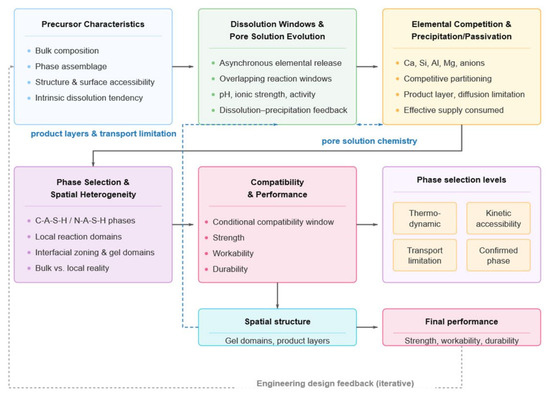
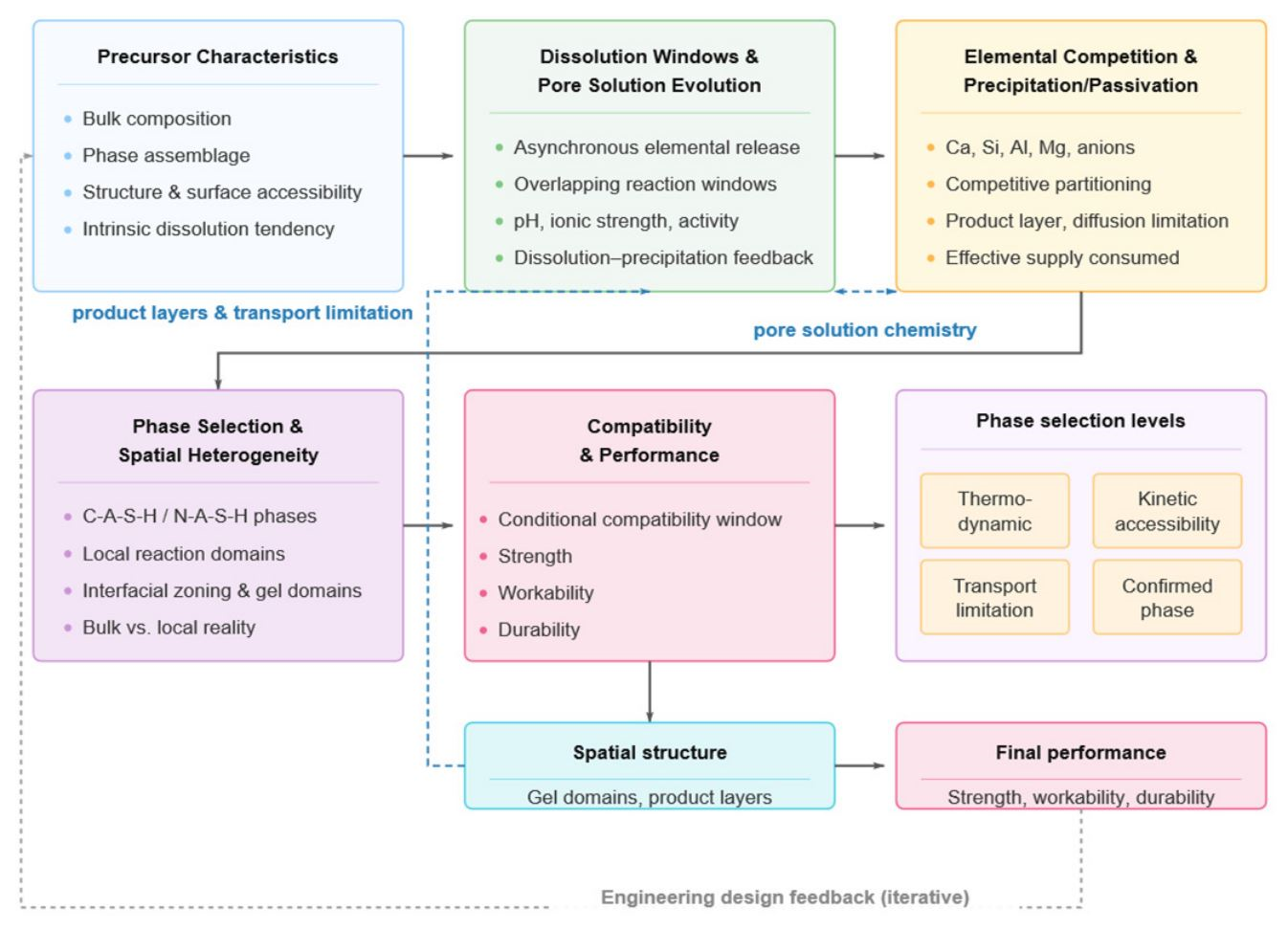
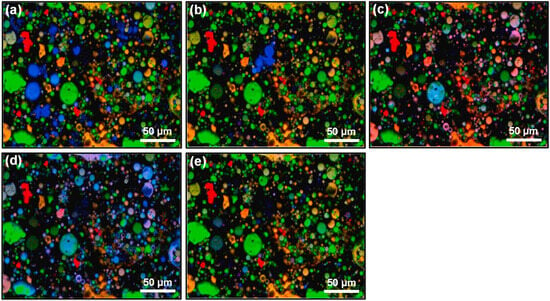
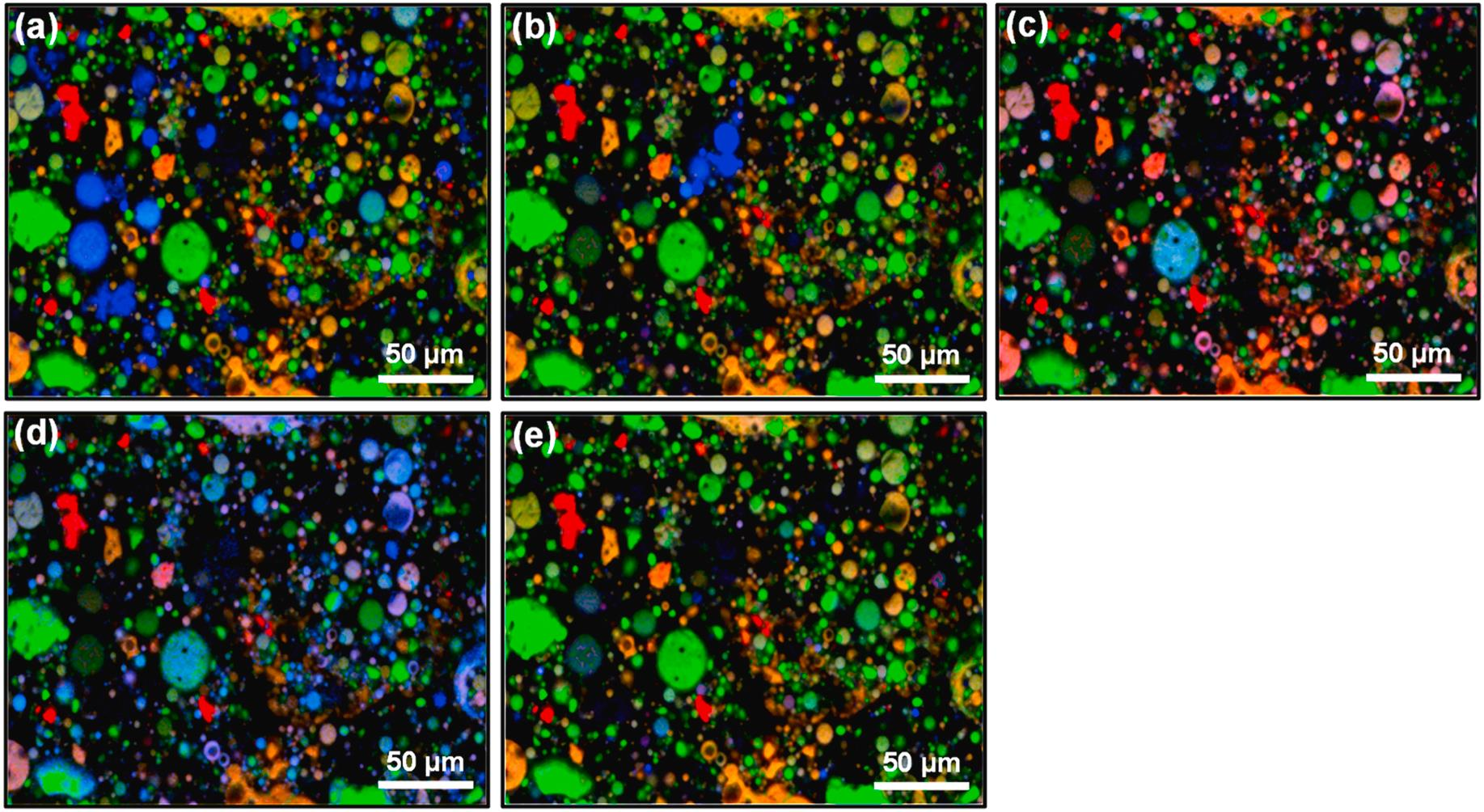
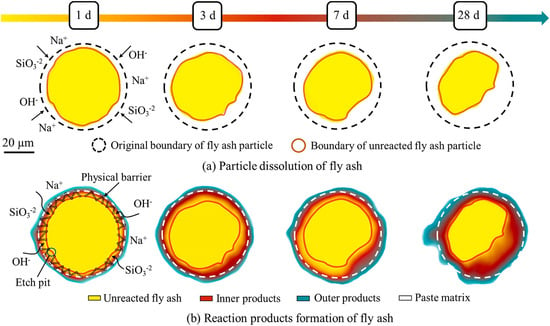
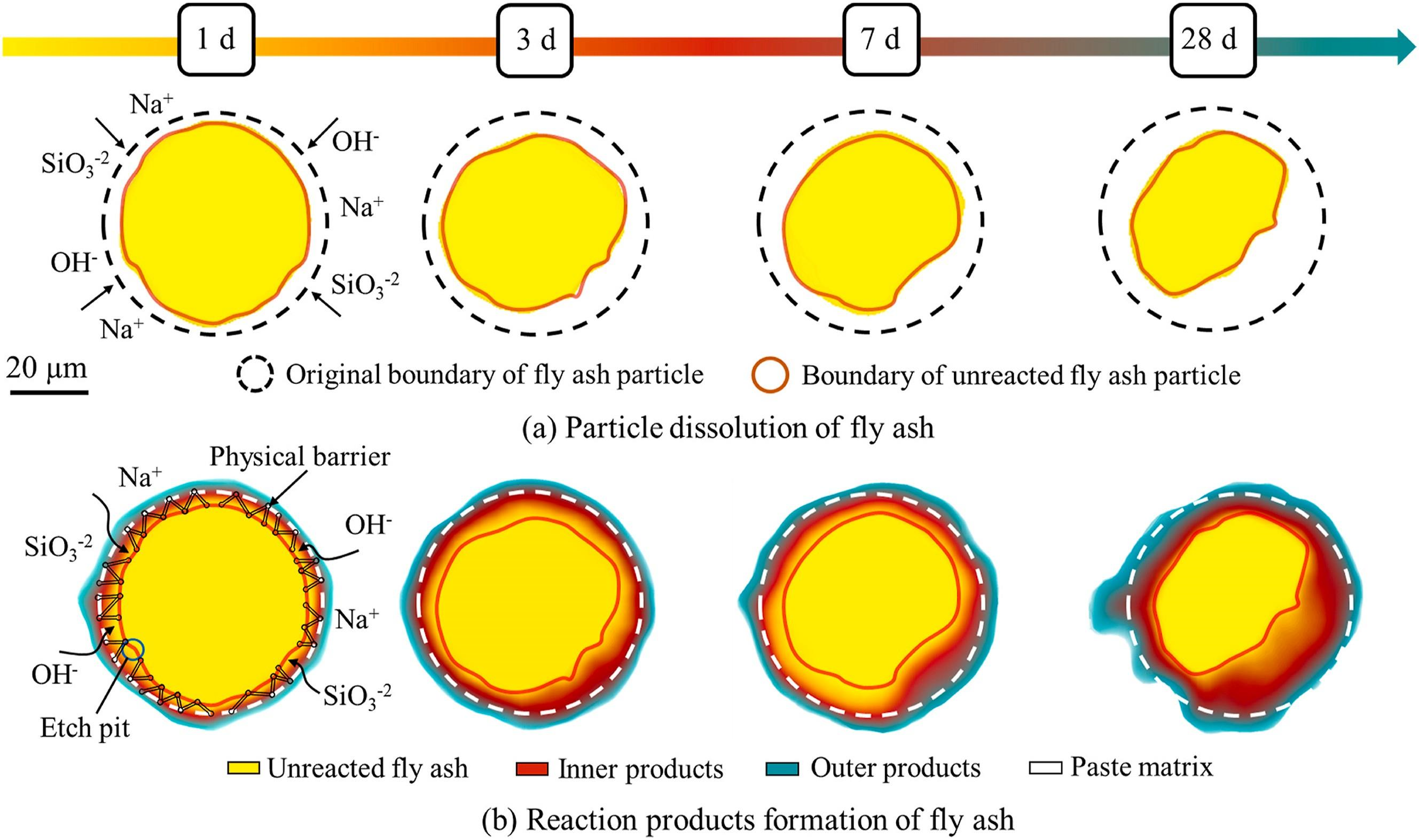
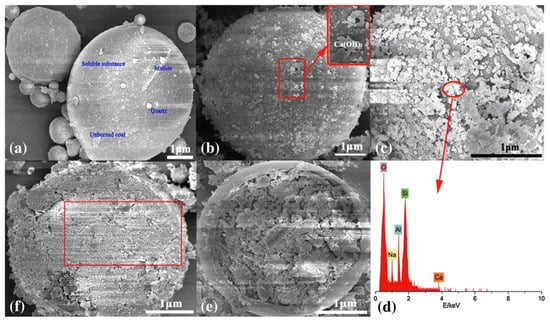
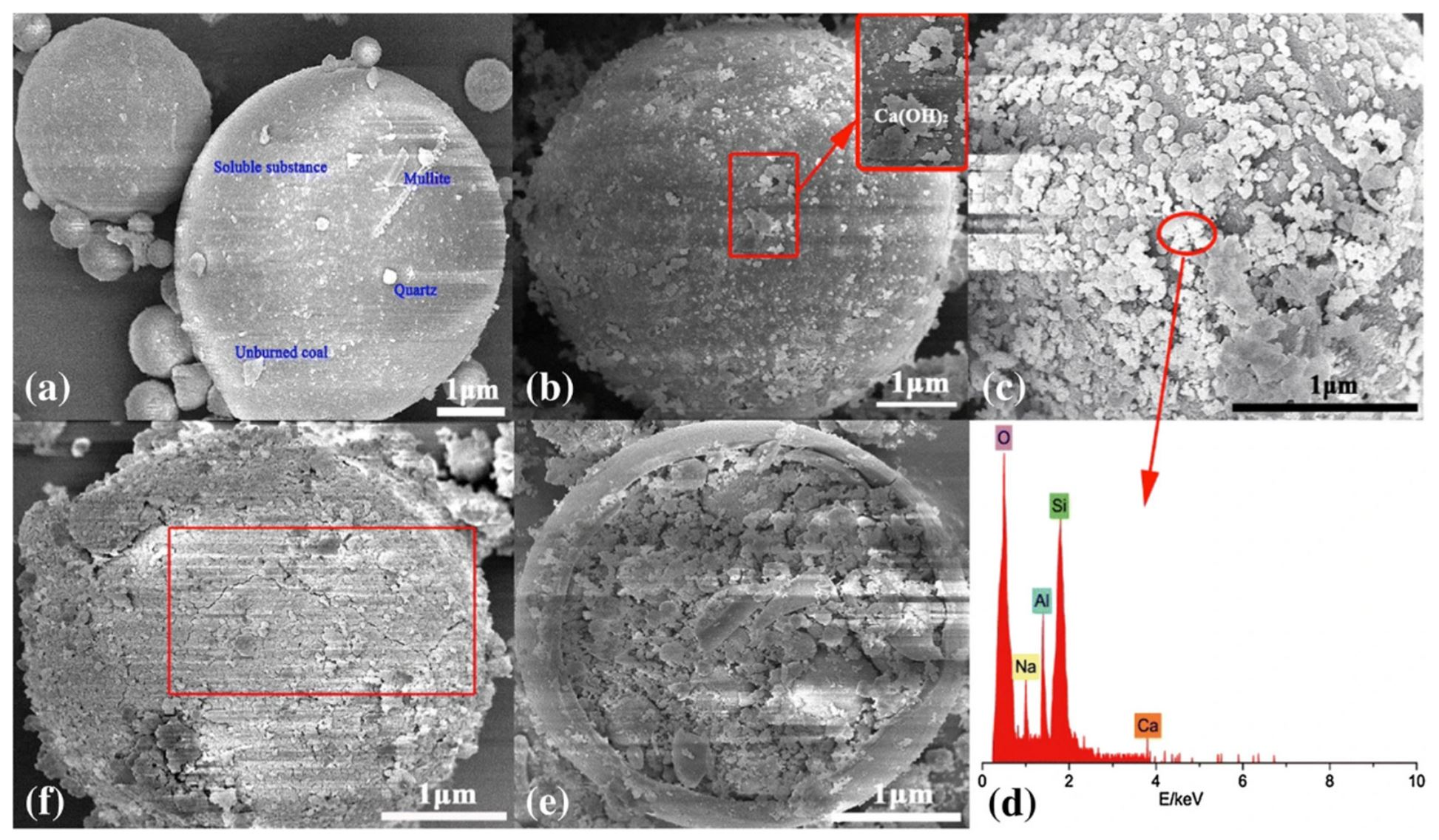
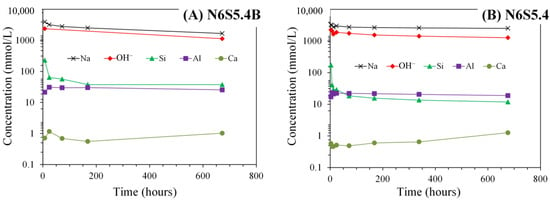
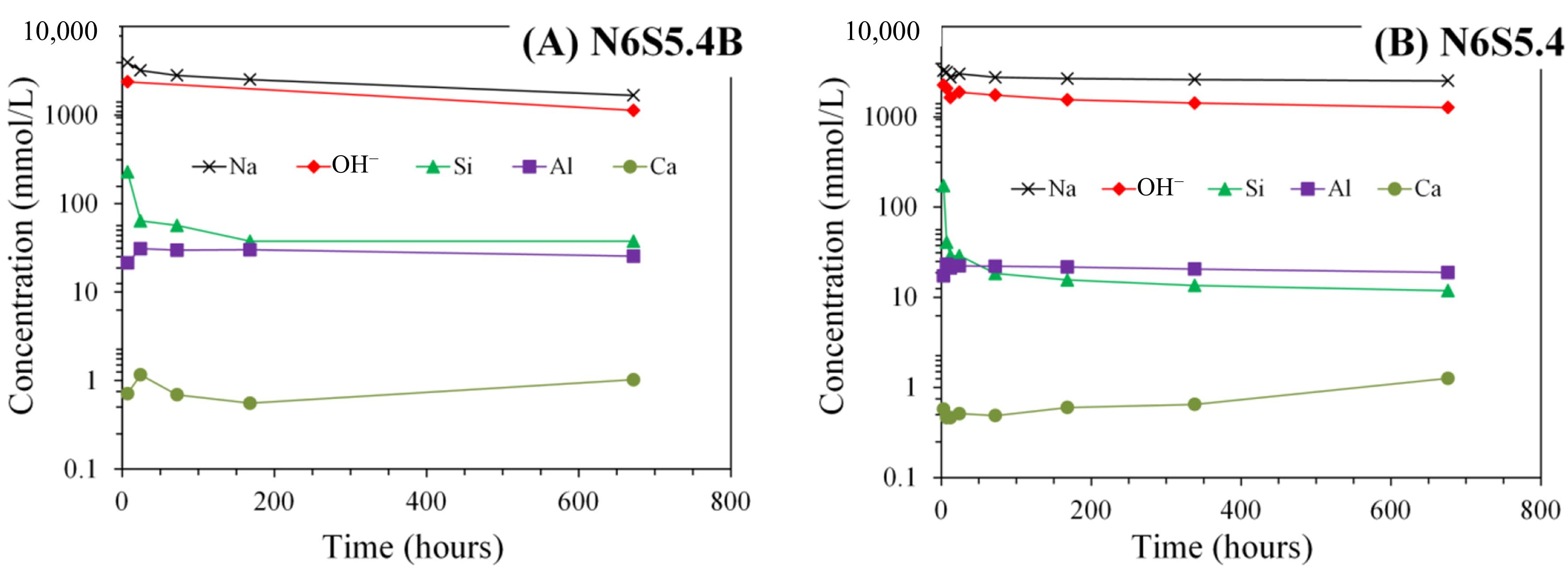
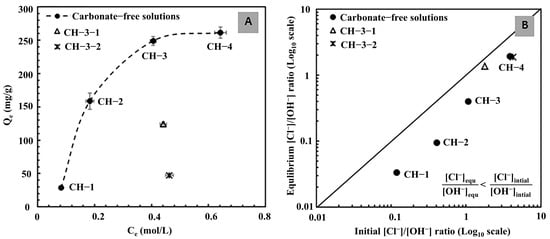
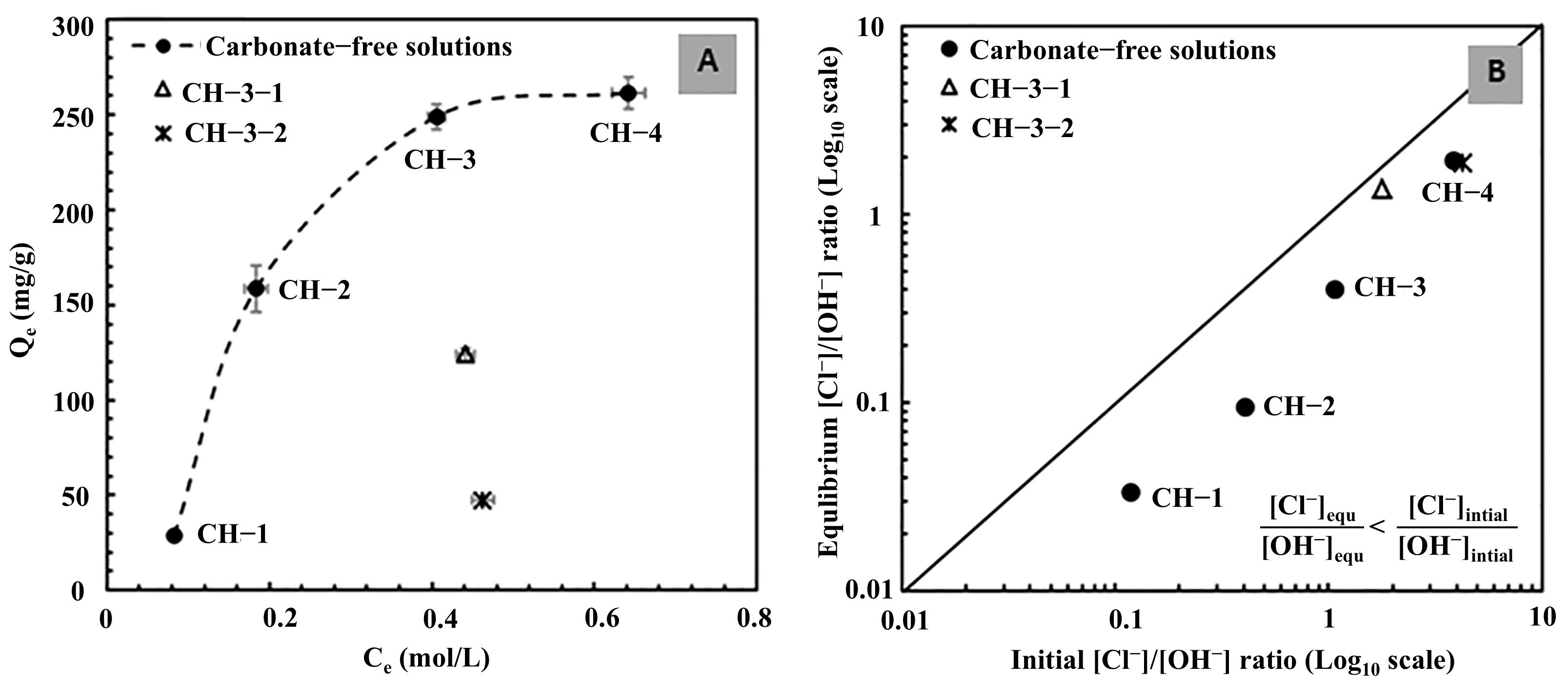
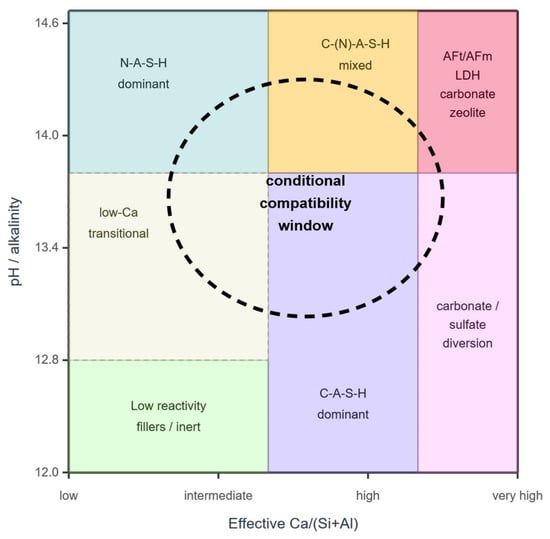
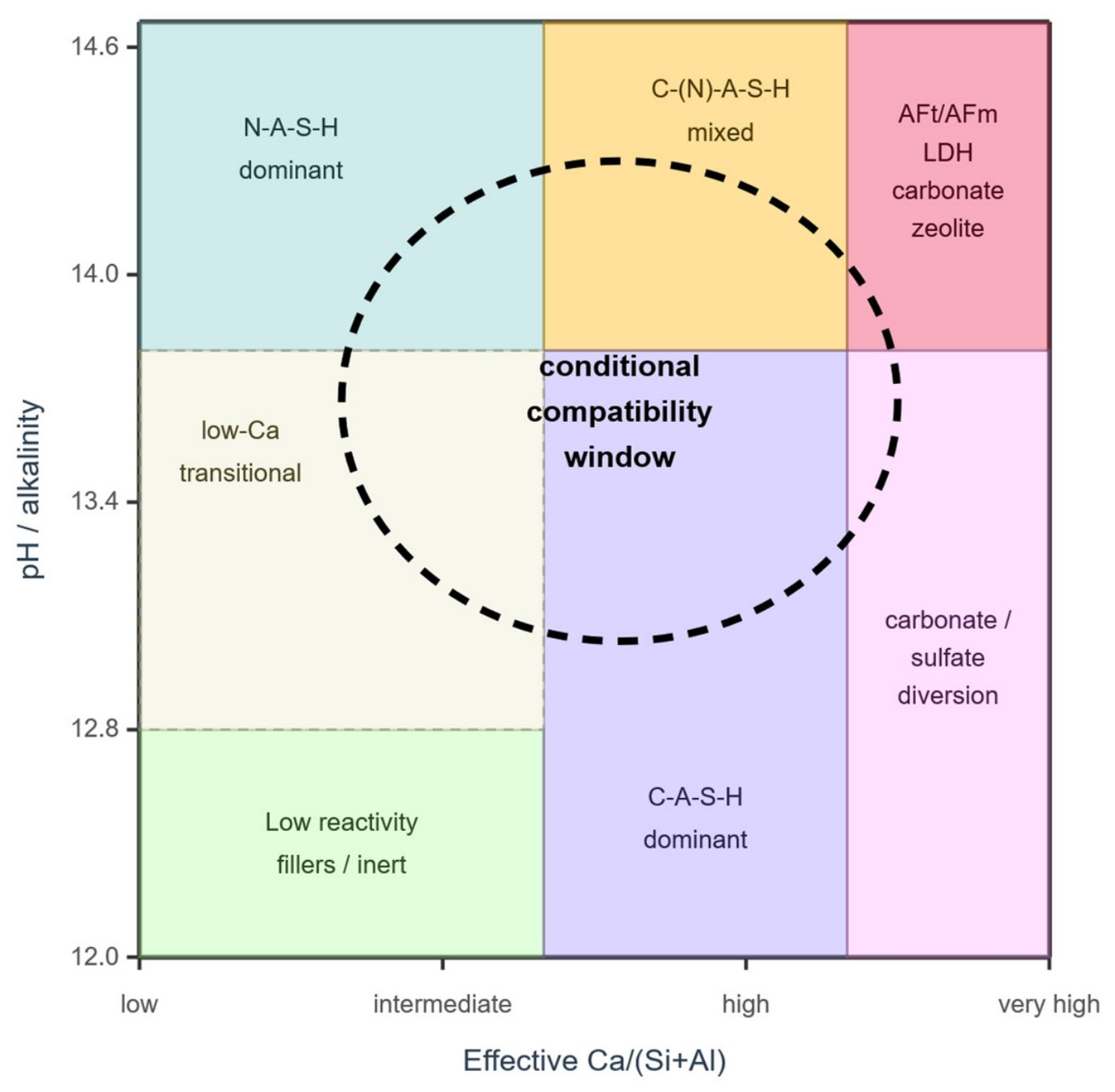
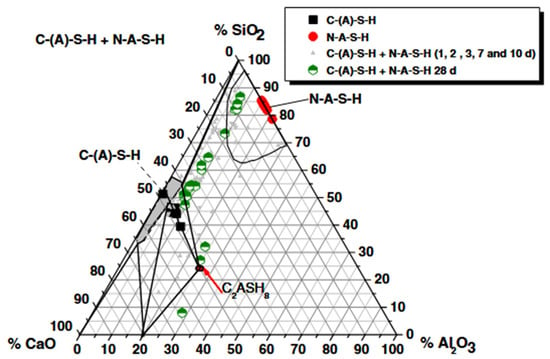
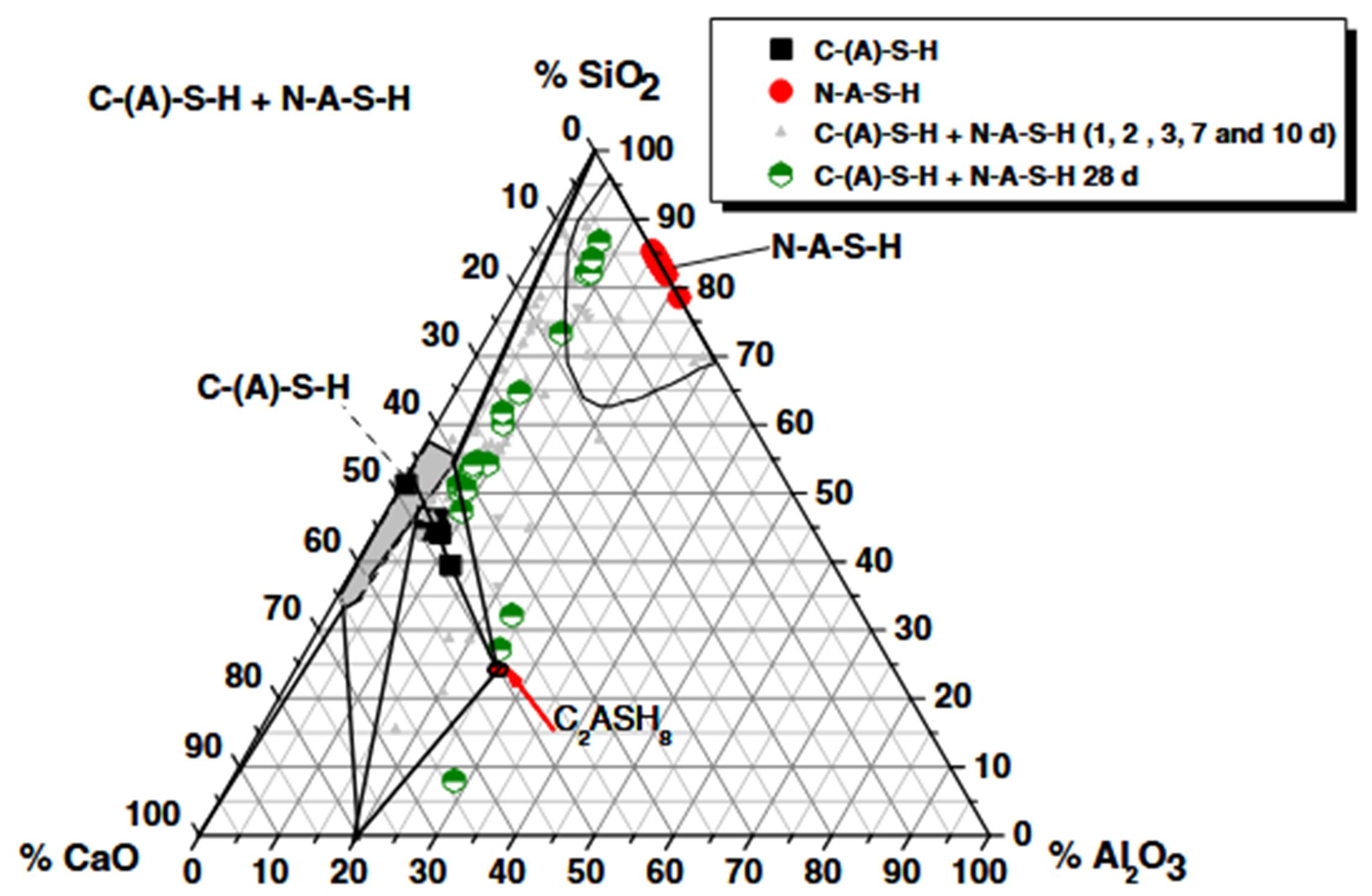
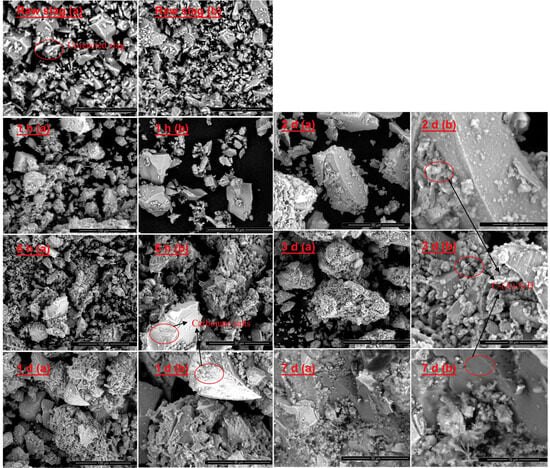
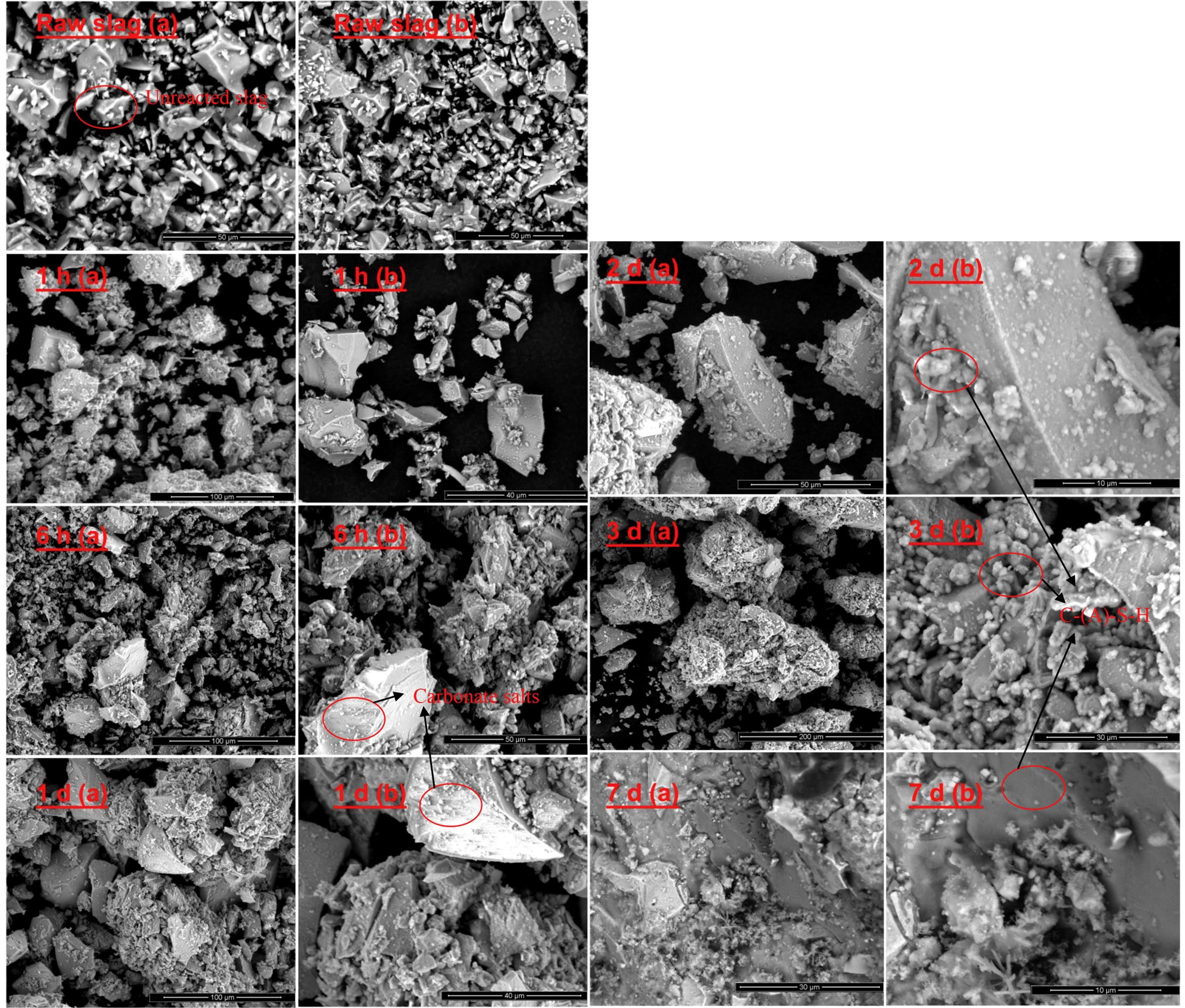
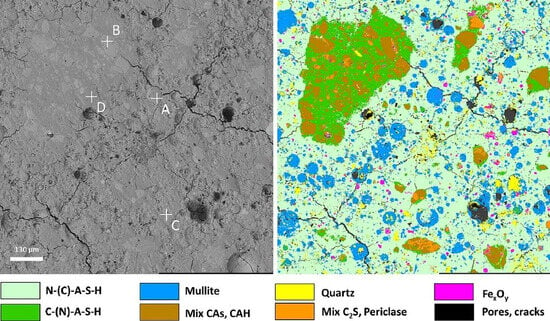
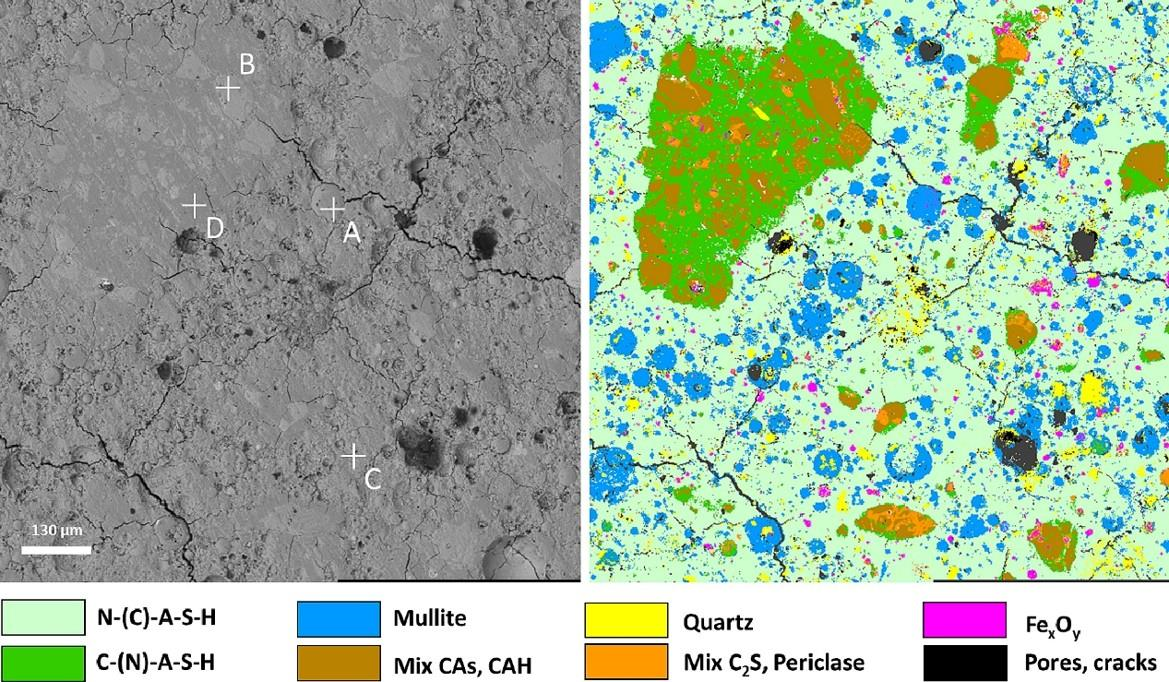

Disclaimer/Publisher’s Note: The statements, opinions and data contained in all publications are solely those of the individual author(s) and contributor(s) and not of MDPI and/or the editor(s). MDPI and/or the editor(s) disclaim responsibility for any injury to people or property resulting from any ideas, methods, instructions or products referred to in the content. |
© 2026 by the authors. Licensee MDPI, Basel, Switzerland. This article is an open access article distributed under the terms and conditions of the Creative Commons Attribution (CC BY) license.