


Abstract
In a context marked by the transition toward circular economy (CE) strategies and increasingly stringent environmental regulations, selecting appropriate construction products during the design phase remains a major challenge. Despite advances in life-cycle assessment (LCA) studies and multicriteria decision analysis (MCDA) methods for sustainable construction material selection, the systematic screening and ranking of construction products based on national environmental databases and product-level circularity attributes remain insufficiently explored. This study proposes a data-driven framework based on French Environmental Product Declarations (EPDs) from the INIES database, structured according to RE2020 construction categories. The methodology combines circularity-related and environmental impact criteria within a TOPSIS (Technique for Order Preference by Similarity to Ideal Solution) model. Two case studies are analyzed under several weighting scenarios reflecting different decision priorities. The results show that some alternatives maintain relatively stable rankings across different scenarios, while others exhibit variations depending on criterion weights. These findings highlight the influence of decision-makers’ preferences on product selection processes and the importance of considering both environmental and circularity dimensions in assessments. Overall, the proposed framework provides a structured approach to support construction product selection in the French context and contributes to integrating circularity considerations at the product level.
1. Introduction
The construction sector remains the world’s largest contributor to resource depletion and environmental degradation [1]. In France, the building sector is responsible for 44% of total energy consumption [2] and accounts for around 23% of national greenhouse gas (GHG) emissions [3] when the full life cycle is considered, including the production of materials, the construction activities, and the operational phase of buildings. Additionally, the building sector represents 19% of total national waste production, generating 42 million tons of waste annually [4]. These figures underscore the urgency of shifting toward more sustainable approaches in the design and construction of new buildings [5].
In recent years, the concept of the circular economy (CE) has gained traction among researchers, industry practitioners, and policymakers [6]. It has emerged as an alternative to the traditional linear “take-make-dispose” model. The CE allows for minimizing resource input and waste generation by slowing, narrowing, and closing material and energy loops [7]. It can be implemented through various strategies, including maintenance, repair, reuse, refurbishment, remanufacturing, and recycling. In the building sector, the integration of circularity strategies from the early design phase is particularly critical [8], as design decisions can significantly influence the environmental performance of buildings. In particular, the judicious selection of construction products can play a pivotal role in increasing the potential for reuse and recycling, hence reducing embodied carbon and improving long-term environmental outcomes in the built environment.
Traditionally, construction products in building projects have been selected mostly based on technical specifications and economic constraints, such as mechanical strength or cost [9]. However, the environmental impacts associated with materials throughout their life cycle are often overlooked in conventional approaches [10]. In more advanced engineering decision-making, a broader set of factors must be considered in the product selection process, including both functional and performance requirements, as well as intrinsic material attributes [11]. Moreover, the diversity of building components, each having distinct lifespans and end-of-life scenarios, amplifies the complexity of material selection. Considering end-of-life assumptions from the early design phase is therefore essential, especially when aiming to align with CE strategies in the construction sector. For instance, if carbon sequestration is prioritized, bio-based materials are preferred, while reusable materials can enhance building adaptability and reversibility. These considerations introduce additional challenges that require balancing environmental impact, technical performance, and long-term sustainability.
In this context, several standards, certifications, and regulatory frameworks have been developed in recent years at both regional and national scales to promote the implementation of CE principles in the construction sector [12]. In France in particular, the new environmental regulation RE2020 includes strict requirements aimed at reducing the carbon footprint of new buildings and encouraging the use of materials with biogenic carbon storage potential [13]. To support this regulation, the national INIES database is being developed and extended to include a greater number of construction products and equipment. It is managed by the Centre Scientifique et Technique du Bâtiment (CSTB) and provides quantified environmental data for many construction products and equipment (CPE) through Environmental Product Declarations (EPDs) [14]. These declarations include the environmental performance of products, allowing professionals to compare alternatives. The environmental indicators described in INIES are based on life-cycle assessment (LCA), a reproducible and standardized methodology for analyzing the environmental impacts of products and services across their life cycle, from raw material extraction to end of life [15,16,17]. Although LCA is a comprehensive management tool, it does not provide simple, straightforward guidance for material selection in complex decision-making contexts such as building projects.
To overcome the multidimensional challenges of material selection in the construction sector, multicriteria decision-making (MCDM) methods have emerged as complementary tools for interpreting LCA outcomes [18,19]. These methods offer practical and powerful tools that support decision-makers when multiple and sometimes conflicting criteria must be considered simultaneously by providing informed recommendations from a finite set of alternatives or solutions evaluated from multiple perspectives [20,21,22]. The choice of MCDM method depends on the type of problem and the preferences of decision-makers [23,24,25]. In general, there are two main approaches: multi-objective decision-making (MODM) and multi-attribute decision-making (MADM). The primary distinction between them lies in the type of decision problem they are designed to address. MODM methods are associated with problems in which alternatives are not predetermined, and they aim to design the optimal alternative by considering a set of well-defined constraints with quantifiable objectives [26]. MADM methods are applied to discrete decision problems, aiming to choose one alternative from a finite set of options, each evaluated based on multiple attributes [27].
In the construction sector, MADM methods are particularly relevant for design decisions due to their ability to generate effective and sustainable solutions [28]. Among them, AHP (analytic hierarchy process) and TOPSIS (Technique for Order Preference by Similarity to Ideal Solution) are the most widely employed techniques in the literature [29]. These approaches have been applied across a wide range of contexts and for different purposes [30]. Several works focus on material selection and product competitiveness, using methods such as AHP, fuzzy AHP, and TOPSIS to compare different construction material alternatives based on sustainability-oriented criteria [31,32]. Other contributions focus on the durability and performance assessment of construction systems to evaluate the trade-offs between cost and performance under varying operational conditions [33]. In parallel, Khoshnava et al. [34] emphasize the development and structuring of sustainability criteria rather than direct material ranking, employing techniques such as DEMATEL (Decision-Making Trial and Evaluation Laboratory) and FANP (fuzzy analytic network process) to explore interdependencies among environmental, economic, and social dimensions. Finally, MADM has also been applied to enhance energy efficiency and optimize thermal performance through innovative materials such as phase-change materials (PCMs) using integrated approaches combining TOPSIS-CORPAS (Complex Proportional Assessment) and VIKOR (multicriteria optimization and compromise solution) [35].
Nevertheless, despite the potential of LCA and MADM methods and their widespread application in construction decision-making, a specific gap remains [36,37]. The literature shows that most MADM studies aiming to address the three pillars of sustainability primarily rely, in practice, on environmental indicators, with limited consideration of social and economic dimensions [9,38,39]. Moreover, although circular economy principles are increasingly discussed in construction material assessment, the integration of relevant circularity-related criteria with environmental impact indicators remains insufficiently explored [40]. In addition, existing studies often assess a limited set of predefined material alternatives, whereas the systematic use of national databases to screen and compare multiple real construction products within a specific regulatory context has received limited attention. However, in the French context, the INIES database and the RE2020 regulatory framework are not specifically designed to provide a systematic procedure for identifying the most appropriate construction products among several alternatives with potentially conflicting profiles. To address these gaps, the present study aims to develop a structured decision-making framework for selecting construction products from the INIES database for new building projects in France that are subject to the RE2020 regulation. The framework incorporates both environmental impact indicators and circularity-oriented criteria derived from life-cycle assessment via the application of the TOPSIS method.
This article is structured as follows. Section 2 describes the proposed methodological framework. Section 3 presents the application of the method to two different case studies related to insulation materials for exterior walls and floor finishing materials. The results of this study are discussed in Section 4, highlighting the key findings and limitations of the method. Lastly, Section 5 presents the main contributions of this paper and future research directions.
2. Methodology
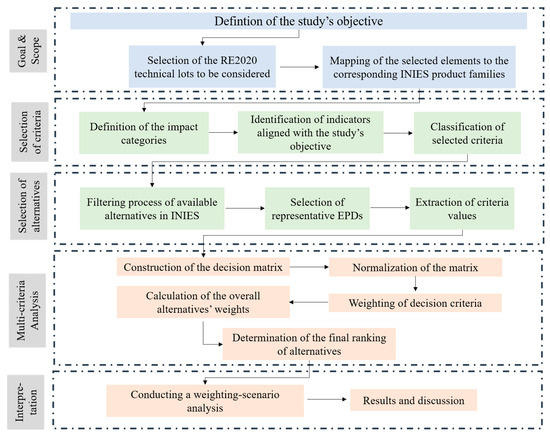
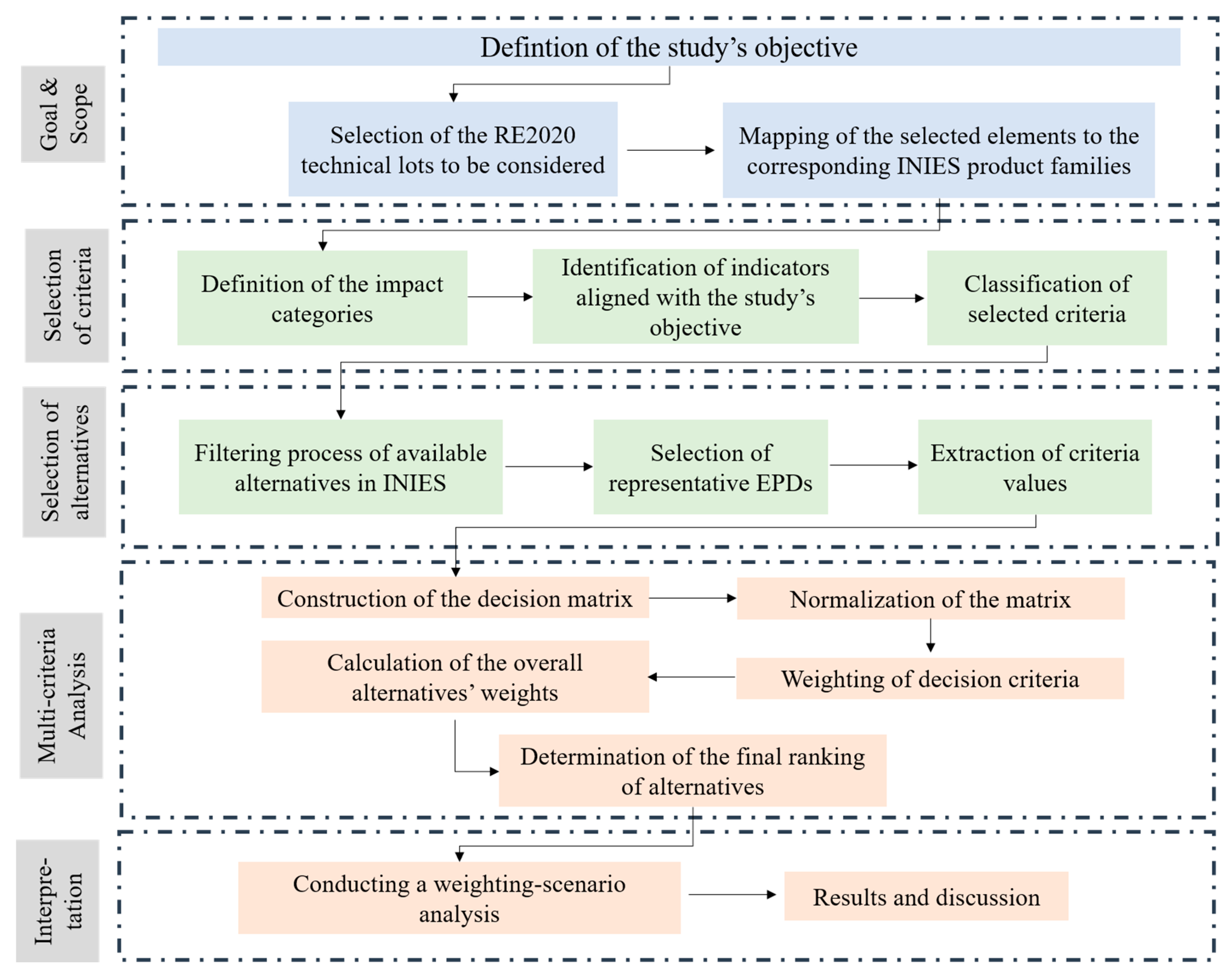
The methodological framework developed in this study is summarized in Figure 1. It is organized into five main steps: (i) defining the goal and scope of this study, including the system boundary, target users, assumptions, and limitations of the analysis; (ii) identifying the impact categories and selecting the criteria for the decision-making process; (iii) filtering the product alternatives and extracting data from the INIES database; (iv) performing the multicriteria analysis using the TOPSIS method; and (v) interpreting the results by conducting a weighting-scenario analysis. Each step is described in more detail in the following sections.
Figure 1.
Methodological workflow.
2.1. Scope and Study Framework
The objective of this study is to support decision-makers in selecting and comparing multiple construction products. It covers a full cradle-to-grave system boundary, where all phases of a product’s life cycle are considered, from raw material extraction to transportation, manufacturing, construction, operation, and end of life, with the possibility of testing different end-of-life scenarios (recyclability, reusability, etc.).
The decision-making process follows the classification of products as defined by the RE2020 environmental regulation, which categorizes CPE into 13 technical lots, each corresponding to a specific family of products. As most eco-design studies and multicriteria analyses of construction materials focus on elements such as walls, ceilings, floors, doors, and windows [41,42,43], this study focuses on five specific lots from RE2020, as shown in Table 1: superstructure and masonry (Lot 3); roofing and waterproofing (Lot 4); partitioning, suspended ceilings, and internal joinery (Lot 5); facades and external joinery (Lot 6); and floor, wall, and ceiling finishes (Lot 7).
Table 1.
RE2020 technical lots.
The different lots were selected for several reasons. First, Lots 3, 4, and 6 represent key components of the building envelope, and they benefit from extensive EPD coverage in the database, enabling a relevant comparison of construction materials. Second, Lots 5 and 7 were also included due to their substantial contribution to the overall material composition of buildings and their essential role in ensuring interior comfort and design. In addition, they offer a variety of substitute products (insulation elements, material finishes, etc.), which is ideal for a multicriteria process. In contrast, several lots were excluded from the analysis. Under the RE2020 regulation, some lots are defined as standardized (Lots 8, 10, and 11) and represented by default values, which reduces their relevance in a multicriteria assessment. Other lots, such as 1, 9, and 12, correspond to specific technical installations and networks and are therefore not suitable for construction product selection. Finally, Lot 2 mostly involves structural concrete components, for which available EPDs are predominantly collective EPDs, restricting the possibility of comparing distinct alternatives.
In summary, the retained lots provide reliable data across a variety of alternatives and correspond to some of the most impactful contributors in terms of CO2 emissions, resource consumption, and end-of-life considerations, making them strategic priorities for circular and low-carbon building design. To demonstrate the applicability of the proposed methodology, two representative case studies of construction products are examined in Section 3.
2.2. Selection of Criteria
The selection of criteria for the decision-making process relied on the indicators available in the national INIES database, which provides information mainly according to the EN 15804+A2 framework [44]. INIES distinguishes five main categories: environmental impacts; resource consumption; waste production; output flows; and biogenic carbon storage. Each category includes several indicators. The environmental impact category includes a set of midpoint indicators that quantify and reflect specific environmental mechanisms, such as climate change, abiotic resource depletion, water consumption, or material recovery potential. Among these data categories, a set of five indicators was selected to serve as the decision-making criteria. These indicators are most closely aligned with the objectives of this study. The five indicators are described below and summarized in Table 2:
Table 2.
Dimensions and criteria considered in this study.
- Global warming potential (GWP) is a central indicator in INIES and the RE2020 regulation, reflecting the contribution of each product to climate change through greenhouse gas emissions. In addition, it was identified as the most frequently used impact category in the literature [18,45].
- Biogenic carbon storage, which measures the amount of carbon temporarily stored in the material during its use phase, is used specifically for bio-based materials [46].
- Use of secondary materials quantifies the percentage of recycled content incorporated in the product and provides an indication of resource circularity at the production stage. The importance of this indicator is that it reduces the consumption of raw materials, which preserves natural resources and protects the environment [47,48].
- Reuse potential assesses the ability of a product to maintain its technical and functional characteristics after dismantling and to be reused at end of life, thereby extending its lifespan beyond the first building application [49,50].
- Recycling potential estimates the fraction of material that can be recovered and reintroduced into production cycles, reducing the demand for virgin resources and closing material loops [37,51].
Together, these criteria provide a balanced view of both climate-related impacts and circularity-oriented indicators. They support a multidimensional assessment of construction products by capturing not only their environmental footprint but also their capacity to contribute to resource efficiency, material recovery, and low-carbon building strategies.
2.3. Selection of Alternatives
For each of the previously selected technical lots (Table 1), a set of construction product families was identified. These families included products of similar types but with distinct characteristics, such as the manufacturer, type of EPD (individual or collective), or standards used for impact assessment (A1/A2). To ensure a diverse sample of alternatives and a consistent and robust dataset, a filtering process was performed on each product family available in the INIES database. It was based on the following factors:
- Only individual EPDs were considered, as they are preferred over collective declarations or default data and recommended by the INIES database [52]. They provide more reliable and traceable environmental information linked to specific manufacturers or declaring organizations.
- EPDs compliant with the NF EN 15804+A2 standard were selected [44], as this version reflects the latest European regulatory framework for environmental product declarations. It provides stricter calculation rules, updated life-cycle impact assessment (LCIA) methods, and additional impact categories (such as resource use, acidification, land use, etc.), enabling transparency and comparability across products. This A2 version is also increasingly required under the RE2020 regulation, and it is now compulsory for future publication in the INIES database.
- Given the five-year validity limit of EPDs in INIES, only those valid beyond 2028 were retained in the study to guarantee the long-term applicability of the data and the continued relevance of the selected products.
- The analysis was restricted to products manufactured in France to maintain alignment with the national regulatory framework and the geographical scope of the INIES database.
- EPDs exhibiting statistically atypical values within the same product family were excluded. Potential outliers were identified using the interquartile range (IQR) method for the GWP and recycling potential criteria. For each parameter, the first quartile (), third quartile ( and interquartile range were calculated. Values below or above were considered statistical outliers, and the corresponding EPDs were therefore excluded from the subsequent assessment.
- EPDs with similar installation techniques (e.g., bonded or mechanically fixed) were retained to ensure methodological consistency.
- Diversity across product families was maintained to ensure that the comparative evaluation covered a broad spectrum of solutions available on the market, avoided bias toward specific materials, and ensured that all criteria were meaningfully represented, given the significant performance differences between product families.
After this filtering stage, it was essential to identify one representative EPD for each product family before proceeding with the multicriteria analysis. Since all indicators in the EPDs are expressed according to each product’s functional unit (FU) and other technical characteristics, direct comparisons of alternatives are not meaningful. Therefore, all extracted data were first normalized on a common basis.
First, normalization was performed by adjusting the values of each indicator according to the relevant technical performance of the product. For example, when the insulation-related EPDs corresponded to different thermal resistance (R) values, the indicator values were normalized by the corresponding R-value of each EPD. Additionally, when service lives differed between EPDs, a second normalization of the indicator values was required to ensure consistency and comparability on a per-year basis.
Although several criteria are considered in the decision-making model, the environmental midpoint indicator “climate change or global warming potential (GWP)” was chosen as the reference parameter for this preselection of representative EPDs [43], as it is relevant and consistently reported in all EPDs.
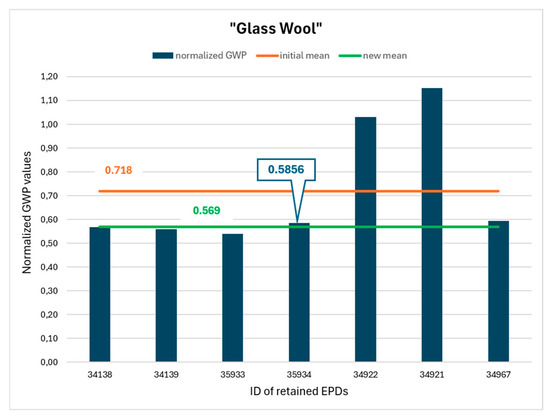
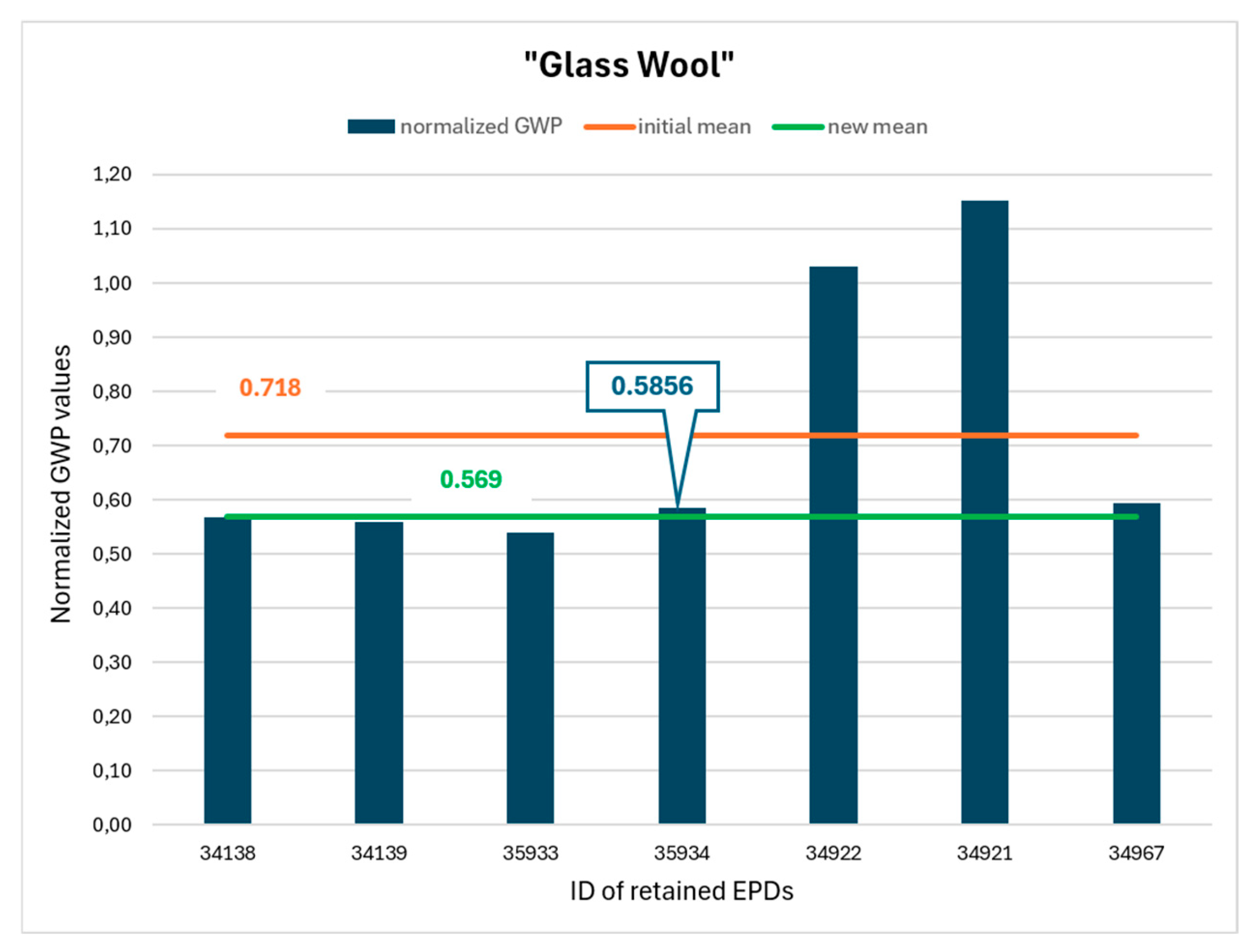
For each product family, the normalized GWP values of all retained EPDs were used to calculate both the mean and standard deviation. All EPDs with values outside the interval defined by the mean ± standard deviation were excluded from the dataset to reduce discrepancies in the data. Based on the remaining data, new mean and standard deviation values were recalculated. As global warming potential constitutes a non-beneficial criterion, the representative EPD of each product family was selected as the alternative with the closest normalized GWP value above the updated mean. This conservative approach ensures that the selected EPD reflects a slightly higher environmental impact than the central trend of the dataset.
2.4. Justification and Description of the Selected TOPSIS Method
Having established both the evaluation criteria and representative alternatives, the methodology proceeds with the application of the selected TOPSIS method, which structures the decision-making process. First, TOPSIS is a ranking method [53] that uses Euclidean distance measures to identify the distance of each alternative from the positive ideal solution (PIS) and the negative ideal solution (NIS). The PIS is a hypothetical alternative formulated using the highest indicator value for a benefit-type indicator and the lowest indicator value for a cost-type indicator. Similarly, the NIS is formulated using the opposite logic [54]. Therefore, the fundamental principle of TOPSIS lies in selecting the alternative that simultaneously has the shortest distance from the PIS and the farthest distance from the NIS [55,56]. Additionally, TOPSIS is well-suited to handling quantitative indicators, and its widespread application in the construction sector facilitates comparison with other existing studies [57]. Finally, its simple computational process [58] and strong connectivity with other MCDM techniques in hybrid applications strengthen its relevance for selecting construction materials, enabling the simultaneous consideration of environmental, economic, and technical performance [30].
As with any other MCDA technique, TOPSIS has three main parts: (1) a set of alternatives A = {Ai|i = 1, 2, …, n}; (2) a set of criteria C = {Cj|j = 1, 2, …, m}; and (3) a set of criterion weights w = {wj|j = 1, 2, …, m}. They are presented through a decision matrix X = {xij|i = 1, 2, …, n; j = 1, 2, …, m} [59].
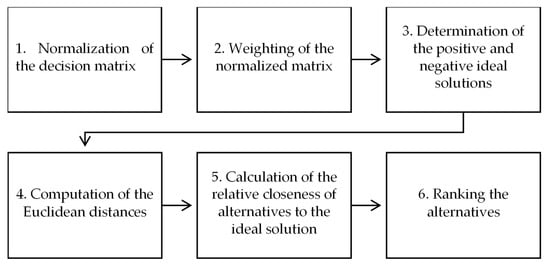
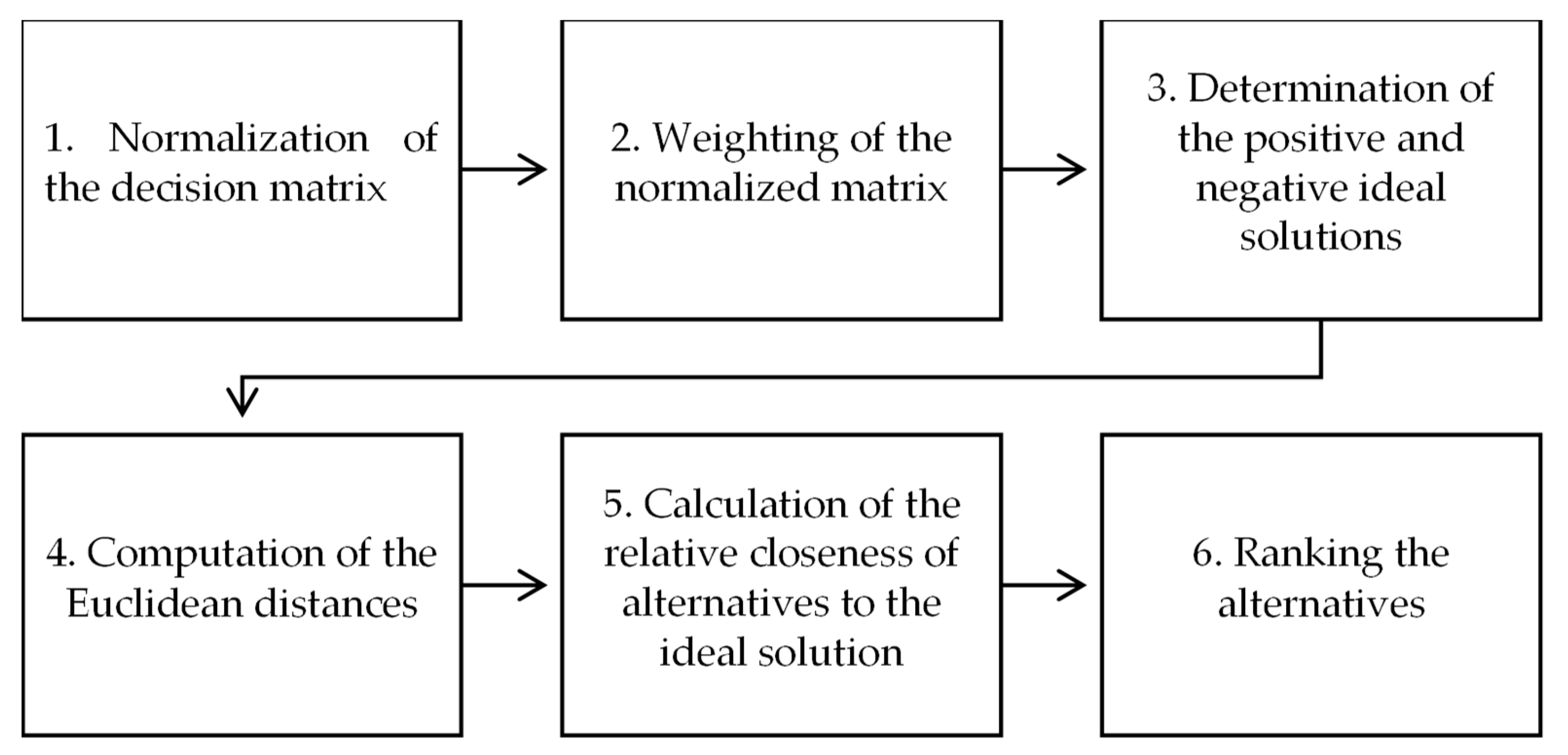
The fundamental steps of the method are summarized in Figure 2 [60].
Figure 2.
Steps of the TOPSIS method.
- Step 1: Normalization of the decision matrix.
Transform the decision matrix to a normalized form to simplify the comparison of the various criteria that have different units:
- Step 2: Weighting of the normalized matrix.
Attribute weight “wi” to each criterion based on its relative importance and then multiply each value in the matrix by its corresponding weight:
There are several methods in the literature used to assign weights to criteria. Some studies aim to generate objective weights without any human input, such as the use of the “entropy method” [61], while others adopt a more subjective approach, relying on expert judgment or project-specific logic.
- Step 3: Determination of the positive (A+) and negative (A−) ideal solutions.
For each criterion, identify the positive and negative ideal solutions according to the type of attribute (cost or benefit type):
where J+ and J− are the benefit and cost attributes, respectively.
For instance, in this study, GWP is the only non-beneficial criterion, while all other criteria are considered beneficial and should therefore be maximized.
- Step 4: Computation of the Euclidean distances E+ and E− from the ideal solutions.
Using the weighted normalized matrix, calculate the distance of each alternative from both the positive and negative ideal solutions to quantify how close each alternative is to the best solution.
- Step 5: Calculation of the relative closeness of alternatives Si to the ideal solution.
The closeness coefficient should be between 0 and 1:
- Step 6: Ranking the alternatives.
Based on their proximity to the ideal solution, alternatives with higher coefficient values are selected.
2.5. Decision-Making Scenarios
Since the ranking outcomes of TOPSIS may be influenced by the weighting scheme assigned to the different criteria, a weighting-scenario analysis was conducted to assess the robustness and stability of the model. Accordingly, several weighting scenarios (S0–S3) were subsequently developed (Table 3) to evaluate the influence of varying decision priorities on the final ranking of alternatives. These scenarios were defined by the authors to represent illustrative decision-making perspectives. Each scenario focuses on a specific decision perspective by emphasizing a particular criterion or category of criteria. An initial weighting scheme (S0) was defined as the reference scenario by assigning an equal weight of 0.2 to each criterion. This scenario enabled the evaluation of the model under neutral conditions before analyzing various weighting configurations in the subsequent study. Scenario 1 (S1) prioritizes carbon impact by assigning a dominant weight of 0.4 to the climate change indicator, widely considered the most critical environmental criterion, particularly in the context of life-cycle assessment in the construction sector [18,43]. Scenario 2 (S2) promotes a circularity-oriented approach, focusing on criteria that directly support the principles of resource looping and end-of-life valorization, such as secondary material use and recyclability. This scenario is intended to reflect a balanced circular strategy rather than focusing solely on carbon reduction. Finally, Scenario 3 (S3) highlights the contribution of materials capable of long-term carbon sequestration. It focuses on biogenic carbon storage, an often-undervalued criterion that can encourage the selection of bio-based materials. These weighting schemes are used to rank the various alternatives in the case studies described in the next section.
Table 3.
Weighting scenarios.
3. Case Studies
The previously described multicriteria decision analysis method (TOPSIS) was applied to all selected construction product lots. For simplicity, two different case studies are presented: Sub-Lot 6.1, which focuses on thermal insulation systems for external walls, and Sub-Lot 7.1, which concerns floor finishes. In this work, the service life adopted was 50 years, in accordance with EN 15978 [62] and common LCA practice in the construction sector. The system boundary included all stages of a product’s life cycle, from manufacturing and construction to end of life. The transportation distances, measured in kilometers, from the manufacturer’s location to the construction site by diesel truck, were also included.
3.1. Sub-Lot 6.1: Thermal Insulation Systems for External Walls
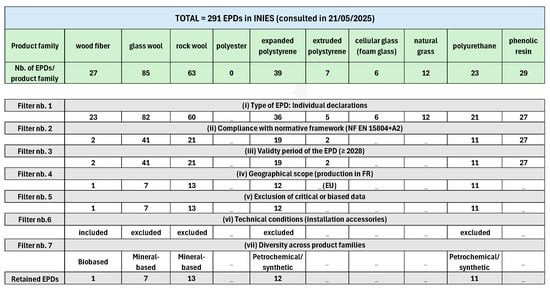
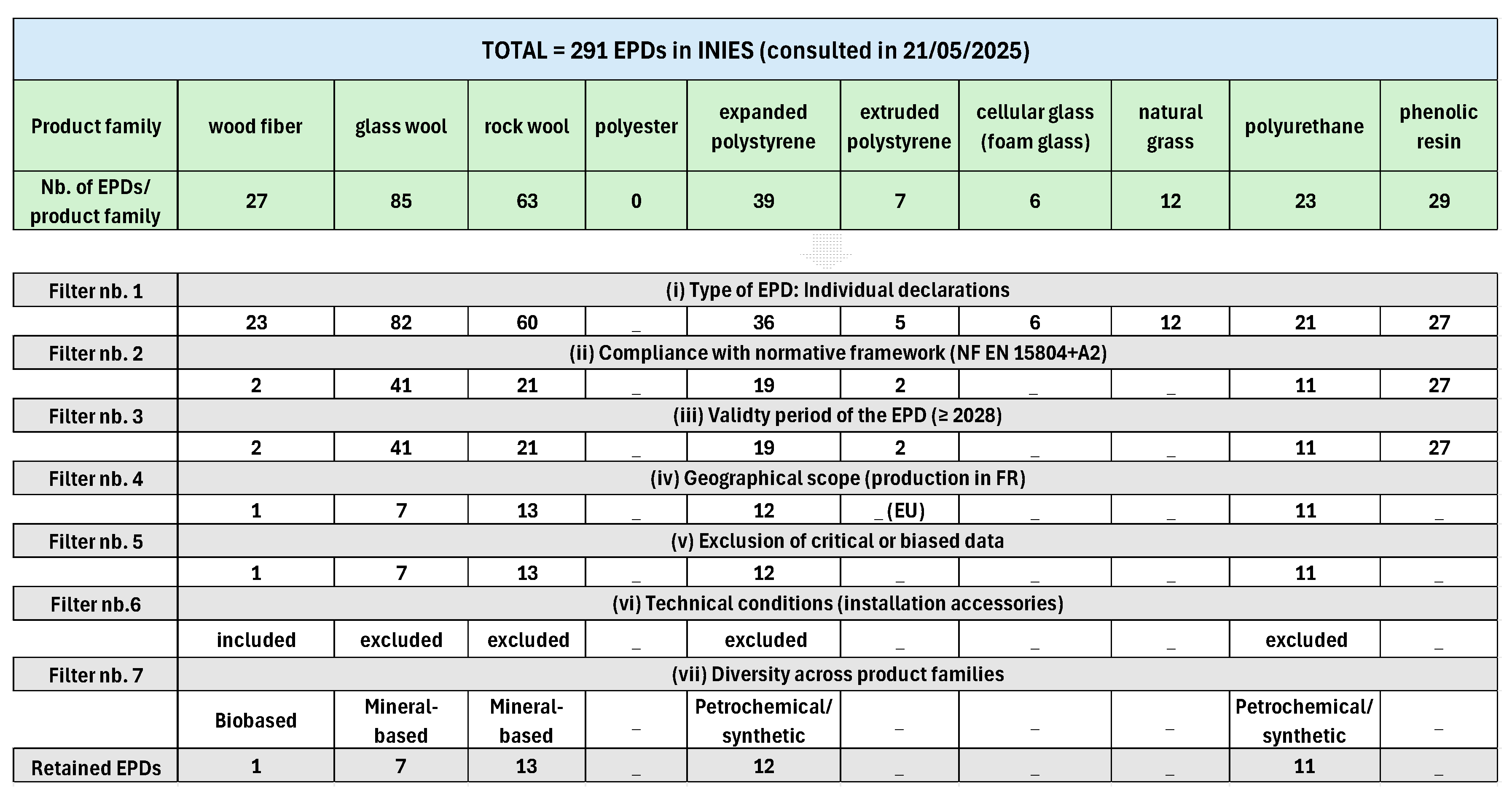
For Sub-Lot 6.1 (consulted in May 2025), the functional unit was defined as ‘1 m2 of insulated external wall’ in panel form, providing a thermal resistance of 1 m2.K/W over the 50-year reference period. The INIES database contained 291 EPDs, distributed across ten different product families (e.g., extruded polystyrene, mineral wool, polyester, wood fiber, etc.). To select relevant alternatives among this substantial number of EPDs, the systematic filtering process described in Section 2.3 was applied.
Figure 3 shows the number of EPDs retained for each product family in Sub-Lot 6.1 available in the database after all the filters were applied. Four product families met all the criteria established in this filtering process: glass wool, rock wool, expanded polystyrene, and polyurethane, which are either mineral-based materials or derived from petrochemical sources. Although the screened bio-based alternatives did not fulfill all filtering criteria, excluding them entirely would limit the representativeness of this study due to the importance of this product family in that context. Therefore, a wood fiber EPD was integrated into the analysis despite including installation accessories within its system boundary. To assess the robustness of this methodological choice, an additional analysis was conducted by excluding the wood fiber EPD from the set of alternatives. The procedure and outcomes of this analysis are provided in the Supplementary Materials.
Figure 3.
Filtering process applied to the EPDs of Sub-Lot 6.1.
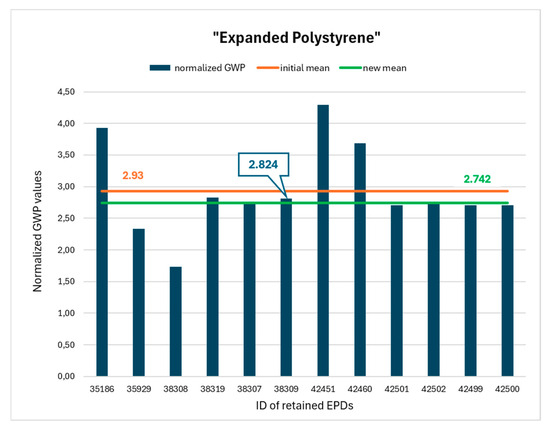
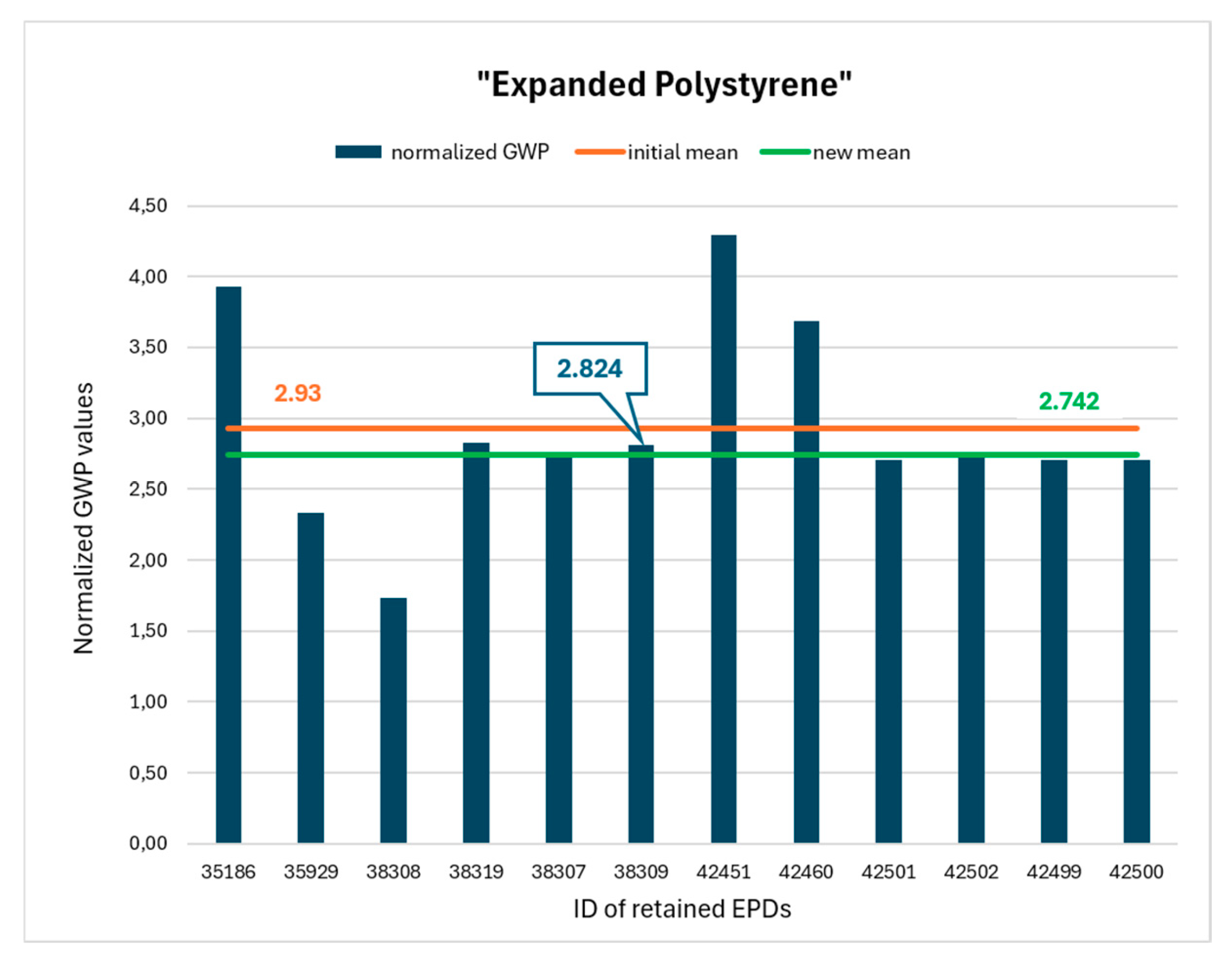
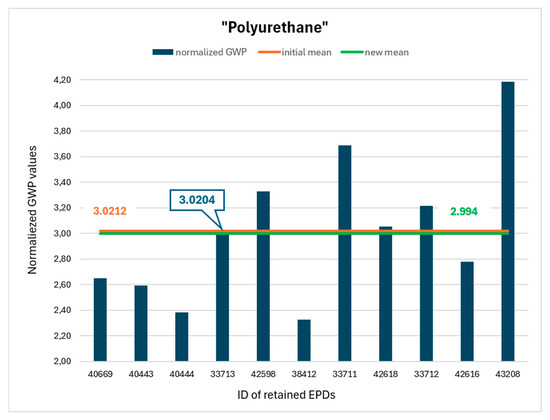
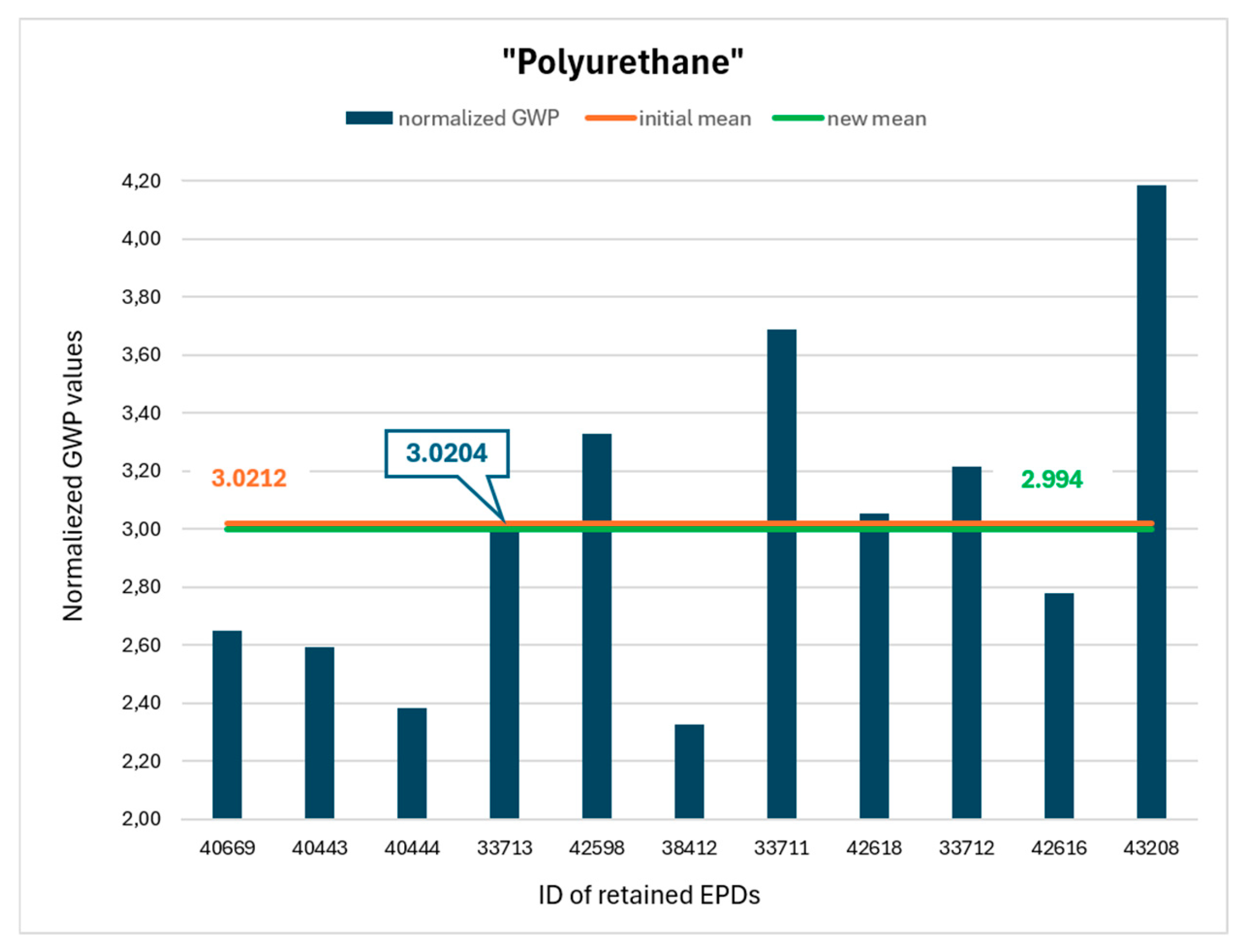
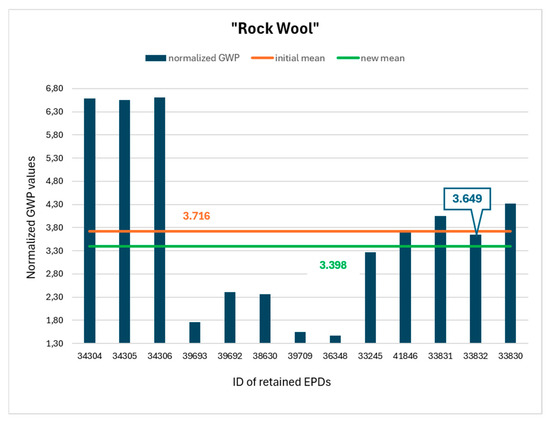
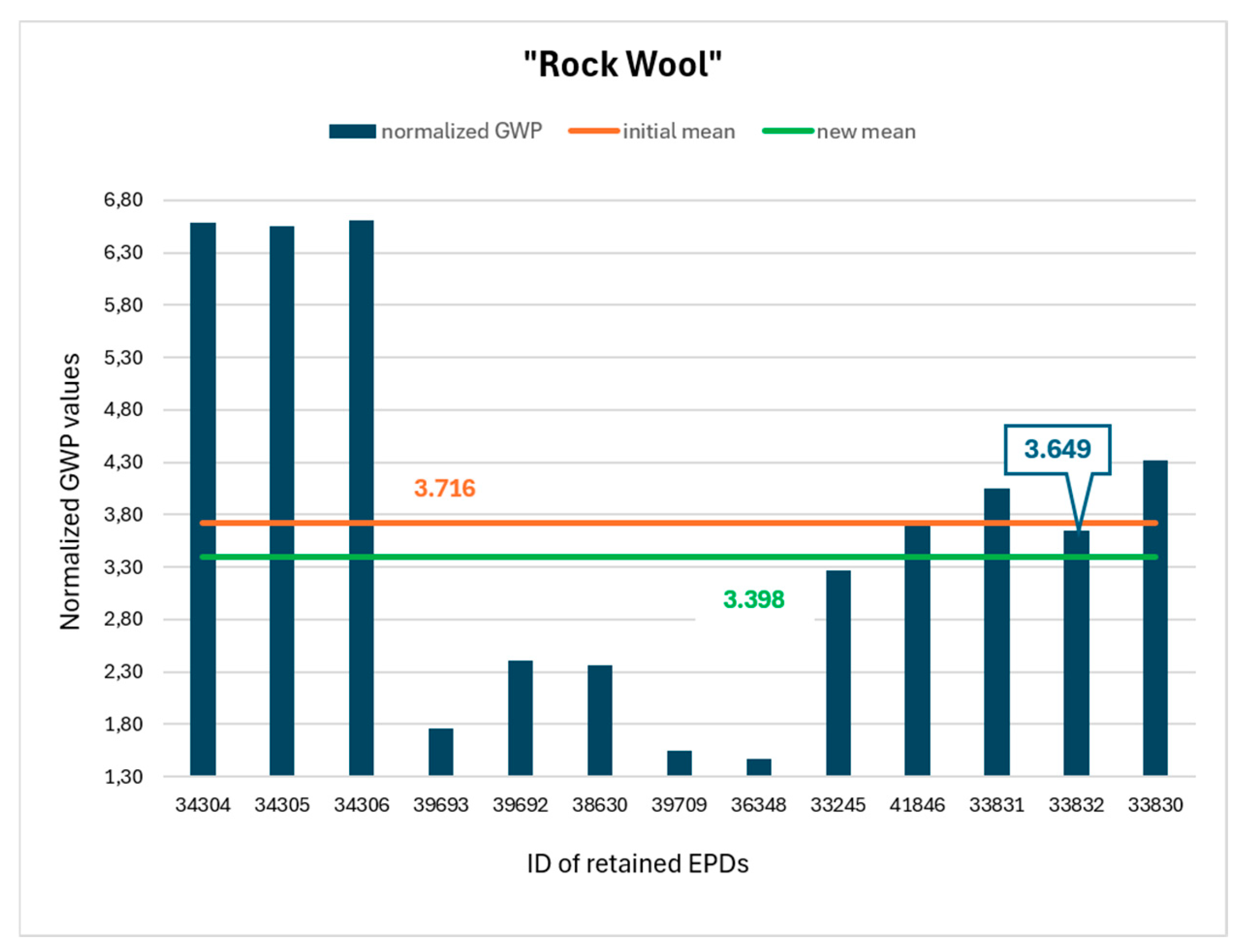
At this stage, the selection of one representative EPD for each of these four product families was essential. For instance, the filtering process identified 12 EPDs that satisfied all criteria for expanded polystyrene. Figure 4 shows that the initial mean of their normalized GWP values was 2.93. After excluding EPDs that were outside the interval defined by the mean ± standard deviation, a new mean of 2.742was computed. The closest EPD strictly above this new mean was retained, namely EPD 38309. The same procedure was applied to polyurethane, rock wool, and glass wool, and the selected representative EPDs are illustrated in Figure 5, Figure 6 and Figure 7, respectively.
Figure 4.
Selection of representative EPD (ID: 38309) for expanded polystyrene.
Figure 5.
Selection of representative EPD (ID: 33713) for polyurethane.
Figure 6.
Selection of representative EPD (ID: 33832) for rock wool.
Figure 7.
Selection of representative EPD (ID: 35934) for glass wool.
3.2. Sub-Lot 7.1: Floor Finishing Materials
For Sub-Lot 7.1 (consulted in September 2025), the functional unit was defined as ‘1 m2 of floor finishing material fulfilling its function over a reference study period of 50 years, including replacement where necessary’. A total of 369 EPDs were identified in INIES, including 186 for hard floor coverings, distributed across eight product families, and 183 for resilient floor coverings, categorized into six additional families. Following the application of the predefined filtering process, only five product families were retained, as they included EPDs that satisfied all the filtering criteria. For ceramic tiles, two EPDs remained after filtering. To ensure a conservative comparison, the EPD with the highest normalized GWP value was selected. In the case of parquet flooring, only one EPD met all filters and was therefore directly selected. However, the remaining product families (natural stone, vinyl, and textile flooring) contained 6, 39, and 9 eligible EPDs, respectively, which required the selection of one representative EPD per family, as described in Section 2.3. The final alternatives selected for Sub-Lots 6.1 and 7.1, along with their respective data, are reported in Table 4.
Table 4.
Data retrieved from the selected EPDs.
As shown in Table 4, the selected EPDs for insulation elements have different thermal resistance values, and the EPDs for floor coverings have distinct service lives. Therefore, a normalization step was performed for each sub-lot to ensure comparability either on a common functional unit or on a per-year basis. The normalized values of all criteria for the alternatives in Sub-Lots 6.1 and 7.1 are reported in Table 5.
Table 5.
Normalized values of the criteria for the selected alternatives in Sub-Lots 6.1 and 7.1.
4. Results and Discussion
First, the results of the application of TOPSIS to Sub-Lot 6.1 are presented in Section 4.1, followed by the outcomes for Sub-Lot 7.1 in Section 4.2. Finally, perspectives and limitations are outlined in Section 4.3.
4.1. TOPSIS Results for Sub-Lot 6.1
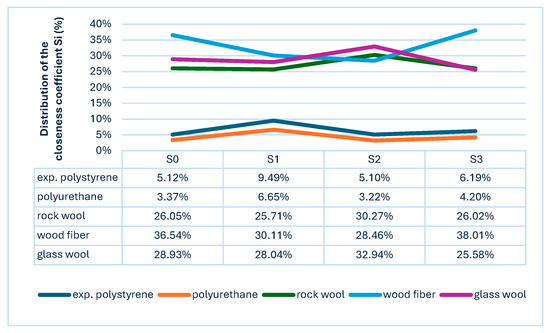
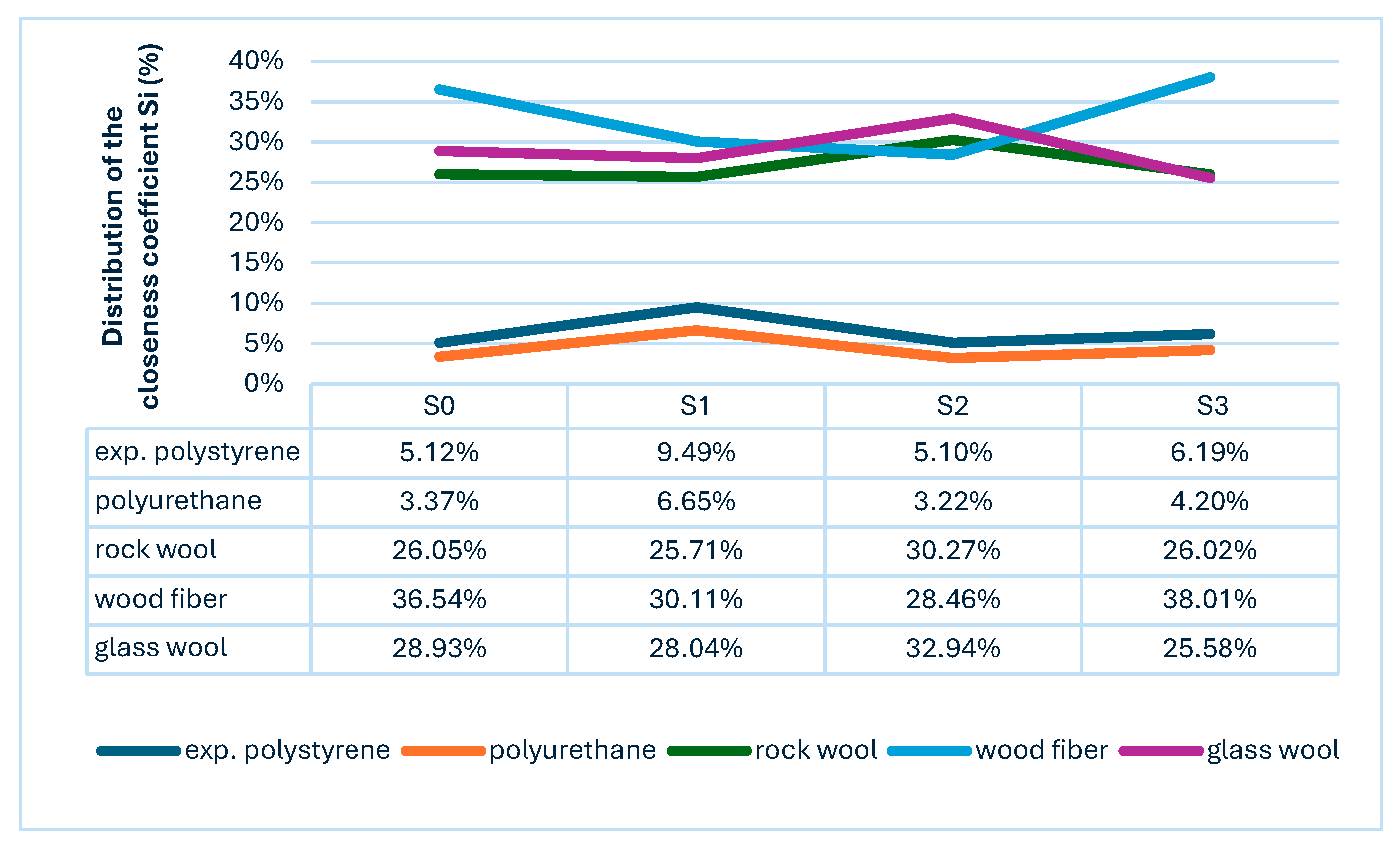
The five alternatives in Sub-Lot 6.1 were evaluated under four scenarios (S0-S3). The relative closeness (score) to the ideal solution and rank of each alternative under each scenario are reported in Table 6. In the reference scenario (S0), wood fiber insulation achieved the highest score (Si = 0.4988), followed by glass wool and rock wool, while expanded polystyrene and polyurethane occupied the lowest positions. This overall hierarchy was largely maintained in scenarios S1 and S3, where wood fiber remained the top-ranked alternative. A slight ranking inversion between the second and third positions of rock wool and glass wool was observed in S3. In Scenario S2, which prioritizes circularity indicators, glass wool (Si = 0.4521) and rock wool (Si = 0.4155) outperformed wood fiber, which dropped to the third position.
Table 6.
Score and rank of each alternative in Sub-Lot 6.1 across all scenarios.
Figure 8 illustrates the distribution of the closeness coefficients obtained for the tested alternatives. Expanded polystyrene and polyurethane consistently occupied the lowest ranking positions across all scenarios, with scores substantially lower than those of the other alternatives. Glass wool and rock wool exhibited relatively stable performance across all scenarios, indicating limited sensitivity to variations in criterion weights. In contrast, wood fiber achieved the highest score in most scenarios; however, it displayed some variability under S1 and S2, where lower closeness coefficients were obtained, resulting in performance closer to that of the mineral-based alternatives. This variation shows that the performance of wood fiber depended on the weighting scenario adopted and suggests that its overall performance was not dominant across all dimensions in this study, especially those related to circularity.
Figure 8.
Variation in the closeness coefficients of insulation alternatives across all scenarios.
The results revealed the influence of material families on the overall ranking, as in most scenarios, the bio-based alternative held the top position, followed by mineral-based materials, whereas petrochemical alternatives occupied the lowest ranks. In addition, the results obtained illustrate the added value of considering a multidimensional framework instead of relying exclusively on the GWP indicator. Although wood fiber and rock wool displayed relatively high normalized GWP values (3.2683 and 3.6491, respectively) compared with expanded polystyrene and polyurethane (2.7619 and 3.0204), they achieved higher positions in the overall ranking across different weighting scenarios. For wood fiber, this result can be explained by its particularly strong performance in terms of biogenic carbon storage, in addition to its performance in the circularity-related criteria, especially reuse potential and recyclability. These characteristics contribute to offsetting the disadvantage of wood fiber in terms of GWP within the multicriteria assessment and explain its position at the top of the ranking under S0, S1, and S3, which prioritize environmental criteria. In contrast, this position changed under Scenario S2, and glass wool was the highest-ranked alternative. This indicates that a product identified as environmentally preferable cannot necessarily be considered the most favorable product from a circularity perspective. Conversely, when an alternative such as glass wool performs better with respect to circularity-related criteria (particularly the use of secondary materials and the recyclability rate), it may become the preferred option in scenarios in which these criteria receive greater importance. For rock wool insulation, a similar trade-off was observed. Despite its relatively high normalized GWP, rock wool exhibited the best performance in terms of recyclability compared with the other alternatives in this study. This performance contributed to offsetting the unfavorable GWP criterion, thereby improving its position in the overall ranking. In general, these findings are broadly consistent with previous research showing that MCDM approaches can lead to different preferences for alternatives depending on the criteria considered and their relative weight [37]. Recent MCDM studies have identified bio-based materials, such as timber, as favorable alternatives when environmental considerations are prioritized [9,30]; however, they have highlighted that the final ranking remains highly dependent on the preferences of decision-makers. In particular, the present study provides a more nuanced perspective on the ranking of the bio-based alternative (wood fiber) under the circularity-oriented Scenario S2, demonstrating that environmental and circularity performance constitute related but distinct dimensions that should both be considered in the evaluation of construction products.
4.2. TOPSIS Results for Sub-Lot 7.1
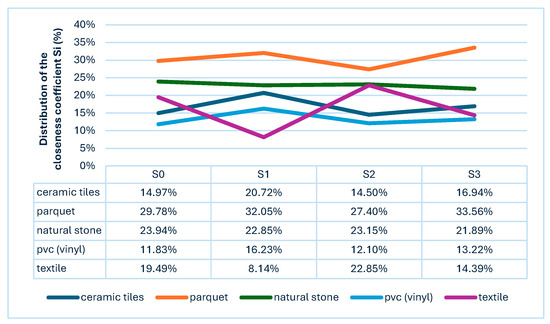
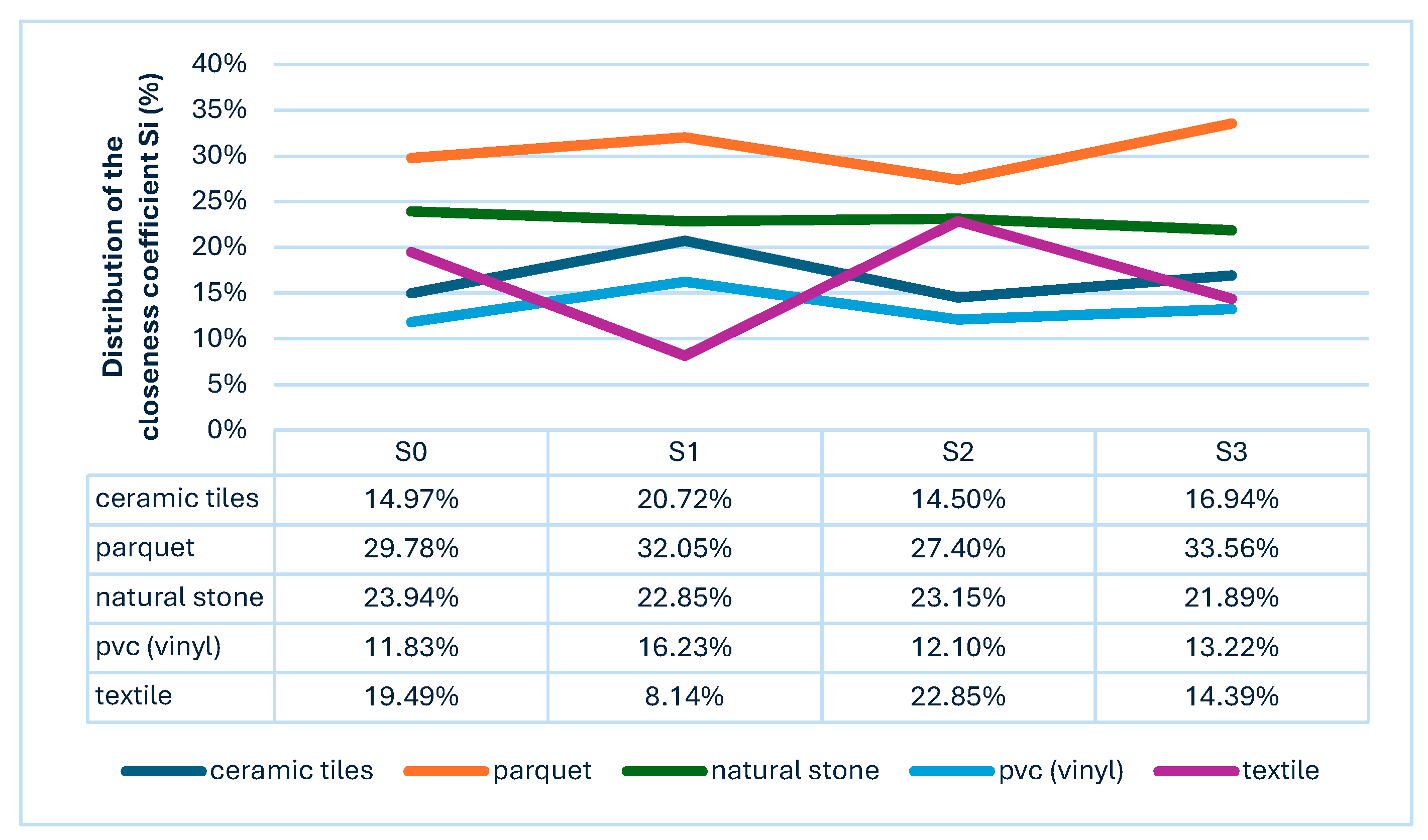
A similar analysis was conducted for the floor covering sub-lot, and the corresponding results are presented in Table 7. In this case study, parquet ranked first in all scenarios, showing a clear performance advantage over the other alternatives, while natural stone consistently ranked second. By contrast, PVC (vinyl) ranked last in most scenarios. Ceramic tiles exhibited some ranking variations, moving from fourth in S0 and S2 to third in S1 and S3. Textile flooring also exhibited notable variations in the overall ranking across the tested scenarios. It ranked third in S0 and S2, then dropped to fourth in S3 and fifth in S1.
Table 7.
Score and rank of each alternative in Sub-Lot 7.1 across all scenarios.
Figure 9 shows that natural stone demonstrated consistent performance in all scenarios (around 23%), while ceramic tiles and PVC exhibited similar performance (around 14%) across the different configurations. Concerning parquet, it emerged as the best-performing alternative in all scenarios, reaching its highest scores under S1 and S3, which reflected its strong environmental performance. These outcomes highlight the robustness of these alternatives and demonstrate their low sensitivity to the considered scenarios, as their performance remained largely unaffected by changes in the weights assigned to the evaluation criteria. In contrast, textile flooring proved to be the most sensitive alternative to the weighting schemes, as it showed considerable variability across the scenarios. While in S2 it achieved a similar score to that of natural stone (22.85%), its score decreased to 8.14% in S1, which assigns greater importance to environmental indicators. This variation underscores that the performance of textile flooring strongly depends on the weighting scheme adopted.
Figure 9.
Variation in the closeness coefficients of floor covering alternatives across all scenarios.
The observed variations in the rankings of PVC and textile across the scenarios can be largely explained by their relatively short service lives (25 and 10 years, respectively), compared with 100 years for natural stone (Table 4). Since the considered flooring alternatives have different service lives, a normalization step was required to ensure a common basis for their comparison. This normalization resulted in lower values for longer-lasting products and higher values for those with shorter service lives, which may require more frequent replacement over their life cycle and thus generate additional impacts. The results obtained illustrate the influence of this normalization on the floor covering alternatives. For instance, natural stone and textile flooring exhibited approximately the same GWP values before normalization, which were higher than those for ceramic tiles and parquet. However, after normalization, natural stone had the lowest GWP value among all the alternatives (Table 5). Despite this advantage, natural stone ranked second across all scenarios, benefiting from its favorable circularity-related criteria. Furthermore, parquet maintained its first position across all scenarios. This can be explained by the combination of its low normalized GWP, strong potential for biogenic carbon storage, and favorable relative performance on circularity-related criteria, particularly the use of secondary materials and recyclability. These findings demonstrate that service life is a key factor influencing the comparison of alternatives and can favor the selection of products with longer service lives. In addition, recent LCA-MCDM studies emphasize that, despite its importance, the GWP indicator alone is insufficient for comprehensive decision-making and should therefore be complemented by other environmental and circularity criteria [37,54]. The results obtained in this study support this conclusion and indicate that the final ranking of alternatives results from the trade-offs between the two dimensions considered.
Overall, the present approach confirms findings reported in previous LCA and MCDM studies and provides additional insights into the interaction between environmental indicators, the influence of service-life normalization, and the integration of product-level circularity attributes. Moreover, it underscores the importance of aligning decision priorities with the objectives of the decision-maker and the scope of this study. Consequently, the proposed approach emerges as particularly relevant in the French context, where it can complement the INIES environmental database and the RE2020 framework to support multicriteria construction product selection.
4.3. Limitations and Perspectives
The proposed framework focuses on two complementary dimensions, namely environmental and circularity-related dimensions. However, as highlighted by Elia et al. [63], focusing on only one or a limited number of perspectives represents a limitation of the assessment. Therefore, additional dimensions, particularly economic and social aspects [64,65], could be incorporated into the proposed framework to provide more holistic support for decision-making.
Moreover, several data-related limitations of this study should be acknowledged. Although the filtering process was necessary to reduce the large number of alternatives available in INIES and to ensure a meaningful comparison among products, it also represents a limitation of this study. In particular, the use of GWP as the primary indicator for selecting representative EPDs introduces a degree of preselection based on the environmental dimension before the application of the multicriteria analysis. Therefore, future developments could explore alternative procedures for identifying representative EPDs within each product family.
In addition, as the INIES database is continuously updated, the availability and quality of data are subject to change over time, which may affect the outcomes of this study. Regarding the zero values reported for some criteria used in the analysis, it is essential to note that they were retained as reported in the corresponding EPDs and were not used to replace missing data. However, the presence of zero values, particularly for circularity indicators (such as use of secondary materials, reuse potential, and recyclability), does not necessarily indicate the complete absence of these circularity attributes under other conditions or in future assessments, as these values should be interpreted within the scope, assumptions, and scenarios defined in the corresponding EPDs. Therefore, the occurrence of these zero values reflects the limited availability of circularity-related data currently reported in EPDs and underscores the need for further reporting by manufacturers, as well as methodological and data-related improvements, to enhance the completeness and comparability of such data. Furthermore, the weighting-scenario analysis represents an additional limitation of this study, since the scenarios were defined by the authors and may not fully reflect the priorities of construction stakeholders. Consequently, future studies could enhance the practical relevance of the approach by involving stakeholders in the development of more representative weighting schemes.
Despite these limitations, the results obtained from the application of the proposed framework indicate the relative stability of most alternatives across the different weighting scenarios while highlighting the sensitivity of others to changes in criterion weights. Although the approach has been demonstrated on two product categories, its methodological structure could be applied to a broader range of construction products, with adaptations depending on product characteristics and data availability. Future studies should therefore extend the application of the approach to further assess its applicability and transferability. Finally, this approach operates at the product level, but it could be coupled in future research with a building-scale LCA to evaluate the implications of construction product selection for the environmental and circularity performance of the entire building.
5. Conclusions
This study addressed the challenge of selecting construction products that have the potential to reduce the environmental impacts of buildings while supporting the transition toward a circular economy. The proposed framework combines product-level environmental and circularity-related criteria derived from the Environmental Product Declarations (EPDs) available in the INIES database using the TOPSIS multicriteria decision-making method. The methodology structures construction products according to the RE2020 categories to provide a systematic approach for screening, comparing, and ranking different alternatives within the French regulatory context. The approach was applied to two representative construction product case studies under four different weighting scenarios reflecting various decision-making priorities. The results demonstrate that the overall performance of the alternatives depends on trade-offs between the environmental and circularity-related dimensions considered in this study. Furthermore, the weighting-scenario analysis indicates that several alternatives maintained relatively stable rankings across the different scenarios, whereas others were sensitive to changes in criterion weights. This result underscores the importance of decision priorities in the selection process. In practice, the proposed framework can support designers, architects, and LCA practitioners in identifying preferred construction products according to the priorities of their specific projects. Since the preferences of decision-makers may vary across contexts, no universally applicable weighting scenario can represent all decision-making perspectives. Therefore, the neutral scenario (S0) can serve as a baseline configuration for future implementations of the proposed framework, with decision-makers able to adjust the weighting scheme according to their objectives.
Supplementary Materials
The following supporting information can be downloaded at https://www.mdpi.com/article/10.3390/buildings16203987/s1. Figure S1: Closeness coefficients of insulation alternatives across weighting scenarios after excluding the wood fiber alternative; Table S1: Data retrieved from the selected EPDs for sub-lot 6.1—excluding the wood fiber alternative; Table S2: Normalized values of the criteria for the selected alternatives in sub-lot 6.1—excluding the wood fiber alternative; Table S3: Results of the TOPSIS analysis for sub-lot 6.1—excluding the wood fiber alternative.
Author Contributions
Conceptualization, A.A. (Abir Alkhoury), A.B., N.Y., A.A. (Amani Abdallah), J.C., and E.A.; Methodology, A.A. (Abir Alkhoury), A.B., N.Y., J.C., and E.A.; Software, A.A. (Abir Alkhoury); Validation, A.B., N.Y., A.A. (Amani Abdallah), J.C., and E.A.; Formal analysis, A.A. (Abir Alkhoury), A.B., N.Y., and A.A. (Amani Abdallah); Investigation, A.A. (Abir Alkhoury), A.A. (Amani Abdallah), and E.A.; Resources, A.B., N.Y., J.C., and E.A.; Data curation, A.A. (Abir Alkhoury), A.B., N.Y., and A.A. (Amani Abdallah); Writing—original draft, A.A. (Abir Alkhoury); Writing—review and editing, A.B., N.Y., A.A. (Amani Abdallah), J.C., and E.A.; Visualization, A.A. (Amani Abdallah); Supervision, A.B., N.Y., J.C., and E.A.; Project administration, N.Y. and E.A.; Funding acquisition, N.Y. and J.C. All authors have read and agreed to the published version of this manuscript.
Funding
This research was financially supported by VINCI Construction and the Région Hauts-de-France. The authors gratefully acknowledge the financial and technical support provided by their staff.
Data Availability Statement
The data presented in this study are available on request from the corresponding author. The data are not publicly available due to ethical reason.
Acknowledgments
The authors thank VINCI Construction and the Région Hauts-de-France for their support of this research. They gratefully acknowledge the respective staff at VINCI Construction for their valuable technical assistance and continued support throughout the project.
Conflicts of Interest
The authors declare no conflicts of interest.
Abbreviations
| AHP | Analytical Hierarchy Process |
| CE | Circular Economy |
| CORPAS | Complex Proportional Assessment Method |
| CPE | Construction Products and Equipment |
| CSTB | Scientific and Technical Center for Building |
| DEMANTEL | Decision-Making Trial and Evaluation Laboratory |
| EN 15804+A2 | European standard for Environmental Product Declarations |
| EPDs | Environmental Product Declarations |
| FANP | Fuzzy Analytic Network Process |
| GHG | Greenhouse Gas |
| GWP | Global Warming Potential |
| INIES | Reference Environmental and Health Database for Building and RE2020 |
| LCA | Life-Cycle Assessment |
| LCIA | Life-Cycle Impact Assessment |
| MADM | Multi-Attribute Decision-Making |
| MCDA | Multicriteria Decision Analysis |
| MCDM | Multicriteria Decision-Making |
| MODM | Multi-Objective Decision-Making |
| PCM | Phase-Change Materials |
| RE2020 | New French Environmental Regulation |
| TOPSIS | Technique for Order Preference by Similarity to Ideal Solution |
| VIKOR | Multicriteria optimization and compromise solution |
References
- Global Alliance for Buildings and Construction. Global Status Report for Buildings and Construction: Beyond Foundations—Mainstreaming Sustainable Solutions to Cut Emissions from the Buildings Sector; United Nations Environment Programme: Nairobi, Kenya, 2024. [Google Scholar]
- Énergie Dans Les Bâtiments | Ministères Transition Écologique, Aménagement Du Territoire, Transports, Ville et Logement. Available online: https://www.Ecologie.Gouv.Fr/Politiques-Publiques/Energie-Batiments (accessed on 2 September 2025).
- Construction et Performance Environnementale Du Bâtiment | Ministères Transition Écologique, Aménagement Du Territoire, Transports, Ville et Logement. Available online: https://www.Ecologie.Gouv.Fr/Politiques-Publiques/Construction-Performance-Environnementale-Du-Batiment (accessed on 2 September 2025).
- L’économie Circulaire—Inies. Available online: https://www.Inies.Fr/Inies-Pour-Le-Batiment/Leconomie-Circulaire/ (accessed on 23 September 2025).
- Chen, L.; Huang, L.; Hua, J.; Chen, Z.; Wei, L.; Osman, A.I.; Fawzy, S.; Rooney, D.W.; Dong, L.; Yap, P.S. Green Construction for Low-Carbon Cities: A Review; Springer International Publishing: Cham, Switzerland, 2023; Volume 21. [Google Scholar]
- Kirchherr, J.; Reike, D.; Hekkert, M. Conceptualizing the Circular Economy: An Analysis of 114 Definitions. Resour. Conserv. Recycl. 2017, 127, 221–232. [Google Scholar] [CrossRef] [Scilit]
- Geissdoerfer, M.; Savaget, P.; Bocken, N.M.P.; Hultink, E.J. The Circular Economy—A New Sustainability Paradigm? J. Clean. Prod. 2017, 143, 757–768. [Google Scholar] [CrossRef] [Scilit]
- Benachio, G.L.F.; Freitas, M.d.C.D.; Tavares, S.F. Circular Economy in the Construction Industry: A Systematic Literature Review. J. Clean. Prod. 2020, 260, 121046. [Google Scholar] [CrossRef] [Scilit]
- Bajwa, A.U.R.; Siriwardana, C.; Shahzad, W.; Naeem, M.A. Material Selection in the Construction Industry: A Systematic Literature Review on Multi-Criteria Decision Making. Environ. Syst. Decis. 2025, 45, 8. [Google Scholar] [CrossRef] [Scilit]
- Ijadi Maghsoodi, A.; Ijadi Maghsoodi, A.; Poursoltan, P.; Antucheviciene, J.; Turskis, Z. Dam Construction Material Selection by Implementing the Integrated SWARA–CODAS Approach with Target-Based Attributes. Arch. Civ. Mech. Eng. 2019, 19, 1194–1210. [Google Scholar] [CrossRef] [Scilit]
- Huang, H.; Zhang, L.; Liu, Z.; Sutherland, J.W. Multi-Criteria Decision Making and Uncertainty Analysis for Materials Selection in Environmentally Conscious Design. Int. J. Adv. Manuf. Technol. 2011, 52, 421–432. [Google Scholar] [CrossRef] [Scilit]
- Soliman, M.H.; Mohammed, A.B.; Zaki, A.A. Sustainable Building Materials: A Critical Literature Review and Comparative Analysis of Relative Weights in MCDM-Based Sustainable Materials Selection Criteria Frameworks. Discov. Mater. 2026, 6, 34. [Google Scholar] [CrossRef] [Scilit]
- Réglementation Environnementale RE2020 | Ministères Transition Écologique, Aménagement Du Territoire, Transports, Ville et Logement. Available online: https://www.Ecologie.Gouv.Fr/Politiques-Publiques/Reglementation-Environnementale-Re2020 (accessed on 24 September 2026).
- Inies, La Base de Données Environnementales Pour Le Bâtiment. Available online: https://www.Inies.Fr/ (accessed on 10 September 2025).
- Buyle, M.; Braet, J.; Audenaert, A. Life Cycle Assessment in the Construction Sector: A Review. Renew. Sustain. Energy Rev. 2013, 26, 379–388. [Google Scholar] [CrossRef] [Scilit]
- ISO 14040:2006a; Environmental Management—Life Cycle Assessment—Principles and Framework. International Organization for Standardization ISO: Geneva, Switzerland, 2026.
- ISO 14040:2006b; Environmental Management-Life Cycle Assessment-Requirements and Guidelines. International Organization for Standardization ISO: Geneva, Switzerland, 2026.
- Motuziene, V.; Rogoža, A.; Lapinskiene, V.; Vilutiene, T. Construction Solutions for Energy Efficient Single-Family House Based on Its Life Cycle Multi-Criteria Analysis: A Case Study. J. Clean. Prod. 2016, 112, 532–541. [Google Scholar] [CrossRef] [Scilit]
- Laurin, L.; Amor, B.; Bachmann, T.M.; Bare, J.; Koffler, C.; Genest, S.; Preiss, P.; Pierce, J.; Satterfield, B.; Vigon, B. Life Cycle Assessment Capacity Roadmap (Section 1): Decision-Making Support Using LCA. Int. J. Life Cycle Assess. 2016, 21, 443–447. [Google Scholar] [CrossRef] [Scilit]
- Myllyviita, T.; Holma, A.; Antikainen, R.; Lähtinen, K.; Leskinen, P. Assessing Environmental Impacts of Biomass Production Chains—Application of Life Cycle Assessment (LCA) and Multi-Criteria Decision Analysis (MCDA). J. Clean. Prod. 2012, 29–30, 238–245. [Google Scholar] [CrossRef] [Scilit]
- Belton, V.; Stewart, T.J. Multiple Criteria Decision Analysis: An Integrated Approach; Springer: New York, NY, USA, 2002. [Google Scholar] [CrossRef] [Scilit]
- Chai, J.; Liu, J.N.K.; Ngai, E.W.T. Application of Decision-Making Techniques in Supplier Selection: A Systematic Review of Literature. Expert Syst. Appl. 2013, 40, 3872–3885. [Google Scholar] [CrossRef] [Scilit]
- Zavadskas, E.K.; Antuchevičienė, J.; Kapliński, O. MULTI-CRITERIA DECISION MAKING IN CIVIL ENGINEERING: PART I—A STATE-OF-THE-ART SURVEY. Eng. Struct. Technol. 2016, 7, 103–113. [Google Scholar] [CrossRef] [Scilit]
- Sitorus, F.; Cilliers, J.J.; Brito-Parada, P.R. Multi-Criteria Decision Making for the Choice Problem in Mining and Mineral Processing: Applications and Trends. Expert Syst. Appl. 2019, 121, 393–417. [Google Scholar] [CrossRef] [Scilit]
- Anbari Moghadam, M.; Besiktepe, D. Synthesis of Multi-Criteria Decision-Making Applications in Facilities Management and Building Maintenance: Trends, Methods, and Future Research Directions. Buildings 2025, 15, 3258. [Google Scholar] [CrossRef] [Scilit]
- Zavadskas, E.K.; Turskis, Z.; Kildiene, S. State of Art Surveys of Overviews on MCDM/MADM Methods. Technol. Econ. Dev. Econ. 2014, 20, 165–179. [Google Scholar] [CrossRef] [Scilit]
- Mousavi-Nasab, S.H.; Sotoudeh-Anvari, A. A New Multi-Criteria Decision Making Approach for Sustainable Material Selection Problem: A Critical Study on Rank Reversal Problem. J. Clean. Prod. 2018, 182, 466–484. [Google Scholar] [CrossRef] [Scilit]
- Zanghelini, G.M.; Cherubini, E.; Soares, S.R. How Multi-Criteria Decision Analysis (MCDA) Is Aiding Life Cycle Assessment (LCA) in Results Interpretation. J. Clean. Prod. 2018, 172, 609–622. [Google Scholar] [CrossRef] [Scilit]
- Ogrodnik, K. Article Multi-Criteria Analysis of Design Solutions in Architecture and Engineering: Review of Applications and a Case Study. Buildings 2019, 9, 244. [Google Scholar] [CrossRef] [Scilit]
- Alam Bhuiyan, M.M.; Hammad, A. A Hybrid Multi-Criteria Decision Support System for Selecting the Most Sustainable Structural Material for a Multistory Building Construction. Sustainability 2023, 15, 3128. [Google Scholar] [CrossRef] [Scilit]
- Friedrich, D.; Luible, A. Assessment of Standard Compliance of Central European Plastics-Based Wall Cladding Using Multi-Criteria Decision Making (MCDM). Case Stud. Struct. Eng. 2016, 5, 27–37. [Google Scholar] [CrossRef] [Scilit]
- Zoghi, M.; Rostami, G.; Khoshand, A.; Motalleb, F. Material Selection in Design for Deconstruction Using Kano Model, Fuzzy-AHP and TOPSIS Methodology. Waste Manag. Res. 2022, 40, 410–419. [Google Scholar] [CrossRef] [Scilit]
- Kiani, B.; Liang, R.Y.; Gross, J. Material Selection for Repair of Structural Concrete Using VIKOR Method. Case Stud. Constr. Mater. 2018, 8, 489–497. [Google Scholar] [CrossRef] [Scilit]
- Khoshnava, S.M.; Rostami, R.; Valipour, A.; Ismail, M.; Rahmat, A.R. Rank of Green Building Material Criteria Based on the Three Pillars of Sustainability Using the Hybrid Multi Criteria Decision Making Method. J. Clean. Prod. 2018, 173, 82–99. [Google Scholar] [CrossRef] [Scilit]
- Beltrán, R.D.; Martínez-Gómez, J. Analysis of Phase Change Materials (PCM) for Building Wallboards Based on the Effect of Environment. J. Build. Eng. 2019, 24, 100726. [Google Scholar] [CrossRef] [Scilit]
- Kumar, R.; Pamucar, D. A Comprehensive and Systematic Review of Multi-Criteria Decision-Making (MCDM) Methods to Solve Decision-Making Problems: Two Decades from 2004 to 2024. Spectr. Decis. Mak. Appl. 2025, 2, 177–196. [Google Scholar] [CrossRef] [Scilit]
- Theilig, K.; Lourenço, B.; Reitberger, R.; Lang, W. Life Cycle Assessment and Multi-Criteria Decision-Making for Sustainable Building Parts: Criteria, Methods, and Application. Int. J. Life Cycle Assess. 2024, 29, 1965–1991. [Google Scholar] [CrossRef] [Scilit]
- Fauzi, R.T.; Lavoie, P.; Sorelli, L.; Heidari, M.D.; Amor, B. Exploring the Current Challenges and Opportunities of Life Cycle Sustainability Assessment. Sustainability 2019, 11, 636. [Google Scholar] [CrossRef] [Scilit]
- Kumar, R. A Comprehensive Review of MCDM Methods, Applications, and Emerging Trends. Decis. Mak. Adv. 2025, 3, 185–199. [Google Scholar] [CrossRef] [Scilit]
- Yang, X.; Song, M.; Zhou, X.; Liao, C. Bibliometric and Thematic Insights into a Decade of Circular Economy Research in Construction. Discov. Appl. Sci. 2025, 7, 922. [Google Scholar] [CrossRef] [Scilit]
- Figueiredo, K.; Pierott, R.; Hammad, A.W.A.; Haddad, A. Sustainable Material Choice for Construction Projects: A Life Cycle Sustainability Assessment Framework Based on BIM and Fuzzy-AHP. Build. Environ. 2021, 196, 107805. [Google Scholar] [CrossRef] [Scilit]
- Fazeli, A.; Jalaei, F.; Khanzadi, M.; Banihashemi, S. BIM-Integrated TOPSIS-Fuzzy Framework to Optimize Selection of Sustainable Building Components. Int. J. Constr. Manag. 2022, 22, 1240–1259. [Google Scholar] [CrossRef] [Scilit]
- Invidiata, A.; Lavagna, M.; Ghisi, E. Selecting Design Strategies Using Multi-Criteria Decision Making to Improve the Sustainability of Buildings. Build. Environ. 2018, 139, 58–68. [Google Scholar] [CrossRef] [Scilit]
- Norme NF EN 15804+A2. Available online: https://www.Boutique.Afnor.Org/Fr-Fr/Norme/Nf-En-15804-A2/Contribution-Des-Ouvrages-de-Construction-Au-Developpement-Durable-Declarat/Fa198121/84194 (accessed on 21 May 2026).
- Yao, R. Design and Management of Sustainable Built Environments; Yao, R., Ed.; Springer: London, UK, 2013. [Google Scholar]
- Priore, Y.D.; Schulthess, L.; Delmenico, S.; Rinquet, L.; Habert, G.; Jusselme, T. Potential for Biogenic Carbon Storage towards a Net-Zero Built Environment in Switzerland. Sustain. Prod. Consum. 2025, 59, 229–240. [Google Scholar] [CrossRef] [Scilit]
- Ghafoor, S.; Shooshtarian, S.; Udawatta, N.; Gurmu, A.; Karunasena, G.; Maqsood, T. Cost Factors Affecting the Utilisation of Secondary Materials in the Construction Sector: A Systematic Literature Review. Resour. Conserv. Recycl. Adv. 2024, 23, 200230. [Google Scholar] [CrossRef] [Scilit]
- Altawalba, A.N.; Ghazali, F.E.M. A Circular Economy Framework for Minimizing Construction Waste During the Construction Phase of Residential Projects in Jordan. Buildings 2026, 16, 2742. [Google Scholar] [CrossRef] [Scilit]
- Akadiri, P.O.; Olomolaiye, P.O.; Chinyio, E.A. Multi-Criteria Evaluation Model for the Selection of Sustainable Materials for Building Projects. Autom. Constr. 2013, 30, 113–125. [Google Scholar] [CrossRef] [Scilit]
- Kappenthuler, S.; Seeger, S. From Resources to Research—A Framework for Identification and Prioritization of Materials Research for Sustainable Construction. Mater. Today Sustain. 2020, 7–8, 100009. [Google Scholar] [CrossRef] [Scilit]
- Minhas, M.R.; Potdar, V. Development of an Effective System for Selecting Construction Materials for Sustainable Residential Housing in Western Australia. Appl. Math. 2020, 11, 825–844. [Google Scholar] [CrossRef]
- INIES | FDES (Produits de Construction). Available online: https://www.Inies.Fr/ (accessed on 13 May 2025).
- Iqbal, M.; Ma, J.; Ahmad, N.; Ullah, Z.; Ahmed, R.I. Uptake and Adoption of Sustainable Energy Technologies: Prioritizing Strategies to Overcome Barriers in the Construction Industry by Using an Integrated AHP-TOPSIS Approach. Adv. Sustain. Syst. 2021, 5, 2100026. [Google Scholar] [CrossRef] [Scilit]
- Niero, M.; Kalbar, P.P. Coupling Material Circularity Indicators and Life Cycle Based Indicators: A Proposal to Advance the Assessment of Circular Economy Strategies at the Product Level. Resour. Conserv. Recycl. 2019, 140, 305–312. [Google Scholar] [CrossRef] [Scilit]
- Shanian, A.; Savadogo, O. TOPSIS Multiple-Criteria Decision Support Analysis for Material Selection of Metallic Bipolar Plates for Polymer Electrolyte Fuel Cell. J. Power Sources 2006, 159, 1095–1104. [Google Scholar] [CrossRef] [Scilit]
- Behzadian, M.; Khanmohammadi Otaghsara, S.; Yazdani, M.; Ignatius, J. A State-of the-Art Survey of TOPSIS Applications. Expert Syst. Appl. 2012, 39, 13051–13069. [Google Scholar] [CrossRef] [Scilit]
- Sen, P.; Yang, J.-B. Multiple Criteria Decision Support in Engineering Design; Springer: Manchester, UK, 1998. [Google Scholar]
- Shih, H.S.; Shyur, H.J.; Lee, E.S. An Extension of TOPSIS for Group Decision Making. Math. Comput. Model. 2007, 45, 801–813. [Google Scholar] [CrossRef] [Scilit]
- Tzeng, G.-H.; Huang, J.-J. Multiple Attribute Decision Making: Methods and Applications; Chapman and Hall/CRC: New York, NY, USA, 2011. [Google Scholar]
- Kalbar, P.P.; Birkved, M.; Nygaard, S.E.; Hauschild, M. Weighting and Aggregation in Life Cycle Assessment: Do Present Aggregated Single Scores Provide Correct Decision Support? J. Ind. Ecol. 2017, 21, 1591–1600. [Google Scholar] [CrossRef] [Scilit]
- Reddy, A.S.; Kumar, P.R.; Raj, P.A. Entropy-Based Fuzzy TOPSIS Framework for Selection of a Sustainable Building Material. Int. J. Constr. Manag. 2022, 22, 1194–1205. [Google Scholar] [CrossRef] [Scilit]
- Norme NF EN 15978—Contribution Des Ouvrages de Construction Au Développement Durable—Évaluation de La Performance Environnementale Des Bâtiments—Méthode de Calcul. Available online: https://www.Boutique.Afnor.Org/Fr-Fr/Norme/Nf-En-15978/Contribution (accessed on 24 September 2026).
- Elia, V.; Gnoni, M.G.; Tornese, F. Measuring Circular Economy Strategies through Index Methods: A Critical Analysis. J. Clean. Prod. 2017, 142, 2741–2751. [Google Scholar] [CrossRef] [Scilit]
- Linder, M.; Sarasini, S.; van Loon, P. A Metric for Quantifying Product-Level Circularity. J. Ind. Ecol. 2017, 21, 545–558. [Google Scholar] [CrossRef] [Scilit]
- Di Maio, F.; Rem, P.C.; Baldé, K.; Polder, M. Measuring Resource Efficiency and Circular Economy: A Market Value Approach. Resour. Conserv. Recycl. 2017, 122, 163–171. [Google Scholar] [CrossRef] [Scilit]

Disclaimer/Publisher’s Note: The statements, opinions and data contained in all publications are solely those of the individual author(s) and contributor(s) and not of MDPI and/or the editor(s). MDPI and/or the editor(s) disclaim responsibility for any injury to people or property resulting from any ideas, methods, instructions or products referred to in the content. |
© 2026 by the authors. Licensee MDPI, Basel, Switzerland. This article is an open access article distributed under the terms and conditions of the Creative Commons Attribution (CC BY) license.