


Abstract
Early-stage acoustic design decisions may affect both carbon and energy performance, yet architectural education often treats acoustics and sustainability as separate concerns. This exploratory pilot study examined four comparable student projects developed by 13 students in the Building Utilities 2 course at the American University of Ras Al Khaimah, United Arab Emirates. Using Revit Insight simulations, the study compared total carbon, embodied carbon, operational carbon, and annual energy use intensity before and after acoustic design interventions. The results varied across projects: Group 2 achieved the strongest reductions in total carbon, operational carbon, and annual energy use intensity, Groups 1 and 4 showed smaller or mixed improvements, and Group 3 showed no meaningful change in the main performance indicators. The findings also revealed embodied-carbon trade-offs, as some operational improvements were accompanied by increases in material-related carbon. These outcomes suggest that acoustic interventions do not produce uniform performance benefits; rather, their effects depend on material selection, intervention scope, baseline design characteristics, and the simulation inputs affected by each project. As an exploratory educational case study, the study indicates that simulation-based acoustic design activities can help students examine relationships among acoustic performance, material decisions, operational energy, and carbon outcomes, although student learning was not directly measured. Future studies should include larger samples, standardized reporting of simulation assumptions, and direct learning assessment to evaluate students’ understanding of the relationship between acoustic design, sustainability, and building performance.
1. Introduction
The buildings and construction sector is a major contributor to global environmental impact, accounting for roughly one-third of global energy consumption and around 40% of CO2 emissions [1]. These impacts are intensified by growing resource scarcity, increasing temperatures, and the rising demand for climate-responsive buildings. Reducing them requires attention not only to building operation but also to early-stage design decisions, where choices related to form, structure, material selection, envelope design, and building systems can substantially influence both embodied and operational carbon. Recent research on daylighting and energy-efficient façade strategies further demonstrates the importance of integrating performance-based environmental considerations into architectural design, particularly when design decisions affect both energy demand and indoor environmental quality [2]. Within this broader low-carbon agenda, acoustics remains comparatively underexplored in architectural education, despite its connections to material specification, envelope performance, thermal behavior, and occupant comfort. This study therefore examines how integrating acoustic design considerations into early-stage architectural design education can support performance-based evaluation of carbon and energy outcomes.
Evidence suggests that early-stage design decisions strongly shape future building emissions: approximately 15% of total emissions are determined at the concept stage, while around 50% of embodied carbon is associated with structural systems and a further 15% with material selection. Similarly, Zhou and Herr [3] note that 80% of a building’s whole life-cycle energy consumption is determined during the design phase. These figures show that decisions made before detailed design begins can have long-term consequences for embodied carbon, operational energy, and overall building performance. However, early design often lacks the detailed data required for precise calculations, and tools such as life-cycle assessment can be perceived as complex and time-consuming. These challenges highlight the need for simplified, performance-based approaches that help architects evaluate carbon- and energy-related consequences while design decisions are still flexible [4,5,6,7].
Despite efforts to reduce building-related carbon emissions, many stakeholders in the construction sector continue to place limited emphasis on the design phase, focusing instead on later-stage building performance. Yet the literature indicates that early-stage design decisions can significantly affect future building standards. A key issue is that certain design considerations, such as acoustics, are often overlooked during the early-stage design process, even when life-cycle assessment is implemented, despite their potential influence on energy efficiency. Another challenge is the limited knowledge of how to apply whole-life sustainability strategies during design. As Hollberg and Ruth [5] note, architects often lack the knowledge and experience required to implement these strategies. Therefore, simplified approaches are needed that embed expertise within design tools while allowing architects to focus on the primary task of designing buildings.
Architectural design education is a key context in which future architects can begin integrating performance-related parameters into their design processes. Over several years, the authors have observed that architecture students, particularly in design studios, often focus on form and aesthetics while underestimating sustainability concepts related to carbon-emission reduction and environmental, social, and economic sustainability. This creates a pedagogical gap: students need opportunities to understand acoustic design not only as a comfort or technical requirement but also as a performance-related design decision with potential implications for energy demand and carbon outcomes.
To address this gap, this study evaluates the simulated carbon and energy implications of acoustic-related design interventions developed within an architectural design studio. The objective is not to establish a generalizable causal relationship, but to explore how acoustic design decisions can be examined alongside material selection, envelope performance, thermal behavior, and broader sustainability outcomes in architectural education.
1.1. Research Aim, Research Questions, and Exploratory Propositions
The aim of this exploratory pilot study is to examine how integrating acoustic design considerations into early-stage architectural design may influence simulated building carbon and energy performance. The study also reflects on the pedagogical value of simulation-based design activities in architectural education while avoiding statistical, causal, or directly measured claims about student learning.
The study addresses the following questions:
- RQ1: Does the integration of acoustic design considerations into early-stage architectural design improve building carbon performance metrics, including total carbon, embodied carbon, and operational carbon?
- RQ2: Does the integration of acoustic design considerations influence annual energy use intensity?
- RQ3: How can simulation-based design activities be used to introduce students to the relationship between acoustic design, sustainability, and building performance in an exploratory studio setting?
Based on these questions, the study proposes the following exploratory propositions (EP). These propositions are not statistically tested because of the pilot case-study design and small number of projects; instead, they are evaluated descriptively in relation to the observed simulation outcomes.
- EP1: Acoustic design interventions may be associated with reductions in simulated total building carbon, depending on design context and material selection.
- EP2: Acoustic design interventions may be associated with changes in simulated annual energy use intensity, depending on the type and extent of the intervention.
- EP3: Simulation-based pedagogy can provide students with an opportunity to explore the relationship between acoustic design decisions and sustainability-related building performance outcomes.
1.2. Architecture Education and the Integration of SDGs in Design Studio Pedagogy
According to Ng and Lin [8], architectural education has evolved in response to social, economic, and technological changes, highlighting the need to align curricula with 21st-century skills. Although these skills are relevant to architecture, they are not always systematically embedded in curricula and are often developed informally at the individual level. As a result, their acquisition may remain incidental rather than intentional. Architectural education therefore requires more structured approaches to prepare future architects to address contemporary environmental and social challenges.
Within this context, the buildings and construction sector accounts for 32% of global energy consumption and contributes 34% of global CO2 emissions [1]. As noted above, early-stage design is a critical phase for influencing both embodied and operational carbon emissions in buildings and for advancing sustainability. Architectural education should therefore place greater emphasis on building performance and sustainability considerations during the design process. Green building rating systems also emphasize the importance of integrated building systems, including issues related to acoustics. For example, LEED requires an integrative approach during the earliest stages of a project, in which water and energy systems, including the building envelope, are examined [2]. This requirement highlights the importance of integrating performance-based decision-making into design from the outset. In addition, the National Architectural Accrediting Board (NAAB), which accredits architecture programs internationally, requires student coursework to demonstrate compliance with Student Criterion 6 (SC.6): Building Integration. To satisfy this criterion, students must demonstrate the ability to make informed design decisions while integrating building envelope systems and assemblies, structural systems, environmental control systems, and life-safety systems. Students are also expected to evaluate and demonstrate measurable building performance outcomes as part of the design process (NAAB).
Consequently, architectural design education should adapt its studio practices to integrate design quality and aesthetics with embodied-carbon considerations, while encouraging future architects to incorporate performance-based parameters into their design processes. This can strengthen students’ knowledge and experience in developing strategies for embodied carbon reduction. Such an approach aligns with contemporary sustainability goals and with the performance-based expectations of professional accreditation frameworks.
In support of this objective, as part of the United Nations’ 2030 Agenda for Sustainable Development [9], a global call to action has been established to end poverty, protect the planet, and promote peace and prosperity for all by 2030. This agenda includes a set of proactive strategies aimed at reducing the carbon footprint of buildings through the Sustainable Development Goals (SDGs), which comprise seventeen targets. While some countries have integrated these goals into mandatory regulatory frameworks, in others their implementation remains largely voluntary. The United Arab Emirates (UAE) is among the countries that have adopted a mandatory Climate Change Law, the UAE Net Zero 2050, enacted on 28 August 2024 [10]. This further indicates the urgency of integrating SDGs into architectural education, equipping future architects with the knowledge and skills required to address these challenges through design.
Building on these sustainability objectives, the authors have observed over several years that architecture students and design studios tend to prioritize form and aesthetics while often struggling to integrate sustainability concepts related to carbon-emission reduction. Architectural education is therefore confronted with the complexity of sustainable development principles and the challenge of communicating their relevance to design practice. There is a clear need to systematize knowledge and identify effective pedagogical approaches for teaching sustainability [11]. This need was emphasized by the Copenhagen Declaration in 2009, which states that “architecture must utilize holistic, integrative methods from the smallest scale up through that of city and regional planning, never forgetting that buildings, landscapes, the natural environment and infrastructures are all essential elements in the continuous creation of a sustainable future”. The declaration further highlights the importance of improved education and training in Sustainability by Design within both academic curricula and professional development programs [12]. This emphasis on sustainability education is also reinforced by international bodies. Similarly, the International Union of Architects (UIA) states that:
“Today, architectural education is of utmost importance in responding effectively to global challenges such as climate change, inequality and urban migration. Different educational approaches and policies can be found across the world, with social and cultural values as well as traditions and local characteristics exercising a major influence on the scope of content covered by schools. On the other hand, the need to establish a general framework encompassing the architect’s role and major responsibilities in the design process places the study of systems of accreditation and the validation of educational institutions on today’s agenda”.[13]
Reinforcing this perspective, El-Kholei and Yassein [14] argue that architectural and planning education is fundamental to achieving sustainable development, which can only be achieved through cross-sectoral efforts that begin with education. Technology solutions, political regulation, or financial tools alone are insufficient to fully realize sustainable development. Rather, education that engages with the interdependence of environmental, economic, and social dimensions fosters the critical mindset shift necessary to support informed decision-making in design processes. El-Kholei and Yassein [14] further emphasize that “education is the means for changing an individual’s perspective”, which supports the view that education can enable future professionals to integrate sustainability more effectively into architectural practice.
While sustainability and building performance are increasingly emphasized in architectural education, acoustics is rarely discussed as a contributor to sustainability outcomes. The following section examines the relationship between acoustics and sustainable building performance.
2. Acoustics and SDGs
Although the United Nations Sustainable Development Goals do not explicitly mention sound or noise, acoustic design has important implications for building performance, environmental outcomes, and occupant well-being [15]. Acoustic decisions can support sustainability-related objectives because they:
- Affects environmental performance: acoustic design decisions, such as material selection, can influence carbon emissions, resource consumption, and waste across a building’s life cycle.
- Influences building envelope design: acoustic decisions can affect the building envelope, which is an energy-related system.
- Enhances health and well-being: good acoustic environments can reduce noise stress, improve concentration, and support mental and physical health.
- Improves communication and accessibility: appropriate room acoustics can enable clear speech, which is especially important in schools, workplaces, and inclusive environments, including spaces used by people with special educational needs.
- Shapes human experience of space: sound is not only something to control; it also contributes to how people perceive and interact with built environments through the soundscape approach.
- Influences productivity and performance: well-designed acoustic environments can reduce distractions and support effective work and learning.
Recent research further shows that sustainability-driven design decisions can significantly influence acoustic performance, even though sustainability and acoustic objectives have traditionally been treated as separate design considerations. Broyles [16] examined trade-offs between acoustic performance and sustainability in building design and argued that these objectives are closely interrelated. This evidence supports the need to consider acoustics as part of sustainable design rather than as an isolated technical requirement.
Building on these findings, a comprehensive understanding of the environmental impacts associated with acoustic requirements is essential for developing effective strategies for sustainable building design. In particular, selecting acoustic materials with low embodied carbon can reduce the environmental footprint of buildings while maintaining the required acoustic performance [17]. Material selection and optimization are increasingly recognized as critical aspects of sustainable building design, requiring solutions that simultaneously satisfy energy efficiency, environmental sustainability, and high-performance thermal and acoustic requirements [18]. Consequently, material selection decisions should be considered an integral part of the design process, as they directly influence both building performance and environmental outcomes.
Poor acoustic and thermal insulation can significantly increase operational energy demand, leading to higher carbon emissions throughout a building’s life cycle. Consequently, acoustic performance should be considered during early-stage design processes to enable integrated solutions that optimize both environmental and building performance [19]. Despite the growing recognition of these interrelationships, Murphy [20] further emphasizes that, while mechanical and structural engineering disciplines have become central to the implementation of sustainable design strategies, the environmental implications of architectural acoustics remain relatively underexplored. Nevertheless, acoustic design decisions present considerable opportunities to reduce embodied and operational carbon emissions while maintaining appropriate acoustic quality. These findings underscore the urgent need to establish stronger synergies between architectural acoustics and sustainable building practices. As a result, greater attention should be given to acoustic design during both professional practice and architectural education, particularly during the early stages of the design process when key performance-related decisions are made.
To establish such synergies, holistic design approaches can help reconcile acoustic performance with environmental objectives. Examples include optimizing structural mass distribution to achieve the required sound insulation with less material, specifying natural and bio-based materials that simultaneously provide sound absorption and lower embodied carbon, and designing energy-efficient mechanical systems that minimize unwanted noise while reducing energy consumption [21].
The successful implementation of these approaches relies on collaboration among a range of professionals within the built environment sector. Acousticians, engineers, academics, manufacturers, and consulting professionals are uniquely positioned to influence sustainable design decisions across the built environment. Through informed material specification, integrated design strategies, and interdisciplinary collaboration, these professionals can contribute to reducing carbon emissions while enhancing building performance and occupant well-being [22]. Consequently, their engagement is essential for ensuring that acoustic considerations are effectively integrated into broader sustainability and decarbonization strategies.
However, despite growing recognition of these opportunities, acoustics remains underemphasized in both sustainability-oriented design strategies and architectural education. This creates a gap in studio pedagogy: students are rarely asked to examine acoustic decisions as part of a wider performance-based design process that includes material selection, energy demand, embodied carbon, and operational carbon. Addressing this gap requires educational approaches that position acoustics as one component of integrated low-carbon building design.
3. Materials and Methods
This research adopts a case-study approach to examine how acoustic design interventions may influence simulated building performance outcomes. Accordingly, the methodology was structured to evaluate carbon and energy performance before and after acoustic design interventions, while also reflecting on the pedagogical use of simulation-based tools within architectural education. Using a comparative approach, the study investigates four student projects to identify patterns, variations, and differences in simulated performance across different design contexts. Based on the study conducted by Alsukkar et al. [23], several digital tools are available for parametric building modeling, including Rhinoceros and Grasshopper, as well as tools for building energy performance assessment, such as IES Virtual Environment (IESVE, by IES Ltd., Bozeman, MT, USA, cove.tool (by Cove Tool Inc., Atlanta, GA, USA), and EnergyPlus/OpenStudio (by DOE, Germantown, MD, USA). In addition, tools such as One Click LCA (Helsinki, Finland), EC3 (Embodied Carbon in Construction Calculator, by Stacy Smedley, Skanska, New York, NY, USA), C.Scale (by Climate Scale Inc., San Francisco, CA, USA), and Athena Impact Estimator (by Athena Sustainable Materials Institute, Canada) can be used to assess embodied carbon and the environmental impacts of buildings. Furthermore, Large Language Models (LLMs), such as OpenAI’s ChatGPT (by OpenAI Global, LLC, San Francisco, CA, USA) and Google’s Gemini (by Google DeepMind, San Francisco, CA, USA), can provide valuable support for conducting complex analyses related to building performance [24]. However, considering the students’ limited experience with building performance simulation tools, Autodesk Insight 2026 version (by Autodesk Inc., San Francisco, CA, USA) was selected for this project. Autodesk Insight provides dynamic energy and environmental performance analysis through a relatively straightforward interface and can be readily used by students familiar with the Revit (a product of Autodesk) environment.
3.1. Project Description
The Building Utilities 2 course at the American University of Ras Al Khaimah in the United Arab Emirates, which focuses on acoustic and lighting design, is considered the case study setting. The course is theory + lab (2 + 3) and includes theoretical as well as practical assessments. The projects selected for this study were implemented during the Spring 2026 semester. In total, thirteen students were enrolled in the course: four male students and nine female students aged 23–24, at levels four and five. They worked both in groups and individually. The students had not previously taken any acoustic-design-related course; therefore, the course aimed to introduce knowledge and skills in acoustic design and awareness of its influence on building performance. The acoustic design project was designed to introduce students to the integration of acoustic design principles with climate, site, building function, and material selection, while considering their impact on overall building performance and users’ well-being. As project deliverables, students were required to submit a group poster, an individual poster, and an individual report describing the acoustic interventions applied, the building performance simulation results, and the materials selected based on the function of the spaces, required noise transmission control, and reverberation time. Rubrics were used for course grading and feedback rather than as formal research instruments. Therefore, rubric scores are not analyzed as research data in this study, and the manuscript does not claim directly measured student learning gains.
The class was divided into four groups: three groups of three students and one group of four students. Hence, the results of four student group projects are used in this study. As an output of this method, four buildings are compared in terms of total carbon and energy intensity. The groups worked from the same project brief: a three-story coworking-space building in a hot arid area; however, building designs differed from group to group. Therefore, each of the four buildings was compared individually based on simulation results before and after acoustic design implementation.
3.2. Methods Applied
A quantitative comparison was used to examine changes in simulated total building carbon and annual energy use intensity before and after acoustic design interventions. The objective was to identify observed performance changes within each project in this pilot study, rather than to test statistical significance or compare the four projects as equivalent experimental cases. Revit Insight was used to estimate energy use intensity (EUI), operational carbon (OC), embodied carbon (EC), and total carbon (TC).
EUI represents the annual energy consumed by a building relative to its floor area. In this study, Revit Insight uses the building information model generated in Revit, together with local weather data, to simulate building energy performance and estimate projected annual energy consumption. This value is then divided by the total conditioned floor area to normalize the result and express it as EUI.
OC represents the greenhouse gas (GHG) emissions generated during a building’s operational phase, including emissions associated with heating, cooling, lighting, and equipment use. In Revit Insight, OC is estimated by multiplying the Energy Analysis Model’s (EAM) predicted energy use by the carbon intensity of the local energy grid.
EC represents the greenhouse emissions associated with a building’s physical materials across stages such as manufacturing, transportation, and construction. In Revit Insight, EC is estimated using material quantities, such as volume or mass, that are derived from the Revit model for building elements, including concrete, steel, and glazing. These materials are then mapped to embodied carbon factors from Building Transparency’s EC3 (Embodied carbon in construction calculator) database.
TC represents the combined life-cycle carbon footprint of a building, including both embodied carbon from material inputs and operational carbon from energy use. In Revit Insight, TC is estimated by combining material-related carbon impacts with simulated energy consumption over an assumed building lifespan, thereby aggregating the building’s total life-cycle carbon impact into a unified metric.
To support simulation reproducibility, the same Revit Insight workflow was applied before and after the acoustic design interventions within each student project. The project location and associated weather data, conditioned floor area, operational schedules, grid carbon intensity, assumed building lifespan, and relevant envelope assumptions were kept consistent within each before-and-after comparison, as defined or applied within the Revit Insight workflow. Envelope and material parameters were modified only where the acoustic interventions were represented in the Revit model through changes to relevant building elements or material selections. Embodied carbon estimates were based on Revit material quantities mapped to the EC3 material database available through the Insight workflow. Because the four baseline buildings differed substantially in design, results were interpreted within each project rather than treated as statistically equivalent cases.
Therefore, the reported carbon and energy changes should be interpreted as changes associated with modeled acoustic-related design modifications, rather than as comprehensive measures of acoustic performance or user comfort. The study also has several limitations that affect how the findings should be interpreted:
- As the focus of the project was on acoustic design, and the selected project was based on students’ previous-semester studio design work, students proposed improvements to the building envelope’s acoustic performance but did not implement them.
- The students applied acoustic design only to selected spaces within the chosen building, as the project was limited to half a semester (eight weeks).
- Building performance results are influenced by the design quality and the baseline characteristics of the previously selected student projects.
- Project and group results are influenced by the material selection decisions made by each group.
- The study was conducted within a single course cohort comprising 13 students and four group projects. Therefore, the findings should be interpreted as exploratory and specific to this educational context.
- A full life-cycle assessment of the selected materials is not required as part of the course.
- This study did not directly measure students’ learning. Instead, it reflects on the educational value of the activity based on the design process and submitted project outputs. Therefore, any claims about students’ understanding are presented as reflections, not as measured learning outcomes.
4. Results
4.1. Project Outcomes
As mentioned in Section 3, students’ previous studio projects, namely coworking-space buildings, were selected for acoustic improvement. As part of the group work, and prior to undertaking the individual tasks, students examined acoustic regulations and requirements, assessed the impact of noise on users’ well-being, identified potential sources of noise from outside and within the building (airborne and structure-borne noise), identified passive and active zones within the building, and developed solutions for building acoustic design and building envelope improvement. Students proposed solutions for improving the building envelope; however, they were not required to implement these solutions because the project focused primarily on acoustic design. This approach is consistent with the limitations outlined in the methodology section and reflects the study’s emphasis on evaluating the impact of acoustic design interventions on building performance.
As part of the group work, students also performed building performance simulations using Revit Insight and identified the total carbon (TC), embodied carbon (EC), operational carbon (OC), and annual energy use intensity (EUI) of the building before and after the implementation of the acoustic design interventions.
The individual tasks required students to select acoustic treatment methods and materials for the spaces assigned to them and apply the solutions to the spaces. As deliverables, students were required to submit a project report, a Revit Insight simulation analysis, and both group and individual posters.
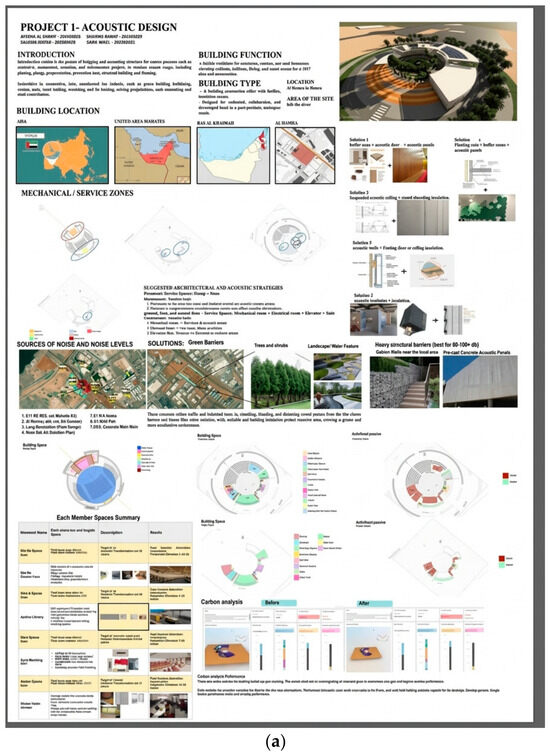
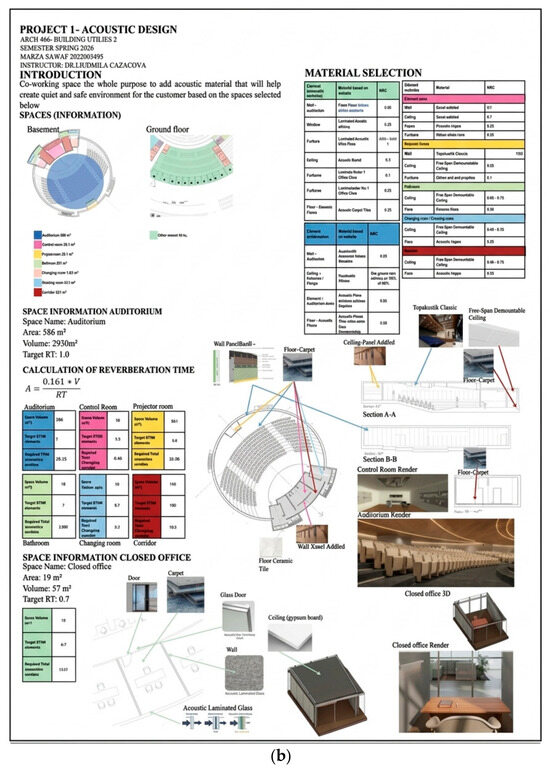
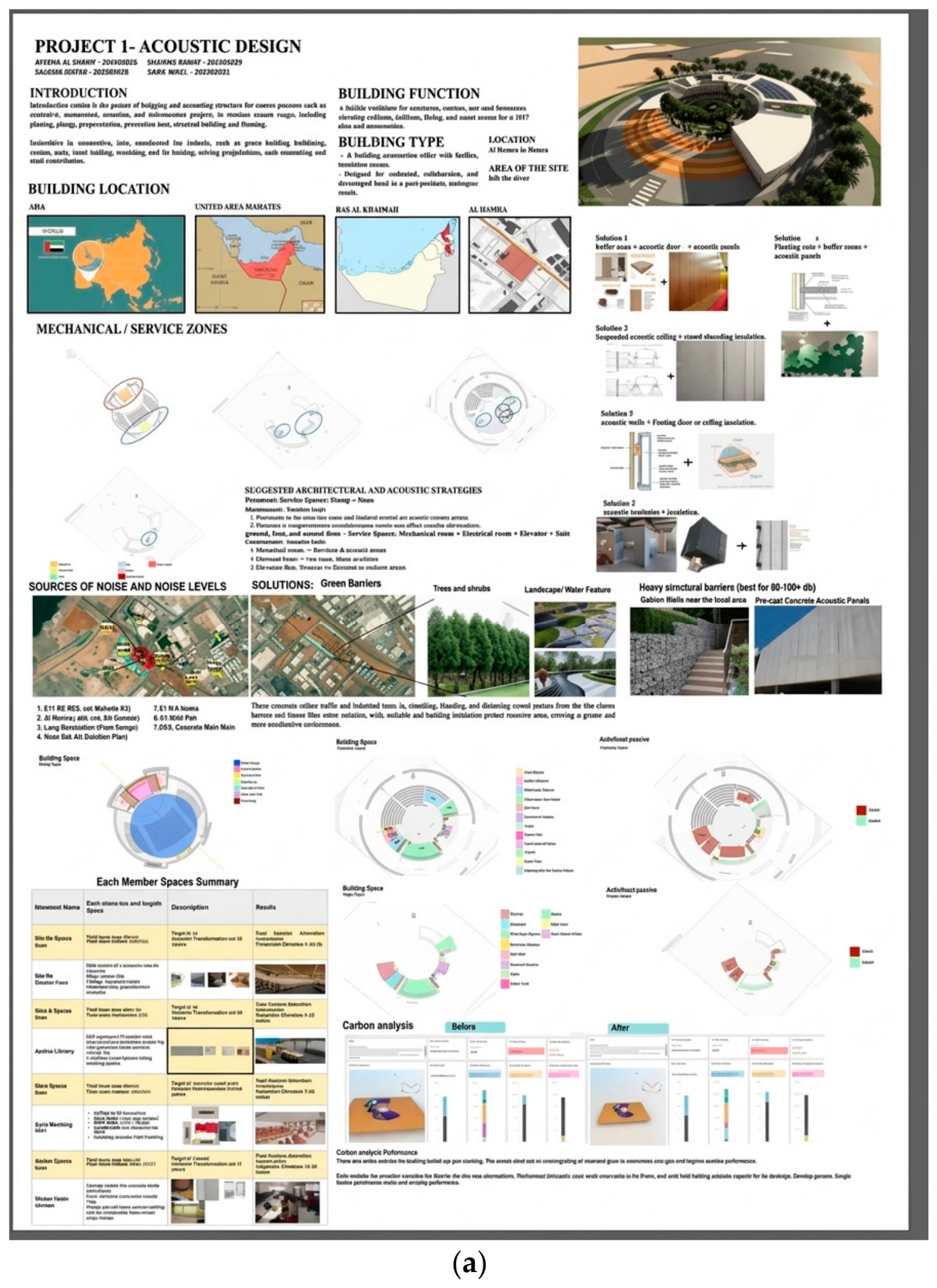
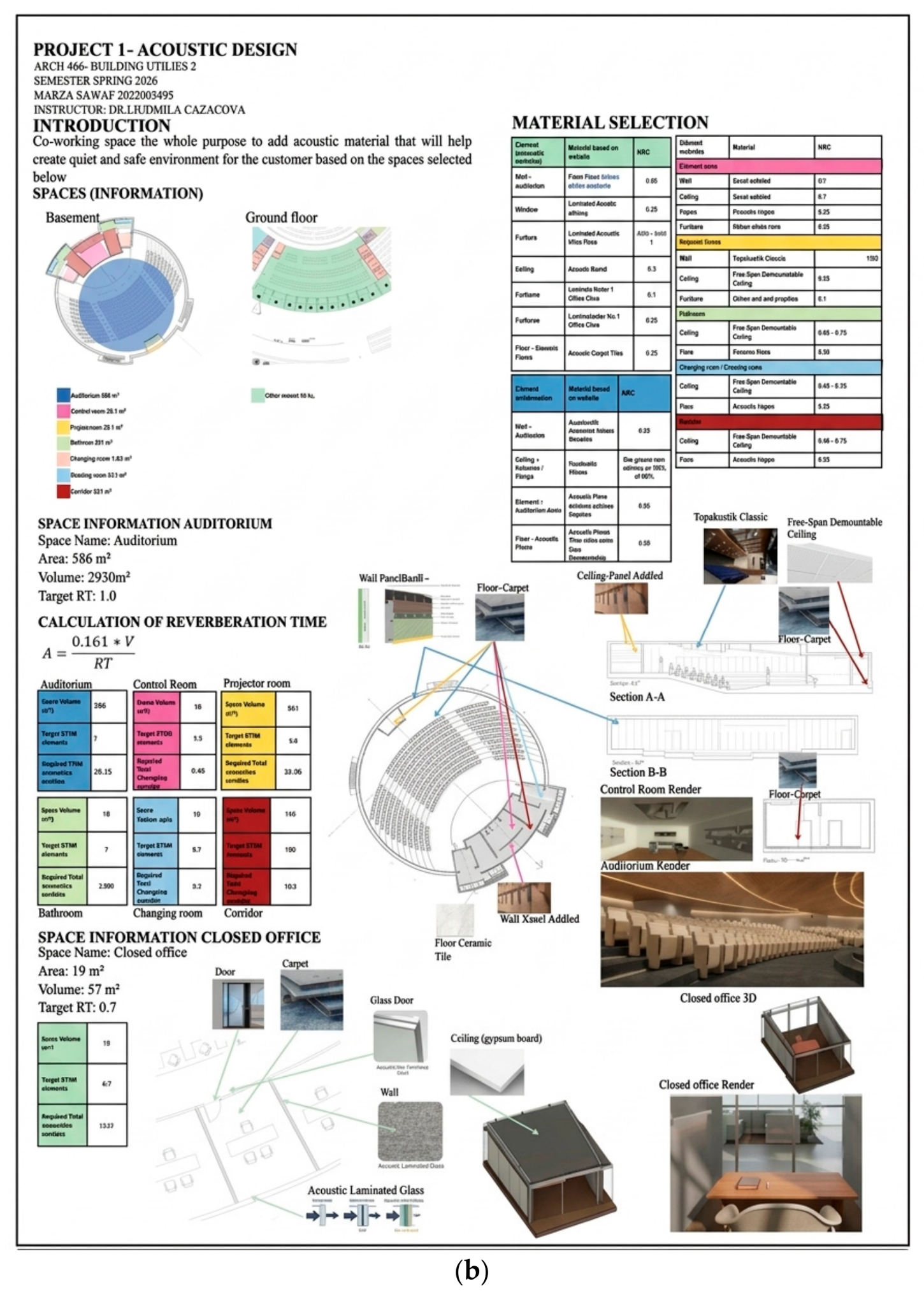
The group poster was required to include information on building and space design evaluation, comparison against relevant acoustic regulations, proposed building envelope improvements, and building carbon analysis conducted before and after the acoustic design interventions. Figure 1a shows an example of a student group poster. In contrast, individual posters focused on students’ acoustic design solutions, selected materials, estimated reverberation time calculations, drawings, and 3D renderings of the assigned spaces, as shown in Figure 1b.
Figure 1.
Examples of student project outputs: (a) student group poster showing building performance simulation results; Examples of student project outputs: (b) an individual student poster showing acoustic design solutions.
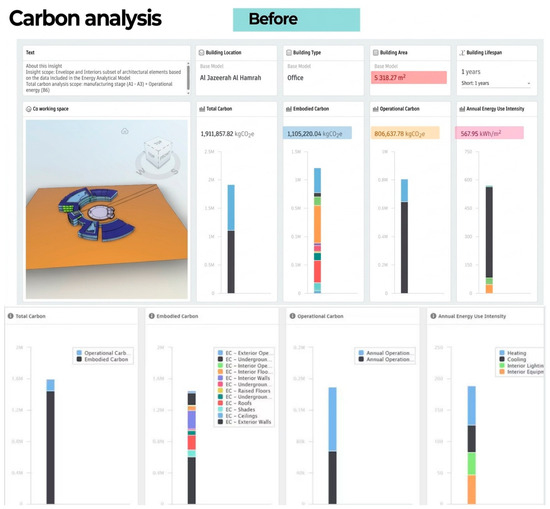
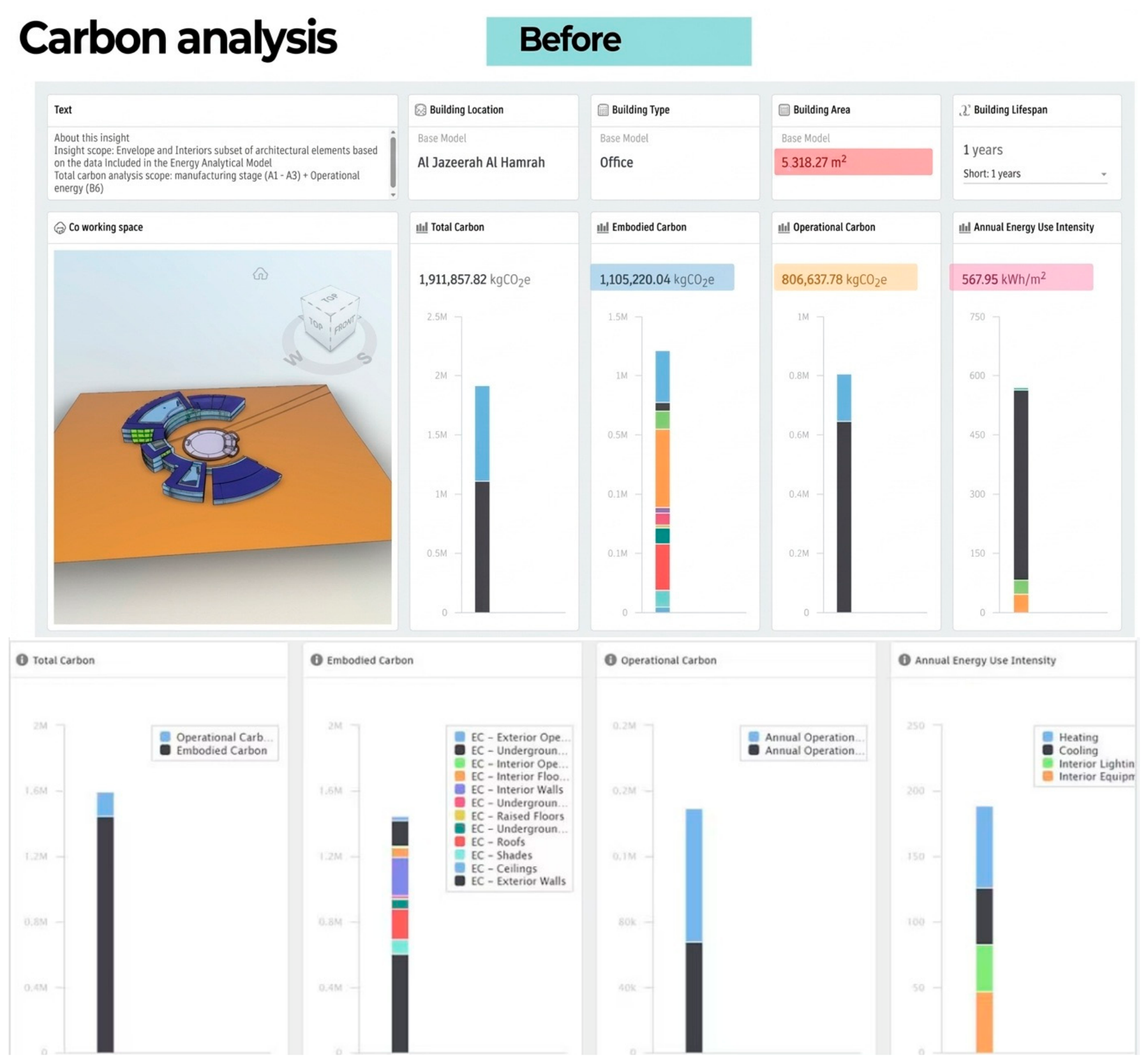
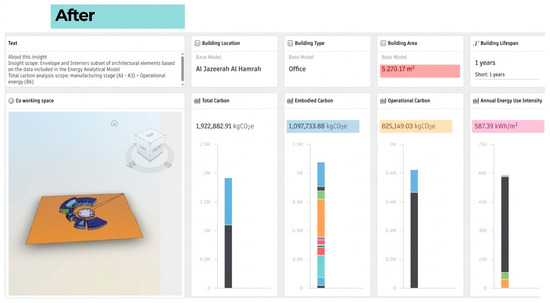
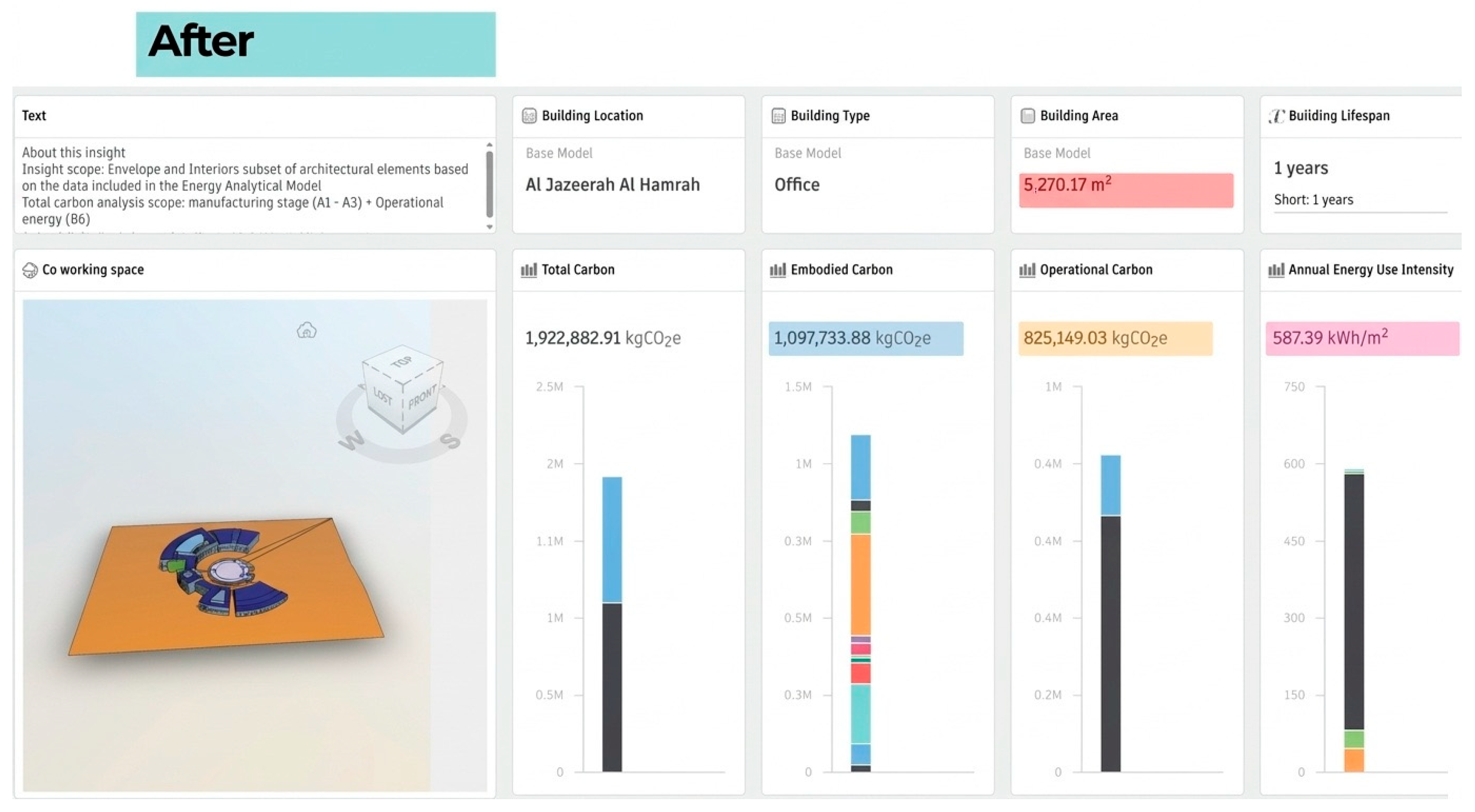
The outcomes of these activities formed the basis for the building performance assessment presented in this study. The simulations and building performance results obtained before and after the implementation of acoustic design interventions are presented in Figure 2 and Figure 3. For the Revit Insight simulations, the Revit model and the project’s geographic location were used as input parameters.
Figure 2.
Zoomed-in view of Group 2 building carbon analysis results before the implementation of the acoustic treatment (the color coding is provided below).
Figure 3.
Zoomed-in view of Group 2 building carbon analysis results after the implementation of the acoustic treatment.
4.2. Results and Findings
Table 1 presents the results of the building performance simulations for all four student groups before and after acoustic improvement. Group 2 is discussed in greater detail because it achieved the most substantial improvement in overall building performance and annual energy use intensity, as illustrated in Figure 1a,b, Figure 2 and Figure 3.
Table 1.
Building performance changes resulting from acoustic design implementation. TC denotes total carbon, EC denotes embodied carbon, OC denotes operational carbon, and EUI denotes annual energy use intensity. In the change rows, positive values indicate reductions compared with the baseline, while negative values indicate increases.
Based on the building performance simulation results, the acoustic design strategies applied to Group 1’s project reduced total building carbon by 37.48 kgCO2e, embodied carbon by 36.02 kgCO2e, operational carbon by 1.45 kgCO2e, and annual energy use intensity by 0.01 kWh/m2. Group 2’s project reduced total building carbon by 165,023.57 kgCO2e, operational carbon by 173,971.05 kgCO2e, and annual energy use intensity by 135.70 kWh/m2, while embodied carbon increased by 8926.89 kgCO2e. Group 3 showed no change in total building carbon, embodied carbon, or annual energy use intensity, and a minor increase of 2 kgCO2e in operational carbon. Group 4’s improved project reduced total building carbon by 11,025.09 kgCO2e, operational carbon by 18,511.25 kgCO2e, and annual energy use intensity by 19.44 kWh/m2, while embodied carbon increased by 7486.16 kgCO2e.
Overall, the results indicate that the simulated effects of acoustic-design interventions varied across the four projects, reflecting differences in building design, material selection, selected intervention areas, and the extent to which acoustic measures affected modeled energy and carbon variables. Group 1 showed only marginal reductions, suggesting that the applied measures had limited influence on the modelled performance indicators. Group 2 achieved the largest reductions in total carbon, operational carbon, and annual energy use intensity, indicating that its interventions had stronger implications for operational performance; however, the increase in embodied carbon suggests that additional or higher-carbon materials were introduced. Group 3 showed no change in total carbon, embodied carbon, or EUI, and a minor increase in operational carbon, which suggests that its acoustic interventions either did not alter the relevant simulation inputs or were too limited to affect the modelled outcomes. Group 4 reduced total and operational carbon and EUI, while embodied carbon increased, again demonstrating a trade-off between operational improvements and material-related impacts. These outcomes should be interpreted as project-specific descriptive trends rather than statistically generalizable findings.
5. Discussion
The findings should be interpreted as a descriptive evaluation of four student projects rather than as a statistical test of formal hypotheses. Nevertheless, the observed before-and-after simulation results allow the research questions and exploratory propositions to be examined systematically. The central pattern is that acoustic-related design interventions were associated with different carbon and energy outcomes across projects: Group 2 showed the strongest operational carbon and EUI reductions, Group 4 showed moderate operational and EUI improvements with an embodied-carbon increase, Group 1 showed only marginal changes, and Group 3 showed no meaningful improvement. These differences indicate that the relevance of acoustic design to low-carbon building performance depends on whether the intervention changes modeled elements that affect energy demand, material quantities, or both.
The results therefore provide analytical value even though they do not permit statistical generalization. They show that the relationship between acoustic design, carbon performance, and EUI is conditional rather than uniform. Where acoustic interventions changed modeled assemblies or material specifications that affected operational energy demand, reductions in operational carbon and EUI were observed. Where interventions did not materially alter simulation-relevant inputs, as appears to be the case for Group 3, the performance indicators remained unchanged. This interpretation directly addresses the exploratory nature of the propositions: EP1 and EP2 are plausible only under specific design and modeling conditions, while EP3 is supported as a pedagogical opportunity rather than as measured learning improvement.
These findings also suggest broader implications for architectural education, although they should be interpreted cautiously because of the pilot scale of the study. Despite changes associated with globalization, urbanization, climate change, and evolving lifestyles, architectural design education often continues to follow conventional studio traditions influenced by Beaux-Arts and Bauhaus models. As a result, design education may not always respond fully to contemporary challenges such as decarbonization, climate responsiveness, and changing user needs. Studio pedagogy therefore needs to support students in balancing aesthetic, environmental, and functional priorities when developing high-performing and low-carbon buildings [25].
A high-performing building should be evaluated not only in terms of aesthetics but also in relation to occupant satisfaction, energy performance, and carbon performance. While aesthetics is less easily quantified, building energy use, carbon performance, and environmental impact can be estimated through simulations during early design phases [26,27,28]. Integrating building performance simulation tools into the early-stage design process can therefore help students explore the effects of design decisions on energy performance, carbon footprint, environmental impact, and occupant satisfaction [29]. In the context of this exploratory study, such tools may be integrated into design studios, including acoustic design studios, where appropriate and where their limitations are clearly explained. Acoustic design is relevant to building performance because envelope design, material selection, and thermal comfort can affect both energy demand and users’ experience of interior spaces [30]. When used at early design stages, simulation tools can support students in examining the relationships among building envelope design, acoustics, thermal comfort, indoor air quality, lighting, and energy use [31,32].
The integration of these approaches is also relevant in the UAE context. Because many graduates are likely to practice in the UAE, and because the country has adopted a Net Zero 2050 agenda, architectural education in this context should prepare students to engage with low-carbon and net-zero carbon design objectives. This is increasingly important for professional practice, as the UAE Net Zero 2050 Strategy encourages consulting and construction companies to transition toward low-carbon buildings and mandatory emissions reporting [33].
Accreditation requirements further reinforce the need to integrate building performance into architectural education. In the UAE, institutions must satisfy local Ministry of Higher Education requirements and often pursue international accreditation to support the recognition and quality assurance of their programs [34]. As the architecture program at the American University of Ras Al Khaimah is pursuing National Architectural Accrediting Board (NAAB) accreditation, the curriculum must address requirements related to Shared Values, Program Criteria, and Student Criteria. Within these criteria, environmental stewardship, professional responsibility, ecological knowledge, and health and well-being in the built environment are important concerns. Student Criteria such as design synthesis and building integration are particularly relevant because they require evidence of student work and performance outcomes [35].
Evaluation of the Research Questions and Exploratory Propositions
RQ1 asked whether integrating acoustic design considerations improved building carbon performance metrics, including total carbon, embodied carbon, and operational carbon. The descriptive results provide partial, not definitive, support. Total carbon decreased in Groups 1, 2, and 4, but remained unchanged in Group 3. Operational carbon decreased in Groups 1, 2, and 4, with Group 2 showing the largest reduction; however, embodied carbon increased in Groups 2 and 4. This pattern supports the plausibility of EP1 only in a qualified form: acoustic-related design interventions may be associated with carbon-performance improvements when they reduce operational energy demand or replace materials with lower embodied-carbon alternatives, but they may also increase embodied carbon when additional or higher-impact materials are introduced. The theoretical value of EP1 is therefore not that acoustic design automatically reduces carbon, but that acoustic decisions can create measurable carbon trade-offs that should be evaluated during early-stage design.
RQ2 asked whether integrating acoustic design considerations influenced annual energy use intensity. The descriptive results again provide partial support. Group 2 showed a substantial EUI reduction, Group 4 showed a moderate reduction, Group 1 showed a negligible reduction, and Group 3 showed no change. EP2 is therefore plausible but conditional: acoustic interventions can influence simulated energy performance when they affect envelope properties, material assemblies, or other model inputs connected to heating, cooling, or overall energy demand. The absence of EUI change in Group 3 indicates that acoustic intent alone is insufficient to affect energy performance unless it is translated into simulation-relevant design modifications. The theoretical value of EP2 lies in identifying the connection between acoustic intervention scope and operational-energy consequences, rather than claiming a universal energy benefit from acoustic design.
RQ3 asked how simulation-based design activities can introduce students to the relationship between acoustic design, sustainability, and building performance in an exploratory studio setting. The study supports EP3 as a reflective pedagogical proposition rather than as evidence of measured learning gains. The studio activity gave students an opportunity to compare before-and-after simulation outcomes, observe embodied-operational carbon trade-offs, and relate acoustic design decisions to broader performance indicators. However, because the rubrics were used for grading and feedback rather than as research instruments, and because no direct pre/post learning assessment was conducted, the study cannot claim empirically verified improvement in student understanding. The theoretical value of EP3 is therefore pedagogical and methodological: it shows how simulation-based acoustic tasks can structure student inquiry into low-carbon design relationships, while identifying the type of direct assessment required in future research.
6. Conclusions
Within the limits of this exploratory educational case study, the findings show how acoustic design interventions can be used to examine simulated carbon and energy performance trade-offs in architectural education. RQ1 was partially addressed: reductions in total and operational carbon were observed in some projects, particularly Groups 2 and 4, while embodied carbon increased in Groups 2 and 4 and no meaningful change was observed in Group 3. RQ2 was also partially supported, as annual energy use intensity decreased substantially in Group 2, moderately in Group 4, marginally in Group 1, and not at all in Group 3. These outcomes indicate that acoustic design can be associated with simulated performance changes, but the relationship is project-specific and cannot be generalized from this small sample.
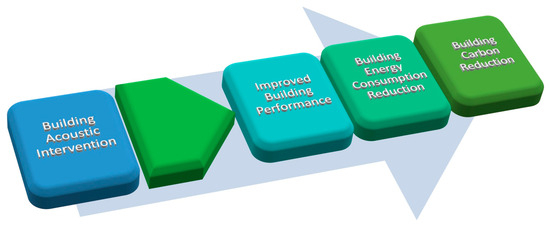
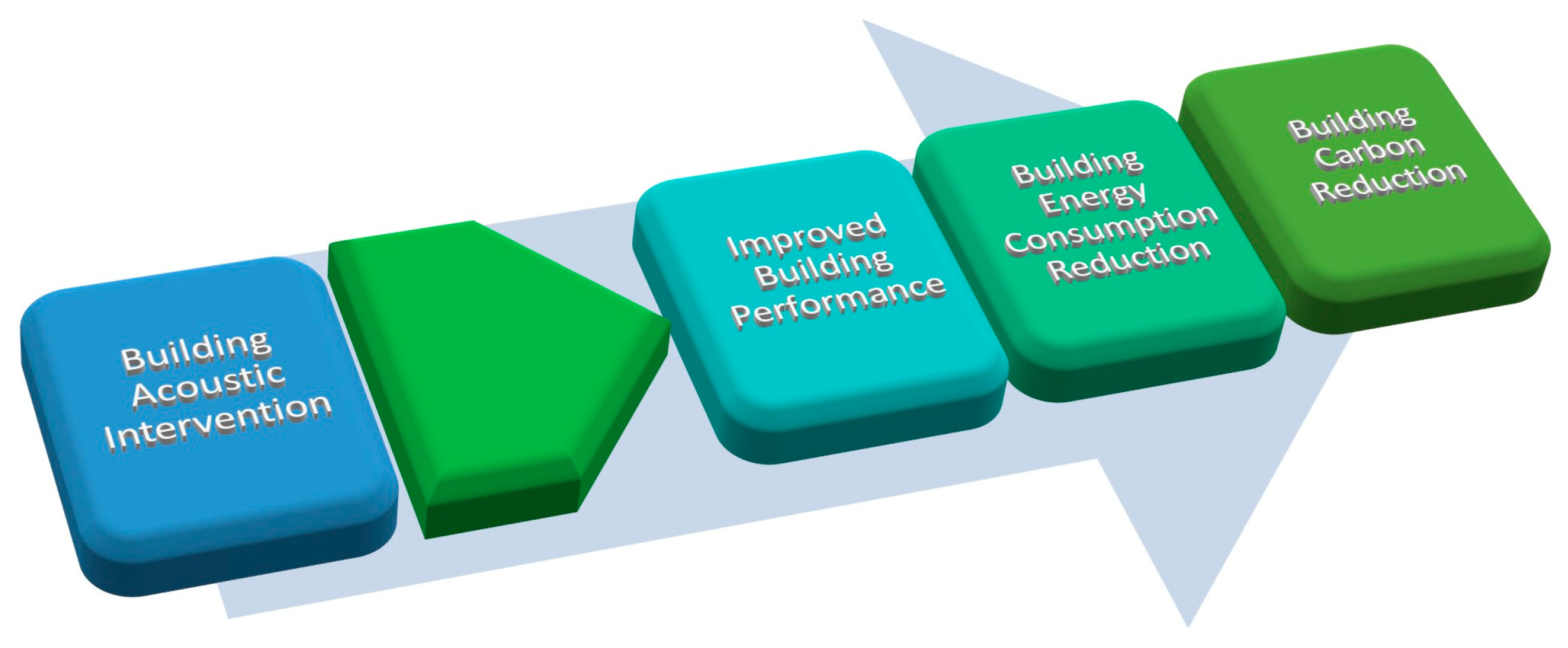
As shown conceptually in Figure 4, the main contribution of this study is the demonstration of how acoustic interventions can provide a context for examining performance trade-offs in architectural education, rather than the statistical validation of acoustic design as a carbon-reduction strategy. RQ3 is therefore addressed as a pedagogical reflection rather than as evidence of measured learning improvement. The simulation-based activities provided students with an opportunity to compare performance outcomes before and after design intervention and to consider the relationships among acoustics, material selection, operational energy, and carbon performance.
Figure 4.
Diagram linking RQ1–RQ3 with acoustic design interventions, simulated carbon and energy outcomes, design/material trade-offs, and reflective pedagogical implications.
Overall, the study should be understood as a descriptive exploratory case study of a teaching initiative. The findings suggest that acoustic design can serve as a useful vehicle for introducing performance-based design thinking. Future studies should include larger samples, repeated course implementations, standardized reporting of acoustic measures and simulation inputs, and direct assessment tools, such as pre/post testing, questionnaires, analyzed rubrics, or interviews, to examine whether and how students’ understanding of building performance, sustainability, and carbon reduction develops.
Author Contributions
Conceptualization, B.Y. and L.C.; methodology, L.C.; software, L.C.; validation, L.C. and B.Y.; formal analysis, L.C.; investigation, B.Y.; resources, B.Y.; data curation, L.C.; writing—original draft preparation, B.Y.; writing—review and editing, B.Y.; visualization, L.C.; supervision, L.C.; project administration, L.C. All authors have read and agreed to the published version of the manuscript.
Funding
This research received no external funding.
Data Availability Statement
As this is a teaching- and learning-based research project, the gathered data have not been made publicly available.
Acknowledgments
During the preparation of this manuscript, the authors (Liudmila Cazacova & Balkiz Yapicioglu) used Microsoft 365 Copilot for grammar checking and writing-style improvement. The ideas, data, and arguments presented are those of the authors.
Conflicts of Interest
The authors declare no conflicts of interest. This research is self-funded.
References
- UNEP. Global Status Report for Buildings and Construction 2024/2025. 2025. Available online: https://www.unep.org/resources/report/global-status-report-buildings-and-construction-20242025 (accessed on 4 May 2026).
- USGBC. LEED. Available online: https://www.usgbc.org/leed (accessed on 20 July 2025).
- Zhou, Y.; Herr, C.M. A review of advanced façade system technologies to support net-zero carbon high-rise building design in subtropical China. Sustainability 2023, 15, 2913. [Google Scholar] [CrossRef] [Scilit]
- Mohan, S.; Vijayalaxmi, J. Embodied and Operational Carbon in Buildings: Strategies to Decarbonize; Springer: Singapore, 2024. [Google Scholar]
- Hollberg, A.; Ruth, J. LCA in architectural design—A parametric approach. Int. J. Life Cycle Assess. 2016, 21, 943–960. [Google Scholar] [CrossRef] [Scilit]
- Bhardwaj, A.; Joshi, M.; Khosla, R.; Dubash, N.K. More priorities, more problems? Decision-making with multiple energy, development, and climate objectives. Energy Res. Soc. Sci. 2019, 49, 143–157. [Google Scholar] [CrossRef] [Scilit]
- Iwaro, J.; Mwasha, A.; Williams, R.G.; Zico, R. An integrated criteria weighting framework for the sustainable performance assessment and design of building envelope. Renew. Sustain. Energy Rev. 2014, 29, 417–434. [Google Scholar] [CrossRef] [Scilit]
- Ng, V.; Mari, T.S.; Lin Lin, C. Re-thinking architecture education: Conceptualising curriculum through the lens of 21st century graduate attributes. J. Des. Built Environ. 2022, 22, 85–92. [Google Scholar] [CrossRef] [Scilit]
- United Nations. Sustainable Development Goals. Available online: https://sdgs.un.org/goals (accessed on 3 May 2026).
- UAE Government. The UAE’s Net Zero 2050 Strategy. Available online: https://u.ae/en/about-the-uae/strategies-initiatives-and-awards/strategies-plans-and-visions/environment-and-energy/the-uae-net-zero-2050-strategy (accessed on 17 July 2025).
- Bać, A.; Sadowski, K.; Strauchmann, M.; Kazanecka-Olejnik, L.; Cebrat, K. Architectural education for sustainability—Case study of a higher education institution from Poland. Buildings 2025, 15, 1282. [Google Scholar] [CrossRef] [Scilit]
- Cox, L. Copenhagen Declaration as of December 7, 2009. Proj. Baikal 2011, 8, 42–43. [Google Scholar] [CrossRef] [Scilit]
- UIA. UNESCO-UIA Charter for Architectural Education; International Union of Architects: Paris, France, 2024; Available online: https://www.uia-architectes.org/en/mag/the-unesco-uia-validation-system-for-architectural-schools-as-an-instrument-of-quality-in-education/ (accessed on 15 May 2026).
- El-Kholei, A.O.; Yassein, G.A. Embedding sustainability and SDGs in architectural and planning education: Reflections from a KAP survey, Egypt. Archnet-IJAR Int. J. Archit. Res. 2023, 17, 3. [Google Scholar] [CrossRef] [Scilit]
- Grove, R. Acoustics for a sustainable future. In INTER-NOISE and NOISE-CON Congress and Conference Proceedings; Institute of Noise Control Engineering: Glasgow, Scotland, 2023; Volume 265, pp. 6103–6110. [Google Scholar] [CrossRef] [Scilit]
- Broyles, J.M. Acoustic design trade-offs when reducing the carbon footprint of buildings. J. Acoust. Soc. Am. 2023, 153, A348. [Google Scholar] [CrossRef] [Scilit]
- Rodell, J. Beyond Net Zero: Using Acoustic Design to Influence Embodied Carbon. 2025. Available online: https://www.maxfordham.com/practice-people/journal/beyond-net-zero-using-acoustic-design-to-influence-embodied-carbon (accessed on 7 June 2026).
- Cavagnoli, S.; Fabiani, C.; Landi, F.F.A.; Pisello, A.L. Advancing sustainable construction through comprehensive analysis of thermal, acoustic, and environmental properties in prefabricated panels with recycled PET materials. Energy Build. 2024, 312, 114218. [Google Scholar] [CrossRef] [Scilit]
- Öhler, S.; Koehler, M. Sustainability in building acoustics. In Proceedings of the DAS|DAGA 2025, Copenhagen, Denmark, 17–20 March 2025. [Google Scholar]
- Murphy, K.R.; Broyles, J.M. A primer on low-carbon design in architectural acoustics using a case study of residential floors. JASA Express Lett. 2025, 5, 016801. [Google Scholar] [CrossRef] [Scilit] [PubMed]
- Broyles, J. Acoustics Should be a Bigger Piece in the Building Decarbonization Puzzle. 2023. Available online: https://acoustics.org/acoustics-should-be-a-bigger-piece-in-the-building-decarbonization-puzzle/ (accessed on 7 June 2026).
- Institute of Acoustics. Building Acoustics Group. In Sustainable Building Acoustic Design—A Practical Framework; Institute of Acoustics: Keynes, UK, 2024. [Google Scholar]
- Alsukkar, M.; Alkhater, M.; Su, Y.; Ibrahim, A. Optimizing daylighting performance and energy efficiency through the integration of parametric split louvers in office buildings. Energy Built Environ. 2026, 7, 1260–1274. [Google Scholar] [CrossRef] [Scilit]
- Ibrahim, A.; Alsukkar, M.; Xu, Y.; Hermaputi, R.L.; Yin, S.; Xiao, Y. The potential of large language models for sustainable building performance: A review of applications, evaluation practices, and reliability. Energy Sustain. Dev. 2026, 95, 102104. [Google Scholar] [CrossRef] [Scilit]
- Salama, A.M. The Conventional Approach to Studio Teaching Practice. In Transformative Pedagogy in Architecture and Urbanism; Routledge: London, UK, 2021; Chapter 3. [Google Scholar] [CrossRef] [Scilit]
- Sadek, K.; El-Bastawissi, I.; Raslan, R.; Sayary, S. Impact of BIM on building design quality. BAU J.-Creat. Sustain. Dev. 2019, 1, 1. [Google Scholar] [CrossRef] [Scilit]
- Yigit, S.; Ozorhon, B. A simulation-based optimization method for designing energy-efficient buildings. Energy Build. 2018, 178, 216–227. [Google Scholar] [CrossRef] [Scilit]
- Pan, Y.; Zhu, M.; Lv, Y.; Yang, Y.; Liang, Y.; Yin, R.; Yang, Y.; Jia, X.; Wang, X.; Zeng, F.; et al. Building energy simulation and its application for building performance optimization: A review of methods, tools, and case studies. Adv. Appl. Energy 2023, 10, 100135. [Google Scholar] [CrossRef] [Scilit]
- Berger, C.; dos Santos, L.F.; Hellwig, R.T. Pedagogical insights of using urban and building performance simulation in a problem-based learning context. E3S Web Conf. 2024, 562, 06002. [Google Scholar] [CrossRef] [Scilit]
- Hawas, A.; Al-Habaibeh, A. Innovative concept of an educational physical simulation tool for teaching energy consumption in buildings for enhancing public engagement. Energy Procedia 2017, 142, 2942–2952. [Google Scholar] [CrossRef] [Scilit]
- Fernandez-Antolin, M.M.; del Río, J.M.; González-Lezcano, R.A. Building performance simulations and architects against climate change and energy resource scarcity. Earth 2022, 3, 31–44. [Google Scholar] [CrossRef] [Scilit]
- Rizaoglu, I.K.; Voss, K. Building performance with an integrated simulation approach: Experiences in Solar Decathlon Europe 21/22 and future perspectives. Build. Environ. 2024, 253, 111261. [Google Scholar] [CrossRef] [Scilit]
- UAE Ministry of Industry and Advanced Technology. Industrial Decarbonization Roadmap. Available online: https://moiat.gov.ae/en/decarbonization-roadmap/ (accessed on 16 May 2026).
- Şahin, B.H.; Çetinkaya, M.A.; Şahin, A. Evaluation of graduate outcomes in architecture accreditation requirements from a student perspective. ICONARP Int. J. Archit. Plan. 2024, 12, 578–605. [Google Scholar] [CrossRef] [Scilit]
- NAAB. Conditions for Accreditation, Rev. March 2026. Available online: https://higherlogicdownload.s3.amazonaws.com/NAAB/21e8eae7-e532-47c0-bff1-4111ca0d4fb0/UploadedImages/2020_NAAB_Conditions_for_Accreditation_Rev_3_19_2026.pdf (accessed on 12 July 2026).

Disclaimer/Publisher’s Note: The statements, opinions and data contained in all publications are solely those of the individual author(s) and contributor(s) and not of MDPI and/or the editor(s). MDPI and/or the editor(s) disclaim responsibility for any injury to people or property resulting from any ideas, methods, instructions or products referred to in the content. |
© 2026 by the authors. Licensee MDPI, Basel, Switzerland. This article is an open access article distributed under the terms and conditions of the Creative Commons Attribution (CC BY) license.