


Abstract
Sugarcane bagasse fiber has attracted increasing attention as a sustainable reinforcement for construction materials due to its widespread availability, low cost, and lignocellulosic composition. However, the scientific development of this field has not yet been comprehensively evaluated through bibliometric analysis. The aim of this study was to conduct a bibliometric analysis of 124 documents retrieved from the Scopus database on the use of sugarcane bagasse fiber in construction, published between 2003 and 2026. To this end, R (version 4.5.2), run in RStudio, with bibliometrix (version 5.4.1) through its Biblioshiny interfacewas employed to analyze scientific production indicators, publication sources, prominent institutions, collaboration networks, citation impact, and keyword co-occurrence. The results reveal a sustained growth in scientific output, exhibiting a Compound Annual Growth Rate (CAGR) of 15.09% for the period between 2003 and 2025. While research has predominantly focused on mechanical performance, particularly compressive strength, areas such as durability, thermal performance, and microstructural characterization have emerged as increasingly important themes. These findings provide a comprehensive overview of the field’s evolution, identify main research gaps, and offer valuable guidance for future studies on sustainable construction materials reinforced with sugarcane bagasse fiber.
1. Introduction
1.1. Background
The construction sector is one of the major contributors to global environmental degradation. The Working Group III contribution to the Sixth Assessment Report of the Intergovernmental Panel on Climate Change (IPCC) accurately quantifies this impact, noting that in 2019, the sector accounted for 12 GtCO2eq, representing 21% of global greenhouse gas (GHG) emissions [1]. Of this total, 57% corresponded to indirect emissions generated off-site (e.g., external production of electricity and heat), 24% to direct emissions produced on construction sites, and 18% to embodied emissions specifically associated with the manufacturing of cement and steel. Furthermore, the sector’s final energy demand reached 128.8 exajoules in 2019, accounting for 31% of the global final energy demand [1]. This scenario, characterized by substantial emissions and energy consumption, has driven the search over the past two decades for more sustainable alternatives to conventional construction materials, with bio-based insulating and reinforcing materials receiving particular attention.
Against this backdrop, the literature has long highlighted the environmental limitations of conventional insulation and reinforcement materials, whose production stages cause significant ecological detriment [2]. This recognition has accelerated the development of bio-based alternatives capable of reducing both the depletion of non-renewable resources and the generation of industrial waste.
In this context, the circular economy has emerged as a central conceptual framework for redirecting agro-industrial waste management toward value creation. The sugarcane agro-industry represents a clear paradigm of both this challenge and opportunity. Globally, sugarcane processing for sugar and ethanol production generates over 279 million tons of solid and liquid waste annually [3]. This substantial volume includes bagasse, straw, filter cake, wastewater, ash from bagasse combustion, vinasse from ethanol distillation, and molasses. Among these, bagasse occupies a central position due to its massive volume and widespread availability.
This value-added approach is reinforced by the recognition that agro-industrial waste possesses high valorization potential owing to its diverse chemical composition and physical properties; therefore, it should be regarded as an opportunity rather than a disposal problem [4]. This is particularly relevant for its incorporation into construction materials as a partial cement replacement. While sugarcane bagasse (SCB) is traditionally burned for energy generation, it holds immense untapped potential for sustainable valorization amidst global shifts toward renewable resources and the reduction of fossil fuel reliance [5]. This contrast between its traditional low-value use for energy generation and its largely unexplored valorization potential provides a strong rationale for investigating its incorporation into building materials.
Simultaneously, the sustainable construction field has shown increasing interest in utilizing natural (plant-based and lignocellulosic) fibers as reinforcements or additives in cementitious, polymeric, and earthen matrices: aligning with the premise that circular economies must be advanced as a core aspect of sustainable development [6]. Contemporary construction urgently needs to mitigate its negative environmental impact [7]. Consequently, fibers such as hemp, jute, sisal, bamboo, and coconut have been extensively investigated as reinforcements in mortars, concrete, and panels. A representative example of this research trajectory is the study of concrete reinforced with natural cellulosic fibers, which demonstrated significant improvements in the tensile and compressive properties of the composites depending on the fiber type and mix proportion [8].
Sugarcane bagasse perfectly aligns with this trend as a highly attractive lignocellulosic residue. It is rich in cellulose (40–50%), hemicellulose (25–30%), and lignin (20–25%) [5], while also offering the critical advantages of being low-cost and environmentally friendly [9]. Recent physical and chemical characterizations of industrial and artisanal sugarcane bagasse have confirmed its viability as a construction component based on its moisture and lignocellulosic content [10]. Nevertheless, researchers caution that the higher sugar content in artisanal bagasse may reduce its resistance to xylophagous insects [10], a technically relevant consideration for the long-term durability of the material.
1.2. Sugarcane Bagasse Fiber in Construction Materials
The incorporation of sugarcane bagasse fiber into construction materials has been widely investigated due to its renewable nature, cost-effectiveness, and lignocellulosic profile, making it a suitable reinforcing agent for various matrices. The existing literature demonstrates its successful application in mortars, concrete, compressed earth blocks, adobe, and polymer composites, evaluating its influence on mechanical, physical, and durability properties.
In mortars, bagasse fiber has shown positive effects by reducing carbonation and improving the material ductility, thereby contributing to crack control and enhanced overall durability [11]. Similarly, in conventional concrete, recycled aggregate concrete, and foamed lightweight concrete, studies report notable improvements in mechanical strength, reinforcement corrosion resistance, reduced density, and thermal performance. These benefits are particularly pronounced when the fibers undergo chemical treatments that enhance their interfacial bonding with the cementitious matrix [12,13,14,15].
The versatility of bagasse fiber extends to compressed earth blocks and adobe, where enhancements in compressive strength, water absorption, and thermal performance have been documented [16,17]. Likewise, its incorporation into polymer matrices positively affects the physical and mechanical properties of the resulting composites, solidifying bagasse fiber as a promising alternative for developing sustainable construction materials [18,19]. However, despite this robust and growing body of experimental evidence, the scientific evolution of this specific field has not yet been quantitatively examined through science mapping techniques.
1.3. Research Gap
While experimental research on sugarcane bagasse fiber in construction materials is expanding rapidly, no study to date has systematically examined the evolution, structure, and emerging trends of this specific domain using bibliometric methods. Available bibliometric analyses have primarily focused on broader research domains or evaluated other natural fibers in isolation.
For instance, previous bibliometric analyses of bio-based construction materials have identified that research avenues related to acoustic and fire properties remain underexplored [20], and that the widespread adoption of these materials is still limited due to the relatively recent emergence of the field [21]. However, these macro-level studies did not investigate specific agricultural fibers like bagasse. Another bibliometric study focused on the growing interest in lignocellulosic fibers within polymer and hybrid composites; yet, its scope was restricted to fibers such as flax, jute, hemp, and sisal, entirely omitting sugarcane bagasse [22]. More specifically, a bibliometric analysis devoted exclusively to coconut fiber as a concrete reinforcement highlighted that dispersed knowledge makes it difficult to evaluate fiber compatibility [23]—a limitation directly analogous to the current state of sugarcane bagasse literature.
Crucially, none of these preceding studies has mapped the scientific landscape dedicated exclusively to sugarcane bagasse fiber in construction applications. This omission is significant because SCB exhibits distinct compositional characteristics, processing requirements, and global availability compared to other previously analyzed natural fibers [3,5]. Therefore, a methodological and thematic gap exists regarding the global research trends of SCB valorization in the construction sector, which this study seeks to resolve.
1.4. Aim of the Study
To address this gap, the present study aims to conduct a comprehensive bibliometric analysis of the scientific literature concerning the use of sugarcane bagasse fiber in construction materials, utilizing the Scopus database as the primary information source. The open source bibliometrix R package (version 5.4.1) was employed for data processing and visualization, as it is a highly validated tool for performing comprehensive science mapping analyses [24]. This software enables the automated generation of productivity indicators, collaboration networks, and thematic maps.
This methodological approach builds upon precedents successfully applied in other construction materials research areas, such as the bibliometric mapping of recycled aggregates reported by Sánchez-Roldán et al. using VOSviewer (version 1.6.15) and SciMAT (version 1.1.04) [25]. By applying a comparable methodology to the highly specific domain of sugarcane bagasse fiber, this study seeks to provide a structured overview of the state-of-the-art, identify existing research gaps, and outline future directions. Ultimately, this work intends to serve as a valuable guide for researchers, engineers, and policymakers committed to the sustainable valorization of agro-industrial by-products.
2. Materials and Methods
2.1. Data Collection and Search Strategy
To retrieve relevant literature on the use of sugarcane bagasse fiber in construction materials, a systematic search was conducted using the Scopus database, selected for its comprehensive coverage of peer-reviewed scientific literature and suitability as a curated source for bibliometric research [26,27]. The selection of Scopus as the sole database ensured high metadata uniformity. Its highly structured exports integrate directly with Bibliometrix, preventing the significant metadata loss and duplication errors common when merging multiple databases for science mapping.
The search strategy combined terms related to sugarcane bagasse fiber and its applications in construction materials using the TITLE-ABS-KEY field. The search parameters, eligibility criteria, time span, and retrieval date are detailed in Table 1. To carefully balance thematic specificity with search sensitivity, the Boolean OR operator was utilized. This allowed the retrieval of documents containing any of the targeted expressions, including those where “bagasse fiber/fibre” appears independently without the term “sugarcane”. The inclusion of these standalone variants was deliberately designed to maximize search sensitivity and avoid excluding potentially relevant studies due to terminology variations among authors. Simultaneously, this defined boundary prevented a massive thematic overlap with unrelated agricultural residues (e.g., agave or sweet sorghum)—which possess fundamentally different lignocellulosic compositions and industrial processing requirements—thereby guaranteeing the structural homogeneity of the dataset.
Table 1.
Search strategy and parameters used for data collection from Scopus.
Following the search, the bibliographic records were exported in standard formats and prepared for subsequent bibliometric processing, preserving the metadata required for analysis. The resulting dataset constituted the final corpus for assessing scientific production, citation impact, collaboration patterns, and the conceptual structure of research on sugarcane bagasse fiber in construction materials.
2.2. Bibliometric Analysis Workflow
The collected bibliographic records were exported in standard formats (e.g., BibTeX and CSV) and initially processed in Microsoft Excel to remove duplicates and standardize metadata. To disambiguate author names and homonyms, institutional affiliations, ORCID IDs, and co-authorship networks were cross-referenced. This step ensured that productivity metrics remained accurate and unaffected by naming variations. The core bibliometric analysis was then performed using R (version 4.5.2) via the Biblioshiny interface of the Bibliometrix package (version 5.4.1), a validated, open-source tool for quantitative science mapping and visualization [24].
Using this methodological framework, multiple performance and structural indicators were evaluated:
- Scientific Production and Impact: Annual publication growth rates, total citations, and citation impact per source or author.
- Geographical and Institutional Distribution: Contributions and collaborative output from leading countries and research institutions.
- Scientific Collaboration Networks: Co-authorship patterns among researchers, institutions, and countries.
- Conceptual Structure: Keyword co-occurrence networks and thematic mapping to identify historical foundations and emerging research frontiers.
This comprehensive workflow aligns with established methodological guidelines for bibliometric studies [28], ensuring a transparent, reproducible, and robust assessment of research trends concerning sugarcane bagasse fiber in sustainable construction.
2.3. AI Use Declaration
During the preparation of this manuscript, the authors used Gemini 1.5 Pro (Google LLC) to improve English grammar, style, and readability and to assist in the conceptualization and creation of the graphical abstract. The authors reviewed and revised all AI-assisted text and visual content to ensure consistency with the study and take full responsibility for the accuracy and integrity of the final manuscript, including the graphical abstract.
3. Results and Discussion
3.1. Annual Scientific Production
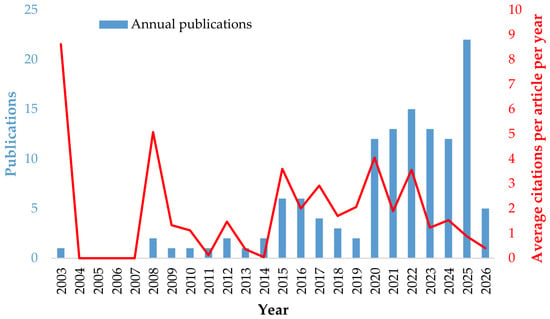
Scientific production regarding the use of sugarcane bagasse in construction materials grew steadily from 2003 to 2025, achieving a Compound Annual Growth Rate (CAGR) of 15.09%. As Figure 1 shows, scientific output remained limited and sporadic between 2003 and 2014. Output increased to six publications annually in 2015 and 2016, but gradually declined to four publications in 2017, three in 2018, and two in 2019. From 2020 onward, production surged. The field reached 12 publications in 2020 and peaked at 22 publications in 2025, despite a moderate decrease in 2023 and 2024.
Figure 1.
Annual scientific production and average citations per article per year in research on sugarcane bagasse fiber for construction materials (2003–2026). For each publication-year cohort, the citation indicator is calculated as total citations divided by the number of documents in that cohort and by the inclusive number of years from publication through 2026. It represents an annualized average, not the citations received during each calendar year. For years with no publications, average citations per article per year are undefined and are therefore shown as gaps in the citation line.
The database recorded five publications in 2026. Because the year remains ongoing and the scientific output incomplete, the analysis excluded this partial data point from the CAGR calculation and the logistic growth model, presenting it solely for descriptive completeness. This surge in publication activity aligns with a growing interest in valorizing sugarcane bagasse for construction applications. It reflects broader advancements in circular economy strategies and the push to develop sustainable materials from agro-industrial residues [29,30].
Regarding citation performance, Figure 1 shows that some early publication-year cohorts have higher average citations per article per year than more recent cohorts. Because this indicator is annualized, the pattern should not be interpreted solely as a consequence of older articles having had more time to accumulate citations. Differences in citation trajectories and the number of documents in each cohort also warrant consideration. In particular, the 2003 value represents a single publication, and the 2026 cohort covers only the period up to the search date. These descriptive comparisons should therefore not be treated as direct measures of research quality [31,32].
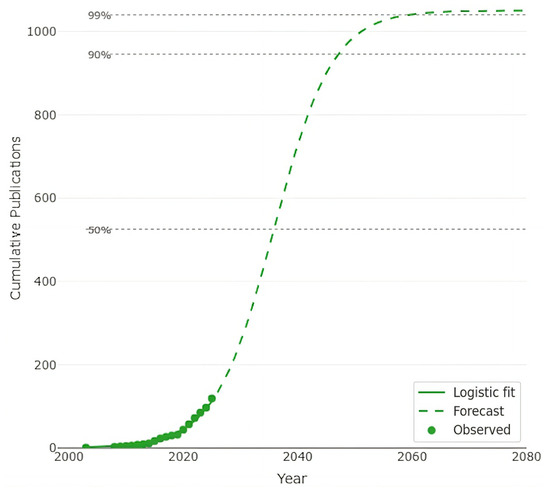
Figure 2 displays the cumulative scientific production and the logistic growth model fitted using the Life Cycle analysis module in Bibliometrix [24], based on publication data through 2025. The reported fit has an R2 of 0.845 and estimates a maximum annual publication rate of approximately 51 near 2036. The cumulative curve reaches 50%, 90%, and 99% of its estimated asymptotic publication total in approximately 2036, 2047, and 2059, respectively. The 50% level corresponds to the inflection point of the fitted logistic curve. These dates are model-based extrapolations beyond the observed period and should not be interpreted as established dates of saturation for the research field.
Figure 2.
The solid green line denotes the logistic fit, the dashed green line denotes the forecast, and the green markers denote observed cumulative production. The horizontal dotted lines indicate 50%, 90%, and 99% of the fitted asymptote.
The increase in annual publication output from 2020 onward is an observed feature of the dataset and is distinct from the logistic inflection point projected near 2036. The model describes publication dynamics; its estimated asymptote does not establish technical limits on fiber–matrix adhesion, durability, or raw-material substitution. Those material-performance questions require independent experimental evidence. Given the limited observation period and the uncertainty of extrapolation, the fitted curve should be interpreted as an exploratory description of possible publication growth rather than a definitive forecast [33,34].
3.2. Leading Publication Sources
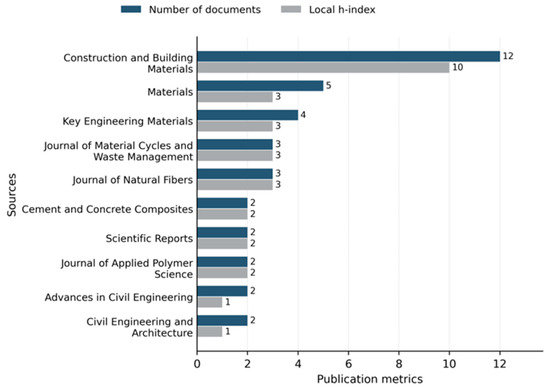
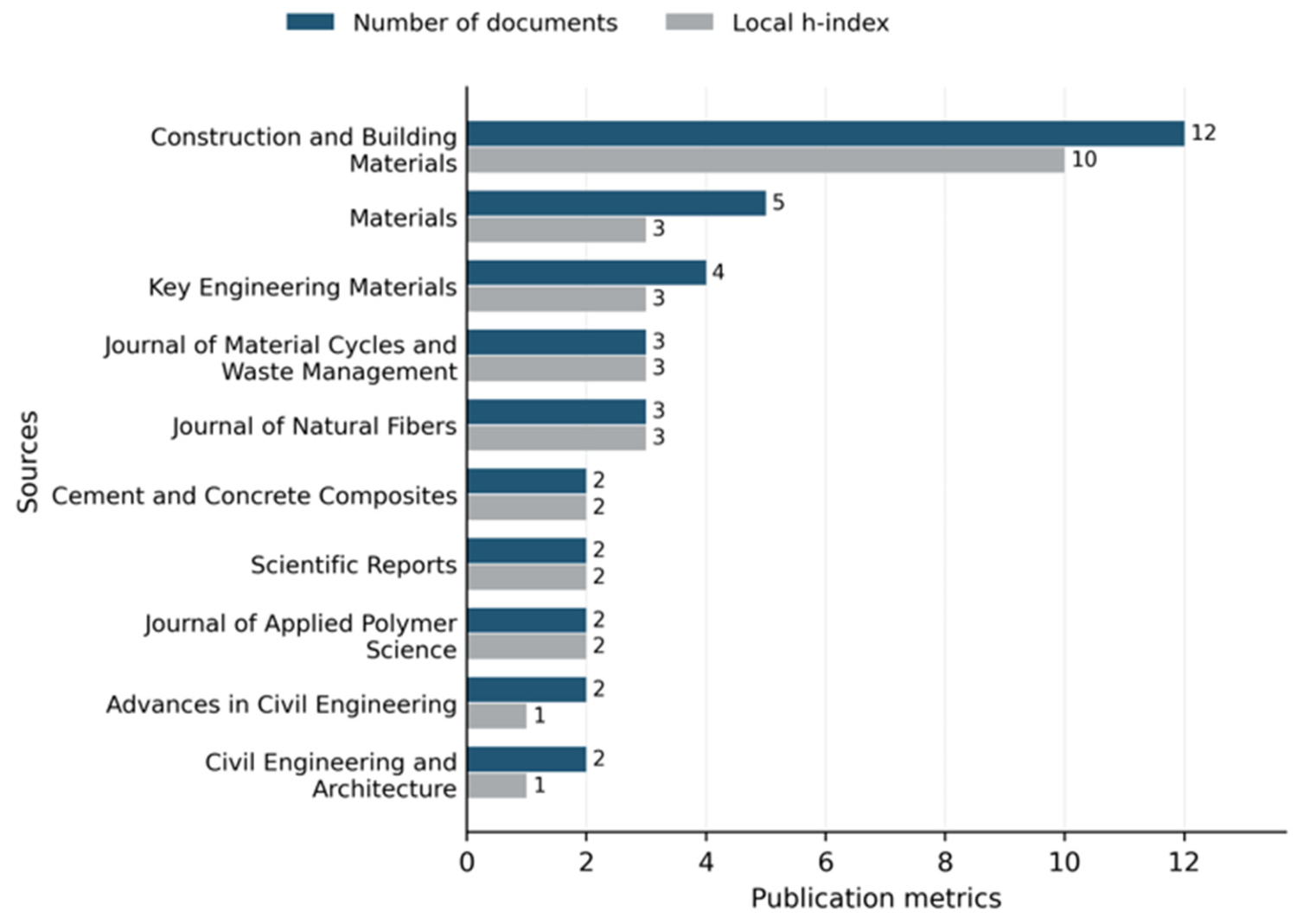
Scientific publications on the utilization of sugarcane bagasse in construction materials are concentrated in a relatively small number of specialized journals (see Figure 3). Construction and Building Materials ranks as the leading publication source, recording both the highest number of publications and the highest local h-index within the dataset. This finding indicates that the journal not only publishes research on this topic more frequently than other sources but also hosts the most influential studies within the field.
Figure 3.
Productivity and local impact of the leading journals in sugarcane bagasse-based construction materials research.
A second tier of publication sources includes Materials, Key Engineering Materials, Journal of Material Cycles and Waste Management, and Journal of Natural Fibers. Although these journals have published fewer articles, they maintain a notable local impact. Their presence highlights the multidisciplinary nature of the research field, which integrates topics related to cement-based materials, natural fibers, agro-industrial waste valorization, and circular economy principles.
These findings are consistent with recent reviews indicating that research on sustainable construction materials and lignocellulosic waste is primarily disseminated through international journals specializing in materials science and construction engineering. In particular, Construction and Building Materials has become one of the leading outlets for studies on sustainable cement-based materials, composite materials, and the valorization of industrial and agricultural residues, underscoring the growing scientific interest in this research area [35,36].
3.3. Most Influential Authors
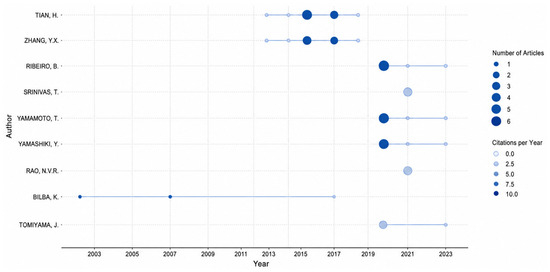
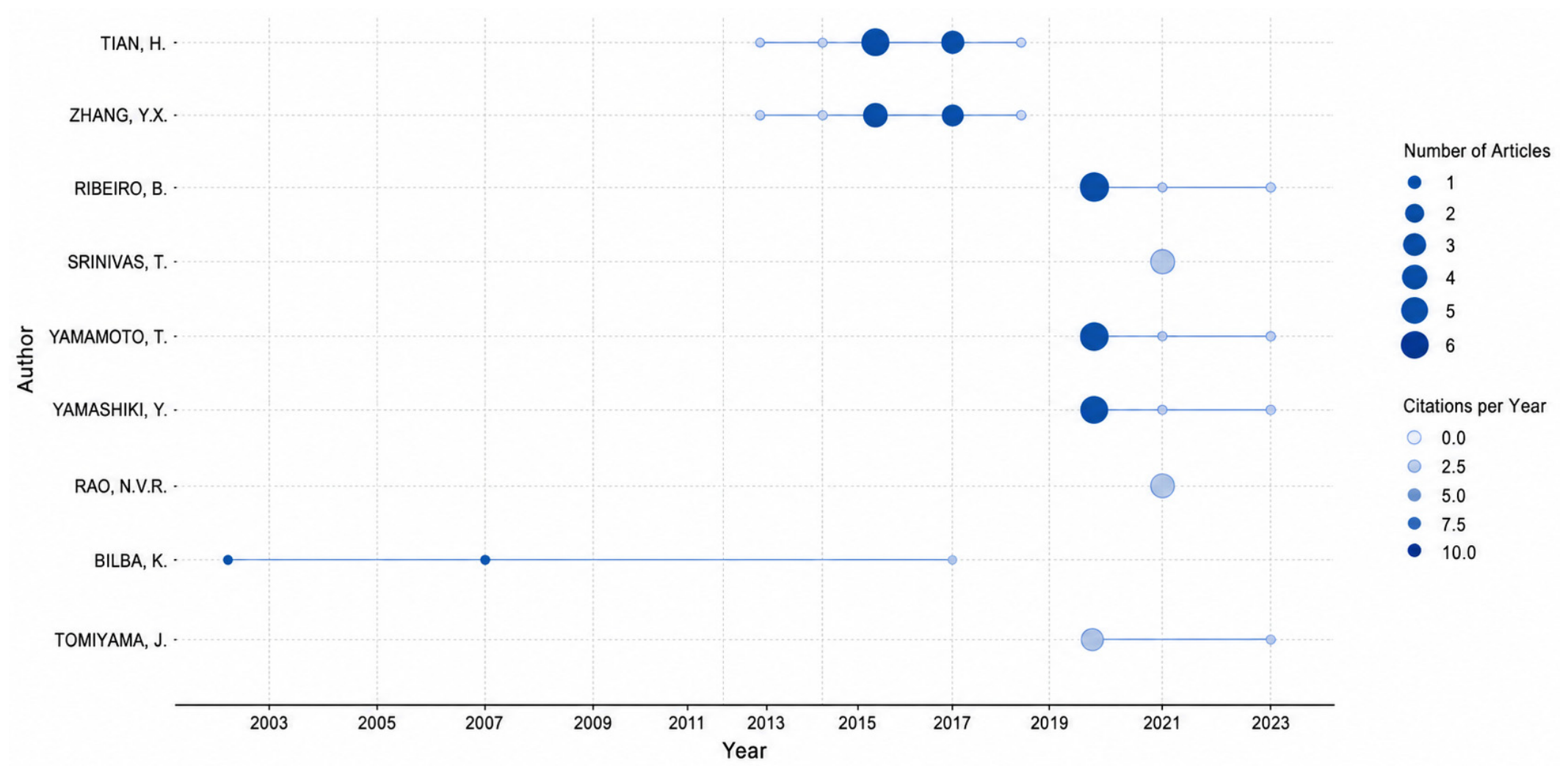
Scientific leadership in research on the utilization of sugarcane bagasse fiber in construction materials is concentrated among a relatively small group of researchers who have made substantial contributions to the development of the field (Table 2 and Figure 4). By combining productivity, impact, and temporal indicators, it is possible to identify both the pioneering researchers and those who have driven the recent expansion of this research area, thereby providing insight into the structure, productivity, and evolution of the scientific domain [24].
Table 2.
Most influential authors in research on the utilization of sugarcane bagasse in construction materials.
Figure 4.
Authors’ Production over Time.
Table 2 reveals clear differences between scientific productivity and research impact. Bilba K accumulated the highest number of total citations (395) despite having only three publications. This metric highlights the lasting influence of their pioneering studies on sugarcane bagasse fiber-reinforced composites. Similarly, Danso H received 227 citations from just two publications, proving that high scientific impact does not require large publication volumes.
In contrast, Tian H and Zhang YX were the most prolific authors, each contributing eight publications and achieving the highest local h-index (5). These figures establish them as the most consistent contributors to recent field developments. Both authors accumulated 177 total citations and shared the same most-cited publication (67 citations). As co-authors, Tian H and Zhang YX exhibit identical bibliometric indicators in the dataset. These results emphasize the need to evaluate citation counts alongside publication output and authorship when interpreting scientific impact in bibliometric analyses [37].
The temporal evolution of these authors (see Figure 4) illustrates a transition from pioneering contributions to a broader and more active scientific community. While the earliest studies were conducted by a limited number of researchers, the last decade has witnessed the continuous incorporation of new authors, reflecting both the growth and diversification of the field. This trend is consistent with the increase in scientific production shown in Figure 1 and confirms that research on the utilization of sugarcane bagasse has evolved from exploratory studies into an established research area.
Overall, these findings indicate that the evolution of the field has been driven by two complementary researcher profiles: pioneering authors whose highly cited publications laid the scientific foundations of the discipline, and researchers with sustained publication activity who have expanded the application of sugarcane bagasse to composite materials with improved mechanical and environmental performance. Such a pattern is characteristic of research fields progressing toward greater scientific maturity [34].
3.4. Most Productive Countries
The geographical distribution of scientific production indicates that research on the utilization of sugarcane bagasse fiber in construction materials has developed unevenly across countries, with scientific output concentrated primarily in regions characterized by substantial sugarcane production and a growing interest in the valorization of agro-industrial residues. In this context, this pattern reflects the progressive consolidation of this research field and highlights differences in both scientific productivity and publication impact.
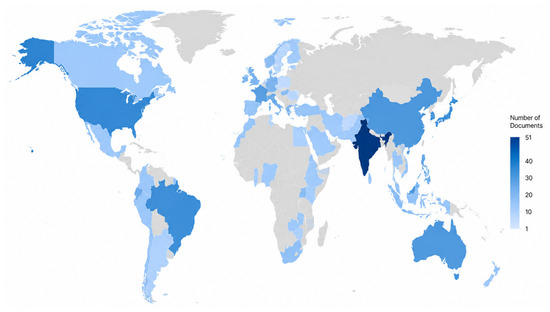
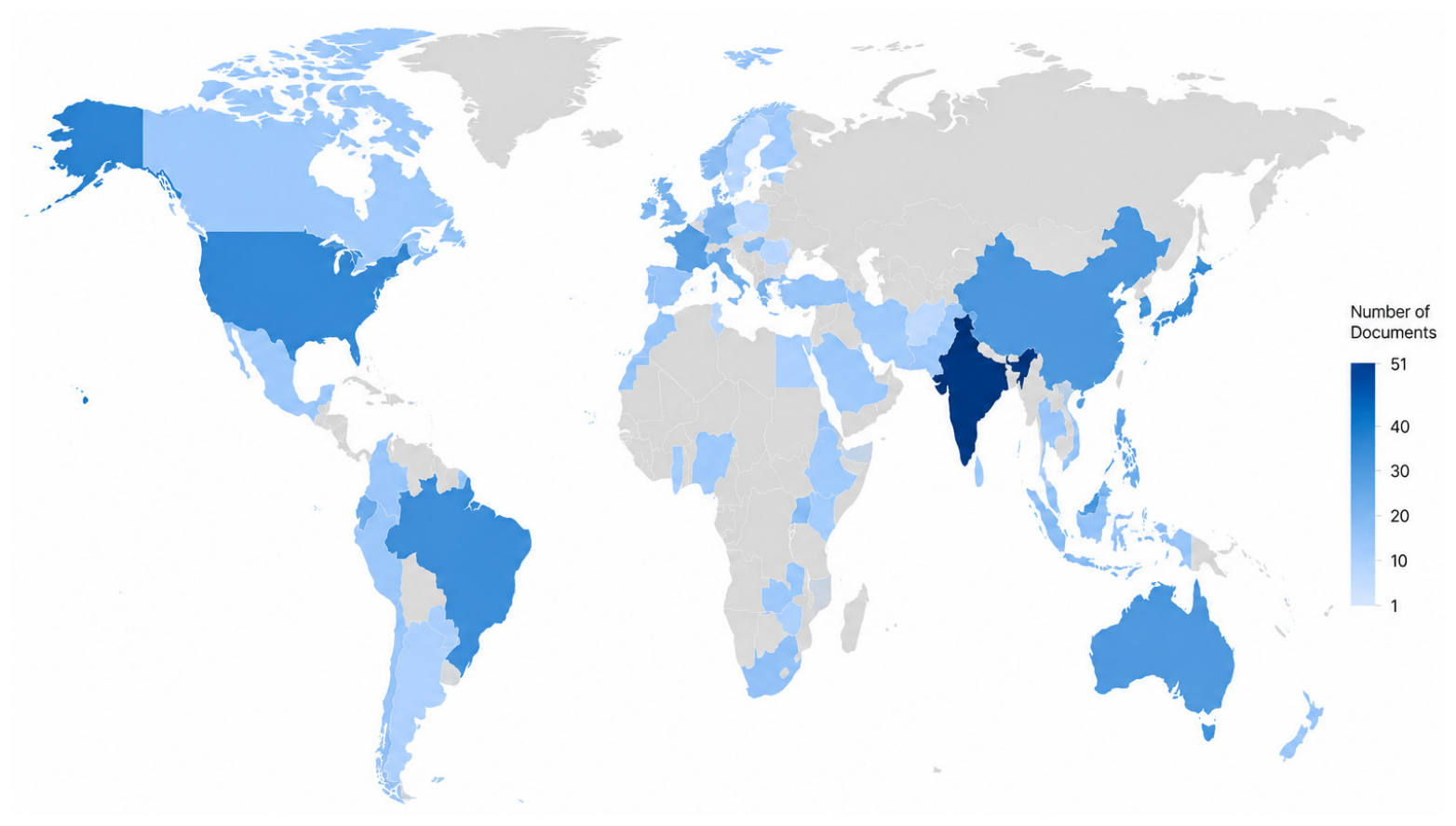
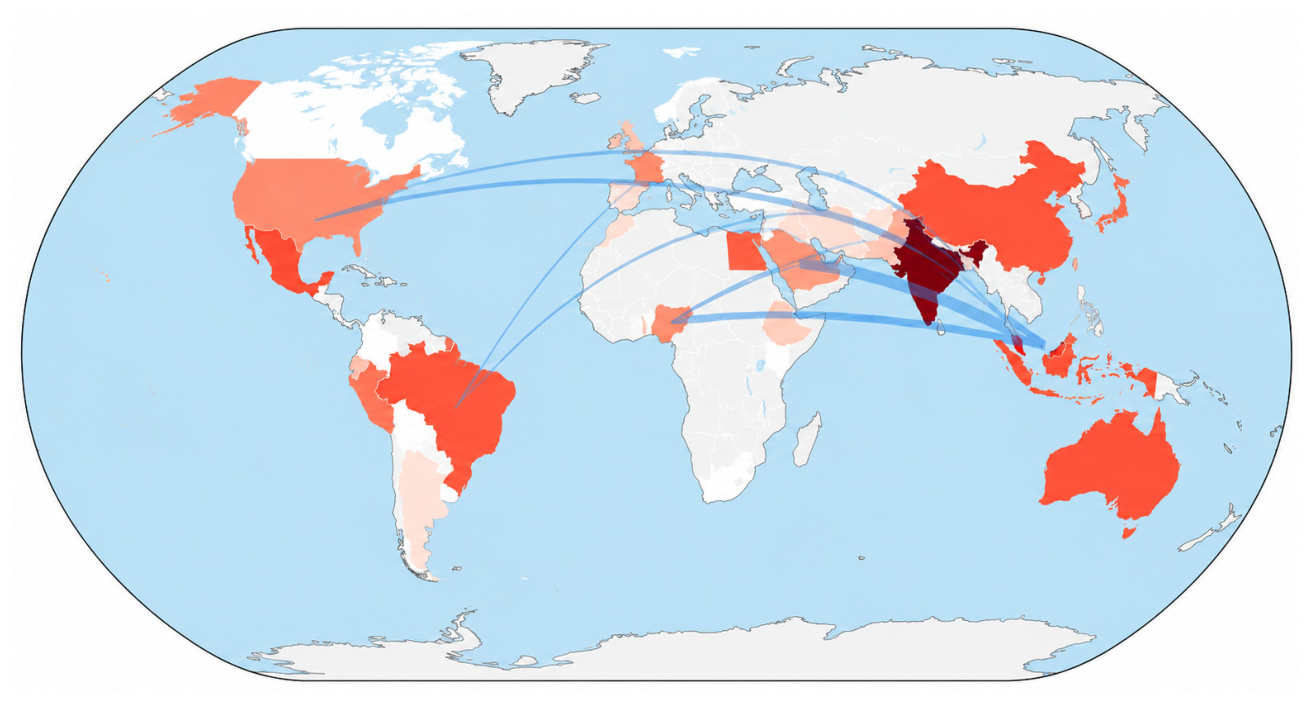
Figure 5 shows that scientific activity is concentrated mainly in Asia, followed by the Americas, whereas Europe and Oceania exhibit lower levels of scientific production, despite making relevant contributions. This distribution is associated with the high sugarcane production of countries such as India, China, and Brazil, where the abundant availability of bagasse has stimulated research focused on the development of sustainable construction materials, the valorization of lignocellulosic residues, and the implementation of circular economy strategies [38,39].
Figure 5.
Geographic distribution of scientific production on sugarcane bagasse fiber in construction materials (2026).
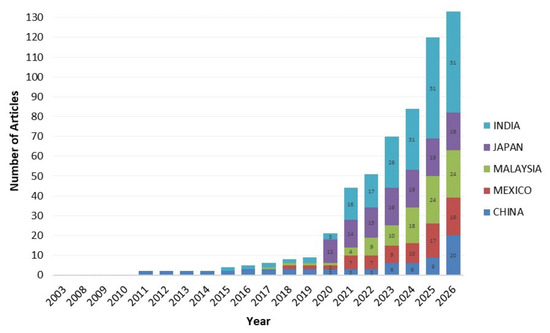
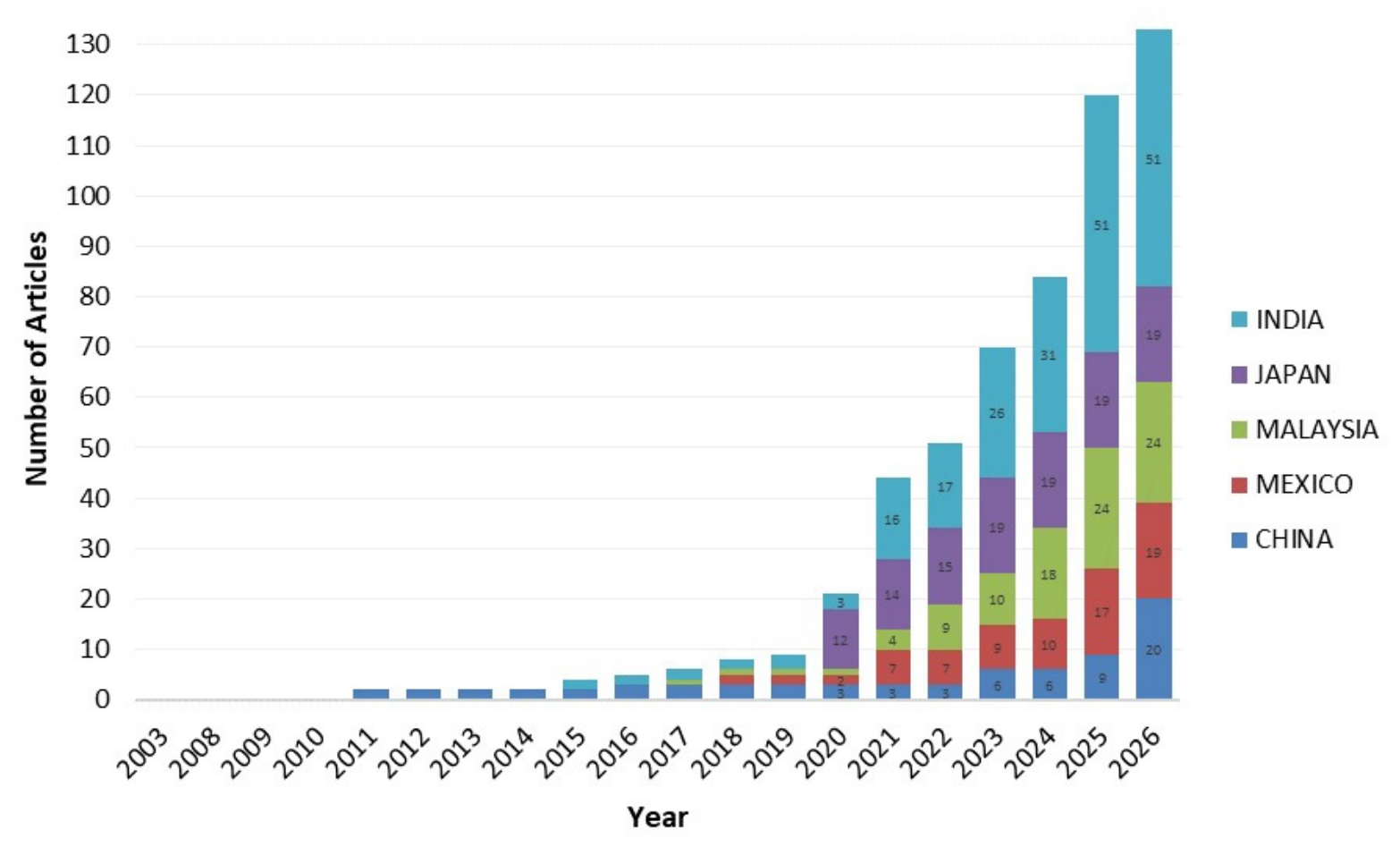
The temporal evolution of the most productive countries is presented in Figure 6, which shows a progressive increase in scientific output over the last decade, associated with the growing interest in incorporating agro-industrial residues into sustainable construction applications. Furthermore, the concentration of publications in a relatively small number of countries suggests the existence of well-established scientific capabilities, specialized research infrastructure, and greater investment in research on natural fiber-reinforced composite materials [40].
Figure 6.
Cumulative number of publications by country (2003–2026).
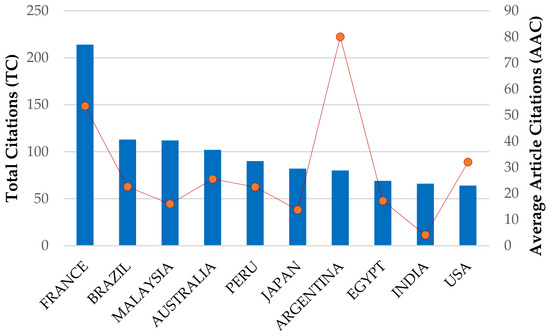
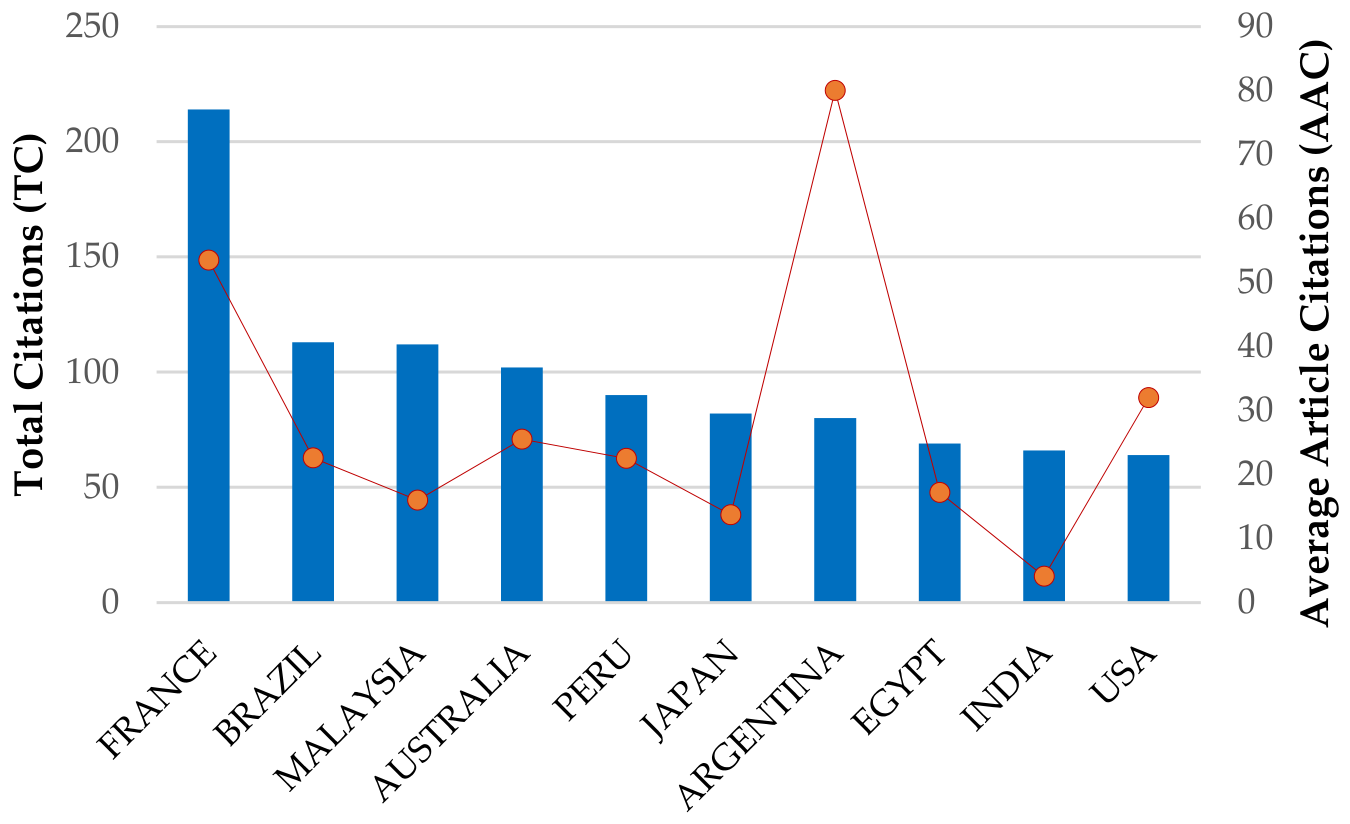
Among the countries shown in Figure 7, France has the highest total citation count (TC = 214), whereas Argentina has the highest average article citations (AAC = 80; TC = 80). France has an AAC of 53.5, and India has a TC of 66 and an AAC of 4.1. These results distinguish total citation counts from average citation counts per article. AAC values should be interpreted alongside the number and publication years of the documents assigned to each country, particularly when the underlying number of documents is small. These descriptive indicators alone do not establish a causal relationship between publication productivity and citation impact [41].
Figure 7.
Total citations (TC) and average article citations (AAC) for the countries shown (2003–2026).
The geographical distribution of scientific production confirms that research on using sugarcane bagasse in construction materials is now a global endeavor. However, a country’s scientific output in indexed databases does not correlate directly with its raw sugarcane production volume. For instance, countries like Japan and Malaysia achieve high research output through specialized materials science programs and strict international publishing standards. Conversely, the limited scientific representation of major sugarcane-producing nations, such as Brazil and Colombia, highlights a geographical paradox: despite extensive domestic applications, these regions frequently underperform in global indexed databases like Scopus [42].
This discrepancy suggests that much of the empirical know-how regarding agro-industrial waste remains confined to local reports, regional non-indexed databases (e.g., SciELO or Redalyc), and domestic journals published in Spanish and Portuguese. Bridging this gap requires developing nations to internationalize their findings and strengthen research networks. Aligning local waste-management policies with global academic channels is essential to fully realize the potential of agricultural residues within circular economy frameworks.
3.5. Most Relevant Institutions
Research institutions constitute an indicator of scientific capacity and the degree of maturity of a research field, as they reflect the continuity of research lines, the establishment of specialized research groups, and the sustained generation of scientific publications [31]. In this context, the analysis of institutional affiliations makes it possible to identify the leading research centers driving studies on the utilization of sugarcane bagasse in construction materials. Comparing country-level and institutional-level results reveals significant differences in research concentration. While India is the most productive country globally, no India-based institution appears among the top affiliations. This discrepancy arises because Indian research output in this field is highly decentralized, spreading across numerous regional universities and autonomous engineering colleges. The indexing structure of Scopus—the only database used in this analysis—accentuates this decentralization. Scopus registers independent campuses of large national systems (such as the various Indian Institutes of Technology, IITs) as separate entities, diluting their individual publication counts. Conversely, scientific production in countries like Malaysia and Japan is highly concentrated within a few leading research centers (e.g., Kyoto University or Universiti Sains Malaysia). These centralized institutions dominate the rankings, even though their respective countries produce lower total publication volumes than India.
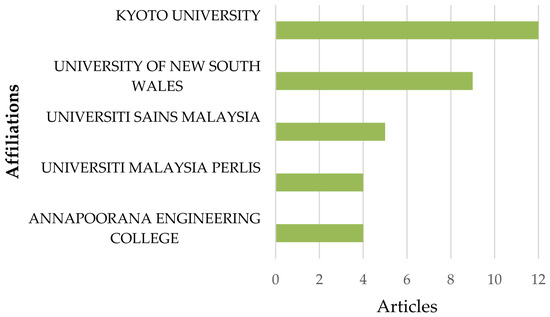
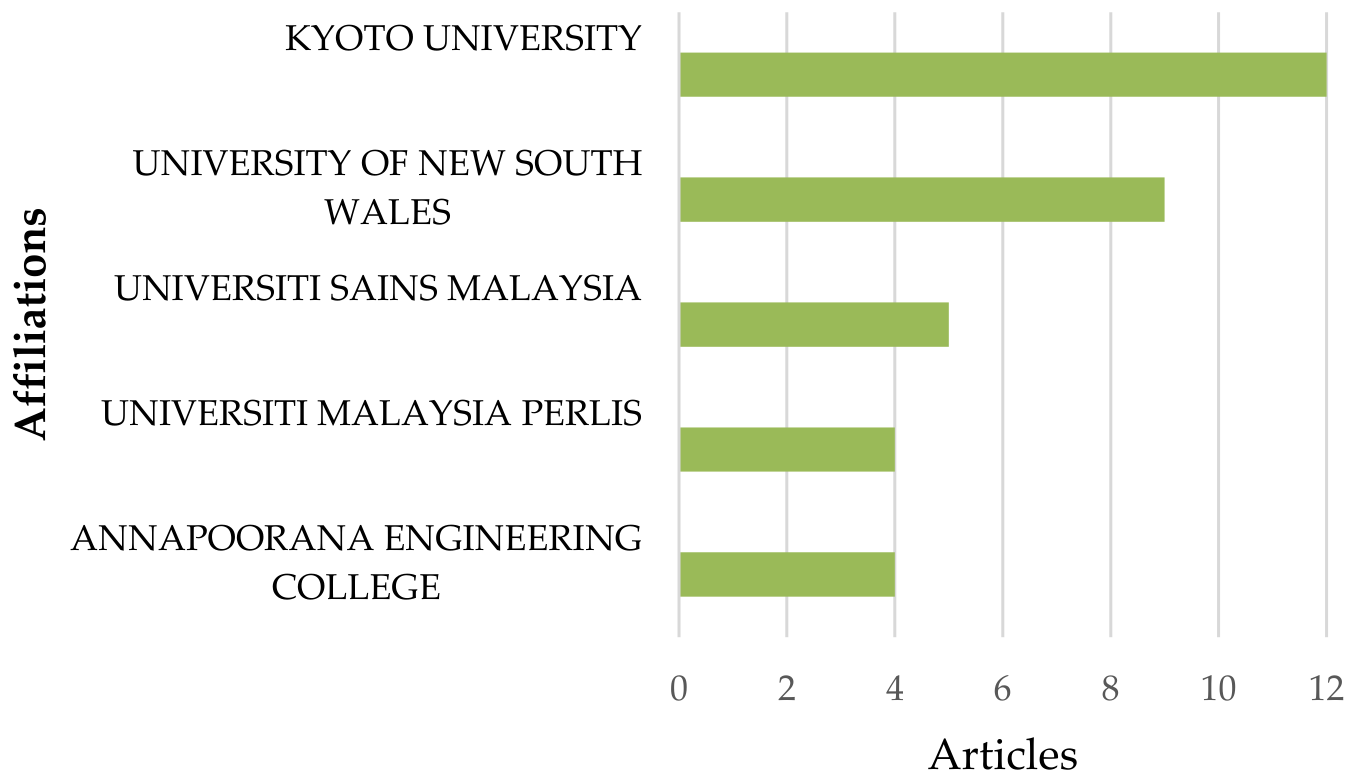
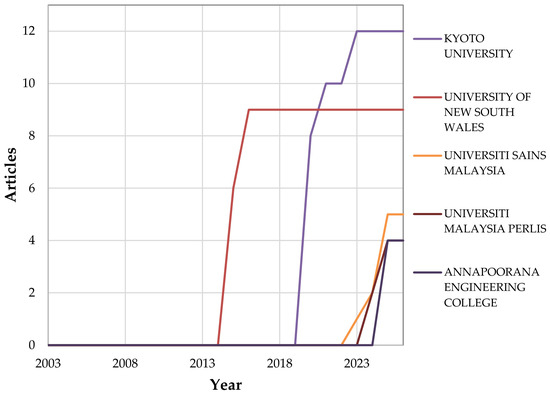
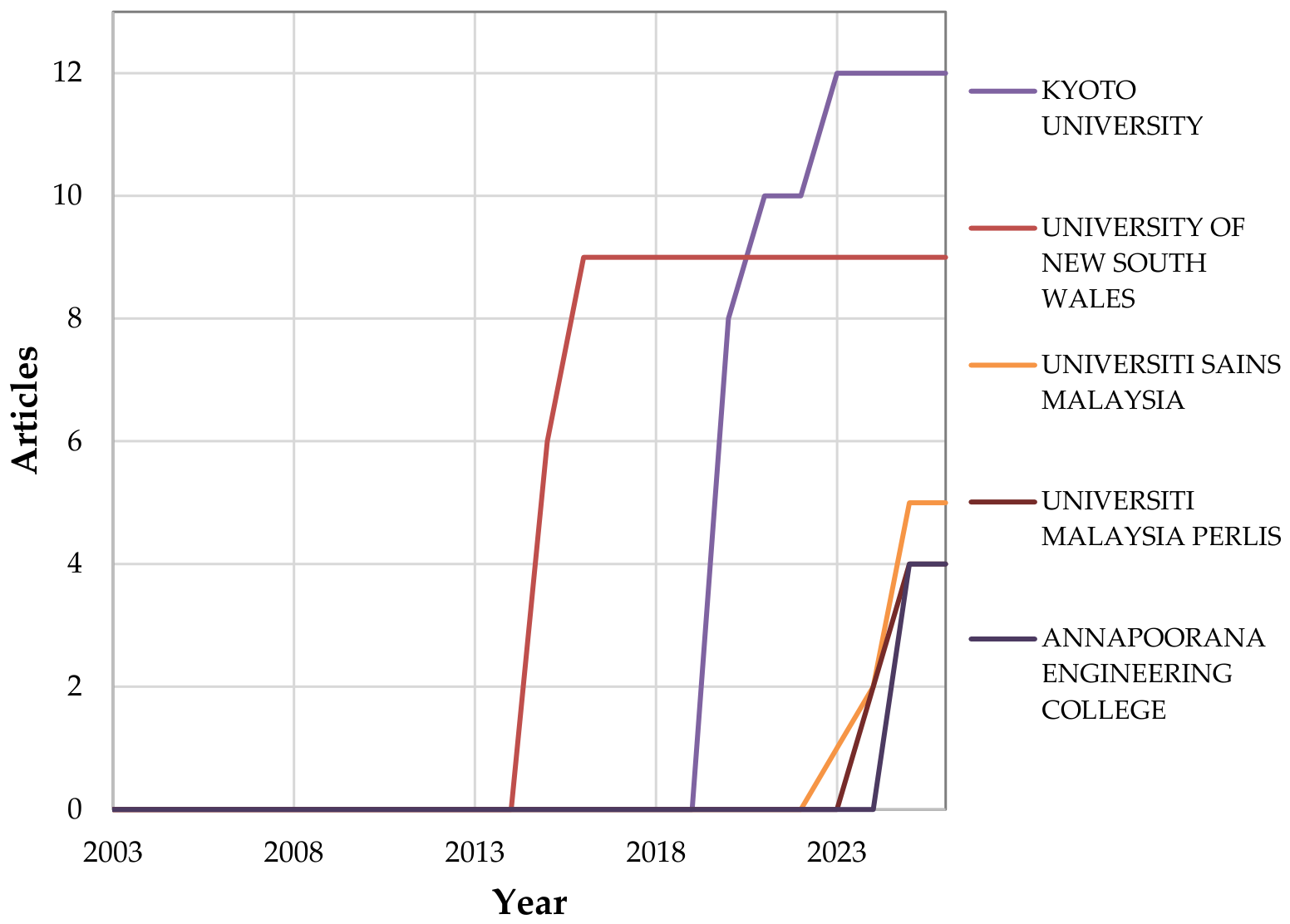
Figure 8 shows that Kyoto University and the University of New South Wales have the highest scientific output among the institutions analyzed, followed by Universiti Sains Malaysia, whereas Universiti Malaysia Perlis and Annapoorana Engineering College exhibit lower research output. This leadership highlights the contribution of Asian institutions to advancing research on the utilization of sugarcane bagasse in construction materials, consistent with the growing regional interest in the valorization of agro-industrial residues and the promotion of sustainable alternatives for the construction industry [26,36].
Figure 8.
Most relevant affiliations.
Figure 9 shows a differentiated temporal evolution of scientific output among the leading institutions, revealing a gradual expansion of research through the progressive incorporation of new academic institutions and the strengthening of those with sustained research activity. This trend reflects the consolidation of the research field on the utilization of sugarcane bagasse in construction materials, consistent with the growing interest in the valorization of agro-industrial residues and the development of sustainable solutions [26,35].
Figure 9.
Temporal evolution of scientific production by the leading institutions.
3.6. Most Cited Documents
Table 3 presents the ten most cited documents within the analyzed dataset, representing the principal scientific contributions that have shaped research on the utilization of sugarcane bagasse in construction materials. These publications reflect the evolution of knowledge in the field and identify the studies that have exerted the greatest scientific influence.
Table 3.
Top 10 most cited documents in the analyzed dataset.
The two most highly cited publications are those by Bilba et al. [43] and Bilba and Arsene [44], which have received 207 and 185 citations, respectively. These studies are distinguished for establishing the scientific foundation for the use of sugarcane bagasse fibers in cementitious and composite matrices through the evaluation of fiber compatibility as well as their mechanical, thermal, and durability properties. Similarly, Danso et al. [45] provided evidence of the influence of fiber aspect ratio on the mechanical performance of stabilized earth blocks, thereby establishing a new research direction focused on sustainable construction materials.
More recently published studies demonstrate the expansion of sugarcane bagasse applications by incorporating research on cementitious composites, compressed earth blocks, and life cycle assessment to evaluate both the mechanical performance and environmental benefits of these materials [46,47,48,49,50,51]. Collectively, the most-cited publications reveal a transition from studies primarily focused on demonstrating the technical feasibility of sugarcane bagasse as a construction material toward more comprehensive approaches integrating structural performance, sustainability, and the valorization of agro-industrial residues.
3.7. Collaboration Network
The analysis of collaboration networks enabled the identification of scientific cooperation patterns among authors and countries in research on the utilization of sugarcane bagasse in construction materials. These networks represent important indicators for evaluating the structure and maturity of a scientific field, as they reveal research communities, co-authorship relationships, and knowledge exchange dynamics among different scientific groups [52,53].
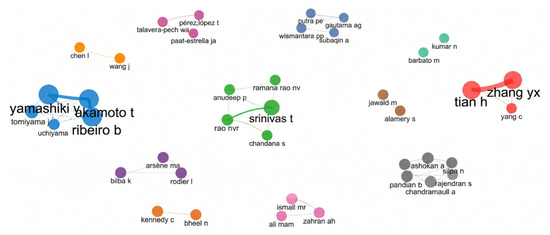
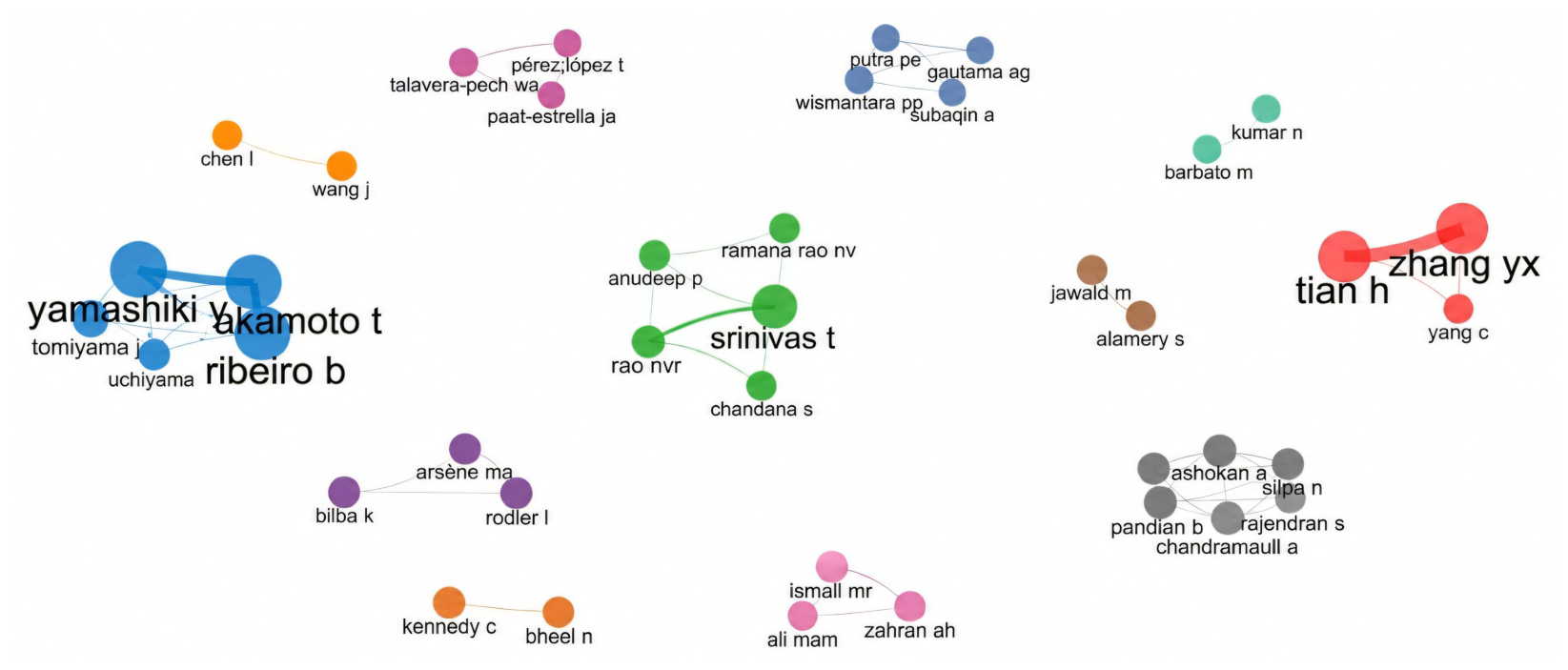
Figure 10 presents the author collaboration network, in which several research communities (clusters) can be identified, each representing groups of researchers engaged in frequent co-authorship. The high density of connections within each cluster indicates that scientific production is primarily driven by well-established research teams, whereas the relatively limited interaction between clusters suggests opportunities to strengthen collaboration among research communities with complementary experimental capabilities and methodological approaches [24].
Figure 10.
Author collaboration network.
Figure 11 illustrates the country collaboration network, where India emerges as the principal hub of international scientific cooperation by establishing collaborative links with multiple geographical regions. In addition, the connections among China, Malaysia, Indonesia, Japan, and Australia highlight the prominent role of the Asia–Pacific region in research on materials derived from agro-industrial residues, supported by the abundant availability of raw materials and sustained research efforts in sustainable materials [54].
Figure 11.
Country collaboration network.
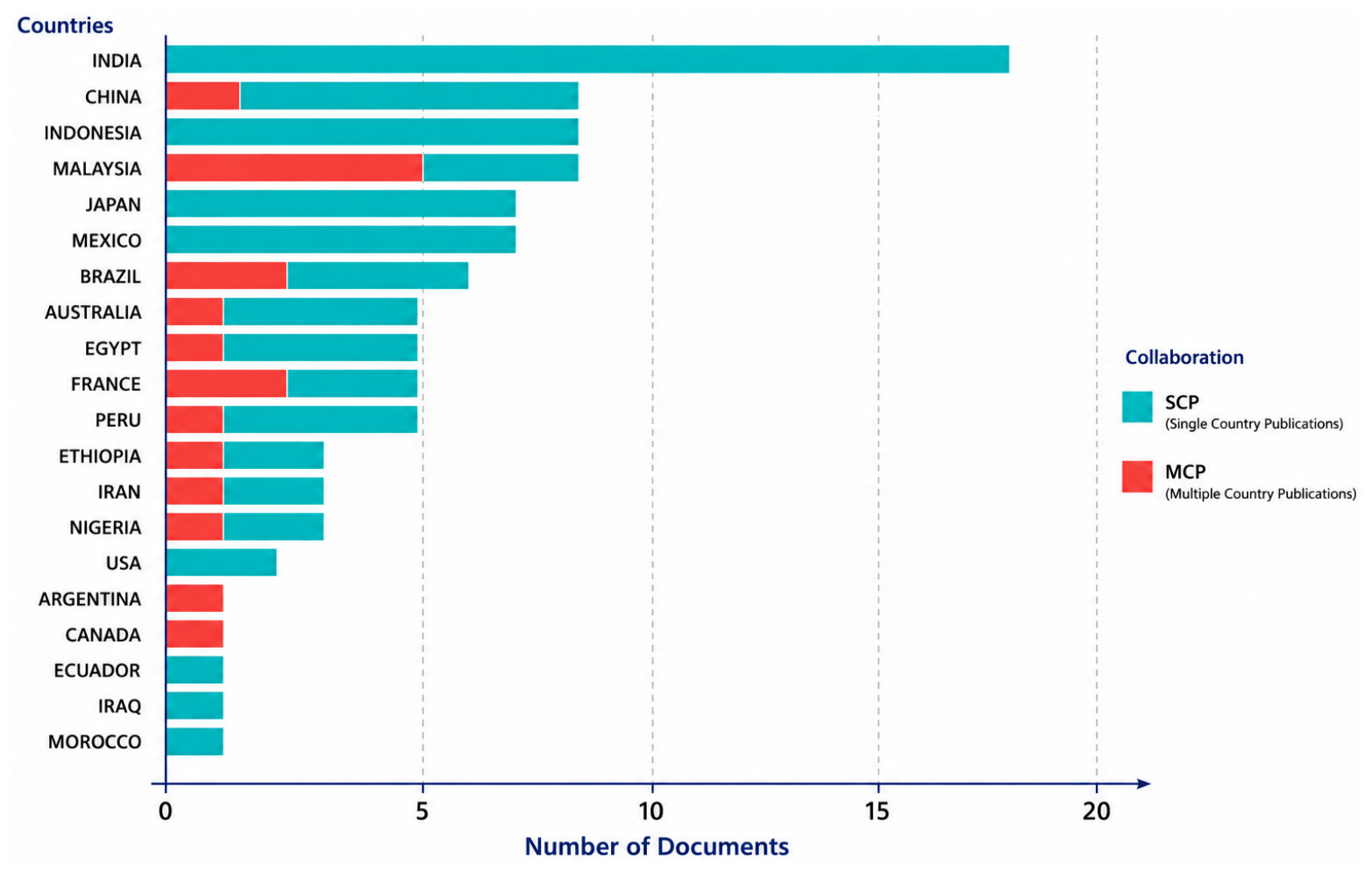
The distribution of publications according to the corresponding author’s country (see Figure 12) highlights the leading role of India, followed by China, Indonesia, Malaysia, Japan, and Mexico. The predominance of Single Country Publications (SCP) indicates that research in this field is still conducted primarily through domestic collaborations. Nevertheless, the presence of Multiple Country Publications (MCP) in countries such as Malaysia, Brazil, and France demonstrate the increasing integration of international scientific expertise to address challenges related to the valorization of agro-industrial residues and the development of sustainable construction materials [55].
Figure 12.
Corresponding author’s countries (SCP–MCP).
Overall, the collaboration network analysis indicates that research on the utilization of sugarcane bagasse has developed well-established collaborative structures, although international cooperation remains limited among some research groups. Strengthening partnerships among researchers, institutions, and countries could facilitate knowledge exchange and enhance the impact of future research, particularly in interdisciplinary areas focused on developing sustainable materials from agro-industrial residues [52,56].
3.8. Keyword Co-Occurrence Analysis
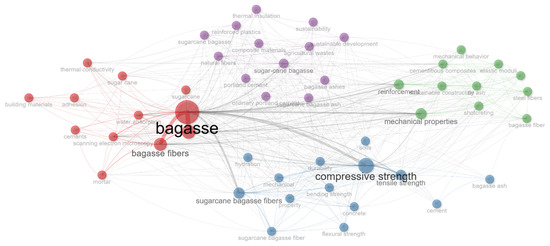
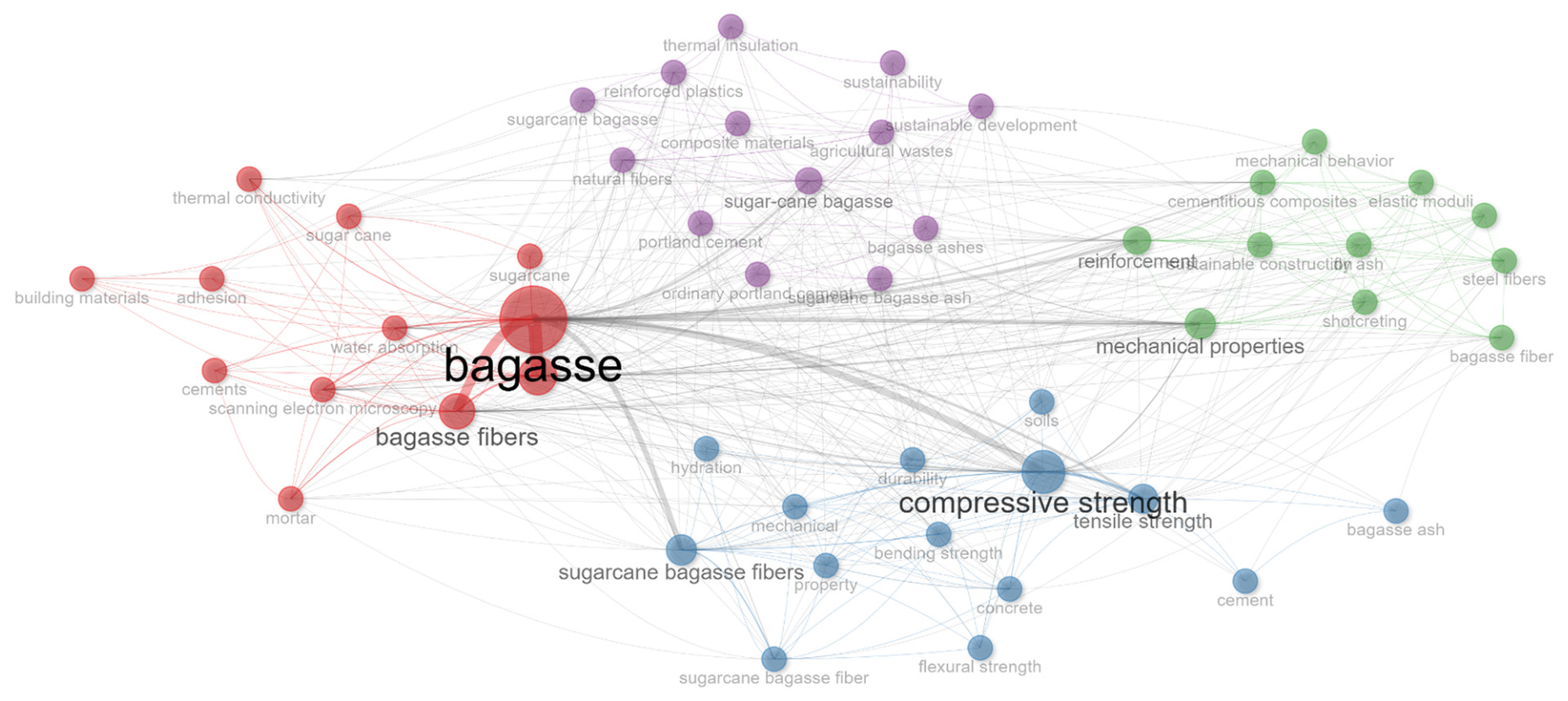
The keyword co-occurrence analysis enabled the identification of the conceptual structure of research on the utilization of sugarcane bagasse fiber in construction materials. The most frequently occurring terms were bagasse (69 occurrences), compressive strength (39), fibers (34), bagasse fibers (33), sugarcane bagasse fibers (25), mechanical properties (22), and tensile strength (22). In addition, the presence of keywords such as water absorption, thermal conductivity, cementitious composites, and scanning electron microscopy indicates that the field has evolved from the evaluation of mechanical properties toward a more comprehensive characterization of materials by incorporating physical, microstructural, and durability-related aspects [26,32].
Figure 13 presents the keyword co-occurrence network, organized into four clusters representing the main research themes. Bagasse constitutes the central node and exhibits strong connections with compressive strength, tensile strength, mechanical properties, and reinforcement. Furthermore, its association with terms such as cementitious composites, mortar, concrete, and scanning electron microscopy demonstrates that current research integrates microstructural characterization with the evaluation of mechanical performance, thereby establishing a multidisciplinary approach to the development of more sustainable cement-based materials [54,57].
Figure 13.
Keyword co-occurrence network.
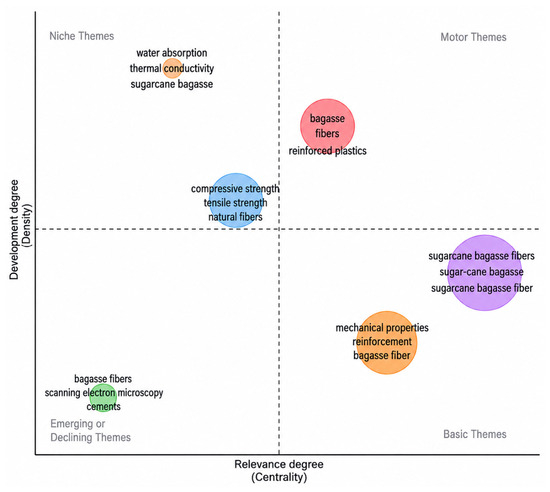
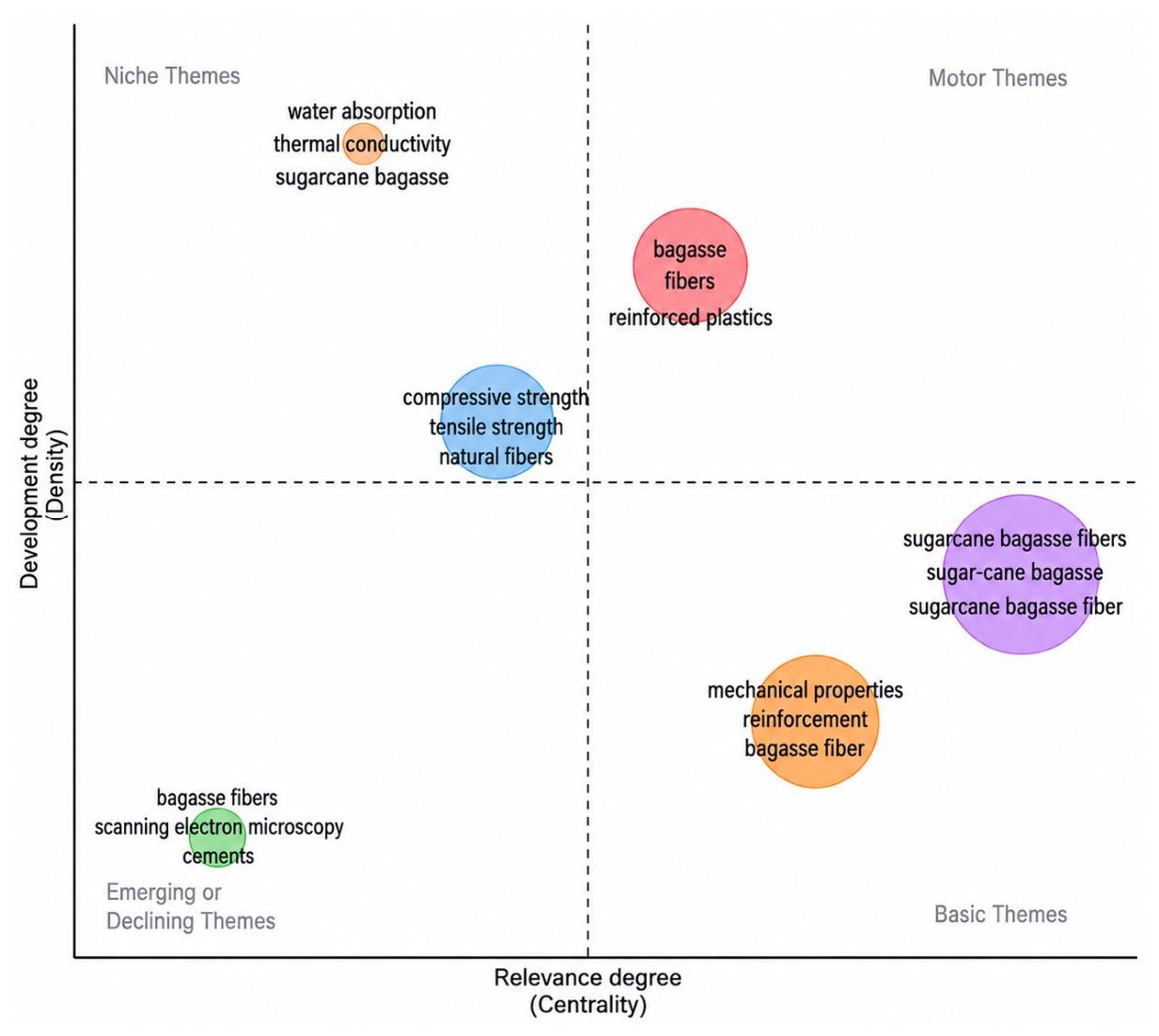
Figure 14 presents the thematic map, in which bagasse fibers and reinforced plastics are identified as motor themes because of their high centrality and density, whereas mechanical properties, reinforcement, and bagasse fiber are classified as basic themes, supporting a substantial proportion of the scientific literature. In contrast, water absorption and thermal conductivity represent niche themes, while scanning electron microscopy and cements are positioned as emerging or declining themes, suggesting a shift toward research that integrates multiple characterization techniques to optimize material performance [26,32].
Figure 14.
Thematic map.
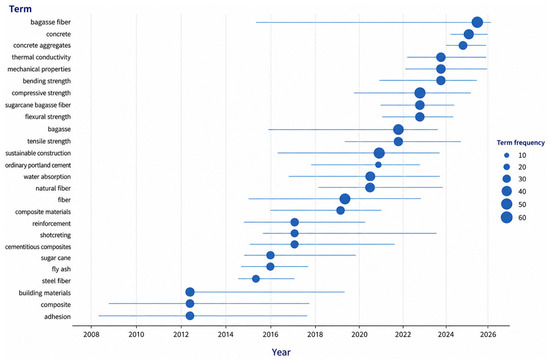
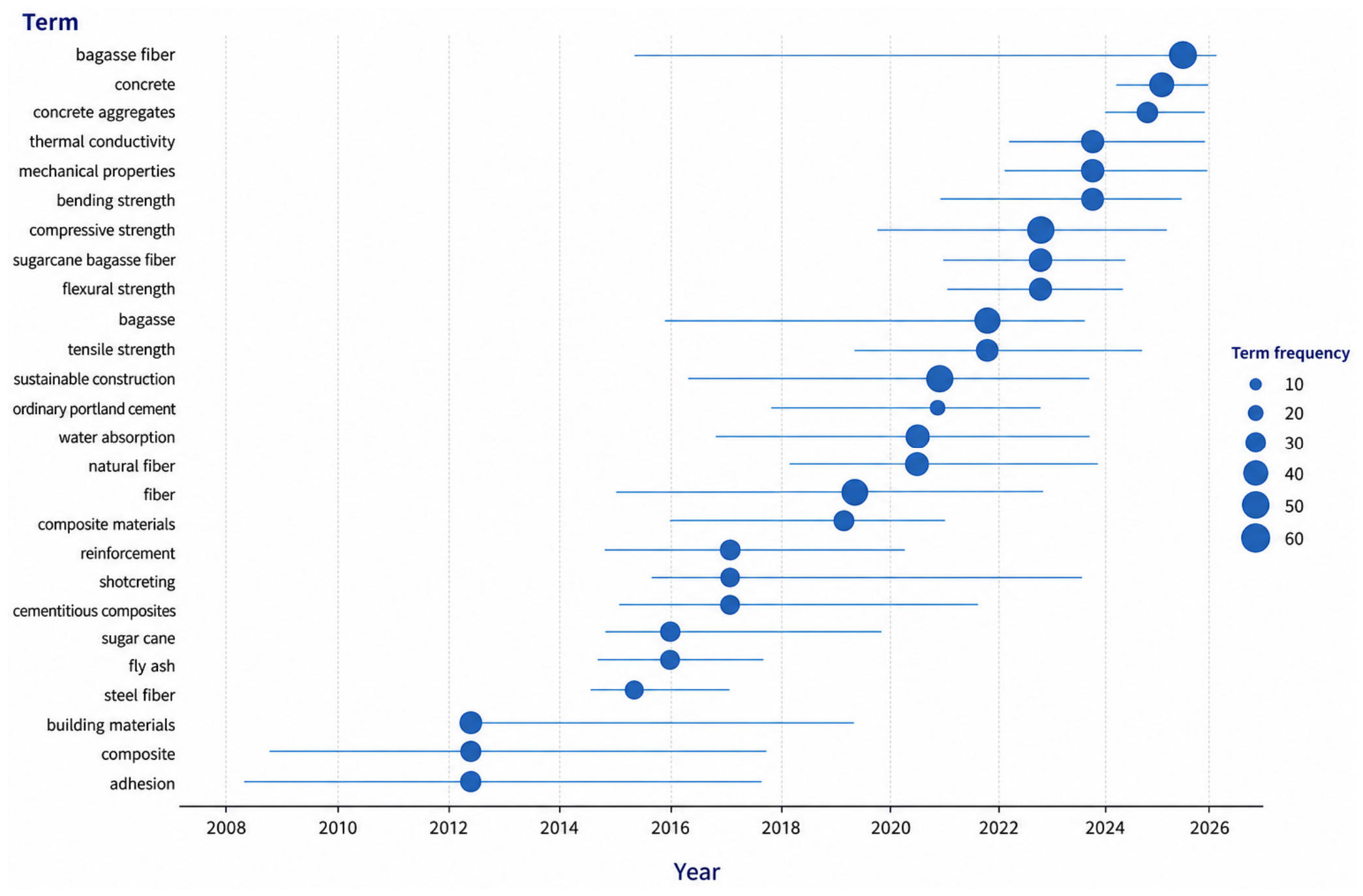
The temporal evolution of keywords, presented in Figure 15, reveals a transition from general concepts related to composite materials during the 2008–2014 period toward terms associated with cement-based materials and mechanical properties from 2015 onward. During the 2021–2025 period, bagasse, compressive strength, bagasse fibers, thermal conductivity, and concrete emerged as the dominant keywords, confirming that current research is focused on developing sustainable materials with enhanced mechanical and functional performance through the utilization of agro-industrial residues. This trend is consistent with recent review studies on the use of sugarcane bagasse in construction materials [39,58].
Figure 15.
Trend topics.
Ultimately, the conceptual mapping reveals a vital transition: the scientific community has moved past the phase of basic exploratory testing (just demonstrating that bagasse can be mixed into mortar). Modern research is now deeply engaged in understanding the microstructural interface via scanning electron microscopy and long-term durability metrics. A significant bottleneck persists: although mechanical strength (compressive and tensile) dominates the literature, long-term environmental durability and service performance remain understudied within current co-occurrence clusters. For sugarcane bagasse to compete with conventional carbon-intensive building components, future research must move beyond laboratory-scale mechanical validation and prioritize multi-physics durability alongside industrial-scale standardization [16].
4. Research Gaps and Future Directions
4.1. Identified Research Gaps
The bibliometric analysis indicates that research on sugarcane bagasse fiber-reinforced construction materials has experienced sustained growth over the past two decades, driven by the increasing interest in improving material performance and promoting more sustainable alternatives for the construction sector. Nevertheless, the findings also reveal several research gaps that limit the advancement of knowledge and represent opportunities to guide future research.
One of the main research gaps is the predominance of studies focused on the mechanical characterization of materials. This trend is reflected in both the most influential publications and the high frequency of keywords related to compressive strength, mechanical properties, and fiber behavior. In contrast, aspects such as fire resistance, impact performance, fatigue behavior, long-term durability, and thermo-acoustic properties are less prominent in the analyzed research landscape. This highlights the need for studies that integrate the evaluation of mechanical, thermal, acoustic, durability, and environmental properties to achieve a more comprehensive understanding of the overall performance of these materials.
Another identified gap concerns the predominance of conventional cementitious matrices, as evidenced by the high frequency of terms such as concrete, mortar, Portland cement, and cementitious composites among the most recurrent keywords. Although these studies have demonstrated the potential of sugarcane bagasse as a reinforcing material, the exploration of alternative low-carbon matrices and other sustainable binder systems remains limited. This represents an opportunity to develop construction materials with a lower environmental footprint [59,60].
From a critical materials-science perspective, a major underlying gap often overlooked in purely bibliographic trends is the inherent chemical incompatibility and moisture sensitivity of raw lignocellulosic fibers inside an alkaline cement matrix. While numerous papers report optimal fiber percentages, the lack of standardized physical and chemical pre-treatments (such as alkali treatment, salinization, or hydro-thermal modification) leads to high variability in field performance due to fiber mineralization and premature degradation. Consequently, future experimental protocols must systematically bridge matrix chemistry with fiber surface engineering.
Likewise, the transfer of laboratory findings to real-world construction applications remains limited because most studies validate material performance using specimens produced under controlled laboratory conditions. Consequently, further research is required on the fabrication and evaluation of blocks, panels, prefabricated elements, and full-scale prototypes to verify their performance under service conditions, assess their manufacturing feasibility, and facilitate their adoption by the construction industry.
From the perspective of scientific collaboration, research output remains concentrated in a relatively small number of countries and institutions, while a substantial proportion of studies are conducted through collaborations within the same country. Strengthening international research networks would promote knowledge exchange, facilitate the harmonization of experimental methodologies, and support the development of solutions with greater scientific and technological impact, thereby accelerating the consolidation of this research field [61].
Finally, although the utilization of sugarcane bagasse is consistent with the principles of the circular economy through the valorization of an agro-industrial residue, studies incorporating comprehensive sustainability assessments remain comparatively limited. The inclusion of life cycle assessment, carbon footprint assessment, techno-economic evaluation, and integrated sustainability indicators would enable a more accurate evaluation of the technical, environmental, and economic feasibility of these materials for implementation in sustainable construction systems [59,62].
The identified research gaps indicate that the continued development of this field requires moving beyond the traditional focus on optimizing individual mechanical properties toward more comprehensive research strategies aimed at developing materials with multifunctional performance and greater applicability in the construction sector. Addressing these challenges will strengthen the existing scientific foundation, accelerate technology transfer to industry, and promote the development of environmentally sustainable, technically feasible composite materials with greater potential for implementation in construction applications.
4.2. Key Trends and Areas of Future Research
Research on sugarcane bagasse fiber-reinforced construction materials has evolved toward approaches that integrate mechanical performance, sustainability, and construction applications, reflecting the progressive maturation of this research field. The contributions of Bilba K and Danso H, authors of some of the most influential publications in the analyzed dataset, have provided significant knowledge on the utilization of sugarcane bagasse fibers in composite materials and serve as key references for the development of future research.
The optimization of composite materials by adjusting the proportions of sugarcane bagasse fibers, cementitious matrices, and mineral constituents represents one of the principal research directions for the coming years. This trend is supported by the patterns identified in the keyword co-occurrence network, the thematic map, and the temporal evolution of keywords (Figure 13, Figure 14 and Figure 15), which reveal growing interest in sustainable materials, mechanical properties, and advanced construction applications [59,60].
Microstructural characterization constitutes an important tool for investigating the interaction between fibers and cementitious matrices, thereby promoting a better understanding of the relationship between microstructure and composite performance. As a direction for future research, this characterization should be complemented with techniques such as scanning electron microscopy (SEM), Fourier transform infrared spectroscopy (FTIR), and thermo-acoustic analyses to achieve a more comprehensive evaluation of material behavior. Furthermore, future investigative frameworks should heavily incorporate advanced multi-scale modeling and artificial intelligence techniques to predict the long-term durability and creep behavior of bagasse-reinforced composites under cyclic hygrothermal loads. Relying solely on empirical trial-and-error mix designs restricts the scientific agility needed to scale these green composites into commercial building codes.
The development of multifunctional composites represents another promising research direction by seeking to integrate thermal, acoustic, and environmental benefits while maintaining adequate mechanical performance. Their validation through blocks, panels, prefabricated elements, and full-scale prototypes, together with tools such as life cycle assessment, carbon footprint assessment, and economic analyses, will enable a comprehensive evaluation of their sustainability and feasibility compared with conventional materials [62].
The continued advancement of this research field will depend on greater international collaboration, the standardization of experimental methodologies, and the incorporation of predictive computational tools to optimize the design of new composite materials. In this context, the patterns of international collaboration observed in Figure 11 provide a foundation for strengthening joint research efforts that can accelerate innovation and facilitate the transfer of these materials to sustainable construction applications.
4.3. Limitations of the Study
Although this bibliometric analysis provides a broad overview of the research field, it presents specific methodological limitations. First, restricting data collection exclusively to the Scopus database introduces geographical and language biases. While Scopus ensures high metadata uniformity and compatibility with science mapping tools [24,26], this reliance underrepresents research published in regional databases (e.g., SciELO, Redalyc) or domestic journals in Spanish and Portuguese. This gap contributes to the geographical paradox observed in major Latin American sugarcane-producing nations.
Second, regarding the search strategy, while the use of the Boolean OR operator was deliberately designed to balance sensitivity and specificity (capturing standalone terms such as ‘bagasse fiber’), a keyword-based approach inherently carries the risk of excluding potentially relevant studies that employ unconventional terminologies, highly specific local trade names, or non-indexed vernacular expressions.
Third, the data-cleaning stage standardized author names and keywords by cross-referencing institutional affiliations and ORCID IDs. Despite this rigor, manual and semi-automated disambiguation inherently carry a marginal risk of metadata misattribution or omission.
Finally, the 2026 data remain partial. The reported production and citation metrics for this ongoing year represent a temporal snapshot rather than a definitive count, requiring cautious interpretation. Similarly, the small sample size of 124 documents limits statistical power. Predictive models, such as logistic growth fit and thematic clusters, should therefore serve as descriptive approximations rather than robust statistical forecasts.
5. Conclusions
This bibliometric analysis provides a comprehensive overview of the scientific evolution of research on the utilization of sugarcane bagasse fiber in construction materials during the 2003–2026 period. Based on the results obtained, the main conclusions are as follows:
5.1. Key Bibliometric Findings
- Research on sugarcane bagasse fiber in construction materials grew steadily, rising from sporadic publications before 2015 to a peak of 22 in 2025. This surge, particularly notable since 2020, aligns with growing scientific interest in sustainable construction and material valorization within circular economy frameworks.
- A select group of journals, authors, and institutions lead the scientific landscape, with research activity heavily concentrated in Asia. This uneven geographical distribution of expertise emphasizes the need to bridge regional gaps, strengthen international collaboration, and expand research participation in developing nations.
- The field’s conceptual structure focuses primarily on the mechanical characterization of sugarcane bagasse fiber-reinforced materials. “Bagasse” serves as the most frequent keyword (69 occurrences), while “compressive strength” emerges as a primary research topic (39 occurrences). Although microstructural characterization (via SEM), thermal performance, and durability have gained recent attention, these areas remain underexplored. Specifically, fiber-matrix chemical compatibility and degradation prevention require further investigation.
5.2. Research Implications and Future Directions
These findings highlight the need to advance beyond conventional cement-based applications. While terms like concrete, mortar, and Portland cement dominate the keyword co-occurrence network, properties such as water absorption and thermal conductivity emerge only as niche themes in the thematic map (Section 3.8). Industrializing sugarcane bagasse fiber for sustainable construction requires developing multifunctional materials, conducting comprehensive sustainability assessments (including Life Cycle and techno-economic evaluations), and executing real-world validations through full-scale prototypes.
This study establishes a reliable bibliometric baseline, derived from a systematic Scopus search strategy (Section 2.1) and contextualized by specific methodological limitations (Section 4.3), notably the single-database scope and the partial 2026 data. This foundation equips researchers, engineers, and decision-makers to identify emerging opportunities, direct material design toward multiphysics durability, and guide future technological developments in bagasse fiber-based construction materials.
Author Contributions
M.T.C.G. and N.D.C.B. contributed to the research, methodology, formal analysis, data management, and writing (preparation of the original draft). R.Z.G. contributed to the conceptualization and writing (review and editing). H.Y.J. contributed to the validation, visualization, project management, and securing funding. All authors have read and agreed to the published version of the manuscript.
Funding
The article processing charge (APC) was funded by the División de Investigación y Extensión (DIE), Universidad Francisco de Paula Santander Ocaña.
Data Availability Statement
No new data were created or analyzed in this study. Data sharing is not applicable to this article.
Acknowledgments
(1) The authors thank the División de Investigación y Extensión (DIE) for its financial support (2) Regarding the use of artificial intelligence as declared in Section 2.3, the authors utilized the Gemini 1.5 Pro language model, operated under the Gemini Pro service interface (Google LLC, Mountain View, CA, USA) for English language editing and graphical abstract generation.
Conflicts of Interest
The authors declare no conflicts of interest.
References
- Cabeza, L.F.; Bai, Q. Buildings. In Climate Change 2022—Mitigation of Climate Change; Intergovernmental Panel on Climate Change (IPCC), Ed.; Cambridge University Press: Cambridge, UK, 2023; pp. 953–1048. [Google Scholar]
- Asdrubali, F.; D’Alessandro, F.; Schiavoni, S. A Review of Unconventional Sustainable Building Insulation Materials. Sustain. Mater. Technol. 2015, 4, 1–17. [Google Scholar] [CrossRef] [Scilit]
- Ungureanu, N.; Vlăduț, V.; Biriș, S. Ștefan Sustainable Valorization of Waste and By-Products from Sugarcane Processing. Sustainability 2022, 14, 11089. [Google Scholar] [CrossRef] [Scilit]
- Romero-Sáez, M. Los Residuos Agroindustriales, Una Oportunidad Para La Economía Circular. TecnoLógicas 2022, 25, e23. [Google Scholar] [CrossRef] [Scilit]
- Ndikumana, S.; Tanane, O.; Aichi, Y.; Latifa, E.F.; Goudali, L. Innovative Applications of Sugarcane Bagasse in the Global Sugarcane Industry. Processes 2025, 13, 3796. [Google Scholar] [CrossRef] [Scilit]
- Khoaele, K.K.; Mphahlele, I.J.; Gbadeyan, O.J.; Sithole, B.; Chunilall, V. Current Approaches on Natural Fiber Reinforcement Surface Treatment for Construction Material Application. Int. J. Polym. Sci. 2024, 2024, 1387468. [Google Scholar] [CrossRef] [Scilit]
- Przybek, A. The Role of Natural Fibers in the Building Industry—The Perspective of Sustainable Development. Materials 2025, 18, 3803. [Google Scholar] [CrossRef] [Scilit] [PubMed]
- Jamshaid, H.; Mishra, R.K.; Raza, A.; Hussain, U.; Rahman, M.L.; Nazari, S.; Chandan, V.; Muller, M.; Choteborsky, R. Natural Cellulosic Fiber Reinforced Concrete: Influence of Fiber Type and Loading Percentage on Mechanical and Water Absorption Performance. Materials 2022, 15, 874. [Google Scholar] [CrossRef] [Scilit] [PubMed]
- Hiranobe, C.T.; Gomes, A.S.; Paiva, F.F.G.; Tolosa, G.R.; Paim, L.L.; Dognani, G.; Cardim, G.P.; Cardim, H.P.; dos Santos, R.J.; Cabrera, F.C. Sugarcane Bagasse: Challenges and Opportunities for Waste Recycling. Clean Technol. 2024, 6, 662–699. [Google Scholar] [CrossRef] [Scilit]
- Resano, D.; Guillen, O.W.; Ubillús, F.D.R.; Barranzuela, J.L. Physicochemical Characterization of Industrial and Hand-Crafted Sugarcane Bagasse as Construction Material. Inf. Tecnol. 2022, 33, 247–258. [Google Scholar] [CrossRef] [Scilit]
- Talavera-Pech, W.A.; Montiel-Rodríguez, D.; Paat-Estrella, J.d.l.A.; López-Alcántara, R.; Pérez-Quiroz, J.T.; Pérez-López, T. Improvement in the Carbonation Resistance of Construction Mortar with Cane Bagasse Fiber Added. Materials 2021, 14, 2066. [Google Scholar] [CrossRef] [Scilit] [PubMed]
- Philip, A.; Fayomi, O.S.I.; Atiba, J.O. Enhancement of Mechanical and Corrosion Resistance Properties of Concrete Reinforced with Sugarcane Fiber for the Construction Industry. Results Surf. Interfaces 2025, 19, 100486. [Google Scholar] [CrossRef] [Scilit]
- Zhong, C.; Deng, W.; Zhou, J. The Effect of Sugarcane Bagasse Fiber on the Fatigue Performance of Recycled Aggregate Concrete. Materials 2026, 19, 1974. [Google Scholar] [CrossRef] [Scilit] [PubMed]
- Mydin, M.A.O.; Sor, N.H.; Bahrami, A.; Dulaimi, A.; Palanisamy, J.; Omar, R.; Abdullah, M.M.A.B. Application of Treated Sugarcane Bagasse Fiber in Lightweight Foamed Concrete Composites and Its Influence on Strength Properties and Thermal Conductivity. J. Eng. Fibers Fabr. 2024, 19, 1–14. [Google Scholar] [CrossRef] [Scilit]
- Saraz, J.A.O.; Aristizabal, F.V.; Mejía, J.A.H. Comportamiento Mecánico Del Concreto Reforzado Con Fibras de Bagazo de Caña de Azúcar. DYNA 2007, 74, 69–79. (In Spanish) [Google Scholar]
- Kumar, N.; Barbato, M. Effects of Sugarcane Bagasse Fibers on the Properties of Compressed and Stabilized Earth Blocks. Constr. Build. Mater. 2022, 315, 125552. [Google Scholar] [CrossRef] [Scilit]
- Ouedraogo, M.; Bamogo, H.; Sanou, I.; Mazars, V.; Aubert, J.E.; Millogo, Y. Microstructural, Physical and Mechanical Characteristics of Adobes Reinforced with Sugarcane Bagasse. Buildings 2023, 13, 117. [Google Scholar] [CrossRef] [Scilit]
- Prasad, L.; Kumar, S.; Patel, R.V.; Yadav, A.; Kumar, V.; Winczek, J. Physical and Mechanical Behaviour of Sugarcane Bagasse Fibre-Reinforced Epoxy Bio-Composites. Materials 2020, 13, 5387. [Google Scholar] [CrossRef] [Scilit] [PubMed]
- Zafeer, M.K.; Prabhu, R.; Rao, S.; Mahesha, G.T.; Bhat, K.S. Mechanical Characteristics of Sugarcane Bagasse Fibre Reinforced Polymer Composites: A Review. Cogent Eng. 2023, 10, 2200903. [Google Scholar] [CrossRef] [Scilit]
- Arias-Cárdenas, B.; Lacasta, A.M.; Haurie, L. Bibliometric Analysis of Research on Thermal, Acoustic, and/or Fire Behaviour Characteristics in Bio-Based Building Materials. Constr. Build. Mater. 2024, 432, 136569. [Google Scholar] [CrossRef] [Scilit]
- Rosa Latapie, S.; Abou-Chakra, A.; Sabathier, V. Bibliometric Analysis of Bio- and Earth-Based Building Materials: Current and Future Trends. Constr. Mater. 2023, 3, 474–508. [Google Scholar] [CrossRef] [Scilit]
- Santos, C.M.; Santos, T.F.; Rao, H.J.; Silva, F.H.V.A.; Mavinkere Rangappa, S.; Boonyasopon, P.; Siengchin, S.; Souza, D.F.S.; Nascimento, J.H.O. A Bibliometric Review on Applications of Lignocellulosic Fibers in Polymeric and Hybrid Composites: Trends and Perspectives. Heliyon 2024, 10, e38264. [Google Scholar] [CrossRef] [Scilit] [PubMed]
- Gu, M.; Ahmad, W.; Alaboud, T.M.; Zia, A.; Akmal, U.; Awad, Y.A.; Alabduljabbar, H. Scientometric Analysis and Research Mapping Knowledge of Coconut Fibers in Concrete. Materials 2022, 15, 5639. [Google Scholar] [CrossRef] [Scilit] [PubMed]
- Aria, M.; Cuccurullo, C. Bibliometrix: An R-Tool for Comprehensive Science Mapping Analysis. J. Informetr. 2017, 11, 959–975. [Google Scholar] [CrossRef] [Scilit]
- Sánchez-Roldán, Z.; Zamorano, M.; Martín-Morales, M. The Use of Recycled Aggregates in the Construction Sector: A Scientific Bibliometric Analysis. Mater. Constr. 2022, 72, e277. [Google Scholar] [CrossRef] [Scilit]
- Baas, J.; Schotten, M.; Plume, A.; Côté, G.; Karimi, R. Scopus as a Curated, High-Quality Bibliometric Data Source for Academic Research in Quantitative Science Studies. Quant. Sci. Stud. 2020, 1, 377–386. [Google Scholar] [CrossRef] [Scilit]
- Martín-Martín, A.; Orduna-Malea, E.; Thelwall, M.; Delgado López-Cózar, E. Google Scholar, Web of Science, and Scopus: A Systematic Comparison of Citations in 252 Subject Categories. J. Informetr. 2018, 12, 1160–1177. [Google Scholar] [CrossRef] [Scilit]
- Öztürk, O.; Kocaman, R.; Kanbach, D.K. How to Design Bibliometric Research: An Overview and a Framework Proposal. Rev. Manag. Sci. 2024, 18, 3333–3361. [Google Scholar] [CrossRef] [Scilit]
- Ajala, E.O.; Ighalo, J.O.; Ajala, M.A.; Adeniyi, A.G.; Ayanshola, A.M. Sugarcane Bagasse: A Biomass Sufficiently Applied for Improving Global Energy, Environment and Economic Sustainability. Bioresour. Bioprocess. 2021, 8, 87. [Google Scholar] [CrossRef] [Scilit] [PubMed]
- Konde, K.S.; Nagarajan, S.; Kumar, V.; Patil, S.V.; Ranade, V.V. Sugarcane Bagasse Based Biorefineries in India: Potential and Challenges. Sustain. Energy Fuels 2021, 5, 52–78. [Google Scholar] [CrossRef] [Scilit]
- Zupic, I.; Čater, T. Bibliometric Methods in Management and Organization. Organ. Res. Methods 2015, 18, 429–472. [Google Scholar] [CrossRef] [Scilit]
- Donthu, N.; Kumar, S.; Mukherjee, D.; Pandey, N.; Lim, W.M. How to Conduct a Bibliometric Analysis: An Overview and Guidelines. J. Bus. Res. 2021, 133, 285–296. [Google Scholar] [CrossRef] [Scilit]
- van Eck, N.J.; Waltman, L. Visualizing Bibliometric Networks. In Measuring Scholarly Impact; Springer: Cham, Switzerland, 2014; pp. 285–320. [Google Scholar] [CrossRef] [Scilit]
- Mingers, J.; Leydesdorff, L. A Review of Theory and Practice in Scientometrics. Eur. J. Oper. Res. 2015, 246, 1–19. [Google Scholar] [CrossRef] [Scilit]
- Ahmad, W.; Ahmad, A.; Ostrowski, K.A.; Aslam, F.; Joyklad, P.; Zajdel, P. Sustainable Approach of Using Sugarcane Bagasse Ash in Cement-Based Composites: A Systematic Review. Case Stud. Constr. Mater. 2021, 15, e00698. [Google Scholar] [CrossRef] [Scilit]
- Thomas, B.S.; Yang, J.; Bahurudeen, A.; Abdalla, J.A.; Hawileh, R.A.; Hamada, H.M.; Nazar, S.; Jittin, V.; Ashish, D.K. Sugarcane Bagasse Ash as Supplementary Cementitious Material in Concrete—A Review. Mater. Today Sustain. 2021, 15, 100086. [Google Scholar] [CrossRef] [Scilit]
- Bornmann, L.; Daniel, H.D. What Do Citation Counts Measure? A Review of Studies on Citing Behavior. J. Doc. 2008, 64, 45–80. [Google Scholar] [CrossRef] [Scilit]
- Amin, M.N.; Ahmad, W.; Khan, K.; Ahmad, A. A Comprehensive Review of Types, Properties, Treatment Methods and Application of Plant Fibers in Construction and Building Materials. Materials 2022, 15, 4362. [Google Scholar] [CrossRef] [Scilit] [PubMed]
- Gbadeyan, O.J.; Sibiya, L.; Mpongwana, N.; Linganiso, L.Z.; Linganiso, E.C.; Deenadayalu, N. Manufacturing of Building Materials Using Agricultural Waste (Sugarcane Bagasse Ash) for Sustainable Construction: Towards a Low Carbon Economy. A Review. Int. J. Sustain. Eng. 2023, 16, 368–382. [Google Scholar] [CrossRef] [Scilit]
- Ravindran, G.; Mahesh, V.; Bheel, N.; Chittimalla, S.; Srihitha, K.; Sushmasree, A. Usage of Natural Fibre Composites for Sustainable Material Development: Global Research Productivity Analysis. Buildings 2023, 13, 1260. [Google Scholar] [CrossRef] [Scilit]
- Waltman, L. A Review of the Literature on Citation Impact Indicators. J. Informetr. 2016, 10, 365–391. [Google Scholar] [CrossRef] [Scilit]
- Haigh, R. A Decade Review of Research Trends Using Waste Materials in the Building and Construction Industry: A Pathway towards a Circular Economy. Waste 2023, 1, 935–959. [Google Scholar] [CrossRef] [Scilit]
- Bilba, K.; Arsene, M.A.; Ouensanga, A. Sugar Cane Bagasse Fibre Reinforced Cement Composites. Part I. Influence of the Botanical Components of Bagasse on the Setting of Bagasse/Cement Composite. Cem. Concr. Compos. 2003, 25, 91–96. [Google Scholar] [CrossRef] [Scilit]
- Bilba, K.; Arsene, M.A. Silane Treatment of Bagasse Fiber for Reinforcement of Cementitious Composites. Compos. Part A Appl. Sci. Manuf. 2008, 39, 1488–1495. [Google Scholar] [CrossRef] [Scilit]
- Danso, H.; Martinson, D.B.; Ali, M.; Williams, J. Effect of Fibre Aspect Ratio on Mechanical Properties of Soil Building Blocks. Constr. Build. Mater. 2015, 83, 314–319. [Google Scholar] [CrossRef] [Scilit]
- Danso, H. Properties of Coconut, Oil Palm and Bagasse Fibres: As Potential Building Materials. Procedia Eng. 2017, 200, 1–9. [Google Scholar] [CrossRef] [Scilit]
- Ruano, G.; Bellomo, F.; López, G.; Bertuzzi, A.; Nallim, L.; Oller, S. Mechanical Behaviour of Cementitious Composites Reinforced with Bagasse and Hemp Fibers. Constr. Build. Mater. 2020, 240, 117856. [Google Scholar] [CrossRef] [Scilit]
- Ita-Nagy, D.; Vázquez-Rowe, I.; Kahhat, R.; Quispe, I.; Chinga-Carrasco, G.; Clauser, N.M.; Area, M.C. Life Cycle Assessment of Bagasse Fiber Reinforced Biocomposites. Sci. Total Environ. 2020, 720, 137586. [Google Scholar] [CrossRef] [Scilit] [PubMed]
- Tian, H.; Zhang, Y.X.; Ye, L.; Yang, C. Mechanical Behaviours of Green Hybrid Fibre-Reinforced Cementitious Composites. Constr. Build. Mater. 2015, 95, 152–163. [Google Scholar] [CrossRef] [Scilit]
- Azlina Ramlee, N.; Jawaid, M.; Abdul Karim Yamani, S.; Syams Zainudin, E.; Alamery, S. Effect of Surface Treatment on Mechanical, Physical and Morphological Properties of Oil Palm/Bagasse Fiber Reinforced Phenolic Hybrid Composites for Wall Thermal Insulation Application. Constr. Build. Mater. 2021, 276, 122239. [Google Scholar] [CrossRef] [Scilit]
- Yanou, R.N.; Kaze, R.C.; Adesina, A.; Nemaleu, J.G.D.; Jiofack, S.B.K.; Djobo, J.N.Y. Performance of Laterite-Based Geopolymers Reinforced with Sugarcane Bagasse Fibers. Case Stud. Constr. Mater. 2021, 15, e00762. [Google Scholar] [CrossRef] [Scilit]
- Velez-Estevez, A.; García-Sánchez, P.; Moral-Munoz, J.A.; Cobo, M.J. Why Do Papers from International Collaborations Get More Citations? A Bibliometric Analysis of Library and Information Science Papers. Scientometrics 2022, 127, 7517–7555. [Google Scholar] [CrossRef] [Scilit]
- Schäfermeier, B.; Hirth, J.; Hanika, T. Research Topic Flows in Co-Authorship Networks. Scientometrics 2022, 128, 5051–5078, Correction in Scientometrics 2023, 128, 5079–5080. https://doi.org/10.1007/s11192-022-04573-6. [Google Scholar] [CrossRef] [Scilit]
- Li, Y.; Chai, J.; Wang, R.; Zhang, X.; Si, Z. Utilization of Sugarcane Bagasse Ash (SCBA) in Construction Technology: A State-of-the-Art Review. J. Build. Eng. 2022, 56, 104774. [Google Scholar] [CrossRef] [Scilit]
- Singh Rawat, S.; Sharma, A. Sugarcane Bagasse Ash—The Future Composite Material: A Literature Review. Mater. Today Proc. 2023, in press. [Google Scholar] [CrossRef] [Scilit]
- Matsueda, Y.; Antunes, E. A Review of Current Technologies for the Sustainable Valorisation of Sugarcane Bagasse. J. Environ. Chem. Eng. 2024, 12, 114900. [Google Scholar] [CrossRef] [Scilit]
- Kolawole, J.T.; Babafemi, A.J.; Fanijo, E.; Chandra Paul, S.; Combrinck, R. State-of-the-Art Review on the Use of Sugarcane Bagasse Ash in Cementitious Materials. Cem. Concr. Compos. 2021, 118, 103975. [Google Scholar] [CrossRef] [Scilit]
- Abdalla, T.A.; Hussein, A.A.E.; Ahmed, Y.H.; Semmana, O. Strength, Durability, and Microstructure Properties of Concrete Containing Bagasse Ash—A Review of 15 Years of Perspectives, Progress and Future Insights. Results Eng. 2024, 21, 101764. [Google Scholar] [CrossRef] [Scilit]
- Meyer, C. The Greening of the Concrete Industry. Cem. Concr. Compos. 2009, 31, 601–605. [Google Scholar] [CrossRef] [Scilit]
- Scrivener, K.L.; John, V.M.; Gartner, E.M. Eco-Efficient Cements: Potential Economically Viable Solutions for a Low-CO2 Cement-Based Materials Industry. Cem. Concr. Res. 2018, 114, 2–26. [Google Scholar] [CrossRef] [Scilit]
- Wagner, C.S.; Whetsell, T.A.; Mukherjee, S. International Research Collaboration: Novelty, Conventionality, and Atypicality in Knowledge Recombination. Res. Policy 2019, 48, 1260–1270. [Google Scholar] [CrossRef] [Scilit]
- ISO 14040:2006; Environmental Management—Life Cycle Assessment—Principles and Framework. International Organization for Standardization: Geneva, Switzerland, 2006.

Disclaimer/Publisher’s Note: The statements, opinions and data contained in all publications are solely those of the individual author(s) and contributor(s) and not of MDPI and/or the editor(s). MDPI and/or the editor(s) disclaim responsibility for any injury to people or property resulting from any ideas, methods, instructions or products referred to in the content. |
© 2026 by the authors. Licensee MDPI, Basel, Switzerland. This article is an open access article distributed under the terms and conditions of the Creative Commons Attribution (CC BY) license.