


Abstract
Research on the conservation of traditional timber architecture has primarily focused on the preservation and restoration of architectural fabric. However, the long-term retention of identity information, spatial relationships, and historical associations of timber components detached from their original architectural contexts and subsequently subjected to dispersed storage or informal circulation remains insufficiently investigated. This study examines dispersed timber components from Fan Village, a traditional settlement in Zhejiang Province, China. Field surveys, interviews, market investigations, and expert evaluations were conducted to establish an information completeness assessment framework and investigate the information preservation status and formation mechanisms of information fragmentation in timber components. The framework comprises four dimensions: identity information, spatial–architectural context, relational information, and historical traceability. An empirical analysis was conducted on 1206 dispersed timber components. The results reveal substantial differences in information completeness between components from fragmented-ownership residences and those from collectively managed ancestral halls, with average completeness scores of 12.4% and 67.2%, respectively. Further analysis indicates that information fragmentation gradually emerges during dismantling and circulation processes and is closely associated with governance conditions and market practices. To address this issue, this study proposes a pre-emptive documentation strategy that establishes basic information records before timber components are detached from their original architectural contexts, providing a potential pathway for reducing subsequent information fragmentation risks and maintaining the identity continuity of timber components.
1. Introduction
Traditional timber architectural components serve not only structural functions but also represent important material carriers of regional construction techniques, historical information, and collective cultural memories [1,2]. Previous studies and field investigations have demonstrated that historic timber structures are continuously affected by natural aging, environmental degradation, and alteration or demolition activities, resulting in progressive declines in physical integrity and structural performance [3]. During building repair, renovation, and demolition processes, a large number of timber components detached from traditional timber structures gradually enter informal circulation systems. Throughout this process, their provenance information, spatial associations, and cultural values become increasingly vulnerable to degradation [4].
Compared with physical deterioration of components, the loss of relational information linking components to their original architectural contexts is often less visible but may have profound implications for subsequent conservation, research, and reuse [5]. Once dispersed timber components are detached from their original architectural contexts and enter independent storage or circulation systems, their original spatial locations, structural relationships, and historical contexts become increasingly difficult to preserve, thereby weakening their identity continuity as cultural objects [5,6]. This study conceptualizes this process as information fragmentation. Information fragmentation refers to the progressive weakening of identity information, spatial contexts, relational associations, and historical traceability throughout the circulation of timber components [7]. It is characterized by cumulative development, limited reversibility, and concealment [8]. Unlike general information loss or inadequate documentation, information fragmentation emphasizes the gradual erosion of the connections between information and the original architectural contexts of components. Its focus extends beyond whether information remains available to whether the identity, spatial relationships, and historical connections of components can be continuously maintained.
Existing digital heritage technologies, including Historic Building Information Modeling (HBIM), digital twins, and data provenance technologies, have provided new technical approaches for the documentation and lifecycle management of architectural heritage [9]. However, these approaches are generally based on assumptions that object identities are clearly established, spatial relationships remain stable, and continuous management entities are available [7]. For traditional timber components that have already been detached from their original architectural contexts and entered informal circulation systems, the preservation, transmission, and potential recovery of their information remain insufficiently explored.
Therefore, this study aims to identify the key stages at which information fragmentation emerges throughout the circulation chain of traditional timber components; examine how different governance conditions and market practices influence the information preservation status and formation mechanisms of dispersed timber components; and preliminarily evaluate the application potential of pre-emptive documentation strategies implemented before component detachment. This study addresses three research questions:
RQ1.
What characteristics of information fragmentation emerge at different stages of the circulation process of dispersed timber components?
RQ2.
How do different governance conditions and market practices influence the information preservation status and formation mechanisms of dispersed timber components?
RQ3.
What is the potential of pre-emptive documentation strategies for reducing the risk of information fragmentation in timber components?
2. Literature Review and Theoretical Framework
2.1. From Integrated Buildings to Mobile Heritage
The application of HBIM in heritage contexts has advanced the digital documentation of traditional buildings [10,11,12]. In recent years, related studies have improved the efficiency of information acquisition and representation for traditional architecture through procedural modeling and parametric approaches [13,14]. These studies demonstrate that HBIM is capable of managing complex building geometries and construction-related information [15]. However, existing frameworks primarily focus on documenting components within their original in situ architectural contexts, and their effective operation depends on the continued availability of stable spatial relationships and physical conditions [16]. Once components are removed from their original buildings, current systems often lack mechanisms for continuously tracking their circulation pathways, identity transformations, and subsequent states [17].
The development of digital twin concepts and related approaches has promoted a transition in architectural heritage management toward lifecycle-oriented management models [18,19]. Through continuous documentation, data integration, and dynamic monitoring, these approaches provide new technical pathways for information management in heritage conservation [20,21,22]. Meanwhile, decentralized technologies, including blockchain and knowledge graphs, have increasingly been applied to integrate fragmented heritage information, enhance data connectivity, and improve the traceability of heritage provenance and circulation processes [23]. Distributed ledger technologies offer potential solutions for tracking ownership and verifying the provenance of components within informal heritage economies [24]. However, their practical application to reused or undocumented heritage components remains at an exploratory stage, and mature implementation frameworks have yet to be established [25].
The technical approaches discussed above share a relatively underexplored prerequisite: The objects being documented must already exist within a stable and institutionally recognized information management framework [26]. Digital twins typically assume that object lifecycles are maintained by clearly defined management entities [27]. Blockchain-based provenance tools require objects to possess verifiable identities at the registration stage [28]. Knowledge graphs, meanwhile, rely on structured metadata associated with established entities. However, these conditions may not be continuously maintained for dispersed timber components detached from vernacular buildings and entering informal circulation processes. Before entering formal digital management systems, some dispersed components may have already experienced incomplete identity information, weakened spatial associations, and fragmented historical records. Therefore, the reliance of existing technological frameworks on stable object identities, clearly defined management responsibilities, and pre-existing information foundations creates applicability challenges when addressing dispersed timber components in informal circulation contexts.
2.2. Property Rights Structures, Governance Mechanisms, and Informal Heritage Circulation Economies
Information fragmentation cannot be fully explained solely through the perspectives of technical documentation or digital record-keeping. Its underlying formation mechanisms are more deeply embedded in property rights structures and governance arrangements [29]. The theory of common-pool resource governance provides an important analytical perspective for understanding this issue. When resources possess shared-use characteristics but lack clearly defined and effective rights holders, governance challenges such as dispersed maintenance responsibilities, insufficient investment, and resource degradation may arise [30,31]. Dispersed timber components detached from vernacular residences with fragmented property rights exhibit coordination challenges similar to those identified in common-pool resource governance contexts. Due to fragmented property rights, there is often a lack of responsible entities capable of representing collective interests and undertaking continuous conservation and information maintenance [32]. Meanwhile, individual property owners may make decisions regarding components based on their own interests, resulting in potential misalignment between conservation responsibilities and benefit distribution. Such incentive structures have been identified as important drivers of common-pool resource governance dilemmas [33]. Therefore, fragmented property rights and the associated dispersion of management responsibilities may be related to variations in the information maintenance capacity of timber components.
Research on collective action in heritage conservation has further expanded this understanding [34,35]. In the conservation of vernacular architecture, unclear property relations, management responsibilities, and institutional boundaries often result in what previous studies have described as a “conservation vacuum” [36]. Existing research suggests that informal governance mechanisms, including customary rules, kinship networks, and community-based supervision, can partially compensate for limitations in formal property rights systems and support the continued use and conservation of rural built heritage [37,38,39]. However, existing studies have primarily focused on vernacular buildings that remain intact. Limited attention has been given to how property relations influence the dynamic processes of information documentation, provenance tracking, and the preservation of historical associations after architectural entities are transformed into detached components. Therefore, this study extends the research perspective to the circulation stage of timber components and explores how fragmented property rights at the source may be transmitted through governance mechanisms, thereby contributing to subsequent information fragmentation.
Research on the concept of the informal heritage economy in studies of heritage markets and architectural component reuse provides another theoretical perspective for understanding information transformations during circulation processes [40]. Such markets often operate through social networks and informal transaction rules rather than relying entirely on standardized registration systems [39,41]. Within these processes, provenance information may gradually weaken or even disappear because it often has limited direct influence on transaction value [42]. This study extends this analytical framework to the circulation of ordinary traditional timber components that have not been incorporated into formal heritage protection systems, examining how informal transaction environments influence the continued preservation of heritage information. Within the analytical framework of this study, property rights and governance theories are primarily used to explain the source conditions underlying information fragmentation, particularly how dispersed responsibilities and insufficient maintenance incentives affect information documentation. The theory of informal heritage economies is used to explain how market-oriented valuation practices after components enter circulation systems may further weaken provenance information and cultural associations.
2.3. Circulation Chain Framework and Its Theoretical Foundations
International research on the circulation of detached architectural components has primarily focused on architectural reuse and component reuse [43]. These studies examine the material trajectories of components throughout processes such as dismantling, transportation, storage, and reuse [44,45]. However, systematic investigations remain limited regarding how provenance information, spatial associations, and historical contexts are transformed, lost, or reconstructed throughout circulation processes.
Based on the practical context of traditional rural architecture in China, this study shifts the research focus from the static conservation of architectural entities to the transformation of information throughout the circulation of timber components and develops a circulation chain framework for analyzing information fragmentation. Drawing on object biography theory, this framework conceptualizes dispersed timber components after detachment as heritage objects with dynamic identities and examines how their meanings change across different social contexts [46]. Meanwhile, perspectives from commodity chain studies suggest that when objects move between different value systems, their social meanings and value attributes may be redefined [47]. Within informal heritage market environments, the economic value of timber components is often determined primarily by factors such as material condition, dimensional specifications, and usability, whereas provenance information, historical backgrounds, and spatial contexts are difficult to directly translate into transaction value. Consequently, these forms of information tend to gradually weaken throughout the circulation process [39].
Based on the theoretical perspectives discussed above, this study divides the trajectory of dispersed timber components—from their detachment from original buildings to subsequent reuse or cultural dissemination—into five key stages: source detachment, market circulation, dispersed storage, restoration and reuse, and cultural dissemination. This circulation chain framework is used to identify critical points at which component identity information, spatial associations, and historical connections may change across different stages. As shown in Table 1, each circulation stage involves distinct types of information fragmentation risks. Among these stages, source detachment and market circulation constitute the primary empirical observation stages examined in this study, whereas the subsequent stages are mainly incorporated to establish a comprehensive conceptual analytical framework and provide theoretical support for the development of pre-emptive documentation strategies.
Table 1.
Information fragmentation risks and intervention directions across the five circulation stages.
Based on the literature reviewed above and the circulation chain framework, three categories of factors that may contribute to the formation of information fragmentation can be identified. First, during the source detachment stage, traditional buildings that are not incorporated into formal heritage protection systems often lack systematic registration and pre-detachment documentation mechanisms. This may result in the loss of identity information and contextual information when components are separated from their original architectural contexts [48]. Second, during the market circulation stage, informal transaction environments tend to prioritize the material attributes, dimensions, and immediate utilitarian value of components, whereas provenance information and cultural contexts are less likely to directly influence transaction value and may therefore gradually weaken [49]. Finally, during subsequent restoration and reuse stages, digital conservation and precise restoration technologies rely on complete information foundations. However, original component records are often lost during earlier circulation stages, increasing uncertainty in subsequent digital conservation, restoration decision-making, and reuse processes [50].
2.4. Construction of the Information Completeness Index
The circulation chain framework reveals potential risks of information fragmentation in traditional timber components across different stages. However, a quantitative approach is still needed to evaluate the information preservation status of these components. Therefore, this study proposes an information completeness index to measure the extent to which information required to maintain the identity continuity of dispersed timber components is preserved after their separation from original architectural contexts. The information completeness assessed in this study refers to the information retained by components before entering the investigation stage, rather than information newly acquired through field measurements or expert interpretation during the investigation process. Measurements and observations newly generated during the investigation were used to document the current conditions of components and were not treated as retained historical information in the calculation of information completeness.
Existing research on the digitalization of architectural heritage indicates that heritage documentation should not only address the physical conditions of architectural entities but also preserve information related to their identity, spatial contexts, and historical backgrounds [51]. Digital heritage documentation approaches, such as Historic Building Information Modeling (HBIM), emphasize the importance of geometric information, component attributes, and spatial relationships in heritage management [52]. However, these approaches generally assume that architectural entities remain intact and that their spatial relationships remain stable. For architectural components detached from their original contexts and entering circulation processes, effective methods for evaluating the continuous preservation of their information remain insufficiently developed.
Object biography theory suggests that the meanings of material objects are derived from their continuous associations across different social and historical contexts [53]. For dispersed timber components, their cultural values are not solely embedded in material properties and physical forms but also depend on their connections with original buildings, spatial relationships, and historical processes. Therefore, this study defines information completeness as the extent to which architectural components retain the information required to maintain identity recognition, spatial–contextual understanding, structural relationship interpretation, and historical traceability after being detached from their original architectural contexts.
Based on architectural heritage documentation research and object biography theory, this study categorizes information completeness into four dimensions. Identity information refers to the recognizability of a component as an independent object; spatial–architectural context reflects the relationship between a component and its original architectural setting; relational information represents the structural connections of a component as part of an architectural system; historical traceability indicates the continuity of the component’s lifecycle. These four dimensions progressively extend from the object itself to its spatial, systemic, and temporal relationships, together forming the fundamental information hierarchy required to maintain component identity continuity. Identity information completeness reflects the extent to which the original identity information of dispersed timber components is preserved and remains identifiable after separation from their original architectural contexts. It includes original component identifiers, original component types, dimensional records, and other traceable identity information [54]. This dimension focuses on the preservation of existing information before and after components enter circulation processes, rather than information newly acquired during the investigation. Spatial–architectural context completeness reflects the degree of association between dispersed timber components and their original architectural contexts, including information regarding original building attribution, installation locations, and spatial relationships [55]. Since the value of traditional architectural components depends largely on their architectural contexts, this dimension evaluates the extent to which spatial identity is preserved after components are detached from the architectural whole. Relational information completeness describes the preservation of structural relationships between components and other architectural elements, including connections, adjacency relationships, and the position of components within the overall architectural system [56]. This dimension reflects whether the relational information that defines components as parts of an architectural system remains available. Historical traceability completeness reflects the preservation of lifecycle information associated with components, including construction periods, repair histories, ownership changes, and demolition or circulation records [57]. This dimension corresponds to the circulation chain framework proposed in this study and is used to identify information loss occurring during the detachment and circulation processes.
2.5. Summary of the Theoretical Framework and Research Approach
The above review indicates that existing approaches to digital heritage conservation are primarily established on the basis of stable object identities, clearly defined management entities, and formal institutional frameworks [58]. However, for dispersed timber components detached from their original architectural contexts and entering informal circulation processes, information loss may occur before they are incorporated into formal conservation systems [59]. Although previous studies have separately examined digital documentation of architectural heritage, property rights governance, and component reuse, systematic explanations remain limited regarding how information continuity changes after components are separated from architectural entities, as well as quantitative methods for evaluating the extent of information fragmentation. To address this gap, this study develops a theoretical framework consisting of a circulation chain framework, an information completeness index, and a pre-emptive documentation strategy. The circulation chain framework is used to identify critical stages at which information fragmentation emerges; the information completeness index is used to evaluate information preservation status under different contexts; the pre-emptive documentation strategy explores how proactive interventions can be implemented before information is further lost or becomes difficult to recover. Accordingly, this theoretical framework provides an analytical perspective that shifts the focus of heritage conservation from the preservation of complete architectural entities toward the maintenance of information continuity throughout the circulation of dispersed timber components. It offers a theoretical reference for the conservation of vernacular architectural components involved in informal circulation processes.
3. Materials and Methods
3.1. Study Area and Research Design
This study focuses on traditional timber components that have been detached from their original architectural structures and dispersed for storage within the Fan Village traditional settlement in Zhejiang Province, China. Located in a region with well-preserved traditional architecture, Fan Village retains abundant traditional timber architectural heritage. Due to long-term use, building alterations, and component detachment, some timber elements have gradually become separated from their original architectural contexts, facing challenges associated with both physical deterioration and information loss. Therefore, Fan Village provides a representative case for examining changes in the information continuity of dispersed timber components. The geographical location of Fan Village in Zhejiang Province is shown in Figure 1.
Figure 1.
Location of Fan Village in Zhejiang Province and the two research units: (a) collectively managed ancestral hall; (b) fragmented-ownership residence.
Based on differences in property rights structures and management arrangements, this study selects two representative comparative research units for analysis. The first type consists of fragmented-ownership residences, where architectural ownership is jointly held by multiple households, resulting in relatively decentralized decision-making regarding maintenance, repair, and renovation. The second type consists of collectively managed ancestral halls, which are maintained by community or lineage organizations and characterized by relatively stable management entities and stronger public cultural significance. Both research units are located within the same traditional settlement environment and share similar regional cultural backgrounds and traditional construction systems. Therefore, they provide a basis for comparing differences in timber component information preservation under different property rights structures and management arrangements while reducing, to some extent, the influence of regional cultural variations. It should be noted that the two types of buildings still differ in terms of functional characteristics, public visibility, and maintenance investment. Accordingly, this study does not consider property rights structure as the sole determinant of information completeness but rather as an important condition influencing information preservation mechanisms.
This study adopts a mixed-methods approach, integrating physical baseline surveys, information completeness assessments, semi-structured interviews, market investigations, and expert evaluations to examine the information preservation status and characteristics of information fragmentation in traditional timber components after their detachment from original architectural contexts. The overall technical framework of this study is illustrated in Figure 2. Our research consists of four components: empirical data collection, information completeness assessment, circulation process analysis, and evaluation of the pre-emptive documentation strategy. Among these components, the source detachment and market circulation stages constitute the primary empirical analysis phases of this study. The stages of dispersed storage, restoration and reuse, and cultural dissemination are incorporated mainly into the conceptual framework to analyze potential information fragmentation risks and are not independently validated as empirical research stages.
Figure 2.
Research methodological framework.
3.2. Baseline Survey and Data Collection
To establish a baseline dataset of the physical conditions and information preservation status of traditional timber components, this study employed purposive case selection combined with systematic field surveys. The two research units were selected based on differences in property rights structures and management arrangements, and all identifiable dispersed timber components within the research scope were systematically documented. The survey covered dispersed timber components from the two comparative research units in Fan Village, Zhejiang Province, with a total of 1206 samples recorded, including 782 components from the fragmented-ownership residential unit and 424 components from the collectively managed ancestral hall unit. The surveyed objects primarily consisted of dispersed timber components that could be identified and documented through field investigations. The survey recorded original component types, dimensional characteristics, preservation conditions, deterioration levels, identifiable provenance information, and structural relationships.
The physical preservation status of timber components was classified into three levels based on field observations. Grade A indicates minor deterioration, in which the main structure and overall form of the component remain intact. Grade B represents moderate deterioration, characterized by partial loss, fractures, or reduced structural performance. Grade C indicates severe deterioration, involving substantial loss or an inability to restore the original function of the component. In addition to physical surveys, this study employed semi-structured interviews and market investigations to further examine information changes throughout the circulation processes of timber components. A total of 12 semi-structured interviews were conducted with participants including traditional architecture conservation practitioners, component owners, and professionals involved in antique timber markets. The interviews focused on component provenance, detachment processes, circulation pathways, transaction information, and the preservation of historical records. Some interview participants were antique timber market practitioners, and their interviews were conducted in conjunction with market investigations. Furthermore, this study selected four local markets in Zhejiang Province with ongoing trading activities involving antique timber components for supplementary investigation, including markets located in Deqing County, Huzhou; Gongshu District, Hangzhou; Yuhang District, Hangzhou; and Dongyang City, Jinhua. The selection of these markets was primarily based on the presence of active circulation and trading activities involving antique timber components. Field observations and interviews were conducted to document the provenance of stocked components, the types of information emphasized during transactions, and the methods used for recording provenance information. Representative scenes observed during the antique timber market investigations are presented in Figure 3.
Figure 3.
Representative scenes from antique timber market investigations: (a) carved decorative timber components displayed indoors; (b) timber components stored under relatively exposed conditions.
To analyze the formation of information fragmentation, this study conducted a cross-source comparison of the comparative cases, interview data, and market investigation findings. The comparative cases were used primarily to identify differences in information preservation across the research units, while the interviews and market investigations helped explain how these differences emerged during component detachment, information maintenance, and subsequent circulation. By synthesizing convergent evidence across these data sources, the study developed a mechanism-based explanation of how information fragmentation forms.
3.3. Information Completeness Assessment
To evaluate the extent of information preservation in dispersed timber components after their separation from original architectural contexts, this study developed an information completeness assessment framework based on the framework proposed in Section 2. Information completeness consists of four dimensions: identity information completeness, spatial–architectural context completeness, relational information completeness, and historical traceability completeness. Identity information completeness evaluates the fundamental capacity of a component to be recognized and documented as an independent object, focusing primarily on original component type, dimensional information, and identification records. Spatial–architectural context completeness assesses the preservation of associative information between components and their original architectural contexts, including building attribution, original installation locations, and spatial relationships. Relational information completeness measures the preservation of structural relationships between components and other architectural elements, including connection relationships, adjacency relationships, and the position of components within the overall architectural system. Historical traceability completeness evaluates the preservation of lifecycle information associated with components, including construction periods, repair records, ownership changes, and demolition or circulation records. The information completeness assessment framework is presented in Table 2.
Table 2.
Information completeness assessment index framework.
During the calculation of the index, this study employed a binary scoring method to quantify the four information dimensions [60]. A score of 1 was assigned when relevant information could be reliably verified through existing archives, original markings, historical records, or interview data. A score of 0 was assigned when information was missing, unverifiable, or lacked a reliable association. The information completeness score for each individual component was calculated using the following formula:
where ICi represents the information completeness score of the ith component, and Ii, Ci, Ri, and Ti represent the scores for identity information, spatial–architectural context, relational information, and historical traceability, respectively. Since this study aims to measure the overall degree of information retention required to maintain component identity continuity rather than compare the relative importance of different information types, equal weights were assigned to the four dimensions in the calculation. The information completeness index ranges from 0% to 100%. Higher values indicate that a component retains more complete identity, spatial, relational, and historical information, thereby demonstrating stronger identity continuity after separation from its original architectural context. Lower values indicate varying degrees of information loss across the corresponding dimensions.
3.4. Pre-Emptive Documentation Strategy and Expert Evaluation
Based on the information loss characteristics revealed by the information completeness assessment, this study proposes a pre-emptive documentation strategy aimed at enhancing information traceability throughout subsequent circulation processes by recording component identity information, spatial relationships, and structural information before components are detached from their original architectural contexts. The proposed strategy consists of four levels: source information acquisition, information archiving, hierarchical management, and multi-stakeholder collaboration. The first level establishes fundamental identity information of components through data collection prior to detachment. The second level preserves provenance information and circulation records through digital documentation. The third level implements hierarchical management and adaptive utilization according to component conditions. The fourth level enables continuous information maintenance and updating through the participation of multiple stakeholders. These four levels form a data-flow framework involving information acquisition, archival maintenance, information utilization, and collaborative updating. Newly generated information during circulation can be incorporated into archival records, thereby supporting the continuous improvement of component information. The implementation framework of the pre-emptive documentation strategy is illustrated in Figure 4, showing the information flows and logical relationships among its four levels.
Figure 4.
Implementation framework of the pre-emptive documentation strategy.
To preliminarily evaluate the application potential of the proposed pre-emptive documentation strategy, this study invited 10 experts with professional backgrounds in traditional architecture conservation, digital heritage, architectural design, or related fields to participate in the evaluation. The experts were selected based on their relevant research or practical experience and had not participated in the development of the research framework, thereby reducing the potential influence of conflicts of interest on the evaluation results. A five-point Likert scale was adopted to compare conventional working strategies with the pre-emptive documentation strategy proposed in this study. The evaluation dimensions included adaptability to real-world contexts, information provenance effectiveness, digital-assisted reference efficiency, and multi-stakeholder practical collaboration capacity. The evaluation results of the two strategies were compared using the Wilcoxon signed-rank test to determine whether differences in ratings between the two strategies were statistically significant. It should be noted that this expert evaluation was conducted to obtain preliminary professional judgments regarding the application potential of the pre-emptive documentation strategy and does not represent validation of its long-term effectiveness in actual practice. In addition, this study adopted a single-round paired evaluation design rather than a multi-round Delphi method. While this design is appropriate for direct comparisons between different working strategies, it has certain limitations in terms of achieving consensus among expert opinions.
4. Results
4.1. Analysis of the Physical Preservation Status of Timber Components
A total of 1206 dispersed timber components were surveyed from the two research units in Fan Village, Wuyi County, Zhejiang Province, including 782 components from the fragmented-ownership residential unit and 424 components from the collectively managed ancestral hall unit. Through field surveys, the physical preservation status of these dispersed timber components was assessed to identify deterioration patterns associated with long-term use, architectural alterations, and detachment processes.
As shown in Figure 5, among the 1206 surveyed samples, approximately 71.1% of timber components exhibited moderate or severe deterioration (Grades B and C). The primary deterioration types included fracture, local damage, joint separation, and partial loss, accounting for 32.1%, 24.7%, 19.3%, and 13.9%, respectively. Fracture refers primarily to the disruption of the physical continuity of components. Local damage refers to surface deterioration, minor material degradation, or localized non-penetrating damage that does not result in structural fracture or the loss of component sections. Joint separation refers to the loosening or detachment of original connections, whereas partial loss indicates the absence of localized sections of an existing component rather than the complete disappearance of the component. The extent of deterioration varied considerably among different original component types. Components with stronger decorative characteristics exhibited higher proportions of partial loss. For example, the partial loss rates of corbel brackets (niutui) and sparrow brackets (queti) reached 12.9% and 14.1%, respectively, whereas the corresponding rate for beams was only 4.2%. These findings indicate that the physical preservation status of dispersed timber components is influenced not only by long-term natural deterioration but also by component characteristics, patterns of use, and subsequent storage conditions.
Figure 5.
Partial survey results of timber component deterioration conditions.
According to the deterioration classification criteria proposed in Section 3.2, Figure 6 further compares differences in the preservation status of dispersed timber components between the fragmented-ownership residential unit and the collectively managed ancestral hall unit. The results show that the proportion of Grade C (severe deterioration) components in the fragmented-ownership residential unit was markedly higher than that in the collectively managed ancestral hall unit, reaching approximately twice the proportion observed in the latter. These results indicate that, within the two comparative units examined in this study, differences exist in the physical preservation status of dispersed timber components. However, physical deterioration primarily reflects the preservation condition of material entities and cannot fully explain the information preservation status of components as heritage objects. Some timber components may remain physically intact while still experiencing weakened identity continuity due to the loss of provenance information, spatial location, structural relationships, and historical contexts. Therefore, the following section further applies the information completeness index to evaluate the information preservation status of dispersed timber components across different research units.
Figure 6.
Distribution of timber component deterioration grades across different research units.
4.2. Measurement of Information Completeness and Analysis of Information Fragmentation Characteristics
4.2.1. Differences in Information Completeness Between Research Units
Based on the information completeness framework proposed in Section 2.4 and the calculation method established in Section 3.3, this study evaluated the information preservation status of 1206 dispersed timber components across four dimensions: identity information completeness, spatial–architectural context completeness, relational information completeness, and historical traceability completeness. By aggregating the scores of these four dimensions for each component, the overall information completeness levels of the two research units were calculated. The results reveal substantial differences in information completeness between dispersed timber components from fragmented-ownership residences and collectively managed ancestral halls. The average information completeness score of timber components from fragmented-ownership residences was 12.4%, whereas that of timber components from collectively managed ancestral halls reached 67.2%. These findings indicate that, within the case study context, the two research units exhibit considerable differences in the preservation of information associated with dispersed timber components. The differences in information completeness do not fully correspond to variations in the physical preservation status of components. Instead, the two research units demonstrate distinct characteristics in terms of information preservation conditions. As shown in Table 3, the distributions of information completeness across the two research units exhibit clearly different patterns.
Table 3.
Retention of information completeness dimensions in dispersed timber components across different research units.
To clearly demonstrate the differences between the two study units, this study adopted stringent assessment criteria rather than relying solely on observable physical characteristics. Although some components retained certain morphological features, severe deterioration or the loss of original assembly relationships prevented the reliable identification of their original component types, complete dimensions, and identity information. These components were therefore classified as not meeting the criteria for identity information completeness. In fragmented-ownership residences, most dispersed timber components exhibited low levels of information completeness. Among these components, 63.6% retained no valid information dimensions, while only 1.0% preserved records across all four information dimensions. Components with records in one information dimension accounted for 27.1%, whereas the proportion of components retaining information across three or more dimensions was only 2.8%. In contrast, dispersed timber components from collectively managed ancestral halls demonstrated substantially higher levels of information completeness. Only 7.3% of components retained no valid information dimensions, while the proportion of components preserving information across three or more dimensions reached 64.4%. Among these, 35.6% retained records across three dimensions, and 28.8% preserved information across all four dimensions. These results indicate that the two research units exhibit considerable differences in management mechanisms and information maintenance conditions, which are associated with distinct levels of information completeness among dispersed timber components.
4.2.2. Dimensional Characteristics of Information Fragmentation
Further analyses of the four information dimensions reveal that dispersed timber components exhibit varying degrees of information retention across different dimensions. Specifically, spatial–architectural context, historical traceability, relational information, and identity information all demonstrate different degrees of information loss. First, spatial–architectural context information exhibits relatively pronounced information loss. The survey results indicate that, after being detached from their original architectural contexts, some dispersed timber components can no longer be reliably associated with their original buildings, installation locations, or spatial relationships within the overall architectural system. In the fragmented-ownership residential unit, some components have failed to retain continuous records linking them to their original architectural contexts. Second, historical traceability information represents one of the dimensions most vulnerable to loss during the formation of information fragmentation. The investigation found that lifecycle information, including construction periods, repair records, original ownership, and circulation pathways, was poorly preserved during component dismantling and subsequent circulation processes. Consequently, some dispersed timber components retain their physical existence but exhibit limited completeness in terms of historical provenance and lifecycle information. Third, relational information completeness is affected by the detached condition of components. In traditional timber architecture, components form an integrated structural system through mortise-and-tenon connections and spatial configurations. However, once components become dispersed, some can no longer retain their connection relationships with beams, columns, and other architectural elements. The survey results show that the original structural positions and functional relationships of some components within the architectural system can no longer be reliably identified. Finally, identity information completeness is jointly influenced by the physical condition of components and the continuity of documentation. Some dispersed timber components can still be preliminarily identified based on their types, dimensions, and morphological features. However, due to the absence of continuous identification records and provenance documentation, their subsequent tracking and management capabilities are constrained.
In contrast, dispersed timber components from collectively managed ancestral halls demonstrated relatively higher levels of information retention across all four information dimensions. Some components within this research unit still preserved spatial associations, structural relationships, and historical connections with the broader architectural context. However, even within collectively managed ancestral halls, 7.3% of components retained no valid information dimensions. This finding indicates that the dispersed condition itself remains associated with risks of information degradation. Relatively stable management environments may mitigate the extent of information fragmentation but cannot completely prevent information loss.
4.2.3. Further Information Degradation Within Informal Circulation Systems
To further analyze changes in information preservation after dispersed timber components enter circulation processes, this study incorporated supplementary investigations of four local antique timber markets in Zhejiang Province to examine information preservation conditions during the market stage. The results of market surveys and interviews indicate that approximately 72% of stocked components were considered by merchants to have originated from local traditional buildings. However, no systematic provenance registration practices were identified during the acquisition process.
Interview results indicate that transaction prices of antique timber components are primarily evaluated based on factors such as dimensions, material condition, and preservation status, whereas provenance information, original architectural contexts, and historical values are generally not considered major criteria in transaction evaluations. These findings suggest that, within the informal circulation systems examined in this study, a disconnect exists between the market valuation of timber components and the preservation of provenance information. Systematic provenance recording is rarely incorporated into market transactions.
The loss of information not only affects the identification of component provenance but may also increase uncertainty in subsequent restoration and reuse processes. As shown in Figure 7, when complete provenance information, spatial relationships, and structural references are unavailable, AI-assisted restoration simulations may produce different visual representations. It should be noted that the AI-assisted generation process does not constitute an evidence-based reconstruction of missing elements based on historical data; rather, it is used to demonstrate potential variations in visual representation under conditions of incomplete information. This phenomenon indicates that digital-assisted tools can provide visual references, but their outputs remain dependent on the availability and reliability of existing information and cannot replace authenticity assessments based on verified historical records. Therefore, information loss within informal circulation processes is manifested not only as insufficient provenance documentation during transactions but may also further affect subsequent processes of conservation, restoration, and heritage value interpretation.
Figure 7.
Uncertainty in AI-assisted restoration simulation under conditions of incomplete information: (a) damaged timber component; (b) AI-assisted restoration simulation 1; (c) AI-assisted restoration simulation 2.
A synthesis of the comparative cases, interview data, and market investigation findings showed broadly consistent patterns of information change across the different data sources. Overall, information fragmentation is not caused by a single factor but gradually emerges across different stages after timber components are detached from their original architectural contexts. The manifestations of information fragmentation vary across stages: the detachment stage primarily involves the weakening of spatial associations and identity-related information, whereas the market circulation stage is further characterized by insufficient provenance information and reduced historical traceability.
4.3. Preliminary Expert Evaluation of the Pre-Emptive Documentation Strategy
Based on the preceding evaluation of information completeness and analysis of information fragmentation characteristics, the risk of information fragmentation begins to emerge during the detachment stage, after timber components are separated from their original architectural contexts, and is further manifested through the weakening of provenance information and historical traceability during subsequent informal circulation processes. Since certain types of information, including provenance information, spatial relationships, and structural relationships, are often difficult to reliably recover solely from the physical condition of components once lost, it is necessary to explore preventive information management strategies targeting the source stage.
To address the issues identified above, this study proposes a pre-emptive documentation strategy that establishes records of component identity information, spatial relationships, and structural relationships before components are detached from their original architectural contexts. This strategy aims to explore potential pathways for reducing the risk of information fragmentation during subsequent circulation processes. For an exploratory expert evaluation, this study invited 10 experts via email with professional experience in traditional architecture conservation, digital heritage, architectural design, or related fields. The experts were asked to conduct a comparative evaluation of conventional working strategies and the pre-emptive documentation strategy proposed in this study to preliminarily assess its application potential for reducing the risk of information fragmentation. None of the invited experts were involved in the design or implementation of the proposed pre-emptive documentation strategy. Their evaluations were based solely on independent assessments of the descriptive materials provided for the two working strategies. The conventional working strategy refers primarily to an information management approach that relies on manual identification, expert judgment, and subsequent supplementary documentation after component detachment. In contrast, the pre-emptive documentation strategy proposed in this study emphasizes information acquisition before component detachment and maintains component identity continuity through digital archives and continuous updating mechanisms. Figure 8 presents a comparison of the conventional working strategy and the pre-emptive documentation strategy.
Figure 8.
Comparison between the conventional working strategy and the pre-emptive documentation strategy.
The evaluation dimensions were established based on the information completeness framework, the analysis of information fragmentation mechanisms, and the functional characteristics of the pre-emptive documentation strategy discussed above. Specifically, the evaluation included four dimensions: adaptability to real-world contexts, information provenance effectiveness, digital-assisted reference efficiency, and multi-stakeholder practical collaboration capacity. A five-point Likert scale was adopted to compare the conventional working strategy with the pre-emptive documentation strategy proposed in this study. Since this study employed a paired evaluation design and the rating data were ordinal, the nonparametric Wilcoxon signed-rank test was used to compare differences between the evaluation results of the two strategies.
The expert evaluation results show that the pre-emptive documentation strategy received higher scores than the conventional working strategy across all evaluation dimensions. The Wilcoxon signed-rank test indicated that, within the expert sample examined in this study, the evaluation scores of the two strategies differed significantly, with all evaluation dimensions reaching statistical significance (p < 0.01). The detailed test results are presented in Table 4. These findings reflect differences in the relative evaluations of the two strategies among the participating experts.
Table 4.
Wilcoxon signed-rank test results.
From the perspective of specific evaluation dimensions, the pre-emptive documentation strategy received relatively higher evaluations in terms of adaptability to real-world contexts and information provenance effectiveness. Compared with conventional working strategies, experts considered that establishing records of component identity information, spatial relationships, and structural relationships before component detachment could help reduce the risk of information loss during subsequent circulation processes and provide a more reliable information foundation for future research, restoration, and reuse. Regarding digital-assisted reference efficiency, expert evaluations also showed a positive tendency, although the degree of improvement was relatively limited. This indicates that digital tools can assist in the visualization of component conditions, information annotation, and public understanding based on existing information foundations. However, their effectiveness remains dependent on the quality of prior documentation. Digital tools cannot replace the recovery of missing historical information or support authenticity assessments of undocumented content. For multi-stakeholder practical collaboration capacity, the evaluation results suggest that the pre-emptive documentation strategy provides a potential pathway for the continuous management of component information by clarifying the roles and participation mechanisms of different stakeholders in information acquisition, maintenance, and updating processes. Nevertheless, these evaluations primarily reflect experts’ perceptions of the strategy’s application potential and do not represent evidence of its long-term operational effectiveness in actual implementation contexts.
Overall, the expert evaluation results indicate that the pre-emptive documentation strategy, as a preventive information management approach, has potential for reducing the risk of information fragmentation in dispersed timber components. The core value of this strategy does not lie in replacing traditional conservation approaches but rather in establishing essential information foundations before components become fully detached from their original architectural contexts. In this way, the strategy may enhance subsequent capabilities for component identification, provenance tracking, and conservation utilization throughout circulation processes. It should be noted that, due to the limited number of expert participants and the fact that the evaluation results primarily reflect professional judgments regarding the strategy’s application potential, these findings should be regarded as preliminary support based on expert assessments rather than validation of the actual implementation effectiveness of the pre-emptive documentation strategy. Future research should conduct longitudinal application studies across diverse heritage contexts to further examine the applicability and practical effectiveness of this strategy.
5. Discussion
This section further interprets the findings presented in Section 4 and discusses the formation mechanisms of information fragmentation, its influencing factors, and the application potential of the pre-emptive documentation strategy in relation to the three research questions. The findings are further compared and discussed in conjunction with relevant theoretical studies.
5.1. Formation Mechanisms of Information Fragmentation
This section addresses the first research question: What characteristics of information fragmentation emerge at different stages during the circulation of dispersed timber components? The results presented in Section 4 demonstrate that information fragmentation does not occur at a single stage but gradually emerges throughout the processes of component detachment and subsequent circulation. This interpretation is supported by empirical findings from multiple data sources. Under the stringent information completeness assessment, 63.6% of the components from fragmented-ownership residences retained no valid information across any of the four dimensions. Interviews and field investigations further indicated that, after detachment from their original architectural contexts, the original building attribution, installation locations, and structural relationships of some components could no longer be reliably identified. Market investigations also showed that approximately 72% of stocked components were considered by market operators to have originated from local traditional buildings, yet no systematic provenance registration was identified during acquisition. First, during the source detachment stage, once components are separated from their original architectural contexts, the absence of pre-detachment documentation makes it difficult to reliably recover their original building attribution, installation locations, and structural relationships solely from their physical conditions. The cultural value of traditional timber components is derived not only from their material properties and morphological characteristics but also from their spatial positions, construction relationships, and historical contexts within the original buildings [61]. When these associative forms of information are not documented during the detachment stage, components may retain their physical existence while experiencing weakened identity continuity as heritage objects [62]. Second, during the informal circulation process, provenance information and historical traceability become further weakened. The market investigations conducted in this study found that the value of antique timber components is primarily assessed based on dimensions, material conditions, and preservation status, whereas provenance information and historical backgrounds are generally not incorporated as major criteria in transaction evaluations. Under this value assessment system, provenance information has limited influence on market decisions, resulting in insufficient systematic provenance documentation during circulation processes [63].
These findings indicate that information fragmentation does not result from information loss occurring at a single stage; rather, it gradually emerges through the combined effects of component detachment, insufficient documentation, and subsequent circulation processes. Among these factors, the lack of systematic documentation before detachment is an important factor contributing to difficulties in continuously tracing component identity, spatial relationships, and structural relationships [64]. As components undergo subsequent circulation, their connections with the original architectural contexts may be further weakened, thereby increasing uncertainty in subsequent restoration, research, and value interpretation.
5.2. Differences in Governance Conditions and the Information Preservation Mechanisms of Timber Components
This section addresses the second research question: How do different governance conditions and market practices influence the information preservation status and formation mechanisms of dispersed timber components? The results presented in Section 4 reveal substantial differences in information completeness between dispersed timber components from fragmented-ownership residences and collectively managed ancestral halls. The average information completeness score of components from fragmented-ownership residences was 12.4%, whereas that of components from collectively managed ancestral halls reached 67.2%. This difference suggests that the information continuity of dispersed timber components is associated not only with their physical preservation conditions but may also be influenced by the governance conditions and information maintenance practices within which they are embedded. It should be noted, however, that this difference cannot be simply attributed to the distinction between private and collective ownership. Although collectively managed ancestral halls generally have relatively clear governance mechanisms and public cultural attributes, the management of fragmented-ownership residences is primarily limited to the household level. Consequently, information preservation relies more heavily on individual or family-based practices and lacks stable collaborative mechanisms [65]. Therefore, the key factors underlying differences in information preservation may not lie in ownership type itself but rather in the continuity of information maintenance responsibilities and the coordination conditions among different stakeholders. In addition, informal market evaluation mechanisms may also influence the continued preservation of provenance information [63]. When provenance information has limited influence on component value assessment, the incentives and mechanisms for maintaining such records may be weakened [66]. Therefore, governance conditions associated with fragmented property rights may interact with market practices to influence information maintenance processes. Due to the lack of stable information maintenance entities, some dispersed timber components may already experience provenance information loss before entering market circulation. Meanwhile, market evaluation systems that prioritize material condition, dimensions, and immediate utility value may further reduce incentives for maintaining provenance information, thereby intensifying the risk of information fragmentation.
In fragmented-ownership residences, architectural ownership and maintenance decisions involve multiple household stakeholders, and the dismantling, preservation, and documentation of components may be affected by coordination challenges among these actors [67]. Under such circumstances, even when components remain physically intact, their provenance information, spatial locations, and historical associations may gradually weaken as the architectural environment changes. In contrast, collectively managed ancestral halls generally possess more continuous maintenance organizations and information transmission mechanisms, which may contribute to the preservation of information links between components and their original architectural contexts [68]. Such maintenance capacity derives not only from organized management but may also be associated with local social customs, collective memories, and informal rules established within communities [69]. These informal governance mechanisms can strengthen shared responsibilities and information transmission, thereby reducing the risk of information fragmentation to some extent under conditions of complex property relations [70]. This finding extends existing heritage conservation research, which has primarily focused on the preservation of architectural entities, by further extending the analytical perspective to components detached from architectural structures. Traditional heritage conservation approaches generally emphasize the maintenance of overall building conditions. However, this study demonstrates that once heritage objects enter processes of detachment and circulation, the preservation of information continuity also becomes an important foundation influencing the subsequent conservation, research, and value interpretation of components. It should be emphasized that this study does not suggest that any particular management model will inevitably produce higher information completeness. Rather, it indicates that information maintenance conditions under different governance contexts may influence the preservation of identity continuity in dispersed timber components.
5.3. Response of the Pre-Emptive Documentation Strategy to Information Fragmentation Risks
The third research question of this study concerns how to reduce the risk of information fragmentation in dispersed timber components. In response to the information loss processes identified in Section 4, this study proposes a pre-emptive documentation strategy. The core purpose of this strategy is not to recover information that has already been lost after components enter circulation but rather to establish fundamental information records before components are detached from their original architectural contexts. The expert evaluation results presented in Section 4 showed that the pre-emptive documentation strategy received higher scores than the conventional working strategy across all evaluation dimensions, with statistically significant differences in each case. The largest differences were observed in adaptability to real-world contexts, for which the median score increased from 2.0 to 5.0, and information provenance effectiveness, which increased from 2.0 to 4.5. However, the expert evaluation also indicates that the improvement in digital-assisted reference efficiency was relatively limited. This suggests that the primary value of the pre-emptive documentation strategy does not lie in using digital technologies to replace historical records but rather in maintaining component identity continuity through early-stage information acquisition. Specifically, the pre-emptive documentation strategy aims to record component identity information, spatial relationships, and structural connections during the detachment stage, thereby providing an information foundation for reducing the risk of information loss during subsequent circulation processes [71]. Furthermore, through digital archives and continuous updating mechanisms, the strategy may support the preservation of information associations throughout different stages of component use and provide references for future research, restoration, and reuse [72]. It should be emphasized that pre-emptive documentation cannot replace conventional heritage conservation systems or resolve all governance challenges throughout circulation processes. Its primary function lies in establishing and maintaining information continuity, namely, creating essential information foundations before components enter circulation processes where the risk of information loss is relatively high. Therefore, the pre-emptive documentation strategy proposed in this study should be understood as a risk-prevention-oriented information management approach rather than a substitute for traditional conservation practices.
Overall, the answers to the three research questions can be summarized as follows. First, the risk of information fragmentation in dispersed timber components begins to emerge during the detachment stage, after components are separated from their original architectural contexts, and is further manifested through the weakening of provenance information and historical traceability during subsequent informal circulation processes. Second, information fragmentation is not caused solely by the physical deterioration of components but is also associated with governance conditions, information maintenance practices, and market valuation mechanisms. Finally, the pre-emptive documentation strategy provides a potential pathway for reducing the risk of information fragmentation; however, its practical effectiveness requires further validation through long-term implementation and empirical studies.
6. Conclusions
Research on the conservation of traditional timber architecture has long focused on the preservation and restoration of architectural entities. However, systematic investigations remain limited regarding how the identity information, spatial relationships, and historical associations of dispersed timber components are preserved after they are detached from architectural structures and enter informal circulation processes. Taking dispersed timber components from the Fan Village traditional settlement in Zhejiang Province, China, as the research object, this study employed physical surveys, information completeness assessments, interviews, market investigations, and expert evaluations to examine the information preservation status of timber components after their separation from original architectural contexts, the formation mechanisms of information fragmentation, and the application potential of pre-emptive documentation strategies.
The results indicate substantial differences in the information completeness of dispersed timber components under different governance conditions. The average information completeness score of timber components from fragmented-ownership residences was 12.4%, whereas that of components from collectively managed ancestral halls reached 67.2%. This difference suggests that the information continuity of dispersed timber components is influenced not only by their physical preservation status but also by information maintenance conditions, governance mechanisms, and coordination among different stakeholders. This study further demonstrates that information fragmentation is not solely caused by physical deterioration but gradually emerges during component detachment and subsequent circulation processes. The detachment stage is primarily characterized by the weakening of spatial relationships, identity information, and structural associations, whereas informal circulation further contributes to insufficient provenance information and reduced historical traceability. It should be noted that these findings are derived from comparative analyses within the Fan Village case study. They reflect the information preservation status and transformation characteristics of dispersed timber components within a specific traditional settlement context and should not be generalized as universal patterns applicable to all circulation processes of traditional architectural components.
The proposed pre-emptive documentation strategy was developed in response to the issues identified above, and its application potential was preliminarily evaluated through expert assessment. The results show that the strategy received higher scores than conventional working strategies across all evaluation dimensions, with more pronounced differences observed in adaptability to real-world contexts and information provenance effectiveness. The primary function of pre-emptive documentation is not to recover information that has already been lost but rather to establish fundamental information records before components are detached from their original architectural contexts. Through continuous information maintenance, this strategy provides a preventive management approach for reducing the risk of information fragmentation during subsequent circulation processes. From a practical perspective, the implementation of pre-emptive documentation requires coordinated participation among different stakeholders. For villagers and component owners, information regarding component provenance, original architectural locations, and related visual records should be preserved as much as possible before building demolition, alteration, or component transfer, thereby reducing the risk of information loss during subsequent circulation. For component intermediaries, provenance and circulation information should be appropriately documented during transactions to improve traceability throughout the reuse process. From a theoretical and methodological perspective, this study extends the conservation of traditional architectural components from a focus on physical preservation to the maintenance of information continuity by developing an information completeness assessment framework. It establishes an analytical pathway ranging from component condition investigation and information fragmentation identification to conservation strategy evaluation, thereby providing a new perspective for examining the conservation of traditional architectural components within informal circulation environments.
This study has several limitations. First, the research is limited to a single traditional settlement, Fan Village in Zhejiang Province. Although the two research units selected in this study provide meaningful comparative value, the findings primarily reveal differences in the information preservation status of dispersed timber components under different governance conditions. Further validation is required through additional cases involving diverse regions and types of traditional architecture. Second, this study employs two representative research units for comparative analysis. The purpose is to explore the association between different governance conditions and information completeness rather than to establish a causal relationship between property rights structures and information completeness. Future research could incorporate a larger number of cases and conduct cross-regional comparisons to further examine the mechanisms influencing information preservation. Third, the expert evaluation was conducted primarily to provide a preliminary assessment of the application potential of the pre-emptive documentation strategy. Due to the limited number of expert participants and the fact that the evaluation results mainly reflect professional judgments regarding the perceived value of the strategy, they cannot fully represent its long-term effectiveness in actual implementation contexts. This study adopted a single-round paired comparison approach, in which the same group of experts evaluated the two working strategies. Moreover, the evaluation order was not randomized, meaning that the results may have been influenced by factors such as presentation format, evaluation framework, and potential social desirability bias. Future studies could improve the reliability of evaluation outcomes by expanding expert samples, adopting randomized evaluation procedures, and incorporating validation through real-world projects. Finally, this study primarily focuses on information continuity and does not further examine the effects of different policy environments, market regulation mechanisms, or digital platform development on information preservation processes. Future research could further investigate information documentation approaches, multi-stakeholder collaboration mechanisms, and digital management models across diverse heritage contexts.
Author Contributions
Conceptualization, C.Z. and Y.Z.; methodology, Y.Z.; software, Y.Z.; validation, C.Z.; formal analysis, C.Z.; investigation, C.Z.; resources, C.Z. and Y.Z.; data curation, C.Z.; writing—original draft preparation, C.Z.; writing—review and editing, Y.Z.; visualization, Y.Z.; supervision, Y.Z.; project administration, C.Z.; funding acquisition, Y.Z. All authors have read and agreed to the published version of the manuscript.
Funding
This research was funded by the Zhejiang Provincial Philosophy and Social Sciences Planning Annual Project (Grant No. 26NDJC011YBMS).
Data Availability Statement
The raw data supporting the conclusions of this article will be made available by the authors on request.
Acknowledgments
The authors would like to express their sincere gratitude to Jiajin Tong from Peking University for his valuable guidance on research practices and academic standards. The authors also thank Chenhui Wang and Qingsong Shentu from Zhejiang Normal University for their guidance on a previous project, which helped inspire the present research topic. The authors are grateful to the relevant personnel in Fan Village, Wuyi County, for their support during the field investigations, and to all interviewees and experts for providing valuable information and professional insights. During the preparation of this manuscript, the authors used GPT-4o for the purposes of generating schematic illustrations and conceptual diagrams. The authors have reviewed and edited the output and take full responsibility for the content of this publication.
Conflicts of Interest
The authors declare no conflicts of interest.
References
- Cai, J.; Qu, J.; Lu, J.; Li, C.; Xu, S.; Lu, L.; Huang, D.; Qiu, X.; Luo, J. Artificial intelligence generated content driven 3D modeling of Dougong components in Qing dynasty architectural heritage incorporating craftsmanship. npj Herit. Sci. 2026, 14, 402. [Google Scholar] [CrossRef] [Scilit]
- Wang, Y. Ancestral Hall Architecture: The Clan Culture in Tangjiawan Ancient Town, in City-Sea Symbiosis: Settlement Morphology Types in Zhuhai and Macau; Springer: Berlin/Heidelberg, Germany, 2026; pp. 191–258. [Google Scholar]
- Dong, G.; Zhang, B.; Qi, J.; Yuan, H.; Zhou, Y.; Luo, B.; Deng, S.; Xia, Y. The deterioration state and degradation mechanism of historical timber structures from the Yunnan Military Academy. Wood Mater. Sci. Eng. 2023, 18, 1878–1887. [Google Scholar] [CrossRef] [Scilit]
- Mesa Fernández, J.M.; Vergara González, E.P.; Morán Palacios, H.; Valbuena, L.C.; Mateo Pérez, V. HBIM as a Tool for the Conservation of Vernacular Heritage: Exploring Its Potential for the Preservation of Traditional Hórreos in Northern Spain. Sustainability 2026, 18, 7169. [Google Scholar] [CrossRef] [Scilit]
- Zhang, J.; Zhang, L.; Zhao, W.; Lu, Y.; Wang, X.; Yao, S.; Lyu, H. HBIM for the protection and management: A case study of Chinese timber architectural heritage. npj Herit. Sci. 2025, 13, 399. [Google Scholar] [CrossRef] [Scilit]
- Deng, Y.; Li, Q.; Guo, S.; Cai, L. Intelligent Hbim modeling of traditional timber architectural heritage, integrating machine vision and architectural expertise. npj Herit. Sci. 2025, 13, 582. [Google Scholar] [CrossRef] [Scilit]
- Yu, Y.; Raed, A.A.; Peng, Y.; Pottgiesser, U.; Verbree, E.; van Oosterom, P. How digital technologies have been applied for architectural heritage risk management: A systemic literature review from 2014 to 2024. npj Herit. Sci. 2025, 13, 45. [Google Scholar] [CrossRef] [Scilit]
- Zheng, Y.; Huang, G.; Wang, M.; Xing, Y.; Liu, W.; Lao, K. A Macao Case Study in Architectural Heritage Conservation: The Application of a Lightweight Integrated Method with 3D Laser Scanning and Non-Destructive Diagnosis. Res. Sq. 2025. [Google Scholar] [CrossRef] [Scilit] [PubMed]
- Luo, S.; Wang, H. Digital twin research on masonry–timber architectural heritage pathology cracks using 3D laser scanning and deep learning model. Buildings 2024, 14, 1129. [Google Scholar] [CrossRef] [Scilit]
- Murphy, M.; McGovern, E.; Pavia, S. Historic building information modelling (HBIM). Struct. Surv. 2009, 27, 311–327. [Google Scholar] [CrossRef] [Scilit]
- Yang, X.; Grussenmeyer, P.; Koehl, M.; Macher, H.; Murtiyoso, A.; Landes, T. Review of built heritage modelling: Integration of HBIM and other information techniques. J. Cult. Herit. 2020, 46, 350–360. [Google Scholar] [CrossRef] [Scilit]
- Lovell, L.J.; Davies, R.J.; Hunt, D.V. The application of historic building information modelling (HBIM) to cultural heritage: A review. Heritage 2023, 6, 6691–6717. [Google Scholar] [CrossRef] [Scilit]
- Magalhães, B.K.O.; Duarte, G.S.; de Matos Galvão, A.B.; Vasconcelos, A.C.S.B.; Costa, L.C.B. Documentation strategies for HBIM model parameterization: A case study of the José de Alencar Theater. Digit. Appl. Archaeol. Cult. Herit. 2025, 38, e00443. [Google Scholar] [CrossRef] [Scilit]
- Román, J.; Lerones, P.M.; Llamas, J.; Zalama, E.; Gómez-García-Bermejo, J. Towards the automatic 3D parametrization of non-planar surfaces from point clouds in HBIM applications. Int. Arch. Photogramm. Remote Sens. Spat. Inf. Sci. 2019, 42, 1023–1030. [Google Scholar] [CrossRef] [Scilit]
- Abbate, E.; Invernizzi, S.; Spanò, A. HBIM parametric modelling from clouds to perform structural analyses based on finite elements: A case study on a parabolic concrete vault. Appl. Geomat. 2022, 14, 79–96. [Google Scholar] [CrossRef] [Scilit]
- Cruz, Y.; Cabaleiro, M.; Conde, B.; Barros, B.; Riveiro, B. Methodology for the integration of structural health assessment of masonry bridges into HBIM. Int. J. Archit. Herit. 2025, 19, 1362–1384. [Google Scholar] [CrossRef] [Scilit]
- Banfi, F.; Liu, W. The state of HBIM in digital heritage: A critical and bibliometric assessment of six emerging frontiers (2015–2025). Appl. Sci. 2026, 16, 906. [Google Scholar] [CrossRef] [Scilit]
- Villegas, L.F.; Romero, D.; Macchi, M.; Skoogh, A. Towards a Digital Twin Lifecycle Management Framework. Enterp. Inf. Syst. 2026, 20, 2616681. [Google Scholar] [CrossRef] [Scilit]
- Ren, Z.; Wan, J.; Deng, P. Machine-learning-driven digital twin for lifecycle management of complex equipment. IEEE Trans. Emerg. Top. Comput. 2022, 10, 9–22. [Google Scholar] [CrossRef] [Scilit]
- Hou, H.; Lai, J.H.; Wu, H.; Wang, T. Digital twin application in heritage facilities management: Systematic literature review and future development directions. Eng. Constr. Archit. Manag. 2024, 31, 3193–3221. [Google Scholar] [CrossRef] [Scilit]
- Gros, A.; Guillem, A.; De Luca, L.; Baillieul, É.; Duvocelle, B.; Malavergne, O.; Leroux, L.; Zimmer, T. Faceting the post-disaster built heritage reconstruction process within the digital twin framework for Notre-Dame de Paris. Sci. Rep. 2023, 13, 5981. [Google Scholar] [CrossRef] [Scilit] [PubMed]
- Jouan, P.; Hallot, P. Digital twin: A HBIM-based methodology to support preventive conservation of historic assets through heritage significance awareness. Int. Arch. Photogramm. Remote Sens. Spat. Inf. Sci. 2019, 42, 609–615. [Google Scholar] [CrossRef] [Scilit]
- Trček, D. Cultural heritage preservation by using blockchain technologies. Herit. Sci. 2022, 10, 6. [Google Scholar] [CrossRef] [Scilit]
- Özeren, Ö.; Qurraie, B.S.; Eraslan, M.H. Preserving cultural heritage with digital design and NFT technologies: Innovative approaches in architectural education. DEPARCH J. Des. Plan. Aesthet. Res. 2024, 3, 161–175. [Google Scholar]
- De Gasperis, G.; Facchini, S.D.; Saeed, A. Building Ledger Dossier: Case Study of Seismic Damage Mitigation and Building Documentation Tracking Through a Digital Twin Approach. Systems 2025, 13, 529. [Google Scholar] [CrossRef] [Scilit]
- Stublić, H.; Bilogrivić, M.; Zlodi, G. Blockchain and NFTs in the cultural heritage domain: A review of current research topics. Heritage 2023, 6, 3801–3819. [Google Scholar] [CrossRef] [Scilit]
- Parrinello, S.; Picchio, F. Digital strategies to enhance cultural heritage routes: From integrated survey to digital twins of different European architectural scenarios. Drones 2023, 7, 576. [Google Scholar] [CrossRef] [Scilit]
- Hsiao, T.C.; Shen, S. A study of digital architectural heritage preservation based on blockchain technology. J. Eng. 2023, 2023, e12213. [Google Scholar] [CrossRef] [Scilit]
- Gosselin, A.; Blanchet, P.; Lehoux, N.; Cimon, Y. Collaboration enables innovative timber structure adoption in construction. Buildings 2018, 8, 183. [Google Scholar] [CrossRef] [Scilit]
- Agrawal, A. Sustainable governance of common-pool resources: Context, methods, and politics. Annu. Rev. Anthropol. 2003, 32, 243–262. [Google Scholar] [CrossRef] [Scilit]
- Agrawal, A. Studying the commons, governing common-pool resource outcomes: Some concluding thoughts. Environ. Sci. Policy 2014, 36, 86–91. [Google Scholar] [CrossRef] [Scilit]
- Agrawal, A.; Brown, D.G.; Rao, G.; Riolo, R.; Robinson, D.T.; Bommarito, M., II. Interactions between organizations and networks in common-pool resource governance. Environ. Sci. Policy 2013, 25, 138–146. [Google Scholar] [CrossRef] [Scilit]
- Sick, D. Social contexts and consequences of institutional change in common-pool resource management. Soc. Nat. Resour. 2008, 21, 94–105. [Google Scholar] [CrossRef] [Scilit]
- Bertacchini, E.; Gould, P. Collective action dilemmas at cultural heritage sites: An application of the IAD-NAAS framework. Int. J. Commons 2021, 15, 276–290. [Google Scholar] [CrossRef] [Scilit]
- Jones, T.; Mozaffari, A.; Jasper, J.M. Heritage contests: What can we learn from social movements? Herit. Soc. 2017, 10, 1–25. [Google Scholar] [CrossRef] [Scilit]
- Zhang, S.; Zhang, T.; Ju, H.; Wang, Y. Geospatial configuration and determinants of cross-border natural toponymic heritage in China. Humanit. Soc. Sci. Commun. 2026; early access. [CrossRef] [Scilit]
- Li, Z.; Lin, Y.; Hooimeijer, P.; Monstadt, J. Hidden conflicts? Revealing power mechanisms in collaborative governance for redeveloping heritage districts: The case of Dashilar, Beijing, China. J. Urban Aff. 2026, 48, 1–19. [Google Scholar] [CrossRef] [Scilit]
- Seila, F.; Selim, G.; Newisar, M. Managing the Unseen: Cumulative Human Risks and Heritage Governance in Ghadames, Libya. Heritage 2026, 9, 139. [Google Scholar] [CrossRef] [Scilit]
- Barrère, C. Cultural heritages: From official to informal. City Cult. Soc. 2016, 7, 87–94. [Google Scholar] [CrossRef] [Scilit]
- Foster, G. Circular economy strategies for adaptive reuse of cultural heritage buildings to reduce environmental impacts. Resour. Conserv. Recycl. 2020, 152, 104507. [Google Scholar] [CrossRef] [Scilit]
- Dorokhov, N.; Duguzheva, M.K.; Karmova, M. The Informal Economy as a Means of Preserving Intangible Cultural Heritage. In Global Challenges and Prospects of the Modern Economic Development; European Proceedings of Social and Behavioural Sciences; European Publisher: London, UK, 2018. [Google Scholar]
- Zukin, S. The social production of urban cultural heritage: Identity and ecosystem on an Amsterdam shopping street. City Cult. Soc. 2012, 3, 281–291. [Google Scholar] [CrossRef] [Scilit]
- Stone, S. UnDoing Buildings: Adaptive Reuse and Cultural Memory; Routledge: London, UK, 2019. [Google Scholar]
- Hassan, M. Adaptive Reuse of Historic Buildings Towards a Resilient Heritage, in Conservation of Urban and Architectural Heritage-Past, Present and Future; IntechOpen: London, UK, 2023. [Google Scholar]
- Augustiniok, N.; Houbart, C.; Plevoets, B.; Van Cleempoel, K. Adaptive reuse of built heritage: Conserving and designing with values. J. Cult. Herit. Manag. Sustain. Dev. 2025, 15, 24–41. [Google Scholar] [CrossRef] [Scilit]
- Drazin, A. The Object Biography, in Lineages and Advancements in Material Culture Studies; Routledge: London, UK, 2020; pp. 61–74. [Google Scholar]
- Koponen, T.M. Commodities in action: Measuring embeddedness and imposing values. Sociol. Rev. 2002, 50, 543–569. [Google Scholar] [CrossRef] [Scilit]
- Taher Tolou Del, M.S.; Sedghpour, B.S.; Tabrizi, S.K. The semantic conservation of architectural heritage: The missing values. Herit. Sci. 2020, 8, 70. [Google Scholar] [CrossRef] [Scilit]
- Arlotta, A.I. Locating heritage value in building material reuse. J. Cult. Herit. Manag. Sustain. Dev. 2020, 10, 6–15. [Google Scholar] [CrossRef] [Scilit]
- Xiao, J.; Bai, Z. Digital applications in China’s urban–rural heritage conservation: Technological development, governance challenges, and optimisation pathways. Front. Urban Rural Plan. 2026, 4, 9. [Google Scholar] [CrossRef] [Scilit]
- Basu, A.; Paul, S.; Ghosh, S.; Das, S.; Chanda, B.; Bhagvati, C.; Snasel, V. Digital restoration of cultural heritage with data-driven computing: A survey. IEEE Access 2023, 11, 53939–53977. [Google Scholar] [CrossRef] [Scilit]
- Cui, H.; Wu, J. How architectural heritage is moving to smart: A systematic review of HBIM. Buildings 2025, 15, 2664. [Google Scholar] [CrossRef] [Scilit]
- Burström, N.M. Things in the eye of the beholder: A humanistic perspective on archaeological object biographies. Nor. Archaeol. Rev. 2014, 47, 65–82. [Google Scholar] [CrossRef] [Scilit]
- Sari, B.S.; Samosir, F.T.; Widiyarti, D. Preservation of Visual Cultural Heritage Through the Management of Digital Illustrations of Nusantara Manuscripts at the National Library of the Republic of Indonesia. JIPI (J. Ilmu Perpust. Inf.) 2026, 11, 122–136. [Google Scholar]
- Łaszkiewicz, E.; Nowakowska, A.; Adamus, J. How valuable is architectural heritage? Evaluating a monument’s perceived value with the use of spatial order concept. Sage Open 2022, 12, 21582440221142720. [Google Scholar] [CrossRef] [Scilit]
- Korro, J.; Valle-Melón, J.M.; Zornoza-Indart, A.; Rodriguez Miranda, A. New perspectives and usual challenges: Present technologies for document management in architectural heritage conservation-restoration works. ACM J. Comput. Cult. Herit. 2025, 18, 1–28. [Google Scholar] [CrossRef] [Scilit]
- Kuroczyński, P.; Apollonio, F.; Bajena, I.; Cazzaro, I. Scientific reference model–defining standards, methodology and implementation of serious 3d models in archaeology, art and architectural history. Int. Arch. Photogramm. Remote Sens. Spat. Inf. Sci. 2023, 48, 895–902. [Google Scholar] [CrossRef] [Scilit]
- Siliutina, I.; Tytar, O.; Barbash, M.; Petrenko, N.; Yepyk, L. Cultural preservation and digital heritage: Challenges and opportunities. Amazon. Investig. 2024, 13, 262–273. [Google Scholar] [CrossRef] [Scilit]
- Parente, M.; Bruno, N.; Ottoni, F. HBIM and information management for knowledge and conservation of architectural heritage: A review. Heritage 2025, 8, 306. [Google Scholar] [CrossRef] [Scilit]
- Li, M.; Zou, C.; Fu, L.; Tang, X. A Study on the Identification of Traditional Village Clusters and the Local Characteristics of the Landscape in the Chaoshan Region. Land 2026, 15, 963. [Google Scholar] [CrossRef] [Scilit]
- Starzyk, A.; Cortiços, N.D.; Duarte, C.C.; Łacek, P. Timber architecture for sustainable futures: A critical review of design and research challenges in the era of environmental and social transition. Buildings 2025, 15, 2774. [Google Scholar] [CrossRef] [Scilit]
- Apaydin, V. The interlinkage of cultural memory, heritage and discourses of construction, transformation and destruction. In Critical Perspectives on Cultural Memory and Heritage: Construction, Transformation and Destruction; UCL Press: London, UK, 2020; pp. 13–30. [Google Scholar]
- Nijkamp, P. Economic valuation of cultural heritage. In The Economics of Uniqueness: Investing in Historic City Cores and Cultural Heritage Assets for Sustainable Development; World Bank: Washington, DC, USA, 2012; Volume 75, pp. 75–103. [Google Scholar]
- Lisco, M. Reversible Architecture: Reuse of Timber Building Parts in Circular Design; Lund University: Lund, Sweden, 2022. [Google Scholar]
- Jia, J.; Johar, S.; Mokhtar, N.A. Reviving Cultural Spaces: How Community and Policy Drive Sustainable Ancestral Hall Preservation Through Functional Adaptation. Int. J. Sustain. Dev. Plan. 2025, 20, 4929. [Google Scholar] [CrossRef] [Scilit]
- Rizzo, I.; Throsby, D. Cultural heritage: Economic analysis and public policy. Handb. Econ. Art Cult. 2006, 1, 983–1016. [Google Scholar] [CrossRef] [Scilit]
- Wang, Y.; Uekita, Y. The hollowing out of rural China at the micro level: A case study of three traditional villages in southern Anhui province. Land Use Policy 2026, 161, 107882. [Google Scholar] [CrossRef] [Scilit]
- Zhang, F.L.; Ayoungman, F.Z.; Islam, M.S. Institutional capital, ancestral hall, and the reshaping of ancient rule: An empirical analysis of the new energy of Chinese heritage elements in rural revitalization. J. Knowl. Econ. 2024, 15, 2726–2760. [Google Scholar] [CrossRef] [Scilit]
- Mo, S.; Mamat, M.J.B. The role of ancestral halls in the social and cultural fabric of Malaysian communities: Examining their historical significance and contemporary relevance. Herança 2025, 8, 1–27. [Google Scholar] [CrossRef] [Scilit]
- Li, W.; Ma, S.; Shi, W.; Lin, H.; Liu, Y.; Cui, Y.; Ao, J. Artistic heritage conservation: The relevance and cultural value of Guangzhou clan building paintings to traditional rituals from a kinship perspective through perceptual assessment and data mining. Herit. Sci. 2024, 12, 216. [Google Scholar] [CrossRef] [Scilit]
- Qi, T.; Liu, Z.; Zhou, Y. Digital cultural heritage archives: Conceptual analysis and preliminary framework construction. Int. Arch. Photogramm. Remote Sens. Spat. Inf. Sci. 2025, 48, 1221–1228. [Google Scholar] [CrossRef] [Scilit]
- Raimondi, V.; Palombi, L.; Morelli, A.; Chimenti, M.; Penoni, S.; Dercks, U.; Andreotti, A.; Bartolozzi, G.; Bini, M.; Bonaduce, I.; et al. An integrated multi-medial approach to cultural heritage conservation and documentation: From remotely-sensed lidar imaging to historical archive data. In Earth Resources and Environmental Remote Sensing/GIS Applications VI; SPIE: Bellingham, WA, USA, 2015. [Google Scholar]
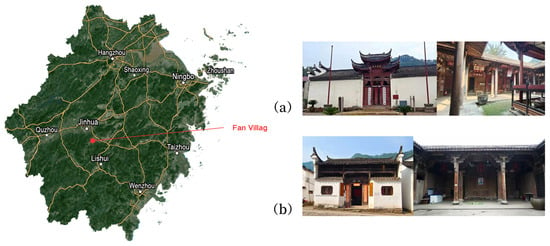
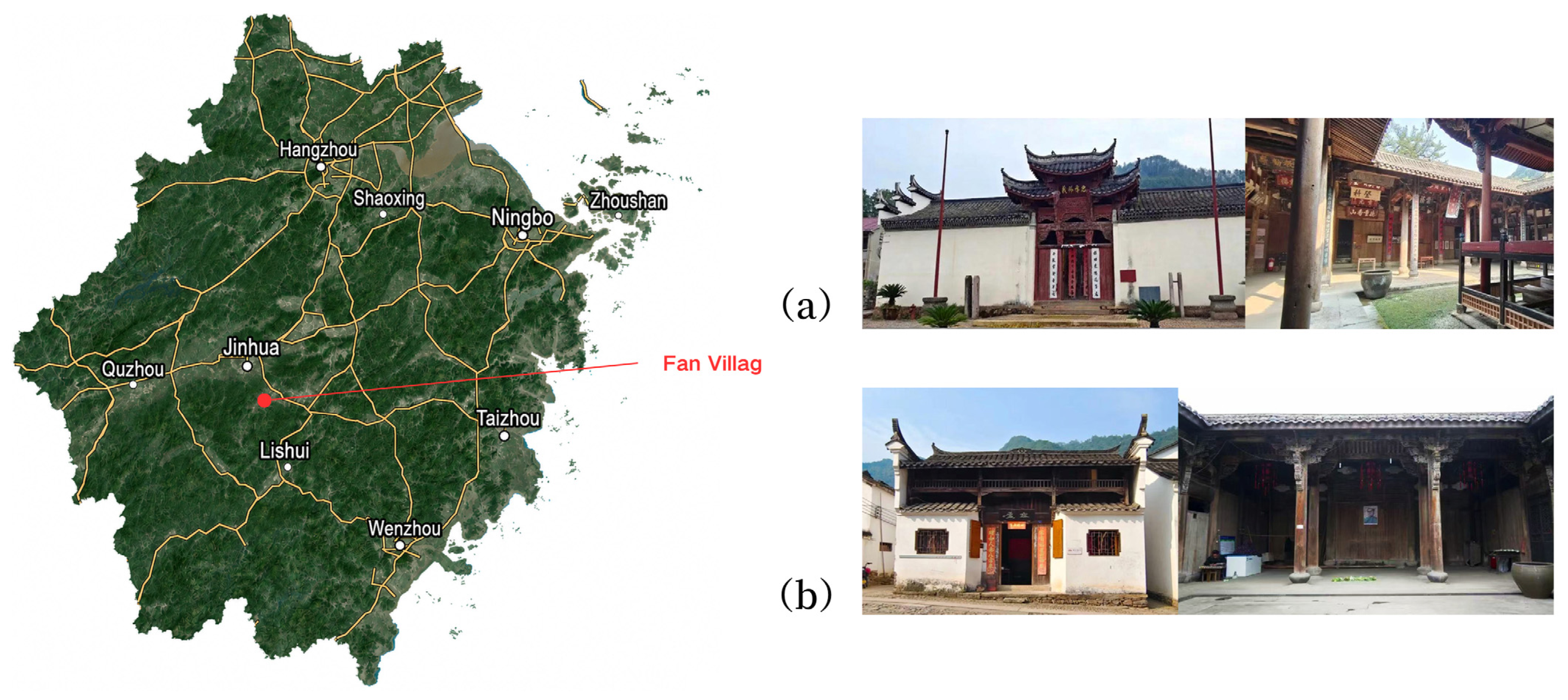
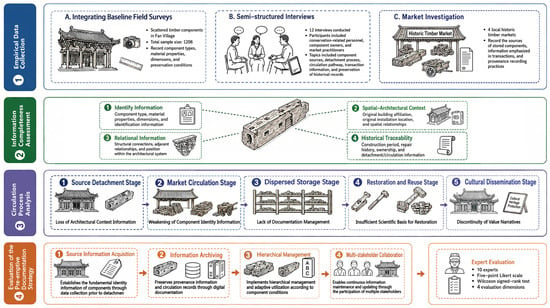
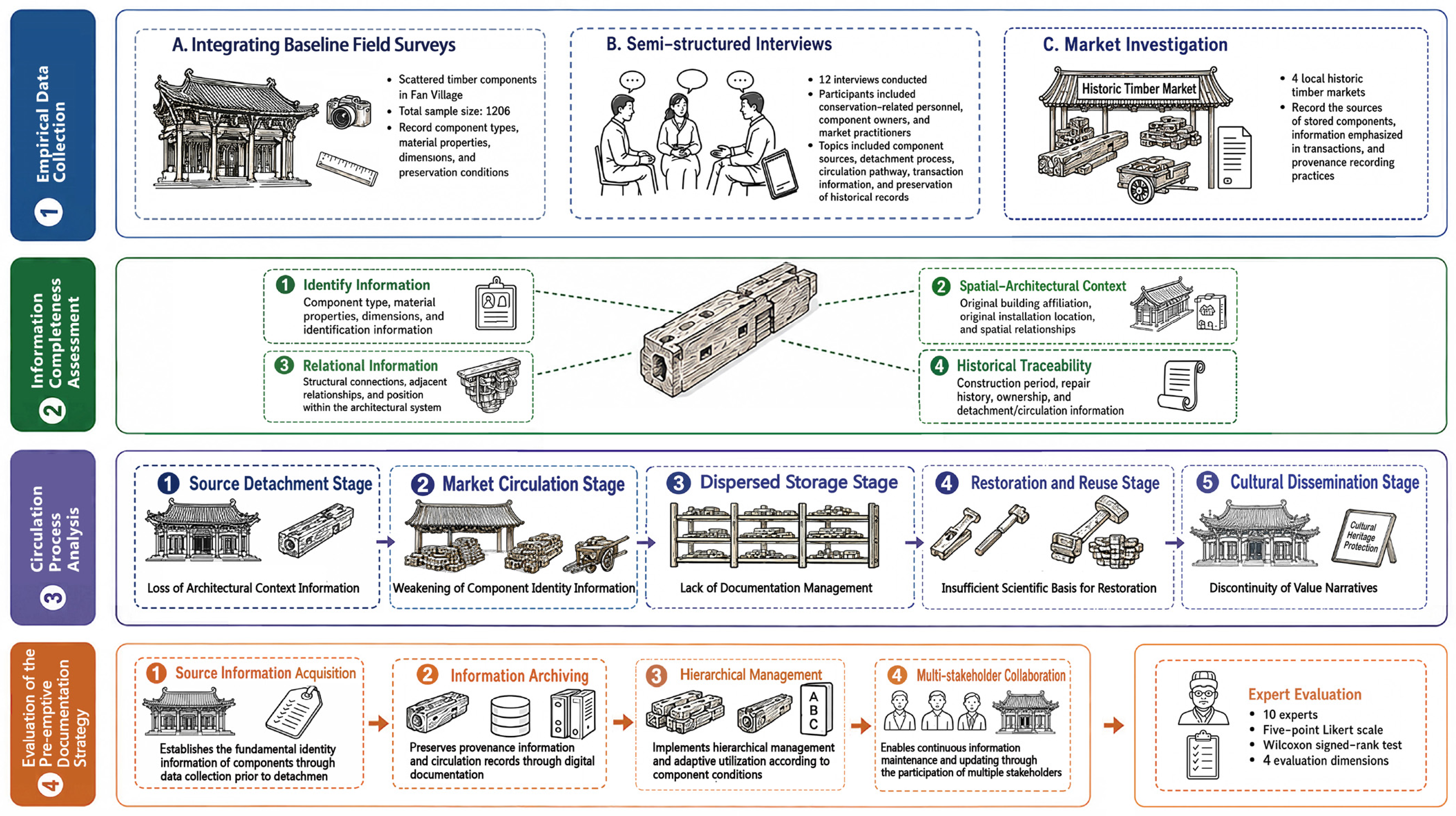
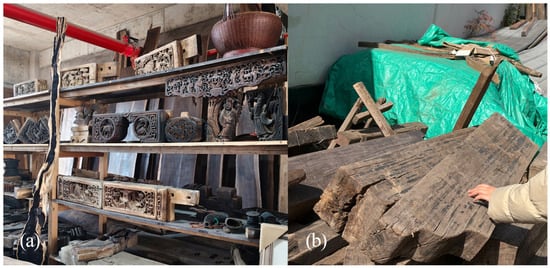
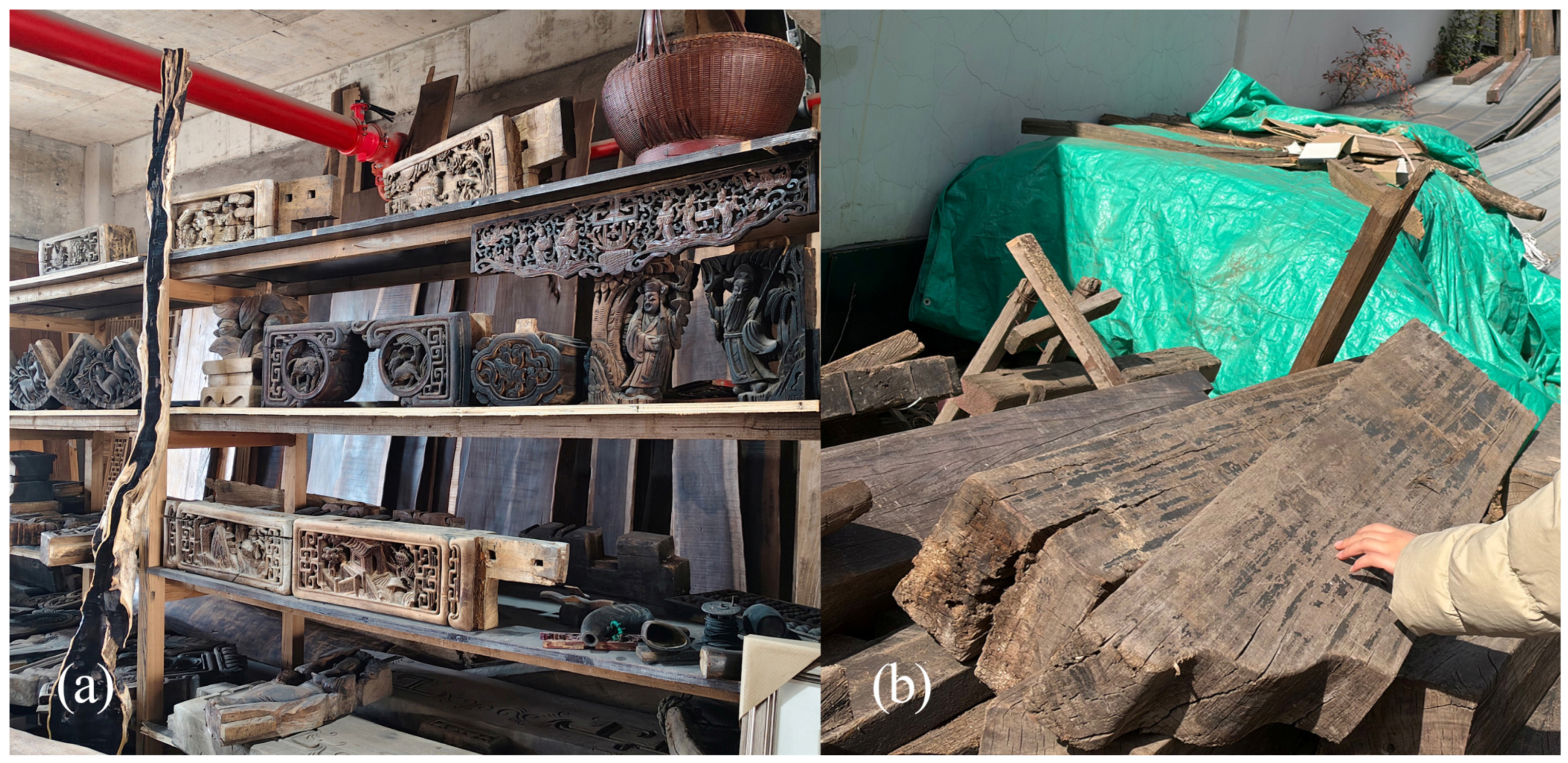
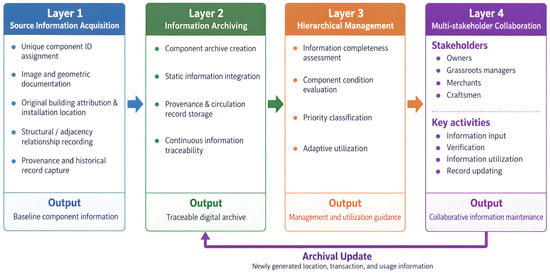
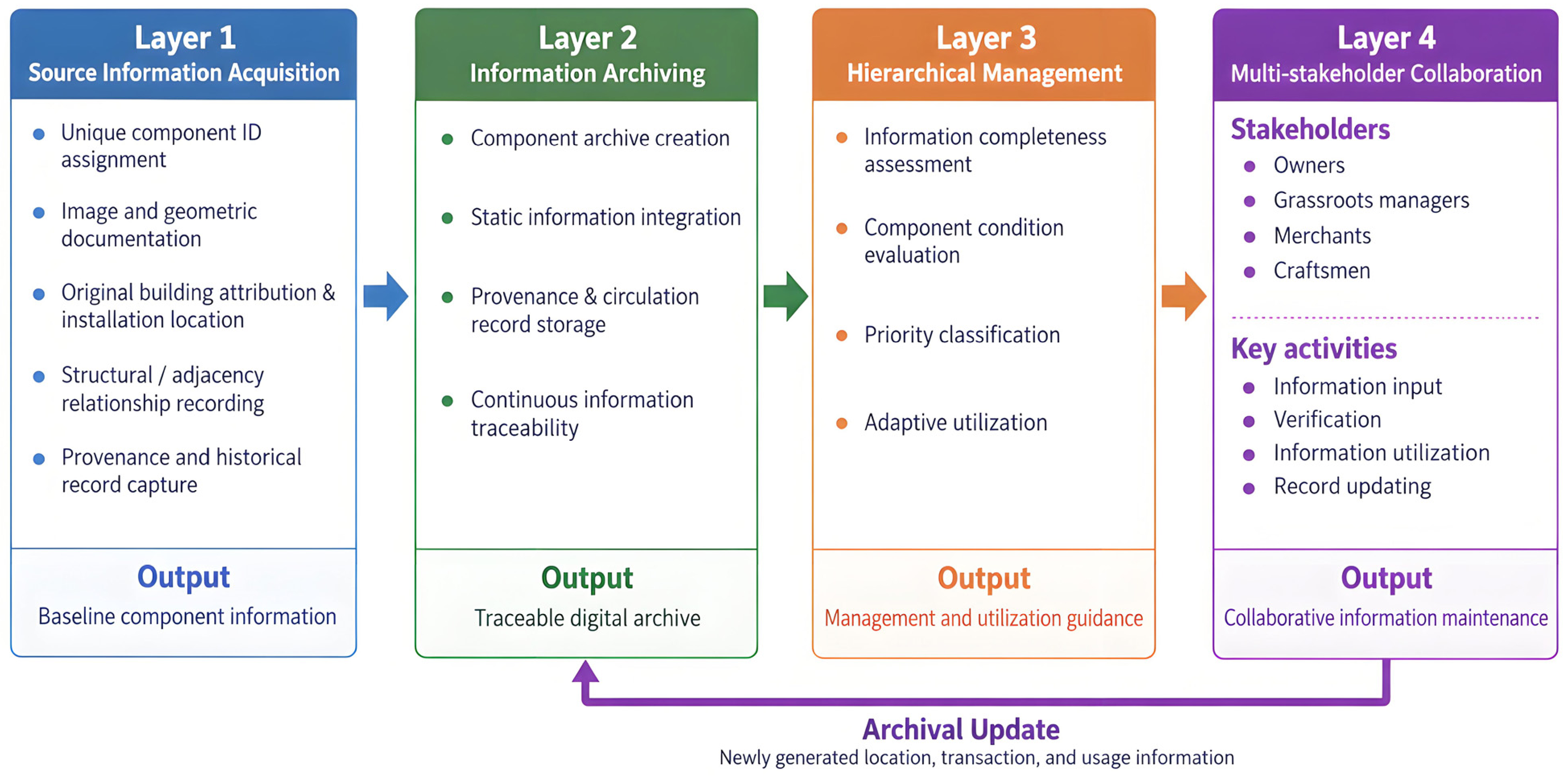
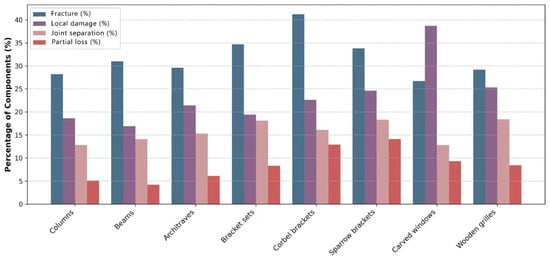
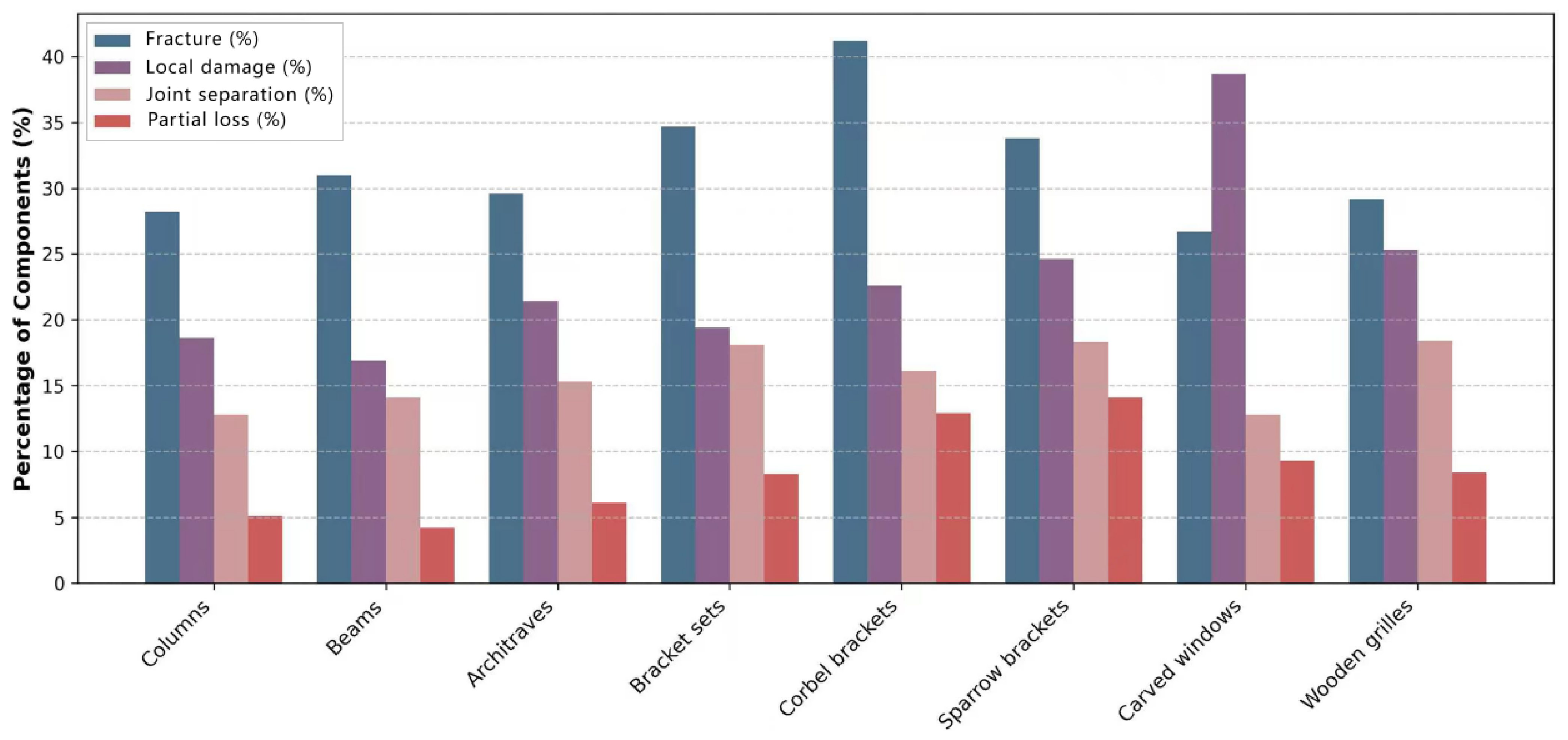
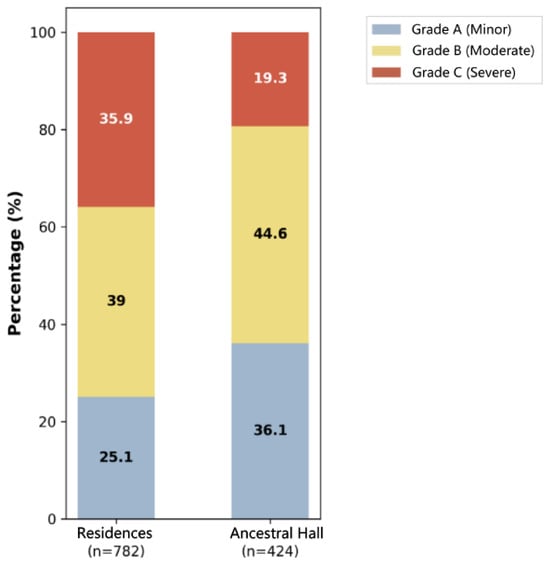
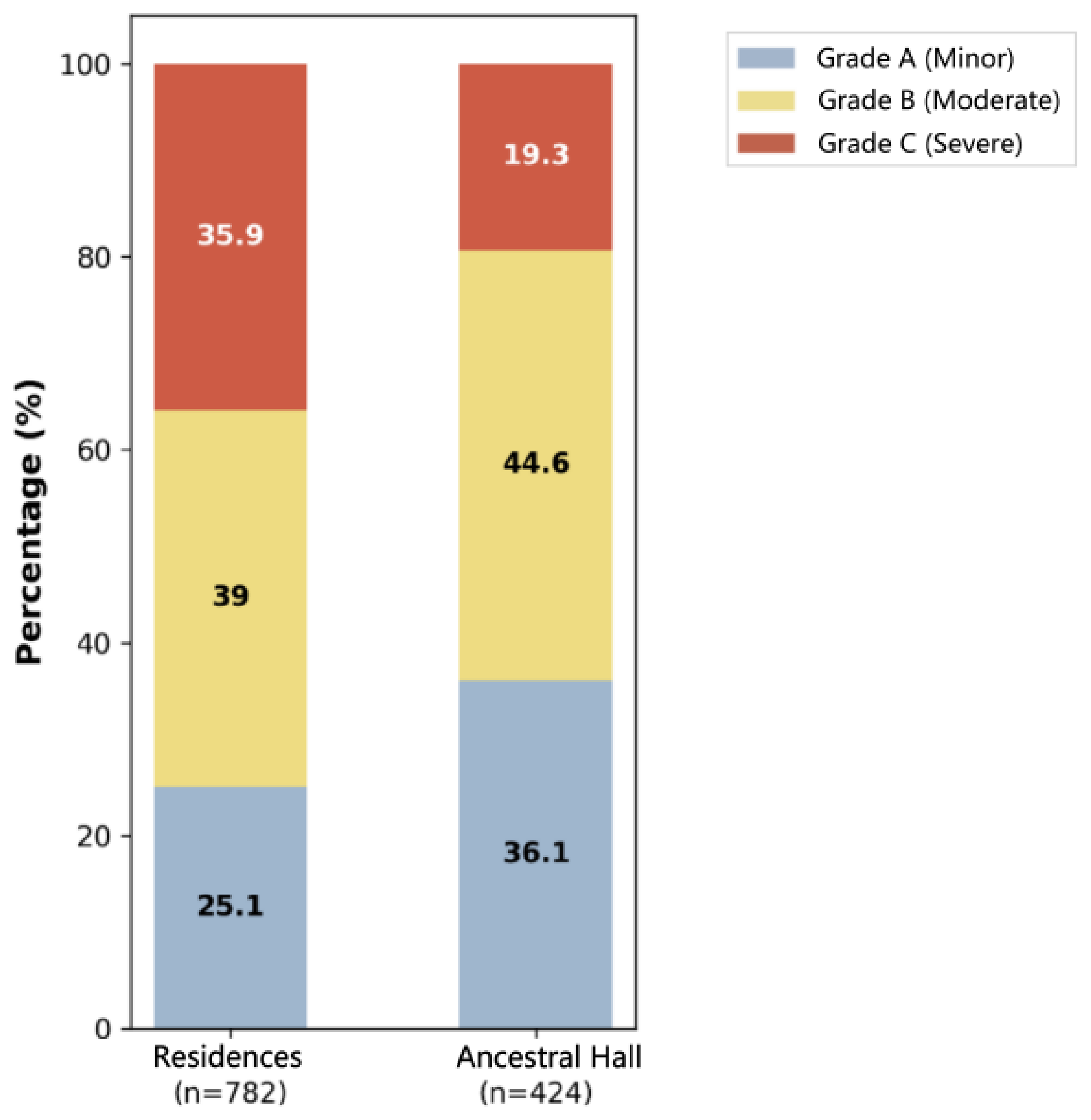
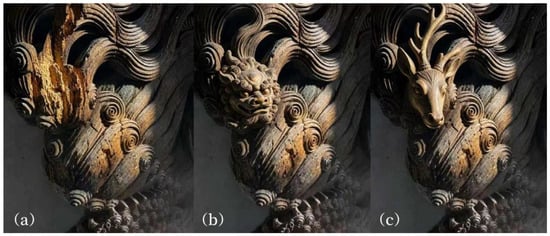
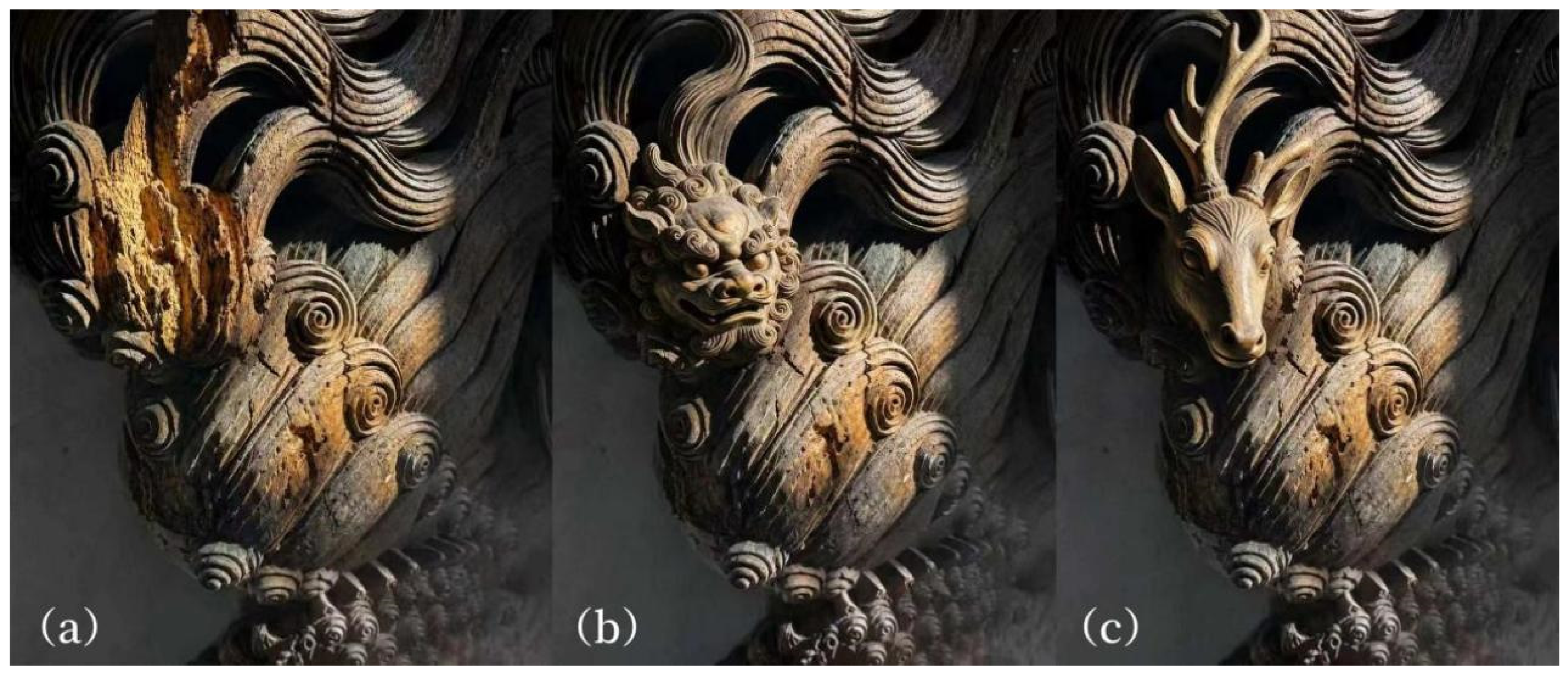
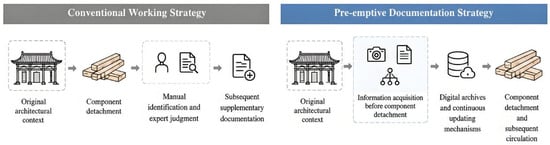
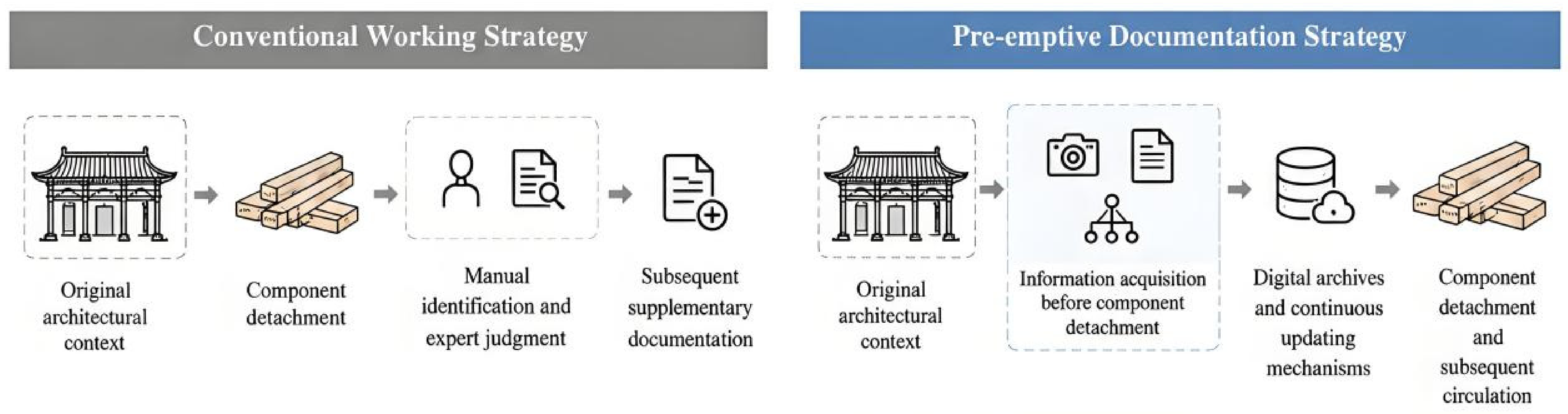

Disclaimer/Publisher’s Note: The statements, opinions and data contained in all publications are solely those of the individual author(s) and contributor(s) and not of MDPI and/or the editor(s). MDPI and/or the editor(s) disclaim responsibility for any injury to people or property resulting from any ideas, methods, instructions or products referred to in the content. |
© 2026 by the authors. Licensee MDPI, Basel, Switzerland. This article is an open access article distributed under the terms and conditions of the Creative Commons Attribution (CC BY) license.