


Abstract
The growing demand for sustainable binder systems in 3D-printed concrete (3DPC), together with the declining availability of fly ash (FA), has increased the need for alternative supplementary cementitious materials. This study investigates the feasibility of using basaltic rock dust (BRD) as a high-volume replacement of FA in 3DPC through a two-stage experimental programme involving mix optimisation followed by evaluation under printing conditions. Five mortar mixes incorporating BRD at FA replacement levels of 0%, 25%, 50%, 75%, and 100% by mass were first evaluated to identify the optimum replacement level within the investigated range, after which the optimum mix was comprehensively characterised in terms of its fresh properties, rheological behaviour, hydration characteristics, mechanical performance, anisotropy, and microstructure. The results showed that 75% FA replacement by BRD achieved the optimum overall performance among the investigated BRD-containing mixes, based on the combined consideration of high BRD utilisation, flowability, hydration behaviour, and compressive strength. Although its 28-day compressive strength under conventionally cast conditions remained slightly lower than that of the control mix, under printing conditions, the C75 mix increased the flow diameter from 165 mm to 176 mm and the maximum printable layers from 14 to 16 while reducing the shape retention spread diameter from 96 mm to 89 mm. Compared with the control mix, the BRD-incorporated mix also increased the compressive strength by 10.9% in the Y- direction and 22.9% in the Z-direction, respectively, while reducing the compressive anisotropy from 20.97% to 12.39%. Although the flexural strength decreased from 7.66 to 5.02 MPa in the Y-direction and from 7.29 to 5.19 MPa in the Z-direction, the directional dependence decreased from 4.83% to 3.34%. SEM observations revealed a more compact cementitious matrix with fewer visible large pores in C75 than in the control mix. These findings demonstrate that BRD has strong potential as a high-volume replacement for FA in 3D-printed concrete, reducing reliance on fly ash while achieving favourable printability, compressive performance, and structural uniformity.
1. Introduction
Three-dimensional-printed concrete (3DPC) has emerged as a transformative construction technology that fabricates structural elements through automated layer-by-layer extrusion while eliminating traditional formwork or vibration [1,2]. By enabling greater design freedom, reducing material waste, shortening construction time, and minimising labour requirements, 3DPC has gained considerable attention as a promising approach for sustainable construction [3,4]. However, compared with conventional cast concrete, the effective implementation of 3DPC is governed by the mechanical performance of the hardened material and also by its fresh-state behaviour throughout the printing process. Printable cementitious mixes must simultaneously satisfy stringent requirements for pumpability, extrudability, open time, shape retention, buildability, and rapid structural build-up while maintaining sufficient interlayer bonding and mechanical strength after hardening [5,6]. These characteristics are primarily controlled by the evolution of rheological properties, including yield stress, plastic viscosity, thixotropic rebuilding, and hydration kinetics [5], all of which must be carefully balanced to ensure printing stability and dimensional accuracy. Consequently, 3DPC mixes generally require substantially higher binder contents than conventional concrete to achieve sufficient yield stress, structural build-up, and shape stability immediately after deposition, with reported cementitious contents commonly ranging from 600 to 900 kg/m3 compared with approximately 270–350 kg/m3 in ordinary structural concrete [7]. Although high binder dosages improve printability and early-age stability, they also increase clinker consumption, embodied carbon emissions, energy demand, and production costs [8]. Therefore, developing sustainable low-carbon binder systems through the incorporation of supplementary cementitious materials (SCMs) has become a major research priority for advancing environmentally responsible additive manufacturing in construction.
Among the SCMs employed in 3DPC, fly ash (FA) has been one of the most extensively investigated because of its favourable particle morphology, pozzolanic activity, and beneficial effects on material behaviour in both the fresh and hardened states [9]. The predominantly spherical particles of FA improve particle lubrication and reduce interparticle friction, resulting in enhanced flowability, pumpability, and extrusion stability. In addition, its fine particle size contributes to improved particle packing, while the pozzolanic reaction between FA and calcium hydroxide promotes the formation of secondary calcium silicate hydrate (C-S-H), leading to matrix densification and long-term strength development [10]. Consequently, Panda, Ruan [11] reported that incorporating FA improved extrusion stability and buildability, while Tseng, Chi [12] observed enhanced interlayer bonding and long-term compressive strength due to the pozzolanic reaction of FA. Despite these advantages, the long-term availability of FA is becoming increasingly uncertain due to the global transition away from coal-fired power generation [13]. Australia currently produces approximately 10–14 Mt of FA annually [14]. However, production is projected to decline substantially over the coming decade as coal-fired power stations are progressively decommissioned. Furthermore, variations in coal source and combustion conditions can significantly affect the chemical composition, fineness, and engineering performance of FA [15]. These challenges have intensified the search for sustainable alternative SCMs capable of providing comparable performance while ensuring long-term supply security for additive manufacturing.
Basaltic rock dust (BRD), a finely divided by-product generated during basalt quarrying and aggregate production, has recently attracted increasing attention as a potential alternative SCM owing to its abundance, low commercial value, and favourable mineralogical characteristics [16,17]. Large quantities of BRD are generated annually; however, only a small proportion is beneficially reused, with most being disposed of as waste despite containing finely ground aluminosilicate minerals capable of improving cementitious systems through filler and nucleation effects [16,18]. Previous investigations on conventional cementitious materials have shown that finely ground basalt-derived powders can enhance particle packing, refine pore structure, and accelerate hydration by providing additional nucleation sites for hydration products, thereby improving the mechanical performance of cementitious composites. Dobiszewska, Bagcal [19] reported that basalt rock powders could be incorporated at relatively high replacement levels while maintaining satisfactory compressive strength, whereas Almeida, Gomes [16] demonstrated that basalt quarry fines contributed to matrix densification and improved mechanical behaviour through enhanced packing density rather than pronounced pozzolanic activity. Collectively, these studies suggest that the beneficial effects of BRD may arise predominantly from physical filler and nucleation mechanisms, while any chemical or pozzolanic contribution depends on its mineralogical characteristics and reactivity. This provides a promising basis for using BRD to reduce dependence on conventional SCMs while simultaneously valorising an abundant quarry by-product. However, because BRD is generated through basalt quarrying and aggregate-processing activities, its practical availability and large-scale utilisation are inherently region-dependent and would be influenced by local quarry production, processing requirements, and transport distances. Despite the encouraging performance reported in conventionally cast cementitious materials, the application of BRD in 3DPC remains largely unexplored.
To address this research gap, a two-stage experimental programme was developed to evaluate the feasibility of BRD as a sustainable replacement for FA in 3DPC. In the first stage, BRD was used to replace FA by mass at proportions of 0%, 25%, 50%, 75%, and 100%, and the resulting mixes were evaluated in terms of fresh properties, hydration characteristics, and mechanical performance to identify the optimum formulation for printable applications. The optimum formulation was selected from the investigated BRD-containing mixes based on the overall balance of high BRD utilisation, flowability, hydration behaviour, and compressive strength. The selected formulation was subsequently investigated in 3D-printed concrete through rheological, printability, hydration, mechanical, and microstructural assessments. By integrating mixture optimisation with extrusion-based performance evaluation within a unified experimental programme, this study presents a systematic methodology for assessing sustainable supplementary cementitious materials for 3DPC. The study advances the understanding of basaltic rock dust utilisation as a sustainable alternative to FA and offers a basis for its application in printable cementitious materials for extrusion-based additive manufacturing.
2. Materials and Experimental Methods
2.1. Raw Materials
Type GP Portland cement conforming to AS 3972 [20] was used as the primary binder in all mixes. Silica fume (SF) and fly ash (FA), complying with AS/NZS 3582.3 [21] and AS/NZS 3582.1 [22], respectively, were incorporated as SCMs. Basaltic rock dust (BRD), obtained as a by-product of basalt aggregate production, was investigated as a potential alternative SCM. The BRD was collected from Westbuild Products Ltd. (Whitby, WA, Australia) and ground using a laboratory ball mill to obtain a maximum particle size of 75 μm before use. The oxide compositions of the cementitious materials and BRD are presented in Table 1.
Table 1.
Chemical compositions of the binder.
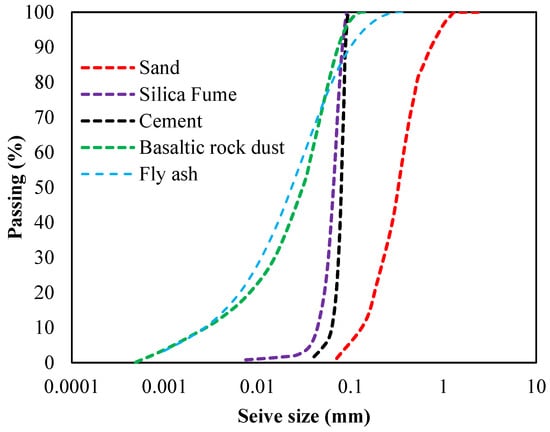
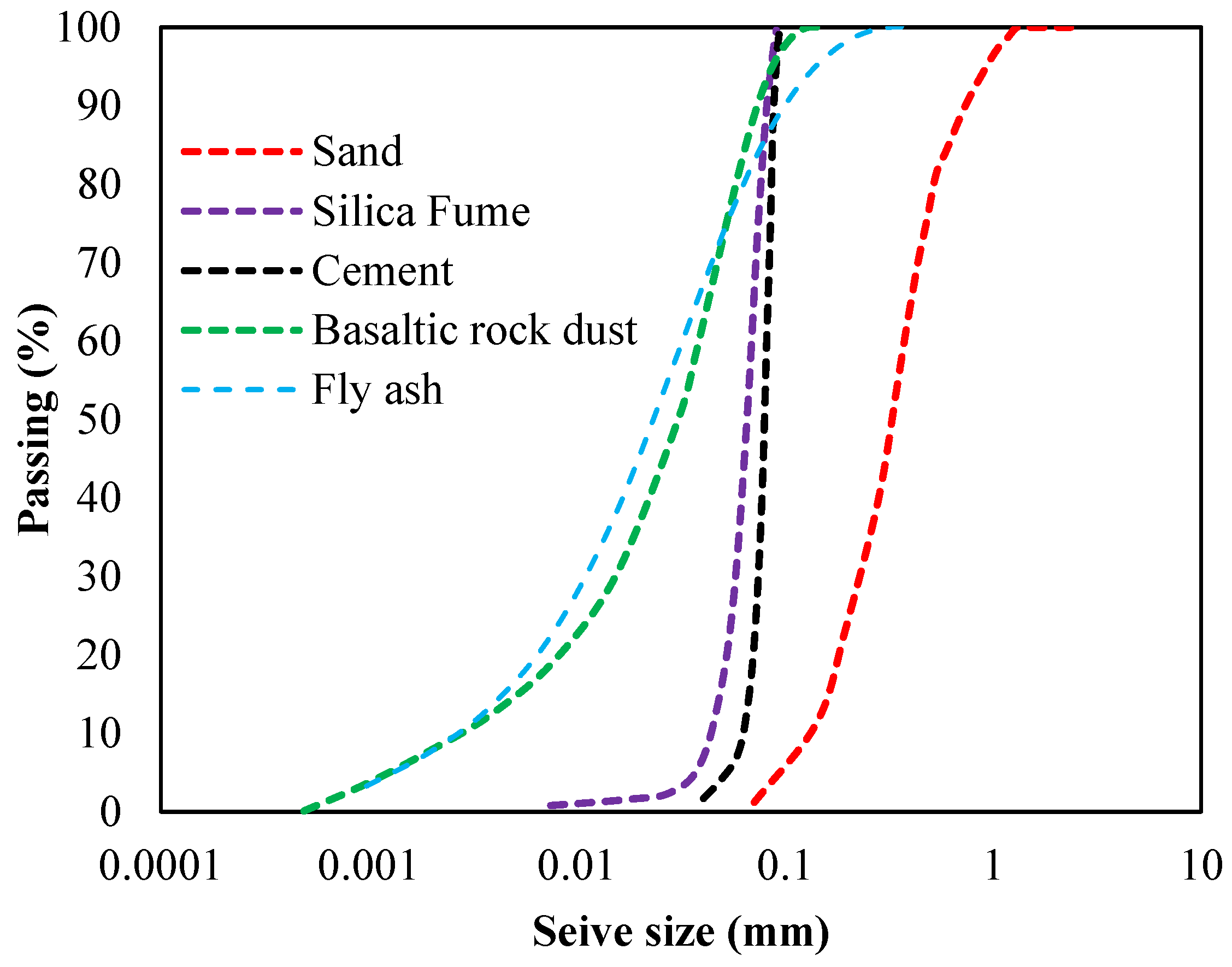
Figure 1 illustrates the particle size distributions of the constituent materials, including cement, silica fume, fly ash, BRD, and sand. The particle size distribution indicates that BRD exhibits a finer grading than the aggregate fraction and partially overlaps with the cementitious materials, suggesting its potential to promote denser particle packing while modifying the rheological behaviour of the printable mixes.
Figure 1.
Particle size distributions of binder, BRD and sand.
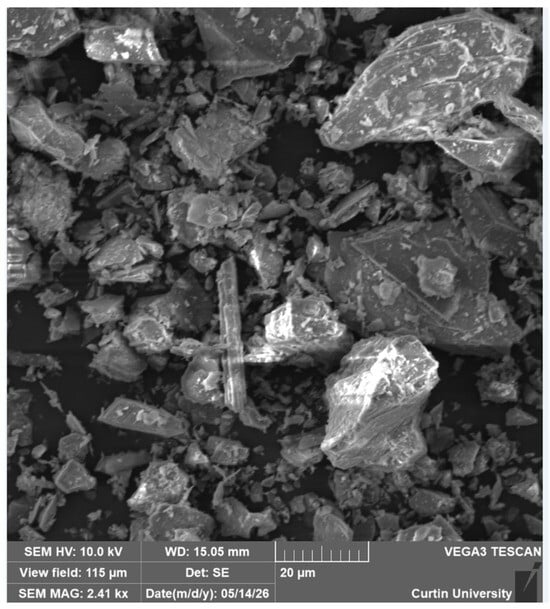
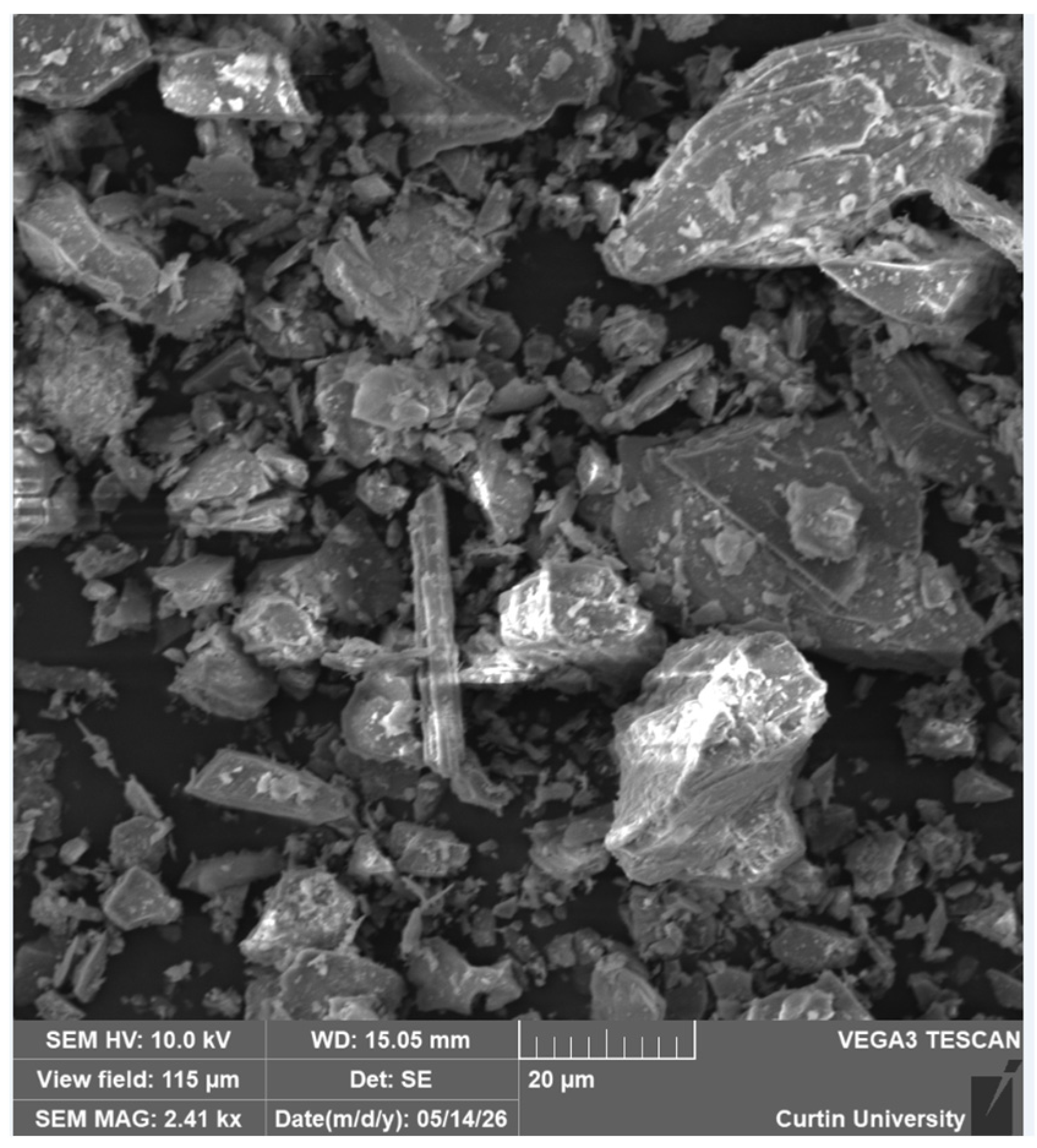
Figure 2 presents the SEM micrograph used to examine the morphological characteristics of BRD. The particles exhibited predominantly angular and irregular shapes with rough surface textures resulting from the mechanical crushing process. Compared with the predominantly spherical morphology of FA, the angular BRD particles are expected to increase interparticle contact and influence structural build-up, extrusion behaviour, and fresh-state rheology.
Figure 2.
SEM image of BRD.
Natural quarry sand complying with AS 2758.1 [24] was used as the fine aggregate. The sand had a maximum particle size of 2.36 mm, an apparent density of 2400 kg/m3, a water absorption of 0.4%, and a fineness modulus of 1.6. Potable water was used throughout the experimental programme. A polycarboxylate ether-based high-range water-reducing admixture (HRWRA), a viscosity-modifying admixture (VMA), and a set accelerator (SA) were incorporated to obtain the rheological characteristics required for 3D printing.
2.2. Mix Design
The experimental programme comprised two consecutive stages: (i) mix optimisation under conventionally cast conditions and (ii) evaluation of the selected mix under 3D printing conditions. In the first stage, a mix optimisation study was conducted using five mortar mixes in which FA was replaced with BRD at replacement levels of 0%, 25%, 50%, 75%, and 100% by mass. The total binder content, water content, and fine aggregate content were maintained constant across all mixes. However, the HRWRA and VMA dosages were adjusted for M75 and M100 to obtain suitable fresh-state characteristics at the higher BRD replacement levels. The five optimisation-stage mixes (M0, M25, M50, M75, and M100) were evaluated through flowability, 28-day compressive strength, and hydration analyses to identify the optimum BRD replacement level for further investigation in 3DPC. Details of the mix compositions adopted during the optimisation stage are provided in Table 2.
Table 2.
Mix proportions used in the optimisation stage.
Based on the outcomes of the five optimisation-stage mixes, M75 was selected as the optimum BRD-containing mix within the investigated conditions, providing the most favourable overall balance of high BRD utilisation, flowability, hydration behaviour, and 28-day compressive strength. M75 was therefore selected for further investigation under 3DPC conditions together with the control mix (M0), with the two printable mixes designated as C75 and C0, respectively. Both printable mixes were designed with identical total binder content, aggregate content, water-to-binder ratio (0.35), and aggregate-to-binder ratio (0.67).
2.3. Mixing Procedure and 3D Printing Parameters
The five optimisation-stage mixes were prepared using a 4 L laboratory mortar mixer, whereas the 3DPC mixes were produced using a 10 L planetary mixer to accommodate the larger batch volumes required for printing. In both stages, the dry constituents comprising cement, SF, FA, basaltic BRD, and sand were first mixed for 3 min to achieve a homogeneous blend. Water containing the pre-dissolved chemical admixtures was then gradually introduced while mixing continued until a uniform cementitious mix was obtained.
All 3DPC specimens were produced using a laboratory-scale gantry printing system with an operating frame of 1.4 m × 1.2 m × 1.2 m. Material deposition was carried out through a 20 mm diameter circular nozzle, using a programmed vertical nozzle increment of 8 mm and an average filament width of approximately 20 mm. A travel speed of 50 mm/s was adopted based on preliminary printing trials. Following printing, the specimens were covered with plastic sheets for 24 h to minimise moisture loss, followed by demoulding and curing in lime-saturated water until testing.
2.4. Experimental Characterisation
2.4.1. Optimisation-Stage Mixes
The five optimisation-stage mixes were characterised through fresh-state, mechanical, and hydration testing to identify the most suitable BRD replacement level for 3DPC. Flowability was determined immediately after mixing using the mini-slump flow test in accordance with ASTM C1437 [25]. The 28-day compressive strength was evaluated using 50 × 50 × 50 mm cube specimens following ASTM C109/C109M [26], with the reported values representing the average of three specimens for each mix. Hydration heat evolution was measured using a TAM Air isothermal calorimeter in accordance with ASTM C1679. Each measurement was conducted at a constant temperature of 20 °C for 90 h using 6 g of solid sample. The calorimeter was pre-equilibrated for 8 h before testing, and an equal mass (6 g) of salt was used as the reference material in the reference chamber. Heat flow and cumulative heat release were continuously monitored to evaluate the hydration characteristics of the investigated mixes. The combined results from the optimisation stage were used to select the most suitable mix for detailed evaluation under 3DPC conditions.
2.4.2. 3DPC Mixes
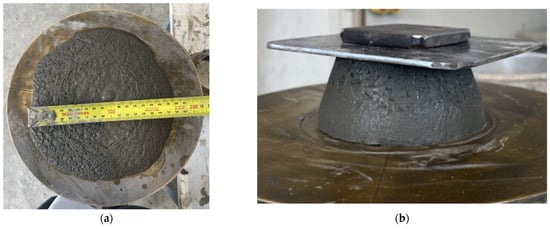
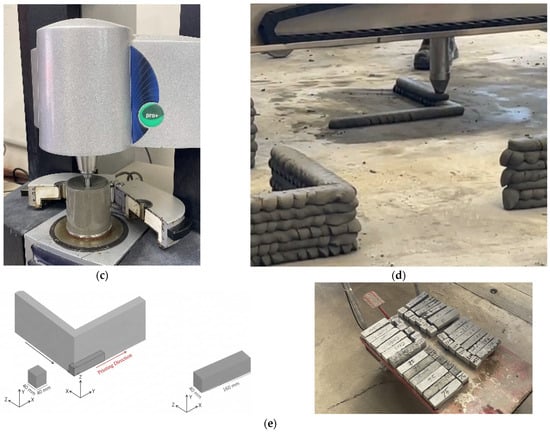
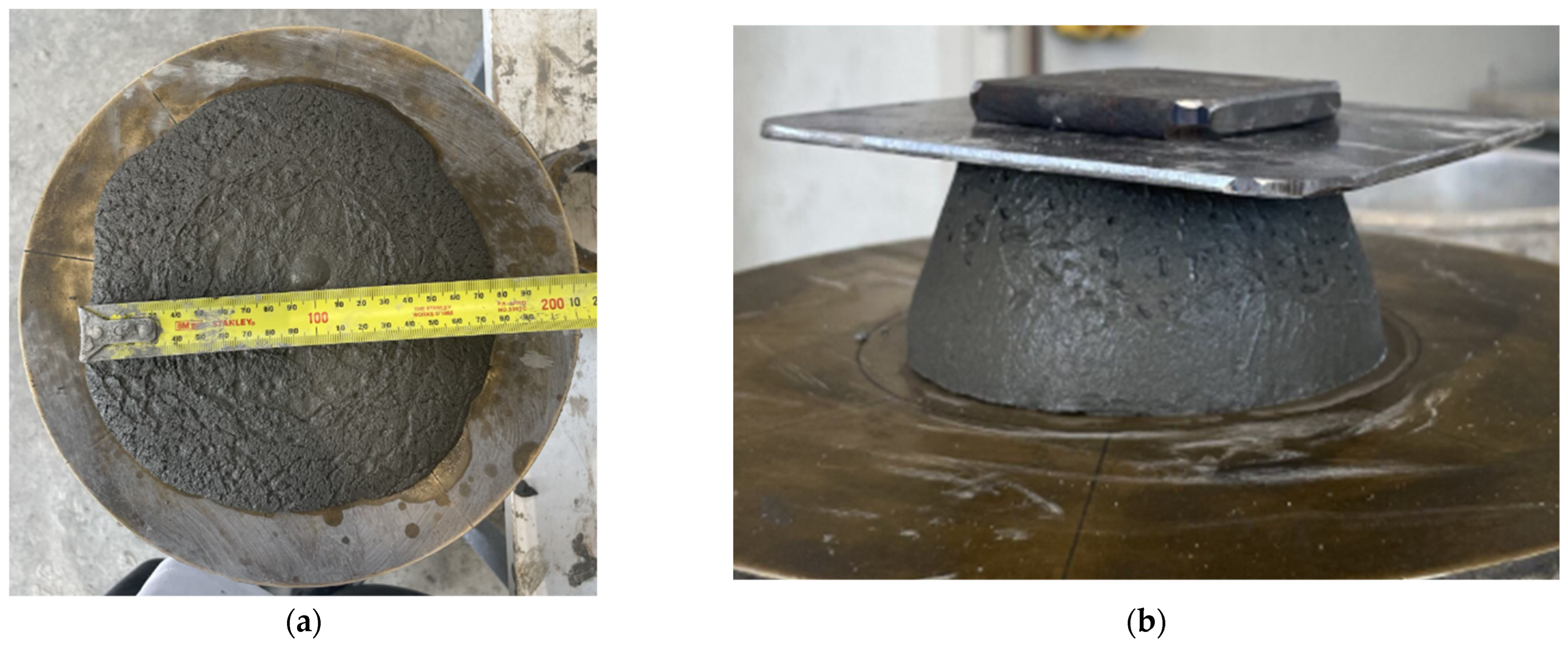
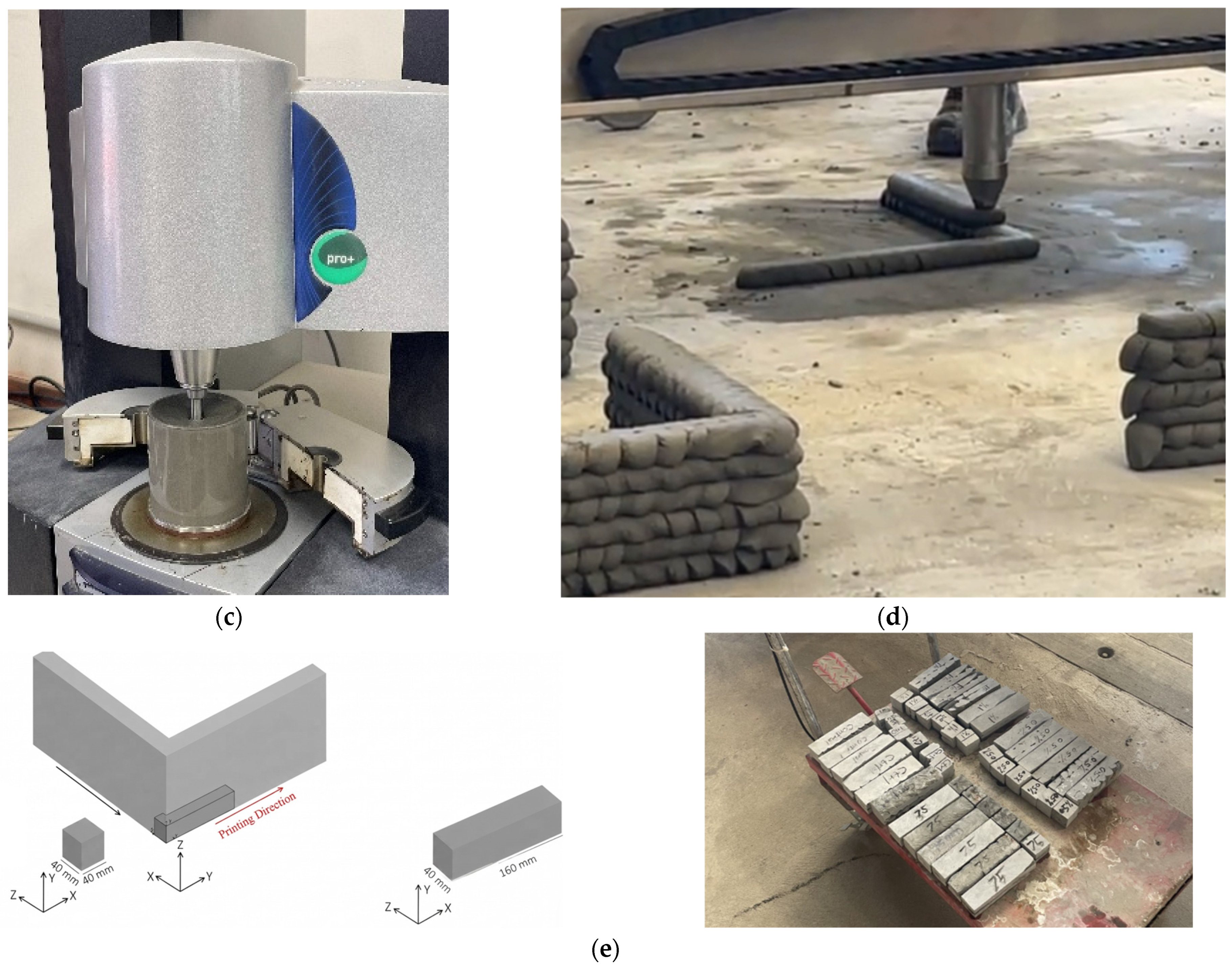
The 3DPC mixes were characterised through fresh-state, rheological, mechanical, and microstructural testing to evaluate their printability and hardened performance. The experimental setups adopted for the characterisation of the 3DPC mixes are presented in Figure 3.
Figure 3.
Experimental equipment and procedures for the characterisation of the 3DPC mixes. (a) Mini-slump flow test. (b) Shape retention ability test. (c) Rheometer. (d) 3D Printing. (e) Specimen extraction procedure [23] and actual extracted compressive and flexural specimens.
Fresh-state behaviour was assessed through flowability, shape retention ability, rheological behaviour, setting time, hydration behaviour, extrudability, and buildability. Flowability was determined using the mini-slump flow test in accordance with ASTM C1437 [25]. The spread diameter was measured in two perpendicular directions, and the average value was reported. Shape retention ability was evaluated by measuring the deformation of fresh specimens subjected to a constant vertical load following the procedure adopted in previous studies [27]. Extrudability was qualitatively assessed based on the continuity and surface quality of the extruded filaments during printing. Buildability was evaluated by printing multilayer cylindrical specimens with a diameter of 200 mm, and the maximum printable layers, together with the settlement after hardening, were considered as indicators of the dimensional stability of the printed elements. Setting behaviour was determined using the penetration resistance method in accordance with ASTM C403/C403M [28], while hydration behaviour was evaluated using isothermal calorimetry by continuously monitoring the heat flow and cumulative heat release under controlled temperature conditions.
Rheological behaviour was evaluated using a Malvern Kinexus rotational rheometer equipped with a four-bladed vane geometry. All measurements were performed at a laboratory temperature of 20 ± 2 °C. Immediately after mixing, the fresh material was transferred into the rheometer measuring cup, and testing commenced without delay. A thixotropy and structuration protocol was adopted to evaluate the evolution of the static yield stress, thixotropic behaviour, and structural rebuilding of the fresh 3DPC mixes. The testing programme consisted of 12 consecutive measurement cycles separated by progressively increasing resting intervals. The first measurement cycle was performed immediately after sample loading, followed by 11 successive cycles separated by resting periods of 10, 20, 30, 40, 50, 60, 90, 120, 1200, 2400, and 3600 s. The complete rheological protocol lasted approximately 138 min. Following each prescribed resting interval, a shear rate of 1 s−1 was imposed for 60 s while the shear stress response was monitored. The maximum stress attained at the onset of shearing was taken as the apparent static yield stress for the respective cycle. Structural recovery under repeated shear–rest conditions was characterised using the thixotropic index (TI). The structuration rate (Athix) was obtained from the evolution of apparent static yield stress with the corresponding resting time and was used to characterise the rate of structural build-up during the resting period.
Following printing, the specimens were cured for 28 days before mechanical testing. Compressive strength was determined using a Shimadzu 300 kN universal testing machine with 40 × 40 × 40 mm cube specimens in accordance with ASTM C109/C109M [26], while flexural strength was measured on 40 × 40 × 160 mm prism specimens using a three-point bending test following ASTM C78/C78M [29]. For both compressive and flexural strength tests, three specimens were tested for each mix and loading direction, and the average values of the three measurements were reported. To evaluate the influence of the printing direction, specimens were tested in the Y- and Z-directions. Three specimens were tested for each mix and loading direction, and the reported strengths represent the average values. Differences in mechanical performance associated with the loading direction were expressed in terms of the anisotropy degree [30], determined using Equation (1):
where and are the maximum and minimum strengths obtained from the investigated loading directions, respectively.
Microstructural characterisation was performed using scanning electron microscopy (SEM) after 28 days of curing. Representative fractured surfaces were examined to qualitatively evaluate the pore structure, hydration products, and matrix morphology and to correlate the microstructural characteristics with the fresh-state and mechanical performance of the 3DPC mixes.
3. Results and Discussion
3.1. Mix Optimisation
Prior to evaluating the performance of BRD in 3DPC, a preliminary optimisation study was conducted to identify a suitable replacement level of FA. Five mortar mixes incorporating 0%, 25%, 50%, 75%, and 100% BRD as a replacement for FA were evaluated through flowability, hydration behaviour, and 28-day compressive strength. The objective of this stage was to identify a mix that provided a balanced combination of high BRD utilisation, fresh-state performance, hydration behaviour, and mechanical properties before assessing its suitability for 3DPC.
3.1.1. Flowability
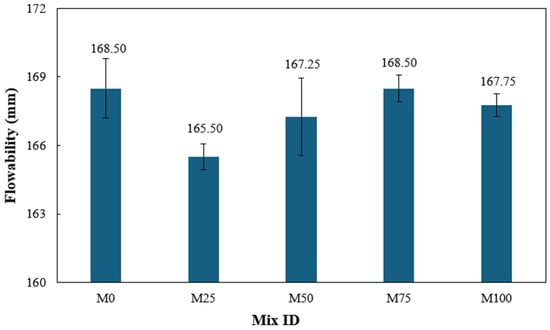
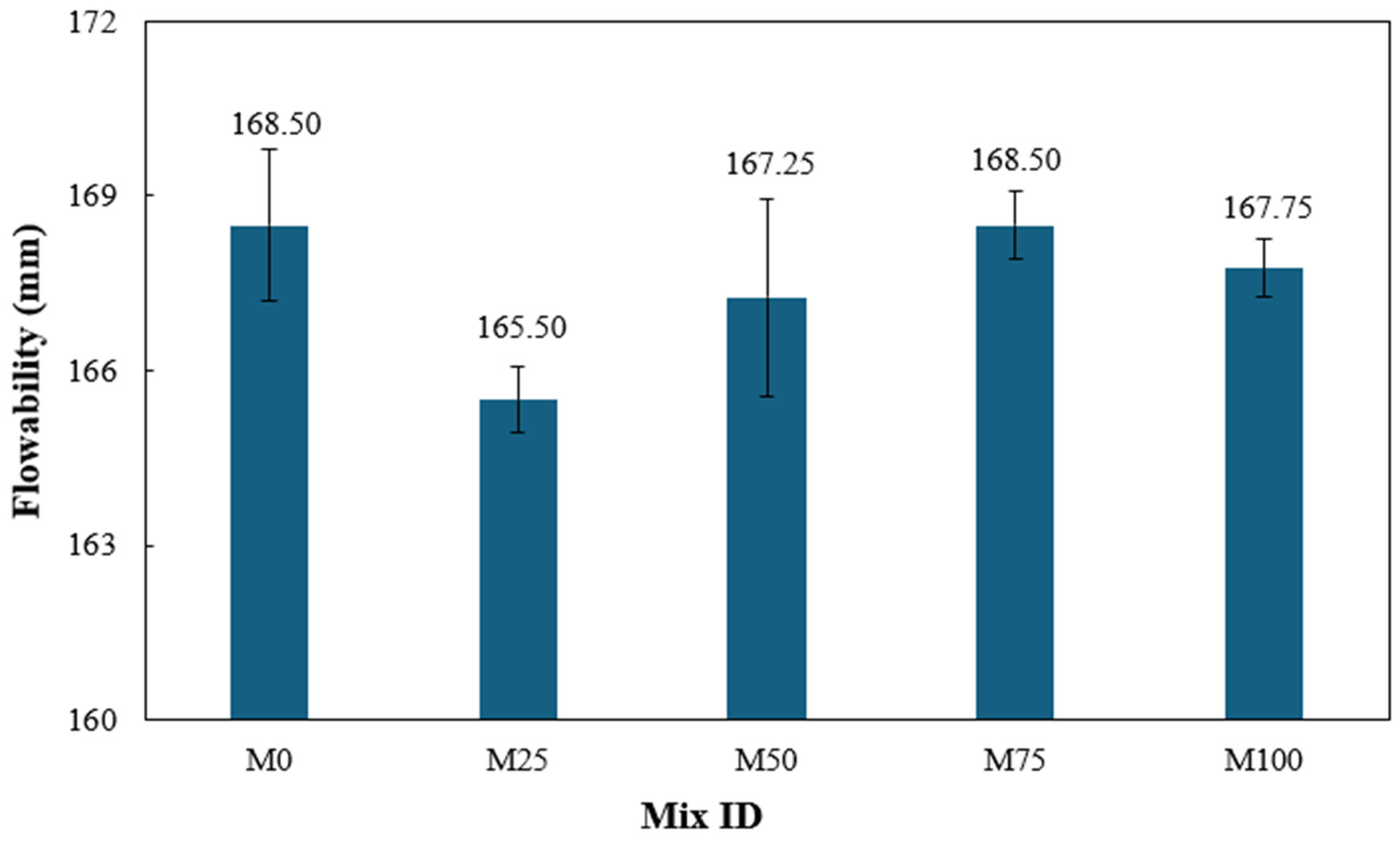
The flowability of the optimised mixes is presented in Figure 4. The incorporation of BRD produced only minor variations in workability, with the average spread diameter ranging from 165.50 mm to 168.50 mm. An average value of 168.50 mm was recorded for M0, which decreased to 165.50 mm at 25% BRD replacement. Increasing the replacement level to 50% and 75% increased the spread diameter to 167.25 mm and 168.50 mm, respectively, while a slight reduction to 167.75 mm was observed for the 100% replacement.
Figure 4.
Flowability of the optimised mixes.
The maximum variation in spread diameter among all mixes was less than 3 mm, indicating that replacing FA with BRD had only a limited influence on mortar workability. The slightly lower flowability observed at lower BRD replacement levels may be associated with the angular morphology and rough surface texture of BRD particles, which can increase interparticle friction within the fresh cementitious system. As the BRD replacement level increased, the influence of the finer BRD particles may have partially compensated for this effect by improving the particle size distribution of the binder system. Accordingly, the HRWRA and VMA dosages were adjusted for M75 and M100 to obtain suitable fresh-state characteristics at the higher BRD replacement levels. The increased HRWRA dosage assisted in maintaining particle dispersion and flowability in the presence of the higher BRD content, whereas the VMA was adjusted to maintain sufficient cohesiveness of the fresh mixture. The comparable spread diameters obtained for M75 and M100 should therefore be considered together with these admixture adjustments, which enabled the high-BRD mixtures to maintain suitable consistency despite the increased incorporation of the angular and finely divided BRD particles. A similar observation was reported by Unčík and Kmecová [31], who found that replacing cement with basalt powder produced only minor changes in mortar consistency at moderate replacement levels. Likewise, Ramos, Matos [32] reported that finely ground granite powder did not adversely affect mortar workability when adequate particle fineness was achieved. Overall, the results demonstrate that high-volume replacement of FA with BRD was feasible while maintaining suitable fresh-state consistency through appropriate mix-proportion adjustment.
3.1.2. Hydration Behaviour
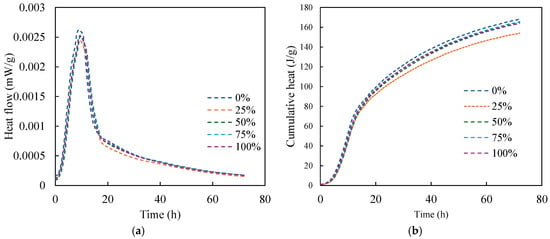
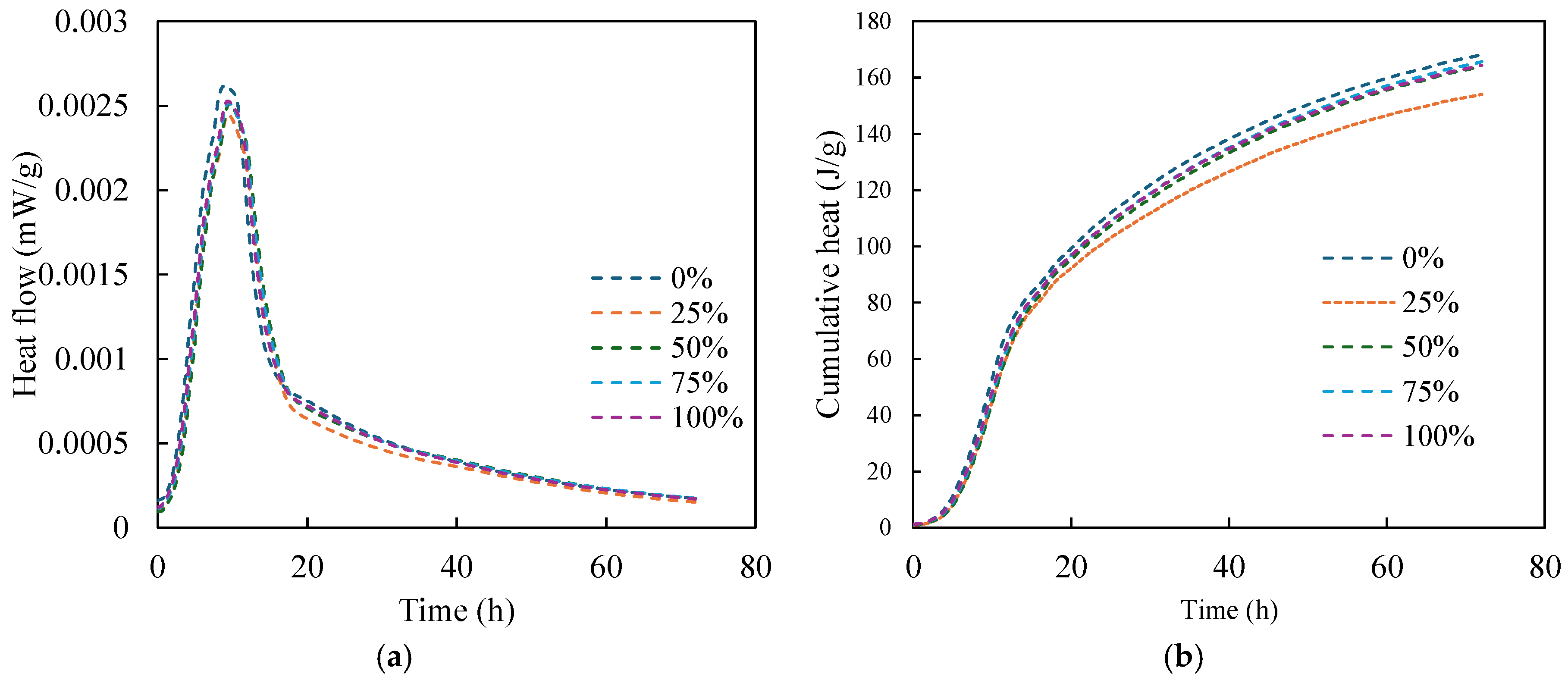
The hydration behaviour of the optimised mixes was evaluated using isothermal calorimetry, and the corresponding heat flow and cumulative heat release curves are presented in Figure 5. All mixes exhibited the typical hydration profile of Portland cement-based systems, characterised by an initial dormant period transitioning into accelerated hydration before the heat evolution gradually declined. The control mix (M0) exhibited the highest heat flow peak, whereas the M25 mix showed the lowest hydration response throughout the monitoring period. Increasing the BRD replacement level from 50% to 100% progressively increased the heat flow, with the M75 mix exhibiting hydration behaviour comparable to the control. A similar trend was observed for the cumulative heat release, where the M25 mix consistently released the least amount of heat, while the cumulative heat released by the M50, M75, and M100 mixes gradually approached that of the control.
Figure 5.
Hydration behaviour of the optimised mixes: (a) heat flow and (b) cumulative heat release.
The observed hydration behaviour suggests that incorporating BRD at higher replacement levels did not adversely affect cement hydration and may have promoted hydration through physical filler and heterogeneous nucleation effects associated with the finely divided BRD particles. These particles may provide additional surfaces for the precipitation of hydration products and improve the packing of the binder system, thereby supporting the observed hydration response through physical mechanisms. Among the BRD-containing mixes, M75 exhibited one of the highest hydration responses, aligning well with its compressive strength performance discussed in the following section. However, the slightly lower heat evolution observed for M75 compared to the control sample may be attributed to minor changes in the hydration kinetics arising from the partial replacement of FA with BRD. Overall, the hydration response of M75 remained comparable to that of the control mix despite the substantial replacement of FA. This observation is consistent with the comparable initial and final setting times reported in Section 3.2.1, indicating that the incorporation of BRD did not significantly affect the early-age hydration processes governing stiffness development. Furthermore, the maintained hydration behaviour, together with the improved buildability observed in Section 3.2.3, suggests that the improved fresh-state performance of M75 was achieved without disrupting the early hydration characteristics of the binder system, thereby providing a favourable basis for the subsequent development of hardened mechanical properties. The calorimetry results therefore indicate that replacing a substantial proportion of FA with BRD can maintain hydration behaviour comparable to the control while significantly reducing FA consumption.
3.1.3. Compressive Strength of the Optimised Mixes
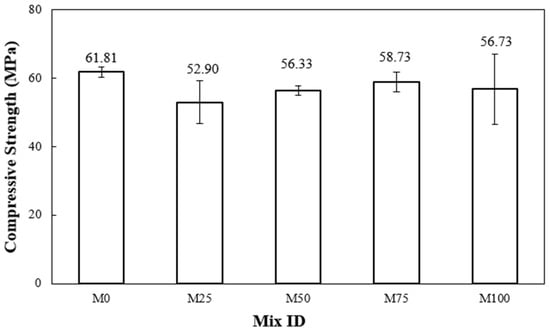
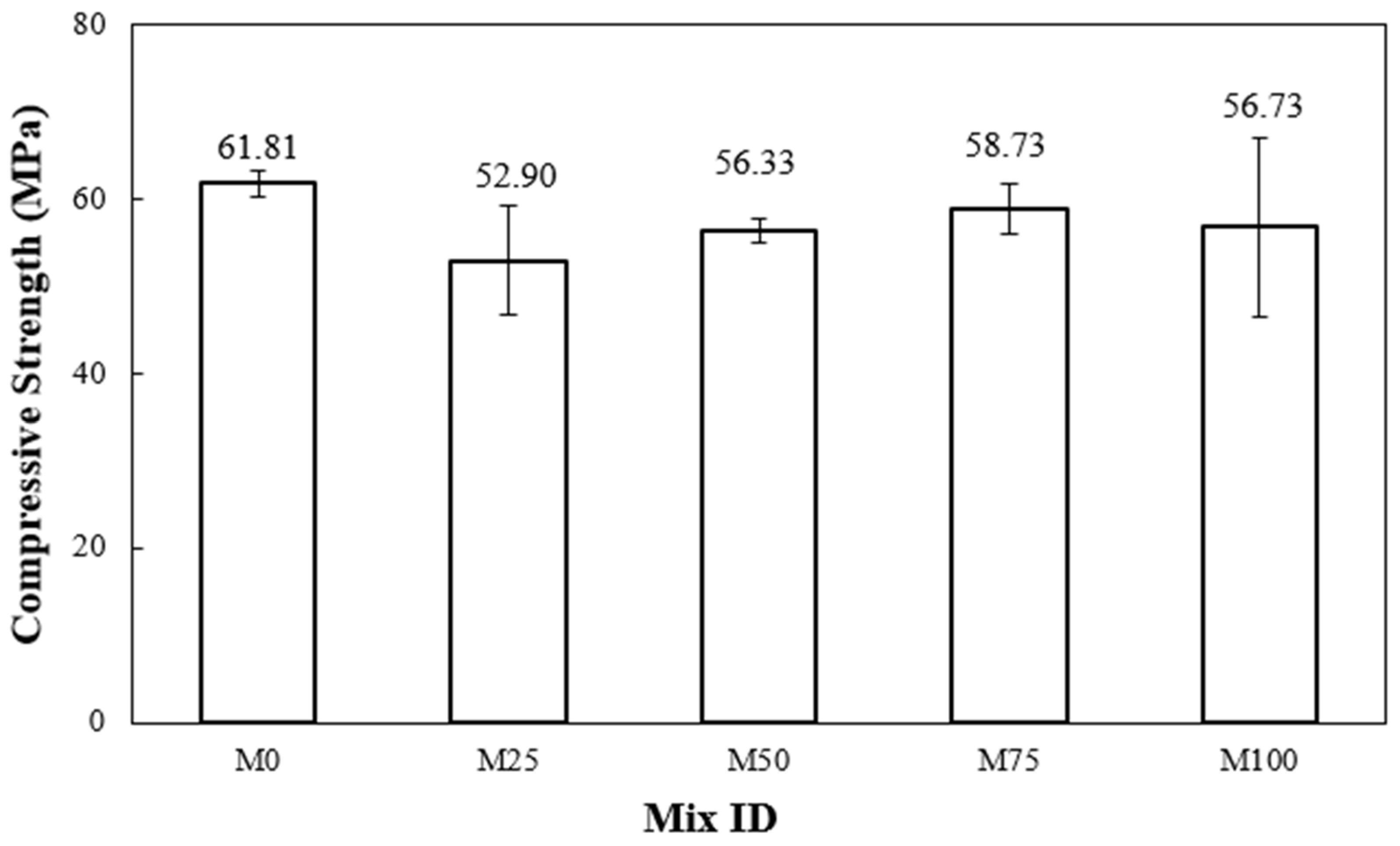
The 28-day compressive strengths of the optimised mixes are presented in Figure 6. Replacing FA with BRD influenced the compressive strength, with the highest strength among the BRD-containing mixes achieved by M75. The control mix (M0) exhibited the highest compressive strength of 61.81 MPa, whereas replacing 25% of FA with BRD reduced the strength to 52.90 MPa. Increasing the BRD replacement level subsequently improved the average compressive strength to 56.33 MPa for M50 and 58.73 MPa for M75, before decreasing slightly to 56.73 MPa for M100. These results indicate that M75 provided the most favourable mechanical performance among the BRD-containing mixes while replacing a substantial proportion of FA.
Figure 6.
The 28-day compressive strength of the optimised mixes.
The improvement in compressive strength from M25 to M75 is consistent with the hydration behaviour discussed previously, where higher BRD replacement levels exhibited hydration responses comparable to the control mix. The enhanced performance of M75 is likely associated with the physical filler effect of the finely divided BRD particles, which may improve particle packing and provide additional nucleation sites for hydration products, thereby facilitating hydration and producing a denser cementitious matrix capable of transferring applied loads more effectively. As discussed in Section 3.1.1, adjustment of the chemical admixture dosages was required at the higher BRD replacement levels to maintain suitable fresh-state characteristics. Therefore, the strength development of M75 and M100 should be interpreted in the context of these optimised mix formulations. The progressive strength recovery from M25 to M75, together with the corresponding calorimetry response, indicates that substantial replacement of FA by BRD can be achieved without a proportional reduction in compressive strength. Increasing the replacement level to M100 resulted in a slight reduction in compressive strength, suggesting that complete replacement of FA with BRD may reduce the beneficial contribution of FA to long-term strength development. Based on the combined assessment of high BRD utilisation, flowability, hydration behaviour, and compressive strength, M75 was selected as the optimum BRD-containing mix for the 3DPC investigation.
3.2. Fresh-State Behaviour of 3DPC
3.2.1. Flowability and Setting Behaviour
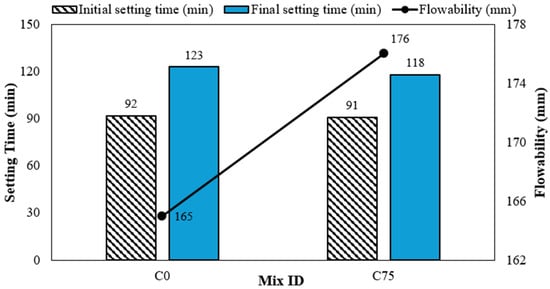
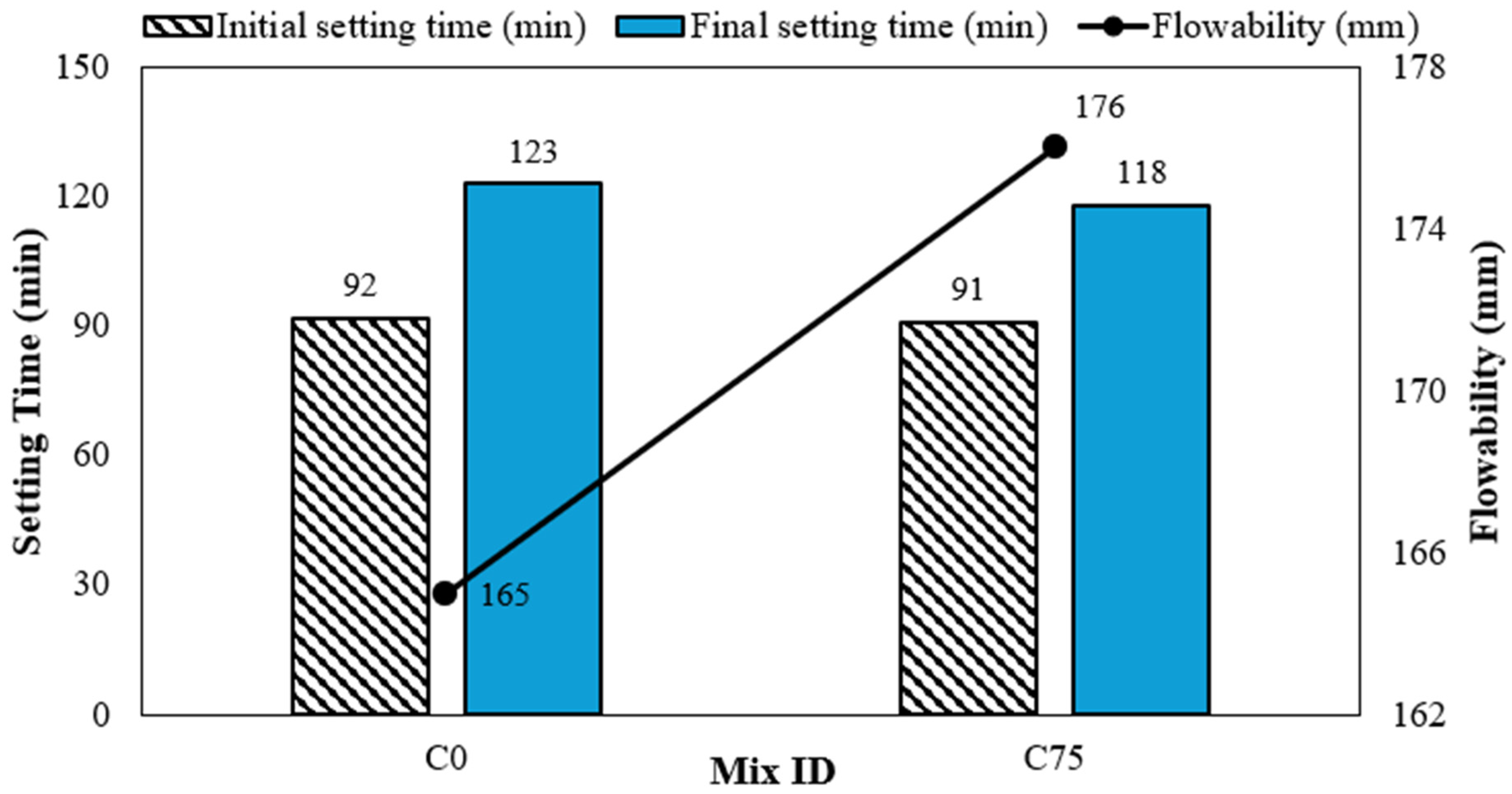
The fresh-state flowability and setting behaviour of 3DPC mixes are presented in Figure 7. It can be seen that replacing 75% of FA with BRD increased the flow diameter from 165 mm for the control mix (C0) to 176 mm for C75, corresponding to an increase of approximately 6.7%. In contrast, only minor changes were observed in the setting behaviour. The initial setting time decreased slightly from 92 min for C0 to 91 min for C75, while the final setting time decreased from 123 min to 118 min. Although the C75 mix exhibited greater flowability, the relatively small variation in the initial and final setting times indicates that the early-age stiffening behaviour of the two mixes remained broadly comparable.
Figure 7.
Setting and flowability behaviour of the 3DPC mixes.
The increase in flowability is likely associated with the combined physical effects of incorporating finely divided BRD into the binder system. The fine BRD particles may improve particle packing and facilitate particle rearrangement within the fresh cementitious matrix [16], thereby reducing internal resistance to flow. The slight adjustment in the dosage HRWRA dosage adopted for C75 to achieve suitable printable consistency may also have contributed to the increased spread diameter by improving particle dispersion within the fresh matrix [33]. Despite the improved flowability, the setting behaviour remained largely comparable to that of the control mix, suggesting that the incorporation of BRD did not substantially alter the early hydration processes governing stiffness development. The marginal reduction in both the initial and final setting times may be attributed to the physical filler effect of the finely divided BRD particles, which may provide additional nucleation sites for the precipitation of hydration products and slightly accelerate early-age hydration [34]. Consequently, the increase in workability was achieved without a substantial reduction in the printable time window, indicating that the C75 mix maintained the fresh-state stability required for continuous extrusion and layer-by-layer deposition.
3.2.2. Shape Retention Ability
The shape retention ability of the 3DPC mixes is presented in Table 3. Replacing 75% of FA with BRD reduced the measured spread diameter from 96 mm for the control mix (C0) to 89 mm for C75, corresponding to a reduction of approximately 7.3%. The smaller spread diameter indicates that C75 experienced less deformation under the applied load than the control mix, despite exhibiting higher flowability. This behaviour is likely associated with the physical characteristics of the finely divided BRD particles, which may improve particle packing and increase the number of interparticle contacts within the fresh cementitious matrix [16], resulting in a more cohesive particle network with greater resistance to deformation. In addition, the filler effect of BRD may provide additional nucleation sites for hydration products [34], promoting the gradual development of early-age structural integrity. Furthermore, the higher VMA dosage may enhance cohesiveness and restrict particle movement under the applied load, thereby increasing resistance to deformation. Therefore, C75 exhibited a favourable balance between flowability and shape stability, enabling the fresh 3DPC mix to better maintain its geometry immediately after extrusion. Such behaviour is essential for preserving dimensional stability and minimising deformation during layer-by-layer deposition.
Table 3.
Shape retention ability and buildability performance of the 3DPC mixes.
3.2.3. Buildability
The buildability performance of the 3DPC mixes is presented in Table 3. The control mix (C0) remained stable up to 14 printable layers, whereas C75 successfully supported 16 layers, representing an increase of approximately 14.3% in the maximum number of printable layers. The improved buildability indicates that the incorporation of BRD enhanced the ability of the freshly deposited material to sustain the increasing self-weight imposed by successive layers without exhibiting excessive deformation or structural instability during printing. Although C75 exhibited higher flowability than the control mix, the increase in printable layers demonstrates that the improved workability did not compromise the load-bearing capacity of the freshly deposited material. This behaviour is likely associated with the fine BRD particles, which may improve the packing density of the binder system and increase interparticle contacts within the fresh cementitious matrix, resulting in greater material cohesion and resistance to deformation during layer-by-layer deposition. The higher VMA dosage in C75 may also enhance the cohesiveness of the fresh matrix and restrict particle movement under the increasing self-weight of successive layers, thereby contributing to its resistance to deformation. Therefore, the incorporation of BRD enabled the 3DPC mix to achieve a more favourable balance between ease of extrusion and structural stability, thereby improving its buildability.
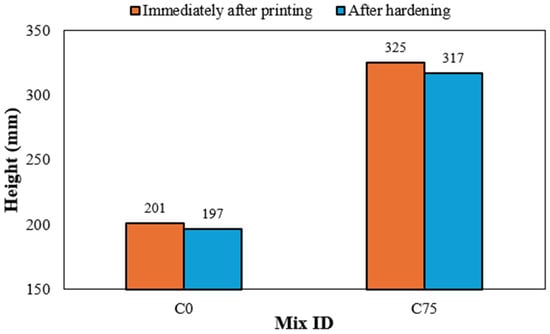
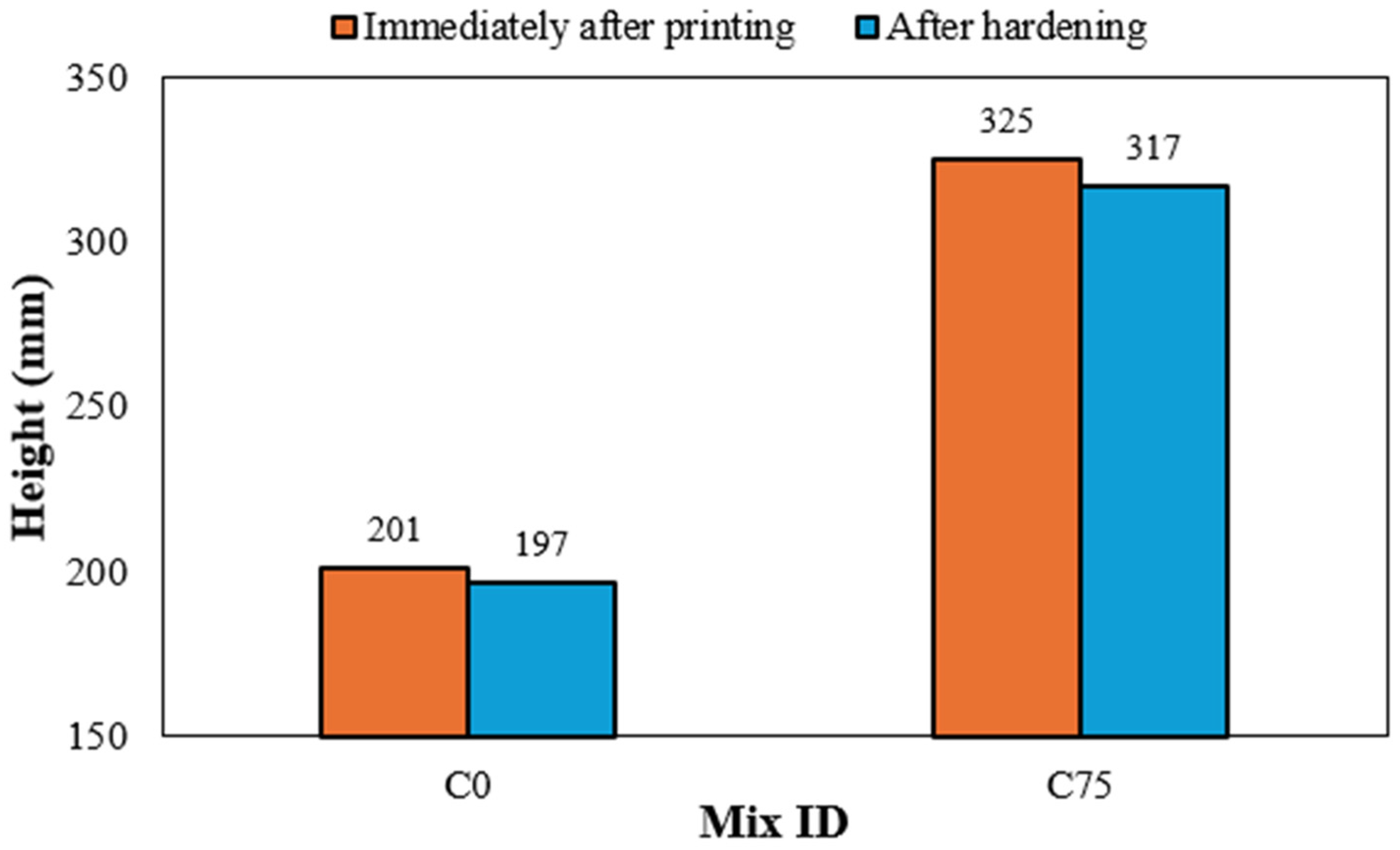
The measurements for the printed specimens following the hardening period are presented in Figure 8. Immediately after printing, C75 achieved a printed height of approximately 325 mm, which decreased to 317 mm following hardening, representing an 8 mm decrease (approximately 2.5%). In comparison, the height of the control mix C0 decreased by 4 mm relative to its initial value of approximately 201 mm (approximately 2.0%). Despite producing a substantially taller printed structure, C75 maintained excellent dimensional stability, indicating that the deposited material possessed sufficient resistance to deformation throughout the hardening process. This trend agrees with the shape retention behaviour discussed in Section 3.2.2, where C75 exhibited a lower spread diameter than the control mix under an applied load. Although the two tests evaluate different aspects of fresh-state behaviour, both provide an indication of the resistance of the deposited material to post-extrusion deformation. The improved buildability together with the limited settlement observed for C75 is therefore likely associated with the combined effects of the finely divided BRD particles and the higher VMA dosage. The BRD particles may improve particle packing, increase interparticle contacts, and promote a more cohesive fresh cementitious matrix capable of maintaining its geometry under the cumulative self-weight of successive layers, while the higher VMA dosage may enhance cohesiveness, enabling the deposited material to sustain the cumulative self-weight of successive layers while limiting post-deposition deformation. These findings demonstrate that replacing 75% of FA with BRD improved the fresh-state stability of the 3DPC mix, enabling greater printable height while maintaining excellent dimensional stability after printing.
Figure 8.
Settlement behaviour of the printed 3DPC mixes before and after hardening.
3.2.4. Extrudability
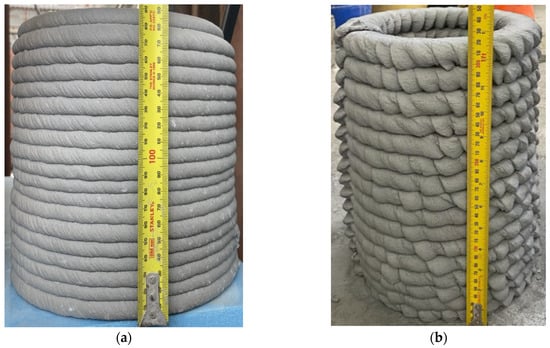
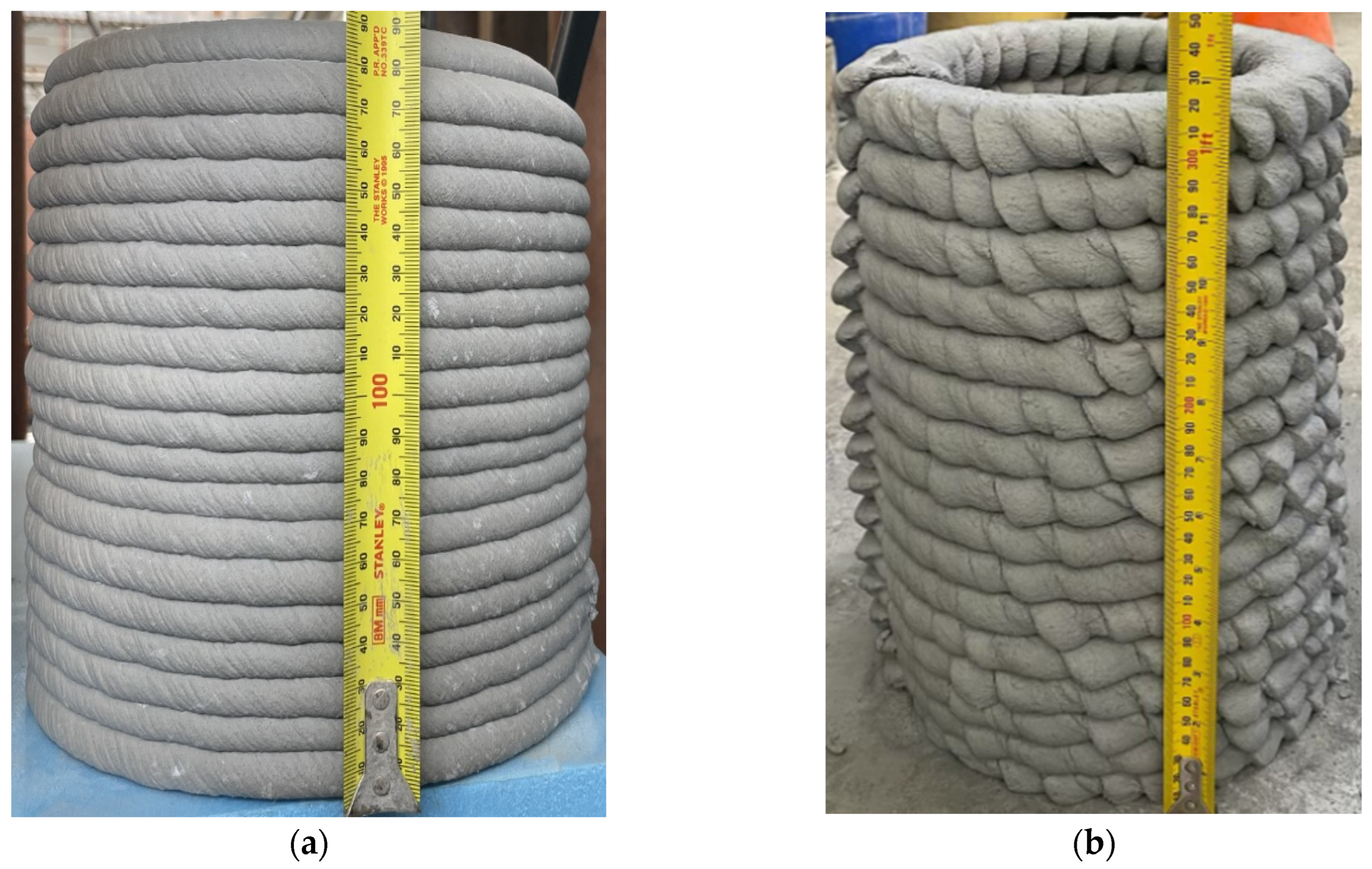
The extrudability of the 3DPC mixes is presented in Figure 9. Both C0 and C75 exhibited continuous and uninterrupted extrusion throughout the printing process without evidence of nozzle blockage, filament breakage, or visible material segregation, indicating that both mixes possessed suitable fresh-state characteristics for stable material flow through the screw extrusion system. While the control mix produced relatively smooth and uniform filaments, C75 exhibited a comparatively rougher surface texture following extrusion. Despite this difference in surface appearance, the incorporation of BRD did not adversely affect filament continuity, and both mixes maintained consistent material deposition throughout the printing process.
Figure 9.
Extrusion performance of the 3DPC mixes. (a) C0. (b) C75.
The observed extrusion behaviour is likely associated with the combined effects of the modified binder system and the physical characteristics of BRD. The improved flowability of the C75 mix may have facilitated continuous material flow through the extrusion system, enabling stable and uninterrupted material deposition throughout the printing process. The fine BRD particles may have remained uniformly dispersed within the fresh cementitious matrix, maintaining the homogeneity of the material during extrusion. In addition, the angular morphology and rough surface texture of the BRD particles may have contributed to the comparatively rougher surface finish of the deposited material. However, this change in surface appearance did not interrupt the continuity of material deposition or adversely affect the extrusion process. These results indicate that replacing 75% of FA with BRD maintained satisfactory extrusion performance suitable for 3DPC.
3.2.5. Rheological Behaviour
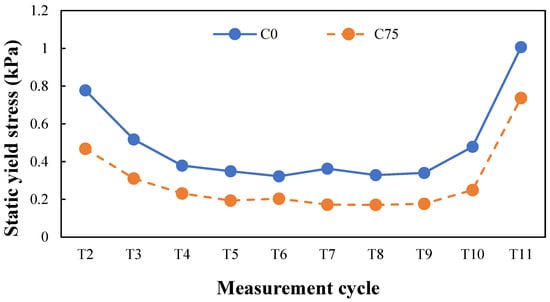
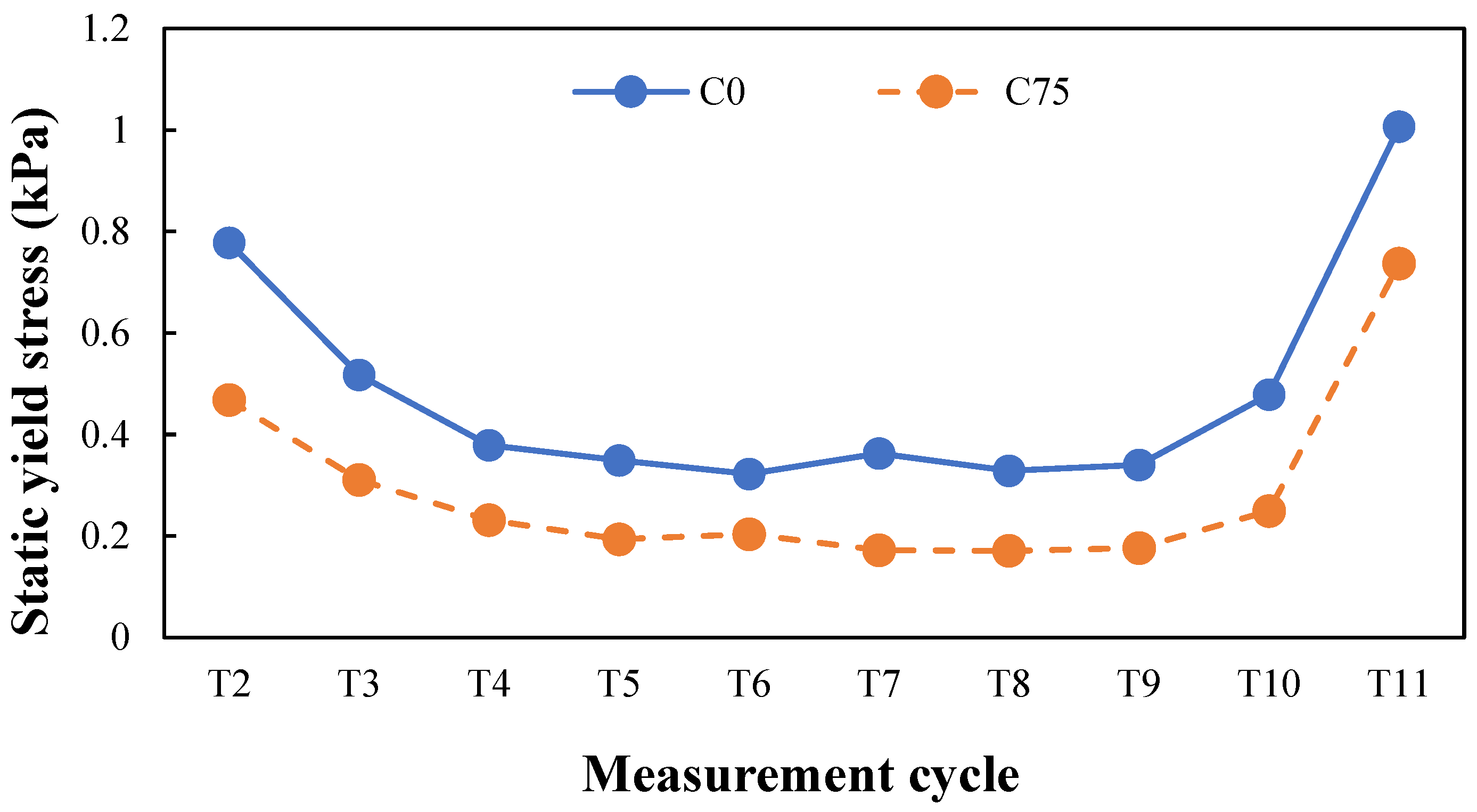
The evolution of the static yield stress of the 3DPC mixes is presented in Figure 10. Static yield stress refers to the stress necessary to initiate material flow following a period of rest and serves as an indicator of structural rebuilding in fresh cementitious materials [35]. Both C0 and C75 exhibited a similar evolution throughout the measurement cycles, characterised by a rapid decrease in static yield stress during the early resting periods, followed by a relatively stable region and a marked increase after prolonged resting. This behaviour reflects the continuous interplay between structural breakdown induced by repeated shearing and structural rebuilding through particle flocculation and early hydration during resting. Throughout the measurement period, C75 consistently exhibited lower static yield stress than the control mix. For example, the static yield stress after the final resting period (T11) reached approximately 1.01 kPa for C0, compared with 0.74 kPa for C75. The lower static yield stress suggests that less stress was required to reinitiate material flow after resting, which may be attributed to the incorporation of finely divided BRD modifying the interparticle interactions within the fresh binder system. This response may partly reflect the higher HRWRA dosage adopted for C75, as improved particle dispersion can reduce the resistance of the flocculated particle network to the reapplication of shear. Additionally, the improved particle packing associated with BRD may reduce mechanical interlocking between particles while maintaining a homogeneous cementitious matrix, thereby lowering the stress required to overcome the internal particle network.
Figure 10.
Evolution of static yield stress of the 3DPC mixes.
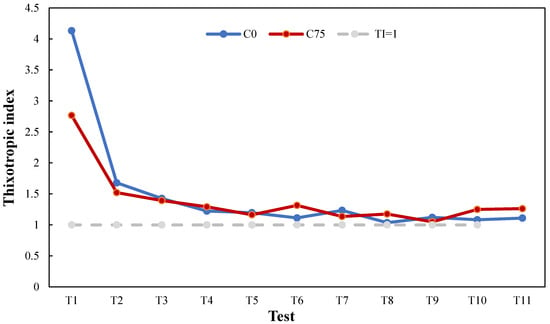
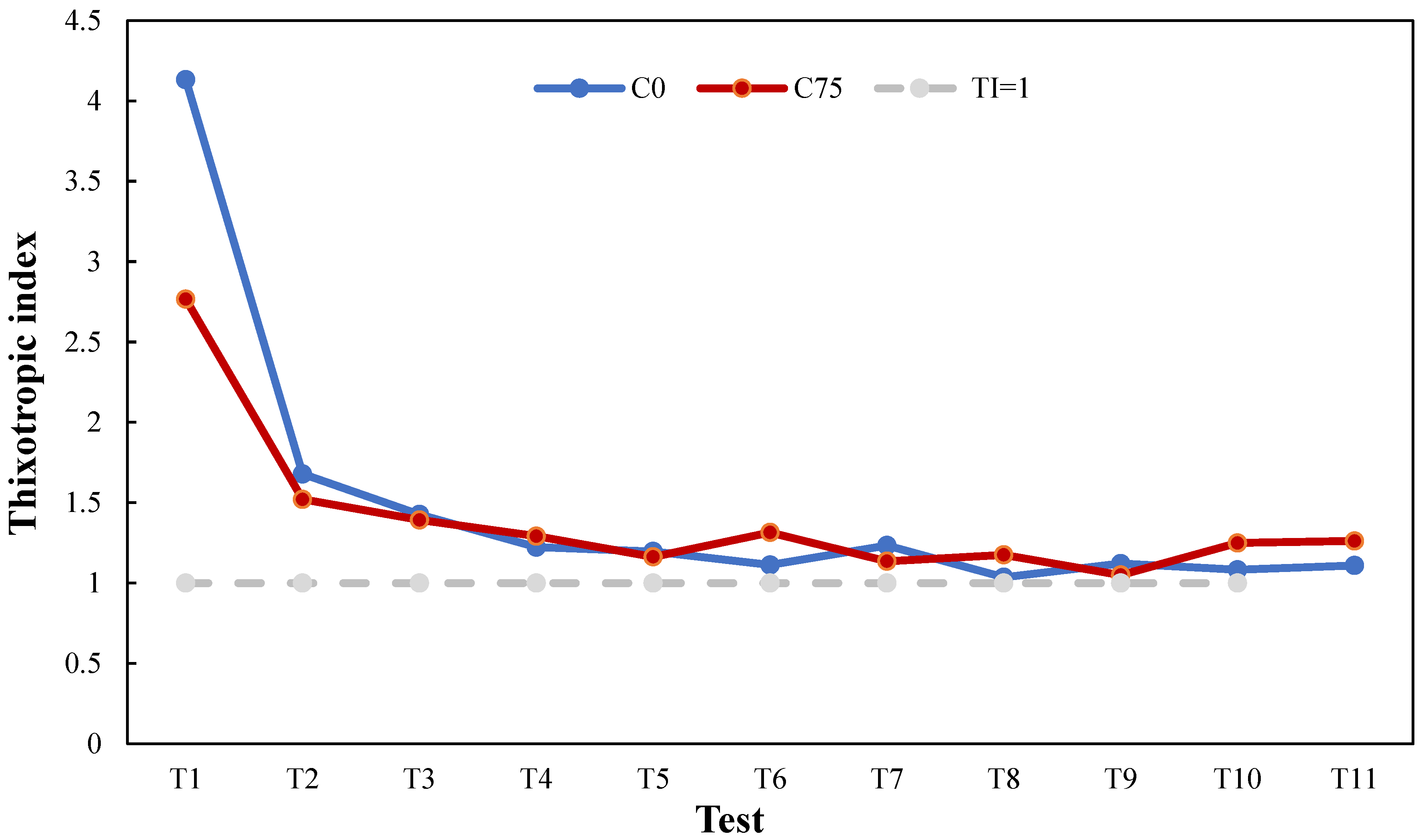
The thixotropic behaviour of the 3DPC mixes is presented in Figure 11. Both mixes exhibited relatively high thixotropic indices during the initial measurement cycle (T1), followed by a rapid reduction and gradual stabilisation close to unity with increasing measurement cycles. The convergence of both mixes towards TI ≈ 1 indicates that the rates of structural rebuilding and structural breakdown gradually approached equilibrium under repeated shearing and resting. Although C75 exhibited a lower thixotropic index during the initial measurement cycle, the differences between the two mixes became relatively small after T2, indicating that replacing 75% of FA with BRD had only a limited influence on the reversible structural recovery behaviour of the fresh cementitious matrix. This suggests that the incorporation of BRD primarily influenced the magnitude of the yield stress without fundamentally altering the underlying mechanism of structural rebuilding. Consequently, both mixes retained comparable abilities to recover their internal structure after repeated shearing, which is beneficial for maintaining consistent material behaviour during continuous layer-by-layer printing.
Figure 11.
Thixotropic index of the 3DPC mixes.
The structuration rate describes the rate at which the internal particle network rebuilds during resting and is an important indicator of the ability of fresh cementitious materials to regain structural integrity after extrusion. The structuration rate (Athix) value decreased from 0.1107 Pa/s for C0 to 0.0929 Pa/s for C75, corresponding to a reduction of approximately 16%. This reduction is consistent with the lower static yield stress observed for C75 and suggests that the incorporation of BRD slightly reduced the rate of structural build-up during resting. The lower Athix may reflect changes in particle interactions arising from the modified binder composition of C75, where the incorporation of finely divided BRD alters the particle-size distribution and interparticle contacts within the fresh matrix. Also, the higher HRWRA dosage may promote particle dispersion and limit the reformation of a flocculated particle network during rest, thereby contributing to the lower static yield stress and structuration rate. Conversely, the higher VMA dosage may enhance matrix cohesiveness and restrict deformation under low-shear or static conditions. The contrasting responses indicate that the reduced structural rebuilding of C75 under the imposed rheological protocol did not correspond to a reduced resistance to deformation under static loading, as reflected by its improved shape retention and buildability. Nevertheless, the reduction in Athix was relatively modest and had only a limited effect on the overall structural rebuilding behaviour of the fresh cementitious matrix. When interpreted together with the flowability, shape retention, and buildability results presented previously, these findings indicate that the slight reduction in the structuration rate did not compromise the overall fresh-state stability and printability of the 3DPC mix. These findings demonstrate that the printability of 3DPC is governed by the combined interaction between material flow, structural rebuilding, particle packing, and fresh-state stability rather than by a single rheological parameter.
3.3. Mechanical Performance of 3DPC
3.3.1. Compressive Strength
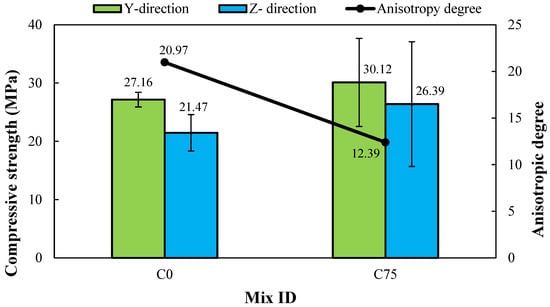
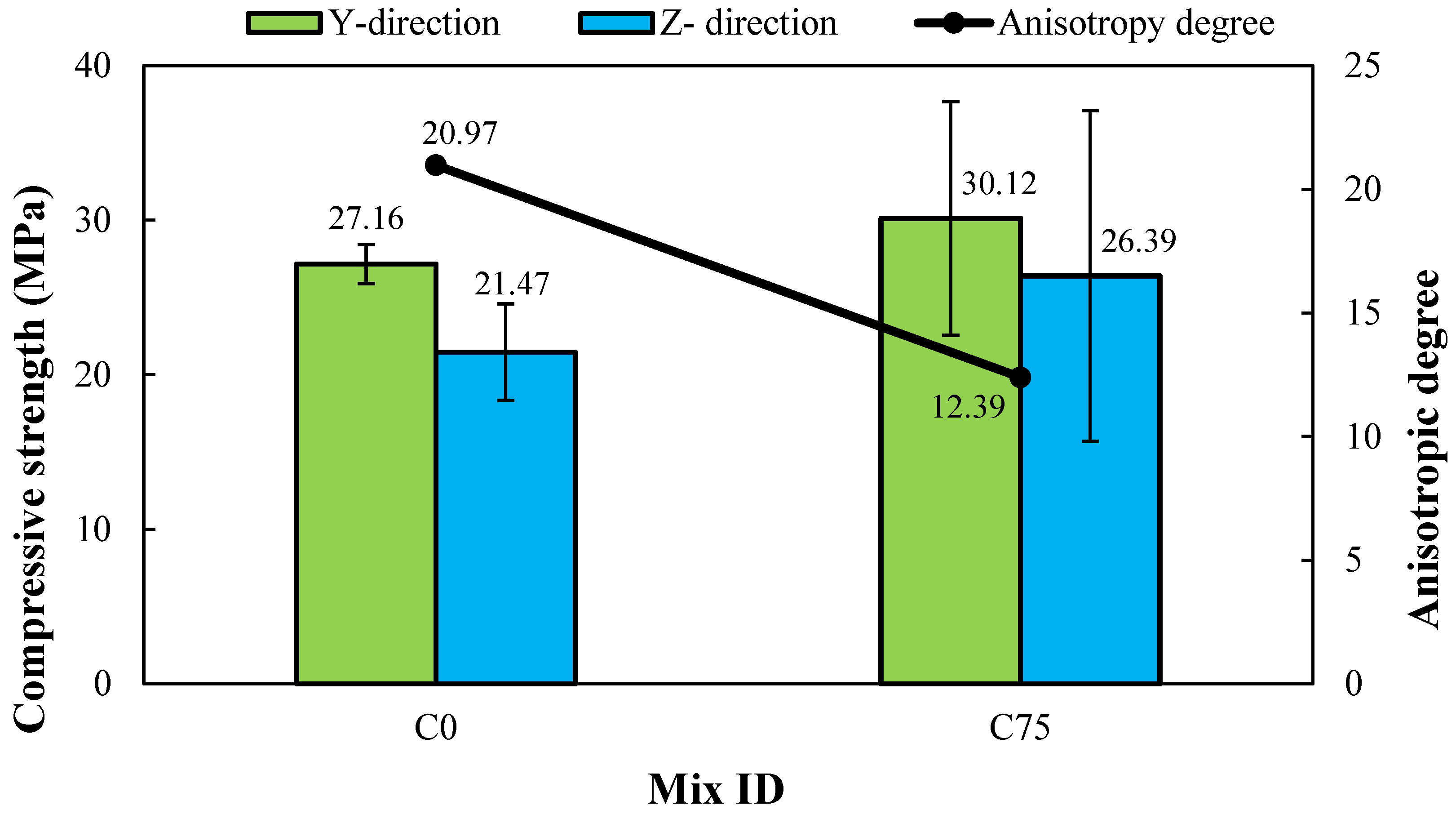
Figure 12 presents the compressive strength results obtained for the 3DPC mixes under Y- and Z-direction loading, together with the corresponding anisotropic degree. Both mixes exhibited higher compressive strength in the Y-direction than in the Z-direction, confirming the inherent directional dependence of layer-by-layer manufactured cementitious materials. Replacing 75% of FA with BRD increased the compressive strength in both loading directions. In the Y-direction, the compressive strength increased from approximately 27.16 MPa for C0 to 30.12 MPa for C75, whereas in the Z-direction the strength increased from approximately 21.47 MPa to 26.39 MPa. The greater improvement in the Z-direction reduced the compressive strength anisotropy from approximately 20.97% for the control mix to 12.39% for C75, indicating a more uniform mechanical response irrespective of the loading direction.
Figure 12.
Compressive strength and anisotropic degree of the 3DPC mixes.
The higher compressive strength obtained for C75 is likely associated with the physical effects of the finely divided BRD particles within the binder system. The incorporation of BRD may improve particle packing and reduce the volume of internal voids within the cementitious matrix, resulting in a denser microstructure capable of transferring compressive stresses more efficiently [16]. In addition, the comparable hydration behaviour observed in Section 3.1.2 suggests that the substantial replacement of FA with BRD did not adversely affect the early hydration process, thereby maintaining the development of the load-bearing cementitious matrix. The greater strength enhancement observed in the Z-direction may additionally be associated with the fresh-state stability of C75 during layer-by-layer deposition. As demonstrated by the shape retention and buildability results, C75 exhibited greater resistance to deformation after deposition, which may have helped preserve the geometry and contact between successive layers. More uniform layer formation can reduce local geometric irregularities and facilitate stress transfer across the layer interfaces when the printed material is loaded in the Z-direction. This effect would be expected to have a greater influence on Z-direction strength, which is more dependent on the integrity of successive layer interfaces, than on Y-direction strength. Accordingly, the greater strength improvement in the Z-direction reduced the degree of compressive anisotropy, indicating a more uniform mechanical response between the investigated loading directions.
3.3.2. Flexural Strength
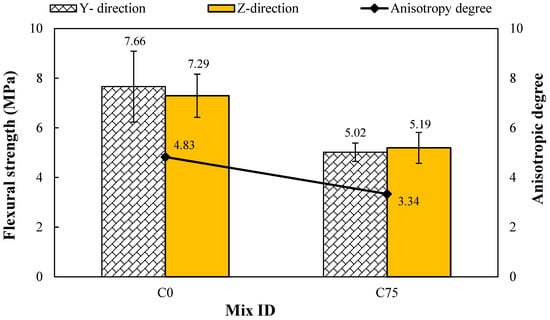
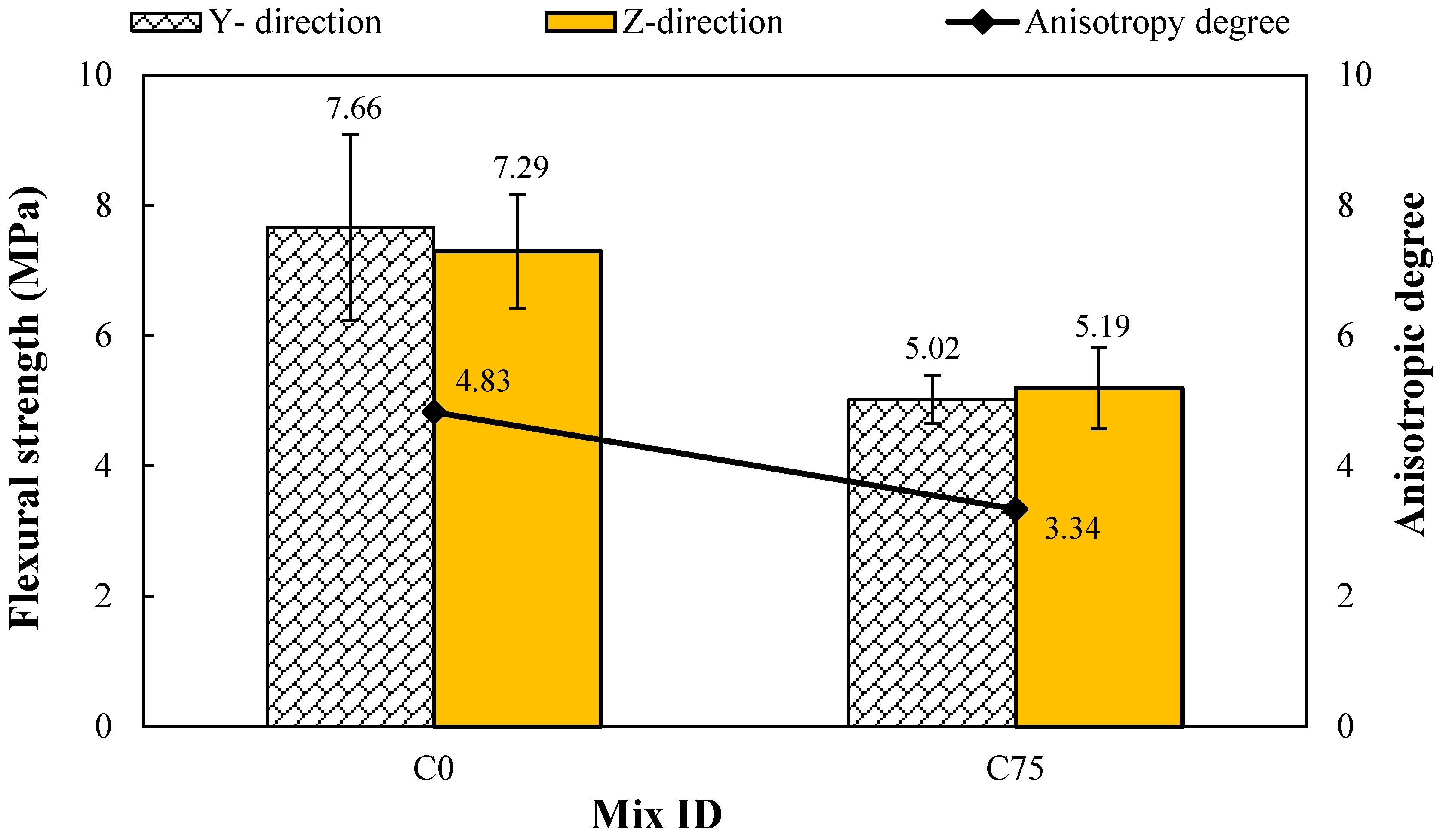
Figure 13 presents the flexural strength results obtained for the 3DPC mixes under Y- and Z-direction loading, together with the corresponding anisotropic degree. It can be seen that replacing 75% of FA with BRD reduced the flexural strength in both loading directions. In the Y-direction, the flexural strength decreased from approximately 7.66 MPa for C0 to 5.02 MPa for the C75 mix, while the strength in the Z-direction decreased from approximately 7.29 MPa to 5.19 MPa. Flexural strength is strongly influenced by tensile crack formation and subsequent crack growth and is therefore more sensitive to changes in the fracture resistance of the cementitious matrix than compressive strength [36]. The reduction in flexural strength may be associated with the partial replacement of FA by BRD, which may have influenced the crack propagation resistance of the cementitious matrix despite maintaining comparable hydration characteristics. Although the incorporation of finely divided BRD may improve particle packing and contribute to matrix densification, these physical effects alone may not fully compensate for the reduced resistance to crack propagation under flexural loading, resulting in lower flexural strength.
Figure 13.
Flexural strength and anisotropic degree of the 3DPC mixes.
The anisotropic degree decreased from approximately 4.83% for the control mix to 3.34% for C75, indicating that the difference in flexural strength between the two loading directions became smaller after the incorporation of BRD. This reduction in anisotropy is likely associated with the improved fresh-state stability demonstrated by the enhanced shape retention and buildability of the C75 mix, which may have reduced deformation of the deposited layers during printing and promoted more uniform layer geometry throughout the printed element. The more consistent geometry of successive layers may have reduced local stress concentrations at the interlayer regions during flexural loading, resulting in a more uniform distribution of flexural resistance irrespective of the loading direction [37]. Overall, although replacing FA with BRD reduced the absolute flexural strength, it also reduced the directional dependence of the flexural behaviour, resulting in a more uniform mechanical response of the printed material.
3.4. Microstructural Characterisation
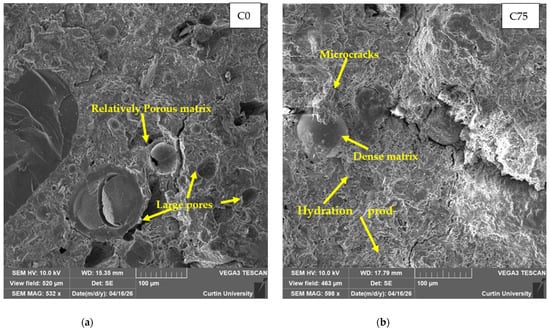
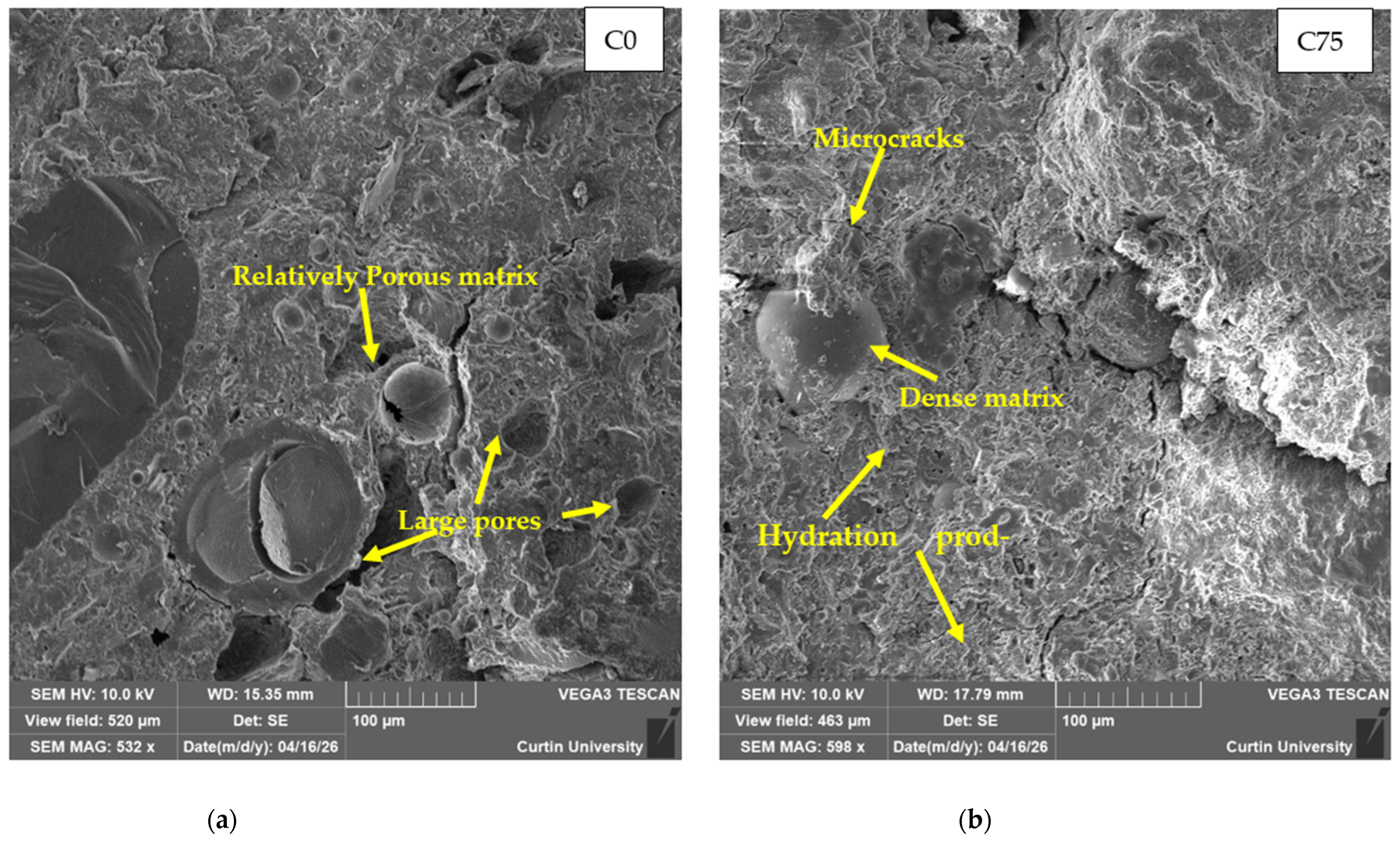
Representative SEM micrographs of the fractured surfaces of the 3DPC mixes are presented in Figure 14. The control mix (C0) exhibited a relatively porous cementitious matrix characterised by several large pores and discontinuities distributed throughout the fractured surface. In contrast, the C75 mix exhibited a visually more compact matrix with fewer large pores and more continuous hydration product-rich regions. Although isolated microcracks were still observed in C75, the overall microstructure appeared more homogeneous and compact than that of the control mix.
Figure 14.
Representative SEM micrographs of the fractured surfaces of the 3DPC mixes: (a) C0 and (b) C75.
The improved microstructural compactness observed in C75 is likely associated with the physical filler effect of the finely divided BRD particles. The finer BRD particles may occupy the spaces between larger cementitious particles, thereby improving particle packing and reducing the connectivity of the pore structure. In addition, the increased surface area provided by BRD may facilitate the heterogeneous nucleation of hydration products, promoting the formation of a more continuous cementitious matrix while maintaining hydration behaviour comparable to that of the control mix, as demonstrated by the calorimetry results presented in Section 3.1.2. These observations are consistent with the enhanced shape retention and buildability of C75, where the improved fresh-state stability enabled the deposited layers to better retain their geometry during printing. The resulting improvement in matrix compactness also provides a plausible explanation for the higher compressive strength and lower compressive strength anisotropy observed in Section 3.3.1, as a denser microstructure facilitates more efficient stress transfer and reduces the influence of interlayer discontinuities under compressive loading. Although the flexural strength of C75 was lower than that of the control mix, the presence of residual microcracks indicates that crack initiation and propagation remained possible under tensile loading, suggesting that improvements in matrix compactness alone were insufficient to fully overcome the mechanisms governing flexural failure.
4. Conclusions
This study investigated the feasibility of incorporating basaltic rock dust (BRD) as a high-volume replacement for fly ash (FA) in 3D-printed concrete (3DPC). A two-stage experimental programme comprising mix optimisation under conventionally cast conditions followed by evaluation under extrusion-based 3D-printing conditions was adopted to evaluate the influence of BRD on fresh-state behaviour, rheological properties, hydration behaviour, mechanical performance, anisotropy, and microstructure. This two-stage methodology provides a practical framework for translating conventionally optimised cementitious mixtures into extrusion-based 3D-printing applications. Based on the experimental results, the following conclusions can be drawn:
- During the optimisation stage, the 75% BRD mix exhibited the highest compressive strength (58.73 MPa) among the BRD-containing mixes while maintaining comparable flowability to the control mix. However, its compressive strength remained lower than that of the control mix (61.81 MPa). Increasing the replacement level to 100% BRD reduced the compressive strength to 56.73 MPa, indicating that 75% BRD provided the most favourable balance of high BRD utilisation, flowability, hydration behaviour, and compressive strength within the investigated conditions.
- Replacing 75% of FA with BRD significantly enhanced printability. The flow diameter increased from 165 mm to 176 mm, whereas the shape retention spread diameter decreased from 96 mm to 89 mm. The maximum number of printable layers increased from 14 to 16, and the printed specimen exhibited only 8 mm (≈2.5%) settlement after hardening despite achieving a greater printable height, indicating excellent dimensional stability.
- The incorporation of BRD modified the rheological behaviour while maintaining comparable setting and hydration characteristics. The structuration rate (Athix) decreased from 0.1107 Pa/s to 0.0929 Pa/s, and the static yield stress after the final resting period decreased from approximately 1.01 kPa to 0.74 kPa. The initial and final setting times remained comparable (92 and 123 min for C0 versus 91 and 118 min for C75), while only minor differences were observed in the heat flow and cumulative heat release, indicating minimal influence on the early hydration behaviour of the binder system.
- BRD incorporation improved the compressive performance of the printed material in both investigated loading directions. The compressive strength increased from 27.16 MPa to 30.12 MPa in the Y-direction and from 21.47 MPa to 26.39 MPa in the Z-direction. In contrast, the flexural strength decreased from 7.66 MPa to 5.02 MPa in the Y-direction and from 7.29 MPa to 5.19 MPa in the Z-direction, demonstrating a trade-off between the compressive and flexural performance of the printed material.
- BRD incorporation reduced the directional dependence of the printed material. The compressive anisotropy decreased from 20.97% to 12.39%, while the flexural anisotropy decreased from 4.83% to 3.34%, demonstrating improved mechanical uniformity irrespective of the loading direction.
- SEM observations showed that the BRD-incorporated mix developed a visually more compact cementitious matrix with fewer large pores and more continuous hydration product-rich regions than the control mix. These observations were consistent with the improved fresh-state stability and higher compressive performance observed for the printed specimens.
Overall, the results demonstrate that replacing 75% of FA with BRD can produce a 3DPC mix with enhanced printability, comparable hydration behaviour, higher compressive strength, and reduced mechanical anisotropy compared with C0, although a reduction in flexural strength was observed. The improved fresh-state and printing performance of C75 reflects the combined effects of BRD incorporation and the associated admixture adjustments required to achieve suitable printable characteristics. These findings indicate that BRD has strong potential as a sustainable high-volume supplementary cementitious material for 3DPC, providing a viable and sustainable alternative in response to the declining availability of FA. The improved printability, dimensional stability, and compressive performance also demonstrate the suitability of BRD for applications requiring stable layer-by-layer construction, such as prefabricated 3D-printed concrete components and non-structural 3DPC components. Although several BRD replacement levels were investigated during the optimisation stage, only the optimum mixture (75% BRD) was evaluated under extrusion-based 3D-printing conditions using a single binder composition and laboratory-scale printing system. Therefore, the applicability of these findings to other binder systems, printing configurations, or structural-scale applications requires further validation. Future research should investigate additional BRD replacement levels under 3D-printing conditions, together with long-term durability, interlayer bond strength, drying shrinkage, large-scale structural printing, and life cycle and techno-economic performance to facilitate the practical implementation of BRD in sustainable 3DPC.
Author Contributions
Conceptualization, R.A. and M.A.; Methodology, R.A. and M.A.; Formal Analysis, B.W., R.A. and N.J.M.; Investigation, B.W., R.A., M.A. and N.J.M.; Data Curation, B.W. and N.J.M.; Writing—Original Draft, B.W. and N.J.M.; Writing—Review and Editing, M.A., W.C. and R.A.; Visualization, M.A., W.C. and R.A.; Supervision, R.A., W.C. and M.A.; Project Administration, M.A., W.C. and R.A.; Funding, W.C. All authors have read and agreed to the published version of the manuscript.
Funding
This research is funded by the Australian Research Council via Future Fellowship FT210100050.
Data Availability Statement
The original contributions presented in the study are included in the article; further inquiries can be directed to the corresponding author.
Conflicts of Interest
The authors declare no conflicts of interest.
References
- Han, Y.; Yang, Z.; Ding, T.; Xiao, J. Environmental and economic assessment on 3D printed buildings with recycled concrete. J. Clean. Prod. 2021, 278, 123884. [Google Scholar] [CrossRef] [Scilit]
- Hassan, A.; Alomayri, T.; Noaman, M.F.; Zhang, C. 3D printed concrete for sustainable construction: A review of mechanical properties and environmental impact. Arch. Comput. Methods Eng. 2025, 32, 2713–2743. [Google Scholar] [CrossRef] [Scilit]
- Batikha, M.; Jotangia, R.; Baaj, M.Y.; Mousleh, I. 3D concrete printing for sustainable and economical construction: A comparative study. Autom. Constr. 2022, 134, 104087. [Google Scholar] [CrossRef] [Scilit]
- Gamage, K.; Fawzia, S.; Zahra, T.; Teixeira, M.B.F.; Ramli Sulong, N.H. Advancement in sustainable 3D concrete printing: A review on materials, challenges, and current progress in Australia. Buildings 2024, 14, 494. [Google Scholar] [CrossRef] [Scilit]
- Sakhare, V.; Najar, M.; Deshpande, S. Printing performance of 3D-printed geopolymer through pumpability–extrudability–buildability properties–a review. Archit. Sci. Rev. 2026, 69, 88–112. [Google Scholar] [CrossRef] [Scilit]
- Li, Z.; Hojati, M.; Wu, Z.; Piasente, J.; Ashrafi, N.; Duarte, J.P.; Nazarian, S.; Bilén, S.G.; Memari, A.M.; Radlińska, A. Fresh and hardened properties of extrusion-based 3D-printed cementitious materials: A review. Sustainability 2020, 12, 5628. [Google Scholar] [CrossRef] [Scilit]
- Teixeira, J.; Schaefer, C.O.; Maia, L.; Rangel, B.; Neto, R.; Alves, J.L. Influence of supplementary cementitious materials on fresh properties of 3D printable materials. Sustainability 2022, 14, 3970. [Google Scholar] [CrossRef] [Scilit]
- Tarhan, Y.; Tarhan, İ.H.; Şahin, R. Comprehensive review of binder matrices in 3D printing construction: Rheological perspectives. Buildings 2024, 15, 75. [Google Scholar] [CrossRef] [Scilit]
- Goel, D.; Kore, S.D.; Blanco, A. Understanding the role of supplementary cementitious materials in 3D printed concrete. Mag. Concr. Res. 2026, 78, 238–259. [Google Scholar] [CrossRef] [Scilit]
- Maroszek, M.; Rudziewicz, M.; Hebda, M. Recycled components in 3D concrete printing mixes: A review. Materials 2025, 18, 4517. [Google Scholar] [CrossRef] [Scilit] [PubMed]
- Panda, B.; Ruan, S.; Unluer, C.; Tan, M.J. Improving the 3D printability of high volume fly ash mixtures via the use of nano attapulgite clay. Compos. Part B Eng. 2019, 165, 75–83. [Google Scholar] [CrossRef] [Scilit]
- Tseng, K.-C.; Chi, M.; Yeih, W.; Huang, R. Influence of slag/fly ash as partial cement replacement on printability and mechanical properties of 3D-printed concrete. Appl. Sci. 2025, 15, 3933. [Google Scholar] [CrossRef] [Scilit]
- Harris, D.; Heidrich, C.; Feuerborn, J. Global Aspects on Coal Combustion Products. 2019. Available online: https://uknowledge.uky.edu/cgi/viewcontent.cgi?article=1387&context=woca (accessed on 23 September 2026).
- Dirgantara, R.; Gunasekara, C.; Law, D.W.; Molyneaux, T.K. Suitability of brown coal fly ash for geopolymer production. J. Mater. Civ. Eng. 2017, 29, 04017247. [Google Scholar] [CrossRef] [Scilit]
- Alqawasmeh, H.M. Enhancing the sustainability of geotechnical engineering with utilization of fly ash. Discov. Mater. 2025, 5, 11. [Google Scholar] [CrossRef] [Scilit]
- Almeida, M.P.B.; Gomes, L.d.S.S.; Silva, A.R.; Tamashiro, J.R.; Paiva, F.F.G.; Silva, L.H.P.; Kinoshita, A. Basalt Rock Powder in Cementitious Materials: A Systematic Review. Resources 2025, 14, 86. [Google Scholar] [CrossRef] [Scilit]
- Dobiszewska, M.; Bagcal, O.; Beycioğlu, A.; Goulias, D.; Köksal, F.; Niedostatkiewicz, M.; Ürünveren, H. Influence of rock dust additives as fine aggregate replacement on properties of cement composites—A review. Materials 2022, 15, 2947. [Google Scholar] [CrossRef] [Scilit] [PubMed]
- Qiao, H.; Ndahirwa, D.; Li, Y.; Liang, J. The feasibility of basalt rock powder and superfine sand as partial replacement materials for Portland cement and artificial sand in cement mortar. Res. Appl. Mater. Sci. 2019, 1, 1–6. [Google Scholar] [CrossRef] [Scilit]
- Dobiszewska, M.; Bagcal, O.; Beycioğlu, A.; Goulias, D.; Köksal, F.; Płomiński, B.; Ürünveren, H. Utilization of rock dust as cement replacement in cement composites: An alternative approach to sustainable mortar and concrete productions. J. Build. Eng. 2023, 69, 106180. [Google Scholar] [CrossRef] [Scilit]
- AS 3972-2010; General Purpose and Blended Cements. Standards Australia: Sydney, NSW, Australia, 2010.
- AS/NZS 3582.3; Supplementary Cementitious Materials for Use with Portland and Blended Cement, Part 3: Amorphous Silica. Standards Australia: Sydney, NSW, Australia, 2016.
- AS/NZS 3582.1; Supplementary Cementitious Materials for Use with Portland and Blended Cement, Part 1: Fly Ash. Standards Australia: Sydney, NSW, Australia, 1998.
- Mim, N.; Hosan, A.; Shaikh, F.U.A.; Sarker, P. Mechanical anisotropy and microstructural investigation of copper heap leach residue incorporated 3D printed concrete. Prog. Addit. Manuf. 2026, 11, 2347–2372. [Google Scholar] [CrossRef] [Scilit]
- AS 2758.1; Aggregates and Rock for Engineering Purposes, Part 1: Concrete Aggregates. Standard Australia: Sydney, NSW, Australia, 2009.
- ASTM C1437-20; Standard Test Method for Flow of Hydraulic Cement Mortar. ASTM International: West Conshohocken, PA, USA, 2020.
- ASTM C109/C109M-20; Standard Test Method for Compressive Strength of Hydraulic Cement Mortars. ASTM International: West Conshohocken, PA, USA, 2020.
- Nematollahi, B.; Vijay, P.; Sanjayan, J.; Nazari, A.; Xia, M.; Naidu Nerella, V.; Mechtcherine, V. Effect of polypropylene fibre addition on properties of geopolymers made by 3D printing for digital construction. Materials 2018, 11, 2352. [Google Scholar] [CrossRef] [Scilit] [PubMed]
- ASTM C403/C403M-23; Standard Test Method for Time of Setting of Concrete Mixtures by Penetration Resistance. ASTM International: West Conshohocken, PA, USA, 2023.
- ASTM C78-09; Standard Test Method for Flexural Strength of Concrete (Using Simple Beam with Third-Point Loading). ASTM International: West Conshohocken, PA, USA, 2009.
- Xiao, J.; Zou, S.; Ding, T.; Duan, Z.; Liu, Q. Fiber-reinforced mortar with 100% recycled fine aggregates: A cleaner perspective on 3D printing. J. Clean. Prod. 2021, 319, 128720. [Google Scholar] [CrossRef] [Scilit]
- Unčík, S.; Kmecová, V. The effect of basalt powder on the properties of cement composites. Procedia Eng. 2013, 65, 51–56. [Google Scholar] [CrossRef] [Scilit]
- Ramos, T.; Matos, A.M.; Schmidt, B.; Rio, J.; Sousa-Coutinho, J. Granitic quarry sludge waste in mortar: Effect on strength and durability. Constr. Build. Mater. 2013, 47, 1001–1009. [Google Scholar] [CrossRef] [Scilit]
- Rahul, A.; Santhanam, M.; Meena, H.; Ghani, Z. 3D printable concrete: Mixture design and test methods. Cem. Concr. Compos. 2019, 97, 13–23. [Google Scholar] [CrossRef] [Scilit]
- Wang, J.; Xue, C.; Zhang, Y.; Li, Q.; Han, Y.; Qiao, H. Study of early-age hydration, mechanical properties development, and microstructure evolution of manufactured sand concrete mixed with granite stone powder. Materials 2023, 16, 4857. [Google Scholar] [CrossRef] [Scilit] [PubMed]
- Si, W.; Khan, M.; McNally, C. A comprehensive review of rheological dynamics and process parameters in 3D concrete printing. J. Compos. Sci. 2025, 9, 299. [Google Scholar] [CrossRef] [Scilit]
- He, Z.; Wu, Z.; Liu, J.; Wang, Q.; Zhuang, L.; Wang, S.; Zhao, Q. Evaluating the Flexural Performance of Sintered Sludge Ash-Modified Cement Paste Using Surface Cracks and Fracture Toughness. Buildings 2024, 14, 3070. [Google Scholar] [CrossRef] [Scilit]
- Tang, Y.; Xiao, J.; Ding, T.; Liu, H.; Zhang, M.; Zhang, J. Trans-layer and inter-layer fracture behavior of extrusion-based 3D printed concrete under three-point bending. Eng. Fract. Mech. 2024, 296, 109836. [Google Scholar] [CrossRef] [Scilit]

Disclaimer/Publisher’s Note: The statements, opinions and data contained in all publications are solely those of the individual author(s) and contributor(s) and not of MDPI and/or the editor(s). MDPI and/or the editor(s) disclaim responsibility for any injury to people or property resulting from any ideas, methods, instructions or products referred to in the content. |
© 2026 by the authors. Licensee MDPI, Basel, Switzerland. This article is an open access article distributed under the terms and conditions of the Creative Commons Attribution (CC BY) license.