


Abstract
Petroleum-based resins used in fiber-reinforced composites (FRCs) offer high performance but carry a substantial environmental burden. This study investigates crystallized composites (CCs) as a resinless alternative capable of binding loose cotton reinforcement within a crystalline matrix while providing a distinct material expression. Because crystallization in construction research has largely been documented in relation to salt transport, corrosion, and crystal growth, the potential of crystal-based matrices as composite binders remains underexplored. An abductive, proof-of-concept methodology was used to screen matrix-reinforcement combinations and fabrication parameters. Six salt-based matrices and several reinforcement systems were evaluated, followed by a manual adaptation of coreless filament winding (CFW) principles to fabricate a full-scale stool demonstrator. The demonstrator was subjected to a single quasi-static seated-load demonstration with a seated person with a body mass of approximately 80 kg, without visible failure during the observation period. This observation demonstrates fabrication feasibility and short-term functional integrity, but it is not a substitute for standardized mechanical characterization. The alum-based system could also be dissolved in hot water and recrystallized, indicating recoverability of the alum phase through dissolution and subsequent recrystallization. The findings establish the feasibility and novelty of a resinless fiber-reinforced crystal composite concept while identifying mechanical characterization, moisture resistance, durability, process energy, and environmental assessment as necessary next research stages.
1. Introduction
The extensive use of petroleum-based resins in fiber-reinforced composites raises significant environmental concerns. Although bio-derived and chemically recyclable epoxy systems are increasingly being developed [1,2], most industrial thermoset composite matrices remain petroleum-based. This motivates the investigation of alternative matrix systems that can bind and stabilize fibrous reinforcement while reducing dependence on conventional fossil-derived resins.
According to the Inventory of Carbon & Energy (ICE) database, epoxy resin has an embodied carbon value of approximately 5.7 kg CO2/kg, compared with approximately 0.1 kg CO2/kg for concrete as a reference material [3]. These values illustrate the comparatively high embodied impact associated with conventional epoxy resin; a dedicated comparative life-cycle assessment is required to evaluate the overall environmental performance of the proposed crystal-based system.
Recent research has explored bio-based resins in combination with renewable reinforcement materials and has demonstrated their potential in industrial applications, including the automotive sector [4,5]. Because fiber impregnation and consolidation can be achieved through different processing routes, reconsidering the matrix and consolidation mechanisms provides an opportunity to investigate alternative approaches to fiber-reinforced composite fabrication.
The question at hand leads to the hypothesis that crystallization can be used as a binding mechanism for fiber-based composites and may provide sufficient form retention for shaped demonstrators without a polymer resin. The present study therefore focuses on feasibility, material screening, fabrication behavior, and proof-of-concept validation rather than on establishing standardized structural design properties. The material expression and geometric freedom of crystal growth are investigated in parallel with this fabrication hypothesis.
The methodology used to identify the most promising matrix-reinforcement combination builds on research into alternatives to resin-based FRCs for coreless filament winding (CFW) workflows. Previous CFW research at the University of Stuttgart has demonstrated the ability of computational design and digital fabrication to produce lightweight, materially efficient systems while reducing the need for conventional formwork [6].
Previous CFW research has produced complex geometries through differentiated fiber layouts and polymer-matrix consolidation, enabling highly anisotropic material behavior [7,8,9]. The present study transfers the geometric and fiber-layout logic of these workflows to an exploratory resinless system in which crystallization is investigated as the binding mechanism. In parallel with fabrication feasibility, the study considers the distinct material expression produced by crystal growth.
A crystal-based matrix also changes several processing constraints associated with thermoset–resin systems, including viscosity, pot life, equipment requirements, and cleaning or maintenance procedures. It may additionally reduce direct occupational exposure to reactive resin constituents during fabrication [10]. However, these process-related advantages should not be interpreted as proof of an overall lower environmental impact; the energy and material requirements of the crystallization process are addressed explicitly in the Discussion.
The scope of this research mainly revolved around a reinterpretation of CFW principles to accommodate crystallization as the binding mechanism. In conventional CFW, continuous fibers are placed along designed trajectories and subsequently consolidated by a polymer matrix. Here, the fiber topology was produced manually on pins and scaffolds, while the consolidation step was replaced by growth of a crystalline matrix from a supersaturated aqueous solution. Accordingly, the term CFW in this paper refers to the fiber layout and form-finding principle rather than to robotic winding. The goal was to determine whether a continuous fibrous reinforcement could be spatially fixed through crystallization and subsequently upscaled into a demonstrator.
The six salts used to investigate the potential composite combinations (iodized/non-iodized sodium chloride, sodium carbonate, sodium bicarbonate, sodium borate, and potassium aluminum sulfate/alum) were selected because they are readily available, water-soluble crystalline compounds that can form supersaturated aqueous solutions under laboratory conditions and exhibit different crystallization behaviors. The screening was intentionally broad and comparative rather than statistically optimized. The resulting alum–cotton system was subsequently selected for upscaling because it produced the most continuous crystal coverage and the greatest resistance to manual handling within the tested conditions.
Crystallization within design and construction remains a niche research area. Existing architectural examples have predominantly explored salt growth as an esthetic, environmental, or material-forming phenomenon, whereas conventional natural-fiber composites are usually evaluated through standardized tensile, flexural, compressive, impact, and durability tests. This creates a clear research gap between crystallization-oriented design experimentation and quantitatively characterized composite engineering. The present study addresses the first part of that gap by testing whether a crystal phase can act as a resinless binder for continuous fibrous reinforcement and by translating the most promising laboratory combination into a full-scale demonstrator. It does not attempt to establish design allowables or long-term structural performance, which require a separate standardized testing program.
Considering the limited investigation of crystallization within the design industry, this work explores how the method could be situated in a wider architectural context. Using crystallization as a fabrication method for architectural implementation remains at an early research stage. The present results establish the feasibility of forming and maintaining a spatial fiber network through a crystal-based binder under the investigated laboratory conditions, while mechanical qualification, environmental resistance, and long-term performance remain necessary before structural application can be assessed.
2. State of the Art
The study lies within a niche area of material and fabrication research concerned with recoverability, material cycles, and alternatives to fossil-derived polymer matrices [11,12,13]. Crystallization research indicates that salt crystals can be dissolved and subsequently recrystallized, creating a potential pathway to recover the mineral phase after fabrication. In the present work, this reversible phase change is investigated specifically as mineral-phase recoverability; broader composite-system recyclability is not assessed.
The research therefore investigates whether crystallization can be transferred from primarily esthetic or surface-forming applications to a fiber-based fabrication context. The aim is to test the plausibility of a recoverable, resinless binding approach for continuous-fiber spatial forms while explicitly identifying the technical and environmental limitations that would need to be resolved before wider application.
Sustainable building-material research increasingly emphasizes reducing virgin resource consumption, extending material use, and designing for recovery and reuse. Related design experiments, including the Salt Project [14], have explored the use of saline resources and solar-driven evaporation to obtain crystallized material. Such precedents demonstrate the architectural interest of crystallization, but they do not by themselves establish the mechanical performance, durability, or environmental superiority of crystal-bound fiber composites.
From a composite-material perspective, the contrast with established natural-fiber reinforced polymer systems is important. Such systems have been widely studied in terms of fiber–matrix adhesion, tensile and flexural behavior, environmental aging, and moisture sensitivity [4,11]. Recent durability research further demonstrates that moisture uptake can substantially alter stiffness and strength in natural-fiber composites and that environmental conditioning must be treated as a separate performance dimension rather than inferred from dry-state behavior [15]. Mineral and salt crystallization research, by contrast, has largely focused on nucleation, growth kinetics, porous media, and crystal properties [16,17,18,19], not on crystals acting as the continuous binding phase of a wound fiber composite. The novelty of the present work therefore lies in connecting these two otherwise separated research domains: continuous fiber-based spatial fabrication and crystal growth as a removable/recoverable binder. Quantitative mechanical, hygrothermal, and life-cycle characterization remain necessary to determine the performance range and application limits of this material system.
Inorganic-matrix–fiber composites provide an important additional comparison. Textile Reinforced Mortar (TRM) and Fabric-Reinforced Cementitious Matrix (FRCM) systems replace organic polymer matrices with cement-, lime-, or other inorganic matrices and are mechanically characterized through tensile, bond, cracking, and failure-mode assessment [20]. The literature also demonstrates that the use of an inorganic matrix does not remove the need for dedicated environmental conditioning and durability evaluation [21]. Although these mortar-based composites differ chemically and in processing from the salt-crystal matrix investigated here, they provide a relevant benchmark for the scientific qualification expected of an alternative fiber–matrix system. This comparison highlights the distinction between demonstrating a new binding/fabrication concept and establishing standardized mechanical properties for structural use.
In 2009, Wen Ying Teh [22] used salt farming and Flamingo Habitat observations to propose a symbiotic ecology based on colored bacteria and salt crystallization that changes with seasonal and evaporative cycles. Fine nylon webs acted as substrates for crystal growth and were supported by an aluminum frame. In this precedent, the crystals contributed primarily to material expression rather than structural support. The project is nevertheless relevant because it demonstrates controlled crystallization on fibrous substrates and the possibility of repeated material transformation through environmental cycles.
Between 2009 and 2012, Faulders Studio developed the GEOtube Tower proposal [23], in which seawater was to be sprayed onto a porous exoskeleton so that progressive salt crystallization would form a changing surface layer. The project explored crystallization as an architectural and environmental process at building scale, but crystal growth was not proposed or tested as the primary structural matrix of a fiber composite.
In 2013, Tokujin Yoshioka [24] presented the installation ‘Spider’s Thread’, in which very fine threads were suspended within a mineral solution and used as substrates for crystal growth. Although the work demonstrates the interaction between fibers and crystallization in a furniture-scale artifact, the resulting crystals were not reported as the principal load-bearing system, and the mineral formulation was not disclosed.
In 2014, Zhu and Li [25] explored the esthetic evolution of crystal growth on a spatial structure over time. Their experiments investigated different matrix-reinforcement combinations and used coreless winding with plastic tubing to achieve geometric freedom. The work was highly exploratory and architecturally oriented, but it did not progress to standardized structural testing of a crystal-bound composite.
In 2015, Eric Geboers developed the Salt Project [26], which coupled desalination-related processes with the use of recovered salt as a building material. The salt was formed into blocks with a natural binder, and the project also emphasized community participation. This precedent is relevant to the broader sustainability discourse around saline resources and material recovery, although its material system and fabrication logic differ from the fiber-reinforced crystallized composite investigated here.
In 2016, Karlijn Sibbel [27] investigated sea-salt crystallization on knitted webs and produced a stool-scale artifact using cotton thread. The work is a particularly relevant precedent because it combines fiber substrates, crystallization, and furniture scale. However, the reported object was treated as an art/design piece rather than a mechanically qualified load-bearing component, and the sea-salt crystallization process required an extended growth period. The present study therefore differs in its systematic screening of several salt matrices and in upscaling the selected alum-cotton combination into a self-supporting demonstrator.
3. Materials and Methods
3.1. Abductive Methodology
The investigations analyzed in this paper utilize an abductive research methodology. Material sub-investigations of various constituents for composite formation in the context of crystallization were carried out hierarchically in two main categories: (a) reinforcement and (b) matrix studies. The reinforcement studies were deliberately performed in a wider material context that goes beyond conventional FRCs, because the initial question was whether crystallization could bind different substrates and preserve a designed spatial geometry independently of scale, fabrication method, and esthetic parameters. These initial studies informed the subsequent fiber-based experiments and the selection of the most promising matrix-reinforcement combination.
The respective reinforcement material was then immersed into various matrices to induce crystallization, as specified by predefined testing parameters. After comparing crystal formation, continuity, adherence to the reinforcement, and the ability of the specimens to retain their intended geometry during handling, further parameters (including crystal seeding and matrix recovery through recrystallization) were investigated. These studies served to evaluate Crystallized Fiber Composites (CFCs) as a programmable material-fabrication system that could be upscaled within an architectural design context. The resulting process was subsequently explored through the design and prototyping of a stool as a full-scale demonstrator. No standardized structural performance values were derived at this stage.
The experimental program was exploratory and sequential: each stage informed the configuration of the next stage rather than constituting a statistically powered material-characterization campaign. Identical replicates were not systematically produced for every condition. The reinforcement screening included separate cotton and metallic-wire specimens in iodized and non-iodized sodium chloride solutions, three cardboard waffle specimens with different curvatures, and two identical cardboard cubes for the pouring experiment. The matrix screening used one scaffold configuration per salt condition; the metallic-wire screening was additionally repeated with non-coated wire. Twelve beam specimens were later prepared for environmental and mechanical characterization, but flotation and competing nucleation on auxiliary components prevented the production of valid test specimens. One full-scale stool demonstrator was fabricated. The results therefore represent comparative proof-of-concept evidence rather than statistically generalizable material properties. Exact geometries, concentrations, immersion times, fabrication steps, specimen counts, and available quantitative process parameters are summarized in Table 1.
Table 1.
Summary of specimen counts and quantitative process parameters available from the original experimental program. No standardized mechanical properties are reported.
3.2. Reinforcement Investigations
The reinforcement investigations were performed on three potential candidates.
The candidate reinforcements were deliberately selected to span contrasting surface and geometrical behaviors within a simple screening campaign: cotton provided a porous, hydrophilic fibrous surface with a high specific surface area; metallic wire provided a comparatively smooth, non-absorptive surface; and cardboard provided a porous sheet-based cellulosic substrate capable of forming planar and curved intersections. The selected thicknesses were the readily available dimensions that could be handled consistently with the chosen scaffolds and were not intended as optimized structural dimensions. The purpose was to isolate whether surface character, absorbency, and intersection geometry qualitatively influenced nucleation and crystal bridging before proceeding to a fiber-based composite configuration.
- (a)
- Cotton thread with a thickness of 1.5 mm;
- (b)
- Metallic wire with a thickness of 1.0 mm;
- (c)
- Cardboard with a thickness of 3.0 mm.
Every investigation employed an oversaturated aqueous solution of salts as the matrices, which included:
- I
- Sodium chloride (NaCl);
- II
- Sodium chloride with iodine (NaCl + I) and boiled water prepared with a ratio of 2 g: 5 mL.
Cotton reinforcement was screened separately in iodized and non-iodized sodium chloride solutions, with one specimen per solution and an immersion time of 48 h. Metallic wire was screened using the same two matrix conditions, initially with copper-coated steel wire and then in a repeated trial with non-coated wire. The screening parameters were intentionally exploratory and were selected to identify conditions that promoted nucleation and crystal bridging rather than to establish statistically representative material properties. Three-dimensional fiber intersections were used as a common geometric feature across the screening experiments.
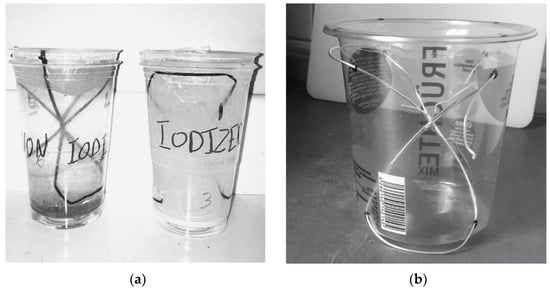
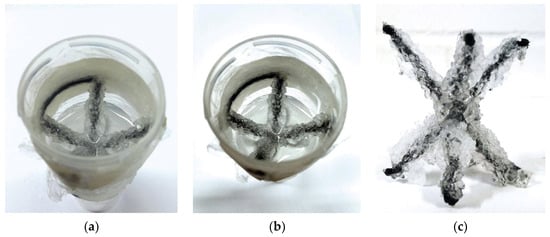
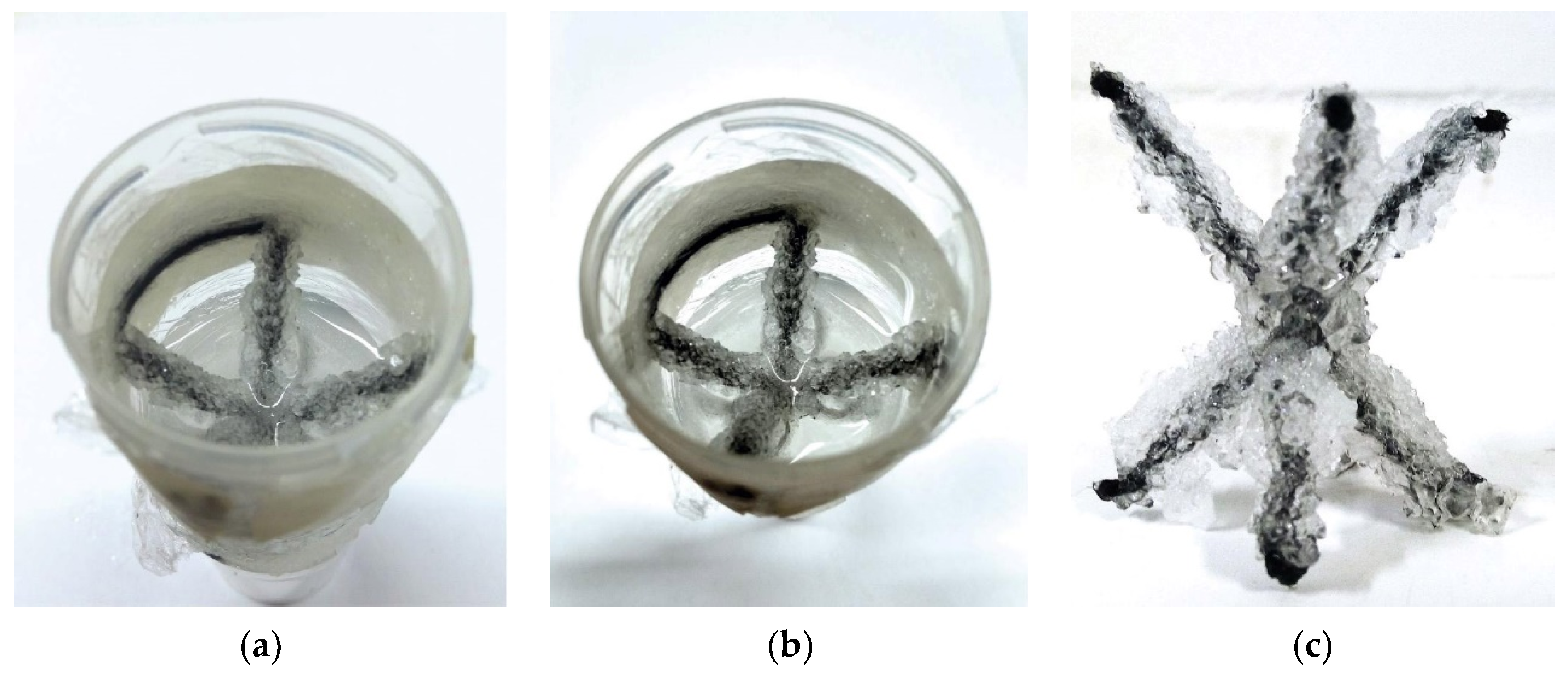
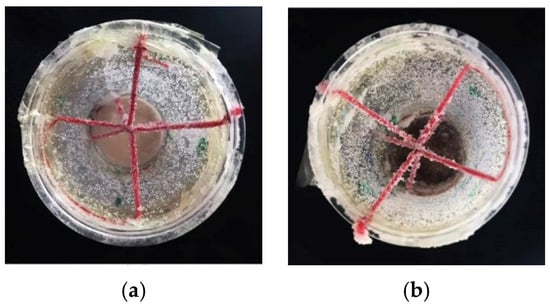
For the cotton thread and wire experiments (Figure 1), a simplified weaving syntax was designed that would create a spatial node where different strands would intersect. The goal was to observe the fiber/wire interaction before, during and after crystallization. Plastic cups punctured at eight equidistant points of the circumference—four at the top of the cup and four at the bottom—allowed the fibers/wire to pass through the perforations in order to create a designed formwork upon which the crystals would form.
Figure 1.
(a) Scaffolding for reinforcement investigations and full immersion in matrix: cotton thread of 1.5 mm thickness; (b) metallic wire of 1.0 mm thickness.
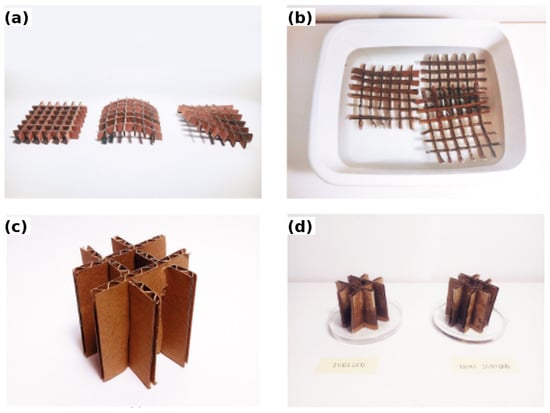
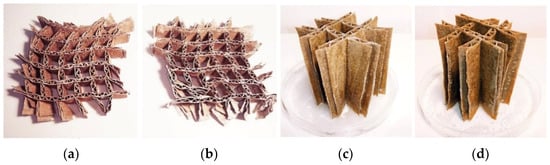
Cardboard reinforcement was investigated using the same 48 h full-immersion principle. Three waffle specimens (140 × 140 × 20 mm) were produced with flat, single-curved, and double-curved geometries to examine whether curvature affected crystal formation and geometric stability.
The cardboard study examined whether geometric curvature could guide crystal formation and bind perpendicular intersections. A second wetting method was then explored using two identical waffle cubes (40 × 40 × 40 mm)—one for each sodium chloride condition, onto which the supersaturated solutions were poured rather than using full immersion (Figure 2).
Figure 2.
(a,b) Scaffolding for reinforcement investigations: curvature on waffle structures and full immersion; (c,d) waffle cube, solution pouring and partial immersion.
3.3. Matrix Investigations
The reinforcement material used for the matrix investigations was cotton thread with a diameter of 1.5 mm. The experimental sequence comprised: (1) scaffold preparation; (2) syntax winding; (3) preparation of a supersaturated salt solution; (4) full immersion of the wound scaffold; and (5) gradual discharge of the solution.
- Preparation of scaffold;
- Syntax winding;
- Preparation of matrix by supersaturating salt into water;
- Full immersion of the scaffold with syntax in the matrix;
- Gradual solution discharge.
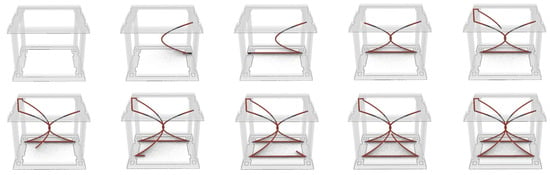
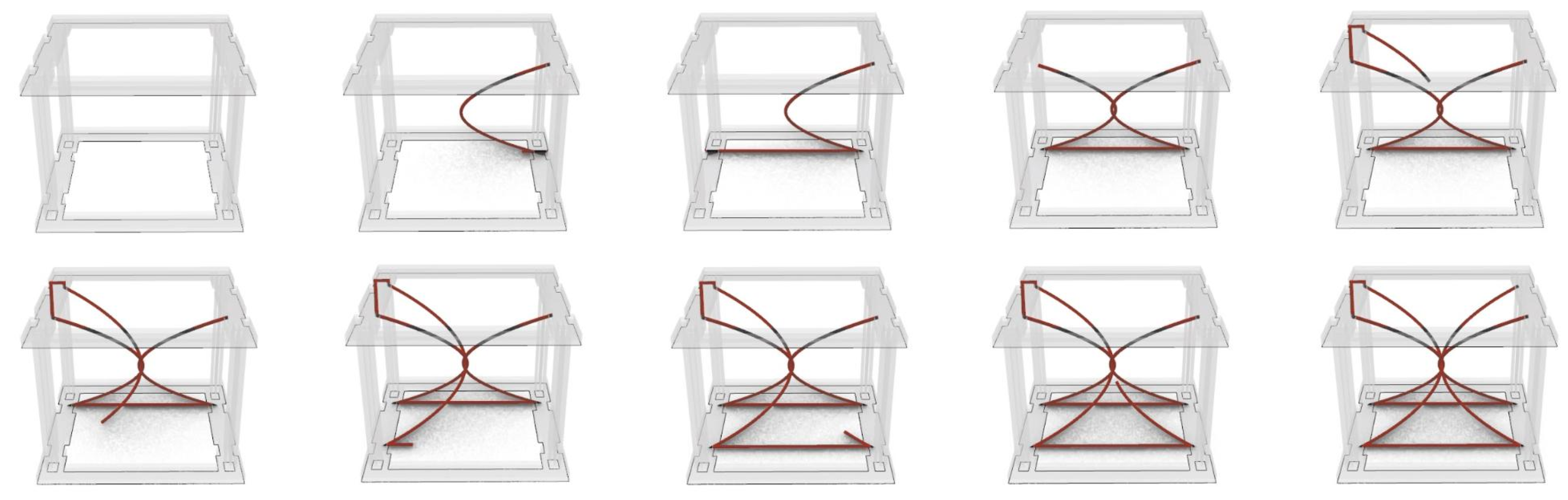
A plexiglass scaffold (120 × 120 × 90 mm) was designed and produced for the ‘8-point knot’ syntax shown in Figure 3.
Figure 3.
Steps of scaffold syntax for matrix investigation.
Once the syntax was wound, the scaffold was immersed in a 3000 mL plastic container (height: 120 mm) filled with the selected matrix solution. Matrix preparation used distilled water, a heated water bath/cooktop, a mixing vessel, and manual stirring. The six investigated compounds were sodium chloride (NaCl), iodized sodium chloride (NaCl + I), sodium carbonate (Na2CO3), sodium bicarbonate (NaHCO3), sodium borate (Na2B4O7·10H2O), and potassium aluminum sulfate (KAl(SO4)2·12H2O).
- I
- Sodium chloride (NaCl);
- II
- Sodium chloride with iodine (NaCl + I);
- III
- Sodium carbonate (Na2CO3);
- IV
- Sodium bicarbonate (NaHCO3);
- V
- Sodium borate (Na2B4O7·10H2O);
- VI
- Potassium aluminum sulfate (KAl(SO4)2·12H2O).
These were used to produce oversaturated solutions.
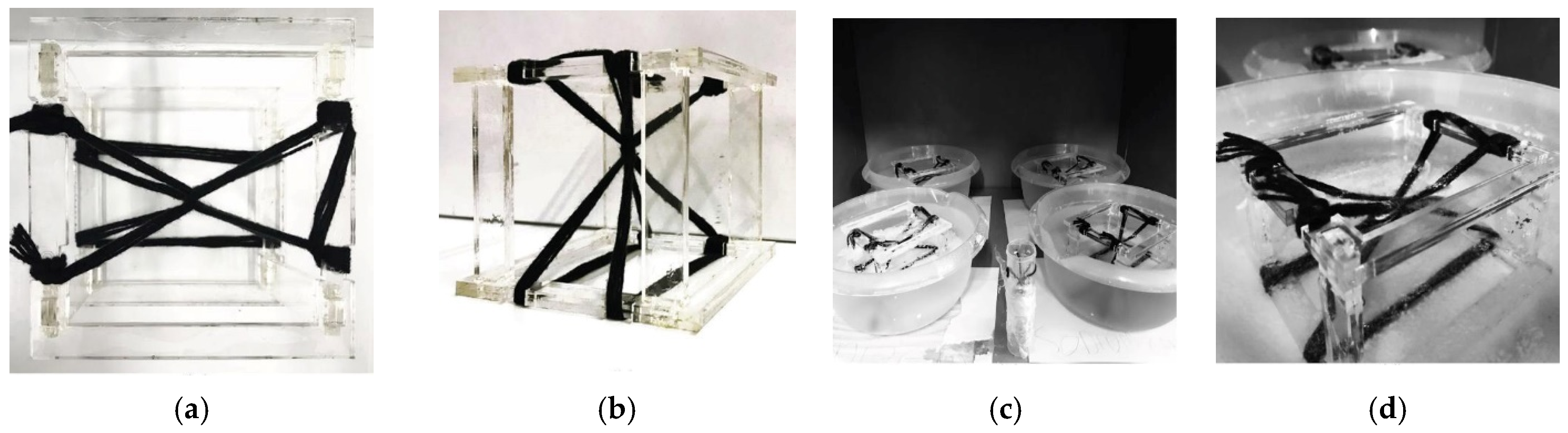
Specimens with syntax based on six strands of cotton thread were immersed in matrices I, II, III and IV (Figure 4). For these specimens, ⅓ of the solution was discharged after 24 h, and another ⅓ after 96 h. Specimens with syntax based on twelve strands of cotton thread were immersed in matrices V and VI. For these latter specimens, ⅓ of the solution was discharged after 24 h, and another ⅓ after 48 h.
Figure 4.
(a,b) Scaffold preparation and immersion: syntax winding and spatial node; (c) immersion in matrices; (d) gradual discharge of the solutions.
Immersion duration was treated as a process variable governing the balance between solute access, nucleation, crystal growth, and subsequent evaporation-driven deposition. Shorter immersion may limit the time available for nucleation and growth on the reinforcement, whereas longer immersion can increase crystal accumulation for some salts but does not necessarily improve bonding if nucleation preferentially occurs on the container or auxiliary surfaces. The experiments indeed showed salt-dependent behavior: borax exhibited more crystallization with longer immersion, while sodium chloride systems crystallized mainly on portions that dried first. Because these trends depend on supersaturation, temperature history, surface chemistry, and evaporation, an optimum immersion duration cannot be generalized from the present exploratory dataset and requires a dedicated parametric study.
3.4. Seeding
Based on previous crystallization research, seeding can promote nucleation and subsequent crystal growth by introducing pre-existing crystals of the same compound into a supersaturated solution [28,29]. The seed provides an existing crystal surface upon which further material can deposit, potentially affecting growth rate and crystal-size distribution.
A seeding experiment was therefore performed by submerging a pre-crystallized specimen in a supersaturated potassium aluminum sulfate solution and comparing the subsequent visible crystal growth with that of the earlier non-seeded trials. The specimen was immersed for 24 h before half of the solution was discharged, (Figure 5).
Figure 5.
Steps of the seeding method experiment: pre-crystallized crystal ‘seed’ immersed in solution (a); after 24 h of being immersed ½ the solution is removed (b); (c) crystallized specimen after the experiment was conducted.
3.5. 3D Weaving
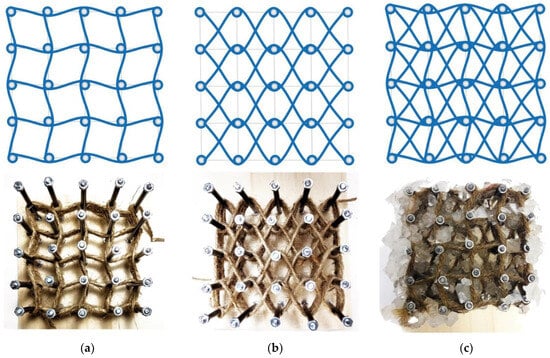
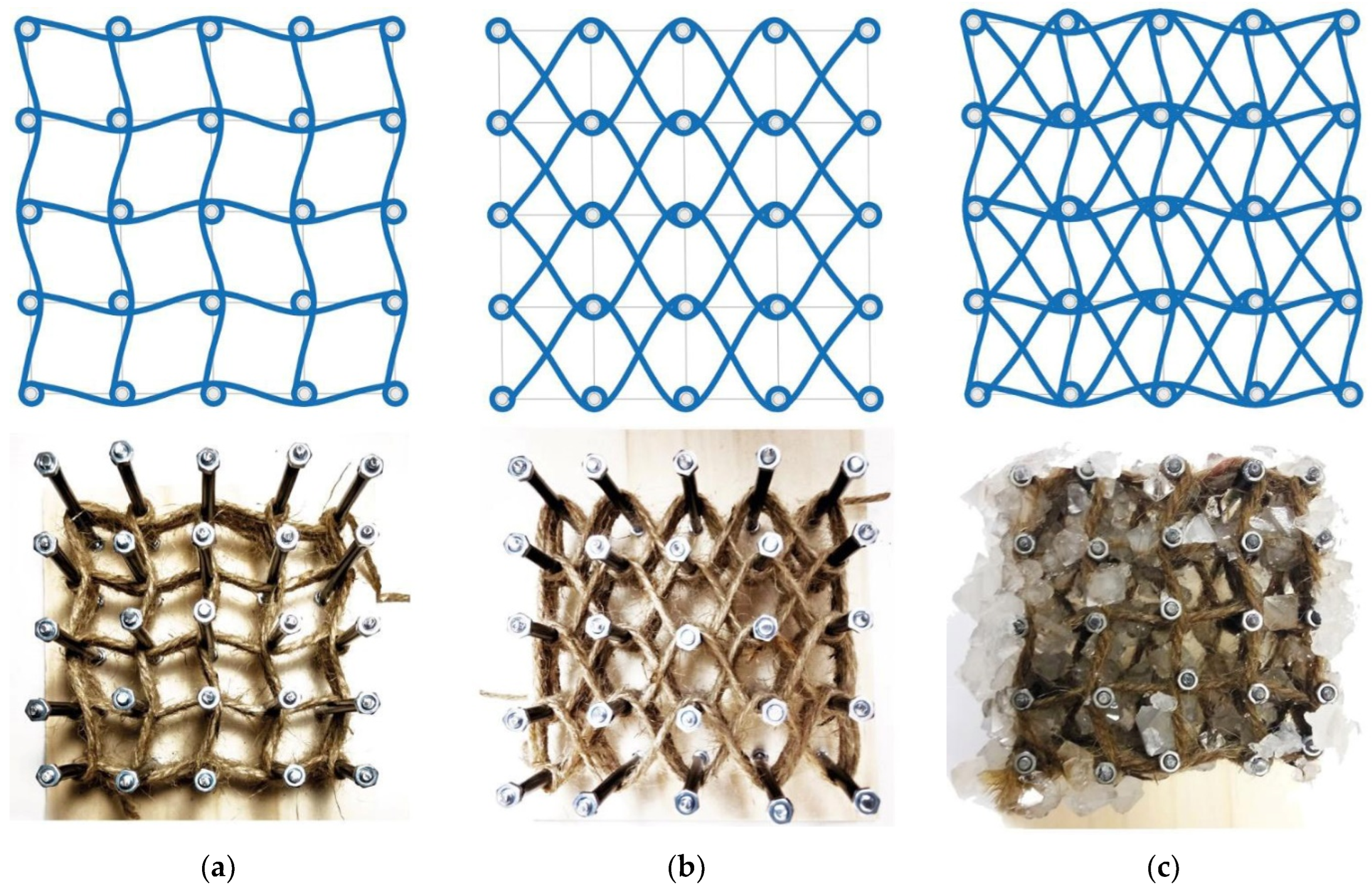
In addition to the reinforcement material investigations, a lattice consisting of 3D-woven flax fibers was considered to investigate whether an increase in connection points, combined with a greater surface area, would benefit the rate and distribution of crystal growth. The investigation, depicted in Figure 6, also examined whether increasing the amount of reinforcement material would promote a more continuous crystal network and greater shape retention during manual handling. As in the previous experiments, the specimen was immersed in a supersaturated potassium aluminum sulfate solution and left for 24 h.
Figure 6.
(a,b) 3D weaving experiment: setup of the 3D-weaving experiment and (c) result of the 3D-weaving experiment.
Although crystallization occurred in the 3D-woven flax specimen, the crystals did not form a continuous bond with the fibers or with adjacent crystals comparable to that observed in the cotton-thread experiments. Reproducing the same dense three-dimensional weave using cotton would also have required substantially more material and fabrication effort. The 3D-weaving route was therefore not pursued further within the present study.
3.6. Design of the Fabrication Setup
The full-scale demonstrator was designed according to stool-scale ergonomic dimensions of approximately 400 × 400 × 500 mm. A 120 L plastic barrel was selected because it could accommodate the geometry and also function as both the crystallization tank and the winding frame. The barrel was cut to a height of 600 mm so that its wider upper diameter could accommodate the lower connection pins and allow removal of the crystallized demonstrator.
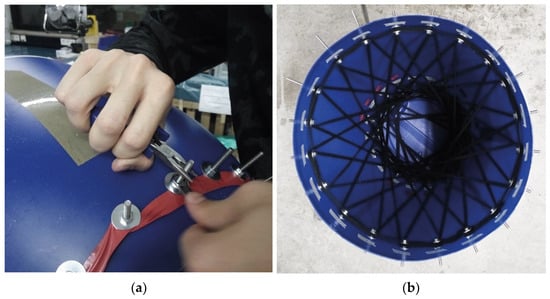
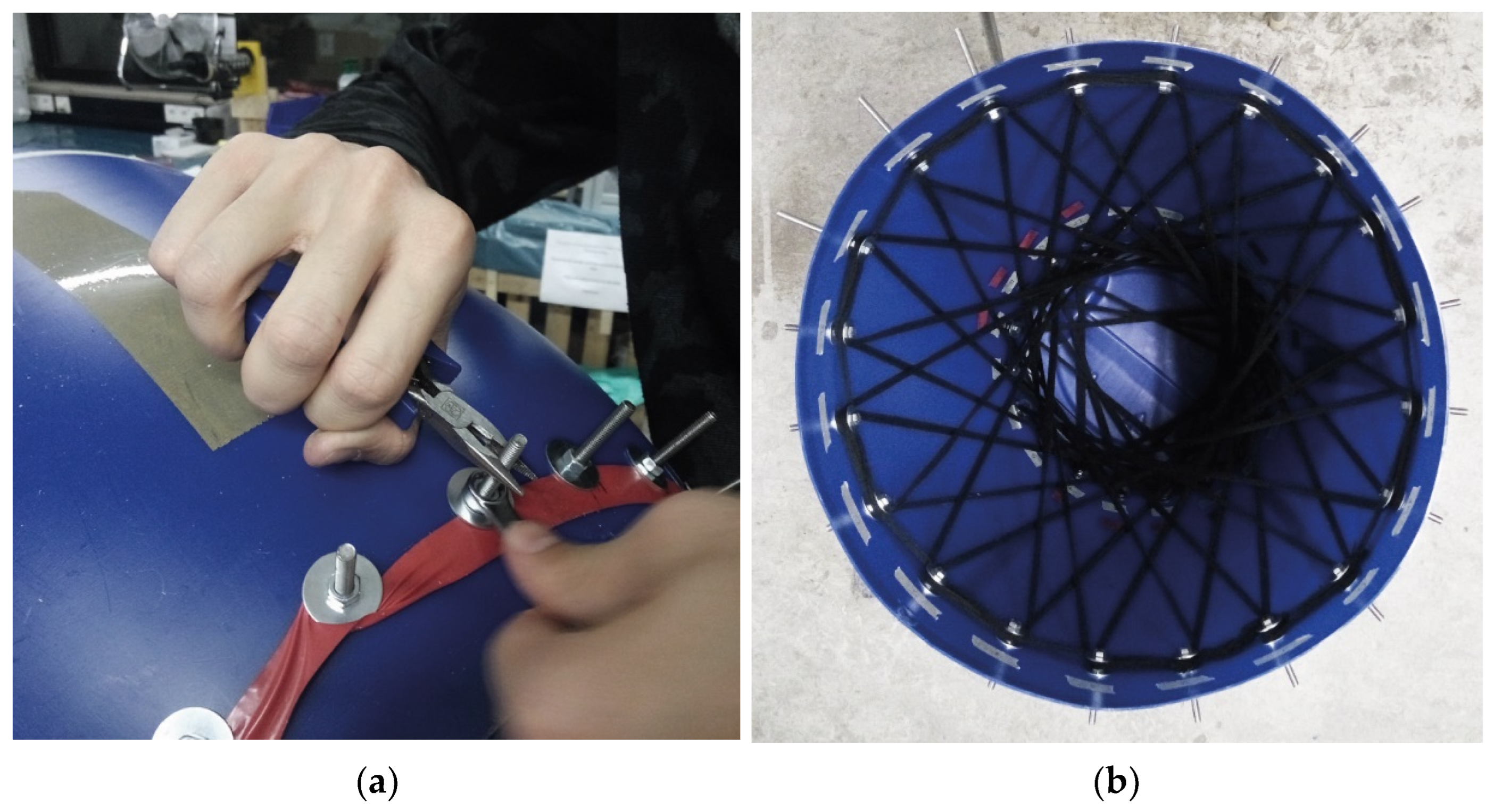
The connection points were measured and drilled to receive the winding pins. M6 bolts, nuts, and tightly secured Perspex washers were used to maintain watertightness. The cotton syntax was wound around these pins, beginning with the surface intended to become the seat. This orientation was selected because earlier alum experiments had produced a relatively continuous crystal layer at the base of the container. Winding continued until the fiber topology of the stool was complete, (Figure 7).
Figure 7.
(a) Tank preparation: pins attachment and (b) continuous fiber syntax.
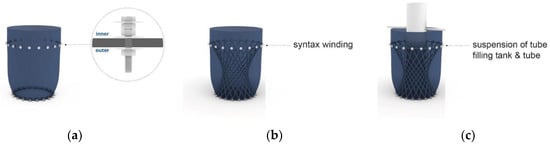
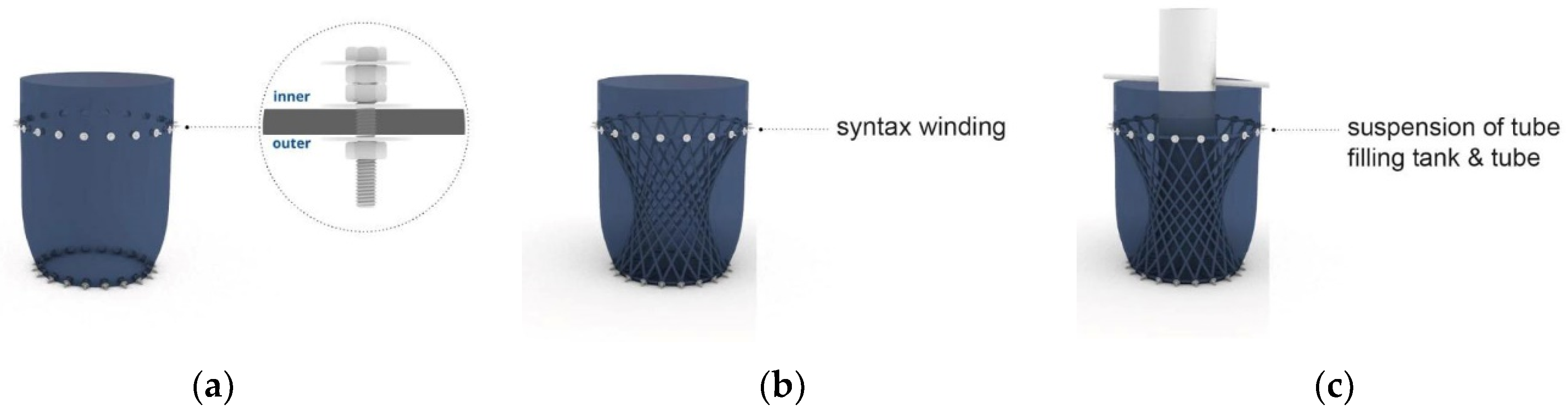
A polyvinyl chloride (PVC) tube was then secured through the hollow core of the stool to reduce the volume of potassium aluminum sulfate solution required (Figure 8). The hollow configuration reduced the required solution volume by approximately 33%, from 108 L to 72 L. The tank was then ready to receive the supersaturated alum solution.
Figure 8.
Depicting the stages of the fabrication setup: (a) preparation of tank with pins; (b) syntax winding; (c) suspension of tube and simultaneous filling of tank/tube.
3.7. Solution Preparation
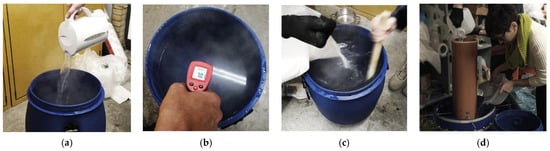
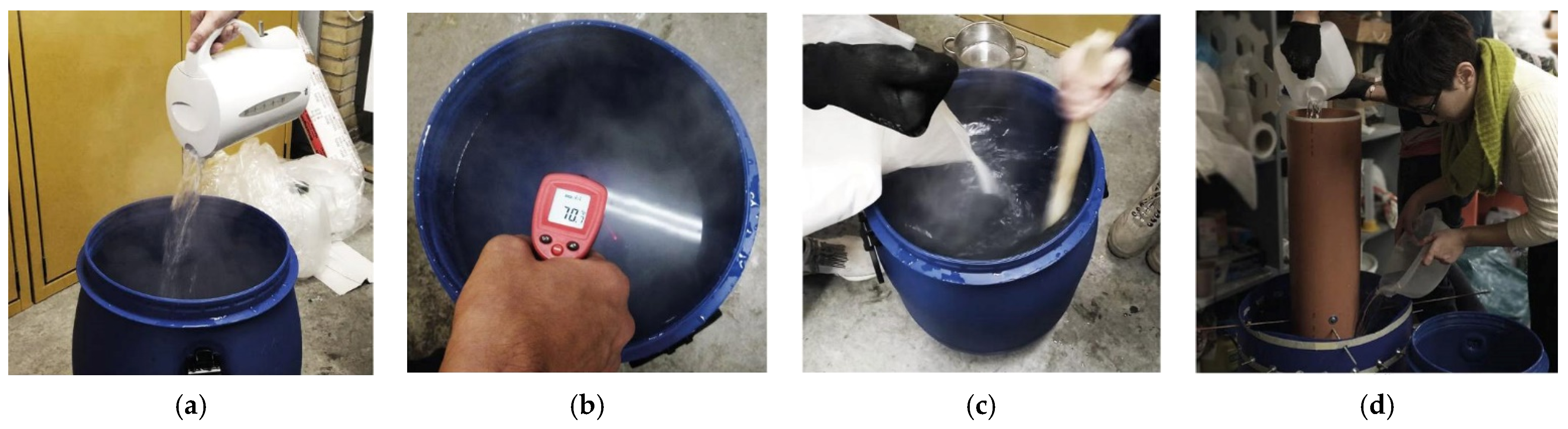
To prepare the supersaturated solution, the first step was to heat 75 L of water, which was then added to a separate mixing tank (Figure 9). Based on published alum solubility data [29], the required water temperature was approximately 65 °C to achieve supersaturation with 25 kg of alum. After confirming the temperature, the alum salt was added to the mixing tank. Once fully dissolved, the solution was poured into the tank containing the cotton thread wound to form the double-curved stool. Simultaneously, to prevent the PVC tube from floating because of the density difference between the water inside the tube and the surrounding supersaturated solution, the PVC tube was filled with water and kept in position during filling.
Figure 9.
Stages of solution preparation and tank filling: (a,b) water preparation at approximately 65 °C based on the solubility curve; (c) dissolution of 25 kg of alum in 75 L of water; (d) simultaneous filling of the tank and PVC pipe.
4. Results
4.1. Results from Reinforcement Experiments
4.1.1. Experiment Design Setup
The design of the experiments evolved from an initial screening setup for potential reinforcements to a more focused configuration for comparing potential matrices. The initial setup used two plastic cups: the internal cup was punctured to guide the cotton thread or metallic wire, and it was placed inside a non-punctured cup to prevent leakage. This setup was sufficient for comparative observation of nucleation and crystal growth on the candidate reinforcement materials under full immersion. Within the tested conditions, cotton produced the most continuous visible crystallization and was therefore selected for the subsequent matrix-screening stage. The observations from the reinforcement experiments are presented below.
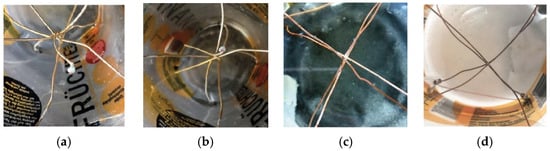
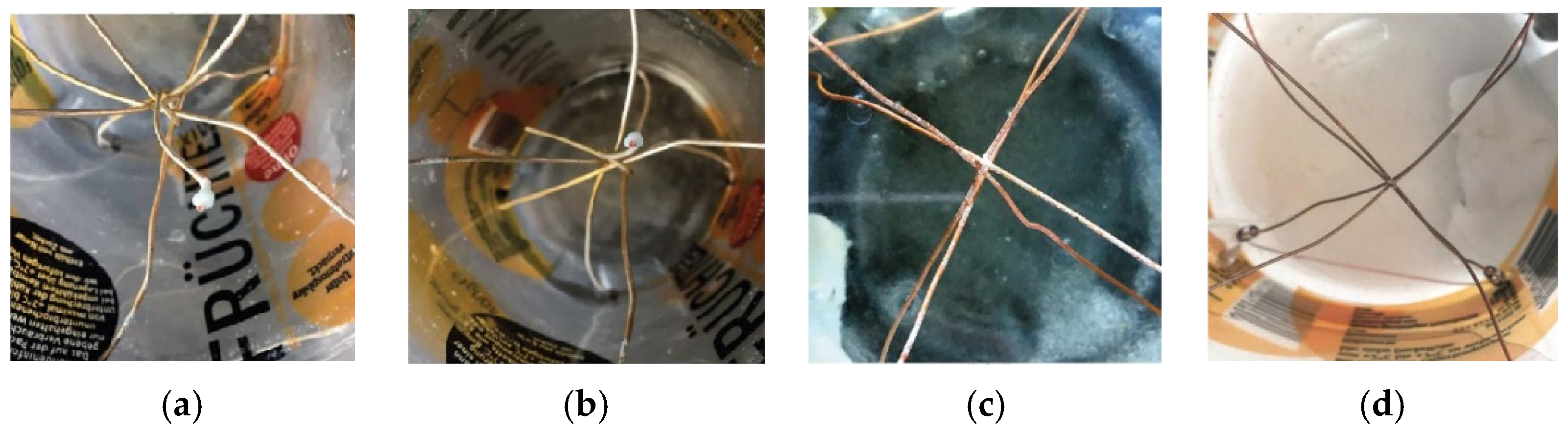
4.1.2. Metallic Wire
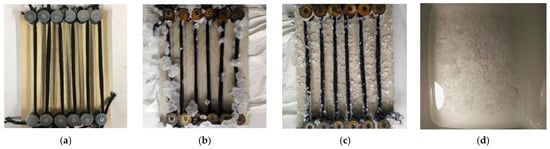
The metallic wire showed very limited crystallization in both sodium chloride matrices. Initial crystals appeared mainly at cut ends where the inner steel core was exposed, suggesting that local surface condition influenced heterogeneous nucleation. Repeating the experiment with uncoated wire did not produce substantial crystal growth. Relative to cotton, the smooth, low-porosity metallic surface provided fewer sites for solution retention and heterogeneous nucleation, which is consistent with the limited deposition observed (Figure 10).
Figure 10.
Reinforcement experiments: (a) non-iodized salt on metallic wire syntax after crystallization; (b) iodized salt on metallic wire syntax after crystallization; (c) second attempt of non-iodized salt on metallic wire syntax after crystallization; (d) second attempt of iodized salt on metallic wire syntax after crystallization.
4.1.3. Cardboard
After 48 h of full immersion, the cardboard specimens were distorted and had lost their initial geometry, while no crystals were visible. Crystallization began only during drying after removal from the matrix. The behavior is consistent with strong liquid uptake by the porous cellulosic board: swelling and softening altered the geometry, while evaporation during drying increased local supersaturation and promoted delayed nucleation. In the pouring experiment, faster drying enabled crystal formation after approximately one day, but the simultaneous moisture-driven deformation of the cardboard produced irregular contact and non-uniform crystal bridging. Cardboard was therefore rejected because geometric instability dominated the intended composite-forming process (Figure 11).
Figure 11.
Reinforcement experiments: (a) non-iodized salt on waffle cardboard structure after crystallization; (b) iodized salt on waffle cardboard structure after crystallization; (c) non-iodized salt on waffle cube structure after crystallization; (d) iodized salt on waffle cube structure after crystallization.
4.1.4. Cotton Thread
The immersion of the specimen in the iodized matrix resulted in relatively small crystals that produced only limited restraint of the thread. Conversely, crystals formed on the specimen immersed in the non-iodized matrix were larger and more evenly distributed. In both cases, cotton promoted more visible crystallization than metal and cardboard under the tested conditions. The larger accumulation at the central fiber intersection is consistent with heterogeneous nucleation being favored at regions with increased available surface area and local surface irregularity. Because crystal mass and mechanical response were not quantified, these observations are reported comparatively rather than as measured differences in strength or stiffness, (Figure 12).
Figure 12.
Reinforcement experiments: (a) non-iodized salt (sodium chloride) on cotton thread syntax after crystallization and (b) iodized salt (sodium chloride with Iodine) on cotton thread syntax after crystallization.
The reinforcement screening indicated that cotton provided the most favorable substrate for crystal growth among the tested materials. A plausible mechanism is heterogeneous nucleation on the rough, porous, hydrophilic cotton surface, which offers substantially more surface area and potential nucleation sites than smooth metallic wire. In the cardboard specimens, water uptake and swelling distorted the geometry before a stable crystal network could bridge the intersections. These mechanisms explain the observed ranking within the present conditions while acknowledging that nucleation energy and interfacial chemistry were not directly measured.
4.2. Results from Matrix Experiments
4.2.1. Matrix Experiments
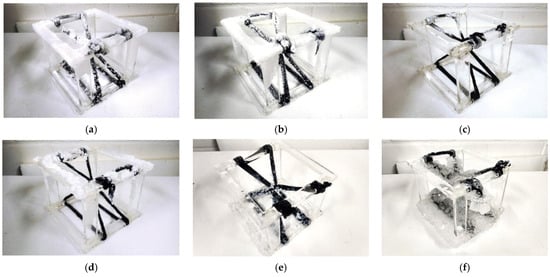
The custom plexiglass cuboid frame (120 × 120 × 90 mm) was designed and sized to allow the cotton network to be fully submerged in the available containers. The syntax used for the matrix experiments created a controlled fiber intersection at which crystal growth and bridging could be compared. Crystals were visually more concentrated around the intersecting nodes than along isolated strands, consistent with the greater local surface area and number of potential heterogeneous nucleation sites. Because crystal mass and nucleation density were not quantified, this relationship is treated as an experimental observation rather than a measured correlation. The setup provided a consistent basis for comparative screening of the six matrix solutions; the results are presented in Figure 13.
Figure 13.
Matrix experiments: (a) iodized salt scaffold after crystallization; (b) non-iodized salt scaffold after crystallization; (c) washing soda scaffold after crystallization; (d) baking soda scaffold after crystallization; (e) borax scaffold after crystallization; (f) potassium aluminum sulfate scaffold after crystallization.
4.2.2. Iodized Salt (Sodium Chloride with Iodine—NaCl + I)
The six strands of cotton thread were immersed in the iodized sodium chloride solution for 24 h before half of the solution was removed. The supersaturated solution had a concentration of 40 g of iodized salt per 100 mL of water. After 96 h, crystals were visible mainly in the upper parts of the syntax, and further deposition was observed after 192 h. The crystals remained sporadically distributed along the threads and did not form a continuous crystal bridge comparable to that later observed with alum. The crystallization process was also visibly slower than for the more successful matrix candidates under the tested conditions.
4.2.3. Non-Iodized Salt (Sodium Chloride—NaCl)
The non-iodized experiment provided similar results, as the solution in which the cotton was immersed also had a concentration of 40 g of non-iodized salt per 100 mL of water. However, the crystals started forming more homogeneously. As observed in the first sodium chloride experiment, crystallization occurred mainly on sections of thread that dried first. Although the crystals were visually well distributed, they did not form a sufficiently continuous crystal bridge to preserve the wound fiber geometry as effectively as the later alum specimens. Sodium chloride was therefore not selected for upscaling under the tested conditions.
4.2.4. Washing Soda (Sodium Carbonate—Na2CO3)
The process was replicated using sodium carbonate at a concentration of 47 g per 100 mL of water. No visible crystals formed on the cotton scaffold after 96 h or 192 h. This outcome should not be interpreted as an intrinsic inability of sodium carbonate to crystallize; rather, it indicates that the combined supersaturation, thermal history, evaporation conditions, and available nucleation surfaces in this setup did not trigger useful heterogeneous crystallization on the reinforcement. Determining the controlling parameter would require a dedicated crystallization study beyond the comparative screening undertaken here.
4.2.5. Baking Soda (Sodium Bicarbonate—NaHCO3)
For sodium bicarbonate (14 g per 100 mL H2O), crystals formed preferentially on the plexiglass scaffold rather than on the cotton reinforcement after 96 h, and brittle crystals were visible on the scaffold after 192 h. This selective deposition illustrates that heterogeneous nucleation can be strongly controlled by local surface conditions and micro-defects rather than only by the nominal reinforcement material. Because the objective was crystal bridging of the fiber network, sodium bicarbonate was excluded from further development under the tested conditions.
4.2.6. Borax (Sodium Borate—Na2B4O7·10H2O)
The borax experiment used the same general setup but with 12 cotton threads rather than 6 and a supersaturated solution concentration of 0.6 g per 100 mL. Rigid crystals formed after 48 h and increased after 72 h, but deposition remained spatially discontinuous and did not create a continuous crystal bridge across the fiber network. Longer immersion visibly increased crystallization in this system, indicating that growth kinetics differed from the sodium chloride cases, where drying surfaces were more influential. The borax outcome was therefore classified as promising for crystal growth but insufficiently continuous for the intended demonstrator within the tested parameters.
4.2.7. Alum (Potassium Aluminum Sulfate—KAl(SO4)2·12H2O)
Potassium aluminum sulfate (alum) was evaluated using 12 cotton fibers at a concentration of 33 g per 100 mL of water. After 48 h, large rigid crystals were visible on the cotton thread and scaffold, together with a crystal cluster at the container base. After 72 h and gradual removal of the solution, the cotton network was more continuously enclosed by crystals than in the other screened matrices. This comparative observation led to the selection of alum for the demonstrator. The terms ‘rigid’ and ‘continuous’ here describe the observed morphology and resistance to manual handling; they do not denote a measured elastic modulus, compressive stiffness, or standardized strength value.
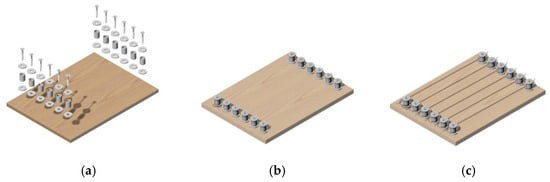
4.3. Beam Sample Experiments
After identifying cotton reinforcement with an alum matrix as the most promising combination among the screened conditions, a follow-up beam-sample series was conducted as a preparatory step toward environmental and mechanical characterization. A total of 12 beam samples were fabricated using two wooden boards as bases and aluminum sleeves and washers to secure the cotton thread (Figure 14). As described below, unforeseen interactions between the auxiliary setup materials and the crystallization process prevented these specimens from providing valid mechanical or environmental-performance data.
Figure 14.
(a–c) Setup for the exploratory beam-sample series intended as a preparatory step toward environmental and mechanical characterization.
The boards were submerged in an alum solution prepared at the same supersaturated concentration used in the preceding matrix experiments. An unanticipated density difference caused the wooden support board to float, preventing the intended stable immersion of the thread specimens. As an immediate procedural adjustment, the board was inverted so that the threads remained submerged. This change altered the experimental boundary conditions and is one reason the resulting beam specimens were not treated as valid samples for quantitative characterization.
After 24 h of submersion, little crystallization was observed on one of the boards, and the crystals that did form were highly irregular. Large crystals appeared sporadically around the washers and did not create a continuous crystal bridge along the thread reinforcement (Figure 15). A larger number of crystals formed on the other board, but they were substantially smaller and, again, did not produce a coherent crystal-bound fiber specimen suitable for mechanical characterization. Loose crystals were also observed at the bottom of both containers, suggesting that part of the crystallized material formed away from the intended fiber network.
Figure 15.
Beam specimens: (a) setup; (b) crystals formed with board upside-down; (c) crystals formed with board upturned; (d) residual crystals at bottom of container.
The beam-sample experiment was repeated with the wooden board secured to the bottom of the container (Figure 16) to prevent flotation and improve contact between the fiber specimens and the solution. Crystallization was more consistent than in the first attempt, but the outcome still differed substantially from the plexiglass scaffold experiments. Because the boundary conditions and auxiliary materials had changed, the resulting specimens were not treated as valid samples for quantitative mechanical comparison.
Figure 16.
(a) Beam-sample setup; (b) issue encountered during the first attempt; (c) modified second attempt.
4.3.1. Wooden Board
The wooden board introduced an additional porous material into the setup. It absorbed part of the solution and may therefore have altered the local concentration and availability of alum around the cotton specimens. This interaction is one plausible explanation for the inconsistent crystallization observed in the beam-sample series.
4.3.2. Aluminum Washers
The aluminum washers used to secure the thread showed visible corrosion after 24 h of immersion, while substantial crystallization occurred near their edges. This suggests that the washers provided competing nucleation surfaces and altered the intended crystal growth on the cotton reinforcement. Because the experiment was not designed to quantify nucleation energy, this mechanism is presented as an interpretation of the observed spatial distribution. Plexiglass washers were consequently used in the demonstrator to reduce this interference.
4.4. Fabrication of the Demonstrator
Fabrication Constraints
The demonstrator was used to scale up the selected material-fabrication concept from small screening specimens to stool scale. Its design was strongly constrained by the available fabrication time, the requirement for complete immersion of the cotton network, and the volume and cost of alum solution. These constraints were treated as part of the fabrication study rather than as optimized structural design criteria.
A central void was introduced to reduce the required solution volume. A PVC pipe with a diameter of 200 mm was suspended within the tank, while the wound cotton network surrounded it. Some early design options incorporated additional bracing, but these would have increased the solution volume and material demand. The demonstrator was therefore developed as a hollow form, and the cylindrical geometry of the available tank also influenced its final shape.
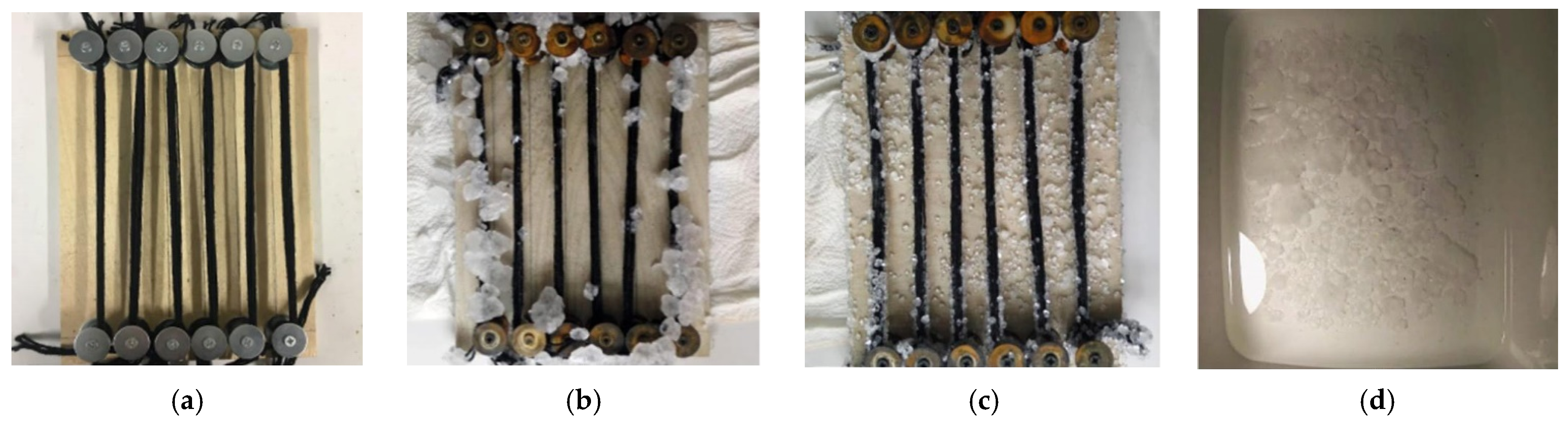
During crystallization, deposits formed around several bolts used to anchor the fiber network. Accessible bolts were unscrewed after crystallization, but local crystal loss occurred during removal. Bolts that could not be accessed from inside the tank were cut from the exterior. In addition, residual crystals bonded the lower surface of the demonstrator to the base of the tank, so the tank ultimately had to be cut open to allow deframing (Figure 17). This prevented reuse of the tank and highlighted deframing as an important process limitation for future development.
Figure 17.
(a) Removal of winding pins before deframing; (b,c) cutting of the tank for deframing; (d) locally damaged regions selected for recrystallization.
4.5. Seeding and Recoverability of Crystallized Alum
Following the comparatively favorable alum results in the matrix screening, a seeding experiment was used to explore whether pre-existing crystals could promote further deposition. A small increase in visible crystal accumulation was observed, but the difference was not quantified and was not sufficiently pronounced to justify incorporating seeding as a required step in the demonstrator fabrication process. Within the tested conditions, increasing the available fiber surface and intersection area appeared to have a stronger influence on visible crystal accumulation than the seeding procedure itself.
Although seeding was not retained as an essential fabrication step, it provided an opportunity to explore alum recoverability after deframing the demonstrator. Some crystal-bound regions around the bolts were locally damaged during removal of the formwork, creating areas with visibly reduced crystal coverage. These areas were therefore selected for an exploratory recrystallization step using recovered alum.
Previously formed alum crystals were crushed and dissolved in hot water to prepare a new supersaturated solution for recrystallization around the locally damaged regions. The recrystallized deposits were visibly smaller than those produced during the initial fabrication cycle and were not mechanically characterized. Nevertheless, renewed crystal deposition occurred at the selected regions, demonstrating that recovered alum can be dissolved and recrystallized. The result supports alum recoverability, but it does not establish equivalent material or mechanical performance across repeated recovery and recrystallization cycles.
5. Discussion
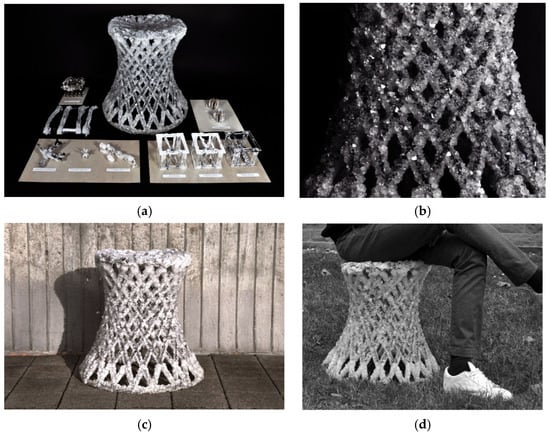
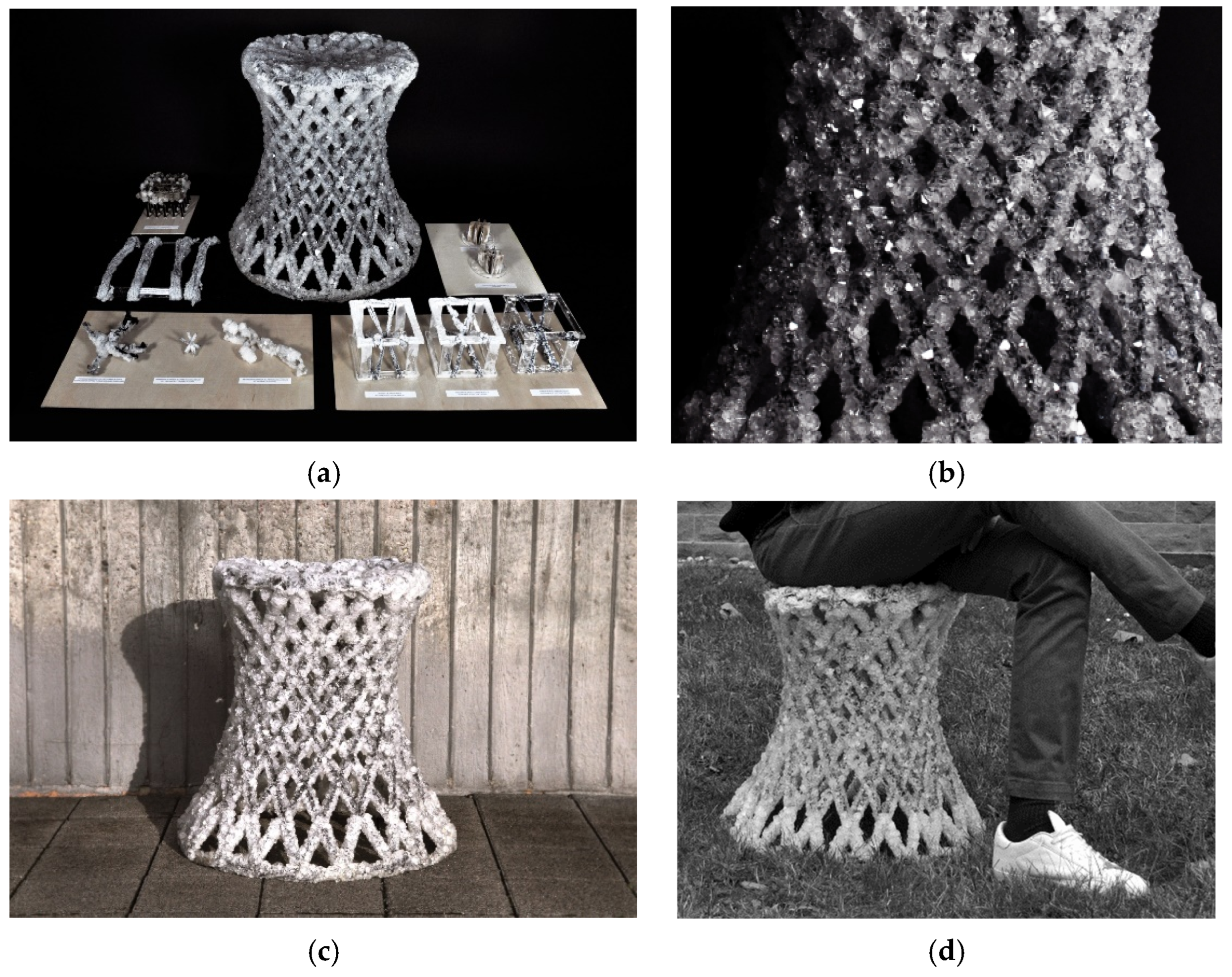
The full-scale demonstrator was subjected to a single quasi-static seated-load demonstration with a seated person with a body mass of approximately 80 kg, without visible failure during the observation period, (Figure 18). The person was seated on the stool so that contact was distributed through the seat area rather than applied through a calibrated testing platen. The demonstration was neither repeated nor fatigue-type, and displacement, strain, and residual deformation were not instrumentally measured. This demonstration should therefore be interpreted as evidence of short-term functional integrity of the fabricated geometry, not as a mechanical test from which compressive strength, elastic modulus, ultimate strength, or design stiffness can be derived. Accordingly, the observed response is limited to short-term shape retention and resistance to visible collapse under the stated loading condition.
Figure 18.
(a) Experimental outcomes excluding the initial reinforcement screening; (b) close-up of the stool demonstrator; (c) crystallized demonstrator in an urban context; (d) quasi-static seated-load demonstration with a seated person with a body mass of approximately 80 kg.
The fabrication results nevertheless establish an important proof of concept: a continuous cotton fiber network can be consolidated into a self-supporting spatial form through an alum crystal matrix without a polymer resin. This is the principal novelty of the study. Previous architectural crystallization work has largely used crystals as an esthetic or surface-forming phenomenon, while established CFW research has relied on polymer matrices. The present work connects these domains by demonstrating a crystal-bound fiber topology at full scale and by showing that the binding phase can be dissolved and recrystallized. The outcome is therefore not presented as a replacement for engineered epoxy composites at their current performance level, but as a new material-fabrication pathway that warrants subsequent quantitative development.
The unsuccessful screening experiments also provide mechanistic insight. Cotton promoted crystal growth more effectively than smooth metallic wire because its porous and irregular surface retains solution and offers a larger number of potential heterogeneous nucleation sites. Cardboard absorbed solution and lost geometric stability before effective crystal bridging could develop. In the sodium carbonate and sodium bicarbonate systems, useful nucleation on the cotton network was limited or redirected to other surfaces, demonstrating that supersaturation alone is insufficient and that surface chemistry, evaporation, competing nucleation sites, and thermal history strongly influence the resulting composite morphology. Borax produced rigid crystals, but the discontinuous distribution did not form a sufficiently coherent matrix within the tested process window. Alum combined comparatively rapid growth with more continuous enclosure of the cotton network and was therefore selected for upscaling.
Environmental sensitivity is a major limitation of the present system. Both the cotton reinforcement and the salt-hydrate matrix interact with water, and alum is water-soluble. Exposure to elevated relative humidity, direct wetting, repeated wet–dry cycles, or elevated temperature may alter crystal hydration, dissolution–recrystallization behavior, fiber dimensions, and the integrity of the fiber–crystal interface. No standardized moisture-resistance, hygrothermal aging, immersion, or thermal-cycling tests were performed in this proof-of-concept study. Accordingly, the material cannot presently be proposed for unprotected exterior or safety-critical structural use. Its current relevance is as an experimental fabrication system and, potentially, for controlled dry interior conditions pending dedicated durability characterization.
The sustainability interpretation must likewise remain balanced. The system avoids a petroleum-based thermoset matrix and demonstrates direct material recovery by dissolution and recrystallization, but it is not impact-free. The demonstrator required heating approximately 75 L of water to about 65 °C and dissolving approximately 25 kg of alum, and the process was time- and energy-intensive. The embodied impacts of producing alum, water use, heating energy, repeated crystallization, and end-of-life recovery were not quantified through a life-cycle assessment. The present work therefore identifies resin avoidance and recoverability as potential design advantages rather than evidence of a lower overall environmental footprint. Process-energy reduction, closed-loop water and salt recovery, and comparative LCA against epoxy-based CFW systems are necessary next steps.
The experimental program was intentionally exploratory and sequential rather than statistically replicated. This enabled broad material screening and a full-scale fabrication demonstration within the 14-week research period, but it limited quantitative generalization. Table 1 summarizes the specimen counts and quantitative process parameters documented during the experimental program. Standardized mechanical tests, including compression, bending, elastic modulus, failure strain, and repeated loading, together with quantitative image analysis, controlled humidity and water exposure, thermal cycling, and process-level environmental assessment, require dedicated follow-up studies. Interpretation of the present results is therefore confined to the experimental evidence reported here.
The demonstrator geometry was strongly influenced by fabrication constraints. The need to limit alum consumption favored a hollow configuration, while the geometry of the available cylindrical tank influenced the overall form. Future development should separate the reusable crystallization tank from the winding scaffold so that the formwork can be removed without destructive cutting and so that a wider range of geometries can be explored.
Because the exploratory beam-sample series did not yield sufficiently consistent specimens, standardized mechanical testing could not be carried out within the present study. Quantitative characterization of compressive and flexural behavior, elastic modulus, deformation, failure modes, and repeated loading therefore remains necessary before structural performance can be assessed. The demonstrator fabrication also required heating a large volume of water to prepare the supersaturated solution, which was time- and energy-intensive. Future process development should therefore address more efficient large-scale solution heating, recovery of heat and water, and closed-loop recovery and recirculation of the salt solution.
In summary, the study demonstrates the feasibility of fabricating a resinless fiber-reinforced crystal composite in a complex nonlinear spatial form and identifies alum–cotton as the most promising combination among the screened conditions. The full-scale stool demonstrates short-term form stability during one quasi-static seated-load demonstration, while dissolution and recrystallization demonstrate the recoverability of the crystal phase. These findings establish a novel material-fabrication concept rather than a mechanically qualified material for structural applications. Quantitative mechanical performance, moisture resistance, long-term durability, process optimization, and comparative environmental impacts remain open research questions and define the next stages required before architectural or structural application can be assessed.
Author Contributions
T.A., J.J. and V.T. contributed equally to the conceptualization, design, methodology, representation, prototyping, testing, and original draft preparation. H.D. and P.B. provided prerequisite expertise in biocomposites and sustainable architectural building elements and supervised the Material Matter Lab (Material and Structure, winter semester 2019/2020) at the University of Stuttgart, in which the experimental work and prototype were developed. H.D. subsequently led the scientific contextualization and further development of the manuscript at Aalborg University, drawing on ongoing research on circular material systems, material recoverability, safe-and-sustainable-by-design approaches, and end-of-life strategies, including related research activities within the Horizon Europe REPurpose project. H.D. and P.B. contributed to writing—review and editing. All authors have read and agreed to the published version of the manuscript.
Funding
The experimental work reported in this article was carried out in 2019/2020 at the University of Stuttgart. It was primarily funded by the authors and was partially supported by the Agency for Renewable Resources (FNR) under the Federal Ministry of Food and Agriculture (BMEL) through the research project LeichtPro: Pultruded load-bearing lightweight profiles from natural fiber composites (FKZ 22027018), managed by Hanaa Dahy during her directorship of the BioMat Department at ITKE, University of Stuttgart. The later scientific contextualization, manuscript development, dissemination, and publication activities undertaken at Aalborg University were supported by the European Union’s Horizon Europe REPurpose project (2022–2026; Grant Agreement No. 101057971), related to the product circularity and ‘Design for Disassembly’ investigations.
Data Availability Statement
The data supporting the findings of this study are available from the corresponding author upon reasonable request.
Acknowledgments
The experimental project was developed in the seminar Material Matter Lab (Material and Structure, winter semester 2019/2020) offered by BioMat (The Department of Biobased Materials and Materials Cycles in Architecture) at the University of Stuttgart, under the supervision of Hanaa Dahy and with support from the BioMat team. During the later development of the manuscript at BioMat@Copenhagen Research Center, Aalborg University, the work was further situated within current research on circularity, material recoverability, safe-and-sustainable-by-design approaches, and end-of-life strategies. In particular, the research environment and activities of the Horizon Europe REPurpose project informed this later scientific contextualization and dissemination by addressing recyclable material systems and circular design across application areas that include building and construction.
Conflicts of Interest
The authors declare no conflicts of interest.
References
- La Rosa, A.D.; Blanco, I.; Banatao, D.R.; Pastine, S.J.; Björklund, A.; Cicala, G. Innovative Chemical Process for Recycling Thermosets Cured with Recyclamines® by Converting Bio-Epoxy Composites in Reusable Thermoplastic—An LCA Study. Materials 2018, 11, 353. [Google Scholar] [CrossRef] [Scilit] [PubMed]
- Di Mauro, C.; Malburet, S.; Genua, A.; Graillot, A.; Mija, A. Sustainable Series of New Epoxidized Vegetable Oil-Based Thermosets with Chemical Recycling Properties. Biomacromolecules 2020, 21, 3923–3935. [Google Scholar] [CrossRef] [Scilit] [PubMed]
- Hammond, G.; Jones, C. Inventory of Carbon & Energy Version 2.0 (ICE V2.0); Department of Mechanical Engineering, University of Bath: Bath, UK, 2011. [Google Scholar]
- Peças, P.; Carvalho, H.; Salman, H.; Leite, M. Natural Fibre Composites and Their Applications: A Review. J. Compos. Sci. 2018, 2, 66. [Google Scholar] [CrossRef] [Scilit]
- Lutton, R.; Taylor, S.; Sonebi, M.; Murphy, A. Commercial Potential of Bioresins and Their Success in Thermosetting Composites: An Overview. In Proceedings of the 2nd International Conference on Bio-Based Building Materials & 1st Conference on ECOlogical Valorisation of GRAnular and FIbrous Materials, Clermont-Ferrand, France, 21–23 June 2017. [Google Scholar]
- Prado, M.; Dörstelmann, M.; Schwinn, T.; Menges, A.; Knippers, J. Core-Less Filament Winding. In Robotic Fabrication in Architecture, Art and Design 2014; McGee, W., Ponce de Leon, M., Eds.; Springer International Publishing: Cham, Switzerland, 2014; pp. 275–289. [Google Scholar]
- Pittiglio, A.; Simpson, A.; Costalonga Martins, V.; Dahy, H. Fibrx Rocking Chair: Design and Application of Tailored Timber as an Embedded Frame for Natural Fibre-Reinforced Polymer (NFRP) Coreless Winding. Polymers 2023, 15, 495. [Google Scholar] [CrossRef] [Scilit] [PubMed]
- Prado, M.; Dörstelmann, M.; Menges, A.; Solly, J.; Knippers, J.; Sheil, B.; Glynn, R.; Skavara, M. Elytra filament pavilion: Robotic filament winding for structural composite building systems. In Fabricate 2017; UCL Press: London, UK, 2017; pp. 224–231. [Google Scholar]
- Bodea, S.; Dambrosio, N.; Zechmeister, C.; Gil Pérez, M.; Koslowski, V.; Rongen, B.; Dörstelmann, M.; Kyjanek, O.; Knippers, J.; Menges, A. BUGA Fibre Pavilion: Towards Robotically-Fabricated Composite Building Structures. In Fabricate 2020 Making Resilient Architecture; UCL Press: London, UK, 2020; pp. 234–243. [Google Scholar]
- Sullivan, J.B.; Krieger, G.R. Clinical Environmental Health and Toxic Exposures; Lippincott Williams & Wilkins: Philadelphia, PA, USA, 2001. [Google Scholar]
- Dahy, H. Natural Fibre-Reinforced Polymer Composites (NFRP) Fabricated from Lignocellulosic Fibres for Future Sustainable Architectural Applications, Case Studies: Segmented-Shell Construction, Acoustic Panels, and Furniture. Sensors 2019, 19, 738. [Google Scholar] [CrossRef] [Scilit] [PubMed]
- Dahy, H. ‘Materials as a Design Tool’ Design Philosophy Applied in Three Innovative Research Pavilions Out of Sustainable Building Materials with Controlled End-Of-Life Scenarios. Buildings 2019, 9, 64. [Google Scholar] [CrossRef] [Scilit]
- Lin, C.-H.; Dahy, H. Introducing Tailored Fiber Placement (TFP) as a Sustainable Fabrication Method for Architecture: Four Case Studies in Mold-Less and Integrative Construction. Buildings 2026, 16, 193. [Google Scholar] [CrossRef] [Scilit]
- Material District Salt Project by Eric Geboers. Available online: https://materialdistrict.com/article/salt-project-eric-geboers/ (accessed on 16 July 2026).
- Pavlovic, A.; Valzania, L.; Minak, G. Effects of Moisture Absorption on the Mechanical and Fatigue Properties of Natural Fiber Composites: A Review. Polymers 2025, 17, 1996. [Google Scholar] [CrossRef] [Scilit] [PubMed]
- Qazi, M.J.; Salim, H.; Doorman, C.A.W.; Jambon-Puillet, E.; Shahidzadeh, N. Salt Creeping as a Self-Amplifying Crystallization Process. Sci. Adv. 2019, 5, eaax1853. [Google Scholar] [CrossRef] [Scilit] [PubMed]
- Hird, R.; Bolton, M.D. Migration of Sodium Chloride in Dry Porous Materials. Proc. R. Soc. A Math. Phys. Eng. Sci. 2016, 472, 20150710. [Google Scholar] [CrossRef] [Scilit]
- Abdulwahab, A.M.; Al-magdashi, Y.A.A.; Meftah, A.; Al-Eryani, D.A.; Qaid, A.A. Growth, Structure, Thermal, Electrical and Optical Properties of Potassium Aluminum Sulfate Dodecahydrate (Potash Alum) Single Crystal. Chin. J. Phys. 2019, 60, 510–521. [Google Scholar] [CrossRef] [Scilit]
- Botsaris, G.D.; Denk, E.G. Growth Rates of Aluminum Potassium Sulfate Crystals in Aqueous Solutions. Ind. Eng. Chem. Fundam. 1970, 9, 276–283. [Google Scholar] [CrossRef] [Scilit]
- D’Antino, T.; Papanicolaou, C. Mechanical Characterization of Textile Reinforced Inorganic-Matrix Composites. Compos. Part B Eng. 2017, 127, 78–91. [Google Scholar] [CrossRef] [Scilit]
- Al-Lami, K.; D’Antino, T.; Colombi, P. Durability of Fabric-Reinforced Cementitious Matrix (FRCM) Composites: A Review. Appl. Sci. 2020, 10, 1714. [Google Scholar] [CrossRef] [Scilit]
- Teh, W.Y. An Augmented Ecology of Wildlife and Industry. President’s Medals Student Awards. 2009. Available online: https://www.presidentsmedals.com/Entry-23601 (accessed on 16 July 2026).
- Faulders Studio Materialized: Crystalline Growth—GEOtube Tower [Portfolio]. Available online: https://www.faulders-studio.com/MATERIALIZED-CRYSTALLINE-GROWTH (accessed on 16 July 2026).
- Etherington, R. Spider’s Thread Crystal Chair Sculpture by Tokujin Yoshioka. Available online: https://www.dezeen.com/2013/10/10/spiders-thread-crystal-chair-by-tokujin-yoshioka/ (accessed on 16 July 2026).
- Zhu, L.; Li, N. Crystallization (Project, UCL—Bartlett School of Architecture, GAD RC6). Available online: https://issuu.com/bartlettarchucl/docs/gad_2014_issuu_buylink/96 (accessed on 10 September 2026).
- Geboers, E. The Salt Project; TU Delft: Delft, The Netherlands, 2015; Available online: https://www.tudelft.nl/en/architecture-and-the-built-environment/study/student-projects/architecture/eric-geboers (accessed on 16 July 2026).
- Studio Karlijn Sibbel SEAt. Available online: https://karlijnsibbel.com/portfolio/seat/ (accessed on 16 July 2026).
- Helmstein, A.M. Grow Your Own Seed Crystal: Instructions. Available online: https://www.thoughtco.com/seed-crystal-instructions-607654 (accessed on 16 July 2026).
- International Union of Crystallography Crystal-Growing Competition for UNESCO Associated Schools. Available online: https://www.scribd.com/document/352457875/Brochure-Unesco (accessed on 10 September 2026).



Disclaimer/Publisher’s Note: The statements, opinions and data contained in all publications are solely those of the individual author(s) and contributor(s) and not of MDPI and/or the editor(s). MDPI and/or the editor(s) disclaim responsibility for any injury to people or property resulting from any ideas, methods, instructions or products referred to in the content. |
© 2026 by the authors. Licensee MDPI, Basel, Switzerland. This article is an open access article distributed under the terms and conditions of the Creative Commons Attribution (CC BY) license.