


Abstract
The adaptive reuse of industrial heritage produces diverse functional outcomes, yet how multiple conditions combine to shape these outcomes remains unclear. This study adapts the technology–organization–environment (TOE) framework to industrial heritage reuse and applies crisp-set qualitative comparative analysis (csQCA) to 58 projects. The analysis examines convertibility, digital technology adoption, ultimate controller, value factor, policy environment, and locational environment as conditions for cultural, commercial, and public-service functional outcomes. No single condition was necessary across all three outcomes; sufficiency analysis identified five cultural, four commercial, and four public-service configurational paths. Cultural outcomes showed diverse configurational paths, commercial outcomes centered on relatively stable market-oriented conditions, and all public-service paths shared a nonprofit ultimate controller as a core condition. Across the analyzed cases, the formation of functional types exhibited multi-condition conjunction and equifinality, with condition roles varying across configurations and outcomes. Robustness checks showed that the dominant configurations remained relatively stable under the tested thresholds, whereas supplementary configurations were more sensitive to the case-frequency cutoff. The findings indicate that the TOE framework can be contextually translated to the setting of industrial heritage adaptive reuse and used for configurational comparisons across the three functional outcomes.
1. Introduction
Adaptive reuse of industrial heritage has become an important strategy for heritage conservation and the regeneration of the built environment. Since the mid-twentieth century, the decline and restructuring of traditional industries have left many cities with substantial stocks of abandoned or underused industrial buildings [1,2]. As urban development increasingly shifts from outward expansion toward the optimization of existing spatial resources [3], industrial heritage is increasingly recognized for its cultural value and spatial potential [2,4]. Adaptive reuse is widely regarded as a key strategy for supporting circular urban development and the environmental, economic, and social dimensions of sustainability [5]. By reframing obsolete industrial buildings as reusable urban assets [6], adaptive reuse can retain embodied energy, extend building service life, and reduce construction and demolition waste [4,7]. It can also sustain historical memory and place identity while providing spaces for community activities and local economic renewal [7,8,9]. Over time, the compatible reuse of heritage has become a broadly recognized principle across major international conservation documents, including the Venice Charter [10], the Nizhny Tagil Charter [11], the Dublin Principles [12], and the Burra Charter [13]. In this context, adaptive reuse involves introducing new functions while retaining the historical and cultural characteristics of existing buildings [8,14]. Identifying an appropriate new function is therefore central to the successful adaptive reuse of heritage buildings [15,16]. Industrial heritage projects may acquire predominantly cultural, commercial, or public-service functions, each of which entails different forms of spatial adaptation and physical intervention [17], as well as different trade-offs among economic, sociocultural, and environmental objectives [18]. Explaining how these differentiated functional outcomes emerge is therefore important for understanding the adaptive reuse of industrial heritage.
Existing research has approached this issue from two related directions. One strand has classified the functional outcomes of industrial heritage reuse. These studies have identified a wide range of new uses, including cultural exhibitions and performances, commercial development, offices, education and research, landscape parks, and mixed-use development [15,17,19,20,21]. They demonstrate the diversity of functional conversion and provide a basis for comparing reuse projects. Another strand has examined the conditions influencing the selection and realization of new functions. At the architectural and spatial levels, building integrity, spatial flexibility, convertibility, accessibility, and locational characteristics affect the feasibility of introducing particular functions and the extent of physical intervention required [3,16,17]. At the economic and sociocultural levels, renovation costs, expected returns, funding arrangements, heritage value, historical continuity, and community objectives shape functional decisions [8,22,23]. At the institutional and organizational levels, policy support, regulatory flexibility, development leadership, and collaboration among governments, private actors, and local communities influence project implementation and functional decision-making [24,25]. Review studies have further organized these factors into multidimensional analytical categories and extensive variable inventories [5,26]. Collectively, this literature establishes that functional outcomes are associated with conditions spanning architectural, economic, sociocultural, organizational, and institutional dimensions.
Despite this foundation, two related limitations remain. First, much of the existing research identifies relevant conditions individually or organizes them into broad categories. This approach provides limited explanation of how conditions from different dimensions combine in association with a particular functional outcome. It also leaves unclear whether different combinations of conditions can be associated with the same outcome. Second, studies of functional classification primarily define and describe the resulting types, while comparisons of the configurational structures underlying cultural, commercial, and public-service outcomes remain limited. Consequently, current knowledge does not fully explain why projects facing different technological, organizational, and environmental conditions may develop similar dominant functions, or why projects sharing certain conditions may produce different functional outcomes. The central research gap therefore concerns the configurational basis underlying differences among functional outcomes. Expanding the inventory of individual influencing factors alone cannot fully address this gap.
Addressing this gap requires an analytical approach capable of examining combinations of conditions and multiple paths associated with the same outcome. The adaptive reuse of industrial heritage is jointly shaped by the material and technical capacities of existing buildings, the characteristics and value orientations of organizational actors, and the policy and locational contexts in which projects are implemented. The role of any condition may depend on the presence or absence of other conditions, limiting the explanatory capacity of approaches centered on the isolated influence or net effect of a single factor. The technology–organization–environment (TOE) framework, originally developed to explain organizational technology adoption [27], offers a multidimensional structure for organizing these conditions when adapted to the context of functional decision-making in industrial heritage reuse. Accordingly, this study treats convertibility and digital technology adoption as technological conditions; ultimate controller and value factor as organizational conditions; and policy environment and locational environment as environmental conditions. Crisp-set qualitative comparative analysis (csQCA) is then used to examine how these conditions combine and to identify alternative configurational paths associated with different functional outcomes.
Accordingly, this study conducts a medium-N comparative analysis of 58 industrial heritage adaptive reuse projects. It addresses two research questions:
- (i)
- Which configurations of technological, organizational, and environmental conditions are associated with cultural, commercial, and public-service functional outcomes, respectively?
- (ii)
- How do the configurational paths associated with the three outcomes differ in terms of path diversity, conditions shared across paths, and condition roles within configurations?
The three dominant functional types are treated as separate outcome sets, allowing alternative paths to be identified within each outcome and configurational structures to be compared across outcomes. This comparative design integrates functional typology and multidimensional condition analysis within a unified analytical framework. By comparing these configurational relationships across the three outcome sets, this study clarifies how technological, organizational, and environmental conditions combine differently across cultural, commercial, and public-service functional outcomes. At the practical level, the resulting comparative framework provides a structured analytical basis for assessing project conditions and informing industrial heritage adaptive reuse strategies.
2. Materials and Methods
2.1. TOE Framework
The technology–organization–environment (TOE) framework was proposed by Tornatzky and Fleischer in their 1990 book The Processes of Technological Innovation to explain how technological innovations are adopted by entities such as firms and other organizations. It provides a comprehensive analytical framework for examining technology application contexts [27]. The framework classifies the factors influencing technology adoption into three dimensions: technological, organizational, and environmental. The technological dimension mainly refers to the equipment, methods, and technical practices already available within an organization, together with the set of technologies accessible from outside the organization. The organizational dimension concerns organizational size, scope, management structure, linkage structures, communication processes, and resource conditions, which together constitute the internal basis for innovation-related decision-making and implementation. The environmental dimension refers to the external context in which an organization adopts and implements innovation, including industry characteristics, market structure, competitive pressure, the regulatory environment, and external support infrastructure [27,28,29].
The TOE framework is valued for its analytical flexibility, practical applicability, and operational clarity. Its variables can be adjusted and refined according to the characteristics of different research objects and disciplinary contexts. Accordingly, the framework has been widely applied in research fields related to information systems and e-commerce [30,31,32], technology adoption in manufacturing and supply chains [28,33], cloud computing and digital transformation [34], green innovation and sustainable development [35,36], and public governance and educational digitalization [37,38], where it is used to explain complex decision-making problems shaped by the interaction of multidimensional contextual factors. In research fields related to architecture and the built environment, its use has also extended beyond the explanation of technology adoption, providing a multidimensional contextual framework for analyzing complex built environment issues.
In research fields related to architecture, urban regeneration, and heritage conservation, the TOE framework has been used to explain multi-actor collaboration, policy mechanisms, and path configurations. Relevant examples include stakeholder collaboration in off-site construction projects [39], the mechanisms through which smart city policies influence urban innovation [40], and the multiple paths shaping digital innovation strategies in museum destinations [41]. A growing body of research has therefore provided evidence that the TOE framework can serve as a transferable theoretical tool for multidimensional contextual analysis when explaining complex decision-making problems in architecture-related fields. Within contemporary research on architectural renewal and the built environment, scholarly attention has gradually shifted from relatively static physical space toward the complex interactions among people, technological systems, physical environments, and social processes, highlighting the growing complexity of built-environment issues [42,43,44,45]. Against this background, the TOE framework, organized around the dimensions of technology, organization, and environment, provides an appropriate higher-level analytical perspective for examining the formation mechanisms of functional types in the adaptive reuse of industrial heritage.
The classical TOE framework primarily takes organizations as its focal unit of analysis. In the present research, the individual industrial heritage adaptive reuse project is adopted as the unit of analysis, resulting in a shift in analytical scale from the conventional organizational level to the project level. This shift has both theoretical and empirical precedents. Research on temporary organizations has long conceptualized projects as organizational forms. Lundin and Söderholm (1995) identified projects as a form of temporary organization [46], while Turner and Müller (2003) explicitly analyzed the project itself as a temporary organization [47]. These studies provide a theoretical basis for treating individual projects as organizationally bounded units of analysis. Project-oriented applications of the TOE framework provide further empirical support for this adaptation. Luan et al. [48], in their study of emerging information technology adoption in prefabricated building projects, examined technological, organizational, and environmental conditions within a construction-project context. Zhang et al. [49], in their study of digital technology adoption in major construction projects, explicitly focused on major projects rather than individual adopters and argued for the applicability of organizational-level adoption theory to this level of analysis. Jin et al. [50], in their study of low-carbon technology adoption in hospital construction projects, incorporated project-side managerial support and consulting-team capabilities into the organizational dimension and government requirements and incentives into the environmental dimension. Taken together, these theoretical and empirical precedents provide a basis for adapting the TOE framework to a project-level unit of analysis. Accordingly, the individual industrial heritage adaptive reuse project is treated here as the focal unit of analysis, with technological, organizational, and environmental conditions subsequently specified in relation to the project.
2.2. Conditions and Outcome Variables
Based on the research questions outlined above, this study focuses on the formation mechanisms of functional types in the adaptive reuse of industrial heritage and introduces the TOE framework to integrate technological, organizational, and environmental conditions. In this study, the TOE framework is understood as a comprehensive decision-making system shaped by the interaction of technological, organizational, and environmental conditions. Its analytical focus lies in the integrated assessment of function introduction, resource allocation, and institutional and spatial contexts on the basis of existing industrial building fabric, rather than in organizational innovation and technology adoption in the conventional sense. Therefore, the significance of the TOE framework in this study does not lie in explaining the adoption of a single technology, but in providing an analytical structure for decision-making on functional types under the combined effects of multidimensional conditions in the adaptive reuse of industrial heritage. Drawing on the macro-level logic of the classical TOE framework, the three dimensions are understood respectively as the implementation basis, the internal decision-making and organizational basis, and the external contextual basis of organizational action. In the context of industrial heritage adaptive reuse, these three forms of contextual conditions are further translated according to the mechanisms through which they shape functional formation.
Technological dimension. In the classical TOE framework, the technological dimension encompasses the equipment, methods, and technical practices already available within an organization, together with the technologies accessible from outside the organization [27,28,29]. Overall, the technological dimension can be summarized as the feasible range of action defined by the technological conditions and capabilities available to an organization. Translated into the context of industrial heritage adaptive reuse, this logic requires the technological dimension to capture the material and technical conditions that delimit the feasible range of functional transformation. On the one hand, it refers to the capacity of existing industrial buildings to accommodate new functions in terms of space, structure, and adaptation for reuse. On the other hand, it refers to the supporting role of newly introduced technologies in enabling functional realization and heritage value interpretation during the reuse process. Based on this understanding, this study establishes two condition variables under the technological dimension: convertibility and digital technology adoption. The former captures the adaptability of industrial buildings to new functions in terms of spatial and structural conditions relevant to functional conversion. Existing studies have shown that building adaptability is an important prerequisite for the reuse of existing buildings, while convertibility is a key dimension of adaptability that directly concerns the potential for use and functional conversion [7,51]. The latter captures the extent to which a project uses digital means to support information integration, functional organization, operational management, and value communication during adaptive reuse. Relevant studies indicate that digital technologies have become important technical conditions in the adaptive reuse of industrial heritage, shaping heritage information recording, management, dissemination, and the organization of use, beyond their supplementary role as display tools [52,53,54].
Organizational dimension. In the classical TOE framework, the organizational dimension encompasses organizational size, scope, management structure, linkage structures, communication processes, and resource conditions, which together constitute the internal basis for innovation-related decision-making and implementation [27,28,29]. Overall, the organizational dimension can be summarized as the internal basis for decision-making, encompassing the organizational conditions that shape decision orientations and constraints. Translated into the context of industrial heritage adaptive reuse, this logic requires the organizational dimension to capture the project-level conditions that shape functional decision-making, including both decision orientations and decision constraints. On the one hand, it refers to the ultimate controlling actor, whose goal orientation and resource organization shape the direction of functional decisions. On the other hand, it refers to project-specific heritage-related constraints that delimit the range of acceptable functional choices. Based on this understanding, this study sets two condition variables under the organizational dimension: ultimate controller and value factor. The former identifies the actor exercising final control over the project and thus captures the locus of final decision-making authority and the project’s dominant goal orientation. Existing studies have indicated that ownership or development leadership can significantly affect resource allocation, incentive mechanisms among participants, and functional choices, making it an important factor in explaining differences in adaptive reuse outcomes [24,55,56]. The latter captures heritage-related constraints on functional decision-making, operationalized in this study through formal heritage designation or protection status. Formal designation introduces explicit conservation requirements into the project and thereby constrains the compatibility and acceptability of potential new functions. Its placement within the organizational dimension follows this role in the project-level decision basis: the condition enters functional decision-making as a project-specific constraint. This analytical role distinguishes it from physical building attributes, which primarily define the feasibility of functional transformation, and from external institutional support, which acts on the project from its surrounding environment. Relevant studies have shown that the adaptive reuse of architectural heritage requires new functions to remain compatible with existing historical and cultural significance, making heritage-related constraints an integral consideration in functional decision-making [16,26,57].
Environmental dimension. In the classical TOE framework, the environmental dimension refers to the external context in which an organization adopts and implements innovation, including industry characteristics, market structure, competitive pressure, the regulatory environment, and external support infrastructure [27,28,29]. Overall, the environmental dimension can be summarized as the external conditions for implementation, encompassing the support and constraints arising from the external context in which an organization operates. Translated into the context of industrial heritage adaptive reuse, this logic requires the environmental dimension to capture the external conditions that affect the implementation of functional decisions at the project level. On the one hand, it refers to the institutional context that provides policy and administrative support for project implementation. On the other hand, it refers to the spatial-locational context in which the project is embedded. Based on this understanding, this study sets two condition variables under the environmental dimension: policy environment and locational environment. The former is used to characterize the extent of institutional promotion, regulatory support, and policy intervention received by a project during the adaptive reuse process, including planning guidance, inclusion in key projects, fiscal subsidies, special funds, and related institutional safeguards. Existing studies have shown that regulatory systems, governance structures, and financial support can significantly influence the enabling conditions and implementation directions of industrial heritage adaptive reuse projects [7,24,58]. The latter is used to characterize the urban spatial context in which a project is embedded, as well as its accessibility, population base, and surrounding demand conditions. Relevant studies have indicated that building location, surrounding environment, and development conditions continuously affect the reuse potential and implementation basis of industrial heritage adaptive reuse projects, while locational factors such as transport accessibility, population distribution, and surrounding development conditions also significantly influence the abandonment and regeneration processes of industrial heritage [7,16,58].
Outcome Variable. This study treats the functional type of industrial heritage adaptive reuse as the outcome variable. Drawing on the common approaches to industrial heritage reuse identified in the existing literature, and considering both the need for sufficient differentiation among functional types and their operational feasibility in configurational analysis, the outcome variable is classified into three dominant functional types: cultural, commercial, and public-service. This classification is not intended to exhaust all possible forms of industrial heritage adaptive reuse. Rather, it aims to construct outcome sets with relatively clear boundaries that are suitable for set-theoretic analysis in a medium-N comparative study. Based on the conditions and outcomes specified above, the study proceeds with case calibration and configurational analysis to identify multiple paths associated with different functional outcomes. The analytical framework developed on this basis is shown in Figure 1.
Figure 1.
Analytical Framework for Industrial Heritage Adaptive Reuse Based on the TOE Framework. Arrows indicate the direction of the research and analytical procedure.
2.3. Research Design
This study adopts a medium-N comparative case-study design, with qualitative comparative analysis (QCA) as the core analytical method. The unit of analysis is the individual adaptive reuse project of industrial heritage. Based on differences among cases in technological, organizational, and environmental conditions, the study conducts cross-case comparisons to examine the relationship between different combinations of conditions and the formation of dominant functional types after adaptive reuse. As suggested by the preceding analysis, the formation of functions in the adaptive reuse of industrial heritage is difficult to explain through the independent effect of a single factor; rather, it involves configurational complexity and equifinality. Compared with variable-oriented approaches that primarily estimate the net effects of individual factors, QCA follows a set-theoretic logic and can identify configurations of sufficient conditions associated with specific outcomes. It is therefore suitable for analyzing the complex relationships between combinations of conditions and the formation of functional types. Within this research framework, the TOE framework and QCA play different but complementary roles. The TOE framework provides a theoretical structure for selecting and organizing condition variables, whereas QCA is used to compare the configurational relationships among conditions across cases. Together, they enable the study to further examine the correspondence between cross-dimensional configurations of conditions and different functional outcomes. Research designs that combine this theoretical framework with configurational analysis have also been applied in existing related studies [39,59,60,61].
QCA mainly includes crisp-set QCA (csQCA), fuzzy-set QCA (fsQCA), and multi-value QCA (mvQCA). Considering the measurement basis and characteristics of case evidence in this study, csQCA is adopted. Some of the conditions examined in this paper are continuous or multidimensional. However, existing research still lacks continuous measurement indicators that can be uniformly applied across regional cases, and it is also difficult to establish stable and substantively grounded membership anchors for fuzzy-set calibration. Meanwhile, the case information used in this study is mainly derived from academic literature, official documents, project materials, and other publicly available sources. Differences exist across regions and projects in terms of the level of detail, statistical standards, and forms of expression of the available materials. Under these conditions, subdividing fuzzy-set membership scores would rely heavily on the researcher’s reinterpretation of heterogeneous materials and may produce fine-grained judgments that exceed the scope of support provided by the original evidence. At the same time, the condition variables in this paper are not modeled as multiple discrete states, while the three types of functional outcomes are analyzed as independent outcome sets. Therefore, mvQCA is not adopted.
Based on the above measurement and evidence conditions, this study defines crisp-set boundaries according to unified and substantively meaningful criteria, thereby improving the consistency, transparency, and replicability of cross-case comparisons. Data extraction and coding were conducted by one researcher using the operational definitions and coding criteria specified for each condition and outcome. Before the configurational analysis, all coded cases were rechecked against the original source materials. The overall research design and analytical procedure are summarized in Figure 2.
Figure 2.
Overall research design and analytical procedure. Arrows indicate the direction of the research and analytical procedure.
2.4. Variable Calibration and Coding
QCA requires the specification of both condition variables and outcome variables for the objects under study. With respect to condition variables, this study sets six condition variables across the technological, organizational, and environmental dimensions, based on the TOE framework for the adaptive reuse of industrial heritage synthesized above.
The technological dimension includes two variables: convertibility and digital technology adoption. First, convertibility is defined as variable T1, referring to the capacity of industrial heritage buildings to be converted between different uses and functions [51,62]. Since convertibility still lacks a unified quantitative standard, this study operationalizes it in relation to observable spatial characteristics of industrial heritage, using two criteria: spatial-structural type and the usable clear height of the main interior space. For spatial structure, the classification of industrial heritage spatial types proposed by Liu Yuyang and Meng Jiao (2024) is adopted, with whether the building belongs to the large-span type used as the structural criterion [63]. For clear height, this study draws on Pieczka and Wowrzeczka’s (2021) argument that an indoor height exceeding 8.0 m offers advantages when industrial facilities are converted into exhibition spaces [64]. To maintain a consistent definition of T1 across the three outcome sets, the same calibration rule is applied in the configurational analyses of cultural, commercial, and public-service outcomes. The combination of a large-span structure and a usable clear height of at least 8.0 m is therefore used as a specific spatial operationalization of convertibility for cross-case comparison. The cited basis for the 8.0 m threshold specifically concerns exhibition-oriented conversion; accordingly, this threshold is not interpreted as a universal criterion of functional suitability across the three reuse types. Accordingly, T1 = 1 when the building has a large-span structure and the usable clear height of its main interior space is at least 8.0 m. T1 = 0 when the building is not of the large-span type or the usable clear height of its main interior space is below 8.0 m (or both). Second, digital technology adoption is defined as variable T2, referring to the introduction and application of digital technologies in the renewal and operation of industrial heritage adaptive reuse projects [29,52,54,65]. In this study, digital technologies are divided into three categories: recording and archiving, information management, and exhibition and interaction. These categories correspond respectively to heritage information collection and archival preservation, resource integration and operational management, and value interpretation and public experience. If at least one of these digital technologies is in substantive use by the stable operation stage and available project evidence shows that it is directly incorporated into the realization or operation of the dominant function, T2 = 1. Here, “substantive support” refers to documented use of digital technology in at least one of the three specified functional processes: heritage recording and archival preservation, resource integration and operational management, or exhibition, interpretation, and user interaction. Digital technologies limited to general-purpose media installations or auxiliary applications without documented integration into these functional processes are coded as T2 = 0. To illustrate how this coding criterion was applied in practice, two representative cases from the case information table were selected as examples. Liaocang Immersive Digital Art Museum was coded as T2 = 1 because its six immersive light-and-shadow exhibition halls and hundreds of interactive installations are directly integrated into its dominant exhibition and digital-art activities. In contrast, Long Museum West Bund was coded as T2 = 0 because, although exhibitions and collection displays constitute its dominant function, no qualifying digital technology providing substantive support for these activities was identified in the reviewed project descriptions and institutional sources. The binary calibration criteria for the technological condition variables are summarized in Table 1.
Table 1.
Binary calibration criteria for the technological condition variables.
The organizational dimension includes two variables: ultimate controller and value factor. First, ultimate controller is defined as variable O1, referring to the actor that holds final decision-making authority over the project and exerts dominant influence over project initiation, financing arrangements, functional positioning, and operational arrangements in industrial heritage adaptive reuse projects [66,67]. This study distinguishes ultimate controllers according to their for-profit or nonprofit attributes, while drawing on La Porta et al.’s approach to identifying ultimate controllers through the tracing of ownership chains [66]. If the ultimate controller is a government department, public institution, social organization, foundation, university, or another nonprofit legal person or public body, O1 = 1. If the ultimate controller is another type of for-profit company, O1 = 0. Accordingly, O1 is calibrated solely on the basis of the organizational attributes of the ultimate controlling actor and independently of functional outcome classification. The for-profit or nonprofit status of the ultimate controller is not used as a criterion for assigning cases to the cultural, commercial, or public-service outcome sets. Second, value factor is defined as variable O2. Drawing on the Nizhny Tagil Charter [11], the Dublin Principles [12], and the Burra Charter [13], this variable refers specifically to the historical, technological, social, architectural, or scientific significance of industrial heritage. Since heritage value is continuous and multidimensional, and is difficult to quantify consistently across multi-regional and multiple-case settings, formal heritage designation is used in this study as an observable indicator of the value factor. This operationalization is consistent with previous empirical studies that represent heritage-related attributes through monument status, formal listing, or protection level [68,69]. If the original industrial heritage site had been included, before or during its adaptive reuse, in a legally effective heritage protection list or statutory protection system, such as a list of officially protected cultural heritage sites, historic buildings, or registered heritage, O2 = 1. If it had not received any such formal heritage designation, O2 = 0. The binary calibration criteria for the organizational condition variables are summarized in Table 2.
Table 2.
Binary calibration criteria for the organizational condition variables.
The environmental dimension includes two variables: policy environment and locational environment. First, policy environment is defined as variable E1, referring to the institutional promotion, policy support, or administrative intervention received by industrial heritage adaptive reuse projects during their planning, design, and implementation processes [70,71]. If a case is included in a national, provincial, or municipal key project, special plan, or urban regeneration plan, or if it receives implementation-level policy support such as fiscal subsidies, special funds, or government coordination, E1 = 1. If no such policy support directly promoting project implementation is identified, E1 = 0. Second, locational environment is defined as variable E2, referring to the urban spatial connectivity and surrounding built-environment characteristics in which an industrial heritage adaptive reuse project is embedded [15,16,56]. Since locational environment involves multiple aspects, including accessibility, population density, surrounding functions, and infrastructure, these factors are difficult to quantify uniformly across multi-regional cases. Whether a case is located within or outside the urban built-up area is therefore used in this study as an observable indicator for calibrating the locational environment. If a case is located within an urban built-up area, E2 = 1; if it is located outside the urban built-up area, in an urban–rural fringe area, or in a rural area, E2 = 0. The binary calibration criteria for the environmental condition variables are summarized in Table 3.
Table 3.
Binary calibration criteria for the condition variables.
With respect to the outcome variable, this study defines the dominant functional type after the adaptive reuse of industrial heritage buildings as the outcome variable, based on the research objects and research objectives. Since csQCA requires outcome sets to have clearly defined boundaries, corresponding outcome sets should be constructed and analyzed separately when a study involves multiple outcome categories. Previous methodological studies on QCA have pointed out that multiple outcomes should not be incorporated into a single analysis; instead, separate outcome sets should be constructed to identify their respective combinations of conditions [72,73]. Relevant empirical studies have also classified cases according to a typology before conducting separate QCA analyses to identify the formation paths of different outcomes [74,75].
On this methodological basis, and given that existing studies do not use a unified approach to classifying functional types in the adaptive reuse of industrial heritage, relevant classifications may be organized according to types of use, operating models, value orientations, industrial attributes, or target users. Since the aim of this study is to examine the formation mechanisms of different functional outcomes, specific use types are not divided into overly detailed subcategories. Based on a synthesis of existing research and the characteristics of the sample cases, this study classifies the dominant functional outcomes after the adaptive reuse of industrial heritage buildings into three categories: cultural, commercial, and public-service functions. These three categories are relatively common and broadly representative functional types in the adaptive reuse of industrial heritage. They also show clear distinctions in dominant objectives, spatial forms, operational logics, and target users, thereby providing a basis for comparing differences in their combinations of conditions. Specifically, cultural functions emphasize heritage interpretation, cultural exhibition, and value communication, including cases whose dominant functions are exhibitions, artistic performances, museum displays, cultural communication, and related experiential activities. Commercial functions emphasize consumption-oriented operation, office leasing, industrial introduction, and market-based operation, including cases whose dominant functions are catering and retail, leisure and entertainment, office occupancy, and mixed commercial operation. Public-service functions emphasize public services, community support, educational services, and social provision, including cases that provide public cultural services, community services, administrative services, or other public-service functions. The resulting three-category functional typology is not intended to be exhaustive. Rather, it serves the construction of QCA outcome sets and cross-type comparison, helping to avoid excessive fragmentation of outcome categories while ensuring a clear comparative basis among different outcome sets.
In terms of coding, this study follows three principles: prioritizing the dominant function, assigning each case to a mutually exclusive category, and constructing the three outcome sets separately. Industrial heritage adaptive reuse projects commonly accommodate multiple functions; this study focuses on their dominant function. For mixed-function cases, the dominant function is identified by considering the core spatial use and the relative proportion of different functions. Cases with a relatively balanced functional composition for which no sufficiently clear dominant function can be identified are excluded from the sample. The retained cases are then classified as cultural, commercial, or public-service according to their dominant function. Functional outcome classification and condition-variable coding were conducted as parallel and independent procedures, each based on its own operational criteria and supporting evidence. The coding result of one procedure was not used to determine, revise, or validate the coding result of the other. Two cases from the case information table are used to illustrate how this coding rule is applied in practice. The Long Museum West Bund accommodates art exhibitions and collection displays as well as a gift shop and café. Exhibition and collection display occupy its core spaces and constitute its dominant use, while the other functions are organized around the operation of the museum; the case is therefore classified as cultural. Streetmekka Viborg combines street sports, dance, music, workshops, maker activities, and social spaces. These uses collectively constitute a facility primarily serving youth recreation, cultural participation, and community activities, and the case is classified as public-service. These examples illustrate that the presence of cultural, commercial, or service activities alone does not determine the outcome category; classification is based on the dominant function of the project as a whole. Each retained case is assigned to one functional category. In the csQCA analysis, the three functional types are constructed as separate outcome sets; cases belonging to a given outcome set are coded as 1, while all other cases are coded as 0. The coding criteria for the three outcome sets are summarized in Table 4.
Table 4.
Coding criteria for the three outcome sets.
2.5. Case Selection
Relevant QCA methodological literature suggests that case selection should begin by clearly defining the research population and scope conditions. Given a limited number of cases, the sample should include comparisons following both the Most Similar–Different Outcome (MSDO) and Most Different–Similar Outcome (MDSO) designs [76,77,78]. The MSDO design compares cases that are as similar as possible with respect to relevant conditions but differ in their outcomes, whereas the MDSO design compares cases that differ across relevant conditions but exhibit similar outcomes. When diversity is limited, its degree primarily affects the scope of inference regarding unobserved condition configurations. For the observed cases and the condition configurations they cover, the identified configurational relationships remain empirically supported [78].
In this study, the research objects are cases of industrial heritage adaptive reuse. Because such cases continue to emerge worldwide and cannot be exhaustively enumerated, it is difficult to establish a complete and closed population from which random sampling can be conducted. This study therefore draws on previous QCA studies of similarly open research objects in China and abroad, including Muñoz and Cohen’s study of sharing economy business models [79], Piperno et al.’s study of urban renewal oriented toward culture and heritage [25], Nenonen et al.’s study of market shaping strategies [80], and Wang Weixi et al.’s research on urban underground space development models [81]. These studies used purposive case selection by establishing theoretical boundaries, defining comparability criteria within those boundaries, and ensuring the coverage of relevant differences. This purposive approach is intended to balance the QCA principles of maximum similarity and maximum heterogeneity within the defined scope. Following this approach, the cases selected for the present QCA were required to satisfy all of the following mandatory criteria:
- (i)
- Each selected industrial heritage adaptive reuse case had to involve an individual building;
- (ii)
- The dominant functional type of each case had to fall into one of three categories: cultural, commercial, or public-service functions;
- (iii)
- Each selected case had to have achieved stable operation and sustained use; unbuilt and failed adaptive reuse cases were excluded;
- (iv)
- Each selected case had to have a relatively clear dominant function;
- (v)
- Sufficient publicly available information had to be available for each case to support the calibration of both condition variables and outcome variables.
Regarding information sources, this study systematically identified candidate cases in China and abroad using academic literature, official heritage or conservation registers, project websites, publicly available government documents, authoritative media reports, and documentation from professional awards. Given the differences in institutional contexts and data availability across countries, only cases that could be comparably calibrated within a common analytical framework and exhibited a certain degree of variation in technological, organizational, and environmental conditions, as well as dominant functional types, were retained for the QCA sample. Cross-regional coding followed the same operational definitions and binary calibration criteria specified in Section 2.4. Jurisdiction-specific heritage designations, policy instruments, and spatial classifications were interpreted according to their substantive meaning and mapped to the corresponding common coding criteria. The resulting codes were rechecked against the original source materials to ensure the consistent application of these criteria across cases. The sample includes cases from China and abroad and covers multiple types of adaptive reuse. The functional composition and regional distribution of the sample are presented in Figure 3 and Figure 4, while the original industrial sectors and heritage prototype types are summarized in Table 5. Together, these materials show that the sample comprises a diverse range of industrial heritage adaptive reuse cases in terms of dominant functional type, geographical context, original industrial background, heritage prototype, completion date, formal heritage designation status, and location within or outside the urban built-up area. The final sample consists of 58 cases (20 cultural, 20 commercial, and 18 public-service cases; 25 cases in China and 33 cases outside China).Basic information on the 58 selected cases is provided in Table S1. Supporting coding evidence is provided in Table S2 for T1, Table S3 for T2, Table S4 for O1, Table S5 for O2, Table S6 for E1, Table S7 for E2, and Table S8 for the three functional outcome sets. The final calibrated dataset used in the csQCA is provided in Table S9.
Figure 3.
Distribution of sample cases across functional types and functional subtypes. Numbers indicate the number of cases in each category.
Figure 4.
Geographical distribution of the sample cases: (a) distribution of cases in China and cases outside China; (b) regional distribution of cases in China; (c) continental distribution of the 33 cases outside China.
Table 5.
Sample composition by original industrial sector and heritage prototype type.
Overall, this combination of criteria was designed to balance comparability with variation across the selected cases. The 58-case sample is comparable in size to those used in related medium-N QCA studies, while the scope of inference remains bounded by the observed cases and configurations. The sample is limited to industrial heritage adaptive reuse projects that have achieved stable operation and have sufficient publicly available information. This sampling scope may introduce survivorship bias and data availability bias and limits the generalizability of the findings to unbuilt, failed, or poorly documented projects. The analysis focuses on differences in dominant functional typologies among the selected projects. Accordingly, whether industrial heritage adaptive reuse projects succeed or fail falls outside the scope of the analysis.
3. Results
3.1. Analysis of Necessary Conditions
Before conducting the standard analysis, this study first examines whether any single condition constitutes a necessary condition. This step assesses whether membership in an outcome set is consistently accompanied by membership in a condition set. In set-theoretic terms, it tests whether outcome membership is a subset of condition membership under the stated necessity threshold. Using fsQCA 3.0, this study tested the necessary conditions for the three functional outcomes. The analysis produced consistency and coverage values for the presence and absence of each condition and outcome.
In QCA, the symbol “~” denotes the absence of a condition or outcome. For outcome variables, taking the cultural outcome as an example, “cultural” indicates that a case belongs to the cultural outcome set, whereas “~cultural” indicates that a case does not belong to this outcome set. For condition variables, taking convertibility as an example, T1 indicates relatively high convertibility under the adopted spatial calibration, whereas ~T1 indicates relatively limited convertibility under the same calibration.
Consistency is an important criterion for identifying necessary conditions. According to the literature [77,78], a necessary condition generally needs to satisfy Consistency >= 0.90. Based on the data in the table above, the results show clear differentiation among the antecedent conditions associated with different functional outcomes.
For the cultural-type outcome, the consistency of every individual condition is below 0.90. Thus, no single condition meets the necessity threshold for the cultural outcome, and the role of combined conditions is examined in the subsequent sufficiency analysis. For the non-cultural outcome, the consistency values of ~T2 and E2 are both 0.947368, reaching the necessity threshold. This indicates that non-cultural cases in the present sample are almost consistently accompanied by the absence of digital technology adoption and location within the urban built-up area. The results of the necessity analysis for the cultural-type outcome and its negation are presented in Table 6.
Table 6.
Analysis of Necessary Conditions for the Cultural-Type Outcome and Its Negation.
For the commercial-type outcome, ~T2, ~O1, and E2 meet the 0.90 consistency threshold (0.950000, 1.000000, and 0.950000, respectively). Among them, ~O1 is a perfectly consistent necessary condition. This indicates that commercial-type cases in the present sample uniformly exhibit a for-profit ultimate controller and are generally associated with the absence of digital technology adoption and location within the urban built-up area. Their coverage values are 0.452381, 0.740741, and 0.365385, respectively. These necessary-condition patterns do not independently explain the formation of commercial-type adaptive reuse and should therefore be interpreted together with the configurational analysis. For the non-commercial-type outcome, no condition reaches the 0.90 consistency threshold; E1 (0.894737) is close to, but does not meet, the threshold. The results of the necessity analysis for the commercial-type outcome and its negation are presented in Table 7.
Table 7.
Analysis of Necessary Conditions for the Commercial-Type Outcome and Its Negation.
For the public-service-type outcome, O1 has a consistency of 1.000000 and a coverage of 0.580645. The consistency values of ~T2, E1, and E2 are each 0.944444; all four conditions meet the 0.90 threshold for necessary conditions. Thus, within the present sample, public-service-type adaptive reuse is consistently associated with a nonprofit ultimate controller, policy environment support, location within the urban built-up area, and the absence of digital technology adoption. These conditions are necessary rather than sufficient and should be interpreted in combination with the subsequent configurational analysis. For the non-public-service-type outcome, no condition reaches the 0.90 consistency threshold. The results of the necessity analysis for the public-service-type outcome and its negation are presented in Table 8.
Table 8.
Analysis of Necessary Conditions for the Public-Service-Type Outcome and Its Negation.
In summary, the necessity analysis identifies outcome-specific necessary conditions, but no condition is necessary across all three outcomes. The subsequent sufficiency analysis therefore examines the multi-condition configurations associated with each functional outcome.
3.2. Analysis of Sufficient Conditions
After examining the necessary conditions, the analysis proceeded to the sufficiency analysis of combinations of condition variables. The truth tables were generated in fsQCA 3.0 using the Truth Table Algorithm. Following Schneider and Wagemann (2012) [78], the raw consistency threshold, PRI consistency threshold, and case-frequency threshold were set at 0.80, 0.70, and 1, respectively. The Standard Analyze procedure then produced the parsimonious and intermediate solutions. Following Du et al. (2017) [82], core and peripheral conditions were distinguished by comparing these two solutions: a core condition appears in both, whereas a peripheral condition appears only in the intermediate solution. The intermediate solutions are reported and interpreted below because they retain theoretically meaningful conditions while avoiding undue complexity. Subset and superset relations were also examined to corroborate shared structures across retained paths. Given the calibrated binary sets and case-based design, the results are interpreted as set-theoretic associations among conditions, rather than as isolated net effects or universal causal claims.
The interpretation of the sufficiency results follows the calibration rules presented in Section 2.4. Several conditions are continuous or multidimensional, and the available case information varies across regions, making direct and uniform measurement difficult. To maintain comparability across cases, some conditions are therefore calibrated using specific observable indicators or operational criteria. These measures are used to assign cases to the corresponding condition sets, and the results are interpreted within the scope defined by these calibration rules.
3.2.1. Configurational Paths for the Cultural-Type Outcome
For the cultural-type outcome, the analysis identifies five sufficient configurational paths. The consistency of all five paths is 1.0000, and the overall consistency is also 1.0000. This indicates that each configurational arrangement is consistently associated with this outcome within the observed sample. The sufficiency relationship is therefore clear, with very few contradictory configurations. The overall coverage is 0.8, indicating that these configurations cover approximately 80.00% of the cultural-type adaptive reuse cases of industrial heritage and thus provide substantial empirical coverage within the sample (Table 9).
Table 9.
Configurational Analysis of Cultural-Type Adaptive Reuse of Industrial Heritage.
By comparing the parsimonious and intermediate solutions and incorporating the subset and superset analyses, the five paths can be grouped into three broader configurational solutions based on their shared core-condition structures. The three broader configurational solutions are the technology–value–policy path C1, the technology-compensation path C2, and the organization–value–location path C3. The technology–value–policy path C1 has digital technology adoption, formal heritage recognition, and policy support as core conditions, reflecting the joint role of digital expression, the basis for heritage interpretation, and policy facilitation in the formation of cultural functions. The technology-compensation path C2 has digital technology adoption, the absence of formal heritage recognition, and the absence of policy support as core conditions, with location within the urban built-up area as a peripheral condition. It reflects the joint role of digital technology and location within the urban built-up area in the formation of cultural functions. The organization–value–location path C3 has a nonprofit ultimate controller, formal heritage recognition, and location outside the urban built-up area as core conditions. It reflects the joint role of a public-interest orientation and the basis for heritage interpretation in the formation of cultural functions.
The technology–value–policy path C1 comprises only configuration C1a. Its core presence conditions include digital technology as a key functional support, formal heritage recognition, and explicit policy or financial support; location within the urban built-up area is a peripheral presence condition. This configuration indicates that, for the cultural-type outcome, there is a comprehensive, multidimensional path in which digital technology adoption, formal heritage recognition, and support from the policy environment jointly serve as the key core support. Within this path, the four conditions play differentiated but complementary roles within the same configurational structure. Formal heritage recognition may provide an institutional basis for heritage-oriented interpretation; digital technology extends the presentation of heritage information and functional content while enhancing users’ access to information, interaction, and participation; explicit policy or financial support provides institutional safeguards, resource conditions, and implementation support for project advancement; and location within the urban built-up area represents the locational condition in this configuration. Convertibility and the type of ultimate controller are not decisive for this configurational path, reflecting case-specific contextual differences within the same basic explanatory logic. Overall, the technology–value–policy path C1 reflects a formation mechanism in which formal heritage recognition may provide an institutional basis for heritage interpretation, the policy environment facilitates implementation, and digital technology serves as the medium of expression. Its raw and unique coverage are both 0.450000, and its consistency is 1.000000. This path has the highest raw and unique coverage among the cultural-type paths within the sample.
The technology-compensation path C2 comprises configurations C2a and C2b. The two sub-paths share a common core-condition structure, suggesting a possible compensatory relationship between digital technology adoption and location within the urban built-up area when both explicit policy support and formal heritage recognition are absent. This configuration indicates that, for the cultural-type outcome, digital technology adoption as a core supporting condition and location within the urban built-up area as a peripheral condition may jointly support the formation of cultural functions even when explicit policy support and formal heritage recognition are both absent. Under this path, technical means such as digital displays, immersive images, interactive media, and information dissemination serve as core elements that reorganize spatial experience and content presentation. Location within the urban built-up area is present as a peripheral locational condition in this path. Together, these conditions may, to some extent, play a compensatory role in the absence of explicit policy support and formal heritage recognition. The two sub-paths differ mainly in convertibility and the type of ultimate controller. As auxiliary conditions, these factors reflect case-specific differences within the same basic mechanism. Sub-path C2a shows that the mechanism remains effective when a for-profit ultimate controller serves as an auxiliary condition; sub-path C2b shows that it also remains effective when high spatial convertibility serves as an auxiliary condition. Overall, the technology-compensation path C2 reflects a formation mechanism in which digital technology strengthens content presentation and user participation, while location within the urban built-up area serves as an accompanying locational condition. This mechanism may therefore play a compensatory role in the absence of explicit policy support and formal heritage recognition. Both sub-paths have raw coverage of 0.10, unique coverage of 0.05, and consistency of 1. This path has relatively limited raw and unique coverage among the cultural-type paths within the sample.
The organization–value–location path C3 comprises configurations C3a and C3b. The two sub-paths share a common core-condition structure, characterized by the combination of a nonprofit ultimate controller and formal heritage recognition when the project is located outside the urban built-up area; both also include explicit policy support as a peripheral condition. This configuration indicates that, for the cultural-type outcome, the public-interest orientation associated with nonprofit control and formal heritage recognition constitute the core support, while policy support provides supplementary safeguards for project advancement. Together, these three conditions may jointly support the formation of cultural functions even when the project is located outside the urban built-up area. The two sub-paths differ mainly in digital technology adoption and spatial convertibility. As auxiliary conditions, these factors reflect case-specific differences within the same basic mechanism. Sub-path C3a shows that this mechanism can form when digital technology does not serve as a key functional support; sub-path C3b shows that it can also form when high spatial convertibility serves as an auxiliary condition. Overall, the organization–value–location path C3 reflects a formation mechanism markedly different from the preceding two: it takes public-interest orientation and formal heritage recognition as its core and uses policy support to facilitate project implementation. Configurations C3a and C3b have raw coverage of 0.10 and 0.15, unique coverage of 0.05 and 0.10, respectively, and consistency of 1 for both. The nonzero unique coverage values indicate that this path covers some cases not covered by the other cultural-type paths within the sample.
3.2.2. Configurational Paths for the Commercial-Type Outcome
For the commercial-type outcome, the analysis identifies four sufficient configurational paths. The consistency of all four paths is 1.0000, and the overall consistency is also 1.0000. This indicates that each configurational arrangement is consistently associated with this outcome within the observed sample. The sufficiency relationship is therefore clear. The overall coverage is 1.0000, indicating that these configurations cover all commercial-type adaptive reuse cases of industrial heritage and thus provide substantial empirical coverage within the sample. A comparison across paths, however, shows that configuration B2a has both raw coverage and unique coverage of 0.05, indicating that this path corresponds to only a small number of specific cases and has relatively limited empirical coverage within the sample. Therefore, to maintain caution in interpreting the results, it is treated as a supplementary path and is not discussed further; the following analysis focuses on the other three configurational paths (Table 10).
Table 10.
Configurational Analysis of Commercial-Type Adaptive Reuse of Industrial Heritage.
By comparing the parsimonious and intermediate solutions and incorporating the subset and superset analyses, the three paths can be grouped into the same broader configurational solution based on their shared core-condition structure, indicating relatively concentrated path characteristics. This study designates it as Technology–organization path B1. This path has two core conditions: digital technology does not serve as a key functional support, and the ultimate controller is for-profit. It relies mainly on the market-oriented decision logic associated with for-profit control and on physical space and conventional operating practices. Based on the subset and superset analyses, the three sub-paths, configurations B1a, B1b, and B1c, point to this shared core-condition structure and are therefore discussed together. This configuration indicates that, for the commercial-type outcome, projects mainly follow a market-oriented logic of spatial operation, while digital technology does not serve as a key support for the formation of commercial functions. Under this path, such projects are often characterized by for-profit ultimate control and a market-oriented operating logic. Their functional choices place greater emphasis on spatial operating efficiency, rental income, and asset appreciation, and commonly correspond to the conversion of industrial heritage into offices, commercial spaces, and mixed-use consumption venues with sustained operating capacity. Technical means such as digital displays, immersive interaction, and information-based experiences may be present, but they generally do not serve as key functional support. The three sub-paths differ mainly in spatial convertibility, formal heritage recognition, policy support, and location within or outside the urban built-up area. These factors can be regarded as auxiliary conditions that reflect case-specific differences within the same basic mechanism. Sub-path B1a shows that this mechanism can operate when spatial convertibility is relatively limited but the project is located within the urban built-up area; sub-path B1b shows that it can operate when explicit policy or financial support is present and the project is located within the urban built-up area; sub-path B1c shows that it can operate when spatial convertibility is relatively limited and both formal heritage recognition and explicit policy or financial support are present. Overall, configurational solution B1 reflects a formation mechanism in which market-oriented decision logic provides the organizational foundation, physical space and conventional operating practices carry commercial functions, and digital technology does not serve as a key functional support. Configurations B1a, B1b, and B1c have raw coverage of 0.60, 0.50, and 0.10, respectively; unique coverage of 0.40, 0.30, and 0.05, respectively; and consistency of 1 for all three. Among them, B1a and B1b have higher raw and unique coverage values within the sample. Together, the three sub-paths constitute the broader configurational solution for the commercial-type adaptive reuse of industrial heritage.
3.2.3. Configurational Paths for the Public-Service-Type Outcome
For the public-service-type outcome, the analysis identifies four sufficient configurational paths. The consistency of all four paths is 1.0000, and the overall consistency is also 1.0000. This indicates that each configurational arrangement is consistently associated with this outcome within the observed sample. The sufficiency relationship is therefore clear, with no obvious contradictory configurations. The overall coverage is 0.833333, indicating that these configurations cover approximately 83.33% of the public-service-type adaptive reuse cases of industrial heritage and thus provide substantial empirical coverage within the sample. A comparison across paths shows that configurations P1a and P1b both have raw coverage of 0.111111 and unique coverage of 0.055556. Their empirical coverage within the sample is relatively limited; they are therefore treated as supplementary paths and discussed only briefly, whereas the remaining two configurational paths receive primary attention (Table 11).
Table 11.
Configurational Analysis of Public-Service-Type Adaptive Reuse of Industrial Heritage.
By comparing the parsimonious and intermediate solutions and incorporating the subset and superset analyses, the four configurations can be grouped, at the level of mechanism interpretation, into two broader configurational solutions: Low-convertibility supplementary path P1 and Space–organization–location path P2.
Low-convertibility supplementary path P1 comprises configurations P1a and P1b, whereas Space–organization–location path P2 comprises configurations P2a and P2b. Both paths have a nonprofit ultimate controller as a core condition, indicating that the public-interest orientation associated with nonprofit control provides a relatively stable organizational foundation for the formation of public-service functions; however, the two paths differ markedly in their spatial conditions and forms of external support.
Both sub-paths of Space–organization–location path P2, configurations P2a and P2b, include high spatial convertibility, a nonprofit ultimate controller, explicit policy or financial support, and location within the urban built-up area, reflecting the combination of public-interest orientation, spatial carrying capacity, policy support, and location within the urban built-up area. Within the adopted calibration, large and high-clearance interior spaces represent a relatively favorable spatial basis for accommodating public-service activities; nonprofit control provides a public-interest orientation for functional choices; policy support provides institutional and resource safeguards for project advancement; and location within the urban built-up area represents the locational condition shared by these configurations. The two sub-paths differ in the emphasis placed on their core conditions. Configuration P2a has a nonprofit ultimate controller, the absence of formal heritage recognition, and explicit policy or financial support as core conditions, with high spatial convertibility and location within the urban built-up area as peripheral conditions. It mainly reflects a possible compensatory role of policy support within this configuration when formal heritage recognition is absent; whether digital technology serves as a key functional support is not decisive for this path. Configuration P2b, by contrast, has high spatial convertibility, digital technology not serving as a key functional support, nonprofit ultimate controller, and location within the urban built-up area as core conditions, with explicit policy or financial support as a peripheral condition. It relies mainly on the carrying capacity of physical space and location within the urban built-up area as supporting conditions for public-service functions, while formal heritage recognition is not decisive for this path. Overall, P2 reflects a formation mechanism with a public-interest orientation as its organizational foundation, open spaces as the carriers of public-service activities, and reinforcement jointly provided by policy support and location within the urban built-up area. Configurations P2a and P2b have raw coverage of 0.444444 and 0.611111, respectively; unique coverage of 0.055556 and 0.222222, respectively; and consistency of 1.0000 for both. Among them, configuration P2b has the highest raw and unique coverage within the sample.
Overall, public-service-type adaptive reuse of industrial heritage consistently rests on the public-interest orientation created by nonprofit control, but it can be achieved through different combinations of conditions. When spatial convertibility is relatively limited, policy support or location within the urban built-up area may play a compensatory role; when spatial conditions are favorable, public-interest orientation, policy support, and location within the urban built-up area can form a more stable synergistic structure. Together, the two paths show that the formation of public-service functions is associated with the combination of organizational attributes, spatial carrying capacity, and external environmental conditions.
3.3. Robustness and Sensitivity Analysis
To evaluate the sensitivity of the QCA results to alternative analytical settings, two complementary robustness checks were conducted. First, the case-frequency threshold was increased from 1 to 2 to assess whether the observed configurations depended on truth-table rows represented by a single case. Second, with the case-frequency threshold retained at 1, the raw consistency threshold was varied from 0.80 to 0.85, 0.90, and 1.00 (PRI consistency threshold = 0.70) to assess threshold sensitivity. The intermediate solutions were compared across these settings, with attention to the retention of dominant configurations, configuration counts, solution coverage, and solution consistency (Table 12).
Table 12.
Comparison of Baseline and Robustness-Check Results.
At a case-frequency cutoff of 2, the number of identified configurations declined, but the dominant configuration for each outcome was retained. For the cultural outcome, C1a (T2*O2*E1*E2) was retained, and a second restricted high-frequency expression, T1*T2*O1*O2*E1, emerged; the two-configuration solution had coverage of 0.550000 and consistency of 1.000000. For the commercial outcome, three configurations remained with solution coverage of 0.850000 and consistency of 1.000000. Their shared core structure, ~T2*~O1, was retained, whereas the low-frequency B2a configuration was not retained. For the public-service outcome, only P2b (T1*~T2*O1*E1*E2) was retained unchanged, with solution coverage of 0.611111 and consistency of 1.000000. The configurations not retained under this test were supplementary or otherwise low-frequency configurations. Within this sample, C1a, the B1 family, and P2b therefore do not depend solely on singleton truth-table rows, whereas the supplementary configurations are more sensitive to the frequency cutoff.
Raising the raw consistency threshold from 0.80 to 0.85, 0.90, and 1.00 did not alter the intermediate solutions for any outcome. All retained positive truth-table rows had raw and PRI consistency of 1.000000, so no additional rows were excluded at the more stringent thresholds. Accordingly, configuration counts, solution coverage, and solution consistency remained 5, 0.800000, and 1.000000 for the cultural outcome; 4, 1.000000, and 1.000000 for the commercial outcome; and 4, 0.833333, and 1.000000 for the public-service outcome. Taken together, the tested settings indicate greater relative stability for C1a, the commercial B1 family centred on ~T2*~O1, and P2b than for the supplementary configurations. This comparison concerns sensitivity to the tested thresholds and does not establish external validity beyond the analysed cases.
4. Discussion
4.1. From Individual Factors to Configurational Relationships
Existing studies have identified important factors influencing the adaptive reuse of industrial heritage from multiple perspectives, including building and spatial conditions [3,16,17], economic mechanisms [22], socio-cultural objectives [8,23], and policy and collaborative governance [24,25]. Related review studies also show that this process is jointly shaped by multiple categories of factors [5,26]. These studies provide an important basis for understanding functional formation. However, systematic explanations remain limited as to how different factors interact and produce differentiated functional outcomes. The formation of functional types therefore needs to move further from the identification of individual factors toward the analysis of configurational relationships among conditions.
The necessity and sufficiency analyses reinforce this shift toward a configurational interpretation. No condition occupies the same status across the three functional outcomes, while each outcome is associated with sufficient configurations composed of multiple conditions and, in some cases, alternative paths. The explanatory relevance of a condition is therefore contingent on both the configuration in which it occurs and the functional outcome under examination.
Several related QCA studies have identified alternative combinations of conditions associated with focal outcomes, including stakeholder collaboration in construction projects [39], sustainable organizational performance [59], digital innovation ecosystem resilience [61], historic-district vitality [83], and place identity in culture-led historic-district regeneration [84]. Collectively, these studies illustrate a primarily within-outcome use of configurational analysis, revealing how different combinations of conditions may correspond to the same focal result.
The cross-outcome comparison in this study yields three further insights. First, configurational complexity takes different forms across functional types: cultural outcomes exhibit extensive path diversity without a condition shared across all paths, commercial outcomes are organized around a more concentrated core structure, and public-service outcomes combine a stable organizational core with variation in spatial and environmental conditions. Second, the configurational role of the ultimate controller differs across outcomes. A nonprofit controller is shared across all public-service paths, the principal commercial paths are associated with a for-profit controller, and cultural paths show no uniform organizational requirement. Third, the absence of substantive digital-technology support reaches the necessity threshold for both commercial and public-service outcomes, yet it co-occurs with opposite organizational orientations in the two outcome sets. This contrast indicates that the technological condition alone does not distinguish these functional outcomes; its configurational significance depends on how it is combined with organizational conditions. Taken together, these findings show that cross-outcome configurational comparison can further distinguish differences in configurational diversity, shared structural conditions, and the roles of the same conditions across outcomes.
4.2. Functional Differentiation and Context-Dependent Roles of Conditions
Configurational analysis reveals clear differences across the three functional outcomes in path diversity, shared core conditions, and the configurational roles of conditions. The cultural outcome has no core condition shared across all paths, and multiple combinations of conditions are associated with the same functional outcome, indicating strong equifinality. The principal commercial paths are organized around a stable core consisting of a for-profit ultimate controller and digital technology not serving as a key functional support, while other conditions mainly distinguish specific modes of realization. The public-service outcome has a nonprofit ultimate controller as a core condition shared across all paths, while policy support, spatial convertibility, and location within the urban built-up area take different core or peripheral roles across paths, with some conditions unspecified in particular configurations. These configurational differences concern whether particular conditions enter a path, how conditions are combined, and how the role of the same condition changes across paths. The following discussion therefore distinguishes between the configurational roles identified by the analysis and the broader contextual mechanisms that may underlie these relationships; the latter are treated as tentative interpretations rather than directly observed effects.
The multiple paths associated with the cultural outcome can be further summarized into two main lines: a technology-oriented line and a value-oriented line. The technology-oriented line takes digital technology adoption as its main support and emphasizes the enhancement of the expressive capacity of cultural functions through digital display, interactive experience, information integration, and communication methods. The value-oriented line is characterized by formal heritage recognition and may reflect a context in which recognized heritage significance and the conservation requirements attached to formal protection become more salient in functional decision-making, alongside public-oriented actors and institutional resources. Existing studies have emphasized the supporting role of digital technology in heritage communication and public experience [52,53,54], and have also shown that heritage value continuously influences the selection of new uses [16,26,57]. Building on these findings, this study further shows that cultural functions can be supported either by digital technology and location within the urban built-up area or by formal heritage recognition, nonprofit actors, and policy resources. Some paths also show a combination of these two logics. In these paths, digital technology supports the presentation and communication of heritage content, while formal heritage recognition and policy resources provide institutional conditions for heritage-oriented interpretation and implementation.
The paths associated with the commercial outcome are relatively concentrated. They mainly reflect a stable market orientation and limited dependence on digital technology, while differences among paths are more often reflected in auxiliary factors such as location, policy, formal heritage recognition, and spatial conditions. Existing studies have shown that project-leading actors influence resource allocation, incentive mechanisms, and functional selection [55,56], and that economic costs and expected returns are also important drivers of adaptive reuse [22]. This study is broadly consistent with these understandings. It further shows that differences among paths associated with the commercial outcome mainly occur at the level of auxiliary conditions, while market-oriented actors occupy a relatively stable position in the main paths.
The paths associated with the public-service outcome are organized around a relatively stable public-interest orientation, while spatial and environmental conditions play context-dependent roles. Existing studies have emphasized the importance of building adaptability [7,51], governance and policy environments [7,24,58], and locational conditions [7,16,58] in supporting public-oriented reuse. Broadly consistent with these findings, this study shows that a nonprofit ultimate controller provides a stable organizational basis for public-service functions. In this context, high convertibility, policy support, and location within the urban built-up area may contribute to different contextual bases for the realization of public-service functions. In particular, the role of location within the urban built-up area may partly reflect broader urban conditions commonly associated with accessibility, population concentration, infrastructure connections, and service demand. Such mechanisms are not directly represented by E2 and should therefore be understood as possible contextual explanations of the observed configurational relationship. The supplementary paths also suggest that policy support and location within the urban built-up area may provide limited alternatives when spatial conditions are less favorable, although this interpretation applies only to a narrow set of configurations.
Viewed horizontally, the same condition is not consistently associated with a single functional outcome. Location within the urban built-up area can enter commercial-type paths and can also play an important role in public-service-type paths. Digital technology constitutes important support in some cultural-type paths, but does not form substantive support for the dominant function in commercial-type paths and in some public-service-type paths. Formal heritage recognition may also enter different paths as organizational actors and other conditions change. Therefore, the same condition may enter the formation paths of different functional outcomes, and its specific role depends on how it is combined with other conditions and whether it occupies a core or auxiliary position in different paths.
4.3. Theoretical Implications for a Contextualized Configurational TOE Perspective
Classic applications of the TOE framework have primarily examined how technological, organizational, and environmental conditions relate to a single technology-adoption or innovation outcome [27,28,29]. Such single-outcome analysis primarily focuses on the conditions associated with a predefined outcome [30,31,32,33,34,35,36,37,38,39]. By examining cultural, commercial, and public-service functions as separate outcome sets in parallel within a common TOE framework, this study moves the analytical focus from a single outcome toward differences among alternative outcomes. For this purpose, the three TOE dimensions are contextually translated according to their roles in the functional formation of industrial heritage adaptive reuse. The theoretical contribution therefore concerns both how the three TOE dimensions are specified in the context of industrial heritage adaptive reuse and what cross-outcome configurational comparison reveals about differentiated functional formation.
In this study, the basic analytical logic of the classical TOE framework is distilled into three aspects: the feasible range of action, the internal basis for decision-making, and the external conditions for implementation. On this basis, the three TOE dimensions are contextually translated for examining functional formation in industrial heritage adaptive reuse. This translation shifts the substantive focus of the three dimensions from conditions surrounding technology adoption to the different forms of conditions involved in functional formation. It thereby enables heterogeneous conditions in adaptive reuse to be differentiated by their analytical roles while remaining organized within a common TOE structure.
Second, in this study, the parallel QCA of multiple outcomes provides a common basis for comparing alternative outcomes within the same TOE condition system. Because the same analytical framework is applied across all outcome sets, the technological, organizational, and environmental dimensions remain consistent and comparable, thereby offering three distinctive perspectives. First, parallel analysis of multiple outcomes expands the explanatory task of TOE from accounting for the occurrence of a predefined outcome to accounting for differentiation among multiple possible outcomes. Second, it broadens the range of outcomes represented within TOE analysis by incorporating multiple substantively distinct outcomes into the same analytical process, allowing heterogeneity among alternative outcomes to be represented directly. Third, cross-outcome comparison brings the scope of TOE-based explanations into the analysis by distinguishing configurational relationships that recur across multiple outcomes from those associated with particular outcomes, thereby revealing the outcome-specificity and cross-outcome reach of different explanations. Taken together, these three insights extend the configurational use of TOE along three related dimensions: the explanatory question addressed, the range of outcomes represented, and the scope of theoretical inference.
4.4. Practical Implications for Early-Stage Functional Assessment
First, this study provides a comparative reference for considering functional options during the early stages of industrial heritage adaptive reuse projects. Existing industrial buildings usually have multiple reuse possibilities and may accommodate different functional types, which may produce markedly different spatial experiences. The configurational paths identified in this study allow the existing conditions of a project to be compared with those observed among cases associated with different functional outcomes. This comparison may help practitioners identify potential mismatches between proposed functional positioning and the conditions observed in comparable cases.
Second, the identified configurations provide a basis for comparing the existing conditions of an industrial heritage project with those observed among cases associated with a given functional type. When cultural, commercial, or public-service functions are being considered, the relevant configurations may be used to examine which conditions are already present and which conditions differ from those observed in comparable cases.
Third, when some conditions are absent, alternative configurations associated with the same functional outcome may also provide useful comparative references. Since the same functional type may be associated with different combinations of conditions, the absence of a particular condition does not by itself rule out a functional option. Configurational analysis therefore offers a comparative perspective for considering alternative combinations of conditions during early-stage functional assessment. Taken together, the configurational framework provides a structured analytical basis for assessing project conditions and informing industrial heritage adaptive reuse strategies. Its practical relevance lies in organizing project conditions across the TOE dimensions and comparing them with configurations associated with different functional outcomes during strategy formulation.
5. Conclusions
Focusing on the formation of different functional types in the adaptive reuse of industrial heritage, this study constructs a system of technological, organizational, and environmental conditions based on the TOE framework and uses configurational analysis to examine the formation paths of cultural, commercial, and public-service functional outcomes. The findings show that functional formation in industrial heritage is characterized by multi-condition conjunction, equifinality, and contextual dependence. Different functional outcomes depend on different condition structures, and similar functional outcomes can also be realized through multiple paths. This indicates that functional formation needs to be understood in relation to combinations of conditions and their specific contexts.
The three functional outcomes further present different formation logics. The cultural outcome has strong multiple-path characteristics, with different projects achieving similar outcomes on the basis of different combinations of technology, location within or outside the urban built-up area, organizational actors, and formal heritage recognition. The main paths associated with the commercial outcome revolve around relatively stable core conditions and show a more concentrated support structure. The public-service outcome has a relatively shared spatial and organizational basis and forms supplementary support through different environmental conditions. These differences indicate that differentiation among functional types is related both to condition configurations and to the roles that conditions occupy within specific configurations. The frequency-threshold test further showed that C1a for the cultural outcome, the commercial B1 family centered on ~T2*~O1, and P2b for the public-service outcome remained relatively stable, whereas the supplementary configurations were more sensitive to the case-frequency cutoff. These findings concern configurational relationships associated with the formation of dominant functional typologies among the analyzed projects and do not assess project operational performance, conservation effectiveness, or the probability of successful adaptive reuse.
These findings illustrate the applicability of the TOE framework to cross-outcome configurational comparison in industrial heritage adaptive reuse. In practice, the configurational results may serve as comparative references for early-stage functional assessment. By relating project conditions to alternative configurations associated with different functional outcomes, the framework provides a structured analytical basis for informing industrial heritage adaptive reuse strategies.
This study is still limited by case size, data availability, and cross-regional contextual differences. The restriction of the sample to projects with stable operation and sufficient publicly available information may introduce survivorship bias and data availability bias. The calibration of some conditions also relies on theoretically informed operational criteria and publicly available case evidence. In particular, several broader concepts are represented by specific observable indicators, while some coding judgments require interpretation of project information. These operational choices may not fully capture the complexity of the underlying conditions. In addition, data extraction and coding were conducted by a single researcher following predefined operational definitions and coding criteria, and all coded cases were rechecked against the original source materials before analysis. Future research may further improve the robustness of condition measurement and coding by incorporating more detailed, function-specific indicators, expanding the use of multi-source data such as interviews and project archives, and introducing independent coding review to further assess coding consistency. Expanding the sample scope may also help test the stability of the configurational results. Meanwhile, longitudinal research can be combined to examine the dynamic changes in functional formation across the planning, construction, and operation stages, and to further analyze the relationships between different formation paths and use performance, publicness, cultural vitality, and long-term operational outcomes.
Supplementary Materials
The following supporting information can be downloaded at https://www.mdpi.com/article/10.3390/buildings16183586/s1, Table S1: Case Information; Table S2: T1 Coding Evidence; Table S3: T2 Coding Evidence; Table S4: O1 Coding Evidence; Table S5: O2 Coding Evidence; Table S6: E1 Coding Evidence; Table S7: E2 Coding Evidence; Table S8: Outcome Coding Evidence; Table S9: Calibrated Dataset.
Author Contributions
Conceptualization, X.Z. and Y.C.; methodology, X.Z.; software, X.Z.; validation, X.Z. and Y.C.; formal analysis, X.Z.; investigation, X.Z.; resources, X.Z.; data curation, X.Z.; writing—original draft preparation, X.Z.; writing—review and editing, X.Z. and Y.C.; visualization, X.Z.; supervision, Y.C.; project administration, Y.C. All authors have read and agreed to the published version of the manuscript.
Funding
This research received no external funding.
Data Availability Statement
The data supporting the findings of this study are provided in the Supplementary Materials. Additional materials are available from the corresponding author upon reasonable request.
Acknowledgments
During the preparation of this manuscript, the authors used ChatGPT-5.5 (OpenAI) for English-language editing, language refinement, and clarity improvement. The authors reviewed and edited the output and take full responsibility for the content of this publication.
Conflicts of Interest
The authors declare no conflicts of interest.
References
- Lever, W.F. Deindustrialisation and the reality of the post-industrial city. Urban Stud. 1991, 28, 983–999. [Google Scholar] [CrossRef] [Scilit]
- Andrade, M.J.; Jiménez-Morales, E.; Rodríguez-Ramos, R.; Martínez-Ramírez, P. Reuse of port industrial heritage in tourist cities: Shipyards as case studies. Front. Archit. Res. 2024, 13, 164–183. [Google Scholar] [CrossRef] [Scilit]
- Song, J.; Chen, J.; Yang, X.; Zhu, Y. Research on adaptive reuse strategy of industrial heritage based on the method of social network. Land 2024, 13, 383. [Google Scholar] [CrossRef] [Scilit]
- Foster, G. Circular economy strategies for adaptive reuse of cultural heritage buildings to reduce environmental impacts. Resour. Conserv. Recycl. 2020, 152, 104507. [Google Scholar] [CrossRef] [Scilit]
- Ikiz Kaya, D.; Pintossi, N.; Dane, G. An empirical analysis of driving factors and policy enablers of heritage adaptive reuse within the circular economy framework. Sustainability 2021, 13, 2479. [Google Scholar] [CrossRef] [Scilit]
- Nocca, F.; Remøy, H. Abandoned industrial heritage: From waste to resource. Which evaluation tools to evaluate this circular process? J. Cult. Herit. 2026, 77, 207–222. [Google Scholar] [CrossRef] [Scilit]
- Savoie, É.; Sapinski, J.P.; Laroche, A.-M. Key factors for revitalising heritage buildings through adaptive reuse. Build. Cities 2025, 6, 103–120. [Google Scholar] [CrossRef] [Scilit]
- Mısırlısoy, D.; Günçe, K. Adaptive reuse strategies for heritage buildings: A holistic approach. Sustain. Cities Soc. 2016, 26, 91–98. [Google Scholar] [CrossRef] [Scilit]
- Pintossi, N.; Ikiz Kaya, D.; van Wesemael, P.; Pereira Roders, A. Challenges of cultural heritage adaptive reuse: A stakeholders-based comparative study in three European cities. Habitat Int. 2023, 136, 102807. [Google Scholar] [CrossRef] [Scilit]
- ICOMOS. International Charter for the Conservation and Restoration of Monuments and Sites (The Venice Charter); ICOMOS: Paris, France, 1964. [Google Scholar]
- TICCIH. The Nizhny Tagil Charter for the Industrial Heritage; TICCIH: Nizhny Tagil, Russia, 2003. [Google Scholar]
- ICOMOS; TICCIH. Joint ICOMOS–TICCIH Principles for the Conservation of Industrial Heritage Sites, Structures, Areas and Landscapes (The Dublin Principles); ICOMOS: Paris, France, 2011. [Google Scholar]
- Australia ICOMOS. The Burra Charter: The Australia ICOMOS Charter for Places of Cultural Significance, 2013; Australia ICOMOS: Canberra, Australia, 2013. [Google Scholar]
- Ma, Y.; Roosli, R.; Cao, Z.; Zhang, X.; Gai, Y.; Ma, Z. From isolation to integration: A methodological review of adaptive reuse in industrial heritage buildings. Energy Build. 2025, 348, 116474. [Google Scholar] [CrossRef] [Scilit]
- Haroun, H.-A.A.F.; Bakr, A.F.; Hasan, A.E.-S. Multi-criteria decision making for adaptive reuse of heritage buildings: Aziza Fahmy Palace, Alexandria, Egypt. Alex. Eng. J. 2019, 58, 467–478. [Google Scholar] [CrossRef] [Scilit]
- Vafaie, F.; Remøy, H.; Gruis, V. Adaptive reuse of heritage buildings; a systematic literature review of success factors. Habitat Int. 2023, 142, 102926. [Google Scholar] [CrossRef] [Scilit]
- Çakır, H.Y.; Edis, E. A database approach to examine the relation between function and interventions in the adaptive reuse of industrial heritage. J. Cult. Herit. 2022, 58, 74–90. [Google Scholar] [CrossRef] [Scilit]
- De Gregorio, S.; De Vita, M.; De Berardinis, P.; Palmero, L.; Risdonne, A. Designing the sustainable adaptive reuse of industrial heritage to enhance the local context. Sustainability 2020, 12, 9059. [Google Scholar] [CrossRef] [Scilit]
- Fu, Y.; Lee, S.-J.; Kim, M.-S.; Wang, X.; Dong, W. A GIS-based study on the spatial distribution and revitalization patterns of industrial heritage in northeast China. Front. Environ. Sci. 2026, 14, 1735725. [Google Scholar] [CrossRef] [Scilit]
- Chen, J.; Judd, B.; Hawken, S. Adaptive reuse of industrial heritage for cultural purposes in Beijing, Shanghai and Chongqing. Struct. Surv. 2016, 34, 331–350. [Google Scholar] [CrossRef] [Scilit]
- Li, Y.; Chen, X.; Tang, B.-S.; Wong, S.W. From project to policy: Adaptive reuse and urban industrial land restructuring in Guangzhou City, China. Cities 2018, 82, 68–76. [Google Scholar] [CrossRef] [Scilit]
- van Laar, B.; Greco, A.; Remøy, H.; Gruis, V. What matters when? An integrative literature review on decision criteria in different stages of the adaptive reuse process. Dev. Built Environ. 2024, 18, 100439. [Google Scholar] [CrossRef] [Scilit]
- Vardopoulos, I. Critical sustainable development factors in the adaptive reuse of urban industrial buildings. A fuzzy DEMATEL approach. Sustain. Cities Soc. 2019, 50, 101684. [Google Scholar] [CrossRef] [Scilit]
- Mérai, D.; Veldpaus, L.; Pendlebury, J.; Kip, M. The governance context for adaptive heritage reuse: A review and typology of fifteen European countries. Hist. Environ. Policy Pract. 2022, 13, 526–546. [Google Scholar] [CrossRef] [Scilit]
- Piperno, A.; Iaione, C.; Kappler, L. Institutional collective actions for culture and heritage-led urban regeneration: A qualitative comparative analysis. Sustainability 2023, 15, 8521. [Google Scholar] [CrossRef] [Scilit]
- Zhang, Q.; Md Ali, Z.; Zainal Abidin, N. Sustainable adaptive reuse of historic buildings: Development of a framework from systematic review. npj Herit. Sci. 2025, 13, 619. [Google Scholar] [CrossRef] [Scilit]
- Tornatzky, L.G.; Fleischer, M. The Processes of Technological Innovation; Lexington Books: Lexington, MA, USA, 1990. [Google Scholar]
- Oliveira, T.; Thomas, M.; Espadanal, M. Assessing the determinants of cloud computing adoption: An analysis of the manufacturing and services sectors. Inf. Manag. 2014, 51, 497–510. [Google Scholar] [CrossRef] [Scilit]
- Baker, J. The technology–organization–environment framework. In Information Systems Theory: Explaining and Predicting Our Digital Society; Dwivedi, Y.K., Wade, M.R., Schneberger, S.L., Eds.; Springer: New York, NY, USA, 2012; Volume 1, pp. 231–245. [Google Scholar] [CrossRef] [Scilit]
- Kuan, K.K.Y.; Chau, P.Y.K. A perception-based model for EDI adoption in small businesses using a technology–organization–environment framework. Inf. Manag. 2001, 38, 507–521. [Google Scholar] [CrossRef] [Scilit]
- Zhu, K.; Kraemer, K.L.; Xu, S. Electronic business adoption by European firms: A cross-country assessment of the facilitators and inhibitors. Eur. J. Inf. Syst. 2003, 12, 251–268. [Google Scholar] [CrossRef] [Scilit]
- Zhu, K.; Kraemer, K.L. Post-adoption variations in usage and value of e-business by organizations: Cross-country evidence from the retail industry. Inf. Syst. Res. 2005, 16, 61–84. [Google Scholar] [CrossRef] [Scilit]
- Wang, Y.-M.; Wang, Y.-S.; Yang, Y.-F. Understanding the determinants of RFID adoption in the manufacturing industry. Technol. Forecast. Soc. Change 2010, 77, 803–815. [Google Scholar] [CrossRef] [Scilit]
- Low, C.; Chen, Y.; Wu, M. Understanding the determinants of cloud computing adoption. Ind. Manag. Data Syst. 2011, 111, 1006–1023. [Google Scholar] [CrossRef] [Scilit]
- Lin, C.-Y.; Ho, Y.-H. Determinants of green practice adoption for logistics companies in China. J. Bus. Ethics 2011, 98, 67–83. [Google Scholar] [CrossRef] [Scilit]
- Zhang, Y.; Sun, J.; Yang, Z.; Wang, Y. Critical success factors of green innovation: Technology, organization and environment readiness. J. Clean. Prod. 2020, 264, 121701. [Google Scholar] [CrossRef] [Scilit]
- Wang, H.-J.; Lo, J. Adoption of open government data among government agencies. Gov. Inf. Q. 2016, 33, 80–88. [Google Scholar] [CrossRef] [Scilit]
- Qasem, Y.A.M.; Asadi, S.; Abdullah, R.; Yah, Y.; Atan, R.; Al-Sharafi, M.A.; Yassin, A.A. A multi-analytical approach to predict the determinants of cloud computing adoption in higher education institutions. Appl. Sci. 2020, 10, 4905. [Google Scholar] [CrossRef] [Scilit]
- Wu, Z.; Li, A.; Zhang, S.; Lang, H.; Chen, Q.; Xue, H. Exploring the technology-organization-environment configurations to enhance stakeholder collaboration in the off-site construction projects. J. Civ. Eng. Manag. 2026, 32, 213–230. [Google Scholar] [CrossRef] [Scilit]
- Luo, Y.; Zhang, J.; Han, R.; Xv, J. Smart city strategy, China’s urban innovation and policy effectiveness. Humanit. Soc. Sci. Commun. 2026, 13, 315. [Google Scholar] [CrossRef] [Scilit]
- Xu, J.; Shi, P.-H.; Chen, X. Curators or creators: Role configurations of digital innovation strategy in museum tourism destination and the principles underlying their attractiveness. Tour. Manag. 2025, 106, 105024. [Google Scholar] [CrossRef] [Scilit]
- Ye, X.; Du, J.; Han, Y.; Newman, G.; Retchless, D.; Zou, L.; Ham, Y.; Cai, Z. Developing human-centered urban digital twins for community infrastructure resilience: A research agenda. J. Plan. Lit. 2023, 38, 187–199. [Google Scholar] [CrossRef] [Scilit] [PubMed]
- Taherkhani, R.; Aziminezhad, M. Human-building interaction: A bibliometric review. Build. Environ. 2023, 242, 110493. [Google Scholar] [CrossRef] [Scilit]
- Tan, G.; Li, X. Towards a new architecture: The new science of human settlement environment with the collaboration of human, machine and physical environment. New Archit. 2025, 2, 4–11. (In Chinese) [Google Scholar] [CrossRef]
- Wang, G. Adaptive Protection and Utilization of Urban Architectural Heritage in Harbin from the Perspective of Complexity. Ph.D. Thesis, Harbin Institute of Technology, Harbin, China, 2022. (In Chinese) [Google Scholar] [CrossRef]
- Lundin, R.A.; Söderholm, A. A theory of the temporary organization. Scand. J. Manag. 1995, 11, 437–455. [Google Scholar] [CrossRef] [Scilit]
- Turner, J.R.; Müller, R. On the nature of the project as a temporary organization. Int. J. Proj. Manag. 2003, 21, 1–8. [Google Scholar] [CrossRef] [Scilit]
- Luan, H.; Li, L.; Jiang, P.; Zhou, J. Critical factors affecting the promotion of emerging information technology in prefabricated building projects: A hybrid evaluation model. Buildings 2022, 12, 1577. [Google Scholar] [CrossRef] [Scilit]
- Zhang, J.; Zhang, M.; Ballesteros-Pérez, P.; Philbin, S.P. A new perspective to evaluate the antecedent path of adoption of digital technologies in major projects of construction industry: A case study in China. Dev. Built Environ. 2023, 14, 100160. [Google Scholar] [CrossRef] [Scilit]
- Jin, L.; Li, D.; Zhang, Y.; Zhao, Y. Analyzing influencing factors of low-carbon technology adoption in hospital construction projects based on TAM-TOE framework. Buildings 2025, 15, 2703. [Google Scholar] [CrossRef] [Scilit]
- Askar, R.; Bragança, L.; Gervásio, H. Adaptability of buildings: A critical review on the concept evolution. Appl. Sci. 2021, 11, 4483. [Google Scholar] [CrossRef] [Scilit]
- Pardo Abad, C.J. Application of digital techniques in industrial heritage areas and building efficient management models: Some case studies in Spain. Appl. Sci. 2019, 9, 4420. [Google Scholar] [CrossRef] [Scilit]
- Ozdemir, G.; Zonah, S. Revolutionising heritage interpretation with smart technologies: A blueprint for sustainable tourism. Sustainability 2025, 17, 4330. [Google Scholar] [CrossRef] [Scilit]
- Chen, Y.; Wang, X.; Le, B.; Wang, L. Why people use augmented reality in heritage museums: A socio-technical perspective. Herit. Sci. 2024, 12, 108. [Google Scholar] [CrossRef] [Scilit]
- Jensen, M.C.; Meckling, W.H. Theory of the firm: Managerial behavior, agency costs and ownership structure. J. Financ. Econ. 1976, 3, 305–360. [Google Scholar] [CrossRef] [Scilit]
- Meng, S.; Zhang, J.; Xiong, L. Economic feasibility assessment of industrial heritage reuse under multi-attribute decision-based urban renewal design. Urban Sci. 2025, 9, 456. [Google Scholar] [CrossRef] [Scilit]
- Vehbi, B.O.; Günçe, K.; Iranmanesh, A. Multi-criteria assessment for defining compatible new use: Old Administrative Hospital, Kyrenia, Cyprus. Sustainability 2021, 13, 1922. [Google Scholar] [CrossRef] [Scilit]
- Wu, Y.; Pottgiesser, U.; Quist, W.; Zhou, Q. The guidance and control of urban planning for reuse of industrial heritage: A study of Nanjing. Land 2022, 11, 852. [Google Scholar] [CrossRef] [Scilit]
- Wang, S.; Zhang, H. Enhancing SMEs sustainable innovation and performance through digital transformation: Insights from strategic technology, organizational dynamics, and environmental adaptation. Socio-Econ. Plan. Sci. 2025, 98, 102124. [Google Scholar] [CrossRef] [Scilit]
- Shang, M.; Jia, C.; Zhong, L.; Cao, J. What determines the performance of digital transformation in manufacturing enterprises? A study on the linkage effects based on fs/QCA method. J. Clean. Prod. 2024, 450, 141856. [Google Scholar] [CrossRef] [Scilit]
- Zhang, M.; Cheng, R.; Fei, J.; Khanal, R. Enhancing Digital Innovation Ecosystem Resilience through the Interplay of Organizational, Technological, and Environmental Factors: A Study of 31 Provinces in China Using NCA and fsQCA. Sustainability 2024, 16, 1946. [Google Scholar] [CrossRef] [Scilit]
- Schmidt, R., III; Eguchi, T.; Austin, S.; Gibb, A. What is the meaning of adaptability in the building industry? In Proceedings of the 16th International Conference “Open and Sustainable Building” (O&SB2010), Bilbao, Spain, 17–19 May 2010; Chica, J.A., Elguezabal, P., Meno, S., Amundarain, A., Eds.; Labein-TECNALIA: Bilbao, Spain, 2010; pp. 233–242. [Google Scholar]
- Liu, Y.; Meng, J. Rebirth of Industrial Heritage: Protection and Renovation of Old Industrial Buildings; China Machine Press: Beijing, China, 2024. (In Chinese) [Google Scholar]
- Pieczka, M.; Wowrzeczka, B. Art in post-industrial facilities—Strategies of adaptive reuse for art exhibition function in Poland. Buildings 2021, 11, 487. [Google Scholar] [CrossRef] [Scilit]
- Xiao, J.; Bai, Z.; Mu, X. Heritage digitization: Conceptual issues, research insights, and application practices. Urban Plan. Forum 2024, 6, 104–112. (In Chinese) [Google Scholar] [CrossRef]
- La Porta, R.; Lopez-De-Silanes, F.; Shleifer, A. Corporate ownership around the world. J. Financ. 1999, 54, 471–517. [Google Scholar] [CrossRef] [Scilit]
- Claessens, S.; Djankov, S.; Lang, L.H.P. The separation of ownership and control in East Asian corporations. J. Financ. Econ. 2000, 58, 81–112. [Google Scholar] [CrossRef] [Scilit]
- Lazrak, F.; Nijkamp, P.; Rietveld, P.; Rouwendal, J. The market value of cultural heritage in urban areas: An application of spatial hedonic pricing. J. Geogr. Syst. 2014, 16, 89–114. [Google Scholar] [CrossRef] [Scilit]
- Fu, L.; Zhang, Q.; Tang, Y.; Pan, J.; Li, Q. Assessment of urbanization impact on cultural heritage based on a risk-based cumulative impact assessment method. Herit. Sci. 2023, 11, 177. [Google Scholar] [CrossRef] [Scilit]
- Ahmed, S.; Mahmoud, M. Preserving heritage areas within the framework of sustainable investment for historic government ministry buildings after their move to the New Administrative Capital. Int. Des. J. 2024, 14, 95–109. [Google Scholar] [CrossRef] [Scilit]
- Mehan, A. Adaptive reuse as a catalyst for post-2030 urban sustainability: Rethinking industrial heritage beyond the SDGs. Discov. Sustain. 2025, 6, 598. [Google Scholar] [CrossRef] [Scilit]
- El Sherif, R.; Pluye, P.; Hong, Q.N.; Rihoux, B. Using qualitative comparative analysis as a mixed methods synthesis in systematic mixed studies reviews: Guidance and a worked example. Res. Synth. Methods 2024, 15, 450–465. [Google Scholar] [CrossRef] [Scilit] [PubMed]
- Pattyn, V.; Molenveld, A.; Befani, B. Qualitative comparative analysis as an evaluation tool: Lessons from an application in development cooperation. Am. J. Eval. 2019, 40, 55–74. [Google Scholar] [CrossRef] [Scilit]
- Pittoors, G.; Vandeleene, A. Transcending the national: QCA insights into multilevel party organization in the EU. Gov. Oppos. 2025, 60, 918–938. [Google Scholar] [CrossRef] [Scilit]
- Grendstad, G. Causal complexity and party preference. Eur. J. Political Res. 2007, 46, 121–149. [Google Scholar] [CrossRef] [Scilit]
- Rihoux, B.; Ragin, C.C. (Eds.) QCA Design Principles and Applications: A New Method beyond Qualitative and Quantitative Research; Du, Y.; Li, Y., Translators; China Machine Press: Beijing, China, 2017. (In Chinese) [Google Scholar]
- Ragin, C.C. Redesigning Social Inquiry: Fuzzy Sets and Beyond; Du, Y., Translator; China Machine Press: Beijing, China, 2019. (In Chinese) [Google Scholar]
- Schneider, C.Q.; Wagemann, C. Set-Theoretic Methods for the Social Sciences: A Guide to Qualitative Comparative Analysis; Cambridge University Press: Cambridge, UK, 2012. [Google Scholar] [CrossRef] [Scilit]
- Muñoz, P.; Cohen, B. Mapping out the sharing economy: A configurational approach to sharing business modeling. Technol. Forecast. Soc. Change 2017, 125, 21–37. [Google Scholar] [CrossRef] [Scilit]
- Nenonen, S.; Storbacka, K.; Sklyar, A.; Kjellberg, H. Identifying effective market-shaping strategies: A fuzzy-set qualitative comparative analysis approach. Ind. Mark. Manag. 2024, 123, 12–30. [Google Scholar] [CrossRef] [Scilit]
- Wang, W.-X.; Peng, F.-L.; Ma, C.-X.; Dong, Y.-H. Identifying implementation-oriented models of urban underground space development in China based on fuzzy-set qualitative comparative analysis (fsQCA). Tunn. Undergr. Space Technol. 2024, 153, 106007. [Google Scholar] [CrossRef] [Scilit]
- Du, Y.; Jia, L. Configurational perspective and qualitative comparative analysis (QCA): A new approach to management research. Manag. World 2017, 6, 155–167. (In Chinese) [Google Scholar] [CrossRef]
- Zhang, X.; Leng, T.; Liu, Y.; Zhao, X. What makes historic districts thrive? Spatial configurations and differentiated strategies for heritage regeneration. Front. Archit. Res. 2026; in press. [CrossRef] [Scilit]
- Du, J.; Yu, Z.; Cheng, S.; Li, L.; Miao, C. Exploring the role of government-driven culture-led micro-regeneration in shaping the sense of place within urban historic districts in China. Cities 2026, 169, 106575. [Google Scholar] [CrossRef] [Scilit]
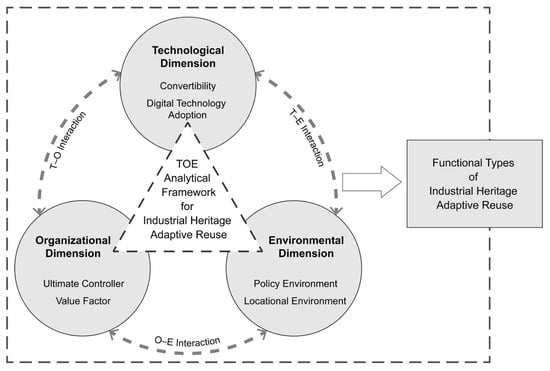
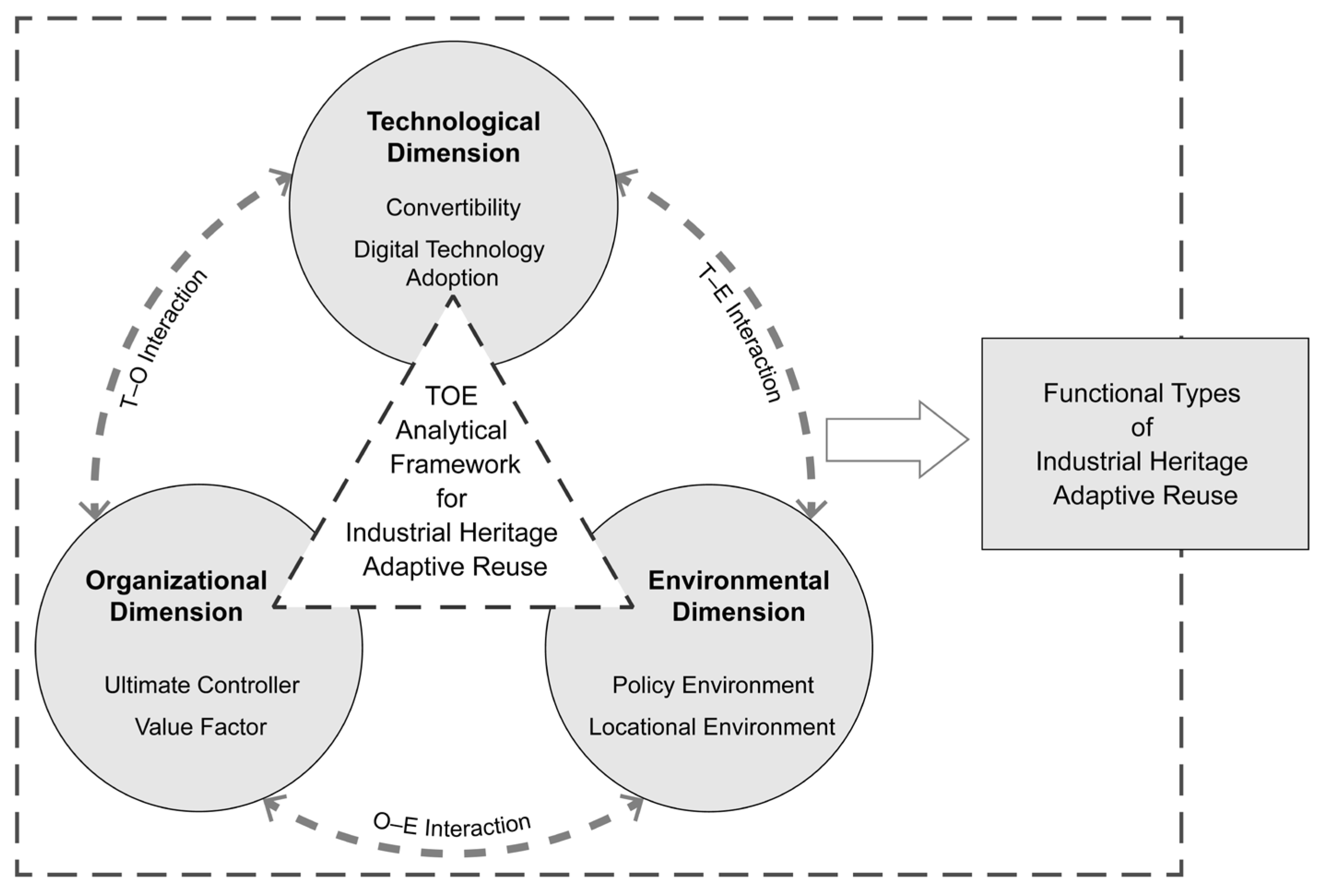
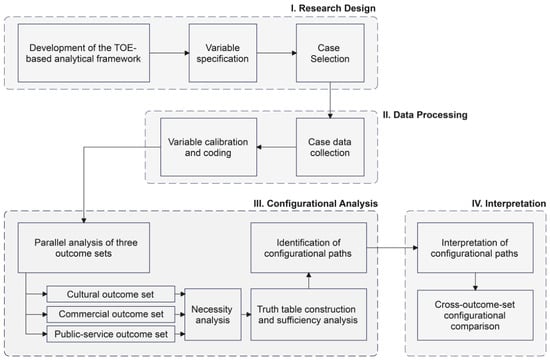
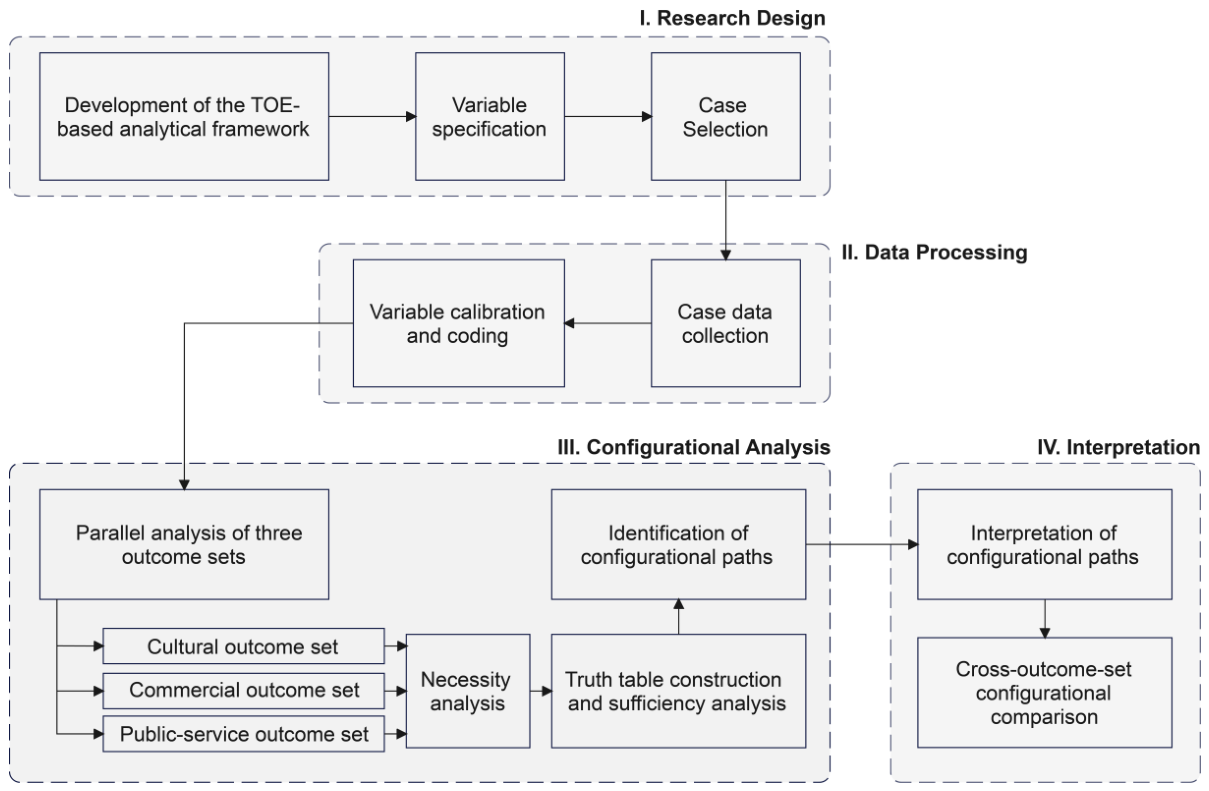
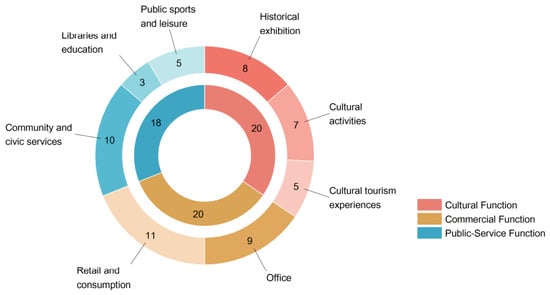
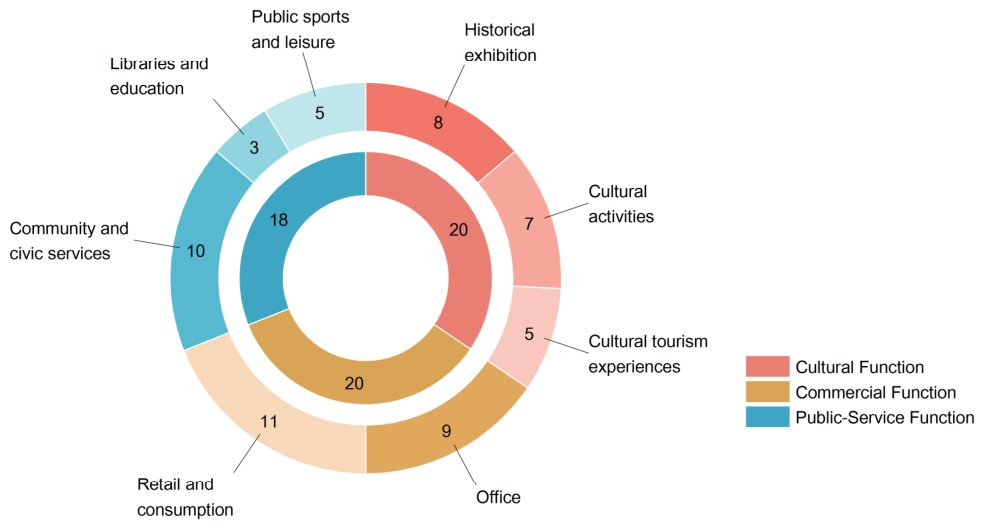
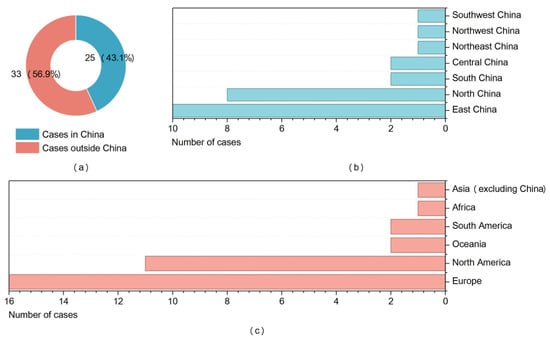
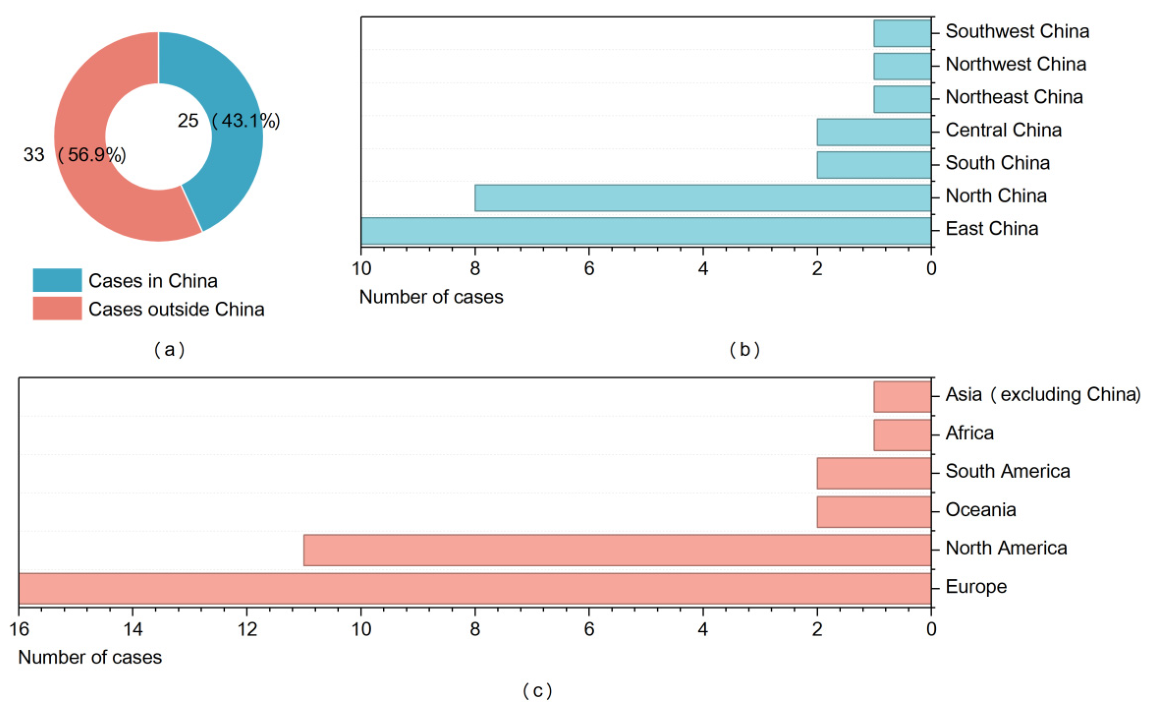

Disclaimer/Publisher’s Note: The statements, opinions and data contained in all publications are solely those of the individual author(s) and contributor(s) and not of MDPI and/or the editor(s). MDPI and/or the editor(s) disclaim responsibility for any injury to people or property resulting from any ideas, methods, instructions or products referred to in the content. |
© 2026 by the authors. Licensee MDPI, Basel, Switzerland. This article is an open access article distributed under the terms and conditions of the Creative Commons Attribution (CC BY) license.