


Abstract
The adaptive reuse of cultural heritage buildings is an important approach that ensures the sustainable preservation of these structures; however, determining appropriate functions requires a systematic evaluation of user preferences. The aim of this study is to identify user preferences regarding the adaptive reuse of cultural heritage buildings and to develop an artificial intelligence-based decision-support model. The evaluation criteria identified through a literature review were validated through a two-round Delphi process involving 30 experts. The final framework consisted of six criteria: social and cultural value, historical value, authenticity value, construction technique, environmental value, and architectural and aesthetic value. Based on these criteria, a survey was conducted on the case of the Salih Sefa Yazar Mansion in Osmaniye, in which 886 participants were reached, and after data cleaning, 844 valid responses were retained to develop a model based on the Random Forest algorithm. The findings indicate that users prioritize social and cultural values and prefer functions that support public use. The model successfully predicted adaptive reuse alternatives such as museums, Art Gallery and cultural house, libraries, cafe-restaurants, and accommodation by evaluating demographic characteristics together with criterion priorities. In addition, scenario-based predictions were conducted using sample user profiles. In conclusion, the study proposes a decision-support approach that integrates expert opinion, user preferences, and artificial intelligence.
1. Introduction
The architectural accumulations and cultural tendencies of different periods play a decisive role in the formation of a city’s identity. Cultural heritage buildings, in which these accumulations are embodied, serve as important carriers that transmit the social, economic, and aesthetic values of past periods to the present. Historic buildings not only reflect the aesthetic and functional characteristics of their own eras but also represent the historical continuity and memory of the city [1,2,3,4]. These cultural heritage elements within the urban fabric convey traces of the past to the present, adding meaning and depth to the contemporary use of cities. Therefore, these values, which build a bridge between the past and the future, are indispensable for preserving the unique character of cities and ensuring sustainable urban development [3]. However, as a result of changing social and cultural contexts, as well as technological developments and transformations in everyday life practices, cultural heritage buildings may gradually become unable to meet contemporary needs. In such cases, in order to ensure the continuity of their transmission to future generations, it becomes necessary to sustain their lifecycle through adaptive reuse [5,6,7,8]. With appropriate conservation and adaptive reuse approaches, the architectural characteristics of these buildings can be preserved while also providing valuable cultural, social, and economic contributions to society.
Thus, cultural heritage buildings can be aligned with contemporary needs and contribute to more sustainable and resilient urban development [9]. Today, many of these structures turn into idle spaces due to a sole focus on preserving their physical existence and the inability to appropriately adaptively reuse them, which constitutes a significant problem for the sustainability of cultural heritage [10]. In this context, it is of great importance to evaluate multiple criteria in an integrated manner in order to ensure the sustainable revitalization of historic buildings through new functions [11,12,13,14,15,16]. International charters and declarations also clearly emphasize that the process of selecting new functions involves numerous criteria that must be addressed within a holistic framework [8]. Indeed, international conservation documents such as the Nara Document, the 2005 Faro Convention, and the 2013 Burra Charter particularly highlight the necessity of multidimensional assessment approaches in the conservation of cultural heritage [9,10,11,12,13,14,15,16,17].
In the literature, different criteria have been defined for the function selection of historic buildings, and it is observed that evaluation criteria in the adaptive reuse process are addressed within a multidimensional framework. In previous studies, Baker et al. [18] emphasized key criteria such as environmental conditions, structural system characteristics, technical properties, and the suitability of the building for the new function in adaptive reuse projects. Similarly, Vardopoulos [19] and Meng and Xiao [20] highlighted that cultural, economic, environmental, and social values should be considered together in the evaluation process. In addition, Jasim and Ismaeel [21] addressed architectural qualities and compatibility with the new function as important evaluation criteria. Mohamed and Marzouk [8], in their studies on the reuse of historic buildings, evaluated architectural, environmental, social, sustainability, construction, aesthetic, and authenticity criteria in an integrated manner. In the study by Putra et al. [22], attention was given to spatial comfort, cultural meaning, aesthetic perception, social interaction, spatial perception and wayfinding relationship with the environment, sensory experience, and sensory attachment criteria.
In the process of adaptive reuse of historic and cultural buildings, multi criteria decision-making (MCDM) methods are widely used in the literature. Since reuse decisions require the simultaneous evaluation of many different criteria, such as the physical condition of the building, structural adequacy, economic sustainability, cultural value, environmental impacts, and user needs, systematic decision-making models are needed in these processes [11,23]. In this context, it is observed that approaches such as the Analytic Hierarchy Process (AHP), DEMATEL, fuzzy TOPSIS, and Geographic Information Systems (GIS)-based methods are frequently preferred. For instance, the AHP method is widely used in evaluating reuse alternatives and prioritizing criteria. Studies in this context have emphasized that in adaptive reuse decisions of historic buildings, economic, social, and environmental criteria should be considered together, and that multi criteria decision-making methods provide effective tools in this process [11,24,25,26]. Similarly, Wang and Zeng [27] state that multi-criteria evaluation models support the decision-making process in sustainable reuse of historic buildings. In addition, the DEMATEL method is preferred in conservation and reuse studies because it reveals cause effect relationships among criteria [28]. The fuzzy TOPSIS method is used in problems involving uncertainty based on expert judgments and provides significant advantages in evaluating alternatives for the reuse of historic buildings [29]. GIS supported analyses are also used as an important tool in the adaptive reuse of historic buildings. Through these systems, environmental relationships, accessibility levels, disaster risks, user density, and spatial location within the urban context can be analyzed spatially [30].
Since most MCDM methods are based on expert opinions or user/participant evaluations, the processes of data collection, assessment, and obtaining results can be time-consuming and costly in terms of implementation. In traditional MCDM methods, the manual construction of pairwise comparison matrices and the subjectivity of expert evaluations are among the main factors that increase both time consumption and cost [31]. In addition, in big data environments, most conventional MCDM tools support only a limited number of alternatives; decision makers are often forced to apply elimination methods to reduce the problem size, which further slows down the process [32]. Therefore, in order to accelerate decision-making processes, facilitate analyses, and more effectively evaluate multidimensional data, the integration of artificial intelligence technologies into adaptive reuse processes has gained importance as a new approach. Artificial intelligence has significant potential in cultural heritage studies due to its ability to analyze large datasets in a short time, simultaneously evaluate relationships between different criteria, and generate learning-based predictions [33]. In particular, in cases where many variables such as user behavior, spatial data, structural analyses, disaster risks, and conservation criteria must be evaluated together, AI-based systems provide a faster and more data driven decision-making capacity [34,35,36].
However, when the literature is examined, it is observed that artificial intelligence-based decision-making models in the adaptive reuse of historic cultural buildings are quite limited. The majority of existing studies focus on traditional MCDM methods and there is a significant gap regarding the integration of artificial intelligence-based data analysis, machine learning, and intelligent decision-support systems into adaptive reuse processes. This situation makes the development of new AI-supported decision mechanisms an important research area both academically and practically. In particular, the integrated use of multi-criteria analysis methods with artificial intelligence may contribute to faster, more sustainable and data driven decision-making processes in the adaptive reuse of historic buildings.
The main objective of the study is to develop a holistic, systematic, and data driven model that can be used in the decision-making process for the adaptive reuse of historic buildings. Within this scope, the evaluation criteria affecting the reuse process were determined through expert opinions using the Delphi method. In order to reduce the time consuming nature of traditional survey and evaluation processes and to accelerate the decision-making process, the obtained data were modeled using Python 3.11-based artificial intelligence-supported analytical methods. The developed model was tested on the Salih Sefa Yazar Mansion, located in the city center of Osmaniye and considered one of the early examples of registered heritage conservation. Thus, the study aims to develop an alternative decision-support approach that contributes to the sustainable preservation of cultural heritage and is capable of producing systematic, consistent, and rapid results in a shorter time by using similar datasets.
2. Materials and Methods
2.1. Study Area
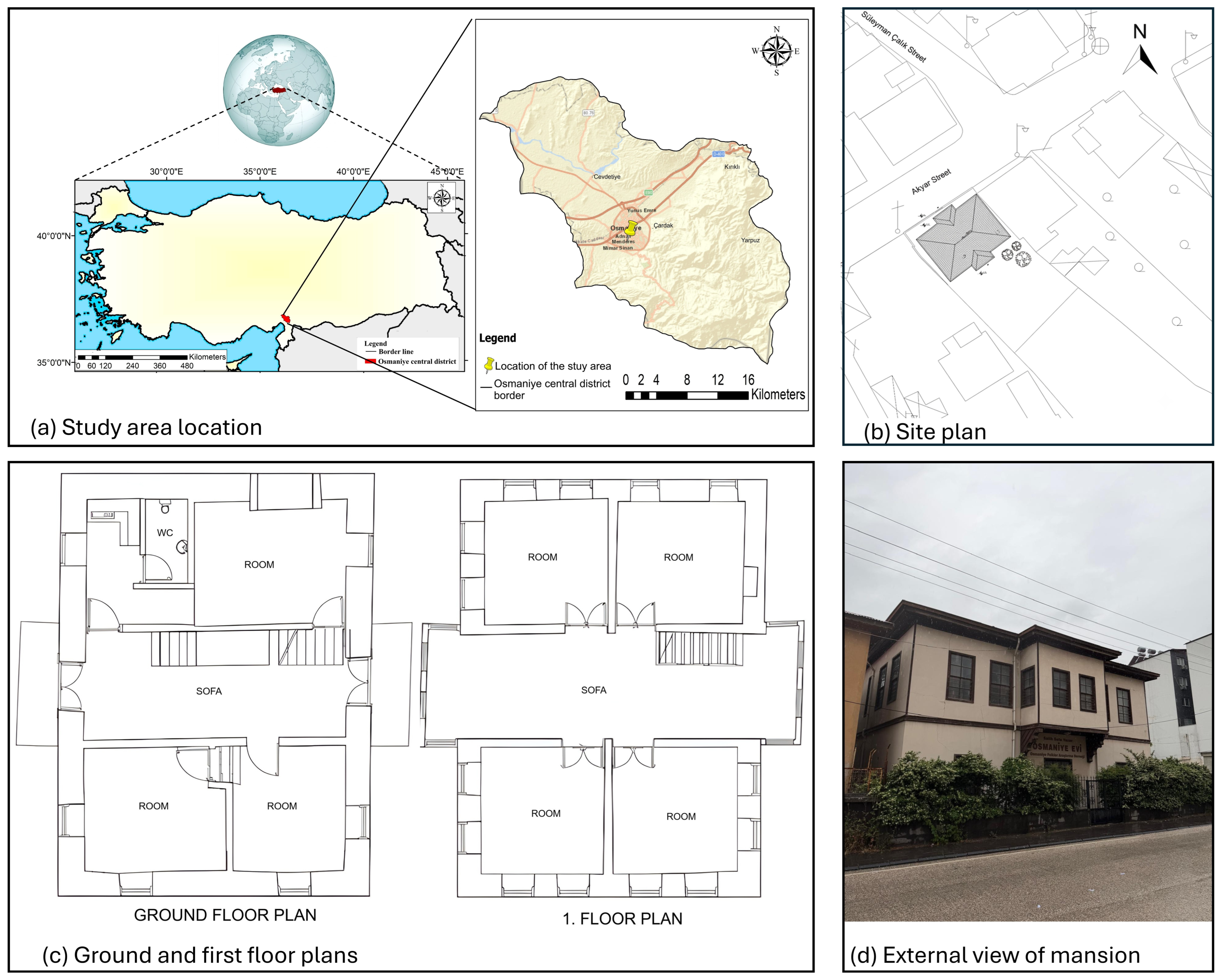
Within the scope of this study, the research material consists of the “Salih Sefa Yazar Mansion,” located in the city center of Osmaniye/Türkiye and considered one of the first registered examples of heritage conservation in the city. The selection of Osmaniye as the study area was influenced by several factors, including its status as a mid-sized city, its limited number of registered cultural heritage assets, and its inclusion among the cities affected by the 2023 Pazarcık Earthquake. In addition, the fact that a significant proportion of the limited number of registered buildings in the city suffered severe damage after the earthquake and remained largely out of use as of 2026 constituted a key justification for selecting the study area.
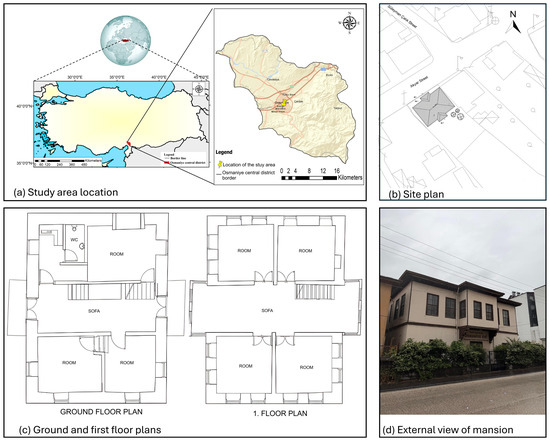
The building is located in the Cumhuriyet Neighborhood of the Central District of Osmaniye Province, on parcel 175 block 15 (currently registered as parcel 49, block 2657) (Figure 1). Although the exact construction date of the building is not precisely known, it is generally accepted based on its architectural characteristics and comparative evaluations with similar period structures that it dates back to the early 20th century. Due to its original architectural features and traditional construction technique, the property was registered as a “protected immovable cultural asset” under the Law on the Conservation of Cultural and Natural Assets No. 2863, by the decision of the Regional Conservation Board dated 12 July 1999 and numbered 3468. Subsequently, in 2008, ownership of the building was transferred to the Municipality of Osmaniye; during this process, documentation and restoration projects were prepared and conservation interventions were carried out. Following the restoration works, the building was repurposed as the “Salih Sefa Yazar Folklore House” in memory of Salih Sefa Yazar and was opened to cultural use. However, after the 2023 Pazarcık Earthquake, the building sustained severe damage and became non-operational due to structural deterioration and physical deformations in the load bearing system, resulting in its abandonment.
Figure 1.
Study area (the floor plans were prepared within the scope of the OKÜBAP-2026-ÜKSP-002 project).
2.2. Method
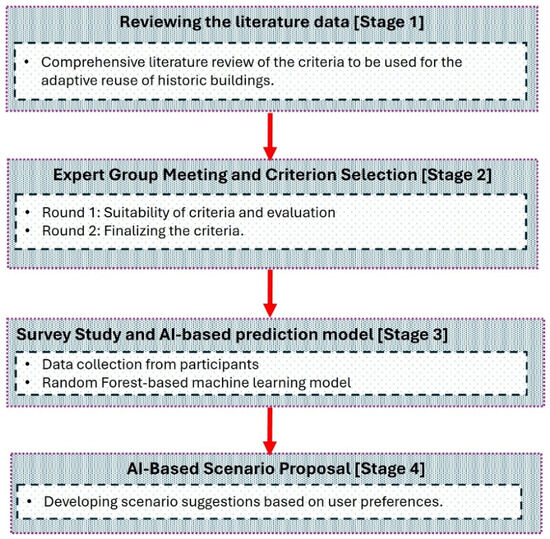
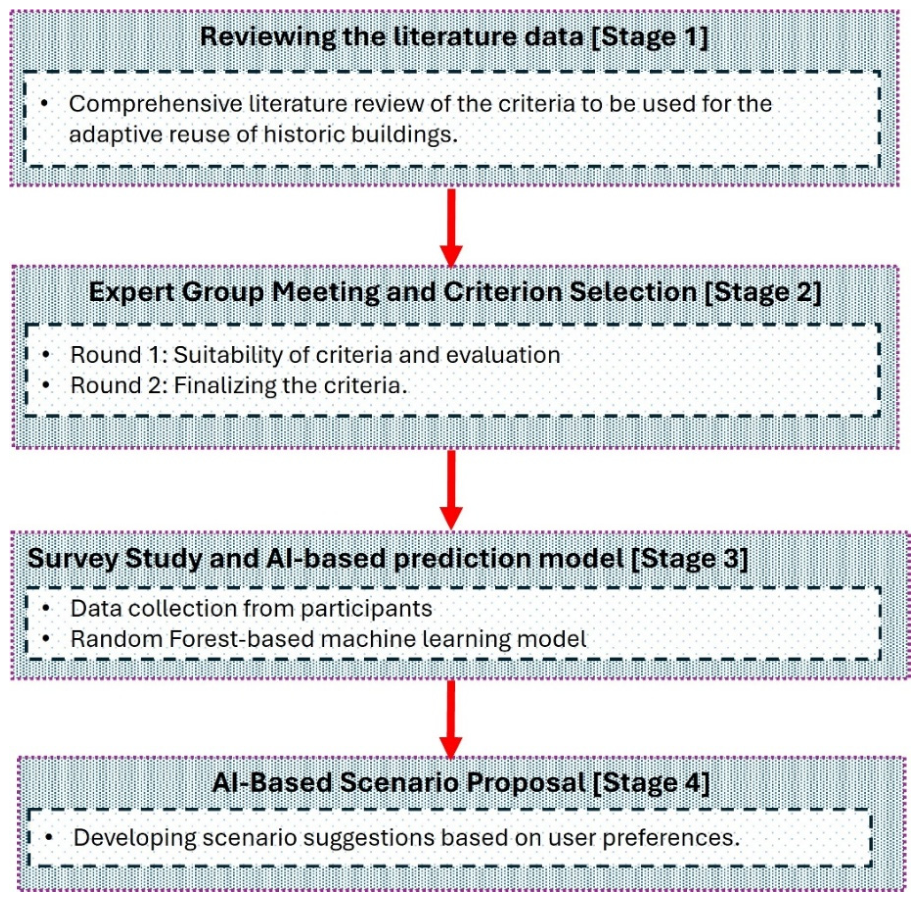
The study, which employed mixed research methods, was conducted in three phases. Figure 2 illustrates the stages of the study and the methods used in each phase.
Figure 2.
Workflow diagram of the study.
In the first phase of the study, a comprehensive literature review was conducted to identify the evaluation and decision-making criteria influencing the adaptive reuse process of cultural heritage buildings. Within this scope, the relevant literature was examined by analyzing conservation, utilization, sustainability, and user-oriented parameters related to the adaptive reuse process.
In the second phase of the study, expert opinions were sought to determine the validity and applicability of the evaluation criteria for the adaptive reuse of cultural heritage buildings identified through the literature review. In this context, surveys were conducted with experts in the field and a multi-stage evaluation process was carried out. The consultations were conducted within the framework of the Delphi Technique, which enables experts to reach a consensus through a systematic and structured process. The Delphi Technique is a scientific method that aims to establish a common consensus by collecting expert opinions through structured questionnaires [37]. Throughout the process, feedback obtained from the experts was analyzed, new survey rounds were prepared, and a controlled feedback mechanism was established.
In the third phase of the study, a survey was conducted to determine user preferences regarding the adaptive reuse of cultural heritage buildings. The user evaluations and preference data obtained within this scope constituted the database of the developed artificial intelligence-based decision-support system. The collected data was used to train the Random Forest machine learning algorithm and the relationships between participants’ demographic characteristics and their priority preferences regarding adaptive reuse criteria were analyzed. Consequently, a predictive model was developed to support decision-making processes related to the adaptive reuse of historic buildings.
2.3. Criteria Selection
For this study, design parameters related to the adaptive reuse of historic buildings reported in the literature were analyzed. In line with the main objective of the research, the question “What are the design and evaluation parameters for the adaptive reuse of a historic building?” was addressed in order to systematically identify the design parameters associated with the adaptive reuse of historic buildings in the literature. Based on the reviewed publications, a total of 20 criteria influencing the successful implementation of adaptive reuse in historic buildings were identified. These parameters, which were evaluated according to their frequency of occurrence in the literature, are presented in Table 1.
Table 1.
Criteria used in the adaptive reuse of historic buildings.
2.4. Delphi Process
The draft evaluation parameters obtained from the literature review were examined and finalized through the Delphi method based on expert opinions. The study was conducted in two rounds and a Delphi panel consisting of experts was established to determine the evaluation parameters for the adaptive reuse of historic buildings.
The selection of expert panelists was considered a critical step in ensuring the scientific reliability of the study, and participants were selected from disciplines related to cultural heritage and conservation, including architecture, restoration, art history, and civil engineering. In the selection process, particular attention was given to including individuals with academic or practical experience in historic buildings and adaptive reuse. Accordingly, purposive sampling was preferred over random sampling, enabling the inclusion of individuals with relevant knowledge and expertise who could directly contribute to the research questions.
Within the scope of the study, the Delphi process was conducted with the participation of a total of 30 experts from different universities and disciplines. Throughout the process, communication with experts was maintained via e-mail and data collection was carried out using questionnaires prepared through Google Forms. Demographic information regarding the expert panelists participating in the Delphi process is presented in Table 2.
Table 2.
Demographic information of the expert group in the Delphi Process.
At the end of the Delphi process, which was completed in two rounds, the final framework of evaluation criteria for the adaptive reuse of cultural heritage buildings was established.
In the first round, the parameters identified through the literature review were evaluated by experts and their opinions were grouped under relevant headings. In this initial round of the Delphi panel, the evaluation parameters defined by the researcher were assessed using a Likert type questionnaire. The second section of the questionnaire consisted of participants’ demographic and personal information, while the third section collected expert opinions on 20 criteria related to adaptive reuse.
In the first round of the Delphi panel, the highest rated parameters included architectural value, environmental value, construction technique, authenticity, historical value, cultural value, sustainability, social value, and contemporary usage requirements.
Among the 30 experts who responded to the recommendations section, 16 indicated that certain criteria required revision. The experts suggested that the accessibility criterion could be evaluated under environmental value, aesthetic value could be considered under architectural value, and sustainability could be examined together with environmental value. Accordingly, in the second round, the relevant parameters were reorganized in line with expert feedback. As a result of these revisions, architectural value and aesthetic value were merged; within architectural value, contemporary usage requirements, spatial comfort, and interior space utilization were also incorporated in a more holistic manner. Social and cultural values were evaluated together, and the environmental value category was restructured to include sustainability and accessibility criteria.
In the second round, the parameters that were approved in the first round and those recommended for revision were reorganized in accordance with expert opinions and resubmitted to the same expert group. In the first section of the second round questionnaire, the first round results were shared with the experts, while the second section collected expert evaluations of the revised criteria. In the second round of the Delphi panel, the highest rated parameters included architectural and aesthetic value, environmental value, construction technique, authenticity, historical value, and social and cultural value. Accordingly, these criteria were defined as the final set of criteria for the study and their detailed descriptions are presented in Table 3.
Table 3.
Final criteria considered for evaluation within the scope of the study.
2.5. Survey Study
The dataset used in this study was obtained from an online survey designed to capture participants’ preferences regarding the post restoration functional assignment of the Salih Sefa Yazar Mansion, as well as the evaluation criteria shaping these preferences.
The study population consists of individuals residing in the central district of Osmaniye Province. The sample size was determined based on a finite population sampling approach in accordance with Krejcie and Morgan [60]. At a 95% confidence level and an acceptable margin of sampling error, the minimum required sample size was calculated as 396 participants. In order to enhance the representativeness of the study, increase participant diversity, and support the training performance of the machine learning model, the data collection process was not limited to the minimum sample threshold; instead, a total of 886 participants were reached through an online survey method.
During the data collection process, the survey was administered via an online questionnaire platform, and after data cleaning, where incomplete, inconsistent, and invalid responses were excluded, a total of 844 valid observations were obtained for analysis. The data collection process was conducted to establish a data driven decision-support framework enabling the modeling of adaptive reuse decisions.
In this context, user evaluations and preference data obtained through the survey were employed to train a machine learning algorithm, and a predictive model was developed for the functional assignment of historic buildings. Thus, the study aimed to construct a dataset that forms the basis of an artificial intelligence-supported decision-making approach, which can serve as an alternative to traditional evaluation processes and be applied to similar historic buildings in adaptive reuse studies.
The questionnaire consists of three sections. The first section includes information on the participants’ demographic characteristics. The second section comprises a preference scale in which six evaluation criteria related to the building are ranked according to their level of importance. The third section of the questionnaire includes participants’ preferences regarding the post restoration functional assignment of the mansion. The three sections were administered to all participants in this fixed order. The criterion-ranking task and the function-preference question were presented as separate and independent items in the questionnaire. The questionnaire did not include any suggested correspondence between specific criteria and specific functions, nor did it include any rule linking a given ranking to a particular function. The criterion rankings and the function preference therefore constitute two independent self-reports provided by each participant.
Within the scope of the machine learning model developed in this study, participants’ demographic characteristics and their priority rankings of the evaluation criteria were used as independent variables, while the intended post restoration functional assignment of the historic building was considered as the dependent variable to be predicted.
The independent variables are grouped into two categories. The first group consists of three demographic variables: gender (female/male), age (18–25, 26–35, 36–45, 46–55, ≥55 years), and educational level (primary school, middle school, high school, undergraduate, graduate). The second group comprises six evaluation criteria ranked by participants according to their level of importance: Construction technique, Historical Value, Authenticity, Social and Cultural Value, Architectural and Aesthetic Value, and Environmental Value.
The dependent variable is the functional category assigned by participants to the building after restoration. This variable is nominal in scale and consists of five categories: Cafe-Restaurant, Art Gallery and Cultural House, Accommodation, Museum and Library.
The raw data collected from the questionnaire were subjected to several stages of processing before being input into the machine learning model. In particular, a preprocessing stage was carried out through the numerical encoding of the obtained data.
- Numerical Encoding: The gender variable was converted into numerical form using binary label encoding (0/1), while the age and education variables were transformed into numerical form using ordinal encoding (age: 0–4, education: 0–4). The criteria were presented in ranked order within the questionnaire. To express this ranking numerically, the Borda count method was employed. The Borda count is a method that transforms ordinal preferences into numerical scores, enabling comparison of alternatives and aggregation into a single ranking [61]. Accordingly, the ordinal ranking information of the criteria was converted into scores and prepared for input into the machine learning model. A higher Borda score indicates a participant who assigns greater importance to a given criterion, whereas a lower score represents a participant who ranks that criterion lower in priority.
- Dependent variables were converted into numerical form using label encoding.
As a result of these transformations, the feature space fed into the model consists of a total of nine features, including three demographic variables and six criterion-based Borda score variables. After the data preprocessing stage, the processed dataset was first split into training and testing sets with an 80–20% ratio. Accordingly, 80% of the data were used for model training and analysis. The resulting predictions were then compared with the remaining 20% test data, and the prediction accuracy was evaluated based on this comparison. Given the class imbalance, the model was trained with inversely proportional class weights (class_weight = ‘balanced’), and balanced accuracy was reported alongside overall accuracy, with the majority-class proportion serving as the baseline reference.
2.6. Machine Learning Model: Random Forest
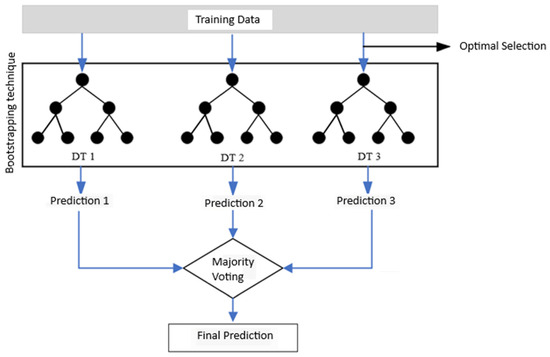
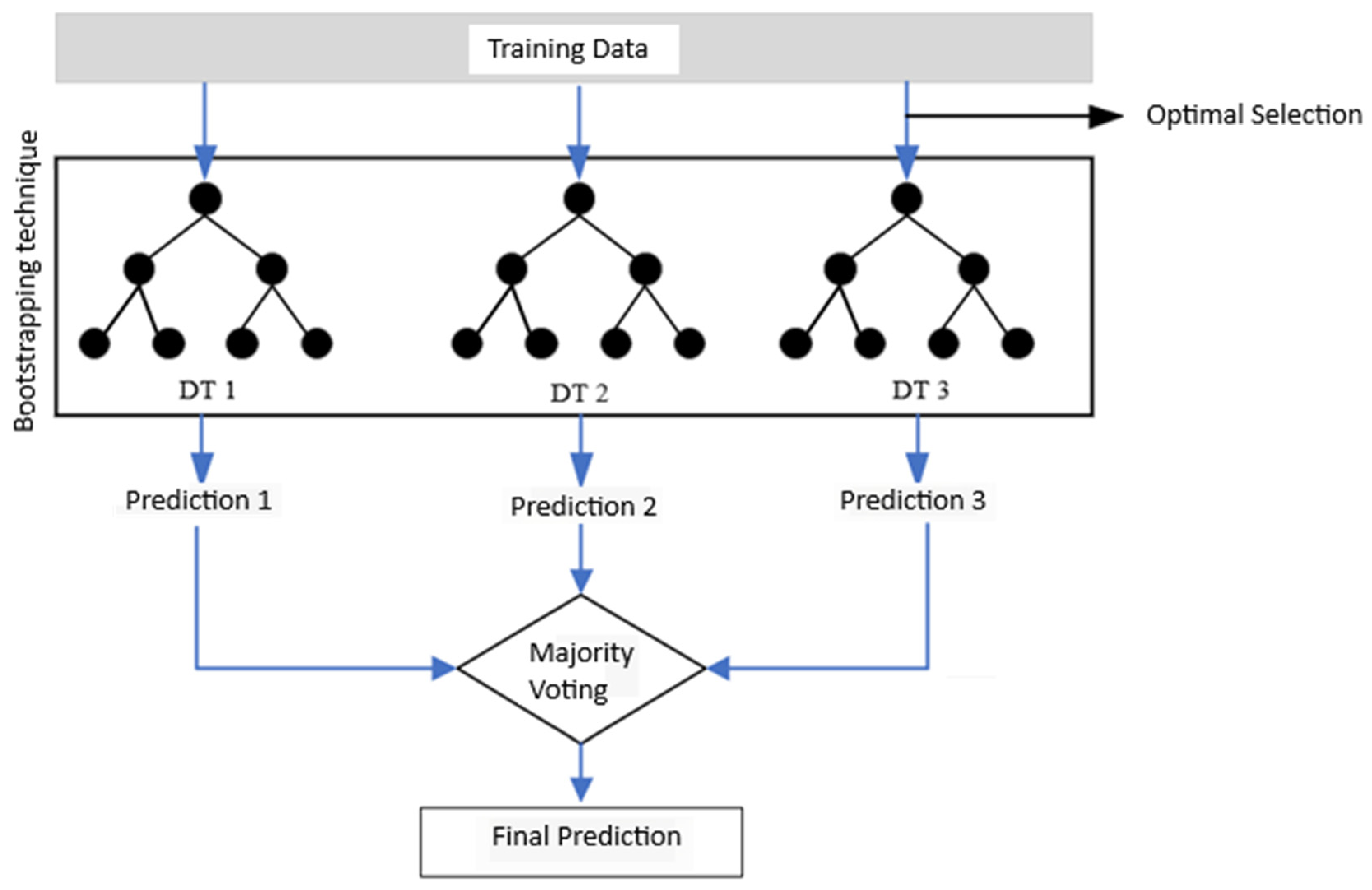
In this study, the Random Forest (RF) machine learning model was selected as the classification algorithm. Random Forest is an ensemble learning method that operates by aggregating the predictions of multiple decision trees [62]. The method is well matched to the structure of the present data: it natively handles the mixed ordinal and categorical predictors used here without feature scaling or distributional assumptions; it captures non-linear effects and interactions between demographic attributes and criterion priorities that linear models such as multinomial logistic regression cannot represent without explicit specification; its bootstrap aggregation and random feature subspace mechanisms provide inherent protection against overfitting at moderate sample sizes; and it produces feature importance estimates, allowing the model to serve the study’s interpretive aim of identifying the criteria that most strongly differentiate functional preferences. Random Forest was benchmarked in preliminary experiments against Gradient Boosting, an RBF-kernel support vector machine, k-nearest neighbors, and multinomial logistic regression under an identical stratified cross-validation protocol, and achieved the highest cross-validated balanced accuracy; it was therefore retained for hyperparameter optimization and final evaluation. As illustrated in Figure 3, the RF algorithm combines multiple decision trees into a single model, thereby improving the robustness and performance of decision trees through a non-parametric approach [63].
Figure 3.
Schematic representation of the RF algorithm.
A Random Forest classifier was employed to predict Preferred Function from nine predictors: three demographic variables (gender, age group, and education level) and six Borda-count scores derived from each participant’s ranking of the six conservation criteria (architectural, social, environmental, authenticity, historical, and construction value). Age and education were encoded as ordinal variables using predefined category mappings, and gender was encoded as a categorical variable with missing entries assigned to a separate “unknown” category. Criteria left unranked by a respondent received a Borda score of zero, reflecting that an unranked criterion contributes no points; no data driven imputation was applied. As all preprocessing steps were deterministic, fixed transformations that estimate no parameters from the data, they carried no risk of information leakage across cross-validation folds. The model was implemented in Python 3.11 using the scikit-learn (version 1.8.0), pandas, NumPy, and SciPy libraries. Hyperparameters were tuned using random search (RandomizedSearchCV, 40 iterations) over the number of trees (n_estimators), maximum tree depth (max_depth), the minimum number of samples required to split a node (min_samples_split), the minimum number of samples per leaf (min_samples_leaf), and the number of features considered at each split (max_features), then the optimal configuration was selected based on 10 fold stratified cross validated balanced accuracy.
After the machine learning models were developed, k-fold cross validation was applied to determine whether the models were random and to reduce potential bias in the data [64]. In this study, 10-fold cross validation was employed in order to obtain an optimal variance, as recommended in the literature [65].
In 10-fold cross validation, the dataset is divided into 10 subsets (folds). At each iteration, one fold is used as the validation set while the remaining nine folds are used as the training set. This process is repeated 10 times so that each fold serves once as the validation set. The final cross-validation performance is obtained by averaging the accuracy values calculated across all folds. Hyperparameters were optimized by random search (RandomizedSearchCV, 40 iterations) with 10-fold stratified cross-validation performed exclusively on the training set, using balanced accuracy as the selection criterion. The search space comprised the number of trees (100–500), maximum tree depth (unrestricted, 5–20), minimum samples required to split an internal node (2–10), minimum samples per leaf (1–4), and the number of features considered at each split. The optimal configuration consisted of 200 trees, a maximum depth of 10, a minimum of two samples per split, and two samples per leaf. Rather than a fully nested cross-validation design, an equivalent safeguard was adopted: all model selection was confined to the training set, and generalization performance was estimated once on the held out test set, which played no role in tuning. The consistency between the cross validated balanced accuracy of the selected model and the held-out test performance indicates that the reported results are not an artifact of hyperparameter selection.
2.7. Model Evaluation Metrics
The performance of machine learning models varies depending on the quality and characteristics of the training and test data. Within the scope of this study, it is necessary to evaluate the performance of the Random Forest machine learning model used to predict the functional assignment of the historic building based on participants’ responses. Accordingly, model evaluation metrics including accuracy, precision, recall, and F1-score were adopted. These metrics are calculated using the formulas presented below, where TP denotes True Positive, TN denotes True Negative, FP denotes False Positive, and FN denotes False Negative.
Accuracy Score: The accuracy score represents the percentage of correctly predicted instances out of all predictions made. It is calculated using the following equation.
Precision: The precision metric indicates how many of the instances predicted as positive are actually positive. This measure reflects how “precise” or “careful” the classification model is in identifying positive cases. It is calculated using the following equation.
Recall: This metric indicates how many of the actual positive instances are correctly predicted as positive by the model. It measures how “sensitive” the classification model is in identifying positive cases. It is calculated using the following equation.
F1 score: The F1 score is defined as a measure of the overall balance between precision and recall. It is the harmonic mean of precision and recall and evaluates both metrics simultaneously. The F1 score is calculated using the following equation.
3. Findings
In this section, the demographic characteristics of the 844 participants included in the study and their evaluations regarding the most appropriate post restoration function of a historic building are analyzed. By examining participants’ usage preferences and tendencies considered in determining the function to be assigned to the mansion, user-oriented approaches to the adaptive reuse process are presented. In addition, a Random Forest-based machine learning model was employed to predict participants’ functional preferences, thereby analyzing the effects of demographic characteristics and usage tendencies on functional selection.
When the demographic data of the participants are examined, it is observed that the sample exhibits a relatively balanced distribution in terms of gender, age, and educational level. Regarding gender distribution, 425 of the 844 participants (50.4%) were female, while 419 (49.6%) were male, indicating a nearly equal representation of both groups within the sample.
In terms of age distribution, all age groups are represented at relatively similar proportions. The highest participation rate was observed in the 26–35 age group (n = 187, 22.2%), followed by the 36–45 age group (n = 172, 20.4%). The lowest representation was found in the 55 years and above group (n = 155, 18.4%); however, the relatively small differences among age groups indicate a balanced age distribution within the sample.
Regarding educational level, the largest group consists of high school graduates (n = 202, 23.9%). Participants with postgraduate education rank second (n = 192, 22.7%), followed by primary school graduates (n = 179, 21.2%). Middle school graduates account for 16.7% (n = 141), while university graduates represent the lowest proportion with 15.4% (n = 130). Overall, it can be concluded that different educational levels are relatively well represented within the sample (Table 4).
Table 4.
Distribution of participants according to their demographic characteristics.
As shown in Table 5, the preferences regarding the post restoration functional use of the historic building are relatively evenly distributed across five alternatives. The most preferred function is “Cafe-Restaurant” (n = 200, 23.7%). This is followed by “Art Gallery and Cultural House” (n = 181, 21.4%) and “Accommodation” (n = 161, 19.1%). The “Library” option emerges as the least preferred function (n = 145, 17.2%).
Table 5.
Distribution of Participants by Preferred Function.
Participants were asked to rank the six criteria they considered while evaluating the appropriate post restoration function of the mansion in order of importance (1 = most important, 6 = least important). Table 6 presents the mean rank values, standard deviations, and frequency of first rank selection for each criterion.
Table 6.
Descriptive statistics of the criteria and frequency of being selected as the first ranked option.
When the findings presented in Table 6 are examined, it is observed that the Social criterion has the lowest mean rank value (M = 3.05), indicating that it is perceived as the most important factor by the participants. The Social criterion is followed by the Construction and Environmental criteria, respectively. In contrast, the Historical criterion (M = 4.15), which has the highest mean rank value, appears to be relatively less prioritized in participants’ evaluations.
In terms of first rank selection frequency, the Social criterion was placed in the first position by 185 participants (21.9%). The Architectural criterion ranks second, with 178 participants (21.1%) assigning it as the most important factor.
As a noteworthy finding, the Environmental criterion was ranked first by only 29 participants (3.4%); however, its standard deviation (1.34) is considerably lower compared to the other criteria. This indicates that the Environmental criterion was evaluated at a relatively similar importance level by the majority of participants, predominantly positioned in the middle ranks.
To determine whether the observed demographic differences in function preference are statistically significant rather than descriptive artifacts, Pearson chi-square tests of independence were conducted between each demographic variable and the preferred function, and Cramér’s V was reported as a measure of effect size. All three demographic variables were significantly associated with the preferred function: age (χ2 = 2070.88, df = 16, p < 0.001, Cramér’s V = 0.78), educational level (χ2 = 1913.78, df = 16, p < 0.001, Cramér’s V = 0.75), and gender (χ2 = 137.12, df = 4, p < 0.001, Cramér’s V = 0.40). Age and educational level exhibited very large effect sizes, whereas the association for gender, although statistically significant, was comparatively weak. These results confirm that the relationship between demographic characteristics and function preference is statistically robust and are fully consistent with the feature-importance ranking of the Random Forest model, in which age and education were the most influential demographic variables and gender the least.
Overall, it can be concluded that the sample prioritizes social benefits and functional attributes along with architecture related values when determining criteria importance, whereas historical significance and contextual factors are relatively less influential. This finding suggests that participants tend to prioritize tangible social use potential over abstract conservation values in the adaptive reuse of historic buildings.
4. Random Forest Analysis Results
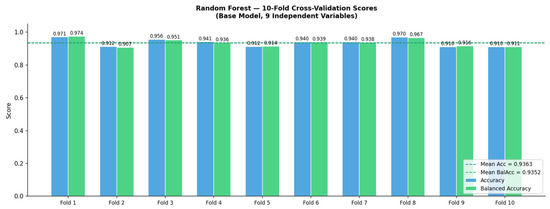
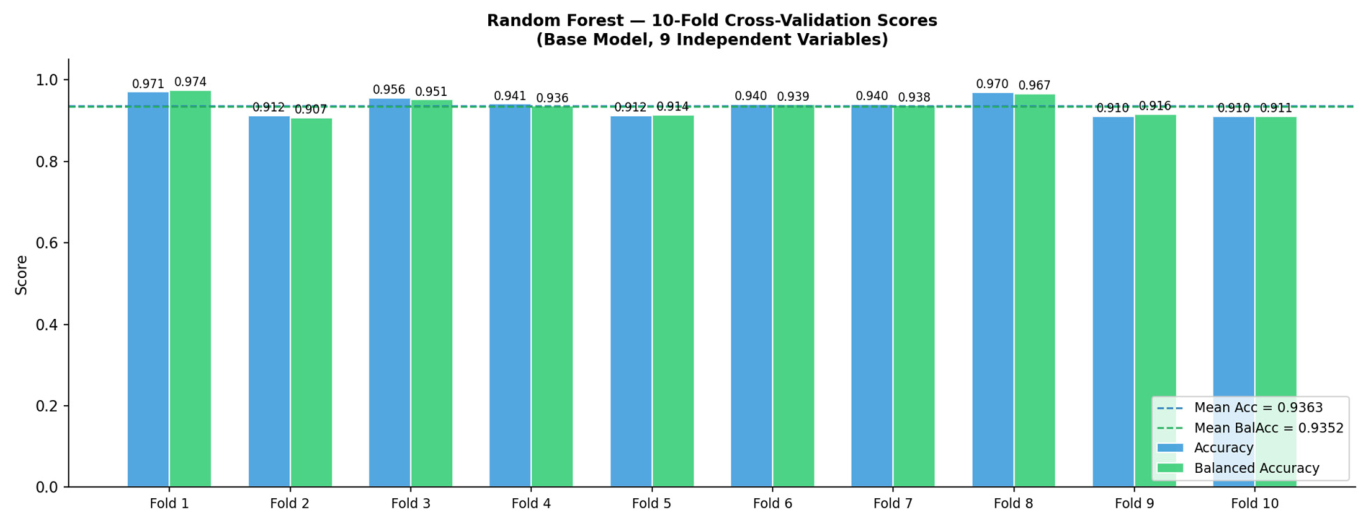
The 10-fold cross-validation results of the Random Forest machine learning model used to predict functional selection for the adaptive reuse of a historic building are presented in the figure. The accuracy values for each fold generally range between 0.90 and 0.97 and the mean accuracy and mean balanced accuracy were found to be very close to each other. This indicates that class imbalance in the collected dataset is minimal (Figure 4).
Figure 4.
Fold cross-validation (CV) results.
The overall mean results obtained from the analysis are presented in Table 7. Accordingly, the Random Forest model achieved an average cross-validation accuracy of 0.9363 and an average balanced accuracy of 0.9352. For the independent test set, the accuracy reached 0.9586, while the balanced accuracy was 0.9569. These results indicate that, despite potential class imbalance, the model demonstrates consistent performance across all classes.
Table 7.
Random forest hyperparameter optimization results.
The optimal hyperparameter settings corresponding to these results were determined as 200 decision trees (n_estimators), a maximum tree depth of 10 (max_depth), feature selection based on the square root of the total number of variables at each split (max_features = sqrt), and minimum sample constraints of 2 for node splitting and leaf nodes (min_samples_split = 2, min_samples_leaf = 2). The close correspondence between cross-validation and test performance indicates that the model does not suffer from overfitting and exhibits strong generalization capability to unseen data. To further confirm that the model did not overfit despite a relatively small training set of 675 observations, the model structure was examined. Although the maximum tree depth was limited to 10, the trees actually reached a depth between 8 and 10 (average 9.8), and each tree contained an average of 48 terminal nodes; this meant approximately 14 training observations per leaf—a number well above the minimum leaf constraint of two leaves. This indicates that terminal nodes aggregated multiple observations rather than isolating individual cases. Consistent with this, the difference between training and test accuracy was only 0.019 (0.978 vs. 0.959). Together with the close alignment between cross-validation and test performance, these structural and empirical indicators confirm that the model generalizes well and does not overfit the training data.
Table 8 presents the class-based performance of the Random Forest model on the test set consisting of 169 samples, using precision, recall and F1-score metrics. The overall accuracy is 0.96, indicating that the model achieves a high level of predictive performance across all categories. At the class level, the Museum (F1 = 0.98) and Art Gallery and Cultural House (F1 = 0.99) classes emerge as the best separated categories, both achieving perfect precision values of 1.00. This indicates that no false positive predictions were generated for these classes. In contrast, the Library class exhibits comparatively lower precision (0.90) and recall (0.93), making it the weakest performing category in terms of separability. This may be attributed to partial feature overlap with other indoor service-oriented classes such as Cafe-Restaurant and Accommodation. The Cafe-Restaurant (F1 = 0.96) and Accommodation (F1 = 0.94) classes show balanced precision and recall values, suggesting that false positives and false negatives occur at similar rates, with no systematic bias toward over or under prediction for these categories. Overall, the fact that F1-scores remain above 0.92 across all classes demonstrates that the model has strong generalization capability not only for dominant classes but also for relatively less represented categories, making it a reliable solution for the multi class classification problem. The metrics per class in the Random Forest classification results in this table are given as macro-averages. The number of class supports in the test set ranges from 29 to 40; the weighted average is 0.96.
Table 8.
Random forest classification results.
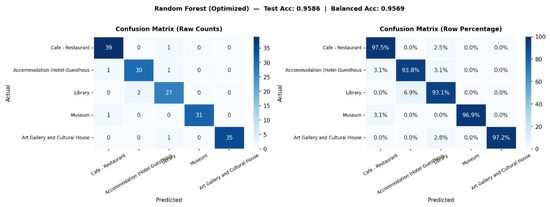
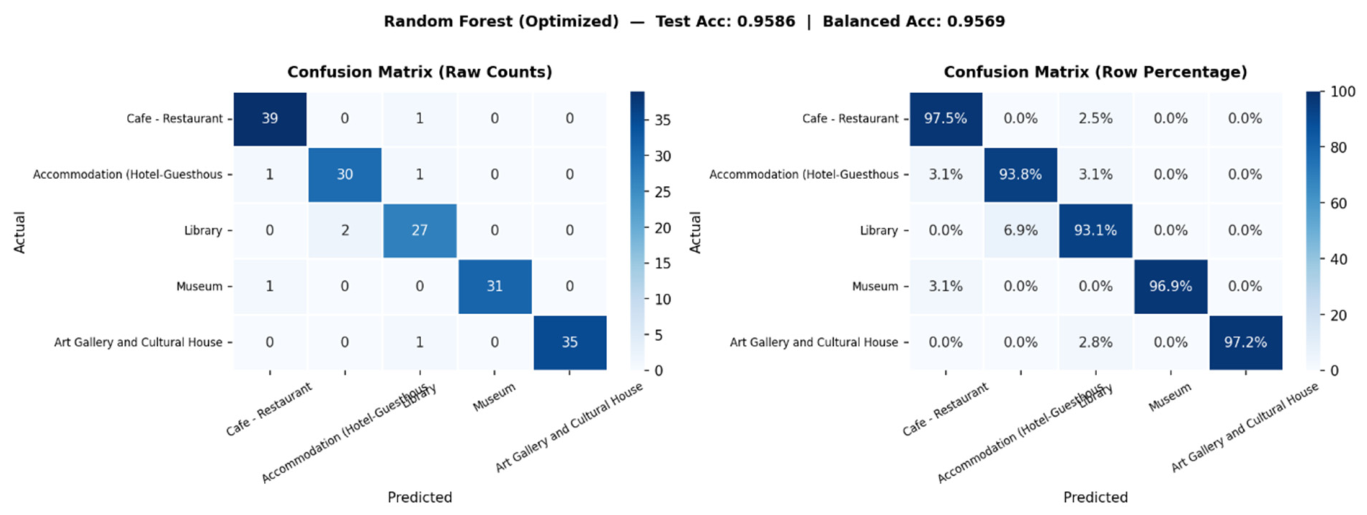
When examining the confusion matrices in the figure, it is observed that, according to the prediction results obtained with the Random Forest model, the model generally predicts the functions correctly. However, it is also seen that, to a limited extent, functions that are actually libraries are predicted as accommodation, while functions that are actually accommodation and museums are predicted as cafe-restaurants (Figure 5).
Figure 5.
Confusion matrix.
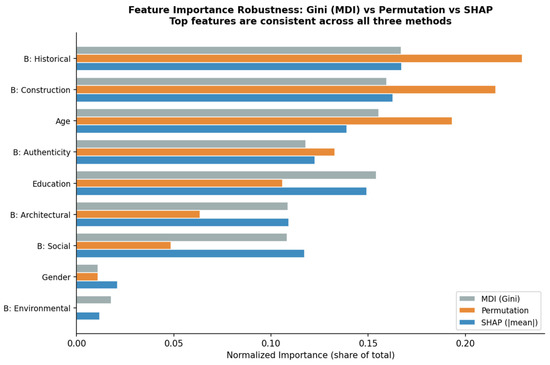
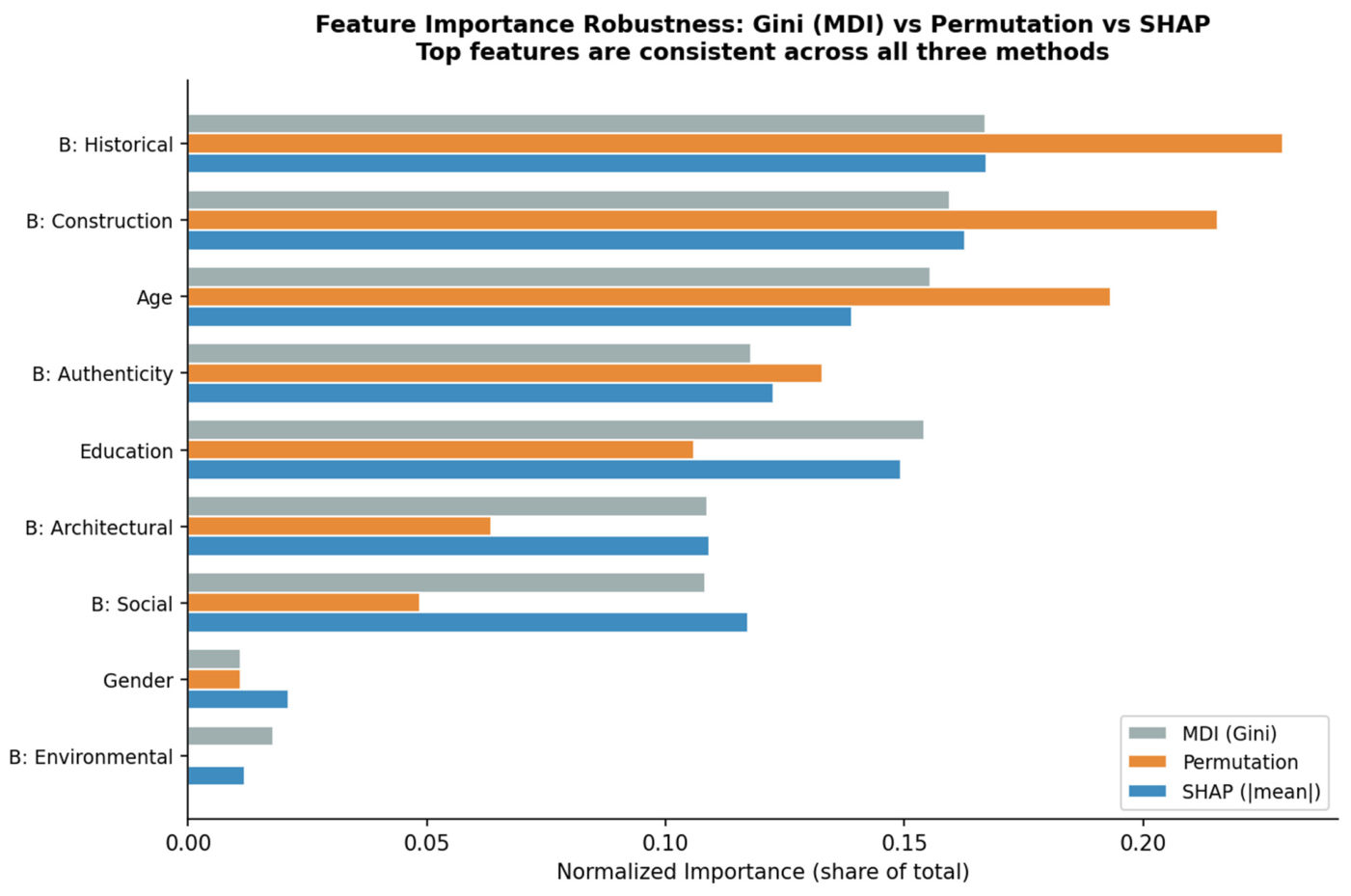
The Random Forest model used for predicting the function of a historic building demonstrated a high prediction performance. Figure 6 presents the feature importance of the Random Forest model computed with three complementary methods: the Gini-based Mean Decrease Impurity (MDI), permutation importance obtained on the held-out test set, and mean absolute SHAP values. Because the Borda scores are derived from a ranking task and are therefore compositional, and because MDI is known to favor such correlated predictors, permutation importance and SHAP were included as robustness checks that do not share this bias. The three methods yield a highly consistent picture. The Historical Value criterion is identified as the most influential variable by all three methods, followed by the Construction Technique and Structural System criterion in second place. Participant age and education level, together with the Authenticity criterion, constitute the next tier of importance, whereas the Environmental Value criterion and participant gender are consistently ranked as the least informative variables under every method; the permutation importance of Environmental Value is effectively null. The agreement of the ranking across MDI, permutation importance, and SHAP indicates that the dominance of the Historical Value criterion is a genuine property of the model rather than an artifact of the Gini criterion or of the compositional nature of the Borda scores.
Figure 6.
Feature importance of the Random Forest model under three methods—Mean Decrease Impurity (Gini), permutation importance, and mean absolute SHAP values.
5. Discussion
The findings obtained from the study reveal that user preferences regarding the adaptive reuse of historic buildings are shaped not only by physical conservation criteria but also by social usage expectations and space experience-oriented approaches. When the participants’ criterion rankings are examined, social and cultural values are found to have the highest priority, while historical value is relatively lower in priority. This indicates that users perceive cultural heritage buildings not merely as physical assets to be preserved, but as living spaces with the potential for public use. Similarly, many studies emphasize that social use and user participation are decisive factors in the sustainability of cultural heritage buildings [6,11]. In the adaptive reuse approach, it is also stated that integrating buildings into social life, in addition to their physical preservation, is of critical importance [23].
When the reuse preferences are examined, the fact that the cafe-restaurant function has the highest preference rate reveals that users value the integration of historic buildings with everyday life. The relatively high preference for public cultural functions such as art galleries and cultural houses suggests that cultural heritage buildings are perceived as spaces of social interaction and cultural production. This finding indicates that users place importance on social accessibility and active use potential in the adaptive reuse process. Indeed, it has been stated that prioritizing public-oriented functions in cultural heritage buildings enhances their sustainability and strengthens the sense of social belonging [66,67]. In this context, it becomes increasingly important to accurately analyze user tendencies and systematically integrate them into decision-making processes. However, function selection decisions in cultural heritage buildings are often shaped by traditional administrative approaches, and user expectations are not sufficiently taken into account. In particular, in Türkiye, the limited use of user centered and data driven analyses in the function selection processes of historic buildings may lead to inappropriate or unsustainable reuse practices in some cases. Although MCDM methods used in the literature to support decision making processes provide significant contributions, their complexity, dependence on expert judgment, and limited accessibility to large user groups constitute important disadvantages [28,68]. In addition, the time consuming nature of data collection, evaluation, and analysis processes makes it difficult to widely apply these methods in practice. In contrast, artificial intelligence and machine learning-based methods offer significant advantages in that they can analyze large datasets in a short time, evaluate user tendencies in a multidimensional manner, and accelerate decision-making processes. In particular, algorithms such as Random Forest can operate with high accuracy in complex data structures and systematically reveal the variables influencing user preferences. This contributes to the development of faster, data driven, and user centered decision-support systems in the adaptive reuse of cultural heritage buildings.
The model performance results obtained in the study also support the applicability of the proposed approach in the field of cultural heritage. The fact that the Random Forest model achieved high accuracy values in both cross-validation and independent test sets indicates that user preferences contain specific patterns and that these patterns can be successfully modeled using machine learning methods. In particular, the closeness of the balanced accuracy values to the overall accuracy results demonstrates that the model exhibits a balanced predictive performance across classes and is not significantly affected by class imbalance. Moreover, the similarity between cross-validation and test performance indicates that the model does not suffer from overfitting and has a high generalization capacity. This finding is consistent with studies demonstrating that the Random Forest algorithm performs strongly in complex decision structures and multivariate datasets [61,69]. In particular, it has been observed that machine learning-based methods are increasingly being used as decision-support systems in cultural heritage and built environment studies in recent years [70].
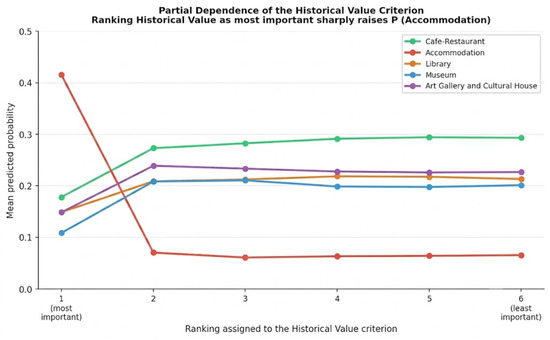
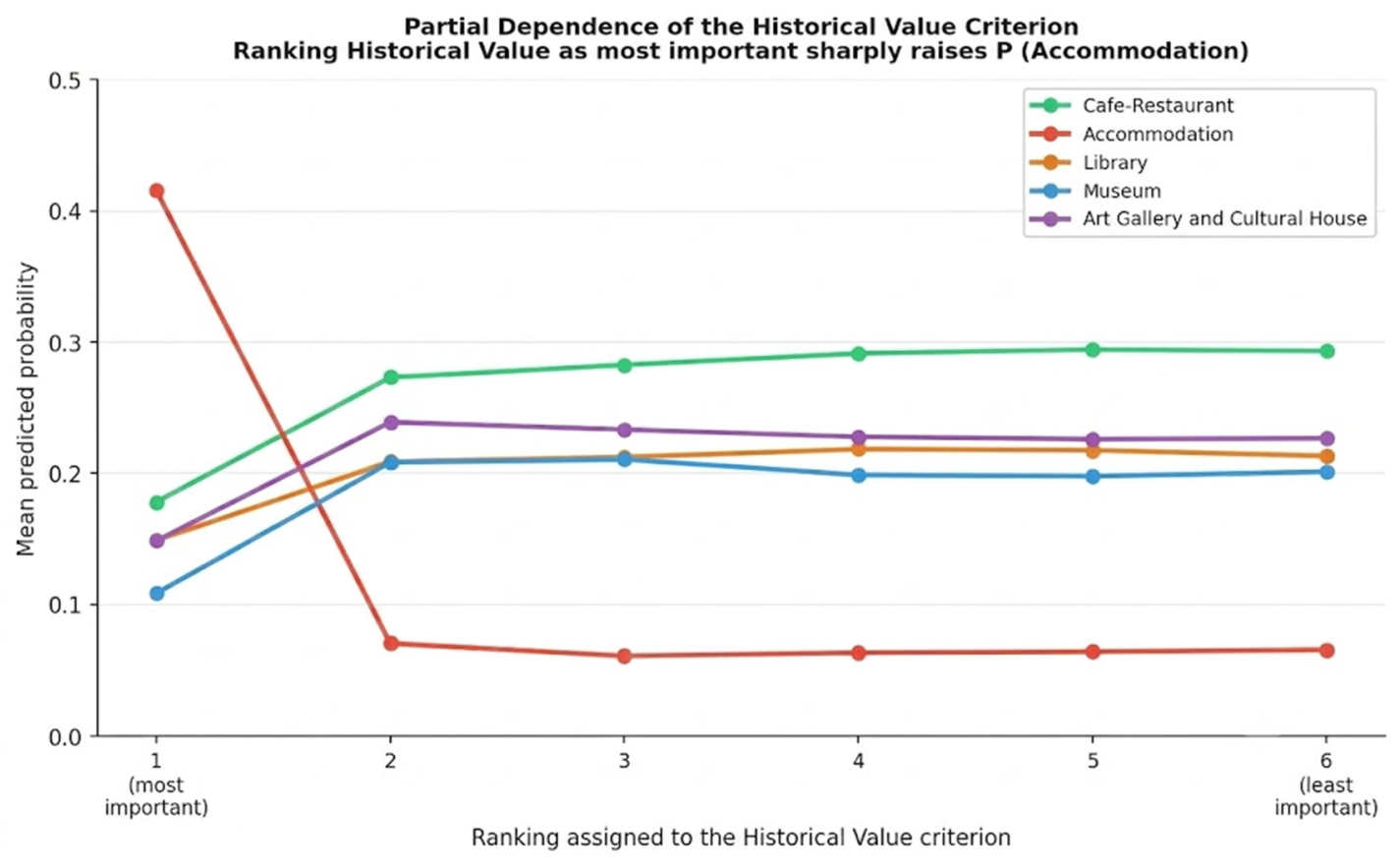
According to the feature importance analysis, the most influential variable in the model’s decision mechanism is the Historical Value criterion. At first sight this is paradoxical, since participants ranked Historical Value relatively low on average (mean rank 4.15). To clarify this apparent contradiction, a partial-dependence analysis was conducted in which the Historical Value score was varied across its full range while the remaining features were held at their observed values (Figure 7). The analysis shows that the influence of Historical Value is concentrated entirely in its highest rank. For all ranks other than the first, the predicted class probabilities remain almost flat; however, when a participant ranks Historical Value as the single most important criterion, the predicted probability of the Accommodation function rises sharply from approximately 0.06 to approximately 0.42, with corresponding decreases in the other functional categories. This resolves the paradox: although Historical Value is de-prioritized by most participants, the minority who place it first almost deterministically prefer the Accommodation function. The importance of this criterion in the model therefore reflects a highly informative minority pattern rather than an average effect, indicating that conservation-oriented priorities exert a strong but conditional influence on adaptive reuse preferences. In addition, the influence of demographic variables such as age and education level indicates that adaptive reuse decisions are related not only to spatial characteristics but also to user profiles, which is consistent with studies emphasizing the importance of multi-criteria decision-making approaches in adaptive reuse processes [51,71].
Figure 7.
Partial-dependence plot of the Historical Value criterion.
In order to demonstrate the application potential of the machine learning model developed in the study, scenario-based predictions were conducted using sample user profiles. Within this scope, different demographic characteristics and criterion priorities were defined as inputs to the model, and the possible adaptive reuse preferences corresponding to the resulting combinations were evaluated. Thus, by analyzing how the model generates decisions according to different user tendencies, its applicability as a user centered decision-support system in the adaptive reuse process of historic buildings was discussed (Table 9).
Table 9.
Function prediction results of the proposed model across 20 scenarios.
In each scenario, the criteria are ranked from 1 (most important) to 6 (least important) in order of importance. Abbreviations in the table: F = Female, M = Male, Soc = Social and Cultural Value, Con = Construction Technique, Env = Environmental Value, Arch = Architectural and Aesthetic Value, Aut = Authenticity Value, His = Historical Value.
The 20 scenarios presented in Table 9 demonstrate that the model evaluates demographic characteristics together with participants’ criterion prioritizations and consequently tends toward different functional categories. The hypothetical scenarios presented in this study are intended solely to demonstrate the predictive capability of the proposed model. They represent model generated outputs and should not be interpreted as validated recommendations. Future studies may strengthen the practical applicability of the model by incorporating validation through stakeholders and domain experts.
When the scenarios are examined, it is observed that participants who prioritize the Social and Cultural Value criterion are predominantly directed toward Museum, Art Gallery and Cultural House, and Cafe-Restaurant functions. The prominence of socially-oriented and publicly accessible functions, particularly among young and middle aged participants, indicates that cultural heritage buildings are perceived as living spaces that interact with society. This finding reveals that in adaptive reuse processes, users attach importance not only to the preservation of the building but also to functions that enable participation in social life.
In scenarios where Architectural and Aesthetic Value and Authenticity Value are prioritized, the model predominantly predicts Art Gallery and Cultural House, Museum functions. This tendency suggests that participants consider buildings with strong architectural character and preserved authenticity more appropriate for cultural and artistic uses. The more pronounced nature of this approach among individuals with undergraduate and postgraduate education levels indicates that education level may influence cultural heritage awareness and conservation attitudes.
It is observed that for participants who assign the highest priority to the Historical Value criterion, the model frequently predicts the Accommodation function. This indicates that buildings with strong historical identity are associated with experience-oriented use patterns. The preference of this function particularly among postgraduate educated participants reveals that functions ensuring economic sustainability while preserving the historical atmosphere are more prominent. Thus, the model is able to interpret the balance between conservation and economic use in line with user preferences.
Participants who prioritize the Construction technique criterion together with the Authenticity Value criterion are mainly directed toward the Library function. This result indicates that in cases where structural integrity must be preserved and spatial intervention should be minimized, more calm, controlled, and low intensity use scenarios are preferred. The interpretation of the Library function as a use type capable of preserving the original spatial organization of the building is significant in demonstrating that the model can produce conservation sensitive decisions.
Overall, the scenario-based predictions demonstrate that the machine learning model can be used as a decision-support tool capable of interpreting user tendencies and generating adaptive reuse proposals that vary according to different user profiles. Rather than prioritizing a single function, the model produces different functional alternatives by jointly analyzing users’ demographic characteristics and their priority criteria related to conservation values. This provides a data driven and user centered approach to the adaptive reuse of cultural heritage buildings. In this respect, the study demonstrates the applicability of AI-supported methods in adaptive reuse processes of historic buildings and provides an important foundation for future conservation policies and decision-support systems.
6. Conclusions
In this study, an artificial intelligence-based decision-support model that incorporates user preferences for the adaptive reuse of cultural heritage buildings was developed. Within the scope of the research, the evaluation criteria identified through a literature review were re assessed in accordance with expert opinions via a two-stage Delphi method, and a final criterion set was established. As a result of the Delphi process, six main evaluation criteria were defined: social and cultural value, historical value, authenticity value, construction technique, environmental value, and architectural and aesthetic value. Thus, the variables influencing adaptive reuse decisions were systematically defined within a framework based on expert consensus.
In the second stage of the research, a survey was conducted to identify user preferences, and a machine learning model based on the Random Forest algorithm was developed using the obtained data. The model is capable of generating potential function recommendations for cultural heritage buildings by jointly evaluating users’ demographic characteristics and their prioritization of adaptive reuse criteria. The findings indicate that social and cultural use-oriented criteria play a decisive role in adaptive reuse decisions. Users tend to perceive historic buildings not only as physical assets to be preserved but also as active components of social life.
Scenario-based predictions generated by the model reveal significant relationships between user priorities and the proposed functions. When social and cultural values are prioritized, public-oriented functions such as museums and cafe-restaurants are predominantly suggested, whereas when conservation-oriented criteria such as authenticity, architectural and aesthetic value, and construction technique are prioritized, functions such as art galleries, libraries, and accommodation are more frequently recommended. These results demonstrate that user expectations constitute an important variable in adaptive reuse decisions and that machine learning methods are capable of successfully modeling these relationships.
One of the most important contributions of this study is the proposal of a decision-support model that integrates expert knowledge, user preferences, and artificial intelligence techniques within a unified framework for the adaptive reuse of cultural heritage buildings. In contrast to traditional decision-making approaches, which are time consuming and heavily dependent on expert judgment, the proposed model offers a data driven, rapid, and user centered evaluation process. In this respect, the study provides a novel contribution to the literature on cultural heritage management and the application of artificial intelligence in adaptive reuse.
However, the study has some limitations. Similar to previous adaptive reuse decision-support studies, the dataset used in this research is limited to user preferences collected from a specific region, and user tendencies in different geographical contexts may yield different results. Also, the proposed framework predicts functions only among the alternatives identified through the Delphi process; it does not generate new functional alternatives beyond this set. Consequently, the results reflect the decision space defined by these options, and user preferences might differ if a broader range of alternatives were presented. Nevertheless, the primary aim of this study was to develop a data driven decision-support model capable of learning the complex, nonlinear relationships between user characteristics, evaluation criteria, and reuse preferences, rather than to exhaustively enumerate all possible functions. Future studies may extend the proposed framework by incorporating a wider variety of adaptive reuse alternatives and more diverse datasets, thereby enhancing the generalizability of the model. As highlighted in previous studies, decision-support models developed for adaptive reuse are often closely associated with their local context, and their application to different geographical settings may require the reevaluation of evaluation criteria and adaptive reuse alternatives [72].
Future research may improve the generalizability of the model by using larger and more diverse datasets collected from different geographical contexts and may also compare the performance of deep learning and hybrid artificial intelligence approaches. Furthermore, more comprehensive decision-support systems could be developed by incorporating indicators such as economic sustainability, conservation costs, and spatial performance measures. Another limitation of the present study is that the prediction model was developed using a predefined set of adaptive reuse alternatives. Therefore, the model can recommend only the functional alternatives included in the dataset. Although this approach provides a consistent basis for evaluating user preferences, future studies may extend the proposed framework by incorporating a wider range of adaptive reuse options, allowing machine learning models to capture more diverse decision patterns and improve their applicability. In addition, climate change resilience was not included among the evaluation criteria in the present study. Given the increasing impact of climate change on the conservation and adaptive reuse of historic buildings, future research should consider incorporating climate change resilience into evaluation frameworks. Including this criterion in future decision-support models could contribute to a more comprehensive assessment of the long-term sustainability and adaptive capacity of historic buildings under changing environmental conditions. Additionally, beyond supporting adaptive reuse decision making, integrating user preferences into the adaptive reuse process may also contribute to socially sustainable conservation strategies by strengthening the relationship between cultural heritage and community expectations [73,74].
In conclusion, this study presents an innovative approach that supports user centered decision-making processes in the adaptive reuse of cultural heritage buildings by integrating expert knowledge with artificial intelligence methods. It is expected that the developed model will provide scientific and systematic support to decision makers in conservation and reuse practices, thereby contributing to the sustainable utilization of cultural heritage.
Author Contributions
Conceptualization, E.B.; literature review and theoretical framework development, E.B., M.S. and S.S.; Delphi survey design and implementation, E.B.; machine learning-based survey analysis, İ.K.; fieldwork and preparation of the measured survey documentation, E.B., H.E., B.D. and S.S.Y.; visualization, C.B.; original draft preparation, C.B.; discussion and interpretation of findings, M.S. and S.S.; writing—review and editing, E.B., İ.K., M.S., B.D., H.E., C.B., S.S.Y. and S.S. All authors have read and agreed to the published version of the manuscript.
Funding
This research was funded by the University–Public/Private Sector/Industry Collaborative R&D Project (ÜKSP) (Grant No. OKÜBAP-2026-ÜKSP-002).
Institutional Review Board Statement
Ethical approval for research has been obtained prior to conducting this study. Research Ethics Committee for Science and Engineering of Osmaniye Korkut Ata University; approval code, OKU.KKO.FR.0024; date of approval, 24 April 2026.
Informed Consent Statement
Informed consent was obtained from all subjects involved in the study.
Data Availability Statement
The data presented in this study are available on request from the corresponding author.
Acknowledgments
This study was conducted within the scope of the University–Public/Private Sector/Industry Collaborative R&D Project (ÜKSP), supported under project number OKÜBAP-2026-ÜKSP-002. Ethical approval for this study was obtained from the OKÜ Faculty of Science and Engineering Research Ethics Committee on 24 April 2026.
Conflicts of Interest
The authors declare that they have no conflicts of interest.
Abbreviations
The following abbreviations are used in this manuscript:
| AHP | Analytic Hierarchy Process |
| AI | Artificial Intelligence |
| Arch | Architectural and Aesthetic Value |
| Aut | Authenticity Value |
| Con | Construction Technique |
| CV | Cross Validation |
| Env | Environmental Value |
| F | Female |
| FN | False Negative |
| FP | False Positive |
| GIS | Geographic Information Systems |
| Hist | Historical Value |
| M | Male |
| MCDM | Multi Criteria Decision Making |
| RF | Random Forest |
| Soc | Social and Cultural Value |
| TP | True Positive |
References
- Lynch, K. The Image of the City; MIT Press: Cambridge, MA, USA, 1960. [Google Scholar]
- Lowenthal, D. The Past Is a Foreign Country; Cambridge University Press: Cambridge, UK, 1985. [Google Scholar]
- Ahunbay, Z. Historic Environment Conservation and Restoration; Yem Publications: İstanbul, Turkey, 2009. [Google Scholar]
- Erkek, H. Model updating of a tower type masonry structure using multi-criteria decision-making methods and evaluation of its earthquake performance on 6 February 2023. Buildings 2026, 16, 1452. [Google Scholar] [CrossRef] [Scilit]
- ICOMOS. Future of Our Pasts: Engaging Cultural Heritage in Climate Action; ICOMOS: Paris, France, 2019. [Google Scholar]
- Plevoets, B.; Van Cleempoel, K. Adaptive Reuse as a Strategy towards Conservation of Cultural Heritage: A Literature Review. In Proceedings of the Structural Studies, Repairs and Maintenance of Heritage Architecture XII; WIT Transactions on the Built Environm; WIT Press: Southampton, UK, 2011; Volume 118, pp. 155–164. [Google Scholar]
- Şahin, M. Research on Originality Evaluation of Civil Architecture Examples: Malatya Case. Ph.D. Thesis, Konya Technical University Graduate School, Konya, Turkey, 2021. [Google Scholar]
- Mohamed, B.; Marzouk, M. Post-adaptive reuse evaluation of heritage buildings using multi-criteria decision-making techniques. J. Build. Eng. 2025, 99, 111485. [Google Scholar] [CrossRef] [Scilit]
- ICOMOS Australia. The Burra Charter: The Australia ICOMOS Charter for Places of Cultural Significance; ICOMOS Australia: Burwood, VIC, Australia, 2013. [Google Scholar]
- Büyüköztürk, E.; Oral, M. Evaluation of Osmaniye Doğruözler Mansion within the scope of adaptive reuse. Art. Hist. J. 2025, 34, 99–125. [Google Scholar] [CrossRef] [Scilit]
- Bullen, P.A.; Love, P.E.D. The rhetoric of adaptive reuse or reality of demolition: Views from the field. Cities 2010, 27, 215–224. [Google Scholar] [CrossRef] [Scilit]
- Tu, H.M. The Attractiveness of adaptive heritage reuse: A theoretical framework. Sustainability 2020, 12, 2372. [Google Scholar] [CrossRef] [Scilit]
- Lanz, F.; Pendlebury, J. Adaptive reuse: A critical review. J. Archit. 2022, 27, 441–462. [Google Scholar] [CrossRef] [Scilit]
- Yılmaz Erkovan, N. Adaptive reuse proposal in the context of sustainability in traditional structures: Antalya/Gazipaşa Customs Building. İdealkent 2022, 13, 2870–2897. [Google Scholar] [CrossRef] [Scilit]
- Ertaş Beşir, Ş.; Çelebi Karakök, M.E. Determination of conservation–reuse parameters for industrial heritage sustainability and a decision-making model proposal. Sustainability 2023, 15, 6796. [Google Scholar] [CrossRef] [Scilit]
- Kahvecioğlu, B.; Arslan Selçuk, S. Adaptive reuse in the realm of architecture: Global research trends and gaps for the future studies. Sustainability 2023, 15, 9971. [Google Scholar] [CrossRef] [Scilit]
- Vícha, O. The concept of the right to cultural heritage within the Faro convention. Int. Comp. Law. Rev. 2014, 14, 25–40. [Google Scholar] [CrossRef] [Scilit]
- Baker, H.; Moncaster, A.; Al-Tabbaa, A. Decision-making for the demolition or adaptation of buildings. Proc. Inst. Civ. Eng. Forensic Eng. 2017, 170, 144–156. [Google Scholar] [CrossRef] [Scilit]
- Vardopoulos, I. Industrial building adaptive reuse for museum Factors affecting visitors’ perceptions of the sustainable urban development potential. Build. Environ. 2022, 222, 109391. [Google Scholar] [CrossRef] [Scilit]
- Meng, F.; Xiao, X. Spatiotemporal distribution and adaptive Reuse Results assessment of Beijing industrial heritage based on the Sustainable renewal perspective. Land 2025, 14, 384. [Google Scholar] [CrossRef] [Scilit]
- Jasim, S.A.; Ismaeel, E.H. The most appropriate reuse of historic buildings. Int. J. Sustain. Dev. Plan. 2023, 18, 1865–1875. [Google Scholar] [CrossRef] [Scilit]
- Putra, I.B.G.P.; Wicaksana, G.B.A.; Linggasani, M.A.W. Redefining adaptive reuse through user experience: A human-centered framework for abandoned architecture in Taman Festival Bali. Civ. Eng. Archit. 2026, 14, 785–793. [Google Scholar] [CrossRef] [Scilit]
- Douglas, J. Building Adaptation, 2nd ed.; Butterworth-Heinemann: Oxford, UK, 2006. [Google Scholar]
- Li, Y.; Zhao, L.; Huang, J.; Law, A. Research frameworks, methodologies, and assessment methods concerning the adaptive reuse of architectural heritage: A review. Built Herit. 2021, 5, 6. [Google Scholar] [CrossRef] [Scilit]
- Arfa, F.H.; Lubelli, B.; Zijlstra, H.; Quist, W. Criteria of “effectiveness” in adaptive reuse projects of heritage buildings. Sustainability 2022, 14, 1251. [Google Scholar] [CrossRef] [Scilit]
- Cucco, P.; Maselli, G.; Nesticò, A.; Ribera, F. A model for adaptive reuse of cultural heritage in accordance with 2030 SDGs and European quality principles. J. Cult. Herit. 2023, 59, 202–216. [Google Scholar] [CrossRef] [Scilit]
- Wang, H.J.; Zeng, Z.T. A multi-objective decision-making process for reuse selection of historic buildings. Expert Syst. Appl. 2010, 37, 1241–1249. [Google Scholar] [CrossRef] [Scilit]
- Şenol, H.İ.; Büyüköztürk, E.; Sipahi, S. The use of multicriteria decision-making techniques in adaptive reuse. Sustainability 2026, 18, 595. [Google Scholar] [CrossRef] [Scilit]
- Kahraman, C.; Kaya, I. A fuzzy multicriteria methodology for selection among energy alternatives. Expert Syst. Appl. 2010, 37, 6270–6281. [Google Scholar] [CrossRef] [Scilit]
- Yomralıoğlu, T. Geographic Information Systems: Fundamental Concepts and Applications, 5th ed.; Akademi Kitabevi: Trabzon, Turkey, 2009. [Google Scholar]
- Avramova, T.; Peneva, T.; Ivanov, A. Overview of existing multi-criteria decision-making (MCDM) methods used in industrial environments. Technologies 2025, 13, 444. [Google Scholar] [CrossRef] [Scilit]
- Lamrini, L.; Abounaima, M.C.; Talibi Alaoui, M. New distributed-topsis approach for multi-criteria decision-making problems in a big data context. J. Big Data 2023, 10, 97. [Google Scholar] [CrossRef] [Scilit]
- Duan, Y.; Edwards, J.S.; Dwivedi, Y.K. Artificial intelligence for decision making in the era of Big Data–evolution, challenges and research agenda. Int. J. Inf. Manag. 2019, 48, 63–71. [Google Scholar] [CrossRef] [Scilit]
- Goodfellow, I.; Bengio, Y.; Courville, A. Deep Learning; MIT Press: Cambridge, MA, USA, 2016. [Google Scholar]
- Ghaffarian, S.; Taghikhah, F.R.; Maier, H.R. Explainable artificial intelligence in disaster risk management: Achievements and prospective futures. Int. J. Disaster Risk Reduct. 2023, 98, 104123. [Google Scholar] [CrossRef] [Scilit]
- El-Deeb, S.; Hussien, O.; Fritsch, D.; Baraka, M.A.; Anwar, M.B. Geospatial AI for heritage risk assessment: A machine learning approach to safeguarding cultural landmarks. Discov. Artif. Intell. 2026, 6, 302. [Google Scholar] [CrossRef] [Scilit]
- Linstone, H.A.; Turoff, M. The Delphi Method; Addison-Wesley: Reading, MA, USA, 1975. [Google Scholar]
- Caccavelli, D.; Gugerli, H. TOBUS—A European diagnosis and decision-making tool for office building upgrading. Energy Build. 2002, 34, 113–119. [Google Scholar] [CrossRef] [Scilit]
- Brooker, G.; Stone, S. Rereadings: Interior Architecture and the Design Principles of Remodelling Existing Buildings; RIBA Enterprises: London, UK, 2004. [Google Scholar]
- Fitri, I.; Ahmad, Y.; Ahmad, F. Conservation of tangible cultural heritage in Indonesia: A review of current national criteria for assessing heritage value. Procedia Soc. Behav. Sci. 2015, 184, 71–78. [Google Scholar] [CrossRef] [Scilit]
- Aigwi, I.E.; Egbelakin, T.; Ingham, J.; Phipps, R.; Rotimi, J.; Filippova, O. A performance-based framework to prioritise underutilised historical buildings for adaptive reuse interventions in New Zealand. Sustain. Cities Soc. 2019, 48, 101547. [Google Scholar] [CrossRef] [Scilit]
- Morkūnaitė, Ž. Criteria selection for adaptive reuse of cultural heritage buildings. Sci. Future Lith. 2020, 11, 1–6. [Google Scholar] [CrossRef] [Scilit]
- Broniewicz, E.; Broniewicz, M.; Skubiak, B.; Bryliński, A.; Grabowska, P. Adaptive reuse of buildings. Econ. Environ. 2023, 83, 338–357. [Google Scholar] [CrossRef] [Scilit]
- Chen, C.S.; Chiu, Y.H.; Tsai, L. Evaluating the adaptive reuse of historic buildings through multicriteria decision-making. Habitat. Int. 2018, 81, 12–23. [Google Scholar] [CrossRef] [Scilit]
- Vafaie, F.; Remøy, H.; Gruis, V. Adaptive reuse of heritage buildings: A systematic literature review of success factors. Habitat. Int. 2023, 142, 102926. [Google Scholar] [CrossRef] [Scilit]
- Bostenaru Dan, M.; Ibric, A.; Popescu, M.; Crăciun, C. Architectural heritage and archetypal landscape approaches facing environmental hazards. Sustainability 2024, 16, 1505. [Google Scholar] [CrossRef] [Scilit]
- Jokilehto, J. A History of Architectural Conservation; Butterworth-Heinemann: Oxford, UK, 1999. [Google Scholar]
- UNESCO. Operational Guidelines for the Implementation of the World Heritage Convention; UNESCO: Paris, France, 2021; Available online: https://whc.unesco.org/en/guidelines/ (accessed on 26 June 2026).
- Kincaid, D. Adapting Buildings for Changing Uses Guidelines for Change of Use Refurbishment; Routledge: London, UK, 2002. [Google Scholar]
- Yung, H.K.E.; Chan, H.W.E. Critical social sustainability factors in urban conservation: The case of the central police station compound in Hong Kong. Facilities 2012, 30, 396–416. [Google Scholar] [CrossRef] [Scilit]
- Ashworth, G.J.; Graham, B.; Tunbridge, J.E. Pluralising Pasts: Heritage, Identity and Place in Multicultural Societies; Pluto Press: London, UK, 2007. [Google Scholar]
- Pendlebury, J. Conservation in the Age of Consensus; Routledge: London, UK, 2009. [Google Scholar]
- Feilden, B.M. Conservation of Historic Buildings, 3rd ed.; Architectural Press: Oxford, UK, 2003. [Google Scholar]
- D’Ayala, D.; Speranza, E. Definition of collapse mechanisms and seismic vulnerability of historic masonry buildings. Earthq. Spectra 2003, 19, 479–509. [Google Scholar] [CrossRef] [Scilit]
- Podesta, S. A damage model for the analysis of the seismic response of monumental buildings. J. Earth Eng. 2005, 9, 419–444. [Google Scholar] [CrossRef]
- Binda, L.; Saisi, A. Research on historic structures in seismic areas in Italy. Prog. Struct. Eng. Mater. 2005, 7, 71–85. [Google Scholar] [CrossRef] [Scilit]
- De la Torre, M. Values and heritage conservation. Herit. Soc. 2013, 6, 155–166. [Google Scholar] [CrossRef] [Scilit]
- Orbaşlı, A. Architectural Conservation: Principles and Practice; Wiley-Blackwell: Oxford, UK, 2008. [Google Scholar]
- Stubbs, J.H. Time Honored: A Global View of Architectural Conservation; Wiley: Hoboken, NJ, USA, 2009. [Google Scholar]
- Krejcie, R.V.; Morgan, D.W. Determining sample size for research activities. Educ. Psychol. Meas. 1970, 30, 607–610. [Google Scholar] [CrossRef] [Scilit]
- Emerson, P. The original Borda count and partial voting. Soc. Choice Welf. 2013, 40, 353–358. [Google Scholar] [CrossRef] [Scilit]
- Breiman, L. Random forests. Mach. Learn. 2001, 45, 5–32. [Google Scholar] [CrossRef] [Scilit]
- Karataş, İ.; Budak, A. Sensor-based activity recognition for construction activities. Rev. Constr. 2025, 24, 235–255. [Google Scholar] [CrossRef] [Scilit]
- Farooq, F.; Ahmed, W.; Akbar, A.; Aslam, F.; Alyousef, R. Predictive modeling for sustainable high-performance concrete from industrial wastes. J. Clean. Prod. 2021, 292, 126032. [Google Scholar] [CrossRef] [Scilit]
- Kohavi, R. A study of cross-validation and bootstrap for accuracy estimation and model selection. In Proceedings of the IJCAI-95, Montréal, QC, Canada, 20–25 August 1995; Morgan Kaufmann: San Francisco, CA, USA, 1995; pp. 1137–1143. [Google Scholar]
- Langston, C.; Wong, F.K.W.; Hui, E.C.M.; Shen, L.Y. Strategic assessment of building adaptive reuse opportunities. Build. Environ. 2008, 43, 1709–1718. [Google Scholar] [CrossRef] [Scilit]
- Conejos, S.; Langston, C.A.; Smith, J. Improving the implementation of adaptive reuse strategies for historic buildings. In Proceedings of the IX International Forum of Studies: S.A.V.E. Heritage, 2011; Institute of Sustainable Development and Architecture: Queensland, Australia, 2011; pp. 1–10. [Google Scholar]
- Korumaz, M.; Özeren, Ö. Karar destek sistemleri kullanarak safranbolu tabakhane binasının yeniden kullanım olanaklarının değerlendirilmesi. Erciyes Univ. J. Sci. 2019, 35, 77–89. [Google Scholar]
- Hastie, T.; Tibshirani, R.; Friedman, J. The Elements of Statistical Learning; Springer: New York, NY, USA, 2009. [Google Scholar] [CrossRef]
- Aydın, D.; Yaldız, E. Evaluation of building performance through users in adaptation for reuse. METU J. Fac. Archit. 2010, 27, 1–22. [Google Scholar] [CrossRef] [Scilit]
- Foster, G. Circular economy strategies for adaptive reuse of cultural heritage buildings to reduce environmental impacts. Resour. Conserv. Recycl. 2020, 152, 104507. [Google Scholar] [CrossRef] [Scilit]
- Meng, S.; Zhang, J.; Xiong, L. Economic Feasibility Assessment of Industrial Heritage Reuse Under Multi-Attribute Decision-Based Urban Renewal Design. Urban Sci. 2025, 9, 456. [Google Scholar] [CrossRef] [Scilit]
- Vythoulka, A.; Caradimas, C.; Delegou, E.; Moropoulou, A. Cultural heritage preservation and management in areas affected by overtourism—A conceptual framework for the adaptive reuse of Sarakina Mansion in Zakynthos, Greece. Heritage 2025, 8, 288. [Google Scholar] [CrossRef] [Scilit]
- Amro, D.K.; Nasser, M.A. Post-Adaptive reuse evaluation of heritage spaces: A case study of Dar Al Saraya in Madaba, Jordan. Architecture 2025, 6, 1. [Google Scholar] [CrossRef] [Scilit]


Disclaimer/Publisher’s Note: The statements, opinions and data contained in all publications are solely those of the individual author(s) and contributor(s) and not of MDPI and/or the editor(s). MDPI and/or the editor(s) disclaim responsibility for any injury to people or property resulting from any ideas, methods, instructions or products referred to in the content. |
© 2026 by the authors. Licensee MDPI, Basel, Switzerland. This article is an open access article distributed under the terms and conditions of the Creative Commons Attribution (CC BY) license.