


Abstract
Currently, China’s construction industry is evolving towards green, low-carbon, and intelligent development, with prefabricated construction playing a crucial role in this transformation. However, existing risk research on prefabricated residential projects remains fragmented, focusing on isolated risk factors or specific construction stages, and lacking systematic analysis of risk interactions. To address this gap, this study introduces vulnerability theory and develops a structural equation model (SEM) to quantitatively analyze risk factors. Through literature review, case analysis, and expert surveys, 28 vulnerability risk factors were identified and categorized into exposure, sensitivity, and adaptability. A SEM was constructed and validated using 365 valid survey responses. The results reveal that resource deficiency, human factors, and lack of management capacity exert the strongest overall impact on project risk, with path analysis further demonstrating how these vulnerability dimensions propagate risk through interconnected pathways. This study makes two key contributions: First, it extends vulnerability theory to prefabricated residential construction through a three-dimensional analytical framework; second, it demonstrates the integration of vulnerability theory with SEM, offering a replicable quantitative approach. The findings provide project managers with a diagnostic tool for identifying systemic weaknesses and prioritizing interventions.
1. Introduction
The construction industry in China has met the demands of rapid urbanization, previously focusing on rapid scale expansion. However, to address the growing expectations for higher building performance, energy efficiency, and environmental sustainability, the industry is now undergoing a strategic transition towards a high-quality development paradigm. Prefabricated construction aligns with this transformation [1]. However, prefabricated residential building projects face numerous complex risks, and the distribution of these risks differs significantly from that in conventional construction. The construction method of prefabricated buildings—combining factory prefabrication with on-site assembly—redistributes risks across multiple stages: Project planning, design, production and manufacturing, logistics and transportation, construction, and operation and maintenance. This fragmentation implies that each stage’s producer bears specific risks: for instance, component manufacturers bear the risks of quality and accuracy, logistics providers bear the risks of transportation and storage, and contractors bear the risks of interface coordination and assembly. Understanding this structural shift in risk exposure is one of the core motivations for introducing the vulnerability theory in this study. Existing research often focuses on isolated risk factors or specific stages, lacking a systematic analysis of risk interactions and vulnerability characteristics.
The development of prefabricated residential buildings is a crucial pathway for structural optimization and quality upgrading in the construction industry. However, the development of prefabricated housing construction still faces multiple challenges. Firstly, there is a lack of understanding among the stakeholders [2]. Secondly, the industry has a certain degree of dependence [3]. Thirdly, there are still issues such as lagging in top-level design [4]. These challenges expose prefabricated residential buildings to potential risks during construction [5]. Therefore, to address these research gaps—namely, the lack of systematic identification of vulnerability risk factors throughout the entire project lifecycle, the insufficient quantitative analysis of complex interactions and transmission pathways among risk factors, and the absence of a holistic framework that captures the systemic vulnerability characteristics of prefabricated residential projects—this study introduces vulnerability theory as a new analytical lens and employs structural equation modeling (SEM) to quantitatively investigate the causal relationships among risk factors. By combining vulnerability theory with SEM, this research aims to construct a systematic risk assessment model that can reveal both direct and indirect effects among risk factors, thereby providing project managers with a more comprehensive and evidence-based tool for risk control. In sum, this study is guided by the core research question: how can vulnerability risk factors be systematically identified and quantitatively assessed, and through what pathways do they influence project risk?
2. Literature Review
2.1. Risk Management in Prefabricated Residential Projects
Prefabricated residential buildings, as significant representatives of construction industrialization, align with the construction industry’s development direction towards green, low-carbon, and intelligent practices [6]. National and local governments have successively issued policies, explicitly promoting prefabricated construction as a key task. However, prefabricated residential building projects still face numerous complex risks during construction. Their production method combines factory prefabrication with on-site assembly, characterized by project-based production [7]. For instance, in a 2018 construction site accident in Australia, a six-ton precast concrete wall panel fell from the seventh floor just four hours after being lifted into place, due to the failure of welded connections that were relied upon entirely to support the panel until the upper floor was constructed days later. This leads to fragmentation across multiple stages, including project planning, design, manufacturing, transportation, construction, and operation. The decision-making behaviors of multiple stakeholders—such as investors, designers, manufacturers, contractors, and supervisors—are difficult to coordinate, often resulting in cost overruns, schedule delays, and quality and safety hazards [8]. Particularly since prefabricated residential buildings are closely related to public welfare—they are widely used in public housing projects serving low- and middle-income populations, and their safety directly affects the lives and property of a broad segment of society—any safety incident can directly threaten lives and property, causing adverse social impacts [9].
This study focuses on high prefabrication ratio (typically above 50%) prefabricated residential building projects, where a substantial proportion of structural components are manufactured off-site and subsequently assembled on-site. In such projects, the involvement of multiple stakeholders—including component manufacturers, logistics providers, and on-site assembly teams—introduces significant coordination challenges and complex risk interdependencies that are less pronounced in low-prefabrication or conventional cast-in situ projects. Effective—led by the general contractor and requiring coordinated efforts from all stakeholders, including the client, designer, manufacturer, and supervisor—risk management is key to ensuring the smooth implementation of prefabricated residential projects [10]. Its process includes risk identification, risk assessment, risk response, and risk monitoring and review. Risk identification is the primary step, aiming to systematically and comprehensively identify potential factors that might affect project success.
Accurate risk identification is a prerequisite for effective risk management. Currently, scholars primarily use methods such as literature review, case study analysis, and expert surveys to construct sets of risk factors. In research on prefabricated construction risks, Liu Kai et al. used a gray fault tree to assess design risks, identifying key factors like insufficient design experience and unclear calculation of prefabrication rate and assembly rate [11]. Wang Roujia et al. employed social network analysis to identify core risk factors such as poor design scheme integration and changes in project objectives [12]. Complementing these risk-focused studies, Masood et al. (2021) conducted a systematic review of supply chain management in prefabricated house-building, identifying key performance themes such as lean, modular, customization, integration, and collaboration that underpin supply chain performance [13]. Subsequently, Masood et al. (2025) developed a relational performance model for prefabricated house-building supply chains using interpretive structural modeling (ISM) and MICMAC analysis, establishing inter-relationships among performance dimensions—namely time, quality, cost, delivery, features, and innovation—and classifying critical factors based on their driving and dependence power [14]. Li C Z et al., using Hong Kong’s prefabricated buildings as a case study, identified stakeholder-related risks through social network analysis and proposed a BIM-centered management strategy [15]. In research specifically on prefabricated residential risks, Shen Ling et al. combined cloud models with Bayesian networks to construct a safety risk assessment model for component hoisting during construction [16]. Li Huishan et al. decomposed prefabricated projects based on WBS-RBS and used AHP and the entropy weight method to calculate risk weights [17]. Liang H K et al. applied fuzzy AHP to assess the overall risk of prefabricated residential buildings [18].
However, most existing research is confined to a specific stage or link of prefabricated construction, with insufficient research on specific building types, especially residential buildings closely tied to daily life. Furthermore, many studies focus on the isolated identification and importance ranking of risk factors, lacking in-depth analysis of the complex interactions, hierarchical structure, and overall systemic characteristics of these risks.
To address these deficiencies, international scholars have recently conducted beneficial explorations at a broader systemic level. For instance, Goodrum et al. confirmed through extensive surveys the significant impact of prefabrication and assembly methods on construction safety and productivity [19]; Gosling and Naim analyzed the cascading effects of multi-echelon delays and inventory fluctuations in prefabricated construction supply chains [20]; and Bilal et al. employed big data analytics to systematically mine high-frequency risk indicators and interaction patterns in prefabricated projects [21].
Based on risk identification, common risk assessment methods include AHP, fuzzy comprehensive evaluation, gray clustering, and SEM. AHP is simple to operate, but results heavily depend on expert experience, introducing subjectivity. Fuzzy comprehensive evaluation can handle uncertain information, but the selection of membership functions and the calculation process are complex. Gray clustering is suitable for small sample data but has specific requirements for data distribution. In recent years, SEM has been widely used in construction risk management because it can handle multiple dependent variables simultaneously, allows for measurement errors in variables, and effectively analyzes causal pathways among latent variables. For example, Li X J et al. used SEM to explore complex relationships among risks related to machinery, personnel, and management in prefabricated construction [22]. Ping C et al. established a risk assessment index system for prefabricated construction under EPC mode from the general contractor’s perspective, using SEM to evaluate the impact of each indicator on risk [23]. Yu Hongliang et al. used SEM to explore causal relationships among risk sources, risk events, and risk consequences in green building projects under an EPC mode [24]. SEM’s advantage lies in revealing direct and indirect effects among risk factors and constructing systematic risk transmission path models.
2.2. Structural Equation Modeling
Structural Equation Modeling (SEM) is a multivariate statistical model composed of a measurement model and a structural model. It can simultaneously handle multiple dependent variables and allows for measurement errors in both independent and dependent variables. In the field of construction engineering, SEM is primarily used for constructing evaluation index systems, analyzing influencing factor pathways, and conducting risk management evaluations.
Wang Z Q et al., focusing on the stakeholders in prefabricated concrete building projects, established a quality evaluation index system combined with Vague theory and empirically validated its rationality using SEM [25]. Duan Y H et al. used gray relational analysis to establish a construction safety risk index system for prefabricated buildings and calculated and analyzed the weights of risk indicators using SEM [26]. Li M M et al. identified 15 risk factors for BIM application, analyzed data using SEM, and proposed a quantitative calculation formula for BIM application risk [27]. In international studies, Liu et al. proposed a systematic method combining exploratory factor analysis and SEM to identify safety risk factors and their interactions during mechanical excavation in subway construction [28]. Mathew S A et al. used SEM to empirically investigate the direct and indirect determinants of cost growth factors in highway projects [29]. Shanmugapriya S et al. used partial least squares SEM to identify key factors for improving construction safety and their causal relationships [30].
SEM demonstrates significant applicability in the risk assessment of prefabricated residential building projects. It can handle multivariate problems and comprehensively understand the interrelationships among different risk factors. Furthermore, SEM allows for constructing measurement models that account for measurement errors in observed variables, improving risk assessment accuracy. In the field of international engineering management, Molenaar et al. utilized SEM to deeply analyze the direct and indirect effects of contracting methods and risk allocation on the performance of large-scale engineering projects [31]; Klin systematically elaborated on the methodological guidelines of SEM for handling multivariate latent variable relationships with measurement errors in his classic statistical monograph [32]; and Mathew et al. employed SEM to empirically investigate the direct and indirect determinants of cost growth factors in design-build (DB) highway projects. Its path analysis capability reveals causal relationships and transmission pathways among factors, aiding in a deeper understanding of risk mechanisms. However, SEM requires a relatively large sample size, and model construction needs a strong theoretical foundation; establishing a model is challenging if relationships among variables are unclear.
2.3. Vulnerability Theory
Vulnerability research originated in the field of natural disasters, aiming to determine the likelihood of disaster occurrence and identify potentially vulnerable groups. As research progressed, the concept gradually extended to fields such as finance, transportation, ecology, and engineering. In the engineering field, vulnerability is often defined as the deficiency in a project system’s ability to resist and regulate risks, involving structures, processes, technologies, materials, and the system’s capacity to respond to and recover from risks.
Regarding vulnerability assessment methods, diverse explorations have been conducted: He X et al. (2022) established links between system vulnerability and water transmission paths based on functional imbalances, identifying critical paths using a genetic algorithm [33]; Li H M et al. (2020) introduced a normal cloud model into the vulnerability assessment of old industrial building regeneration [34]; Bai H W et al. (2019) selected exposure, sensitivity, and adaptability as the three elements of vulnerability assessment, establishing a system vulnerability evaluation model based on the catastrophe progression method [35]; Ruggieri S et al. (2021) proposed a machine learning framework named VULMA for vulnerability analysis of existing buildings [36]; Chang H et al. (2021) applied the Social-Ecological-Technological Systems (SETS) vulnerability framework to assess urban flood vulnerability [37]; Quinones-Bustos C et al. (2021) proposed a vulnerability assessment model to evaluate the expected structural performance of existing buildings under seismic and tsunami actions [38].
In recent years, the concept of vulnerability has been further deepened in international engineering management. Cutter et al. systematically evaluated the vulnerability responses of social and infrastructure systems under external disturbances based on the Social Vulnerability Index (SoVI) framework [39]; Adger redefined the constitutive dimensions and adaptive capacity of vulnerability from a social-ecological systems perspective [40]; Birkmann reviewed the multi-dimensional indicator systems for vulnerability assessment [41]; Rinaldi et al. pioneered an interactive vulnerability assessment model for critical infrastructure systems [42]; and Aven further proposed integrating vulnerability and resilience into modern risk analysis frameworks [43].
2.4. Research Gaps
Current research on risk assessment in prefabricated residential projects exhibits several significant gaps. Firstly, most investigations are restricted to specific project phases—such as design, manufacturing, or construction—rather than adopting a holistic, full-lifecycle perspective. Secondly, risk factors are predominantly treated as independent variables, with limited exploration of their complex interactions and hierarchical dependencies. Thirdly, quantitative analyses of risk-propagation paths remain scarce, which restricts the formulation of evidence-based management decisions. Lastly, the dominant theoretical paradigms are largely rooted in an “outside-in” logic that emphasizes external threats, thereby failing to adequately capture the inherent vulnerabilities inherent to the project system itself.
Traditional studies predominantly follow an “outside-in” logic, focusing on the probability and consequences of external threats, with few incorporating systemic vulnerability into their analytical frameworks [44]. Vulnerability theory offers an inside-out perspective that captures the inherent weaknesses of the system, and interactions among vulnerability factors constitute the fundamental mechanism through which systemic vulnerability propagates [45]. In practice, reducing vulnerability is more effective than merely reducing external threats [46]; however, the application of vulnerability theory to construction risk assessment still faces methodological and data-related challenges [47], and its interaction mechanisms urgently require further investigation.
To address these gaps, this study introduces vulnerability theory through an “inside-out” perspective, viewing risk as an external manifestation of the project system’s inherent vulnerability under external disturbances, and adopts the project system as the analytical unit. By categorizing risk factors into the three-dimensional framework of “exposure-sensitivity-adaptability” and integrating SEM to quantitatively reveal the transmission pathways and chain effects among vulnerability factors, this study aims to provide a novel theoretical perspective and a systematic quantitative analytical tool for full-lifecycle risk diagnosis and management in prefabricated residential projects.
Although international scholars have explored supply chain resilience and systems thinking in prefabricated construction (e.g., Pettit et al. [48]; Sheffi [49]), the integration of vulnerability theory, SEM, and a full-lifecycle perspective to quantify the coupling effects among exposure, sensitivity, and adaptability remains scarce. Therefore, adopting the project system as the analytical unit, this study constructs a three-dimensional framework with SEM to quantitatively reveal vulnerability transmission pathways, providing a novel perspective for full-lifecycle risk diagnosis.
3. Research Objectives and Methods
This study aims to address the identified research gaps. The objectives are to establish a structural equation model to quantitatively analyze the interactions and pathways among diverse, complex, and intertwined risk factors, thereby providing project managers with a systematic and visual risk management tool. This study introduces vulnerability theory into the risk assessment of prefabricated residential building projects and combines it with the quantitative analysis of SEM to enhance the risk management level of such projects from a new perspective.
The main contributions of this study are as follows: (1) introduce vulnerability theory into risk assessment; (2) identify risk factors comprehensively; (3) construct an SEM to analyze interactions and pathways; (4) provide visual risk management tools.
To achieve the above objectives, this study first reviews literature on prefabricated construction risks, SEM, and vulnerability theory. Case analysis and literature review are then used to identify vulnerability risk factors, which are finalized and classified through an expert survey. Based on vulnerability theory, hypotheses on risk factor interactions are proposed, and a structural equation model is constructed. After collecting questionnaire data, the model is fitted, evaluated, and modified. The final model is empirically tested for validity, hypothesis verification, key factor identification, path chain effect analysis, and quantitative impact assessment. Finally, a case study is conducted using the weighted average method to validate the model’s effectiveness and reliability. Targeted risk response strategies are proposed based on the findings.
4. Materials and Methods
4.1. Preliminary Determination of Vulnerability Risk Factors for Prefabricated Residential Building Projects
This study selected 7 typical prefabricated residential building projects as cases. Selection followed four criteria to ensure comparability: (1) all are residential buildings with similar functions; (2) all adopted prefabricated concrete construction; (3) project scales range from 10,000 to 50,000 m2 (6 to 23 stories), representing typical prefabricated residential developments in China; and (4) sufficient documentation was accessible for systematic analysis. Although projects vary in cost and regional context, these variations reflect real-world diversity and were deliberately included to enhance generalizability. Risk analysis was conducted at the category level (exposure, sensitivity, adaptability) rather than absolute performance, ensuring valid cross-case comparison. The data was mainly collected from reports of relevant city regulatory authorities, media reports, and academic papers.
The sources and distribution of the 7 cases are summarized in Table 1. Figure 1 presents a map showing the geographic locations of all case projects, ensuring that identified risks reflect broader challenges rather than region-specific issues.
Table 1.
Case information and source.
Figure 1.
Case location distribution map.
To ensure comprehensive identification of vulnerability risk factors across the entire project lifecycle, this study conducted a systematic literature review. The Web of Science database was searched using keywords including “engineering vulnerability”, “project vulnerability”, “prefabricated residential risk”, “prefabricated building risk”, and “prefabricated vulnerability”. After identification and screening, 37 relevant articles were reviewed. The literature review covered risk factors across all lifecycle stages: planning and design (e.g., design schemes, budget preparation, policy and regulatory compliance), manufacturing and logistics (e.g., component quality, precision, transportation and storage conditions), construction and assembly (e.g., hoisting operations, assembly technology, safety training, onsite management), and operation and maintenance (e.g., long-term performance, maintenance costs). Several representative studies were identified for each stage. Chen W G et al. identified 10 risk factors covering the full construction process, including non-standard prefabricated component dimensions, substandard component quality, unqualified component precision, unscientific selection and arrangement of mechanical equipment, immature construction technology, inadequate assembly technology, imperfect project management and monitoring mechanisms, and component transport and storage environment [51]. From a construction-stage perspective, Pei Z identified 5 cost-related risk factors: non-standard component dimensions, unscientific equipment selection and arrangement, inadequate cross-operation coordination management, and low operator skill levels [52]. Wang Z L et al. employed interpretative hierarchical modeling to identify 6 factors: poor constructability of design, improper budget preparation, component transport and storage environment, lack of stakeholder management capability for prefabricated projects, and lack of experience in such projects [53]. Song L L et al., using complex network theory, identified 11 risk factors: unqualified component precision, mechanical equipment failure, poor design constructability, inadequate safety education and training, imperfect management and monitoring mechanisms, component hoisting environment, project design changes, violation of operating procedures, poor safety awareness, and lack of required protective equipment and facilities [54]. To complement the literature-based identification, case analysis, and expert surveys were subsequently conducted to capture lifecycle-wide risk factors that may not have been fully documented in the existing literature. The complete research design, including the phased approach to data collection, is illustrated in Figure 2.
Figure 2.
Flow diagram.
The risk factors identified in the literature were then subject to an expert survey for adjustment or correction. Twelve experts from relevant fields were invited, including those from construction companies, contracting firms, design institutes, supervision units, component factories, and university research institutions. This sample size aligns with Delphi method guidelines recommending 5 to 20 experts for focused domain-specific studies [55]. The 12 experts were purposively selected to ensure representation across all key stakeholder groups in the prefabricated construction value chain. The expert questionnaire is provided in Appendix A (Table A1, Table A2 and Table A3). Based on the expert opinions, a total of 28 vulnerability risk factors were ultimately identified. The experts recommended merging overlapping or similar factors and removing redundant items to improve the clarity and parsimony of the risk factor system. The revised list of risk factors is shown in Table 2.
Table 2.
List of vulnerability risk factors for prefabricated residential building projects.
Ultimately, 28 vulnerability risk factors for prefabricated residential building projects were identified. The factors are denoted by letters: exposure factors (A), sensitivity factors (B), and adaptability factors (C). The final list of vulnerability risk factors is presented in Table 2: Vulnerability risk factors for prefabricated residential building projects.
4.2. Hypothesis Formulation for the Vulnerability Risk Structural Equation Model
Based on the risk factor list, three categories of risk factors were identified, each comprising two latent variables, totaling six latent variables. To construct the structural equation model, hypotheses were formulated regarding the relationships between these latent variables based on relevant theories and research. The hypothesis development follows the logic that vulnerability in prefabricated residential projects manifests through three interconnected dimensions: exposure (susceptibility to risk events), sensitivity (degree of response to disruptions), and adaptability (capacity to cope and recover). This framework draws on established vulnerability assessment models and extends them to the context of prefabricated construction risk management.
- (1)
- Exposure Risk Factors:
The core of prefabricated residential buildings lies in prefabricated components. Risks associated with components/equipment themselves or obstacles during construction implementation can generate organizational, technical, and environmental risks. From a vulnerability perspective, exposure refers to the extent to which a project system is subject to risk disturbances. Component and equipment obstacles directly increase the project’s exposure to technical failures (e.g., connection failures, lifting accidents), while construction implementation obstacles increase exposure to operational disruptions (e.g., schedule delays, cost overruns). For example, in the Ronan Point collapse, the use of non-standardized large panel systems created inherent exposure to progressive collapse under abnormal loading conditions [8]. Similarly, inadequate cross-operation coordination management in prefabricated projects often leads to interface conflicts between prefabricated components and cast-in-place structures, directly exposing the project to rework risks [17,52]. Hence, the following hypotheses:
H1.
Component and equipment obstacles have a significant positive impact on the risk of prefabricated residential building projects.
H2.
Construction implementation obstacles have a significant positive impact on the risk of prefabricated residential building projects.
- (2)
- Sensitivity Risk Factors:
Environmental factors include geographical environment, working environment, policies/regulations, public support, and investment/financing. These collectively constitute external risk sources, significantly increasing environmental, organizational, and technical risks. Additionally, geographical and working environments impose requirements on construction technology; policies/regulations affect the entire implementation phase; public support impacts project image and schedule; financing guarantees resource availability for implementation. From a vulnerability perspective, sensitivity reflects the degree to which a project system is affected when exposed to risk disturbances. Projects in regions with extreme weather conditions (e.g., strong winds, heavy rainfall) exhibit higher sensitivity during hoisting operations. For instance, component hoisting operations in coastal areas are particularly sensitive to wind conditions, as high winds can cause severe accidents due to the large surface area of precast components [16]. Human factors—from technicians to decision-makers—directly influence the project’s sensitivity to operational risks; their actions can either mitigate or amplify the effects of external disturbances. Technicians primarily influence components/equipment, while decision-makers impact project resources. For example, insufficient design experience can lead to inaccurate calculation of prefabrication rates, resulting in mismatches between prefabricated components and on-site conditions, thereby increasing project sensitivity to design changes and rework [11]. Accordingly, the following hypotheses are proposed:
H3.
Environmental factors have a significant positive impact on the risk of prefabricated residential building projects.
H4.
Environmental factors have a significant positive impact on construction implementation obstacles.
H5.
Environmental factors have a significant positive impact on the lack of resources.
H6.
Human factors have a significant positive impact on the risk of prefabricated residential building projects.
H7.
Human factors have a significant positive impact on component and equipment obstacles.
H8.
Human factors have a significant positive impact on the lack of management capacity and experience.
- (3)
- Adaptability Risk Factors:
Management capacity and experience affect project coordination, construction safety, risk identification, and response, thereby influencing organizational, technical, and environmental risks. They also affect the operation and quality of components/equipment and construction implementation. Resources (components/equipment, personnel, funds, technology) directly impact the project. From a vulnerability perspective, adaptability refers to the system’s capacity to cope with risk factors or recover from safety incidents. A project with strong management capacity can respond quickly to unforeseen events (e.g., supply chain disruptions, design changes) and minimize their consequences, whereas a project lacking such capacity is more vulnerable to prolonged disruptions. For example, construction sites with experienced hoisting teams can promptly adjust lifting plans when encountering unexpected site conditions, while inexperienced teams may cause delays or accidents due to improper rigging or signaling [53]. Resources affect components/equipment, subsequently influencing implementation. The impact of resources on personnel and technology manifests directly in human factors and management capacity/experience. For instance, the lack of technical reserves means that specialized processes cannot be carried out promptly, further affecting construction quality and progress [54]. Thus, the following hypotheses are proposed:
H9.
Lack of management capacity and experience has a significant positive impact on the risk of prefabricated residential building projects.
H10.
Lack of management capacity and experience has a significant positive impact on component and equipment obstacles.
H11.
Lack of management capacity and experience has a significant positive impact on construction implementation obstacles.
H12.
Lack of resources has a significant positive impact on the risk of prefabricated residential building projects.
H13.
Lack of resources has a significant positive impact on component and equipment obstacles.
H14.
Lack of resources has a significant positive impact on construction implementation obstacles.
H15.
Lack of resources has a significant positive impact on human factors.
H16.
Lack of resources has a significant positive impact on the lack of management capacity and experience.
4.3. Construction of the Risk Structural Equation Model Based on Vulnerability Theory
Based on the six derived risk factor categories and the 16 hypothesized paths, the structural model for vulnerability risks in prefabricated residential building projects was constructed, as shown in Figure 3.
Figure 3.
Structural model of vulnerability risks in prefabricated residential building projects.
To achieve the objective of quantitative analysis, a measurement model was constructed based on the structural model.
The latent variables were categorized into Exposure, Sensitivity, and Adaptability factors. To clearly express the relationships among latent variables and between latent and observed variables, the names were simplified as shown in Table 2 (the risk factor list). Additionally, three measurement variables for the overall risk (R) of prefabricated residential building projects were supplemented: Technical Risk (R1), Organizational Risk (R2), and Environmental Risk (R3).
AMOS 22.0 was used for model building, testing, and analysis. Residual terms for observed variables are denoted as e1 to e37. The final initial structural equation model for risk in prefabricated residential building projects based on vulnerability theory is shown in Figure 4.
Figure 4.
Initial structural equation model for risk in prefabricated residential building projects based on vulnerability theory (refer to the original document for the figure). Note: 1 represents the fixed error variance.
5. Results
5.1. Empirical Analysis of the Risk Structural Equation Model Based on Vulnerability Theory
5.1.1. Data Collection and Analysis
The questionnaire was distributed using a combination of online and offline methods (see Appendix B, Table A4: Exposure factors, Table A5: Sensitivity factors, Table A6: Adaptability factors, and Table A7: Risk type). A total of 428 questionnaires were collected. After excluding invalid responses (incomplete, abnormal completion time, unreasonable scoring), 365 valid questionnaires were retained, yielding an effective rate of 85.28%. This sample size exceeds the commonly recommended minimum of 200 cases for Structural Equation Modeling (SEM) analysis. Considering that the initial SEM of this study included 31 observed variables and 37 free parameters to be estimated, the case ratio for each parameter provided by the final effective sample of 365 cases reached the minimum standard of 5 to 10 recommended in the SEM literature [58]. Respondents came from diverse backgrounds (27.12% from construction units, 25.75% from contracting firms, 18.63% from design units, and others from supervision, component factories, universities, etc.), lending representativeness to the opinions. Regarding education, 94.25% held a bachelor’s degree or higher, indicating a knowledgeable respondent base, ensuring data quality. Regarding work/research experience, the largest proportion (25.21%) had 5–10 years of experience, and 75.62% had participated in prefabricated building projects. Thus, the survey data demonstrate validity and representativeness.
SPSS 27.0 was used for data processing. Descriptive statistics for the observed variables are shown in Table 3.
Table 3.
Descriptive statistics of observed variables.
Calculations of mean, standard deviation, skewness, and kurtosis using SPSS 27.0 show that all items scored between 3.0 and 4.0, with standard deviations around 1.0. The maximum standard deviation was 1.198 (A11), the minimum standard deviation was 0.975 (B23), and the ratio was 1.23, which was far below the threshold of 2:1 [59]. This indicates that the data dispersion was consistent and the respondents’ answers had high stability. Skewness values ranged from −1.029 to 0.007, and kurtosis from −0.835 to 0.087. In assessing univariate normality, it is commonly accepted that absolute skewness values less than 3 and absolute kurtosis values less than 10 indicate an approximately normal distribution [60]. The absolute values of skewness and kurtosis in this study are significantly below these thresholds, confirming that the data approximate a normal distribution. Therefore, the maximum likelihood estimation method was chosen for subsequent parameter estimation in the SEM.
5.1.2. Reliability and Validity Testing of Data
Reliability testing assesses the consistency of items. Cronbach’s alpha coefficient was used [61]. The overall Cronbach’s alpha for the questionnaire was 0.929. According to the widely accepted criteria proposed by George and Mallery, Cronbach’s alpha values above 0.9 are considered “Excellent” [62]; Nunnally and Bernstein suggest that alpha values of 0.7 or higher indicate acceptable reliability for research purposes [63]. The overall alpha of 0.929, therefore, indicates excellent internal consistency and high reliability of the questionnaire. Results are shown in Table 4.
Table 4.
Reliability analysis results for sample data.
As shown in Table 4, Cronbach’s alpha coefficients for the seven dimensions (e.g., Component and Equipment Obstacles) and the three categories (Exposure, Sensitivity, Adaptability) were all > 0.8, confirming good reliability. All Corrected Item-Total Correlation (CITC) values were > 0.5, and deleting any item would not increase Cronbach’s alpha, so no items were deleted.
Validity, the degree to which the measurement reflects the intended concept [64], includes content and construct validity. Content validity is considered good due to an extensive literature review and expert input. For construct validity, KMO and Bartlett’s tests were conducted using SPSS 27.0 (see Table 5).
Table 5.
KMO and Bartlett’s test for the scales.
All KMO measures were > 0.7, and significance levels were < 0.05 [65]. According to Kaiser (1970) and Kaiser and Rice (1974), KMO values above 0.7 are considered “middling” (i.e., adequate) for factor analysis, while values above 0.8 are “meritorious” [66,67]. A significant Bartlett’s test of sphericity (p < 0.05) indicates that the correlation matrix is not an identity matrix, confirming that the data are suitable for factor analysis [68]. The KMO values in this study (all > 0.7) and the significant Bartlett’s tests (p < 0.001) both indicate that these data are suitable for factor analysis and possess good structural validity.
- (1)
- Exploratory Factor Analysis (EFA)
Half of the data were used for EFA via principal component analysis (Table 6). Based on eigenvalues > 1, seven principal components were extracted, explaining 72.08% of the cumulative variance (>60%), meeting the criteria. The scree plot (Figure 5) confirmed the reasonableness of the seven components.
Table 6.
Total variance explained (refer to the original document for the table).
Figure 5.
Scree plot.
Orthogonal rotation (Varimax) was applied for further interpretation. The factor loadings of all 31 measurement items on their respective expected components exceeded 0.6, and there were no significant cross-loadings, which confirmed good structural validity. The rotated component matrix showed that all items were clearly loaded on the expected seven components, with loadings ranging from the smallest (A15: 0.671) to the largest (C24: 0.862).
- (2)
- Confirmatory Factor Analysis (CFA)
The remaining half of the data were used for CFA to verify the fit of the predefined structure. The measurement model was constructed in AMOS (Figure 6).
Figure 6.
Confirmatory factor analysis model (refer to the original document for the figure).
Model fit results (Table 7) show that all eight fit indices met the criteria, indicating good model fit.
Composite Reliability (CR) and Average Variance Extracted (AVE) were calculated (Table 8). All CR values > 0.7, and all AVE values > 0.5 [69], indicating good convergent validity.
Table 7.
Fit indices for the CFA model.
Table 8.
Standardized factor loadings, CR, and AVE.
Discriminant validity was assessed using the Fornell–Larcker criterion, comparing the square root of AVE for each dimension with the correlations between dimensions. Table 9 shows that the square roots of AVE (bold diagonal) are greater than the corresponding inter-construct correlations, confirming good discriminant validity [74].
Table 9.
Discriminant validity analysis.
In summary, the scale demonstrated satisfactory content, construct, convergent, and discriminant validity, enabling the next step of SEM fitting analysis.
5.1.3. Model Fitting, Evaluation, and Modification
Sample data were fitted to the structural model using AMOS 22.0 with maximum likelihood estimation. The resulting path coefficients and variances are shown in Table 10 (initial model path coefficients).
Table 10.
Initial model: path coefficient estimates for the initial risk structural equation model.
Simultaneously estimate the variance of the initial risk structure equation model. All path coefficients in the initial model were significant with p < 0.001. Factor loadings exceeded 0.55 [75]. Residual variances were positive and significant (p < 0.05). The model was evaluated using eight fit indices recommended by Hou J T et al. [76]: χ2/df, GFI, AGFI, RMSEA, NFI, CFI, IFI, TLI (Table 11).
Table 11.
Fit indices for the initial risk structural equation model.
Although GFI, AGFI, NFI, and TLI were acceptable, some were close to the threshold, suggesting potential improvement. Therefore, model modification was pursued based on Modification Indices (M.I.). The highest M.I. value was for adding a covariance between e2 and e5 (associated with B11 “Project geographical environment” and B14 “Public support”). This relationship was deemed theoretically plausible. After stepwise modification (adding one covariance at a time) [77], the model fit improved significantly. Table 12 compares fit indices before and after modification.
Table 12.
Fit indices for the initial model before and after modification.
The modified model achieved satisfactory fit, with all indices meeting recommended criteria. Figure 7 presents the final modified structural equation model.
Figure 7.
Modified structural equation model for risk in prefabricated residential building projects based on vulnerability theory.
5.1.4. Analysis of Empirical Model Results
Following the modification, the final model was analyzed to identify key vulnerability factors, construct a risk evaluation index system, and perform effect analysis.
Hypotheses were tested using the modified model (p < 0.05 indicates a significant positive impact). Results are shown in Table 13.
Table 13.
Hypothesis testing for the risk structural equation model.
All hypotheses were supported except H8 (“Human factors have a significant positive impact on the lack of management capacity and experience”), which was not supported (p = 0.752). Key standardized path coefficients are shown in Table 13: Exposure: A14 ← Component and Equipment Obstacles, A25 ← Construction Implementation Obstacles. Sensitivity: B15 ← Environmental Factors, B24 ← Human Factors. Adaptability: C11 ← Lack of Management Capacity and Experience, C24 ← Lack of Resources.
5.1.5. Construction of the Risk Evaluation Index System
Path coefficients were normalized to obtain weights for each risk indicator. The normalization formula is given as Formula (1):
Table 14 presents the calculated weights for the risk evaluation index system.
Table 14.
Weights of risk evaluation indicators for prefabricated residential building projects.
To better understand the impact levels of risk factors, path chain effects were calculated. Table 15 summarizes the effects.
Table 15.
Path effect analysis for risk in prefabricated residential building projects.
Comparing the effect analysis with the weight analysis shows a consistent ranking of importance for the six vulnerability risk categories, despite numerical differences due to the methods. Summary of key findings. Resource deficiency (0.3932), human factors (0.3561), and lack of management capacity (0.3175) are the three strongest drivers of project risk, highlighting that internal organizational vulnerabilities deserve primary attention in risk management.
5.1.6. Practical Implication of the Findings
Based on the statistical findings, several practical implications emerge.
First, prioritize workforce competence and safety culture. The strong influence of human factors indicates that investments in systematic training, skill development, and regular competency assessments yield greater risk reduction than measures focused primarily on equipment.
Second, secure resource reserves at the planning stage. Resource deficiencies propagate through multiple pathways, so ensuring adequate financial, technical, and personnel reserves at project outset can prevent cascading downstream problems.
Third, adopt a tiered approach to risk management. Given that internal organizational vulnerabilities outweigh external environmental factors, managers should address workforce and management capacity first, then external risks. The evaluation index system provides a practical tool for ongoing monitoring and targeted intervention.
5.2. Case Study Analysis of the Risk Evaluation Model
5.2.1. Risk Evaluation of a Prefabricated Residential Building Project
A case study was conducted on a prefabricated residential complex project. The risk evaluation questionnaire (see Appendix C, Table A8) was designed based on the weight system (Table 14). Ten project team members scored each indicator on a 0–100 scale. The average scores for individual indicators ranged from 82.6 to 95.2, indicating generally good performance. The weighted scores for each primary indicator are presented in Table 16.
Table 16.
Indicator scores for the prefabricated residential complex project.
The weighted average method was used to calculate the overall risk score. The formula used is as follows:
The calculated scores are shown in Table 16.
The final overall project risk score was 89.37.
5.2.2. Risk Response Strategies from a Vulnerability Perspective
Based on the scores and analysis, the project risk is stable and controllable. Specific analysis and response strategies were proposed for each category:
- (1)
- Exposure Risk Factors: Emphasis on detailed planning, enhancing management and monitoring, selecting mature technologies, expert consultation for equipment selection, and strict quality control for components.
- (2)
- Sensitivity Risk Factors: Focus on personnel competence via professional training, minimizing unnecessary design changes, diversifying financing channels, strengthening dynamic fund management, and improving environmental risk awareness.
- (3)
- Adaptability Risk Factors: Enhance stakeholder management capacity through collaboration and supervision, select experienced teams for special processes, and address resource gaps by attracting talent, seeking external collaboration, and strengthening internal training to build technical and personnel reserves.
Beyond the category-specific strategies outlined above, the vulnerability perspective provides practical support for implementing risk management in three concrete ways.
First, the classification of risk factors into exposure, sensitivity, and adaptability offers a structured diagnostic framework for managers. Rather than treating all risks equally, project managers can use this three-dimensional classification to identify where the project system is most fragile. In the case study project, the highest-scoring primary indicators were Human Factors (24.27/100) and Lack of Management Capacity and Experience (19.60/100), while Environmental Factors scored lowest (9.11/100). This pattern reveals that internal organizational vulnerabilities—particularly workforce competence and management capability—pose greater threats than external environmental conditions for this specific project. This diagnostic capability enables managers to allocate limited resources to the most critical areas first.
Second, the SEM-based path analysis provides empirical evidence for prioritizing interventions. As mentioned above, not all vulnerability factors have equal influence on project risk. The total effect analysis reveals that Lack of Resources (0.3932) and Human Factors (0.3561) have the strongest overall impact, while Environmental Factors (0.2082) and Component and Equipment Obstacles (0.128) have weaker effects. This quantification matters for practice: it suggests that improving workforce training and securing financial and technical reserves should take precedence over measures that primarily address equipment-related risks, despite the latter being more visible and easier to identify. The weighted evaluation index system further enables managers to compute project-specific risk scores and track changes over time.
Third, the vulnerability framework facilitates stakeholder communication and responsibility allocation. As noted in the vulnerability literature, “significant variations in vulnerability are observed among project stakeholders” and “organizational exposure is the most prevalent vulnerability feature” [46]. Different stakeholders—investors, designers, manufacturers, contractors, and supervisors—contribute to and perceive vulnerability differently. By making these differential vulnerability profiles explicit, the framework provides a common vocabulary for discussing risk responsibilities and coordinating mitigation efforts. For example, component manufacturers can be assigned responsibility for adaptability-related factors (e.g., technical reserves, quality control), while contractors can focus on exposure-related factors (e.g., on-site safety, equipment maintenance). This shared framework addresses one of the key coordination challenges identified in prefabricated construction [8].
In summary, the vulnerability perspective does not replace traditional risk management but provides an additional analytical layer that: (1) helps managers diagnose systemic weaknesses through the exposure-sensitivity-adaptability classification; (2) offers empirical evidence for prioritizing interventions through SEM-based path analysis; and (3) facilitates stakeholder collaboration through a shared framework for discussing risk responsibilities. For the case study project, the vulnerability-based analysis suggests that investing in workforce competence, management capacity, and resource reserves would yield the greatest risk reduction benefits—guidance that would not be as clear without the vulnerability lens.
6. Discussion
Categorizing risks into exposure, sensitivity, and adaptability provides a new perspective for risk analysis of prefabricated residential projects. The results consistently show that resource deficiency, human factors, and lack of management capacity exert the largest total effects on project risk, with resource deficiency having the strongest influence. This pattern underscores that internal organizational vulnerabilities—rather than external environmental conditions—are the primary drivers of risk in prefabricated residential projects. Accordingly, managerial efforts should prioritize early-stage resource planning and workforce competence development.
In the case study, the overall project risk score was 89.37 (out of 100), suggesting that the risk level is stable and controllable. However, the sample was limited to specific regions, so generalizability requires caution. Future research could explore how vulnerability risk profiles differ across various policy and market environments.
While the current model has been validated within the context of Chinese high-prefabrication residential projects, its underlying theoretical framework possesses inherent adaptability. For application in other countries, the indicator weights and threshold parameters would require recalibration to reflect varying regulatory frameworks, cultural safety norms, and supply chain maturity levels. For different project types, for instance, commercial buildings, industrial plants, or infrastructure, the relative dominance of exposure, sensitivity, and adaptability factors would shift significantly; infrastructure projects may exhibit higher sensitivity to environmental factors, whereas commercial projects may be more sensitive to resource and schedule adaptability. Regarding project delivery methods, for example, Design–Build, EPC, or Integrated Project Delivery, the risk transmission pathways would differ due to variations in contractual risk allocation and stakeholder coordination mechanisms. The proposed SEM framework and the three-dimensional classification system can be readily customized by modifying the observed variables, re-running the structural equation modeling, and recalculating the indicator weights based on local data. Thus, the model provides a flexible and replicable quantitative platform that transcends its current empirical setting.
7. Conclusions
7.1. Limitations and Ways to Enhance Effectiveness
Despite the contributions outlined above, this study has several limitations that should be acknowledged.
First, the selection and weighting of vulnerability risk factors inevitably involve subjective judgment. Vulnerability indicators face inherent challenges regarding data availability, selection, standardization, weighting, and aggregation [44]. While the expert panel and SEM-based validation partially mitigate this concern, the possibility of omitted factors or biased weightings cannot be entirely ruled out. To enhance effectiveness, future studies could integrate complementary theoretical perspectives—such as stakeholder theory or institutional theory—to capture the social dimensions of vulnerability that the current framework may underemphasize.
Second, the generalizability of the findings is constrained by the regional scope and the limited number of validation cases. The 7 case projects were primarily drawn from China (plus one from the UK), and the 365 valid questionnaire responses were predominantly collected from Chinese construction industry stakeholders, which may limit applicability to other cultural and regulatory contexts [44]. Furthermore, the validation of the proposed risk evaluation model relied on a single case study project. While this case demonstrated the practical applicability of the framework, the results from a single project cannot be generalized to all prefabricated residential projects without further testing. Different projects may exhibit different vulnerability profiles due to variations in project scale, prefabrication rate, contractual arrangements, and site conditions. Future comparative studies across different regions and institutional frameworks, as well as validation across a broader range of projects—varying in size, prefabrication ratio, and geographic location—would enhance generalizability.
Third, the cross-sectional nature of the data limits causal inference. The SEM analysis is based on data collected at a single point in time. While SEM can reveal statistical relationships and path effects, it cannot definitively establish causality. The risk transmission pathways represent associative patterns rather than confirmed causal sequences. Incorporating longitudinal data collection in future research would enable cross-lagged panel analysis and provide stronger evidence for causal relationships.
Fourth, the vulnerability perspective itself has inherent limitations. Research on systemic vulnerability in civil engineering remains at an early stage [44], and its operationalization is still evolving [44]. Furthermore, vulnerability is a latent property that is difficult to observe directly, making its measurement inherently approximate. Future research could develop dynamic vulnerability assessment approaches that track how vulnerability factors evolve over the project lifecycle, rather than treating vulnerability as a static property.
7.2. Theoretical and Practical Contributions
Theoretical Contributions:
(1) Extends vulnerability theory to the domain of prefabricated residential construction, providing a novel “inside-out” cognitive perspective for project risk analysis.
(2) Establishes a three-dimensional analytical framework of “exposure-sensitivity-adaptability” and identifies 28 critical vulnerability risk factors, offering a structured operationalization for systemic vulnerability assessment.
(3) Advances the methodological integration of vulnerability theory and Structural Equation Modeling (SEM), enabling quantitative characterization of causal pathways and chain effects among vulnerability factors.
Practical Contributions:
(1) Provides a systemic three-dimensional diagnostic tool and risk checklist, assisting project managers in precisely identifying system weaknesses from a full life-cycle perspective.
(2) Based on path analysis, it reveals the dominant role of internal organizational deficiencies (resources, human factors, and management capacity) in project risk propagation, offering quantitative decision-making support for prioritizing interventions under limited resources.
(3) Establishes a shared risk responsibility coordination framework for stakeholders, facilitating effective collaboration among participants in vulnerability assessment and collaborative risk prevention.
The proposed model is universally applicable at the theoretical and methodological levels, as its vulnerability-based three-dimensional framework of exposure, sensitivity, and adaptability, along with the SEM causal path analysis, can be widely adapted to various engineering projects [78]. However, the specific application of the model requires contextual calibration. The selection of observed variables, the weight allocation across vulnerability dimensions, and the threshold definitions for risk levels should be tailored according to the regulatory frameworks, construction safety cultures [79], and market conditions [80] of different countries, as well as specific project types and delivery methods. For instance, infrastructure projects may assign higher weights to environmental sensitivity, while commercial projects might prioritize resource adaptability. Therefore, the model serves as a universal analytical platform that requires data-driven re-fitting in local contexts [81], rather than a static one-size-fits-all formula.
7.3. Future Research Directions
Several avenues for future research emerge from the limitations and contributions of this study.
First, longitudinal studies are needed to validate the temporal dynamics of vulnerability factors, enabling stronger causal inference.
Second, cross-country comparative studies across different institutional frameworks, regulatory contexts, and market conditions would enhance generalizability and reveal how institutional factors shape vulnerability profiles.
Third, integration of vulnerability assessment with emerging technologies—such as BIM, digital twins, or AI—could enable real-time vulnerability monitoring and early warning systems for prefabricated projects, and empirical validation of the proposed model in real-world project settings would further establish its practical applicability and robustness.
Fourth, extending the vulnerability-based framework to other types of construction projects—such as infrastructure, commercial buildings, or green buildings—would test the generalizability of the approach and contribute to a broader theory of construction project vulnerability.
In essence, the contribution of this study extends beyond providing an empirical assessment tool for prefabricated residential projects to establishing a replicable methodological paradigm for general construction risk analysis. By organically integrating vulnerability theory with structural equation modeling, this framework offers a logical and quantitative platform for assessing complex engineering systems. Its inherent generalizability enables seamless adaptation to other construction project types, thereby offering a robust theoretical foundation and analytical structure for resilience planning and proactive risk management within the broader construction industry under uncertain conditions.
Author Contributions
Study conception and design: Y.C.; analysis and interpretation of results: X.W.; draft manuscript preparation: X.W.; critical revision for important intellectual content: Y.C. and L.Z.; final approval of the version to be published: Y.C. and L.Z. All authors have read and agreed to the published version of the manuscript.
Funding
This research received no external funding.
Institutional Review Board Statement
This study was conducted in accordance with established ethical principles for research involving human participants and under the supervision of the Chen Yuan from Department of Civil Engineering, Zhengzhou University, Zhengzhou, China. The research adhered to institutional guidelines and complied with the principles of the Declaration of Helsinki, ensuring the protection of participants’ rights, dignity, and well-being. All data were handled with strict confidentiality and used solely for academic purposes.
Informed Consent Statement
Participation in this study was entirely voluntary. All respondents were informed of the purpose and procedures of the research prior to their involvement, and informed consent was obtained before data collection. Participants were assured of their right to withdraw at any time without consequence. All responses were collected anonymously, and no personally identifiable information was recorded.
Data Availability Statement
The data used to support the findings of this study are included within the article.
Conflicts of Interest
The authors declare no conflicts of interest.
Appendix A. Expert Questionnaire on Vulnerability Risk Factors (Structure and Items Summarized)
No. 1. Exposure Factors for Prefabricated Residential Building Projects.
Table A1.
Evaluation of exposure factors for prefabricated residential building projects.
No. 2. Sensitivity Factors for Prefabricated Residential Building Projects.
Table A2.
Evaluation of sensitivity factors for prefabricated residential building projects.
No. 3. Adaptability Factors for Prefabricated Residential Building Projects.
Table A3.
Evaluation of adaptability factors for prefabricated residential building projects.
Appendix B. Questionnaire on Vulnerability Risk Factors for Prefabricated Residential Building Projects
Part I: Basic Information
(1) Your organization is: ( )
A. Construction Unit
B. Design Unit
C. Construction Firm
D. Supervision Unit
E. Component Factory
F. University/Research Institution
G. Other: ______
(2) Your education level is: ( )
A. Associate Degree or Below
B. Bachelor’s Degree
C. Master’s Degree
D. Doctorate
E. Other: ______
(3) Your professional title is: ( )
A. Junior
B. Intermediate
C. Senior
D. Other: ______
(4) Your work/research experience in the engineering field is: ( )
A. Less than 3 years
B. 3–5 years
C. 5–10 years
D. More than 10 years
(5) Have you participated in any prefabricated projects or prefabricated residential projects? ( )
A. Yes
B. No
(6) How many prefabricated projects or prefabricated residential projects have you participated in? ( )
A. 1
B. 2
C. 3
D. 4
E. 5 or more
Part II: Vulnerability Risk Factors and Risk Assessment for Prefabricated Residential Building Projects
No. 1. Exposure Factors for Prefabricated Residential Building Projects.
Exposure refers to the degree to which a project is exposed to risks.
Table A4.
Evaluation of the importance of exposure factors.
No. 2. Sensitivity Factors for Prefabricated Residential Building Projects.
Sensitivity refers to the degree of susceptibility of a project when facing risk disturbances.
Table A5.
Evaluation of the importance of sensitivity factors.
No. 3. Adaptability Factors for Prefabricated Residential Building Projects.
Adaptability refers to the capacity of a project system to cope with risk factors or safety incidents.
Table A6.
Evaluation of the importance of adaptability factors.
No. 4. Risk of Prefabricated Residential Building Projects.
Table A7.
Evaluation of the importance of risk type.
Appendix C. Risk Evaluation Indicator Scoring Sheet for a Prefabricated Residential Project
Table A8.
Risk evaluation indicator scoring sheet for the prefabricated residential complex project.
References
- Teng, Y. Research on the Stakeholder Relationship in the Industrialization Chain of Construction Industry. Master’s Thesis, Chongqing University, Chongqing, China, 2016. [Google Scholar]
- Yu, R.R.; Gu, N.; Liu, T.T.; Guan, H.; Oh, E.; Sharifi, S.; Chang, R. AEC perceptions on DFMA collaboration and supporting technologies for prefabricated housing in Australia and New Zealand. Adv. Des. Res. 2024, 2, 115–124. [Google Scholar] [CrossRef] [Scilit]
- Wu, G.; Yang, R.; Li, L.; Bi, X.; Liu, B.; Li, S.; Zhou, S. Factors influencing the application of prefabricated construction in China: From perspectives of technology promotion and cleaner production. J. Clean. Prod. 2019, 219, 753–762. [Google Scholar] [CrossRef] [Scilit]
- Liao, L.P. Current Situation and Strategies of Green Prefabricated Building Development. Enterp. Econ. 2019, 38, 139–146. [Google Scholar]
- Ye, M. The development of prefabricated buildings should not fall into the “solely focusing on assembly” trap. Constr. Archit. 2017, 3. [Google Scholar]
- Mao, Y.W.; Dou, W.J. A Review of Innovative Design Strategies for Prefabricated Green Buildings. J. World Archit. 2024, 8, 91–96. [Google Scholar] [CrossRef] [Scilit]
- Yuan, M.Q. Research on the Choice Behavior Mechanism of Multiple Subjects in Prefabricated Housing. Ph.D. Thesis, Dalian University of Technology, Dalian, China, 2022. [Google Scholar]
- Qin, Y. Research on the Promotion Mechanism of Prefabricated Buildings in Real Estate Enterprises Based on TPB. Master’s Thesis, Shandong University of Architecture, Jinan, China, 2020. [Google Scholar]
- Dou, Y.D.; Yan, X.Y. Coupling analysis of safety risk factors in prefabricated building construction using N K modified complex network. J. Saf. Environ. 2025, 25, 3425–3435. [Google Scholar] [CrossRef] [Scilit]
- Feng, L.; Song, J. Research on Safety Management in Prefabricated Construction Project Construction. Constr. Budg. 2023, 16–18. [Google Scholar]
- Liu, K.; Ding, X.X.; Liu, C.; Wang, X.; Shi, W. Design Risk of Prefabricated Buildings Based on Grey Fault Tree. J. Civ. Eng. Manag. 2020, 37, 162–167. [Google Scholar]
- Wang, R.J.; Wang, C.J. Key Risk Identification and Countermeasures of Prefabricated Building Projects Based on SNA. J. Shandong Agric. Univ. (Nat. Sci. Ed.) 2019, 50, 247–250. [Google Scholar]
- Masood, R.; Lim, J.B.; González, V.A. Performance of the supply chains for New Zealand prefabricated house-building. Sustain. Cities Soc. 2021, 64, 102537. [Google Scholar] [CrossRef] [Scilit]
- Masood, R.; Roy, K.; Gonzalez, V.A.; Lim, J.B.; Nasir, A.R. Modeling relational performance of the supply chains for prefabricated housebuilding in New Zealand. Smart Sustain. Built Environ. 2025, 14, 276–302. [Google Scholar]
- Li, C.Z.; Hong, J.; Xue, F.; Shen, G.Q.; Xu, X.; Mok, M.K. Schedule risks in prefabrication housing production in Hong Kong: A social network analysis. J. Clean. Prod. 2016, 134, 482–494. [Google Scholar] [CrossRef] [Scilit]
- Shen, L.; Tang, Y.W.; Mu, Y. Safety Evaluation of Prefabricated Residential Component Hoisting Based on Cloud-BN. Chin. J. Saf. Sci. 2019, 29, 147–153. [Google Scholar]
- Li, H.S.; Zhang, B.Y.; Gao, X.H. HSE Risk Evaluation of Prefabricated Building Construction Based on WBS-RBS and Combined Weights. J. Eng. Manag. 2022, 36, 130–134. [Google Scholar]
- Liang, H.K.; Zhang, S.J.; Su, Y.K. Evaluating the Efficiency of Industrialization Process in Prefabricated Residential Buildings Using a Fuzzy Multicriteria Decision-Making Method. Math. Probl. Eng. 2017, 2017, 6078490. [Google Scholar] [CrossRef] [Scilit]
- Goodrum, P.M.; Zhai, D.; Yasin, M.F. Relationship between changes in material technology and construction productivity. J. Constr. Eng. Manag. 2009, 135, 278–287. [Google Scholar] [CrossRef] [Scilit]
- Gosling, J.; Naim, M.M. Engineer-to-order supply chain management: A literature review and research agenda. Int. J. Prod. Econ. 2009, 122, 741–754. [Google Scholar] [CrossRef] [Scilit]
- Bilal, M.; Oyedele, L.O.; Qadir, J.; Munir, K.; Ajayi, S.O.; Akinade, O.O.; Owolabi, H.A.; Alaka, H.A.; Pasha, M. Big Data in the construction industry: A review of present status, opportunities, and future trends. Adv. Eng. Inform. 2016, 30, 500–521. [Google Scholar] [CrossRef] [Scilit]
- Li, X.J.; Chen, R.; Chen, W.; Jim, C. Safety-risk assessment system for prefabricated building construction in China. Eng. Constr. Archit. Manag. 2025, 32, 8073–8096. [Google Scholar]
- Cao, P.; Lei, X. Evaluating Risk in Prefabricated Building Construction under EPC Contracting Using Structural Equation Modeling: A Case Study of Shaanxi Province, China. Buildings 2023, 13, 1465. [Google Scholar] [CrossRef] [Scilit]
- Yu, H.L.; Chen, J.K. Research on the Risk Chain of Green Building Projects under the EPC Model Based on SEM. Sci. Technol. Manag. Res. 2021, 41, 199–205. [Google Scholar]
- Wang, Z.Q.; Dai, M.H.; Xu, Y.Y.; Zeng, Z. Research on evaluation index system of prefabricated building quality based on SEM. Concrete 2023, 7, 151–155+160. [Google Scholar]
- Duan, Y.H.; Zhou, S.Y.; Guo, Y.B.; Wang, X. Construction Safety Risk and Strategies of Prefabricated Buildings Based on SEM. J. Civ. Eng. Manag. 2020, 37, 70–75. [Google Scholar]
- Li, M.M.; Lai, J.Y.; Chen, Q.L.; Yi, Z.N.; Sun, X.D. Risk Evaluation of BIM Technology Application Based on SEM. J. Chongqing Univ. Technol. (Nat. Sci.) 2018, 32, 206–212. [Google Scholar] [CrossRef] [Scilit]
- Liu, W.; Zhao, T.; Zhou, W.; Tang, J. Safety risk factors of metro tunnel construction in China: An integrated study with EFA and SEM. Saf. Sci. 2018, 105, 98–113. [Google Scholar] [CrossRef] [Scilit]
- Mathew, S.A.; Tran, D.Q.; Nguyen, P.H.D. Evaluation of Cost Growth Factors in Design-Build Highway Projects Using Structural Equation Modeling. J. Constr. Eng. Manag. 2021, 147, 04021070. [Google Scholar] [CrossRef] [Scilit]
- Shanmugapriya, S.; Subramanian, K. Developing a PLS path model to investigate the factors influencing safety performance improvement in construction organizations. KSCE J. Civ. Eng. 2016, 20, 1138–1150. [Google Scholar] [CrossRef] [Scilit]
- Molenaar, K.R.; Park, J.I.; Washington, S. Framework for measuring corporate safety culture and its impact on construction safety performance. J. Constr. Eng. Manag. 2009, 135, 488–496. [Google Scholar] [CrossRef] [Scilit]
- Kline, R.B. Principles and Practice of Structural Equation Modeling; Guilford Publications: New York, NY, USA, 2023. [Google Scholar]
- He, X.; Yuan, Y.B.; Zhou, F.; Tang, Y. Identification of Key Water Supply Routes in Water Supply Systems from the Perspective of Vulnerability. J. Nat. Disasters 2022, 31, 67–75. [Google Scholar]
- Li, H.M.; Zhong, X.Q.; Tian, W. Vulnerability Analysis of Old Industrial Buildings for Regeneration Based on NCM. J. Saf. Environ. 2020, 20, 1221–1228. [Google Scholar]
- Bai, H.W.; Song, S.X.; Wang, J.C. Risk Evaluation and Control of Underground Engineering Crossing Construction Based on Vulnerability. J. Saf. Environ. 2019, 19, 1504–1510. [Google Scholar]
- Ruggieri, S.; Cardellicchio, A.; Leggieri, V.; Uva, G. Machine-learning based vulnerability analysis of existing buildings. Autom. Constr. 2021, 132, 103936. [Google Scholar] [CrossRef] [Scilit]
- Chang, H.; Pallathadka, A.; Sauer, J.; Grimm, N.B.; Zimmerman, R.; Cheng, C.; Iwaniec, D.M.; Kim, Y.; Lloyd, R.; McPhearson, T.; et al. Assessment of urban flood vulnerability using the social-ecological-technological systems framework in six US cities. Sustain. Cities Soc. 2021, 68, 102786. [Google Scholar] [CrossRef] [Scilit]
- Quinones-Bustos, C.; Bull, M.T.; Oyarzo-Vera, C. Seismic and Coastal Vulnerability Assessment Model for Buildings in Chile. Buildings 2021, 11, 107. [Google Scholar] [CrossRef] [Scilit]
- Cutter, S.L.; Barnes, L.; Berry, M.; Burton, C.; Evans, E.; Tate, E.; Webb, J. A place-based model for understanding community resilience to natural disasters. Glob. Environ. Change 2008, 18, 598–606. [Google Scholar] [CrossRef] [Scilit]
- Adger, W.N. Vulnerability. Glob. Environ. Change 2006, 16, 268–281. [Google Scholar] [CrossRef] [Scilit]
- Brikmann, J. Indicators and Criteria for Measuring Vulnerability, Theoretical Bases and Requirements Measuring the Vulnerability to Natural Hazards; United Nations University: New York, NY, USA, 2006; pp. 55–77. [Google Scholar]
- Rinaldi, S.M.; Peerenboom, J.P.; Kelly, T.K. Identifying, understanding, and analyzing critical infrastructure interdependencies. IEEE Control Syst. Mag. 2001, 21, 11–25. [Google Scholar] [CrossRef] [Scilit]
- Aven, T. Risk assessment and risk management: Review of recent advances on their foundation. Eur. J. Oper. Res. 2016, 253, 1–13. [Google Scholar] [CrossRef] [Scilit]
- Wang, H.; Li, Y.; Li, H.J.; Chen, H.H.; Cheng, H.H.; Zhang, J.S. Review of vulnerability research of civil engineering construction system. J. Railw. Sci. Eng. 2024, 21, 2932–2943. [Google Scholar]
- Yang, H.Y.; Chen, W.G. Study on the Factors Influencing the Vulnerability of Prefabricated Building Construction System. J. Qingdao Univ. Technol. 2021, 42, 35–43. [Google Scholar]
- Jiang, W.L.; Jiang, J.; Martek, I.; Jiang, W. Critical risk management strategies for the operation of public–private partnerships: A vulnerability perspective of infrastructure projects. Eng. Constr. Archit. Manag. 2025, 32, 4771–4795. [Google Scholar]
- Zhang, Z.X. Study of Vulnerability Assessment for Geo-hazards Bearing Bodies in The Process of Urbanization. Master’s Thesis, North China University of Water Resources and Electric Power, 2018. [Google Scholar]
- Pettit, T.J.; Fiksel, J.; Croxton, K.L. Ensuring supply chain resilience: Development of a conceptual framework. J. Bus. Logist. 2010, 31, 1–21. [Google Scholar] [CrossRef] [Scilit]
- Sheffi, Y. The Resilient Enterprise: Overcoming Vulnerability for Competitive Advantage; MIT Press: Cambridge, MA, USA, 2007. [Google Scholar]
- Li, L.H.; Sui, S.Q.; Fu, X.; Qi, B.K. Calculation of the prefabrication rate of prefabricated housing components and selection of component types. Constr. Budg. 2015, 7, 49–52. [Google Scholar]
- Chen, W.G.; Yang, H.Y.; Gao, Z.G. Safety Evaluation of Prefabricated Buildings throughout Their Life Cycle Considering Vulnerability. Saf. Environ. J. 2020, 20, 2069–2078. [Google Scholar] [CrossRef] [Scilit]
- Pei, Z. Cost Risk Assessment of Prefabricated Concrete House Construction Stage Based on Matter Element Extension Model. Master’s thesis, Harbin Institute of Technology, Harbin, China, 2020. [Google Scholar]
- Wang, Z.; Shen, H.; Zuo, J. Risks in Prefabricated Buildings in China: Importance-Performance Analysis Approach. Sustainability 2019, 11, 3450. [Google Scholar] [CrossRef] [Scilit]
- Song, L.L.; Li, H.; Deng, Y.; Li, C. Understanding safety performance of prefabricated construction based on complex network theory. Appl. Sci. 2022, 12, 4308. [Google Scholar] [CrossRef] [Scilit]
- Hyndman, R.J.; Athanasopoulos, G. Forecasting: Principles and Practice; O Texts: Melbourne, Australia, 2018. [Google Scholar]
- Qi, B.K.; Zhang, Y. Research on Bottlenecks and Countermeasures of Prefabricated Building Development. J. Shenyang Jianzhu Univ. (Soc. Sci.) 2015, 156–159. [Google Scholar]
- Xiao, Y.H.; Lv, H.; Lv, D.E. Challenges and Countermeasures Facing the Development of Prefabricated Buildings under the “Dual Carbon” Goals. Hous. Ind. 2023, 21–25. [Google Scholar]
- Bentler, P.M.; Chou, C.P. Practical issues in structural modeling. Sociol. Methods Res. 1987, 16, 78–117. [Google Scholar] [CrossRef] [Scilit]
- Yin, T.S.; Othman, A.R.; Sulaiman, S.; Mohamed-Ibrahim, M.I.; Razha-Rashid, M. Application of mean and standard deviation in questionnaire surveys: Construct validation. J. Teknol. 2016, 78, 99–105. [Google Scholar] [CrossRef] [Scilit]
- Curran, P.J.; West, S.G.; Finch, J.F. The robustness of test statistics to nonnormality and specification error in confirmatory factor analysis. Psychol. Methods 1996, 1, 16. [Google Scholar] [CrossRef]
- Cronbach, L.J. Coefficient alpha and the internal structure of tests. Psychometrika 1951, 16, 297–334. [Google Scholar] [CrossRef] [Scilit]
- George, D.; Mallery, P. SPSS® for Windows® Step by Step: A Simple Guide and Reference; Allyn & Bacon: Boston, MA, USA, 1999. [Google Scholar]
- Nunnally, J.C. Psychometric theory—25 years ago and now. Educ. Res. 1975, 4, 7–21. [Google Scholar] [CrossRef] [Scilit]
- Zeng, W.Y.; Huang, B.Y. Analysis of the Reliability and Validity of Questionnaires. Stat. Inf. Forum 2005, 20, 11–15. [Google Scholar]
- Lamers-Winkelman, F. Statement Validity Analysis. J. Aggress. Maltreatment Trauma 2000, 2, 59–81. [Google Scholar] [CrossRef] [Scilit]
- Kaiser, H.F. A second generation little jiffy. Psychometrika 1970, 35, 401–415. [Google Scholar] [CrossRef] [Scilit]
- Kaiser, H.F.; Rice, J. Little jiffy, mark IV. Educ. Psychol. Meas. 1974, 34, 111–117. [Google Scholar] [CrossRef] [Scilit]
- Bartlett, M.S. The effect of standardization on a χ2 approximation in factor analysis. Biometrika 1951, 38, 337–344. [Google Scholar] [CrossRef] [Scilit]
- Bagozzi, R.P.; Yi, Y. On the evaluation of structural equation models. J. Acad. Mark. Sci. 1988, 16, 74–94. [Google Scholar] [CrossRef]
- Byrne, B.M. Structural Equation Modeling with AMOS: Basic Concepts, Applications, and Programming; Routledge: New York, NY, USA, 2016. [Google Scholar]
- Wen, Z.L.; Hou, J.T.; Marsh, H. Structural Equation Model Test: Fit Index and Chi-square Criterion. Acta Psychol. Sin. 2004, 36, 186–194. [Google Scholar]
- Schreiber, J.B.; Nora, A.; Stage, F.K.; Barlow, E.A.; King, J. Reporting structural equation modeling and confirmatory factor analysis results: A review. J. Educ. Res. 2006, 99, 323–338. [Google Scholar] [CrossRef] [Scilit]
- Hu, L.; Bentler, P.M. Cutoff criteria for fit indexes in covariance structure analysis: Conventional criteria versus new alternatives. Struct. Equ. Model. A Multidiscip. J. 1999, 6, 1–55. [Google Scholar] [CrossRef] [Scilit]
- Bi, Z.Z.; Peng, X.P. Procrastination: The Discriminant Validity of the Time Management Attitude Scale. J. Southwest Norm. Univ. (Humanit. Soc. Sci. Ed.) 2005, 31, 10–13. [Google Scholar]
- Zhang, W.T. Basic Tutorial of SPSS Statistical Analysis; Higher Education Press: Beijing, China, 2011. [Google Scholar]
- Hou, J.T.; Wen, Z.L.; Cheng, Z.J. Structural Equation Model and Its Applications; Structural Equation Model and Its Applications: Beijing, China, 2006. [Google Scholar]
- Wu, M.L. Structural Equation Model: The Operation and Application of AMOS; Chongqing University Press: Chongqing, China, 2010. [Google Scholar]
- Xiang, P.; Xia, X.; Pang, X. An integrated risk assessment method for cross-regional mega construction projects. Eng. Constr. Archit. Manag. 2024, 31, 2369–2391. [Google Scholar]
- Chen, W.G.; Guo, H.; Guo, L.Y. Vulnerability study of safety systems for assembly building construction considering external perturbations. Concrete 2025, 136–141. [Google Scholar]
- Li, X.; Lin, M.; Mao, W.; Barlow, E.A.; King, J. Key constraints and mitigation strategies for prefabricated Building development in China. Environ. Dev. Sustain. 2025, 1–32. [Google Scholar] [CrossRef] [Scilit]
- Li, Q.N.; Wang, Q.Q. Study on Vulnerability Risk Path of Prefabricated Commercial Housing Project Based on SEM. J. Civ. Eng. Manag. 2021, 38, 195–201. [Google Scholar]
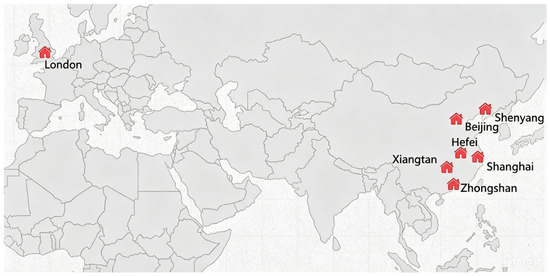
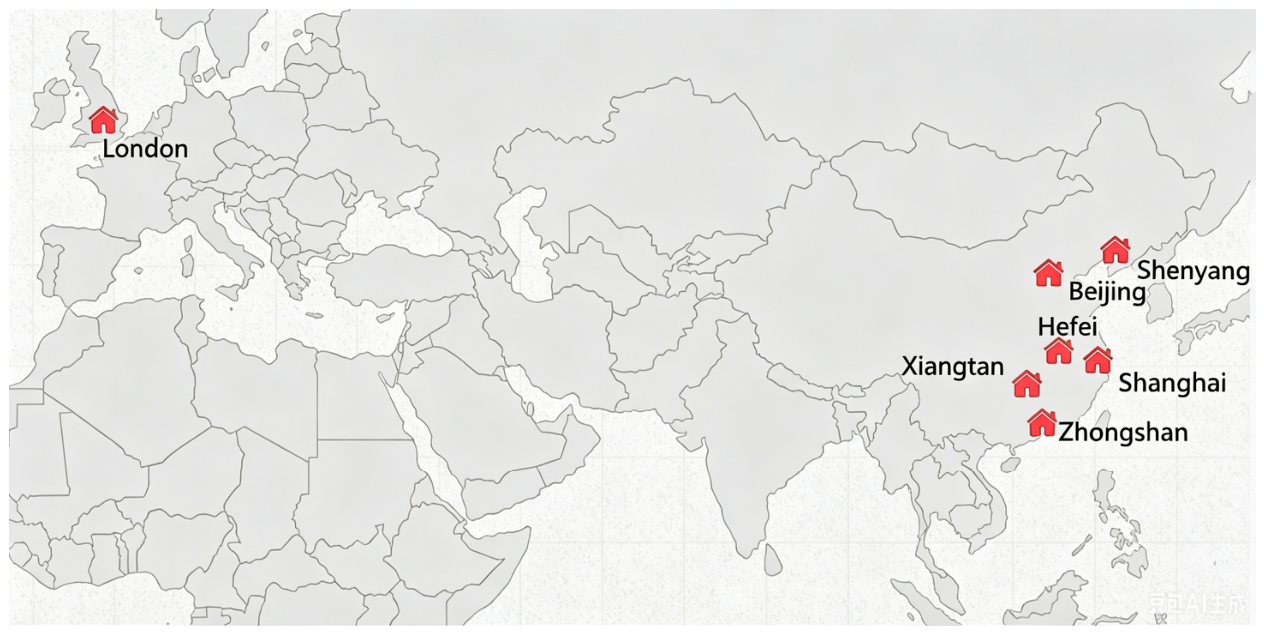
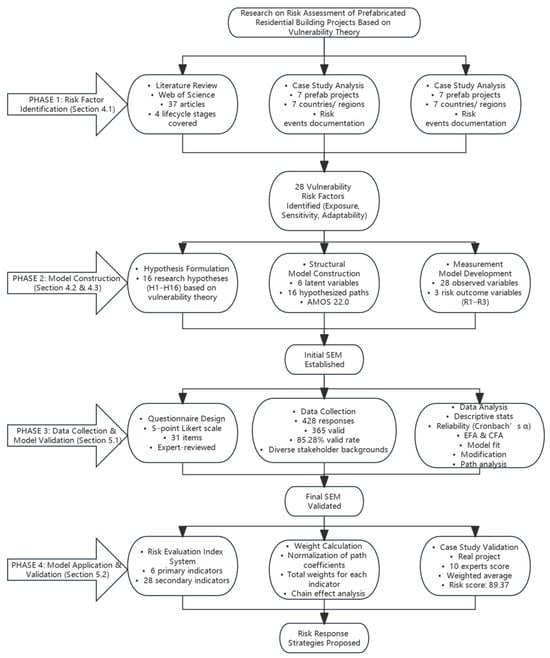
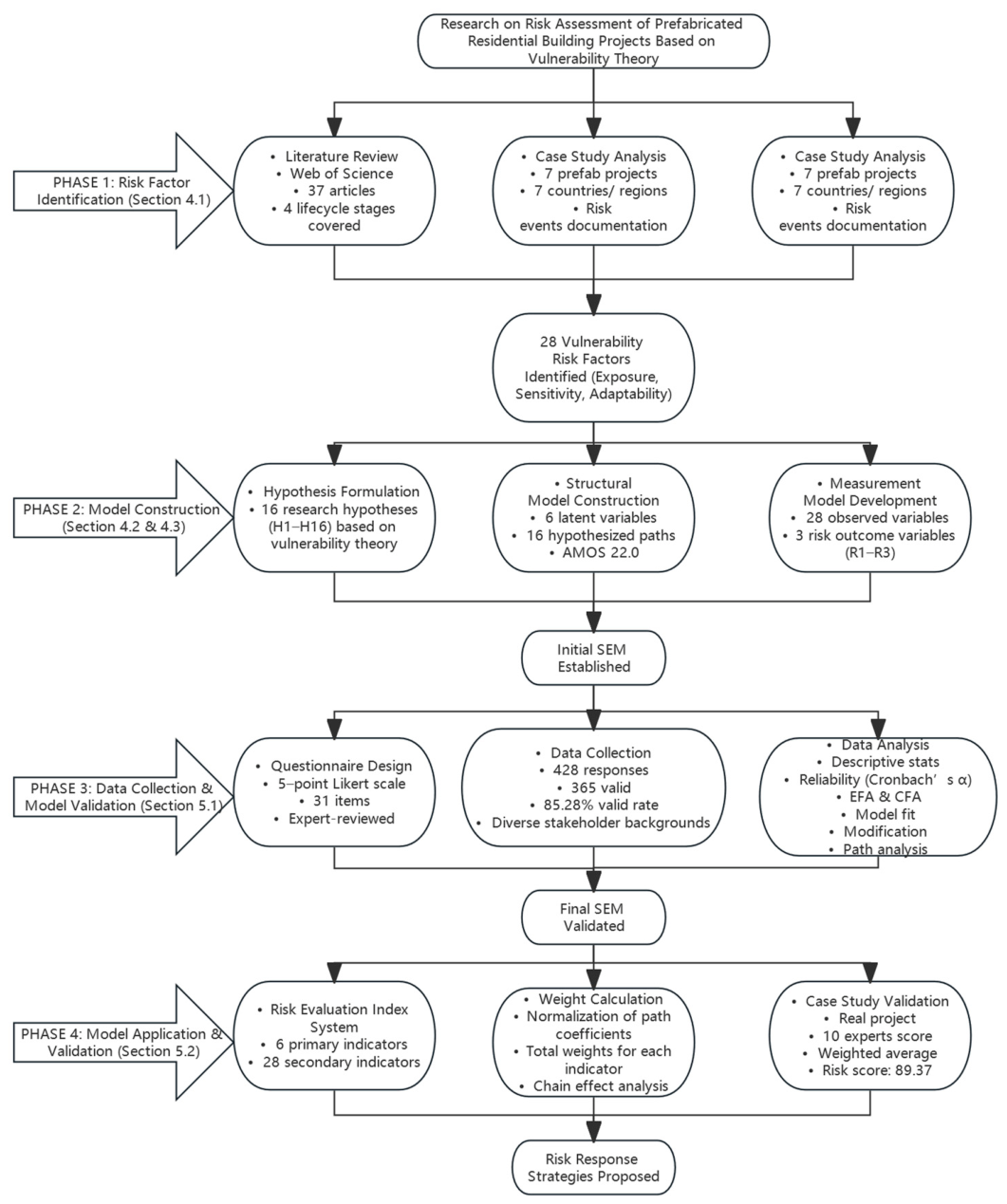
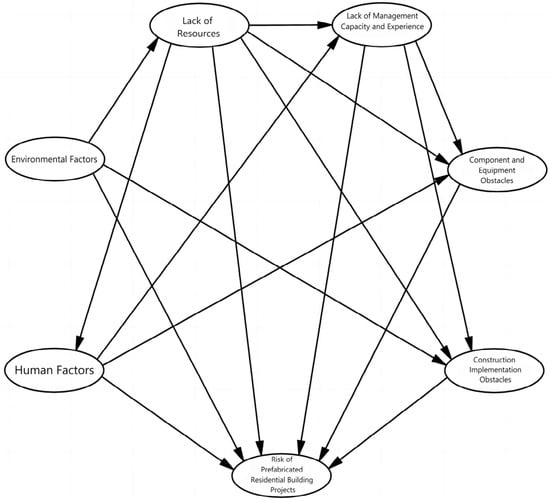
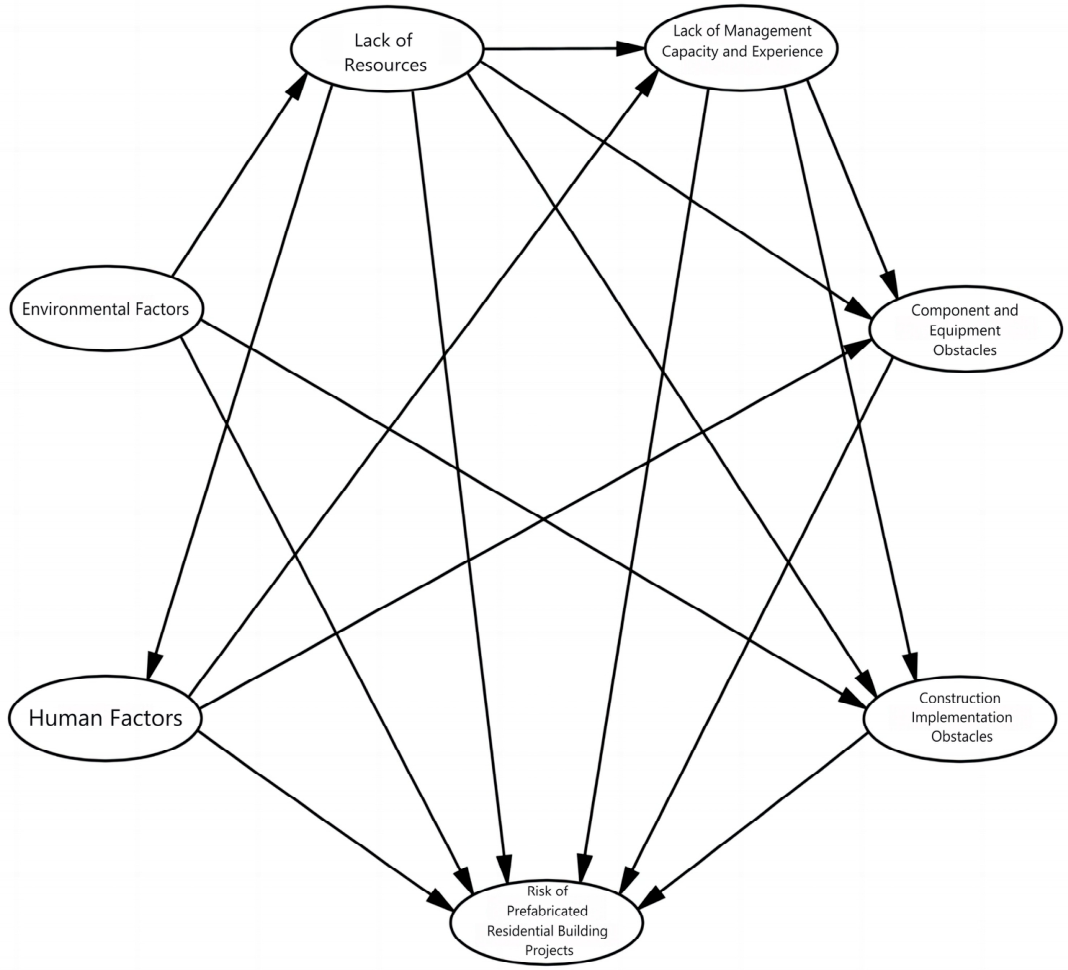
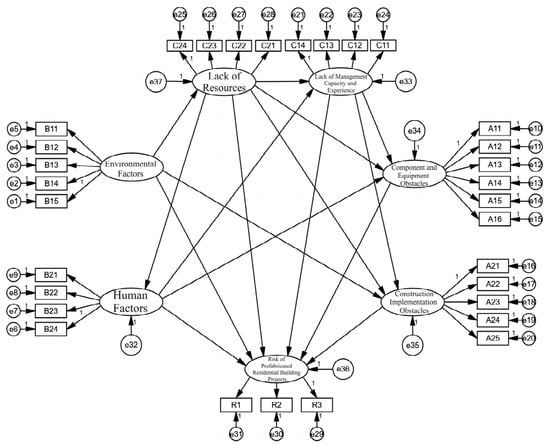
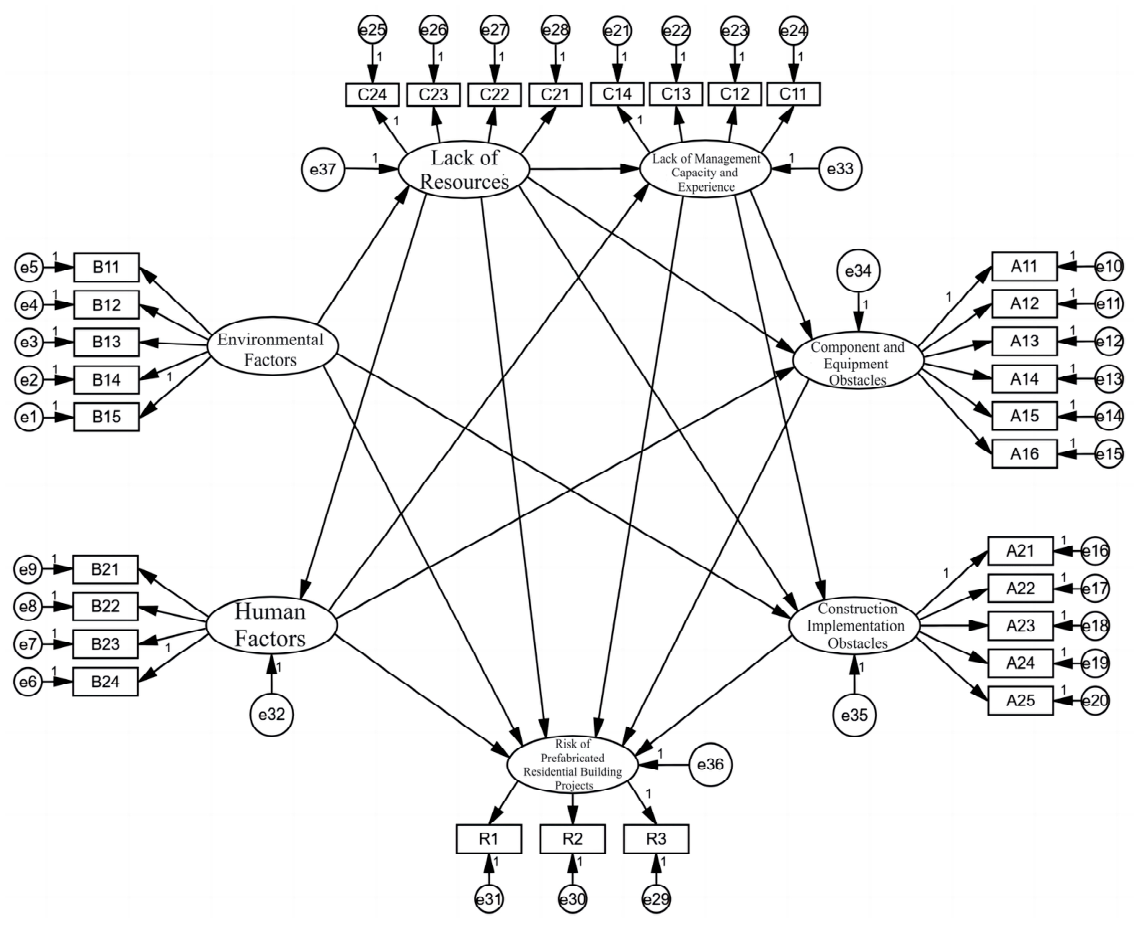
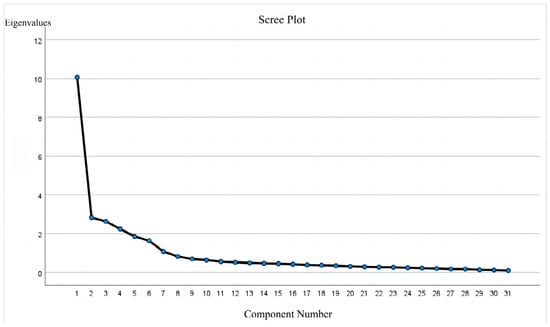
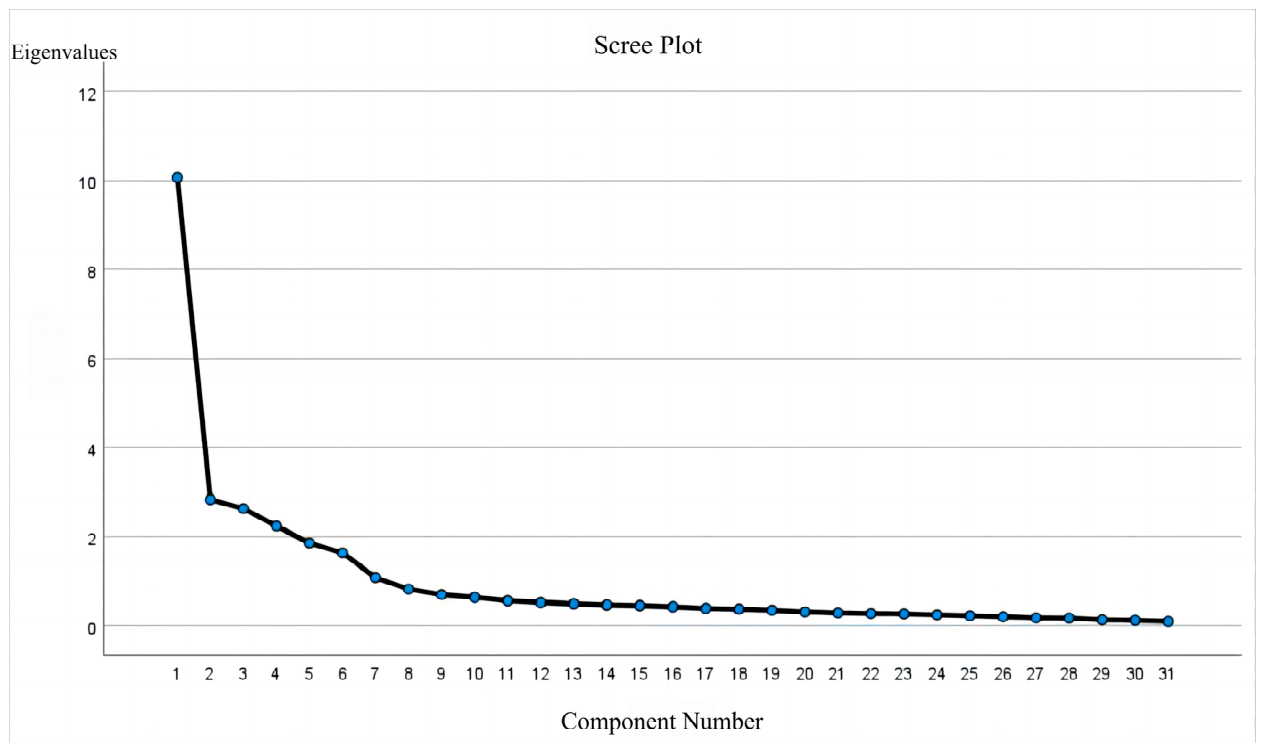
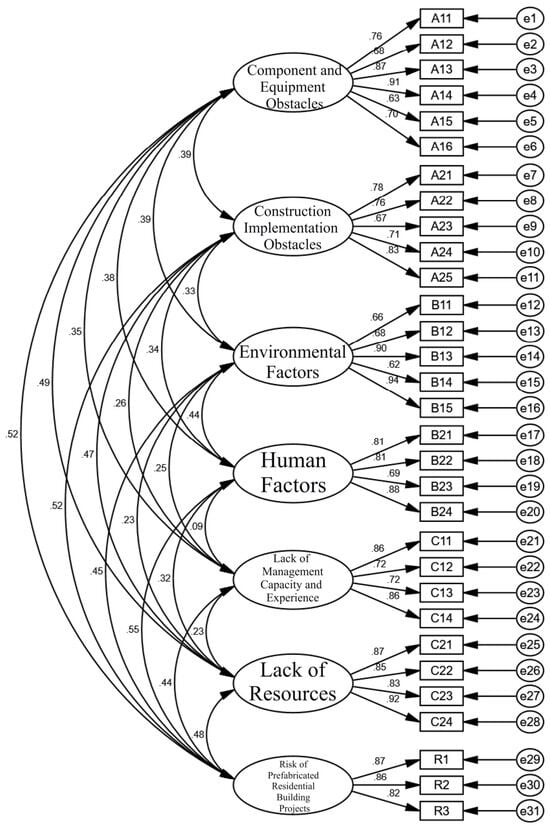
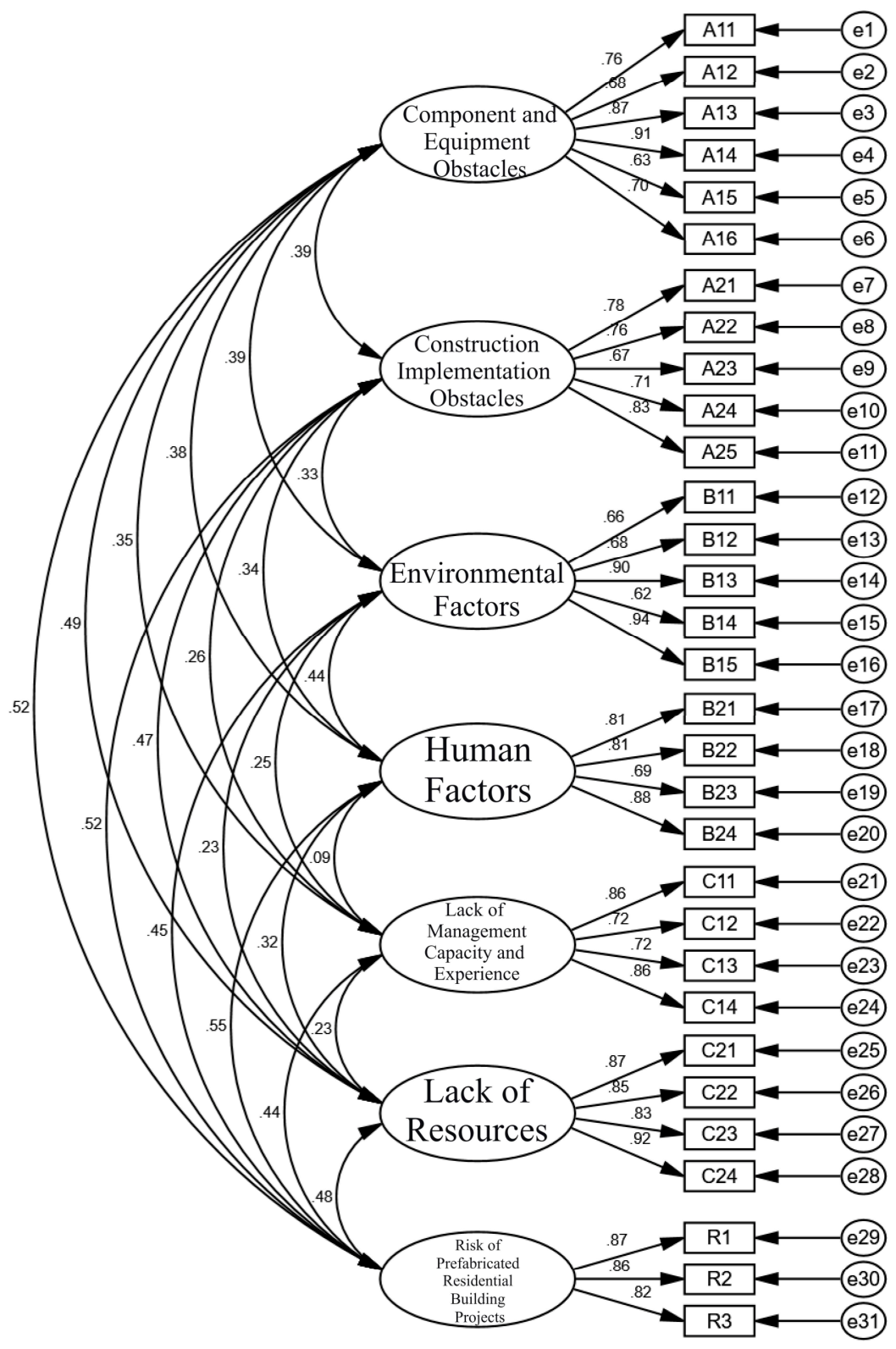
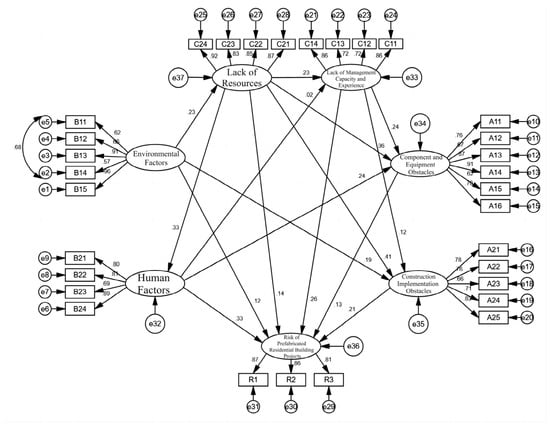
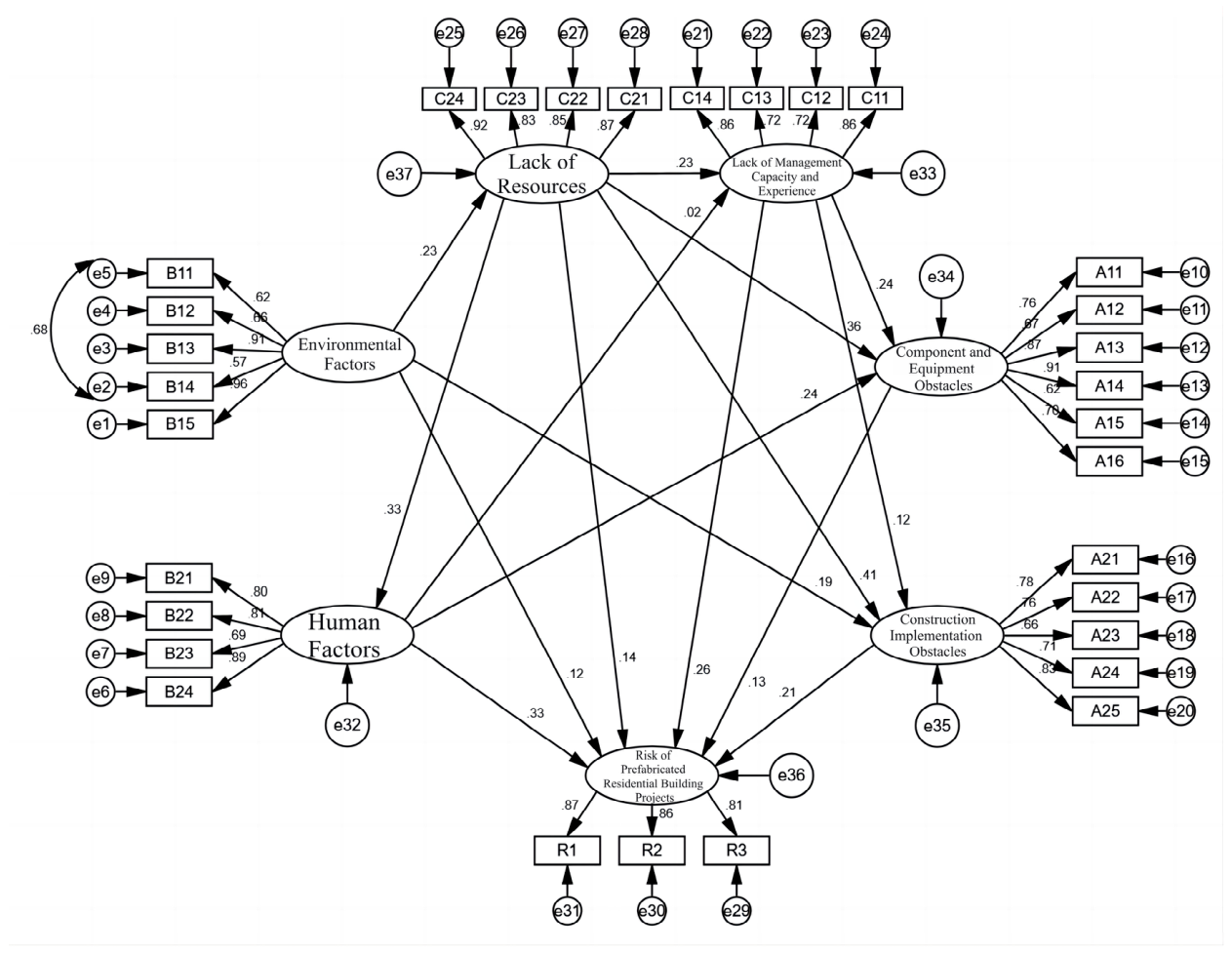

Disclaimer/Publisher’s Note: The statements, opinions and data contained in all publications are solely those of the individual author(s) and contributor(s) and not of MDPI and/or the editor(s). MDPI and/or the editor(s) disclaim responsibility for any injury to people or property resulting from any ideas, methods, instructions or products referred to in the content. |
© 2026 by the authors. Licensee MDPI, Basel, Switzerland. This article is an open access article distributed under the terms and conditions of the Creative Commons Attribution (CC BY) license.