1. Introduction
Construction technology is undergoing a fundamental transformation through three-dimensional concrete printing (3DCP), a process in which concrete is deposited layer by layer without the use of traditional formwork. This methodology offers compelling advantages, including up to 60% reduction in material waste [
1], enhanced geometric design freedom, and accelerated construction timelines. At its core, however, successful 3DCP depends on maintaining precise control of the water-to-cement (w/c) ratio; this single parameter simultaneously governs fresh-state rheological behavior, such as flowability and viscosity, and hardened-state mechanical performance, such as compressive strength [
2]. Unlike conventional cast concrete supported by formwork during curing, 3DCP must strike a delicate balance: The concrete must be fluid enough for extrusion through a nozzle (extrudability), structurally stable enough to hold its shape immediately after deposition (buildability), and pumpable through the delivery system without blockage (pumpability) [
3]. This balance is exceptionally sensitive to the w/c ratio, making real-time monitoring of water content not just desirable but also operationally essential for closed-loop control.
When water content falls below a critical threshold, the mixture becomes excessively stiff, risking hose blockages, inconsistent layer deposition, and brittle, discontinuous layers prone to structural failure. Conversely, excess water causes the deposited concrete to lose shape retention, potentially resulting in collapse and structural instability during printing. Both failure modes carry serious consequences: financial losses from wasted materials and labor, amplified environmental impacts from excess concrete production, and hazardous working conditions for construction personnel. These risks underscore the importance of developing robust, real-time monitoring systems capable of detecting and correcting w/c deviations before print failures occur. Indeed, monitoring and feedback systems for key mixture parameters are widely regarded as an inevitable step toward full automation in construction [
4].
Recent advances in in situ sensing for 3DCP have demonstrated the potential of embedded piezoelectric sensors for real-time monitoring of setting behavior [
5], while vision-based systems have been developed for geometric quality control during extrusion [
6]. In the domain of electrical characterization of cementitious materials, electrochemical impedance spectroscopy has been applied to estimate w/c ratios in fresh concrete using artificial neural networks, achieving promising accuracy in laboratory settings [
7]. A majority of current 3DCP operations depend predominantly on manual assessment, in which workers evaluate mixture consistency through visual inspection and tactile feedback. This approach is inherently subjective, operator-dependent, and incapable of providing quantitative real-time data. Traditional concrete testing methods, including slump flow tests (ASTM C143), chloride penetration tests (ASTM C1202), and gravimetric water content determination (ASTM C566-19) [
8], are fundamentally incompatible with real-time process control and require sample preparation and testing duration ranging from 15 min to 24 h [
9,
10]. Flow table experiments by Papachristoforou et al. [
11] identified a narrow printability window of 18–24 cm flow table expansion, highlighting that the margin for acceptable w/c variation is tight and that manual detection alone is insufficient to consistently identify it.
Despite rapid growth in 3DCP research, investigations remain disproportionately focused on material optimization, such as mix design, admixture selection, and rheology modification, rather than on process control and automated monitoring systems [
12]. Commercial time-domain reflectometry (TDR) systems, such as the IMKO SONO-WZ, can measure moisture within 10 s in traditional ready-mix applications. However, they are designed for stationary mixing drums and have not been verified for continuous in-line monitoring during the extrusion stage of 3DCP. Microwave dielectric sensors require specimen preparation steps that are incompatible with ongoing extrusion processes. Additionally, TDR measurement accuracy declines in high-ionic-strength environments, such as fresh cement paste. This fundamental limitation does not affect electrical resistance measurements at the sub-centimeter electrode spacings used in this study. However, none have been specifically validated or adapted for real-time, in situ w/c monitoring during the extrusion process in 3D-printable formulations. This represents a critical gap in the transition from laboratory demonstrations to construction-scale 3DCP.
Electrical resistance measurement has long been recognized as a sensitive indicator of the physicochemical state of fresh cementitious materials. The fundamental principle is that variations in w/c ratio alter the concentration of ionic species such as K
+, Na
+, Ca
2+, and OH
− in a pore solution, thereby altering electrical conductivity in a predictable manner [
13]. Mancio et al. [
14] demonstrated instantaneous in situ w/c determination in fresh conventional concrete using electrical measurements, and Wei and Li [
15] confirmed that water content dominates the electrical response in fresh cement systems before significant hydration occurs. Wei and Xiao [
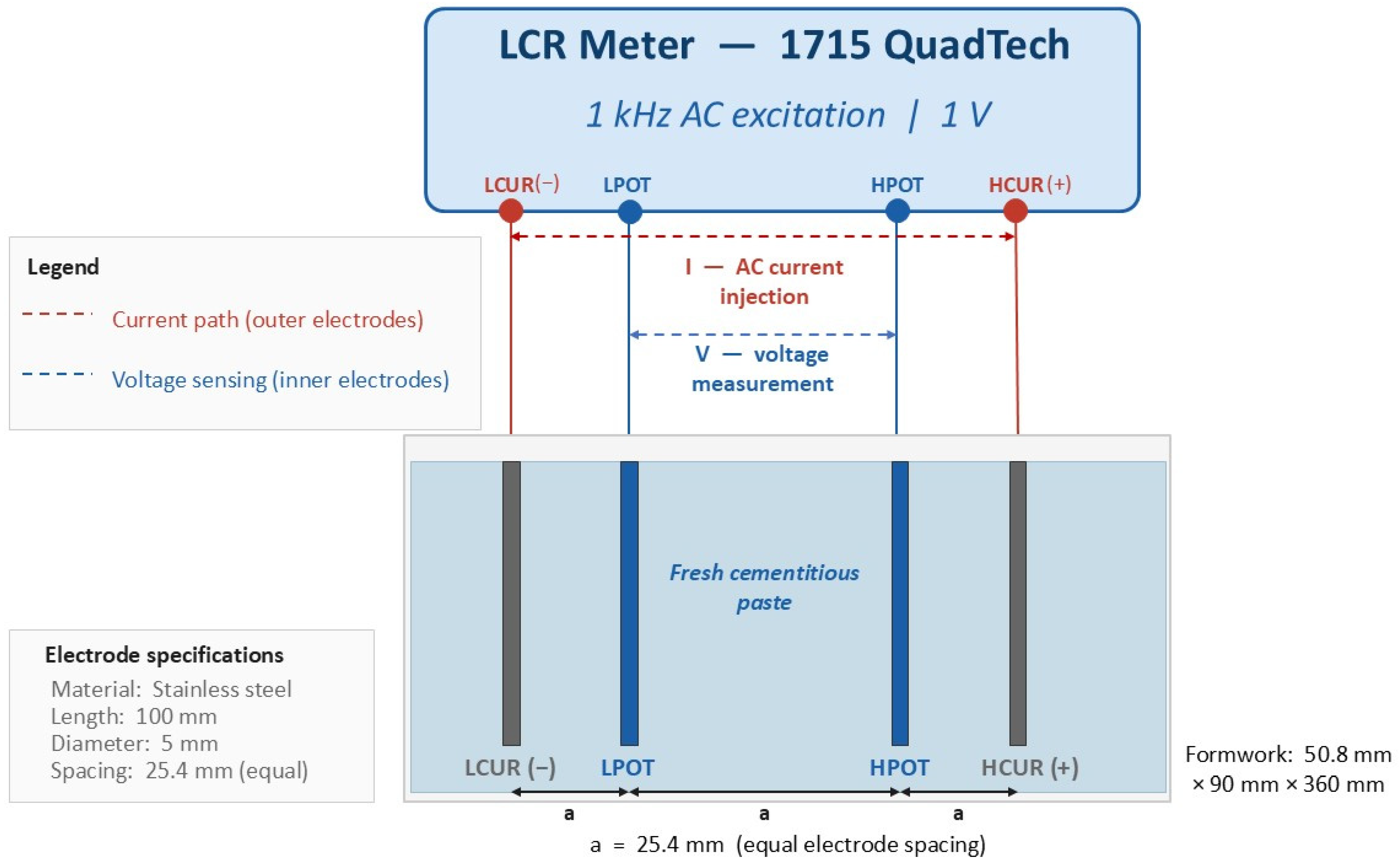
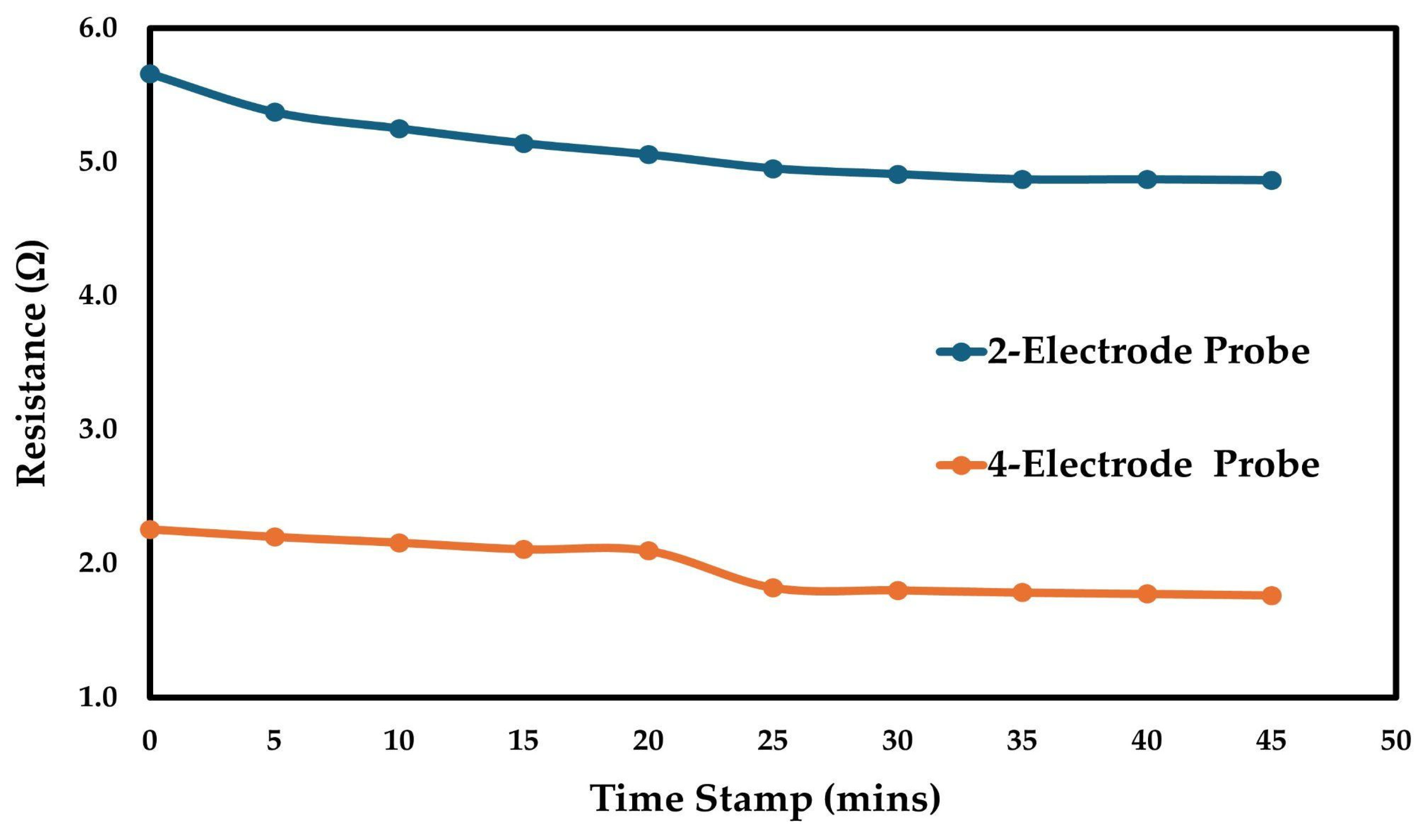
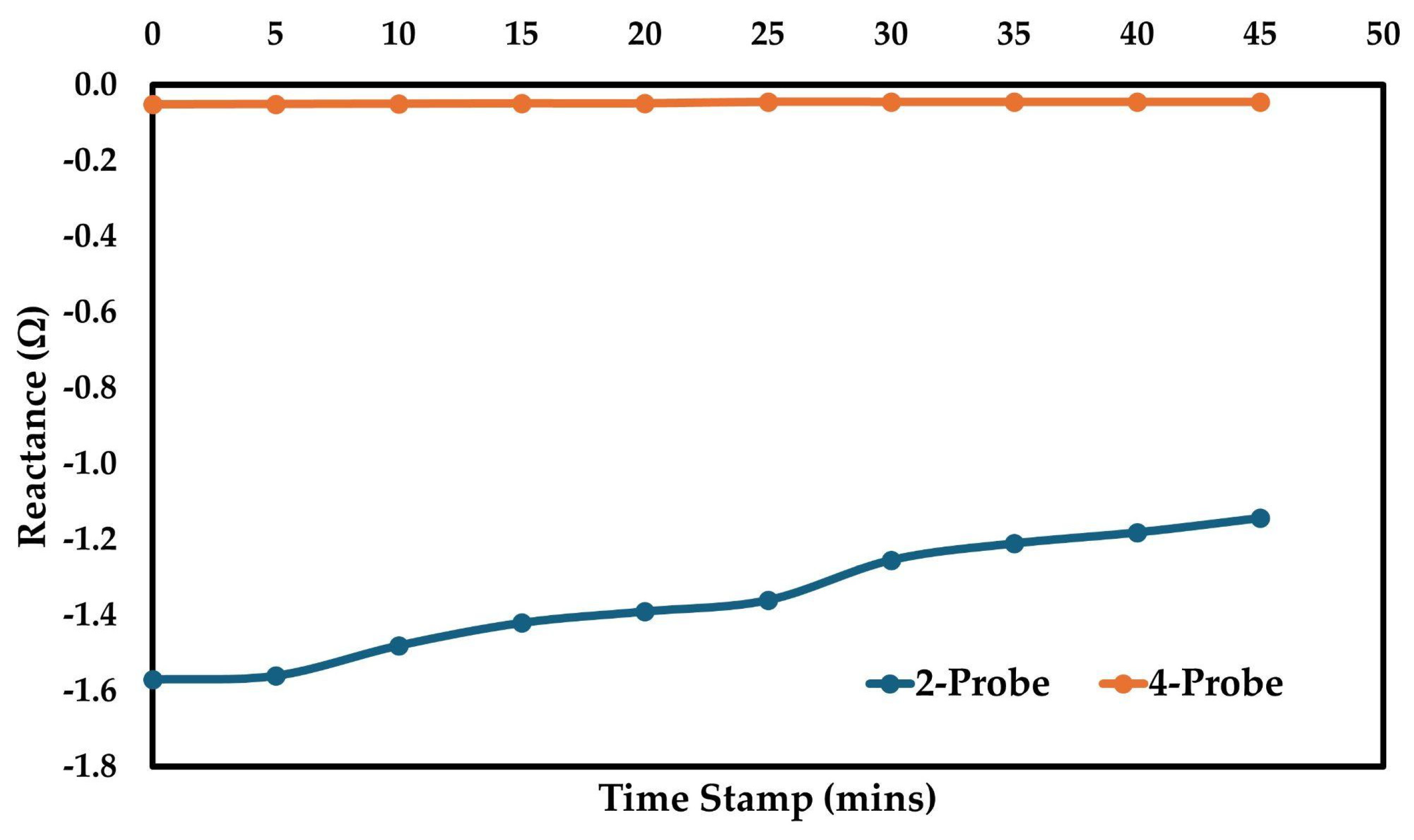
13] further established that the w/c ratio directly governs the electrical resistivity of cement paste through a power-law relationship at fixed curing times. However, a point of ongoing debate in the literature concerns the relative contributions of electrode polarization, contact resistance, and sample geometry to measured impedance values, with two-electrode configurations known to introduce significant measurement artifacts that four-electrode Wenner-array configurations can effectively eliminate [
16]. However, to the best of the authors’ knowledge, no published study has specifically validated such sensors for real-time, in situ w/c monitoring during the extrusion process in 3D-printable formulations. This gap represents a critical barrier to automated quality control in construction-scale 3DCP.
A critical distinction separates conventional concrete quality control from the monitoring challenge posed by 3DCP. In conventional cast concrete, the w/c ratio is fixed at the batching plant, and the material is supported by formwork throughout placement and curing. Hence, the static conditions under which post-mixing measurements are made are sufficient. In 3DCP, the material must simultaneously satisfy contradictory rheological demands: low enough yield stress for extrusion through a nozzle (extrudability) and high enough structural build-up for self-supporting layer deposition (buildability). This creates a demand for a critical balance that is acutely sensitive to the w/c ratio and evolves dynamically from mixing through pumping to deposition [
3,
7]. Existing electrical resistance studies, including those by Mancio et al. [
14] and Wei and Li [
15], were conducted under static formwork conditions with no material flow, extrusion pressure, or shear history.
The gap between static laboratory validation and dynamic extrusion-phase monitoring represents the central unresolved challenge that this study begins to address by establishing the baseline resistance–w/c relationships necessary for any future closed-loop monitoring system. While Mancio et al. [
14] demonstrated instantaneous in situ w/c determination in concrete under static lab conditions and Wei and Li [
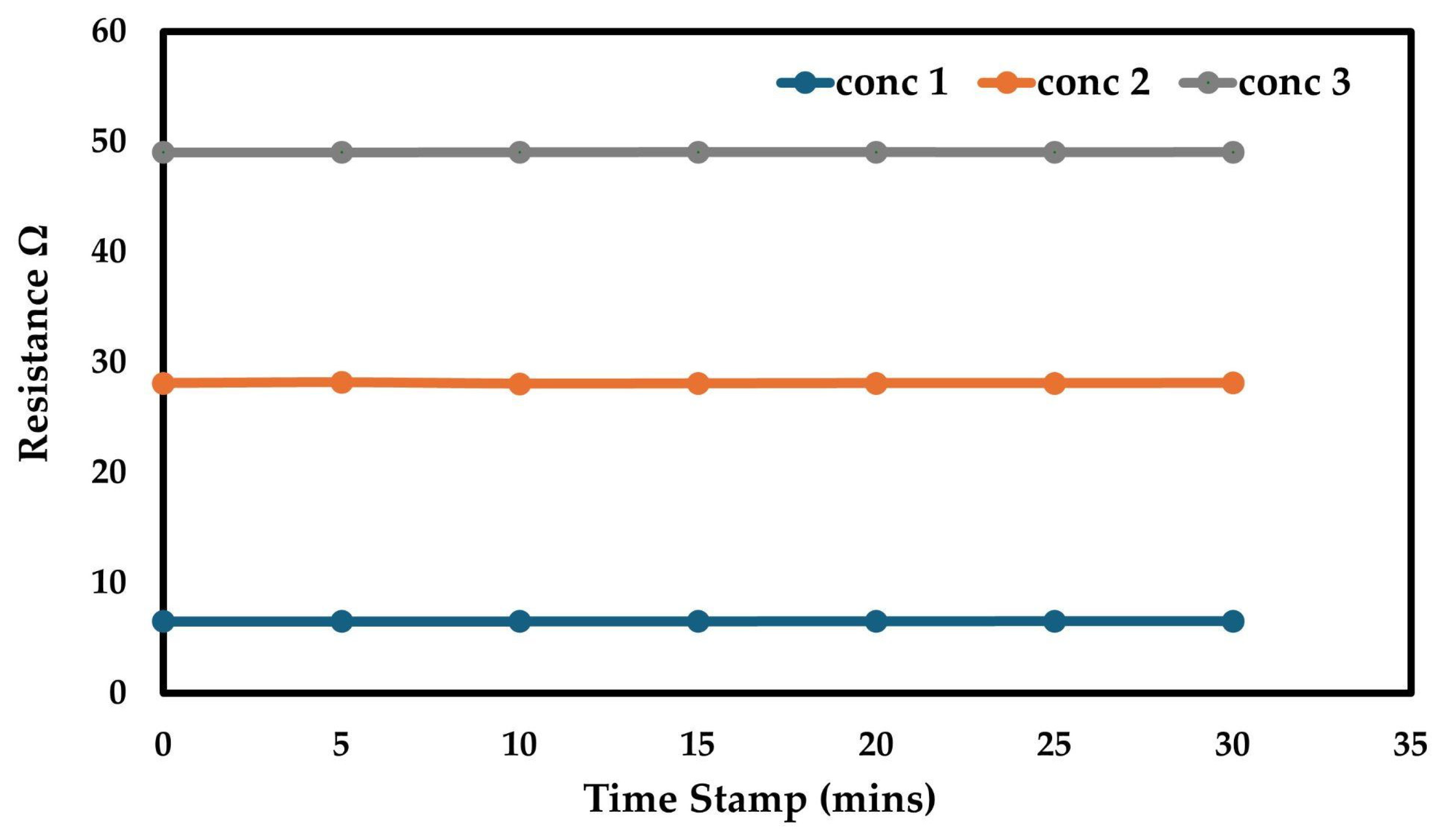
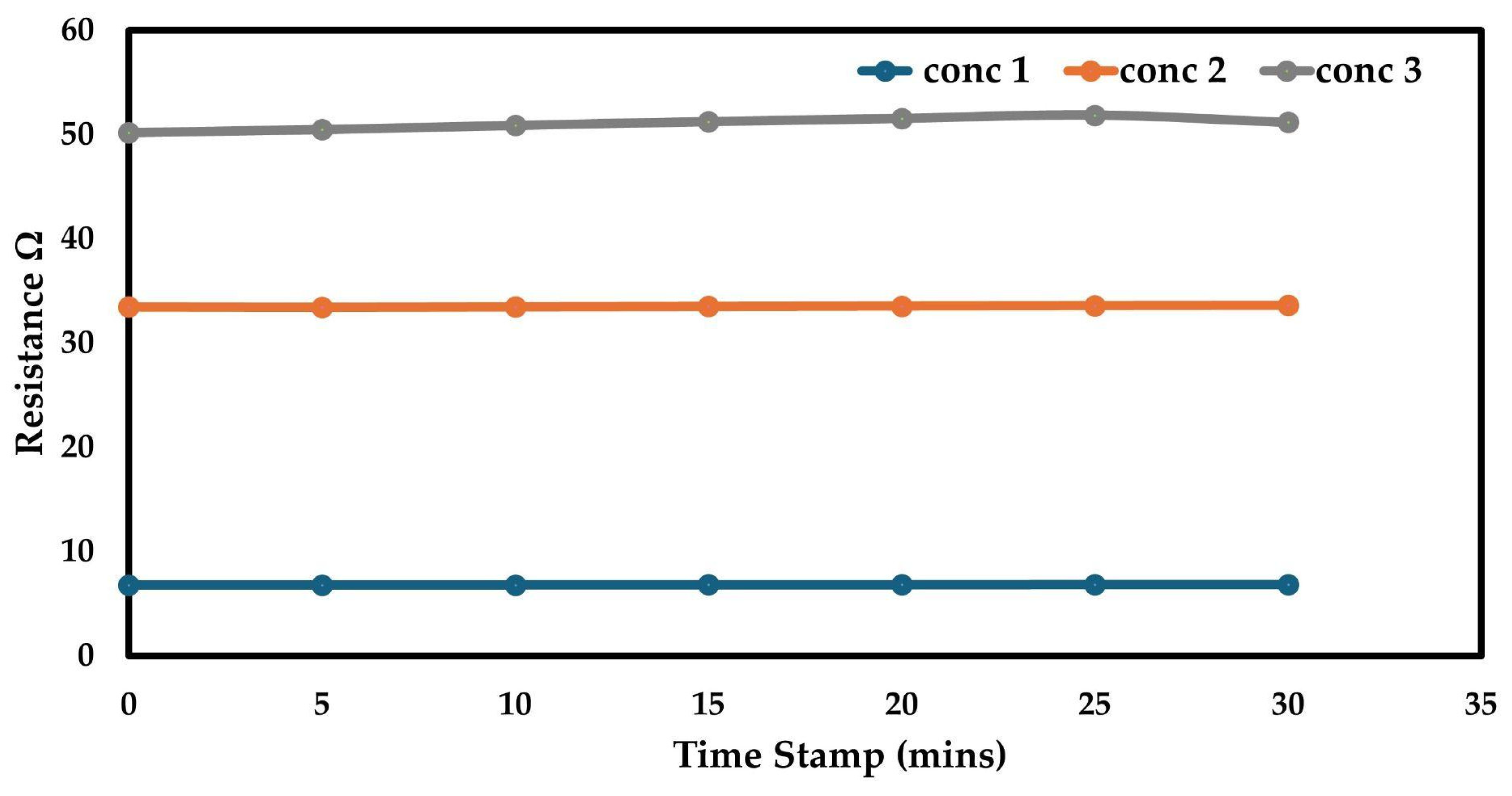
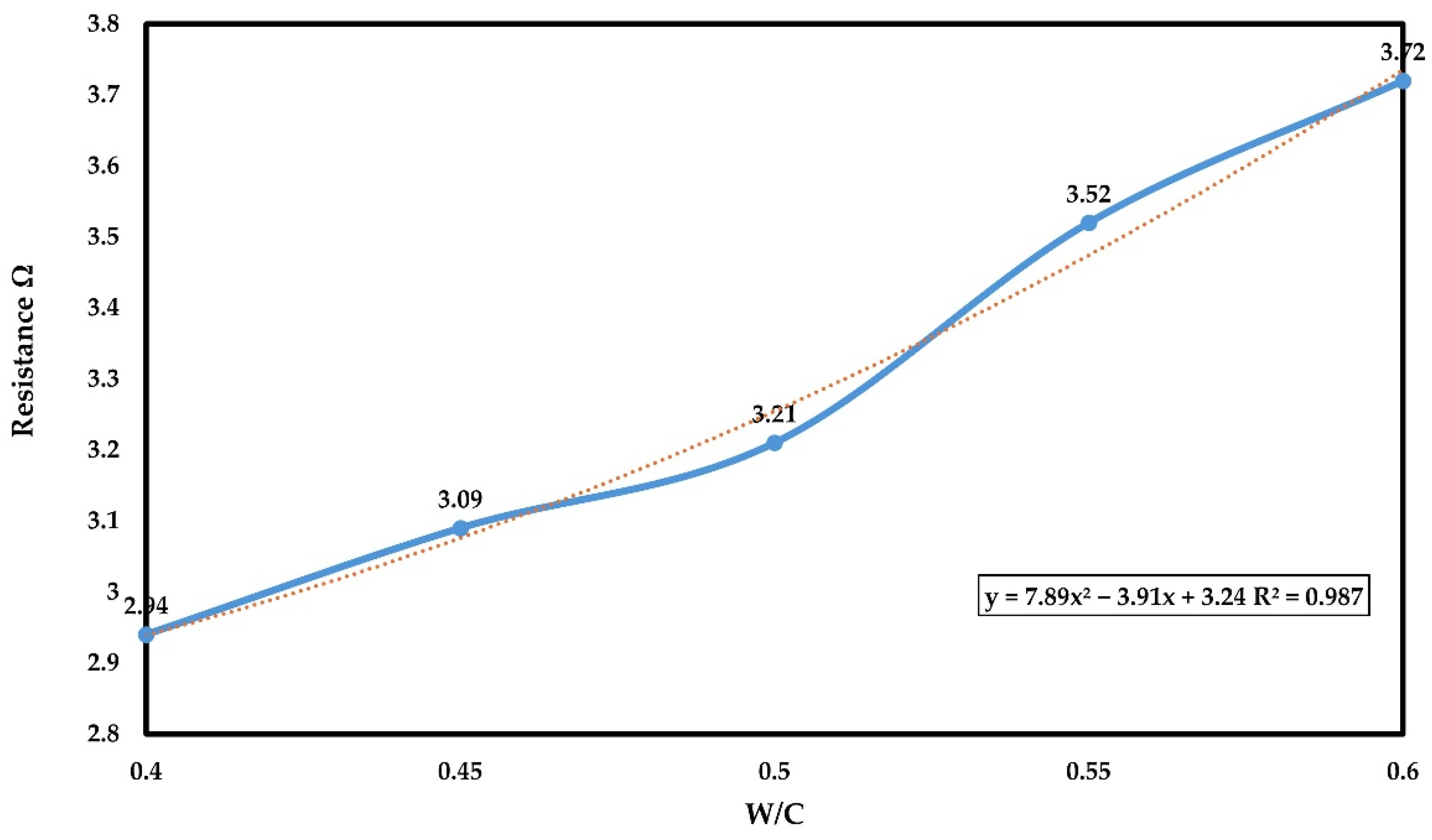
15] confirmed that water content controls the electrical response in fresh Portland cement paste, neither study examined 3DCP conditions. This study advances these findings by carrying out the following: (1) validating resistance-based w/c monitoring for a proprietary 3D-printable cement with masonry sand, silica fume, and admixtures; (2) characterizing and quantifying the percolation threshold in high-powder mixes; and (3) evaluating system stability metrics relevant to automated construction, including thermal drift below 1.2%, sub-second response, and measurement repeatability. The principal findings demonstrate that electrical resistance provides a stable, sub-second, highly repeatable indicator of the w/c ratio in fresh concrete, with strong nonlinear correlations (
R2 > 0.99) established for both cement types, laying the foundation for automated, closed-loop water-dosing control in 3DCP operations. Despite the conventional distinction between concrete (with coarse aggregates) and mortar (with fine aggregates), the concrete-printing domain widely applies the term “concrete” to both material types. For consistency with current practice, this paper employs the term in that broader sense.