


Abstract
Greenhouse cultivation in winter faces significant challenges in maintaining suitable air temperature and humidity conditions for crop growth during nighttime. This study proposes an innovative thermal management system that integrates a solar air collector circulation system with clay bricks to regulate the microclimate of plastic greenhouses. Comparative experiments were conducted in Suzhou, China (subtropical monsoon climate), using two identical greenhouses (2.6 m × 1.5 m × 2.0 m) over nine consecutive days in winter. Three experimental scenarios were designed and implemented, and the results demonstrated that the clay brick system improved the greenhouse temperature and humidity regulation performance. Under the relatively optimal schedule (9:00–16:00 external circulation, 16:00–9:00 internal circulation), the average nighttime indoor air temperature was 13.68 °C during the three experimental days. The cumulative suitable temperature duration (10–35 °C) reached 4050 min over the three test days, which was 30.6% higher than that of the ordinary greenhouse, and the suitable relative humidity duration (40–80%) was 1140 min, an increase of 40.7% during the three experimental days. This study innovatively combines low-cost clay bricks with solar air collectors for passive temperature and humidity control in greenhouses and determines the relatively optimal operation schedule for application in winter. Featuring low cost, simple operation and high sustainability, the system provides a novel energy-saving technical solution for microclimate regulation in agricultural greenhouses in winter.
1. Introduction
Greenhouses play a critical role in modern agriculture by providing controlled environments that extend growing seasons and improve crop yields. However, greenhouse cultivation in winter faces significant challenges, particularly regarding temperature fluctuations and nighttime high humidity. High humidity at night causes water vapor to condense into droplets on the greenhouse film, which absorb and reflect solar radiation during the daytime, thereby reducing the amount of solar radiation entering the greenhouse and further decreasing the greenhouse inside air temperature [1]. The greenhouse microclimate formed by this vicious cycle is detrimental to crop growth, necessitating the adoption of effective temperature and humidity regulation measures.
To address the above issues, researchers have proposed various thermal storage technologies to realize temperature regulation, such as hot water heat storage [2], soil heat storage [3], phase change material (PCM) thermal storage [4], etc. Among these methods, PCMs exhibit distinct advantages by absorbing heat during the day and releasing it at night, effectively stabilizing temperature fluctuations and contributing to energy savings and carbon emission reduction [5]. Studies show the following: Chen et al. [6] prevented nighttime temperatures from dropping below 10 °C (vs. 3.7 °C without PCM); Li et al. [7] increased ground temperature by 1 °C (7%) in Chengdu; Ayed [8] maintained 17–20 °C at night using solar air collector–PCM integration. However, PCM systems with high performance, long service life and well-developed encapsulation suffer from relatively high costs, which remains the primary bottleneck limiting their large-scale commercialization. In addition, although PCMs exhibit energy-saving potential, their greenhouse application is often constrained by high regeneration temperatures. Integrating PCMs with solar thermal collection systems provides an effective solution to overcome this limitation. Chen [9] reduced nighttime humidity to 81.3–94.2% and raised the temperature by 1.2 °C using silica gel–solar collector integration with waste heat storage. Wang [10] achieved superior performance with CaCl2@SG, increasing the nighttime temperature by 2.58 °C and decreasing humidity by 17.39%.
In addition to temperature regulation, humidity control also plays an important role in crop growth in greenhouses. Humidity control techniques consist of ventilation-based dehumidification [11,12], condensation dehumidification [13,14], and dehumidification via humidity-regulating materials (HRMs) [15]. Compared with the first two methods, HRMs passively regulate ambient humidity through their inherent physicochemical properties without external energy or mechanical systems, ensuring zero energy consumption and aligning with green and sustainable development principles.
Currently, most existing studies focus only on the independent regulation of either air temperature or relative humidity in greenhouses, even though temperature and humidity are interdependent and therefore require synchronous regulation [16]. As a low-cost building material with abundant raw material reserves, high mechanical strength and superior durability, clay bricks possess prominent thermal storage potential. Their large heat capacity and thermal inertia allow effective heat charging and discharging, and the internal porous structure further enables moisture adsorption and desorption, thus realizing passive coupled regulation of temperature and humidity [17]. Different from the above single-function materials, ordinary clay bricks can synchronously complete sensible heat storage and moisture adsorption/desorption relying on their porous structure, and the raw material cost is far lower than PCMs and chemical desiccants. Currently, clay bricks are widely employed as energy-efficient thermal insulating materials in residential construction in subtropical climatic regions [18,19]. Nevertheless, the use of clay brick to regulate greenhouse temperature and humidity has not been documented in the existing literature.
Therefore, this study applies clay bricks—a cost-effective material with high thermal mass and moisture buffering capacity—and a solar air collector in a greenhouse for coupled temperature and humidity regulation. During the daytime, solar-heated air regenerates clay bricks by removing moisture absorbed during the night and simultaneously stores sensible heat. At night, the clay bricks release stored heat and absorb moisture from the humid greenhouse air, thereby increasing air temperature and reducing its relative humidity. To evaluate the performance of this integrated system, comparative experiments were conducted in two identical plastic greenhouses in Suzhou, China (subtropical monsoon climate). This study aims to: (1) validate the feasibility of using clay bricks combined with a solar air collector for greenhouse temperature and humidity regulation; and (2) identify the relatively optimal operating schedule to maximize the duration within suitable temperature and humidity ranges.
2. Experimental System and Measurement Point Layout
2.1. Experimental System Working Principle
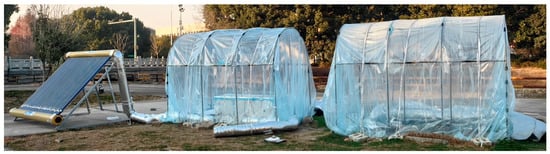
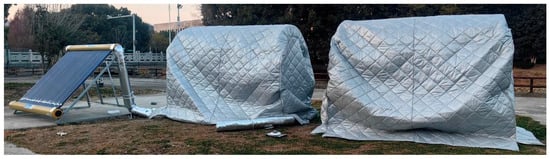
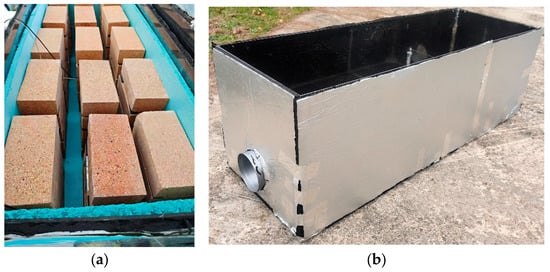
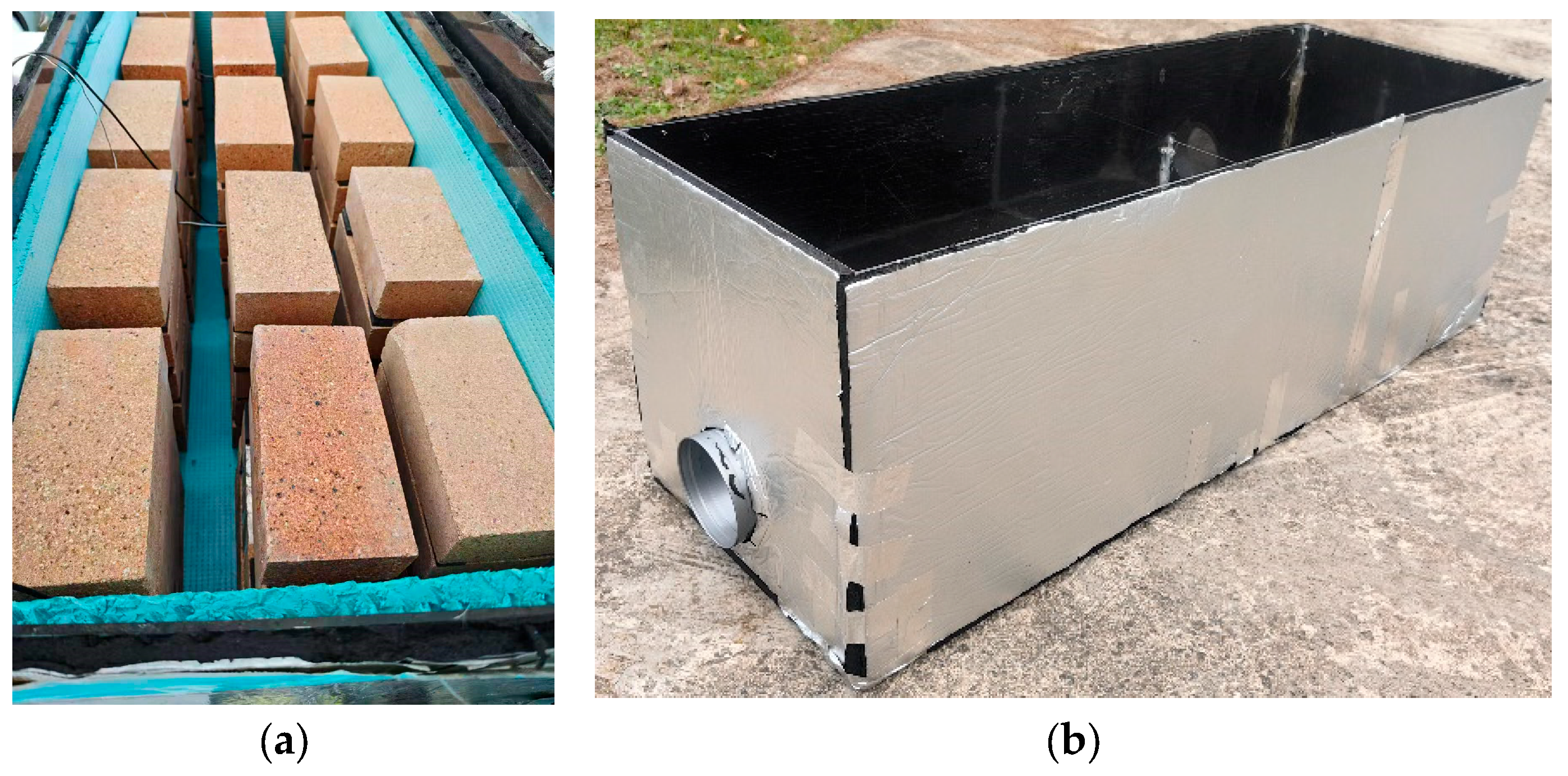
The greenhouses are located in Suzhou City, Jiangsu Province, an area with a subtropical monsoon climate. January is the coldest month in winter in Suzhou, with a monthly mean temperature of about 5.5 °C. As depicted in Figure 1 and Figure 2, two plastic greenhouses of identical dimensions (2.6 m × 1.5 m × 2 m) containing bare soil were employed for comparative experiments. The greenhouses were covered with a 10 s (0.1 mm thickness) high-transmittance film (Mingyang Trading Co., Ltd., Tangshan, China) and arranged in parallel from east to west. During the daytime, the outdoor air was heated by a vacuum tubular air heat collector (1.5 m × 0.52 m × 0.5 m, Shandong Feitian New Energy Co., Ltd., Dezhou, China); then, it entered into the clay brick () storage unit in the greenhouse driven by a fan and exchanged heat and moisture with the clay bricks. The collector’s rated efficiency is 0.76, and its total heat loss coefficient is 2.1 W/(m2·K). After 17:00 in winter, solar radiation is weak, so the greenhouses were covered with waterproof thermal insulation quilts (Changmao Thermal Insulation Quilt Factory, Jining, China) to enhance nighttime insulation. The quilts were filled with approximately 20 mm thick silk-like cotton. As shown in Figure 3, 75 clay bricks (230 mm × 114 mm × 65 mm, Yongfu Brick and Tile Factory, Gaoyou, China) were laid inside the clay brick storage unit. The thermal physical properties of the clay bricks are as follows: porosity of 32%, density of 1850 kg/m3, specific heat capacity of 880 J/(kg·K), and thermal conductivity of 0.70 W/(m·K). A fan with a rated airflow rate of 89.2 m3/h and rated power of 20 W was installed at the outlet of the clay brick storage unit to facilitate air circulation. This fan was only used to drive air flow for heat storage and release, as well as moisture absorption and regeneration of the clay bricks, and not for direct active control of the greenhouse microclimate. The two greenhouses were subjected to airtight sealing treatment without any reserved openings for natural ventilation.
Figure 1.
Greenhouse with clay bricks (left) and ordinary greenhouse (right).
Figure 2.
Greenhouses covered with thermal insulation quilts.
Figure 3.
Clay brick storage unit: (a) Internal structure; (b) Appearance.
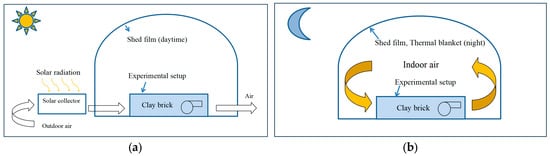
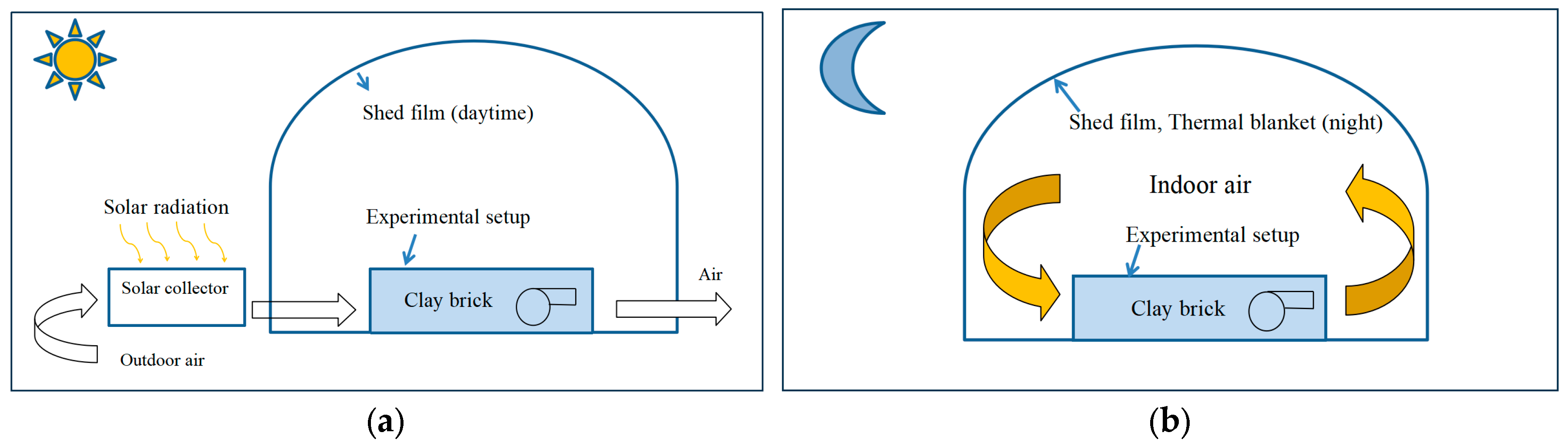
The experimental system’s working principle is illustrated in Figure 4. The experiment consisted of two stages: heat storage and moisture release during the day (external circulation) and heat release and moisture absorption during the night (internal circulation). During the daytime, the absorber tube inside the heat collector vacuum tube rapidly increases its temperature when absorbing solar radiation, thereby raising the temperature of ambient air entering the collector. Subsequently, driven by the fan, high-temperature air enters the clay brick storage unit to dry the clay bricks by removing the moisture absorbed during the night, thus achieving regeneration. Meanwhile, the hot air exchanges heat with the clay bricks, enabling the bricks to store sensible heat. Finally, the air is discharged from the clay brick storage unit out of the greenhouse. During the night, low-temperature high-humidity air inside the greenhouse is driven into the clay brick storage unit, where heat and moisture transfer between the air and the clay bricks. The bricks release sensible heat stored during the day and absorb moisture from the air, thereby increasing the air temperature and reducing its humidity. Through continuous internal circulation during the night, the air inside the greenhouse is heated and dehumidified, creating a more suitable temperature and humidity micro-environment for crop growth during the night.
Figure 4.
Experimental system’s working principle: (a) Day; (b) Night.
2.2. Measurement Point Layout and Experimental Plan
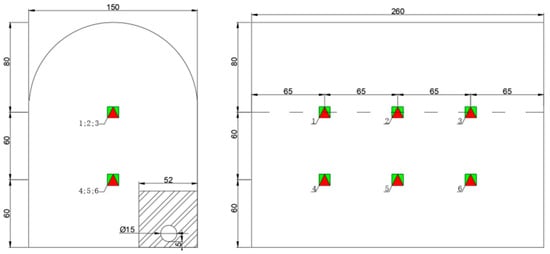
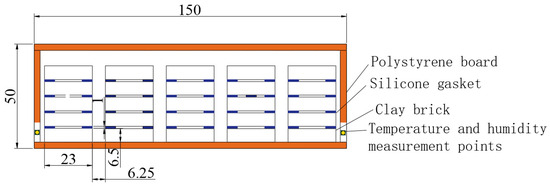
The zone at the height of 0.6 m above the ground is most crops’ growth core area, where the temperature and humidity reflect the near-ground microclimate. Additionally, the temperature and humidity at 1.2 m represent the primary microclimate of the greenhouse. Based on the above considerations, the temperature and humidity measurement points inside the greenhouse were arranged as shown in Figure 5, where three temperature and humidity modules were evenly arranged at the heights of both 0.6 m and 1.2 m. The air temperature/humidity inside the greenhouse was the average value of the above 6 temperature/humidity measurement points. In addition, as shown in Figure 6, air humidity modules and temperature sensors from the multi-channel temperature recorder were installed at both the inlet and outlet of the clay brick storage unit. The aforementioned measurement parameters were recorded every 10 min during the experiments. The main parameters of the experimental instrument are detailed in Table 1. Prior to the tests, the relevant boundary conditions of the two greenhouses, including the enclosure tightness, thermal quilt arrangement, sensor installation position and airtight performance, were checked and unified to minimize the differences between the two.
Figure 5.
Temperature and humidity measurement point layout.
Figure 6.
Temperature and humidity measurement point layout in the clay brick storage unit.
Table 1.
Main parameters of experimental instrument.
As shown in Table 2, to determine the clay brick storage unit’s relatively optimal operation period, three continuous operating cases were designed in this paper, each lasting three days with an airflow rate of 89.2 m3/h. During the experiment, the fan was started during the external and internal circulation period, and greenhouses were covered with the quilts at 17:00.
Table 2.
Experimental plan.
The solar–air temperature is an equivalent comprehensive temperature incorporating the outdoor air temperature and solar radiation incident on the outer surfaces of the greenhouse envelopes. Its calculation formula is given as follows.
where te is the air temperature outside the greenhouse (°C);
is the solar radiation absorption coefficient of the plastic film, set to 0.1 as the average value considering surface dust accumulation and natural aging under practical field conditions;
I is the solar radiation intensity (W/m2);
is the heat transfer coefficient of the greenhouse outer surface (W/(m2·K)), set to 23 W/(m2·K) as a widely used empirical value for greenhouses under natural wind in subtropical winters.
As calculated, the average solar–air temperatures of the above three cases are 10.7 °C, 12.2 °C and 11.7 °C, respectively, and the average outdoor relative humidity values are 70.5%, 73.0% and 68.9%, indicating generally similar outdoor meteorological conditions throughout the tests.
3. Experimental Results Analysis
Based on the instrument accuracy listed in Table 1 (±0.5 °C for temperature and ±2% for relatively humidity), the relative measurement uncertainties of temperature and humidity were calculated to be approximately 1.59% and 3.45%, respectively. Such low uncertainties have a negligible influence on the comparative analysis between the experimental and reference greenhouses.
3.1. Temperature Regulation Performance Analysis in Greenhouses
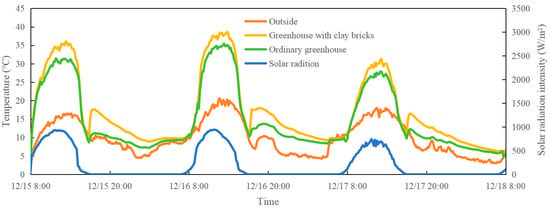
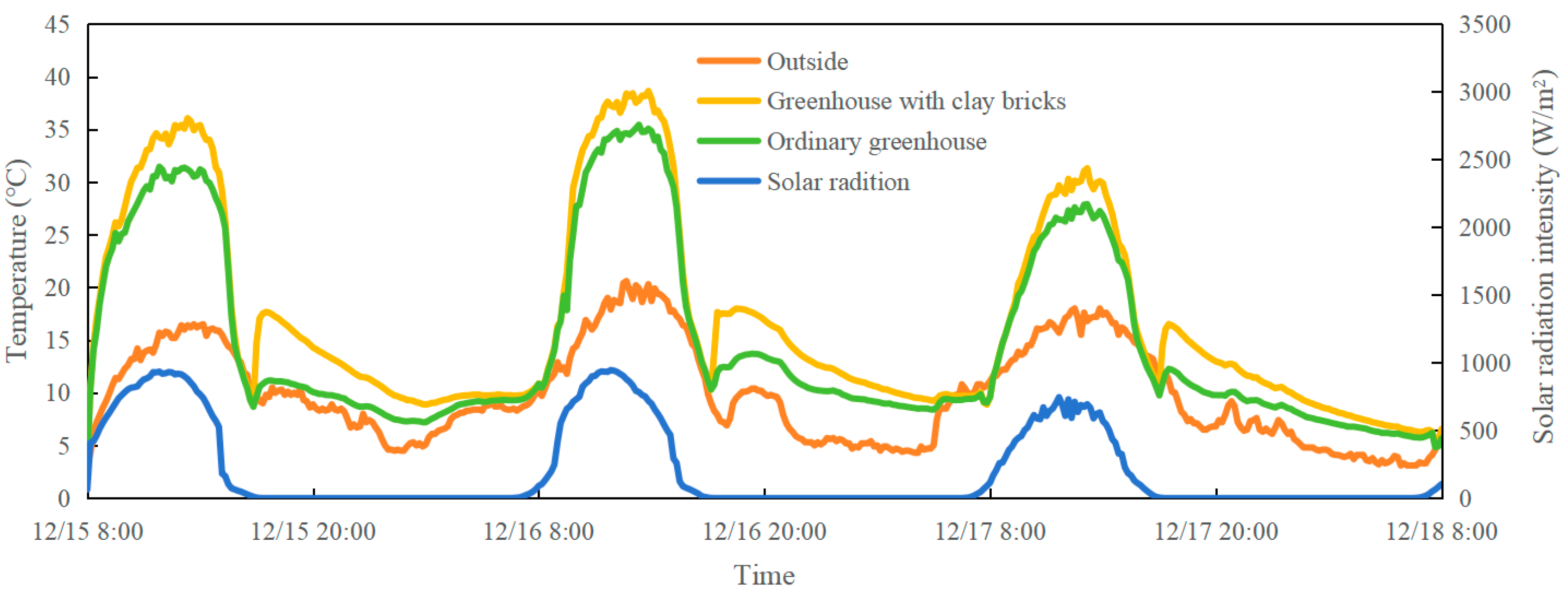
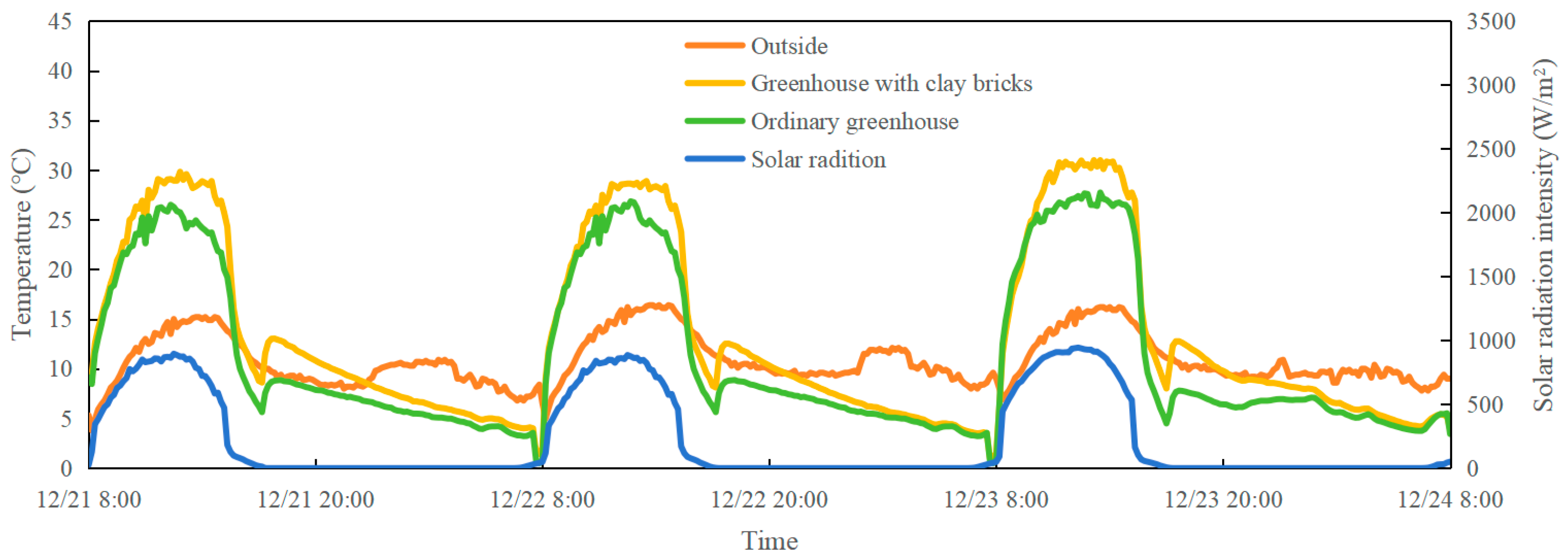
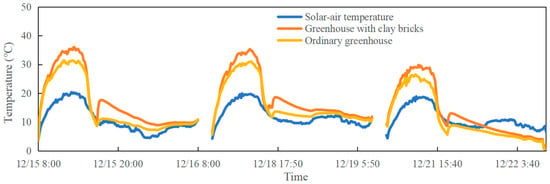
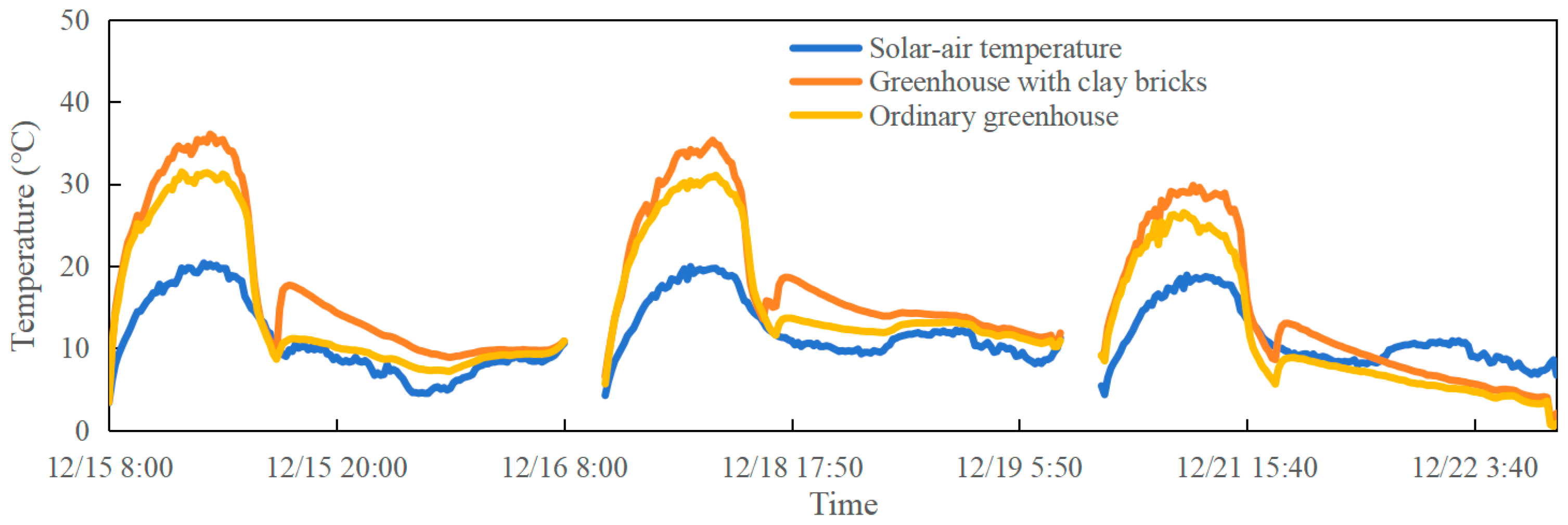
The variations in solar radiation intensity and air temperature outside/inside the greenhouses are presented in Figure 7, Figure 8 and Figure 9. In case 1 as shown in Figure 7, in the morning, the solar radiation intensity gradually increased and reached its peak at around 12:00. Influenced by both air temperature and solar radiation, the air temperature inside the greenhouse increased accordingly and reached its peak at approximately 13:00. In addition, the maximum air temperatures in the clay brick greenhouse and the ordinary greenhouse reached 38.63 °C and 35.43 °C, respectively. Under sunny condition, the average air temperature difference during the daytime between the two greenhouses was 2.05 °C, with a maximum difference of 4.4 °C. Under cloudy conditions, the average air temperature difference was 1.61 °C, and the maximum difference was 3.4 °C. In the afternoon, the air temperature inside the greenhouse declined slowly with the decrease in solar radiation intensity. At about 15:30, the air temperatures in the two greenhouses were approximately equal and reached their lowest values at 16:50. After covering with the quilts at 17:00, internal circulation mode started, and the clay bricks began to release heat. At night, the air inside the greenhouse entered the clay brick storage unit driven by the fan and was heated by the clay bricks’ sensible heat stored during the day. Within one hour after the clay brick storage unit started, the air temperature inside the greenhouse reached its peak and then gradually decreased, stabilizing at about 5:00 AM. During 15–17 December, the average nighttime air temperatures inside the clay brick greenhouse from 18:00 to 08:00 were 11.34 °C, 12.50 °C, and 9.93 °C, respectively, while those in the ordinary greenhouse during the same period were 8.97 °C, 10.41 °C, and 8.12 °C. The air temperature in the clay brick greenhouse remained consistently higher than that in the ordinary greenhouse. Since the suitable temperature range for the growth of most common greenhouse crops is 10–35 °C [6], in case 1, during the three experimental days, the clay brick greenhouse stayed within the suitable temperature range for 2870 min versus 2360 min for the ordinary greenhouse—a 21.6% improvement in temperature regulation. The results demonstrated that the clay brick storage unit effectively regulated the air temperature inside the greenhouse.
Figure 7.
Temperature regulation performance: case 1.
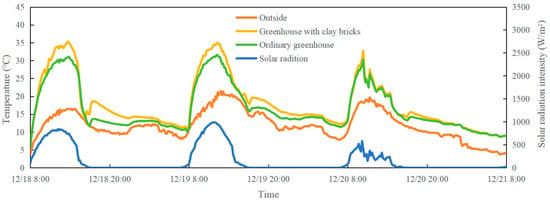
Figure 8.
Temperature regulation performance: case 2.
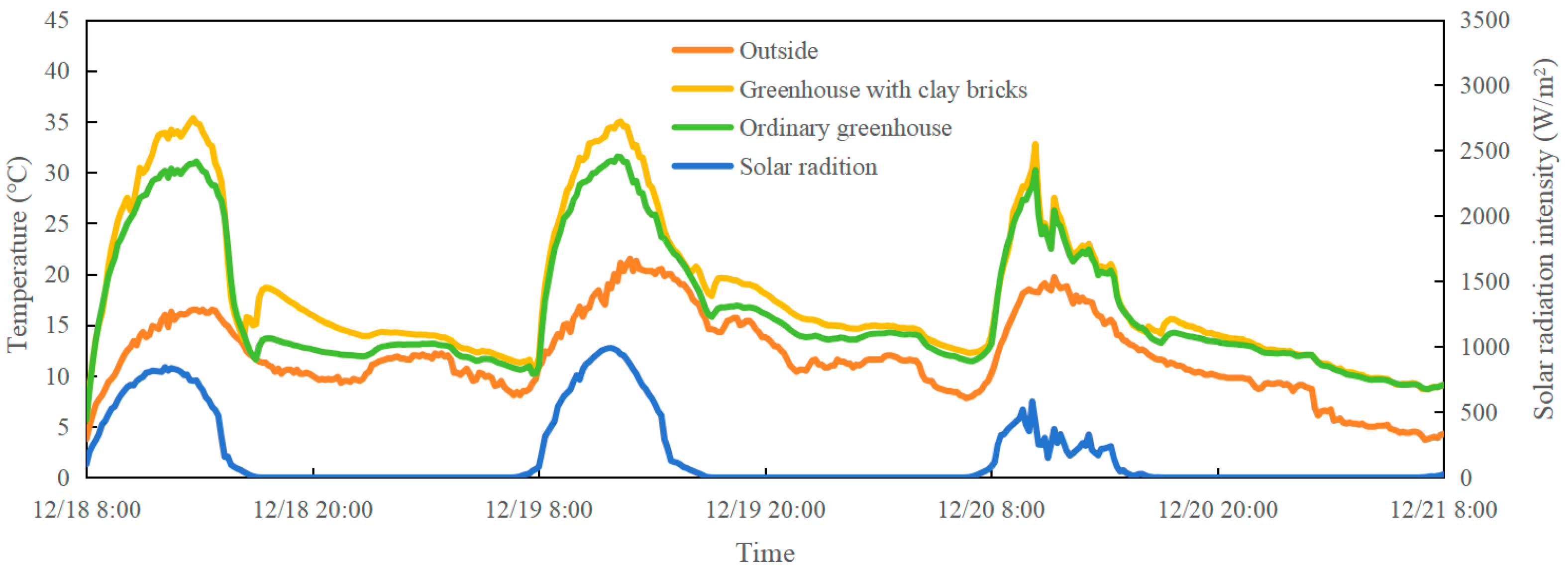
Figure 9.
Temperature regulation performance: case 3.
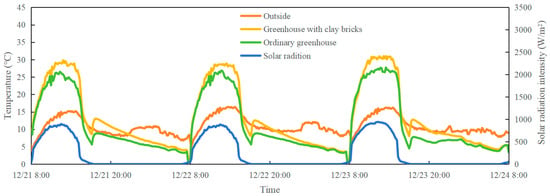
Figure 8 and Figure 9 illustrate the variations in the inside and outside air temperatures of the greenhouse, as well as the solar radiation, in cases 2 and 3, respectively. It can be observed that the temperature regulation performance of the greenhouses in cases 2 and 3 was similar to that in case 1. The average air temperatures inside the clay brick greenhouses in cases 1, 2, and 3 from 18:00 to 08:00 the next day during the three experimental days were 11.27 °C, 13.68 °C, and 7.22 °C respectively, with case 2 having the highest average temperature during the night. To ensure the statistical reliability of the experimental data, three-day cumulative values are used for suitable duration comparison. In case 2, the clay brick greenhouse exhibited a 30.6% superior temperature regulation with respect to suitable temperature duration, with suitable temperature durations of 4050 min versus 3100 min for the ordinary greenhouse during the three experimental days; meanwhile, case 3 yielded a 29.7% longer suitable temperature duration for the clay brick greenhouse (2050 min) than that for the ordinary one (1580 min) during the three experimental days. Among these three cases, case 2 demonstrated the longest suitable temperature duration for the clay brick greenhouse, as well as the largest increase in such duration compared with the ordinary greenhouse.
The heat storage duration performance of the greenhouses is presented in Figure 10. As shown in Figure 10, under sunny conditions, the air temperature inside the greenhouse with clay bricks remained 2 °C higher than that in the ordinary greenhouse until 1:00, 22:40, and 21:40 for cases 1, 2, and 3, respectively. It is indicated that the air temperature advantage duration in the greenhouse with clay bricks decreased correspondingly with a decrease in the external circulation duration. However, during the period from 18:00 to 8:00 the next day, in cases 1, 2, and 3, the air temperature inside the greenhouse with clay bricks remained within the range of 10–35 °C (suitable temperature range for crop growth) for durations of 1280 min, 2150 min, and 780 min, respectively, with case 2 having the longest duration during the three experimental days. This finding indicated the existence of a relatively optimal thermal storage duration for the clay bricks, providing a basis for the refined thermal management of clay brick greenhouses.
Figure 10.
Heat storage duration performance.
3.2. Humidity Regulation Performance Analysis in Greenhouses
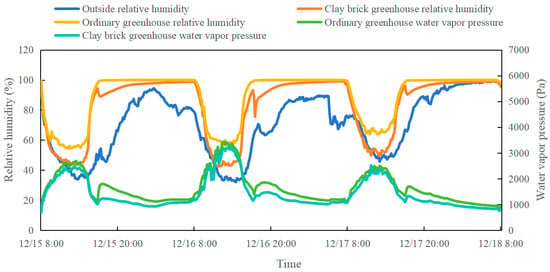
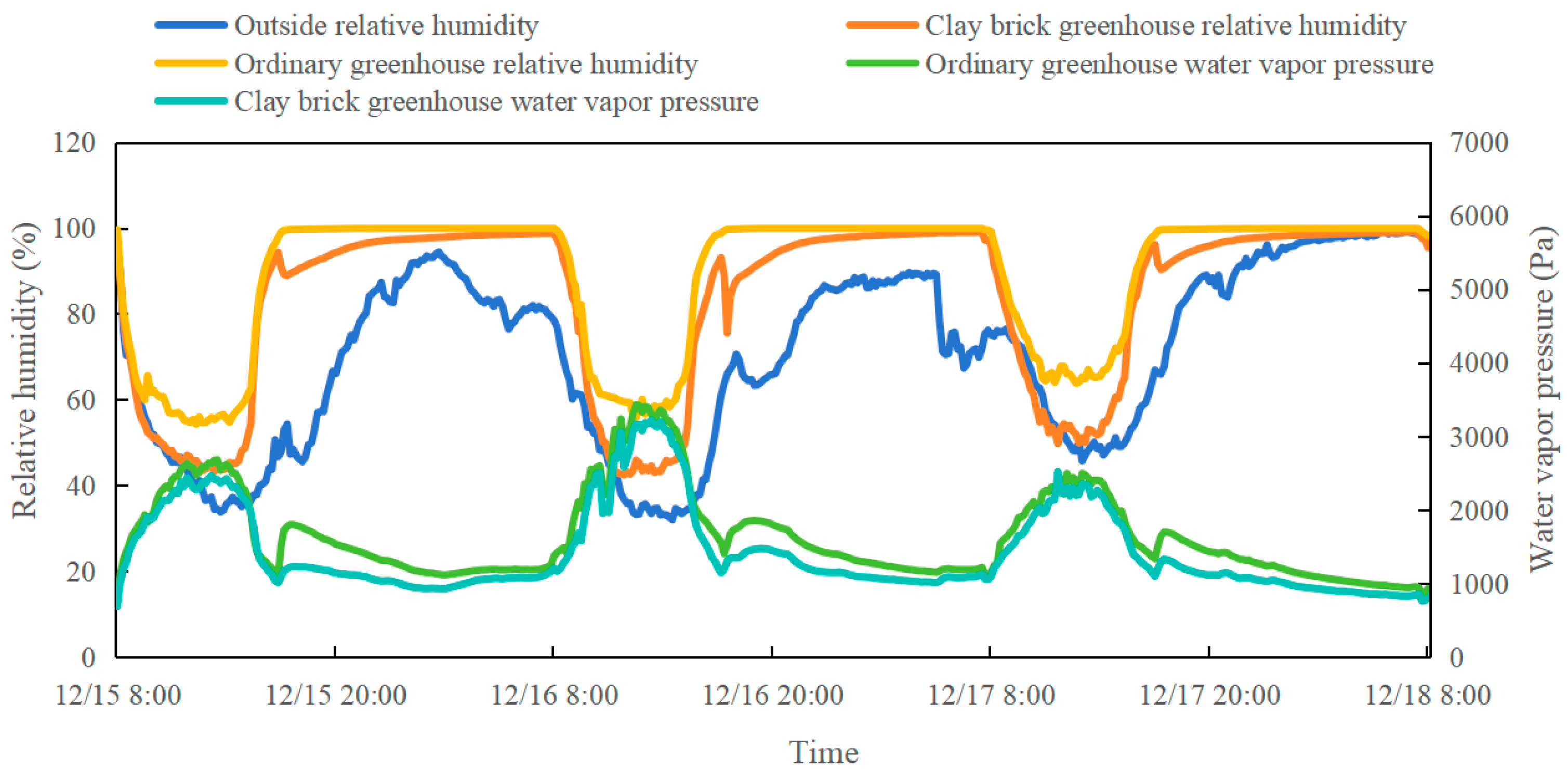
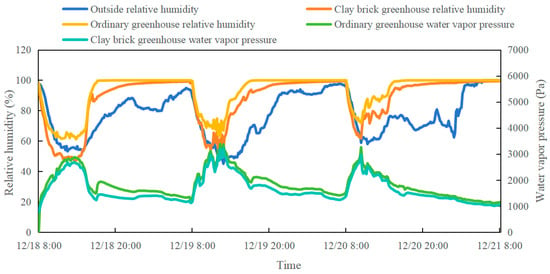
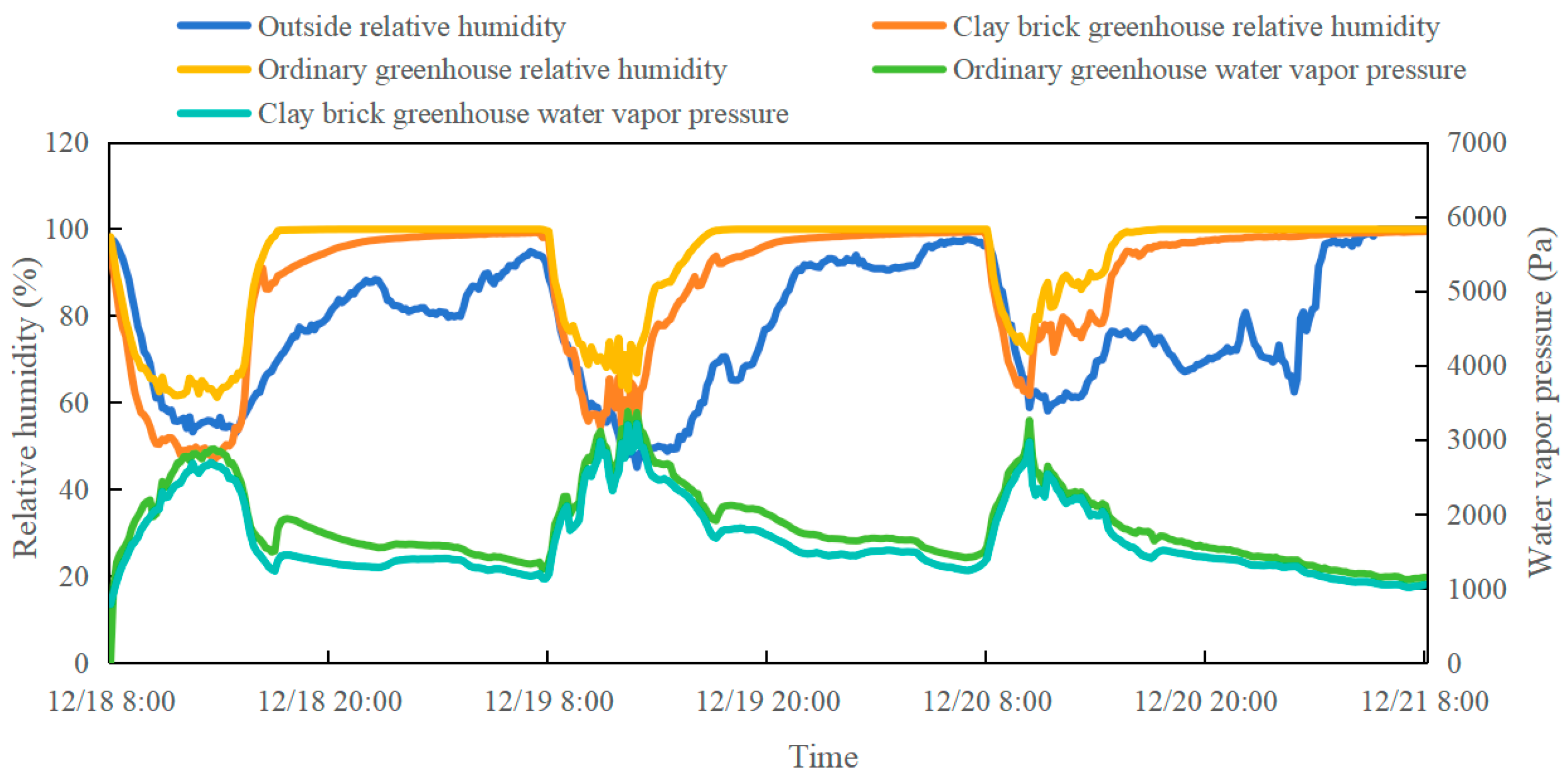
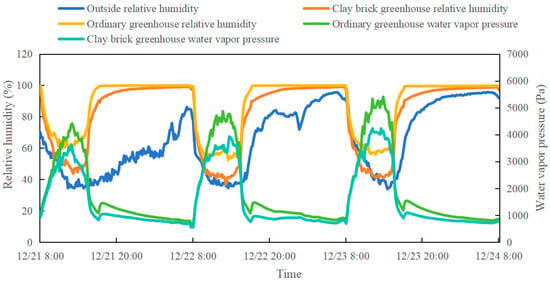
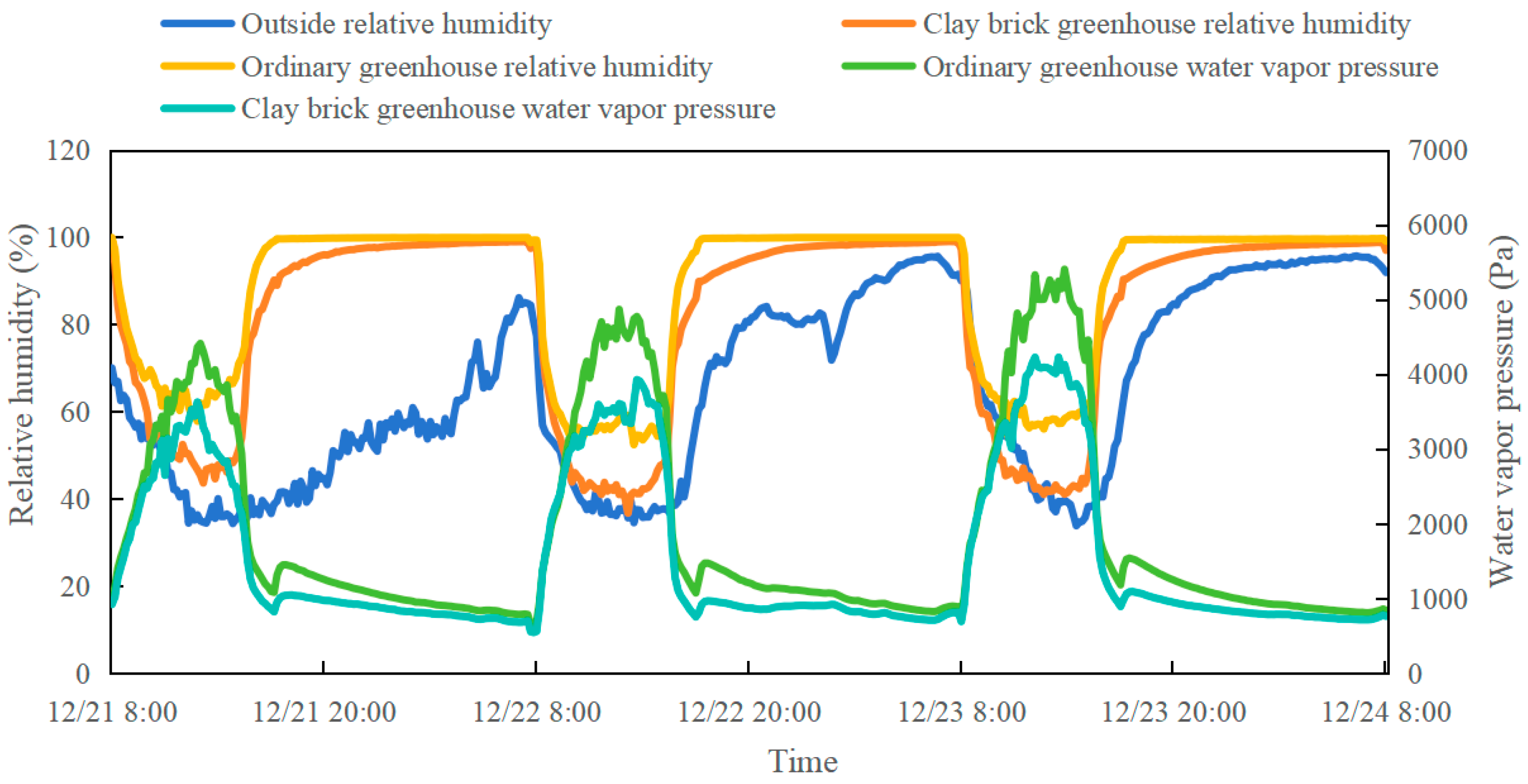
The greenhouse air humidity regulation performances are presented in Figure 11, Figure 12 and Figure 13. During the daytime, air relative humidity inside the greenhouses was higher than the outdoor air relative humidity due to the greenhouses’ enclosed structure, which prevented water vapor generated from soil evaporation from diffusing outward. Additionally, the air relative humidity and water vapor pressure inside the clay brick greenhouse were lower than those inside the ordinary greenhouse. This was because the air temperature in the clay brick greenhouse was higher than that in the ordinary greenhouse (Figure 7, Figure 8 and Figure 9), which enhanced the air’s capacity to hold water vapor. At night, the fan drove low-temperature high-humidity air inside the greenhouse into the clay brick storage unit, where the clay bricks released sensible heat stored during the daytime, thereby increasing the air temperature inside the greenhouse (Figure 7, Figure 8 and Figure 9). Simultaneously, the clay bricks absorbed moisture from the air, reducing the air humidity and water vapor pressure inside the greenhouse. Consequently, the air relative humidity and water vapor pressure inside the clay brick greenhouse were also lower than those inside the ordinary greenhouse at night.
Figure 11.
Humidity regulation performance: case 1.
Figure 12.
Humidity regulation performance: case 2.
Figure 13.
Humidity regulation performance: case 3.
To ensure the statistical reliability of the experimental data, three-day cumulative values are used for suitable duration comparison. Since the common air relative humidity range for the growth of most common greenhouse crops is 40–80% [20], in case 1, the clay brick greenhouse stayed within the suitable humidity range for 1270 min versus 1180 min for the ordinary greenhouse—a 7.6% improvement in humidity regulation during the three experimental days. In case 2, the clay brick greenhouse showed a 40.7% superior humidity regulation, with suitable humidity durations of 1140 min versus 810 min for the ordinary greenhouse during the three experimental days. Case 3 yielded an 8.5% longer suitable humidity duration for the clay brick greenhouse (1410 min) than for the ordinary one (1300 min) during the three experimental days. Among these three cases, case 2 demonstrated the largest increase in suitable humidity duration for the clay brick greenhouse compared with the ordinary greenhouse. Clay bricks demonstrated a considerable effect on regulating the air humidity inside the greenhouse.
3.3. Clay Brick Storage Unit Temperature and Humidity Performance Analysis
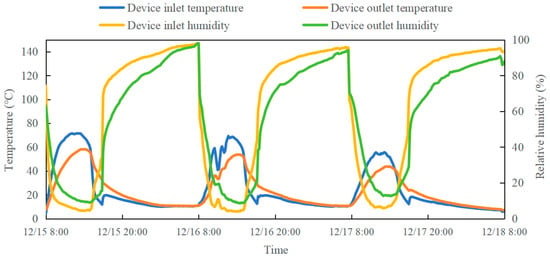
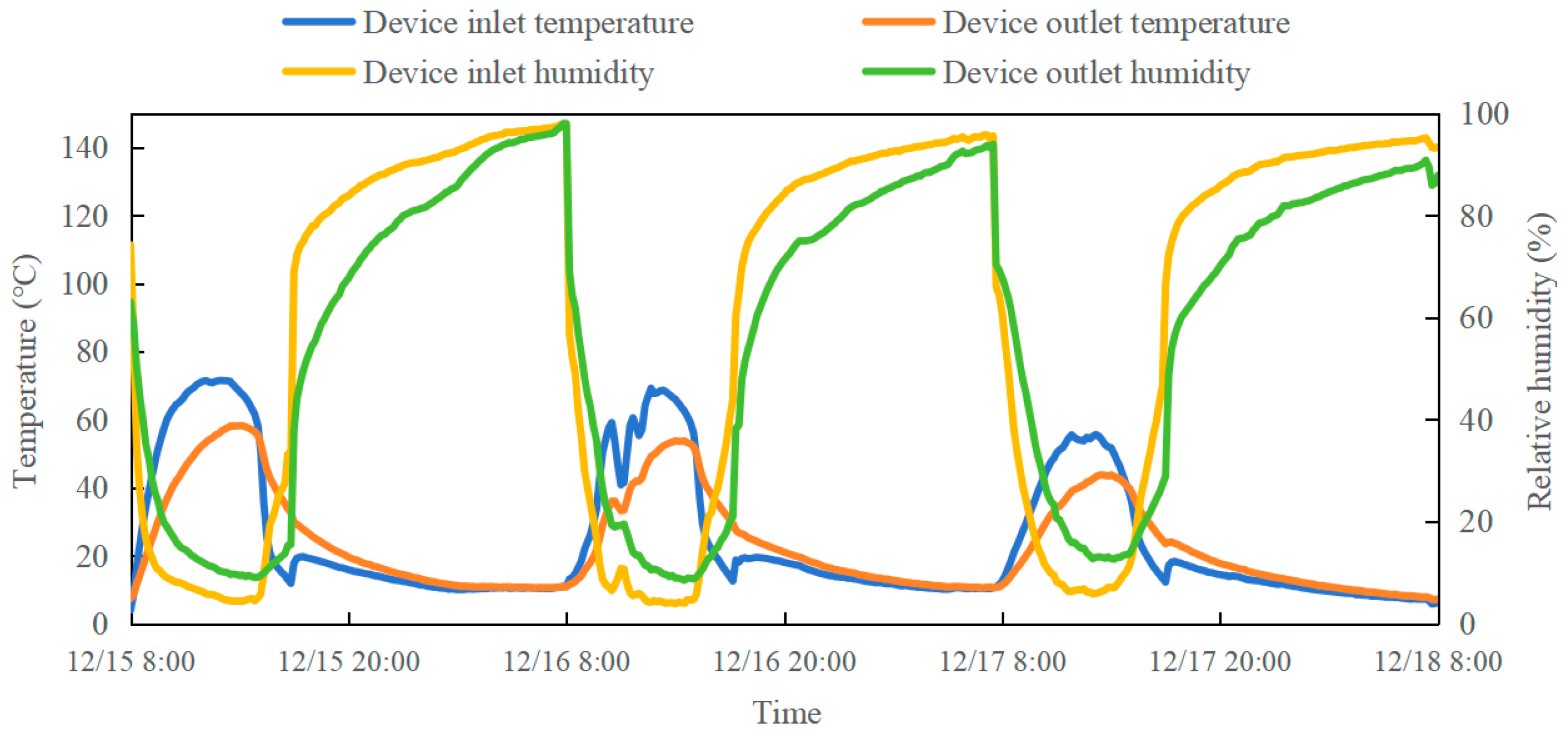
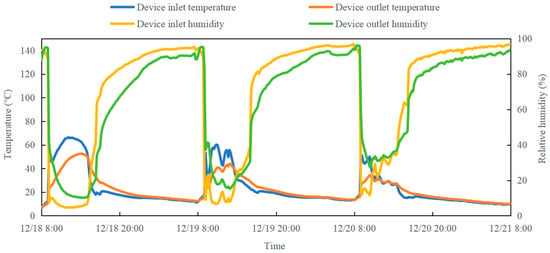
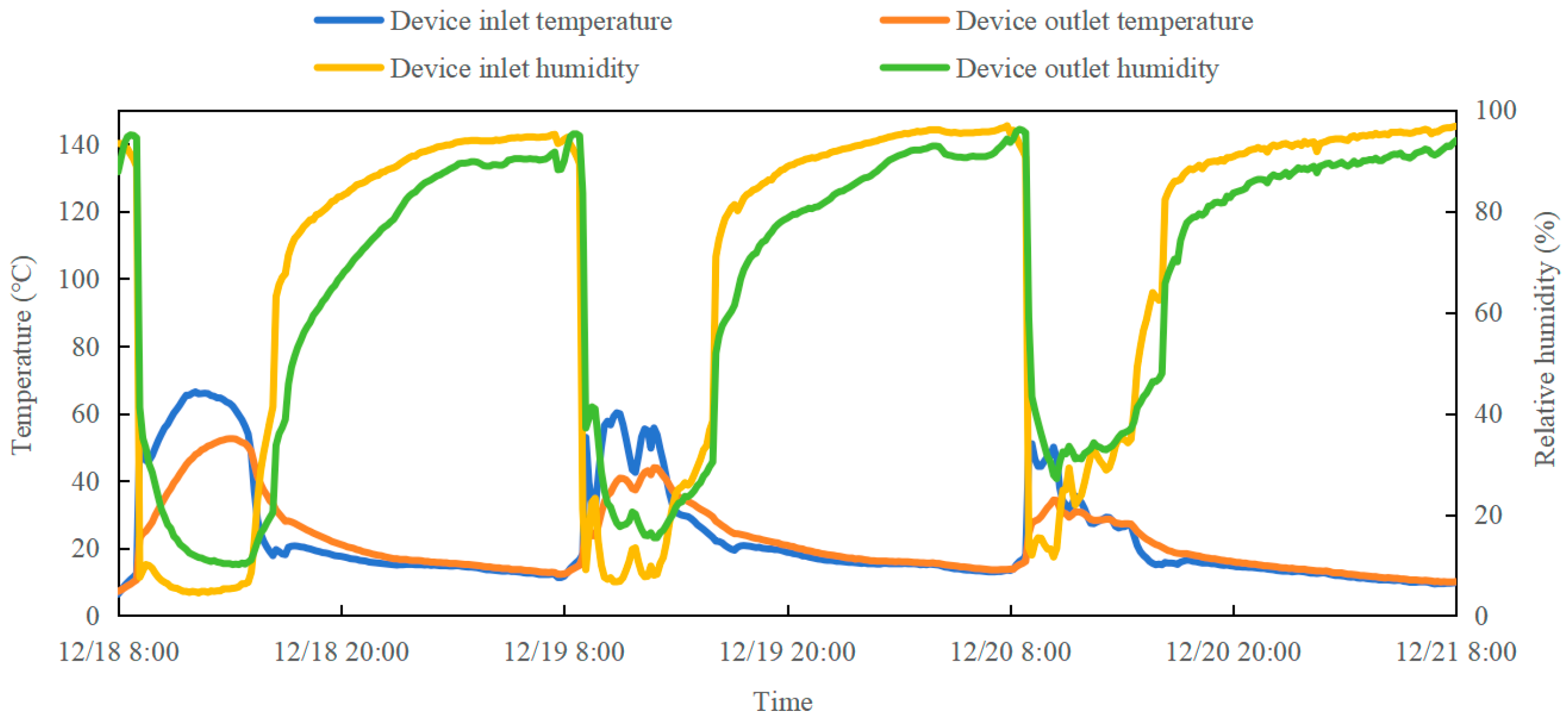
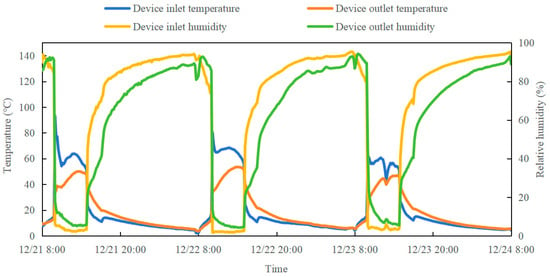
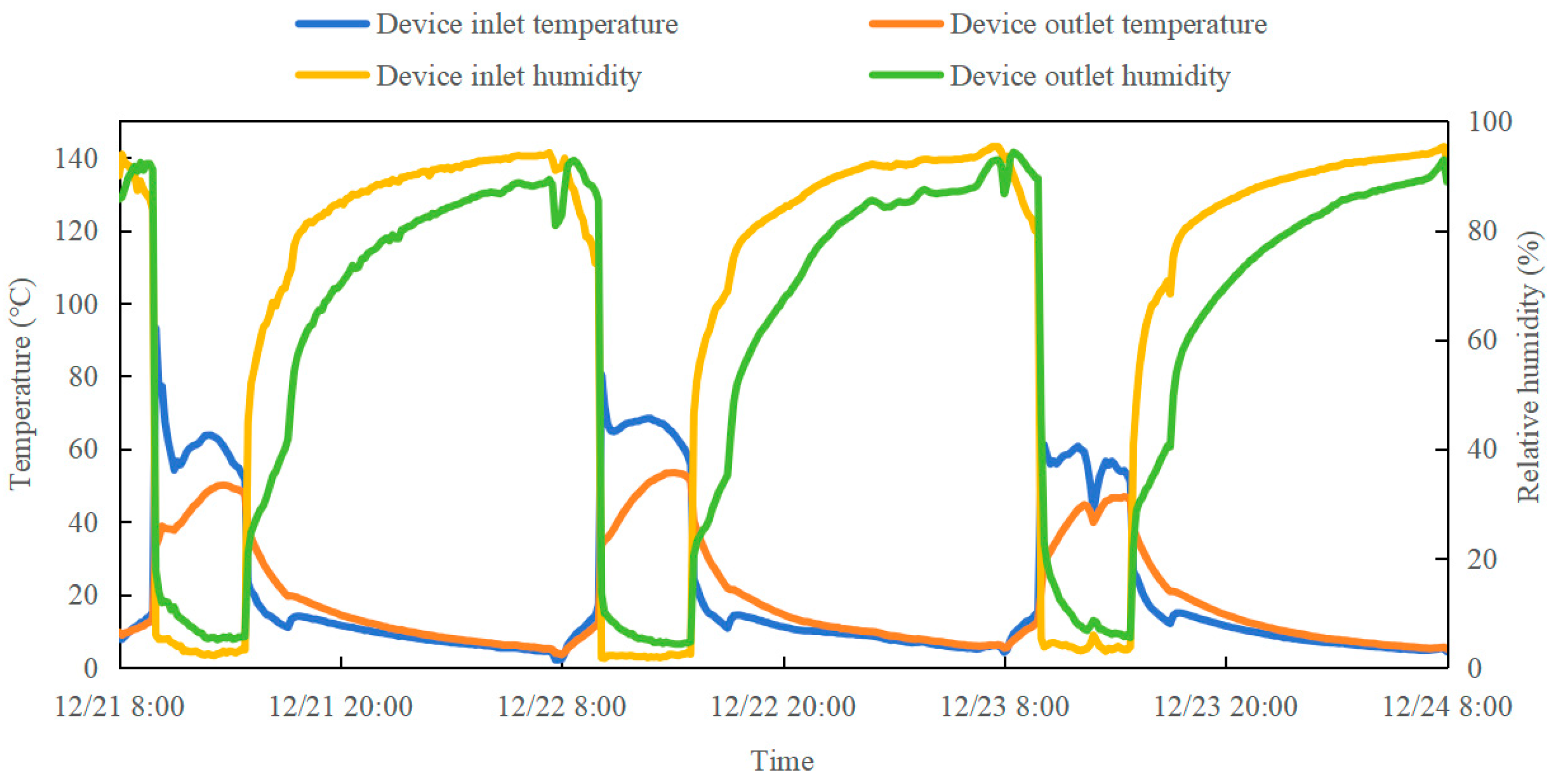
Figure 14, Figure 15 and Figure 16 illustrate the variations in temperature and humidity at the inlet and outlet of the clay brick storage unit in cases 1, 2, and 3. It is observed that in case 1, from 11:00 to 13:00 on 15 December 2025, both the inlet and outlet air temperatures of the clay brick storage unit were relatively high, with average values of 71.0 °C and 54.4 °C, respectively. The reason is, during the above two hours, both the outdoor air temperature and the solar radiation intensity were relatively high, which resulted in a relatively high temperature of the air entering the clay brick storage unit from the solar collector, as well as a relatively high air temperature inside the greenhouse. Correspondingly, the clay brick storage unit outlet air temperature increased. In addition, owing to the heat storage effect of the clay bricks, the outlet air temperature of the clay brick storage unit was lower than the inlet air temperature from 8:00 to 15:10. After 15:10, the clay brick storage unit outlet air temperature exceeded that of the inlet. This is due to the fact that the clay bricks began to release heat, thereby raising the outlet air temperature. Under sunny conditions, the clay brick storage unit inlet and outlet air temperature variations in cases 2 and 3 were similar to that in case 1. However, during the cloudy-to-overcast weather on 20 December, both the ambient air temperature and solar radiation intensity were relatively low from 11:30 to 13:30. As a result, the clay brick storage unit inlet and outlet air temperatures remained low during the above two hours, and after 12:20, the outlet air temperature even exceeded the inlet air temperature.
Figure 14.
Device inlet and outlet air temperature and humidity regulation performance: case 1.
Figure 15.
Device inlet and outlet air temperature and humidity regulation performance: case 2.
Figure 16.
Device inlet and outlet air temperature and humidity regulation performance: case 3.
Regarding humidity variation, under sunny conditions, for case 1, the clay brick storage unit’s inlet air humidity was lower than the outlet during the period from 8:00 to 15:30, whereas it became higher than the outlet during the period from 15:30 to 7:50 the next day. The reason is, from 8:00 to 15:30, high-temperature air enters the clay brick unit to remove moisture adsorbed overnight for regeneration, increasing the outlet air humidity. After 15:30, the clay bricks begin to absorb moisture, reducing the outlet air humidity. Under sunny conditions, the inlet and outlet air humidity variations of cases 2 and 3 were similar to that of case 1. On 20 December, under cloudy-to-overcast weather conditions, due to the relatively low ambient air temperature and solar radiation intensity, the clay brick storage unit’s inlet air humidity overtook that of the outlet at 14:40.
The above indoor temperature and humidity variation trends of the clay brick greenhouse and ordinary control greenhouse, as well as the clay brick storage unit inlet and outlet temperature and humidity trend presented consistent changing rules across the three test cases. The clay brick system always prolonged the suitable temperature and humidity duration compared with the ordinary greenhouse in all groups, which verifies the acceptable repeatability of the prototype experiment.
4. Conclusions and Prospect
This paper introduced a solar air collector circulation system and clay bricks to a greenhouse so as to optimize the greenhouse’s inside temperature and humidity regulation performance. In contrast to conventional greenhouse active environmental regulation systems that consume substantial fossil fuels and electric power, the proposed system passively regulates greenhouse indoor temperature and humidity by storing solar energy with low-cost clay bricks, with only minor electricity consumption from ventilation fans. To evaluate this regulation performance, three experimental scenarios were designed and implemented. The results demonstrated the feasibility of applying a solar air collector circulation system combined with clay bricks in a greenhouse. Based on small-scale prototype experiments, the conclusions are as follows.
- (1)
- In the clay brick greenhouse, the durations during which case 1, case 2, and case 3 remained within the optimal temperature range (10–35 °C) were 2870 min, 4050 min, and 2050 min, respectively. Case 2 exhibited the longest duration. Its average nighttime temperature (13.68 °C) was also higher than that of case 1 (11.27 °C) and case 3 (7.22 °C). Furthermore, the increase in the duration of the clay brick greenhouse’s suitable temperatures compared to that of the ordinary greenhouse was 30.6% for case 2, which was higher than those for case 1 (21.6%) and case 3 (29.7%). Case 2 demonstrated advantages in greenhouse temperature regulation performance.
- (2)
- Clay brick greenhouses achieve prolonged warm-preserving time after sunset; yet, their high-temperature retention period is shortened as the external circulation time is reduced.
- (3)
- The increase in the duration of the clay brick greenhouse’s suitable relative humidity (40–80%) compared to that of the ordinary greenhouse was 40.7% for case 2, which was higher than those for case 1 (7.6%) and case 3 (8.5%). Case 2 demonstrated the best performance in greenhouse humidity regulation.
In conclusion, this experiment confirmed the feasibility of utilizing a solar air collector circulation system combined with clay bricks in a greenhouse. This combined use effectively regulated the air temperature and humidity conditions inside the greenhouse, creating a suitable microclimate for crop growth.
Future research will focus on three aspects:
- Determining the optimal operating time windows of the clay brick storage unit under different weather conditions and exploring adaptive control strategies based on outdoor weather forecasts;
- Quantitative calculation of the cumulative heat and moisture storage by numerical simulation research;
- Carrying out scaled-up experiments in full-scale commercial greenhouses with actual crops, so as to consider the influence of plant transpiration on the thermal–humidity balance, and further improve the engineering applicability of the proposed system.
Author Contributions
Supervision, J.Y. and E.M.; methodology, D.Z. and Y.Z.; formal analysis, D.Z. and A.X.; investigation, D.Z., A.X. and Y.Z.; resources, E.M.; writing—original draft preparation, D.Z.; writing—review and editing, J.Y. and E.M.; project administration, A.X., J.Y. and E.M.; funding acquisition, D.Z. and J.Y. All authors have read and agreed to the published version of the manuscript.
Funding
This research was financially supported by the University-Level Scientific Research Fund Project of Guangzhou Maritime University (Grant No. K42024047).
Data Availability Statement
The data presented in this study are available on request from the corresponding author.
Conflicts of Interest
Author Aiqin Xu was employed by the company Nanjing Fiberglass Research & Design Institute Co., Ltd. The remaining authors declare that the research was conducted in the absence of any commercial or financial relationships that could be construed as a potential conflict of interest.
Abbreviations
The following abbreviations are used in this manuscript:
| PCM | Phase change material |
| HRM | Humidity-regulating material |
References
- Zong, C.; Li, H.; Zheng, L.; Song, W. Evaluation and Optimization of a New Condensation Dehumidification System with Fan-Coil Units Using Low-Cost Cold Source for Greenhouses. J. Clean. Prod. 2023, 433, 139805. [Google Scholar]
- Xu, W.; Guo, H.; Ma, C. An Active Solar Water Wall for Passive Solar Greenhouse Heating. Appl. Energy 2022, 308, 118270. [Google Scholar] [CrossRef] [Scilit]
- Jiao, Y.; Chen, C.; Li, G.; Fu, H.; Mi, X. Research on the Variation Patterns and Predictive Models of Soil Temperature in a Solar Greenhouse. Sol. Energy 2024, 270, 112267. [Google Scholar] [CrossRef] [Scilit]
- Mu, M.; Zhang, S.; Yang, S.; Wang, Y. Phase Change Materials Applied in Agricultural Greenhouses. J. Energy Storage 2022, 49, 104100. [Google Scholar] [CrossRef] [Scilit]
- Gao, Y.; Meng, X. A Comprehensive Review of Integrating Phase Change Materials in Building Bricks: Methods, Performance and Applications. J. Energy Storage 2023, 62, 106913. [Google Scholar] [CrossRef] [Scilit]
- Chen, S.; Zhu, Y.; Chen, Y.; Liu, W. Usage Strategy of Phase Change Materials in Plastic Greenhouses, in Hot Summer and Cold Winter Climate. Appl. Energy 2020, 277, 115416. [Google Scholar] [CrossRef] [Scilit]
- Li, Y.; Liu, X.; Li, W.; Jian, Y.; Arıcı, M.; Chen, Y.; Shen, Q. Thermal Environment Evaluation of Plastic Greenhouses in Southern China and Optimization by Phase Change Materials. J. Build. Eng. 2022, 57, 104882. [Google Scholar] [CrossRef] [Scilit]
- Cherif, D.; Ayed, R.; Skouri, S.; Bouadila, S.; Lazaar, M.; Guizani, A. Enhancing Crop Yield in Hydroponic Greenhouses: Integrating sensible heat Storage and Forced Ventilation Systems for Improved Thermal Stratification. Therm. Sci. Eng. Prog. 2023, 45, 102163. [Google Scholar]
- Chen, X.; Liang, H.; Wu, G.; Feng, C.; Tao, T.; Ji, Y.; Ma, Q.; Tong, Y. Coupled Heat and Humidity Control System of Narrow-Trough Solar Collector and Solid Desiccant in Chinese Solar Greenhouse: Analysis of Optical/Thermal Characteristics and Experimental Study. Energy 2023, 273, 127198. [Google Scholar]
- Wang, C.; Zou, H.; Du, S.; Huang, D.; Wang, R. Water and Heat Recovery for Greenhouses in Cold Climates Using a Solid Sorption System. Energy 2023, 270, 126919. [Google Scholar] [CrossRef] [Scilit]
- Baek, M.; Choi, S.; Kim, H.; Jang, H.; Kim, J.; Hong, T.; Hong, J. CFD Numerical Setting Combinations for Greenhouse Natural Ventilation across Diurnal Time Points Using Multi-Criteria Analysis. Comput. Electron. Agric. 2026, 247, 111689. [Google Scholar] [CrossRef] [Scilit]
- Sun, H.; Qi, Z.; Zhang, Q.; Xu, Z.; Zheng, W.; Wei, M.; Liu, G.; Wang, S. Thermal and Ventilation Performance of the Innovative Asymmetrical Flexible Wall Greenhouse for Annual Usage. Appl. Therm. Eng. 2026, 289, 129969. [Google Scholar] [CrossRef] [Scilit]
- Huang, Y.; Kang, N.; Deng, G.; He, J.; Li, J. Intelligent Control and Experimental Study of a Semiconductor Cooling-Compressed Air Coupled Greenhouse Dehumidification System. Appl. Therm. Eng. 2026, 293, 130486. [Google Scholar] [CrossRef] [Scilit]
- Hu, W.; Jiang, C.; Guan, Y.; Zhang, X.; Hao, J.; Wang, C.; Ma, J. Improvement of Heat-Mass Transfer Performance of Finned Tube Heat Exchangers via Superhydrophilic-Superhydrophobic Dot Arrays for Dehumidification in Greenhouse Environment. Int. J. Heat Mass Transf. 2026, 257, 128199. [Google Scholar]
- Zhang, D.; Wang, T.; Zhou, B.; Zhang, P.; Yang, J. An Analytical Review of Humidity-Regulating Materials: Performance Optimization and Applications in Hot and Humid Regions. Buildings 2025, 15, 4376. [Google Scholar] [CrossRef] [Scilit]
- Soussi, M.; Chaibi, M.T.; Buchholz, M.; Saghrouni, Z. Comprehensive Review on Climate Control and Cooling Systems in Greenhouses under Hot and Arid Conditions. Agronomy 2022, 12, 626. [Google Scholar] [CrossRef] [Scilit]
- Wang, S.; Gainey, L.; Mackinnon, I.D.R.; Allen, C.; Gu, Y.; Xi, Y. Thermal behaviors of clay minerals as key components and additives for fired brick properties: A review. J. Build. Eng. 2023, 66, 105802. [Google Scholar]
- Xin, Y.; Robert, D.; Mohajerani, A.; Tran, P.; Pramanik, B.K. Energy efficiency of waste reformed fired clay bricks-from manufacturing to post application. Energy 2023, 282, 128755. [Google Scholar] [CrossRef] [Scilit]
- Shahat, M.A.; Ahmed, Y.M.Z.; Ghitas, A.; Soliman, W. Sustainable fired clay bricks with variable TiO2–PET plastic waste content for thermal insulation applications. Electrochim. Acta 2025, 541, 147314. [Google Scholar]
- Badji, A.; Benseddik, A.; Bensaha, H.; Boukhelifa, A.; Hasrane, I. Design, Technology, and Management of Greenhouse: A Review. J. Clean. Prod. 2022, 373, 133753. [Google Scholar] [CrossRef] [Scilit]

Disclaimer/Publisher’s Note: The statements, opinions and data contained in all publications are solely those of the individual author(s) and contributor(s) and not of MDPI and/or the editor(s). MDPI and/or the editor(s) disclaim responsibility for any injury to people or property resulting from any ideas, methods, instructions or products referred to in the content. |
© 2026 by the authors. Licensee MDPI, Basel, Switzerland. This article is an open access article distributed under the terms and conditions of the Creative Commons Attribution (CC BY) license.