


Abstract
Cold-region community outdoor spaces are not only everyday activity settings for older adults in winter, but also public-space types that need to be translated into design evidence for architecture and healthy human-settlement research. Existing restorative-environment studies usually treat improved mood, perceived restoration, and environmental appraisal as evidence of health benefits. The key finding of this study is that subjective restoration and physiological recovery are not always synchronized after outdoor exposure in cold-region communities. This discordance reveals a design risk and an innovative value that can be overlooked when restoration is evaluated only through perception-based indicators. Based on a winter field exposure experiment with 345 older adults in a community in Shenyang, China, this study compared staged changes in systolic blood pressure (SBP), diastolic blood pressure (DBP), pulse pressure (PP), POMS, ROS, and ENPQ across an activity plaza, a greenway walkway, and a street corridor. It further developed a psychophysiological concordance classification and a residual cardiovascular risk indicator for the recovery period. The greenway walkway showed the most stable concordant recovery, with 86.84% of women and 79.35% of men showing concordant recovery. The activity plaza showed a clear pattern of emotional recovery: the proportions of women and men whose psychological state improved without a synchronized SBP decrease were 61.58% and 50.32%, respectively. The street corridor had the highest recovery-failure rates, at 92.63% for women and 91.61% for men. Among women, 90.53% reached SBP values of 140 mmHg or higher during the walking phase in the street corridor, and 59.47% remained above this risk threshold during recovery. These results show that health evaluation of cold-region community outdoor spaces should not rely only on subjective restoration indicators, but should also include psychophysiological concordance and residual risk after exposure. The study translates site health effects into three architectural design judgments: concordant-restoration spaces, emotional-restoration spaces, and recovery-failure spaces, providing a testable evidence framework for age-friendly community renewal, path organization, green buffering, and winter wind-protection design.
1. Introduction
Population aging has transformed everyday community outdoor spaces from general public activity settings into an important component of healthy human settlements [1,2]. In cold-region cities, winter outdoor activity among older adults is affected not only by accessibility, facility provision, and greening quality, but also by low temperature, wind exposure, solar radiation, seasonal vegetation conditions, and building enclosure [3,4,5,6,7,8]. Community activity plazas, greenway walkways, and street spaces are among the most frequently used settings for staying, walking, and passing through. However, these spaces do not necessarily produce the same health effects [2,9,10]. A site may generate positive emotional appraisal because it is open, visible, and socially active, while simultaneously maintaining a high blood pressure load. A street corridor may also induce an increase in SBP after walking and retain risk after a short recovery period [10,11,12,13,14,15,16,17]. Therefore, age-friendly community design in cold regions should not ask only whether a space is liked, but also whether users can recover safely after exposure [4,5].
Restorative-environment research has established theoretical links between nature exposure, emotional improvement, attentional restoration, and physiological relaxation [18,19,20,21]. Subjective or semi-subjective indicators such as POMS, ROS, and perceived environmental naturalness are widely used to judge whether outdoor spaces are restorative [11,20,21,22]. These indicators are valuable because they capture emotional tension, restorative experience, and perceived environmental quality, and they help explain space-use behavior [10,11,21]. However, when the research object is older adults in cold regions, the relationship between subjective restoration and physiological safety requires renewed scrutiny [10,12,13]. Older adults differ from younger populations in blood pressure regulation, vascular elasticity, and cold-exposure response. Winter wind exposure, spatial openness, and insufficient vegetation shelter may continue to affect SBP and PP, even when individuals report better restorative experience at the psychological level [6,7,8,14,15,16,17].
Existing studies usually discuss environmental health effects along two lines. One line compares the effects of parks, greenways, streets, and other space types on emotional and physiological indicators. The other examines how sex, age, and health status moderate environmental responses [10,11,12,13]. These studies provide an important basis for understanding green space and restorative experience, but a key question remains for architectural design translation: are psychological restoration and physiological recovery synchronized [18,19,20,23]? If an activity plaza can reduce negative mood but cannot reduce blood pressure, the space should not be simply classified as a healthy restorative space. If a street corridor increases blood pressure after walking and retains risk during recovery, the issue is not merely insufficient comfort, but unresolved post-exposure physiological risk [10,12,13,14,15,16,17]. Identifying this discordance reveals the innovative value that may be missed by studies relying on a single-perception-based restoration pathway.
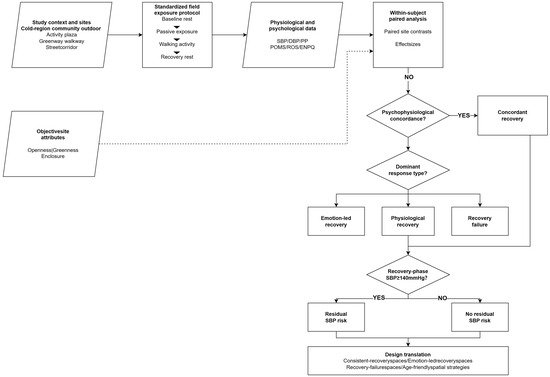
This study shifts the research focus from whether different settings influence older adults’ psychophysiological responses to whether subjective restoration can represent physiological safety and how this difference can be translated into spatial design judgment [4,5,10]. This shift distinguishes the study from previous work on sex differences or green space exposure. The study does not treat psychological indicators as simple substitutes for physiological effects, nor does it convert site differences directly into a continuous dose–response curve [19,24]. Instead, it uses complete staged field data to identify psychophysiological concordance, discordance types, and residual risk during recovery in different community outdoor settings. Three questions guide the study: how do physiological and psychological indicators change after exposure to three cold-region community outdoor settings; are psychological improvement and blood pressure recovery concordant or discordant; and which settings and groups still present SBP risk during recovery? The research framework is shown in Figure 1. By addressing these questions, the study develops an empirically testable and design-translatable evidence framework for age-friendly community outdoor-space evaluation in cold regions [1,2,3,4,5,9].
Figure 1.
Research framework linking cold-region community outdoor exposure, psychophysiological inference, residual risk, and design translation.
2. Materials and Methods
2.1. Study Area and Test Sites
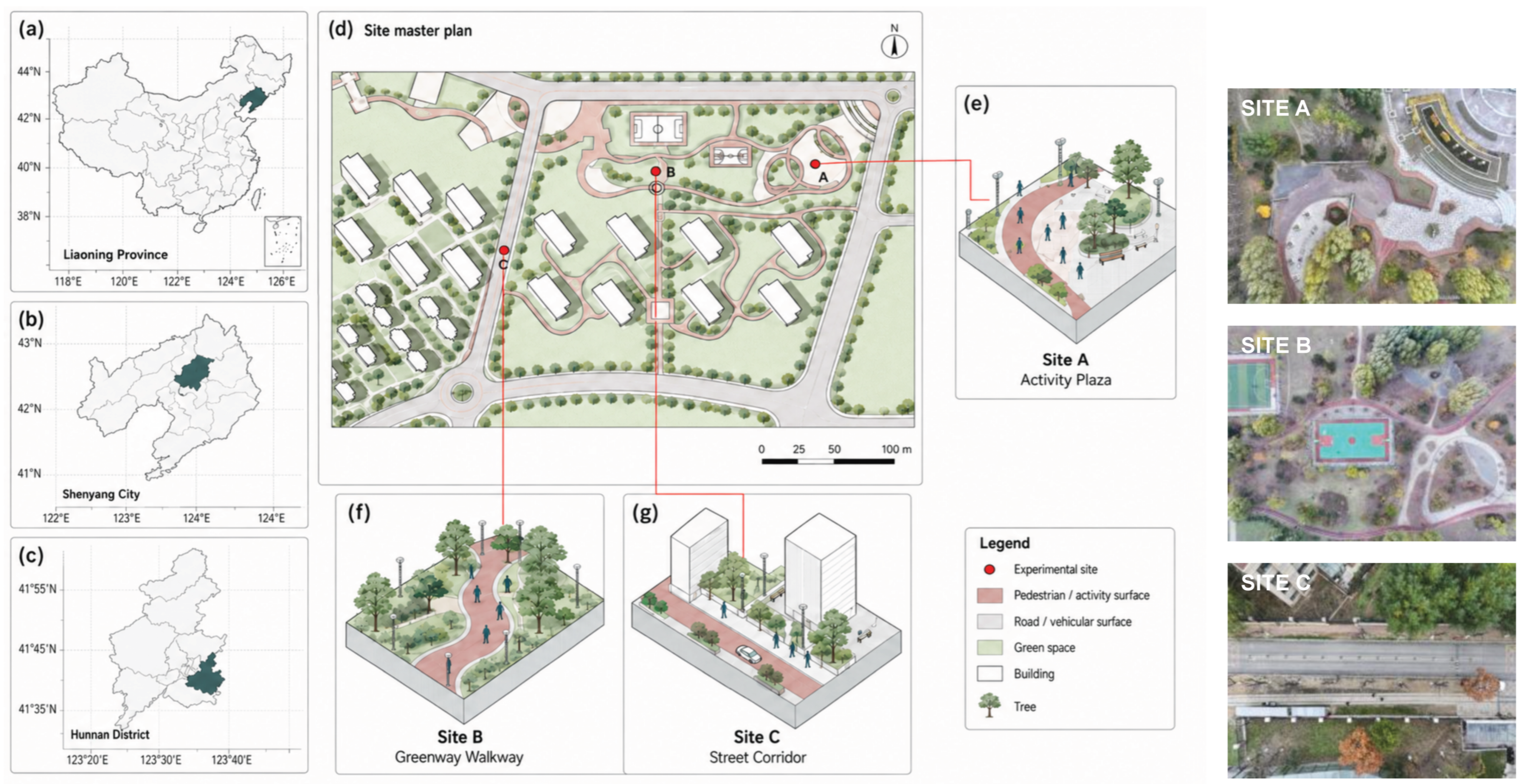
A typical cold-region residential community in Hunnan District, Shenyang, China, was selected as the field-experiment area. Winter outdoor activity in this community is influenced by low temperature, wind environment, and deciduous vegetation conditions [6,7,8]. Site selection followed three criteria: high frequency of daily use by older adults, spatial-form differences, and representativeness within the community. Three typical outdoor settings were selected: a community park activity plaza, a community park greenway walkway, and a community street corridor [2,3,4,5,9]. For clarity, these settings are referred to as Activity Plaza, Greenway Walkway, and Street Corridor. This typological distinction is consistent with studies on older adults’ use of public space and community open-space evaluation [2,3,4,9,10].
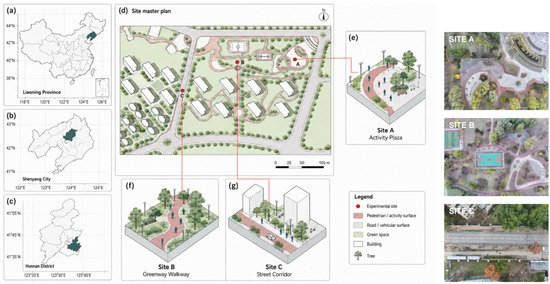
Figure 2 shows the location of the study area, the community layout, and the spatial relationship among the three test sites. Activity Plaza is an open site for fitness, staying, and social interaction. Greenway Walkway is a linear green space with continuous walking function and relatively high vegetation coverage. Street Corridor is a community street space formed by roads, building interfaces, and street trees. Together, these three settings represent the most common staying, walking, and passing-through scenarios in older adults’ daily outdoor activities and provide a field basis for comparing post-exposure responses under different spatial forms.
Figure 2.
Test sites and spatial layout of the three community outdoor exposure settings. (a–c) are the location maps of the research sites, (d) is the planning map of the research community, (e) is the spatial diagram of ACTIVITY PLAZA, (f) is the spatial diagram of greenway walkway, (g) is the spatial diagram of street corridox.
2.2. Quantification of Site Environmental Indicators
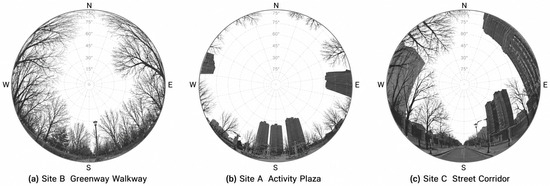
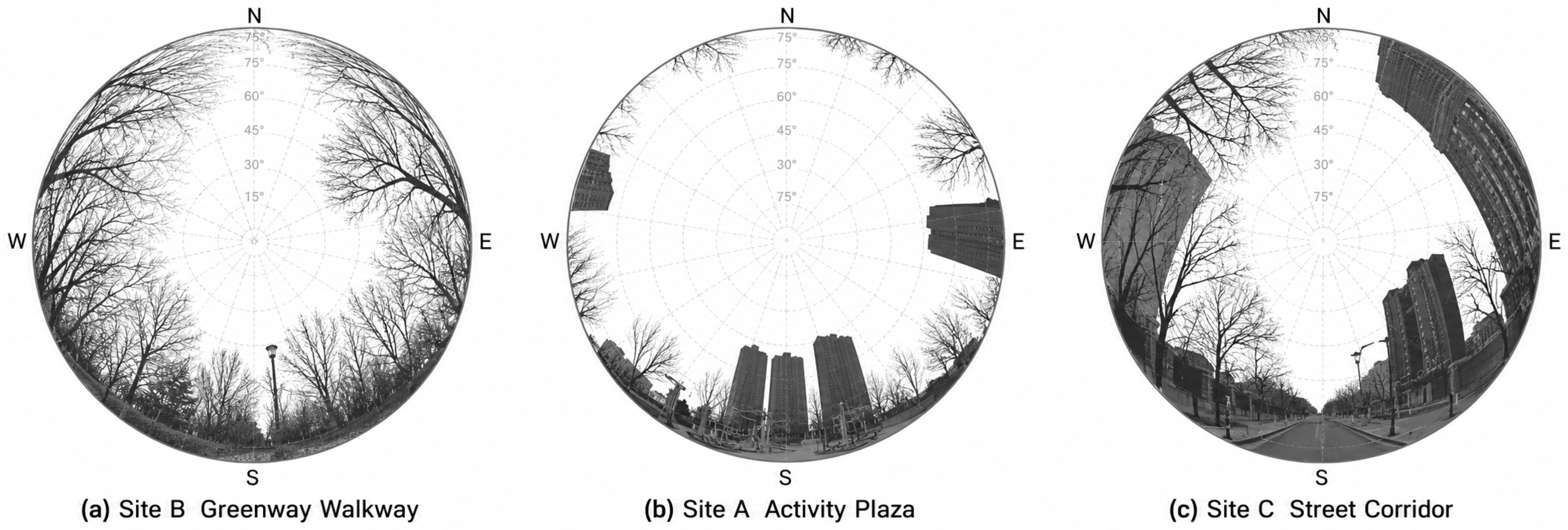
To translate setting differences into interpretable objective environmental background, this study used spatial openness and green coverage characteristics to describe the three sites. Spatial openness was obtained from fisheye images processed with RayMan, reflecting the exposed condition jointly formed by sky visibility, building enclosure, and vertical interfaces [25,26]. Figure 3 presents the RayMan-processed fisheye images of the three sites. The Greenway Walkway shows stronger canopy shelter and lower sky exposure, the Street Corridor shows greater longitudinal openness and building-interface exposure, and Activity Plaza lies between the two. This indicator is necessary because outdoor thermal comfort and short-term health responses in cold regions are affected not only by air temperature, but also by radiation, wind environment, shelter, and spatial enclosure [6,8,25,26,27].
Figure 3.
RayMan-processed fisheye images for objective characterization of spatial openness.
Spatial openness was operationally defined through the sky view factor (SVF), calculated from fisheye photographs processed in RayMan 1.2 [25]. Greening coverage was quantified as the green-view index—the proportion of vegetation pixels within the hemispheric image at each capture point. These two parameters were selected because they capture the most salient environmental dimensions differentiating the three sites: spatial enclosure (relevant to wind exposure and thermal comfort in cold regions) and vegetation density (relevant to visual naturalness and restorative experience). Other environmental variables—including solar radiation, ambient noise, pedestrian density, and mean radiant temperature—were not entered as statistical covariates because the present study’s primary objective is to compare site-level psychophysiological response patterns among three qualitatively distinct real community settings, rather than to decompose a continuous environmental dose–response function from a limited set of site levels.
At each of the three sites, fisheye photographs were captured using a DSLR camera with an equisolid-angle fisheye lens at a height of 1.5 m above ground level. Five capture points were distributed across each site (center and four cardinal quadrants) to represent within-site spatial variation. All photographs were taken on a clear day between 11:00 and 13:00 to ensure consistent solar geometry. The five SVF and greening-index values per site were averaged to produce site-level estimates; within-site coefficients of variation were below 8% for both parameters, confirming acceptable spatial homogeneity for site-level characterization.
The site environmental parameters were used to explain setting differences rather than to establish a continuous dose model. The mean spatial openness and greening index were 0.73 and 0.82 for Activity Plaza, 0.68 and 0.88 for Greenway Walkway, and 0.85 and 0.65 for Street Corridor. The three sites therefore formed a spatial gradient from lower openness and higher greening, through medium openness and medium-high greening, to higher openness and lower greening. Because these objective environmental indicators correspond to only three real site levels, the participant sample size of 345 does not imply a large number of independent environmental values. The data do not support robust estimation of segmented regression, partial-dependence plots, or threshold curves. Therefore, environmental indicators were used as site-level explanatory variables and design background.
As contextual environmental background, Table 1 summarizes the winter microclimate conditions across the three sites. Because the experiment spanned two winter field seasons (November–December 2023 and 2024) with varying participant schedules, microclimate parameters—temperature, humidity, and wind speed—were recorded as session-level means and serve as environmental characterization rather than as core analytical covariates in the statistical model. Wind speed was consistently lower in Greenway Walkway than in Street Corridor, consistent with the vegetation sheltering effect of the greenway. The ground hardening rate differed markedly across sites: Greenway Walkway featured a gravel–soil composite surface (~30% hardening), Activity Plaza used partially permeable paving (~65%), and Street Corridor was fully paved asphalt (~95%). These environmental contrasts collectively define the exposure differences whose psychophysiological consequences are examined in Section 3 and Section 4.
Table 1.
The winter microclimate and environment conditions.
2.3. Participants and Experimental Procedure
A total of 345 older adults participated in the study, including 190 women and 155 men. The mean age of the sample was approximately 66 years, with a standard deviation of approximately 4 years. The mean ages of women and men were both approximately 66 years. The mean SF-12 health score was 46.71, with values of 46.92 for women and 46.46 for men, indicating that the sample met the health requirements for a short-term outdoor exposure experiment [28]. Basic participant characteristics are shown in Table 2.
Table 2.
Participant characteristics and baseline health status.
Baseline blood pressure was measured during the preparation stage after a 5 min seated rest. The overall mean baseline SBP was 133.4 mmHg and DBP was 79.7 mmHg; 4.9% of participants met the hypertension criterion (SBP ≥ 140 mmHg or DBP ≥ 90 mmHg). SF-12 served as a standardized health-status screening tool—its physical and mental component scores provide a proxy for functional health status.
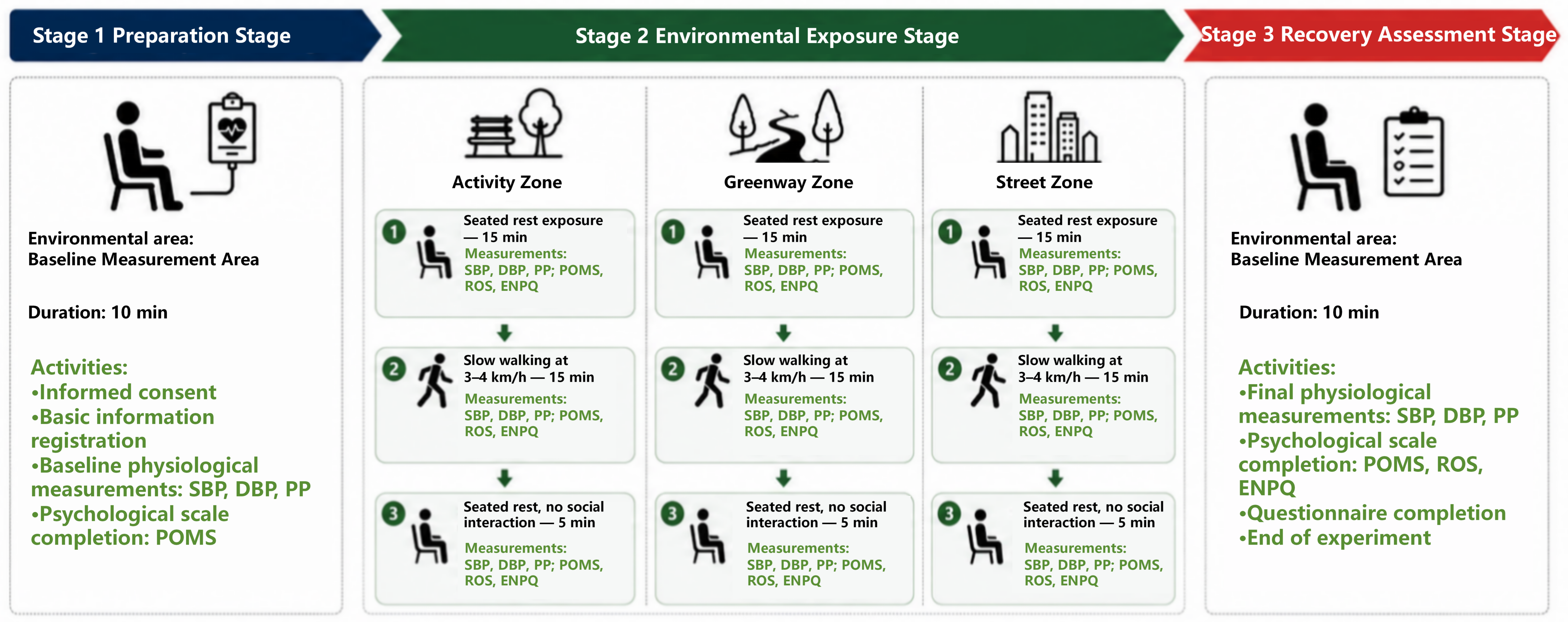
The experiment adopted a repeated-measures field design. Data were collected from November to December 2023 and from November to December 2024, on sunny days between 10:00 and 14:00. During the experiment, the outdoor air temperature was 4–8 °C, wind speed was below level 3, and relative humidity was 33%. Each participant completed a standardized exposure process in the three settings. Each setting included seated exposure, low-intensity walking, and short recovery; the preparation stage and final recovery evaluation were conducted in the baseline measurement area. Blood pressure was measured at baseline, seated exposure, walking, and recovery nodes. POMS was measured at baseline and subsequent nodes to reflect emotional change, while ROS and ENPQ were measured from the site-exposure node onward to reflect restorative experience and environmental perception. Table 3 and Figure 4 verifies and standardizes the process and duration. This repeated-measures procedure is necessary because staged responses of the same participant across different settings can serve as within-participant controls, reducing the influence of stable individual differences on site-effect estimation [10,11,12,13,24].
Table 3.
Process and duration of standardized field testing.
Figure 4.
Experimental sampling illustration.
2.4. Instruments, Indicators, and Derived Variables
Instrument and indicator selection followed a field-compatibility and clinical-interpretability rationale. The Omron HEM-7136 (Omron Healthcare Dalian, Dalian, China) upper-arm electronic monitor was selected for blood pressure measurement because it uses a clinically validated oscillometric algorithm (compliant with ISO 81060-2:2018), is portable for cold-weather field deployment, and has been used in prior environmental-health studies in cold climates [2]. SBP was chosen as the primary physiological endpoint because it is sensitive to acute environmental stress, clinically interpretable for cardiovascular risk stratification, and directly informative for the residual-risk analysis in Section 3.5 [14,15,16,17]. DBP supplemented interpretation of diastolic vascular status. PP (SBP − DBP) was derived to capture arterial stiffness-related components of the pressure response, which is particularly relevant for older adults [15,16,29].
Physiological indicators included SBP, DBP, and PP. Blood pressure was measured in the field using an upper-arm electronic blood pressure monitor (Omron HEM-7136), with consistent posture and measurement nodes throughout the procedure. SBP was used as the primary cardiovascular-response indicator because it reflects vascular pressure load under cold-region outdoor exposure and walking activity. DBP supplemented interpretation of vascular status during diastole. PP, calculated as the difference between SBP and DBP, reflects arterial elasticity and cardiovascular burden, which is particularly relevant for older adults [14,15,16,17,29]. These indicators were selected because cold exposure and age-related vascular changes can manifest as short-term blood pressure and pulse-pressure load [6,7,8,14,15,16,17].
Psychological indicators included POMS, ROS, and ENPQ. POMS reflected a negative emotional state, with higher scores indicating greater emotional stress. ROS reflected restorative experience, with higher scores indicating stronger restoration. ENPQ reflected perceived environmental naturalness, quietness, and environmental quality [20,21,22]. These scales supplemented physiological measurement because the health effects of architectural space include both physiological load captured by blood pressure and subjective restoration captured by emotion and environmental perception [10,11,18,19]. Because ROS and ENPQ depend more directly on site-specific perception, they were used from the post-exposure node onward.
To identify whether subjective restoration and physiological recovery were synchronized, the study further constructed psychophysiological response types. If POMS improved and SBP decreased, the response was classified as concordant recovery. If POMS improved but SBP did not decrease, it was classified as emotional recovery. If SBP decreased but POMS did not improve, it was classified as physiological recovery. If neither indicator improved, it was classified as recovery failure. This classification is necessary because architectural space evaluation should not report improvement in only one class of indicator, but should determine whether psychological restoration is accompanied by physiological safety [10,12,13,18,19]. Residual risk during recovery was identified using an SBP threshold of 140 mmHg or higher, representing cardiovascular load that may remain after exposure [17].
2.5. Statistical Analysis
Data analysis followed principles of transparency, reproducibility, and effect-size-centered reporting [24]. The data was organized and analyzed using the Python 3.14 platform for code compilation, and the code was optimized using GPT 5.5. Raw wide-format data were first reorganized into a long format, producing 22,770 observations that covered 345 participants, three sites, multiple measurement stages, and six physiological and psychological indicators. Descriptive statistics reported means, standard deviations, medians, quartiles, and 95% confidence intervals, grouped by site, stage, and sex. Means expressed overall levels, standard deviations represented individual variability, and 95% confidence intervals supported assessment of estimate stability. This reporting approach is consistent with field experiments on environmental exposure that present both central tendency and uncertainty [10,11,12,13].
Site differences were estimated through paired within-participant comparisons. Core comparisons included Street Corridor versus Greenway Walkway, Street Corridor versus Activity Plaza, and Activity Plaza versus Greenway Walkway. Each comparison reported the mean difference, 95% confidence interval, paired effect size Cohen’s dz, and p value. Paired comparison is necessary because the study focuses on responses of the same older adults in different real settings rather than differences between independent groups. Cohen’s dz converts mean differences into standardized effect sizes that can be compared across indicators [24].
Psychophysiological concordance analysis used the participant–site unit and reported the proportions of the four response types by site and sex. This method translates continuous indicator changes into functional types that are more interpretable for architectural design: concordant recovery, emotional recovery, physiological recovery, and recovery failure. Residual-risk analysis reported the walking-phase high-risk proportion, recovery-phase residual-risk proportion, and persistent-risk proportion for SBP, enabling assessment of whether risk was truly resolved after exposure [17]. To avoid pseudo-precision, environmental indicators were used to interpret site background and design translation, rather than to construct a continuous dose–response model from only three site levels.
3. Results
3.1. Sample Structure and Data Completeness
All 345 participants were included in the main analysis. Women accounted for 55.07% and men for 44.93% of the sample. Mean age was similar between women and men, and SF-12 scores differed only slightly, suggesting that the two groups were comparable in basic health status [28]. The long-format dataset contained 22,770 records, with each record corresponding to one participant’s observation for a given site, stage, and indicator. This data structure supports parallel description of all indicators and within-participant comparisons of responses across sites.
Table 2 summarizes participant information. The mean age of the full sample was approximately 66 years, with a standard deviation of approximately 4 years; mean ages for women and men were also approximately 66 years. The mean SF-12 score was 46.71, with values of 46.92 for women and 46.46 for men. These results indicate that subsequent site differences should not be attributed simply to age or baseline health differences, but should be interpreted in relation to exposure setting, stage, and psychophysiological response. The subsequent visualization of the statistical analysis was accomplished by using GPT5.5 to optimize the analysis code.
3.2. Descriptive Characteristics of All Indicators
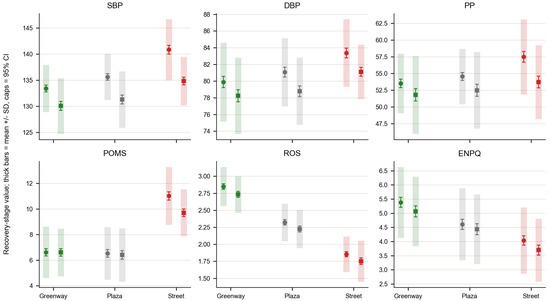
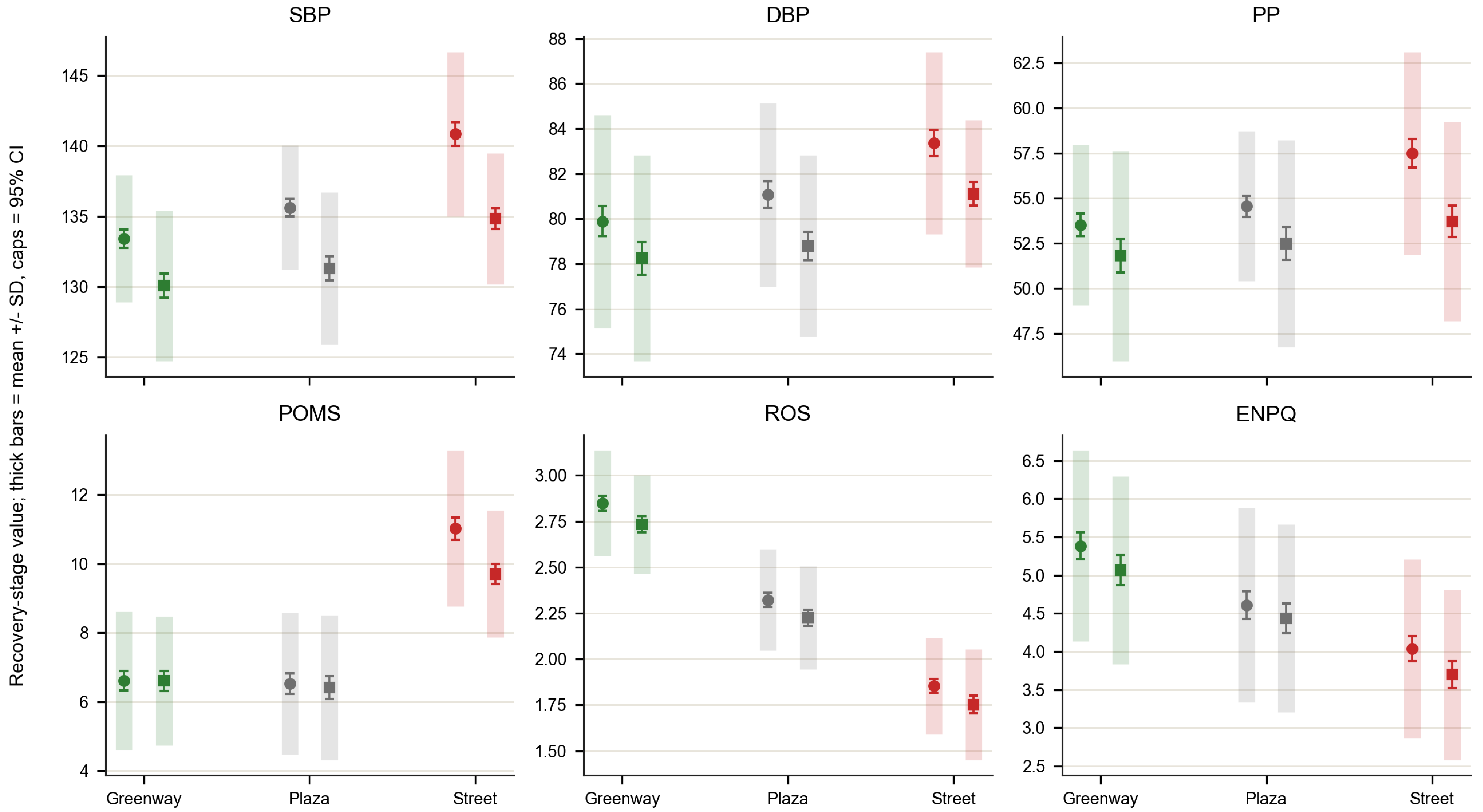
Table 4 presents descriptive statistics for SBP, DBP, PP, POMS, ROS, and ENPQ across the three sites, stages, and sex groups. To respond to concerns about dispersion and estimation range, Figure 5 complements the table by showing recovery-stage means, standard deviations, and 95% confidence intervals. Thick vertical bars represent mean ± SD, and error caps represent 95% confidence intervals. The figure is not intended to replace precise tabular values, but to help identify estimation ranges for physiological load, emotional state, and restorative experience across sites.
Table 4.
Descriptive statistics for all physiological and psychological indicators by site, stage, and sex.
Figure 5.
Recovery-stage uncertainty accordion for Table 4, showing mean, SD, and 95% confidence intervals.
For physiological indicators, Street Corridor showed higher SBP levels in both walking and recovery stages, with the site difference particularly pronounced among women. During walking in Street Corridor, mean SBP was 144.22 mmHg for women and 137.68 mmHg for men. In the same stage, women’s mean SBP was 131.71 mmHg in Greenway Walkway and 136.52 mmHg in Activity Plaza. This difference suggests that street-type spaces may produce higher cardiovascular load during winter walking exposure in cold regions [6,7,8,14,15,16,17].
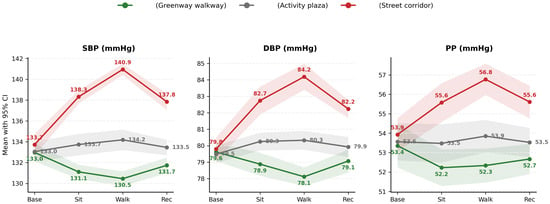
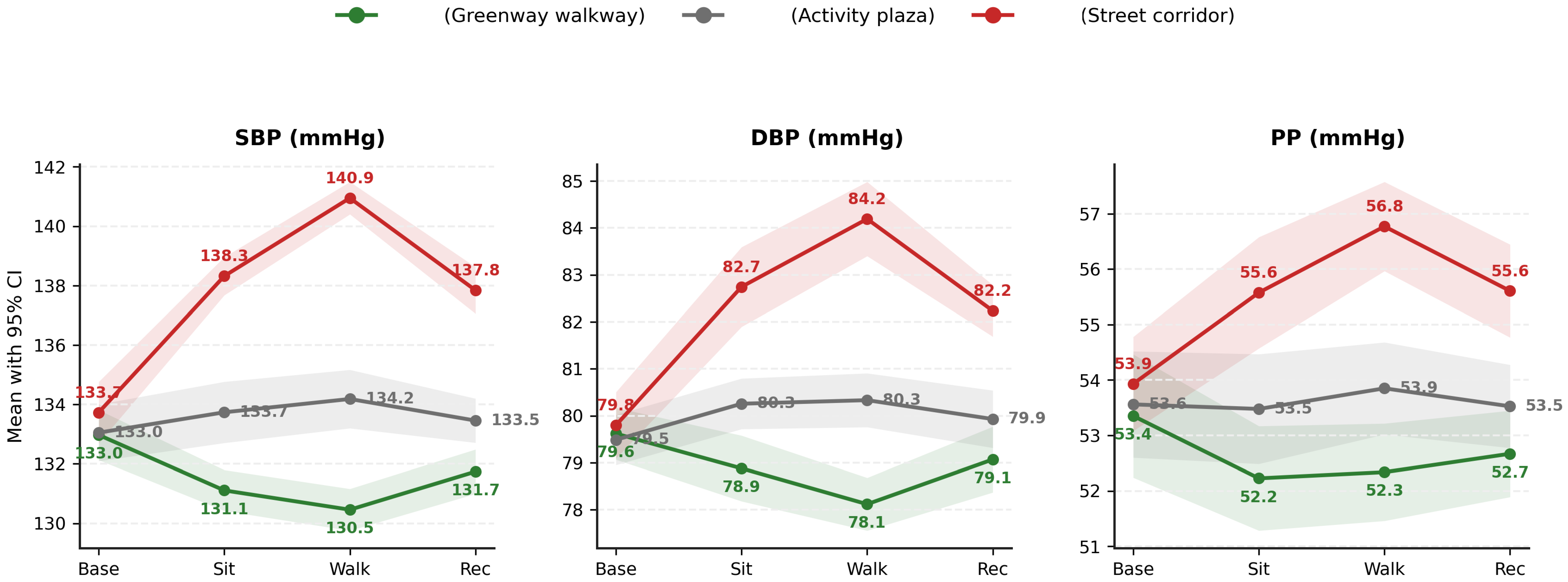
Figure 6 presents ribbon trajectories with 95% confidence intervals for SBP, DBP, and PP across stages. Blood pressure trajectories were generally lower in Greenway Walkway, while Street Corridor showed the most evident increase during walking. Activity Plaza lay between these two. Women in Street Corridor showed higher walking-stage peaks and retained higher recovery-stage values, indicating stronger post-exposure load in this setting.
Figure 6.
Physiological ribbon trajectories of SBP, DBP, and PP across exposure stages.
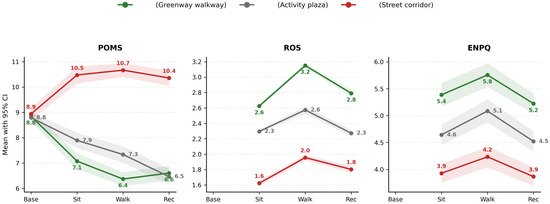
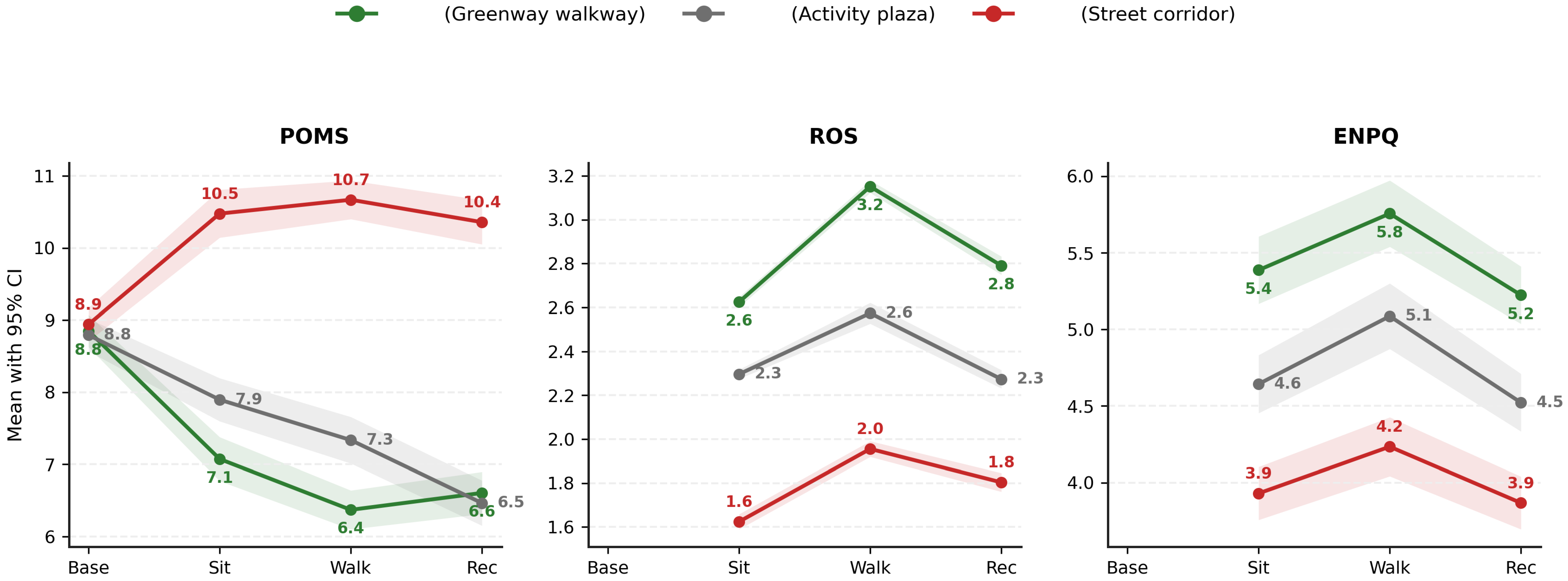
Psychological indicators showed patterns that were related to, but not fully consistent with, the physiological indicators. Figure 7 uses the same ribbon-trajectory approach to present staged changes in POMS, ROS, and ENPQ. POMS decreased most clearly in Greenway Walkway and increased most clearly in Street Corridor. ROS was highest in Greenway Walkway and lowest in Street Corridor, and ENPQ also indicated better environmental appraisal for Greenway Walkway. Compared with physiological results, Activity Plaza performed relatively well psychologically, but its blood pressure improvement was insufficient, directly motivating the subsequent psychophysiological concordance analysis.
Figure 7.
Psychological ribbon trajectories of POMS, ROS, and ENPQ across exposure stages.
3.3. Site-Contrast Effect Sizes
Table 5 reports paired within-participant site-contrast effect sizes. This analysis better reflects the magnitude of environmental exposure differences than site means alone because it controls for stable individual differences [24]. The walking stage showed the clearest site effects, with large differences between Street Corridor and Greenway Walkway across both physiological and psychological indicators.
Table 5.
Paired site-contrast effect sizes for physiological and psychological indicators.
For women during walking, SBP was 12.51 mmHg higher in Street Corridor than in Greenway Walkway, with a 95% confidence interval of 11.57 to 13.44 mmHg and a Cohen’s dz of 1.92. For men, the corresponding SBP mean difference was 8.47 mmHg, with a 95% confidence interval of 7.52 to 9.42 mmHg and a Cohen’s dz of 1.42. These results show that the difference between street corridor and greenway walkway is not only statistically significant, but also meaningful in effect-size terms [24].
Psychological site effects were also clear. During walking, POMS in Street Corridor was 5.12 points higher than in Greenway Walkway for women, with a Cohen’s dz of 2.04, and 3.47 points higher for men, with a Cohen’s dz of 1.39. ROS showed the opposite direction: Street Corridor was 1.30 points lower than Greenway Walkway for women and 1.09 points lower for men. This direction is consistent with restorative-environment evidence that greener environments are more favorable for emotional restoration and restorative experience [10,11,12,13,18,19,20,21,23].
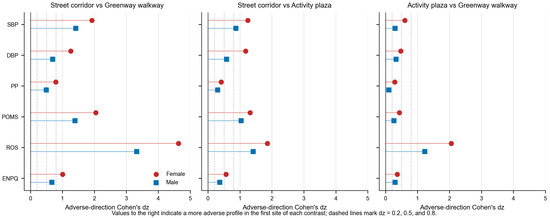
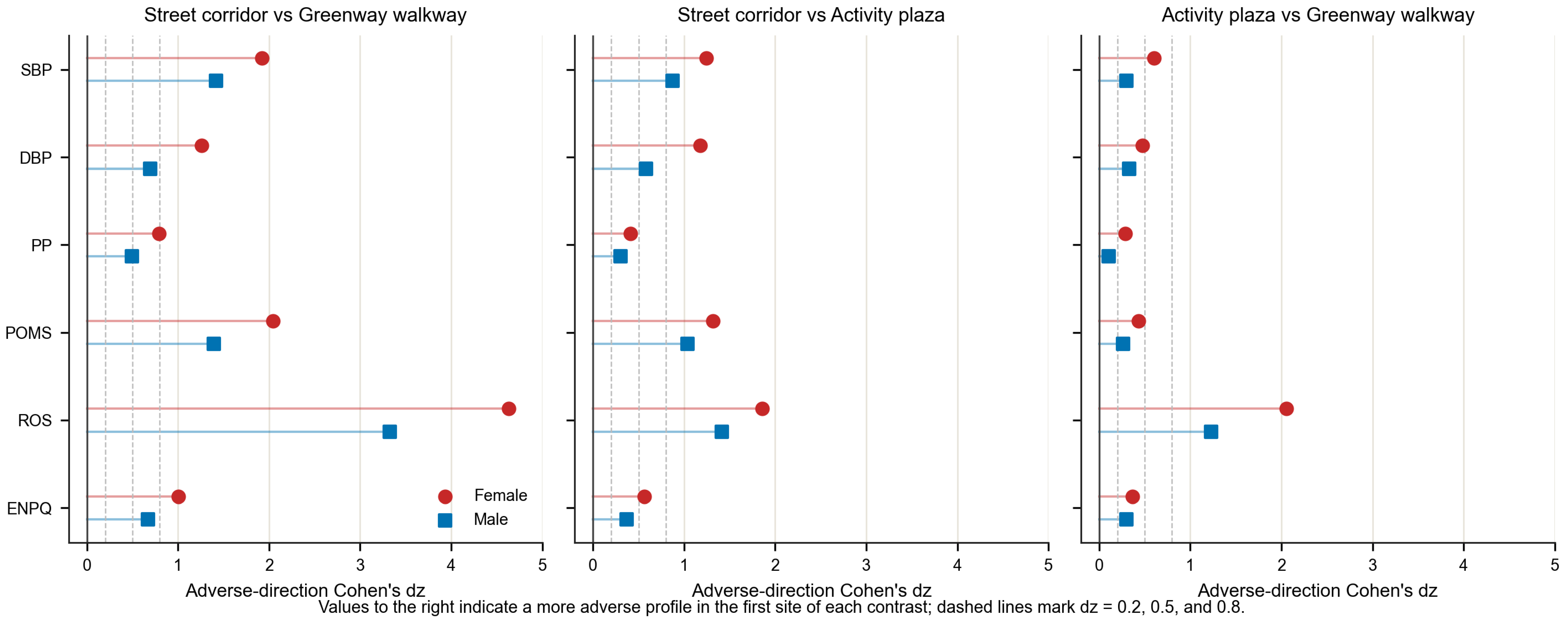
Across the three panels of Figure 8, the difference between Street Corridor and Greenway Walkway is the most concentrated and has the largest magnitude. SBP, DBP, POMS, ROS, and ENPQ all show clear adverse directions among both women and men. The comparison between Street Corridor and Activity Plaza remains adverse, but the overall effect magnitude is weaker, suggesting that Activity Plaza provides some buffering relative to the street. The comparison between Activity Plaza and Greenway Walkway is weaker and not fully consistent in direction, indicating that psychological benefits in the plaza should not be directly interpreted as stable physiological recovery.
Figure 8.
Three-panel adverse-direction paired effect-size forest plot for walking-stage site contrasts.
3.4. Psychophysiological Concordance and Discordance
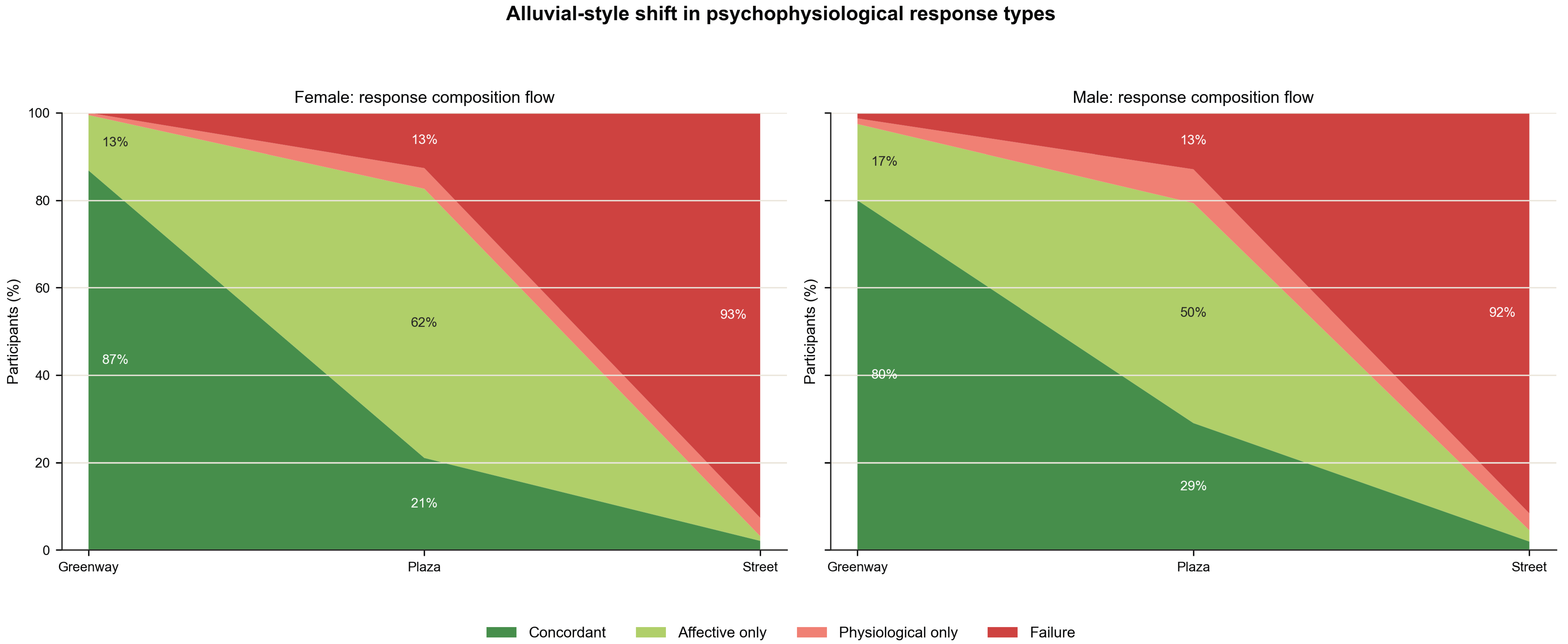
Based on individual-level changes in POMS and SBP, each site exposure was classified as concordant recovery, emotional recovery, physiological recovery, or recovery failure. Table 6 and Figure 9 show that the three sites formed very different response structures. Concordant recovery dominated in Greenway Walkway, with 86.84% of women and 79.35% of men showing concordant recovery. This indicates that the setting not only improved subjective emotion, but was also more often accompanied by SBP decrease, matching the judgment of a concordant-restoration space.
Table 6.
Psychophysiological concordance and discordance response types by site and sex.
Figure 9.
Alluvial-style distribution of psychophysiological concordance and discordance types.
The response structure in Activity Plaza differed markedly from that in Greenway Walkway. Emotional recovery accounted for 61.58% among women and 50.32% among men, while concordant recovery accounted for only 21.05% and 29.03%, respectively. Thus, the plaza enabled a considerable proportion of participants to improve in POMS, but this improvement was not stably accompanied by SBP decrease. If emotional improvement or site vitality alone were used as the evaluation basis, Activity Plaza could be overestimated as a healthy restorative space.
The response structure in Street Corridor was dominated by recovery failure. Recovery-failure proportions were 92.63% for women and 91.61% for men, while concordant recovery accounted for only 2.10% and 1.94%, respectively. Street exposure therefore did not merely worsen a single indicator—it simultaneously blocked emotional improvement and blood pressure recovery for most participants. This result redefines Street Corridor from a generally uncomfortable setting into a recovery-failure setting.
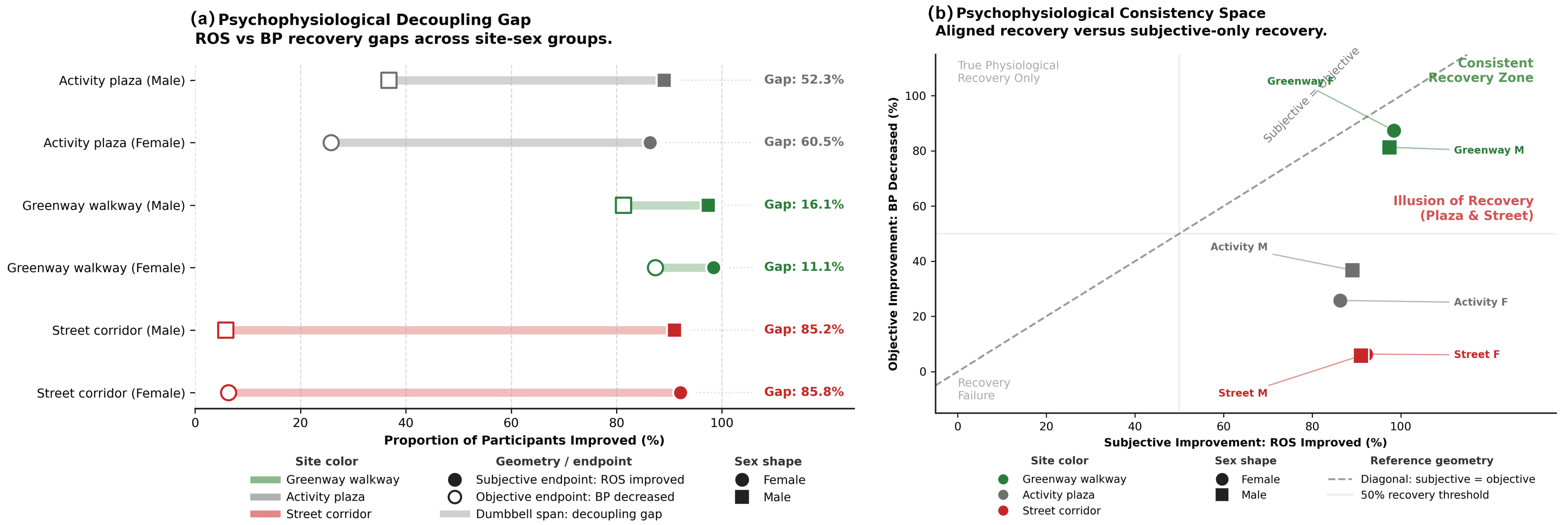
Table 7 further summarizes key indices. In Activity Plaza, the proportions of women with POMS improvement and ROS improvement were 82.63% and 86.32%, respectively, but the proportion with blood pressure improvement was only 25.79%. For men, the corresponding values were 79.36%, 89.03%, and 36.77%. This discordance indicates that subjective restoration indicators may overestimate physiological recovery in the plaza. Figure 10 visualizes the mismatch between psychological restoration and blood pressure recovery, allowing emotional recovery in Activity Plaza, concordant recovery in Greenway Walkway, and recovery failure in Street Corridor to be distinguished directly. Greenway Walkway had the highest blood pressure improvement and concordant-recovery levels, while Street Corridor showed high recovery failure and low concordant recovery, making it the most adverse response structure among the three settings.
Table 7.
Summary indices for psychophysiological discordance and recovery reliability.
Figure 10.
Psychophysiological discordance profile showing mismatch between subjective restoration and blood pressure recovery.
To examine whether personal characteristics modulated the observed discordance patterns, supplementary stratified analyses were conducted by age subgroup (<65, 65–70, ≥70 years) and baseline SBP status (<140, ≥140 mmHg). The recovery-failure proportion in Street Corridor remained consistently above 89% across all strata for both sexes, indicating that the site effect dominated over individual-level modifiers. In Activity Plaza, women aged 70 years and above showed a higher emotional-recovery proportion (approximately 67%) than women below 65 years (approximately 56%), suggesting that restorative perception may strengthen with age even as physiological recovery capacity declines—a pattern that warrants further investigation. In Greenway Walkway, concordant-recovery proportions exceeded 80% across all strata, confirming the robustness of this setting’s health-supportive function under the studied conditions.
3.5. Residual Cardiovascular Risk During Recovery
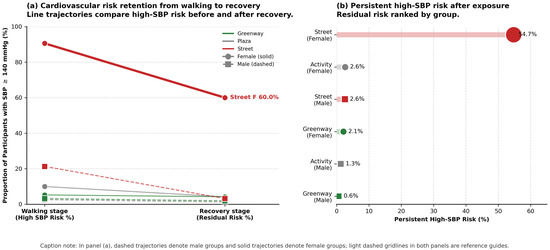
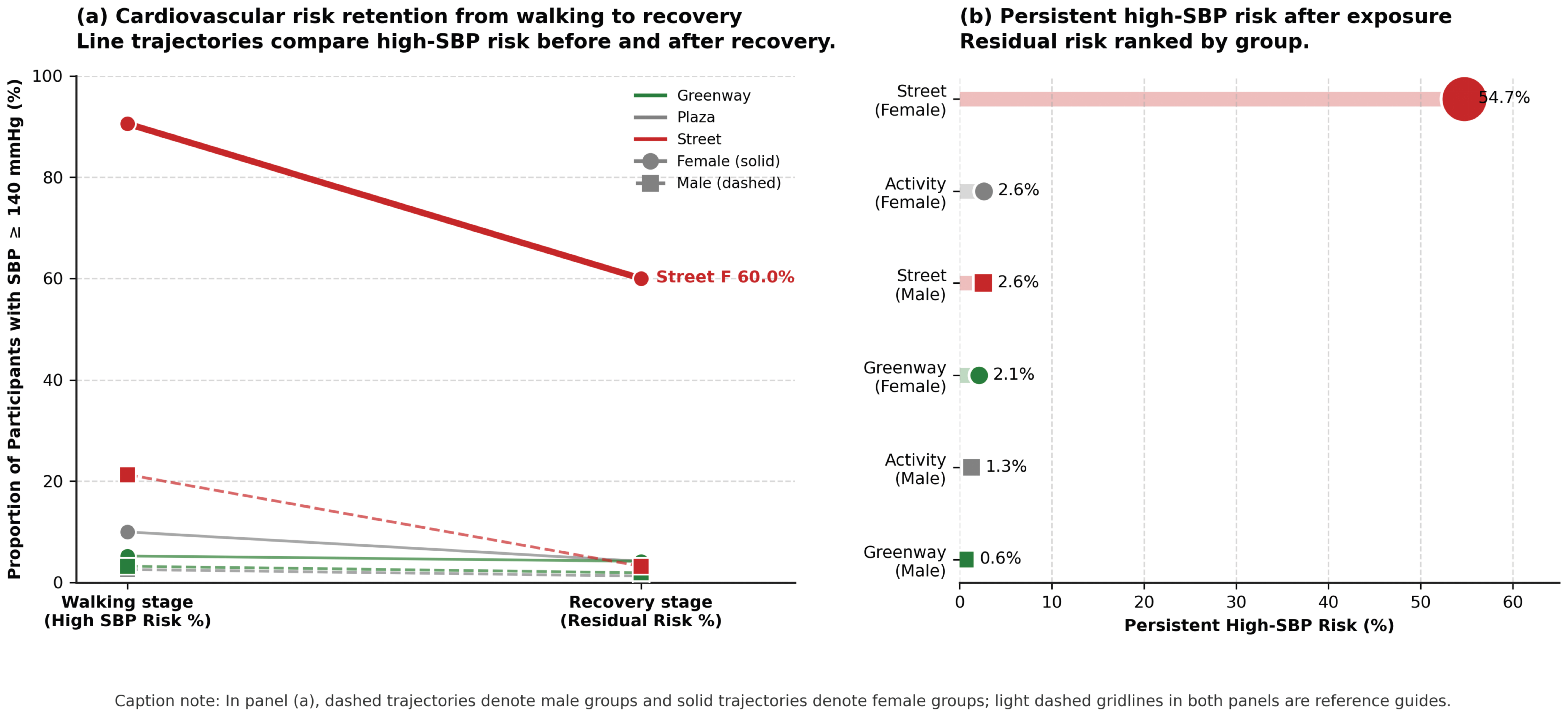
Residual-risk analysis showed that Street Corridor produced the most prominent post-exposure risk retention among older women. Table 8 and Figure 11 show that 90.53% of women reached SBP values of 140 mmHg or higher during walking in Street Corridor, and 59.47% remained above this risk threshold during recovery. The persistent-risk proportion was 54.74%. Among men in the same setting, the walking-phase high-risk proportion was 21.29% and the recovery-stage proportion was 3.23%. These results indicate that the effect of the street setting was not limited to the exposure moment, but continued into the short recovery stage [17].
Table 8.
Walking-phase and recovery-phase SBP risk by site and sex.
Figure 11.
Residual cardiovascular risk profile across sites and sex groups.
By contrast, residual risk was much lower in Greenway Walkway and Activity Plaza. In Greenway Walkway, recovery-stage high-risk SBP proportions were 4.07% for women and 1.94% for men. In Activity Plaza, the corresponding values were 4.21% for women and 1.29% for men. Thus, although Greenway Walkway and Activity Plaza differ in psychophysiological concordance—both show much lower residual cardiovascular risk during recovery than Street Corridor.
3.6. Health-Function Classification of Settings
Combining descriptive statistics, site-contrast effect sizes, psychophysiological concordance, and residual-risk results, the three settings can be classified into different health-function types. Greenway Walkway is a concordant-restoration setting, characterized by lower POMS, higher ROS and ENPQ, higher SBP improvement, and lower residual risk. Activity Plaza is an emotional-restoration or discordant-restoration setting, characterized by clear subjective psychological improvement but limited SBP decrease; psychological restoration does not reliably represent physiological safety. Street Corridor is a recovery-failure and residual-risk setting, characterized by higher blood pressure load, worsening POMS, and retained risk after recovery.
This classification differs from traditional narratives such as that green space is better than street space or that women are more sensitive. The classification is based on the reliability of post-exposure recovery rather than on site preference or single-indicator differences. The results suggest that cold-region age-friendly outdoor-space design should shift from providing usable space to providing recoverable and safely recoverable space. Within this framework, Activity Plaza should retain its social and emotional-regulation functions, but it also needs microclimate buffering, semi-enclosed resting nodes, and winter wind-protection design to compensate for physiological safety. Street space should reduce exposure intensity, shorten continuous exposure distance, and add sheltered, green, and resting nodes.
4. Discussion
4.1. Subjective Restoration Is Not Equivalent to Physiological Safety
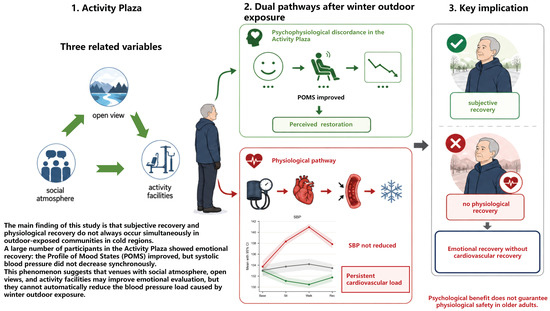
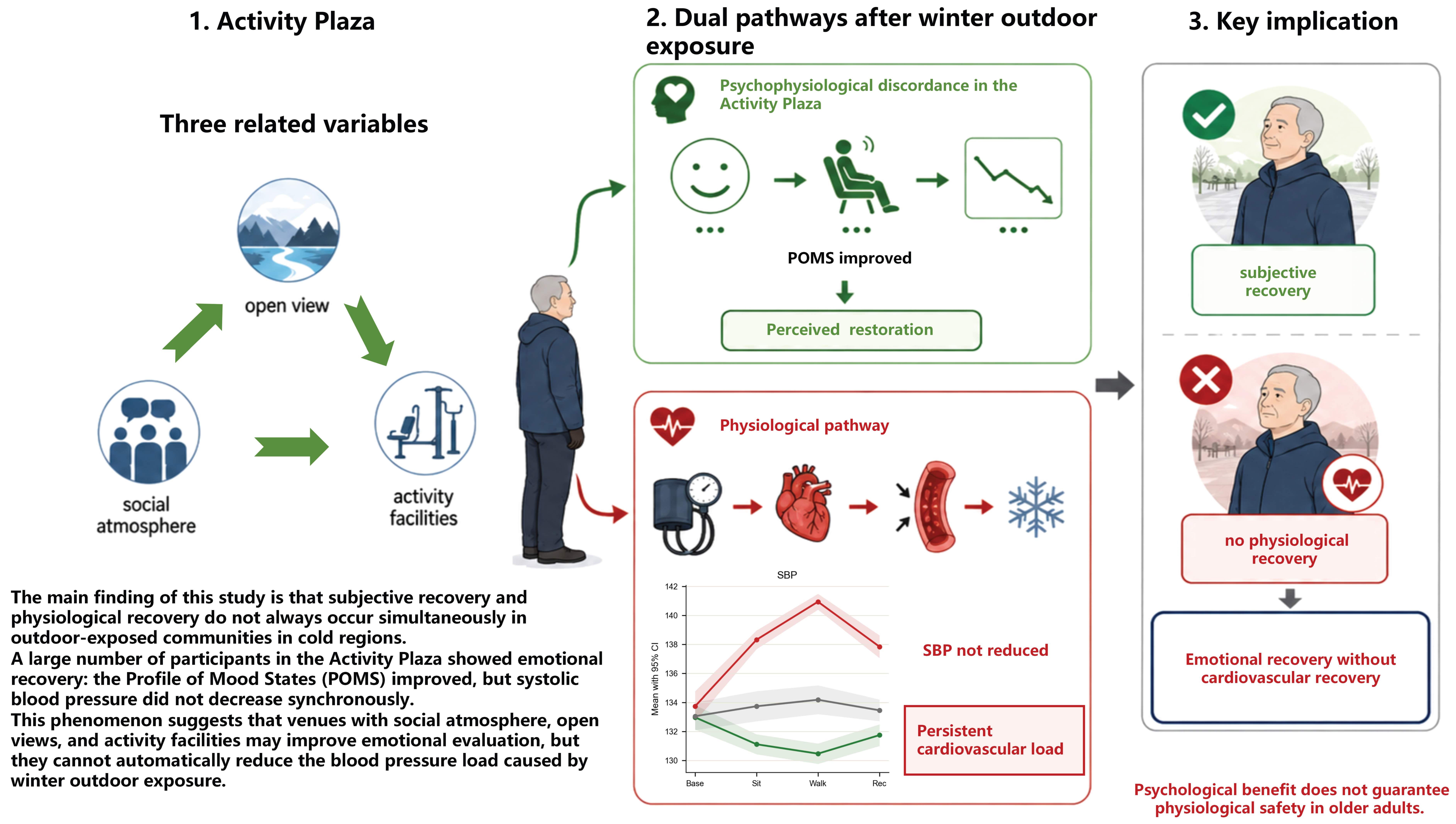
The core finding of this study is that subjective restoration and physiological recovery are not always synchronized after outdoor exposure in cold-region communities (Figure 12). Many participants in Activity Plaza showed emotional recovery: POMS improved, but SBP did not decrease synchronously. This indicates that a site with a social atmosphere, open view, and activity facilities may improve emotional appraisal without automatically reducing the blood pressure load generated by winter outdoor exposure. For older adults, feeling psychologically relaxed does not necessarily mean that the cardiovascular system has returned to a safe state [10,12,13,14,15,16,17].
Figure 12.
Graphical illustration of the asynchronous phenomenon between subjective restoration and physiological recovery.
This finding is also the innovative value of the study. Previous restorative-environment research often treats subjective restoration, preference, or environmental perception as primary evidence of the health value of a space [11,18,19,20,21,23]. However, cold-region age-friendly design faces a more complex safety boundary: spaces should both attract older adults and avoid post-exposure risk retention [4,5,6,7,8]. If architectural evaluation focuses only on satisfaction, willingness to stay, or perceived restoration, spaces such as Activity Plaza, which are psychologically attractive but physiologically incomplete in recovery, may be overestimated. The psychophysiological concordance framework proposed here makes this hidden risk visible and translates it into spatial types that can be discussed in design practice.
The psychophysiological discordance observed in Activity Plaza and Street Corridor can be interpreted through a dual-pathway framework. The psychological pathway operates through perceptual appraisal and restorative experience: visual naturalness, perceived safety, spatial preference, and social atmosphere can generate positive emotional shifts (POMS reduction, ROS elevation) even when physiological stress responses remain activated. The physiological pathway operates through autonomic and hemodynamic mechanisms: cold exposure, wind chill, and postural demands sustain elevated sympathetic tone and peripheral vasoconstriction, maintaining elevated SBP independently of subjective emotional improvement [14,15,16,17]. The partial independence of these two pathways—rather than any single mechanism—explains why 61.58% of women in Activity Plaza experienced emotional recovery without concomitant blood pressure normalization (Table 6). This dissociation aligns with laboratory cold-pressor paradigms in which perceived stress recovery precedes cardiovascular recovery by 10–20 min, but has rarely been demonstrated in ecologically valid outdoor community settings.
4.2. Concordant-Restoration Value and Spatial Translation of the Greenway Walkway
Greenway Walkway performed as the most stable concordant-restoration setting. It had lower spatial openness, higher greening coverage, and better environmental appraisal, and it simultaneously supported POMS improvement, ROS increase, and SBP decrease. Compared with Activity Plaza, the value of Greenway Walkway lies not only in higher greening, but also in the greater consistency of health responses. For cold-region communities, concordant recovery is more important than subjective preference alone because older adults use continuous paths and short-stay nodes in daily life, rather than isolated landscape fragments [1,2,3,4,5,9,10].
The design value of greenway walkways can be translated in three directions. First, continuous vegetation shelter can provide visual naturalness and wind buffering, reducing street-type open exposure [19,25,26,27]. Second, linear walking paths support low-intensity, continuous, and predictable activity rhythms, avoiding the physiological fluctuations that may arise from staying, chatting, and intermittent activities in plazas [2,4,10]. Third, walkway spaces can combine seat spacing, winter solar access, evergreen barriers, and sheltered nodes to form a recovery-oriented walking network for older adults [4,5]. This study does not separate these mechanisms into independent causal pathways because the current data do not support continuous mechanism modeling. Nevertheless, the results clearly indicate that Greenway Walkway is more suitable as the backbone of winter health-walking networks in cold-region communities.
4.3. Recovery Failure and Residual Risk in Street Space
The problem of Street Corridor is the simultaneous occurrence of recovery failure and residual risk. Among women, 90.53% reached high-risk SBP during walking, and 59.47% remained at 140 mmHg or higher during recovery. This result shows that street exposure does not only cause short-term load, but also produces post-recovery risk retention in some older adults, especially older women [6,7,8,14,15,16,17]. If evaluation stops immediately after walking, or records only psychological discomfort, it will underestimate the cardiovascular-safety impact of street space.
The pronounced residual risk among older women warrants attention to sex-specific cardiovascular regulation under cold exposure. Post-menopausal women exhibit reduced vascular compliance and altered autonomic cardiovascular control compared with age-matched men, partly attributable to declining estrogen-mediated vasoprotective pathways [30]. Cold-induced vasodilation (CIVD) responses also display sex differences: women show delayed CIVD onset and attenuated peripheral rewarming capacity, increasing susceptibility to cold-pressor-induced blood pressure elevation [31,32]. Furthermore, older women’s thermoregulatory capacity is compounded by lower skeletal muscle mass and metabolic heat production relative to men, which may prolong sympathetically mediated vasoconstriction and delay post-exposure blood pressure normalization [33]. These converging mechanisms—reduced vascular compliance, blunted CIVD, and limited thermogenic capacity—provide a plausible physiological substrate for the elevated residual SBP risk observed among women in Street Corridor (59.47% remaining ≥140 mmHg during recovery, Table 8).
The high openness, low greening coverage, and road interface of street space may jointly explain this pattern. Winter street environments can increase body heat loss and emotional stress through wind exposure, building-channel effects, insufficient vegetation shelter, and traffic-related disturbance [6,7,8,25,26,27]. For older women, changes in vascular elasticity and cold-exposure responses may make SBP more difficult to reduce within a short period [14,15,16,17,29]. The study does not present these explanations as a single causal conclusion, but as a mechanism discussion consistent with the observed data pattern. For design practice, Street Corridor should be regarded as a priority risk space in winter age-friendly renewal.
The cold-region context amplifies this discordance through three interconnected mechanisms. First, low ambient temperatures (4–8 °C during the experiment) elevate baseline sympathetic tone and peripheral vascular resistance, narrowing the physiological range for observable BP reduction during short recovery periods [6,7,8]. Second, winter wind chill in open street environments imposes convective heat loss that sustains cold-pressor-like cardiovascular activation throughout the exposure period; this effect is substantially attenuated in vegetated settings, where wind speed can be reduced by approximately 40–60% through vegetation sheltering (Table 1). Third, the seasonal reduction in green-view index in cold-region communities—where winter values can fall to 5% or lower in deciduous-dominated streets—removes the visual-restorative buffering that vegetation provides, leaving older adults with fewer psychological recovery resources precisely when physiological stress is highest. These cold-region-specific factors create conditions under which the dissociation between feeling better and being physiologically safer is particularly likely, underscoring the importance of residual-risk endpoints rather than subjective-restoration endpoints alone in cold-region outdoor-space health evaluation.
4.4. Implications for Age-Friendly Community Design in an Architectural Context
From the perspective of built-environment research, the significance of the study is not to prove that one type of green space is simply better, but to provide a health-evidence chain that can enter design decision-making [1,2,3,4,5,9]. Traditional community public-space evaluation often focuses on facilities, accessibility, greening ratio, satisfaction, and willingness to stay [2,3,9]. For older adults in cold regions, these indicators remain necessary but are insufficient for judging post-exposure physiological safety. A more appropriate evaluation framework should distinguish among three types of space: concordant-restoration space, emotional-restoration space, and recovery-failure space. This classification helps designers identify which spaces are suitable for everyday health-walking networks, which require microclimate compensation, and which should be treated as short-term exposure risk nodes.
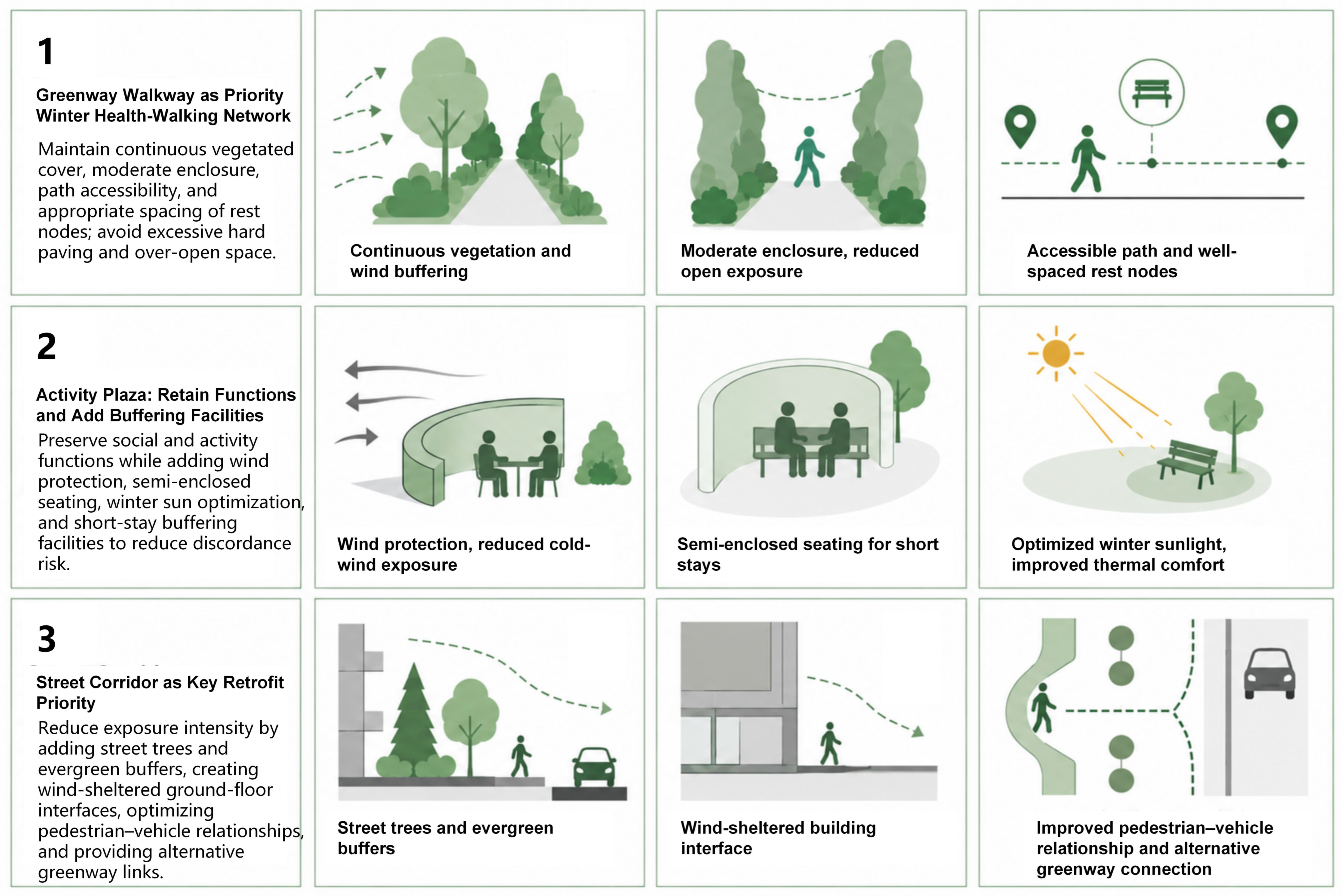
As shown in Figure 13, the three sites in this study establish empirical reference points that can inform design translation. The Greenway Walkway condition (SVF ≈ 0.68, greening coverage ≈ 0.88) produced concordant recovery in 86.84% of women and 79.35% of men, with residual SBP risk at 4.21%. By contrast, the Street Corridor condition (SVF ≈ 0.85, greening coverage ≈ 0.65) produced recovery failure in 92.63% of women and 91.61% of men, with residual risk at 59.47%. Activity Plaza (SVF ≈ 0.73, greening coverage ≈ 0.82) fell between these poles: 82.63% of women showed POMS improvement, yet only 25.79% achieved BP improvement, exemplifying the emotional-restoration pattern. These site-level contrasts yield three design-parameter heuristics for cold-region communities:
Figure 13.
Optimized design diagram for age-friendly communities.
Greenway Walkway should be prioritized as the backbone of winter health-walking networks. Its design should maintain continuous vegetation shelter with greening coverage ≥ 0.8 and spatial openness (SVF) ≤ 0.7, since these conditions are associated with the highest concordant-recovery proportions in this study. Path accessibility and appropriate spacing of resting nodes should be maintained, while excessive hard paving and openness that approach the Street Corridor condition (SVF ≥ 0.85, greening coverage ≤ 0.65) should be avoided [4,5,25,26,27].
Activity Plaza should retain its social and activity functions, but requires design compensation for its physiological-safety deficit. Semi-enclosed resting nodes that approximate the Greenway Walkway enclosure condition (SVF ≈ 0.4–0.7) should be added along plaza perimeters and near seating areas, providing wind protection and vegetation shelter without sacrificing the openness valued for social activities. Winter solar access should be optimized through orientation and canopy management, and short-stay buffering facilities should be provided to reduce cumulative exposure duration [4,5,25,26,27].
Street Corridor should be treated as the priority risk-reduction target. The paired effect sizes in Table 5—SBP dz = 1.92 (women) and 1.42 (men) for Street Corridor versus Greenway Walkway—indicate that even partial movement toward the Greenway environmental condition can produce physiologically meaningful reductions in blood pressure load. Continuous street exposure segments should be shortened to approximately 150–200 m, interspersed with wind-sheltered micro-rest nodes at intervals of approximately 50–70 m. Street-tree coverage and building-interface buffers should be improved so that the effective SVF along primary walking routes does not exceed approximately 0.75. These values are derived from the empirical contrast between the three sites in this study and are offered as design heuristics rather than as universally optimal thresholds [4,5,25,26,27].
4.5. Methodological Boundaries and Limitations
The analytical strategy emphasizes transparent data description and effect-size comparison rather than using partial-dependence plots, segmented regression, or threshold regression as the main analysis. This is not a conservative methodological choice, but a choice matched to the data structure. The current environmental indicators correspond to three site levels and cannot support continuous curves or breakpoint estimation. Reporting an openness threshold from such data would create apparently precise but statistically weak conclusions. Paired site comparisons and response-type classification express the magnitude of environmental effects while reducing the risk of overinterpretation [24].
Several limitations remain. The experiment was conducted in a single cold-region community. Although the three settings are representative, results should be verified under different urban forms, wind environments, and vegetation configurations. Second, the experiment was conducted between 10:00 and 14:00 on sunny days. This time window does not capture exposure effects during early-morning or late-afternoon periods when ambient temperatures are lower and diurnal cardiovascular strain may differ. Future studies should extend measurement windows to cover a wider range of temperature and solar-radiation conditions within the winter season. The experiment used a short-term exposure design, which captures acute responses and short-term recovery but cannot infer cumulative health effects over an entire winter. The SBP threshold used to identify residual risk is suitable for public-health interpretation, but it does not replace clinical diagnosis [17]. Environmental indicators were measured at the site level; future studies should include more spatial points, real-time microclimate records, and individual exposure trajectories to test how shelter, wind environment, and solar access affect psychophysiological concordant recovery. And the study did not differentiate older adults’ outdoor activity motivations—for instance, active exercise versus passive passage—which may modulate recovery trajectories through differing metabolic demands, psychological mindsets, and self-paced activity intensity. Stratified analysis by activity type in future work would help disentangle these effects.
5. Conclusions
Based on a winter outdoor exposure experiment with 345 older adults in a cold-region community, this study systematically analyzed physiological and psychological responses in three real community outdoor spaces. The results show that Greenway Walkway had the most stable concordant-recovery characteristics, Activity Plaza showed clear emotional recovery and psychophysiological discordance, and Street Corridor showed recovery failure and residual cardiovascular risk during recovery. These findings demonstrate that subjective restoration cannot be treated as a simple substitute for physiological safety. In evaluating cold-region community outdoor spaces, discordance between psychological restoration and blood pressure recovery is itself design evidence that needs to be identified.
The study further shows that residual risk is a key endpoint for age-friendly space evaluation in cold regions. In Street Corridor, 59.47% of women still had SBP values of 140 mmHg or higher during recovery, indicating that risk after street exposure did not disappear immediately when the experiment ended. By contrast, residual risk during recovery was lower in Greenway Walkway and Activity Plaza, although the two settings differed in psychophysiological concordance. Therefore, cold-region community design should not rely only on spatial preference or perceived restoration, but should also examine whether physiological recovery after exposure is reliable.
The psychophysiological concordance and residual-risk framework proposed in this study provides a new architectural interpretation pathway for cold-region community outdoor-space evaluation. Greenway Walkway can be prioritized as a winter health-walking network, Activity Plaza needs wind protection, semi-enclosure, and short-stay buffering to supplement physiological safety, and Street Corridor should be a key renewal target for reducing continuous exposure and residual risk. Future research should expand the site sample across more cold-region communities and combine real-time microclimate data, behavioral trajectories, and long-term health follow-ups to further verify how spatial design elements influence synchronized psychophysiological recovery among older adults.
Author Contributions
Conceptualization, J.Z. and T.Z.; methodology, J.Z.; software, J.Z., X.W. and C.Y.; validation, Y.F. and X.W.; formal analysis, J.Z.; investigation, J.Z. and Y.F.; resources, Y.F.; data curation, C.Y., Y.Z. and X.W.; writing—original draft preparation, J.Z.; writing—review and editing, J.Z., T.Z. and X.W.; visualization, J.Z. and X.W.; supervision, Y.F.; project administration, Y.F.; funding acquisition, Y.F. All authors have read and agreed to the published version of the manuscript.
Funding
This research was funded by the National Natural Science Foundation of China (Grant No. 52278031), General Project: Multi-factor valence-based decision-making mechanism of elderly young composite community service facilities: A case study of Shenyang and Liaoning Provincial Department of Education Basic Research Project (Grant No. LJ222410153076) for Higher Education Institutions—Innovation Team for Cold Region Low-Carbon Green Healthy Human Settlement Environment (Interdisciplinary Team).
Institutional Review Board Statement
The study was conducted in accordance with the Declaration of Helsinki and approved by the Institutional Review Board of Shenyang Jianzhu University (2023SJZU-A005, 15 October 2023).
Informed Consent Statement
Informed consent was obtained from all subjects involved in the study.
Data Availability Statement
Data are available from the corresponding author upon reasonable request.
Acknowledgments
During the preparation of this manuscript/study, the author(s) used [GPT 5.5] for the purposes of [Optimization of data analysis code]. The authors have reviewed and edited the output and take full responsibility for the content of this publication.
Conflicts of Interest
The authors declare no conflicts of interest.
References
- Andreucci, M.B.; Loder, A.; Brown, M.; Brajković, J. Exploring challenges and opportunities of biophilic urban design: Evidence from research and experimentation. Sustainability 2021, 13, 4323. [Google Scholar] [CrossRef] [Scilit]
- Zhang, T.; Fu, Y.; Wang, Z.; Gao, J.; Yang, T.; Wang, S. Green Space Exposure and Human Health: Gender-Specific Physiological and Psychological Benefits of Green Infrastructure for Elderly Residents in Cold-Climate Cities. Sustainability 2025, 17, 2774. [Google Scholar] [CrossRef] [Scilit]
- Yang, X.; Fan, Y.; Xia, D.; Zou, Y.; Deng, Y. Elderly residents’ uses of and preferences for community outdoor spaces during heat periods. Sustainability 2023, 15, 11264. [Google Scholar] [CrossRef] [Scilit]
- Zong, H.; Wang, J.; Zhou, T.; Sun, J.; Chen, X. The influence of transient changes in indoor and outdoor thermal comfort on the use of outdoor space by older adults in the nursing home. Buildings 2022, 12, 905. [Google Scholar] [CrossRef] [Scilit]
- Yan, H.; Zhang, L.; Ding, X.; Zhang, Z.; Qi, Z.; Jiang, L.; Bu, D. Multi-objective optimization of outdoor thermal comfort and sunlight hours in elderly residential areas: A case study of Beijing, China. Buildings 2024, 14, 3770. [Google Scholar] [CrossRef] [Scilit]
- Gasparrini, A.; Guo, Y.; Hashizume, M.; Lavigne, E.; Zanobetti, A.; Schwartz, J.; Tobias, A.; Tong, S.; Rocklöv, J.; Forsberg, B.; et al. Mortality risk attributable to high and low ambient temperature: A multicountry observational study. Lancet 2015, 386, 369–375. [Google Scholar] [CrossRef] [Scilit] [PubMed]
- Analitis, A.; Katsouyanni, K.; Biggeri, A.; Baccini, M.; Forsberg, B.; Bisanti, L.; Kirchmayer, U.; Ballester, F.; Cadum, E.; Goodman, P.G.; et al. Effects of cold weather on mortality: Results from 15 European cities within the PHEWE project. Am. J. Epidemiol. 2008, 168, 1397–1408. [Google Scholar] [CrossRef] [Scilit] [PubMed]
- Mercer, J.B. Cold—An underrated risk factor for health. Environ. Res. 2003, 92, 8–13. [Google Scholar] [CrossRef] [Scilit] [PubMed]
- Zhu, B.W.; Zhang, J.R.; Tzeng, G.H.; Huang, S.-L.; Xiong, L. Public open space development for elderly people by using the DANP-V model to establish continuous improvement strategies towards a sustainable and healthy aging society. Sustainability 2017, 9, 420. [Google Scholar] [CrossRef] [Scilit]
- Kabisch, N.; Püffel, C.; Masztalerz, O.; Hemmerling, J.; Kraemer, R. Physiological and psychological effects of visits to different urban green and street environments in older people: A field experiment in a dense inner-city area. Landsc. Urban Plan. 2021, 207, 103998. [Google Scholar] [CrossRef] [Scilit]
- Tyrväinen, L.; Ojala, A.; Korpela, K.; Lanki, T.; Tsunetsugu, Y.; Kagawa, T. The influence of urban green environments on stress relief measures: A field experiment. J. Environ. Psychol. 2014, 38, 1–9. [Google Scholar] [CrossRef] [Scilit]
- Lanki, T.; Siponen, T.; Ojala, A.; Korpela, K.; Pennanen, A.; Tiittanen, P.; Tsunetsugu, Y.; Kagawa, T.; Tyrväinen, L. Acute effects of visits to urban green environments on cardiovascular physiology in women: A field experiment. Environ. Res. 2017, 159, 176–185. [Google Scholar] [CrossRef] [Scilit] [PubMed]
- Grazuleviciene, R.; Vencloviene, J.; Kubilius, R.; Grizas, V.; Danileviciute, A.; Dedele, A.; Andrusaityte, S.; Vitkauskiene, A.; Steponaviciute, R.; Nieuwenhuijsen, M.J. Tracking restoration of park and urban street settings in coronary artery disease patients. Int. J. Environ. Res. Public Health 2016, 13, 550. [Google Scholar] [CrossRef] [Scilit] [PubMed]
- Franklin, S.S.; Gustin, W., IV; Wong, N.D.; Larson, M.G.; Weber, M.A.; Kannel, W.B.; Levy, D. Hemodynamic patterns of age-related changes in blood pressure: The Framingham Heart Study. Circulation 1997, 96, 308–315. [Google Scholar] [CrossRef] [Scilit] [PubMed]
- Benetos, A.; Safar, M.; Rudnichi, A.; Smulyan, H.; Richard, J.L.; Ducimetière, P.; Guize, L. Pulse pressure: A predictor of long-term cardiovascular mortality in a French male population. Hypertension 1997, 30, 1410–1415. [Google Scholar] [CrossRef] [Scilit] [PubMed]
- O’rourke, M.F.; Hashimoto, J. Mechanical factors in arterial aging: A clinical perspective. J. Am. Coll. Cardiol. 2007, 50, 1–13. [Google Scholar] [CrossRef] [Scilit] [PubMed]
- Williams, B.; Mancia, G.; Spiering, W.; Rosei, E.A.; Azizi, M.; Burnier, M.; Clement, D.L.; Coca, A.; De Simone, G.; Dominiczak, A.; et al. 2018 ESC/ESH Guidelines for the management of arterial hypertension: The Task Force for the management of arterial hypertension of the European Society of Cardiology (ESC) and the European Society of Hypertension (ESH). Eur. Heart J. 2018, 39, 3021–3104. [Google Scholar] [CrossRef] [Scilit] [PubMed]
- Hartig, T.; Mitchell, R.; De Vries, S.; Frumkin, H. Nature and health. Annu. Rev. Public Health 2014, 35, 207–228. [Google Scholar] [CrossRef] [Scilit] [PubMed]
- Markevych, I.; Schoierer, J.; Hartig, T.; Chudnovsky, A.; Hystad, P.; Dzhambov, A.M.; de Vries, S.; Triguero-Mas, M.; Brauer, M.; Nieuwenhuijsen, M.J.; et al. Exploring pathways linking greenspace to health: Theoretical and methodological guidance. Environ. Res. 2017, 158, 301–317. [Google Scholar] [CrossRef] [Scilit] [PubMed]
- Ulrich, R.S.; Simons, R.F.; Losito, B.D.; Fiorito, E.; Miles, M.A.; Zelson, M. Stress recovery during exposure to natural and urban environments. J. Environ. Psychol. 1991, 11, 201–230. [Google Scholar] [CrossRef] [Scilit]
- Korpela, K.M.; Ylén, M.; Tyrväinen, L.; Silvennoinen, H. Favorite green, waterside and urban environments, restorative experiences and perceived health in Finland. Health Promot. Int. 2010, 25, 200–209. [Google Scholar] [CrossRef] [Scilit] [PubMed]
- McNair, D.M.; Lorr, M.; Droppleman, L.F. Profile of Mood States; Educational and Industrial Testing Service: San Diego, CA, USA, 1971. [Google Scholar]
- Twohig-Bennett, C.; Jones, A. The health benefits of the great outdoors: A systematic review and meta-analysis of greenspace exposure and health outcomes. Environ. Res. 2018, 166, 628–637. [Google Scholar] [CrossRef] [Scilit] [PubMed]
- Lakens, D. Calculating and reporting effect sizes to facilitate cumulative science: A practical primer for t-tests and ANOVAs. Front. Psychol. 2013, 4, 62627. [Google Scholar] [CrossRef] [Scilit] [PubMed]
- Matzarakis, A.; Rutz, F.; Mayer, H. Modelling radiation fluxes in simple and complex environments—Application of the RayMan model. Int. J. Biometeorol. 2007, 51, 323–334. [Google Scholar] [PubMed]
- Chen, L.; Ng, E. Outdoor thermal comfort and outdoor activities: A review of research in the past decade. Cities 2012, 29, 118–125. [Google Scholar] [CrossRef] [Scilit]
- Brown, R.D.; Vanos, J.; Kenny, N.; Lenzholzer, S. Designing urban parks that ameliorate the effects of climate change. Landsc. Urban Plan. 2015, 138, 118–131. [Google Scholar] [CrossRef] [Scilit]
- Ware, J.E.; Kosinski, M.; Keller, S.D. A 12-Item Short-Form Health Survey: Construction of scales and preliminary tests of reliability and validity. Med. Care 1996, 34, 220–233. [Google Scholar] [PubMed]
- Jannasz, I.; Sondej, T.; Targowski, T.; Mańczak, M.; Obiała, K.; Dobrowolski, A.P.; Olszewski, R. Relationship between the central and regional pulse wave velocity in the assessment of arterial stiffness depending on gender in the geriatric population. Sensors 2023, 23, 5823. [Google Scholar] [CrossRef] [Scilit] [PubMed]
- Rosano, G.M.C.; Vitale, C.; Marazzi, G.; Volterrani, M. Menopause and cardiovascular disease: The evidence. Climacteric 2007, 10, 19–24. [Google Scholar] [CrossRef] [Scilit] [PubMed]
- Daanen, H.A.M.; Van Ruiten, H.J.A. Cold-induced peripheral vasodilation at high altitudes—A field study. High Alt. Med. Biol. 2000, 1, 323–329. [Google Scholar] [PubMed]
- Li, C.; Wu, J.; Shen, S.; Sun, B.; Hu, Z.; Jiang, C.; Han, X. Sex differences in physiological responses and thermal perception during repeated extremely cold exposure (−15 °C). Energy Build. 2024, 324, 114881. [Google Scholar] [CrossRef] [Scilit]
- Mauvais-Jarvis, F.; Merz, N.B.; Barnes, P.J.; Brinton, R.D.; Carrero, J.-J.; DeMeo, D.L.; De Vries, G.J.; Epperson, C.N.; Govindan, R.; Klein, S.L.; et al. Sex and gender: Modifiers of health, disease, and medicine. Lancet 2020, 396, 565–582. [Google Scholar] [CrossRef] [Scilit] [PubMed]

Disclaimer/Publisher’s Note: The statements, opinions and data contained in all publications are solely those of the individual author(s) and contributor(s) and not of MDPI and/or the editor(s). MDPI and/or the editor(s) disclaim responsibility for any injury to people or property resulting from any ideas, methods, instructions or products referred to in the content. |
© 2026 by the authors. Licensee MDPI, Basel, Switzerland. This article is an open access article distributed under the terms and conditions of the Creative Commons Attribution (CC BY) license.