


Abstract
The impact of the built environment on physical and mental health and wellbeing has been evidenced worldwide. Quality and design affect residents’ wellbeing and physical and mental health outcomes. A local authority planning team in London introduced new guidance to improve the quality of amenity space within residential developments. This paper aims to evaluate the early implementation of this guidance using Normalisation Process Theory. A qualitative design was employed using semi-structured interviews (n = 34), with a purposive sample of planning staff, applicants, review panel members and organisers and elected officials. Framework analysis was undertaken. All stakeholders perceived the introduction of the new amenity space guidance positively, but views of the planning officer training that accompanied it were more nuanced. Key factors influencing implementation included attitude towards and understanding of the new guidance, use of common language, workload, number of policy and guidance documents and a lack of a guidance template from the beginning. Further contextual barriers included the need for economic viability for developers and affordable housing in the area. To further embed and sustain implementation, it is recommended that the guidance continues to be used in a flexible manner with ongoing training and focused support for both planning officers and planning applicants.
1. Introduction
The impact of the built environment on health equity [1], physical and mental health and wellbeing [2], including happiness, social connections, and sense of community [3,4,5], has been evidenced worldwide [6,7]. An individual’s place of residence can influence their exposure to important health determinants, such as traffic noise, air pollution, access to green space and physical activity opportunities [6,7,8], and is inextricably linked to their health and wellbeing [9]. Moreover, environments that include contact with nature have been shown to be more likely to promote restoration or recovery from the demands of everyday life [10].
Despite this knowledge, current urban design and planning practices are seen as inadequate in protecting health and wellbeing or meeting people’s needs in this regard [11,12,13]. It is estimated that, worldwide, 70% of people will be living in a city by 2050 [13,14]. Studies have found that residential planning policies in many cities do not enhance health and wellbeing and in some cases increase inequalities [15,16]. One suggestion is for a regulatory planning framework to routinely consider health and wellbeing by integrating health indicators into transport and urban planning [17]. In London, one study found that a strategic objective for health was incorporated into 73% of local authorities’ Local Plans (long-term documents guiding development within local authorities), but a content review found that only 54.1% reflected this in one or more specific policies [18]. This highlights a disconnect between strategic objectives and implementation into policies, perhaps due to ambiguous language that is often used, such as ‘where appropriate’ [19]. The importance of multisectoral policies has been key to programmes such as the World Health Organization’s Healthy Cities Programmes [20].
Urban design mainly focuses on the public realm or shared spaces within residential developments (amenity spaces) [21] and can be theorised as part of the urban planning process. These two areas of expertise feedback to each other, with the aim of creating high quality urban environments [21]. Residential amenity spaces can take the form of communal or shared space within or between buildings and private spaces within homes, such as balconies, which are more readily accessible than larger urban parks [22]. Amenity space is also a key component of urban form, everyday life, and spatial practice, which can impact health and wellbeing [23]. Place quality has historically been theorised mainly in relation to its physical characteristics [24], whereas more recent studies have theorised the social factors relating to place quality, including experience of place, identity in space and spatial belonging [25]. Good quality residential amenity space can help communities thrive, human life to flourish [26] and improve physical and mental health outcomes [27]. The characteristics of the built environments where people live, work, and spend time affect life expectancy [28]. These effects can be more profound for the most vulnerable, who are often disproportionately disadvantaged by a poor-quality built environment [14]. This can be overcome through salutogenic design, aiming for a legible, manageable and meaningful environment for residents [29]. High quality amenity space is also reliant on achieving a balance between over-regulation, which may lead to reduced innovation, and maintaining a level of control [21].
The lack of amenity space in urban residential developments and the potential health implications of this were highlighted during the COVID-19 pandemic [30,31]. In June 2023, the local planning authority within one London borough adopted new guidance in the form of a Supplementary Planning Document (SPD) to improve the quality of amenity space within new residential developments. The SPD draws on the innovative Compassionate Places Method [26] to progress and operationalise concepts from salutogenic design [29], restorative environments [10] and therapeutic landscapes [32]. It aims to maximise the benefits for human health and wellbeing through architecture and design [26]. In this paper, we report our evaluation of the early implementation of this new, innovative guidance by addressing the following research question:
What are the barriers and facilitators to the implementation of new amenity space guidance within a local authority?
2. Materials and Methods
2.1. Residential Amenity Space and Place Quality Guidance
The new amenity space guidance was adopted by the council in June 2023 covering housing developments with over 10 units. It took the form of a Supplementary Planning Document (SPD) on Residential Amenity Space and Place Quality [33]. A training session focused on this new guidance was delivered to planning officers in September 2023. Data collection was undertaken between July 2024 and February 2025. In December 2024, an Amenity Space Quality Statement Template was introduced to help planning applicants demonstrate how their plans meet the new guidance. The majority of data collection had taken place at this point. A second training session was then held in January 2025.
The guidance includes a novel approach for defining the quality of spaces and places, the Place Quality Model. This structured approach is based on a “Compassionate Places Method” for health and human-focused built environment design developed by specialist architecture and design consultancy, Matter Space Soul [26]. It outlines quality requirements and considerations for shared and private amenity space within a variety of development sizes and typologies for planning officers, planning applicants, design teams, and consultants. These align with the London Plan policies on housing quality and standards and inclusive design [34]. These quality requirements and its conceptualisation of quality are broader than a traditional consideration of health determinants, e.g., it includes ‘vibrancy’ and moves beyond a focus on its physical characteristics to conceptualisation as a lived and spatially embedded experience. The model was developed in consultation with the public and consists of an overarching focus on nature and sustainability, as well as design requirements relating to the promotion of health and wellbeing, e.g., playable landscapes, vibrance and inclusivity, e.g., design that is sensitive to sensory needs and co-produced with potential residents, and community and belonging, e.g., community gardening [33].
The core difference between previous approaches and urban planning is the move beyond traditional metrics that focus on numerical quantities to outcomes for people’s quality of life. For example, planning applicants are encouraged to outline how the amenity space will build a sense of community, how it will be available to and meet the needs of all residents and whether it will be a usable and cared for green space [33]. Adherence to the guidance is measured using a scoring matrix with ratings from unacceptable to excellent.
2.2. Study Design and Participant Recruitment
This study employed a qualitative design using semi-structured interviews. Data collection was conducted between July 2024 and February 2025.
Participants included members of the Planning, Public Health and Housing teams (n = 12) at various levels of seniority within the local authority, applicant teams for new developments or individuals associated with them (e.g., developers, architects, environmental consultants) (n = 12), Quality Review Panel (QRP) members (the panel comprised planning, architecture and health experts, designed to provide constructive feedback to applicants during the planning application process) (n = 5), panel organisers (n = 3) and local elected members (councillors) (n = 2). Of those invited to participate, 25 declined or did not respond. These consisted of a councillor, a member of the Public Health team, 3 planning officers, 2 housing officers, 8 architects, 7 developers and 3 planning consultants. Participants were recruited using purposive, snowball sampling, including contacts known to local authority staff. Data collection was stopped once both interviewers (HL, CF) perceived data saturation.
2.3. Procedure
Interviewees were provided with an online information sheet and consent form one week in advance. Informed consent was sought again verbally at the beginning of the interview. Participants were informed that they could withdraw at any point prior to anonymisation of interview data. All interviews took place either face-to-face or online via Microsoft Teams according to participants’ preference and availability. Interviews lasted up to one hour and were conducted by experienced qualitative researchers (HL and CF). Interviews were audio recorded using an encrypted digital recorder or Microsoft Teams recording function and transcribed. Interviews were conducted using semi-structured topic guides, co-developed by the research team, with input from a Public Involvement Group.
This study employed Normalisation Process Theory (NPT) [35] to facilitate data collection and interpretation. NPT [35,36] aims to understand and explain factors relating to the implementation, embedding and integration of interventions into the everyday practice of organisations, using its four main constructs of coherence (sense-making), cognitive participation (engagement), collective action (actions required for implementation) and reflexive monitoring (appraisal and feedback).
Interview guides (Supplementary file S1) were informed by these four constructs of NPT [35,36] and explored the barriers and facilitators to adherence to the new amenity space guidance, the extent of implementation and adherence by different stakeholders, and perceptions of the new amenity space guidance and its potential impact.
2.4. Coding and Analysis
Interview data were analysed using the framework method of thematic analysis [37]. Data were curated and analysed using Nvivo 14 [38]. Framework analysis is valuable for applied policy research and follows five key steps; data familiarisation, framework identification, indexing, charting, mapping and interpretation [37].
Data familiarisation: Two transcripts per stakeholder group were read and reread by authors (HL, CF). Notes were taken on the key codes arising from the data, and these were used to create preliminary codes.
Framework identification: Preliminary data-driven inductive thematic coding frameworks for each group of stakeholders were developed from the data familiarisation stage (HL, CF and JK). These frameworks were then tested against three further transcripts (HL, CF and JK). The coding frameworks, one per stakeholder group, were then refined, and sub-codes were developed to ensure that all relevant information was accurately represented.
Indexing: The coding frameworks were uploaded into NVivo software version 14 [38] and systematically applied across the dataset. Analysis followed an iterative approach, with the team continuously adjusting the frameworks to maintain alignment with the data. The codes were then grouped into themes and sub-themes.
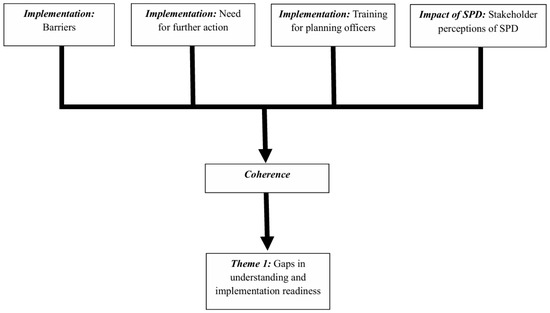
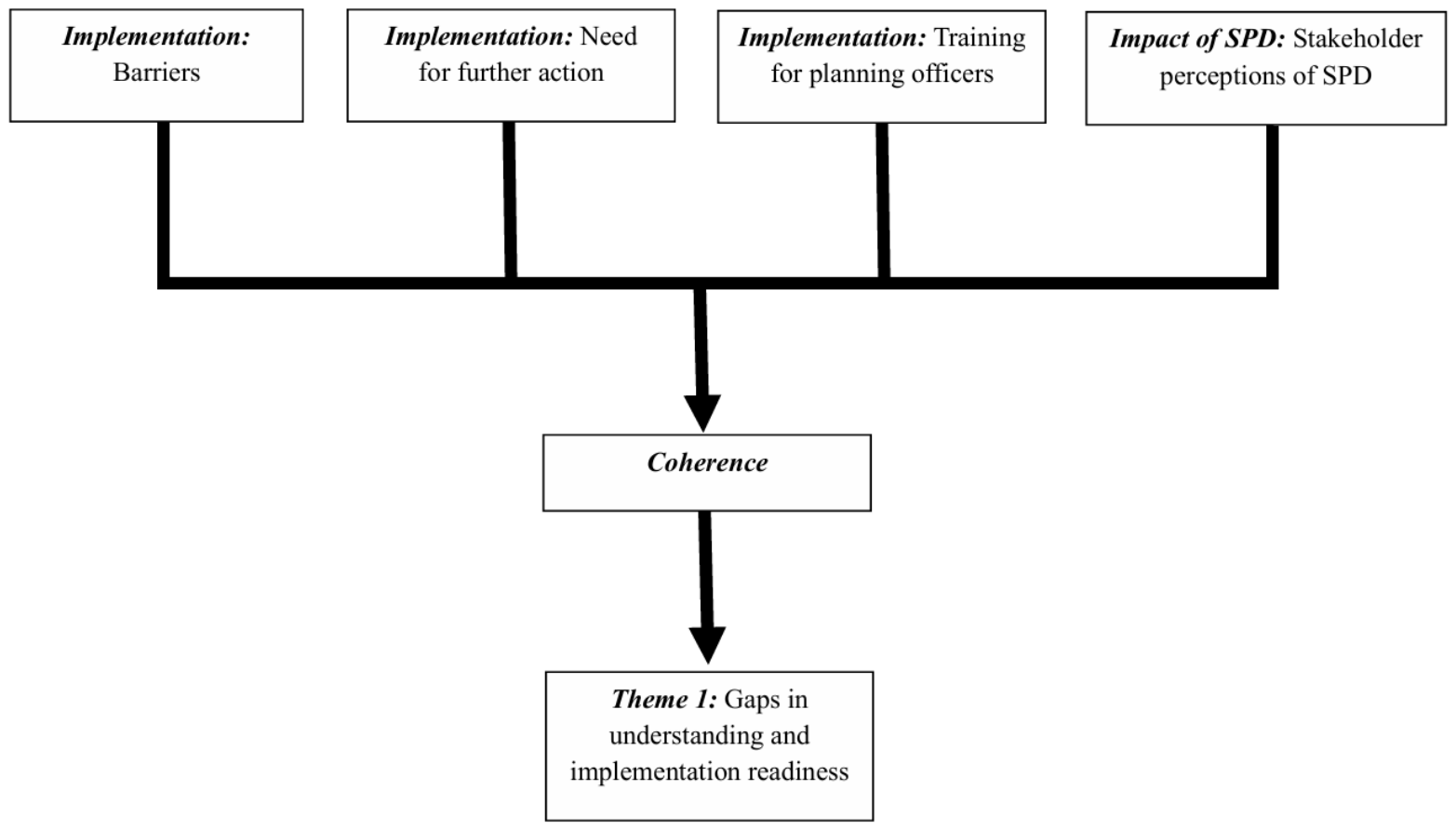
Charting: A framework matrix was constructed comprising a list of all themes and sub-themes on one axis and participants on the other. Each cell contained excerpts, concise data summaries, and notes from the researchers. This charting technique produced a structured and accessible dataset, enabling detailed exploration of themes by respondent type. The original themes and sub-themes within the thematic frameworks were then grouped according to whether and how they related to the four main NPT constructs; coherence (sense-making), cognitive participation (engagement), collective action (to enable implementation) and reflexive monitoring (both formal and informal) [35,36]. The relevant data were then encompassed within these final themes. An example of which of the original themes and sub-themes fed into the final sub-theme of ‘Gaps in understanding and implementation readiness’ within ‘Coherence’ is visualised in Figure 1.
Figure 1.
Development of Theme 1: Gaps in understanding and implementation readiness.
Mapping and interpretation: Summaries for each sub-theme were then produced within the four main NPT constructs to guide the exploration and interpretation of patterns and associations between these themes.
Reflexivity: Researchers reflected on biases through note-taking after each interview and regular group discussions between researchers throughout the analysis to help ensure the themes were coherent and reflected the data. Researchers did not live in the research location and were new to the research area of planning, approaching the analysis with public health expertise. Thus, this minimised the potential for bias.
2.5. Ethical Approval
This project received ethical approval from the Faculty of Health Sciences Research Ethics Committee at the University of Bristol (REF:18930) prior to commencement of data collection.
3. Results
Eight themes were identified, which are discussed below under the four main constructs of NPT. Each theme could act to both facilitate or impede the implementation of the guidance.
3.1. Coherence: Sense-Making of Implementation of the Amenity Space Planning Document
Coherence relates to sense-making and finding meaning in the new practice, for example, the level of understanding of how this new guidance differs from existing guidance and policy, as well as its purpose and value.
3.1.1. Theme 1: Gaps in Conceptual Understanding and Implementation Readiness
There was variation in coherence of understanding of the intervention among different groups of stakeholders. The role of planning officers in implementing the new amenity space guidance was understood to involve making applicants aware of the relevant documents and writing a non-biased report on whether the criteria are met. This assessment is then passed on to the team manager who makes the overall decision about approval. This differs from other guidance where planning officers can delegate assessments to experts. The new guidance therefore increased the need for a high level of understanding among planning officers.
“(…) until I get familiar with it, I’m not going to know exactly what I’m looking for and it’s going to be quite exhausting (…).”P7, Planning Officer
Individuals in roles within applicant teams and planning officers had not been involved in the development of the guidance. These individuals did not always have a good understanding of it, with some reporting not having read the guidance. This resulted in misunderstanding related to the qualitative focus of the guidance, thus affecting the perception of its potential value and ease of implementation.
“In a constrained site, it is not possible to meet the numerical space requirements as this would eat into profit. (…)”P20, Applicant, Architect
Generally, however, the training was perceived to help with appreciation of the new amenity space guidance’s importance and practical application.
“(…)So we were encouraged to apply indicators of good quality amenity space to places that we’ve just visited ourselves in our daily lives. (…) it helps you understand a lot more because obviously as a planning officer, we are granting planning permission for something that will likely be a real thing for people in the future.”P10, Planning Officer
Despite this, many planning officers started the role after the initial training session in September 2023 or were unable to attend. Further, there was a perception across stakeholder groups that the practical application of the training could be enhanced through the inclusion of site visits.
“I do think the examples thing is the most important. I feel like officers don’t go out and see enough of those. How it actually works. (…)”P8, Planning Officer
In addition to the training, junior planning officers perceived that a formal buddying system could improve implementation.
“We have the formal training lessons, but we also have buddying up of more senior and more junior Planning Officers and so forth.(…).”P21, Planning Management
In contrast, those with direct involvement in the development and implementation of the new amenity space guidance, such as planning management and senior planning officers, tended to have a better understanding and viewed it as a tool to evidence feedback to applicant teams.
“But I do feel certainly at the more sort of senior levels of planning officers. There is this awareness of it and the importance of it.”P25, Planning Management
3.1.2. Theme 2: Language as a Facilitator and Barrier to Implementation
On the one hand, some interviewees felt the new amenity space guidance helped to create a common language regarding quality, e.g., mental health benefits of green space as opposed to ‘biophilic design’.
“(…)They just sort of say, well, this isn’t very good quality and I think what it [the guidance] does is it provides something for both parties to point out and discuss in a more focused way.”P31, Applicant team, Architect
On the other, use of language was cited as a potential barrier in that planning documents more broadly often contain jargon that is difficult to translate into real-world improvements. This was reiterated by some interviewees who stated the importance of language to clarify the definition of quality.
“I mean, whilst they will say you need to build good quality environments, how do you define good quality?”P9, Planning Officer
In summary, there is a need for understanding to be improved across stakeholder groups who were not directly involved in the development of the new guidance, both about its purpose and the language it uses. This could be operationalised by improving the content and training, as well as removing jargon, which would help achieve coherence across stakeholders.
3.2. Cognitive Participation: Engagement Was Conditional Based on Perceived Value, Workload, and Willingness to Change
Cognitive participation relates to whether stakeholders engage with and find meaning in the guidance as a way of improving the quality of amenity space. This is evidenced by their investment of time and energy to incorporate the guidance into their practice.
Theme 3: Attitude of Those Involved in Implementation Towards the New Guidance
The introduction of the new amenity space guidance was perceived positively by most participants and as something to be embedded into practice.
“It feels like or certainly felt like quite a groundbreaking sort of SPD [new amenity space guidance] and in a way it would be great if I had more opportunity to kind of promote it and encourage it.”P24, QRP panel member
The focus on the quality of amenity space and the provision of a qualitative definition of this was seen to be an important way in which the new amenity space guidance differed from previous practice.
“This will add strength to the argument if we’re saying that the shortfall [in space provision], is significant, but on balance overall it’s acceptable because it’s high quality, it’s meeting a range of different needs, it’s private, it’s publicly accessible as well in places.”P41, Planning Officer
However, the change and adaptation required to embed this new practice were viewed as something planning officers might resist.
“But (…) change in maybe how people have to read, maybe how planning officers have to read applications. The change in their processes, might be difficult for some.”P4, Planning Officer
Whilst the structured focus on amenity space quality was viewed as a strength, this was also perceived to exacerbate the difficulties with making timely assessments.
“(…) having to look through that and sort of come to a conclusion about how the proposal sort of scores against series of criteria. That is potentially going to add time to the process, which one could argue [planning] officers don’t have”P25, Planning Management
Planning management and elected officials were generally positive about the guidance, perceiving alignment with local authority aims and ethos of quality over quantity.
“(…) [it] isn’t just the space provided, it’s 20 square meters, or 50 square meters, but it seeks to achieve other outcomes as well. Whether that be urban greening, biodiversity net gain, recreational space outcomes. So for a range of users, children, young children, middle aged children, older people, families, et cetera.”P5, Planning Management
Some suggested that the new amenity space guidance helped to formalise an emphasis on quality, which was already evident within the planning department and applicant teams.
“I think there has been from developers, probably more of a focus on making sure that things are of good quality. So actually I think in general that’s been happening anyway. I think this should hopefully help to sort of reinforce the sort of, both, you know what is good and also why.”P21, Planning Management
There was a more nuanced appraisal of the new amenity space guidance among applicant teams. Interviewees perceived that the guidance could be manipulated through references to nearby parks, instead of providing adequate residential amenity space.
“But where I think it does get interesting is when we see other applicants of other sites making reference to those semi-public and public spaces that they haven’t provided. They don’t pay to maintain, but they somehow use it as a justification for the density that they are building to.”P18, Applicant Team, Developer
3.3. Collective Action: Implementation Was Constrained by Competing Priorities, Workload Pressures, and Lack of Supporting Tools
This relates to the actions required by stakeholders to incorporate the new guidance into everyday practice. A key factor for consideration is the impact on existing working practices, including how much it adds to workload and whether it is compatible with current priorities.
3.3.1. Theme 4: Prioritisation of New Guidance
Planning staff and applicants perceived that guidance documents are sometimes not considered as seriously due to not being mandatory.
“It’s not this particular SPD [new amenity space guidance], it’s just SPDs [guidance] in general. Like I said, they’re maybe not as seriously considered or integrated into planning applications, as they perhaps should be.”P24, QRP Panel Member
This perception was intensified due to the large number of guidance documents and policies competing for attention. Whilst applicant teams reported feeling overwhelmed by the volume of guidance, planning staff and QRP panel members felt the design elements in each could be integrated.
“And there’s a lot of competing demands for space in particular in higher density developments so what we try and do is try and integrate the urban greening factor, biodiversity, surface water flooding elements, we try and meld all those things together to try and create spaces that have multifunctional purposes.”P5, Planning Management
A suggested improvement from applicant teams, elected officials, planning management and planning officers was to make expectations concerning the introduction of the guidance and related documentation clearer at the beginning of the pre-application process.
3.3.2. Theme 5: Workload Pressures as a Constraint on Implementation
Planning officers and applicant teams suggested that the guidance may increase the cost and time spent on both developing and reviewing applications. On the other hand, some interviewees noted that this could be a good time to implement new guidance due to what they described as an ‘economic lull’, which meant a lower number of applications and, therefore, more time to work on each application.
“(…) However, I suppose we are in a relative lull at the moment because of wider economic forces slowing down the construction industry. So perhaps now it’s actually the best time to introduce something like that.”P25, Planning Management
3.3.3. Theme 6: The Role of Templates in Enabling Implementation
The template for facilitating adherence to the guidance was not published and in use until December 2024. Stakeholder groups outside of the planning management team reported that they were not aware the template was under development. This caused some confusion around their appraisal of the intervention requirements. Many participants recommended the need for a template to enhance the ease of assessing how the guidance stipulations are met. They stated that current information about amenity space is hidden within large applications and difficult to collate and interpret.
“(…)it’s [information about amenity space] just it’s tucked in sort of middle level Design and Access Statement.”P8, Planning officer
3.4. Reflexive Monitoring: Appraisal Highlighted the Need for Flexibility Amid Economic and Housing Pressures
This relates to appraisal of the new intervention and the use of feedback to adapt and improve. Participants demonstrated this appraisal of the intervention in terms of its suitability for both developers and the council within the current context of urban development.
3.4.1. Theme 7: Stakeholder Appraisal and Suggested Refinements
Participants provided several suggested improvements to implementation. These covered a perceived need to encourage stakeholders who were not involved in the initial development of the guidance, such as planning officers and applicant teams, to read it and familiarise themselves with the content. Participants also highlighted the importance of implementing the guidance in a flexible manner, as described below. A further suggested change was for the guidance to be applied to a wider range of spaces and developments and to embed its principles in policy, rather than relying solely on guidance.
“(…) it’s sort of been applied to a very specific thing, but it has generalizable outcomes I think, which is why it’s so great.”P2, planning management
3.4.2. Theme 8: Contextual Limitations
Economic viability was a concern, whereby if the guidance was applied without flexibility, it could impede developers’ ability to maximise their profit. This could, in turn, deter applicant teams from proposing developments in this LA area. There were further concerns among applicant teams that applying the new amenity space guidance might increase costs for small-scale developers.
“So whereas I appreciate there has to be certain standards to meet but if it’s so well beyond the realms of a sensible target, let’s say then, it may put people off. (…)”P32, Developer
Developers held differing views on the extent to which maximising profits should be a consideration in the implementation of the guidance, with some arguing that planning requirements, such as amenity space provision, should not be compromised due to economic viability or trade-offs with affordable housing.
“And you can’t sort of say because you’ve asked me to provide X square meters of amenity space in a certain quality it’s affecting the financial appraisal and therefore I’m going to provide less, you know, affordable housing or whatever, these are not either or, it’s both.”P18, Applicant Team, Developer
Build-to-rent applicant teams perceived a potential for economic gain through better quality amenity space provision, as it could make developments more successful at attracting and retaining tenants.
Many stakeholder groups, including planning staff, public health staff and applicant teams, highlighted the tension between the drive for quality amenity space and the need to address the housing deficit.
“(…) we are in a really difficult position in terms of temporary accommodation, so when you’ve got a situation where you’re housing families in hotels as your barometer, I think what’s kind of healthy or unhealthy kind of shifts (…)”P11, Public Health team member
This balance is a particularly difficult conundrum for planning officers, with some indicating that they sometimes felt pressure to grant approval as affordable homes were required.
“I do feel that there are times when we’re a little bit too easily bullied, but we’re very easy just to kind of go, that’s fine. The scheme’s still acceptable. It’s providing X amount of affordable homes. (…)”P8, Planning officer
4. Discussion
Overall, stakeholders positively appraised the introduction of the new amenity space guidance and showed willingness to participate in its implementation. However, our findings demonstrate some key challenges. Most notably, the guidance is optional rather than formal policy, representing a significant structural limitation. Thus, more work is needed to convince some members of applicant teams and planning officers of its merit and to justify the additional time that implementation may require. Additional barriers included attitudes towards and understanding of the guidance, as well as the high workload of planning staff and applicant teams. A further barrier was identified as the multiple guidance and policy documents to be adhered to, which could also apply to other councils across England. Participants felt there was a need for a template to be in place, as well as ensuring the use of common language to facilitate understanding. Additionally, contextual factors need to be considered, particularly the trade-off between the shortage of affordable housing and developers’ priority of ensuring economic viability, which is a well-established issue for councils across England. Appraisal by participants resulted in suggested changes that could be taken forward to improve implementation, including the application of the guidance to other types of space and developments.
The evaluation and analysis were informed by the four main constructs of NPT [39] and the dynamic relationship between them. This facilitated understanding of the work individuals and groups of stakeholders needed to do to enable use of the guidance to become normalised. The NPT framing also helped to identify improvements required to achieve full implementation and integration into everyday practice. By applying NPT to a whole system, involving different organisations, we have uncovered additional challenges associated with achieving implementation. For example, coherence was more difficult to achieve due to the variance in understanding of terminology, and it was challenging to align competing priorities across organisations and teams. This demonstrates the importance of considering the whole system when introducing interventions for healthier placemaking [40].
The planning officer training sessions helped improve understanding and ability to use the guidance among some planning officers who attended, but more needs to be done to improve competencies amongst others, including those who missed the training. Further training sessions and site visits could be one way to achieve this, as well as holding training sessions on multiple days and times to ensure that most planning officers can attend. This aligns with previous research, which employed NPT and found staff training was a key intervention component to facilitate understanding or coherence for those delivering a smoking cessation intervention [41]. A further study found coherence to standardised patient-centred outcome measures was impacted by professionals’ recognition of the benefits of an intervention for assessing palliative care and their attitudes towards it [42]. This suggests that, if training focuses on harnessing positive attitudes and the recognition of benefits, this could further improve implementation. Positive appraisal of the intervention by planning staff and panel members reported within the current evaluation indicates progress towards coherence of the intervention [35,36]. Integration and understanding of how improved coherence leads to implementation-related action could further enhance the use of this theory.
A perceived increased focus on health and quality in planning in recent years may be indicative of a gradual move towards this goal more broadly in the field. For example, a key principle of planning in England, outlined in the National Planning Policy Framework in 2024, was the building of healthy, safe and inclusive places [19,43]. Despite these wider policy shifts, inconsistent understanding of the guidance among applicants highlights the need for closer engagement with development teams. This could facilitate the communication of expectations, clarification of flexibility within the guidance, and reinforcement of its underlying objectives, i.e., the importance of building healthy and inclusive places. Whilst quality of amenity space is explained within the SPD guidance document using explanations, examples and photographs, it remains difficult to fully conceptualise qualitative outcomes. Previous research has attempted to operationalise definitions of quality relating to urban design and walkability. This study employed videos, expert panels and modelling in a thorough process, thus indicating that the place quality model may require further work to fully operationalise the concepts being measured in relation to the quality of amenity space and residents’ lived experience [44].
Competing priorities influencing planning officers, such as the need to attract development and address a critical need for affordable housing, were found to hinder commitment to the implementation of the guidance. This is a central paradox in planning and reflects wider national challenges, where pressures to increase housing supply may lead to compromises in design quality due to the higher cost associated with sustainable building practices [45]. While such compromises in quality may address short-term needs, they risk generating longer-term health and wellbeing inequalities. Sustainable housing models that balance quality and quantity have been proposed as a means of addressing these tensions [46]. Further, alternative financial models and public–private partnerships may help to account for additional costs to the developer associated with building higher quality housing and amenity space [45]. This further reflects “trade-offs” seen within sustainability, whereby a balance needs to be struck between meeting business needs, sustainability needs and the amount of regulation that is perceived as acceptable. This is a complex issue where multiple groups have competing needs, thus regulation and mandating policy may be the most effective method of forcing a balance and preventing each group from fighting for extremes [47]. For example, the ‘Triple Bottom Line’ advocates for equal emphasis on environmental, social and economic needs [47]. The emphasis on health and wellbeing in planning will continue to affect the trade-off between meeting these increasingly normalised expectations and profit.
In the present intervention, clarity in language and use of the template, once introduced, could help understanding of what is being measured and required in a planning decision and further support implementation of the assessment of adherence by planning officers, thus improving collective action and cognitive participation. When the requirements and expectations are clearly stated, it is easier to see if a development is adhering to and going above and beyond the minimum requirements. This is supported by a study that focused on reports produced by planning officers [48], where the findings demonstrated the importance of effective communication through transparent and inclusive language to facilitate understanding. This further relates to research around the theory of boundary objects, whereby different groups of stakeholders, such as planning, public health and planning applicants, work together to find common structure and language for cooperation [49]. Thus, a focus on harnessing the heterogeneity between groups through a common language could enhance collaboration and adherence among these stakeholders [49].
Our findings suggest that creating a guidance document is not sufficient as a standalone intervention; clear plans for implementation are also needed. Actions to support implementation of this SPD should continue to include provision of the template, training for planning officers and the formal buddy system between senior and junior planning officers. This buddy system aligns with a study assessing implementation of a new maternity referral and treatment pathway, which found partnership working, including frequent meetings, was central to successful implementation [41]. In line with the current findings, a study of the introduction and use of standardised patient-centred outcome measures found support from management was important for promoting cognitive participation. The study also found intervention champions helped to further promote this [42], something that could be considered for future implementation and evaluation of this SPD. This may also reflect the power dynamics between those in charge of implementing guidance and policy, council staff who have to implement these and applicant teams who have to adhere to them. In a context where plentiful guidance and policies exist and potentially compete with one another, addressing multiple demands concurrently could help facilitate engagement. For example, urban greening and improving the quality of amenity space could both be satisfied through planting trees [50]. Future research could further investigate the effectiveness of these additional strategies to promote implementation of this guidance. Further to this, even when guidance is followed within the plans, this does not always translate into the subsequent build [21], making this an important area for future investigation.
The non-mandatory nature of the guidance may further contribute to its deprioritisation. This is reflected in the literature, whereby the frame of reference adopted by planning officers, such as how risk is understood, can affect the priorities that feed into decision making [51]. This emphasises the difficulty relating to the wider context and the extensive range of factors that need to be considered within planning. As such, formal mandated policy, with clear requirements and language, will likely take priority over voluntary adherence to guidance, particularly where this includes ambiguous language. There is growing evidence that the integration of health into planning regulation and policy can help to improve health and wellbeing of the population [52]. Thus, exploring options for mandating quality amenity space has the potential to enhance population health.
5. Strengths and Limitations
This study recruited a diverse range and large number of interviewees, helping to understand implementation from different perspectives. The inclusion of the views of elected officials is especially important given the political nature of the planning application process [53]. Whilst there were some smaller subgroups, we recruited 100% of the panel organisers (n = 3). We recruited the councillors (n = 2) who were most involved in the development of the SPD, but further representation from this group would have enhanced the study. Triangulation with other methods may have enhanced insight into the adherence to and implementation of the guidance. As we studied early implementation at an early stage, future documentary analysis of planning applications that have employed the guidance and its associated template would provide further insight into the extent of implementation.
A further strength is the use of NPT, which has been frequently and effectively used within previous process evaluations to assess the implementation of a wide range of health interventions [39]. Our application of NPT enhanced our understanding of the mechanisms that characterise the implementation process of the guidance and its likely success of becoming embedded into the practice of all key stakeholders.
This study could only assess the initial stages of implementation. Moreover, the SPD was delivered in only one local authority context, and context has been shown to play an important role in understanding intervention mechanisms [54]. Whilst some of the barriers and facilitators that we identified may be LA specific, some will likely operate nationally. For example, cultural readiness to change was evidenced through the strategic recognition of health and wellbeing in planning in 69.4% of Local Authorities’ Local Plans in England [18], suggesting that the findings of this study are to some extent generalisable to other local authority contexts.
Further research is required to explore longer-term implementation, as well as the potential for application of the SPD to other contexts. This could include exploration of whether the introduction of the template enhances understanding and use of the new amenity space guidance.
6. Conclusions
Overall, all stakeholder groups expressed early positive attitudes towards the new amenity space guidance, which aims to improve the quality of residential developments and, ultimately, residents’ wellbeing; however, stronger policy support is needed to increase its prioritisation. Further, several factors created challenges to the guidance being effectively implemented and embedded, which should be addressed.
To improve coherence (understanding; NPT), key language and terminology should be clearly defined, and training for planning officers should be sustained, with the addition of site visits to strengthen understanding of real-world application. To enhance cognitive participation (engagement; NPT), the existing buddy system between junior and senior planning officers should be maintained, alongside greater support from planning officers for applicant teams throughout the application process to aid understanding and adherence to the guidance.
For collective action (implementation; NPT), the guidance should continue to be applied flexibly, recognising differing priorities and pressures across the planning system, and should be aligned with existing policies and guidance to enable multiple demands to be addressed concurrently. The guidance template, introduced during the later stages of this evaluation, may help applicants engage with the guidance in a more structured way. This could also support reflexive monitoring (evaluation; NPT) by enabling planning officers to assess adherence through a consistent and transparent process.
Future research with regard to this particular intervention should examine the longer-term impact of the guidance template, as well as the quality, reach, and acceptability of training that incorporates site visits, as new developments are built. More broadly, research should compare the effects of guidance versus policy approaches and explore how to balance the trade-off between improving amenity space for health and wellbeing and meeting developers’ profit requirements.
Supplementary Materials
The following supporting information can be downloaded at: https://www.mdpi.com/article/10.3390/buildings16132521/s1, Supplementary file S1.
Author Contributions
Conceptualisation, R.C., J.K., H.J.L., C.F., J.S. and N.A.R.; methodology, R.C., J.K., H.J.L., C.F. and G.K.W.; software, H.J.L., C.F. and G.K.W.; validation, R.C., J.K., H.J.L., C.F., J.S. and N.A.R.; formal analysis, H.J.L., C.F., J.K., S.N. and G.K.W.; investigation, H.J.L. and C.F.; resources, R.C., J.K., J.S. and N.A.R.; data curation, H.J.L., C.F., G.K.W., J.K. and S.N.; writing—original draft preparation, H.J.L., C.F. and G.K.W.; writing—review and editing, H.J.L., C.F., G.K.W., S.N., R.C., N.A.R., J.S. and J.K.; project administration, H.J.L. and C.F.; funding acquisition, R.C., J.K. and J.S. All authors have read and agreed to the published version of the manuscript.
Funding
This research was funded by the National Institute for Health Research (NIHR) Public Health Intervention Responsive Studies Team (grant number: PHIRST/NIHR131567). The views expressed are those of the authors and not necessarily those of the NIHR or the Department of Health and Social Care. Funders had no involvement in data analysis, data interpretation or writing of the paper. For more information about this study, please visit https://phirst.nihr.ac.uk.
Institutional Review Board Statement
This study was conducted in accordance with the Declaration of Helsinki and approved by the Faculty of Health Sciences Research Ethics Committee at the University of Bristol (protocol code 18930 and 17 July 2024).
Informed Consent Statement
Informed consent was obtained from all subjects involved in this study.
Data Availability Statement
The raw data supporting the conclusions of this article will be made available by the authors on request. The data are not publicly available due to the fact that J.S. and N.A.R. developed the intervention and worked for the council. They were completely independent from data analysis.
Acknowledgments
This study was undertaken on behalf of NIHR PHIRST Insight. We would like to thank Brent Council’s Neighbourhood and Regeneration and Public Health Departments; we would like to thank Christina Stokes, Anna Chourdaki and Clementine Djatmika for their contributions to the development of the study protocol and to thank all the interviewees for their time, insights and willingness to contribute to this evaluation.
Conflicts of Interest
Author Natasha A. Reid is the founder of the company Matter Space Soul. The remaining authors declare that the research was conducted in the absence of any commercial or financial relationships that could be construed as a potential conflict of interest.
Abbreviations
The following abbreviations were used in this manuscript:
| NPT | Normalisation Process Theory |
| SPD | Supplementary Planning Document |
| QRP | Quality Review Panel |
References
- Marmot, M. Sustainable Health Equity: Achieving a Net-Zero UK; UCL—Climate Change Committee: London, UK, 2020; Available online: https://www.theccc.org.uk/publication/ucl-sustainable-health-equity-achieving-a-net-zero-uk/ (accessed on 1 August 2025).
- Moore, T.H.; Kesten, J.M.; López-López, J.A.; Ijaz, S.; McAleenan, A.; Richards, A.; Gray, S.; Savović, J.; Audrey, S. The effects of changes to the built environment on the mental health and well-being of adults: Systematic review. Health Place 2018, 53, 237–257. [Google Scholar] [CrossRef] [Scilit] [PubMed]
- Goldhagen, S.W. Welcome to Your World; HarperCollins: New York, NY, USA, 2017. [Google Scholar]
- Pinto, A.; Bird, E.; Ige, J.; Burgess-Allen, J.; Pilkington, P. Spatial Planning for Health: An Evidence Resource for Planning and Designing Healthy Places; Public Health England: London, UK, 2017. Available online: https://www.gov.uk/government/publications/spatial-planning-for-health-evidence-review (accessed on 1 September 2025).
- Rice, L.; Drane, M. Indicators of healthy architecture—A systematic literature review. J. Urban Health 2020, 97, 899–911. [Google Scholar] [CrossRef] [Scilit] [PubMed]
- The Commission on Creating Healthy Cities. What Creates Healthy Cities?; Global Centre on Healthcare and Urbanisation, Kellogg College, University of Oxford: Oxford, UK, 2022; pp. 1–56. Available online: https://www.gchu.org.uk/2022/07/what-creates-healthy-cities/ (accessed on 1 September 2025).
- Nieuwenhuijsen, M.J. Influence of urban and transport planning and the city environment on cardiovascular disease. Nat. Rev. Cardiol. 2018, 15, 432–438. [Google Scholar] [CrossRef] [Scilit] [PubMed]
- Giles-Corti, B.; Vernez-Moudon, A.; Reis, R.; Turrell, G.; Dannenberg, A.L.; Badland, H.; Foster, S.; Lowe, M.; Sallis, J.F.; Stevenson, M.; et al. City planning and population health: A global challenge. Lancet 2016, 388, 2912–2924. [Google Scholar] [CrossRef] [Scilit] [PubMed]
- Capolongo, S.; Rebecchi, A.; Dettori, M.; Appolloni, L.; Azara, A.; Buffoli, M.; Capasso, L.; Casuccio, A.; Oliveri Conti, G.; D’Amico, A.; et al. Healthy design and urban planning strategies, actions, and policy to achieve salutogenic cities. Int. J. Environ. Res. Public Health 2018, 15, 2698. [Google Scholar] [CrossRef] [Scilit] [PubMed]
- Collado, S.; Staats, H.; Corraliza, J.A.; Hartig, T. Restorative environments and health. In Handbook of Environmental Psychology and Quality of Life Research; Springer: Berlin/Heidelberg, Germany, 2016; pp. 127–148. [Google Scholar]
- Organisation for Economic Co-operation and Development. Built Environment Through a Well-Being Lens; OECD Publishing: Paris, France, 2023. [Google Scholar]
- Pineo, H. Designing and Planning Equitable, Sustainable and Inclusive Places; Springer: Berlin/Heidelberg, Germany, 2022. [Google Scholar]
- World Bank. Poverty. Understanding Poverty: Urban Development. Available online: https://www.worldbank.org/ext/en/topic/poverty (accessed on 24 March 2026).
- Chang, M.; Green, L.; Petrokofsky, C. Public Health Spatial Planning in Practice. In Improving Health and Wellbeing; Policy Press: Bristol, UK, 2022. [Google Scholar]
- Lowe, M.; Adlakha, D.; Sallis, J.F.; Salvo, D.; Cerin, E.; Moudon, A.V.; Higgs, C.; Hinckson, E.; Arundel, J.; Boeing, G.; et al. City planning policies to support health and sustainability: An international comparison of policy indicators for 25 cities. Lancet Glob. Health 2022, 10, e882–e894. [Google Scholar] [CrossRef] [Scilit] [PubMed]
- Stevenson, M.; Thompson, J.; de Sá, T.H.; Ewing, R.; Mohan, D.; McClure, R.; Roberts, I.; Tiwari, G.; Giles-Corti, B.; Sun, X.; et al. Land use, transport, and population health: Estimating the health benefits of compact cities. Lancet 2016, 388, 2925–2935. [Google Scholar] [CrossRef] [Scilit] [PubMed]
- Mueller, N.; Daher, C.; Rojas-Rueda, D.; Delgado, L.; Vicioso, H.; Gascon, M.; Marquet, O.; Vert, C.; Martin, I.; Nieuwenhuijsen, M. Integrating health indicators into urban and transport planning: A narrative literature review and participatory process. Int. J. Hyg. Environ. Health 2021, 235, 113772. [Google Scholar] [CrossRef] [Scilit] [PubMed]
- Chang, M.; Carhart, N.; Callway, R. Spatial plans as a critical intervention in improving population health. A discourse arising from a health census review of the state of current local planning policy in England. J. Plan. Lit. 2025, 40, 154–169. [Google Scholar] [PubMed]
- Callway, R.; Le Gouais, A.; Bird, E.L.; Chang, M.; Kidger, J. Integrating health into local plans: A comparative review of health requirements for urban development in seven local planning authorities in England. Int. J. Environ. Res. Public Health 2023, 20, 4079. [Google Scholar] [CrossRef] [Scilit] [PubMed]
- World Health Organization. Healthy Cities Effective Approach to a Changing World; World Health Organization: Geneva, Switzerland, 2020; Available online: https://www.who.int/publications/i/item/9789240004825 (accessed on 1 September 2025).
- Abd Elrahman, A.S.; Asaad, M. Urban design & urban planning: A critical analysis to the theoretical relationship gap. Ain Shams Eng. J. 2021, 12, 1163–1173. [Google Scholar] [CrossRef] [Scilit]
- Lennon, M. Green space and the compact city: Planning issues for a ‘new normal’. Cities Health 2021, 5, S212–S215. [Google Scholar]
- Kleeman, A.; Giles-Corti, B.; Gunn, L.; Hooper, P.; Foster, S. The impact of the design and quality of communal areas in apartment buildings on residents’ neighbouring and loneliness. Cities 2023, 133, 104126. [Google Scholar]
- Stephenson, J. People and Place. Plan. Theory Pract. 2010, 11, 9–21. [Google Scholar] [CrossRef] [Scilit]
- Erol, Z.Ç.; Ciravoğlu, A. The social dimensions of place and place quality indicators in urban space. Int. J. Built Environ. Sustain. 2025, 12, 111–122. [Google Scholar] [CrossRef] [Scilit]
- Reid, N. Compassionate Places: Developing and Implementing a Method for Interdisciplinary, Humanistic Spatial Design and Place Quality Standards. J. Urban Des. Ment. Health 2024, 9, 1–25. [Google Scholar]
- Hensley, M.; Mateo-Babiano, D.; Minnery, J.; Pojani, D. How diverging interests in public health and urban planning can lead to less healthy cities. J. Plan. Hist. 2020, 19, 71–89. [Google Scholar]
- Marmot, M.; Allen, J.; Goldblatt, P.; Herd, E.; Morrison, J. Build back fairer: The COVID-19 Marmot review. In The Pandemic, Socioeconomic and Health Inequalities in England; Institute of Health Equity: London, UK, 2020. [Google Scholar]
- Ziegler, E. Application of a Salutogenic Design Model to the Architecture of Low-Income Housing. Ph.D. Thesis, University of British Columbia, Vancouver, BC, Canada, 2014. [Google Scholar]
- Kleeman, A.; Foster, S. ‘It feels smaller now’: The impact of the COVID-19 lockdown on apartment residents and their living environment–A longitudinal study. J. Environ. Psychol. 2023, 89, 102056. [Google Scholar] [PubMed]
- Honey-Rosés, J.; Anguelovski, I.; Chireh, V.K.; Daher, C.; Konijnendijk van den Bosch, C.; Litt, J.S.; Mawani, V.; McCall, M.K.; Orellana, A.; Oscilowicz, E.; et al. The impact of COVID-19 on public space: An early review of the emerging questions–design, perceptions and inequities. Cities Health 2021, 5, S263–S279. [Google Scholar]
- Bell, S.L.; Foley, R.; Houghton, F.; Maddrell, A.; Williams, A.M. From therapeutic landscapes to healthy spaces, places and practices: A scoping review. Soc. Sci. Med. 2018, 196, 123–130. [Google Scholar] [CrossRef] [Scilit] [PubMed]
- Brent Council. Residential Amenity Space & Place Quality: Supplementary Planning Document. 2024. Available online: https://www.brent.gov.uk/-/media/files/resident-documents/planning-and-bc-documents/residential-amenity-space-and-place-quality-spd.pdf?rev=5642c980fbe04769bcd7d5588a5e00f5&hash=53B33EE04B91FEF7B8DD0BFB799F8148 (accessed on 1 February 2025).
- Greater London Authority. The London Plan: The Spatial Development Strategy for Greater London; Greater London Authority: London, UK, 2021. Available online: https://www.london.gov.uk/sites/default/files/the_london_plan_2021.pdf (accessed on 1 March 2025).
- May, C.; Finch, T. Implementing, embedding, and integrating practices: An outline of normalization process theory. Sociology 2009, 43, 535–554. [Google Scholar] [CrossRef] [Scilit]
- May, C.R.; Hillis, A.; Albers, B.; Desveaux, L.; Gilbert, A.; Girling, M.; Kislov, R.; MacFarlane, A.; Mair, F.S.; Potthoff, S. Translational framework for implementation evaluation and research: Implementation strategies derived from normalization process theory. Implement. Sci. 2025, 20, 34. [Google Scholar] [CrossRef] [Scilit] [PubMed]
- Goldsmith, L.J. Using framework analysis in applied qualitative research. Qual. Rep. 2021, 26, 2061. [Google Scholar] [CrossRef] [Scilit]
- Lumivero. NVivo, version 14; Lumivero: Denver, CO, USA, 2023. Available online: https://lumivero.com/ (accessed on 1 September 2025).
- May, C.R.; Cummings, A.; Girling, M.; Bracher, M.; Mair, F.S.; May, C.M.; Murray, E.; Myall, M.; Rapley, T.; Finch, T. Using normalization process theory in feasibility studies and process evaluations of complex healthcare interventions: A systematic review. Implement. Sci. 2018, 13, 80. [Google Scholar] [CrossRef] [Scilit] [PubMed]
- Moore, G.F.; Evans, R.E.; Hawkins, J.; Littlecott, H.; Melendez-Torres, G.; Bonell, C.; Murphy, S. From complex social interventions to interventions in complex social systems: Future directions and unresolved questions for intervention development and evaluation. Evaluation 2019, 25, 23–45. [Google Scholar] [PubMed]
- Jones, S.; Hamilton, S.; Bell, R.; Araújo-Soares, V.; Glinianaia, S.V.; Milne, E.M.; White, M.; Willmore, M.; Shucksmith, J. What helped and hindered implementation of an intervention package to reduce smoking in pregnancy: Process evaluation guided by normalization process theory. BMC Health Serv. Res. 2019, 19, 297. [Google Scholar] [CrossRef] [Scilit] [PubMed]
- Lehmann-Emele, E.; Jansky, M.; Clapham, S.; de Wolf-Linder, S.; Bausewein, C.; Hodiamont, F. Using normalization process theory to evaluate the use of patient-centred outcome measures in specialist palliative home care—A qualitative interview study. BMC Palliat. Care 2024, 23, 1. [Google Scholar] [PubMed]
- Ministry of Housing, Communities and Local Government. National Planning Policy Framework; Ministry of Housing, Communities and Local Government: London, UK, 2012. Available online: https://www.gov.uk/government/publications/national-planning-policy-framework--2 (accessed on 1 October 2025).
- Ewing, R.; Handy, S. Measuring the unmeasurable: Urban design qualities related to walkability. J. Urban Des. 2009, 14, 65–84. [Google Scholar] [CrossRef] [Scilit]
- Akinsulire, A.A.; Idemudia, C.; Okwandu, A.C.; Iwuanyanwu, O. Sustainable development in affordable housing: Policy innovations and challenges. Magna Sci. Adv. Res. Rev. 2024, 11, 90–104. [Google Scholar] [CrossRef] [Scilit]
- Maliene, V.; Malys, N. High-quality housing—A key issue in delivering sustainable communities. Build. Environ. 2009, 44, 426–430. [Google Scholar]
- Coffman, M.; Umemoto, K. The triple-bottom-line: Framing of trade-offs in sustainability planning practice. Environ. Dev. Sustain. 2010, 12, 597–610. [Google Scholar]
- Weston, J.; Weston, M. Inclusion and transparency in planning decision-making: Planning officer reports to the planning committee. Plan. Pract. Res. 2013, 28, 186–203. [Google Scholar] [CrossRef] [Scilit]
- Houf, J.R. Boundary work and boundary objects: Synthesizing two concepts for moments of controversy. J. Tech. Writ. Commun. 2021, 51, 293–312. [Google Scholar]
- Benedict, M.A.; McMahon, E.T. Green Infrastructure: Linking Landscapes and Communities; Island Press: Washington, DC, USA, 2012. [Google Scholar]
- Snary, C. Understanding risk: The planning officers’ perspective. Urban Stud. 2004, 41, 33–55. [Google Scholar] [CrossRef] [Scilit]
- Sallis, J.F.; Bull, F.; Burdett, R.; Frank, L.D.; Griffiths, P.; Giles-Corti, B.; Stevenson, M. Use of science to guide city planning policy and practice: How to achieve healthy and sustainable future cities. Lancet 2016, 388, 2936–2947. [Google Scholar] [CrossRef] [Scilit] [PubMed]
- Marshall, T. The Politics and Ideology of Planning; Policy Press: Bristol, UK, 2020. [Google Scholar]
- Geng, E.H.; Powell, B.J.; Goss, C.W.; Lewis, C.C.; Sales, A.E.; Kim, B. When the parts are greater than the whole: How understanding mechanisms can advance implementation research. Implement. Sci. 2025, 20, 22. [Google Scholar] [CrossRef] [Scilit] [PubMed]
Disclaimer/Publisher’s Note: The statements, opinions and data contained in all publications are solely those of the individual author(s) and contributor(s) and not of MDPI and/or the editor(s). MDPI and/or the editor(s) disclaim responsibility for any injury to people or property resulting from any ideas, methods, instructions or products referred to in the content. |
© 2026 by the authors. Licensee MDPI, Basel, Switzerland. This article is an open access article distributed under the terms and conditions of the Creative Commons Attribution (CC BY) license.