


Abstract
This study developed a building information modeling (BIM)-based rule checking and safety design guide system that can automatically provide construction and safety rules to designers so they can prevent construction accidents. The study begins with an in-depth analysis of national construction accident data in the Republic of Korea, including statistics on accident types, causes, and frequency obtained from official sources such as the Ministry of Employment and Labor and related governmental reports. Based on this analysis, priority accident types, particularly fall-related accidents, were identified and used to define the scope of safety rule development. The first function of the system is to generate safety rules and automatically display the safety design guide in the Industry Foundation Classes (IFC) model. For this function, this study developed a sub-Coordination View of Model View Definition (MVD) based on the IFC instance, which extracts the objects’ shape- and attribute-related information from the target objects of the IFC model and displays the relationships between those objects in a diagram. The MVD viewer’s convenience and speed can reduce development costs. It can provide specific safety design guides, such as automatically modeling virtual fences in areas prone to fall accidents. The second function is to use large language models to display objects that must be considered in safety design without generating rules. The system function is an assistive language–data bridge. Since it does not create safety rules, it can further reduce time and effort for system development and prevent various construction accidents because there is no need to create rules.
1. Introduction
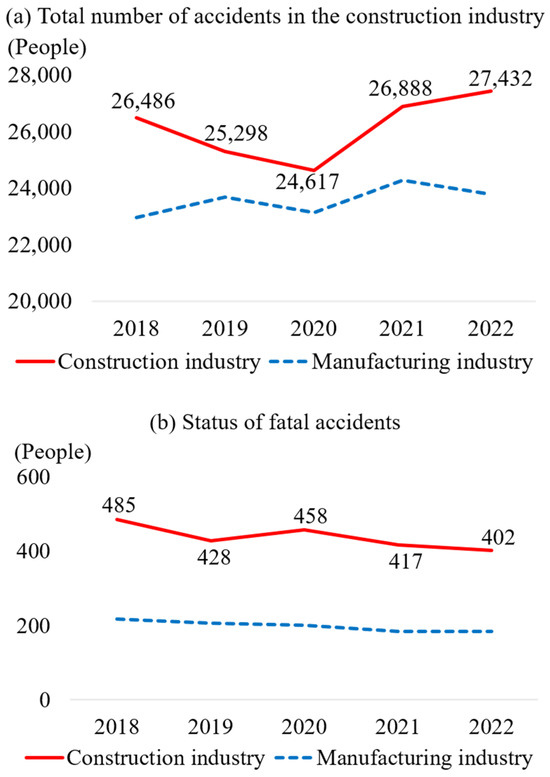
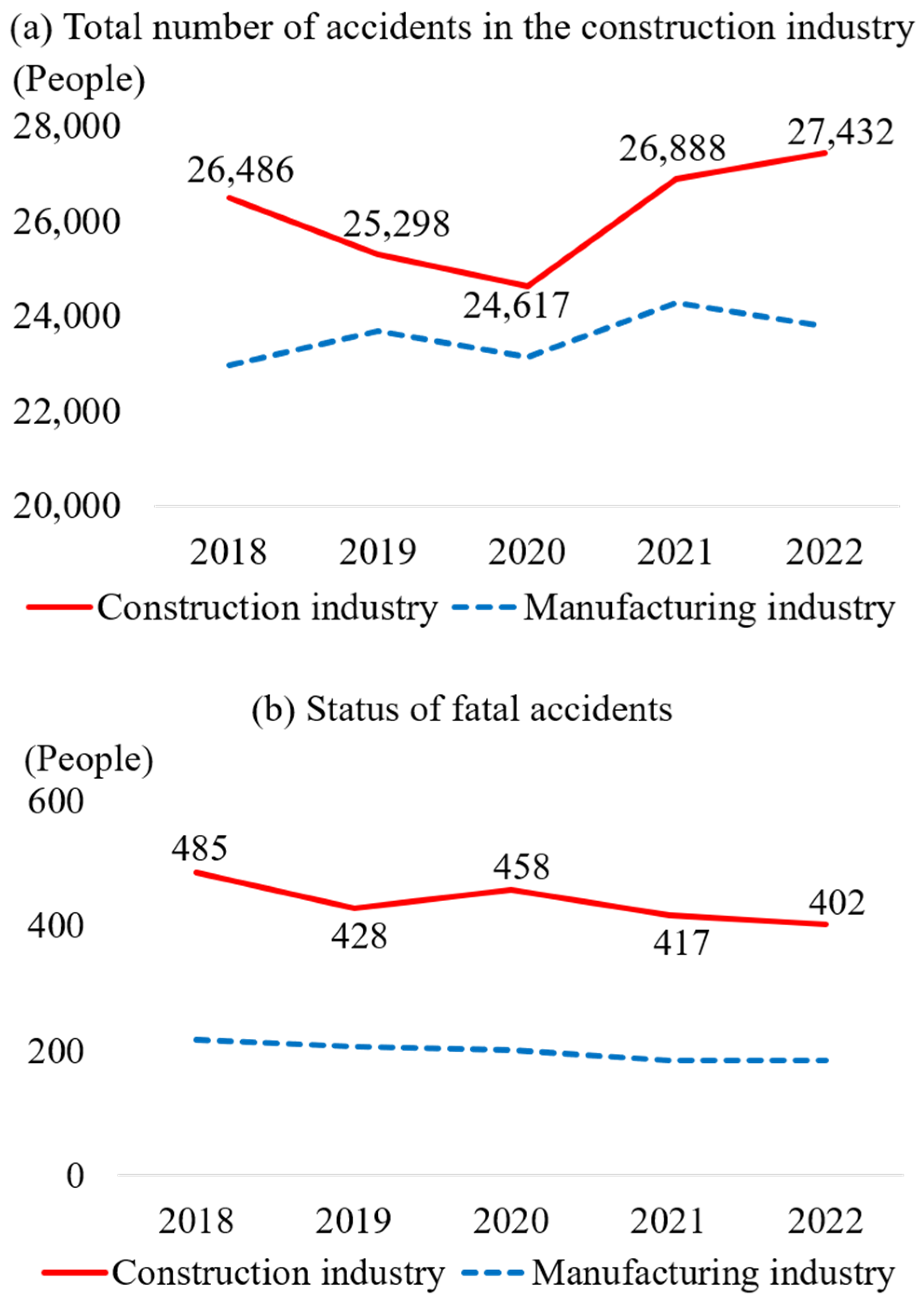
The construction industry is widely recognized as one of the most dangerous sectors for workers [1], accounting for 30–40% of work-related casualties worldwide [2]. Despite ongoing efforts, preventing construction accidents remains a significant challenge [3]. In this study, which focuses on the Republic of Korea as the case analysis region, the number of casualties in the construction industry increased by 3.57% to 27,432 between 2018 and 2022 [4]. The number of casualties is the sum of injuries and deaths, excluding those related to diseases and traffic accidents. The number of deaths decreased by 17.11% to 402 over the same period [5]. Despite this decrease, this number is more than double the 184 deaths reported in the manufacturing industry in 2022. Fall accidents are the most common cause of casualties and deaths in the construction industry [4,5]. These accidents threaten the safety of not only field workers but also surrounding people. In the Republic of Korea, a building collapse accident during the demolition process in 2021 resulted in 17 civilian casualties [6], while in the United States, the 2018 Florida International University pedestrian bridge collapse during bridge construction caused the deaths of five vehicle occupants and injuries to eight additional people [7].
To reduce accidents that occur during the construction phase, the Republic of Korea government enacted the Serious Accident Punishment Act and supported the application of smart construction safety technology. To protect workers and other people, the Serious Accident Punishment Act (2021) allows for the punishment of business owners or executive chiefs who cause casualties by violating health and safety. Support for the application of smart construction safety technology includes selecting object construction sites and supporting the provision, operation, and management of safety equipment [8]. However, because excessive regulations discourage production activities, it is important to create design documents that take safety into account at the design stage itself, prior to the construction stage. The EU Directive 92/57/EEC aims to prevent risks throughout the planning, design, and construction phases by establishing coordinated safety responsibilities and a collaborative safety management framework among clients, project supervisors, safety and health coordinators, and construction participants [9]. Several previous studies have confirmed the relationship between design elements and accidents that occur during the construction stage and have explained the importance of considering safety in the design phase [10].
To create design documents considering safety and reduce construction accidents through design documents, the Republic of Korea government established a design for safety (DfS) system similar to prevention through design (PtD) in the US [11] and construction, design, and management (CDM) regulations in the UK [12]. DfS and PtD recognize the risk factors of the construction stage at the design stage, evaluate the risks, and establish measures to reduce them. However, DfS is not being activated due to designers’ lack of knowledge about construction and safety rules and a lack of collaboration with related experts [13]. Currently, both large-scale design firms and small- and medium-sized design firms are experiencing difficulties with the DfS tasks of evaluating risks and establishing measures to reduce them [11]. There is a need for a way to provide construction and safety rules to designers without collaborating with construction and safety experts.
The goal of this study is to develop a building information modeling (BIM)-based system that can automatically provide safety design guides to designers after reviewing relevant safety rules. The proposed system consists of a rule-based safety design guide module and an LLM-assisted no-rule module that supports semantic interaction between regulatory information and BIM objects without explicit rule creation.
Based on these complementary approaches, this study investigates how BIM-based systems, IFC-based object relationships, and large language models (LLMs) can support safety-oriented design workflows and improve the usability and flexibility of Design for Safety (DfS) processes. In particular, this study contributes to BIM-based safety design research by proposing an IFC instance-based rule checking framework integrated with LLM-assisted semantic interpretation, enabling intuitive interaction between regulatory information and BIM objects.
2. Literature Review
Previous studies that have proposed standards for safety design or methods for providing construction and safety rules to designers during the design safety review process are highly relevant to this study. Golabchi et al. [14] developed predetermined motion time systems to identify ergonomic risks that may arise from work behavior and resolve them during the design stage. The system uses entered design information, work procedures, and worker movement information to visualize the workplace. Hossain et al. [15] developed an intelligent BIM-integrated risk review system that delivers safety knowledge to designers through a DfS rule-based knowledge library and a BIM platform for follow-up measures on the reviewed risks.
Johansen et al. [16] investigated the rules related to fall accidents, developed an automatic safety evaluation framework using ontology, and evaluated its accuracy. Similar to this study, the developed framework secured interoperability based on Industry Foundation Classes (IFC). IFC is an object-oriented data schema for the interoperability of BIM data developed by buildingSMART [17]. Yuan et al. [18] developed an automated rule-based construction safety inspection system based on building information derived from Revit and legal systems related to worker safety and building user safety during the construction stage. The system combines BIM and PtD, informs designers of the risks of the construction phase through pop-ups, and supports designers’ responses to the risks in the Revit model.
Although Ho et al. [19] did not develop a system for workers’ safety, they applied PtD [14] to improve workers’ safety during solar energy system installation work. The application objects were roofing materials, roof slopes, roof accessories, panel layouts, fall protection systems, lifting methods, and electrical systems. A protocol and design guide related to safety management standards, precautions, and work sequences were established through expert interviews, case studies, and seminars. Zhou et al. [18] did not propose any criteria or methods for safety design but proposed a method to automatically identify and classify environmental risks based on BIM during the subway design phase. Their method was to establish criteria for determining environmental risks and propose a risk assessment algorithm based on BIM. Environmental hazards included subsidiary structures, railway lines, and underpasses.
Some previous studies have established standards for construction safety management or proposed methods and systems to recognize and respond to the risks that may occur during the construction stage using the extracted information on each object of the BIM model [14,15,16,18,19]. Similarly, this study investigated construction safety management standards and developed a system that provides a safety design guide to recognize and respond to risk factors based on information regarding objects’ relationships extracted from the IFC model for interoperability. Johansen et al.’s [16] study also developed a system to support DfS based on the IFC model for interoperability, but this study differs in that it proposes a method of extracting only the Coordination View of Model View Definition (MVD) that defines the shape and attribute information of the target object from the IFC model to improve convenience and speed. This can reduce the cost of developing a rule-checking and safety design guide system. Unlike previous studies that have proposed rule-based safety design support methods, this study developed a system that can find objects related to the legal system without creating rules. If rules are not created, there is no need to develop a system that provides a safety design guide according to the created rules. Therefore, the time and effort required for system development can be reduced.
3. Research Approach
This study adopts a structured three-stage research approach to develop and evaluate the proposed BIM-based safety design guide framework for supporting Design for Safety (DfS).
The first stage focuses on analyzing national construction accident data in the Republic of Korea to identify accident types that should be prioritized in safety-oriented design processes. The accident dataset was obtained from official statistics provided by the Ministry of Employment and Labor of the Republic of Korea. The dataset was selected because it provides standardized nationwide information regarding accident causes, accident frequencies, fatality rates, and construction industry classifications. In addition, the dataset includes both fatal and non-fatal accidents across multiple construction environments, enabling systematic identification of high-risk accident categories relevant to DfS implementation.
The purpose of the dataset analysis was not to develop a predictive machine learning model, but rather to establish a practical scope for safety rule development and BIM-based design support. Among the various accident categories, fall-related accidents consistently showed the highest proportion of fatalities and casualties in the construction industry. Accordingly, this study focused primarily on fall prevention scenarios to establish and validate the proposed BIM-based safety design guide framework.
The second stage focuses on implementing the proposed BIM-based safety design guide framework within an IFC-based BIM environment. In this stage, the developed system utilizes IFC object relationships, geometric information, and semantic interpretation techniques to support safety-oriented design review and guidance processes.
The third stage consists of qualitative assessment and illustrative case applications to examine the feasibility and applicability of the proposed framework. The developed system was applied to representative fall-risk scenarios within IFC-based BIM environments to evaluate whether the framework could identify relevant BIM objects, visualize safety-related conditions, and provide designers with practical safety guidance during the design process. The evaluation in this study is primarily demonstrative and feasibility-oriented rather than quantitatively comparative. Therefore, the focus of the study is placed on validating the technical workflow, interoperability, and conceptual applicability of the proposed framework.
4. Types and Causes of Construction Accidents
This study investigates accidents in the construction industry and identifies the types and causes of accidents that must be reduced as a priority in the Republic of Korea. The number of occupational accidents occurring in the construction industry decreased from 2018 to 2020 and then increased significantly in 2021 and 2022, while the number of deaths continued to decrease. However, the number of deaths in the construction industry is still significantly higher than in the manufacturing industry (Figure 1). Compared to the previous years, the decrease amount and increase amount in the number of casualties and deaths were also greater than in the manufacturing industry; in particular, the previous year’s increase amount in the number of deaths was 7.6% greater than in the manufacturing industry [20]. The decrease in construction accidents may be due to the strengthening of government policies and safety management capabilities.
Figure 1.
Total accidents and fatal accidents in the construction and manufacturing industries in the Republic of Korea [20].
The cause of construction accidents with the highest number of casualties and deaths was “falls,” and it was found that “tumbles,” “collisions,” and “being hit by an object” also occurred frequently (Table 1). Fatal accidents due to falls occurred most often in small businesses with less than five employees, but they were also a main cause of accidents in all businesses with less than 1000 employees. Among the direct causes of fatal accidents due to unsafe conditions, “defects in safety protection devices” were the most frequent, and this was linked to fall accidents. The cause of most fatal accidents was temporary building structures, and these accidents were found to be three times more common than other causes [20]. These results indicate that fall accidents should be prioritized in construction safety management. In particular, the frequent occurrence of accidents related to temporary building structures highlights the need for proactive accident prevention measures during the design phases.
Table 1.
Number of accidents and fatalities by cause and size in the construction industry of the Republic of Korea (unit: person) [20].
Similar to the statistics in the Republic of Korea, the construction sector in the EU also records the highest number of non-fatal accidents among all industries. In addition, the construction sector accounts for 22.5% of all fatal occupational accidents, and accidents frequently occur due to falls from height, accidents involving machinery or vehicles, and slips, trips and falls. The EU is promoting design-stage risk prevention policies throughout the project lifecycle based on Vision Zero, design-stage prevention, coordination, and Construction 4.0 [21]. In addition, Directive 2014/24/EU on public procurement provides an institutional basis for the adoption of digital tools such as BIM in public construction projects [22].
Based on the findings on the types and causes of construction accidents in the Republic of Korea and the EU, proactive safety management measures are needed to identify and eliminate risk factors during the design phase. Accordingly, this study develops a BIM-based system for rule checking and safety-oriented design support.
5. BIM-Based Rule Checking and Safety Design Guide System
The system developed in this study provides designers with information about the possibility of accidents through BIM objects and supports the performance of design considering safety. As the Republic of Korea government is also working to revitalize smart construction technology, the expansion of BIM application areas is consistent with the policy direction of the construction industry [23].
The system reviews safety rules based on the Rules on Occupational Safety and Health Standards [24] of the Republic of Korea, analyzes the relationships between related rules and IFC model objects, and automatically displays safety design guides on the IFC model. The system has the first function to provide safety design guides by creating rules based on the Rules on Occupational Safety and Health Standards [24] and the second function to find objects related to safety rules by entering the Rules on Occupational Safety and Health Standards [24] without creating a rule, in contrast to the first function. Other features of the system include securing interoperability using the IFC model and extracting only the object information required in the IFC model. The programs were organized into a table with five columns: component, implementation/library, role, system interoperability, and source code (Table 2).
Table 2.
Component, implementation and library, role, system interoperability, and source code of the developed system.
5.1. Rule Creation System for Safety Design
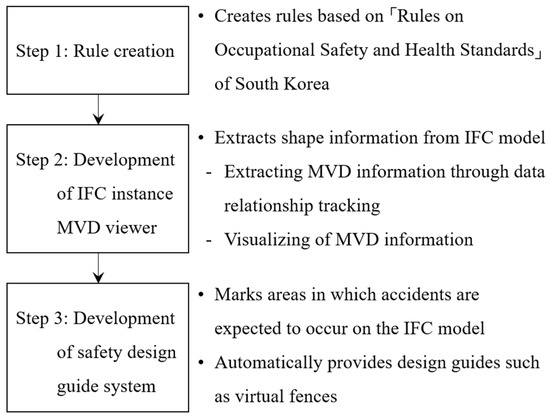
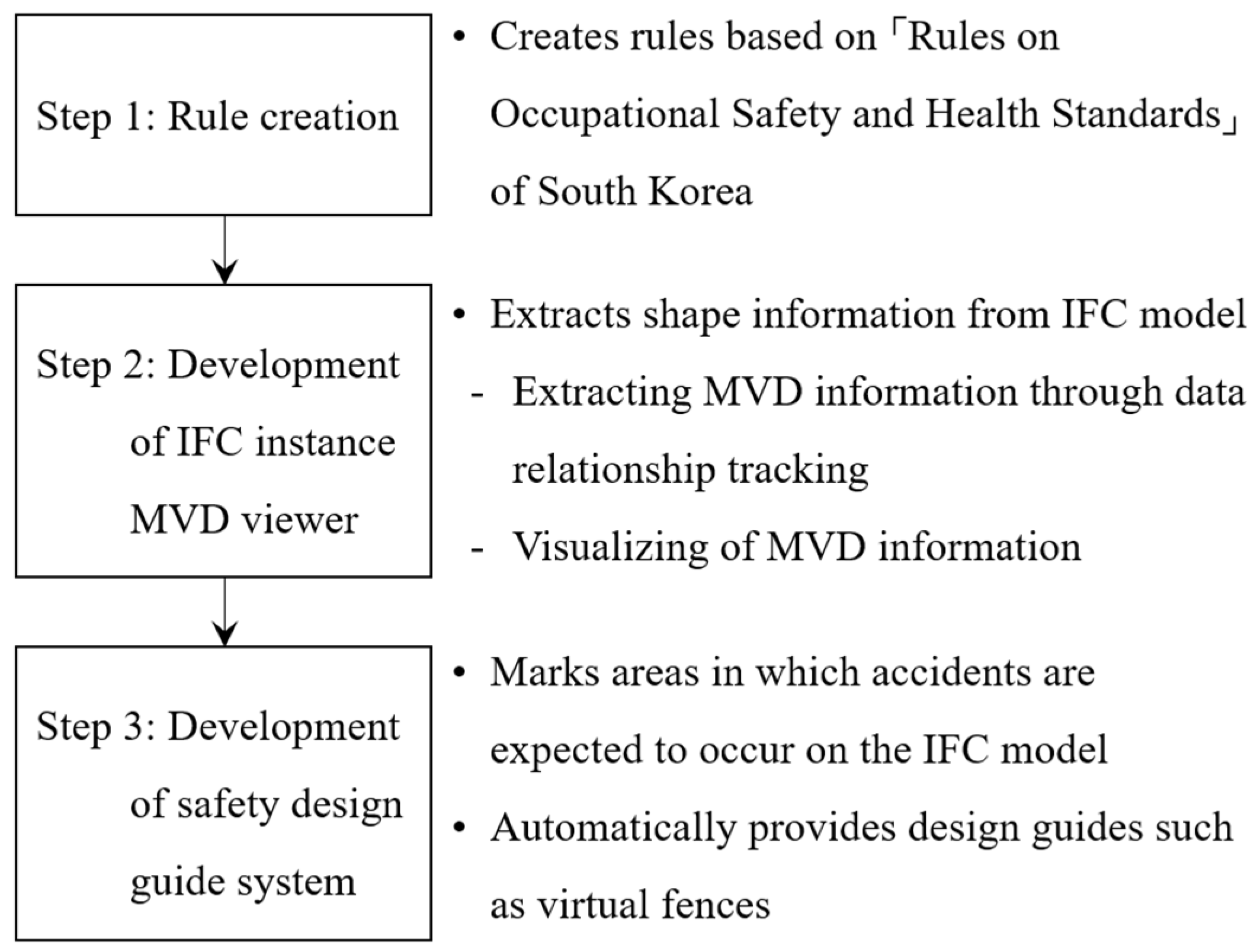
The system that generates rules and provides a safety design guide consists of three steps (Figure 2). First, safety rules for fall accidents are collected from the Rules on Occupational Safety and Health Standards, and safety design rules are created. Next, a system that extracts the shape and attribute information of the target object from the IFC model is developed. That system is the MVD of the implementation-level sub-Coordination View based on an instance of the IFC model. The Coordination View of MVD defines the spatial and physical components for design coordination between architectural, structural, mechanical, electrical, and plumbing (MEP) components [25]. Its main function is to track data relationships, extract MVD information from the object, and visualize MVD information. Finally, a system is developed that provides a safety design guide based on the generated safety rules and the target object’s shape- and attribute-related information, extracted from the IFC model. For example, the system displays areas in which fall accidents are most likely to occur on the IFC model and guides the automatic modeling of the virtual fence.
Figure 2.
The three steps of the rule creation system for safety design guide.
5.1.1. 1st Step: Rule Creation
In the Republic of Korea, rules for ensuring workers’ safety are provided through the Rules on Occupational Safety and Health Standards [24], and provisions related to the safety of construction workers can be classified as “workplace,” “passageway,” and “fall and collapse.” In this study, among the provisions related to the workplace, a rule was created with Article 13 (structure and installation requirements of safety railings) to prevent fall accidents. In Article 13, four rules are mentioned that reflect the installation location of the upper handrail in the design, and pseudo-code corresponding to each rule is provided as follows (Table 3):
Table 3.
Pseudo-code corresponding to Rules 1–4.
- Rule 1: Safety railings should be installed if it is 90 cm or more from the surface of the floor, step, or ramp.
- Rule 2: When installing an upper railing below 120 cm, a middle railing is installed between the upper railing and the floor.
- Rule 3: When installing at a point over 120 cm, install the middle railing evenly in two or more tiers, and the upper and lower spacing between the railings should be 60 cm or less.
- Rule 4: If the gap between the railing posts installed on the open side of the stairs is less than 25 cm, the middle railing may not be installed.
5.1.2. 2nd Step: Development of Subset MVD of Coordination View Based on IFC Instance
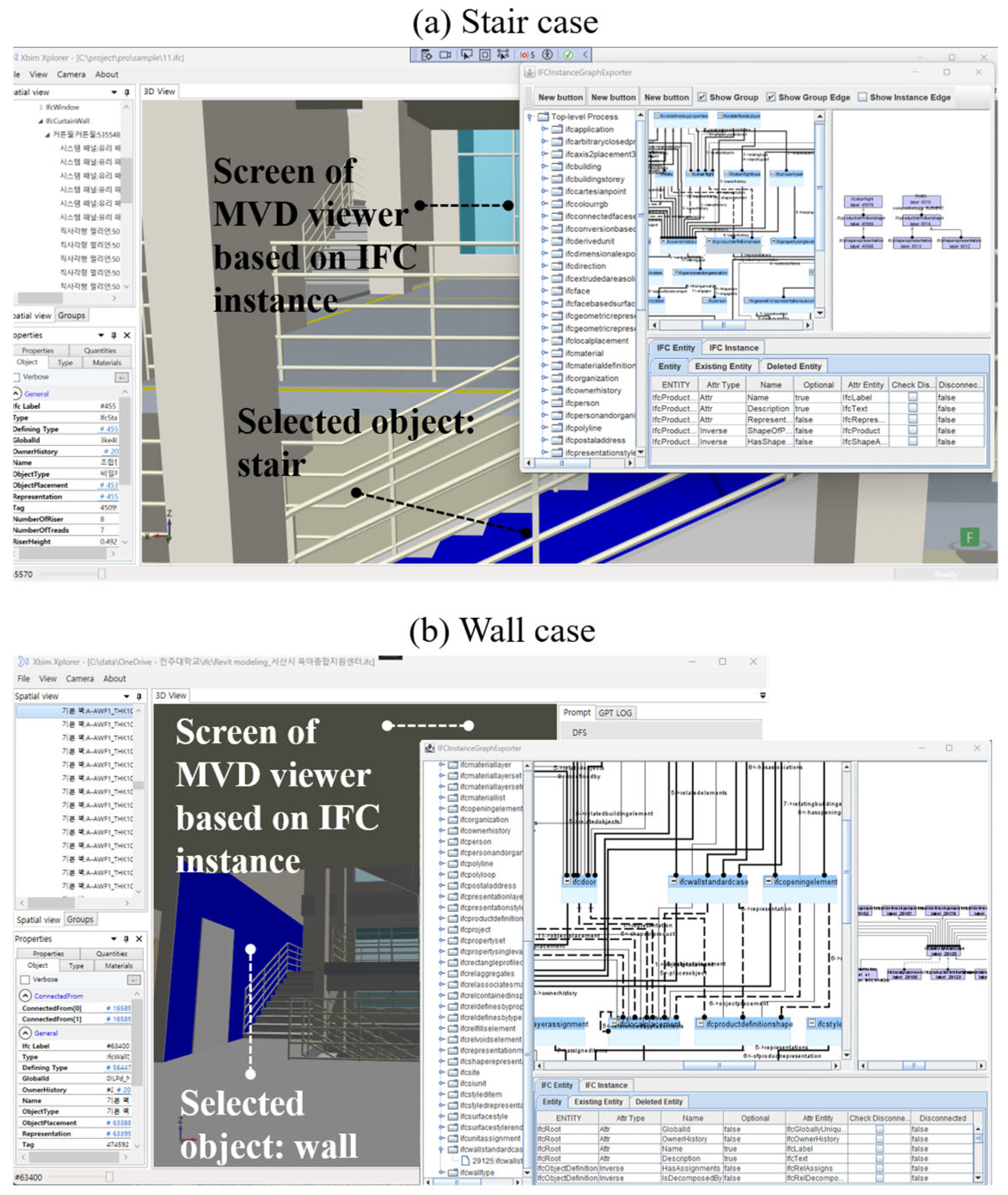
After creating the rule, the shape- and attribute-related information of the target objects are extracted from the IFC model. To extract the information, this study uses Coordination View MVD. The Coordination View MVD for all objects of the IFC model is very complex; hence, developing a system that satisfies all of them requires significant time and effort. For efficiency, the target object’s shape- and attribute-related information must be extracted using only the Coordination View MVD of the object as required for analysis. This study developed a system that can extract only the implementation-level subset MVD of Coordination View (MVD viewer) based on the IFC instance. The MVD subset of Coordination View is represented in the MVD viewer as a combination of attribute references (forward/inverse) and dedicated relationship entities (Rel) within the IFC instance. The subset is applied primarily to analyze geometric relationships relevant to fall risk assessment.
The developed MVD viewer visually supports tracking reference and dereference relationships between IFC instance objects. The MVD viewer consists of a parser that can read the IFC model, a three-dimensional (3D) viewer that can visualize shapes in 3D, and an automatic layout algorithm that can express MVD as a diagram. The instances included in the diagram are also provided in the tables. The IFC parser and 3D viewer extract MVD information by tracking relationships between data using the open-source Xbim 5.1. The automatic layout algorithm that visualizes the extracted MVD information uses yFiles, a commercial library.
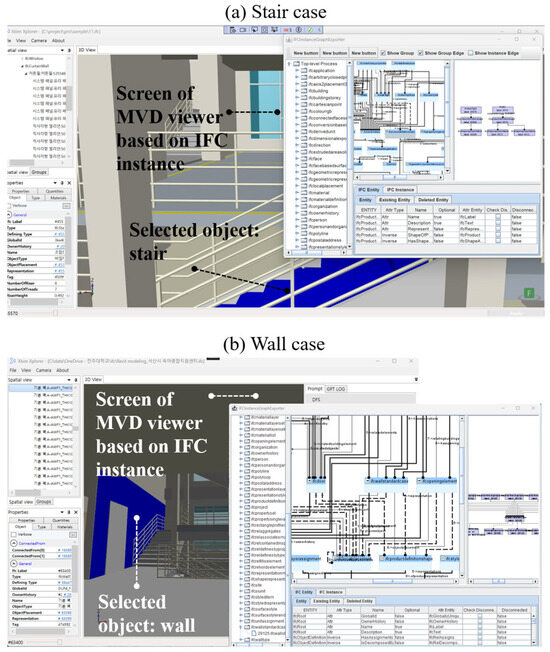
As shown in Figure 3, when the user selects a staircase in the IFC model, the stairs are marked in blue, and the MVD information extracted from the staircase instances is displayed in a diagram. It is also displayed in a table on the right. The IFC model uses the IFC2x3 schema. The development environment for the IFC instance-based MVD viewer is Java JDK 20, and the Xbim-based MVD extraction program runs on .Net Framework 4.72.
Figure 3.
Screenshot of IFC MVD instance viewer linked with Xbim Xplorer.
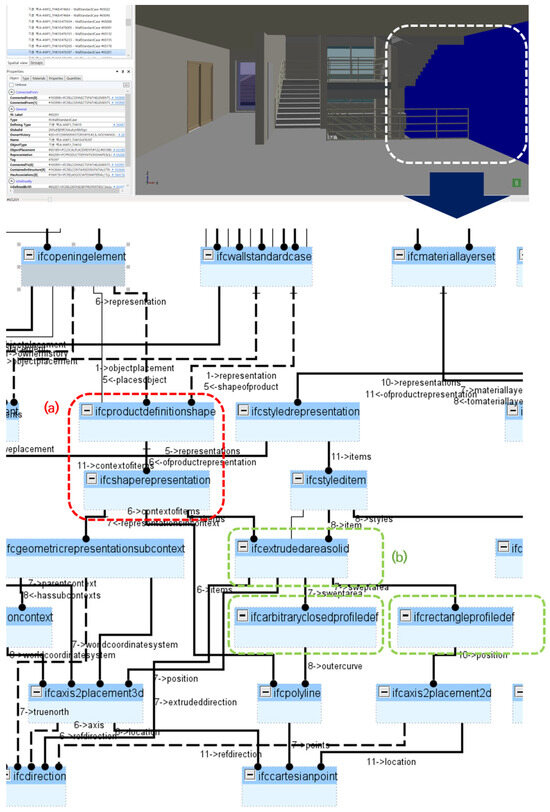
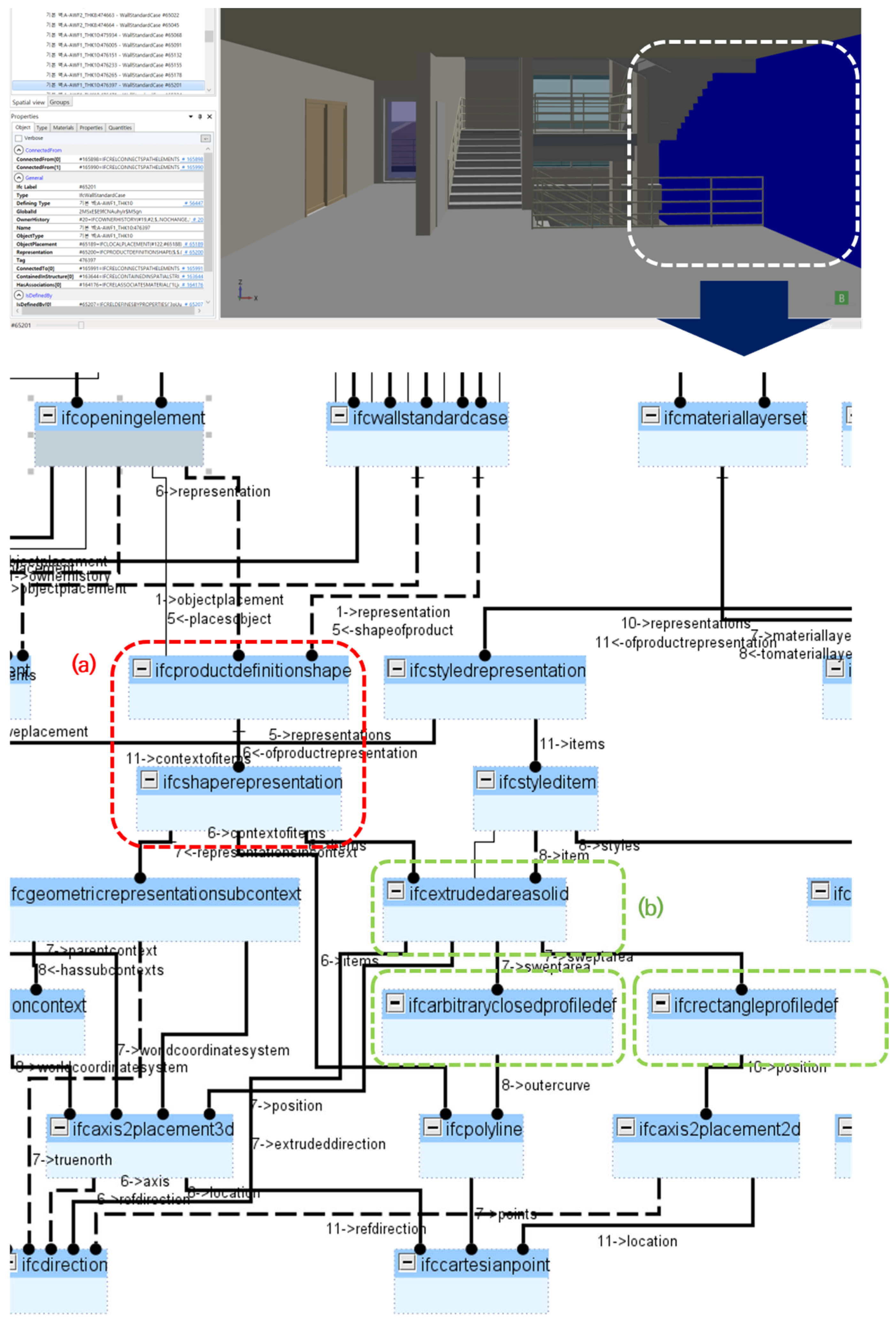
An example of extracting an MVD from the IFC class using the developed MVD viewer based on the IFC instance is given below. Among the factors that influence fall accidents, the wall (IfcWall) is given as an example. The shape of the IFCWall is created by pulling up (IfcExtrudedAreaSolid) a rectangle (IfcRectangleProfileDef) and a polyline (IfcArbitraryClosedProfileDef) defined in two dimensions (2D). IfcRectangleProfileDef is a class that defines a 2D rectangular profile and determines the shape of the rectangle by specifying the width and height of the rectangle. IfcArbitraryClosedProfileDef is a class that defines a 2D polyline profile. A polyline is a closed figure made up of a series of line segments, and the profile is used to express a wall with a complex shape. IfcExtrudedAreaSolid is a class that creates a 3D solid by raising a 2D profile to a specified height, and defines the shape of the wall by combining with IfcRectangleProfileDef or IfcArbitraryClosedProfileDef. Once the shape of the IFCWall is defined in this manner, it is used to model the walls of the building. To visualize and analyze the relationship of the wall-only Coordination View MVD, it is expressed as a simplified graph by applying the developed MVD viewer. In Figure 4, (a), indicated by a red dotted line, defines the shape of the IFCWall, and (b), indicated by a green dotted line, defines the IFCWall shape as a 2D defined rectangle (IfcRectangleProfileDef) and a polyline (IfcArbitraryClosedProfileDef) raised (IfcExtrudedAreaSolid).
Figure 4.
Instance MVD of IfcWall.
If the IFCWall has an opening, the shape of each opening can also be analyzed, which is defined using IfcRectangleProfileDef or IfcArbitraryClosedProfileDef like the previous wall, and is used as IfcExtrudedAreaSolid to create a 3D shape. The curtain wall (IfcCurtainWall), composed of individual members (IfcPlate), is a composite member, and the shape of IfcPlate is also created by extruding (IfcExtrudedAreaSolid) the rectangle defined in IfcRectangleProfileDef to create a 3D shape.
In summary, using the developed IFC instance-based MVD viewer allows the designer to select only the necessary objects so they can easily understand the data structure of the IFC model for a specific purpose and extract only the necessary data. Since the entire Coordination View MVD based on IFC is not understood or utilized, it prevents unnecessary data processing and reduces the time and cost required for system development. However, since the IFC instance refers to actual modeled data, additional development is required to analyze instances modeled with different sub-Coordination View MVDs.
5.1.3. 3rd Step: Development of Safety Design Guide System
Based on the MVD viewer of the IFC instance, which extracts the target object’s shape- and attribute-related information from the IFC model, this study developed a safety design guide system that displays fall-accident-prone areas on the IFC model and automatically creates a virtual fence. The virtual fence is modeled as an IfcBuildingElementProxy, as it represents a temporary safety boundary rather than a permanent railing element. Its geometric representation is defined through IfcShapeRepresentation, which typically includes an IfcPolyline that specifies the fence boundary in 2D or 3D coordinates. In addition, attribute information is assigned through IfcRelDefinesByProperties, linking the proxy element to an associated IfcPropertySet.
In this study, a custom property set named Pset_VirtualFence is defined, which includes safety-related attributes such as the building story in which the virtual fence is located, the referenced architectural element, a description of the identified hazard, and the corresponding mitigation action (Table 4). A virtual fence can also be created by user definition, and the information on the created virtual fence is saved as a table. The development environment is based on C# .Net Framework 4.72, which uses the VectorDraw computer-aided design (CAD) engine for visualization and XbimEssentials 6.0 to parse the IFC file.
Table 4.
A representation of the virtual fence in IFC.
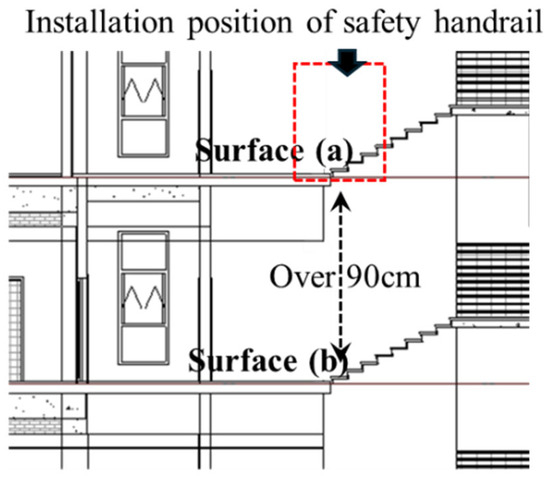
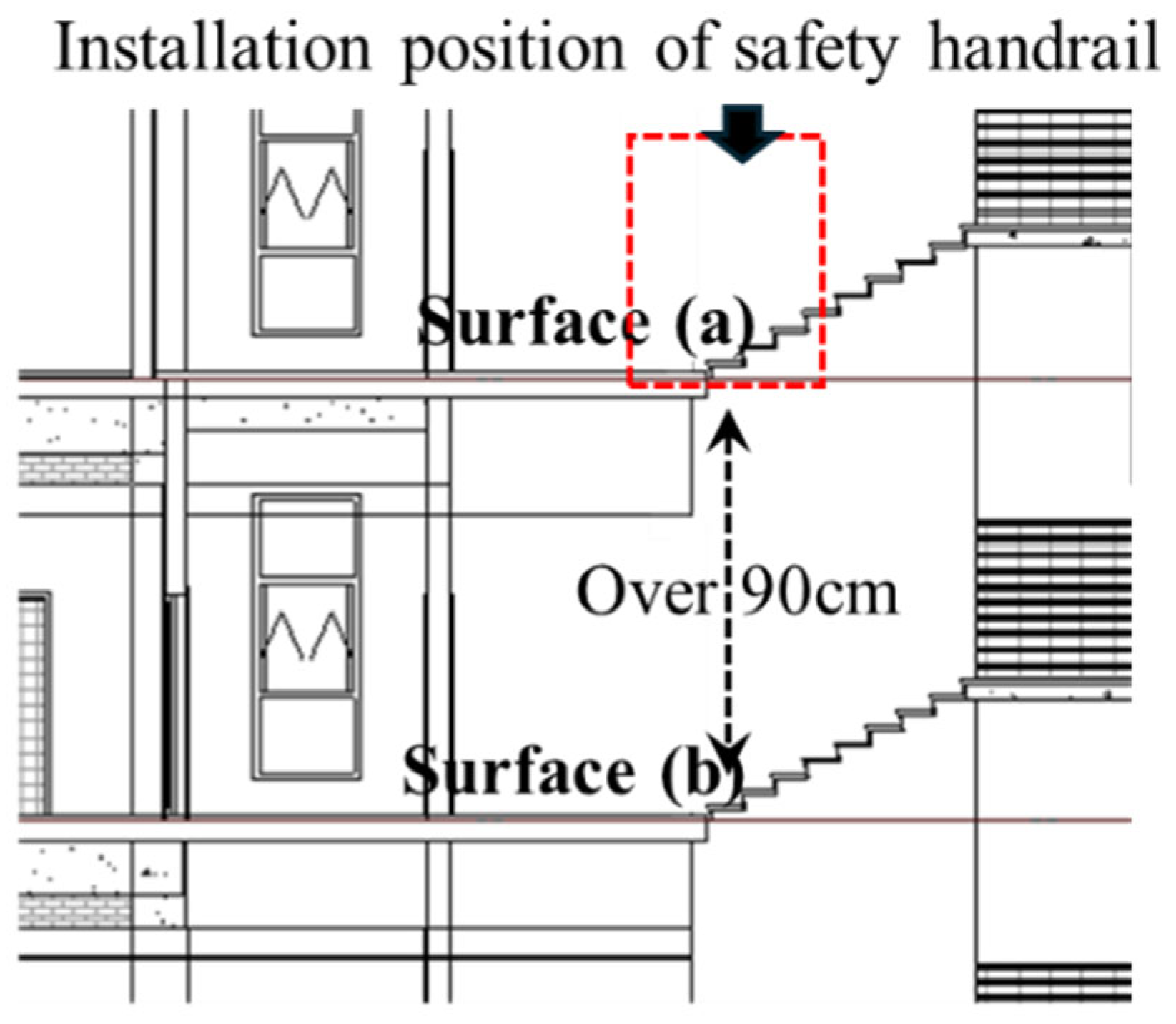
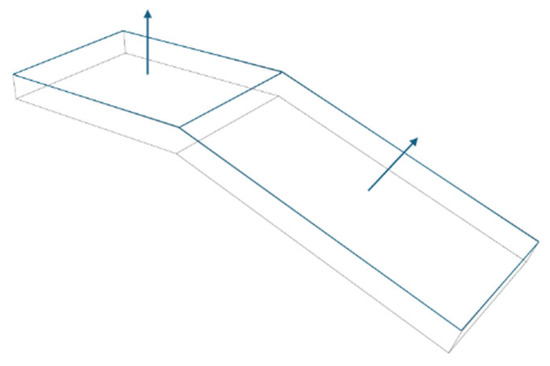
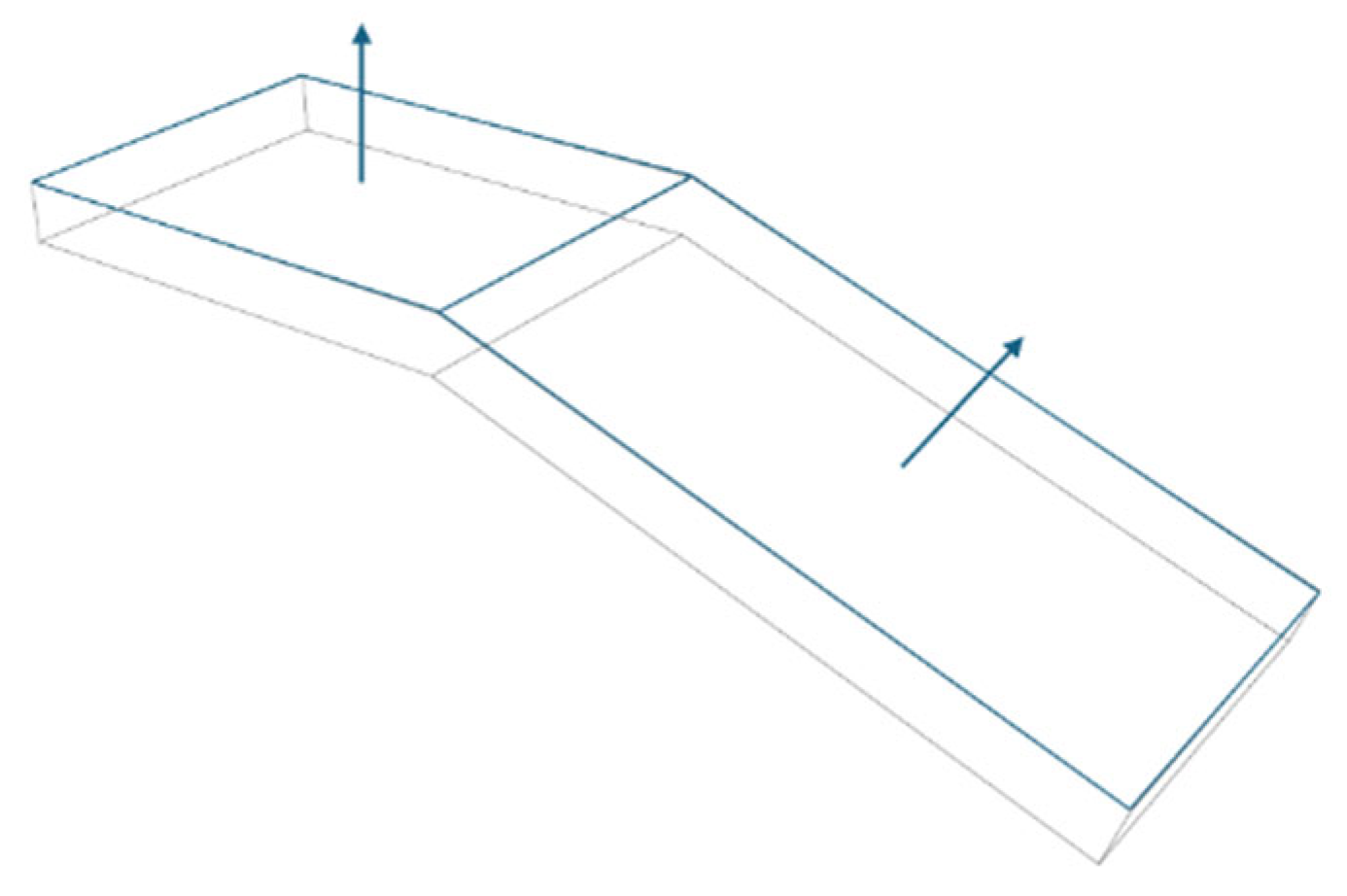
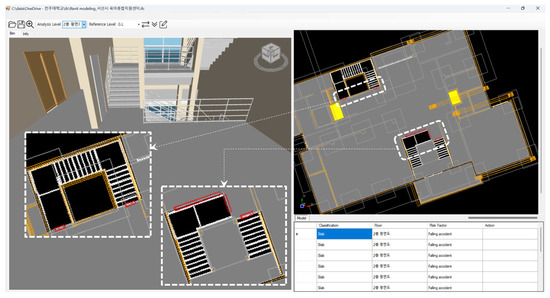
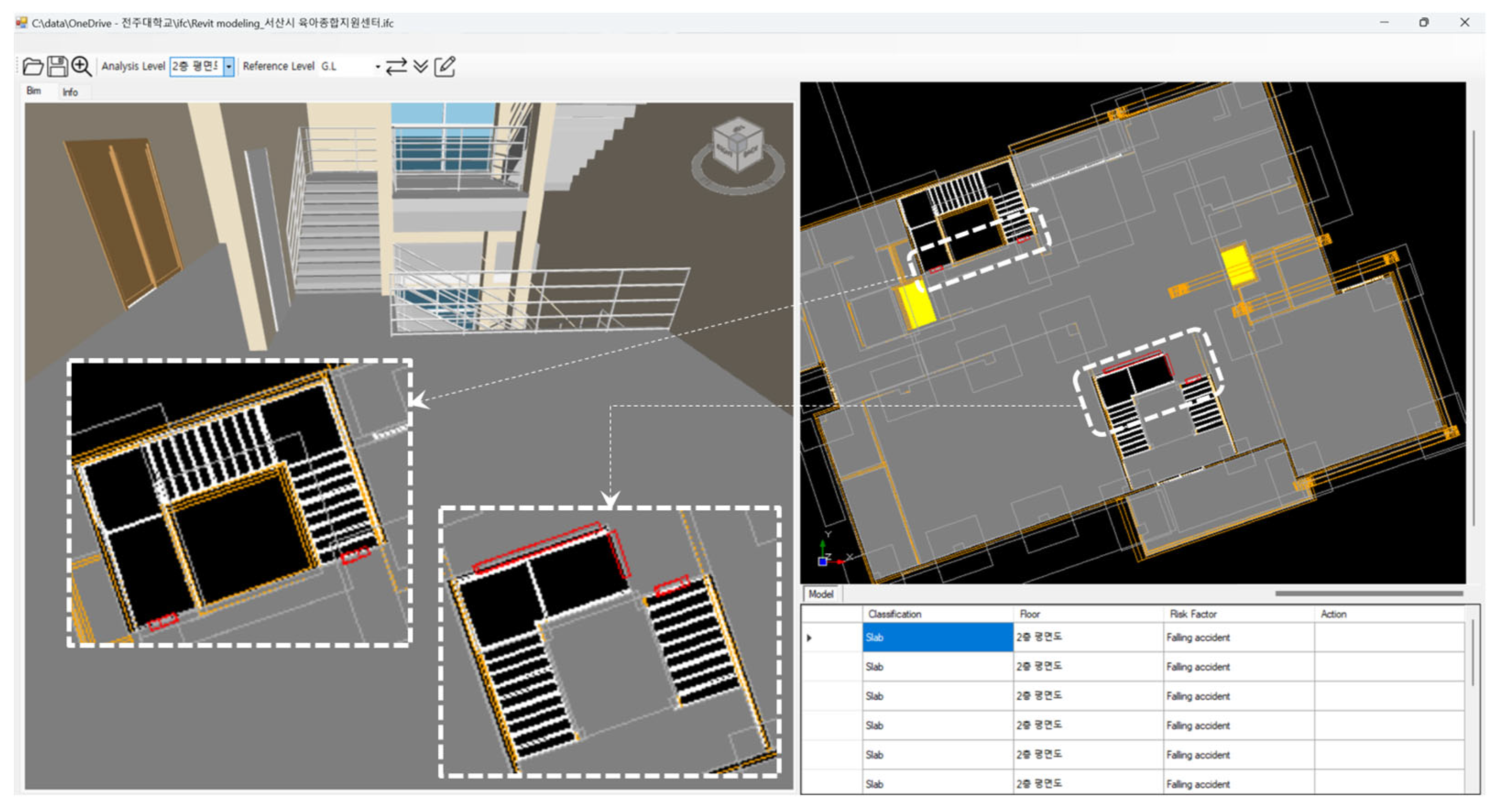
To illustrate the safety design guide displayed in the IFC model, a rule was first created based on Article 13 (Structure and Installation Requirements of Safety Railings) of the Rules on Occupational Safety and Health Standards: “Safety railings should be installed if the distance from the floor, step, or ramp surface exceeds 90 cm” (Figure 5). Then, when a floor object is selected in the developed MVD viewer based on the IFC instance, the diagram of IfcPolyLoop, which represents the shape and attribute information of the floor, is displayed in MVD format. However, IfcPolyLoop means polylines on all sides of the floor; hence, to extract information about the top surface of the floor, a function is used to extract the polyline whose normal vector Z value is positive among all polylines (Figure 6) [13]. The detection of flat and sloped floors can be performed using the Z-vector and normal vector, and openings share a similar geometric structure with the floor. For stepped conditions, the relationship between floors and walls is also considered to evaluate fall risks. Finally, a virtual fence is automatically installed to prevent fall accidents through the developed safety design guide system. The part indicated by the dotted line in Figure 7 is a virtual fence.
Figure 5.
Installation location of safety railings.
Figure 6.
Polyline with a positive Z value of normal vector.
Figure 7.
Example of a BIM-based rule-checking and safety design guide system.
5.2. No Rule Creation System for Safety Design
The developed rule-based system generates rules targeting fall accidents and provides safety design guides to designers based on the target object’s shape- and attribute-related information, as extracted from the IFC model. Quantitative standards are required to create rules, but rules that provide quantitative standards are lacking. A considerable amount of time and effort is spent creating rules to prevent accidents of various types and developing a safety design guide system according to those rules. This study developed a system that provides designers with a guide for safety design using only the object information of the IFC model without creating rules.
The proposed no-rule system does not aim to automatically verify safety regulations or evaluate quantitative compliance criteria. Instead, it serves as an assistive tool that semantically links regulatory text with IFC object information, supporting terminology alignment, interpretation of synonymous expressions, and natural language–based object search and visualization. This enables designers to explore the relationship between regulations and the IFC model without requiring deep knowledge of the model’s structure. Accordingly, the system functions as a language–data bridge that complements existing rule-based safety design tools as a practical design support interface.
The program uses LLMs, which are trained on large amounts of data to recognize objects and generate new images. In this study, the LLM employed was OpenAI’s GPT-4o multimodal model, released in 2024, which was implemented via API. LLMs are used for efficiency in construction project management [26,27], data retrieval [28], compliance with safety rules, and training [29]. Similar to this study, Zheng and Fischer’s [28] study presented a framework for retrieving the object attributes of BIM models based on an LLM.
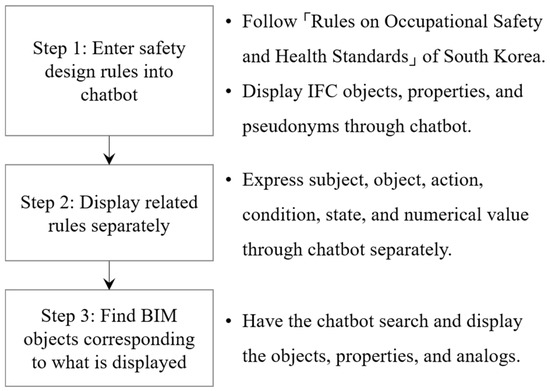
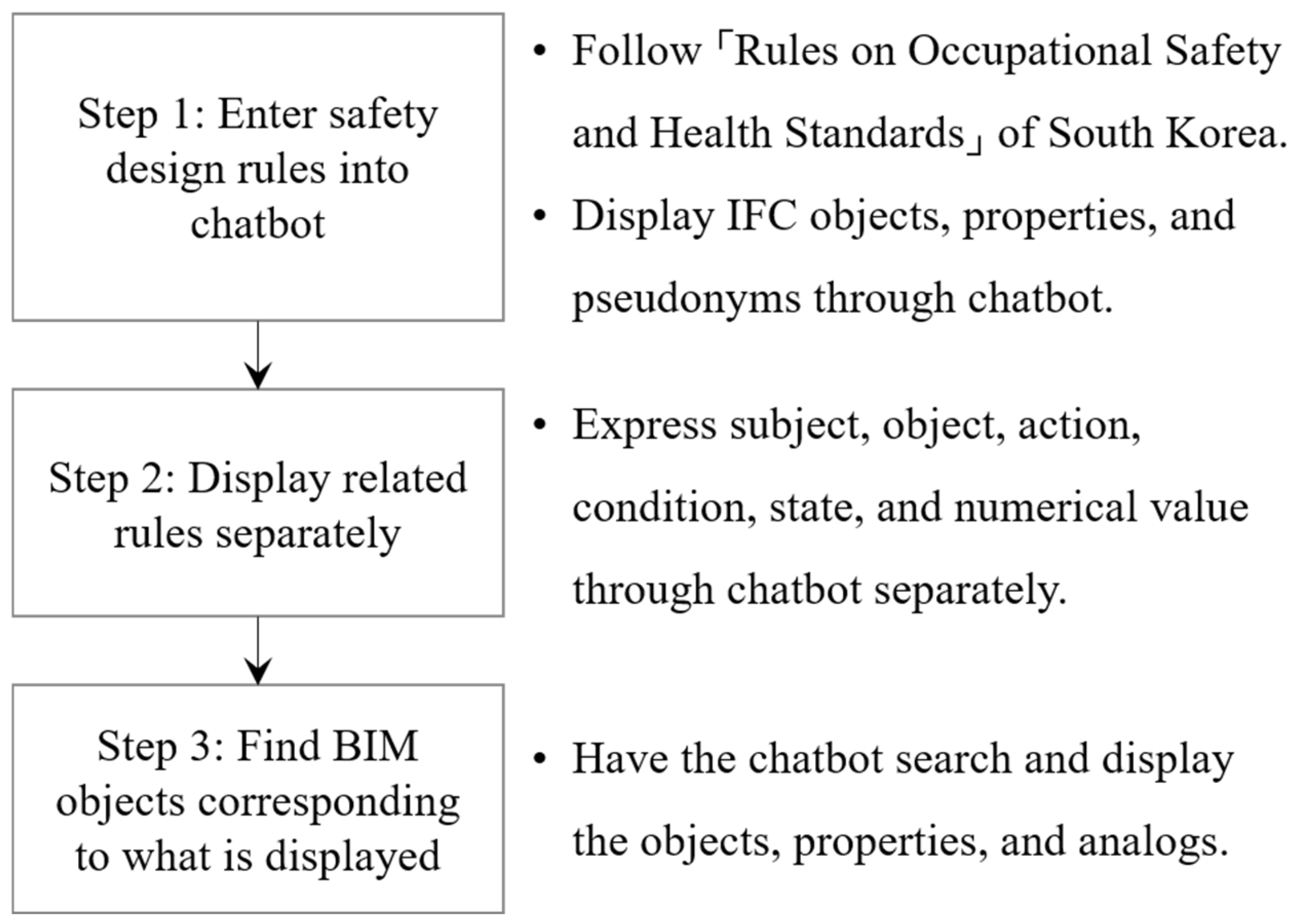
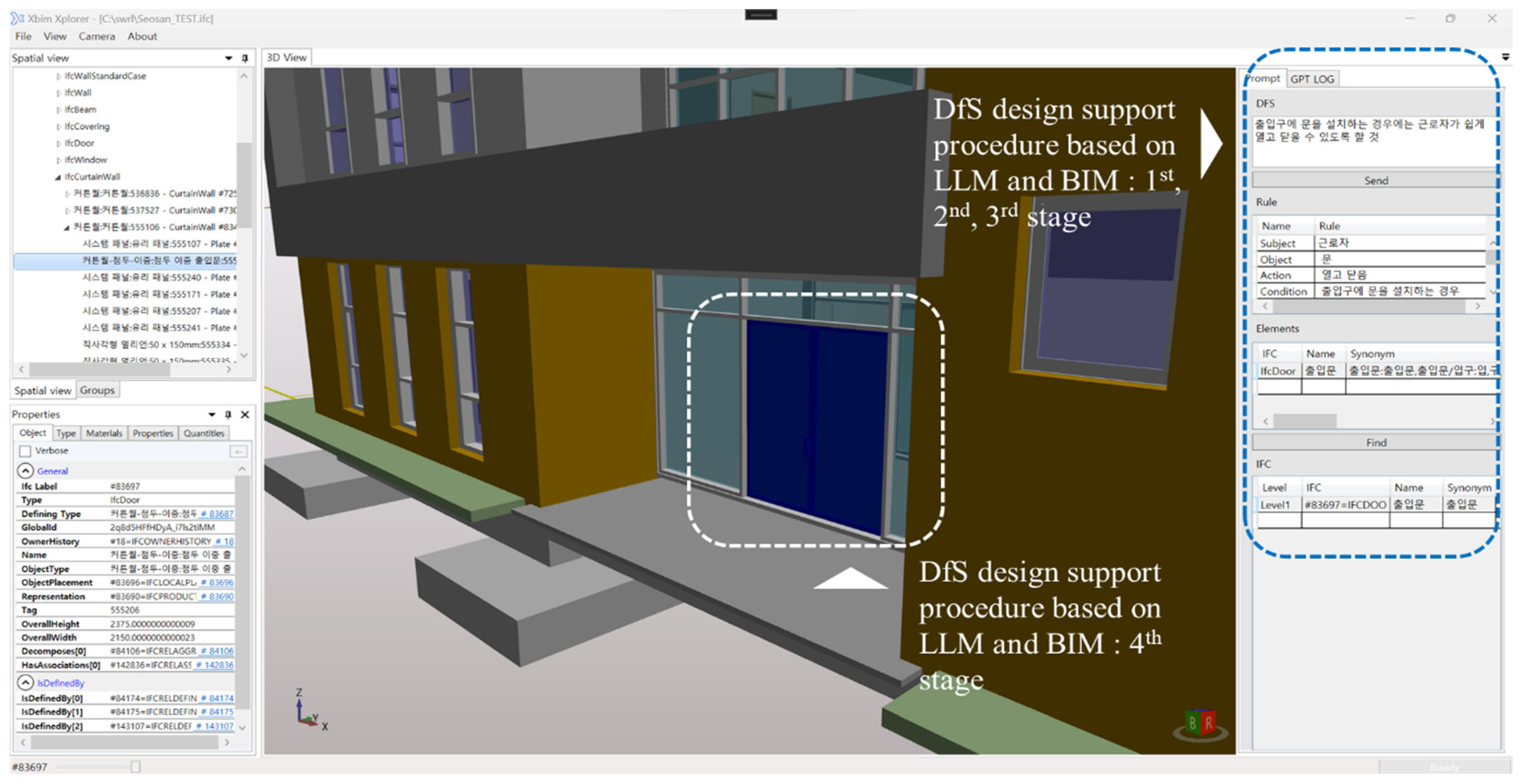
The system developed in this section allows practitioners to effectively search for object information and visualize the results by utilizing a chatbot, a virtual assistant, without deep knowledge of the structure of the IFC model. The system inputs provisions from the Rules on Occupational Safety and Health Standards of the Republic of Korea into the virtual assistant, allowing designers to search and select objects in the relevant IFC model (Figure 8).
Figure 8.
The three steps of the no rule creation system for safety design guide.
First, enter “Rules on Occupational Safety and Health Standards [30]” into the chatbot. For example, enter the content of Article 10 (Windows of the Workplace): “When workshop windows are opened, the window must not interfere with workers’ work or passage.” The result is that the space and members corresponding to the sentence are output in the format “ifc member: name/ifc member: name,” such as IfcSpace:Workshop/IfcWindow:Window. Next, the object corresponding to the rule is found and displayed. This step is to search for similar words to increase the matching probability when searching for attributes and to separate the words if the searched word is a compound word. As a result, five similar words are presented first in Korean in order of similarity, then five English words are presented, and finally, compound words are presented separately. Because the name of each object is not specified, the names of similar objects must be searched to find an object that corresponds to a rule.
In the third step, to facilitate understanding of the review items in the relevant clause, the sentence is decomposed into subjects, objects, actions, conditions, states, numerical values, and display elements. The result is presented, for example, as “Subject: Worker, Object: Workplace Window, Action: Open, Condition: Do not disturb, State: No obstruction, Value: None. For instance, from the sentence “When workshop windows are opened, the window must not interfere with workers’ work or passage,” the system extracts key elements such as “worker” (subject), “window” (object), and “open” (action), and organizes them into the structured format. The value is output when specific values, such as height or distance, are included in the safety rules. The objects corresponding to the input rules, including similar words and compound words, are then searched for and displayed in the IFC model (Figure 9). The designer checks the displayed objects and performs a safety design. It should be noted that the proposed system operates at the level of identifying and visualizing safety-related design issues based on regulatory information. The system does not automatically modify or generate design alternatives; instead, it supports designers by providing relevant information to assist decision-making in the design process.
Figure 9.
Example of a search for BIM objects corresponding to presented objects, properties, and analogs.
The main function of the safety design guide system, which does not generate rules, is to display on the screen the objects of the IFC model that are likely to cause construction accidents, based on the Rules on Occupational Safety and Health Standards. It is not possible to provide designers with a specific design guide, such as the virtual fence provided by the safety design guide system that generates the rules in Section 5.1. However, the system developed in this section can be applied to a variety of accident types, and it is highly efficient in terms of time, effort, and cost because it does not require procedures to create rules and develop a safety design guide system according to those rules.
The outputs provided by the system are grounded in explicit regulatory sources, such as the Rules on Occupational Safety and Health Standards. In the rule-based module, the generated safety design guidance is directly derived from predefined rules based on these regulations, while in the LLM-assisted module, the identified objects are linked to the input regulatory text, allowing designers to trace the results back to the original regulatory context.
6. Discussion and Implications
The proposed BIM-based rule checking and safety design guide system demonstrates the potential of integrating IFC-based object relationship analysis with rule-based and LLM-assisted approaches to support Design for Safety (DfS) during the design phase. Compared to conventional DfS approaches that rely heavily on manual interpretation of regulations and expert consultation, the proposed framework enables a more automated, data-driven, and flexible safety-oriented design workflow.
One important implication of this study relates to the generalizability of the proposed framework. Although the current implementation was developed based on the Rules on Occupational Safety and Health Standards of the Republic of Korea, the overall framework itself is not restricted to a single regulatory environment. The proposed IFC-based object extraction process and LLM-assisted semantic interpretation approach may be extended to other national or organizational regulatory systems through semantic mapping between legal terminology and BIM object information. Future studies should therefore investigate multilingual regulatory interpretation and cross-domain interoperability to improve international applicability.
Another important issue concerns dependency on IFC data quality and BIM practices. Since the proposed framework relies heavily on IFC object relationships, spatial structures, and semantic properties, inconsistencies in BIM standards, missing object attributes, or differences between IFC schema versions may affect rule interpretation reliability and object extraction accuracy. In practical BIM workflows, modeling standards often vary depending on project participants and BIM authoring tools. Accordingly, additional research is required to improve IFC normalization methods, schema-independent object interpretation, and BIM data quality verification processes.
Scalability also remains an important challenge for practical implementation. Although the proposed IFC instance-based subset MVD approach reduces unnecessary processing complexity by extracting only required object relationships, large-scale BIM environments may contain highly complex geometries, extensive semantic relationships, and large numbers of IFC entities. Under such conditions, computational efficiency, graph-processing performance, and semantic querying costs may become significant issues. Future research should therefore investigate scalable BIM querying strategies and optimization techniques for graph-based IFC relationship analysis.
The study also highlights uncertainties associated with LLM-based components. The LLM-assisted no-rule module improves flexibility and usability by supporting natural language interaction and semantic interpretation of regulatory text. However, LLM-generated outputs may involve hallucinations, inconsistent reasoning, or ambiguity in interpreting regulatory language. Because inaccurate safety interpretation may negatively influence design decision-making processes, the proposed LLM-assisted framework should be considered a design-support tool rather than a fully autonomous safety verification system. Human review and expert supervision therefore remain necessary. Future research should investigate retrieval-augmented generation (RAG), explainable AI methods, and domain-specific fine-tuning approaches to improve reliability and transparency.
From a practical perspective, the proposed framework may improve BIM-based safety design workflows by supporting designers who may have limited expertise in construction safety regulations. The system enables safety-related BIM objects and regulatory information to be identified directly within IFC-based BIM environments, thereby reducing the workload associated with manual safety review processes. In particular, the rule-based module provides explicit visual guidance, while the LLM-assisted module supports intuitive interaction with regulations through natural language processing. These functions may facilitate wider adoption of DfS processes and improve accessibility to safety-oriented design support.
From a theoretical perspective, this study contributes to expanding BIM-based rule checking research beyond conventional deterministic rule-based systems. Existing BIM-based safety checking studies have primarily focused on predefined quantitative rules and explicit constraints. In contrast, the proposed framework introduces a hybrid approach integrating symbolic IFC-based reasoning with LLM-assisted semantic interpretation. The study therefore contributes to emerging research on human–AI collaboration and language-driven BIM interaction within architectural and construction design environments.
Despite these contributions, several limitations remain. The validation of the proposed framework is limited to qualitative demonstration and illustrative case applications, and the study does not include large-scale quantitative benchmarking, comparative evaluation with existing BIM-based safety systems, or practitioner-centered usability assessment. In addition, the current implementation primarily focuses on fall-related accidents based on the analyzed construction accident dataset. Accordingly, further validation through real-world project deployment, quantitative benchmarking, and expert-centered evaluation is required to verify the robustness and broader applicability of the proposed framework.
7. Conclusions
This study proposed a BIM-based rule checking and safety design guide system for supporting Design for Safety (DfS) during the design phase. To support designers with limited knowledge of construction safety regulations, the proposed framework integrates IFC-based object relationship analysis with rule-based safety guidance and LLM-assisted semantic interpretation.
The proposed system consists of two complementary modules. The first module generates explicit safety design guidance based on predefined safety rules and IFC object relationships, while the second module supports semantic interaction between regulatory information and BIM objects without requiring explicit rule creation. To support these functions, this study developed an IFC instance-based subset MVD approach that enables efficient extraction and visualization of object relationships relevant to safety-oriented design review.
The findings suggest that integrating IFC-based BIM analysis with LLM-assisted semantic interpretation has significant potential for supporting future intelligent safety design environments. The proposed framework demonstrates the feasibility of combining symbolic BIM representations with natural language-based interaction to support safety-oriented design workflows and improve accessibility to safety-related regulatory information.
Overall, this study contributes to BIM-based safety management research by proposing a hybrid framework integrating rule-based reasoning and LLM-assisted semantic interpretation within IFC-based BIM environments. The proposed approach may support the future development of more intelligent, scalable, and user-friendly DfS support systems for the construction industry.
Author Contributions
Conceptualization, C.L. and S.H.; methodology, C.L. and S.H.; software, S.H. writing—original draft preparation, C.L.; writing—review and editing, C.L. and S.H.; project administration, C.L. All authors have read and agreed to the published version of the manuscript.
Funding
This research received no external funding.
Data Availability Statement
The original contributions presented in the study are included in the article; further inquiries can be directed to the corresponding authors.
Acknowledgments
This paper was developed based on the study “Plan for Stimulating the Design for Safety to Reduce Construction Accidents (2024)” conducted by the author.
Conflicts of Interest
The authors declare no conflicts of interest.
Abbreviations
| BIM | Building Information Modeling |
| IFC | Industry Foundation Classes |
| DfS | Design for Safety |
| PtD | Prevention through Design |
| LLM | Large Language Model |
| MVD | Model View Definition |
| API | Application Programming Interface |
| MEP | Mechanical, Electrical, and Plumbing |
| .NET | Microsoft .NET Framework |
| JDK | Java Development Kit |
References
- International Labour Organization (ILO). Nearly Three Million Workers Die Every Year Due to Work-Related Accidents and Diseases. Available online: https://www.ilo.org/resource/news/nearly-3-million-people-die-work-related-accidents-anddiseases (accessed on 21 May 2026).
- Shao, B.; Hu, Z.; Tong, L.; Zheng, X.; Liu, D. Comprehensive Assessment Model on Accident Situations of the Construction Industry in China: A Macro-Level Perspective. J. Civ. Eng. Manag. 2020, 26, 14–28. [Google Scholar] [CrossRef] [Scilit]
- Gao, Y.; Antwi-Afari, M.F.; Huang, Y.; Chen, Z.-S.; Manzoor, B. Artificial Intelligence in Construction Project Management: A Systematic Literature Review of Cost, Time, and Safety Management. Buildings 2026, 16, 1061. [Google Scholar] [CrossRef] [Scilit]
- Korean Statistical Information Service. Total Accident of Construction Industry by Occurrence Type; Korean Statistical Information Service: Daejeon, Republic of Korea, 2024. [Google Scholar]
- Korean Statistical Information Service. Status of Fatal Accidents by Occurrence Type; Korean Statistical Information Service: Daejeon, Republic of Korea, 2024. [Google Scholar]
- Korea Institute of Public Administration. Gwangju Hakdong Redevelopment Building Collapse Accident; Disaster Safety Case Database: Seoul, Republic of Korea, 2021; Available online: https://sky.kipa.re.kr/%24/10230/contents/7730630 (accessed on 21 May 2026).
- Collaborative Reporting for Safer Structures CROSS. Lessons Learned from the 2018 Florida Bridge Collapse During Construction; Collaborative Reporting for Safer Structures CROSS: London, UK, 2020. [Google Scholar]
- Ministry of Land; Infrastructure and Transport. Push Ahead with “Smart Construction Safety Equipment Support” Project in 2022 for the Dissemination and Promotion of Cutting-Edge Safety Technology; Ministry of Land, Infrastructure and Transport: Sejong-si, Republic of Korea, 2022; Available online: https://www.molit.go.kr/USR/NEWS/m_71/dtl.jsp?lcmspage=2&id=95087156 (accessed on 1 April 2026).
- European Agency for Safety and Health at Work. Directive 92/57/EEC—Temporary or Mobile Construction Sites; EU-OSHA: Bilbao, Spain, 2024. [Google Scholar]
- Lingard, H.; Saunders, L.; Pirzadeh, P.; Blismas, N.; Kleiner, B.; Wakefield, R. The Relationship between Pre-Construction Decision-Making and the Effectiveness of Risk Control: Testing the Time-Safety Influence Curve. Eng. Constr. Archit. Manag. 2015, 22, 108–124. [Google Scholar] [CrossRef] [Scilit]
- López-Arquillos, A.; Rubio-Romero, J.C.; Martinez-Aires, M.D. Prevention through Design (PtD). The Importance of the Concept in Engineering and Architecture University Courses. Saf. Sci. 2015, 73, 8–14. [Google Scholar] [CrossRef] [Scilit]
- Ndekugri, I.; Ankrah, N.A.; Adaku, E. Performance Barriers for Coordination of Health and Safety during the Preconstruction Phase of Construction Projects. J. Constr. Eng. Manag. 2023, 149, 04023045. [Google Scholar] [CrossRef] [Scilit]
- Lee, C.; Ham, S. Design Guide Systems of Safety Handrail Based on DfS and BIM for Preventing of Fall Accidents. J. Archit. Inst. Korea 2020, 36, 235–241. [Google Scholar]
- Golabchi, A.; Han, S.; AbouRizk, S. A Simulation and Visualization-Based Framework of Labor Efficiency and Safety Analysis for Prevention through Design and Planning. Autom. Constr. 2018, 96, 310–323. [Google Scholar] [CrossRef] [Scilit]
- Hossain, M.A.; Abbott, E.L.S.; Chua, D.K.H.; Nguyen, T.Q.; Goh, Y.M. Design-for-Safety Knowledge Library for BIM-Integrated Safety Risk Reviews. Autom. Constr. 2018, 94, 290–302. [Google Scholar] [CrossRef] [Scilit]
- Johansen, K.W.; Schultz, C.; Teizer, J. Automated Performance Assessment of Prevention through Design and Planning (PtD/P) Strategies in Construction. Autom. Constr. 2024, 157, 105159. [Google Scholar] [CrossRef] [Scilit]
- Juszczyk, M.; Vaisňoras, M.; Kontrimovičius, R.; Hanák, T.; Łukaszewska, H.; Ustinovichius, L. Quality and Reliability of IFC/BIM Models for Public Educational Facilities Construction Projects via Clash Detection. J. Civ. Eng. Manag. 2025, 31, 1–19. [Google Scholar] [CrossRef] [Scilit]
- Yuan, J.; Li, X.; Xiahou, X.; Tymvios, N.; Zhou, Z.; Li, Q. Accident Prevention through Design (PtD): Integration of Building Information Modeling and PtD Knowledge Base. Autom. Constr. 2019, 102, 86–104. [Google Scholar] [CrossRef] [Scilit]
- Ho, C.; Lee, H.W.; Gambatese, J.A. Application of Prevention through Design (PtD) to Improve the Safety of Solar Installations on Small Buildings. Saf. Sci. 2020, 125, 104633. [Google Scholar] [CrossRef] [Scilit]
- Ministry of Employment and Labor. The Status Analysis of Industrial Accidents: 2018–2022; Ministry of Employment and Labor: Sejong-si, Republic of Korea, 2023. [Google Scholar]
- Martínez-Aires, M.D.; López-Alonso, M.; de la Hoz-Torres, M.L.; Aguilar-Aguilera, A.; Arezes, P. Occupational Risk Prevention in the European Union Construction Sector: 30 Years since the Publication of the Directive. Saf. Sci. 2024, 177, 106593. [Google Scholar] [CrossRef] [Scilit]
- European Parliament; Council of the European Union. Directive 2014/24/EU on Public Procurement and Repealing Directive 2004/18/EC. Off. J. Eur. Union 2014, L94, 65–242. Available online: https://eur-lex.europa.eu/eli/dir/2014/24/oj/eng (accessed on 18 May 2026).
- Ministry of Land Infrastructure and Transport. Smart Construction Activation Plan; Ministry of Land Infrastructure and Transport: Sejong-si, Republic of Korea, 2022. [Google Scholar]
- Ministry of Employment and Labor. Rules on Occupational Safety and Health Standards. Article 13 (Structure and Installation Requirements of Safety Railings). Ministry of Employment and Labor Ordinance No. 453, 1 October 2025, Amendment by Other Acts; Ministry of Employment and Labor: Sejong-si, Republic of Korea, 2023. [Google Scholar]
- buildingSMART International MVD Database. Available online: https://technical.buildingsmart.org/standards/ifc/mvd/mvd-database/ (accessed on 3 April 2025).
- Chen, J.; Xu, X.; Liu, J.; Gao, Y.; Guo, J.; Ding, Z.; Zhang, M.; Zhu, J.; He, Y. Ontology-Driven Automatic Scoring of Mechanization Rate in Power Grid Construction Projects Using Large Language Models. Buildings 2026, 16, 1010. [Google Scholar] [CrossRef] [Scilit]
- Amer, F.; Jung, Y.; Golparvar-Fard, M. Transformer Machine Learning Language Model for Auto-Alignment of Long-Term and Short-Term Plans in Construction. Autom. Constr. 2021, 132, 103929. [Google Scholar] [CrossRef] [Scilit]
- Zheng, J.; Fischer, M. BIM-GPT: A Prompt-Based Virtual Assistant Framework for BIM Information Retrieval. arXiv 2023, arXiv:2304.09333. [Google Scholar]
- Uddin, S.M.J.; Albert, A.; Ovid, A.; Alsharef, A. Leveraging ChatGPT to Aid Construction Hazard Recognition and Support Safety Education and Training. Sustainability 2023, 15, 7121. [Google Scholar] [CrossRef] [Scilit]
- Ministry of Employment and Labor. Rules on Occupational Safety and Health Standards. Article 10 (Windows of the Workplace). Ministry of Employment and Labor Ordinance No. 453, 1 October 2025, Amendment by Other Acts; Ministry of Employment and Labor: Sejong-si, Republic of Korea, 2023. [Google Scholar]

Disclaimer/Publisher’s Note: The statements, opinions and data contained in all publications are solely those of the individual author(s) and contributor(s) and not of MDPI and/or the editor(s). MDPI and/or the editor(s) disclaim responsibility for any injury to people or property resulting from any ideas, methods, instructions or products referred to in the content. |
© 2026 by the authors. Licensee MDPI, Basel, Switzerland. This article is an open access article distributed under the terms and conditions of the Creative Commons Attribution (CC BY) license.