


Abstract
In the context of the growing emphasis on sustainable development and building safety performance, wooden architecture will attract increasing attention due to its low-carbon characteristics and excellent seismic resistance. In this study, the bibliometric software Citespace is used for data visualization analysis based on the literature related to Chinese wooden architecture in the China National Knowledge Infrastructure (CNKI) and the Web of Science (WOS) databases, aiming to construct an analytical framework that integrates quantitative visualization and qualitative thematic interpretation which could reveal the current status, hotspots, and frontier trends of research in this field. The results show the following: Research on Chinese wooden architecture has shown a steady growth trend, indicating that it has received attention from an increasing number of scholars. Researchers and institutions are mainly concentrated in higher learning and research institutions in economically developed regions. Research hotspots cover subjects such as seismic performance, mortise–tenon structures, imitation wood structures, Dong architecture, Liang Sicheng, and the Society for the Study of Chinese Architecture. The research process of Chinese wooden architecture can be divided into three stages: the macro stage, the specific deepening stage, and the inheritance application and interdisciplinary integration stage. In the future, the focus will be on interdisciplinary research on wooden architecture from ethnic minority cultures and traditional dwellings.
1. Introduction
Chinese wooden architecture holds a significant position in the history of world architecture. For one, it is renowned as “solidified poetry and three-dimensional (3D) painting” due to its unique material selection, ingenious structural design, and distinctive modeling artwork. Furthermore, wooden buildings feature low-carbon and seismic-resistant characteristics, presenting broad application prospects. The construction industry is a major source of carbon emissions. Wood is a renewable building material: for every 1.0 m3 of wood grown, 1.0 ton of carbon dioxide is absorbed, 730 kg of oxygen is released, and 270 kg of carbon is stored, demonstrating significant ecological and environmental benefits [1]. The development of wooden architecture can help China achieve its carbon emission reduction goals for 2030. Additionally, ancient Chinese wooden buildings typically use mortise–tenon connections between components, which exhibit good seismic performance by absorbing partial seismic energy and reducing structural seismic response [2]. Research on wooden architecture is crucial for ensuring residential safety.
Current research on Chinese wooden architecture from different perspectives has achieved remarkable results. Zhao H.T et al. [3] analyzed the mechanical and structural concepts of ancient wooden buildings from the perspective of “conceptual design”, exploring their architectural forms, structural systems, and column–beam construction measures. Zhao C [4] took specific examples of unique modeling as research objects from the perspective of tectonic theory, discussing the construction principles and origins of wooden structures. Chen W [5] explored the relationship between Neolithic wooden structures and rice cultivation culture from a genetic perspective, as well as the historical reasons for the choice of wooden structures. Du Z.Q et al. [6] introduced a 3DGIS-based visualization system for Tang-style wooden architecture, illustrating its applicability in the protection and research of ancient buildings. Shang P et al. [7] comprehensively explored the design concepts and artistic charm of modern green wooden structures from the perspectives of architectural esthetics and humanism, combining theory with practical cases.
Zhao H.T et al. [8] provided a comprehensive review of the mechanical properties, overall structure, seismic performance, and maintenance and reinforcement of ancient wooden structures at home and abroad, highlighting existing problems and areas for further exploration in research on wooden structure performance. Guo C et al. [9] summarized the application research status of base-isolated wooden structures abroad and projected the development of base-isolated wooden structures in China. Yu M.Z et al. [10] summarized relevant research and analyzed the implications, expression methods, and approaches to the use of imitation wood in tomb architecture, forming a preliminary understanding of imitation wood phenomena. Fan S.Q et al. [11] summarized the scientific paradigms and knowledge contexts of research on traditional Dong architecture and settlements both in China and abroad over the past 30 years, filling the research gaps in “diachronic” and “synchronic” perspectives in the field.
In summary, current research directions mainly explore the history, value, application, and protection of Chinese wooden architecture from different disciplinary perspectives. Although review papers have organized and summarized specific subjects related to wooden architecture, there are comparatively few macro-level comprehensive reviews, and no study has yet revealed the full status of research on Chinese wooden architecture. Therefore, studies obtained from the China National Knowledge Infrastructure (CNKI) and the Web of Science (WOS) databases from 2004 to 2024 are taken as research objects, and CiteSpace software is used for visual analysis to explore the status, hotspots, and frontiers of “Chinese wooden architecture” research. In this process, the study revolves around the following four questions: (1) What are the temporal and thematic shifts in Chinese wooden architecture research; (2) Which research paradigms dominate, and which remain marginal; (3) Whether there is a difference between domestic CNKI and foreign WOS research; and (4) What underexplored research gaps—geographical, thematic, and disciplinary—exist in the current knowledge system.
To address these questions above, this study is discussed in the following five parts: an introduction, the research data and methods, the results and analysis, a discussion, and the conclusions. The research background is first introduced and the research questions are proposed. This study then examines the research status through the changing trends of annual publications, as well as the distribution of authors and institutions. On this basis, research hotspots are summarized through keyword co-occurrence and clustered keywords, while frontier trends are analyzed via keyword timelines and burst maps. Then, based on the above analysis, the profile of current research is identified, and further future research directions are proposed. Finally, this study presents a summary and conclusions.
2. Materials and Methods
2.1. Data Sources
This study utilizes CNKI and WOS as its primary data sources, selecting them for their compatibility with CiteSpace (v6.3.R1) and their ability to fulfill the analytical requirements of bibliometric research. Compared to other Chinese databases, such as VIP and Wanfang, and international platforms like Scopus and PubMed, CNKI and WOS exhibit distinct advantages in the breadth and depth of their literature coverage. CNKI encompasses approximately 95% of Chinese-language journals, ensuring a comprehensive inclusion of core literature on indigenous topics, including Chinese wooden architecture. WOS indexes over 23,000 peer-reviewed journals and excels in interdisciplinary coverage and citation network analysis. Collectively, CMKI and WOS overcome the limitations of single-source retrieval and provide a robust foundation for comprehensive and reliable bibliometric and content analysis.
Based on the research objectives, the literature searches were conducted on CNKI using “wooden architecture” as the keyword, with document types limited to Chinese studies, and data was exported in Ref format. The term “wooden (木构)” can be translated as “wooden” or “timber”, and “architecture (建筑)” can be translated as “architecture”, “building”, or “construction”. Therefore, in order to ensure the comprehensiveness of the data, a theme search was performed on WOS core collection using “Chinese wooden architecture”, “Chinese wooden building”, “Chinese wooden construction”, “Chinese timber architecture”, “Chinese timber building”, or “Chinese timber construction”, with document types limited to English-language studies, and full records were exported. The use of “OR” is a standard and effective practice for broadening a search query to include synonyms and alternative terms that represent the same core concept, thereby increasing the recall of potentially relevant documents.
From both CNKI and WOS, studies with types listed as “journal articles” and “conference papers” were retained. This selective filtering is a common practice in bibliometric studies, aiming to focus the analysis on peer-reviewed, scholarly outputs. The search was conducted on 31 December 2024, with literature coverage from 1 January 2004 to 1 December 2024. During the literature compilation process, a preliminary screening was conducted based on strict criteria centered on the theme of “Chinese wooden architecture”. Studies were excluded if they were overly broad or unrelated, such as those mentioning “architecture” or “wood” without clear relevance to wooden structures. Materials unrelated to architectural contexts (e.g., wooden furniture or woodcarving art) were also removed. Additionally, only journal articles and conference papers were retained, while non-academic sources such as theses, newspaper articles, technical reports, and documents unsuitable for CiteSpace analysis were excluded. After cleaning the exported data from CNKI and WOS to remove that non-compliant research, 1174 and 365 valid records were obtained for basic research, respectively.
2.2. Research Methodology
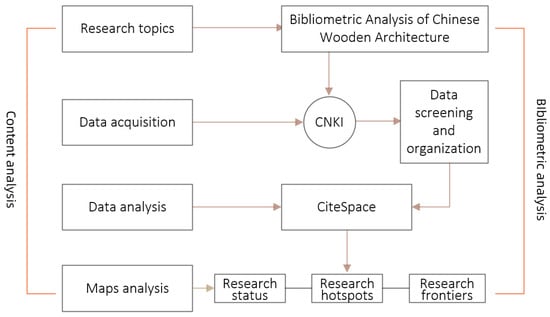
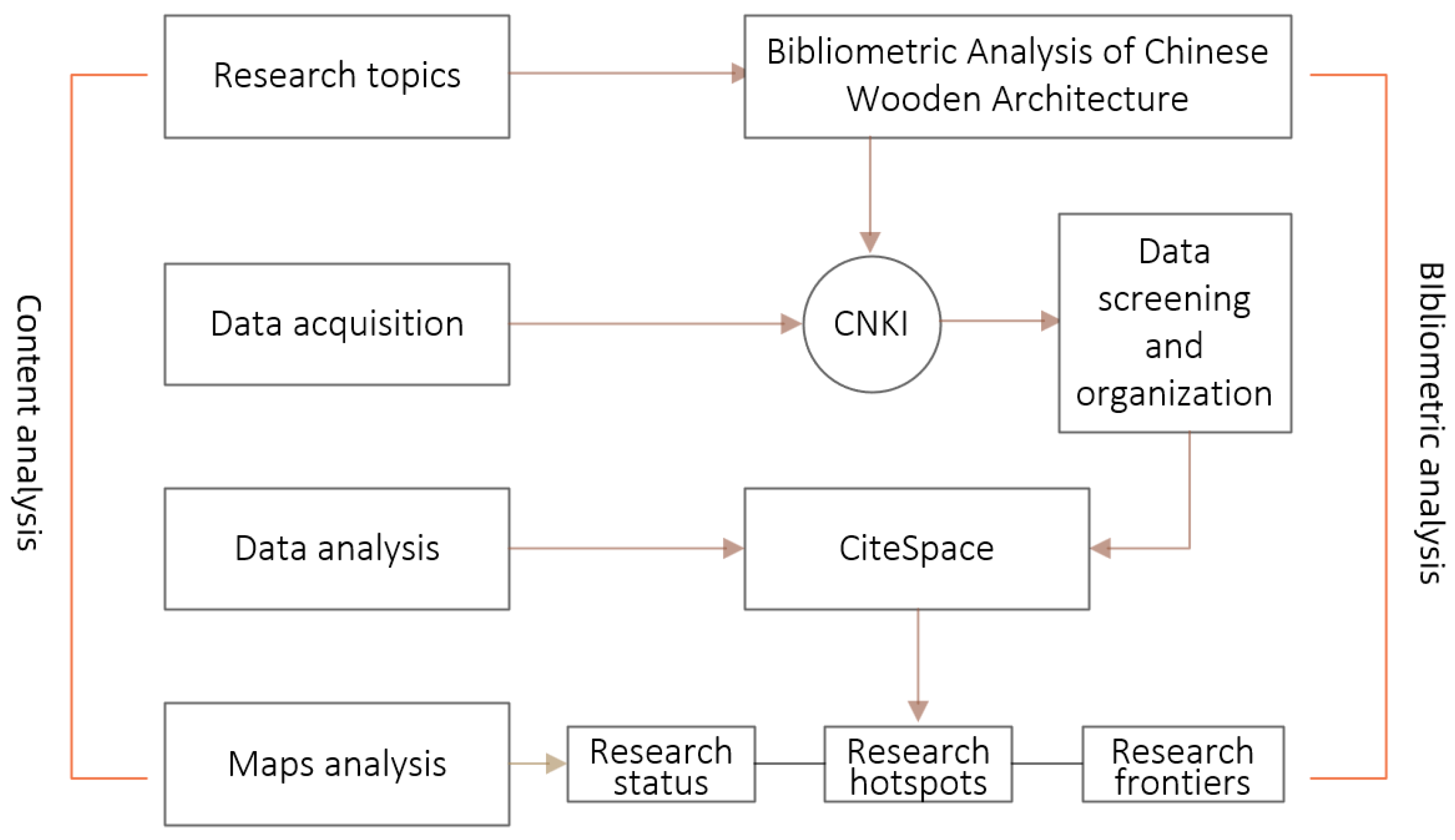
This study integrates bibliometric and content analysis approaches, as depicted in Figure 1. Bibliometrics is a method for quantitatively analyzing the external characteristics of scientific research, using mathematics and statistics to describe and evaluate the current status while predicting future development trends. In contrast, content analysis is a quantitative method based on qualitative research that draws conclusions through qualitative problem formulation and quantitative statistical analysis of research objects [12]. CiteSpace software is primarily used to conduct the bibliometric analysis, as it presents complex literature data in an intuitive manner, helping to clearly and accurately grasp the research status, hotspots, and frontiers in the field of wooden architecture. Content analysis involves interpreting the data and charts obtained from bibliometric analysis to derive qualitative conclusions, maximizing the value of the data.
Figure 1.
Research framework.
The collected literature data was converted and cleaned and then imported into CiteSpace for data analysis. The parameter settings of CiteSpace are shown in Table 1. Ultimately, the software generated a series of visual outputs, including summary information such as annual publication volume, highly cited literature, and author and institutional profiles, providing a comprehensive overview of the entire field of Chinese wooden architecture research. Additionally, keyword co-occurrence maps, keyword cluster maps, timeline maps, and emergence maps were generated in this study, which revealed research hotspots and frontier trends in Chinese wooden architecture.
Table 1.
Parameter setting.
3. Results
3.1. Research Status
3.1.1. Trends in the Annual Production of Research
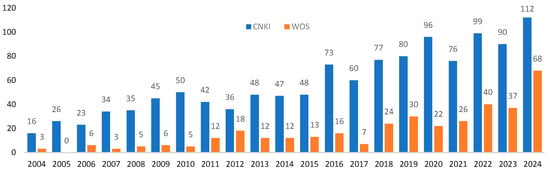
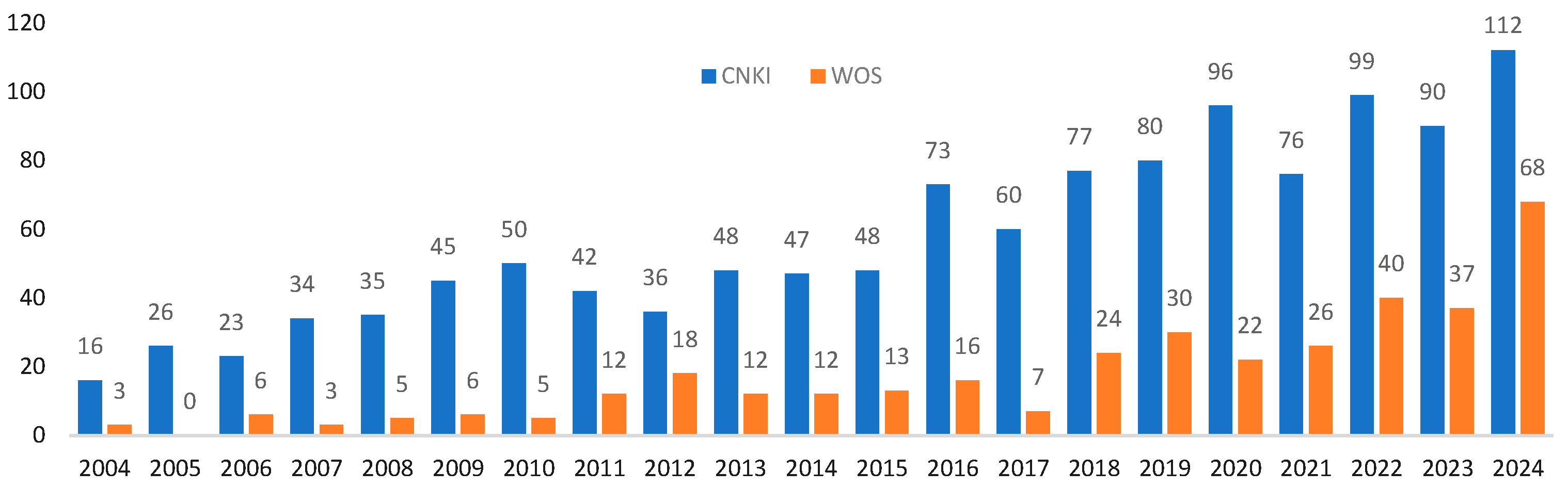
The number of publications can intuitively reflect the current status and trends in a given research field. The annual publication volume of Chinese wooden architecture research obtained through statistical analysis of publication data from the retrieved literature is shown in Figure 2. The change in the number of studies on “Chinese wooden architecture” in CNKI presents two upward periods and one slow period. From 2004 to 2010 and from 2016 to 2024, the number of studies on “Chinese wooden architecture” published in CNKI showed an overall upward trend. From 2011 to 2015, the number of studies on “Chinese wooden architecture” in CNKI journals changed gently. The number of journal articles on “Chinese wooden architecture” in WOS showed a sudden increase. In 2011, 2018, 2022, and 2024, the number of studies on “Chinese wooden architecture” in WOS increased significantly compared with the previous year. For example, in 2024, there were 31 more publications than in 2023.
Figure 2.
The annual number of publications on Chinese wooden architecture from 2004 to 2024.
Overall, the number of studies on “Chinese wooden architecture” in both CNKI and WOS has gradually increased, indicating that the field has received more attention. In 2016, the State Council issued “the Guiding Opinions of the General Office of the State Council on Vigorously Developing Prefabricated Buildings”, proposing to actively develop modern wooden structure buildings in qualifying areas. In 2017, the Ministry of Housing and Urban-Rural Development issued “the 13th Five-Year Action Plan for Prefabricated Buildings”, emphasizing that qualifying areas could formulate special plans to promote the development of wooden buildings. Relevant policies confirm the positive impact of national policies on wooden architecture research.
3.1.2. Distribution of Research Authors and Institutions
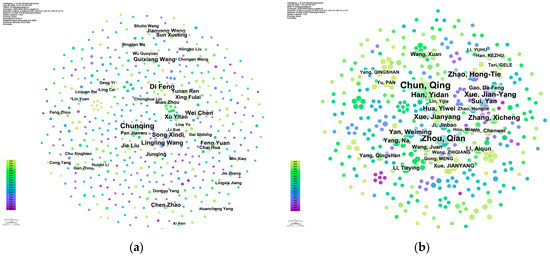
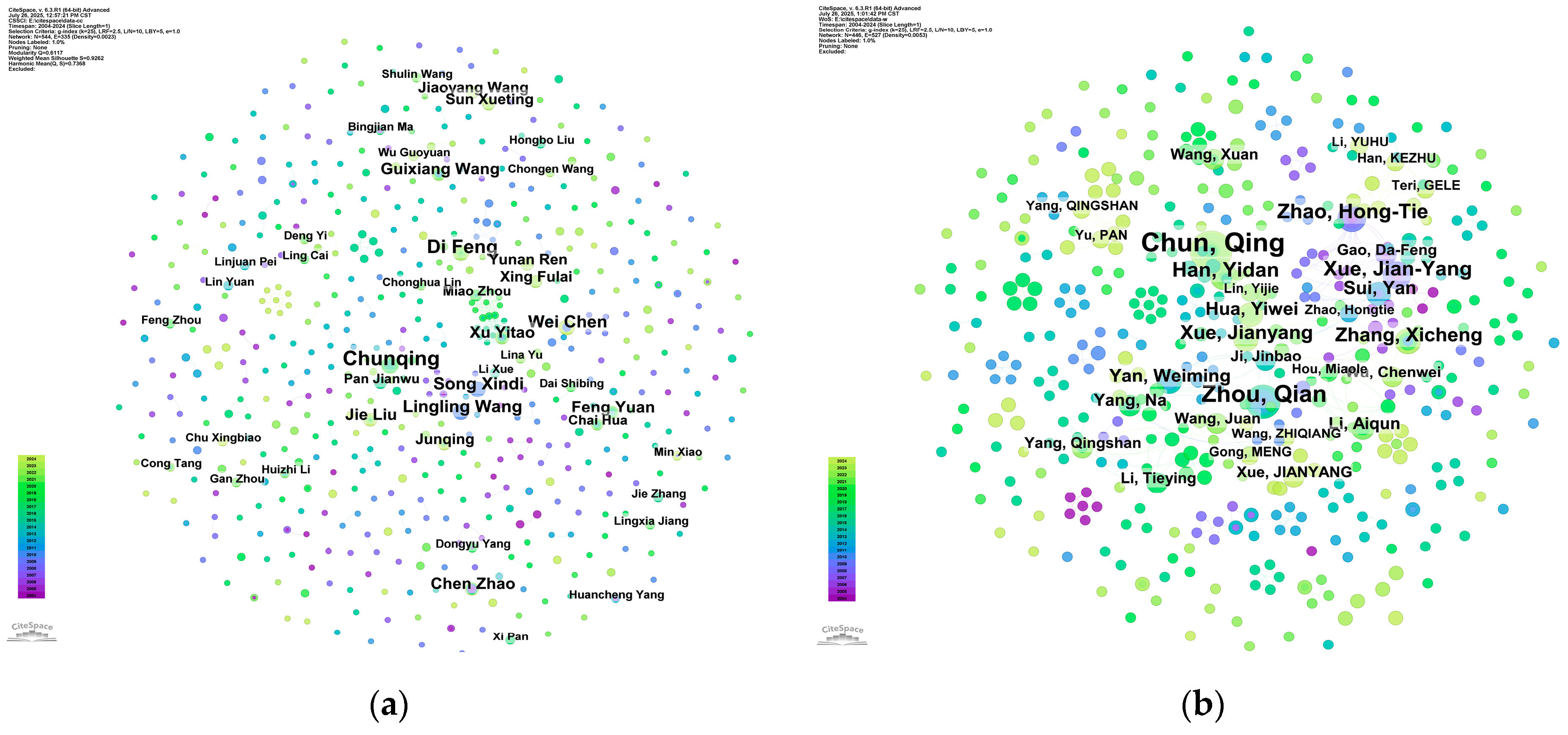
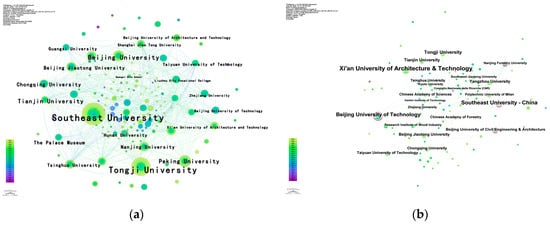
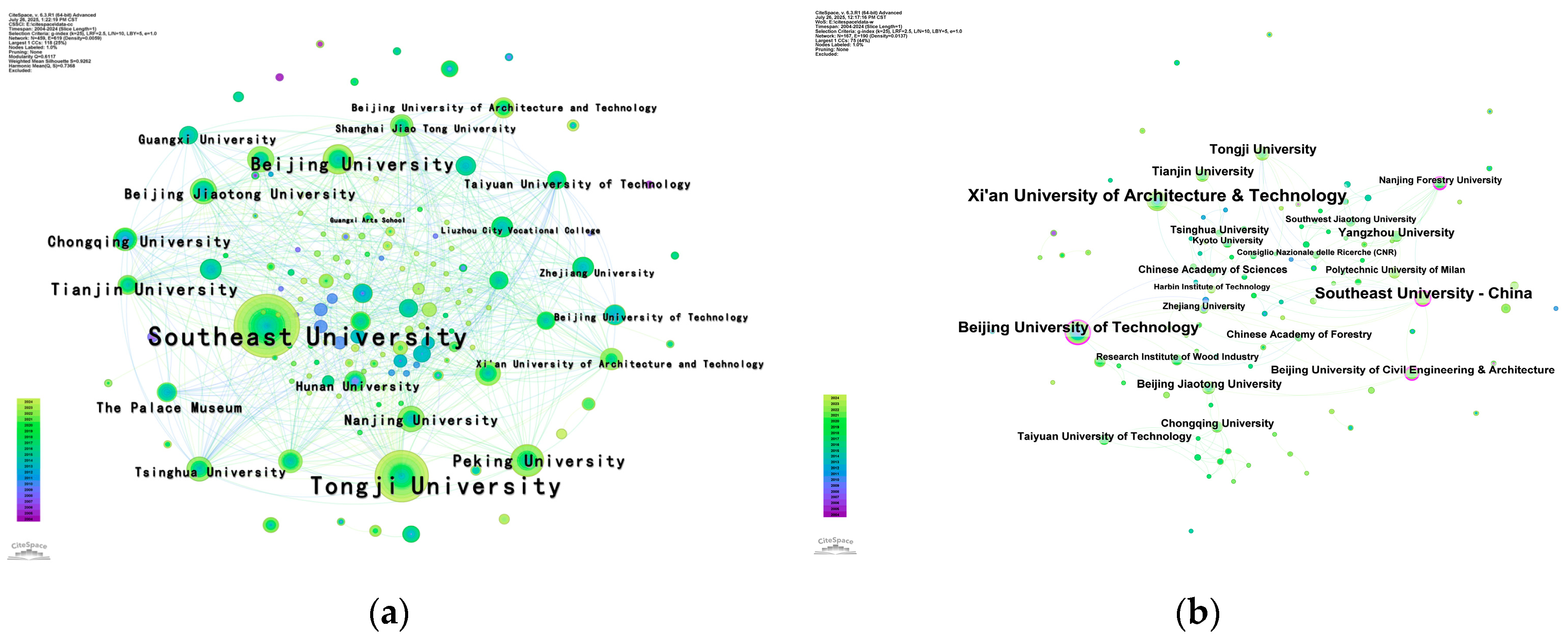
A combing and analysis of authors and institutions engaged in wooden architecture research helps in understanding the distribution of research focuses in the field, thereby revealing the overall research status. Using Citespace to analyze the collected literature data, co-occurrence network maps were generated of the author and institutional profiles of “Chinese wooden architecture” research in CNKI and WOS, as shown in Figure 3 and Figure 4.
Figure 3.
Author co-occurrence network maps for (a) CNKI and (b) WOS.
Figure 4.
Institutional co-occurrence network maps for (a) CNKI and (b) WOS.
In CNKI, Chun Qing (Southeast University) is a core scholar in Chinese wooden architecture research, focusing on the frame structure and seismic performance of wooden buildings. Additionally, Feng Di’s (Chongqing University) research directions include the theory, history, and cultural connotations of wooden architecture; Zhou Miao (Zhejiang University) specializes in theoretical methods of architectural archeology and the technical history of ancient timber structure buildings. In WOS, Xue Jianyang (Xi’an University of Architecture and Technology), Chun Qing (Southeast University), and Zhou Qian (the Palace Museum) are the main contributing authors. In terms of research institutions, renowned universities such as Southeast University, Xi’an University of Architecture and Technology, Peking University, Tongji University, and Chongqing University are the primary hubs for wooden architecture research. These institutions have long-standing historical foundations in architectural disciplines and are located in economically developed regions, providing them with abundant resources to carry out high-level academic research.
Through an in-depth analysis and statistical review of the representative literature from the above scholars and institutions, it was found that research mainly focuses on traditional wooden architecture of the Han nationality, with relatively less attention paid to that in ethnic minority areas. The research emphasis on Han wooden architecture reflects a structural imbalance shaped by the concentration of academic resources, established theoretical paradigms, and implicit value hierarchies. Minority architectures, such as those of the Dong and Miao peoples, are often located in remote regions, rely on oral traditions, and differ significantly in materials, construction methods, and cultural context. These factors make them more difficult to study and have contributed to their underrepresentation in mainstream scholarship. To address this imbalance, future research should adopt more inclusive frameworks, promote interdisciplinary collaboration, and encourage field-based investigation that recognizes the cultural, ecological, and technical significance of minority wooden architecture.
3.1.3. Highly Cited Research
Highly cited papers typically reflect the research hotspots and core issues in a specific field. By analyzing these papers, researchers can gain insights into the current academic focus on specific topics. The top ten highly cited papers on “Chinese wooden architecture” from CNKI and WOS are listed in Table 2 and Table 3 in descending order of citation frequency.
Table 2.
Distribution of the top 10 highly cited papers in CNKI.
Table 3.
Distribution of the top 10 highly cited papers in WOS.
In terms of type, the highly cited papers from both CNKI and WOS are mainly concentrated in areas such as timber construction engineering structures, seismic performance, architectural form, and conservation and restoration. The highly cited papers from CNKI cover a wide range of fields, while those from WOS are more focused on engineering technology. In terms of quantity, the highly cited papers on Chinese timber architecture are primarily focused on seismic performance research, representing 12 out of 20 papers. Given that China is situated between two major earthquake belts and experiences frequent seismic activity, ancient Chinese buildings, which are predominantly timber structures, are susceptible to various forms of damage during earthquakes. Therefore, in-depth research on the seismic performance of timber architecture is crucial for the conservation and restoration of ancient buildings. Additionally, earthquakes pose a significant threat to people’s lives and property. For instance, the 6.2 magnitude earthquake that struck Jishishan, Gansu, on 18 December 2023, resulted in over 150 deaths, numerous injuries, and missing persons, with direct economic losses amounting to RMB 14.6 billion. In summary, given the historical and cultural value of timber architecture and the practical needs of people in earthquake-prone regions, attention from the academic community on this research topic is both reasonable and necessary.
3.2. Research Hotspots
3.2.1. Keyword Co-Occurrence Map of Research
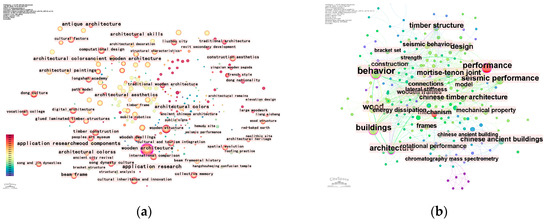
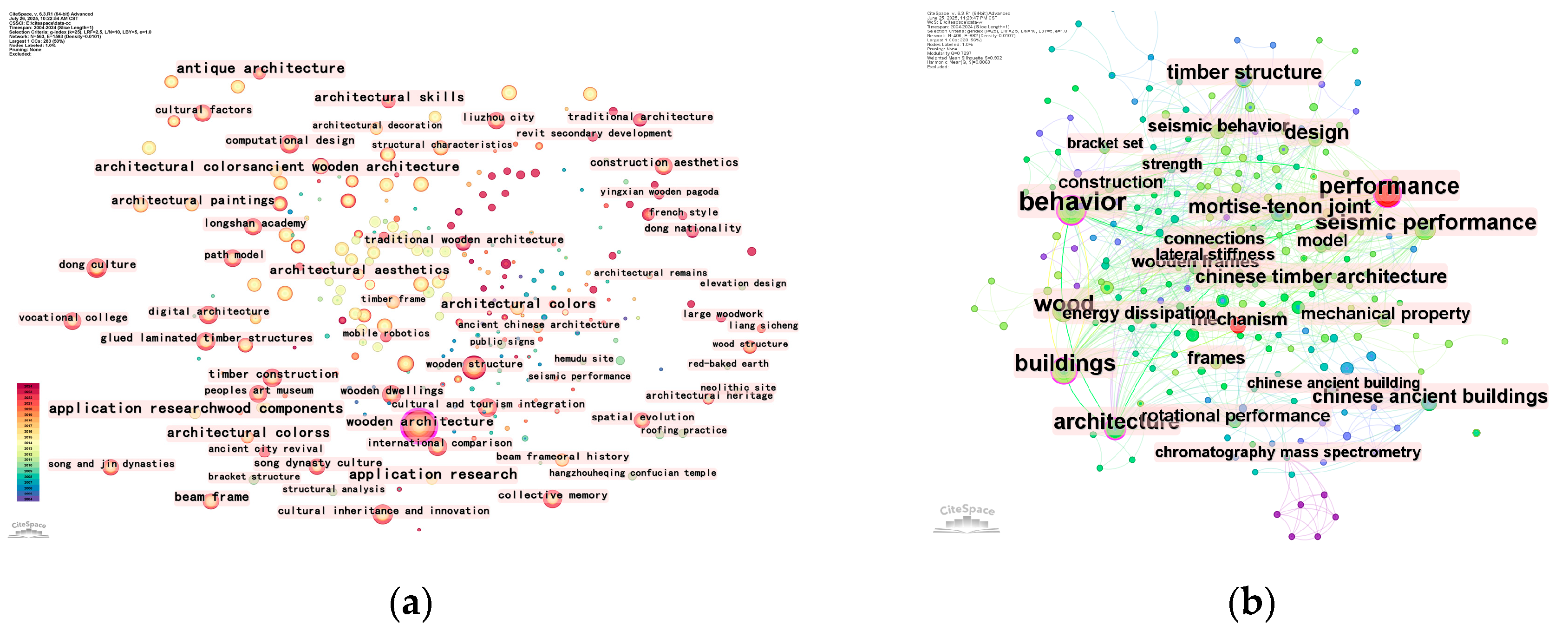
The co-word (feature word or keyword) map is more conducive to analyzing research hotspots and their evolution [13]. When the betweenness centrality value is ≥0.1, it indicates that the node plays an important role in the network structure of the knowledge map and has the potential to produce revolutionary influences [14]. The keyword co-occurrence maps of CNKI and WOS studies are shown in Figure 5. To enhance data consistency, this study merged similar keywords during the mapping process—for example, combining “architectural colors” with “architectural color”, “wooden building” with “wooden architecture”, and “Dong architecture” with “Dong ethnic wooden architecture”.
Figure 5.
Keyword co-occurrence maps for studies in (a) CNKI and (b) WOS.
In CNKI, the top three keywords with the highest frequency are “wooden architecture” (198 times), “wooden structure” (44 times), and “Wooden” (25 times). Among them, there is one keyword with centrality greater than 0.1, namely “wooden architecture”. In WOS, the top three keywords with the highest frequency are “behavior” (27times), “performance” (24 times), and “buildings” (15 times). Among them, there are six keywords with centrality greater than 0.1, namely “behavior”, “performance”, “buildings”, “wood”, “seismic performance”, and “architecture”.
Based on the above, research on wooden architecture mainly revolves around two core keywords: “wooden architecture” and “wooden structure”. As a macro research object, wooden architecture involves multiple disciplines, such as history, design, geography, and ethnology. In these disciplines, the research on wooden architecture focuses on exploring the relationship between people and people, and between people and architecture. In research on wooden structures, scholars pay more attention to the interrelationships between components as the core load-bearing parts of wooden architecture, exploring their connection methods, force transmission mechanisms, and overall stability. Therefore, the study of wooden architecture can be summarized as an exploration of the relationships between “people and people”, “people and objects”, and “objects and objects”.
Based on keyword distribution, the research paradigms in this field can generally be categorized into two distinct approaches. The first is culturally oriented, as reflected in keywords such as “Dong architecture”, “timber construction techniques”, and “cultural preservation”. These studies emphasize the typology, historical development, geographical distribution, and intangible cultural value of traditional wooden architecture. They are typically grounded in fieldwork, archival research, and visual analysis, and demonstrate a strong cultural narrative perspective. The second paradigm is grounded in engineering and structural science, as indicated by terms like “frame structure”, “seismic response”, and “mortise-tenon joints”. This line of research employs technical methods such as shaking table tests, finite element modeling, and stress analysis to evaluate the safety, stability, and performance of timber structures. It places particular emphasis on the structural adaptability of wooden architecture within contemporary building systems.
3.2.2. Keyword Cluster Maps
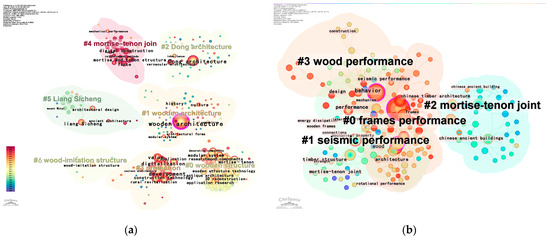
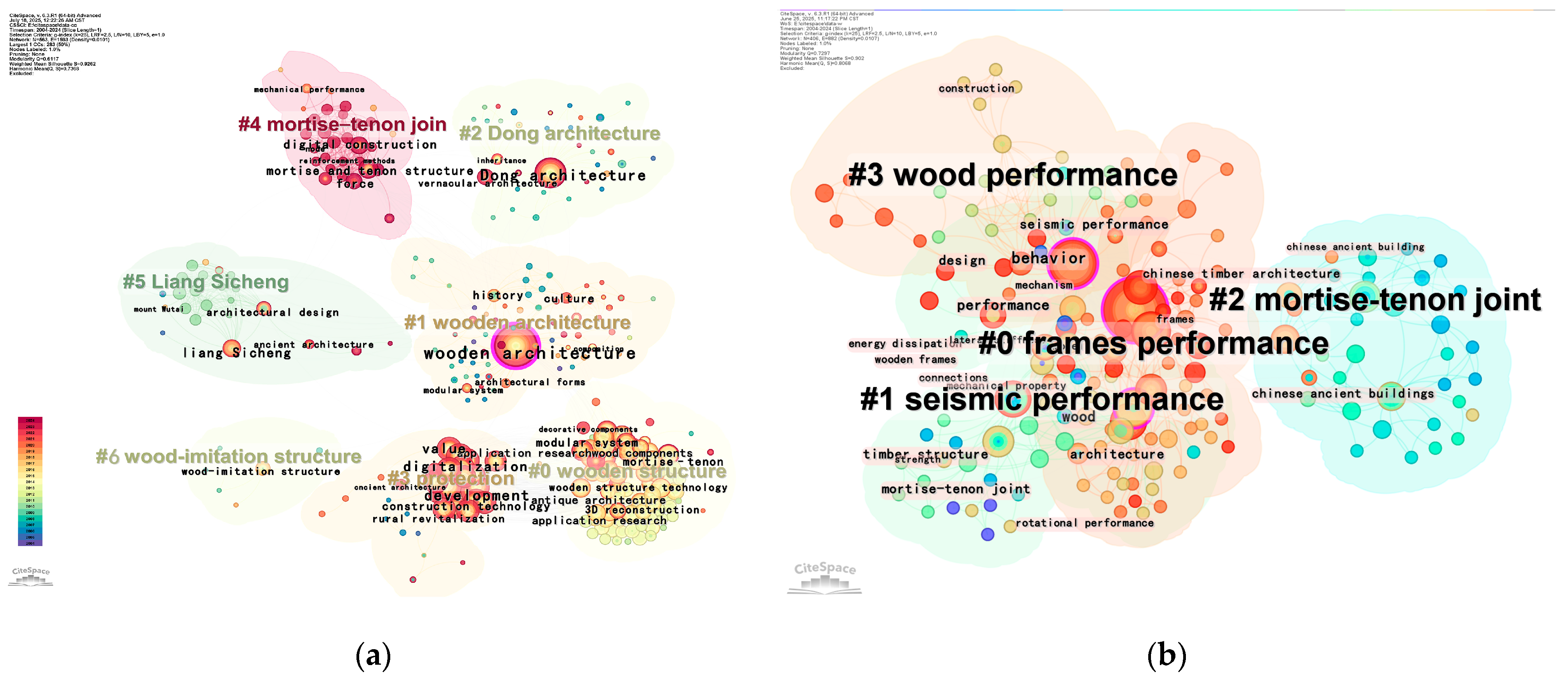
Keyword clustering classifies keywords based on the strength of their correlation, selecting those with higher correlation strength as labels to identify directional and representative knowledge sub-clusters within a research field [15]. The map effect is mainly determined by Modularity Q (Q) and Weighted Mean Silhouette S (S). The Q is generally in the [0, 1] interval, and Q > 0.3 means that the divided community structure is significant; when the S is 0.7, the clustering is efficient and convincing, and if it is above 0.5, the clustering is generally considered reasonable [13]. By merging synonymous keywords and conducting cluster analysis based on keyword co-occurrence, CNKI automatically generated cluster labels, and WOS generated eight cluster labels, as shown in Figure 6. The CNKI clustering Q = 0.6117 > 0.3, and the S = 0.9263 > 0.7; the WOS clustering Q = 0.7297 > 0.3, and the S = 0.902 > 0.7. This indicates that the clustering of CNKI and WOS studies is significantly reasonable.
Figure 6.
Keyword cluster maps of research in (a) CNKI and (b) WOS.
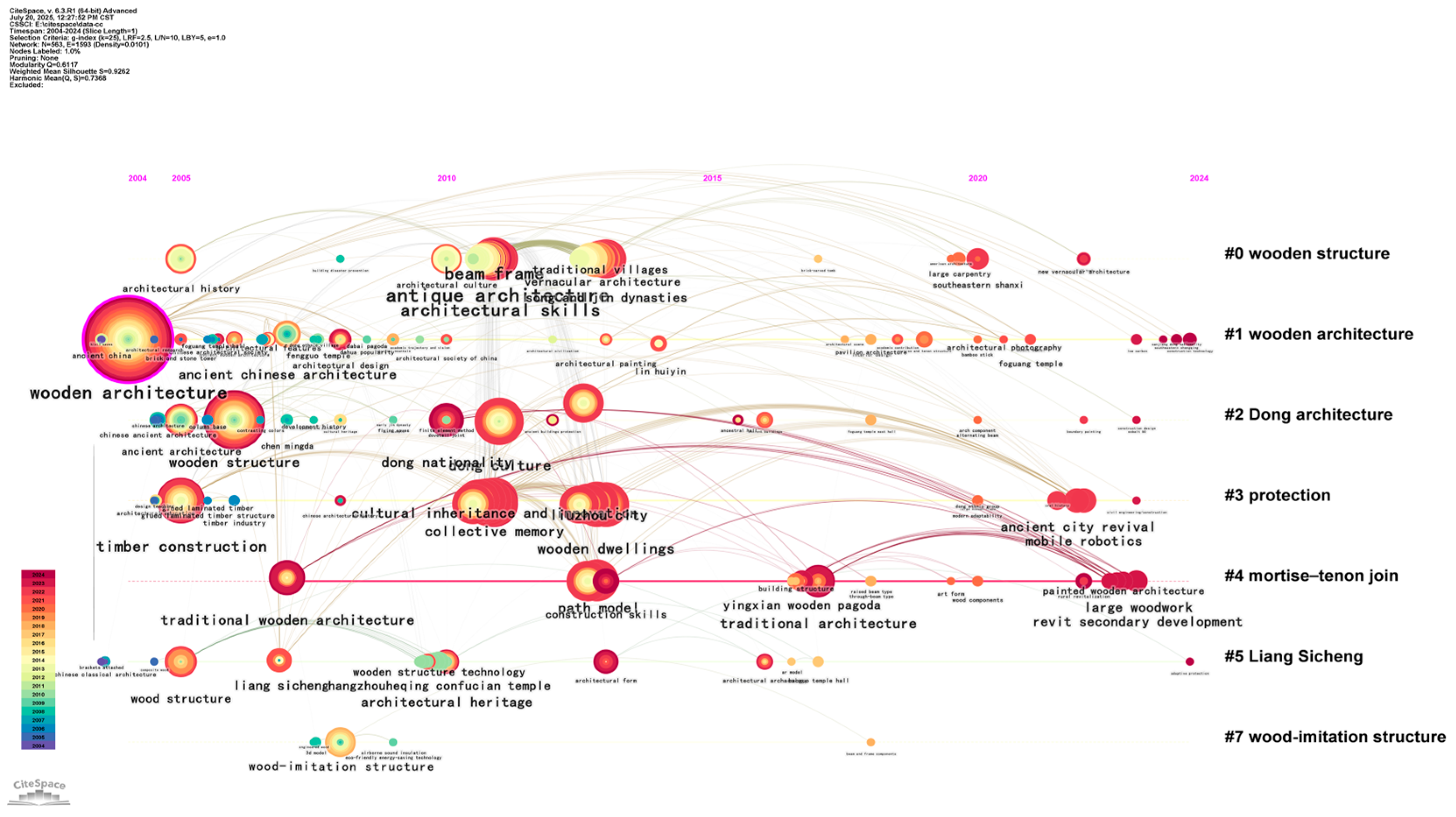
CNKI includes seven clusters: #0 wooden structure, #1 wooden architecture, #2 Dong architecture, #3 protection, #4 mortise–tenon joint, #5 Liang Sicheng, and #6 wood-imitation structure. Cluster #0, “wooden structure”, includes keywords such as wooden, mortise–tenon, and architectural structures, and 3D reconstruction. Representative studies mainly discuss subjects such as the prefabricated modularization [16], application development [7], engineering structures [17], form systems [18], and decorative components [19] of wooden structures. Cluster #1, “wooden architecture”, includes keywords such as wooden architecture, wooden structure technology, regional culture, and modular system. Among them, “wooden architecture” is the most influential keyword. This cluster mainly discusses subjects such as the history [20], culture [21], composition [22], tectonic ideas [23], and value continuation [24] of wooden architecture. Cluster #2, “Dong architecture”, includes keywords such as Dong architecture, inheritance, vernacular architecture, innovation, and development. Representative studies in this cluster mainly discuss subjects such as the theoretical research [25,26], inheritance and protection [27], construction techniques [28], and application development of Dong architecture [29]. Cluster #3, “protection”, includes keywords such as protection, traditional dwellings, protection technology, cultural relic buildings, and value. Representative studies in this cluster mainly discuss subjects such as the theoretical research [30], measures [31], and protection and renovation technologies [32] for protecting wooden architecture. Cluster #4, “mortise–tenon joint”, includes keywords such as mortise–tenon joint, mechanical performance, digital construction, Jiangnan region, and reinforcement methods. Representative studies in this cluster mainly discuss subjects such as the mortise–tenon structure [33] and seismic performance [34] of wooden buildings. Cluster #5, “Liang Sicheng”, includes keywords such as Liang Sicheng, Wutai Mountain, Lin Huiyin, classical architecture, and Foguang Temple. Representative studies in this cluster mainly discuss subjects such as architectural theory research [35] and academic research [36] on Liang Sicheng and the Society for the Study of Chinese Architecture. Cluster #6, “wood-imitation structure”, includes keywords such as wood-imitation structures, architectural forms, grotto temples, decorations, and archeology. Representative studies in this cluster discuss subjects such as the use of imitation wood structures in tomb sites [37], grotto temples [38], residential landscapes [39], and pagodas [40].
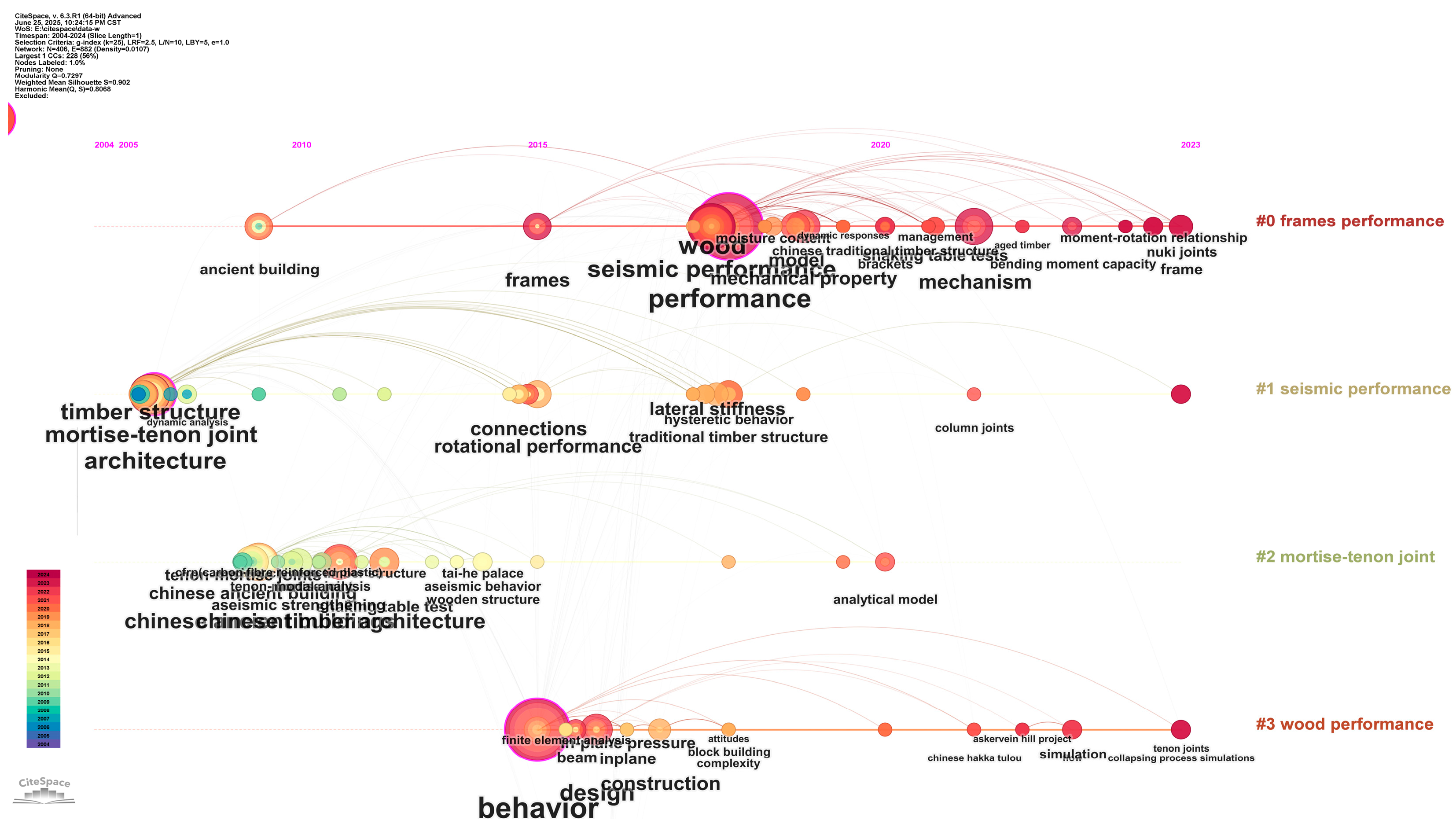
WOS includes four clusters: #0 frame performance, #1 seismic performance, #2 tenon joints, and #3 wood performance. Cluster #0, “frame performance”, includes keywords such as performance, frames, architecture, shaking table test, and traditional timber structure. Representative studies in this cluster mainly focus on the frame structure [41] of wooden buildings. Cluster #1, “seismic performance”, includes keywords such as timber structures, seismic performance, Taihe Palace beams, and modal analysis. Representative studies in this cluster mainly discuss the seismic performance [42] of wooden buildings. Cluster #2, “tenon joints”, includes keywords such as tenon joints, connections, collapsing process simulations, and hysteretic models. Representative studies in this cluster mainly focus on the mortise–tenon structure [43] of wooden buildings. Cluster #3, “wood performance”, includes keywords such as mechanism, wood, modulus performance, moisture content, and cyclic loading tests. Representative studies in this cluster mainly explore the material mechanics [44] of wooden buildings.
A comparison of CNKI and WoS reveals distinct thematic orientations in wooden architecture research. CNKI presents a multidisciplinary approach, covering technical performance, historical development, and cultural interpretation (e.g., dougong symbolism), reflecting a culturally embedded academic context. In contrast, WoS focuses on STEM fields, particularly engineering and materials science (e.g., CLT simulations), with minimal attention to cultural dimensions. These differences stem from both epistemological traditions and institutional drivers. International research emphasizes empirical modeling, while Chinese scholarship integrates historical and cultural perspectives into a dual “structure-culture” framework. Additionally, China’s SCI-oriented evaluation system favors WoS publications, whereas global sustainability goals elevate timber’s role in low-carbon innovation. Wooden architecture thus embodies both structure and culture, pointing to future research that bridges traditional logic with digital and parametric tools.
3.3. Research Frontiers
3.3.1. Keyword Cluster Timeline Map
The timeline map intuitively displays the changing trajectory of keywords in different clusters over time. By analyzing high-frequency and high-centrality keywords, we can clearly understand the development trends and knowledge evolution of different research clusters. On the timeline of the map, keywords are represented by circles and text at their first occurrence. The size of the circle reflects the total frequency of the keyword across all time periods, thus more intuitively displaying the importance and continuity of the keyword.
Figure 7 and Figure 8 present the keyword timeline maps derived from CNKI and WOS, respectively. By sorting and analyzing the representative studies of the nodes of these figures, the research on Chinese wooden architecture from 2003 to 2024 can be roughly divided into three stages: the macro stage (2003–2005), the specific deepening stage (2006–2018), and the inheritance application and multidisciplinary integration stage (2019 to the present). Due to differences in social needs and policy environments in different periods, the research focuses of these three stages are different. However, this difference does not mean that old research subjects disappear after the new stage begins; instead, the research focus shifts over time. Moreover, the boundaries between each stage are not clearly defined but show an evolving characteristic of mutual integration and influence. Similarly, the emergence of a subject does not necessarily coincide with its rapid development period.
Figure 7.
Keyword clustering timeline map for the CNKI literature.
Figure 8.
Keyword clustering timeline map for the WOS literature.
Overall, its phased development exhibits three dialectical characteristics. First, academic evolution is better understood as a continuous transformation within a dynamic knowledge ecosystem, where phase boundaries are often blurred and research paradigms tend to overlap. Second, research themes show a non-substitutive spiral progression, with early topics continually revitalized through the integration of new technologies. Third, current interdisciplinary convergence faces ongoing challenges in methodological integration, where tensions between technological transplantation and disciplinary imperatives call for creative reconciliation.
3.3.2. Keyword Emergence Map
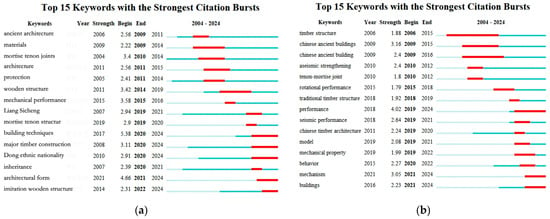
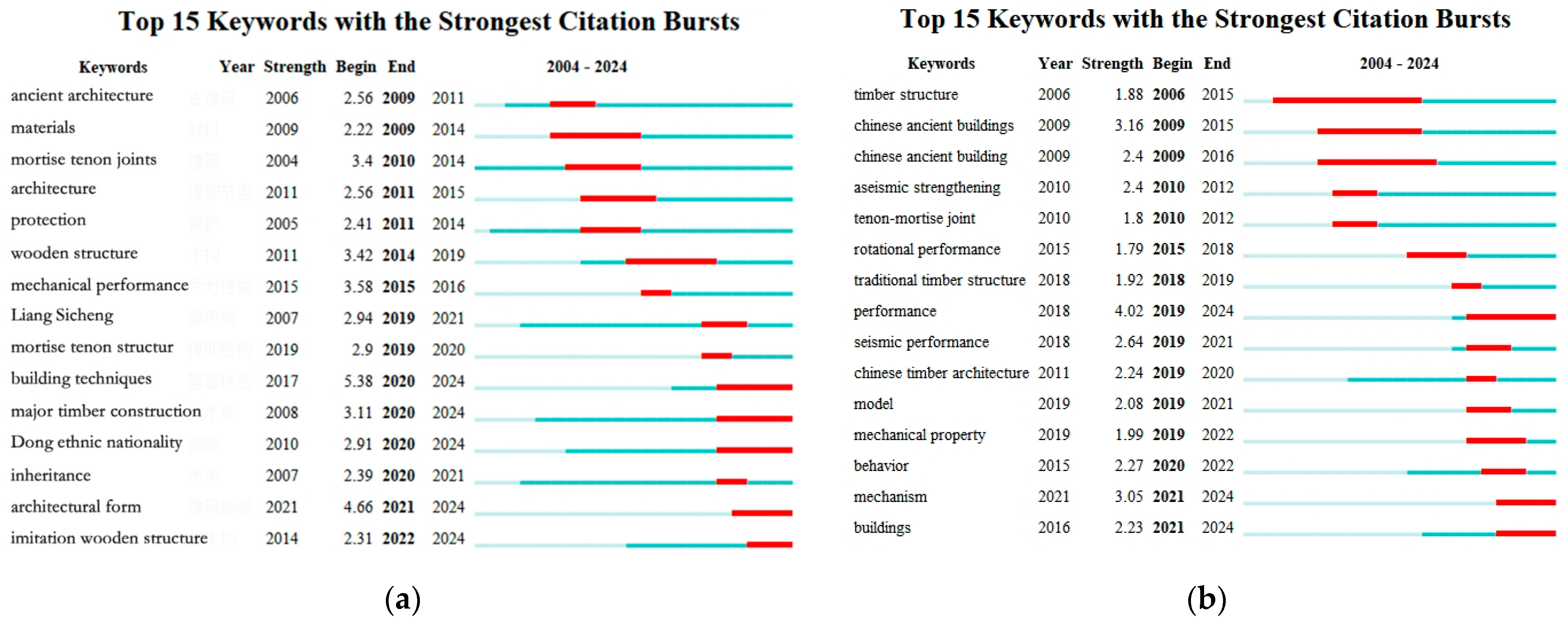
Research frontiers refer to the latest and most promising research subjects in scientific research, usually manifested as the emergence of new subject words, changes in word relationships, changes in subject word meanings, and abnormal changes in subject words. In CiteSpace, burst keywords are an important means to reveal research frontiers. The keyword burst maps of CNKI and WOS are shown in Figure 9.
Figure 9.
Emergence mapping of keywords in (a) the CNKI literature and (b) the WOS literature.
In terms of emergence strength, the keywords with higher burst strength in CNKI are “construction techniques” (5.38), “architectural form” (4.66), and “force performance” (3.58), while in WOS they are “performance” (4.02), “Chinese ancient buildings” (3.16), and “mechanism” (3.05). In 2005, the Fifth Plenary Session of the 16th Central Committee of the Communist Party of China made a major decision to accelerate the construction of a new socialist countryside to promote rural revitalization and urban–rural integration. The release of this decision has greatly promoted architectural research, including wooden architecture. Research on wooden architecture has gradually extended beyond the traditional focus on “wooden structure” and “materials” toward more practical directions, increasingly aligning with national strategies, societal needs, and cultural heritage preservation. In 2008, the Wenchuan earthquake caused enormous damage and impact. Since then, research on the seismic performance of wooden buildings has been greatly developed due to the practical needs of building safety and the objective needs of post-disaster repair and reconstruction, with a large number of keywords related to seismic performance emerging, underscoring the strong influence of emergency events on academic inquiry. During this period, research increasingly focused on the safety, stability, and post-disaster resilience of timber structures, leading to a surge in both experimental and theoretical studies on connection joints, seismic mechanisms, and material performance.At the same time, a renewed recognition of the cultural significance of traditional architecture brought greater academic attention to keywords such as “imitated timber structure” and “mechanism”, signaling a shift from formal esthetics toward an integrated exploration of cultural meaning and modern adaptability in Chinese wooden architecture. Overall, the evolution of timber architecture research has been shaped by the combined forces of policy directives, natural disasters, and contemporary adaptation needs, providing diverse perspectives and a robust foundation for future inquiry.
4. Discussion
Systematic studies on Chinese wooden architecture have spanned only about a century, starting with Liang Sicheng’s research on its construction in the 1930s. Compared to the development of architectural history in Western countries, Chinese wooden architecture still has significant room for advancement. Therefore, this study aims to provide a comprehensive overview of contemporary Chinese wooden architecture research by analyzing the literature from the past 20 years to make up for the shortcomings of existing review studies, it provides a systematic analytical framework for Chinese timber architecture.
4.1. Subjects of the Research
By analyzing the keyword co-occurrence and keyword clustering graphs of the CNKI and WOS databases, this study divides the research hotspots of Chinese timber construction into three themes. The first subject is theoretical research. This serves as the foundation of the study of wooden architecture and marks the beginning of its modern transformation. For instance, Chen Wei [45] explored the relationship between pottery tiles and wooden structures from the Bronze Age to the Qin and Han Dynasties, proposing that ‘pottery tiles spurred the development of wooden structures’ and ‘tile-roofed houses accelerated the maturation of the wooden structure system.’ Wang Fangji et al. [46] compared the structures and decorations of the Golden Hall at Tang Zhaoti Temple and the East Hall at Foguang Temple, highlighting the contemporary construction value of ancient wooden structures at Foguang Temple. Liu Yan [47] examined the structural logic and detailed construction of wooden frameworks, exploring the structural understanding, response strategies, and underlying differences in thinking amongst craftsmen in designing and building wooden frameworks. Additionally, this subject also covers imitation wooden structures, construction ideas, and figures such as Liang Sicheng and the Society for the Study of Architecture.
The second theme focuses on seismic performance. This subject explores the seismic performance of various components of wooden structures, including the platform base, column frame, dougong layer [48], roof layer [49], and the overall structure [3]. Research on the platform base primarily examines the seismic performance of column bases [50] and the relationship between the height of the platform base [49] and the building structure [51]. Research on column frames focuses on the seismic performance of mortise-and-tenon joints [52], side foot rises [53], and corbels [54]. These subjects cover all key aspects of seismic performance research in wooden structures, from basic structural components to the overall structure, aiming to reveal the behavioral characteristics of traditional wooden structures under seismic loads and provide theoretical and practical support for enhancing the seismic performance of wooden buildings.
The third theme is conservation and restoration, which has always been a key focus in the study of wooden structures. Ancient buildings primarily use wood as the core load-bearing material. Although wood has good elasticity, compressive strength, and seismic resistance, it is also susceptible to decay, deformation, and insect damage. Therefore, implementing reasonable and effective restoration and reinforcement measures is essential. The main issues in this theme include theoretical research on the protection of wooden structures, the study of protective measures, and restoration and protection technology. For example, Xu Yanfei et al. [31] analyzed the origin and content of the “Venice Charter”, the “Nara Document on Authenticity”, and the “Beijing Document” to discuss the issue of ‘authenticity’ in the protection of cultural heritage buildings and the strategies and guidelines for the protection of Chinese architecture. Tang Zhong et al. [32] conducted inspections and monitoring of cultural heritage buildings and the various factors affecting them, providing reliable data and a solid foundation for the scientific formulation of maintenance plans, thereby enhancing the predictability of conservation and restoration efforts. Zhu Yuhua et al. [33] documented and reviewed the repair project of the Fulongguan ancient architectural complex following the ‘5·12’ earthquake, summarizing the protective and seismic measures implemented and detailing the reasonable adjustments made during the restoration of Fulongguan.
Through the analysis of these themes, it is clear that Chinese wooden architecture is on a path of modern transformation. Through the analysis of these themes, it is clear that Chinese wooden architecture is on a path of modern transformation. The deepening of theoretical research has laid a solid foundation for the modernization of wooden architecture. Rooted in the tradition of craftsmanship, Chinese wooden buildings have long embodied a wealth of ecological wisdom and spatial knowledge. From beam–column frameworks to mortise-and-tenon joints, from natural ventilation and daylighting to material selection, every aspect reflects a profound sensitivity to and respect for the natural environment. In the context of a worsening global climate crisis and increasing urgency around carbon reduction, this renewable, low-energy, and demountable construction system is emerging as a valuable model for sustainable architectural design. Thus, theoretical inquiry into traditional wooden architecture is not only a means of cultural heritage preservation, but also a pathway for exploring future modes of building. It invites a reexamination of the relationship between architecture and nature, technology and the humanities, and contributes to redefining the value of wooden architecture in contemporary contexts.
Secondly, in the modern application of wooden architecture, safety is the primary concern. Therefore, research on the seismic performance of wooden architecture has received significant attention from researchers. However, with the increasing scale of construction and the diversification of building functions, traditional experiential knowledge alone can no longer meet modern safety standards. In response, recent studies have focused on systematically evaluating the seismic performance of wooden structures under varying intensities through structural analysis [55], material optimization [56], and computational simulation [57]. This shift from empirical tradition to scientific validation has not only enhanced the structural safety of wooden architecture but also opened up new possibilities for its application in urban construction.
Additionally, after the construction of buildings, their maintenance and restoration are equally important, particularly in China, where there are numerous traditional timber structures. In particular, many historic buildings and ancient villages embody not only the functional value of physical space but also serve as symbols of cultural memory and regional identity. As such, the restoration of wooden architecture is not merely a technical undertaking but also a cultural responsibility [58]. In recent years, academic discourse has gradually shifted from a restoration philosophy of reconstruction [59] to one of authentic preservation [60], emphasizing the importance of respecting historical integrity, retaining original craftsmanship, and applying modern materials and techniques with measured intervention. This principle of restoring the old as it was, with appropriate restraint, reflects a deeper understanding of traditional architectural culture and a rational integration of contemporary technologies.
4.2. The Forefronts of the Research
The modern transformation of Chinese wooden architecture is not an overnight process. By examining the keyword clustering and emergence maps from CNKI and WOS, it is evident that this transformation has undergone several developmental stages. The first stage, from 2003 to 2005, was characterized by a low number of publications and a limited range of keywords. This period focused on macro-level theories, exploring the architectural forms, framework structures, cultural significance, and conservation and restoration of wooden buildings. The second stage, from 2006 to 2018, saw a significant increase in publications and a broader range of keywords and clusters. Most high-frequency terms emerged during this phase, marking a shift from macro-level studies to more detailed micro-level research, which included subjects such as seismic performance, regional architecture, settlement characteristics, material mechanics, and construction techniques. The third stage, from 2019 to the present, is characterized by the inheritance and application of wooden architecture, as well as interdisciplinary collaboration. This stage represents the current frontier and research trend and is essential for the practical application of wooden architecture. The following will discuss the future research trends and frontiers of Chinese wooden architecture from three aspects.
Content: Future studies should primarily focus on the wooden architecture of ethnic minorities and traditional dwellings. Key terms include “Dong ethnic architecture”, “Wuling Mountain area”, “architectural master”, “traditional dwellings”, and “rural heritage”. The 19th National Congress of the Communist Party of China emphasized that the ‘three rural issues’ are fundamental to the national economy and people’s livelihoods, and proposed the major strategy of ‘implementing rural revitalization’ [61]. This strategy has significantly guided the direction of research on wooden architecture, leading to rapid development in its study in rural areas and those with larger populations of ethnic minorities. Future research should take ethnic minority and rural regions as entry points, focusing on representative areas while drawing upon the practical knowledge of rural architects and the cultural depth of traditional vernacular dwellings. Centered on the dual imperatives of rural heritage preservation and the Rural Revitalization Strategy, such studies should pursue systematic and forward-looking academic inquiry. This approach will not only promote theoretical development and practical innovation in wooden architecture within minority regions, but also provide a solid scholarly foundation and cultural confidence for the contemporary continuation of architectural heritage.
Purpose: Future studies should focus on the inheritance and application of traditional wooden structures. Key terms include “inheritance”, “development”, “low carbon”, “service life”, and “digital construction”. For some, traditional dwellings are a burden that hinders their pursuit of modern life and social advancement [62]. Therefore, in the context of the new era, ensuring the inheritance of wooden architecture means endowing it with practical value to meet the actual needs of local residents for production and daily life. This not only involves a re-evaluation of historical culture but also a positive response to contemporary society. Currently, the question of how to form new shared values and balance the interests of all parties involved in wooden architecture is worth in-depth exploration and research.
Characteristics: As research into wooden architecture in ethnic minority regions deepens, the integration of multiple disciplines has become increasingly prominent. Key terms include “architectural form”, “mortise and tenon joints”, “design”, “mechanism”, and “modal”. Current research is not confined to engineering fields such as architecture, civil engineering, and urban and rural planning; it also intersects with other disciplines like design, history, geography, and anthropology. For example, the term “Function” has evolved from referring to structural forces and connection systems in architecture to encompassing operational dynamics within socio-cultural systems, reflecting a conceptual shift from material construction to institutional logic [63]. Similarly, “modality”, originally denoting different states or modes of system operation, can in architecture refer to variations in spatial organization or structural response, while in linguistics or cognitive science, it may pertain to diverse pathways of perception and expression [64]. These semantic transitions illustrate the bridging function of concepts in interdisciplinary research and provide a conceptual foundation for constructing cross-cultural and cross-disciplinary frameworks of understanding.
5. Conclusions
In this article, a visual quantitative analysis of the timber architecture literature from the CNKI and WOS databases is conducted, exploring the current research status, hotspots, and frontiers of Chinese wooden architecture. It achieves a phased macro understanding and interpretation of the research on Chinese timber architecture, leading to the following conclusions:
As Chinese society continues to develop and real needs evolve, corresponding policies have been formulated and released, providing new opportunities for the development of Chinese timber architecture. These policies not only promote the growth of the industry but also ignite academic enthusiasm for research on timber architecture. Meanwhile, under the guidance of national policies, the research process can be clearly divided into three progressive stages: macro-level exploration (2003–2005), focused development (2006–2018), and heritage application with interdisciplinary integration (2019–present).
The research on timber architecture primarily focuses on three key areas: basic theory, seismic performance, and conservation and restoration. These areas not only enrich the content of timber architecture research but also closely align with China’s practical needs. Among these research focuses, seismic performance is crucial for addressing the frequent earthquakes in China, while conservation is vital for preserving China’s rich traditional culture.
This study reveals deficiencies in existing academic frameworks and proposes strategic priorities for advancing scholarly inquiry. Traditional wooden architecture and ethnic minority dwellings, exemplified by the Dong and Miao communities, function as crucial carriers of collective identity, ecological wisdom, and cosmological symbolism in Chinese cultural contexts. Their unique construction methodologies, cultural significance, and environmental adaptability demand immediate and systematic investigation. Regarding structural evaluation, contemporary approaches must transition from isolated performance metrics to holistic assessment systems integrating safety, service life, environmental impact (including carbon storage capacity and lifecycle analysis), and spatial efficiency (encompassing thermal regulation, acoustic properties, and natural lighting). Such comprehensive frameworks are indispensable for elucidating how wooden architecture contributes to the creation of sustainable, climate-resilient human settlements. At the disciplinary intersection, despite growing rhetorical commitment to interdisciplinary collaboration, meaningful integration between humanistic/social sciences (notably anthropology, folklore studies, and cultural geography) and engineering disciplines remains conspicuously absent. Furthermore, the transformative potential of emerging digital tools—including Building Information Modeling (BIM), algorithmic design systems, virtual simulation platforms, and machine learning applications—in documenting, analyzing, and reinvigorating traditional craftsmanship has yet to be fully realized. These technological innovations offer unprecedented opportunities for preserving intangible cultural heritage while enabling adaptive reuse in contemporary architectural practice.
In essence, as research on Chinese wooden architecture continues to deepen, it is imperative to re-anchor its value as both a unique cultural practice and a reservoir of sustainable knowledge. This shift should drive creative convergence across disciplines, paradigms, and temporalities. Such efforts transcend the survival of building techniques; they respond to the deeper civilizational question of “What is Chinese architecture?” while offering a distinctly Eastern perspective on the global ecological and sustainability crisis. Future scholarship must pursue this vision, forging new pathways at the intersection of empirical inquiry and philosophical reflection.
Author Contributions
D.W., conceptualization and writing—original draft preparation; M.L., methodology; H.Y., software; J.L., formal analysis; C.G., computational; X.C., writing—review and editing; X.C., funding acquisition. Q.L., data curation, project administration; G.W., investigation. All authors have read and agreed to the published version of the manuscript.
Funding
This research was funded by the Special Project of the National Social Science Foundation of China on Rare Studies, “Oral History, Manuscript Data Organization and Research of Dong Ethnic Ink Master” (21VJXG034), and the 2024 Annual Research Program of the Guangxi Philosophy and Social Science Foundation, “Oral Documentation, Systematic Organization, and Digital Heritage Mechanisms for Endangered Dong Ethnic Wooden Architecture Data” (24YSB001), as well as the 2023 Guangxi Graduate Education Innovation Program, “Forum on the Transformation of Ethnic Minority Cultural and Creative Achievements in Art and Design Disciplines of Guangxi Universities” (YCLT2023001).
Data Availability Statement
The original contributions presented in this study are included in the article. Further inquiries can be directed to the corresponding author.
Acknowledgments
The authors sincerely thank the editor and anonymous reviewers for their valuable comments and suggestions to improve the quality of this paper.
Conflicts of Interest
The authors declare no conflicts of interest. The funders had no role in the design of the study; in the collection, analyses, or interpretation of data; in the writing of the manuscript; or in the decision to publish the results.
Abbreviations
| CNKI | China National Knowledge Infrastructure |
| WO | Web of Science |
| Q | Modularity Q |
| S | Weighted Mean Silhouette S |
| 3D | Three-Dimensional |
References
- Liu, W.Q.; Yang, H.F. Advances in Modern Timber Structures. J. Archit. Struct. 2019, 40, 16–43. [Google Scholar]
- Yao, K.; Zhao, H.T.; Ge, H.P. Experimental Study on the Characteristics of Mortise and Tenon Joints in Ancient Wooden Structures. Eng. Mech. 2006, 23, 168–173. [Google Scholar]
- Zhao, H.T.; Zhang, X.C.; Xue, J.Y.; Sui, Y.; Zhang, F.L. Conceptual Design Ideas for Ancient Wooden Structures in China. J. Xi’an Univ. Archit. Technol. Nat. Sci. Ed. 2011, 43, 457–463. [Google Scholar]
- Zhao, C. Re-Interpretation of Chinese Timber Construction Tradition. World Archit. 2005, 8, 37–39. [Google Scholar]
- Chen, W. Timber Structure as a Choice of Advanced Technology and Social Consciousness. In Proceedings of the Academic Symposium on Protection and Development of Asian Ethnic Architecture, Chengdu, China, 1 August 2004; Volume 6, p. 2. [Google Scholar]
- Du, Z.Q.; Li, D.R.; Zhu, Y.X.; Zhu, Q. 3D Reconstruction and Visualization of Timber Building Complexes Based on 3DGIS. J. Syst. Simul. 2006, 7, 1884–1889. [Google Scholar]
- Shang, P.; Sun, Y.F. Artistic Construction—Research on Green Building Design of Modern Timber Structures. J. Nanjing Univ. Arts Fine Arts Des. Ed. 2015, 4, 148–153. [Google Scholar]
- Zhao, H.T.; Zhang, F.L.; Xue, J.Y.; Xie, Q.F.; Zhang, X.C.; Ma, H. A Review of Structural Performance Research on Ancient Timber Structures. J. Build. Struct. 2012, 33, 1–10. [Google Scholar]
- Guo, C.; Xiong, H.B.; Chen, J.W. A Review of Research on Seismic Isolation Technology for Timber-Framed Houses Abroad. Earthq. Eng. Eng. Vib. 2018, 38, 164–171. [Google Scholar]
- Yu, M.Z.; Zhang, X.W. A Review of the Research on ‘Timber Imitation Phenomenon’ in Ancient Chinese Tomb Architecture. Architect. J. 2020, S2, 171–178. [Google Scholar]
- Fan, S.Q.; Lü, H.Y.; Han, C. A Review of Research on Traditional Dong Architecture and Settlements Based on CiteSpace. J. Build. Econ. 2023, 44, 547–551. [Google Scholar]
- Zhu, L.; Meng, X.X. A Comparative Study on Bibliometric Method and Content Analysis Method. Lib. Work Res. 2013, 35, 64–66. [Google Scholar]
- Chen, Y.; Chen, C.M.; Liu, Z.Y.; Hu, Z.G.; Wang, X.W. Methodological Functions of CiteSpace Knowledge Mapping. Stud. Sci. Sci. 2015, 33, 242–253. [Google Scholar]
- Qin, X.N.; Lu, X.L.; Wu, C.Y. Knowledge Mapping of Ecological Security Research in China—Analysis Based on Citespace. Acta Ecol. Sin. 2014, 34, 3693–3703. [Google Scholar]
- Zhou, J.; Liu, Y.B.; Liu, J.J. Knowledge Structure and Hot Frontiers of Emotion Analysis Research. J. Libr. Inf. Sci. China 2020, 39, 111–124. [Google Scholar]
- Yang, Y.; Liu, Z.Y. Application and Development of Modular Technology in Prefabricated Timber Structures. Archit. Cult. 2022, 3, 24–25. [Google Scholar]
- Wu, X.B.; Chen, H.; Yin, J.; Wang, F.; Long, W.G. Research on Application of Tension String Glulam Arch Structure in Engineering. Build. Struct. 2020, 50, 30–34+50. [Google Scholar]
- Zhu, G.Y. Re-Study on the Genealogy of Ancient Chinese Timber Structures. In Proceedings of the 4th International Symposium on Chinese Architectural History, Beijing, China, 30 June 2010; Architectural History Branch of Chinese Architectural Society: Beijing, China, 2007; pp. 397–402. [Google Scholar]
- Gao, X.Y.; Shi, Q.F. Construction Characteristics of Wooden Decorative Components in Traditional Dwellings of Northern Shanxi Based on Finite Element Analysis. Sci. Technol. Eng. 2022, 22, 3642–3650. [Google Scholar]
- Wang, J.Y. “Historical” and “Ahistorical”—Looking Back at Foguang Temple 80 Years Later. Architect. J. 2018, 9, 1–10. [Google Scholar]
- Chang, Q. Regional Vernacular View and Architectural Indigenization: Outline of a Study on the Genealogy of Vernacular Architecture. Time Archit. 2013, 3, 10–15. [Google Scholar]
- Qiao, X.X. Analysis of the Architectural Composition of Ancient Chinese Timber Pavilions. Huazhong Archit. 2004, 1, 111–117. [Google Scholar]
- Cui, T.; Wang, Y.J. Tectonic Language: Modular Construction from Ancient Times to the Future. Archit. Tech. 2019, 4, 12–15. [Google Scholar]
- Xu, F. Research on Space Renewal Methods of Traditional Timber-Framed Dwellings in Northern Guangxi—Based on the Cross-Field Workshop “Traditional Village Homestay Renovation Design” Project. Art Panor. 2020, 126–128. [Google Scholar]
- Cai, L.; Zhang, Q.; Deng, Y. Terms and Identification System of Timber Components in Dong Drum Towers (Part I). Technol. Ancient Build. Gard. 2020, 4, 31–33. [Google Scholar]
- Cai, L.; Zhang, Q.; Deng, Y. Terms and Identification System of Timber Components in Dong Drum Towers (Part II). Technol. Ancient Build. Gard. 2020, 5, 63–66. [Google Scholar]
- Li, M.Q.; Li, X.F.; Tang, S.K. Inheritance of Carpenter’s Traditions: A Study on the Survival and Inheritance Status of Folk Craftsmen in the Wuling Mountain Area from the Perspective of Construction History. Architect. J. 2022, S1, 191–197. [Google Scholar]
- Liu, M.Y. Inheritance Characteristics of Dong Architectural Construction Techniques from the Perspective of Zhangmo Masters. J. Guangxi Univ. Natl. 2022, 44, 137–144. [Google Scholar]
- Li, W. Development Strategy of Cultural and Creative Products under Woodturning Technology—Taking Wooden Architectural Elements of the Dong Nationality in Sanjiang, Guangxi as an Example. Design 2021, 34, 11–13. [Google Scholar]
- Xu, Y.F.; Wang, L. On “Authenticity” in the Protection of Cultural Relic Buildings—Reading the Venice Charter, Nara Document on Authenticity and Beijing Document. Architect. J. 2011, S1, 85–87. [Google Scholar]
- Tang, Z.; Lu, Y. Construction of Protection Monitoring System for Wooden Cultural Relic Buildings in Jiangnan Area. In Architecture History and Theory; China Science and Technology Press: Beijing, China, 2008; Volume 9, pp. 450–457. [Google Scholar]
- Zhu, Y.H.; Xu, S.K. Post-Disaster Reconstruction of the Ancient Architectural Complex of Fulong Guan in Dujiangyan. Architect. J. 2010, 9, 131–135. [Google Scholar]
- Lü, W.; Chun, Q. Experimental Study on Mechanical Properties of Typical Mortise-Tenon Joints in Early Traditional Timber Structures in Jiangsu and Zhejiang Regions. Build. Sci. 2015, 31, 50–56. [Google Scholar]
- Chun, Q.; Le, Z.; Pan, J.W. Experimental Study on Seismic Performance of Typical Mortise-Tenon Joints in Traditional Timber Structures in Southern China. Sci. China Technol. Sci. 2011, 41, 1153–1160. [Google Scholar]
- Wang, G.X. Compiling the History of Chinese Architecture and Inheriting the Knowledge of Chinese Construction—Liang Sicheng’s Academic Contributions in the Field of “Architectural History and Theory Research”. Architect. J. 2021, 9, 3–8. [Google Scholar]
- Chen, W. The Academic Track and Picture of Journal of the Chinese Society for the Study of Architecture. Architect. J. 2010, 1, 71–77. [Google Scholar]
- Leng, J.; Zhang, N.; Chen, X.N. Analysis of the Form and Construction Technology of the Timber-Imitation Structure in the Underground Palace of the Ming Dynasty Shufan Royal Tombs. New Archit. 2023, 4, 39–45. [Google Scholar]
- Pei, Q.Q.; Chen, J.R.; Guo, Q.L. Preservation Status and Protection Countermeasures of Grotto Eaves. J. Northwest Univ. 2022, 52, 142–156. [Google Scholar]
- Tian, H.M. Courtyard Gates in Traditional Dwellings of Taigu. World Herit. 2009, 3, 39–43. [Google Scholar]
- Wang, S.L.; Xu, X.Y. A Preliminary Study on the Construction Age of Nantong White Pagoda in Sichuan. Sichuan Cult. Relics 2015, 1, 75–84+96. [Google Scholar]
- Xiaohu, J.; Qing, C. Research on Mechanical Properties of Typical Bracket Set in Traditional Timber Buildings of Song and Yuan Dynasties in Jiangnan Region. IOP Conf. Ser. Earth Environ. Sci. 2021, 783, 012067. [Google Scholar] [CrossRef] [Scilit]
- Zhang, X.C.; Xue, J.Y.; Zhao, H.T.; Sui, Y. Experimental Study on Chinese Ancient Timber-Frame Building by Shaking Table Test. Struct. Eng. Mech. 2011, 40, 453–469. [Google Scholar] [CrossRef] [Scilit]
- Pang, S.J.; Oh, J.K.; Park, J.S.; Park, C.Y.; Lee, J.J. Moment-Carrying Capacity of Dovetailed Mortise and Tenon Joints with or without Beam Shoulder. J. Struct. Eng. 2011, 137, 785–789. [Google Scholar] [CrossRef] [Scilit]
- Chen, Y.P.; Guo, W.J. Mechanical Properties Evaluation of Two Wood Species of Ancient Timber Structure with Nondestructive Testing Methods. BioResources 2016, 11, 6600–6612. [Google Scholar] [CrossRef] [Scilit]
- Chen, W. Tiled Roofs in Conjunction with Timber Structures—Exploration on the Correlation between Roof Tiles and Timber Frame Development. Architect. J. 2019, 12, 20–27. [Google Scholar]
- Wang, F.J.; Wang, Z.T. Structural Characteristics of the East Great Hall of Foguang Temple—Rethinking Relevant Contents in Ancient Chinese Timber Structure Technology (Warring States–Northern Song). Architect. J. 2018, 9, 48–53. [Google Scholar]
- Liu, Y. Challenging Span: Tectonic Thinking of Traditional Timber Structures in China and Europe. Architect. J. 2022, 6, 36–43. [Google Scholar]
- Zhou, Q.; Yang, N.; Yan, W.M.; Cun, Q. Experimental Study on Horizontal Seismic Performance of Dou Gong of the First Floor of the Hall of Supreme Harmony in the Forbidden City. China Civil Eng. J. 2016, 49, 18–31+48. [Google Scholar]
- Chen, J.Y.; Shi, X.W.; Niu, Q.F.; Wei, J.W.; Li, T.Y. Self-Weight of Roof and Similarity Relationship of Caifen System in Song Dynasty Timber Structures. J. Civ. Archit. Environ. Eng. 2016, 38, 27–33. [Google Scholar]
- He, J.X.; Wang, J.; Yang, Q.S. Experimental Study on Mechanical Properties of Column Base Joints in Ancient Timber Structures. J. Build. Struct. 2017, 38, 141–149. [Google Scholar]
- Meng, Z.B.; Yuan, J.; Wu, M.Z.; Hu, W.B.; Zhang, K. Influence of High Foundations of Ancient Buildings on Seismic Response. J. Xi’an Univ. Archit. Technol. Nat. Sci. Ed. 2008, 40, 835–840. [Google Scholar]
- Yang, C.; Wang, Y.H.; Zuo, Z.L.; Chen, Q.J.; Wei, Y. Experimental Study on Seismic Performance of Mortise-Tenon Joints in Residential Timber Structures of Southeast Guizhou. J. Southwest Jiaotong Univ. 2022, 2, 1–12. [Google Scholar]
- Yao, P.X.; Zhao, H.T.; Xue, J.Y.; He, J.H. Influence of Inclined Columns on Seismic Performance of Ancient Timber Structures. J. Water Res. Archit. Eng. 2011, 9, 119–122. [Google Scholar]
- Chen, Q.J.; Li, B.Z.; Chen, Y.N.; Qiu, Z.Y.; Cai, J. Seismic Performance of Hoop Tenon Timber Frame Structures Strengthened with QueTi-Type Dampers. J. South China Univ. Technol. Nat. Sci. Ed. 2023, 51, 9–20. [Google Scholar]
- Busselli, M.; Cassol, D.; Prada, A.; Giongo, I. Timber Based Integrated Techniques to Improve Energy Efficiency and Seismic Behaviour of Existing Masonry Buildings. Sustainability 2021, 13, 10379. [Google Scholar] [CrossRef] [Scilit]
- Liu, P.; Yeo, S.Y.; Fukuda, H. Comparative analysis of the material properties of four commonly used timber species in the restoration of historical buildings in Shanxi, China. J. Chin. Archit. Urban. 2025, 8246. [Google Scholar] [CrossRef] [Scilit]
- Zhou, J.; Hu, J.; Zhang, B.; Sun, M.; Wang, S. Dynamic Characteristics Analysis and Finite Element Simulation of an Ancient Timber Building under Environmental Excitation. Buildings 2024, 14, 771. [Google Scholar] [CrossRef] [Scilit]
- Wang, P.; Li, S.; Macchioni, N.; Palanti, S.; Milani, G. Comprehensive Evaluation Method of Historical Timber Structural Building Taking Fujiu Zhou House as an Example. Forests 2021, 12, 1172. [Google Scholar] [CrossRef] [Scilit]
- Kang, Q.; Zheng, L. An Overview of Restoration Design and Technical Methods in the Conservation of Architectural Heritage. In Proceedings of the 2017 2nd International Conference on Education, Sports, Arts and Management Engineering (ICESAME 2017), Zhengzhou, China, 29–30 April 2017; pp. 959–962. [Google Scholar]
- Yang, Z. Destructive reconstruction in China: Interpreting authenticity in the Shuidong Reconstruction Project, Huizhou, Guangdong Province. Built Herit. 2021, 5, 15. [Google Scholar] [CrossRef] [Scilit]
- Liu, Y. The Basic Theory and Methodology of Rural Revitalization Planning in China. J. Geogr. 2020, 75, 1120–1133. [Google Scholar]
- Yang, Z.; Li, W. Rural Social Life Logic and Values: An Observation on the Changes of Traditional Villages in a Dong Ethnic Group. Guangxi Ethn. Stud. 2019, 6, 58–64. [Google Scholar]
- Geng, S.; Yang, S. The evolution of architectural discourse in the Journal of Architecture over the past 60 years: A statistical analysis based on key words. J. Archit. 2014, 9, 74–79. [Google Scholar]
- Lake, R.C.; Jeraman, P. Structuralism Perspective to Interpret the Patterns and Meanings Found in Vernacular Architecture. Local Wisdom J. Ilm. Kaji. Kearifan Lokal 2023, 15, 120–136. [Google Scholar] [CrossRef] [Scilit]

Disclaimer/Publisher’s Note: The statements, opinions and data contained in all publications are solely those of the individual author(s) and contributor(s) and not of MDPI and/or the editor(s). MDPI and/or the editor(s) disclaim responsibility for any injury to people or property resulting from any ideas, methods, instructions or products referred to in the content. |
© 2025 by the authors. Licensee MDPI, Basel, Switzerland. This article is an open access article distributed under the terms and conditions of the Creative Commons Attribution (CC BY) license (https://creativecommons.org/licenses/by/4.0/).