


Abstract
Modular construction is becoming famous for buildings because it allows a high degree of prefabrication, with individual modules easily transported and installed. Building envelope optimization is vital as it protects buildings from undesirable external environments by expressly preventing the incursion of outside elements. This research uses a systematic literature review to appraise the characteristics of modular envelope panels, focusing on hygrothermal and energy performance. A total of 265 articles were subjected to rigorous filtering and screening measures. The findings reveal notable inconsistencies in modular envelope terminologies and a lack of consistent performance measures, which present significant challenges for research and development efforts. Furthermore, the results indicate a predominant focus on hygrothermal and energy performance in existing studies, with limited attention to environmental impacts and other performance factors. Moreover, the existing literature primarily addresses modular envelope solutions in temperate climates, offering inadequate information for hot and hot–humid climate contexts. To address these gaps, this study proposes categorizing modular envelope panels into four distinct categories: active, passive, smart, and green/vegetated wall panels. These findings will benefit researchers, architects, building envelope designers, policymakers, and organizations developing building performance-related assessment ratings, standards, and codes. The study suggests adopting the categorization of modular envelope panels provided in this study and developing modular panels suitable for hot and humid climates to fill the existing knowledge gap.
1. Introduction
Owing to growing awareness of environmental pollution and the need for energy conservation, sustainability concerns are now crucial in the construction of buildings. The 21st century is characterized by increasing energy demand from all human activities, as the application of energy resources is growing, leading to shortages that are becoming a global concern [1]. The world experienced a 23% increase in energy expenditure between 1990 and 2005; this expense is expected to rise by 68% and more than 90% by 2025 and 2035, respectively [2,3]. The basic requirements of sustainable buildings that can be achieved through advanced building envelope structures include high energy efficiency, energy autonomy, and enhanced living conditions [4]. Buildings, as the primary energy consumption element, can integrate renewable energy sources (RESs) into building envelopes using some unique installation processes under the modular situation to shape multifunctional façade modules (MFMs) [1].
Building envelopes are critical systems that separate the indoor environment from the outdoor climate, forming a barrier to protect the indoor environment from unfavorable conditions. During their lifetime, building envelopes are subjected to heat, air, and moisture loads from indoor and outdoor environments, which makes their hygrothermal performance utterly dependent on the type, properties, and assembly of the materials used, in addition to the installation and detailing of the building [5]. Building envelope prefabrications have recently witnessed numerous technological advancements, offering new opportunities [6]. Facilities are increasingly integrating new construction materials, such as using sustainable and energy-efficient products, which create unique conditions for improving efficiency and general safety, thus providing a comfortable built environment for future generations [7]. The role of building envelopes in determining building energy consumption is vital, as a vast energy resource is required to balance the thermal energy losses or gains that occur through the building envelopes to control climate. Applying electrical power and non-renewable fossil fuels for space cooling or heating are the main contributors to energy consumption [8].
Energy saving is fundamental in different sectors and essential for transitioning to a decarbonized society [9]. The contributions of renewable sources are crucial for attaining energy efficiency, making their exploitation more than an obligated step, as the building sector is accountable for a substantial segment of the primary energy demand [7]. Globally, there is an urgent need to reduce greenhouse gas emissions. Buildings are the most significant contributors to global warming emissions, so improving their energy performance through implementing renewable energy technologies is a way to reduce energy use and, thus, carbon footprint [10].
In active building envelopes, advancements in materials technology and building automation systems increasingly mimic the intelligent response of human behavior and skin to environmental stimuli. This phenomenon enables the controlled regulation of energy flow through a building’s thermal barrier, which benefits energy savings and occupants’ comfort [11]. New technologies and construction processes are being developed to improve building envelope sustainability and efficiency [12]. Responsive and adaptive building design covers the choreography of movement, functional movement, environmental responsiveness, and aesthetics to make buildings more useful and energy efficient and contribute towards more comfort, aesthetic appeal, and delightful experiences. Several studies have been conducted to develop innovative, adaptable, and intelligent building facades and envelopes that highlight their thermal behavior and adaptability to different climatic contexts [13].
Furthermore, modular building envelope panels are needed to facilitate easy transportation, installation, and replacement of building envelopes and facades. A modular building is an off-site mounting construction comprising modular units [14]. Off-site prefabrication systems are gaining popularity in the construction industry because they combine fast construction with fewer but sustainable resources while minimizing occupant disruption [15]. Modular systems have several advantages over conventional construction processes, including faster and safer production, accurate completion time prediction, superior quality, fewer on-site workers, less resource waste, and more environmentally friendly solutions [14]. Modularity is also considered to be the ability of a building envelope or system to respond to the high degree of adaptability required by the operating context. It is recognized as repeating an element with precise and known characteristics linked to its functionality and sustainability, which can provide an adequate solution [16]. Despite having several advantages, the private sector still relies heavily on the conventional on-site construction method rather than modular construction [14]. Modular building envelope panels are utilized in many construction projects, such as institutional, commercial, industrial, residential, prefabricated structures, temporary structures, renovation, and retrofitting, because of their advantages: quick construction, cost-effectiveness, energy efficiency, and design adaptability. Developers, architects, and contractors increasingly select them because of their versatility and adaptability.
Numerous research papers have reviewed building envelope systems. Luo et al. [17] showed that technical research on active building envelope (ABE) systems for renewable and sustainable energy has expanded considerably, while the ratio of ABE to façade studies remains consistent. Another review study [18] focused on the dynamic insulation systems of building envelopes. The results indicate that using dynamic insulating air can lead to over 40% energy savings compared to buildings using static insulation. Finch et al. [19] examined building envelope systems for the circular economy, evaluation parameters, performance, and critical problems, identifying two key trends limiting circularity in the building envelope: the widespread presence of fixings that irreversibly damage components and the extensive use of chemically modified materials. Villegas et al. [20] reviewed active materials for adaptive building envelopes, indicating that passive dynamic control systems in buildings are well-developed and promising. On new experimental projects, thermal and comfort indexes must be evaluated because passive systems use sensitive materials that users cannot switch off or work on. Narbuts and Vanaga [21] reviewed innovative building envelope technologies to improve total building energy efficiency and reduce greenhouse gas emissions, showing that active PCM can reduce room temperature by 6.8 °C in summer, aerogel has excellent insulation and low density, silica aerogel outperforms traditional insulation materials by 2–4 times with energy savings of up to 35%, and active and adaptive systems enable real-time control of building envelope performance, improving energy efficiency and indoor comfort. None of these studies specifically address modular building envelopes, let alone the development of envelope panels.
Moreover, previous reviews on building envelopes [22,23,24] have not considered the hygrothermal performance of modular building envelope panels. Thus, information explicitly addressing modular wall envelope panel solutions in hot and hot–humid climates is limited in the current literature. This research aims to undertake a focused review of advancements in the study of modular envelope panels to improve building hygrothermal and energy performance in hot and humid climates. Therefore, a focused review and development of high-performance modular building envelope panels can contribute to realizing a sustainable built environment.
2. The Approach
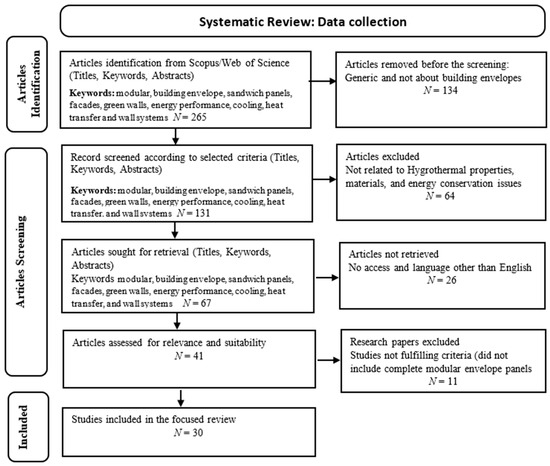
The research approach follows a three-step systematic review process indicating the study’s main procedure, including steps and factors considered. The first step of the systematic review was the identification of records through an extensive search and review using the Scopus and Web of Science databases employing the following keywords: modular, building envelope, sandwich panels, facades, green walls, energy performance, cooling, heat transfer, and wall systems. Documents published before 2012 were initially excluded from the study to focus on developments within the last ten years. The search yielded 265 papers subjected to various detailed inspection and screening levels. The first screening process removed all articles that did not discuss building envelopes based on abstract and conclusion analysis, which reduced the total number of articles to 131. The second filtering process removed all articles discussing building envelopes unrelated to hygrothermal properties, materials, and energy, reducing the total number of articles to 67. The third filtering process removed all articles published in languages other than English or without access to full content, removing 26 papers. The remaining 41 research papers were downloaded and reviewed using an analysis of the abstract, introduction, and methodology to determine their relevance to the topic, which resulted in the removal of 11 articles not specifically addressing modular building envelope panels. As shown in Table 1, the remaining 30 documents were thoroughly reviewed and documented. Figure 1 presents the data collection approach adopted for the systematic review. Table 1 lists the papers sorted by year in the systematic literature review, with the associated ID numbers and country where the research was conducted. In addition to excluding studies that do not address hydrothermal or environmental performance, other performance requirements like strength and durability have fewer implications for the building location. Since most of the established envelope panels are concentrated in temperate climates (Table 2), focusing on establishing the study gap between temperate and hot and hot–humid climates is essential.
Table 1.
Research studies/articles included in the review with their respective ID.
Figure 1.
Data collection and systematic review approach.
Table 2.
Summary of findings related to modular envelope panels between 2012 and 2022.
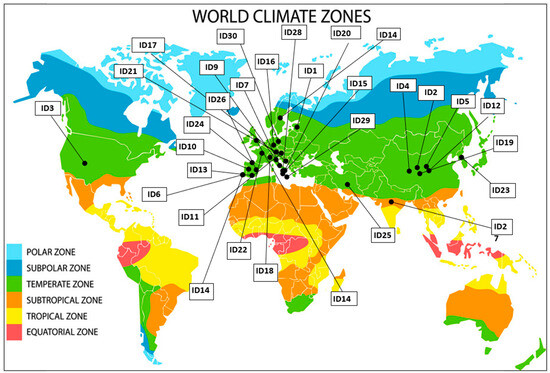
The studies examined in this research covered about 19 countries, with 17 countries accounting for 28 studies focusing on cold climates and only two countries, i.e., Iran and India, addressed modular building envelope panels in hot climates (Table 1), and even the Iranian case study is located in a city (Tabriz) situated in a temperate climate. This finding indicates that most modular envelope panels are intended for cold climates, implying that more research is needed to bridge this knowledge gap. It is challenging for envelope panels designed for a particular environment to support other climatic zones because of the opposing comfort requirements of the various climatic zones. Figure 2 illustrates the geographic region and distribution of the research publications on the topic “Modular Building Envelopes” with their respective IDs in relation to the world climate zones. It can be inferred that there are three research clusters: the largest in Europe, the second in China, and the third in the Iberian Peninsula. The three clusters are located in the green band, representing the temperate climatic zones of the world.
Figure 2.
Geographic region and distribution of the research publications on the topic “Modular Building Envelopes” with their respective ID in relation to the world climate zones (source: authors’ elaboration based on Scopus and Web of Science data).
3. Modular Building Envelope Panels and Systems: Research Status
Several studies have been conducted on applying modular envelope panels to enhance building envelope/facade performance, as summarized in Table 2. Bevilacqua et al. [7] investigated the performance of Trombe walls and their ability to provide proper ventilation, considering various climatic parameters to reduce summer thermal needs. Their results indicate that well-conceived Trombe walls can save energy in both summer and winter. The implemented ventilation strategies decreased air-conditioning electric demand by 10.5% compared to a traditional envelope while reducing CO2 emissions by about 185 kg per year [7]. Another study [48] investigated a classic Trombe wall’s heating and cooling potential as a passive solar system with a massive south-facing wall painted black on the external surface, an air layer, and a glazed exterior. The wall has vents at the top and bottom to allow air thermo-circulation in the air gap. The results showed that increasing the thickness greatly reduces the thermal load; however, the reduction rate slows beyond 125 mm. Using low-emission glazing instead of single pane in a Trombe wall system reduced winter heat losses and increased passive cooling in the summer. Torres et al. [43] studied the performance of the prefabricated plug-and-play modular system by reproducing the holistic methodology and integrating new technologies. The outcome indicates that the system achieved savings in a confirmed case of 50% (time), 30% (materials), and 25% (waste) compared to more conventional construction methods, translating to achieving significant economic savings [43].
Furthermore, the integration of smart walls to promote sustainability and energy efficiency has been investigated. Smart walls are multifunctional wall systems that combine several technologies to improve a building’s thermo-environmental performance by optimizing the envelope system. Smart walls can be installed on the building’s exterior as a façade wall or interior in case of space restrictions or aesthetic constraints. The standard technologies incorporated into versatile modular system smart walls include solar photovoltaics, insulation materials, slim-type fan coils, timber-based frames, and high-performance windows. The energy performance of this prefabricated system is investigated at the component and building levels, revealing an 89% reduction in total primary energy [15].
Likewise, researchers have examined the integration of thermoelectric heat pumps into modular building envelope systems. Implementing thermoelectricity in buildings represents an alternative to improving the indoor thermal environment because the technology eliminates the need for refrigerants. The system creates the thermoelectric effect when an electrical current passes through a semiconductor group of unions, with one side of the cell absorbing heat and releasing it into the other depending on the direction of the current. If the direction changes, the effect is reversed [45]. Numerous studies have been conducted on Ventilated Active Thermoelectric Envelope (VATE) systems [35,45]. VATE is an industrial-scale modular prototype designed to be installed in building façades as an alternative heating and cooling solution in net-zero energy buildings. Zuazua-Ros et al. [35] evaluated the prototype VATE module’s performance, revealing that heating power varies between 66.8 and 273.6 W depending on the input voltage tested. The overall system’s COP decreases from 2.1 to 1.0 as voltage increases. Z. Liu et al. [8] investigated active a solar thermoelectric radiant wall (ASTRW) that uses radiant panel systems to provide a combination of radiant and convective cooling to the room [49]. The system is a solar wall technology integrated with thermoelectric radiant cooling and photovoltaic (PV) technologies. The PV system directly converts solar into electrical energy to power the thermoelectric cooling modes integrated into one enclosure surface as a radiant panel [8]. According to the experimental results, the ASTRW can lower the inner surface temperature by 3–8 °C, indicating its ability to control the thermal flux of the building envelope using solar energy and reduce the air conditioning system requirements [8].
Additionally, a semi-transparent modular building-integrated photovoltaic façade was developed. Its performance was investigated, indicating a 40% to 55% reduction in energy needs compared to the reference façade, with solar energy utilization efficiency ranging from 44% to 63% [4]. However, the thermal performance of the Building Active Steel Skin Envelope (BASSE) was experimentally investigated and validated, indicating that the heat pump’s coefficient of performance (COP) ranges from 4.1 to 4.6, generating 3321.14 kWh/year, which corresponds to an efficiency of 30.4% [10]. Moreover, the thermal performance of the Ferro Cellular Lightweight Concrete Insulated Panel (FCIP) has been investigated, and results show that heat transfer through the envelope is significantly reduced. The installation of FCIP allows for only a two °C increase in the internal temperature of the room chamber in two hours. In contrast, brick masonry allows for a 9.5 °C rise in the internal temperature of the room chamber over the same period [46].
Another effective means of enhancing building envelope performance is implementing green building envelopes, which provide benefits such as increased efficiency, contributing to the immediate context through temperature regulation and reduced wind speed, and improved biodiversity in dense urban environments [50]. Green or vegetable façades are innovative, adaptable, and intelligent facades capable of improving the condition of the hygrothermal environment [12]. A comparative analysis of two living wall systems (LWSs) discovered that the felt-based LWS impacts nearly 100% of the categories analyzed during the LCA manufacturing, construction, and maintenance stages. In contrast, the plastic-based LWS has the least influence on the total environmental impact [12]. Another study [51] developed a new sustainable material known as fiber-reinforced recycled aggregate concrete (FRAC) by incorporating steel fiber (SF) and polypropylene fiber (PPF) into the RAC matrix. The study created a stress–strain constitutive damage evolution function model that accurately predicts the composite’s unloading path, reloading path, residual strain development, and damage evolution. Moreover, a study [52] used Life Cycle Assessment to evaluate a straw bale wall in a lab and in situ to determine the strengths and weakness of the technique, indicating that straw bale wall reduces energy and carbon embodied in the building.
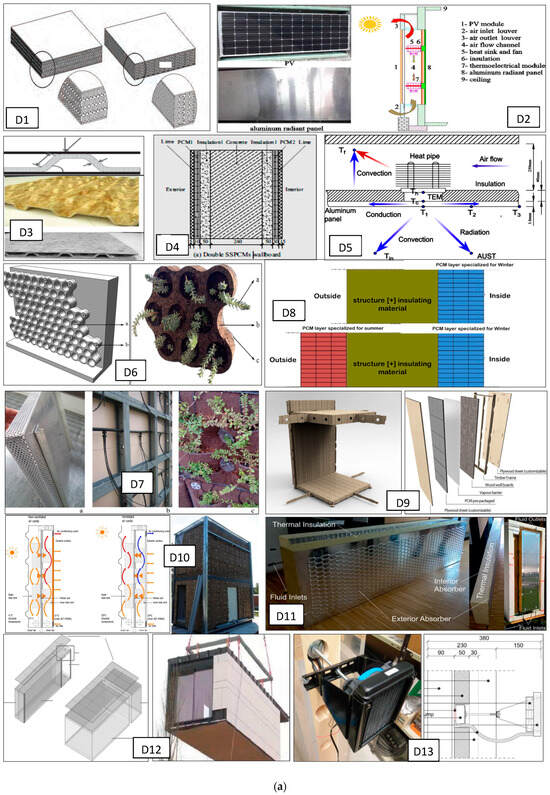
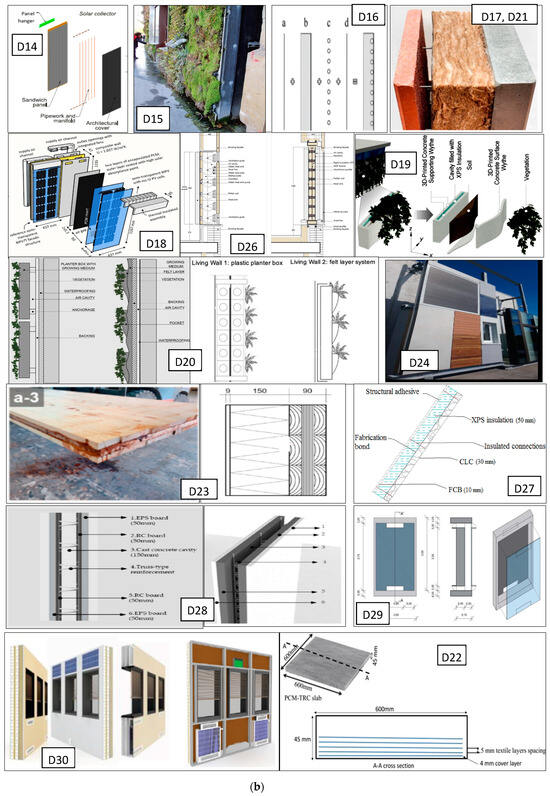
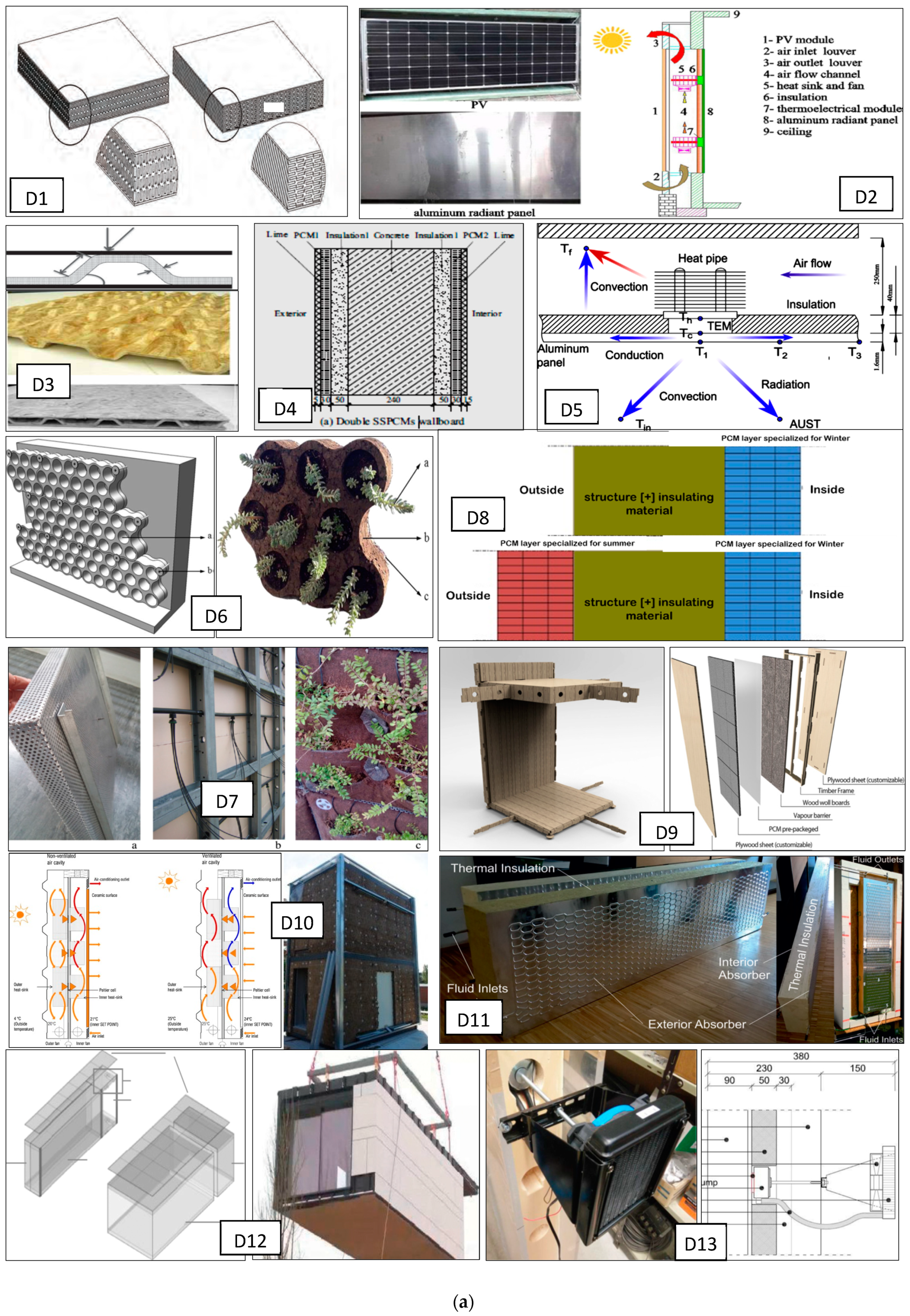
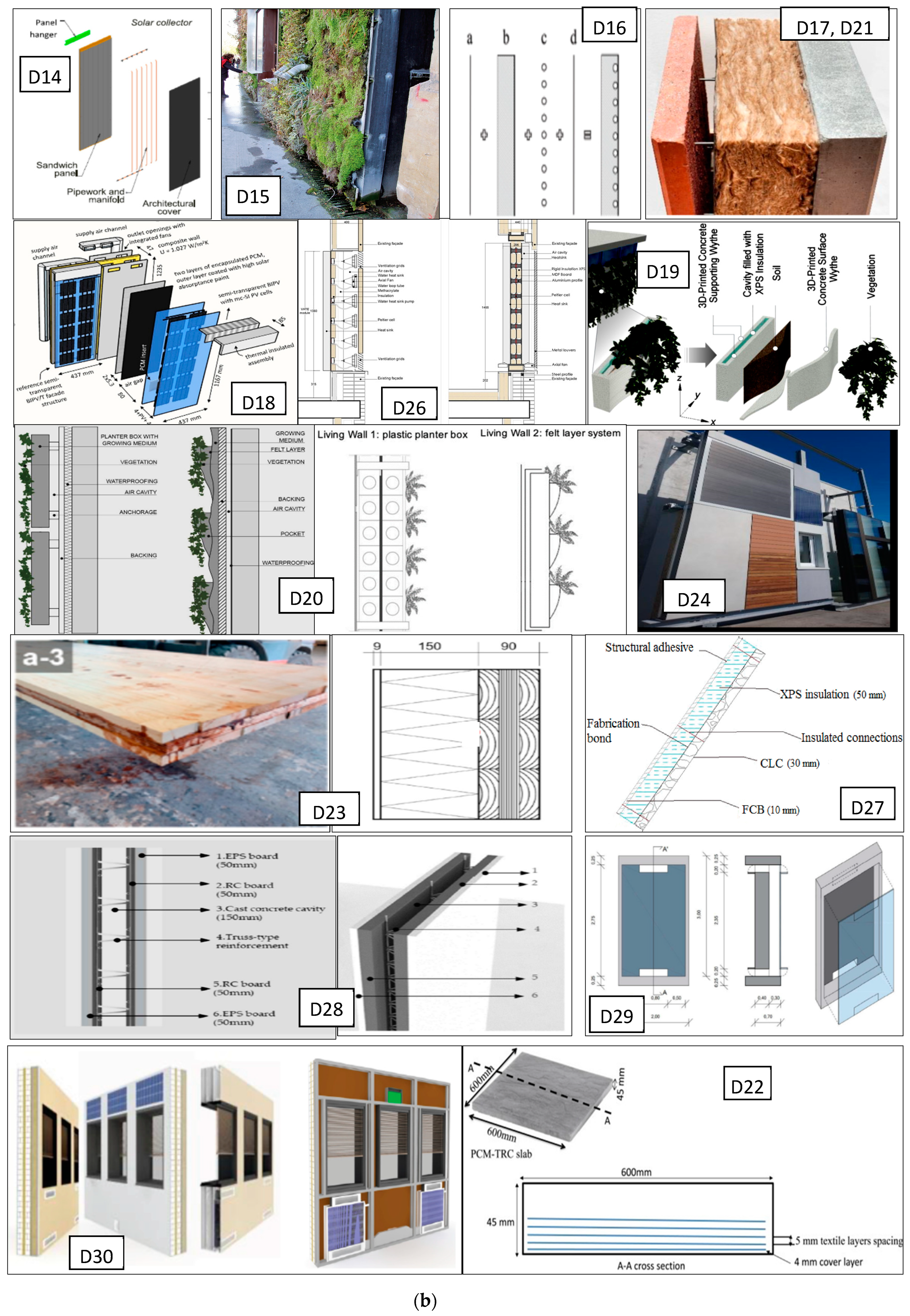
Therefore, the documented findings of the studies (Table 2) have considered the energy, hygrothermal, environmental mechanical, and performance of building envelope panels investigated with the need for further investigation on essential aspects such as envelope thermal bridging, infiltration, flexibility, aesthetics, intelligent envelopes panels and carbon footprints of the used materials. Figure 3a,b are graphic illustrations of the investigated modular building envelope modules/panels, each referenced by the article ID. The modular envelope panel diagrams are presented based on availability; some are 3-dimensional, and others are 2-dimensional illustrations. Figure 3a shows modular envelope panels with article IDs between 1 and 13. In contrast, Figure 3b illustrates the modular envelope panels with IDs between 14 and 30.
Figure 3.
(a) Graphic illustrations of the investigated “Modular Building Envelopes” modules/panels, each referenced by the article (D1–D13) (authors’ collections based on available sources). (b) Graphic illustrations of the investigated “Modular Building Envelopes” modules/panels, each referenced by the article (D14–D24,D26–D30) (authors’ collections based on available sources).
4. Analysis of Review Results
The main goal of analyzing the results is systematically segregating the data into various domains to identify the knowledge gap. A thorough literature review covering the last ten years revealed a significant knowledge gap regarding the context and content of the different developed building envelope panels. The study’s inquiry considered essential envelope parameters, including the study’s research categories, the methodologies used in the reviewed studies, the materials, the focus, the terminologies used to refer to modular building envelope panels, and practical and theoretical contributions of the reviewed research work, as presented in the following sub-sections.
4.1. Main Categories and Characteristics of Modular Envelope Panels
The primary research groups investigated in this study were identified and categorized into three main categories—‘investigate,’ ‘contribute,’ and ‘compare’—with their corresponding examined characteristics and article IDs, as illustrated in Table 3. Several studies have investigated various envelope panel alternatives’ thermal, hygrothermal, and energy performance. Other studies contributed to research methodologies, optimization, and development of envelope systems. At the same time, some studies compared various components of modular building envelope panels.
Table 3.
Main categories of the reviewed research articles and their examined characteristics.
4.2. Methods Used for Investigating Modular Envelope Panels
The thirty reviewed articles covered a variety of research methodologies, such as simulations, mathematical modeling, laboratory/reduced scale experiments, and full-scale experiments, as shown in Table 4. Seventeen studies used various simulation tools, including DesignBuilder (v 5.03.7), COMSOL, TRNSYS (v 17), and PHONICS eQuest. The variation in the simulation tools is usually prompted by the studies’ objectives, goals, and focus, as simulation programs have different capabilities, strengths, and weaknesses. Some simulation programs are excellent in estimating energy consumption, while others perfectly simulate the hygrothermal behavior of materials and contaminant transport. Furthermore, thirteen studies applied full-scale experiment methods, with some employing more than one method to conduct their research for triangulations, verifications, and validations. Employing several data collection and analysis techniques in investigations is essential to enhance the reliability and validity of the study outcome. The other methodologies frequently used in the studies after simulation and full-scale experiments include mathematical modeling employed by six studies and laboratory tests used by seven studies (Table 4). The issues and characteristics of the various methodologies examined are also captured in Table 4.
Table 4.
Main research methods of the reviewed research articles and their examined characteristics.
4.3. Modular Envelope Panel Materials
Based on the articles analyzed in this study, modular building envelope panels have been developed using various materials depending on the envelope’s type, characteristics, and configurations. The materials were categorized into finishing, core envelope, insulations, adhesive/binders, radiant panels/thermal storage, thermoelectric coolers, frames, active energy generators, accessories, and others, as shown in Table 5. The documentation of these materials is crucial for developing similar and more efficient envelope panels. One of the significant considerations for developing modular building envelope panels is the ability of the designed panel to compete with other commercially available panels in the market, especially in terms of appearance. The selection of insulation materials is vital for the hygrothermal performance of any developed modular envelope panel. When selecting building insulation materials, several factors are considered, including thermal resistance, sound resistance, damp proof, durability, density, contaminant emission characteristics, weight, availability, and other mechanical properties. The core envelope materials are usually the materials that are responsible for withstanding the mechanical properties of the envelope, including strength, stiffness, and durability. The reviewed studies have used several core materials, most of which are applied in temperate climates. The possibility of these materials performing in hot climates is subject to further investigations.
Table 5.
Different materials used for making envelope panels.
Furthermore, a study [53] demonstrated that reducing the sizes of structural members and the number of braces, shear walls, and columns in modular structures can increase flexibility in internal layout. Another study [54] reviewed the structural performance of modular buildings, and the results suggest the use of cold-formed steel shear wall systems as a lateral load-resisting system owing to their numerous advantages. A similar study [55] investigated a new vertical intermodular connection for modular steel buildings (MSBs). The results indicated that the post-tensioning (PT) connection has similar lateral stiffness to the welded connection, with greater energy dissipation capacity, and may be categorized as a partially semi-rigid solid connection. Both welded and PT specimens exhibit sufficient ductility capable of enduring drifts of up to three percent without experiencing welding fractures or buckling. Thus, the structural and mechanical properties of modular envelope panels have been well researched and documented [26,30,33,36,37,38,41]. The types of other materials used are presented in Table 5.
4.4. Terminologies Used for Modular Envelope
Different researchers have referred to modular building envelope panels in diverse ways. These terminologies have been categorized into four (4) groups—active wall panels, passive wall panels, smart wall panels, and green/vegetated wall panels—as presented in Table 6. The active wall panels are a group of modular building envelope panels that operate dynamically to generate electricity, heat, ventilate, or cool. This study documented eleven prominent panel terminologies used by eleven studies in this category, as presented in Table 6. The passive wall panels recorded thirteen different terminologies applied in thirteen studies, and both the smart wall and the green/vegetated wall panels had three terminologies each. These terminologies are mainly derived from the properties, materials, and nature of the operation of the walls.
Table 6.
Different terminologies used for modular envelope.
4.5. The Focus of Various Modular Envelope Panel Studies
Various focus areas of the reviewed literature have been documented to understand the diversity of the issues covered by the modular envelope panel studies, categorizing them into four (4) groups, including hygrothermal performance, energy performance, environmental performance, and mechanical performance, as shown in Table 7. Most studies on modular building envelope panels emphasize hygro-thermal performance, as nineteen documented studies examined hygro-thermal performance. In contrast, twenty-two studies investigated energy performance, which is the focus of most studies. Nine and seven studies focus on environmental and mechanical performance, respectively. Hygro-thermal and energy performance are inextricably linked because most studies on building envelope hygro-thermal performance are conducted to reduce energy consumption. When a building envelope’s heat transfer is optimized to provide acceptable thermal comfort indoors, the cooling load of the air conditioning system is reduced, resulting in significant energy savings and, by implication, decreasing carbon emissions.
Table 7.
The focus of the reviewed studies.
5. Discussion of the Results
Researchers have employed various measures to evaluate the performance of building envelope panels and have arrived at different conclusions, which have been presented in the following subsections.
5.1. Energy Savings of Various Modular Envelope Panels
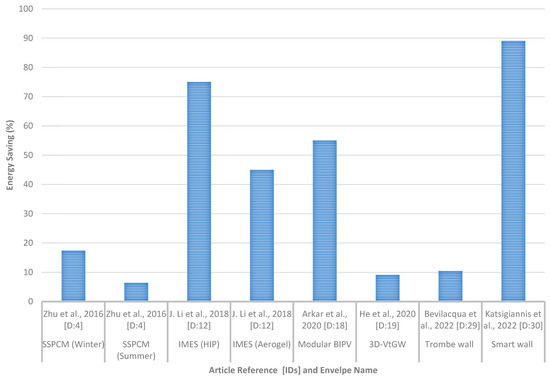
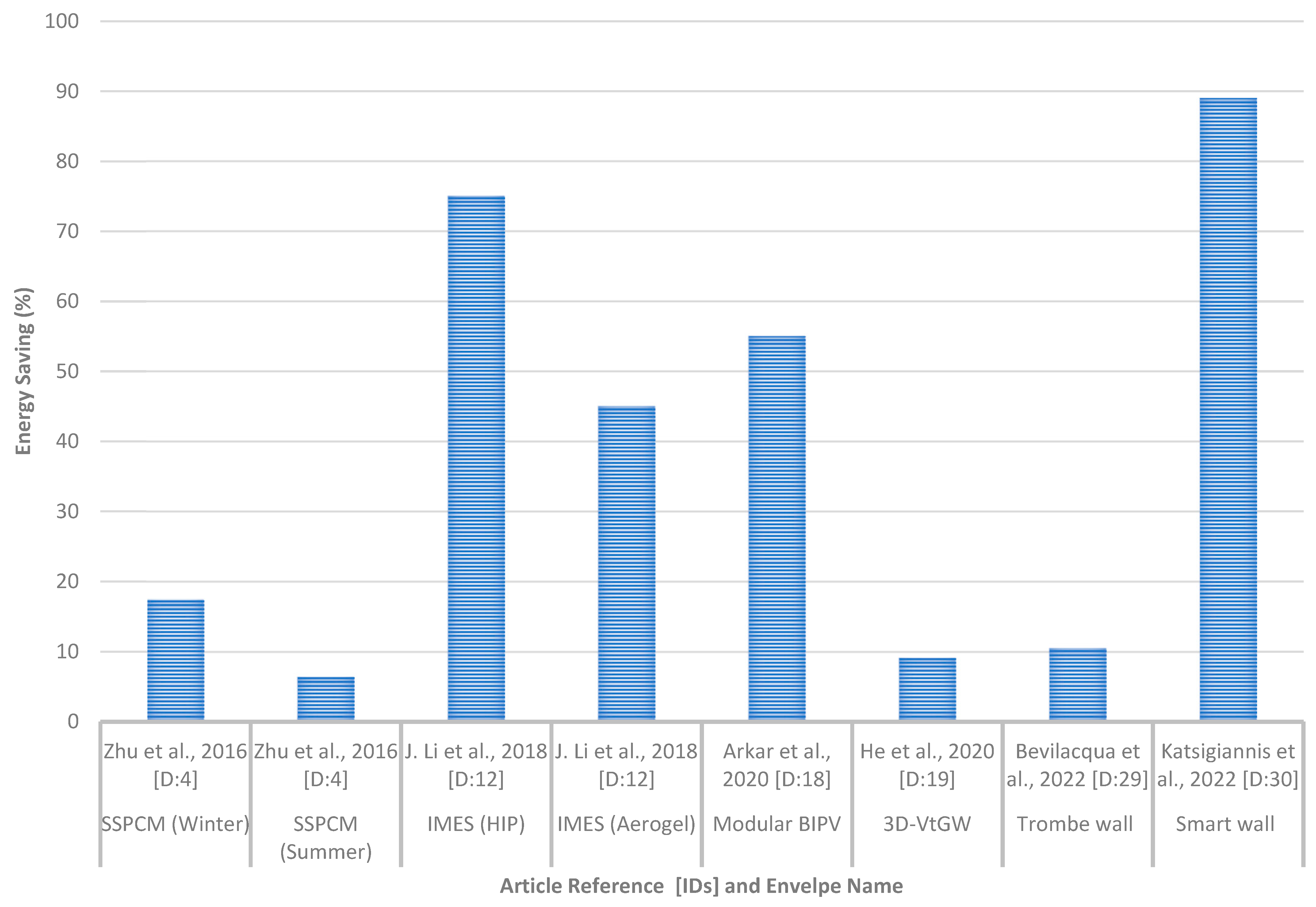
Several studies have used energy savings to test the performance of building envelope panels. The ‘smart wall’ modular envelope panels recorded the highest energy savings of 89%, achieving 7.5 kWh/m2 energy consumption. The lowest energy savings, 6.4% in summer and 17.8% in winter, was recorded by the Shape-Stabilized Phase Change Material (SSPCM) wallboards, as illustrated in Figure 4. Although studies have reported various degrees of energy savings using different optimization mechanisms, they fall short of realizing net-zero energy buildings of 100% energy savings. However, achieving net-zero buildings was not the ultimate goal of some studies. Figure 4 illustrates annual energy savings, except ID:4 (SSPCMs), which are summer and winter savings.
Figure 4.
Energy saving achievements as reported by some studies [4,7,15,27,34,39].
Moreover, modular building envelope panels integrate many renewable technologies, including solar photovoltaics, to generate energy in addition to energy savings. A modular envelope panel called ‘Building Active Steel Skin Envelope (BASSE)’ by Bock [10] generated about 3321.14 kWh/year, translating to about 30.4% efficiency. Such generation rates, envelope optimization, and other measures can provide near net-zero energy buildings. Another study [13] on a modular envelope wall called ‘Mediterranean Smart Adaptive Wall (MSAW)’ studied heat storage with a storage thermal capacity coefficient between 16.3 kJ/m2K and 17.6 kJ/m2K. Such storage systems are capable of saving a considerable amount of energy.
5.2. Effect of Heat Flux Control
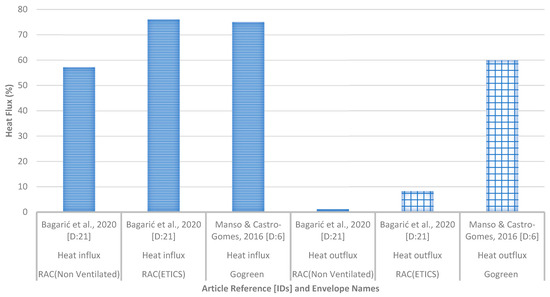
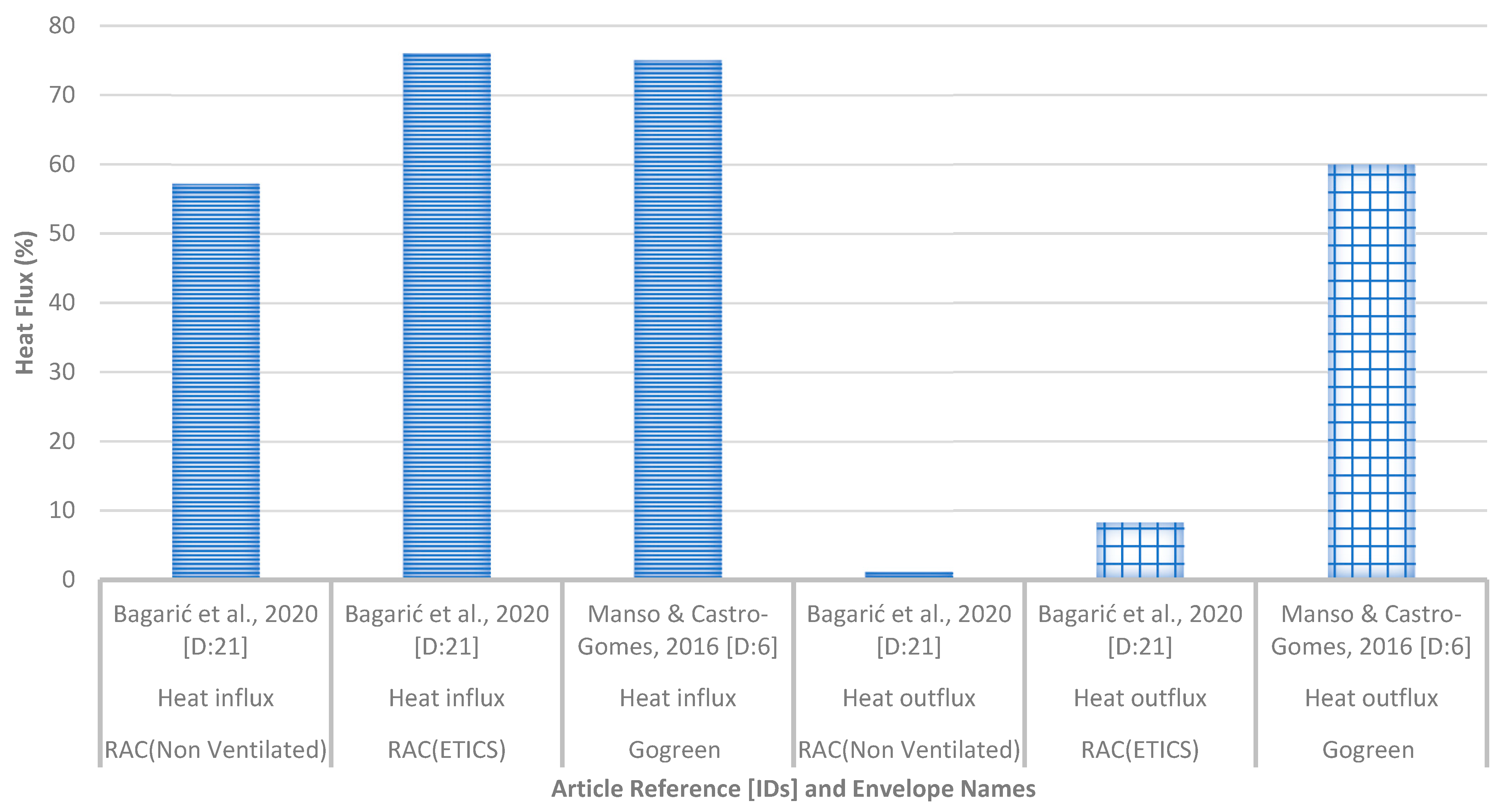
Several building envelope panel optimization strategies were used to achieve the energy-saving achievements reported in Section 5.1. These strategies included combining insulation and other thermal control optimization methods to manage heat influx and outflux through the building envelope assembly. Studies have realized significant reductions of heat flux from outdoors to building indoors, with the RAC-ETICS envelope reducing heat flux by 76.11%, which is the highest reduction, while Gogreen walls reduced heat flux by 75%, and RAC-non-ventilated envelopes reduced heat flux by 57.19%, as illustrated in Figure 5. However, regarding heat outflux, the Gogreen wall achieved the highest reduction (60%) compared to RAC-ETICS and RAC-non-ventilated walls, with 8.36 and 1.12%, respectively (Figure 5). Any envelope heat flux accomplishment directly contributes to building energy savings. Figure 5 shows two patterns that distinguish between heat influx and heat outflux.
Figure 5.
% Reduction of heat flux (in, out) from reviewed building envelope studies [29,40].
Moreover, another factor influencing envelope heat flux is the thermal conductivity of the material and assembly. Some studies investigated the thermal conductivity of modular building envelope panels. Lightweight cellular wood material (CWM) [25] envelope panels decreased building envelope thermal conductivity between 0.148 and 0.0977 W.m−1 K−1, i.e., 34% better than the reference specimen. The study optimized expanded polystyrene-reinforced concrete (EPS-RC) precast-bearing walls by adding recycled EPS particles to the mixtures. A modular envelope panel called ‘High-Performance Wall Systems (HP Walls)’: expanded polystyrene-reinforced concrete (EPS-RC) precast-bearing walls [47] decreased building envelope thermal conductivity between 1.77 and 0.05 W.m−1 K−1. Another study [34] investigated the heat transfer coefficient of a modular envelope panel called the Integrated Modular Envelope System (IMES). The envelope reduced the heat transfer coefficient of 0.124 W.m−1 K−1 by integrating a high insulation panel (HIP) and 0.257 W.m−1 K−1 by incorporating aerogel. Thus, incorporating high-performing insulation materials can decrease the overall heat transfer coefficient of the envelope assembly and subsequently reduce building energy consumption.
5.3. Future Directions
Based on the above analysis, limited studies have extended their investigations to cover building envelope panels’ environmental impact from production to operations. A study examined the CO2 emissions of a modular Trombe wall in which the wall reduced CO2 emissions by 185 kg per year by optimizing the envelope to reduce cooling and energy demand. Another study [43] explored the performance of the “plug and play” modular façade, which achieved 50% time savings, 30% material savings, and 25% waste savings. Due to the importance of environmental impact, mainly due to carbon emissions, which contribute to global warming and greenhouse gas emissions, modular building envelope panel studies should consider environmental impacts.
Furthermore, the current challenges of modular building envelope panels involve differences in performance across various climates, inconsistent installation practices, varying standards for application and utilization, air leakage, energy consumption, diverse performance reporting units, differing structural system requirements, lack of standardized classifications, and constraints related to uniformity in shape, size, and form. The future of modular envelope panels involves creating uniform guidelines that regulate their manufacturing (considering different climates), installation, performance requirements, and maintenance.
6. Conclusions and Recommendations
6.1. Conclusions
This study investigated the terminologies, characteristics, and performance of modular building envelope panels through a systematic, comprehensive review by applying multiple criteria in the review process, arriving at 30 relevant articles from Scopus and Web of Science. The findings reveal that modular building envelopes are referenced using various terminologies, with most studies focusing on temperate climates. Limited research exists for hot and hot–humid climate regions. Furthermore, researchers have used different materials to construct modular building envelopes, emphasizing hygrothermal and energy performance. Simulations and full-scale experiments were commonly employed as methodologies to investigate the performance of these panels. The specific results can be summarized as follows:
- Inconsistent assessment standards and methods were observed in investigating modular building envelopes. Researchers employed diverse research methods, resulting in parameter variations and variations in units used to express their findings. Multiple performance indicators were utilized, such as the demand/load for air-conditioning electric, primary energy, heating load, BIPV coverage index, coefficient of performance (COP), summer heat gains, thermal capacity coefficient, energy efficiency, surface temperature, cooling efficiency, room temperature, heat inflow/outflow, PCM melting points, thermal performance, and thermal conductivity. Among these indicators, COP, air-conditioning electric demand, energy efficiency, and surface temperature were frequently employed, leading to a fragmented system for reporting the performance of modular envelope panels.
- Energy savings was identified as the primary performance indicator for building envelope optimization. However, comparing the results of various studies proved challenging due to the diverse methodologies and indicators employed.
- Establishing standard terminology for modular building envelope panels is crucial to facilitate clarity and understanding and to address the current abundance of naming systems. Specific classifications have been established based on technical and functional attributes to distinguish between modular envelope panels, including active, passive, smart, and green/vegetated panels. Furthermore, the concentration of research on modular envelope panels in cold climates indicates the need for further investigation to bridge this knowledge gap to balance the regional and contextual disparities.
- Four (4) focus areas in modular building envelope research were observed, including hygrothermal, energy, environmental, and mechanical performance. However, compared to hygrothermal and energy performance studies, limited research exists on envelope panels’ environmental impact and performance. Consequently, more research is required to highlight their potential environmental impacts.
In conclusion, this study contributes valuable insights into modular building envelope panels’ hygrothermal and energy performance. The findings emphasize the need for standardized assessment methods, further research to address existing gaps, and the importance of regional balance in investigations.
6.2. Recommendations
This study highlights several recommendations to facilitate the widespread adoption of modular building envelope systems. First and foremost, there is a pressing need to establish comprehensive assessments, rating standards, and best practice guidelines for these systems. These standards and guidelines can ensure consistency and enable effective comparison of their performance across different projects. Additionally, it is crucial for scholars and practitioners to utilize consistent units when quantifying the performance of modular building envelopes. Standardizing reporting units enhances clarity and facilitates a better understanding of their capabilities.
Furthermore, establishing a uniform set of terminologies for classifying modular building envelope systems is recommended. The proposed classification consists of four categories: active wall panels, passive wall panels, smart wall panels, and green/vegetated wall panels. This uniform terminology can facilitate effective communication and knowledge exchange among researchers, industry professionals, and other stakeholders. The primary focus of the manufacturing industry is typically on prototyping to minimize the expenses associated with making envelope panels using various molds and combinations, which necessitate many production lines. If this study’s suggested types and classifications are implemented, the industry will benefit since it can ensure consistent supply and demand.
Finally, the study emphasizes the importance of further research in developing modular building envelopes customized for hot and hot–humid climatic conditions. These customizations should not only strive to achieve contextual balance but also focus on assessing their environmental performance and impact, thus contributing to the realization of sustainable buildings on a global scale. By implementing these recommendations, the adoption of modular building envelope systems can be accelerated, leading to more sustainable and energy-efficient construction practices by optimizing the system’s energy-saving, mechanical, and thermo-environmental capabilities and raising awareness about its benefits among estate and building developers. The insights from this research contribute to the growing body of knowledge in this field and provide a valuable foundation for future studies and advancements in modular building envelope technology.
6.3. Significance of the Study
By adopting the recommended measures, the outcomes of this study hold significant benefits for researchers, policymakers, and relevant organizations in advancing the development of building performance-related standards and codes in an informed and effective manner. The study outcome provides valuable tools to standardize modular building envelope performance, measurement units, categorization, and the incorporation of climatic considerations into their design, application, and maintenance.
Author Contributions
Conceptualization, M.A.M. and I.M.B.; methodology, M.A.M.; formal analysis, M.A.M. and A.A.A.; investigation, M.A.M., I.M.B. and M.A.A.-O.; resources, M.A.M. and M.A.A.-O.; data curation, M.A.M.; writing—original draft preparation, M.A.M.; writing—review and editing, M.A.M., I.M.B., M.A.A.-O. and A.A.A.; visualization, A.A.A. and M.A.M.; supervision, I.M.B. and M.A.A.-O.; project administration, M.A.M.; funding acquisition, M.A.M. All authors have read and agreed to the published version of the manuscript.
Funding
This research was funded by King Fahd University of Petroleum and Minerals (Grant Number: INCB 2212).
Acknowledgments
The authors would like to express their gratitude and appreciation to King Fahd University of Petroleum and Minerals (KFUPM) for its support in conducting this research and the Interdisciplinary Research Center for Construction and Building Materials (IRC-CBM). The authors would also like to thank Muhammad Bin Hassan Al-Bin Saleh for supporting the project.
Conflicts of Interest
The authors declare no conflict of interest.
References
- Li, Y.; Chen, L. Investigation of European modular façade system utilizing renewable energy. Int. J. Low-Carbon Technol. 2022, 17, 279–299. [Google Scholar] [CrossRef] [Scilit]
- Ng, P.K.; Mithraratne, N. Lifetime performance of semi-transparent building-integrated photovoltaic (BIPV) glazing systems in the tropics. Renew. Sustain. Energy Rev. 2014, 31, 736–745. [Google Scholar] [CrossRef] [Scilit]
- Park, H.S.; Koo, C.; Hong, T.; Oh, J.; Jeong, K. A finite element model for estimating the techno-economic performance of the building-integrated photovoltaic blind. Appl. Energy 2016, 179, 211–227. [Google Scholar] [CrossRef] [Scilit]
- Arkar, C.; Žižak, T.; Domjan, S.; Medved, S. Dynamic parametric models for the holistic evaluation of semi-transparent photovoltaic/thermal façade with latent storage inserts. Appl. Energy 2020, 280, 115994. [Google Scholar] [CrossRef] [Scilit]
- Nore, K. NTNU Open: Hygrothermal Performance of Ventilated Wooden Cladding. Ph.D. Thesis, NTNU, Torgarden, Norway, 2010. Available online: https://ntnuopen.ntnu.no/ntnu-xmlui/handle/11250/231575 (accessed on 7 July 2022).
- Knaack, U.; Klein, T.; Bilow, M.; Auer, T. (Eds.) Façades: Principles of Construction, 2nd ed.; Books on Google Play; Birkhäuser: Basel, Switzerland, 2014; Available online: https://play.google.com/store/books/details?id=I_DnBQAAQBAJ&rdid=book-I_DnBQAAQBAJ&rdot=1&source=gbs_vpt_read&pcampaignid=books_booksearch_viewport (accessed on 7 July 2022).
- Bevilacqua, P.; Bruno, R.; Szyszka, J.; Cirone, D.; Rollo, A. Summer and winter performance of an innovative concept of Trombe wall for residential buildings. Energy 2022, 258, 124798. [Google Scholar] [CrossRef] [Scilit]
- Liu, Z.; Zhang, L.; Gong, G.; Han, T. Experimental evaluation of an active solar thermoelectric radiant wall system. Energy Convers. Manag. 2015, 94, 253–260. [Google Scholar] [CrossRef] [Scilit]
- Telichenko, V.; Benuzh, A.; Eames, G.; Orenburova, E.; Shushunova, N. Development of Green Standards for Construction in Russia. Procedia Eng. 2016, 153, 726–730. [Google Scholar] [CrossRef] [Scilit]
- Bock, M. A building integrated solar thermal collector with active steel skins. Energy Build. 2019, 201, 134–147. [Google Scholar] [CrossRef] [Scilit]
- Gallo, P.; Romano, R. Adaptive Box Window, developed with innovative nanomaterial, for a sustainable architecture in the Mediterranean area. Energy Procedia 2017, 122, 883–888. [Google Scholar] [CrossRef] [Scilit]
- Oquendo-Di Cosola, V.; Olivieri, F.; Ruiz-García, L.; Bacenetti, J. An environmental Life Cycle Assessment of Living Wall Systems. J. Environ. Manag. 2020, 254, 109743. [Google Scholar] [CrossRef] [Scilit] [PubMed]
- Iommi, M. The mediterranean smart adaptive wall. An experimental design of a smart and adaptive facade module for the mediterranean climate. Energy Build. 2018, 158, 1450–1460. [Google Scholar] [CrossRef] [Scilit]
- Ferdous, W.; Bai, Y.; Ngo, T.D.; Manalo, A.; Mendis, P. New advancements, challenges and opportunities of multi-storey modular buildings—A state-of-the-art review. Eng. Struct. 2019, 183, 883–893. [Google Scholar] [CrossRef] [Scilit]
- Katsigiannis, E.; Gerogiannis, P.A.; Atsonios, I.; Bonou, A.; Mandilaras, I.; Georgi, A.; Papadopoulou, S.; Tsoutis, C.; Founti, M. Energy assessment of a residential building renovated with a novel prefabricated envelope integrating HVAC components. IOP Conf. Ser. Earth Environ. Sci. 2022, 1078, 012130. [Google Scholar] [CrossRef] [Scilit]
- Fiume, F.; Callegaro, N.; Albatici, R. Modular Construction for Emergency Situation: A Design Methodology for the Building Envelope. In Advances in Science, Technology & Innovation; Springer: Cham, Switzerland, 2021; pp. 131–141. [Google Scholar] [CrossRef] [Scilit]
- Luo, Y.; Zhang, L.; Bozlar, M.; Liu, Z.; Guo, H.; Meggers, F. Active building envelope systems toward renewable and sustainable energy. Renew. Sustain. Energy Rev. 2019, 104, 470–491. [Google Scholar] [CrossRef] [Scilit]
- Fawaier, M.; Bokor, B. Dynamic insulation systems of building envelopes: A review. Energy Build. 2022, 270, 112268. [Google Scholar] [CrossRef] [Scilit]
- Finch, G.; Marriage, G.; Pelosi, A.; Gjerde, M. Building envelope systems for the circular economy: Evaluation parameters, current performance and key challenges. Sustain. Cities Soc. 2021, 64, 102561. [Google Scholar] [CrossRef] [Scilit]
- Villegas, J.E.; Camilo, J.; Gutierrez, R.; Colorado, H.A. Active materials for adaptive building envelopes: A review. J. Mater. Environ. Sci. 2020, 2020, 988–1009. Available online: http://www.jmaterenvironsci.com (accessed on 21 September 2022).
- Narbuts, J.; Vanaga, R. Revolutionizing the Building Envelope: A Comprehensive Scientific Review of Innovative Technologies for Reduced Emissions. Environ. Clim. Technol. 2023, 27, 724–737. [Google Scholar] [CrossRef] [Scilit]
- Correia Lopes, G.; Vicente, R.; Azenha, M.; Ferreira, T.M. A systematic review of Prefabricated Enclosure Wall Panel Systems: Focus on technology driven for performance requirements. Sustain. Cities Soc. 2018, 40, 688–703. [Google Scholar] [CrossRef] [Scilit]
- Kamali, M.; Hewage, K. Life cycle performance of modular buildings: A critical review. Renew. Sustain. Energy Rev. 2016, 62, 1171–1183. [Google Scholar] [CrossRef] [Scilit]
- Wang, X.; Zhang, Y.; Xiao, W.; Zeng, R.; Zhang, Q.; Di, H. Review on thermal performance of phase change energy storage building envelope. Chin. Sci. Bull. 2009, 54, 920–928. [Google Scholar] [CrossRef] [Scilit]
- Rozins, R.; Iejavs, J. Evaluation of thermal properties of wood based composite panel walls. Res. Rural Dev. 2014, 2, 109–114. [Google Scholar]
- Voth, C.; White, N.; Yadama, V.; Cofer, W. Design and evaluation of thin-walled hollow-core wood-strand sandwich panels. J. Renew. Mater. 2015, 3, 234–243. [Google Scholar] [CrossRef] [Scilit]
- Zhu, N.; Liu, P.; Liu, F.; Hu, P.; Wu, M. Energy performance of double shape-stabilized phase change materials wallboards in office building. Appl. Therm. Eng. 2016, 105, 180–188. [Google Scholar] [CrossRef] [Scilit]
- Luo, Y.; Zhang, L.; Liu, Z.; Wang, Y.; Wu, J.; Wang, X. Dynamic heat transfer modeling and parametric study of thermoelectric radiant cooling and heating panel system. Energy Convers. Manag. 2016, 124, 504–516. [Google Scholar] [CrossRef] [Scilit]
- Manso, M.; Castro-Gomes, J.P. Thermal analysis of a new modular system for green walls. J. Build. Eng. 2016, 7, 53–62. [Google Scholar] [CrossRef] [Scilit]
- Serra, V.; Bianco, L.; Candelari, E.; Giordano, R.; Montacchini, E.; Tedesco, S.; Larcher, F.; Schiavi, A. A novel vertical greenery module system for building envelopes: The results and outcomes of a multidisciplinary research project. Energy Build. 2017, 146, 333–352. [Google Scholar] [CrossRef] [Scilit]
- Baldassarri, C.; Sala, S.; Caverzan, A.; Lamperti Tornaghi, M. Environmental and spatial assessment for the ecodesign of a cladding system with embedded Phase Change Materials. Energy Build. 2017, 156, 374–389. [Google Scholar] [CrossRef] [Scilit]
- Ibañez-Puy, M.; Martín-Gómez, C.; Bermejo-Busto, J.; Sacristán, J.A.; Ibañez-Puy, E. Ventilated Active Thermoelectric Envelope (VATE): Analysis of its energy performance when integrated in a building. Energy Build. 2018, 158, 1586–1592. [Google Scholar] [CrossRef] [Scilit]
- Brandl, D.; Schober, H.; Hochenauer, C. Analysis of heating effects and deformations for a STAF panel with a coupled CFD and FEM simulation method. J. Facade Des. Eng. 2018, 6, 116–131. [Google Scholar] [CrossRef]
- Li, J.; Lu, S.; Wang, W.; Huang, J.; Chen, X.; Wang, J. Design and Climate-Responsiveness Performance Evaluation of an Integrated Envelope for Modular Prefabricated Buildings. Adv. Mater. Sci. Eng. 2018, 2018, 1–14. [Google Scholar] [CrossRef] [Scilit]
- Zuazua-Ros, A.; Martín-Gómez, C.; Ibáñez-Puy, E.; Vidaurre-Arbizu, M.; Ibáñez-Puy, M. Design, assembly and energy performance of a ventilated active thermoelectric envelope module for heating. Energy Build. 2018, 176, 371–379. [Google Scholar] [CrossRef] [Scilit]
- Santi, G.; Bertolazzi, A.; Croatto, G.; Turrini, U. Vertical turf for green faÇades: A vertical greenery modular system integrated to the building envelope. J. Green Build. 2019, 14, 111–132. [Google Scholar] [CrossRef] [Scilit]
- Weiland, F.; Kirchner, M.; Rensinghoff, V.; Giovannetti, F.; Kastner, O.; Ridder, D.; Tekinbas, Y.; Hachul, H. Performance assessment of solar thermally activated steel sandwich panels with mineral wool core for industrial and commercial buildings. J. Phys. Conf. Ser. 2019, 1343, 012098. [Google Scholar] [CrossRef] [Scilit]
- Pečur, I.B.; Bagarić, M.; Milovanović, B. Development and application of a prefabricated façade panel containing recycled construction and demolition waste. J. Facade Des. Eng. 2020, 8, 101–125. [Google Scholar] [CrossRef]
- He, Y.; Zhang, Y.; Zhang, C.; Zhou, H. Energy-saving potential of 3D printed concrete building with integrated living wall. Energy Build. 2020, 222, 110110. [Google Scholar] [CrossRef] [Scilit]
- Bagarić, M.; Banjad Pečur, I.; Milovanović, B. Hygrothermal performance of ventilated prefabricated sandwich wall panel from recycled construction and demolition waste—A case study. Energy Build. 2020, 206, 109573. [Google Scholar] [CrossRef] [Scilit]
- Djamai, Z.I.; Larbi, A.S.; Salvatore, F. A Non-paraffinic PCM Modified Textile Reinforced Concrete Sand-Wich Panel. Lect. Notes Civ. Eng. 2020, 54, 453–458. [Google Scholar] [CrossRef] [Scilit]
- Chang, S.J.; Kang, Y.; Yun, B.Y.; Yang, S.; Kim, S. Assessment of effect of climate change on hygrothermal performance of cross-laminated timber building envelope with modular construction. Case Stud. Therm. Eng. 2021, 28, 101703. [Google Scholar] [CrossRef] [Scilit]
- Torres, J.; Garay-Martinez, R.; Oregi, X.; Torrens-Galdiz, J.I.; Uriarte-Arrien, A.; Pracucci, A.; Casadei, O.; Magnani, S.; Arroyo, N.; Cea, A.M. Plug and play modular façade construction system for renovation for residential buildings. Buildings 2021, 11, 419. [Google Scholar] [CrossRef] [Scilit]
- Azami, A.; Sevinç, H. The energy performance of building integrated photovoltaics (BIPV) by determination of optimal building envelope. Build. Environ. 2021, 199, 107856. [Google Scholar] [CrossRef] [Scilit]
- Martín-Gómez, C.; Zuazua-Ros, A.; del Valle de Lersundi, K.; Sánchez Saiz-Ezquerra, B.; Ibáñez-Puy, M. Integration development of a Ventilated Active Thermoelectric Envelope (VATE): Constructive optimization and thermal performance. Energy Build. 2021, 231, 110593. [Google Scholar] [CrossRef] [Scilit]
- Yasir Khan, M.; Baqi, A.; Sadique, R. Thermal and acoustic behavior of energy saving wall panel. Arch. Civ. Eng. 2021, 67, 303–316. [Google Scholar] [CrossRef]
- Scioti, A.; De Fino, M.; Martiradonna, S.; Fatiguso, F. Construction Solutions and Materials to Optimize the Energy Performances of EPS-RC Precast Bearing Walls. Sustainability 2022, 14, 3558. [Google Scholar] [CrossRef] [Scilit]
- Abolhasani, N.; Saghafi, M.J.; Fayaz, R.; Kari, B.M. Modular Building Envelope Panel with Heating and Cooling Capability. Naqshejahan Basic Stud. New Technol. Archit. Plan. 2016, 6, 41–31. Available online: http://bsnt.modares.ac.ir/article-2-11429-en.html (accessed on 24 June 2022).
- Liu, S.; Schulz, U.W.; Sapar, M.H.; Qian, S. Evaluation of the environmental performance of the chilled ceiling system using life cycle assessment (LCA): A case study in Singapore. Build. Environ. 2016, 102, 207–216. [Google Scholar] [CrossRef] [Scilit]
- Perini, K.; Ottelé, M.; Haas, E.M.; Raiteri, R.; Perini, K.; Ottelé, M.; Haas, E.M.; Raiteri, R. Greening the building envelope, facade greening and living wall systems. Open J. Ecol. 2011, 1, 1–8. [Google Scholar] [CrossRef]
- Wang, C.; Xiao, J.; Liu, W.; Ma, Z. Unloading and reloading stress-strain relationship of recycled aggregate concrete reinforced with steel/polypropylene fibers under uniaxial low-cycle loadings. Cem. Concr. Compos. 2022, 131, 104597. [Google Scholar] [CrossRef] [Scilit]
- D’Alessandro, F.; Bianchi, F.; Baldinelli, G.; Rotili, A.; Schiavoni, S. Straw bale constructions: Laboratory, in field and numerical assessment of energy and environmental performance. J. Build. Eng. 2017, 11, 56–68. [Google Scholar] [CrossRef] [Scilit]
- Lacey, A.W.; Chen, W.; Hao, H.; Bi, K. Structural response of modular buildings—An overview. J. Build. Eng. 2018, 16, 45–56. [Google Scholar] [CrossRef] [Scilit]
- Jammi, A.; Sanjeevi, A.J. Structural performance of modular buildings: A review. ICRTICE Int. Conf. Recent Trends Innov. Civ. Eng. 2021, 77, 19–42. [Google Scholar] [CrossRef] [Scilit]
- Sanches, R.; Mercan, O. Vertical post-tensioned connection for modular steel buildings. In Proceedings of the 12th Canadian Conference on Earthquake Engineering, Quebec City, QC, Canada, 17–20 June 2019; pp. 1–8. Available online: https://www.researchgate.net/publication/335703944_Vertical_post-tensioned_connection_for_modular_steel_buildings#fullTextFileContent (accessed on 22 April 2022).

Disclaimer/Publisher’s Note: The statements, opinions and data contained in all publications are solely those of the individual author(s) and contributor(s) and not of MDPI and/or the editor(s). MDPI and/or the editor(s) disclaim responsibility for any injury to people or property resulting from any ideas, methods, instructions or products referred to in the content. |
© 2024 by the authors. Licensee MDPI, Basel, Switzerland. This article is an open access article distributed under the terms and conditions of the Creative Commons Attribution (CC BY) license (https://creativecommons.org/licenses/by/4.0/).