


Abstract
A solid solution treatment (SST) followed by single-stage aging (0–30 h, 140 °C) was performed on 7075 aluminum alloy specimens with longitudinal axes oriented at 0°, 45° and 90° to the rolling direction. The mechanical properties and microstructure were analyzed by tensile testing, optical microscope (OM), electron backscatter diffraction (EBSD), scanning electron microscope (SEM) and transmission electron microscope (TEM). The results show that the average tensile strengths of the as-received 7075 aluminum alloy in the three directions were 304 MPa (0°), 295 MPa (45°) and 297 MPa (90°), respectively, with an anisotropy index (AI) of 0.97, indicating that the as-received samples exhibited negligible anisotropic mechanical properties. After SST, elongated grains with coarse size were formed, which is primarily attributed to the inheritance of the deformed fiber texture introduced by hot rolling. EBSD analysis of the 30 h aged specimens revealed that, within the same analyzed area, the total grain-boundary length in the 45° direction (16.4 cm) was much larger than that in the 0° (10.4 cm) and 90° (13.5 cm) directions. As the grain morphology showed no significant change between the SST and aged conditions, this grain-boundary distribution was representative of the microstructural state established during SST and persisted throughout the artificial aging process, contributing to the anisotropic mechanical properties. During artificial aging, prolonged aging time significantly facilitated the precipitation, with the 30 h aged sample exhibiting a significantly higher density of precipitates compared to the 6 h aged sample, leading to enhanced mechanical properties. The tensile strengths of the 30 h aged samples increased to 165 MPa, 236 MPa and 196 MPa in the three directions, respectively. Meanwhile, due to the fixed crystallographic orientation relationship between the precipitates and the Al matrix, the precipitates tended to form on specific planes, which enhanced the anisotropic mechanical properties. Consequently, the AI value increased from 0.97 (as-received) to 1.43 (30 h aged) with prolonged aging time.
1. Introduction
7075 aluminum alloys are widely employed as structural parts in the aerospace industry and automotive manufacturing field owing to their high strength, low density, excellent formability and good corrosion resistance, which can drastically reduce the weight of application and prevent environmental pollution [1,2,3,4,5,6]. The excellent mechanical property of 7075 aluminum alloy is primarily attributed to precipitate strengthening, such as coherent Guinier–Preston (GP) zones, the semi-coherent MgZn2 phase (η′) and the incoherent MgZn2 phase (η) [7,8]. Generally, these precipitates dissolve back into the matrix during solution treatment, followed by re-precipitation in the aging process [9]. During the aging process, the characteristics of precipitates significantly influence the mechanical properties of 7075 aluminum alloy. Thus, the precipitations should be carefully controlled during heat treatment.
Normally, traditional aging treatments comprise artificial aging and natural aging, with the former adopted for high-strength applications. Artificial aging can be divided into single-stage aging and multi-stage aging. Single-stage aging is one of the most commonly used methods for aluminum alloy because of its low cost and remarkable heat treatment strengthening effect. Single-stage aging was adopted in this paper. Hou et al. [10] reported that the yield strength and tensile strength of extruded 7A99 aluminum alloy increased to 588 MPa and 622 MPa after solution treatment (460 °C, 2 h) and aging treatment (140~160 °C, 0~48 h), but the elongation was only 10.2%. The main reason was that the fine and dispersed GP zones and metastable η′ phase exited the peak-aged samples. With further increases in aging time, stable η phase with a large size became the dominant precipitate, which decreased the strength of the 7A99 aluminum alloy. Zhou et al. [11] demonstrated that the yield strength and tensile strength of 7056 aluminum alloy after T6 heat treatment was 607 MPa and 643 MPa, respectively. A comparative study was conducted on natural aging (2.4 years) versus artificial aging for multi-directionally forged 7075 aluminum alloy mechanical properties by Tomoya Aoba et al. [12]. The results showed that the yield strength increased to 96 MPa after multi-directional forging, with a cumulative strain of 0.7, and further increased 190 MPa and 293 MPa after natural aging at room temperature for 2167 h and artificial aging at 120 °C for 7 h, respectively. Although distinct softening occurred after artificial aging, the samples that adopted natural aging exhibited long-term stability in both microstructure and mechanical properties. Zhang et al. [13] investigated the machinability of 7075 aluminum alloy under different heat treatment processes. The results demonstrate that, under the same cutting conditions, T73-treated 7075 aluminum alloy generated the highest cutting force compared to the T6 and RRA heat treatment processes. Meanwhile, the cryogenic treatment significantly influenced the precipitates [14,15]. The precipitates in a 7075-T614 aluminum alloy with cryogenic treatment were mainly η phase, with a size of 45–110 nm, which is smaller than those in the 7075-T614 aluminum alloy, contributing to better stability of the 7075-T614 aluminum alloy. In summary, a series of studies on artificial aging of 7XXX-series alloys was conducted, and the mechanical properties and machinability were carefully investigated. However, there is limited research on anisotropic mechanical properties of 7075 aluminum alloy during artificial aging. Therefore, it is necessary to explore the anisotropic behavior of 7075 aluminum alloy during artificial aging.
To the best of our knowledge, microstructures such as grain morphology, precipitates and textures play a significant role in the anisotropic mechanical properties of alloys. Barnwal et al. [16] reported that the anisotropic mechanical properties are quite distinct in cold-rolled 6061 aluminum alloy, which is attributed to the crystal orientation formed during the cold-rolling process. Xia et al. [17] chose 6082 aluminum alloy to investigate the anisotropic mechanical properties under varying heat treatment conditions. They showed that the SST samples exhibited the lowest yield strengths within 200 MPa, while the value of in-plane anisotropy was the highest (5.4%). After artificial aging treatment at 180 °C for 8 h, the yield strengths distinctly increased to 340 MPa, and the anisotropy of the yield strength was suppressed due to fine and dispersed precipitates in the samples with artificial aging. Ye et al. [18] explored the anisotropy of 7075 aluminum alloy during hot compression at high temperatures (300 °C, 400 °C) with a strain rate of 0.001~0.1 s−1. They demonstrated that extruded 7075 aluminum alloy showed anisotropic mechanical behavior after thermomechanical processing at 300 °C. However, there was no evident anisotropy in the extruded 7075 aluminum alloy deformed at 400 °C. The main reason was the elongated grains and the {011}<211> brass component, which caused the anisotropic mechanical behavior. On the whole, a series of studies have explored the anisotropic mechanical properties of aluminum alloy under different conditions, such as manufacturing, high temperature, hot compression and so on. However, the formability and structural reliability of aluminum alloy can be influenced by anisotropic mechanical properties during artificial aging treatment, a phenomenon that has been studied less. Therefore, it is necessary to explore anisotropic behavior evolution during artificial aging treatment, which is beneficial for the production of 7075 aluminum alloy.
In this study, tensile properties and microstructural evolution in 7075 aluminum alloy under different artificial aging times (0–30 h, 140 °C) were examined. The effect of aging time on anisotropic behavior was explored by tensile testing, combined with OM, EBSD, SEM, and TEM characterization. The primary objective of this work is to investigate the evolution of anisotropic mechanical properties of 7075 aluminum alloys during artificial aging and to elucidate the underlying microstructural mechanisms, which can provide fundamental insights for optimizing artificial aging process parameters for 7075 aluminum alloys.
2. Experimental Procedures
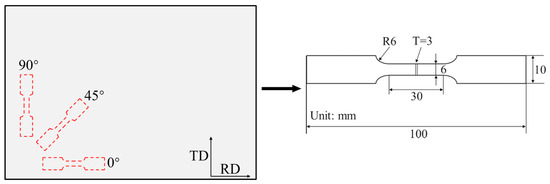
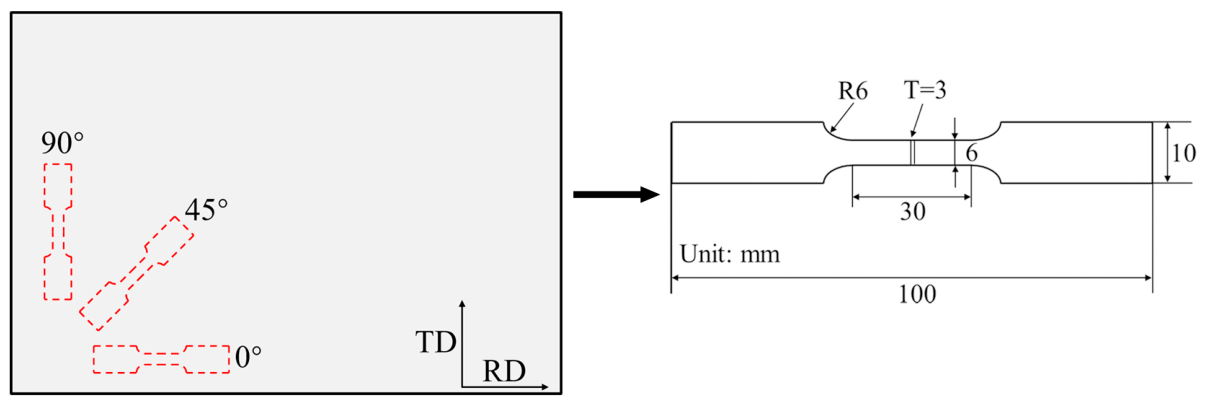
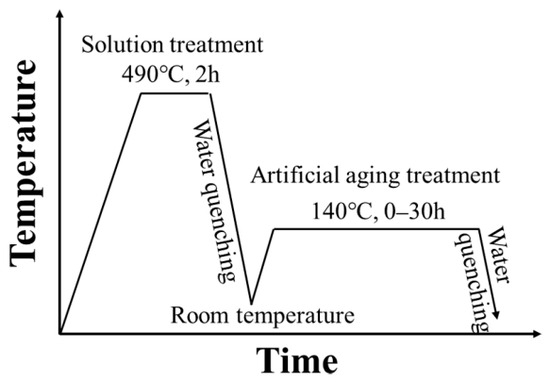
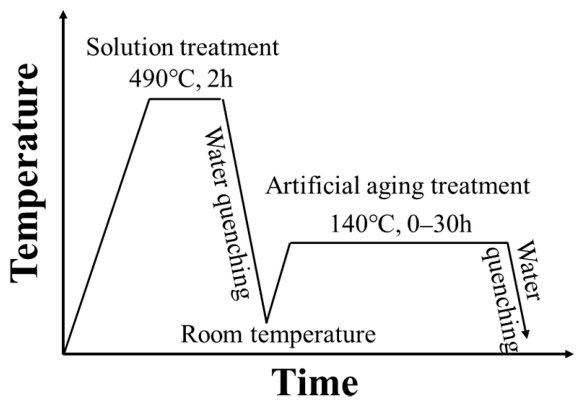
The 7075 aluminum alloy ingots were hot-rolled multiple times at 400 °C with a 90% reduction rate to a thickness of 3 mm. Then, the sheet, with a size of 700 mm × 600 mm × 3 mm, was used as the raw material, and the chemical compositions are listed in Table 1. The specimens used for tensile testing were machined by a wire-cutting machine. In order to investigate the anisotropic mechanical properties, the specimens were prepared in three directions at 0°, 45° and 90° along the rolling direction. The size of tensile test specimens is shown in Figure 1, which shows that they meet the ASTM standard [19]. The heat treatment scheme is presented in Figure 2. The specimens were subjected to SST at 490 °C for 2 h. Then, they were quenched in water, and three samples were kept for each direction as SST samples, and the others were subjected to single-stage aging at 140 °C for different lengths of time (6, 12, 18, 24, 30 h). After that, the specimens were polished and cleaned. Before the tensile test, the microstructure was analyzed by OM (Carl Zeiss, Oberkochen, Germany) and EBSD. Tensile testing was performed using an Instron 3369 universal testing machine (Instron, Norwood, MA, USA) at a cross-head speed of 180 mm/min. The strain rate was 0.1 s−1, and the elongation was measured using an extensometer attached to the gauge section. To ensure experimental reproducibility, three tests were conducted for every aging condition.
Table 1.
Chemical composition of the tested alloy (wt%).
Figure 1.
Schematic of sampling locations and dimensions.
Figure 2.
Schematic diagram of heat treatment process.
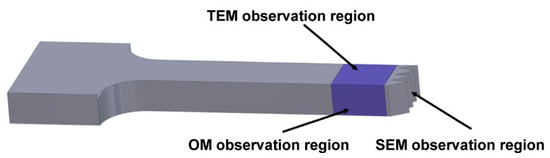
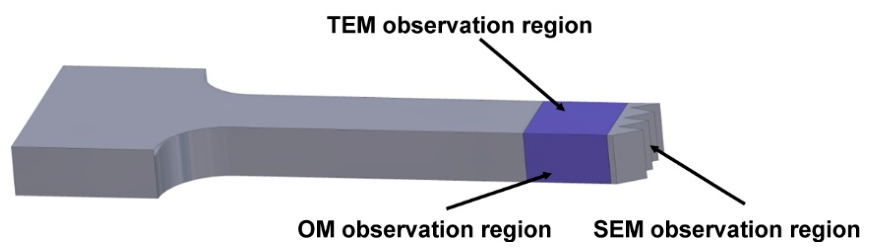
Figure 3 shows the microstructure characterization areas of the specimens after the tensile test. The specimens were cleaned by alcohol first, and the fracture morphology was examined by scanning electron microscopy (EVO–18, ZEISS, Oberkochen, Germany). For OM observation specimens, a small area near the fracture surface was cut. It was embedded in resin, followed by grinding and polishing. Subsequently, the specimens were corroded by electrolytic polishing with 5% fluoroboric acid aqueous solution. The voltage setting for electrolytic polishing was 20 V, and the corrosion time was 30 s to 60 s. Then, the microstructure of the stretched specimen was observed by OM. TEM specimens were ground to around 0.1 mm. Then, the slice was cleaned with alcohol, and 3 mm diameter discs were punched from the thinned slices. After that, the circles were thinned and perforated with a double spray thinning instrument. Finally, the specimens were observed by transmission electron microscopy (FEI, Hillsboro, OR, USA). The EBSD specimens were prepared by sanding with 800# to 2000# sandpapers, mechanically polishing, and electropolishing to remove the stress layer. EBSD analysis was performed using a JSM-7800F microscope (JEOL Ltd., Tokyo, Japan). The step size was 0.5 μm and the operating voltage was 20 kV.
Figure 3.
Microstructure characterization areas of the specimens.
3. Results and Discussion
3.1. Mechanical Property Analysis
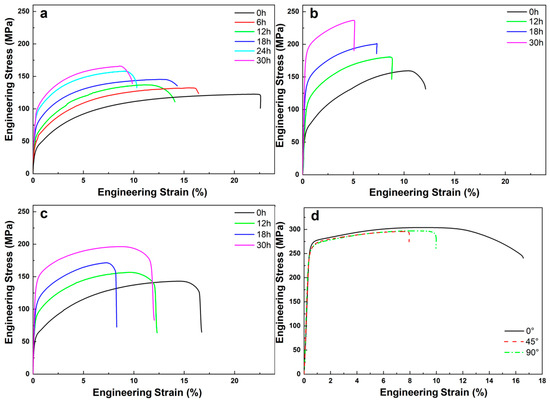
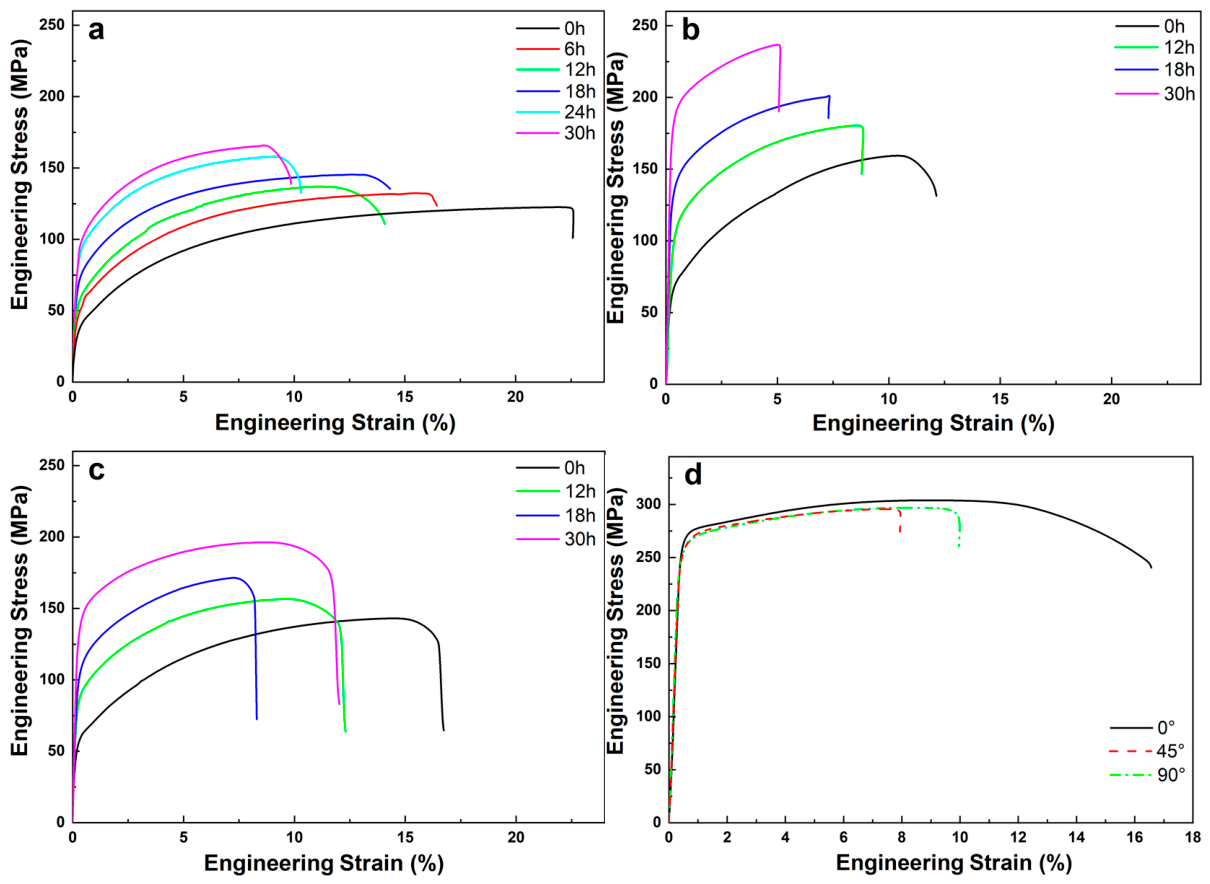
Figure 4 shows the engineering stress–strain curves of 7075 aluminum alloys at different heat treatments. In this study, the mechanical properties of specimens at 45° and 90° were systematically compared against those at 0°. It can be concluded that all the samples experienced similar tensile deformation behaviors. At the initial stage, the stress increased rapidly and was proportionate to the strain, indicating that the alloys underwent elastic deformation. Subsequently, the stress continued to increase gradually with increasing strain, entering the plastic deformation stage. In this stage, the competition between work hardening and dynamic softening determines the flow behavior of the material [20]. The stored energy in the material increases during deformation, which promotes dislocation migration and sub-grain-boundary formation, leading to dynamic softening. It should be noted that the tensile tests were conducted at room temperature; the dynamic softening effect was limited and only partially offset the work hardening. With further increase in tensile deformation, the stress reached a maximum and then underwent a sharp drop, which was associated with the nucleation, growth, and coalescence of voids [21,22] within the material, culminating in the fracture failure of the alloy. Figure 4d presents the stress–strain curves for the as-received material. It shows that the tensile strengths in three directions (0°, 45° and 90° in the rolling direction) were around 297 MPa, implying that there was no obvious difference in tensile strengths in the three directions. Overall, with prolonged artificial aging time, the tensile strength increased. For the 45° sample, the tensile strength of the as-received alloys was 297 MPa and the elongation was 8.1%. After SST, the tensile strength sharply decreased to 159 MPa and the elongation increased to 10.4%. After 30 h of artificial aging, the tensile strength reached 236 MPa, while elongation decreased to 5%. The underlying mechanisms for the observed anisotropic behavior, including the effects of grain-boundary density and precipitate distribution, will be discussed in detail in Section 3.2 and Section 3.3 based on OM, EBSD and TEM observations.
Figure 4.
Engineering stress–strain curves of 7075 aluminum alloys at different heat treatments: (a) 0°, (b) 45°, (c) 90° and (d) as received.
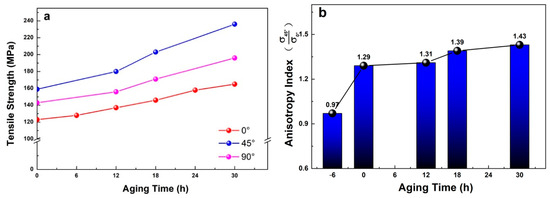
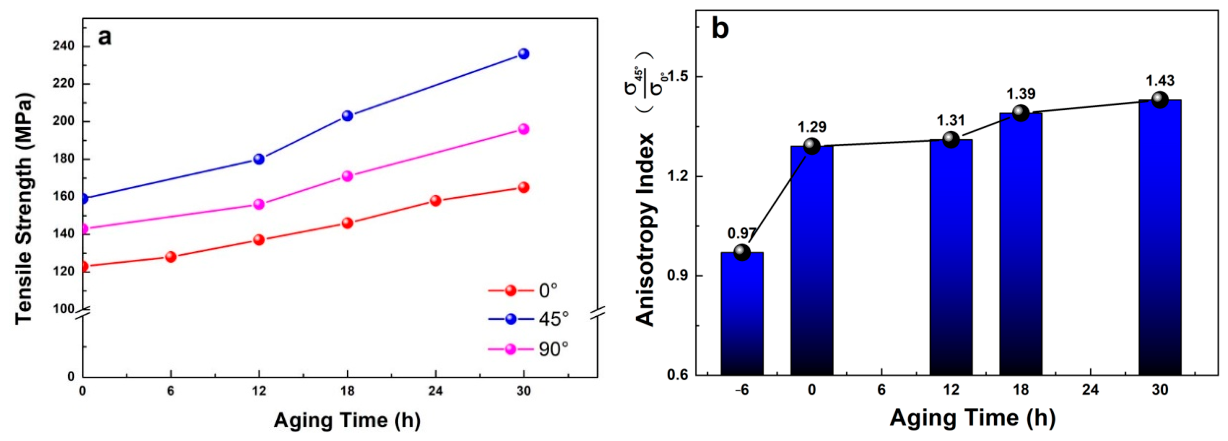
Table 2 lists the mechanical properties of 7075 aluminum alloys subjected to different artificial aging times, and the corresponding results are shown in Figure 5. It should be noticed that the stress–strain curves in Figure 4 are plotted using the average values of three repeated tensile tests for each condition. The detailed individual data and standard deviations are listed in Table 2. As previously stated, extending the artificial aging time resulted in a progressive increase in tensile strength in all three directions. However, it should be noted that tensile strength in the samples along 45° was the highest compared to the samples along 0° and 90°. In this paper, the value of AI () is used to characterize anisotropic mechanical properties. When the AI value approaches unity, mechanical properties exhibit minimal anisotropy; increased deviation from 1 corresponds to stronger anisotropy. Figure 5b shows the AI value of 7075 aluminum alloys subjected to different artificial aging times. It can be concluded that the AI value of the as-received samples was 0.97, which is close to 1, indicating that the anisotropic mechanical property of the as-received samples was not evident. After SST, the AI value increased to 1.29, indicating that mechanical property anisotropy occurred. As the aging time increased, the AI value increased to 1.43 for the samples aged for 30 h, which revealed distinct anisotropic behavior. This resulted from the evolution of the microstructure and formation of precipitates [22], which will be discussed in the next section. As for the yield strength, it is easy to conclude that the variation trend of yield strength was similar to that of tensile strength.
Table 2.
Tensile strength of 7075 aluminum alloys subjected to different artificial aging times (MPa).
Figure 5.
(a) Tensile strength and (b) AI values of 7075 aluminum alloys subjected to different artificial aging times.
3.2. Microstructure Analysis
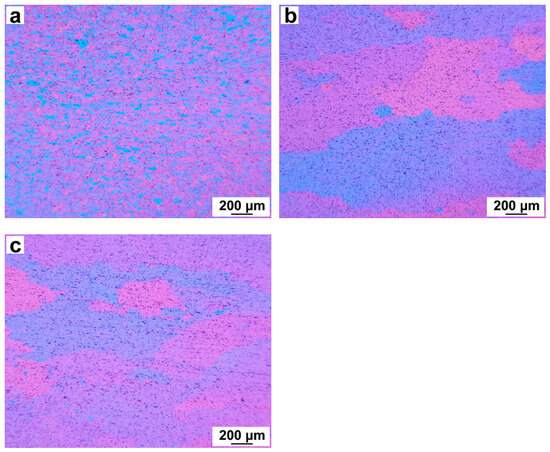
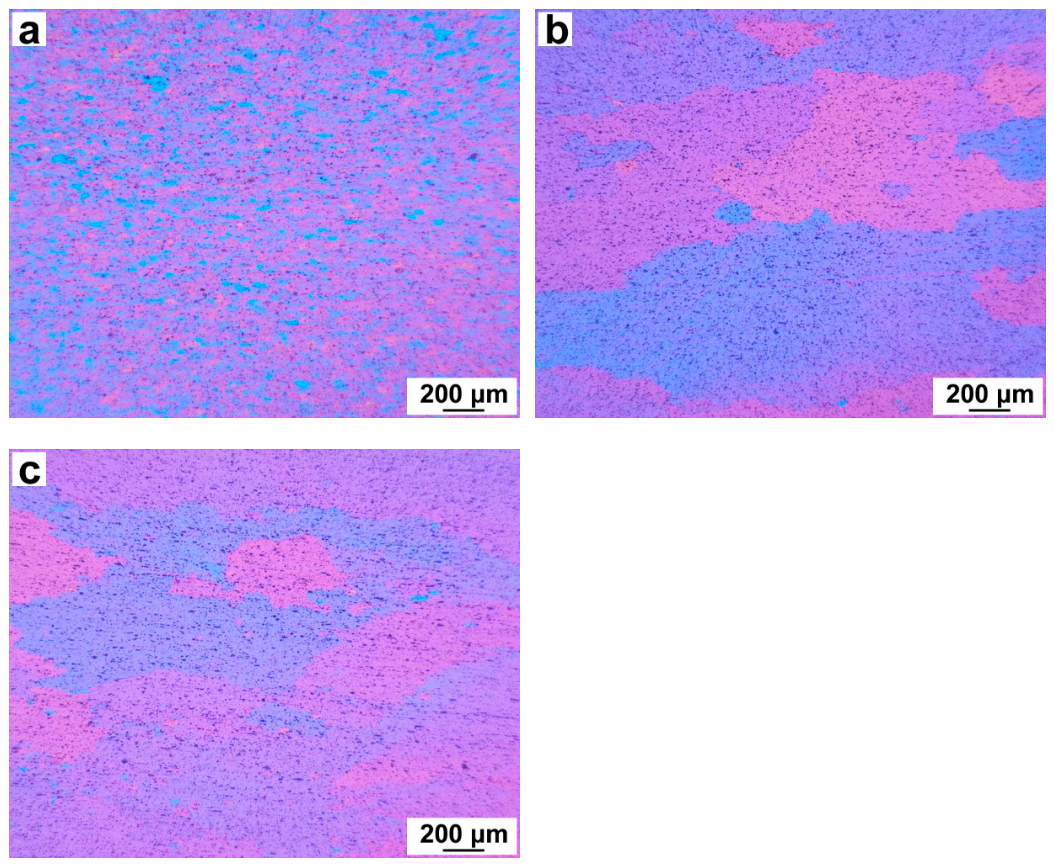
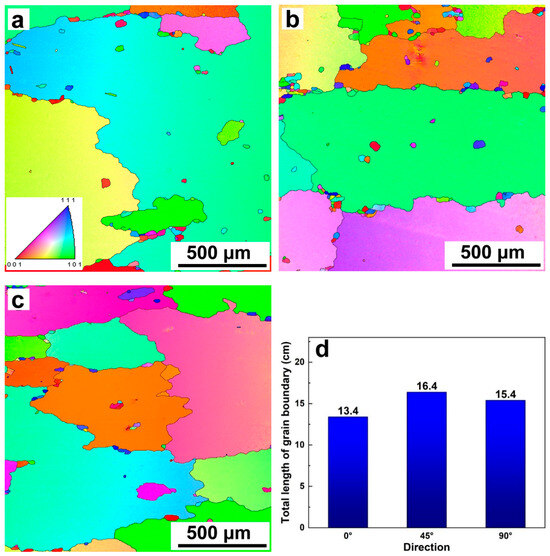
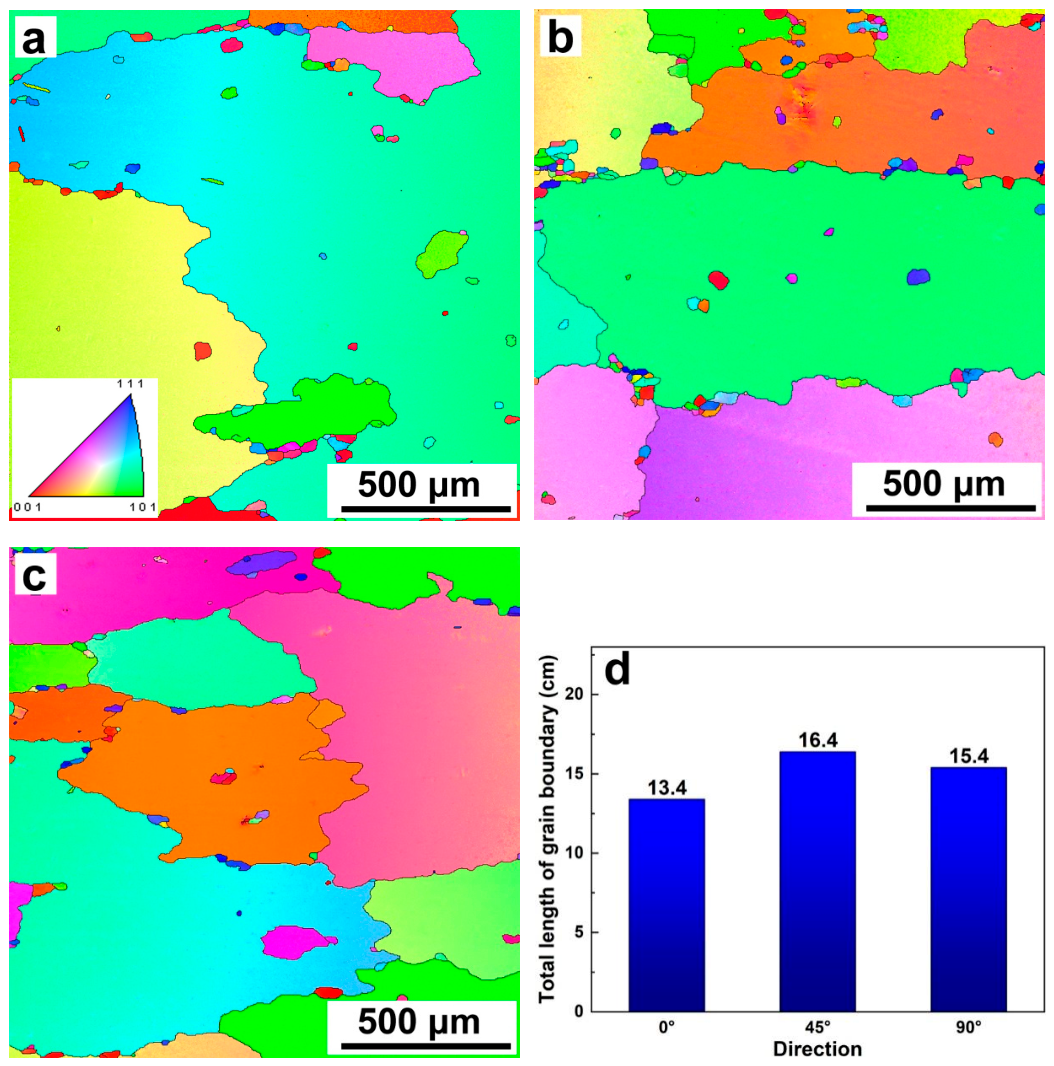
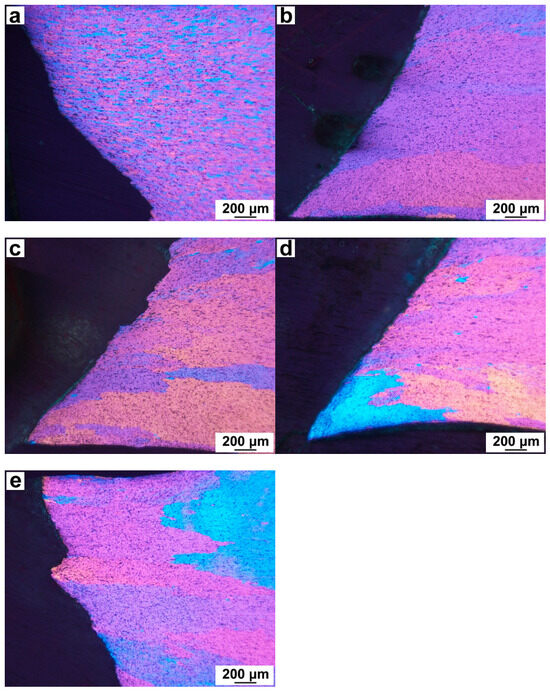
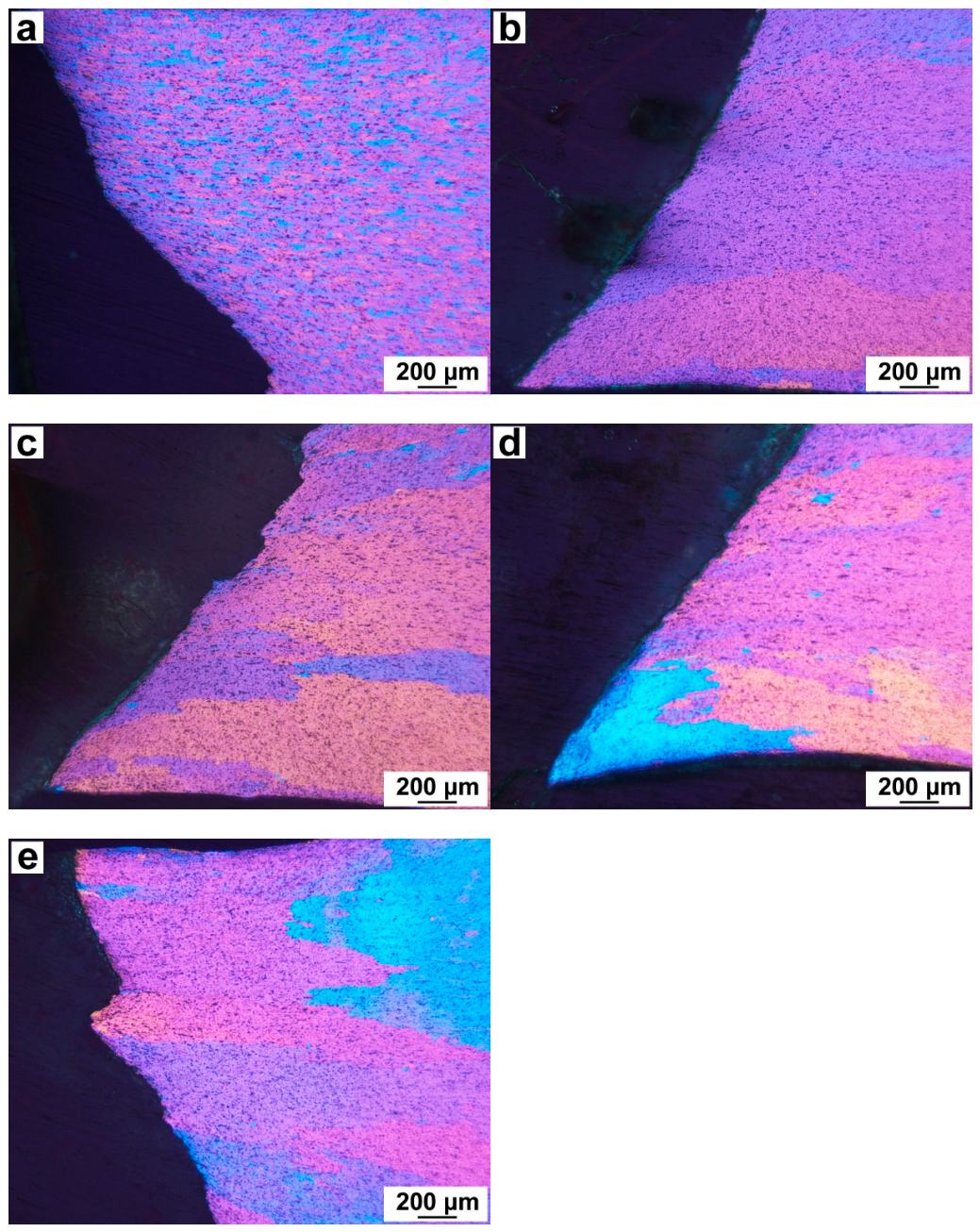
Figure 6 shows the microstructure of 45° specimens with different aging times before the tensile test. For the as-received sample, the grains were much more uniform and finer, and the average width of the grains was around 30 μm. As for the samples subjected to SST and artificial aging, they showed coarse and elongated grains. Coarse grains decrease the mechanical property. Therefore, the tensile strength was always lower than that of the as-received samples. It can be concluded that there was no significant change in the grain size or morphology in samples after SST and artificial aging (Figure 6b,c), implying that the effect of aging time on microstructure evolution is limited. The observed mechanical property fluctuations may stem from precipitate evolution. Grain elongation contributes to anisotropic material behavior [23,24], and the densities of grain boundaries in different directions are different. During the deformation process, higher grain-boundary density impedes dislocation motion, enhancing deformation resistance. In order to clearly characterize the microstructure of samples for different directions, the EBSD results of samples aged for 30 h with different orientations before the tensile test are shown in Figure 7. It can be seen that the microstructures were similar, and there were some small grains located in the large grains. However, the number of grain boundaries was quite different within the same area (Figure 7d), and the total length of the grain boundaries in the 45° samples was 16.4 cm, while the total length of the grain boundaries decreased along the 45°, 90° and 0° directions. Grain boundaries act as obstacles to dislocation motion. A higher density of grain boundaries provides more barriers, increasing the resistance to plastic deformation and thus enhancing the strength, resulting in mechanical property anisotropy. Thus, for the samples aged for 30 h, the tensile strength of the 45° samples was the highest, while that of the 0° samples was the lowest. Figure 8 presents the microstructures adjacent to the fracture surfaces of 45° specimens with varying aging time after the tensile test. It is apparent that the grains near the fracture surface deformed via shear, with a preferential 45° alignment in all samples. It has been reported that internal micropores nucleate and aggregate during the deformation process, resulting in fracture of the tensile specimen.
Figure 6.
Optical microstructure of 45° specimens before the tensile test under different aging times: (a) as received, (b) 0 h, and (c) 12 h.
Figure 7.
EBSD result of samples aged for 30 h before the tensile test with different orientations: (a) 0°, (b) 45°, (c) 90° and (d) total length of grain boundary.
Figure 8.
Optical microstructure of 45° specimens near the fracture surface with different aging times: (a) as received, (b) 0 h, (c) 12 h, (d) 18 h and (e) 30 h.
3.3. Fracture Morphology Analysis
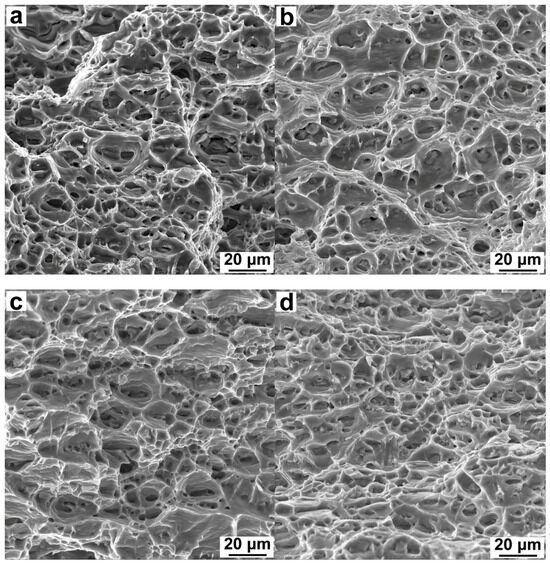
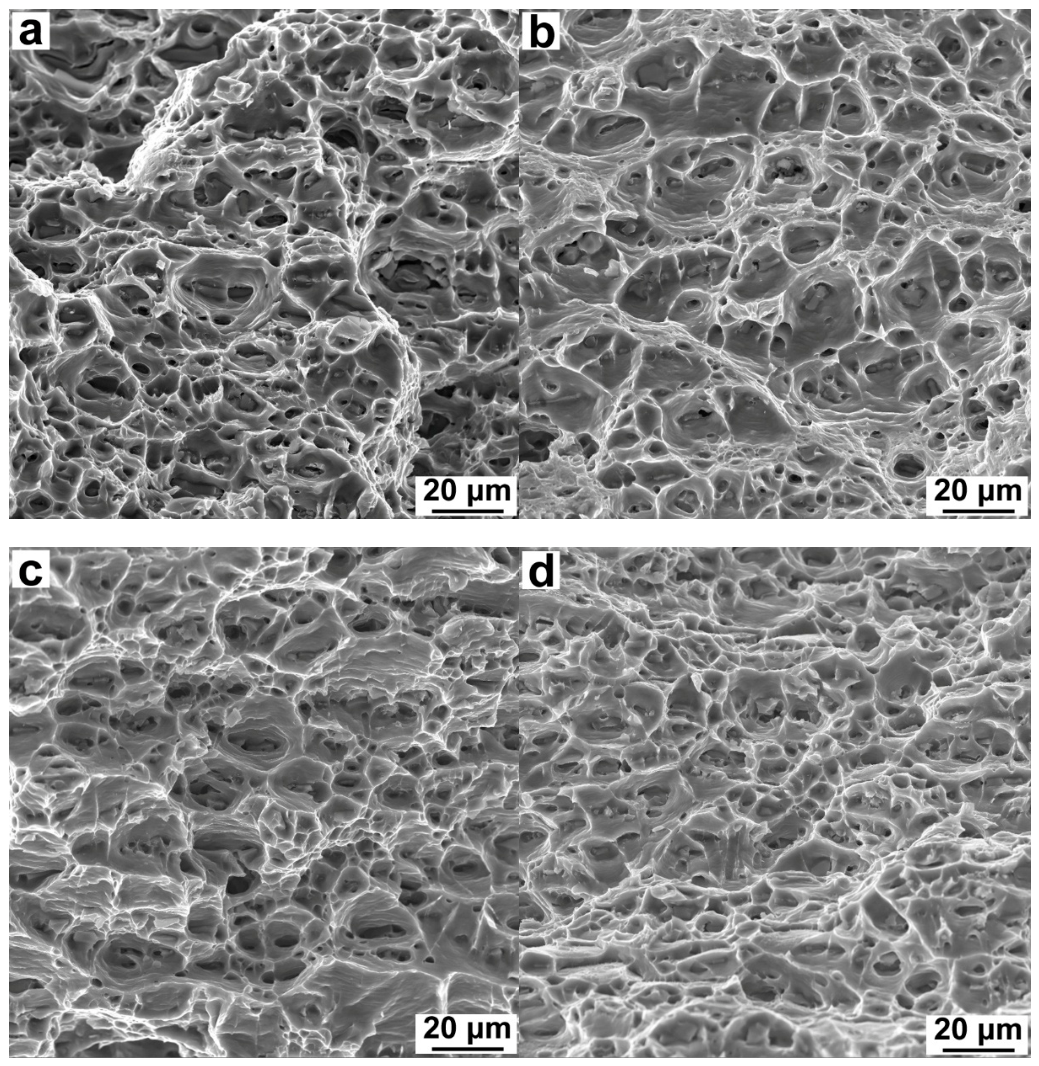
Figure 9 shows the fracture morphology of 0° specimens after the tensile test. It is easy to conclude that all the samples showed ductile fracture characteristics. For the as-received sample, there were many dimples with nonuniform size. After SST, the dimples became more uniform and larger, which indicates excellent plastic deformation ability of the SST samples. With further increase in aging time, the dimple size decreased from approximately 5–10 μm in the as-received and SST samples to 3–5 μm in the 30 h aged samples, becoming more heterogeneous with increasing aging time. The change in dimple characteristics indicates that SST and artificial aging had a significant impact on the plastic deformation ability of the 7075 aluminum alloy. After SST, the plastic deformation ability increased, while it decreased with the extension of artificial aging time, and the elongation decreased as the aging time increased, as shown in Figure 4a. During aging at 140 °C, fine and uniformly distributed precipitates reprecipitated within the matrix. These precipitates served as effective obstacles to dislocation motion, strongly pinning dislocations. As the aging time increased, the number density of precipitates increased significantly, leading to stronger dislocation pinning, reduced dislocation mobility and multiplication, and, consequently, decreased plastic deformation capacity and elongation. Therefore, the elongation increased after SST and decreased during artificial aging because of the change in density of the precipitates in the matrix, as shown in Figure 4.
Figure 9.
Fracture morphology of 0° specimens observed by SEM after the tensile test: (a) as received, (b) 0 h, (c) 18 h and (d) 30 h.
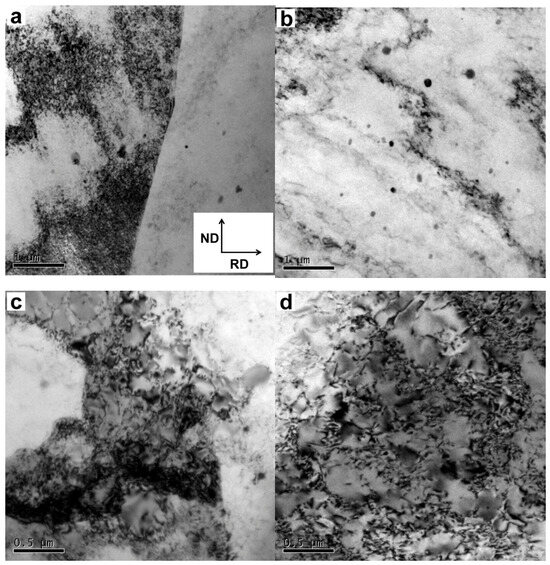
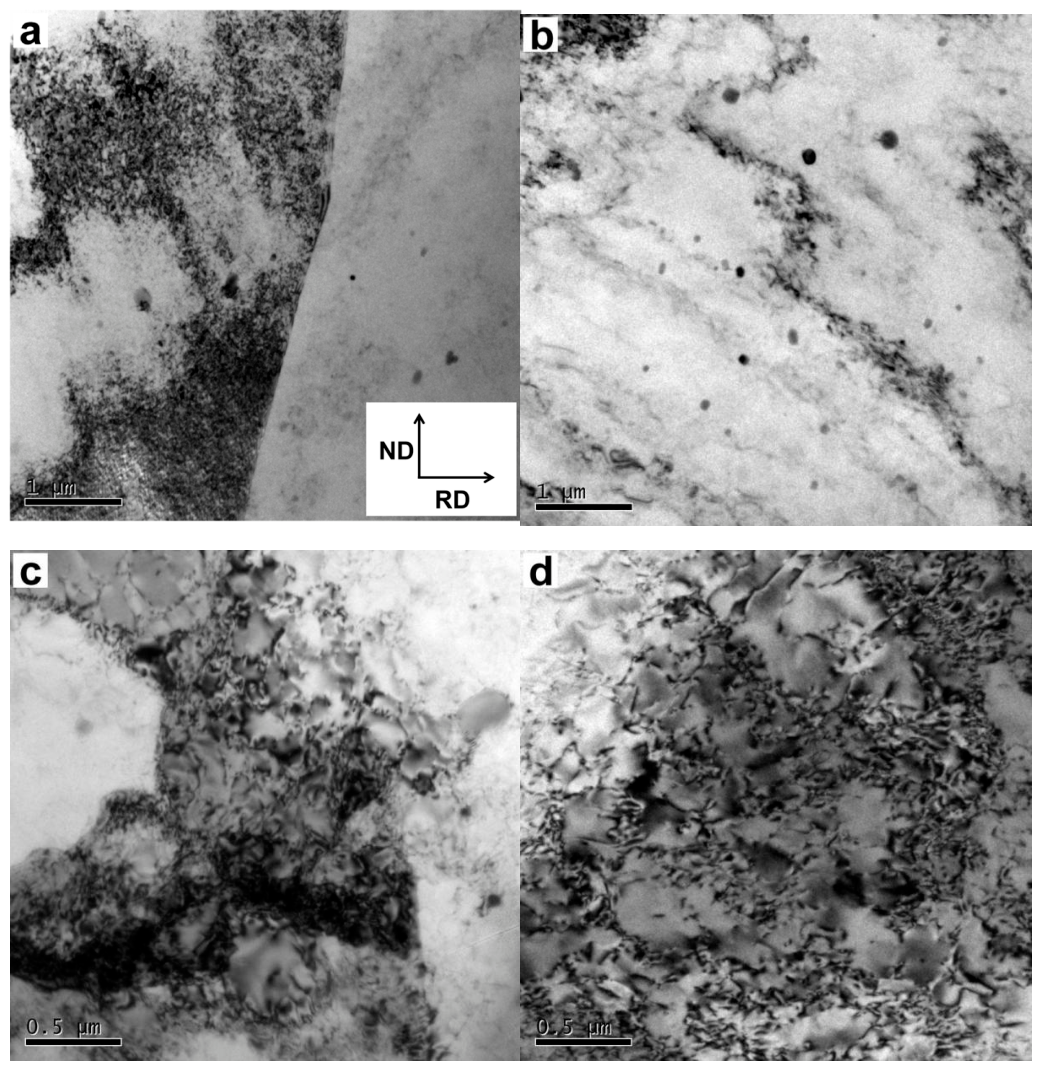
Figure 10 reveals the TEM micrographs of the 7075 aluminum alloy near the fracture surface after artificial aging for 6 h and 30 h. In Figure 10a,b, the precipitates can clearly be observed within the matrix, showing a significantly higher density in the 30 h aged sample compared to the 6 h aged sample. The typical precipitation sequence for 7xxx series aluminum alloys is GP zones → η′ phase → η phase. During aging at 140 °C, the supersaturated solid solution first forms GP zones, which are coherent with the matrix. With prolonged aging, GP zones transform into the η′ phase, which is the primary strengthening precipitate in 7075 alloys. Further aging leads to the formation of the η phase [8,22]. In this study, the samples aged for up to 30 h at 140 °C likely contained a mixture of η′ and η precipitates, with the proportion of η increasing with aging time. It is well established that these precipitates form along specific crystallographic directions because they maintain a fixed orientation relationship with the Al matrix to minimize the interfacial energy [25], which influences the mechanical properties in different directions. The samples aged for 30 h contained more precipitates, which enhanced the anisotropic mechanical properties. Zhao et al. [26] have also reported that the distributions of precipitates (T1) were inhomogeneous in four different variants of the {111} plane, which led to anisotropy of the yielding stress in 2198 Al–Li alloy during artificial aging. Additionally, precipitates with a size larger than 2 nm contributed to precipitation strengthening [27]. Precipitation strengthening Δσ can be calculated by Equation (1) [28].
where G is the shear modulus of the Al matrix phase, b is the Burgers vector, M is the Schmid orientation factor, v is the Poisson ratio of the Al alloy, r is the mean radius of the precipitate, and λ is the spacing between the precipitates. Equation (1) is presented here to qualitatively illustrate the dependence of precipitation strengthening on precipitate size and spacing, rather than to derive a precise numerical value. Assuming G, b, M and v are constant, it can be concluded that the precipitation strengthening Δσ rises as r increases and λ decreases. Figure 10a,b present a qualitative comparison of precipitate density between the 6 h and 30 h aged conditions. It is evident that prolonged aging significantly increased the number density of precipitates. The observed trend is consistent with the measured increase in tensile strength and the theoretical precipitation strengthening estimation. In addition, the higher density of precipitates in the 30 h aged sample provided more obstacles to dislocation motion during tensile deformation [29,30], as evidenced by the dislocation pinning observed at the precipitate peripheries in Figure 10c,d. This dislocation accumulation at precipitate interfaces may contribute to the formation of stress concentration sites [18], potentially initiating micro-cracks that ultimately lead to fracture of the alloy.
Figure 10.
TEM images of 7075 aluminum alloy near the fracture surface after artificial aging for (a,c) 6 h and (b,d) 30 h.
4. Conclusions
The tensile properties and microstructure of 7075 aluminum alloy with different artificial aging times were investigated. The anisotropic behavior and microstructure evolution were explored and analyzed. The conclusions can be drawn as follows:
(1) The average tensile strengths of as-received 7075 aluminum alloy in three directions were approximately 297 MPa, with an AI of 0.97, indicating minimal anisotropic mechanical properties in the as-received condition. After SST, the alloys showed coarser and more elongated grains, which led to lower strength and additional elongation. The tensile strengths were 123 MPa, 159 MPa and 143 MPa along the 0°, 45° and 90° directions, respectively. This indicates that the anisotropic mechanical property occurred after SST. After artificial aging, there was no obvious difference in grain size or morphology, and the tensile strength increased with the increase in aging time. Prolonged aging time facilitated the precipitation of fine and uniformly distributed precipitates, which acted as effective obstacles to dislocation motion, thereby enhancing the mechanical properties through precipitation strengthening. The sample aged for 30 h exhibited the highest tensile strength, with values of 165 MPa, 236 MPa and 196 MPa in the three directions, respectively.
(2) After SST, elongated grains formed, and the density of grain boundaries in the 45° direction was much higher than that in the 0° and 90° directions, which contributed to the anisotropic mechanical property. During the artificial aging process, the precipitates tended to form in specific crystallographic directions due to the fixed orientation relationship with the matrix, leading to direction-dependent strengthening. This preferential precipitation, combined with the anisotropic grain morphology, resulted in increasingly anisotropic mechanical properties with prolonged aging time. The value of AI increased from 0.97 to 1.43 with prolonged aging time.
Author Contributions
Conceptualization, P.G.; methodology, T.Y., S.Q. and Q.C.; formal analysis, T.Y.; investigation, Y.W., Q.C. and J.H.; data curation, Q.C. and J.H.; writing—original draft preparation, Y.W.; writing—review and editing, T.Y.; funding acquisition, P.G., T.Y., Y.W. and S.Q. All authors have read and agreed to the published version of the manuscript.
Funding
This work was supported by the National Natural Science Foundation of China (Nos. 52501152, 52201074, 52475344), the Regional Joint Fund of Hunan Provincial (Nos. 2024JJ7114, 2024JJ7117, 2024JJ7119), the Scientific Research Project of Hunan Provincial Department of Education (25B0832).
Data Availability Statement
The original contributions presented in this study are included in the article. Further inquiries can be directed to the corresponding author.
Acknowledgments
The authors thank the National Natural Science Foundation of China and the Regional Joint Fund of Hunan Province.
Conflicts of Interest
The authors declare no conflicts of interest.
References
- Zhang, J.; Song, B.; Wei, Q.; Bourell, D.; Shi, Y. A review of selective laser melting of aluminum alloys: Processing, microstructure, property and developing trends. J. Mater. Sci. Technol. 2019, 35, 270–284. [Google Scholar] [CrossRef] [Scilit]
- Li, S.S.; Yue, X.; Li, Q.Y.; Peng, H.L.; Dong, B.X.; Liu, T.S.; Yang, H.Y.; Fan, J.; Shu, S.L.; Qiu, F.; et al. Development and applications of aluminum alloys for aerospace industry. J. Mater. Sci. Technol. 2023, 27, 944–983. [Google Scholar] [CrossRef] [Scilit]
- Xu, X.; Zhu, W.; Yuan, M.; Liang, C.; Deng, Y. The effect of Zn content on the microstructure and mechanical properties of the Al-mg-Si alloy. Mater. Charact. 2023, 198, 112714. [Google Scholar] [CrossRef] [Scilit]
- Imran, M.; Khan, A.A. Characterization of Al-7075 metal matrix composites: A review. J. Mater. Res. Technol. 2019, 8, 3347–3356. [Google Scholar] [CrossRef] [Scilit]
- Bamberg, P.; Gintrowski, G.; Liang, Z.; Schiebahn, A.; Reisgen, U.; Precoma, N.; Geffers, C. Development of a new approach to resistance spot weld AW-7075 aluminum alloys for structural applications: An experimental study–Part 1. J. Mater. Res. Technol. 2021, 15, 5569–5581. [Google Scholar] [CrossRef] [Scilit]
- Zhou, B.; Liu, B.; Zhang, S. The advancement of 7xxx series aluminum alloys for aircraft structures: A review. Metals 2021, 11, 718. [Google Scholar] [CrossRef] [Scilit]
- Hutchinson, C.R.; Ringer, S.P. Precipitation processes in Al-Cu-Mg alloys microalloyed with Si. Metall. Mater. Trans. A 2000, 31, 2721–2733. [Google Scholar] [CrossRef] [Scilit]
- Li, X.Z.; Hansen, V.; Gjønnes, J.; Wallenberg, L.R. HREM study and structure modeling of the η′ phase, the hardening precipitates in commercial Al–Zn–Mg alloys. Acta Mater. 1999, 47, 2651–2659. [Google Scholar] [CrossRef] [Scilit]
- Tian, N.; Jiang, X.; Zhang, Y.; Zeng, Z.; Wang, T.; Zhao, G.; Qin, G. Effect of precipitates on the mechanical performance of 7005 aluminum alloy plates. Materials 2022, 15, 5951. [Google Scholar] [CrossRef] [Scilit] [PubMed]
- Hou, Y.; Chen, L.; Li, Z.; Zhao, G.; Zhang, C. Effects of artificial aging on microstructure, mechanical properties and stress corrosion cracking of a novel high strength 7A99 Al alloy. Mater. Sci. Eng. A 2020, 780, 139217. [Google Scholar] [CrossRef] [Scilit]
- Zhou, L.; Chen, K.; Chen, S.; Ding, Y.; Fan, S. Correlation between stress corrosion cracking resistance and grain-boundary precipitates of a new generation high Zn-containing 7056 aluminum alloy by non-isothermal aging and re-aging heat treatment. J. Alloy. Compd. 2021, 850, 156717. [Google Scholar] [CrossRef] [Scilit]
- Aoba, T.; Kobayashi, M.; Miura, H. Effects of aging on mechanical properties and microstructure of multi-directionally forged 7075 aluminum alloy. Mater. Sci. Eng. A 2017, 700, 220–225. [Google Scholar] [CrossRef] [Scilit]
- Zhang, P.; Liu, J.; Gao, Y.; Liu, Z.; Mai, Q. Effect of heat treatment process on the micro machinability of 7075 aluminum alloy. Vacuum 2023, 207, 111574. [Google Scholar] [CrossRef] [Scilit]
- Zhang, P.; Liu, Z.; Liu, J.; Yu, J.; Mai, Q.; Yue, X. Effect of aging plus cryogenic treatment on the machinability of 7075 aluminum alloy. Vacuum 2023, 208, 111692. [Google Scholar] [CrossRef] [Scilit]
- Song, Y.; Zhang, Q.; Li, H.; Yuan, X.; Chen, Y.; Lu, D.; Liu, W. A novel cobweb-like sub-grain structured Al-Cu-Mg alloy with high strength-plasticity synergy. Int. J. Plast. 2025, 184, 104178. [Google Scholar] [CrossRef] [Scilit]
- Barnwal, V.K.; Raghavan, R.; Tewari, A.; Narasimhan, K.; Mishra, S.K. Effect of microstructure and texture on forming behaviour of AA-6061 aluminium alloy sheet. Mater. Sci. Eng. A 2017, 679, 56–65. [Google Scholar] [CrossRef] [Scilit]
- Xia, E.; Ye, T.; Qiu, S.; Liu, J.; Luo, J.; Sun, L.; Wu, Y. Mechanical properties and microstructural evolution of 6082 aluminum alloy with different heat treatment methods. Coatings 2024, 14, 602. [Google Scholar] [CrossRef] [Scilit]
- Ye, T.; Xia, E.; Qiu, S.; Liu, J.; Yue, H.; Tang, J.; Wu, Y. Deformation behavior of an extruded 7075 aluminum alloy at elevated temperatures. Materials 2024, 17, 1210. [Google Scholar] [CrossRef] [Scilit] [PubMed]
- Briseno, J.; Casanova-Del-Angel, F. Fracture Mechanics on Aluminum Specimens. World J. Mech. 2021, 11, 237–257. [Google Scholar]
- Raja, N.; Kumar, A.; Patel, S.K. Hot deformation and microstructural evolution of ultrasonically fabricated as-cast Al-7.3 Zn-2.2 Mg-2 Cu alloy. Mater. Charact. 2023, 206, 113404. [Google Scholar]
- Xia, E.; Ye, T.; Liu, L.; Liu, W.; Yue, H.; Tang, J.; Wu, Y. The hot tensile properties, fracture features, and microstructure evolution of as-cast 7005 aluminum alloy. Metals 2024, 14, 125. [Google Scholar] [CrossRef] [Scilit]
- Zhang, Y.; Yang, H.; Sun, P.; Huang, R.; Zheng, S.; Duan, Y.; Li, M. Effect of aging time on precipitation of MgZn2 and microstructure and properties of 7075 aluminum alloy. J. Mate. Eng. Perform. 2024, 33, 6601–6611. [Google Scholar] [CrossRef] [Scilit]
- Thomesen, S.; Hopperstad, O.S.; Børvik, T. Anisotropic plasticity and fracture of three 6000-series aluminum alloys. Metals 2021, 11, 557. [Google Scholar] [CrossRef] [Scilit]
- Naumenko, K.; Gariboldi, E. Experimental analysis and constitutive modeling of anisotropic creep damage in a wrought age-hardenable Al alloy. Eng. Fract. Mech. 2022, 259, 108119. [Google Scholar] [CrossRef] [Scilit]
- Christian, J.W. The theory of transformations in metals and alloys. Mater. Today 2003, 6, 53. [Google Scholar] [CrossRef] [Scilit]
- Zhao, T.; Jin, L.; Xu, Y.; Zhang, S. Anisotropic yielding stress of 2198 Al–Li alloy sheet and mechanisms. Mater. Sci. Eng. A 2020, 771, 138572. [Google Scholar] [CrossRef] [Scilit]
- Osamura, K.; Ochiai, S.; Uehara, T. Precipitation behavior and change of yield strength during artificial aging in Al-Zn-Mg-Cu alloys. J. Jpn. Inst. Light Met. 1984, 34, 517–524. [Google Scholar] [CrossRef] [Scilit][Green Version]
- Kelly, A.; Nicholson, R.S. Strengthening Methods in Crystals. Int. Mater. Rev. 1971, 17, 147. [Google Scholar] [CrossRef] [Scilit]
- Zhao, N.; Ma, H.; Hu, Z.; Yan, Y.; Chen, T. Microstructure and mechanical properties of Al-Mg-Si alloy during solution heat treatment and forging integrated forming process. Mater. Charact. 2022, 185, 111762. [Google Scholar] [CrossRef] [Scilit]
- Sun, L.; Lin, C.; Fan, Z.; Li, H.; Yao, S.; Wang, G.; Chu, G. Experimental and numerical investigation on axial hydro-forging sequence of 6063 aluminum alloy tube. Int. J. Adv. Manuf. Tech. 2019, 105, 2869–2877. [Google Scholar] [CrossRef] [Scilit]

Disclaimer/Publisher’s Note: The statements, opinions and data contained in all publications are solely those of the individual author(s) and contributor(s) and not of MDPI and/or the editor(s). MDPI and/or the editor(s) disclaim responsibility for any injury to people or property resulting from any ideas, methods, instructions or products referred to in the content. |
© 2026 by the authors. Licensee MDPI, Basel, Switzerland. This article is an open access article distributed under the terms and conditions of the Creative Commons Attribution (CC BY) license.