


Abstract
Driven by energy conservation, emission reduction and lightweight manufacturing demands, wrought magnesium alloys feature low density, high specific strength and balanced comprehensive performances, making them promising lightweight materials for aerospace, automobile, electronic and other industries. This paper systematically reviews the rolling fabrication technologies and recent research progress of wrought magnesium alloy sheets. Special attention is paid to deformation characteristics, microstructure evolution mechanisms and property regulation rules of typical rolling processes, including conventional rolling, cross rolling, accumulative roll bonding, equal-channel angular rolling, asymmetric rolling and twin-roll casting. Existing studies confirm that dynamic recrystallization, grain refinement, activation of non-basal slips and basal texture weakening act as core mechanisms to enhance the strength–ductility matching, formability and anisotropy of magnesium alloy sheets. Each rolling technology possesses unique merits in production efficiency, microstructural homogeneity, texture modification and industrial practicability. Nevertheless, several bottlenecks still restrict its large-scale promotion, such as edge cracking, strong basal texture, poor process stability and high manufacturing cost. Future research priorities lie in multi-process compound forming, intelligent parameter control and short-process eco-friendly manufacturing, so as to facilitate mass production and extensive engineering application of high-performance wrought magnesium alloy sheets.
1. Introduction
Wrought magnesium alloys refer to magnesium-based materials whose as-cast microstructures are modified via plastic deformation processing. The defining characteristic of such alloys lies in the microstructural optimization achieved through thermomechanical processing, encompassing dynamic recrystallization, grain refinement, and microstructure tailoring, thereby enabling simultaneous improvements in mechanical properties and formability [1]. The classifications, representative grades, and corresponding property characteristics of wrought magnesium alloys are summarized in Table 1.
Table 1.
Classification and property characteristics of wrought magnesium alloys.
Although several studies have reviewed the processing and deformation behavior of wrought magnesium alloys, most of them focus on individual rolling technologies, texture evolution, or specific alloy systems. A systematic comparison of different rolling routes in terms of deformation mechanisms, microstructural regulation, mechanical properties, and industrial applicability remains limited. In particular, the relationships among process parameters, dynamic recrystallization, texture weakening, and the strength–ductility balance have not yet been fully clarified across different rolling processes. Therefore, an integrated review is required to identify the advantages, limitations, and application prospects of representative rolling technologies. This paper presents a comprehensive overview of several representative rolling processes for wrought magnesium alloys, with detailed elaboration on their current research status, processing characteristics, and engineering application orientations.
Early research efforts were predominantly centered on texture regulation, microstructural evolution, conventional rolling technologies, and twinning deformation mechanisms. These high-frequency, strongly correlated research themes have long constituted the fundamental basis of the field, with the core objective focused on addressing the poor rollability and formability of magnesium alloy sheets. As depicted in Figure 1, this figure is based on the Web of Science Core Collection. It retrieves the keywords of the published literature from 2020 to 2025 with the keyword “magnesium alloy rolling”, and then draws the evolution chart of research hotspots. With the continuous advancement of research in recent years, research hotspots have progressively shifted toward Mg–Li alloys, corrosion resistance, strengthening mechanisms, and service formability. This trend clearly demonstrates that the focus of the field is evolving from feasibility studies of “rollability” to performance-oriented design of “serviceability” after rolling. Furthermore, the research scope has expanded from the single correlation of processing–microstructure–properties to the development of novel alloy systems and synergistic optimization of multiple properties, thereby accelerating the industrial translation and practical application of magnesium alloy rolling technologies.
Figure 1.
Network visualization map of keywords.
2. Classification
Rolling is one of the primary manufacturing methods for wrought magnesium alloys. The typical process flow mainly includes the following steps: (1) Alloying and homogenization treatment to eliminate elemental segregation and improve microstructural uniformity [5]. (2) Multi-pass warm rolling and deformation control. Rolling of magnesium alloys is generally conducted within 250–450 °C. Elevated temperatures (e.g., 400 °C) activate non-basal slip systems and enhance plasticity. For instance, AZ31 magnesium alloy undergoes complete dynamic recrystallization during multi-pass rolling at 300–400 °C, with grains refined to 4–8 μm [6,7]. (3) Post-treatment and cooling. Annealing or acid pickling is commonly employed to remove surface oxides. Magnesium alloy sheets produced via rolling are 70% lighter than Q235 steel, rendering them ideal for automotive panels and aerospace structural components [8], thereby effectively advancing lightweight objectives. Nevertheless, critical challenges including edge cracking and pronounced anisotropy induced by strong basal texture remain to be resolved [9].
2.1. Conventional Rolling
Conventional rolling is the most widely used approach for fabricating magnesium alloy sheets, owing to its scalability for mass production. As presented in Figure 2, plastic deformation is imposed on billets via roll pressure to produce sheets with targeted thickness and properties. Grain refinement occurs via grain distortion, dynamic recrystallization, and dislocation motion, thereby optimizing microstructure and enhancing mechanical performance [10,11]. However, conventional rolling readily generates intense basal texture, causing severe anisotropy and directional variations in properties [12].
Figure 2.
Schematic of the conventional rolling process for magnesium alloys [13].
The key process parameters include rolling temperature, rolling speed, and rolling reduction.
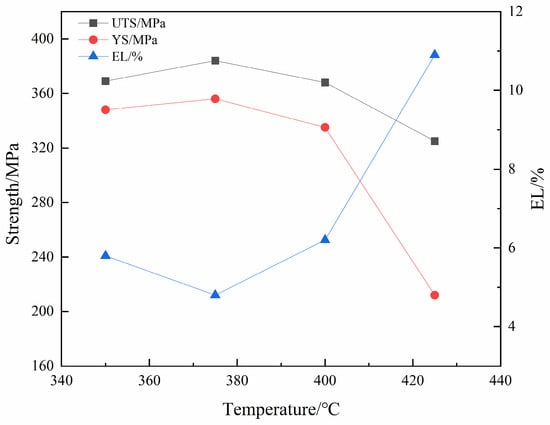
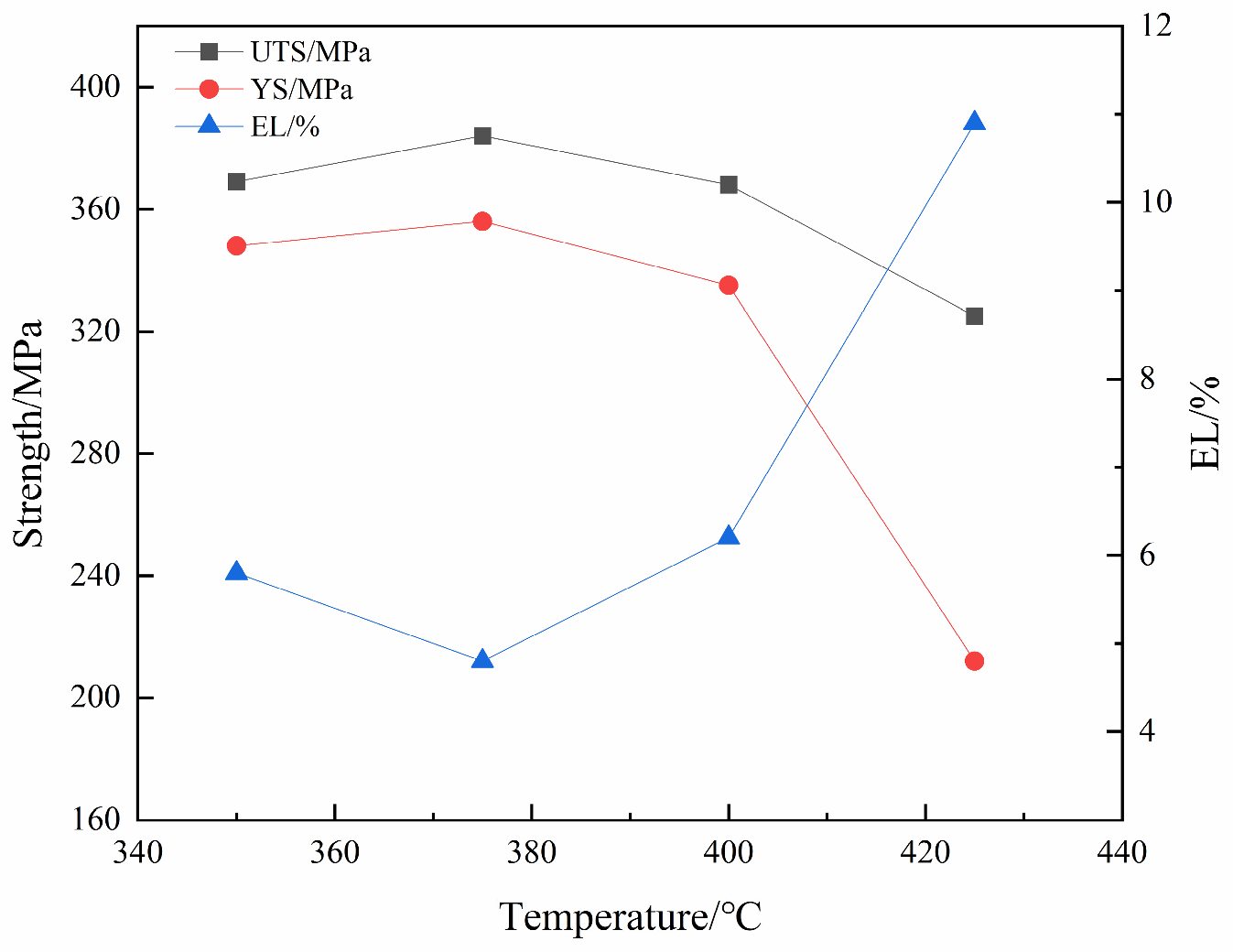
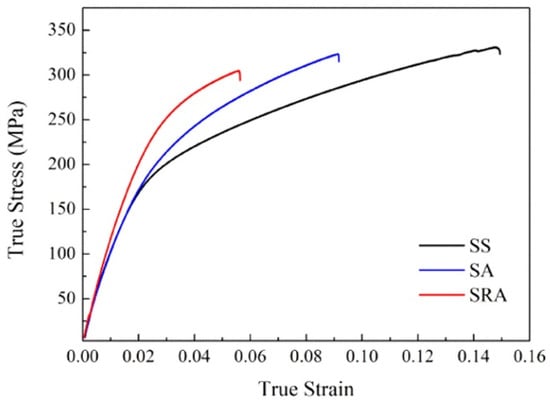
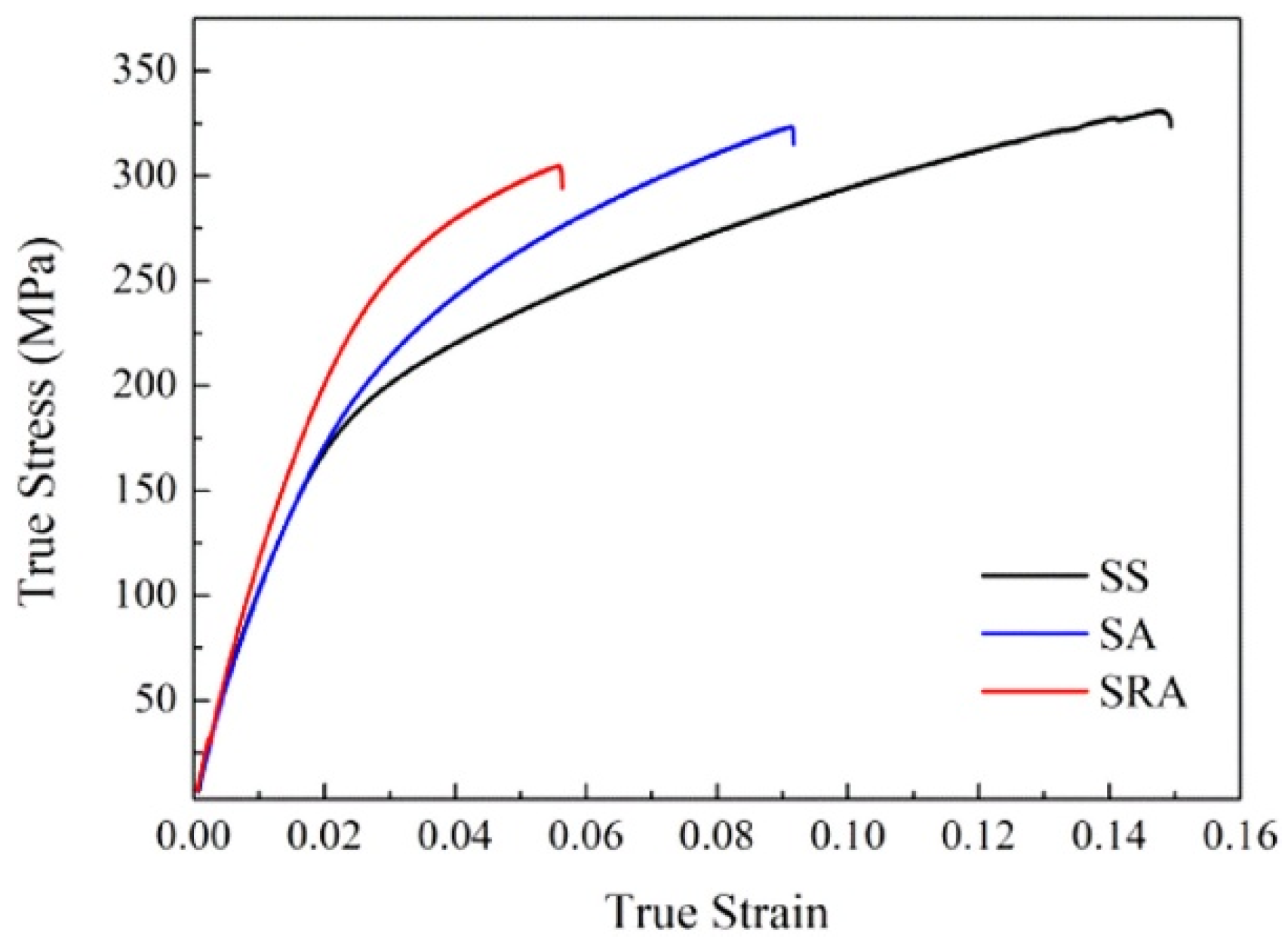
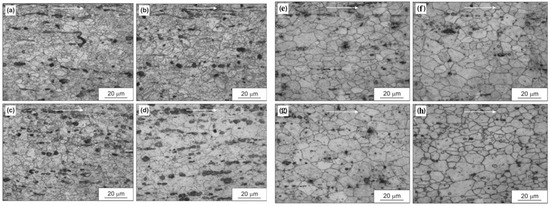
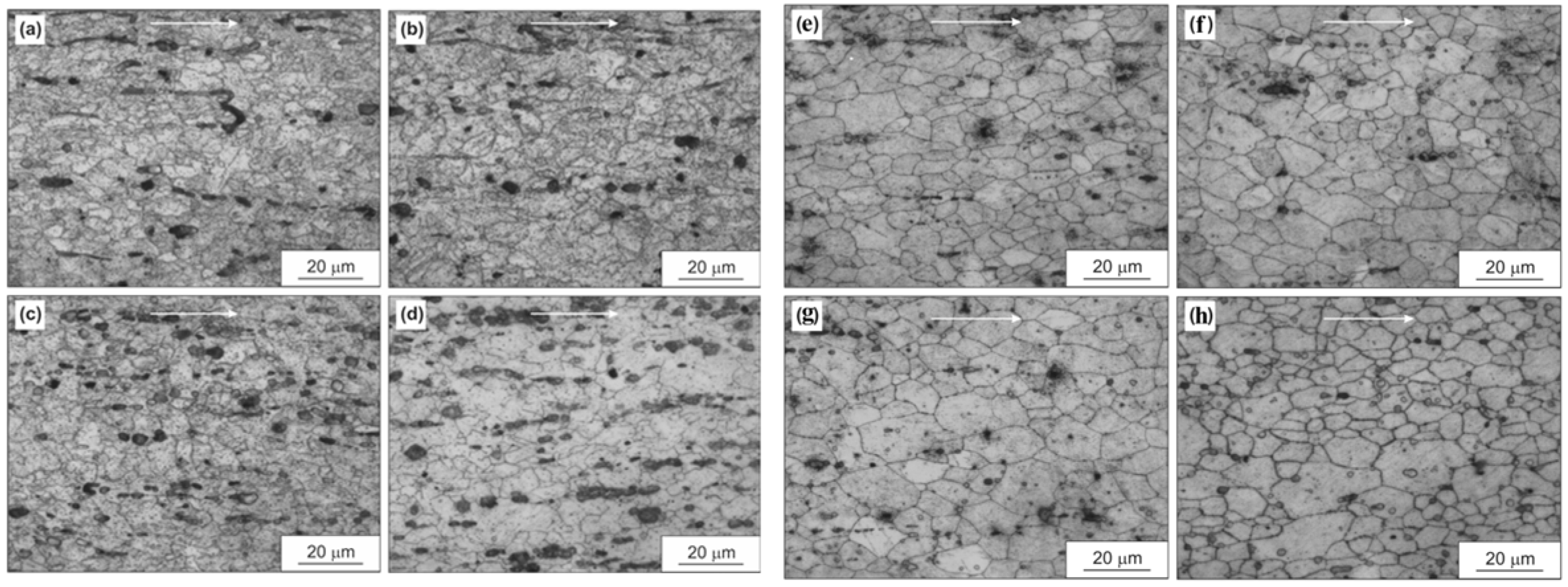
Manabe et al. [14] systematically examined edge crack morphologies of AZ31B sheets rolled from room temperature to 199.85 °C, identifying three crack types: minor, regular, and serrated. Results confirm that elevated temperatures (99.85–199.85 °C) improve rollability. Chen [15] performed rolling experiments at 300 °C, 330 °C, and 360 °C. The results indicate that increasing rolling temperature leads to grain growth and a decrease in hardness, and the optimal comprehensive performance is achieved at 330 °C. Research carried out by Cui Jie and co-workers [16] on Mg-4Zn-1Mn-1.2Ce alloy further proves that the alloy delivers the optimal combination of mechanical properties at a rolling temperature of 375 °C. As illustrated in Figure 3, its ultimate tensile strength and yield strength reach 384 MPa and 356 MPa, respectively. If the processing temperature rises to 425 °C, static recrystallization occurs during the heat preservation interval between rolling passes, pushing the recrystallization fraction up to 27.7%. Such microstructural change leads to an obvious decline in alloy strength, with the ultimate tensile strength dropping to 325 MPa. Liu’s research group [17] adopted a combined processing route, which includes 10% cold rolling pre-deformation followed by aging treatment at 200 °C to modify AZ80 magnesium alloy. The comparison results in Figure 4 reveal distinct property differences compared with specimens undergoing direct aging only. The yield value rises from 188 MPa to 223 MPa with an increment of 35 MPa, yet the uniform elongation falls from 9.6% to 5.5%. In terms of recrystallization fraction, Rogachev et al. [18] conducted relevant experiments on Mg-Zn-Mn-Ca alloy, and the corresponding test results are summarized in Figure 5 (E6 to E18 correspond to rolling reductions ranging from 78% to 97%). After rolling at 300 °C, only partial recrystallization takes place inside the matrix, accompanied by severe distortion at grain boundaries, and the average grain size is measured at roughly 7 μm. When rolling temperature increases to 400 °C, dynamic recrystallization proceeds sufficiently to form a fully recrystallized microstructure, whereas the average grain size grows to approximately 10 μm. This phenomenon indicates that high temperature can facilitate recrystallization behavior, yet excessive thermal input inevitably triggers grain coarsening.
Figure 3.
Room-temperature mechanical properties of Mg-4Zn-1Mn-1.2Ce alloy rolled at various temperatures [16].
Figure 4.
Tensile stress–strain curves of various samples loaded along the RD [17].
Figure 5.
Microstructure on the RD-ND plane of magnesium alloy sheets rolled at 300 °C and 400 °C with various total rolling reductions (LM): (a) E9; (b) E12; (c) E15; (d) E18; (e) E9; (f) E12; (g) E15; (h) E18. Images on the left correspond to 300 °C rolling, while those on the right correspond to 400 °C rolling. The arrow marks the rolling direction [18].
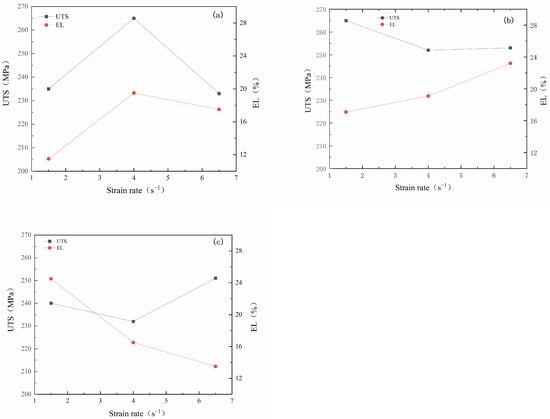
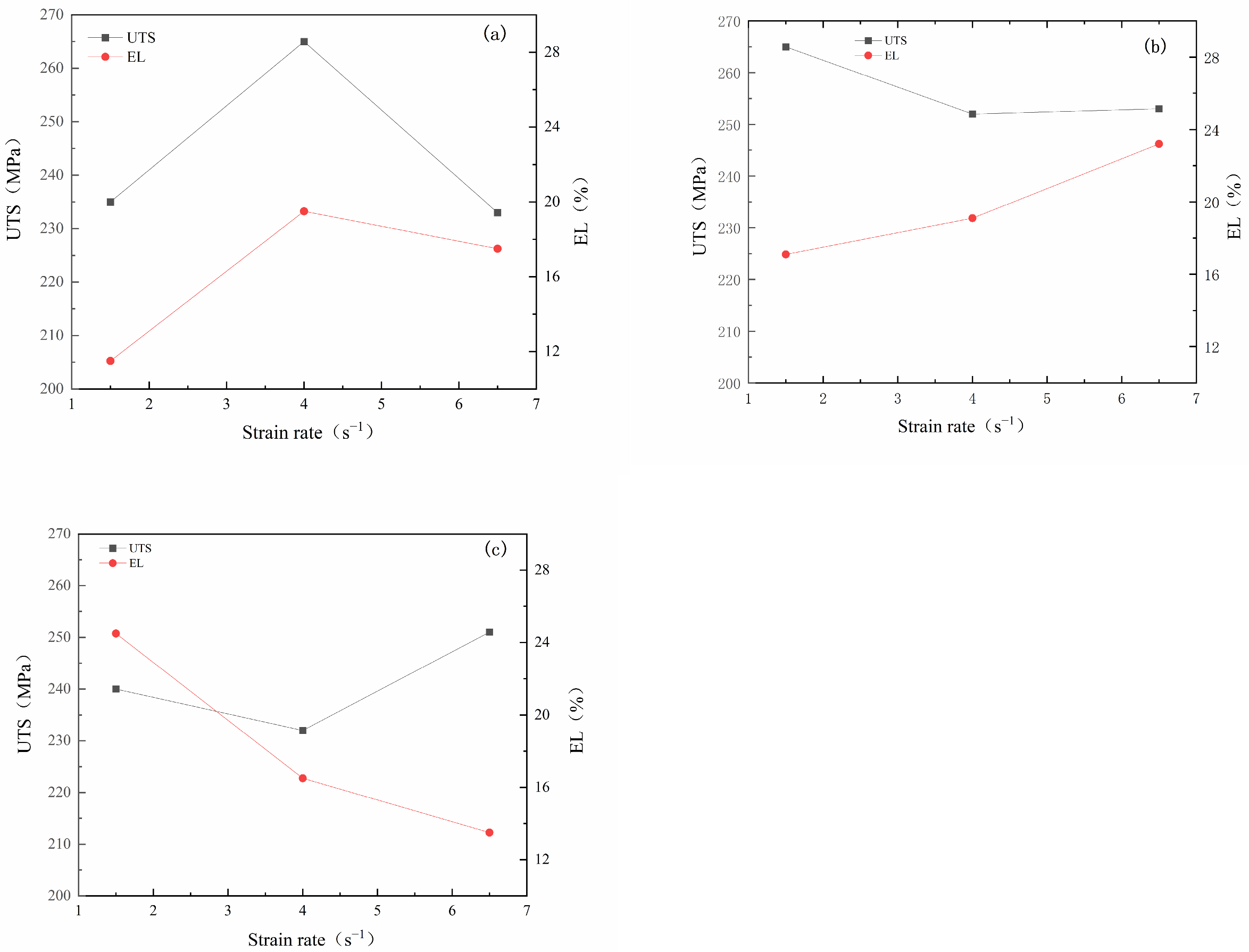
Liu et al. [19] investigated the mechanical responses of AZ31 magnesium alloy at 370 °C under varying strain rates. The tensile strength and elongation first increased and then decreased with rising strain rate (Figure 6). At 1.5 s−1, the values were 235 MPa and 11.5%, while the optimal properties of 265 MPa and 19.5% were obtained at 4.0 s−1. Further increasing the strain rate to 6.5 s−1 reduced the strength and elongation to 233 MPa and 17.5%, respectively. This trend was also observed at 410 °C and 460 °C, demonstrating a coupling effect between rolling temperature and strain rate. Synergistic optimization of the two parameters is necessary to achieve a good strength–ductility balance.
Figure 6.
Room-temperature mechanical properties of AZ31 magnesium alloy sheets under various strain rates (1.5, 4.0 and 6.5 s−1) and different temperatures: (a) 370 °C, (b) 410 °C, (c) 460 °C [19].
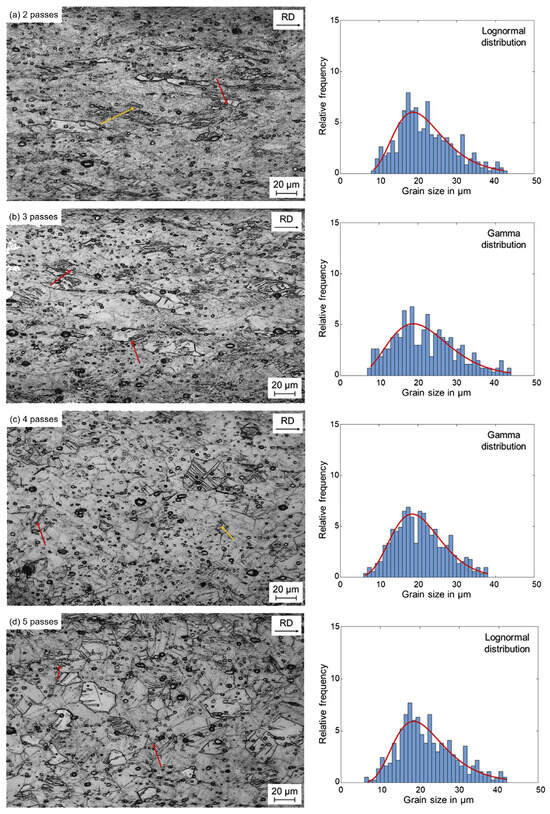
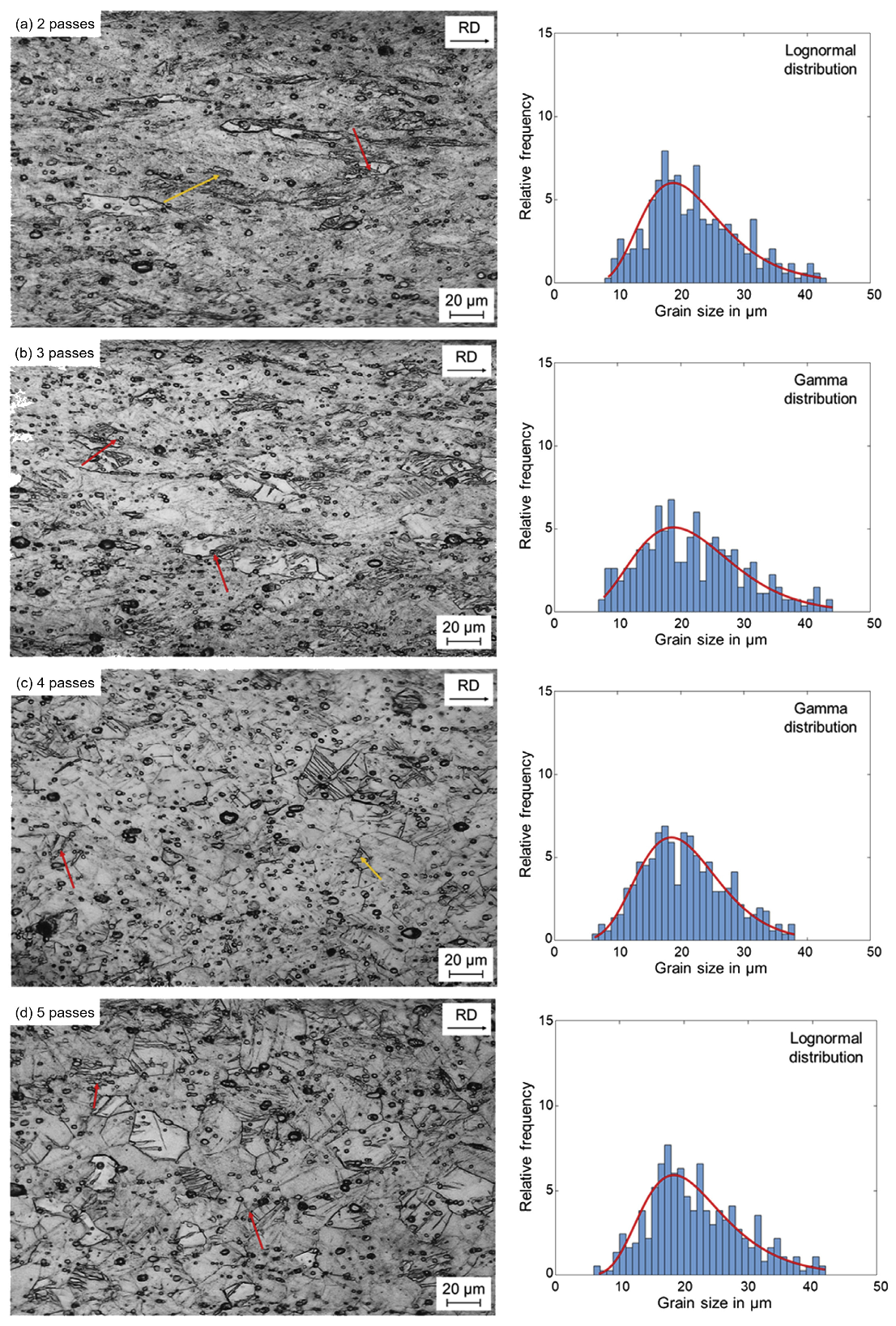
Ueberschär et al. [20] rolled extruded WE43MEO magnesium alloy sheets into foils thinner than 200 μm via multi-pass hot rolling at 480 °C. As presented in Figure 7, elongated deformed grains parallel to the rolling direction form after 2–3 passes, which turn into equiaxed grains after 4–5 passes. Continuous dynamic recrystallization and twin-induced dynamic recrystallization dominate the recrystallization process. Hot rolling greatly strengthens basal texture, pushing ultimate tensile strength to 290–324 MPa, which declines with more rolling passes. Meanwhile, the elongation drops to 3.4–5.1%.
Figure 7.
Optical micrographs and grain size distribution histograms of the hot rolled WE43MEO foils after (a) two; (b) three; (c) four; and (d) five rolling passes at 480 °C, rolling speed of 1.0 m s−1 (red arrows: nucleation at twins, yellow arrows: subgrain boundaries) [20].
2.2. Cross Rolling
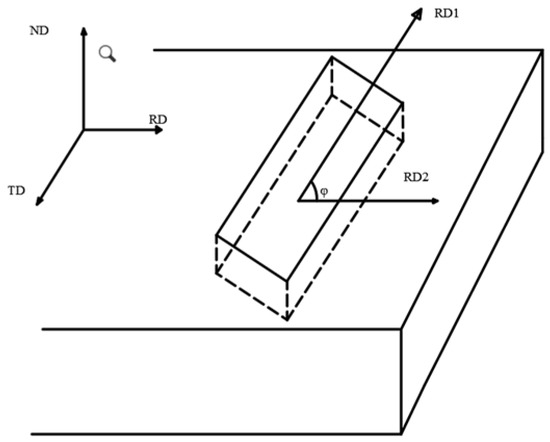
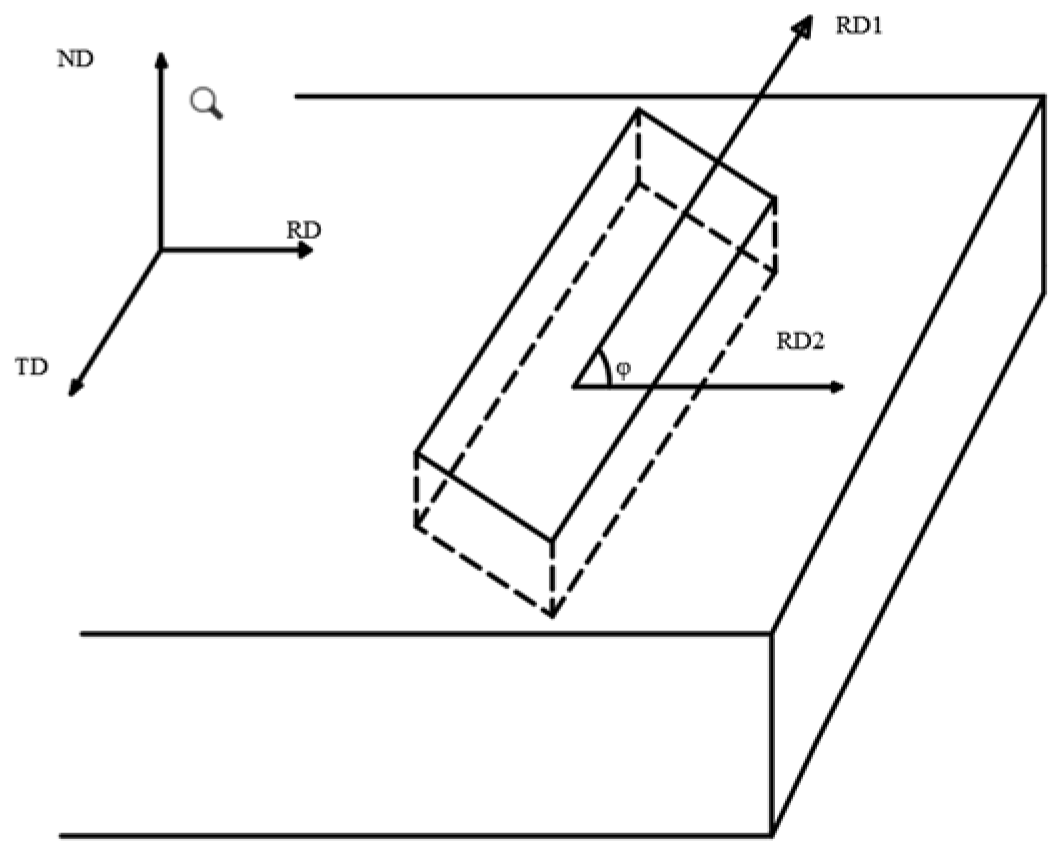
In conventional rolling processes, the workpiece is deformed along a single direction throughout the entire forming process. In contrast, cross rolling involves intentionally altering the rolling direction (typically between successive passes) to mitigate anisotropy and achieve materials with more homogeneous and improved comprehensive properties. The most common configuration is a 90° rotation relative to the initial rolling direction, as illustrated in Figure 8. Nevertheless, this technique also presents notable drawbacks: ① it introduces greater process complexity and operational challenges; ② it tends to reduce overall production efficiency.
Figure 8.
Schematic of cross rolling [21].
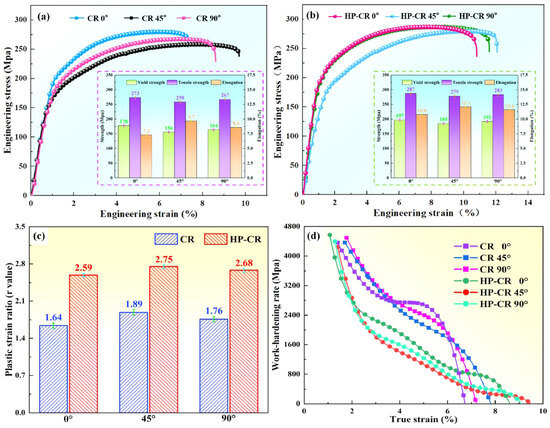
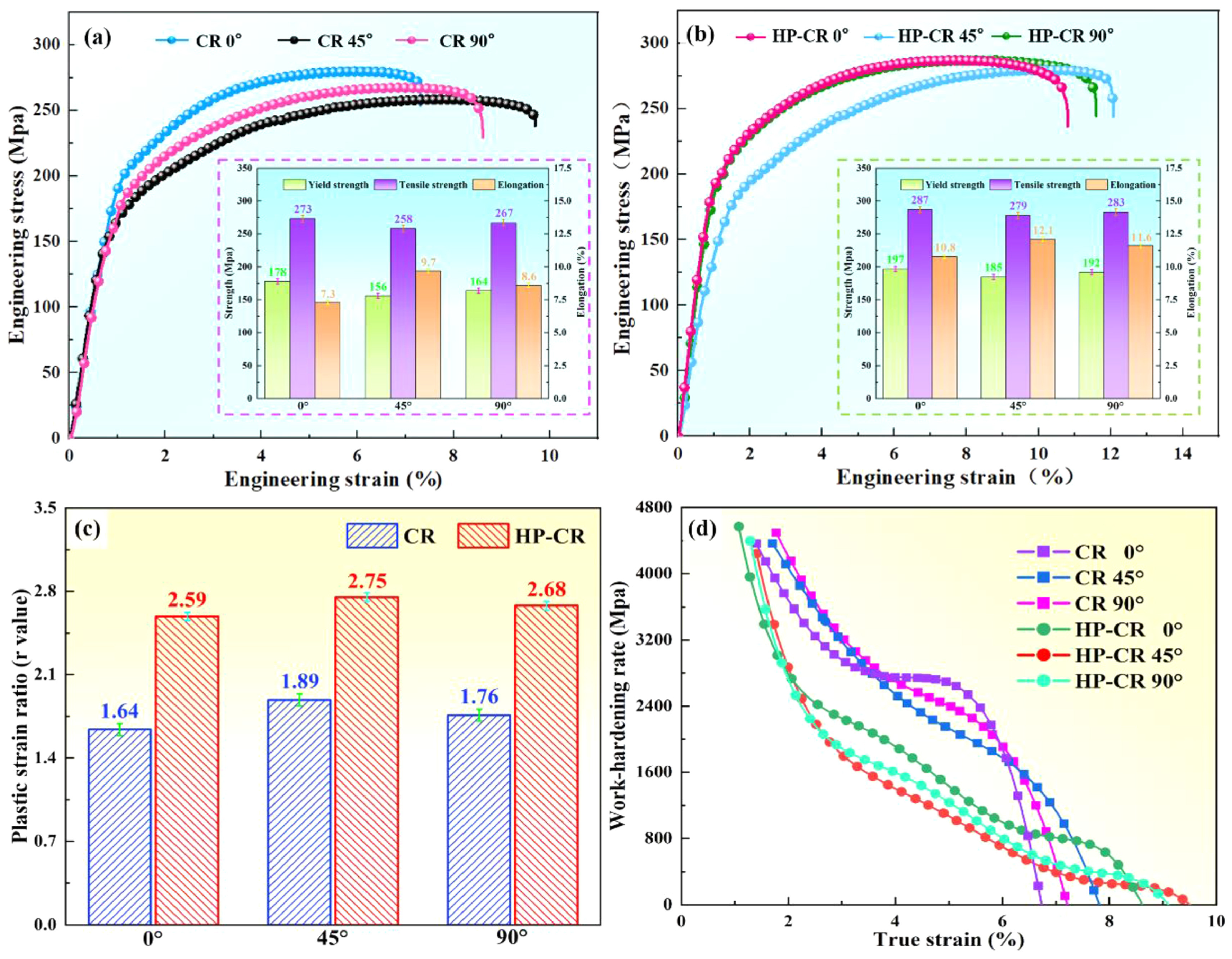
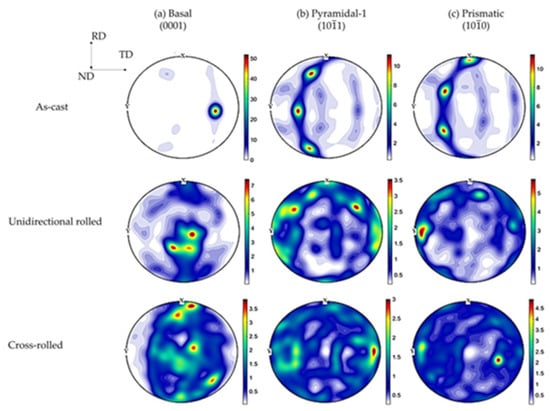
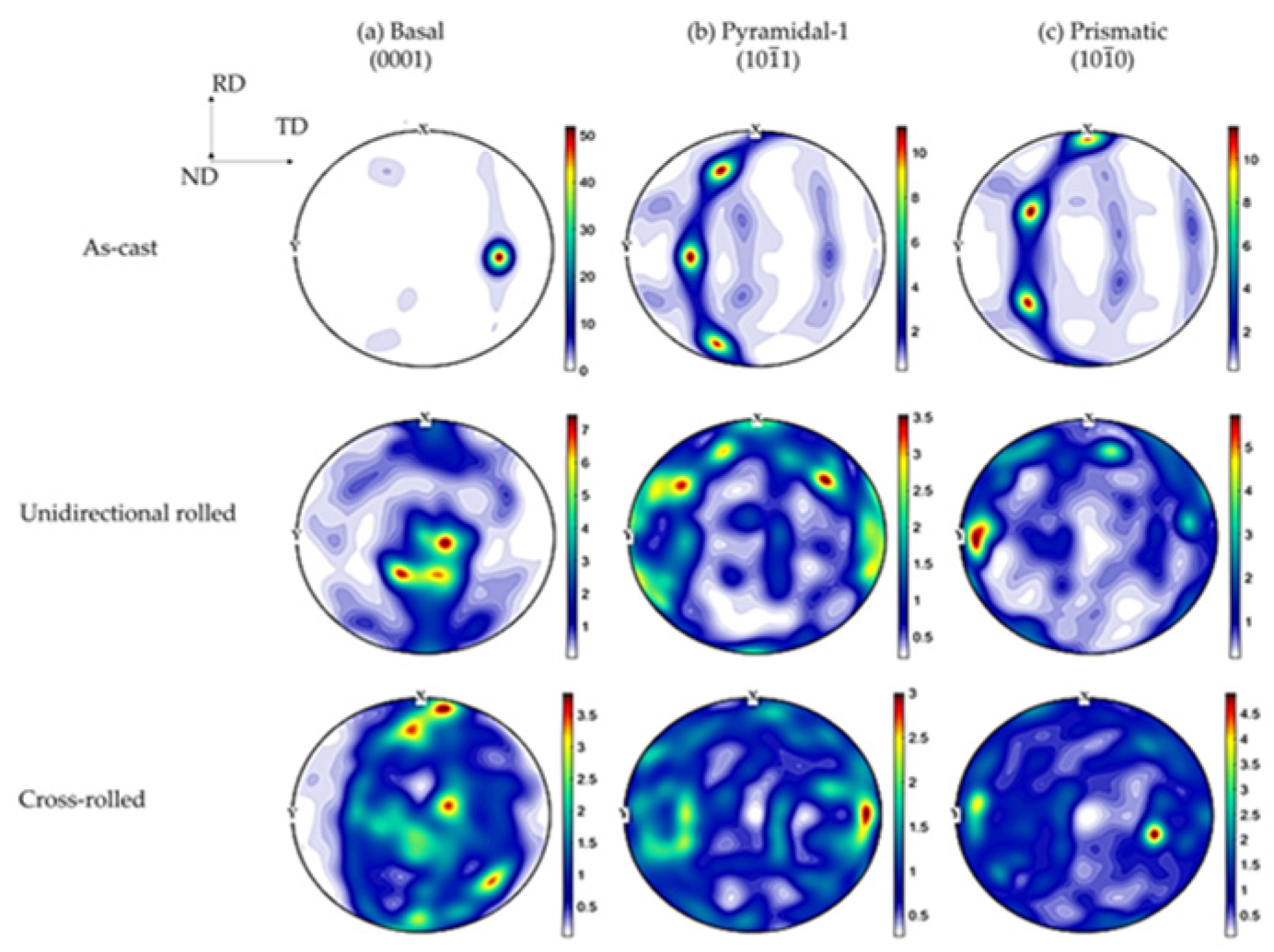
Chino et al. [22,23] conducted experimental studies on the cross-rolling process of magnesium alloy thin sheets. Comparative experiments of unidirectional and reverse cross rolling were carried out on AZ31 magnesium alloy with an inclination angle of 7.5° between roll axes. The results show that reverse cross rolling, in particular, reduces the (0002) texture intensity, tilts the texture toward the TD direction, and enhances stretch formability. Zhi [24] conducted cross rolling experiments on twin-roll cast AZ31B thin sheets at preheating temperatures ranging from 250 °C to 400 °C, with four reversed rolling routes and gradient pass reductions of 30%, 25%, 20% and 15%. The experimental results demonstrate that the RII rolling route produces a more uniform microstructure with a minimum grain size of 4.1 μm compared with the RI and RIV routes, and the basal texture intensity of different rolling routes follows the sequence of RI > RIV > RIII > RII, indicating that cross shear deformation and grain refinement can effectively weaken basal texture and improve sheet formability. Consistent with this conclusion, Zhang et al. [25] prepared AZ31 magnesium alloy sheets through hard-plate cross rolling (HP-CR). As shown in Figure 9, compared with conventional cross rolling, HP-CR processing significantly enhances the comprehensive mechanical properties of the alloy. The tensile strength at 0°, 45° and 90° directions increases from 273 MPa, 258 MPa and 267 MPa to 287 MPa, 279 MPa and 283 MPa, respectively, while the corresponding elongation rises from 7.2%, 9.7% and 8.6% to 10.8%, 12.1% and 11.6%. Meanwhile, the average yield strength increases by 15.2%, and the average elongation is improved from 8.5% to 11.5%. From the perspective of the texture evolution mechanism, Hernández-Cortés et al. [26] verified through pole figure analysis (Figure 10) that cross rolling effectively reduces the (0001) basal texture intensity of Mg-Zn-Ga alloy compared with unidirectional rolling. The cross shear deformation induced by variable rolling directions activates pyramidal ⟨c+a⟩ and prismatic slip systems, changes the grain rotation path, and ultimately achieves prominent basal texture weakening.
Figure 9.
Mechanical properties of different rolling processes: (a) CR tensile properties, (b) HP-CR tensile properties, (c) plastic strain ratio r value, (d) work hardening rate [25].
Figure 10.
Pole figures of the Mg-0.5Zn-0.25Ga alloy after different processing steps (as-cast, unidirectional, and cross-rolled): (a) basal plane (0001), (b) pyramidal plane (), and (c) prismatic plane (). RD: rolling direction; TD: transverse direction; ND: normal direction [26].
2.3. Accumulative Roll Bonding (ARB)
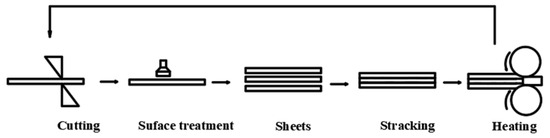
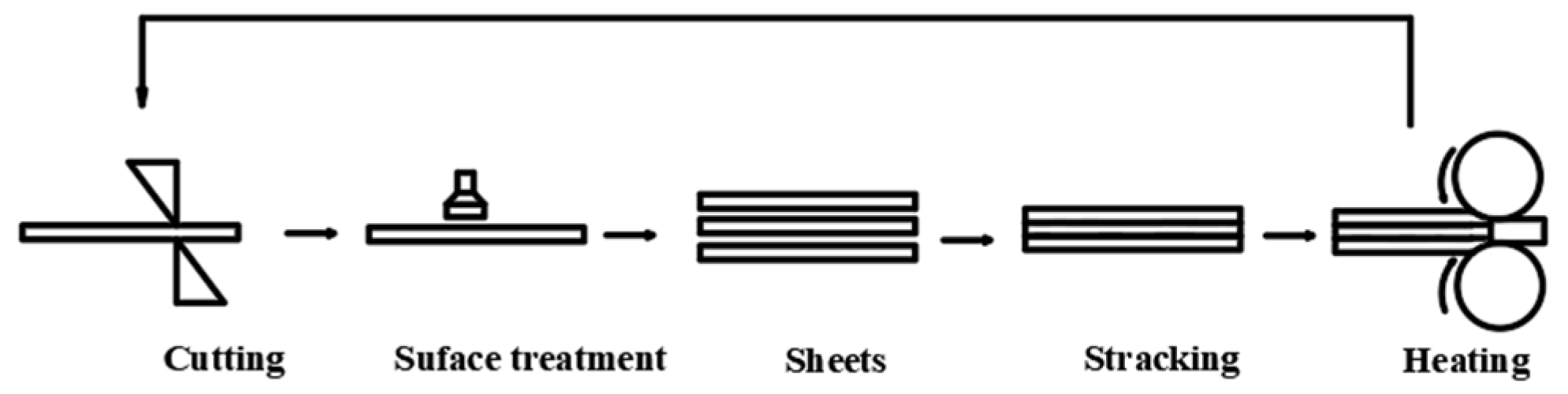
Accumulative roll bonding (ARB) is a rolling process that achieves grain refinement and property improvement through repeated stacking and rolling of metal sheets. Two metal sheets of the same size are stacked together, rolled to be bonded, and then the process is repeated. The process flow is shown in Figure 11. This process can continuously refine grains and homogenize the microstructure, break through the deformation limit of conventional rolling, and realize the fabrication of ultrafine-grained materials. Advantages: ① ARB significantly refines grain size and improves fatigue and corrosion resistance through multiple cumulative deformations; ② it can significantly improve the yield strength, tensile strength, and ductility of materials. Disadvantages: ① ARB requires multiple stacking, rolling, and cutting steps, resulting in complex operation; ② high precision requirements for rolling mills and cutting equipment lead to high equipment costs; ③ repeated stacking and rolling in the process lead to low production efficiency and high energy consumption.
Figure 11.
Schematic of the accumulative roll bonding (ARB) process [27].
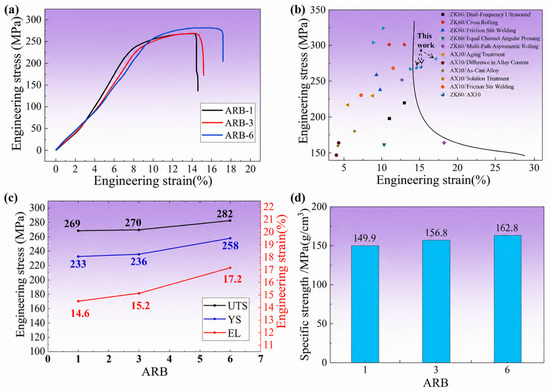
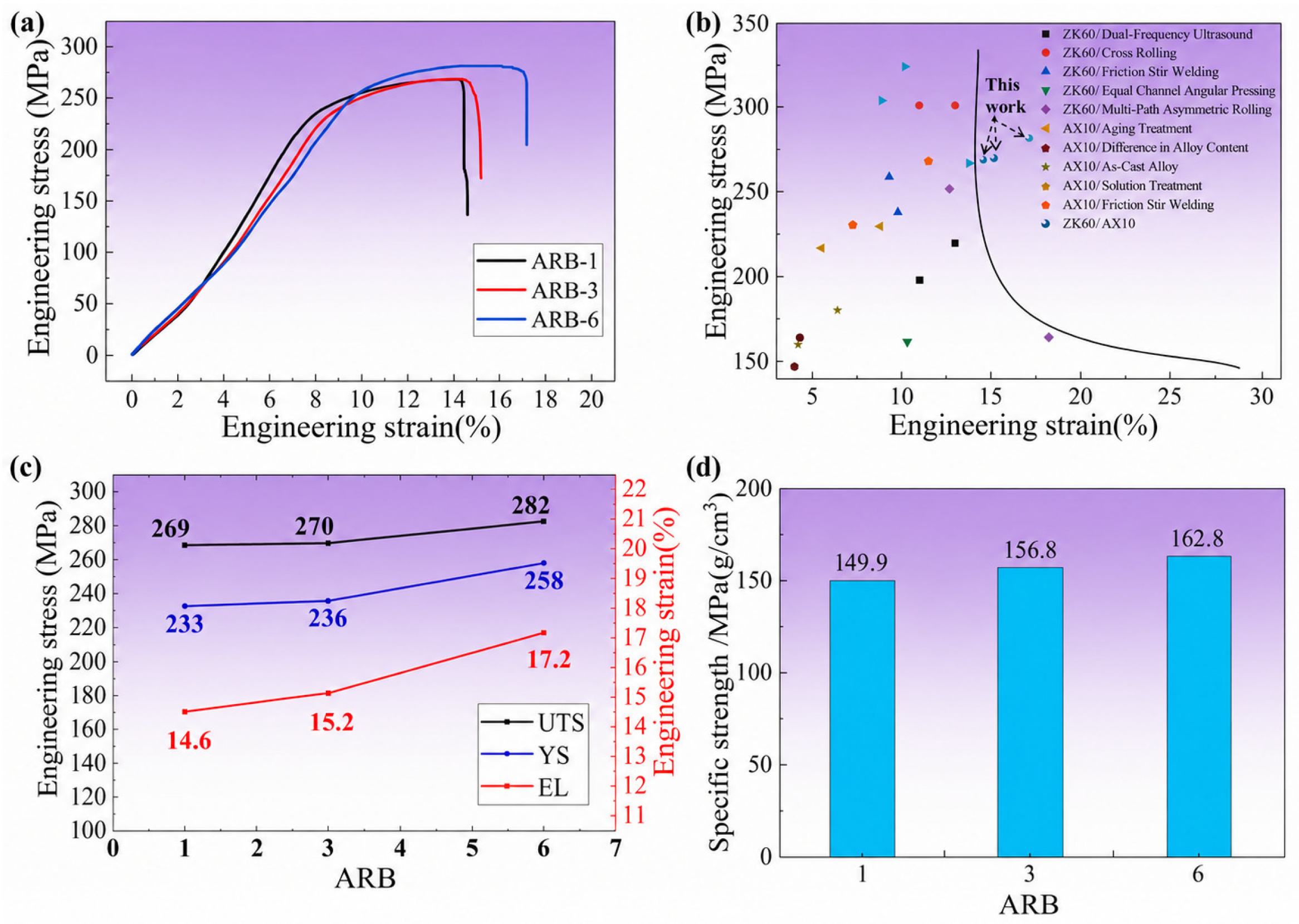
This process was first proposed by Y. Saito et al. [28] and successfully applied to commercial pure aluminum, Al–Mg alloys, and IF steels, providing an efficient solution for ultrafine graining of bulk materials and broadening the application scenarios of lightweight high-strength materials. Pérez-Prado et al. [29] studied the grain refinement effect of magnesium alloys with different aluminum contents via the ARB process. The experimental results show that AZ91 alloy obtains ultrafine grains (<1 μm) after the first rolling pass, while AZ31 alloy has a larger grain size (4.2 μm after the first treatment). Moreover, grain refinement mainly occurs in the first pass, and subsequent treatments mostly improve uniformity rather than further refine grains. Shi et al. [30] realized dynamic recovery and partial recrystallization of the microstructure, released residual stress, and avoided necking or fracture caused by saturated strain hardening after multi-pass rolling through annealing at 350 °C for 10 min between each pass of the ARB process. As shown in Figure 12b, the comparison with other processes highlights the advantages of the 350 °C ARB process in this study. Samples of other processes show a trade-off between “high strength and low plasticity” or “high plasticity and low strength”, while this process maintains high plasticity in the high-strength range.
Figure 12.
Mechanical properties of AX10/ZK60 magnesium alloy after different ARB processes: (a) engineering stress–strain curves; (b) comparison with other processes; (c) sheet properties; (d) specific strength [30].
Trojanová et al. [31] carried out two-pass ARB treatment on AZ31 magnesium alloy at 400 °C. After the first ARB cycle, initial coarse grains break down and numerous fine grains emerge accompanied by local high-angle grain boundaries, which signals the initiation of dynamic recrystallization. The second ARB pass further refines grains and eliminates most deformation twins; grain rotation and dynamic recrystallization generate a microstructure with roughly 80% high-angle grain boundaries, though coarse and fine grain regions still coexist. This heterogeneous layered bimodal structure with alternating coarse and fine grains enables the alloy to retain strong basal texture. Additional strain hardening and activated non-basal slip jointly deliver high elongation, realizing an outstanding balance between strength and ductility.
2.4. Equal-Channel Angular Rolling (ECAR)
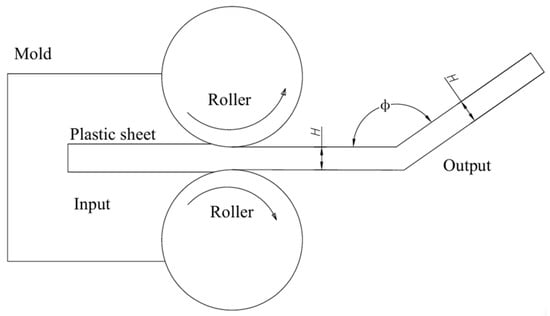
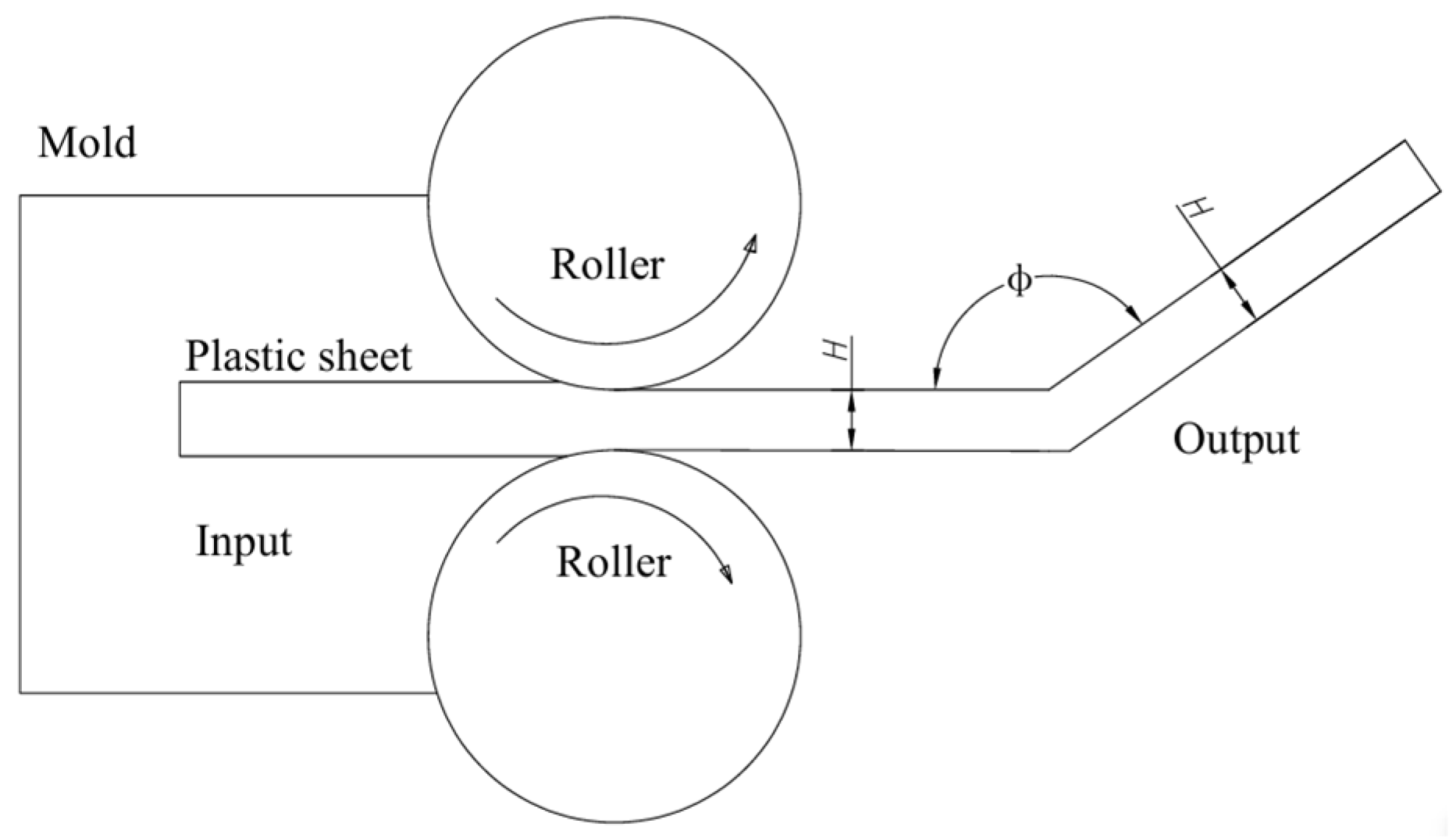
Equal-channel angular rolling (ECAR) is an advanced processing technology for grain refinement and property improvement through severe plastic deformation. This technology mainly uses an equal-channel angular die to roll sheets repeatedly, causing shear deformation of the material in the die channel to achieve grain refinement and texture control. The equal-channel angular die consists of two intersecting channels with the same cross-section, and the included angle between the channels is usually 90–120°, as shown in Figure 13. Compared with conventional rolled sheets [32,33,34], ECAR-processed materials can refine grains, enhance grain boundary coordinated deformation capacity and yield strength, and greatly improve strain hardening capacity along the rolling direction. Advantages: ① severe shear deformation can refine grains to submicron or nanoscale; ② large deformation can be realized at room temperature or low temperature (200 °C), avoiding high-temperature oxidation and grain coarsening. Disadvantages: ① long single-pass processing time leads to low production efficiency; ② high equipment cost and complexity.
Figure 13.
Schematic of equal-channel angular rolling (ECAR) [35].
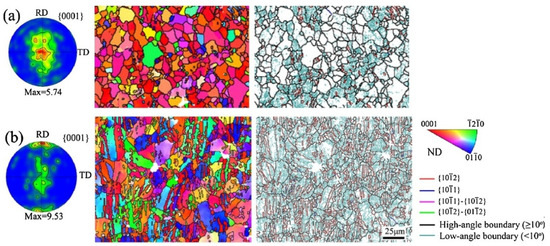
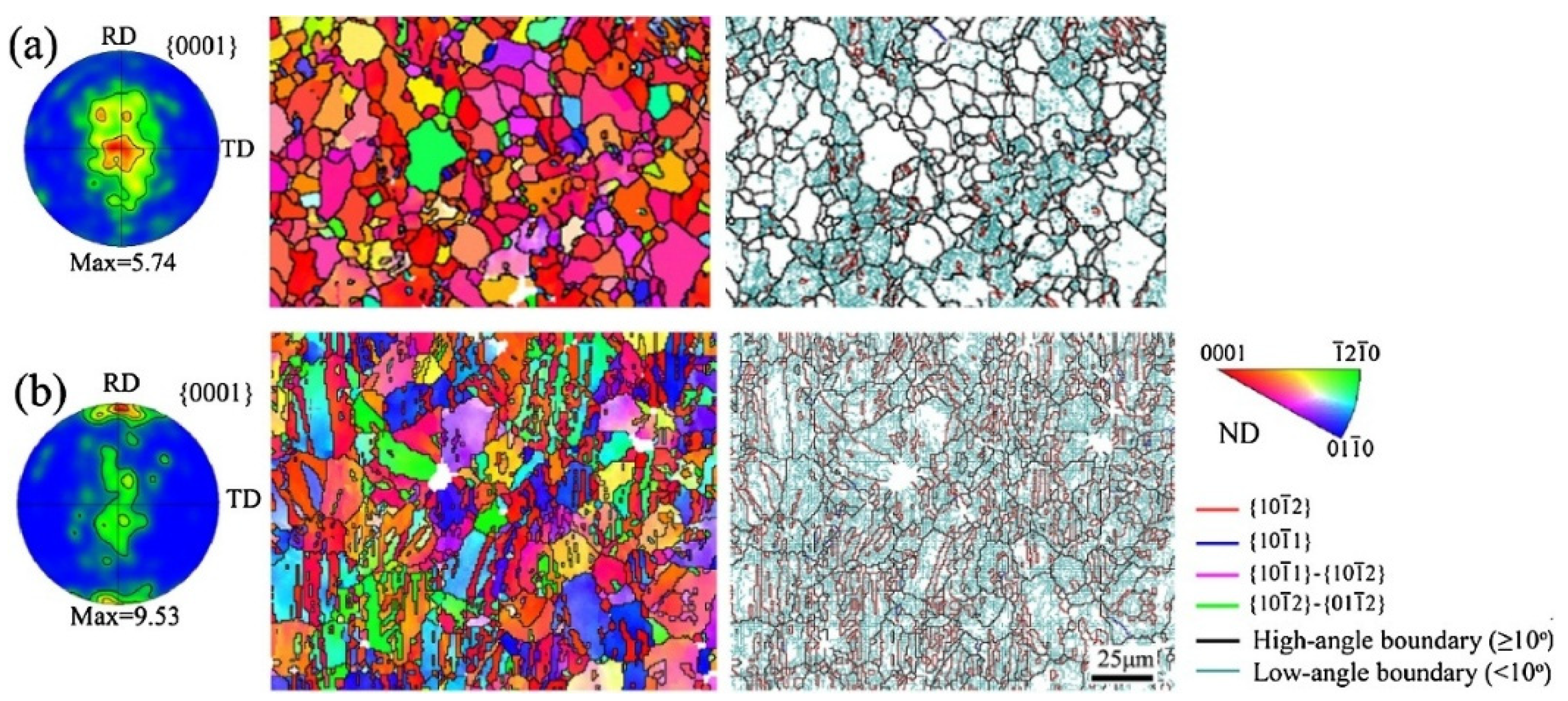
Song D et al. [36] conducted ECAR and ECAR-CB processes on AZ31 magnesium alloy sheets. As shown in Figure 14, ECAR leads to a more dispersed distribution of the c-axis of the basal texture along the rolling direction (RD) and greatly reduces its intensity. Further, continuous bending in ECAR-CB facilitates the nucleation and growth of twins, and the generation of a large number of twins results in a strong c-axis∥ RD texture. Continuous bending almost eliminates the basal texture, and a weak symmetrically split {0002} bimodal texture can be identified, improving formability. Hu et al. [37] investigated the ECAR-B process for AZ31 magnesium alloy sheets using finite-element simulation. The results showed that decreasing the channel clearance and inner chamfer radius enhanced strain accumulation and shear deformation, whereas a smaller bending radius strengthened bending deformation. Excessively small channel clearance and chamfer radius could hinder sheet passage or cause cracking.
Figure 14.
EBSD maps and {0001} pole figures of (a) ECAR sheet and (b) ECAR–CB sheet [36].
2.5. Asynchronous Rolling
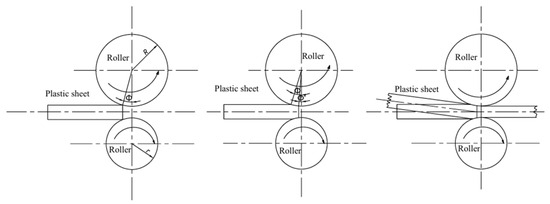
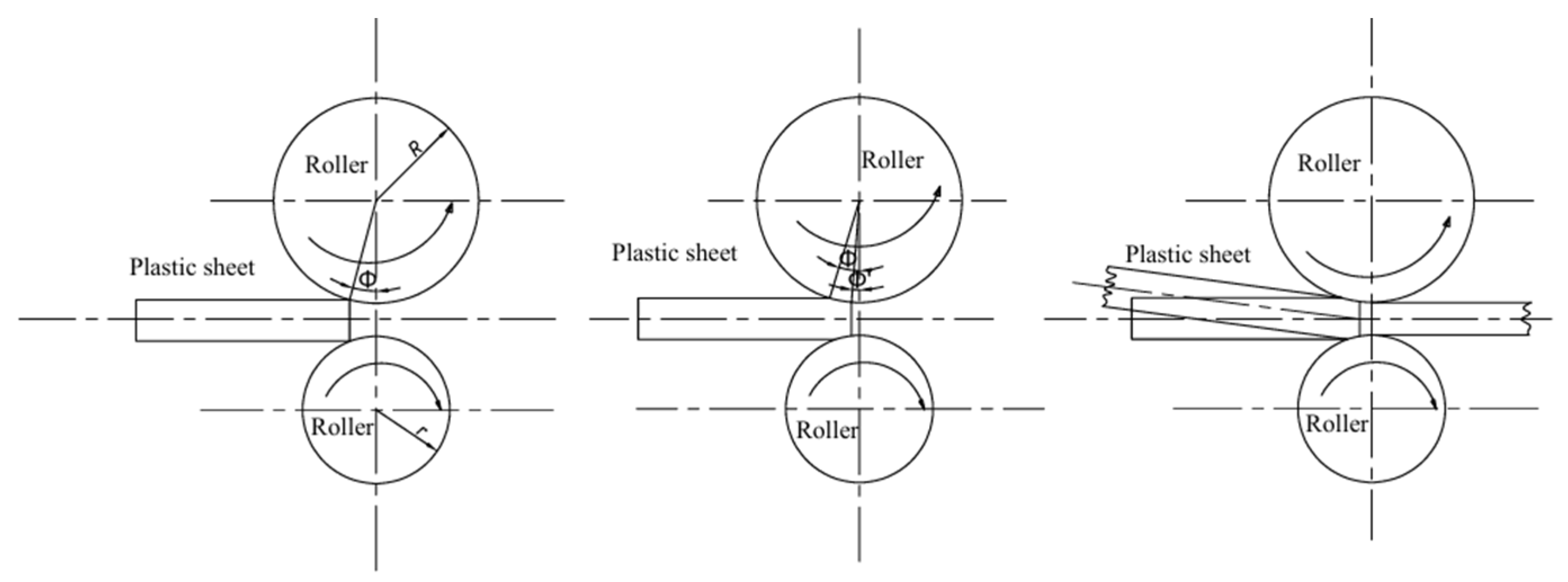
Asynchronous rolling (AR), also known as differential speed rolling, is a rolling process in which the upper and lower rolls rotate at different rotational speeds or linear velocities. The process flow is schematically illustrated in Figure 15. Its core feature lies in the generation of a shear zone within the deformation region, where friction forces from the two rolls act in opposite directions and convert frictional resistance into shear driving force. This mechanism greatly reduces rolling load and removes the limit of minimum rolling thickness, enabling the fabrication of ultra-thin strips with favorable flatness. It also presents prominent advantages including refined grain structure and favorable fabrication of laminated metal composites. The major advantage of this process is that it can introduce substantial through-thickness shear deformation, improve the plastic formability of magnesium alloys, and reduce anisotropy. However, the process also has obvious drawbacks: ① it requires precise control of the roll speed ratio and deformation reduction, resulting in high operational complexity; ② the need for specialized equipment limits its large-scale industrial application.
Figure 15.
Schematic of asynchronous rolling (differential speed rolling) [38].
Kim et al. [39] adopted a combined process of equal-channel angular rolling and high-speed-ratio differential speed rolling (HRDSR) to regulate the grain size and texture of AZ31 magnesium alloy. The grain size was 34.3 μm after 1-pass ECAR and 21.5 μm after 3-pass ECAR. With the introduction of 70% reduction and HRDSR, the grain sizes were refined to 1.2 μm and 2.3 μm after one pass and three passes, respectively.
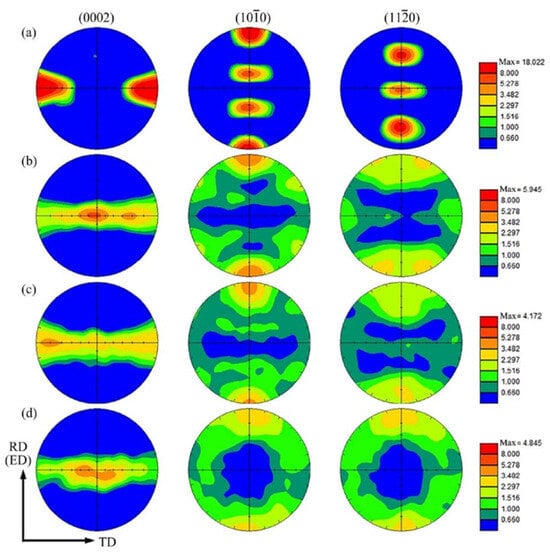
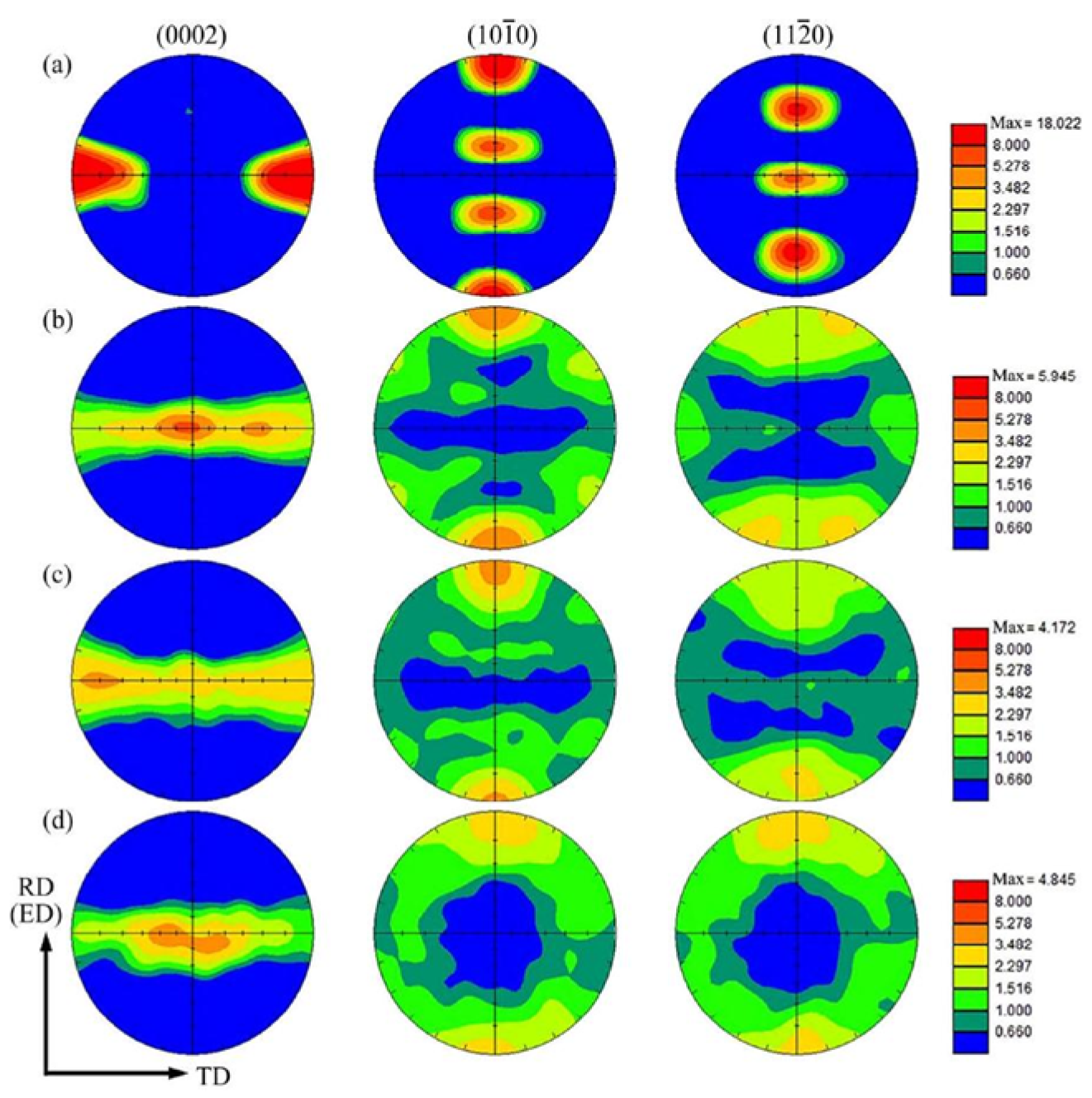
Asynchronous rolling can effectively weaken the basal texture intensity. Huang et al. [40] from the Sustainable Development Research Institute of Japan investigated the effect of single-pass reduction (9–63%) during asynchronous rolling on the microstructure and texture of AZ31 magnesium alloy sheets. The experimental results showed that with increasing single-pass reduction, the number of unidirectional shear bands increased, microstructural uniformity was improved, and basal texture intensity was significantly weakened. The study confirmed that a larger reduction contributes to a more homogeneous microstructure and more remarkable texture weakening. Wang et al. [41] found in asynchronous rolling of AZ31 thin sheets that increasing the speed ratio reduces the (0002) basal texture intensity, tilts the c-axis of grains away from the normal direction (ND), and forms a tilted basal texture. Zhang et al. [42] conducted asynchronous decreasing-temperature rolling on hot-extruded ZK60 sheets. As displayed in Figure 16, which shows the (0002), (10–10), and (11–20) pole figures, the initial maximum intensity of (0002) basal texture is 18, representing a typical strong basal texture. After the third pass, the basal texture intensity drops to 4.8, indicating that asynchronous decreasing-temperature rolling reduces the basal texture intensity by more than 70% and forms a weak basal fiber texture.
Figure 16.
The (0002), (10–10), and (11–20) pole figures of ZK60 magnesium alloy during asynchronous decreasing-temperature rolling: (a) initial state; (b) 1st pass; (c) 2nd pass; (d) 3rd pass [42].
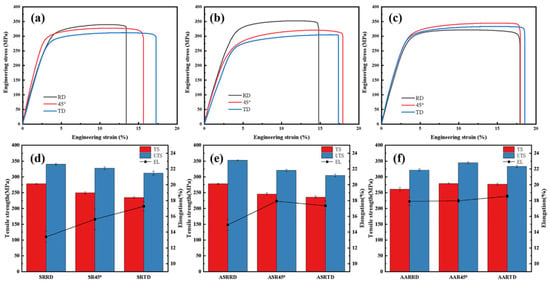
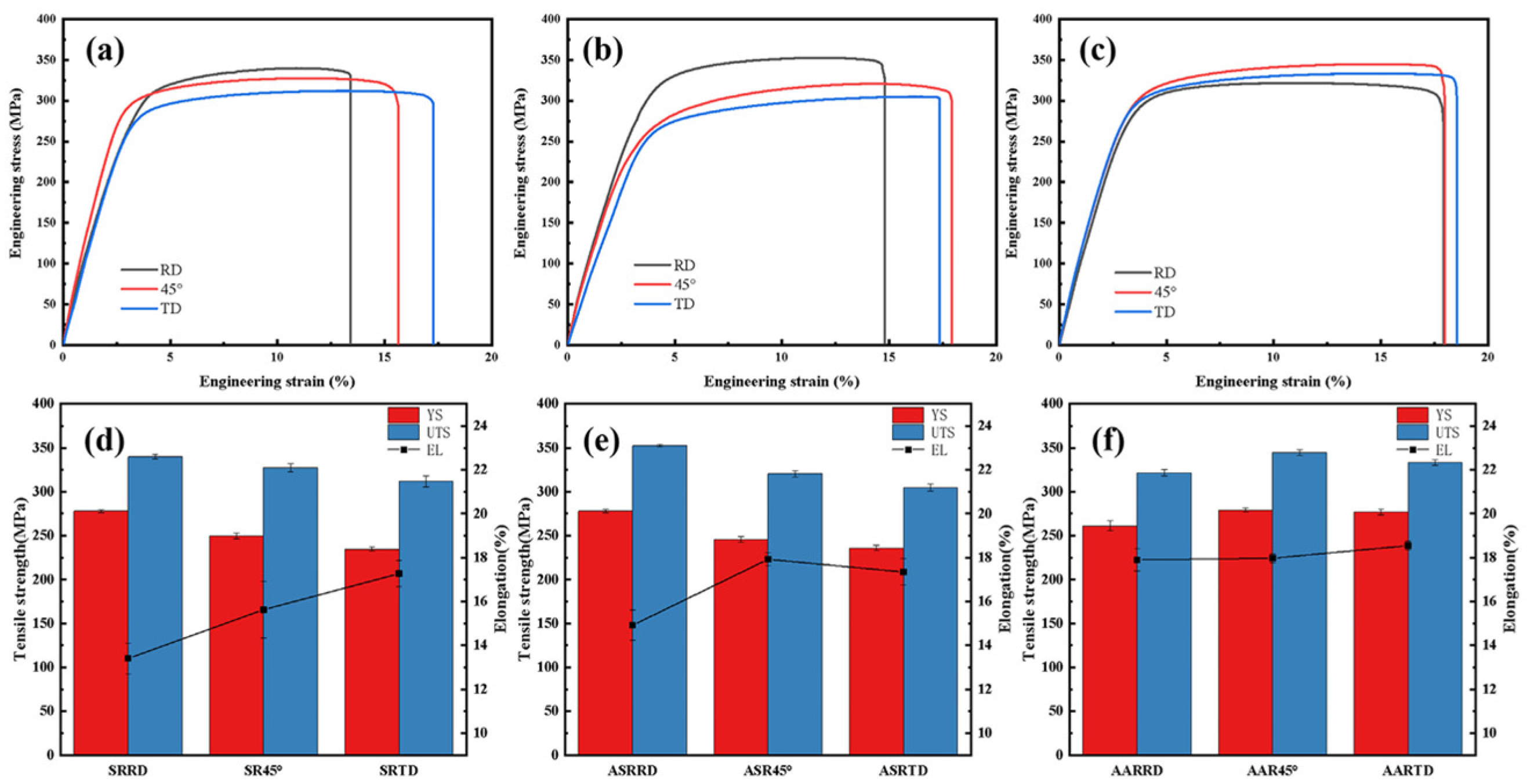
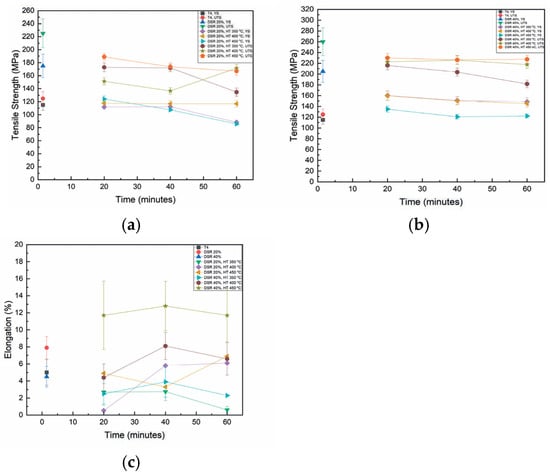
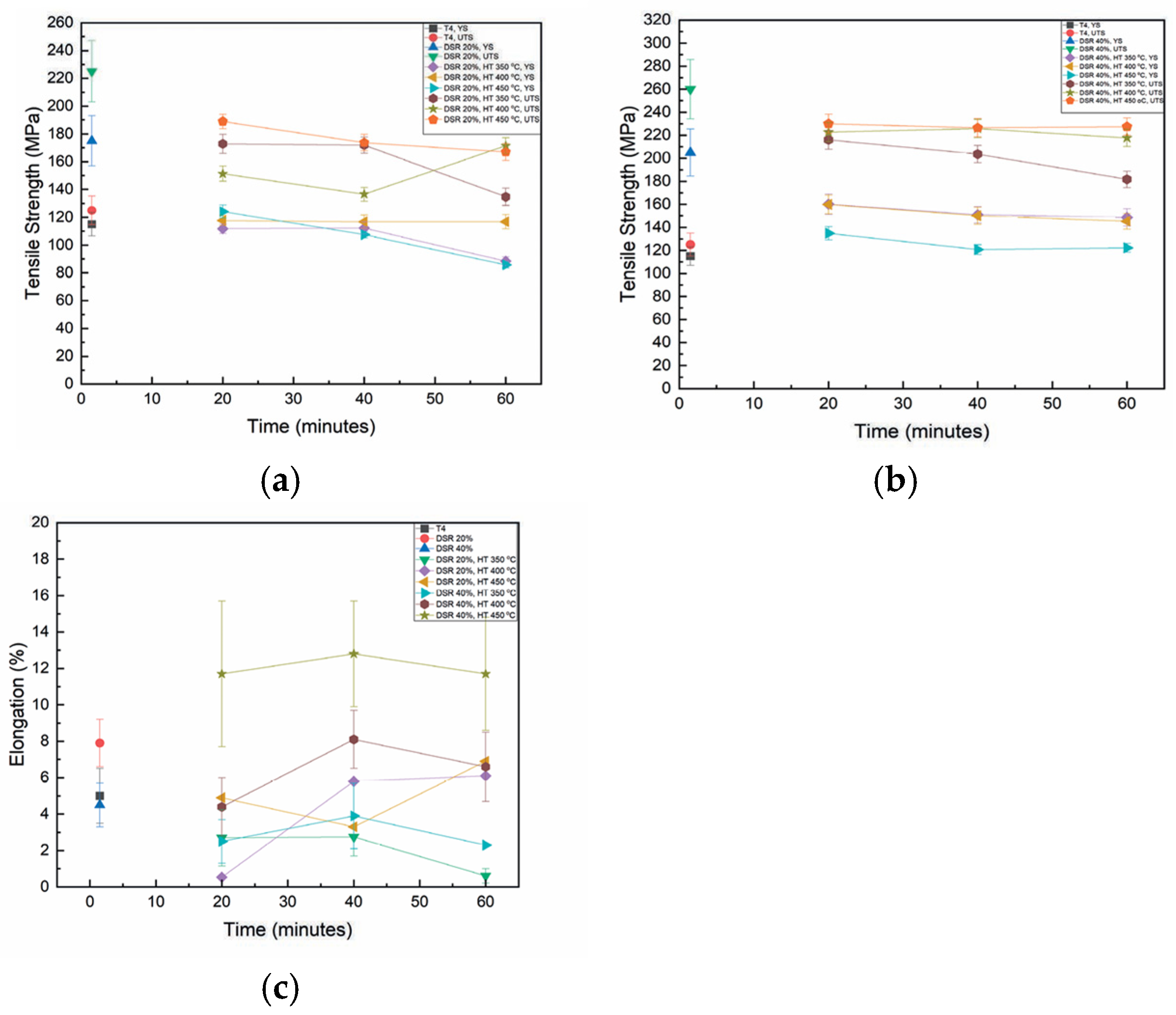
Asymmetric angle rolling (AAR) integrates differential speed rolling and angular rolling into an advanced forming route for Mg alloy sheets. Unlike standard asymmetric rolling, angular deflection periodically shifts the shear direction across the sheet plane and eliminates inhomogeneous microstructures induced by unidirectional shear. Li et al. [43] adopted crystal plasticity finite-element simulation to clarify how rolling reduction affects deformation uniformity of AAR-processed AZ31B. Low reduction leads to severe stress concentration for grains with hard orientations. Larger reduction cuts basal slip fraction from 50% to 27% while pyramidal ⟨c+a⟩ slip rises from 18% to 36%. Coordinated operation of multiple slip systems homogenizes stress–strain distribution and randomizes texture. As displayed in Figure 17, Wang et al. [44] modified thickness and width deformation symmetry via AAR. Compared with conventional and asymmetric rolling, AAR sheets deliver uniform elongation of 17.9–18.5% along RD, 45° and TD, the highest among the three processes; ultimate tensile strength reaches 321.8, 344.7 and 333.2 MPa, and yield strength hits 251.1, 277.1 and 277.2 MPa. Consistent strength and ductility in all directions greatly improve sheet isotropy and secondary forming performance. Nevertheless, ordinary asymmetric rolling generates dense dislocations and high residual stress, resulting in low ductility. Hale et al. [45] reported that single-pass differential speed rolling only yields ~5% elongation for AXM20504 alloy. After 40 min annealing at 450 °C, nearly complete static recrystallization releases internal stress. As shown in Figure 18, elongation rises markedly to 12% while tensile strength stays above 200 MPa, achieving favorable strength–ductility synergy.
Figure 17.
Engineering stress–strain curves and tensile properties of the three rolled magnesium alloy sheets: (a,d) SR, (b,e) ASR, (c,f) AAR [44].
Figure 18.
Comparison of T4 to (a) DSR at 20% with post-annealing and (b) DSR at 40% with post-annealing, as well as (c) % elongation to failure [45].
2.6. Twin-Roll Casting
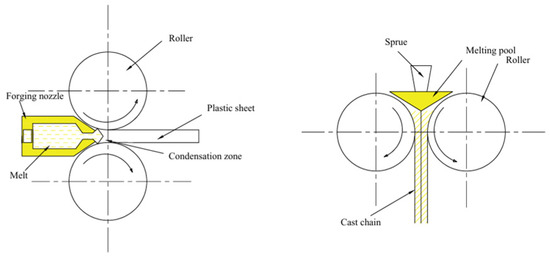
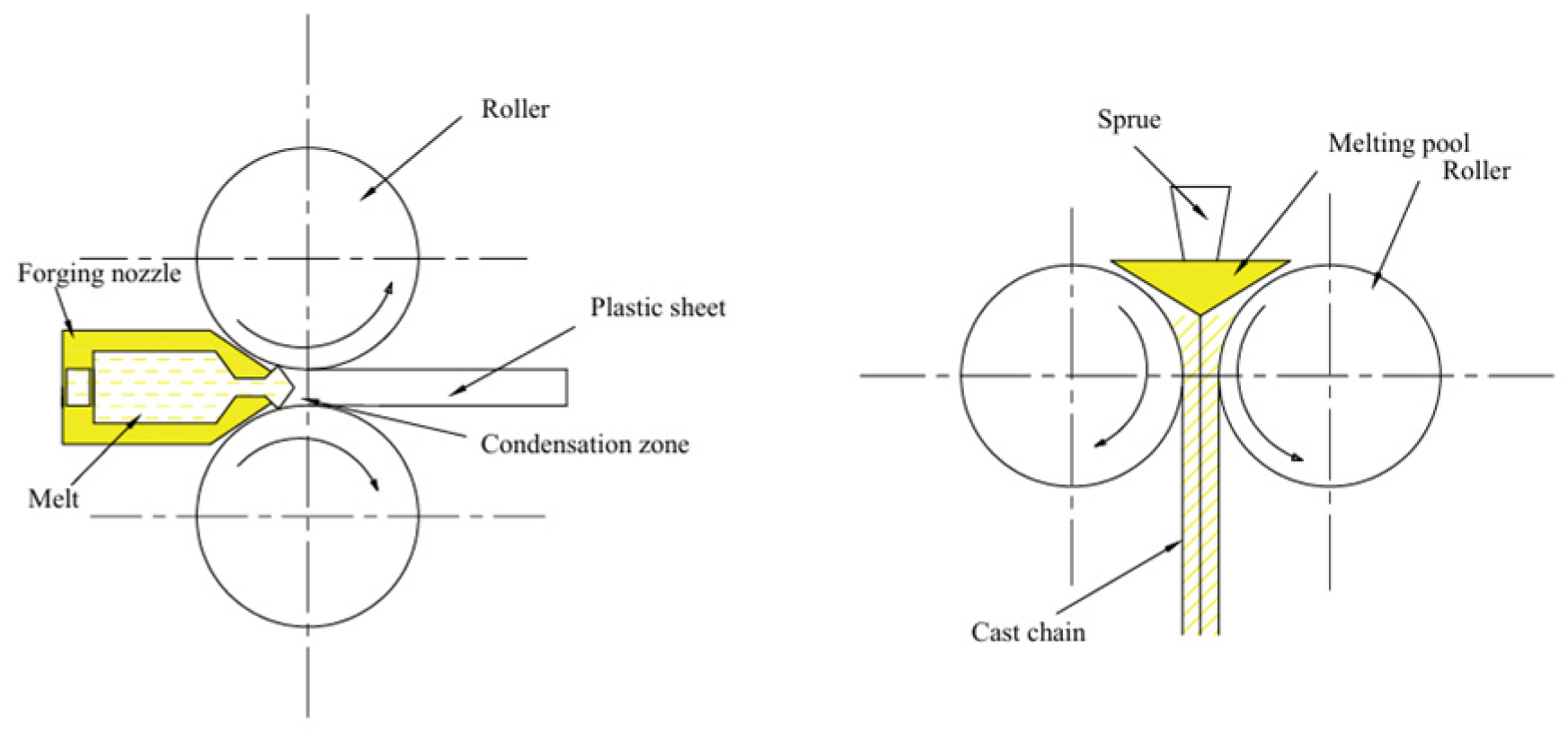
Twin-roll casting (TRC) is a short-process manufacturing technology that integrates casting and rolling into one step. The general process is as follows: molten magnesium alloy is first poured into the delivery system, passes through the nozzle into the roll gap between two rolls, and then rapidly solidifies under the cooling and pressing effects of the rolls to be directly rolled into sheets. As depicted in Figure 19, horizontal twin-roll casting and vertical twin-roll casting are the two typical configurations. The advantages of this process are as follows: ① it directly produces sheets from molten metal, reducing energy consumption and production duration; ② the short process flow cuts down equipment investment, processing steps, and production costs; ③ it is suitable for manufacturing thin-gauge magnesium alloy sheets. The disadvantages are as follows: ① precise control of parameters such as roll speed and casting speed is required, leading to high process difficulty; ② direct forming from melt makes surface quality highly sensitive to process parameters.
Figure 19.
Schematic of horizontal twin-roll casting and vertical twin-roll casting [46].
Yu et al. [47] investigated the twin-roll casting behavior of Mg–Y–Zn alloys with different LPSO phase contents using JMatPro calculations and DEFORM finite-element simulations. The results showed that rolling speed had the greatest influence on casting formability, followed by LPSO phase content and nozzle temperature. Increasing the LPSO phase content increased deformation resistance, aggravated edge cracking and caused a more uneven equivalent-strain distribution in the sheet core.
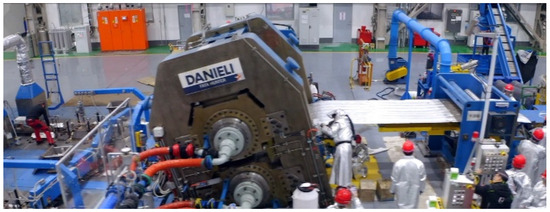
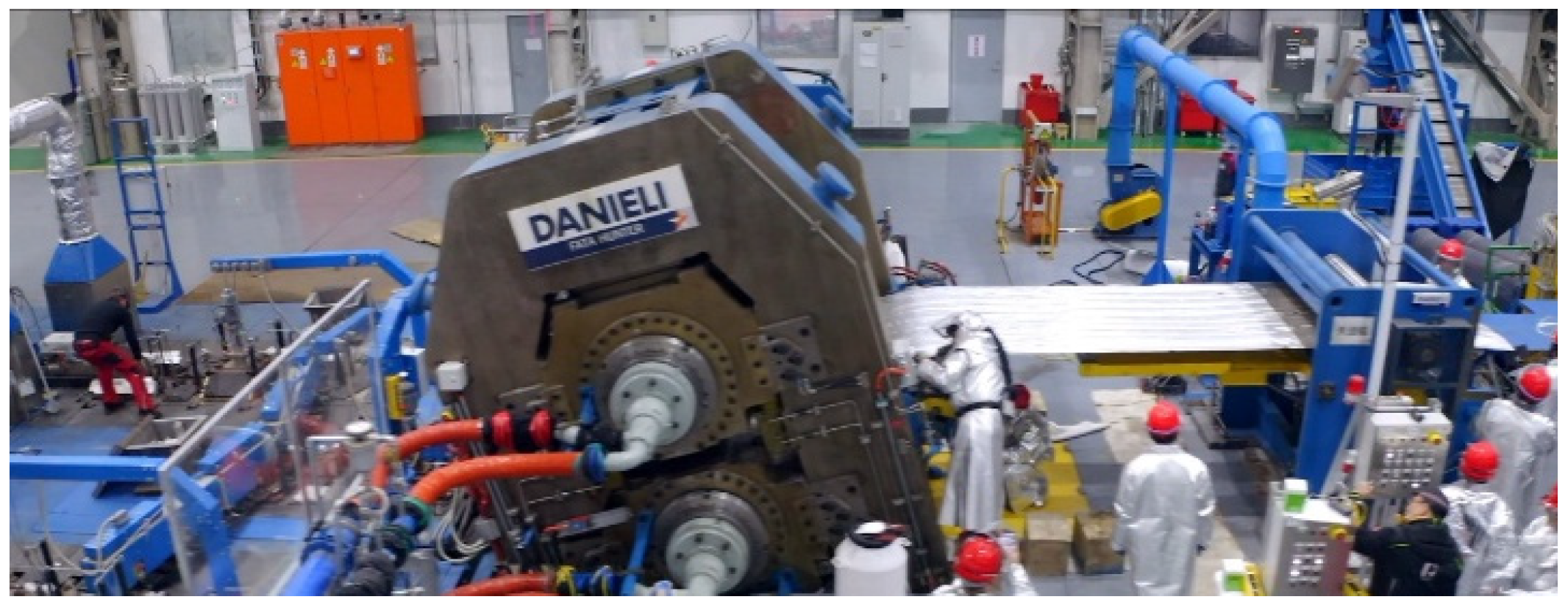
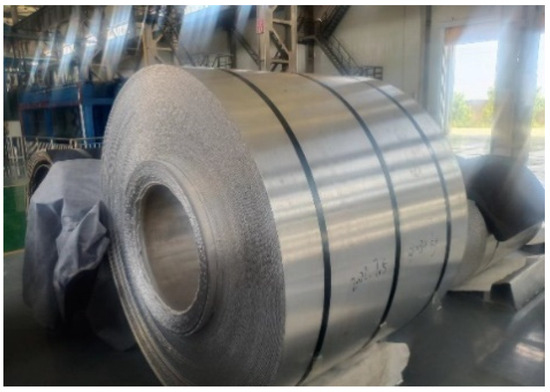
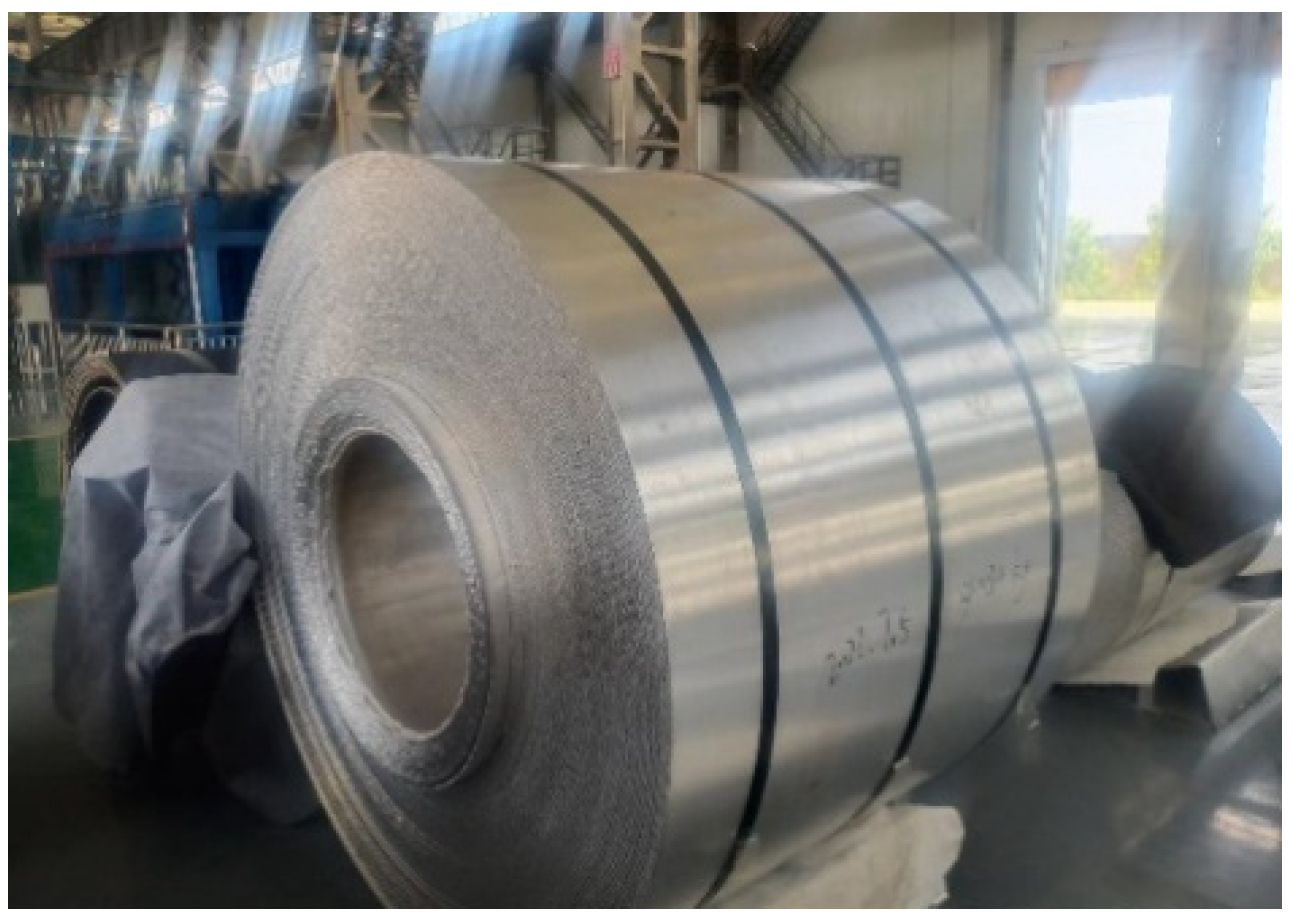
Twin-roll casting was initially applied to the production of aluminum alloy sheets [48]. In the early 1980s, Dow Chemical Company first attempted to apply this technology to magnesium alloys using a Hunter horizontal caster [49]. The Advanced Solidification Center at Brunel University, UK [50], developed the melt-conditioned twin-roll casting (MC-TRC) process, which eliminates centerline segregation via high shear rates (>1000 s−1) generated by a twin-screw extruder. Global research and development on magnesium alloy twin-roll casting has been intensified to meet the application demands in aerospace and automotive fields [51]. Research activities at various technical levels have been successively carried out in Australia [52], Germany [53], Korea [54,55,56], Japan [57], Turkey [58], and other countries [59]. In China, the research group led by Di at Northeastern University [60] first realized twin-roll casting of AZ31B magnesium alloy thin strips (1.4–3.5 mm), verifying the technological feasibility. Shandong Tianyuan Heavy Industry Co., Ltd. invested in and built China’s first wide-width magnesium alloy sheet twin-roll casting line, which was put into production in 2022. The line produces magnesium sheets with width ≥1200 mm, thickness 0.7–7 mm, and single coil weight ≥3 tons, filling domestic technological gaps. The twin-roll casting line and coil products are demonstrated in Figure 20 and Figure 21.
Figure 20.
Wide-width twin-roll casting production line for magnesium alloy sheets.
Figure 21.
Coiled product of twin-roll cast magnesium alloy sheet.
2.7. Summary
To facilitate the rapid selection of processing routes based on the three dimensions of function–mechanism–characteristics, the qualitative characteristics and quantitative performance of the six mainstream rolling processes are summarized in Table 2. The reported tensile strength, yield strength, elongation, and processing states of representative magnesium alloys processed by different rolling techniques are further compared in Table 3.
Table 2.
Microstructure regulation mechanisms and characteristics of typical rolling processes.
Table 3.
Mechanical properties of magnesium alloys processed by various rolling techniques.
3. Conclusions and Outlook
Rolling is the core plastic processing technology for the preparation of high-performance wrought magnesium alloy sheets, and its goal has shifted from “achieving formability” to “precisely tailoring microstructure and properties” to meet the requirements of final components. Conventional rolling remains the foundation for large-scale production, and reliable grain refinement and balanced properties can be achieved by optimizing rolling temperature, pass reduction, and annealing processes. Various advanced rolling processes exhibit unique advantages by refining grains and weakening texture to different degrees. Among them, twin-roll casting shows great application potential owing to its short process flow, low energy consumption, and high efficiency. The novelty of this review lies in its systematic comparison of representative rolling processes from the perspectives of microstructural regulation mechanisms, mechanical properties, processing characteristics, and industrial applicability.
To meet the future demands for higher performance, more complex service environments, and cost reduction across the entire industrial chain, the research and application of magnesium alloy sheet rolling technology present the following trends: ① Multi-process coupling should address the trade-off between property improvement and processing efficiency. Although cross rolling, ARB, ECAR, and asymmetric rolling can refine grains and weaken basal texture, their industrial application is still limited by complicated procedures, residual stress, repeated heat treatments, low production efficiency, and specialized equipment. Therefore, simplified hybrid routes with fewer passes and more uniform through-thickness deformation should be developed. ② Short-process and green technologies represented by twin-roll casting should focus on centerline segregation, surface defects, unstable mechanical properties, and the consistency of wide-width coils. For automotive applications, particular attention should be paid to room-temperature stamping formability, low anisotropy, surface quality, corrosion and fatigue resistance, and batch stability, thereby promoting the practical use of magnesium alloy sheets in automotive panels and lightweight structural components.
Author Contributions
Conceptualization, R.Z., G.W. and Y.L.; investigation, R.Z., G.W. and Y.L.; resources, R.Z., G.W., Y.L. and S.W.; data curation, R.Z., Y.L., S.W. and X.G.; writing—original draft preparation, R.Z., J.L. and X.G.; writing—review and editing, R.Z., S.W. and J.L.; supervision, G.W., J.L. and X.G.; project administration, S.W. and J.L.; funding acquisition, G.W. All authors have read and agreed to the published version of the manuscript.
Funding
This research received no external funding.
Data Availability Statement
No new data were created or analyzed in this study. Data sharing is not applicable to this article.
Conflicts of Interest
The authors declare no conflicts of interest.
References
- Yan, Z.; Zhu, J.; Zhang, Z.; Wang, Q.; Xue, Y. The microstructural, textural, and mechanical effects of high-pressure torsion processing on Mg alloys: A review. Front. Mater. 2022, 9, 964992. [Google Scholar] [CrossRef] [Scilit]
- Emley, E.F. Magnesium Alloys: Structure and Properties; BoD–Books on Demand; IntechOpen: London, UK, 2022. [Google Scholar]
- Merson, D.; Vasiliev, E.; Markushev, M.; Vinogradov, A. On the corrosion of ZK60 magnesium alloy after severe plastic deformation. Lett. Mater. 2017, 7, 421–427. [Google Scholar] [CrossRef] [Scilit]
- Paramatmuni, C.; Zheng, Z.; Rainforth, W.M.; Dunne, F.P. Twin nucleation and variant selection in Mg alloys: An integrated crystal plasticity modelling and experimental approach. Int. J. Plast. 2020, 135, 102778. [Google Scholar] [CrossRef] [Scilit]
- Kamran, J.; Awais, H.B.; Tariq, N.U.; Wang, Y. Effect of Ag, In and Ag–In alloying additions on microstructure and texture of Mg–3Al–1Zn alloy during multi-pass warm rolling. Key Eng. Mater. 2018, 778, 33–44. [Google Scholar] [CrossRef] [Scilit]
- Tian, J. Research on Large-Strain Rolling Process of AZ31 Magnesium Alloy Sheet; Hunan University: Changsha, China, 2011. [Google Scholar]
- Zhang, W.Y.; Liu, X.L.; Deng, B.; He, W.P.; Wu, Z.X.; Nie, Z.C. Effect of rolling temperature on microstructure and properties of AZ31 magnesium alloy sheet. Forg. Stamp. Technol. 2023, 48, 158–164. [Google Scholar]
- Lu, Y. Numerical Simulation and Experimental Study on Rolling Process of ZK60 Magnesium Alloy; Yanshan University: Qinhuangdao, China, 2022. [Google Scholar]
- Zhao, L.J.; Ma, L.F.; Han, T.Z.; Fan, Q.H. Research progress in rolling forming of wrought magnesium alloys. Mater. Rev. 2020, 34, 21135–21145. [Google Scholar]
- Zeng, R.C.; Han, E.H.; Liu, L.; Xu, Y.B.; Ke, W. Effect of rolling microstructure on fatigue properties of AM60 magnesium alloy. Chin. J. Mater. Res. 2003, 17, 241–246. [Google Scholar]
- Li, G.; Li, B.; Bai, X.; Chen, H.; Huang, Y.; Yang, Y.; Wei, G.; Xie, W.; Peng, X.; Liu, J. Research advances in multi-scale numerical simulations of forming and microstructures for magnesium alloys. J. Magnes. Alloys 2024, 12, 3898–3946. [Google Scholar] [CrossRef] [Scilit]
- Ma, L.M. Texture Effect on Room-temperature Formability of Rolled ZK60 Magnesium Alloy Sheet; Harbin Institute of Technology: Harbin, China, 2019. [Google Scholar]
- Chen, Z.H. Wrought Magnesium Alloys; Chemical Industry Press: Beijing, China, 2005. [Google Scholar]
- Manabe, S.; Utsunomiya, H.; Sakai, T.; Matsumoto, R. Morphology of edge cracks of rolled magnesium alloy sheet. Adv. Mater. Res. 2014, 922, 469–474. [Google Scholar] [CrossRef] [Scilit]
- Chen, W.P.; Chen, W.D.; Zhan, M.Y.; Li, Y.Y. Effects of rolling temperature and reduction on microstructure and hardness of AZ31 magnesium alloy sheet. Spec. Cast. Nonferr. Alloys 2007, 27, 338–341. [Google Scholar]
- Cui, J.; Li, X.D.; Du, X.; Li, S.B.; Du, W.B. Effects of rolling temperature on microstructure, mechanical and thermal conductive properties of Mg-4Zn-1Mn-1.2Ce alloy sheets. J. Mater. Res. 2024, 38, 641–650. [Google Scholar]
- Liu, F.Y.; Xin, R.L.; Zhong, Y.R.; Liu, Q. Effect of cold rolling on aging precipitation and mechanical properties of magnesi-um-aluminum alloy. J. Magnes. Alloys 2025, 13, 2606–2617. [Google Scholar] [CrossRef] [Scilit]
- Rogachev, S.O.; Bazhenov, V.E.; Bautin, V.A.; Li, A.V.; Plegunova, S.V.; Ten, D.V.; Yushchuk, V.V.; Komissarov, A.A.; Shin, K.S. Influence of Hot Rolling on Microstructure, Corrosion and Mechanical Properties of Mg–Zn–Mn–Ca Alloy. Metals 2024, 14, 1249. [Google Scholar] [CrossRef] [Scilit]
- Liu, X.; Xu, K.; Zhu, B.W.; Ma, L.L.; Wei, F.A.; Liu, W.H.; Xu, C.C.; Li, L.X. Microstructure, mechanical properties and fracture behavior of heterostructured AZ31 magnesium alloy sheets rolled at moderate strain rates. J. Plast. Eng. 2025, 32, 76–82. [Google Scholar]
- Ueberschär, F.; Schmidt, S.; Kittner, K.; Pöstges, S.; Ullmann, M.; Kopp, A.; Prahl, U. Tailoring microstructure and performance of WE43MEO magnesium alloy via multi-pass hot rolling and finishing heat treatment towards foils for biomedical support structures. J. Magnes. Alloys 2025, 13, 4966–4984. [Google Scholar] [CrossRef] [Scilit]
- Huh, M.Y.; Engler, O.; Raabe, D. On the influence of cross-rolling on shear band formation and texture evolution in low carbon steel sheets. Texture Stress Microstruct. 1995, 24, 225–237. [Google Scholar] [CrossRef] [Scilit]
- Chino, Y.; Sassa, K.; Kamiya, A.; Mabuchi, M. Microstructure and press formability of a cross-rolled magnesium alloy sheet. Mater. Lett. 2006, 61, 1504–1506. [Google Scholar]
- Chino, Y.; Sassa, K.; Kamiya, A.; Mabuchi, M. Stretch formability at elevated temperature of a cross-rolled AZ31 Mg alloy sheet with different rolling routes. Mater. Sci. Eng. A 2007, 473, 195–200. [Google Scholar]
- Zhi, C.; Ma, L.; Huang, Q.; Huang, Z.; Lin, J. Improvement of magnesium alloy edge cracks by multi-cross rolling. J. Mater. Process. Technol. 2018, 255, 333–339. [Google Scholar] [CrossRef] [Scilit]
- Zhang, Y.J.; Li, F.; Sun, L.; Niu, W.T.; Cao, M.Z. Texture traits and mechanical anisotropy of AZ31 magnesium alloy sheet by hard plate cross rolling. J. Magnes. Alloys 2026, 14, 101647. [Google Scholar] [CrossRef] [Scilit]
- Hernández-Cortés, A.A.; Escobedo-Bocardo, J.C.; Almanza-Robles, J.M.; Cortés-Hernández, D.A. Effect of Cross- or Unidirectional Rolling on the Microstructure, Corrosion Rate, and Hemolysis of Ternary Magnesium–Zinc–Gallium Alloys. Metals 2025, 15, 1165. [Google Scholar] [CrossRef] [Scilit]
- Zhan, M.Y.; Li, Y.Y.; Chen, W.P.; Chen, W.D. Effect of accumulative roll bonding on microstructure and properties of AZ31 magnesium alloy sheet. J. Mater. Eng. 2008, 3, 22–27. [Google Scholar]
- Saito, Y.; Utsunomiya, H.; Tsuji, N.; Sakai, T. Novel ultra-high straining process for bulk materials—Development of the accumulative roll-bonding (ARB) process. Acta Mater. 1999, 47, 579–583. [Google Scholar] [CrossRef] [Scilit]
- Pérez-Prado, M.T.; Del Valle, V.; Oñorbe, A.R. Grain refinement of Mg–Al–Zn alloys via accumulative roll bonding. Scr. Mater. 2004, 51, 1093–1097. [Google Scholar] [CrossRef] [Scilit]
- Shi, H.; Chen, M.; Gao, Y.; Jiao, A.; Zhang, W.; Luo, W.; Zhao, H.; Ju, D. The effect of accumulative roll bonding on the microstructure and properties of AX10/ZK60 layered heterogeneous magnesium alloy. J. Mater. Res. Technol. 2026, 40, 3155–3168. [Google Scholar]
- Trojanová, Z.; Džugan, J.; Halmešová, K.; Németh, G.; Minárik, P.; Lukáč, P.; Bohlen, J. Influence of accumulative roll bonding on the texture and tensile properties of an AZ31 magnesium alloy sheets. Materials 2018, 11, 73. [Google Scholar] [CrossRef] [Scilit] [PubMed]
- Arab, M.S.; Akbarzadeh, A. On the cold rolling of AZ31 Mg alloy after equal channel angular pressing. J. Magnes. Alloys 2014, 2, 203–207. [Google Scholar] [CrossRef] [Scilit]
- Cheng, Q.Y.; Chen, H.Z.; Xia, J.W. Drawability of AZ31 magnesium alloy sheet produced by equal channel angular rolling at room temperature. Mater. Charact. 2006, 58, 617–622. [Google Scholar]
- Yuan, Y.; Ma, A.; Gou, X.; Jiang, J.; Lu, F.; Song, D.; Zhu, Y. Superior mechanical properties of ZK60 magnesium alloy processed by equal channel angular pressing and rolling. Mater. Sci. Eng. A 2015, 630, 45–50. [Google Scholar] [CrossRef] [Scilit]
- Qi, Y.C.; Hua, Z.C.; Jun, W.X.; Tao, Z. Effect of channel clearance on crystal orientation development in AZ31 magnesium alloy sheet produced by equal channel angular rolling. J. Mater. Process. Technol. 2006, 184, 97–101. [Google Scholar]
- Song, D.; Zhou, T.; Tu, J.; Shi, L.; Song, B.; Hu, L.; Yang, M.; Chen, Q.; Lu, L. Improved stretch formability of AZ31 sheet via texture control by introducing a continuous bending channel into equal channel angular rolling. J. Mater. Process. Technol. 2018, 259, 380–386. [Google Scholar] [CrossRef] [Scilit]
- Hu, D.; Qin, L.J.; Mei, J.; Liu, X.; Wu, S. Finite element analysis of AZ31 magnesium alloy sheet in the equal-channel angular rolling–single-pass bending deformation process. South. Agric. Mach. 2023, 54, 149–151. [Google Scholar]
- Zhang, W.Y.; Liu, X.L. Asynchronous rolling technology and its application in magnesium alloys. Forg. Stamp. Technol. 2008, 33, 1–5. [Google Scholar] [CrossRef] [Scilit]
- Kim, W.J.; Yu, S.J.; Cheng, Z.H.; Jeong, H. Grain size and texture control of Mg–3Al–1Zn alloy sheet using a combination of equal-channel angular rolling and high-speed-ratio differential speed-rolling processes. Scr. Mater. 2009, 60, 897–900. [Google Scholar] [CrossRef] [Scilit]
- Huang, X.S.; Suzuki, K.; Watazu, A.; Shigematsu, I.; Saito, N. Effects of thickness reduction per pass on microstructure and texture of Mg–3Al–1Zn alloy sheet processed by differential speed rolling. Scr. Mater. 2009, 60, 964–967. [Google Scholar] [CrossRef] [Scilit]
- Wang, L.N.; Yang, P.; Xia, W.J.; Chen, Z.H.; Chen, D.; Li, X.; Meng, L. Texture and deformation mechanism of AZ31 magnesium alloy under special forming processes. Acta Metall. Sin. 2009, 45, 58–62. [Google Scholar] [CrossRef] [Scilit]
- Zhang, W.C.; Liu, X.T.; Ma, J.F.; Wang, W.K.; Chen, W.Z.; Liu, Y.X.; Yuan, J.L. Microstructure and mechanical property evolution of ZK60 magnesium alloy during asynchronous decreasing-temperature rolling. Trans. Nonferr. Met. Soc. China 2022, 32, 2877–2888. [Google Scholar] [CrossRef] [Scilit]
- Li, M.W.; Pan, L.F.; Liu, Z.; Wang, C.Z.; Chen, Y.; Liu, G.M. Influence of rolling reduction on deformation uniformity of AZ31B magnesium alloy sheets during asymmetric angle rolling. Forg. Stamp. Technol. 2026, 51, 126–133. [Google Scholar]
- Wang, C.; Liu, Z.; Cai, Z.; Pan, L.; Liu, G.; Ma, L. AZ31 magnesium alloy sheet with high ductility and low anisotropy achieved by a novel asymmetrical angular rolling process. J. Magnes. Alloys 2025, 13, 4561–4576. [Google Scholar] [CrossRef] [Scilit]
- Hale, C.; Xu, Z.; Dhar, P.; Fialkova, S.; Sankar, J. Effect of Single-Pass DSR and Post-Annealing on the Static Recrystallization and Formability of Mg-Based Alloys. Metals 2026, 16, 55. [Google Scholar] [CrossRef] [Scilit]
- Lu, W.N.; Li, X.Y.; Zhang, J.; Jiang, W.C.; Wang, C.R. Current status and development of rolling forming of magnesium alloy sheets. Metall. Mater. 2018, 38, 58–61. [Google Scholar]
- Yu, H.; He, Z.X.; Ma, H.Y.; Dong, X.R.; Yu, W.; Jiang, B.A.; Xu, Q.; Seon, S.K.; Liu, C. Finite element simulation on twin-roll casting process for Mg–Y–Zn alloys. Spec. Cast. Nonferr. Alloys 2026, 46, 321–329. [Google Scholar]
- Basson, F. Magnesium twin-roll casting benefits from aluminium heritage. Magnes. Technol. 2015, 2016, 479–484. [Google Scholar] [CrossRef] [Scilit]
- Park, S.S.; Park, W.J.; Kim, C.H.; You, B.S.; Kim, N.J. The twin-roll casting of magnesium alloys. JOM 2009, 61, 15–18. [Google Scholar] [CrossRef] [Scilit]
- Bayandorian, I.; Bian, Z.; Xia, M.; Zhang, H.; Scamans, G.M.; Fan, Z.Y. Magnesium alloy strip produced by melt conditioned twin roll casting (MC-TRC) process. Magnes. Technol. 2009, 2009, 363–368. [Google Scholar]
- Javaid, A.; Czerwinski, F. Progress in twin roll casting of magnesium alloys: A review. J. Magnes. Alloys 2021, 9, 362–391. [Google Scholar] [CrossRef] [Scilit]
- Liang, D.; Cowley, C.B. The twin-roll strip casting of magnesium. JOM 2004, 56, 26–28. [Google Scholar] [CrossRef] [Scilit]
- Kawalla, R.; Oswald, M.; Schmidt, C.; Ullmann, M. Development of a strip-rolling technology for Mg alloys based on the twin-roll-casting process. Magnes. Technol. 2008, 2008, 177–182. [Google Scholar]
- Park, S.S.; Park, Y.S.; Kim, N.J. Microstructure and properties of strip cast AZ91 Mg alloy. Met. Mater. Int. 2002, 8, 551–554. [Google Scholar] [CrossRef] [Scilit]
- Park, S.S.; Lee, J.G.; Lee, H.C.; Kim, N.J. Development of wrought Mg alloys via strip casting. In Essential Readings in Magnesium Technology; Springer International Publishing: Cham, Switzerland, 2016; pp. 233–238. [Google Scholar] [CrossRef] [Scilit]
- Park, W.J.; Kim, J.J.; Kim, I.J.; Choo, D. Wide strip casting technology of magnesium alloys. Magnes. Technol. 2011, 2016, 143–146. [Google Scholar] [CrossRef] [Scilit]
- Nakaura, Y.; Ohori, K. Properties of AZ31 magnesium alloy sheet produced by twin roll casting. Mater. Sci. Forum 2005, 488, 419–426. [Google Scholar] [CrossRef] [Scilit]
- Kaya, A.A.; Duygulu, O.; Ucuncuoglu, S.; Oktay, G.; Temur, D.; Yucel, O. Production of 150 cm wide AZ31 magnesium sheet by twin roll casting. Trans. Nonferr. Met. Soc. China 2008, 18, s185–s188. [Google Scholar] [CrossRef] [Scilit]
- Li, D.P.; Li, M.X.; Feng, J.Y.; Li, D.S.; Xiao, R.T.; Lin, W.M. Industrial progress and technical difficulties of twin-roll casting wide magnesium alloy sheet. Metall. Equip. 2022, 278, 1–3. [Google Scholar]
- Di, H.S.; Li, Y.L.; Ning, Z.L.; Liu, X.H.; Wang, G.D. Preparation of AZ31 magnesium alloy thin strip by twin-roll casting under dynamic sub-rapid solidification. In Chinese Society for Materials Research. 2004 Proceedings of the China Materials Symposium; Metallurgical Industry Press: Beijing, China, 2004; p. 525. [Google Scholar]
- Zhang, Q.L.; Lu, C.; Zhu, Y.P.; Ding, W.J.; He, J.H. Effect of rolling mode on microstructure and properties of AZ31 magnesium alloy sheet. Chin. J. Nonferr. Met. 2004, 14, 391–397. [Google Scholar]
- Tu, J.; Zhou, T.; Liu, L.; Shi, L.; Hu, L.; Song, D.; Song, B.; Yang, M.; Chen, Q.; Pan, F. Effect of rolling speeds on texture modification and mechanical properties of the AZ31 sheet by a combination of equal channel angular rolling and continuous bending at high temperature. J. Alloys Compd. 2018, 768, 598–607. [Google Scholar] [CrossRef] [Scilit]
- Huang, X.; Suzuki, K.; Watazu, A.; Shigematsu, I.; Saito, N. Microstructural and textural evolution of AZ31 magnesium alloy during differential speed rolling. J. Alloys Compd. 2009, 479, 726–731. [Google Scholar] [CrossRef] [Scilit]
- Zhang, D.F.; Fang, L.; Liu, G.P.; Dai, Q.W. Research progress in rolling technology and process of magnesium alloy sheet. Ordnance Mater. Sci. Eng. 2010, 33, 96–102. [Google Scholar]
- Li, H.Z.; Li, Z.X.; Du, J.H.; Zhao, Y.Q.; Gao, G.R.; Wang, P.; Yang, H.Y. Effect of hot rolling process on microstructure and properties of AZ31B magnesium alloy thin sheet. Light Alloy Fabr. Technol. 2013, 41, 5. [Google Scholar]
- Geng, Y.H.; Shi, L.X.; Zhang, F.; Deng, X.Q. Effect of rolling speed on microstructure and properties of AZ61 magnesium alloy sheet under two-pass continuous hot rolling–shear–bending deformation and subsequent annealing. Mater. Rev. 2026, 40, 232–238. [Google Scholar]
- Zhan, M.Y.; Li, Y.Y.; Chen, W.P.; Chen, W.D. Microstructure and property evolution of rolled AZ31 magnesium alloy sheet during annealing. Heat Treat. Met. 2007, 32, 8–12. [Google Scholar]
- Wei, H.Z.; Chen, M.; Wang, H.L.; Liu, Q.J.; Hu, X.D. Crystal plastic deformation and texture evolution mechanism of hot-rolled ZK61 magnesium alloy sheet. J. Mater. Eng. 2025, 53, 172–187. [Google Scholar]
- Jiang, W.T.; Wang, R.Y.; Peng, J.; Liu, H.S. Effect of hot rolling reduction on microstructure and mechanical properties of Mg–11.8Gd–2.3Y–0.5Zr–0.5Ag–0.4Er alloy. Chin. J. Nonferr. Met. 2024, 34, 2215–2226. [Google Scholar] [CrossRef] [Scilit]
- Guan, D.; Qu, M.J.; Hua, F.A. Effect of accumulative roll bonding temperature on microstructure and properties of AZ31 magnesium alloy. Heat Treat. Met. 2021, 46, 78–83. [Google Scholar]
- Zhang, B.; Yuan, S.Q.; Zhang, X.F.; Lu, S.; Wang, C. Effect of accumulative roll bonding on microstructure and mechanical properties of magnesium alloy. Chin. J. Nonferr. Met. 2008, 18, 1607–1612. [Google Scholar]
- Li, J.P.; Hu, J.B.; Mao, D.H.; Zhao, G.Z. Experimental study on ultrasonic assisted roll casting of AZ31 magnesium alloy strip. J. Huazhong Univ. Sci. Technol. (Nat. Sci. Ed.) 2010, 38, 126–128. [Google Scholar]
- Meng, S.Y.; Du, K.Y.; Li, T.L.; Wang, Z.S. Study on microstructure and properties of continuously roll-cast AZ31B magnesium alloy. Hot Work. Technol. 2017, 46, 166–168+172. [Google Scholar]
- Zhang, Y.; Zhao, H.Y.; Hu, X.D.; Zhang, Y.J. Microstructure and properties of twin-roll cast AE45 magnesium alloy sheet. Spec. Cast. Nonferr. Alloys 2017, 37, 1263–1265. [Google Scholar]
- Zhang, R.; Qian, S.K. Effect of rolling temperature on microstructure and mechanical properties of cross-rolled AZ31 magnesium alloy sheet. Mater. Mech. Eng. 2013, 37, 13–16. [Google Scholar]
- Li, Q.; Chen, Z.J.; Wang, X.Y.; Xie, Y.F. Effect of cross rolling on microstructure evolution and properties of ZK60 magnesium alloy. J. Plast. Eng. 2018, 25, 181–188. [Google Scholar]
- Pan, S.; Huang, X.; Xin, Y.; Huang, G.; Li, Q.; Tan, C.; Liu, Q. The effect of hot rolling regime on texture and mechanical properties of an as-cast Mg–2Zn–2Gd plate. Mater. Sci. Eng. A 2018, 731, 288–295. [Google Scholar] [CrossRef] [Scilit]
- Cheng, Y.Q.; Chen, Z.H.; Xia, W.J.; eFu, D.F. Microstructure and properties of AZ31 magnesium alloy sheet processed by equal channel angular rolling. Chin. J. Nonferr. Met. 2005, 15, 1369–1375. [Google Scholar]
- Qiu, Z.Q.; Chen, Z.H.; Xia, W.J.; Chen, D. Microstructure and mechanical properties of AM60 magnesium alloy sheet processed by equal channel angular rolling. Mater. Mech. Eng. 2008, 32, 48–51. [Google Scholar]
- Wang, X.; Huang, Y.C.; Wang, Q.; Hu, J.W.; Li, X.Y. Effect of asynchronous rolling on microstructure, texture and properties of Mg–Gd–Y–Zn–Zr sheet. Chin. J. Rare Met. 2023, 47, 934–941. [Google Scholar]
- Ding, R.; Wang, B.J.; Ren, C.H. Microstructure and properties of asynchronous rolled AZ31 magnesium alloy sheet during annealing. Spec. Cast. Nonferr. Alloys 2009, 29, 1151–1153. [Google Scholar]
- Li, W.; Zhang, X.Q.; Feng, W.T.; Qi, J.J.; Zhao, Z.X.; Ma, C.J. Effect of asynchronous rolling parameters on microstructure and properties of MB1 magnesium alloy sheet. Mater. Mech. Eng. 2009, 10, 5–8. [Google Scholar]
- Wang, Z.T.; Sun, R.; Song, G.S.; Ma, K.; Zhang, S.H. Texture and mechanical properties of AZ31 magnesium alloy sheets processed by synchronous and asynchronous rolling. Spec. Cast. Nonferr. Alloys 2012, 32, 212–215. [Google Scholar]





Disclaimer/Publisher’s Note: The statements, opinions and data contained in all publications are solely those of the individual author(s) and contributor(s) and not of MDPI and/or the editor(s). MDPI and/or the editor(s) disclaim responsibility for any injury to people or property resulting from any ideas, methods, instructions or products referred to in the content. |
© 2026 by the authors. Licensee MDPI, Basel, Switzerland. This article is an open access article distributed under the terms and conditions of the Creative Commons Attribution (CC BY) license.