


Abstract
This study presents an efficient and environmentally friendly approach for lithium recovery from biotite-rich wastes generated during nepheline syenite processing by combining mechanical activation with sulfuric acid leaching. Mechanical activation was applied as a pretreatment to enhance extraction of lithium and minimize acid consumption. After optimizing the process parameters, lithium extraction efficiencies of up to approximately 91% were achieved. The results clearly demonstrated that mechanical activation substantially reduced sulfuric acid demand up to 85.7%, allowing lithium recoveries comparable to those obtained with 1.75 mol L−1 acid in direct leaching to be achieved using only 0.25 mol L−1 acid. Structural and morphological analyses (XRD, SEM, FTIR, and particle size analysis) confirmed progressive amorphization of biotite, accompanied by the weakening of -OH and siloxane (Si-O-Si) bonds. Needle-like and layered biotite particles transformed into rounded and agglomerated morphologies with increasing activation time, leading to an initial decrease in particle size followed by agglomeration-dominated growth. Although crystallinity continuously decreased with activation time, partially reversible behavior was observed beyond 120 min. Overall, mechanical activation enabled a low-acid, and effective process design for lithium recovery from biotite-rich nepheline syenite wastes.
1. Introduction
Lithium minerals are not naturally soluble and therefore must be converted into lithium-bearing salt phases through various processing routes in order to enable their selective dissolution into solution [1]. Following the beneficiation of lithium minerals into concentrates, lithium extraction is generally achieved by chemically decomposing the mineral structure at elevated temperatures using suitable reagents, followed by leaching of the reacted products with acid or water to solubilize lithium [1,2].
Acid leaching aims to dissolve lithium from ores by converting valuable metals into soluble salt forms under controlled conditions using different acidic media. Depending on the lixiviant employed, acid leaching processes are commonly classified as sulfuric acid leaching, hydrofluoric acid leaching, or combined acid leaching systems utilizing both acids [3]. In addition to direct acid leaching, lithium can also be extracted through a sulfation roasting process followed by water leaching, in which the mineral structure is chemically transformed into water-soluble salt phases during roasting and subsequently dissolved into solution [4].
In addition to sulfuric acid leaching and sulfation roasting followed by water leaching, a mechanochemical activation route followed by sulfuric acid leaching of the activated material was also investigated. Mechanochemistry is the scientific discipline that examines changes in the chemical and physicochemical properties of solids induced by the application of mechanical energy [5]. Under mechanical stress, both the surface and bulk properties of solids are altered, leading to an increase in their chemical reactivity; this phenomenon is referred to as mechanical or mechanochemical activation [6]. Owing to the intrinsically low efficiency of direct acid leaching, mechanical activation has been shown to be a highly effective pre-treatment, as it enhances mineral reactivity and enables dissolution to proceed even in low-concentration acid solutions [7].
Sulfuric acid leaching of biotite-type mica proceeds through ion exchange and layer dissolution. H+ ions first replace interlayer K+, causing layer expansion, followed by dissolution of Mg2+ and Fe2+ from the octahedral sheets and partial removal of Al3+, while Si remains largely insoluble, forming amorphous silica. The dissolution sequence was reported as K+ > Mg2+ > Fe2+ > Al3+, leading to a porous, SiO2-rich and amorphous structure. Optimal dissolution occurred at 2 mol L−1 H2SO4, whereas higher acid concentrations promoted silica re-polymerization and pore blockage. Maximum activation was achieved after long leaching durations (up to 48 h) [8]. In the research study by Zuo et al. [9], sulfuric acid leaching of mica (1–6 M H2SO4) showed that increasing acid concentration enhanced dissolution of K, Mg, and Al, while Li dissolution remained comparatively slower due to its structural position within the mica lattice. Structural analyses confirmed progressive layer expansion, breakdown of the silicate framework, and partial amorphization at high acid concentrations. Dissolution efficiency increased up to approximately 4 M H2SO4, beyond which further improvement became limited, indicating saturation behavior. Moreover, lithium-rich bauxitic clays containing illite and montmorillonite were calcined (300–900 °C) and subsequently leached with sulfuric acid (2.5–25% w/w). Under optimum conditions (calcination at 600 °C followed by H2SO4 (20% w/w) leaching at 60 °C for 60 min), lithium dissolution reached up to 86.2%, while Al, Fe, and Mg remained largely insoluble. SEM and XRD analyses showed that the layered aluminosilicate framework was preserved, indicating that Li extraction occurred mainly via ion-exchange rather than complete mineral dissolution [10]. However, lithium-bearing silicate minerals (e.g., spodumene, hectorite) were processed by sulfate roasting with limestone or gypsum followed by sulfuric acid leaching. Lithium was preferentially converted to soluble Li2SO4 and exhibited the highest leaching efficiency among the constituent elements, particularly at pH 1–2. Higher pH values led to Li re-precipitation and reduced recovery. H2SO4 effectively cleaved Li-O bonds in silicate structures, releasing lithium into solution [11].
In addition to conventional heat and acid treatment methods, mechanical activation process is recommended as a pre-treatment method prior to acid treatment. Minerals are inherently brittle and undergo particle size reduction during mechanical activation, leading to an increase in surface area. In the early stages of mechanical activation, the newly created surface area is proportional to the applied energy, as particle-particle interactions are minimal. This regime corresponds to coarse grinding used for mineral liberation in ore processing. As particle size decreases, weak van der Waals forces begin to promote particle–particle adhesion, and the linear relationship between energy input and surface area no longer holds, because part of the energy is consumed as surface energy [12]. With further size reduction, the stress required for fracture increases, and once a critical particle size is reached, plastic deformation becomes energetically favored over fracture, thereby limiting further comminution [13].
Mechanical activation depends on the type and rate of applied stress, energy absorption, material properties, and milling conditions. Beyond the critical size, excess energy is stored in the solid as lattice defects and structural disorder, increasing internal and free energy. As a result, surface area increases and crystal stability decreases, leading to a highly reactive, metastable material capable of enhanced chemical reactions such as ion exchange, oxidation–reduction, and phase transformations [14]. Mechanical activation produces a metastable, high-energy mineral structure that readily releases stored energy through structural relaxation or phase transformation under subsequent thermal or chemical treatment [6].
Studies on α-spodumene have shown that high-energy milling alone, without chemical additives, induces amorphization and lattice distortion, thereby lowering the α→β phase transition temperature and significantly enhancing subsequent thermal and chemical reactivity [15].
Similar effects have been reported for lepidolite, where mechanical activation disrupts the crystal lattice, removes hydroxyl groups, and increases amorphous content, resulting in markedly improved lithium dissolution during sulfuric acid treatment at relatively low temperatures [16]. More recent systematic studies further demonstrated that mechanical activation, particularly when combined with thermal pretreatment, maximizes the accessibility of Li–O–Si bonds and promotes the conversion of inert lithium phases into soluble Li2SO4, leading to lithium extraction efficiencies approaching 90% under mild leaching conditions [17]. In addition, mechanically activated spodumene subjected to CaCl2-assisted chlorination roasting followed by water leaching achieved over 90% lithium recovery at reduced roasting temperatures, highlighting the role of mechanical activation in lowering energy demand and improving process selectivity [18]. In addition, Eom et al. [19] demonstrated that mechanical activation is an effective pretreatment for enhancing lithium extraction from lepidolite under sulfuric acid leaching conditions.
High-energy milling induced extensive amorphization and structural disorder in lepidolite, which significantly increased its chemical reactivity. As a result, lithium dissolution increased from negligible levels in unactivated samples to about 87% after mechanical activation, even when using diluted H2SO4 at moderate temperatures in the conditions of 60 min of activation time followed by 2 mol/L acid concentration, 10% (w/v) of solid/liquid ratio, 30 min of leaching time at 80 °C. Elemental mapping and kinetic analysis confirmed that lithium was preferentially extracted from mechanically activated regions, while structurally intact particles remained largely unreacted.
These results highlight that lattice destruction and amorphization, rather than temperature or acid strength, govern lithium leaching efficiency. However, Boylu et al. [20] showed that mechanical activation fundamentally enhanced lithium mobility in dolomite-rich lithium-bearing clays by disrupting the crystal structure and weakening Li-mineral bonding. In untreated samples, lithium remained largely inaccessible due to strong carbonate buffering, requiring ≥1.5 mol L−1 H2SO4 for significant dissolution. After mechanical activation, however, lithium became readily leachable, and more than 90% Li extraction was achieved using only 1.0 mol L−1 H2SO4 while maintaining near-neutral pH. The treatment also enabled rapid lithium release within minutes and significantly reduced the co-dissolution of impurity ions that otherwise interfere with lithium recovery.
These findings demonstrated that lithium recovery was primarily governed by structural activation rather than acid strength, highlighting mechanical activation as a key tool for efficient lithium liberation from complex clay-carbonate matrices.
In this study, a biotite concentrate (6340.11 ppm Li) produced from nepheline syenite processing waste from the Kırşehir region was subjected to mechanical activation in a stirred media mill followed by sulfuric acid leaching. Unlike conventional approaches that generally require high acid concentrations or high thermal pretreatment, this study demonstrated that mechanical activation can significantly enhance lithium dissolution under comparatively mild sulfuric acid leaching conditions. The proposed method highlighted the potential for recovering lithium from an industrial tailing, contributing to both the valorization of mine tailings and the development of a more resource-efficient extraction process.
2. Materials and Methods
2.1. Material
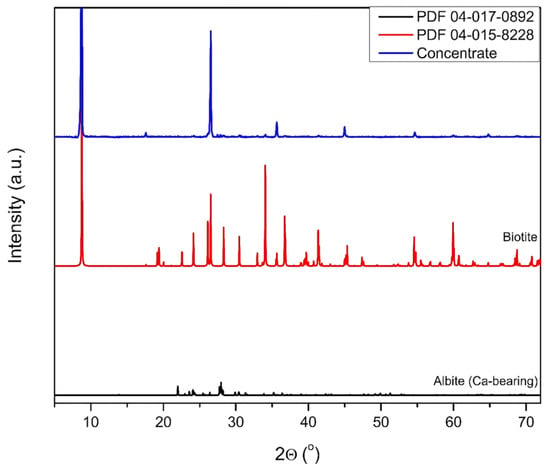
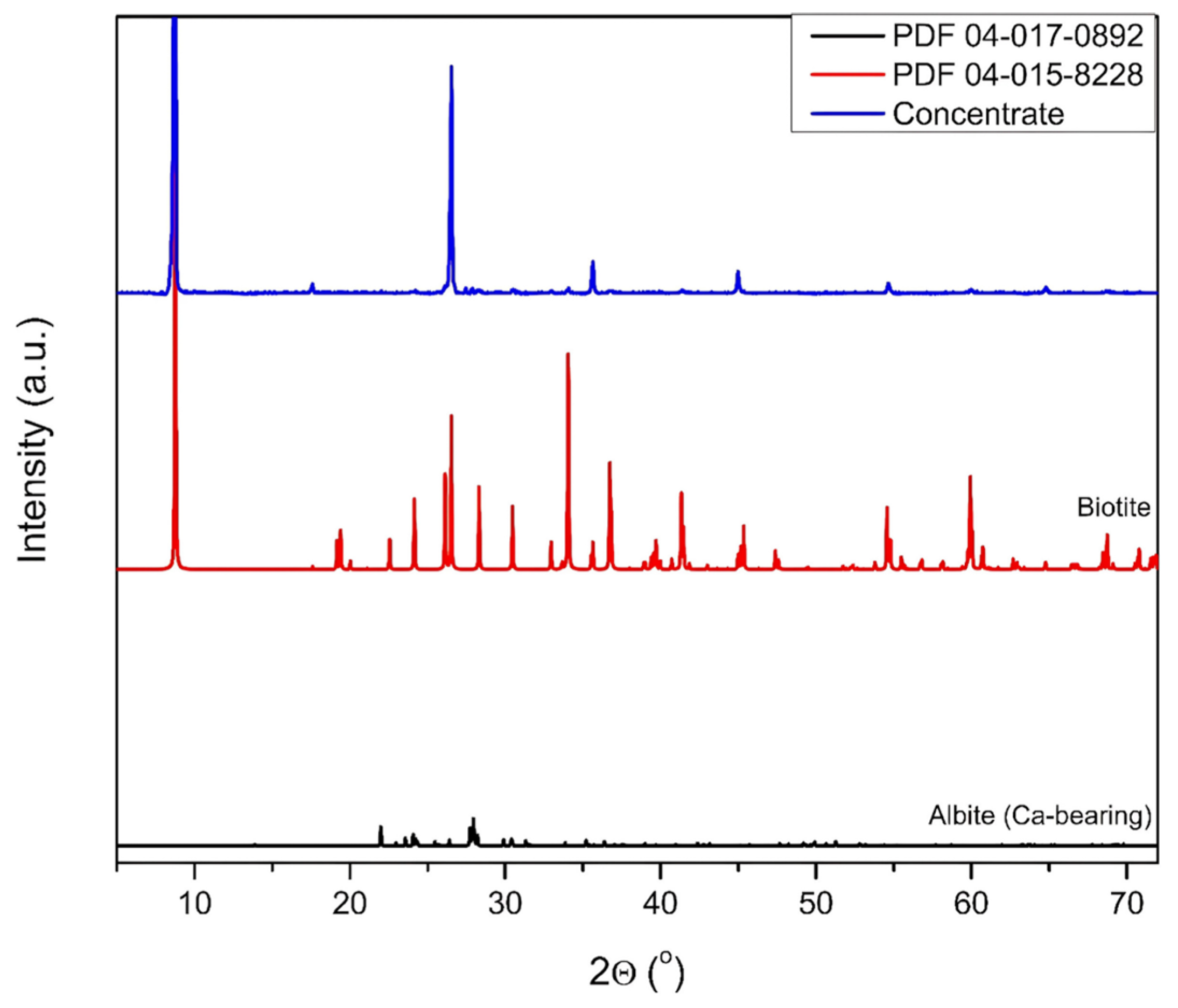
The sample was a biotite concentrate containing 6340.11 ppm Li, obtained from nepheline syenite rocks located in the Kırşehir–Buzlukdağı region of Türkiye [21]. According to the XRD (X-ray diffraction) analyses reported by Üçerler-Çamur et al. [21] (Figure 1), the concentrate was mineralogically composed of biotite and Ca-bearing albite. In the same study, Mineral Liberation Analysis (MLA) and modal mineralogy analyses indicated that the sample consisted predominantly of biotite (92 wt.%), with minor amounts of nepheline, albite, and K-feldspar. Based on MLA results, the concentrate was composed, on average, of approximately 94 vol.% liberated biotite particles and exhibited a free surface ratio of about 98.20%. In the study conducted by Üçerler-Çamur et al. [22], the run-of-mine nepheline syenite ore was comprehensively characterized in terms of its mineralogical, chemical, physical, and liberation properties. Based on this detailed characterization, it was demonstrated that the lithium content of the ore is primarily hosted in biotite, a mineral that is typically rejected as waste during conventional nepheline concentrate production.
Figure 1.
XRD pattern of concentrate.
Accordingly, in the subsequent processing route reported by Üçerler-Çamur et al. [23], the run-of-mine ore was first subjected to high-intensity dry magnetic separation to selectively recover the paramagnetic biotite fraction, yielding a magnetic pre-concentrate. This pre-concentrate was then treated by flotation under the conditions established by Üçerler-Çamur et al. [21] resulting in the production of a high-grade biotite concentrate enriched in lithium.
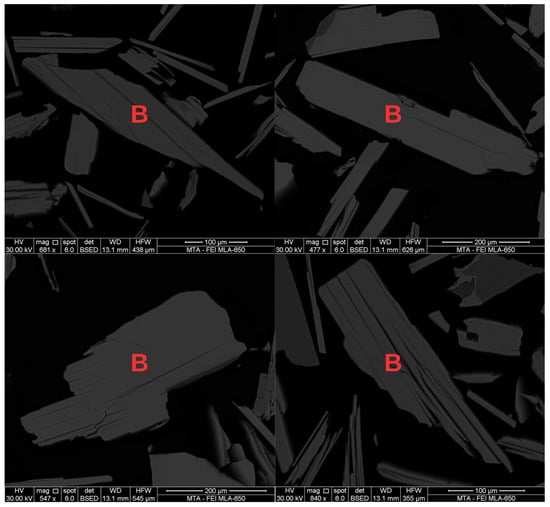
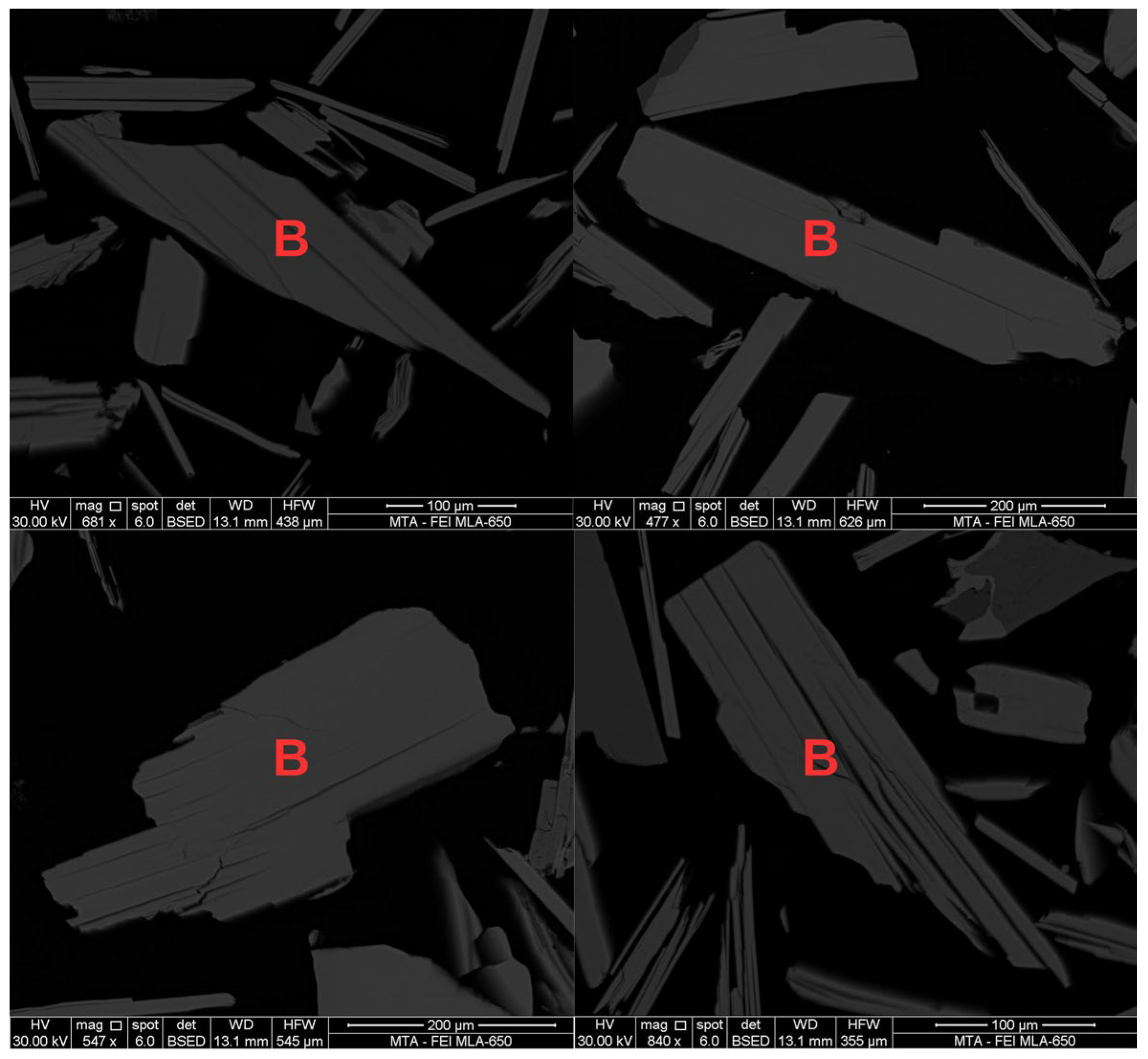
The elemental composition, determined by ICP-OES (Inductively Coupled Plasma-Optical Emission Spectrometer) (Agilent 5800, Santa Clara, CA, USA) was presented in Table 1, while SEM-BSE (Scanning Electron Microscope-Back Scattered electron) images were shown in Figure 2. Image analysis results also confirmed the presence of the naturally occurring needle-like morphology of biotite.
Table 1.
Elemental composition of concentrate.
Figure 2.
SEM-BSE images of liberated biotite particles from biotite concentrate (92 wt.%). (B: Biotite).
The mineralogical composition of the selected samples was semi-quantitatively analyzed by XRD. Approximately 1 g of material, ground to below 75 µm, was examined using XRD Bruker D2 phaser (Madison, WI, USA) with XT-detector (Madison, WI, USA). The measurements were carried out under operating conditions of 10 mA and 30 kV, employing Cu Kα radiation without the use of a filter. Scanning was performed over a 2θ range of 5° to 90° at a rate of 0.02° 2θ per second. The resulting diffractograms were interpreted using Diffrac Eva Software V6 and the PDF-4 2024 (Powder Diffraction File) database for phase identification and structural analysis [23]. The analysis was performed using a dual EDS (Energy-Dispersive X-ray Spectroscopy) system (Bruker XFlash 6/30) (Madison, WI, USA) integrated with the FEI MLA 650 instrument (Thermo Fisher Scientific, Hillsboro, OR, USA). For data interpretation, the FEI Mineral Reference Editor and FEI Image Processing software packages were employed, along with associated mineral reference libraries.
2.2. Methods
To enable the dissolution of lithium from the concentrate into the aqueous phase, mechanical activation followed by sulfuric acid leaching was systematically investigated under optimized operating conditions. In addition, to elucidate the role and significance of mechanical activation, sulfuric acid leaching was also evaluated as an individual process without prior activation. In the acid leaching process, sulfuric acid (H2SO4, extra pure, 95–98%, TEKKİM, Bursa, Türkiye) was used as the leaching agent. The reactor setup was conducted by magnetic stirrer (IKA-Werke GmbH & Co. KG, RCT basic, Staufen, Germany) with 500 rpm stirring rate. The effect of particle size was first evaluated using different size fractions (−300 + 75 µm unground concentrate, −106 µm, −75 µm, and −53 µm). Subsequently, the lithium dissolution efficiency was investigated at various acid concentrations (0.5, 0.75, 1.0, 1.25, 1.50, 1.75, and 2.0 mol L−1). After determining the optimum acid concentration, the effects of leaching time (15, 30, 45, 60, 90, and 120 min) and leaching temperature (25, 40, 60, and 90 °C) were systematically examined. Finally, the influence of the solid-to-liquid ratio (mass/mass) (1/5, 1/10, and 1/15) on lithium extraction was optimized, and the acid leaching process was completed under these optimized conditions.
The mechanical activation process was carried out using a 1000 mL stirred media mill (Demmaksan Makine, Ankara, Türkiye) followed by an acid leaching step. This combined approach was employed to selectively dissolve lithium from the crystal structure of biotite, a mica-type mineral whose crystalline framework is highly resistant to direct acid attack. The mass of grinding media (Alumina balls in diameter of 3 mm) in the mill was kept constant at 1 kg. The operating parameters of the mechanical activation stage included activation speed (indicated as frequency of 35, 45, 55, and 65 Hz (245, 315, 355, 420 rpm, respectively)), activation time (15, 30, 45, 60, 90, and 120 min), and ball-to-powder ratio (66.7:1, 50:1, 40:1, and 28.6:1).
Following mechanical activation, sulfuric acid leaching was performed. The effects of acid concentration (0.25, 0.50, 0.75, and 1.0 mol L−1), solid-to-liquid ratio (1:10, 1:25, 1:50, and 1:100), and leaching temperature (25, 40, 60, and 90 °C) were systematically investigated in a correlated manner. Subsequently, at the optimum solid-to-liquid ratio, the influence of leaching time (30, 60, 90, and 120 min) was also examined.
Selected activated products obtained under the optimized mechanical activation conditions were characterized in detail to evaluate the extent of mechanochemical transformation. In particular, XRD peak curves were analyzed to assess changes in the crystal structure, to determine whether mechanochemical activation had occurred, and to identify the onset of structural disordering and amorphization. Variations in peak intensity, peak broadening, and crystallinity index were used to interpret changes in crystallite size and particle size distribution induced by mechanical activation. To determine the d80 and d50 particle size of the concentrate and the activated samples related to activation time, Malvern 2000 Mastersizer (Malvern Panalytical, Malvern, UK) was used.
In addition, Fourier-transform infrared (FTIR) spectroscopy (Jasco FT/IR-4X equipped with a Jasco ATR Pro 4X accessory, Serial No. A128962111, Tokyo, Japan) was employed to examine the activated products in order to evaluate whether alterations in the characteristic bonding environment of the mineral had occurred, thereby providing further evidence of structural modification and amorphization resulting from mechanical activation.
Furthermore, the morphological evolution of the particles before and after activation was investigated using SEM-BSE. Prior to activation, the particles exhibited their naturally angular, sharp, and fractured surfaces. With increasing activation intensity, severe interparticle agglomeration as well as pronounced surface modifications—including fracture planes, irregular breakages, micro-cracks, and partial spheroidization—were observed. The lithium concentration of the solution was determined by chemical analysis by ICP-OES, and the optimization were constructed based on these data.
3. Results and Discussions
3.1. Acid Leaching
In the acid leaching experiments, sulfuric acid was used as the lixiviant, and the concentrate was subjected directly to leaching without any prior pretreatment. The effects of feed particle size (−300 + 75, −106, −75, and −53 µm), acid concentration (0.5–2.0 mol L−1), leaching time (15–120 min), temperature (25–90 °C), and solid-to-liquid ratio (1/5–1/15) were systematically optimized.
Mica-group minerals such as biotite and muscovite exhibit high acid consumption when treated with sulfuric acid [24]. This behavior was attributed to the structural incorporation of lithium into the octahedral layers of mica, which alters the crystal lattice and enhances its stability. Substitution of lithium for other cations results in lattice rearrangement, leading to a more compact and symmetric layered structure with reduced interlayer spacing and increased interlayer bonding. Furthermore, the replacement of hydroxyl groups by fluorine in the presence of lithium lowers electrostatic strain and improves overall crystal stability. Consequently, lithium incorporation not only changes the chemical composition but also increases the mechanical and thermal stability of the crystal framework [25].
Consistent with this structural resistance, Luo et al. [26] reported that although biotite becomes highly reactive when its crystal structure collapses during sulfuric acid leaching, such behavior occurs only at very high acid concentrations as 2.5 mol L−1.
Accordingly, the above leaching parameters were investigated in detail, and it will be demonstrated in the following section that mechanical activation can effectively mitigate the inherent disadvantages of direct acid leaching by enhancing the reactivity of the biotite structure.
3.1.1. Effect of Particle Size on Lithium Extraction
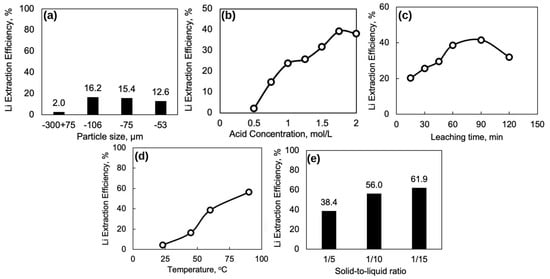
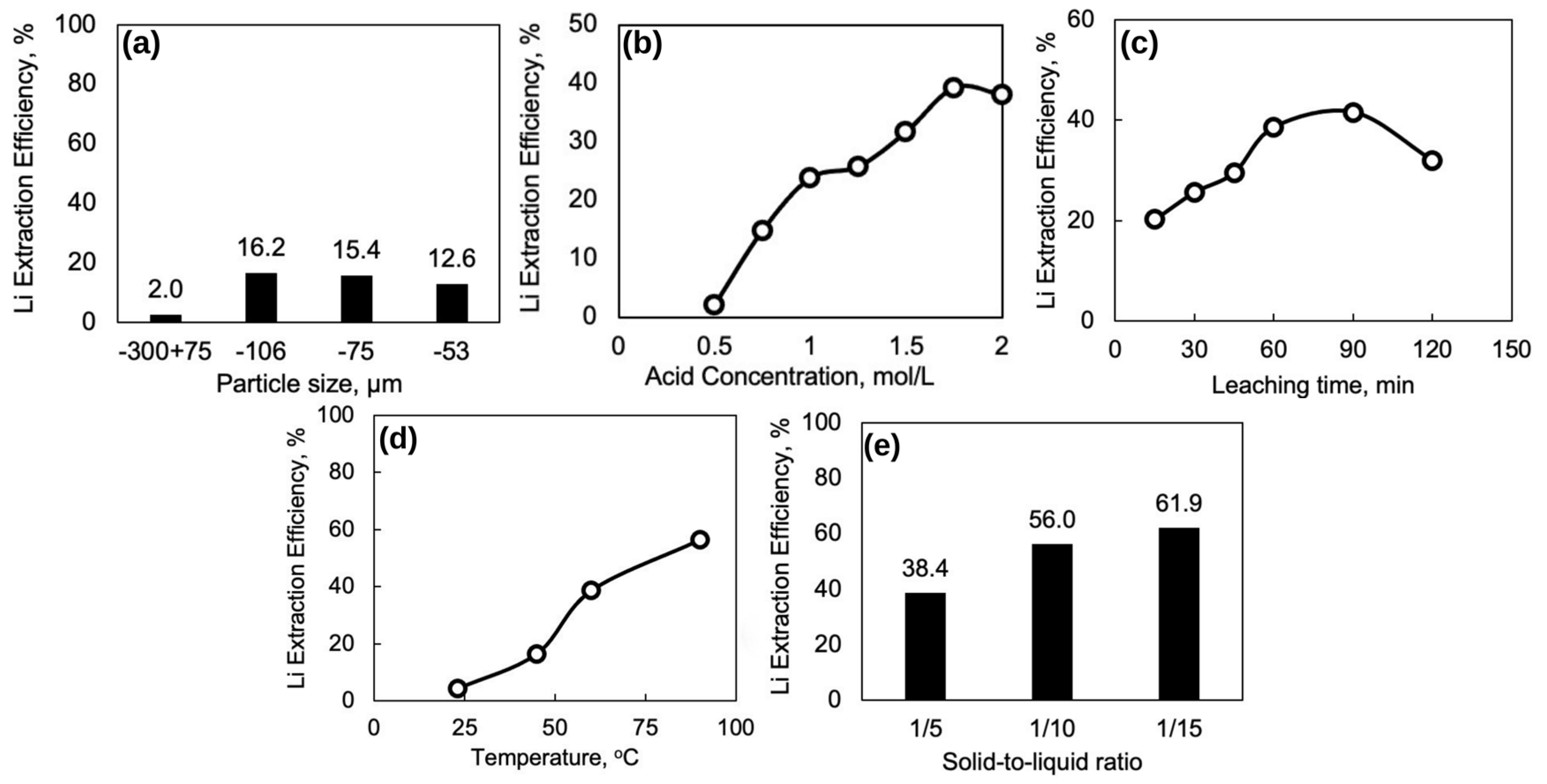
Particle size played a crucial role in dissolution behavior. To evaluate its influence on the acid-leaching performance, leaching experiments were conducted at a fixed acid concentration of 0.5 mol L−1, a leaching time of 60 min, a temperature of 60 °C, and a solid-to-liquid ratio of 1/10, while varying the particle size fractions of −300 + 75, −106, −75, and −53 µm. The experimental results were presented in Figure 3a.
Figure 3.
The effect of (a) particle size, (b) acid concentration, (c) leaching time, (d) leaching temperature and (e) solid-to-liquid ratio on lithium extraction efficiency.
Based on these results in Figure 3a, the effect of particle size on lithium dissolution was clearly established within the applied experimental series. The overall low lithium extraction observed was mainly attributed to the relatively low acid concentration of 0.5 mol/L, in agreement with the findings of Luo et al. [26]. When the concentrate was not ground, acid leaching resulted in extremely poor lithium dissolution, highlighting the necessity of size reduction prior to leaching.
No significant differences in lithium extraction were observed among the −106, −75, and −53 µm size fractions. Although the lithium dissolution efficiencies of −106 and −75 µm were essentially similar, the −106 µm fraction yielded slightly higher lithium recovery. From an economic perspective, operating at coarser grinding conditions was also advantageous because it reduced grinding energy and operational costs. Therefore, −106 µm was selected as the optimum particle size for acid leaching of the concentrate.
3.1.2. Effect of Acid Concentration on Lithium Extraction
As stated in the previous section, acid concentration was a key parameter governing the dissolution behavior of mica-type minerals. Because relatively low leaching efficiencies were obtained at an acid concentration of 0.5 mol L−1, lower concentrations were not further investigated, and instead the effect of increasing acid concentration was examined. All other experimental parameters (Leaching time of 60 min, a temperature of 60 °C, and a solid-to-liquid ratio of 1/10, particle size of −106 µm) were kept constant, and the results are presented in Figure 3b.
Figure 3b presented the lithium dissolution efficiencies as a function of acid concentration, showing that lithium extraction increased with increasing acid concentration. However, a slight decrease in extraction was observed at an acid concentration of 2 mol L−1, which was attributed to filtration difficulties. At higher acid concentrations, gelation occurred, leading to poor solid–liquid separation during the filtration stage. While a lithium extraction of 39.3% was achieved at an acid concentration of 1.75 mol L−1, the extraction slightly decreased to 38.0% at 2 mol L−1.
3.1.3. Effect of Leaching Time on Lithium Extraction
For the optimization of leaching time, experiments were conducted at leaching durations of 15, 30, 45, 60, 90, and 120 min using an acid concentration of 1.75 mol L−1at 60 °C, a particle size of −106 µm and a solid-to-liquid ratio of 1/10. The corresponding experimental results were presented in Figure 3c.
According to the experimental results, lithium dissolution increased relatively rapidly with leaching time up to 60 min, after which the rate of increase became slower and eventually showed a declining trend. As the acid treatment duration increased, the biotite structure underwent progressive and pronounced structural transformations. Prolonged exposure to sulfuric acid resulted in extensive leaching of octahedral and tetrahedral cations such as Al, Mg, and Fe, leading to a gradual enrichment of the residual solid in Si-O bonds. While the initial stages of acid treatment promoted interlayer expansion, increased surface area, and enhanced structural reactivity, extended treatment durations favored the formation of silica-rich and partially amorphous phases. The study by Navya and Sandeep [8] reported that, at higher acid concentrations and longer reaction times, the released silica tends to polymerize and deposit on the remaining silicate surfaces, thereby shielding them from further degradation and effectively inducing surface passivation. Moreover, excessive cation removal at prolonged treatment times compromises the structural integrity of the biotite layers, resulting in partial layer collapse and a reduction in interlayer expansion. These findings indicated that acid treatment enhanced the structural reactivity of biotite only up to an optimum duration, beyond which further increases in reaction time yield diminishing or adverse effects on the material’s reactive characteristics. The lithium extraction was determined to be 38.42% at 60 min and 41.0% at 90 min.
3.1.4. Effect of Leaching Temperature on Lithium Extraction
Following the optimization of leaching time, the effect of leaching temperature (25, 45, 60, and 90 °C) was investigated in the conditions of acid concentration of 1.75 mol L−1, a time of 60 min, and a solid-to-liquid ratio of 1/10, particle size of −106 µm, and the experimental results were presented in Figure 3d.
Lithium dissolution increased with increasing leaching temperature and reached 56% at 90 °C. Leaching experiments were not conducted above 90 °C due to solvent evaporation. The monotonic increase in extraction with temperature is consistent with the findings of Luo et al. [26], who reported that at elevated temperatures and acid concentrations, mica minerals undergo structural degradation, leading to the release of metal cations from the biotite lattice. As a result, lithium dissolution proceeds with significantly higher efficiency under these conditions.
3.1.5. Effect of Solid-to-Liquid Ratio on Lithium Extraction
Subsequently, to evaluate the effect of the solid-to-liquid ratio, leaching experiments were performed at ratios of 1/5, 1/10, and 1/15. Although a ratio of 1/3 was also tested in the experimental series, lithium extraction could not be determined due to severe gelation during filtration. The experimental results are presented in Figure 3e.
Based on the experimental results (Figure 3e), it could be clearly stated that increasing the solvent-to-solid ratio led to a corresponding increase in lithium dissolution. Under the optimum conditions of a −106 µm particle size, an acid concentration of 1.75 mol L−1, a leaching time of 60 min, a temperature of 90 °C, and a solid-to-liquid ratio of 1/15, a maximum lithium extraction of 61.91% was achieved. However, this performance remained both technically inefficient and economically unattractive. In addition, the use of high sulfuric acid concentrations (such as 1.75 mol L−1) was reported to entail notable environmental and health-related drawbacks, including issues associated with toxicity, lack of environmental friendliness, and poor economic sustainability. It was further emphasized that excessive acid severity may induce over-degradation of the target structure, which in turn acts as a limiting factor for product yield. In this context, the study highlighted that the application of strong inorganic acids imposes significant constraints not only on process performance but also from environmental and operational perspectives [27]. Moreover, pH measurements of the leach solutions obtained from experiments conducted within the sulfuric acid concentration range of 0.25–2 mol L−1 revealed highly acidic conditions (pH < 1). Such extremely low pH levels further underscore the environmental concerns associated with the process and, when coupled with the observed low extraction efficiencies, support the classification of this approach as an ineffective extraction route under the investigated conditions.
Therefore, it was evident that an appropriate pre-treatment step was required for this type of ore, and future process development should focus on operating at lower acid concentrations in order to improve both environmental sustainability and economic viability.
3.2. Mechanical Activation and Acid Leaching
Since the direct acid leaching application resulted in medium-rate leaching recoveries at even high acid concentrations up to 1.75 mol L−1, the further mechanical activation process prior to acid treatment was applied as pre-treatment method to reduce the acid consumption and increase the leaching recovery. Mechanical activation tests were performed on biotite concentrate using a laboratory-scale stirred mill, and the activated product was subsequently subjected to acid leaching. Within this concept, the mill shaft speed, and activation time, at fixed ball charge ratio (using 1 kg of 3 mm diameter grinding media) were optimized. Subsequently, the effects of acid concentration, leaching time, leaching temperature, and solid-to-liquid ratio on the acid leaching process were evaluated.
Mechanical activation occurs through three main mechanisms: mechanical dispersion, surface activation, and mechanochemical activation [28,29]. Among these, mechanochemical activation is particularly important for subsequent hydrometallurgical processes. During mechanical activation, minerals undergo physicochemical changes induced by mechanical energy, including crystal lattice distortion, an increase in specific surface area, the formation of crystal defects, and amorphization. These structural changes significantly enhance the reactivity of minerals toward acid or oxidative leaching. It is well known that mechanical activation reduces the activation energy and thereby increases dissolution rates, and that reaction kinetics are governed not only by surface area but also by structural disorder. Moreover, in several industrial applications, mechanical activation has been reported as an effective pretreatment step that reduces energy consumption and improves leaching efficiency. Consequently, mechanical activation modifies both the mineral surface and crystal structure, thereby accelerating hydrometallurgical reactions and offering a more environmentally sustainable processing route [5].
3.2.1. Effect of Stirred Mill Shaft Speed on Mechanical Activation and Lithium Extraction
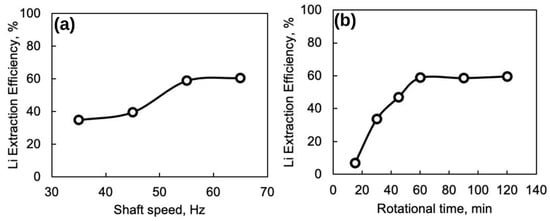
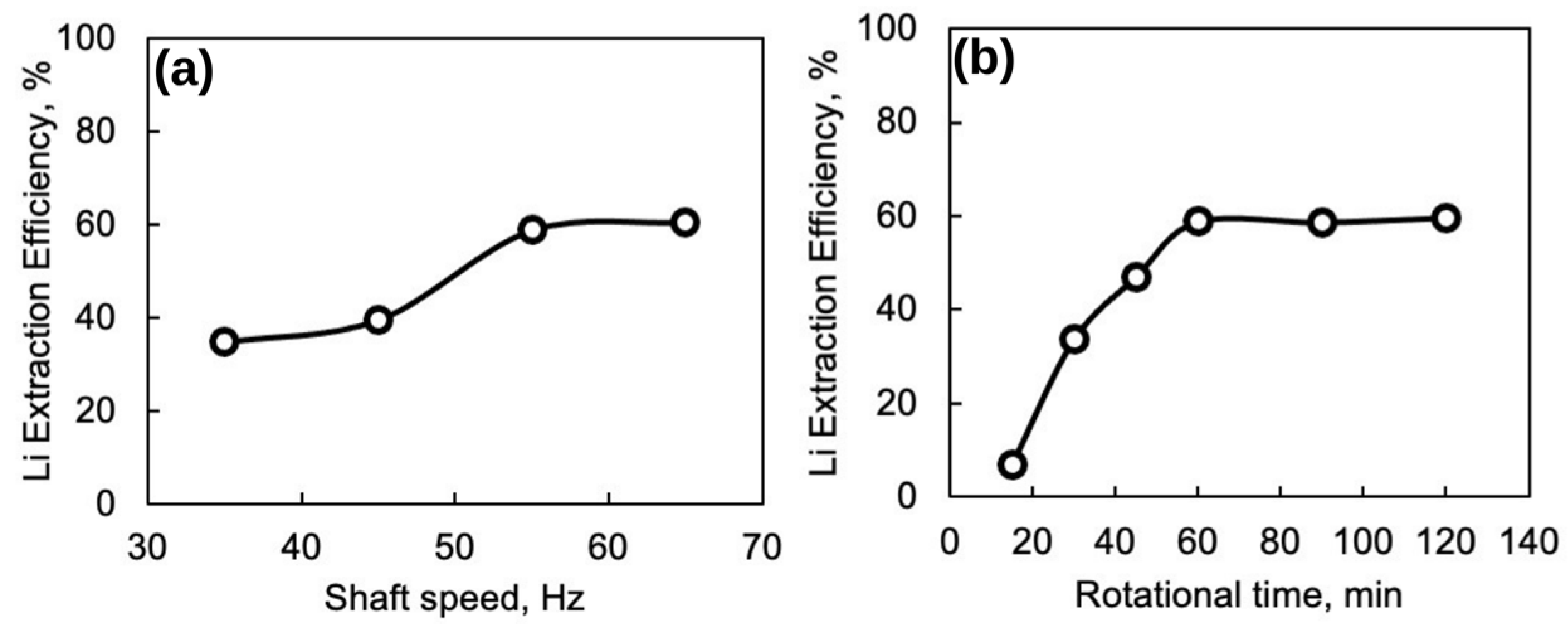
In the mechanical activation process carried out using a stirred mill, the effect of mill shaft speed (35, 45, 55, and 65 Hz) was investigated initially. The mechanical activation time was kept constant at 60 min, and the ball-to-powder ratio was fixed at 66.7/1 by weight. The subsequent acid leaching stage was performed at the fixed operating conditions of acid concentration of 0.25 mol L−1, a leaching time of 1 h, a temperature of 60 °C, and a solid-to-liquid ratio of 1/10. The experimental results for the effect of mill shaft speed were presented in Figure 4a.
Figure 4.
The effect of (a) shaft speed and (b) rotational time of mill on lithium extraction efficiency.
As the mill shaft speed increased, lithium dissolution following mechanical activation and subsequent acid leaching increased up to 55 Hz and then stabilized. Despite the relatively low acid concentration applied (0.25 mol L−1), lithium extraction (~60% of extraction) comparable to that obtained by direct acid leaching (1.75 mol L−1H2SO4) under fully optimized conditions was achieved. Although multiple factors contribute to this behavior, in addition to particle size reduction, the number of reactive sites may have increased due to crystal lattice distortion. Furthermore, the high ball-to-powder ratio enhanced energy transfer within the system, promoting faster amorphization. The reduced activation energy after mechanical activation and the increased electron transfer rate also led to a marked improvement in acid leaching efficiency [5].
When mechanical activation induced morphological changes and amorphization accompanied by crystal lattice breakdown, the dissolution rate of structurally stable and rigid minerals such as biotite increases significantly [25]. Previous kinetic studies comparing activated and non-activated samples have shown that leaching kinetics were controlled by surface chemical reactions for non-activated samples, whereas diffusion control dominated in mechanically activated samples. This shift was attributed to the increase in porosity and specific surface area after activation, which causes the reaction to become limited by mass transport rather than surface reaction rates [7].
Moreover, in mechanochemical processes, energy was transferred directly to particles through collisions, resulting in localized temperature rises, deformation, and atomic rearrangements within the crystal lattice. This process induced not only physical but also chemical activation, allowing solid-state reactions to initiate at significantly lower temperatures than those required in conventional thermal treatments [30].
3.2.2. Effect of Stirred Mill Rotational Time on Mechanical Activation and Lithium Extraction
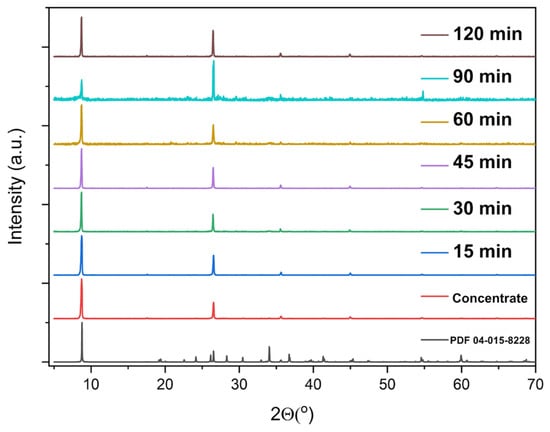
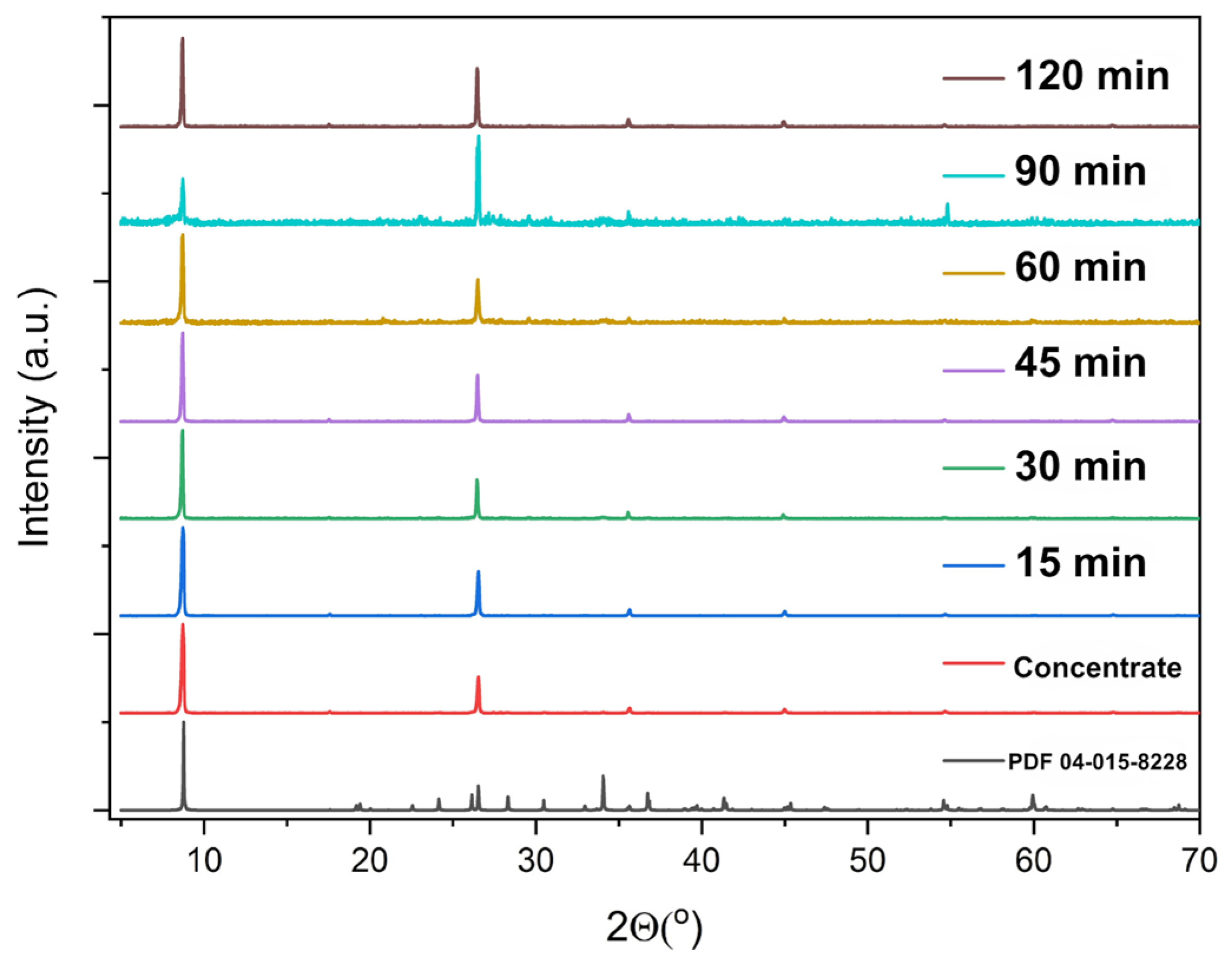
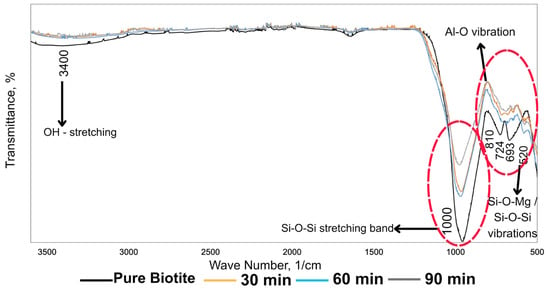
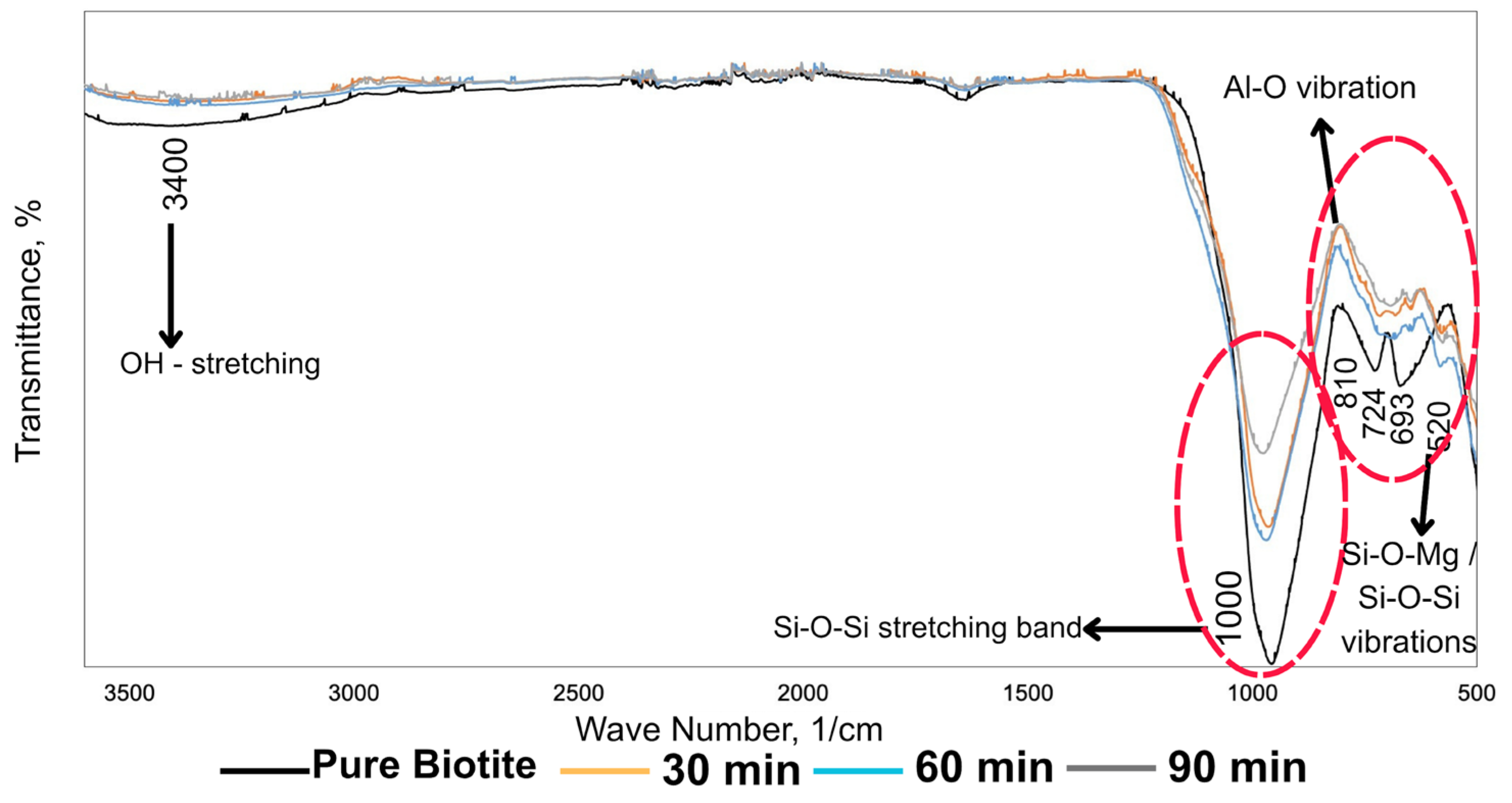
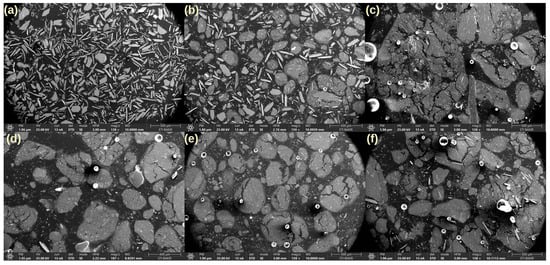
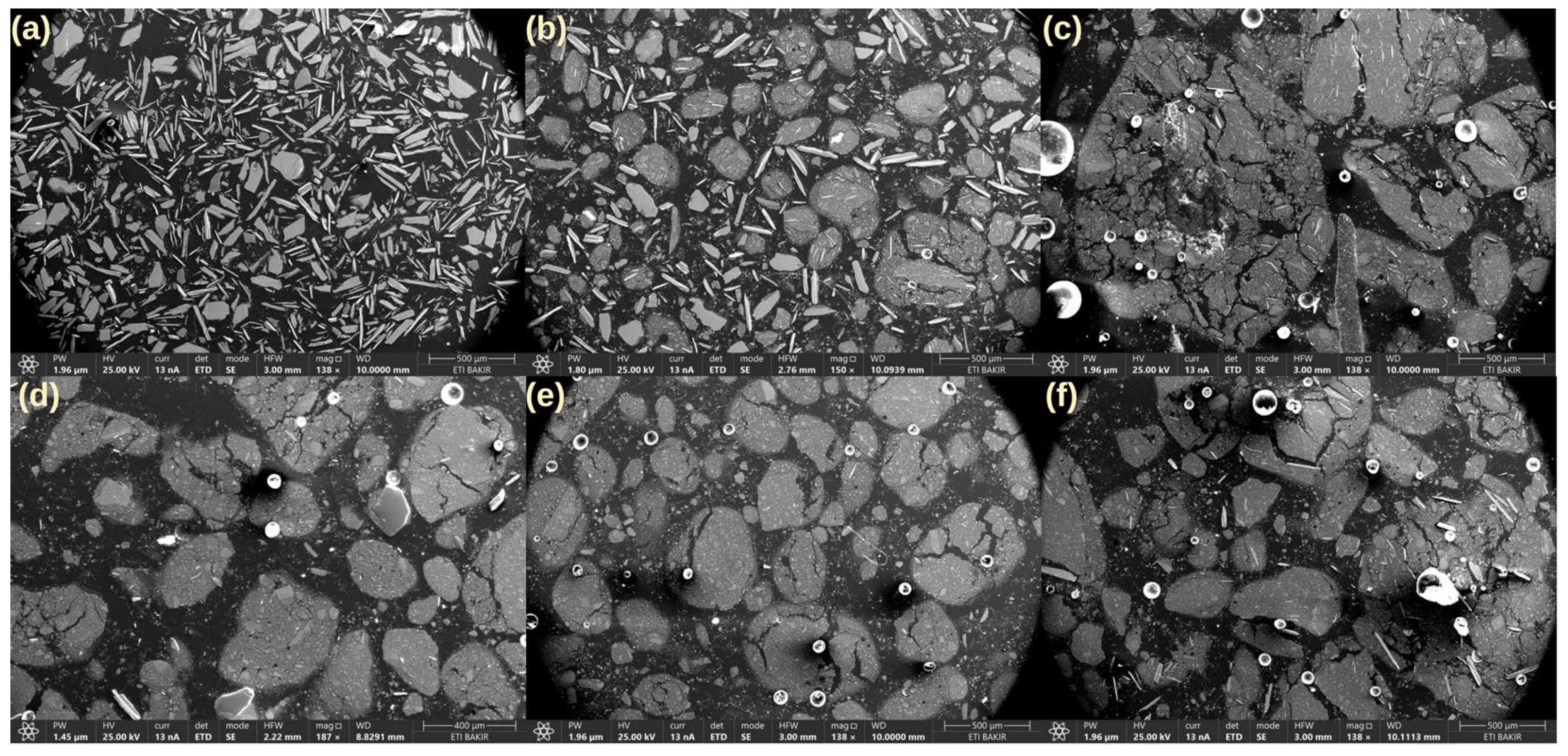
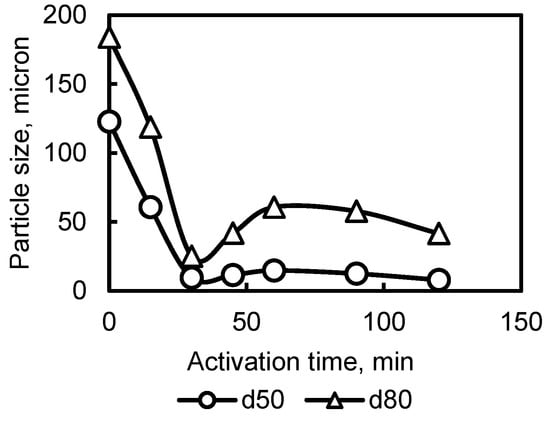
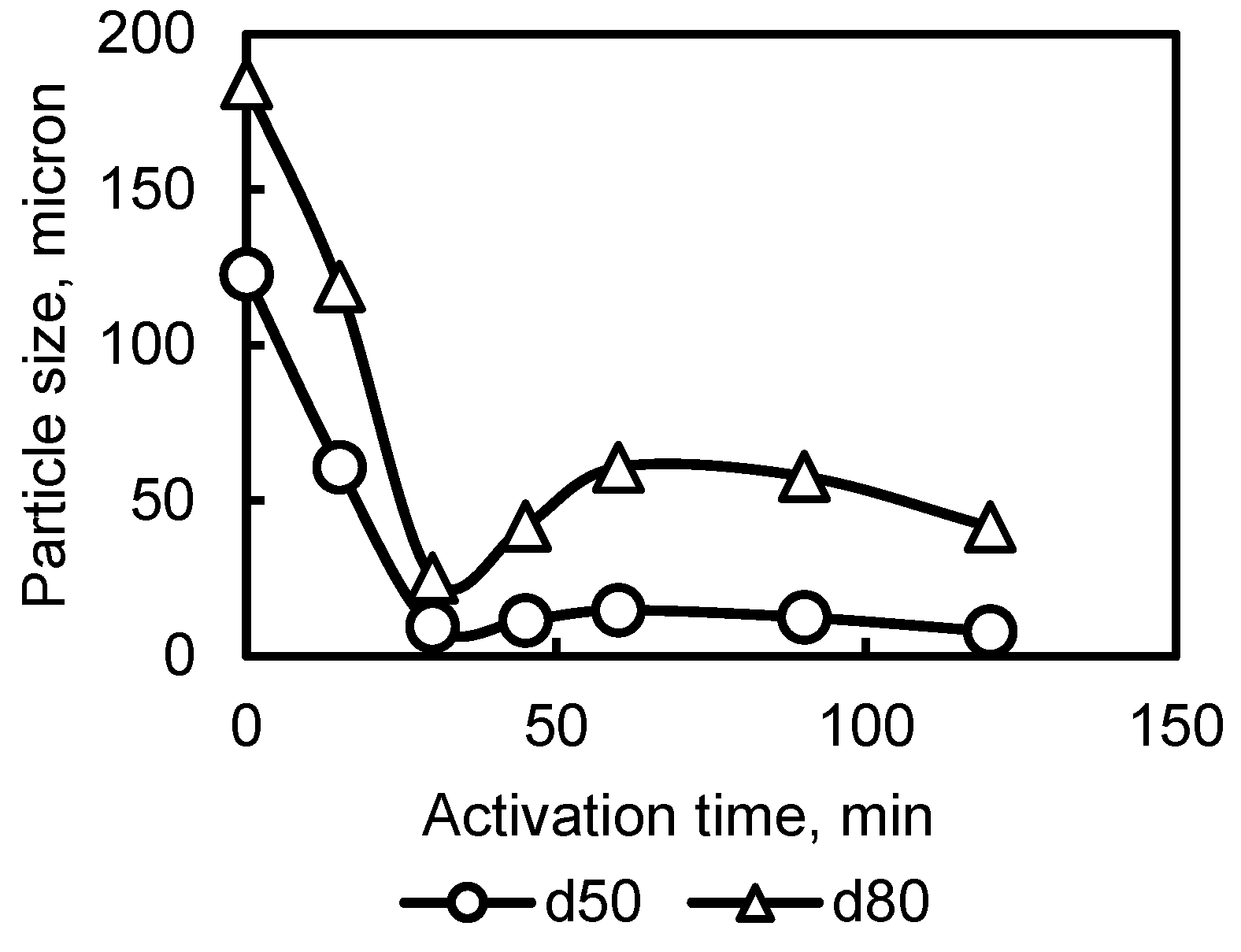
Although shaft speed was the initial parameter governing mechanical activation, the effect of activation time was considerably more significant. In this study, the influence of activation time of 15, 30, 45, 60, 90, and 120 min was investigated, and the corresponding experimental results were presented in Figure 4b. In addition, the XRD patterns of the non-activated concentrate and the products mechanically activated for 15, 30, 45, 60, 90, and 120 min were shown in Figure 5. The FTIR spectra of the products obtained after 30, 60, and 90 min of activation were presented in Figure 6, while SEM images of the activated products for all activation times are given in Figure 7 and d80 and d50 particle sizes of concentrate and activated particles related to time are presented in Figure 8.
Figure 5.
XRD patterns of the activated products as a function of rotational time.
Figure 6.
FTIR spectra of the products activated for 30, 60, and 90 min as a function of rotational time.
Figure 7.
SEM images of the products activated at different rotational times: (a) 15 min, (b) 30 min, (c) 45 min, (d) 60 min, (e) 90 min, and (f) 120 min.
Figure 8.
d80 and d50 particle sizes of concentrate and activated particles related to time.
Based on the results presented in Figure 4b, it was evident that increasing the activation time enhanced lithium dissolution during the acid leaching process following mechanical activation. However, this increase became negligible beyond an activation time of 60 min, after which lithium extraction remained essentially constant. This behavior has also been reported in previous studies and may vary depending on the specific metal being leached.
For instance, in the study conducted by Perek [31], the effect of mechanical activation time on the dissolution of Fe, Cu, Co, and Zn was investigated. Except for Zn, the extraction efficiencies of these metals increased sharply up to a mechanical activation time of 60 min, after which the rate of increase declined or even reached a plateau. Similarly, in another study, lateritic nickel ore was subjected to mechanical activation followed by leaching, and nickel extraction was observed to increase with increasing mechanical activation time; however, beyond a certain duration—reported as 2 h in that study—the extraction efficiency remained constant [32].
Activated products were obtained at different activation times, and an examination of the XRD peak patterns clearly indicates that mechanochemical activation occurred, leading to significant distortion of the crystal structure. Accordingly, changes in particle size distribution and crystallinity were evaluated. As the activation time increased, the crystallite size decreased exponentially and a progressive tendency toward amorphization was observed [33]. In addition, crystallinity indices were calculated using OriginLab software v.2026 to quantify the degree of crystallinity. The crystallinity index is defined as the ratio of the total area of crystalline peaks to the combined area of crystalline and amorphous peaks. The crystallinity of the non-activated test sample was 0.72, whereas the values for the products activated for 15, 30, 45, 60, 90, and 120 min were calculated as 0.75, 0.76, 0.47, 0.22, 0.17, and 0.49, respectively. These results indicated that the onset of amorphization occurred at approximately 60 min of milling, with the highest degree of amorphization at 90 min, followed by partial structural recovery at 120 min.
The samples were activated for different durations in a high-energy stirred mill and subsequently leached in sulfuric acid solutions. With increasing activation time, the crystal structure of biotite was progressively disrupted, leading to amorphization, and the resulting lattice distortion enhanced the leaching (Figure 5 and Figure 6). SEM observations (Figure 7) revealed the formation of surface cracks and irregular pore structures, as well as the disappearance of the characteristic acicular morphology of biotite and its transformation toward more rounded particle shapes, which further confirms the occurrence of amorphization. As a consequence of mechanical activation, lithium extraction increased from approximately 20% to 61%.
Following mechanical activation, a reduction in diffraction peak intensity was observed. In particular, after 60 min of mechanical activation, the diffraction pattern exhibited broader and lower-intensity peaks; however, this behavior was particularly pronounced in mica minerals. As reported by Baki et al. [34] a significant loss of crystallinity in muscovite became evident after 60 min of mechanical activation, whereas a comparable degree of structural degradation in kaolinite was observed only after prolonged activation, becoming pronounced at approximately 120 min. In addition, after 90 min the peaks associated with crystalline planes became weaker and further broadened as reported by Moreau et al. [35]. The broadening of diffraction peaks can be attributed to several factors. During mechanical activation, impact, compression, and friction forces exerted by the grinding media cause a sharp reduction in biotite particle size, which contributes to peak broadening. However, the distinct peaks observed in the XRD pattern after 120 min of mechanical activation indicate that excessively long milling times can lead to the formation of new low-energy ordered phases rather than further amorphization, as also reported by Baláž [5] and Avvakumov and Karakchiev [30].
The region around 3400 cm−1 corresponding to the dehydroxylation zone, the intensity of the OH− bands decreased with increasing activation time, indicating the progressive disappearance of hydroxyl groups, which was associated with enhanced mineral reactivity [36,37]. Compared with the untreated test sample, the peaks of the activated products around 1000 cm−1 became weaker and broader, suggesting that the Si-O-Si chain structure tended to break down. The emergence of broad bands further confirmed the onset of amorphization [37,38].
The Al-O bands at approximately 810 cm−1 also exhibited significant broadening, indicating weakening of these bonds [39,40]. In addition, a pronounced decrease in the Al-O-Si vibration bands in the 650–750 cm−1 region was observed, implying disruption of octahedral coordination [37]. Finally, a slight shift toward lower wavenumbers and broadening of the Si-O-Si and Si-O-Mg bands at around 520 cm−1 provided further evidence for the initiation of amorphization [36].
Before activation, the particles exhibited angular, sharp, and fractured surfaces as reported by Ebadi and Pourghahramani [41]. After mechanical activation, however, intense agglomeration between particles as well as fracture surfaces, irregular breakage, and micro-cracks on particle surfaces became evident [41,42,43]. In addition, particles were reported to evolve from angular to more rounded morphologies [44]. After 15 min of activation, the untreated test sample largely retained its natural acicular morphology due to its inherent cleavage characteristics. Following 30 min of activation, irregular fractures, micro-cracks, and newly formed fracture surfaces became apparent, and the acicular particles began to transform into more rounded shapes. After 45 min, acicular morphologies were still present, which was consistent with the increase in crystallinity observed in the XRD pattern of the sample activated for this duration. In contrast, at activation times of 60 and 90 min, the particles became highly agglomerated, dominated by micro-cracks and irregular breakage, and exhibited more rounded morphologies, indicating extensive amorphization [40]. After 120 min of activation, in agreement with the observations of Baláž [5] and Avvakumov and Karakchiev [30], excessively long mechanical activation times did not further enhance amorphization but instead promoted the formation of new low-energy ordered phases. Accordingly, the highly amorphous morphologies observed at 60 and 90 min were no longer dominant at 120 min. This was also consistent with the slight increase in crystallinity observed in the XRD pattern of the 120 min activated product compared with those obtained after 60 and 90 min.
As a result of mechanical activation, the majority of particles become agglomerated and acquire a more rounded morphology [19], as also indicated in Figure 7. Consistently, the comparison of d50 and d80 particle sizes for unactivated and mechanically activated products as a function of activation time (Figure 8) showed good agreement with the SEM observations. The particle size initially decreased due to intensive breakage; however, from 30 min onward, the onset of agglomeration and particle rounding led to an increase in the measured particle size, and a similar trend was observed at 60 and 90 min. At 120 min of activation, the particle size was observed to decrease again, in line with the corresponding SEM images. This behavior suggested that, beyond the possible reversibility of activation [45], the irregular and flaky particles formed after prolonged and intensive milling arise from the interplay of two competing mechanisms, namely particle breakage and agglomeration [46]. Accordingly, this observation supported the notion that prolonging the mechanical activation time did not necessarily lead to further particle deformation or a continuous increase in particle size. In parallel, Baki et al. [34] reported that the specific surface area of mechanically activated minerals initially increased but subsequently decreased with extended milling durations. For example, while the surface area of kaolin reached 24.4 m2/g after 20 min of activation, it markedly decreased to 8.3 m2/g after 120 min of milling.
3.2.3. Effect of Ball-to-Solid Ratio on Mechanical Activation and Lithium Extraction
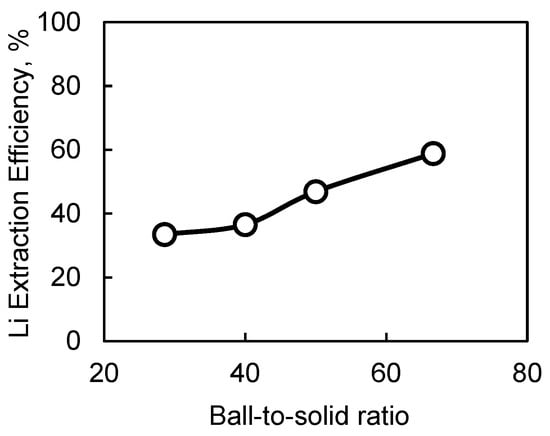
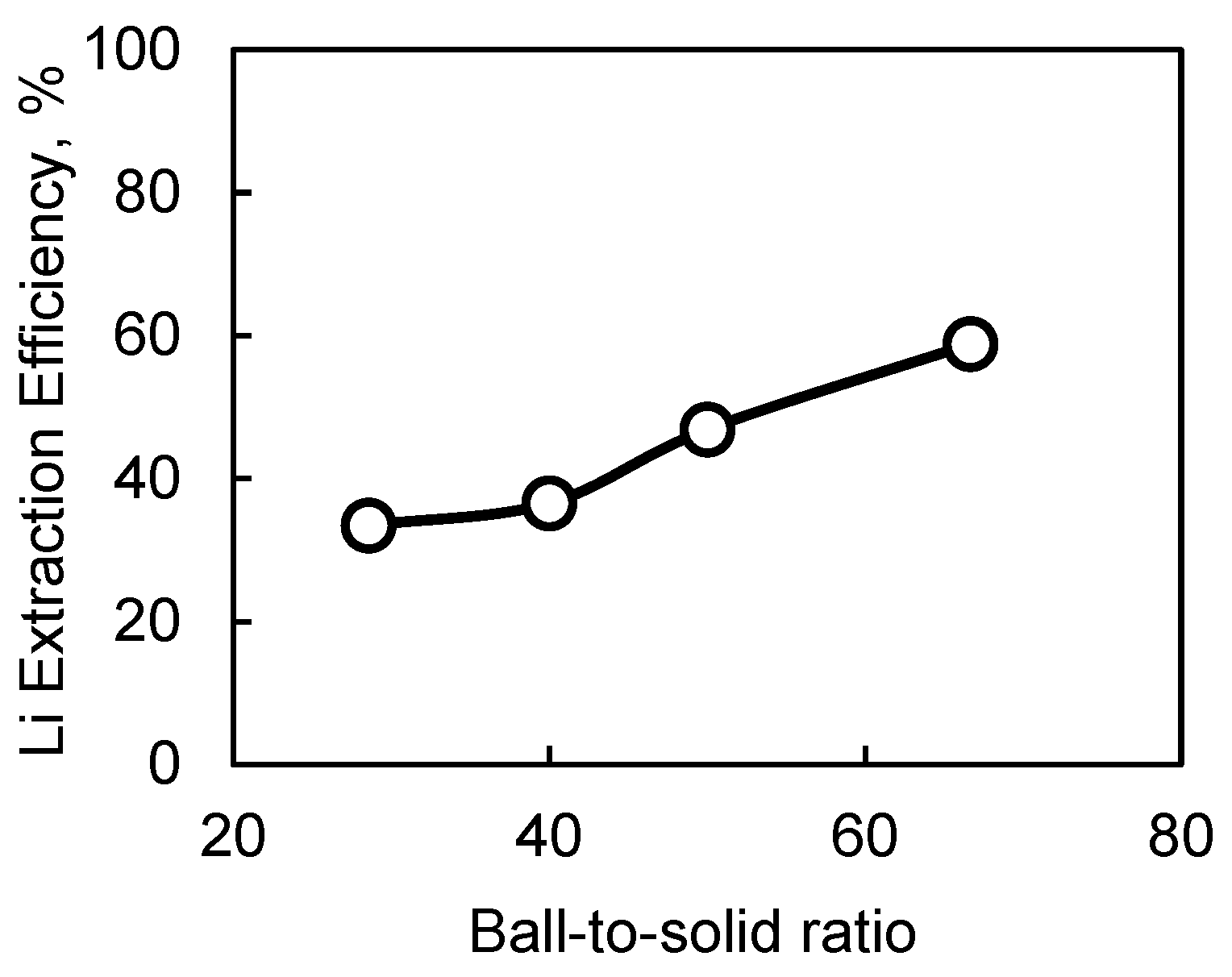
In the experiments, the amount of grinding media was kept constant by weight, while the mass of the feed sample was varied. For this purpose, 15, 20, 25, and 35 g of concentrate were fed into the stirred mill, corresponding to ball-to-powder ratios of 66.7:1, 50:1, 40:1, and 28.6:1, respectively. The effects of these ratios on mechanical activation and, consequently, on lithium dissolution efficiency were investigated. The experimental results are presented in Figure 9.
Figure 9.
The effect of ball-to-solid ratio during mechanical activation on lithium extraction efficiency.
The experimental results showed that lithium dissolution efficiency decreased as the ball-to-solid ratio decreased. Although increasing the solid feed mass could be advantageous in terms of energy utilization during grinding, it also introduced several drawbacks, such as excessive heating, particle agglomeration, and even partial reversal of microstructural disorder. It was therefore anticipated that employing grinding media with different diameters—an approach not applied in this study—could enable higher solid loading while maintaining effective mechanical activation, thereby leading to improved process performance [47].
3.2.4. Effect of Acid Concentration on Lithium Extraction Efficiency
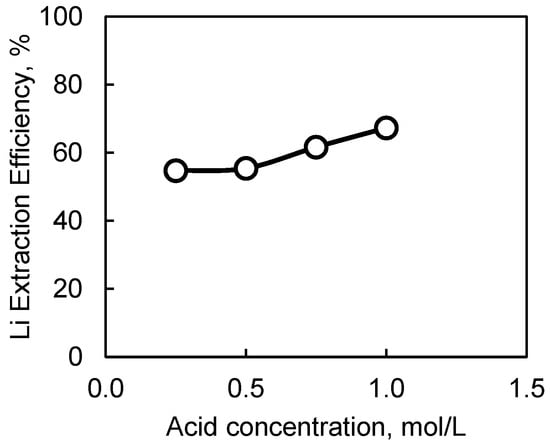
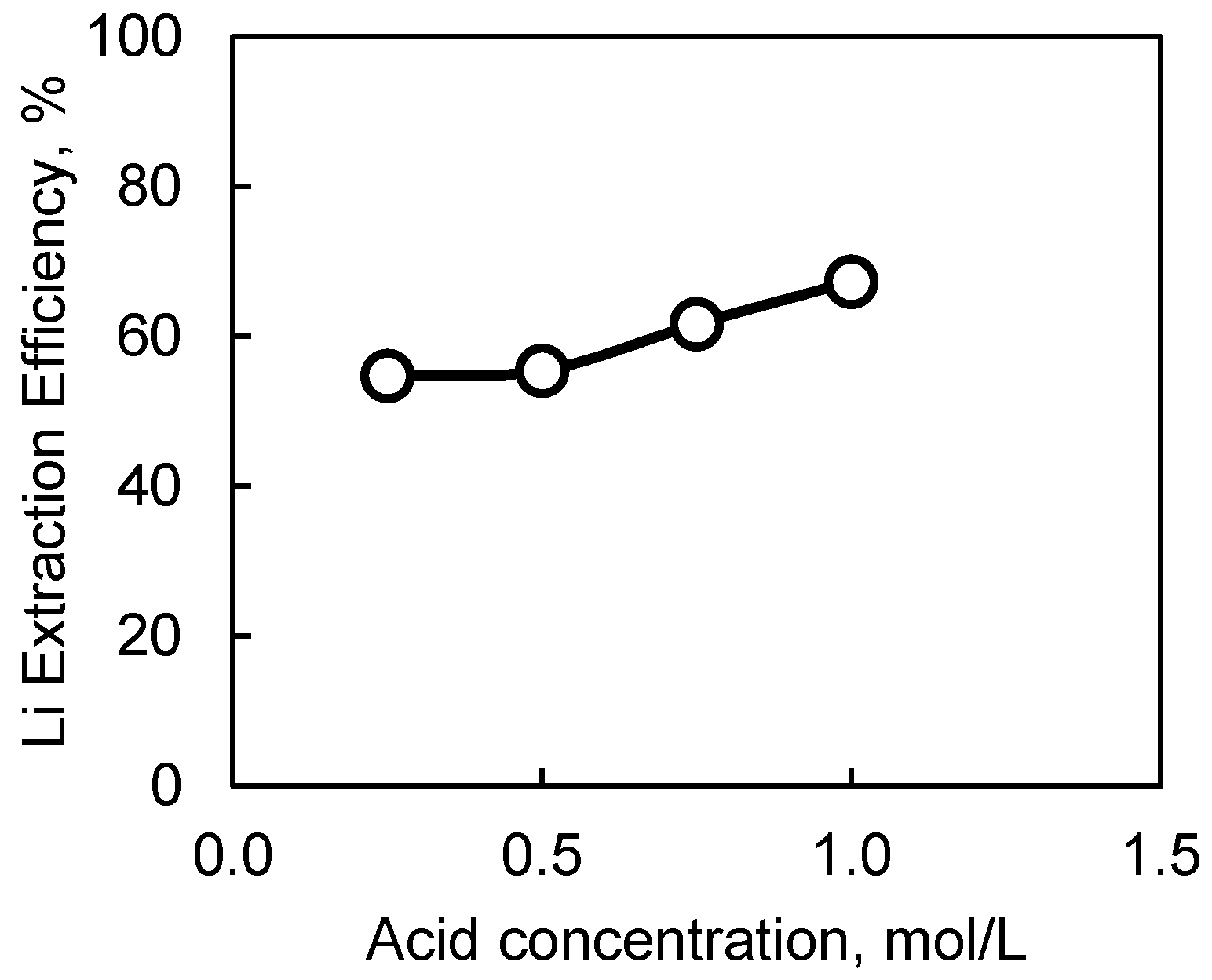
Based on the evaluation of the mechanical activation process, the optimum activation conditions were determined as an activation speed of 55 Hz, a mechanical activation time of 60 min, and a ball-to-solid ratio of 66.7:1, corresponding to a feed mass of 15 g of ore with 1 kg of grinding media. During the optimization of these parameters, leaching experiments were carried out using a low acid concentration of 0.25 mol L−1. In order to further improve the lithium extraction, which reached 58.8% under these conditions, the acid concentration was subsequently optimized while maintaining a leaching time of 60 min, a solid-to-liquid ratio of 1:10, and a temperature of 60 °C. The effect of acid concentration (0.25, 0.50, 0.75, and 1 mol L−1) on lithium dissolution efficiency is presented in Figure 10.
Figure 10.
The effect of acid concentration on lithium extraction efficiency.
As seen in Figure 10, an acid concentration of 1 mol/L increased the lithium dissolution efficiency to 67.7%. Although leaching experiments were also performed at acid concentrations higher than 1 mol/L, filtration could not be achieved due to severe gelation; therefore, 1 mol/L was selected as the optimum acid concentration.
The concentrate subjected to mechanical activation contains approximately 13–17% Fe and consists of nearly 92% biotite, representing an almost pure biotite concentrate. At high acid concentrations, such a Fe-rich material readily reacts to form iron sulfate species, which can generate passivation layers. These layers lead to the formation of an impermeable structure, hindering reactant diffusion and consequently reducing solid–liquid separability [37,48]. Although Tang et al. [7] and Sasikumar et al. [49] did not explicitly establish a direct link between passivation layers and filtration performance, they reported that the formation of such films may occur due to Fe-Al hydroxide precipitation or recrystallization processes.
3.2.5. Effect of Solid-to-Liquid Ratio on Lithium Extraction Efficiency
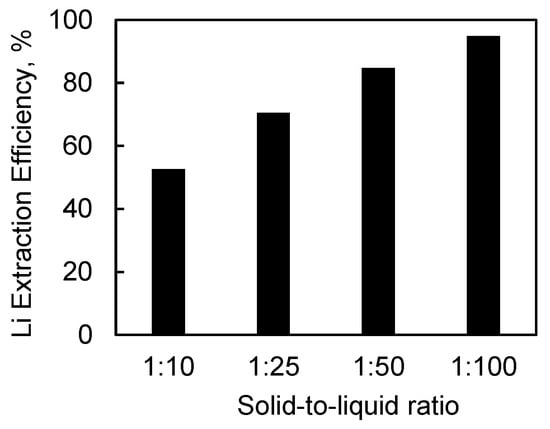
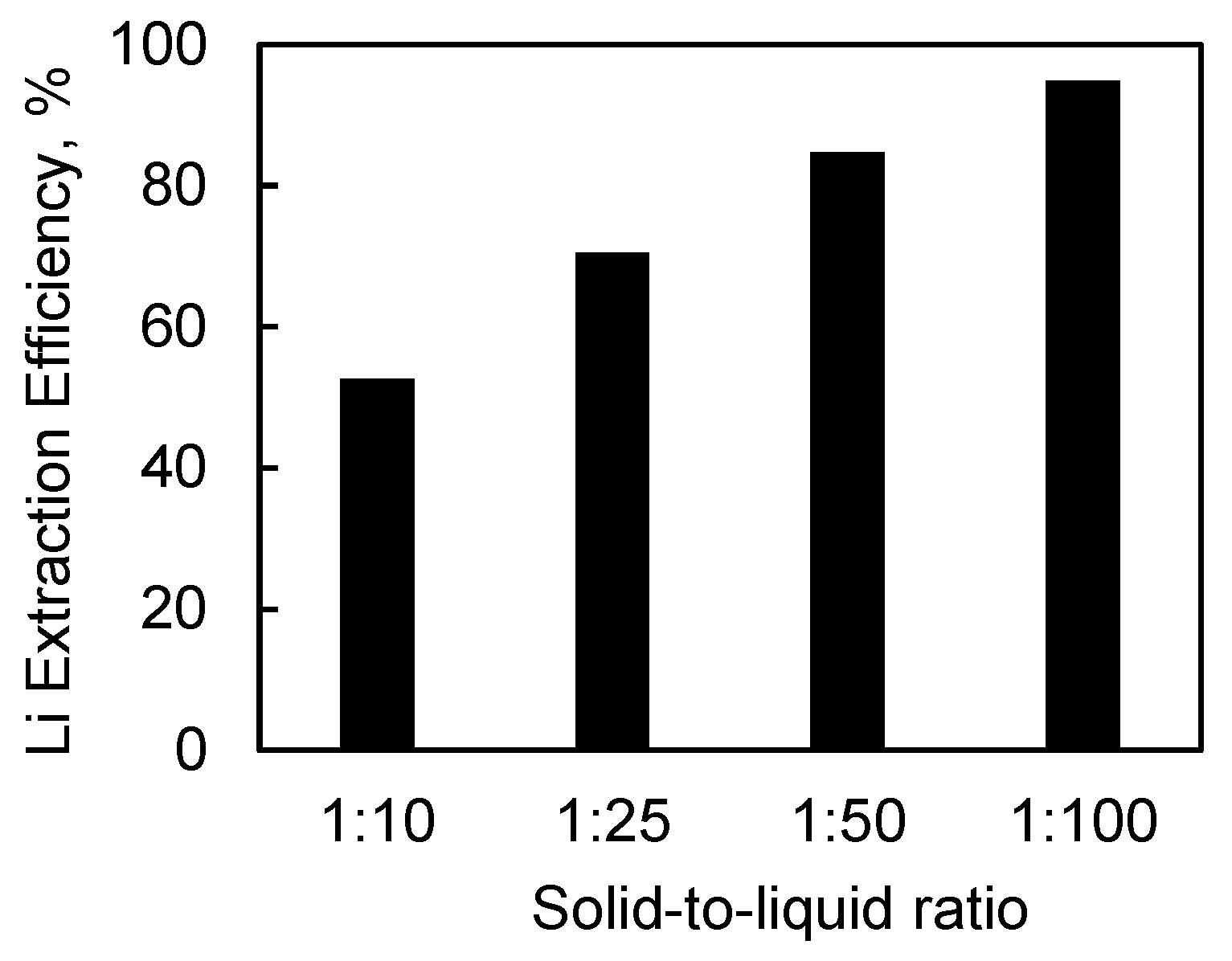
The effect of the solid-to-liquid ratio on lithium dissolution efficiency was investigated at an acid concentration of 1 mol L−1, and the experimental results were presented in Figure 11.
Figure 11.
The effect of solid-to-liquid ratio on lithium extraction efficiency.
The results indicated that lithium dissolution increased as the solid-to-liquid ratio decreased. However, solid-to-liquid ratios of 1/50 and 1/100 were extremely dilute and therefore economically unattractive. The corresponding lithium extraction efficiencies were 52.7%, 70.5%, 84.7%, and 94.8%, respectively. For subsequent leaching experiments, a solid-to-liquid ratio of 1/25 was selected to investigate the combined effects of leaching time and temperature.
3.2.6. Effect of the Combination of Leaching Temperature and Time on Lithium Extraction Efficiency
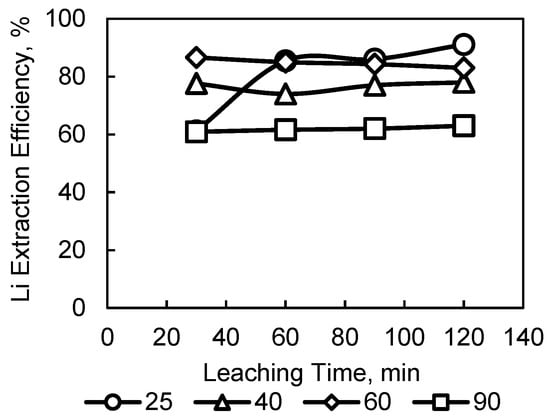
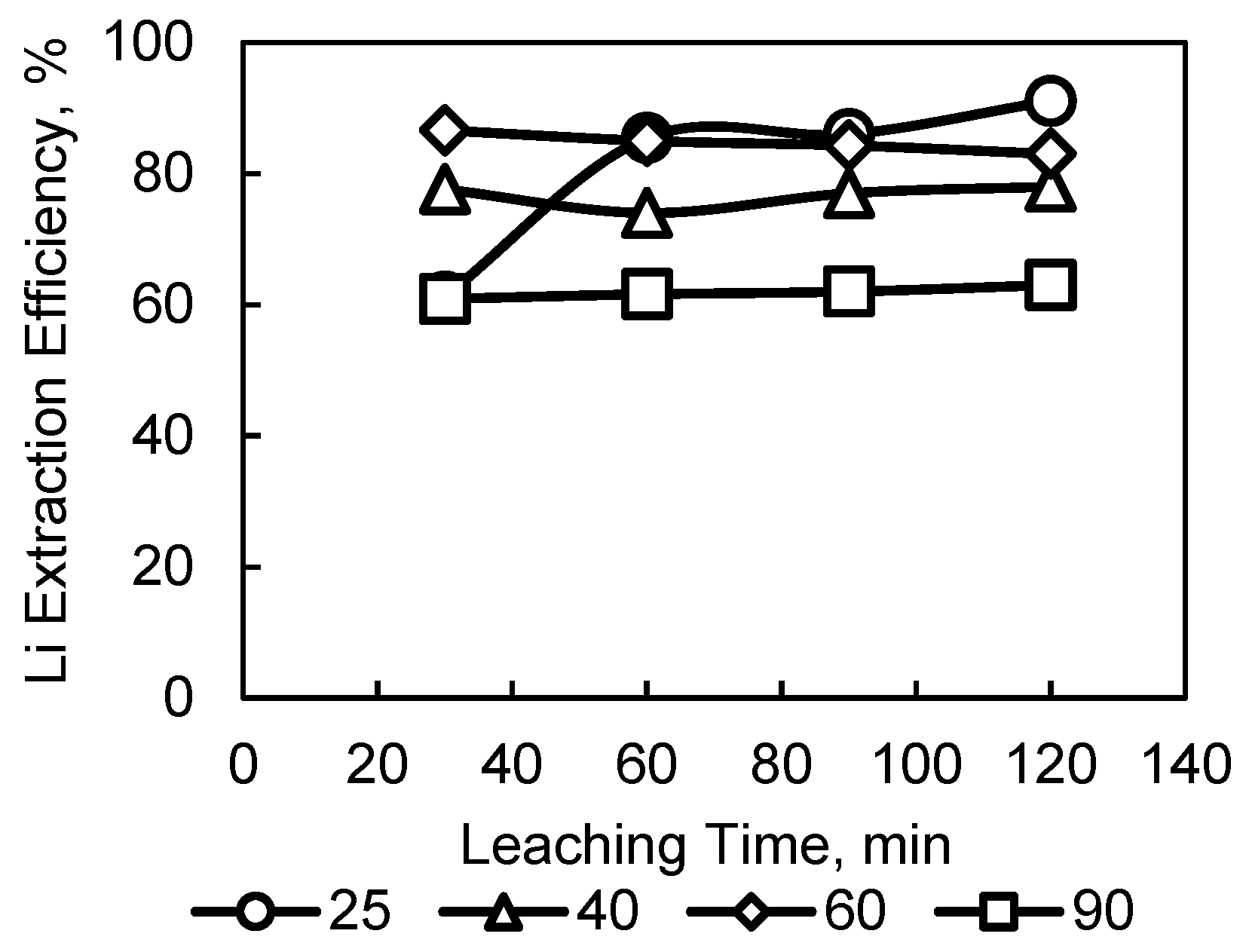
After selecting a solid-to-liquid ratio of 1/25 as the optimum, all leaching times (30, 60, 90, and 120 min) were evaluated at all leaching temperatures (25–40–60–90 °C) in order to achieve higher lithium extraction at shorter leaching durations and elevated temperatures without inducing the previously observed adverse effects. The experimental results were presented in Figure 12.
Figure 12.
The effect of combination of leaching temperature and time on lithium extraction efficiency.
As previously noted, a solid-to-liquid ratio of 1/25 was selected in order to achieve high lithium dissolution. Except at 25 °C, almost no significant variation in lithium extraction was observed among the different leaching times at each temperature. At 25 °C, approximately 60% lithium extraction was achieved after 30 min, which increased to nearly 85% at 60 and 90 min and then remained essentially constant. After 120 min, an additional increase of about 6% was observed, resulting in a final lithium extraction of approximately 91%.
Overall, similar trends and closely comparable extraction values were obtained at 40 and 60 °C across all leaching times. In contrast, at 90 °C, lower lithium dissolution efficiencies were observed, indicating a negative effect of elevated temperature. Although higher temperatures generally enhance metal dissolution [37,49], in this experimental series high lithium extraction was achieved even at ambient temperature. At an acid concentration of 1 mol L−1, increasing temperature led to higher solution viscosity, which adversely affected both the leaching and filtration processes, thereby preventing further improvement in lithium recovery at elevated temperatures [16].
4. Conclusions
In conclusion, in this study, it was determined that lithium could be successfully transferred into solution with an extraction efficiency of approximately 91% after optimizing all process parameters. Mechanical activation played a critical role in significantly reducing acid consumption (from 1.75 mol L−1 down to 0.25 mol L−1-up to 85.7% or from 1.75 mol L−1 down to 1.0 mol L−1-approximately 43%), thereby providing both an economically and environmentally favorable approach. While a lithium extraction efficiency comparable to that obtained using 1.75 mol L−1 sulfuric acid in direct acid leaching could be achieved with only 0.25 mol L−1 acid when mechanical activation was applied, higher extraction efficiencies required increased acid dosages, although concentrations above 1.0 mol L−1 were found to be unnecessary. Structural and morphological analyses, including XRD, SEM, FTIR, and particle size measurements, confirmed that effective mechanical activation was achieved, leading to progressive amorphization of the biotite particles. The weakening of mineral bonds, particularly -OH stretching vibrations and siloxane (Si-O-Si) bonds, was clearly identified as a result of mechanical activation. Naturally occurring biotite particles, which initially exhibit needle-like and layered morphologies, transformed into rounded and agglomerated particles at optimum activation durations. Consequently, particle size initially decreased due to intensive breakage but subsequently increased as agglomeration became dominant. The crystallinity index decreased with increasing activation time, indicating enhanced amorphization; however, a partially reversible behavior was observed beyond 120 min of mechanical activation. Overall, the results demonstrate that mechanical activation enables the design of a more efficient, environmentally friendly, and cost-effective in terms of the valorization of industrial tailings, lithium recovery process from biotite-rich nepheline syenite tailings. In addition, it demonstrated that mechanical activation is a powerful pre-treatment for lithium-bearing silicates, as it induces amorphization, lowers phase transition temperatures, and greatly enhanced lithium leachability under mild-acid conditions.
Author Contributions
Conceptualization, F.B., M.O.K. and K.T.P.; methodology, Z.Ü.-Ç., F.B., M.O.K. and K.T.P.; investigation, Z.Ü.-Ç.; data curation, Z.Ü.-Ç.; writing—original draft preparation, Z.Ü.-Ç.; writing—review and editing, F.B., M.O.K. and K.T.P.; supervision, F.B., K.T.P. and M.O.K. All authors have read and agreed to the published version of the manuscript.
Funding
This research received no external funding.
Data Availability Statement
The original contributions presented in this study are included in the article. Further inquiries can be directed to the corresponding author.
Acknowledgments
The authors are thankful to BS Yatırım A.Ş., ITU-Mineral Processing Engineering Department, Billur Deniz Karahan, Zehra Gülgün Şenyurt, Medipol University-REMER, and NumLabs Laboratory of Mining Analyze and Technology.
Conflicts of Interest
The authors declare no conflicts of interest.
References
- Jandová, J.; Dvořák, P.; Vu, H.N. Processing of zinnwaldite waste to obtain Li2CO3. Hydrometallurgy 2010, 103, 12–18. [Google Scholar] [CrossRef] [Scilit]
- Siame, E.; Pascoe, R.D. Extraction of lithium from micaceous waste from china clay production. Miner. Eng. 2011, 24, 1595–1602. [Google Scholar] [CrossRef] [Scilit]
- Yang, M.; Zhong, Y.; Liu, X.; Wang, S.; Qu, T. Review of technologies to extract lithium from hard rock lithium minerals. Miner. Eng. 2025, 232, 109577. [Google Scholar] [CrossRef] [Scilit]
- Min, K.; Xiaoyi, Z.; Huan, C.; Xiao, L.; Yong, W.; Cailian, G. Process and Mechanism of Sulfate Roasting-Water Extraction of Lithium from Lithium Mica Ore. Mult. Util. Miner. Resour. 2023, 44, 146–153. [Google Scholar] [CrossRef]
- Baláž, P. Mechanical activation in hydrometallurgy. Int. J. Miner. Process 2003, 72, 341–354. [Google Scholar] [CrossRef] [Scilit]
- Alex, T.C.; Kumar, R.; Roy, S.K.; Mehrotra, S.P. Mechanical activation of Al-oxyhydroxide minerals—A review. Miner. Process Extr. Metall. Rev. 2016, 37, 1–26. [Google Scholar] [CrossRef] [Scilit]
- Tang, A.; Su, L.; Li, C.; Wei, W. Effect of mechanical activation on acid-leaching of kaolin residue. Appl. Clay Sci. 2010, 48, 296–299. [Google Scholar] [CrossRef] [Scilit]
- Navya, M.; Sandeep, S. Effect of acid concentration and reaction time on structural and surface properties of waste mica. Clays Clay Miner. 2025, 73, e32. [Google Scholar] [CrossRef] [Scilit]
- Zuo, K.; Zhou, X.; Wang, H.; Li, Z.; Xiong, K.; Cheng, H. Effect of elemental composition and phase transformation on lithium leaching behavior of micas in calcination-acid leaching process. Appl. Clay Sci. 2024, 260, 107522. [Google Scholar] [CrossRef] [Scilit]
- Gu, H.; Guo, T.; Wen, H.; Luo, C.; Cui, Y.; Du, S.; Wang, N. Leaching efficiency of sulfuric acid on selective lithium leachability from bauxitic claystone. Miner. Eng. 2020, 145, 106076. [Google Scholar] [CrossRef] [Scilit]
- Swain, B. Recovery and recycling of lithium: A review. Sep. Purif. Technol. 2017, 172, 388–403. [Google Scholar] [CrossRef] [Scilit]
- Juhasz, A.Z.; Opoczky, L. Mechanical Activation of Minerals by Grinding Pulverizing and Morphology of Particles; Ellis Horwood: Hemel Hempstead, UK, 1989. [Google Scholar]
- Karagedov, G.; Lyakhov, N. Mechanochemical grinding of inorganic oxides. KONA Powder Part J. 2003, 21, 76–87. [Google Scholar] [CrossRef] [Scilit]
- Fernandez-Bertran, J.F. Mechanochemistry: An overview. Pure Appl. Chem. 1999, 71, 581–586. [Google Scholar] [CrossRef] [Scilit]
- Setoudeh, N.; Nosrati, A.; Welham, N.J. Enhancing lithium leaching by mechanical activation. Mong. J. Chem. 2018, 19, 44–48. [Google Scholar] [CrossRef] [Scilit]
- Vieceli, N.; Nogueira, C.A.; Pereira, M.F.; Dias, A.P.S.; Durao, F.O.; Guimarães, C.; Margarido, F. Effects of mechanical activation on lithium extraction from a lepidolite ore concentrate. Miner. Eng. 2017, 102, 1–14. [Google Scholar] [CrossRef] [Scilit]
- Eom, Y.; Dyer, L.; Nikoloski, A.N.; Alorro, R.D. Mechanochemical Treatment for the Extraction of Lithium from Hard Rock Minerals: A Comprehensive Review. Metals 2024, 14, 1260. [Google Scholar] [CrossRef] [Scilit]
- Ni, C.; Liu, C.; Liu, J.; Wang, J.; Liang, Y.; Sun, W.; Zhong, H.; He, Z. Thermochemically driven crystal phase transfer via mechanical activation-assisted chlorination roasting toward the selective extraction of lithium from spodumene. J. Indus Eng. Chem. 2024, 138, 632–640. [Google Scholar] [CrossRef] [Scilit]
- Eom, Y.; Dyer, L.; Nikoloski, A.N.; Alorro, R.D. Enhancing lithium extraction: Effect of mechanical activation on the sulfuric acid leaching behavior of lepidolite. Minerals 2026, 16, 87. [Google Scholar] [CrossRef] [Scilit]
- Boylu, F.; Obuz Teker, G.; Ersever Angur, G.; Özdemir, O.; Güven, O.; Celik, M.S. A strategic pre-mechanical activation approach for reducing acid consumption and ion release on acid leaching of lithium-bearing clays. Minerals 2026, 16, 3. [Google Scholar] [CrossRef] [Scilit]
- Üçerler-Çamur, Z.; Keles, O.; Kangal, M.O. Sustainable lithium recovery from biotite waste of nepheline syenite via magnetic separation and flotation with MLA-Based mineralogical characterization. Minerals 2026, 16, 95. [Google Scholar] [CrossRef] [Scilit]
- Üçerler-Çamur, Z.; Keles, O.; Kangal, M.O. Mineral liberation analysis (MLA)-Based characterization of lithium source: Biotite and associated minerals in nepheline syenites. Minerals 2025, 15, 876. [Google Scholar] [CrossRef] [Scilit]
- Üçerler-Çamur, Z.; Keles, O.; Kangal, M.O. Primary Stage of Zinnwaldite Concentrate Production from Nepheline Syenite Rocks via Magnetic Separation. In Proceedings of the 9th International ICONTECH Congress, Baku, Azerbaijan, 1–2 April 2025. [Google Scholar]
- Yan, Q.; Li, X.; Wang, Z.; Wu, X.; Guo, H.; Hu, Q.; Peng, W.; Wang, J. Extraction of valuable metals from lepidolite. Hydrometallurgy 2012, 117, 116–118. [Google Scholar] [CrossRef] [Scilit]
- Brigatti, M.F.; Kile, D.E.; Poppi, M. Crystal structure and crystal chemistry of lithium-bearing muscovite-2 M 1. Can. Mineral. 2001, 39, 1171–1180. [Google Scholar] [CrossRef] [Scilit]
- Luo, Z.; Yang, J.; Ma, H.; Liu, M.; Ma, X. Recovery of magnesium and potassium from biotite by sulfuric acid leaching and alkali precipitation with ammonia. Hydrometallurgy 2015, 157, 188–193. [Google Scholar] [CrossRef] [Scilit]
- Görgüç, A.; Bayraktar, B.; Gençdağ, E.; Demirci, K.; Yılmaz, S.; Zungur-Bastıoglu, A.; Yılmaz, F.M. Cellulose nanofibrils and nanocrystals valorized from pistachio hull possess unique chemo-structural and rheological properties depending upon solvent system: Potencies of green techniques and genetic algorithm. Waste Biomass Valor. 2024, 15, 7077–7096. [Google Scholar] [CrossRef] [Scilit]
- Mucsi, G. A Review on mechanical activation and mechanical alloying in stirred media mill. Chem. Eng. Res. Des. 2019, 148, 460–474. [Google Scholar] [CrossRef] [Scilit]
- Abadi, A.G.; Al-Shandoudi, L. Fly ash morphology and surface modification via mechanical activation: A review. Environ. Conserv. J. 2020, 21, 105–112. [Google Scholar] [CrossRef] [Scilit]
- Avvakumov, E.; Karakchiev, L. Mechanochemical synthesis as a method for the preparation of nanodisperse particles of oxide materials. Chem. Sustain Dev. 2004, 12, 287–291. [Google Scholar]
- Perek, K.T. Pressure Leaching of Kure Massive Rich Copper Ore. Doctoral Disseratation, Istanbul Technical University, Istanbul, Türkiye, 2003. [Google Scholar]
- Basturkcu, H.; Acarkan, N.; Gock, E. The role of mechanical activation on atmospheric leaching of a lateritic nickel ore. Int. J. Miner. Process 2017, 163, 1–8. [Google Scholar] [CrossRef] [Scilit]
- Barry, T.S.; Uysal, T.; Birinci, M.; Erdemoğlu, M. Thermal and mechanical activation in acid leaching processes of non-bauxite ores available for alumina production—A review. Miner. Metall. Explor. 2019, 36, 557–569. [Google Scholar] [CrossRef] [Scilit]
- Baki, V.A.; Ke, X.; Heath, A.; Calabria-Holley, J.; Terzi, C.; Sirin, M. The impact of mechanochemical activation on the physicochemical properties and pozzolanic reactivity of kaolinite, muscovite and montmorillonite. Cem. Concr. Res. 2022, 162, 106962. [Google Scholar] [CrossRef] [Scilit]
- Moreau, L.M.; Ha, D.H.; Zhang, H.; Hovden, R.; Muller, D.A.; Robinson, R.D. Defining crystalline/amorphous phases of nanoparticles through X-ray absorption spectroscopy and X-ray diffraction: The case of nickel phosphide. Chem. Mater. 2013, 25, 2394–2403. [Google Scholar] [CrossRef] [Scilit]
- Manosa, J.; Calvo-de la Rosa, J.; Silvello, A.; Maldonado-Alameda, A.; Chimenos, J.M. Kaolinite structural modifications induced by mechanical activation. Appl. Clay Sci. 2023, 238, 106918. [Google Scholar] [CrossRef] [Scilit]
- Liu, C.L.; Chen, Z.F.; Zhu, Y.; Yu, J.G. Fundamental study of leaching kinetics and mechanism of spodumene assisted by mechanical activation. Miner. Eng. 2024, 218, 108936. [Google Scholar] [CrossRef] [Scilit]
- Yao, G.; Zang, H.; Wang, J.; Wu, P.; Qiu, J.; Lyu, X. Effect of mechanical activation on the pozzolanic activity of muscovite. Clay Clay Miner. 2019, 67, 209–216. [Google Scholar] [CrossRef] [Scilit]
- Kotsupalo, N.P.; Menzheres, L.T.; Ryabtsev, A.D.; Boldyrev, V.V. Mechanical activation of α-spodumene for further processing into lithium compounds. Theor. Found. Chem. Eng. 2010, 44, 503–507. [Google Scholar] [CrossRef] [Scilit]
- Boldyrev, V.V. Mechanochemistry and mechanical activation of solids. Russ. Chem. Rev. 2006, 75, 177. [Google Scholar] [CrossRef] [Scilit]
- Ebadi, H.; Pourghahramani, P. Effects of mechanical activation modes on microstructural changes and reactivity of ilmenite concentrate. Hydrometallurgy 2019, 188, 38–46. [Google Scholar] [CrossRef] [Scilit]
- Juhász, Z. Mechano-chemical activation of kaolin minerals. Acta Mineral.-Petrogr. 1980, 24, 121–145. [Google Scholar]
- Erdemoğlu, M.; Baláž, P. An overview of surface analysis techniques for characterization of mechanically activated minerals. Miner. Process Extr. Metall. Rev. 2012, 33, 65–88. [Google Scholar] [CrossRef] [Scilit]
- Kosobudskii, I.D.; Gvozdev, G.A.; Fedorov, F.S.; Nikitina, L.V.; Zhimalov, A.B.; Bondareva, L.N.; Gorina, I.N. Mechanochemical activation of sand in the Ago-2 centrifugal-planetary mill. Glass Ceram. 2015, 72, 199–202. [Google Scholar] [CrossRef] [Scilit]
- Mañosa, J.; Alvarez-Coscojuela, A.; Maldonado-Alameda, A.; Chimenos, J.M. A lab-scale evaluation of parameters influencing the mechanical activation of kaolin using the design of experiments. Materials 2024, 17, 4651. [Google Scholar] [CrossRef] [Scilit] [PubMed]
- Guzzo, P.L.; de Barros, F.B.M.; Soares, B.R.; Santos, J.B. Evaluation of particle size reduction and agglomeration in dry grinding of natural quartz in a planetary ball mill. Powder Technol. 2020, 368, 149–159. [Google Scholar] [CrossRef] [Scilit]
- Liu, Y.; Zhang, B.; Fahimizadeh, M.; Yu, T.; Ou, Z.; Peng, Z.; Yuan, P. Mechanical activation of kaolinite for sodalite synthesis under mild conditions. Appl. Clay Sci. 2025, 271, 107796. [Google Scholar] [CrossRef] [Scilit]
- Bai, Y.; Wang, W.; Zhao, S.; Lu, D.; Xie, F.; Dreisinger, D. Effect of mechanical activation on leaching behavior and mechanism of chalcopyrite. Miner. Process Extr. Metall. Rev. 2022, 43, 440–452. [Google Scholar] [CrossRef] [Scilit]
- Sasikumar, C.; Rao, D.S.; Srikanth, S.; Ravikumar, B.; Mukhopadhyay, N.K.; Mehrotra, S.P. Effect of mechanical activation on the kinetics of sulfuric acid leaching of beach sand ilmenite from Orissa, India. Hydrometallurgy 2004, 75, 189–204. [Google Scholar] [CrossRef] [Scilit]

Disclaimer/Publisher’s Note: The statements, opinions and data contained in all publications are solely those of the individual author(s) and contributor(s) and not of MDPI and/or the editor(s). MDPI and/or the editor(s) disclaim responsibility for any injury to people or property resulting from any ideas, methods, instructions or products referred to in the content. |
© 2026 by the authors. Licensee MDPI, Basel, Switzerland. This article is an open access article distributed under the terms and conditions of the Creative Commons Attribution (CC BY) license.