


Abstract
Hydrogen serves as a fundamental energy carrier essential for achieving global carbon neutrality, with long-distance pipeline transportation recognized as the most efficient approach for large-scale hydrogen delivery. Nevertheless, hydrogen embrittlement (HE) in pipeline steels constitutes a significant safety challenge for this infrastructure. This review presents a comprehensive and systematic analysis of HE in hydrogen pipeline steels, emphasizing the microstructural fracture mechanisms under hydrogen exposure, the microstructural regulation of hydrogen diffusion and trapping, the interplay of multiple influencing factors, strategies for HE mitigation, and numerical prediction methodologies. Critical factors including microstructural features, hydrogen transport dynamics, and the coupling effects between stress and hydrogen are examined in detail. The review systematically summarizes advanced HE mitigation techniques and strategies, encompassing microstructural engineering, surface modification, alloy composition optimization, finite element modeling, and machine learning applications. Additionally, several principal challenges confronting the field are identified: the ambiguous mechanisms underlying multi-field coupling effects, the limited translation of laboratory-scale findings to practical engineering contexts, especially with regard to multi-scale mitigation of hydrogen-induced fracture, and the incomplete advancement of artificial intelligence-based pipeline integrity assessment tools. To address these issues, the review proposes key research directions and recommendations for future investigations into HE in hydrogen pipeline steels.
1. Introduction
Hydrogen has emerged as a vital low-carbon secondary energy carrier essential for achieving global carbon neutrality, with long-distance pipeline transportation recognized as the most efficient approach for large-scale hydrogen delivery. According to the International Energy Agency (2025) [1], approximately 2600 km of dedicated pure hydrogen pipelines are currently in operation globally. For natural gas pipelines without major retrofitting, hydrogen blending is generally limited to below 10 vol% due to material compatibility and safety constraints, while European demonstration trials are exploring mixing fractions up to 20 vol% in specific network sections. Repurposed natural gas pipelines typically operate at 4.0–8.0 MPa, whereas dedicated pure hydrogen pipelines are designed for 10 MPa or higher. The steels used in hydrogen pipelines, serving as the primary structural materials, play a decisive role in ensuring the operational safety and long-term reliability of hydrogen transmission networks [2]. Nevertheless, these pipeline steels are highly susceptible to hydrogen embrittlement (HE) when exposed to hydrogen-containing environments. This phenomenon significantly degrades mechanical properties such as ductility, fracture toughness, and fatigue resistance and can lead to low-stress delayed cracking and catastrophic structural failures, thereby posing a critical challenge to the safe operation of hydrogen pipelines [3]. Consequently, a comprehensive review of advancements in HE research holds substantial theoretical and practical significance for material selection, in-service maintenance, and protective technology development. The growing urgency of this challenge is reflected in the marked acceleration of research output over the past decade, with China, the United States, and European nations as top contributing countries, and research concentrated predominantly within materials science and metallurgy disciplines (Figure 1).
Figure 1.
Bibliometric analysis of literature on HE of pipeline steel: bar and line charts: (a) annual number of relevant publications from 2006 to 2025, (b) top 10 countries or regions by number of relevant publications, (c) top 5 document types by number of relevant publications, and (d) top 10 research areas by number of relevant publications. The statistics are from Web of Science.
Extensive experimental and mechanistic studies have been conducted on conventional hydrogen pipeline steels [4]. Researchers have extensively employed techniques such as slow strain rate tension testing, fracture toughness evaluation, low-cycle fatigue analysis, and microstructural characterization to elucidate the mechanical degradation behavior of hydrogen pipeline steels under varying hydrogen concentrations and partial pressures. It has been established that increasing hydrogen content markedly exacerbates the severity of HE [5,6,7,8,9]. Comparative investigations have demonstrated that welded joints and heat-affected zones exhibit greater susceptibility to HE compared to base metals, primarily attributable to microstructural heterogeneity, precipitation of secondary phases, and enrichment of non-metallic inclusions. Furthermore, hydrogen interacts synergistically with welding defects, thereby accelerating crack initiation and propagation [10,11,12]. The scholarly community has progressively developed a theoretical framework encompassing hydrogen diffusion, trapping phenomena, and hydrogen bubble nucleation, thereby elucidating the fundamental mechanisms of hydrogen-induced damage across atomic, mesoscopic, and macroscopic scales [13,14,15,16,17]. Concurrently, relatively comprehensive conclusions have been drawn concerning hydrogen permeation characteristics, microstructural control strategies, and engineering selection criteria for hydrogen pipeline steels [18,19].
Although a substantial body of experimental data and mechanistic understanding exists, current research remains fragmented and lacks comprehensive integration across diverse service conditions. The inherent relationships among microstructure, hydrogen transport, and HE susceptibility in hydrogen pipeline steels have yet to be thoroughly elucidated, and a significant gap persists between laboratory results and practical engineering applications. Furthermore, most existing reviews predominantly address general mechanisms of hydrogen-induced damage in metals, with few providing systematic analyses specifically focused on hydrogen pipeline steels. Comparisons of representative existing reviews reveal distinct research priorities across previous works (Table 1). Yang et al. [20] mainly explored hydrogen embrittlement of pipeline steel welded joints. Jia et al. [21] conducted macro-scale analysis of hydrogen-blended gas transportation systems. Kappes and Perez [22] focused on pipeline design codes and life prediction. Erdener et al. [23] summarized operational restrictions and regulatory policies for hydrogen blending. Hoschke et al. [24] delivered a broad overview of pipeline steel hydrogen embrittlement and sorted out scattered experimental limitations.
Table 1.
Comparison of five representative review articles.
Building upon prior research, this review establishes a unified analytical framework for hydrogen pipeline steels to fill the abovementioned research shortcomings. It systematically integrates core HE theories, microscale fracture mechanisms, hydrogen diffusion-trapping kinetics, multi-factor synergistic effects, targeted mitigation strategies and numerical prediction techniques, sorts out unresolved research challenges and future research outlooks, and presents a comprehensive overview covering microscopic material responses to engineering risk assessment to compensate for the fragmented coverage of existing reviews. As shown in Figure 2, Section 2 elaborates fundamental HE theories and hydrogen-induced fracture mechanisms, Section 3 discusses microstructures, hydrogen trapping kinetics and their coupling interactions, Section 4 summarizes anti-HE technical approaches including microstructure regulation, surface modification, alloy design, finite element simulation and machine learning and Section 5 highlights critical research bottlenecks. This work offers theoretical and technical references for developing HE-resistant hydrogen pipeline steels, optimizing the safety design of hydrogen transportation infrastructure, and supporting scientific operation and maintenance of hydrogen pipelines.
Figure 2.
Research process flowchart.
2. Hydrogen Embrittlement Theories
2.1. Hydrogen Embrittlement Phenomena
The HE is characterized as the degradation of mechanical properties—particularly ductility and fracture toughness—in metallic materials subjected to tensile stress in the presence of hydrogen [25]. This phenomenon was initially documented by Johnson in 1875, who investigated the effects of acid corrosion on the fracture behavior of iron and steel [26]. Pipeline steels are notably susceptible to HE when operating in hydrogen-containing environments [10]. The hydrogen-induced deterioration in these steels can be classified into internal and external HE, depending on the hydrogen source [27]. Internal HE arises from metallurgical processes such as smelting, welding, and heat treatment, whereas external HE results from exposure to hydrogen-containing media during pipeline service. Irrespective of the origin, dissolved hydrogen tends to diffuse and accumulate at microstructural defects during service, thereby compromising the material’s toughness and resistance to fracture [11]. External HE is initiated by hydrogen present in the service environment, involving a sequential mechanism whereby hydrogen molecules adsorb onto the steel surface, dissociate into atomic hydrogen, and subsequently penetrate the crystal lattice [28]. Nonetheless, hydrogen permeation through this adsorption–dissociation–penetration process alone is insufficient to induce fracture. Instead, mechanical factors—including applied load, local stress field, and cyclic fatigue—are essential to synergistically promote hydrogen-induced degradation and eventual brittle failure. Empirical studies in high-pressure hydrogen service conditions have demonstrated that the combined influence of hydrogen and mechanical stress markedly diminishes the mechanical performance of pipeline steel. For instance, under a hydrogen pressure of 12 MPa and a hydrogen concentration of 2 vol%, the fracture toughness of pipeline steel is reduced by 21.42% [9].
Surface hydrogen concentration serves not only as the principal factor contributing to external HE but also interacts synergistically with bulk hydrogen content to influence the susceptibility of steel to HE. Under practical service conditions, elevated hydrogen concentrations in the surrounding environment enhance the propensity for HE in steel, consequently leading to a reduction in material ductility [27,29]. Moreover, elevated pressures in hydrogen-rich service environments facilitate accelerated hydrogen permeation into pipeline steels, thereby exacerbating the degradation of mechanical performance and intensifying HE phenomena [30]. Empirical studies have further demonstrated that hydrogen significantly compromises the mechanical properties of pipeline steels by promoting the formation and coalescence of strain-induced vacancies, with hydrogen-induced fracture behavior exhibiting a strong dependence on deformation parameters such as strain rate [31]. Notably, the combined effect of internal and surface-adsorbed hydrogen is most deleterious under conditions of low strain rate, whereas surface-adsorbed hydrogen predominates in influencing HE at higher strain rates [13]: for instance, at a relatively elevated strain rate of 2 × 10⁻⁴ s−1, the elongation of X80 pipeline steel decreases markedly from 17.8% in the hydrogen-free state to 3.6% when both internal and surface-adsorbed hydrogen are present. In contrast, the presence of internal hydrogen alone at the same strain rate results in a minimal reduction in elongation, which remains at 16.1%. At a lower strain rate of 2 × 10⁻⁵ s−1, the simultaneous presence of internal and surface-adsorbed hydrogen leads to an extremely low elongation of 2.1% [32]. Overall, hydrogen-induced fracture in steels is predominantly governed by the accumulation of hydrogen in the high-stress regions ahead of crack tips, where the local hydrogen concentration significantly exceeds that of the surrounding bulk matrix [14].
2.2. Hydrogen Embrittlement Theoretical Models
A broad consensus exists within the scholarly community concerning the comprehensive mechanism by which hydrogen infiltrates metallic materials and induces HE. As illustrated in Figure 3, hydrogen atoms initially undergo both physical and chemical adsorption on the surface of the material. Following this, they penetrate into the interior of the material via surface reactions, dissolve into the metal matrix forming a solid solution, and subsequently diffuse through the crystal lattice. During diffusion, hydrogen atoms are trapped at microstructural sites within the material, causing localized hydrogen accumulation. Ultimately, this localized hydrogen interacts with lattice atoms or trap sites, leading to the deterioration of the metal’s mechanical properties and resulting in structural failure [12,13,14,31].
Figure 3.
Correlation between the potential energy distribution of hydrogen in metal and HE model (Adapted from Ref. [3]).
Despite ongoing debate concerning the microscopic mechanisms underlying HE, current experimental findings are predominantly interpreted through six principal theoretical frameworks: Hydrogen Internal Pressure (HIP), Hydrogen-Reduced Surface Energy (HRSE), Hydrogen-Enhanced Decohesion (HEDE), Hydrogen-Enhanced Localized Plasticity (HELP), Hydrogen-Enhanced Strain-Induced Vacancy Formation (HESIV), and Hydrogen-Induced Phase Transformation (HIPT).
Figure 4 illustrates schematic representations of six predominant models elucidating the micro-mechanisms of HE, specifically the HIP, HRSE, HEDE, HELP, HESIV, and HIPT models. The figure also summarizes their respective domains of applicability and characteristic fracture surface morphologies [3]. The HIP model describes the precipitation of supersaturated hydrogen as molecular H2 gas within microvoids or defects, generating internal pressures that surpass the cohesive strength of the material, thereby initiating microcrack formation [3,33,34,35]. This model effectively accounts for the manifestation of white spots and cold cracking observed in welds of hydrogen pipeline steels [3,36,37,38]. However, while the HIP model is frequently employed to explain these phenomena, it does not adequately address the upper temperature limits associated with thermal strain nor the occurrence of embrittlement under low hydrogen pressures [3,36,37,38]. The HRSE model, as discussed by Petch and Stables [39], proposes that adsorbed hydrogen reduces the surface energy of crack interfaces, thereby explaining the temperature-dependent behavior of hydrogen-induced cracking in hydrogen pipeline steels. The HEDE mechanism, initially proposed by Troiano [40] and further developed in subsequent investigations [41,42], posits that hydrogen diminishes the interatomic cohesive energy within metals. Hydrogen segregation at grain boundaries facilitates intergranular crack propagation, which is considered the principal mechanism driving intergranular embrittlement in hydrogen pipeline steels, particularly under conditions of low hydrogen pressure and low strain rates. Furthermore, the HELP mechanism promotes dislocation activity and the coalescence of nanocavities, serving as a critical precursor to intergranular embrittlement in hydrogen pipeline steels [43,44,45]. Lynch [46] demonstrated that hydrogen enhances plastic blunting at crack tips and facilitates nanocavity coalescence, providing a robust explanation for the suppression of HE observed at elevated strain rates and reduced temperatures. This mechanism is also recognized as a key contributor to intergranular embrittlement in these steels. The HESIV mechanism, as examined by Maire et al. [47], suggests that hydrogen stabilizes dislocations and vacancies, leading to the formation of nanocavities that reduce the critical strain required for microcavity coalescence. This offers a quantitative framework for understanding nanocavity formation and the consequent reduction in toughness in hydrogen pipeline steels. Lastly, the HIPT mechanism, proposed by Westlake [48], attributes HE to hydrogen-induced martensitic transformations or the precipitation of brittle hydride phases. In the context of hydrogen pipeline steels, stable hydrides (FeH1−x) form only under ultra-high pressures. Thus, the central aspect of the HIPT mechanism in this material system is the hydrogen-induced transformation from austenite to martensite.
Figure 4.
Illustration and characteristics of six HE mechanisms: (a) HIP, (b) HRSE, (c) HEDE, (d) HELP, (e) HESIV, and (f) HIPT (Adapted from Ref. [3]).
Figure 5 presents a mechanism interaction diagram of the six hydrogen embrittlement theories, illustrating their conditional activation and coupling relationships. HEDE and HELP compete for dominance depending on strain rate and temperature: HEDE dominates intergranular decohesion at low strain rates and reduced temperatures [40,41,42], whereas HELP promotes localized plasticity and nanovoid coalescence at moderate strain rates and ambient temperatures [43,44,45]. At the atomic scale, direct molecular dynamics simulations in α-Fe demonstrate that hydrogen aggregation at crack tips suppresses dislocation emission, causing a ductile-to-brittle transition followed by brittle cleavage and slow crack growth [16]. HELP serves as a precursor to HESIV through hydrogen-stabilized vacancy accumulation [47]. HEDE and HRSE provide complementary explanations for temperature-dependent intergranular fracture [39]. HIP and HIPT activate independently under specific conditions—internal hydrogen pressure [3,36] and ultra-high-pressure phase transformation [48], respectively. All six mechanisms ultimately contribute to HE.
Figure 5.
Mechanism interaction diagram of six hydrogen embrittlement theories showing conditional activation and coupling relationships.
This section provides a systematic review and synthesis of the six microstructural mechanisms underlying HE. The adsorption-induced dislocation emission (AIDE) mechanism warrants particular elaboration as it represents a critical crack-tip process governing hydrogen-induced fracture initiation. As illustrated in Figure 6a and elucidated by Lynch [49], AIDE operates through hydrogen adsorption at crack-tip surfaces, which weakens interatomic bonds and facilitates dislocation emission, thereby promoting crack growth rather than blunting. This mechanism produces characteristic fracture surface features, including small, shallow dimples on near {100}<110> facets, distinguishing it from HELP-induced ductile tearing. The striking similarities between HE and liquid-metal embrittlement (LME), as well as high-velocity crack growth (1–10 mm/s) that precludes hydrogen diffusion ahead of cracks, provide compelling evidence that adsorbed hydrogen—rather than bulk-dissolved hydrogen—drives embrittlement at the crack tip [49].
Figure 6.
AIDE, HELP, and HEDE: (a) AIDE mechanism; (b) interaction diagram of the AIDE, HELP, and HEDE mechanisms.
The conditional dominance of HELP and HEDE has been experimentally established through systematic variation of strain rate and temperature. At low strain rates (e.g., 2 × 10⁻⁵ s−1) and reduced temperatures, HEDE predominates: hydrogen has sufficient time to segregate to grain boundaries, reducing interatomic cohesive energy and promoting intergranular decohesion [40,41,42]. This regime is characterized by brittle intergranular fracture surfaces with minimal plastic deformation. Conversely, at moderate strain rates (e.g., 2 × 10⁻⁴ s−1) and ambient temperatures, HELP dominates: hydrogen enhances dislocation mobility, promotes localized plasticity, and facilitates nanovoid coalescence ahead of the crack tip [43,44,45]. The transition between these regimes is governed by the competition between hydrogen diffusion kinetics and dislocation dynamics—when hydrogen can diffuse sufficiently fast to maintain equilibrium segregation at grain boundaries, HEDE prevails; when deformation outpaces hydrogen diffusion, HELP becomes operative [49,50]. At the atomic scale, molecular dynamics simulations in α-Fe demonstrate that hydrogen aggregation at crack tips suppresses dislocation emission, providing a mechanistic basis for hydrogen-induced brittle cleavage [16]. This strain-rate-dependent transition has been directly observed in X80 pipeline steel, where the elongation decreases from 17.8% (hydrogen-free) to 3.6% under combined internal and surface-adsorbed hydrogen at 2 × 10⁻⁴ s−1, but drops further to 2.1% at 2 × 10⁻⁵ s−1 [32], indicating intensified HEDE-mediated embrittlement at lower rates.
While AIDE is predominant for cleavage-like and intergranular fractures [49], its relationship with HELP and HEDE requires clarification. As shown in Figure 6b, HELP plays an auxiliary role by reducing back stress via facilitating emitted dislocation movement, whereas HEDE promotes void nucleation at interfaces or operates sequentially when back stress blocks AIDE [49]. Robertson et al. [50] demonstrated through in situ transmission electron microscopy (TEM) and focused ion beam-transmission electron microscopy (FIB-TEM) analyses that HELP dominates at moderate temperatures and strain rates where hydrogen accompanies mobile dislocations, while HEDE becomes significant at grain boundaries with high local hydrogen concentrations. Complementing these experimental findings, density functional theory (DFT) calculations provide quantitative evidence for hydrogen-induced decohesion at the atomic scale. DFT studies reveal that hydrogen segregation reduces grain boundary cohesive energy by up to 54% in Fe-based systems, establishing the thermodynamic driving force for HEDE. Furthermore, DFT predicts that hydrogen preferentially segregates to tensile-stressed regions ahead of crack tips, creating localized zones of weakened bonding that facilitate intergranular crack propagation [50]. Molecular dynamics (MD) simulations by Song and Curtin [16,51] extend these insights to dynamic fracture processes. In Ni [51], MD simulations demonstrate that hydrogen accumulation around crack tips forms a “nanohydride” phase with near-unity hydrogen concentration, which suppresses dislocation emission and promotes cleavage fracture when the nanohydride thickness exceeds ~3 lattice parameters (L ≥ 3a0). A kinetic model combining hydrogen diffusion kinetics with deformation/fracture analysis generates a mechanism map predicting a ductile-to-brittle transition as a function of hydrogen chemical potential, temperature, diffusion rate, and loading rate [51]. Extending this framework to α-Fe [16]—the matrix phase of pipeline steels—direct MD simulations reveal a similar ductile-to-brittle transition caused by hydrogen aggregation at crack tips suppressing dislocation emission, followed by brittle cleavage and slow crack growth. The atomistic embrittlement mechanism is connected to material states and loading conditions through a kinetic model for hydrogen delivery to the crack-tip region, enabling parameter-free predictions of embrittlement thresholds in Fe-based steels across varying hydrogen concentrations, mechanical loading rates, and hydrogen diffusion rates, which show excellent agreement with experiments [16]. However, Lynch [49] notes that such MD predictions of suppressed dislocation emission contradict experimental observations of dislocation emission during crack extension in Ni and Fe, suggesting current modeling techniques do not fully capture realistic crack-tip geometries. Collectively, these interconnected mechanisms establish a robust theoretical framework for optimizing structural materials under hydrogen exposure.
3. Influencing Factors of Hydrogen Embrittlement in Hydrogen Pipeline Steels
Expanding upon the HE theories presented in Section 2, this section provides a systematic analysis of three fundamental factors influencing the susceptibility of hydrogen pipeline steels to HE: the regulatory influence of microstructural characteristics, the kinetics of hydrogen transport and trapping, and the interactive effects arising from multiple contributing factors.
3.1. The Regulatory Role of Microstructure
Grain refinement enhances resistance to HE by producing finer and more uniform grains that inhibit hydrogen diffusion and localized accumulation within metallic materials [52,53]. Yazdipour et al. [53] identified a non-monotonic correlation between grain size and hydrogen diffusion in X70 steel: diffusion rates increase with grain coarsening up to an optimal grain size of approximately 46 μm, beyond which further coarsening diminishes diffusion due to a reduction in grain boundary area. Below this optimal size, hydrogen diffusion decreases with grain refinement as a result of increased trapping at triple junctions. However, this “optimal grain size” concept warrants critical scrutiny. The 46 μm threshold was derived from 2D diffusion modeling of X70 steel and may not be universally applicable across different grades or hydrogen charging conditions. Furthermore, the character of grain boundaries significantly modulates their role in HE: high-angle grain boundaries have been identified as irreversible hydrogen traps that immobilize hydrogen atoms and impede their diffusion [54], yet these boundaries may also function as preferential pathways for the propagation of hydrogen-induced cracks, attributable to their relatively high internal interface energy [55,56]. Conversely, low-angle grain boundaries serve as reversible hydrogen traps by capturing hydrogen atoms in conjunction with dislocations, thereby impeding the long-range diffusion of hydrogen [57,58]. The proportion of low-angle grain boundaries is positively correlated with the HE susceptibility of welded joints [57,58], suggesting that boundary character distribution—not merely grain size—governs the net HE response. Consequently, attributing the weld metal (WM)’s superior HE resistance solely to its finer grain size (1.92 μm vs. 3.02 μm) may be oversimplified; the WM’s distinct grain boundary characteristics and acicular ferrite microstructure may contribute synergistically.
Electron backscatter diffraction (EBSD) analyses (Figure 7) indicate that the base metal (BM) possesses an average grain size of 3.02 μm, whereas the WM features finer and more uniform grains averaging 1.92 μm, which is significantly below the optimal threshold. Kernel average misorientation (KAM) maps (Figure 7b,e) demonstrate similar dislocation densities in both BM and WM. However, the WM exhibits a more homogeneous distribution. Dislocations serve as reversible traps and diffusion pathways for hydrogen, thereby influencing HE susceptibility [59]. Although dislocations can contribute to hydrogen-induced damage, the negligible difference in their densities between BM and WM suggests that the enhanced HE resistance of the WM is primarily attributable to its refined grain structure. This conclusion aligns with observations from inverse pole figure (IPF), KAM, and grain boundary maps presented in Figure 7, as well as established theoretical frameworks regarding the impact of grain refinement on hydrogen behavior [60].
Figure 7.
EBSD results of BM (a–c) and WM (d–f) specimens: (a,d) IPF diagrams, (b,e) KAM diagrams, and (c,f) high- and low-angle grain boundaries diagrams (Adapted from Ref. [60]).
Grain refinement has been shown to enhance the HE resistance of materials, a phenomenon further substantiated by investigations into the grain size effect in 22MnB5 press-hardened martensitic steel [61]. In this study, samples with prior austenite grain sizes (PAGS) of 11.0 μm (Figure 8a) and 12.9 μm (Figure 8b) demonstrated superior resistance to hydrogen-induced fracture compared to coarse-grained steel with a PAGS of 21.9 μm (Figure 8c). This improvement was characterized by a reduced area fraction of brittle cleavage-like facets and more tortuous crack propagation paths. Additionally, microstructural gradients and heterogeneous grain-boundary character distributions, which arise from rolling and welding processes, exacerbate the anisotropic nature of HE behavior [58]. Specifically, the outer layer of pipeline steel exhibits finer grains, a higher density of grain boundaries, and enhanced hydrogen trapping capacity, collectively reducing hydrogen diffusion. In contrast, the inner layer contains a greater proportion of high-angle grain boundaries, increasing the likelihood of hydrogen accumulation and resulting in pronounced variations in HE susceptibility across the wall thickness [58]. This anisotropy implies that bulk-averaged grain size measurements may inadequately represent the local HE susceptibility at critical locations. Moreover, the optimal grain size for hydrogen diffusion inhibition (46 µm [53]) may differ from that for fracture resistance optimization, as evidenced by the superior performance of 1.92 µm WM grains [60] and 11.0–12.9 µm PAGS [61] under mechanical loading. Thus, grain size optimization for HE mitigation requires simultaneous consideration of diffusion kinetics, fracture mechanics, and the service environment—a multidimensional problem that defies single-parameter simplification.
Figure 8.
Scanning electron microscopy (SEM) fractographs of the press-hardened martensitic steel (PHS) specimens after slow strain rate tensile (SSRT) tests in 5.5 MPa gaseous hydrogen: Fractographs pertain to specimens austenitized (a) at 850 °C for 3 min, (b) at 900 °C for 6.5 min, and (c) at 1025 °C for 10 min. The highest austenitizing temperature condition (shown in (c)) generally contains larger cracks and straighter crack paths in addition to a greater area fraction of “cleavage-like” facets Reprinted with permission from ref. [61]. 2021 Elsevier.
Beyond grain refinement, the phase constitution constitutes a critical determinant of HE susceptibility in pipeline steels, as comprehensively summarized in Table 2. Caution is warranted when comparing absolute HE indices across different steel grades, as higher-strength grades inherently possess lower baseline ductility. To facilitate cross-grade comparison, Table 1 introduces a normalized HE index (NHEI) referenced to X65 F-B steel (HEI = 43.1%) [62]. Ferrite–pearlite (F-P) microstructures, exemplified by X52 [63], X42 [64], and L245 [65], show moderate HE sensitivity (NHEI = 0.25–0.50), with the ferrite/pearlite interface identified as a key site for hydrogen diffusion and accumulation. Phases, including bainite (B), granular bainite (GB), lath bainite (LB), and bainitic ferrite (BF), significantly increase HE susceptibility. X65 steel with a ferrite–bainite (F-B) microstructure [62] serves as the reference (NHEI = 1.00), whereas X80 steels containing GB and BF phases present even higher HE indices [66] (NHEI = 1.03–1.67), a phenomenon attributed to the elevated hydrogen diffusivity characteristic of these phases [66]. Notably, after normalization, X70 BM with an AF-rich microstructure (NHEI = 0.64–0.70) [10,64] exhibits lower intrinsic susceptibility than X65 F-B, indicating that microstructural optimization can offset grade-related ductility penalties.
Moreover, the presence of martensite/austenite (M/A) islands does not uniformly intensify HE risk. Rather, the size, morphology, stability, distribution, and surrounding phase context of M/A islands collectively determine their net contribution to HE susceptibility. For instance, in the weld metal (WM) and heat-affected zone (HAZ) of X65 steel [67], the coexistence of M/A islands with other microstructural constituents contributes to pronounced hydrogen-induced ductility degradation, as a high density of M/A constituents correlates with increased HE sensitivity [67] (NHEI = 0.88–1.17). However, this correlation should not be interpreted as implying that all M/A islands behave identically. The morphology, size, and stability of M/A islands critically modulate their HE response. Blocky M/A islands with higher aspect ratios generate severe stress concentration and readily transform to martensite under loading, thereby promoting crack initiation. In contrast, fine, film-like M/A layers distributed along grain boundaries may serve as hydrogen traps with less detrimental effects on ductility. Furthermore, the mechanical stability of the austenite component within M/A islands determines whether they function as beneficial hydrogen sinks or as sources of hydrogen release. Stable austenite possesses high hydrogen solubility and can sequester hydrogen effectively. Unstable austenite, however, undergoes stress-induced martensitic transformation and releases hydrogen into the newly formed martensite, creating localized hydrogen supersaturation at transformation interfaces. The spatial distribution and connectivity of M/A islands also govern their net effect. Isolated M/A particles within a soft ferritic or acicular ferrite matrix may be less detrimental than interconnected M/A networks in a bainitic matrix that facilitate continuous crack propagation. Additionally, the surrounding microstructural context modulates M/A island effects. In X80 HAZ containing bainitic ferrite, granular bainite, and M/A islands (NHEI = 1.51) [66], the hard surrounding phases amplify local stress partitioning and exacerbate embrittlement. By contrast, in X65 WM with granular bainite ferrite, acicular ferrite, and M/A islands (NHEI = 1.17) [67], the relatively softer matrix may partially accommodate strain. Thus, the blanket assertion that “M/A islands intensify HE” requires qualification.
Conversely, microstructures enriched in acicular ferrite (AF) exhibit a mitigating influence on HE susceptibility. Both X70 BM [10,64] and X65 welded joints [68] containing AF-rich microstructures display comparatively lower HE indices relative to counterparts dominated by bainitic phases or M/A islands. This reduction in HE susceptibility may be associated with the advantageous grain boundary distribution inherent to AF, which enhances resistance to HE [64] as well as the uniform dislocation distribution characteristic of AF [68]. Notably, AF-rich microstructures may contain fine, stable M/A films at grain boundaries that contribute to hydrogen trapping without the catastrophic embrittlement associated with blocky M/A islands. This observation further illustrates that M/A island effects are highly context dependent.
Importantly, variations in phase constitution among the BM, WM, and HAZ engender regional disparities in HE susceptibility. Typically, the WM and HAZ, which frequently contain bainitic phases and M/A islands, exhibit greater HE sensitivity than the BM, as documented in X70 [10] (NHEI: BM 0.70 → HAZ 0.91 → WM 1.05) and X80 [69] (NHEI: BM 1.67 → HAZ 1.91) steels. The contrasting HE progression in X70 (BM 0.70 → WM 1.05) versus X80 (BM 1.67 → HAZ 1.91) reflects the differential impact of M/A islands in distinct microstructural contexts. In X70 WM, the presence of AF alongside striped ferrite yields moderate embrittlement (NHEI = 1.05). In X80 HAZ, however, the combination of BF, GB, and M/A islands produces severe embrittlement (NHEI = 1.91). This disparity underscores that M/A island effects are not intrinsic but are amplified by coexisting hard phases and local stress states. Similarly, X65 WM (NHEI = 1.17) [67] and HAZ (NHEI = 0.88) [67] demonstrate that M/A islands in WM (with GBF and AF) are more detrimental than in HAZ (with LB), despite comparable M/A contents. This difference indicates that the specific phase assemblage surrounding M/A islands governs their net HE contribution. These observations collectively refute any monolithic characterization of M/A islands and emphasize the necessity of microstructural-specific HE assessment.
Table 2.
Summary of the effects of phase constitution on HE susceptibility of pipeline steels and their welded joints.
In addition to grain size and phase composition, the character of grain boundaries and their synergistic interaction with grain boundary precipitates constitute critical microstructural factors influencing the susceptibility of hydrogen pipeline steels to HE. The underlying mechanisms governing these effects remain a subject of ongoing debate [73]. High-angle grain boundaries have been identified as irreversible hydrogen traps that immobilize hydrogen atoms and impede their diffusion [54]. Conversely, these boundaries may also function as preferential pathways for the propagation of hydrogen-induced cracks, attributable to their relatively high internal interface energy [55,56]. This duality primarily arises from the distribution characteristics of grain boundary character types and their interactions with precipitates, such as carbides. Transmission electron microscopy (TEM) analyses, as illustrated in Figure 9 [71], reveal pronounced dislocation entanglement surrounding carbides located at grain boundary triple junctions and along grain boundaries. Specifically, Figure 9a depicts a high density of dislocation entanglements around carbides at a grain boundary triple junction, while Figure 9b shows dislocation accumulation at grain boundaries, with analogous entanglement observed around carbides situated on these boundaries. These TEM observations substantiate that carbide-induced dislocation entanglement during deformation directly facilitates the initiation of secondary cracks. Furthermore, dislocation entanglement at grain boundaries contributes to the promotion of intergranular cracking. Collectively, these findings elucidate the mechanisms underlying the initiation and propagation of hydrogen-induced cracks, emphasizing the synergistic influence of grain boundary carbides and dislocations.
Figure 9.
TEM analysis: (a) carbides at trident grain boundaries and (b) carbides at grain boundaries (Adapted from Ref. [71]).
Variations in the distribution of grain-boundary character significantly influence the HE resistance of pipeline steels. Low-angle grain boundaries serve as reversible hydrogen traps by capturing hydrogen atoms in conjunction with dislocations, thereby impeding the long-range diffusion of hydrogen. The proportion of low-angle grain boundaries is positively correlated with the HE susceptibility of welded joints [57,58]. Conversely, a high fraction of coincidence site lattice boundaries and special grain boundaries disrupts the continuity of random high-angle grain boundaries, effectively mitigating hydrogen-induced intergranular fracture [74,75]. Furthermore, microstructural gradients and heterogeneous grain-boundary character distributions, which arise from rolling and welding processes, exacerbate the anisotropic nature of HE behavior. Specifically, the outer layer of pipeline steel exhibits finer grains, a higher density of grain boundaries, and enhanced hydrogen trapping capacity, collectively reducing hydrogen diffusion. In contrast, the inner layer contains a greater proportion of high-angle grain boundaries, increasing the likelihood of hydrogen accumulation and resulting in pronounced variations in HE susceptibility across the wall thickness [58]. Additionally, the complex configuration of grain-boundary characters and defect distributions within the HAZ of welded joints contributes to a generally elevated HE susceptibility compared to the BM and WM [57,71].
The interaction between dislocations and hydrogen constitutes a fundamental microstructural mechanism influencing the HE behavior of hydrogen pipeline steels. The strain rate exerts a significant impact on the hydrogen trapping capacity of dislocations. Specifically, at elevated strain rates, the effective capture of hydrogen by dislocations is hindered, resulting in a corresponding reduction in the material’s susceptibility to HE. Both internally absorbed hydrogen and surface-adsorbed hydrogen contribute to HE in the presence of dislocations. However, surface-adsorbed hydrogen plays a predominant role due to its higher effective hydrogen concentration. The dynamics of hydrogen trapped by dislocations, as well as the interactions between hydrogen and dislocations, represent critical intrinsic factors governing the HE performance of X80 pipeline steel [32]. Figure 10 provides a schematic representation of the interaction mechanisms between dislocations and hydrogen under varying hydrogen environments. Under pre-charged hydrogen conditions, hydrogen atoms predominantly localize around grain boundaries and dislocations. During subsequent tensile deformation, hydrogen atoms trapped at dislocations, along with newly generated hydrogen-bearing dislocations, influence dislocation mobility and induce a measurable degree of HE, as depicted in Figure 10a. Conversely, in the presence of surface-adsorbed hydrogen, a substantial quantity of hydrogen atoms initially adsorb onto the metal surface. During subsequent deformation, this surface-adsorbed hydrogen facilitates the nucleation of dislocations from the surface or subsurface regions. Furthermore, hydrogen is more readily trapped by dislocations, thereby affecting their movement and resulting in pronounced HE, as illustrated in Figure 10b. Following annealing at 200 °C, carbon atoms diffuse around dislocations, effectively immobilizing them by pinning. During the subsequent pre-charging process, hydrogen atoms primarily accumulate around grain boundaries, and only newly generated dislocations form during tensile loading. At high strain rates, the likelihood of hydrogen capture by dislocations is markedly reduced, rendering HE effects negligible, as shown in Figure 10c.
Figure 10.
Scheme of HE behavior of X80 pipeline steel: (a) internal hydrogen, (b) surface absorbed hydrogen, and (c) annealing at 200 °C and internal hydrogen Reprinted with permission from ref. [32]. 2019 Elsevier.
Cyclic plastic deformation alters the dislocation configuration and hydrogen trapping characteristics within welded joints. This process facilitates the formation of dislocation cells and increases the density of hydrogen traps, thereby promoting a more uniform distribution of hydrogen within the matrix. Consequently, the propensity for localized accumulation and recombination of diffusible hydrogen is diminished, which mitigates hydrogen-induced damage and enhances resistance to HE. Furthermore, both dislocation density and microstructural features collectively influence the susceptibility to HE. Notably, distinct subregions of pipeline steel welded joints exhibit significant variations in HE susceptibility, following the order of WM, BM and HAZ from lowest to highest susceptibility. This variation is closely associated with differences in dislocation configurations and defect distributions across these regions [76]. From the perspective of hydrogen-induced cracking mechanisms, the AIDE model [49] posits that hydrogen weakens interatomic bonds and facilitates the nucleation and emission of dislocations at crack tips. The resulting intense dislocation activity further drives crack propagation. However, direct experimental validation of this dislocation-driven cracking mechanism remains insufficient [77]. In the context of hydrogen-dislocation interactions, dislocations serve as hydrogen traps and provide pathways characterized by low migration barriers, enabling localized short-circuit diffusion of hydrogen. Due to the presence of periodic high potential barriers, dislocations are unable to form continuous long-range diffusion channels (dislocation pipes), restricting hydrogen transport to localized rapid diffusion. This phenomenon contributes to pronounced structural dependence and ongoing debate regarding the regulatory role of dislocations in hydrogen diffusion and HE susceptibility [78].
Building upon the prior examination of hydrogen-dislocation interactions in pipeline steels, inclusions represent a critical microstructural element influencing the HE behavior of high-strength pipeline steels. The phase composition, residual stress state, and spatial distribution of these inclusions play a pivotal role in modulating hydrogen diffusion, accumulation, and the subsequent initiation and propagation of cracks, thereby affecting the material’s susceptibility to HE [79,80,81]. Inclusions serve as preferential nucleation sites for hydrogen-induced cracking by generating geometric stress concentrators. Concurrently, residual stress fields arise due to the mismatch in thermal contraction between the matrix and inclusions during cooling. The synergistic effect of these factors facilitates a pronounced accumulation of hydrogen atoms in the vicinity of inclusions, with local hydrogen concentrations increasing by as much as 28% relative to the surrounding matrix. This localized enrichment promotes the formation of secondary cracks and induces a transition in fracture morphology from ductile dimples to cleavage facets, substantially elevating the risk of HE failure [80,81]. Numerical simulations provide direct evidence supporting this mechanism, as illustrated in Figure 11. Under a 5% biaxial tensile load, the representative volume element (RVE) devoid of inclusions exhibits a relatively uniform distribution of hydrostatic stress (Figure 11a) and a dispersed pattern of plastic strain (Figure 11c). In contrast, the RVE containing an inclusion demonstrates pronounced stress and strain concentrations localized around the inclusion. Specifically, the local hydrostatic stress increases markedly compared to the inclusion-free scenario (Figure 11b), while the plastic strain near the inclusion also shows a significant elevation (Figure 11d). Quantitatively, the local hydrostatic stress rises by up to 50%, and the plastic strain increases by as much as 60%. These localized enhancements in stress and strain fields act as driving forces for hydrogen diffusion and accumulation in regions of elevated hydrostatic stress, thereby accelerating the initiation of hydrogen-induced cracks.
Figure 11.
Comparison of the distribution of hydrostatic stress (a,b) and plastic strain (c,d) in RVEs with and without inclusion under 5% biaxial tension Reprinted with permission from ref. [81]. 2024 Elsevier.
The residual stress levels vary among inclusions with different phase structures. Inclusions exhibiting higher residual stress demonstrate an enhanced capacity for hydrogen trapping, functioning as deep hydrogen traps that impede hydrogen diffusion and decrease the rate of hydrogen migration, thereby mitigating HE effects [79]. Additionally, inclusions contribute indirectly to grain refinement and increase the fraction of high-angle grain boundaries by pinning grain boundaries and obstructing their migration, which enhances the material’s resistance to HE at the microstructural scale [79]. Under conditions of heat treatment and cyclic deformation, the interaction between inclusions, dislocations, and nano-sized carbides further influences HE susceptibility. When inclusions are associated with a high density of dislocations and a deficiency of nano-sized carbides, dislocation slip and emission are suppressed, resulting in stress concentration at crack tips and accelerated crack propagation. Conversely, an optimal distribution of inclusions combined with a uniform dispersion of nano-sized carbides can alleviate constraints on dislocation mobility and diminish the likelihood of hydrogen-induced damage [82].
The microstructure plays a critical role in determining the susceptibility of hydrogen pipeline steels to HE by regulating hydrogen diffusion, trapping, and accumulation behaviors. Grain refinement enhances resistance to HE by inhibiting hydrogen diffusion and localized enrichment. However, this effect is modulated by hydrogen pressure. Various phase constitutions exhibit differing HE responses: ferrite–pearlite structures demonstrate moderate sensitivity, whereas bainite and M/A islands increase the risk of HE, and acicular ferrite offers superior resistance. Grain boundary characteristics independently influence hydrogen trapping and crack propagation mechanisms. The presence of boundary carbides and dislocation entanglements governs the initiation and propagation of hydrogen-induced cracks. Dislocations serve as principal trapping sites and diffusion pathways for hydrogen, with their behavior being regulated by strain rate annealing and cyclic plastic deformation. Additionally, non-metallic inclusions contribute to local stress concentration, exacerbate hydrogen enrichment, and facilitate crack nucleation. Residual stress states, in conjunction with interactions involving dislocations and nano-sized carbides, further affect the propensity for HE failure in steels and welded joints.
3.2. Hydrogen Transport and Trapping Kinetics
The kinetics of hydrogen transport and trapping play a pivotal role in determining the susceptibility of HE in pipeline steels. Variations in hydrogen diffusion rates, trap binding energies, trap densities, and the spatial distribution of hydrogen critically influence the extent of localized hydrogen accumulation, thereby governing the initiation and propagation of hydrogen-induced damage. To facilitate a systematic analysis of these kinetic phenomena, hydrogen traps in pipeline steels are herein classified into three principal categories based on their binding characteristics and microstructural origins. Reversible traps, which include dislocations, low-angle grain boundaries, and certain solid-solution interfaces, temporarily capture hydrogen atoms while permitting their release under thermal or mechanical activation; these traps function as transient regulators of hydrogen diffusivity and are particularly sensitive to deformation history [32,57,58,59]. Irreversible traps, encompassing high-angle grain boundaries and nano-sized carbide precipitates (e.g., VC, NbC, and TiC), and optimized inclusion-matrix interfaces, strongly immobilize hydrogen atoms through high binding energies, thereby reducing the concentration of mobile hydrogen available for crack-tip enrichment [54,79,83,84]. Deep traps, a specialized subset of irreversible traps with exceptionally high binding energies, such as core–shell structured inclusions [83] and certain ceramic-phase boundaries, provide stable hydrogen sequestration sites that effectively suppress localized hydrogen enrichment. From a functional perspective, this classification further distinguishes beneficial traps that homogenize hydrogen distribution and impede long-range diffusion (e.g., uniformly dispersed nano-carbides, stable austenite films, and spherical inclusions that promote acicular ferrite nucleation [85,86,87]) from detrimental traps that promote localized accumulation and crack initiation (e.g., blocky M/A islands [66,67], elongated MnS inclusions [64,81], and carbide-induced dislocation clusters at grain boundaries [71]). The interplay among these trap categories governs the net hydrogen transport behavior and ultimately determines the HE susceptibility of pipeline steels and their welded joints.
Plastic deformation modulates HE susceptibility by altering reversible hydrogen trapping kinetics and the internal distribution of hydrogen within the material [88]. An increase in strain levels leads to the formation of numerous dislocation traps and enhances their binding energies. The proliferation of dislocations provides additional trapping sites, resulting in a higher total hydrogen content retained in the steel. Notably, the peak hydrogen concentration is predominantly associated with hydrogen trapped at dislocations and is typically localized in regions experiencing significant strain. Elevated strain and increased trap binding energy exacerbate local hydrogen enrichment, thereby intensifying HE susceptibility [88]. Furthermore, variations in the density of reversible hydrogen traps contribute to notable differences in embrittlement susceptibility among advanced high-strength pipeline steels [89]. A more negative electrochemical potential diminishes the hydrogen trapping effect, while differing transient testing conditions yield significant variations in the measured trap density. The intrinsic differences in reversible trap density influence hydrogen migration and retention behaviors, ultimately resulting in diverse embrittlement responses under identical hydrogen charging conditions [89].
The microstructure of inclusions plays a critical role in modulating hydrogen transport properties, particularly through the formation of deep irreversible traps, thereby influencing the susceptibility to HE [83]. In particular, inclusions exhibiting a distinctive core–shell architecture demonstrate elevated hydrogen desorption activation energies, which enhance their capacity to trap hydrogen and concurrently diminish the hydrogen diffusion coefficient within the surrounding matrix. These structural attributes serve to mitigate localized stress concentrations and inhibit both the initiation and propagation of hydrogen-induced cracks, effectively reducing the HE susceptibility of pipeline steels [83]. Furthermore, the regulation of hydrogen transport behavior via surface coatings represents a promising strategy to mitigate HE susceptibility [90]. Molecular dynamics simulations provide detailed insights into the hydrogen barrier function of multilayer graphene (MLG) coatings, as illustrated in Figure 12. The MLG model comprises four graphene monolayers separated by an interlayer distance of 0.66 nm, consistent with experimental measurements. Initially, 5000 hydrogen atoms exhibiting Brownian motion are randomly positioned above the MLG surface (Figure 12a). Upon application of a driving force, these hydrogen atoms commence diffusion toward the substrate. As the simulation progresses, hydrogen atoms increasingly approach the coating surface (Figure 12b), with the majority being adsorbed onto the graphene layers and only a minority penetrating the interlayer spaces (Figure 12c,e). Over extended simulation durations, the passage of hydrogen atoms through the entire MLG structure becomes exceedingly rare (Figure 12d,f). This evidence substantiates that MLG coatings substantially elongate hydrogen diffusion pathways, reduce the effective permeation area, and enhance hydrogen adsorption capacity. Consequently, the marked reduction in hydrogen diffusion coefficients and permeability impedes hydrogen ingress into the substrate, thereby attenuating hydrogen-induced degradation and conferring improved resistance to HE in pipeline steel.
Figure 12.
Molecular dynamics simulation of the process in which hydrogen atoms penetrate the MLG: (a–d) snapshots at selected time points and (e,f) snapshots from the diffusion simulation for adsorption with the yellow and blue spheres representing carbon and hydrogen atoms, respectively Reprinted with permission from ref. [90]. 2022 Elsevier.
The variation in hydrogen trapping kinetics, particularly the elevated density of detrimental irreversible traps, results in a marked difference in embrittlement susceptibility between the BM and the welded joint [91]. The WM exhibits a substantially higher density of hydrogen traps, which is associated with elevated dislocation density and refined grain structures. High-density traps, such as M/A interfaces and inclusions, facilitate pronounced local hydrogen accumulation, thereby promoting the activation of the HEDE mechanism and dislocation pinning, which significantly increases embrittlement susceptibility. Although the BM demonstrates a more rapid hydrogen diffusion rate, its comparatively low trap density prevents excessive localized hydrogen concentration. These findings suggest that local hydrogen enrichment governed by trapping kinetics exerts a more deleterious influence on embrittlement than does uniform, rapid hydrogen diffusion [91].
Hydrogen transport and trapping kinetics fundamentally govern the migration, accumulation, and retention of hydrogen at the microscopic scale. These mechanisms serve as the primary determinants of HE susceptibility in pipeline steels and their welded joints. Various factors—including dislocation traps generated by plastic deformation, deep traps associated with inclusions, diffusion barriers introduced by coatings, and variations in trap density resulting from welding—collectively influence the overall embrittlement behavior. Consequently, a comprehensive understanding of these kinetic processes is critical for the development of high-performance pipeline steels and for ensuring their reliable operation in hydrogen-rich environments.
3.3. Synergistic Multi-Factor Effects
The HE susceptibility of pipeline steels is governed by the intricate coupling of four principal factors: microstructural characteristics, mechanical stress, hydrogen availability, and environmental conditions. These factors do not operate in isolation but interact synergistically to determine the net embrittlement response. Microstructural attributes, including grain size, phase constitution, grain boundary character, dislocation density, and inclusion distribution, modulate hydrogen diffusion kinetics and trapping behavior, thereby governing the spatial distribution and local concentration of hydrogen within the material [52,53,54,55,56,57,58,66,67,71,79]. Mechanical stress arising from applied loads, residual stresses, or stress concentrators at defects drives hydrogen diffusion toward high triaxiality regions and reduces the cohesive strength of grain boundaries through HEDE or promotes localized plasticity via HELP [14,32,49]. Hydrogen availability is dictated by the partial pressure of hydrogen in the service environment, charging methodology, and temperature, which determines the flux of hydrogen entering the steel and the equilibrium concentration of diffusible hydrogen [27,28,29,30,31,32,83,84,85]. Environmental conditions encompassing corrosive media, microbial activity, and mixed gas compositions not only provide the hydrogen source but also interact with microstructure and stress to accelerate surface degradation and subsurface hydrogen ingress [21,64,92,93,94,95]. The synergistic interplay among these four factors ultimately manifests as localized hydrogen enrichment at critical microstructural sites, which precipitates microcrack initiation and propagation, culminating in macroscopic HE failure. Table 3 summarizes the key parameters, coupling mechanisms, and representative references for each factor.
Table 3.
Framework of synergistic multi-factor effects on HE susceptibility in pipeline steels.
Within this multi-factor framework, the intrinsic regulation of HE susceptibility in pipeline steels is fundamentally governed by the synergistic interplay of multiple microstructural factors. Key microstructural attributes—including grain size, grain boundary characteristics, dislocation density, inclusion properties, and precipitate distribution—do not function independently. Rather, they interact collectively to modulate hydrogen transport and trapping phenomena [92]. In particular, for X65 pipeline steel, the combined effects of delamination at the ferrite/pearlite interface, heterogeneous radial deformation, and the presence of abundant MnS inclusions generate elevated stress triaxiality during the initial phase of slow strain rate tensile testing. This condition facilitates accelerated hydrogen atom diffusion and markedly heightens the propensity for hydrogen-induced crack initiation. As a result, brittle fracture is observed in X65 steel even at a hydrogen concentration as low as 1% within a hydrogen-methane mixture [64]. Figure 13 provides direct empirical evidence of MnS inclusions in X65 steel. The cross-sectional morphology reveals elongated MnS inclusions aligned along the rolling direction (Figure 13a). Energy-dispersive spectroscopy (EDS) line scan analysis further confirms significant enrichment of manganese and sulfur elements along the crack propagation path, corresponding to the spatial distribution of these inclusions (Figure 13b). These elongated MnS inclusions contribute to localized stress concentration under mechanical loading and exacerbate anisotropic deformation behavior. Moreover, they serve as preferential hydrogen trapping sites, substantially increasing local hydrogen concentration. The synergistic interaction of these inclusions with ferrite/pearlite banded structures and radial anisotropic deformation renders X65 steel more susceptible to hydrogen-assisted cracking compared to X42 and X70 steels. In the case of X70 pipeline steel, the combined influence of crystallographic texture and microstructure plays a pivotal role in determining HE performance. A high volume fraction of gamma fiber texture characterized by the {100} plane and <011> direction, coupled with an optimized microstructure, enhances resistance to HE. Conversely, a predominance of textures with the {113} plane and <110> direction, as well as the {100} plane oriented parallel to the sample’s normal direction, significantly elevates the ductile-to-brittle transition temperature and increases HE susceptibility [93]. Furthermore, the synergistic effects of inclusion characteristics and microstructural features are critically important. For instance, elongated Mn-Nb-S inclusions in certain X65 steels exhibit a tendency to detach, and when combined with specific microstructures formed under particular cooling regimes, they exacerbate HE susceptibility. In contrast, spherical Al-Ca-Nb-N-O-S inclusions in other X65 steels promote the nucleation of acicular ferrite, which, when paired with appropriate cooling parameters, mitigates the risk of HE [85]. Additionally, rare earth yttrium modification leads to the formation of core–shell structured inclusions. Through synergistic mechanisms involving interface optimization of the core–shell structure and energy level reconstruction, this modification significantly increases the density of irreversible hydrogen traps, reduces the hydrogen diffusion coefficient, and thereby substantially enhances resistance to HE [86].
Figure 13.
Evidence for MnS inclusions in the X65 steel: (a) Cross-sectional view. (b) Elemental composition across the inclusion Reprinted with permission from ref. [64]. 2022 Elsevier.
The combined influence of service environment and loading conditions constitutes a critical external factor contributing to HE in pipeline steels. Variables such as hydrogen concentration in mixed-gas corrosive media, modes of microbial loading, and stress states interact synergistically to markedly intensify hydrogen-induced damage [21,93]. In hydrogen-methane mixed gas environments, the interplay between hydrogen concentration and steel microstructure plays a decisive role in determining HE susceptibility. For instance, ferrite–pearlite X65 steel undergoes brittle fracture at a hydrogen concentration of 1%, whereas X42 and X70 steels containing acicular ferrite exhibit significant alterations in fracture mechanisms only at hydrogen concentrations as high as 30%. This correspondence between hydrogen concentration and steel microstructure directly influences the HE index [64]. Furthermore, the synergistic effects of corrosive environmental stressors and microbial activity exacerbate HE performance degradation. Under cathodic protection potentials, the combined presence of yield stress and sulfate-reducing bacteria (SRB) intensifies pitting corrosion in X80 steel, while the introduction of nitrate-reducing bacteria (NRB) mitigates SRB-induced pitting. Concurrently, an increase in low-angle grain boundaries elevates dislocation density, promoting hydrogen accumulation at dislocations and thereby accelerating both pitting and HE processes [94]. Additionally, variations in hydrogen charging methodologies, coupled with temperature and loading rate, significantly influence HE susceptibility. Under in situ hydrogen charging conditions, the synergistic interaction between applied stress and hydrogen results in maximal HE susceptibility in X70 steels. Post hydrogen charging, the ductile-to-brittle transition temperature rises, a phenomenon closely associated with the steel’s crystallographic texture [93]. Moreover, the impact of HE on safety assessments is modulated by multiple factors. Specifically, the safety region delineated by the Failure Assessment Diagram (FAD) for defective pipelines contracts due to HE. The extent of safety factor reduction attributable to HE increases with crack depth but diminishes with rising internal pressure [65].
The combined influence of the material’s service condition and modification treatments significantly broadens the strategies available for controlling HE susceptibility. The prolonged operational state of pipeline steel, together with the intensity of hydrogen charging, jointly impacts HE performance. Specifically, as-received low-carbon pipeline steel exhibits resistance to HE under moderate hydrogen charging conditions, whereas steel subjected to service becomes increasingly susceptible. The effect of non-metallic inclusions is contingent upon both the service state and hydrogen charging parameters. Moderate hydrogen charging predominantly induces intergranular embrittlement, whereas severe charging results in transgranular embrittlement, suggesting distinct hydrogen transport mechanisms [95]. Concurrently, modification treatments interact synergistically with microstructural characteristics and hydrogen transport behaviors to enhance HE resistance. Notably, rare earth yttrium modification markedly improves HE resistance through a synergistic mechanism involving the optimization of core–shell interface structures and the reconstruction of energy levels. This modification alters the morphology and spatial distribution of inclusions, refines interface adsorption sites, and decreases the hydrogen diffusion coefficient [86]. Furthermore, investigations into the synergistic effects of multiple factors have demonstrated a significant correlation between crystallographic orientation and hydrogen diffusion. In austenitic stainless steels, hydrogen diffusion rates are higher in grains oriented along (001) and (101) planes compared to those oriented along (111) planes. This orientation-dependent diffusion behavior interacts with other microstructural factors to collectively influence hydrogen distribution and HE phenomena [96].
In summary, the susceptibility of hydrogen pipeline steels to HE is attributed to the synergistic effects of multiple factors, including microstructural features, environmental conditions, operational parameters, and applied modification treatments. A thorough understanding of these complex interactive mechanisms is essential for the advancement of HE-resistant material designs, precise safety assessments, and the prolongation of the service life of pipeline steels.
4. Strategies for Mitigating Hydrogen Embrittlement in Hydrogen Pipeline Steels
To mitigate the risks of HE in hydrogen pipeline steels, this section systematically delineates specific mitigation approaches. These approaches encompass microstructural control, surface modification techniques, alloy composition optimization, and the implementation of advanced risk prediction methodologies. Table 4 presents a comparative overview of these four strategies, and the following subsections provide a detailed elaboration of each.
Table 4.
Comparison of HE mitigation strategies for hydrogen pipeline steels.
4.1. Microstructure Regulation and Interface Engineering for Hydrogen Trapping
Microstructural regulation and interface engineering constitute fundamental approaches for controlling hydrogen trapping phenomena and mitigating HE damage originating from the intrinsic properties of hydrogen pipeline steels. HE is a multiscale process involving interactions from the microscopic to the macroscopic level, with its comprehensive physical mechanism depicted in Figure 14. Under conditions of high-pressure hydrogen-natural gas mixtures, molecular hydrogen adsorbs onto the inner surface of the pipeline steel and dissociates into atomic hydrogen (Figure 14a). These hydrogen atoms subsequently diffuse into the steel matrix, where they become trapped at microstructural defects such as dislocations, vacancies, and grain boundaries (Figure 14b). When subjected to external stress, hydrogen accumulates at microcrack tips, facilitating localized plastic deformation and the formation of hydrogen-enhanced localized plasticity zones (Figure 14c). This process ultimately results in the initiation and propagation of macroscopic cracks (Figure 14d). By strategically optimizing grain morphology, crystallographic texture, phase composition, dislocation density, grain boundary characteristics, as well as modifying the morphology and structure of inclusions and various phase interfaces, it is possible to engineer a graded and ordered hydrogen trapping system. Such a system effectively regulates the adsorption, dissociation, diffusion, and aggregation of hydrogen atoms, thereby inhibiting localized hydrogen enrichment and the nucleation and growth of hydrogen-induced microcracks. Consequently, this approach significantly diminishes the susceptibility of high-strength pipeline steels to HE [21,77]. This conceptual framework represents the prevailing research direction for material optimization and the design of HE-resistant hydrogen pipeline steels at present.
Figure 14.
Physical process of HE: from micro to macro, (a) hydrogen is dissociated into H atoms in the pipelines and adsorbed to the inner surface of the metals, (b) H atoms or regenerated hydrogen molecules degrade metal lattices, (c) hydrogen breaks the lattices and evolves into micro-crack propagation, and (d) macroscopically visible cracks appear Reprinted with permission from ref. [77]. 2022 Elsevier.
Grain size, grain boundary characteristics, and crystallographic orientation constitute fundamental microstructural parameters influencing hydrogen diffusion and trapping phenomena in pipeline steels. The behavior of hydrogen transport within these steels is markedly affected by factors such as the matrix microstructure, crystallographic texture, dislocation density, grain size, alloying elements, precipitates, and inclusions [92]. Notably, there exists an optimal grain size range at which the hydrogen diffusion rate attains its maximum. An increase in grain size correspondingly diminishes the capacity of grain boundaries and triple junctions to trap hydrogen atoms effectively [92]. For X70 steel, 2D diffusion modeling identifies this optimal grain size as approximately 46 μm, below which hydrogen diffusion decreases with grain refinement due to increased trapping at triple junctions [53]. EBSD analyses further demonstrate that X70 weld metal with a finer grain size of 1.92 μm exhibits superior HE resistance compared to base metal with 3.02 μm grains, with negligible difference in dislocation density between the two regions [60]. In press-hardened martensitic 22MnB5 steel, samples with PAGS of 11.0 μm and 12.9 μm demonstrate superior resistance to hydrogen-induced fracture compared to coarse-grained steel with 21.9 μm PAGS, exhibiting reduced area fractions of brittle cleavage-like facets and more tortuous crack propagation paths [61]. However, the advantageous impact of grain refinement was found to be strongly dependent on hydrogen pressure. The beneficial effect was pronounced under low hydrogen pressure conditions but diminished significantly as hydrogen pressure increased. This grain refinement effect is strongly hydrogen-pressure dependent, with the beneficial effect diminishing significantly as hydrogen pressure increases [61]. Consequently, the effect of grain size on HE performance should be evaluated in the context of actual service environments. Additionally, microstructural gradients and heterogeneous grain-boundary character distributions, which arise from rolling and welding processes, exacerbate the anisotropic nature of HE behavior [58]. Specifically, the outer layer of pipeline steel exhibits finer grains, a higher density of grain boundaries, and enhanced hydrogen trapping capacity, collectively reducing hydrogen diffusion. In contrast, the inner layer contains a greater proportion of high-angle grain boundaries, increasing the likelihood of hydrogen accumulation and resulting in pronounced variations in HE susceptibility across the wall thickness [58]. This anisotropy implies that bulk-averaged grain size measurements may inadequately represent the local HE susceptibility at critical locations. Moreover, the optimal grain size for hydrogen diffusion inhibition (46 µm [53]) may differ from that for fracture resistance optimization, as evidenced by the superior performance of 1.92 µm WM grains [60] and 11.0–12.9 µm PAGS [61] under mechanical loading. Thus, grain size optimization for HE mitigation requires simultaneous consideration of diffusion kinetics, fracture mechanics, and service environment, forming a multidimensional problem that cannot be simplified via a single parameter.
Furthermore, grains exhibiting distinct crystallographic orientations demonstrate variable hydrogen diffusion rates. In austenitic stainless steels, hydrogen diffusion rates are higher in grains oriented along (001) and (101) planes compared to those oriented along (111) planes, as quantified by scanning Kelvin probe force microscopy [96]. Variations in orientation directly impact hydrogen desorption efficiency and spatial distribution, thereby influencing the overall susceptibility to HE failure [96]. The control of crystallographic texture is also of paramount importance. Pipeline steels subjected to different thermomechanical processing routes, despite identical chemical compositions, develop varying texture ratios that significantly affect the ductile-to-brittle transition temperature and the extent of hydrogen-induced mechanical degradation. For X70 pipeline steel, a higher volume fraction ratio of γ-fiber to {100}<011> texture correlates with elevated HE susceptibility. Post-hydrogen charging, the ductile-to-brittle transition temperature shifts upward by approximately 11 °C (from −119 °C to −108 °C) in high-HE-susceptible X70 steel and by 7 °C (from −130 °C to −123 °C) in low-HE-susceptible X70 steel, directly linking texture components to hydrogen-induced mechanical degradation [93]. Strategic manipulation of texture components can thus substantially enhance the resistance of steel to HE [93]. Additionally, hydrogen presence facilitates localized plastic flow and shear softening, which promotes the evolution of nanoscale voids near fracture surfaces, thereby enriching the understanding of the microscopic mechanisms underlying hydrogen-induced failure at the grain scale [97]. High-resolution fractographic analysis reveals that quasi-brittle fracture surfaces in ferritic steels are covered with nanoscale dimples 5–20 nm in width and 1–5 nm in depth, providing direct morphological evidence of hydrogen-enhanced nanovoid coalescence as the operative failure mechanism [97].
The regulation of phase composition and phase interfaces enables the construction of a temporally sequenced, multi-stage hydrogen trapping system, facilitating phased control over hydrogen trapping behavior. In steel, two distinct types of hydrogen traps operate via different mechanisms. The first type comprises dislocations and grain boundaries, which predominantly function as traps during the initial stage of hydrogen atom ingress into the material. The second type involves interfaces between ferrite and cementite, which continuously accumulate hydrogen atoms during the later stages of hydrogen penetration. Together, these two trap types establish a temporally complementary hydrogen trapping pattern [98]. Quantitative hydrogen permeation modeling further identifies Trap-1 (dislocations and grain boundaries) as responsible for capturing hydrogen during the initial stage of ingress, whereas Trap-2 (ferrite/cementite interfaces) continuously accumulates hydrogen atoms during later stages of penetration, with the two trap types establishing a temporally complementary hydrogen trapping pattern [98]. By modifying the welding cooling process parameters, the relative proportions of martensite, acicular ferrite, bainite, and martensite-austenite microstructural constituents can be altered. These varying phase combinations correspond to markedly different susceptibilities to HE. The formation of acicular ferrite contributes to the optimization of microstructural uniformity, mitigates stress concentration, and consequently diminishes the risk of HE failure [85]. Thermal simulation of X65 pipeline steel demonstrates that compositions promoting acicular ferrite formation exhibit lower HE sensitivity compared to counterparts dominated by ferrite–pearlite banded structures [85]. This aligns with the broader observation that AF-rich X70 base metal exhibits lower normalized HE indices (NHEI = 0.64–0.70) [10,64,70] compared to bainite-dominated microstructures (NHEI = 1.03–1.67) [66], as systematically summarized in Table 2. Additionally, the interfaces between retained austenite and martensite layers act as stable and effective hydrogen trap sites. Through the control of the quantity and bonding characteristics of phase interfaces via heat treatment and compositional design, long-range hydrogen diffusion can be substantially impeded, thereby promoting a more balanced internal hydrogen distribution within the matrix [92].
Modification of inclusions and engineering of the core–shell interface represent critical strategies for enhancing HE resistance at the interfacial level. Traditional elongated polygonal manganese-based inclusions are susceptible to interfacial debonding and act as sites of localized stress concentration, thereby markedly increasing the HE susceptibility of pipeline steels [85]. Under 5% biaxial tensile load, representative volume element simulations demonstrate that inclusions elevate local hydrostatic stress by up to 50% and plastic strain by as much as 60% relative to inclusion-free matrices, creating pronounced driving forces for hydrogen diffusion and accumulation [81]. Furthermore, local hydrogen concentrations in the vicinity of inclusions can increase by up to 28% relative to the surrounding matrix, promoting secondary crack formation and inducing a transition in fracture morphology from ductile dimples to cleavage facets [80,81]. By optimizing the composition, inclusions can be transformed into spherical composite structures, which not only facilitate the nucleation of acicular ferrite but also mitigate interfacial stress concentration effects, consequently reducing the likelihood of HE [85]. For instance, spherical Al-Ca-Nb-N-O-S inclusions in X65 steel promote acicular ferrite nucleation, whereas elongated Mn-Nb-S inclusions tend to detach and exacerbate HE susceptibility when combined with specific microstructures formed under particular cooling regimes [85]. Furthermore, rare earth element modification enables a coordinated improvement in inclusion morphology, size, and interfacial characteristics, promoting the formation of micron-sized, near-spherical core–shell structured inclusions [86]. Through the synergistic mechanisms of core–shell structure formation, interface adaptation optimization, and energy level reconstruction, this approach significantly enhances the density of irreversible hydrogen traps and establishes stable, low-energy hydrogen adsorption sites at the inclusion-matrix interface. In yttrium-modified X80 pipeline steel, this approach reduces the hydrogen diffusion coefficient by 70% and lowers the hydrogen adsorption energy at inclusion interfaces by 30% relative to traditional inclusions [86]. These changes substantially decrease hydrogen adsorption energy and hydrogen diffusion coefficients. Concurrently, the stability of interface bonding is reinforced, thereby inhibiting hydrogen penetration and the initiation of hydrogen-induced cracking from the interface [86]. It is important to note that the service conditions of pipeline steel influence the HE behavior associated with inclusions. Newly manufactured pipes and those subjected to long-term operation exhibit markedly different sensitivities to hydrogen charging environments. As-received low-carbon pipeline steel exhibits resistance to HE under moderate hydrogen charging conditions, whereas steel subjected to long-term service becomes increasingly susceptible [95]. Depending on the intensity of hydrogen charging, inclusions may induce either intergranular or transgranular embrittlement, reflecting the complex interplay between microstructural interfaces and service environments [95].
The regulation of microstructure and the engineering of interfaces are synergistically designed across multiple dimensions, including grain texture, phase boundaries, and inclusion modification. This approach facilitates the precise construction of a hierarchically controllable hydrogen trapping network, thereby systematically governing hydrogen diffusion, trapping, and localized enrichment behaviors. Quantitative permeation studies demonstrate that the apparent hydrogen diffusivity decreases markedly due to hydrogen trapping by dislocations, even in the absence of cyclic loading, underscoring the dominant role of microstructural defects in regulating hydrogen transport kinetics [92]. Through tailored optimization of the microstructure and refined modification of inclusion interfaces, the hydrogen-induced mechanical degradation mechanisms can be fundamentally mitigated, effectively inhibiting failure processes such as nanovoid nucleation and coalescence [97]. These findings offer critical theoretical insights that support the optimization of compositional design and enhance the engineering safety applications of high-strength pipeline steels intended for hydrogen blending transmission.
4.2. Surface Modification Technology
Surface modification technology represents a critical external protection approach aimed at mitigating HE in hydrogen pipeline steels. The fundamental mechanism involves obstructing the adsorption, dissociation, and penetration pathways of hydrogen atoms by either developing functional protective coatings or tailoring the surface microstructures of the pipeline steel. Additionally, this technology enhances surface corrosion resistance and mechanical properties, thereby diminishing the conditions that facilitate hydrogen-induced damage [99]. In contrast to the internal microstructural regulation methods discussed in Section 4.1, surface modification offers advantages such as ease of implementation, targeted effectiveness, and cost controllability. It is well-suited for both in situ repair of existing pipelines and batch protection of newly manufactured pipelines, particularly in complex operational environments like hydrogen-blended natural gas transportation [21,100]. Currently, surface modification techniques are primarily categorized into two types: surface coating modification and surface strengthening modification. Each category employs distinct mechanisms to enhance HE resistance, thereby providing a range of engineering solutions to ensure the safe operation of hydrogen pipelines [99].
Surface coating modification technology involves the creation of a hydrogen permeation barrier through the application of dense and stable protective coatings on the surface of pipeline steel, with consideration given to corrosion resistance. This approach represents the most extensively utilized and thoroughly investigated method of surface modification [99]. Based on the type of coating material and the preparation technique employed, this method can be categorized into three primary types: graphene-based composite coatings, polymer-based composite coatings, and metal or metal oxide coatings. Each type of coating achieves the dual objectives of inhibiting hydrogen permeation and providing protection against HE through distinct structural designs and underlying mechanisms. Graphene-based composite coatings have emerged as novel and highly effective solutions for protecting hydrogen pipeline steels from HE, owing to their superior physical barrier properties and hydrogen adsorption capabilities. The preparation process typically involves the in situ deposition of a nickel catalytic layer onto the surface of X70 pipeline steel via electroplating. Subsequently, carbon atoms are implanted and subjected to annealing to form multilayer graphene structures. The interlayer interpenetration enhances both the adhesion of the coating and its resistance to hydrogen permeation. Additionally, the formation of a diffusion layer and solid solution between the nickel coating and the steel substrate further strengthens the interfacial bonding [90]. This composite coating system has been demonstrated to reduce the hydrogen diffusion coefficient and permeability by factors of 123 and 48, respectively, while simultaneously improving corrosion resistance [90].
Functionalized graphene composite coatings have been demonstrated to enhance protective performance significantly. The hydrogen barrier mechanism of the double-layer oriented functionalized graphene composite coating is effectively illustrated in Figure 15. In comparison to the pure epoxy resin coating (Figure 15a) and the coating incorporating only a polyurethane primer (Figure 15b), the composite coating containing phenylenediamine-modified oriented graphene (Gr-PPD) markedly prolongs the diffusion pathway of hydrogen molecules (Figure 15c). Specifically, the oriented graphene sheets create a tortuous barrier that extends the hydrogen diffusion route (Figure 15d). Additionally, the dangling bonds present on the graphene surface can form stable C–H sp3 bonds with hydrogen atoms, thereby directly capturing these atoms (Figure 15e). This dual mechanism results in an 82.9% reduction in the hydrogen permeability coefficient relative to the pure resin coating, while simultaneously enhancing salt spray resistance and adhesion properties.
Figure 15.
(a–c) Schematic diagrams of hydrogen gas molecule permeation process and resistance mechanisms of EP-coated PET, EP/TPU-coated PET, and 0.5Gr-PPD-EP/TPU-coated PET, (d) Gr-PPD barrier effect towards hydrogen gas molecule permeation and (e) the formation of C–H sp3 bond on surface of Gr-PPD Reprinted with permission from ref. [101]. 2023 Elsevier.
Furthermore, polydopamine-functionalized graphene and silicon carbide are covalently linked and subsequently incorporated into a fluoroethylene vinyl ether resin matrix. The synergistic interaction between these components, along with the oriented alignment of graphene, enables the coating to maintain superior protective properties even after six days of exposure to a high-pressure hydrogen environment at 1.5 MPa. Notably, the hydrogen permeability coefficient of this composite coating is reduced by 75.66% relative to that of the pure resin coating [102]. However, it is important to acknowledge that graphene-based coatings may experience structural distortion and an increase in defect density upon hydrogen atom capture, which can compromise long-term protection stability [103]. Under prolonged hydrogen exposure, the progressive accumulation of C–H sp3 bonds leads to an irreversible increase in defect density and gradual deterioration of barrier integrity. Furthermore, the intrinsic defects such as grain boundaries and vacancies, combined with weak interfacial adhesion, render these coatings susceptible to localized failure in aggressive environments. In acidic media, corrosive species may penetrate through graphene defects and react with the underlying substrate, generating hydrogen at the metal–graphene interface. The resulting gas build-up can eventually cause coating delamination due to insufficient interfacial bonding strength [103]. These degradation mechanisms underscore the necessity of developing polymer–graphene hybrid architectures to enhance interfacial adhesion and prolong service lifetime.
Polymer-based composite coatings offer advantages such as ease of application, cost-effectiveness, and adaptability to complex pipeline geometries. Among these, ionic liquid-polymer composite coatings represent an innovative solution for hydrogen-blended natural gas transportation applications [100]. By employing epoxy resin as the matrix and incorporating ionic liquids characterized by high methane selectivity, HE resistance is enhanced through a competitive adsorption mechanism involving methane and hydrogen on the steel surface. Epoxy resin inherently reduces the susceptibility of X80 steel to HE, while the ionic liquids further promote competitive adsorption, thereby diminishing hydrogen adsorption and dissociation [100]. Additionally, elastomeric materials including nitrile rubber, ethylene propylene diene monomer, and fluororubber serve as effective sealing protective materials. Their hydrogen diffusion coefficients, solubility, and permeability can be quantitatively assessed using gas chromatography and volumetric collection methods in conjunction with Fick’s diffusion equation. Such characterization provides a scientific basis for the selection of appropriate materials [104]. Nevertheless, the long-term barrier stability of polymer-based coatings under coupled service environments remains a critical concern. Under cyclic loading conditions, fatigue microcracks can initiate and propagate within the polymer matrix, progressively impairing hydrogen barrier performance. Physical aging driven by prolonged exposure to high-pressure hydrogen, temperature fluctuations, and stress can induce chain scission and crosslinking density changes, compromising barrier integrity over the pipeline’s typical service lifespan. In the presence of impurity gases such as H2S and CO2, corrosive media may permeate through coating defects, reach the coating–substrate interface, and induce localized corrosion. The accumulation of loose corrosion products further weakens coating adhesion, eventually leading to macroscopic delamination [100]. These degradation mechanisms highlight the imperative for developing self-healing polymer composite coatings integrated with intelligent in-pipe monitoring technologies.
Metal and metal oxide coatings form dense inorganic protective layers that serve as effective barriers against hydrogen permeation and provide corrosion resistance, making them suitable for demanding service conditions such as elevated temperatures and pressures. Magnetron-sputtered amorphous Al-Ti-W coatings demonstrate enhanced hardness, elastic modulus, and resistance to hydrogen absorption with increasing tungsten content. Notably, higher tungsten concentrations elevate the glass transition and crystallization temperatures of the coatings, while significantly reducing hydrogen uptake in the underlying steel substrate [105]. Electroplated Zn-Ni-Cd alloy coatings exhibit substantially lower corrosion rates compared to Zn-Ni and Cd coatings, alongside superior inhibition of hydrogen permeation [106]. Among metal oxide coatings, Cr2O3 thin films synthesized via metal–organic chemical vapor deposition are characterized by their density and absence of cracks. These films reduce deuterium permeability by factors ranging from 24 to 117 within the temperature range of 823 to 973 K and can be fabricated at relatively low temperatures conducive to industrial scalability [107]. α-Al2O3 thin films have the capacity to adsorb hydrogen molecules and impede their dissociation, with hydrogen atoms preferentially diffusing along the surface, thereby establishing an effective barrier [108]. Aluminide coatings, produced through a two-step process involving aluminization followed by oxidation, develop a composite structure comprising an Fe-Al transition layer and an Al2O3 surface layer. These coatings can be fabricated using various methods to accommodate complex pipeline geometries. However, careful consideration must be given to the effects of alloying elements and the substrate matrix [109]. The long-term stability of these coatings is governed by thermal aging, chemical degradation, and mechanical damage mechanisms. For amorphous Al-Ti-W coatings, elevated service temperatures promote structural relaxation and crystallization, diminishing the glass transition barrier over time [105]. Cr2O3 thin films may develop microcracks under thermal cycling due to coefficient of thermal expansion mismatch, creating preferential pathways for hydrogen permeation [107]. In the event of localized coating damage, cathodic protection systems can induce hydrogen evolution at defect sites. The synergistic effect between evolved hydrogen and gaseous hydrogen may trigger catastrophic cathodic disbondment, progressively undermining coating adhesion [100]. Metal oxide coatings such as α-Al2O3 are also susceptible to hydrogen-induced reduction under certain electrochemical conditions, potentially compromising barrier effectiveness during prolonged service [108].
Surface strengthening modification techniques alter the surface microstructure and stress state of pipeline steel through physical or chemical methods without the addition of protective coatings. These techniques primarily include shot peening and laser peening. Shot peening generates a surface-hardened layer by the impact of high-velocity projectiles, which increases the density of hydrogen traps, enhances the HE resistance of X80 steel, inhibits crack initiation, and prolongs fatigue life [110]. However, the duration of shot peening must be carefully controlled, as excessive treatment can diminish its protective effects. In environments with high hydrogen concentrations, accelerated crack propagation reduces fatigue life, whereas in low hydrogen conditions, the shot-peened layer helps preserve mechanical properties [110]. Laser peening modifies the surface microstructure of 316L stainless steel by inducing residual compressive stresses, refining grain structures, and regulating dislocation arrangements, thereby decreasing susceptibility to HE. The strengthening mechanism is attributed to the buffering effect of residual compressive stresses on increased hydrogen traps and the optimization of dislocation structures [111]. The effectiveness of these treatments can degrade over extended service periods due to stress relaxation and microstructural evolution. Under cyclic loading and thermal exposure, the dislocation structures and grain refinement induced by shot peening or laser peening may undergo thermal recovery and recrystallization, leading to a gradual reduction in hydrogen trap density. For shot-peened X80 steel, excessive treatment duration can diminish protective effects, and in high hydrogen concentration environments, accelerated crack propagation reduces fatigue life despite the initial surface hardening [110]. Similarly, the residual compressive stress field generated by laser peening may partially relax under sustained mechanical loading or thermal cycling, attenuating its buffering capacity against hydrogen accumulation [111]. These time-dependent degradation mechanisms necessitate periodic reassessment of surface-strengthened layers and, where feasible, the implementation of retreatment protocols.
Surface modification technologies offer diverse and engineering-compatible approaches for mitigating HE in hydrogen pipeline steels via two primary mechanisms: coating barriers and surface strengthening [99]. Surface coatings serve to inhibit hydrogen permeation at its source while also addressing corrosion resistance, with selection criteria tailored to specific service environments. Conversely, surface strengthening techniques enhance the surface microstructure and stress state, facilitating in situ reinforcement of existing pipelines. However, the long-term degradation of surface modification measures under actual service conditions represents a critical challenge that must not be overlooked. For coating-based approaches, degradation mechanisms—including hydrogen-induced structural distortion in graphene [103], physical aging and fatigue crack propagation in polymers [100], thermal aging and cathodic disbondment in metal coatings [105,107], and stress relaxation in surface-strengthened layers [110,111]—collectively threaten sustained effectiveness over the pipeline’s typical service lifespan. Current laboratory-scale evaluations, predominantly relying on short-term dynamic hydrogen permeation tests, are fundamentally inadequate for accurately reflecting coating degradation under prolonged service [100]. Therefore, future advancements must prioritize the development of standardized long-term aging protocols and accelerated degradation assessment methodologies that account for coupled effects of hydrogen pressure fluctuations, temperature cycling, mechanical loading, and corrosive environments. Furthermore, the integration of self-healing functionalities, real-time monitoring capabilities, and in situ repair technologies into surface modification systems is anticipated to transition from static barrier strategies toward dynamic defense paradigms, ensuring the long-term integrity of hydrogen pipeline infrastructure [21,100,102]. Future advancements are anticipated to emphasize multifunctionality and integration. By synergistically combining coating applications, surface strengthening, alloy doping, and process optimization, the adhesion and long-term durability of protective layers are expected to be significantly enhanced, thereby providing robust technical support for the safe and efficient operation of hydrogen-blended pipelines [21,102].
4.3. Alloy Design
Alloy design constitutes a fundamental approach to mitigating HE in hydrogen pipeline steels by addressing the material composition at its origin. The primary principle involves regulating the types, quantities, and ratios of alloying elements to promote the formation of stable hydrogen traps, optimize the microstructure, reduce hydrogen diffusion rates, and concurrently enhance corrosion resistance and mechanical properties. This strategy effectively diminishes the mechanisms underlying hydrogen-induced damage [87,112]. In contrast to external protective methods such as surface modification and internal microstructural optimization, alloy design offers long-term efficacy and comprehensive advantages. It enables the simultaneous enhancement of HE resistance and mechanical performance, thereby meeting the rigorous demands of prolonged high-pressure service in hydrogen-blended natural gas pipelines [113]. Currently, optimal anti-HE alloy design focuses predominantly on the regulation of microalloying elements, optimization of principal alloying components, and the synergistic proportioning of multiple elements. Targeted improvements in HE resistance are achieved through precise control over carbide precipitation, grain refinement, and the distribution of hydrogen traps [87,114].
The regulation of microalloying elements constitutes a fundamental strategy in the design of materials resistant to HE. Although the majority of evidence originates from studies on high-strength bolt steels, which benefit from comprehensive microalloying investigations, the fundamental hydrogen trapping mechanisms identified are directly applicable to pipeline steels. The incorporation of trace amounts of V, Nb, Ti, and Mo promotes the formation of nanoscale carbide precipitates, establishes effective hydrogen trapping systems, and refines the grain structure. These effects collectively enhance resistance to HE through dual mechanisms. Notably, vanadium content exhibits a positive correlation with HE resistance [84,115]. In X80 pipeline steel, the quantity of nanoscale vanadium carbides (VC) precipitates increases with higher V content, thereby improving hydrogen trapping efficiency and reducing the hydrogen diffusion coefficient. Specifically, the hydrogen diffusion coefficient in X80 steel containing 0.16% V is reduced by 82.1% compared to V-free steel. Furthermore, steel with 0.12% V demonstrates the lowest susceptibility to hydrogen-induced cracking, attributed to the maximal presence of VC particles smaller than 60 nm [84]. In the context of 1400 MPa grade high-strength bolt steels, the specimen containing 0.34 wt% V exhibits optimal HE resistance. Vanadium precipitates function as reversible hydrogen traps, mitigate hydrogen-dislocation interactions, and contribute to the refinement of the martensitic microstructure [115].
Nb microalloying exerts a dual regulatory influence through the formation of nanoscale NbC precipitates, as schematically depicted in Figure 16. In acidic service environments, hydrogen atoms tend to accumulate at stress concentration sites, such as the bases of corrosion pits, in steels lacking Nb addition, thereby facilitating crack initiation and propagation along grain boundaries. The incorporation of Nb leads to the generation of abundant nanosized NbC precipitates, which serve as effective hydrogen trapping sites, thereby impeding hydrogen diffusion and localization in regions of elevated stress. Additionally, the grain refinement induced by NbC precipitates diminishes hydrogen accumulation per unit area of grain boundary, while solute Nb enhances grain boundary cohesion. Concurrently, the improved corrosion resistance of Nb-containing steels mitigates stress concentration around notches. Collectively, these factors reduce the accumulation of mobile hydrogen at zones of high stress concentration, inhibit crack initiation and propagation, and ultimately enhance resistance to hydrogen-induced delayed fracture [112]. More specifically, NbC precipitates function directly as hydrogen traps and increase the density of grain boundary trapping sites through grain refinement, thereby alleviating localized hydrogen enrichment. NbC also pins hydrogen-dislocation atmospheres and decreases the fraction of Σ3 grain boundaries, which suppresses hydrogen-induced localized plasticity [116]. The addition of 0.03 wt% Nb has been shown to increase the strength of 1300 MPa grade 42CrNiMoV bolt steel by approximately 60 MPa, reduce the hydrogen diffusion coefficient by about 39%, and improve resistance to hydrogen-induced delayed fracture by roughly 13% [112]. However, it should be noted that NbC precipitates can weaken favorable texture characteristics and reduce resistance to crack propagation, resulting in a minor adverse effect [116]. Under certain conditions, the increased grain boundary and dislocation density induced by Nb microalloying can promote greater hydrogen uptake, and the higher density of reversible hydrogen traps at grain boundaries may concurrently weaken intergranular cohesion, potentially facilitating brittle fracture if hydrogen accumulation exceeds critical thresholds [116].
Figure 16.
Schematic diagram illustrating the mechanism of adding Nb to enhancing the HIDF resistance of high-strength bolt steel using notched specimen and immersed in pH 3.5 Walpole solution Reprinted with permission from ref. [112]. 2022 Elsevier.
The microalloying of Ti and Mo facilitates the formation of stable hydrogen traps, thereby impeding hydrogen diffusion. The introduction of Ti leads to the precipitation of TiC particles, which effectively sequester a substantial number of hydrogen atoms and consequently reduce hydrogen diffusivity. Hydrogen is predominantly trapped at the interface between TiC precipitates and the steel matrix, a phenomenon that has been substantiated through thermal desorption spectroscopy and hydrogen permeation experiments [117,118]. Molybdenum plays a dual role in modulating HE. The combined addition of V and Mo disrupts the lamellar structure of cementite and promotes the formation of V/Mo carbides, which possess favorable hydrogen trapping capabilities. An increased V/Mo ratio enhances resistance to HE, with an optimal ratio identified as 3:1 [114]. Conversely, Mo2C precipitates formed during tempering can trap hydrogen atoms but paradoxically degrade HE resistance, with the susceptibility to HE being closely linked to hydrogen mobility [119]. This detrimental effect arises because Mo2C precipitates may alter the distribution of diffusible hydrogen, promoting localized enrichment at critical microstructural sites despite their trapping function [119]. Furthermore, the synergistic incorporation of Ti, Mo, and V results in the formation of composite carbides, which further improve hydrogen trapping efficiency and retard hydrogen diffusion toward regions susceptible to crack initiation [87].
The regulation of the primary alloying elements Cr and Ni exerts significant effects on HE behavior. The incorporation of nickel has been shown to mitigate the susceptibility of medium carbon high-strength steels to HE. Specifically, the HE index exhibits a marked reduction upon the addition of 0.55% Ni, with the rate of decrease diminishing as the nickel content is further increased to 1.02% [120]. Nickel enhances resistance to pitting corrosion, lowers both the corrosion rate and pit depth, and diminishes hydrogen adsorption and absorption capacities, thereby reducing the extent of brittle crack initiation sites [120]. In the context of austenitic stainless steels, the nickel equivalent serves as an indicator of austenitic phase stability and influences hydrogen distribution as well as fracture mechanisms. Notably, steels with higher nickel equivalents demonstrate increased sensitivity of the reduction area to hydrogen distribution [121].
Chromium exhibits complex and composition-dependent influences on HE. In Fe-C-Cr alloys, the formation of Cr23C6 precipitates during tempering acts as effective hydrogen traps, thereby mitigating hydrogen-induced mechanical degradation. The size of these carbides can be controlled through the adjustment of tempering parameters [122]. In V-Nb microalloyed high-strength bolt steels, increasing the chromium content from 0.5 wt% to 2.1 wt% diminishes resistance to hydrogen-induced delayed fracture and promotes intergranular brittle fracture. This phenomenon is attributed to an increase in diffusible hydrogen content and alterations in hydrogen trapping behavior caused by Cr-rich M7C3 carbides [123]. The detrimental effect of Cr originates from its strong tendency to decrease hydrogen diffusivity while simultaneously increasing surface hydrogen concentration under cathodic charging conditions; the resulting higher absorbed hydrogen content overwhelms the beneficial trapping effect, ultimately promoting embrittlement [123]. For tempered 9%Cr-1%Mo ferritic martensitic steels, susceptibility to HE is strongly influenced by subsurface hydrogen activity. Elevated hydrogen activity enhances the apparent hydrogen diffusion coefficient and accelerates both hydrogen trapping and hydrogen-dislocation interaction mechanisms [124]. In high-entropy alloys, reducing chromium content improves hydrogen diffusivity, which is linked to the strong interaction between solid solution chromium and hydrogen [125]. Similarly, manganese addition significantly decreases fracture stress under hydrogen charging conditions primarily owing to grain boundary embrittlement. Mn enhances non-uniform deformation and promotes vacancy-type defect formation, which facilitates hydrogen accumulation at grain boundaries and accelerates intergranular cracking [123].
The synergistic design of multi-element alloys has emerged as a critical strategy, enabling the complementary advantages of different alloying elements while mitigating their detrimental effects. For instance, the combined microalloying of vanadium and niobium leverages grain refinement induced by NbC and efficient hydrogen trapping by VC, thereby synergistically enhancing HE resistance. It is also crucial to prevent environmental hydrogen ingress during service [113]. The ternary addition of titanium, molybdenum, and vanadium facilitates the precipitation of numerous nano-sized MC carbides, typically smaller than 30 nm. When coupled with intercritical annealing treatment, this approach reduces cementite precipitation and concurrently improves HE resistance [87]. Furthermore, optimizing the V/Mo ratio maximizes the hydrogen trapping capacity of alloy carbides and promotes microstructural uniformity [114]. However, the dual and often contradictory effects of individual alloying elements necessitate precise compositional control. Excessive Cr or Mo can increase absorbed hydrogen concentration due to decreased diffusivity, while excessive Mn promotes grain boundary embrittlement. Therefore, alloy design must balance the beneficial hydrogen trapping effects against the risk of increased hydrogen uptake and altered fracture mechanisms [123]. Importantly, alloy design must be integrated with appropriate heat treatment processes. By regulating quenching and tempering parameters, the size and distribution of carbides can be optimized, achieving a balanced enhancement of both HE resistance and mechanical properties [117,119].
Alloy design improves the HE resistance of pipeline steel through the regulation of microalloying elements, optimization of primary alloying components, and the implementation of multi-element synergistic strategies. Certain alloying elements, such as Nb, Cr, and Mo, exhibit dual effects on HE behavior—providing beneficial hydrogen trapping while concurrently introducing risks of increased hydrogen uptake, weakened texture, or grain boundary embrittlement—necessitating precise control over their content and ratios. The multi-element synergistic approach represents a prevailing direction for future material development. Further investigations should focus on optimizing alloy compositions and heat treatment processes tailored to the specific service conditions of hydrogen-blended pipelines. This approach aims to achieve a comprehensive balance among HE resistance, corrosion resistance, and high mechanical strength, thereby providing a theoretical foundation for the design of materials used in hydrogen transportation pipeline steels.
4.4. Physics-Based Finite Element Simulation and Machine Learning-Assisted HE Risk Prediction
Given the complexity of service conditions and the variety of defects present in hydrogen-blended natural gas pipelines, conventional experimental approaches prove inadequate for efficient HE risk assessment and precise failure prediction. Integrating physics-based finite element simulations with machine learning-assisted predictive models presents a novel and effective methodology for evaluating HE risks in pipeline steels [126,127]. Finite element simulations utilize fundamental physical constitutive relationships and hydrogen diffusion mechanisms to enable both visual and quantitative analyses of HE phenomena. Concurrently, machine learning techniques, grounded in data-driven approaches, rapidly discern correlations among multiple influencing factors and HE risks. The synergistic integration of these methods provides critical support for the integrity management, safety design, and life expectancy prediction of pipeline systems [128,129].
Finite element simulation is grounded in the principles of continuum mechanics and hydrogen diffusion theory. By integrating multiple physical phenomena, including stress–strain behavior and hydrogen diffusion, this approach enables precise modeling of hydrogen distribution, the progression of hydrogen-induced cracking, and failure mechanisms under various operational conditions and defect scenarios. This methodology effectively overcomes experimental limitations such as prolonged testing durations, high costs, and challenges associated with replicating extreme environments [129,130]. The primary applications of finite element simulation in this context are concentrated in three areas: hydrogen distribution at defect sites, mechanisms of hydrogen-induced cracking, and the evaluation of pipeline failure pressures. Regarding hydrogen distribution at defects, three-dimensional nonlinear finite element models that couple solid mechanics with hydrogen diffusion are employed to elucidate the effects of defect characteristics and operational parameters on hydrogen diffusion and accumulation [129,131,132]. In the case of corrosion defects, hydrogen diffusion occurs radially and uniformly in the absence of tensile strain, whereas under tensile strain, hydrogen migration is driven by hydrostatic stress. Furthermore, hydrogen tends to concentrate at the defect center as defect length decreases and depth increases [129]. For dent defects, the hydrogen concentration is governed by the interplay between hydrostatic stress and plastic strain, with dent depth exerting a significant influence, while internal pressure has a minimal effect [131]. In weld pore defects, the distribution of hydrogen at lattice sites correlates with hydrostatic stress, whereas trap site distribution aligns with plastic strain. Notably, hydrogen concentration peaks at a pore diameter of approximately 1 mm, and even smaller pores of 0.7 mm can induce hydrogen enrichment. Additionally, low-frequency cyclic internal pressure elevates the risk of HE in pipeline joints [132]. The application of crystal plasticity finite element methods further facilitates a quantitative characterization of hydrogen diffusion behavior along grain boundaries.
In simulations of hydrogen-induced cracking mechanisms, finite element models have demonstrated the capability to accurately predict crack nucleation, propagation trajectories, and driving forces, corroborated by experimental data [130]. In X70 pipeline steel, hydrogen-induced cracks predominantly initiate within central segregation zones of the cross-section, originating from elevated stress concentrations at the interfaces between inclusions and the matrix. Microcracks emanating from neighboring inclusions coalesce to form extended cracks exhibiting diverse propagation morphologies. The principal driving force is the elevated pressure resulting from hydrogen accumulation at the crack tip, with the maximum J-integral value corresponding to horizontal crack propagation [130]. Extended finite element method simulations of pipelines containing crack-in-dent composite defects reveal that this defect combination substantially diminishes local burst capacity, with crack depth identified as the critical influencing parameter. Under conditions of 15 vol% hydrogen blending, the failure pressure of pipelines with an 80 mm long crack decreases by 17.23% relative to hydrogen-free environments [133].
In the assessment of pipeline failure pressure, the integration of finite element analysis with fracture mechanics criteria, such as the J-integral and conventional strength criteria, has demonstrated the capability to accurately predict burst pressures in pipelines exhibiting various defect types, as corroborated by experimental studies [134,135]. Specifically, the J-integral approach effectively simulates burst pressures across a range of defect morphologies, whereas the von Mises stress criterion is limited to applications involving purely corrosive defects [135]. For composite defects involving both cracks and corrosion, simulation outcomes tend to be, on average, 17.4% more conservative relative to experimental measurements, yet they remain less conservative than predictions derived from analytical methods [134]. It is important to emphasize that the precise characterization of hydrogen concentration and the mechanical properties of the material are critical determinants of simulation fidelity. Inaccurate quantification in these parameters may result in non-conservative predictions, thereby necessitating experimental validation and subsequent model refinement [136]. Furthermore, the employment of surrogate models in conjunction with molecular modeling techniques, facilitated by machine learning algorithms, has enhanced the efficiency of burst pressure predictions for hydrogen-pre-cracked pipelines by effectively linking components of the J-integral [137].
Machine learning, characterized by its robust feature extraction and fitting capabilities, has been extensively employed to predict indicators associated with HE risk, thereby addressing the time-intensive limitations inherent in finite element simulations [126,128]. Key applications encompass the prediction of HE indices, failure pressure, corrosion indicators, and reliability assessments, utilizing models such as random forest, extreme gradient boosting, and neural networks optimized via genetic algorithms. Notably, algorithmic optimization has led to substantial improvements in predictive accuracy [126,127,138].
To ensure reproducibility and equitable benchmarking, the datasets employed in the reviewed studies were predominantly derived from physics-based finite element simulations and curated experimental or field inspection records. For failure pressure prediction of hydrogen-blended pipelines with crack-in-dent defects, Qin et al. [126] constructed a multi-parameter dataset comprising geometric attributes (dent depth, crack length, crack depth), material properties (yield strength, tensile strength), and operational variables (internal pressure, hydrogen concentration), which was subsequently partitioned into training and test subsets following normalization. Xie et al. [127] assembled FE-generated samples coupled with corrosion metrics (defect depth, length, width) and temporal service data to predict burst pressure and remaining useful life. For corrosion indicator forecasting, Ben Seghier et al. [139] utilized 259 empirical records encompassing pipeline age, coating type, soil resistivity, and climatic factors. Input features were standardized to eliminate dimensional disparities, and dataset splits typically followed a randomized training-test protocol, with k-fold cross-validation applied in several studies to mitigate overfitting risks [126,128].
In the domain of HE index prediction, machine learning was initially applied to forecast the hydrogen environment embrittlement index of austenitic steels. Analytical methods including the Pearson correlation coefficient and maximum information coefficient analyses identified nickel and molybdenum as the predominant influencing elements. Among the models evaluated, the random forest algorithm demonstrated superior predictive performance, thereby facilitating the design of steels with enhanced resistance to HE [128].
A systematic comparative assessment of the algorithmic performance reported in the reviewed studies is summarized in Table 5. For failure pressure prediction of hydrogen-blended pipelines containing crack-in-dent defects, Qin et al. [126] benchmarked random forest (RF), support vector regression (SVR), extreme gradient boosting (XGBoost), and whale-optimization-algorithm-enhanced XGBoost (WOA-XGBoost) against finite element results. The RF model exhibited considerable deviation from the FE reference, whereas SVR suffered from larger errors under the given multi-parameter conditions. XGBoost markedly improved predictive fidelity, yet the WOA-XGBoost model achieved the closest alignment, attaining a coefficient of determination (R2) of 0.986 and the lowest mean relative error of 1.63% on the test dataset [126]. In parallel, Xie et al. [127] employed a genetic-algorithm-optimized back-propagation neural network (GA-BPNN) to predict burst pressure and remaining useful life of corroded pipelines, reporting high predictive accuracy. Ma et al. [140] proposed a theory-guided neural network (DeepPipe) that embeds traditional burst-pressure formulas into the learning architecture, achieving an R2 of 0.9945 and demonstrating superior robustness, particularly under limited-data regimes. For HE index prediction in austenitic steels, Kim et al. [128] evaluated multiple classifiers and identified random forest as the top performer based on correlation-based feature importance. Furthermore, Miao et al. [141] reported an average relative error of merely 8.7% for stress-concentration evaluation using an optimized incremental magnetic-stress coupling model. Table 3 consolidates these findings, underscoring that physics-informed and metaheuristic-optimized models generally deliver the highest accuracy, whereas baseline algorithms exhibit larger variance when extrapolating beyond the training domain.
Table 5.
Comparative performance metrics of machine learning models for HE risk prediction in pipeline steels.
Regarding failure pressure prediction, an extreme gradient boosting model optimized through the whale optimization algorithm and trained on finite element data achieved a coefficient of determination of 0.986 in predicting the failure pressure of hydrogen-blended pipelines exhibiting crack-in-dent defects. Within this context, hydrogen atom concentration emerged as the most significant factor influencing failure pressure [126]. Additionally, a back propagation neural network model optimized by a genetic algorithm accurately predicted both the burst pressure and the remaining useful life of corroded hydrogen-blended pipelines. Findings indicate that HE reduces the burst pressure of X80 pipelines by approximately 6% and decreases their remaining useful life by 0.24 years [127]. Furthermore, a theory-guided neural network model that integrates traditional burst pressure formulas attained a coefficient of determination value of 0.9945 in predicting the burst pressure of corroded pipelines, demonstrating strong robustness [140].
In the context of predicting corrosion-related indicators, artificial neural networks and M5 model tree algorithms, developed using 259 sets of empirical data, have demonstrated high accuracy in forecasting the maximum depth of pitting corrosion and elucidating the effects of service duration and environmental factors [139]. Furthermore, the integration of the M5 model tree with Monte Carlo simulation techniques has been employed to assess the failure probability of corroded X60 pipelines. This approach revealed that an increase in defect depth corresponds to a reduction in safety margins, and that inappropriate selection of defect distribution models may result in overly conservative estimates [138]. Additionally, the application of an incremental magnetic stress coupling model, optimized via an enhanced pigeon-inspired optimization algorithm, enables quantitative evaluation of stress concentration in pipelines exposed to hydrogen environments, achieving an average relative error of merely 8.7% [141].
Beyond deterministic predictions, uncertainty quantification (UQ) constitutes a critical yet previously underemphasized dimension for ensuring reliable HE risk assessment. Uncertainty sources in machine learning-assisted pipeline integrity evaluation can be taxonomized into aleatoric (data-inherent) and epistemic (model-inherent) categories. Phan et al. [137] proposed a semi-empirical framework that explicitly incorporates uncertainty propagation in hydrogen embrittlement degradation analysis, demonstrating that variability in hydrogen diffusion coefficients and defect measurements substantially widens the confidence bounds of remaining life estimates. El Amine Ben Seghier et al. [138] coupled the M5 model tree with Monte Carlo simulation (MCS) to quantify the failure probability of corroded X60 pipelines; the MCS-generated distributions revealed that neglecting parameter uncertainty in defect depth models leads to overly conservative or non-conservative safety margins. Similarly, Zhu and Herrington [136] critically examined. The sensitivity of GA-BPNN predictions to input perturbations in corroded pipeline analysis, highlighting that small variations in corrosion geometry measurements can propagate into significant fluctuations in predicted burst pressure, thereby necessitating interval estimation rather than point prediction. To address these concerns, ensemble variance methods and probabilistic surrogates have been suggested as promising avenues for constructing prediction intervals. For example, employing bootstrap aggregation or leveraging the variance across ensemble learners can furnish confidence intervals around predicted failure pressures, offering decision-makers a transparent metric of model reliability [137,138]. Integrating UQ into the machine learning workflow not only flags high-risk scenarios where prediction confidence is low—such as unprecedented defect configurations or extreme hydrogen concentrations—but also guides targeted data collection and model retraining, ultimately fostering a more robust predictive maintenance paradigm for hydrogen pipeline infrastructure.
Finite element simulation and machine learning exhibit a synergistic integration trend, as evidenced in recent studies [126,127]. Finite element simulation generates high-quality training datasets for machine learning, thereby addressing challenges associated with data acquisition. Conversely, machine learning techniques are employed to fit and optimize simulation outcomes, which not only reduces computational time but also facilitates the exploration of multi-factor coupling relationships [127,137]. Crucially, the incorporation of uncertainty quantification within this synergistic loop further enhances decision-making robustness: finite element simulations can be executed under stochastic parameter variations to generate probabilistic training ensembles, while machine learning models can subsequently map these high-dimensional distributions into probabilistic failure forecasts with explicit confidence bounds [137,138]. Figure 17 presents a comparative analysis of various machine learning models relative to finite element simulation results. Notably, the random forest model demonstrates considerable deviation from the finite element outcomes, whereas predictions derived from the extreme gradient boosting model optimized via the whale optimization algorithm exhibit the closest alignment with the finite element data. Relative error analysis further substantiates that the whale optimization algorithm-enhanced extreme gradient boosting model achieves superior predictive accuracy, evidenced by the lowest mean relative error of 1.63% on the test dataset. These findings underscore the efficacy of integrating finite element simulation data with optimized machine learning models to enable precise and efficient failure pressure prediction in hydrogen-blended pipelines containing complex defects [126].
Figure 17.
Comparison of prediction accuracy and error among different models: (a) Comparison of prediction results of RF, SVR, XGBoost, and WOA-XGBoost models with FE modeling results. (b) Relative errors of the prediction results of the four models Reprinted with permission from ref. [126]. 2025 Elsevier.
The combination of finite element simulation and machine learning provides an efficient, comprehensive solution for assessing HE risk in hydrogen pipelines, overcoming the constraints of traditional experimental approaches. Simulations offer fundamental insight into the physical mechanisms behind HE, while machine learning enables fast, multi-factor prediction. Together, they strike a practical balance between physical fidelity and computational speed, directly supporting pipeline safety design and defect evaluation. Future work should aim to improve model accuracy through experimental calibration, extend the approach’s adaptability to a wider range of operating conditions, embed comprehensive uncertainty quantification protocols to ensure that predictive outputs are accompanied by reliable measures of confidence, particularly when extrapolating beyond the calibrated parameter envelope [137,138], and accelerate the development of intelligent HE protection technologies.
5. Conclusions and Future Research Outlook
5.1. Conclusions
This review systematically analyzes HE mechanisms, influencing factors, mitigation strategies and prediction methods for hydrogen pipeline steels, and establishes a unified three-dimensional HE analytical framework covering microstructural regulation, hydrogen transport-trapping kinetics and service-condition driving.
- (1)
- Microstructural regulation determines intrinsic HE susceptibility. Grain refinement improves HE resistance, but the benefit weakens with rising H2 pressure. AF shows optimal HE resistance, while bainite and blocky M/A islands significantly increase embrittlement risk. Grain boundary features, dislocations and inclusions jointly regulate hydrogen diffusion and accumulation. WM and HAZ consistently show higher HE sensitivity than BM due to microstructural heterogeneity and higher trap density.
- (2)
- Hydrogen transport-trapping kinetics acts as the core link between microstructure and macroscopic degradation. Hydrogen traps in pipeline steels are classified into reversible (dislocations, LAGBs), irreversible (HAGBs, nano-sized carbides) and deep traps (core–shell inclusions). Local hydrogen enrichment caused by high-density traps in welded joints induces more severe embrittlement than uniform rapid diffusion in BM.
- (3)
- Service-condition driving provides external impetus for HE failure via synergistic effects. Stress triaxiality drives hydrogen enrichment at crack tips. HEDE dominates at low strain rates, while HELP prevails at moderate strain rates. H2 partial pressure, charging methods and corrosive microbial environments jointly modulate embrittlement severity.
Currently, three mitigation approaches (microstructure regulation, surface modification, alloy design) combined with FE-ML prediction form a relatively complete technical system. However, cross-scale multi-field coupling mechanisms under high-pressure H2 and complex stress, and insufficient engineering translation of laboratory findings, remain key gaps.
5.2. Future Research Outlook
To address the aforementioned knowledge gaps, the following four specific research directions are proposed:
- (1)
- Cross-scale multi-field coupling mechanisms: Establish quantitative multi-physics models coupling stress, hydrogen concentration and temperature fields across atomic, mesoscopic and macroscopic scales. Clarify the competition and coupling rules of HEDE, HELP and HESIV under high-pressure H2, and define transition conditions of dominant mechanisms under different working conditions. Quantify the coupling effect of microstructural heterogeneity and hydrogen enrichment in welded joints.
- (2)
- Engineering translation of laboratory results: Conduct mechanical and crack growth tests on full-scale pipeline components under high-pressure H2, and build quantitative mapping between small-specimen test data and engineering component performance. Develop multi-scale H-induced fracture control technologies for welded joints adapted to field welding processes. Establish HE evaluation methods considering through-thickness microstructural and stress gradients.
- (3)
- Long-term durability of HE mitigation strategies: Formulate standardized accelerated aging protocols to investigate coating degradation mechanisms and life attenuation under combined H2 pressure fluctuation, temperature cycling and corrosive media. Reveal HE performance evolution of long-serviced pipeline steels, and clarify the correlation between microstructural aging, trap evolution and embrittlement sensitivity. Develop in situ coating damage monitoring and repair technologies.
- (4)
- Predictive tools with uncertainty quantification: Construct hybrid prediction models embedding physical mechanisms into ML to improve generalization under untrained conditions. Establish a complete UQ system to distinguish aleatoric and epistemic uncertainties, and output risk predictions with confidence intervals. Develop engineering-oriented pipeline integrity assessment tools integrated with real-time monitoring and defect inspection data.
Author Contributions
Z.L.: conceptualization, methodology, data curation, and writing—original draft. S.W.: conceptualization, writing—review and editing, funding acquisition, and supervision. J.D.: data curation and writing—original draft. Y.W.: conceptualization and writing —review and editing. Z.G.: writing—review and editing, formal analysis, validation, visualization, methodology, and investigation. All authors have read and agreed to the published version of the manuscript.
Funding
This research was funded by the Tianjin Municipal Education Commission Research Program Project (No. 2020KJ104) and the Research Development Foundation of Tianjin University of Technology and Education (No. KYQD202208).
Data Availability Statement
No new data were created or analyzed in this study. Data sharing is not applicable to this article.
Conflicts of Interest
The authors declare no conflicts of interest.
Nomenclature
| Abbreviation | Description | Abbreviation | Description | Abbreviation | Description |
| AF | Acicular ferrite | HE | Hydrogen embrittlement | NHEI | Normalized hydrogen embrittlement index |
| AIDE | Adsorption-induced dislocation emission | HEI | Hydrogen embrittlement index | NRB | Nitrate-reducing bacteria |
| API | American Petroleum Institute | HEDE | Hydrogen-enhanced decohesion | PAGS | Prior austenite grain size |
| α-Fe | Alpha iron (ferrite) | HELP | Hydrogen-enhanced localized plasticity | PET | Polyethylene terephthalate |
| B | Bainite | HESIV | Hydrogen-enhanced strain-induced vacancy formation | PF | Polygonal ferrite |
| BF | Bainitic ferrite | HIDF | Hydrogen-induced delayed fracture | PHS | Press-hardened martensitic steel |
| BM | Base metal | HIP | Hydrogen internal pressure | QF | Quasi-polygonal ferrite |
| BPNN | Back-propagation neural network | HIPT | Hydrogen-induced phase transformation | R2 | Coefficient of determination |
| Cr23C6 | Chromium carbide | HRSE | Hydrogen-reduced surface energy | RF | Random forest |
| CSL | Coincidence site lattice | H2 | Molecular hydrogen | RUL | Remaining useful life |
| DFT | Density functional theory | IEA | International Energy Agency | RVE | Representative volume element |
| EBSD | Electron backscatter diffraction | IPF | Inverse pole figure | Σ3 | Sigma 3 coincidence site lattice boundary |
| EDS | Energy-dispersive spectroscopy | J | J-integral | SEM | Scanning electron microscopy |
| EP | Epoxy resin | KAM | Kernel average misorientation | SKPFM | Scanning Kelvin probe force microscopy |
| F-B | Ferrite–bainite | LAGB | Low-angle grain boundary | SRB | Sulfate-reducing bacteria |
| F-P | Ferrite–pearlite | LB | Lath bainite | SSRT | Slow strain rate tensile |
| FeH1−x | Iron hydride | LME | Liquid-metal embrittlement | SVR | Support vector regression |
| FE | Finite element | M/A | Martensite/austenite | TEM | Transmission electron microscopy |
| FIB-TEM | Focused ion beam-transmission electron microscopy | M7C3 | Cr-rich carbide | TiC | Titanium carbide |
| GA | Genetic algorithm | MC | Metal carbides | TPU | Polyurethane |
| GA-BPNN | Genetic-algorithm-optimized back-propagation neural network | MD | Molecular dynamics | UQ | Uncertainty quantification |
| GB | Granular bainite | MF | Massive ferrite | VC | Vanadium carbide |
| GBF | Grain boundary ferrite | MLG | Multilayer graphene | WJ | Welded joints |
| Gr-PPD | Phenylenediamine-modified oriented graphene | MOCVD | Metal-organic chemical vapor deposition | WM | Weld metal |
| γ-fiber | Gamma fiber crystallographic texture | MCS | Monte Carlo simulation | WOA | Whale optimization algorithm |
| HAGB | High-angle grain boundary | Mo2C | Molybdenum carbide | WOA-XGBoost | Whale-optimization-algorithm-enhanced extreme gradient boosting |
| HAZ | Heat-affected zone | NbC | Niobium carbide | XGBoost | Extreme gradient boosting |
References
- International Energy Agency. Global Hydrogen Review 2025, 1st ed.; IEA: Paris, France, 2025. [Google Scholar]
- Jia, X.F. Research progress on hydrogen embrittlement behavior of pipeline steel for hydrogen-doped natural gas transportation. Corros. Prot. 2024, 45, 88–96. [Google Scholar] [CrossRef]
- Li, X. Hydrogen embrittlement of metals and its generation mechanism. Shanghai Met. 2023, 45, 1–16. [Google Scholar] [CrossRef]
- Li, Y.; Zhang, R.; Liu, C.; Wang, C.; Yang, H.; Hu, Q.; Zhang, J.; Xu, X.; Zhang, H. Hydrogen embrittlement behavior of typical hydrogen-blended natural gas pipeline steel. Oil Gas Storage Transp. 2022, 41, 732–742. [Google Scholar] [CrossRef]
- Liu, F.; Yang, H.; Deng, F. Hydrogen embrittlement behavior of X65 pipeline steel for transmitting hydrogen-enriched compressed natural gas. Oil Gas Storage Transp. 2024, 43, 289–295. [Google Scholar] [CrossRef]
- An, T.; Peng, H.; Bai, P.; Zheng, S.; Wen, X.; Zhang, L. Influence of Hydrogen Pressure on Fatigue Properties of X80 Pipeline Steel. Int. J. Hydrogen Energy 2017, 42, 15669–15678. [Google Scholar] [CrossRef] [Scilit]
- Zhang, S.; Li, J.; An, T.; Zheng, S.; Yang, K.; Lv, L.; Xie, C.; Chen, L.; Zhang, L. Investigating the Influence Mechanism of Hydrogen Partial Pressure on Fracture Toughness and Fatigue Life by in-Situ Hydrogen Permeation. Int. J. Hydrogen Energy 2021, 46, 20621–20629. [Google Scholar] [CrossRef] [Scilit]
- Zhuo, J.; Zhang, C.; Zhang, S.; Chen, L.; Yang, H.; Liu, F.; Du, Y.; Lv, L.; Zheng, S. Influence of Hydrogen Environment on Fatigue Fracture Morphology of X80 Pipeline Steel. J. Mater. Res. Technol. 2023, 22, 1039–1047. [Google Scholar] [CrossRef] [Scilit]
- Wang, Z.; Cui, R.X.; Zhang, Q.C.; Song, W.C. Study on fracture toughness and defect tolerance of X80 pipeline steel in simulated natural gas environment containing 2% H2. Mech. Eng. 2023, 45, 296–304. [Google Scholar] [CrossRef]
- Nguyen, T.T.; Tak, N.; Park, J.; Nahm, S.H.; Beak, U.B. Hydrogen Embrittlement Susceptibility of X70 Pipeline Steel Weld under a Low Partial Hydrogen Environment. Int. J. Hydrogen Energy 2020, 45, 23739–23753. [Google Scholar] [CrossRef] [Scilit]
- An, T.; Zhang, S.; Feng, M.; Luo, B.; Zheng, S.; Chen, L.; Zhang, L. Synergistic Action of Hydrogen Gas and Weld Defects on Fracture Toughness of X80 Pipeline Steel. Int. J. Fatigue 2019, 120, 23–32. [Google Scholar] [CrossRef] [Scilit]
- Zhang, S.; An, T.; Zheng, S.; Li, J.; Li, S.; Chen, L. The Effects of Double Notches on the Mechanical Properties of a High-Strength Pipeline Steel under Hydrogen Atmosphere. Int. J. Hydrogen Energy 2020, 45, 23134–23141. [Google Scholar] [CrossRef] [Scilit]
- Li, X.; Ma, X.; Zhang, J.; Akiyama, E.; Wang, Y.; Song, X. Review of Hydrogen Embrittlement in Metals: Hydrogen Diffusion, Hydrogen Characterization, Hydrogen Embrittlement Mechanism and Prevention. Acta Metall. Sin. (Engl. Lett.) 2020, 33, 759–773. [Google Scholar] [CrossRef] [Scilit]
- Barrera, O.; Bombac, D.; Chen, Y.; Daff, T.D.; Galindo-Nava, E.; Gong, P.; Haley, D.; Horton, R.; Katzarov, I.; Kermode, J.R.; et al. Understanding and Mitigating Hydrogen Embrittlement of Steels: A Review of Experimental, Modelling and Design Progress from Atomistic to Continuum. J. Mater. Sci. 2018, 53, 6251–6290. [Google Scholar] [CrossRef] [Scilit] [PubMed]
- Dwivedi, S.K.; Vishwakarma, M. Hydrogen Embrittlement in Different Materials: A Review. Int. J. Hydrogen Energy 2018, 43, 21603–21616. [Google Scholar] [CrossRef] [Scilit]
- Song, J.; Curtin, W.A. Atomic Mechanism and Prediction of Hydrogen Embrittlement in Iron. Nat. Mater. 2012, 12, 145–151. [Google Scholar] [CrossRef] [Scilit] [PubMed]
- Condon, J.B.; Schobert, H. Hydrogen bubbles in metals. J. Nucl. Mater. 1993, 207, 1–24. [Google Scholar] [CrossRef] [Scilit]
- Chen, K.; Du, Y.; Xu, H.; Lv, L.; Dang, G.; Wang, Y.; Zheng, S. Hydrogen permeation and hydrogen embrittlement sensitivity of X80 pipeline steel. J. Chin. Soc. Corros. Prot. 2024, 44, 388–396. [Google Scholar] [CrossRef]
- Han, X.L.; Sun, H.; Li, J.Y.; Zong, Q.L. Progress of Research on Steel Pipe for Hydrogen Transmission Pipeline. Steel Pipe 2023, 52, 1–7. [Google Scholar] [CrossRef]
- Yang, Z.K.; Yang, Z.L.; Yuan, H.; Zhang, Y.; Xu, K. Hydrogen embrittlement in welded joints of high-strength pipeline steels: A review of mechanisms, characterization, and mitigation strategies. Int. J. Press. Vessels Pip. 2025, 218, 105615. [Google Scholar] [CrossRef] [Scilit]
- Jia, G.; Lei, M.; Li, M.; Xu, W.; Li, R.; Lu, Y.; Cai, M. Hydrogen Embrittlement in Hydrogen-Blended Natural Gas Transportation Systems: A Review. Int. J. Hydrogen Energy 2023, 48, 32137–32157. [Google Scholar] [CrossRef] [Scilit]
- Kappes, M.A.; Perez, T. Hydrogen blending in existing natural gas transmission pipelines: A review of hydrogen embrittlement, governing codes, and life prediction methods. Corros. Rev. 2023, 41, 319–347. [Google Scholar] [CrossRef] [Scilit]
- Cakir Erdener, B.; Sergi, B.; Guerra, O.J.; Lazaro Chueca, A.; Pambour, K.; Brancucci, C.; Hodge, B.-M. A review of technical and regulatory limits for hydrogen blending in natural gas pipelines. Int. J. Hydrogen Energy 2023, 48, 5595–5617. [Google Scholar] [CrossRef] [Scilit]
- Hoschke, J.; Chowdhury, M.F.W.; Venezuela, J.; Atrens, A. A review of hydrogen embrittlement in gas transmission pipeline steels. Corros. Rev. 2023, 41, 277–317. [Google Scholar] [CrossRef] [Scilit]
- Wang, J.; Xu, N.; Wu, T.; Xi, X.; Wang, G.; Chen, L. Response of Hydrogen Diffusion and Hydrogen Embrittlement to Cu Addition in Low Carbon Low Alloy Steel. Mater. Charact. 2023, 195, 112478. [Google Scholar] [CrossRef] [Scilit]
- Johnson, W.H. On Some Remarkable Changes Produced in Iron and Steel by the Action of Hydrogen and Acids. Nature 1970, 11, 393. [Google Scholar] [CrossRef] [Scilit]
- Yang, L.; Chen, J.; Wang, D. Hydrogen Embrittlement Corrosion Phenomenon of Metals and Its Evaluation Methods. In Proceedings of Shaanxi Mechanical Engineering Society 2014 Conference, Xi’an, China; ShaanXi Province Mechanical Engineering Society: Xi’an, China, 2022; pp. 46–48. [Google Scholar] [CrossRef]
- Xian, N.; Rong, M.; Li, T.; Jiang, F.; Wang, Y.; Li, K. Research progress of hydrogen embrittlement of pipeline steels in hydrogen gas environment. Welded Pipe 2024, 47, 8391–8417. [Google Scholar] [CrossRef]
- Liu, Y.; Dong, F.; Qi, C.; Dai, X.; Hu, B.; Tian, Y.; Chen, L. Progress of hydrogen embrittlement in pipeline steels. China Metall. 2024, 34, 11–20. [Google Scholar] [CrossRef]
- Feng, H.; Chi, Q.; Ji, L.; Li, H.; Yang, K. Research and development of hydrogen embrittlement of pipeline steels. Corros. Sci. Prot. Technol. 2017, 29, 318–322. [Google Scholar] [CrossRef]
- Michihiko, N. Mechanism of hydrogen-related failure II. Zair. Kankyo 2007, 56, 382–394. [Google Scholar] [CrossRef] [Scilit]
- Zhou, C.; Ye, B.; Song, Y.; Cui, T.; Xu, P.; Zhang, L. Effects of Internal Hydrogen and Surface-Absorbed Hydrogen on the Hydrogen Embrittlement of X80 Pipeline Steel. Int. J. Hydrogen Energy 2019, 44, 22547–22558. [Google Scholar] [CrossRef] [Scilit]
- Terasaki, F.; Takano, N. Mechanism of hydrogen embrittlement in iron and low strength steels. Mater. Jpn. 1994, 33, 922–931. [Google Scholar] [CrossRef] [Scilit]
- Tetelman, A.S.; Robertson, W.D. Direct observation and analysis of crack propagation in iron-3% silicon single crystals. Acta Metall. 1963, 11, 415–426. [Google Scholar] [CrossRef] [Scilit]
- Tong, Y.; Knott, J.F. Evidence for the discontinuity of hydrogen-assisted fracture in mild steel. Scr. Metall. Mater. 1991, 25, 1651–1656. [Google Scholar] [CrossRef] [Scilit]
- Wang, J.; Liu, X.; Gao, L.; Zha, X. A review on mechanisms of hydrogen embrittlement of titanium alloys. Mater. Prot. 2020, 53, 98–105. [Google Scholar] [CrossRef]
- Jiang, B.; Chen, G.; Cui, Y.; Ren, X.; Chu, W. About Flaking in wheel steel (II). Iron Steel 2007, 42, 74–78. [Google Scholar] [CrossRef]
- Wu, S.; Chen, L.; Liu, M. Study on hydrogen concentration distribution at notch tip under mode I loading. Acta Metall. Sin. 1990, 26, 86–91. [Google Scholar]
- Petch, N.J.; Stables, P. Delayed fracture of metals under static load. Nature 1952, 169, 842–843. [Google Scholar] [CrossRef] [Scilit]
- Troiano, A.R. The Role of Hydrogen and Other Interstitials in the Mechanical Behavior of Metals. Metallogr. Microstruct. Anal. 2016, 5, 557–569. [Google Scholar] [CrossRef] [Scilit]
- Oriani, R.A.; Josephic, P.H. Equilibrium aspects of hydrogen-induced cracking of steels. Acta Metall. 1974, 22, 1065–1074. [Google Scholar] [CrossRef] [Scilit]
- Knott, J.F. Fracture toughness and hydrogen-assisted crack growth in engineering alloys. Hydrog. Eff. Mater. 1996, 387, 385–408. [Google Scholar] [CrossRef] [Scilit]
- Lynch, S.P. Environmentally assisted cracking: Overview of evidence for an adsorption-induced localised-slip process. Acta Metall. 1988, 36, 2639–2661. [Google Scholar] [CrossRef] [Scilit]
- Bernstein, I.M.; Thompson, A.W. Hydrogen in Metals. In Proceedings of the an International Conference on the Effects of Hydrogen on Materials Properties and Selection and Structural Design, Champion, PA, USA, 23–27 September 1973; Seven Springs Conference Center: Champion, PA, USA, 1974. [Google Scholar]
- Lynch, S.P. Environmentally assisted cracking at high velocities. Scr. Metall. 1987, 21, 157–162. [Google Scholar] [CrossRef] [Scilit]
- Lynch, S.P. Progress towards understanding mechanisms of hydrogen embrittlement and stress corrosion cracking. In Proceedings of the CORROSION 2007, Nashville, TN, USA, 11–15 March 2007; p. C2007-07493. [Google Scholar] [CrossRef] [Scilit]
- Maire, E.; Grabon, S.; Adrien, J.; Lorenzino, P.; Asanuma, Y.; Takakuwa, O.; Matsunaga, H. Role of Hydrogen-Charging on Nucleation and Growth of Ductile Damage in Austenitic Stainless Steels. Materials 2019, 12, 1426. [Google Scholar] [CrossRef] [Scilit] [PubMed]
- Westlake, D.G. Generalized model for hydrogen embrittlement. ASM Trans. Q. 1969, 62, 1000–1006. [Google Scholar] [CrossRef] [Scilit]
- Lynch, S. Discussion of Some Recent Literature on Hydrogen-Embrittlement Mechanisms: Addressing Common Misunderstandings. Corros. Rev. 2019, 37, 377–395. [Google Scholar] [CrossRef] [Scilit]
- Robertson, I.M.; Sofronis, P.; Nagao, A.; Martin, M.L.; Wang, S.; Gross, D.W.; Nygren, K.E. Hydrogen Embrittlement Understood. Metall. Mater. Trans. B 2015, 46, 1085–1103. [Google Scholar] [CrossRef] [Scilit]
- Song, J.; Curtin, W.A. A nanoscale mechanism of hydrogen embrittlement in metals. Acta Mater. 2011, 59, 1557–1569. [Google Scholar] [CrossRef] [Scilit]
- Ichimura, M.; Sasajima, Y.; Imabayashi, M. Grain Boundary Effect on Diffusion of Hydrogen in Pure Aluminum. Mater. Trans. 1991, 32, 1109–1114. [Google Scholar] [CrossRef] [Scilit]
- Yazdipour, N.; Haq, A.J.; Muzaka, K.; Pereloma, E.V. 2d Modelling of the Effect of Grain Size on Hydrogen Diffusion in X70 Steel. Comput. Mater. Sci. 2012, 56, 49–57. [Google Scholar] [CrossRef] [Scilit]
- Han, Y.D.; Wang, R.Z.; Jing, H.Y.; Zhao, L.; Xu, L.Y.; Xin, P. Sulphide Stress Cracking Behaviour of the Coarse-Grained Heat-Affected Zone in X100 Pipeline Steel under Different Heat Inputs. Int. J. Hydrogen Energy 2020, 45, 20094–20105. [Google Scholar] [CrossRef] [Scilit]
- Ohaeri, E.; Szpunar, J.; Fazeli, F.; Arafin, M. Hydrogen Induced Cracking Susceptibility of Api 5l X70 Pipeline Steel in Relation to Microstructure and Crystallographic Texture Developed after Different Thermomechanical Treatments. Mater. Charact. 2018, 145, 142–156. [Google Scholar] [CrossRef] [Scilit]
- Masoumi, M.; Silva, C.C.; Béreš, M.; Ladino, D.H.; de Abreu, H.F.G. Role of Crystallographic Texture on the Improvement of Hydrogen-Induced Crack Resistance in Api 5l X70 Pipeline Steel. Int. J. Hydrogen Energy 2017, 42, 1318–1326. [Google Scholar] [CrossRef] [Scilit]
- Bai, J.; Zhang, M.; Ma, H.; Li, Z.; Mao, W.; Li, J.; Zhang, J. Investigation of Hydrogen Embrittlement in Welded Joints of the L360mh Pipeline Steel for Hydrogen Transportation. Corros. Sci. 2025, 251, 112940. [Google Scholar] [CrossRef] [Scilit]
- Zha, Y.; Hou, W.; Zhou, M.; Ma, Y.; Gao, K.; Shi, R.; Pang, X. Investigation of the through-Thickness Hydrogen Embrittlement Inhomogeneity in X65 Seamless Pipeline Steel. Int. J. Hydrogen Energy 2025, 127, 871–881. [Google Scholar] [CrossRef] [Scilit]
- Ohaeri, E.G.; Qin, W.; Szpunar, J. A Critical Perspective on Pipeline Processing and Failure Risks in Hydrogen Service Conditions. J. Alloys Compd. 2021, 857, 158240. [Google Scholar] [CrossRef] [Scilit]
- Shuai, K.; Liu, H.; Li, M.; Yin, S.; Li, B.; Wang, B.; Liu, Q.; Jia, S. Hydrogen Embrittlement Sensitivity of X70 Welded Pipe under a High-Pressure Pure Hydrogen Environment. Materials 2024, 17, 5818. [Google Scholar] [CrossRef] [Scilit] [PubMed]
- Cho, L.; Bradley, P.E.; Lauria, D.S.; Connolly, M.J.; Seo, E.J.; Findley, K.O.; Speer, J.G.; Golem, L.; Slifka, A.J. Effects of Hydrogen Pressure and Prior Austenite Grain Size on the Hydrogen Embrittlement Characteristics of a Press-Hardened Martensitic Steel. Int. J. Hydrogen Energy 2021, 46, 24425–24439. [Google Scholar] [CrossRef] [Scilit]
- Wang, D.; Hagen, A.B.; Fathi, P.U.; Lin, M.; Johnsen, R.; Lu, X. Investigation of Hydrogen Embrittlement Behavior in X65 Pipeline Steel under Different Hydrogen Charging Conditions. Mater. Sci. Eng. A 2022, 860, 144262. [Google Scholar] [CrossRef] [Scilit]
- Wan, H.-J.; Wu, X.-Q.; Ming, H.-L.; Wang, J.-Q.; Han, E.-H. Effects of Hydrogen Charging Time and Pressure on the Hydrogen Embrittlement Susceptibility of X52 Pipeline Steel Material. Acta Metall. Sin. (Engl. Lett.) 2024, 37, 293–307. [Google Scholar] [CrossRef] [Scilit]
- Nguyen, T.T.; Bae, K.-O.; Jaeyeong, P.; Nahm, S.H.; Baek, U.B. Damage Associated with Interactions between Microstructural Characteristics and Hydrogen/Methane Gas Mixtures of Pipeline Steels. Int. J. Hydrogen Energy 2022, 47, 31499–31520. [Google Scholar] [CrossRef] [Scilit]
- Cao, J. Effect of Hydrogen Embrittlement on the Safety Assessment of Low-Strength Hydrogen Transmission Pipeline. Eng. Fail. Anal. 2024, 156, 107787. [Google Scholar] [CrossRef] [Scilit]
- Zhang, T.; Zhao, W.; Deng, Q.; Jiang, W.; Wang, Y.; Wang, Y.; Jiang, W. Effect of Microstructure Inhomogeneity on Hydrogen Embrittlement Susceptibility of X80 Welding Haz under Pressurized Gaseous Hydrogen. Int. J. Hydrogen Energy 2017, 42, 25102–25113. [Google Scholar] [CrossRef] [Scilit]
- Zhang, P.; Laleh, M.; Hughes, A.E.; Marceau, R.K.W.; Hilditch, T.; Tan, M.Y. Effect of Microstructure on Hydrogen Embrittlement and Hydrogen-Induced Cracking Behaviour of a High-Strength Pipeline Steel Weldment. Corros. Sci. 2024, 227, 111764. [Google Scholar] [CrossRef] [Scilit]
- Jiang, Y.; Li, C.; Wang, D.; Liu, J.; Li, Y.; Di, X. The Mutual Effect of Hydrogen and Cyclic Plastic Deformation on Ductility Degradation of X65 Reeled-Pipeline Welded Joint. Mater. Sci. Eng. A 2020, 791, 139739. [Google Scholar] [CrossRef] [Scilit]
- Gou, J.; Nie, R.; Xing, X.; Li, Z.; Cui, G.; Liu, J.; Deng, X.; Cheng, Y.F. Hydrogen-Induced Cracking of Welded X80 Steel Studies by Experimental Testing and Molecular Dynamics Modeling. Corros. Sci. 2023, 214, 111027. [Google Scholar] [CrossRef] [Scilit]
- Yadav, S.; Jack, T.A.; Zadeh Davani, R.K.; Ohaeri, E.; Szpunar, J. Effect of Post-Processing Heat Treatment on Hydrogen Embrittlement Susceptibility of Api 5l X70 Pipeline Steel. Int. J. Press. Vessels Pip. 2022, 199, 104762. [Google Scholar] [CrossRef] [Scilit]
- Wu, Q.; Yu, A.; Qin, Y.; Wang, Y.; Zhao, W.; Wang, W. Effect of Microstructure on Hydrogen Embrittlement Sensitivity and Failure Mechanism of X52 Pipeline Steel. J. Mater. Res. Technol. 2025, 35, 5307–5321. [Google Scholar] [CrossRef] [Scilit]
- Zhou, G.; Ren, L.; Wang, H.; Li, B.; Liu, Q.; He, Y.; Zheng, W. A Comparative Study of Hydrogen Embrittlement Susceptibility of X60 Pipeline Base Metal and Its Weld Joints Made by Rotary Friction Welding. J. Mater. Res. Technol. 2025, 35, 6728–6738. [Google Scholar] [CrossRef] [Scilit]
- Giarola, J.M.; Calderón-Hernández, J.W.; Quispe-Avilés, J.M.; Avila, J.A.; Bose Filho, W.W. Hydrogen-Induced Cracking and Corrosion Behavior of Friction Stir Welded Plates of Api 5l X70 Pipeline Steel. Int. J. Hydrogen Energy 2021, 46, 28166–28179. [Google Scholar] [CrossRef] [Scilit]
- Mohtadi-Bonab, M.A.; Eskandari, M.; Szpunar, J.A. Texture, Local Misorientation, Grain Boundary and Recrystallization Fraction in Pipeline Steels Related to Hydrogen Induced Cracking. Mater. Sci. Eng. A 2015, 620, 97–106. [Google Scholar] [CrossRef] [Scilit]
- Kwon, Y.J.; Jung, S.-P.; Lee, B.-J.; Lee, C.S. Grain Boundary Engineering Approach to Improve Hydrogen Embrittlement Resistance in Fe Mn C Twip Steel. Int. J. Hydrogen Energy 2018, 43, 10129–10140. [Google Scholar] [CrossRef] [Scilit]
- Jiang, Y.; Li, C.; Wang, D.; Di, X. Effect of Cyclic Plastic Deformation on Hydrogen Diffusion Behavior and Embrittlement Susceptibility of Reeling-Pipeline Steel Weldments. Int. J. Hydrogen Energy 2021, 46, 30158–30172. [Google Scholar] [CrossRef] [Scilit]
- Wu, X.; Zhang, H.; Yang, M.; Jia, W.; Qiu, Y.; Lan, L. From the Perspective of New Technology of Blending Hydrogen into Natural Gas Pipelines Transmission: Mechanism, Experimental Study, and Suggestions for Further Work of Hydrogen Embrittlement in High-Strength Pipeline Steels. Int. J. Hydrogen Energy 2022, 47, 8071–8090. [Google Scholar] [CrossRef] [Scilit]
- Zhou, X.; Ou, P.; Mousseau, N.; Song, J. Critical Assessment of Hydrogen Pipe Diffusion at Dislocations in Metals. Acta Mater. 2024, 268, 119758. [Google Scholar] [CrossRef] [Scilit]
- Liu, D.; Zheng, W.; Hu, S.; Yan, Z.; Hu, R.; Li, G.; Huang, F.; Liu, J. Improvement of Deep Hydrogen Traps Induced by Modified Inclusions and Optimized Microstructure in Pipeline Steel with Cerium Treatment. Int. J. Hydrogen Energy 2025, 111, 524–535. [Google Scholar] [CrossRef] [Scilit]
- Asadipoor, M.; Pourkamali Anaraki, A.; Kadkhodapour, J.; Sharifi, S.M.H.; Barnoush, A. Macro- and Microscale Investigations of Hydrogen Embrittlement in X70 Pipeline Steel by in-Situ and Ex-Situ Hydrogen Charging Tensile Tests and in-Situ Electrochemical Micro-Cantilever Bending Test. Mater. Sci. Eng. A 2020, 772, 138762. [Google Scholar] [CrossRef] [Scilit]
- Tekkaya, B.; Dölz, M.; Münstermann, S. Modeling of Local Hydrogen Concentration on Microscopic Scale to Characterize the Influence of Stress States and Non-Metallic Inclusions in Pipeline Steels. Int. J. Hydrogen Energy 2024, 50, 1274–1287. [Google Scholar] [CrossRef] [Scilit]
- Zhou, C.; Jiang, C.; Jin, Y.; Zhou, H.; Qiu, Q.; Hu, Y.; Xie, Y.; Zhang, L.; Zheng, J. The Regulation of Dislocation and Precipitated Phase Improving Hydrogen Embrittlement Resistance of Pipeline Steel in High Pressure Hydrogen Environment. Int. J. Fatigue 2025, 190, 108657. [Google Scholar] [CrossRef] [Scilit]
- Lang, F.; Huang, F.; Yue, J.; Li, L.; Xu, J.; Liu, J. Hydrogen Trapping and Hydrogen Embrittlement (He) Susceptibility of X70 Grade High-Strength, Acid-Resistant, Submarine Pipeline Steel with Mg Treatment. J. Mater. Res. Technol. 2023, 24, 623–638. [Google Scholar] [CrossRef] [Scilit]
- Li, L.; Song, B.; Cheng, J.; Yang, Z.; Cai, Z. Effects of Vanadium Precipitates on Hydrogen Trapping Efficiency and Hydrogen Induced Cracking Resistance in X80 Pipeline Steel. Int. J. Hydrogen Energy 2018, 43, 17353–17363. [Google Scholar] [CrossRef] [Scilit]
- Yan, Y.; Li, L.; Wang, H.; He, N.; Sun, Y.; Xu, L.; Li, L.; Li, H.; Wang, Z.; Zhang, C.; et al. Investigation of Hydrogen Embrittlement Sensitivity of X65 Pipeline Steel with Different Compositions Employing Thermal Simulation. Int. J. Hydrogen Energy 2024, 84, 118–131. [Google Scholar] [CrossRef] [Scilit]
- Hou, Y.; Huang, Y.; Li, G. Mechanisms of Core-Shell Construction, Interface Optimization, and Energy Level Reconstruction for Hydrogen Embrittlement Resistance of Yttrium Modified X80 Pipeline Steel. Int. J. Hydrogen Energy 2025, 156, 150364. [Google Scholar] [CrossRef] [Scilit]
- Park, J.S.; Jung, S.-P.; Kim, S.J. Mitigating Hydrogen Embrittlement of Advanced High-Strength Steel by Controlling Carbides (Cementite and Alloy Carbides) and Microstructural Modification. J. Mater. Res. Technol. 2024, 28, 4703–4709. [Google Scholar] [CrossRef] [Scilit]
- Shang, J.; Guo, J.; Hua, Z.; Xing, B.; Cui, T.; Wei, H. Effects of Plastic Deformation on Hydrogen Trapping and Hydrogen Distribution in X80 Pipeline Steel. Int. J. Hydrogen Energy 2025, 136, 1306–1316. [Google Scholar] [CrossRef] [Scilit]
- Liu, Q.; Venezuela, J.; Zhang, M.; Zhou, Q.; Atrens, A. Hydrogen Trapping in Some Advanced High Strength Steels. Corros. Sci. 2016, 111, 770–785. [Google Scholar] [CrossRef] [Scilit]
- Shi, K.; Xiao, S.; Ruan, Q.; Wu, H.; Chen, G.; Zhou, C.; Jiang, S.; Xi, K.; He, M.; Chu, P.K. Hydrogen Permeation Behavior and Mechanism of Multi-Layered Graphene Coatings and Mitigation of Hydrogen Embrittlement of Pipe Steel. Appl. Surf. Sci. 2022, 573, 151529. [Google Scholar] [CrossRef] [Scilit]
- Wu, X.; Song, Z.; Tan, M.; Jia, W.; Liu, J. Hydrogen-Induced Failure Mechanism of X80 Pipeline Steel Welded Joints Based on Macro-and Micro-Scale Experimental Analysis: Embrittlement Enhancement Effect Caused by High Hydrogen Trap Density. Eng. Fail. Anal. 2026, 183, 110190. [Google Scholar] [CrossRef] [Scilit]
- Mohtadi-Bonab, M.A.; Masoumi, M. Different Aspects of Hydrogen Diffusion Behavior in Pipeline Steel. J. Mater. Res. Technol. 2023, 24, 4762–4783. [Google Scholar] [CrossRef] [Scilit]
- Yadav, S.; Aceros Cabezas, J.F.; Zadeh Davani, R.K.; Szpunar, J.; Zhang, J. Synergistic Effect of Different Testing Environments on the Hydrogen-Induced Mechanical Degradation to Establish the Role of Microstructural Features on the Failure of X70 Pipeline Steel. Int. J. Hydrogen Energy 2023, 48, 36866–36882. [Google Scholar] [CrossRef] [Scilit]
- Bai, Y.; Fu, Q.; Qin, J.; Tian, F.; Wei, B.; Xu, J.; Sun, C. The Effects of Mixed Bacteria and Yield Stress on Corrosion and Hydrogen Permeation of Pipeline Steel with Cp Potential. Int. J. Hydrogen Energy 2025, 147, 149843. [Google Scholar] [CrossRef] [Scilit]
- Zvirko, O.; Nykyforchyn, H.; Krechkovska, H.; Tsyrulnyk, O.; Hredil, M.; Venhryniuk, O.; Tsybailo, I. Evaluating Hydrogen Embrittlement Susceptibility of Operated Natural Gas Pipeline Steel Intended for Hydrogen Service. Eng. Fail. Anal. 2024, 163, 108472. [Google Scholar] [CrossRef] [Scilit]
- Hua, Z.; An, B.; Iijima, T.; Gu, C.; Zheng, J. The Finding of Crystallographic Orientation Dependence of Hydrogen Diffusion in Austenitic Stainless Steel by Scanning Kelvin Probe Force Microscopy. Scr. Mater. 2017, 131, 47–50. [Google Scholar] [CrossRef] [Scilit]
- Neeraj, T.; Srinivasan, R.; Li, J. Hydrogen Embrittlement of Ferritic Steels: Observations on Deformation Microstructure, Nanoscale Dimples and Failure by Nanovoiding. Acta Mater. 2012, 60, 5160–5171. [Google Scholar] [CrossRef] [Scilit]
- Liu, M.A.; Rivera-Díaz-del-Castillo, P.E.J.; Barraza-Fierro, J.I.; Castaneda, H.; Srivastava, A. Microstructural Influence on Hydrogen Permeation and Trapping in Steels. Mater. Des. 2019, 167, 107605. [Google Scholar] [CrossRef] [Scilit]
- Laadel, N.-E.; El Mansori, M.; Kang, N.; Marlin, S.; Boussant-Roux, Y. Permeation Barriers for Hydrogen Embrittlement Prevention in Metals—A Review on Mechanisms, Materials Suitability and Efficiency. Int. J. Hydrogen Energy 2022, 47, 32707–32731. [Google Scholar] [CrossRef] [Scilit]
- Zhu, Y.; Liu, G.; Cui, Z.; Yang, H.; Liu, F.; Jiang, B.; Chen, L. Effect and Mechanism of Ionic Liquid-Polymer Composite Coating on Enhancing Hydrogen Embrittlement Resistance of X80 Pipeline Steel for Hydrogen Blended Natural Gas Transportation. Int. J. Hydrogen Energy 2024, 80, 1305–1316. [Google Scholar] [CrossRef] [Scilit]
- Yuan, S.; Sun, Y.; Cong, C.; Liu, Y.; Lin, D.; Pei, L.; Zhu, Y.; Wang, H. A Bi-Layer Orientated and Functionalized Graphene-Based Composite Coating with Unique Hydrogen Gas Barrier and Long-Term Anti-Corrosion Performance. Carbon 2023, 205, 54–68. [Google Scholar] [CrossRef] [Scilit]
- Yuan, S.; Li, K.; Sun, Y.; Cong, C.; Liu, Y.; Lin, D.; Pei, L.; Zhu, Y.; Wang, H. Designing Functionalized Graphene-Stitched-Sic/Fluoropolymer Novel Composite Coating with Excellent Corrosion Resistance and Hydrogen Diffusion Barrier Properties. Chem. Eng. J. 2023, 472, 144881. [Google Scholar] [CrossRef] [Scilit]
- Nam, T.-H.; Lee, J.-H.; Choi, S.-R.; Yoo, J.-B.; Kim, J.-G. Graphene Coating as a Protective Barrier against Hydrogen Embrittlement. Int. J. Hydrogen Energy 2014, 39, 11810–11817. [Google Scholar] [CrossRef] [Scilit]
- Jung, J.K.; Kim, I.G.; Kim, K.T. Evaluation of Hydrogen Permeation Characteristics in Rubbery Polymers. Curr. Appl. Phys. 2021, 21, 43–49. [Google Scholar] [CrossRef] [Scilit]
- Lakdhar, I.; Alhussein, A.; Capelle, J.; Creus, J. Al-Ti-W Alloys Deposited by Magnetron Sputtering: Effective Barrier to Prevent Steel Hydrogen Embrittlement. Appl. Surf. Sci. 2021, 567, 150786. [Google Scholar] [CrossRef] [Scilit]
- Kim, H.; Popov, B.N.; Chen, K.S. Comparison of Corrosion-Resistance and Hydrogen Permeation Properties of Zn–Ni, Zn–Ni–Cd and Cd Coatings on Low-Carbon Steel. Corros. Sci. 2003, 45, 1505–1521. [Google Scholar] [CrossRef] [Scilit]
- He, D.; Li, S.; Liu, X.; Zhang, C.; Yu, Q.; Wang, S.; Jiang, L. Preparation of Cr2o3 Film by Mocvd as Hydrogen Permeation Barrier. Fusion Eng. Des. 2014, 89, 35–39. [Google Scholar] [CrossRef] [Scilit]
- Zhang, G.; Wang, X.; Xiong, Y.; Shi, Y.; Song, J.; Luo, D. Mechanism for Adsorption, Dissociation and Diffusion Of hydrogen in Hydrogen Permeation Barrier of A-Al2o3: A density Functional Theory Study. Int. J. Hydrogen Energy 2013, 38, 1157–1165. [Google Scholar] [CrossRef] [Scilit]
- Xiang, X.; Wang, X.; Zhang, G.; Tang, T.; Lai, X. Preparation Technique and Alloying Effect of Aluminide Coatings as Tritium Permeation Barriers: A Review. Int. J. Hydrogen Energy 2015, 40, 3697–3707. [Google Scholar] [CrossRef] [Scilit]
- An, T.; Li, S.; Qu, J.; Shi, J.; Zhang, S.; Chen, L.; Zheng, S.; Yang, F. Effects of Shot Peening on Tensile Properties and Fatigue Behavior of X80 Pipeline Steel in Hydrogen Environment. Int. J. Fatigue 2019, 129, 105235. [Google Scholar] [CrossRef] [Scilit]
- Agyenim-Boateng, E.; Huang, S.; Sheng, J.; Yuan, G.; Wang, Z.; Zhou, J.; Feng, A. Influence of Laser Peening on the Hydrogen Embrittlement Resistance of 316l Stainless Steel. Surf. Coat. Technol. 2017, 328, 44–53. [Google Scholar] [CrossRef] [Scilit]
- Zhang, C.; Hui, W.; Zhao, X.; Zhang, Y.; Zhao, X. The Potential Significance of Microalloying with Nb in Enhancing the Resistance to Hydrogen-Induced Delayed Fracture of 1300-Mpa-Grade High-Strength Bolt Steel. Eng. Fail. Anal. 2022, 135, 106144. [Google Scholar] [CrossRef] [Scilit]
- Zhang, C.; Hui, W.; Zhao, X.; Zhang, Y.; Zhao, X. Hydrogen-Induced Delayed Fracture Behaviour of V+Nb-Microalloyed High-Strength Bolt Steel with Internal and Environmental Hydrogen. Corros. Sci. 2022, 209, 11071. [Google Scholar] [CrossRef] [Scilit]
- Seo, H.J.; Heo, Y.-U.; Kim, J.N.; Lee, J.; Choi, S.; Lee, C.S. Effect of V/Mo Ratio on the Evolution of Carbide Precipitates and Hydrogen Embrittlement of Tempered Martensitic Steel. Corros. Sci. 2020, 176, 108929. [Google Scholar] [CrossRef] [Scilit]
- Zhao, H.; Wang, P.; Li, J. Effect of Vanadium Content on Hydrogen Embrittlement of 1400 mpa Grade High Strength Bolt Steels. Int. J. Hydrogen Energy 2021, 46, 34983–34997. [Google Scholar] [CrossRef] [Scilit]
- Zhang, S.; Wan, J.; Zhao, Q.; Liu, J.; Huang, F.; Huang, Y.; Li, X. Dual Role of Nanosized Nbc Precipitates in Hydrogen Embrittlement Susceptibility of Lath Martensitic Steel. Corros. Sci. 2020, 164, 108345. [Google Scholar] [CrossRef] [Scilit]
- Depover, T.; Van den Eeckhout, E.; Verbeken, K. The Hydrogen Trapping Ability of TiC and V4C3 by Thermal Desorption Spectroscopy and Permeation Experiments. Procedia Struct. Integr. 2018, 13, 1414–1420. [Google Scholar] [CrossRef] [Scilit]
- Depover, T.; Verbeken, K. The Effect of Tic on the Hydrogen Induced Ductility Loss and Trapping Behavior of Fe-C-Ti Alloys. Corros. Sci. 2016, 112, 308–326. [Google Scholar] [CrossRef] [Scilit]
- Depover, T.; Verbeken, K. Evaluation of the Role of Mo2c in Hydrogen Induced Ductility Loss in Q&T Fe C Mo Alloys. Int. J. Hydrogen Energy 2016, 41, 14310–14329. [Google Scholar] [CrossRef] [Scilit]
- Hui, W.; Zhang, H.; Zhang, Y.; Zhao, X.; Shao, C. Effect of Nickel on Hydrogen Embrittlement Behavior of Medium-Carbon High Strength Steels. Mater. Sci. Eng. A 2016, 674, 615–625. [Google Scholar] [CrossRef] [Scilit]
- Yamabe, J.; Takakuwa, O.; Matsunaga, H.; Itoga, H.; Matsuoka, S. Hydrogen Diffusivity and Tensile-Ductility Loss of Solution-Treated Austenitic Stainless Steels with External and Internal Hydrogen. Int. J. Hydrogen Energy 2017, 42, 13289–13299. [Google Scholar] [CrossRef] [Scilit]
- Depover, T.; Verbeken, K. Hydrogen Trapping and Hydrogen Induced Mechanical Degradation in Lab Cast Fe-C-Cr Alloys. Mater. Sci. Eng. A 2016, 669, 134–149. [Google Scholar] [CrossRef] [Scilit]
- Fang, B.; Hui, W.; Hua, Z.; Xu, Y.; Zhang, Y.; Zhao, X. Effect of Cr on Hydrogen-Induced Delayed Fracture of High-Strength Bolt Steel. Corros. Sci. 2026, 260, 113533. [Google Scholar] [CrossRef] [Scilit]
- Marchetti, L.; Herms, E.; Laghoutaris, P.; Chêne, J. Hydrogen Embrittlement Susceptibility of Tempered 9%Cr–1%Mo Steel. Int. J. Hydrogen Energy 2011, 36, 15880–15887. [Google Scholar] [CrossRef] [Scilit]
- Marques, S.C.; Castilho, A.V.; dos Santos, D.S. Effect of Alloying Elements on the Hydrogen Diffusion and Trapping in High Entropy Alloys. Scr. Mater. 2021, 201, 113957. [Google Scholar] [CrossRef] [Scilit]
- Qin, G.; Zhang, C.; Wang, B.; Ni, P.; Wang, Y. An Interpretable Machine Learning Model for Failure Pressure Prediction of Blended Hydrogen Natural Gas Pipelines Containing a Crack-in-Dent Defect. Energy 2025, 320, 135401. [Google Scholar] [CrossRef] [Scilit]
- Xie, M.; Wei, Z.; Zhao, J.; Chen, Y. Failure Analysis of Corroded Hydrogen-Blended Natural Gas Pipelines Based on Finite Element Analysis and Genetic Algorithm-Back Propagation Neural Network. Reliab. Eng. Syst. Saf. 2025, 262, 111174. [Google Scholar] [CrossRef] [Scilit]
- Kim, S.-G.; Shin, S.-H.; Hwang, B. Machine Learning Approach for Prediction of Hydrogen Environment Embrittlement in Austenitic Steels. J. Mater. Res. Technol. 2022, 19, 2794–2798. [Google Scholar] [CrossRef] [Scilit]
- Guo, S.; Xu, L.; Dong, S.; Cheng, Y.F. Finite Element Modeling of Hydrogen Atom Diffusion and Distribution at Corrosion Defect on Aged Pipelines Transporting Hydrogen. Int. J. Hydrogen Energy 2023, 48, 13566–13577. [Google Scholar] [CrossRef] [Scilit]
- Mohtadi-Bonab, M.A.; Mousavi, H.; Pourazizi, R.; Szpunar, J.A. Finite Element Modeling of Hic Propagation in Pipeline Steel with Regard to Experimental Observations. Int. J. Hydrogen Energy 2020, 45, 23122–23133. [Google Scholar] [CrossRef] [Scilit]
- Zhang, J.; Cheng, Y.F. Study by Finite Element Modeling of Hydrogen Atom Diffusion and Distribution at a Dent on Existing Pipelines for Hydrogen Transport. J. Clean. Prod. 2023, 418, 138165. [Google Scholar] [CrossRef] [Scilit]
- Ning, Y.; Yang, P.; Wang, Y.; Li, Y.; Liu, C.; Wang, C. Finite Element Modeling of Hydrogen Atom Diffusion and Distribution at Pore Defects in Circumferential Welds of Pipelines. Eng. Fail. Anal. 2025, 182, 110106. [Google Scholar] [CrossRef] [Scilit]
- Qin, G.; Zhang, C.; Wang, B.; Wang, Y.; Cheng, Y.F. Investigation by Finite Element Modeling of Hydrogen-Assisted Failure Mechanisms in Pipelines Containing a Crack-in-Dent Defect. Int. J. Hydrogen Energy 2025, 143, 769–779. [Google Scholar] [CrossRef] [Scilit]
- Bedairi, B.; Cronin, D.; Hosseini, A.; Plumtree, A. Failure Prediction for Crack-in-Corrosion Defects in Natural Gas Transmission Pipelines. Int. J. Press. Vessels Pip. 2012, 96–97, 90–99. [Google Scholar] [CrossRef] [Scilit]
- Mondal, B.C.; Dhar, A.S. Burst Pressure Assessment of Corroded Pipelines Using Fracture Mechanics Criterion. Eng. Fail. Anal. 2019, 104, 139–153. [Google Scholar] [CrossRef] [Scilit]
- Zhu, X.-K.; Herrington, J. Comments on “Failure Analysis of Corroded Hydrogen-Blended Natural Gas Pipelines Based on Finite Element Analysis and Genetic Algorithm-Back Propagation Neural Network” [262 (2025) 111174]. Reliab. Eng. Syst. Saf. 2026, 269, 112076. [Google Scholar] [CrossRef] [Scilit]
- Phan, H.C.; Le-Thanh, L.; Nguyen-Xuan, H. A Semi-Empirical Approach and Uncertainty Analysis to Pipes under Hydrogen Embrittlement Degradation. Int. J. Hydrogen Energy 2022, 47, 5677–5691. [Google Scholar] [CrossRef] [Scilit]
- El Amine Ben Seghier, M.; Keshtegar, B.; Correia, J.A.F.O.; Lesiuk, G.; De Jesus, A.M.P. Reliability Analysis Based on Hybrid Algorithm of M5 Model Tree and Monte Carlo Simulation for Corroded Pipelines: Case of Study X60 Steel Grade Pipes. Eng. Fail. Anal. 2019, 97, 793–803. [Google Scholar] [CrossRef] [Scilit]
- Ben Seghier, M.E.A.; Keshtegar, B.; Taleb-Berrouane, M.; Abbassi, R.; Trung, N.-T. Advanced Intelligence Frameworks for Predicting Maximum Pitting Corrosion Depth in Oil and Gas Pipelines. Process Saf. Environ. Prot. 2021, 147, 818–833. [Google Scholar] [CrossRef] [Scilit]
- Ma, Y.; Zheng, J.; Liang, Y.; Klemeš, J.J.; Du, J.; Liao, Q.; Lu, H.; Wang, B. Deeppipe: Theory-Guided Neural Network Method for Predicting Burst Pressure of Corroded Pipelines. Process Saf. Environ. Prot. 2022, 162, 595–609. [Google Scholar] [CrossRef] [Scilit]
- Miao, X.; Sun, X.; Zhao, H. Quantitative Stress Evaluation of Hydrogen Transmission Pipeline Based on Incremental Magnetic-Stress Coupling Model. Energy 2025, 330, 136979. [Google Scholar] [CrossRef] [Scilit]
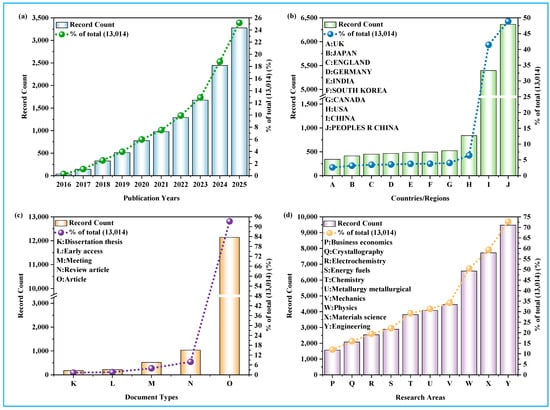
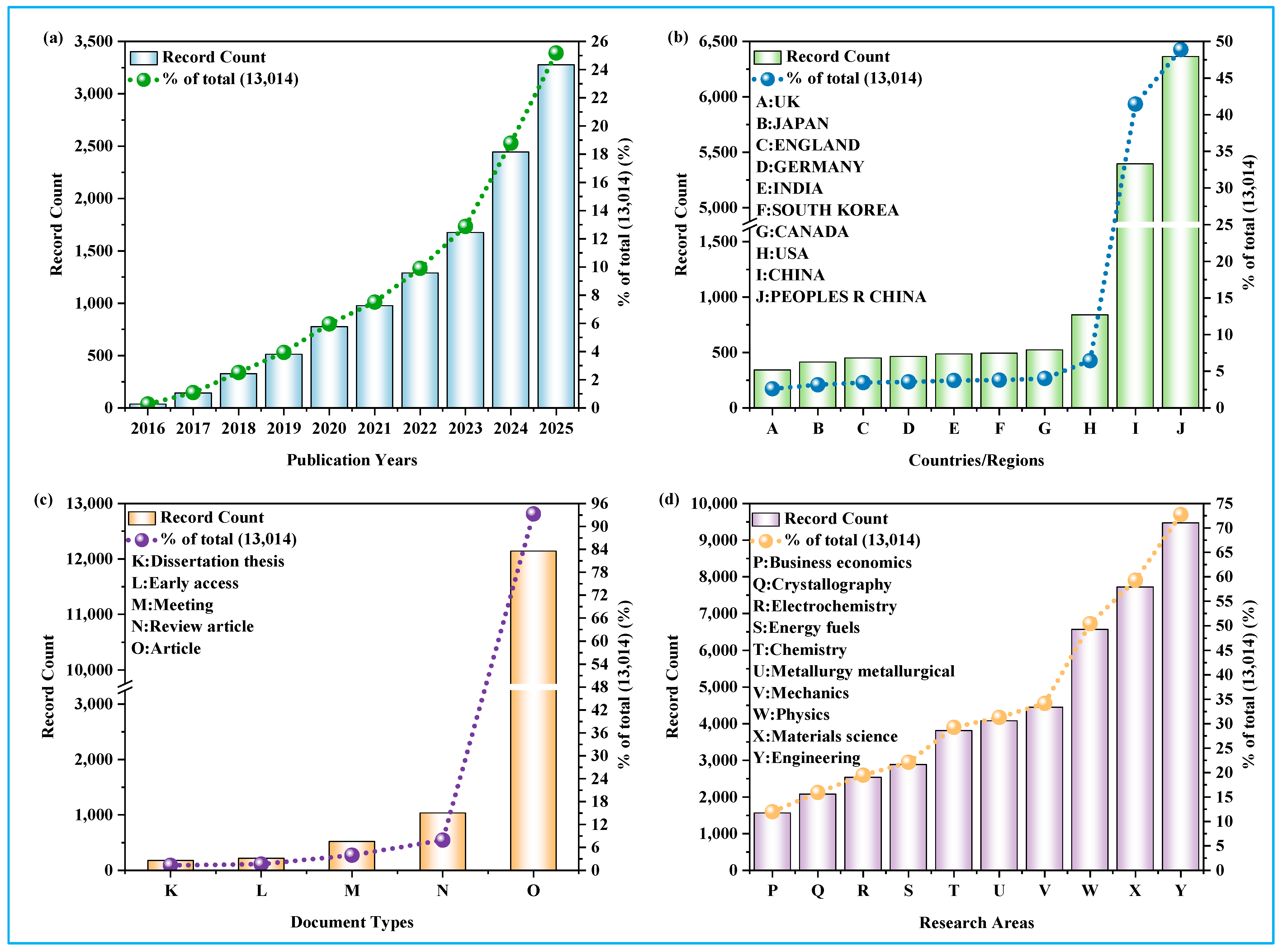
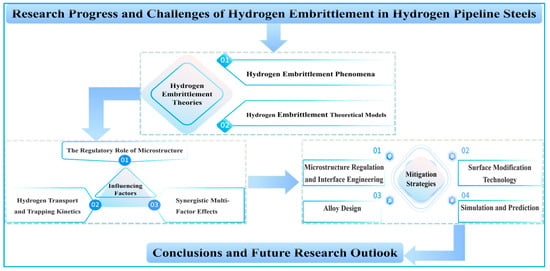
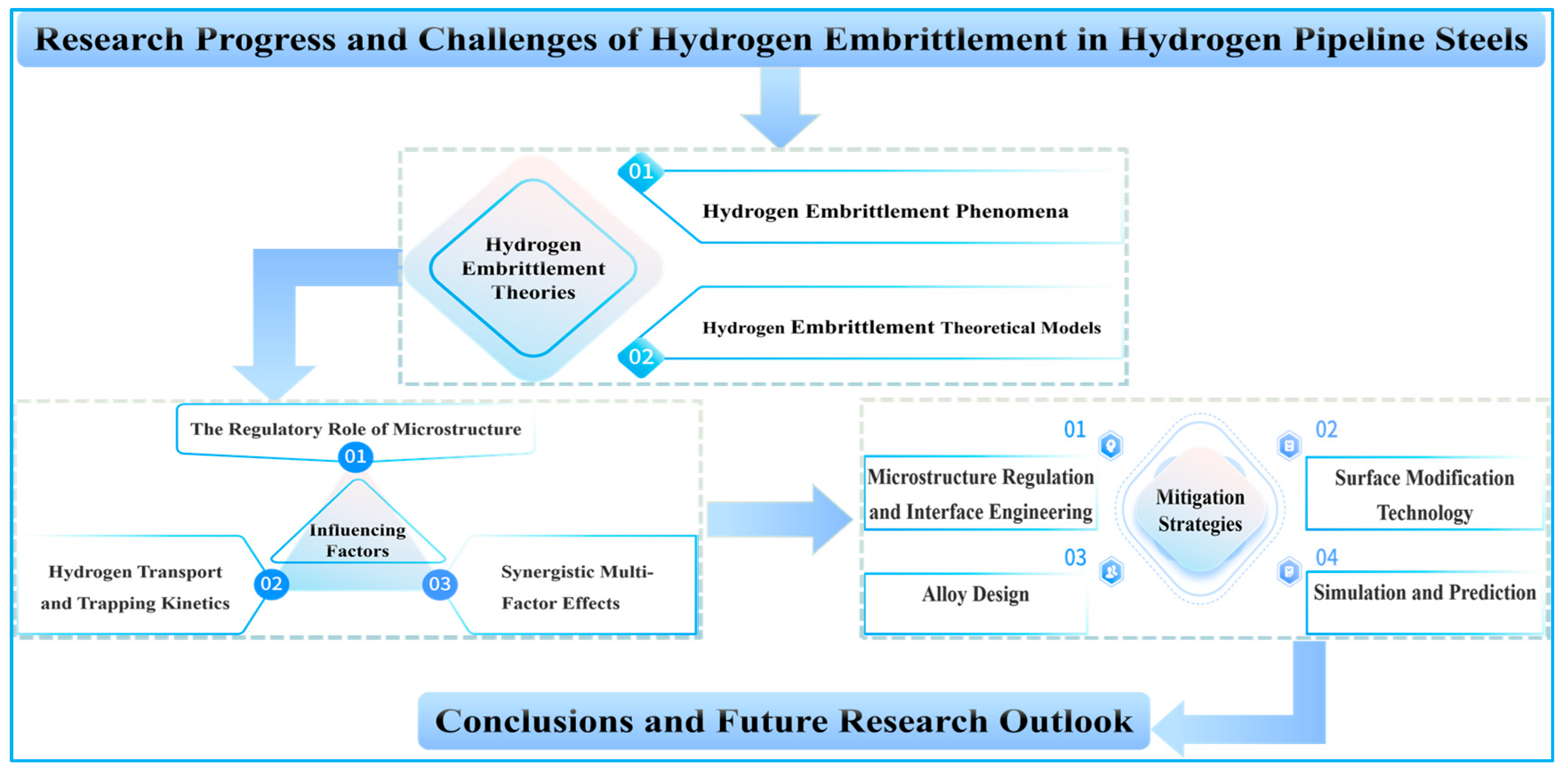
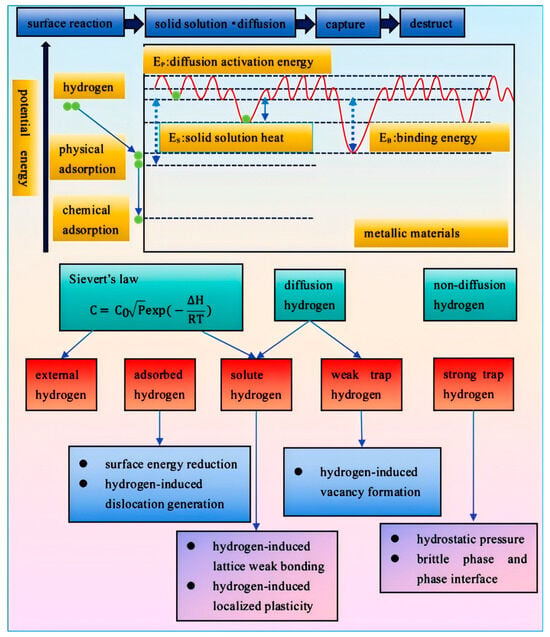
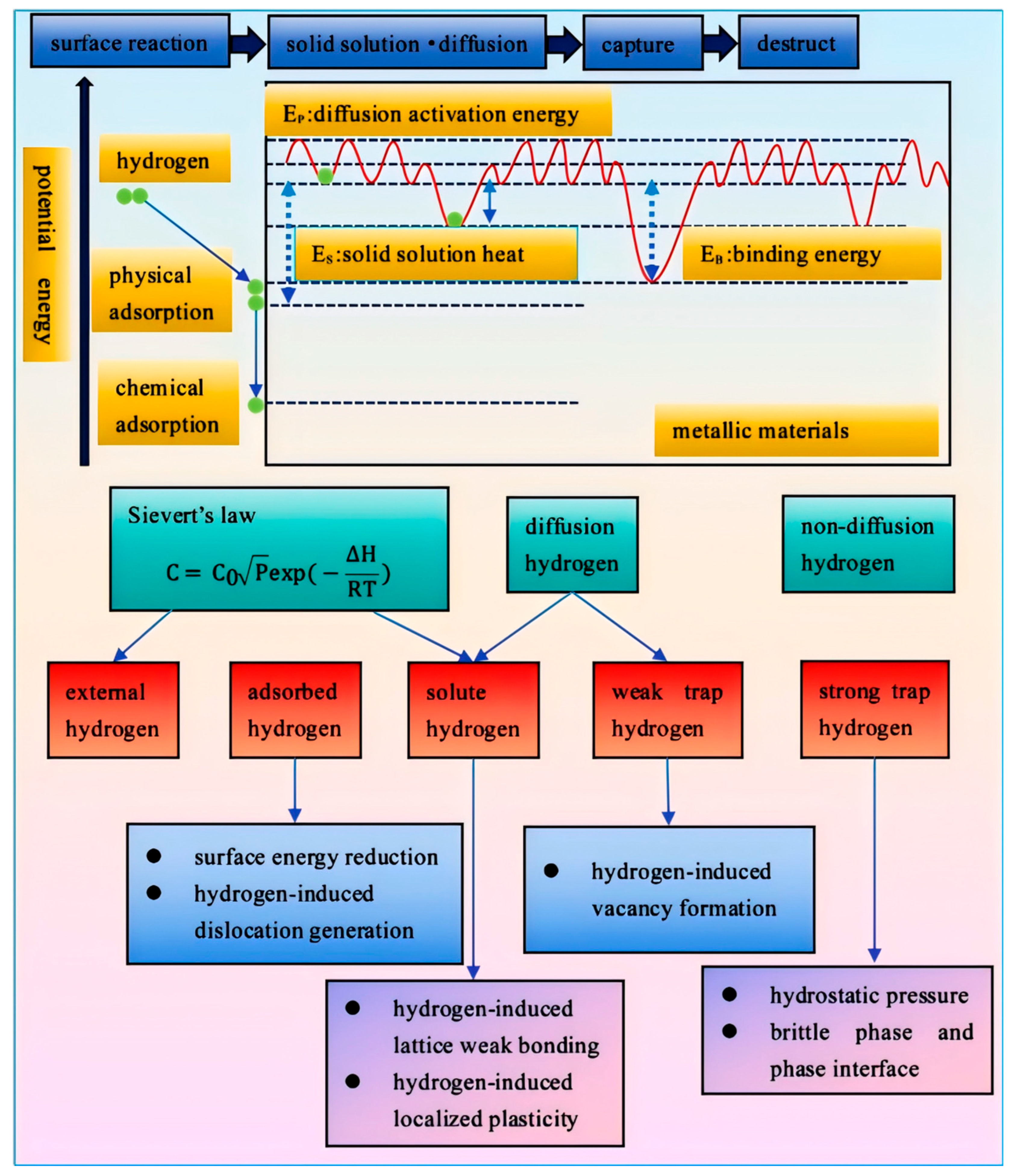
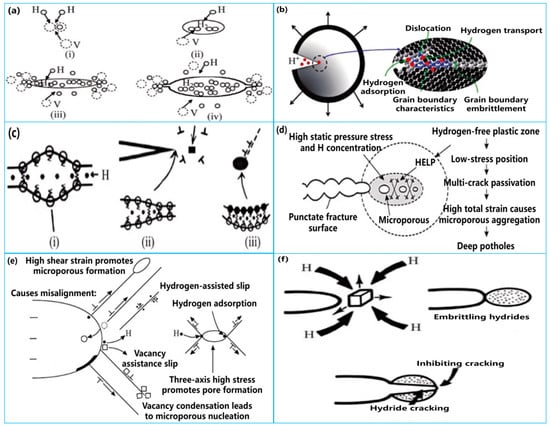
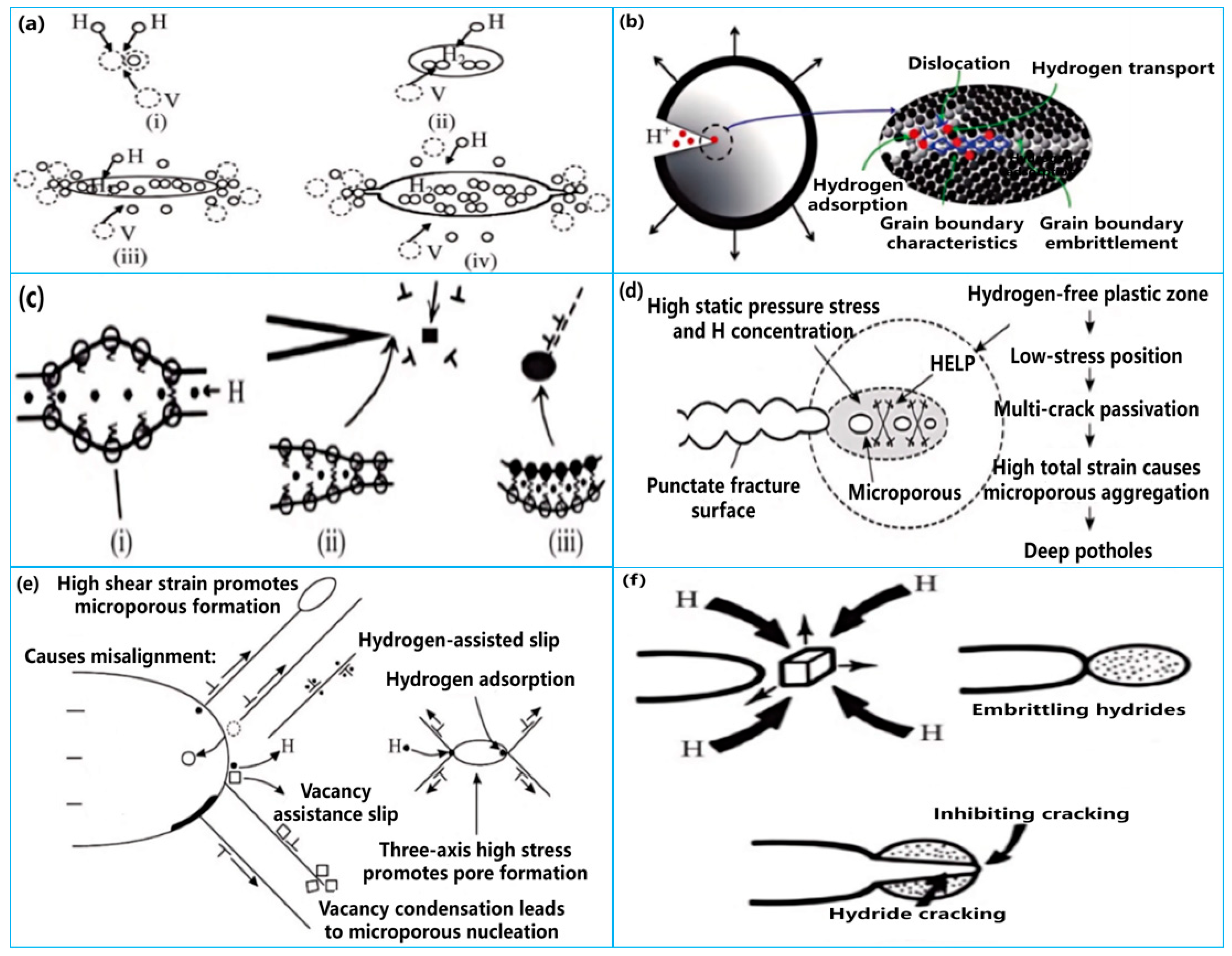
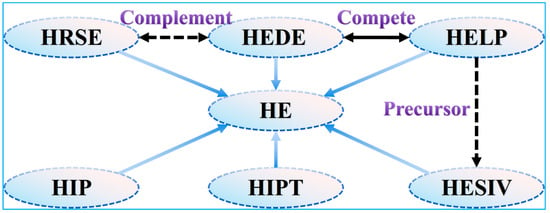
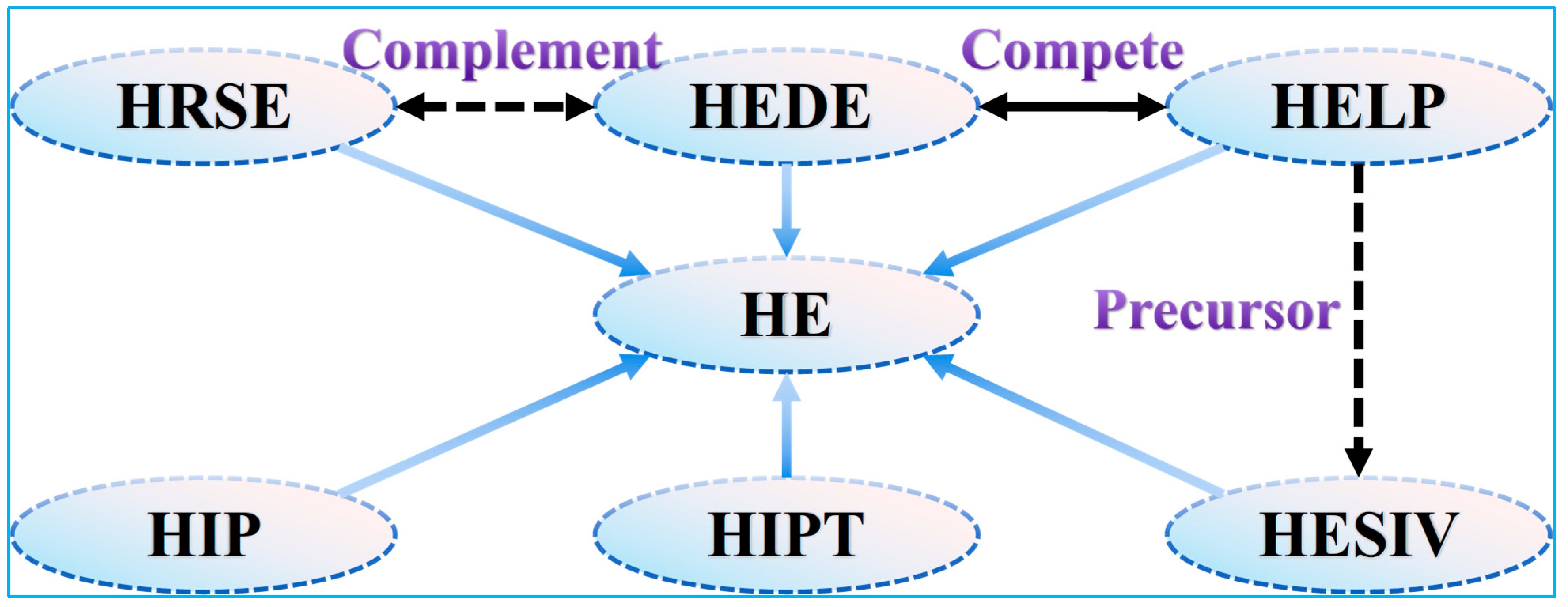
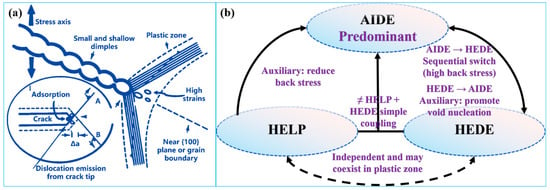
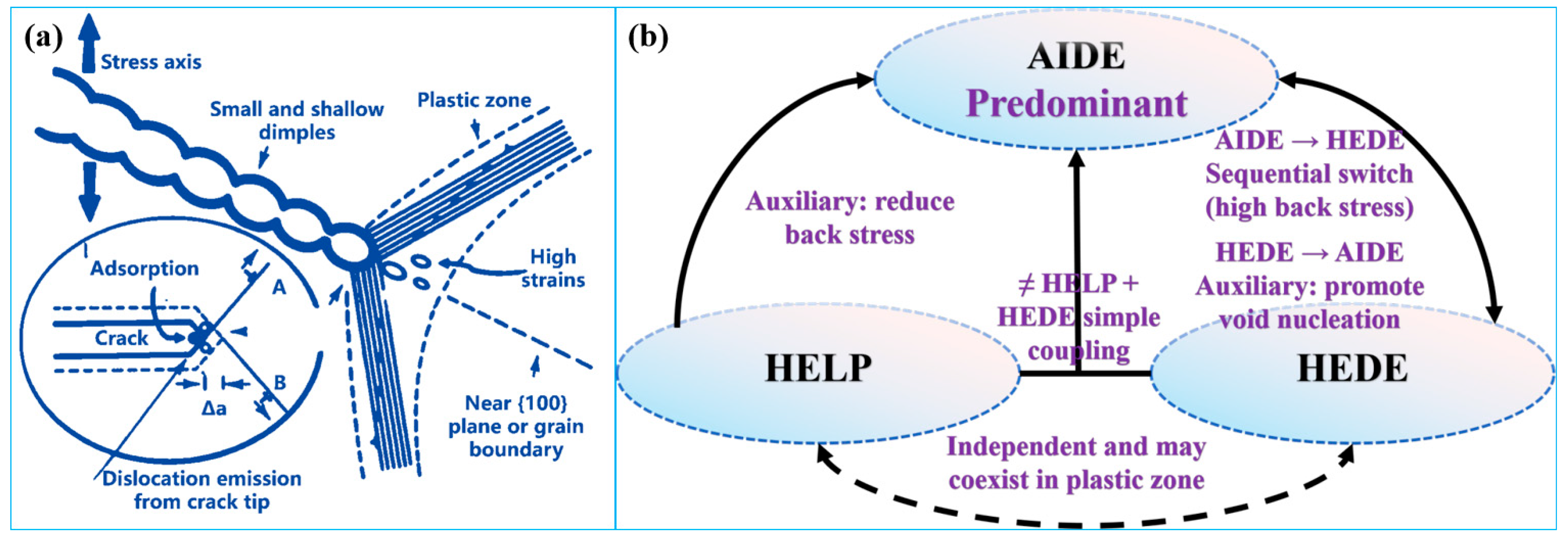
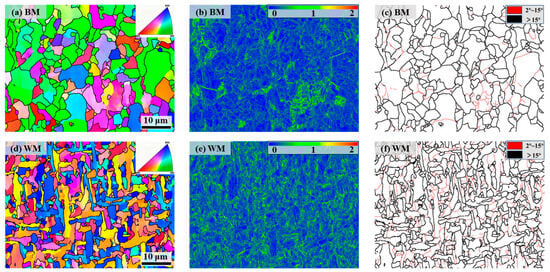
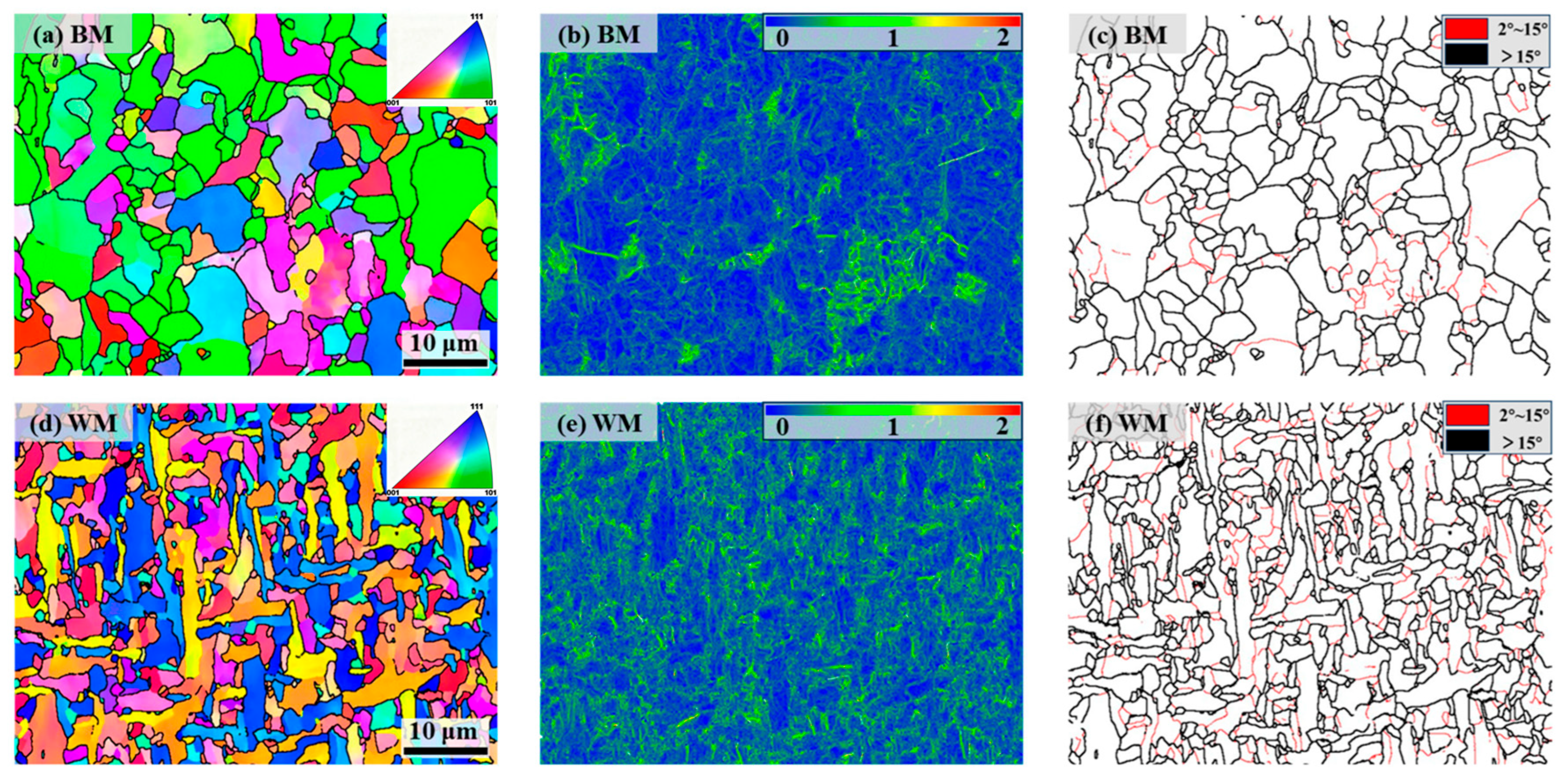
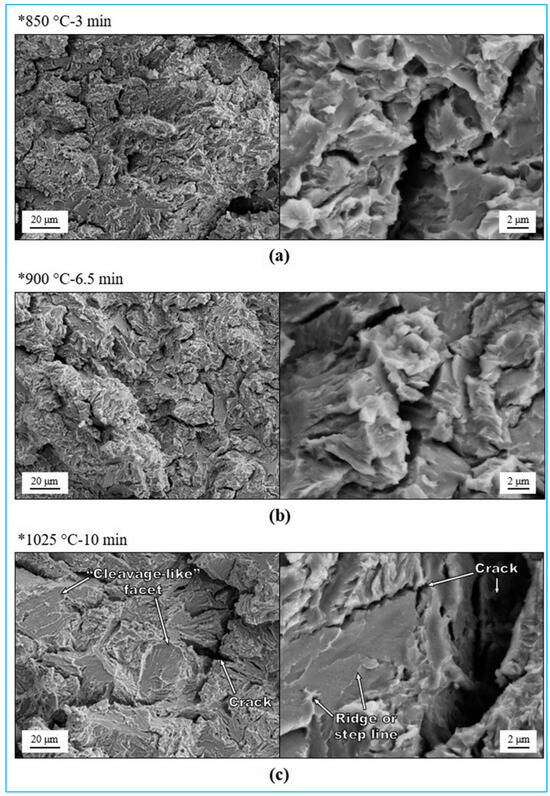
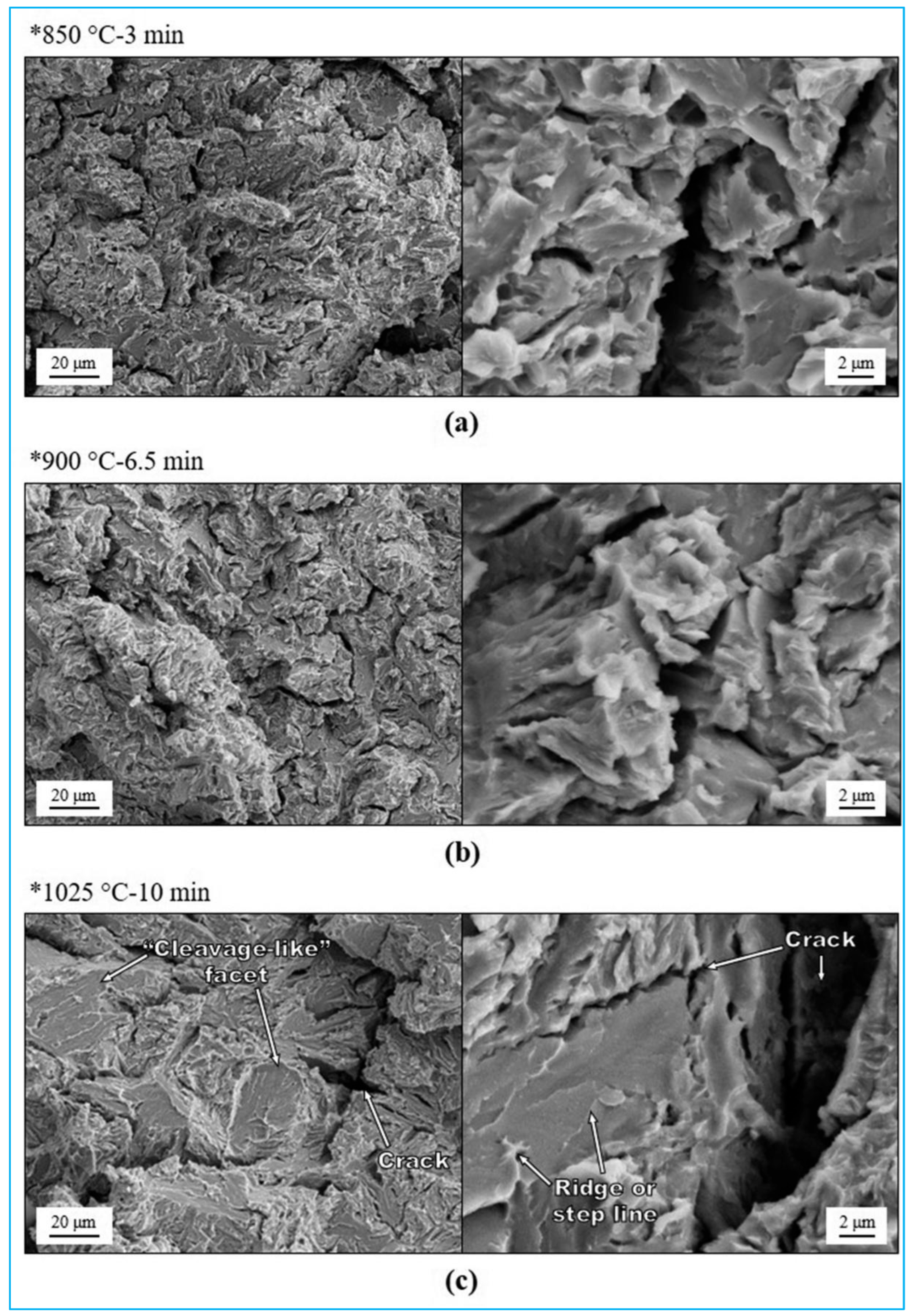
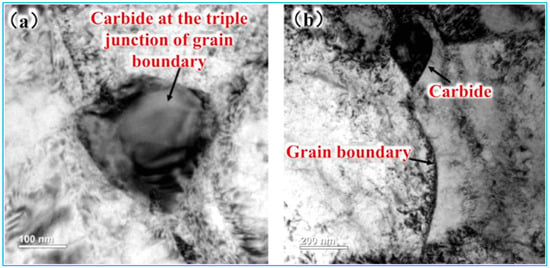
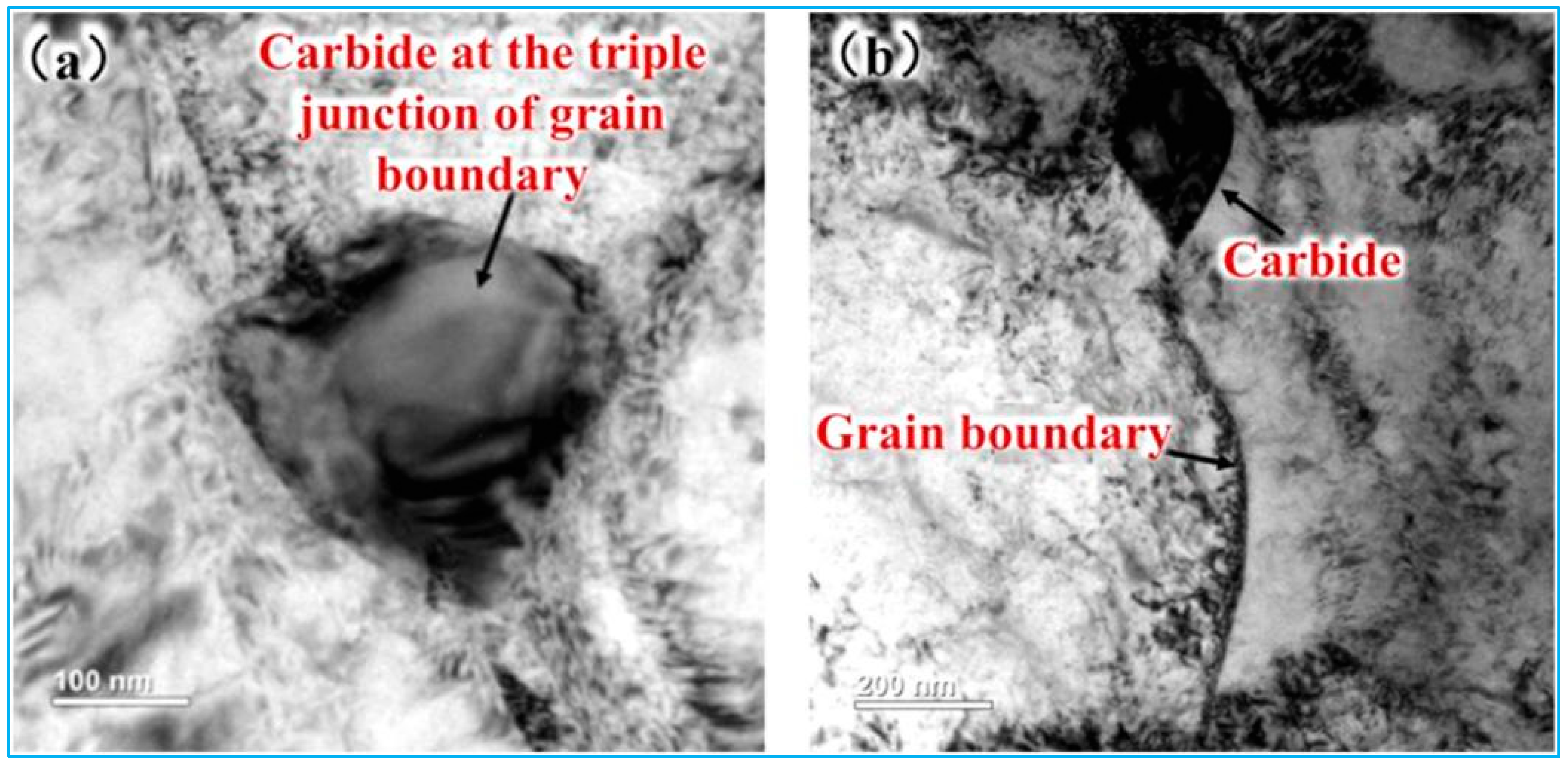
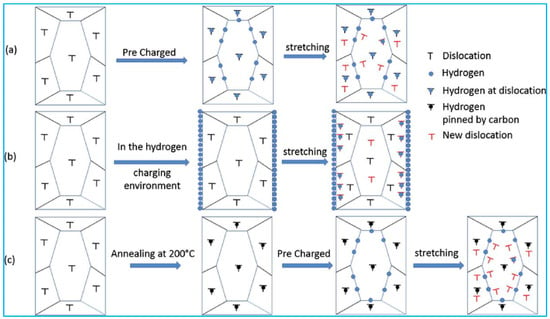
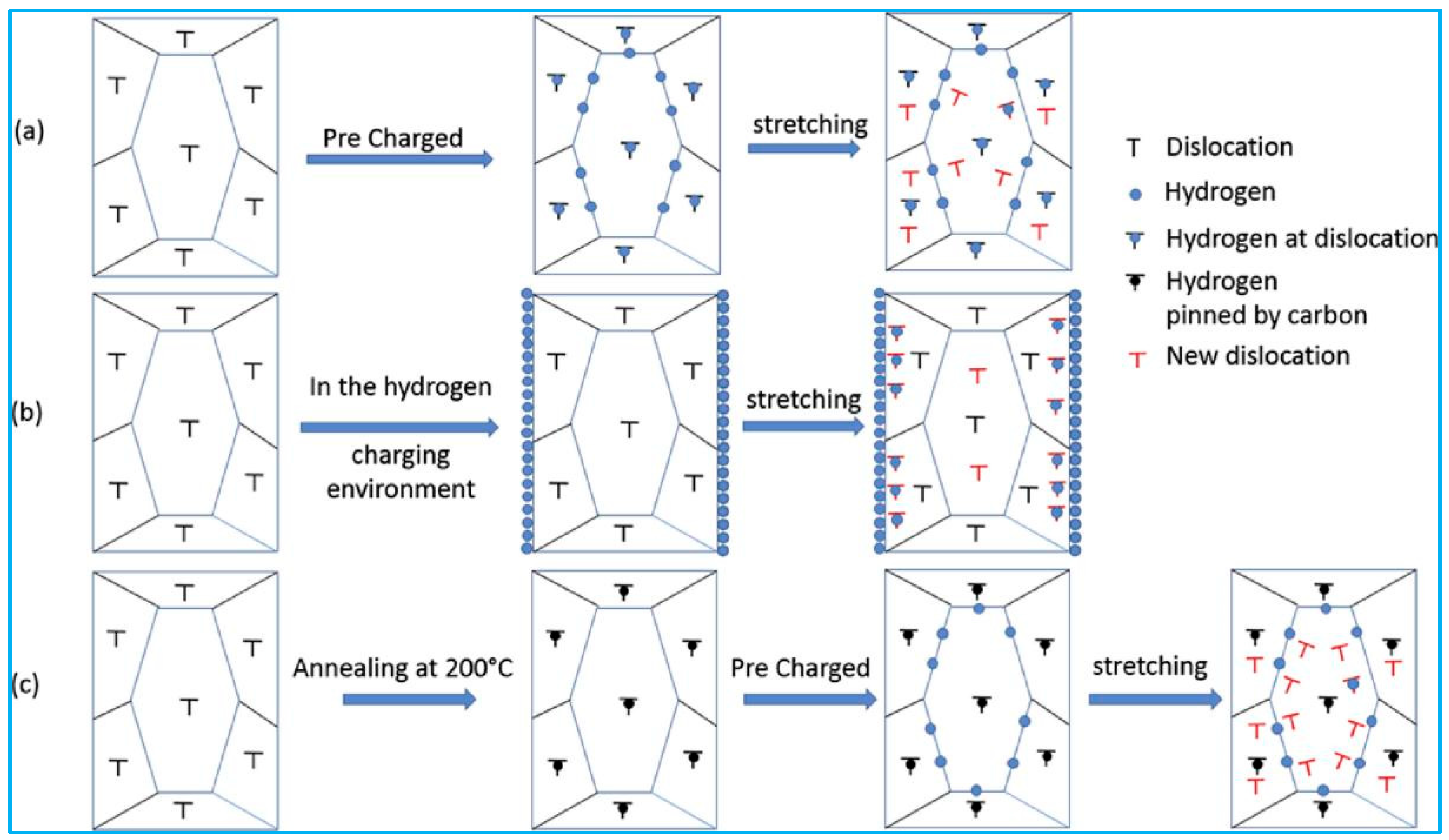
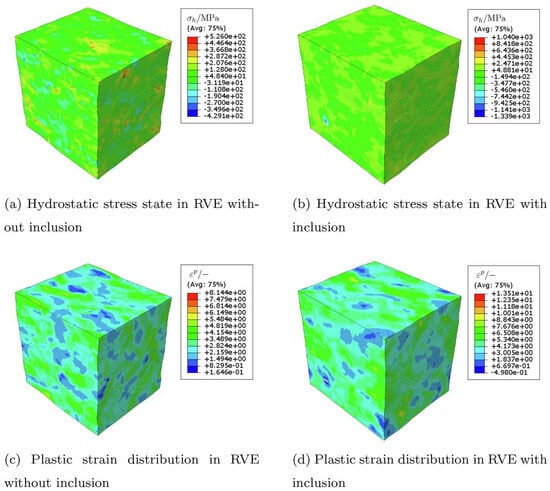
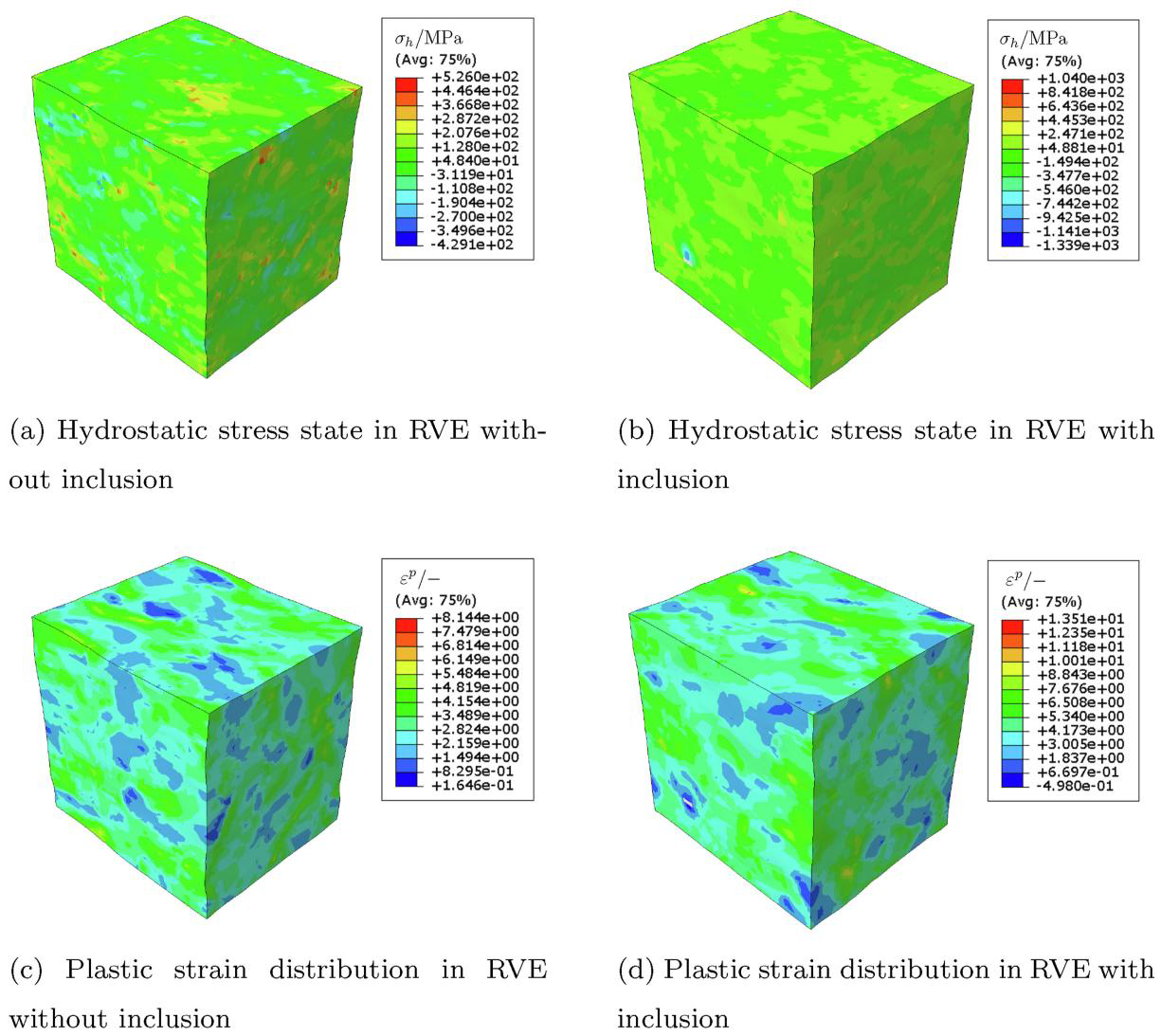
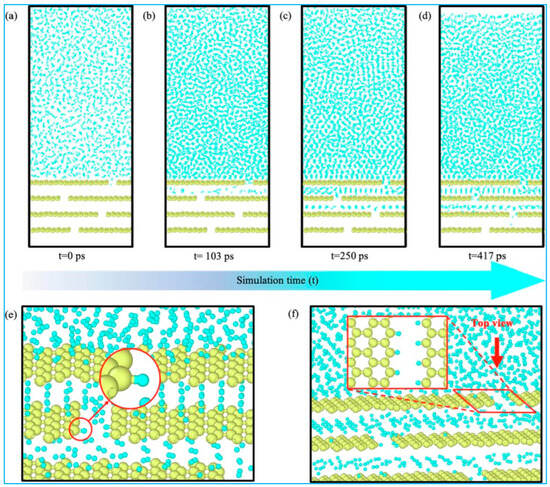
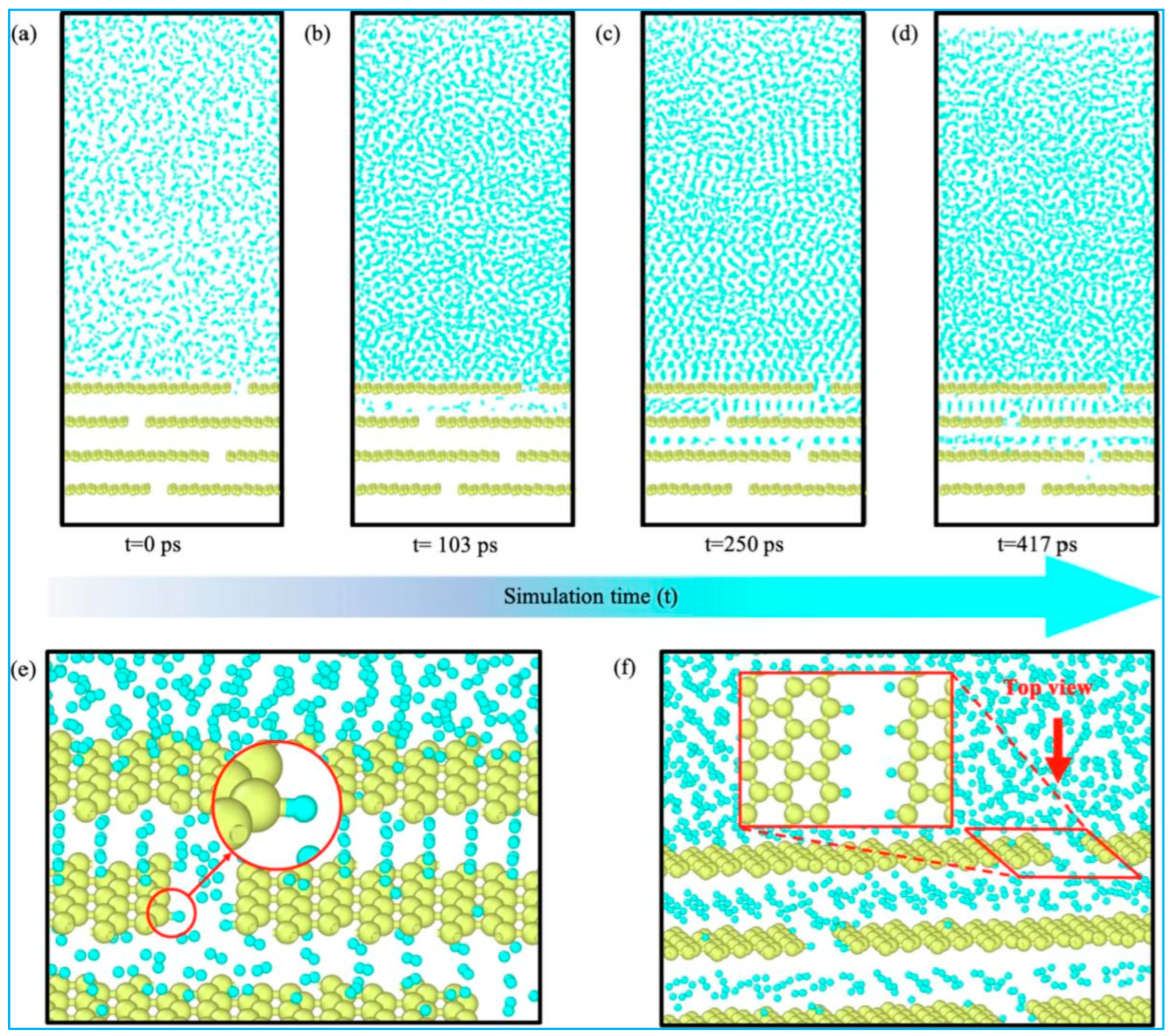
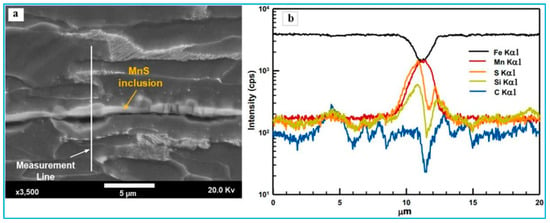
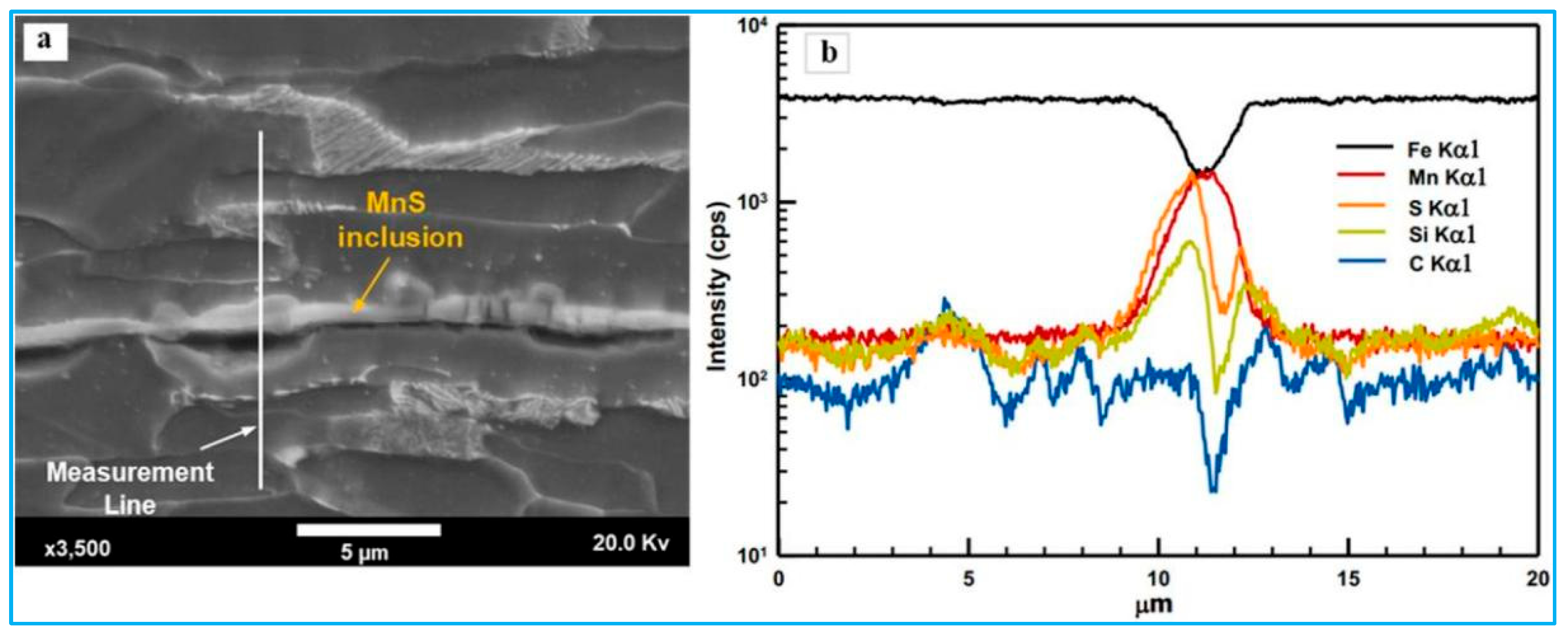
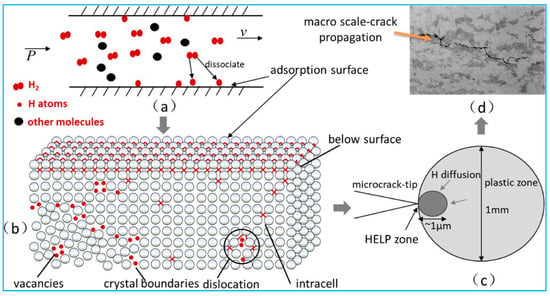
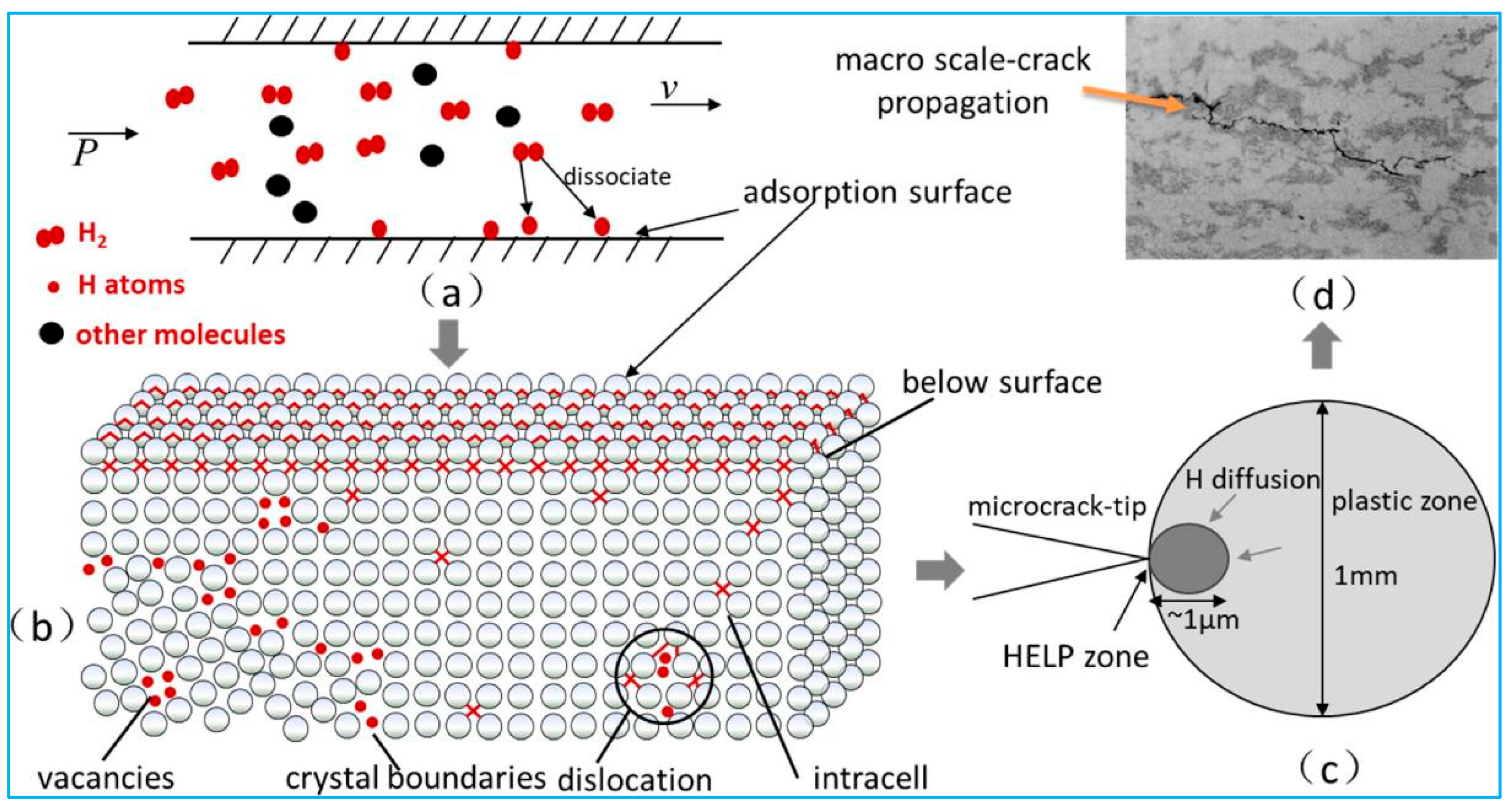
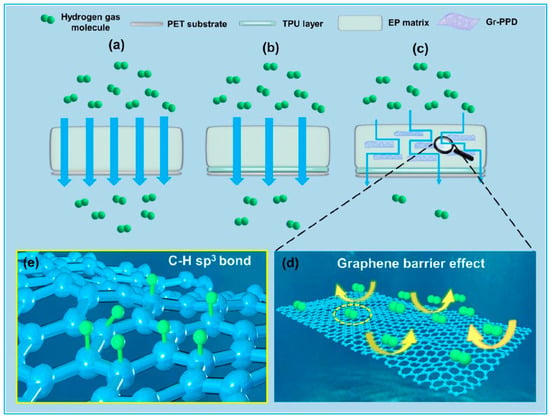
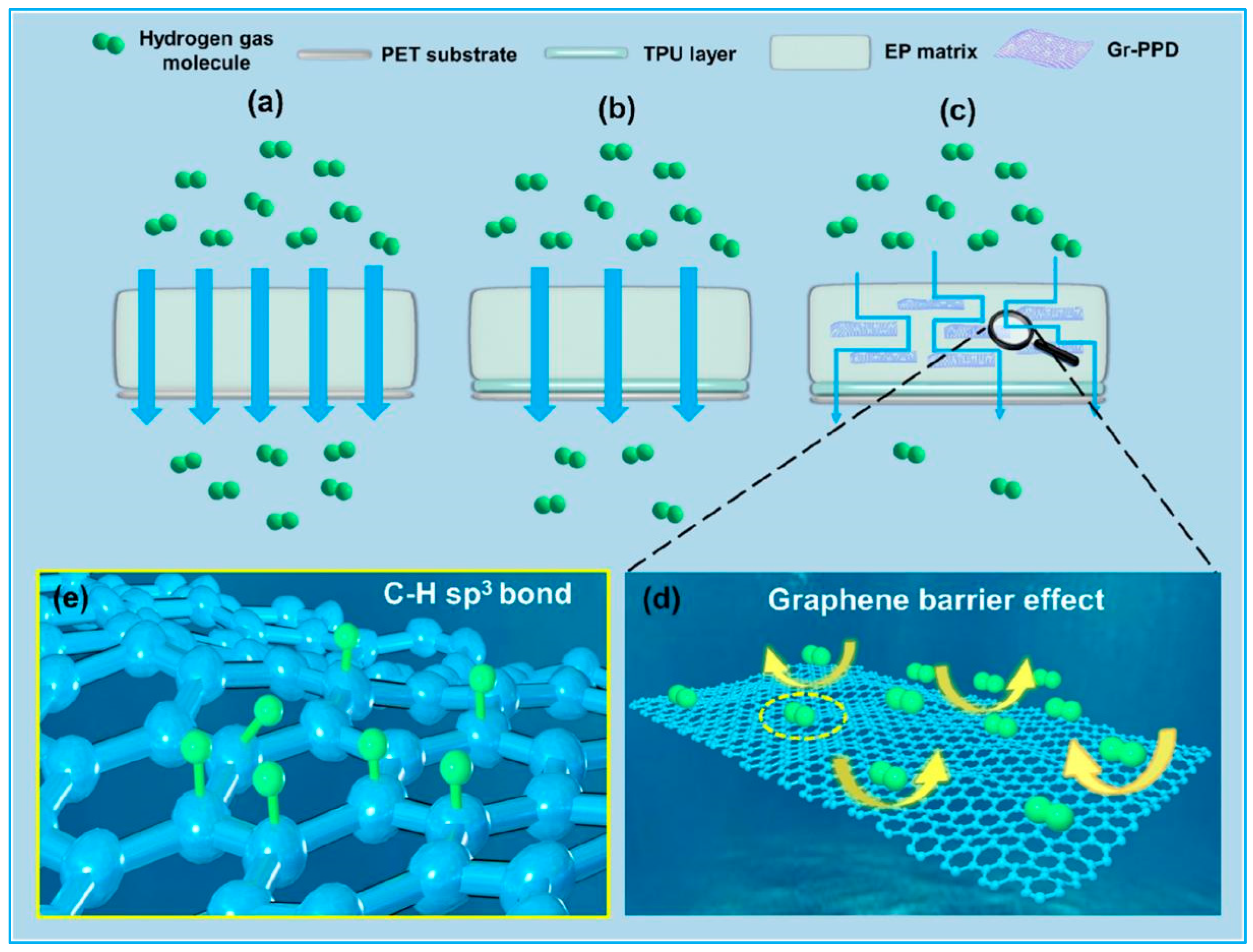
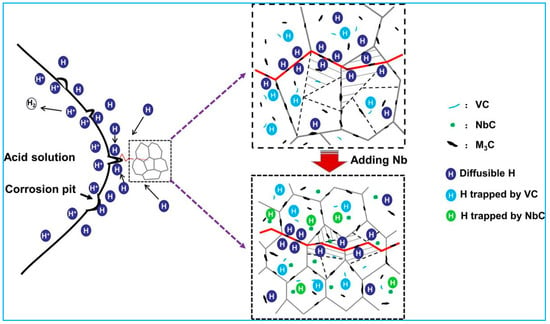
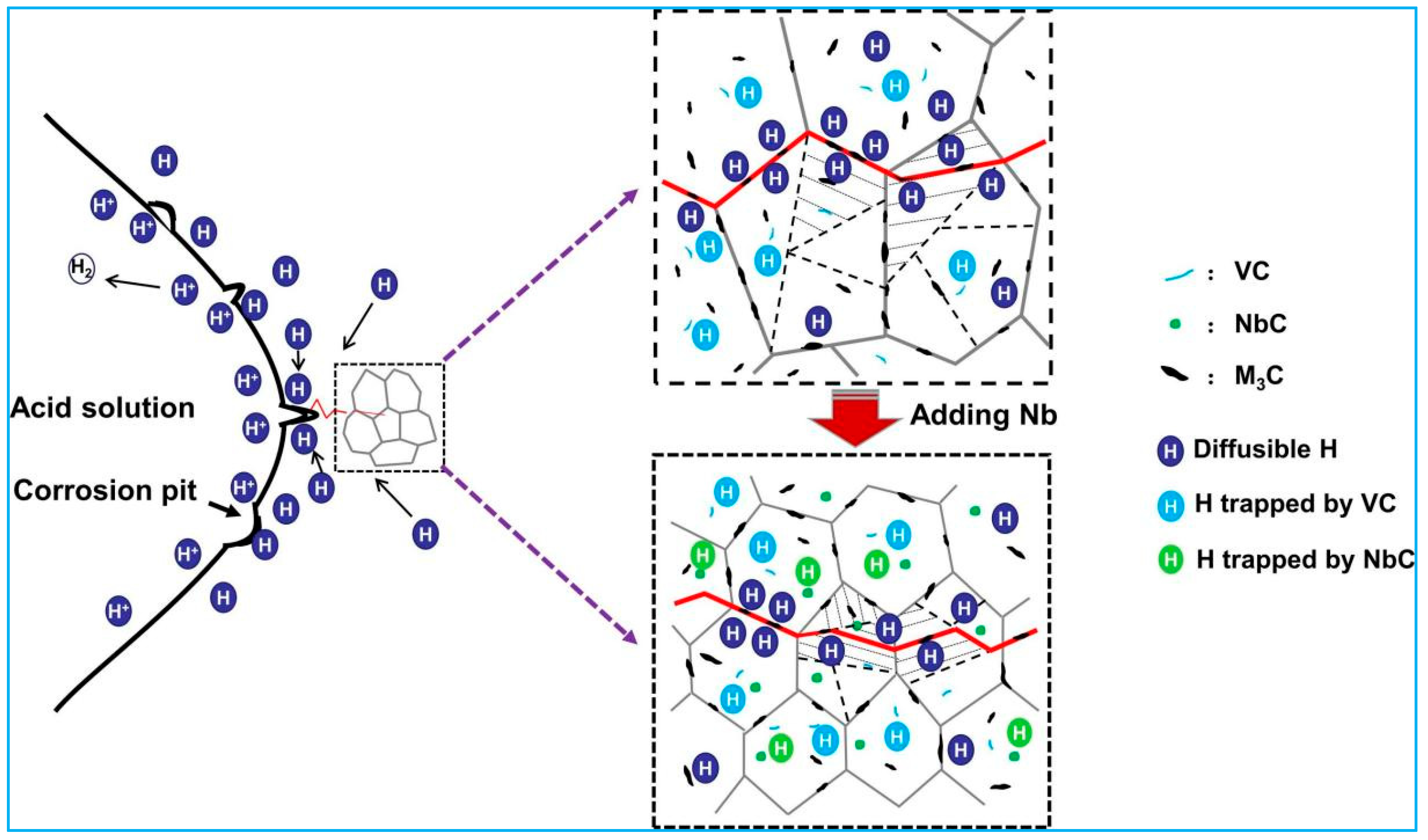
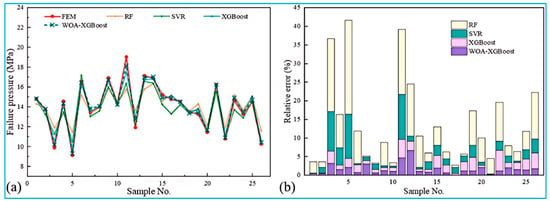
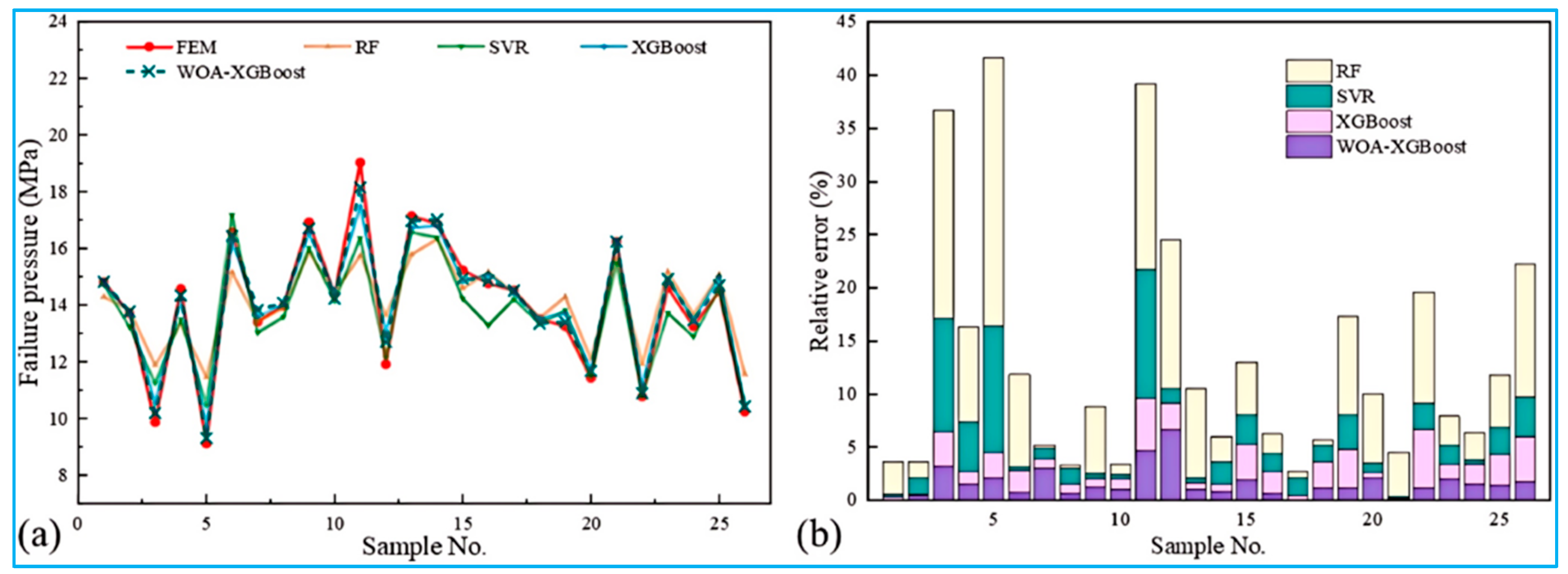

Disclaimer/Publisher’s Note: The statements, opinions and data contained in all publications are solely those of the individual author(s) and contributor(s) and not of MDPI and/or the editor(s). MDPI and/or the editor(s) disclaim responsibility for any injury to people or property resulting from any ideas, methods, instructions or products referred to in the content. |
© 2026 by the authors. Licensee MDPI, Basel, Switzerland. This article is an open access article distributed under the terms and conditions of the Creative Commons Attribution (CC BY) license.