


Abstract
Cast Al-3Cu-Li alloys are limited by coarse grains and non-uniform Cu-rich phases, but their traverse-speed-dependent response to friction stir processing (FSP) has not been systematically clarified. The effect of FSP traverse speed on the microstructural evolution and mechanical properties of an Al-3Cu-Li alloy was systematically investigated. The alloy was processed at traverse speeds of 20 mm/min and 100 mm/min, and the resulting microstructures were characterized by XRD, SEM, EDS, EBSD and TEM. The results show that FSP does not significantly change the main phase constitution of the alloy, which remains dominated by the α-Al matrix with Al-Cu-related secondary phases. However, FSP markedly modifies the grain structure and precipitate distribution. Compared with the as-cast alloy, both FSP-treated samples exhibit refined equiaxed grains formed through dynamic recrystallization. The FSP-20 sample shows a finer and more homogeneous recrystallized structure, with a mean grain size of 4.60 ± 0.62 μm based on 982 measured grains, whereas the FSP-100 sample exhibits a coarser grain structure with a mean grain size of 15.20 ± 2.17 μm based on 109 measured grains. EBSD analysis further reveals that the FSP-20 sample possesses lower grain orientation spread and more dispersed local misorientation, indicating more sufficient dynamic recrystallization and lower residual deformation. TEM observations confirm the presence of plate-like T1 precipitates in both FSP samples, while the precipitates in the FSP-100 sample are relatively coarser. Mechanical testing showed that the microhardness, yield strength, ultimate tensile strength and elongation increased from 62.4 HV, 92.8 MPa, 178.5 MPa and 10.86% in the as-cast alloy to 85.5 HV, 170.0 MPa, 228.9 MPa and 20.41% in FSP-20, and to 78.2 HV, 166.8 MPa, 202.9 MPa and 17.63% in FSP-100, respectively. Fracture analysis indicates that FSP-20 is dominated by ductile dimpled fracture, whereas FSP-100 shows more obvious quasi-cleavage features associated with coarse precipitates.
1. Introduction
The continuously increasing demand for lightweight and high-strength structural materials in aerospace and defense industries has promoted the development of Al-Li alloys [1]. The addition of Li can reduce alloy density and improve elastic modulus [2,3,4], while the addition of Cu provides an important basis for subsequent precipitation strengthening [5,6], giving Al-Cu-Li alloys high application potential in lightweight structural materials. However, when Al-Cu-Li alloys are prepared by traditional casting methods [7], coarse grains, solute segregation, and non-uniformly distributed Cu-rich second phases are often retained in the microstructure. These casting-induced microstructural defects can easily induce local stress concentration [8,9] and become preferential sites for crack initiation, thereby limiting the strength and plasticity performance of the alloy [10,11]. To improve the mechanical properties of cast Al-Cu-Li alloys, it is necessary to adopt a solid-state processing method capable of refining grains, homogenizing the microstructure, and regulating the distribution of precipitates.
Friction stir processing (FSP) originates from friction stir welding [10,11,12] and is a solid-state processing technique for microstructural modification of metallic materials. FSP introduces plastic deformation and frictional heat through a rotating tool, promoting dynamic recrystallization [13] and second-phase evolution [14] in the material, while avoiding defects caused by melting, such as pores [15], solidification cracks [16], and segregation [17]. Therefore, it is more suitable for regulating the cast microstructure of aluminum alloys. The microstructure after FSP is mainly affected by the heat input during processing [18], in which traverse speed influences grain refinement [19] and precipitate evolution [20,21] by changing the interaction time between the tool and the material, heat input, and plastic deformation accumulation. For Al-Cu-Li alloys, the effect of FSP is not limited to grain refinement. The size and distribution of the main strengthening phase T1 [22] directly affect dislocation motion [23] and work hardening behavior [24] during plastic deformation; meanwhile, the deformation and heat input during FSP may cause the dissolution, re-precipitation, and coarsening of Cu- and Li-related precipitates [25,26,27], making the mechanical properties of the processed aluminum alloy jointly affected by dynamic recrystallization, grain refinement, and T1 phase evolution.
Previous studies on friction stir welding/processing of Al-Li alloys have mainly focused on commercial wrought or pre-aged alloys, such as 2198, 2195 and 2060 [28,29,30,31,32], with emphasis on joint formation quality, grain refinement, precipitate evolution and mechanical properties. In particular, Zhang et al. [33] investigated the effect of welding speed on friction stir welded 2198 Al-Cu-Li alloy joints, which possess a wrought initial microstructure and involve weld-joint formation. This is essentially different from the present single-pass FSP modification of cast Al-3Cu-Li alloy. However, these alloys generally possess a thermomechanically processed initial microstructure, and their response to FSP cannot be directly extended to cast Al-3Cu-Li alloy. Unlike wrought Al-Li alloys, cast Al-3Cu-Li alloy contains coarse casting grains, residual solute segregation and non-uniformly distributed Cu-rich secondary phases, which provide a distinct starting microstructure for severe plastic deformation and dynamic recrystallization during FSP. Therefore, it remains unclear how traverse speed regulates the coupled breakup, redistribution and recrystallization of the casting-derived microstructure, as well as the subsequent evolution of Cu-rich/T1-related precipitates and mechanical properties in cast Al-3Cu-Li alloy. This knowledge gap limits the understanding and parameter optimization of FSP as a solid-state modification route for cast Al-Cu-Li alloys.
In this study, Al-3Cu-Li alloy was subjected to friction stir processing at two traverse speeds of 20 mm/min and 100 mm/min under a constant tool rotation speed. XRD, SEM/EDS, EBSD, and TEM were used to characterize the microstructural evolution before and after processing, with emphasis on grain refinement, local misorientation distribution, and crystallographic features of T1 precipitates. Meanwhile, microhardness, quasi-static tensile testing, and fracture morphology analysis were used to establish the relationship between microstructural features and mechanical properties. The original contribution of this work is to clarify the traverse-speed-dependent evolution of a cast Al-3Cu-Li alloy during FSP, especially the coupled regulation of casting-derived grains, Cu-rich/T1-related precipitates and strength–ductility response, thereby providing a basis for optimizing solid-state processing parameters for cast Al-Cu-Li alloys.
2. Materials and Methods
2.1. Materials Preparation
The experimental material was an Al-3Cu-Li alloy fabricated using high-purity industrial raw materials with strictly controlled trace impurities. The alloy ingot was prepared by vacuum resistance furnace smelting under a high-purity argon atmosphere to suppress the oxidation and volatilization of active elemental components. Commercially pure Al, Cu and Li ingots (99.9 wt.% purity) were adopted as starting materials. Its actual chemical composition was measured by inductively coupled plasma optical emission spectroscopy (ICP-OES, PerkinElmer Inc., Waltham, MA, USA). The measured chemical composition of the cast alloy was 2.96 wt.% Cu, 0.92 wt.% Li and balance Al. The molten alloy was poured into preheated steel molds to produce defect-free rectangular ingots. The as-cast ingots were first subjected to homogenization annealing at 500 °C for 24 h with furnace cooling, aiming to eliminate casting segregation and relieve internal thermal stress. Subsequently, solution treatment was performed at 520 °C for 2 h, followed by immediate water quenching to achieve a supersaturated solid solution, which provides a prerequisite for subsequent microstructural modification and homogeneous precipitation of strengthening phases.
2.2. Friction Stir Processing
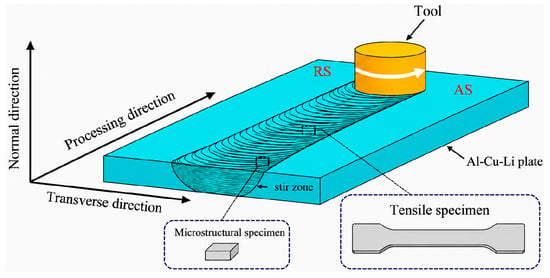
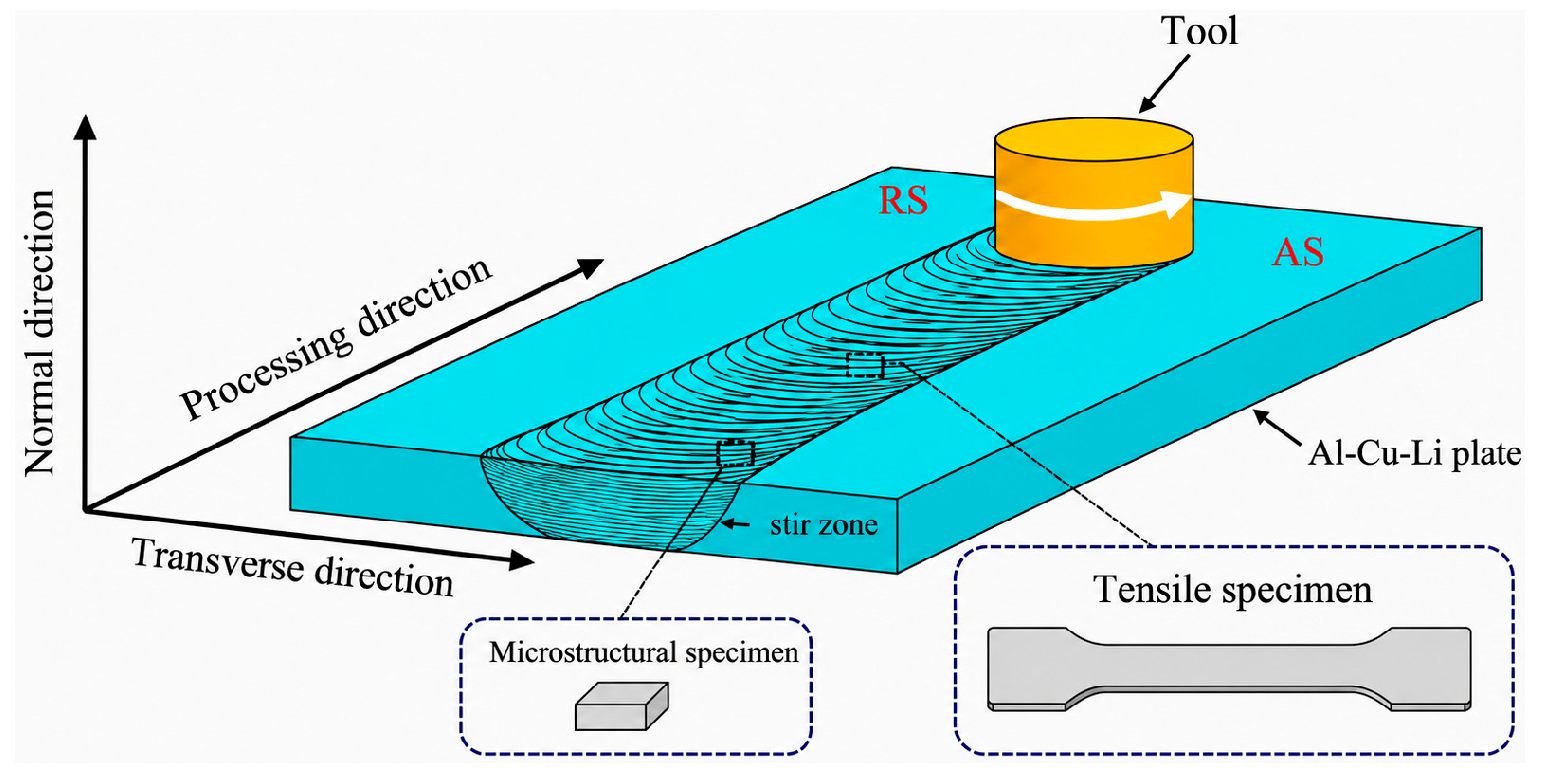
Friction stir processing (FSP) was conducted on a vertical CNC machine at room temperature with natural air cooling. A tungsten–rhenium alloy tool was adopted, featuring a 12 mm diameter shoulder and a conical threaded pin with a bottom diameter of 4 mm and a height of 4.5 mm. The schematic diagram of the FSP process is presented in Figure 1. The tool rotational speed was kept constant at 600 rpm, and two traverse speeds of 20 mm/min and 100 mm/min were selected. The corresponding processed samples were denoted as FSP-20 and FSP-100, respectively. The unprocessed base alloy was used as the reference material. Single-pass FSP was performed along the longitudinal direction of the sample, with an axial plunge depth of 0.2 mm and a tool tilt angle of 2.5°. Single-pass FSP was selected to isolate the effect of traverse speed under a fixed tool rotation speed and to avoid additional overlapping thermal cycles introduced by multi-pass processing. Since tool geometry, plunge depth and tilt angle also affect heat generation, material flow and residual stress development, these parameters were kept constant in this work.
Figure 1.
Schematic diagram of single-pass FSP.
2.3. Microstructural Characterization and Mechanical Testing
Microstructural characterization samples were all extracted from the friction stir processing zone, and the observation plane was perpendicular to the processing direction. The extracted samples were sequentially ground with SiC sandpapers, mechanically polished with diamond suspension, and finally fine-polished to obtain a flat observation surface without an obvious deformation layer. An X-ray diffractometer (XRD) was used to analyze the phase composition of the base alloy and the FSP-treated samples using Cu Kα radiation with a wavelength of 1.5406 A. The XRD measurements were performed at a tube voltage of 40 kV and a tube current of 40 mA. The scanning range was 20–90°, with a step size of 0.02° and a scanning rate of 1°/min. A scanning electron microscope (SEM) was used to observe the microstructure morphology of the as-cast alloy and the stir zone after FSP treatment, and energy dispersive spectroscopy (EDS) was combined to characterize the elemental distribution characteristics of the second phase.
To further analyze the grain structure and local misorientation distribution after FSP, electron backscatter diffraction (EBSD) was used to characterize the stir zone. EBSD samples were electropolished after mechanical polishing to remove the surface residual deformation layer. The electropolishing was carried out in a mixed solution of 10 vol.% perchloric acid and 90 vol.% ethanol at approximately −25 °C under an applied voltage of 20 V for 20–30 s. The EBSD data acquisition step size was set as 0.3 μm, and AztecCrystal software, version 2.3, was used for post-processing analysis, including inverse pole figure (IPF), grain size statistics, grain orientation spread (GOS), grain boundary distribution and kernel average misorientation (KAM) analysis. Among them, grain boundaries with a grain boundary misorientation greater than 15° were defined as high-angle grain boundaries, and grain boundaries with a misorientation of 2–15° were defined as low-angle grain boundaries.
Transmission electron microscopy (TEM) was used to observe the dislocation structure and precipitate morphology in the Al matrix after FSP treatment, and selected area electron diffraction (SAED) and STEM-EDS were combined to perform crystallographic calibration and elemental distribution analysis of coarse plate-like precipitates. TEM thin foil samples were extracted from the stir zone and mechanically thinned to approximately 100 μm, and then twin-jet electropolishing was used to prepare electron-transparent thin regions. The T1 phase was judged through the morphology characteristics of the precipitate, SAED calibration results, and Cu element enrichment characteristics.
Vickers microhardness testing and quasi-static tensile testing were used to evaluate the mechanical properties of the as-cast and FSP-treated samples. The microhardness test was performed on the cross-section of the samples with a load of 200 g and a dwell time of 10 s. The testing points were distributed transversely across the stir zone at an interval of 0.5 mm to analyze the hardness variation after FSP. Multiple points were selected for each condition, and the average value was used for comparison.
Tensile specimens were prepared from the friction stir processed zone by wire electrical discharge machining, with the tensile direction parallel to the processing direction. The tensile specimens had a total length of 58 mm, a thickness of 1.5 mm, a gauge width of 3 mm, and a gauge length of 14 mm. Before testing, the specimen surfaces were slightly polished to remove surface scratches and machining marks. Quasi-static tensile tests were conducted at room temperature at a strain rate of 1 × 10⁻³ s−1. Three tensile specimens were tested for each condition, and the tensile properties were reported as mean ± standard deviation. The yield strength, ultimate tensile strength, and elongation were obtained from the engineering stress–strain curves. After tensile fracture, the fracture surfaces were observed by SEM, and EDS analysis was performed on selected regions to reveal the relationship between fracture behavior and precipitate characteristics.
3. Results and Discussion
3.1. Microstructure
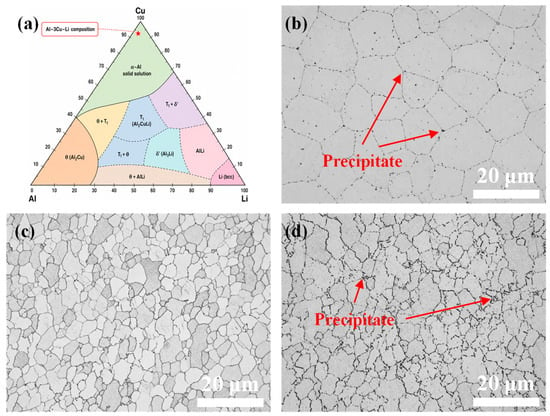
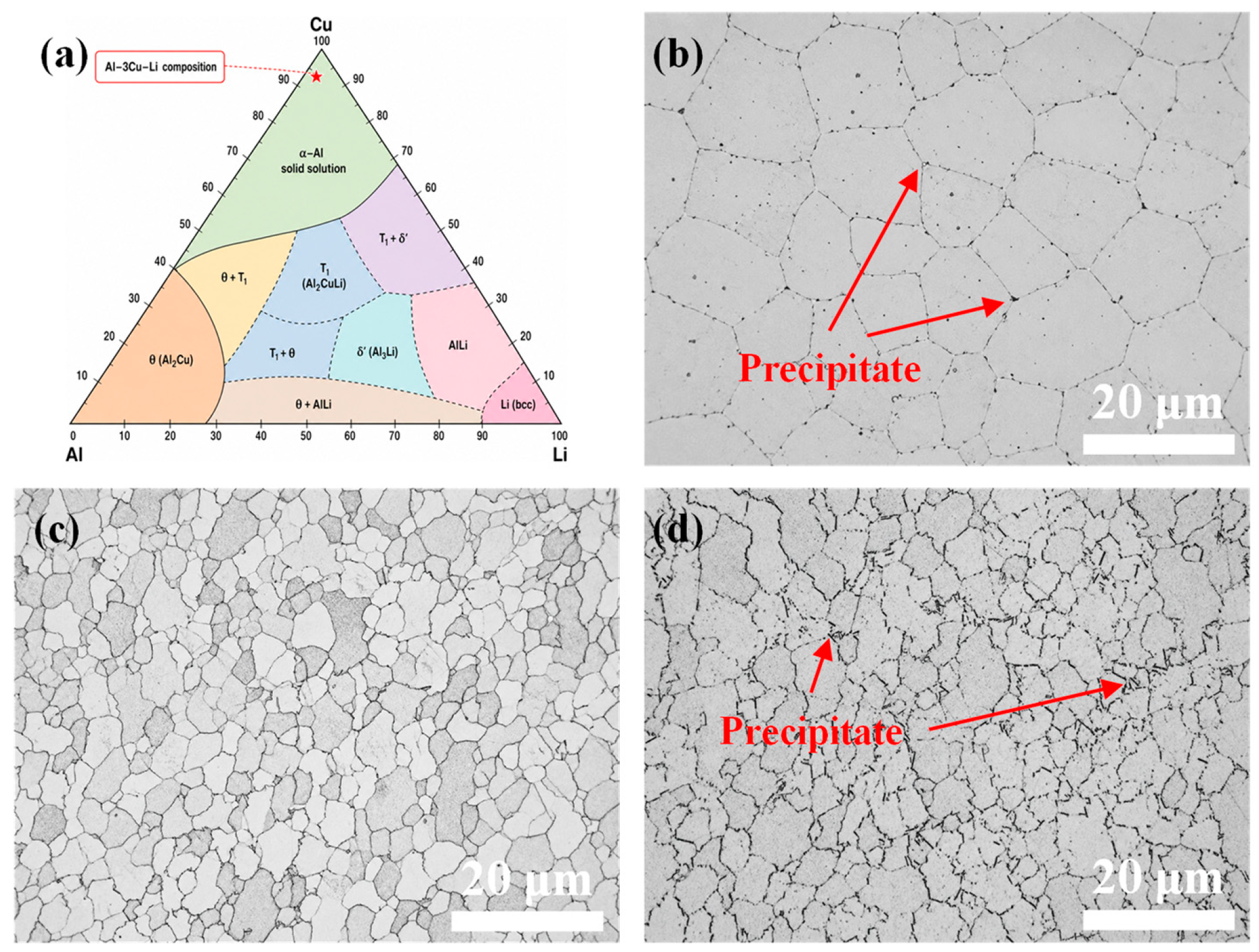
Figure 2a shows the Al-Cu-Li ternary phase diagram and the nominal composition of the experimental alloy. The alloy is located in the Al-rich region, indicating that the microstructure is mainly composed of an α-Al matrix. Because the solid solubility of Cu and Li in Al is limited, solute segregation and secondary phase formation are likely to occur during solidification and subsequent thermo-mechanical processing. As shown in Figure 2b, the as-cast alloy exhibits a relatively coarse grain structure with clearly visible grain boundaries. Granular precipitates are observed along the grain boundaries and in local intragranular regions, suggesting that solute enrichment occurs during solidification. The continuous or semi-continuous distribution of precipitates along grain boundaries indicates that the as-cast microstructure retains typical solidification characteristics, including coarse grains, segregation and non-uniform secondary phase distribution. After FSP treatment, the original coarse grains are significantly refined. As shown in Figure 2c,d, both FSP-20 and FSP-100 samples exhibit equiaxed grains in the processed zone. This transformation is mainly attributed to the intense shear deformation, frictional heat and dynamic recrystallization induced by the rotating tool. Compared with the as-cast alloy, the FSP-treated samples show a more homogeneous microstructure, indicating that FSP effectively modifies the initial cast structure.
Figure 2.
(a) Ternary phase diagram of Al-3Cu-Li alloy and nominal composition location; microstructure of the (b) as-cast; (c) FSP-20; (d) FSP-100.
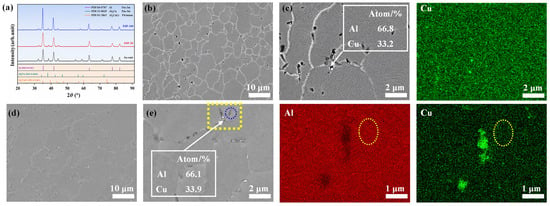
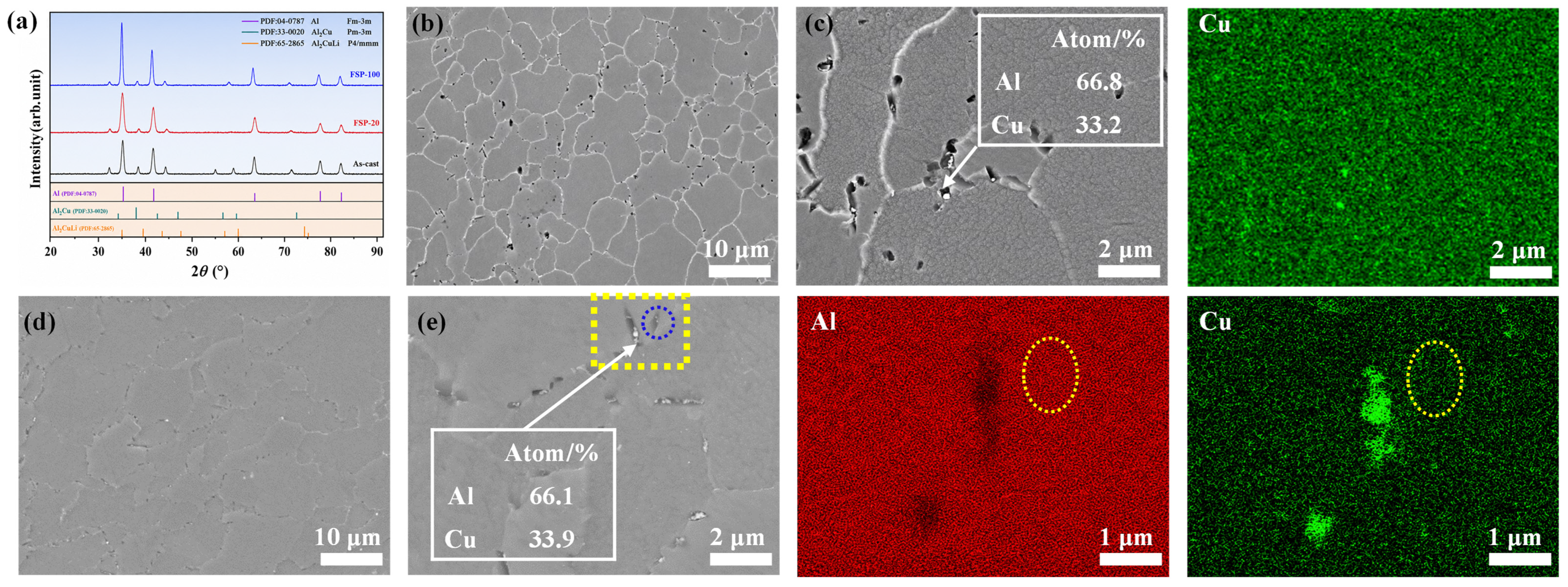
Figure 3a displays the XRD patterns of the as-cast, FSP-20, and FSP-100 samples. All samples are dominated by the diffraction peaks of the α-Al matrix, with weak characteristic peaks assigned to Al-Cu-type secondary phases being detectable. No evident diffraction peak shift is identified after FSP treatment, implying that the overall phase constitution remains nearly unchanged. Accordingly, FSP cannot fundamentally modify the alloy phase composition, but predominantly regulates the morphology, size and spatial distribution of grains and secondary precipitates. SEM combined with EDS analysis further clarifies the microstructural distinctions between the FSP-20 and FSP-100 samples. As shown in Figure 3b,c, the FSP-20 sample exhibits uniform equiaxed grains with fine and well-dispersed precipitates. By contrast, the FSP-100 sample presents relatively coarse and aggregated precipitates (Figure 3d,e). EDS point analysis reveals that the precipitates in both FSP samples are Al-Cu-rich phases with similar elemental compositions. Elemental mapping results demonstrate that Al is homogeneously distributed in the matrix, while Cu is enriched in discrete particulate secondary phases. Moreover, the Cu-rich regions in the FSP-20 sample are finer and more uniformly distributed, whereas those in the FSP-100 sample display a dense and aggregated state. This further indicates that traverse speed acts as a core factor governing the fragmentation and redistribution behavior of precipitates during FSP [34].
Figure 3.
(a) XRD patterns of the Al-3Cu-Li alloy; (b,c) SEM microstructure and local high-magnification morphology of the FSP-20; (d,e) SEM microstructure and local high-magnification morphology of the FSP-100; the right side shows the corresponding EDS elemental mapping results of the selected regions. The yellow dashed areas indicate the regions selected for EDS mapping, 221 where the local Cu-rich particles or Cu-enriched regions are highlighted.
3.2. Dynamic Recrystallization Mechanism
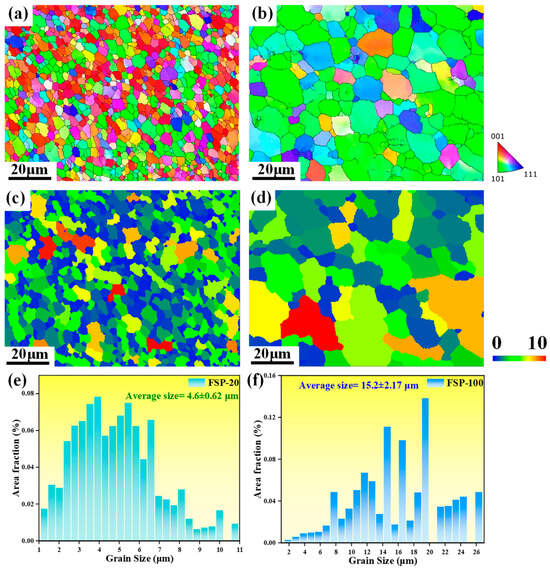
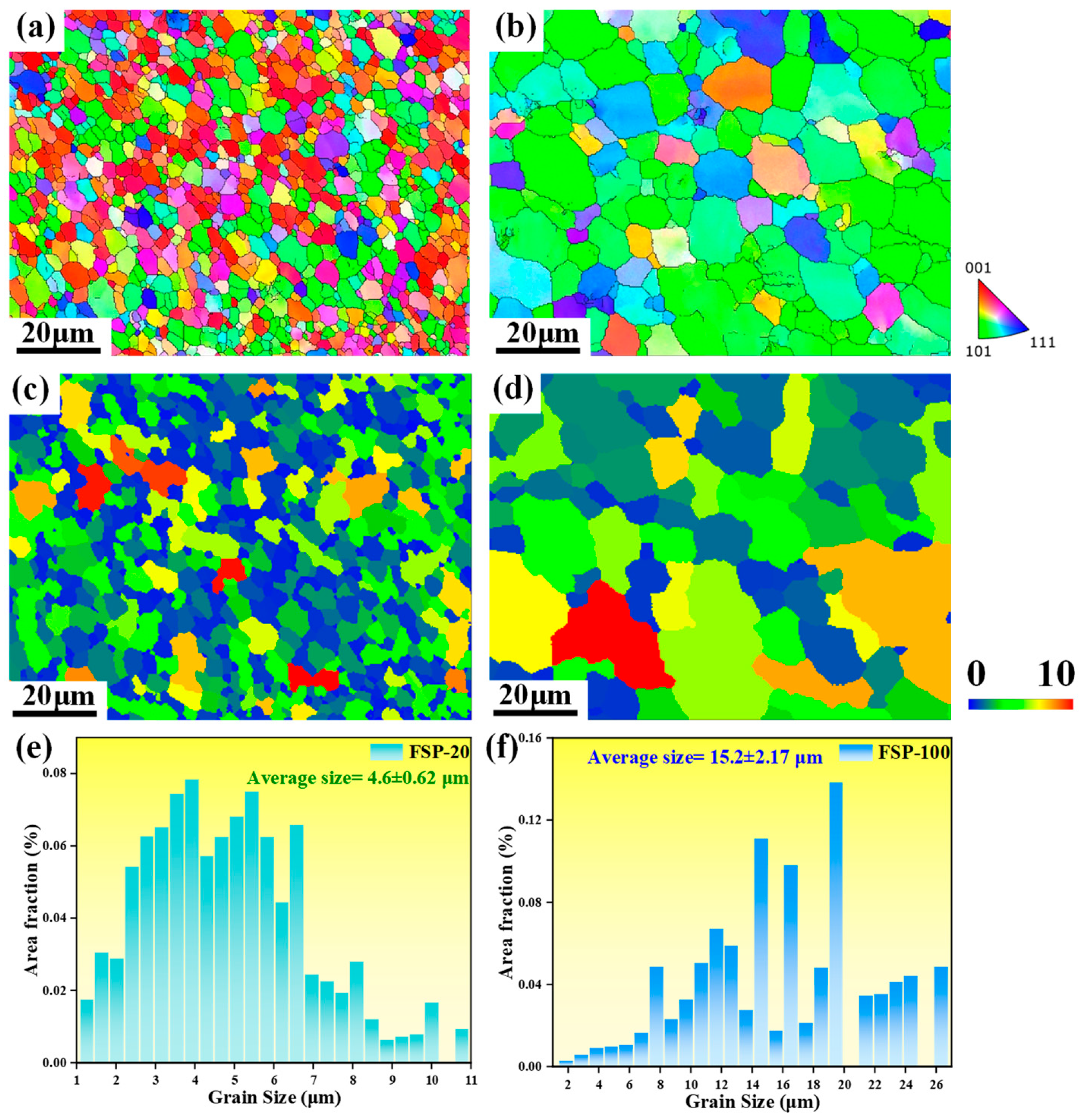
Figure 4 presents the IPF and GOS analysis results of the stir zone in the samples processed at 20 mm/min and 100 mm/min. The IPF maps show that both samples are mainly composed of recrystallized equiaxed grains, indicating that dynamic recrystallization occurs during FSP. However, the grain size differs significantly between the two processing conditions. According to the EBSD grain statistics, the average grain size increases from approximately 4.6 μm in the FSP-20 sample to about 15.2 μm in the FSP-100 sample. The corresponding grain size distribution histograms further show that the FSP-20 sample contains a larger fraction of fine grains, whereas the FSP-100 sample exhibits a broader distribution with more coarse grains. This indicates that increasing the traverse speed weakens the grain-refinement effect in the stir zone. For the FSP-20 sample, the lower traverse speed results in a longer interaction time between the material and the rotating tool. Under this condition, sufficient plastic flow, grain subdivision and dynamic recrystallization occur in the stir zone, leading to the formation of fine and uniformly distributed equiaxed grains [35]. By contrast, the residence time of the material in the stir zone is shortened at 100 mm/min. The accumulation of plastic deformation and the nucleation of recrystallized grains are therefore reduced, resulting in the retention of relatively coarse recrystallized grains.
Figure 4.
EBSD characterization of the stir zone in the friction stir processed Al-3Cu-Li alloy at different traverse speeds. (a,b) IPF maps, (c,d) corresponding GOS maps and (e,f) grain size distributions at 20 mm/min and 100 mm/min.
The GOS maps further reveal the difference in intragranular orientation gradients between the two samples. The FSP-20 sample is mainly composed of grains with low GOS values, indicating a relatively sufficient recrystallization process. Only a small number of grains with high GOS values are observed in local regions, suggesting that residual deformation is limited. In contrast, the FSP-100 sample contains a larger fraction of high-GOS regions, especially in coarse-grained areas. This indicates that local orientation gradients and residual deformation are more pronounced in the FSP-100 sample. Grains with GOS values lower than 2° were identified as recrystallized grains, as this criterion has been widely used to distinguish recrystallized grains with low intragranular orientation spread from deformed grains in EBSD analysis [36]. Based on this criterion, 982 grains were included in the statistical analysis of the FSP-20 sample, whereas 109 grains were counted in the FSP-100 sample under the same EBSD analysis procedure. The larger number of low-GOS grains in FSP-20 further confirms that more complete dynamic recrystallization occurred at the lower traverse speed, while the relatively high GOS values in FSP-100 indicate incomplete recrystallization and retained residual deformation.
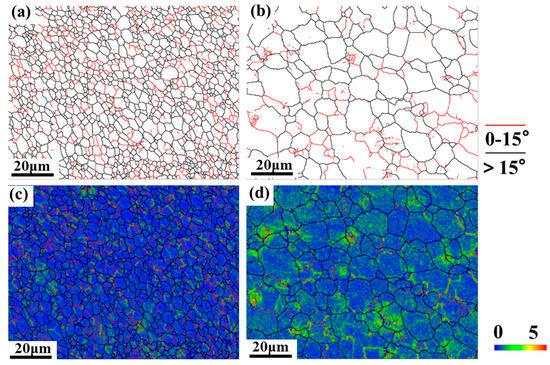
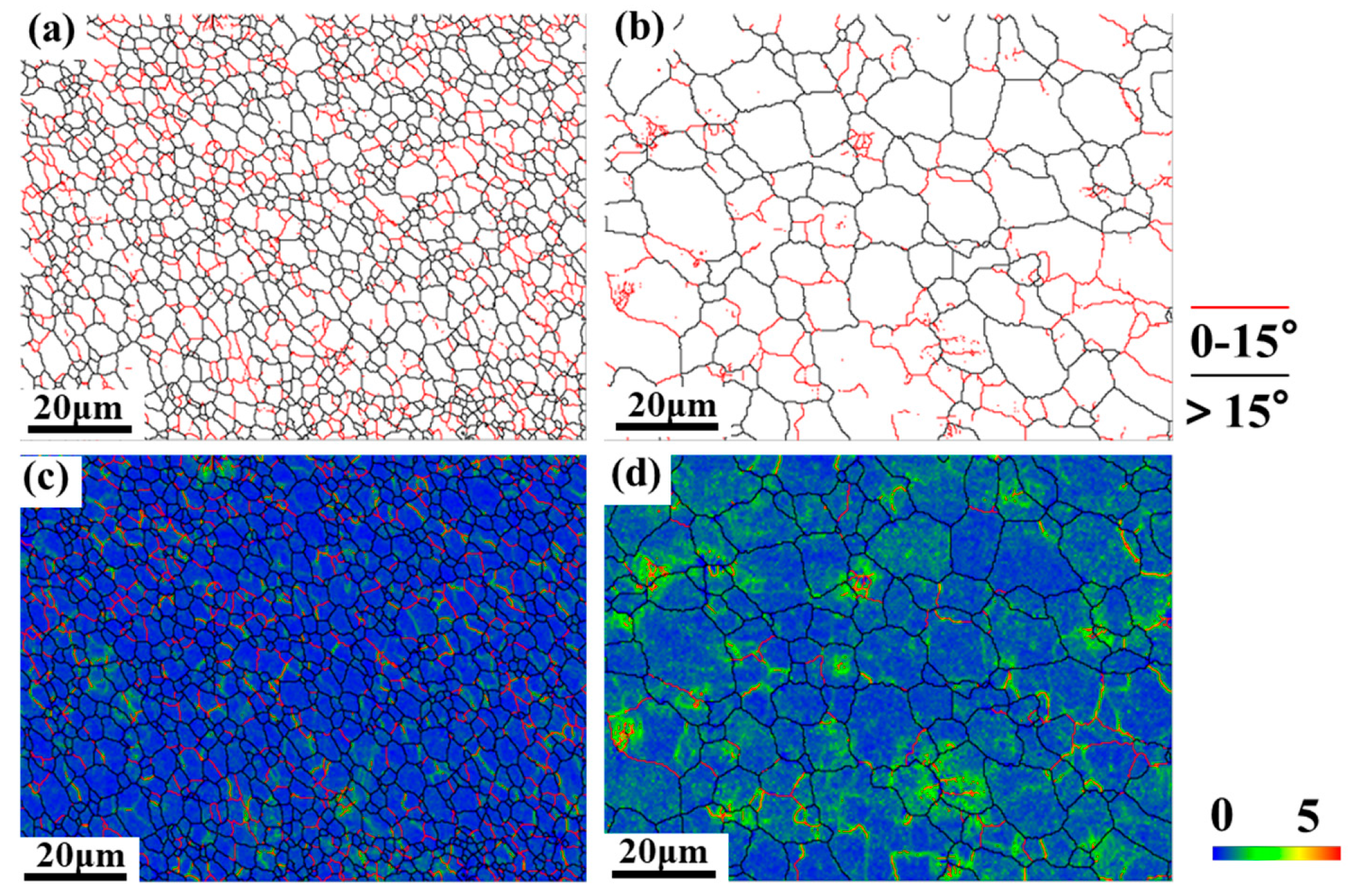
Figure 5 further shows the grain boundary distribution and KAM analysis results of the two FSP samples. The grain boundary maps indicate that the FSP-20 sample contains a higher grain boundary density, which is consistent with its refined equiaxed grain structure. This confirms that more complete grain fragmentation and recrystallization occur at the lower traverse speed [37]. In comparison, the grain boundary density decreases in the FSP-100 sample. Low-angle grain boundaries are mainly distributed inside some coarse grains and near grain boundaries, suggesting that partially recovered substructures are retained due to insufficient recrystallization. The KAM maps characterize the local misorientation distribution in the stir zone. The FSP-20 sample exhibits relatively low overall KAM values, while localized high-KAM regions are dispersed near grain boundaries or residual low-angle boundary zones. This indicates that the local deformation is relatively weak and more uniformly distributed. In contrast, high-KAM regions in the FSP-100 sample are more concentrated, especially along coarse grain boundaries and intragranular deformation bands. This demonstrates that more severe local strain accumulation remains in the FSP-100 sample.
Figure 5.
EBSD analysis of grain boundary characteristics and local misorientation in the stir zone of the friction stir processed Al-3Cu-Li alloy. Grain boundary maps and KAM maps of the samples processed at (a,c) FSP-20 and (b,d) FSP-100.
Combining the IPF, GOS, grain boundary and KAM results, it can be concluded that the FSP-20 sample undergoes more complete dynamic recrystallization and forms a finer equiaxed grain structure. In contrast, the FSP-100 sample exhibits insufficient grain refinement, stronger local orientation gradients and more pronounced residual deformation. These microstructural differences originate from the different thermo-mechanical histories caused by the change in traverse speed.
3.3. Precipitate Phase
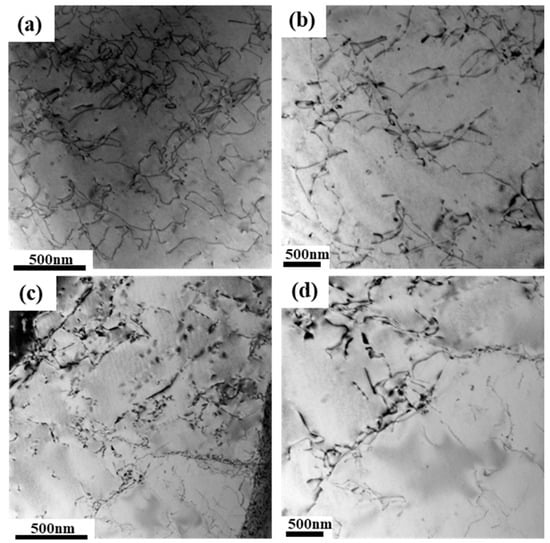
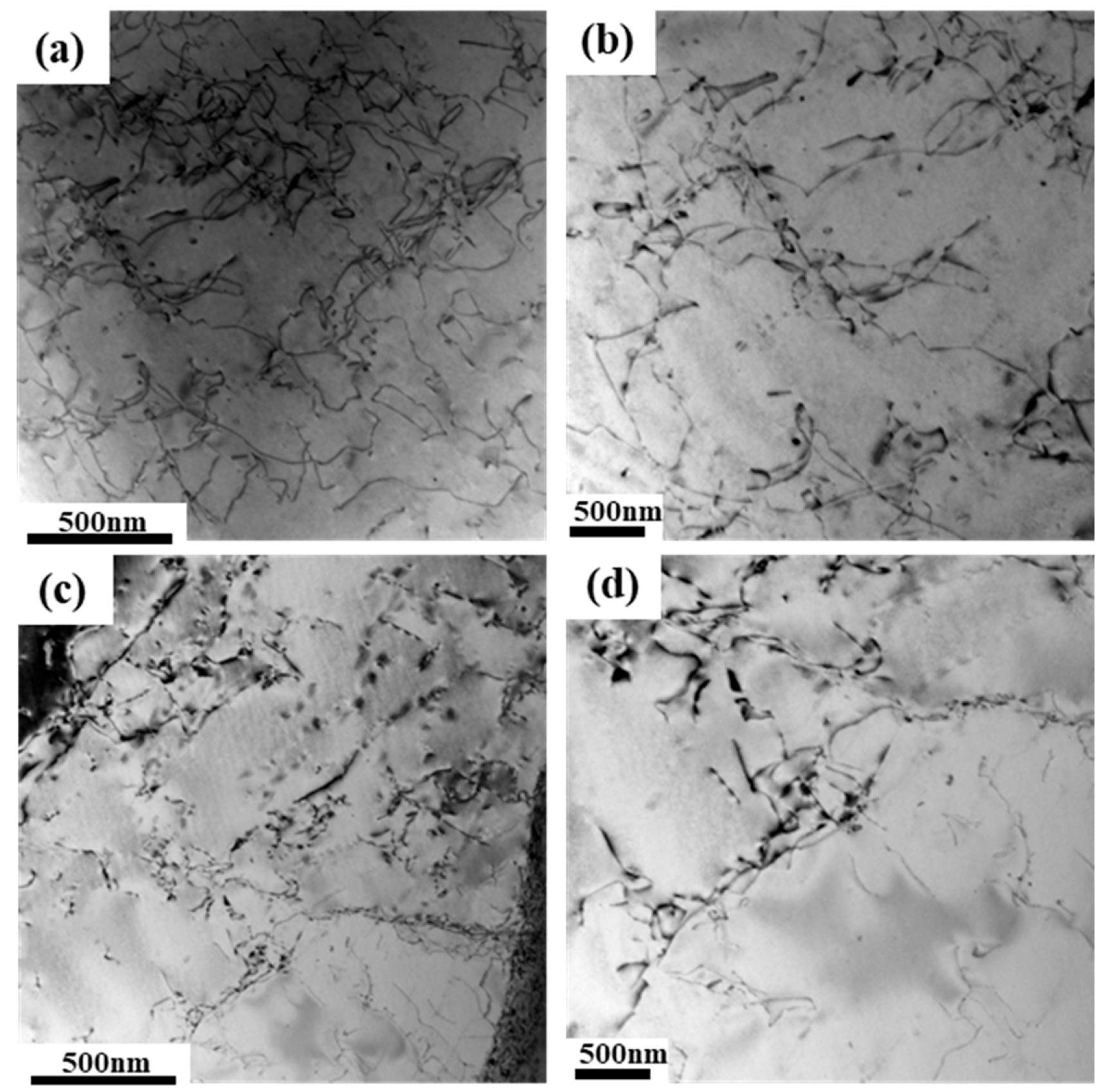
Figure 6 shows the TEM microstructures of the Al matrix in the stir zone at different traverse speeds. A large number of curved dislocations and local dislocation tangles can be observed in both samples, indicating that severe plastic deformation during FSP introduces obvious deformation substructures into the matrix. These dislocation structures are mainly associated with the intense shear deformation and material flow induced by the rotating tool [38]. Compared with the FSP-100 sample, the FSP-20 sample presents a finer microstructural feature, which is consistent with the SEM and EBSD results. This indicates that the lower traverse speed promotes stronger plastic deformation accumulation and more complete microstructural refinement [39]. However, under the present TEM magnification and imaging conditions, typical plate-shaped T1 precipitates cannot be clearly distinguished in Figure 6. Therefore, the morphology and crystallographic identification of precipitates are further analyzed in Figure 7 and Figure 8.
Figure 6.
TEM images showing the matrix microstructure of the friction stir processed Al-3Cu-Li alloy at different welding speeds: (a,b) FSP-20 and (c,d) FSP-100.
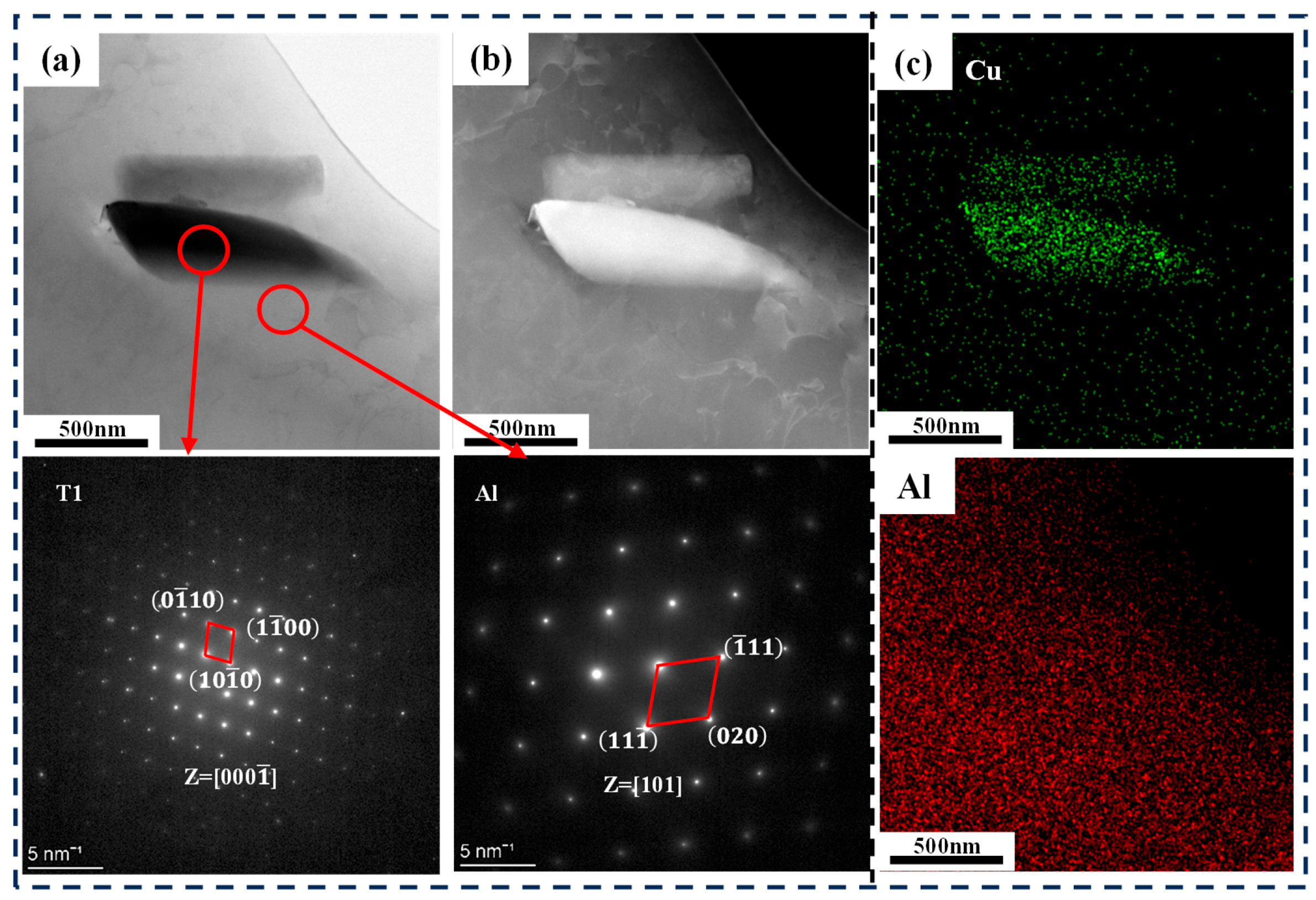
Figure 7.
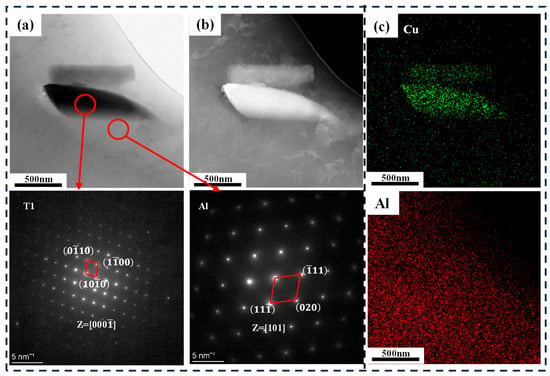
TEM identification of a coarse T1 precipitate in the friction stir processed Al-3Cu-Li alloy processed at FSP-20. (a) Bright-field TEM image of a representative plate-like precipitate and the corresponding SAED pattern acquired from the circled precipitate region, which can be indexed as the hexagonal T1 phase. (b) TEM image of the same region and SAED pattern taken from the adjacent Al matrix, showing the FCC-Al diffraction feature. (c) STEM-EDS elemental maps showing pronounced Cu enrichment in the plate-like precipitate and the surrounding Al-rich matrix.
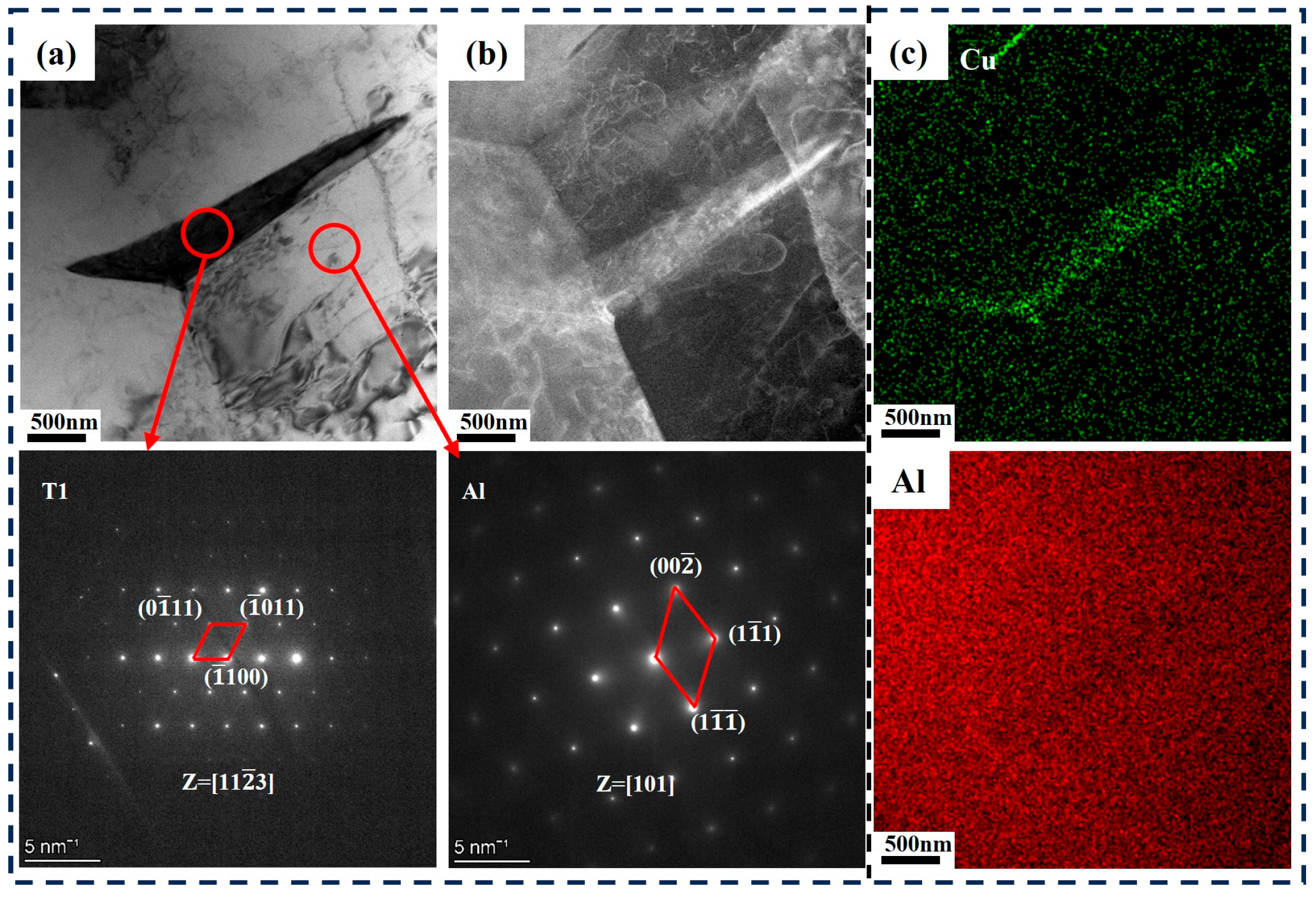
Figure 8.
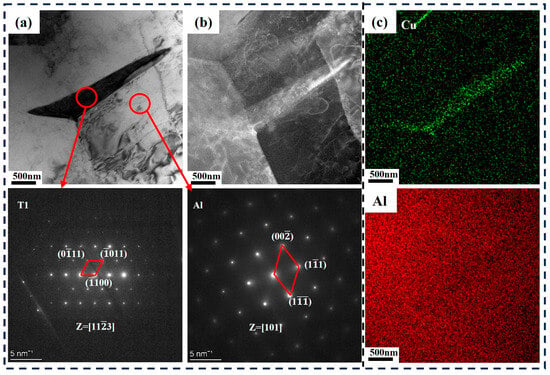
TEM characterization of a coarse T1 precipitate in the friction stir processed Al-3Cu-Li alloy processed at FSP-100. (a) Bright-field TEM image of a representative coarse plate-like precipitate and the corresponding SAED pattern acquired from the circled precipitate region, indexed as the hexagonal T1 phase. (b) TEM image of the same region and SAED pattern obtained from the adjacent Al matrix, showing the FCC-Al diffraction feature. (c) STEM-EDS elemental maps showing pronounced Cu enrichment along the plate-like precipitate and the surrounding Al-rich matrix.
Figure 7 presents the TEM characterization of typical coarse plate-like precipitates in the sample at 20 mm/min. As shown in Figure 7a,b, the precipitate exhibits a long-strip/plate-like morphology with a size of several hundred nanometers, and a distinct contrast difference is formed between the precipitate and the surrounding Al matrix. Selected area electron diffraction (SAED) was performed on the precipitate. The diffraction spots match the crystallographic characteristics of the hexagonal T1 phase, and the incident zone axis is calibrated as Z = [0 0 0 −1]. For comparison, the diffraction pattern of the adjacent matrix corresponds to the FCC-Al matrix with a zone axis of Z = [1 0 1]. This confirms that the plate-like region is not an artifact caused by thickness or bending contrast of the matrix, but an independent second phase. It should be noted that although the common θ phase in Al-Cu-Li alloys is also Cu-enriched, it possesses a tetragonal crystal structure, which is distinctly different from the hexagonal structure of the T1 phase. Cu enrichment alone cannot directly distinguish the T1 phase from the θ phase, and the diffraction calibration in Figure 7 serves as the critical basis for excluding the θ phase [40]. The EDS mapping results further reveal significant Cu enrichment within the plate-like precipitate, while the Al signal mainly originates from the surrounding matrix. Since Li cannot be accurately detected by conventional TEM-EDS, combining the plate-like morphology, Cu enrichment feature, and SAED calibration of the T1 phase, the coarse plate-like precipitate can be identified as the T1 phase.
Figure 8 further shows the TEM characterization results of coarse plate-shaped precipitates in the sample at 100 mm/min. Compared with the sample at 20 mm/min, the plate-like precipitates in this sample exhibit a larger size and an obvious lath-like morphology, reaching the micrometer scale. The selected area electron diffraction pattern of the precipitate can be indexed according to the hexagonal T1 phase with a zone axis of Z = [1 1 −2 3] (P6/mmm, No. 191). The diffraction pattern of the adjacent matrix corresponds to the FCC-Al matrix with a zone axis of Z = [1 0 1]. Compared with the rotational speed of 20 mm/min, the T1 phase in the 100 mm/min sample undergoes more significant coarsening. Combined with the grain coarsening observed by SEM above, these findings indicate that different friction stir welding speeds remarkably alter the thermo-mechanical process and precipitate evolution behavior in the weld zone.
Compared with the 20 mm/min condition, the interaction time between the material and the stirring tool is shorter at 100 mm/min, which reduces the degree of plastic flow and recrystallization in the stirred zone, thereby retaining some coarse grains and dislocation substructures. It should be noted that no artificial aging treatment was applied before FSP; therefore, the plate-like T1 precipitates observed after FSP should not be regarded as being completely newly formed from a fully supersaturated solid solution during the cooling stage of a single FSP pass. These precipitates are more reasonably attributed to residual or incompletely dissolved Cu/Li-rich regions, deformation-assisted heterogeneous precipitation, and short-time coarsening/redistribution during the FSP thermal cycle [41]. T1 precipitates in Al-Cu-Li alloys are generally considered to nucleate heterogeneously at dislocations, subgrain boundaries, grain boundaries, or interfaces of pre-existing secondary particles [42]. Therefore, the finer T1-related precipitate features in FSP-20 are attributed to the more sufficient plastic flow, dynamic recrystallization, and fragmentation/redistribution of Cu-rich particles, which provide a more homogeneous distribution of potential nucleation sites and suppress the localized growth of coarse plates. In contrast, the shorter thermo-mechanical interaction at 100 mm/min may be inadequate to fully fragment and redistribute the Cu/Li-rich regions, and Cu and Li atoms tend to diffuse toward existing plate-like precipitates, further promoting the growth of the T1 phase. The coarsened T1 precipitates possess a reduced interfacial area, which weakens their pinning effect on grain boundary migration and further facilitates grain growth or the retention of coarse microstructures [43]. It is thus evident that the microstructural differences under the two welding speeds are not solely attributed to the effect of heat input.
3.4. Mechanical Properties
3.4.1. Microhardness
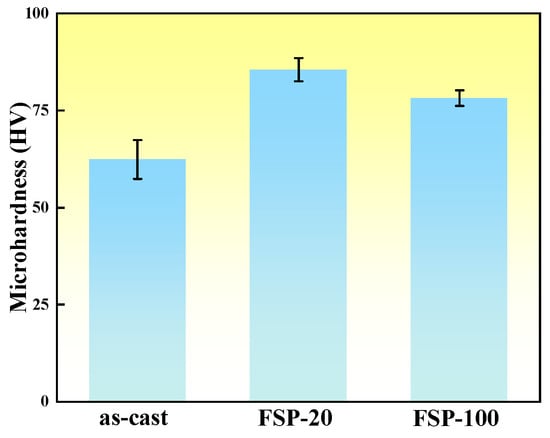
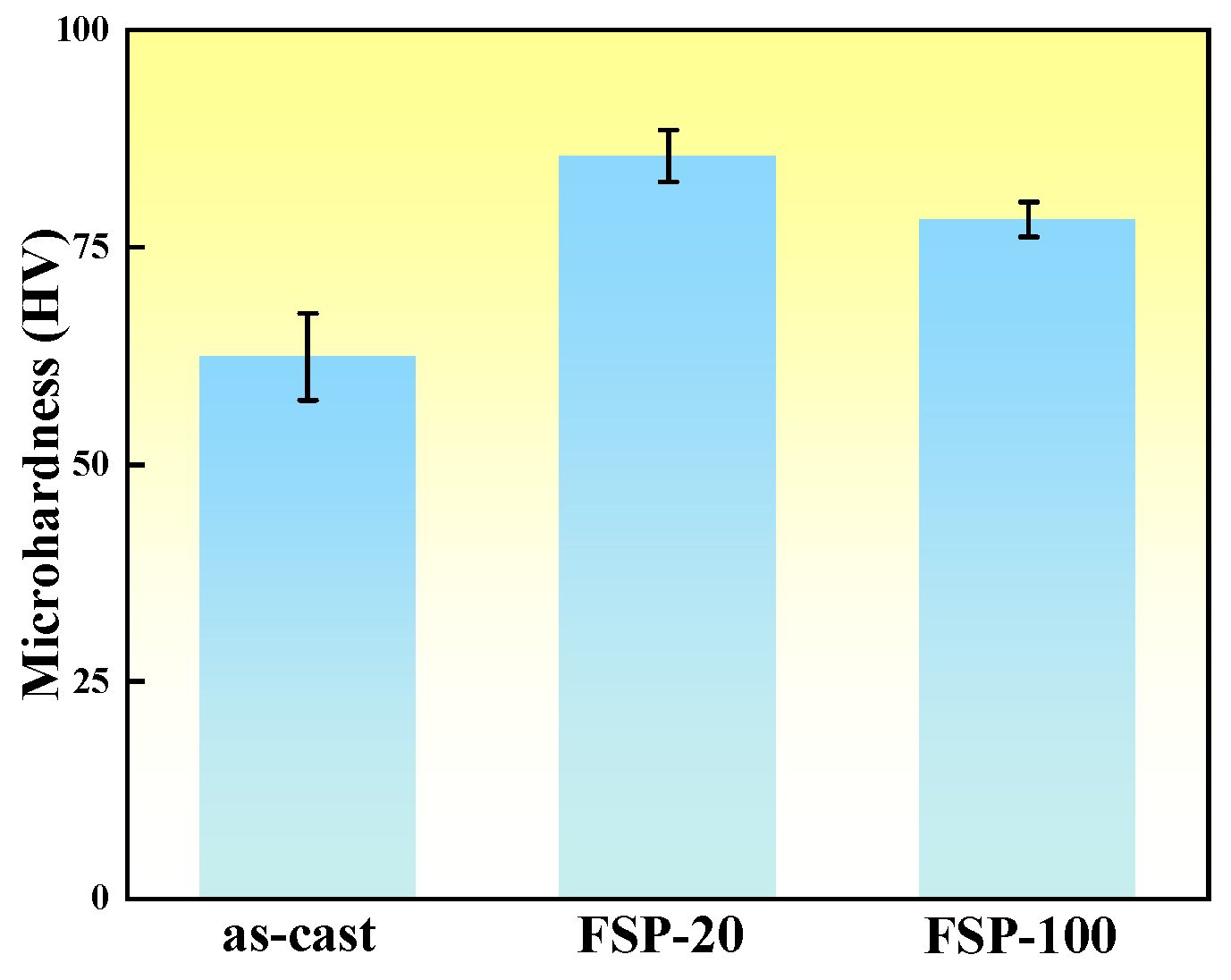
As summarized in Table 1, the as-cast sample possesses the lowest Vickers371 microhardness of 62.4 ± 5 HV, indicating a limited matrix strengthening effect of the as-372 cast Al-3Cu-Li alloy. Figure 9 shows that the as-cast sample possesses the lowest microhardness, indicating a limited matrix strengthening effect of the as-cast Al-3Cu-Li alloy. Coarse grains, uneven distribution of secondary phases and casting segregation weaken its resistance to local plastic deformation. After FSP treatment, the microhardness of both FSP-20 and FSP-100 samples increases obviously, proving that friction stir processing can effectively optimize the microstructure and improve the hardening capacity of the alloy. On one hand, the intense plastic deformation and thermal input during FSP promote dynamic recrystallization and remarkable grain refinement, contributing to grain boundary strengthening. On the other hand, high-density dislocations are introduced, while precipitated phases are crushed, refined and redistributed, which further enhances the obstruction of dislocation motion. FSP-20 exhibits the highest microhardness. At a lower traverse speed, the material undergoes sufficient thermo-mechanical coupling in the stirring zone, achieving more adequate microstructure refinement and precipitate regulation. Combined with the tensile properties and fracture morphology above, the fine and dispersed precipitates in FSP-20 can effectively hinder dislocation motion and avoid severe stress concentration, endowing it with the optimal microhardness and comprehensive mechanical properties.
Table 1.
Vickers hardness of the Al-3Cu-Li alloy.
Figure 9.
Vickers hardness of the Al-3Cu-Li alloy.
3.4.2. Tensile Properties
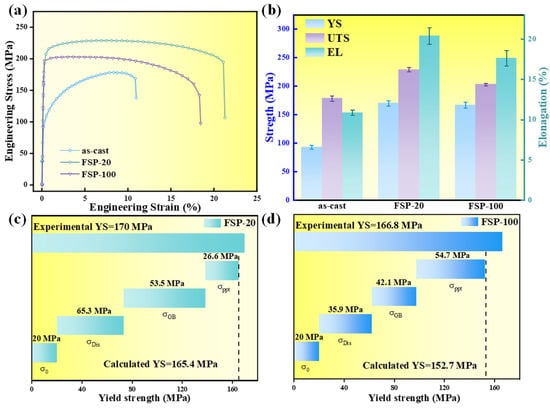
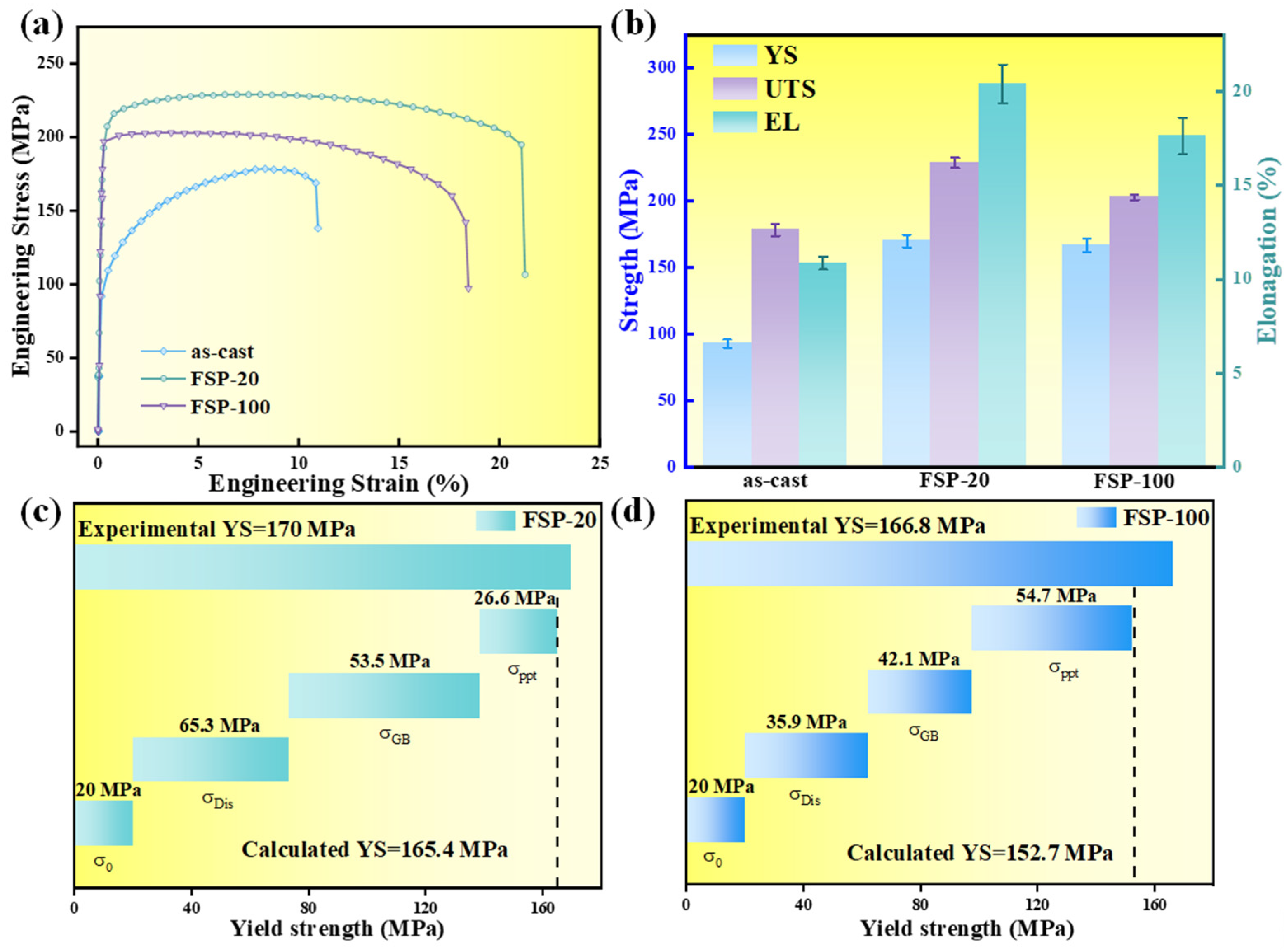
As shown in Figure 10 and Table 2, the as-cast alloy exhibits the lowest tensile394 properties, with a yield strength of 92.8 ± 3.2 MPa, an ultimate tensile strength of 178.5 ± 3954.6 MPa, and an elongation of 10.86 ± 0.35%. Figure 10 shows that the as-cast alloy exhibits a low stress level and small fracture strain, owing to coarse grains, segregation, uneven secondary phases and inherent casting defects. These defects cause stress concentration and early crack propagation, resulting in poor strength and ductility. After FSP, both FSP-20 and FSP-100 samples show improved tensile performance. The FSP-20 sample possesses the highest strength and elongation, realizing an excellent strength–ductility synergy. Its yield strength, ultimate tensile strength and elongation are all higher than those of the as-cast sample, indicating simultaneous enhancement in strength and ductility. Although FSP-100 also outperforms the as-cast alloy, its mechanical properties are inferior to those of FSP-20. A higher traverse speed shortens the thermo-mechanical action time in the stirring zone, leading to insufficient microstructure homogenization and precipitate refinement. Fine dispersed precipitates in FSP-20 hinder dislocation motion and delay cracking, while coarse precipitates in FSP-100 act as crack sources [44,45]. In summary, FSP effectively improves the tensile properties of Al-3Cu-Li alloys. The lower traverse speed of FSP-20 promotes adequate plastic flow, dynamic recrystallization and refined precipitates, thereby obtaining the optimal microstructure and mechanical performance.
Figure 10.
Tensile properties of the Al-3Cu-Li alloy: (a) engineering stress–strain curves; (b) strength and elongation. (c,d) Contributions of individual strengthening mechanisms to the yield strength.
Table 2.
Tensile properties of the Al-3Cu-Li alloy.
To further clarify the dominant strengthening mechanism, a semi-quantitative strengthening analysis was performed according to the strengthening-decomposition method reported for Al alloys [46]. The yield strength can be expressed as:
where σ0 is the lattice friction stress, σGB is the Hall–Petch grain boundary strengthening contribution, σDis is the dislocation strengthening contribution, and σppt represents the apparent Cu/Li-related strengthening contribution, including precipitation strengthening and residual solid-solution strengthening.
As shown in Figure 10c,d, the calculated yield strengths of FSP-20 and FSP-100 are 165.4 MPa and 152.7 MPa, respectively, which are slightly lower than the experimental values of 170.0 MPa and 166.8 MPa. This difference is mainly related to the simplifications in the semi-quantitative model and the coupling between precipitate strengthening and residual solute strengthening. For FSP-20, the grain boundary strengthening and dislocation strengthening contributions are 65.3 MPa and 53.5 MPa, respectively, indicating that grain refinement and dislocation strengthening dominate the strength improvement. In contrast, FSP-100 shows a higher apparent Cu/Li-related strengthening contribution, but the coarse and locally aggregated precipitates may induce stress concentration and reduce ductility. Therefore, the superior strength–ductility synergy of FSP-20 is mainly attributed to the combined effects of refined grains, higher dislocation strengthening and more uniformly distributed precipitate features.
3.4.3. Fracture Analysis
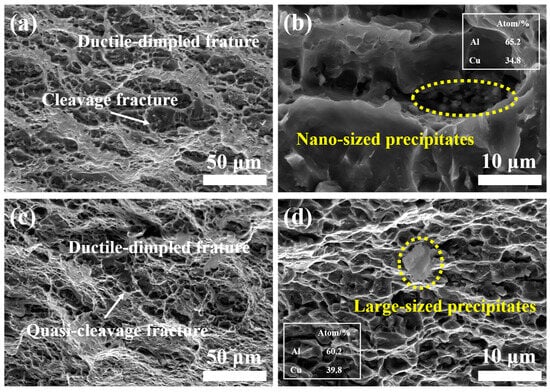
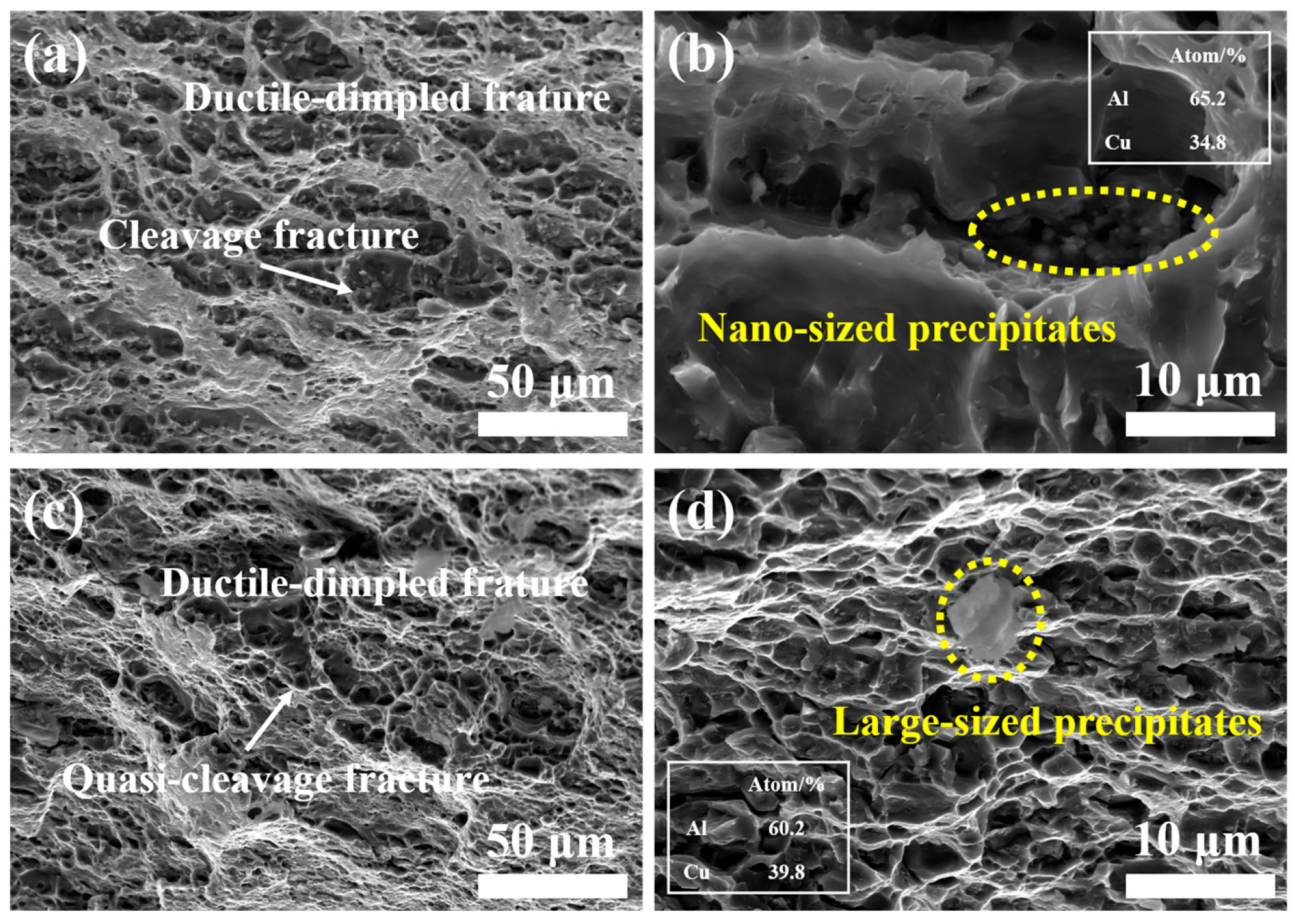
Figure 11a shows that the FSP-20 specimen exhibits a dimpled fracture surface, which is indicative of a typical ductile fracture with substantial plastic deformation. Local cleavage features suggest a mixed ductile–brittle fracture mode. According to the high-magnification morphology and EDS results (Figure 11b), finely dispersed nanoscale Al–Cu-rich precipitates are distributed on the fracture surface. These refined particles hinder dislocation motion and alleviate local stress concentration, synergistically improving the strength and ductility of the alloy. In contrast, the FSP-100 specimen displays distinct quasi-cleavage characteristics (Figure 11c). Large-sized Cu-rich Al–Cu precipitates are observed in Figure 11d. Such coarse particles induce severe local stress concentration, accelerating the nucleation and propagation of microcracks [47,48]. Therefore, the FSP-100 specimen presents inferior plastic deformation capacity owing to the coarse precipitate-induced fracture deterioration. In summary, the low traverse speed provides sufficient thermo-mechanical effects to refine precipitates and homogenize microstructures. The fine dispersed precipitates optimize the mechanical performance of the FSP-20, while coarse precipitates deteriorate the ductility of the FSP-100.
Figure 11.
Tensile fracture morphology and local precipitate characteristics of FSP-processed Al-3Cu-Li alloy at different traverse speeds: (a,b) FSP-20; (c,d) FSP-100.
4. Conclusions
In this study, the effect of FSP traverse speed on the microstructural evolution and mechanical properties of Al-3Cu-Li alloy was investigated. The main conclusions are as follows:
(1) FSP transformed the coarse as-cast microstructure into refined equiaxed grains without changing the α-Al-dominated phase constitution. The FSP-20 sample exhibited a much finer recrystallized structure than FSP-100, with the average grain size decreasing from about 15.2 μm to 4.6 μm, indicating more sufficient dynamic recrystallization and lower residual deformation at the lower traverse speed.
(2) SEM/EDS and TEM analyses revealed the presence of Cu-enriched precipitates in both FSP samples, and plate-like T1 precipitates were identified by SAED. Compared with FSP-20, the FSP-100 sample contained coarser and more locally aggregated T1 precipitates, suggesting that the higher traverse speed was less effective in promoting precipitate fragmentation and redistribution.
(3) FSP significantly enhanced the microhardness and tensile properties of the Al-3Cu-Li alloy. Among the investigated conditions, FSP-20 exhibited the highest microhardness, yield strength, ultimate tensile strength and elongation, together with a dimple-dominated fracture morphology. Therefore, 20 mm/min is the more favorable traverse speed for achieving a refined microstructure and improved comprehensive mechanical properties.
This study mainly focused on the effect of traverse speed on the microstructure and mechanical properties of cast Al-3Cu-Li alloy during single-pass FSP. However, only two traverse speeds were examined under fixed tool rotation speed and tool geometry, and the residual stress state was not quantitatively measured. In addition, service-related properties such as fatigue behavior, corrosion resistance and thermal stability were not evaluated. Future work should further optimize the FSP window, quantify residual stress and precipitate evolution, and assess the long-term performance of FSP-treated cast Al-Cu-Li alloys.
Author Contributions
W.S.: Writing—original draft, Writing—review and editing, Methodology, Validation. W.X.: Data curation, Formal analysis, Visualization, Project administration. H.X.: Software, Investigation, Resources. R.W.: Conceptualization, Funding acquisition, Supervision, Methodology, Formal analysis, Writing—review and editing. All authors have read and agreed to the published version of the manuscript.
Funding
This work was supported by the Key Laboratory of Superlight Materials & Surface Technology (Harbin Engineering University), Ministry of Education, China, the National Natural Science Foundation of China (Grant Nos. 52271098, U23A20541, and 52501145), Natural Science Foundation of Guangxi Province (2024GXNSFAA010142), the China Postdoctoral Science Foundation Postdoctoral Fellowship Program (Grant No. 2024M754151), and the Heilongjiang Postdoctoral Foundation (Grant Nos. LBH-Z24121).
Data Availability Statement
The original contributions presented in the study are included in the article; further inquiries can be directed to the corresponding author.
Acknowledgments
This research was funded by the Key Laboratory of Superlight Materials & Surface Technology (Harbin Engineering University), Ministry of Education, China.
Conflicts of Interest
The authors declare no conflicts of interest. The funders had no role in the design of the study; in the collection, analyses, or interpretation of data; in the writing of the manuscript; or in the decision to publish the results.
Abbreviations
The following abbreviations are used in this manuscript:
| FSP | Friction stir processing |
| θ | Al2Cu |
| T1 | Al2CuLi |
References
- Trivedi, S.; Yadava, M.; Nayan, N.; Sarkar, R.; Gurao, N. Heterogeneity of Aging Response in Friction Stirred Al-Cu-Li Alloy. J. Alloys Compd. 2024, 991, 174497. [Google Scholar] [CrossRef] [Scilit]
- Wang, X.; Li, G.; He, Q.; Jiang, J.; Li, D.; Shao, W.; Zhen, L. Intergranular Corrosion of an Al-Cu-Li alloy: The Influence From Grain Structure. Corros. Sci. 2023, 211, 110845. [Google Scholar] [CrossRef] [Scilit]
- Ma, Z.; Feng, A.; Chen, D.; Shen, J. Recent Advances in Friction Stir Welding/Processing of Aluminum Alloys: Microstructural Evolution and Mechanical Properties. Crit. Rev. Solid State Mater. Sci. 2017, 43, 269–333. [Google Scholar] [CrossRef] [Scilit]
- He, G.; Li, K.; Yang, Y.; Liu, Y.; Wu, W.; Huang, C. Effect of Heat Treatment on the Microstructure and Mechanical Properties of Cryogenic Rolling 2195 Al-Cu-Li alloy. Mat. Sci. Eng. A 2021, 822, 141682. [Google Scholar] [CrossRef] [Scilit]
- Rodríguez, P.; Monge, M.; Gordo, E.; Ruiz, E. Microstructural, Chemical, and Mechanical Characterization of Extruded Al-Cu-Li Rods. Mater. Charact. 2023, 203, 113048. [Google Scholar] [CrossRef] [Scilit]
- Zhang, X.; Zhou, X.; Hashimoto, T.; Lindsay, J.; Ciuca, O.; Luo, C.; Sun, Z.; Zhang, X.; Tang, Z. The Influence of Grain Structure on the Corrosion Behavior of 2A97-T3 Al-Cu-Li Alloy. Corros. Sci. 2017, 116, 14–21. [Google Scholar] [CrossRef] [Scilit]
- Zhang, J.; Wu, G.; Zhang, L.; Zhang, X.; Shi, C.; Tong, X. Addressing the Strength-ductility Trade-off in a Cast Al-Li-Cu Alloy—Synergistic Effect of Sc-alloying and Optimized Artificial Ageing Scheme. J. Mater. Sci. Technol. 2022, 96, 212–225. [Google Scholar] [CrossRef] [Scilit]
- Ma, Z. Friction Stir Processing Technology: A Review. Metall. Mater. Trans. A 2008, 39, 642–658. [Google Scholar] [CrossRef] [Scilit]
- Nelley, T.; Swaminathan, S.; Su, J. Recrystallization Mechanisms During Friction Stir Welding/processing of a Aluminum Alloys. Scr. Mater. 2008, 58, 349–354. [Google Scholar] [CrossRef] [Scilit]
- Dai, G.; Yan, Q.; Niu, F.; Yao, J.; Guo, Y.; Sun, Z.; Wu, S. Refined Microstructure and Enhanced Mechanical Performance of Hybrid Additive Manufacturing Al-Cu-Mg Alloys by Multi-cycle Friction Stirring Processing. J. Manuf. Process. 2024, 112, 248–262. [Google Scholar] [CrossRef] [Scilit]
- Commin, L.; Dumont, M.; Masse, J.; Barrallier, L. Friction Stir Welding of AZ31 Magnesium Alloy Rolled Sheets: Influence of Processing Parameters. Acta Mater. 2009, 57, 326–334. [Google Scholar] [CrossRef] [Scilit]
- Mishra, R.; Ma, Z. Friction Stir Welding and Processing. Mater. Sci. Eng. R 2005, 50, 1–78. [Google Scholar] [CrossRef] [Scilit]
- Yu, P.; Wu, C.; Shi, L. Analysis and Characterization of Dynamic Recrystallization and Grain Structure Evolution in Friction Stir Welding of Aluminum Plates. Acta Mater. 2021, 207, 116692. [Google Scholar] [CrossRef] [Scilit]
- Chen, G.; Zhang, S.; Zhu, Y.; Yang, C.; Shi, Q. Thermo-mechanical Analysis of Friction Stir Welding: A Review on Recent Advances. Acta Metall. Sin. 2019, 33, 3–12. [Google Scholar] [CrossRef] [Scilit]
- Chen, P.; Li, X.; Lin, H.; Wen, K.; Li, Y.; Wang, S.; Xun, C.; Li, C.; Yan, L.; Zhang, Y.; et al. Influence of Cu Content on Precipitation Behavior and Mechanical Properties Under Aging Treatment of Al-Cu-Li Alloys. Materials 2025, 18, 2172. [Google Scholar] [CrossRef] [Scilit]
- Liu, C.; Zhang, B.; Ma, Z.; Teng, G.; Wei, L.; Zhou, W.; Zhang, X. Effects of Pre-aging and Minor Sc Addition on the Microstructure and Mechanical Properties of Friction Stir Processed 7055 Al Alloy. Vacuum 2018, 149, 106–113. [Google Scholar] [CrossRef] [Scilit]
- Xu, X.; Tong, X.; Wu, G.; Zhang, L. Ameliorating the Microstructure and Mechanical Properties of Al-Cu-Li Alloy through Aging Temperature in a Novel Thermo-mechanical Treatment. Microstructures 2025, 5, 2025089. [Google Scholar] [CrossRef] [Scilit]
- Sharma, A.; Morisada, Y.; Nagaoka, T.; Fujii, H. Influence of the Number of FSP Passes on the Strength-ductility Synergy of Cold-rolled Spark Plasma Sintered Pure Aluminum. J. Manuf. Process. 2022, 79, 296–304. [Google Scholar] [CrossRef] [Scilit]
- Wu, J.; Huang, G.; Cao, F.; Sun, T.; Jiang, J.; Hu, J.; Shen, Z.; Hou, W.; Piao, Z.; Feng, X.; et al. Insights into the Microstructural Evolution and Wear Behavior of Underwater Friction Stir Processed CoCrFeNiMn High-entropy Alloy. Mater. Charact. 2023, 205, 113362. [Google Scholar] [CrossRef] [Scilit]
- Xue, H.; Li, J.; Wang, Z.; Bai, J.; Zhao, Z.; Qin, G. Improving Heat Resistance of Al-Cu-Li Alloy with the Addition of Sc and Si. Sci. China Mater. 2023, 66, 4285–4294. [Google Scholar] [CrossRef] [Scilit]
- Zhang, H.; Yu, Z.; Wu, R.; Ma, X.; Feng, X.; Ma, Z.; Turakhodjaev, N.; Betsofen, S. Evading the Strength-corrosion Trade-off in High-Li-content Al-Cu-Li Alloy through High-pressure Heat Treatment and Artificial Aging. Corros. Sci. 2025, 246, 112720. [Google Scholar] [CrossRef] [Scilit]
- Dorin, T.; De Geuser, F.; Lefebvre, W.; Sigli, C.; Deschamps, A. Strengthening Mechanisms of T1 Precipitates and Their Influence on the Plasticity of an Al-Cu-Li Alloy. Mater. Sci. Eng. A 2014, 605, 119–126. [Google Scholar] [CrossRef] [Scilit]
- Izadi, H.; Nolting, A.; Munro, C.; Bishop, D.; Plucknett, K.; Gerlich, A. Friction Stir Processing of Al/SiC Composites Fabricated by Powder Metallurgy. J. Mater. Process. Technol. 2013, 213, 1900–1907. [Google Scholar] [CrossRef] [Scilit]
- Liu, Z.; Xiao, B.; Wang, W.; Ma, Z. Tensile Strength and Electrical Conductivity of Carbon Nanotube Reinforced Aluminum Matrix Composites Fabricated by Powder Metallurgy Combined with Friction Stir Processing. J. Mater. Sci. Technol. 2014, 30, 649–655. [Google Scholar] [CrossRef] [Scilit]
- Chen, P.; Li, T.; Yin, X.; Tang, Y.; Liu, G.; Wang, S.; Zhang, Z. The Precipitate Evolution in Friction Stir Welding of 2195-O Al-Li Alloy. J. Mater. Res. Technol. 2023, 24, 1991–2006. [Google Scholar] [CrossRef] [Scilit]
- Gerich, A.; Su, P.; Yamamoto, M.; North, T. Material Flow and Intermixing during Dissimilar Friction Stir Welding. Sci. Technol. Weld. Join. 2008, 13, 254–264. [Google Scholar] [CrossRef] [Scilit]
- Sadeghi, B.; Shamanian, M.; Cavaliere, P.; Ashrafizadeh, F.; Sanayei, M.; Szpunar, J. Microstructural and Mechanical Behavior of Bimodal Reinforced Al-based Composites Produced by Spark Plasma Sintering and FSP. Int. J. Adv. Manuf. Technol. 2017, 94, 3903–3916. [Google Scholar] [CrossRef] [Scilit]
- Yang, C.; Wu, C.; Shi, L. Effect of Ultrasonic Vibration on Dynamic Recrystallization in Friction Stir Welding. J. Manuf. Process. 2020, 56, 87–95. [Google Scholar] [CrossRef] [Scilit]
- Gao, C.; Zhu, Z.; Han, J.; Li, H. Correlation of Microstructure and Mechanical Properties in Friction Stir Welded 2198-T8 Al-Li Alloy. Mater. Sci. Eng. A 2015, 639, 489–499. [Google Scholar] [CrossRef] [Scilit]
- Qin, H.; Zhang, H.; Wu, H. The Evolution of Precipitation and Microstructure in Friction Stir Welded 2195-T8 Al-Li Alloy. Mater. Sci. Eng. A 2015, 626, 322–329. [Google Scholar] [CrossRef] [Scilit]
- Cai, B.; Zheng, Z.; He, D.; Li, S.; Li, H. Friction Stir Weld of 2060 Al-Cu-Li Alloy: Microstructure and Mechanical Properties. J. Alloys Compd. 2015, 649, 19–27. [Google Scholar] [CrossRef] [Scilit]
- Mao, Y.; Ke, L.; Liu, F.; Huang, C.; Chen, Y.; Liu, Q. Effect of Welding Parameters on Microstructure and Mechanical Properties of Friction Stir Welded Joints of 2060 Aluminum Lithium Alloy. Int. J. Adv. Manuf. Technol. 2015, 81, 1419–1431. [Google Scholar] [CrossRef] [Scilit]
- Zhang, W.; Mao, Y.; Yang, P.; Li, N.; Ke, L.; Chen, Y. Effect of Welding Speed on Microstructure Evolution and Mechanical Properties of Friction Stir Welded 2198 Al-Cu-Li Alloy Joints. Materials 2022, 15, 969. [Google Scholar] [CrossRef] [Scilit] [PubMed]
- Hu, Y.; Liu, H.; Fujii, H.; Araki, H.; Sugita, K.; Liu, K. Ultrasonic-induced Excess Vacancies in Friction Stir Processing and Exploration of Acoustoplastic Effect. Scr. Mater. 2020, 185, 117–121. [Google Scholar] [CrossRef] [Scilit]
- Rayes, M.; Danaf, E. The Influence of Multi-Pass Friction Stir Processing on the Microstructural and Mechanical Properties of Aluminum Alloy 6082. J. Mater. Process. Technol. 2012, 212, 1157–1168. [Google Scholar] [CrossRef] [Scilit]
- Cheong, S.W.; Weiland, H. Understanding a Microstructure Using GOS (Grain Orientation Spread) and Its Application to Recrystallization Study of Hot Deformed Al-Cu-Mg Alloys. Mater. Sci. Forum. 2007, 558-559, 153–158. [Google Scholar] [CrossRef] [Scilit]
- Zhao, H.; Pan, Q.; Qin, Q.; Wu, Y.; Su, X. Effect of the Processing Parameters of Friction Stir Processing on the Microstructure and Mechanical Properties of 6063 Aluminum Alloy. Mater. Sci. Eng. A 2019, 751, 70–79. [Google Scholar] [CrossRef] [Scilit]
- Sadeghi, B.; Cavaliere, P.; Shamanian, M.; Sanayei, M.; Szpunar, J.; Nosko, M. Electron Backscattered Diffraction Analysis of Friction Stir Processed Nanocomposites Produced via Spark Plasma Sintering. J. Microsc. 2018, 271, 145–163. [Google Scholar] [CrossRef] [Scilit]
- Kumar, S.; Acharya, U.; Sethi, D.; Medhi, T.; Roy, B.S.; Saha, S.C. Effect of Traverse Speed on Microstructure and Mechanical Properties of Friction-Stir-Welded Third-Generation Al-Li Alloy. J. Braz. Soc. Mech. Sci. Eng. 2020, 42, 423. [Google Scholar] [CrossRef] [Scilit]
- Ban, Y.; Huang, L.; Li, Z.; Li, Y.; Zhang, Y.; Pan, J. Overcoming the Strength and Ductility Trade-off in Ni-based Alloy through Tailoring of Bimodal Grain Structures, Hierarchical Twins and Coherent Nanoprecipitates. Int. J. Plast. 2024, 183, 104147. [Google Scholar] [CrossRef] [Scilit]
- Araullo, V.; Gaul, B.; Geuser, F.; Deschamps, A.; Cairney, J. Microstructural Evolution during Ageing of Al-Cu-Li-x alloys. Acta Mater. 2014, 66, 199–208. [Google Scholar] [CrossRef] [Scilit]
- Zhou, C.; Zhan, L.; Liu, C.; Huang, M. Influence of Dislocation Morphology on T1 Precipitation of an Al-Cu-Li alloy. J. Alloys Compd. 2023, 947, 169463. [Google Scholar] [CrossRef] [Scilit]
- Nosko, M.; Štepánek, M.; Zifčák, P.; Orovčík, L.; Nagy, Š.; Dvorák, T.; Oslanec, P.; Khodabakhshi, F.; Gerlich, A. Solid-state Joining of Powder Metallurgy Al-Al2O3 Nanocomposites via Friction-stir Welding: Effects of Powder Particle Size on the Weldability, Microstructure, and Mechanical Property. Mater. Sci. Eng. A 2019, 754, 190–204. [Google Scholar] [CrossRef] [Scilit]
- Wu, L.; Li, X.; Wang, H. The Effect of Major Constituents on Microstructure and Mechanical Properties of Cast Al-Li-Cu-Zr Alloy. Mater. Charact. 2021, 171, 110800. [Google Scholar] [CrossRef] [Scilit]
- Jata, K.; Semiatin, S. Continuous Dynamic Recrystallization during Friction Stir Welding of High Strength Aluminum Alloys. Scr. Mater. 2000, 43, 743–749. [Google Scholar] [CrossRef] [Scilit]
- Zhang, H.; Xue, Y.; Lv, Y.; Hao, Q.; Chen, R.; Yu, W.; Yang, H.; Zhang, Y. Novel Thermomechanical Processing of Al-Cu-Mn-Mg-Ag alloy for Enhanced strength-ductility Performance. J. Mater. Sci. Technol. 2026, 250, 108–122. [Google Scholar] [CrossRef] [Scilit]
- Xu, D.; Chen, K.; Chen, Y.; Chen, S. Evolution of the Second-Phase Particles and Their Effect on Tensile Fracture Behavior of 2219 Al-xCu Alloys. Metals 2020, 10, 197. [Google Scholar] [CrossRef] [Scilit]
- Kou, L.; Zhao, Y.; Wang, G.; Wang, F.; Yu, Z. Damage Mechanisms of 2195-O Aluminum Alloy Sheet Induced by Microstructural Evolution during Tensile Deformation at Different Temperatures. Mater. Sci. Eng. A 2024, 914, 147096. [Google Scholar] [CrossRef] [Scilit]

Disclaimer/Publisher’s Note: The statements, opinions and data contained in all publications are solely those of the individual author(s) and contributor(s) and not of MDPI and/or the editor(s). MDPI and/or the editor(s) disclaim responsibility for any injury to people or property resulting from any ideas, methods, instructions or products referred to in the content. |
© 2026 by the authors. Licensee MDPI, Basel, Switzerland. This article is an open access article distributed under the terms and conditions of the Creative Commons Attribution (CC BY) license.