


Abstract
This paper examines a resource-saving technology for ferrosilicon smelting using industrial waste, specifically aluminum slag and aspiration dust from ferroalloy production. A technological approach is proposed based on the preliminary pelletization of finely dispersed aluminum slag to improve the physicochemical properties of the charge materials and ensure their efficient use in the metallurgical process. Pellets were produced by granulation in a disk granulator using a lignosulfonate binder, followed by drying and high-temperature firing in the temperature range of 600–800 °C. Microstructural and energy-dispersive analysis revealed the formation of a stable aluminosilicate matrix, represented predominantly by mullite-like phases, ferrosilicate inclusions, and calcium–magnesium silicates. The formation of these phases contributes to the strengthening of the pellet structure and the formation of intergranular bonds during heat treatment. Experimental ferrosilicon smelting was conducted in a laboratory ore-thermal electric arc furnace. The results demonstrated a stable electrothermal smelting regime, satisfactory charge layer gas permeability, and effective reduction processes. The resulting alloy corresponds to FS-45 ferrosilicon grade with a silicon content of approximately 48%. It was established that aluminum slag-based pellets actively participate in the formation of an aluminosilicate slag system of the SiO2-Al2O3-CaO-MgO type, ensuring favorable slag physicochemical properties and efficient separation of the metallic and slag phases. The proposed approach enables the incorporation of industrial waste into metallurgical production, reducing the environmental impact, and increasing the resource efficiency of silicon ferroalloy production processes.
1. Introduction
The metallurgical industry is a major source of environmental pollution. Metallurgy is characterized by the high energy intensity of its technological processes: it accounts for up to 10% of global energy consumption, which inevitably results in the generation of significant volumes of greenhouse gases. According to current estimates, metallurgy is one of the leading industrial sources of carbon emissions, accounting for approximately 7–9% of total global anthropogenic emissions [1,2]. An analysis of the distribution of greenhouse gases within the industry reveals significant differences due to the scale of production and the specific technologies used. The majority of pollution is associated with the ferrous metallurgy industry: iron and steel production accounts for approximately 70–75% of all greenhouse gas emissions generated by the metallurgical sector. Non-ferrous metallurgy also makes a significant contribution. For example, aluminum production accounts for approximately 10–12% of total industry emissions [3,4]. The share of other metals is comparatively smaller globally; however, at the regional level, their impact can be significant. In particular, copper production accounts for about 1.6% of emissions, gold and titanium—1.2% each, nickel—1.0%, zinc—1.1%, while magnesium, chromium and lead each form less than 1% of emissions [5,6,7]. In addition to atmospheric emissions, the metallurgical industry is a major source of man-made waste. Man-made waste is a by-product of human industrial activity, generated as a result of mining, metallurgical processes, energy production, the chemical industry and other industries [8,9,10]. These include rock dumps, beneficiation tailings, ash and slag waste [11,12,13,14,15], metallurgical slag, scale, dust and sludge. In most cases, such waste accumulates in large volumes and has a significant negative impact on the environment, occupying land resources, polluting the soil, water and atmosphere [16,17,18,19,20]. The accumulation and improper disposal of this waste can lead to soil and water pollution [21,22], and create long-term environmental risks for regions with a high concentration of metallurgical enterprises.
One such type of man-made waste is aluminum slag from aluminum electrolysis [23], formed during the production of primary and secondary aluminum, as well as during the recycling of aluminum scrap. Slag, formed during the smelting of aluminum and its alloys, is a conglomerate of high-temperature formations consisting of a mixture of metal, oxides, and salts [24]. When slag is removed, a significant amount of metal is captured along with it, reaching 70–80% of the slag mass, the extraction of which requires specialized technology [25,26,27]. During storage, of hot slag, it undergoes intensive oxidation, with the aluminum concentration in it significantly decreasing. In the case of long-term storage, especially in the open air, it corrodes very quickly, and the metal content in it can be close to zero. Depending on the metal content, aluminum slags are divided into “black” slags, which contain 8–13% Al; 30–35% Al2O3; the rest is NaCl + KCl, and “white” slags with a content of 60–70% Al; 20–35% Al2O3; other substances 3–10%. By shape, slags are of two types—lumpy and powdery [27,28,29]. In this work, powdery slags are of scientific interest—this is a powder obtained as a result of the decomposition of lumpy scraps and containing 10–20% metal. In the Republic of Kazakhstan, powdery slags are not processed and not involved in metallurgical processes, but are only stored in dumps, polluting the environment [30]. Despite the high level of technological perfection of modern production lines for the production of primary and secondary aluminum, as well as the quality of the materials used, the problem of the formation and accumulation of aluminum slag remains relevant [6,7,31,32].
In a number of countries lacking a developed waste processing infrastructure and effective technological solutions for its disposal, significant volumes of aluminum slag are stored in specially isolated storage facilities. However, over time, the toxic oxide-salt compounds it contains can migrate into soil horizons and groundwater, which creates a potential environmental threat [33,34]. This situation emphasizes the need to develop a strategic approach to environmental management in metallurgical production, focused on the implementation of closed technological cycles and the reduction in anthropogenic load on the biosphere [35,36,37]. Despite the existence of a significant number of technical solutions aimed at recycling aluminum scrap, research in the field of aluminum slag reuse is still at the stage of active development and requires significant investment and technological resources for their full-fledged industrial implementation [38,39,40,41]. Based on the analysis of literary sources [26,42,43,44,45,46] and the results of previous studies [47], the authors of this paper set themselves the task of investigating the possibilities of low-waste processing of aluminum slag generated during the aluminum production process. Previous studies have shown that the production of granules and pellets from aluminum slags mixed with ash and slag materials is an effective technological solution and allows the use of the resulting raw materials in the production of silicon alloys, in particular ferrosilicon [48]. In this regard, in this paper, special attention is paid to the preparatory stage of aluminum slag processing—the formation of pellets for their subsequent involvement in the metallurgical process. This approach will make it possible to use the material without the loss of valuable components and to obtain products suitable for use both in the aluminum industry and in the production of silicon alloys (ferrosilicon).
The use of an integrated approach to aluminum slag recycling can significantly reduce aluminum losses and reduce the negative impact on the environment in regions with developed aluminum production. The obtained data also indicate the need for further research in this scientific area.
2. Results and Discussion
2.1. Raw Materials
Aluminum slag, a by-product of aluminum metallurgical production, was selected as the primary raw material for the study. The use of such man-made waste in metallurgical processes is of significant scientific and practical interest, as it not only enables the rational use of secondary resources but also reduces the environmental impact.
The chemical composition of the materials under study is presented in Table 1. Analysis of the data in the table reveals that the aluminum oxide (Al2O3) content in the aluminum slag reaches 67.8%, while the silicon dioxide (SiO2) content is 12.4%. The high SiO2 content in the aluminum slag is due to the fact that the material under study is classified as a secondary aluminum slag. Secondary slags formed during the processing of aluminum scrap and waste typically have a high silica content due to the presence of impurities, oxide inclusions, contaminants in lining materials, and non-metallic components of the feedstock. Furthermore, repeated aluminum processing cycles lead to the accumulation of oxide phases, including SiO2, which is confirmed by literature data on the composition of secondary aluminum slags.
Table 1.
Chemical composition of the materials studied.
The high concentration of Al2O3 indicates the significant potential of this material for use in metallurgical processes. However, the use of aluminum slags in ferrosilicon production poses several limitations, primarily related to insufficient silica content. A lack of SiO2 in the feedstock can disrupt the optimal ratio of charge components, which in turn affects the reduction processes and the efficiency of ferroalloy production. Therefore, to adjust the chemical composition of the charge, silicon-containing aspiration dust from ferroalloy production was introduced into it. This man-made product is characterized by an increased silicon dioxide content and can serve as an effective additive for regulating the chemical composition of charge materials. In addition to aspiration dust, ferrosilicon screenings were also added to the charge, the chemical composition of which is presented in Table 2.
Table 2.
Chemical composition of ferrosilicon screenings, %.
According to the data provided, ferrosilicon screenings are characterized by a high silicon content, reaching 76.2%, and also contain iron (19.9%) and trace amounts of aluminum, phosphorus, sulfur, and carbon. The presence of significant silicon makes this material a promising additive for adjusting the chemical composition of the charge in ferrosilicon production.
The introduction of ferrosilicon screenings into the feedstock mixture not only increases the overall silicon content but also improves the physicochemical properties of the pellets formed. Finely dispersed screenings particles promote compaction of the granulated mixture structure, fill interparticle voids, and increase the contact area between the feedstock components. This improves the material’s agglomeration, resulting in stronger and more stable pellets. Furthermore, the presence of ferrosilicon screenings in the pellets has a positive effect on subsequent metallurgical processes. When smelting pellets for ferrosilicon, the screenings act as an additional silicon-containing component, which intensifies reduction processes and more efficiently forms the ferrosilicon melt. In addition to their chemical composition, a significant disadvantage of aluminum slags is their particle size distribution (Table 3). Studies have shown that more than 50% of the fine aluminum slag fraction is 0.1–1.6 mm in size. This finely dispersed structure negatively impacts the material’s processing properties, particularly its lumpability and flowability. Particles of this fraction are known to have a weak ability to form strong granules [49].
Table 3.
Fractional composition of the studied materials, %.
The introduction of aspiration dust into the charge composition can partially solve these problems. On the one hand, the additive increases the SiO2 content, which helps optimize the chemical composition of the charge mixture. On the other hand, the presence of fine dust improves granulation processes by filling interparticle voids and increasing the contact surface between particles, which contributes to the formation of more stable granules. Nevertheless, even with the introduction of corrective additives, the use of original aluminum slags in metallurgical processes remains difficult. This is due to the fact that, for the effective inclusion of charge materials in metallurgical processing, it is preferable to use raw materials in the form of large and durable pieces. Fine fractions can lead to increased material losses during transportation, handling, and loading into metallurgical units, as well as cause dust formation and deterioration of the gas permeability of the charge in furnaces. Taking these factors into account, aluminum slags were subjected to a pelletizing process as part of this study.
2.2. The Process of Pelletizing and Firing Materials
Pelletization is one of the most effective methods for preparing finely dispersed materials for metallurgical processing. This process is widely used in the processing of finely dispersed waste and concentrates characterized by unsatisfactory process properties, such as high dust formation, low gas permeability, and poor flowability. The main purpose of pelletization is to form pellets of a specified size, shape, and mechanical strength from finely dispersed raw materials, suitable for further use in metallurgical units. The pelletization process improves the particle size distribution of the raw materials, increases their gas permeability, and reduces the loss of fine fractions during transportation, handling, and loading into smelting furnaces. Furthermore, pelletization ensures a more uniform distribution of the raw material components, which positively impacts the physicochemical processes during subsequent metallurgical processing.
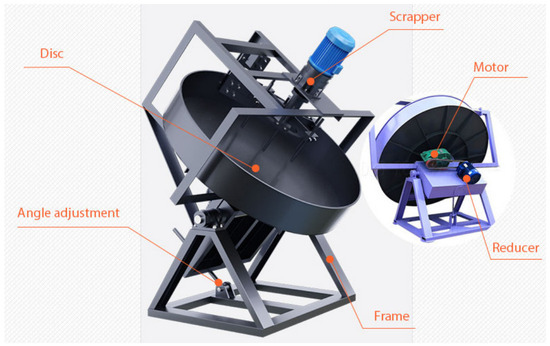
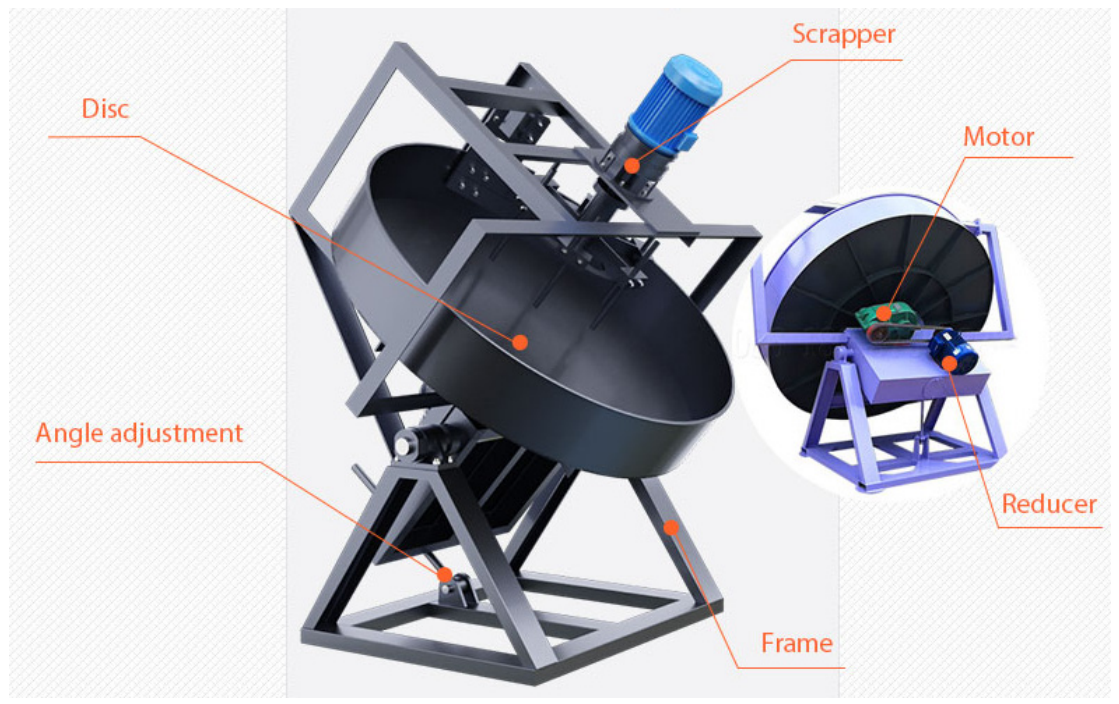
In this study, pelletization was carried out using a disc granulator (Figure 1). This type of equipment is widely used for granulating finely dispersed materials due to its technological simplicity, high productivity, and the ability to control granulation parameters. The main working element of the unit is an inclined rotating plate (disk), on the surface of which granules are formed.
Figure 1.
General view of a disc granulator.
During granulation, small particles of material combine to form primary granule nuclei, which subsequently increase in size due to the successive growth of new particles on their surface. Pellets are formed under the influence of a combination of physical factors, including surface tension of the liquid phase, capillary forces, and the mechanical action caused by the particles rolling across the surface of a rotating plate. As the granules grow, they are gradually classified by size. Larger, more mature pellets migrate to the periphery of the plate and are discharged from the granulator, while smaller particles continue to participate in the granulation process, forming new granules. This process results in pellets with a relatively narrow range of particle size distributions.
The following materials were used as starting materials:
- -
- aluminum slag—40%;
- -
- aspiration dust—40%;
- -
- ferrosilicon screenings—10%;
- -
- binder—10%.
A 10% aqueous lignosulfonate solution was used as a binder. This binder was chosen due to its good adhesive properties, the ability to increase granule strength during formation, as well as its availability and widespread use in mineral raw material pelletizing processes and low cost. The solution concentration was selected empirically, based on the conditions for ensuring stable granule formation and achieving the required mechanical properties of the pellets. The granulation process lasted 10–15 min, which ensured the formation of pellets of the required size and structure. During this time, primary granules formed, compacted, and subsequently grew due to the incorporation of finely dispersed particles of the feedstock material. After the granulation process was complete, the resulting granules were heat-treated. The first stage involved drying the pellets at a temperature of 300–400 °C for 1 h. This step is necessary to remove moisture contained in the granules and to increase their initial mechanical strength. The pellet strength after high-temperature firing was determined using a PMR-MG4 test rig (force measurement range: 0.06–3.00 kN, permissible relative error limit for force measurement: ±1%, working stroke of the support plate: at least 22 mm). The obtained results showed that pellet strength increases depending on the composition of the samples under study and the conditions of the material structure formation: for sample No. 1, the strength was 0.8–0.9 kN/pellet, for sample No. 2–1.1–1.4 kN/pellet, and the maximum strength values were recorded for sample No. 3–1.5–1.8 kN/pellet. The obtained values indicate the formation of a sufficiently strong pellet structure capable of withstanding mechanical loads during transportation and metallurgical processing.
2.3. Microstructural and Energy Dispersive Analysis of Pellets
To study the microstructure and phase composition of the pellets obtained after high-temperature firing, scanning electron microscopy (SEM) (VEGA3 scanning electron microscope (TESCAN, Brno, Czech Republic) microanalysis using the INCA Energy microanalysis system (Oxford Instruments, Oxford, UK), as well as energy-dispersive spectral analysis (EDS analysis), were performed. These studies made it possible to determine the morphological features of the pellet surface, the distribution of chemical elements, and the nature of the formation of mineral phases arising during heat treatment. Table 4 presents the chemical composition of the pellets obtained after high-temperature firing (conventionally divided into three samples depending on the temperature: No. 1–600 °C, No. 2–700 °C, No. 3–800 °C).
Table 4.
Chemical composition of pellets after high-temperature roasting.
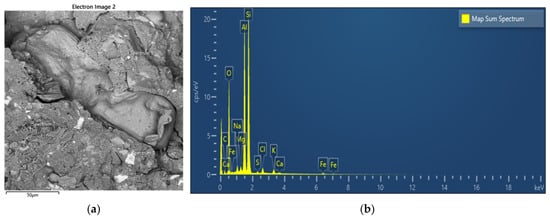
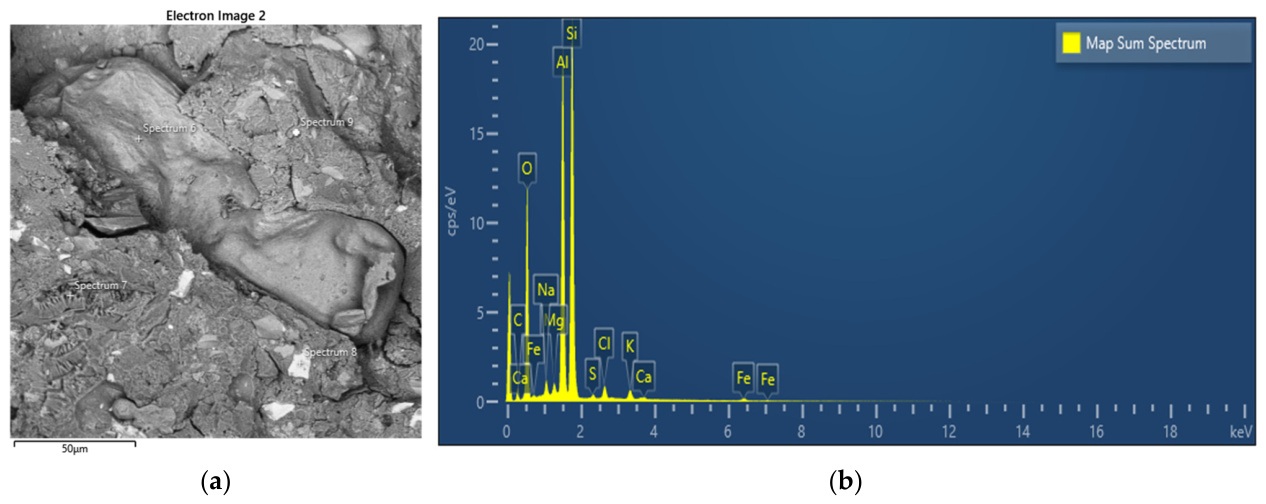
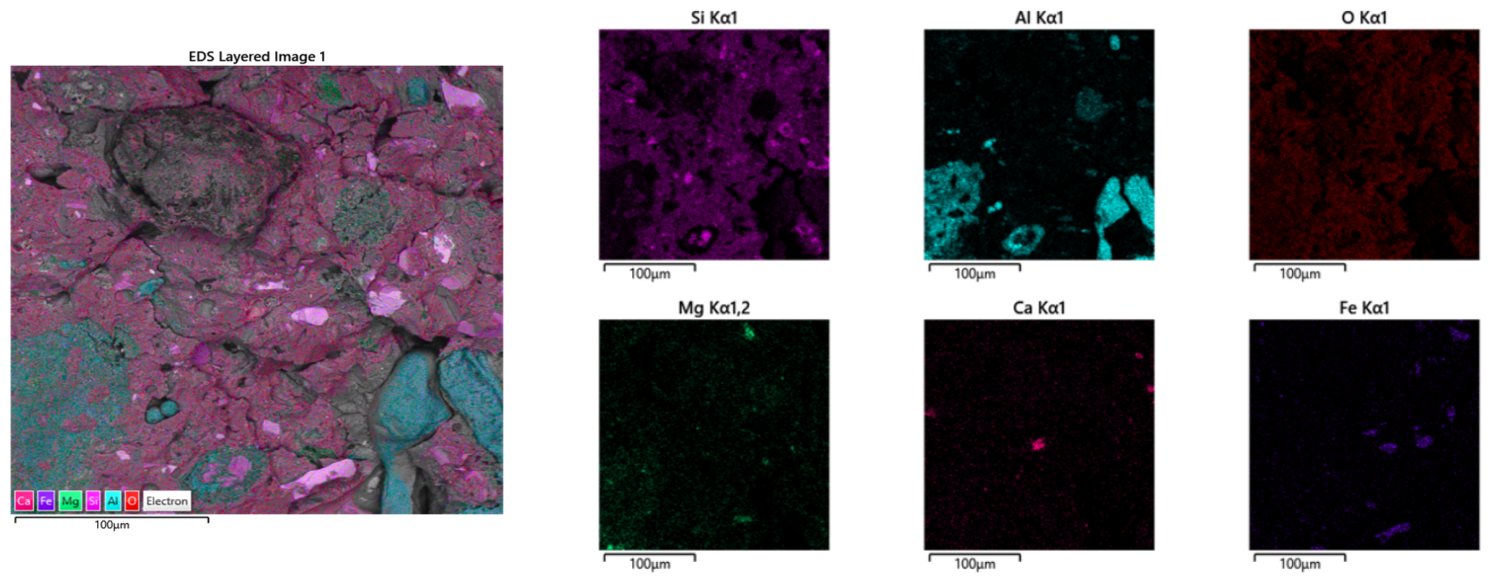
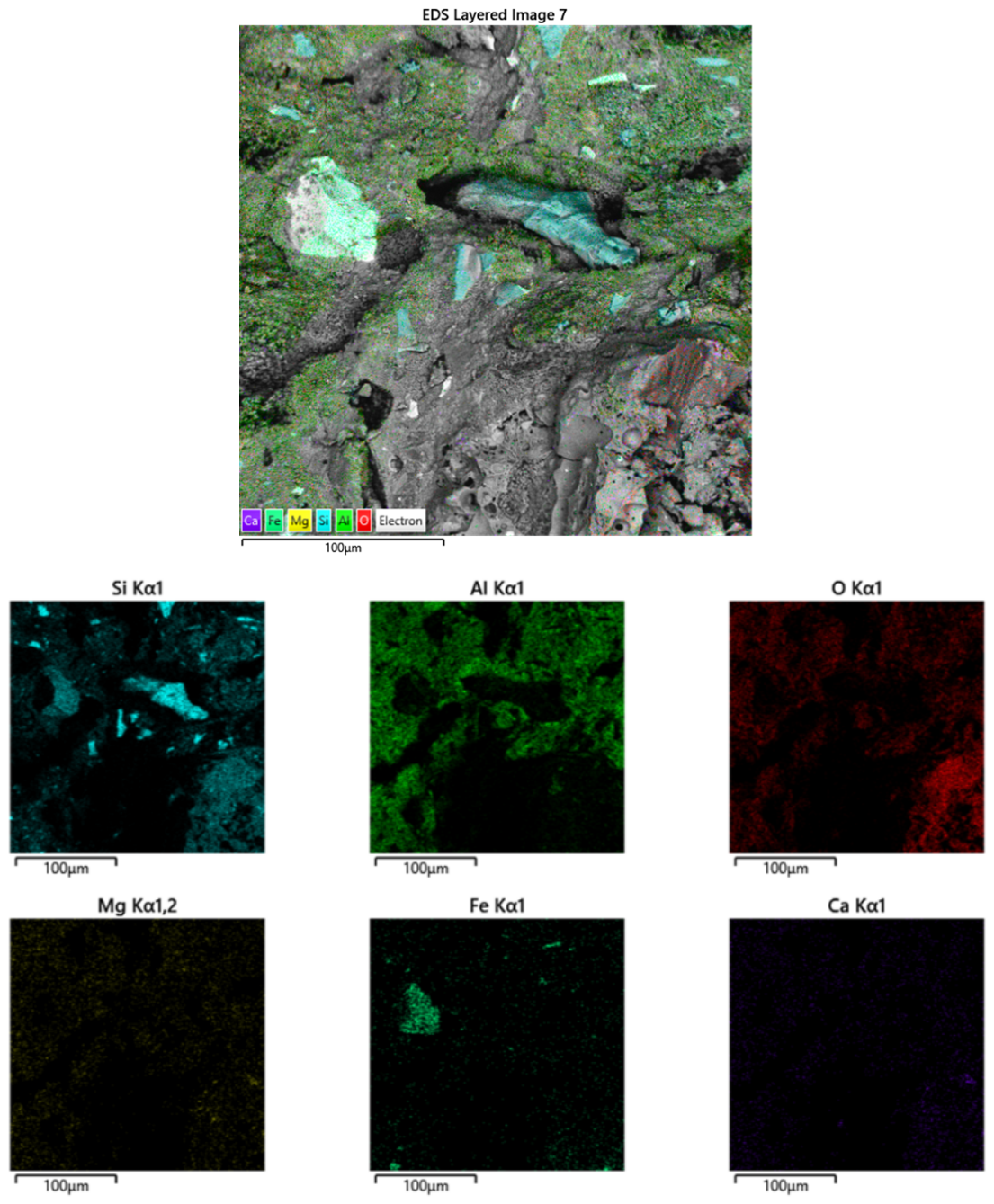
As can be seen from Table 4, the material is characterized by a pronounced oxide aluminosilicate character with a predominance of silicon dioxide (SiO2 from 64.1% to 72.7%) and aluminum oxide (Al2O3 from 25.9% to 29.5%), which predetermines the formation of stable silicate and layered mineral frameworks. For a detailed understanding of the mechanisms of structure formation, the most informative comparative analysis is sample No. 1 (fired at 600 °C), for which precision SEM/EDS and X-ray diffraction data were obtained. Local microanalysis of the surface (Figure 2) reveals characteristic areas with different morphology and contrast, which directly correspond to the distribution of elements recorded in the total spectrogram (Table 2) and element distribution maps (Figure 3).
Figure 2.
Microanalysis (a) and spectrogram (b) of sample No. 1.
Figure 3.
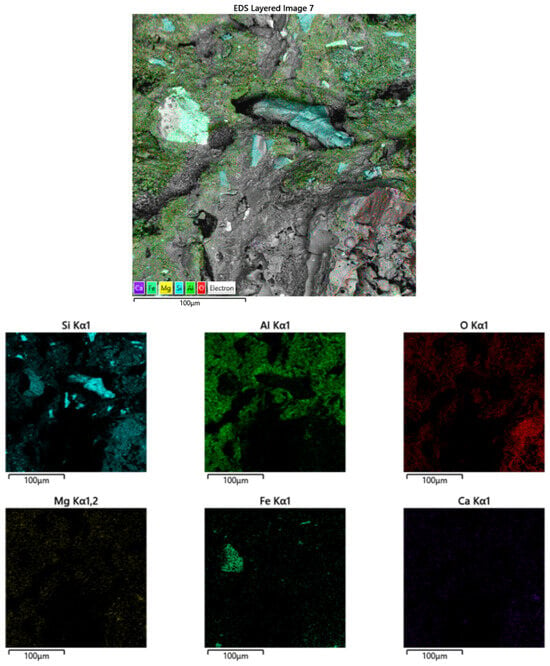
Energy dispersive spectrum analysis of samples (EDS analysis) from the surface of sample No. 1.
At a temperature of 600 °C, the formation of primary aluminosilicate bonds begins, which leads to partial sintering of the structure and the formation of interparticle contacts between the components of the pellets. Aluminosilicate glass phase forms the main part of the pellet structure and is formed as a result of the interaction of Al2O3 and SiO2 at elevated temperatures. It is represented by dense gray-dark areas (Spectrum 9), forming the binding basis of the material. The formation of mullite-like phases contributes to an increase in the thermal stability and strength of pellets. Silicate compounds (Spectrum 6) are represented by lighter areas between the grains. This phase is formed as a result of partial melting of silica contained in the aspiration dust and acts as a binding component, promoting sintering of particles and the formation of a dense pellet structure. Ferrosilicate inclusions (Spectrum 7) are localized areas with an increased content of iron and silicon coming from ferrosilicon screenings. These phases can form complex iron-silicate compounds involved in strengthening the structure of the material. Calcium–magnesium silicate compounds (Spectrum 8) are observed in the form of individual small inclusions containing Ca and Mg. These elements come from the original aluminum slags and aspiration dust (Table 1) and, upon firing, form complex silicate phases that facilitate the formation of intergranular bonds.
Figure 2b shows the spectrograms of the pellet particles indicated in Figure 2a. It is evident that the chemical composition of the pellet particles is represented by a wide range of elements found in aluminum slags. According to the spectrogram data in Table 5, the main elements in the sample structure are oxygen, silicon (25.07%), and aluminum (18.79%), which corresponds to the oxide nature of the material. The presence of significant amounts of oxygen indicates the formation of stable oxide compounds as a result of heat treatment of the pellets. In addition, the structure of the material contains sodium, potassium, calcium, and magnesium, which are likely part of complex aluminosilicate compounds. The additional presence of Fe (1.04%) and Mg (0.60%) % indicates the participation of these elements in the formation of complex silicate compounds, which can act as binding phases that increase the mechanical strength of the structure.
Table 5.
Data on the processing parameters of analyses of all elements of sample No. 1.
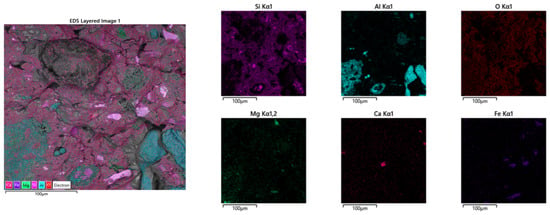
Figure 3 of the energy dispersive spectrum analysis (EDS) of sample No. 1’s surface additionally shows the formation of a silica-containing glass phase. This phase is represented by lighter areas between the grains. This phase is formed by the partial melting of silica contained in the aspiration dust. The glass phase acts as a binder, promoting particle sintering and the formation of a dense pellet structure.
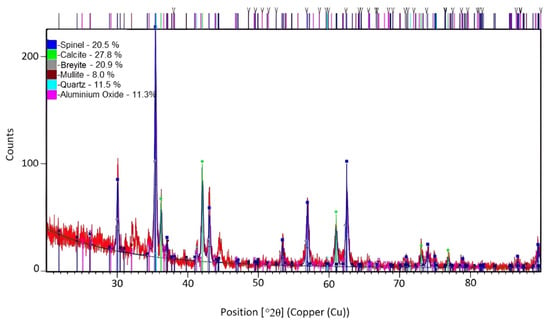
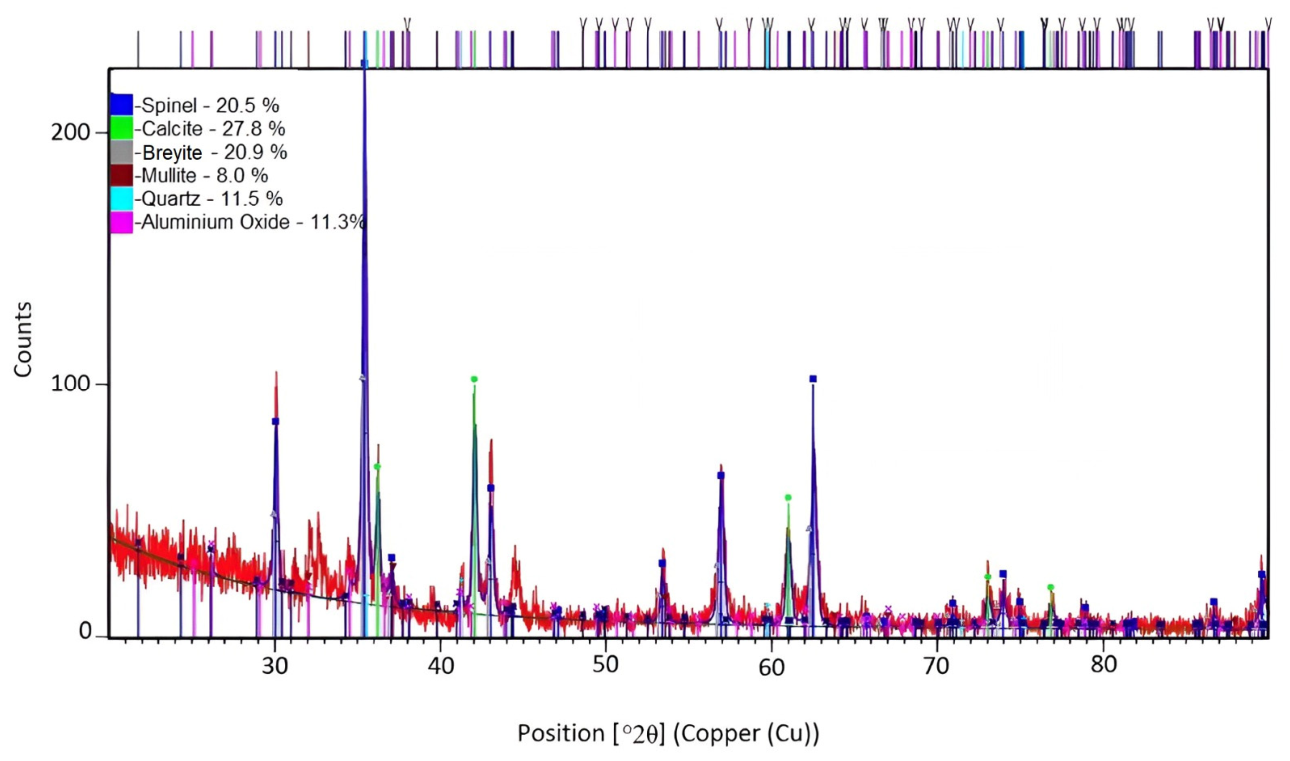
Figure 4 shows the X-ray diffraction pattern and mineral composition (Table 6) of sample No. 1 (pellets fired at 600 °C). A preliminary study of the X-ray phase composition of secondary aluminum slags, performed on an X’Pert PRO X-ray diffractometer manufactured by PANalytical, showed the presence of the following phases: spinel minerals (Al1.99Mg0.998O4), quartz (SiO2), mullite (Al2.4O4.8Si0.6), corundum (Al2O3), calcite (CaCO3), and breiite (CaSiO3).
Figure 4.
X-ray diffraction pattern of sample No. 1 (pellets fired at 600 °C).
Table 6.
Mineral composition of sample No. 1.
The X-ray diffraction pattern and mineral composition of sample No. 1—pellets fired at high temperatures at 600 °C—reveal the presence of virtually the same minerals. This can be explained by the fact that when green pellets are fired at approximately 600 °C, dehydration, thermal decomposition of organic components, and initial solid-phase changes predominantly occur, while significant phase transformations for most mineral components are absent.
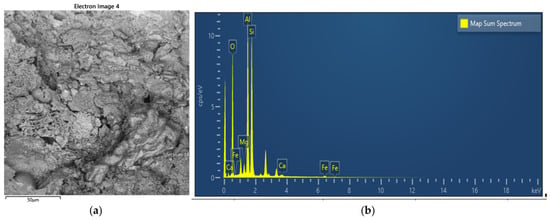
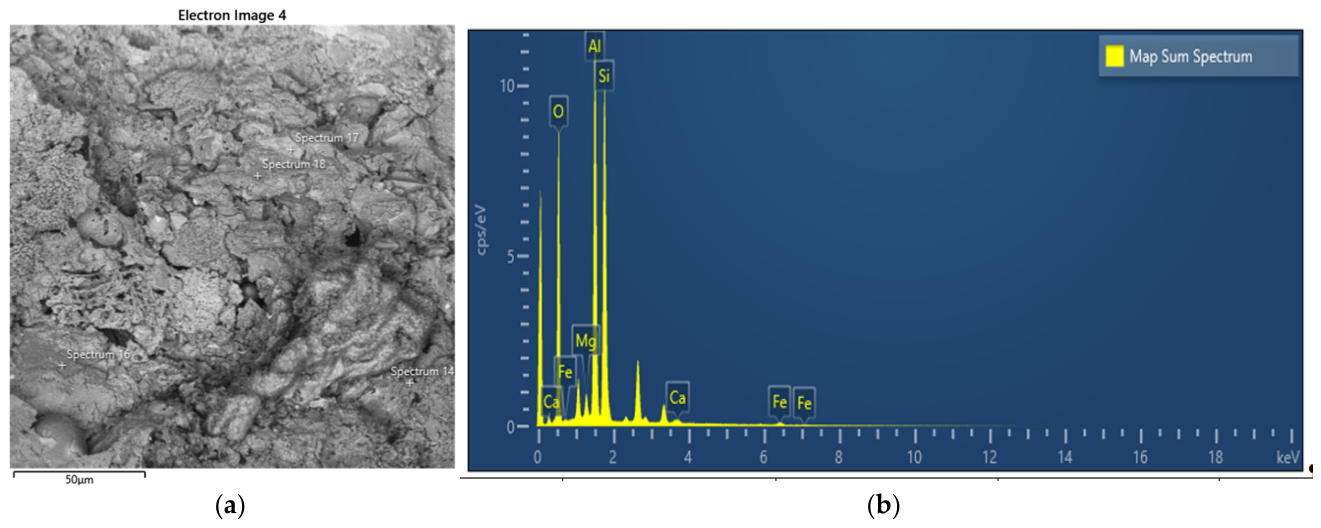
The microanalysis of sample #2 shown in Figure 5 also reveals several characteristic structural regions corresponding to the formation of various mineral phases. The surface of the fired pellet has a characteristic granular and porous structure. The size of the study area is approximately 50 μm, which allows for the evaluation of the microstructural features of the material at the submicron and micron levels. Several spectral analysis points (Spectrum 14, 16, 17, 18) are highlighted in the image area, corresponding to localized areas with different chemical compositions and, consequently, different phase states. Spectrum 14 likely corresponds to an area with an increased content of silica (SiO2) and aluminum (Al2O3), indicating the presence of an aluminosilicate phase—probably mullite (Al2O3 2SiO2). This phase forms the main matrix of the material and is responsible for its mechanical strength. Spectrum 16 is localized in an area with increased iron (Fe) and silicon content, indicating the formation of ferrosilicate inclusions. These phases are formed due to the interaction of iron from ferrosilicon screenings with silica at high temperatures and contribute to the strengthening of the pellet structure. Spectrum 17 corresponds to a calcium-containing phase present in the form of calcium-silicate minerals such as anorthite or other calcium aluminosilicates. Such phases are formed due to the interaction of calcium oxides and silica and contribute to the sintering of the material and improved cohesion between grains. Spectrum 18 can be interpreted as an area containing complex silicate compounds involving magnesium (Mg), calcium (Ca), aluminum, and silicon. This phase can be represented by a mixture of magnesium–calcium silicates and aluminosilicates.
Figure 5.
Microanalysis (a) and spectrogram (b) of sample No. 2.
According to the data in Table 7 and the spectrogram (Figure 5b), the main elements in the sample structure are oxygen, silicon (27.09%), and aluminum (24.17%), which corresponds to the oxide nature of the material. The presence of significant amounts of oxygen indicates the formation of stable oxide compounds as a result of the heat treatment of the pellets. Furthermore, the material structure contains potassium, which is part of complex aluminosilicate compounds. The presence of Fe (1.45%) and Mg (1.71%) indicates the participation of these elements in the formation of complex silicate compounds, which act as binding phases.
Table 7.
Data on the processing parameters of analyses of all elements of sample No. 2.
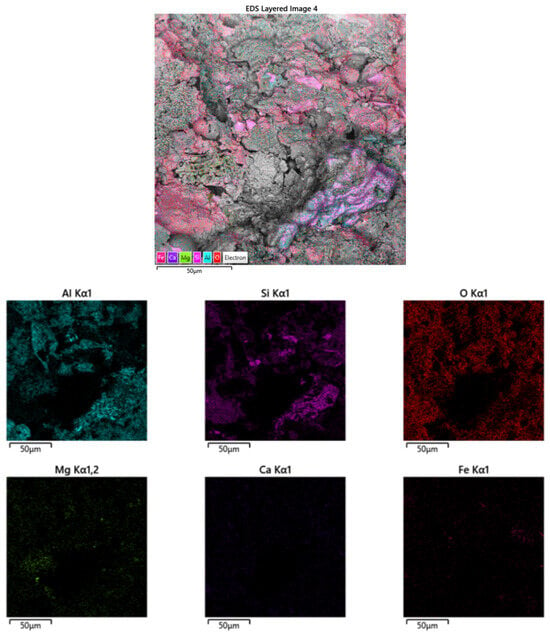
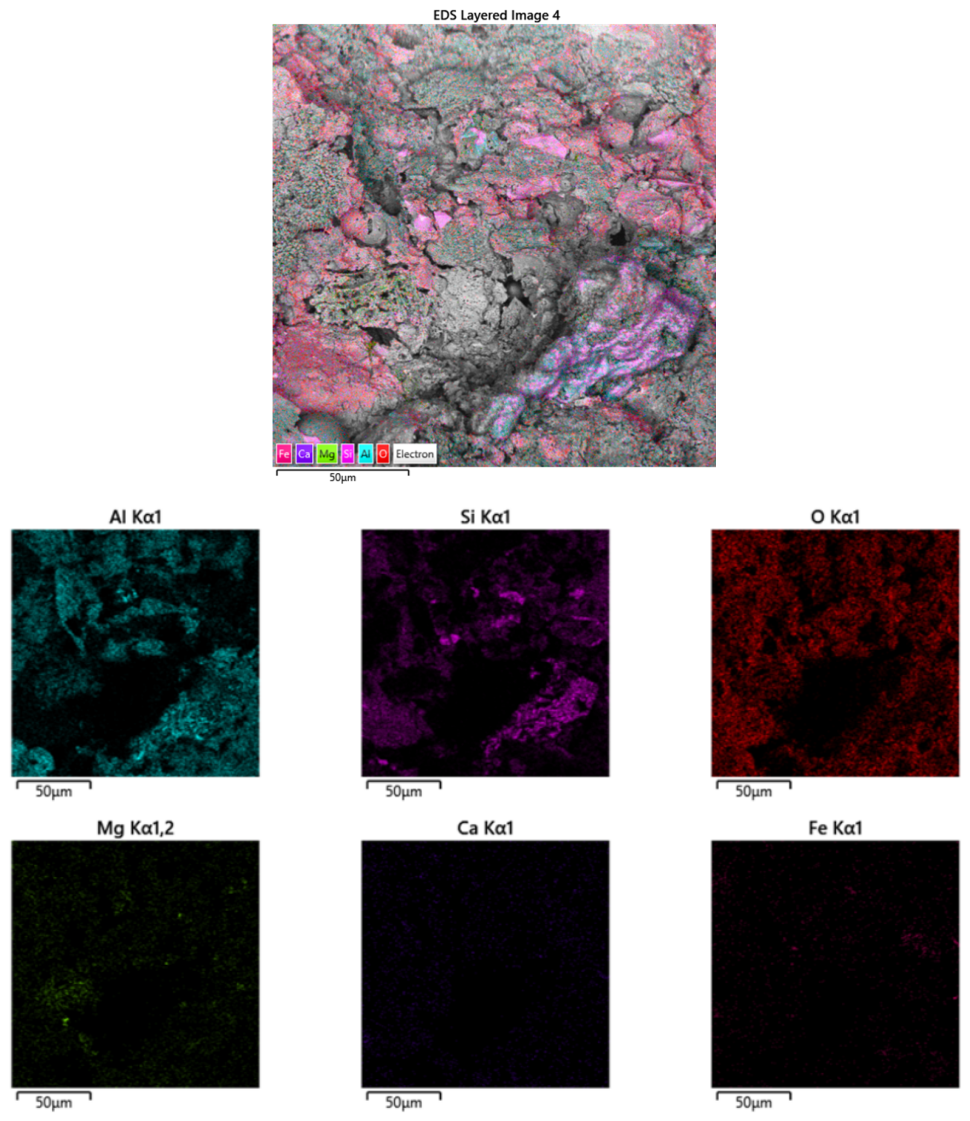
Figure 6 of the energy-dispersive analysis of the fired pellet surface reveals a heterogeneous fine-grained structure in the initial sintering stage, confirming the presence of localized areas with different chemical compositions. The results in Figure 5a confirm that at a temperature of 700 °C, physicochemical interactions occur in the material, forming an aluminosilicate framework (matrix). A visual indicator is its predominant background, represented by solid areas with a characteristic microrelief. Table 7 shows a high density of silicon (27.09%) and aluminum (24.17%). This indicates the formation of a stable aluminosilicate matrix, likely of mullite composition (Al6Si2O13), which is also observed in Figure 5a. The mullite composition acts as the skeleton of the pellets and determines their mechanical strength.
Figure 6.
Energy dispersive spectrum analysis of samples (EDS analysis) from the surface of sample No. 2.
When firing pellets at a temperature of about 700 °C, more intense solid-phase processes occur compared to the low-temperature stage, but for most refractory minerals, the system still remains in the region of phase stability without the formation of a liquid phase. The X-ray diffraction pattern of sample No. 2 is shown in Figure 7 and in Table 8 the quantitative mineral composition. Spinel of the composition Al1.99Mg0.998O4, mullite (Al2.4O4.8Si0.6), corundum (Al2O3), breiite (CaSiO3) at 700 °C retain thermodynamic and structural stability. Phase transformations do not occur, but the processes of diffusion compaction and reduction in the defectiveness of the crystal lattice are intensified, which can contribute to an increase in the strength of contacts between grains.
Figure 7.
X-ray diffraction pattern of sample No. 2 (pellets fired at 700 °C).
Table 8.
Mineral composition of sample No. 2.
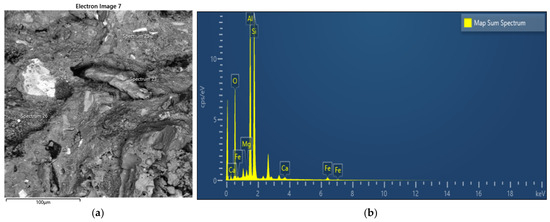
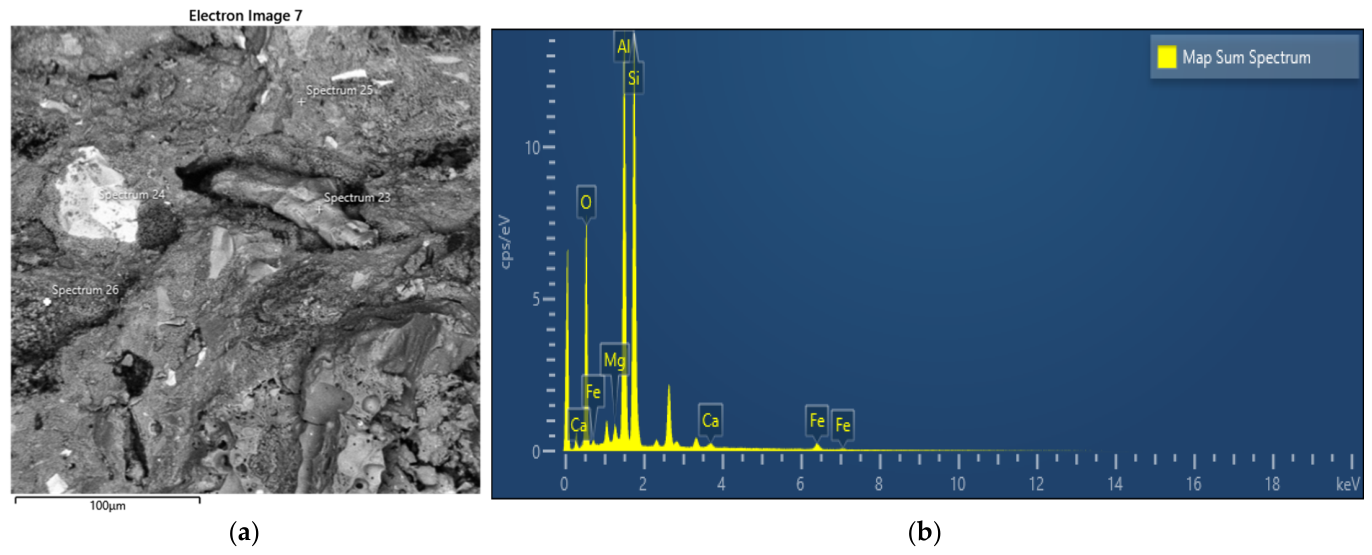
Figure 8a shows the result of microstructural analysis of pellets of sample No. 3, fired at a temperature of 800 °C.
Figure 8.
Microanalysis (a) and spectrogram (b) of sample No. 3.
The sample surface is characterized by a heterogeneous structure, consisting of a combination of dense sintered areas and individual porous zones. Thermal sintering processes are observed, resulting in the formation of denser areas of the material and the appearance of smoothed grain boundaries. Compared to samples fired at lower temperatures, the pellet structure becomes more compact and structurally ordered.
Figure 8a highlights several regions of local spectral analysis (Spectrum 23, Spectrum 24, Spectrum 25, and Spectrum 26), corresponding to regions with different chemical compositions and phase natures. Region Spectrum 23 likely corresponds to an aluminosilicate matrix formed by the interaction of aluminum oxide and silicon dioxide at elevated temperatures. This phase forms the bulk of the pellet structure and acts as a binding framework, providing the material’s mechanical strength. Spectrum 24 is represented by a lighter phase, which may indicate localized areas with elevated silicon or iron content. This area likely corresponds to ferrosilicate inclusions formed by the interaction of iron from the ferrosilicon screenings with silica during high-temperature processing. Spectrum 25 exhibits a dense structure with signs of partial melting and subsequent sintering. This morphology may be associated with the formation of a silica-containing glass phase, which acts as an intergranular binder and promotes compaction of the pellet structure. Spectrum 26 is characterized by a more porous structure and likely corresponds to zones containing complex silicate compounds involving calcium and magnesium. These elements originate from the original aluminum slags and aspiration dust and, during heat treatment, form calcium–magnesium silicate phases, which help strengthen intergranular bonds. According to the spectrogram shown in Figure 8b and the data in Table 9, the main elements present in the sample structure are oxygen (O), silicon (Si-32.22%) and aluminum (Al-24.94%). The most intense peaks correspond to silicon and aluminum, indicating the predominance of aluminosilicate compounds that form the main matrix of the material. The high oxygen content indicates the formation of stable oxide phases that arise during the heat treatment of the pellets. In addition to the main elements, the spectrum also shows less intense peaks of magnesium (Mg-1.14%), calcium (Ca-0.55%) and iron (Fe-3.10%). The presence of magnesium and calcium indicates the formation of complex silicate compounds resulting from the interaction of MgO and CaO oxides with silica at elevated temperatures.
Table 9.
Data on the processing parameters of analyses of all elements of sample No. 3.
Thus, the microstructure of the sample indicates that at a temperature of 800 °C, intense sintering and phase formation processes occur, accompanied by the formation of an aluminosilicate matrix, ferrosilicate inclusions, and complex silicate compounds. This structure, confirmed by energy-dispersive analysis (Figure 9), is characterized by a higher density and degree of consolidation compared to samples fired at lower temperatures.
Figure 9.
Energy dispersive spectrum analysis of samples (EDS analysis) from the surface of sample No. 3.
According to Table 4 of the chemical analysis of the pellets, with an increase in pellet firing temperature from 600 to 800 °C, a gradual increase in the SiO2 content (from 64.1 to 72.7%) and a simultaneous decrease in the Al2O3 proportion (from 29.5 to 25.9%) are observed. This change in chemical composition is due to a combination of physicochemical processes occurring in the aluminosilicate system during high-temperature processing, including component redistribution, phase transformations, and the formation of silicate compounds.
When pellets are fired at a temperature of 800 °C, the system enters the region of active solid-phase interactions and initial high-temperature sintering, which is accompanied by significant structural and phase changes that affect the formation of a strong pellet framework.
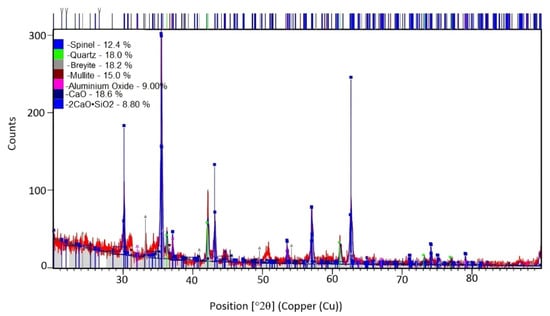
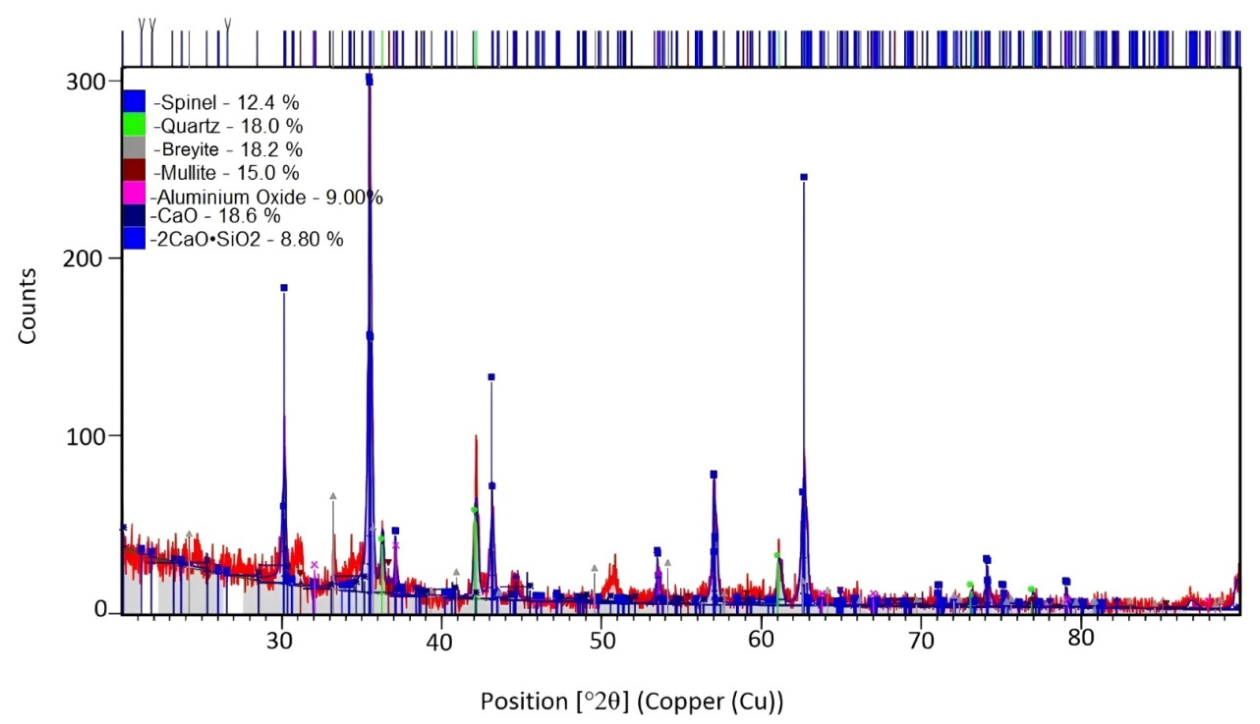
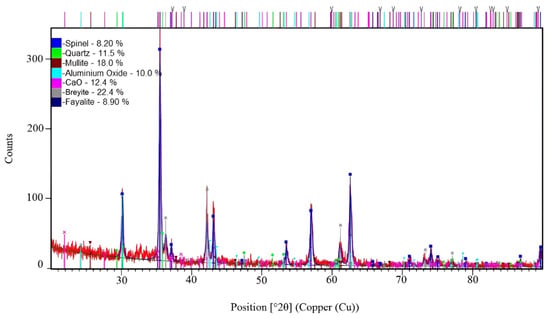
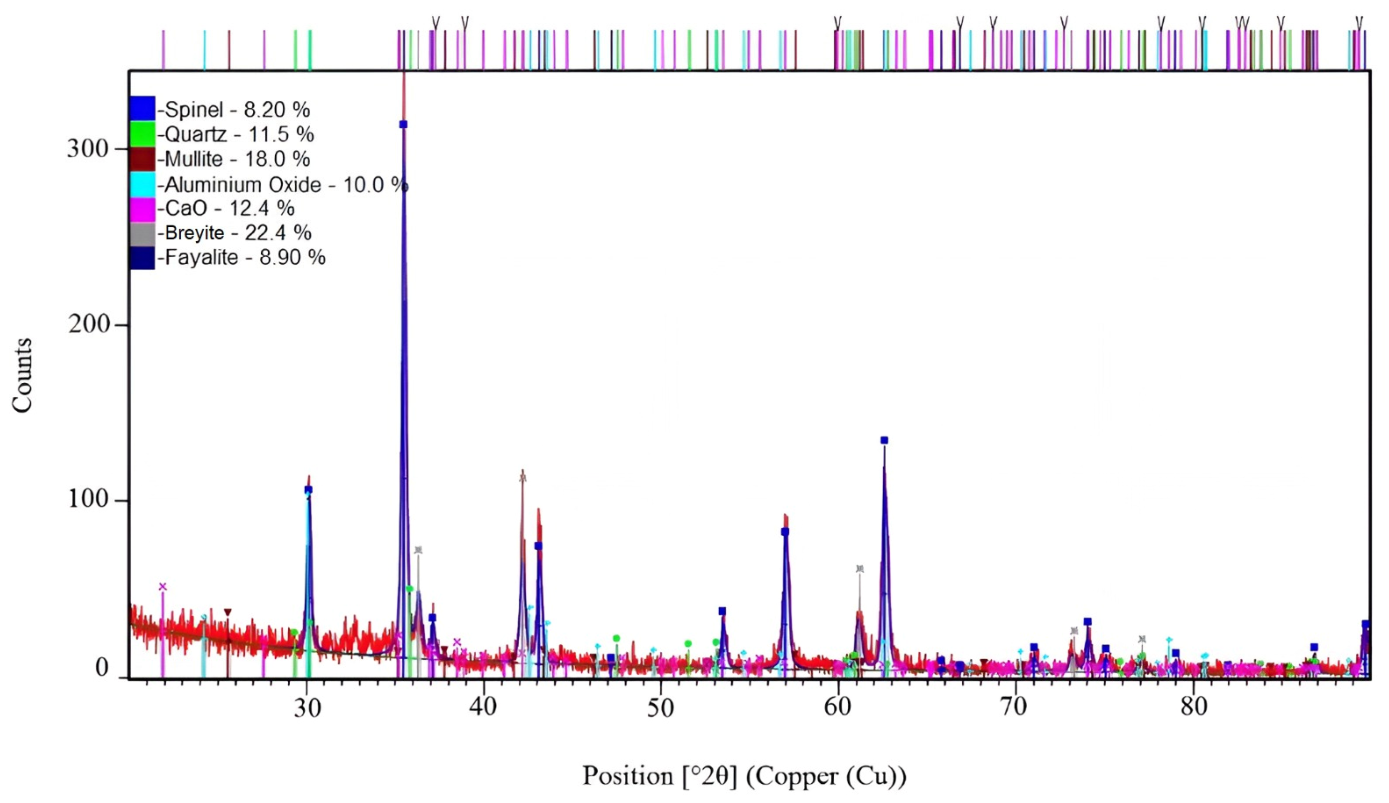
The introduction of aspiration dust from ferroalloy production with a high silica content (≈94% SiO2) into the pellet composition significantly changes the course of high-temperature processes and the mineralogical composition of the pellets, especially at temperatures of 800 °C. This is observed in the X-ray diffraction pattern of sample No. 3 (Figure 10 and Table 10) and is associated with the high dispersion of dust, the increased reactivity of amorphous and fine-crystalline SiO2 and its active interaction with the main oxides.
Figure 10.
X-ray diffraction pattern of sample No. 3 (pellets fired at 800 °C).
Table 10.
Mineral composition of sample No. 3.
As the firing temperature increases, diffusion interactions between aluminum oxide and silicon dioxide in the pellets become more active, leading to the formation of stable aluminosilicate phases. One of the most likely products of this interaction is a mullite-like phase, the formation of which can be described by the following reaction:
or in a more stable form:
2Al2O3 + SiO2 → Al4Si2O10
3Al2O3 + 2SiO2 → 3Al2O3·2SiO2 (mullite)
The formation of mullite-like compounds leads to the formation of an aluminosilicate matrix, which acts as the structural framework for the pellets. During the formation of this matrix, some of the aluminum oxide is bound into complex aluminosilicate compounds, resulting in a relative decrease in the proportion of Al2O3 in the overall chemical composition. Simultaneously, partial melting of silica-containing components occurs, primarily from aspiration dust from ferroalloy production. At temperatures above 700 °C, silicon dioxide actively participates in the formation of a silicate glass phase, which fills intergranular spaces and promotes particle sintering. The formation of the glass phase leads to local enrichment of the structure with silicon and, accordingly, to an increase in the relative SiO2 content in the chemical analysis of the samples. Iron, calcium, and magnesium impurities present in the original aluminum slags and batch additives also play a significant role in shaping the phase composition. During heat treatment, these elements react with silica to form various silicate compounds. In particular, iron can form ferrosilicate phases (fayalite), which can be conditionally described by the reaction:
2FeO + SiO2 → FeSiO4
These compounds are localized in the pellet structure as individual inclusions and can act as an additional strengthening component. Calcium and magnesium contained in the source materials interact with silica to form calcium–magnesium silicate phases (wollastonite and enstatite), such as
CaO + SiO2 → CaSiO3
MgO + SiO2 → MgSiO3
The formation of these compounds facilitates the formation of complex silicate phases, which are located predominantly in the intergranular regions and act as binding components, increasing the strength of the pellet structure.
Thus, the observed increase in SiO2 content and relative decrease in Al2O3 are associated with changes in the phase composition of the pellets with increasing firing temperature. During heat treatment, intense interaction between the charge components occurs, accompanied by the formation of an aluminosilicate matrix, ferrosilicate inclusions, and calcium–magnesium silicate compounds. These processes lead to a compaction of the pellet structure, a decrease in porosity, and an increase in their mechanical strength, as confirmed by the results of microstructural analysis, energy-dispersive spectroscopy, and X-ray diffraction analysis (Figure 2, Figure 3, Figure 4, Figure 5, Figure 6, Figure 7, Figure 8, Figure 9 and Figure 10).
3. Experimental Melting in an Electric Arc Furnace
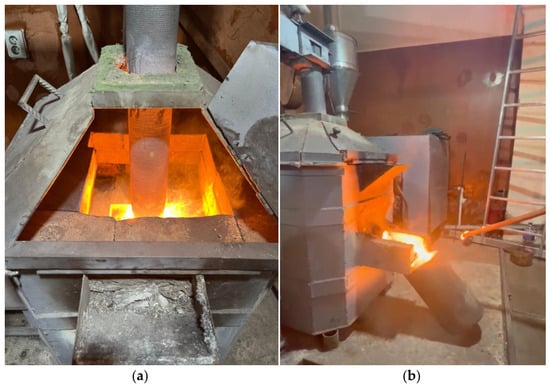
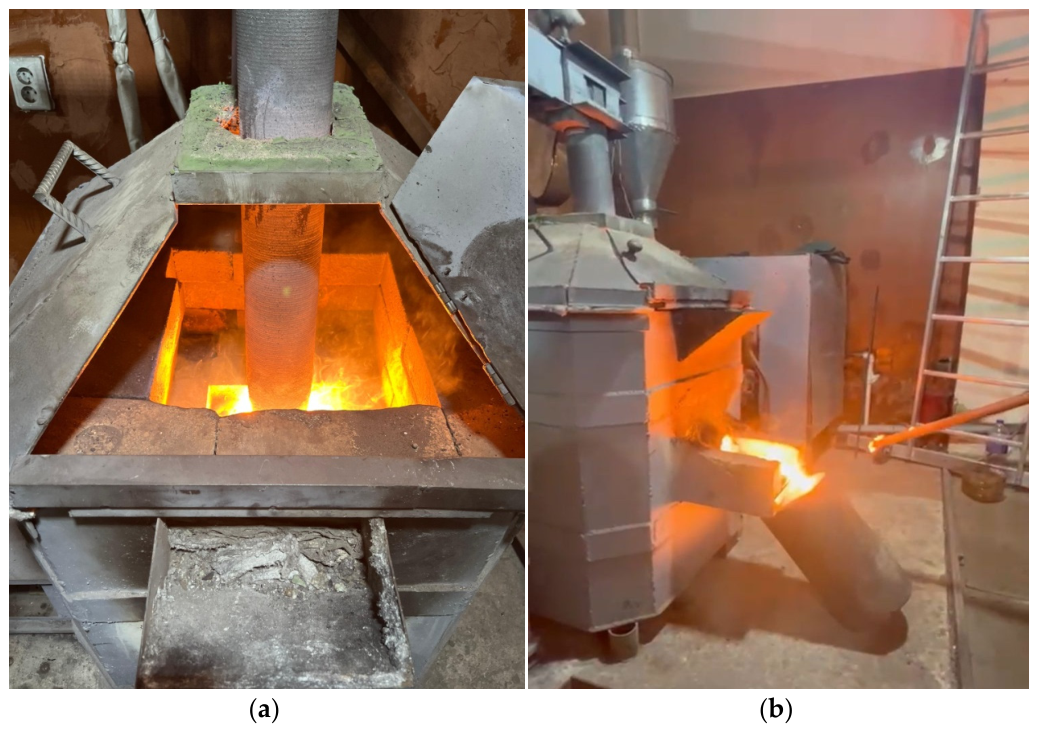
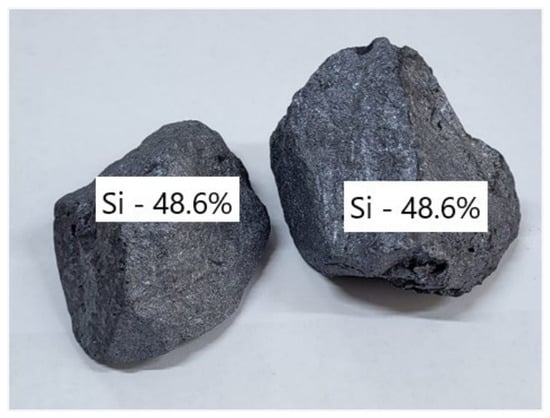
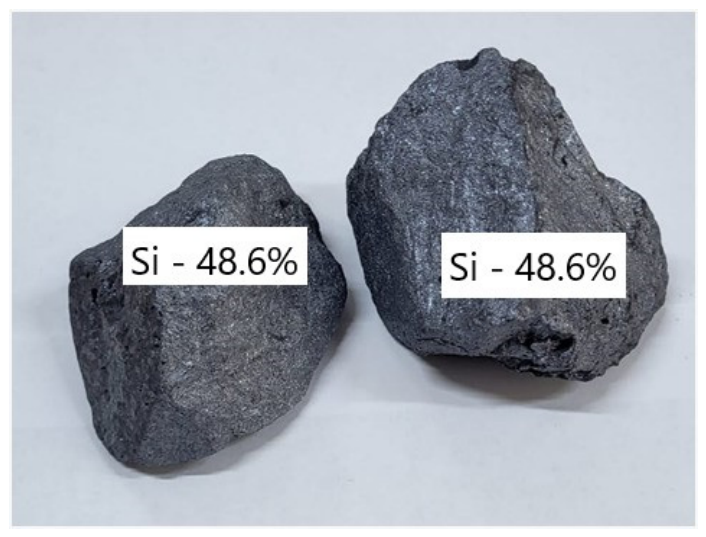
Laboratory smelting of ferrosilicon was carried out in an 80 kVA ore-thermal electric arc furnace using a multi-component charge of the following composition: pellets—30%, quartzite—20%, coke—20%, steel turnings—15% and iron ore agglomerate—15%. Moreover, the iron ore agglomerate was obtained from iron-containing waste from alumina production [49]. In the pilot smelting, pilot pellets were used that had been pre-treated at high temperature at 800 °C, which ensured an increase in their mechanical strength and thermal stability. The results of the smelting showed that the introduction of fired pellets into a traditional charge for ferrosilicon smelting does not negatively affect the process parameters and contributes to a stable smelting process. During the experiments, the process was characterized by a stable electrical regime and stable technological parameters. Uniform gas evolution was observed over the entire surface of the furnace throat, indicating a uniform course of reduction reactions in the reaction zone of the furnace. The electrode seating in the charge layer remained deep and stable, while the load on the electrodes remained virtually unchanged throughout the entire smelting period. After tapping the metal, processing the throat and loading a new portion of charge materials, the current load quickly stabilized, indicating satisfactory gas permeability of the charge, maintaining the optimal structure of the charge layer and favorable conditions for the course of reduction and smelting processes. Moreover, the specific energy consumption during the pilot smelting was 2100 kW h/t, which is lower than the indicators of traditional ferrosilicon smelting technology [50] and indicates an increase in the energy efficiency of the process when using roasted pellets. Silicon extraction was 91.8%. During the testing, 20 smelting runs were conducted. Figure 11 shows an 80 kVA ore-thermal furnace, which was used as a pilot unit in other scientific studies for smelting FeCrMnSi and FeSi [8,51]. Figure 12 shows a general view of the pilot ferrosilicon.
Figure 11.
80 kVA ore-thermal furnace: (a)—metal melting process; (b)—ferrosilicon release.
Figure 12.
Appearance of experimental ferrosilicon.
The chemical composition of the charge materials is presented in Table 11. The chemical composition of the obtained experimental ferrosilicon is presented in Table 12. As shown in Table 11, the iron ore agglomerate is characterized by a significant content of Fetotal (55.6%) and aluminum and calcium oxides (6.58 and 16.5%, respectively), as well as the presence of silica (13.28%). Quartzite, used as the main silicon-containing component of the charge, contains up to 97.2% SiO2 and ensures the formation of the silicon component of the alloy. It should be noted that the phase composition of the iron-containing components of the charge, including pellets, has a significant effect on the course of reduction processes and the formation of the final composition of ferrosilicon. The studies have shown (Table 4) that with an increase in the calcination temperature of the pellets, an increase in the SiO2 content is observed with a simultaneous relative decrease in the Al2O3 content. These changes are associated with the transformation of mineral phases and the formation of more stable aluminosilicate compounds, including mullite, as well as the formation of an aluminosilicate matrix and ferrosilicate inclusions.
Table 11.
Chemical composition of charge materials, %.
Table 12.
Average chemical composition of ferrosilicon, %.
The formation of an aluminosilicate matrix and complex silicate phases leads to the redistribution of silicon and aluminum between the mineral phases of the pellets. As a result, some of the aluminum is bound into stable aluminosilicate compounds, while the relative proportion of silica in the material increases. The resulting ferrosilicate phases promote a more uniform distribution of iron and silicon within the material structure and can influence subsequent reduction processes in the ore-smelting furnace. Mullite, present in the fired pellets, plays a special role in this process. This phase is highly thermally stable and can be preserved at the high temperatures typical of ferrosilicon smelting processes.
Under electrothermal melting conditions, mullite and other aluminosilicate compounds can participate in the formation of the slag phase, stabilizing its composition and viscosity. This, in turn, influences the conditions for silicon reduction from silica and the distribution of impurities between the metal and slag. The stability of the pellet phase composition and the presence of an aluminosilicate matrix positively influence the gas permeability and mechanical stability of the furnace charge layer, as evidenced by the stable electric melting mode. These factors facilitate the efficient carbothermic reduction of silica and the formation of ferrosilicon with the required composition. According to the results of the chemical analysis of the alloy (Table 12), the resulting ferrosilicon contains 47.8% Si, corresponding to the FS-45 grade. The content of aluminum, calcium, and other impurity elements is at the level typical for this type of alloy. The obtained results indicate that the use of man-made materials, including iron ore sinter and pellets from alumina production waste, is a promising approach for producing ferrosilicon. It should also be noted that pellets can actively participate in slag formation processes during ferrosilicon smelting. As shown previously (Table 4), increasing pellet firing temperature results in an increase in SiO2 content and a relative decrease in Al2O3. This is associated with the transformation of mineral phases and the formation of stable aluminosilicate compounds, including mullite (3Al2O3 2SiO2), as well as the formation of an aluminosilicate matrix and ferrosilicon inclusions. At the high temperatures typical of electrothermal melting (1600–1800 °C), these aluminosilicate phases partially decompose and transform into a slag phase, forming a complex silicate–aluminate system. The presence of Al2O3, CaO, and MgO oxides in the pellets (Table 11) facilitates the formation of a multicomponent slag of the SiO2-Al2O3-CaO-MgO-FeO system, which binds impurity components and provides optimal conditions for reduction processes.
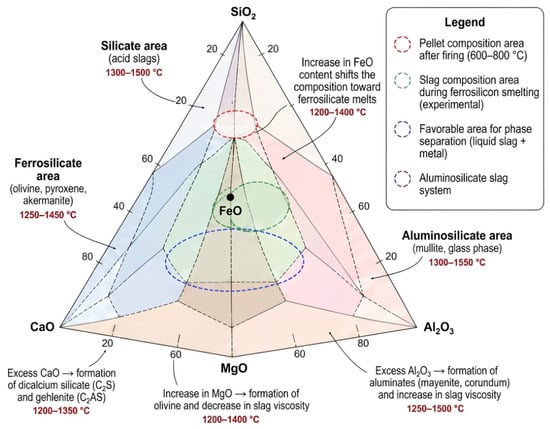
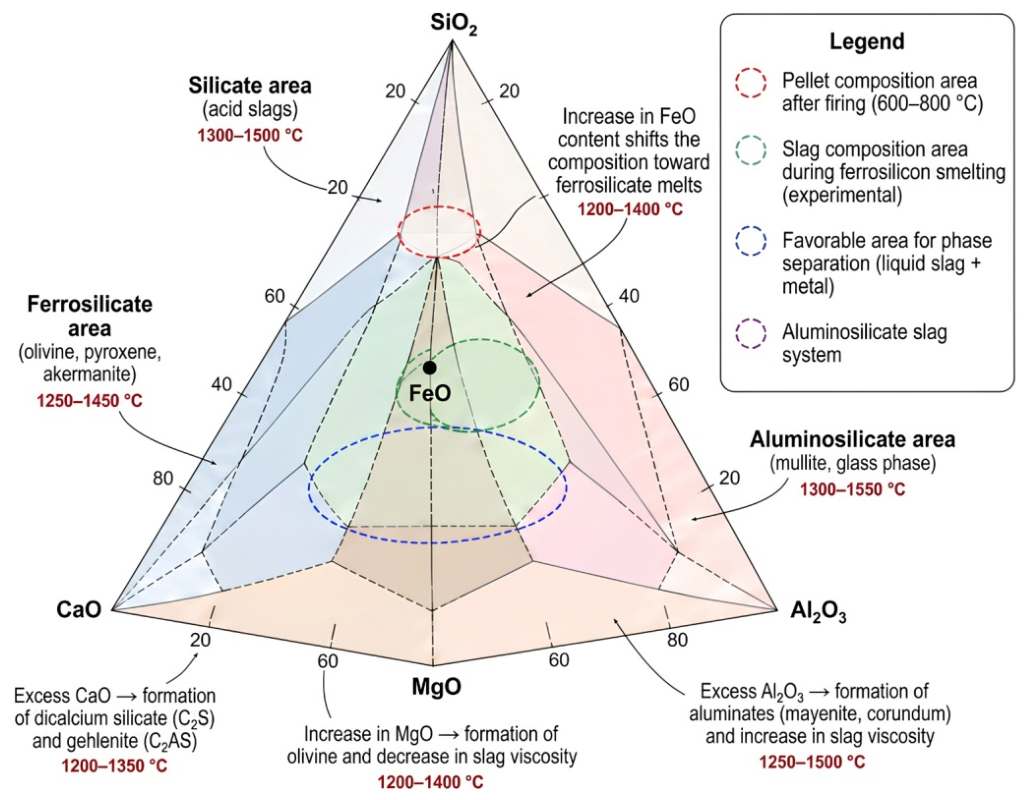
Figure 13 shows a diagram of the multicomponent SiO2-Al2O3-CaO-MgO-FeO system, reflecting the phase equilibrium region characteristic of aluminum slag-based pellets after high-temperature roasting and subsequent ferrosilicon smelting. The introduction of FeO into the system allows for a more complete description of the physicochemical processes occurring during ore-thermal smelting, as iron actively participates in the formation of ferrosilicate and aluminosilicate phases.
Figure 13.
SiO2-Al2O3-CaO-MgO-FeO system.
According to the results of microstructural and energy-dispersive analysis performed in this study, after pellet roasting at 600–800 °C, a complex aluminosilicate matrix is formed, including mullite-like compounds, ferrosilicates, and calcium- and magnesium-containing silicates. In the diagram, this region is located in the central part of the system, corresponding to the combined presence of SiO2, Al2O3, CaO, MgO and FeO.
The formation of these phases strengthens the pellet structure, increases their thermal stability, and maintains mechanical strength during subsequent heating and melting. The region labeled as ferrosilicate corresponds to the probable formation of olivine and pyroxene phases, which reduce the viscosity of the slag melt and improve the conditions for separating the metallic and slag phases. The presence of FeO shifts the system’s equilibrium toward the formation of liquid ferrosilicate melts, which positively affects the gas permeability of the charge layer and the stability of the electrothermal melting process. The aluminosilicate region of the diagram, enriched in Al2O3 and SiO2, corresponds to the formation of mullite and glass-phase structures observed in the fired pellets. These compounds act as a binding matrix between the grains of the material and ensure the formation of strong intergranular contacts during heat treatment. During experimental ferrosilicon smelting, the slag system composition was in the region of liquid aluminosilicate-ferrosilicate melts of the SiO2-Al2O3-CaO-MgO-FeO system, characterized by satisfactory fluidity, stable heat flow distribution, and effective separation of the metal and slag phases. This is confirmed by stable electrode seating, uniform gas evolution over the furnace top surface, and stable current load recorded during laboratory smelting.
Thus, the presented diagram confirms that the use of aluminum slag-based pellets promotes the formation of a favorable aluminosilicate-ferrosilicate slag system, ensuring stable reduction and smelting processes during the smelting of FS-45 ferrosilicon.
4. Conclusions
Conducted studies have demonstrated the technological feasibility and effectiveness of using pellets obtained from aluminum slags and other man-made materials as part of the ferrosilicon smelting charge. Pelletization of finely dispersed aluminum slags significantly improves the technological properties of the feedstock, including the particle size distribution, gas permeability, and mechanical strength of the charge materials. Heat treatment of the pellets at temperatures of 600–800 °C leads to the formation of a stable aluminosilicate structure, including mullite-like phases, ferrosilicate inclusions, and calcium–magnesium silicate compounds. The formation of these phases contributes to the compaction of the pellet structure, increasing their mechanical strength and stability during transportation and loading into smelting units. The results of experimental smelting in an ore-thermal electric arc furnace confirmed the suitability of the resulting pellets for use in ferrosilicon production. The smelting process was characterized by a stable electrical regime, uniform gas evolution in the furnace reaction space, and efficient reduction processes. The resulting alloy corresponds to the FS-45 ferrosilicon grade, demonstrating the high efficiency of the proposed charge composition. It was also established that the aluminosilicate phases present in the pellets actively participate in slag formation processes during ferrosilicon smelting. The formation of a multicomponent slag system of SiO2-Al2O3-CaO-MgO-FeO ensures optimal rheological properties of the slag melt, facilitates efficient separation of the metal and slag phases, and stabilizes the metallurgical process. From a technological and environmental perspective, the proposed approach offers a number of significant advantages. The use of man-made waste in the form of pellets allows for the recycling of aluminum slags, which currently accumulate in significant volumes and pose environmental risks. At the same time, the consumption of natural raw materials is reduced, the efficiency of metallurgical processes is increased, and the principles of resource conservation and environmentally sustainable development of metallurgical production are implemented.
Thus, the use of aluminum slag-based pellets in the ferrosilicon smelting charge is a promising direction for the development of resource-saving technologies in ferroalloy production and the efficient recycling of industrial waste from the metallurgical industry. Furthermore, the specific energy consumption during pilot smelting was 2100 kWh/t, which is lower than that of traditional ferrosilicon smelting technology and demonstrates the increased energy efficiency of the process using roasted pellets. A reduction in specific energy consumption of 18–33% and a reduction in production costs of up to 23% were established compared to traditional ferrosilicon smelting technology. The obtained results confirm that the use of roasted pellets improves the electrothermal smelting process, increases process stability, and enables more efficient use of mineral and energy resources. Taken together, this ensures not only the technological efficiency of the process, but also a significant economic effect, as well as an increase in the environmental safety of production due to the involvement of aluminum slag in industrial recycling.
Author Contributions
Conceptualization, A.Z. (Ablay Zhunusov) and O.Y.; methodology, A.Z. (Ablay Zhunusov), A.B. and O.Y.; software, R.T., A.K.; validation, A.Z. (Ablay Zhunusov) and A.B.; formal analysis, A.Z. (Ablay Zhunusov) and A.B.; investigation, A.Z. (Ablay Zhunusov), A.B., A.Z. (Aigul Zhunusova) and A.K.; resources, R.T.; data curation, A.B.; writing—original draft preparation, R.T. and A.Z. (Aigul Zhunusova); writing—review and editing, A.Z. (Aigul Zhunusova), R.T., A.B., A.K. and O.Y.; visualization, A.B.; supervision, O.Y. and A.Z. (Ablay Zhunusov). All authors have read and agreed to the published version of the manuscript.
Funding
This research was funded by the Science Committee of the Ministry of Science and Higher Education of the Republic of Kazakhstan (Grant No. AP23488812).
Data Availability Statement
The data presented in this study are available on reasonable request from the corresponding author. The data are not publicly available due to privacy.
Conflicts of Interest
The authors declare no conflicts of interest.
References
- Raabe, D. The Materials Science behind Sustainable Metals and Alloys. Chem. Rev. 2023, 123, 2436–2608. [Google Scholar] [CrossRef] [Scilit]
- Qian, Y.; Li, Y.; Hao, Y.; Yu, T.; Hu, H. Greenhouse gas control in steel manufacturing: Inventory, assurance, and strategic reduction review. Carbon Res. 2024, 3, 27. [Google Scholar] [CrossRef] [Scilit]
- Norgate, T.; Haque, N. Energy and greenhouse gas impacts of mining and mineral processing operations. J. Clean. Prod. 2009, 18, 266–274. [Google Scholar] [CrossRef] [Scilit]
- Norgate, T.E.; Jahanshahi, S.; Rankin, W.J. Assessing the environmental impact of metal production processes. J. Clean. Prod. 2006, 15, 838–848. [Google Scholar] [CrossRef] [Scilit]
- Nuss, P.; Eckelman, M.J. Life cycle Assessment of Metals: A scientific synthesis. PLoS ONE 2014, 9, e101298. [Google Scholar] [CrossRef] [Scilit]
- Harpprecht, C.; Xicotencatl, B.M.; Van Nielen, S.; Van Der Meide, M.; Li, C.; Li, Z.; Tukker, A.; Steubing, B. Future environmental impacts of metals: A systematic review of impact trends, modelling approaches, and challenges. Resour. Conserv. Recycl. 2024, 205, 107572. [Google Scholar] [CrossRef] [Scilit]
- Mahinroosta, M.; Allahverdi, A. Hazardous aluminum dross characterization and recycling strategies: A critical review. J. Environ. Manag. 2018, 223, 452–468. [Google Scholar] [CrossRef] [Scilit] [PubMed]
- Makhambetov, Y.; Zhakan, A.; Zhunusov, A.; Kabylbekov, S.; Burumbayev, A.; Sadyk, Z.; Akhmetov, A.; Uakhitova, B. Resource-Efficient Smelting Technology for FeCrMnSi Ferroalloy Production from Technogenic Wastes in an Ore-Thermal Furnace. Metals 2025, 15, 1318. [Google Scholar] [CrossRef] [Scilit]
- Zhunussov, A.K.; Tolymbekova, L.B.; Bykov, P.O.; Zayakin, O.V. Melting Ferrochrome Using Chrome-Ore Briquettes. Metallurgist 2023, 67, 606–613. [Google Scholar] [CrossRef] [Scilit]
- Zhunusov, A.K.; Bykov, P.O.; Kenzhebekova, A.E.; Zhunussova, A.K.; Nabawi, R.A. Study of the isothermal kinetics of reduction of sinter from mill scale. Kompleks. Ispolz. Miner. Syra Complex Use Miner. Resour. 2024, 328, 59–67. [Google Scholar] [CrossRef] [Scilit]
- Meshram, A.; Singh, K. Recovery of valuable products from hazardous aluminum dross: A review. Resour. Conserv. Recycl. 2018, 130, 95–108. [Google Scholar] [CrossRef] [Scilit]
- Sibanda, V.; Ndlovu, S.; Dombo, G.; Shemi, A.; Rampou, M. Towards the utilization of fly ash as a feedstock for smelter grade alumina production: A review of the developments. J. Sustain. Metall. 2016, 2, 167–184. [Google Scholar] [CrossRef] [Scilit]
- Ilic, M.; Cheeseman, C.; Sollars, C.; Knight, J. Mineralogy and microstructure of sintered lignite coal fly ash. Fuel 2003, 82, 331–336. [Google Scholar] [CrossRef] [Scilit]
- Temimi, M.; Camps, J.P.; Laquerbe, M. Valorization of fly ash in the cold stabilization of clay materials. Resour. Conserv. Recycl. 1995, 15, 219–234. [Google Scholar] [CrossRef] [Scilit]
- Manoharan, V.; Yunusa, I.A.M.; Loganathan, P.; Lawrie, R.; Skilbeck, C.G.; Burchett, M.D.; Murray, B.R.; Eamus, D. Assessments of Class F fly ashes for amelioration of soil acidity and their influence on growth and uptake of Mo and Se by canola. Fuel 2010, 89, 3498–3504. [Google Scholar] [CrossRef] [Scilit]
- Lee, H.; Ha, H.S.; Lee, C.H.; Lee, Y.B.; Kim, P.J. Fly ash effect on improving soil properties and rice productivity in Korean soils. Bioresour. Technol. 2006, 97, 1490–1497. [Google Scholar] [CrossRef] [Scilit]
- Matsi, T.; Keramidas, V.Z. Fly ash application on two acid soils and its effect on soil salinity, pH, B, P and on ryegrass growth and composition. Environ. Pollut. 1999, 104, 107–112. [Google Scholar] [CrossRef] [Scilit]
- Erol, M.; Küçükbayrak, S.; Ersoy-Meriçboyu, A. Characterization of sintered coal fly ashes. Fuel 2008, 87, 1334–1340. [Google Scholar] [CrossRef] [Scilit]
- Yao, Z.T.; Tan, S.H.; Xia, M.S.; Ye, Y.; Li, J.H. Synthesis, characterization and sintering behavior of indialite ceramic from fly ash. Waste Manag. Res. 2010, 29, 1090–1097. [Google Scholar] [CrossRef] [Scilit]
- Erol, M.; Küçükbayrak, S.; Ersoy-Meriçboyu, A. Comparison of the properties of glass, glass-ceramic and ceramic materials produced from coal fly ash. J. Hazard. Mater. 2008, 153, 418–425. [Google Scholar] [CrossRef] [Scilit]
- Bakirov, A.; Zhunusov, A.; Bulenbayev, M.; Ramazanova, R. Research of the Enrichment of Ash and Slag Waste from Coal Combustion at Thermal Power Plants Using the Flotation Enrichment Method. Int. Rev. Mech. Eng. (I.RE.M.E.) 2024, 18, 396–405. [Google Scholar] [CrossRef] [Scilit]
- Bakirov, A.; Abdullina, S.; Zhunusov, A.; Oleynikova, N. Preliminary Chemical Activation of Ash Waste with Release of Carbon Concentrate. Chem. Eng. Trans. 2021, 88, 973–978. [Google Scholar] [CrossRef]
- Bykov, P.O.; Kuandykov, A.B.; Suyundikov, M.M.; Zhunusov, A.K. Filtration refining of primary aluminum from impurities of vanadium intermetallides. Int. Rev. Mech. Eng. (I.RE.M.E.) 2024, 18, 491–495. [Google Scholar] [CrossRef] [Scilit]
- Campbell, J.; Tiryakioğlu, M. Fatigue failure in engineered components and how it can be eliminated: Case studies on the influence of bifilms. Metals 2022, 12, 1320. [Google Scholar] [CrossRef] [Scilit]
- Jain, D.; Khatri, C.; Rani, A. Fly ash supported calcium oxide as recyclable solid base catalyst for Knoevenagel condensation reaction. Fuel Process. Technol. 2010, 91, 1015–1021. [Google Scholar] [CrossRef] [Scilit]
- Liu, J.; Zhang, S.; Shen, H.; Lou, B.; Zhang, B. Recycling of secondary aluminum dross to make alumina by hydrometallurgy: A review. J. Mater. Res. Technol. 2024, 32, 4234–4245. [Google Scholar] [CrossRef] [Scilit]
- Lou, B.J.; Shen, H.L.; Liu, B.; Liu, J.; Zhang, S. Recycling secondary aluminum dross to make building materials: A review. Constr. Build. Mater. 2023, 409, 133989. [Google Scholar] [CrossRef] [Scilit]
- Zhu, X.Y.; Jin, Q.; Ye, Z. Life cycle environmental and economic assessment of alumina recovery from secondary aluminum dross in China. J. Clean. Prod. 2020, 277, 123291. [Google Scholar] [CrossRef] [Scilit]
- Adansa, Y.F.; Martinsa, A.R.; Coelhob, R.E.; das Virgensc, C.F.; Ballarinid, A.D.; Santos Carvalho, L. A Simple Way to Produce γ-Alumina from Aluminum Cans by Precipitation Reactions. Mater. Res. 2016, 19, 977–982. [Google Scholar] [CrossRef] [Scilit]
- Kolesnikov, A.S.; Naraev, V.N.; Natorhin, M.I.; Saipov, A.A.; Kolesnikova, O.G. Review of the processing of minerals and technogenic sulfide raw material with the extraction of metals and recovering elemental sulfur by electrochemical methods. Rasayan J. Chem. 2020, 13, 2420–2428. [Google Scholar] [CrossRef] [Scilit]
- Yang, J.; Liu, X.; Cui, K.; Lyu, J.; Liu, H.; Qiu, J. Hazards and Dealkalization Technology of Red Mud—A Critical Review. Minerals 2025, 15, 343. [Google Scholar] [CrossRef] [Scilit]
- Harmaji, A.; Jafari, R.; Simard, G. Valorization of Residue from Aluminum Industries: A Review. Materials 2024, 17, 5152. [Google Scholar] [CrossRef] [Scilit] [PubMed]
- Yan, J.; Li, X.; Pan, Z.; Lin, X.; Zuo, Q.; Zhou, J.; Zhou, S.; Sui, F.; Zhang, L.; Fischel, M.H.H. Red mud causes dynamic changes in the soil microbial community and cadmium fractions in a slightly cadmium-contaminated paddy soil. J. Hazard. Mater. 2025, 493, 138349. [Google Scholar] [CrossRef] [Scilit]
- David, E.; Kopac, J. The assessment of the recycling process of aluminum hazardous waste and a new route of development. Mater. Today Proc. 2019, 10, 340–347. [Google Scholar] [CrossRef] [Scilit]
- Hu, K.; Reed, D.; Robshaw, T.J.; Smith, R.M.; Ogden, M.D. Characterisation of aluminium black dross before and after stepwise salt-phase dissolution in non-aqueous solvents. J. Hazard. Mater. 2020, 401, 123351. [Google Scholar] [CrossRef] [Scilit]
- Padilla, I.; Romero, M.; López-Andrés, S.; López-Delgado, A. Sustainable management of salt slag. Sustainability 2022, 14, 4887. [Google Scholar] [CrossRef] [Scilit]
- Kulikov, B.; Dombrovskiy, N.; Kosovich, A.; Partyko, E.; Mansurov, Y.; Yuryev, P.; Stepanenko, N.; Baykovskiy, Y.; Durnopyanov, A.; Balanev, R.; et al. Multistage Recycling of Aluminum Casting Slags: Metal Extraction and Salt Flux Regeneration. Recycling 2026, 11, 52. [Google Scholar] [CrossRef] [Scilit]
- Kulikov, B.; Partyko, E.; Kosovich, A.; Yuryev, P.; Mansurov, Y.; Stepanenko, N.; Baykovskiy, Y.; Bozhko, D.; Durnopyanov, A.; Dombrovskiy, N.; et al. Analysis of composition, properties, and usage efficiency of different commercial salt fluxes for aluminum alloy refining. Metals 2025, 15, 448. [Google Scholar] [CrossRef] [Scilit]
- Rojas-Díaz, L.M.; Verano-Jiménez, L.E.; Muñoz-García, E.; Esguerra-Arce, J.; Esguerra-Arce, A. Production and characterization of aluminum powder derived from mechanical saw chips and its processing through powder metallurgy. Powder Technol. 2019, 360, 301–311. [Google Scholar] [CrossRef] [Scilit]
- Enginsoy, H.M.; Bayraktar, E.; Katundi, D.; Gatamorta, F.; Miskioglu, I. Comprehensive analysis and manufacture of recycled aluminum based hybrid metal matrix composites through the combined method; sintering and sintering + forging. Compos. Part B Eng. 2020, 194, 108040. [Google Scholar] [CrossRef] [Scilit]
- Al-Alimi, S.; Yusuf, N.K.; Ghaleb, A.M.; Lajis, M.A.; Shamsudin, S.; Zhou, W.; Altharan, Y.M.; Abdulwahab, H.S.; Saif, Y.; Didane, D.H.; et al. Recycling aluminium for sustainable development: A review of different processing technologies in green manufacturing. Results Eng. 2024, 23, 102566. [Google Scholar] [CrossRef] [Scilit]
- Tenorio, J.A.S.; Carboni, M.C.; Espinosa, D.C.R. Recycling of aluminum—Effect of fluoride additions on the salt viscosity and on the alumina dissolution. J. Light Met. 2001, 1, 195–198. [Google Scholar] [CrossRef] [Scilit]
- Yoshimura, H.N.; Abreu, A.P.; Molisani, A.L.; De Camargo, A.C.; Portela, J.C.S.; Narita, N.E. Evaluation of aluminum dross waste as raw material for refractories. Ceram. Int. 2007, 34, 581–591. [Google Scholar] [CrossRef] [Scilit]
- Yang, Y.; Gao, B.; Wang, Z.; Shi, Z.; Hu, X. Effect of physiochemical properties and bath chemistry on alumina dissolution rate in cryolite electrolyte. JOM 2015, 67, 973–983. [Google Scholar] [CrossRef] [Scilit]
- Lin, W.-C.; Tsai, C.-H.; Zhang, D.-N.; Syu, S.-S.; Kuo, Y.-M. Recycling of aluminum dross for producing calcinated alumina by microwave plasma. Sustain. Environ. Res. 2022, 32, 50. [Google Scholar] [CrossRef] [Scilit]
- Capuzzi, S.; Timelli, G. Preparation and melting of scrap in aluminum recycling: A review. Metals 2018, 8, 249. [Google Scholar] [CrossRef] [Scilit]
- Zhunussov, A.K.; Zhunusova, A.K.; Kenzhebekova, A.E.; Bakirov, A.G.; Tyulyubaev, R.A. Study of physical and chemical properties of granules obtained from aluminum slags. Sci. Technol. Kazakhstan 2025, 4, 262–274. [Google Scholar] [CrossRef] [Scilit]
- Makhambetov, Y.; Zhakan, A.; Gabdullin, S.; Akhmetov, A.; Burumbayev, A.; Zhunusov, A. Study on the synthesis of FeCrMnSi ferroalloy using technogenic raw materials. Acta Metall. Slovaka 2025, 31, 113–118. [Google Scholar] [CrossRef] [Scilit]
- Zhunussova, A.; Bykov, P.; Zhunusov, A.; Kenzhebekova, A. Research of the production of iron ore sinter from bauxite processing waste. Kompleks. Ispolz. Miner. Syra Complex Use Miner. Resour. 2024, 329, 73–81. [Google Scholar] [CrossRef] [Scilit]
- Etemadi, A.; Koohestani, H.; Tajally, M. The effect of different carbon reductants on the production of ferrosilicon 75% on an industrial scale in an electric arc furnace. Heliyon 2023, 9, e13956. [Google Scholar] [CrossRef] [Scilit]
- Zhunusov, A.K.; Zhunusova, A.K.; Kenzhebekova, A.E.; Bakirov, A.G.; Tyulyubaev, R.A. Study of the use of aluminium-containing waste in ferrosilicon production. J. Alloys Metall. Syst. 2025, 12, 100224. [Google Scholar] [CrossRef] [Scilit]

Disclaimer/Publisher’s Note: The statements, opinions and data contained in all publications are solely those of the individual author(s) and contributor(s) and not of MDPI and/or the editor(s). MDPI and/or the editor(s) disclaim responsibility for any injury to people or property resulting from any ideas, methods, instructions or products referred to in the content. |
© 2026 by the authors. Licensee MDPI, Basel, Switzerland. This article is an open access article distributed under the terms and conditions of the Creative Commons Attribution (CC BY) license.