


Abstract
The three-phase region of Mo3Si-Mo5Si3-Mo5SiB2(MoSiB) exhibits excellent high-temperature oxidation resistance and is considered a highly promising high-temperature structural material. However, the presence of porous structures significantly increases the surface area exposed to oxidation. Metallic porous materials often suffer from inadequate corrosion resistance and insufficient high-temperature oxidation resistance, whereas ceramic porous materials are plagued by high brittleness. Intermetallic compounds offer a combination of the advantages of both metals and ceramics. Nevertheless, the high-temperature oxidation behavior of porous MoSiB has not yet been systematically elucidated. The study systematically investigates the effect of pore structure on the high-temperature oxidation behavior of porous MoSiB at 1000 °C and 1300 °C, with a focus on oxidation kinetics, phase evolution, surface and cross-sectional morphology and underlying oxidation mechanisms. The effects of porosity and temperature on the oxidation process are also analyzed. The results indicate that at 1000 °C, the material exhibits uniform oxidation, with lower porosity contributing to better oxidation resistance. At 1300 °C, oxidation is limited to the surface layer, where low-viscosity SiO2(B) rapidly seals the pores to form a dense protective layer. This research reveals the high-temperature oxidation mechanism and phase evolution of porous MoSiB, providing a theoretical foundation for its application in high-temperature structural fields.
1. Introduction
High-temperature structural materials are the core and fundamental materials in fields such as aerospace, energy and power, and advanced propulsion [1,2,3]. They are required to serve in extreme environments with high temperature, oxidation, and corrosion for extended periods. This demands high-temperature strength, oxidation resistance, structural stability, and reliability [4,5,6]. The operating temperature of traditional superalloys is limited. Although ceramic materials can withstand high temperatures, they are brittle and have poor thermal shock resistance, making it difficult to meet the service requirements under complex working conditions [7,8,9]. Intermetallic compounds combine the toughness of metals with the high-temperature stability of ceramics, demonstrating significant advantages in the field of high-temperature structures and becoming an important development direction for a new generation of high-temperature materials [10,11].
The Mo3Si-Mo5Si3-Mo5SiB2(MoSiB) system intermetallic compounds are attracting growing interest for their ultra-high melting point, high-temperature strength, creep resistance, and oxidation resistance [12,13,14,15]. The MoSiB alloy with coexisting phases of Mo3Si, Mo5Si3, and Mo5SiB2 enables the in situ formation of a SiO2-B2O3 glassy protective film during high-temperature oxidation through Si and B elements [16,17]. This film effectively inhibits further oxygen diffusion while maintaining superior high-temperature mechanical properties, making the MoSiB alloy a promising candidate for ultra-high-temperature structural materials. Currently, extensive research has been conducted on the fabrication, microstructural control, mechanical properties, and high-temperature oxidation behavior of dense MoSiB intermetallics, while studies on their porous counterparts remain relatively limited [18,19,20].
Porous high-temperature structural materials possess a distinctive combination of low density, high specific surface area, excellent permeability, and robust load-bearing capacity. Compared with porous metals, porous intermetallics offer improved resistance to high-temperature oxidation and corrosion. Compared with porous ceramics, they may provide better thermal shock tolerance and structural integrity [4,21,22]. Nevertheless, oxidation of porous materials is intrinsically more complex than that of dense materials. The pore network not only accelerates inward oxygen diffusion but also provides outward pathways for volatile oxides such as MoO3 and B2O3. Moreover, oxidation products may either block pores and establish a protective surface layer, or locally restructure the skeleton and promote volumetric oxidation [23]. Therefore, the oxidation resistance of porous MoSiB is not governed solely by the intrinsic oxidation behavior of Mo3Si, Mo5Si3, and Mo5SiB2 phases, but by the coupled evolution of pore geometry, oxide viscosity, volatile-product transport, and oxide scale densification [24].
Although porous Mo3Si-Mo5Si3-Mo5SiB2 intermetallics have recently been prepared and their pore skeleton structures and mechanical behavior have been investigated, their high-temperature oxidation behavior remains insufficiently resolved [25,26,27]. In particular, several critical issues remain unclear. First, it is not known whether porous MoSiB follows the transient-to-steady oxidation mode established for dense MoSiB alloys, or whether open pores induce bulk oxidation of the whole skeleton. Second, the role of porosity in determining mass change, oxide product distribution, and pore blocking has not been systematically evaluated. Third, the temperature-dependent transition between low-temperature internal oxidation and high-temperature surface-limited oxidation has not been clarified. These questions are particularly important at 1000 °C and 1300 °C, which represent typical medium-to-high- and ultra-high-temperature regimes for Mo-Si-B-based materials [25,28,29]. The temperature ranges of 1000 °C and 1300 °C are typical service conditions for high-temperature structural materials. At these temperatures, key aspects are still not clearly understood, such as the oxidation rate, types of oxidation products, growth behavior of oxide layers, and the influence of porosity on oxidation behavior in porous MoSiB materials. B2O3 volatilization, SiO2 crystallization, and the coupling of MoO3 loss with oxygen diffusion all require clarification that demands integrated thermodynamic analysis and microstructural characterization [30,31].
Against this background, the present study systematically investigates the high-temperature oxidation behavior of porous MoSiB intermetallics at 1000 °C and 1300 °C. Emphasis is placed on establishing how pore structure controls oxidation kinetics, phase evolution, and oxide scale morphology, and on identifying the mechanism responsible for the transition from bulk oxidation to surface-layer oxidation. By combining oxidation kinetics, X-ray diffraction phase analysis, and surface and cross-sectional microstructural characterization, this study reveals two distinct oxidation modes. At 1000 °C, oxygen penetrates through the open pore network and promotes near-volumetric oxidation of the porous skeleton, accompanied by gradual pore filling and closed-pore oxide formation. In contrast, it confines oxidation to the near-surface region and produces a layered SiO2/MoO2/Mo oxide scale at 1300 °C. The key distinction of this work is that the oxidation mechanism of porous MoSiB is demonstrated to be governed not only by the thermodynamics of Mo, Si, and B oxidation, but also by the temperature-dependent pore channel transport, B2O3 volatilization, oxide viscosity, and protective-scale formation. These findings provide a mechanistic basis for designing oxidation-resistant porous MoSiB intermetallics for high-temperature structural and functional applications.
2. Materials and Experimental Procedures
The experiment used Mo, Si, and B element powders with a purity of ≥99.9 wt.% as raw materials, analytical grade anhydrous ethanol as the mixing medium, and NH4HCO3 as the pore-forming agent to prepare porous MoSiB intermetallic compounds through spark plasma sintering + homogenization treatment (SPS + HT) [12]. The research team has previously successfully prepared MoSiB intermetallic compounds with varying porosity levels [12]. The high-temperature oxidation behavior of the porous MoSiB intermetallic compounds in flowing air at 1000 °C and 1300 °C was characterized. The porous samples were thin plates with dimensions of 10 × 10 × 1 mm, placed in an alumina crucible. The mass of the samples was measured before and after oxidation using an electronic balance with an accuracy of 0.1 mg. Three parallel samples were set for each sample. To account for pore structure effects, the sample area used in oxidation kinetics analysis is defined as the product of the specific surface area and sample mass. To simulate the high-temperature gas filtration environment, the oxidation experiments were conducted in a tube furnace. Pure Ar gas with a purity of 99.99% was used for protection during the oxidation heating and cooling stages, with a flow rate of 20 mL/min. Air was introduced during the oxidation stage with a flow rate of 60 mL/min. X-ray diffraction (XRD, Bruker-D8 Discover, Bruker AXS GmbH, Karlsruhe, Germany) and scanning electron microscopy (SEM, Crossbeam 350 FE-SEM, Carl Zeiss Microscopy GmbH, Oberkochen, Germany) were combined to analyze the oxidation kinetics, oxidation products, and oxidation morphology at different oxidation temperatures.
3. Results and Discussion
3.1. Oxidation Kinetics at 1000 °C
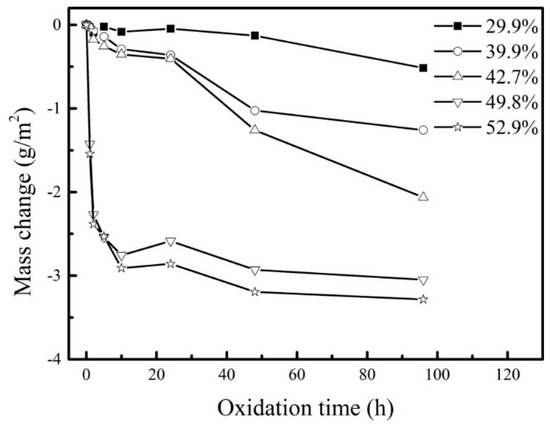
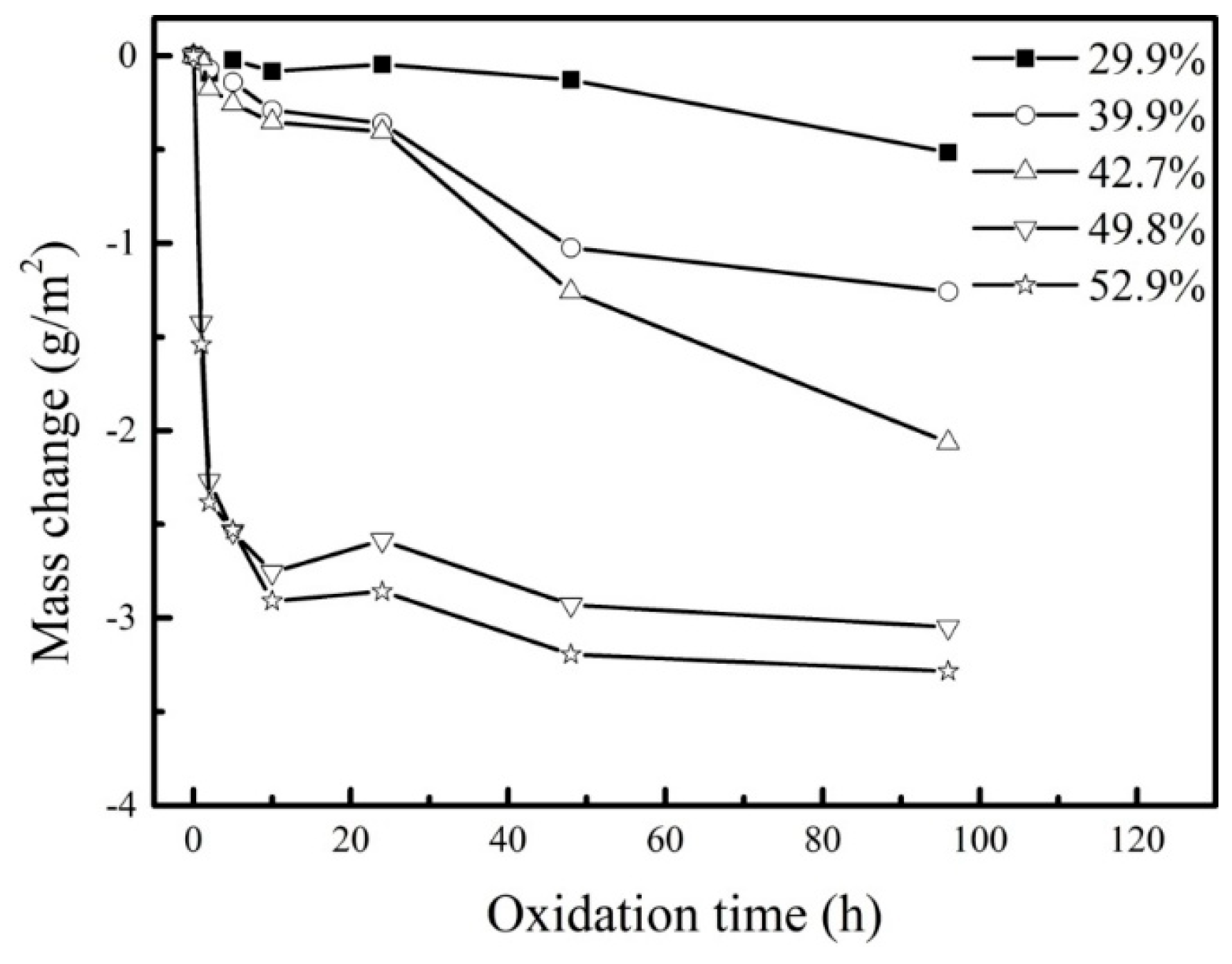
The oxidation kinetic curves of porous MoSiB intermetallic compounds after 96 h of oxidation at 1000 °C were shown in Figure 1. For samples with porosities of 29.9–42.7%, the mass loss during the initial oxidation stage of 0–10 h remains below 0.5 g/m2, whereas the samples with porosities of 49.8–52.9% show a rapid mass loss of nearly 3 g/m2 in the same period, followed by gradual stabilization. This behavior indicates that the oxidation response is not governed by total porosity in a simple linear manner, but is closely related to pore connectivity and effective oxygen transport pathways. At relatively low porosities, the pore network is less interconnected and contains more narrow pore throats, which restrict oxygen penetration into the internal skeleton. In addition, initially formed SiO2/B2O3-containing oxidation products can partially block these fine channels, thereby suppressing further inward oxidation and MoO3 volatilization. In contrast, when the porosity increases from 42.7% to 49.8%, the pore structure appears to cross a critical connectivity threshold, producing more open and continuous channels for oxygen diffusion. Because the SiO2–B2O3 glassy phase formed at 1000 °C has relatively high viscosity and limited fluidity, these enlarged channels cannot be sealed rapidly, allowing oxygen to penetrate deeper into the porous framework and intensify internal oxidation and MoO3 volatilization. Therefore, the abrupt increase in mass loss between 42.7% and 49.8% porosity suggests a transition from restricted pore-assisted oxidation to interconnected pore-assisted internal oxidation. The subsequent stabilization of the mass change curves after the initial stage can be attributed to the gradual formation of SiO2- or borosilicate-based oxidation products, which partially cover the skeleton surface, reduce MoO3 volatilization, and mark the onset of a more stable oxidation stage.
Figure 1.
Oxidation kinetics curves of porous MoSiB intermetallic compound at 1000 °C.
3.2. Analysis of Oxidation Mechanism at 1000 °C
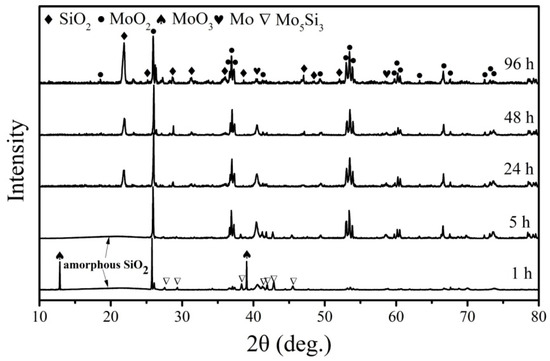
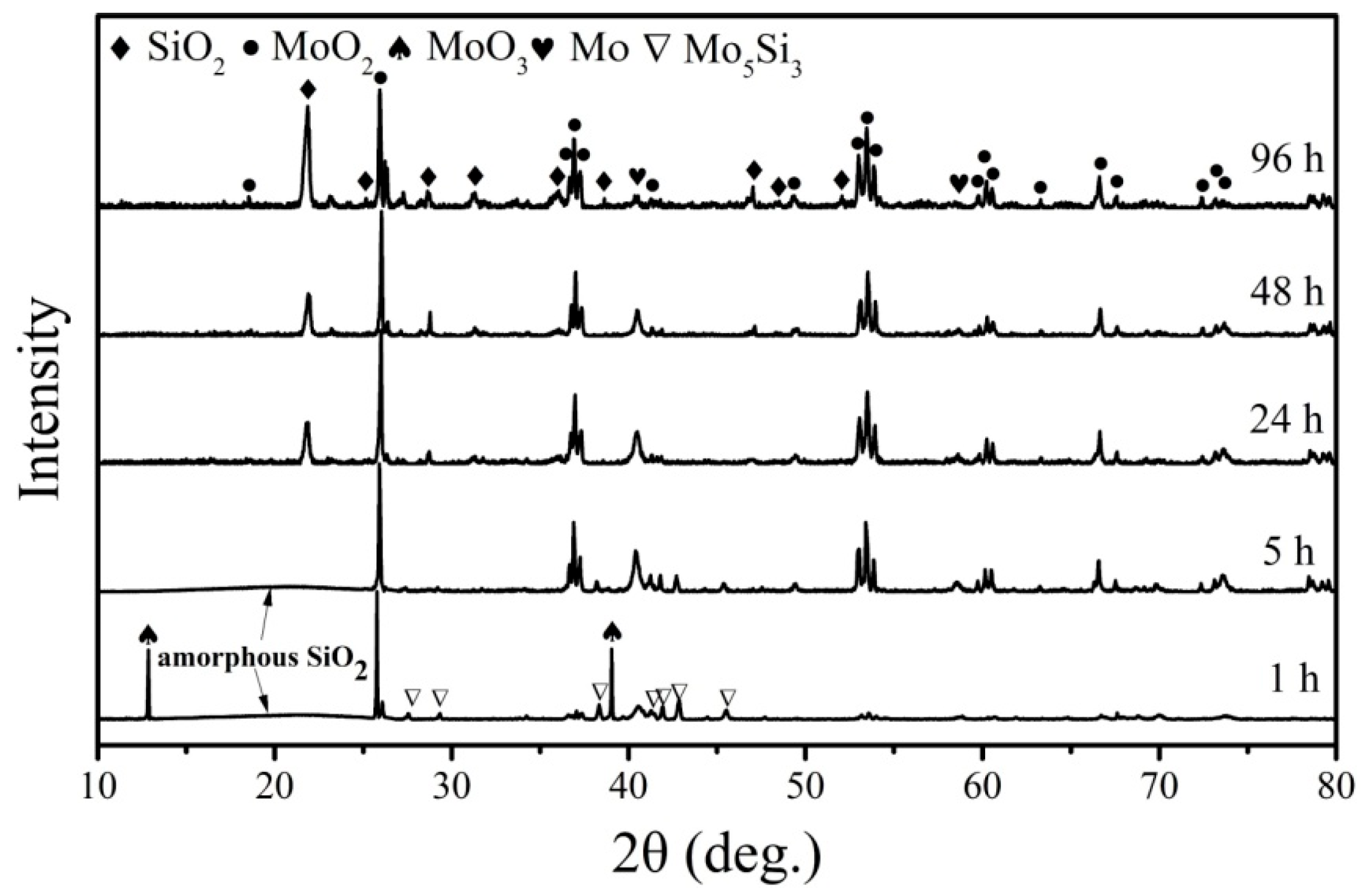
The results in Figure 2 show the phase evolution of the 52.9% porous MoSiB intermetallic compound during oxidation at 1000 °C from 1 to 96 h. The surface matrix phase is predominantly Mo5Si3 after 1 h of oxidation, with oxidation products comprising MoO3, MoO2, amorphous SiO2, and a trace amount of elemental Mo. At this initial stage, the short oxidation duration prevents complete volatilization of the formed MoO3, allowing its detection by XRD. MoO3 completely volatilizes upon extending the oxidation to 5 h, and the oxidation products comprise MoO2, amorphous SiO2, and elemental Mo. Notably, the diffraction peaks of MoO2 intensify significantly, while those of Mo show a slight increase in intensity. From 24 to 96 h, the composition stabilizes as MoO2, crystalline SiO2, and elemental Mo. At the same time, SiO2 peak intensity increases markedly, MoO2 peaks remain stable, and Mo peaks decline notably.
Figure 2.
XRD patterns of the oxidation products of porous MoSiB intermetallic compound at 1000 °C.
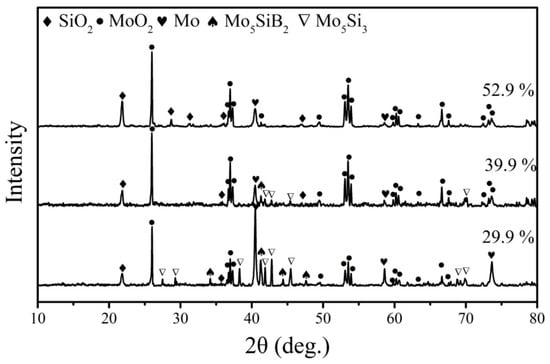
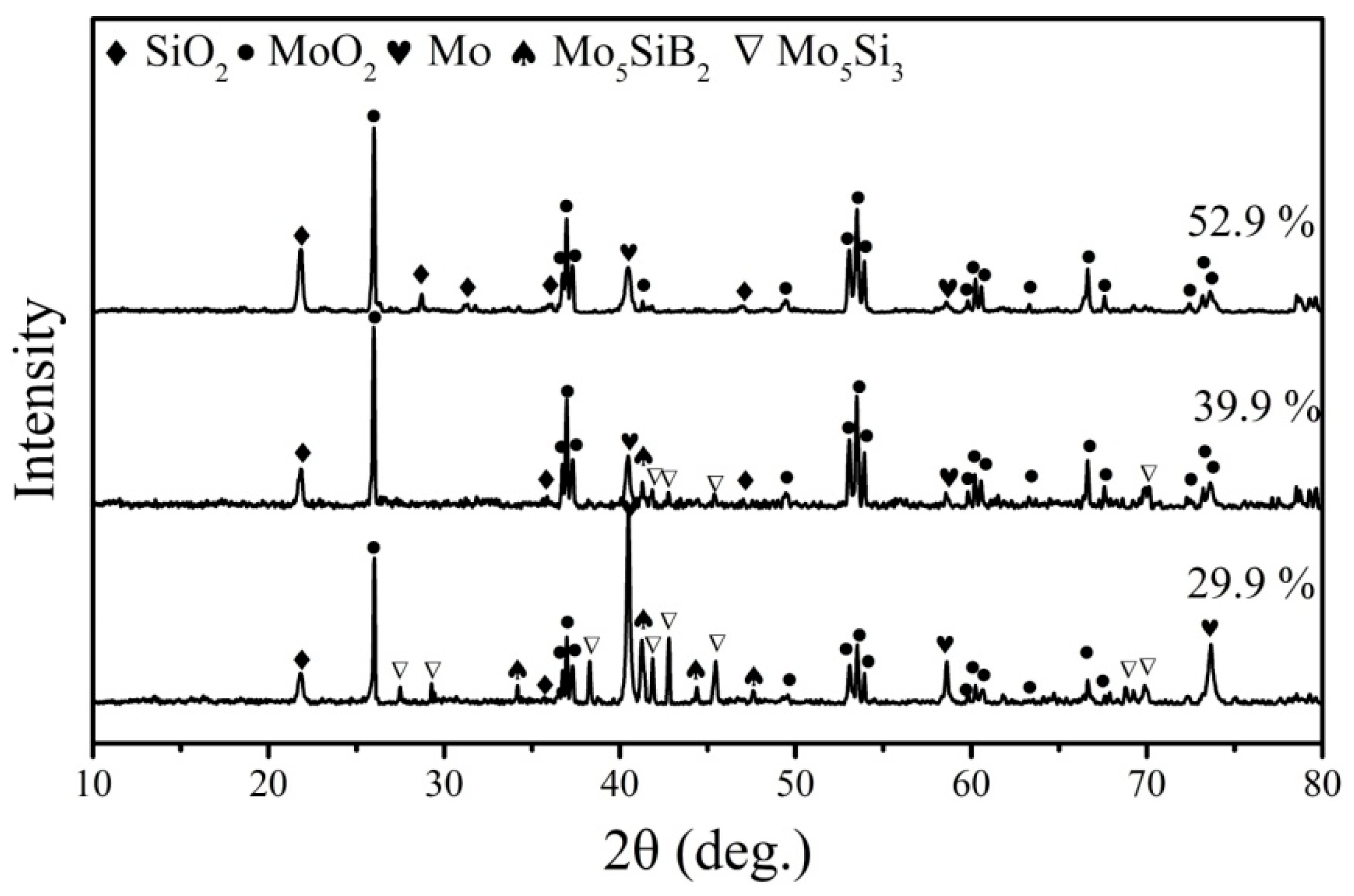
Figure 3 presents the surface XRD patterns of porous MoSiB intermetallic compounds with total porosities of 29.9%, 39.9%, and 52.9% after oxidation at 1000 °C for 24 h. The results indicate that porosity does not alter the composition of the oxidation products, which consist of MoO2, SiO2, and elemental Mo. However, as porosity increases, the diffraction peaks of MoO2 and SiO2 in the oxide layer are progressively enhanced, while the peak intensity of Mo gradually diminishes. Furthermore, the peak intensity of the MoSiB phase in the oxide layer progressively weakens as porosity increases, indicating complete oxidation of the MoSiB framework at the surface.
Figure 3.
Effect of porosity on the oxidation products of porous MoSiB intermetallic compounds at 1000 °C.
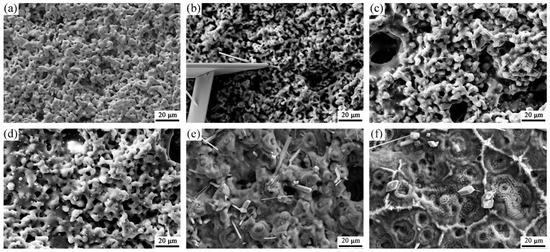
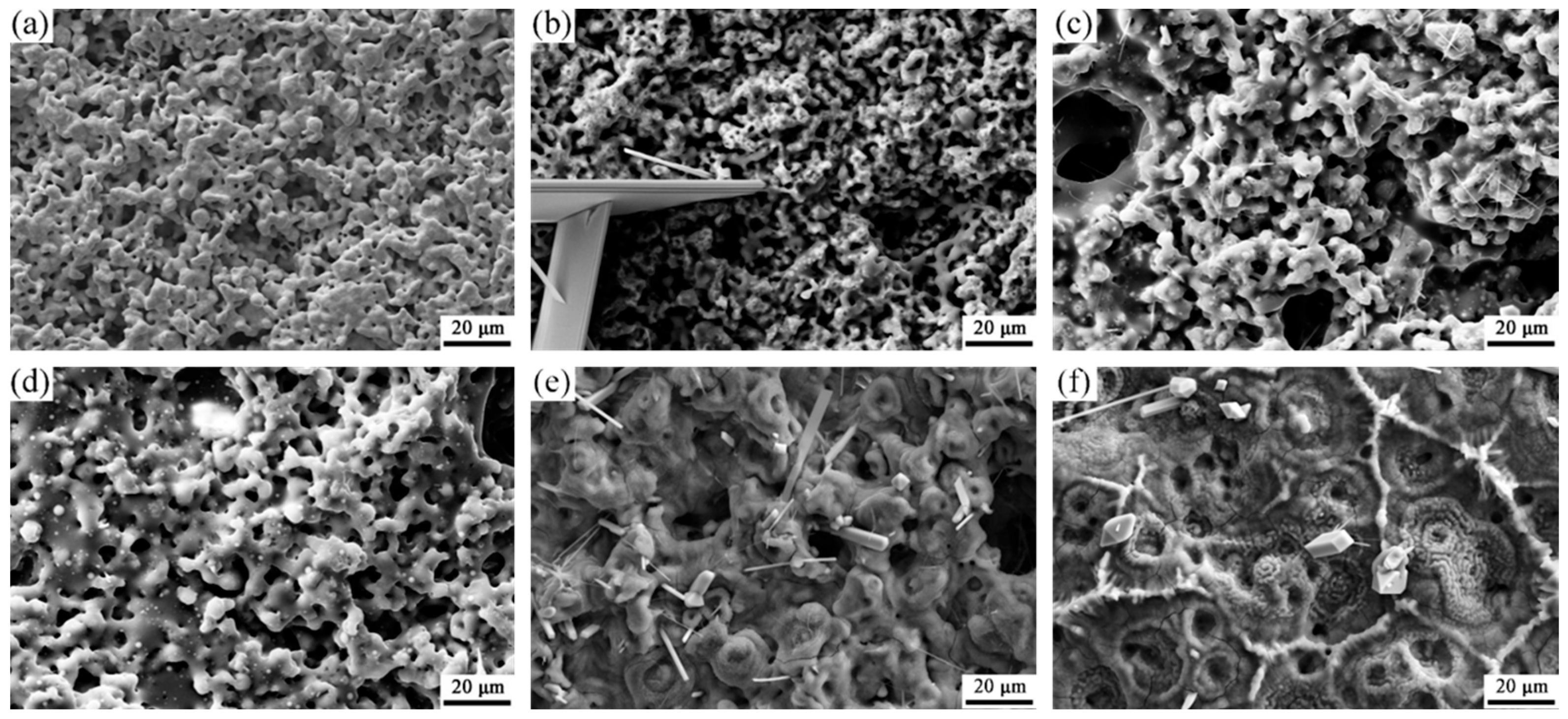
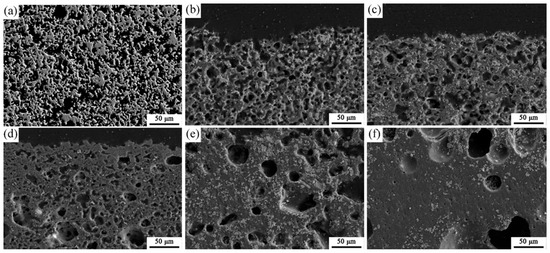
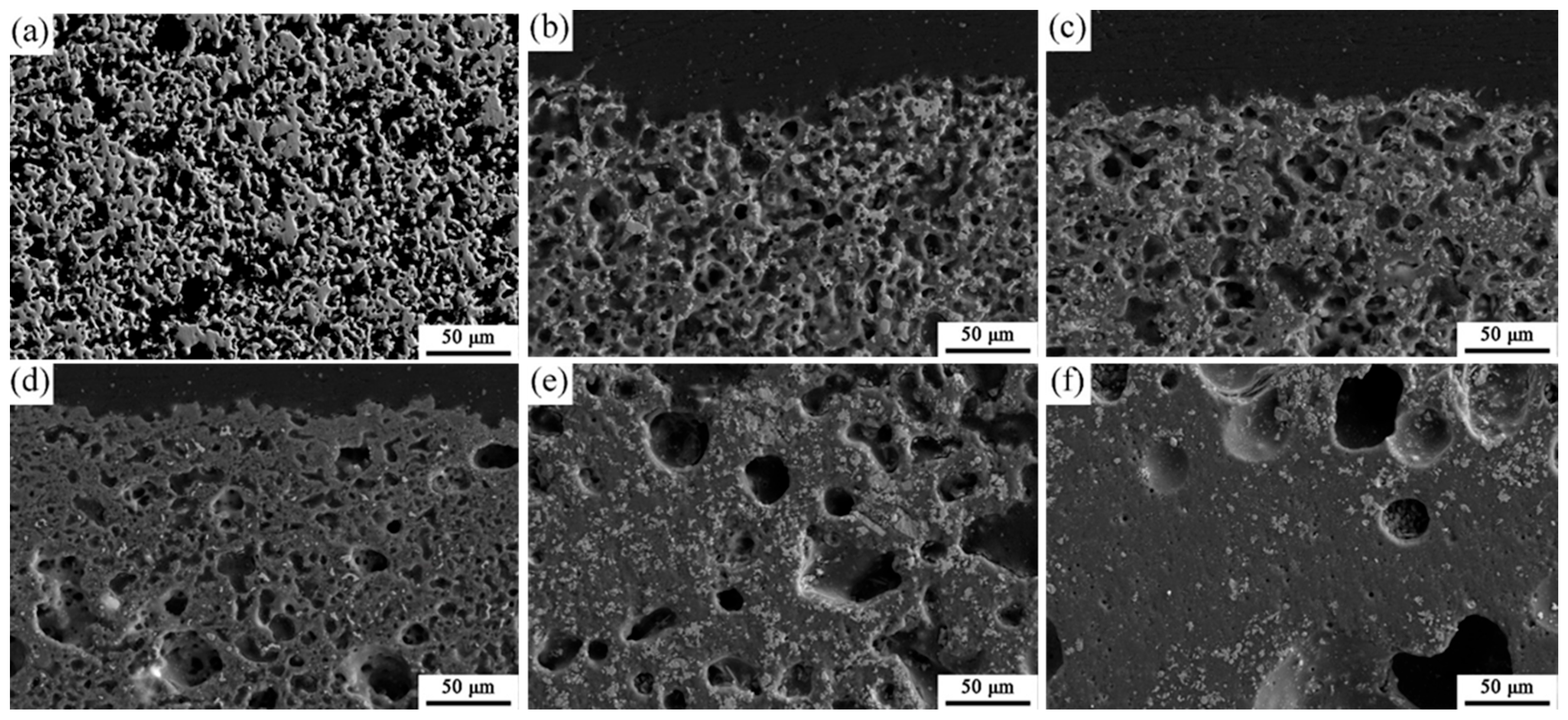
The surface morphology of a porous MoSiB intermetallic compound has a total porosity of 52.9% after oxidation at 1000 °C, as shown in Figure 4. The morphological features undergo significant changes as oxidation time increases. Compared to the unoxidized porous MoSiB intermetallic compound (Figure 4a), flaky oxidation products are observed on the surface after 1 h of oxidation (Figure 4b). Based on XRD analysis and morphological characteristics, these flaky products are identified as MoO3. Additional oxidation products are also formed on the skeletal surface, though the skeletal morphology remains largely unchanged. After 5 h of oxidation (Figure 4c), a substantial amount of MoO3 has volatilized. The resulting oxides begin to clog smaller pores and merge with the existing skeleton, increasing its dimensions. Some skeletal regions are completely oxidized, with the oxidation products either volatilizing or adhering to adjacent skeletal structures by creating new oxygen pathways that facilitate oxygen access to the inner skeleton. Following 24 h of oxidation, further skeletal oxidation occurs, and the resulting fluid-like oxide scale progressively blocks the pores. After 48 h of oxidation (Figure 4e), smaller surface pores are entirely obstructed, leaving only larger pores formed during the oxidation process. B2O3 volatilizes, leaving behind a dense SiO2 layer through which oxygen must diffuse to react with Mo and the remaining intermetallic skeleton that forms MoO2. After 96 h of oxidation, the generated oxides seal the remaining larger pores, resulting in the formation of a fully dense oxide scale on the surface.
Figure 4.
Surface morphology of porous MoSiB intermetallic compound following oxidation at 1000 °C, (a) 0 h, (b) 1 h, (c) 5 h, (d) 24 h, (e) 48h, (f) 96h.
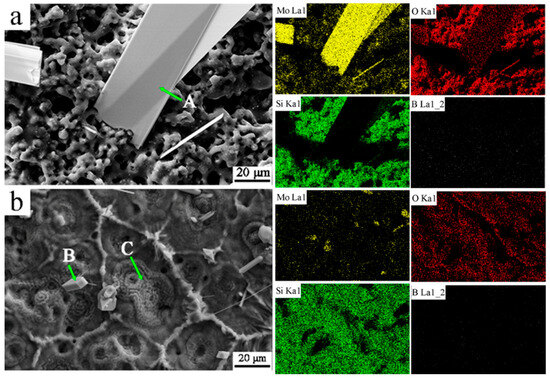
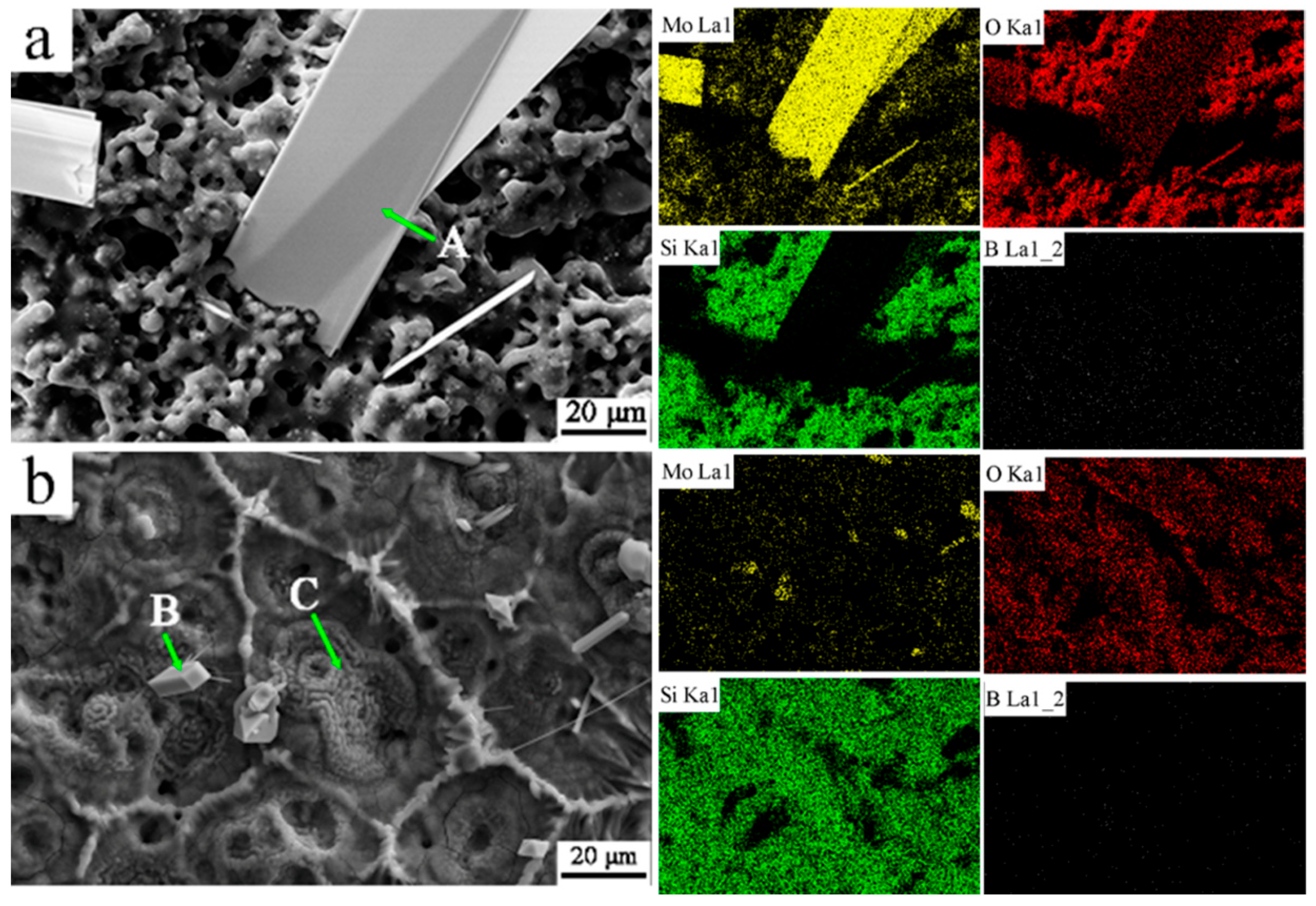
Figure 5 presents the surface oxidation morphology of porous MSB intermetallic compounds with a total porosity of 52.9% after oxidation at 1000 °C, and the morphological characteristics undergo significant changes with the extension of oxidation time. Figure 5a,b presents the surface morphology and elemental distribution from energy dispersive spectrometer (EDS) mapping of porous MoSiB intermetallic compounds after oxidation at 1000 °C for 1 h and 48 h, respectively. After 1 h of oxidation, the skeletal structure on the surface exhibited a low concentration of Mo, with primary constituents being Si and O, along with a minor amount of B. It can be inferred that the oxide formed on the skeletal surface is B2O3–SiO2. The flaky oxide phase was composed of Mo and O, with an atomic content ratio of 20.13:77.16 as indicated in Table 1. Combined with XRD analysis, this phase was identified as MoO3. After 48 h of oxidation, the principal elements of the oxide layer were Si and O, whereas B was barely detectable. EDXS results from location C indicated the presence of SiO2, and XRD analysis revealed that this SiO2 layer was crystalline. The absence of B is attributed to the volatilization of B2O3 during prolonged oxidation. Trace amounts of Mo were detected on the surface of the oxide layer, predominantly concentrated within irregular polygonal particles. Based on EDXS and XRD analyses, these particles were identified as MoO2, likely exposed due to the volatilization of surface MoO3 or B2O3.
Figure 5.
EDS mapping analysis of MoSiB intermetallics with a total porosity of 52.9% after oxidation at 1000 °C, (a) 1 h, (b) 48 h.
Table 1.
Localized elemental EDXS analysis corresponding to the regions indicated in Figure 5.
The microstructural evolution in Figure 6 indicates a progressive transformation of the original open porous skeleton into an oxide-derived structure during oxidation at 1000 °C. As shown in Figure 6a,b, comparative analysis of the cross-sectional microstructures before oxidation and after 1 h of oxidation indicates that the overall porous architecture is largely preserved. However, the initial MoSiB ternary intermetallic framework undergoes substantial chemical transformation, yielding a heterogeneous matrix of oxidation products and residual MoSiB. Concurrently, the majority of fine pores vanish due to pore filling and structural densification. Unlike dense MoSiB intermetallics, where protective continuous oxide layers such as SiO2-rich scales block oxygen ingress, the open pore structure allows rapid oxygen diffusion inward that causes uniform volumetric oxidation across the entire MoSiB scaffold. Following 5 h of oxidation, both the pore geometry and the skeletal architecture undergo pronounced reorganization that the average pore size and strut dimensions increase progressively. XRD analysis confirms a marked reduction in intermetallic phase content at this stage, with oxidation products becoming the dominant constituents. Furthermore, the high mobility of the amorphous B2O3-SiO2 eutectic phase promotes dynamic pore evolution during isothermal oxidation, giving rise to new pore configurations. After 48 h of oxidation, pore coarsening continues and total porosity decreases. After 96 h, the outer SiO2-rich layer thickens and densifies, restricting outward B2O3 diffusion and volatilization. Trapped B2O3 then vaporizes internally, generating expansive pressure that forms spherical closed pores. Ultimately, the original open-cell MoSiB intermetallic foam is fully converted into a closed-pore composite consisting primarily of SiO2 and MoO2.
Figure 6.
Cross-sectional morphology of porous MoSiB intermetallic compound after oxidation at 1000 °C, (a) 0 h, (b) 1 h, (c) 5 h, (d) 24 h, (e) 48 h, (f) 96 h.
XRD and surface morphology analysis of the oxidized samples revealed that the oxidation products of the porous MoSiB intermetallic compound after 1 h of oxidation at 1000 °C consist of MoO3, MoO2, Mo, SiO2,and B2O3. Following oxidation for 5–96 h, the oxidation products comprise MoO2, Mo, SiO2, and B2O3. The diversity in the oxidation products of molybdenum is attributed to multiple possible reactions during the high-temperature oxidation of the MoSiB intermetallic compound.
The oxidation reaction of Mo3Si:
Mo3Si + O2 = 3Mo + SiO2
Mo3Si + 4O2 = 3MoO2 + SiO2
Mo3Si + 5.5O2 = 3MoO3 + SiO2
The oxidation reaction of Mo5Si3:
Mo5Si3 + 3O2 = 5Mo + 3SiO2
Mo5Si3 + 8O2 = 5MoO2 + 3SiO2
Mo5Si3 + 10.5O2 = 5MoO3 + 3SiO2
The oxidation reaction of Mo5BSi2:
Mo5SiB2 + 2.5O2 = 5Mo + SiO2 + B2O3
Mo5SiB2 + 7.5O2 = 5MoO2 + SiO2 + B2O3
Mo5SiB2 + 10O2 = 5MoO3 + SiO2 + B2O3
The sequence of oxidation reactions in the high-temperature oxidation process of metals can be determined through thermodynamic analysis. The prerequisite for an oxidation reaction to occur is that the free energy of the reaction equation decreases, meaning the Gibbs free energy change (ΔG0) of the chemical reaction is negative.
Under conditions of sufficient oxygen content, the standard Gibbs free energy for the equation per mole of molybdenum oxides Mo, MoO2, and MoO3 can be obtained from Equations (1)–(9).
Gibbs free energy for the equation of 1 mole of oxidation products from Mo3Si:
The Gibbs free energy for the equation of 1 mol of the oxidation product of Mo5Si3:
The Gibbs free energy for the equation of 1 mol of the oxidation product of Mo5BSi2:
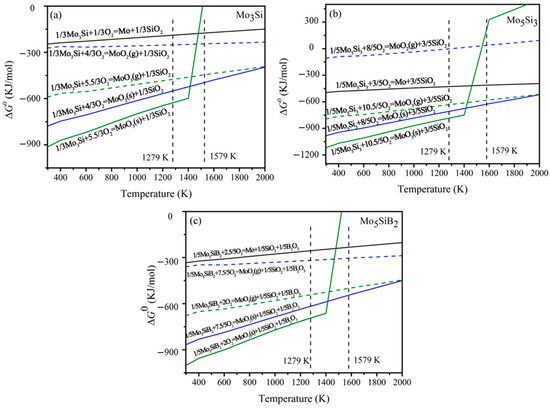
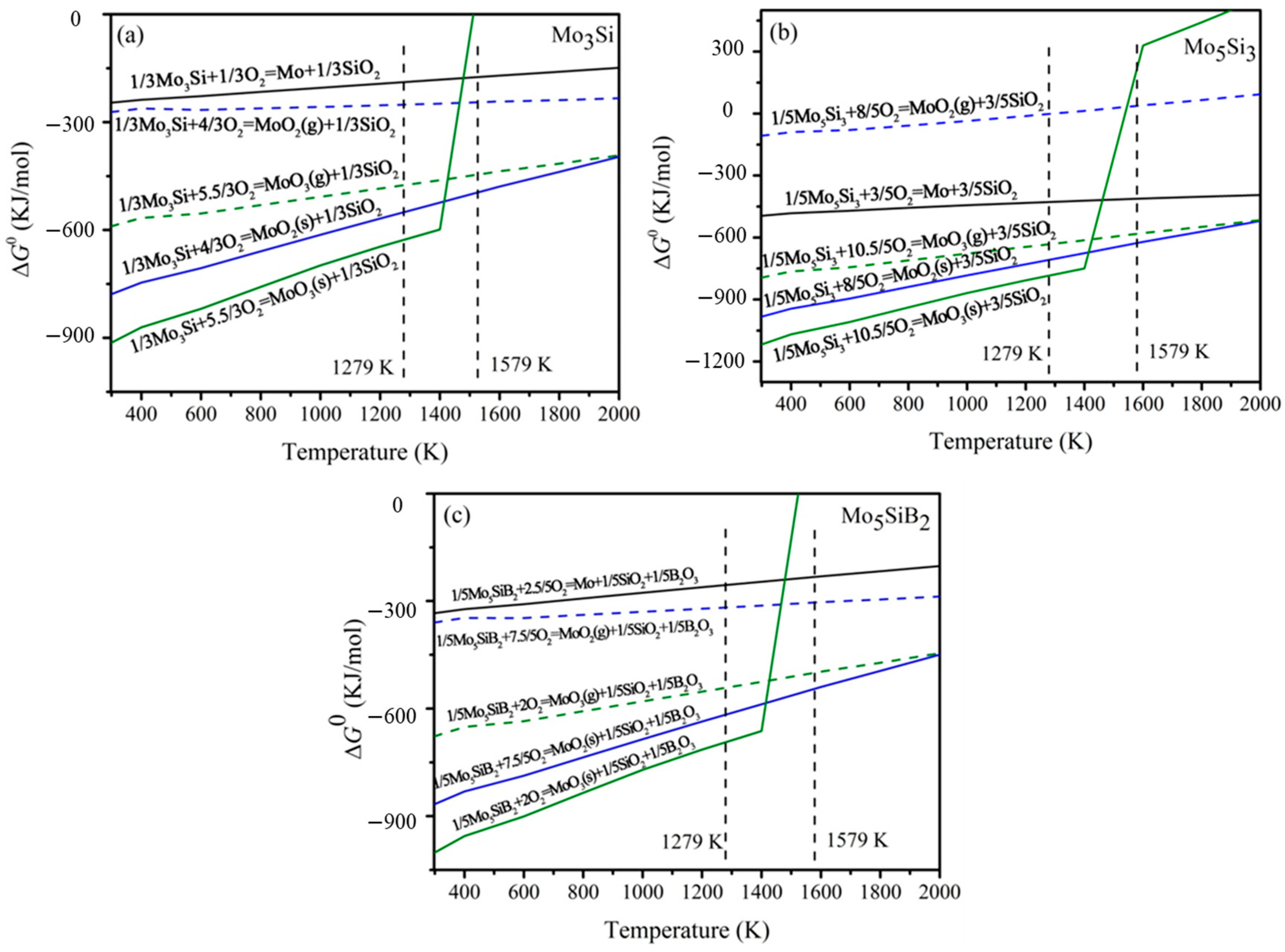
During the initial oxidation stage, abundant oxygen comes into full contact with Mo3Si, Mo5Si2, and Mo5SiB2. Based on thermodynamic data of the materials, the Gibbs free energies of Equations (11)–(19) were calculated, revealing the relationship between reaction temperature and Gibbs free energy, as illustrated in Figure 7, since MoO2 and MoO3 can form as gases during oxidation while other products remain solid. The Gibbs free energy changes with temperature were calculated separately for Mo3Si, Mo5Si3, and Mo5SiB2 oxidation, resulting in the equations of Mo, MoO2 (s/g), and MoO3 (s/g). The equations corresponding to the generation of gaseous MoO2 (g) and MoO3 (g) are represented by dashed lines in Figure 7.
Figure 7.
Temperature–Gibbs free energy relationship for the equation of 1 mol molybdenum oxidation products in the MoSiB system intermetallic compounds, (a) Mo3Si, (b) Mo5Si3, (c) Mo5SiB2.
As shown in Figure 7a, when Mo3Si is oxidized at 1000 °C (1279 K), the Gibbs free energies of the five possible reactions are all negative, indicating the thermodynamic feasibility of these reactions. The corresponding Gibbs free energy values are listed in Table 2. The value for the oxidation of Mo to MoO3 (s) is the lowest, suggesting it occurs preferentially. The value for oxidation to MoO2 (s) is the next lowest. And the value for the equation of elemental Mo is the highest, which makes it the least likely to form under sufficient oxygen supply. Similarly, for Mo5Si3 (Figure 7b) and Mo5SiB2 (Figure 7c) oxidized at 1000 °C, the preferential order of Mo oxidation is MoO3 (s) > MoO2 (s) > elemental Mo. This explains the equation of abundant needle-like MoO3 on the sample surface during the early stages of oxidation at 1000 °C.
Table 2.
Gibbs free energy at 1000 °C corresponding to Figure 7.
A comparison of the Gibbs free energies for the preferential oxidation reactions of Mo3Si, Mo5Si3, and Mo5SiB2 in Table 2 shows that at 1000 °C, > > . This indicates that under sufficient oxygen supply during the initial oxidation stage, the oxidation sequence of the porous MoSiB intermetallic framework is Mo5Si3 > Mo5SiB2 > Mo3Si.
As indicated by the reaction equations in Figure 7, during the initial oxidation stage, the oxidation products preferentially form MoO3 (s), along with the simultaneous formation of SiO2 and B2O3. These two oxidation products typically form in the early oxidation phase as amorphous, glassy mixed oxides that exhibit a degree of fluidity at high temperatures, thereby coating the substrate material. This coating acts as a barrier, preventing direct contact between oxygen and the substrate, resulting in an oxygen-deficient environment that suppresses further oxidation. Regarding the sequence of such oxidation reactions, it is likewise possible to determine the reaction order through thermodynamic calculations of the Gibbs free energy. Under oxygen-deficient conditions, assuming a constant oxygen content of 1 mole, the Gibbs free energy for the reactions of 1 mole of oxygen with Mo3Si, Mo5Si3, and Mo5SiB2 to form oxides such as Mo, MoO2, and MoO3 is as follows:
Gibbs free energy of the reaction between 1 mole of oxygen and Mo3Si:
Gibbs free energy of reaction equations for the interaction of 1 mol oxygen with Mo5Si3
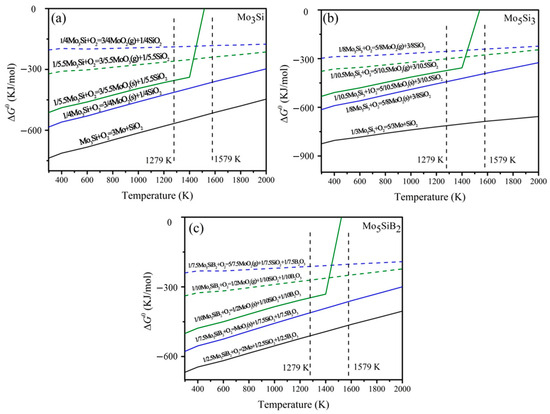
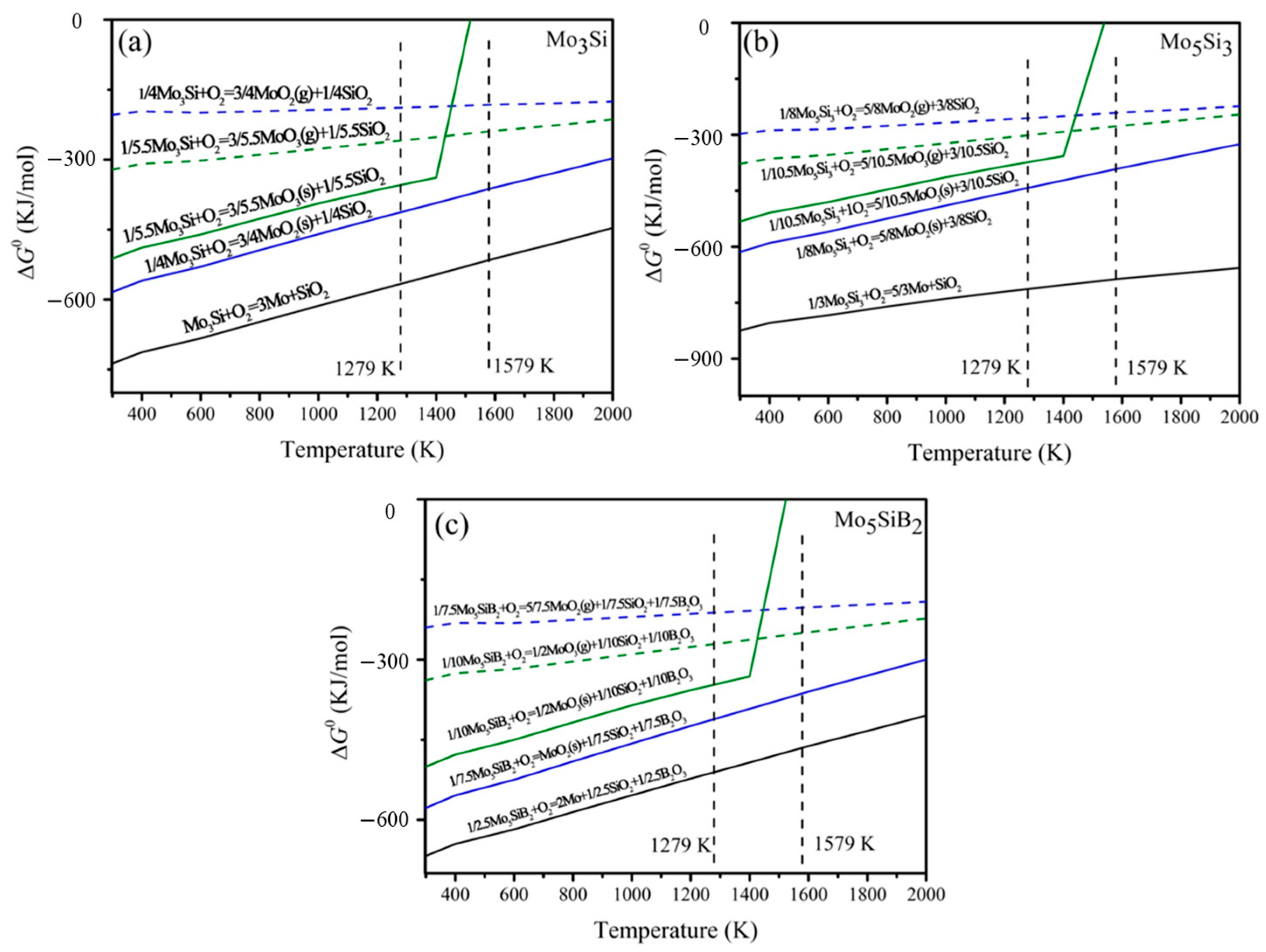
Figure 8 presents the temperature–Gibbs free energy diagrams for the reactions of 1 mol of oxygen with Mo3Si, Mo5Si3, and Mo5SiB2, respectively. As shown in Figure 8a, the Gibbs free energies of the five possible reaction pathways are all negative for the oxidation of Mo3Si at 1000 °C, indicating that each reaction is thermodynamically feasible. However, the values associated with the equation of gaseous MoO3 and MoO2 are higher than those of the corresponding reactions forming solid MoO3 and MoO2, and they may be disregarded in theoretical analyses.
Figure 8.
Relationship between temperature and Gibbs free energy for the reaction of MoSiB system intermetallic compounds with 1 mol of oxygen, (a) Mo3Si, (b) Mo5Si3, (c) Mo5SiB2.
The Gibbs free energy values at this stage are presented in Table 3. The Gibbs free energies for the oxidation of molybdenum to form elemental Mo, MoO2 (s), and MoO3 (s) are −567 kJ/mol, −412 kJ/mol, and −355 kJ/mol, respectively, indicating that the equation tendency of molybdenum oxidation products follows the order: Mo > MoO2 (s) > MoO3 (s). Similarly, the equation tendency of molybdenum-containing oxidation products also follows the sequence Mo > MoO2 (s) > MoO3 (s) when oxidation occurs at 1000 °C, as shown in Figure 8b,c. This implies that once a protective SiO2-B2O3 oxide layer forms on the skeletal surface, it inhibits further oxidation of the skeleton by limiting oxygen penetration. Consequently, plate-like MoO3 is absent on the surface morphology in the later stages of oxidation. Instead, numerous distinct bright spots of elemental Mo are observed.
Table 3.
Gibbs free energy at 1000 °C as shown in Figure 8.
A comparison of the Gibbs free energies for the preferential oxidation reactions of Mo3Si, Mo5Si3, and Mo5SiB2 in Table 3 reveals that at 1000 °C, > > . This indicates that under oxygen-deficient conditions, the oxidation sequence of the porous MoSiB intermetallic skeleton is Mo5Si3 > Mo3Si > Mo5SiB2.
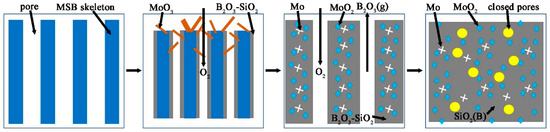
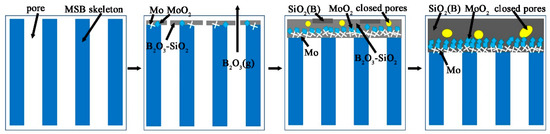
During oxidation of porous MoSiB intermetallics, Mo-containing oxides ultimately volatilize mainly as MoO3, whereas Si- and B-derived oxides provide oxidation resistance. Oxidation of Mo3Si, Mo5Si3, and Mo5SiB2 produces SiO2, while B2O3 is generated only from Mo5SiB2. At 1000 °C, B2O3 volatility is relatively low, and boron is mainly retained in SiO2–B2O3 glass. As illustrated in Figure 9, this glassy oxide has relatively high viscosity and insufficient fluidity to rapidly seal the open pore channels. Therefore, unlike dense MoSiB intermetallics protected by a continuous oxide scale, the porous skeleton remains accessible to oxygen, resulting in extensive internal oxidation. With increasing oxidation time, B2O3 gradually volatilizes through the pore network, leaving a SiO2-rich matrix containing residual MoO2 and minor metallic Mo. The eventual closure of pore channels traps residual volatile species, leading to closed-pore formation within the SiO2-based oxide matrix.
Figure 9.
Schematic illustration of the oxidation process of porous MoSiB intermetallic compounds at 1000 °C.
3.3. Oxidation Kinetics at 1300 °C
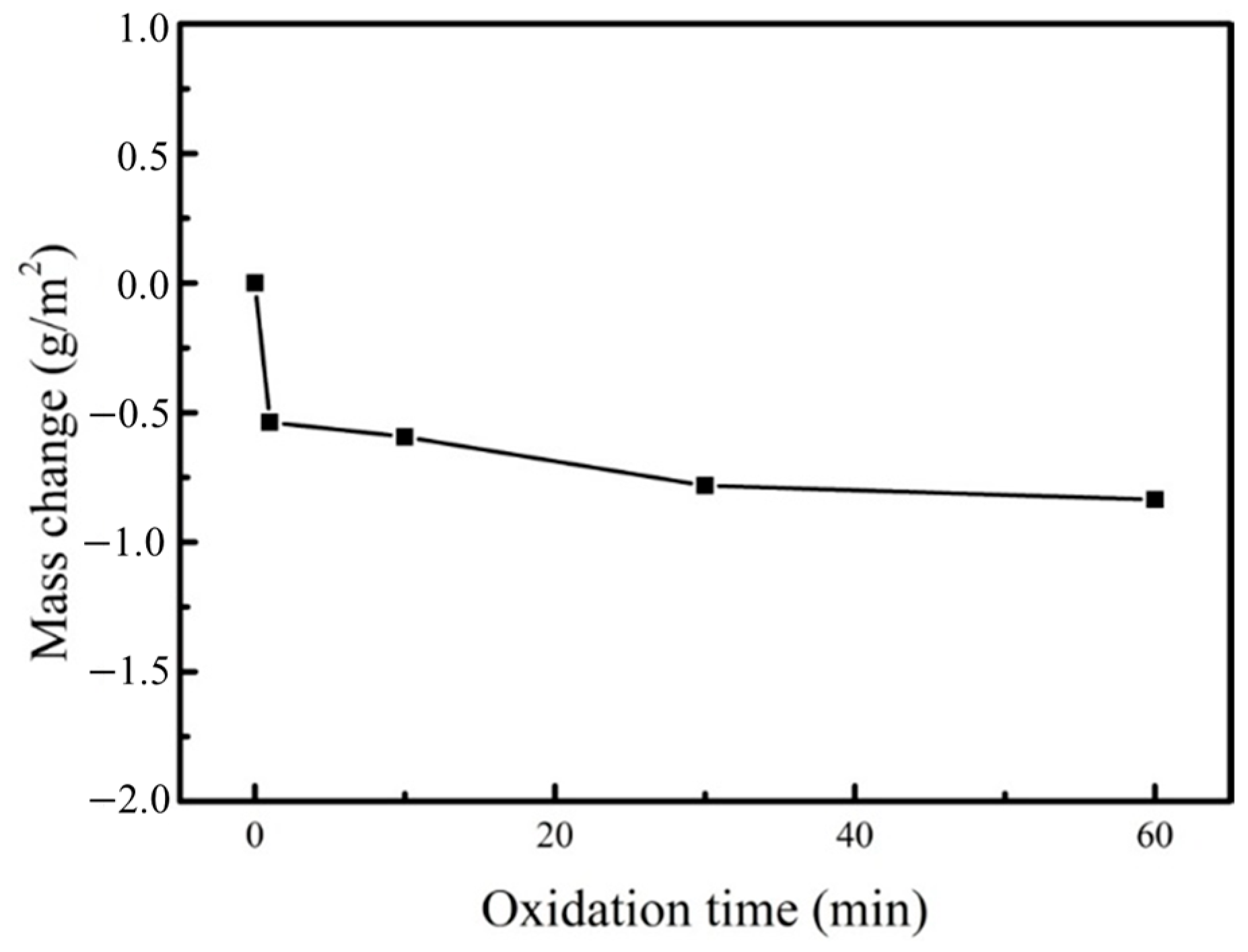
The oxidation kinetics curve of a porous MoSiB intermetallic compound with a total porosity of 53% at 1300 °C is shown in Figure 10. Initially, the mass decreases rapidly due to oxidation, but the rate of mass loss gradually diminishes and stabilizes over time. In the early oxidation stage, mass reduction occurs primarily from the rapid volatilization of B2O3 and MoO3 at high temperatures, while the simultaneous equation of SiO2 contributes to a partial mass gain. In the later oxidation stage, a stable dense SiO2 layer forms. Oxygen diffuses slowly through it to the substrate, reducing the mass loss rate. This behavior is termed “transient and steady-state oxidation” and follows parabolic kinetics matching that of dense MoSiB intermetallics.
Figure 10.
Oxidation kinetics curves of porous MoSiB intermetallic compound at 1300 °C.
3.4. Analysis of Oxidation Mechanism at 1300 °C
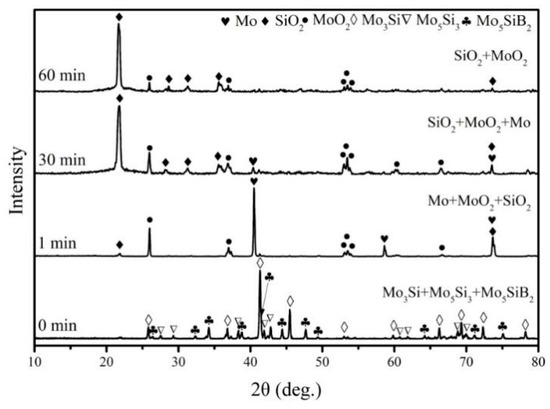
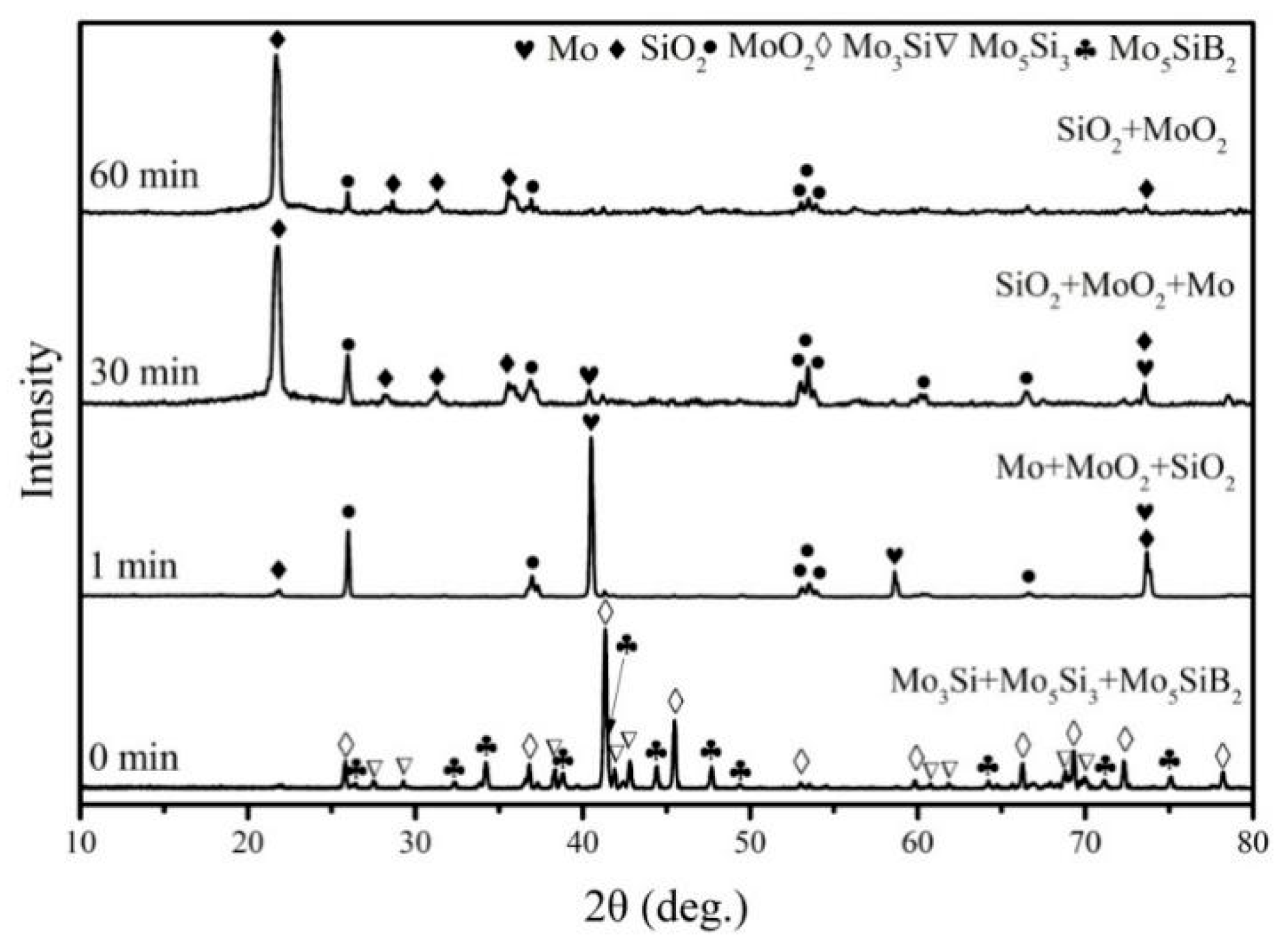
In this study, 1300 °C was selected as the highest oxidation temperature to evaluate the high-temperature oxidation behavior of porous MoSiB. However, the maximum service temperature of MoSiB-based materials may be higher and depends on alloy composition, porosity, microstructure, and oxidation environment. In this study, 1300 °C merely represents the highest oxidation test temperature adopted, rather than the maximum service temperature of the material. To capture the key stages of the high-temperature oxidation process, this study analyzed the oxidation products and microstructural evolution at 1300 °C after oxidation durations of 0 min, 1 min, 30 min, and 60 min. The unoxidized specimen with 0 min oxidation was taken as the reference state to determine the initial phase composition and open-cell skeleton structure of Mo3Si–Mo5Si3–Mo5SiB2. The specimen with 1 min oxidation corresponds to the initial transient oxidation stage. The surface of the porous skeleton contacts oxygen for the first time, and the exposed skeleton undergoes rapid oxidation. This stage is critical for identifying initial oxidation products and determining whether volatile molybdenum oxides and borosilicon oxides form immediately on pore surfaces. The specimen with 30 min oxidation was selected to represent the intermediate oxidation stage. At this point, the initially formed SiO2(B)/borosilicon oxides have sufficient time to flow, redistribute, and seal surface pore channels, so this time point is suitable for investigating the transition of the oxidation process from rapid transient oxidation to more stable surface-controlled oxidation. Under the experimental conditions adopted in this study, the specimen with 60 min oxidation represents the late oxidation stage, at which a relatively dense oxide scale has formed and the oxidation front is confined to the near-surface region. Analysis of this stage can clarify the layered oxide structure and the efficacy of the silica-rich protective layer in blocking inward oxygen penetration. Therefore, the aforementioned time points were selected to resolve the complete oxidation sequence of the material at 1300 °C, ranging from the initial porous structure, through initial oxidation and pore closure, to stable surface-layer oxidation.
The XRD patterns of the oxidation surfaces of porous MoSiB intermetallic compounds after oxidation at 1300 °C for different durations are shown in Figure 11. Before oxidation, the sample only had diffraction peaks of three intermetallic compounds: Mo3Si, Mo5Si3, and Mo5SiB2. After 1 min of oxidation, the XRD pattern indicated that the oxidation products were Mo, MoO2, and SiO2, with Mo and MoO2 being the main products and the diffraction peak of SiO2 being relatively weak. After 30 min of oxidation, the oxidation products were still Mo, MoO2, and SiO2, but the diffraction peak of SiO2 was the strongest, becoming the main oxidation product, while the diffraction peak of Mo significantly weakened and that of MoO2 slightly weakened. After 60 min of oxidation, only the diffraction peaks of SiO2 and MoO2 were present in the XRD pattern, with the oxidation products mainly being SiO2 and a small amount of MoO2. It is possible that at this point, only SiO2 and MoO2 were present on the surface of the oxidation layer.
Figure 11.
XRD patterns of the oxidized surface of porous MoSiB intermetallic compound at 1300 °C.
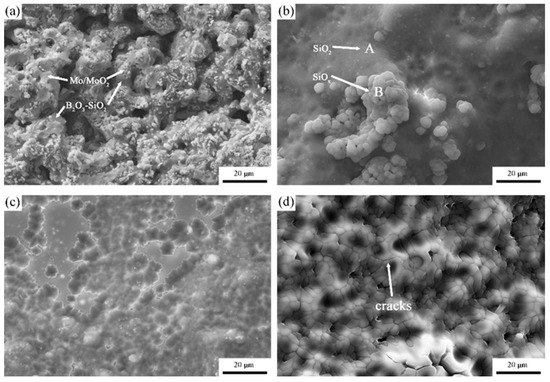
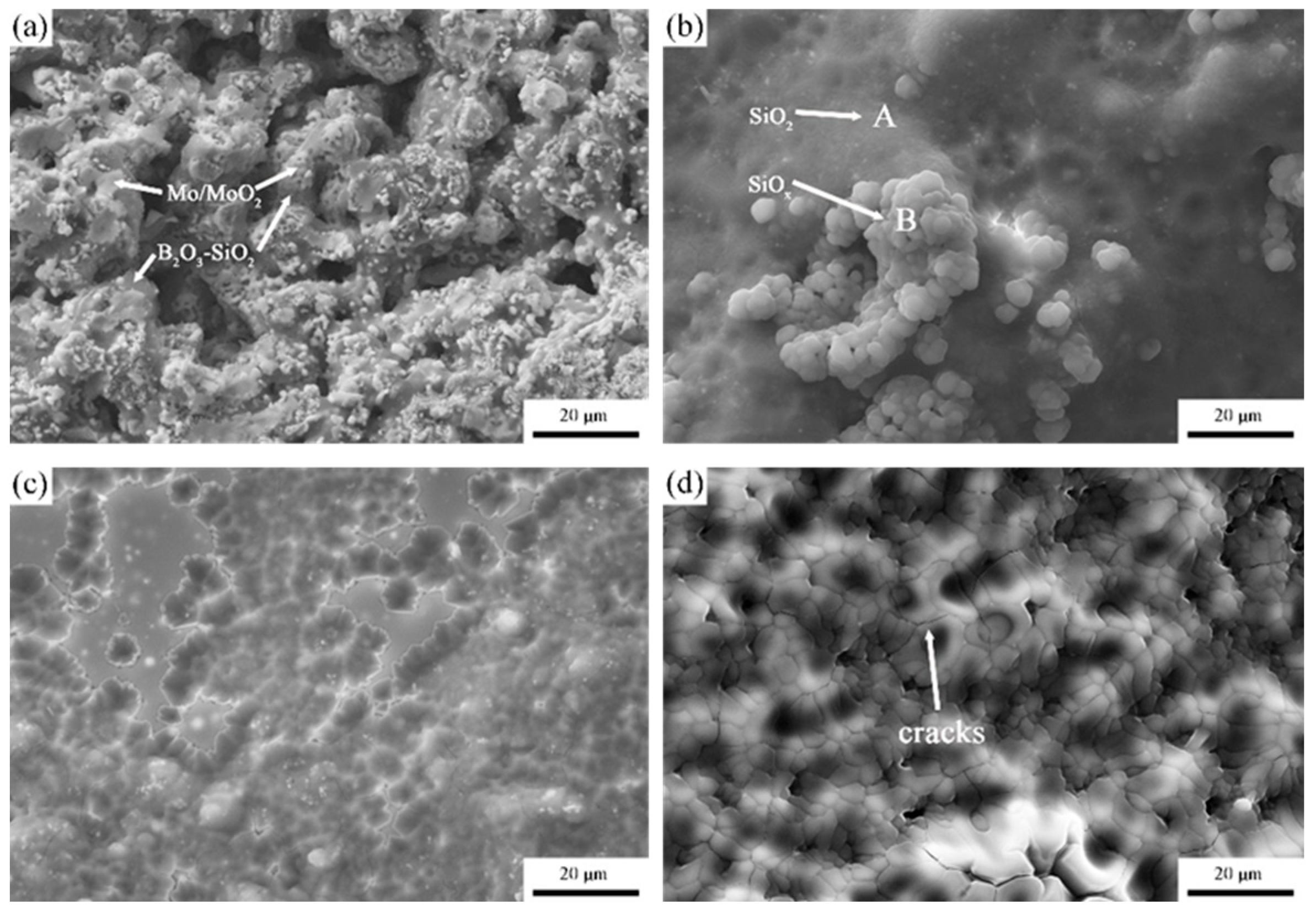
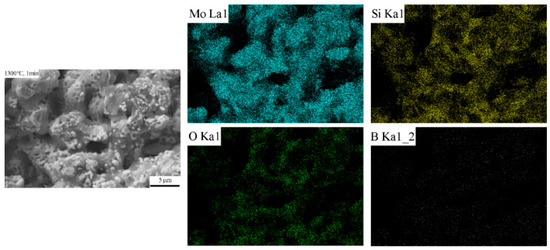
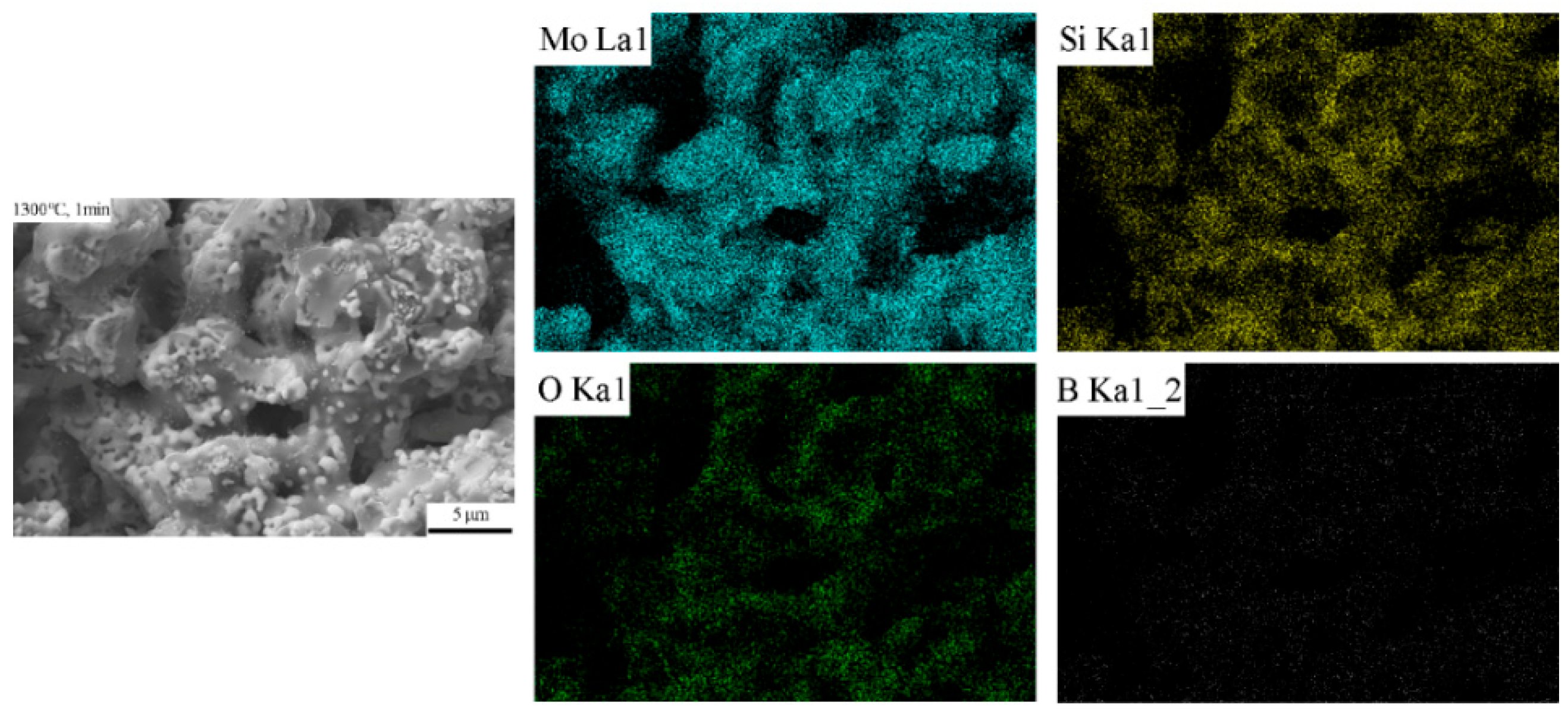
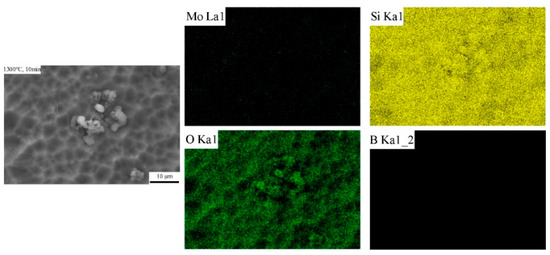
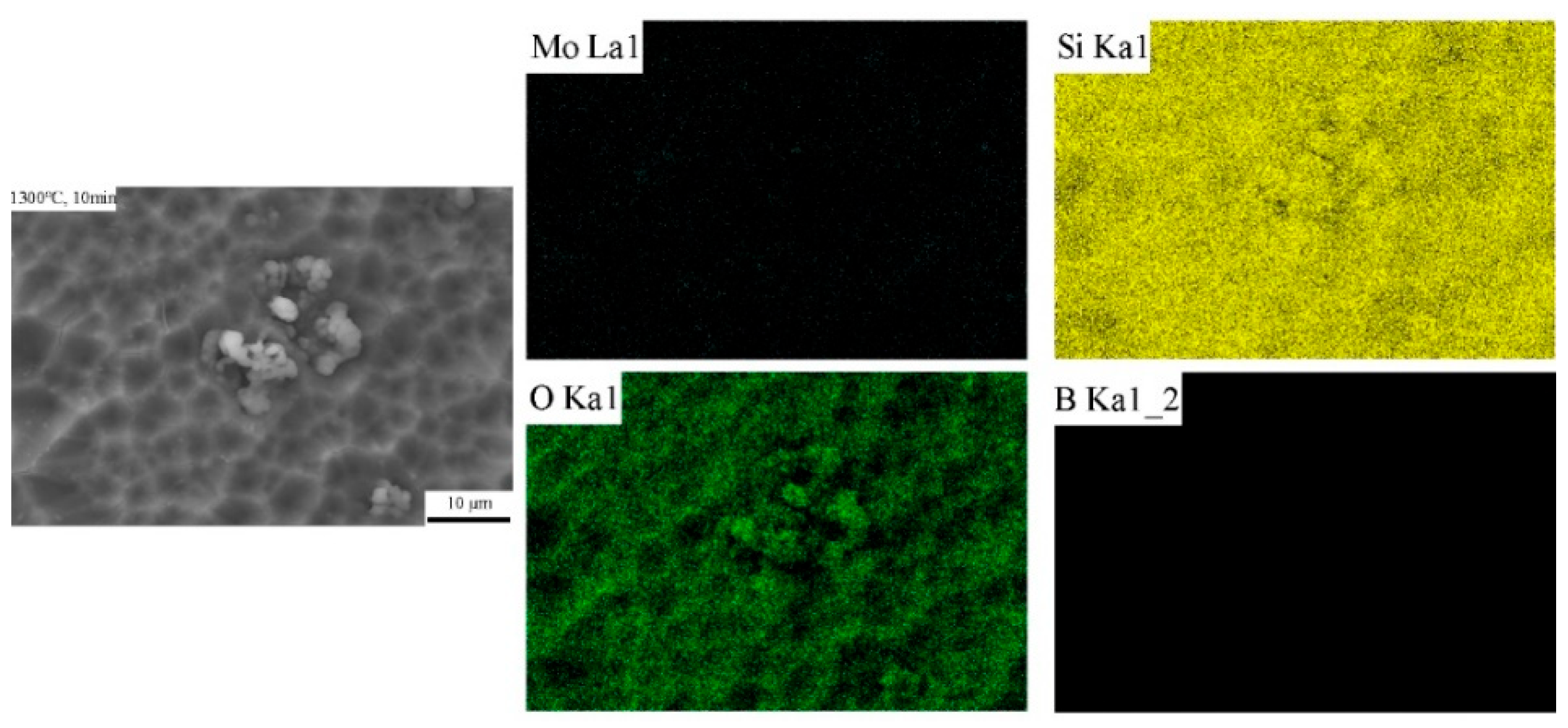
Prior to oxidation, the porous MoSiB intermetallic compound exhibits the open interconnected skeleton structure described previously. Figure 12 shows the surface morphology of porous MoSiB metal compound after oxidation at 1300 °C. After 1 min of oxidation, the porous structure on the surface has been destroyed. Combined with the XRD results, it can be concluded that the intermetallic compound skeleton has been completely replaced by the oxidation products. The energy dispersive spectroscopy (EDS) mapping results in Figure 13 suggest that oxidation products containing Mo, Si, and O form rapidly on the surface after only 1 min at 1300 °C. As shown in Figure 13, the surface after 1 min of oxidation is mainly composed of Mo and Si, with minor O and trace B, indicating the rapid formation of amorphous B2O3–SiO2 on the skeleton surface. Owing to its reduced viscosity at 1300 °C, this borosilicate glass can rapidly flow and seal surface pores, thereby limiting oxygen penetration into the inner MoSiB skeleton and promoting the formation of Mo and MoO2. After 10 min, the original porous morphology disappears and a relatively dense oxide layer forms. The EDS results in Figure 14 show dominant Si and O signals with only trace Mo and negligible B, suggesting rapid B2O3 volatilization and the development of a SiO2-rich oxide layer. The Si/O ratios in regions A and B of Figure 12b indicate the coexistence of amorphous SiOx and crystalline SiO2. With further oxidation, the amorphous SiOx features disappear after 30 min, likely due to crystallization, while microcracks form in the surface SiO2 layer after 60 min as a result of thermal stress.
Figure 12.
Surface morphology of porous MoSiB intermetallic compound after oxidation at 1300 °C, (a) 1 min, (b) 10 min, (c) 30 min, (d) 60 min.
Figure 13.
The surface scanning analysis of the energy spectrum of the porous MoSiB intermetallic compound after oxidation at 1300 °C for 1 min.
Figure 14.
Surface energy spectrum area scanning analysis of porous MoSiB intermetallic compound after 10-min oxidation at 1300 °C.
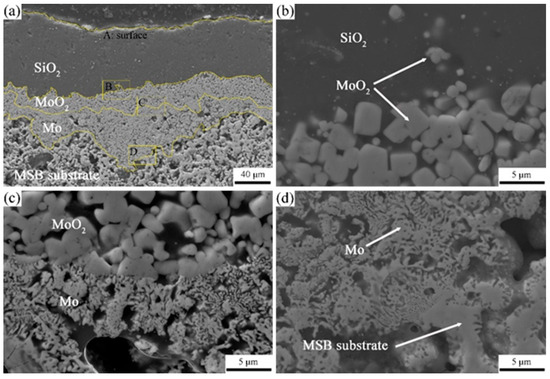
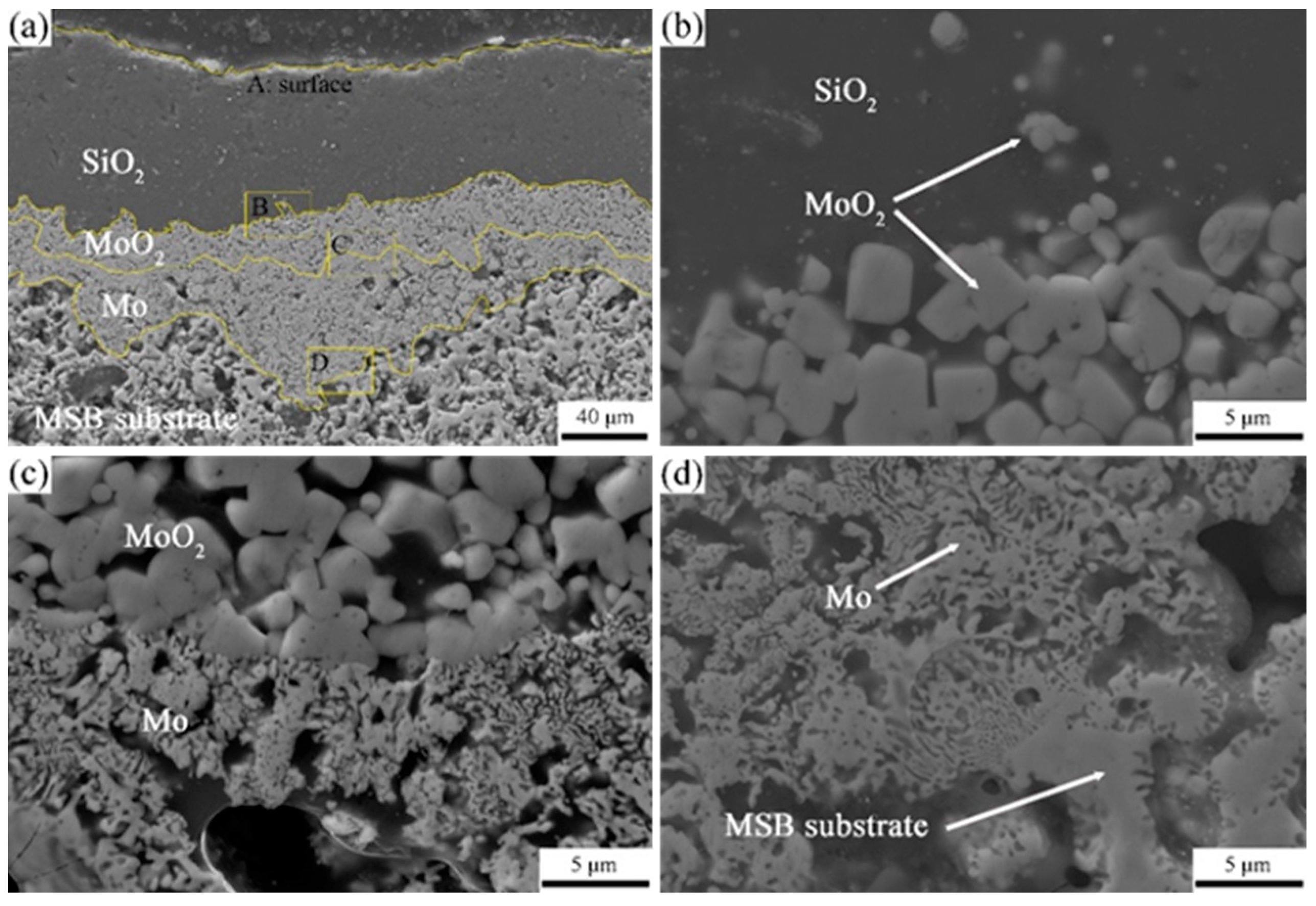
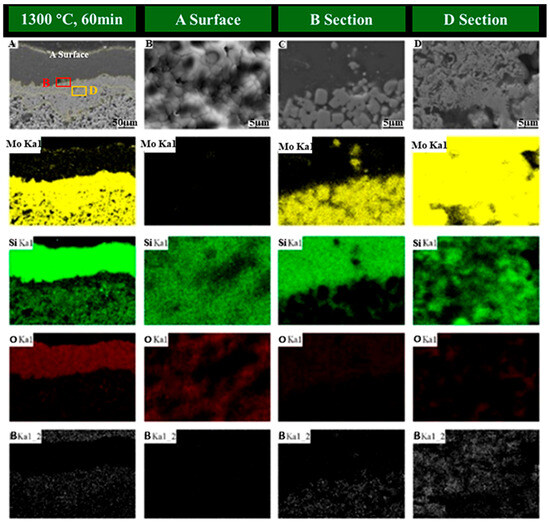
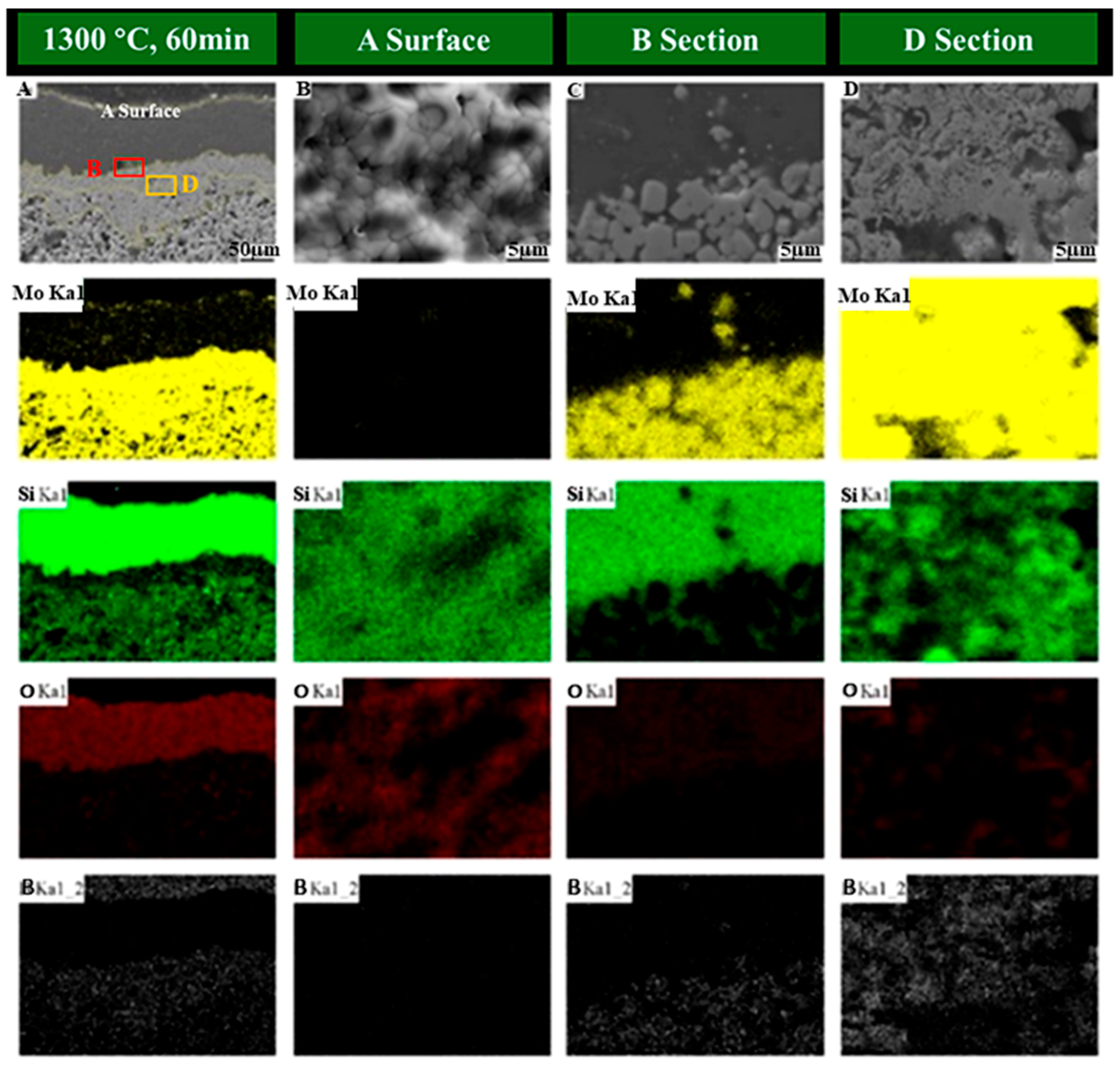
Figure 15 presents the cross-sectional morphology of porous MoSiB metallic compound after oxidation at 1300 °C for 60 min. The oxidation of the porous MoSiB metallic compound is confined to the surface region at 1300 °C, while the inner layers retain their original porous microstructure, as shown in Figure 15a. The oxide scale can be divided into three distinct strata based on the composition and morphological characteristics of the oxidation products. This oxide morphology is analogous to that observed in dense Mo5SiB2-based intermetallic compounds. Figure 16 provides an elemental mapping analysis of the oxide scale cross-section, revealing that the outermost layer is predominantly composed of silicon and oxygen with an atomic ratio approximating 1:2. XRD results confirm that this layer consists mainly of crystalline SiO2. Combined with the observations in Figure 15b and Figure 16, trace amounts of MoO2 are also detected in the surface layer. The intermediate oxide layer primarily comprises MoO2. Although this intermediate layer exhibits a thickness of approximately 20 μm, its corresponding XRD diffraction peaks exhibit relatively weak intensity. This attenuation is attributed to the SiO2 top layer which overlies about 60 μm, which significantly impedes X-ray penetration to the MoO2 intermediate layer. Nevertheless, the morphology and oxygen diffusion patterns suggest that the intermediate oxide is predominantly MoO2. The innermost oxide layer adjacent to the substrate consists mainly of molybdenum or molybdenum solid solutions. Elemental mapping of boron indicates the presence of minor boron content in this region, attributed to newly formed borosilicate glass phases.
Figure 15.
Cross-sectional morphology of porous MoSiB intermetallic compounds after 60 min oxidation at 1300 °C, (a) distribution of the oxide layer, (b) location B, (c) location C, (d) location D.
Figure 16.
Cross-sectional elemental mapping of porous MoSiB intermetallic compound After 60-min oxidation at 1300 °C. (A) MSB intermetallic compound; (B) A surface; (C) B section; (D) D section.
The oxidation behavior of porous MoSiB intermetallic compounds at 1300 °C can likewise be analyzed from a thermodynamic perspective. During the initial oxidation stage, oxygen content is sufficient. Based on calculations from Figure 7, the Gibbs free energy changes for the oxidation reactions of molybdenum in the intermetallic compounds Mo3Si, Mo5Si2, and Mo5SiB2 are presented in Table 4. For Mo3Si oxidized at 1300 °C (1579 K), the value for oxidation of molybdenum to MoO2 (s) is the lowest, indicating that this reaction occurs preferentially. The value for oxidation to MoO3 (g) is the next lowest, while the value for oxidation leading to elemental molybdenum remains the highest, rendering it the most difficult to form even under ample oxygen supply. The order of the Mo oxide equation during oxidation of Mo5Si3 and Mo5SiB2 at 1300 °C is consistent with that of Mo3Si, following the sequence MoO2 (s) > MoO3 (g) > elemental Mo. In summary, during the initial oxidation phase of the three-phase intermetallic skeleton Mo3Si–Mo5Si2–Mo5SiB2 at 1300 °C, solid MoO2 forms preferentially, followed by gaseous MoO3. Consequently, neither XRD patterns nor morphological characteristics showed evidence of lamellar MoO3 phases after 1 min of oxidation.
Table 4.
Gibbs free energies of the reaction equations at 1300 °C in Figure 7.
A comparison of the Gibbs free energy for the preferential oxidation reactions of Mo3Si, Mo5Si3, and Mo5SiB2 in Table 4, > > , indicates that the oxidation sequence of the porous MoSiB intermetallic framework follows Mo5Si3 > Mo5SiB2 > Mo3Si. Similarly, during the initial oxidation stage at 1300 °C, Mo3Si, Mo5Si3, and Mo5SiB2 preferentially form MoO2 (s) alongside SiO2 and B2O3. These oxides act as barriers that inhibit direct contact between oxygen and the substrate, leading to an insufficient oxygen supply for reactions with the base material. The oxidation sequence under such conditions can also be determined thermodynamically via Gibbs free energy calculations. As shown in Figure 8, at 1300 °C, the Gibbs free energy for the equation of MoO3 (s) from the oxidation of Mo3Si, Mo5Si3, and Mo5SiB2 is positive, suggesting that this reaction is unlikely to occur; instead, MoO3 (g) is formed. According to Table 5, under oxygen-deficient conditions at 1300 °C, the Gibbs free energies satisfy < < for Mo3Si, < < for Mo5Si3, and < < for Mo5SiB2. This implies that the tendency to form oxidation products of Mo follows the order: Mo > MoO2 (s) > MoO3 (g) for all three compounds. The elemental Mo formed initially is subsequently oxidized to MoO2 and MoO3, with MoO3 gradually volatilizing over time. This explains the gradual decrease in Mo diffraction peak intensity and the persistently strong MoO2 diffraction peaks observed in XRD results during oxidation.
Table 5.
Gibbs free energy of each reaction equation at 1300 °C in Figure 8.
Comparing the Gibbs free energies for the preferential oxidation reactions of Mo3Si, Mo5Si3, and Mo5SiB2 in Table 5, > > is similarly observed, confirming that the oxidation sequence of the porous MoSiB intermetallic framework remains Mo5Si3 > Mo3Si > Mo5SiB2.
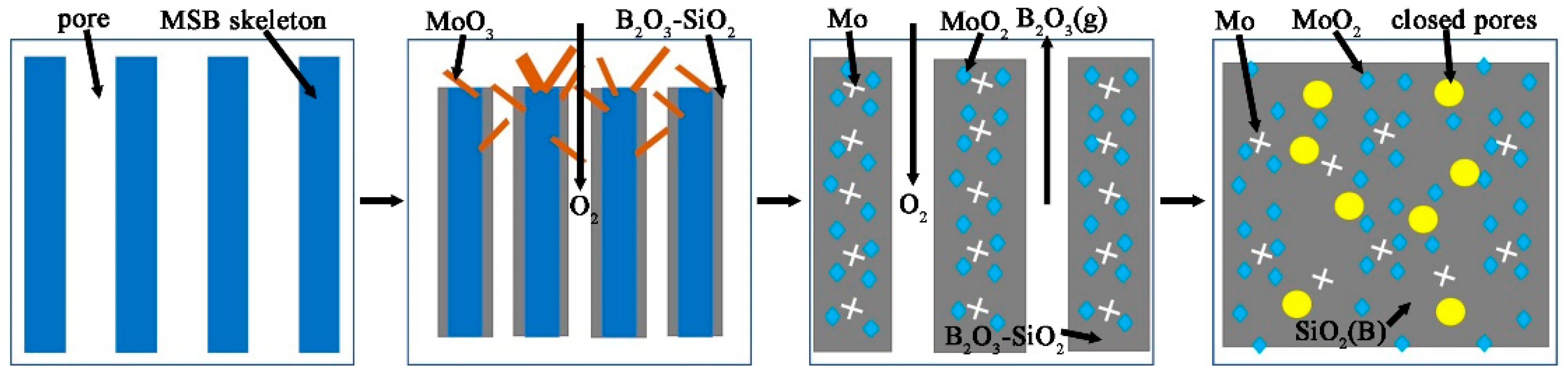
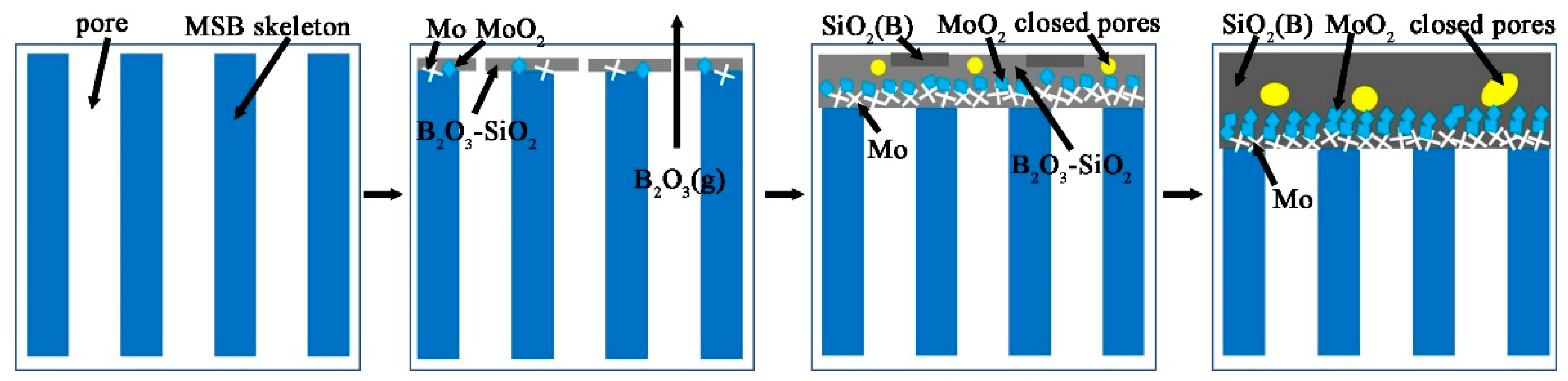
As illustrated in Figure 17, the oxidation behavior of the porous MoSiB intermetallic compound at 1300 °C is investigated. At this temperature, the volatilization rate of B2O3 is accelerated, while a small fraction of boron dissolves into SiO2, leading to the equation of oxides of silicon and boron predominantly as a SiO2(B) solid solution. Elevated temperature reduces the viscosity of the SiO2-B2O3 oxide film, which is inherently low, enabling it to flow rapidly upon equilibration. This immediate fluidity facilitates rapid pore sealing, thereby preventing direct oxygen penetration from the surface into the inner regions and confining oxidation to the near-surface layer. With progressive volatilization of B2O3, a dense SiO2 layer forms on the sample surface. A limited amount of oxygen diffuses through the SiO2 layer and reacts with the substrate, preferentially forming a MoO2 interlayer. Trace oxygen further permeates the MoO2 layer and reacts with the matrix to form a metallic Mo layer. Consequently, the oxide scale, as depicted in Figure 17, consists sequentially of SiO2, MoO2, and Mo from the surface inward—a layered structure consistent with the high-temperature oxide scales observed in most MoSiB intermetallic compounds.
Figure 17.
Schematic illustration of the oxidation process of porous MoSiB intermetallic compound at 1300 °C.
4. Conclusions
This work systematically investigates the high-temperature oxidation behavior of porous MoSiB intermetallic compounds at 1000 °C and 1300 °C. The main conclusions are as follows:
- (1)
- At 1000 °C, porous MoSiB exhibits bulk oxidation behavior, and lower porosity results in superior oxidation resistance. The initial oxidation products consist mainly of MoO3 and amorphous B2O3–SiO2. With prolonged oxidation, these gradually transform into crystalline SiO2 and MoO2, eventually leading to the formation of closed-pore oxide scales.
- (2)
- At 1300 °C, oxidation is confined to the near-surface region. B2O3 volatilizes rapidly, while low-viscosity SiO2(B) quickly seals the pore channels. Forming a triple-layered dense oxide structure comprising, from surface to interior, SiO2, MoO2, and elemental Mo. This indicates a typical transient-to-steady-state oxidation behavior.
- (3)
- Temperature and porosity jointly govern the oxidation mechanism. The equation of vitreous oxides derived from Si and B elements is crucial for the oxidation resistance of porous MoSiB. This study provides a theoretical foundation for the application of such high-temperature porous materials.
Author Contributions
Conceptualization, C.D.; methodology, Y.H., C.W., and C.D.; software, C.D.; validation, Y.H. and J.G.; formal analysis, Y.H. and J.G.; investigation, Y.H. and J.G.; resources, J.G. and K.P.; data curation, Y.H.; writing—original draft preparation, Y.H. and C.W.; writing—review and editing, J.G., C.W., and K.P.; supervision, Y.H. and J.G.; project administration, Y.H. and J.G.; funding acquisition, J.G. and K.P. All authors have read and agreed to the published version of the manuscript.
Funding
This study was financially supported by the Key Scientific and Technological Project of Henan Province (No. 262102231029), and Program for Science and Technology Innovation Talents at the University of Henan Province (No. 25HASTIT008).
Data Availability Statement
The original contributions presented in this study are included in the article. Further inquiries can be directed to the corresponding authors.
Conflicts of Interest
The authors declare no conflicts of interest.
References
- Dong, P.; Peng, F.; Zhang, Q.; Wang, H.; Chu, Y.; Chen, C.; Yang, C. High entropy boosts the low-temperature Na+-storage performance of Na4Fe3(PO4)2P2O7. Angew. Chem. Int. Ed. 2025, 64, e202502693. [Google Scholar] [CrossRef] [Scilit]
- Cui, L.; Wang, C.; Wei, S.; Dou, C.; Zhao, Z.; Chen, C.; Dong, D.; Pan, K. Densification, microstructure, and mechanical properties of WMo–Al2O3 alloy fabricated by spark plasma sintering. Ceram. Int. 2025, 51, 26830–26839. [Google Scholar] [CrossRef] [Scilit]
- Ding, C.; Zhao, Y.; Yin, W.; Kang, F.; Huang, W.; Zhang, Q. Regulating intermolecular hydrogen bonds in organic cathode materials to realize ultra-stable, flexible and low-temperature aqueous zinc-organic batteries. Angew. Chem. Int. Ed. 2024, 64, e202417988. [Google Scholar] [CrossRef] [Scilit]
- Park, G.; Lee, W.-H.; Lee, C.-G.; Kim, H.-R.; Ahn, J.P.; Jin, M.; Kim, S.-H. Oxidation behavior and passivation mechanism of the T2 phase in Mo-Si-B alloys. Scr. Mater. 2026, 273, 117108. [Google Scholar] [CrossRef] [Scilit]
- Choi, W.J.; Park, C.W.; Park, J.H.; Kim, Y.D.; Byun, J.M. Volume and size effects of intermetallic compounds on the high-temperature oxidation behavior of Mo-Si-B alloys. Int. J. Refract. Met. Hard Mater. 2019, 81, 94–99. [Google Scholar] [CrossRef] [Scilit]
- Daroonparvar, M.; Musavi, S.; Yadav, V.; Shao, S.; Shamsaei, N. Corrosion and high temperature oxidation behavior of additively manufactured alloys: Damage mechanisms and structure-property relationships. J. Alloys Compd. 2025, 1048, 185069. [Google Scholar] [CrossRef] [Scilit]
- Gaitzsch, U.; Magnusson, A.; Weißgärber, T. MoSiBTi by powder metallurgy. Int. J. Refract. Met. Hard Mater. 2023, 112, 106127. [Google Scholar] [CrossRef] [Scilit]
- García-García, A.L.; Rodríguez-Ramos, R.; Borges, A.A.; Boto, A.; Jiménez-Arias, D. Foliar treatment with MoSiB (menadione sodium bisulphite) to increase artemisinin content in Artemisia annua plants. Sci. Hortic. 2024, 328, 112913. [Google Scholar] [CrossRef] [Scilit]
- Gu, Y.; Chen, Y.; Shen, S.; Fang, D. High-temperature experiments and simulation methods for oxidation behavior research of thermostructural materials. Compos. Part A Appl. Sci. Manuf. 2025, 198, 109150. [Google Scholar] [CrossRef] [Scilit]
- Guo, G.; Ye, F.; Cheng, L. Oxidation behavior of Cansas 3303 SiC fiber-reinforced composites with an interconnected SiC and dispersed Si matrix prepared by LSI process. J. Eur. Ceram. Soc. 2026, 46, 118042. [Google Scholar] [CrossRef] [Scilit]
- Hou, Q.; Li, M.; Shao, W.; Zhou, C. Oxidation and interdiffusion behavior of Mo-Si-B coating on Nb-Si based alloy prepared by spark plasma sintering. Corros. Sci. 2020, 169, 108638. [Google Scholar] [CrossRef] [Scilit]
- Huang, Y.; Wang, Z.; Zhang, L.; Wei, S. Pore/skeleton structure and compressive strength of porous Mo3Si-Mo5Si3-Mo5SiB2 intermetallic compounds prepared by spark plasma sintering and homogenization treatment. J. Alloys Compd. 2021, 856, 158150. [Google Scholar] [CrossRef] [Scilit]
- Jhalak; Beniwal, D.; Ray, P.K. Modeling oxidation of Mo-Si-B alloys using a novel fractional cellular automata method. Comput. Mater. Sci. 2026, 262, 114365. [Google Scholar] [CrossRef] [Scilit]
- Jiménez-Arias, D.; García-Machado, F.J.; Morales-Sierra, S.; Suárez, E.; Pérez, J.A.; Luis, J.C.; Garrido-Orduña, C.; Herrera, A.J.; Valdés, F.; Sandalio, L.M.; et al. Menadione sodium bisulphite (MSB): Beyond seed-soaking. Root pretreatment with MSB primes salt stress tolerance in tomato plants. Environ. Exp. Bot. 2019, 157, 161–170. [Google Scholar] [CrossRef] [Scilit]
- Kiryukhantsev-Korneev, P.V.; Chertova, A.D.; Chudarin, F.I.; Patsera, E.I.; Levashov, E.A. The structure and properties of high-entropy (MoTaNbZrHf)-Si-B coatings deposited by DCMS and HIPIMS methods using the multilayer target. Surf. Coat. Technol. 2024, 484, 130797. [Google Scholar] [CrossRef] [Scilit]
- Tang, R.; Dong, J.; Wang, C.; Yin, A.; Lu, Y.; Li, N.; Shen, W.; Zhang, J.; Yan, K.; Zhao, G.; et al. A comprehensive review of the research progress on the low-temperature performance of LiFePO4 batteries. Carbon Neutraliz. 2025, 4, e70001. [Google Scholar] [CrossRef] [Scilit]
- Zhang, H.; Li, H.; Chen, G.; Su, J.; Wei, M.; Ma, C.; Bai, J.; Wang, Q. Oxidation behavior of pack-cemented Mo-W-Si-B coatings at 1200 and 1650 °C. Surf. Coat. Technol. 2023, 454, 129158. [Google Scholar] [CrossRef] [Scilit]
- Wang, F.; Shan, A.-D.; Dong, X.-P.; Wu, J.-S. Oxidation behavior of multiphase Mo5SiB2 (T2)-based alloys at high temperatures. Trans. Nonferrous Met. Soc. China 2007, 17, 1242–1247. [Google Scholar] [CrossRef] [Scilit]
- Wang, J.; Li, B.; Li, R.; Chen, X.; Wang, T.; Zhang, G. Unprecedented oxidation resistance at 900 °C of Mo–Si–B composite with addition of ZrB2. Ceram. Int. 2020, 46, 14632–14639. [Google Scholar] [CrossRef] [Scilit]
- Wang, J.; Zhang, X.; Zhang, G.; Li, B.; Li, R.; Li, S. Effect of Si solution in α-Mo on oxidation behavior of Mo-Si-B alloy and oxidation kinetics model. Int. J. Refract. Met. Hard Mater. 2023, 116, 106325. [Google Scholar] [CrossRef] [Scilit]
- Lim, B.; Fancher, C.M.; Boebinger, M.G.; Poplawsky, J.D.; Proffen, T.E.; Nandwana, P. Metastable formation and disordering kinetics of body-centered orthorhombic CrNi2 laths in a Cr-Ni binary alloy. J. Alloys Compd. 2026, 1056, 186607. [Google Scholar] [CrossRef] [Scilit]
- Xu, X.; Luo, Z.; Zhou, R.; Xiang, W.; Jiang, W.; Wang, X.; Duan, J.; Dong, P.; Wang, D. Low-temperature synthesis of single-crystal LiNi0.93Co0.05Mn0.02O2 cathode with a stable structure achieved by Sr/Zr co-modification. Carbon Neutraliz. 2025, 4, e70075. [Google Scholar] [CrossRef] [Scilit]
- Wang, J.; Zhang, X.; Zhang, G.; Li, B.; Li, R.; Li, S. Microstructure and oxidation response of Mo-Si-B-ZrB2 alloy at 900 °C: Effect of pre-oxidation treatment. Mater. Charact. 2023, 200, 112843. [Google Scholar] [CrossRef] [Scilit]
- Wang, Y.; Liu, Y.; Tang, H.; Li, W. Oxidation behaviors of porous Haynes 214 alloy at high temperatures. Mater. Charact. 2015, 107, 283–292. [Google Scholar] [CrossRef] [Scilit]
- Wood, L.F.; Perepezko, J.H. The effect of a pack cementation coating on the oxidation of a Mo-Nb-Si-B alloy. Surf. Coat. Technol. 2025, 512, 132408. [Google Scholar] [CrossRef] [Scilit]
- Wu, Z.; Feng, K.; Sha, J.; Zhou, C. Oxidation behavior of Si- rich Mo-Si-B coating doped with La by spark plasma sintering. Corros. Sci. 2021, 192, 109762. [Google Scholar] [CrossRef] [Scilit]
- Yang, Y.; Xiao, Q.; Yang, L.; Ren, P.; Li, W.; Zhu, S.; Wang, F. Effect of nitrogen on high temperature oxidation behavior of AlN-doped gradient coating. Corros. Sci. 2022, 199, 110155. [Google Scholar] [CrossRef] [Scilit]
- Ma, F.; Liu, X.; Liu, M.; Wan, T.L.; Ao, D.; Liu, W.-D. Trace doping leads to texture engineering and boosts thermoelectric perfor-mance of Bi0.5Sb1.5Te3-based flexible thin films. Chem. Eng. J. 2025, 522, 167341. [Google Scholar] [CrossRef] [Scilit]
- Zhang, Y.; Na, Y.; Xie, Y.; Zhao, X. Unveiling the structural and magnetic properties of RENaGeO4 (RE = Gd, Dy, and Ho) oxides and remarkable low-temperature magnetocaloric responses in GdNaGeO4 oxide. J. Mater. Chem. A 2025, 13, 19923–19932. [Google Scholar] [CrossRef] [Scilit]
- Zhang, Y.; Zha, X.; Feng, K.; Li, Y.; Li, J.; Hu, J.; Zu, Z.; Zhang, C.; Wang, C.; Dou, C.; et al. Oxidation and crack propagation in the TC4 titanium alloy under high-speed transient impact-rubbing leading to Pre-Ignition. Eng. Fail. Anal. 2026, 186, 110455. [Google Scholar] [CrossRef] [Scilit]
- Zhang, Y.; Zhao, M.; Ye, W.; Zhu, M.; Fang, P.; Gui, Y.; Zhao, J.; Yan, Y. Oxidation behavior of a three-phase eutectic MoNbSiB alloy from 600 °C to 1100 °C. J. Mater. Res. Technol. 2025, 36, 2518–2531. [Google Scholar] [CrossRef] [Scilit]

Disclaimer/Publisher’s Note: The statements, opinions and data contained in all publications are solely those of the individual author(s) and contributor(s) and not of MDPI and/or the editor(s). MDPI and/or the editor(s) disclaim responsibility for any injury to people or property resulting from any ideas, methods, instructions or products referred to in the content. |
© 2026 by the authors. Licensee MDPI, Basel, Switzerland. This article is an open access article distributed under the terms and conditions of the Creative Commons Attribution (CC BY) license.