


Abstract
The asbestos mine “Stragari” (Kragujevac municipality, central Serbia) operated for approximately four decades, exploiting chrysotile asbestos and generating several million tons of tailings composed primarily of finely crushed serpentinite rock. These tailings are rich in magnesium (≈25 wt.%); yet, efficient magnesium recovery is hindered by the high acid consumption associated with serpentinite mineral dissolution. The objective of this study was to optimize the extraction of magnesium as magnesium chloride hexahydrate (MgCl2×6H2O) from asbestos mine tailings using hydrochloric acid as the leaching agent. The effects of key process parameters (including thermal activation—roasting, hydrochloric acid concentration, leaching temperature, and leaching duration) were systematically investigated. Experiments in this study were conducted using concentrations of HCl 0.5, 1, 1.5 and 2 M, temperatures of 60, 70 and 80 °C and durations of 60 and 180 min, with constant stirring speed (350 rpm) and 20% initial pulp density. The resulting pregnant leach solution was purified by controlled neutralization with Mg(OH)2 followed by evaporation to obtain MgCl2×6H2O. A preliminary techno-economic assessment indicates that the proposed process is economically feasible and provides a foundation for future scale-up studies. The results demonstrate that balancing acid consumption with magnesium recovery, rather than pursuing maximum extraction efficiency, can enable profitable industrial-scale production of a value-added magnesium compound while contributing to asbestos tailings remediation.
1. Introduction
Magnesium chloride hexahydrate MgCl2×6H2O is widely used in the chemical, pharmaceutical, construction, agricultural, and energy sectors, and represents an important intermediate in magnesium metal production [1]. Magnesium metal is classified as a critical raw material by the European Union, with more than 90% of demand met through imports relying predominantly on energy-intensive pyrometallurgical and electrolytic processes associated with a high carbon footprint [2,3]. Consequently, hydrometallurgical extraction of magnesium from magnesium silicate minerals has attracted increasing attention as a lower-energy and potentially more sustainable alternative.
Serpentinite minerals (Mg3Si2O5(OH)4) are hydrous, magnesium-rich silicates with a layered 1:1 structure consisting of alternating tetrahedral silicate and magnesium-rich octahedral layers. The most common polymorphs include chrysotile, antigorite, and lizardite [4]. Serpentinites typically contain 32–38% MgO and 35–40% SiO2, together with variable amounts of Fe, Al, Ca, Cr, and Ni [5]. Large serpentinite deposits and asbestos-related tailings are distributed globally. In Serbia, the former Stragari asbestos mine, commissioned in the 1950s and operated for approximately four decades, exploited chrysotile hosted in serpentinite-rich ultramafic rocks [6]. Although no official records exist, it is estimated that 3–5 million tons of serpentinite tailings were deposited on site. These tailings pose long-term environmental and health risks due to residual chrysotile fibers and elevated metal concentrations [7]. However, their high magnesium content (22–27%) makes them a potentially valuable secondary raw material for magnesium recovery.
Magnesium can be extracted from serpentinite through acid leaching using inorganic or organic acids [8,9]. The dissolution of serpentine minerals in acid can be described by the generalized reaction:
Inorganic acids provide high dissolution efficiency but are associated with high reagent consumption, co-dissolution of impurities, and complex downstream purification requirements [2,10]. In practice, additional acid is consumed by the iron oxides, carbonates, and secondary silicates present in tailings, which significantly increases operating costs.
Previous studies have demonstrated that high magnesium extraction from asbestos tailings is technically feasible but typically requires aggressive leaching conditions. Baigenzhenov et al. [11] reported approximately 92% Mg extraction from chrysotile-processing wastes using 25% HCl at 80–85 °C, while Cheng and Lamy-Morissette [12] indicated that HCl concentrations of approximately 10 M are required to exceed 90% Mg extraction from lizardite-rich tailings. Similar trends have been reported for other serpentinite materials, with extraction efficiencies above 80–90% achieved only at elevated temperatures and high acid concentrations [7,13,14,15]. Such conditions limit economic feasibility unless efficient acid regeneration or alternative process routes are implemented.
One potential solution is molten salt electrolysis of magnesium chloride, coupled with hydrogen as a reducing agent [16]. In this process, magnesium chloride obtained after leaching is decomposed according to:
MgCl2 (l) → Mg (l) + Cl2 (g)
The generated chlorine gas can be reacted with hydrogen to regenerate hydrochloric acid:
Cl2 (g) + H2 (g) → 2HCl (g)
Although this closed-loop approach minimizes net acid consumption and enables metallic magnesium production, it requires high temperatures, substantial energy input, and complex infrastructure, resulting in very high capital expenditure [16]. These requirements make molten salt electrolysis unsuitable for small and medium-sized serpentinite deposits such as the Stragari tailings.
An alternative approach is the direct hydrometallurgical production of magnesium chloride as a final product. Following leaching and impurity removal, magnesium chloride can be recovered as bischofite (magnesium chloride hexahydrate, MgCl2·6H2O) by controlled evaporation and crystallization. Shayakhmetova et al. [17] demonstrated that chrysotile asbestos tailings can be efficiently converted into high-purity bischofite under moderately severe conditions (18% HCl, 85–90 °C, ~2 h), achieving magnesium recoveries of 95–96% and Mg2+ concentrations of 85–92 g/L. This route significantly reduces capital requirements and is well suited for decentralized or modular processing of tailings.
Thermal activation of serpentinite by roasting prior to leaching has been reported to enhance magnesium dissolution by inducing dehydroxylation and structural disorder in serpentine minerals, particularly when dilute HCl solutions are employed [18,19]. However, the additional energy demand associated with roasting may offset gains in leaching efficiency [20].
Despite extensive research on serpentinite leaching, systematic studies addressing the full hydrometallurgical route, from leaching through solution purification and product recovery, remain limited. In particular, there is a lack of data evaluating the trade-off between magnesium recovery, acid consumption, and downstream processing of the pregnant leach solution.
In this study, hydrochloric acid leaching of serpentinite tailings from the “Stragari” asbestos mine is systematically investigated with the objective of optimizing magnesium chloride hexahydrate production. The effects of initial acid concentration (0.5–2.0 M), temperature (60, 70 and 80 °C), and thermal activation are evaluated. Downstream purification by controlled precipitation of impurities and evaporation is examined to produce high-purity MgCl2·6H2O, and the results are used to assess the techno-economic feasibility of the proposed process.
2. Materials and Methods
2.1. Serpentinite Tailings
A representative and homogeneous serpentinite tailings sample was prepared by applying the coning and quartering method to a bulk sample collected from the “Stragari” mine, Serbia. The homogenized sample was subjected to chemical, thermal, microstructural and mineralogical analyses, determination of moisture content, pH and Eh measurements, as well as sieve analysis.
2.2. Experimental Procedures
A portion of the homogenized sample (1.00 kg) was thermally treated in a chamber furnace at 600 °C in air for 1 h in order to investigate the effect of thermal pretreatment on the structural stability of serpentinite and leaching efficiency. After calcination, the sample was subjected to microstructural and mineralogical analysis. To determine the optimal leaching parameters, a series of laboratory-scale experiments was conducted using 500 mL of aqueous hydrochloric acid solution (HCl, 35–38%, Macron, Crespellano, Italy) for leaching 100 g of serpentinite sample. The experiments involved variation in acid concentration (0.5, 1.0, 1.5, and 2.0 M) and temperature (60, 70, and 80 °C) during leaching of both sample types (untreated and calcined), while 1 mL aliquots of the leach solution were withdrawn according to a predefined sampling schedule: after 5, 10, 15, 30, 45, 60, 90, 120 and 180 min. In all experiments, the initial solid-to-liquid (S/L) ratio was 20%, and the mixing speed was maintained at 350 ± 5 rpm. Leaching experiments were carried out in a 1000 mL three-necked glass reactor equipped with a temperature probe for temperature control and monitoring, an overhead mechanical stirrer, and a sampling port. The system was heated and maintained at a constant temperature using an electric heating mantle connected to a temperature controller. After each experiment, the pH and Eh values of the resulting leach solution were measured. The leaching efficiency and determination of optimal process parameters were evaluated based on the chemical analysis of solution samples collected during the experiments. Experimental parameters for all experiments with designations of each experiment are given in Table 1.
Table 1.
Definition of experimental parameters and designations of experiments presented in this study.
The leach solution obtained under the determined optimal conditions (acid concentration, temperature, and leaching time) was purified by precipitation of impurities. Magnesium hydroxide (Mg(OH)2), as a precipitation agent, was added stepwise in 1.00 g increments, and after each addition the suspension was intensively stirred using an overhead mechanical stirrer at 350 rpm for 5 min, followed by sampling for chemical analysis. After equilibrium was established, the pH and Eh values of the system were measured using an InoLab pH 720-WTW device (WTW, Weilheim, Germany). Once a pH value higher than 6.5 was reached, phase separation was performed by vacuum filtration using a Büchner funnel (Ø 120 mm) and a vacuum pump operating at 0.1 ± 0.02 bar, with cellulose filter cloth (Grade 597, pore size 4–6 μm) as the filtration membrane. The filtrate was subsequently used in the further process of magnesium chloride production by water evaporation and formation of MgCl2×6H2O, by drying in a Memmert UNE 500 drying oven (Memmert GmbH + Co. KG, Schwabach, Germany) at 105 °C. The obtained solid material was sent for chemical and mineralogical analysis.
2.3. Analytical Methods
The moisture content of the serpentinite sample was determined using a laboratory drying oven (Memmert UNE 500). Drying was carried out at 105 °C for 24 h in accordance with [21]. The moisture content was calculated based on the mass difference before and after drying and reported as the average of three measurements. The pH value of the serpentinite sample was determined according to EPA Method 9045D [22] using 20 g of sample and distilled water as the extraction medium. The pH and Eh (mV) values of all liquid samples were measured using an InoLab pH 720-WTW instrument.
Particle size distribution of a representative serpentinite sample was determined by sieve analysis using a standard set of sieves with aperture sizes ranging from 2 mm to 36 µm. Vibratory sieving was performed for 10 min using a Retsch Vibratory Sieve Shaker AS 200 (Retsch Gmbh, Haan, Germany), with an initial sample mass of 200 g. Chemical analysis of the samples was carried out by inductively coupled plasma optical emission spectrometry (ICP-OES) using an iCAP 6500 Duo instrument (Thermo Fisher Scientific, Cambridge, UK). A certified reference standard (Alfa Aesar, Karlsruhe, Germany) was used for instrument calibration. All measurements were performed in triplicate.
The mineral phase composition and the phase proportions of the original sample were determined by powder X-ray diffraction (PXRD). The data were collected on a Rigaku SmartLab X-ray diffractometer equipped with a D/teX Ultra 250 strip detector (Rigaku Corporation, Tokyo, Japan) using Bragg–Brentano geometry and CuKα radiation at room temperature, while the diffractometer was operated at 40 kV and 30 mA. The scan range was from 2 to 65° 2θ, with a scanning speed of 5°/min and step size of 0.01°. Rigaku PDXL 2 software (version 2.8.4.0, Rigaku Corporation, Tokyo, Japan) with PDF-2 database [23] was used for mineral phase identification and quantitative phase analysis. The quantitative phase analysis was performed using the whole-powder-pattern fitting (WPPF) method.
Mineralogical composition of the thermally activated sample and gained final MgCl2×6H2O product was analyzed by X-ray diffraction (XRD) using a Philips PW 1710 X’Pert Pro diffractometer (Malvern Panalytical, Eindhoven, The Netherlands) with Co Kα radiation at 40 kV and 30 mA, over an angular range of 10° < 2θ < 120°, and a step size of 0.017°.
The thermal analysis of the original sample was determined using a TA Instruments SDT Q600 analyzer (TA Instruments, New Castle, DE, USA) in the temperature range from 25 to 900 °C. The heating rate was 10 °C/min. The TGA scans were recorded under a dynamic air atmosphere with gas flow rates of 100 cm3/min.
Microstructural characterization of the original and thermally activated samples of serpentinite tailings and solid residue after the leaching process was performed using a JEOL JSM-6610LV (Jeol Corporation, Tokyo, Japan) scanning electron microscope. Prior to analysis, samples were coated with a conductive carbon layer (~20–40 nm thick) using a LEICA EM SCD005 sputter coater (Leica Camera AG, Wetzlar, Germany) to prevent charging effects.
2.4. Techno-Economic Analysis
Based on experimental results of serpentinite tailings leaching with HCl solution, followed by leachate purification via impurity precipitation using Mg(OH)2 and evaporation to obtain MgCl2×6H2O, material flows for each process step were defined. These flows were used for process scale-up and for establishing a material balance corresponding to a serpentinite tailings processing capacity of 50 t/h. The resulting material balance was applied as the basis for a preliminary techno-economic analysis, including the estimation of capital and operating costs related to equipment procurement, chemical consumption, workforce, electrical power demand, and disposal of solid residues, while revenues were calculated based on the sale of magnesium chloride hexahydrate. The techno-economic analysis included the following methodological assumptions:
- The process was assumed to operate under steady-state conditions.
- Scale-up was performed based on experimentally determined material balance, without changes in reaction mechanisms or separation efficiencies.
- Equipment sizing and energy consumption were estimated for continuous operation at a nominal capacity of 50 t/h of serpentinite tailings.
- Chemical consumption rates were derived directly from the established material balance.
- Capital expenditure (CAPEX) included only major process equipment, excluding land, buildings, and indirect investment costs.
- Operating expenditure (OPEX) comprised chemical reagents, workforce, electricity consumption, and waste disposal costs.
- Maintenance, depreciation, and taxation were not included, as the analysis was intended to be preliminary.
- Economic benefits were calculated solely from the marketable final product, magnesium chloride hexahydrate.
3. Results
3.1. Chemical, Thermal, Mineralogical and Physical Properties of the Tailings
Chemical analysis of the original tailings sample showed that the material was predominantly composed of magnesium (228 ± 7 mg/g), silicon (170 ± 4 mg/g), and iron (52.4 ± 0.6 mg/g). A complete elemental composition is provided in the Supplementary Material Table S1.
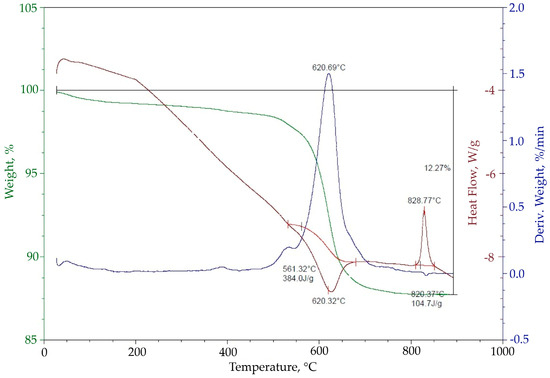
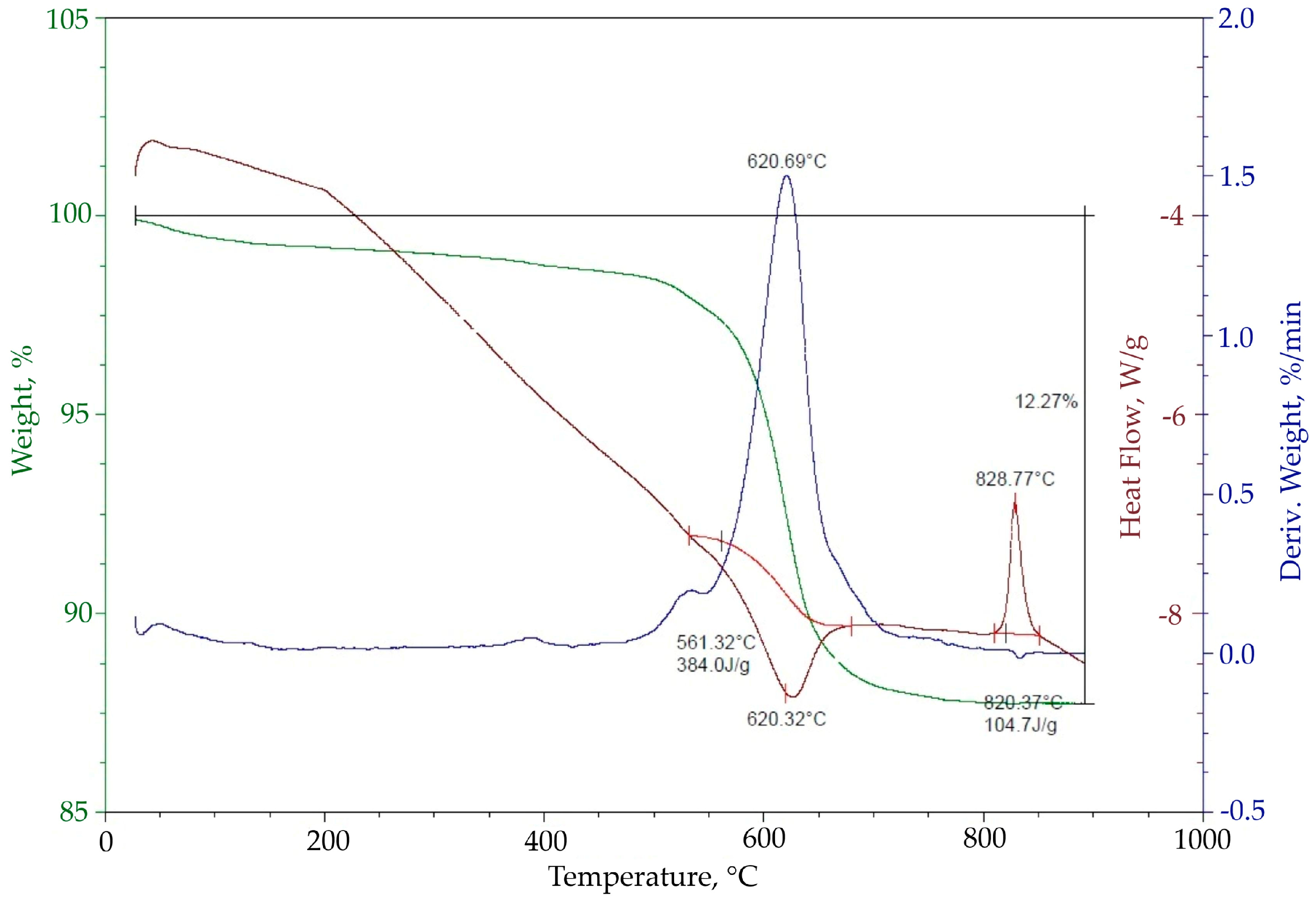
Results of thermogravimetric analysis (TGA) of the original sample combined with differential scanning calorimetry (DSC) are presented in Figure 1. The TGA curve shows a total weight loss of approximately 12.27% in the temperature range up to 900 °C. A minor mass loss below 200 °C is attributed to the removal of physically adsorbed water. The main mass loss occurs in the temperature range between 500 and 700 °C, corresponding to the dehydroxylation of serpentine minerals. This process is associated with a pronounced endothermic DSC peak at approximately 620 °C and a DTG maximum at 620.7 °C, confirming the release of structurally bound hydroxyl groups. The dehydroxylation reaction leads to the formation of amorphous magnesium silicate phases, which subsequently recrystallize at higher temperatures. This is evidenced by a weak exothermic peak at around 828 °C, attributed to the crystallization of forsterite (Mg2SiO4) [24].
Figure 1.
TGA–DSC analysis of original serpentinite tailings sample.
Since the destruction of the serpentinite structure occurs predominantly in the temperature range of 500–700 °C, with a maximum around 620 °C, a thermal activation temperature of 600 °C was selected and applied for 1 h. At this temperature, partial fracture of the serpentine crystal lattice is expected, resulting in structural weakening without complete decomposition. Such controlled activation enhances the availability of magnesium for subsequent leaching, while limiting the dissolution of silicon [25]. This is particularly important to avoid excessive silica release, which could adversely affect both the technological feasibility and economic viability of serpentinite tailings processing.
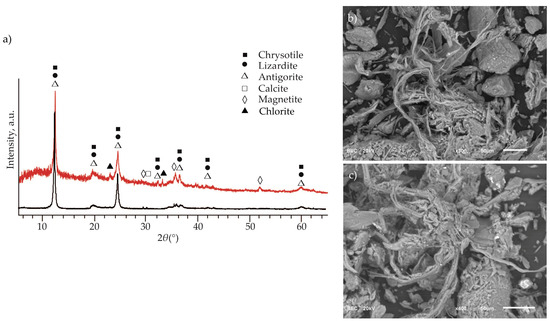
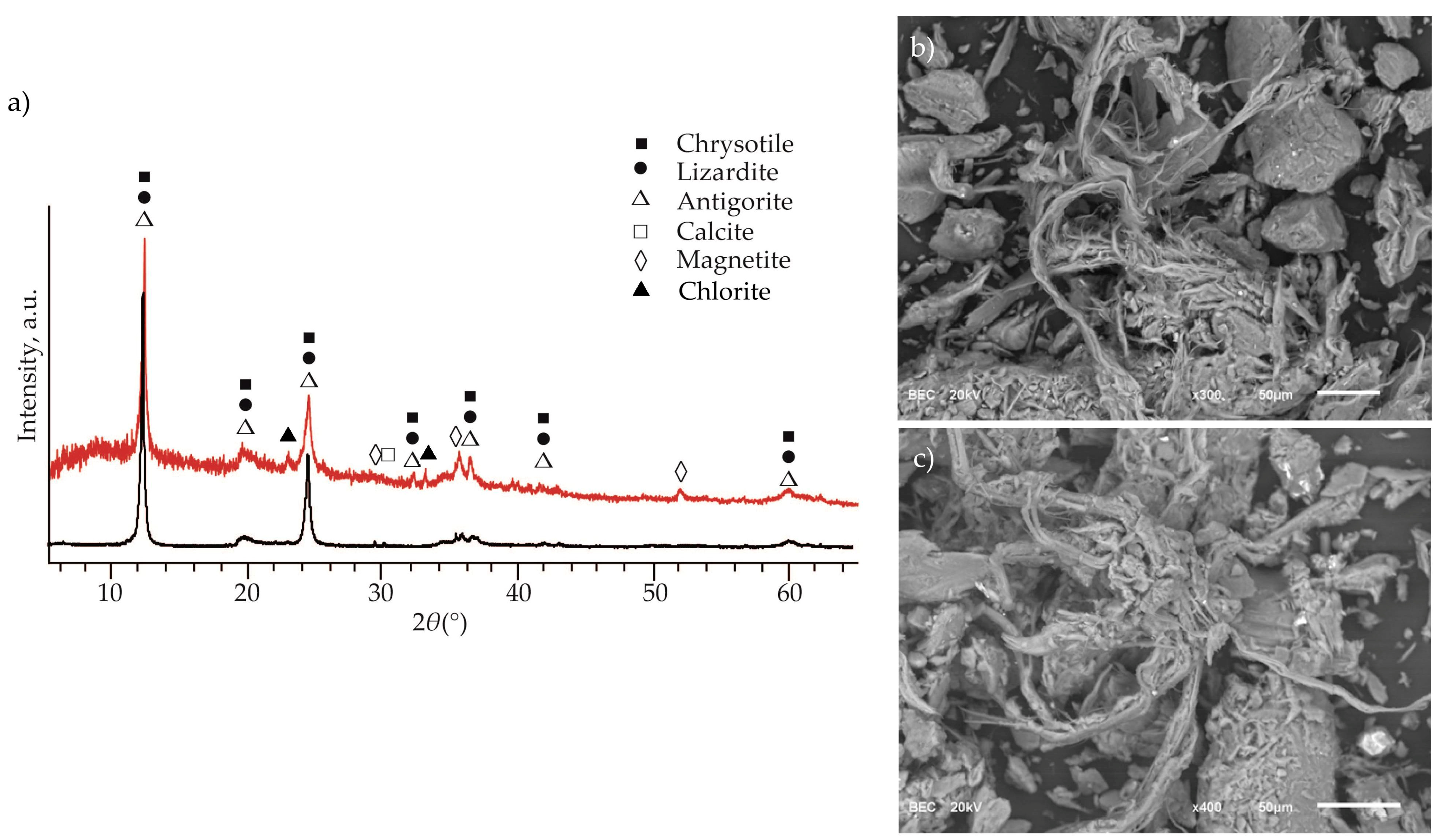
The X-ray powder diffractograms of the original and thermally activated samples are given in Figure 2a. The database search revealed that the following minerals are present in the sample: chrysotile (ICDD card No. 00-010-0381), antigorite (00-007-0417), lizardite (00-010-0382), as minerals from serpentine group [Mg3Si2O5(OH)4], and, also, calcite [CaCO3] (01-083-4601), magnetite [Fe3O4] (01-076-4112) and chlorite [Al2Mg5Si3O10(OH)8] (clinochlore card, 01-074-1137). The result of the semiquantitative analysis of the present mineral phases obtained by the WPPF (“whole-powder-pattern fitting”) revealed that serpentine group minerals make approximately 98.5% of the sample’s mineral composition, the rest are magnetite and calcite. The proportion of serpentine minerals (three identified phases: chrysotile, antigorite, lizardite) is given collectively due to the insufficient reliability of the method when precisely determining the quantitative proportion of individual serpentine minerals (as a consequence of their great structural similarity). Additionally, Figure 2a shows the XRD analysis of a thermally activated serpentinite tailings sample. It can be seen that it contains the same mineral phases as the original, but that this sample is significantly more amorphous. Thermal activation caused disruption of the serpentinite crystal structure while preserving all mineral phases found in the original sample. Analysis of the original (Figure 2b) and thermally activated (Figure 2c) samples with scanning electron microscopy (SEM) revealed presence of the chrysotile fibers in both samples, confirming that thermal activation did not ruin the microstructure of the original tailings.
Figure 2.
(a) Results of the powder X-ray diffraction analysis of the original (black) and thermally activated tailings sample (red); (b) micrograph of the original tailings sample; (c) micrograph of the thermally activated tailings sample.
Particle-size analysis showed that the material is fine-grained, with more than 50% of the mass distributed in the +500, +250, and +125 µm fractions (see Supplementary Material Table S2 for details). The bulk density of the tailings was 1.23 kg/m3 with a water content of 1.03%. These results indicate that serpentinite tailings do not require additional size reduction or drying prior to the leaching process. The material exhibited alkaline properties, with a pH of 9.23 and a redox potential (Eh) of 129.8 mV.
3.2. Hydrochloric Acid Leaching Experiments
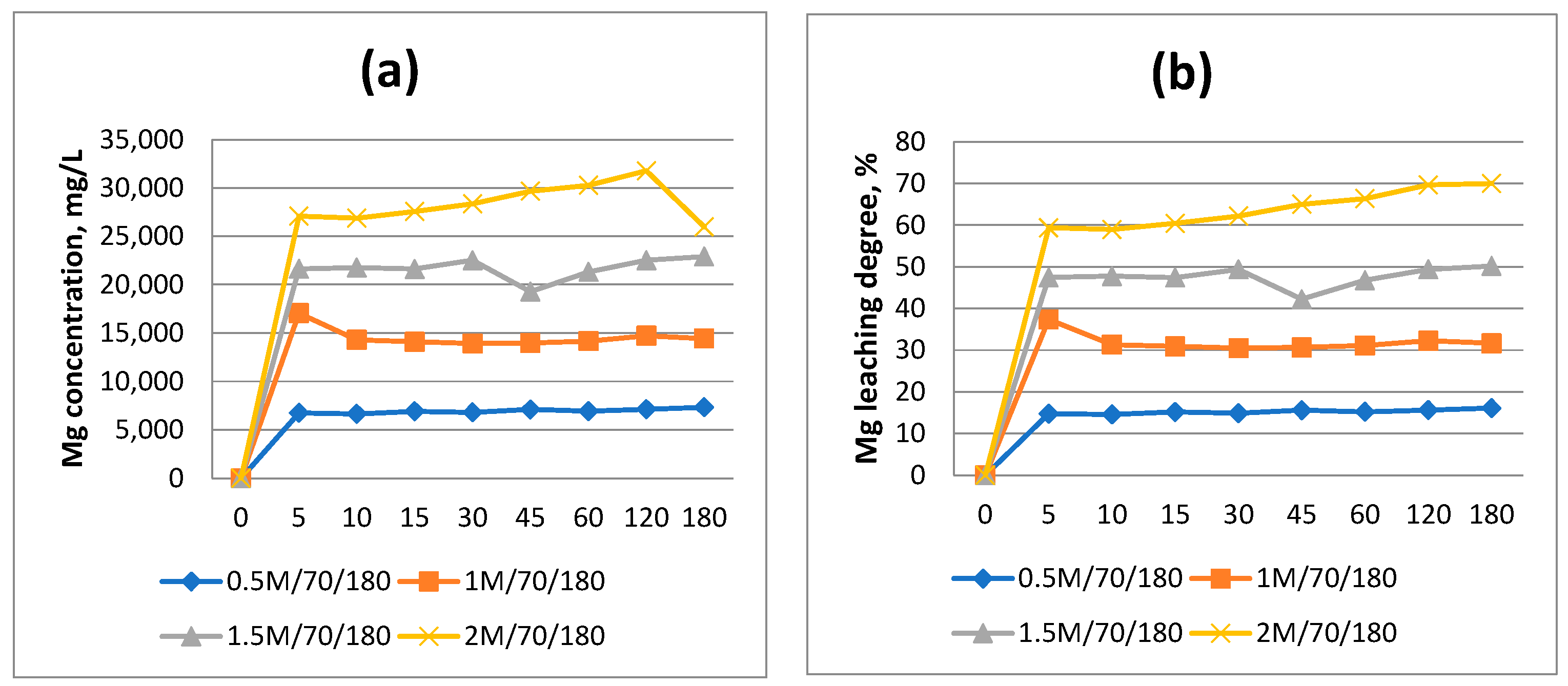
The goal of the first set of experiments was to evaluate effect of the HCl concentration (0.5, 1.0, 1.5, and 2.0 M) on the extraction of magnesium, silicon, and iron from thermally activated sample at a temperature of 70 °C for a duration of 180 min.
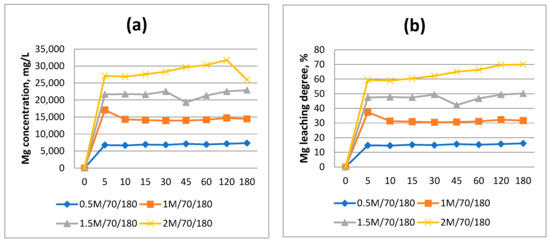
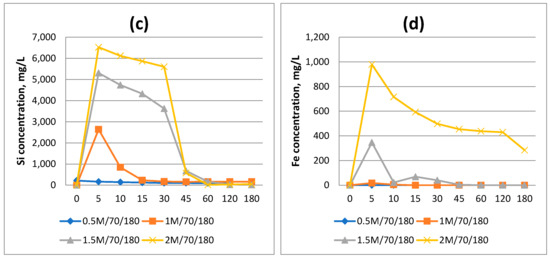
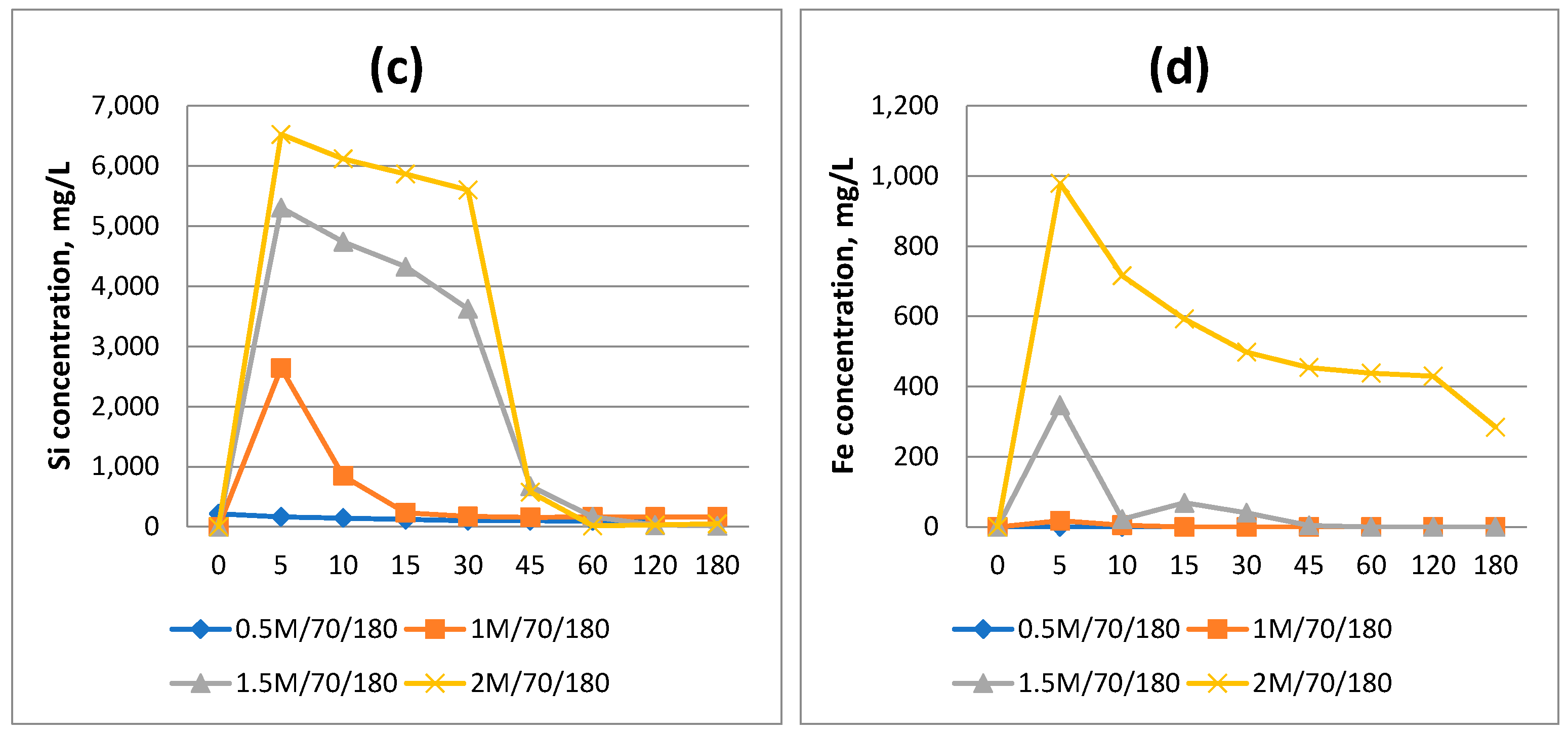
Figure 3a,b illustrates the temporal changes of magnesium concentration and leaching degree during the experiments, whereas Figure 3c,d presents the corresponding changes in silicon and iron concentrations.
Figure 3.
(a) Effect of HCl concentration on magnesium concentration in pregnant leach solution as a function of time during treatment of the thermally activated sample. (b) Effect of HCl concentration on magnesium leaching degree in pregnant leach solution as a function of time during treatment of the thermally activated sample. (c) Effect of HCl concentration on silicon concentration in pregnant leach solution as a function of time during treatment of the thermally activated sample. (d) Effect of HCl concentration on iron concentration in pregnant leach solution as a function of time during treatment of the thermally activated sample.
Changes in magnesium concentrations and leaching degrees showed a strong linear dependence on HCl concentration (R2 = 0.98, see Supplementary Material Figure S1 for details). The highest magnesium extraction was obtained using 2.0 M HCl, reaching approximately 70% after 60 min.
Silicon concentrations increased rapidly during the initial stage of leaching and subsequently decreased below the detection limit after approximately 45 min, which coincided with the formation of a dense silica gel.
Iron concentrations remained at or below the detection limit during leaching with 0.5 M and 1.0 M HCl. At higher acid concentrations, iron extraction was initially enhanced but decreased toward the end of the experiments, resulting in low final iron concentrations in solution.
The final values of pH and redox potential (Eh) measured after the first set of experiments are summarized in Table 2. It was noted that following the addition of the thermally activated tailings, the temperature of the leaching solution increased rapidly, exceeding the target temperature of 70 °C by approximately 20 °C within a few minutes, before stabilizing at target temperature after approximately 30 min. The relatively higher pH values of the pregnant leach solutions obtained after experiments with 0.5, 1, and 1.5 M HCl (pH > 4.7) promote iron precipitation, which explains the absence of dissolved iron in these solutions.
Table 2.
Final pH and Eh of the pregnant leach solutions after experimental evaluation of the HCl concentration’s influence on magnesium leaching degree at 70 °C and 180 min.
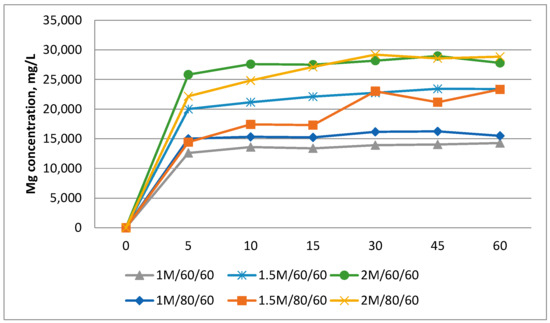
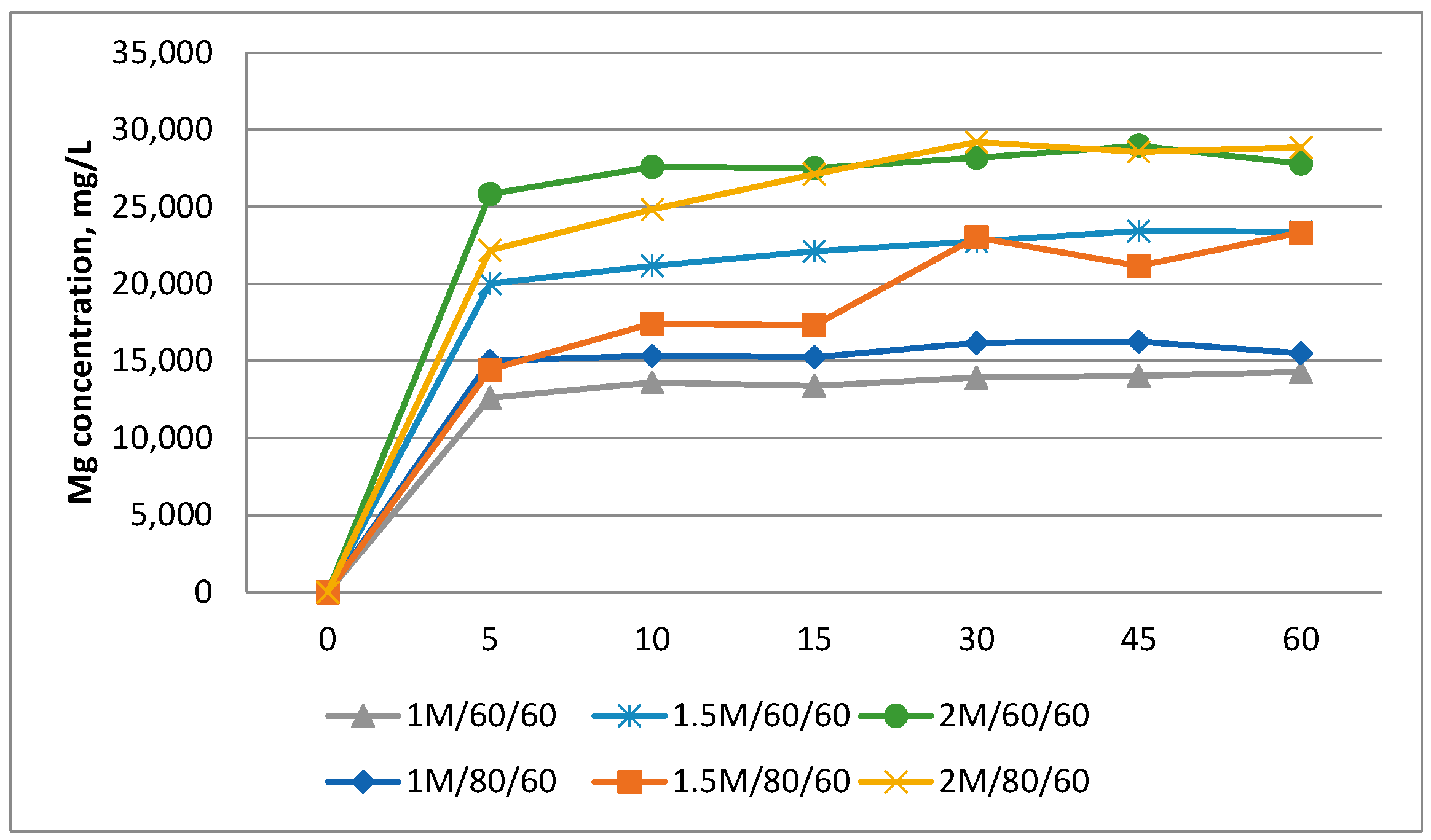
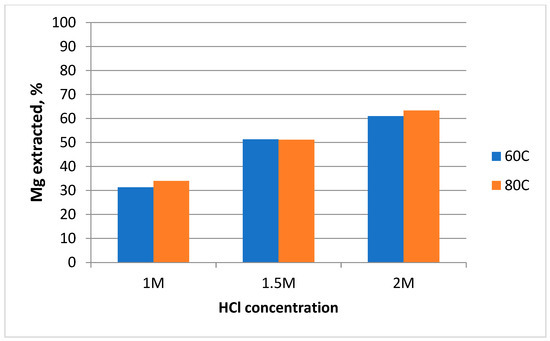
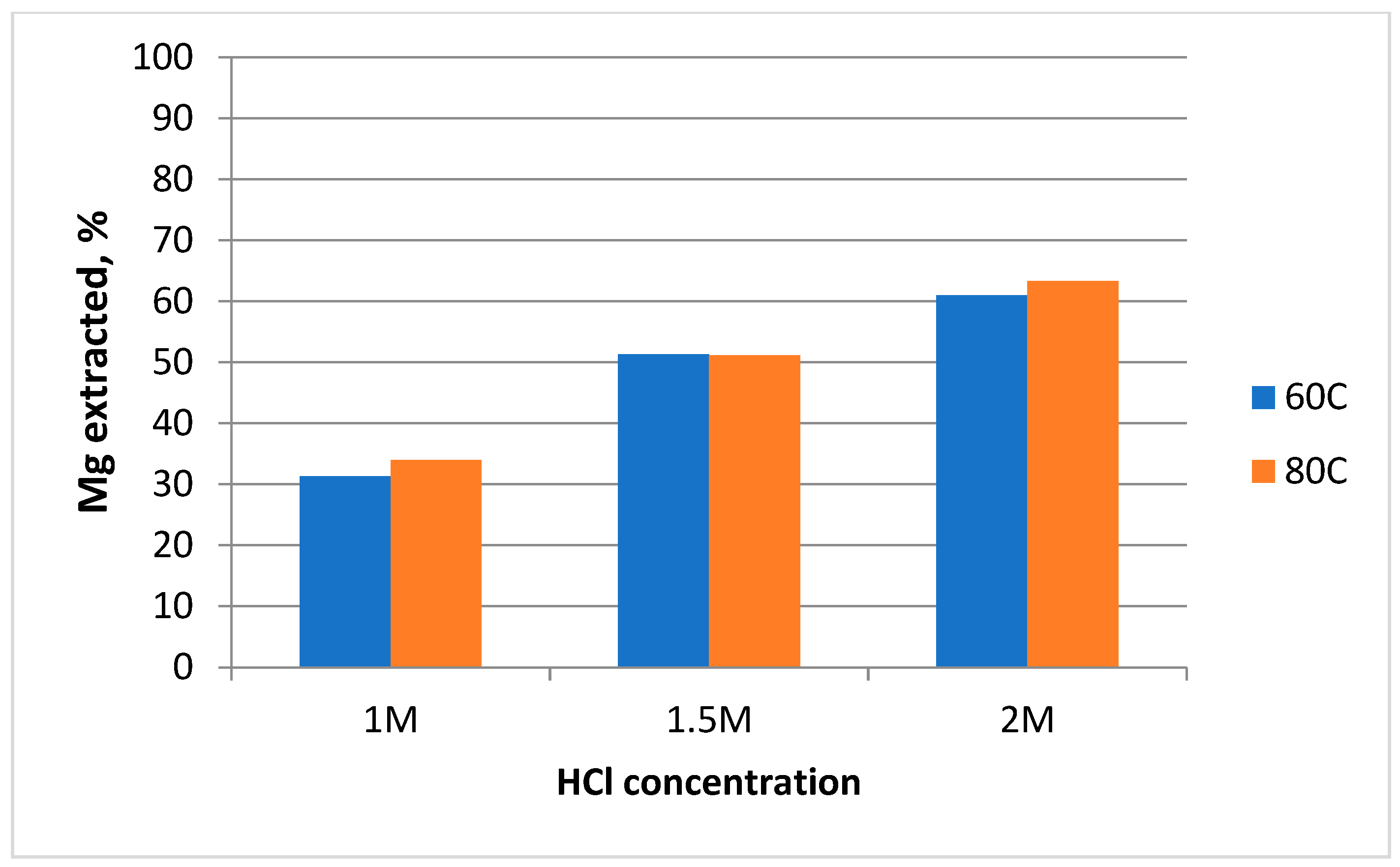
To prevent the formation of silica gel, the duration of the experiments was shortened to 60 min. In the subsequent experimental series, the effect of temperature on magnesium extraction was investigated at 60 °C and 80 °C using HCl concentrations of 1.0, 1.5, and 2.0 M. The temporal changes in magnesium concentrations during leaching at 60 °C and 80 °C are shown in Figure 4. Figure 5 shows comparisons of final Mg extraction for three HCl concentrations (1 M, 1.5 M and 2 M).
Figure 4.
Effect of temperature (60 °C and 80 °C) and HCl concentrations (1 M, 1.5 M, 2 M) on concentrations of Mg in leach solution as a function of time during leaching of thermally activated samples.
Figure 5.
Comparison of final Mg leaching degrees from thermally activated samples after 60 min of experiment using different HCl concentrations (1, 1.5 M and 2 M) and temperatures of 60 °C and 80 °C. Legend: 60C—temperature of 60 °C, 80C—temperature of 80 °C.
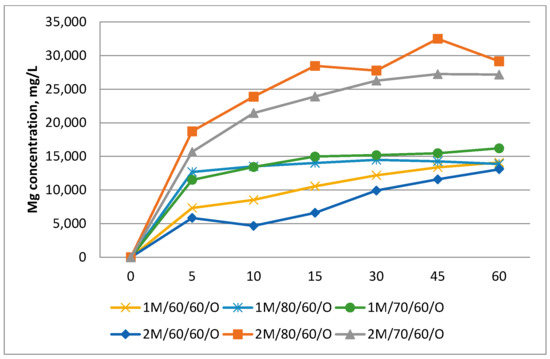
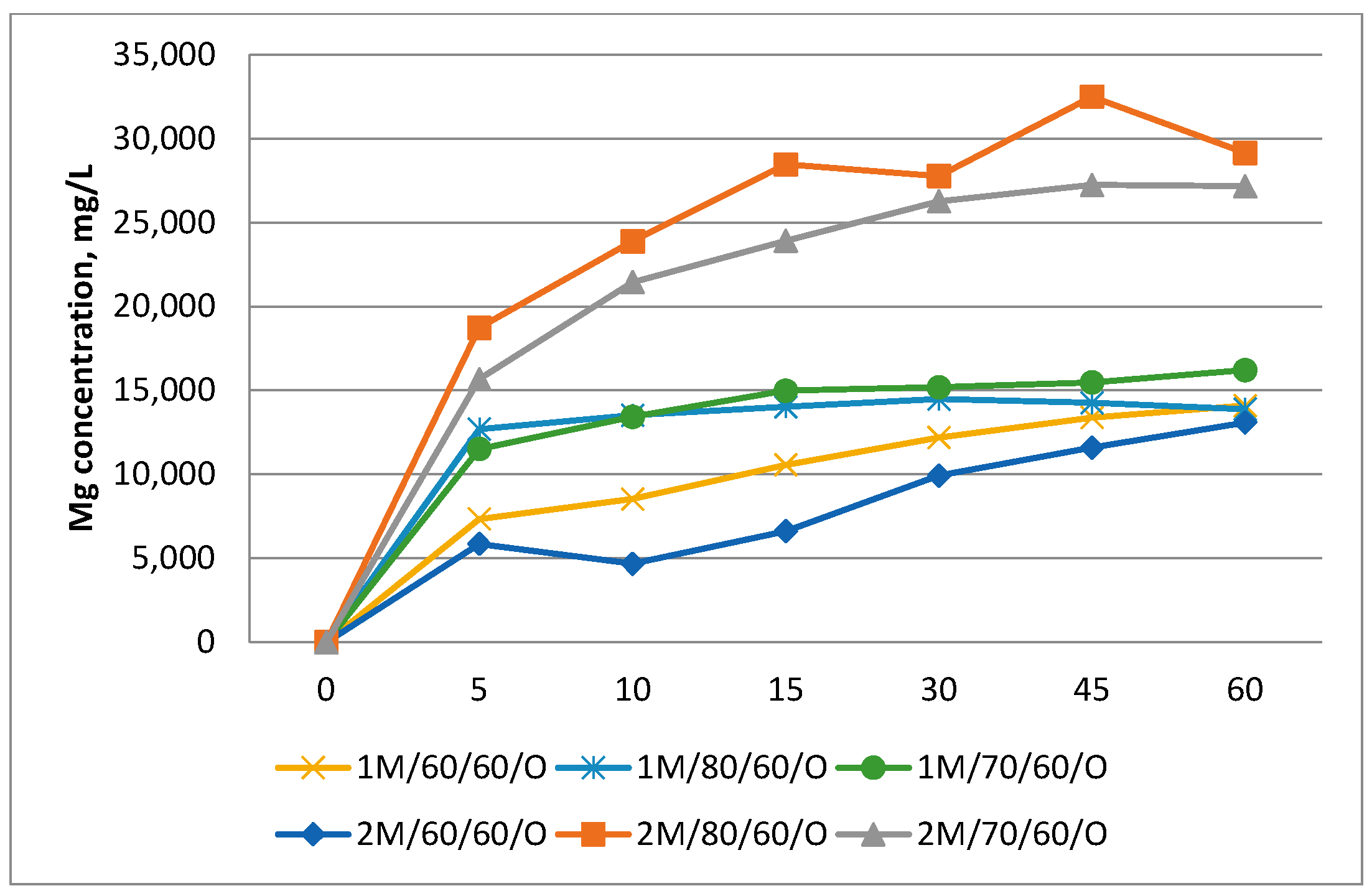
To compare the leaching behavior of thermally activated and untreated tailings, additional experiments were conducted using the original (non-activated) material. Experiments with original samples were performed with 1 M and 2 M HCl, at temperatures of 60 °C, 70 °C and 80 °C and duration of 60 min (Figure 6).
Figure 6.
Effect of temperature (60 °C, 70 °C and 80 °C) and HCl concentrations (1 M and 2 M) on changes in Mg concentrations as a function of time during experiments with original (non-activated) sample.
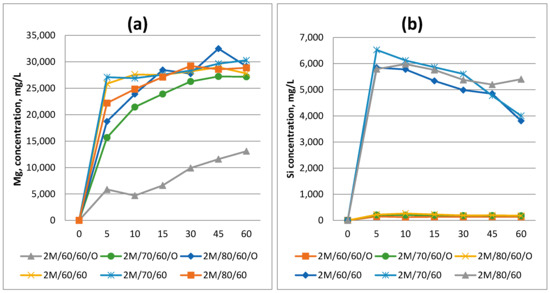
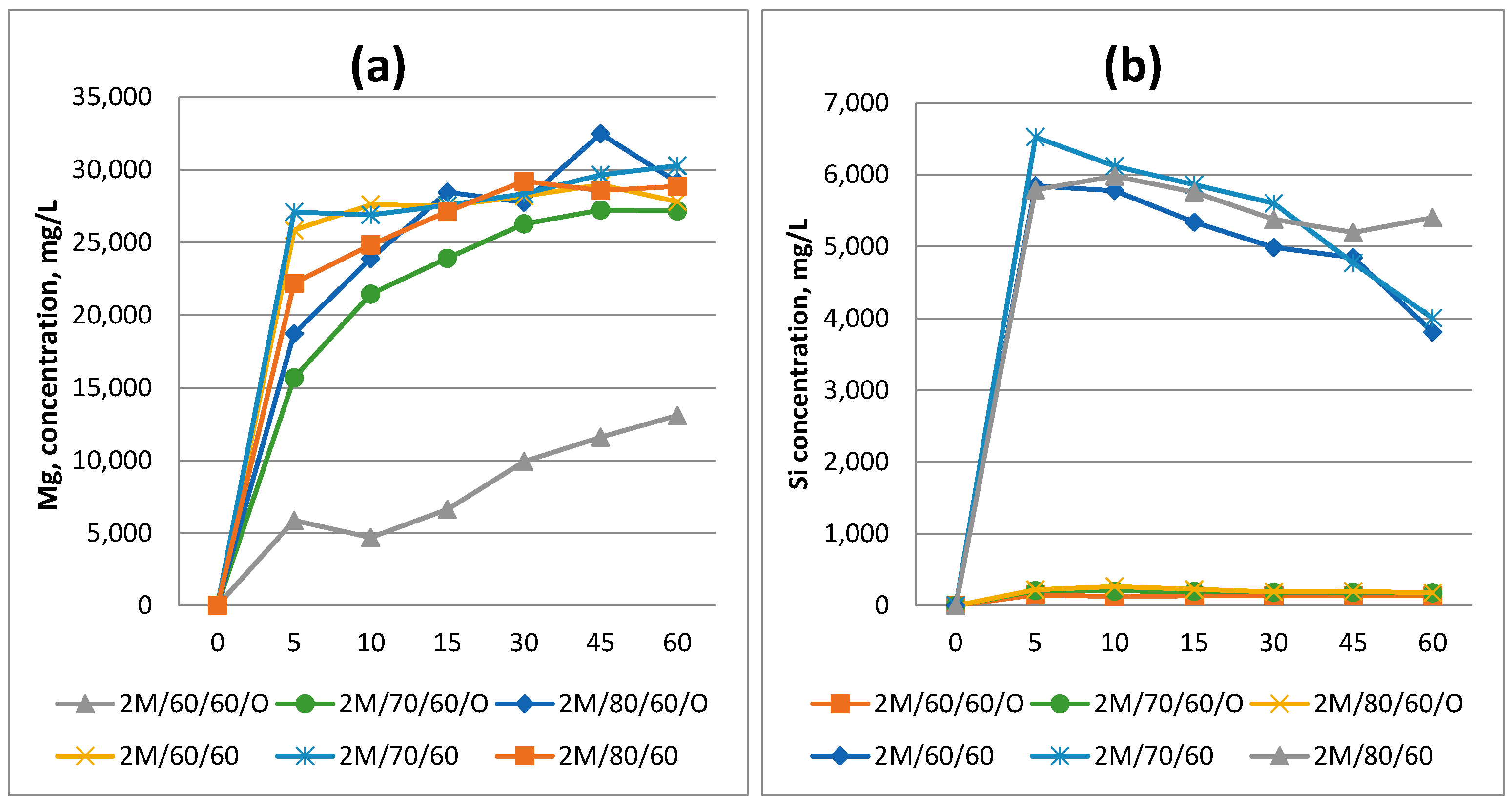
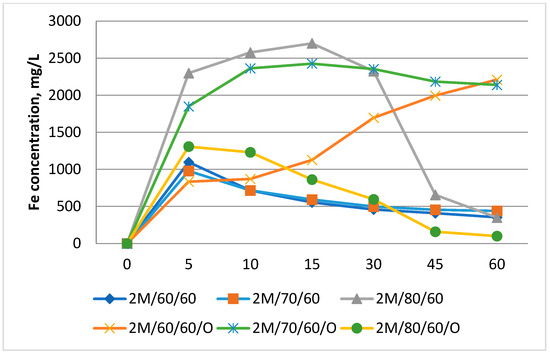
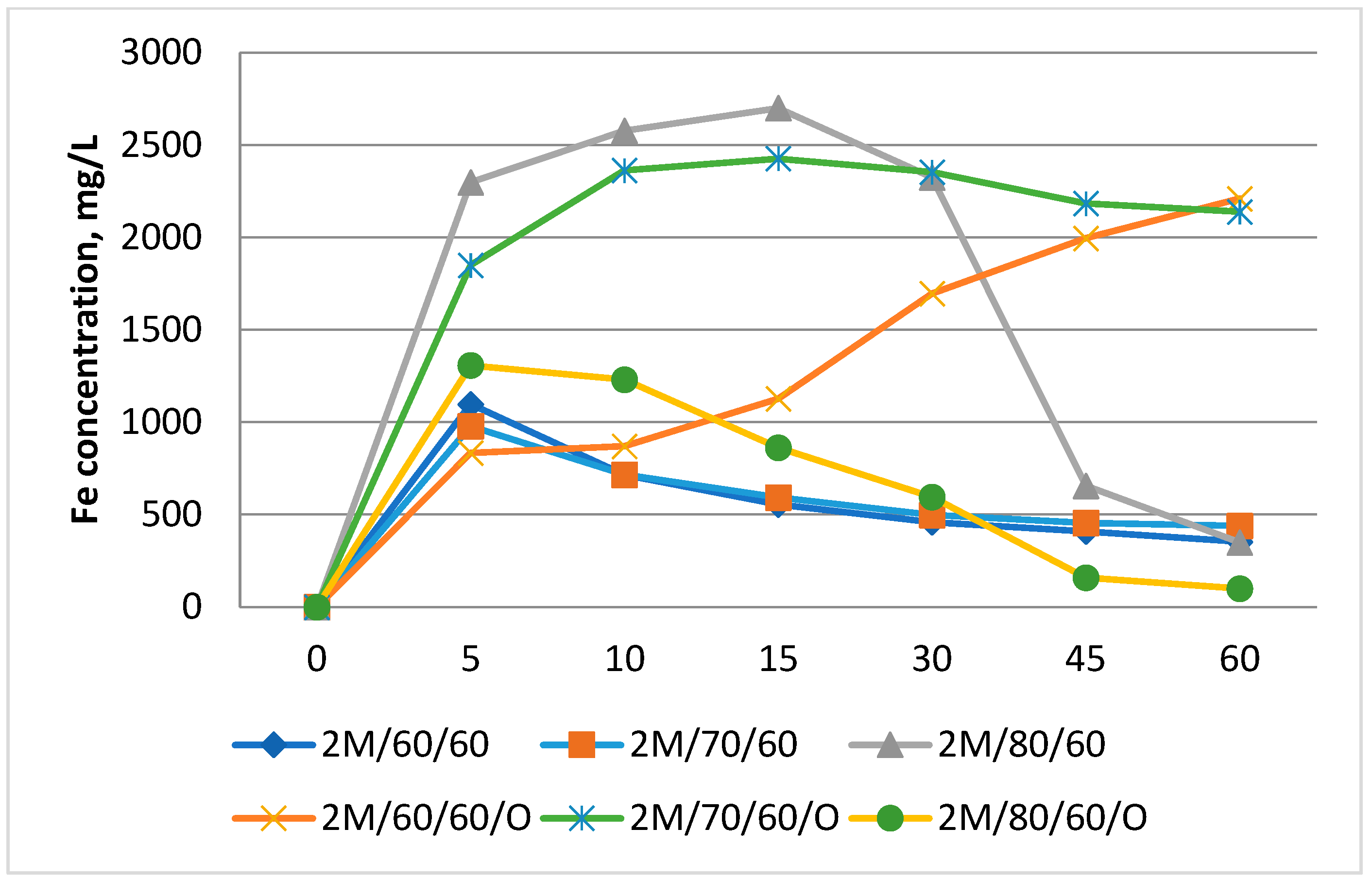
Concentrations of Mg and Si in leaching solution were compared between thermally activated and untreated samples using 2 M HCl at 60 °C, 70 °C and 80 °C, (Figure 7a,b). Figure 8 compares iron extractions for the same experiment. Table 3 shows final pH and Eh values after experiments with activated and non-activated samples.
Figure 7.
(a) Comparison of temperature effect on changes in Mg concentrations during 60 min leaching of thermally activated and original (non-activated) samples using 2 M HCl at three temperatures (60 °C, 70 °C and 80 °C). (b) Comparison of temperature effect on changes in Si concentrations during 60 min leaching of thermally activated and original (non-activated) samples using 2 M HCl at three temperatures (60 °C, 70 °C and 80 °C).
Figure 8.
Comparison of temperature effect on changes in Fe concentrations during 60 min leaching of thermally activated and original (non-activated) samples using 2 M HCl at three temperatures (60 °C, 70 °C and 80 °C).
Table 3.
Final pH and Eh after leaching of thermally activated and original (non-activated) samples using 2 M HCl at temperatures of 60 °C, 70 °C and 80 °C.
3.3. Characterization of Solid Residue
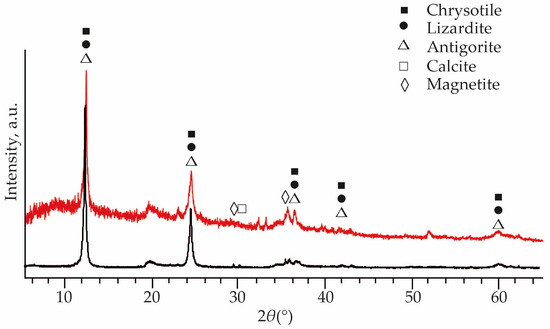
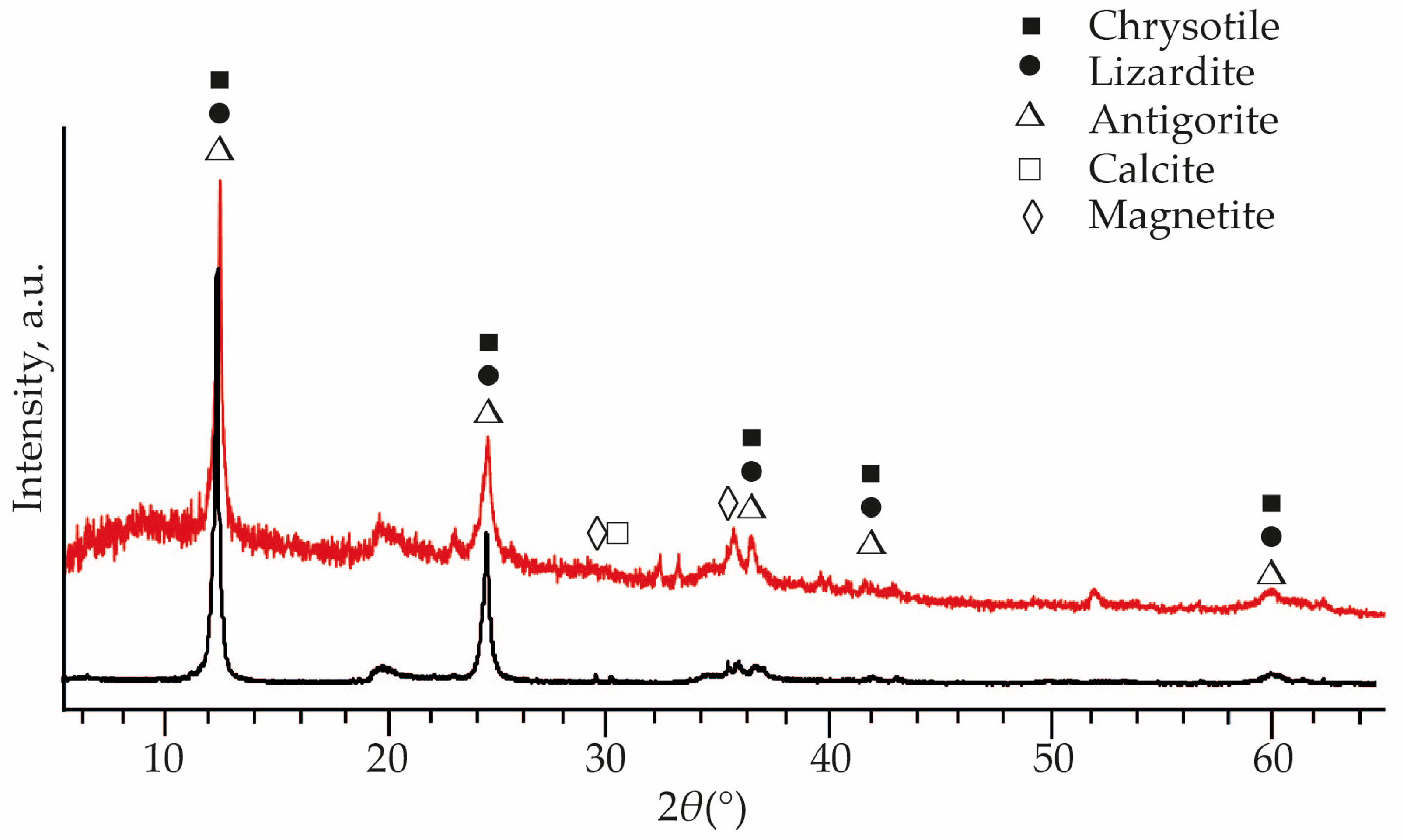
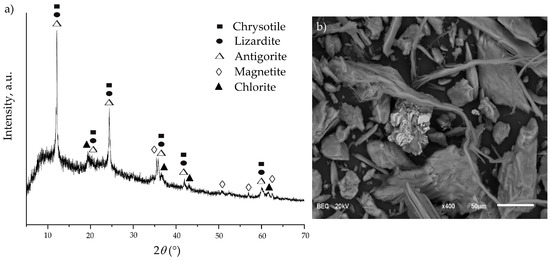
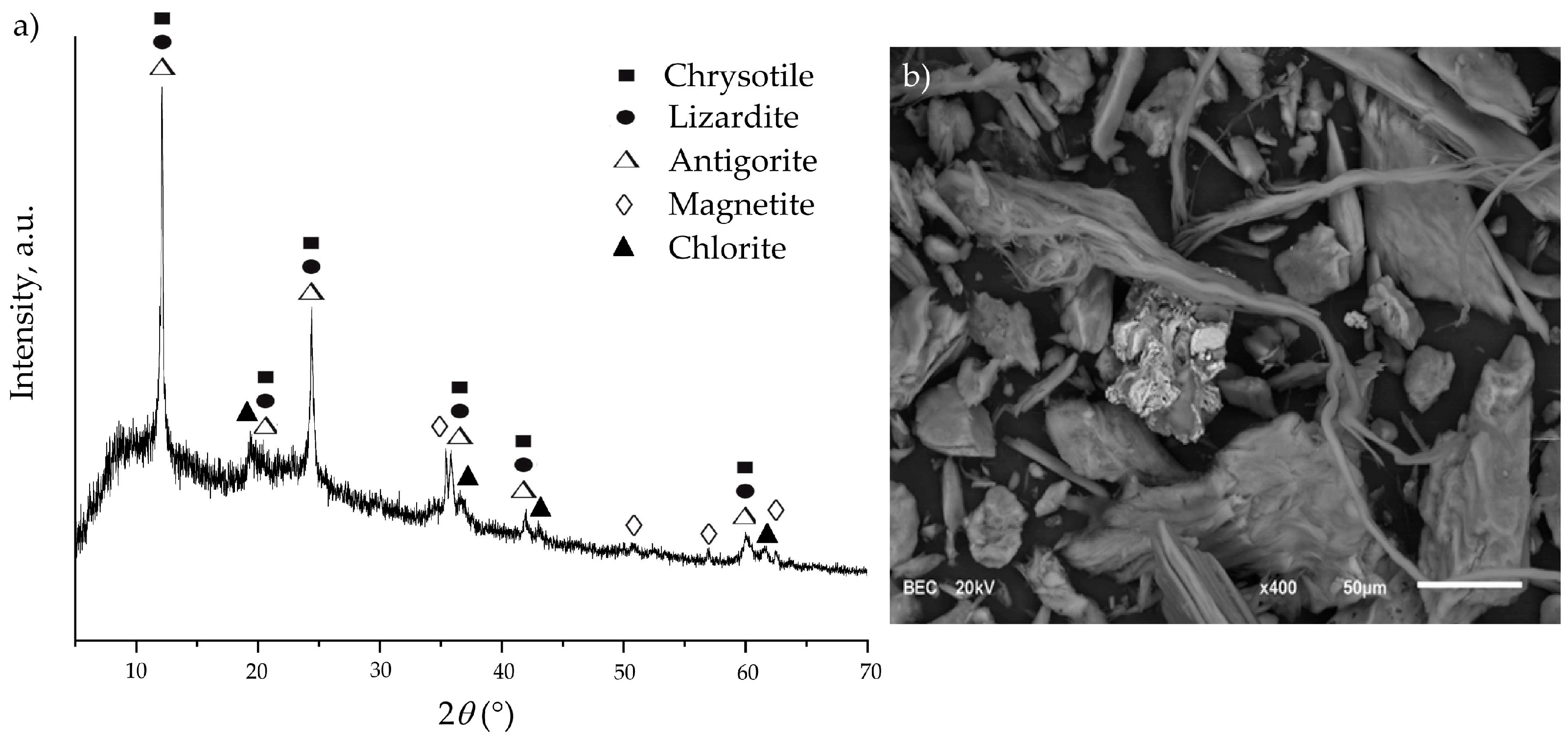
The solid residue obtained after leaching the original sample at 70 °C using a 2 M acid solution for 60 min was sent for chemical composition analysis, mineralogical (XRD) and SEM analyses. The results of the chemical analysis, which are provided in the Supplementary Material Table S3, show a significant decrease in the concentration of all elements. The concentration of Mg, as the main element in this system, decreased by 65%, reaching 80.1 mg/g. Additionally, there was a notable reduction in the concentrations of other macroconstituents, with Ca decreasing by 87.6% to 0.41 mg/L and Ni decreasing by 66.8% to 0.72 mg/g. The concentrations of Si (98.12 mg/g) and Al (1.58 mg/g) dropped by 42.3% and 40.4%, respectively. Fe exhibited the lowest leaching, with a concentration decrease of 27.7%, resulting in a solid residue concentration of 37.9 mg/g. Results of the mineralogical (XRD) and SEM analyses of the solid residue are presented in Figure 9. By comparing the XRD analysis results for the solid residue (Figure 9a) with those for the original sample, it can be seen that the peaks of the chlorite and magnesite phases are more prominent. The reason for this result is the more stable silicate structure of chlorite, which is less susceptible to acid attack than other silicate minerals such as serpentinite [25]. The limited leaching of magnetite is evidenced by the considerable residual Fe found in the solid phase after the leaching, as indicated by the chemical analysis. Mineralogical analysis also showed the absence of a calcite phase, which was expected since calcite easily dissolves in acidic solutions [26]. This was also confirmed by chemical analysis showing a significant decrease in Ca concentration in the solid residue. Incomplete leaching of Mg from serpentinite tailings is also indicated by SEM analysis of the solid residue, which shows the remaining fibrous structure of chrysotile in the micrograph displayed in Figure 9b.
Figure 9.
Results of (a) XRD analysis and (b) SEM analysis of solid residue.
3.4. Precipitation of Impurities
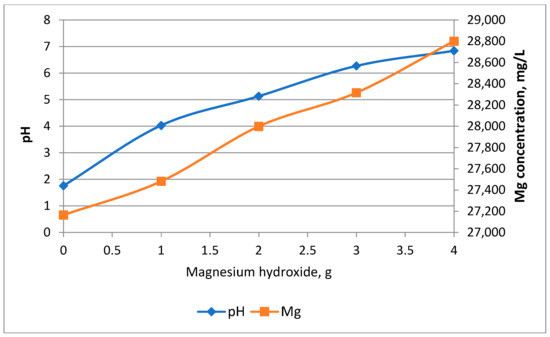
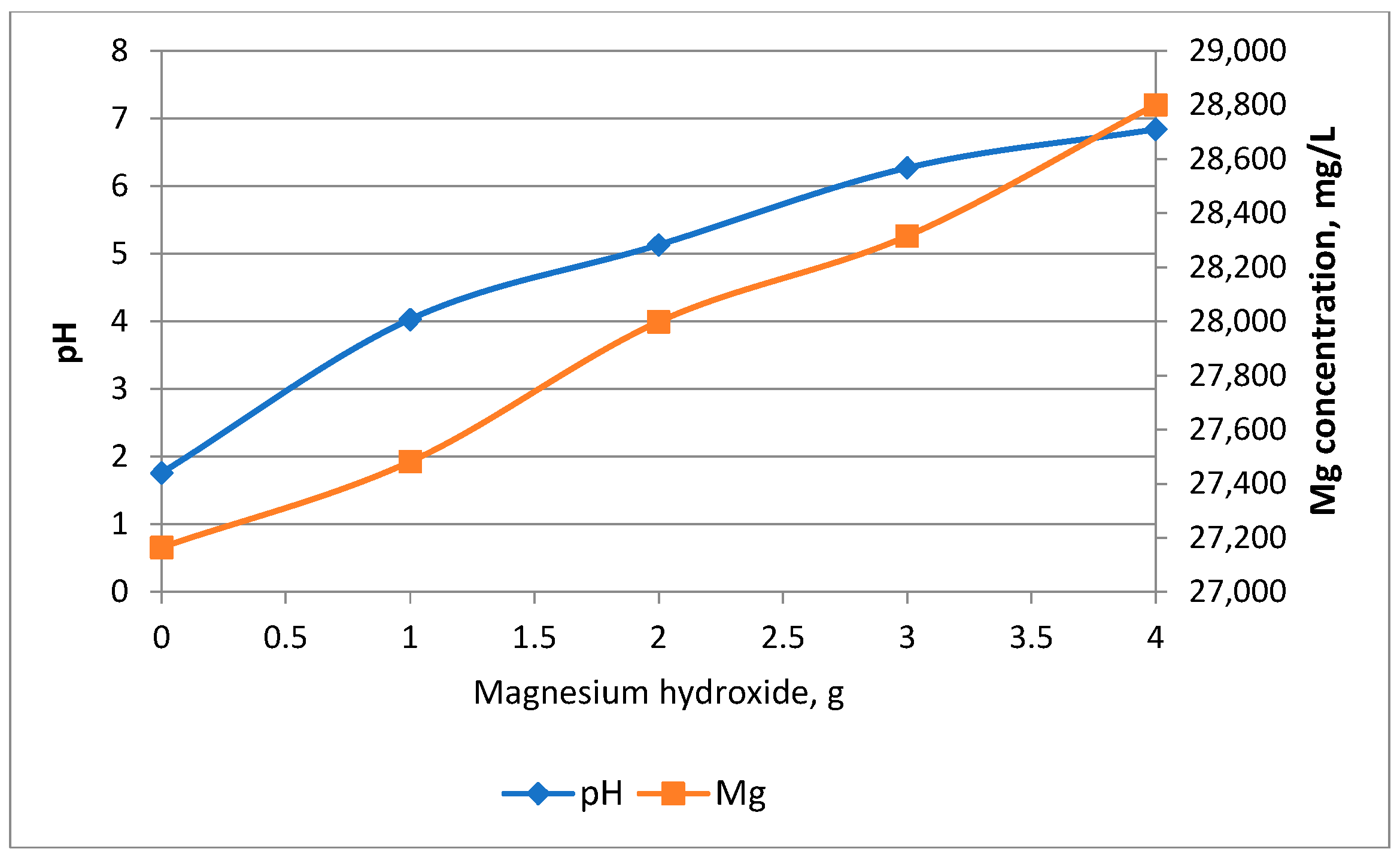
The solution, obtained by leaching the original (untreated) serpentinite sample using 2 M HCl solution at 70 °C during 60 min (2 M/70/60/O), was used to investigate the purification process. This solution contains 27.16 g/L Mg, as well as 2.14 g/L Fe and 0.176 g/L Si (Supplementary Material Table S4). In addition to Fe and Si, as the main impurities in the system, the solution also contains Ca (0.271 g/L), Al (0.122 g/L), and Ni (0.422 g/L). In order to obtain a pure MgCl2 solution, the impurities were removed by acid neutralization using Mg(OH)2. The effects of Mg(OH)2 addition on the change in pH value and the concentration of Mg are shown in Figure 10. The gradual addition of Mg(OH)2 led to a constant increase in the pH value in the system, from the initial 1.76 to the target value of pH > 6.5 (6.84) when the purification process was completed. As expected, the Mg concentration increased linearly with the addition of the agent, reaching 28.8 g/L.
Figure 10.
Effects of Mg(OH)2 addition on pH values and Mg concentrations during acid neutralization process.
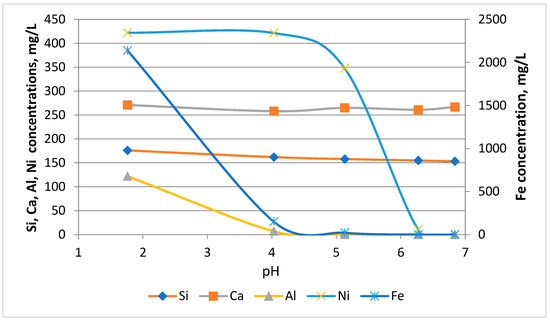
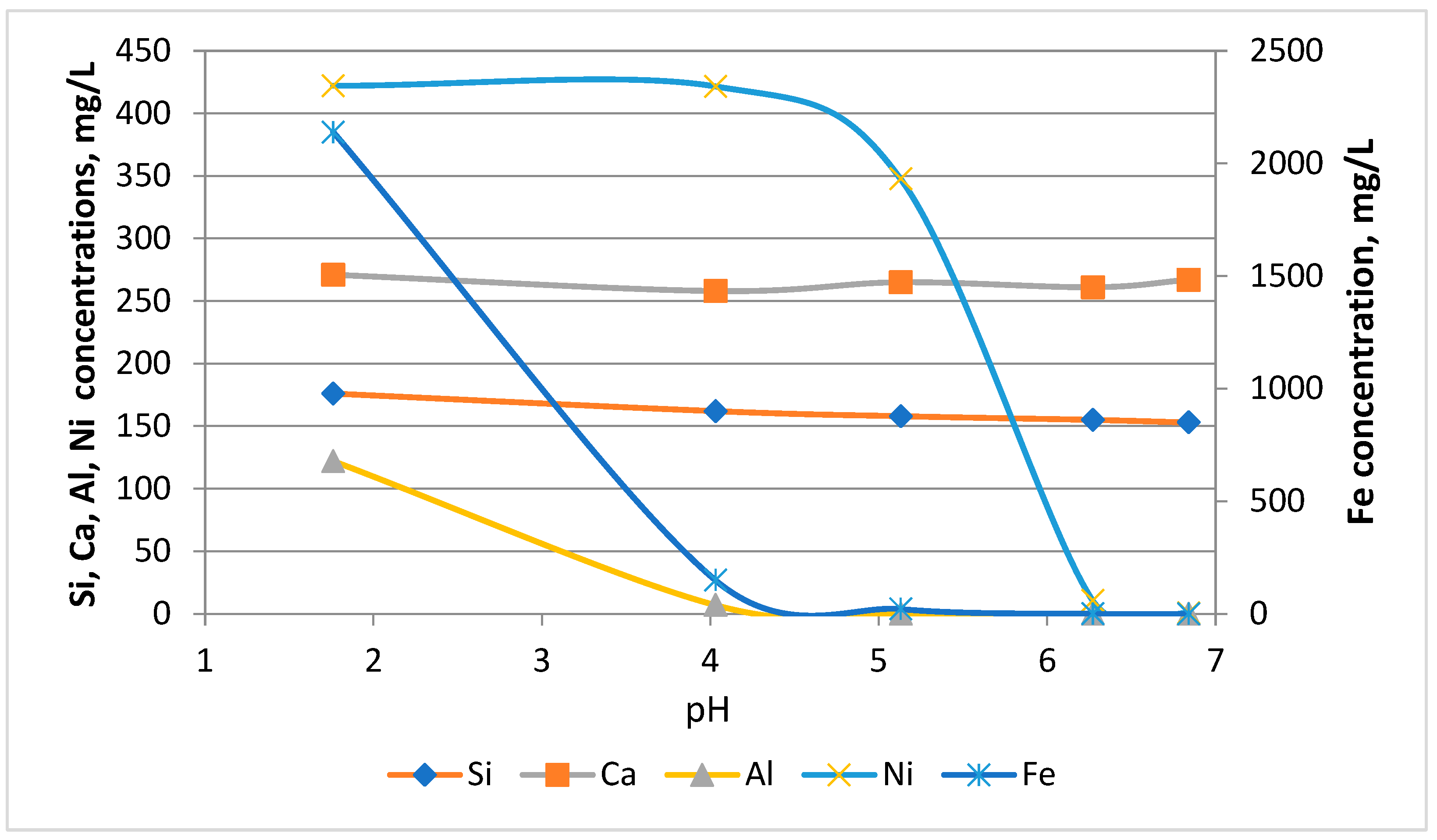
The variation in the system pH value induced by the addition of Mg(OH)2 had a pronounced effect on the concentrations of Fe, Al, and Ni as impurities (Figure 11). Upon the initial addition of 1 g of Mg(OH)2, increasing the pH value to 4.03, a sharp decrease in Fe and Al concentrations was observed, reaching 148 mg/L and 7 mg/L, respectively. Further addition of Mg(OH)2 resulted in their complete removal from the solution. Nickel removal was initiated at pH values > 5, following the addition of 2 g of Mg(OH)2, and its concentration declined to a final value of 0.72 mg/L at pH 6.84. The Ca concentration remained nearly constant in the range of 271–258 mg/L upon Mg(OH)2 addition, as expected. Similarly, only a slight decrease in Si concentration was observed, reaching 153 mg/L. A comprehensive chemical characterization of all samples collected throughout the purification process is presented in the Supplementary Material Table S4.
Figure 11.
Effect of pH on changes in impurity concentrations (Si, Fe, Ca, Al and Ni) in pregnant leach solution.
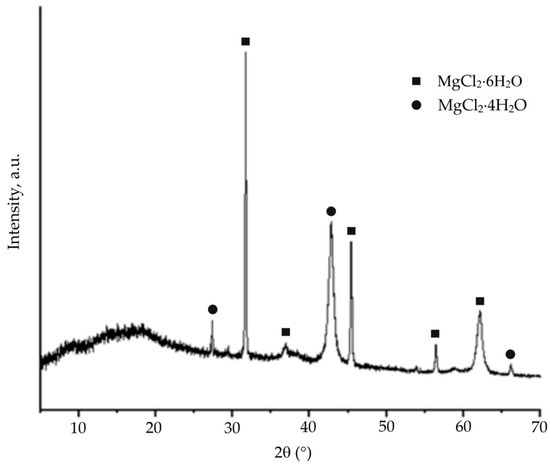
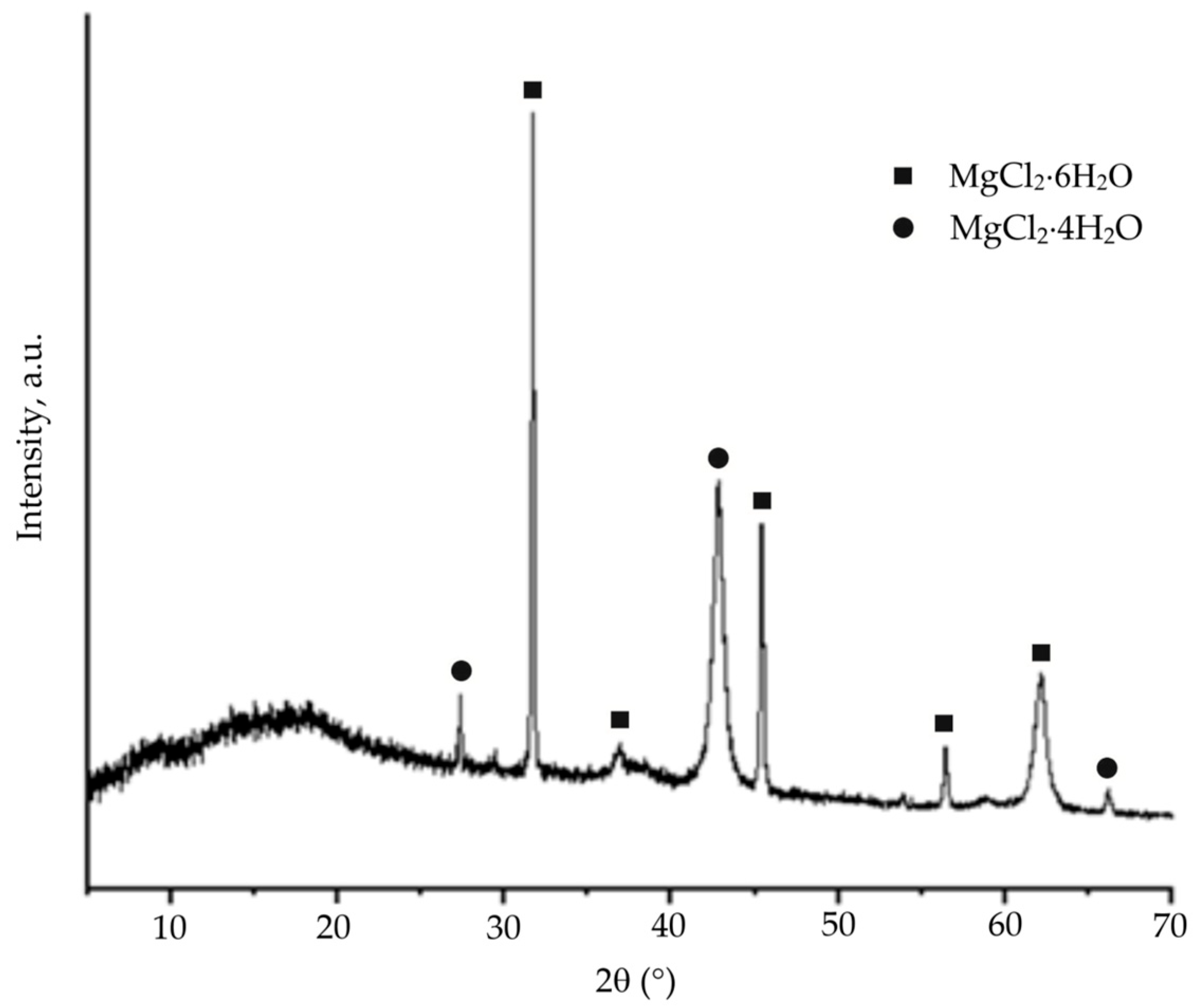
Following phase separation by vacuum filtration, the precipitate was collected and weighed for material balance evaluation, while the purified solution was dried at 105 °C to constant mass. Evaporation of water during drying led to the formation of white solids, identified as MgCl2×6H2O and MgCl2×4H2O by X-ray diffraction analysis (Figure 12). A detailed chemical analysis of the obtained product is given in Supplementary Material Table S5. The main elements in the chemical composition are Mg (119 mg/g) and Cl (347 mg/g), with impurities Ni (2.4 mg/g) and Ca (1.6 mg/g). The product contains 46.6% MgCl2, which is a typical content for magnesium chloride hexahydrate, with a purity of 99.6%.
Figure 12.
Diffractogram of the precipitate after evaporation showing two crystal phases: bischofite (MgCl2×6H2O) and magnesium chloride tetrahydrate (MgCl2×4H2O).
3.5. Preliminary Techno-Economic Assesment
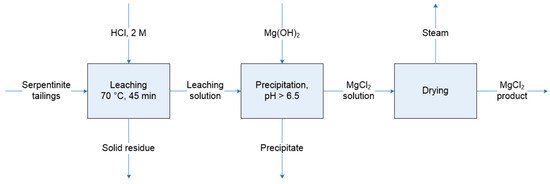
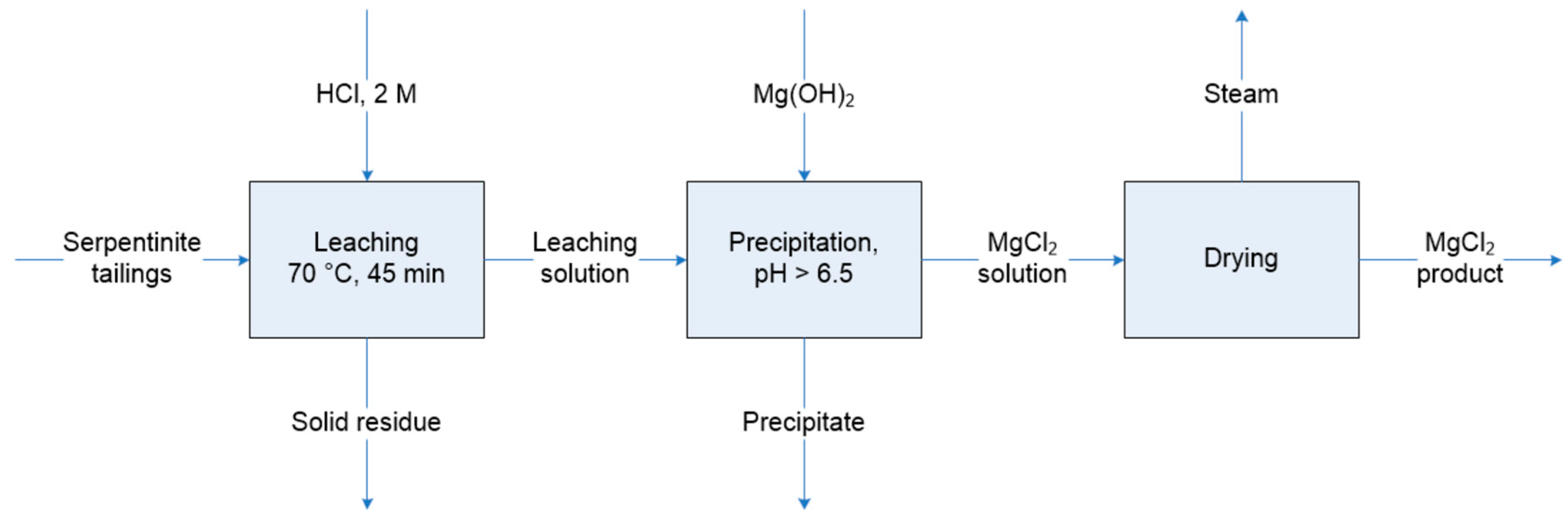
Based on the results of the experimental investigation of serpentinite leaching using 2 M HCl, subsequent impurity precipitation using Mg(OH)2, and drying of the purified solution to obtain MgCl2×6H2O, the process material balance was established for a processing capacity of 50 t/h of serpentinite, according to the flowsheet presented in Figure 13.
Figure 13.
Process flow sheet for obtaining MgCl2·6H2O from serpentinite tailings.
The material balance for processing 50 t/h of the serpentinite tailings is presented in Table 4, showing the material inputs and outputs for each individual process step: leaching, impurity precipitation, and drying of the pregnant leach solution. The overall system inputs consist of serpentinite tailings leached with 250 t/h of 2 M HCl solution and 2.04 t/h of Mg(OH)2 used for purification of the leaching solution. The system outputs include solid residue from the leaching process (45.26 t/h) containing 10% moisture, precipitate sludge (10.90 t/h) containing 82.5% moisture, water steam generated during the drying process (189.98 t/h), and the product (MgCl2×6H2O) at a rate of 55.90 t/h. The produced magnesium chloride hexahydrate corresponds to 26.17 t/h of MgCl2, equivalent to 6.68 t/h of elemental Mg. This indicates that, from serpentinite tailings containing 22.8% Mg, 13.36% Mg was recovered, corresponding to a magnesium utilization efficiency of 58.6% by using 2 M HCl for leaching and Mg(OH)2 as purification agent
Table 4.
Material balance for the processing of 50 t/h of serpentinite tailings.
The annual input and output of materials involved in the processing of serpentinite tailings to obtain MgCl2×6H2O were determined according to the material balance (Table 4). An overview and calculation of the necessary funds for procuring raw materials, along with potential annual revenue from product sales, is presented in the Supplementary Material Table S6. The prices included in the calculation were obtained through a market search and are expressed in US dollars (USD). These prices are accompanied by estimated costs for the treatment and disposal of waste generated in the process. The specification of required workforce structure, including associated salaries, taxes, and contributions, is presented in the Supplementary Material Table S7. The workforce is calculated for a single 8 h shift. Specifications of basic technological equipment with estimated purchase prices and annual electricity consumption are provided in the Supplementary Material Tables S8 and S9, respectively. The overview of the stated costs and revenues for the investigated process of obtaining MgCl2×6H2O from serpentinite tailings is summarized in Table 5.
Table 5.
Specification of costs and revenues.
This preliminary techno-economic analysis is subject to several important limitations. CAPEX includes only the procurement of the main processing equipment, while operational expenditures (OPEX) are limited to the annual costs of chemical consumption, electricity usage, workforce and waste treatment. Revenue is exclusively derived from the sale of magnesium chloride hexahydrate as the sole process product. The positive economic balance, expressed as the difference between revenues and costs, indicates the potential economic feasibility of producing MgCl2×6H2O from serpentinite tailings.
4. Discussion
The present study evaluated the influence of thermal activation, hydrochloric acid concentration, temperature, and leaching duration on magnesium extraction from serpentinite tailings originating from the “Stragari” asbestos mine. The results provide several important insights into the dissolution behavior of serpentine minerals and the practical limitations associated with downstream processing.
4.1. Effect of Thermal Activation
X-ray diffraction analysis demonstrated that all major mineral phases identified in the original sample remained present after calcination at 600 °C, albeit in a structurally disordered form. Thermal treatment induced dehydroxylation and partial breakdown of the layered serpentine structure, which is consistent with previous reports describing the formation of amorphous or poorly crystalline magnesium silicate phases during thermal treatment [18,19].
Thermally activated samples exhibited high initial reactivity, evidenced by the rapid temperature increase (≈20 °C above the set value) and sharp release of Mg, Si, and Fe within the first five minutes. This enhanced reactivity did not translate into a notably higher final Mg extraction at 70 and 80 °C compared with the untreated material. At 2 M HCl, 70 and 80 °C, the extraction efficiencies of activated and non-activated samples were comparable, indicating that under moderately strong acidic conditions, structural disorder induced by roasting does not substantially improve overall magnesium recovery. Importantly, thermal activation significantly increased silicon dissolution. The higher Si concentrations observed during leaching of roasted samples promoted rapid silica polymerization and formation of a dense silica gel. This gel formation negatively affected filtration efficiency and complicates downstream processing. From an industrial perspective, this represents a major drawback. The increased acid consumption observed during leaching of thermally activated samples further reduces the economic attractiveness of the roasting step. Considering the additional energy demand for thermal activation and the absence of improvement in magnesium recovery, the results suggest that roasting prior to leaching is not justified for the Stragari tailings under the investigated conditions.
4.2. Influence of HCl Concentration
Magnesium concentration in the pregnant leach solution (PLS) exhibited a strong linear dependence on HCl concentration (R2 = 0.98, Supplementary Material Figure S1), confirming that acid availability is the dominant factor controlling dissolution efficiency under the tested conditions. Increasing HCl concentration from 0.5 M to 2.0 M for leaching of thermally activated sample resulted in a proportional increase in Mg extraction, reaching maximum of approximately 70% at 2.0 M HCl after 180 min at 70 °C.
This behavior is consistent with the stoichiometric requirement described by Reaction (1), where six protons are consumed per mole of serpentine. The final pH values measured after leaching further support this interpretation. At lower HCl concentrations (0.5–1.0 M), the pH increased to near-neutral values (up to 7.1) due to rapid acid consumption by serpentine dissolution and secondary reactions with iron-bearing phases and carbonates, which was simultaneously accompanied by a decrease in Eh, indicating the gradual loss of acidic and oxidizing conditions in the system (Table 2).
Under such conditions, the dissolution rate decreases sharply as proton availability becomes limiting. The data demonstrate that maintaining sufficient acid concentration throughout the leaching period is essential for sustained magnesium extraction. However, beyond 2 M HCl, further increases in acid concentration would likely result in disproportionately higher reagent costs and increased co-dissolution of impurities, as reported in the literature [7,13]. Therefore, 2 M HCl represents a practical compromise.
4.3. Temperature Effects
The influence of temperature on Mg leaching degree differed between thermally activated and non-activated (original) samples. For the activated material, increasing the temperature from 60 °C to 80 °C had only a minor effect on final Mg extraction. In contrast, for the original sample, Mg extraction at 60 °C was noticeably lower than at 70 and 80 °C, indicating a stronger temperature dependence of dissolution kinetics in the structurally ordered serpentine. The consistently positive Eh values observed at 2 M HCl conditions (Table 3) indicate that the system remained within an oxidizing domain throughout these experiments.
These observations suggest that calcination probably reduces the activation energy barrier for initial dissolution but does not significantly alter the equilibrium-controlled extraction limit under sufficiently acidic conditions. For untreated serpentinite, higher temperature enhances proton diffusion into the layered structure and accelerates dissolution of Mg from octahedral sheets.
From a process optimization perspective, 70 °C appears to be sufficient to achieve near-maximal Mg recovery within 60 min using 2 M HCl. Increasing the temperature to 80 °C provides no substantial improvement but increases energy demand.
4.4. Silica Gel Formation and Process Limitations
One of the critical operational challenges identified in this study is silica gel formation. Silicon concentrations increased rapidly during the early stages of leaching and subsequently decreased to near-zero values due to polymerization and gelation. This phenomenon is well documented in acid leaching of silicate minerals and is typically associated with supersaturation of monosilicic acid, followed by condensation reactions forming amorphous silica [23].
The formation of a thick silica gel layer was particularly pronounced during 180 min experiments, negatively affecting filtration of the liquid phase. Shortening the leaching duration to 60 min improved filtration performance.
This finding highlights that maximizing extraction time does not necessarily improve overall process performance. Instead, controlling residence time to avoid excessive silica polymerization is crucial for practical implementation.
4.5. Iron Behavior and Purification Strategy
Iron dissolution was strongly dependent on pH. At higher acid concentrations, Fe was initially solubilized but subsequently precipitated as ferric hydroxide once pH increased above ~3 due to acid consumption. The controlled neutralization of the PLS using Mg(OH)2 proved highly effective for impurity removal. Fe and Al were removed almost completely at pH ≈ 4–5, while Ni precipitation required pH values above 5.5. The final pH of 6.8 resulted in near-complete removal of Fe, Al, and Ni without significant Mg loss.
This purification strategy offers an important process advantage. Using Mg(OH)2 avoids contamination with cations (e.g., Na+ or Ca2+), maintaining product purity. Moreover, Mg concentration in solution increased slightly during neutralization due to dissolution of the added hydroxide.
4.6. Process Optimization and Industrial Implications
Based on the experimental data, optimal operating conditions were identified as: 2 M HCl, 70 °C, 60 min duration, no thermal activation. Under these conditions, magnesium recovery is maximized relative to acid consumption, silica gel formation is minimized, and filtration remains technically manageable. The overall magnesium utilization efficiency of 58.6% in the scaled material balance reflects both incomplete leaching and unavoidable process losses. While further optimization may improve process performance, the results of this study already demonstrate technical feasibility and economic viability.
Future research will focus on kinetic modeling of serpentinite dissolution under moderate acid concentrations.
5. Conclusions
The characterization of the serpentinite tailings from the Stragari asbestos mine confirmed that the material represents a magnesium-rich secondary resource, containing 228 ± 7 mg/g Mg and approximately 98.5% serpentine minerals. Thermal analysis showed a total mass loss of 12.27%, with dehydroxylation occurring at ~620 °C, while the material exhibited alkaline properties (pH 9.23) and fine particle size distribution suitable for direct leaching without pre-treatment. These characteristics indicate that the tailings are a technically viable feedstock for hydrometallurgical magnesium recovery.
Hydrochloric acid leaching experiments demonstrated that magnesium extraction is primarily controlled by acid concentration, showing a strong linear dependence (R2 = 0.98). Maximum Mg extraction of approximately 70% was achieved using 2.0 M HCl at 70 °C. However, prolonged leaching (180 min) led to silica gel formation, which negatively affected filtration. Reducing the leaching time to 60 min prevented gel formation while maintaining high extraction efficiency. Under optimized conditions (2 M HCl, 70 °C, 60 min), untreated serpentinite provided stable and reproducible magnesium recovery with final Mg concentrations exceeding 27 g/L in the pregnant leach solution.
Thermal activation at 600 °C increased initial dissolution rates but did not significantly improve final magnesium extraction compared to untreated material. Instead, it promoted higher silicon dissolution and rapid silica gel formation, increased acid consumption, and introduced additional energy costs. These results indicate that thermal pre-treatment is not justified for the investigated system under moderate leaching conditions.
Purification of the pregnant leach solution by controlled neutralization with Mg(OH)2 enabled efficient removal of impurities. Iron and aluminum were removed at pH 4–5, while nickel removal was completed at pH ~6.8, resulting in a purified solution containing up to 28.8 g/L Mg. Subsequent evaporation yielded MgCl2×6H2O with a purity of 99.6%. Based on the material balance, processing of 50 t/h of tailings resulted in 55.9 t/h of MgCl2×6H2O, corresponding to a magnesium utilization efficiency of 58.6%. The preliminary techno-economic analysis indicated strong economic potential, with estimated annual revenues of approximately 53.7 million USD and a positive balance of 35.5 million USD.
Overall, the study demonstrates that magnesium chloride hexahydrate can be efficiently produced from serpentinite tailings using moderate leaching conditions without thermal activation. The results highlight that process optimization should focus on balancing magnesium recovery, acid consumption, and downstream processing constraints rather than maximizing extraction efficiency, thereby enabling a technically feasible and economically attractive route for tailings valorization and environmental remediation.
Supplementary Materials
The following supporting information can be downloaded at: https://www.mdpi.com/article/10.3390/met16050531/s1, Table S1. The complete elemental composition of the original serpentinite tailings sample. Table S2. Particle-size analysis of the original serpentinite tailings sample. Figure S1. Linear correlation between HCl concentration and Mg extraction. Table S3. The elemental composition of the solid residue. Table S4. Changes in pH values and chemical composition with Mg(OH)2 additions. Table S5. The elemental composition of the final product. Table S6. Specification of required raw materials and resulting product with prices on an annual basis. Table S7. Specification of required workforce. Table S8. Specifications of the main process equipment. Table S9. Specification of electricity consumption.
Author Contributions
Conceptualization, S.S., D.R. and Ž.K.; methodology, S.S. and D.R.; software, D.R., S.J. and M.Š.; validation, S.S. and D.R.; investigation, S.S., D.R., N.G., M.Š., J.Đ. and S.J.; writing—original draft preparation, S.S. and D.R.; writing—review and editing, N.G., M.Š., J.Đ., S.J. and Ž.K.; supervision, Ž.K. All authors have read and agreed to the published version of the manuscript.
Funding
This research received funding from company BIOCARST Ltd. Belgrade, Serbia. The publication of this manuscript was funded by the Ministry of Science, Technological Development and Innovation of the Republic of Serbia (451-03-33/2026-03/200287, 451-03-34/2026-03/200135, 451-03-33/2026-03/200288).
Data Availability Statement
The original contributions presented in this study are included in the article/Supplementary Material. Further inquiries can be directed to the corresponding author.
Acknowledgments
Authors are grateful to Dejan Prelević and Aleksa Boro Mandić from University of Belgrade—Faculty of Mining and Geology for conducting SEM analysis of the material.
Conflicts of Interest
The authors declare that this study received funding from Biocarst Ltd. Belgrade. The funding sponsors had the following involvement with the study: providing the tailings samples for experimental work, financing of the ICP-OES and SEM analysis.
References
- Karunadasa, K.S.; Rajapakse, R.M.G.; Pitawala, H.M.T.G.A.; Manoratne, C.H. Microstructural insight into the thermal decomposition of MgCl2·6H2O examined by in-situ high-temperature X-ray powder diffraction. J. Solid State Chem. 2023, 322, 123965. [Google Scholar] [CrossRef] [Scilit]
- González, Y.; Navarra, A.; Jeldres, R.I.; Toro, N. Hydrometallurgical processing of magnesium minerals—A review. Hydrometallurgy 2021, 201, 105573. [Google Scholar] [CrossRef] [Scilit]
- Critical Raw Materials Act. Regulation (EU) 2024/1252 of the European Parliament and of the Council of 11 April 2024. 2024. Available online: http://data.europa.eu/eli/reg/2024/1252/oj (accessed on 16 February 2026).
- Carmignano, O.R.D.; Vieira, S.S.; Brandão, P.R.G.; Bertoli, A.C.; Lago, R.M. Serpentinites: Mineral structure, properties and technological applications. J. Braz. Chem. Soc. 2020, 31, 2–14. [Google Scholar] [CrossRef] [Scilit]
- Yoo, K.; Kim, B.S.; Kim, M.S.; Lee, J.C.; Jeong, J. Dissolution of magnesium from serpentine mineral in sulfuric acid solution. Mater. Trans. 2009, 50, 1225–1230. [Google Scholar] [CrossRef] [Scilit]
- Branković, S.P. Uticaj Geološke Podloge na Sadržaj Metala u Biljkama. Ph.D. Thesis, University of Kragujevac, Kragujevac, Serbia, 2014. [Google Scholar]
- Sierra, C.; Chouinard, S.; Pasquier, L.C.; Mercier, G.; Blais, J.F. Feasibility study on the utilization of serpentine residues for Mg(OH)2 production. Waste Biomass Valor. 2018, 9, 1921–1933. [Google Scholar] [CrossRef] [Scilit]
- Royani, A.; Sulistiyono, E.; Prasetiyo, A.B.; Subagja, R. Extraction of magnesium from calcined dolomite ore using hydrochloric acid leaching. In AIP Conference Proceedings; AIP Publishing: Melville, NY, USA, 2018; Volume 1964, p. 020017. [Google Scholar] [CrossRef] [Scilit]
- Bullock, L.; Yang, A.; Darton, R.C. Kinetics-informed global assessment of mine tailings for CO2 removal. Sci. Total Environ. 2022, 808, 152111. [Google Scholar] [CrossRef] [Scilit]
- Gao, W.; Wen, J.; Li, Z. Dissolution kinetics of magnesium from calcined serpentine in NH4Cl solution. Ind. Eng. Chem. Res. 2014, 53, 7947–7955. [Google Scholar] [CrossRef] [Scilit]
- Baigenzhenov, O.S.; Kozlov, V.A.; Luganov, V.A.; Mishra, B.; Shayahmetova, R.A.; Aimbetova, I.O. Complex Processing of Wastes Generated in Chrysotile Asbestos Production. Miner. Process. Extr. Metall. Rev. 2015, 36, 242–248. [Google Scholar] [CrossRef] [Scilit]
- Cheng, T.C.; Morissette, C.L.; Mines, T. Deportments of Magnesium and Silicon in a Two-part HCl-NaOH Leaching of Asbestos Tailings . In Proceedings of the Tailings & Mine Waste , Denver, CO, USA, 10–13 November 2024; 2008; pp. 1891–1901. [Google Scholar]
- Sanna, A.; Wang, X.; Lacinska, A.; Styles, M.; Paulson, T.; Maroto-Valer, M.M. Enhancing Mg extraction from lizardite-rich serpentine for CO2 mineral sequestration. Miner. Eng. 2013, 49, 135–144. [Google Scholar] [CrossRef] [Scilit]
- Pawełczyk, A.; Božek, F.; Grabas, K.; Chęcmanowski, J. Chemical elimination of the harmful properties of asbestos from military facilities. Waste Manag. 2017, 61, 377–385. [Google Scholar] [CrossRef] [Scilit] [PubMed]
- Liu, W.; Peng, X.; Liu, W.; Zhang, N.; Wang, X. A cost-effective approach to recycle serpentine tailings: Destruction of stable layered structure and solvent displacement crystallization. Int. J. Min. Sci. Technol. 2022, 32, 595–603. [Google Scholar] [CrossRef] [Scilit]
- Telgerafchi, A.E.; Rutherford, M.; Espinosa, G.; McArthur, D.; Masse, N.; Perrin, B.; Tang, Z.; Powell, A.C., IV. Magnesium production by molten salt electrolysis with liquid tin cathode and multiple effect distillation. Front. Chem. 2023, 11, 1192202. [Google Scholar] [CrossRef] [Scilit]
- Shayakhmetova, R.A.; Mukhametzhanova, A.A.; Akbayeva, D.N.; Terlikbaeva, A.Z.; Osipov, P.A.; Alimzhanova, A.M.; Zharmenov, A.A. Magnesium and silicon recovery from chrysotile asbestos waste of the deposit Zhitikara, Kazakhstan. Sci. Rep. 2024, 14, 31866. [Google Scholar] [CrossRef] [Scilit]
- Fedoročková, A.; Hreus, M.; Raschman, P.; Dorčák, V. Thermal activation of serpentine prior to acid leaching. Hydrometallurgy 2012, 117–118, 36–43. [Google Scholar] [CrossRef] [Scilit]
- Raschman, P.; Fedoročková, A.; Hreus, M.; Dorčák, V. Dissolution of magnesium from calcined serpentinite in hydrochloric acid. Miner. Eng. 2013, 49, 119–126. [Google Scholar] [CrossRef] [Scilit]
- Beglaryan, H.; Isahakyan, A.; Zulumyan, N.; Melikyan, S.; Terzyan, A. A study of magnesium dissolution from serpentinites composed of different serpentine group minerals. Miner. Eng. 2023, 201, 108171. [Google Scholar] [CrossRef] [Scilit]
- ISO 11465:1993; Soil Quality—Determination of Dry Matter and Water Content on a Mass Basis—Gravimetric Method. International Organization for Standardization: Geneva, Switzerland, 1993.
- U.S. Environmental Protection Agency (EPA). Soil and waste pH. Method 9045D. In SW-846 Test Methods for Evaluating Solid Waste, Physical/Chemical Methods; U.S. EPA: Washington, DC, USA, 2004. Available online: https://www.epa.gov/sites/production/files/2015-12/documents/9045d.pdf (accessed on 19 February 2026).
- Auyeshov, A.; Arynov, K.; Yeskibayeva, C.; Ibrayeva, A.; Zhumadildayeva, A. Efficient Production of High-Purity Magnesium Hydroxide from Serpentinite. Molecules 2025, 30, 3484. [Google Scholar] [CrossRef] [Scilit]
- Qin, M.; Xing, H.; Wang, J.; Jin, G.; Hu, Z.; Yan, W.; Tan, Y.; Liu, J.; Zhang, R. In-situ observation of nanoscale transformations in dehydrating lizardite. Sci. Rep. 2025, 15, 4000. [Google Scholar] [CrossRef] [Scilit]
- Auyeshov, A.; Arynov, K.; Yeskibayeva, C.; Alzhanov, K.; Raiymbekov, Y. Thermoacid Behavior of Serpentinite of the Zhitikarinsky Deposit (Kazakhstan). Molecules 2024, 29, 3965. [Google Scholar] [CrossRef] [Scilit]
- Kang, H.; Kim, J.; Lee, J.; Lee, D.; Ko, D.; Kim, H. Early-stage temperature-dependent leaching kinetics and mechanisms of saprolitic and limonitic nickel laterite ores under atmospheric conditions. Miner. Eng. 2026, 239, 110115. [Google Scholar] [CrossRef] [Scilit]

Disclaimer/Publisher’s Note: The statements, opinions and data contained in all publications are solely those of the individual author(s) and contributor(s) and not of MDPI and/or the editor(s). MDPI and/or the editor(s) disclaim responsibility for any injury to people or property resulting from any ideas, methods, instructions or products referred to in the content. |
© 2026 by the authors. Licensee MDPI, Basel, Switzerland. This article is an open access article distributed under the terms and conditions of the Creative Commons Attribution (CC BY) license.