


Abstract
The demanding operational requirements of ultra-deep oil and gas exploration present formidable challenges for material performance, necessitating the development of novel cemented carbides that combine high strength-toughness with exceptional corrosion resistance. In this study, Cr2(C,N) was employed as a grain inhibitor to introduce N into the dual-scale structured WC-Co cemented carbide system for the fabrication of novel cemented carbides. The effects of Cr2(C,N) addition on the microstructural organization, mechanical properties and corrosion resistance behavior were systematically investigated. The experimental results show that the addition of Cr2(C,N) effectively prevents the direct contact of these coarse WC grains and allows more fine WC grains to be retained to fill the regions between these coarse WC grains and the Co binder phase, thereby suppressing Co pool formation and resulting in a continuous and uniform Co binder network. When the addition amount of Cr2(C,N) reaches 0.6 wt.%, the dual-scale structured cemented carbide achieves the optimal comprehensive mechanical properties, with a transverse rupture strength of 3182.3 MPa, a fracture toughness of 18.68 MPa·m1/2, and a hardness of 1140.4 HV30. Meanwhile, the optimization of microstructure, the formation of a passive film, and the stabilization of the fcc-Co phase jointly contribute to the superior corrosion resistance of this composition.
1. Introduction
As the global demand for oil and gas resources continues to rise, drilling into deep terrestrial and marine formations has become a focal point for resource exploration and development [1,2]. In such an ultra-deep environment, equipment materials are required to bear complex mechanical loads while enduring long-term exposure to highly corrosive media, thereby placing strict demands on their comprehensive mechanical properties and chemical stability. Previous studies have demonstrated that dual-scale structured cemented carbides can simultaneously possess strength, hardness and fracture toughness, regarded as one of the most promising candidate material for application in ultra-deep environments [3,4,5]. Nevertheless, in seawater and similar electrolytes, the significant galvanic potential difference between the WC hard phase and the Co binder phase induces galvanic corrosion, leading to the preferential dissolution of the Co binder phase [6,7]. For instance, the corrosion potential of WC-Co cemented carbide is measured to be −0.376 V in a neutral NaCl solution, −0.342 V in an acidic HCl solution, and −0.381 V in an alkaline NaOH solution, respectively [8,9]. This corrosion causes a decline in strength and hardness, thereby inducing premature fracture of the carbide skeleton and significantly shortening the service life of cemented carbides [10,11,12].
The corrosion resistance of cemented carbides is governed by their microstructure and the binder phase characteristics. Specifically, the binder phase characteristics are primarily determined by its chemical composition and crystal structure [13,14]. In WC-Co cemented carbides, the Co binder phase is particularly susceptible to corrosion owing to its intrinsic properties, which necessitates enhancing its corrosion resistance for improving the overall corrosion resistance of cemented carbides [15]. Liu et al. [14] replaced the pure Co binder phase with a Co-Cr-Ni multi-principal element alloy. The dissolved Cr and Ni reduce the galvanic potential difference and promote the formation of a protective passive film, including Cr2O3, NiO and Ni(OH)2, thereby significantly enhancing corrosion resistance. Similarly, Qian et al. [16] incorporated Ni, Cr and Fe into the Co binder phase, resulting in a composite passive film composed of Co(OH)2, Ni(OH)2, Co3O4 and NiO in alkaline environments, which further improved the corrosion performance of the cemented carbide. Tang et al. [17] reported that the addition of Al effectively stabilizes the fcc-Co phase, thereby mitigating the galvanic potential difference between the WC hard phase and the Co binder phase, which enhances the corrosion resistance of the cemented carbide. Nevertheless, it is well documented that such alloying strategies often occur at the expense of interfacial bonding strength between the hard phase and the binder phase, resulting in the deterioration of the mechanical properties of cemented carbides [18,19,20]. Based on the above analysis, the development of cemented carbides combining excellent mechanical properties with outstanding corrosion resistance remains a key challenge and an important research direction in this field.
Recent studies have shown that N can influence the diffusion behavior of W atoms, thereby enabling the regulation of the microstructure in WC-Co cemented carbides [21,22]. Simultaneously, a minor amount of N (0.1–0.16 wt.%) can stabilize the fcc-Co phase at room temperature [23,24]. Building on these mechanisms, Zhang et al. [25] incorporated N into grain inhibitor. This approach effectively enhances the microstructural uniformity of homogeneous structured cemented carbides and stabilizes the fcc-Co phase, thereby substantially improving their overall mechanical properties. Consistent results have also been reported in a similar study [26]. Accordingly, the addition of a nitrogen-contained inhibitor into the dual-scale structured cemented carbide is expected to simultaneously improve its mechanical properties and corrosion resistance. In this study, Cr2(C,N) was employed as a grain growth inhibitor to introduce N into dual-scale structured WC-Co cemented carbides, improving mechanical properties and corrosion resistance, which provides valuable guidance for composition design and performance optimization of cemented carbides in harsh service environments.
2. Materials and Methods
2.1. Preparation of Materials
In this study, powder metallurgy was used to prepare dual-scale structured WC-Co cemented carbides. Detailed information of the raw material powders are shown in Table 1. The powders were weighed according to the proportions listed in Table 2, with 50 mL of anhydrous ethanol added as the milling medium. Subsequently, ball milling was performed on a rolling ball mill (QM-1.5, Chengdu, China) at a speed of 80–90 r/min with a ball-to-powder ratio of 10:1. After ball milling, the powder mixtures were dried in a vacuum oven. Then, the mixtures were compacted at a pressure of 200 MPa into rectangular compacts of 36.95 × 6.54 × 6.54 mm3 for mechanical property tests, and 20 × 20 × 2 mm3 for electrochemical corrosion tests. Subsequently, the obtained compacts were sintered at 1420 °C for 1 h under a 40 bar argon atmosphere to achieve densification. Finally, the oxide layer on the surface of the samples was removed using a diamond grinding wheel.
Table 1.
Detailed information of the raw material powders.
Table 2.
Components of dual-scale structured WC-Co cemented carbides (wt.%).
2.2. Structure Characterization
X-ray diffraction analysis (XRD, DX-2700, Liaoning, China) with Cu-Kα radiation at 40 kV and 30 mA was used to characterize the phase composition of these dual-scale structured cemented carbides. The scanning range covered 20–90° with a scanning rate of 1.8 °/min. Scanning electron microscopy (SEM, JSM-7900F, Tokyo, Japan) was used to characterize the microstructure, fracture morphology, and surface morphology after electrochemical polarization of the these dual-scale structured cemented carbides, aiming to investigate the effect of Cr2(C,N) on the microstructure and properties of these dual-scale structured cemented carbides. The average grain size of WC and grain size distribution were calculated using the linear intercept method measured on SEM images according to ISO 4499-2-2008 [28]. During measurement, it was ensured that more than 200 WC grains were present in the field of view (SEM magnification: ×2000). AFM (AFM, Hitachi E-SWEEP, Tokyo, Japan) was used to characterize the surface morphology of the these dual-scale structured cemented carbides after electrochemical polarization, further elucidating the effect of Cr2(C,N) on the corrosion resistance of these dual-scale structured cemented carbides. The composition of these dual-scale structured cemented carbides was analyzed by energy-dispersive spectroscopy (EDS, Ultim MAX 65, Los Angeles, CA, USA). X-ray photoelectron spectroscopy (XPS, Kratos AXIS Supra, Manchester, UK) was conducted to analyze the corrosion products formed on the surface of the polarized dual-scale structured cemented carbides. The fine spectra of W, Co and Cr elements were collected.
2.3. Density, Mechanical Properties, and Electrochemical Measurements
To investigate the effect of Cr2(C,N) on the properties of the dual-scale structured cemented carbides, the density, transverse rupture strength, fracture toughness, hardness, and electrochemical performance were measured. The density of the dual-scale WC-Co cemented carbides was determined using the Archimedes drainage method in accordance with the Chinese national standard GB/T 3850-2015 [29]. The transverse rupture strength (TRS) of these dual-scale structured cemented carbides was evaluated using the three-point bending method based on the ASTM B528 on a universal testing machine (WDW-50E, Jinan Times Co. Ltd., Jinan, China). Specifically, the dual-scale structured cemented carbides were carefully polished to remove the surface layer and then prepared into specimens measuring 5 × 5 × 30 mm3. Subsequently, the tests were carried out on the universal testing machine with a span of 20 ± 0.5 mm and a loading rate of 0.5 mm/min. The Vickers indenter with a load of 30 kgf was used to determine the hardness of these dual-scale structured cemented carbides on a hardness tester (452SVA, Shanghai, China) according to the GB/T 7997-2014 standard [30]. The fracture toughness of these dual-scale structured cemented carbides was evaluated by the single-edge notched bending method [31], and the test procedure was performed in accordance with the Chinese national standard GB/T 23806-2025 [32]. The electrochemical properties of dual-scale structured WC-Co cemented carbides with varying Cr2(C,N) addition amounts were evaluated in 3.5 wt.% NaCl solution according to the GB/T 24196-2009 [33] using an electrochemical workstation (CH Instruments CHI-660E, Shanghai, China). A three-electrode system was adopted for the test, with a Hg/Hg2Cl2/KCl electrode as the reference electrode, a platinum sheet electrode as the counter electrode, and these dual-scale structured WC-Co cemented carbides as the working electrodes (with an exposed area of 1 cm2). The open circuit potential was recorded for 2000 s to achieve system stability. After stabilization, electrochemical impedance spectroscopy (EIS) was performed at the open circuit potential with a ±10 mV amplitude and a frequency range from 10−2 to 105 Hz. Finally, the polarization curve was measured from −0.8 V to 0.3 V at a scan rate of 0.2 mV/s.
To reduce measurement uncertainty and ensure data reliability, the average values of density, TRS, hardness, and fracture toughness were calculated from five specimens of the dual-scale structured cemented carbides. Additionally, standard deviations were calculated and presented as error bars to indicate the data dispersion.
3. Results and Discussion
3.1. Phase Composition and Microstructure
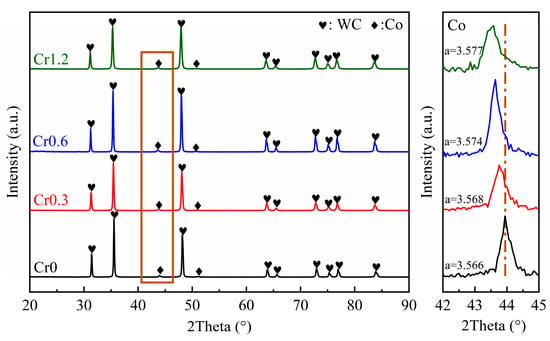
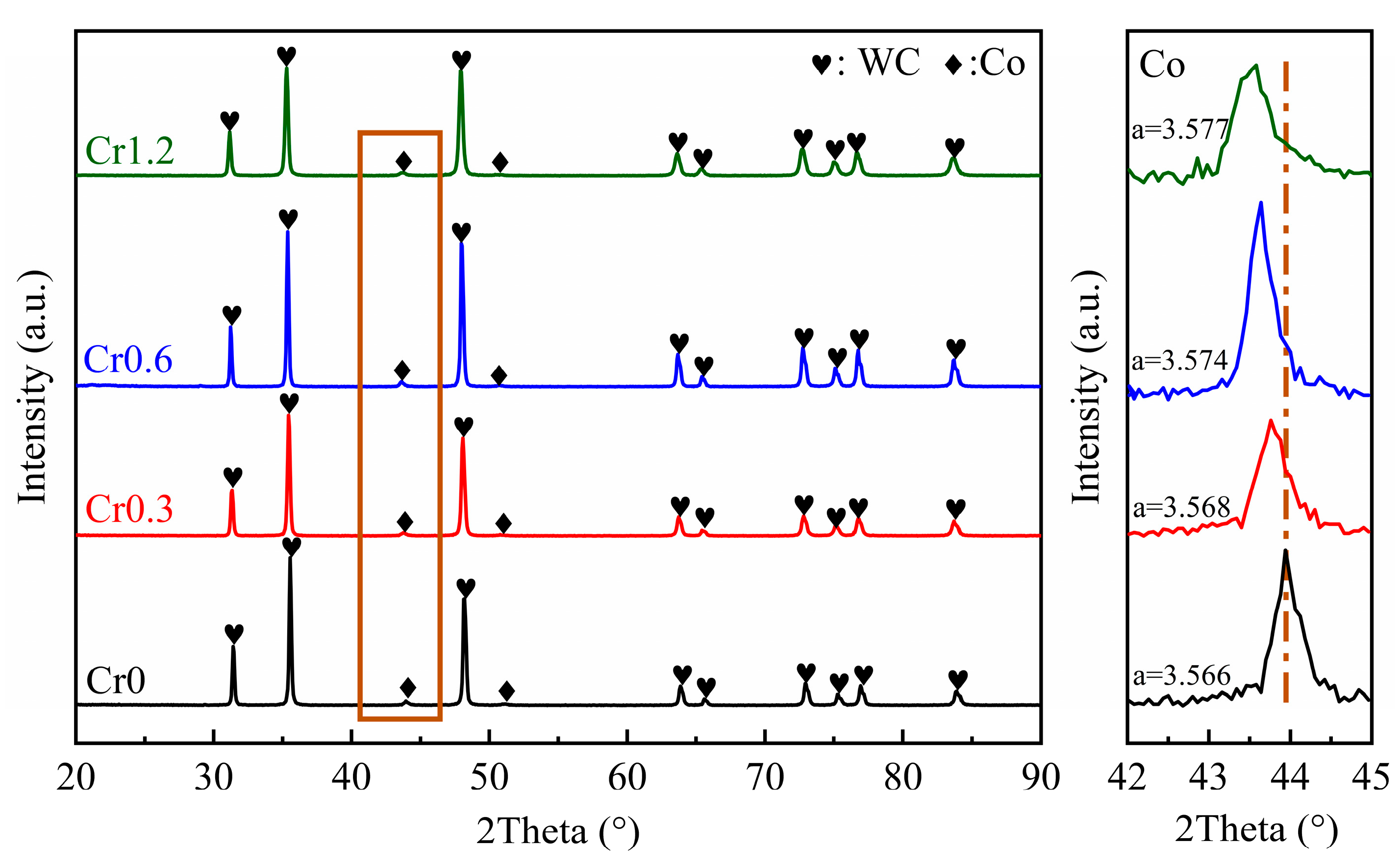
To investigate the effect of Cr2(C,N) addition on the phase composition of dual-scale structured WC-Co cemented carbides, XRD was used for phase analysis. The XRD patterns of dual-scale structured WC-Co cemented carbides are shown in Figure 1. The XRD patterns reveal only characteristic peaks corresponding to the WC hard phase and the fcc-Co binder phase, without characteristic peaks from other phases. These results demonstrate that the introduction of Cr2(C,N) has no significant effect on the phase evolution of the dual-scale structured WC-Co cemented carbides under the current process conditions. To further analyze the effect of Cr2(C,N) on the phase composition of these dual-scale structured cemented carbides, a magnified view of the characteristic peaks of the Co binder phase is also presented in Figure 1. It can be observed that as the Cr2(C,N) content increases, the characteristic peaks of the Co binder phase shift noticeably to the left. This shift in the characteristic peaks to lower angles indicates lattice expansion within the binder Co phase, in accordance with Bragg’s law [34]. This observation directly confirms that the addition of Cr2(C,N) induces lattice expansion within the Co binder phase, which is consistent with the evolution trend reported in previous studies [25,35]. As the addition of Cr2(C,N) increases, the lattice parameter (a) shows an increasing trend, which also confirms the lattice expansion within the Co binder phase.
Figure 1.
XRD patterns of dual-scale structured WC-Co cemented carbides with varying Cr2(C,N) contents.
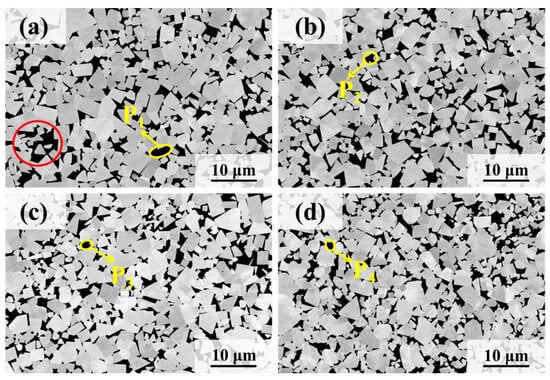
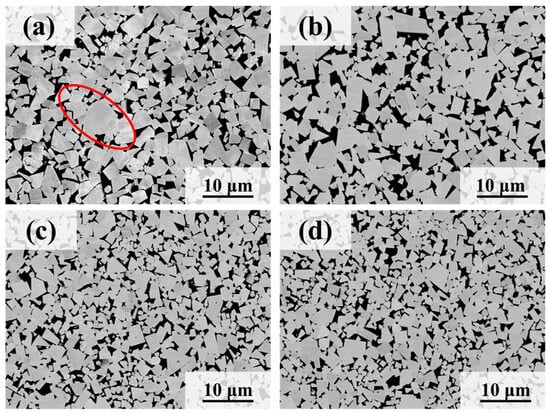
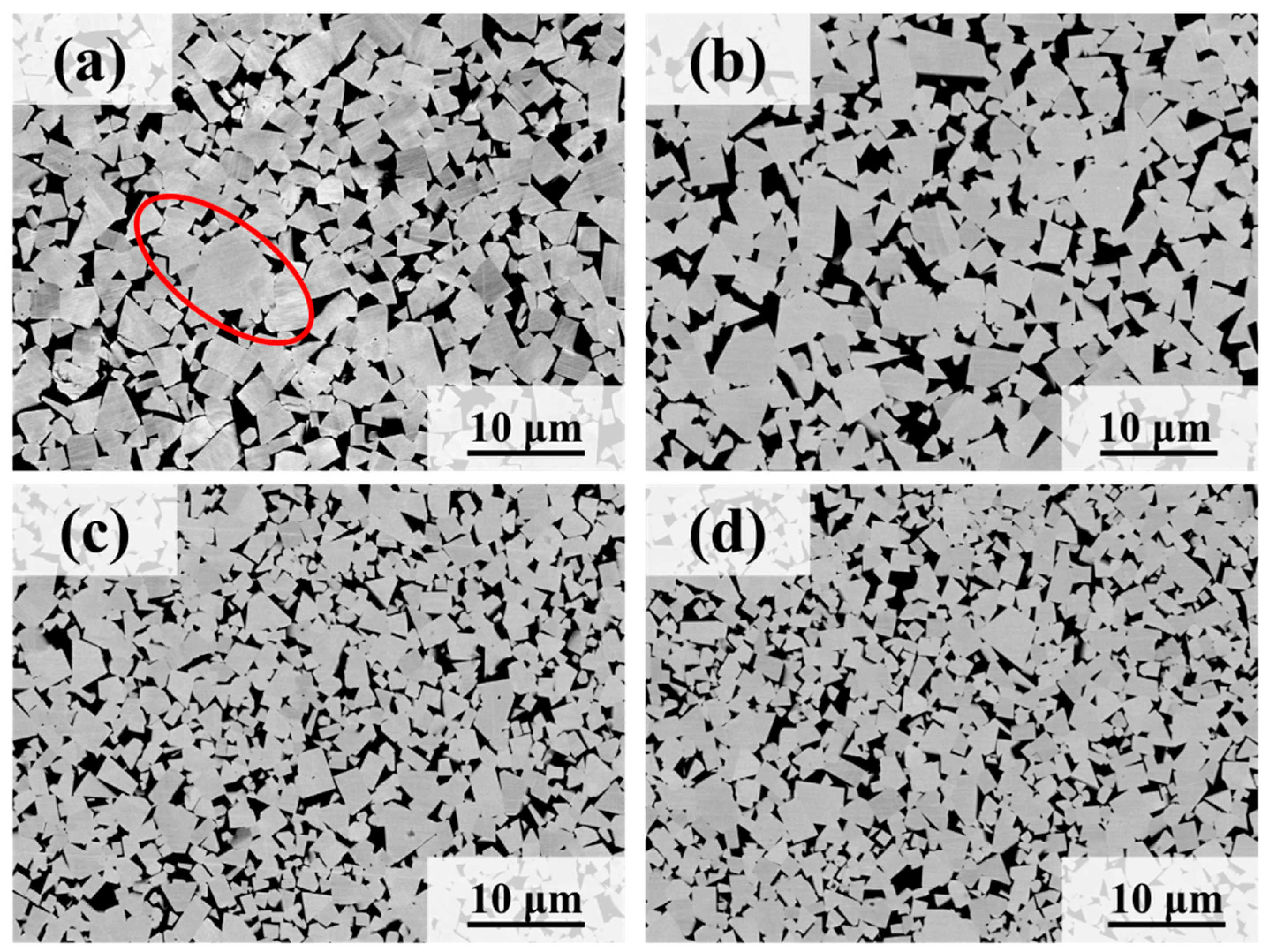
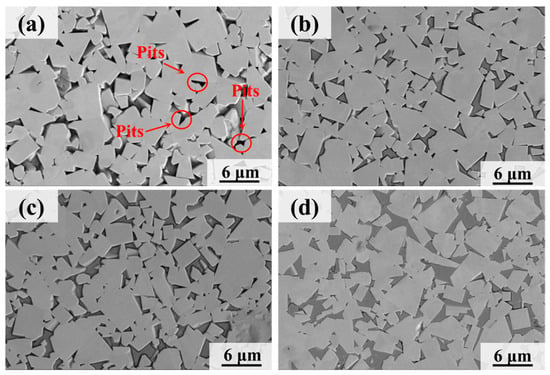
The influence of Cr2(C,N) addition on the microstructure of dual-scale structured WC-Co cemented carbides was investigated using SEM, and the average grain size of WC was determined using the linear intercept method, as presented in Figure 2. The microstructures in Figure 2a–d reveal that all dual-scale structured WC-Co cemented carbides comprise a white WC hard phase and a black Co binder phase, displaying the characteristic dual-scale structure defined by the coexistence of coarse and fine WC grains. Additionally, the white WC hard phase exhibits regular triangular and rectangular shapes, attributed to the hexagonal crystal structure of WC grains [36]. Notably, no η-phase or graphite phase is observed in the microstructure, which contributes to its favorable mechanical properties [37]. In the Cr2(C,N)-free dual-scale structured cemented carbide, the Co binder phase is unevenly distributed, forming localized Co pools (highlighted by the red circle in Figure 2a). As the Cr2(C,N) content increases, Co pools are progressively eliminated, leading to the formation of a continuous and uniform Co binder network. To clarify the origin of the Co binder phase lattice expansion observed by XRD, EDS point scan analysis was conducted in the Co binder phase region. The EDS point scan analysis results are presented in Table 3. The results show that the content of Cr element dissolved in the Co binder phase increases significantly with the increase in Cr2(C,N), leading to the lattice expansion within the Co binder phase.
Figure 2.
SEM micrographs and statistical analysis of WC average grain size in dual-scale structured WC-Co cemented carbides with varying Cr2(C,N) contents: (a) Cr0; (b) Cr0.3; (c) Cr0.6; (d) Cr1.2.
Table 3.
Elemental contents within the binder Co phase in different dual-scale structured WC-Co cemented carbides (at.%).
The addition of Cr2(C,N) significantly influences the key microstructural parameters of dual-scale structured WC-Co cemented carbides, including the average grain size of WC (dWC), the average free path of the Co binder phase (λCo), and the contiguity of WC-WC (CWC-WC), with the specific data summarized in Table 4. As the Cr2(C,N) addition increases, dWC and λCo exhibit a continuous decrease. Under a constant Co binder phase volume fraction, λCo is theoretically positively correlated with dWC [38]. Therefore, the observed decrease in λCo can be mainly attributed to the grain refinement of the WC phase. Correspondingly, CWC-WC also decreases with increasing Cr2(C,N) addition, from 26.64% to 23.88%. This finding contrasts with some reports in homogeneous structured WC-Co cemented carbides, where the addition of inhibitor has been associated with increased CWC-WC [39].
Table 4.
The average grain size of WC (dWC), the mean free path of the Co binder phase (λCo), and the contiguity of WC-WC (CWC-WC) in dual-scale structured WC-Co cemented carbides with varying Cr2(C,N) contents.
To further elucidate the microstructural regulation mechanism of Cr2(C,N) addition on dual-scale structured WC-Co cemented carbides, four groups of samples with single-scale WC powder as the matrix were systematically prepared. The microstructural features of these single-scale structured WC-Co cemented carbides and the average grain size of WC are summarized in Figure 3 and Table 5. Comparing S1 and S2, S1 shows pronounced abnormal grain growth and obvious interconnection between WC grains (highlighted by the red circle in Figure 3a). With the addition of Cr2(C,N), the inhibitor covers the surface of WC particles, thereby hindering interface migration during sintering and ultimately suppressing the coalescence and growth of WC grains [40]. This effectively inhibits abnormal growth of WC grains, avoids interconnection between WC grains, and reduces the average grain size of WC. This observation aligns with the well-established role of grain growth inhibitors in improving the microstructure of cemented carbides [41]. A comparison between S3 and S4 reveals that the addition of Cr2(C,N) exhibits a significant grain refinement effect. Our previous studies have confirmed that the low thermal stability of Cr2(C,N) and the nitrogen-enhanced diffusion of Cr in the Co binder phase effectively facilitate the solid solution of Cr into the Co binder phase [25]. The nitrogen-promoted solid solution of Cr into Co significantly inhibits the dissolution-precipitation process of WC grains during liquid-phase sintering, resulting in the grain refinement of WC. Thus, more fine WC grains are retained, thereby significantly reducing the average grain size of WC.
Figure 3.
SEM micrographs and statistical analysis of WC average grain size in cemented carbides fabricated with only I and II WC powders, without and with Cr2(C,N): (a) S1; (b) S2; (c) S3; (d) S4.
Table 5.
The average grain size of WC (dWC), the mean free path of the Co binder phase (λCo), and the contiguity of WC-WC (CWC-WC) in cemented carbides fabricated with only I and II WC powders, without and with Cr2(C,N).
The statistical data in Table 5 further elucidate how Cr2(C,N) differentially regulates the microstructure of single-scale structured WC-Co cemented carbides with varying WC scales. A comparison of S1 and S2 reveals a significant decrease in CWC-WC, indicating that Cr2(C,N) inhibits the abnormal growth of WC grains and reduces the direct contact between WC grains. A comparison of S3 and S4 shows a significant decrease in dWC, demonstrating that Cr2(C,N) effectively inhibits the dissolution-precipitation of WC particles during liquid-phase sintering, resulting in the retention of a greater number of fine WC grains. In dual-scale structured WC-Co cemented carbides, the Cr2(C,N) inhibitor exerts a dual regulatory effect. On the one hand, it reduces WC-WC interfacial contacts, ensuring thorough filling by the Co binder phase. On the other hand, numerous fine WC grains occupy the Co binder phase layers between coarse WC grains, thereby reducing the WC-WC phase interfaces. The increased WC-Co phase interfaces prevent the formation of Co pools and ensure the formation of a more continuous and uniform Co binder phase network.
3.2. Mechanical Properties
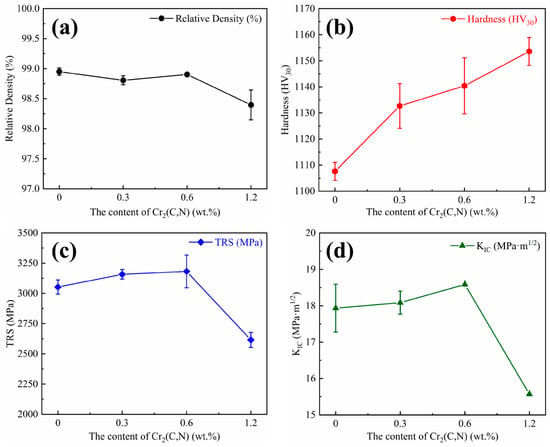
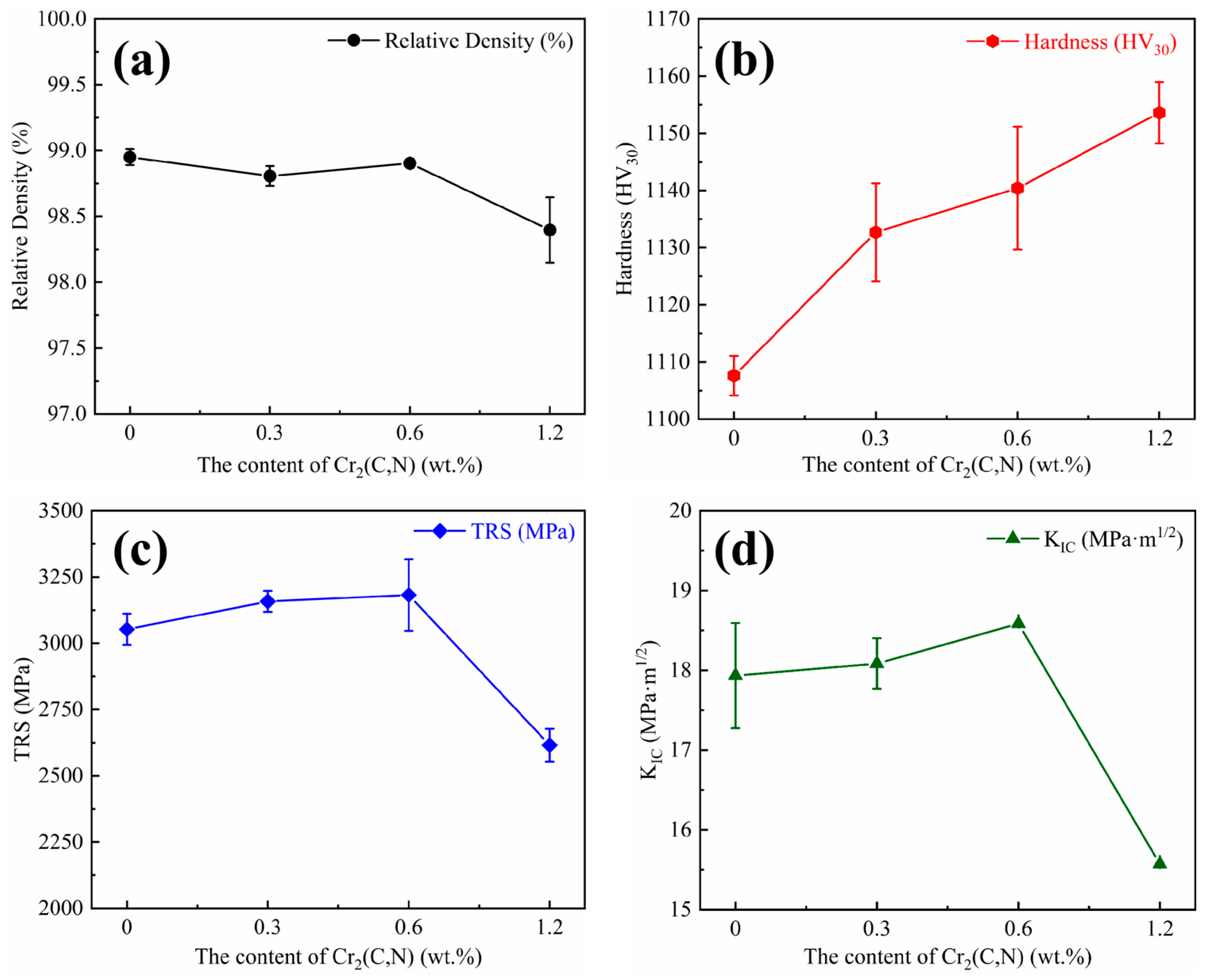
Figure 4 and Table 6 present mechanical properties of the dual-scale structured WC-Co cemented carbides with varying Cr2(C,N) contents, including relative density, transverse rupture strength, fracture toughness, and hardness. The relative density remains stable at low Cr2(C,N) additions but decreases markedly to 98.39% when the Cr2(C,N) content increases to 1.2 wt.%. As the content of Cr2(C,N) increases, both the TRS and fracture toughness initially rise and then decrease, reaching peak values of 3182.3 MPa and 18.68 MPa·m1/2 at 0.6 wt.% Cr2(C,N). In contrast, the hardness exhibits a continuous increase, reaching 1140.4 HV30 at 0.6 wt.% Cr2(C,N) and 1153.6 HV30 at 1.2 wt.% Cr2(C,N).
Figure 4.
Mechanical properties of dual-scale structured WC-Co cemented carbides with varying Cr2(C,N) contents: (a) relative density; (b) hardness; (c) TRS; (d) KIC.
Table 6.
Mechanical properties of dual-scale structured WC-Co cemented carbides with varying Cr2(C,N) contents.
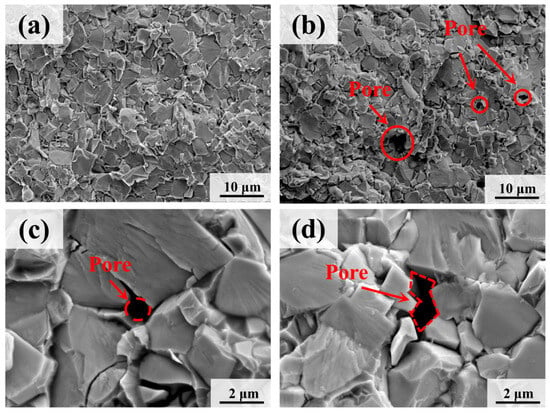
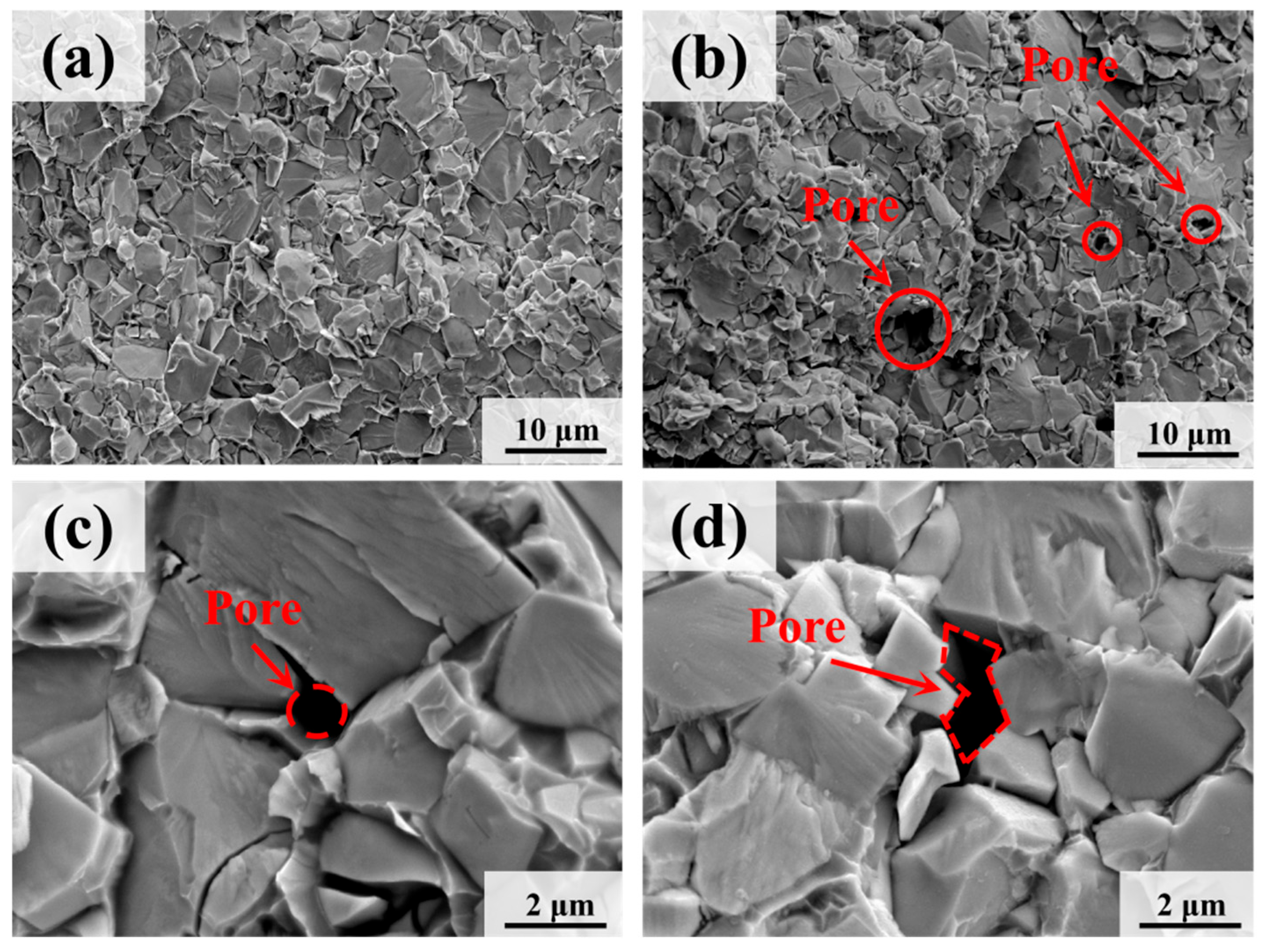
The observed decline in relative density is primarily attributed to two factors. Firstly, excessive Cr2(C,N) can release N2 during sintering [42]. Secondly, excessive Cr hinders particle rearrangement and degrades the wettability between the WC phase and the Co binder phase, thereby impeding densification during liquid-phase sintering [43]. To further clarify the main mechanism responsible for the reduction in relative density, SEM characterization was carried out on the fracture surfaces of various cemented carbides. The results are displayed in Figure 5. As shown in Figure 5b, the fracture surface of the dual-scale structured cemented carbide with 1.2 wt.% Cr2(C,N) addition exhibits obvious pores. For a more detailed examination of the pore morphology, high-magnification characterization was conducted. The results are presented in Figure 5c,d. Figure 5c shows spherical pores, which are typical of gas pores formed by N2 release during sintering. In comparison, Figure 5d exhibits irregular angular pores, suggesting deteriorated wettability and restricted flow of the Co binder phase during liquid-phase sintering. The enhancement of TRS is primarily attributed to WC grain refinement and strengthened interfacial bonding. The strengthened interfacial bonding is evidenced by a decreased lattice mismatch at the WC-Co interface [25] and an increased proportion of strongly bonded WC-Co phase boundaries. The fracture toughness of cemented carbides is influenced by the crystal structure of the binder phase [44]. It is widely accepted that plastic deformation and tearing of the binder dominate energy dissipation during fracture in cemented carbides [45]. The fcc-Co has superior plastic deformability compared with hcp-Co [46]. The addition of N element helps retain a higher volume fraction of fcc-Co after sintering [25,26,47], thereby enhancing the plasticity of the binder phase and directly improving fracture toughness. When Cr2(C,N) is added excessively, both the TRS and fracture toughness decrease, which is mainly due to pores (shown in Figure 5b) acting as crack sources to promote the early fracture of the cemented carbides [48]. In contrast, hardness shows a continuous increasing trend with Cr2(C,N) addition. Previous studies have shown that the hardness of cemented carbides is related to the content of the Co binder phase and the average grain size of WC [49]. When the content of the Co binder phase is constant, the average grain size of WC decreases continuously with the increase in Cr2(C,N) addition amount, which directly leads to the continuous increase in hardness.
Figure 5.
SEM of different cemented carbide fracture surfaces and high-resolution SEM images: (a) Cr0.6 (×2000); (b) Cr1.2 (×2000); (c,d) Cr1.2 (×10,000).
3.3. Electrochemical Performance
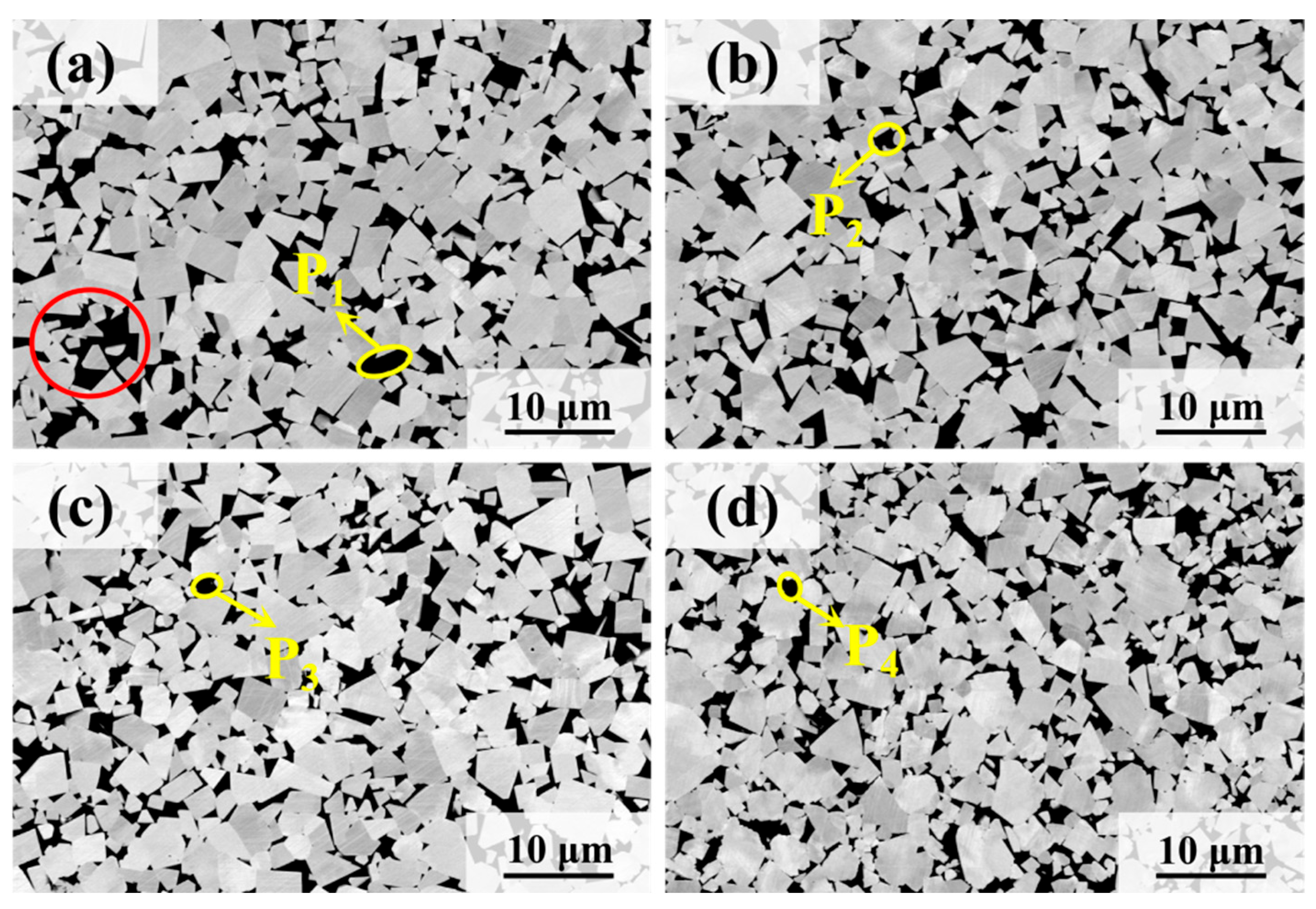
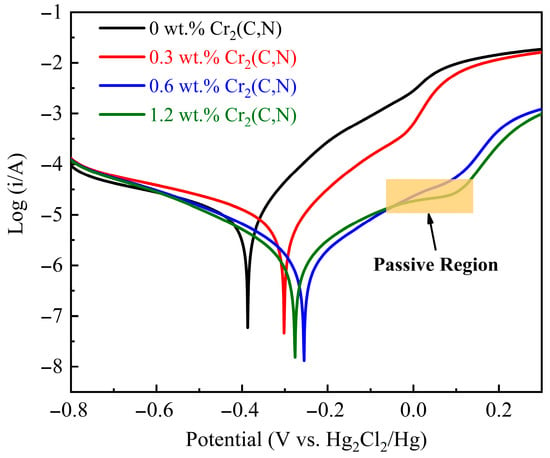
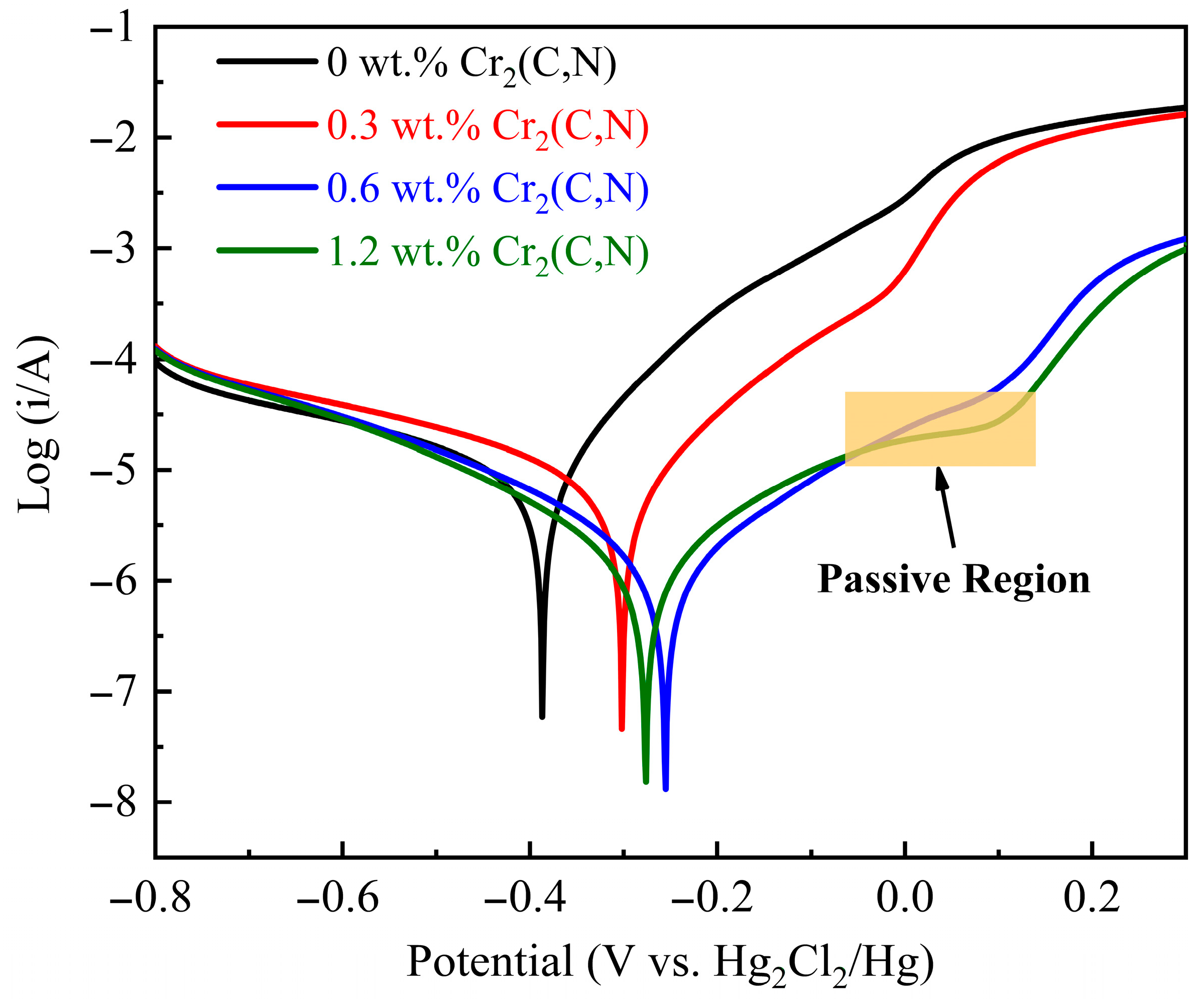
The corrosion behavior of dual-scale structured WC-Co cemented carbides with varying Cr2(C,N) additions was systematically evaluated in 3.5 wt.% NaCl solution via kinetic potential polarization (Tafel) and electrochemical impedance spectroscopy (EIS). The polarization curves of dual-scale structured WC-Co cemented carbides with varying Cr2(C,N) contents are shown in Figure 6, and the corresponding electrochemical parameters are summarized in Table 7. As shown in Figure 6, the dual-scale structured cemented carbides without or with only a minor amount of Cr2(C,N) lack an obvious passive region, indicating uniform corrosion. In contrast, as the Cr2(C,N) content further increases, a passive region is observed (highlighted by the yellow background in Figure 6). This is attributed to the progressive optimization of coarse and fine WC grain distribution with increased addition of Cr2(C,N), thereby promoting the formation of a passive film [16]. Furthermore, increasing the amount of Cr2(C,N) introduces more Cr elements, which are subsequently oxidized during polarization to form a dense Cr2O3 passive film [14,50]. The results in Table 7 show that with the increase in Cr2(C,N) addition, the corrosion potential (Ecorr) of the dual-scale structured WC-Co cemented carbides exhibits significant positive shift trends: +85 mV (Cr0.3), +132 mV (Cr0.6), and +111 mV (Cr1.2). Notably, the Ecorr initially increases and then decreases with an increase in Cr2(C,N) content, reaching a maximum value of −0.255 V at 0.6 wt.% Cr2(C,N). It is well known that corrosion current density is also one of the key electrochemical parameters for the evaluation of the corrosion resistance of cemented carbides [9]. The research results show that the corrosion current density (icorr) exhibits the opposite trend to Ecorr, reaching a minimum value of 1.268 × 10⁻⁶ A·cm−2 at 0.6 wt.% Cr2(C,N), which is 84.8% lower than that of the dual-scale structured WC-Co cemented carbide without Cr2(C,N) addition. This confirms that the dual-scale structured WC-Co cemented carbide at 0.6 wt.% Cr2(C,N) possesses the most superior corrosion resistance. The improved corrosion performance of the dual-scale structured cemented carbide is governed by multiple factors. The addition of Cr2(C,N) facilitates the development of a continuous and uniform Co binder network, which effectively mitigates the tendency for preferential corrosion induced by Co pools. Moreover, the addition of Cr2(C,N) improves the distribution of coarse and fine WC grains, and generates Cr2O3 during polarization, collectively contributing to the formation of a passive film [14,16,50]. The passive film impedes further penetration of the corrosive medium. However, excessive addition of Cr2(C,N) leads to a decrease in corrosion resistance, which is attributed to the release of N2 during the sintering process [42]. On the one hand, the released N2 leaves pores in the sintered sample (as shown in Figure 5b), which provide diffusion pathways for corrosive media, thereby exacerbating corrosion. On the other hand, according to the empirical pitting resistance equivalent number (PREN) formula for stainless steel, the contribution of N element to the corrosion resistance of the alloy is significantly more pronounced than that of Cr element [51]. The release of N2 during sintering reduces the N content in the final sample, consequently resulting in degraded corrosion resistance of the dual-scale structured cemented carbide.
Figure 6.
Potentiodynamic polarization curves of dual-scale structured WC-Co cemented carbides with varying Cr2(C,N) contents in 3.5 wt.% NaCl solution.
Table 7.
Electrochemical parameters obtained from polarization curves of dual-scale structured WC-Co cemented carbides with varying Cr2(C,N) contents in 3.5 wt.% NaCl solution.
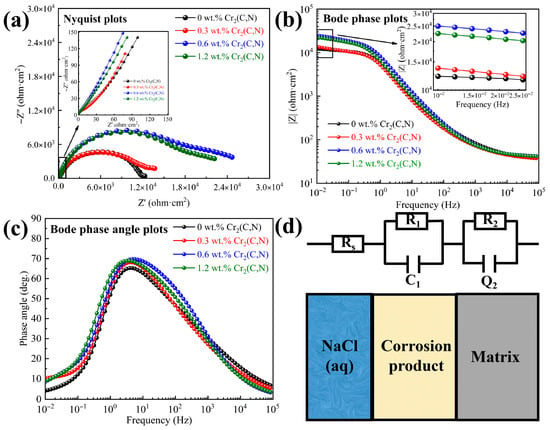
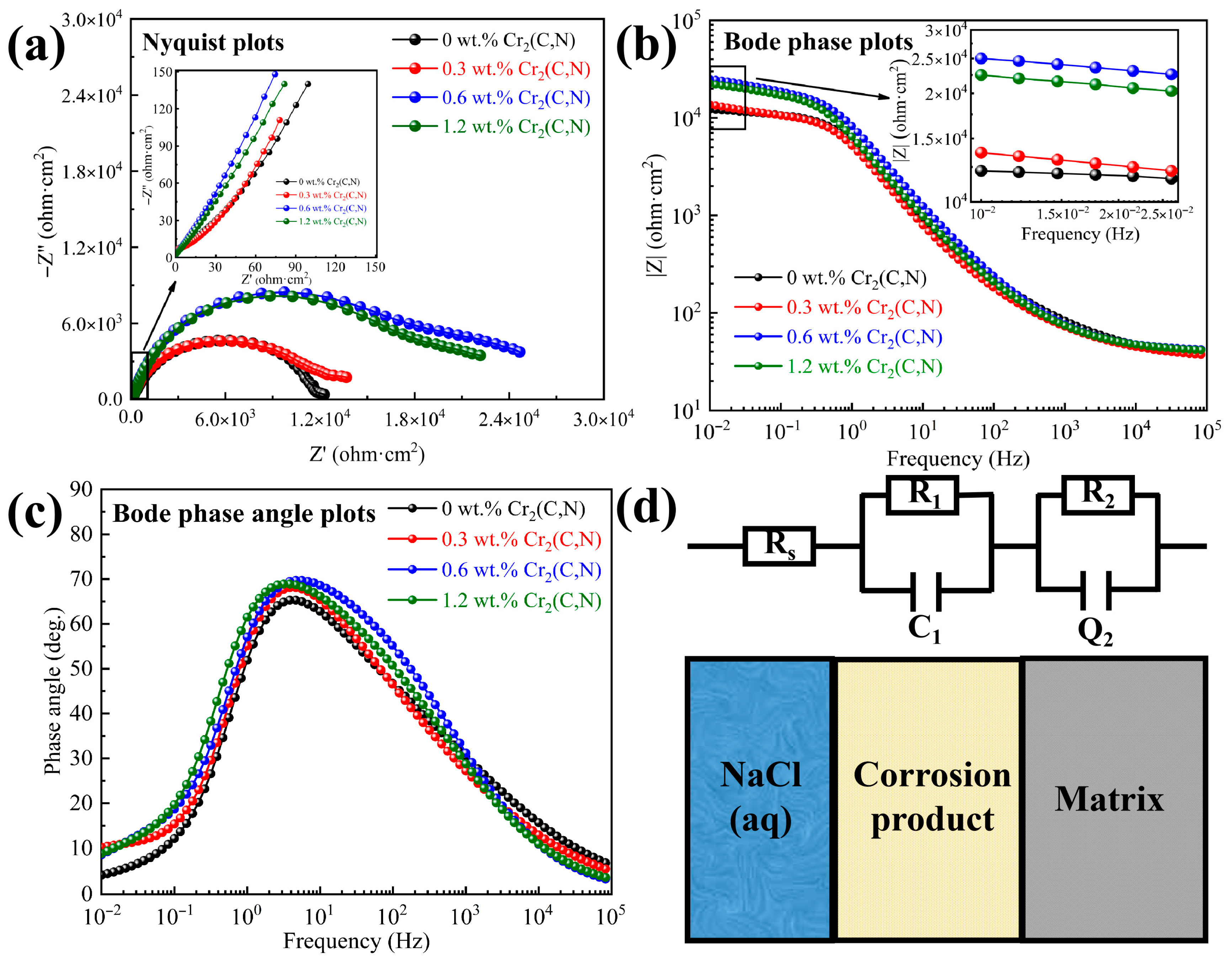
The electrochemical impedance spectroscopy of dual-scale structured WC-Co cemented carbides with varying Cr2(C,N) contents in 3.5 wt.% NaCl solution is presented in Figure 7. The Nyquist plots in Figure 7a reveal similar impedance characteristics for all dual-scale structured WC-Co cemented carbides, suggesting the same corrosion process. The dual-scale structured cemented carbide with 0.6 wt.% Cr2(C,N) addition exhibits the largest capacitive arc radius, indicating its superior corrosion resistance. In contrast, the cemented carbide without Cr2(C,N) incorporation displays the smallest impedance arc radius. This can be explained by the fact that in the Cr2(C,N)-free cemented carbide, Co pools tend to form and are prone to corrosion. Meanwhile, the lack of a protective Cr2O3 passive film reduces the protective effect on the matrix. Nevertheless, excessive addition of Cr2(C,N) induces pore formation. These pores act as penetration channels for the corrosive medium, leading to a decrease in the capacitive arc radius. This observation is highly consistent with the above potentiodynamic polarization measurements. A higher impedance modulus |Z| generally corresponds to a lower corrosion rate of the cemented carbides [52]. As shown in Figure 7b, the impedance modulus |Z| of these dual-scale structured cemented carbides with varying Cr2(C,N) additions exhibits a trend of increase and then decrease in the frequency range of 0.01–0.025 Hz, attaining its maximum at 0.6 wt.% Cr2(C,N). This result provides further confirmation that the dual-scale structured cemented carbide achieves optimal corrosion resistance at 0.6 wt.% Cr2(C,N). From the Bode phase angle plots in Figure 7c, it can be observed that the dual-scale structured cemented carbide with 0.6 wt.% Cr2(C,N) addition exhibits a wider phase angle platform in the 1–1000 Hz range. According to previous reports, such a wide phase angle plateau often indicates an improvement in the corrosion resistance of the material [53]. This observation further demonstrates that the optimal addition of Cr2(C,N) improves the corrosion resistance of the dual-scale structured cemented carbide.
Figure 7.
Electrochemical impedance spectroscopy (EIS) results of dual-scale structured WC-Co cemented carbides with varying Cr2(C,N) contents in 3.5 wt.% NaCl solution: (a) nyquist plot, (b) bode phase plot, (c) bode phase angle plot, (d) equivalent circuit of the electrochemical impedance spectra.
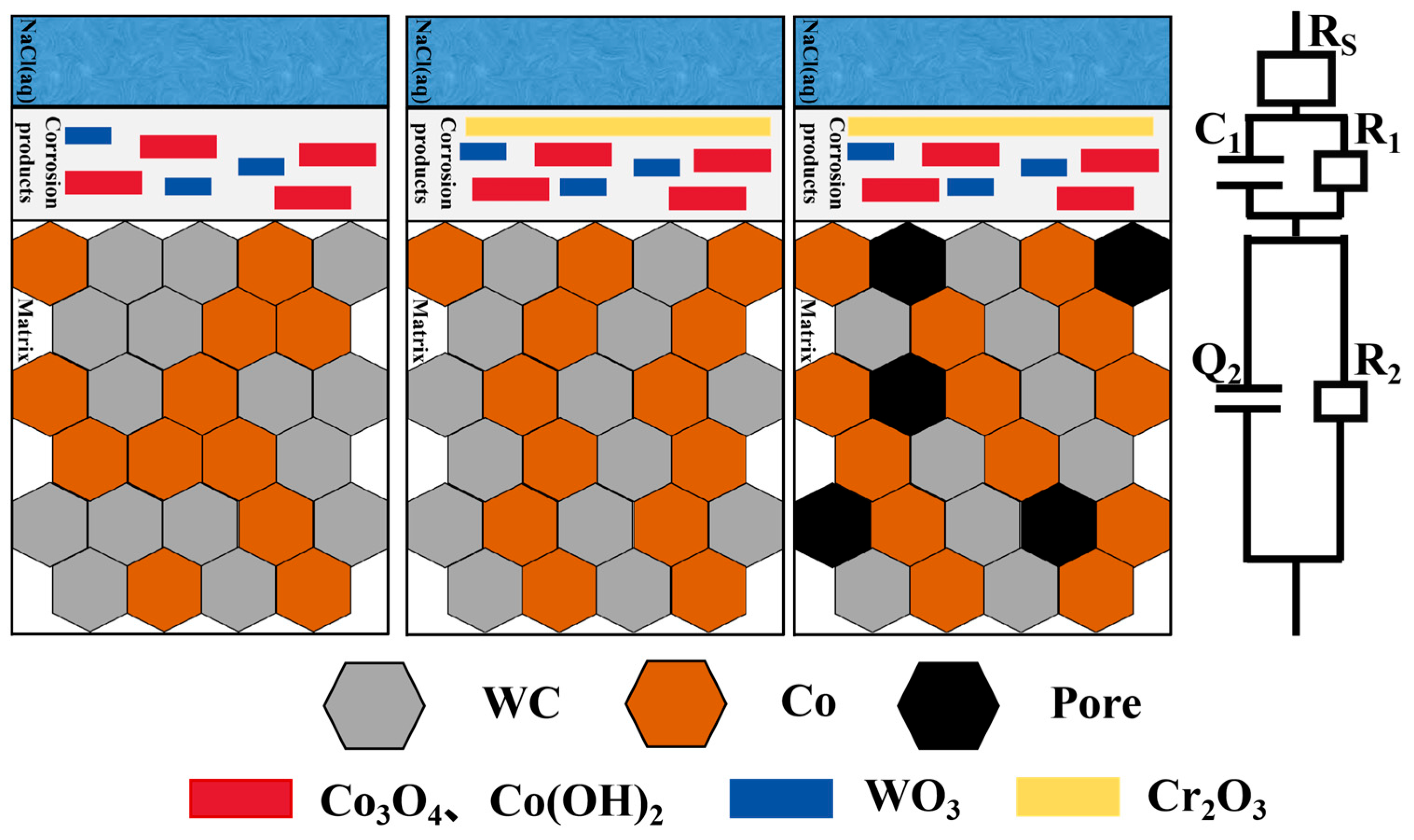
To elucidate the corrosion behavior of dual-scale structured WC-Co cemented carbides in 3.5 wt.% NaCl solution, an equivalent circuit model was established, as shown in Figure 7d. Rs represents the solution resistance. R1 is the resistance of the passive film (corrosion products). R2 is the charge transfer resistance at the interface between the dual-scale structured cemented carbide matrix and the NaCl solution after the electrolyte penetrates the passive film. C1 is the capacitance of the passive film. Q2 is a constant-phase element representing the non-ideal capacitive response of the interface between the dual-scale structured cemented carbide matrix and NaCl solution after the electrolyte penetrates the passive film. The fitted circuit parameters are summarized in Table 8. The similar Rs values of all dual-scale structured cemented carbides confirm good experimental reproducibility, given the identical testing environment. The value of R1 increases progressively with rising Cr2(C,N) content. This is attributed to the fact that the Cr element introduced by Cr2(C,N) forms a dense Cr2O3 passive film via oxidation during polarization [14]. The passive film composed of Cr element can significantly resist the penetration of corrosive media [54]. Excessive Cr2(C,N) addition leads to increased porosity (Figure 5b). These pores act as diffusion channels for ions that have penetrated the passive film, thereby lowering R2. The total polarization resistance Rp (R1 + R2) is often used as an index for the comprehensive evaluation of corrosion resistance [55]. With increasing Cr2(C,N) content, the Rp initially increases and subsequently decreases, indicating the existence of an optimal addition level. This trend is consistent with the impedance analysis and potentiodynamic polarization measurements, verifying that 0.6 wt.% Cr2(C,N) affords the optimum corrosion resistance.
Table 8.
Electrochemical parameters fitted from Nyquist plots of dual-scale structured WC-Co cemented carbides in 3.5 wt.% NaCl solution.
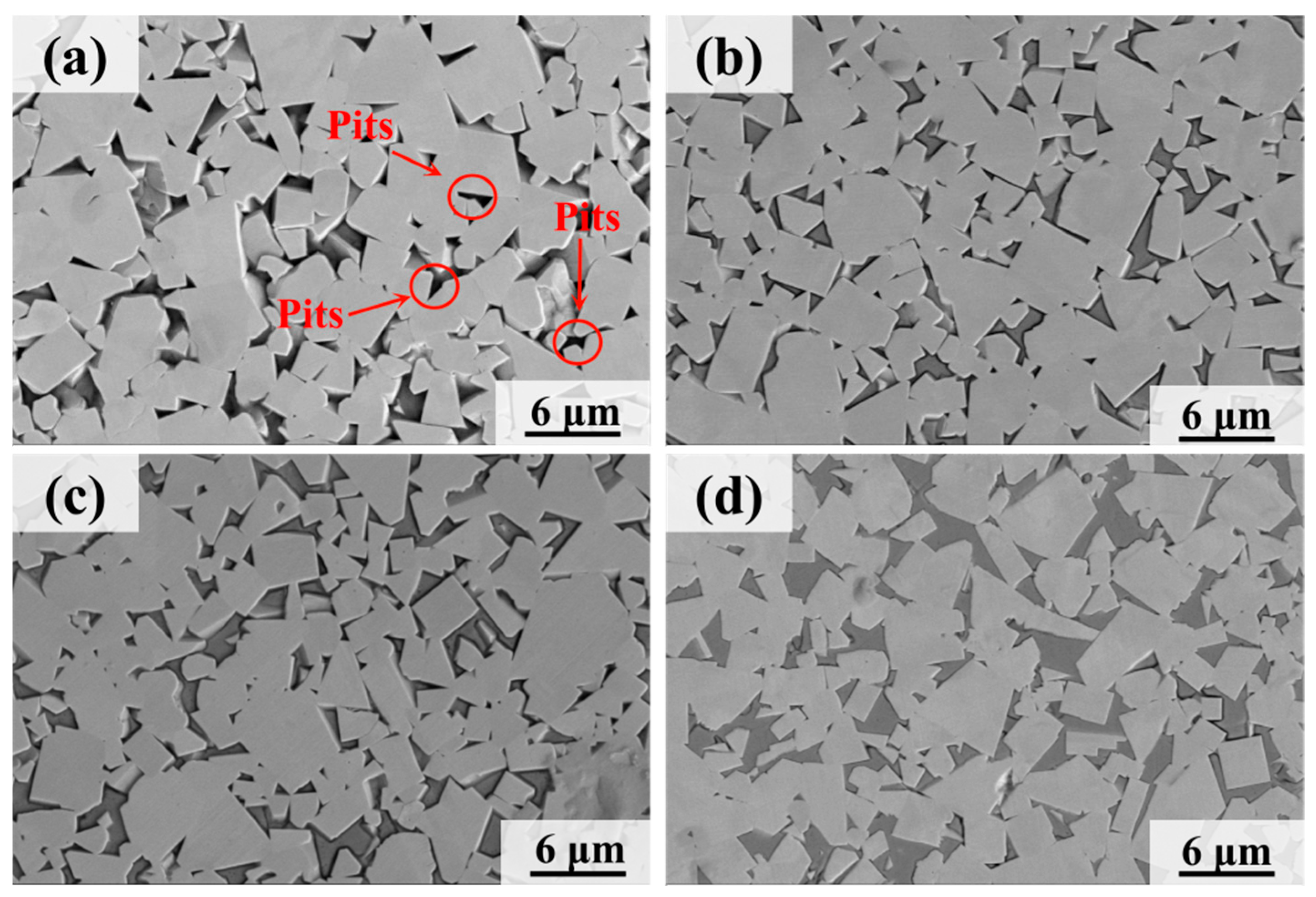
To investigate the changes in the surface morphology of dual-scale structured WC-Co cemented carbides with varying Cr2(C,N) contents after electrochemical polarization, SEM characterization was performed. The results are shown in Figure 8. In Figure 8a, corrosion pits are clearly observed at the Co binder phase region (marked with red circles), while the WC hard phase shows no significant changes. This phenomenon can be mainly attributed to the pronounced galvanic potential difference between the Co binder phase and the WC hard phase. Previous studies have reported a galvanic potential difference of approximately 200–250 mV between the WC phase and the Co phase [56]. The lower potential of the Co binder phase leads to its preferential corrosion dissolution [14]. Thus, the Co binder phase underwent significant galvanic corrosion in 3.5 wt.% NaCl solution, while the WC hard phase only suffered slight corrosion. As shown in Figure 8b–d, no obvious corrosion pits were observed in the Co binder phase regions on the surfaces of the dual-scale structured cemented carbides containing Cr2(C,N). Meanwhile, no obvious morphological changes were observed in the WC hard phase regions either.
Figure 8.
SEM images of the polarized surfaces of dual-scale structured WC-Co cemented carbides with varying Cr2(C,N) contents: (a) Cr0; (b) Cr0.3; (c) Cr0.6; (d) Cr1.2.
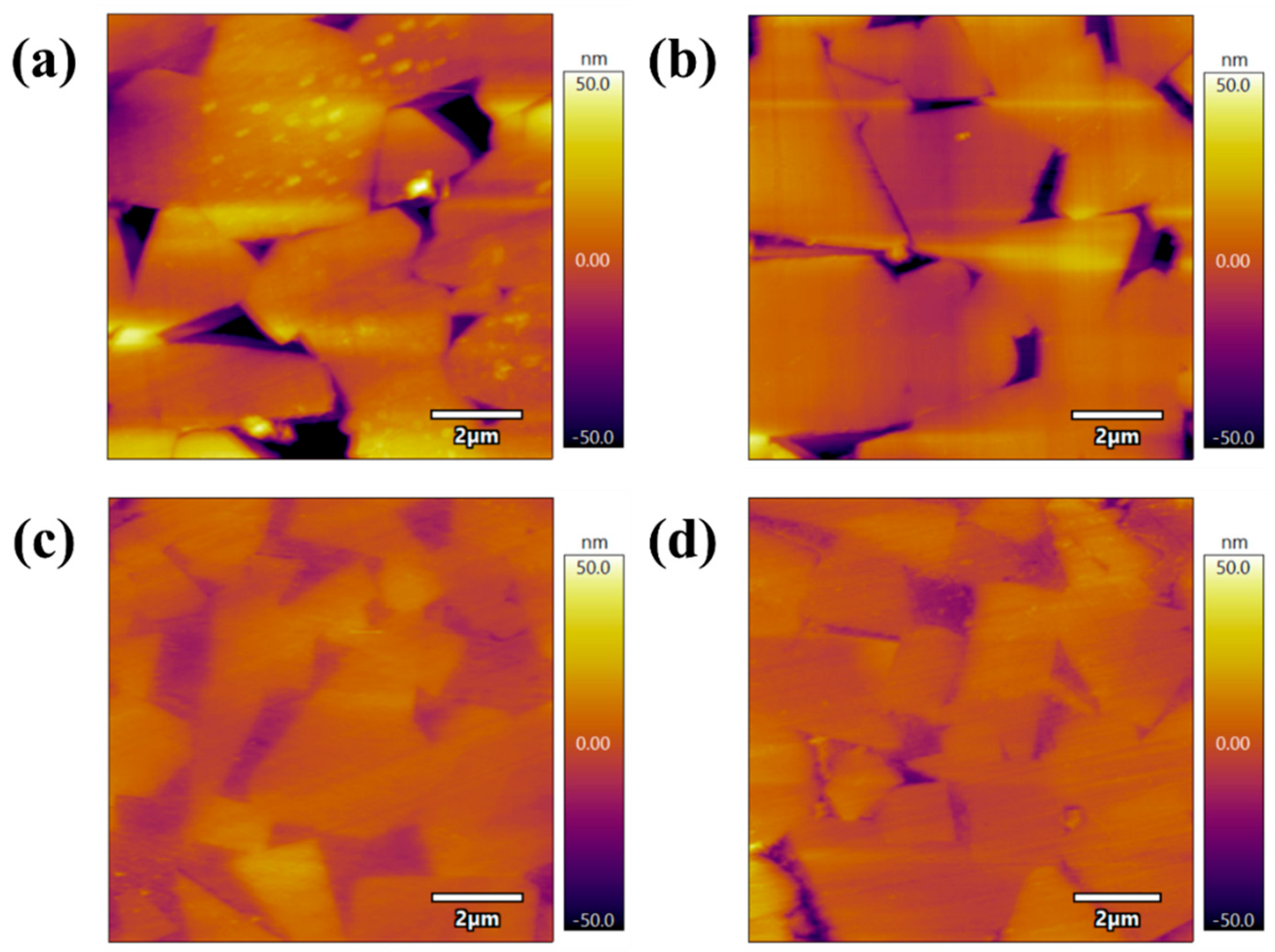
To more clearly elucidate the effect of Cr2(C,N) addition on the corrosion resistance of dual-scale structured cemented carbides, AFM was employed to characterize the surface morphology of these cemented carbides after electrochemical polarization, with the results shown in Figure 9. In Figure 9, the phase showing triangular or rectangular morphologies is identified as the WC hard phase, while the remaining continuously distributed phase is the Co binder phase. Comparative analysis reveals that, in the samples without or with minor addition of Cr2(C,N), a significant height difference exists between the WC hard phase and the Co binder phase. Specifically, the Co binder phase region exhibits obvious depression. This observation indicates that material loss during electrochemical polarization is mainly concentrated in the Co binder phase. It further demonstrates that the dual-scale structured cemented carbide is primarily subject to galvanic corrosion. As the Cr2(C,N) addition increases, the height difference between the WC hard phase and the Co binder phase decreases markedly, demonstrating reduced dissolution of the Co binder phase and, consequently, enhanced corrosion resistance of the cemented carbides. However, upon excessive addition of Cr2(C,N), localized corrosion aggravation occurs in the Co binder phase region. These results further confirm that the dual-scale structured cemented carbide achieves optimal corrosion resistance when the Cr2(C,N) addition is 0.6 wt.%.
Figure 9.
AFM images of the polarized surfaces of dual-scale structured WC-Co cemented carbides with varying Cr2(C,N) contents: (a) Cr0; (b) Cr0.3; (c) Cr0.6; (d) Cr1.2.
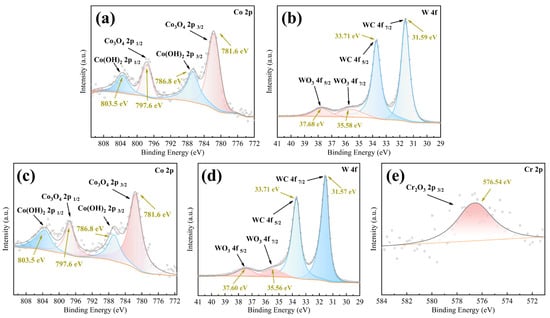
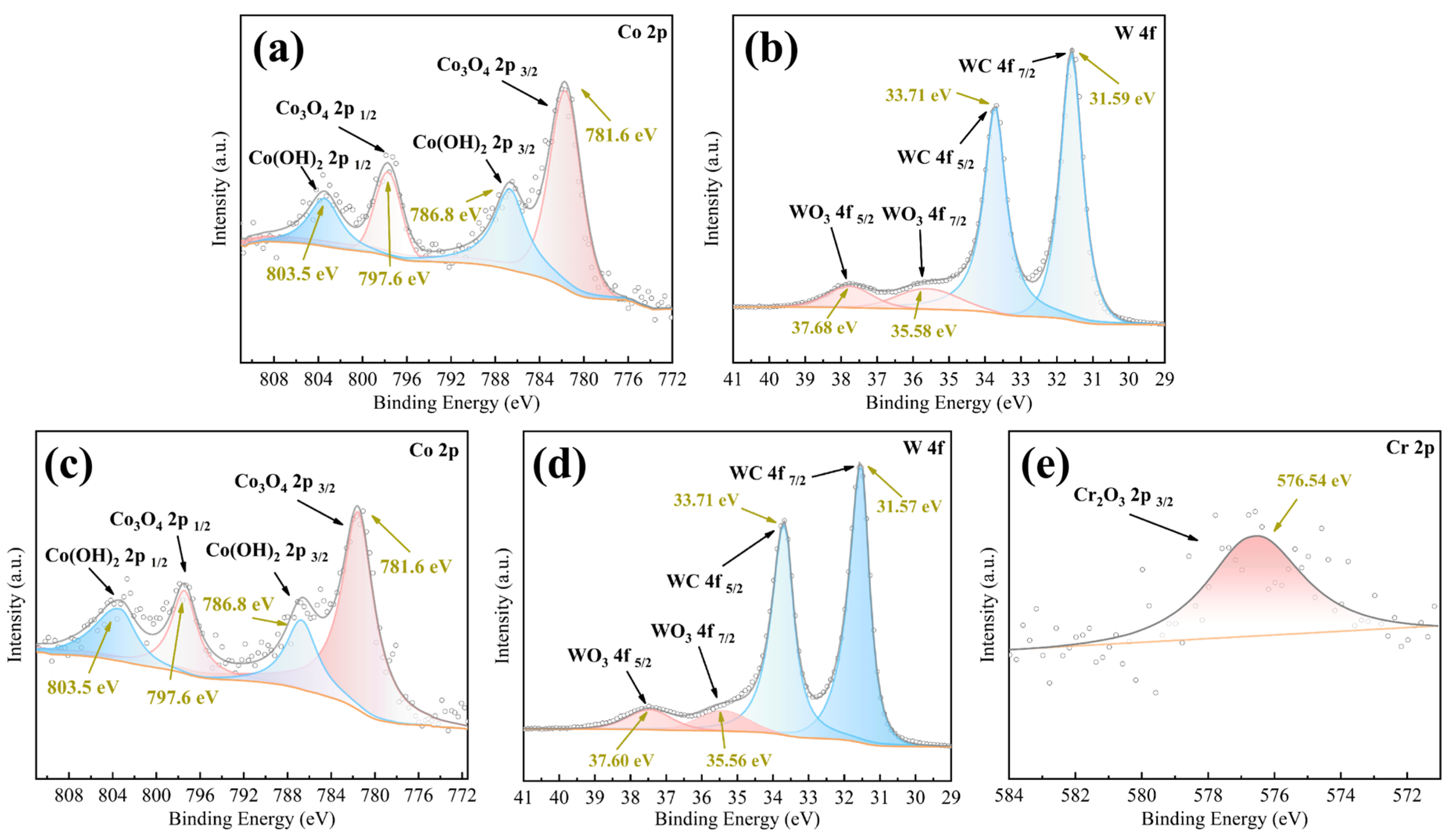
XPS analysis was performed to identify the corrosion products formed on the surfaces of dual-scale structured WC-Co cemented carbides without and with 0.6 wt.% Cr2(C,N) addition. The results are presented in Figure 10. As shown in Figure 10a,c, the Co 2p fine spectra reveal four types of Co bonding states in these dual-scale structured cemented carbides with different compositions, corresponding to Co3O4 (781.6 eV [57] and 797.6 eV [58]) and Co(OH)2 (786.8 eV [59] and 803.5 eV [60]), respectively. Meanwhile, the W 4f fine spectra in Figure 10b,d can be fitted with characteristic peaks of WC (31.6 eV and 33.7 eV) [61] and WO3 (35.6 eV and 37.7 eV) [62]. It can therefore be deduced that, during the electrochemical polarization process, only a portion of the WC hard phase is transformed into WO3, with the rest remaining as WC. In contrast, the Co binder phase reacts to generate Co3O4 and Co(OH)2. This result further confirms the SEM and AFM characterizations of the corroded surface morphologies of these dual-scale structured cemented carbides. The formation of these corrosion products follows Equations (1)–(5), which is consistent with previous reports [6,8,14,63]. These corrosion products usually serve as a passive film, impeding the further ingress of corrosive species and consequently improving the corrosion resistance of cemented carbide.
Figure 10.
XPS spectra of corrosion products on polarized surfaces of the Cr0 and Cr0.6 samples: (a) W 4f of Cr0; (b) Co 2p of Cr0; (c) W 4f of Cr0.6; (d) Co 2p of Cr0.6; (e) Cr 2p of Cr0.6.
However, in the Cr 2p fine spectrum of the dual-scale cemented carbide with 0.6 wt.% Cr2(C,N), a characteristic peak corresponding to Cr2O3 is fitted at 576.6 eV [64]. This peak originates from the reaction of Cr atoms introduced by Cr2(C,N) during electrochemical polarization, as described in Equation (6) [14]. The as-formed Cr2O3, together with other corrosion products, can act as a passive film, therefore endowing the cemented carbide with enhanced corrosion resistance.
Corrosion morphology characterization by SEM and AFM indicates that galvanic corrosion dominates the failure mechanism of dual-scale structured WC-Co cemented carbides in 3.5 wt.% NaCl solution. The galvanic potential difference between the Co binder phase and the WC hard phase induces preferential dissolution of the Co binder phase, accompanied by minor WC phase dissolution [14,56]. This corrosion process is verified by XPS characterization of the corrosion products. Based on these findings, Figure 11 illustrates the corrosion mechanisms of dual-scale structured WC-Co cemented carbides with varying Cr2(C,N) additions. The analysis demonstrates that the improved corrosion resistance conferred by Cr2(C,N) addition arises from the following mechanisms. Firstly, the addition of Cr2(C,N) facilitates the development of a continuous and uniform Co binder network, which effectively mitigates the tendency for preferential corrosion induced by Co pools. Furthermore, Cr element is oxidized during polarization to form a dense Cr2O3 passive film that acts together with other corrosion products to resist attack by the corrosive medium. Last but not least, N element stabilizes the fcc-Co phase, which has higher chemical stability than hcp-Co [17,53,65], thereby reducing the galvanic potential difference between the WC hard phase and the Co binder phase. However, excessive Cr2(C,N) addition induces porosity (Figure 5b), providing diffusion pathways for aggressive ions and consequently degrading the corrosion resistance.
Figure 11.
Schematic illustration of the corrosion mechanism of dual-scale structured WC-Co cemented carbides with varying Cr2(C,N) contents.
4. Conclusions
- The introduction of Cr2(C,N) enables the Co binder phase to form a continuous and uniform network structure. Incorporation of Cr2(C,N) simultaneously inhibits coarse WC grain abnormal growth and suppresses fine WC grain dissolution. The retained fine WC grains are uniformly distributed between the coarse WC grains and the Co binder phase, leading to a continuous and uniform network of the Co binder phase.
- The addition of Cr2(C,N) enhances the comprehensive mechanical properties of dual-scale structured cemented carbides. When the addition content of Cr2(C,N) reaches 0.6 wt.%, the dual-scale structured cemented carbide exhibits the optimal comprehensive mechanical properties, with a TRS of 3182.3 MPa, a fracture toughness of 18.68 MPa·m1/2, and a hardness of 1140.4 HV30.
- The incorporation of Cr2(C,N) enhances the corrosion resistance of dual-scale structured cemented carbides. The dual-scale structured cemented carbide with 0.6 wt.% Cr2(C,N) shows superior corrosion resistance, achieving a corrosion potential of −0.255 V and a corrosion current density of 1.268 × 10⁻⁶ A·cm−2.
- The results of AFM further confirm that the dual-scale structured cemented carbides with 0.6 wt.% Cr2(C,N) show minimal material loss after electrochemical polarization, indicating its superior corrosion resistance. Meanwhile, XPS analysis reveals the formation of a Cr2O3-contained passive film, which is responsible for the improved corrosion resistance.
- The improvement in corrosion resistance of the dual-scale structured cemented carbide is influenced by multiple factors. The addition of Cr2(C,N) can effectively mitigate the tendency for preferential corrosion induced by Co pools and form a passive film that includes Cr2O3. Furthermore, the addition of Cr2(C,N) stabilizes fcc-Co, thereby enhancing the chemical stability of the cobalt binder phase.
Author Contributions
Formal analysis, M.H., Z.O., Q.Z.; investigation, M.H., J.Z., Z.L.; source, J.Y.; writing-original draft preparation, M.H.; writing-review and editing, M.H., Z.O., Q.Z., J.Z., Z.L., J.Y.; project administration, J.Y.; funding acquisition, J.Y. All authors have read and agreed to the published version of the manuscript.
Funding
This study was financially supported by the Ju Yuan Xing Chuan Project of Sichuan Province (Grant No. 2024ZHCG0185), and other projects (Grant No. 2025CDZG-01 and Grant No. 2024ZYD0314).
Data Availability Statement
The original contributions presented in this study are included in the article. Further inquiries can be directed to the corresponding author.
Conflicts of Interest
The authors declare no conflict of interest.
References
- Wang, H.; Huang, H.; Bi, W.; Ji, G.; Zhou, B.; Zhuo, L. Deep and ultra–deep oil and gas well drilling technologies: Progress and prospect. Nat. Gas Ind. B 2022, 9, 141–157. [Google Scholar] [CrossRef] [Scilit]
- Wang, H.; Ge, Y.; Shi, L. Technologies in deep and ultra–deep well drilling: Present status, challenges and future trend in the 13th Five–Year Plan period (2016–2020). Nat. Gas Ind. B 2017, 4, 319–326. [Google Scholar] [CrossRef] [Scilit]
- Liu, C.; Lin, N.; He, Y.; Wu, C.; Jiang, Y. The effects of micron WC contents on the microstructure and mechanical properties of ultrafine WC–(micron WC–Co) cemented carbides. J. Alloys Compd. 2014, 594, 76–81. [Google Scholar] [CrossRef] [Scilit]
- Yang, Q.; Yang, J.; Yang, H.; Ruan, J. The effects of fine WC contents and temperature on the microstructure and mechanical properties of inhomogeneous WC–(fine WC–Co) cemented carbides. Ceram. Int. 2016, 42, 18100–18107. [Google Scholar] [CrossRef] [Scilit]
- Cao, R.-J.; Lin, C.-G.; Xie, X.-C.; Lin, Z.-K. Microstructure and mechanical properties of WC–Co–based cemented carbide with bimodal WC grain size distribution. Rare Met. 2023, 42, 2809–2815. [Google Scholar] [CrossRef] [Scilit]
- Hochstrasser, S.; Mueller, Y.; Latkoczy, C.; Virtanen, S.; Schmutz, P. Analytical characterization of the corrosion mechanisms of WC–Co by electrochemical methods and inductively coupled plasma mass spectroscopy. Corros. Sci. 2007, 49, 2002–2020. [Google Scholar] [CrossRef] [Scilit]
- Konadu, D.; Van Der Merwe, J.; Potgieter, J.; Potgieter-Vermaak, S.; Machio, C. The corrosion behaviour of WC–VC–Co hardmetals in acidic media. Corros. Sci. 2010, 52, 3118–3125. [Google Scholar] [CrossRef] [Scilit]
- Han, B.; Dong, W.; Fan, B.; Zhu, S. Comparison on the immersion corrosion and electrochemical corrosion resistance of WC–Al2O3 composites and WC–Co cemented carbide in NaCl solution. RSC Adv. 2021, 11, 22495–22507. [Google Scholar] [CrossRef] [Scilit]
- Zhang, X.; Zhou, J.; Liu, C.; Li, K.; Shen, W.; Lin, Z.; Li, Z.; He, Y.; Lin, N. Effects of Ni addition on mechanical properties and corrosion behaviors of coarse–grained WC–10 (Co, Ni) cemented carbides. Int. J. Refract. Met. Hard Mater. 2019, 80, 123–129. [Google Scholar] [CrossRef] [Scilit]
- Engqvist, H.; Beste, U.; Axén, N. The influence of pH on sliding wear of WC–based materials. Int. J. Refract. Met. Hard Mater. 2000, 18, 103–109. [Google Scholar] [CrossRef] [Scilit]
- Zheng, Y.; Fargas, G.; Armelin, E.; Lavigne, O.; Llanes, L. Corrosion–induced damage and residual strength of WC–Co, Ni cemented carbides: Influence of microstructure and corrosion medium. Metals 2019, 9, 1018. [Google Scholar] [CrossRef] [Scilit]
- Gant, A.; Gee, M.; May, A. The evaluation of tribo–corrosion synergy for WC–Co hardmetals in low stress abrasion. Wear 2004, 256, 500–516. [Google Scholar] [CrossRef] [Scilit]
- Potgieter, J.; Thanjekwayo, N.; Olubambi, P.; Maledi, N.; Potgieter-Vermaak, S. Influence of Ru additions on the corrosion behaviour of WC–Co cemented carbide alloys in sulphuric acid. Int. J. Refract. Met. Hard Mater. 2011, 29, 478–487. [Google Scholar] [CrossRef] [Scilit]
- Liu, J.; Hao, K.; Zhou, R.; Xiao, X.; Yuan, G.; Xu, K.; Lou, M.; Chang, K. Enhancing the corrosion resistance of cemented carbides using CoCrNi binders in simulated drilling fluids. Ceram. Int. 2025, 51, 11690–11701. [Google Scholar] [CrossRef] [Scilit]
- Human, A.M.; Exner, H.E. Electrochemical behaviour of tungsten–carbide hardmetals. Mater. Sci. Eng. A 1996, 209, 180–191. [Google Scholar] [CrossRef] [Scilit]
- Qian, C.; Cheng, H.; Li, K.; Liu, Y.; Zhang, S.; Zhang, J. Corrosion behavior of functionally graded cemented carbides with CoNiCrFe binder. Corros. Sci. 2023, 222, 111383. [Google Scholar] [CrossRef] [Scilit]
- Tang, T.; Xiao, X.; Xu, K.; Lou, M.; Hu, X.; Li, S.; Zhang, W.; Fan, Z.; Chang, K. Corrosion–resistant WC–Co based cemented carbides: Computational design and experimental verification. Int. J. Refract. Met. Hard Mater. 2023, 110, 106044. [Google Scholar] [CrossRef] [Scilit]
- Lin, N.; Jiang, Y.; Zhang, D.; Wu, C.; He, Y.; Xiao, D. Effect of Cu, Ni on the property and microstructure of ultrafine WC–10Co alloys by sinter–hipping. Int. J. Refract. Met. Hard Mater. 2011, 29, 509–515. [Google Scholar] [CrossRef] [Scilit]
- Shi, K.-h.; Zhou, K.-c.; Li, Z.-y.; Zan, X.-q.; Xu, S.-z.; Min, Z.-y. Effect of adding method of Cr on microstructure and properties of WC–9Ni–2Cr cemented carbides. Int. J. Refract. Met. Hard Mater. 2013, 38, 1–6. [Google Scholar] [CrossRef] [Scilit]
- Deng, A.; Niu, Y.; Lin, N.; Wu, Z.; Yin, J.; Ma, C. Investigation of microstructure, mechanical and oxidation properties of WC–Co–Ni–Fe–Al multicomponent hardmetals. Int. J. Refract. Met. Hard Mater. 2024, 125, 106894. [Google Scholar] [CrossRef] [Scilit]
- Barbatti, C.; Garcia, J.; Sket, F.; Kostka, A.; Pyzalla, A. Influence of nitridation on surface microstructure and properties of graded cemented carbides with Co and Ni binders. Surf. Coat. Technol. 2008, 202, 5962–5975. [Google Scholar] [CrossRef] [Scilit]
- Hashe, N.G.; Neethling, J.H.; Andrén, H.-O.; Norgren, S.; Berndt, P.R. The influence of sintering in nitrogen gas on the microstructure of a WC–VC–TiC–Co cemented carbide. Int. J. Refract. Met. Hard Mater. 2008, 26, 404–410. [Google Scholar] [CrossRef] [Scilit]
- Li, Y.; Yu, J.; Kurosu, S.; Koizumi, Y.; Matsumoto, H.; Chiba, A. Role of nitrogen addition in stabilizing the γ phase of Biomedical Co–29Cr–6Mo alloy. Mater. Chem. Phys. 2012, 133, 29–32. [Google Scholar] [CrossRef] [Scilit]
- Yoda, K.; Takaichi, A.; Nomura, N.; Tsutsumi, Y.; Doi, H.; Kurosu, S.; Chiba, A.; Igarashi, Y.; Hanawa, T. Effects of chromium and nitrogen content on the microstructures and mechanical properties of as–cast Co–Cr–Mo alloys for dental applications. Acta Biomater. 2012, 8, 2856–2862. [Google Scholar] [CrossRef] [Scilit]
- Zhang, Y.; Liu, Y.; Huang, K.; Wang, L. Effects of Cr2(C,N) addition on microstructure and comprehensive mechanical properties of ultrafine cemented carbide. Mater. Sci. Eng. A 2023, 870, 144847. [Google Scholar] [CrossRef] [Scilit]
- Zhang, J.; Ye, J.; Li, X.; Ouyang, Z.; He, M. Enhancing room and high temperature performance on WC–Co cemented carbide via nitrogen modification. Int. J. Refract. Met. Hard Mater. 2025, 128, 107057. [Google Scholar] [CrossRef] [Scilit]
- Ma, S.; Liu, Y.; Ye, J.; Xie, L. Preparation and crystal structure of ζ-Cr2(C,N) powders. J. Mater. Sci. 2019, 54, 13863–13873. [Google Scholar] [CrossRef] [Scilit]
- ISO 4499-2:2008; Hardmetals—Metallographic Determination of Microstructure—Part 2: Measurement of WC Grain Size. International Organization for Standardization: Geneva, Switzerland, 2008.
- GB/T 3850-2015; Impermeable Sintered Metal Materials and Hardmetals-Determination of Density. China Nonferrous Metals Industry Association: Beijing, China, 2015.
- GB/T 7997-2014; Hardmetals—Vickers Hardness Test. China Nonferrous Metals Industry Association: Beijing, China, 2014.
- Lu, Z.; Du, J.; Sun, Y.; Su, G.; Zhang, C.; Kong, X. Effect of ultrafine WC contents on the microstructures, mechanical properties and wear resistances of regenerated coarse grained WC–10Co cemented carbides. Int. J. Refract. Met. Hard Mater. 2021, 97, 105516. [Google Scholar] [CrossRef] [Scilit]
- GB/T 23806-2025; Test Method for Fracture Toughness of Fine Ceramics at Room Temperature—Single Edge Precracked Beam (SEPB) Method. Standardization Administration of China: Beijing, China, 2025.
- GB/T 24196-2009; Corrosion of Metals and Alloys—Electrochemical Test Methods—Guidelines for Conducting Potentiostatic and Potentiodynamic Polarization Measurements. Standardization Administration of China: Beijing, China, 2009.
- Kacher, J.; Landon, C.; Adams, B.L.; Fullwood, D. Bragg’s Law diffraction simulations for electron backscatter diffraction analysis. Ultramicroscopy 2009, 109, 1148–1156. [Google Scholar] [CrossRef] [Scilit]
- Yin, C.; Peng, Y.; Ruan, J.; Zhao, L.; Zhang, R.; Du, Y. Influence of Cr3C2 and VC content on WC grain size, WC shape and mechanical properties of WC–6.0 wt.% Co cemented carbides. Materials 2021, 14, 1551. [Google Scholar] [CrossRef] [Scilit]
- Lay, S.; Allibert, C.; Christensen, M.; Wahnström, G. Morphology of WC grains in WC–Co alloys. Mater. Sci. Eng. A 2008, 486, 253–261. [Google Scholar] [CrossRef] [Scilit]
- Fei, H.; Wu, H.; Yang, X.; Xing, B.; Yang, Y.; Xiong, J.; Liu, J. Sintering of the WC–6% Co cemented carbides for improved mechanical and cutting performance using Micro–FAST. Int. J. Refract. Met. Hard Mater. 2021, 98, 105545. [Google Scholar] [CrossRef] [Scilit]
- Li, D.; Liu, Y.; Ye, J.; Chen, X.; Wang, L. The enhancement of the microstructure and mechanical performances of ultrafine WC–Co cemented carbides by optimizing Cr2(C,N) addition and WC particle sizes. Int. J. Refract. Met. Hard Mater. 2021, 97, 105518. [Google Scholar] [CrossRef] [Scilit]
- Li, X.; Wang, L.; Ye, J. Effect of (Cr, V)2(C,N) on the Microstructure and Mechanical Properties of WC–10Co Cemented Carbides. Wuhan Univ. Technol.-Mater. Sci. Ed. 2024, 39, 1138–1148. [Google Scholar] [CrossRef] [Scilit]
- Chen, J.; Liu, W.; Deng, X.; Wu, S. Effects of Mo and VC on the microstructure and properties of nano–cemented carbides. Sci. Sinter. 2016, 48, 41–50. [Google Scholar] [CrossRef] [Scilit]
- Wang, H.; Liu, Y.; Ye, J. Effects of nano WC and Cr3C2 on grain growth, microstructure and mechanical properties of ultra–coarse cemented carbides. Int. J. Refract. Met. Hard Mater. 2023, 110, 106022. [Google Scholar] [CrossRef] [Scilit]
- Zhang, Y.; Liu, Y.; Liu, C.; Wang, L. Investigation of thermal phase evolution in Cr2(C,N) inhibitor for optimizing high–performance cemented carbide sintering process. Mater. Charact. 2023, 203, 113140. [Google Scholar] [CrossRef] [Scilit]
- Sun, L.; Jia, C.; Cao, R.; Lin, C. Effects of Cr3C2 additions on the densification, grain growth and properties of ultrafine WC–11Co composites by spark plasma sintering. Int. J. Refract. Met. Hard Mater. 2008, 26, 357–361. [Google Scholar] [CrossRef] [Scilit]
- Wang, B.; Wang, Z.; Yin, Z.; Yuan, J.; Jia, J. Preparation and properties of the VC/Cr3C2/TaC doped ultrafine WC–Co tool material by spark plasma sintering. J. Alloys Compd. 2020, 816, 152598. [Google Scholar] [CrossRef] [Scilit]
- Shatov, A.; Ponomarev, S.; Firstov, S. Fracture of WC–Ni cemented carbides with different shape of WC crystals. Int. J. Refract. Met. Hard Mater. 2008, 26, 68–76. [Google Scholar] [CrossRef] [Scilit]
- Feng, Q.; Song, X.; Xie, H.; Wang, H.; Liu, X.; Yin, F. Deformation and plastic coordination in WC–Co composite–Molecular dynamics simulation of nanoindentation. Mater. Des. 2017, 120, 193–203. [Google Scholar] [CrossRef] [Scilit]
- Zhou, B.; Lu, H.; Wang, H.; Liu, X.; Fu, X.; Song, X.; Nie, Z. How nitrogen evolution affects mechanical properties of cemented carbides. Acta Mater. 2025, 303, 121723. [Google Scholar] [CrossRef] [Scilit]
- Tian, H.; Peng, Y.; Du, Y.; Qiu, L.; Zhang, C. Thermodynamic calculation designed compositions, microstructure and mechanical property of ultra–fine WC–10Co–Cr3C2–TaC cemented carbides. Int. J. Refract. Met. Hard Mater. 2017, 69, 11–17. [Google Scholar] [CrossRef] [Scilit]
- Li, X.; Wang, L.; Liu, Y.; Ye, J. Enhanced high temperature mechanical properties of WC–Co cemented carbides by VC addition. Int. J. Refract. Met. Hard Mater. 2023, 116, 106355. [Google Scholar] [CrossRef] [Scilit]
- Nguyen, T.D.; Zhang, J.; Young, D.J. Growth of Cr2O3 blades during alloy scaling in wet CO2 gas. Corros. Sci. 2018, 133, 432–442. [Google Scholar] [CrossRef] [Scilit]
- Pisarevskiy, L.; Filippov, G. Local corrosion of austenitic steels and alloys. In Wojciech Borek, Tomasz Tanski and Zbigniew Brytan; InTech: London, UK, 2017; Volume 20, p. 216. [Google Scholar]
- Xiao, X.; Tang, T.; Zhou, Q.; Li, S.; Lv, J.; Lou, M.; Xu, K.; Wang, L.; Chang, K. Effects of rare earth oxide additions on the corrosion resistance of TiC–based cermets. Ceram. Int. 2024, 50, 12287–12297. [Google Scholar] [CrossRef] [Scilit]
- Kellner, F.; Hildebrand, H.; Virtanen, S. Effect of WC grain size on the corrosion behavior of WC–Co based hardmetals in alkaline solutions. Int. J. Refract. Met. Hard Mater. 2009, 27, 806–812. [Google Scholar] [CrossRef] [Scilit]
- Steinlechner, R.; de Oro Calderon, R.; Koch, T.; Linhardt, P.; Schubert, W. A study on WC–Ni cemented carbides: Constitution, alloy compositions and properties, including corrosion behaviour. Int. J. Refract. Met. Hard Mater. 2022, 103, 105750. [Google Scholar] [CrossRef] [Scilit]
- Guo, S.; Bao, R.; Yang, J.; Chen, H.; Yi, J. Effect of Mo and Y2O3 additions on the microstructure and properties of fine WC–Co cemented carbides fabricated by spark plasma sintering. Int. J. Refract. Met. Hard Mater. 2017, 69, 1–10. [Google Scholar] [CrossRef] [Scilit]
- Hochstrasser-Kurz, S.; Reiss, D.; Suter, T.; Latkoczy, C.; Günther, D.; Virtanen, S.; Uggowitzer, P.; Schmutz, P. ICP-MS, SKPFM, XPS, and microcapillary investigation of the local corrosion mechanisms of WC–Co hardmetal. J. Electrochem. Soc. 2008, 155, C415–C426. [Google Scholar] [CrossRef] [Scilit]
- Guo, W.; Wang, B.; Shu, Q. An Efficient and Stable MXene–Immobilized, Cobalt–Based Catalyst for Hydrogen Evolution Reaction. Metals 2024, 14, 922. [Google Scholar] [CrossRef] [Scilit]
- Jing, K.; Guo, Z.; Xiong, J.; Liu, J.; Peng, H. Microstructure and Corrosion Behavior of Re–Added Cemented Carbides in Simulated Seawater. Metall. Mater. Trans. A 2023, 54, 2410–2420. [Google Scholar] [CrossRef] [Scilit]
- Valeckytė, G.; Sukackienė, Z.; Kepenienė, V.; Šakickaitė, R.; Vaičiūnienė, J.; Tamašauskaitė-Tamašiūnaitė, L.; Stupakova, J.; Norkus, E. Reusable NiCo/Cu Catalysts for Sustainable Hydrogen Generation. Materials 2026, 19, 852. [Google Scholar] [CrossRef] [Scilit]
- Fan, B.; Zhu, S.; Dong, W.; Ding, H.; Bai, Y.; Luo, Y.; Di, P. Comparative study on corrosion behavior of WC-MgO composite and WC–6Co cemented carbide in NaCl solution. Ceram. Int. 2021, 47, 7106–7116. [Google Scholar] [CrossRef] [Scilit]
- Mabuea, B.P.; Swart, H.C.; Erasmus, E. Photocatalytic decomposition of an azo dye using transition–metal–doped tungsten and molybdenum carbides. ACS Omega 2022, 7, 23401–23411. [Google Scholar] [CrossRef] [Scilit]
- Chong, S.; Dee, C.; Rahman, S. Single reactor deposition of silicon/tungsten oxide core-shell heterostructure nanowires with controllable structure and optical properties. RSC Adv. 2015, 5, 2346–2353. [Google Scholar] [CrossRef] [Scilit]
- Fazili, A.; Derakhshandeh, M.R.; Nejadshamsi, S.; Nikzad, L.; Razavi, M.; Ghasali, E. Improved electrochemical and mechanical performance of WC–Co cemented carbide by replacing a part of Co with Al2O3. J. Alloys Compd. 2020, 823, 153857. [Google Scholar] [CrossRef] [Scilit]
- Payne, B.; Biesinger, M.; McIntyre, N. X–ray photoelectron spectroscopy studies of reactions on chromium metal and chromium oxide surfaces. J. Electron Spectrosc. Relat. Phenom. 2011, 184, 29–37. [Google Scholar] [CrossRef] [Scilit]
- Human, A.; Roebuck, B.; Exner, H. Electrochemical polarisation and corrosion behaviour of cobalt and Co (W, C) alloys in 1 N sulphuric acid. Mater. Sci. Eng. A 1998, 241, 202–210. [Google Scholar] [CrossRef] [Scilit]

Disclaimer/Publisher’s Note: The statements, opinions and data contained in all publications are solely those of the individual author(s) and contributor(s) and not of MDPI and/or the editor(s). MDPI and/or the editor(s) disclaim responsibility for any injury to people or property resulting from any ideas, methods, instructions or products referred to in the content. |
© 2026 by the authors. Licensee MDPI, Basel, Switzerland. This article is an open access article distributed under the terms and conditions of the Creative Commons Attribution (CC BY) license.