The Effect of Build Orientation and Heat Treatment on Properties of Molten Metal Jetted AlSi7Mg Aluminum Alloy


Abstract
1. Introduction
2. Materials and Methods
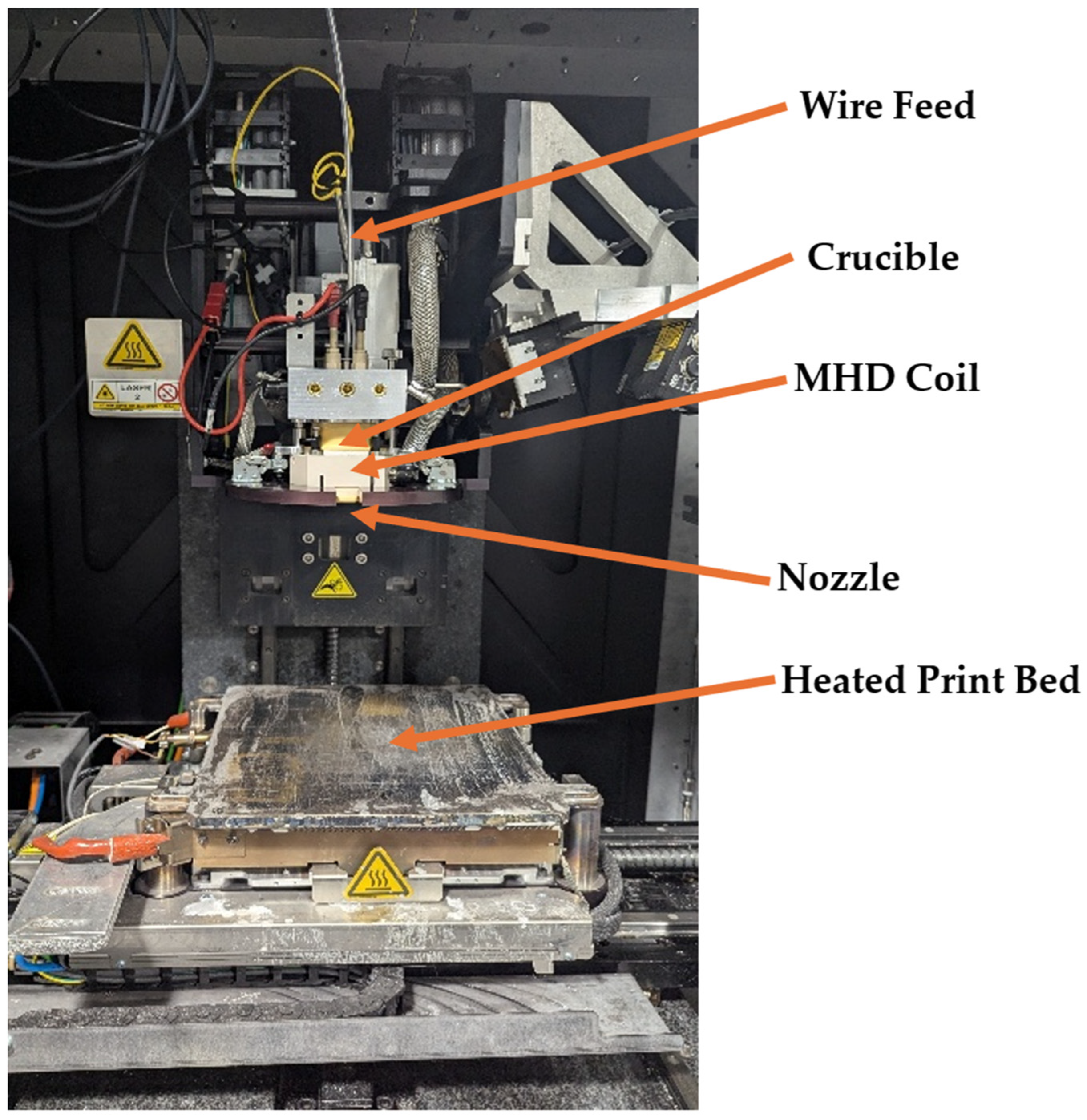
2.1. Printer Setup
2.2. Build Geometries
2.3. Heat Treatment
2.4. Material Characterization
3. Results
3.1. Tensile Test Results
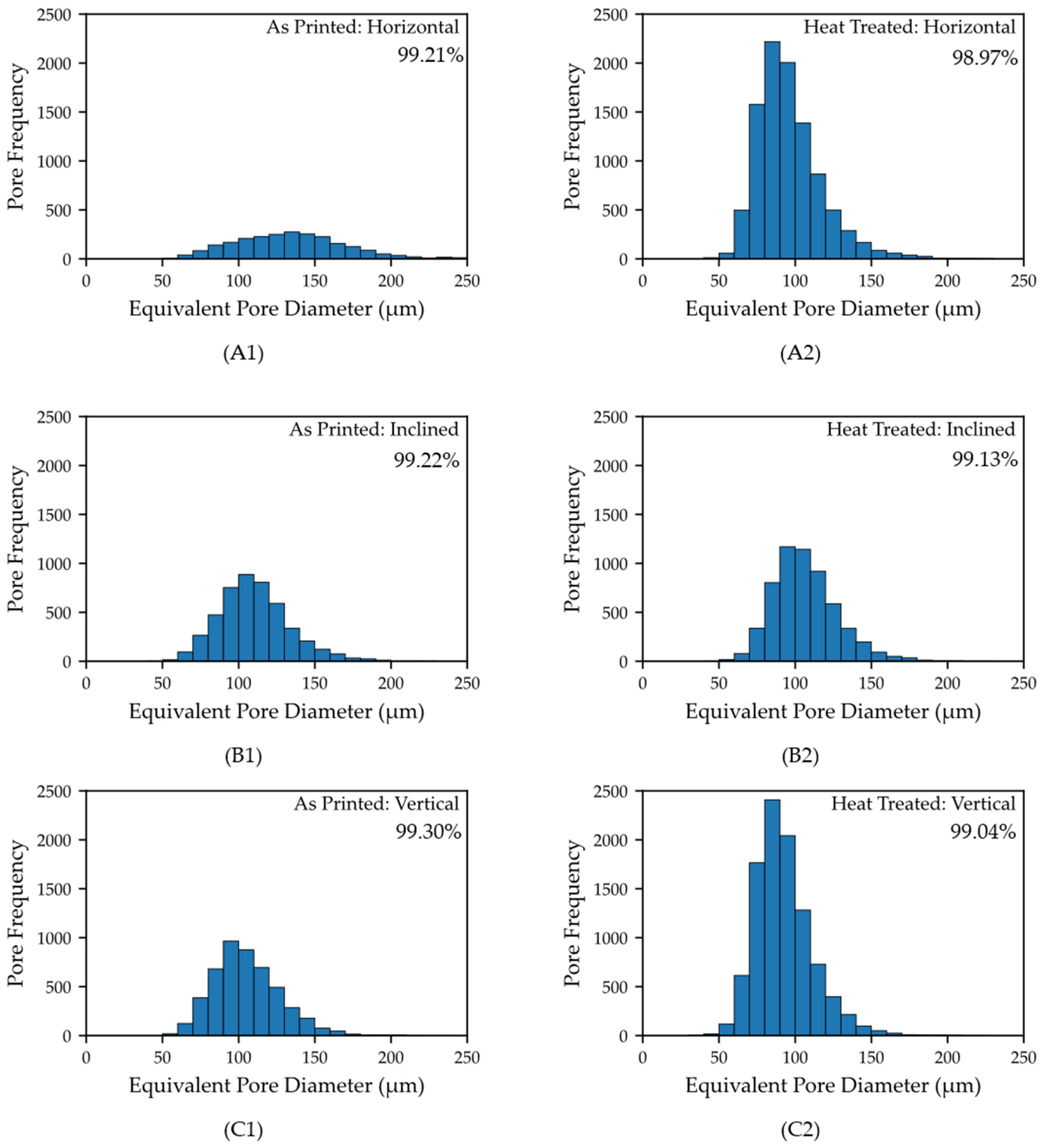
3.2. Porosity Analysis
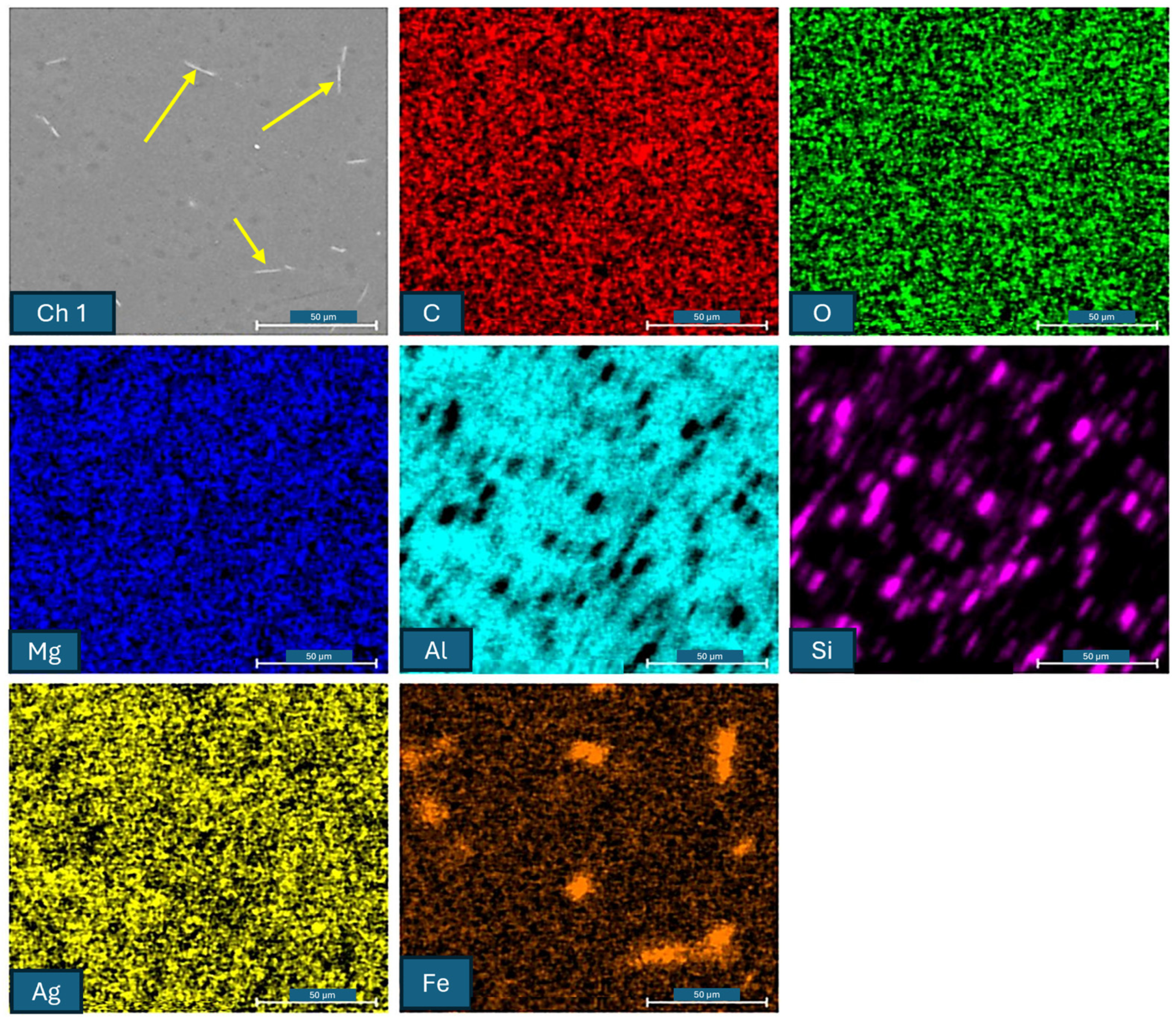
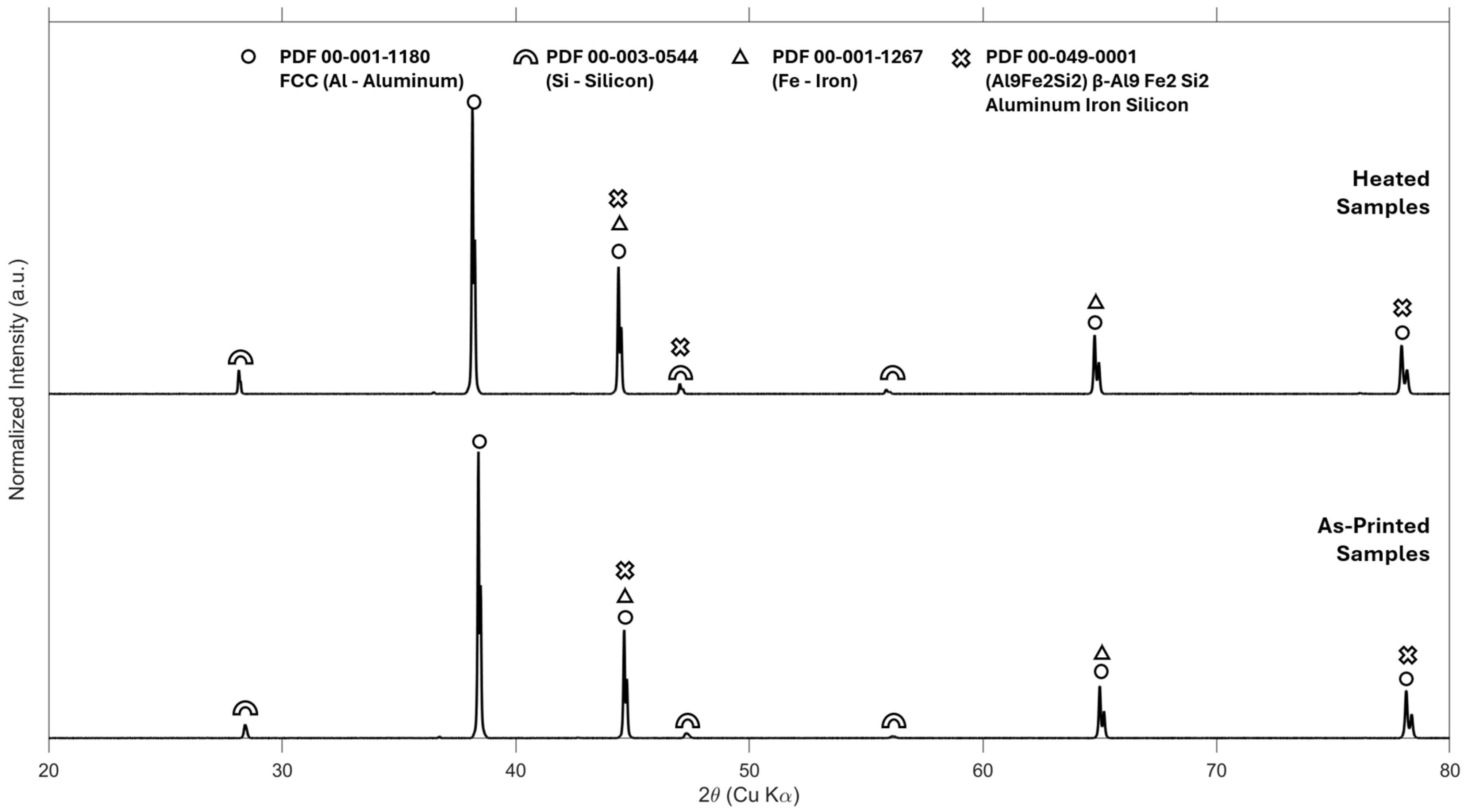
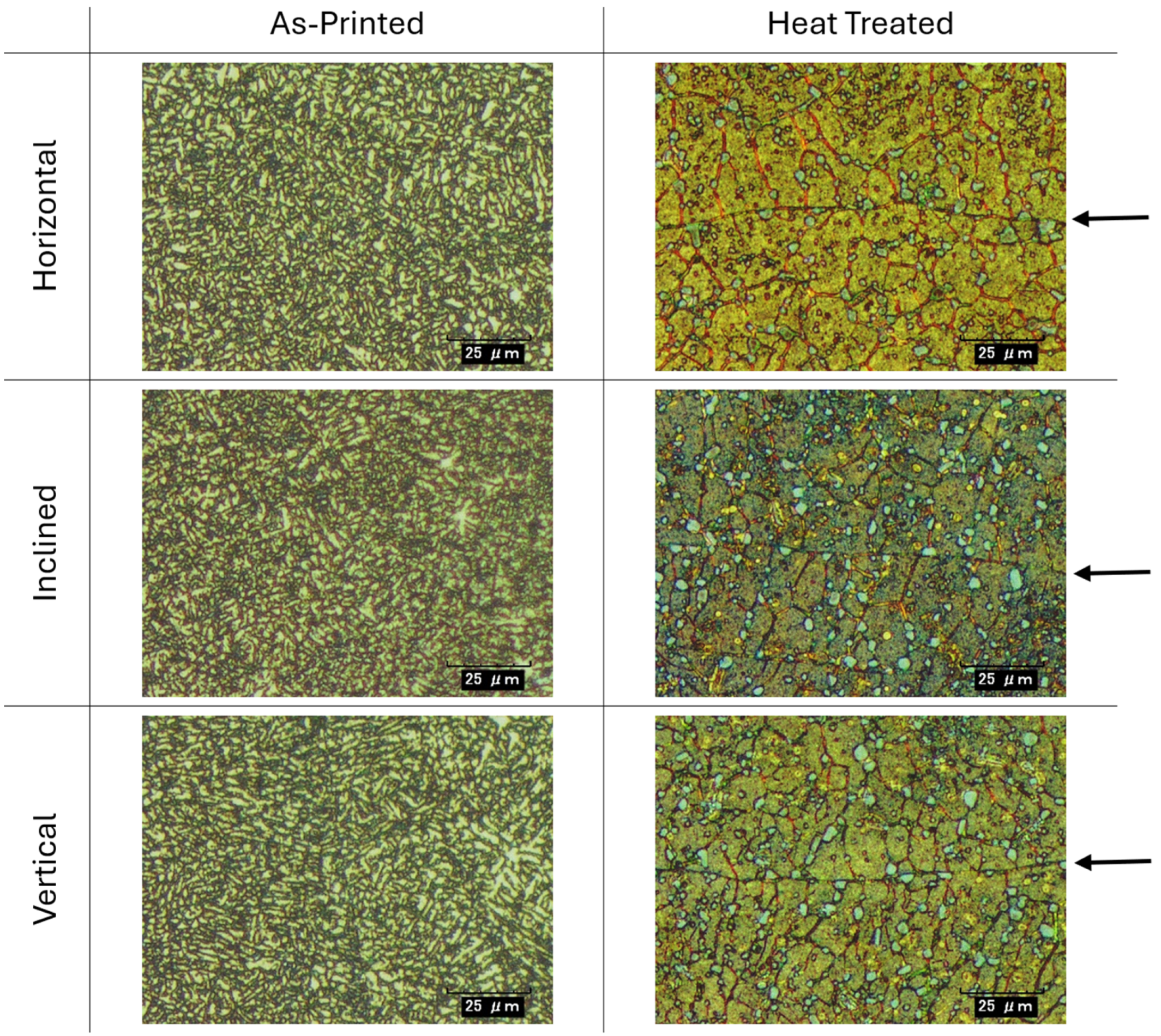
3.3. Microstructure
4. Discussion
5. Conclusions and Future Directions
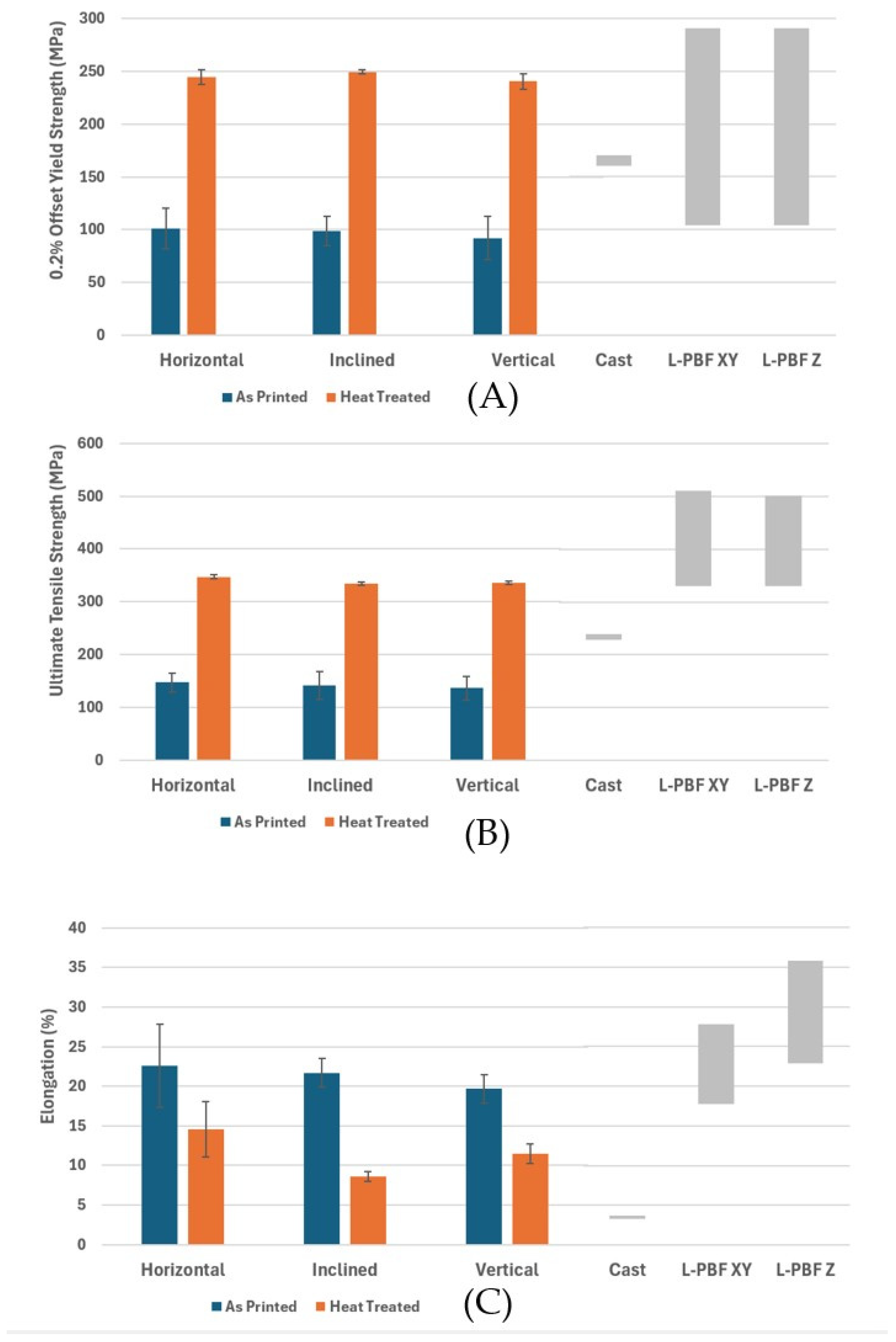
- Heat treatment resulted in YS values in horizontal, inclined, and vertical orientations of 244.6 ± 7.1 MPa, 249.3 ± 2.1 MPa, and 240.4 ± 7.3 MPa respectively, corresponding to a ~150% increase over as-printed values. Likewise, UTS values in those orientations were 346.9 ± 3.7MPa, 333.8 ± 3.0 MPa, and 335.7 ± 2.6 MPa respectively, corresponding to a ~140% increase over as-printed values.
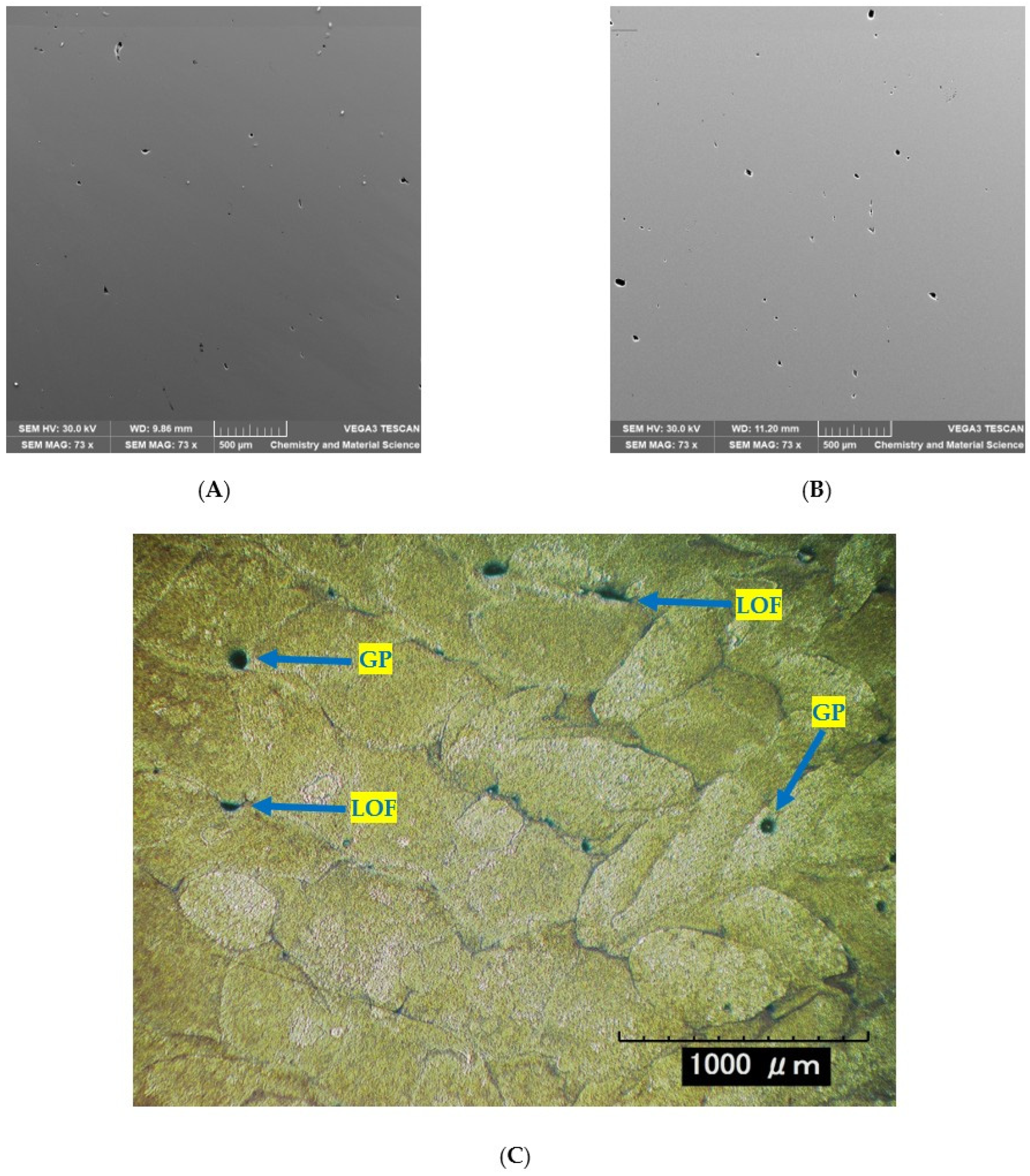
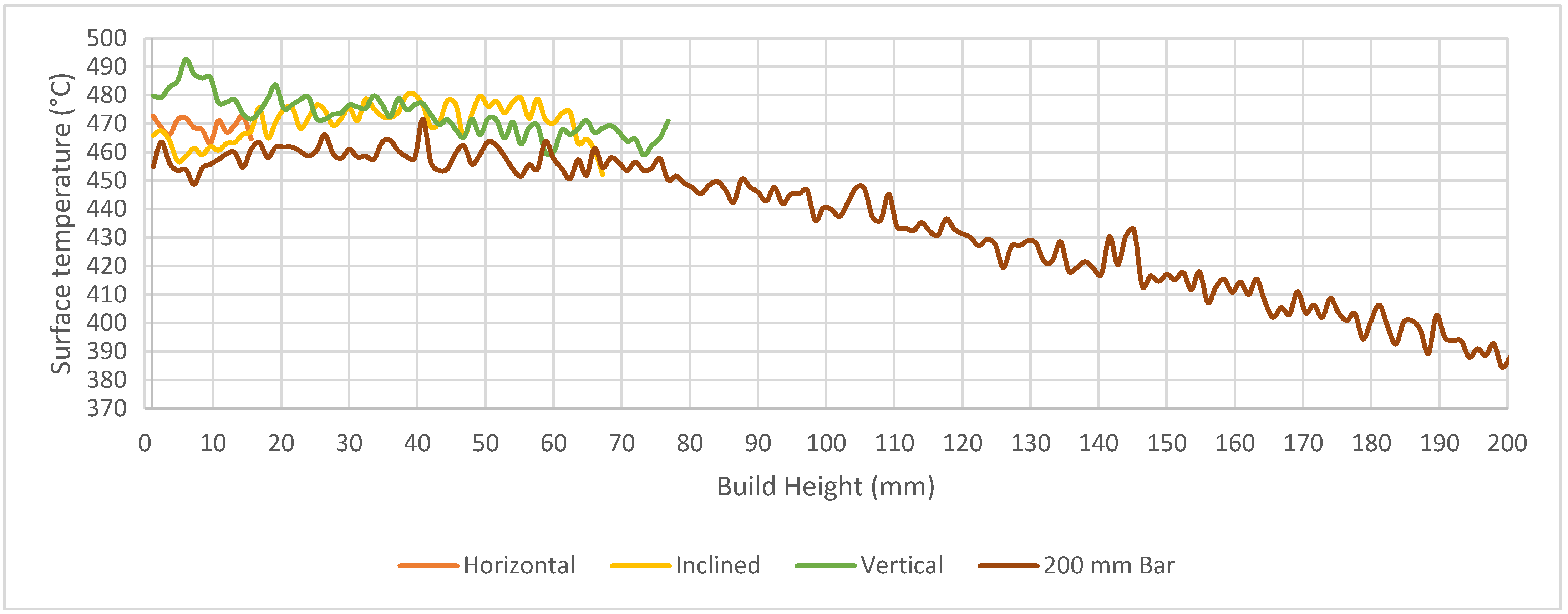
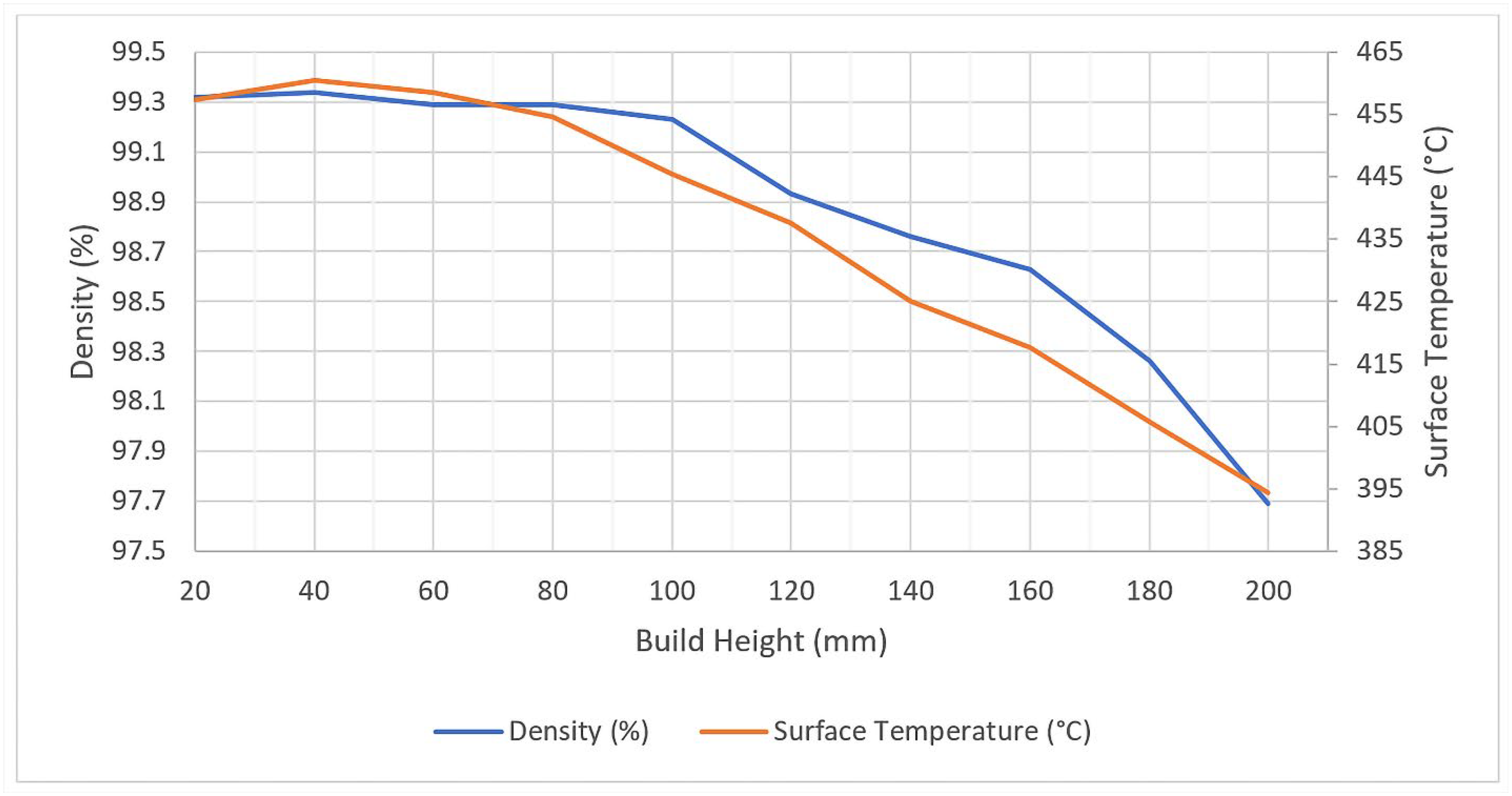
- Although porosity was generally less than 1% across sample geometries, an increase in porosity closely tracked decreasing surface temperatures below ~455 °C. Surface temperature was reasonably steady at build heights below 75 mm, regardless of printed surface area. This suggests the need to employ external heating methods to maintain a critical surface temperature above ~455 °C at build heights > 75 mm.
- Heat treatment increased overall porosity by 0.24%, 0.09%, and 0.26% in the horizontal, inclined, and vertical orientations, respectively, while the equivalent pore size slightly decreased.
- Future Directions: As MMJ is a relatively new process, many potential research directions are available to pursue.
- Closed-loop feedback control: Based on the nominal 500 μm drop diameter in this work, 15,279 droplets must be printed per cm3 of part volume. Given the large number of droplets needed to print each part, process drift involving drop size and/or velocity can significantly impact dimensional accuracy and surface finish. Real-time measurement of drop size and velocity coupled with process parameter correction is therefore a high-priority research opportunity.
- Large part manufacturing: With closed-loop feedback control, future multi-nozzle-array MMJ systems could also be used to print physically large components at high material deposition rates while maintaining the ability to produce relatively fine features due to the small droplet sizes of each nozzle.
- Support-free printing: Support removal is a major limitation of many metal AM processes. It is possible to produce sloped down-facing surfaces with MMJ down to approximately 40 degrees. Because there is no powder bed, unsupported down-faced surfaces can theoretically be printed using 5-axis motion stages that tilt the part during printing. Advanced slicing and motion-control research is needed to enable support-free metal AM printing.
- Non-weldable alloys: Shrinkage stresses during solidification of discrete droplets that shrink towards their individual center points following impact are very different from welding or laser melting of powder in continuous beads. Preliminary (unpublished) feasibility studies suggest that crack-free deposits of non-weldable alloys may be possible with MMJ. Research is needed to better understand the unique shrinkage stress behavior of this process.
Author Contributions
Funding
Data Availability Statement
Acknowledgments
Conflicts of Interest
Abbreviations
| MMJ | Molten Metal Jetting |
References
- Singamneni, S.; Yifan, L.V.; Hewitt, A.; Chalk, R.; Thomas, W.; Jordison, D. Additive manufacturing for the aircraft industry: A review. J. Aeronaut. Aerosp. Eng. 2019, 8, 351–371. [Google Scholar] [CrossRef]
- Tang, Y.; Zhao, Y.F. A survey of the design methods for additive manufacturing to improve functional performance. Rapid Prototyp. J. 2016, 22, 569–590. [Google Scholar] [CrossRef]
- Rouf, S.; Malik, A.; Singh, N.; Raina, A.; Naveed, N.; Siddiqui, M.I.; Haq, M.I. Additive manufacturing technologies: Industrial and medical applications. Sustain. Oper. Comput. 2022, 3, 258–274. [Google Scholar] [CrossRef]
- Wohlers, T.; Diegel, O. Costs and considerations when investing in a metal additive manufacturing system. In Metal Additive Manufacturing; Inovar Communications Ltd.: Shewsbury, UK, 2017; Volume 3, pp. 93–97. [Google Scholar]
- Mecheter, A.; Tarlochan, F.; Kucukvar, M. A review of conventional versus additive manufacturing for metals: Life-cycle environmental and economic analysis. Sustainability 2023, 15, 12299. [Google Scholar] [CrossRef]
- Chen, R.; Yin, H.; Cole, I.S.; Shen, S.; Zhou, X.; Wang, Y.; Tang, S. Exposure, assessment and health hazards of particulate matter in metal additive manufacturing: A review. Chemosphere 2020, 259, 127452. [Google Scholar] [CrossRef]
- Xu, M.; Guo, H.; Wang, Y.; Hou, Y.; Dong, Z.; Zhang, L. Mechanical properties and microstructural characteristics of 316L stainless steel fabricated by laser powder bed fusion and binder jetting. J. Mater. Res. Technol. 2023, 24, 4427–4439. [Google Scholar] [CrossRef]
- Orme, M. A novel technique of rapid solidification net-form materials synthesis. J. Mater. Eng. Perform. 1993, 2, 399–405. [Google Scholar] [CrossRef]
- Watkins, N.N.; Traxel, K.D.; Wilson-Heid, A.E.; Reeve, T.C.; Silva, C.M.; Jeffries, J.R.; Pascall, A.J. Process-structure-property relationships for droplet-on-demand liquid-metal-jetted parts. Addit. Manuf. 2023, 73, 103709. [Google Scholar] [CrossRef]
- Simonelli, M.; Aboulkhair, N.; Rasa, M.; East, M.; Tuck, C.; Wildman, R.; Salomons, O.; Hague, R. Towards digital metal additive manufacturing via high-temperature drop-on-demand jetting. Addit. Manuf. 2019, 30, 100930. [Google Scholar] [CrossRef]
- Mark, G.T. Molten Metal Jetting for Additive Manufacturing. U.S. Patent 10,315,247, 12 December 2019. [Google Scholar]
- Gibson, M.G.; Sachs, E.M.; Bell, J. Techniques to Improve MHD Jetting Performance. U.S. Patent 17/278,050, 9 December 2021. [Google Scholar]
- Elton, E.S.; Traxel, K.D.; Pascall, A.J.; Jeffries, J.R. Jet on demand—A pneumatically driven molten metal jetting method for printing crack-free aluminum components. Addit. Manuf. Lett. 2024, 11, 100240. [Google Scholar] [CrossRef]
- Zhang, Y.; Hu, G.; Zuo, L.; Bang, M.; Wang, N.; Li, D.; Li, Z.; Li, R.; He, W.; Xue, B.; et al. Ultrasonic vibration micro-jet ejection for metal additive manufacture. J. Mater. Res. Technol. 2024, 28, 2149–2162. [Google Scholar] [CrossRef]
- Sukhotskiy, V.; Vishnoi, P.; Karampelas, I.; Vader, S.; Vader, Z.; Furlani, E.P. Magnetohydrodynamic drop-on-demand liquid metal additive manufacturing: System overview and modelling. In Proceedings of the 5th International Conference of Fluid Flow, Heat and Mass Transfer, Niagara Falls, ON, Canada, 7–9 June 2018. [Google Scholar] [CrossRef]
- Meda, M.; Mehta, P.; Mahajan, C.; Kahn, B.; Cormier, D. Magnetohydrodynamic liquid metal droplet jetting of highly conductive electronic traces. Flex. Print. Electron. 2021, 6, 035002. [Google Scholar] [CrossRef]
- Rifat, U.A. Additive Manufacturing of 4008 Aluminum via Magnetohydrodynamic Droplet Jetting. Master’s Thesis, Rochester Institute of Technology, Rochester, NY, USA, 2023. [Google Scholar]
- Liu, Q.; Orme, M. High precision solder droplet printing technology and the state-of-the-art. J. Mater. Process. Technol. 2001, 115, 271–283. [Google Scholar] [CrossRef]
- Gilani, N.; Aboulkhair, N.T.; Simonelli, M.; East, M.; Hague, R.J. Drop-on-demand metal jetting of pure copper: On the interaction of molten metal with ceramic and metallic substrates. Mater. Des. 2024, 240, 112834. [Google Scholar] [CrossRef]
- Ploetz, M.; Kirchebner, B.; Volk, W.; Lechner, P. Influence of thermal process parameters on the properties of material jetted CuSn8 components. Mater. Sci. Eng. A 2023, 871, 144869. [Google Scholar] [CrossRef]
- Sukhotskiy, V. Computational Analysis of Liquid Metal Drop-on-Demand Jetting and Solidification Using a Contactless Magnetohydrodynamic Actuator. Ph.D. Thesis, State University of New York at Buffalo, Buffalo, NY, USA, 2021. [Google Scholar]
- Gilani, N.; Aboulkhair, N.T.; Simonelli, M.; East, M.; Ashcroft, I.A.; Hague, R.J. From impact to solidification in drop-on-demand metal additive manufacturing using MetalJet. Addit. Manuf. 2022, 55, 102827. [Google Scholar] [CrossRef]
- Kirchebner, B.; Traxel, K.D.; Wilson-Heid, A.E.; Elton, E.; Pascall, A.J.; Jeffries, J.R. Molten Metal Jetting for Repairing Aluminum Components. Addit. Manuf. Lett. 2024, 11, 100259. [Google Scholar] [CrossRef]
- Traxel, K.D.; Wilson-Heid, A.E.; Watkins, N.N.; Silva, C.M.; Jeffries, J.R.; Pascall, A.J. Microstructure and tensile properties of droplet-on-demand additively manufactured AlSi7Mg. Addit. Manuf. 2024, 87, 104215. [Google Scholar] [CrossRef]
- Davis, R.J. (Ed.) Metals Handbook, 2nd ed.; ASM International, Materials Park: Novelty, OH, USA, 1998. [Google Scholar]
- Medrano, V.A.; Arrieta, E.; Merino, J.; Ruvalcaba, B.; Caballero, K.; Ramirez, B.; Diemann, J.; Murr, L.E.; Wicker, R.B.; Godfrey, D.; et al. A comprehensive and comparative study of microstructure and mechanical properties for post-process heat treatment of AlSi7Mg alloy components fabricated in different laser powder bed fusion systems. J. Mater. Res. Technol. 2023, 24, 6820–6842. [Google Scholar] [CrossRef]
- Gu, J.; Gao, M.; Yang, S.; Bai, J.; Ding, J.; Fang, X. Pore formation and evolution in wire + arc additively manufactured 2319 Al alloy. Addit. Manuf. 2019, 30, 100900. [Google Scholar] [CrossRef]
- Hauser, T.; Reisch, R.T.; Breese, P.P.; Lutz, B.S.; Pantano, M.; Nalam, Y.; Bela, K.; Kamps, T.; Volpp, J.; Kaplan, A.F. Porosity in wire arc additive manufacturing of aluminium alloys. Addit. Manuf. 2021, 41, 101993. [Google Scholar] [CrossRef]
- Toda, H.; Hidaka, T.; Kobayashi, M.; Uesugi, K.; Takeuchi, A.; Horikawa, K. Growth behavior of hydrogen micropores in aluminum alloys during high-temperature exposure. Acta Mater. 2009, 57, 2277–2290. [Google Scholar] [CrossRef]
- Zope, K.; Perez-Raya, I.; Rifat, U.A.; Mehta, P.; Cormier, D. Quantifying the convection heat transfer coefficients in the molten metal jetting process with experiments, theoretical analysis, and computational modeling. Int. Commun. Heat Mass Transf. 2026, 173, 110846. [Google Scholar] [CrossRef]
- Razvi, I.; Tawil, K.; Chunbin, C.; Trauernicht, D.; Cormier, D.; Guo, Z.; Cormier, D. Multi-Nozzle Molten Metal Droplet Jetting. Addit. Manuf. Lett. 2026, 17, 100357. [Google Scholar] [CrossRef]







Disclaimer/Publisher’s Note: The statements, opinions and data contained in all publications are solely those of the individual author(s) and contributor(s) and not of MDPI and/or the editor(s). MDPI and/or the editor(s) disclaim responsibility for any injury to people or property resulting from any ideas, methods, instructions or products referred to in the content. |
© 2026 by the authors. Licensee MDPI, Basel, Switzerland. This article is an open access article distributed under the terms and conditions of the Creative Commons Attribution (CC BY) license.
Share and Cite
Rifat, U.A.; Zope, K.; Mehta, P.; Marin-Montealegre, V.; Cormier, D. The Effect of Build Orientation and Heat Treatment on Properties of Molten Metal Jetted AlSi7Mg Aluminum Alloy. Metals 2026, 16, 363. https://doi.org/10.3390/met16040363
Rifat UA, Zope K, Mehta P, Marin-Montealegre V, Cormier D. The Effect of Build Orientation and Heat Treatment on Properties of Molten Metal Jetted AlSi7Mg Aluminum Alloy. Metals. 2026; 16(4):363. https://doi.org/10.3390/met16040363
Chicago/Turabian StyleRifat, Usama Abdullah, Khushbu Zope, Paarth Mehta, Valeria Marin-Montealegre, and Denis Cormier. 2026. "The Effect of Build Orientation and Heat Treatment on Properties of Molten Metal Jetted AlSi7Mg Aluminum Alloy" Metals 16, no. 4: 363. https://doi.org/10.3390/met16040363
APA StyleRifat, U. A., Zope, K., Mehta, P., Marin-Montealegre, V., & Cormier, D. (2026). The Effect of Build Orientation and Heat Treatment on Properties of Molten Metal Jetted AlSi7Mg Aluminum Alloy. Metals, 16(4), 363. https://doi.org/10.3390/met16040363