Next Article in Journal
The Effect of Build Orientation and Heat Treatment on Properties of Molten Metal Jetted AlSi7Mg Aluminum Alloy
Previous Article in Journal
Research Progress on Hot Deformation Behavior of High Nitrogen Austenitic Stainless Steels: Influence Factors and Microstructure Control of Hot Deformation at High Temperature
Previous Article in Special Issue
Evaluation of the Possibility of Using Non-Conventional Technological Approaches for the Heat Treatment of Hot-Rolled DP Steel
 
 
Due to scheduled maintenance work on our servers, there may be short service disruptions on this website between 11:00 and 12:00 CEST on March 28th.
Article

Comparison of Wear Resistance of Lean Medium Mn AHSS After Q&P Heat Treatment
1
Faculty of Special Technology, Alexander Dubcek University of Trencin, Ku Kyselke 469, 911 06 Trencin, Slovakia
2
Research and Development Department, Business Unit Coil. voestalpine Steel Division GmbH, voestalpine-Strasse 3, A-4020 Linz, Austria
3
Department of Mining and Press-and-Forging Equipment, Private Joint Stock Company 8 “Novokramatorsky Mashinostroitelny Zavod”, 04070 Kyiv, Ukraine
4
Institute of Materials and Machine Mechanics, Slovak Academy of Sciences, Dúbravská Cesta 9/6319, 845 13 Bratislava, Slovakia
5
Microstructure and Surface Analysis, Business Unit Coil. voestalpine Steel Division GmbH, voestalpine-Strasse 3, A-4020 Linz, Austria
*
Author to whom correspondence should be addressed.
Metals 2026, 16(4), 362; https://doi.org/10.3390/met16040362
Submission received: 2 March 2026 / Revised: 21 March 2026 / Accepted: 22 March 2026 / Published: 25 March 2026

Abstract

This study evaluates the tribological properties of lean medium manganese advanced high-strength steel (AHSS) subjected to five different heat treatment processes. The tests were conducted under dry reciprocating conditions using the ball-on-flat method, with a G40 steel ball, a 10 N load, and 1000 cycles at room temperature. Friction behavior, wear resistance, nanoindentation hardness, surface roughness, and microstructural changes were examined. The results showed that heat treatment significantly influenced the microstructure and hardness of the samples. The Mn-Q sample, with fresh martensite, achieved the highest hardness (483 HV5), while the Mn-Q&P 500 °C sample had the lowest (336 HV5), with a 30% reduction due to tempering. The Mn-HR 500 °C sample showed the highest surface roughness (Sa = 1.876 μm) due to microstructural heterogeneity. Despite similar coefficients of friction across all samples (0.55–0.57), the Mn-Q&P 500 °C sample exhibited the best wear resistance, 18% higher than the Mn-HR 500 °C variant. Wear mechanisms were identified as a combination of abrasion and oxidation, where the latter slightly reduced the coefficient of friction (COF) but increased surface degradation. These findings highlight the potential of lean medium Mn AHSS for tribological applications, offering a favorable balance of wear resistance and frictional stability.

1. Introduction

Advanced high-strength steels (AHSSs) represent a modern material concept that has the potential to go beyond traditional automotive applications. Their exceptional mechanical properties can also make them suitable for applications that require increased wear resistance, thereby extending component life and reliability. One of the main challenges in modern engineering is the design of components that can withstand continuous mechanical stress and wear while maintaining optimal weight and economic efficiency. We pay special attention to the structural properties of these steels, their heat treatment, and potential benefits for industries requiring advanced material solutions.
C. Blankart et al. [1] focused their research on optimizing the quenching and partitioning (Q&P) process for medium manganese steel, with the aim of achieving excellent mechanical properties. The results showed that a retained austenite (RA) content in the range of 12–21 vol.% and a low proportion of secondary martensite (up to 20 vol. %) lead to high strength above 1500 MPa and a total ductility of 18%. S. Kaar et al. [2] showed, in their work, that increasing the Mn content improved the combination of strength and ductility due to a higher proportion of RA and its influence on the TRIP effect, with the best properties being achieved at approximately 75–80% volume fraction of primary martensite. The higher Mn content narrowed the process range due to the lower stability of RA, which increased the sensitivity of steels to temperature fluctuations during quenching. M. Krbata et al. [3] presented the finding that increasing the austenitization temperature leads to an increase in grain size and increases the temperature of the onset of martensite transformation (Ms). The created CCT and DCCT diagrams showed that deformation accelerates the start temperatures of ferrite and bainite at higher cooling rates. At the same time, it was confirmed that the hardness of the samples after deformation is higher, which is related to grain refinement. The amount of RA increased with decreasing cooling rates, which contributed to its better stabilization at room temperature. J. Yan et al. [4] investigated various wear mechanisms of medium manganese steels (MMSs) and emphasized the importance of hardness and microstructure. Key factors that influence wear resistance include alloy composition and phase transformation during TRIP and TWIP effects, as well as heat treatment processes. The findings suggest that optimizing these factors can significantly improve the properties of MMSs and contribute to their durability. The quenching and partitioning (Q&P) process in the study by Z. Li et al. [5] was applied to Fe-0.44C-1.54B-3.97Mn-0.79Al-0.95Si alloy to improve its toughness and wear resistance. After Q&P treatment, the volume fraction RA increased, and its morphology was transformed into a thin-film one, which led to an increase in toughness from 4.02 J·cm−2 to 6.82 J·cm−2 and a decrease in dry friction weight loss from 0.064 g to 0.051 g. These changes confirm the importance of optimizing the microstructure to improve the mechanical properties of alloys. Author J. Lu et al. [6] concluded that the optimized process (Q&P) leads to the production of high-performance martensitic–austenitic steels that exhibit excellent mechanical properties, such as a yield strength (UTS) of up to 1921 MPa and lower weight loss during wear compared to commercial Hadfield steel (Mn13Cr2). Author G. Niu et al. [7] found in their research that RA improves short-term wear resistance by absorbing impact energy and inhibiting crack propagation, but its negative impact increases during long-term wear due to the high hardness of the newly formed martensite. Author X. Yan et al. [8] studied the effect of temperature on the transformation of austenite to martensite and the resulting wear resistance in steels with metastable austenite. The results show that austenite-rich steels exhibit higher wear resistance at low temperatures, while the wear mechanism changes from gouging and scoring to cutting. D. K. Kim et al. [9] investigated the wear resistance and wear mechanisms of DP and Q&P steels at different wear distances (from 3 to 1000 m). The results show that Q&P steel exhibits better wear resistance at distances above 150 m, which is a consequence of the higher strengthening capacity through the TRIP effect, ferrite refinement, and multi-phase strengthening. At higher distances, there is a transition from abrasive to mixed wear mechanism, where Q&P steel resists wear better due to the continuous increase of the strengthened layer without loss of hardness. X. Yan et al. [10] focused on the effect of different Q&P processes on the wear behavior of steels containing 5% manganese at different wear test temperatures (300 °C, 20 °C, and −50 °C). The results showed that the wear of the steels decreased with increasing hardness at 300 °C and 20 °C. Q&P220 steel, containing approximately 22% RA, showed better wear resistance at −50 °C due to the increased strain hardening ability controlled by the TRIP effect. While martensitic steels achieve maximum hardness, Q&P steels achieve better plasticity due to the presence of tempered martensite and metastable RA undergoing the TRIP effect. Q. Wang et al. [11] investigated the wear and strengthening mechanism of medium manganese steel during erosion wear in fluid suspensions. Research has shown that medium manganese steel has better wear resistance compared to martensitic steels due to the strengthening layer that forms on the surface.
Other authors also confirmed the suitability of the Q&P process to improve wear resistance in a variety of steel grades, such as low alloy hypereutectoid pearlitic rail steel and various medium Mn steels [4,12,13,14,15,16,17]. Their application potential may be in areas where it is necessary to ensure high wear resistance while maintaining low weight and high operational reliability. Such applications include components of railway systems (e.g., brake strips, slideways), work tools and cutting equipment in the mining and construction industries, as well as bearing and motion components in the energy and mechanical engineering industries. They may also find significant potential in the development of load-bearing and protective elements for exoskeleton systems used in rescue and military units, where high demands are placed on strength, impact resistance, and material fatigue at the lowest possible weight of the structure.
However, the influence of the Q&P process on the wear resistance of lean medium Mn steels has not been investigated yet. Therefore, the main objective of this work was to identify the optimal heat treatment process that will improve wear resistance for tribological applications of lean medium Mn steel to its counterpart G40 steel. To better contextualize the current state of research, a comparison of selected studies focusing on medium Mn steels and Q&P processing is summarized in Table 1. The table highlights differences in manganese content, applied heat treatment strategies, and tribological testing conditions reported in the literature.

2. Materials and Methods

Lean medium-alloyed Mn AHSS was used as experimental material. The investigated steel is primarily intended for applications in the automotive industry. This material was cast into ingots weighing 80 kg in laboratory conditions using a medium-frequency furnace. The ingot dimensions were 80 × 120 × 1000 mm3, which subsequently underwent a hot rolling process to achieve a final thickness of 6 mm. The chemical composition of the experimental samples was verified using a Q4 TASMAN spectral analyzer (Bruker BioSpin GmbH, Ettlingen, Germany), the results of which are presented in Table 2. The table also contains the verified chemical composition of the G40 material from which the thrust balls were machined, which were used in wear tests as thrust material in tribological tests.
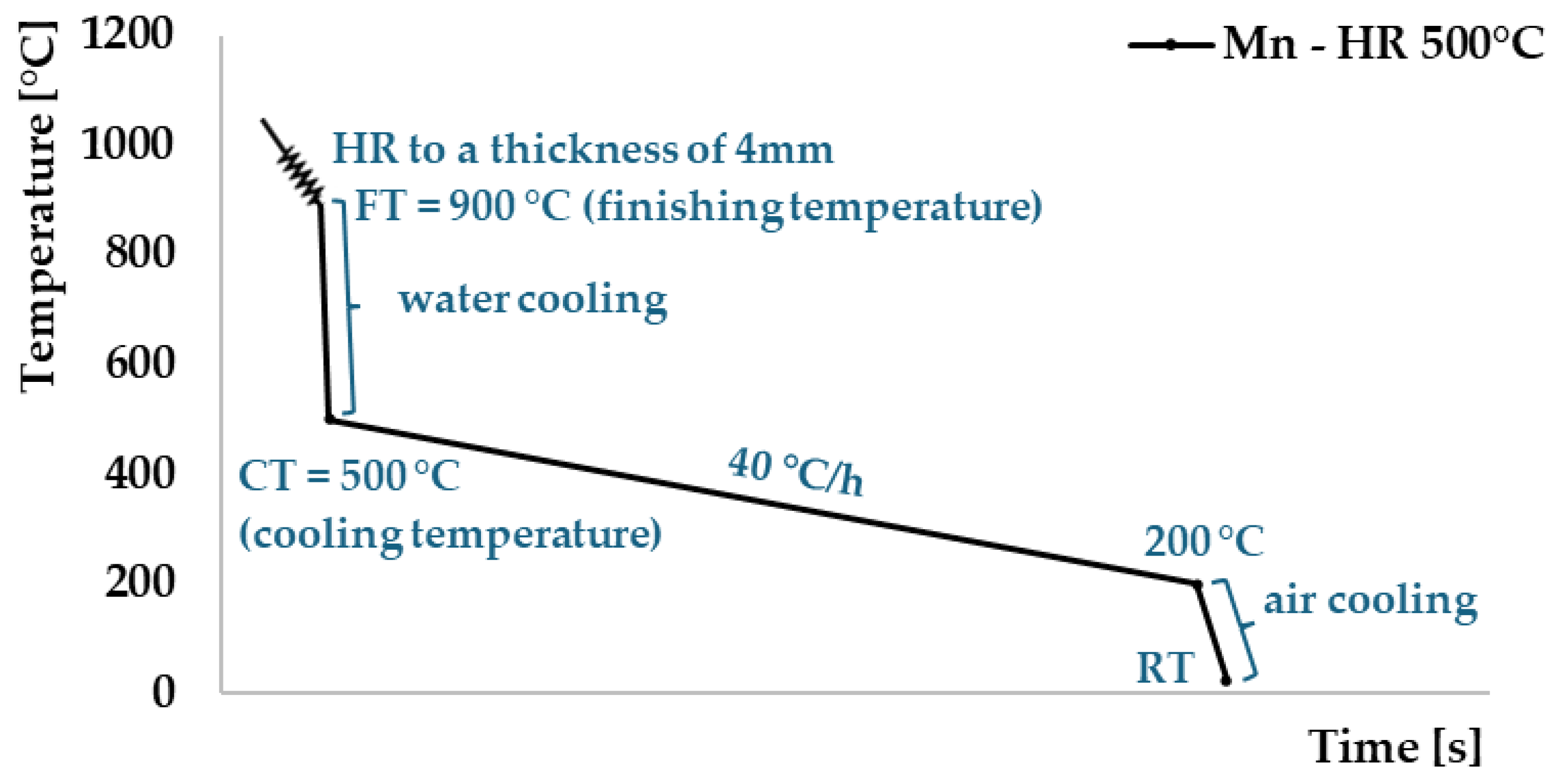
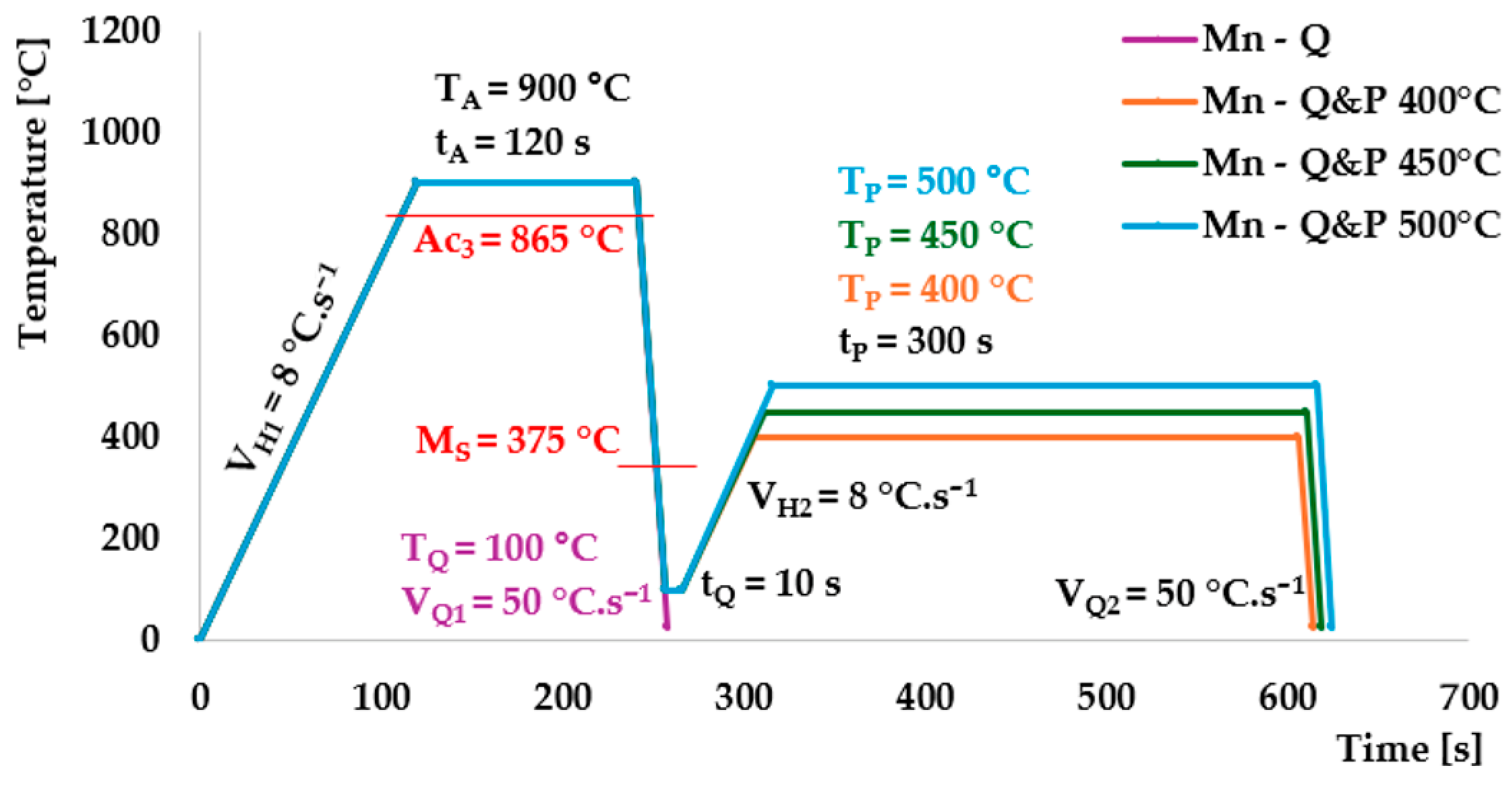
Table 3 presents the designation of individual manufactured samples for their better clarity. All experimental samples were subjected to hot rolling, as depicted in Figure 1. The heat treatment of these samples was carried out by dilatometry according to the schedule illustrated in Figure 2. The first schedule consisted of full austenitization at 900 °C for 120 s followed by cooling at 50 °C/s to room temperature. Additional samples were quenched to a quench temperature of 100 °C and then reheated to different partition temperatures Tp for 300 s.

2.1. Tribological Test

Dry sliding friction was investigated on experimental samples using the Ball on Flat method. The friction process was carried out at room temperature of 23 °C without the use of lubricant. Tribological tests were carried out on the UMT TriboLab device (Bruker Corporation, Billerica, MA, USA) [18,19]. A hardened steel ball of material G40 with a diameter of 4.76 mm and a hardness of 810 HV10 was used as the pressing material. The ball performed a linear reciprocating motion along a path of 5 mm. The speed of the reciprocating motion was set to 10 mm/s. All experimental measurements were carried out at a load of 10 N. A total of 1000 repetitions of the reciprocating motion were performed during one measurement. The friction coefficient of individual experimental samples was also evaluated using the given device.

2.2. Nanoindentation

The subsequent experiments consisted of quasi-static nanoindentation measurements. The quasi-static nanoindentation method was chosen because it allows for precise and localized measurement of mechanical properties, which is ideal for investigating heterogeneous materials such as steel with different phases and microstructural compounds. Each of the measured regions had dimensions of 10 × 10 µm. Prior to indentation, the surface morphology of each region was recorded using the integrated Scanning Probe Microscopy (SPM) imaging mode of the Hysitron Triboindenter TI950, enabling precise localization of the indents within individual microstructural constituents. The SPM mode provides nanometer-scale lateral resolution with sub-nanometer vertical sensitivity. A standard trapezoidal loading curve with a maximum load of 8000 µN and an indentation time of 2 s was used for all measurements, using an experimental nanoindentor device Hysitron Triboindenter TI950 (TI, Hysitron Inc., Minneapolis, MN, USA). In these experiments, a Berkovich tip (TI-0039, Hysitron Inc.) was used with an angle of 142.3° and a tip radius of 100 nm, which provides an ideal triangular profile for detailed hardness evaluation. In these measurements, performed using the quasi-static nanoindentation method, the output measured quantities were local mechanical properties, nanohardness H [GPa], and reduced Young’s modulus Er [GPa] [20].

2.3. Hardness

The macro-Vickers hardness was also measured by an automatic QATM Qness 10 CHD MASTER+ (QATM Qness Gmbh, Golling, Austria) hardness tester, according to the UNI EN ISO 6507:2018 standard [21,22]. The mean Vickers macro-hardness, using an applied load of 5 kg (HV5), was calculated from five indentations to guarantee the measurement reproducibility of the data.

2.4. Tribological Measurements & Wear

The wear and roughness were measured using a LEXT OLS 5100 3D measuring laser confocal microscope (EVIDENT Europe GmbH, Hamburg, Germany) [23].

2.5. SEM, STEM & EDX

EDX microanalysis using linear scanning (Linescan technique, EDX-LS) was performed on a JEOL 7600 FEG (Version 2.1.0.9, JEOL, Tokyo, Japan) using an Oxford Instruments INCA microanalysis system equipped with an X-Max 50 detector operating at 15 kV. Quantitative analysis was performed through a linescan along a radial trajectory (length 2.14 mm, step 4 μm) to determine the radial distribution of chemical elements (C, O, Mn, Si).
A probe-corrected FEI/Thermo Fisher Scientific Titan Themis 300 (Thermo Fisher Scientific, Waltham, MA, USA) transmission electron microscope (TEM) operating in scanning mode (STEM) was employed for a comprehensive microstructural investigation. The STEM operated at an accelerating voltage of 200 kV and was equipped with an energy-dispersive X-ray spectroscopy (EDS) system (Super-X) for elemental analysis. The crystallographic nature of selected particles was further investigated using fast Fourier transform (FFT) analysis of their electron diffraction patterns. STEM images were acquired using three detectors: Annular Bright-Field (ABF) detector, Annular Dark-Field (ADF) detector, and High-Angle Annular Dark-Field (HAADF) for general morphology and microstructure analysis. To prepare the samples for STEM analysis, they underwent mechanical grinding, polishing, and a final stage of ion milling using a Gatan PIPS II (Precision Ion Polishing System, Gatan Inc., Pleasanton, CA, USA) at 4.5 kV and 2 kV, respectively. For evaluation of the iron phases, PDF crystallographic data (ref.code: 00-052-0512, 01-089-4186, 03-065-2411, 00-044-1289) and CrystBox software (Institute of Physics of the Czech Academy of Sciences, Prague, Czech Republic; https://crystbox.fzu.cz, accessed on 24 February 2026) were used. FFT diffraction patterns were calculated from atomic-resolution HAADF images.

2.6. X-Ray Diffraction Methodology and Measurement Uncertainty

X-ray diffraction (XRD) analysis was performed to determine the lattice parameter and carbon content of retained austenite (C γ ). The measurements were carried out using a Rigaku SmartLab diffractometer (Rigaku, Tokyo, Japan) equipped with Cu Kα1 radiation (λ = 0.1541 nm), operating at 40 kV and 200 mA with a step size of 0.03°. These parameters were selected to ensure reliable phase evaluation in lean medium Mn steels [23]. The lattice parameter a γ was calculated from the γ (200), (220), and (311) reflections using Bragg’s law. The carbon content in retained austenite was determined according to the relation proposed by van Dijk et al. [24], as expressed in Equation (1):
c γ = a γ 3.556 0.00095 x M n 0.0056 x A l 0.0453
where c γ represents the carbon content in retained austenite (wt.%), a γ is the austenite lattice parameter (Å), and x A l and x M n correspond to the Al and Mn contents in retained austenite (wt.%), respectively, which were assumed to be equal to their bulk concentrations. The uncertainty of the retained austenite fraction and the calculated carbon content were estimated based on repeated XRD measurements and peak fitting procedures. The resulting values are reported as mean values with corresponding standard deviations, as presented in Table 4.

2.7. Data Processing and Measurement Reproducibility

For macro-hardness (HV5) measurements, the results were obtained from five indents on each sample and were averaged and supplemented with the standard deviation. Nanoindentation was performed using the Hysitron TI950 instrument, which has a displacement accuracy below 1 nm and a force resolution better than 1 µN. Measurements were repeated at multiple points, and the resulting values of nanohardness and reduced Young’s modulus were reported as means with corresponding standard deviations. Surface roughness (Sa, Ra) was determined as the average of five measurements taken at different locations on the analyzed surface. Wear was evaluated at three positions along each wear groove (at 2, 3, and 4 mm from the starting point), and the final value was calculated as the average, accompanied by the standard deviation. The COF was recorded continuously throughout the test, and the reported value represents the average from the stabilized portion of the curve.
The measurement data processed in this way provide a reliable foundation for evaluating the influence of different heat treatment regimes on the mechanical and tribological properties of the steel and ensure transparency in comparing the individual samples.

3. Results and Discussion

3.1. Microstructure

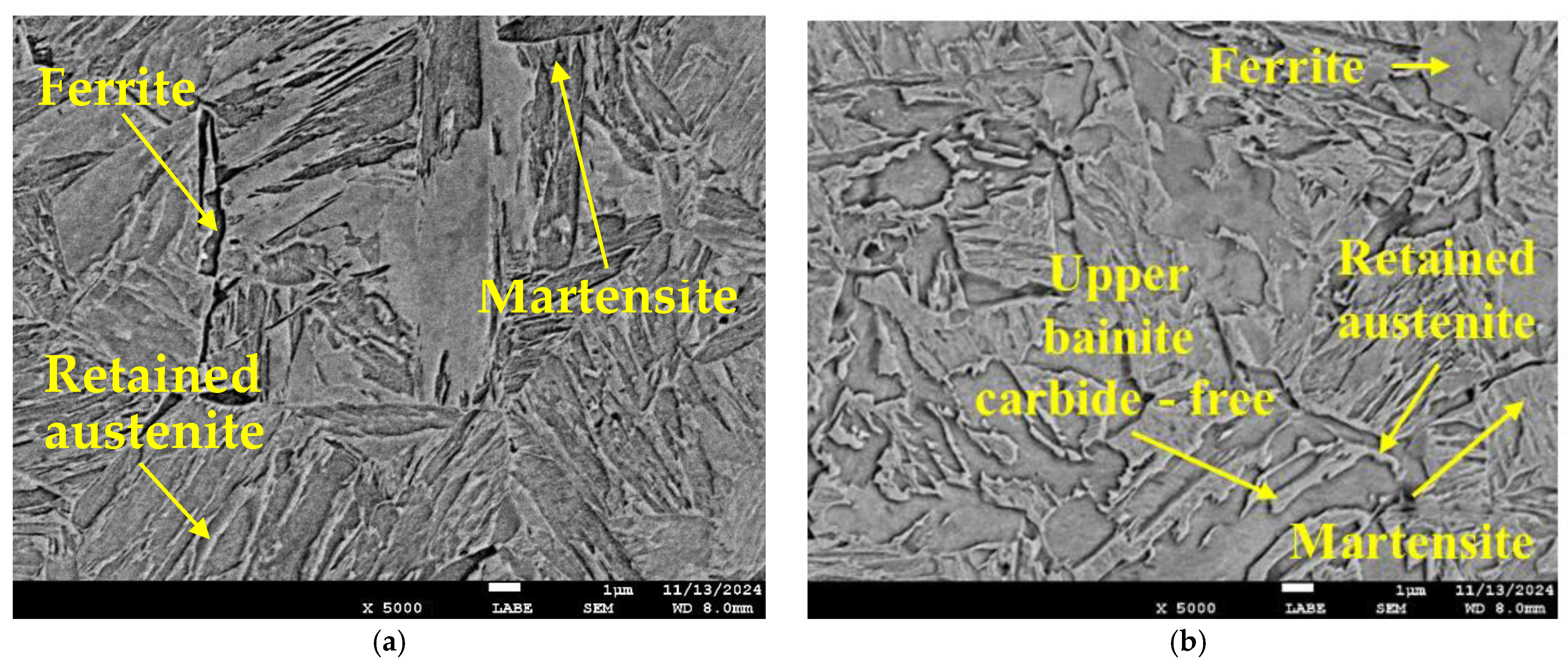
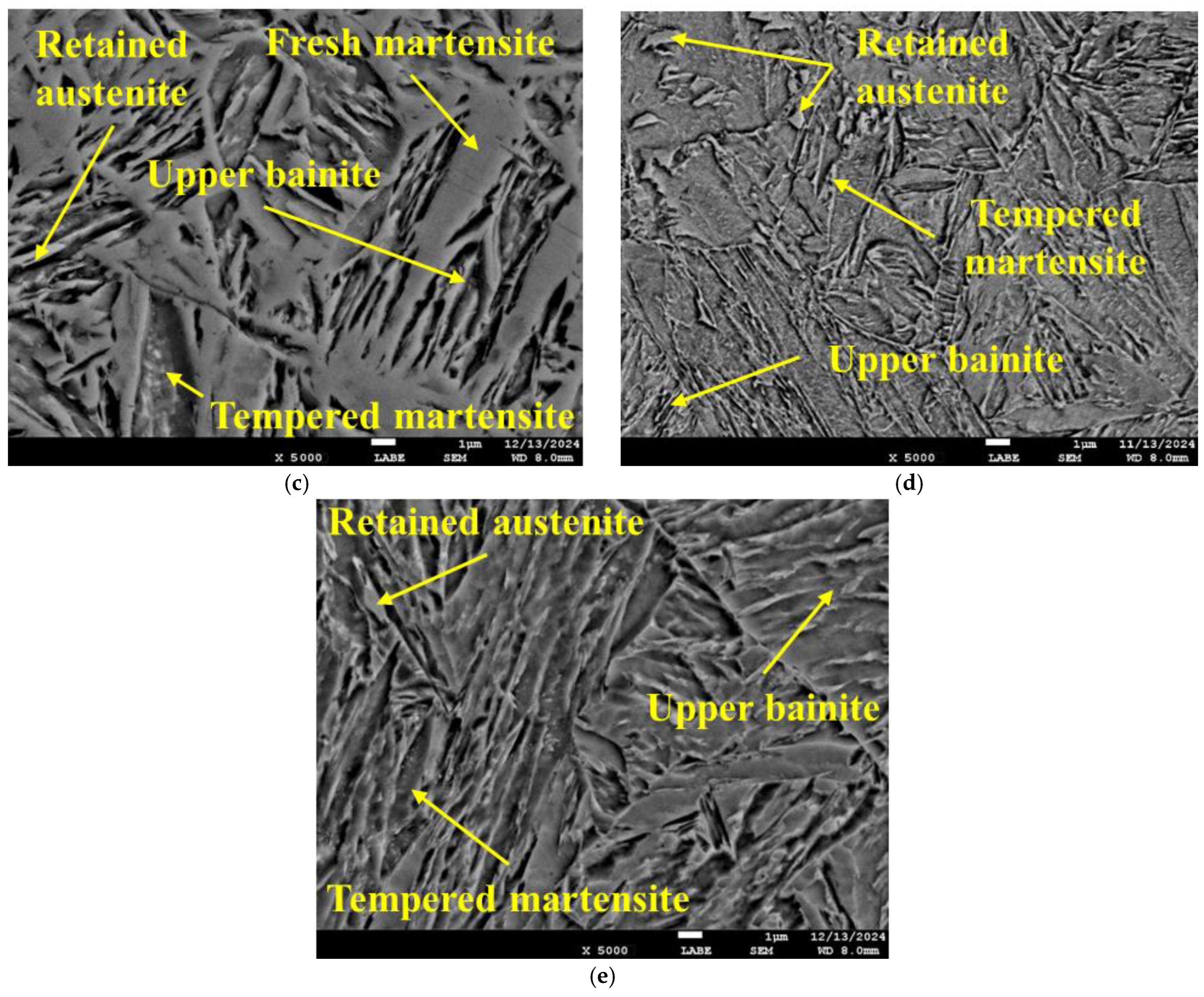
Figure 3 displays the SEM micrographs of the heat-treated experimental Mn steels, where 3% Nital was used as the etchant. The microstructure of the quenched Mn-Q sample (without tempering) was almost pure martensitic, composed of large laths, which are typical for steels with a carbon content lower than 0.6 wt.s% and with a very small amount of ferrite (Figure 3a). The microstructure of the Mn-HR 500 °C sample, which only underwent the hot rolling process (Figure 3b), consisted of a combination of martensite, α-ferrite (body-centered cubic phase), upper bainite (carbide-free), and retained austenite. The microstructure of the samples, which were subjected to the Q&P process at different temperatures (Figure 3c–e), was a mixture of tempered martensite, upper bainite, and retained austenite. The stabilizing effect of retained austenite is influenced by carbon and manganese segregation at phase interfaces, which contributes to heterogeneous deformation behavior depending on local microstructural arrangement [23].
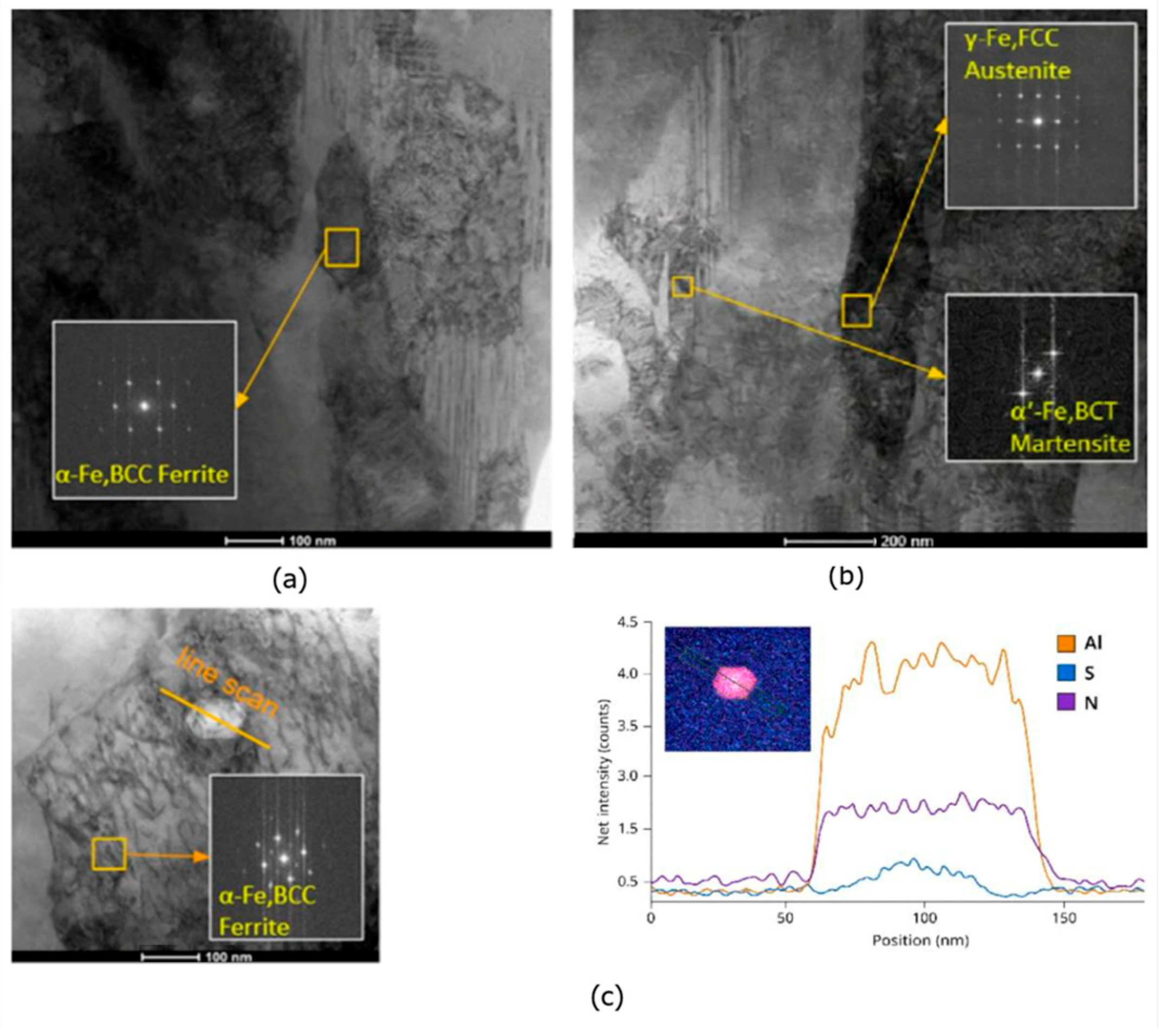
STEM-based microstructural and crystallographic analyses were performed on the Mn-Q and Mn-Q&P samples treated at 500 °C to determine the phase constitution and local chemical heterogeneities at the nanoscale. Figure 4 presents representative STEM micrographs of the Mn-Q sample, revealing a multiphase microstructure composed of body-centered cubic (BCC) ferrite, body-centered tetragonal (BCT) martensite, and face-centered cubic (FCC) retained austenite. Ferritic regions (Figure 4a,c) exhibit a typical BCC crystal structure, confirmed by fast Fourier transform (FFT) diffraction patterns, and are characterized by a lower defect density compared to the surrounding martensitic matrix. In contrast, regions containing martensite and retained austenite (Figure 4b) show the coexistence of BCT and FCC phases. The martensitic areas display a high density of lattice defects resulting from the diffusionless transformation during rapid quenching, whereas retained austenite is present in a finely dispersed morphology, indicating partial stabilization during cooling. In addition to the matrix phases, isolated nanoscale particles enriched in Al, N, and S were identified by STEM-EDS analysis (Figure 4c). These particles are embedded within the ferritic matrix and were identified as Al- and N-rich regions based on STEM-EDS analysis, suggesting their probable nature as AlN precipitates; however, their precise crystallographic identification was not confirmed within the scope of this study. A minor presence of sulfur was also detected, which may be related to segregation during solidification or subsequent thermomechanical processing. Such precipitates may locally affect dislocation mobility and contribute to microstructural heterogeneity at the nanoscale (Figure 4c). Although particles were observed only sporadically, they may locally influence mechanical behavior by acting as obstacles to dislocation motion, thereby contributing to localized strengthening. In addition, they may induce local stress concentrations, which can affect deformation behavior at the microscale. However, due to their low volume fraction and limited occurrence, their overall effect on the macroscopic mechanical and tribological properties is considered negligible.
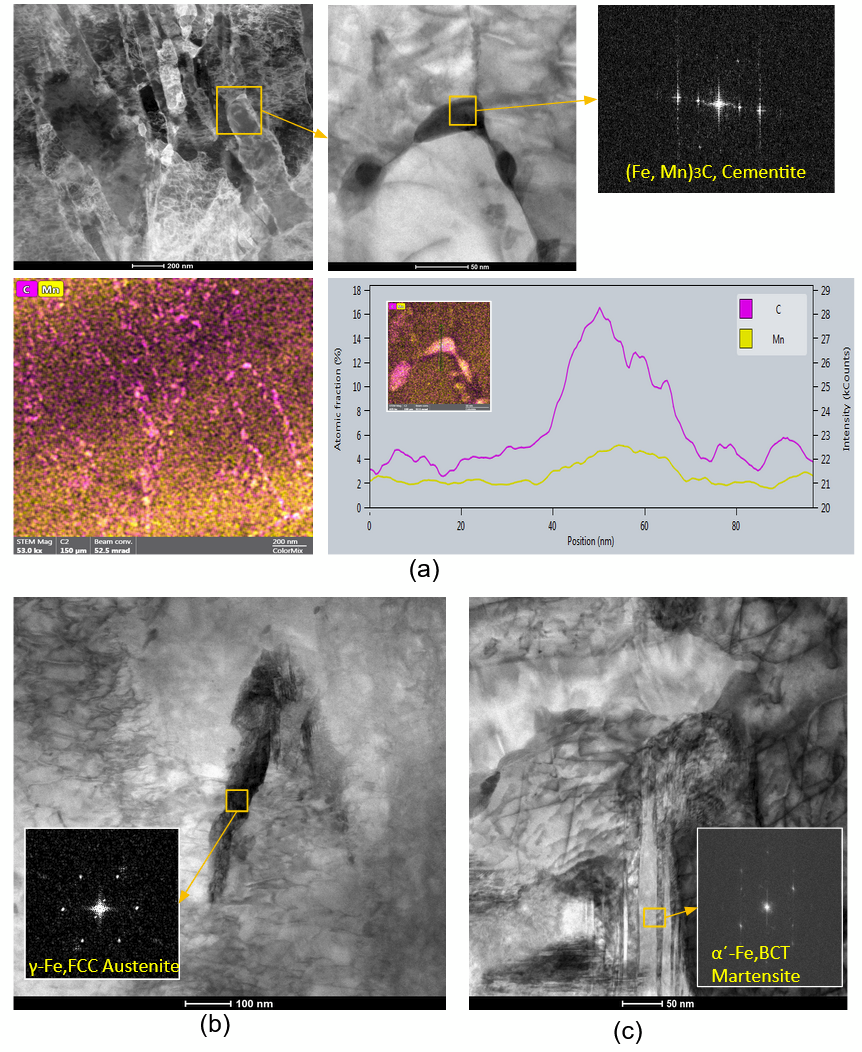
For the Mn-Q&P 500 °C sample, a detailed STEM-based phase analysis revealed the presence of several distinct microstructural constituents. As shown in Figure 5a, regions enriched in manganese and carbon were identified by EDS elemental mapping and corresponding line-scan analysis. Subsequent crystallographic evaluation using FFT diffraction patterns confirmed that these Mn- and C-rich regions correspond to M3C-type carbides. The cementite can precipitate or be a product of retained austenite decomposition at this higher partitioning temperature. In addition to carbide precipitation, the microstructure contains retained austenite, identified by its face-centered cubic (FCC) crystal structure (Figure 5b), and martensite exhibiting a body-centered tetragonal (BCT) lattice (Figure 5c). The martensitic regions display a pronounced twinned substructure, indicative of high, relatively internal stresses and rapid, diffusionless transformation during quenching, remaining in certain extent even after martensite tempering. The coexistence of tempered martensite, retained austenite, and carbide precipitates confirms the formation of a structurally heterogeneous microstructure, characteristic of Q&P-treated steels at higher partitioning temperatures.

3.2. X-Ray Retained Austenite Diffraction Analysis

The retained austenite volume fraction and its carbon content were evaluated using X-ray diffraction (XRD). The sample subjected to hot rolling exhibited both the highest retained austenite volume fraction and the highest carbon content in this phase. After quenching, the investigated steel contained 5.92 ± 0.35 vol.% of retained austenite, stabilized by a carbon content of 0.79 wt.% in this phase (Table 4). All Q&P heat-treated samples showed a higher carbon content in the retained austenite compared to the Mn-Q sample, indicating carbon partitioning from the martensitic matrix into the retained austenite. For the samples partitioned at 400 °C and 450 °C, the retained austenite fraction increased relative to the Mn-Q specimen, suggesting that the Q&P process enabled additional stabilization of retained austenite. At the highest quenching temperature of 500 °C, the retained austenite fraction dropped sharply due to its decomposition into ferrite and cementite, as confirmed by TEM observations (Figure 5a).

3.3. Nanoindentation Analysis

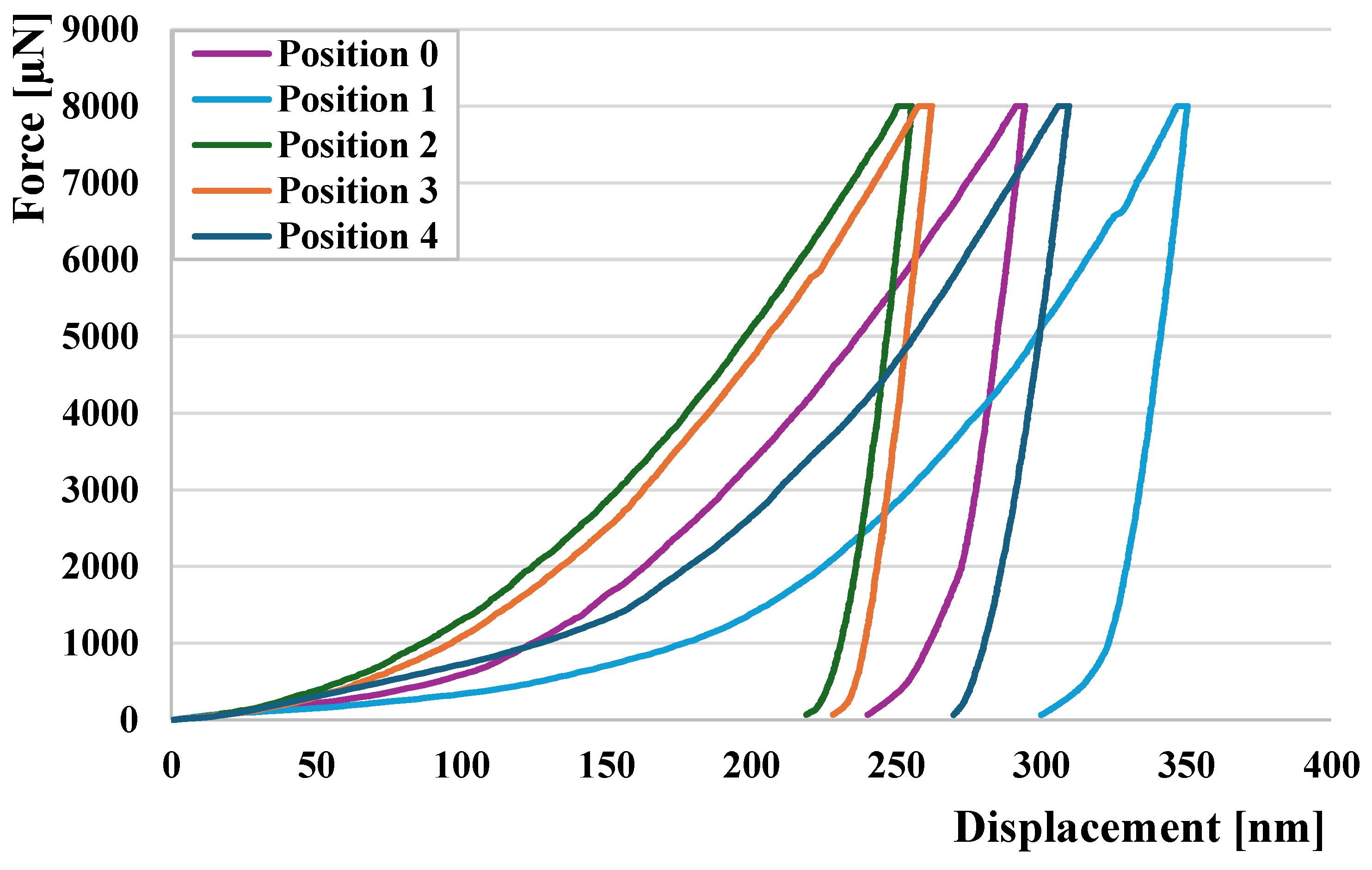
Figure 6 shows the shapes of five nanoindentation curves obtained from indents on an SPM scan of the experimental steel sample Mn-HR 500 °C. The marking of these curves in the graph is identical to the subsequent marking of the measurement positions in Figure 7a. From the graphic representation, we see that, in positions 0, 1, 3, and 4, the martensite phase was estimated, while in position 2, the probability of the ferrite phase was identified.
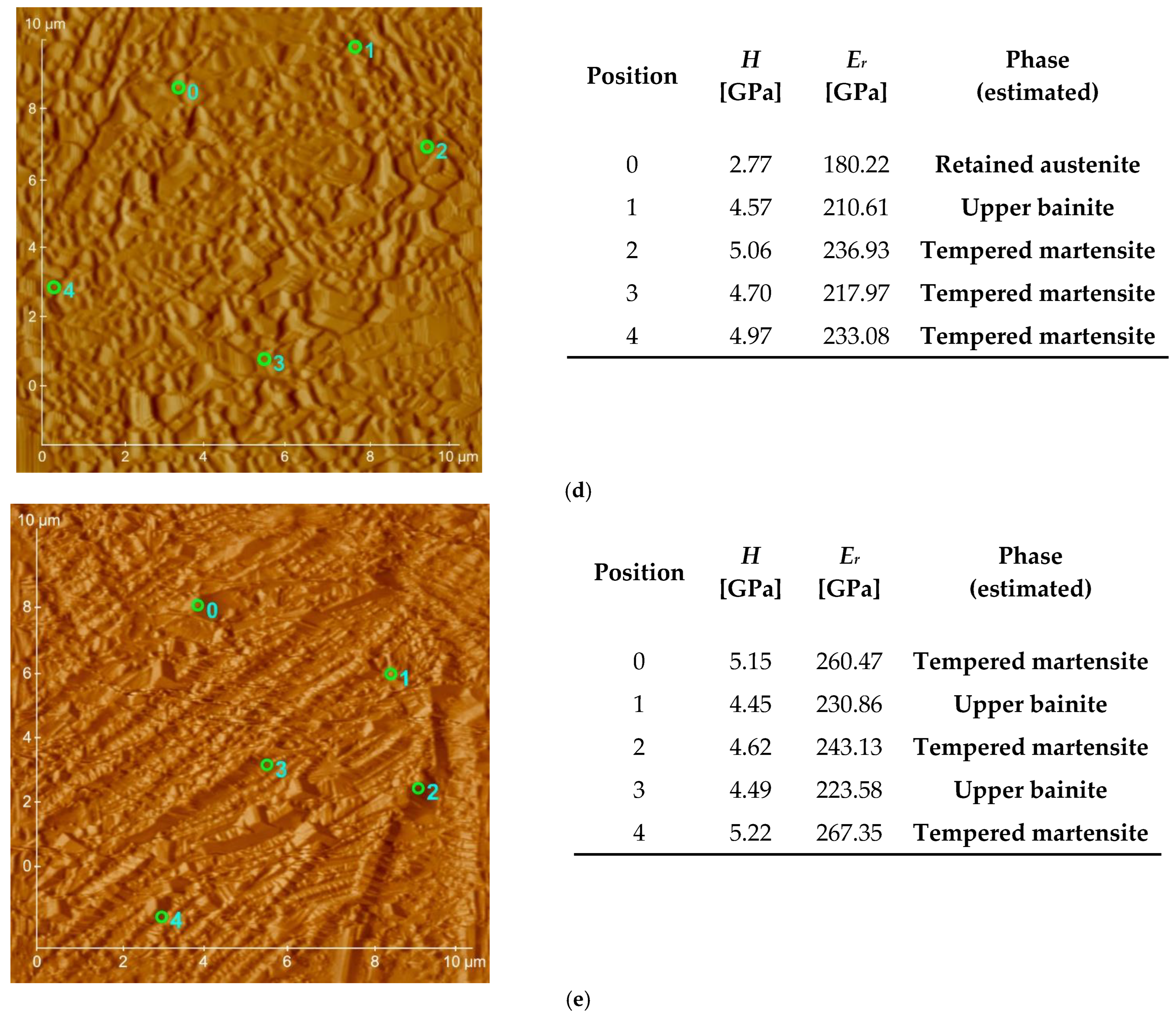
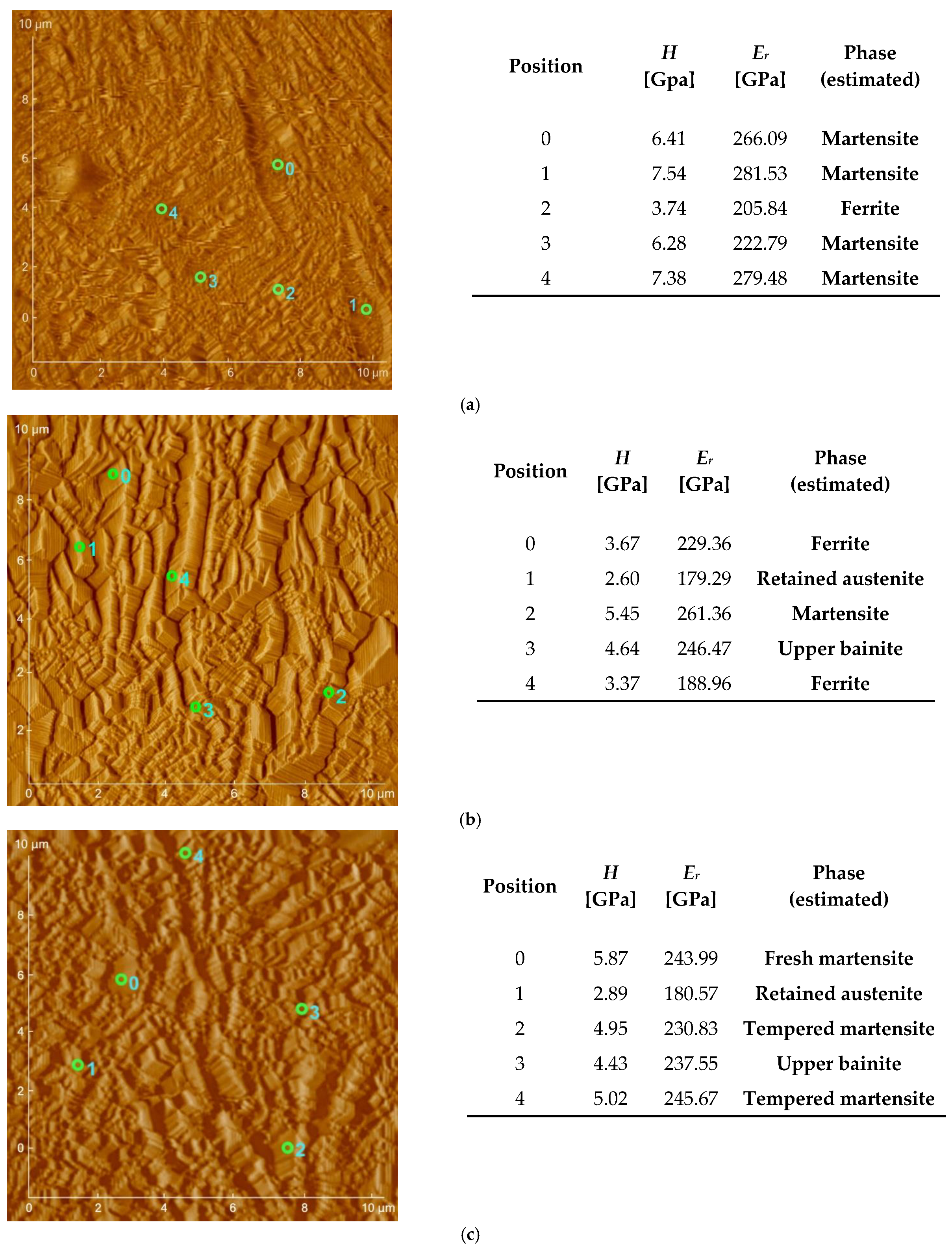
The measured positions of individual indents are depicted in the SPM (scanning probe microscopy) scans of the evaluated area of each experimental sample. These positions are shown in detail in Figure 7. They also contain the measured values of nanoindentation hardness H [GPa] and reduced Young’s modulus of elasticity Er [GPa] for each experimental sample in each individual position.
An overview of all measured microstructural compounds and their nanohardness and reduced Young’s modulus of elasticity is presented in detail in Table 5. In the case of multiple measured values for one microstructural compound, the average value of the local mechanical property is provided.
The main objective of the nanoindentation experiment was to investigate and quantify the nanohardness and reduced Young’s modulus of elasticity of the basic structural compounds of the investigated manganese steel in different heat treatment regimes (Mn-Q; Mn-HR 500 °C; Mn-Q&P 400 °C; Mn-Q&P 450 °C; Mn-Q&P 500 °C). The identification of individual microstructural compounds was performed not only on the basis of the values of local mechanical properties but also using microstructural analysis using SEM (Figure 3). The results of the nanoindentation analysis provided a detailed picture of local variations in hardness and elasticity, which correspond to microstructural components after different heat treatments. It was confirmed that the respective microstructural compounds present and their local mechanical properties correspond to the applied heat treatment. The highest hardness was achieved in martensite (H = 6.90 GPa) during continuous cooling at a rate of 10 °C.s−1 (Mn-Q). The lowest hardness was achieved by retained austenite (H = 2.60 ÷ 2.79 GPa). At higher partitioning temperatures (450 °C and 500 °C), fresh martensite was not observed, and the tempered martensite/bainitic structure predominated. Fresh martensite was only observed at Q&P 400 °C, while it has a noticeably higher hardness (H = 5.87 GPa) than all other microstructural compounds, including tempered martensite (H = 4.91 ÷ 5.00 GPa).

3.4. Analysis of Surface Roughness and Hardness

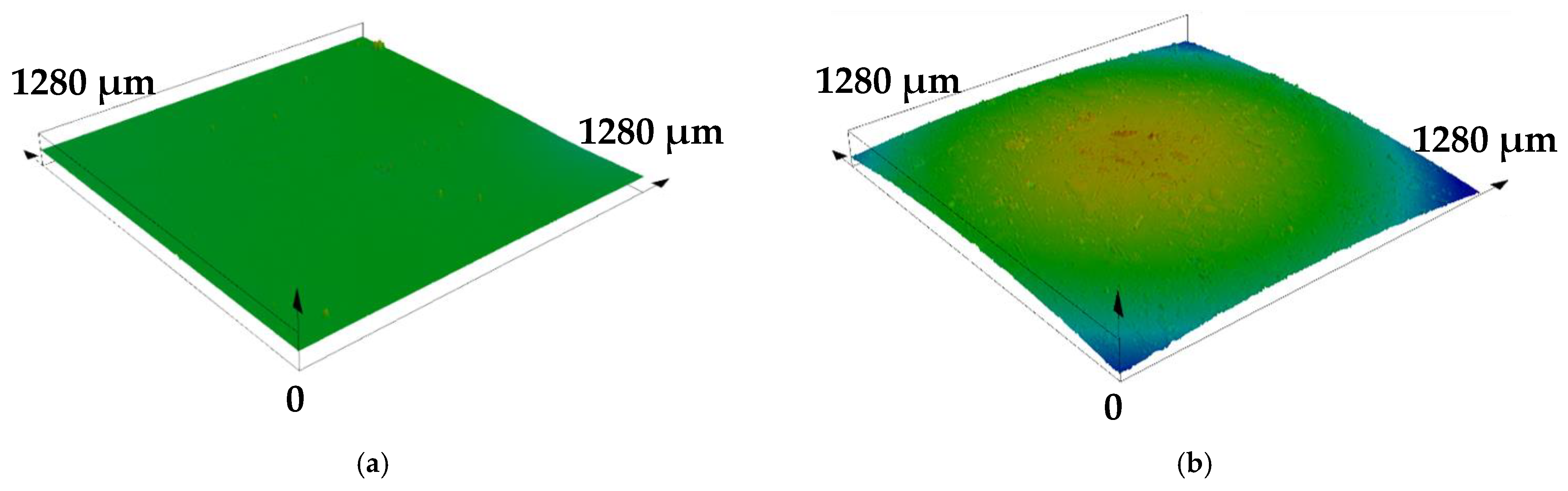
As a representative example to show the initial surface texture, the Mn-Q sample was selected, which is shown in Figure 8a. The value of the resulting roughness before the friction process, which was obtained by averaging all measured values from five locations of each experimental sample, was Sa = 0.01 ± 0.003 µm. The roughness of the G40 material thrust ball was also measured, which reached the value Sa = 0.31 ± 0.03 µm (Figure 8b). These low surface roughness values of Mn steel samples were due to the production of samples that underwent a classic metallographic sample preparation process that included grinding using sandpapers of 200, 400, 600, 800 and 1200 grit (crossing grinding directions from sandpaper to sandpaper), and the samples were polished with 9, 3, 1 μm for 10 min diamond slurry until they reached the final surface roughness. Since the thrust material also achieved low Sa values, the input roughness values of the G40 steel ball did not have a significant impact on the results.
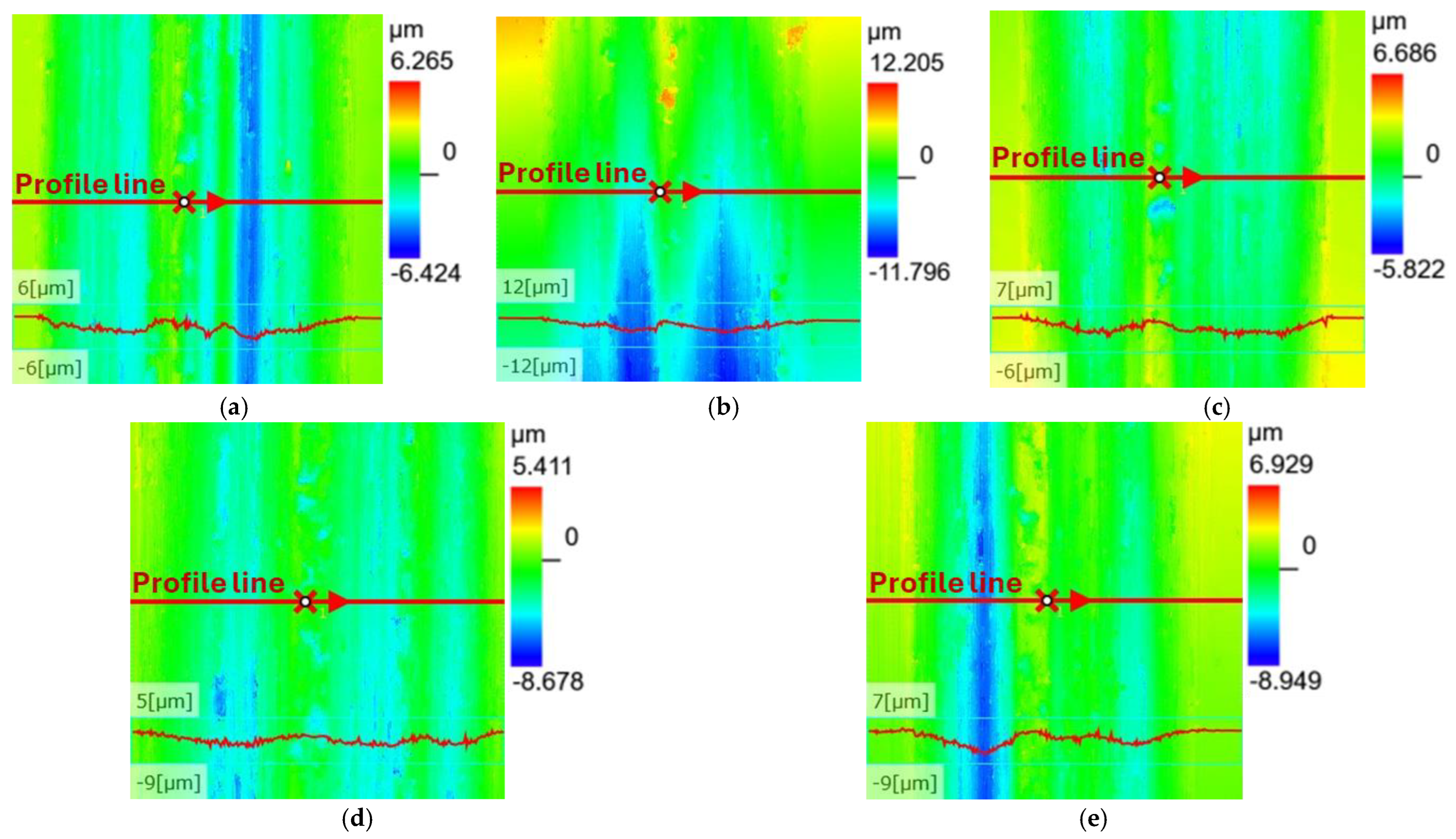
Figure 9 shows the roughness values of the friction grooves that were formed after the tribological test, depending on the type of heat-treated experimental samples. The roughness measurement was performed over the entire width of the friction groove, while the figures show 2D profiles of each groove.
Each profile shows a characteristic shape, which consists of two worn valleys of different depths. These differences are caused by a combination of mechanical and tribochemical wear mechanisms. The colors in the figures show the groove depth, with red and orange representing higher parts of the surface, while blue areas indicate the depth of wear. A detailed evaluation of these roughnesses indicates that the depth and nature of the grooves vary depending on the respective microstructure of the material that was annealed by different heat treatments. This difference plays an important role in evaluating the tribological properties of lean medium Mn steels.
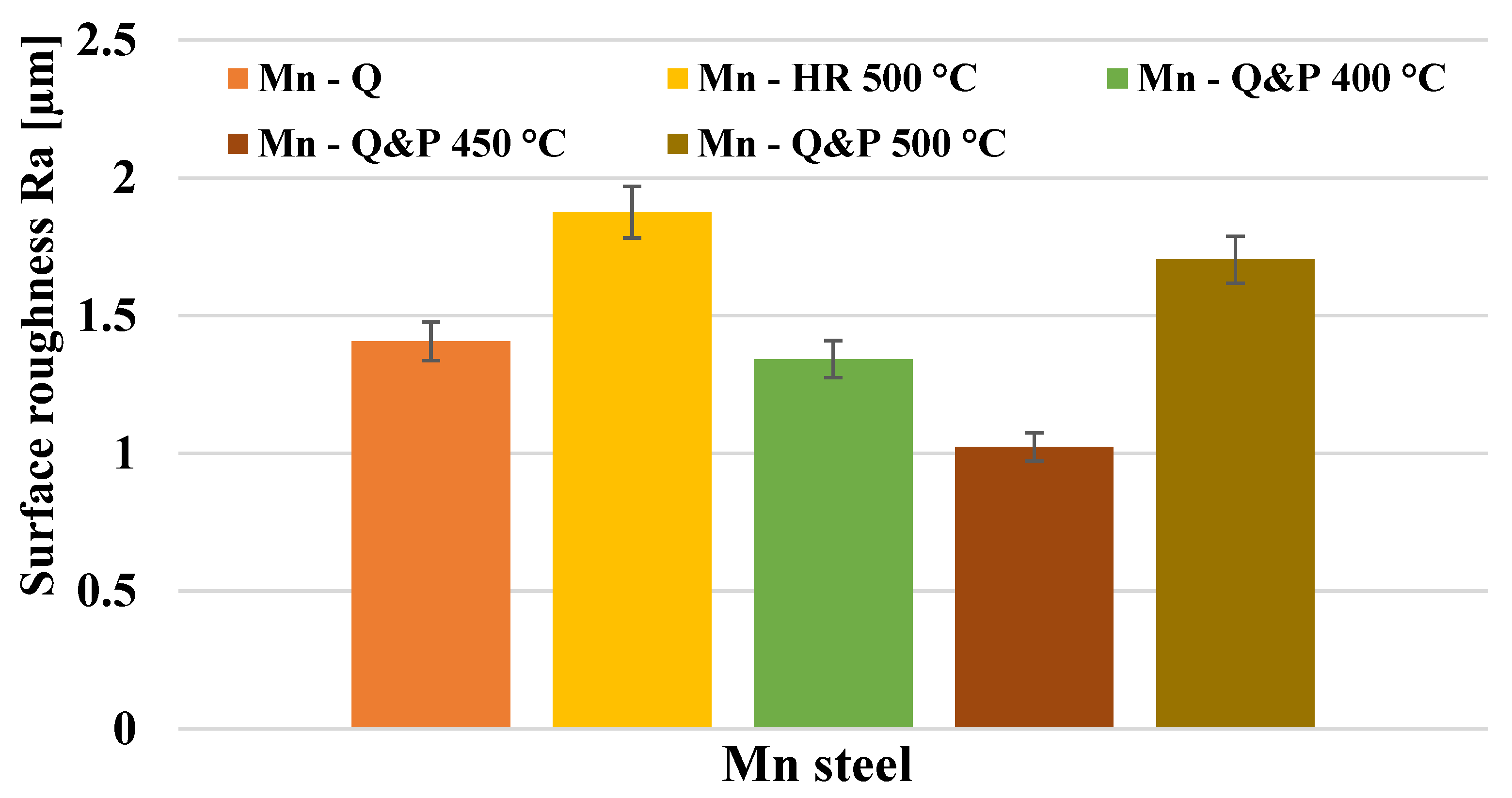
A comparison of the resulting roughness values Ra of the formed grooves is shown in Figure 10. It is clear from the results that the highest roughness value Ra was measured on the Mn-HR 500 °C sample, which reached a value of Ra = 1.876 µm. This high roughness can be caused by a combination of the microstructure created by the hot rolling process and the increased surface wear during tribological testing. On the contrary, the lowest friction groove roughness value was achieved for the lean medium Mn steel-Q&P 450 °C sample, with its Ra value being only 1.023 µm. This low roughness indicates that the Q&P process at a lower temperature provides a microstructure that is more resistant to mechanical wear and leads to a smoother surface after tribological testing. The differences in the roughness values Ra indicate a significant influence of the heat treatment process on the surface properties. A detailed explanation of these differences will be provided in the section of the article that evaluates the wear mechanisms and their impact on the surface changing characteristics. These differences are important for understanding the tribological behavior of lean medium Mn steels and their suitability for specific applications.
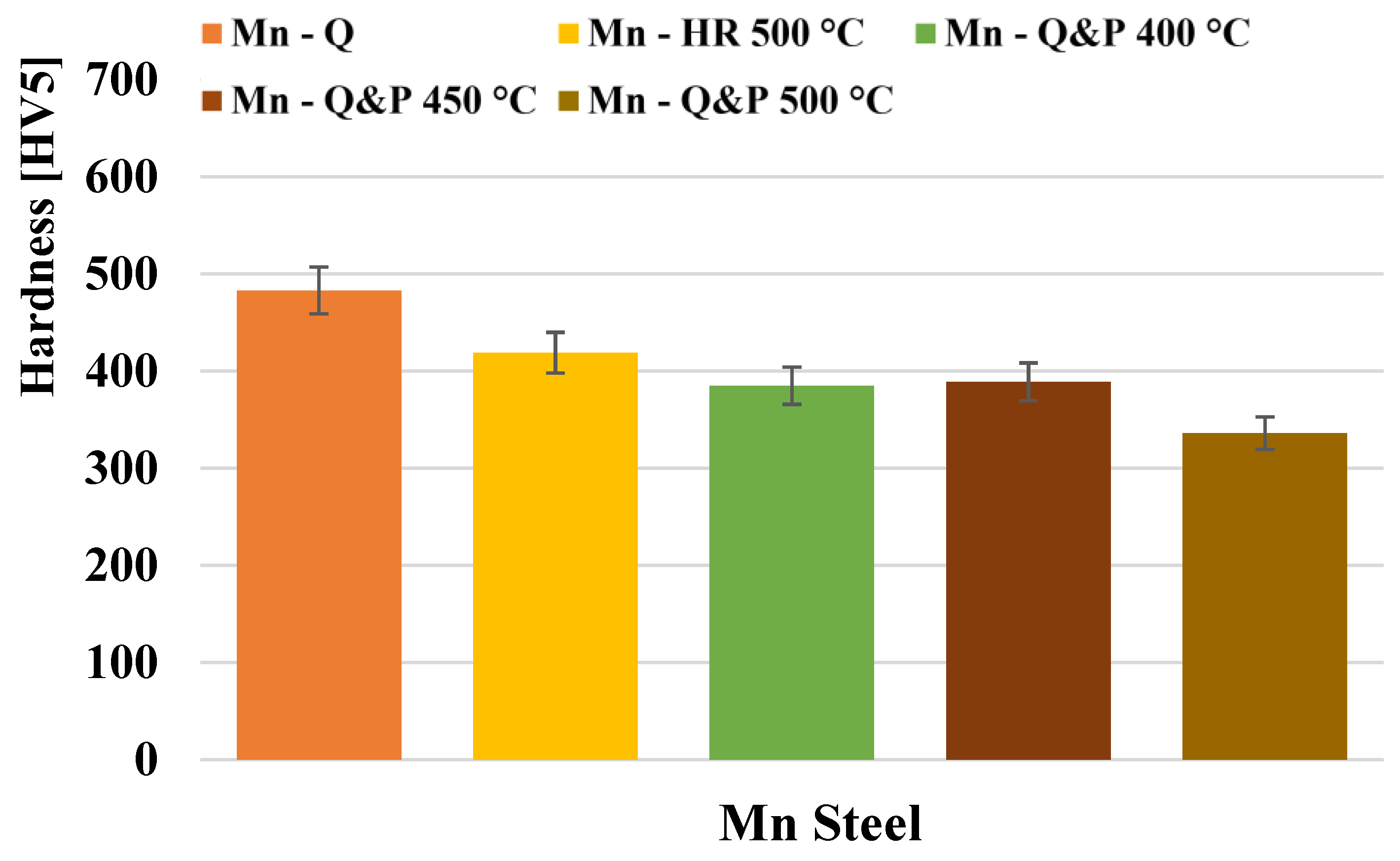
The hardness of the experimental steels is shown in Figure 11. In addition to hardness measurements. The Mn-Q sample with a purely martensitic structure reached the highest hardness of 483 HV5. The second Mn-HR sample at 500 °C reached a hardness of 419 HV5. When comparing these two samples, we can conclude that the hot rolling process affects the formation of predominantly upper bainite-carbide-free microstructure with a proportion of ferrite, which shows slightly lower hardness values than the classical martensitic structure. The other three samples that underwent the Q&P process showed lower hardness values than 400 HV5. With a gradual increase in the Q&P temperature, almost the same hardness values are observed for the Q&P 400 and 450 °C samples, with a subsequent decrease in the last Q&P 500 °C sample. The trends in hardness changes correspond to the results of nanoindentation analysis. It is also necessary to state that all samples showed lower hardness values than the G40 pressure ball, which had a value of 710 HV5. The selected material G40 will act as a friction wedge that will resist wear to a greater extent than the experimental steels. This is the main condition in the design of the friction pair measurement, because with the opposite ratio of hardness values, there would be no wear of the experimental material under study but the pressure friction tool would experience significant wear, which was not the subject of this experimental investigation.

3.5. Coefficient of Friction and Wear

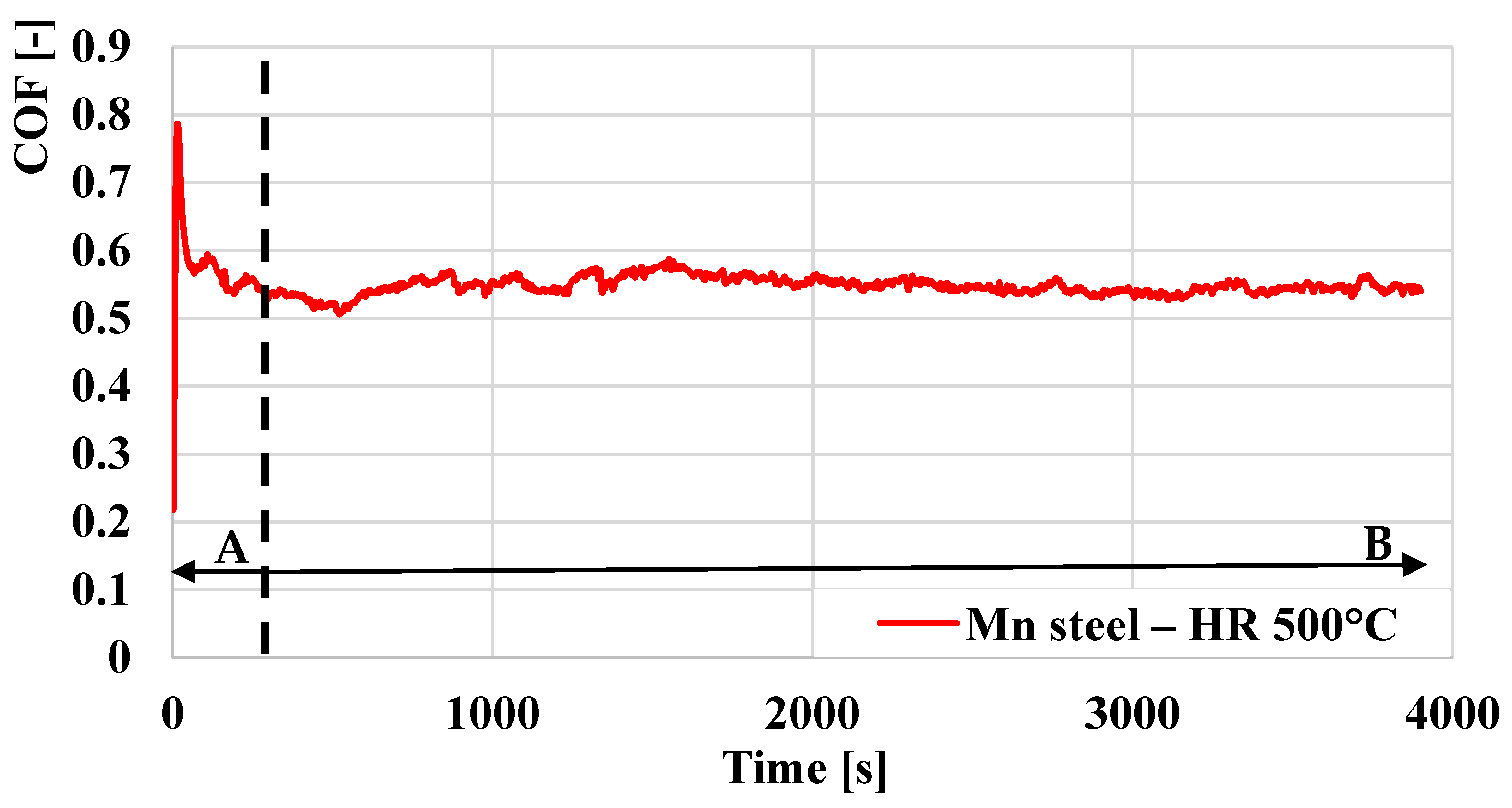
All COF curves showed a similar course, while the Mn-HR 500 °C sample was chosen for illustration, as shown in Figure 12. The COF curve in this figure can be divided into two main areas. Area A in the figure represents the initial phase of the measurement, which captures the beginning of the test. In this phase, there is a sharp increase in COF up to a value of 0.77. This phenomenon is typical for the initial contact between the ball and the flat surface of lean medium Mn steel. The surface at this stage does not contain a stable contact layer yet, which causes increased friction due to the presence of surface irregularities. A significant increase in COF can also be caused by surface deformation, sudden wear, or removal of oxide layers or other inhomogeneities that were originally present on the surface. Although this phase lasts only a short time, it significantly affects the tribological properties of the material. Region B represents the stabilization phase of the friction coefficient, where the COF stabilizes at a value of around 0.55. After the initial friction phase (region A), the surface is smoothened, a stable tribofilm layer forms, and the contact conditions between the ball and the steel sample surface stabilize. In this phase, friction occurs evenly, with COF values oscillating around a constant level. This stable state is typical for materials that have undergone initial wear and have reached an equilibrium friction regime, in which the balance between surface wear and the formation of protective layers is maintained. This two-phase COF course clearly illustrates how the initial contact conditions and subsequent wear processes affect the tribological properties of the material under study.
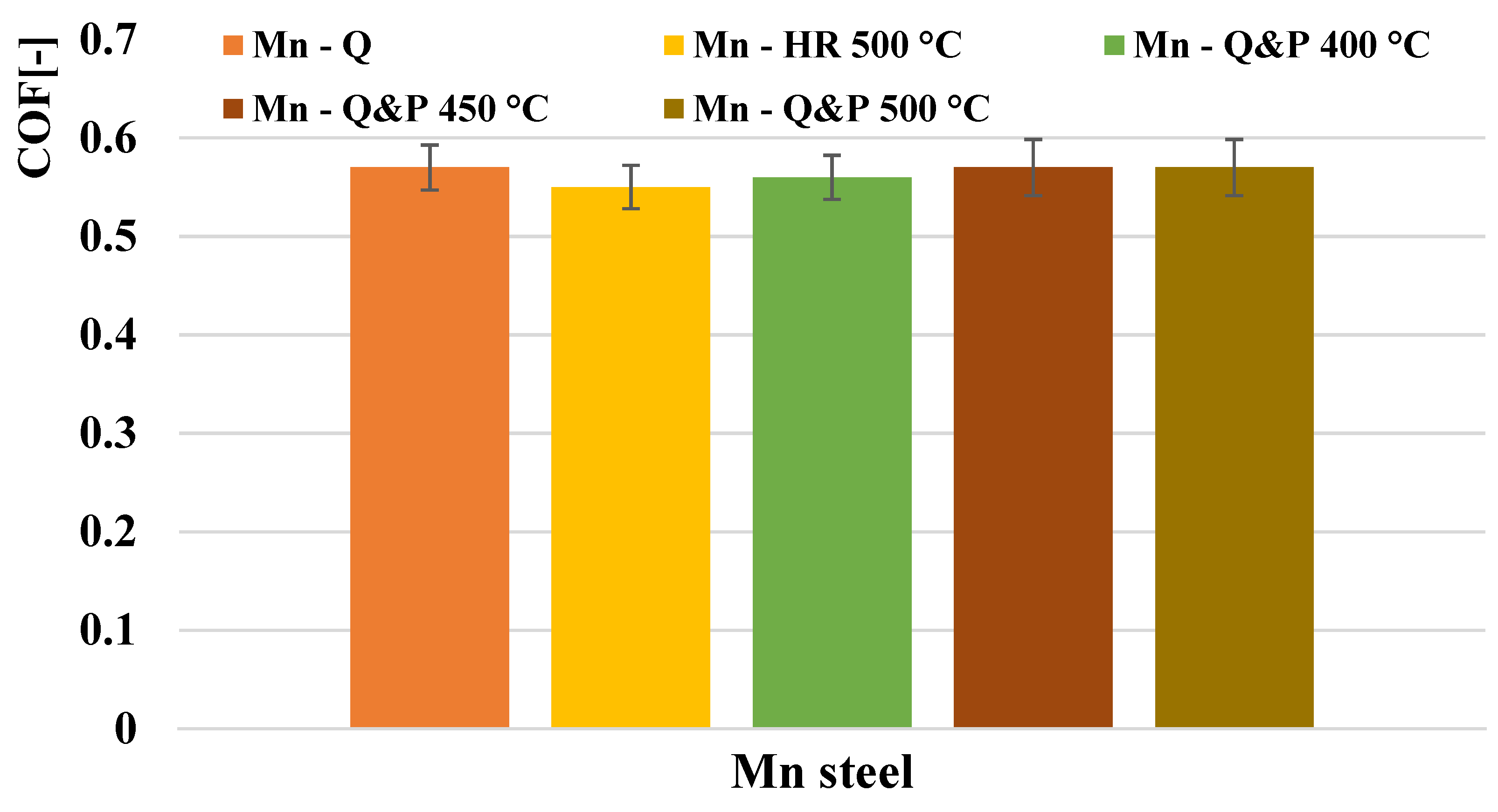
All variants of the experimental Mn steel samples show very similar COF values ranging from 0.55 to 0.57, as shown in Figure 13. Although this confirms the experimental stability of the COF under dry sliding conditions, recent studies [25] have shown that assuming a constant friction coefficient in simulations—particularly during forming processes—may lead to significant inaccuracies in springback prediction. This negligible difference indicates that variations in heat treatment have only a minimal impact on the tribological properties of the materials. Regardless of the heat treatment process used (HR, quenching, or Q&P at different partitioning temperatures), all samples achieve stable COF values. This result indicates that lean medium Mn steel maintains consistent tribological properties without significant deviations, which makes it a material with predictable behavior under different heat treatment regimes. Similar conclusions were drawn in studies of high-strength martensitic wear-resistant steels produced by on-line quenching, where the coefficient of friction remained relatively stable across variable loads yet showed sensitivity trends depending more on contact pressure than on hardness [26]. In general, it can be stated that lean medium Mn steel has a stable and only slightly changing coefficient of friction, which emphasizes its suitability for applications where reliable and homogeneous tribological response is required.
Although the coefficient of friction (COF) values remained within a relatively narrow range, slight variations can be linked to microstructural characteristics and oxidation processes during sliding. Samples with a more heterogeneous microstructure, such as Mn–HR 500 °C, exhibited a higher contribution of oxidative wear. The formation of oxide layers on the contact surface may act as a temporary solid lubricant, leading to a slight reduction in COF. In contrast, Q&P-treated samples showed more stable COF behavior, which can be associated with a more homogeneous microstructure.
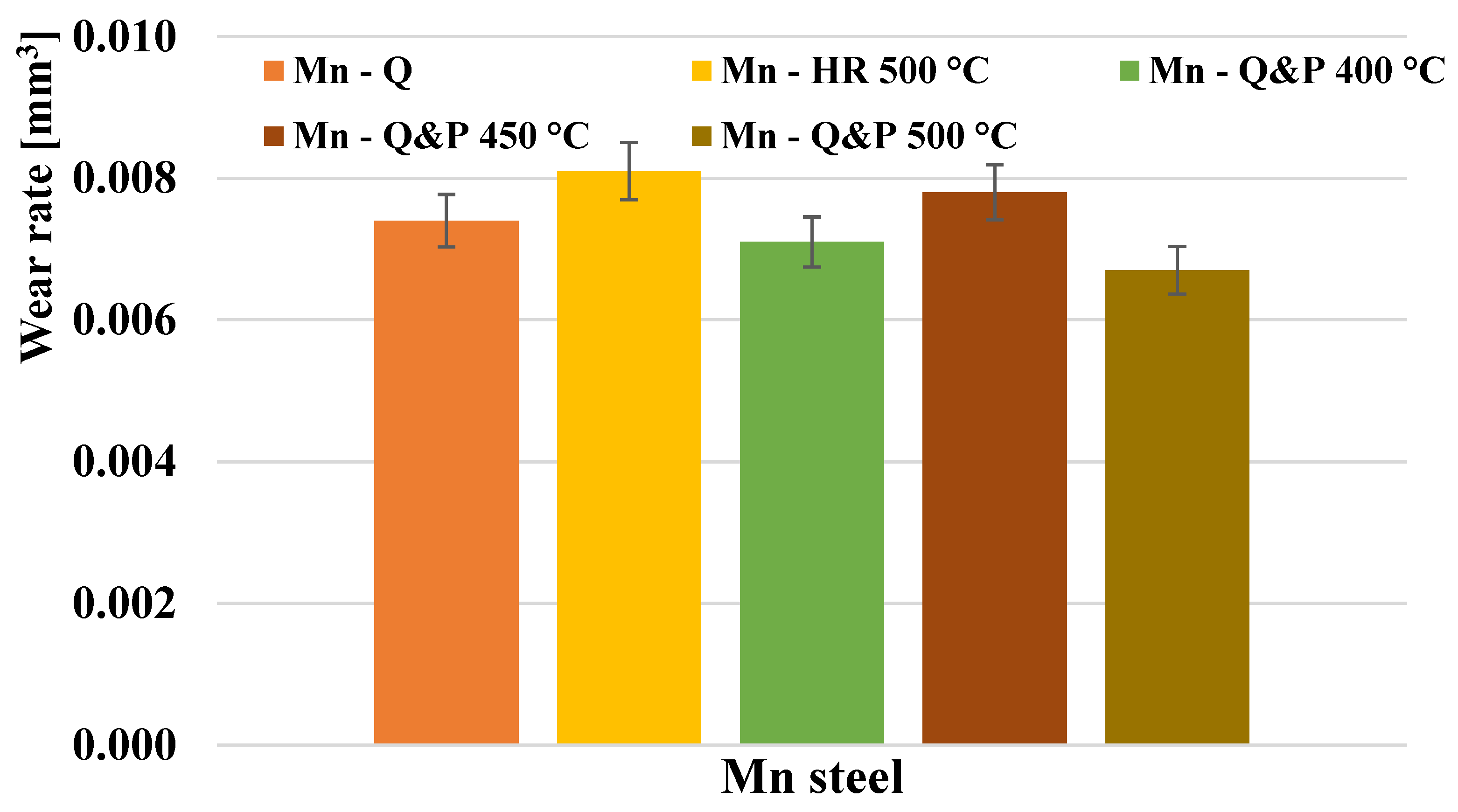
The wear was evaluated at three locations of each friction groove, at a distance of 2, 3 and 4 mm from the beginning of the groove. A comparison of the total wear of all samples is shown in Figure 14, where we can notice that the lowest wear was achieved by the Mn-Q&P 500 °C sample and where a wear rate of 0.0067 mm3 was achieved. In contrast, the Mn-HR 500 °C sample showed the highest wear rate of 0.0081 mm3. The reason is the heterogeneous structure of the material, which consists not only of martensite but also of softer structures such as upper bainite and ferrite. Similar conclusions were reported in previous studies comparing Q&P and conventional Mn steels, where Q&P steels exhibited significantly better wear resistance due to their hard martensitic structure, despite Mn steels showing higher toughness under mechanical loading conditions [27]. Overall, it can be stated that the wear rate difference is almost ~18% between these two samples, in favor of the last sample: Mn steel-Q&P 500 °C. In particular, the superior performance can be attributed to the higher microstructural homogeneity of the tempered martensitic–bainitic structure, which reduces local stress concentrations and limits uneven material removal during sliding. In contrast, the presence of softer phases, such as ferrite, promotes preferential wear and surface degradation. Although the Q&P 500 °C condition exhibits the lowest hardness and the lowest retained austenite fraction, it shows the best wear resistance. This indicates that the wear behaviour is not governed solely by bulk hardness or RA content but rather by microstructural homogeneity, tempered martensite stability, and subsurface deformation mechanisms.
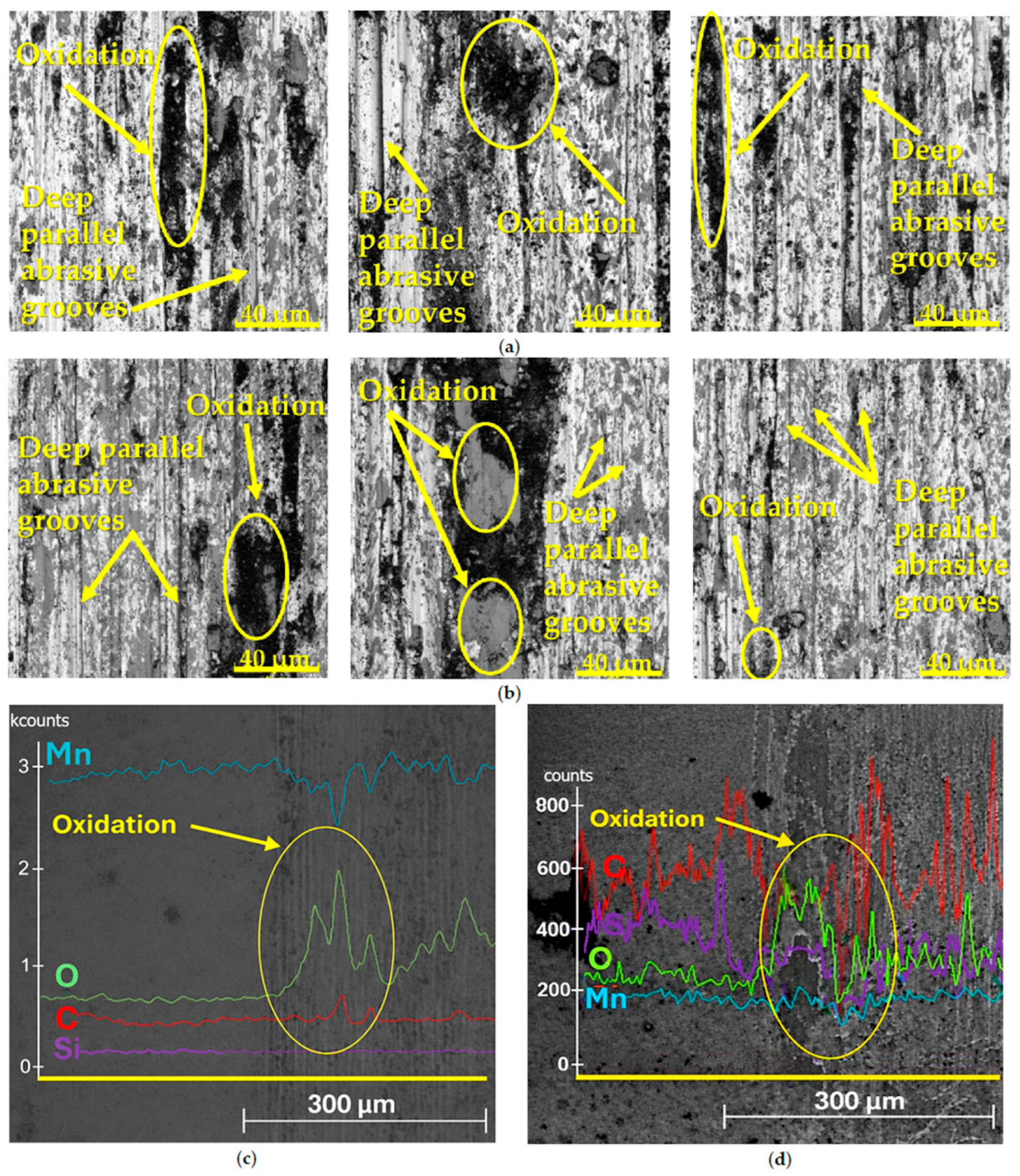
In Figure 15a,b, we can observe the selected surface wear of the Mn-HR and Mn-Q&P 500 °C material samples. These two samples were selected because of the largest difference in wear values. The images represent selected areas of the widths of the friction grooves. The left images represent the left sides of the formed grooves, the middle images represent the middle of the formed grooves, and the right images represent the areas of the right sides of the formed friction grooves, respectively. In these images, we can observe deep parallel grooves, which are a manifestation of adhesive wear. Dark bands (areas) are also visible on all surfaces, which represent oxidative wear of the surface. It has also been reported that retained austenite enriched with interstitial carbon exhibits increased corrosion and dissolution resistance, which can act as a passive barrier against surface degradation during both mechanical and electrochemical wear, particularly in aggressive environments [28].
The Mn-HR 500 °C sample (Figure 15a), compared to the Mn-Q&P 500 °C samples, showed a higher percentage of oxidative wear, which also affected the slightly lower COF values for the given Mn-HR 500 °C material. The Mn-Q&P 500 °C sample (Figure 15b) in the central part of the friction surface showed the occurrence of large gray areas, which indicate that the material achieved an increased level of wear resistance.
To confirm the formation of oxides on the surface of the friction grooves, the content of O and other selected elements Mn, C, and Si was evaluated using EDX linear scanning of elements. As we can see in Figure 15c,d, an increase in the oxygen value in the places of the worn grooves at the expense of a decrease in Mn, which is also confirmed by Kadowaki et al. [29]. Figure 15c shows wider areas of oxygen occurrence compared to Figure 15d. As already mentioned in the Mn-Q&P 500 °C sample (Figure 15d), mainly larger, solid islands were formed, which showed a higher degree of consolidation due to the preservation of their elevated position compared to the surrounding surface [30].
The simultaneous occurrence of abrasive and oxidative wear is supported by both morphological and chemical evidence. SEM images of the worn grooves (Figure 15) show deep and parallel scratches typical of abrasive action, especially in the Mn-Q and Mn-HR samples. At the same time, EDX linear analysis (Figure 15c,d) confirms increased oxygen contents in the worn regions, indicating the formation of local oxide layers during the tribological test. The dark areas observed in the SEM images correspond to oxide films, which temporarily reduce friction, but their subsequent detachment leads to increased overall wear. Quantitative differences in oxygen content and variations in groove morphology between the individual samples suggest a higher proportion of oxidative wear in the Mn-HR 500 °C sample and a more pronounced dominance of the abrasive mechanism in the Mn-Q&P 500 °C sample.
From a mechanistic point of view, the wear process can be described as a combination of abrasive and oxidative wear. Abrasive wear represents the dominant mechanism and is characterized by the formation of deep, parallel grooves caused by hard asperities and wear debris during sliding. Oxidative wear acts as a secondary mechanism and is associated with the formation of oxide layers on the contact surface, as confirmed by EDX analysis showing increased oxygen content in worn regions. These oxide layers may temporarily reduce friction due to their lubricating effect. However, their subsequent fragmentation and detachment contribute to surface degradation and increase the overall wear rate. The interaction between these mechanisms indicates that the wear behavior of lean medium Mn steels is governed not only by mechanical abrasion but also by tribochemical processes occurring at the contact interface.

4. Conclusions

This study compared the tribological performance of medium manganese steel through five differently heat-treated samples tested under dry reciprocating contact with a G40 steel ball at room temperature. The tests, conducted under a constant 10 N load for 1000 cycles, served as the basis for drawing key conclusions on the wear and friction behavior of this steel grade:
  • Nanoindentation and SEM analyses confirmed the expected phase composition after heat treatments. Q&P treatments at 450 °C and 500 °C proved suboptimal, as no fresh martensite formed—an essential phase for achieving the lowest wear rate.
  • The highest value (483 HV5) was recorded for the Mn-Q sample with a fully martensitic microstructure. In contrast, the Mn-Q&P 500 °C sample showed a 30% reduction (336 HV5) due to martensite tempering.
  • The hot rolling process of the Mn-HR 500 °C sample resulted in the highest friction groove roughness (Sa = 1.876 µm) due to the resulting heterogeneous material structure.
  • Heat treatment had no significant effect on the COF, which remained within a narrow range of 0.55–0.57 across all samples, indicating stable friction behavior regardless of the applied thermal process.
  • Despite the lower overall hardness and the lowest amount of retained austenite, the Mn-Q&P 500 °C sample exhibited the lowest wear rate, with approximately 18% less wear compared to the Mn-HR 500 °C sample. This improvement highlights the effectiveness of the Q&P process, likely due to the absence of a soft ferritic phase in the microstructure.
  • Increased oxidative wear slightly reduced the COF due to oxide formation acting as a lubricating layer. However, oxide peeling intensified surface damage, leading to greater overall wear—highlighting the complex trade-off between friction reduction and material durability.
  • All samples exhibited a similar wear mechanism, dominated by abrasion with deep parallel grooves, accompanied by a secondary contribution of oxidative wear. This suggests a combined wear mode, where abrasion prevails, but oxidation also contributes to material degradation.
Based on the results of this study, lean medium manganese AHSS demonstrates promising wear resistance and stable frictional behavior, making it a suitable candidate for tribological applications. However, further research is needed to fully understand its performance under varying conditions, particularly focusing on the effects of partitioning time and different Q&P temperature regimes.

Author Contributions

Conceptualization, J.E., M.K. (Michal Krbata), and M.K. (Marcel Kohutiar); methodology, C.C., D.K. and B.T.; software, P.K. and N.B.; validation, S.N. and J.E.; formal analysis, M.K. (Michal Krbata) M.K. (Marcel Kohutiar); investigation, C.C. and D.K.; resources, B.T. and P.K.; data curation, N.B.; writing—original draft preparation, M.K. (Michal Krbata), S.N. and M.K. (Marcel Kohutiar); writing—review and editing, J.E.; visualization, M.K. (Marcel Kohutiar) and D.K.; supervision, M.K. (Michal Krbata) and B.T.; project administration, P.K., N.B. and C.C.; funding acquisition, S.N. All authors have read and agreed to the published version of the manuscript.

Funding

This research received no external funding.

Data Availability Statement

The original contributions presented in this study are included in the article. Further inquiries can be directed to the corresponding author.

Acknowledgments

This publication was funded by the European Union NextGenerationEU from the financial resources of the Recovery and Resilience Plan within the Project: Study of Q&P parameters of heat treatment of medium-manganese AHSS steels to increase wear resistance (code of the project: MVP02_2024; call for proposal: early stage grants; code of the Call: 09I03-03-V05).

Conflicts of Interest

Authors Daniel Krizan and Christian Commenda were employed by the company Business Unit Coil. voestalpine Steel Division GmbH. Author Bohdan Trembach was employed by the company Private Joint Stock Company 8 “Novokramatorsky Mashinostroitelny Zavod”. The remaining authors declare that the research was conducted in the absence of any commercial or financial relationships that could be construed as a potential conflict of interest.

References

  1. Blankart, C.; Wesselmecking, S.; Krupp, U. Influence of quenching and partitioning parameters on phase transformations and mechanical properties of medium manganese steel for press-hardening application. Metals 2021, 11, 1879. [Google Scholar] [CrossRef]
  2. Kaar, S.; Krizan, D.; Schneider, R.; Béal, C.; Sommitsch, C. Effect of manganese on the structure-properties relationship of cold rolled AHSS treated by a quenching and partitioning process. Metals 2019, 9, 1122. [Google Scholar] [CrossRef]
  3. Krbata, M.; Krizan, D.; Eckert, M.; Kaar, S.; Dubec, A.; Ciger, R. Austenite decomposition of a lean medium Mn steel suitable for quenching and partitioning process: Comparison of CCT and DCCT diagram and their microstructural changes. Materials 2022, 15, 1753. [Google Scholar] [CrossRef] [PubMed]
  4. Yan, J.; Zhou, M.; Wu, H.; Liang, X.; Xing, Z.; Li, H.; Jiang, Z. A review of key factors affecting the wear performance of medium manganese steels. Metals 2023, 13, 1152. [Google Scholar] [CrossRef]
  5. Li, Z.; Wu, R.; Song, S.P.; Wang, Y.; Wu, T. Influence of changes in alloying elements distribution and retained Austenite (RA) on mechanical properties of high boron alloy during quenching and partitioning (Q&P) process. J. Mater. Res. Technol. 2022, 18, 4748–4761. [Google Scholar]
  6. Lu, J.; Yu, H.; Kang, P.; Duan, X.; Song, C. Study of microstructure, mechanical properties and impact-abrasive wear behavior of medium-carbon steel treated by quenching and partitioning (Q&P) process. Wear 2018, 414, 21–30. [Google Scholar]
  7. Niu, G.; Jin, D.; Wang, Y.; Gu, C.; Ju, B.; Ning, B.; Wu, H. Effect of retained austenite on impact-abrasion wear performance of high-strength wear-resistant steel prepared by dynamic partitioning process. Wear 2024, 538, 205200. [Google Scholar] [CrossRef]
  8. Yan, X.; Hu, J.; Wang, L.; Chai, Z.; Sun, W.; Xu, W. The coupled effect of thermal and mechanical stabilities of austenite on the wear resistance in a 0.2 C–5Mn-1.6 Si steel down to cryogenic temperatures. Wear 2021, 486, 204116. [Google Scholar] [CrossRef]
  9. Kim, D.K.; Kim, H.J.; Gong, S.; Shin, S.E.; Lee, S.J. A comparative study on the wear behavior of dual phase (DP) steel and quenching and partitioning (QP) steel. Tribol. Int. 2024, 194, 109445. [Google Scholar] [CrossRef]
  10. Yan, X.; Hu, J.; Zhang, X.; Xu, W. Obtaining superior low-temperature wear resistance in Q&P-processed medium Mn steel with a low initial hardness. Tribol. Int. 2022, 175, 107803. [Google Scholar]
  11. Wang, Q.; Wang, J. Investigation of wear property and strengthening mechanism of hot-rolled medium manganese steel on condition of slurry erosion wear. J. Tribol. 2023, 145, 011703. [Google Scholar] [CrossRef]
  12. Mohapatra, S.; Poojari, G.; Satpathy, B.; Das, S.; Das, K. A comprehensive study on the effect of annealing temperature on the tensile and impact behavior of automotive-grade medium manganese steel (Fe-6.22 Mn-0.18 C). J. Mater. Eng. Perform. 2024, 33, 5348–5363. [Google Scholar] [CrossRef]
  13. Masoumi, M.; Echeverri, E.A.A.; Tschiptschin, A.P.; Goldenstein, H. Improvement of wear resistance in a pearlitic rail steel via quenching and partitioning processing. Sci. Rep. 2019, 9, 7454. [Google Scholar] [CrossRef] [PubMed]
  14. Borasi, L. Investigation of the Effect of Different “Q&P” Parameters on the Mechanical Properties of AHSS. Master’s Thesis, Luleå University of Technology, Luleå, Sweden, 2018. [Google Scholar]
  15. Yan, X.; Hu, J.; Chai, Z.; Zhang, X.; Xu, W. Wear Conditions-Dependent Tribological Behavior in Q&P Medium-Mn Steels: The Role of TRIP Effect and Strain Hardening. Metall. Mater. Trans. A 2024, 55, 2127–2140. [Google Scholar]
  16. Song, W. Nano-Engineering of High Strength Steels; Springer: Berlin/Heidelberg, Germany, 2024; p. 194. [Google Scholar]
  17. Maissara, K. Investigation of Mechanical Properties and Microstructure of Steel-Wires. Master’s Thesis, University of Lorraine, Nancy, France, 2021; p. 90. [Google Scholar]
  18. Krbaťa, M.; Majerík, J.; Barényi, I.; Mikušová, I.; Kusmič, D. Mechanical and tribological features of the 90MnCrV8 steel after plasma nitriding. Manuf. Technol. 2019, 19, 238–242. [Google Scholar] [CrossRef]
  19. Studeny, Z.; Krbata, M.; Dobrocky, D.; Eckert, M.; Ciger, R.; Kohutiar, M.; Mikus, P. Analysis of Tribological Properties of Powdered Tool Steels M390 and M398 in Contact with Al2O3. Materials 2022, 15, 7562. [Google Scholar] [CrossRef]
  20. Krbata, M.; Ciger, R.; Kohutiar, M.; Eckert, M.; Barenyi, I.; Trembach, B.; Dubec, A.; Escherova, J.; Gavalec, M.; Beronská, N. Microstructural Changes and Determination of a Continuous Cooling Transformation (CCT) Diagram Using Dilatometric Analysis of M398 High-Alloy Tool Steel Produced by Microclean Powder Metallurgy. Materials 2023, 16, 4473. [Google Scholar] [CrossRef]
  21. ISO 6507:2018; Metallic Materials—Vickers Hardness Test—Part 1: Test Method. ISO: Geneve, Switzerland, 2018.
  22. Kohutiar, M.; Krbata, M.; Escherova, J.; Eckert, M.; Mikus, P.; Jus, M.; Polášek, M.; Janík, R.; Dubec, A. The Influence of the Geometry of Movement during the Friction Process on the Change in the Tribological Properties of 30CrNiMo8 Steel in Contact with a G40 Steel Ball. Materials 2023, 17, 127. [Google Scholar] [CrossRef]
  23. Kaar, S.; Krizan, D.; Schneider, R.; Sommitsch, C. On competing reactions and austenite stabilization: Advanced model for exact microstructural prediction in Q&P steels with elevated Mn-content. Materialia 2022, 26, 101584. [Google Scholar] [CrossRef]
  24. Van Dijk, N.H.; Butt, A.M.; Zhao, L.; Sietsma, J.; Offerman, S.E.; Wright, J.P.; Van Der Zwaag, S. Thermal stability of retained austenite in TRIP steels studied by synchrotron X-ray diffraction during cooling. Acta Mater. 2005, 53, 5439–5447. [Google Scholar] [CrossRef]
  25. Xue, J.; Guo, W.; Xia, M.; Tan, C.; Shi, J.; Zhang, Y.; Zhang, H. In-Situ Precipitation of Carbides Significantly Enhances the Hydrogen Embrittlement Resistance of Advanced High-Strength Steels Welded Joints. Corros. Sci. 2025, 245, 112697. [Google Scholar] [CrossRef]
  26. Durmaz, U.; Heibel, S.; Schweiker, T.; Merklein, M.; Berahmani, S.; Hol, J.; Naegele, P. Enhancement of Springback Prediction of AHSS Parts by Advanced Friction Modelling. In IOP Conference Series: Materials Science and Engineering; IOP Publishing: Bristol, UK, 2021; Volume 1157, p. 012033. [Google Scholar] [CrossRef]
  27. Wu, J.; Liu, M.; Sun, L.; Li, Y.; Dai, F.; Xu, G. Sliding wear behaviors of low alloy high strength martensite wear-resistant steels. Wear 2024, 558, 205573. [Google Scholar]
  28. Boukhris, R. Influence of Q&P Parameters on the Mechanical Properties and Wear Performance of AHSS Steels. Master’s Thesis, Luleå University of Technology, Luleå, Sweden, 2021. [Google Scholar]
  29. Kadowaki, M.; Muto, I.; Sugawara, Y.; Hara, N. Beneficial Role of Retained Austenite in Pitting Corrosion Resistance of Fe-C-Si-Mn Steel in Chloride Environments. Corros. Sci. 2022, 200, 110251. [Google Scholar] [CrossRef]
  30. Sezgin, C.T.; Hayat, F. The effects of boriding process on tribological properties and corrosive behavior of a novel high manganese steel. J. Mater. Process. Technol. 2022, 300, 117421. [Google Scholar] [CrossRef]
Figure 1. Sample heat treatment process Mn-HR 500 °C.
Metals 16 00362 g001
Figure 2. Scheme of heat treatment of samples: Mn-Q; Mn-Q&P 400 °C; Mn-Q&P 450 °C; Mn-Q&P 500 °C.
Metals 16 00362 g002
Figure 3. Microstructure of specimens obtained by SEM: (a) Mn-Q; (b) Mn-HR 500 °C; (c) Mn-Q&P 400 °C; (d) Mn-Q&P 450 °C; (e) Mn-Q&P 500 °C.
Metals 16 00362 g003aMetals 16 00362 g003b
Figure 4. STEM micrographs of different regions of the microstructure in the Mn-Q sample: (a) ferrite phase with corresponding FFT diffraction pattern; (b) austenite and martensite phases with FFT diffraction patterns; (c) AlN with a small track of S particle within the ferrite matrix, with corresponding FFT diffraction pattern and EDS line analysis.
Metals 16 00362 g004
Figure 5. STEM micrographs of different regions of the microstructure in the Q&P 500 °C sample: (a) bainitic region with EDS mapping and line-scan analysis revealing the cementite phase, confirmed by FFT diffraction; (b) retained austenite with corresponding FFT diffraction pattern; (c) twinned martensite region with FFT diffraction pattern.
Metals 16 00362 g005
Figure 6. Nanoindentation curves for Mn-HR 500 °C.
Metals 16 00362 g006
Figure 7. Locations of selected indents on SPM scans and local mechanical properties of the structure: (a) Mn-HR 500 °C; (b) Mn-Q; (c) Mn-Q&P 400 °C; (d) Mn-Q&P 450 °C; (e) Mn-Q&P 500 °C.
Metals 16 00362 g007aMetals 16 00362 g007b
Figure 8. Surface texture assessed using a confocal microscope: (a) Mn-Q—Sa = 0.01 µm; (b) G40 steel—Sa = 0.31 µm.
Metals 16 00362 g008
Figure 9. Comparison of roughness values: (a) Mn-Q; (b) Mn-HR 500 °C; (c) Mn-Q&P 400 °C; (d) Mn-Q&P 450 °C; (e) Mn-Q&P 500 °C.
Metals 16 00362 g009
Figure 10. Comparison of Ra roughness values of the formed grooves of lean medium Mn steels.
Metals 16 00362 g010
Figure 11. Comparison of hardness and retained austenite content in investigated lean medium Mn steels.
Metals 16 00362 g011
Figure 12. Friction coefficient curve for Mn-HR 500 °C.
Metals 16 00362 g012
Figure 13. Comparison of COF of experimental steels.
Metals 16 00362 g013
Figure 14. Comparison of wear of materials.
Metals 16 00362 g014
Figure 15. Wear mechanics and EDX linear analysis of the groove surface: (a,c) Mn-HR 500 °C; (b,d) Mn-Q&P 500 °C.
Metals 16 00362 g015
Table 1. Comparison of selected studies on medium Mn steels and Q&P processing.
StudyMn Content (wt.%)Heat TreatmentTest MethodKey Findings
Yan et al. [4]3–10VariousDry slidingWear depends on microstructure
Li et al. [5]~4Q&PDry frictionImproved toughness and wear
Kim et al. [9]~3–5Q&P vs. DPSliding wearQ&P better at long distance
This study~3Q, HR, Q&P
(400–500 °C)
Ball-on-flatSystematic comparison
Table 2. Chemical composition of the investigated lean medium Mn Q&P steel and ball G40 (wt.%).
ElementCMnSiPSAlFe
0.2C3Mn1.5Si0.182.951.450.0010.0010.04balance
G400.420.690.010.020.221.18balance
Table 3. Marking of samples with the heat treatment process.
Mark of SamplesHeat Treatment Process
Mn-HR 500 °CHot rolled at 500 °C
Mn-QQuenching at a rate of 10 °C/s (without tempering)
Mn-Q&P 400 °CQuenching and partitioning 400 °C
Mn-Q&P 450 °CQuenching and partitioning 450 °C
Mn-Q&P 500 °CQuenching and partitioning 500 °C
Table 4. Retained austenite volume fraction and carbon content determined by X-ray diffraction.
SampleRA, vol.%Cγ, wt.%
Mn-HR50011.47 ± 0.370.97
Mn-Q5.92 ± 0.350.79
Mn Q&P-400 °C7.24 ± 0.390.90
Mn Q&P-450 °C7.49 ± 0.380.88
Mn Q&P-500 °C3.54 ± 0.400.90
Table 5. Nanohardness and reduced Young’s modulus of elasticity of respective microstructural compounds.
SamplesPhase
Retained AusteniteFerriteUpper BainiteTempered Martensite Fresh Martensite
HErHErHErHErHEr
Mn-HR 500 °C2.60179.293.52209.164.64246.47--5.45261.36
Mn-Q--3.74205.84----6.90262.47
Mn-Q&P 400 °C2.79180.57--4.43237.554.99238.255.87243.99
Mn-Q&P 450 °C2.77180.22--4.57210.614.91229.33--
Mn-Q&P 500 °CN/A---4.47227.225.00256.98--
H—nanohardness (GPa); Er—reduced Young’s modulus of elasticity (GPa).
Disclaimer/Publisher’s Note: The statements, opinions and data contained in all publications are solely those of the individual author(s) and contributor(s) and not of MDPI and/or the editor(s). MDPI and/or the editor(s) disclaim responsibility for any injury to people or property resulting from any ideas, methods, instructions or products referred to in the content.