


Abstract
Graphene and graphene oxide are potential anti-corrosion materials. In this study, epoxy resin/graphene and epoxy resin/graphene oxide composite coatings were succeed prepared. Hydrogen evolution and electrochemical experiments were conducted to determine key parameters—including hydrogen evolution rate, hydrogen evolution volume, corrosion current density, and corrosion potential—of the designed composites in a 3.5 wt.% NaCl solution. The sample with the highest graphene oxide content was 0.8295 μA/cm2, representing a two-order-of-magnitude decrease compared to the matrix. Combined with scanning electron microscopy, the surface morphologies of various coatings after corrosion were observed, and the corrosion mechanisms of magnesium alloys with these coatings were carefully discussed. Based on electrochemical analysis, this study proposes and verifies that the working mechanism of the composite coatings relies on a physical barrier rather than a redox reaction.
1. Introduction
As a lightweight metallic material, magnesium alloy exhibits broad application prospects in multiple fields, owing to its low density, high specific strength, and excellent electrical/thermal conductivity [1,2,3,4]. However, magnesium has a standard electrode potential of −2.372 V and extremely high chemical activity, which severely restricts the popularization and application of magnesium alloys [5,6]. Under natural conditions, a protective oxide layer forms on the surface of magnesium alloys; however, this naturally generated oxide film has a loose, porous structure that cannot effectively block the intrusion of external corrosive media (e.g., oxygen, water, and chloride ions), failing to provide long-term protection for the magnesium matrix.
Therefore, blocking the contact between magnesium alloys and external corrosive media is a simple and effective anti-corrosion strategy. However, monolithic organic coatings suffer from drawbacks such as insufficient adhesion and poor aging resistance [7]. Epoxy resin (EP) coating, a green and environmentally friendly surface treatment technology developed in the last century, offers advantages including low cost and eco-friendliness [8]. Graphene is a two-dimensional material with excellent physical and chemical properties; when it is added to coatings, it not only enhances physical barrier performance but also effectively inhibits electrochemical corrosion [9]. Nevertheless, graphene exhibits poor dispersibility in coatings and weak interfacial cohesion strength. Simply adding graphene without considering the overall coating system will also reduce its protective effect [10,11].
Jin et al. [12] fabricated a new type of graphene oxide (GO), which formed a compact, smooth coating that significantly improved the corrosion resistance of the AZ31 magnesium alloy. Liu et al. [13] added acrylic resin to EP coating on the AZ31 magnesium alloy, enhancing both adhesion and corrosion resistance—improved adhesion helps the coating maintain optimal performance. Xue et al. [14] constructed a composite coating of graphene, EP, and Ce film, which remarkably enhanced the corrosion resistance of magnesium alloys. In this paper, two types of graphene-based materials were used to prepare epoxy resin-based composite coatings. The structural and performance differences between the two coatings were systematically investigated and compared, and the effects and distinctions of graphene/graphene oxide on the corrosion protection mechanism of epoxy coatings were elucidated through experimental methods.
2. Materials and Methods
Graphene was purchased from Guangdong Jiazhaoye New Materials Co., Ltd. (Jiangmen, China), with a flake size of 1–10 μm and a layer number of 1–3. Graphene oxide was purchased from Shenzhen Suiheng Technology Co., Ltd. (Shenzhen, China), with a flake size of 1–10 μm and a layer number of 1–3. AZ31 magnesium alloy square sheets (10 mm × 10 mm × 3 mm) were used. After grinding and polishing in sequence, the samples were ultrasonically cleaned in ethanol and dried for subsequent use. Epoxy resin was weighed and placed in a 50 °C water bath for 3 min. Ethanol and xylene were added to the preheated epoxy resin to prepare an epoxy solution. Table 1 shows the content of each component in the coating.
Table 1.
Contents of each component in coatings (wt.%).
For the EP/G composite coating, an appropriate amount of epoxy solution was taken, and graphene powder and m-phenylenediamine were added. After magnetic stirring for 30 min, ultrasonic dispersion was performed for another 30 min. Finally, the mixture was uniformly coated onto the magnesium alloy surface using a KTQ-II film applicator(Dongguan, China), with the coating thickness controlled at 100 μm. The coated samples were cured at room temperature for 48 h in a dry environment to obtain magnesium alloy samples with EP/G composite coatings, labeled as EP-G-1, EP-G-2, and EP-G-3, respectively.
For epoxy/graphene oxide (EP/GO) composite coatings, an appropriate amount of epoxy solution was taken, and graphene oxide (GO) powder was added. Silane coupling agent KH550 (Macklin, Shanghai, China) was added dropwise, followed by m-phenylenediamine. The mixture was magnetically stirred for 30 min and then ultrasonically dispersed for 30 min. The same coating and curing procedures as described above were adopted, and the final samples were labeled as EP-GO-1, EP-GO-2 and EP-GO-3, respectively.
Four small holes were uniformly pierced in the coating using a fine needle to initiate the corrosion reaction. All experiments were conducted at room temperature using a 3.5 wt.% NaCl solution as the corrosive medium. We inverted the funnel filled with sodium chloride solution over the beaker containing the sample and sodium chloride solution, and observed the gas produced by the corrosion reaction. Electrochemical tests were performed on a CHI660e electrochemical workstation (Shanghai, China) with a standard three-electrode system: a saturated calcium chloride electrode (SCE) as the reference electrode, a platinum electrode as the counter electrode, and the coated magnesium alloy sample as the working electrode. Fourier transform infrared (FTIR) spectroscopy was conducted using a SPECTRUM TWO infrared spectrometer (PerkinElmer, Waltham, MA, USA). A Hitachi SU8081 scanning electron microscope (SEM, Tokyo, Japan) was employed for high-resolution observation of the coating surface morphologies (corroded and uncorroded).
3. Results
3.1. FT-IR
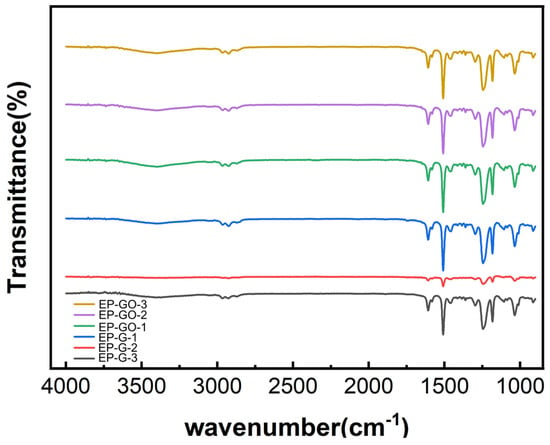
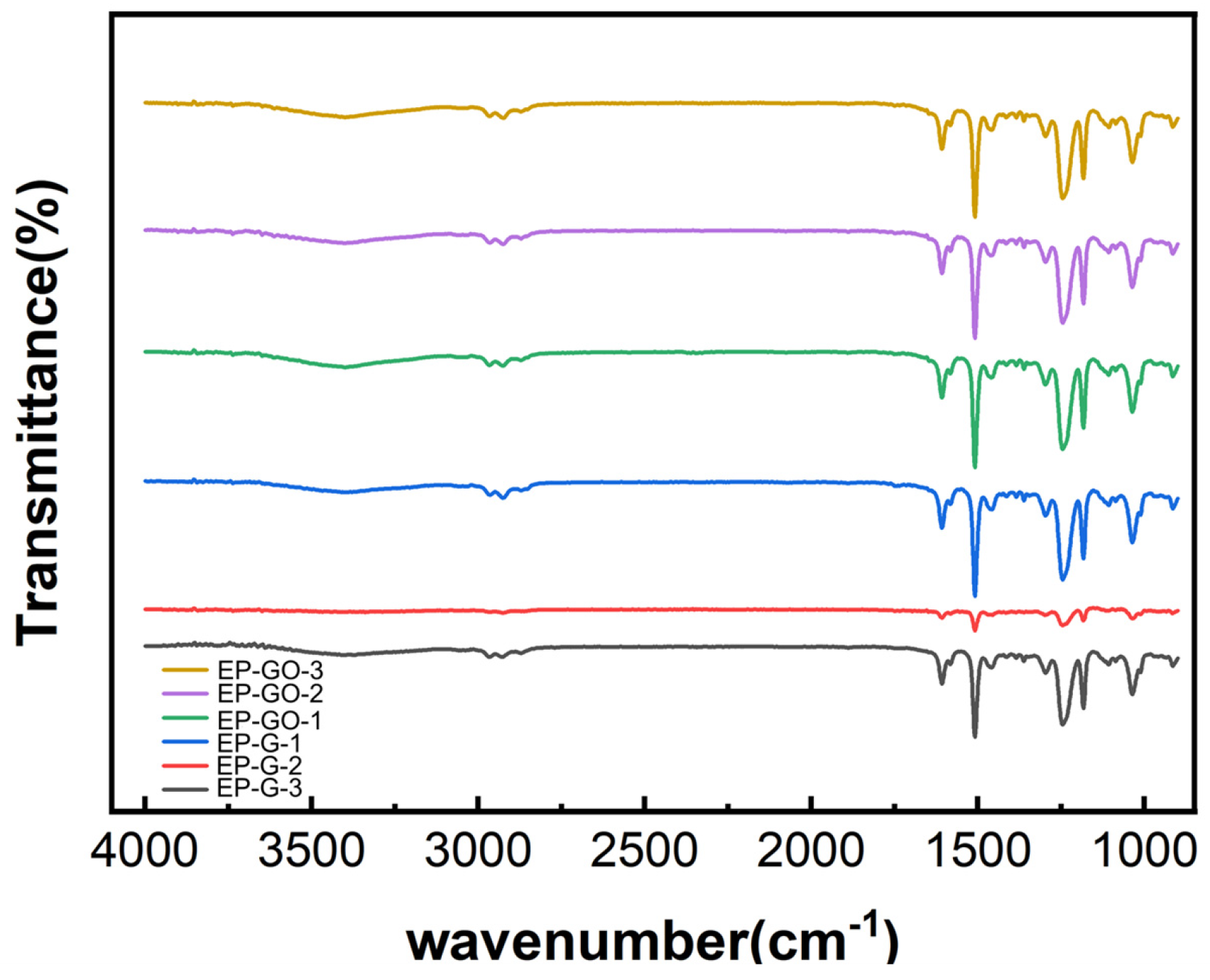
Figure 1 shows the FT-IR spectrum of the sample. The results indicate that the strong stretching peak of C=O near 1650 cm−1 is more intense in EP-GO-x (x = 1, 2, 3), demonstrating that graphene oxide has been successfully grafted onto the epoxy resin. In addition, the intensity of the antisymmetric stretching peak of Si-O-C near 1050 cm−1 is also enhanced, which further confirms that the modifier is bonded to the epoxy resin in EP-GO-x (x = 1, 2, 3).
Figure 1.
FT-IR spectrum of samples.
3.2. Hydrogen Evolution Test
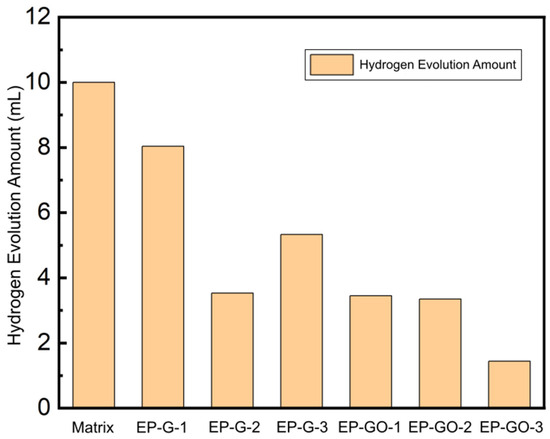
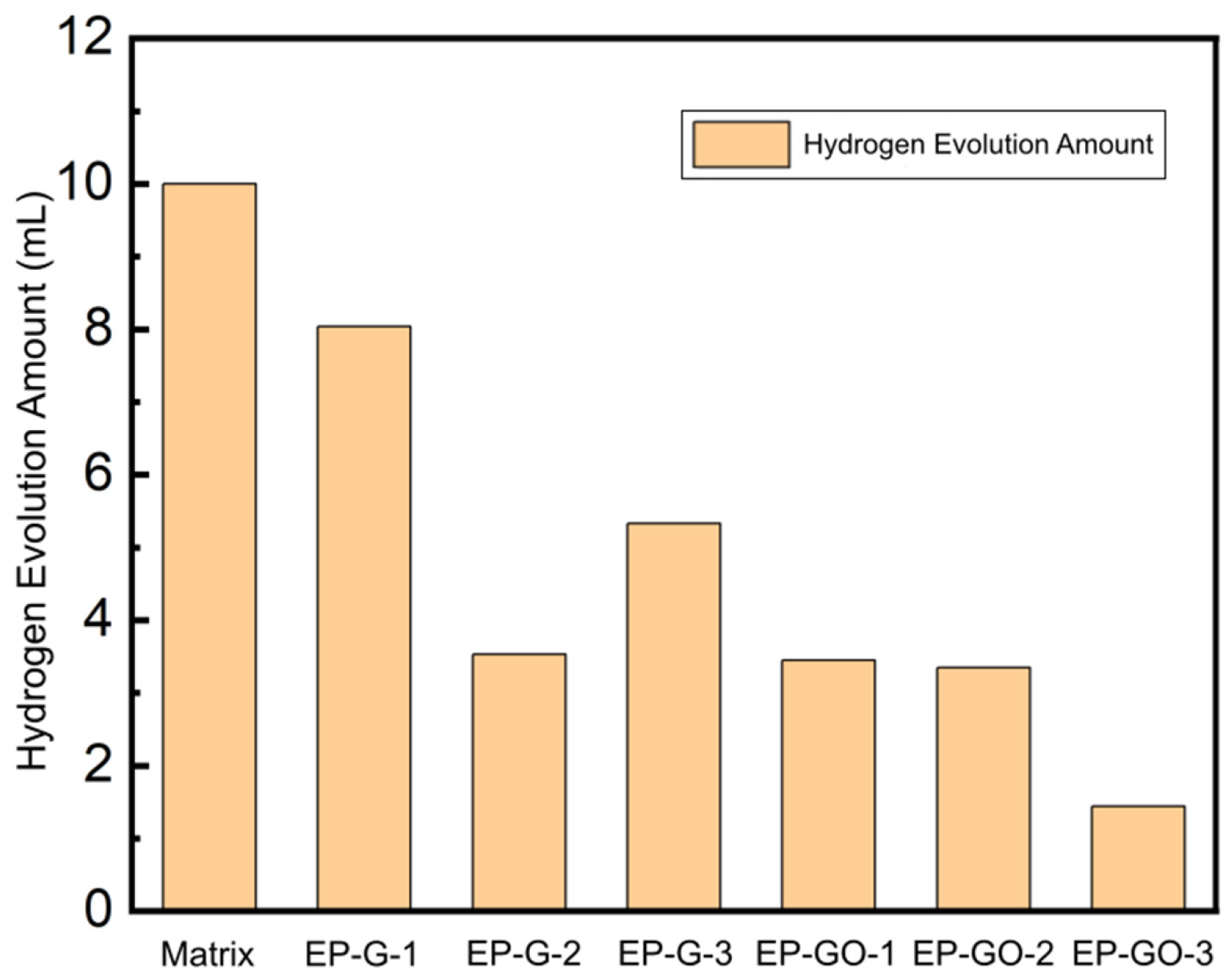
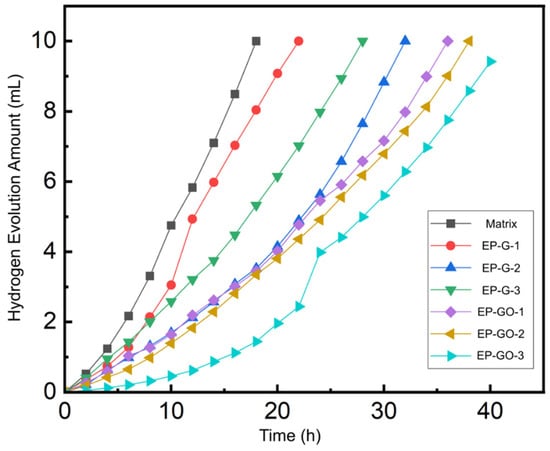
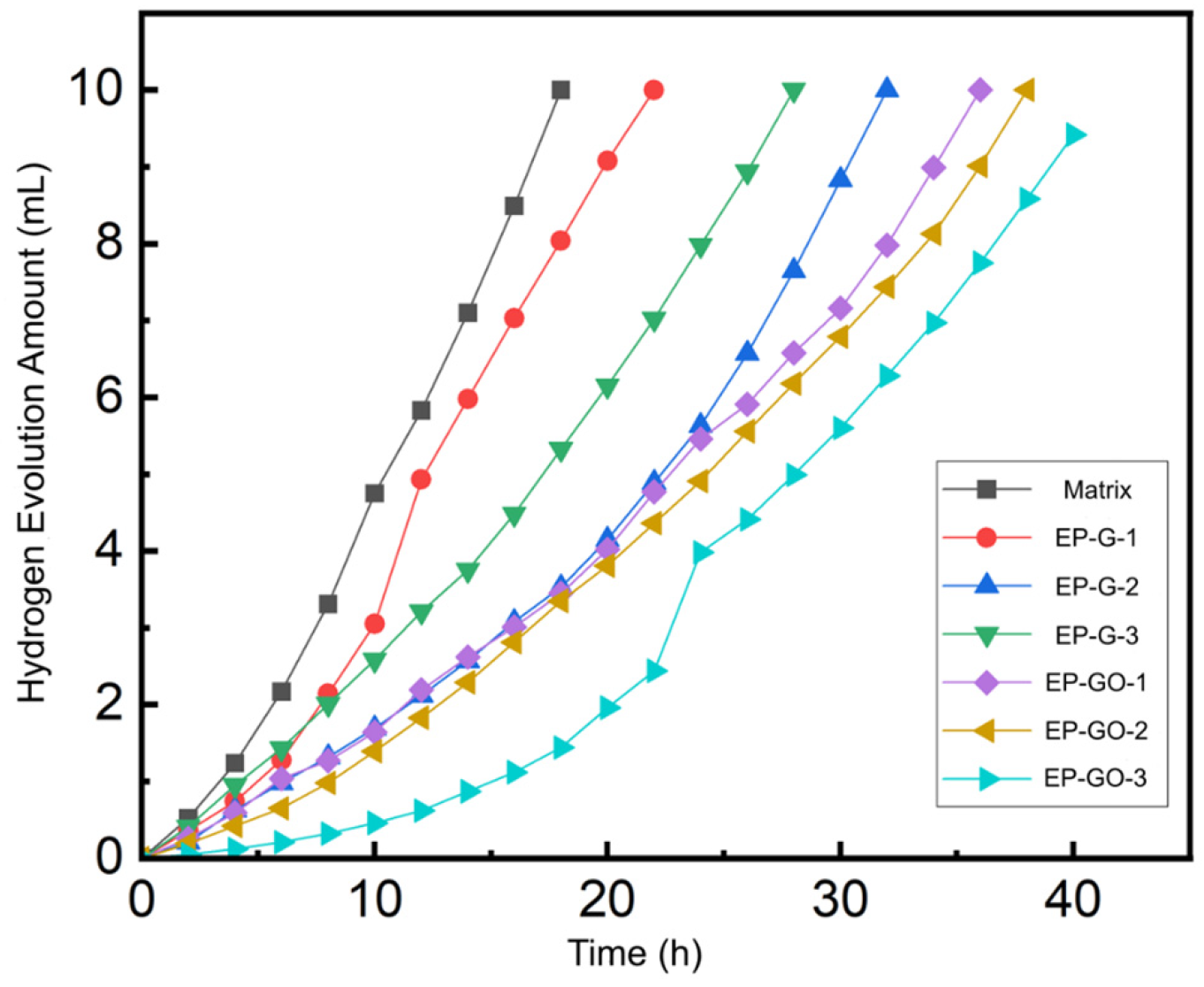
Figure 2 shows that hydrogen evolution volumes of EP-G-x (x = 1, 2, 3) decreased by 19.6%, 64.7%, and 46.7%, respectively, compared with the bare Mg substrate. This indicates that unmodified EP-G-x coatings with different graphene contents all enhance the corrosion resistance of magnesium alloys. The early and middle stages of the corrosion process were similar across EP-G-x samples, possibly because the magnesium alloy surface was extensively exposed after the coating lost its protective effect during these stages [15,16].
Figure 2.
Total hydrogen evolution of samples soaked for 18 h.
After 18 h of hydrogen evolution, the hydrogen evolution volumes of EP-GO-x (x = 1, 2, 3) decreased by 65.5%, 66.5%, and 85.6%, respectively, compared with the bare substrate. As shown in Figure 3, once corrosion initiated, EP-GO-x coatings exhibited a superior ability to enhance magnesium alloy corrosion resistance compared with EP-G-x coatings. However, by the final stage of corrosion, the coatings could barely provide any anti-corrosion protection.
Figure 3.
Plot of hydrogen evolution vs. time for matrix and samples.
3.3. Morphology of the Sample Surface
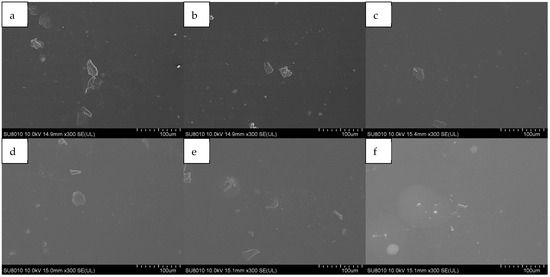
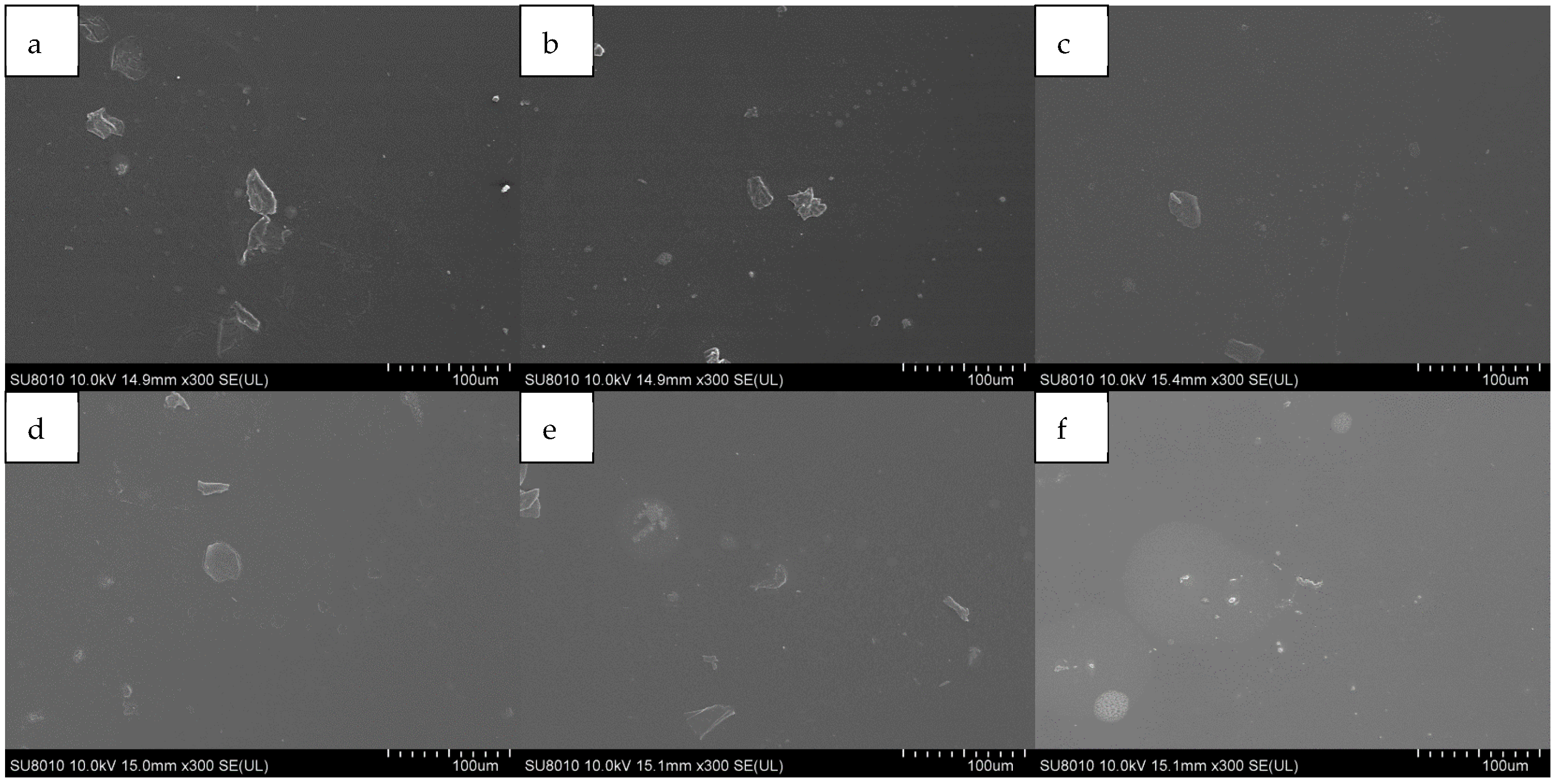
As observed in Figure 4a–c, the surfaces of EP-G-x are not smooth and exhibit numerous dot-like structures. In contrast, Figure 4d–f show that the number of dot-like or block-like structures on the surface of EP-GO-x coatings is significantly reduced; even under high-magnification observation, no pits or cracks are found on the EP-GO-x coating surfaces. The dot-like structures on unmodified EP-G-x coatings may result from the poor, uneven dispersion of graphene in the epoxy matrix. Unmodified graphene lacks active functional groups on its surface [17], and its sheets spontaneously aggregate via van der Waals forces, forming micron-sized agglomerates. After modification with KH550, the dot-like structures combine with EP through chemical bonds and are embedded in the epoxy matrix, resulting in stronger bonding between GO and EP.
Figure 4.
Microstructural morphology of uncorroded samples under scanning electron microscope ((a) EP-G-1, (b) EP-G-2, (c) EP-G-3, (d) EP-GP-1, (e) EP-GO-2, (f) EP-GO-3).
3.4. Morphology of the Corroded Sample Surface
As shown in Figure 5a, the AZ31 bare substrate suffers the most severe corrosion. A rough surface with numerous post-corrosion cracks and a large accumulation of corrosion products are observed. For EP-G-1 (Figure 5b), the corroded surface lacks the extensive corrosion pits and skeleton-like corrosion structures seen on the bare substrate, but it exhibits significant height fluctuations and a large amount of uniformly dispersed corrosion products. For EP-G-2 (Figure 5c), the corroded surface also has uniformly dispersed corrosion products, but its flatness and integrity are significantly improved, with few areas showing large fluctuations or cracks. For EP-G-3 (Figure 5d), there is no excessive accumulation of dispersed corrosion products (as seen in EP-G-1 and EP-G-2), but the corroded surface begins to show uneven fluctuations and cracked areas similar to those of EP-G-1.
The difference in thermal expansion coefficients between graphene agglomerates and the epoxy matrix leads to interfacial stress concentration during curing, resulting in numerous defects in the coating. When local stress exceeds the yield strength of the resin, microcracks initiate in the coating; the extremely high stress intensity at crack tips accelerates crack propagation, making the sample more susceptible to corrosion. In contrast, carboxyl groups (-COOH) and epoxy groups (C-O-C) in the modified GO coating may undergo condensation reactions with amino groups (-NH2) of KH550, forming amide bonds (-CONH-) and siloxane bonds (-Si-O-C-) [18]. This replaces van der Waals force-dominated agglomeration with chemical bonding, which is one reason for the slower corrosion rate of modified coatings.
Figure 5.
Corroded microstructural morphology of samples under scanning electron microscope (a) matrix: (b) EP-G-1, (c) EP-G-2, (d) EP-G-3, (e) EP-GO-1, (f) EP-GO-2, and (g) EP-GO-3.
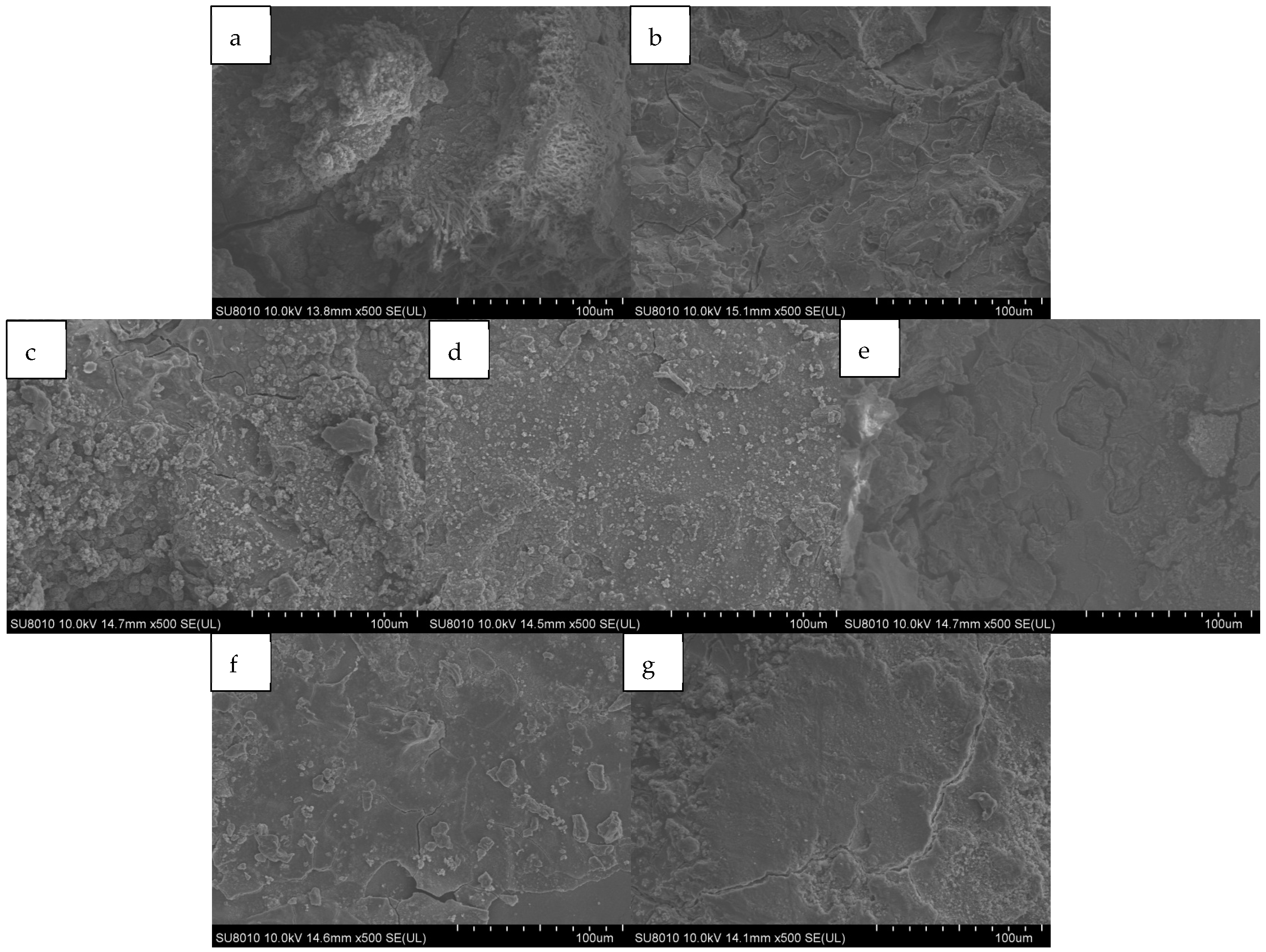
The local accumulation of corrosion products on EP-GO-x (Figure 5e–g) can be attributed to the fact that only small areas of the coating peeled off first during corrosion. Since the total hydrogen release of each sample in the hydrogen evolution experiment was 10 mL, samples with better coating performance exhibited longer hydrogen release times. Compared with samples with poor corrosion resistance (where the coating peeled off rapidly over a large area), samples with good corrosion resistance showed continuous hydrogen release from early peeled areas, leading to significant accumulation of corrosion products in these regions, while other areas remained relatively flat. Even scattered, the incompletely peeled coating fragments observed on EP-GO-2 confirm this observation.
Irregular pits are observed on the surface of some magnesium alloy samples in Figure 4: these pits have varying depths, no internal corrosion products, and flocculent corrosion products around them, which is consistent with the pitting corrosion mechanism of magnesium alloys. In addition, some figures show relatively uniform corrosion products with homogeneous morphologies, corresponding to the uniform corrosion mechanism of magnesium alloys. Discontinuous cracks are also observed, with corrosion products accumulated around them—this is attributed to the intergranular corrosion mechanism of magnesium alloys. All these mechanisms are potential corrosion behaviors of magnesium alloys in 3.5 wt.% NaCl, and the addition of coatings does not introduce new corrosion mechanisms.
3.5. Electrochemical Test
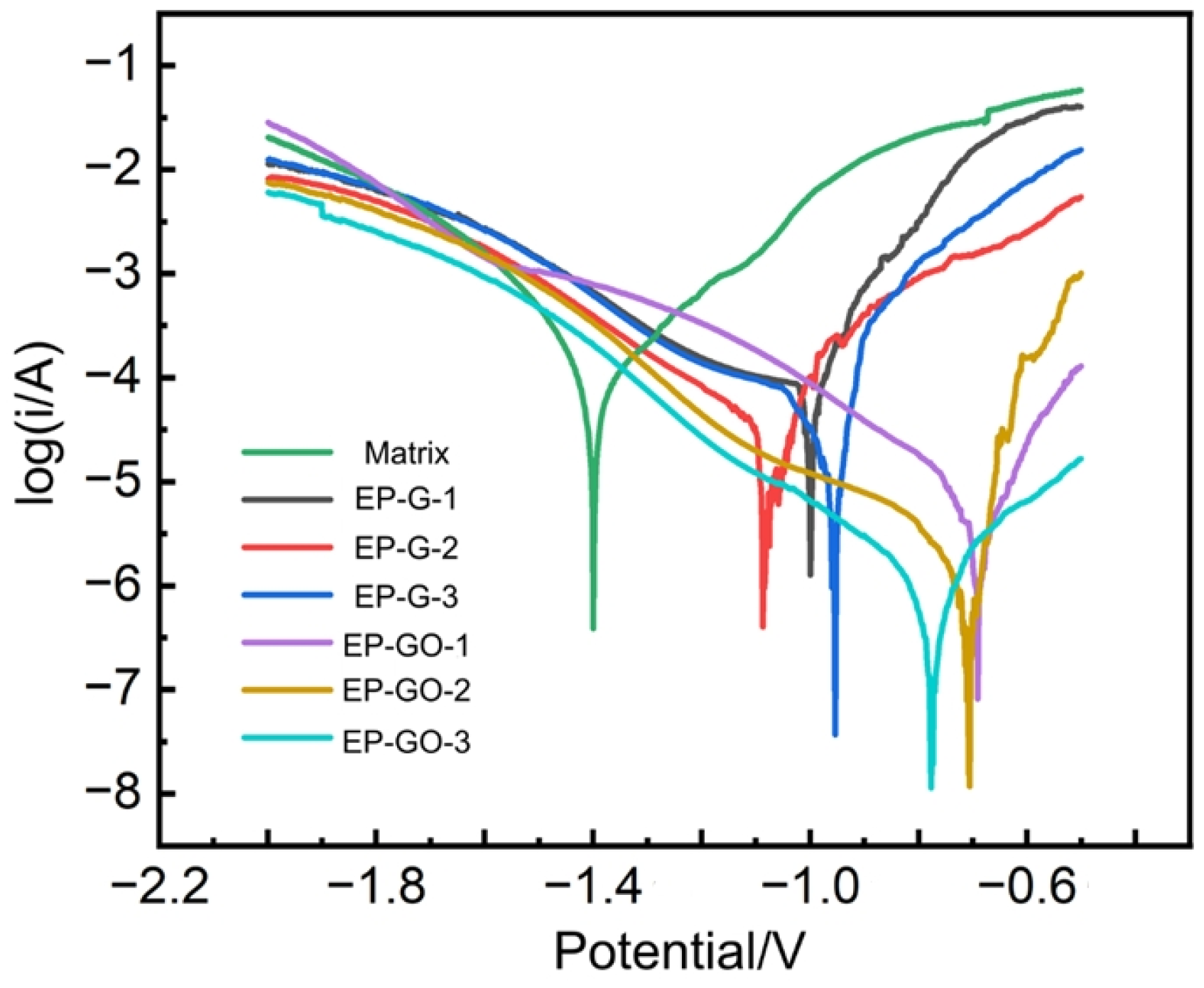
The polarization curve data presented in this paper were all obtained by the Tafel extrapolation method. Table 2 presents the corrosion-related data for the samples, and Figure 6 shows the polarization curves of the samples. As shown in Table 2, the self-corrosion current densities of EP-G-2 and EP-G-3 are lower than that of the bare AZ31 substrate, indicating that the applied coatings significantly improve the corrosion resistance of magnesium alloys. The self-corrosion current density of EP-G-1 is similar to that of the bare substrate, but its self-corrosion potential is significantly higher—this confirms that the corrosion resistance of EP-G-x is significantly stronger than that of the bare substrate. Among the EP/G coatings, EP-G-2 exhibits the best corrosion resistance, followed by EP-G-3, both of which outperform EP-G-1.
Table 2.
Corrosion potential and free corrosion current density of the substrate and specimens.
The self-corrosion current densities of EP-GO-x are significantly lower than those of EP-G-x, and their self-corrosion potentials are significantly higher. As the GO content increases, the self-corrosion current densities of EP-GO-x increase accordingly, but no significant agglomeration (as observed in EP-G-3) occurs. This indicates that the added KH550 silane coupling agent effectively improves the dispersibility of GO and the bonding strength between GO and the epoxy matrix [18].
Figure 6.
Polarization curves of AZ31 matrix and samples.
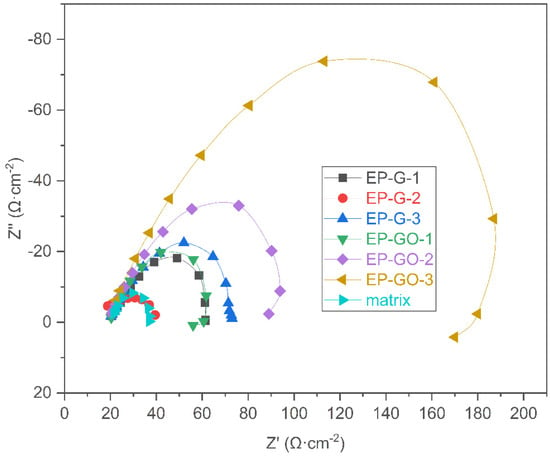
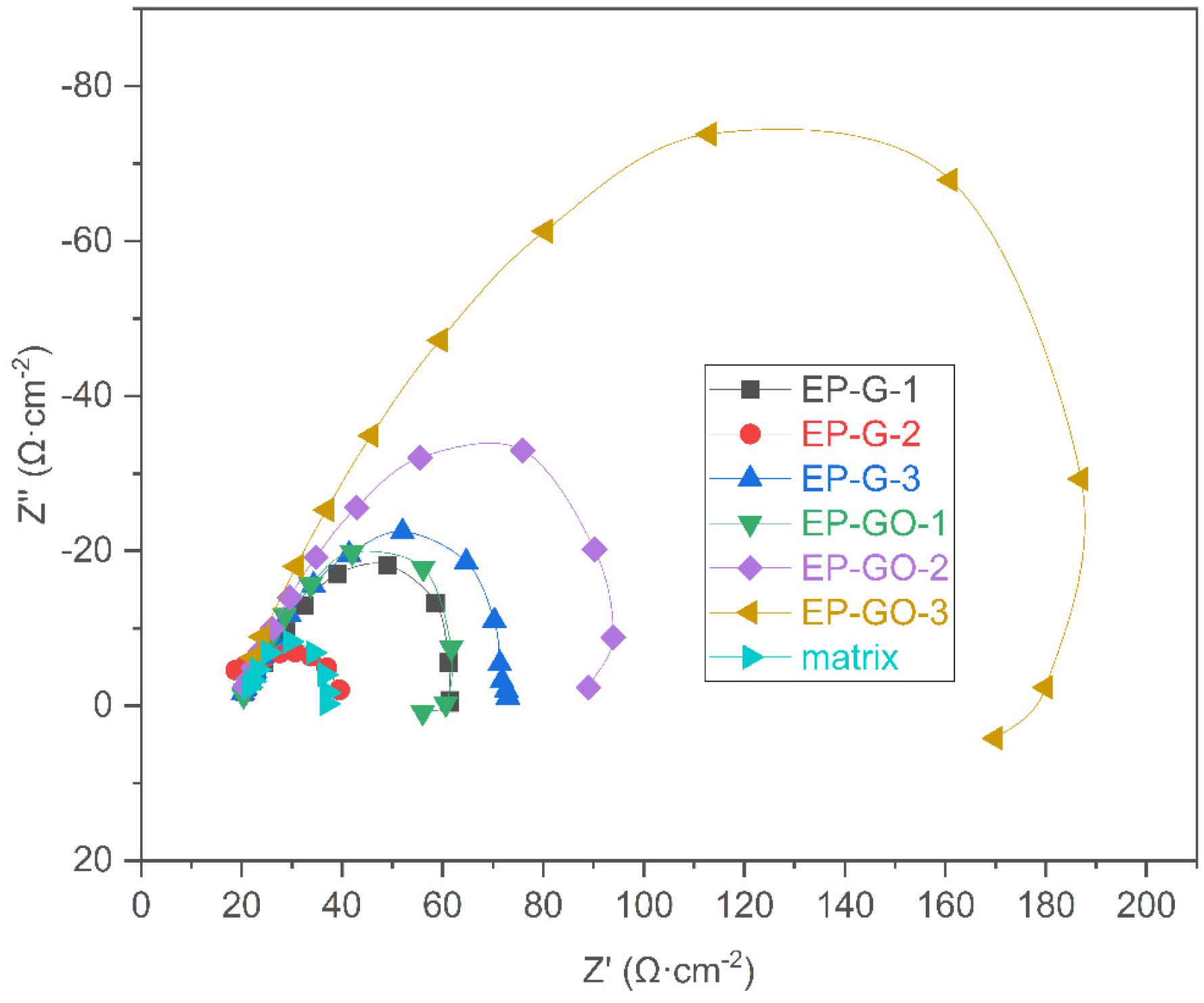
The impedance arc sizes of different samples can be observed in Figure 7. The capacitive arc diameter of EP-G-1 is relatively small, which may be due to low graphene content leading to insufficient coating compactness and high porosity, making it difficult to achieve effective anti-corrosion performance [12]. The capacitive arc diameter of EP-G-2 increases significantly, with a steeper slope in the high-frequency region—this is because increased graphene content improves coating compactness, and graphene effectively blocks the penetration of corrosive media. The EIS curve of EP-G-3 shows a slightly smaller capacitive arc diameter than EP-G-2, which can be attributed to agglomeration caused by excessive graphene; this generates microcracks inside the coating and accelerates local corrosion [19,20].
Figure 7.
Electrochemical impedance spectra of AZ31 matrix and samples.
The capacitive arc diameters of EP-GO-x are significantly larger than those of EP-G-x and increase with increasing GO content. This result is consistent with the polarization curve analysis, indicating that the KH550 coupling agent enhances GO dispersibility via chemical bonding. It not only fills the pore defects in EP-G-1 (low G content) but also enables coatings with high G content to form a multi-layer physical barrier structure through the interfacial bridging effect of KH550. This effectively eliminates the agglomeration phenomenon in EP-G-3 and significantly improves corrosion resistance [21,22,23].
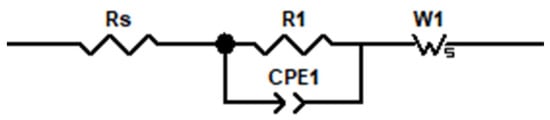
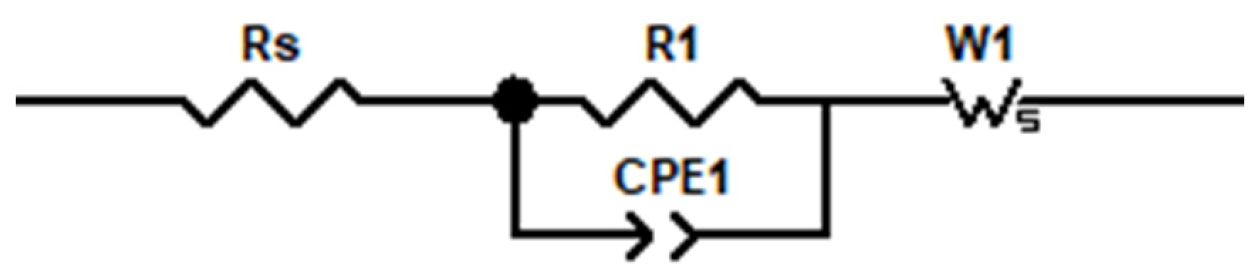
The equivalent circuit shown in Figure 8 is quite appropriate. Except for the substrate, the impedance values are consistent with those shown in Figure 7. During the curing process of epoxy resin, tiny defects can be generated, which significantly affect the characteristic diffusion time and diffusion impedance. Compared with the uncoated sample, the epoxy resin/graphene composite exhibits increased surface roughness, which in turn leads to a longer characteristic diffusion time and higher diffusion impedance. At this point, the diffusion process is closer to the ideal state, indicating that the epoxy resin/graphene coating shows an excellent physical barrier effect [24]. For graphene oxide, chemical bonding occupies corresponding sites during the curing of epoxy resin, altering the cured structure, thereby changing the surface roughness and affecting the variation in Ws-P. The data presented in Table 3 can verify this viewpoint. It must be pointed out that the value range of CPE-P is typically 0 to 1. The occurrence of CPE-P values greater than one in this study is attributed to parameter compensation by the fitting software, and such values have no practical physical meaning. The underlying reason is that the coating surface can no longer be described by the ideal interfacial electric double-layer model. The introduction of the epoxy resin composite coating directly causes changes in the dielectric constant and plate distance of the system, which in turn leads to the emergence of this fitting phenomenon.
Figure 8.
Equivalent circuit diagram of samples.
Table 3.
Equivalent circuit fitting data of samples.
Two mainstream viewpoints exist regarding the anti-corrosion mechanisms of graphene and GO. Physical blocking effect: Dispersing G/GO in EP prevents direct contact between magnesium alloys and the external environment, achieving corrosion protection. Influence of π bonds [25]: Both graphene and GO contain π bonds, and some electrons in these bonds can participate in the corrosion process of magnesium alloys. During corrosion, after magnesium atoms lose electrons, π bonds (with a large number of electrons) can provide electrons to them; meanwhile, highly chemically active sites on G/GO can also participate in water-related reactions.
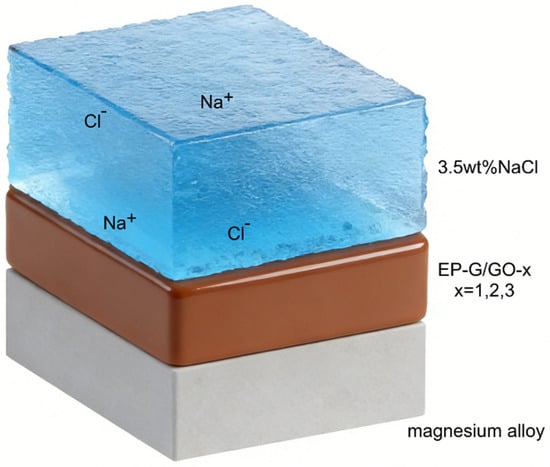
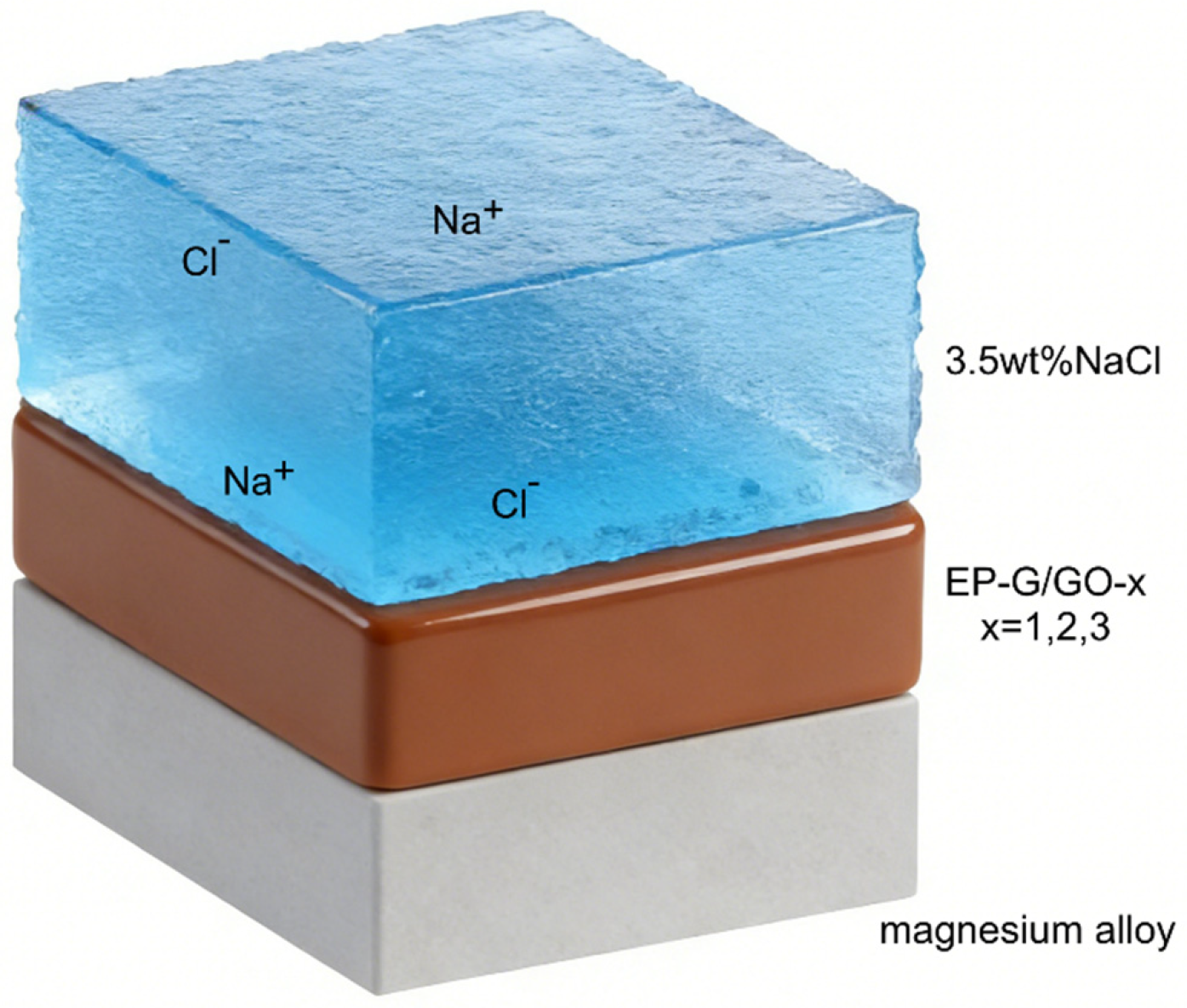
To better describe the physical process of the protective effect exerted by the coating, we established the physical model illustrated in Figure 9. Based on the impedance results and relevant studies, the EP-G/GO-x layer provides a favorable covering effect and does not exhibit impedance spectrum characteristics corresponding to ion penetration into the interior of the EP-G/GO-x layer. In the low-frequency region, graphene undergoes a process closer to ideal diffusion without ion exchange occurring. In contrast, graphene oxide deviates from ideal diffusion in the solution, which may be attributed to the occurrence of mass transfer processes (caused by chemical reactions) or a rougher surface compared with graphene.
Figure 9.
Schematic diagram of the sample corrosion process.
4. Conclusions
In this study, EP/G and EP/GO composite coatings were prepared, and the relationship between coating composition and corrosion resistance was systematically investigated. The main conclusions are as follows:
- (1)
- In the 18 h hydrogen evolution experiment, the hydrogen evolution volumes of unmodified EP-G-x (x = 1, 2, 3) are reduced by 19.6%, 64.7%, and 46.7%, respectively, compared with the bare substrate. When the graphene content reaches 0.7 wt.%, graphene agglomeration tends to occur, which increases the coating’s porosity and results in the degradation of corrosion resistance. For EP-GO-x (x = 1, 2, 3), the hydrogen evolution volumes are reduced by 65.5%, 66.5%, and 85.6%, respectively, compared with the bare substrate. Meanwhile, the self-corrosion current densities of EP-GO-x (x = 1, 2, 3) are significantly lower than those of EP-G-x, and the self-corrosion potentials are obviously positively shifted.
- (2)
- Graphene is dispersed in the epoxy resin system and exhibits a dot-like distribution after curing. In contrast, graphene oxide can bond with epoxy resin molecules through chemical bonds and be embedded in the cured epoxy matrix. The corrosion types of the coated magnesium alloy mainly include uniform corrosion, pitting corrosion and intergranular corrosion, and the coating itself does not change the corrosion mechanism of the magnesium alloy. Stress concentration at the tip of microcracks is the main cause of coating failure.
- (3)
- Graphene composite coatings primarily protect magnesium alloys through physical barriers, while graphene oxide protects magnesium alloys through both physical barriers and potential chemical reactions.
Author Contributions
D.W.: Conceptualization, Funding Acquisition, Project Administration, Methodology, Visualization, and Writing—Review Editing. M.H.: Writing—Original Draft, Writing—Review Editing, Software, Validation, Data Curation, and Methodology. Y.Z.: Writing—Original Draft, Writing—Review Editing, Conceptualization, Data Curation, Validation, and Visualization. Y.X.: Writing—Review Editing, Data Curation, Investigation, Supervision, and Validation. All authors have read and agreed to the published version of the manuscript.
Funding
This work was supported by the National Natural Science Foundation of China [grant number 52561027]; the Jiangxi province Science Foundation for Outstanding Scholarship [grant numbers 20171BCB23061, 2018ACB21020]; and the Primary Research Development Plan of Jiang Xi Province [grant number 2019BBEL50019].
Data Availability Statement
The original contributions presented in this study are included in the article. Further inquiries can be directed to the corresponding author.
Conflicts of Interest
The authors declare no conflicts of interest.
References
- She, J.; Chen, J.; Xiong, X.; Yang, Y.; Peng, X.; Chen, D.; Pan, F. Research advances of magnesium and magnesium alloys globally in 2023. J. Magnes. Alloys 2024, 12, 3441–3475. [Google Scholar] [CrossRef]
- Wan, D.; Wang, J.; Yang, G. A study of the effect of Y on the mechanical properties, damping properties of high damping Mg–0.6% Zr based alloys. Mater. Sci. Eng. A 2009, 517, 114–117. [Google Scholar] [CrossRef]
- Wan, D.; Wang, H.; Ye, S.; Hu, Y.; Li, L. The damping and mechanical properties of magnesium alloys balanced by aluminum addition. J. Alloys Compd. 2019, 782, 421–426. [Google Scholar] [CrossRef]
- Yang, J.; Zhu, Z.; Han, S.; Gu, Y.; Zhu, Z.; Zhang, H. Evolution limitations advantages, and future challenges of magnesium alloys as materials for aerospace applications. J. Alloys Compd. 2024, 1008, 176707. [Google Scholar] [CrossRef]
- Wang, Y.; Xiao, W.; Blawert, C.; Serdechnova, M.; Feng, L.; Wang, J.; Pan, F. Conception of corrosion converter for magnesium alloy surface: Replacing the corrosion product layer with a protective coating in high concentration corrosion medium. Corros. Sci. 2025, 244, 112639. [Google Scholar] [CrossRef]
- Azzeddine, H.; Hanna, A.; Dakhouche, A. Exploring the Corrosion Performance of AZ31 Magnesium Alloy under Acidic and Alkaline Conditions. Phys. Met. Metallogr. 2024, 125, 1699–1706. [Google Scholar] [CrossRef]
- Ou, B.; Wang, Y.; Lu, Y. A review on fundamentals and strategy of epoxy-resin-based anticorrosive coating materials. Polym.-Plast. Technol. Mater. 2021, 60, 601–625. [Google Scholar] [CrossRef]
- Liu, Y.; Ma, H.; Wang, Z.; Qin, Q.; Liang, L.; Wang, J.; Jin, P. Effect of epoxy resin/mineralized film composite coating on the corrosion resistance of Mg-3Nd alloy. J. Mater. Res. Technol. 2024, 29, 1650–1663. [Google Scholar] [CrossRef]
- Cui, C.; Lim, A.T.O.; Huang, J. A cautionary note on graphene anti-corrosion coatings. Nat. Nanotechnol. 2017, 12, 834–835. [Google Scholar] [CrossRef]
- Salehi, A.; Rash-Ahmadi, S. Effect of temperature and oxygen functional groups on interaction between epoxy resins and graphene surface. Proc. Inst. Mech. Eng. Part C 2023, 237, 941–951. [Google Scholar] [CrossRef]
- Chen, L.; Zhang, Y.; Liu, W.; Liu, Z. Graphene Nanoarchitectonics: A New Material Horizon for Reinforcement of Sustainable Polymers. Front. Mater. 2020, 7, 276. [Google Scholar] [CrossRef]
- Jin, T.; Huang, C.; Zhang, F. Corrosion Resistance of N-(Hydroxymethyl)acrylamide Cross-Linked Nano-Graphene Oxide/Epoxy Resin Composite Coating on Magnesium Alloy. JOM 2023, 75, 656–668. [Google Scholar] [CrossRef]
- Liu, X.; Zhang, Y.; Jiang, Y.; Li, M.; Bai, J.; Zhou, X. Effect of Acrylic Resin on the Protection Performance of Epoxy Coating for Magnesium Alloy. Coatings 2024, 14, 577. [Google Scholar] [CrossRef]
- Xue, Z.Y.; Li, X.J.; Chu, J.H.; Li, M.M.; Zou, D.N.; Tong, L.B. Greatly enhanced corrosion/wear resistances of epoxy coating for Mg alloy through a synergistic effect between functionalized graphene and insulated blocking layer. J. Magnes. Alloys 2024, 12, 332–344. [Google Scholar] [CrossRef]
- Gao, Z.; Sun, C.; Du, L.; Yang, D.; Zhang, X.; An, Z. The Corrosion Resistance of Graphene-Modified Oily Epoxy Coating on AZ31 Magnesium Alloys. Front. Mater. 2021, 8, 739334. [Google Scholar] [CrossRef]
- Qiu, Z.; Wang, R.; Wu, J.; Zhang, Y.; Qu, Y.; Wu, X. Graphene oxide as a corrosion-inhibitive coating on magnesium alloys. RSC Adv. 2015, 5, 44149–44159. [Google Scholar] [CrossRef]
- Jin, T.; Kong, F.M.; Bai, R.Q.; Zhang, R.L. Anti-corrosion mechanism of epoxy-resin and different content Fe2O3 coatings on magnesium alloy. Front. Mater. Sci. 2016, 10, 367–374. [Google Scholar] [CrossRef]
- Shu, X.; Ren, H.; Jiang, Y.; Zhou, J.; Wang, Y.; Wang, Y.; Liu, Y.; Oh, W.C. Enhanced electromagnetic wave absorption performance of silane coupling agent KH550@Fe3O4 hollow nanospheres/graphene composites. J. Mater. Chem. C 2020, 8, 2913–2926. [Google Scholar] [CrossRef]
- Wu, J.; Wu, L.; Yao, W.; Zhou, Y.; Wu, M.; Yuan, Y.; Xie, Z.; Atrens, A.; Wang, J.; Pan, F. Self-healing PEO/MgAlLa LDHs-MXene composite coating loaded with 4-aminophenol for corrosion protection of Mg-Gd-Y-Zn LPSO Mg alloy. Electrochim. Acta 2024, 491, 144358. [Google Scholar] [CrossRef]
- Hou, X.; Li, B.; Zhou, Z.; Guo, E.; Zhang, Z.; Kang, H.; Chen, Z.; Chen, X.-B.; Wang, T. Superhydrophobic and corrosion-resistant coating on magnesium-lithium alloys. J. Taiwan Inst. Chem. Eng. 2025, 176, 106319. [Google Scholar] [CrossRef]
- Wei, Z.; He, H.; Lin, Y.; Zhang, T.C.; Yuan, S. Modification of diatomite with PEDOT and CeO2 to construct Superhydrophobic bilayer composite coatings for high-performance anticorrosion of magnesium alloys. Surf. Coat. Technol. 2025, 508, 132182. [Google Scholar] [CrossRef]
- Wan, D.; Wang, Y.; Xue, Y.; Sun, Y.; Tang, H.; Wang, Y.; Yang, F. Effect of Gd on microstructure and corrosion resistance of as-cast Mg97Zn1Y2 alloy. J. Alloys Compd. 2024, 1000, 175148. [Google Scholar] [CrossRef]
- Yu, X.; Ma, Y.; Xu, D.; Li, J.; Feng, Z.; Ouyang, Y.; Yong, Q.; Xie, Z.H. Polydopamine-coated zeolitic imidazolate framework for enhanced anti-corrosion and self-healing capabilities of epoxy coating on magnesium alloy. Appl. Surf. Sci. 2025, 680, 161332. [Google Scholar] [CrossRef]
- Il’inova, K.O.; Safronov, A.P.; Beketov, I.V. Influence of the Chemical Composition of an Epoxy Resin and of Its Filling with Nanoparticles of Iron, Aluminum, and Their Oxides on the Enthalpy of Curing with m-Phenylenediamine. Russ. J. Appl. Chem. 2021, 94, 1072–1079. [Google Scholar] [CrossRef]
- Zhou, Y.; Li, Q.; Atrens, A.; Wu, L. Graphene-based anti-corrosion coatings on magnesium alloys: A review. Surf. Eng. 2023, 39, 392–412. [Google Scholar] [CrossRef]

Disclaimer/Publisher’s Note: The statements, opinions and data contained in all publications are solely those of the individual author(s) and contributor(s) and not of MDPI and/or the editor(s). MDPI and/or the editor(s) disclaim responsibility for any injury to people or property resulting from any ideas, methods, instructions or products referred to in the content. |
© 2026 by the authors. Licensee MDPI, Basel, Switzerland. This article is an open access article distributed under the terms and conditions of the Creative Commons Attribution (CC BY) license.