


Abstract
As a new generation of structural materials, Fe-Mn-Al-C lightweight steels with low density, high strength, and excellent strength-toughness properties have shown significant application potential in fields such as transportation, aerospace, and energy equipment. In the present work, the effects of Mo alloying and annealing processes on the microstructural evolution and mechanical properties of Fe-18Mn-8Al-1C-3Cu lightweight steel are investigated. Due to the addition of Mo, the recrystallization temperature is significantly increased, and the recrystallization process is delayed. The fine and dispersed Mo6C precipitated phases can effectively impede dislocation movements and pin the grain boundaries, hindering recrystallization and grain growth. After annealing at 900 °C, the yield and tensile strengths of the Mo-alloyed steel were enhanced, achieving 1181 MPa and 1345 MPa, respectively, while maintaining an elongation of 24%, thus exhibiting excellent comprehensive performance. Quantitative analysis of strengthening mechanisms confirmed that the strength enhancement primarily resulted from the synergistic contributions of grain refinement strengthening (~152 MPa), solid solution strengthening (44 MPa), dislocation strengthening (131.6 MPa), and Mo6C precipitation strengthening (52.23 MPa). Through Mo alloying and annealing process optimization, a high-strength, ductile lightweight steel was successfully developed, providing theoretical foundations and technical pathways for its application in high-performance structural materials.
1. Introduction
Fe-Mn-Al-C lightweight steels have attracted considerable attention in materials science research and the steel industry owing to their exceptional combination of low density, high specific strength, and excellent mechanical properties [1,2,3,4,5,6,7,8,9,10]. Depending on alloy composition and heat treatment conditions, these steels can exhibit ferritic, austenitic, or duplex microstructures [1,3]. Notably, austenitic lightweight steels strengthened by coherent κ-carbides present a balanced strength–ductility. Nevertheless, such steels generally demonstrate limited strain-hardening capacity because coherent κ-carbides are readily sheared by gliding dislocations [11]. Moreover, the maximum attainable strength is constrained by the coarsening of intra-granular κ-carbides during extended aging, whereas the existence of inter-granular κ-carbide could induce a significant deterioration in ductility.
To modify microstructures and optimize mechanical properties, various alloying elements have been introduced into Fe-Mn-Al-C steels [12,13,14,15,16,17,18,19,20,21,22,23,24]. Elucidating the effects of these alloying elements is crucial, as it enables the expansion of the property envelope of lightweight steels to meet diverse application demands. As an important solution-strengthening alloying element, Cu can increase the stability of austenite and enhance the precipitation of κ-carbide in lightweight steels [13,17,25]. The addition of Cu can also increase the corrosion resistance of the steels. The effects of Cu on the microstructures and mechanical properties of lightweight steels have been extensively explored. Chen et al. [13] reported that the co-precipitation of nanoscale Cu-rich phase and κ carbide could enhance the mechanical properties of a dual-phase Fe-28Mn-9Al-0.8C lightweight steel. Yang et al. [14] prepared Fe-28Mn-9Al-0.8C-(0, 3, 5)Cu austenitic lightweight steels and demonstrated that Cu addition improved strength without sacrificing ductility. Song et al. [25] investigated the deformation mechanisms of medium Mn dual-phase lightweight steels (Fe-0.5C-12Mn-7Al-(0, 3)Cu) and found that Cu addition delayed recrystallization and promoted the formation of Cu-rich B2 phases, thereby significantly enhancing strength and strain-hardening capacity. Xie [16] et al. added 0.25 wt% Cu to a high-Mn and high-Al steel, and their results showed that yield strength was increased markedly by adjusting annealing temperature. However, achieving a yield strength exceeding 1000 MPa remains challenging in such Cu-alloyed lightweight steels.
Several strategies exist to enhance the yield strength of lightweight steels, among which aging treatments to induce κ-carbide precipitation are the most widely adopted. However, due to the “slip plane softening” effect [1], the strain-hardening rate remains nearly constant as the deformation proceeds, and the tensile strength is very close to the yield one in this case, resulting in a very high yield ratio, which is not suitable for structural materials.
Mo represents another important alloying element, and it could inhibit κ-carbide precipitation and promote the formation of Mo-rich precipitates such as Mo6C or Mo23C6. Lee et al. [12] illustrated the effect of Mo on microstructural evolution and mechanical properties, and they pointed out that yield strength gradually decreased due to the less of precipitation of κ carbide when the Mo concentration was low. When the Mo concentration was higher than 4%, the strength of the austenite matrix increased due to the precipitation of Mo6C. Liu et al. [21] investigated the nano-scale precipitates and mechanical properties of Fe-28Mn-10Al-1.2C-xMo (x = 0, 3 and 5) steels. It was reported that the addition of Mo inhibited the precipitation and growth of κ carbide in austenite and formed a new nano-ordered Mo6C dispersed in the grain interior and at grain boundaries, leading to a significant increase in yield strength (1196–1326 MPa). However, the yield ratios in these steels were very high (0.93~0.95), encountering the same problem mentioned above. In order to improve the strength and strain-hardening rate, Qiu et al. introduced multiple precipitates in a Fe-26Mn-8Al-3Mo-1.2C austenitic lightweight steel by annealing and aging after cold rolling [23]. The homogeneously distributed Mo2C precipitates markedly enhanced the strength and strain-hardening rate markedly. The yield strength was 1171 MPa, tensile strength was 1410 MPa and elongation was 25%. These studies demonstrate that rational alloy design and controlled processing can effectively regulate the mechanical behavior of Mo-containing lightweight steels.
Both the additions of Cu and Mo have some positive effects on lightweight steels, but studies on Cu- and Mo-alloyed lightweight steels are still limited. To utilize the advantages of Cu and Mo in lightweight steels, Fe-18Mn-8Al-1C-3Cu-(0Mo, 4Mo) steels were investigated in this study, and simple annealing treatments were adopted. The effects of annealing temperature on the microstructures and mechanical properties were investigated, and the strengthening mechanisms were revealed. This study aims to control the microstructure and properties of lightweight steel through alloy composition design. The effects of adding the Cu and Mo elements were analyzed to investigate the mechanisms of synergistic effects on composite strengthening and ductility mechanisms.
2. Experimental Materials and Procedure
The nominal compositions of two investigated steels (chemical composition analyzed by spark optical emission spectroscopy) are shown in Table 1. Take Fe-18.02Mn-8.01Al-1.01C-3.03Cu as the base steel, nominated as No. 1 steel, and Fe-18.03Mn-8.02Al-1.04C-3.04Cu-4.06Mo as No. 2 steel. The experimental steel was cold-rolled along the rolling direction (RD), and the SEM samples were taken along the normal direction (ND).
Table 1.
Nominal compositions of the investigated steels (mass fraction, %).
The steel was melted in a vacuum induction furnace. The ingot was reheated to 1200 °C, kept for 2 h and then forged to a 100 mm × 50 mm × 800 mm rectangular billet. Hot rolling was processed with an initial rolling temperature of 1150 °C and a finish rolling temperature of 950 °C. The thickness of the plates was reduced to 5 mm, and then air-cooled. The hot-rolled plates were solution-treated at 1000 °C for 1 h and water quenched. Then they were cold-rolled with a reduction of 0.2 mm per pass. After multiple rolling processes, the thickness of the strips reached 1 mm. Then the strips were annealed in the temperature range of 700~1000 °C for 0.5 h. The flat dog-bone-shaped tensile samples with a gauge length of 25 mm were machined from the strips with the tensile axis parallel to the prior cold rolling direction. Tensile tests were carried out on a universal testing machine (INSTRON5969, Boston, MA, USA) at a speed of 3 mm/min at room temperature.
The microstructural examination was carried out using optical microscopy (OLYMPUS, DSX500, Tokyo, Japan). The specimens for OM were ground and then electro-polished by Electrolytic polishing etchant (Buehler ElectroMet4, Lake Bluff, IL, USA) with a mixed solution of perchloric acid and ethanol (1:15). The polishing time was about 30 s, the voltage was 30 V and the current was 0.9 A. Then, the samples were etched by a solution of 4% picric acid–methanol for 8 s. The samples for XRD examination were mechanically ground. The XRD examination was conducted on Smart Lab 9 kw (Takatsuki, Osaka, Japan) with a target of Cu (λ = 0.15418 nm). The work current was 170 mA, and the work voltage was 50 kV. The angle of X-ray diffraction profiles was recorded through θ-2θ scans from 40° to 100° and the XRD scanning speed was 2°/min. The specimens for SEM were electro-polished and then were etched by a solution of 1 mL hydrochloric acid, 100 mL ethanol, and 4 g picric acid. SEM analysis was conducted with an accelerated voltage and a step size of 0.2 μm, and the data were analyzed using Oxford Aztec Crystal.
3. Results
3.1. Microstructures of the Annealed Samples
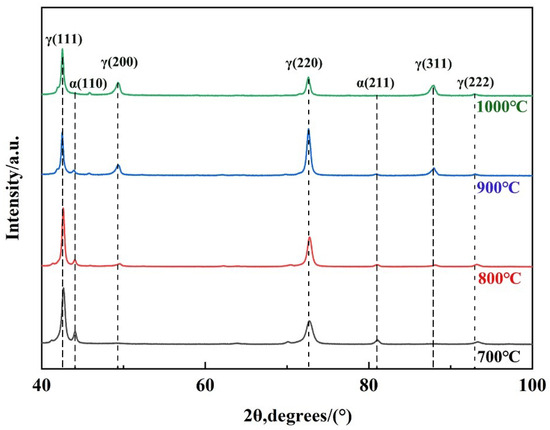
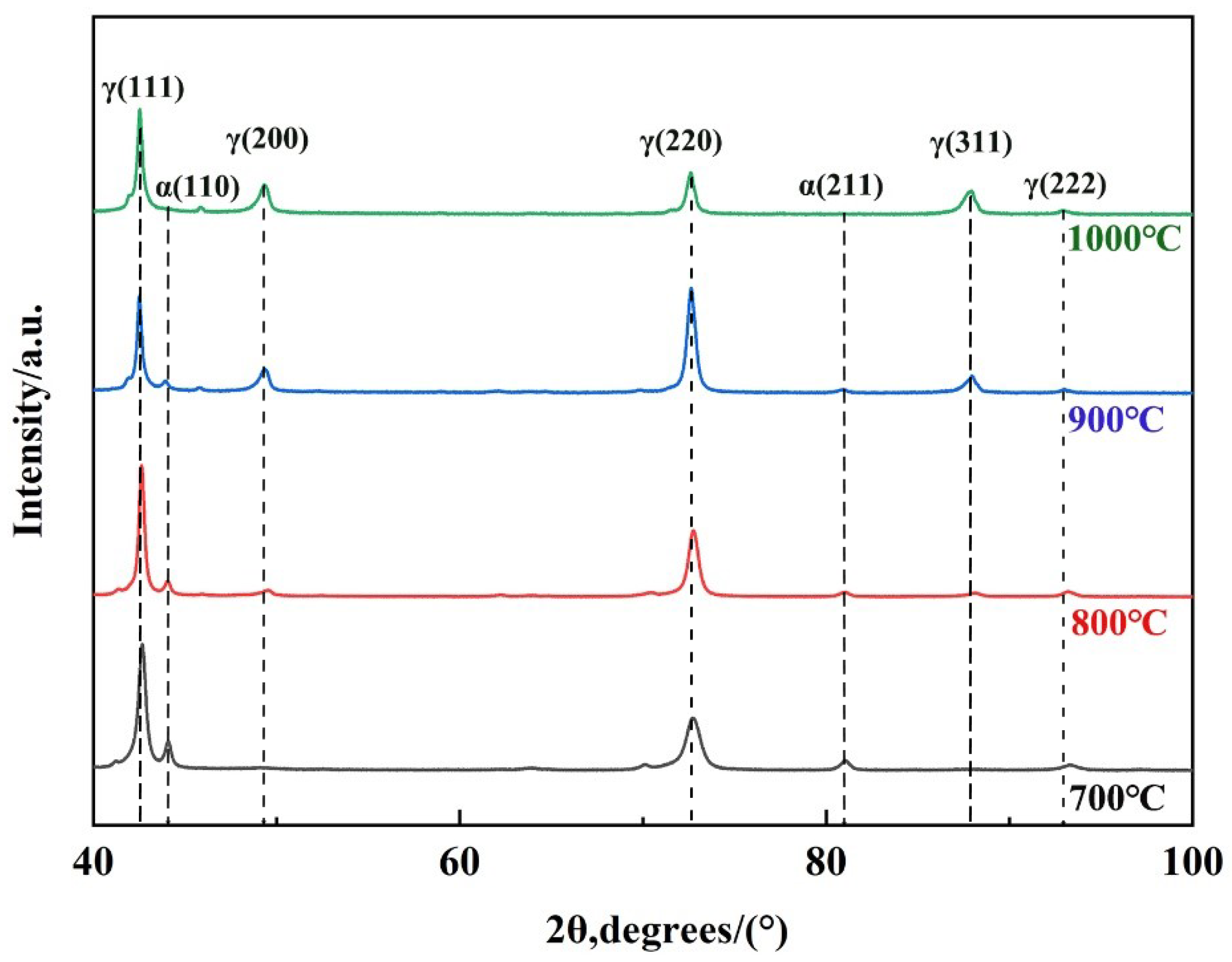
XRD spectra of the Mo alloyed No. 2 steel are shown in Figure 1. When the annealing temperature ranges from 700 °C to 1000 °C, face-centered cubic (fcc) and body-centered cubic (bcc) peaks are observed, indicating the existence of austenite and ferrite. Moreover, the absence of side peaks in austenite indicates that κ carbides, which often appear in lightweight steels, have not formed or are present in low amounts. As the annealing temperature increases, the diffraction peaks of bcc decrease. When the annealing temperature reaches 1000 °C, only fcc are observed. This is because ferrite dissolves at high temperatures.
Figure 1.
X-ray diffraction patterns of No. 2 steel after annealing.
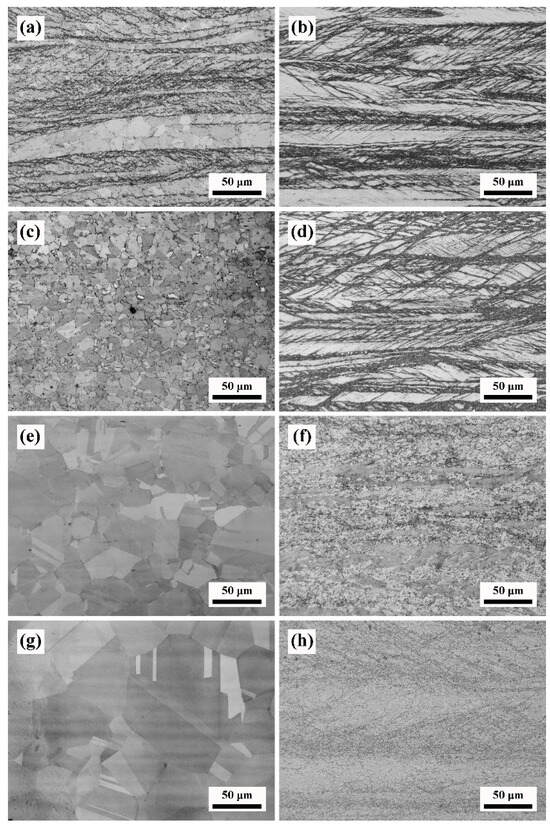
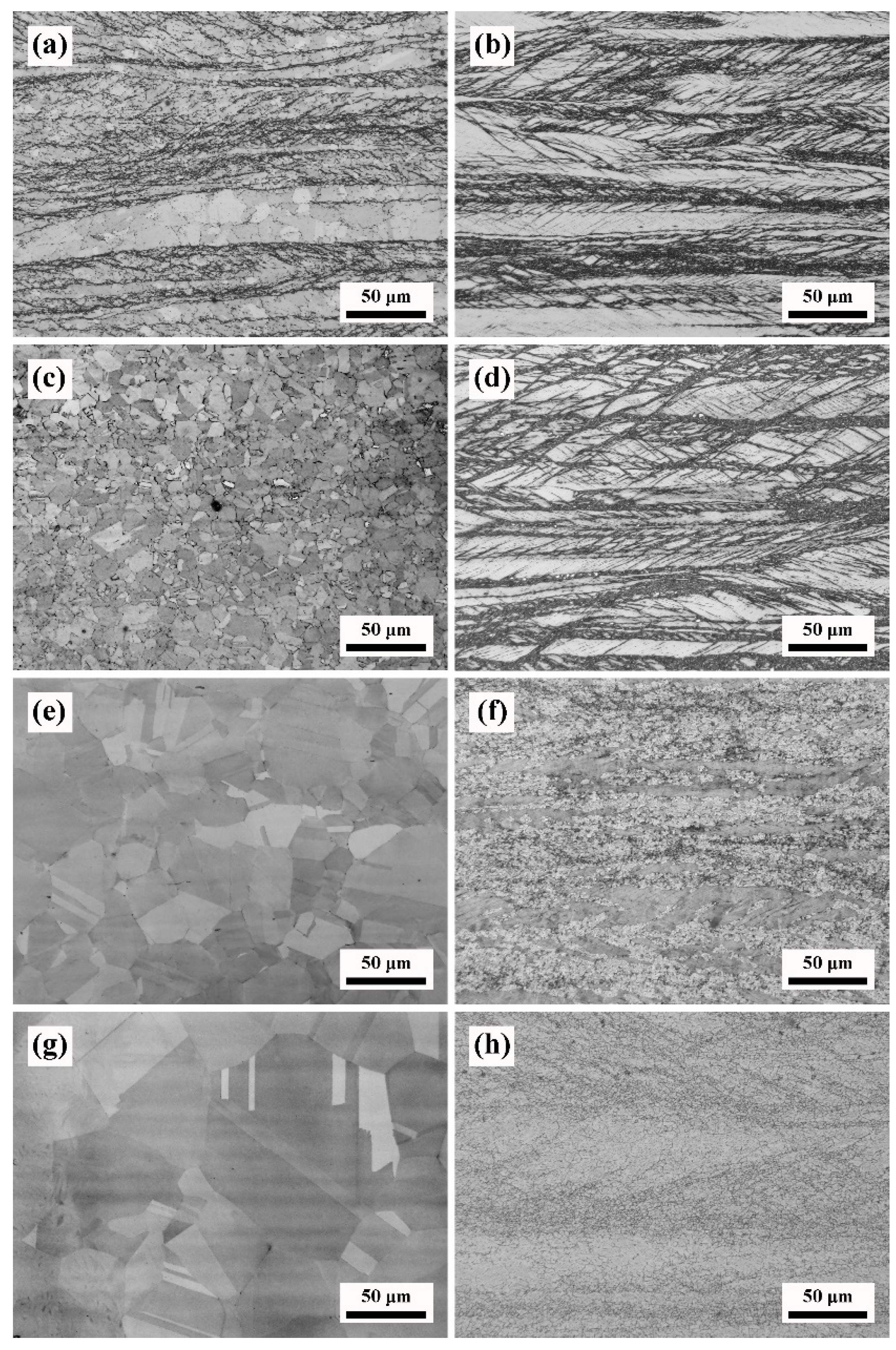
The microstructures of two steels annealed at different temperatures for 0.5 h are shown in Figure 2. When No. 1 steel is annealed at 700 °C, deformation bands can be found (Figure 2a). They disappear in the sample annealed at 800 °C and newly formed recrystallization grains appear (Figure 2c), the average grain size being 7.72 μm, as measured by Image-Pro plus 6.0. Annealing twins appear in the 900 °C annealed sample, with some passing through whole grains and some terminating in grain interiors (Figure 2e). When the annealing temperature increases further, the grain growth is severe (Figure 2g). In the No. 2 steel annealed at 700 °C and 800 °C, deformation bands can also be found (Figure 2b,d). In the 900 °C annealed sample, deformation bands basically disappear, and recrystallization is partially finished (Figure 2f). When the annealing temperature is 1000 °C, the steel is fully recrystallized (Figure 2h).
Figure 2.
OM microstructures of the experimental steels after cold rolling and annealing (a) No. 1-700 °C; (b) No. 2-700 °C; (c) No. 1-800 °C; (d) No. 2-800 °C; (e) No. 1-900 °C; (f) No. 2-900 °C; (g) No. 1-1000 °C; (h) No. 2-1000 °C.
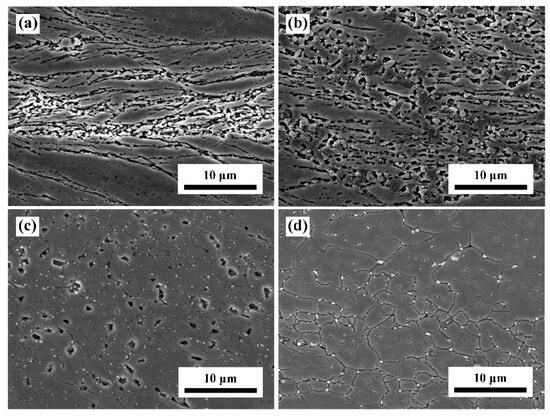
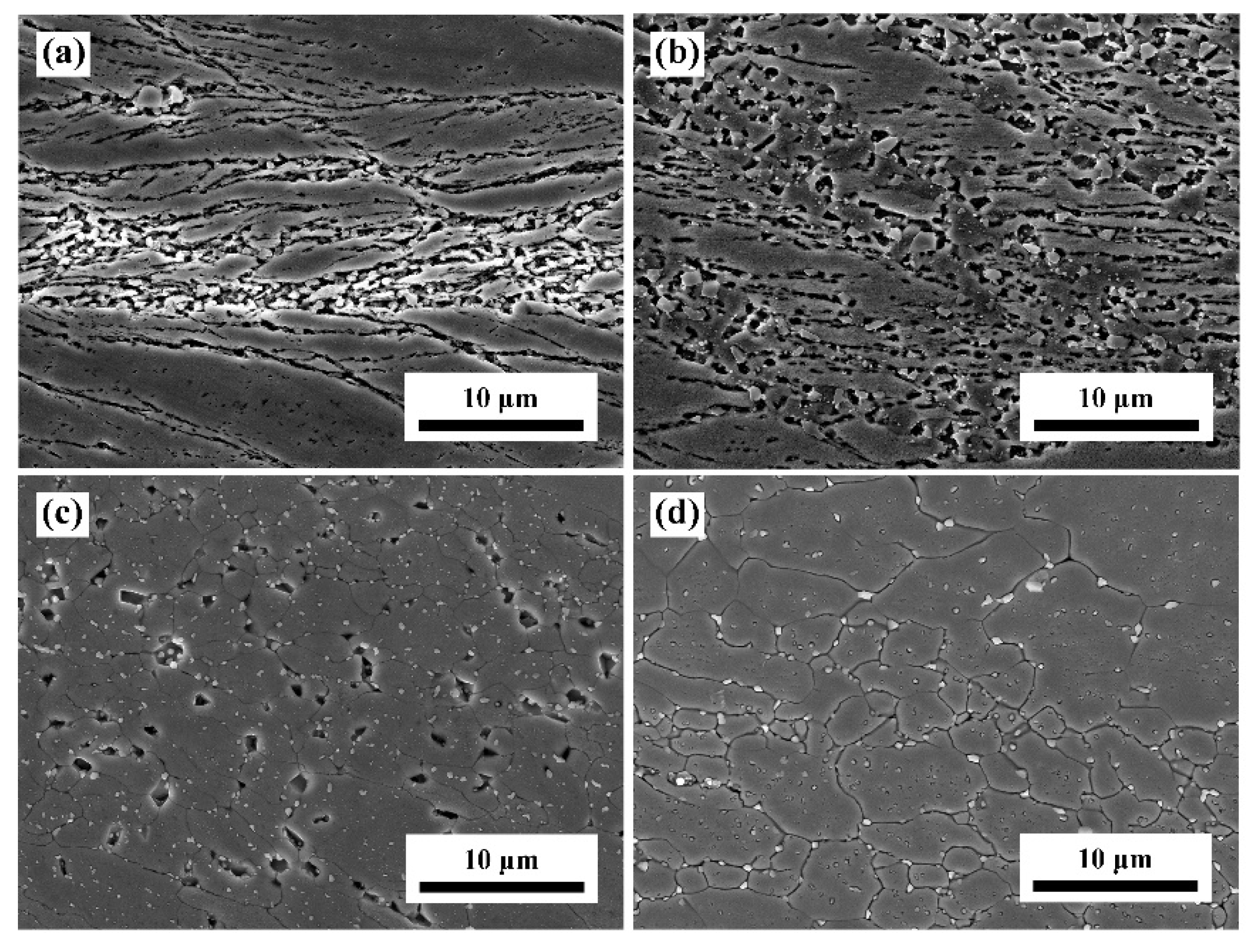
Figure 3 shows the SEM microstructures of No. 2 steel annealed at different temperatures. As confirmed in the XRD results (Figure 2), No. 2 steel possesses γ austenite and α ferrite when annealed in the temperature range of 700 °C~900 °C (Figure 3a–c). From Figure 3c,d, it can be observed that many small particles are distributed in the grain interior and at grain boundaries. It is noted that the fraction of the particles decreases when the annealing temperature increases.
Figure 3.
SEM microstructures of cold-rolled No. 2 steel annealed at different temperatures (a) 700 °C; (b) 800 °C; (c) 900 °C; (d) 1000 °C.
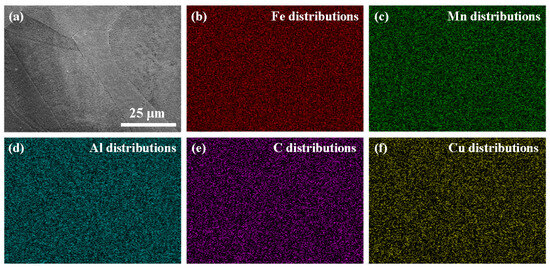
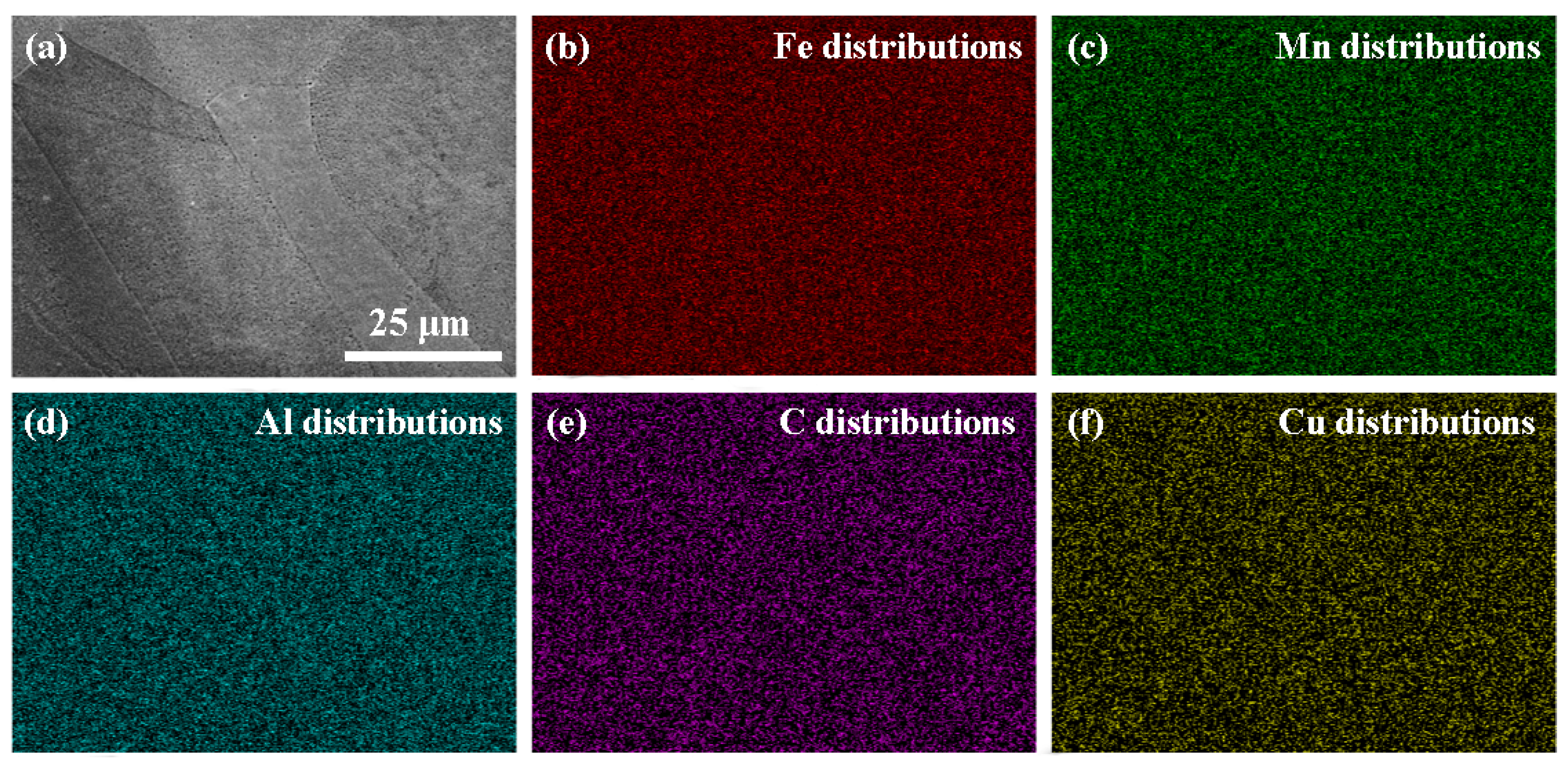
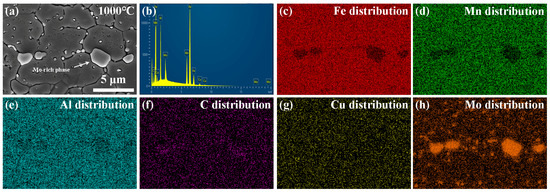
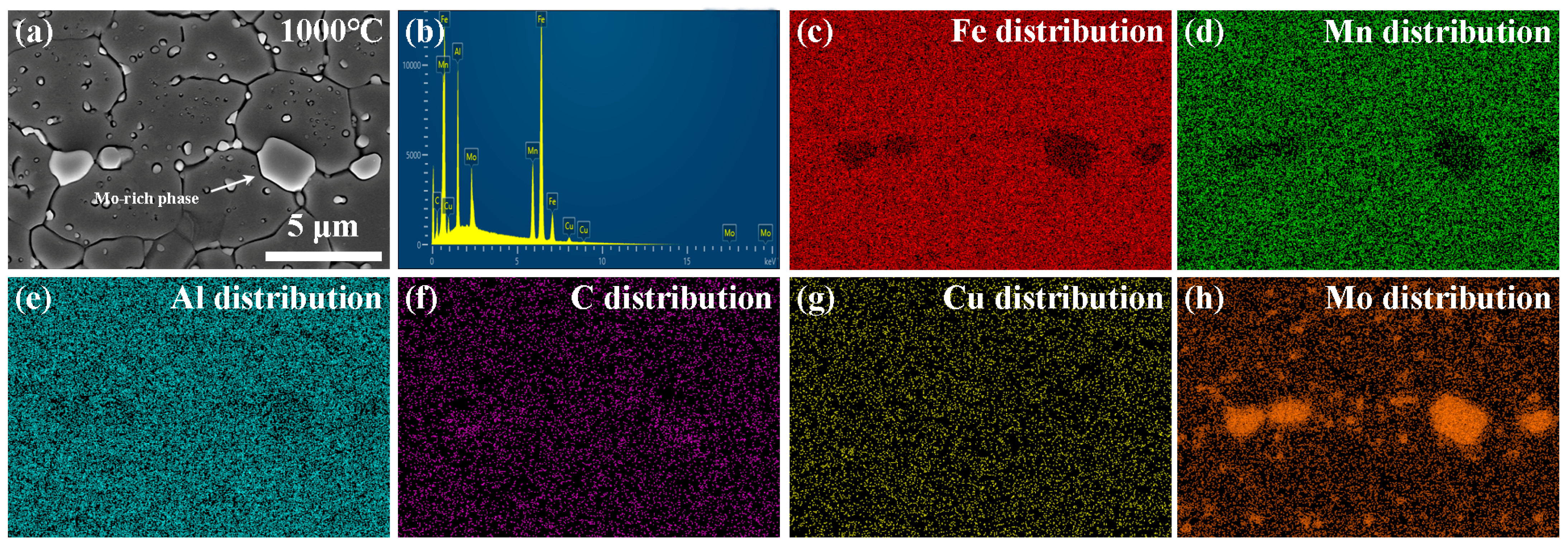
Figure 4 shows the EDS results of the cold-rolled No. 1 steel annealed at 1000 °C. After annealing, the No. 1 experimental steel exhibited an austenitic structure. It can be seen that the distribution of different elements is homogeneous, and there is no Cu element segregation. EDS spectrum analysis was also utilized to characterize the composition of the Mo-rich phase in No. 2 steel annealed at 1000 °C (Figure 5). It is found that the precipitates are poor in Fe, Mn, and Al, but a little bit rich in C and quite rich in Mo. It was reported that Mo6C forms when the concentration of Mo is higher than 4% [20,21]. It can be deduced that the precipitate here is Mo6C.
Figure 4.
EDS results of the cold-rolled No. 1 steel annealed at 1000 °C: (a) SEM microstructure; (b) Fe distribution; (c) Mn distribution; (d) Al distribution; (e) C distribution; (f) Cu distribution.
Figure 5.
EDS results of the cold-rolled No. 2 steel annealed at 1000 °C: (a) SEM microstructure; (b) EDS distribution; (c) Fe distribution; (d) Mn distribution; (e) Al distribution; (f) C distribution; (g) C distribution; (h) C distribution.
3.2. Tensile Properties of the Annealed Samples
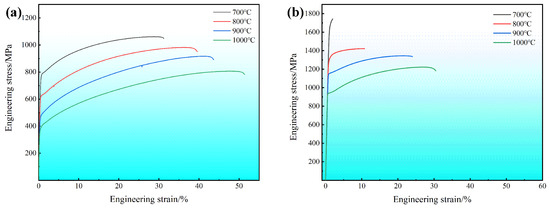
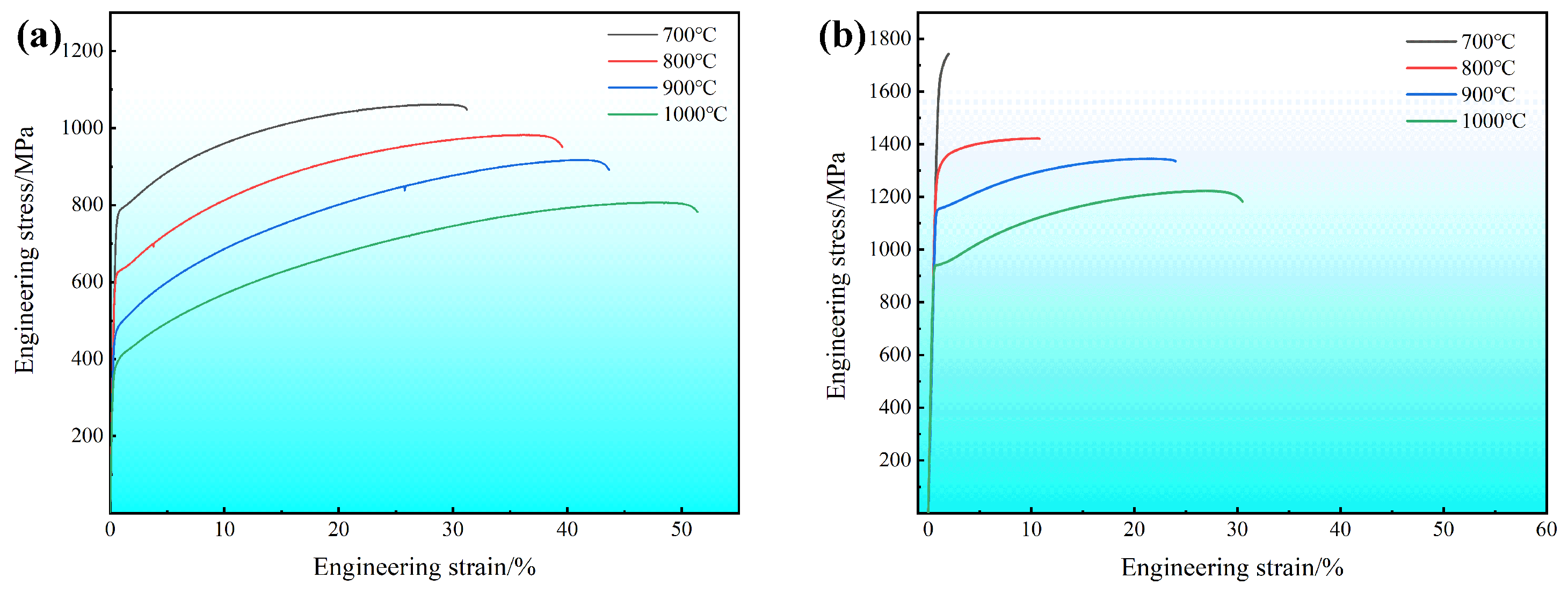
Engineering stress-engineering strain curves of the two steels are shown in Figure 6. No. 1 steel exhibits a yield strength of 830 MPa, tensile strength of 1011 MPa and elongation of 31.2% in the sample annealed at 700 °C. When the annealing temperature increases, the strengths decline, and elongation increases remarkably. The mechanical properties of No. 2 steel exhibit different characteristics. For the sample annealed at 700 °C, the strengths are very high (tensile strength is 1744 MPa and yield strength is 1595 MPa), but the elongation is only 2.4%. In the sample annealed at 900 °C, a good combination of mechanical properties is shown, with a tensile strength of 1345 MPa, yield strength of 1181 MPa and elongation of 24% being attained.
Figure 6.
Stress–strain curves of the cold-rolled experimental steels annealed at different temperatures: (a) No. 1 steel; (b) No. 2 steel.
4. Discussion
4.1. Relationship Between Microstructures and Mechanical Properties
As mentioned before, the microstructure of No. 2 steel consists of austenite and ferrite after annealing in the temperature range of 700 °C to 1000 °C. Furthermore, a new Mo-rich precipitate formed in the annealing temperature range. Compared with No. 1 steel, the recrystallization process was delayed by the addition of Mo in No. 2 steel, which is because the drag effect resulted from the Mo atoms and the obstruction of dislocation movements by the Mo-rich precipitates, both retarding recrystallization processes. And the grain growth was suppressed due to the obstruction of the precipitates to grain boundary migration during the annealing processes at a higher temperature. Additionally, Qiu et al. [26] indicate that Mo atoms dissolve in the ferrite matrix while promoting the precipitation of nanoscale (Ti, Mo) C complex carbides, which pin dislocations and grain boundaries, significantly enhancing the thermal stability of ferrite and inhibiting ferrite grain growth.
For No. 1 steel, the yield and tensile strengths decrease and ductility increases continuously in the temperature range of 700 °C to 1000 °C, as the recrystallization and grain growth proceed. Although the ductility is quite high, the yield strengths of No. 1 steel annealed at different temperatures are all below 800 MPa. As a whole, the strengths of No. 2 steel with Mo alloying are obviously higher than those of its counterpart, whereas its ductility is impaired to some extent. When the annealing temperature is 900 °C, the strengths of No. 2 steel are quite high with moderate ductility and the yield ratio is 0.87, exhibiting good comprehensive mechanical properties. In this case, the appearance of Mo6C inhibits the grain boundary migration so that the recrystallization and grain growth are restrained. This view is also supported by the present results; Liu et al. reported that intragranular κ-carbides and grain boundary precipitates in lightweight steels exhibit a suppressing effect on recrystallization [27]. When annealed at 1000 °C, the strengths of the steel remained at a high level, with good ductility. A compound mechanism of solute, grain refinement, duplex phase constituents, dislocation and precipitation strengthening is exhibited during tensile deformation, resulting in the enhancement of the strength of the steel.
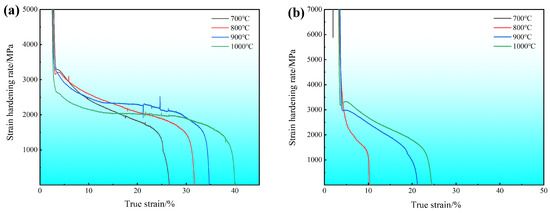
The variations in strain-hardening rates with true strains are shown in Figure 7. As illustrated in Figure 7a, No. 1 steels exhibit two different kinds of strain-hardening behaviors. As the microstructure exhibits deformed characteristics when the sample is annealed at 700 °C, the strain rate of the sample declines rapidly. The low deformation capability of non-recrystallized austenite and hard ferrite results in the rapid occurrence of instability. Recrystallization has almost finished, but there might still be a high density of dislocations in the sample annealed at 800 °C, so that the strain-hardening behaviors may be similar at these two temperatures. When the annealing temperature becomes higher (900 °C), recrystallization is almost complete, and it can be found that sustained strain hardening is exhibited. The strain-hardening behavior of the sample annealed at 1000 °C is similar to that of the sample annealed at 900 °C.
Figure 7.
Variations in strain-hardening rate with true strain of the cold-rolled experimental steel after annealing treatment: (a) No. 1 steel; (b) No. 2 steel.
As shown in Figure 7b, there is no strain hardening in the sample of No. 2 steel annealed at 700 °C, as its ductility is very limited. The sample annealed at 800 °C presents a rapid declining trend due to its non-recrystallized microstructure. Relatively high strain-hardening rates in the early stages of deformation in the samples annealed at 900 °C and 1000 °C are exhibited, which might result from the obstruction of dislocation movements by Mo-rich precipitates. It is noticed that there is no sustained strain hardening in the deformation of these two samples, which is different from the situation inf No. 1 steel.
In the present study, the addition of Mo and proper heat treatment (simple annealing) not only increases the yield and tensile strengths, but also makes the steel maintain high strain-hardening rates during the deformation process, which could provide a new route for alloy design and fabrication of lightweight steels with high performance.
4.2. Quantitative Assessment of Yield Strength
Compared to No. 1 steel without Mo alloying elements, No. 2 steel with Mo addition achieved significant improvement in tensile strength without obvious loss of ductility. Specifically, the addition of Mo alloying elements formed MoC-type precipitates in No. 2 steel, which enhanced the material strength through precipitation strengthening; meanwhile, these precipitates could inhibit recrystallization of the austenite matrix and refine the recrystallized grains, thereby producing dislocation strengthening and grain boundary strengthening effects. To quantitatively evaluate the contribution of each strengthening mechanism to the strength of No. 2 steel, the experimental No. 2 steel after annealing at 900 °C was selected as the benchmark for yield strength assessment. Meanwhile, previous studies have also explored various strengthening mechanisms for calculating yield strength [28].
The above results have shown that the yield strength of No. 2 steel annealed at 900 °C reached 1181 MPa, 360 MPa higher than that of No. 1 steel. The samples annealed at this temperature are chosen to quantitatively evaluate their strengthening mechanisms. The strengthening mechanisms are somewhat complex, mainly involving solution, grain refinement, duplex microstructure, precipitation strengthening and possibly dislocation strengthening. At this temperature, ferrite in No. 2 steel dissolves to some extent so that austenite is basically the matrix. To simplify this, the effect of the ferrite phase is not considered. Meanwhile, the effect of Mo6C in strengthening is taken into account.
The yield strength of an austenitic steel can be predicted as follows [21,23,28,29]:
where is the yield strength, is the lattice friction stress (25 MPa [28,30,31]).
presents the grain boundary strengthening, is solution strengthening, is the dislocation strengthening and corresponds to precipitation strengthening.
The contribution of austenite grain refining can be described by the Hall–Petch relationship [23,28,29]:
where KH-P for austenite is 638 MPa·μm1/2 [32], and d is the average grain size, being 16.17 μm for No. 1 steel and 4.23 μm for No. 2 steel. Therefore, is 158.66 MPa and is 310.21 MPa.
The contribution of solute elements in austenite can be expressed as [23,28,29]:
Ki represents the strengthening coefficient of an element i, and Ci is the weight percentage of i. For the Mo atom, Ki is taken as 11 MPa·wt%−1 [21] in the investigated steel. The concentration of Mo is 4 wt%, so that the increment in the solution strengthening is 44 MPa.
The yield strength increment resulting from dislocation strengthening is presented as
A is the strengthening coefficient, taken as 0.5; M is the Taylor factor, taken as 3.06 for austenite; G is the shear modulus, at 70 GPa for austenite; b is Burger’s vector, 0.26 nm; ρd is the dislocation density.
where β is half the width of the main peaks in the XRD spectrum. The dislocation density in No. 1 steel is not accounted here and the dislocation density in No. 2 steel is 4.8 × 10¹³ m−2, being 131.60 MPa.
As the size of Mo6C is relatively large, the Orowan mechanism is applied. The contribution to the strength can be described by the Ashby–Orowan formula [23,28,29]:
where F is the volume fraction of Mo6C, X is the average diameter of the precipitate, and G is shear modulus, taken as 70 GPa; b = 0.26 nm. Using an Image-Pro plus 6.0, the volume fraction and average particle size were obtained, as f ≈ 11.2%, and X ≈ 0.42 μm. The result indicateσp= 52.23 MPa.
Table 2 shows the increments evaluated from different strengthening mechanisms, where is the theoretical increment in yield strength and is the actual increment in yield strength. It can be seen that the calculated and experimental values are quite consistent. The higher value of the calculated one may result from the overestimation of the increment in dislocation strengthening, as this mechanism is not considered at all in No. 1 steel. It can be seen that the most important strengthening mechanism is grain refinement, which is due to the obstruction of grain boundary migration by the addition of the Mo-rich phase during the annealing process.
Table 2.
The increments in the strengthening mechanism of the Cu-Mo alloyed experimental steel after annealing at 900 °C.
5. Conclusions
In the present work, at different temperatures has been conducted in Fe-18Mn-8Al-1C-3Cu and Fe-18Mn-8Al-1C-3Cu-4Mo steels . The microstructures and mechanical properties of the steels were researched, and the strengthening mechanisms were also revealed. The main conclusions are as follows.
(1) The addition of Mo increased the recrystallization temperature of the base steel (Fe-18Mn-8Al-1C-3Cu), which resulted from the solute drag of Mo and the obstruction to dislocation movements by Mo6C precipitates. Grain growth was also restrained by the addition of Mo.
(2) The Mo alloyed steel consisted of austenite and ferrite when annealed in the temperature range of 700~1000 °C. As the annealing temperature increased, ferrite dissolved to some extent. The dual-phase synergy between austenite and ferrite, combined with the solid-solution strengthening of Mo and dispersion strengthening of Mo6C, significantly improves the strength of the material. For the sample annealed at 900 °C, the yield strength reached 1181 MPa, the tensile strength was 1345 MPa and elongation was 24%, demonstrating the excellent comprehensive mechanical properties of Mo alloyed steel. After high-temperature annealing, the strain-hardening rate was significantly improved due to the obstruction of dislocation movements by Mo-rich precipitates.
(3) The enhancement of yield strength induced by Mo addition was quantitatively evaluated. The strengthening mechanisms are somewhat complex, mainly involving solution, grain refinement, duplex microstructure, precipitation strengthening and possibly dislocation strengthening. Quantitative evaluation revealed that the increment in yield strength was mainly due to grain refinement.
Author Contributions
Conceptualization, S.W. and H.D.; methodology, H.D.; validation, S.W. and P.L.; formal analysis, S.W.; data curation, S.W.; writing—original draft preparation, S.W.; writing—review and editing, H.D. All authors have read and agreed to the published version of the manuscript.
Funding
This research received no external funding.
Data Availability Statement
The original contributions presented in this study are included in the article. Further inquiries can be directed to the corresponding authors.
Conflicts of Interest
Author Shibo Wang was employed by Shenyang Aircraft Corporation. The remaining authors declare that the research was conducted in the absence of any commercial or financial relationships that could be construed as a potential conflict of interest.
References
- Chen, S.; Rana, R.; Haldar, A.; Ray, R.K. Current state of Fe-Mn-Al-C low density steels. Prog. Mater. Sci. 2017, 89, 345–391. [Google Scholar] [CrossRef] [Scilit]
- Ren, X.; Li, Y.; Qi, Y.; Wang, C. Effect of micro-alloyed/alloyed elements on microstructure and properties of Fe-Mn-Al-C lightweight steel. Metals 2022, 12, 695. [Google Scholar] [CrossRef] [Scilit]
- Ding, H.; Liu, D.G.; Cai, M.H.; Zhang, Y. Austenite-based Fe-Mn-Al-C lightweight steels: Research and prospective. Metals 2022, 12, 1572. [Google Scholar] [CrossRef] [Scilit]
- Chen, P.; Chen, R.; Li, X.W. Tensile deformation behavior related with strain-induced martensitic transformation in a duplex Fe-Mn-Al-C low-density steel. Mater. Charact. 2022, 189, 111954. [Google Scholar] [CrossRef] [Scilit]
- Sun, S.; Li, H.; Huang, H.; Ding, H.; Beladi, H.; Hodgson, P.; Cai, M. Improved Mn-segregation bands and its influence on deformation behavior in a severely warm-rolled 10Mn lightweight steel. Vacuum 2023, 216, 112428. [Google Scholar] [CrossRef] [Scilit]
- Zhao, C.; Song, R.; Zhang, L.; Yang, F.; Kang, T. Effect of annealing temperature on the microstructure and tensile properties of Fe-10Mn-10Al-0.7C low-density steel. Mater. Des. 2016, 91, 348–360. [Google Scholar] [CrossRef] [Scilit]
- Bai, M.; Yang, D.; Wang, G.; Ryu, J.; Lee, K.; Yi, H. Enhancing the robustness and efficiency in the production of medium Mn steels by Al addition. Metals 2020, 10, 1432. [Google Scholar] [CrossRef] [Scilit]
- Oh, B.W.; Cho, S.J.; Kim, Y.G.; Kim, Y.; Kim, Y.; Kim, W.; Hong, S. Effect of aluminium on deformation mode and mechanical properties of austenitic Fe-Mn-Cr-Al-C alloys. Mater. Sci. Eng. A 1995, 197, 147–156. [Google Scholar] [CrossRef] [Scilit]
- Kayak, G.L.J.M.S.; Treatment, H. Fe−Mn−Al precipitation-hardening austenitic alloys. Met. Sci. Heat Treat. 1969, 11, 95–97. [Google Scholar] [CrossRef] [Scilit]
- Frommeyer, G.; Brüx, U. Microstructures and mechanical properties of high-strength Fe-Mn-Al-C light-weight TRIPLEX steels. Steel Res. Int. 2006, 77, 627–633. [Google Scholar] [CrossRef] [Scilit]
- Lin, C.L.; Chao, C.G.; Juang, J.Y.; Yang, J.-M.; Liu, T.-F. Deformation mechanisms in ultrahigh-strength and high-ductility nanostructured FeMnAlC alloy. J. Alloys Compd. 2014, 586, 616–620. [Google Scholar] [CrossRef] [Scilit]
- Lee, J.; Kim, H.; Park, S.J.; Moon, J.; Han, H.N. Correlation between macroscale tensile properties and small-scale intrinsic mechanical behavior of Mo-added Fe-Mn-Al-C lightweight steels. Mater. Sci. Eng. A 2019, 768, 138460. [Google Scholar] [CrossRef] [Scilit]
- Chen, Z.; Liu, M.X.; Zhang, J.K.; Yang, L.; Zhang, Y.-H.; Song, C.-J.; Zhai, Q.-J. Effect of annealing treatment on microstructures and properties of austenite-based Fe-28Mn-9Al-0.8C lightweight steel with addition of Cu. China Foundry 2021, 18, 207–216. [Google Scholar] [CrossRef] [Scilit]
- Yang, L.; Li, Z.; Li, X.; Zhang, Y.; Han, K.; Song, C.; Zhai, Q. An enhanced Fe–28Mn–9Al–0.8C lightweight steel by coprecipitation of nanoscale Cu-Rich and κ-Carbide particles. Steel Res. Int. 2020, 91, 1900665. [Google Scholar] [CrossRef] [Scilit]
- Tae, P.K. Tensile deformation of low-density Fe-Mn-Al-C austenitic steels at ambient temperature. Scr. Mater. 2013, 68, 375–379. [Google Scholar]
- Xie, Z.; Hui, W.; Zhang, Y.; Zhao, X. Effect of Cu and solid solution temperature on microstructure and mechanical properties of Fe-Mn-Al-C low-density steels. J. Mater. Res. Technol. 2022, 18, 1307–1321. [Google Scholar] [CrossRef] [Scilit]
- Yoo, J.; Jo, M.C.; Kim, D.W.; Song, H.; Koo, M.; Sohn, S.S.; Lee, S. Effects of Cu addition on resistance to hydrogen embrittlement in 1 GPa-grade duplex lightweight steels. Acta Mater. 2020, 196, 370–383. [Google Scholar] [CrossRef] [Scilit]
- Hwang, J.H.; Trang, T.T.T.; Lee, O.; Park, G.; Zargaran, A.; Kim, N.J. Improvement of strength-ductility balance of B2-strengthened lightweight steel. Acta Mater. 2020, 191, 1–12. [Google Scholar] [CrossRef] [Scilit]
- Kim, C.; Hong, H.U.; Jang, J.H.; Lee, B.H.; Park, S.-J.; Moon, J.; Lee, C.-H. Reverse partitioning of Al from k-carbide to the g-matrix upon Ni addition and its strengthening effect in Fe-Mn-Al-C lightweight steel. Mater. Sci. Eng. 2021, A820, 141563. [Google Scholar] [CrossRef] [Scilit]
- Moon, J.; Park, S.J.; Jang, J.H.; Lee, T.-H.; Lee, C.-H.; Hong, H.-U.; Suh, D.-W.; Kim, S.H.; Han, H.N.; Lee, B.H. Atomistic investigations of κ-carbide precipitation in austenitic Fe-Mn-Al-C lightweight steels and the effect of Mo addition. Scr. Mater. 2017, 127, 97–101. [Google Scholar] [CrossRef] [Scilit]
- Liu, Y.; Zhang, J.; Zhang, Y.; Chen, G.; Song, C.; Zhai, Q. Unexpected strengthening of the Mo-containing low-density steel achieved through a novel nano-ordered phase. Mater. Sci. Eng. A 2024, 894, 146159. [Google Scholar] [CrossRef] [Scilit]
- Huang, H.; Yang, G.; Zhao, G.; Mao, X.; Gan, X.; Yin, Q.; Yi, H. Effect of Nb on the Microstructure and Properties of Ti-Mo Microalloyed High-strength Ferritic Steel. Mater. Sci. Eng. A 2018, 736, 148–155. [Google Scholar] [CrossRef] [Scilit]
- Qiu, X.Y.F.; Wang, Y.C.; Yang, B.; Xiong, Z.; Cheng, X. Multiphase precipitation behavior and tensile properties of a Fe-Mn-Al-Mo-C austenitic lightweight steel. Mater. Sci. Eng. A 2023, 885, 145654. [Google Scholar] [CrossRef] [Scilit]
- Sun, H.L.; Li, P.; Li, L.; Ding, H. Effect of Ni element on microstructure evolution and mechanical properties of Fe-Mn-Al-C-(Ni) austenitic lightweight steel. J. Mater. Eng. Perform. 2025, 1–11. [Google Scholar] [CrossRef] [Scilit]
- Song, H.; Yoo, J.; Kim, S.H.; Sohn, S.S.; Koo, M.; Kim, N.J.; Lee, S. Novel ultra-high-strength Cu-containing medium-Mn duplex lightweight steels. Acta Mater. 2017, 135, 215–225. [Google Scholar] [CrossRef] [Scilit]
- Qiu, X.Y.F.; Wang, Y.C.; Zeng, K.L.; He, J.; Gao, C.; Xiong, Z.-P.; Cheng, X.-W. Effect of Mo on precipitation behavior and tensile properties of Fe26Mn8Al1.2C–xMo lightweight austenitic steels. J. Iron Steel Res. Int. 2025, 32, 2666–2673. [Google Scholar] [CrossRef] [Scilit]
- Liu, J.; Li, L.; Yang, S.; Ding, C.; Wang, E.; Yu, X.; Wu, H.; Niu, G. Effect of intragranular κ carbides and intergranular precipitates on the hot deformation mechanism and dynamic recrystallization mechanism of Fe–28Mn–11Al–1.5C–5Cr lightweight steel. J. Mater. Res. Technol. 2023, 27, 2346–2362. [Google Scholar] [CrossRef] [Scilit]
- Kamikawa, N.; Sato, K.; Miyamoto, G.; Murayama, M.; Sekido, N.; Tsuzaki, K.; Furuhara, T. Stress-strain Behavior of Ferrite and Bainite with Nano-precipitation in Low Carbon Steels. Acta Mater. 2015, 83, 383–396. [Google Scholar] [CrossRef] [Scilit]
- Kang, Y.L.; Han, Q.H.; Zhao, X.M.; Cai, M.-H. Influence of nanoparticle reinforcements on the strengthening mechanisms of an ultrafine-grained dual phase steel containing titanium. Mater. Des. 2013, 44, 331–339. [Google Scholar] [CrossRef] [Scilit]
- Chen, S.C.; Wang, Y.T.; Lin, Y.C.; Huang, C.-Y.; Yang, J.-R.; Yen, H.-W. Microstructure and mechanical behaviors of GPa-grade TRIP steels enabled by hot-rolling processes. Mater. Sci. Eng. A 2019, 761, 138005. [Google Scholar] [CrossRef] [Scilit]
- Kusakin, P.; Belyakov, A.; Molodov, D.A.; Kaibyshev, R. On the effect of chemical composition on yield strength of TWIP steels. Mater. Sci. Eng. A 2017, 687, 82–84. [Google Scholar] [CrossRef] [Scilit]
- Liu, M.; Li, X.; Zhang, Y.; Song, C.; Zhai, Q. Multiphase precipitation and its strengthening mechanism in a V-containing austenite-based low density steel. Intermetallics 2021, 134, 107179. [Google Scholar] [CrossRef] [Scilit]

Disclaimer/Publisher’s Note: The statements, opinions and data contained in all publications are solely those of the individual author(s) and contributor(s) and not of MDPI and/or the editor(s). MDPI and/or the editor(s) disclaim responsibility for any injury to people or property resulting from any ideas, methods, instructions or products referred to in the content. |
© 2026 by the authors. Licensee MDPI, Basel, Switzerland. This article is an open access article distributed under the terms and conditions of the Creative Commons Attribution (CC BY) license.