


Abstract
To address the corrosion protection issues for hot components of high-end equipment in extreme service environments, the C276 alloy coating was deposited on the surface of 304 stainless steel via high-velocity air fuel (HVAF) spraying. The extreme conditions of 1000 °C temperature, an atmosphere containing 6% HCl, and a flow rate of 30 m/s were simulated in the study using a high-temperature airflow corrosion erosion device. The C276 coating and the 304 stainless steel substrates were subjected to a corrosion test for 25 min. The surface phase composition, element distribution, corrosion product characteristics, and cross-section structure of the samples before and after corrosion were systematically analyzed by means of a scanning electron microscope, an energy dispersive spectrometer, and an X-ray diffractometer. The mechanism of high-temperature chlorination corrosion was deduced through thermodynamic and kinetic analysis. The results show that compared with 304 stainless steel, the C276 alloy coating exhibits better corrosion resistance in an extremely high-temperature environment containing HCl, and the average weight gain and growth rate of the corrosion layer were lower. The main corrosion products on the C276 coating surface are Fe2O3, FeO, FeCl2, NiO, and Cr2O3, among which the oxides of Ni and Cr form a continuous and dense protective oxide layer that effectively inhibits the intrusion of corrosive media. The high-temperature HCl corrosion follows the ‘chlorination–oxidation’ cycle mechanism, and Cl2 plays a catalytic role in the reaction and accelerates the corrosion process.
1. Introduction
Advanced gas turbines are moving toward “ultra-high temperatures, high loads, and extended lifespans” in aerospace, energy sources, and other fields [1,2,3]. The hot component of an advanced gas turbine needs to work under extreme conditions, including high temperature, high flow rate and high corrosive atmosphere. Corrosion caused by chlorine-containing media, particularly hydrogen chloride (HCl), is especially prominent [4,5,6]. In such environments, the material surface is prone to a vicious cycle of ‘pitting → oxide layer cracking → corrosive medium penetration’ [7,8], which leads to chloride ion adsorption and exfoliation of the corrosion product layer. It results in premature failure of the components and seriously affects the reliability of the equipment.
Nickel-based superalloys are studied and applied in high-temperature conditions due to their good high-temperature strength, excellent oxidation resistance and hot corrosion resistance [9,10,11,12]. Gong et al. [13] studied the corrosion behavior of NiCrAlTi coatings at 650 °C in an atmosphere containing 2000 ppm HCl. They attributed high-temperature chloride corrosion to Cl2 generated from the breakdown of hydrochloric acid and sodium chloride. Karuana et al. [14] studied the corrosion behavior of 304 stainless steel in different chlorine-containing atmospheres at 550 °C. They found that chlorides induce the degradation of the oxide layer and weaken the protective performance of the oxide layer. Liu Xiaobo et al. [8] analyzed 12Cr1MoV alloy at 550 °C in an atmosphere containing 600 ppm HCl. They confirmed that a multilayer oxide layer is crucial for corrosion resistance, with alloying element composition and proportion being key factors. There is another study [15] on the corrosion of 310S alloy at 460–580 °C, which showed that higher temperatures significantly affected the corrosion behavior, especially at 580 °C. Zhou Yiming [16] and Sun Haofei [17] found that there were some differences between the corrosion at a high temperature and the corrosion at middle and low temperatures. High-temperature corrosion cannot be explained by the simple active oxidation theory. Rammer et al. [18] built a kinetic model for high-temperature chlorine corrosion. They found that there is a critical flow rate depending on temperature. When the flow rate is less than the critical flow rate, the corrosion rate increases with the increase in the square root of the flow rate, and the rate tends to be stable when the flow rate is greater than the critical flow rate. As a nickel-based alloy, C276 alloy has excellent corrosion resistance in various corrosive media due to its Cr, Mo and Ni elements [19,20,21]. Bian Lan [22] prepared C276 coatings on 304 stainless steel and analyzed its corrosion resistance in FLiNaK molten salt at 700 °C. It was found that the coating had good adhesion with the substrate and had excellent molten salt corrosion resistance. Jiaxuan Li [23] studied the high-temperature corrosion behavior of C276 alloy under the synergistic action of alkali metal chloride salts and HCl-containing fumes at 550 °C and 700 °C. It was found that the increase in temperature will change the corrosion behavior of the material and seriously aggravate the corrosion damage of the alloy.
The existing research on high-temperature HCl corrosion is mostly limited to the working conditions of medium and low temperatures, low concentration, and static or low flow rates. In some extreme service environments such as aero-engines and industrial gas turbines, alloy materials face extreme conditions of high temperatures above 900 °C and high concentration of corrosive HCl [16]. However, the research on HCl corrosion at temperatures above 900 ° C is very limited, and there is almost no research on superalloys [24]. At the same time, according to the industry standard provided by NASA [25], the reference value of gas velocity in the combustion chamber of gas turbines includes 30 m/s. In addition, considering that HCl significantly accelerates the corrosion rate, long-term experiments may ignore important changes in the initial stage of the corrosion mechanism [24]. Therefore, it is necessary to carry out short-term corrosion experiments with high temperature, high corrosion gas concentration and high flow rate.
In this study, the C276 alloy coating was deposited on the surface of 304 stainless steel via high-velocity air fuel (HVAF) spraying technology. The extreme conditions of 1000 °C temperature, an atmosphere containing 6%HCl, and a flow rate of 30 m/s were simulated in the study. The corrosion kinetics, product composition, and microscopic characteristics of both C276 alloy and the substrate were compared. The corrosion and protection mechanisms of C276 alloy were clarified. The study provides theoretical and experimental data support for developing economical and efficient high-temperature anti-corrosion coatings.
2. Materials and Experimental Details
2.1. Materials
C276 alloy powder was selected as the coating material, and 304 stainless steel was selected as the substrate in the study. Their chemical compositions are shown in Table 1. Prior to deposition of the coating, the substrate was sandblasted with brown corundum of 425–355 μm particle size to achieve an average surface roughness of 4–6 μm. The C276 alloy powder was pre-baked at 100 °C for 1 h to remove moisture, followed by preheating the substrate to 100 °C. After the preparation was completed, the coating deposition was performed using high-velocity air fuel spraying technology. Propane served as the fuel gas, air as the combustion gas, and nitrogen as the powder carrier gas. The coating thickness was controlled at 350 μm.
Table 1.
Chemical composition of C276 alloy and 304 stainless steel.
The coated samples and 304 stainless steel substrates were machined into cubic specimens of 10 mm × 10 mm × 10 mm. The coated side was polished using 400–2500 mesh waterproof sandpaper. After polishing with a 0.5 μm diamond polishing paste, the specimens were cleaned with ethanol and dried. Before corrosion tests, the initial mass of each specimen was measured using an electronic balance with a precision of 0.1 mg.
2.2. Chlorine Corrosion Process
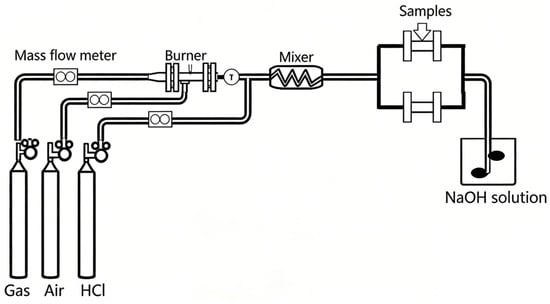
High-temperature corrosion tests were conducted using the high-temperature airflow corrosion erosion device. The schematic diagram of the experimental device is shown in Figure 1. The corrosion conditions were as follows: the temperature was set to 1000 °C, the atmosphere composition was set to 6% HCl, 9.5% O2, 5.8% CO2, 7.4% H2O (volume fraction), and N2 was selected as the balance gas. The total gas flow rate was set to about 30 m/s, and the corrosion time was set to 25 min.
Figure 1.
Schematic diagram of the high-temperature airflow corrosion erosion device.
Before the experiment began, the test samples were placed in a specially designed crucible. Then the valves of the fuel gas and air supply lines were opened. The gases were mixed and ignited in the burner, and the temperature of the system rapidly increased. After the temperature in the system rose to 1000 °C, the valves of the HCl feedline were opened, and HCl was introduced into the mixer to form a corrosive atmosphere. The mixed gas flowing through the sample reaction chamber was treated with the sodium hydroxide solution at the end of the line. After the corrosion was completed, the valves of the gases currently in use were closed. High-purity argon gas was introduced into the system to purge residual corrosive gases. After the temperature of the system decreased to room temperature, the samples were taken out and weighed.
2.3. Analysis Methods
Before the corrosion tests, the initial morphology of the alloy coating was observed. The surface morphology of the pristine coating was examined and analyzed using a scanning electron microscope (SEM) equipped with an energy dispersive spectrometer (EDS). Vickers microhardness measurements of the C276 coatings were conducted using a Wolpert-401MVD (Wilson Instruments, Norwood, MA, USA) hardness tester under a load of 500 g and a dwell time of 15 s. For each sample, no fewer than 10 indentations were made to guarantee the repeatability of the test data.
After corrosion tests, cross-sectional specimens were prepared from each corroded sample. Phase analysis of surface products and condensation-end corrosion products on the specimens was conducted using an X-ray diffractometer (XRD). SEM/EDS was employed to observe and determine the composition of corrosion products with different morphologies on the specimen surfaces and cross-sections, and to measure the thickness of the corrosion layer on the cross-sections.
3. Results
3.1. Microstructure and Properties of Coating
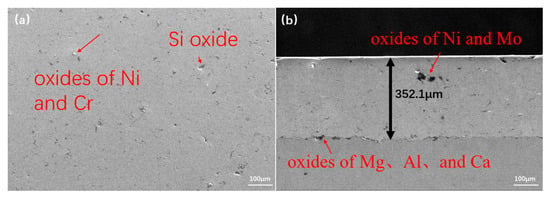
The morphology of the original C276 coating surface and cross-section is shown in Figure 2. According to the SEM test results, the average total thickness of the coating was about 350 μm, and the average porosity is 2.18%. It is shown from Figure 2a that there are a small number of granular precipitates on the C276 coating surface, with distributed dark defective areas containing pores and cracks. The granular precipitates on the surface are oxides of Ni and Cr as identified by EDS analysis. The dark region is mainly composed of Si oxides. Combined with the oxidation characteristics of Si and the elemental composition of the coating, it is speculated that the formation of the dark areas is due to the partial spalling of the coating surface, which exposes the internal Si oxide. Figure 2b shows that the coating contains some dark areas, with a few microcracks present at the coating–substrate interface. The dark area of the cross-section is mainly oxides of Ni and Mo. In addition to the main Fe and Si oxides, a certain amount of Mg, Al and Ca elements were also detected at the interface between the coating and the substrate, which are presumed to be the residual abrasive particles of brown corundum used for sandblasting before spraying. In addition, the average microhardness of the C276 coating was 450HV0.5 according to the hardness tester. In contrast, the microhardness of the 304 stainless steel substrate was only 180HV0.5. Overall, the coating has a high density and excellent adhesion with the substrate.
Figure 2.
SEM micrographs of the C276 coatings (a) surface morphology (b) cross-section morphology.
3.2. Macroscopic Morphology of Corrosion Samples
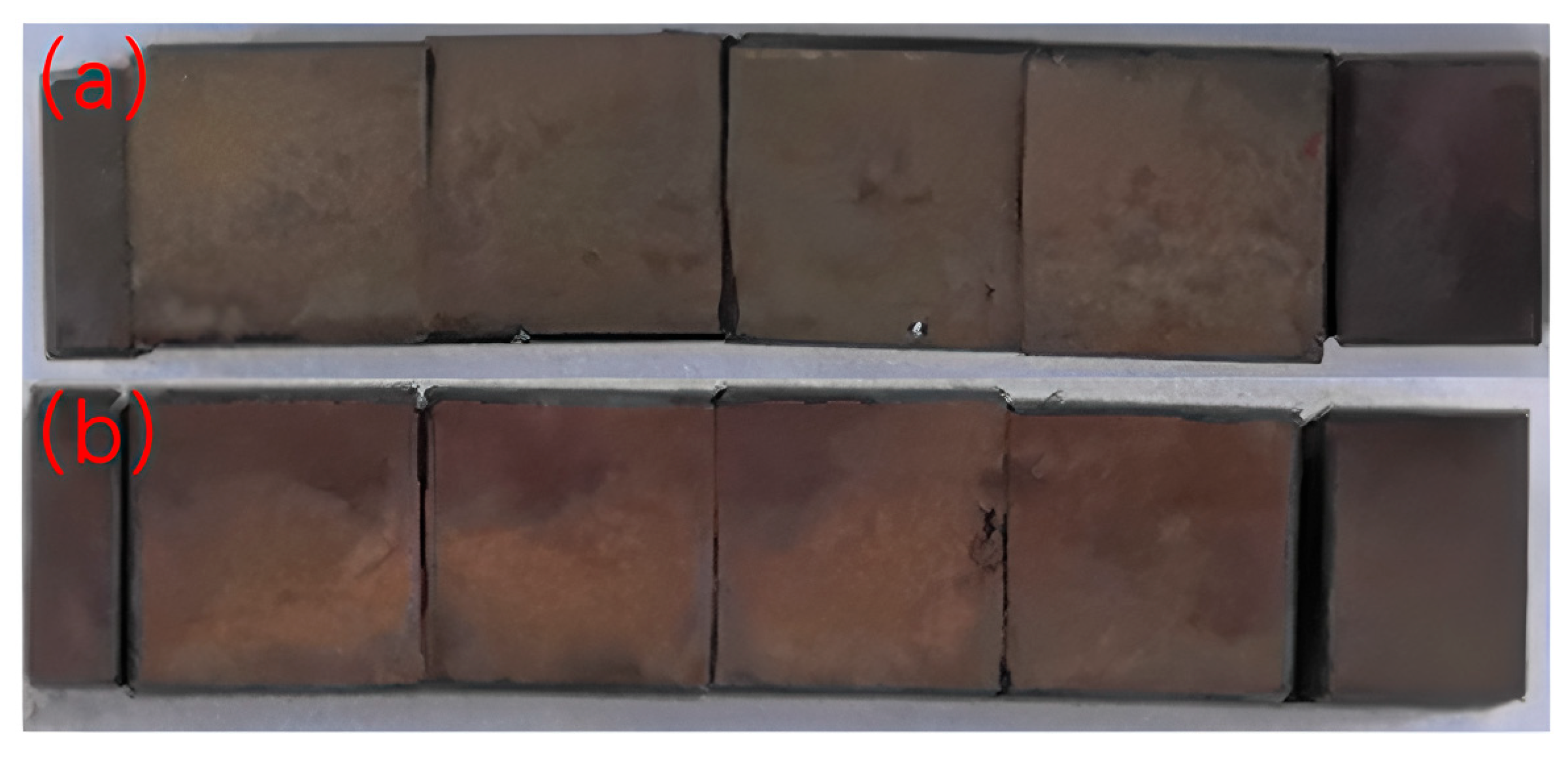
The macroscopic morphologies of the C276 alloy coating and the 304 stainless steel are shown in Figure 3. It is evident that different degrees of corrosion occurred on the surface of the two types of samples. A small amount of red and black protective oxide layer was formed on the C276 coating surface (Figure 3a), while a large number of red corrosion products were formed on the surface of the 304 stainless steel (Figure 3b). The coverage of corrosion products on 304 stainless steel is high, and the corrosion traces are obvious. It is intuitively shown that the corrosion degree of 304 stainless steel is more serious than that of the C276 coating.
Figure 3.
Macroscopic morphology at 1000 °C in the experimental atmosphere for 25 min (a) the C276 coating (b) 304 stainless steel.
3.3. Corrosion Products on the Surface of Corrosion Samples
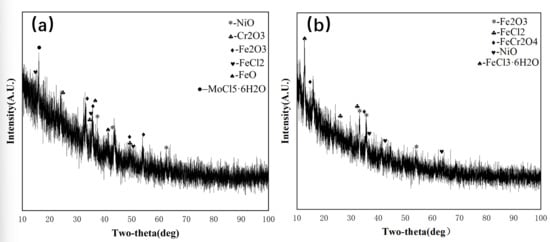
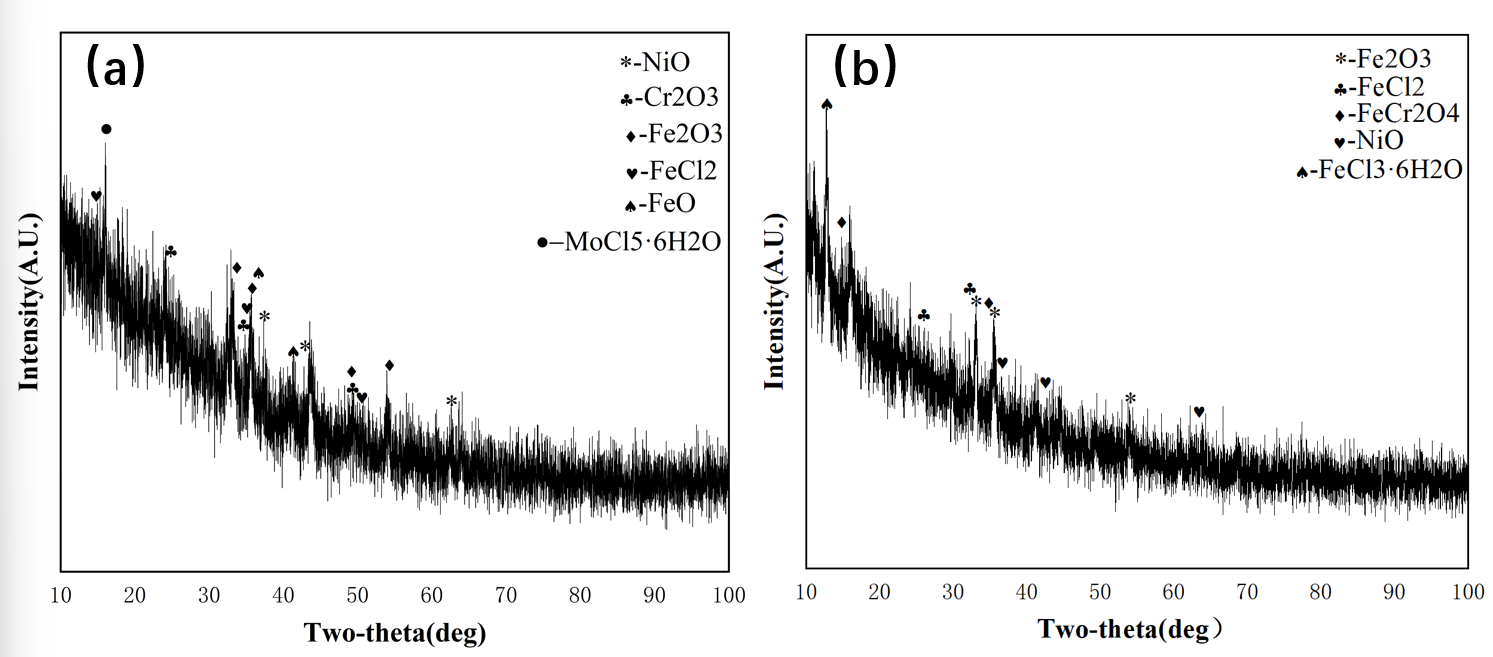
The XRD patterns of the corrosion products on the C276 coating surface and the 304 stainless steel after corrosion at 1000 °C for 25 min in the experimental atmosphere is shown in Figure 4. Due to the short corrosion time, there are few corrosion products and thin corrosion layers on the specimens. In order to prevent the high intensity of the matrix peak from affecting the reading of other diffraction peaks, small-angle grazing incidence scanning was selected for XRD detection. The corrosion products on the C276 coating surface are mainly Fe2O3, FeO, FeCl2, NiO, and Cr2O3 with the strongest diffraction peak corresponding to MoCl5·6H2O. The corrosion products on the surface of the 304 stainless steel are mainly Fe2O3, FeCl2, NiO, and FeCr2O4 with the strongest diffraction peak corresponding to FeCl3·6H2O. The diffraction peaks of oxides and chlorides of the two samples are similar, but the oxide forms of Cr are different, and FeO appears in C276, which indicates the existence of incomplete oxidation.
Figure 4.
XRD patterns at 1000 °C in the experimental atmosphere for 25 min (a) the C276 coating (b) 304 stainless steel.
The diffraction peaks of metal chloride hydrate appeared in both samples. Manuela Nimmervoll [26] studied the corrosion behavior of various alloys in reducing high-temperature environments containing high concentrations of HCl and different concentrations of H2S at medium and low temperatures. Hydrated chlorides were found on the surface of the samples, and it was inferred that the hydration of chlorides was due to hygroscopic behavior and reaction with water in the environment, rather than the corrosion process. In this experiment, 1000 °C was selected as the experimental temperature, and the hydration reaction of chloride ion was difficult to carry out. Therefore, it is believed that hydrated chlorides are mainly formed during the cooling process.
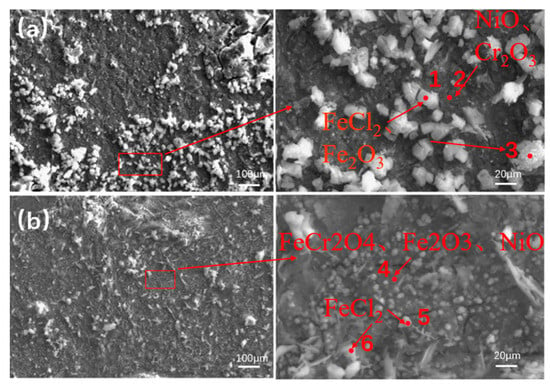
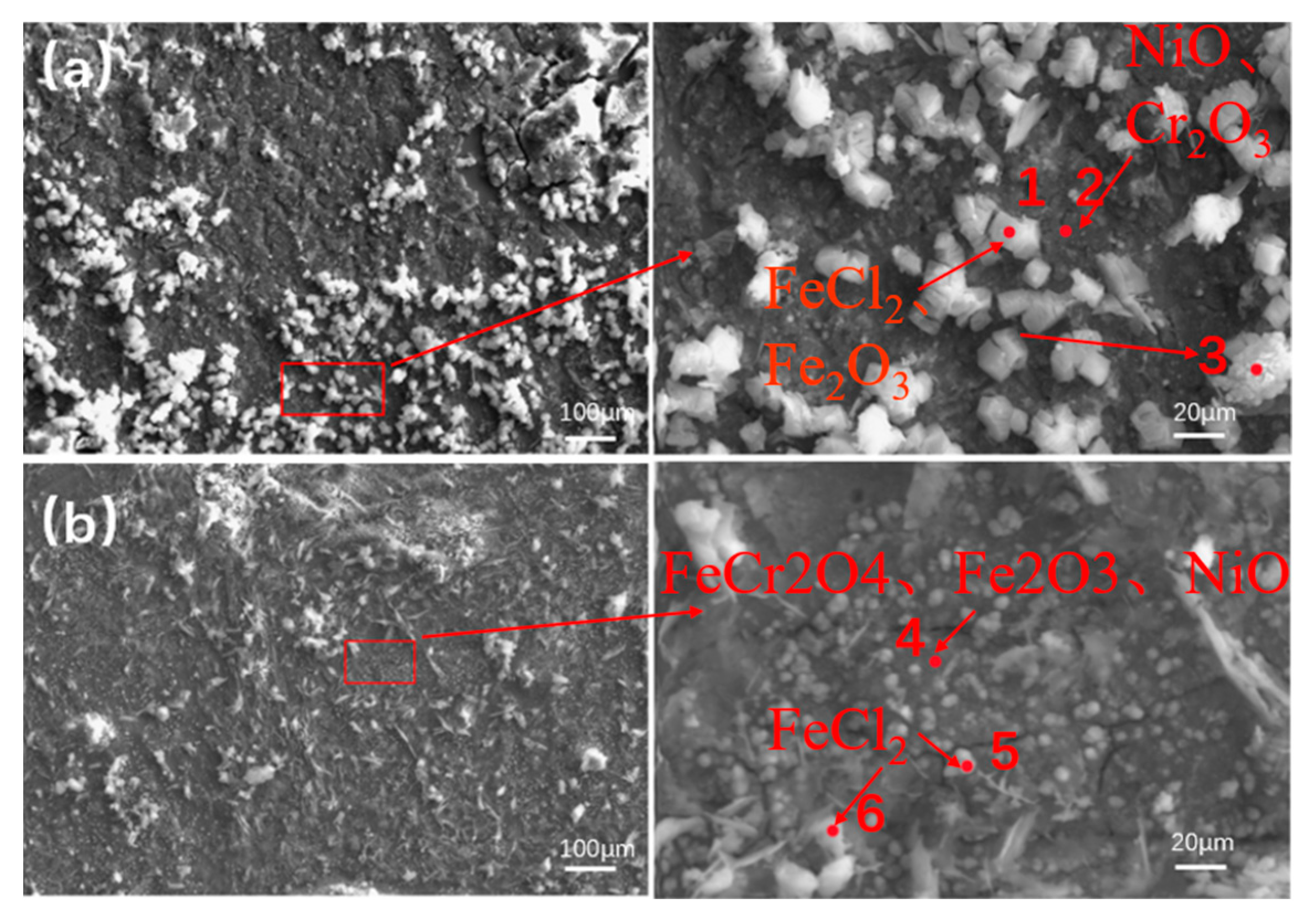
Figure 5 shows the micrographs of surface morphologies for the C276 coating and the 304 stainless steel after corrosion tests, with Figure 5a depicting the C276 coating and Figure 5b the 304 stainless steel. Meanwhile, Table 2 provides the EDS elemental composition analysis results (at%) of the characteristic points one to six identified in the above corresponding SEM images. Combined with the microscopic morphology characteristics at different magnifications and EDS composition data, there are obvious differences in the surface state of the two types of samples after corrosion.
Figure 5.
Surface morphology at 1000 °C in the experimental atmosphere for 25 min (a) the C276 coating (b) 304 stainless steel.
Table 2.
The EDS analysis results of marker points 1–6 in Figure 5 (at%).
It can be observed from the low-magnification SEM images that the C276 coating surface has been occupied by a fully covered oxide layer. A large number of white corrosion products are distributed on the surface of the oxide layer, which are randomly dispersed in the form of agglomeration. At the same time, there are shedding and cracking oxide layers in the local area. The surface of the 304 stainless steel is also covered with a continuous oxide layer and accompanied by the precipitation of corrosion products. However, the surface corrosion products are randomly and disorderly distributed, with no obvious agglomeration characteristics.
Based on the crystal phase forms of various metallic chlorides and oxides identified by high-resolution grazing incidence XRD characterization, and in combination with the quantitative EDS point analysis results of characteristic micro-regions on the sample surface and cross-section, the corrosion products of the C276 coating and the 304 stainless steel were analyzed, and it was found that there were significant differences in microstructure and elemental composition. The composition ratio of each feature point is highly matched with the morphological characteristics. The main corrosion products of the C276 coating were confirmed to be FeCl2, Fe2O3, NiO, and Cr2O3 by EDS analysis (the proportion of bonding elements and the composition of the alloy). The oxides of Ni and Cr (point 2) mainly show a continuous and dense lamellar structure, which is uniformly covered on the surface of the substrate, and there are local microcracks and spalling phenomena. The oxides and chlorides of Fe (points 1 and 3) mainly present discontinuous white granular crystal morphology and grow on the surface of other corrosion products. The main corrosion products of the 304 stainless steel are confirmed to be FeCr2O4, Fe2O3, NiO, and FeCl2 by EDS analysis. The products are mainly Fe and Cr oxides. The spinel phase (point 4) exhibits a continuous layered structure with many microcracks, and a small amount of Ni oxide is doped inside. The chlorides of Fe (points 5 and 6) are mainly flocculently distributed on the surface of the layered structure, with loose and porous characteristics.
3.4. Cross-Section Morphology of Corrosion Sample
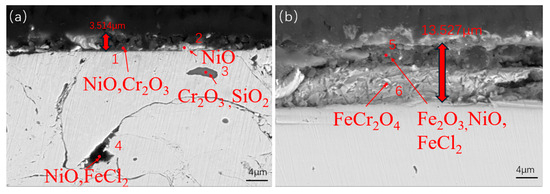
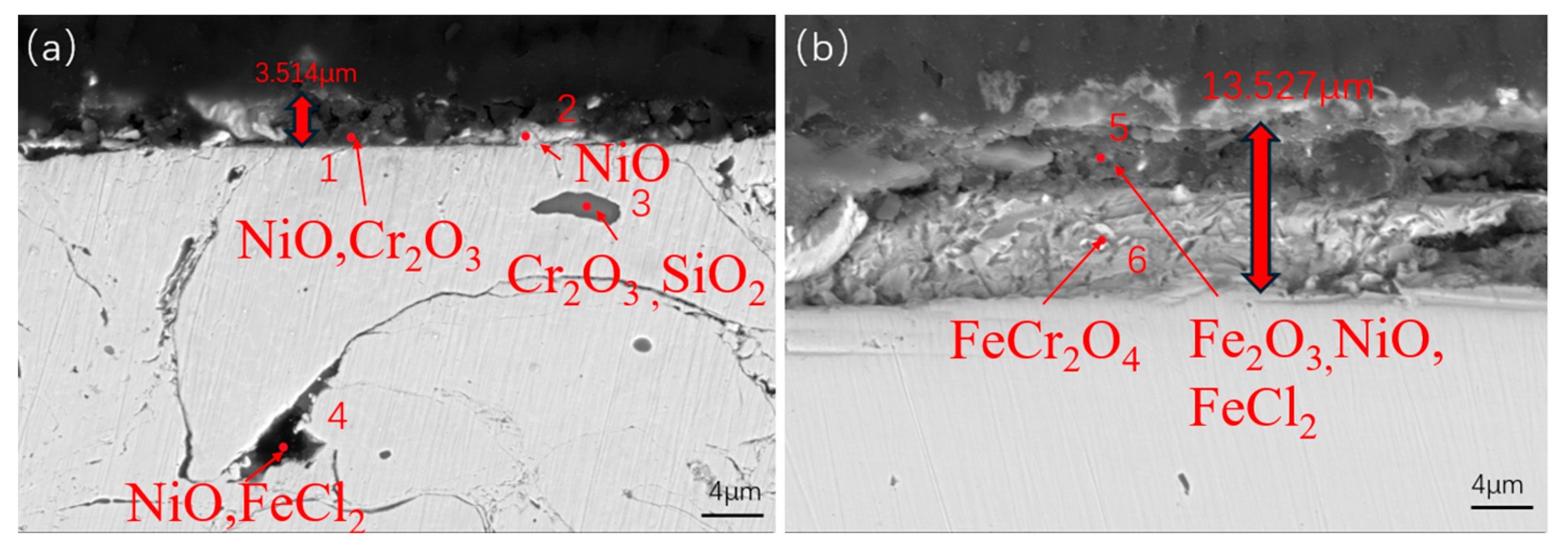
Figure 6 presents the cross-sectional SEM-BSE micrographs of the C276 coating and the 304 stainless steel after corrosion, where Figure 6a corresponds to the C276 coating and Figure 6b to the 304 stainless steel. Table 3 lists the EDS elemental analysis results (at%) of characteristic points one to six at the corresponding positions in the cross-sectional micrographs. The thickness of the corrosion products of the two types of samples is obtained by thickness measurement, and the corrosion rate is calculated.
Figure 6.
The cross-section morphology at 1000 °C in the experimental atmosphere for 25 min (a) the C276 coating (b) 304 stainless steel.
Table 3.
The EDS analysis results of marker points 1–6 in Figure 6 (at%).
The SEM image shows that there are obvious corrosion characteristics on the boundary of the C276 coating section. There are two obvious morphologies on the outer surface of the coating, one is a light-colored fragment or block product, and the other is a dark-colored layered product. There are two types of dark areas in the coating, one is evenly distributed throughout the coating, and the other grows along the microcracks in the coating and diffuses into the interior. The cross-section of the 304 stainless steel exhibits a distinct layered corrosion structure. The corrosion products generated on the surface of the substrate are divided into two layers. The inner layer is closely attached to the substrate, retaining a clear metal substrate texture, and the structure is regular and dense. The outer layer is loose and disordered, and its direct interface with the inner layer is blurred.
Combined with the quantitative EDS point analysis data of typical positions in the cross-sectional corrosion layer and the phase identification results of surface corrosion products obtained by XRD, it was found that the corrosion layer of the C276 coating was composed of NiO and Cr2O3 (points 1 and 2) as the core components, and there were SiO2 (point 3) and FeCl2 (point 4) in some areas of the coating. The corrosion products of the 304 stainless steel show a typical double-layer structure, and the composition of the inner and outer layers is significantly different, which corresponds to the cross-section layered morphology. The outer corrosion layer (point 5) is formed by the mixture of FeCl2 and Fe2O3, and its loose structure is the key to the easy penetration of the corrosive medium. The inner corrosion layer (point 6) is formed by FeCr2O4 and has a certain protective ability.
The linear corrosion rate is calculated by the actual measured thickness of the corrosion product layer and corrosion time, with the Equation (1) as:
where V is the corrosion rate (μm·h−1), δc is the thickness of the corrosion product layer (μm), and t is the corrosion test duration (h).
The thickness of the corrosion product layer of the C276 coating is 4.866 μm, and the calculated corrosion rate is 11.68 μm·h−1. The corrosion product thickness of the 304 stainless steel is 13.527 μm, and the corrosion rate was calculated to be 32.46 μm·h−1. The corrosion rate of the 304 stainless steel is about 2.8 times that of the C276 coating.
4. Discussion
4.1. Thermodynamics
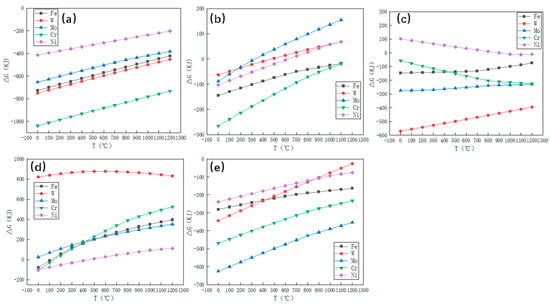
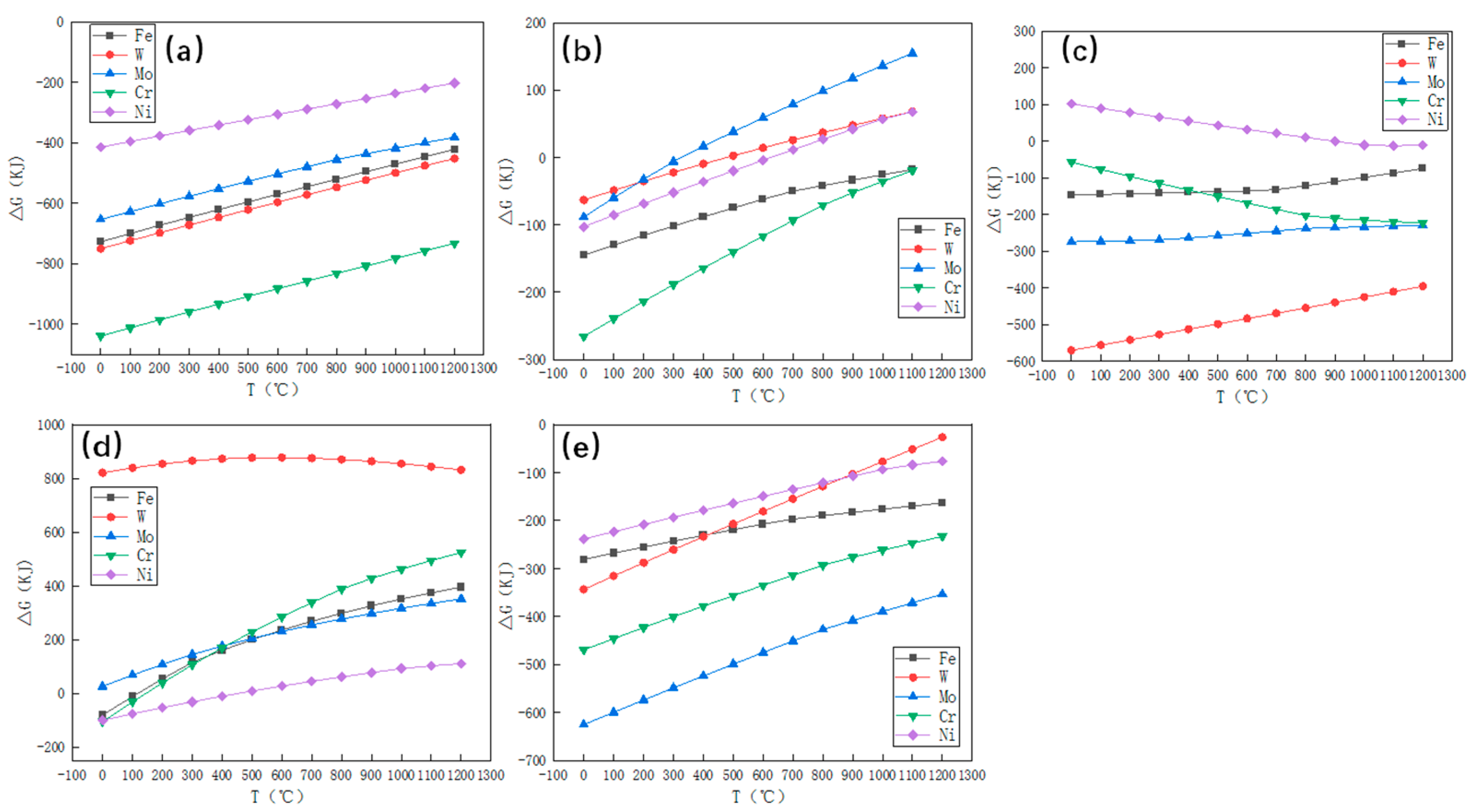
The corrosion resistance of the material is related to the stability of the metal elements of the material and the oxides produced during the corrosion process. The HSC6.0 thermodynamic calculation software was used to calculate the Gibbs free energy change (ΔG, kJ·mol−1) of oxidation and chlorination reactions of the main metal elements (Fe, W, Mo, Cr, Ni) in the materials with temperature (°C) variation. The calculation results are shown in Figure 7a–e. Thermodynamically, the spontaneity of a chemical reaction is determined by the Gibbs free energy change (ΔG): when ΔG < 0, the reaction can proceed spontaneously; the smaller the ΔG value, the greater the reaction driving force, and the easier the reaction is to proceed spontaneously. The experimental environment is quite different from the standard environment. Therefore, according to the van’t Hoff isothermal Equation (2), the Gibbs free energy of the reaction is corrected by combining the actual partial pressure of each gas in the experimental atmosphere.
where ΔG is the molar Gibbs free energy in the actual state, ΔGθ is the standard molar Gibbs free energy change (kJ·mol−1) at the standard state (p = 1 bar), R is the gas constant (8.314 J·mol−1·K−1), T is the thermodynamic temperature (K) and Q is the dimensionless reaction quotient based on partial pressures.
Figure 7.
Thermodynamic calculation of oxidation and chlorination reactions of different metals. (a) M + O2 (g) = MxOy, (b) M + HCl (g) = MClx + H2 (g), (c) MClx + O2 (g) = MxOy + Cl2 (g), (d) MxOy + HCl = MClx + H2O, (e) M + Cl2 (g) = MClx, where M = (Fe, W, Mo, Cr, Ni).
It is shown from Figure 7a that for the direct oxidation reaction of metal elements with O2, the order of ΔG values from small to large is Cr < W < Fe < Mo < Ni. It can be seen from Figure 7b that for the chlorination reaction of metal elements with HCl, the order of ΔG values from the most negative to the least negative is Cr < Fe < 0 < Ni < W < Mo. At 1000 °C, the oxidation and chlorination reaction ΔG values of Cr are the lowest, and the reaction occurs spontaneously. This explains why Cr2O3 becomes the core protective phase of the corrosion product layer of the two materials, and Cr2O3 and NiO in the C276 coating form a continuous dense sheet structure, which is the microscopic manifestation of the preferential oxidation of Cr. The chlorination reaction of Fe has a strong spontaneous trend, and 304 stainless steel takes Fe as the main component of the matrix, so its corrosion products are mainly Fe oxides and chlorides, while the Fe content of the C276 coating is extremely low, so the proportion of Fe-based products is significantly low. The oxidation/chlorination reaction ΔG values of Ni and Mo are high, the reaction rate is slow, and it is difficult to form chlorides. Only a small number of oxides are formed and dissolved in the Cr2O3 protective layer, which is completely consistent with the results that Ni/Mo chlorides are not detected in the microscopic characterization.
The formation of a highly stable and continuous oxide layer on the surface of the sample can effectively reduce the chlorine corrosion caused by the reaction of HCl with the sample. The thermodynamic stability of metal oxides in an HCl atmosphere is characterized by the ΔG value of the reaction between metal oxides and HCl: the higher the ΔG value, the more stable the metal oxide and the less likely it is to react with HCl. As can be seen from Figure 7d, the stability order of common metal oxides in HCl atmosphere at 1000 °C is WO3 > Cr2O3 > Fe2O3 > MoO2 > NiO > CoO. Cr2O3 is the most stable protective phase due to its high thermal stability and non-volatile characteristics. Therefore, Cr2O3 in C276 coating is continuously and densely distributed without obvious cracking and spalling, which can effectively block the corrosive medium. However, the stability of Fe2O3 is low, and it is easy to react with HCl to generate volatile FeCl2, which destroys the integrity of the product layer. This directly leads to the loose and porous corrosion product layer of the 304 stainless steel, and the microcracks are dense. Fe chloride is distributed on the surface of the layer in a flocculent form. Although the stability of NiO is low, it can dissolve Cr to form a stable austenite phase, which can synergistically improve the structural stability of the C276 coating protective layer with Cr2O3, which becomes an important basis for its better protective performance.
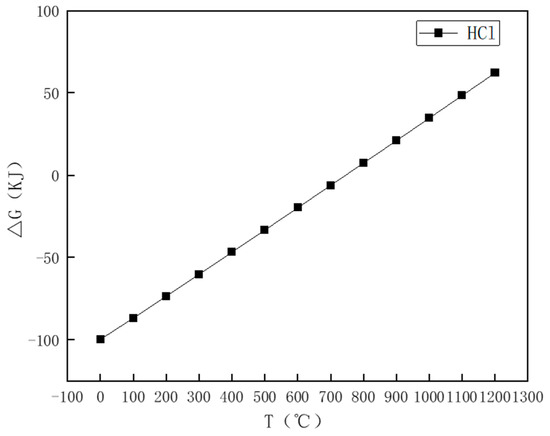
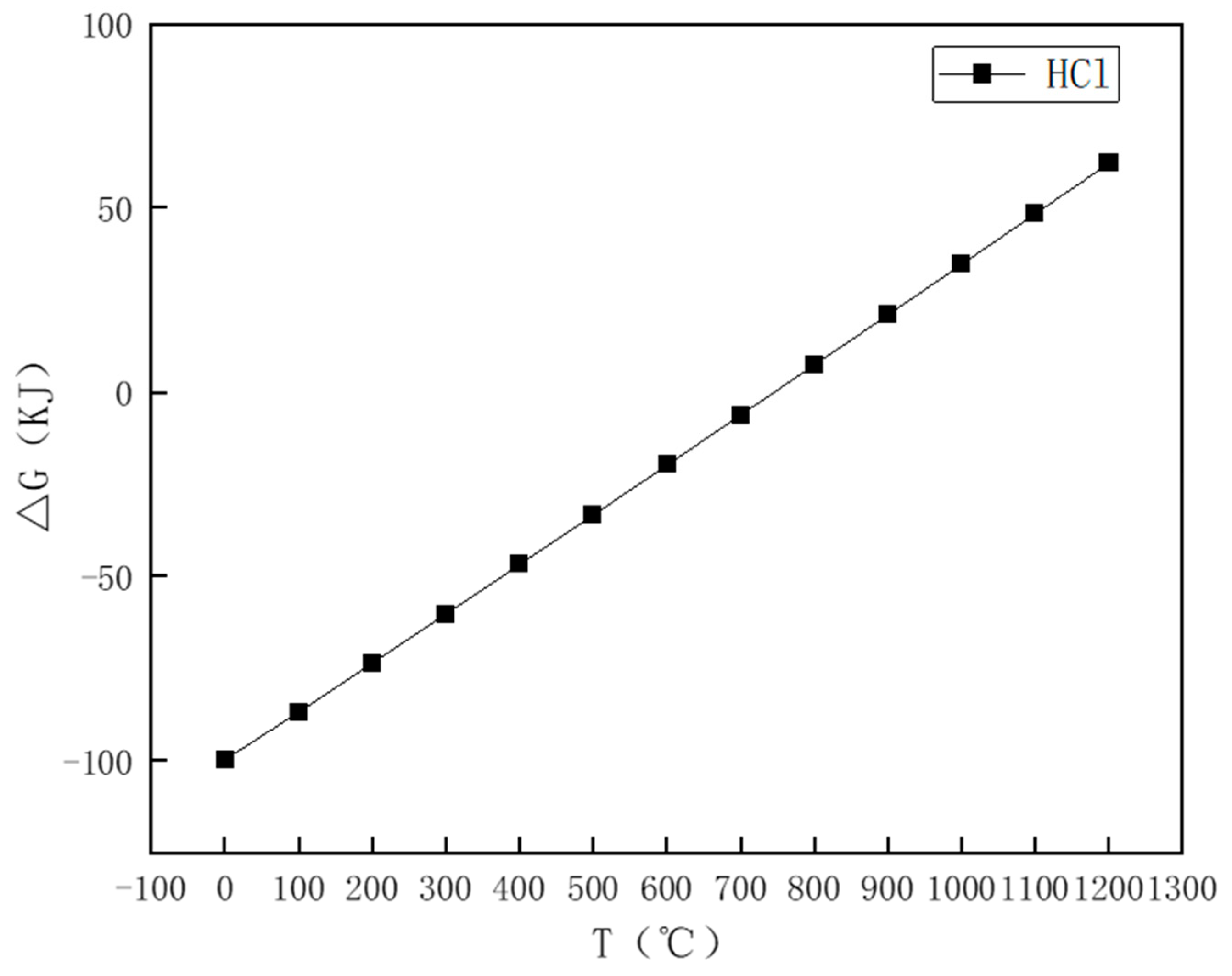
Previous studies have found that chlorine corrosion is not dominated by HCl, but by Cl2 [27]. Comparing Figure 7b,e, it is shown that the reaction ΔG of Fe, Cr and other alloying elements with HCl at 1000 °C are less than 0, while under the same conditions, the ΔG values for the reactions of all alloying elements with Cl2 is less than 0. It means that HCl can only react directly with some alloying elements, while Cl2 reacts with all alloying elements to form chlorides, which in turn causes chlorine corrosion. However, HCl can also react with O2 (g) and be oxidized to form Cl2. The temperature selected in the past research was relatively low, so thermodynamic calculations were performed for the oxidation of HCl to Cl2 at different temperatures. The calculation results are shown in Figure 8. As the temperature increases, the ΔG of the reaction of HCl and oxygen in the atmosphere gradually increases, and it is greater than 0 at about 580 °C, indicating that from the thermodynamic point of view, HCl should be the main form of chlorine at this time, rather than Cl2. It is presented from Figure 7c that HCl cannot be spontaneously oxidized to Cl2 under high-temperature conditions from the thermodynamic point of view, but the metal chloride formed by the reaction of HCl with metal elements is prone to oxidation reaction in the region with high oxygen partial pressure. These metal chlorides would release Cl2 during the oxidation process, and the released Cl2 would react with the metal elements in the sample.
Figure 8.
Thermodynamic calculation of HCl oxidation.
4.2. Corrosion Kinetics
The gravimetric corrosion characteristic parameter is calculated by the mass change in the sample before and after corrosion and the exposed corrosion surface area, with the Equation (3) as:
where Δms is specific mass gain per unit area (g·m−2), Δm is average total mass gain of the sample (g), and S is exposed corroded surface area of the sample (m2).
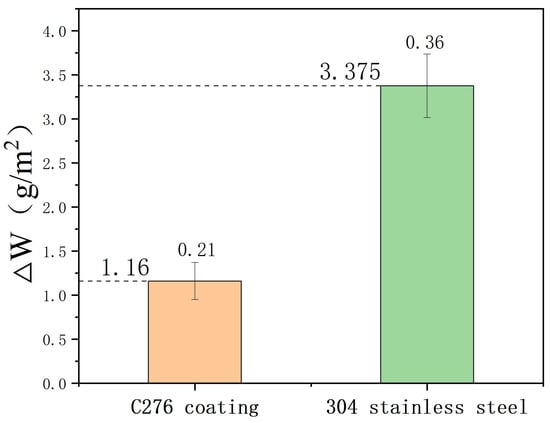
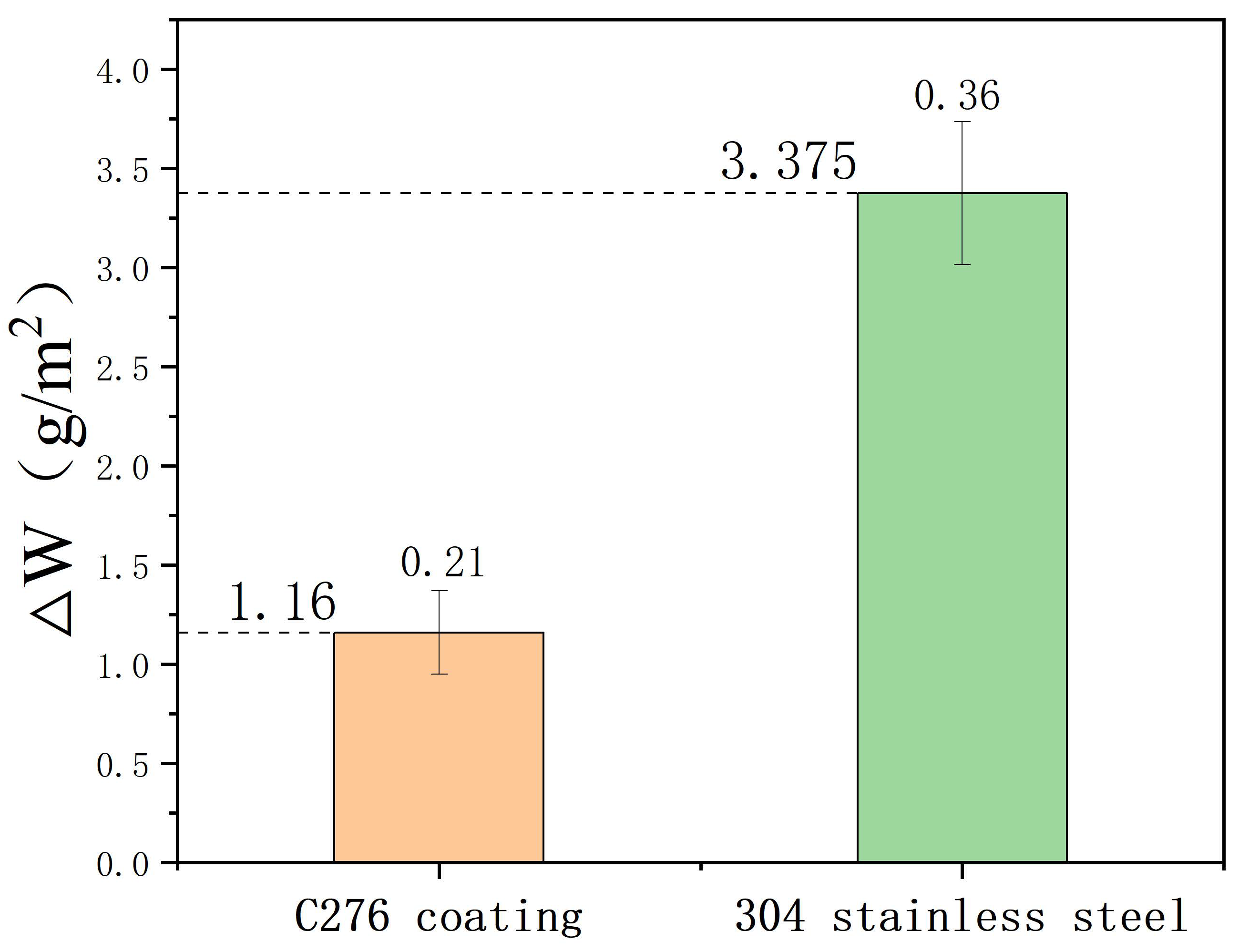
Figure 9 shows the weight change comparison diagram of the C276 alloy coating and the 304 stainless steel. The data represents the average of four parallel samples. It is presented that both the C276 coating and the 304 stainless steel show weight gain after corrosion. The average weight gain of the C276 coating is 1.16 g·m−2, and the standard deviation is 0.21 g·m−2. The average weight gain of the 304 stainless steel is 3.375 g·m−2, and the standard deviation is 0.36 g·m−2. The weight gain of the 304 stainless steel is 2.9 times that of the C276 alloy, and the standard deviation is higher, indicating that the corrosion resistance of the C276 coating is obviously better than that of the 304 stainless steel.
Figure 9.
Weight change diagram of the C276 coating and the 304 stainless steel at 1000 °C in the experimental atmosphere for 25 min.
In previous studies, corrosion kinetics with chloride as the corrosive medium showed irregular changes in weight gain and weight loss [27]. In the process of high-temperature chloride corrosion in an oxygen-containing atmosphere, chlorination and oxidation of metals occur at the same time. The reaction currently has a great influence on weight change. When the oxidation reaction is dominant, the metal oxide formed by the reaction of O2 and the metal will deposit on the surface of the sample, and the sample will gain weight. When the chlorination reaction is dominant, chlorine or HCl reacts with metal to produce metal chlorides, which are different from metal oxides. Metal chlorides have the characteristics of low melting point and high vapor pressure, and their melting and boiling points are generally lower than 1000 °C. Metal chlorides such as FeCl2, NiCl2, MoCl4, CoCl2 and WCl2 would evaporate to the gaseous state and diffuse outward at the experimental temperature. Some of them would react with O2 in the area with high oxygen partial pressure to generate stable metal oxides and Cl2. Another part will diffuse from the sample and enter the gas environment, resulting in a decrease in the weight of the sample. In addition, metal chlorides would form inside the metal oxide layer during the experiment. The metal chloride would destroy the integrity of the oxide layer during the diffusion process, resulting in the exfoliation of the oxide layer, which ultimately leads to a decrease in the weight of the sample. In the experiment, the weight gain phenomenon was dominant, indicating that the oxidation reaction rate was higher than the chloride volatilization rate.
The weight gain and corrosion rate of the 304 stainless steel are significantly higher than those of the C276 coating, which is mainly due to the large amount of Fe2O3 and FeCl2 produced during the experiment. The melting point (670 °C) and boiling point (697 °C) of FeCl2 are much lower than the experimental temperature. The integrity of the oxide layer is destroyed during the volatilization of FeCl2. which accelerates the invasion of corrosive media. The Ni, Cr, Mo, and other elements in the C276 coating work together to form a dense protective oxide layer dominated by Cr2O3, which can effectively block the diffusion of corrosive media, inhibit the formation of chloride, and thus reduce the corrosion rate.
In this study, only a single extreme condition of 1000 °C, 6 vol %HCl and 30 m/s flow rate was selected. The establishment of a quantitative kinetic model linking mass evolution with the dominant diffusion mechanism of chlorinated species, as well as the quantitative analysis of flow rate on erosion, oxide layer destruction and mass transfer enhancement, requires systematic comparative experiments using gradient temperature, flow rate and exposure time. These aspects will be the core content of our subsequent in-depth study.
4.3. Corrosion Process
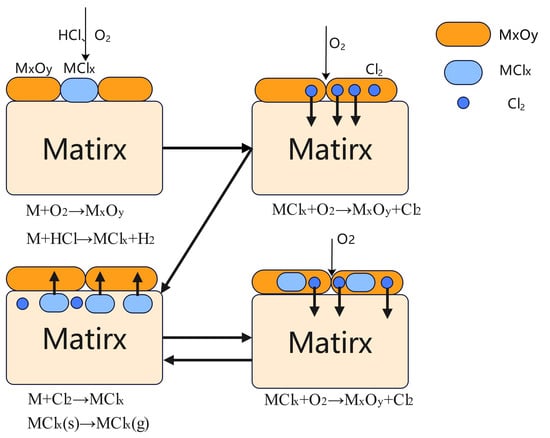
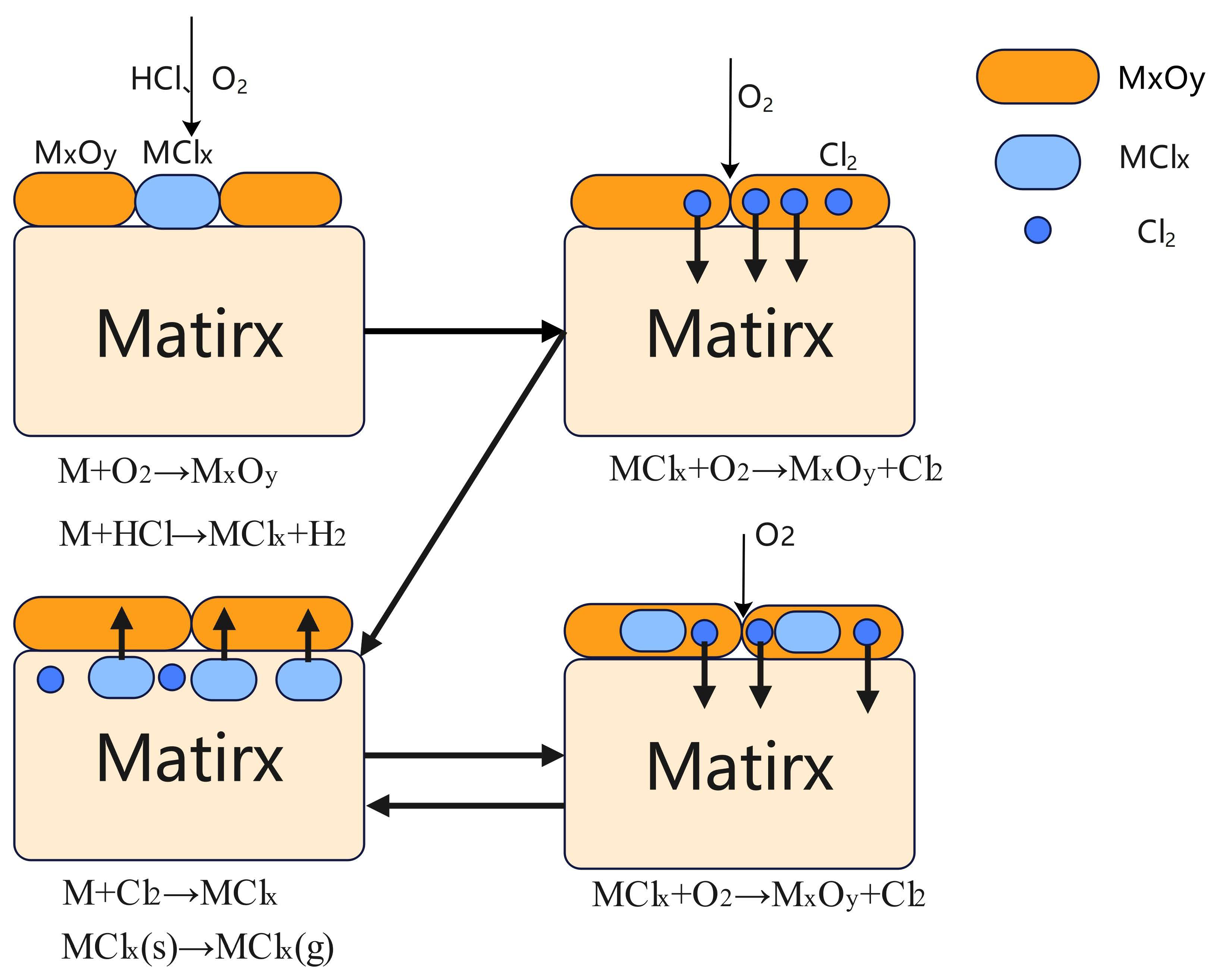
Based on the thermodynamic and kinetic analyses, the corrosion evolution mechanism of the samples is illustrated in Figure 10. Thermodynamic calculations reveal that the direct reaction of alloying elements with O2, as well as the reaction of certain alloying elements with HCl, both exhibit a negative Gibbs free energy change (ΔG < 0). Furthermore, the absolute value of ΔG in the oxidation reaction is greater than that in the chlorination reaction. Therefore, in the early stage of corrosion, the oxidation Reaction (4) is the main reaction on the surface of the sample, accompanied by the chlorination Reaction (5). The oxidation reaction proceeds at a higher rate, facilitating the rapid formation of an initial oxide layer on the surface. The chlorination reaction is relatively slow, and a small amount of metal chloride is formed. Metal chlorides typically exhibit low melting points and high vapor pressures, and their oxidation reaction with O2 is thermodynamically favorable (ΔG < 0). In regions with high oxygen partial pressure on the sample surface, metal chlorides undergo oxidation Reaction (6) to form metal oxides and release Cl2. The newly formed metal oxides induce stress accumulation within the oxide layer, triggering film loosening and cracking, which in turn form pores or crevices and result in the reduction in the protective effect of the oxide layer. Simultaneously, the released Cl2 diffuses through the pores or cracks of the oxide layer to the oxide layer/matrix interface, where the oxygen partial pressure is relatively low. At the interface, Cl2 reacts with the alloying elements in the matrix to form metal chloride (7). At a high temperature, chloride volatilizes (8) and diffuses from the substrate to the surface of the oxide layer, and the oxygen partial pressure gradually increases. Most of the metal chlorides undergo oxidation on the oxide layer surface, regenerating metal oxides and releasing Cl2, thereby completing a corrosion cycle and initiating the subsequent cycle. The Cr2O3 oxide layer within the C276 coating possesses a continuous and dense structural characteristic, which can effectively inhibit the infiltration of Cl2 and HCl and mitigate the formation of chlorides. In contrast, the Fe-based oxide layer of 304 stainless steel is loose and porous, which is susceptible to damage by the chloride volatilization process, leading to the progressive aggravation of corrosion. The reaction equations are presented as follows:
where M is (Fe, W, Mo, Cr, Ni).
Figure 10.
Corrosion process diagram.
5. Conclusions
In the study, the C276 alloy coating was sprayed on the surface of 304 stainless steel, and the corrosion experiments of the C276 alloy coating and the 304 stainless steel at 1000 °C in an atmosphere containing 6% HCl for 25 min was conducted. The following conclusions could be drawn:
- (1)
- The C276 coating shows excellent protective effect. After corrosion, the average weight gain of the C276 coating was only 34.4% of that of the 304 stainless steel, and the corrosion rate of the C276 coating was reduced to 36% of that of the 304 stainless steel.
- (2)
- The high-temperature corrosion products of the C276 coating in the HCl flow environment were different from those of the 304 stainless steel. The corrosion products on the C276 coating surface were mainly Fe2O3, FeO, FeCl2, NiO, and Cr2O3, in which the Ni and Cr oxides form a continuous protective oxide layer. The main corrosion products on the surface of the 304 stainless steel were Fe2O3, FeCl2, NiO, and FeCr2O4. The corrosion products were loose, and the protective effect was limited.
- (3)
- The corrosion mechanism at 1000 °C in an HCl atmosphere was the ‘chlorination-oxidation’ cycle. Chlorides were produced by the reaction of HCl with metals and then oxidized to release Cl2. Cl2 diffuses to the matrix and continues to initiate the chlorination reaction, forming an autocatalytic cycle.
Author Contributions
Conceptualization: F.Z.; Methodology: F.Z. and K.S.; Investigation: F.Z., K.S., T.T. and J.M.; Writing—Original Draft Preparation: F.Z., J.M., T.T. and K.S.; Writing—Review and Editing: F.Z., K.S., T.T. and J.M.; Formal Analysis: F.Z.; Data Curation: T.T. and J.M. All authors have read and agreed to the published version of the manuscript.
Funding
This work is supported by the Fundamental Research Funds for Central Universities, China (FRF-BD-25-012).
Data Availability Statement
The original contributions presented in this study are included in the article. Further inquiries can be directed to the corresponding author.
Conflicts of Interest
The authors declare no conflicts of interest.
References
- Singh, K. Advanced materials for land based gas turbines. Trans. Indian Inst. Met. 2014, 67, 601–615. [Google Scholar] [CrossRef] [Scilit]
- Wu, S.; Zhao, Y.; Li, W.; Liu, W.; Wu, Y.; Zhao, Z. Na2SO4 + NaCl molten salts corrosion mechanism of thermal barrier coatings used in ships. J. Therm. Anal. Calorim. 2021, 144, 2043–2056. [Google Scholar] [CrossRef] [Scilit]
- Zhou, H.; Xue, J.; Gao, H.; Ma, N. Hydrogen-fueled gas turbines in future energy system. Int. J. Hydrogen Energy 2024, 64, 569–582. [Google Scholar] [CrossRef] [Scilit]
- Sadeghimeresht, E.; Reddy, L.; Hussain, T.; Markocsan, N.; Joshi, S. Chlorine-induced high temperature corrosion of HVAF-sprayed Ni-based alumina and chromia forming coatings. Corros. Sci. 2018, 132, 170–184. [Google Scholar] [CrossRef] [Scilit]
- Qi, X.; Song, G.; Yang, S.; Yang, Z.; Lyu, Q. Investigation of corrosion characteristics of high-sodium high-chlorine lignite during circulating fluidized bed combustion. Energy Fuels 2017, 31, 13627. [Google Scholar] [CrossRef] [Scilit]
- He, B.; Ni, L.; Zhou, L.; He, Y.; Su, M.; Liu, W.; Chen, J.; Zhao, Y. Design of Ni-based amorphous alloy corrosion-resistant to high temperature hydrochloric acid. Mater. Today Commun. 2024, 39, 109112. [Google Scholar] [CrossRef] [Scilit]
- Chen, T.; Xiang, J.; Jiang, L.; Xiong, J.; Bai, L.; Xu, X.; Xu, X. High-temperature corrosion behavior of Q235 steel in oxidizing Cl-containing atmosphere. J. Chin. Soc. Corros. Prot. 2021, 41, 560–564. [Google Scholar]
- Liu, X.; Duan, Y.; Chen, Q.; Long, L.; Lv, G.; Huang, Q.; Jiang, X. Study of corrosion kinetic measurement and morphology observation of superheater tube 12Cr1MoV alloy in simulated MSWI flue gas containing varied HCl or SO2 concentrations. ACS Omega 2022, 7, 23929–23938. [Google Scholar] [CrossRef] [Scilit]
- Liu, X.; Duan, Y.; Zheng, L.; Long, L.; Khalid, Z.; Huang, Q.; Jiang, X. Effect of complex municipal solid waste incineration flue gas on the corrosion of various alloys at 550 °C. Fuel 2024, 355, 129524. [Google Scholar] [CrossRef] [Scilit]
- Zhang, J.; Wang, L.; Xie, G.; Wang, D.; Shen, J.; Lu, Y.; Huang, Y.; Li, Y. Research progress of nickel-based single crystal superalloys. Acta Metall. Sin. 2023, 59, 1109. [Google Scholar]
- Reed, R.C. The Superalloys: Fundamentals and Applications; Cambridge University Press: Cambridge, UK, 2006; p. 372. [Google Scholar]
- Gudivada, G.; Pandey, A.K. Recent developments in nickel-based superalloys for gas turbine applications. J. Alloys Compd. 2023, 963, 171128. [Google Scholar] [CrossRef] [Scilit]
- Gong, K.; Zheng, C.; Ju, D.; Ma, H.; Zhang, J. Corrosion of Ni-based alloy coatings prepared by laser cladding in high-temperature chloride environment. Surf. Coat. Technol. 2024, 484, 130823. [Google Scholar] [CrossRef] [Scilit]
- Karuana, F.; Prismantoko, A.; Jatisukamto, G.; Tambunan, B.; Suhendra, N.; Syahril, M.; Rahayu, S.; Darmawan, A.; Darmadi, D.B.; Aziz, M.; et al. Degradation of the protective layer on stainless steel by chlorine variation under high-temperature conditions. Mater. Today Commun. 2024, 40, 109981. [Google Scholar] [CrossRef] [Scilit]
- Liu, X.; Duan, Y.; Zheng, L.; Long, L.; Khalid, Z.; Huang, Q.; Jiang, X. High-temperature corrosion mechanism analysis of 310S alloy in typical MSWI flue gas environment at 460–580 °C. J. Mater. Cycles Waste Manag. 2024, 26, 197–212. [Google Scholar]
- Zhou, Y.; Han, Y.; Xie, G.; Zheng, W.; Xiao, Y.; Pan, Y.; Zhang, J. High-temperature HCl corrosion behavior of a nickel-based superalloy. Acta Metall. Sin. 2025, 61, 770–782. [Google Scholar]
- Sun, H.; Liu, J. Hot corrosion of Fe- and Ni-based alloys in waste-to-energy environment at 850 °C. Eng. Fail. Anal. 2022, 133, 105964. [Google Scholar] [CrossRef] [Scilit]
- Rammer, B.; Galetz, M.C. Kinetics of volatilization of high-temperature corrosion products and its application to chlorine corrosion. Mater. Corros. 2017, 68, 186–196. [Google Scholar]
- Shi, H.; Gao, Z.; Fan, Z.; Ding, Y.; Qiao, Y.; Zhu, Z. Corrosion Behavior of Alloy C-276 in Supercritical Water. Adv. Mater. Sci. Eng. 2018, 2018, 1027640. [Google Scholar]
- Manoharan, M.; Natarajan, A.; Muktinutalapati, N.R. Welding metallurgy of corrosion-resistant superalloy C-276. In Superalloys; IntechOpen: London, UK, 2015. [Google Scholar]
- Kanca, Y.; Uçgun, M.C.; Günen, A. Microstructural and tribological behavior of pack-borided Ni-based Hastelloy C-276 superalloy. Metall. Mater. Trans. A 2023, 54, 671–687. [Google Scholar] [CrossRef] [Scilit]
- Bian, L.; Zhang, F.; Yang, D.; Jia, S.; Song, Z.; Wang, Q.; Zhang, L.; Zhang, J. Study on laser cladding C276 alloy coating and its molten salt corrosion resistance. Appl. Laser 2022, 42, 27–37. [Google Scholar]
- Li, J.; Liu, Z.; Ma, H.; Wang, X.; Kong, Y.; Li, Y.; Shen, Y. High-temperature corrosion behavior of C276 alloy, 1.4529 steel and laser-cladding 1.4529 coating under the synergistic action of deposited chloride salt and HCl-containing atmosphere. Corros. Sci. 2023, 222, 111413. [Google Scholar] [CrossRef] [Scilit]
- Zhou, Y.; Xie, G.; Zhang, J. Initial chlorination-oxidation behavior of a Ni-based superalloy in HCl-containing oxidizing atmospheres at high temperature. J. Alloys Compd. 2025, 1037, 182417. [Google Scholar] [CrossRef] [Scilit]
- Norgren, C.T.; Mularz, E.J.; Riddlebaugh, S.M. Reverse-Flow Combustor for Small Gas Turbines with Pressure-Atomizing Fuel Injectors; NASA TP 1260; AVRADCOM Technical Report 78-22(PL); National Aeronautics and Space Administration, Lewis Research Center: Cleveland, OH, USA, 1978.
- Nimmervoll, M.; Mori, G.; Bucher, E.; Hönig, S.; Haubner, R. High temperature corrosion behavior of alloys in reducing HCl and H2S containing environments: Thermodynamical and experimental assessment. Mater. Corros. 2022, 73, 1979–2003. [Google Scholar] [CrossRef] [Scilit]
- Li, Y.; Niu, Y.; Wu, W. Chlorination of metallic materials at high temperature. Corros. Sci. Prot. Technol. 2000, 12, 41–44. [Google Scholar]

Disclaimer/Publisher’s Note: The statements, opinions and data contained in all publications are solely those of the individual author(s) and contributor(s) and not of MDPI and/or the editor(s). MDPI and/or the editor(s) disclaim responsibility for any injury to people or property resulting from any ideas, methods, instructions or products referred to in the content. |
© 2026 by the authors. Licensee MDPI, Basel, Switzerland. This article is an open access article distributed under the terms and conditions of the Creative Commons Attribution (CC BY) license.