Article

Low-Alloy Ultra-High Strength Cast Steels Prepared by a Quenching–Partitioning–Tempering Treatment

1
Shougang Mining Corporation, Qian’an 064404, China
2
State Key Laboratory of High Performance Roll Materials and Composite Forming, School of Materials Science and Engineering, Hebei University of Technology, Tianjin 300401, China
*
Authors to whom correspondence should be addressed.
Metals 2026, 16(3), 289; https://doi.org/10.3390/met16030289
Submission received: 15 February 2026 / Revised: 1 March 2026 / Accepted: 3 March 2026 / Published: 4 March 2026
(This article belongs to the Special Issue Advanced Metallic Materials and Forming Technologies)

Abstract

To synergistically enhance the strength and toughness of low-alloy cast steels, a quenching–partitioning–tempering (Q-P-T) heat treatment process was specifically performed based on the “Constrained Carbon Equilibrium” thermodynamic model. The effects of partitioning temperature on microstructure and mechanical properties were examined. The Q-P(210)-T approach successfully produced an ultra-high strength cast steel (48SiNiMnCrMoAl6-4-4-3-8-14) with a tensile strength exceeding 2000 MPa and an elongation greater than 19.0%. The microstructure of this cast steel consists of tempered martensite (TM), bainite, ferrite, and retained austenite (RA). During tensile deformation, dislocations from adjacent martensite are absorbed by the film-like RA, thereby alleviating stress concentration induced by dislocations. Meanwhile, the transformation-induced plasticity (TRIP) effect of the RA significantly enhances the toughness of the cast steel. Furthermore, the ultra-high strength of the cast steel is jointly ensured by the fine crystalline strengthening of the martensite and the precipitation strengthening of the transitional carbides in the microstructure of the cast steel. This work provides a good reference for the development of high-performance cast steels.

1. Introduction

In critical fields such as aerospace, marine engineering, and high-end equipment manufacturing, the demand for structural components with lightweight characteristics, high reliability, and long-term service durability has become more pressing. Due to their excellent castability, designability, and cost advantage, low-alloy ultra-high strength cast steels have emerged as one of the core materials for replacing traditional forged steels and titanium alloys [1,2,3,4,5,6]. However, the collaborative optimization of strength and toughness in these low-alloy ultra-high strength cast steels remains a central challenge in the field of material science and engineering. Consequently, a hot research direction that is widely adopted by scholars from various countries is how to precisely tailor the microstructure through specific heat treatment processes to achieve a simultaneous enhancement of both strength and toughness.
The quenching and tempering (Q&T) heat treatment is a classic technique for strengthening metallic materials [7,8]. Owing to its process simplicity and high controllability, it has been widely employed for manipulating the properties of low-alloy cast steels [9]. Zhou et al. employed a combined process of “normalizing and reheating → water quenching → high-temperature tempering” to produce an ultra-high strength low-alloy cast steel. This process facilitated sufficient tempering of the martensite and the precipitation of finely dispersed M23C6 carbides in the microstructure, resulting in a tensile strength of 1683.5 MPa and an elongation of 12% [10]. Li et al. introduced an intercritical quenching step into the conventional Q&T process. They observed that with an increase in the intercritical quenching temperature, austenite nucleated along the martensite lath boundaries and transformed from an acicular to an equiaxed morphology. The uniformly distributed ferrite within the microstructure contributed to enhancing the steel’s toughness [11]. Although the Q&T process is highly effective in enhancing properties, its inherent limitations have become increasingly apparent. On the one hand, the employment of low tempering temperatures to ensure high strength of these cast steels causes insufficient tempering of martensite, which results in severe retention of internal stresses, and thereby constrains the enhancement of material toughness. On the other hand, while higher tempering temperatures can improve toughness, they cause coarsening of carbides and excessive precipitation of secondary phases, thereby inducing a substantial loss of strength [12].
To break through the bottleneck of property regulating in the Q&T process, the quenching–partitioning–tempering (Q-P-T) process has been developed based on the theory of martensitic transformation and carbon partitioning. This process introduces a partitioning stage after quenching, followed by tempering to further regulate carbide precipitation and microstructural stress states. Partitioning (holding between Ms and Mf after quenching) refers to the process of using the chemical potential differences between carbon atoms in different phases (martensite and austenite) to allow carbon to be controlledly diffused from the supersaturated martensite into the residual austenite, thereby achieving the carbon stabilization of the residual austenite and the partial softening of the martensite. This heat treatment process provides a new technical pathway for the synergistic optimization of strength and toughness [13,14,15,16,17,18].
Wang et al. applied the Q-P-T process to dispose a high-nitrogen martensitic stainless-steel bearing, achieving a yield strength of 2034 MPa, an ultimate tensile strength of 2217 MPa, a percentage uniform elongation of 5.83%, and an impact energy of 58.73 J [19]. Liu et al. applied the Q-P-T process to dispose of a low-carbon bainitic steel. When tempering at 340 °C, the material revealed a tensile strength of 1806 MPa, a yield strength of 1495 MPa, and an elongation of 17.7%, presenting a good mechanical performance [20]. Although the Q-P-T process has shown significant potential in low-alloy steels and cast irons, research on the Q-P-T process for low-alloy ultra-high strength cast steels remains in its infancy. The quantitative relationship between the Q-P-T process parameters and the synergistic improvement of strength and toughness in such cast steels has not been established through systematic studies.
To fabricate ultra-high strength cast steel, this study calculated the relationship between partitioning temperature and RA content based on the constrained carbon equilibrium (CCE) model [21]. Combined with the continuous cooling transformation (CCT) curve, a Q-P-T heat treatment process route was designed for the experimental steel [22]. The influence of different partitioning temperatures on the microstructural morphology and mechanical properties of the experimental steel was analyzed. Furthermore, the effects of RA content and morphology on toughness were investigated. This work provides theoretical support for innovating heat treatment processes of low-alloy ultra-high strength cast steels and facilitates a breakthrough in their application to extreme service conditions.

2. Materials and Methods

The cast steel material was melted using a high-frequency vacuum induction furnace (Zhuzhou Hechuang Medium and High Frequency Equipment Co., Ltd., Zhuzhou, China) with a heating rate of 100 °C/min, and then its chemical composition was determined by direct reading spectrometry, with results presented in Table 1. As can be seen from the table, the component of the alloy (48SiNiMnCrMoAl6-4-4-3-8-14, according to “EN 10027-1”) is extremely unique. The high concentrations of Si and Al were selected primarily to suppress carbide formation. By reducing carbide precipitation, the alloy is expected to promote the formation of a ferritic or bainitic microstructure, which can enhance toughness and potentially enable the exploitation of transformation-induced plasticity (TRIP) or other advanced strengthening mechanisms. The presence of microalloying elements such as Nb, V, and Ti is intended to provide grain refinement and precipitation strengthening, complementing the matrix effects of Si and Al. Furthermore, the high Al (low density) content also helps to reduce the weight of the final material. This tailored composition allows for a systematic study of the interplay between matrix stabilization, grain size control, and mechanical properties in a medium-carbon steel system.
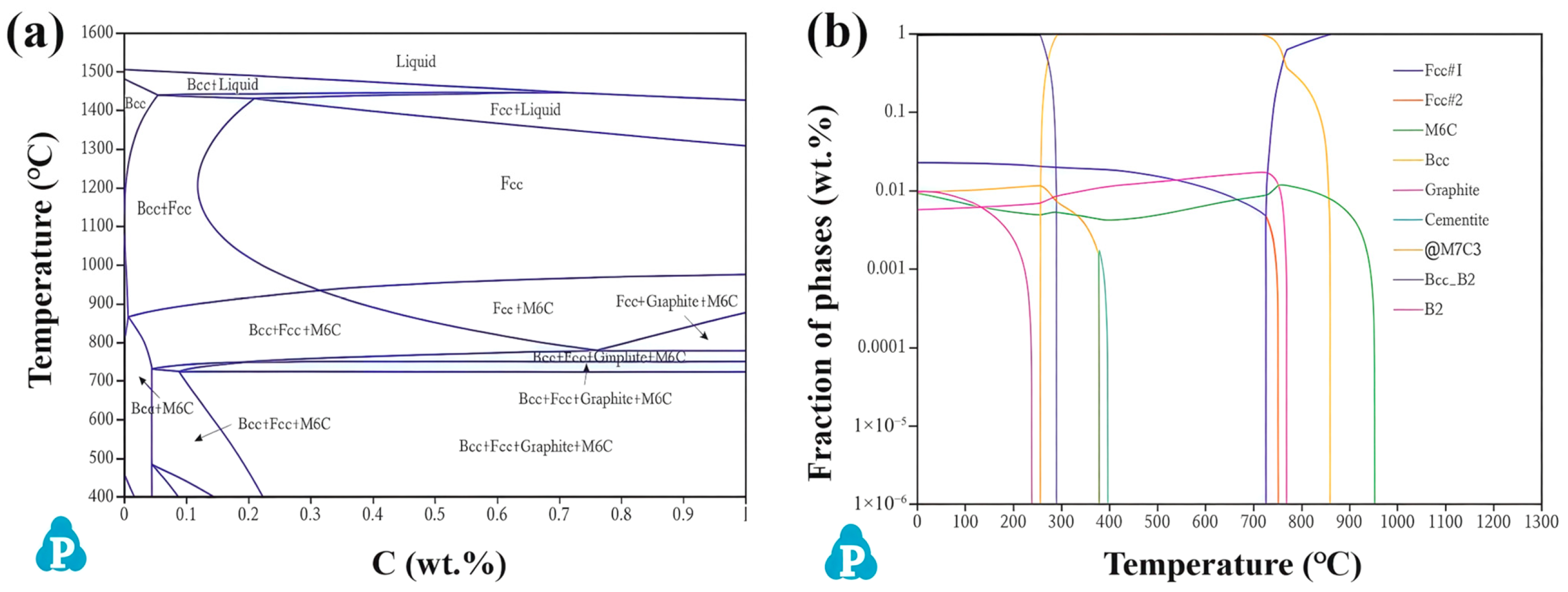
The determination of heat treatment parameters requires accurate phase transition temperature points. The equilibrium phase diagram of the test steel was calculated using the Pandat software (Version 2022TM), as presented in Figure 1. Based on the phase diagram, the starting temperature for the transformation from pearlite to austenite (Ac1) and the complete austenitizing temperature of ferrite (Ac3) of the experimental steels were determined to be 767.2 °C and 858.7 °C, respectively.
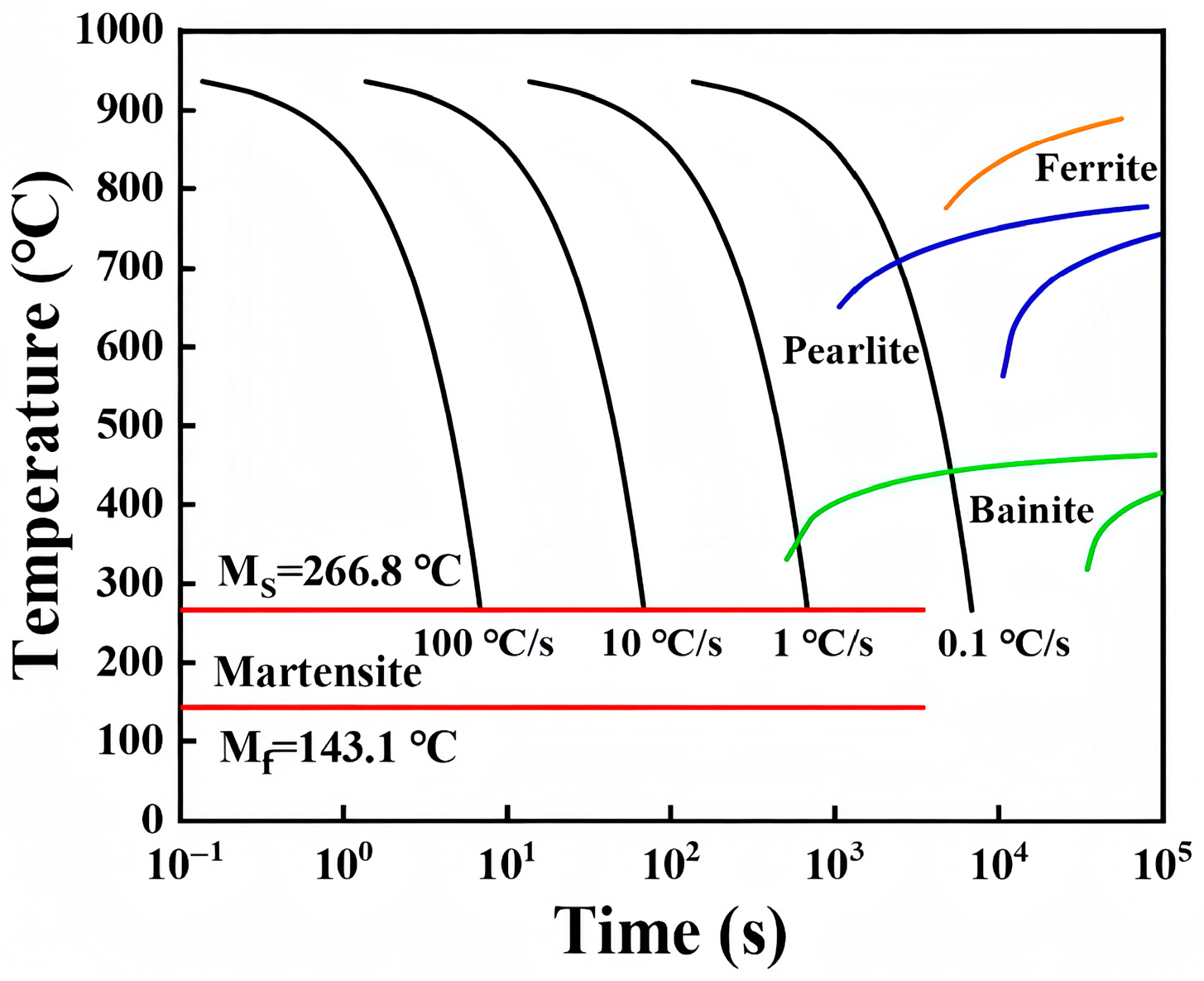
The CCT curve of the experimental cast steel was simulated using JMatPro 7.0 software, as shown in Figure 2. The martensite start (Ms) and finish (Mf) temperatures were calculated to be 266.8 °C and 143.1 °C, respectively. According to the material’s phase transformation characteristics, the cast steel specimens were first subjected to a homogenization treatment by maintaining at 1000 °C for 30 min, and subsequently furnace-cooled to room temperature.
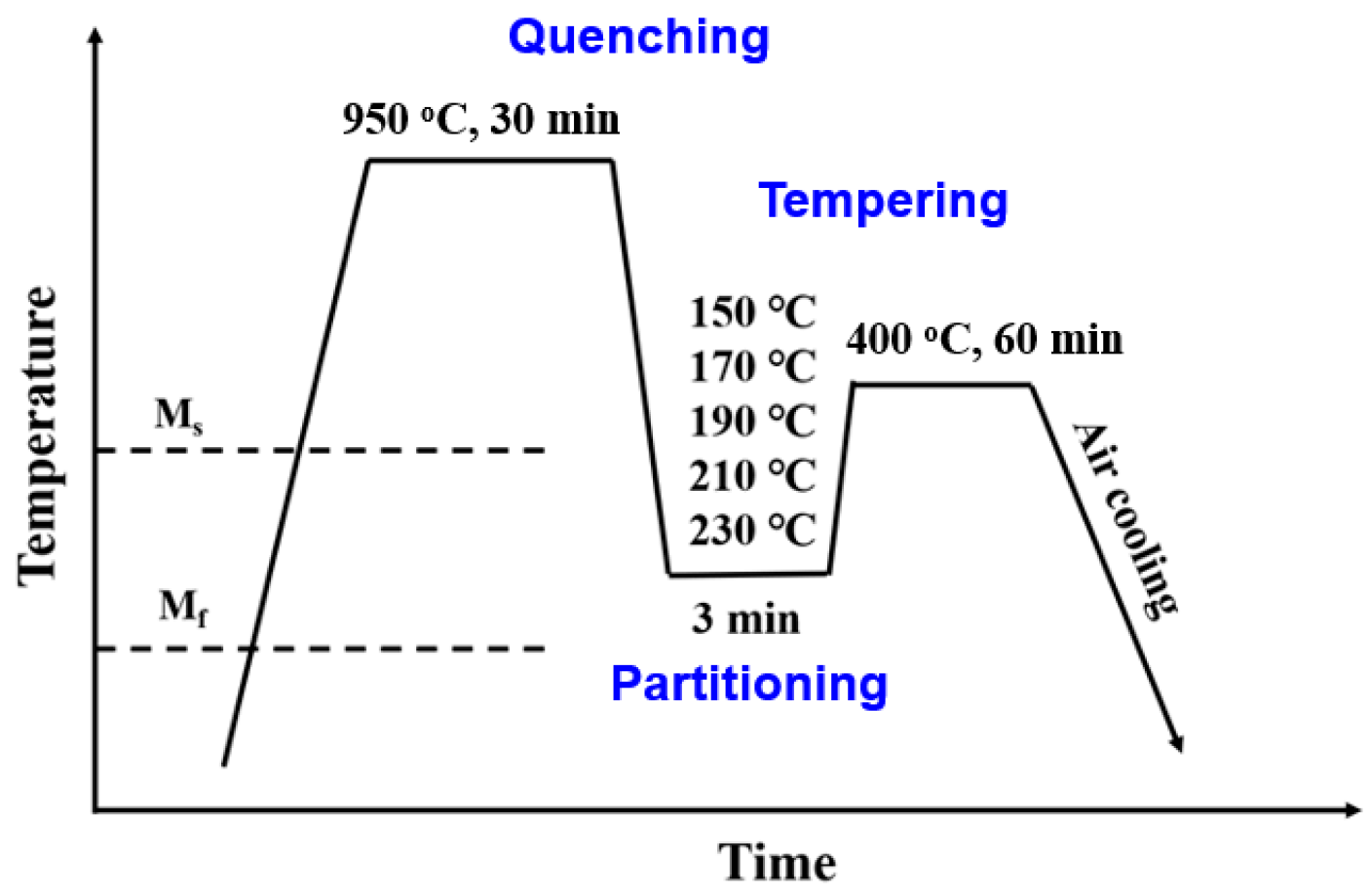
To carry out the Q-P-T treatment, the volume fraction of each phase in the experimental steel after partitioning was pre-calculated, as illustrated in Supporting information S1 and Figure S1. Accordingly, the subsequent heat treatment process was designed based on these results, with the experimental procedure shown in Figure 3. All specimens were first austenitized at 950 °C for 30 min, and then they underwent partitioning treatments at 150, 170, 190, 210, and 230 °C for 3 min, respectively, followed by final tempering at 400 °C for 60 min. The corresponding process parameters are designated as Q-P(150)-T, Q-P(170)-T, Q-P(190)-T, Q-P(210)-T, and Q-P(230)-T.
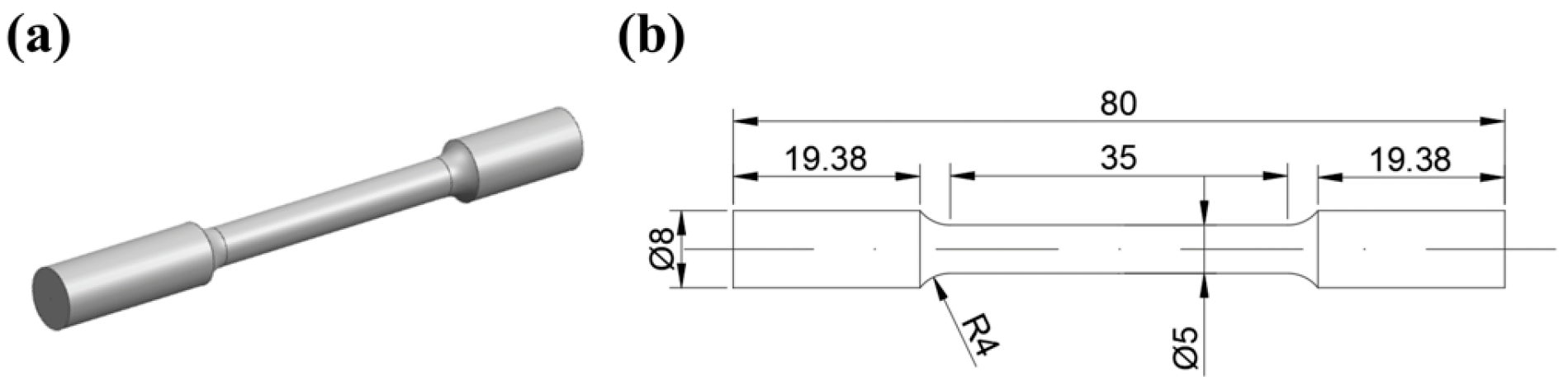
The ingot, with a radius of 60 mm and height of 250 mm, was sectioned at half its radius. Specimens were machined into rectangular blocks of 11 mm × 11 mm × 80 mm, and then further processed into cylindrical tensile specimens with the shape and dimensions shown in Figure 4.
The specimens were corroded using a 4% Nital solution. The microstructure of the cast steel was characterized by optical microscopy (OM, Carl Zeiss AG, Oberkochen, Germany) and scanning electron microscopy (SEM, JEOL, JSM-IT500, JEOL Ltd., Tokyo, Japan). The fine structure was examined by transmission electron microscopy (TEM, Tecnai F30, FEI Company, Hillsboro, OR, USA). Thin foil specimens for TEM observation were prepared by twin-jet electropolishing using an electrolyte of 5% perchloric acid in ethanol solution, with the polishing temperature maintained between 20 and 30 °C. Phase identification and RA content measurement were performed using a Smart Lab (3 kW) X-ray diffractometer (Rigaku Corporation, Tokyo, Japan). Tensile tests were performed on a Sansi universal testing machine (UTM6140, Sansi Universal Testing Machine Co., Ltd., Shenzhen, China) with a tensile speed of 0.05 mm/min.

3. Results and Discussion

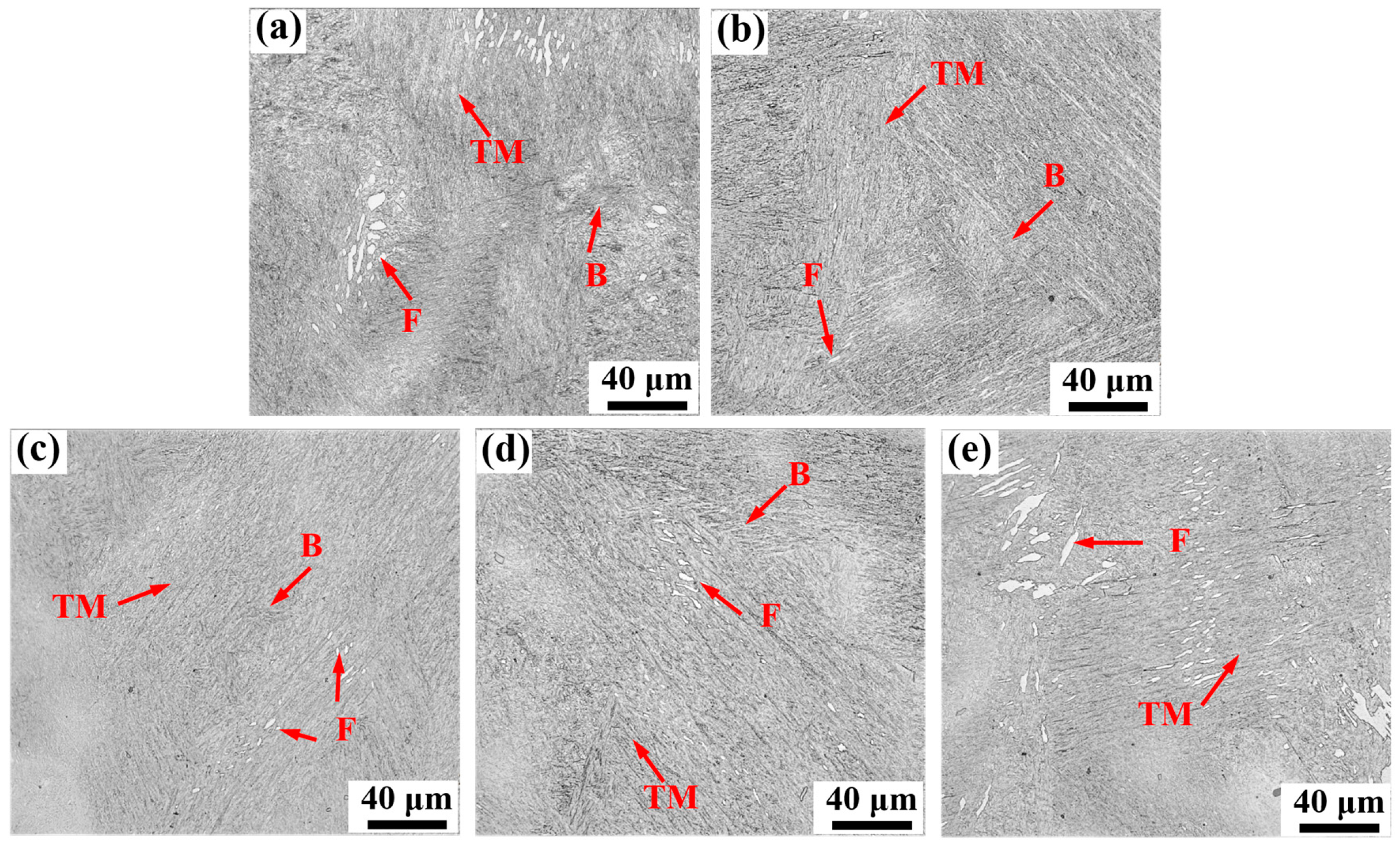
OM images of the experimental steels subjected to different partitioning temperatures are presented in Figure 5. The microstructure is composed primarily of tempered martensite (TM), along with bainite and ferrite. As the partitioning temperature lies between the Ms and Mf temperatures, a substantial amount of martensite forms initially, which subsequently transforms into TM during tempering. According to the CCT curve, the bainite start (Bs) temperature is 331 °C. This constituent formed during the tempering and subsequent cooling stages [23]. Polygonal ferrite exhibiting a clustered distribution is also observed in the microstructure; the volume fraction gradually increases with the increase in partitioning temperature (Figure 5a–e).
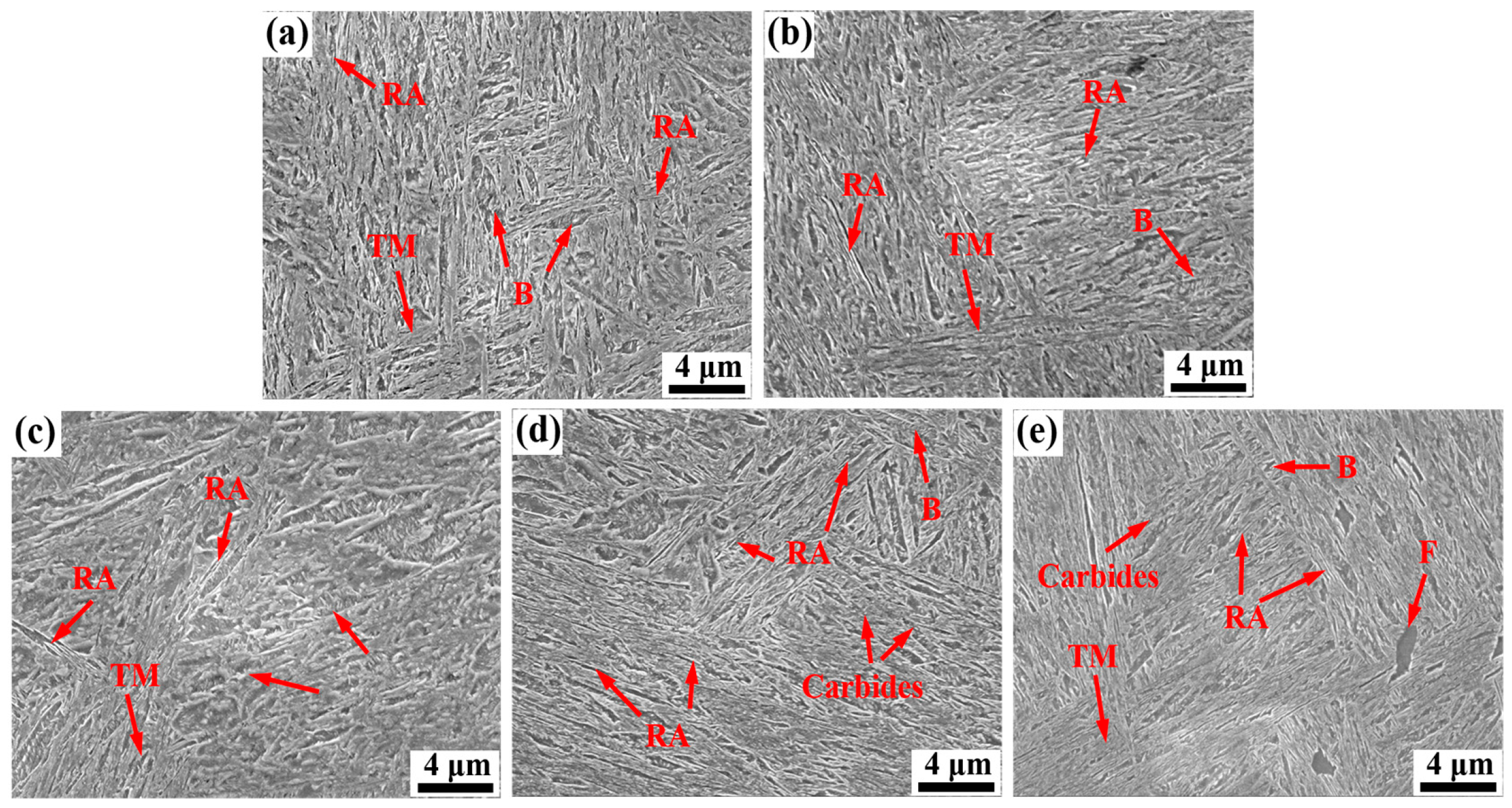
SEM images of the cast steels subjected to different partitioning temperatures are presented in Figure 6. The microstructures under different conditions are predominantly composed of TM, bainite, ferrite, and RA. At a partitioning temperature of 150 °C, the martensite exhibits the highest volume fraction and finest lath morphology (Figure 6a). When the temperature increases to 230 °C, the martensite laths coarsen and their boundaries become less distinct (Figure 6e). The content of bainite in the microstructure gradually increases with rising partitioning temperature (Figure 6a–e). Even when the partitioning temperature is below the Ms temperature, bainite formation still occurs. The RA, with a film-like morphology, is distributed between the martensite laths. An increase in the partitioning temperature raises its volume fraction, while also enhancing carbon activity and promoting more sufficient diffusion, thereby improving the stability of the RA. However, carbide precipitation occurs during the tempering process, and the RA transforms into carbide-free bainite during the cooling stage, leading to a reduction in its content. Fine, short-rod-shaped transition carbides are observed within the microstructure, located both at the boundaries and inside the laths of TM. Their quantity and size remain limited, primarily due to the relatively high Si and Al content in the steel, which inhibits the carbide transformation.
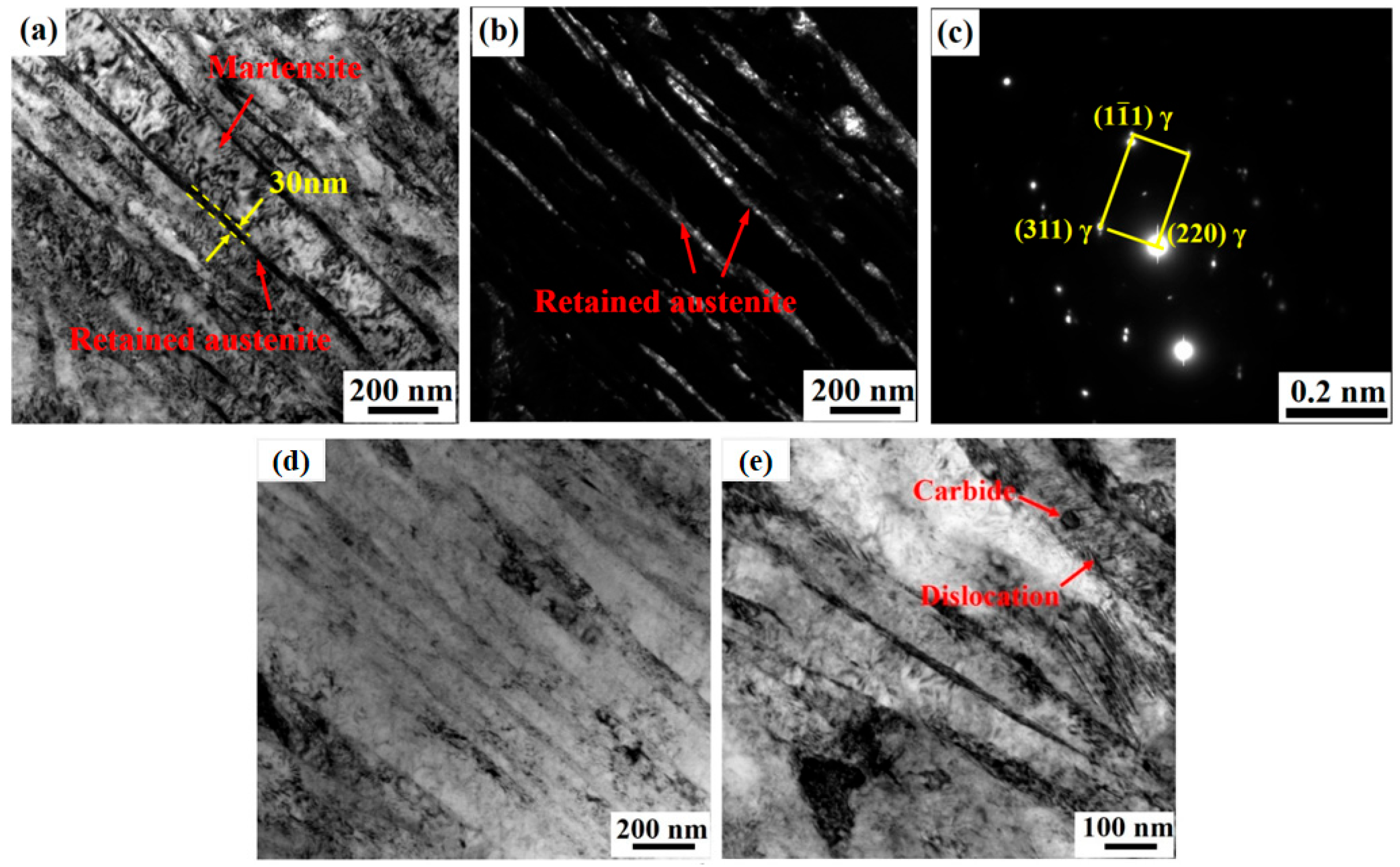
TEM images of the Q-P(210)-T steel are presented in Figure 7. The bright-field (BF) image (Figure 7a) reveals the microstructure of the steel characterized by an interlaced distribution of martensite and RA. The RA primarily exhibits a film-like morphology, with an average thickness of approximately 30 nm. The corresponding dark-field (DF) image in Figure 7b confirms the presence of blocky RA in the microstructure, which is further verified by the diffraction pattern in Figure 7c. The lath width of the steels is relatively small, with an average width of 105.61 nm. Partial martensite, which is decomposed at the tempering stage of 400 °C, results in the fusion of the interfaces of the quenched martensitic laths. Their boundaries are less distinct, with spherical carbides observable within the laths. A high density of dislocations can be found within the martensite laths, which are clustered at the lath boundaries and the interfaces with RA. Such nanoscale TM laths containing high-density dislocations are able to enhance the yield strength and toughness of materials.
Figure 7d shows a TEM image of the Q-P(150)-T experimental steel, where the microstructure is predominantly composed of lath-shaped TM. A lower partitioning temperature provides a greater transformation driving force and a higher transformation rate for martensite during quenching. As a result, compared with the Q-P(210)-T steel, the Q-P(150)-T steel possesses a more refined martensite lath structure. As shown in Figure 7e, fine transition carbides can be observed within the martensite matrix. These precipitates impede dislocation motion, causing dislocations to tangle around them, thereby contributing to precipitation strengthening [24]. A large number of parallel dislocations are present at the interfaces between the TM and austenite. These dislocations are typically aligned parallel to the interface or located directly at the phase boundary. Obviously, the dislocation density within the TM laths is significantly lower than that inside the RA. The lower dislocation density in the TM laths compared to the RA can be attributed to the tempering stage of the Q-P-T process. During tempering, recovery occurs in the martensite, reducing its dislocation density. In contrast, the RA does not undergo this recovery, thus preserving a higher density of dislocations introduced during earlier processing steps.
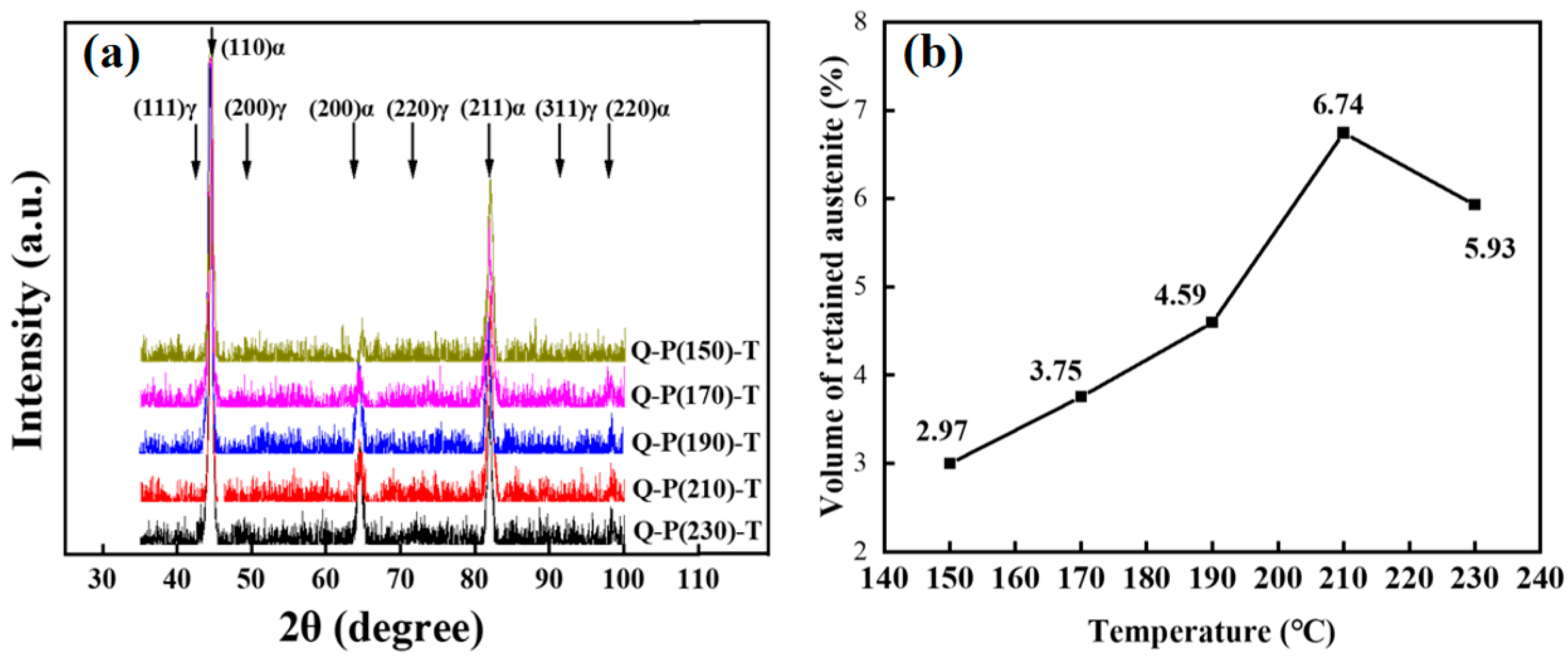
Figure 8a presents the XRD patterns of the experimental steels at different partitioning temperatures. The patterns are dominated by ferrite partitioning peaks, while the austenite peaks are weak, indicating a large amount of RA in the steel decomposed and its content decreased after tempering. However, the presence of shoulders at the austenite peak positions, combined with the film-like RA observed in the TEM image, confirms that a small amount of RA remains. The content of RA is semi-quantitatively analyzed by XRD, with the results shown in Figure 8b. With increasing partitioning temperature, the RA content first increases and then decreases, reaching a maximum at 210 °C before dropping at 230 °C. This trend is consistent with the calculation results, except that the highest peak content occurs at a higher temperature. At lower partitioning temperatures, the driving force for martensite transformation is high, and the hardenability of the steel is good, leading to the formation of a large amount of martensite and consequently a relatively low content of RA. The increase in partitioning temperature elevates the carbon activity in austenite. This heightened activity enhances the driving force for carbon diffusion into the austenite, thereby promoting carbon enrichment and improving the stability of retained austenite, which ultimately leads to an increase in its content. At 230 °C, the excessively high temperature reduces the stability of the RA, resulting in a decrease in its content. The overall low RA content in the steel can be attributed to several factors. Firstly, the quenching temperature being below the Ms point provides sufficient driving force for martensite formation, while the relatively low partitioning temperature hinders adequate carbon diffusion into the austenite. This insufficient carbon enrichment destabilizes the RA, causing it to transform into secondary martensite during secondary quenching [25]. Secondly, the bainite forms during quenching competes with the RA for carbon, further reducing the carbon content and stability of the RA. Finally, the relatively high tempering temperature promotes the decomposition of the RA, leading to a further decrease in its content [26].
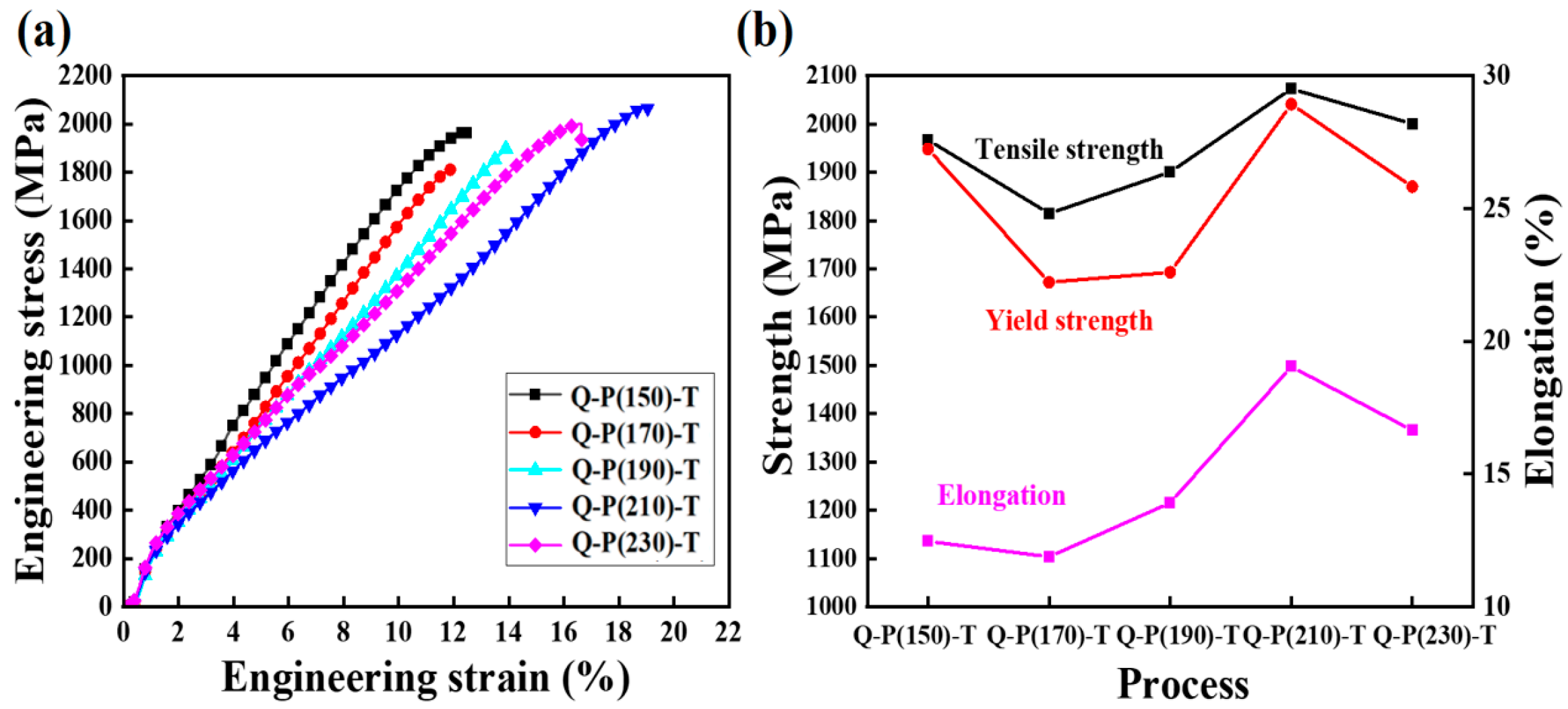
Figure 9a shows the engineering stress–strain curves of the experimental steel and the variation curves of its mechanical properties with the heat treatment process. The optimal mechanical properties are achieved at a partitioning temperature of 210 °C. As observed in Figure 9b, at this temperature, the material uncovers a tensile strength of 2073.2 MPa, a yield strength of 2041.1 MPa, and an elongation of 19.0%. At lower partitioning temperatures, the microstructure contains a high content of TM and a low volume fraction of RA, resulting in high strength and poor toughness. Within the partitioning temperature range of 170–210 °C, carbon diffuses more readily into the RA. This not only enhances the stability of the RA but also reduces the carbon content and dislocation density in the martensite, leading to a decrease in martensite strength. Meanwhile, the amount of bainite increases with rising partitioning temperature. The combined effect of these factors contributes to the simultaneous improvement in both strength and toughness of the experimental steel with increasing partitioning temperature [27,28,29]. When the partitioning temperature further increases to 230 °C, carbon diffusion accelerates, martensite softening intensifies, causing a continuous decline in the strength of the experimental steel. Moreover, the further increase in bainite content reduces the amount of RA, thereby deteriorating its toughness.
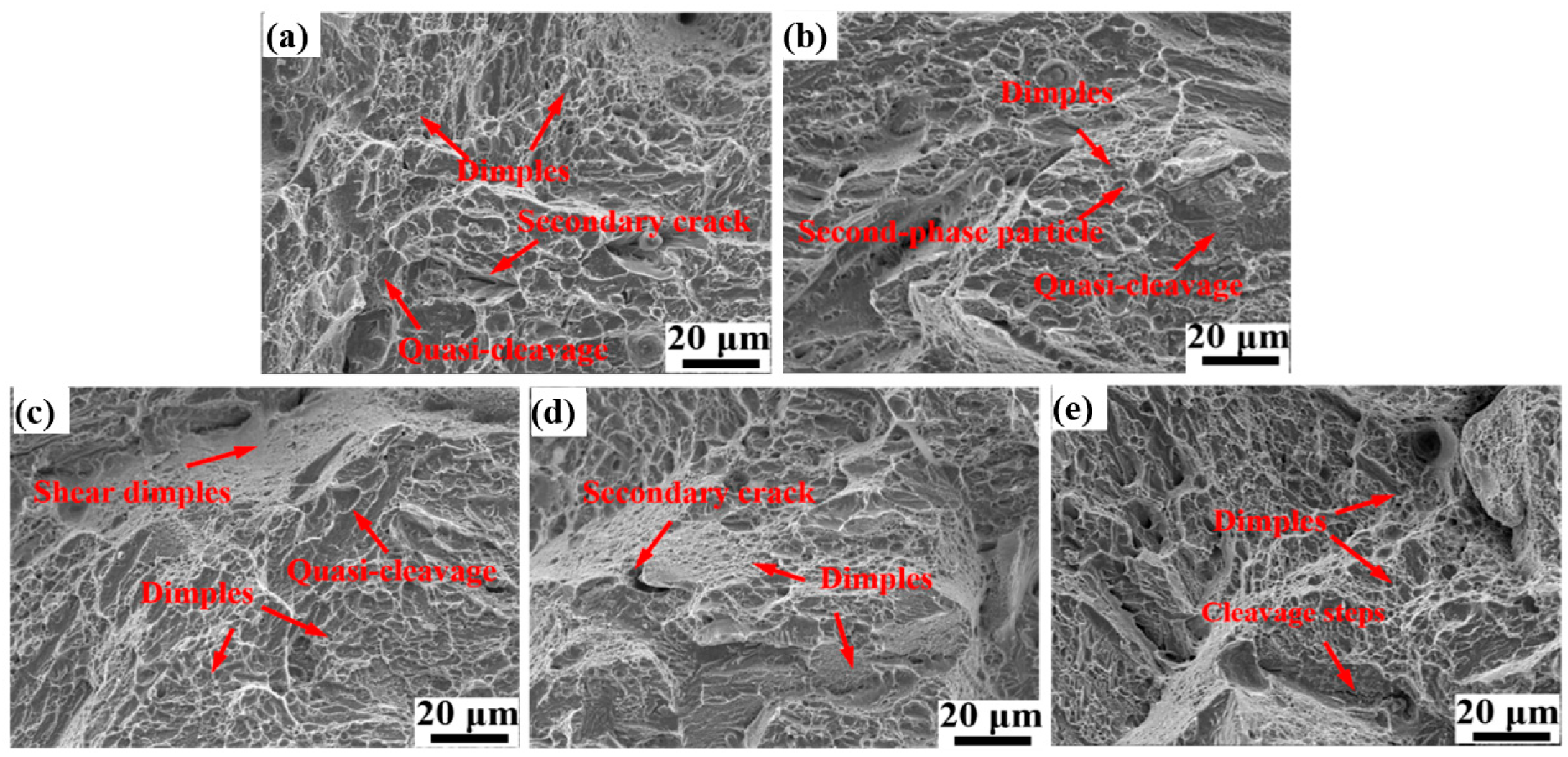
Figure 10 presents the fracture morphologies of tensile specimens at different partitioning temperatures. All fracture surfaces exhibit a high density of dimples accompanied by a few quasi-cleavage fracture characteristics, indicating that the primary failure mode is ductile fracture. As shown in Figure 10a, the specimen at a tempering temperature of 150 °C displays brittle fracture regions with relatively flat planes, and along with quasi-cleavage morphology adjacent to dimples, indicating poor toughness at this temperature. Figure 10b,c demonstrates that as the partitioning temperature increases, quasi-cleavage features gradually disappear, while the number and size of dimples significantly enhance. The number of shear lips also rises accordingly; these lips absorb more energy during deformation, thereby effectively enhancing specimen toughness. At a partitioning temperature of 210 °C (Figure 10d), the fracture surface is characterized by numerous equiaxed dimples containing second-phase particles, with a small number of secondary cracks, representing typical ductile fracture. This reflects an increasingly dominant ductile fracture behavior with increasing partitioning temperature. However, when the partitioning temperature reaches 230 °C (Figure 10e), the fracture morphology exhibits a greater number of secondary cracks, corresponding to the decreased elongation of the experimental steel.
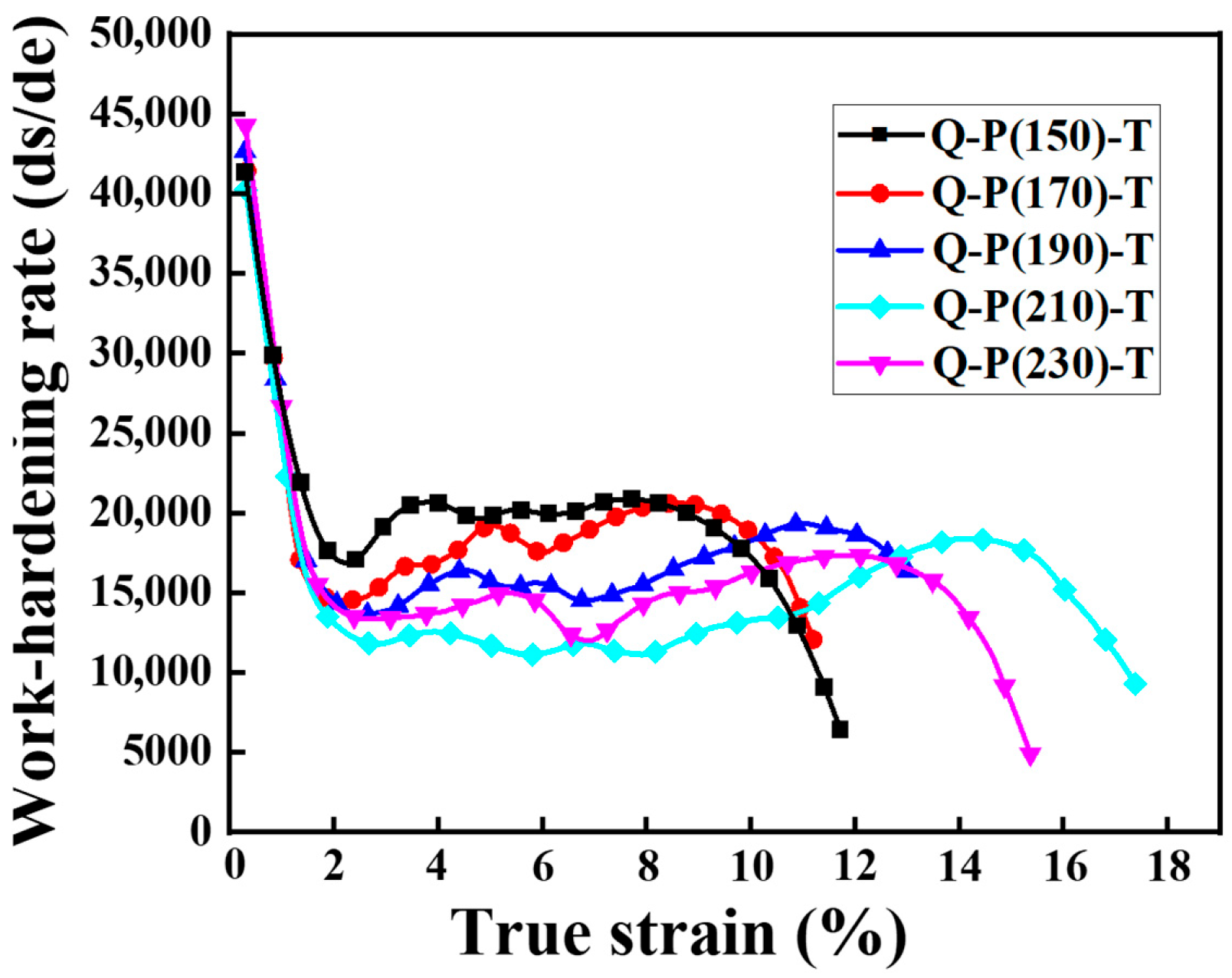
To clarify the work-hardening behavior of the experimental steels during tensile deformation, the work-hardening curves of specimens subjected to different partitioning temperatures are presented in Figure 11. The work-hardening process depicted by the curve can be divided into three stages [30,31]. In the first stage, the rapid decline indicates that the work-hardening rate is primarily due to the dynamic recovery of dislocations in the matrix and the softening deformation of ferrite. In the second stage, the work-hardening rate initially fluctuates and then tends to increase. This behavior is mainly attributed to the stress-induced martensitic transformation of RA, coupled with the effect of dislocation accumulation. In the third stage, continued deformation leads to stress concentration, resulting in material failure and a rapid drop in the work-hardening rate. A comparison of the work-hardening curves reveals that the specimen partitioned at 150 °C exhibits the shortest second stage, demonstrating a relatively weak transformation-induced plasticity effect. This is due to the limited carbon diffusion into austenite at the lower temperature, which results in a lower RA content. Conversely, this specimen shows the highest work- hardening rate, which is inferred to be related to the enhanced work-hardening caused by dislocation pile-ups at martensite boundaries during deformation. In addition, the specimen partitioned at 210 °C demonstrates the longest second stage, indicating a more significant TRIP effect [32,33], primarily owing to the enhanced stability of the RA resulting from the higher partitioning temperature.
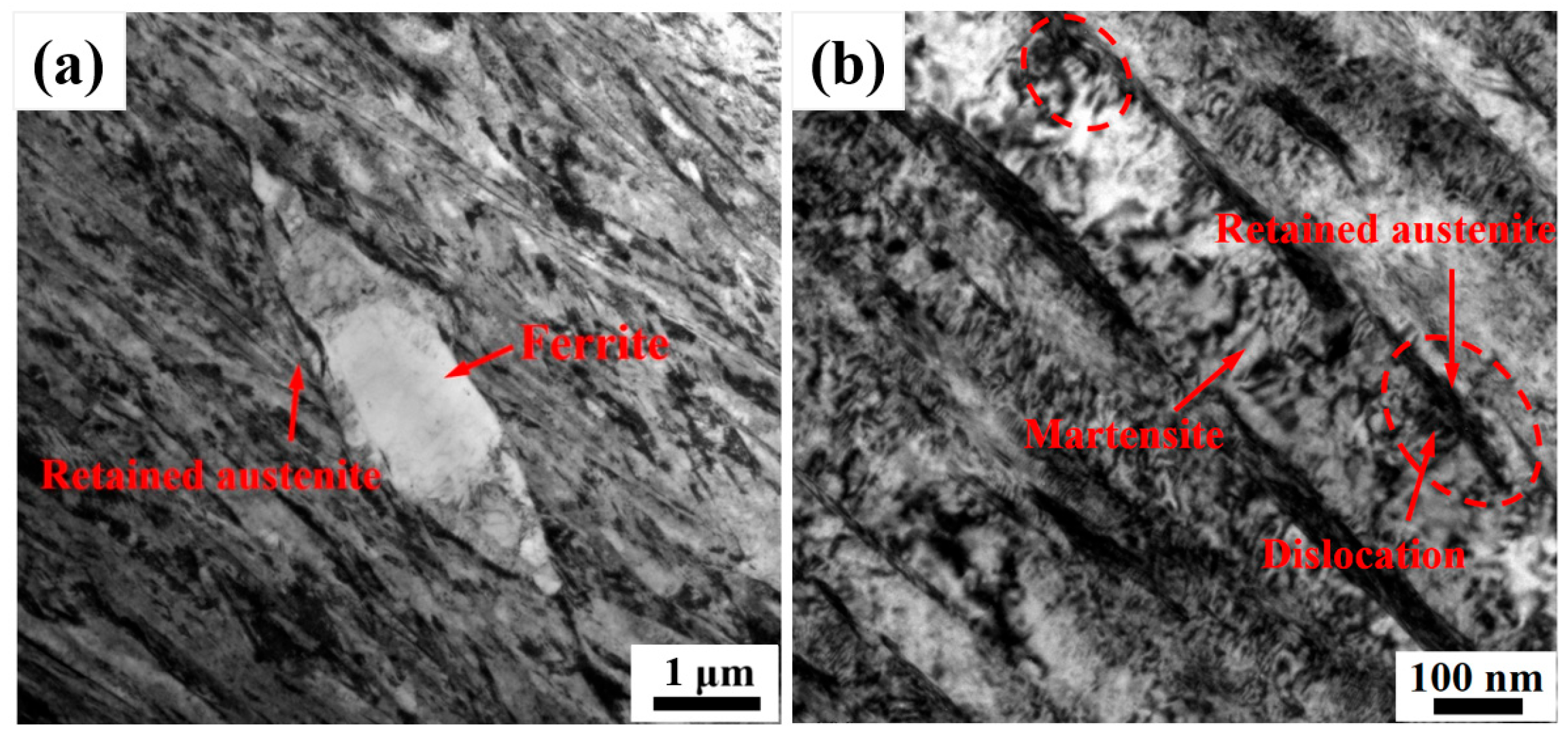
Figure 12a shows the presence of polygonal ferrite in the microstructure. This phase can absorb the volumetric expansion produced by the TRIP effect, thereby providing advantageous conditions for its sufficient development. Figure 12b presents an enlarged microstructure of the RA and martensite, where dislocations can be observed penetrating the interface between martensite and RA and being absorbed by RA [34]. This phenomenon, which is caused by dislocation absorption by retained austenite effect (DARA), mainly originates from two mechanisms. First, RA, as a soft phase of face-centered cubic (FCC) structure, possesses numerous slip systems, giving it a structural advantage in accommodating a high density of dislocations. Second, RA and martensite usually follow the Kurdjumov-Sachs (K-S) or Nishiyama-Wassermann (N-W) orientation relationships, where the {110} planes of the body-centered cubic (BCC) martensite structure are parallel to the {111} planes of the FCC austenite structure with low lattice mismatch [35]. This crystallographic configuration facilitates interfacial slip and dislocation transfer from the martensite into adjacent RA.
It should be noted that the irreversibility of the possible RA-to-martensite transformation in the cast steel presents critical drawbacks under repeated loading conditions. It permanently reduces toughness and damage tolerance, as the material loses the stress-relaxation capacity of reversible TRIP effects, lowering crack initiation and propagation resistance under static or impact loading. Moreover, the permanent microstructural change reduces in-service performance predictability, making properties highly sensitive to initial thermal history and transformation events. In future work, this aspect can be considered to make a more accurate assessment of the service condition of the materials in the repeated loading scenarios and provide a clearer direction for further improvement of the materials.
By studying the Q-P-T process, this paper systematically explored the influence of partitioning temperature on the microstructure and properties of low-alloy cast steel. The study found that the cast steel obtained at a partitioning temperature of 210 °C presents a good balance of tensile strength and toughness, thus achieving a new level of mechanical properties for the cast steel materials processed by the Q-P-T process. It also revealed the toughening mechanisms of TRIP and DARA effects, providing important references for the development of high-performance cast steel.

4. Conclusions

An ultra-high strength steel with tensile strength exceeding 2000 MPa and excellent toughness has been successfully produced through the application of a Q-P-T heat treatment process to low-alloy cast steels. This work systematically investigated the effects of different partitioning temperatures on the microstructure and mechanical properties of the experimental steel.
(1)
The cast steel achieved optimal comprehensive mechanical properties under the heat treatment parameters of quenching at 950 °C for 30 min, partitioning at 210 °C for 3 min, and tempering at 400 °C for 60 min, achieving a tensile strength of 2073.5 MPa, yield strength of 2041.1 MPa, and elongation of 19.0%. The microstructure consisted of TM, bainite, RA, and ferrite.
(2)
Increasing partitioning temperature raises the carbon content in RA, thereby enhancing the stability of the cast steel. The RA content initially increases and then decreases with rising partitioning temperature, reaching its maximum at 210 °C. During the tempering process, RA transforms carbides due to carbon precipitation, which subsequently facilitates the bainitic transformation.
(3)
The TRIP effect generated by the film-like RA during tensile deformation effectively improves the steel’s toughness. Meanwhile, the DARA effects of the RA also significantly enhance toughness. The nano-sized TM laths in the cast steel contribute to strength through grain refinement strengthening. Higher partitioning temperatures boost carbon diffusion, reducing lattice distortion and strength in tempered martensite, while the increased bainite formation offsets this strength loss.

Supplementary Materials

The following supporting information can be downloaded at: https://www.mdpi.com/article/10.3390/met16030289/s1, Supporting S1: Calculation process of the volume fraction of each phase in the experimental steel; Figure S1: The volume fraction of each phase in the test steel after partitioning.

Author Contributions

Conceptualization, X.F. and Z.W.; formal analysis, X.F. and Y.C.; investigation, X.F. and Y.C.; data curation, Y.T. and S.D.; writing—original draft preparation, X.F. and Y.C.; writing—review and editing, Z.W.; project administration, Z.W.; visualization, Y.T. and S.D.; supervision, Y.T. and S.D.; funding acquisition, Z.W. All authors have read and agreed to the published version of the manuscript.

Funding

The authors would like to acknowledge the financial support from the Science Research Project of Hebei Education Department, China (CXZX2026077).

Data Availability Statement

The original contributions presented in this study are included in the article/Supplementary Material. Further inquiries can be directed to the corresponding authors.

Conflicts of Interest

Author Xueyi Fan was employed by the company Shougang Mining Corporation. The remaining authors declare that the research was conducted in the absence of any commercial or financial relationships that could be construed as a potential conflict of interest.

References

  1. Cheng, J.H.; Lin, B.K.; Pottore, N.S.; Sadagopan, S.; Zhu, H.; Hu, X.H. A mesoscale crystal plasticity model to predict room-temperature deformation and martensitic transformation of high-strength quenching and partitioning (Q&P) Steels and validation with synchrotron X-ray diffraction. Int. J. Plast. 2024, 172, 103833. [Google Scholar] [CrossRef]
  2. Lee, H.W.; Park, T.M.; Seo, N.; Lee, S.J.; Lee, C.; Han, J. Design of low-Ni martensitic steels with novel cryogenic impact toughness exceeding 190 J. Mater. Sci. Eng. A 2022, 840, 142959. [Google Scholar] [CrossRef]
  3. Niu, Q.A.; Zhang, Q.L.; Ying, Z.; Chen, Z.J.; Meng, Y.C.; Tofil, S.; Kurp, P.; Yao, J.H. Microscopic pearlite-martensite structure manufactured by laser-induction hybrid phase transformation promoting mechanical properties of carbon steel. Mater. Sci. Eng. A 2025, 945, 149011. [Google Scholar] [CrossRef]
  4. Pelligra, C.; Samei, J.; Amirkhiz, B.S.; Hector, L.G., Jr.; Wilkinson, D.S. Microstrain partitioning, Transformation Induced Plasticity, and the evolution of damage during deformation of an austenitic-martensitic 1.5 GPa Quench and Partition steel. Mater. Sci. Eng. A 2024, 895, 146181. [Google Scholar] [CrossRef]
  5. Bouaziz, O.; Allain, S.; Scott, C.P.; Cugy, P.; Barbier, D. High manganese austenite twinning induced plasticity steels: A review of the microstructure properties relationships. Curr. Opin. Soild Mater. Sci 2011, 15, 141–168. [Google Scholar] [CrossRef]
  6. Hao, Q.G.; Qin, S.W.; Liu, Y.; Zuo, X.W.; Chen, N.L.; Rong, Y.H. Relation between microstructure and formability of quenchong-partitioning-tempering martensitic steel. Mater. Sci. Eng. A 2016, 671, 135–146. [Google Scholar] [CrossRef]
  7. Li, Z.C.; Ding, H.; Misra, R.D.K.; Cai, Z.H. Microstructure-mechanical property relationship and austenite stability in medium-Mn TRIP steels: The effect of austenite-reverted transformation and quenching-tempering treatments. Mater. Sci. Eng. A 2017, 682, 211–219. [Google Scholar] [CrossRef]
  8. Li, Y.C.; Wang, E.G.; Zhang, L.; Fautrelle, Y.; Zhao, X.; Guo, X.; Zhang, D.Q. Microstructure evolution and mechanical properties of 60Si2CrVNb spring steel under quenching-tempering heat treatment process. J Mater. Res. Technol. 2023, 25, 6829–6842. [Google Scholar] [CrossRef]
  9. Hosseinreza, S.; Rastegari, H.; Abedini, A. Comparison of microstructure and mechanical properties after Quench–Temper and Quench–Partitioning heat treatment for a high-silicon medium-carbon cast steel. Int. J. Met. 2025. [Google Scholar] [CrossRef]
  10. Zhou, X.S.; Zhao, W.M.; Dong, L.S.; Song, N. Effect of quenching and tempering temperatures on microstructure and properties of ultrahigh strength cast steel. Steel Res. Int. 2022, 93, 2200328. [Google Scholar] [CrossRef]
  11. Li, J.; Tan, Z.L.; Zhang, M.; Gao, G.H.; Kumar Misra, R.D.; Bai, B.Z. Effect of intercritical austenitizing temperature during quenching-intercritical quenching-tempering process on toughness of 25Mn2Si2Cr bainitic steel. Steel Res. Int. 2019, 90, 1800573. [Google Scholar] [CrossRef]
  12. Zhu, C.H.; Xu, L.J.; Xie, H.S.; Shi, R.X.; Yin, L.T.; Wei, S.Z. Effect of heat treatment processes on the microstructure and mechanical properties of 00Cr13Ni5Mo super martensitic stainless steel (SMSS). J. Mater. Res. Technol. 2024, 32, 2006–2021. [Google Scholar] [CrossRef]
  13. Hsu, T.Y.; Jin, X.J.; Rong, Y.H. Strengthening and toughening mechanisms of quenching-partitioning-tempering (Q-P-T) steels. J. Alloys Compd. 2013, 577, S568–S571. [Google Scholar] [CrossRef]
  14. Wang, X.D.; Guo, Z.H.; Rong, Y.H. Mechanism exploration of an ultrahigh strength steel by quenching-partitioning-tempering process. Mater. Sci. Eng. A 2011, 529, 35–40. [Google Scholar] [CrossRef]
  15. Wang, Y.; Ren, X.; Hou, Z.; Jiang, A.; Zhao, J.; Liu, Z. Optimization of heat treatment process and strengthening–toughening and mechanism for H13 steel. Metals 2025, 15, 1101. [Google Scholar] [CrossRef]
  16. Hsu, T.Y.; Xu, Z. Design of structure, composition and heat treatment process for high strength steel. Materi. Sci. Forum 2007, 561–565, 2283–2286. [Google Scholar] [CrossRef]
  17. Zheng, J.; Diao, X.; Yang, J.; Ci, S.; Li, W.; Li, J.; Wang, Q.; Zhang, P.; Tu, X. Degradation mechanism of quenched-partitioning-tempered steel during sliding wear. Eng. Fail. Anal. 2024, 164, 108667. [Google Scholar] [CrossRef]
  18. Zhong, N.; Yang, S.; Liu, T.; Zhao, Y.; Li, W.G.; Li, W.; Wang, X. Effects of compositional inhomogeneity on the microstructures and mechanical properties of a low carbon steel processed by quenching-partitioning-tempering treatment. Crystals 2023, 13, 23. [Google Scholar] [CrossRef]
  19. Wang, Y.B.; Feng, H.; Li, H.B.; Zhang, Y.M.; Jiang, Z.H.; Wang, X.D. Study on the mechanism of excellent strength and toughness combination of a high nitrogen martensitic stainless steel treated by Q-C-P-T process. J. Mater. Res. Technol. 2023, 27, 804–812. [Google Scholar] [CrossRef]
  20. Liu, X.Y.; Han, Y.; Wei, J.H.; Zu, G.Q.; Zhao, Y.; Zhu, W.W.; Ran, X. Effect of tempering temperature on microstructure and mechanical properties of a low carbon bainitic steel treated by quenching-partitioning-tempering (QPT) process. J. Mater. Res. Technol. 2023, 23, 911–918. [Google Scholar] [CrossRef]
  21. Gao, G.H.; Zhang, H.; Gui, X.L.; Tan, Z.L.; Bai, B.Z. Tempering behavior of ductile 1700 MPa Mn-Si-Cr-C steel treated by quenching and partitioning process incorporating bainite formation. J. Mater. Sci. Technol. 2015, 21, 199–204. [Google Scholar] [CrossRef]
  22. Feng, Y.; Jing, C.N.; Lin, T.; Wu, Z.L.; Li, Z.T.; Zhao, J.R. Effect of retained austenite on the microstructure and mechanical properties of cold-rolled medium-manganse Q&P steel. Ironmak. Steelmak. 2022, 50, 167–173. [Google Scholar] [CrossRef]
  23. Chen, S.; Hu, J.; Shan, L.Y.; Wang, C.C.; Zhao, X.M.; Xu, W. Characteristics of bainitic transformation and its effects on the mechanical properties in quenching and partitioning steels. Mater. Sci. Eng. A 2020, 803, 140706. [Google Scholar] [CrossRef]
  24. Vercruysse, F.; Celada-Casero, C.; Linke, B.M.; Verleysen, P.; Petrov, R.H. The effect of Nb on the strain rate and temperature dependent behaviour of quenching & partitioning steels. Mater. Sci. Eng. A 2020, 800, 140293. [Google Scholar] [CrossRef]
  25. Peng, F.; Xu, Y.B.; Li, J.Y.; Gu, X.L.; Wang, X. Interaction of martensite and bainite transformations and its dependence on quenching temperature in intercritical quenching and partitioning steels. Mater. Des. 2019, 181, 107921. [Google Scholar] [CrossRef]
  26. Miettunen, I.; Ghosh, S.; Somani, M.C.; Pallaspuro, S.; Kömi, J. Competitive mechanisms occurring during quenching and partitioning of three silicon variants of 0.4 wt.% carbon steels. J. Mater. Res. Technol. 2021, 11, 1045–1060. [Google Scholar] [CrossRef]
  27. Misra, R.D.K.; Zheng, H.; Wu, K.M.; Karjalainen, L.P. Niobium-containing quenching and partitioning processed ultrahigh strength martensite–austenite dual phase steels. Mater. Sci. Eng. A 2013, 579, 188–193. [Google Scholar] [CrossRef]
  28. Deng, Y.G.; Di, H.S.; Misra, R.D.K. Microstructure and mechanical property relationship in a high strength high-Al low-Si hot-dip galvanized steel under quenching and partitioning process. J. Mater. Res. Technol. 2020, 9, 14401–14411. [Google Scholar] [CrossRef]
  29. Kantanen, P.K.; Javaheri, V.; Somani, M.C.; Porter, D.A.; Kömi, J.I. Effect of deformation and grain size on austenite decomposition during quenching and partitioning of (high) silicon-aluminum steels. Mater. Charact. 2011, 171, 110793. [Google Scholar] [CrossRef]
  30. Cao, R.H.; Liang, J.H.; Li, F.; Li, C.; Zhao, Z.Z. Intercritical annealing processing and a new type of quenching and partitioning processing, actualized by combining intercritical quenching and tempering, for medium manganese lightweight steel. Steel Res. Int. 2020, 91, 1900335. [Google Scholar] [CrossRef]
  31. He, B.B.; Pan, S.; Huang, M.X. Extra work hardening in room-temperature quenching and partitioning medium Mn steel enabled by intercritical annealing. Mater. Sci. Eng. A 2020, 797, 140106. [Google Scholar] [CrossRef]
  32. Peng, F.; Xu, Y.B.; Han, D.T.; Gu, X.L.; Li, J.Y.; Wang, X. Influence of pre-tempering treatment on microstructure and mechanical properties in quenching and partitioning steels with ferrite-martensite start structure. Mater. Sci. Eng. A 2019, 756, 248–257. [Google Scholar] [CrossRef]
  33. Gao, P.F.; Chen, W.J.; Li, F.; Ning, B.J.; Zhao, Z.Z. Quasi-situ characterization of deformation in low-carbon steel with equiaxed and lamellar microstructure treated by the quenching and partitioning process. Acta Metall. Sin.-Engl. Lett. 2020, 33, 1657–1665. [Google Scholar] [CrossRef]
  34. Zhang, K.; Zhang, M.H.; Guo, Z.H.; Chen, N.L.; Rong, Y.H. A new effect of retained austenite on ductility enhancement in high-strength quenching-partitioning-tempering martensitic steel. Mater. Sci. Eng. A 2011, 528, 8486–8491. [Google Scholar] [CrossRef]
  35. Yan, X.C.; Hu, J.; Zhang, X.; Xu, W. Obtaining superior low-temperature wear resistance in Q&P-processed medium Mn steel with a low initial hardness. Tribol. Int. 2022, 175, 107803. [Google Scholar] [CrossRef]
Figure 1. Equilibrium phase diagram of the tested steel: (a) The phase diagram calculation results showing the phase composition at different temperatures. (b) The fraction of phases at different temperatures.
Metals 16 00289 g001
Figure 2. Continuous cooling curve (CCT) of the tested steel.
Metals 16 00289 g002
Figure 3. The Q-P-T heat treatment process flow.
Metals 16 00289 g003
Figure 4. Specimen for tensile property tests at room temperature: (a) shape and (b) dimension (unit: millimeters) of the tensile test specimens.
Metals 16 00289 g004
Figure 5. OM images of test steels at different partition temperatures: (a) Q-P(150)-T, (b) Q-P(170)-T, (c) Q-P(190)-T, (d) Q-P(210)-T, (e) Q-P(230)-T.
Metals 16 00289 g005
Figure 6. SEM images of test steels at different partitioning temperatures: (a) Q-P(150)-T, (b) Q-P(170)-T, (c) Q-P(190)-T, (d) Q-P(210)-T, (e) Q-P(230)-T.
Metals 16 00289 g006
Figure 7. (ac) TEM images of the test steel partitioned at 210 °C: (a) bright field image, (b) dark field image, (c) the SAED of retained austenite. (d,e) TEM images of the steel partitioned at 150 °C.
Metals 16 00289 g007
Figure 8. (a) X-ray diffraction patterns of test steels at different partition temperatures, (b) the content of retained austenite in test steels at different partition temperatures.
Metals 16 00289 g008
Figure 9. Mechanical property curve of the steels: (a) engineering stress–strain curve, (b) mechanical property values of test steels at different heat treatments.
Metals 16 00289 g009
Figure 10. Tensile fracture morphology of test steels at different partition temperatures: (a) Q-P(150)-T, (b) Q-P(170)-T, (c) Q-P(190)-T, (d) Q-P(210)-T, (e) Q-P(230)-T.
Metals 16 00289 g010
Figure 11. Work-hardening rate curves of test steels at different partition temperatures.
Metals 16 00289 g011
Figure 12. (a,b) TEM images with different magnification factor showing the partitioning towards the test steel at 210 °C.
Metals 16 00289 g012
Table 1. Chemical composition of test steel (wt.%).
Element CSiMnNiCrMoNbVTiAl
Content0.481.450.901.000.800.800.050.050.041.35
Disclaimer/Publisher’s Note: The statements, opinions and data contained in all publications are solely those of the individual author(s) and contributor(s) and not of MDPI and/or the editor(s). MDPI and/or the editor(s) disclaim responsibility for any injury to people or property resulting from any ideas, methods, instructions or products referred to in the content.