


Abstract
In the alumina production process, potassium from bauxite transfers to the alumina product through digestion and precipitation, posing significant risks to the subsequent aluminum electrolysis. The current understanding of this transfer behavior, especially the distribution patterns of potassium, remains inadequate. This research examines the influence of key parameters—including K2O concentration, seed addition amount, final precipitation temperature, and the molar ratio of the sodium aluminate solution—on the precipitation of potassium. The findings demonstrate that increasing the seed addition, the initial K2O concentration in the solution, the final temperature, and the solution molar ratio all promote the precipitation efficiency of potassium. Moreover, it was observed that raising the seed addition, solution molar ratio, and final temperature effectively increases the proportion of coarse particles in the precipitated product. Conversely, a higher K2O concentration leads to a greater fraction of fine particles. Under typical industrial conditions (COH− = 4.8 mol/L, K2O = 70 g/L, αk = 1.53, initial temperature of 75 °C, final temperature of 37 °C, seed addition of 700 g/L, and a precipitation duration of 40 h), only about 0.19% of the potassium from the initial solution transferred into the aluminum hydroxide product.
1. Introduction
Aluminum is currently produced mainly through the electrolysis of alumina [1]. China is now one of the world’s largest producers and consumers of alumina, which has led to the rapid depletion of high-quality bauxite in China [2]. The country now has to use low- and medium-grade bauxite (which contains potassium) with high impurities [3]. Currently, some enterprises use a mixture of low-grade bauxite and imported high-quality bauxite to produce alumina [4,5]. However, with the rapid development of China’s aluminum industry, alumina production has increased, and China now needs to import large quantities of high-quality bauxite from Australia and Guinea every year [6]. This has also resulted in some of the alumina currently produced being of low quality (The K2O content ranges from 0.01% to 0.1%).
Currently, the potassium ion content in the circulating mother liquor of some alumina plants using potassium-containing bauxite exceeds 75 g/L. Potassium enters the aluminum electrolysis production process through alumina products, resulting in a KF content exceeding 5% in the electrolyte [7,8,9,10,11]. As an extraneous impurity salt, KF integrates into the cryolite-based electrolyte system, altering its original composition. Due to differences in ionic radius and chemical properties between KF and the primary electrolyte component NaF, its introduction disrupts the ionic equilibrium within the system, lowers the liquidus temperature of the electrolyte, reduces the solubility of alumina, and modifies the composition and physicochemical properties of the electrolyte. Consequently, this leads to issues such as decreased current efficiency, reduced electrical conductivity, and a lower eutectic temperature [12,13,14,15]. Furthermore, as electrolysis proceeds, potassium ions preferentially discharge and dissolve into the cathode aluminum liquid, directly reducing the purity of primary aluminum. More critically, potassium exhibits strong permeability, infiltrating into the internal structure of the cathode carbon blocks. This leads to expansion and pulverization of the carbon materials and triggers destructive chemical reactions with refractory materials, which constitute the primary cause of early failure and reduced service life of electrolytic cells [16]. This will have a significant impact on the efficiency of aluminum electrolysis. Several methods have been proposed to mitigate the adverse effects of potassium on aluminum production processes. These include the roasting of bauxite, planetary ball milling combined with acid leaching, and other techniques to reduce potassium content within the Bayer process [17,18,19,20].
Since most alumina production in China involves high-temperature and high-pressure digestion, potassium ions gradually become enriched in the circulating solution [21,22,23,24,25,26,27]. Indeed, studies have shown that the presence of alkali metal cations can influence the seeded precipitation process [28]. It has even been suggested that the seed decomposition rate of potassium-containing sodium aluminate solutions is higher than that of potassium-free sodium aluminate solutions [29,30]. Jiang Youfa’s research [31] indicates that the initial crystallization product under relatively low-temperature conditions (30 °C, 40 °C) is bayerite, while at higher temperatures (60 °C, 80 °C), a mixture of gibbsite and bayerite is formed. Alkali concentration shows no significant effect on the initial product. Chen Jinqing’s [32] study demonstrates that under identical decomposition conditions, the decomposition rate of potassium aluminate solution is higher than that of sodium aluminate solution. Furthermore, the particle size distributions in sodium aluminate and potassium aluminate solutions exhibit significant differences over time. X-ray diffraction (XRD) analysis of the products reveals that the crystals formed during the decomposition of potassium aluminate solution possess a more complete crystallinity compared to those from sodium aluminate solution. The difference in nucleation rates between potassium aluminate and sodium aluminate solutions during seeded precipitation may be responsible for the observed variations in decomposition rate and particle size distribution [33,34]. Therefore, it is necessary to study the behavior of potassium in sodium aluminate solutions, particularly during the seeding process. However, previous studies have focused on the kinetics of the seeding process and on comparing pure sodium aluminate with potassium aluminate solutions. There have been few studies on the behavior of potassium in the seeding process of sodium aluminate solutions in an industrial setting. This paper therefore focuses on studying the behavior of potassium in the seeding process of sodium aluminate solutions under simulated industrial production conditions, giving information about control and utilization of potassium ion content in alumina production.
2. Experimental
When investigating the effect of potassium ions on the decomposition of sodium aluminate, the experimental conditions and influencing factors may vary. As the experimental process must align with actual production conditions, the following key factors should be considered: final decomposition temperature, seed crystal dosage and potassium content in the solution.
2.1. Experimental Methods and Equipment
For the preparation, analytically pure NaOH and KOH, as well as industrial aluminum hydroxide in distilled water, were used. The aluminum hydroxide (pre-washed and dried at 70 °C to remove attached alkali and moisture) and the required weights of NaOH and KOH were accurately weighed according to the experimental conditions. A certain amount of distilled water was added to a polytetrafluoroethylene container, and the NaOH and KOH were heated and dissolved. The weighed aluminum hydroxide was then slowly added to the container and dissolved under heating and stirring conditions. The detailed parameters are shown in Table 1. After the aluminum hydroxide was completely dissolved, the solution was made up to volume to obtain the stock solution. All reagents used in this experiment were of analytical grade and purchased from Tianjin Fengchuan Chemical Reagent Technology Co., Ltd., Tianjin, China.
Table 1.
Detailed experimental parameters.
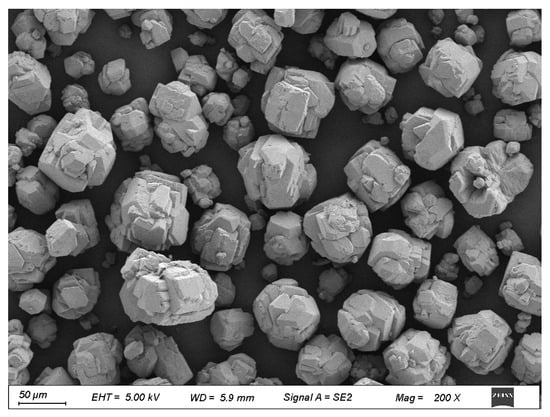
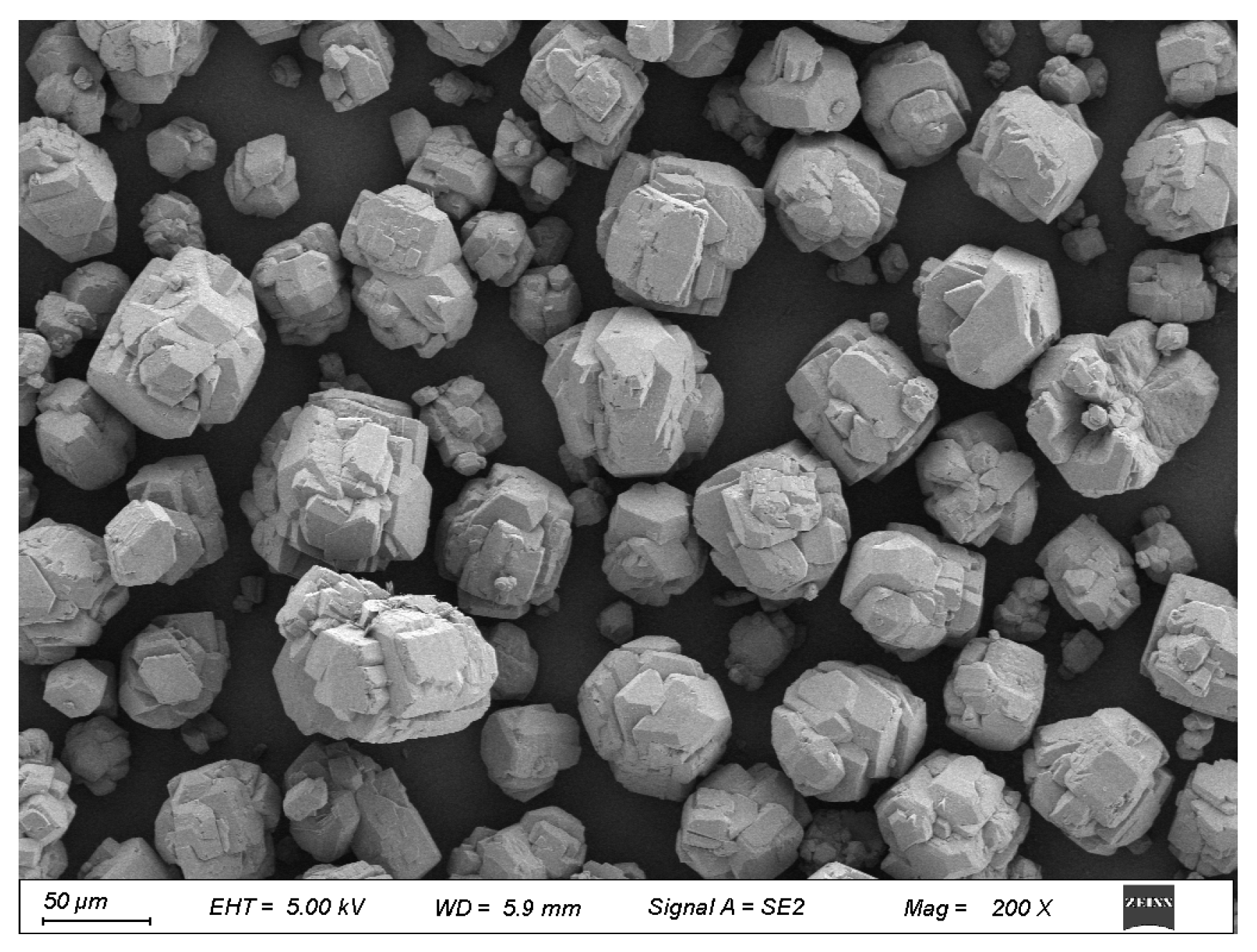
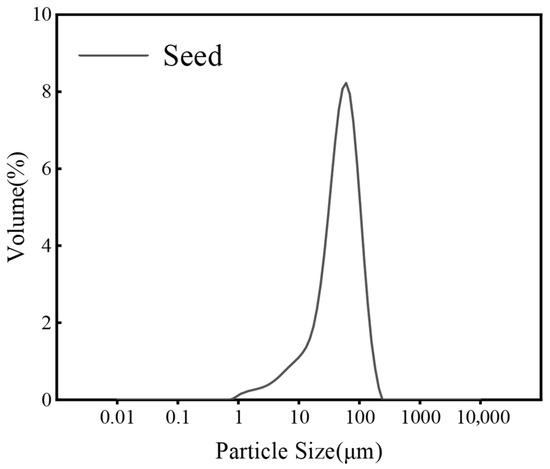
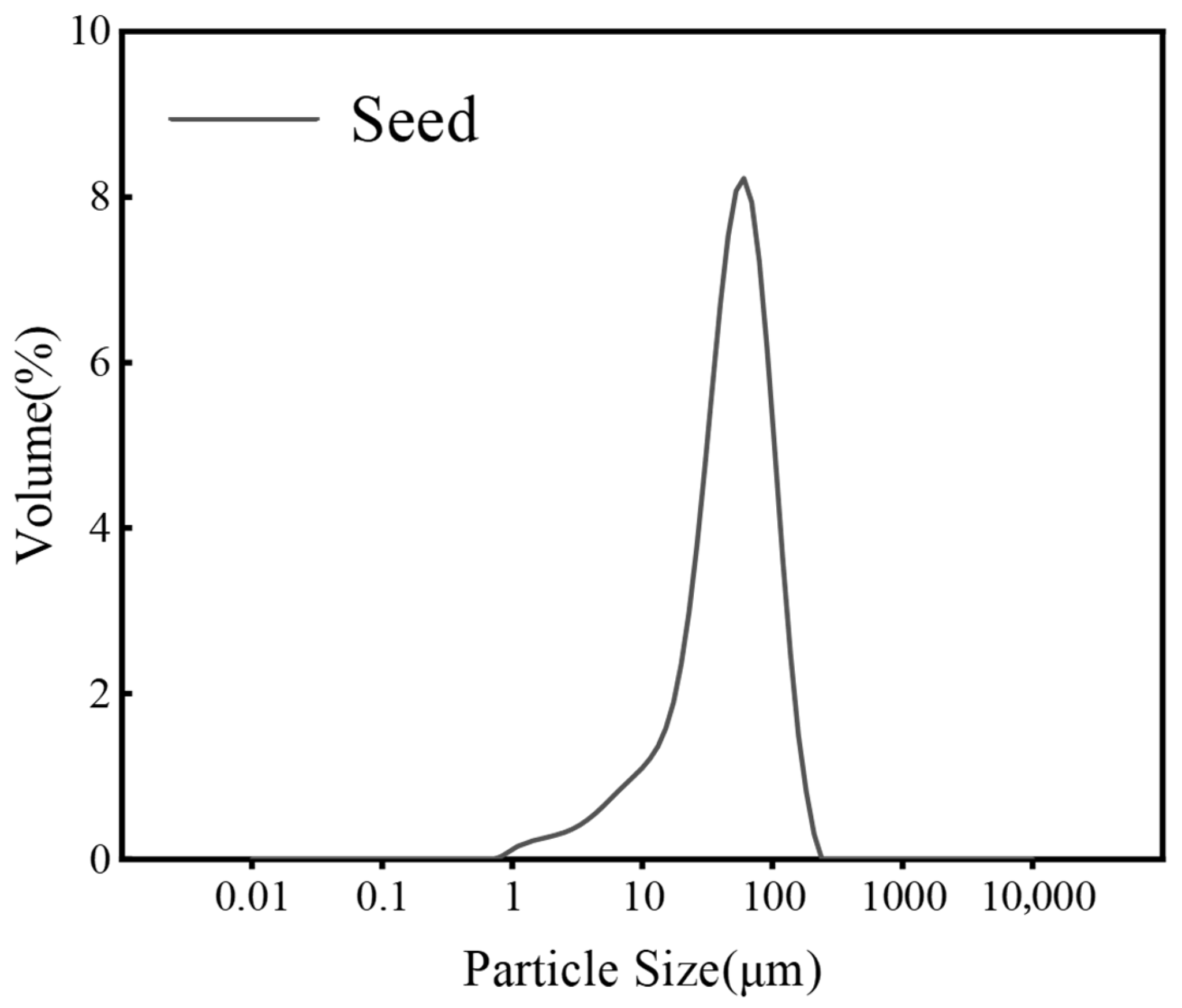
The prepared solution was placed in the split-seed reaction tank to be preheated. Once the predetermined temperature (75 °C) was reached, the crystal seeds were added and the reaction began. The aluminum hydroxide used as the crystal seed was sourced from Tianjin Fengchuan Chemical Reagent Technologies Co., Ltd., Tianjin, China. The particle size of the crystal seeds primarily ranged from 10–100 μm and they were not sieved. The Scanning electron microscopy (SEM) image of the crystal seeds and the corresponding size distribution graph are shown in Figure 1 and Figure 2, respectively. Samples were taken at regular intervals. The samples were centrifuged and the clear liquid was analyzed for the Al2O3 and K2O contents. The solid samples were washed with heated deionised water, filtered and dried three times. They were then stored for particle size analysis.
Figure 1.
The SEM image of the crystal seeds.
Figure 2.
The particle size distribution diagram of the crystal seeds.
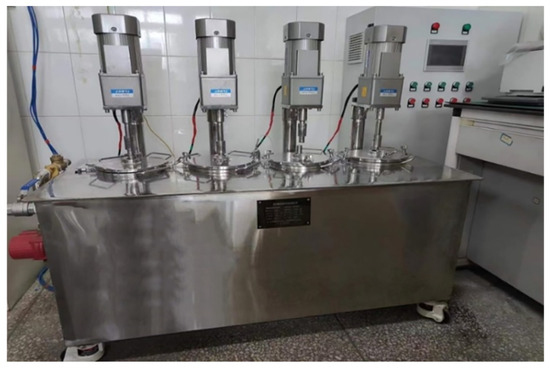
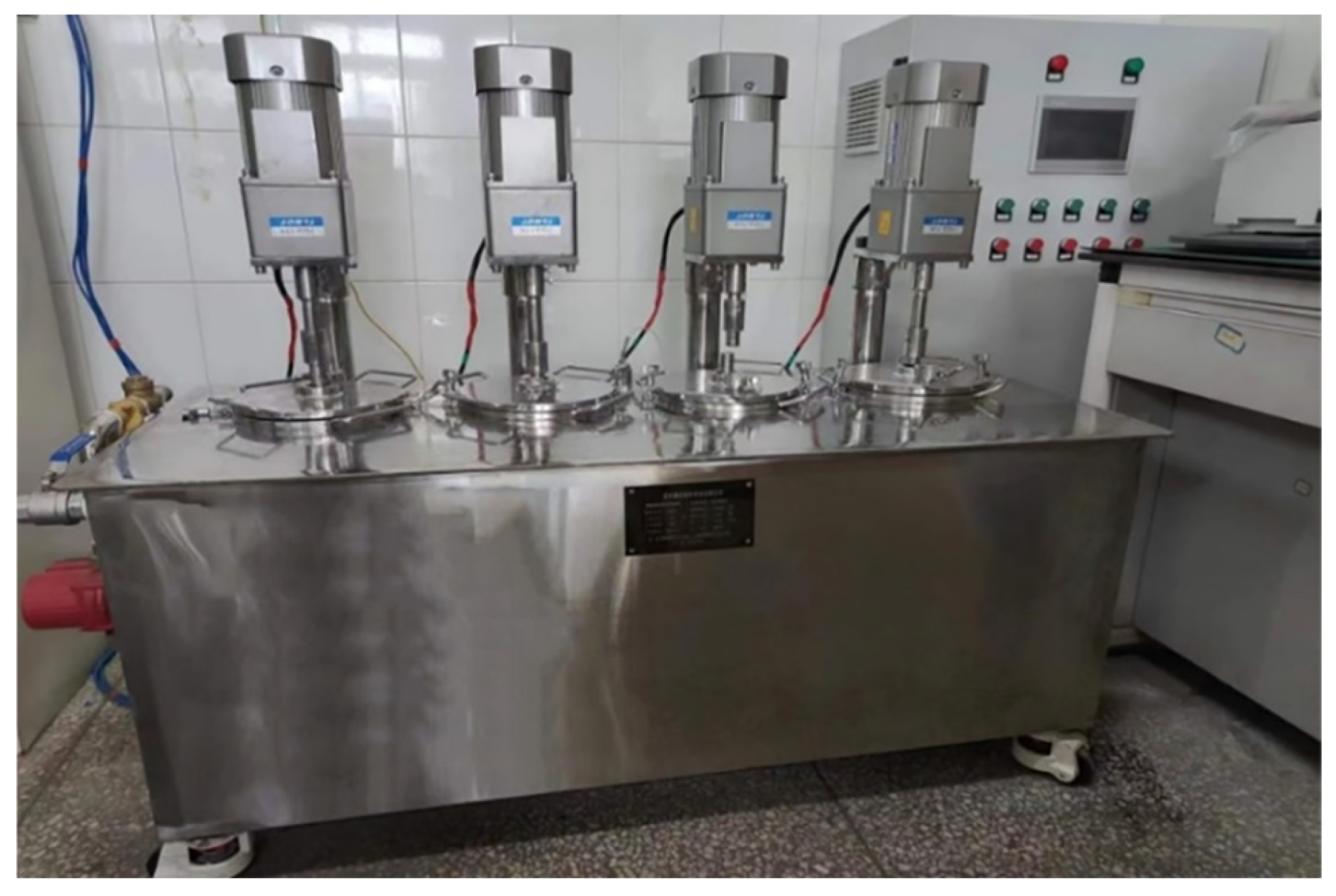
The equipment used in this experiment was a YSAWD-1 type seed decomposition tank, produced by Zhengzhou Yusong Intelligent Control Technology Co., Ltd., Zhengzhou, China, as shown in Figure 3. Temperature control was achieved through a water bath, with a working temperature range from room temperature to 100 °C and a control accuracy of ±0.5 °C. Each vessel has an effective volume of 4 × 2 L and features a central sampling port in its sealed lid for convenient sampling. Each vessel is equipped with a stirring apparatus comprising two paddle stirrers, one upper and one lower, to enhance mixing efficiency. The maximum stirring speed is 200 rpm.
Figure 3.
Photograph of the seed decomposition tank.
2.2. Analytical Method
The seed precipitation rate refers to the ratio of the precipitated alumina mass to the alumina mass in the initial solution during the seeded precipitation process. It is calculated as follows:
αk1 and αk2 refer to the causticity ratios of the initial sodium aluminate solution and the decomposed mother liquor, respectively. In this experiment, the caustic concentration is expressed in terms of the OH− (COH−) concentration rather than the Na2O or K2O concentrations, which are usually used. The corresponding solution causticity ratio (αk) is expressed as αk = COH−/CAl2O3.
The concentrations of caustic alkali and alumina in the decomposed sodium aluminate solution and the mother liquor were determined according to the method described in Reference [35], allowing for accurate calculation of the decomposition rate at any given time. In a more realistic process, impurities must be present. Sodium aluminate solutions were prepared using NaOH and the corresponding mass of KOH to investigate the effect of potassium ions on the seeding process of sodium aluminate solutions without introducing other anions, thus simplifying the experimental system.
3. Results and Discussion
3.1. Effect of K2O Concentration
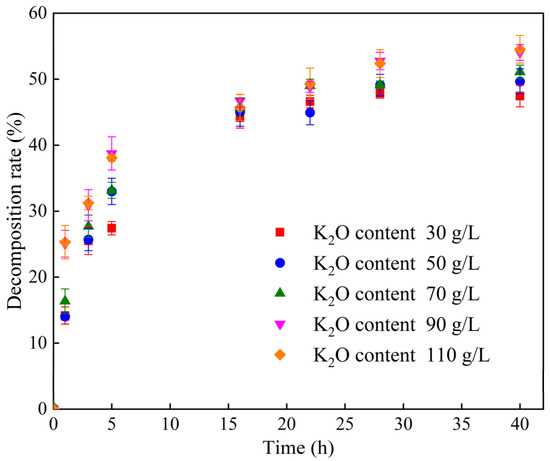
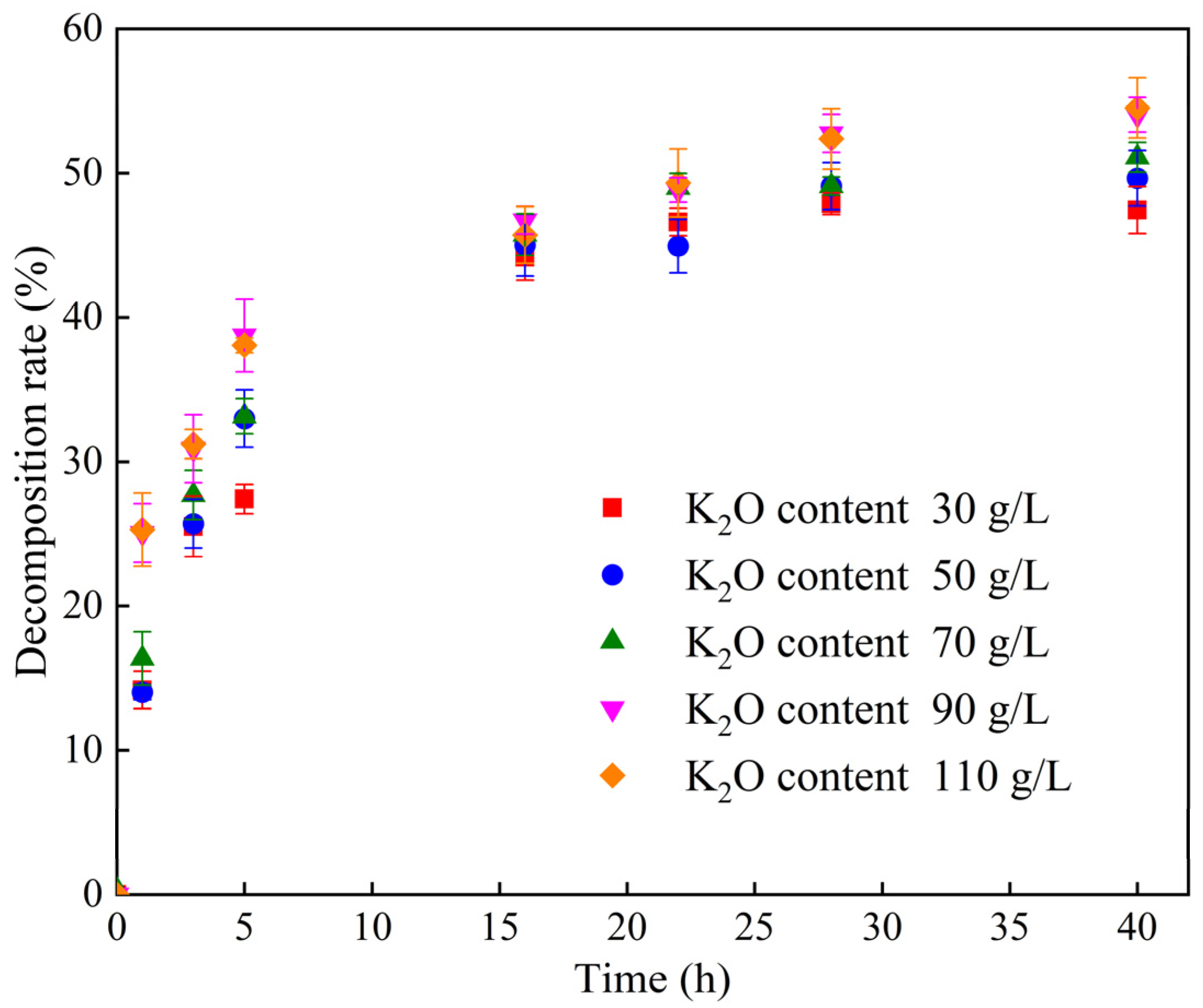
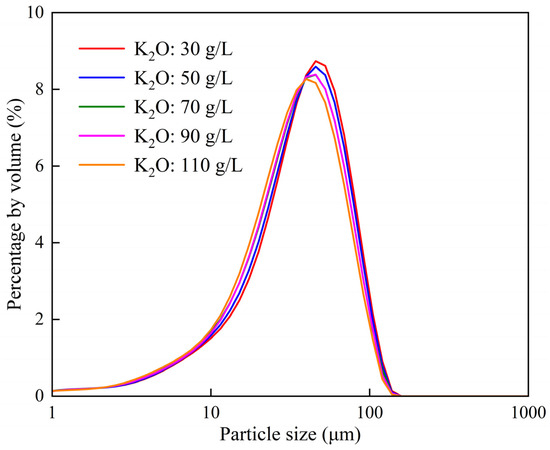
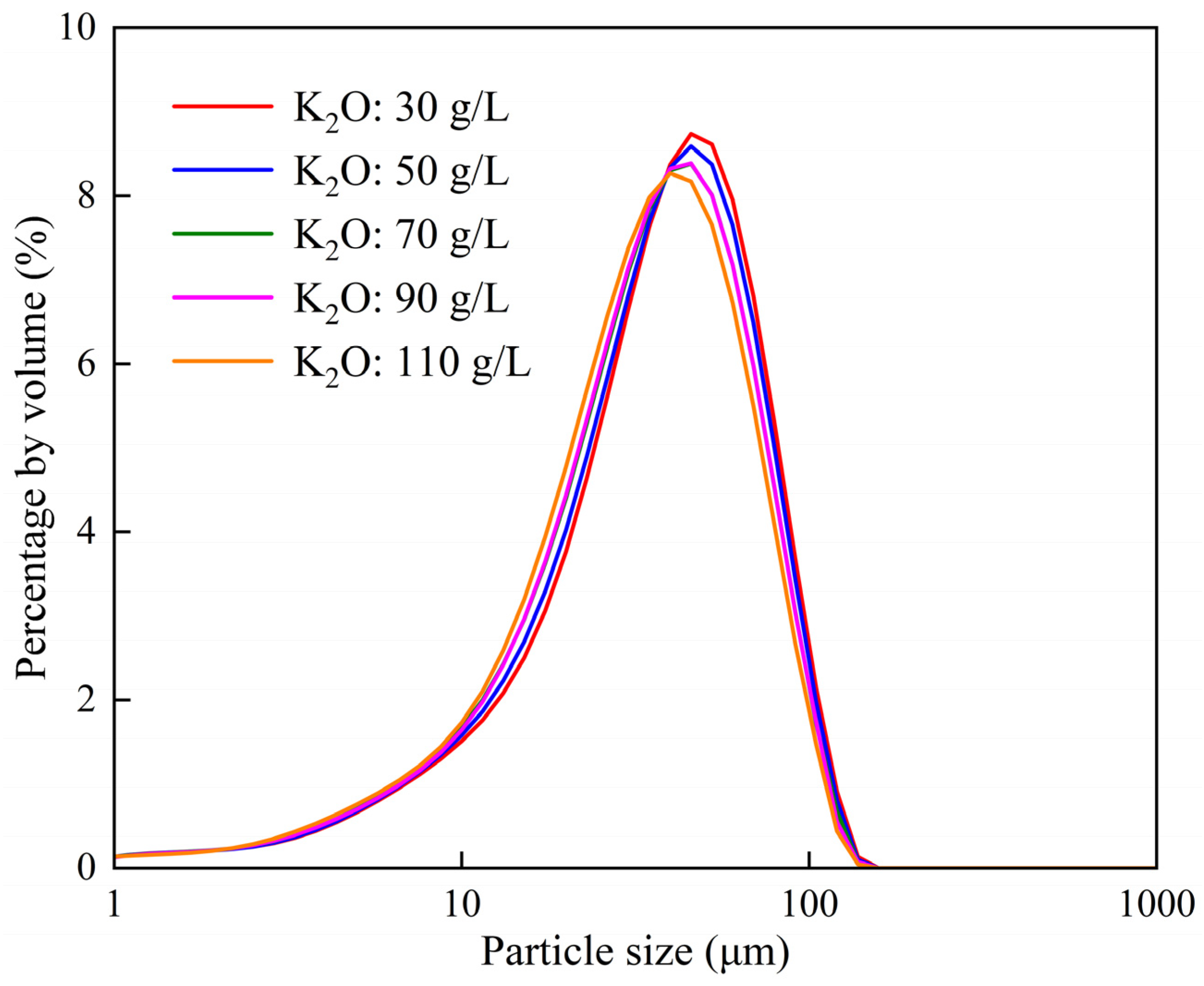
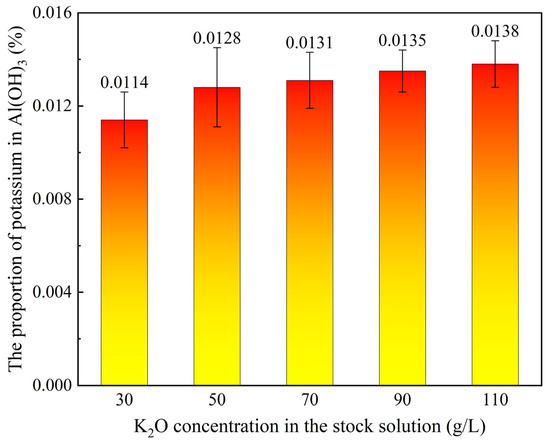
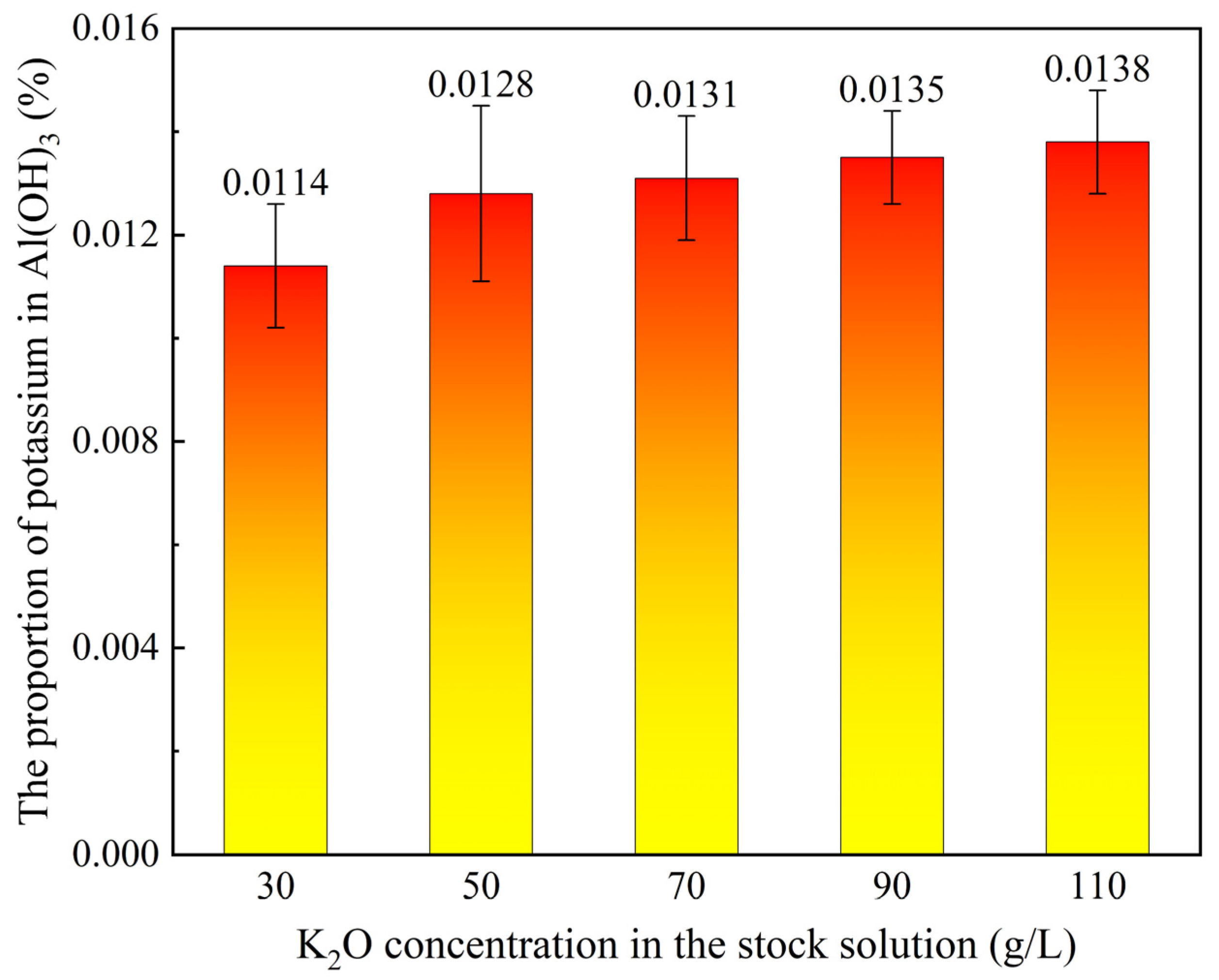
Experiments were conducted to investigate the effect of K2O concentration in solution on the seed decomposition rate of sodium aluminate solution, the product particle size and the potassium concentration in the product under the conditions of COH− = 4.8 mol/L, αk of 1.53, the initial decomposition temperature of 75 °C, end decomposition temperature of 37 °C, addition of crystal seed of 700 g/L, seeding time of 40 h, and the stirring speed of 120 r/min. The obtained results are shown in Figure 4, Figure 5 and Figure 6.
Figure 4.
Relationship between K2O concentration and decomposition rate of the sodium aluminate solution.
Figure 5.
Particle size distribution of seed products at different K2O concentrations.
Figure 6.
Mass percentage of potassium in seed fraction products at different K2O concentrations.
As demonstrated in Figure 4, an examination of the relationship between K2O concentration and decomposition rate reveals that an increase in the concentration of potassium oxide results in a corresponding increase in the decomposition rate of the sodium aluminate solution. This finding suggests that the K2O present in the sodium aluminate solution can enhance the decomposition process. When the precipitation duration is 40 h, the decomposition rate at a K2O concentration of 110 g/L is 7.1% higher than that at a K2O concentration of 30 g/L. However, the variation in the decomposition rate curves is relatively small between K2O concentrations of 90 g/L and 110 g/L, indicating that when the K2O concentration in the sodium aluminate solution exceeds 90 g/L, further increases in K2O concentration have a negligible effect on enhancing the decomposition rate of the sodium aluminate solution. Moreover, the slope of the decomposition rate curve increases with higher K2O concentrations, suggesting that raising the K2O concentration can accelerate the decomposition rate of the sodium aluminate solution.
As shown in Figure 5, which presents the particle size distribution of seeded precipitation products under different K2O concentrations, it can be observed that under constant conditions of seed addition, initial and final decomposition temperatures, and decomposition time, the peak of the curve gradually decreases and shifts to the left with increasing K2O concentration in the initial solution. Concurrently, the left side of the curve broadens, while the right side slightly shifts to the left. This indicates that as the K2O concentration in the potassium-containing sodium aluminate solution increases, the content of coarse particles in the seeded product decreases, while the content of fine particles gradually rises. In other words, an increase in K2O in the sodium aluminate solution promotes the refinement of particle size in the seeded precipitation product.
To investigate variations in potassium percentage content (Inductively coupled plasma (ICP) method) within the product, the potassium percentage content in seed fraction products was studied under fixed K2O concentration conditions while other experimental variables remained constant. The experimental results are presented in Figure 6. As demonstrated in Figure 6, the potassium content of the products following the seeding of a sodium aluminate solution was found to be minimal, amounting to less than 0.014% (based on mass). Conversely, an increase in the K2O concentration of the sodium aluminate solution was observed to result in an increase in the percentage of potassium in the product. This is attributed to more potassium co-precipitating with aluminum hydroxide. The maximum percentage of potassium was attained at a K2O concentration of 110 g/L corresponded to 0.0138% (based on mass). It will reduce the current efficiency during the electrolysis process.
In order to further investigate the behavior of potassium in the seeding process of potassium-containing sodium aluminate solution, mass balance calculations of potassium were carried out on the seeded sodium aluminate solution, seeded mother liquor and product before and after seeding. The obtained results are associated with a K2O concentration of 70 g/L in sodium aluminate solution and are shown in Table 2. In addition, the products were subjected to chemical composition analysis, and the results of the composition of some of the impurities are shown in Table 2. As demonstrated in Table 2, which presents the composition of K2O in a sodium aluminate solution, it can be deduced that during the seeding process, potassium will be introduced into the product. When simulating 1 L of the seeded precipitation feed solution with a K2O concentration of 70 g/L, the amount of potassium (calculated as K2O) entering the product was 0.13 g, accounting for 0.19% of the initial K2O. Meanwhile, 62.56 g of potassium (calculated as K2O) remained in the precipitated mother liquor, representing 89.37% of the initial K2O, with the remaining K2O entering the attached liquor. These results indicate that the majority of K2O transfers into the mother liquor during the seeded precipitation process, while only a small fraction is incorporated into the product.
Table 2.
Composition of K2O in sodium aluminate solution at a K2O concentration of 70 g/L.
As demonstrated in Table 3, potassium corresponds to the main impurity present in the sodium aluminate product. When sodium aluminate solution exists in potassium, the product of impurities in the composition of the product after conversion is compared to the requirements of GB/T 24487-2022 [36]. It is observed that, in addition to the potassium content being slightly higher (<0.01%), the rest of the requirements are met.
Table 3.
Percentage of major impurities in aluminum hydroxide at K2O concentration of 70 g/L.
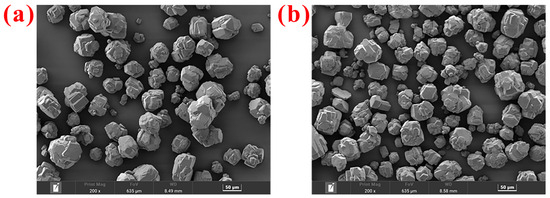
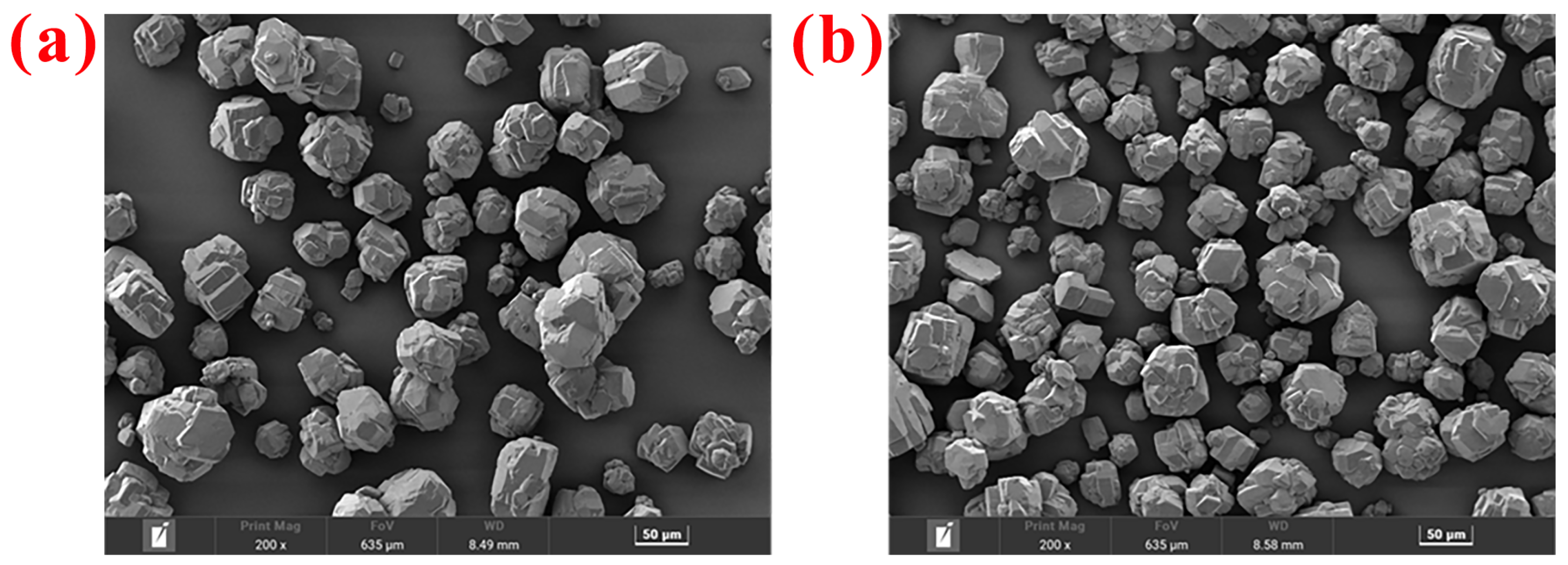
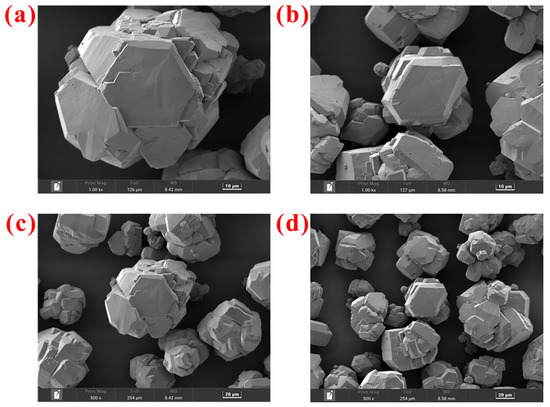
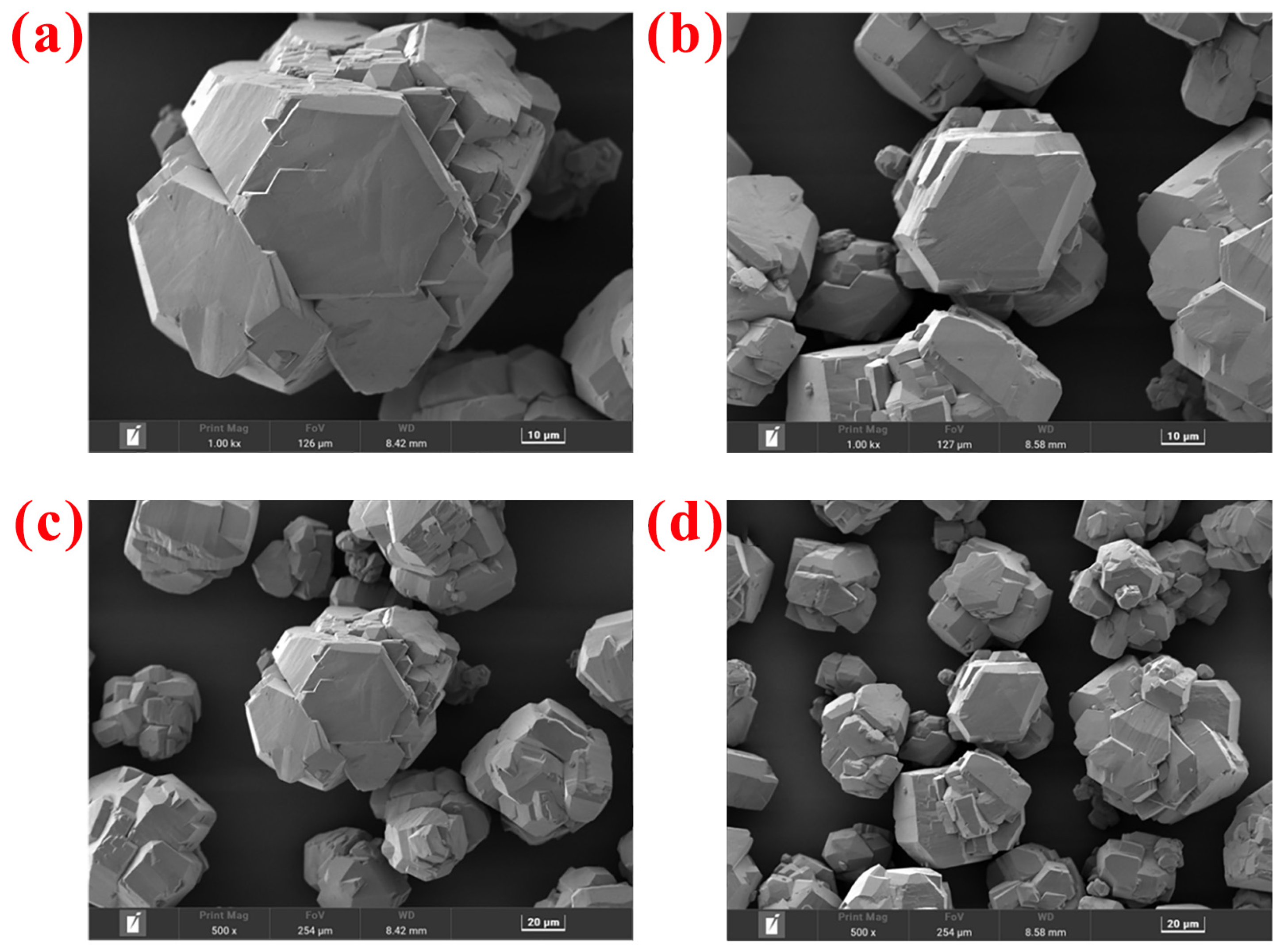
In order to further investigate the effect of potassium ions on the seeded products of sodium aluminate solution, scanning electron microscopy was performed on the products when the concentration of K2O in the seeded sodium aluminate solution was 70 g/L and 110 g/L. The scanning electron microscope photographs are displayed in Figure 7 and Figure 8.
Figure 7.
SEM images of products with K2O concentration of 70 g/L (a) and K2O concentration of 110 g/L (b).
Figure 8.
SEM images of products with K2O concentration of 70 g/L (a,b) and K2O concentration of 110 g/L (c,d). Panels (a,c) are at 1000× magnification; (b,d) are at 500×.
The analysis of the SEM (ZEISS Gemini Sigma 300, Carl-Zeiss-Strasse 22, 73447 Oberkochen, Germany) provides a more intuitive understanding of the effect of varying potassium ion content on the products of the seed fraction. As shown in Figure 7, the left and right sides present the scanning electron microscopy (SEM) images of the products obtained after 40 h of decomposition under conditions of K2O concentrations at 70 g/L and 110 g/L, respectively.
By comparing Figure 8a,c, as well as Figure 8b,d, it can be observed that the number of fine particles in the product is greater at a K2O concentration of 110 g/L. Moreover, at the same magnification level, the particle size of the product is significantly smaller when the K2O concentration is 110 g/L. This observation is consistent with the results obtained from the particle size analysis of the product.
3.2. Effect of Crystallization Seeding Amount
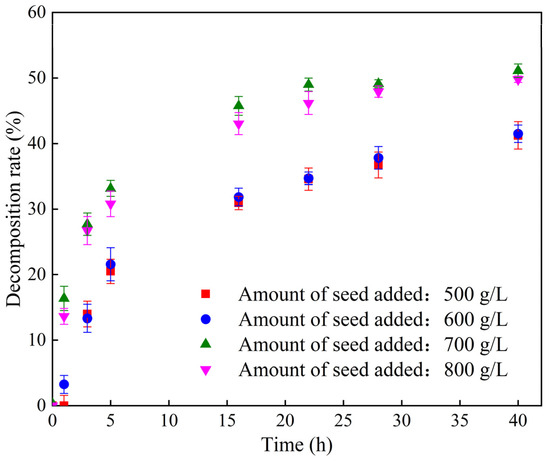
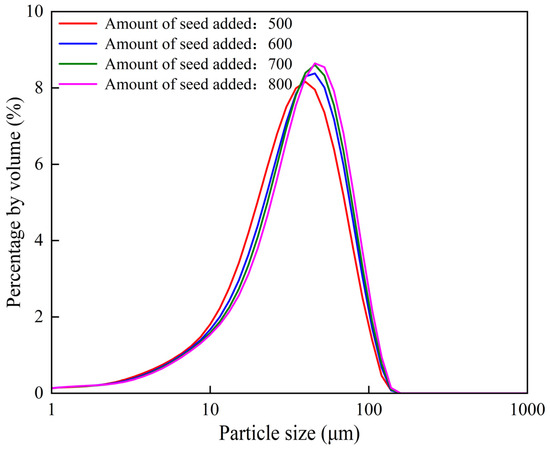
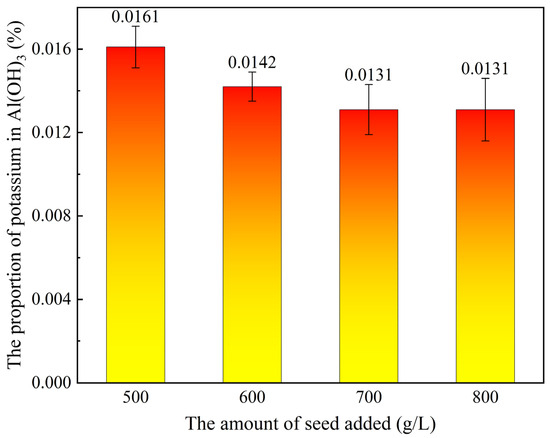
Experiments were conducted to investigate the effect of crystal seed addition on the decomposition rate, product particle size and the percentage of potassium in the product during the seeding process of sodium aluminate solution under the conditions of COH− = 4.8 mol/L, αk of 1.53, decomposition initial temperature of 75 °C, decomposition end temperature of 37 °C, K2O concentration of 70 g/L, seeding time of 40 h, and stirring speed of 120 r/min. The results are shown in Figure 9, Figure 10 and Figure 11.
Figure 9.
Crystalline seed addition versus decomposition rate of sodium aluminate solution.
Figure 10.
Particle size distribution of seed products under different crystal additions.
Figure 11.
Mass percentage of potassium in seed products at different crystal additions.
From Figure 9, which shows the effect of seed crystal addition amount on the decomposition rate of sodium aluminate solution, it can be observed that when the seed crystal addition amount is less than 800 g/L, under the same K2O concentration, initial decomposition temperature, and final decomposition temperature conditions, the decomposition rate of the sodium aluminate solution increases with prolonged decomposition time and gradually stabilizes over time. As the seed crystal addition amount increases, the decomposition rate at the same decomposition time becomes higher, and the slope of the decomposition rate curve changes more significantly, indicating that a higher seed crystal addition amount leads to better seeding decomposition performance. However, when the seed crystal addition amount is 800 g/L, the decomposition rate curve is essentially the same as that for the 700 g/L addition amount within the first 5 h of decomposition, but after 5 h, the decomposition rate curve falls below that of the 700 g/L condition. This suggests that the decomposition efficiency of the sodium aluminate solution is inferior at a seed crystal addition amount of 800 g/L compared to 700 g/L. It can be concluded that once the seed crystal addition amount exceeds 700 g/L, further increasing the seed crystal amount to improve the decomposition rate is no longer effective. Moreover, continuing to add more seed crystals may increase the load on the stirrer and even cause sedimentation, ultimately leading to a decline in the decomposition rate.
Particle size distribution of aluminum hydroxide products was examined under varying seeding crystal concentrations. The experimental results are shown in Figure 10. As can be seen from the particle size distribution of the seeded products under the conditions of different crystal seed additions in Figure 10, with an increase in crystal seed concentration, the peak of the product particle size gradually increased and moved to the right, and the left side of the curve gradually became narrower. This indicates that with the increase in seed crystal dosage, the content of fine particles in the product after seeded precipitation from sodium aluminate solution decreases, while the content of coarse particles increases. That is to say, increasing the amount of seed crystals can promote the growth of product particles during seeded precipitation in sodium aluminate solution.
To investigate the variation in potassium percentage content within the product, the potassium percentage content in the seed fraction product was studied under different seed addition levels while keeping other experimental variables constant. The experimental results are shown in Figure 11. As demonstrated in Figure 11, the percentage of potassium in the seed products exhibited a decline with increasing crystal seed addition. This decline gradually stabilized at higher levels of crystal seed addition, with the percentage of potassium remaining constant at 700 g/L and 800 g/L. This indicates that increasing the seed addition can, to some extent, reduce the proportion of potassium in the product.
3.3. Effect of Temperature
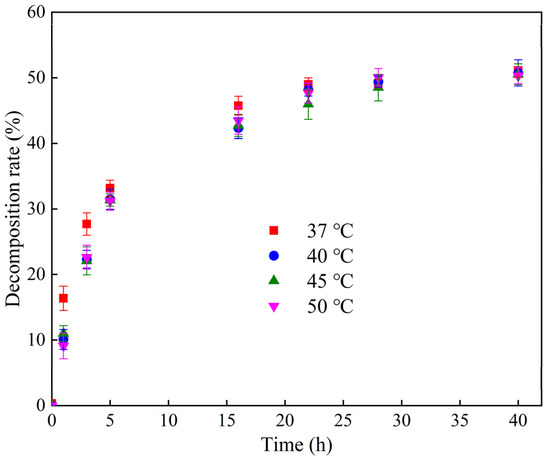
Experiments were conducted to investigate the effect of the end temperature of decomposition on the decomposition rate of sodium aluminate solution, solid product particle size and potassium concentration under of COH− = 4.8 mol/L, αk of 1.53, the initial temperature of 75 °C, concentration of K2O of 70 g/L, crystalline seed addition of 700 g/L, seeding time of 40 h, and stirring speed of 120 r/min. The obtained results are shown in Figure 12, Figure 13 and Figure 14.
Figure 12.
Decomposition end temperature versus decomposition rate of sodium aluminate solution.
Figure 13.
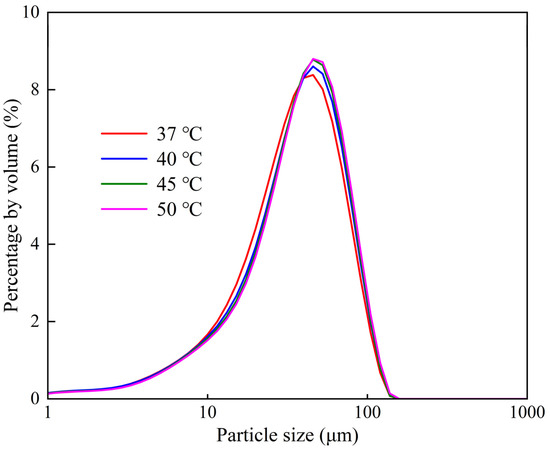
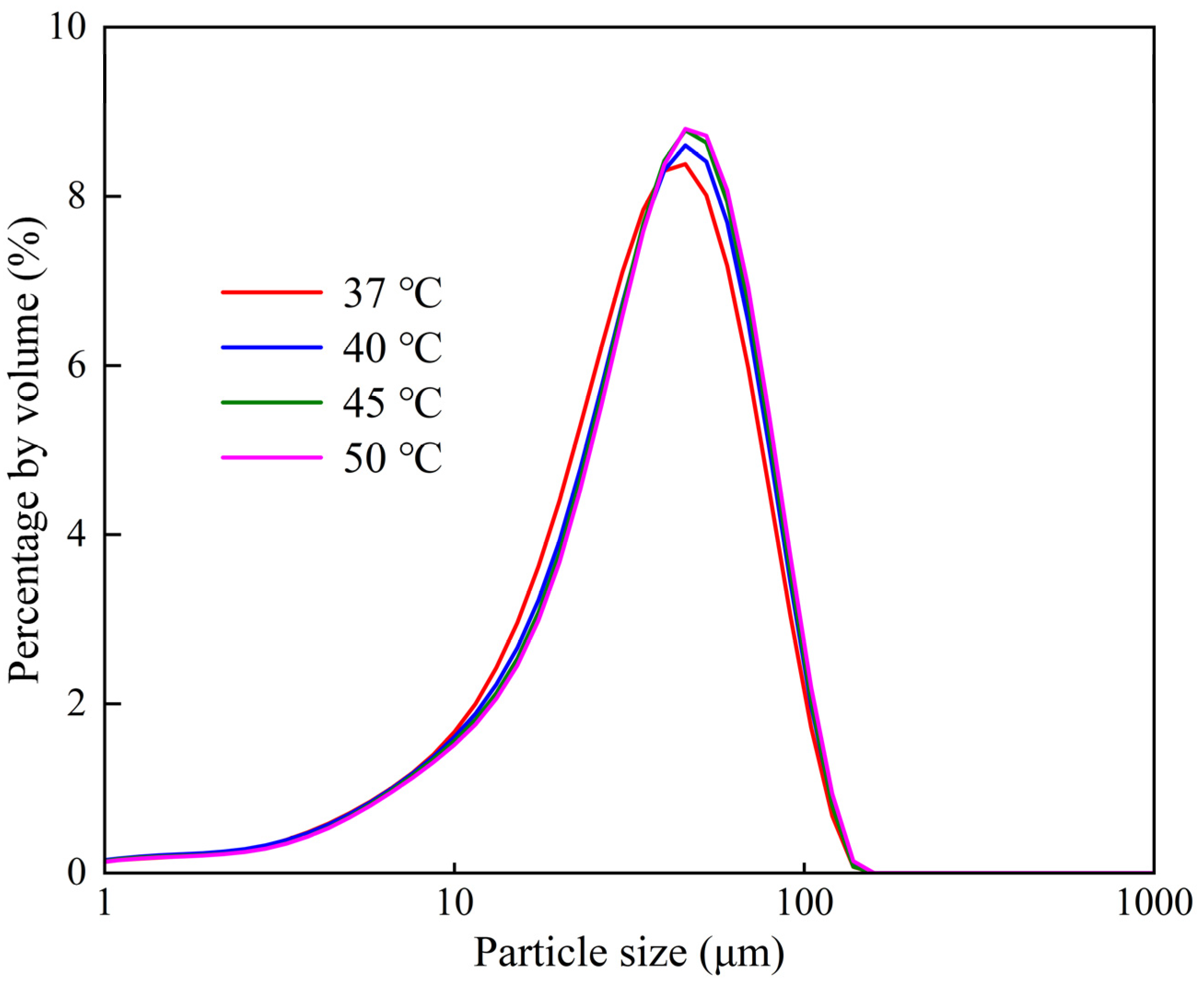
Particle size distribution of seed products at different end-of-decomposition temperatures.
Figure 14.
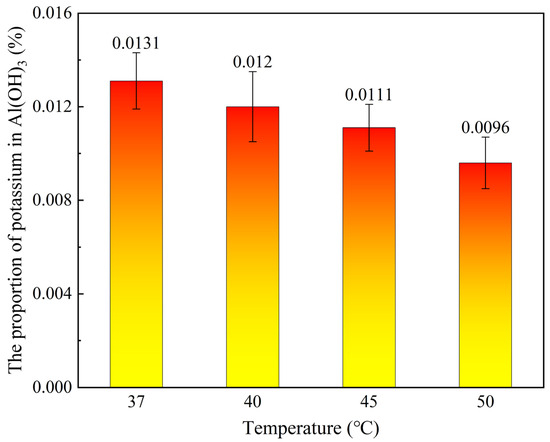
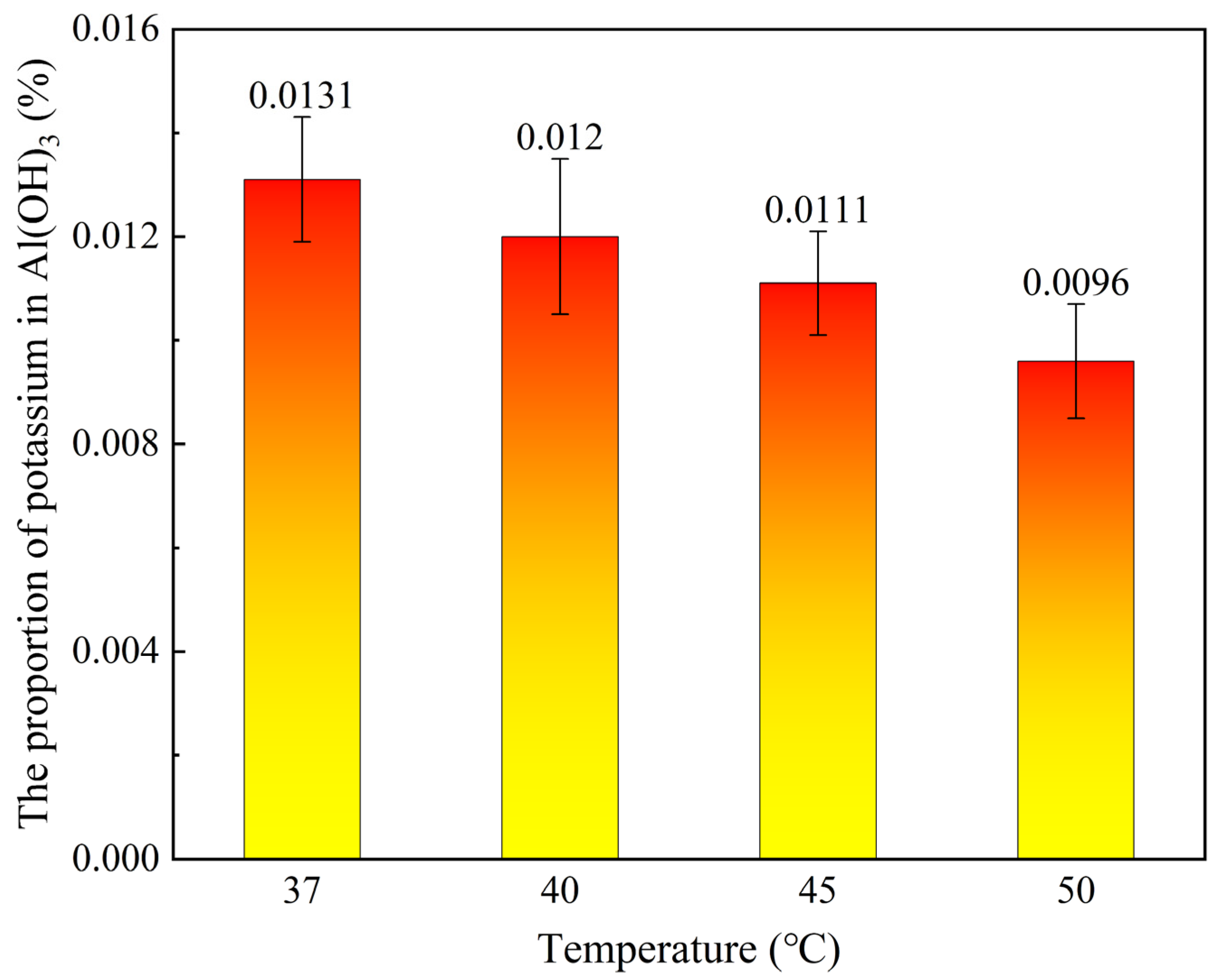
Mass percentage of potassium in seed products at different end-of-decomposition temperatures.
As can be seen from the relationship between decomposition final temperature and the precipitation rate of sodium aluminate solution in Figure 12, under the conditions of the same seed addition amount, initial decomposition temperature, K2O concentration and decomposition time, the lower the decomposition final temperature, the higher the precipitation rate of sodium aluminate solution. Specifically, the precipitation rate at a seed precipitation duration of 40 h with a decomposition final temperature of 37 °C was 0.79% higher than that at 50 °C. In comparison with the variation in seed addition amount and K2O concentration, the change in decomposition final temperature exerted a relatively minor effect on the precipitation rate. Furthermore, when the decomposition time was less than 30 h, a lower decomposition final temperature led to a steeper slope of the precipitation rate curve and a higher precipitation rate, which indicates that the decomposition rate of sodium aluminate solution increased with the decrease in decomposition final temperature within the initial 30 h of the decomposition process.
The experiment also investigated the mechanism by which the decomposition temperature, a key operational parameter, influences the final particle size distribution during the seeding process of sodium aluminate solution. The experimental results are presented in Figure 13. As illustrated in Figure 13, the particle size distribution of the seed products exhibits distinct variations under varying decomposition end temperatures. In the context of constant crystal seed addition, initial decomposition temperature, equivalent K2O concentration, and equivalent decomposition time, the peak value of the particle size distribution curve demonstrates a gradual increase with elevation of end decomposition temperature. However, in comparison with variations in seed addition amount and K2O concentration, temperature change exerts a relatively minor effect on the maximum frequency of particle size distribution. Concurrently, with the rise in the final temperature of decomposition, the peak of the particle size distribution curve exhibited minimal lateral movement, and the narrowing of both sides of the curve at elevated temperatures was negligible. This suggests that as the final temperature of decomposition increases, the coarse particles in the seed products undergo a slight increase, while the fine particles undergo a slight decrease.
Furthermore, experimental studies investigated the mechanism by which the decomposition temperature—a critical operational parameter—influences the percentage of potassium in the product during the seeding process of sodium aluminate solutions. The experimental results are presented in Figure 14. As can be seen from Figure 14, showing the potassium content in the seed precipitation products under different decomposition final temperature conditions, the potassium content in the products decreased gradually with the increase in the decomposition final temperature of the sodium aluminate solution. At an end-temperature of decomposition of 50 °C, the percentage content of potassium in the products was found to be 0.0096%, which is in accordance with the stipulated percentage content of potassium in GB/T 24487-2022 (<0.01%) after conversion [36]. This indicates that increasing the decomposition final temperature can reduce the potassium content (mass fraction) in the products.
3.4. Effect of αk on the Decomposition Rate of Potassium-Containing Sodium Aluminate Solutions and Aluminum Hydroxide Products
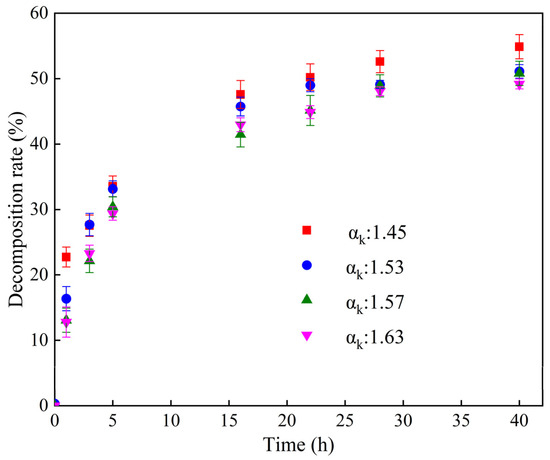
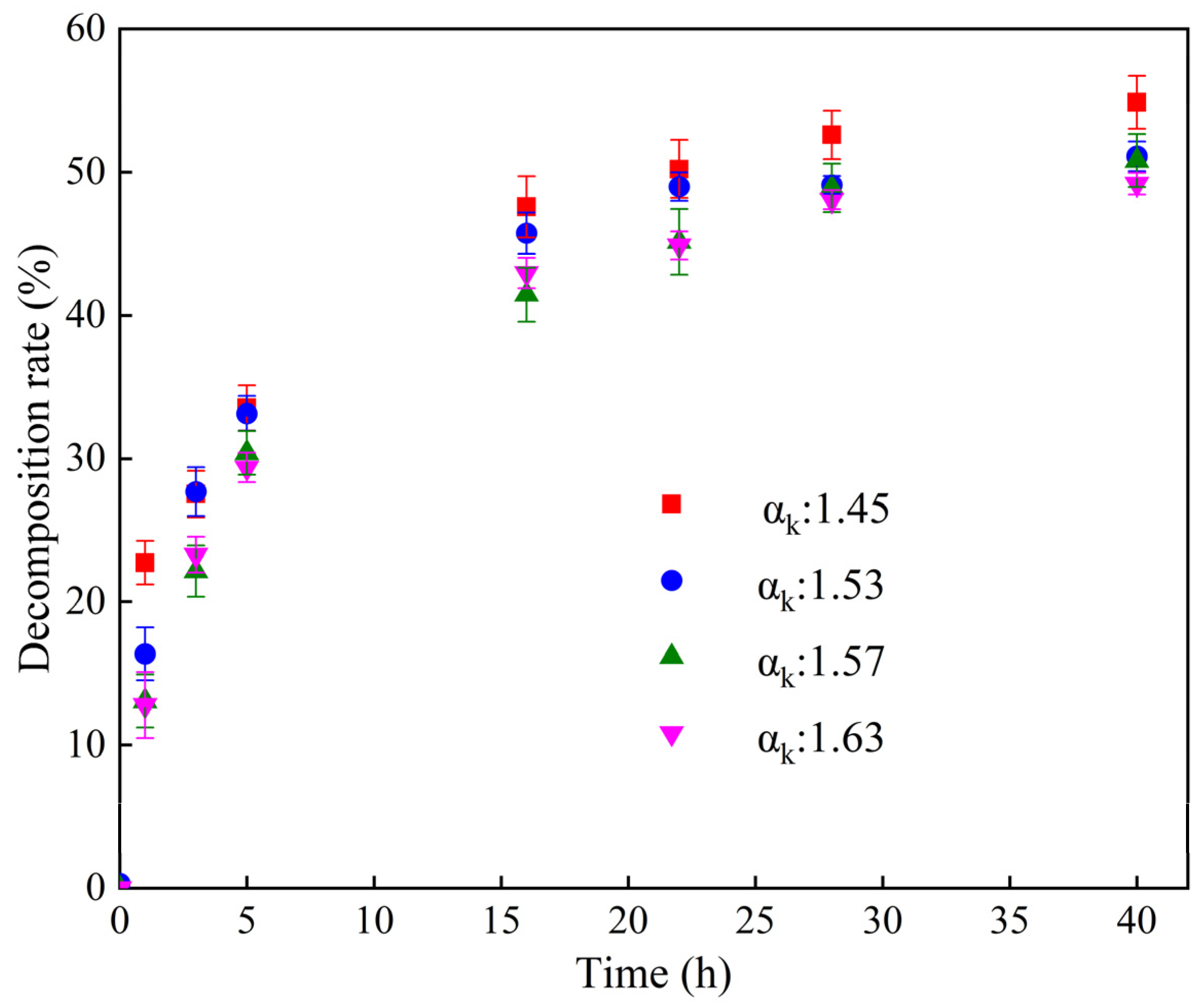
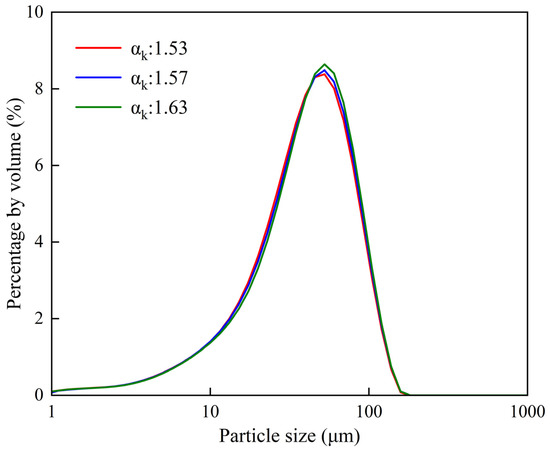
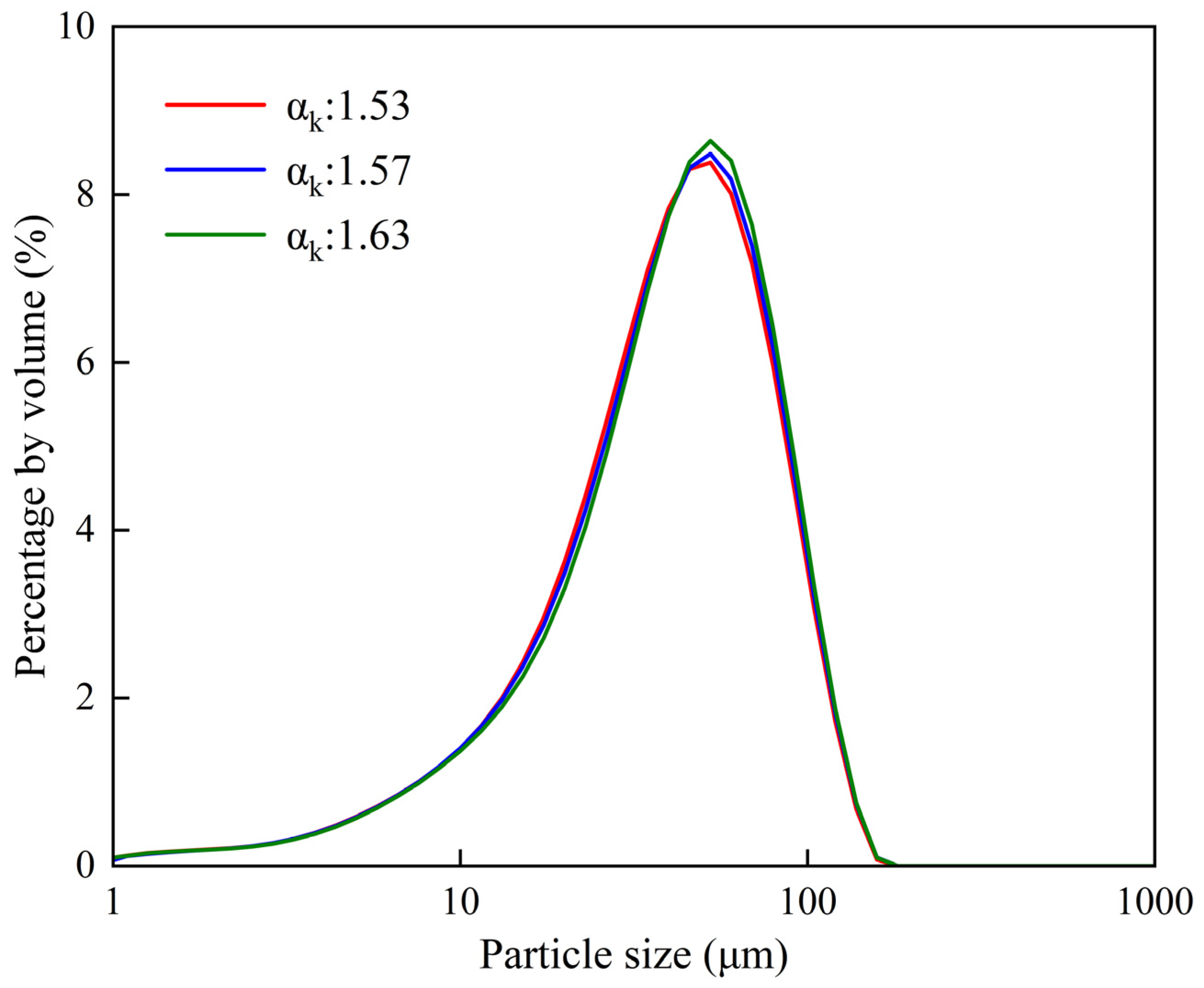
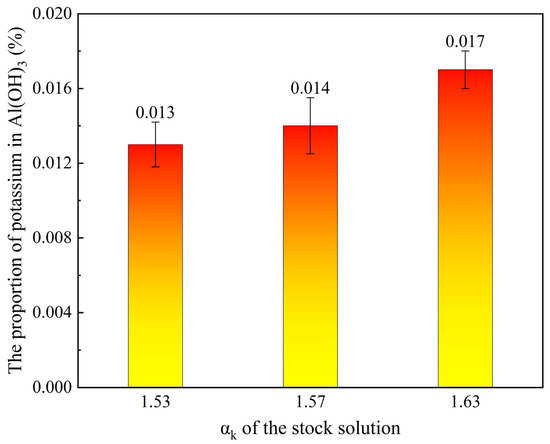
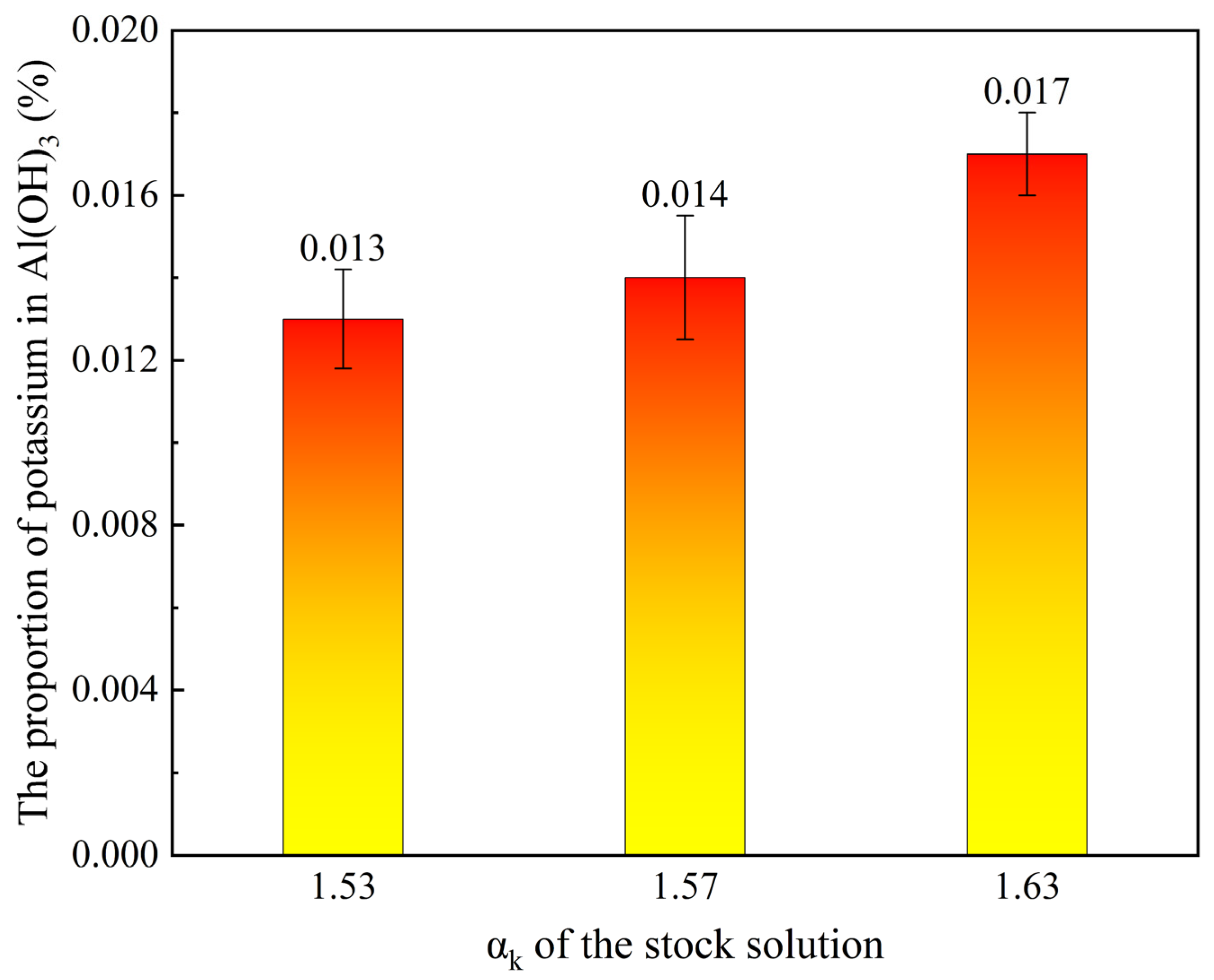
Experiments were carried out to investigate the effect of seeding sodium aluminate solution αk on the decomposition rate of sodium aluminate solution seeding process, product size distribution, and the percentage of potassium in the product, under the conditions of COH− = 4.8 mol/L, decomposition initial temperature of 75 °C, decomposition end temperature of 37 °C, K2O concentration of 70 g/L, crystal seed addition of 700 g/L, seeding time of 40 h, and stirring speed of 120 r/min. law, the results are shown in Figure 15, Figure 16 and Figure 17, respectively.
Figure 15.
Relationship between sodium aluminate solution αk and decomposition rate of sodium aluminate solution.
Figure 16.
Particle size distribution of seed fraction products under different αk conditions.
Figure 17.
Percentage of potassium in seed products under different conditions of decomposition of sodium aluminate solution αk.
As demonstrated in Figure 15, an inverse relationship exists between αk of the decomposition of the sodium aluminate solution and the decomposition rate of the sodium aluminate solution. Under conditions of identical crystal species addition, constant temperature at the beginning and end of decomposition, equivalent K2O concentration, and equivalent decomposition time, the decomposition rate declines with increasing αk in the decomposition of the sodium aluminate solution. When αk is elevated from 1.45 to 1.63, and under the condition of a 40-h decomposition time, the decomposition rate diminishes from 54.87% to 49.18%, representing a 5.69% reduction compared to the decomposition of the sodium aluminate solution. The decomposition rate exhibited a decline from 54.87% to 49.18% under the condition of decomposition time of 40 h, which corresponded to a 5.69% reduction. This finding suggests that a reduction in αk of the decomposition of sodium aluminate solution can enhance the decomposition rate of sodium potassium aluminate-containing solutions.
Furthermore, experimental studies investigated the mechanism by which the key operational parameter αk influences the particle size distribution of products during the sodium aluminate solution seeding process. The experimental results are presented in Figure 16. As illustrated in Figure 16, the particle size distribution of the seed fraction products under varying αk conditions reveals a clear trend. In the context of constant crystal seed addition, temperature at the initiation and conclusion of decomposition, constant K2O concentration, and consistent decomposition time, an increase in αk results in a gradual increase in the peak value of the product particle size distribution curve. Concurrently, the left side of the curve shifts towards the right. This finding suggests that an increase in αk in the sodium aluminate solution is associated with an increase in coarse particles in the product and a decrease in fine particles. It can thus be concluded that an increase in the magnitude of αk in the sodium aluminate solution is indicative of an increase in the proportion of coarse particles in the product.
Furthermore, experimental studies investigated the mechanism by which αk, a key operational parameter, influences the percentage of potassium in the product during the sodium aluminate solution seeding process. The experimental results are presented in Figure 17. As demonstrated in Figure 17, the percentage content of potassium in the seeded product is observed to increase in accordance with the increasing value of αk of the decomposition of the sodium aluminate solution. At an αk of 1.63, the percentage content of potassium in the product reaches a maximum of 0.0171%. When considered in conjunction with Figure 15, it becomes evident that a reduction in the αk of the sodium aluminate solution, within an implementable range, results in an increase in the decomposition rate, concurrently with a decrease in the percentage content of potassium in the product.
Our next phase of research will focus on developing a novel method for potassium extraction from Bayer liquor based on the sodium tetraphenylborate (C24H20BNa) complexation reaction. The specific research contents include: systematically optimizing the process parameters of the complexation reaction (such as pH, temperature, reaction time, and reagent ratio), investigating the influence mechanisms of impurity ions in the complex Bayer liquor matrix on the selective complexation of potassium, developing efficient solid–liquid separation and complex decomposition processes to achieve potassium resource recovery, and constructing a predictive model for the potassium extraction process using response surface methodology.
4. Conclusions
This study systematically investigated the effects of initial K2O concentration, seed crystal addition amount, decomposition final temperature, and initial solution αk on the seeded precipitation process of potassium-containing sodium aluminate solution. The following conclusions were drawn:
(1) Increasing the seed crystal addition amount and initial K2O concentration, or decreasing the decomposition final temperature and initial αk, all contribute to enhancing the alumina decomposition rate during seeded precipitation.
(2) The particle size distribution of the precipitated product is influenced by multiple factors: as the seed crystal addition amount, decomposition final temperature, and initial αk increase, the proportion of coarse particles in the product gradually rises; whereas, with an increase in the initial K2O concentration, the content of fine particles tends to increase.
(3) Effective approaches to reduce the potassium content in the product include: decreasing the initial K2O concentration, lowering the initial αk, increasing the seed crystal addition amount, and appropriately raising the decomposition final temperature.
(4) Under industrial production conditions (COH− = 4.8 mol/L, K2O = 70 g/L, αk = 1.53, initial decomposition temperature = 75 °C, final temperature = 37 °C, seed crystal addition = 700 g/L, precipitation time = 40 h), results indicate that only about 0.19% of potassium transfers from the initial decomposition solution to the aluminum hydroxide product. The majority of potassium enriches the mother liquor, leading to a continuous increase in potassium concentration in the mother liquor throughout the seeded precipitation process.
Author Contributions
Y.G.: Methodology, Data curation, Investigation, Validation, Writing—original draft. M.L.: Writing—original draft, Writing—review & editing. G.L.: Writing—original draft, Writing—review & editing. Q.L.: Writing—original draft, Writing—review & editing. Z.L.: Conceptualization, Supervision, Project administration, Funding acquisition, Resources, Validation, Writing—review & editing. K.X.: Supervision, Funding acquisition, Project administration, Writing—review & editing. J.Z.: Supervision, Resources, Writing—review & editing. All authors have read and agreed to the published version of the manuscript.
Funding
This research was funded by the Yunnan young and middle-aged academic and technical leaders reserve talent project (No. 202305AC160064), Yunnan major scientific and technological project (No. 202402AB080004), National Natural Science Foundation of China (No. 22468024), Yunnan province “Xingdian Talent Support Plan” industrial innovation talent special project (No. yfgrc202403), Technology projects of universities serving key industries in Yunnan Province (FWCY-QYCT2024008), Talent training project of KUST (KKZ3202452180), Yunnan Province Science and Technology Talent and Platform Plan Project (202405AK340008), and the APC was funded by No. 202402AB080004.
Data Availability Statement
The original contributions presented in this study are included in the article. Further inquiries can be directed to the corresponding authors.
Conflicts of Interest
Author Jiaping Zhao was employed by the Yunnan Wenshan Aluminum Industry Co., Ltd. The remaining authors declare that the research was conducted in the absence of any commercial or financial relationships that could be construed as a potential conflict of interest.
References
- Sun, L.; Zhang, S.; Zhang, S.; Liu, J.; Xiao, K. Geologic characteristics and potential of bauxite in China. Ore Geol. Rev. 2020, 120, 103278. [Google Scholar] [CrossRef] [Scilit]
- Rodionova, I.A. The shifts in the spatial structure of the world bauxite industry and Guinea’s position in the industry. Rev. Espac. 2020, 798, 1015. [Google Scholar]
- Yin, Z.; Wu, G.; Zhang, L.; Lu, X. Progress in research and development of alumina production technology for low grade bauxite in China. In Proceedings of the 35th International ICSOBA Conference, Hamburg, Germany, 2–5 October 2017; pp. 289–299. [Google Scholar]
- Liu, W.; Zhou, D.; Zhao, Z. Progress in Application of Energy-Saving Measures in Aluminum Reduction Cells. JOM 2019, 71, 2420–2429. [Google Scholar] [CrossRef] [Scilit]
- Saevarsdottir, G.; Kvande, H.; Welch, B.J. Aluminum Production in the Times of Climate Change: The Global Challenge to Reduce the Carbon Footprint and Prevent Carbon Leakage. JOM 2020, 72, 296–308. [Google Scholar] [CrossRef] [Scilit]
- Zhang, B.; Jiang, Y.; Guo, S.; Zhou, F. The influence of bauxite resource change in China on layout of world alumina industry. Light Met. 2014, 7, 1–5. [Google Scholar]
- Sun, X. Effect of high potassium and lithium electrolyte on aluminum reduction production and improvement measures. Light Met. 2018, 12, 26–29. [Google Scholar]
- Lin, S.Y.; Liu, R.Q.; Li, W.H.; Sun, W.; Hu, Y.H. Clean desulfurization of sulfur–rich tungsten concentrates by reverse flotation. J. Clean. Prod. 2020, 244, 118876. [Google Scholar] [CrossRef] [Scilit]
- Zhao, Q.; Miller, J.D.; Wang, X.M. Recent Developments in the Beneficiation of Chinese Bauxite. Miner. Process. Extr. Metall. Rev. 2010, 31, 111–119. [Google Scholar] [CrossRef] [Scilit]
- Chen, Z.D.; Gong, X.Z.; Wang, Z. Sulfur removal from ionic liquid-assisted coal water slurry electrolysis in KNO3 system. J. Fuel Chem. Technol. 2013, 41, 928–936. [Google Scholar] [CrossRef] [Scilit]
- Gong, X.Z.; Zhuang, S.Y.; Ge, L.; Wang, M.Y. Desulfurization kinetics and mineral phase evolution of bauxite water slurry (BWS) electrolysis. Int. J. Miner. Process. 2015, 139, 17–24. [Google Scholar] [CrossRef] [Scilit]
- Lv, X.; Shuang, Y.; Li, J.; Chen, S.; Lai, Y.; Zhang, H.; Liu, Y. Physicochemical Properties of Industrial Aluminum Electrolytes Enriching Li and K: The Liquidus Temperature. Metall. Mater. Trans. B 2017, 48, 1315–1320. [Google Scholar] [CrossRef] [Scilit]
- Wang, J.; Li, C.; Chai, D.; Zhou, Y.; Fang, B.; Li, Q. Light Metals; Springer: Berlin/Heidelberg, Germany, 2018; pp. 621–626. [Google Scholar]
- Yang, J.; Tian, Y.; Jiang, W.; Yang, B.; Chen, X.; Liu, D.; Xu, B.; Dai, Y. Study on effect of Al-O-C compound in alumina carbothermal reduction. Light Met. 2013, 2016, 689–693. [Google Scholar]
- Yan, H.; Liu, Z.; Ma, W.; Huang, L.; Wang, C.; Liu, Y. KF-NaF-AlF3 System: Liquidus Temperature and Phase Transition. JOM 2020, 72, 247–252. [Google Scholar] [CrossRef] [Scilit]
- Li, J.; Fang, Z.; Lai, Y.; Lü, X.; Tian, Z. Electrolysis expansion performance of semigraphitic cathode in [K3AlF6/Na3AlF6]-AlF3-Al2O3 bath system. J. Cent. South Univ. Technol. 2009, 16, 422–428. [Google Scholar] [CrossRef] [Scilit]
- Sizyakov, V.; Bazhin, V.Y.; Sizyakova, E. Feasibility study of the use of nepheline-limestone charges instead of bauxite. Metallurgist 2016, 59, 1135–1141. [Google Scholar] [CrossRef] [Scilit]
- Wang, H.; Feng, Q.; Tang, X.; Zuo, K.; Liu, K. Insights into Alkali-Acid Leaching of Sericite: Dissolution Behavior and Mechanism. Minerals 2017, 7, 196. [Google Scholar] [CrossRef] [Scilit]
- Kumar, A.; Tanvar, H.; Dhawan, N. Processing of Mica for Extraction of Alumina and Potash Values. Trans. Indian Inst. Met. 2020, 73, 23–33. [Google Scholar] [CrossRef] [Scilit]
- Bagani, M.; Balomenos, E.; Panias, D. Nepheline syenite as an alternative source for aluminum production. Minerals 2021, 11, 734. [Google Scholar] [CrossRef] [Scilit]
- Yin, Z.; Zhao, Q.; Chen, Q.; Yin, Z. Study of the desilication process of illite reacted with sodium aluminate solution. Light Met. 2005, 12, 10–13. [Google Scholar]
- Hu, X.L.; Chen, W.M.; Xie, Q.L. Desulfuration of high sulfur bauxite by oxidation roasting. J. Cent. South Univ. 2010, 41, 852–858. [Google Scholar]
- Wu, H.F.; Chen, C.Y.; Li, J.Q.; Lan, Y.P.; Wang, L.Z.; Quan, B.L.; Jun, H.X. Digestion mechanism and crystal simulation of roasted low-grade high -sulfur bauxite. Trans. Nonferr. Metal. Soc. 2020, 30, 1662–1673. [Google Scholar] [CrossRef] [Scilit]
- Bulut, G.; Arslan, F.; Atak, S. Flotation behaviors of pyrites with different chemical compositions. Miner. Metall. Proc. 2004, 21, 86–92. [Google Scholar] [CrossRef] [Scilit]
- Chimonyo, W.; Corin, K.C.; Wiese, J.G.; O’Connor, C.T. Redox potential control during flotation of a sulphide mineral ore. Miner. Eng. 2017, 110, 57–64. [Google Scholar] [CrossRef] [Scilit]
- Blight, K.; Ralph, D.E.; Thurgate, S. Pyrite surfaces after bio-leaching: A mechanism for bio-oxidation. Hydrometallurgy 2000, 58, 227–237. [Google Scholar] [CrossRef] [Scilit]
- Owusu, C.; Quast, K.; Addai-Mensah, J. The use of canola oil as an environmentally friendly flotation collector in sulphide mineral processing. Miner. Eng. 2016, 98, 127–136. [Google Scholar] [CrossRef] [Scilit]
- Li, J.; Prestidge, C.A.; Addai-Mensah, J. The influence of alkali metal ions on homogeneous nucleation of Al(OH)3 crystals from supersaturated caustic aluminate solutions. J. Colloid Interface Sci. 2000, 224, 317–324. [Google Scholar] [CrossRef] [Scilit]
- Xie, F.; Chen, W. Effects of potassium ions on seed decomposition in sodium aluminate solution. Light Met. 2018, 2, 9–13. [Google Scholar]
- Addai-Mensah, J. The Fouling Behaviour of Sodium Aluminosilicate Polytypes in High Ionic Strength Caustic Media Heat Exchangers. Dev. Chem. Eng. Miner. Process. 2006, 14, 323–336. [Google Scholar] [CrossRef] [Scilit]
- Jiang, Y.; Liu, C.; Luo, M.; Xue, J.; Li, P.; Yu, J. Polymorphic transformation of aluminum hydroxide during spontaneous decomposition of supersaturated potassium aluminate solution. Chin. J. Nonferrous Met. 2019, 29, 606–616. [Google Scholar]
- Chen, J. Study of the Effect of Potassium Ions on the Seeded Precipitation of Sodium Aluminate Solutions. Ph.D. Thesis, Central South University, Changsha, China, 2004. [Google Scholar]
- Padilla, R.; Vega, D.; Ruiz, M.C. Pressure leaching of sulfidized chalcopyrite in sulfuric acid-oxygen media. Hydrometallurgy 2007, 86, 80–88. [Google Scholar] [CrossRef] [Scilit]
- Liu, Z.W.; Yan, H.W.; Ma, W.H.; Xie, K.Q.; Xu, B.Q.; Xiong, P. Digestion behaviors of sulfur-containing minerals and desulfuration during alumina production process. Miner. Eng. 2021, 173, 107234. [Google Scholar] [CrossRef] [Scilit]
- Wei, J. Basic Research on Resource Utilization of Aluminum Dross. Master’s Thesis, Kunming University of Science and Technology, Kunming, China, 2022. [Google Scholar]
- GB/T 24487-2022; Alumina. China Standards Press: Beijing, China, 2022.

Disclaimer/Publisher’s Note: The statements, opinions and data contained in all publications are solely those of the individual author(s) and contributor(s) and not of MDPI and/or the editor(s). MDPI and/or the editor(s) disclaim responsibility for any injury to people or property resulting from any ideas, methods, instructions or products referred to in the content. |
© 2026 by the authors. Licensee MDPI, Basel, Switzerland. This article is an open access article distributed under the terms and conditions of the Creative Commons Attribution (CC BY) license.