Skip to Content
MetalsMetals
  • Article
  • Open Access

27 February 2026

A Systematic Selection of Shielding Gas Composition for GMA-DED of HSLA Thin Walls Focused on Geometrical Features


,
,
,
and
1
Center for Research and Development of Welding Processes and Additive Manufacturing, Federal University of Uberlandia (UFU), Uberlândia 38400-901, MG, Brazil
2
Department of Mechanical Engineering, University of Birjand, Birjand 97175-376, Iran
3
Faculty of Education, Arts, Science and Technology, University of Northampton, Northampton NN1 5PH, UK
4
Department of Mechanical and Materials Engineering, Birjand University of Technology, Birjand 97175-376, Iran

Abstract

While shielding gas selection significantly impacts gas metal arc directed energy deposition (GMA-DED), current industrial practices often rely on ad hoc decisions. This study proposes a logical and reproducible selection methodology that prioritizes geometric outcomes (such as layer height, width, and surface waviness) for HSLA thin walls. The performance of three Argon-based blends was examined with the constraints of the same wire, contact tip-to-work distance, wire feed, and deposition speeds. However, to ensure a scientifically ‘fair comparison’ between gas blends, the methodology prioritized maintaining optimal metal transfer regularity for each composition by adjusting the proper voltage setting with a constant-voltage power source. Results showed that increasing CO2 content requires higher arc voltage but lower average current to maintain a constant wire feed speed. This shift leads to shorter and wider layers, while lateral surface waviness remains largely unaffected by gas composition. The primary contribution of this work is the establishment of a multifaceted decision-making system that enables users to balance these geometric and operational outcomes against specific production goals. As a demonstration, an Ar + 8% CO2 blend was successfully selected using a criterion that balances high productivity with low thermal stress, providing a justified alternative to conventional trial-and-error selection.

1. Introduction

Gas metal arc directed energy deposition (GMA-DED), an additive manufacturing technological category also known as wire arc additive manufacturing (WAAM), uses the gas metal arc (GMA) process to fabricate near-net-shape metal parts in a layer-by-layer fashion. This technology is particularly attractive due to its high deposition rates and the use of commercially available and standardized feedstocks (wires and shielding gases) and equipment (power sources and manipulators). GMA-DED is operationally similar to arc welding processes, facilitating its adoption in industrial environments. Therefore, this GMA-DED technology is cost-effective for producing large structural components, yet is somewhat limited in terms of shape complexity and in achieving tight dimensional tolerances before machining.
Among the various parameters affecting GMA-DED technology performance, shielding gas composition is one of the most critical. Despite its similarity to GMA welding, GMA-DED has particularities that make it challenging to transfer shielding characteristics from welding. In welding, it is widely recognized that the shielding gas plays an essential role in protecting the weld pool from atmospheric contamination, stabilizing the arc, and influencing the thermal profile and metallurgical transformations during welding (Mvola and Kah [1] emphasized adaptive shielding control to optimize gas usage while preserving weld quality). In addition, the shielding gas directly affects heat delivery [2,3], the removal of heat (energy) from the pool and surrounding metal, plasma pressure on the pool surface, metal transfer [3], surface tension-driven pool formation, the melting rate [1], and the quality and dimensions [4] of the deposited components. Kah and Martikainen [5] reported that shielding gas can interact with the base and filler metals, thereby altering the mechanical properties of the weld pool, including strength, toughness, hardness, and corrosion resistance. These authors still mentioned that the shielding gas affects the formation of certain defects, such as porosity.
Other papers provided insights into the influence of the shielding gas on welding and additive manufacturing performance, as follows. Matusiak et al. [6] investigated fume emissions during GMAW of stainless steels and concluded that gas blends can mitigate carcinogenic emissions. Although not the central focus, other studies, such as Nguyen et al. [7] and Le et al. [8], used unspecified shielding gases or standard practices, underscoring the need for a more systematic approach to shielding gas selection in GMA-DED research. Kanishka and Acherjee [9] investigated the effects of three shielding gases (pure argon, pure carbon dioxide, and an argon–carbon dioxide mixture) on the geometry, microstructure, and mechanical properties of low-carbon steel deposits generated via GMAW-based WAAM, encompassing bead diameters, hardness, tensile characteristics, and impact toughness. The investigation revealed that Ar + CO2 generated broader beads and superior quality, whereas CO2 enhanced penetration and bead height but resulted in spatter, a coarser columnar microstructure, and decreased alloy retention. Ar and Ar + CO2 attained superior ultimate tensile strength compared to CO2, with Ar + CO2 demonstrating the optimal elongation and Charpy impact toughness. Therefore, it is essential to select the most appropriate shielding gas composition and flow rate to achieve the desired performance.
Table 1 shows several examples of shielding gases reported in the literature for GMA-DED manufacturing, highlighting that there is no consensus on shielding gas selection even for the same materials and thicknesses. Accordingly, several studies have examined the role of shielding gas composition in GMA-DED technologies, investigating its impact on weld quality, geometry, and mechanical properties. Trinh et al. [10] evaluated CO2 content (i.e., 5, 10, 15, 20, 25, 50, and 100%) in Ar-CO2 blends for metal-cored arc welding, showing that metal transfer frequency peaked at 15% CO2 due to favorable arc attachment and droplet necking conditions. Da Silva et al. [11] studied arc wandering in aluminum WAAM and found no arc deviation below 200 ppm O2, whereas 20,000 ppm O2 reduced wandering but increased oxidation. Jurić et al. [12] assessed four shielding gas mixtures in WAAM of IN625 and found that small additions of CO2 improved tensile strength and hardness but degraded surface quality, leading to higher surface waviness, indicating a trade-off between mechanical performance and surface quality. Galeazzi et al. [13] analyzed the electrical, thermal, and geometric effects of 8% and 25% CO2 in Argon mixtures for WAAM of carbon steel, reporting that higher CO2 increased silicon oxide formation (slag islands) and fusion defects despite similar heat profiles. Still, Yamaguchi et al. [14] correlated shielding gas type with surface roughness and layer geometry in mild steel GMA-DED manufacturing, noting that Argon shielding reduced stair-step irregularities at lower heat inputs. They reported lower surface roughness on thin walls with Argon gas than with CO2 gas.
Table 1. The literature review of shielding gases used in GMA-DED.
Continuing an analysis of Table 1 displays, Silwal et al. [4] compared binary (Ar-CO2) and ternary (Ar-He-CO2) shielding gas mixtures in WAAM and observed significant changes in wall geometry and oxygen content in the welds. Balanovskiy et al. [26] investigated low-alloyed steels and highlighted that gas composition influenced the toughness and structure compared to conventional welding. Teixeira et al. [3] proposed a methodology for gas selection in thin-wall WAAM, demonstrating that Ar-based blends with minor reactive additions can optimize metal transfer and bead regularity, and they confirmed the effect of shielding gas on geometrical features (waviness and layer height) and phase formation. Gurcik et al. [29] analyzed the geometric fidelity of WAAM walls and found that shielding-gas composition affected wall accuracy. Finally, Henckell et al. [28] showed that energy input and bead width in WAAM could be indirectly influenced by shielding gas and process parameters, such as the contact tip-to-work distance (CTWD).
Silwal et al. [19] demonstrated that Ar-CO2 blends significantly affect melt pool temperature, dimensional accuracy, and mechanical properties, identifying a 5% CO2 mix as optimum for balancing strength and surface quality in gas metal arc welding (GMAW) surface tension transfer (STT) process. Wang et al. [15] investigated the effects of various gas mixtures on 300M UHSS and found that increasing CO2 content increased spatter and surface roughness, whereas adding He improved bead uniformity. Marônek et al. [2] observed statistically significant differences in wall height and thickness when comparing Ar with an Inoxline He30H2C mixture (an Ar/He/CO2/H2 quaternary blend by Messer Schweiz AG) in multi-layer Inconel 718 walls.
As seen above, there is little or no justification for the shielding selection in the mentioned studies; the gas choice has been based mainly on ad hoc decisions. Hence, there is a gap in the literature that can be addressed by presenting a multifaceted decision-making system to define the appropriate shielding gas for GMA-DED. Therefore, the objective of this study is to present and evaluate a logical, systematic, and reproducible procedure to optimize gas selection for the GMA-DED technology, which initially targets geometric outcomes (layer height, width, waviness, and lateral surface appearance).

2. Methodology

As mentioned above, different shielding gases have varied effects on the layer due to their capacity for heat delivery and removal, arc pressure on the pool surface, metal transfer mechanisms, pool formation, melting rate, etc. The work methodology meant to achieve the objective by comparing the geometrical features of a thin wall (subsequent single-layer depositions) manufactured under different shielding compositions while keeping the basic set parameters constant, and to determine the best gas based on user-defined criteria. However, the main methodological premise in this work was to ensure a fair comparison, that is, the parameter settings must yield the best metal transfer regularity for each gas (and not necessarily the same set voltage across gases), with the challenge of keeping other conditions the same. In this work, the wire (diameter and composition), the contact tip-to-work distance (CTWD), the wire feed speed (WFS), and the deposition speed (DS) were arbitrarily defined as constant. Note that by keeping those parameters constant, the deposition rate per unit length (layer cross-sectional area) is theoretically the same (except for spattering and fume production), supporting the purpose of a fair comparison when changing the shielding gas. As described in Section 3.1, other measures were planned to keep the experimental procedure as similar as possible among the wall depositions with different shielding gases.
Therefore, to achieve the most consistent short-circuit metal transfer with each shielding gas, the set voltage was scanned over a range for each gas. As is known, arc length is a key factor in short-circuiting metal transfer, and the higher the voltage, the longer the arc when using an arc welding power source in constant-voltage mode. One can say that the most regular metal transfer occurs when the variances in the voltage and current traces are less. This is the principle of the index (IVsc) used in this work to assess the regularity of metal transfer during short-circuiting depositions at different arc lengths in gas metal arc directed energy deposition (GMA-DED). As described by Texeira et al. [3], among others, the IVsc index is calculated using Equation (1):
I V s c = σ t s c t s c + σ t a r c t a r c
where tsc is the average short-circuiting time, tarc is the average arcing time, σtsc is the standard deviation of the short-circuiting time, and σtarc is the standard deviation of the arcing time.
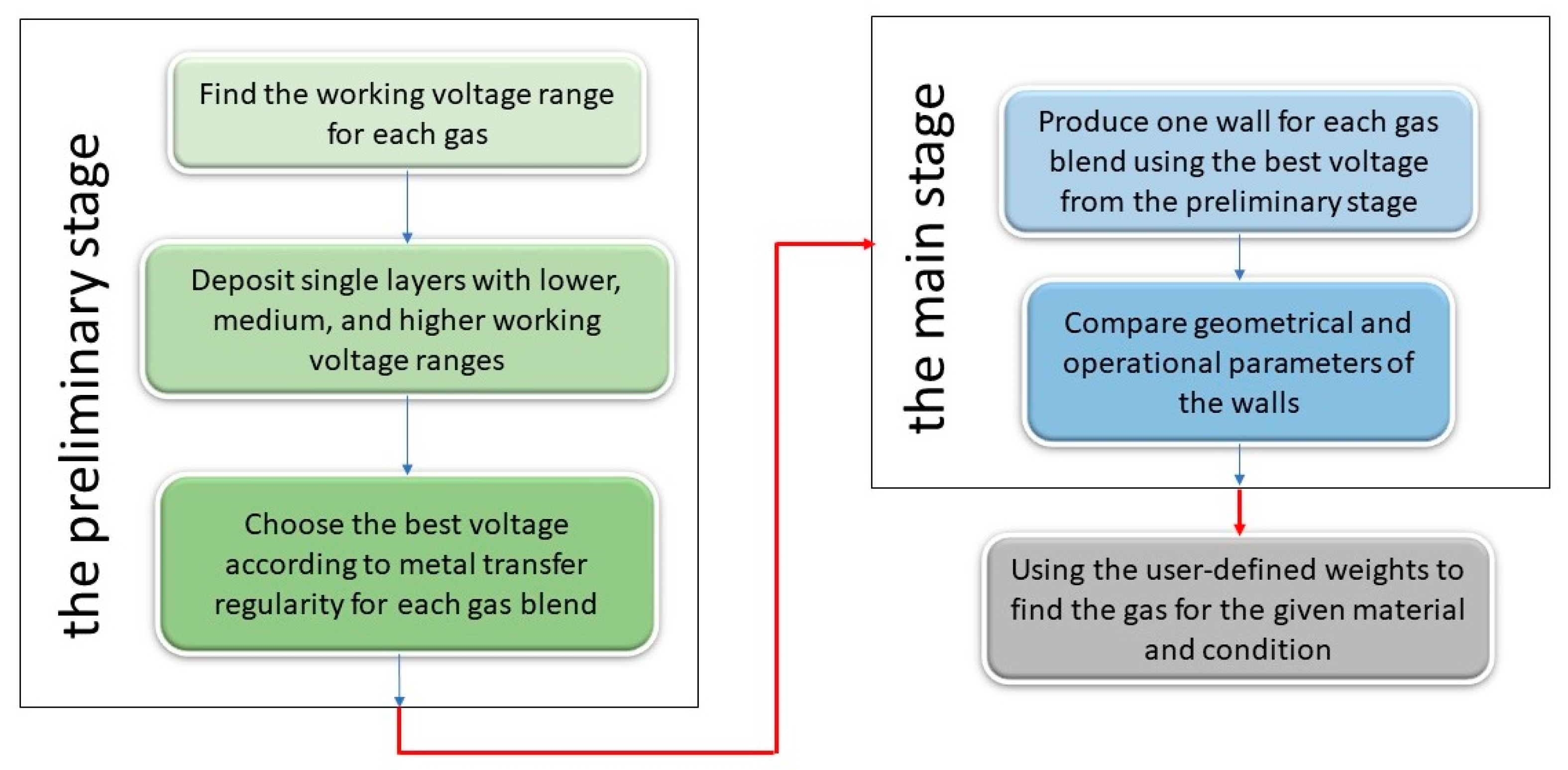
That being established, the methodology was divided into two stages, as indicated in the flowchart of Figure 1. The preliminary stage was dedicated to parameterizing the process with different shielding gases, keeping the same basic parameter setting, and finding the set voltage for each gas blend. The main stage involved building walls with a common and appropriate parametrization, but using different shielding gases and geometrically characterizing them. After these two stages, the user can compare and balance the responses to justifiably define the best shielding gas for the material and construction under investigation.
Figure 1. Flowchart of the methodological stages for thin-wall GMA-DED gas selection.
In this study, the user-defined geometry-based criteria (last block in Figure 1) were based on the balance of the geometric outcomes (higher layer height to a target layer width, to increase wall production, and minimal waviness with proper lateral surface appearance) and other dependent operational parameters that impact the construction of the walls, such as current (to be as low as possible, yet assuring dilution between layers).

3. Experimental Development

3.1. Equipment, Materials, and Methods

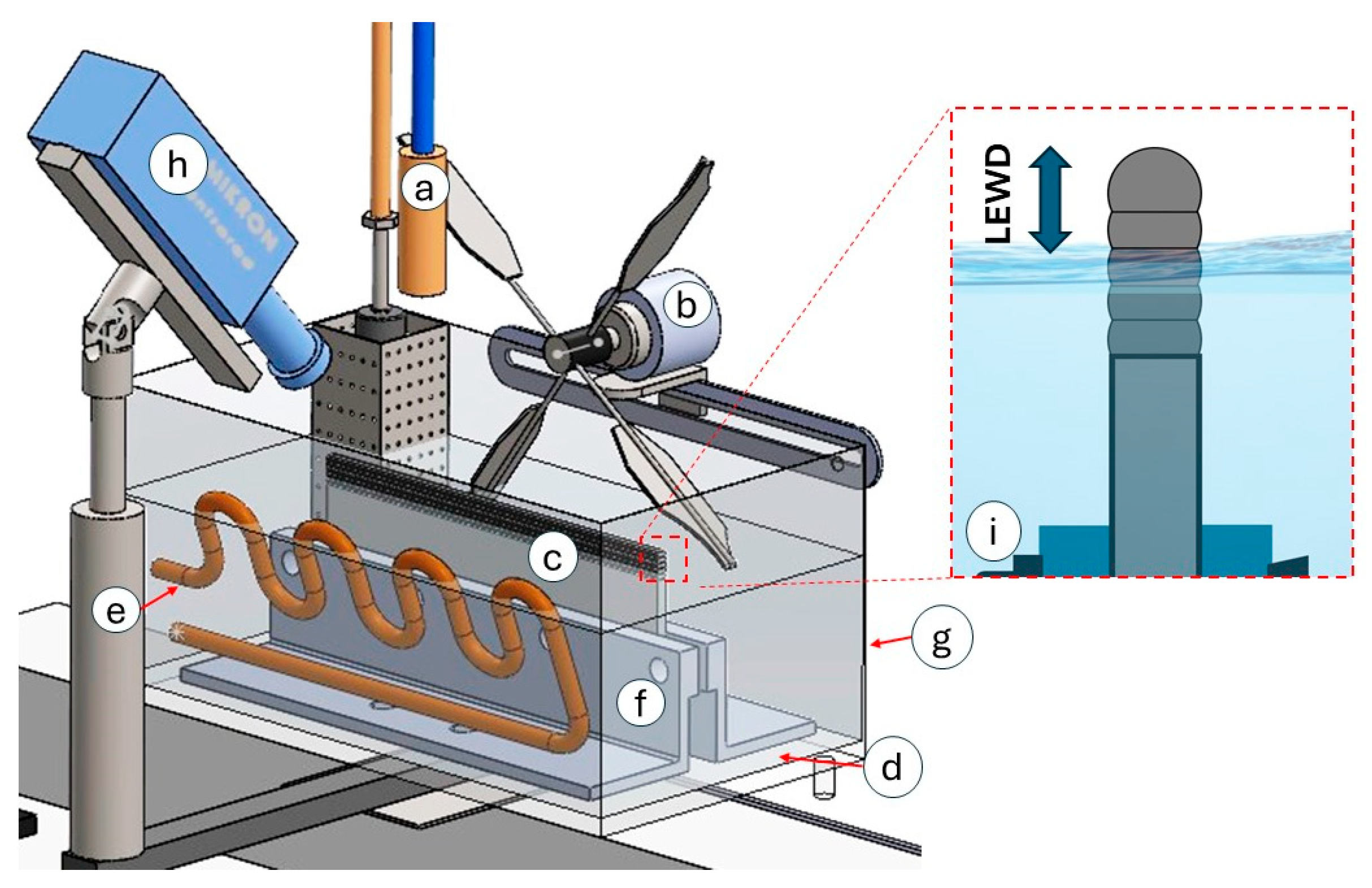
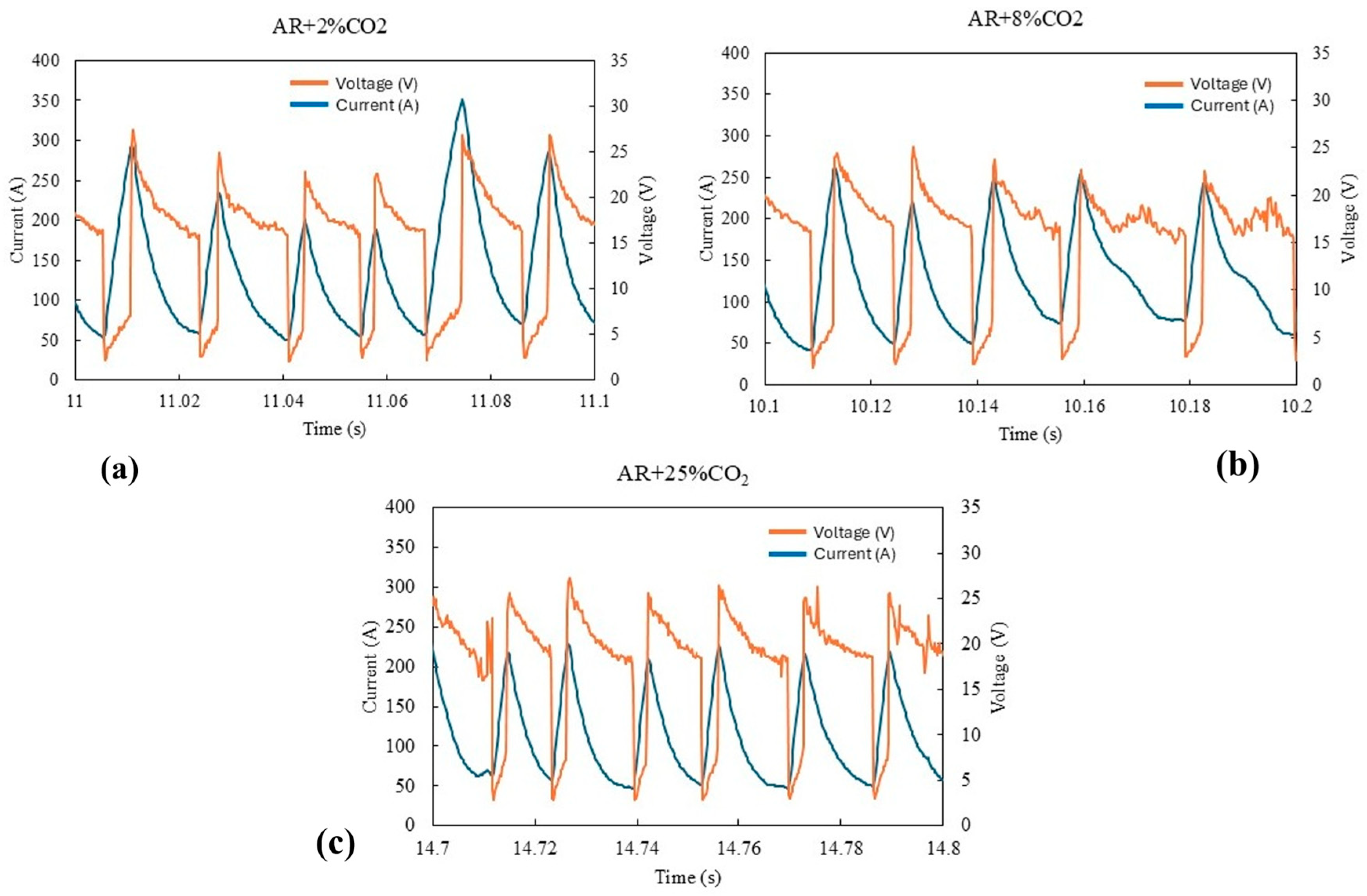
The dedicated GMA-DED rig employed in this work, schematically shown in Figure 2, consisted of an XYZ gantry that allows torch positioning along the three perpendicular axes and a worktable on which the substrate fixture is positioned. The three axes are controlled by a computer numerical control (CNC) system, and each axis moves with a resolution of 0.1 mm. The incremental Z-direction (building direction) for the experiments was defined at each layer individually. For that, after the deposition of each layer, the torch was moved to the mid-length of the layer, and the planned contact-to-work distance was used as a reference, i.e., the CNC panel implemented the desired Z increments. A data acquisition system was used to monitor the main welding parameters, i.e., current (I), voltage (V), and wire feed speed (WFS). The data acquisition system consisted of a commercial device, the SAP® V4TI model manufactured by “IMC Soldagem” (Palhoça, Brazil), equipped with a Hall-effect current transducer (model CYHCS-EKB-500A) and a voltage divider for arc voltage. This system could be connected to a computer with a USB port and support a frequency up to 5 kHz at 10-bit resolution, with measuring ranges of −600~+600 A, −100~+100 V, 0~20 l/min of gas flow rate, and 0~25 m/min of wire feed speed. Figure 3 shows representative current and voltage waveforms, illustrating the stability of the metal transfer under different shielding gases.
Figure 2. The schematic of the GMA-DED rig for thin-wall production using near-immersion active heating (NIAH): (a) torch; (b) water paddle recirculator; (c) deposited wall; (d) worktable; (e) water heater; (f) fixture; (g) water tank; (h) pyrometer; and (i) liquid-edge-to-work distance LEWD.
Figure 3. Waveform plots for three shielding gas blends of the current and voltage over time: (a) Ar + 2% CO2, (b) Ar + 8% CO2, and (c) Ar + 25% CO2.
In this study, all single layers in the first stage were deposited using the NIAC (near-immersion active cooling) approach (patented by Reis et al. [30]), and the three walls of the second stage were produced using the NIAH (near-immersion active heating) principle. The basic difference between NIAC and NIAH is water temperature and their purpose: NIAC operates at room (or below room) temperature to cool the building during processing and before each new layer, whereas NIAH operates at higher temperatures (far below water evaporation) to interlayer-heat the building. Therefore, as shown in Figure 2, the layers are deposited while the substrate is partially immersed in a water tank, with the liquid cooled or heated and maintained at the desired temperature (in this experiment, 30 °C with NIAC and 60 °C with NIAH). Water is constantly replaced in NIAC with cold water to keep the temperature at 30 °C. The heating elements in the NIARH tank are designed to maintain a temperature of 60 °C. In this arrangement, 20 mm of the part (substrate + layers) is always out of the water, a distance referred to as liquid-edge-to-work distance (LEWD), so that the water level is raised proportionally as a new layer is deposited. Besides the role of LEWD, porosity has never been reported when this near-immersion-in-water method is used by various authors, even with aluminum builds. The inventors (Reis et al. [30]) cite that the positive pressure of the shielding gas prevents water vapor intrusion. This explanation can be extended to justify the absence of cold cracks in GMA-DED assisted by NIAC.
To homogenize the heat throughout the water and prevent overheating around the element, a paddle-type water recirculator was used in this rig prototype. By preheating the entire part (substrate + layers) homogeneously, the interlayer temperature is maintained constant across the samples to be printed (stage 2), ensuring a fair comparison of the arc physics and metal transfer effects across the different shielding gases (each shielding gas will deliver different heat inputs, a variable that must be isolated in the shielding gas comparison). The interlayer temperature was monitored by a calibrated pyrometer. As shown in Figure 2i, the pyrometer was positioned to measure the top surface of each deposited layer.
To calibrate the infrared pyrometer, a home-developed method was adopted. In brief, a K-type thermocouple attached to a sample of a similar wall was used as a reference (assuming it provides the true temperature, or at least one close enough to be accepted), and the set emissivity in the pyrometer was varied to correct the pyrometer’s output curve over its operating temperature range. To increase the wall temperature and simulate real experimental conditions, a short segment of the layer was deposited incrementally until the temperature in the monitored region approached the upper limit of the pyrometer’s capability, approximately 1000 °C. This process ensured that the pyrometer could be calibrated across a representative temperature range relevant to the study. The emissivity values that yielded the closest data agreement with the thermocouple measurements were selected as 0.90 for the upper pyrometer. This selection is supported by the highly oxidized state of the HSLA steel surface during DED processing. According to Mullaney and Tatam [31], the formation of oxide scales during wire-arc additive manufacturing results in a significant increase in emissivity, typically between 0.75 and 0.90. This is further supported by Jo et al. [32], who demonstrated that for oxidized steel surfaces at elevated temperatures, emissivity values consistently stabilize around 0.85–0.90.
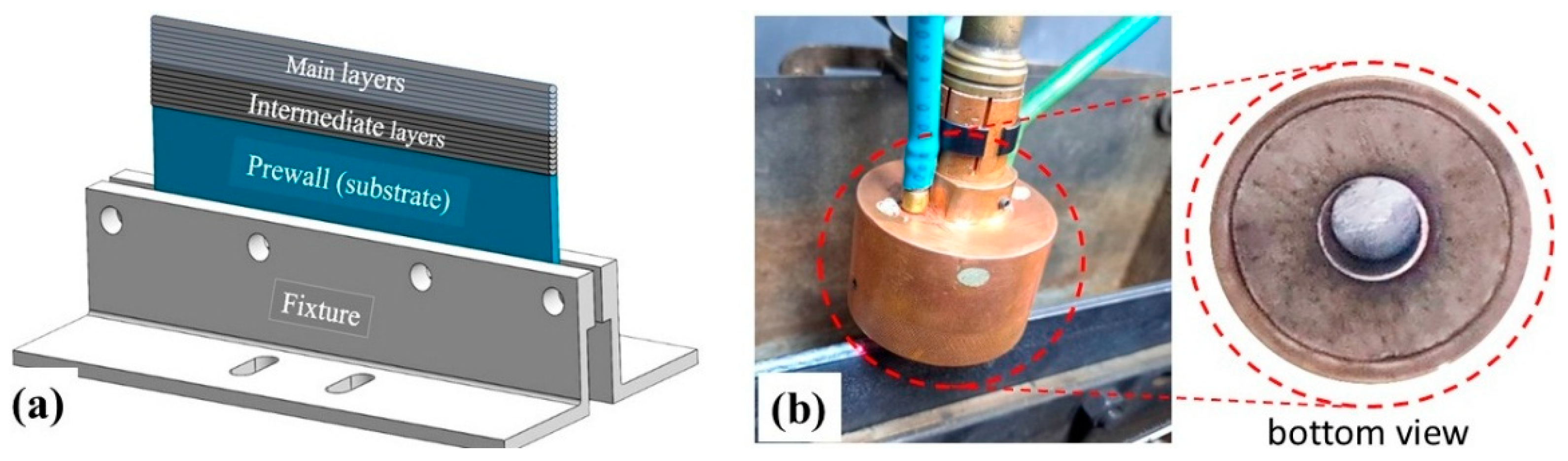
To deposit multiple sequential single layers to form walls, a 6 mm-wide, 50.5 mm-high, and 240 mm-long plain carbon-steel bar was used as a substrate, positioned upright, as illustrated in Figure 4a. This substrate is referred to as “prewall” because it has dimensions and chemical composition similar to those of the wall to be printed (to reach the thermal steady-state earlier). The first layers deposited on the top of the prewall, referred to as the intermediate wall, are used to validate the chosen process parameters, prevent contaminations, and promote heat stabilization. To avoid atmospheric interference with the effect of each gas-shielding blend, a special nozzle was attached to the welding torch to provide supplementary shielding (SSG) in a trailing fashion, as shown in Figure 4b. The SSG flow rate must be set lower than the main shielding gas flow rate so as not to interfere with the effect of the main shielding gas.
Figure 4. (a) Schematic of the substrate in an upright position playing the role of a prewall, with intermediate and effective layers in thin walls; (b) actual trailing supplementary shielding gas (SSG) system (nozzle).
A microprocessor-controlled multiprocessing power source, model DIGI PLUS A7, from IMC (a power source manufacturer), was used for GMA-DED, operating in constant-voltage mode and regulated for short-circuiting metal transfer. GMA-DED is even more critical than in welding to operate at low current and maintain smooth metal transfer to avoid overheating and spattering. A high-strength-low-alloy steel (HSLA) was selected as the wire material in this study due to its industrial interest. The wire used (Table 2) is classified as ER90S-B3 based on AWS A5.28/A5.28M:2005 (as G CrMo2Si in EN ISO 21952-A [33] and as G G2C1M3 in EN ISO 21952-B [33]), a 1.2 mm-diameter solid wire.
Table 2. Nominal composition of the solid 1.2 mm AWS ER90S-B3 wire.
Concerning the shielding gas blends for the assessment, low-alloy steel wires require a shielding gas with oxidizing properties to facilitate electron field emission from the pool (to achieve high arc stability). Field emission does not readily occur with pure Ar or with Ar + He as the shielding gas. Therefore, in agreement with Scotti et al. [34], the shielding gas must be either pure CO2 or a blend of Ar + CO2. As shown by Liskévych and Scotti [35], lower CO2 content in Ar-based blends results in smoother droplet transfer with minimal spatter. On the other hand, the higher the CO2 content, the greater the penetration and fusion area, and it is associated with an increase in wettability (wider beads). As emphasized by Yamaguchi et al. [14], while increased CO2 content improves heat input and droplet bridging, it can also lead to surface irregularities, such as humping, due to excessive penetration. For welding, it is generally accepted that an Ar-based blend with 2% CO2 is the best choice for very thin carbon steel-based plates (less than 2 mm). A blend with 8–10% CO2 is recommended for welding medium-thick plates (up to 6 mm), whereas a higher CO2 content is recommended for plates thicker than 12 mm. Therefore, for this study to demonstrate the effectiveness of the systematic proposal for selection optimization for the GMA-DED technology, three gas blends were chosen to deposit (for shielding and supplementary gases) the thin walls: (1) Ar + 2% CO2, (2) Ar + 8% CO2, and (3) Ar + 25% CO2.
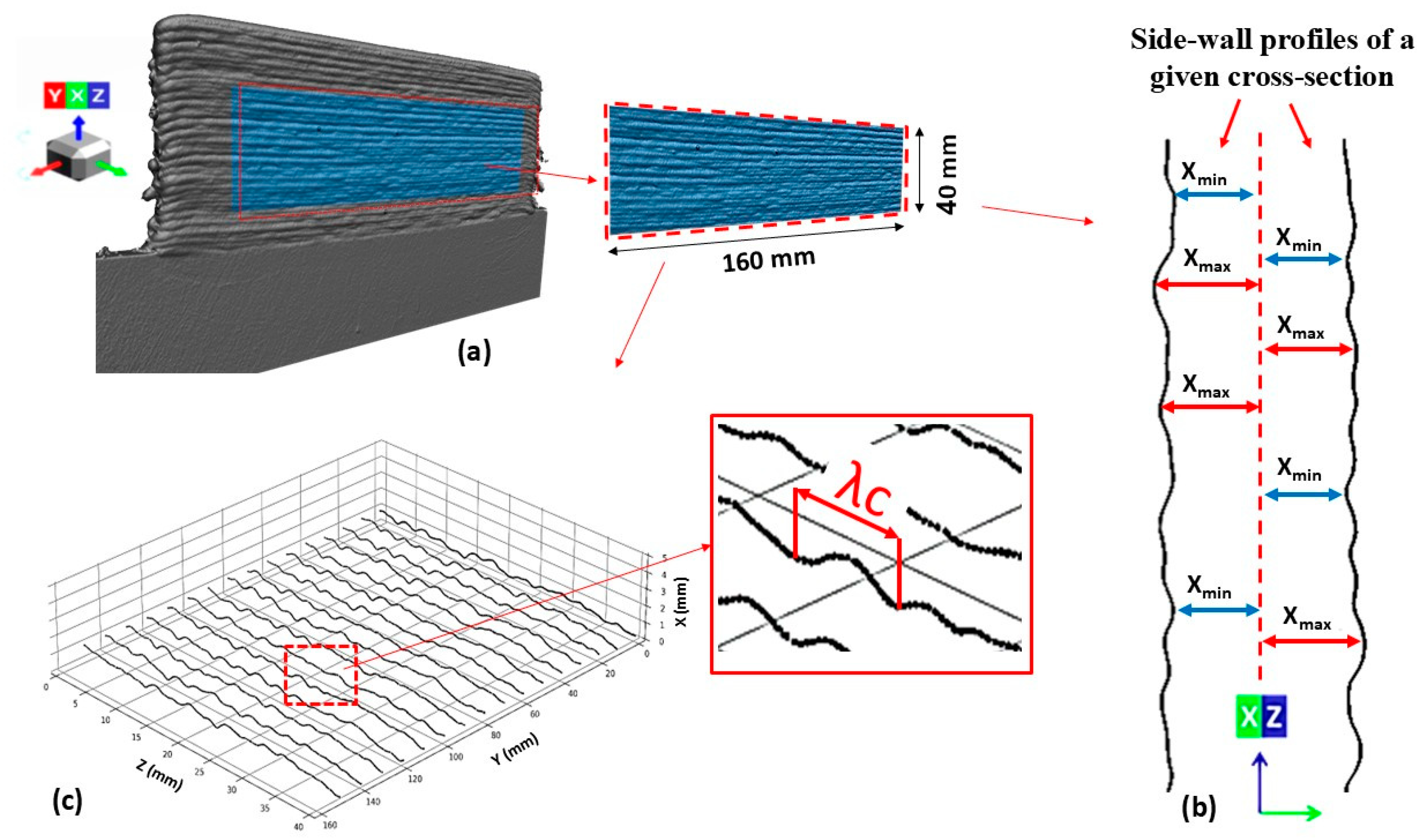
To determine the geometric features and evaluate the influence of each gas on them, the built walls were 3D-scanned using a commercial portable scanner (0.1 mm resolution), and a useful sectional area was sampled (Figure 5a). To quantitatively assess effective (WWeff) and external (WWext) wall widths and the lateral surface waviness of the deposited walls, the method proposed by Teixeira et al. [3] was adopted. In this approach, the lateral profiles of each wall were examined, and the data were processed using an in-house-developed code. According to the method, each side profile was segmented into short sample lengths (λc) to mitigate the impact of potential outliers. For each λc, maximum and minimum values (Xmax and Xmin) were computed, and average values per section were derived for each wall side. The WWext and WWeff were calculated by aggregating the average maximum and average minimum values from both sides of the wall, respectively (Figure 5b). The surface waviness (SW) was determined by averaging the discrepancies between the maximum and minimum values from both wall sides, with the final SW derived from the arithmetic mean of waviness (Wa) from all sections (Figure 5c). Total wall heights were measured at 10 positions with an analog caliper (spaced 5 mm apart, covering the central length of the wall), and the average layer height (LH) was estimated by dividing the total wall heights by the number of layers.
Figure 5. (a) Sampling an area inside the wall to measure all geometric features; (b) schematic of a wall cross-section with the indication of the undulation parameters (Xmax and Xmin); (c) the plotted points that define the surface profiles.

3.2. The Preliminary Stage

In the first stage of the study’s experimental procedure, several exploratory pre-tests were conducted using predefined parameters and the three chosen blends to determine the starting point for parameter setting, conditioned to short-circuiting metal transfer. Proper deposition speed (DS) and wire feed speed (WFS), to be commonly used with all shielding gases, were first determined based on subjective analyses of 3-layer-high appearance, amount of spattering, and arc-related sounds, However, as one of the objectives was to minimize lateral wall waviness, some principles taken from the GMA-DED commandments for building thin walls were used to guide the DS and WFS setting search as follows:
  • Constant arc pressure and minimal pool lateral sag (downward lateral running) conditions are achieved by keeping current intensity low, a short arc, and a shielding gas composition that is less “hot” (lower content of CO2), although enough to favor cathodic emission concentrated in the arc centerline.
  • The pool should maintain an appropriate volume for a given deposition rate and current. A pool that is too small results in insufficient heat transfer to the previous layer, while a pool that is too large tends to run downward. There is always a suitable range of pool volumes (for a specific material, wall thickness, and arc energy). This range can be identified by gradually increasing the deposition speed while keeping the wire feed speed constant.
  • The material beneath each layer during deposition should be as cool as possible to facilitate heat transfer through the built wall (without being so cold that it prevents the pool cooling from wetting the previous layer’s surface). The quicker heat transfers from the pool of the layers below during deposition, the smaller and less fluid the pool becomes, reducing the risk of pool collapse on the sides.
Once a combination of DS and WFS was defined and joined to the predefined parameters (Table 3), additional exploratory experiments were conducted to identify a suitable range of arc lengths for each shielding gas by varying the set voltages. Each deposition on the prewall top surface, with the same shielding and supplementary gas, consisted of three stacked layers. From the top layers, the regularity of metal transfer across different set voltages (low, medium, and high) for each gas blend was objectively determined using the IVsc index (Equation (1)). Remember, the lower the IVsc index, the higher the metal transfer regularity. A rule of thumb is that the IVsc index must be less than or equal to 0.7 to indicate stable, regular metal transfer in short-circuit mode.
Table 3. Common parameters for the layer depositions with the three gas blends.
Table 4 presents the resulting monitored and calculated arc-electrical-related parameters for each shielding gas blend, which represent the effect of each blend. For the same gas composition (same CO2 content), an increase in set voltage (Vset) corresponded to a higher average voltage (Vm), because of the longer arc length. The results related to CO2 content and Vm agree (the higher CO2, the higher Vm to have a stable arc) with the theory and also with Liskévych and Scotti’s [35].
Table 4. Corresponding mean voltage (Vm), current (Im), and metal transfer regularity index (IVsc) as a function of the set voltage (Vset) range for the three shielding gas blends under supplementary shielding with the same blend (the shaded rows to highlight the best results).
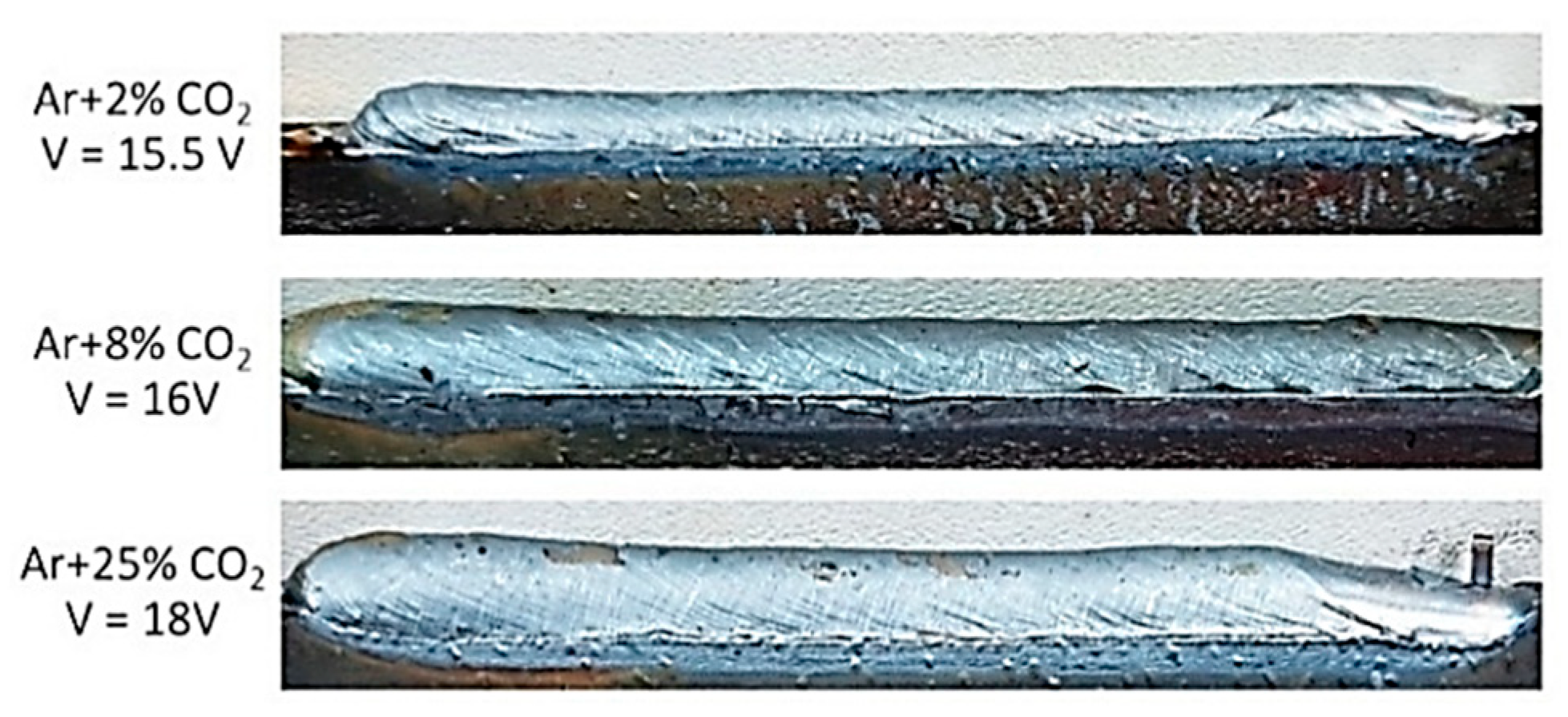
From Table 4, it can also be observed that the shielding gas affected the mean current (Im) required to maintain a constant WFS without varying CTWD or DS. WFS was set constant (3.2 m/min, as stated in Table 3) on the wire feeder and quantitatively monitored in real-time using the data acquisition system described in Section 3.1. These findings confirm that shielding gas impacts metal transfer mechanisms, surface-tension-driven pool formation, and, consequently, the fusion rate of a given wire, as already reported by Teixeira et al. [3] and Mvola and Kah [1]. An increase in Im when the set voltage (arc length) is increased with the same CO2 content is fully explainable in the constant-voltage operational mode of power sources [36], but the reviewed literature does not support the finding of higher current with increasing CO2 in Table 4. Regardless, the best set voltage for each gas blend was determined from the outcomes presented in Table 4. A visually good surface finish, free of observable imperfections, was achieved in all trials when using proper arc lengths (set voltages), as shown in Figure 6. This is later quantitatively confirmed by the low waviness values (Wa) reported in Section 3.3.2. Therefore, the best set voltage was decided as 15.5 V for Ar + 2% CO2, 16 V for Ar + 8% CO2, and 18 V for Ar + 25% CO2. These different set voltages will support fair comparisons in the following stage.
Figure 6. Layers’ appearance resulting from using the best set voltage with different gas blends (increasing CO2).

3.3. The Main Stage

In the main stage, one thin wall was deposited with each of the three gas blends at the best set voltage (15.5 V with Ar + 2% CO2, 16.0 V with Ar + 8% CO2, and 18.0 V with Ar + 25% CO2), to assess the best gas blend for the given material regarding geometrical features. The same deposition rig (Figure 2 and Figure 3) and common parameters shown in Table 3 were maintained, including the wall near immersion in water at 60 °C (NIAH), for the same reason explained in Section 3.2. Because keeping the same WFS and DS, consequently, the same deposition rate per unit of layer length (or the same layer cross-section area), was a premise of this comparative study. Walls of 34 layers were built with Ar + 2% CO2, of 31 layers with Ar + 8% CO2, and of 30 layers with Ar + 25% CO2.
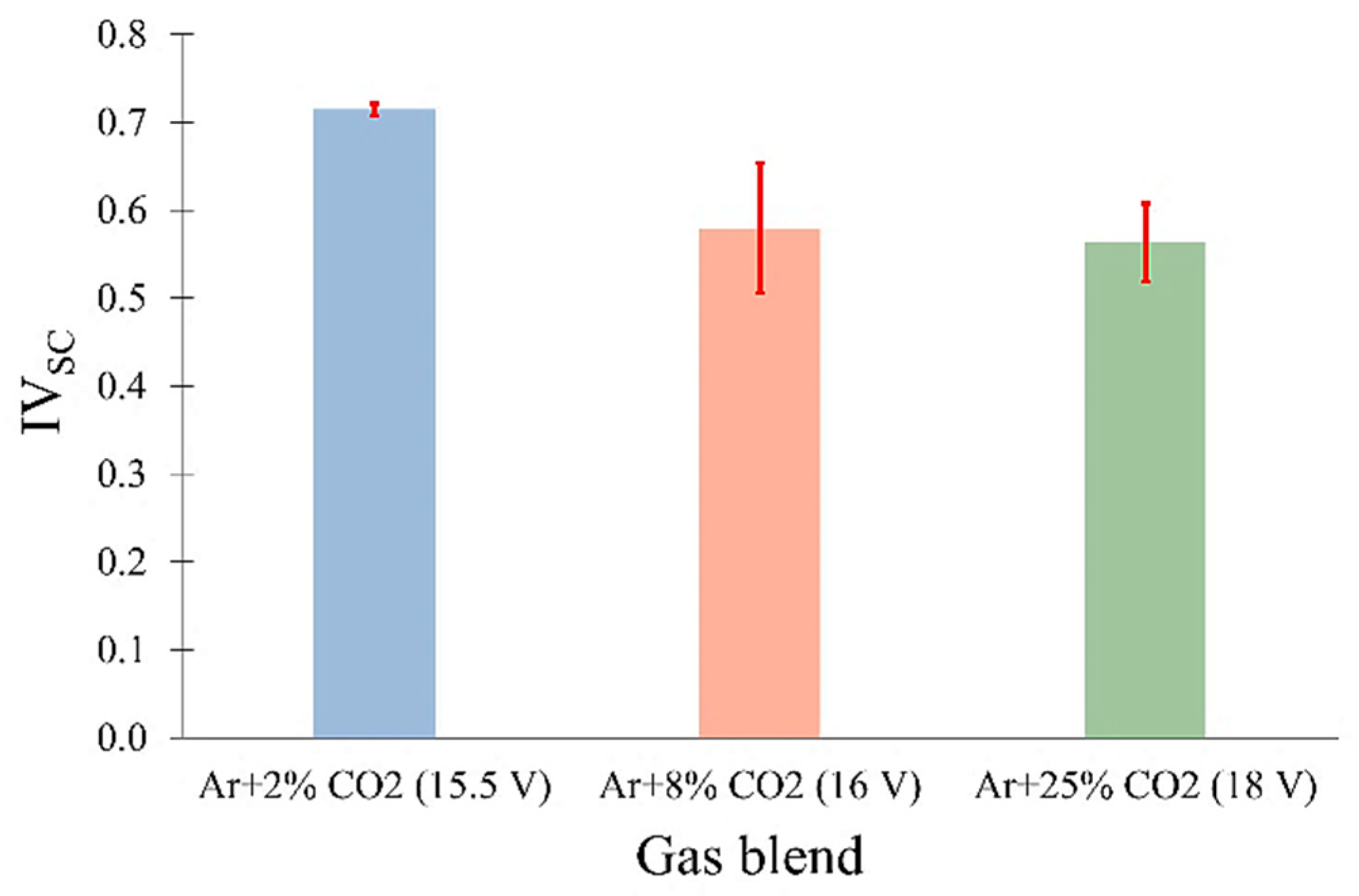
To certify that the metal transfer regularity selected in the former section (preliminary stage) was maintained, the IVSC index was again calculated during the deposition of the walls, using the monitored arc electrical signals. Figure 7 confirms that a still-high metal transfer regularity (IVsc ≤ 0.7) was achieved in these main-stage experiments, in which the number of deposited layers was higher, and the cooling method differed. The outcomes are very similar to those in Table 4, given the higher number of measurements at this stage. However, given the now available standard deviations, it would not be appropriate to say that the higher the CO2 content, the more regular the metal transfer, despite the evidence towards very low CO2 in the blend (2%), which led to slightly lower regularity, as expected (not enough free oxygen to facilitate cathodic emission). Regardless, one can say that the performance of the three shielding gas blends can be compared while maintaining good metal transfer characteristics, as planned.
Figure 7. The average of metal transfer regularity from three layers in the middle of the deposited layers of each wall, using three gas blends.
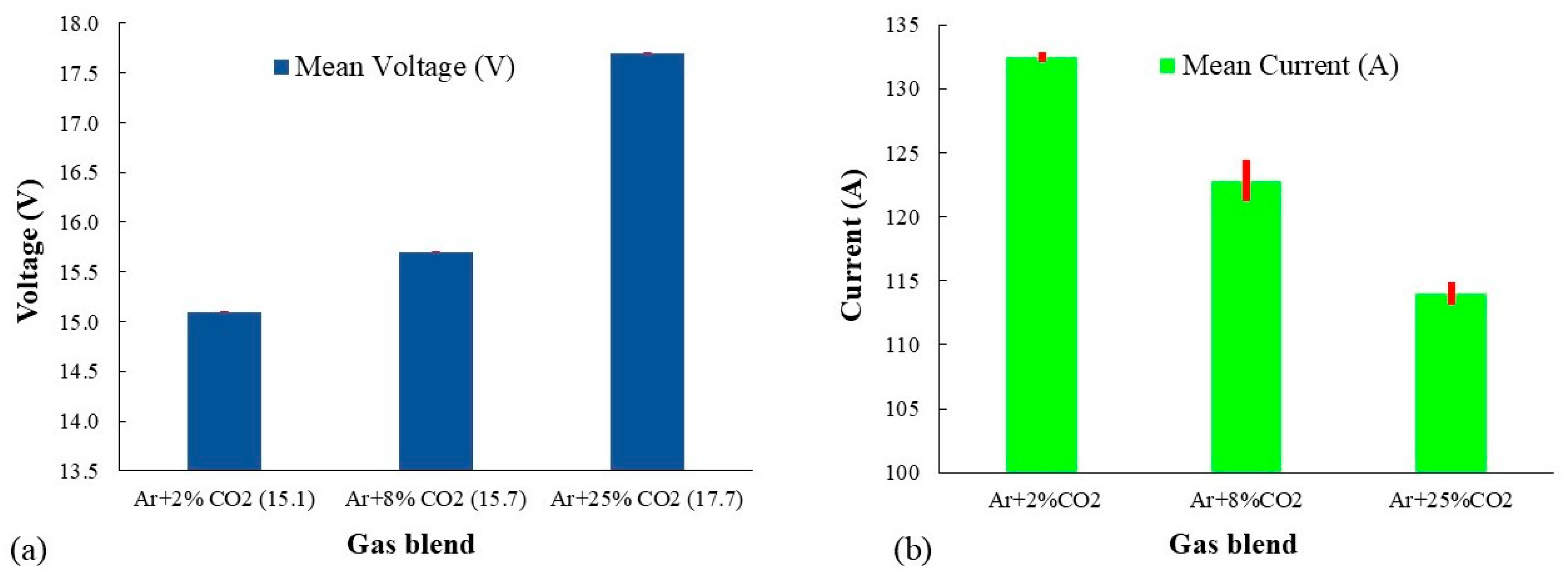
Figure 8a confirms that the set voltage for each shielding gas responds with a higher average arc voltage as the CO2 content rises. This trend aligns with the findings from Liskévych et al. [35]. In addition, one must remember that the demanded rise in voltage with the CO2 content in the shielding gas is, in theory, a consequence of its higher thermal conductivity, for the same arc lengths (the best metal transfer regularity at each shielding gas composition). However, it is important to state that, unlike stage 1 (Section 3.2), Figure 8b shows that the current decreased as CO2 increased (an average of 132.5 A for Ar + 2% CO2, 122.8 A for Ar + 8% CO2, 114.0 A for Ar + 25% CO2). However, neither the results from Section 3.2 nor those from Section 3.3 align with reference [35], in which no effect of CO2 on the current required to keep the same WFS was found. These differences in tendency indicate how sensitive the fusion rate is and that uncontrollable non-identified variables can affect it.
Figure 8. The relationship between average voltage (a) and current (b) as a function of CO2 content in the shielding gas for this work’s experimental conditions (WFS and DS were kept constant).
The walls were analyzed with respect to layer height and external and effective wall widths, lateral surface appearance, and waviness, as follows. The results are discussed using average recorded data from three layers among deposited layers, halfway along the deposition direction, and after the first 8 layers deposited, to eliminate the effect of prewall contamination.

3.3.1. Layer Height and Wall Width

According to the measurement procedure described in Section 3.1, the layer width was calculated and reported, along with the average layer height, in Table 5, which presents the dimensions of the wall’s geometrical features. The results showed that the influence of the CO2 content on the geometrical feature is more pronounced when the shielding gas contains the highest CO2 content (25%). This can be justified because, due to CO2 high heat-transfer capacity, the shielding delivers more heat to the weld pool. Accordingly, the effective and external wall widths showed progressive widening and heightening as CO2 increases, while the wall height decreased. It must be stated that a higher layer height will require fewer layers to reach the same wall height (restricted by the acceptable wall effective width).
Table 5. Average layer height and wall widths of the walls produced with different gas blends.

3.3.2. Lateral Surface Appearance and Waviness

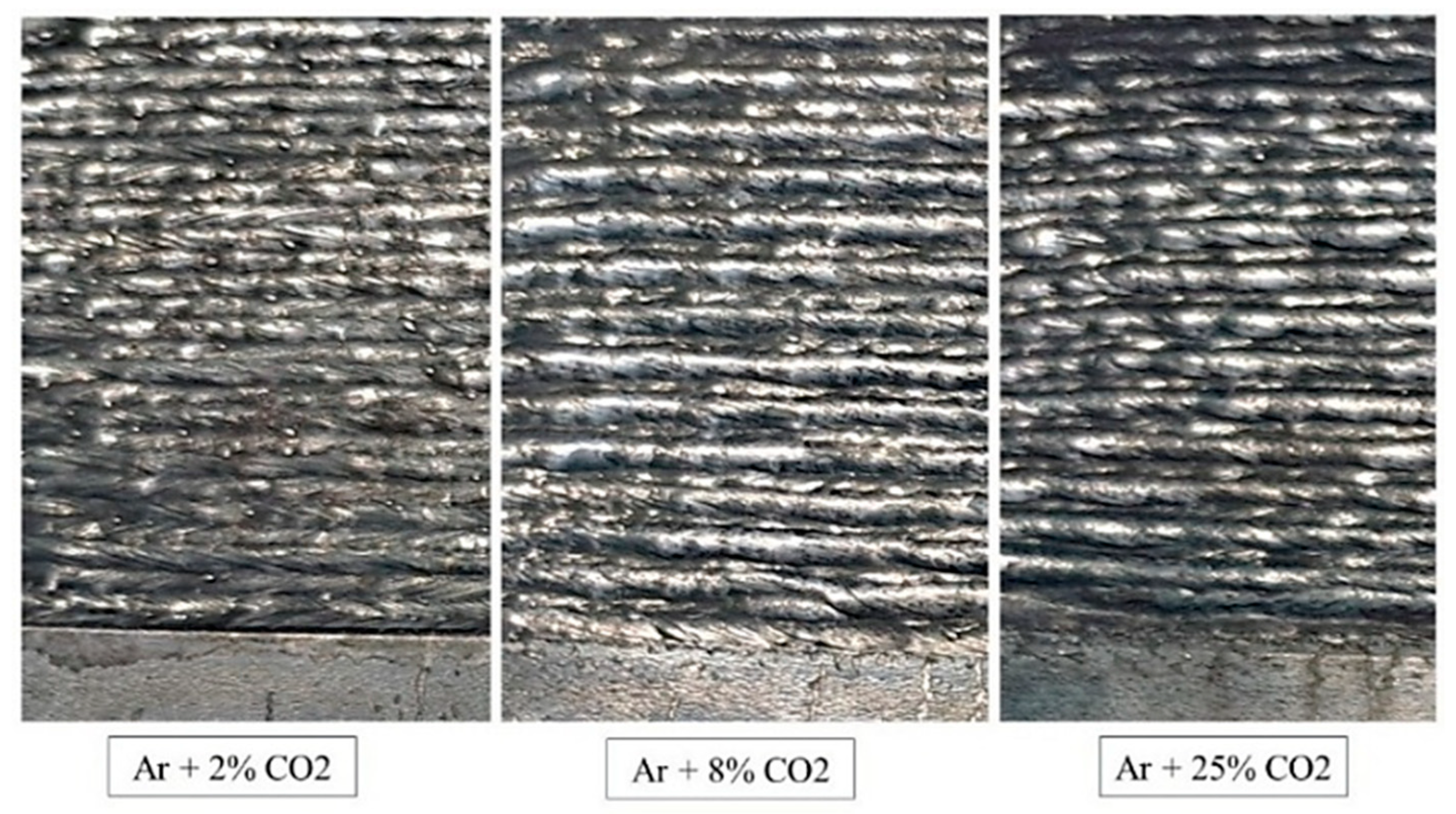
The produced wall surfaces were steel-brushed and cleaned before these analyses. A visual inspection reveals that the appearances of all three walls were similar, with no considerable differences, as illustrated in Figure 9. All three walls showed no pronounced imperfections, such as open porosity or dripping metal on the sidewalls, and no uneven regions were observed. This indicates the effectiveness of the selected parameters and gas blends in achieving high-quality surface finishes.
Figure 9. Surface of the three walls deposited using the three different shielding gas blends.
The surface waviness (SW), in turn, was quantified as the arithmetic mean waviness (Wa), as explained at the end of Section 3.1. To certify the functionality of this code, a flat bar was subjected to the same 3D scanning. One can assume that this code should yield a near-zero SW value for a flat bar (the measured 0.03 ± 0.00 supports this assumption, providing confidence in the measurement procedure). Table 6 presents the outcome, confirming that the wall surfaces were very similar to one another.
Table 6. Average surface waviness (SW) and respective standard deviations (SD) of the walls deposited with different gas blends.
The “hotter” the shielding gas (higher He and CO2 contents), the deeper the dilution, and there is a trend to increase waviness in GMA-DED manufacturing of carbon steel thin walls. This shielding gas characteristic was systematically discussed in Teixeira et al. [3]. However, the results in Table 5 did not confirm it. The Ar + 8% CO2 blend exhibited the highest average waviness (0.17 mm), while the Ar + 25% CO2 blend was slightly lower (0.15 mm). Given the low and consistent standard deviation of 0.02 mm, these differences were not statistically significant. In addition, the minor decrease observed at Ar + 25% CO2 (when an increase was expected) may be linked to the significantly lower average welding current required for this blend (Figure 8) at the optimum voltage, which can reduce arc pressure and slightly stabilize the lateral flow of the weld pool (see the three commandments described in Section 3.2). Remembering that low waviness can affect production performance, requiring less machining effort to achieve the design-predicted wall dimensions (or even eliminating machining).

4. General Discussion

As seen, different gases exhibited characteristics that were not readily apparent when applied to shielding GMAs. One can say that selecting shielding gas for GMA-DED is largely a trial-and-error procedure (Table 1), based on the GMA-DED operator’s knowledge and experience. The proposed logical, systematic, and reproducible procedure made it feasible to separate some shielding gas-dependent characteristics, such as the required set voltage to achieve the best metal transfer regularity, the trends toward narrowing or widening (and heightening or shortening) the deposited layer, tendency to affect the wire fusion rate, and the propensity to deliver a wall with better appearance and less waviness. The examples (for the assessed shielding gases and materials) are as follows:
  • Ar + 25% of CO2 demanded a higher arc voltage to reach the best metal transfer regularity;
  • Ar + 2% of CO2 presented a slightly lower metal transfer regularity, yet acceptable;
  • Ar + 2% of CO2 demanded the lowest mean current, and Ar + 25% of CO2 the highest, to melt (burn-off) the wire at the same speed;
  • Ar + 25% of CO2 heightened and narrowed the deposited layer, and Ar + 2% of CO2 shortened and widened;
  • The CO2 content has a marginal influence on the wall lateral surface waviness, although Ar + 8% of CO2 tends slightly to have more wall lateral undulation, yet the waviness is low, and the wall appearance is good with the three gases.
As elaborated in the proposal, the geometry-based criteria (the last block in Figure 1), which balance geometric outcomes, must be defined by the user. To demonstrate it, the authors arbitrarily proposed the following criterion: the shielding gas to be applied to build the low-alloy steel wall must increase wall production (fewer layers to reach the same wall height), using the lowest current to reach the same production rate (lower thermal stresses), yet with no risk of lack of fusion between two layers. Based on this criterion, the shielding gas choice was Ar + 8% CO2 (dosed with a subjective conservative decision).
However, as seen, the decision did not take into consideration the target effective wall width, a design factor. For that, the authors believe the methodology would need to be modified, for example, by adjusting the deposition speed (DS) to ensure all walls have the same wall width. This approach would demand more work, but it does not change the principle of the logical, systematic, and reproducible procedure.

5. Conclusions

The main goal of this research was to develop and assess a logical, systematic, and reproducible procedure for optimizing gas selection in GMA-DED technology for building thin low-alloy steel walls, initially focusing on geometric outcomes, such as layer height, wall width, waviness, and surface appearance. The main methodological approach involved comparing the geometric features of a thin wall produced by successive layer deposition under different shielding gas compositions and identifying the best gas composition based on user-defined criteria. The systematic approach to selecting the shielding gas was designed to ensure a fair comparison during deposition, meaning that, when depositing with a specific gas, the parameters would guarantee “optimal” operating conditions. This was achieved by adjusting the arc length (through scanning the set voltage) to maintain consistent metal transfer in short-circuit transfer across all gases, while keeping other variables constant—such as wire (diameter and composition), contact tip-to-work distance (CTWD), wire feed speed (WFS), and deposition speed (DS)—throughout the processing. Consequently, the deposition rate per unit length (layer cross-sectional area) was maintained approximately the same. The results indicated that the systematic selection approach demonstrated the following:
  • It is possible to compare selected shielding gas blends under similar conditions of metal transfer regularity by a logical, systematic, and reproducible approach (scanning set voltage and using a constant voltage GMA power source), yet maintaining the main operational parameters constant.
  • Based on the analysis of the findings and on an established user-criterion, the shielding gas mixture of Ar + 8% CO2 was deemed the most suitable, and justification for this decision-made choice is given.
In addition to the global objective, some shielding gas-related characteristics, which are usually not without hesitation evident to users, were uncovered in this work, which helped the decision-making process to choose the shielding gas, but that also reflect specific objectives of this work (for the current experimental GMA-DED operational condition, parameters, and material only):
  • Lower current is demanded to burn off the wire at the same rate as more CO2 content in the shielding gas.
  • The higher the CO2 content blended with Ar in the shielding gas, the higher the arc voltage to maintain the arc with regular metal transfer.
  • Even keeping the same deposition rate per unit of layer length, a greater content of CO2 in the shielding gas blend makes the layer wider and shorter in layer height.
  • The external and effective wall widths are narrower, and the layer height taller, with lower CO2 content in the shielding gas.
  • However, the CO2 content of the Ar-based shielding gas did not affect lateral surface waviness significantly.

6. Future Work

The suggested gas-selection approach will be improved in the near future by incorporating metallurgical attributes (the effect of the shielding gas composition on the wall chemical composition, microstructure, and macrostructure) and mechanical factors (such as tensile strength, hardness, or impact toughness) into the assessment framework, creating a more comprehensive selection and optimization procedure that suppresses geometric performance.

Author Contributions

Conceptualization: M.A.G., S.M.H.S., M.M., Y.Y. and A.S.; methodology: M.A.G., S.M.H.S. and A.S.; software: M.A.G.; validation: M.A.G., S.M.H.S. and A.S.; formal analysis: M.A.G., S.M.H.S. and A.S.; investigation: M.A.G.; resources: A.S.; curation, M.A.G.; writing—original draft preparation, M.A.G.; writing—review and editing, M.A.G., S.M.H.S. and A.S.; supervision, A.S., S.M.H.S. and M.M.; funding acquisition, A.S. All authors have read and agreed to the published version of the manuscript.

Funding

This research was funded by the Brazilian Coordination for the Improvement of Higher Education Personnel, CAPES (Finance Code 001), and the National Council for Scientific and Technological Development—CNPq (grant number 306053/2022-5).

Data Availability Statement

The data presented in this study are available on request from the corresponding author due to privacy restrictions.

Acknowledgments

The authors would like to thank the Centre for Research and Development of Welding Processes of the Federal University of Uberlandia (Laprosolda-UFU) for the laboratory infrastructure and technical support. They would also like to express their gratitude to Vinicius Lemes Jorge, who helped with the practical work and the results discussions.

Conflicts of Interest

The authors declare no conflicts of interest.

Abbreviations

The following abbreviations are used in this manuscript:
CMTCold metal transfer
CNCComputer numerical control
CTWDContact tip-to-work distance
DSDeposition speed
GMAGas metal arc
GMA-DEDGas metal arc directed energy deposition
GMAWGas metal arc welding
HSLAHigh-strength low-alloy steel
ICurrent
ImAverage (mean) current
IVscMetal transfer regularity index (for short-circuit metal transfer)
LEWDLiquid-edge work distance
LHLayer height
NIACNear-immersion active cooling
NIAHNear-immersion active heating
SSGSupplementary shielding gas
VVoltage
VmAverage (mean) voltage
WaArithmetic mean waviness
WAAMWire arc additive manufacturing
WFSWire feed speed

References

  1. Mvola, B.; Kah, P. Effects of shielding gas control: Welded joint properties in GMAW process optimization. Int. J. Adv. Manuf. Technol. 2017, 88, 2369–2387. [Google Scholar] [CrossRef]
  2. Marônek, M.; Bárta, J.; Urminsky, J.; Bártová, K.; Šugra, F. The effect of shielding gas on selected geometric characteristics of multilayer walls produced by WAAM. In Proceedings of the 12th International Scientific and Professional Conference SBZ, Poreč, Croatia, 18–20 October 2023. [Google Scholar]
  3. Teixeira, F.R.; Jorge, V.L.; Scotti, F.M.; Siewert, E.; Scotti, A. A methodology for shielding-gas selection in wire arc additive manufacturing with stainless steel. Materials 2024, 17, 3328. [Google Scholar] [CrossRef]
  4. Silwal, B.; Pudasaini, N.; Roy, S.; Murphy, A.B.; Nycz, A.; Noakes, M.W. Altering the supply of shielding gases to fabricate distinct geometry in GMA additive manufacturing. Appl. Sci. 2022, 12, 3679. [Google Scholar] [CrossRef]
  5. Kah, P.; Martikainen, J. Influence of shielding gases in the welding of metals. Int. J. Adv. Manuf. Technol. 2013, 64, 1411–1421. [Google Scholar] [CrossRef]
  6. Matusiak, J.; Wyciślik, J.; Wyciślik, A. Environmental criteria for shielding gas selection during arc welding of stainless steels. Solid State Phenom. 2016, 246, 275–278. [Google Scholar] [CrossRef]
  7. Nguyen, V.T.; Minh, P.S.; Uyen, T.; Do, T.T.; Ngoc, H.V.T.; Le, M.T.; Nguyen, T.V.T. WAAM technique: Process parameters affecting the mechanical properties and microstructures of low-carbon steel. Metals 2023, 13, 873. [Google Scholar] [CrossRef]
  8. Le, V.T.; Nguyen, T.D.; Hoang, T.D. Optimization of single-track deposits in wire arc-based direct energy deposition of ER110S-G steel using MONS-MFO and TOPSIS algorithms. Proc. Inst. Mech. Eng. Part B J. Eng. Manuf. 2024, 239, 648–659. [Google Scholar] [CrossRef]
  9. Kanishka, K.; Acherjee, B. A study on the effect of shielding gases on the GMAW-WAAM process and performance of WAAM-deposited low-carbon steel. Int. J. Mater. Res. 2025, 116, 905–916. [Google Scholar] [CrossRef]
  10. Trinh, N.Q.; Tashiro, S.; Le, K.D.; Suga, T.; Kakizaki, T.; Yamazaki, K.; Lersvanichkool, A.; Murphy, A.B.; Van Bui, H.; Tanaka, M. Eligible CO2 content in Ar–CO2 mixture shielding gas for improving metal transfer in metal-cored arc welding. Int. J. Heat Mass Transf. 2024, 231, 125803. [Google Scholar] [CrossRef]
  11. Da Silva, L.J.; Scotti, F.M.; Fernandes, D.B.; Reis, R.P.; Scotti, A. Effect of O2 content in argon-based shielding gas on arc wandering in WAAM of aluminum thin walls. CIRP J. Manuf. Sci. Technol. 2021, 32, 338–345. [Google Scholar] [CrossRef]
  12. Jurić, I.; Garašić, I.; Bušić, M.; Kožuh, Z. Influence of shielding gas composition on structure and mechanical properties of wire and arc additive manufactured Inconel 625. JOM 2019, 71, 703–708. [Google Scholar] [CrossRef]
  13. Galeazzi, D.; Barancelli Schwedersky, M.; Maciel, P.; Correa Jaeger Rocha, P.; Gonçalves e Silva, R.H. Analysis of the CO2 influence in the gas mixture for WAAM using CMT version of the GMAW process. In Proceedings of the 26th International Congress of Mechanical Engineering (COBEM), Virtual Conference, 22–26 November 2021. [Google Scholar] [CrossRef]
  14. Yamaguchi, M.; Komata, R.; Furumoto, T.; Abe, S.; Hosokawa, A. Influence of metal transfer behavior under Ar and CO2 shielding gases on geometry and surface roughness of single and multilayer structures in GMAW-based wire arc additive manufacturing of mild steel. Int. J. Adv. Manuf. Technol. 2022, 119, 911–926. [Google Scholar] [CrossRef]
  15. Wang, J.; Diao, C.; Taylor, M.; Wang, C.; Pickering, E.; Ding, J.; Pimentel, M.; Williams, S. Investigation of 300M ultra-high-strength steel deposited by wire-based gas metal arc additive manufacturing. Int. J. Adv. Manuf. Technol. 2023, 129, 3751–3767. [Google Scholar] [CrossRef]
  16. Gowthaman, P.S.; Jeyakumar, S.; Sarathchandra, D.T. Experimental study of shielding gas concentration on mechanical properties of stainless steel alloy parts using wire and arc additive manufacturing. Proc. Inst. Mech. Eng. Part E J. Process Mech. Eng. 2024, 1–13. [Google Scholar] [CrossRef]
  17. Green, T.K.; Sridharan, N.; Chen, X.; Field, K.G. Effect of N2- and CO2-containing shielding gases on composition modification and carbonitride precipitation in wire arc additive manufactured grade 91 steel. Addit. Manuf. 2022, 56, 102854. [Google Scholar] [CrossRef]
  18. Marefat, F.; Kapil, A.; Banaee, S.A.; Van Rymenant, P.; Sharma, A. Evaluating shielding gas–filler wire interaction in bi-metallic wire arc additive manufacturing (WAAM) of creep resistant steel–stainless steel for improved process stability and build quality. J. Manuf. Process. 2023, 88, 110–124. [Google Scholar] [CrossRef]
  19. Silwal, B.; Nycz, A.; Masuo, C.J.; Noakes, M.W.; Marsh, D.; Vaughan, D. An experimental investigation of the effectiveness of Ar–CO2 shielding gas mixture for the wire arc additive process. Int. J. Adv. Manuf. Technol. 2020, 108, 1285–1296. [Google Scholar] [CrossRef]
  20. Queguineur, A.; Asadi, R.; Ostolaza, M.; Valente, E.H.; Nadimpalli, V.K.; Mohanty, G.; Ituarte, I.F. Wire arc additive manufacturing of thin and thick walls made of duplex stainless steel. Int. J. Adv. Manuf. Technol. 2023, 127, 381–400. [Google Scholar] [CrossRef]
  21. Petkov, V.; Tashev, P.; Dyakova, V. Analysis of the processes in the welding arc during additive manufacturing. Arch. Metall. Mater. 2024, 69, 819–824. [Google Scholar] [CrossRef]
  22. Unger, M.; Neves, J.L.; Schnall, M. Effect of welding gas mixtures on weld material and bead geometry. In Proceedings of the 13th Ranshofen Light Metals Days 2024 Saalfelden, Austria, 26–27 September 2024; IOP Conference Series: Materials Science and Engineering; IOP Publishing: Bristol, UK, 2024; Volume 1315, p. 012007. [Google Scholar] [CrossRef]
  23. Bansal, H.; Kumar Gupta, A.; Madan, A. Wire arc additive manufacturing process for higher deposition rate and mechanical strength. Int. J. Eng. Res. Technol. 2021, 10, 125–132. [Google Scholar] [CrossRef]
  24. Kumar, P.; Sharma, S.K.; Singh, R.K.R. Heat input and shielding environment effect on CMT-WAAM of IN718. Proc. Inst. Mech. Eng. Part C J. Mech. Eng. Sci. 2024, 238, 10026–10044. [Google Scholar] [CrossRef]
  25. Li, S.; Zhang, L.J.; Ning, J.; Wang, X.; Zhang, G.F.; Zhang, J.X.; Na, S.-J.; Fatemeh, B. Comparative study on the microstructures and properties of wire + arc additively manufactured 5356 aluminium alloy with argon and nitrogen as the shielding gas. Addit. Manuf. 2020, 34, 101206. [Google Scholar] [CrossRef]
  26. Balanovskiy, A.E.; Astafyeva, N.A.; Kondratyev, V.V.; Karlina, A.I. Study of mechanical properties of C–Mn–Si composition metal after wire-arc additive manufacturing (WAAM). CIS Iron Steel Rev. 2021, 22, 66–71. [Google Scholar] [CrossRef]
  27. Akbarzadeh, E.; Yurtışık, K.; Gür, C.E.M.İ.L.; Saeid, T.; Tavangar, R. Influence of shielding gas on the microstructure and mechanical properties of duplex stainless steel in wire arc additive manufacturing. Met. Mater. Int. 2024, 30, 1977–1996. [Google Scholar] [CrossRef]
  28. Henckell, P.; Gierth, M.; Ali, Y.; Reimann, J.; Bergmann, J.P. Reduction of energy input in wire arc additive manufacturing (WAAM) with gas metal arc welding (GMAW). Materials 2020, 13, 2491. [Google Scholar] [CrossRef]
  29. Gurcik, T.; Kovanda, K.; Rohan, P. Influence of shielding gas on geometrical quality of WAAM technology. In Proceedings of the 28th International Conference on Metallurgy and Materials (METAL), Brno, Czech Republic, 22–24 May 2019; pp. 715–721. [Google Scholar] [CrossRef]
  30. Reis, R.P.; Scotti, A.; Da Silva, L.J. Active Cooling Technique for Additive Manufacturing. Patent BR 102018015314-5, 11 July 2023. (In Portuguese) [Google Scholar]
  31. Mullaney, M.; Tatam, R.P. Emissivity measurements of metals used in wire-arc-directed energy deposition processes. Metals 2025, 15, 1087. [Google Scholar] [CrossRef]
  32. Jo, H.; King, J.L.; Blomstrand, K.; Sridharan, K. Spectral emissivity of oxidized and roughened metal surfaces. Int. J. Heat Mass Transf. 2017, 115, 1065–1071. [Google Scholar] [CrossRef]
  33. ISO 21952-2012; Welding Consumables—Wire Electrodes, Wires, Rods and Deposits for Gas Shielded Arc Welding of Creep-resisting Steels—Classification. International Organization for Standardization: Geneva, Switzerland, 2012.
  34. Scotti, A.; Ponomarev, V.; Lucas, W. A scientific application oriented classification for metal transfer modes in GMA welding. J. Mater. Process. Technol. 2012, 212, 1406–1413. [Google Scholar] [CrossRef]
  35. Liskévych, O.; Scotti, A. Influence of the CO2 content on operational performance of short-circuit GMAW. Weld. World 2015, 59, 217–224. [Google Scholar] [CrossRef]
  36. Zielinska, S.; Pellerin, S.; Valensi, F.; Dzierzega, K.; Musiol, K.; De Izarra, C.; Briand, F. Gas influence on the arc shape in MIG–MAG welding. Eur. Phys. J. Appl. Phys. 2008, 43, 111–122. [Google Scholar] [CrossRef]
Disclaimer/Publisher’s Note: The statements, opinions and data contained in all publications are solely those of the individual author(s) and contributor(s) and not of MDPI and/or the editor(s). MDPI and/or the editor(s) disclaim responsibility for any injury to people or property resulting from any ideas, methods, instructions or products referred to in the content.

Article Metrics

Citations

Article Access Statistics

Article metric data becomes available approximately 24 hours after publication online.