


Abstract
In the present work, the effect of Ti3C2Tx MXene nanosheets as anodizing additives on the corrosion resistance of Al 2024-T3 clad alloy was investigated in 0.1 M NaCl solution. The anodization was conducted in a mixed tartaric-sulfuric acid solution. The MXene nanosheets were added to the solution at a concentration of 0.1 g·L−1. The morphology of the anodized layer was examined by scanning electron microscopy. The corrosion resistance was studied by electrochemical impedance spectroscopy and potentiodynamic polarization up to 168 h of immersion in the electrolyte. Adding MXene to the anodized layer reduced the corrosion current density by two orders of magnitude and increased the breakdown potential by 44%, showing the great potential of these nanostructures in enhancing the corrosion protection ability of anodized layers on aircraft Al alloys.
1. Introduction
The 2024-T3 alloy is the state-of-the-art material for lightweight aircraft structures such as wings and fuselage owing to its high strength-to-weight ratio [1,2]. While Cu- and Mg-rich phases are responsible for the mechanical properties necessary for these structural applications, micron-sized Cu-, Fe-, and Mg-rich intermetallics make the alloy susceptible to localized corrosion by the formation of microgalvanic cells [3,4,5]. As this is an inherent, well-known limitation of high-strength precipitation-hardening Al alloys, such as 2024-T3, corrosion protection methods are needed to guarantee their safe use [6]. Cladding is a common method for enhancing the corrosion resistance of aircraft aluminum alloys, relying on a thin layer of commercially pure aluminum as a protective coating to isolate the base alloy from the environment [7]. In addition to acting as a physical barrier, the thin clad layer also provides cathodic protection to the underlying substrate due to its lower corrosion potential.
Anodizing is another protection method, commonly used to improve the corrosion resistance of aluminum alloys, by increasing the thickness of the naturally formed surface oxide film [8,9]. Over the past two decades, alternatives to the classic chromic acid surface treatment of aircraft Al alloys have been developed based on more environmentally friendly processes, such as anodizing in mixed tartaric–sulfuric acid solutions, which have shown adequate performance for safe use in practical applications [10,11]. Despite the good corrosion protection provided by the anodic oxide layer, long-term deterioration is a major concern for critical applications, such as in the aerospace industry. This is due to the inherent porosity of the anodized film, which entails the onset of localized corrosion as exposure time in corrosive environments increases [12,13].
As a route to overcome the poor long-term corrosion protection ability of anodized layers, post-sealing treatments are traditionally used to enhance their barrier properties and increase their corrosion resistance [14,15]. The literature reports several sealing techniques, including conventional boiling water sealing, steam sealing, rare-earth-containing solutions, sol–gel treatments, and others [16,17,18,19]. In this scenario, incorporating nanoparticles has emerged as an interesting route to increase the corrosion resistance of anodized films, as well as other functional properties such as biocompatibility and mechanical strength, without a post-treatment sealing step [20,21,22]. In this case, the nanoparticles are directly incorporated into the anodizing electrolyte [23]. Recently, 2D nanostructures such as graphene and its derivatives have been reported as novel electrolyte anodizing additives to enhance the corrosion properties of anodic films formed on metallic materials [24]. The nanofiller can significantly reduce oxide-film porosity, which in turn enhances corrosion resistance [25]. Braga et al. [26] showed that the corrosion resistance of anodized Mg-Zr-Zn alloy was improved by the addition of graphene oxide (GO) to the anodizing electrolyte. This result was ascribed to the enhanced blocking effect of the GO particles, increasing the diffusion pathway of corrosive species.
MXenes, another type of 2D nanostructure, were recently discovered by Gogotsi’s group in 2011 [27]. These revolutionary materials are derived from precursors called MAX phases. The MAX phases are layered structures of ternary compounds with the general formula Mn+1AXn, where M is an early transition metal (Ti, Sc, Mo, W, V, Cr, etc.), A denotes an element from groups 13 or 14 (especially Al, Sn, Ge, or Si), X refers to carbon or nitrogen, and n is the number of layers. After selective etching of the A layer with fluoride solutions, the MAX phase is converted into the MXene with formula Mn+1XnTx. Tx represents functional groups (-O, -OH, -F) introduced during selective etching or by additional functionalization steps [28,29]. MXenes are attractive candidates for applications in sensors, catalysts, energy storage, conversion systems, among others [30]. Several groups have shown outstanding properties, including high mechanical strength and electrical and thermal conductivities [31]. To date, the potential applications of MXenes as part of corrosion protection coatings have been recently explored, attracting growing interest [32]. Most of the current literature focuses on using MXenes as fillers in organic coatings, such as epoxy-based high-performance films [33,34].
To the best of the authors’ knowledge, there are no current reports on the use of MXenes as additives for anodizing electrolytes of aluminum aircraft alloys. The potential of these 2D materials to increase the corrosion resistance of Al-based alloys is yet to be explored. The aim of the current work was to fill this gap. Ti3C2Tx Mxene was, therefore, added to a tartaric–sulfuric acid anodizing electrolyte for the 2024-T3 Al clad alloy. The corrosion resistance was evaluated by electrochemical impedance spectroscopy up to 168 h (7 days) and potentiodynamic polarization tests in 0.1 mol L−1 NaCl solution.
2. Materials and Methods
2.1. Materials and Sample Preparation
A commercial aluminum alloy (2024-T3 clad) sheet was purchased from Viner Brasil Tecnologia (São Paulo, Brazil) and cut into dimensions 30 mm × 10 mm x 1 mm to be used as anodes in the anodizing process and as working electrodes in the electrochemical tests. Prior to anodizing, the specimens were ground using silicon carbide waterproof papers up to grit 1500.
The Ti3AlC2 MAX phase was purchased from Sigma-Aldrich (St. Louis, MO, USA, 99.5% purity, particle size < 100 µm). The Ti3C2Tx MXene was synthesized by a conventional selective etching procedure, using a mixed LiF and HCl solution (MILD approach). The detailed synthesis is described elsewhere [30].
The anodization process was carried out in a mixed tartaric–sulfuric acid (TSA) electrolyte at a constant applied voltage of 14 V for 20 min at room temperature, following the procedure described in our previous work [31]. The concentrations of tartaric and sulfuric acids were 80 g·L−1 and 40 g·L−1, respectively. The Ti3C2Tx MXene was added to the electrolyte under magnetic stirring at a concentration of 0.1 g·L−1. After anodizing, the specimens were removed from the electrolyte, rinsed with distilled water, and dried under a warm air stream. The anodization process was also carried out without MXene for comparison purposes.
2.2. Characterization
The synthesized Ti3C2Tx was characterized by different techniques. The crystal structure was characterized by X-ray diffractometry (XRD) (Bruker diffractometer, model Focus AXS, Karlsruhe, Germany), operating at 40 kV and 40 mA, with Cu Kα radiation (λ = 1.5406 Å). The morphology was analyzed using a Scanning Electron Microscope (SEM), JSM- 60010LA, from JEOL, Tokio, Japan). Before analysis, the specimens were coated with a gold film obtained by sputtering. The MXene was characterized in a transmission electron microscope (TEM, Talos F200X, from ThermoFisher Scientific, Brno, Czech Republic) in high-resolution TEM (HRTEM) mode.
The electrochemical tests were conducted in 0.1 mol L−1 NaCl solution at room temperature, using an Interface 1010E potentiostat/galvanostat (Gamry Instruments, Warminster, PA, USA) in a conventional three-electrode cell configuration. The anodized specimen was the working electrode, a platinum wire was used as the auxiliary electrode, and Ag|AgCl (3.0 M KCl) was the reference electrode. Initially, electrochemical impedance spectroscopy (EIS) measurements were conducted after 1 h of immersion in the electrolyte. The frequency range was 100 kHz to 50 mHz; the amplitude of the sinusoidal perturbation was 10 mV (rms), at an acquisition rate of 10 points per decade. The evolution of the electrochemical behavior was monitored up to 168 h (7 days) of immersion with regular EIS measurements. At the end of the testing period, the specimens were subjected to potentiodynamic polarization. Before polarization, the open-circuit potential was monitored for 10 min. The polarization tests were carried out at a sweep rate of 1 mV·s−1 from −100 mV versus the OCP up to +1.0 V versus the OCP. The tests were conducted in triplicate.
3. Results and Discussion
3.1. Structural Characterization
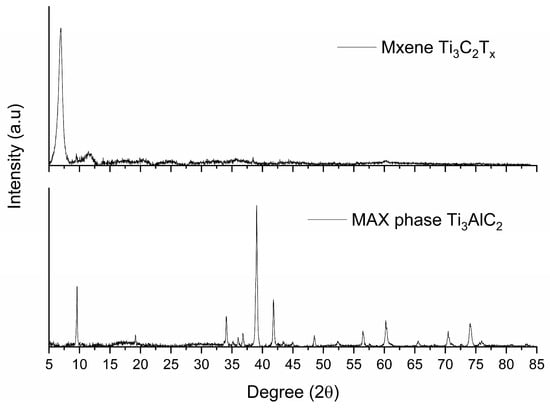
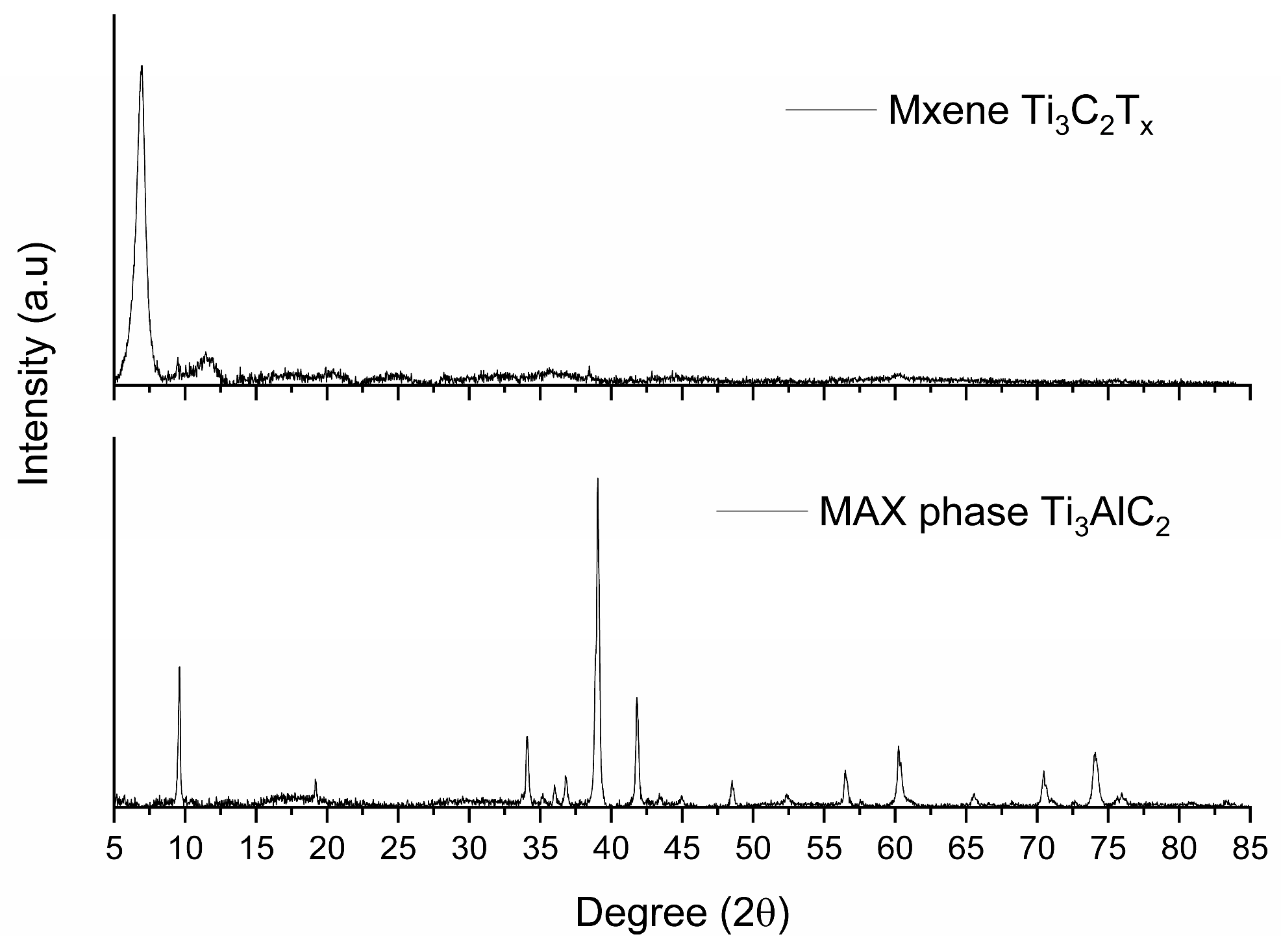
Figure 1 shows the XRD patterns of the MAX phase and the produced MXene. The (002) peak shifts from ~10° to a lower angle, indicating an increase in the interlayer spacing caused by the replacement of aluminum layers with surface terminations (-O, -OH, -F) [30]. Moreover, the disappearance of the peak at ~39°, corresponding to the (104) reflection of the aluminum-containing crystalline plane, confirms the efficient etching of Al. Together, these results provide evidence of the successful etching and delamination of the MAX phase into MXene (Ti3C2Tx) [27,32,33].
Figure 1.
XRD patterns of MAX phase and MXene.
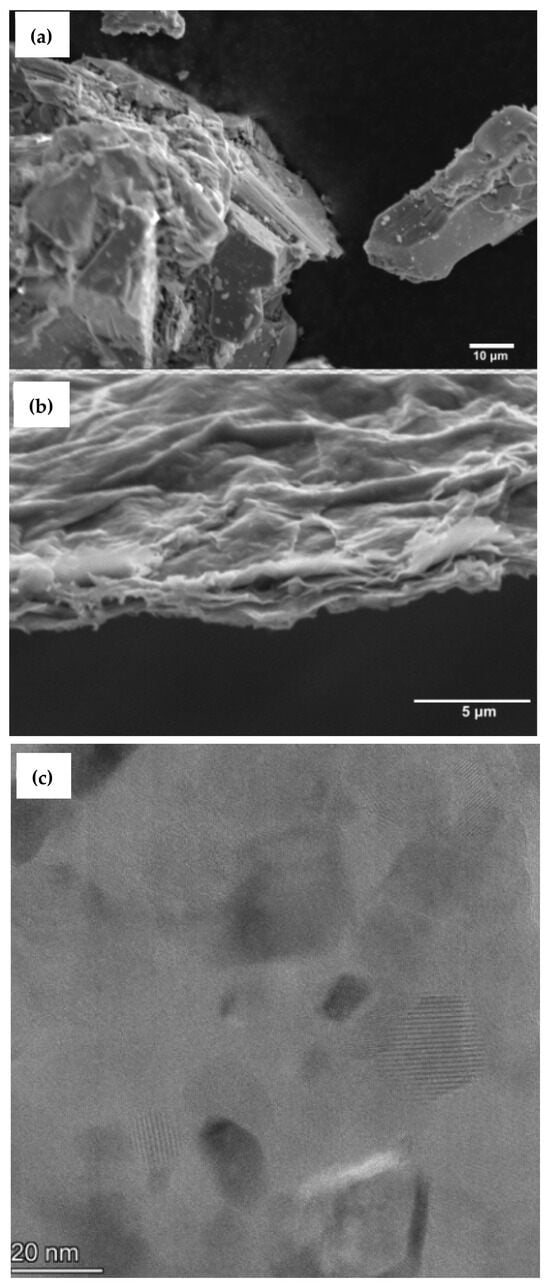
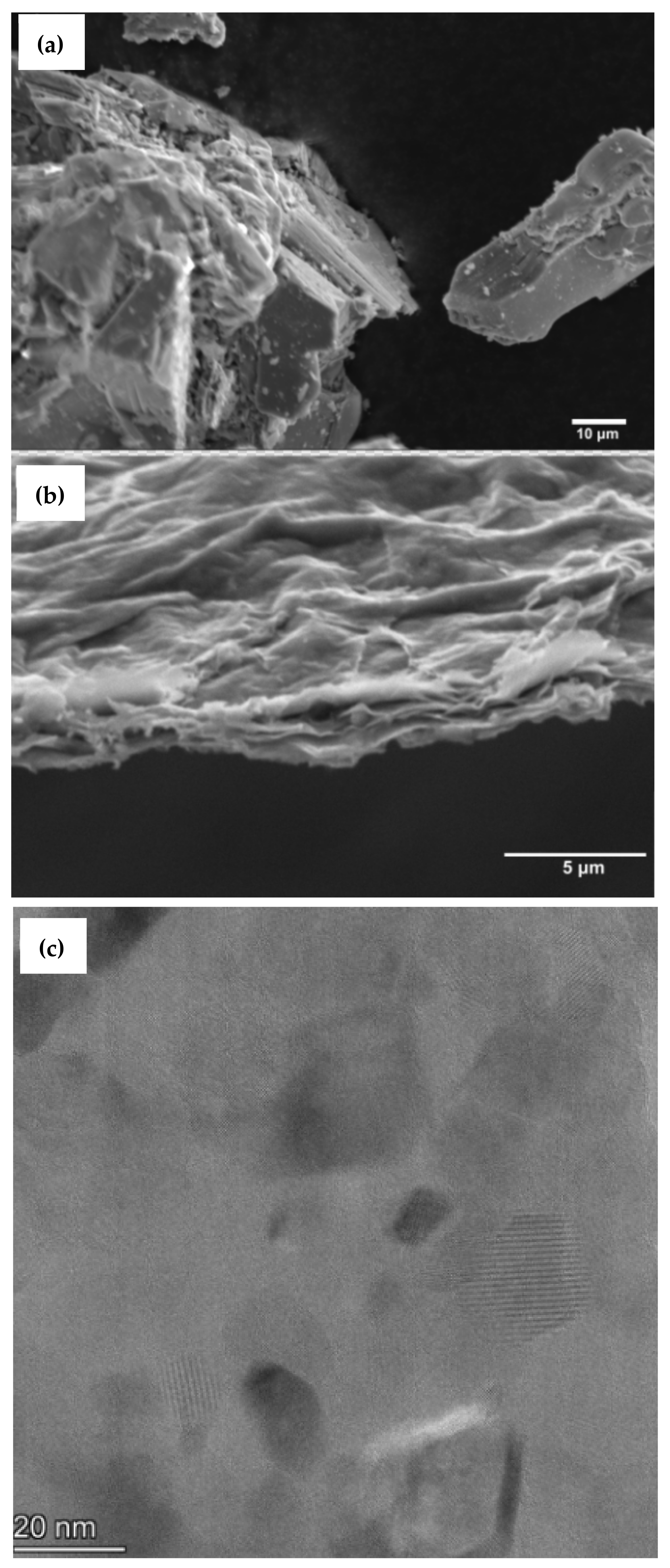
The SEM micrographs in Figure 2 compare the morphology of the MAX phase before and after etching. The pristine MAX phase (Figure 2a) displays dense, blocky particles typical of layered hexagonal carbides; its layered nature becomes evident under stress, where deformation occurs via basal plane slip, generating kink bands [34,35] in which the atomic layers buckle into V-shaped, chevron-like patterns without fracturing, a hallmark of the anisotropic bonding (strong M-C bonds within the layers, weak Al bonds between them) that ultimately enables the selective removal of Al during etching. After etching (Figure 2b), the particles exhibit the characteristic open lamellae [36] of MXene, in which the previously compact layers have been exfoliated into loosely stacked nanosheets, direct visual evidence of the successful intercalation and delamination of the MAX structure, consistent with the increased interlayer spacing observed by XRD (Figure 1). The high-resolution TEM image (Figure 2c) reveals well-defined, continuous lattice fringes, confirming that the crystalline structure of the MXene layers was preserved throughout the etching and delamination process [37,38].
Figure 2.
Morphological characterization of: (a) SEM MAX phase, (b) SEM MXene, and (c) TEM high-resolution image of MXene.
3.2. Electrochemical Behavior
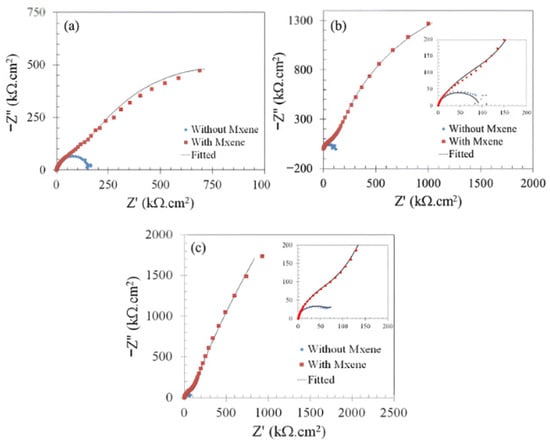
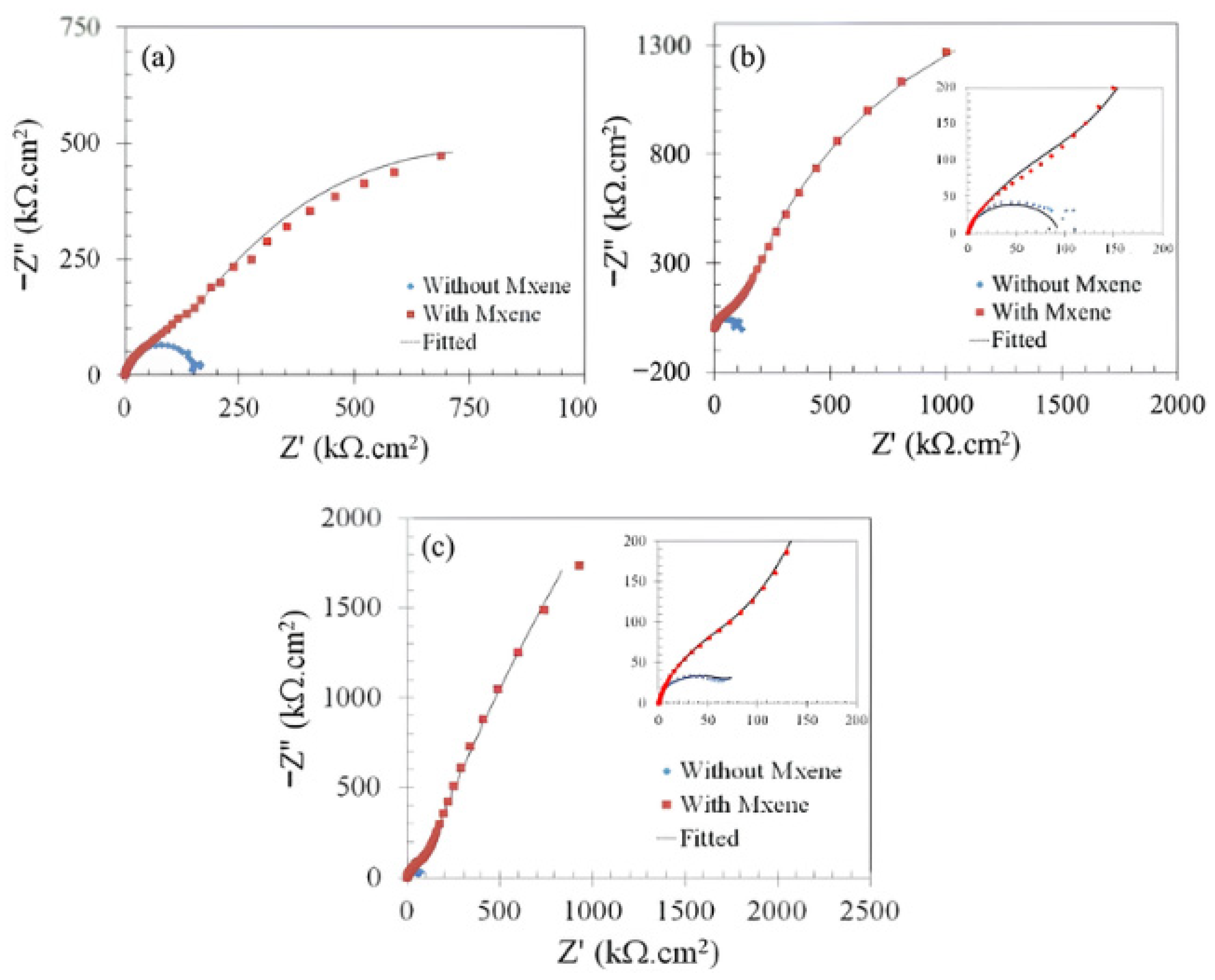
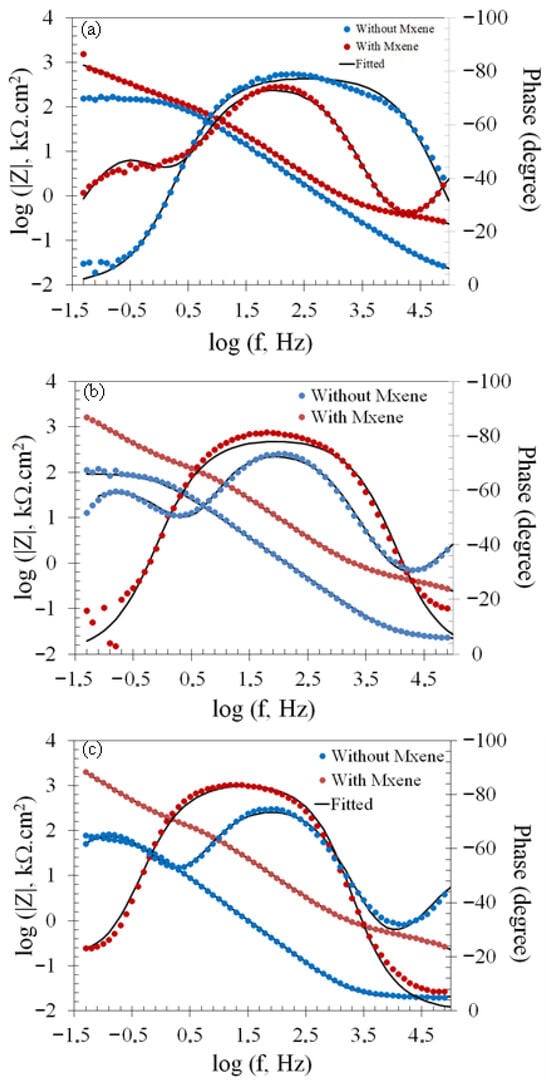
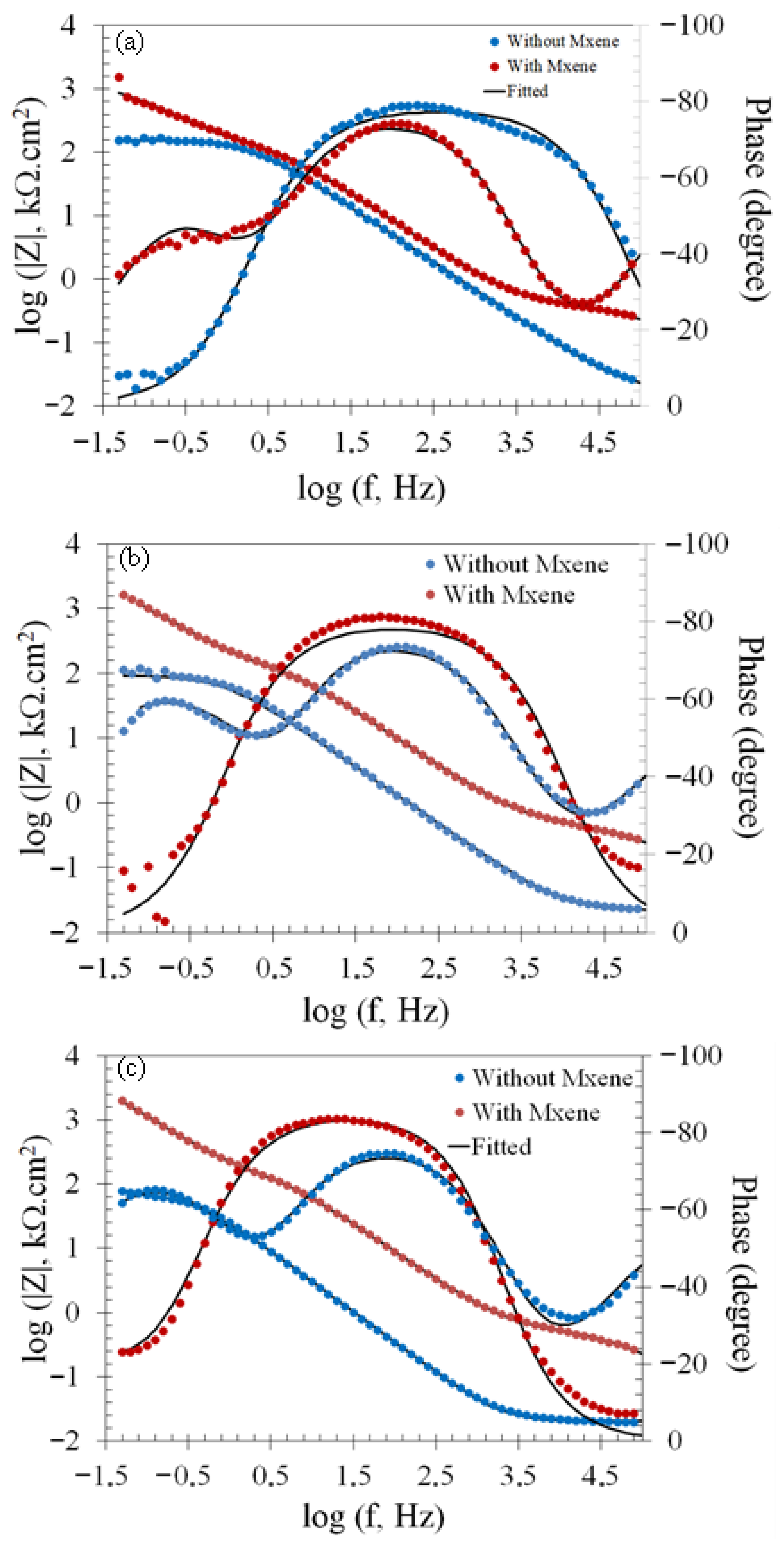
EIS diagrams are shown in Figure 3 and Figure 4. The Nyquist plots (Figure 3) of the sample without MXenes are characterized by a depressed semicircle whose diameter decreases with immersion time. The insets (Figure 3b,c) show the results with expanded scales to better visualize the small semicircle of the sample without MXenes. In contrast, the sample with MXenes showed much higher impedance values at all immersion times. Moreover, the capacitive loop diameter increased with time, indicating improved corrosion resistance for longer immersion periods. The Bode plots (Figure 4) point to a similar trend. The impedance modulus at low frequencies increased with immersion time for the sample with MXenes, while the opposite behavior was observed for the MXene-free sample. The phase angle plots exhibited a decrease in capacitive character with immersion time for the MXene-free sample, with clearly distinct time constants at 24 h and 168 h. The capacitive character of the sample with MXenes increased with immersion time, with the maximum phase angle reaching −80° after 168 h. One additional difference with respect to the phase angle plots of the sample without MXenes is that the time constants were superimposed for the MXenes-containing sample.
Figure 3.
Nyquist plots of anodized Al 2024-T3 clad alloys with and without MXenes as an additive after immersion in 0.1 mol·L−1 NaCl solution for different times: (a) 1 h; (b) 24 h; (c) 168 h.
Figure 4.
Bode plots of anodized Al 2024-T3 clad alloys with and without MXenes as an additive after immersion in 0.1 mol·L−1 NaCl solution for different times: (a) 1 h; (b) 24 h; (c) 168 h.
Further interpretation of the EIS plots was obtained by fitting the experimental data with equivalent electrical circuits (EECs). Constant phase elements (CPEs) were used instead of pure capacitors to account for surface heterogeneities and dispersion of time constants. The impedance of a CPE (ZCPE) is given in Equation (1), where Q and n are the magnitude and exponent of the CPE, j is the complex operator, and ω is the angular frequency. The exponent n varies from 0 for a perfect resistor to 1 for an ideal capacitor [39]. The fitting results are shown in Table 1.
Table 1.
EIS fitting parameters using the EECs shown in Figure 5.
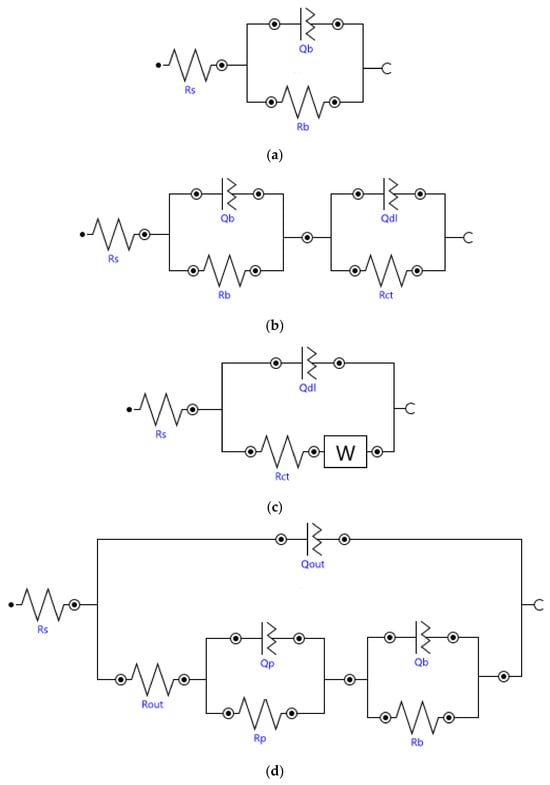
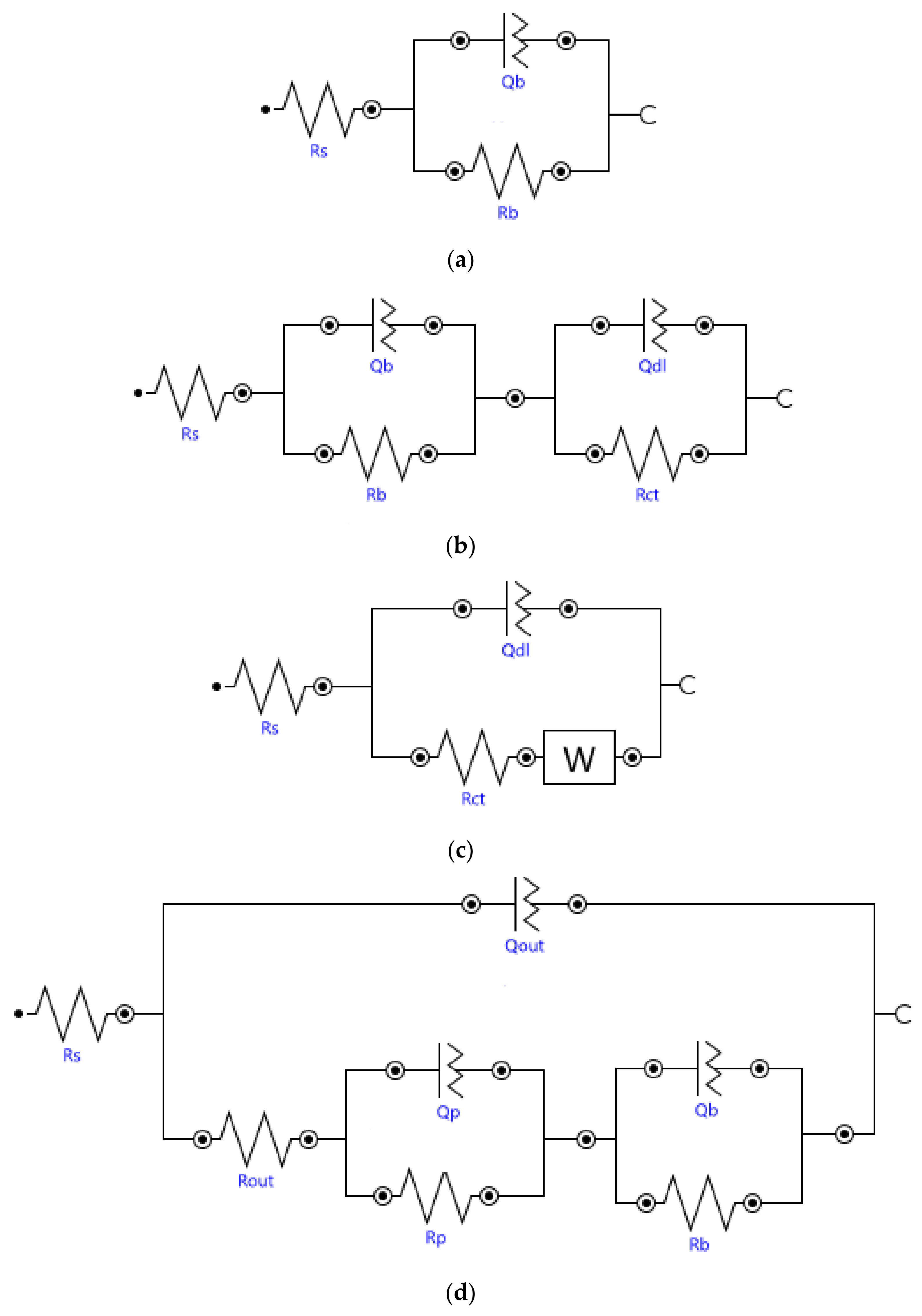
The EEC shown in Figure 5a was used to model the EIS response of the sample without MXenes after 1 h. In this circuit, Rs is the electrolyte resistance, and Qb and Rb are the capacitance and resistance of the barrier oxide layer at the pore bottom, respectively. This model was used by Yakasau et al. [40] for the anodized layer formed on an Al substrate. The EIS response of the anodized Al 2024-T3 clad alloy without Mxene after 24 h of immersion was modeled with the EEC shown in Figure 5b.
Figure 5.
EECs selected for fitting the EIS data of anodized Al 2024-T3 clad alloy with and without MXenes: (a) Sample without MXenes: 1 h of immersion; (b) Sample without MXenes, 24 h of immersion; (c) Sample without Mxenes, 168 h of immersion; (d) Sample with MXenes: 1 h, 24 h and 168 h of immersion.
The circuit in Figure 5b shows two time constants, which account for the barrier oxide layer, with its resistance and capacitance (Rb and Qb) connected in series with the charge transfer processes, occurring at the interface between the oxide film and the metallic substrate. In this regard, Rct is the charge transfer resistance, and Qdl is associated with the double layer capacitance. As shown in Table 1, Qb increased with immersion time, while Rb decreased, indicating deterioration of the anodized layer’s corrosion-protection ability. After 168 h, the electrochemical behavior evolved to a new model, as shown in Figure 5c. In this model, a Warburg element was included to account for the diffusion of electrolyte species through the anodized layer. The other elements account for the charge transfer reactions at the interface between the anodized layer and substrate, where Rct is the charge transfer resistance, and Qdl is associated with the double-layer capacitance. The diffusive behavior observed for the MXene-free sample after 168 h of immersion reflects the progressive degradation of the anodized layer’s protective capacity. The formation of pathways within the damaged oxide film accelerates the permeation of oxygen and chloride ions to the metallic substrate, making mass transport (diffusion) the rate-controlling step in the corrosion process.
The EIS fitting results of the MXenes-containing sample showed a different picture. The EEC shown in Figure 5d was used to model the EIS response of this sample for all immersion times. It consists of a cascade model, where R-Q elements are combined to account for the response of the dielectric oxide layer and the corrosion processes at its interface with the metallic substrate. It was used by different authors to model the EIS response of sealed anodized Al alloys [40,41,42]. In this regard, the first time constant was attributed to the resistance (Rout) and capacitance (Qout) of the outer sealed anodized layer, containing MXenes. The second time constant is attributed to the porous anodized layer, below the MXenes-sealed layer, where Rp and Qp are the resistance and capacitance of the electrolyte inside the partially sealed pores, and its associated capacitance. This layer accounts for the high corrosion resistance of the coating system, increasing with the immersion time due to a self-sealing process, where the electrolyte entrapped inside the pores leads to the formation of hydrated alumina, as proposed in the literature [42]. The third time constant is attributed to the barrier layer, with its resistance (Rb) and associated capacitance (Qb). The presence of MXenes promoted the formation of a more stable and protective anodized layer. Diffusion processes were not observed after 168 h of immersion, revealing that its protective character was not compromised up to this time, showing superior corrosion resistance when compared to the MXene-free sample. Thus, the confinement of the electrolyte within the pores due to the presence of the MXenes outer layer leads to the self-sealing of the porous anodic layer, resulting in increasing impedance with immersion time.
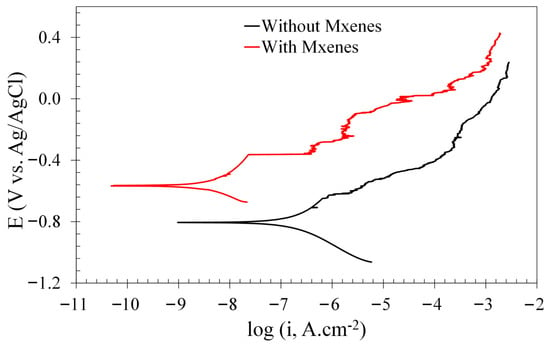
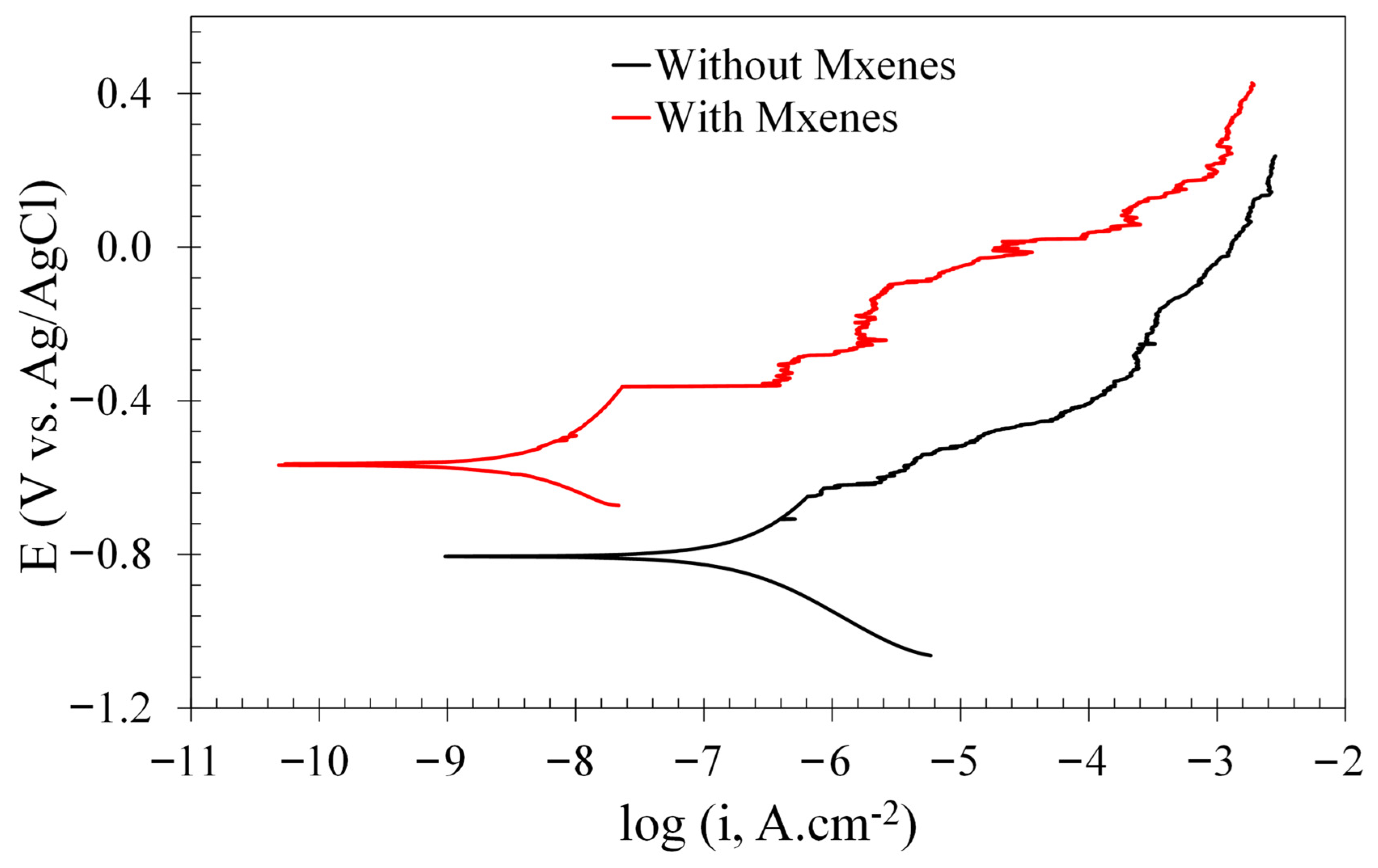
To gain further understanding of the electrochemical behavior of the anodized samples, potentiodynamic polarization curves were obtained after 168 h of immersion in 0.1 mol·L−1. The results are shown in Figure 6. The relevant electrochemical parameters were determined from these curves and are displayed in Table 2. The addition of MXenes to the anodizing bath led to remarkable differences in the corrosion behavior of the Al 2024-T3 clad alloy. There was a significant increase in the corrosion potential (Ecorr) from −805 mV vs. Ag|AgCl to −563 mV vs. Ag|AgCl, indicating a reduction in the electrochemical activity of the anodized layer containing the nanostructures. The kinetics of the corrosion process were also reduced by MXenes addition, as denoted by the decrease in the corrosion current density (icorr), which was two orders of magnitude lower when compared to the one obtained for the sample without Mxenes.
Figure 6.
Potentiodynamic polarization curves of anodized Al 2024-T3 clad alloys with and without Mxenes as an additive after 168 h of immersion in 0.1 M mol·L−1 NaCl.
Table 2.
Electrochemical parameters obtained from the potentiodynamic polarization curves shown in Figure 6.
Additionally, both samples exhibited a small passive region, which is slightly higher for the Mxenes-containing sample. The breakdown potential (Eb), in turn, was greatly increased from −651 mVAg|AgCl to −366 mVAg|AgCl for the sample with MXenes. Recently, Mxenes have been reported to boost the corrosion resistance of metallic materials [43,44,45]. As part of composite coatings, the labyrinth effect of the high-aspect-ratio MXenes nanosheets can greatly enhance their barrier effect, improving the corrosion resistance in chloride-containing electrolytes [46]. Furthermore, the oxidation of MXenes to TiO2 in aqueous environments has been reported and can be an additional pathway to improve the stability of the anodized layer against corrosion due to the high chemical inertness of TiO2 [47].
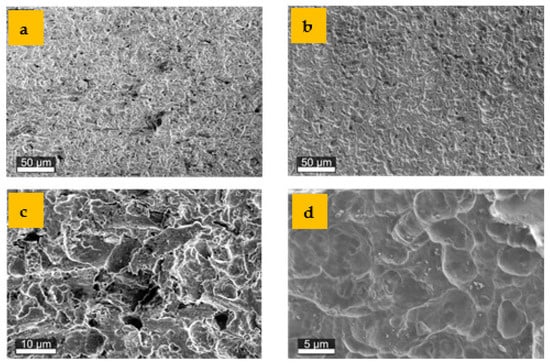
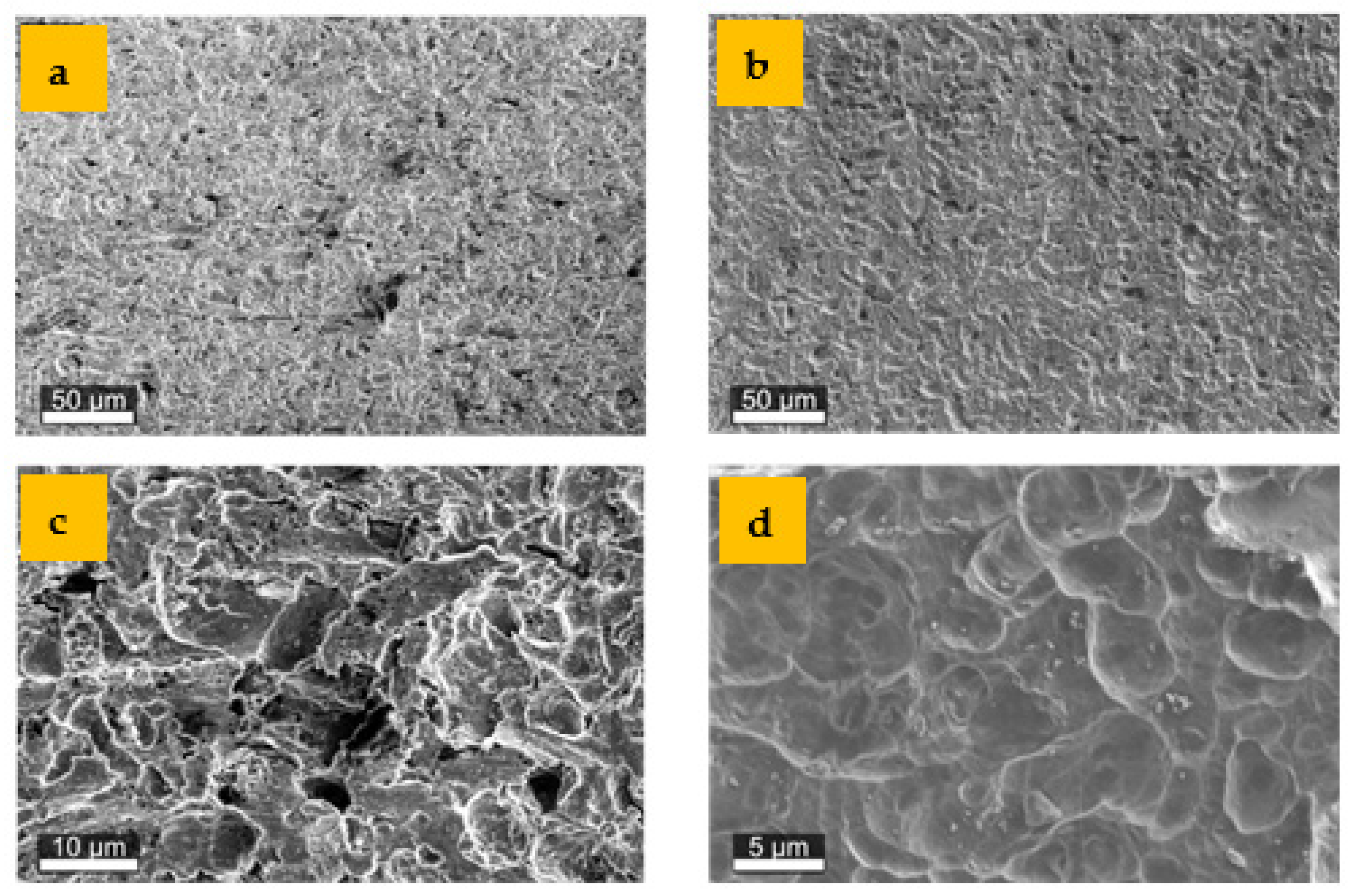
Figure 7 shows the SEM morphology of the anodized films obtained with and without MXenes. The images in Figure 7a,c correspond to the film without MXenes, whereas Figure 7b,d correspond to the film containing MXenes. Figure 7a,b show the general surface morphology. Its high-magnification surface (Figure 7c) is rough, granular, and porous, with abundant cracks, pits, and heterogeneous features. In contrast, the MXene-containing film (Figure 7b) maintains a more continuous, compact coating. At higher magnification (Figure 7d), this film exhibits a finer, denser, and more uniform needle-like/fibrous morphology with fewer cracks and pores.
Figure 7.
SEM micrographs of the anodized films: (a,c) without MXenes; (b,d) with Mxenes. (a,b) general surface morphology at lower magnification, and (c,d) the morphology at higher magnification.
These features suggest that the MXene sheets fill and seal defects, bridge cracks, and promote the formation of a more compact anodic layer. This interpretation aligns with findings reported by Wang et al. [48], who investigated the incorporation of MXene into protective coatings to improve surface integrity and corrosion resistance. More recently, Zhang et al. [29] discussed the role of MXene-based materials in corrosion protection, highlighting their potential to reduce coating defects and improve barrier properties. Owing to their two-dimensional morphology and high aspect ratio, MXene nanosheets can create a tortuous pathway for the diffusion of corrosive species, thereby hindering the penetration of water, oxygen, and aggressive ions through the coating. Surface functional groups associated with MXenes may also influence interfacial interactions and the transport of corrosive species. Furthermore, the incorporation of Ti3C2Tx MXene has been investigated as a strategy to improve coating compactness and adhesion in composite protective systems. In the present study, the more uniform surface morphology (Figure 7d) is consistent with an improvement in film integrity associated with MXene incorporation. Nevertheless, SEM observations alone cannot confirm that the nanosheets directly fill or seal defects, nor establish the specific mechanism responsible for the morphological differences. These findings should, therefore, be interpreted as morphological evidence of a potentially more compact anodic layer, whose implications for corrosion resistance must be assessed alongside electrochemical measurements.
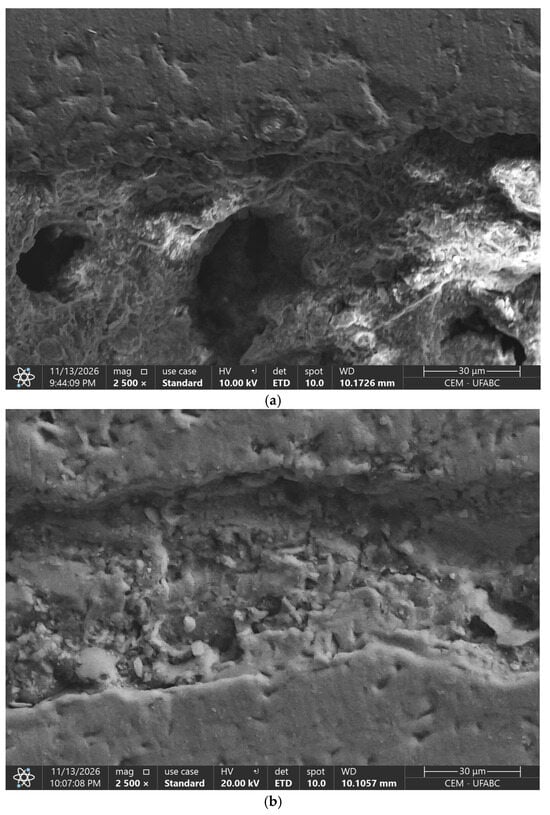
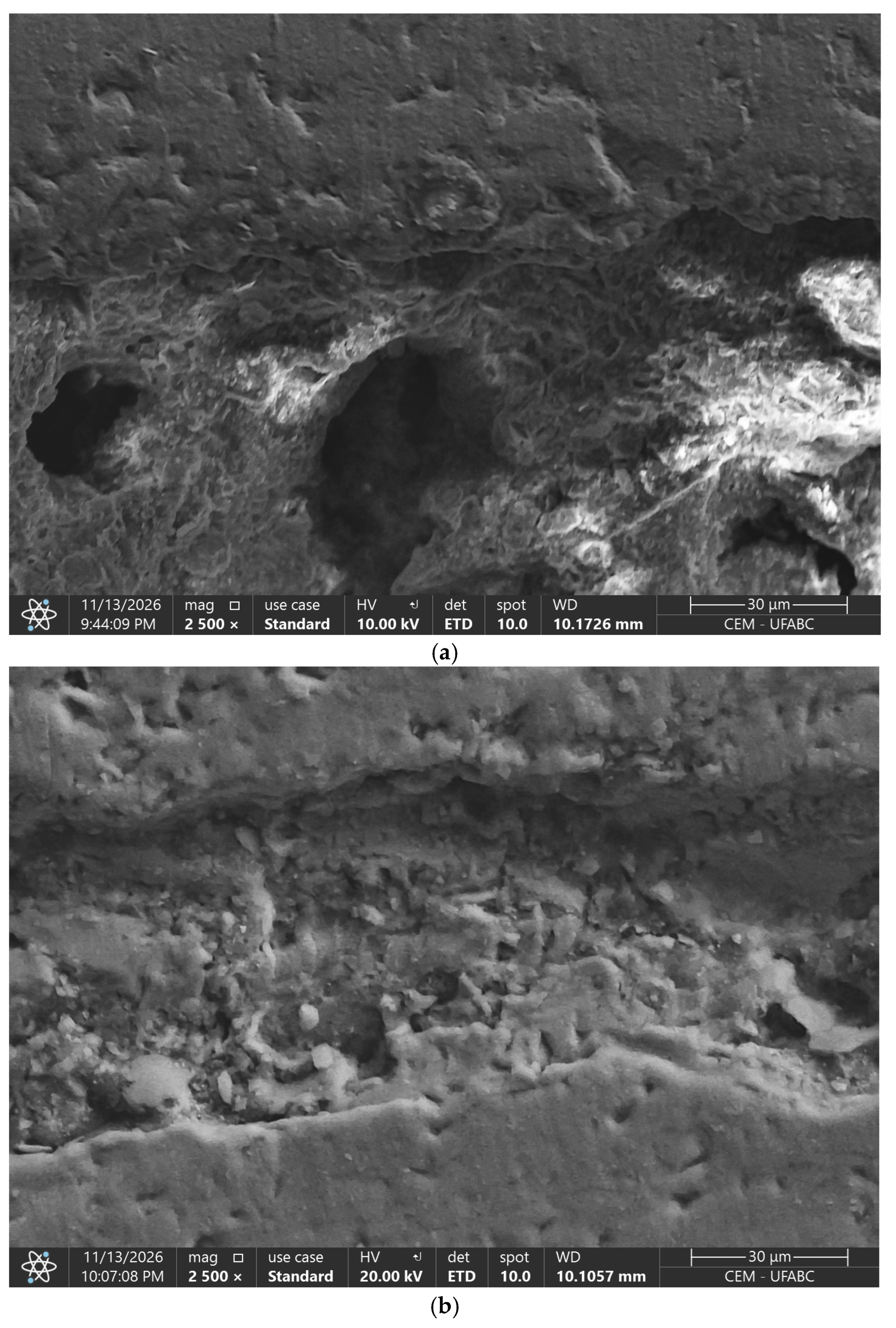
In fact, several nanoparticles have attracted great attention as electrolyte modifiers for the anodizing process due to the possibility of achieving improved corrosion behavior [49,50,51]. Specifically, the typical layered structure of 2D nanomaterials, like Mxenes, can have a dual effect as modifiers of the oxide layer obtained during electrolytic-based processes on metallic materials, such as anodizing and plasma electrolytic oxidation. Firstly, they can affect the discharge process during the growth of the oxide layer, leading to an inherently denser and more compact film compared to conventional electrolytes free of nanosheets. Secondly, the lamellar character of the nanosheets can promote the formation of better surface coverage, reducing the porosity and microcracks, thus improving the barrier properties of the oxide layer [52]. In the present work, it was not possible to isolate each one of these mechanisms. Likely, both of them took place and led to the great improvement of the corrosion resistance of the sample with Mxene addition compared to the one without Mxene. Our EIS results and modelling with equivalent circuits (Figure 4 and Figure 5) are consistent with the sealing mechanism of pores and cracks. The enhanced integrity of the anodized layer for the sample with Mxene addition could be further examined by SEM analysis of the cross-sections, as shown in Figure 8. In Figure 8 (sample without Mxene), there are several craters clearly visible on the lower part of the image, which are present on the anodized layer. Conversely, as seen in Figure 8b, the sample with Mxene exhibited compact morphology.
Figure 8.
SEM cross-sectional views of the anodized films (a) without Mxenes; (b) with Mxenes.
In this regard, the morphological differences shown in Figure 7 and Figure 8 help explain the electrochemical results. The more continuous and compact morphology of the MXene-containing film may hinder electrolyte penetration and increase the tortuosity of diffusion pathways, thereby contributing to its improved barrier properties. This interpretation agrees with the EIS results, particularly the increase in the outer-layer resistance (Rout) from 390 to 616 (Ω·cm2) and the substantial increase in the inner-layer resistance (Rint) from 94 kΩ·cm2 after 1 h to 10.8 MΩ·cm2 after 168 h of immersion. In addition, the absence of a Warburg diffusion element in the equivalent circuit for the MXene-containing film after 168 h, in contrast to its appearance for the MXene-free film, suggests that diffusion-related processes become more relevant in the latter as immersion progresses. The polarization results further support the enhanced protective performance of the MXene-containing coating, which exhibits a less negative corrosion potential (Ecorr), −563 versus −805 mVAg|AgCl, a markedly lower corrosion current density (icorr), (4.0 × 10⁻⁹ A·cm−2) versus (1.6 × 10⁻⁷ A·cm−2), and a nobler breakdown potential (Eb, −366 versus −651 mVAg|AgCl). Together, these findings indicate that MXene incorporation is associated with reduced corrosion activity and improved resistance to localized breakdown. Conversely, the rougher, cracked, and less cohesive morphology of the MXene-free film may facilitate the penetration of the electrolyte and the transport of aggressive species, contributing to the progressive decrease in its oxide-layer resistance and the emergence of diffusion-related behavior after prolonged immersion. Overall, the agreement between the morphological and electrochemical results supports the conclusion that MXene incorporation improves the integrity and protective performance of the anodized layer under the investigated conditions.
4. Conclusions
The incorporation of Ti3C2Tx MXene into the anodized bath modified the surface morphology of the anodized coating and significantly improved its electrochemical corrosion-protection performance under the investigated conditions. SEM observations revealed a more continuous and dense film, with a finer and flatter surface morphology, compared with the rougher, more porous, and cracked structure observed in the absence of MXenes. These morphological characteristics are consistent with improved coating integrity and a potentially more effective barrier against electrolyte penetration.
Electrochemical impedance spectroscopy further demonstrated the enhanced protective behavior of the MXene-containing film during prolonged immersion time. While the MXene-free coating exhibited a progressive decrease in oxide-layer resistance and the emergence of diffusion-related behavior after 168 h, the MXene-containing coating maintained a high inner-layer resistance, reaching approximately 10.8 M at the same immersion time. The potentiodynamic polarization measurements corroborated these findings, showing a decrease in corrosion current density from 1.6 × 10⁻⁷ to 4.0 × 10⁻⁹ A cm−2, together with a positive shift in corrosion potential and an increase in breakdown potential. These results indicate lower corrosion activity and improved resistance to localized breakdown following MXene incorporation.
Overall, the combined morphological and electrochemical results demonstrate that MXene incorporation is a promising strategy for enhancing the barrier properties and corrosion resistance of anodized coatings. The improved performance is consistent with the formation of a more compact and stable protective layer that hinders the ingress of corrosive species and delays degradation during immersion.
Author Contributions
R.A.A.: Conceptualization; funding acquisition, project administration, writing—review and editing; L.M.G.d.S.: Investigation; writing—original draft preparation; V.d.P.d.S.: Methodology; investigation; writing—original draft preparation; A.B.V.G.: Methodology; investigation; writing—original draft preparation; L.S.D.: Methodology; investigation; writing—original draft preparation; O.M.P.R.: Methodology; investigation; writing—original draft preparation; H.G.d.M.: Conceptualization; writing—original draft preparation; S.F.S.: Conceptualization; writing—original draft preparation; M.C.L.d.O.: Methodology; writing—original draft preparation. All authors have read and agreed to the published version of the manuscript.
Funding
This research was funded by CNPq, grant numbers 406291/2022-5, 105453/2025-0 and 351166/2024-6, 408984/2023-6, 316224/2023-5, and FAPESP, grant numbers 2024/16253-0 and 2019/22183-6.
Data Availability Statement
The raw data supporting the conclusions of this article will be made available by the authors on request due to privacy or ethical restrictions.
Acknowledgments
The authors would like to thank the Multiuser Central Facilities (UFABC) for the experimental support.
Conflicts of Interest
The authors declare no conflicts of interest.
References
- Yu, M.; Zhang, C.; Li, D.; Wang, F.; Sun, P.; Cui, J.; Du, L. Mechanism of surface hardness enhancement of aluminum alloy 2024-T3 by laser-induced plasma electrolyte jet machining. Surf. Coat. Technol. 2025, 507, 132141. [Google Scholar] [CrossRef] [Scilit]
- Verdalet-Guardiola, X.; Sallard, R.; Fori, B.; Duluard, S.; Blanc, C. Comparative analysis of the anticorrosive properties of trivalent chromium conversion coatings formed on 2024-T3 and 2024-T351 aluminium alloys. Corros. Sci. 2020, 167, 108508. [Google Scholar] [CrossRef] [Scilit]
- Melian, R.; Radi, M.; Galai, M.; Ouakki, M.; Ech-chihbi, E.; Dkhirche, N.; Guo, L.; Tohami, M.E. Anticorrosion properties of 5,5′-dithiobis-(2-nitrobenzoic acid) and sodium sulfite compounds for aluminum alloy 2024-T3 in saline solution: Electrochemical, characterization and theoretical investigations. J. Mol. Liq. 2021, 331, 115661. [Google Scholar] [CrossRef] [Scilit]
- Bonetti, S.; Spengler, R.; Petersen, A.; Aleixo, L.S.; Merlo, A.A.; Tamborim, S.M. Surface-decorated sílica with Schiff base as an anticorrosive coating for aluminium alloy 2024-T3. Appl. Surf. Sci. 2019, 475, 684–694. [Google Scholar] [CrossRef] [Scilit]
- Boag, A.; Hughes, A.E.; Wilson, N.C.; Torpy, A.; MacRae, C.M.; Glenn, A.M.; Muster, T.H. How complex is the microstructure of AA2024-T3? Corros. Sci. 2009, 51, 1565–1568. [Google Scholar] [CrossRef] [Scilit]
- Oliveira, M.P.; Silva, R.M.; Yasakau, K.A.; Bastos, A.; Kallip, S.; Zheludkevich, M.L.; Silva, R.F.; Ferreira, M.G.S. Atomic layer deposition of nanometric alumina for corrosion protection of heterogeneous metallic surfaces—The case of aeronautical grade aluminium alloy 2024-T3. Corros. Sci. 2022, 209, 110773. [Google Scholar] [CrossRef] [Scilit]
- De Almeida, T.F.; Ramírez, O.M.P.; Lanzutti, A.; Rodrigues, C.L.; Brabetz, M.; Kremmer, T.M.; Hammer, P.; De Melo, H.G. Addition of molybdate ions to the anodizing bath to improve the corrosion resistance of clad 2024-T3 alloy anodized in tartaric-sulfuric acid. Surf. Coat. Technol. 2024, 482, 130682. [Google Scholar] [CrossRef] [Scilit]
- Elaish, R.; Curioni, M.; Gowers, K.; Kasuga, A.; Habazaki, H.; Hashimoto, T.; Skeldon, P. Effect of fluorozirconic acid on anodizing of aluminium and AA 2024-T3 alloy in sulphuric and tartaric-sulphuric acids. Surf. Coat. Technol. 2018, 342, 233–243. [Google Scholar] [CrossRef] [Scilit]
- Del Olmo, R.; Tiringer, U.; Milosev, I.; Visser, P.; Arrabal, R.; Matykina, E.; Mol, J.M.C. Hybrid sol-gel coatings applied on anodized AA2024-T3 for active corrosion protection. Surf. Coat. Technol. 2021, 419, 127251. [Google Scholar] [CrossRef] [Scilit]
- Usman, B.J.; Donatus, U. Comparative study of the effects of methionine and tartaric acid in sulfuric acid anodizing. Next Mater. 2025, 8, 100592. [Google Scholar] [CrossRef] [Scilit]
- Wang, R.; Wang, L.; He, C.; Lu, M.; Sun, L. Studies on the sealing process of corrosion resistant coatings formed on 2024 aluminium alloy with tartaric-sulfuric anodizing. Surf. Coat. Technol. 2019, 360, 369–375. [Google Scholar] [CrossRef] [Scilit]
- Mira, C.; Dupin, J.-C.; Tardelli, J.; Thomas, L.; Frayret, J.; Bague, V.; Sinopoli, D. Mechanisms of novel Cr(III)/Zr(IV) impregnation and sodium silicates sealing of anodized aluminium alloy for enhancing corrosion performance. Surf. Coat. Technol. 2025, 504, 131999. [Google Scholar] [CrossRef] [Scilit]
- Ma, Y.; Zou, M.; Yang, B.; Yan, J.; Zhu, Q.; Jiang, Y.; Wu, H.; Wu, L. Enhancing anti-corrosion performance of anodic film on aluminum-lithium alloy AA2099-T83 by post-treatment in lithium oxalate solutions near room temperature. Corros. Commun. 2025, 18, 34–43. [Google Scholar] [CrossRef] [Scilit]
- Fang, X.; Zeng, Y.-Y.; Mu, S.; Du, J.; Guo, J.; Li, W.; Fant, Y. Study on the effect of acetate ions on the sealing treatment for anodic oxide film of 6063 aluminum alloy. Surf. Coat. Technol. 2023, 472, 129961. [Google Scholar] [CrossRef] [Scilit]
- Luo, X.; Wang, S.; Wu, T.; Bu, Z.; Hu, X. Studies on the sealing effect of the oxide films formed on 6063 aluminum alloy with boric-sulfuric anodizing. J. Alloys Compd. 2025, 1036, 182088. [Google Scholar] [CrossRef] [Scilit]
- Wang, Q.; Li, H. Study on anodic oxidation of 2099 aluminum lithium alloy and sealing treatment in environmental friendly solutions. Int. J. Electrochem. Sci. 2023, 18, 100186. [Google Scholar] [CrossRef] [Scilit]
- Shang, Y.; Wang, L.; Liu, Z.; Niu, D.; Wang, Y.; Liu, C. The effects of different sealing techniques for anodic film of Al-12.7Si-0.7Mg alloys. Int. J. Electrochem. Sci. 2016, 11, 5234–5244. [Google Scholar] [CrossRef] [Scilit]
- Ofoegbu, S.U.; Fernandes, F.A.O.; Pereira, A.B. The sealing step in aluminum anodizing: A focus on sustainable strategies for enhancing both energy efficiency and corrosion resistance. Coatings 2020, 10, 226. [Google Scholar] [CrossRef] [Scilit]
- Ramírez, O.M.P.; De Almeida, T.F.; Marin, J.H.; Suegama, P.H.; Starykevich, M.; Ferreira, M.G.S.; Ando, R.A.; De Melo, H.G. Effect of hydrolysis time on the corrosion resistance of sol-gel coated AA2024-T3 anodized in TSA. Surf. Coat. Technol. 2024, 482, 130683. [Google Scholar] [CrossRef] [Scilit]
- Reidel, R.E.; Kunst, S.R.; Soares, L.G.; Morisson, F.D.P.; Ziulkoski, A.L.; Schneider, E.L.; Oliveira, C.T. Effect of adding silver oxide nanoparticles to anodized titanium surfaces. Mater. Res. 2025, 28, e20240546. [Google Scholar] [CrossRef] [Scilit]
- Li, S.-M.; Yu, X.-M.; Liu, J.-H.; Yu, M.; Wu, L.; Yang, K. Microstructure and abrasive wear behaviour of anodizing composite films containing SiC nanoparticles on Ti6Al4V alloy. J. Cent. South. Univ. 2014, 21, 4415–4423. [Google Scholar] [CrossRef] [Scilit]
- Zhang, P.; Zuo, Y.; Nie, G. The enhanced properties of anodic films on AZ91D magnesium alloy by addition of oxide nanoparticles. J. Alloys Compd. 2020, 834, 155041. [Google Scholar] [CrossRef] [Scilit]
- Remesova, M.; Tikachenko, S.; Kvarda, D.; Rocnaková, I.; Gollas, B.; Menelaou, M.; Celko, L.; Kaiser, J. Effects of anodizing conditions and the addition of Al2O3/PTFE particles on the microstructure and the mechanical properties of porous anodic coatings on the AA1050 aluminum alloy. Appl. Surf. Sci. 2020, 513, 145780. [Google Scholar] [CrossRef] [Scilit]
- Jena, G.; Philip, J. A review on recent advances in graphene oxide-based composite coatings for anticorrosion applications. Prog. Org. Coat. 2022, 173, 107208. [Google Scholar] [CrossRef] [Scilit]
- Zhao, J.; Xie, X.; Zhang, C. Effect of graphene oxide additive on the corrosion resistance of the plasma electrolytic oxidation coating of the AZ31 magnesium alloy. Corros. Sci. 2017, 114, 146–155. [Google Scholar] [CrossRef] [Scilit]
- Braga, P.L.; De Souza, D.C.P.; De Oliveira, M.C.L.; Antunes, R.A. Effect of graphene oxide as an anodizing aditive for the ZK60A magnesium alloy: Correlating corrosion resistance, surface chemistry and film morphology. Metals 2024, 14, 210. [Google Scholar] [CrossRef] [Scilit]
- Naguib, M.; Kurtoglu, M.; Presser, V.; Lu, J.; Niu, J.; Heon, M.; Hultman, L.; Gogtsi, Y.; Barsoum, M.W. Two-dimensional nanocrystals produced by exfoliation of Ti3AlC. Adv. Mater. 2011, 23, 4253–4284. [Google Scholar] [CrossRef] [Scilit] [PubMed]
- Vafa, E.; Bazarganlari, R.; Honarkar, H.; Tayebi, L.; Asadi, P.; Amani, A.M.; Kanyab, H.; Rajendran, S.; Khademi, T.; Mosleh-Shirazi, S. Revolutioning corrosion protection: Mxenes as next-generation materials for sustainable and high-performance solutions. Prog. Org. Coat. 2026, 210, 109715. [Google Scholar] [CrossRef] [Scilit]
- Zhang, Y.; Yin, Y.; Li, J.; Yang, F.; Meng, L.; Cai, Y.; Wu, J.; Guo, F.; Wang, W. Mxene-based anti-corrosive coatings: From physical barrier to active corrosion protection. Prog. Org. Coat. 2025, 204, 109225. [Google Scholar] [CrossRef] [Scilit]
- De Souza, V.P.; Da Silva, L.M.G.; Nishihora, R.K.; Santos, S.F. Influence of the synthesis protocol on the electrochemical Properties of Ti3C2Tx Mxene supercapacitor electrodes. Surf. Coat. Technol. 2025, 514, 132583. [Google Scholar] [CrossRef] [Scilit]
- Ramírez, O.M.P.; Queiroz, F.M.; Tunes, M.A.; Antunes, R.A.; Rodrigues, C.L.; Lanzutti, A.; Pogatscher, S.; Olivier, M.-G.; De Melo, H.G. Tartaric-sulphuric acid anodized clad AA2024-T3 post-treated in Ce-containing solutions at different temperatures: Corrosion behaviour and Ce ions distribution. Appl. Surf. Sci. 2020, 534, 147634. [Google Scholar] [CrossRef] [Scilit]
- Naguib, M.; Mashtalir, O.; Carle, J.; Presser, V.; Lu, J.; Hultman, L.; Gogotsi, Y.; Barsoum, M.W. Two-Dimensional Transition Metal Carbides. ACS Nano 2012, 6, 1322–1331. [Google Scholar] [CrossRef] [Scilit] [PubMed]
- Alhabeb, M.; Maleski, K.; Anasori, B.; Lelyukh, P.; Clark, L.; Sin, S.; Gogotsi, Y. Guidelines for Synthesis and Processing of Two-Dimensional Titanium Carbide (Ti3C2Tx MXene). Chem. Mater. 2017, 29, 7633–7644. [Google Scholar] [CrossRef] [Scilit]
- Barsoum, M.W. MAX Phases: Properties of Machinable Ternary Carbides and Nitrides; Wiley-VCH: Weinheim, Germany, 2013. [Google Scholar]
- Barsoum, M.W.; El-Raghy, T. The MAX Phases: Unique New Carbide and Nitride Materials. Am. Sci. 2001, 89, 334–341. [Google Scholar] [CrossRef]
- Mashtalir, O.; Naguib, M.; Mochalin, V.N.; Dall’Agnese, Y.; Heon, M.; Barsoum, M.W.; Gogotsi, Y. Intercalation and Delamination of Layered Carbides and Carbonitrides. Nat. Commun. 2013, 4, 1716. [Google Scholar] [CrossRef] [Scilit] [PubMed]
- Ghidiu, M.; Lukatskaya, M.R.; Zhao, M.-Q.; Gogotsi, Y.; Barsoum, M.W. Conductive Two-Dimensional Titanium Carbide ‘Clay’ with High Volumetric Capacitance. Nature 2014, 516, 78–81. [Google Scholar] [CrossRef] [Scilit] [PubMed]
- Anasori, B.; Lukatskaya, M.R.; Gogotsi, Y. 2D Metal Carbides and Nitrides (MXenes) for Energy Storage. Nat. Rev. Mater. 2017, 2, 16098. [Google Scholar] [CrossRef] [Scilit]
- Gu, J.-L.; Lu, S.-Y.; Shao, Y.; Yao, K.-F. Segregating the homogeneous passive film and understanding the passivation mechanism of Ti-based metallic glasses. Corros. Sci. 2021, 178, 109078. [Google Scholar] [CrossRef] [Scilit]
- Yasakau, K.A.; Starykevich, M.; Ferreira, M.G.S.; Zheludkevich, M.L. A critical look at interpretation of electrochemical impedance spectra of sol-gel coated aluminium. Electrochim. Acta 2021, 378, 138091. [Google Scholar] [CrossRef] [Scilit]
- Suay, J.J.; Giménez, E.; Rodríguez, T.; Habbib, K.; Saura, J.J. Characterization of anodized and sealed aluminium by EIS. Corros. Sci. 2003, 45, 611–624. [Google Scholar] [CrossRef] [Scilit]
- Queiroz, F.M.; Bugarin, A.F.S.; Hammel, N.P.; Capelossi, V.R.; Terada, M.; Costa, I. EIS behavior of anodized and primer coated AA2198-T851 compared to AA2024-T3 exposed to salt spray CASS test. Surf. Interface Anal. 2016, 48, 755–766. [Google Scholar] [CrossRef] [Scilit]
- Cao, H. Beyond graphene and boron nitride: Why Mxene can be used in composite for corrosion protection on metals? Compos. Part B 2024, 271, 111168. [Google Scholar] [CrossRef] [Scilit]
- Gong, B.; Ma, X.; Wang, T.; Hou, J.; Ji, S.; Xu, Q.; Cao, H. Emerging two dimensional Mxene for corrosion protection in new energy systems: Design and mechanisms. Adv. Colloid Interface Sci. 2025, 336, 103373. [Google Scholar] [CrossRef] [Scilit] [PubMed]
- Ma, X.; Wang, T.; Gong, B.; Hou, J.; Ji, S.; Gao, H. Enhanced corrosion resistance of an eco-friendly Mxene composite coating with self-healing performance. Green Chem. 2025, 27, 4369–4384. [Google Scholar] [CrossRef] [Scilit]
- Cao, H.; Fang, M.; Jia, W.; Liu, X.; Xu, Q. Remarkable improvement of corrosion resistance of silane composite coating with Ti3C2Tx Mxene on copper. Compos. Part B 2022, 228, 109427. [Google Scholar] [CrossRef] [Scilit]
- Habib, T.; Zhao, X.; Shah, S.A.; Chen, Y.; Sun, W.; An, H.; Lutkenhaus, J.L.; Radovic, M.; Green, M.J. Oxidation stability of Ti3C2Tx Mxene nanosheets in solvents. npj 2D Mater. Appl. 2019, 3, 8. [Google Scholar] [CrossRef] [Scilit]
- Wang, X.; Koirala, S.; Xu, L.; Li, Q.; Lin, Z.; Qi, X.; Huang, Y.; Yang, Z.; Wang, D. Insights in Emerging Ti3C2Tx MXene-Enriched Polymeric Coatings for Metallic Surface Protection: Advancements in Microstructure, Anti-Aging, and Electrochemical Performance. Prog. Org. Coat. 2024, 194, 108606. [Google Scholar] [CrossRef] [Scilit]
- Nadimi, M.; Dehghanian, C.; Etemadmoghadam, A. Influence of SiO2 nanoparticles incorporating into ceramic ocatings generated by PEO on aluminium alloy: Morphology, adhesion, corrosion, and wear resistance. Mater. Today Commun. 2022, 31, 103587. [Google Scholar] [CrossRef] [Scilit]
- Ng, Y.; Yan, G.; Ong, Z.J.; Zhu, J.; Yong, A.M.; Ngo, A.C.Y.; Liu, H. Effect of Y2O3 nanoparticle inclusions on alumina coatings formed by multi-step plasma electrolytic oxidation on Al6061 substrates. Surf. Coat. Technol. 2026, 540, 134048. [Google Scholar] [CrossRef] [Scilit]
- Baghaejah, M.; Alipour, M.; Tabatabaei, R.G.; Ghaffarian, S.; Mohammadi, A. Synergistic pore modulation and channel sealing by two-dimensional tungsten disulfide for corrosion-resistant plasma electrolytic oxidation coatings on magnesium alloys. Mater. Today Commun. 2026, 56, 115996. [Google Scholar] [CrossRef] [Scilit]
- Zhang, Z.; Xu, C.; Zou, M.; Vasilic, R.; Lu, X.; Gu, L.; Zeng, D.; Zhang, T.; Chen, F.; Zhang, Y. Effect of introduction of Mxene on low energy plasma electrolytic oxidation. Surf. Coat. Technol. 2024, 494, 131397. [Google Scholar] [CrossRef] [Scilit]

Disclaimer/Publisher’s Note: The statements, opinions and data contained in all publications are solely those of the individual author(s) and contributor(s) and not of MDPI and/or the editor(s). MDPI and/or the editor(s) disclaim responsibility for any injury to people or property resulting from any ideas, methods, instructions or products referred to in the content. |
© 2026 by the authors. Licensee MDPI, Basel, Switzerland. This article is an open access article distributed under the terms and conditions of the Creative Commons Attribution (CC BY) license.