


Abstract
Magnesium matrix composites are attractive for weight-critical structures, yet the way their strength is explained has hardly changed in two decades. Most studies partition the yield-strength gain into load transfer, Hall–Petch, Orowan, and thermal-mismatch increments and combine them by a linear, root-sum-square, or compound rule. Reinforcement alters the interphase chemistry, the recrystallised grain structure and texture, the relative contribution of twinning and non-basal slip to deformation, and the kinetics of matrix precipitation. The inputs to all terms in the equation change simultaneously, so the terms are not independent in these systems. A sensitivity analysis of the equation for a typical nanoparticle-reinforced alloy showed that the predicted gain at 1 vol% reinforcement could be as low as 100 MPa or as high as 220 MPa. Independent predictions typically miss the experimental results by 10–165%. Twinning-sensitive behaviour is almost never included in strengthening analyses. We propose a minimum evidence chain for strengthening analyses: a matrix control processed identically to the reinforced alloy, measured rather than assumed inputs, compression and load-unload-reload tests on the reinforced alloy, texture-aware coupled models with uncertainty, and blind validation outside the calibration window. This approach could move strengthening analyses from post hoc accounting towards predictive design.
1. Introduction
1.1. Magnesium Matrix Composites and the Prediction Problem
This review looks at the strengthening mechanisms of magnesium matrix composites. Magnesium is the lightest structural metal, and composites made with magnesium can offer superior properties to the alloys alone, such as increased stiffness, better strength retention at elevated temperatures, and a wider range of properties with no increase in density. Early composites made by squeeze casting with whiskers showed that modulus and 0.2% proof stress increased roughly in proportion to the whisker content [1]. Modern composites with more complex structures can reach much higher values. For example, a whisker-reinforced Mg–Gd–Y–Zn–Zr composite had a yield strength of 364 MPa and a Young’s modulus of 77.8 GPa [2]. An orthogonal carbon-fibre laminate with a WE43 matrix exceeded 640 MPa in tensile strength and 330 GPa in modulus [3]. Hybrid graphene–graphite-fibre composites and composites with continuous carbon fibres combined high strength with thermal conductivities of 140–164 W m−1 K−1 [4,5]. Configurational Mg–Ti composites infiltrated around titanium tubes have reached 392 MPa in tension and 54.5 GPa in modulus [6]. These are engineering numbers. They explain the steady interest from the transport, electronics, and defence sectors.
The same literature shows a less comfortable pattern. Strength gains are large in some studies and marginal or negative in others, even for nominally similar reinforcements. A wire-powder-arc deposited TiC/AZ91 composite was weaker in tension than the deposited alloy [7]. Friction-stir-processed carbon nanotube–graphene hybrids gained compressive strength but lost tensile strength [8]. Unreinforced high-performance alloys also compete directly with many reported composites. Examples are room-temperature multidirectionally forged ZK60 with 435 MPa ultimate strength [9] and lightweight complex concentrated Mg–Al–Zn–Gd–Y alloys with 486 MPa ultimate strength and a modulus of 53.4 GPa [10]. The extra cost and difficulty of making composites must therefore be justified by benefits that can be predicted reliably and then confirmed by measurement.
Strengthening models are now in routine use. Nearly every experimental paper ends by dividing the yield-strength increment into contributions such as load transfer, grain-boundary (Hall–Petch), Orowan, and thermal mismatch. Some papers add terms for dislocations, precipitation, texture, and hetero-deformation [11,12,13,14]. The models are used to decide which mechanism ‘dominates’ in a given composite, and therefore how to design the next one. They rest on assumptions that hold reasonably well for aluminium and particle-strengthened cubic alloys but are open to question for Mg. The models are not wrong in general: how far they can be trusted depends on the material system, the processing route and the assumptions adopted. The assumptions are: an isotropic matrix with a single Taylor factor; independent strengthening mechanisms; an inert and perfectly bonded interface; and matrix properties equal to those of the unreinforced alloy.
Mg’s hexagonal close-packed (hcp) lattice, in contrast, deforms by easy basal slip, hard prismatic and pyramidal slip and polar {10–12} twinning. The critical resolved shear stresses of these modes differ by more than an order of magnitude. Mg also develops strong deformation textures and reacts with most reinforcements during processing. The question behind this review is simple to state: under these conditions, are the strengthening models valid, and if not, what would make them so?
1.2. Position Relative to Earlier Reviews
Several reviews have covered Mg matrix composites from complementary angles (Table 1). Biomedical nanocomposites were reviewed with attention to the governing strengthening equations and the controversy over their form [15]. Carbon nanotube (CNT)-reinforced Mg was surveyed twice with an emphasis on dispersion and fabrication routes [16,17], and coated carbon nanotubes across metal matrices more recently [18]. Reviews on Ti-reinforced composites [19], metallic-particle reinforcements [20], interface structure and properties [21], reinforcement coatings [22] and MgO-coated graphene in AZ91 [23] each treat the interface as central. Friction stir processing (FSP) has been reviewed both for surface composites in general [24] and for Mg alloys and composites specifically [25]. Other reviews cover cyclic extrusion compression of Mg alloys and composites [26], ageing behaviour of particulate-reinforced Mg [27], syntactic foams [28] and, most recently, waste-derived and graded Mg composites [29].
Table 1.
Earlier reviews on Mg matrix composites and how the present review differs.
What these reviews share is a descriptive treatment of strengthening: equations are listed, contributions from individual papers are tabulated, and the dominant mechanism is reported as the authors of each primary study stated it. None asks whether the decomposition itself is meaningful for an hcp matrix, how sensitive the predicted strength is to the choice of constants and superposition rule, or whether reported agreement with experiment is independent evidence. This review takes up those questions. It treats the reinforcement–matrix interaction, rather than the reinforcement alone, as the unit of analysis, and evaluates strengthening models as engineering tools that must survive validation outside the conditions used to calibrate them. In quantitative terms, the review adds three things that the earlier reviews do not provide: a sensitivity analysis of the four-term sum to its constants and superposition rule (Section 2.5), a compilation of reported model–experiment discrepancies that separates calibrated fits from independent predictions (Section 2.6), and a minimum evidence chain against which a strengthening claim can be checked (Section 8.2).
1.3. Scope, Literature Basis and Organisation
The review draws on peer-reviewed studies of Mg matrix composites that report or model mechanical response, retrieved from Scopus up to 20 October 2026 with a search combining composite terms, strengthening-model terms and twinning, texture, and interface terms. Studies on aluminium or other matrices, non-metallic systems, and duplicate reports were set aside, giving 224 studies (Figure 1). These span squeeze-cast and stir-cast composites, powder metallurgy, and thixo-formed nanocomposites, friction-stir-processed surface composites, additively manufactured parts, hetero-structured and laminated architectures, and atomistic or micromechanical simulations.
Figure 1.
Literature identification and selection for this review, following the PRISMA flow. The search combined Mg-composite terms with strengthening-model, twinning, texture, and interface terms in Scopus TITLE-ABS-KEY fields; all 224 included studies are cited in the text.
Section 2 describes the additive framework, the explicit equations and implicit assumptions underlying it, and compares it with the reported data. Section 3 discusses the interface as the variable that determines the inputs of each term. Section 4 discusses twinning, texture, and slip-mode competition, the most characteristic feature of Mg compared to cubic matrices. Section 5 discusses the coupling with precipitation, recrystallisation, and heterostructured architectures. Section 6 describes how the processing route silently changes the model inputs. Section 7 moves beyond quasi-static room-temperature tension to elevated temperature, high strain rate, cyclic loading, and coupled functional properties. Section 8 synthesises settled and contested aspects and proposes a minimum evidence chain for credible strengthening claims. Section 9 gives the conclusions.
2. The Additive Strengthening Framework and Its Hidden Assumptions
The framework in common use is summarised in Figure 2a. A reinforcement of volume fraction Vp, size dp, modulus Ep and thermal expansion coefficient αp is assumed to raise the matrix yield strength σm through four largely independent increments, which are then combined. Figure 2b previews the argument of the following sections: in an hcp Mg matrix, the reinforcement also changes the interphase, the grain structure, texture, twinning, and precipitation, and these changes feed back into every increment. The individual terms are examined first. The rules used to add them and the evidence on how well the result predicts measured strength then follow. The expressions most often used are listed in Table 2 with their assumptions.
Figure 2.
Strengthening of Mg matrix composites. (a) The classical additive picture, in which four independent increments are combined by a chosen rule. (b) The coupled reality in an hcp Mg matrix: the reinforcement and its interphase alter grain structure, texture, twinning, and precipitation, so that the inputs to every term change together. Dashed arrows mark couplings that break additivity. Solid arrows mark direct effects, and box colours only group related terms.
Table 2.
Strengthening terms used for Mg matrix composites, their implicit assumptions and the evidence that they fail.
2.1. Load Transfer
For equiaxed particles, the modified shear-lag estimate reduces to
where Vp is the reinforcement volume fraction, and σm is the matrix yield strength. For platelets, whiskers or fibres, the expression becomes ΔσLT = σm[Vp(s + 4)/4 − Vp], where s is the aspect ratio (length divided by thickness or diameter). At 1 vol% of equiaxed particles, Equation (1) gives less than 1 MPa in an AZ31-type matrix (Figure 3a). Load transfer therefore matters only for elongated reinforcements, at high fractions, or at temperatures where the matrix has softened. This agrees with the creep literature. In squeeze-cast AZ91 and QE22 reinforced with 20 vol% Al2O3 short fibres, creep strengthening came from a threshold stress and load transfer while the matrix microstructure was essentially unchanged, so direct composite strengthening dominated [47,48]. In compression between room temperature and 300 °C, short Saffil fibres and SiC particles in AZ91, AS21 and ZE41 raised the flow stress mainly through shear stresses at the reinforcement–matrix interface, with dislocation density and thermal stresses as secondary contributions [49,50,51], and comparable conclusions were reached for SiC in a WE54 matrix [52].
Figure 3.
Sensitivity of predicted strength to model choices. (a) Individual increments from Equations (1)–(4) for 50 nm Al2O3 in an AZ31-type matrix (σm = 150 MPa, G = 16.6 GPa, b = 0.321 nm, Δα = 18.5 × 10⁻⁶ K−1). (b) Total predicted gain for three superposition rules (Equation (5)); shaded bands show the 5–95% range for literature-typical spreads in k, dm, ΔT, and β. (c) Hall–Petch plots for AZ61/CNT composites using different superposition exponents, compared with experiment; Reprinted from [35] (enlarged for legibility; n is the superposition exponent, AC denotes as-cast, and the original x-axis label refers to d−1/2). (d) Range of predicted gain at 1 vol% when one input is varied at a time about the linear-sum reference. Dotted lines in (c) are the linear fits of the original study, and the dashed line in (d) marks the linear-sum reference value. Panels (a,b,d) are original calculations for this review. CTE, coefficient of thermal expansion; RMS, root-sum-square; dp, particle diameter; Vf, reinforcement volume fraction.
The shear-lag picture, however, presumes alignment with the load and a bond strong enough to carry the transferred stress. Neither condition holds in general. Neutron diffraction combined with acoustic emission showed that load transfer in Mg–Al–Ca and Mg–Al–Sr alloys with planar-random alumina fibres was most effective when the fibre plane was parallel to the loading axis, whereas the perpendicular orientation altered the share of twinning [30,53]. Molecular dynamics of AZ91 with single-layer graphene found that orientation angles of 0–10° raised the modulus and tensile strength by about 20%, whereas angles of 20–90° weakened the composite [31]. Randomly oriented platelets therefore cannot be represented by a single aspect ratio. Graphene nanoplatelet (GNP)-reinforced ZK60 produced by powder thixoforging reached a strengthening efficiency of 650%, which a modified shear-lag model attributed mainly to load transfer [32], and load transfer was likewise invoked for multi-walled CNT (MWCNT), graphene–graphite fibre and continuous carbon-fibre composites [4,5,54]. In these cases, the interfacial shear strength, rather than the volume fraction, controls the result. For a friction-stir-processed AZ91D/carbon-fabric composite, an incremental Mori–Tanaka analysis showed that damage began with early interfacial debonding, with critical interface stresses of 435 MPa in tension but only 250 MPa in shear, which explained why the fibres strengthened the heat-treated composite so little [33].
Rule-of-mixtures checks on laminated and interpenetrating systems provide a useful benchmark. Gas-pressure-infiltrated steel–Mg laminates obeyed the rule of mixtures in strength [55], and the yield strengths of co-extruded Al/Mg rods deviated from it by only 4–36 MPa, yet the same rule failed for the full compressive flow curves because the core and sleeve hardened differently [56]. For a two-dimensional orthogonal carbon-fibre/WE43 laminate, the classical rule of mixtures overpredicted strength by 165.1%; adding thermal-mismatch and interfacial-layer terms reduced the error to 0.58% [3]. The improvement is real, but it was obtained by adjusting the model to the composite it then described. For short natural-fibre-reinforced Mg/nano-hydroxyapatite/shellac biocomposites, the Bowyer–Bader model predicted strength best while the Cox–Krenchel model predicted modulus best [57], and a micromechanics model was used to rationalise the gains of porous pumice-reinforced Mg through interface shear strength [58]. The choice of model is therefore itself a fitting decision.
2.2. Grain-Boundary Strengthening
The Hall–Petch increment is written as
where k is the Hall–Petch slope, dc and dm are the composite and matrix grain sizes, and dZ in Equation (2b) is the Zener-limited grain size for particles of radius r at volume fraction Vp. The two equations are linked through dc: dZ is the grain size at which particle pinning stops grain growth, so dc is set equal to dZ when pinning controls the grain size and is otherwise taken from measurement. Two inputs are problematic in Mg. First, the slope k depends strongly on texture because it reflects the stress needed to activate slip or twinning in the neighbouring grain. Values reported for Mg alloys span more than a factor of two, and a composite with a different texture cannot borrow the alloy value. SiCp-reinforced Mg annealed to study grain growth showed this clearly: the composite had higher yield strength than its matrix but a lower Hall–Petch slope, which the authors linked to its stronger extrusion texture and altered interfacial interactions [34]. Second, the fitted slope depends on what else is assumed to contribute. For stir-cast AZ61/CNT composites, fitting yield strength directly against grain size gave a friction stress of 31.6 MPa in the as-cast and 108.8 MPa in the aged state, whereas fitting only the grain-size share left after superposing the other mechanisms gave σ0 = 100.1 and 87.2 MPa and k = 0.305 and 0.341 MPa m1/2 [35]. The Hall–Petch “constant” is therefore an output of the decomposition, not an input to it (Figure 3c).
The data also show that grain refinement and strengthening do not always go together. Adding only 0.01 wt% carbon black to AZ31 chips raised the yield strength from 177 to 191 MPa although the grain size stayed at 48–52 µm [36], so the gain cannot be a Hall–Petch effect. Conversely, 0.3 wt% TiB2 refined cast AZ91D grains by 64% through heterogeneous nucleation on an identifiable orientation relationship, yet raised the yield strength by only 9.1%, because the grains remained coarse (68 µm) and the dominant change was in β-Mg17Al12 morphology [59]. In friction-stir-processed high-entropy-alloy (HEA) particle composites, grain refinement was estimated to account for 49% [60] and 44% [61] of the yield-strength increment, leaving more than half for terms that were not separately measured. In compression, CNT/AZ31 composites were markedly grain-size-sensitive [62], whereas a classic dispersion-strengthened Mg with 30 vol% Y2O3 reached a grain size of 0.88 µm in agreement with Zener pinning, failed prematurely in tension because of casting porosity, and softened after yielding in compression in a way that reflected tension–compression asymmetry [63]. At the smallest scales, the relation breaks down altogether: molecular dynamics of nanocrystalline Mg found an optimum flow stress at about 14 nm and a transition to grain-boundary sliding below it [64], and simulations of CNT/polycrystalline Mg showed that more grain boundaries first strengthen and then embrittle the composite through stress localisation [65]. For an equal-channel angular extrusion (ECAE)-processed Mg–Y–Zn alloy containing a long-period stacking-ordered (LPSO) phase, most of the strength again comes from refining the matrix to about 1 µm [66].
2.3. Orowan Looping
The Orowan increment for non-shearable particles is commonly written as
with G the shear modulus, b the Burgers vector, dp the particle diameter and λ the interparticle spacing from Equation (3b). Equation (3a) presumes uniformly dispersed, intragranular particles cut by basal dislocations. The Orowan equation can predict up to 400 MPa of yield strength in nano-SiCp/AZ91 composites processed by extrusion and equal-channel angular pressing (ECAP) if the particles are distributed homogeneously. In practice, bands of particles form along the extrusion direction, and the yield strength decreases with increasing ECAP temperature and number of passes [37]. In nano-Y2O3/ZK60, the particles form agglomerates at the grain boundaries, which pin dislocations, but the interface is degraded [67]. In Mg–graphene nanoplatelet composites, the particles are concentrated at the grain boundaries and influence the recrystallisation behaviour of the material rather than forming loops [68]. Molecular dynamics simulations have shown that dislocations bypass the Y2O3 particles [67], and that a particle at a triple junction increases the strength of a Mg–silica composite far more than a particle inside a grain or on a boundary [64]. Particle shape also matters: in AZ91/ZK60A composites with nanoscale Al2O3 and Cu, non-basal slip dominates the high-strain regions near the sharp corners of the particles, whereas basal slip dominates near the curved regions of the particles [69].
Attribution is another problem. Several studies found that the Orowan term is associated with the precipitates (whose number density can be increased by the reinforcement) rather than with the reinforcement itself.
For example, in laser-powder-bed-fused TiC/AZ91D, the increase in strength can be attributed to the grain refinement as well as the Orowan strengthening of the β-Mg17Al12 and Al8Mn5 precipitates, with the unmelted TiC particles acting as anchors for the precipitate network [38]. In GNP/Mg–6Zn and aged AlN/AZ91, dislocations around the reinforcement accelerated precipitation, and Orowan looping around Mg4Zn7 or γ-Mg17Al12 nanoprecipitates supplied the strength [39,40]. In cryomilled Mg–10Al with diamondoids, no grain refinement occurred at all, and the gain was assigned to precipitation and residual microstress [70]. A model that attaches an Orowan term to the reinforcement in such systems double-counts, or misallocates, the effect.
2.4. Thermal-Mismatch and Geometrically Necessary Dislocations
The thermal-mismatch increment is
with β a geometric constant between about 1 and 2, ρCTE the dislocation density generated on cooling (Equation (4b)), Δα the expansion mismatch and ΔT the cooling interval. Equation (4b) assumes that all dislocations generated on cooling through ΔT are stored and remain effective at room temperature. For hot-extruded and aged Mg, where dynamic and static recrystallisation remove much of the stored density, that assumption is optimistic. Nothing in the equation tells the user which ΔT to choose. Figure 3a shows that, with conventional inputs, Equation (4a) yields the largest single increment for nanoparticles, so this choice largely sets the predicted strength. The experimental record is mixed. In AZ31B composite foams, heating dissolved β-Mg17Al12 and relaxed internal stresses, lowering yield strength and hardness [41], which shows that mismatch stresses are not permanent. However, a functionally graded AZ91/squid-quill-ash composite made from machining chips attributed 47.7% of its yield gain to thermal mismatch and a further 19.2% to geometrically necessary dislocations [14]. Thermal mismatch was also named among the main contributors in continuous-carbon-fibre Mg [4], HEA/AZ91 deposited by wire-arc additive manufacturing and then friction stir processed [71], squeeze-cast–extruded SiCp/AZ61 [72], Ti/AZ91 [44], Ti/WE43 [45], CNT–Mg2Si hybrids [73], TiB2/AZ91 [74], CNT/Mg–6Zn sheets [75] and Cu-decorated Ti/AZ91 [76]. In none of these was the stored dislocation density near the particles measured and compared with Equation (4b).
The geometrically necessary dislocations (GNDs) that electron backscatter diffraction (EBSD) or X-ray diffraction (XRD) can measure are also generated by several sources at once: thermal mismatch, the modulus mismatch during deformation processing, strain gradients between hard and soft regions, and dynamic recrystallisation. Adding a measured GND term to a calculated coefficient-of-thermal-expansion (CTE) term, as is sometimes done, counts the same dislocations twice. Representative-volume-element simulations of GNP/Mg add another caution: clustering and voids lower the effective modulus and raise the effective expansion coefficient [77], so the Δα entering Equation (4b) is itself microstructure-dependent. In nano-Y2O3/ZK60, the composite expansion coefficient fell measurably [67], and in a 30 vol% Y2O3 dispersion-strengthened Mg, the dispersoid, grain-boundary and thermal-mismatch contributions had to be discussed together to reconcile the measured strength [63].
2.5. Superposition Rules
The increments are combined by one of three rules:
The linear sum assumes obstacles of very different strength acting independently; the root-sum-square rule assumes similar obstacles that share the same dislocation line; the compound rule, popular for nanocomposites because it multiplies a load-transfer factor with the dislocation-based increments, implies that each mechanism amplifies the others. The choice is rarely justified. It has long been recognised that the governing equations for Mg nanocomposites are inconsistent across studies [15], and the AZ61/CNT analysis showed how strongly the superposition exponent changes the inferred Hall–Petch constants [35]. Five-term and six-term linear sums now appear routinely, for example in rotary-swaged Ti/VW92 (load transfer, thermal mismatch, Orowan, dislocation, and nanocrystalline terms) [11] and in TiO2/Mg powder composites [13]. A three-term sum was used for ZrC/AZ91 [12] and a two-term attribution for Mo/AZ31 [78]. Quantitative partitions were also reported for Zr–GNP/Mg, checked against compressive yield data [79], and for Cu-decorated CNT/Mg [80]. Accumulative roll-bonded AX10/ZK60 laminates provide a rare check: the calculated contributions summed to 231, 243 and 275 MPa after one, three, and six passes, against a measured 258 MPa after six passes [42], an overestimate of about 7% even without any reinforcement-specific term.
Figure 3b shows the predicted gain for 50 nm Al2O3 in an AZ31-type matrix, calculated with the root-sum-square, linear, and compound rules. Plausible uncertainty in k, the matrix grain size, ΔT, and β widens each curve into a band whose width is comparable to the differences between rules. The tornado plot in Figure 3d ranks these sources at 1 vol%: the superposition rule and the particle size each move the prediction by about 120 MPa, the Zener assumption by about 60 MPa, and k by about 55 MPa, whereas β, ΔT, and dm contribute 25–30 MPa each. A model whose answer depends more on an untested combination rule than on any measured microstructural parameter cannot discriminate between mechanisms, however well it happens to match one experiment.
The inputs in Figure 3 were chosen to describe a common case rather than a special one. The matrix (σm = 150 MPa, G = 16.6 GPa, b = 0.321 nm) is a typical AZ31-type wrought alloy, and 50 nm oxide particles at up to 3 vol% match the nanoparticle-reinforced Mg composites that recur in this review [13,67,78,81,82]. The reference values (dm = 10 µm, k = 0.20 MPa m1/2, ΔT = 300 K, β = 1.25) sit inside the ranges commonly used in the literature, and the bands span k = 0.13–0.30 MPa m1/2, dm = 5–30 µm, ΔT = 150–350 K and β = 1.0–1.5. The analysis does not describe every Mg composite. Fibre-reinforced and laminated composites, in situ reinforcements, and strongly textured or precipitation-hardened matrices will give different absolute values. What carries over is the ranking of the sensitivities, which follows from the form of Equations (1)–(5), and the finding that the choice of rule and inputs can shift the prediction by as much as the effect being claimed.
2.6. How Well Do the Models Perform? Evidence from Reported Data
Figure 4 collects the quantitative data from the studies examined in this review. The strength–ductility map in Figure 4a shows yield strengths in the range of 90 to 385 MPa and elongations in the range of 1% to 34% for all reinforcement classes. The metallic and HEA particle composites, together with the heterostructured and bimodal composites, sit in the upper right of the map. The best combinations of strength and ductility are found for the aged AlN/AZ91 composite with 263 MPa yield strength and 34% elongation [40] and for the Ti/Mg–6Zn–1.5Mn composite with 239 MPa yield strength and 20.6% elongation [83]. Their behaviour is mainly due to precipitates and bimodal grains, which the four-term framework cannot describe.
Figure 4.
Evidence on strengthening reported for Mg matrix composites. (a) Tensile yield strength versus elongation, by reinforcement class; open rings mark heterostructured or bimodal composites and grey curves are iso-lines of yield strength × elongation. (b) Reported yield-strength gains relative to a matrix reference; the reference processing differs between studies (see text). (c) Shares of the yield-strength increment as partitioned by the original authors. (d) Reported model–experiment discrepancies, distinguishing models whose constants or form were calibrated on the same data from predictions using independent constants; the range for [35] was read from Figure 3c. Labels in the image give the first author and year of each source: in (a), Fan et al. 2022 [84], Guo et al. 2026 [5], Zhang et al. 2024 [40], Fan et al. 2025 [83], Wang and Chen 2023 [85], Cai et al. 2025 [7] and Chen et al. 2022 [86]; in (b), from top to bottom, Zhang et al. 2025 [87], Wang et al. 2022 [32], Guo et al. 2026 [88], Hou et al. 2026 [54], Abid et al. 2026 [89], Xu et al. 2023 [90], Wang et al. 2024 [91], Guo et al. 2025 [92], Lin et al. 2018 [93], Han et al. 2015 [94], Fang et al. 2024 [78], Sui et al. 2026 [71], Pu et al. 2022 [95], Du et al. 2025 [59], Zhang et al. 2024 [76], Lee and Kim 2020 [36] and Cai et al. 2025 [7]; in (c), from top to bottom, Saleh and Fathi 2025 [14], Liu et al. 2025 [60] and Wang et al. 2023 [61]; in (d), from top to bottom, Saleh and Fathi 2025 [14], Liu et al. 2025 [3], Peng et al. 2025 [31], Sagayaraj et al. 2026 [12], Abbas and Huang 2021 [35] and Liu et al. 2025 [3]. Abbreviations: YS × El, product of yield strength and elongation; SQA, squid-quill ash; HAP, hydroxyapatite; Gr, graphene; CF, carbon fibre; ROM, rule of mixtures; MD, molecular dynamics; FSP, friction stir processing; DED, directed energy deposition; GND, geometrically necessary dislocation; CTE, coefficient of thermal expansion; n, superposition exponent. Data from [3,5,7,11,12,14,31,32,35,36,40,45,46,54,59,60,61,68,71,72,73,74,76,78,83,84,85,86,87,88,89,90,91,92,93,94,95,96,97,98,99,100,101,102,103,104,105,106,107,108].
The increment in yield strength reported in the literature is shown in Figure 4b. The values are given as a percentage of the matrix alloy yield strength. Negative values mean that the reinforcement lowered the yield strength below that of the matrix alloy. The reference in each case is indicated in the figure. In some studies, the matrix alloy was processed in the same way as the composite; in others, the reference was as-cast pure Mg. In some studies, the increment was reported relative to the composite before an extra processing step. For example, for the rotary-swaged ZX50/SiCp composite [43], the 98% increment in yield strength was reported relative to the extruded composite. In others, the reference was a sintered baseline of unknown density; for the binder-jetted SiC/AZ91D composite [109], the tensile strength increased by 145.6% and the elongation by 483%.
Figure 4c gives an overview of the contributions to the increment in strength as reported by the authors. In several cases, the contributions were assigned to the total increment in a somewhat arbitrary way. For the chip-based graded composite, almost half of the increment was assigned to thermal mismatch [14]. For the two friction-stir-processed HEA composites, roughly half was assigned to grain refinement, and the rest was left unexplained [60,61]. Figure 4d shows the reported model–experiment discrepancies. In some cases, the model was modified, or its constants were calibrated, on the same specimens used for the experiments. The resulting agreement was very good, within 0.6–1.5% [3,14]. A formula for calculating the strength of graphene oxide (GO)/ZK60 composites with bimodal structure was recently published [85], and the strength model for Cu-decorated CNT/Mg composites [80] also agreed well with the data reported in the same paper. Neither of these models, however, was tested on independent data.
Comparisons across studies have their own limits. Processing route, specimen geometry, strain rate, loading direction, reference condition, and the methods used to measure grain size and strength differ between papers, and many report single tests without scatter. The values in Figure 4b–d are therefore indicative. They show the range of what is reported and where the weak points lie; they are not a ranking of reinforcements or of models.
Close agreement between a model and experiment in a single paper is therefore weak evidence for the mechanisms claimed, because the decisive test, prediction outside the calibration set, is almost never performed. This does not make the models unreliable in general. Where the reference matrix is processed identically, the particles are well dispersed and bonded, and the reinforcement leaves texture and precipitation largely unchanged, the four-term sum can serve as a reasonable first estimate. The point is that its validity depends on the material system, the processing conditions and the assumptions adopted, and these conditions are seldom checked.
3. Interfaces: The Variable That Sets Every Term
Every increment in Section 2 depends on the interface. Load transfer needs an interface that carries shear; Orowan looping needs particles that stay inside grains rather than being pushed to boundaries; thermal-mismatch dislocations need a coherent bond to be generated at all; and heterogeneous nucleation, which sets the grain size, is an interfacial phenomenon. In strengthening analyses, however, the interface usually appears only as a qualitative remark that bonding was “good”. This section examines what is actually known about interfaces in Mg composites and how it should enter the models. Representative structures are shown in Figure 5 and summarised by reinforcement family in Table 3.
Figure 5.
Interfaces in Mg composites. (a) First-principles slab and interface models of Mg(0001)/Al3Y(0001) used to compute adhesion and dopant segregation, Reprinted from [110]. (b) TEM and HRTEM of nanodiamond in ZK60 showing the particle–matrix interface, Reprinted from [111]. (c) STEM of the diffusion region in a co-extruded ZK60/WE43 bimetal rod, reproduced from [112]. The numbers 1 and 2 are region labels from the original publication. (d) Hierarchical CNT/AZ61 with CNT-reinforced hard domains and isolated AZ61 soft domains, Reprinted from [113]. All panels are reproduced under CC BY 4.0 and were cropped to remove original panel labels.
Table 3.
Interfaces in Mg matrix composites by reinforcement family.
3.1. Reaction Layers, Orientation Relationships and Misfit
Oxide whiskers illustrate the benign case. Squeeze-cast Al18B4O33/AZ91 forms a 10–20 nm MgO layer that acts as a diffusion barrier; the reaction progressed only after long exposure above the liquidus, and tensile properties did not degrade below the solidus [114]. Similar continuous MgO layers, 25 nm thick on magnesium borate whiskers and 50–80 nm on aluminium borate whiskers in MB15 and MB8, were credited with protecting the reinforcement [115,116]. In a Mg–Gd–Y–Zn–Zr matrix, the same whisker produced two adjacent reaction layers from reaction and diffusion, and the composite combined 364 MPa yield strength with a refined 2 µm grain size [2]. SiC whiskers in ZK51A showed no reaction at all [1]. Carbon fibres are less forgiving. Vacuum hot pressing of AZ31/unidirectional carbon fibre/AZ31 sheets at 585 °C formed Al4C3 and MgAl2C2, which raised bond strength and tensile strength [117], but in AE44 infiltration into SiC–Al2O3–SiO2 foam, the AlSiRE and AlMgSiRE reaction products lowered the compressive strength considerably [118]. Pyrolytic carbon (PyC) and TiO2 fibre coatings both improved carbon-fibre (Cf)/AZ91D composites, but PyC, which protected the fibres and restrained the reaction, gave 400 MPa against 333 MPa for TiO2, where MgO formation disordered the interface [119]. A triple-layer interface formed in situ by Zr and rare-earth additions in Cf/WE43 combined stress relaxation and stress transfer [3]. Grafting CNTs onto carbon fabric produced an Al8Mn5/CNT transition layer and raised tensile and bending strength by 33% and 29% [120]. An interpenetrating C/Mg–Zn–Mn composite made by suction casting retained good bonding but only half the compressive strength of the bulk alloy [121].
For carbon nanostructures, the interface is the main obstacle to strengthening. CNTs raised the tensile strength of AZ61 but not of pure Mg, because only the Al-containing matrix formed Al2MgC2 at the interface and allowed load transfer [122]. Most subsequent strategies insert an oxide or metal between carbon and Mg: MgO nanoparticles decorating graphene nanoplatelets formed semi-coherent bridges and raised both yield strength and elongation of AZ91 [91]. A GNPs/MgO/Mg heterostructure appeared in semi-solid injection moulding [123]; MgO and elongated Mg17Al12 anchored GNPs that penetrated grain boundaries during thixomoulding [124]. Mg-coated graphene produced nanoscale contact and diffusion bonds [125], and an in situ La2O3 interlayer chosen for low misfit gave semi-coherent Mg/La2O3 and La2O3/graphene interfaces [126]. SnO2-coated GO was converted to an MgO mid-layer that also generated stacking faults [90]. Cu decoration produced coherent and semi-coherent CuMg2 [80] or a set of Cu-bearing phases [127]. MWCNTs introduced by a sandwich technique showed both amorphous and crystalline interphases without reaction [128], a partially inserted interface formed in powder-processed Mg–Zn–Al/MWCNT [54], and Ni plating combined with interfacial reaction-bonded CNTs in hierarchical AZ61 [113]. Earlier reviews catalogue these coatings in detail [18,21,22,23].
Metallic reinforcements generate a different family of interfaces, formed by interdiffusion with the alloying elements of the matrix. In Ti-reinforced composites the interfacial product depends on the matrix chemistry: a ~200 nm Ti3Al layer in WE43 [45]; a submicron MnTi layer with only 2.8% misfit in VW94 [95]; a GdH2 phase coherent with Ti in VW92 [11]; a thick Al2Zr transition layer in Mg–2Gd–0.5Zr [138]; coherent Al3Ti/Mg21(Zn,Al)17 and semi-coherent Mg21(Zn,Al)17/Mg in AZ91 [104]; Mg17Al12 with an Al-rich zone in other AZ91 composites [44,100]; and an AlCuMg phase when Ti is Cu-decorated [76]. In Mg–6Zn, the product changed from MgZn2 to Mn2Ti as Mn rose, and Mn2Ti formed a coherent orientation relationship with Mg [83]. Adding Ag caused this Mn2Ti layer to break up and reform reversibly with Ag content [101], and in (SiC + Ti)/AZ61 the Mn2Ti layer combined chemical affinity with mechanical interlocking [88]. The broader Ti-reinforcement literature is reviewed elsewhere [19]. HEA particles form semi-coherent interfaces with α-Mg in squeeze-cast AZ91D [86], a 1.9 µm transition zone with Al enrichment after wire-arc deposition and friction stir processing [71], a ~500 nm diffusion zone after plasma spraying and friction stir processing [60], a metallurgical bond in FSP CoCrFeNi/AZ31 [61] and a soft nanoscale reaction layer in thixomoulded AlCoCrFeNi/AZ91D [106]. Immiscible Mg–Fe systems bond through intermetallic diffusion layers: infiltration of AZ80 or AM50 into 3D-printed 316L scaffolds produced ε-Al5FeNi-based layers with low-energy, coherent interfaces [131,132], liquid-metal dealloying created interlocking Mg–FeCr networks [133], and gas-pressure infiltration of dimpled steel sheets gave laminates free of brittle intermetallics [55].
In situ reinforcements avoid wetting problems but bring their own crystallography. AlN formed in situ in AZ91 bonds strongly and accelerates recrystallisation [107,129]; trace TiB2 nucleates α-Mg on a defined orientation relationship [59]; dual-scale TiB2–Al2Gd particles in Mg–Gd form coherent or semi-coherent interfaces that preserve ductility even at −196 °C [130]; MgO particles in Mg–Zn–Ca share a near-parallel (111)MgO/(0002)Mg relationship [93]; ultrasonically assisted in situ reactions produce MgO, Al2O3 and MgAl2O4 with cavitation-enhanced wetting [139]; and ZnO nanoparticles added to Mg–Y are reduced to form both nanoscale β1′ and yttria [140]. Molten salts used as dispersing media suppress interfacial reactions altogether [87]. Bimetallic and laminated Mg composites are interface-limited in a different sense: in Mg/Al plates fracture starts in the intermetallic layer, whose thickness scales with the layer-thickness ratio [134], and the interfacial structure produced by electrically assisted rolling sets the shear strength [141]; an FeCoNiCrCu/Ni interlayer raised the Mg/Al interfacial shear strength from 34.4 to 86.5 MPa [135]; Zr interlayers gave Mg/Zr laminates bonding strengths of ~6 N mm−1, against ~2.5 N mm−1 for Mg/Mg [136]; co-extruded AZ31/WE43 developed a ~20 µm diffusion layer with its own texture [137]; and, in AZ31/Mg–Y laminates, fine Al2Y particles formed next to the interface and refined the grains there [142].
3.2. Atomistic Descriptions of Adhesion and Nucleation
First-principles calculations now accompany many interface studies. For Mg(0001)/Al3Y(0001), a 1.27% lattice misfit allows a low-strain semi-coherent interface whose work of adhesion depends on stacking, and segregation of Zr or Ti to the Mg side raises adhesion further (Figure 5a) [110]. Comparable calculations ranked AlN surface terminations for Mg nucleation [143], ranked dopants at the Ti3AlC2/Mg interface in the order Fe > Mn > Si > Al > Ni > Cu [144], showed that carbon adatoms and boron substitution increase the CNT–Mg(0001) interaction [145], and predicted higher adhesion for Fe- or Cu-modified mesoporous TiO2 [98] and for Al, Mn, and Si enrichment at Ti particles [88]. Molecular dynamics showed that one and two Ni layers raise the pull-out strength of single-walled CNTs from Mg by factors of 3.9 and 11.9 [146], that graphene orientation controls whether it strengthens or weakens AZ91 [31], that CNTs pin dislocations and transfer load across grains in polycrystalline Mg [65], and that an FeCoNiCrCu/Ni interlayer promotes dislocation multiplication and delays shear localisation [135].
These results are valuable for ranking candidates, but they cannot yet be inserted into a strength model. The ideal work of separation of a coherent interface at 0 K is not the interfacial shear strength of a semi-coherent, segregated, reaction-layered interface at room temperature; the conversion requires a cohesive law, and a cohesive law requires an experiment. Only a few studies paired calculation with an experimental interface of the same structure [88,91,98,126], and none carried the computed adhesion through to a predicted load-transfer or debonding stress that was then compared with measurement.
3.3. From Bond Strength to Load Partitioning and Debonding
Direct measurement of load partitioning is the most informative interface experiment. It repeatedly shows that the interface and the surrounding grains behave as one system. In situ synchrotron diffraction of SiCp/Mg–5Zn revealed load transfer not only from matrix to particles but also between α-Mg grains and between regions of different particle density, with pyramidal ⟨c+a⟩ activity identified after 2% strain by elasto-plastic self-consistent and crystal-plasticity simulations [147]. In thixomoulded AlCoCrFeNi/AZ91D, in situ X-ray diffraction and full-field crystal plasticity showed that the HEA particles carried load throughout deformation without cracking or debonding; the von Mises stress was about 700 MPa in the particle interior but exceeded 1200 MPa at its edges, which slipped plastically and accommodated the mismatch [106]. In thixomoulded SiC–Al2O3/Mg–10Zn, the outcome differed by reinforcement: SiC particles cracked internally while their interfaces held, Al2O3/Mg interfaces separated, and crystal-plasticity analysis showed that particle stress rose when non-basal slip in the neighbouring grains was difficult to activate [97]. The load a particle carries, and therefore whether it or its interface fails, depends on the slip modes available in the adjacent matrix, i.e., on texture and grain orientation. Load transfer and texture are coupled at the level of individual grains.
Failure observations support the same point. Debonding at 250 MPa in shear limited carbon-fabric strengthening after heat treatment [33]; under split-Hopkinson loading of AlN/AZ91, fractured Al8Mn5 particles rather than the AlN reinforcement-initiated cracks [148]; in (SiC + Ti)/AZ61, microcracks nucleated at sharp SiC corners were blunted by neighbouring Ti particles [88]; and CNT grafting changed the interfacial fracture of Cf/Mg from debonding to matrix-dominated failure [120]. Each of these is an interfacial criterion that a yield-strength model ignores but a design calculation cannot.
3.4. Is a Stronger Interface Always Better?
The literature often equates a strong composite with a good composite.
Many studies, however, found that properties other than bond strength play an important role.
For example, the best Cf/AZ91D composite had moderate bonding of intact fibres [119], while the reaction products of an interpenetrating ceramic-foam composite degraded the strength [118]. For the Ti/Mg–6Zn–1.5Mn composite, the best strength–ductility balance was found for an intermediate addition of Ag, whereas excessive Ag addition led to degradation of the interface and stiffening of Ti particles [101]. In the same system, the optimum Mn content for good strength–ductility balance seemed to be a compromise between coherent Mn2Ti bonding and suppressed recrystallisation [83]. The interphase is a third phase with its own stiffness, strength, thickness, and toughness. Its optimum differs between design targets such as yield strength, ductility, fatigue or impact energy. In structural simulations, the interphase can be represented as a cohesive zone between CNTs and the Mg matrix, and its influence on buckling and post-buckling behaviour of CNT/Mg plates can be analysed for functionally graded as well as for randomly oriented CNTs [149,150]. A strengthening model that assumes perfect bonding of CNTs with the Mg matrix will overestimate the strength of stability-critical parts. The interface should therefore be included in the models as a measured property, i.e., as interfacial shear strength, as debonding stress or as interphase thickness, rather than as an adjective.
4. Twinning, Texture, and Slip-Mode Competition
Plastic anisotropy is the main feature that separates Mg composites from the aluminium systems in which the additive framework was developed. At room temperature, basal ⟨a⟩ slip is easy, prismatic ⟨a⟩ and pyramidal ⟨c+a⟩ slip are hard, and {10–12} extension twinning is cheap but polar: it operates under c-axis extension, so its activity depends on the sign of the load relative to texture. A reinforcement that alters texture, nucleates or blocks twins, or locally enables non-basal slip changes the yield strength through routes absent from Equations (1)–(5). This section reviews the evidence for each route (Figure 6, Table 4).
Figure 6.
Twinning in Mg composites. (a) Twin volume fraction versus true strain from in situ synchrotron diffraction for AZ91 and two recycled-carbon-fibre/AZ91 composites in three tempers, Reprinted from [151]. (b) EBSD of {10–12} twins in a co-extruded ZK60/WE43 bimetal rod, Reprinted from [112] (cropped). (c) Schematic of particle–twin interactions drawn for this review. Dark circles are particles, the pink ellipse is a twin, and the arrow shows the back stress. (d) Tension/compression yield ratio of matrix alloys and their in situ particle-reinforced composites, data from Sahoo and Panigrahi 2023 [152] (upper pair) and Sahoo and Panigrahi 2018 [153] (lower pair); the dashed line marks a ratio of 1. Panels (a,b) are reproduced under CC BY 4.0. Colours in (a,b) follow the original publications.
Table 4.
Reported effects of reinforcement on twinning, yield asymmetry and slip-mode activity.
4.1. Reinforcement-Driven Texture Change
Most particle-reinforced Mg composites show weaker basal texture than their matrix after hot working, usually explained by particle-stimulated nucleation and more random orientations of recrystallised grains. Texture intensity fell steadily with SiC content in squeeze-cast and extruded AZ61 [72,92], with nano-Mo in AZ31 [78] and with Ti–6Al–4V (TC4) particles in Mg–Gd–Zn–Zr [102]; TC4 additions in AZ91D shifted a ⟨01–10⟩ fibre texture towards non-basal components at high extrusion ratios [103]; and in wire-arc-deposited AZ31B, SiCp turned an anisotropic columnar structure into an isotropic equiaxed one [158]. Hot rolling of CNT/Mg–6Zn sheets reduced texture intensity and the tendency to edge cracking [75]. The effect is not universal. Basal texture intensity in bimodal SiCp/Mg–Zn–Al–Ca first fell and then rose with nano-SiC additions [159]. Nano-BN in pure Mg strengthened the fibre texture [160]; SiCp-reinforced Mg retained a stronger extrusion texture than its matrix [34]. Four-pass rolled AZ31/SiC nanocomposite sheets combined fine grains with a strong basal texture and continuous nanoparticle bands [161]. Amorphous and crystalline silica produced almost identical basal orientation after accumulative extrusion but diverged after annealing [162], and CNT additions did not change the matrix grain orientations in AZ61 [122]. Processing path matters as much as particles: asymmetric extrusion of TC4/Mg–2Gd–0.5Zr weakened texture through twin-assisted recrystallisation [138], while conventional and asymmetric extrusion of Tip/AZ31 produced different particle-deformation zones and stress states, and hence different textures [163]. In co-extruded AZ31 with an Al core, several {10–12} variants refined the original grains before continuous and discontinuous recrystallisation took over [164]. In bimodal AlN/ZK60, the hard coarse-grained zones owed their strength to a retained basal texture, while basal slip in the fine-grained zones supplied ductility [165].
Two consequences follow. First, texture enters the yield strength through the Taylor factor and the Hall–Petch slope, both of which change when particles randomise the texture, often in opposite directions to the grain-size effect. A reinforcement that refines grains while weakening texture can leave the tensile yield strength nearly unchanged and still improve ductility, as several of the SiCp/AZ61 data show [72,92]. Second, texture evolution itself has been modelled with viscoplastic self-consistent and finite-element tools for the alloy [166], and a texture-formation mechanism specific to particle-reinforced Mg has been proposed from synchrotron and crystal-plasticity analysis [147]. These tools are already available but are rarely coupled to the strengthening analysis of the same composite.
4.2. Twin Nucleation Versus Twin Growth
The most consistent finding across twinning studies is that reinforcements promote twin nucleation but hinder twin growth. High-strain zones around MWCNTs in AZ91D generated dislocations and stacking faults that seeded both slip bands and twins [167]. Ti particles provided a strain-misfit field that supplied energy for twin nucleation in surface-gradient Tip/VW94 [168] and amplified twin networks in rotary-swaged Ti/ZM61 [108]. Cu-decorated Ti in AZ91 also promoted extensive twinning [76]. Growth was restricted in every case where it was examined. In friction-stir-processed GO/AZ31, isolated nanoplatelets could not stop twin growth, but GO micro-clusters inhibited it, altered the stress state in the parent grain, and activated several twin variants where the unreinforced alloy showed one [155]. A related study found that GO stabilised a substructure of low-angle boundaries that suppressed extension twinning altogether, producing a twinning-to-slip transition [156]. During room-temperature rotary swaging of ZX50/SiCp, twin boundaries interacting with precipitates and particles produced dense twin networks and raised the yield strength from 174 to 347 MPa [43]. In rotary-swaged Ti/VW92, twins, and deformation bands subdivided grains into nanocrystals, except next to the Ti particles [11]. In situ AlN in AZ91 promoted twin-induced dynamic recrystallisation during rolling while suppressing the transformation of compression twins into secondary twins [107].
Direct measurements quantify the effect. In situ synchrotron diffraction under compression of AZ91 reinforced with recycled carbon fibres showed the same deformation mechanisms as in the alloy, but the stress for twin onset was higher and the twin volume fraction at failure was lower in the composites (Figure 6a) [151]. Neutron diffraction and acoustic emission on short-fibre composites showed that the twinned volume depends on the orientation of the fibre plane relative to the load [30,53], which is a direct link between reinforcement architecture and the dominant deformation mode. EBSD of co-extruded ZK60/WE43 rods (Figure 6b) showed twins concentrated in the coarser-grained constituent, the ZK60 sleeve deforming by extension twinning in compression while the refined WE43 core deformed more isotropically [112], and in AZ31/Mg–Gd–Y rods the Mg–Gd–Y core inhibited twin nucleation and growth in the adjacent AZ31 [169]. Conversely, the Al fraction in Mg/Al rods hardly changed twinning in the Mg component, whether the Al was a hard 7050 core or a soft or hard sleeve [56,154]. In hot compression, SiCp/AZ91 developed secondary twins at higher strain rates and recrystallised preferentially near particle clusters [170]. Nanodiamond particles in ZK60 nucleated recrystallisation while {10–12} twins formed in the coarse grains [111]. Dislocation pile-ups and compound twins appeared in in situ TiC/Mg [171], and twinning-induced recrystallisation controlled multilayer AZ31 sheets rolled in a single large-strain pass [172]. Twinning-induced recrystallisation also promoted grain-boundary sliding during creep of ZK60/SiCp [173]. Variant selection at boundaries, which matters when particles sit on boundaries, can be rationalised by a composite Schmid factor that includes geometric compatibility, as shown for AZ31 [174]. Not all twinning is beneficial: as-cast SiCp/Mg–6Zn–0.5Ca contained about 23% twins, which degraded properties, and Al additions that reduced the twin content improved them [105].
The mechanism common to these observations is back stress (Figure 6c). A particle at the tip or flank of a twin opposes its growth, and the twin must then accommodate further strain by nucleating new, narrower twins. The detwinning study on extruded AlN/AZ91 makes the mechanism explicit: AlN particles promoted twin nucleation but pinned twin boundaries, the narrow, intersecting twins generated additional back stress at their tips, and on load reversal this back stress drove detwinning, aided by I2 stacking faults formed inside the twins, with benefits for low-cycle fatigue [157].
4.3. Tension–Compression Asymmetry as a Design Allowable
Because twinning is polar, its suppression shows up most clearly as reduced tension–compression yield asymmetry. In-situ TiB2 combined with precipitates in ZE41 reduced the tension/compression yield ratio from 1.38 to 1.06, through back stress that suppressed {10–12} twinning [152]. In AZ91, in situ TiC–TiB2 particles and ageing precipitates each lowered the ratio, which fell from 1.30 to 1.04 when both were present [153] (Figure 6d). Extruded in-situ AlN/AZ91 rods showed negligible asymmetry, attributed to weak texture and pyramidal ⟨c+a⟩ slip [129]. Bimetal composites reach the same end by a different route: co-extruded ZK60/WE43 rods had a compression-to-tension yield ratio of about 0.9 because the isotropic WE43 core constrained the twinning ZK60 sleeve [112], and a hard 7050 Al core sharply reduced the asymmetry of an AZ31 sleeve while raising its compressive yield strength by 214% [154]. In TC4/Mg–Gd–Zn–Zr, twinning was restrained even in tension, giving a yield plateau and a delayed strain-hardening stage [102].
For structural design, this may matter more than the tensile yield strength itself. Components in bending, buckling or reversed loading are limited by the weaker of the tensile and compressive yields, and a composite whose tensile strength improves by 20% but whose compressive yield is controlled by twinning offers less usable strength than its tensile datasheet suggests. Most studies, however, report tension only. The asymmetry, the compressive yield strength and the reverse-loading response should be standard outputs, especially for composites intended for crash, cyclic or stability-critical service, where reversed loading is the norm [100,157].
4.4. Non-Basal Slip near Reinforcements
The activation of non-basal slip near particles is the counterpart of these twinning effects. In laser-powder-bed-fused TiCN/AZ91D, ⟨c+a⟩ dislocations near the particle–matrix interface released stress concentrations and homogenised deformation [175]. Synchrotron and crystal-plasticity analysis identified pyramidal ⟨c+a⟩ activity in SiCp/Mg–5Zn from 2% strain [147]. Rolled in situ AlN/AZ91 owed its formability to strong AlN/Mg interfaces and abundant pyramidal-I ⟨c+a⟩ dislocations [107]. In aged AlN/AZ91, ⟨c+a⟩ slip replaced extension twinning and some basal slip, reaching 34% elongation [40], and extruded AlN/AZ91 showed the same link between ⟨c+a⟩ activity and ductility [129]. Near sharp nanoparticle corners, non-basal slip dominated [69]; MWCNTs promoted non-basal and cross slip [167]; Mo nanoparticles and Ti particles enabled more slip systems [78,176]; and in squeeze-cast–extruded SiCp/AZ61, increased basal slip activity was accompanied by texture weakening [72]. Calculations suggest a mechanism. In SiCp/AZ91D processed by angular extrusion and T6 treatment, first-principles analysis suggested that Al solute lowers the effective stacking-fault energy of non-basal slip, consistent with the observed activation of multiple slip systems and suppression of twinning [177]. In Cu@TiO2/AZ31B, surface doping of the reinforcement was predicted by crystal plasticity to activate non-basal slip and regulate texture [98]. At −196 °C, dual-scale particles in a Mg–Gd–LPSO composite increased non-basal slip, raising both work hardening and strength while retaining 9.7% elongation [130]. In addition, ⟨c+a⟩ dislocations activated around rigid particles relieved stress concentrations at an Mg/Al bimetal interface [135].
4.5. Consequences for Strength Models
The evidence in Section 4.1, Section 4.2, Section 4.3 and Section 4.4 implies that a credible model of yield strength for a Mg composite must address at least three effects absent from Equations (1)–(5). The Taylor factor and Hall–Petch slope must be texture-specific and measured on the composite, not borrowed from the alloy. Twinning must be represented explicitly, because the composite’s yield in many orientations is a twin-onset stress raised by particle back stress rather than a slip stress raised by obstacles; a simple, physically grounded starting point is to add a back-stress term to the twin critical resolved shear stress and evaluate the macroscopic yield in tension and in compression separately. The load carried by reinforcements must also be allowed to depend on whether neighbouring grains can slip non-basally [97,147]. These requirements point towards crystal-plasticity-based homogenisation. Self-consistent and Mori–Tanaka multiscale schemes that include basal, prismatic, and pyramidal slip and extension twinning have already been built for Mg–shape-memory-alloy composites and validated against experiment [178], phase-field crystal-plasticity models capture twinning and slip together with martensitic transformation in Mg–NiTi [179], and full-field crystal-plasticity simulations have been used for SiC–Al2O3/Mg–10Zn, HEA/AZ91D and SiCp/Mg–5Zn [97,106,147]. The step that remains is to use such tools predictively, before the experiment, rather than to rationalise it afterwards.
5. Coupling with Precipitation, Recrystallisation, and Grain Architecture
Section 3 and Section 4 showed that reinforcements change interfaces and deformation modes. They also change the matrix itself: which precipitates form and where, how much the grains recrystallise, and whether the grain structure becomes uniform, bimodal, gradient or laminated. These changes are the reason why “matrix properties” cannot be taken from the unreinforced alloy, and they are increasingly exploited deliberately through heterostructured designs (Figure 7, Table 5).
Figure 7.
Heterostructured Mg composites. (a,b) Hard (CNT-reinforced) and soft (AZ61) domains in a hierarchical composite at two magnifications, Reprinted from [113]. (c) Damage sequence in a ZW31/SiCp/AZ91 laminate under hot tension, showing void formation (i), cracking (ii,iii) and crack blunting in the ZW31 layer, Reprinted from [180] with relabelled sub-panels. The yellow dashed circles in (c) mark where the crack meets the ZW31 layer. (d) Schematic of hetero-deformation stress at a hard/soft domain boundary. (e) Schematic load–unload–reload loop from which back stress and effective stress are obtained. (f) Strength and ductility changes of heterostructured composites relative to the stated counterparts, data from Guo et al. 2026 [72] (SiC/AZ61), Ding et al. 2022 [113] (CNT/AZ61) and Xu et al. 2025 [165] (AlN/ZK60). Panels (a–c) are reproduced under CC BY 4.0; (d–f) were prepared for this review.
Table 5.
Heterostructured, laminated, and interpenetrating Mg composites.
5.1. Reinforcement-Modified Precipitation
Reinforcements accelerate and redistribute precipitation in Al- and Zn-containing matrices. Regions rich in GNPs aged faster in Mg–6Zn because dislocations near the platelets acted as fast diffusion paths and nucleation sites, and Orowan strengthening by Mg4Zn7 then accounted for much of the gain [39]. In extruded AlN/AZ91, geometrically necessary dislocations around the AlN lowered the nucleation barrier for continuous γ-Mg17Al12; during peak ageing, most residual dislocations were annihilated, the continuous precipitates stayed fine, and the result was 263 MPa yield strength with 34% elongation [40]. The same particles promoted nanoscale continuous precipitation during extrusion [129]. Bioactive glass particles in AZ91 processed by friction stir back extrusion raised the β-phase fraction after 12 h ageing from 0.11 to 0.45, against 0.35 in the alloy, while keeping grains finer [183]. TiC in deposited AZ91 refined the β phase through a higher local dislocation density [7], and Al2O3 short fibres promoted heterogeneous β precipitation on their surfaces through local Al enrichment [48]. Reinforcements can even change the matrix chemistry: ZnO nanoparticles in Mg–Y were reduced to form β1′ and yttria in situ [140]. In Mg–Zn–Al/MWCNT, Al content switched the dominant precipitate from β1′ to the icosahedral quasicrystal phase [54]. Ag microalloying in Ti/Mg–6Zn–1.5Mn promoted Mg7Zn3 aggregation as well as changing the interface [101], and in Ti/Mg–6Zn–1.5Mn the Ti particles sat preferentially next to nanophases whose density differed between fine and coarse grains [176]. The effect of reinforcement type, size, and content on T4 and T6 response has been reviewed recently [27].
The implication for modelling is direct. The precipitate contribution is a matrix property, but it is a property of the composite’s matrix, which differs from the alloy’s. A strength model that uses the alloy’s peak-aged yield stress as σm and then adds an Orowan term for the reinforcement double-counts whenever the reinforcement has also altered the precipitates. Conversely, attributing the whole increment to the reinforcement hides the fact that heat treatment, not the particle, did much of the work [38,39].
5.2. Recrystallisation, Zener Pinning and Bimodal Grains
Particles stimulate nucleation of recrystallised grains and pin their boundaries, but the balance between the two is temperature- and distribution-dependent. In annealed SiCp/Mg, particle-dense regions showed a grain-growth exponent near 11 and an activation energy of about 41 kJ mol−1, against about 25 and 148 kJ mol−1 in particle-sparse regions, reflecting local Zener pinning [34]. Bimodal SiCp reduced the unrecrystallised fraction in Mg–Zn–Al–Ca from 12.8% to 5.2% and the grain size from 7.3 to 0.9 µm [159]. Up to 15 vol% Ti in Mg–Zn–Ca raised the recrystallised fraction to 93.2% with 0.32 µm grains, until Ti fracture at the highest content curtailed softening [184]. Mg17Al12 precipitates rather than Ti particles provided Zener pinning in 5Ti/AZ91 [46], and Ti particles promoted recrystallisation and refined the MgZn2 and Ca2Mg6Zn3 phases in Mg–Zn–Ca [84]. Hot-deformation studies provide the processing windows: constitutive equations and processing maps for TiC/AZ61 with uniform or bimodal grains [185], AlN/ZK60 (best at 623–653 K and 0.07–0.18 s−1, refining grains from 151 to 13 µm) [186] and in situ graphene/Mg [187], together with the effects of bimodal SiCp on flow stress [188], all show that the same particle can stabilise or destabilise flow depending on temperature and strain rate. Even at modest temperatures, the particles can shift the balance: nano-Al2O3 triggered complete recrystallisation of AZ31 at 150 °C [81].
Bimodal grain structures are now produced deliberately. Continuous squeeze casting–extrusion of SiCp/AZ61 produced coarse and fine recrystallised grains that deformed cooperatively, giving 352–359 MPa ultimate strength with 13.9–14.5% elongation [72,92]. A powder-thixoformed GO/ZK60 with 0.1 wt% GO reached 177 MPa yield with 23.1% elongation, and a dedicated bimodal calculation model reproduced the strength [85]. An AlN–Al master alloy induced bimodal grains in ZK60 that raised the ultimate strength by 7.4% at unchanged elongation [165]. Adding 0.4 wt% GNP to Mg–8Al–1Sm extruded at 300 °C gave 286 MPa yield with 9.8% elongation, with the coarse grains retaining stronger texture and the fine grains having higher dislocation densities [68]. In each of these, the coarse and fine populations have different textures, dislocation densities and possibly different precipitate states, so a single grain size in Equation (2a) is not meaningful.
5.3. Heterostructured and Laminated Composites
Architecture has become the most productive route to strength–ductility synergy. Particle-dense and particle-free domains create strain partitioning that generates GNDs at domain boundaries and a long-range back stress (Figure 7d). Laminated Tip/AZ31 made by multiple extrusion, coordinating strain between hard composite and soft alloy layers, generating GNDs, hetero-deformation-induced (HDI) strengthening and step-shaped crack paths [181]. A wire-arc-deposited laminate of TC4/AZ31 composite and AZ31 alloy layers relied on HDI strengthening, but at 17.5 vol% TC4, the composite layers agglomerated and debonded [182]. Multi-heterostructured Ti/Mg–6Zn–1.5Mn combining coarse/fine grains, nanophase density differences and preferentially sited Ti particles reached 239 MPa yield and 20.6% elongation, with a strength–ductility product of 66.3 MJ m−3 [176]. Hierarchical CNT/AZ61 with 30 vol% isolated soft AZ61 particles raised fracture strain by 54% and compressive strength by 8% over the homogeneous composite (Figure 7a,b) [113]. Ti particle size and distribution generated HDI strengthening in AZ91 [44,46] and WE43 [45]. Surface gradient structures produced by sliding friction treatment of Tip/VW94 (87 nm surface grains over ~400 µm) raised the yield strength from 254 to 309 MPa without a noticeable loss of ductility [168], and radial gradients produced by low-strain rotary swaging of Ti/ZM61 reached 332 MPa [108].
Laminates and co-extruded rods extend the same principle to the macroscale. ZW31 layers in a SiCp/AZ91 laminate suppressed cavity growth and blunted cracks by dislocation emission, until necking of the ZW31 layer (Figure 7c) [180]. Ti layers in extruded AZ31 laminates induced strain gradients, HDI hardening and crack arrest, giving 243 MPa yield with 17.7% uniform elongation [96]. Laminated Mg/Zr composites were stronger and better bonded than Mg/Mg laminates processed identically [136], and accumulative roll bonding of AX10/ZK60 produced layered bimodal structures with 258 MPa yield and 17.2% elongation [42]. Single-pass large-strain rolling of multilayer AZ31 [172], temperature-controlled extrusion–shear of AZ31–WE43 gradients [189], hot-roll bonding of AZ31/Mg–Y/AZ31 [142] and co-extruded Mg/Mg and Mg/Al rods [56,112,137,154,164,169] all exploit interfacial constraint between dissimilar layers, as do Mg/Al plates, tubes, and foils whose forming behaviour depends on the intermetallic interface [134,190,191]. At the largest scale, interpenetrating Mg–Fe and Mg–FeCr composites reach yield strengths close to the upper rule-of-mixtures bound with elongations above it [133], 4–7 times the yield strength of the Mg constituent in bioinspired and honeycomb architectures [131,132], and a configurational Mg–Ti composite reaches a 536 MPa compressive strength [6]. Functionally graded composites cast centrifugally from recycled AZ91 chips with Y2O3 or squid-quill ash place the reinforcement where the service stress is highest [14,192].
5.4. Hetero-Deformation-Induced Strengthening: Mechanism or Residual?
HDI strengthening is physically well founded, but in the Mg composite literature it is often inferred rather than measured. In several studies, it is the term that closes the gap between the classical sum and the measured strength [44,45,46], or it is estimated from EBSD-derived GND densities that are also being used, implicitly, in the thermal-mismatch and dislocation terms. The strongest evidence comes from studies that measured strain partitioning directly with digital image correlation and in situ EBSD, as in the Ti/AZ31 laminate [96], or that simulated it, as in the heterostructured Tip/AZ31 and TC4/AZ31 laminates [181,182]. None of the studies examined here appears to have measured the back stress itself, which is routinely obtained in other heterostructured metals from load–unload–reload (LUR) hysteresis (Figure 7e). Without such data, the HDI term remains a plausible label for an unexplained residual.
Figure 7f compares three paired studies in which the heterostructured material was benchmarked against a homogeneous counterpart. The pattern is consistent: heterostructuring buys ductility (+54% to +80% where the comparison was against the homogeneous composite) at roughly constant strength [72,113], or a modest strength gain at constant ductility [165]. This is useful, but heterostructuring acts first as a ductility mechanism and only second as a strengthening mechanism. It should be modelled that way, through the strain-hardening rate and the onset of instability, rather than folded into yield-strength sums. A bimodal calculation model for GO/ZK60 is a step in this direction [85].
6. Processing Route as a Hidden Model Input
Strengthening analyses treat microstructure as given. In practice, the processing route fixes the grain size distribution, texture, particle dispersion, porosity, oxide content and stored dislocation density, all of which are model inputs, and it does so differently for the composite and for its reference alloy. Table 6 summarises the fingerprint that each family of routes leaves and the modelling risk it creates; the subsections below give the evidence.
Table 6.
Processing routes, the microstructural fingerprint they leave and the strength-model input most at risk.
6.1. Liquid-State Routes
Stir casting remains the most common route and the least controlled. Disintegrated melt deposition of Mg/1.1 vol% nano-Al2O3 showed that strength rose with stirring time while ductility fell beyond 7.5 min [193], and Mg/BN nanocomposites made by the same route combined grain refinement with a stronger fibre texture [160]. Taguchi and artificial-neural-network analyses of stir-cast ZrO2/AZ91 identified stirring speed and melt temperature as the dominant parameters for tensile strength [194]. Ultrasonic assistance is now routine: it was used for ZrC/AZ91 [12], for MWCNT/AZ91D followed by T4 treatment, which reached 281.7 MPa with 15.4% elongation [167], for hybrid PAN carbon fibre plus nano-SiC in AZ91, which reached 319 MPa and an impact toughness of 87 kJ m−2 [195], for CNT/Mg–6Zn sheets [75], for in situ oxide formation [139] and, with semi-solid stirring, for most Ti-particle composites [11,45,83,84,95,184]. High-shear melt conditioning produced Mg–Zn–Ca/MgO nanocomposites with clear orientation relationships [93], high-dispersion shearing allowed recycled carbon fibres to be added to AZ91 [151], and a molten-salt route dispersed TiC nanoparticles while protecting them from oxidation, raising yield strength by 130% [87]. Precursor strategies, in which CNTs are first dispersed on Mg powder and the compact is then added to the melt, raised the yield strength of AZ31 by 22.7% at only 0.05 vol% CNT [62,94]; an analogous approach adds pre-made Al composites to a protected Mg melt [201]. Squeeze casting gives better infiltration and lower porosity for whiskers, fibres, and HEA particles [1,2,86,202], and continuous squeeze casting–extrusion combines casting and deformation in one energy-efficient step for SiCp and SiCp + Tip in AZ61 [72,88,92]. Rheocasting of SiCp/AZ91D raised modulus, more so for 15 µm than 150 µm particles, but lowered ductility [203]; stir-cast short carbon fibres raised compressive strength while tensile strength fell slightly at room temperature and 150 °C [204]; and sugarcane-bagasse ash, pumice, and Al2O3–TiO2 nanoparticle hybrids illustrate the wide range of low-cost and hybrid reinforcements now being explored through liquid routes [58,205,206]. Biomedical composites based on hydroxyapatite and graphene in pure Mg follow the same route [89].
Semi-solid processes are increasingly attractive for nanocarbon dispersion. Thixomoulding AZ91D–GNP composites was optimised by response-surface methodology, raising ultimate strength by 38.4% and elongation by 85.7% [196]; thixomoulding drove GNPs into grains anchored by MgO and Mg17Al12 [124], and was used for HEA/AZ91D [106] and SiC–Al2O3/Mg–10Zn [97]. Semi-solid injection moulding gave GNP/AZ91D a balanced 243 MPa ultimate strength and 74.8 W m−1 K−1 conductivity [123], while semi-solid stirring and alloying with Al were used to control SiCp clustering and twinning in Mg–Zn–Ca [105].
For modelling, the key issue with liquid routes is that the reinforcement and the cooling path both change the matrix grain size, porosity, and secondary-phase morphology. In the case of cast composites, the β-phase network rather than the particles may play the dominant role in fracture [59]. Porosity can mask any strengthening effect [63].
6.2. Powder Metallurgy, Sintering, and Severe Plastic Deformation
Powder routes allow higher reinforcement contents and better particle dispersion. Oxide films, residual porosity and very fine grains, however, shift the relative weight of the terms in the strength models. Cryomilling and spark plasma sintering of Mg–10Al with diamondoids strengthened the material without any change in grain size [70]; spark-plasma-sintered in situ MgO/Mg showed unusually large strain hardening through dislocation cell formation [197]; sintered Ti/AZ91 retained 21.8% elongation at a 15 µm Ti size [44]; and response-surface optimisation set the sintering temperature as the main control on density and hardness for AZ91D–Ni–GNP [207]. Powder-metallurgy TiO2/Mg reached a minimum grain size of 340 nm at 3 vol% before porosity and clustering reduced strength at 5 vol% [13]; nano-Y2O3/ZK60 reached 750 nm grains [67]; nano-Mo/AZ31 formed Al5Mo and Al8Mo3 [78]; Zr–GNP/Mg [79], GNP-reinforced pure Mg optimised by finite-element-supported parameter studies [208], Cu-decorated CNT/Mg [80] and Cu-decorated CNT/AZ91 [127] all relied on ball milling and sintering; and Ti or TC4 particles in AZ91 were consolidated by powder metallurgy [46,76,104] or hot-pressed sintering [100]. Vacuum hot pressing was used for Mg-coated graphene/AZ91 [125] and TiB2/AZ91 at high TiB2 contents [74]. Powder thixoforging combined powder dispersion with a semi-solid step for GO/ZK60 [85], MgO@GNP/AZ91 [91], GNP/ZK60 [32] and CNT–Mg2Si hybrids [73].
Severe plastic deformation adds another layer of complexity. Extrusion followed by ECAP refined nano-SiCp/AZ91 but also produced particle bands [37]; ECAP of nano-Nb2O5/AZ31 reached 52.7% elongation [82], and of nano-MgO/Mg–Zn–Ca raised elongation from 14% to 34% [198]; parallel-channel angular extrusion with T6 treatment of SiCp/AZ91D doubled elongation to 19.2% [177]; accumulative extrusion of silica nanocomposites showed that amorphous silica refines grains more effectively than crystalline silica [162]; and room-temperature rotary swaging nearly doubled the yield strength of ZX50/SiCp through twins, GNDs, and dynamic precipitation [43]. Cyclic extrusion compression has been reviewed for both alloys and composites [26]. These routes deliver large strength gains, but most of the gain is a matrix-processing effect, as the strength of room-temperature multidirectionally forged ZK60 alone confirms [9].
6.3. Friction Stir Processing
Friction stir processing (FSP) refines grains, breaks up particle clusters and introduces reinforcements without melting, which avoids reactions with carbon [24,33]. It has been used for GNP/AZ31 with 29% elongation [199], for nano-ZrO2/AZ31 with properties rising with ZrO2 fraction [209], for GO/AZ31 nanocomposites in which GO controlled twinning [155,156], for HEA particles in AZ31 [60,61], for MWCNT–graphene hybrids [8], for Ni–Al2O3/AZ91 with a 77% reduction in wear rate [210], and for biomedical WE43/hydroxyapatite, Mg–hopeite and Mg–Zn–HA–CeO2 composites [99,211,212,213]. Related solid-state routes include friction stir back extrusion of bioactive-glass/AZ91 [183] and deformation-driven metallurgy of AZ91–HA, where higher rotational speed coarsened grains and lowered tensile strength from about 297–334 MPa to 243–265 MPa [200,214]. FSP of Mg alloys and composites has been reviewed comprehensively [25]. The difficulty for modelling is that FSP produces strong local shear textures, through-thickness gradients and multi-pass histories. A single grain size and Taylor factor describe a stir zone poorly, and reference alloys must be friction stir processed identically, as was done in only some studies [199].
6.4. Additive Manufacturing
Additive manufacturing is attractive for Mg composites because it shapes parts directly, but its thermal history produces composites unlike any cast or wrought counterpart. Laser powder bed fusion of TiC/AZ91D reached 99.4% density, 3.1 µm grains and 345 MPa tensile strength, with TiC improving laser absorption [38]; for TiCN/AZ91D, a multiphysics model fixed the hatch spacing at two-fifths of the melt-pool width and explained why particle pushing rather than engulfment dominated [175]. Wire-arc directed energy deposition of SiCp/AZ31B produced equiaxed, isotropic structures with 24% elongation [158], but wire-powder-arc deposition of TiC/AZ91 lowered tensile properties while improving wear resistance [7]. Hybrid wire-arc deposition with FSP produced HEA/AZ91 composites with a 179% gain in elongation [71], and wire-arc deposition built the laminated TC4/AZ31 heterostructures discussed in Section 5.3 [182]. Binder jetting of SiC/AZ91D and GNP/Mg has been demonstrated, although the reported gains are relative to porous sintered baselines [109,215]. In all of these, particle pushing, local remelting and steep thermal gradients set the particle distribution and texture, which is why the Orowan and Hall–Petch terms calibrated on wrought material transfer poorly.
6.5. Data-Driven Process Optimisation
Response-surface and neural-network models now appear frequently [194,196,207,208,216]. They are useful for locating processing windows but are built on very small data sets; the ZrO2/AZ91 network, for example, was trained on 16 Taguchi runs and reported a correlation coefficient of 0.9966 [194], which says more about the number of free parameters than about predictive power. Such models describe one material on one machine.
They cannot replace mechanistic understanding. They become useful when trained on consistently reported data from many sources and tested on conditions outside the training data, as proposed in Section 8.
7. Beyond Quasi-Static Room-Temperature Tension
Most strengthening analyses are calibrated for quasi-static tension near room temperature. Engineering applications, however, extend far beyond this temperature and strain rate range. Figure 8a shows the relatively small range of temperature and strain rate for which strengthening analyses have been calibrated. The relative strength of the terms contributing to strengthening can vary systematically over this range of temperature and strain rate (Figure 8b), so a decomposition of the strengthening terms that is valid at room temperature is not a good design basis for other temperatures and strain rates.
Figure 8.
(a) Temperature and strain-rate conditions examined in the studies reviewed for room-temperature strengthening analyses. Rectangles represent hot-deformation and processing-map studies with reported ranges. Diamonds represent split-Hopkinson tests. Lines represent quasi-static and creep studies, plotted at typical rates where the rate was not stated in the source. The green box marks the conditions under which additive models are normally calibrated. Labels in (a) give the first author and year of each study: Wang et al. 2026 [148], Xu et al. 2025 [186], Wang et al. 2018 [188], Fan et al. 2026 [185], Li et al. 2024 [187], Trojanová et al. 2005 [51], Száraz et al. 2007 [52], Trojanova et al. 2009 [49], Trojanová et al. 2004 [50], Chen et al. 2025 [130], Hassan et al. 2012 [81], Ganguly et al. 2023 [202], Sklenička et al. 2002 [47], Sklenička et al. 2001 [48] and Wang et al. 2022 [173]. Data from [47,48,49,50,51,52,81,130,148,173,185,186,187,188,202]. (b) Schematic temperature dependence of the reinforcement-related strengthening contributions, based on the trends discussed in Section 7.1.
7.1. Elevated Temperature and Creep
Fine grains that strengthen at room temperature soften the composite once grain-boundary sliding and dynamic recrystallisation become active. In ingot metallurgy AZ31/1.5Al2O3 with 2.3 µm grains, the thermally stable nanoparticles did not strengthen at 150–250 °C; they exacerbated softening while raising ductility by up to 184%, because recrystallisation was complete already at 150 °C [81]. In fine-grained bimodal SiCp/AZ91 under hot compression, matrix refinement lowered the high-temperature strength, and roughly 1 vol% of submicron particle-controlled deformation [188]. Fibre- and particle-reinforced AZ91, AS21, ZE41 and WE54 lost most of their advantage above about 200–250 °C, with interface shear stresses as the last contribution to survive [49,50,51,52]. Creep is the exception: in short-fibre AZ91 and QE22, creep strengthening came from a threshold stress and from load transfer, while times to failure at high stress were similar for reinforced and unreinforced materials [47,48]. In KoBo-extruded ZK60/SiCp, creep at 150 °C changed from grain-boundary sliding to dislocation climb as stress increased, with cavities nucleating at triple junctions and precipitates [173]; in squeeze-cast GNP/AZ91, impression creep was governed by pipe-diffusion-controlled climb, and ultrasonic shot peening helped through compressive residual stress [202]. At hot-working temperatures, particle-deformation zones in a ZW31/SiCp/AZ91 laminate activated pipe diffusion and dislocation climb at high strain rate [180].
Thermal stability of the interface and grain structure sets the upper service limit. The aluminium borate whisker/AZ91 composite resisted degradation during long exposure below its solidus [114]. In annealed SiCp/Mg, particle-dense regions resisted grain growth better than particle-poor regions [34]. The whisker-reinforced Mg–Gd–Y composite retained its strength at elevated temperatures [2]. A unique aspect of the TiB2–Al2Gd + LPSO composite, which has two different scales of reinforcement, is its peak performance of 390 MPa ultimate and 303 MPa yield strength at 200 °C. This can be attributed to load transfer from the fine-grain structure of the TiB2–Al2Gd particles as well as the kinking of the LPSO phase [130]. Processing maps for TiC/AZ61, AlN/ZK60 and in situ graphene/Mg have identified processing conditions where stable deformation occurs at 260–450 °C [185,186,187]. During hot compression of these materials, particle clusters became preferred sites for recrystallisation [170]. Figure 8b summarises the expected trends: the Hall–Petch term decreases and eventually becomes negative above about 0.45 Tm, thermal mismatch dislocations are recovered, and load transfer with a threshold stress is the major contributor to reinforcement. Representative-volume-element creep simulations of GNP/Mg composites show that dispersion and morphology, rather than volume fraction alone, determine creep strain [77].
7.2. High Strain Rate and Cryogenic Loading
Under split-Hopkinson compression, extruded AlN/AZ91 reached a peak flow stress of 450 MPa at 3000 s−1 with 17.5% failure strain, but only 300 MPa at 4500 s−1, where adiabatic shear bands formed through thermal softening and particle aggregation [148]. The non-monotonic rate dependence and the switch in failure initiator, from fractured Al8Mn5 to AlN clusters, are both beyond the reach of quasi-static models. ECAE-processed Mg–Y–Zn with an LPSO phase failed by shear localisation from grain rotation under both quasi-static and dynamic loading, with process route determining isotropy [66]. At the other extreme, at –196 °C the Mg–Gd composite with dual-scale particles gained 71 MPa in yield strength over its matrix while keeping 9.7% elongation, through coherent interfaces and enhanced non-basal slip [130]. Rate and temperature sensitivity of the strengthening terms differ: Orowan and Hall–Petch contributions are weakly rate-sensitive, twinning is nearly rate-insensitive, and adiabatic heating reduces thermal-mismatch stresses. A model that is to be used in crash or impact design must therefore be calibrated separately for those conditions.
7.3. Cyclic Loading, Fatigue, and Stress Corrosion
Fatigue data for Mg composites are scarce, yet this is where twinning effects are largest. The detwinning behaviour of AlN/AZ91 (Section 4.2) directly concerns low-cycle fatigue [157]; in AZ91–Ti, Ti particles of suitable size (15 µm) reduced plastic strain accumulation under cyclic tension–compression [100]; and porous pumice reinforcements were reported to raise fatigue life tenfold in a stir-assisted squeeze-cast Mg [58]. The stress-corrosion-cracking behaviour of in situ TiB2/ZE41, where particles deflected cracks and delayed initiation and propagation [217], shows that reinforcements alter environment-assisted damage as well. None of these studies connects fatigue or stress-corrosion performance to the strengthening terms used for monotonic loading, and the link is not obvious: a reinforcement that raises yield strength through thermal-mismatch dislocations may lower fatigue strength if those dislocations concentrate strain at the interface.
7.4. Coupled Functional and Environmental Performance
Many Mg composites are designed for combined structural and functional duties, and the strengthening mechanisms interact with those functions. Carbon fibres in Mg raised thermal conductivity to 163.8 W m−1 K−1 and modulus to 55.8 GPa [4]; graphene–graphite-fibre hybrids reached 140.9 W m−1 K−1 with 336.7 MPa yield [5]; continuous carbon fibre in WE43 reached 376 W m−1 K−1 [3]; and in Mg–Zn–Al/MWCNT, precipitation relieved lattice distortion so that conductivity (101.4 W m−1 K−1) and strength rose together [54], whereas semi-solid processing of GNP/AZ91D improved strength but lowered conductivity [123]. A GO/MgO/Mg interface raised both strength and electromagnetic shielding of AZ31 [90], and in situ MgO raised damping through dislocation and interface damping [218]. Mechanisms that strengthen by adding dislocations or interfaces generally reduce thermal and electrical conductivity, so the strength model and the transport model must be built on the same microstructural description.
Wear resistance is commonly improved, though not always together with strength. Nano-Al2O3 improved the wear resistance of Mg and AZ31 mainly through an increased work-hardening capacity [219]; TiB2 at 15 wt% gave the lowest wear rate in AZ91 although tensile properties peaked at 5 wt% [74]; GNPs reduced the friction coefficient of AZ91 by 37% [125]; HEA particles changed the wear mode from adhesive to abrasive [60,61] and reduced wear loss in deposited AZ91 [71]; and TiC in deposited AZ91 improved wear while lowering tensile strength [7]. Hybrid oxide nanoparticles [206], Ni–Al2O3 [210] and HA in WE43, which also improved corrosion–wear resistance [99], show the same pattern.
Corrosion behaviour must also be considered. Al2O3 fibres left AS41 corrosion comparable to the alloy in dilute chloride but worse at higher chloride concentrations [220], whereas bioactive-glass, HA–GNP, MgO, and HA–CeO2 additions lowered corrosion rates in simulated body fluids [89,93,183,211], ECAP refinement improved the corrosion resistance of MgO/Mg–Zn–Ca [198], and ultrasonic processing placed GO and precipitates along grain boundaries to block corrosive media [216]. Biodegradable implant composites form a large sub-field in which strength is a constraint rather than the objective; MgO@graphene, HA, rGO–CNT, Zr–GNP and interpenetrating carbon scaffolds have all been explored [79,121,212,213,214,221,222], with natural-fibre biocomposites at an early stage [57]. The governing equations and their inconsistencies were first criticised in this context [15]. For load-bearing implants, the relevant strength is the strength retained after degradation, which depends on how corrosion attacks the interface; no study examined here modelled it.
7.5. Structural Design Implications
From a component-design standpoint, three points stand out. First, interface imperfection lowers buckling and post-buckling capacity of CNT/Mg plates relative to perfect-bond predictions [149,150], so perfect-bond micromechanics is non-conservative for thin-walled parts. Second, the scatter in Figure 4 and the prediction spread in Figure 3 imply that design allowables for Mg composites cannot yet be derived from microstructure-based models; they must come from testing, and the models should be used to rank options rather than to certify them. Third, manufacturability is a property in its own right: micromachining simulations of graphene- and nanoparticle-reinforced Mg show that, after depth of cut, reinforcement size and content are the most influential parameters for cutting force, and that realistic particle clustering must be represented [223,224], formability of CNT/Mg–6Zn sheets depends on texture weakening [75], micro deep drawing of Mg/Al foils depends on annealing of the interface [190], and graded composites made from recycled chips place reinforcement where loads are highest [14,192]. A strengthening mechanism that cannot be delivered in a formable, machinable, recyclable part is of limited engineering value.
8. Toward Validated Strength Prediction
8.1. What Is Settled and What Is Contested
Table 7 condenses the evaluation of the preceding sections. Some points can be regarded as settled. Interfacial chemistry controls whether carbon reinforcements strengthen at all, and Al-bearing matrices or oxide and metal interlayers are needed for load transfer [91,122,126]. Reinforcements weaken basal texture in most hot-worked composites, nucleate twins while restricting their growth, and reduce tension–compression asymmetry [151,152,153,155,157]. Strength–ductility synergy is achieved mainly through architecture (bimodal, laminated, gradient or interpenetrating) rather than through any single strengthening term [72,113,133,176,181]. And fine-grained composites lose their room-temperature advantage above about 0.45 Tm, where load transfer and threshold stresses become the useful contributions [47,50,81].
Table 7.
Synthesis: what is settled, what is contested and what is needed.
Other points are contested, and the evidence explains why. The relative magnitude of thermal-mismatch and Hall–Petch contributions differ between studies by a factor of two or more for similar systems (Figure 4c), because ΔT, β, k, and the superposition rule are chosen rather than measured. Whether HDI strengthening is a distinct contribution or the residual of an incomplete model remains open until back stress is measured. The extent to which an Orowan term should be assigned to reinforcements, rather than to precipitates whose distribution they changed, is unresolved in Al- and Zn-containing matrices. And the transfer of strengthening analyses from tension to compression, from monotonic to cyclic loading, and from room to elevated temperature has hardly been attempted. None of this means that the four-term sum fails everywhere; it means that its validity has to be shown for each material system, processing route and set of assumptions.
8.2. A Minimum Evidence Chain for Strengthening Claims
Figure 9a proposes six steps that together would make a strengthening analysis defensible, each illustrated by studies that already do it well. (1) A matrix control processed through the identical route, so that the reinforcement effect is isolated; studies that changed grain size without strengthening [36] or strengthening without proportional grain refinement [34] show why. (2) Measured inputs on the composite itself: grain-size distribution rather than a mean, orientation distribution functions, particle-position statistics, and dislocation and precipitate densities, as in synchrotron-based analyses [147]. (3) Mechanism tests beyond monotonic tension: compression, load–unload–reload and, where possible, in situ diffraction or digital image correlation [30,106,151]. (4) A coupled model with texture-aware Taylor factor and Hall–Petch slope, an explicitly justified superposition rule and uncertainty bands; mean-field and crystal-plasticity frameworks that include interfacial debonding and non-basal slip already exist [33,97,98]. (5) Blind validation on conditions not used in calibration, such as a different volume fraction, temperature or strain rate; the improvement achieved for carbon-fibre laminates by a modified rule of mixtures [3] and the sensitivity of Hall–Petch constants to the superposition exponent [35] show what calibration alone can and cannot establish. (6) Translation to design allowables, including tension–compression asymmetry, fatigue, and high-rate behaviour [148,152,157].
Figure 9.
(a) Proposed minimum evidence chain for strengthening claims in Mg composites, with examples of studies that already implement each step: step 1, Lee and Kim 2020 [36] and Hang et al. 2026 [34]; step 2, Liu et al. 2025 [147] and Hang et al. 2026 [34]; step 3, Mance et al. 2022 [151], Shang et al. 2025 [106] and Farkas et al. 2015 [30]; step 4, Simar et al. 2018 [33], Gu et al. 2024 [97] and Shen et al. 2026 [98]; step 5, Liu et al. 2025 [3] and Abbas and Huang 2021 [35]; step 6, Cai et al. 2026 [157], Wang et al. 2026 [148] and Sahoo and Panigrahi 2023 [152]. (b) Red flags indicating that a strengthening analysis needs further evidence.
Figure 9b lists the red flags that should prompt reviewers to ask for more evidence. Each corresponds to a failure mode documented in Section 2, Section 3, Section 4, Section 5, Section 6 and Section 7. Many current papers would raise one or more of them. This is not a criticism of individual authors, whose experiments are often careful. It is a criticism of a reporting convention that rewards a tidy partition of the strength increment over a test of whether that partition predicts anything.
8.3. Opportunities in Multiscale and Data-Driven Modelling
First, as already demonstrated for Mg–shape-memory-alloy and Mg–NiTi composites with explicit twinning [178,179] and for particle composites with full-field simulations [97,106,147], crystal-plasticity homogenisation can replace the four-term sum for room-temperature yield and hardening once inputs are measured. Mean-field schemes such as incremental Mori–Tanaka models with debonding criteria are faster and sufficient for many design questions [33].
Second, atomistic and first-principles results can be linked to these models through cohesive laws calibrated on micro-mechanical interface tests, turning computed adhesion energies [88,110,144,145] into interfacial shear strengths and debonding stresses. Third, data-driven models become credible only when trained on pooled, consistently reported data and tested on held-out systems; the reporting items in Figure 9a are a natural schema for such a database, and existing process-level regressions [194,196,207] show both the appetite and the current limitation. Multiscale process models, such as the multiphysics framework that sets hatch spacing for laser-processed TiCN/AZ91D [175], close the loop by predicting the microstructure that the strength model needs.
9. Conclusions and Outlook
The main conclusions of this review of reinforcement–matrix interactions and strength modelling in Mg matrix composites are as follows.
- The current load transfer, Hall–Petch, Orowan, and thermal-mismatch terms for Mg composites are based on the assumption of an isotropic matrix with constant Taylor factor, of independent mechanisms, of a perfect and inert interface, and of matrix properties equal to those of the unreinforced alloy. These assumptions are acceptable in some systems, so the validity of the terms depends on the material system, processing route and assumptions adopted and should be checked rather than taken for granted.Reinforcements, however, alter interphase chemistry, grain size, texture, twinning, non-basal slip, and even the precipitation in the matrix.
- For a representative nanoparticle-reinforced alloy, the superposition rule and the particle-size input each move the predicted yield-strength gain at 1 vol% by about 120 MPa, more than the uncertainty in Hall–Petch slope, thermal-mismatch interval or geometric factor. Reported model–experiment agreement within a few per cent was obtained where constants or model forms were adjusted on the same data; independent predictions erred by 10% to more than 150%.
- Twinning is the decisive Mg-specific mechanism. Reinforcements promote twin nucleation, restrict twin growth through back stress, ease detwinning on reversal and reduce tension–compression yield asymmetry from about 1.3–1.4 to near unity. These effects govern compressive and cyclic design allowables but are absent from almost all strength models.
- The interface should be treated as a third phase with its own properties. Moderate bonding is often better than maximum adhesion, and a perfect-bond assumption can be non-conservative for stability-critical structures.
- The most effective route to strength–ductility synergy is architectural. Heterostructured, laminated, gradient, and interpenetrating composites mainly improve ductility at roughly constant strength; the hetero-deformation contribution should be measured by load–unload–reload tests and modelled through work hardening rather than added to yield-strength sums.
- The processing route changes model inputs as much as the reinforcement does, and comparisons across routes or against differently processed baselines exaggerate reinforcement effects. Above about 0.45 Tm, under high strain rates and under cyclic loading, the room-temperature decomposition does not apply.
- Together, these findings give a practical route for selecting or improving a strengthening model for an engineering application. First, check whether the additive sum is justified: it is a reasonable starting point only when an identically processed matrix control exists, the interface is bonded, and texture and precipitation are not altered much by the reinforcement. Second, use sensitivity bounds such as those in Figure 3 to judge whether a predicted contribution survives reasonable changes in constants and superposition rules before interpreting it as a mechanism. Third, where twinning, texture or heterostructure matter, add the missing terms or move to a mean-field or crystal-plasticity model that includes them. Fourth, for components, take design allowables from compression, reverse-loading, elevated-temperature and high-rate tests, and use the models to rank options rather than to certify them. The evidence chain in Figure 9a can be used as a checklist for each of these steps.
This review has limitations. It relies on reported values, which were not always accompanied by uncertainty, and on figures reproduced from open-access sources; the sensitivity analysis in Figure 3 uses one representative system and literature-range parameters and is intended to bound, not to predict. Comparisons between studies are also limited because processing routes, reference conditions and test conditions were not identical (Section 2.6). Future work should prioritise: matched composite–matrix pairs processed identically; routine reporting of compressive, reverse-loading and load–unload–reload data; texture-resolved and in situ diffraction measurements of load partitioning; interfacial strength measurements that can feed cohesive laws; crystal-plasticity models used predictively and validated blind; elevated-temperature, high-rate and fatigue data for the same materials; and open, consistently structured datasets on which data-driven models can be trained and tested. Meeting these needs would let strengthening analyses move from describing existing composites to designing new ones.
Author Contributions
E.J.D.D.S.: Conceptualisation, Methodology, Visualisation, Writing—original draft. M.G. (Mahesh Gopal): Formal analysis, Investigation, Data curation. M.G. (Manoj Gupta): Validation, Supervision, Writing—review & editing. All authors have read and agreed to the published version of the manuscript.
Funding
This research received no external funding.
Data Availability Statement
No new data were created or analyzed in this study.
Acknowledgments
The authors thank the authors of the open-access articles whose figures are reproduced under the Creative Commons Attribution (CC BY 4.0) licence, as credited in the figure captions. During the preparation of this work, the authors used no AI tools. The authors reviewed and take full responsibility for the content of the published article.
Conflicts of Interest
The authors declare that they have no known competing financial interests or personal relationships that could have appeared to influence the work reported in this paper.
References
- Lianxi, H.; Erde, W. Fabrication and mechanical properties of SiCw/ZK51A magnesium matrix composite by two-step squeeze casting. Mater. Sci. Eng. A 2000, 278, 267–271. [Google Scholar] [CrossRef] [Scilit]
- Chang, Z.; Wu, Y.; Iizuka, T.; Peng, L.; Ding, W. High-strength and high-modulus Al18B4O33W/GWZ1031K magnesium matrix composite prepared by squeeze casting. Mater. Sci. Eng. A 2021, 817, 141393. [Google Scholar] [CrossRef] [Scilit]
- Liu, B.; Li, J.; Feng, Z.; Deng, D.; Wang, Y.; Wang, H.; Zhang, Y.; Huang, D.; Chen, X.; Pan, F. Preparation and mechanical properties of carbon fiber reinforced Mg-4Y-2Nd-1Gd-0.5Zr composite with in-situ formed triple-layer interface. Sci. China Mater. 2025, 68, 3745–3756. [Google Scholar] [CrossRef] [Scilit]
- Yao, F.; Li, Z.; Hu, B.; Han, J.; Zhang, Q.; Wang, J.; Li, D.; Zeng, X. Exceptional thermal conductivity and superior modulus of magnesium alloys via carbon fiber incorporation. Mater. Charact. 2025, 223, 114946. [Google Scholar] [CrossRef] [Scilit]
- Guo, Y.; Nie, K.; Deng, K.; Xu, C. The preparation of high strength-modulus-thermal conductivity GNPs-GFs/Mg-3Zn-0.1Y composites by liquid-phase dispersion and low-temperature extrusion. Mater. Sci. Eng. A 2026, 950, 149531. [Google Scholar] [CrossRef] [Scilit]
- Xue, L.; Liang, M.; Chen, B.; Qin, H.; Liu, Y.; Pan, X.; Gao, Y.; Li, J. Achieving high strength and high modulus in Mg-Ti composite via configurational design and extrusion deformation. Mater. Sci. Eng. A 2026, 972, 150612. [Google Scholar] [CrossRef] [Scilit]
- Cai, B.; Fan, J.; Gao, P.; Shi, R.; Zhang, H.; Wang, L.; Peng, Y.; Wang, K. In-situ particle-melt pool interactions in wire-powder-arc directed energy deposition of TiC/AZ91 composites: Trade-off between strength and wear resistance. J. Mater. Res. Technol. 2025, 38, 4398–4413. [Google Scholar] [CrossRef] [Scilit]
- Sharma, S.; Handa, A.; Singh, S.S.; Verma, D. Influence of tool rotation speeds on mechanical and morphological properties of friction stir processed nano hybrid composite of MWCNT-Graphene-AZ31 magnesium. J. Magnes. Alloys 2019, 7, 487–500, Erratum in J. Magnes. Alloys 2023, 11, 1121–1123. https://doi.org/10.1016/j.jma.2019.07.001. [Google Scholar] [CrossRef] [Scilit]
- Zhang, H.; Xi, C.; Huo, Q. On the remarkable strengthening and relevant mechanisms of ZK60 Mg alloy via room-temperature multi-directional forging. J. Alloys Compd. 2025, 1039, 183331. [Google Scholar] [CrossRef] [Scilit]
- Dong, Q.; Zhang, Y.; Chen, Y.; Shangguan, Q.; Gong, Z.; Zhang, J. Designing a novel Mg-Al-Zn-Gd-Y lightweight complex concentrated alloys with high strength and high modulus. J. Alloys Compd. 2025, 1039, 182895. [Google Scholar] [CrossRef] [Scilit]
- Fan, J.; Sun, Y.; Yang, H.; Xie, W.; Tan, Z.; Chen, G.; Zhou, Y.; Zheng, K.; Xu, J.; Tan, J.; et al. Influence of Ti particles on nanocrystallization and mechanical properties of Ti/Mg-Gd-Y-Zn-Zr composites during rotary swaging. J. Alloys Compd. 2025, 1040, 183599. [Google Scholar] [CrossRef] [Scilit]
- Sagayaraj, P.; Ganesh Kumar, D.; Elanchezhian, J.; Balamanikandasuthan, K.; Krishnakumar, S.; Sankar, T. Mechanical enhancement and strengthening mechanisms of ultrasonically processed AZ91/ZrC nanoparticle composites. Interactions 2026, 247, 196. [Google Scholar] [CrossRef] [Scilit]
- Faris, S.Z.; Eqal, A.K.; Mohammed, B.R.; Hussein, H.A. Mechanical and microstructural properties of TiO2-enhanced magnesium composites prepared by powder metallurgy. Next Mater. 2026, 10, 101470. [Google Scholar] [CrossRef] [Scilit]
- Saleh, B.; Fathi, R. Microstructure and mechanical behavior of functionally graded composites using magnesium waste chips reinforced with sustainable squid quill ash. J. Alloys Compd. 2025, 1048, 185289. [Google Scholar] [CrossRef] [Scilit]
- Shahin, M.; Munir, K.; Wen, C.; Li, Y. Magnesium matrix nanocomposites for orthopedic applications: A review from mechanical, corrosion, and biological perspectives. Acta Biomater. 2019, 96, 1–19. [Google Scholar] [CrossRef] [Scilit] [PubMed]
- Abazari, S.; Shamsipur, A.; Bakhsheshi-Rad, H.R.; Ismail, A.F.; Sharif, S.; Razzaghi, M.; Ramakrishna, S.; Berto, F. Carbon nanotubes (CNTs)-reinforced magnesium-based matrix composites: A comprehensive review. Materials 2020, 13, 4421. [Google Scholar] [CrossRef] [Scilit] [PubMed]
- Upadhyay, G.; Saxena, K.K.; Sehgal, S.; Mohammed, K.A.; Prakash, C.; Dixit, S.; Buddhi, D. Development of Carbon Nanotube (CNT)-Reinforced Mg Alloys: Fabrication Routes and Mechanical Properties. Metals 2022, 12, 1392. [Google Scholar] [CrossRef] [Scilit]
- Hossain, M.A.M.; Chowdhury, H.I.; Siddiqui, M.A.S.; Hossain, M.S.; Rabbi, M.S. Recent advances in coated carbon nanotube-reinforced metal matrix composites: Challenges, techniques, and performance enhancement. Carbon Trends 2025, 21, 100568. [Google Scholar] [CrossRef] [Scilit]
- Yang, H.; Chen, X.; Huang, G.; Song, J.; She, J.; Tan, J.; Zheng, K.; Jin, Y.; Jiang, B.; Pan, F. Microstructures and mechanical properties of titanium-reinforced magnesium matrix composites: Review and perspective. J. Magnes. Alloys 2022, 10, 2311–2333. [Google Scholar] [CrossRef] [Scilit]
- Zhang, Z.; Jiang, J.; Bi, G.; Li, Y.D.; Chen, T. Metallic-particle-reinforced magnesium matrix composites: A review of preparation, interfacial structure, and properties. J. Mater. Res. Technol. 2026, 43, 1979–2004. [Google Scholar] [CrossRef] [Scilit]
- Xiong, H.; Gu, L.; Wang, J.; Zhou, L.; Ying, T.; Wang, S.; Zhou, H.; Li, J.; Gao, Y.; Zeng, X. The interface structure and property of magnesium matrix composites: A review. J. Magnes. Alloys 2024, 12, 2595–2623. [Google Scholar] [CrossRef] [Scilit]
- Wu, S.; Chen, B. Surface Coatings of Reinforcement Phases in Magnesium Matrix Composites: A Review. Materials 2023, 16, 7560. [Google Scholar] [CrossRef] [Scilit] [PubMed]
- Otieno, R.K.; Odhong, E.V.; Muumbo, A.M. Systematic review of wettability enhancement, interface engineering and fabrication of magnesium oxide-coated graphene nanoplatelets in AZ91 matrix composites. Next Mater. 2026, 11, 101900. [Google Scholar] [CrossRef] [Scilit]
- Sharma, V.; Prakash, U.; Kumar, B.V.M. Surface composites by friction stir processing: A review. J. Mater. Process. Technol. 2015, 224, 117–134. [Google Scholar] [CrossRef] [Scilit]
- Mehdizade, M.; Keshavarz, H.; Marashi-Najafi, F.; Tayebi, M.; Mostafaei, A.; Eivani, A.R. A comprehensive review of microstructure and mechanical properties of friction stir processed magnesium alloys and composites. J. Magnes. Alloys 2025, 13, 4089–4129. [Google Scholar] [CrossRef] [Scilit]
- Ebrahimi, M.; Wang, Q.; Attarilar, S. A comprehensive review of magnesium-based alloys and composites processed by cyclic extrusion compression and the related techniques. Prog. Mater. Sci. 2023, 131, 101016. [Google Scholar] [CrossRef] [Scilit]
- Kumar, T.S.; Thilaga, M.; Petrů, J.; Kalita, K. Effect of particulate reinforcements and their influence on aging behavior of magnesium metal matrix composites—A review. Nanotechnol. Rev. 2026, 15, 20250336. [Google Scholar] [CrossRef] [Scilit]
- Gupta, N.; Luong, D.D.; Cho, K. Magnesium matrix composite Foams—Density, mechanical properties, and applications. Metals 2012, 2, 238–252. [Google Scholar] [CrossRef] [Scilit]
- Fathi, R.; Saleh, B.; Chen, M.; Yuanzhi, L.; Sijie, B.; Wenzhuang, L. From scrap and waste to sustainable uniform and graded magnesium composites: A science of valorizing waste-derived feedstocks. Prog. Mater. Sci. 2027, 164, 101790. [Google Scholar] [CrossRef] [Scilit]
- Farkas, G.; Trojanová, Z.; Száraz, Z.; Minárik, P.; Máthis, K. Effect of the fiber orientation on the deformation mechanisms of magnesium-alloy based composite. Mater. Sci. Eng. A 2015, 643, 25–31. [Google Scholar] [CrossRef] [Scilit]
- Peng, D.; Song, Z.; Zhang, Y.; Wang, X.; Hou, H.; Zhao, Y. Strengthening/weakening effect of graphene orientation angle on mechanical properties of AZ91 magnesium matrix composites. J. Magnes. Alloys 2025, 13, 3659–3672. [Google Scholar] [CrossRef] [Scilit]
- Wang, P.; Shen, J.; Chen, T.; Li, Q.; Yue, X.; Wang, L. Fabrication of graphene nanoplatelets reinforced Mg matrix composites via powder thixoforging. J. Magnes. Alloys 2022, 10, 3113–3132. [Google Scholar] [CrossRef] [Scilit]
- Simar, A.; Mertens, A.; Ryelandt, S.; Delannay, F.; Brassart, L. Mean-field model analysis of deformation and damage in friction stir processed Mg-C composites. Mater. Sci. Eng. A 2018, 723, 324–333. [Google Scholar] [CrossRef] [Scilit]
- Hang, T.; Zhu, T.; Shen, G.; Wang, J.; Zhou, B. Study on the influence of ceramic particle reinforcements on grain growth behaviors within magnesium matrix composites during annealing. J. Alloys Compd. 2026, 1056, 186645. [Google Scholar] [CrossRef] [Scilit]
- Abbas, A.; Huang, S.-J. Investigating the hall-petch constants for as-cast and aged az61/cnts metal matrix composites and their role on superposition law exponent. J. Compos. Sci. 2021, 5, 103. [Google Scholar] [CrossRef] [Scilit]
- Lee, T.J.; Kim, W.J. Microstructure and tensile properties of magnesium nanocomposites fabricated using magnesium chips and carbon black. J. Magnes. Alloys 2020, 8, 860–872. [Google Scholar] [CrossRef] [Scilit]
- Qiao, X.G.; Ying, T.; Zheng, M.Y.; Wei, E.D.; Wu, K.; Hu, X.S.; Gan, W.M.; Brokmeier, H.G.; Golovin, I.S. Microstructure evolution and mechanical properties of nano-SiCp/AZ91 composite processed by extrusion and equal channel angular pressing (ECAP). Mater. Charact. 2016, 121, 222–230. [Google Scholar] [CrossRef] [Scilit]
- Xi, L.; Tian, S.; Jia, J.; Zhong, Z.; Zhang, D.; Li, Z.; Hou, J.; Shi, K.; Gu, D. Enhanced manufacturing quality and mechanical performance of laser powder bed fused TiC/AZ91D magnesium matrix composites. J. Magnes. Alloys 2025, 13, 3847–3863. [Google Scholar] [CrossRef] [Scilit]
- Li, M.-Y.; Li, X.-J.; Shi, H.-L.; Xu, W.-Q.; Chi, F.-H.; Hu, X.-S.; Xu, C.; Fan, G.-H.; Wang, X.-J. The effect of graphene nanoplatelets on the aging precipitation behavior and mechanical properties of magnesium matrix composite. J. Alloys Compd. 2025, 1010, 177498. [Google Scholar] [CrossRef] [Scilit]
- Zhang, B.; Sun, Y.; Liang, T.; Li, Y.; Li, T.; Wang, J.; Cai, R.; Yang, C. Simultaneously enhancing the strength and ductility of as-extruded AlN/AZ91 composites via nano-precipitation and pyramidal slip. J. Mater. Sci. Technol. 2024, 172, 240–254. [Google Scholar] [CrossRef] [Scilit]
- Xia, X.; Wang, J.; Peng, Y.; Wang, N.; He, X.; Qiu, C.; Ding, J.; Chen, X. Temperature-time superposition effect on compressive properties of AZ31B magnesium composite foams. Metals 2018, 8, 434. [Google Scholar] [CrossRef] [Scilit]
- Shi, H.; Chen, M.; Gao, Y.; Jiao, A.; Zhang, W.; Luo, W.; Zhao, H.; Ju, D. The effect of accumulative roll bonding on the microstructure and properties of AX10/ZK60 layered heterogeneous magnesium alloy. J. Mater. Res. Technol. 2026, 40, 3155–3168. [Google Scholar] [CrossRef] [Scilit]
- Xiong, H.; Gu, L.; Yu, M.; Luo, W.; Wang, J.; Jiang, C.; Zhou, L.; Ying, T.; Zeng, X. Effect of rotary swaging on the microstructure and mechanical properties of Mg-Zn-Ca/SiCp composites. J. Magnes. Alloys 2026, 15, 101868. [Google Scholar] [CrossRef] [Scilit]
- Luo, H.; Li, J.; Guan, B.; Ye, J.; Wang, Y.; Chen, X.; Xin, Y.; Zheng, K.; Pan, F. Investigating the microstructure-property relationship in Mg matrix composites reinforced by particles of different sizes using experiments combined with finite element simulation. Powder Technol. 2024, 433, 119220. [Google Scholar] [CrossRef] [Scilit]
- Wang, H.; Li, J.; Tang, B.; Wang, Y.; Luo, H.; Guan, B.; Chen, X.; Zheng, K.; Pan, F. Heterogeneous deformation-induced strengthening of extruded Tip/WE43 composites. Mater. Charact. 2024, 207, 113526. [Google Scholar] [CrossRef] [Scilit]
- Tang, B.; Li, J.-B.; Ye, J.-L.; Luo, H.; Wang, Y.-T.; Guan, B.; Lu, Y.-F.; Chen, X.-H.; Zheng, K.-H.; Pan, F.-S. Strengthening Mechanism and Microstructure of Deformable Ti Particles Reinforced AZ91 Composite. Acta Metall. Sin. (Engl. Lett.) 2022, 35, 1935–1945. [Google Scholar] [CrossRef] [Scilit]
- Sklenička, V.; Pahutová, M.; Kuchařová, K.; Svoboda, M.; Langdon, T.G. Creep processes in magnesium alloys and their composites. Metall. Mater. Trans. A 2002, 33, 883–889. [Google Scholar] [CrossRef]
- Sklenička, V.; Svoboda, M.; Pahutová, M.; Kuchařová, K.; Langdon, T.G. Microstructural processes in creep of an AZ 91 magnesium-based composite and its matrix alloy. Mater. Sci. Eng. A 2001, 319–321, 741–745. [Google Scholar] [CrossRef] [Scilit]
- Trojanova, Z.; Szaraz, Z.; Gartnerova, V. Effect of short Saffil fibres and SiC particles on mechanical properties of magnesium alloys. Commun. Sci. Lett. Univ. Žilina 2009, 11, 10–16. [Google Scholar] [CrossRef] [Scilit]
- Trojanová, Z.; Gärtnerová, V.; Lukáč, P.; Drozd, Z. Mechanical properties of Mg alloys composites reinforced with short Saffil® fibres. J. Alloys Compd. 2004, 378, 19–26. [Google Scholar] [CrossRef] [Scilit]
- Trojanová, Z.; Száraz, Z.; Lábár, J.; Lukáč, P. Deformation behaviour of an AS21 alloy reinforced by short Saffil fibres and SiC particles. J. Mater. Process. Technol. 2005, 162–163, 131–138. [Google Scholar] [CrossRef] [Scilit]
- Száraz, Z.; Trojanová, Z.; Cabbibo, M.; Evangelista, E. Strengthening in a WE54 magnesium alloy containing SiC particles. Mater. Sci. Eng. A 2007, 462, 225–229. [Google Scholar] [CrossRef] [Scilit]
- Farkas, G.; Choe, H.; Máthis, K.; Száraz, Z.; Noh, Y.; Trojanová, Z.; Minárik, P. In situ investigation of deformation mechanisms in magnesium-based metal matrix composites. Met. Mater. Int. 2015, 21, 652–658. [Google Scholar] [CrossRef] [Scilit]
- Hou, J.; Du, W.; Feng, S.; Xu, X.; Liu, C.; Li, Y.; Zhong, L.; Xu, Y.; Kang, Y. Synergistic interfacial design and dual-phase precipitation for high-strength, high-thermal-conductivity Mg-Zn-Al/MWCNT composites. Mater. Charact. 2026, 234, 116201. [Google Scholar] [CrossRef] [Scilit]
- Çetin, A.; Krebs, J.; Durussel, A.; Rossoll, A.; Inoue, J.; Koseki, T.; Nambu, S.; Mortensen, A. Laminated metal composites by infiltration. Metall. Mater. Trans. A 2011, 42, 3509–3520. [Google Scholar] [CrossRef] [Scilit]
- Feng, B.; Xin, Y.; Guo, F.; Yu, H.; Wu, Y.; Liu, Q. Compressive mechanical behavior of Al/Mg composite rods with different types of Al sleeve. Acta Mater. 2016, 120, 379–390. [Google Scholar] [CrossRef] [Scilit]
- Sukanto, H.; Triyono, J.; Ariawan, D.; Alfarisi, M.T.; Raharjo, W.W.; Hikmah, L.N.; Tritjahjono, R.I. Micromechanic models for manufacturing quality prediction of cantula fiber-reinforced nHA/magnesium/shellac as biomaterial composites. J. Mech. Behav. Mater. 2025, 34, 20250066. [Google Scholar] [CrossRef] [Scilit]
- Nagarajan, B.; Govindasamy, K.; Chenrayan, V.; Shahapurkar, K. Tensile, Flexural, and Fatigue Responses of Lightweight Pumice-Reinforced Magnesium Composite: Experimentation Followed by an Analytical Modeling. J. Eng. Mater. Technol. 2025, 147, 031001. [Google Scholar] [CrossRef] [Scilit]
- Du, Z.; Yang, X.; Wang, Q.; Wu, H.; Zhao, K.; Liu, L.; Chen, Z.; Zhang, Z.; Guo, E.; Kang, H.; et al. A synergetic approach to enhancing mechanical properties of trace TiB2 particles reinforced AZ91D composites through α-Mg grain refinement and β-Mg17Al12 manipulation. Compos. Part A Appl. Sci. Manuf. 2025, 198, 109114. [Google Scholar] [CrossRef] [Scilit]
- Liu, J.; Gong, W.; Li, Y.; Feng, J.; Cui, H.; Liu, W.; Wang, Y. Research on the preparation of high-entropy alloy particle reinforced AZ31 magnesium alloy composites by plasma spraying combined with friction stir processing technology. J. Alloys Compd. 2025, 1036, 181994. [Google Scholar] [CrossRef] [Scilit]
- Wang, W.; Fang, Y.; Peng, P.; Zhang, Z.-J.; Han, P.; Zhang, T.; Liu, Z.-H.; Guan, X.-H.; Wang, Z.; Qiao, K.; et al. Microstructure, mechanical and wear properties of AZ31/CoCrFeNi composites fabricated by friction stir processing. Trans. Nonferrous Met. Soc. China 2023, 33, 2328–2339. [Google Scholar] [CrossRef] [Scilit]
- Han, G.; Wang, Z.; Liu, K.; Li, S.; Du, X.; Du, W. Synthesis of CNT-reinforced AZ31 magnesium alloy composites with uniformly distributed CNTs. Mater. Sci. Eng. A 2015, 628, 350–357. [Google Scholar] [CrossRef] [Scilit]
- Han, B.Q.; Dunand, D.C. Microstructure and mechanical properties of magnesium containing high volume fractions of yttria dispersoids. Mater. Sci. Eng. A 2000, 277, 297–304. [Google Scholar] [CrossRef] [Scilit]
- Issa, H.K.; Taherizadeh, A.; Maleki, A. Atomistic study of the effect of grain size and reinforcement particle on mechanical behavior of magnesium / silica nanocomposite. Materialia 2022, 25, 101530. [Google Scholar] [CrossRef] [Scilit]
- Zhao, C.; Zhou, J.; Li, G.; Yun, K.; Qi, L. Strengthening mechanisms of carbon nanotube-reinforced polycrystalline magnesium composites: A molecular dynamics study. J. Magnes. Alloys 2026, 25, 102309. [Google Scholar] [CrossRef] [Scilit]
- Li, J.; Suo, T.; Li, Y.; Kecskes, L.J.; Wei, Q. Mechanical properties and failure of ECAE processed Mg97Y2Zn1 at different strain rates. Mater. Sci. Eng. A 2019, 762, 138094. [Google Scholar] [CrossRef] [Scilit]
- Peng, G.; Liang, Y.; Ren, X. The performance of nano-Y2O3-reinforced ZK60 matrix nanocomposites prepared by powder metallurgy. Mater. Des. 2023, 236, 112492. [Google Scholar] [CrossRef] [Scilit]
- Yan, Z.; Yu, Y.; Zhang, W.; Zhou, H. Preparation of a bimodal grain-structured 0.4GNPs/Mg-8Al-1Sm composites via adjusting the extrusion temperature. J. Mater. Sci. 2025, 60, 2363–2387. [Google Scholar] [CrossRef] [Scilit]
- Paramsothy, M.; Gupta, M. Nanoscale additions of aluminium oxide and copper to strengthen AZ91/ZK60A hybrid magnesium alloy. Mater. Express 2013, 3, 335–342. [Google Scholar] [CrossRef] [Scilit]
- Pozuelo, M.; Chang, Y.W.; Yang, J.M. Effect of diamondoids on the microstructure and mechanical behavior of nanostructured Mg-matrix nanocomposites. Mater. Sci. Eng. A 2015, 633, 200–208. [Google Scholar] [CrossRef] [Scilit]
- Sui, Y.; Shen, J.; Hu, S.; Hu, N. Fabrication of HEA particle-reinforced AZ91 magnesium matrix composites via WAAM-FSP hybrid process: Microstructural regulation and performance optimization. J. Magnes. Alloys 2026, 23, 102219. [Google Scholar] [CrossRef] [Scilit]
- Guo, W.; Shi, J.; Lü, S.; Xiang, K.; Yan, Z.; Wu, Z.; Zhao, D.; Li, J.; Wu, S. Achieving synergistic strength-ductility optimization in SiCp/AZ61 composites by a novel continuous squeeze casting-extrusion process. Mater. Charact. 2026, 232, 115972. [Google Scholar] [CrossRef] [Scilit]
- Li, P.; Tan, W.; Gao, M.; Shi, K. Strengthening of the magnesium matrix composites hybrid reinforced by chemically oxidized carbon nanotubes and in situ Mg2Sip. J. Alloys Compd. 2021, 858, 157673. [Google Scholar] [CrossRef] [Scilit]
- Sui, X.; Xu, H.; Jiang, B.; Wang, Y.; Hu, M.; Ji, Z. Effect of the TiB2 content on the mechanical and tribological properties of TiB2/AZ91 composites fabricated by vacuum hot-press sintering process incorporating vacuum ball milling. Mater. Today Commun. 2024, 40, 109722. [Google Scholar] [CrossRef] [Scilit]
- Hao, Z.; Zhu, K.; Shen, M.; Ying, T.; Gao, Y.; Yang, Z. Developing Fittingly Comprehensive Performance Carbon Nanotube/Mg-6Zn Sheets with Substantial Enhancement in Formability. J. Mater. Eng. Perform. 2025, 34, 3871–3883. [Google Scholar] [CrossRef] [Scilit]
- Zhang, Y.; Li, J.; Han, S.; Gao, P.; Luo, H.; Chen, P.; Zheng, K.; Chen, X.; Pan, F. Analysis of Cu-decorated Ti particles as a reinforcement for AZ91 alloys prepared using the powder metallurgy method. J. Mater. Res. Technol. 2024, 30, 5711–5723. [Google Scholar] [CrossRef] [Scilit]
- Moradi, A.; Ansari, R.; Hassanzadeh-Aghdam, M.K.; Sahmani, S.; Kim, J.; Jang, S.-H. An advanced modeling framework for capturing elastic/thermoelastic responses and gradual creep progression in graphene nanoplatelet-magnesium nanocomposites. Mater. Des. 2026, 265, 115945, Erratum in Mater. Des. 2026, 266, 116256. https://doi.org/10.1016/j.matdes.2026.115945. [Google Scholar] [CrossRef] [Scilit]
- Fang, B.; Han, S.; Gao, P.; Zhang, Y.; Luo, T.; Zheng, K.; Zhu, S.; Pan, F. Effect of nano-sized Mo particles on microstructure and mechanical properties of Mo/AZ31 composites. Mater. Sci. Eng. A 2024, 893, 146126. [Google Scholar] [CrossRef] [Scilit]
- Shahin, M.; Munir, K.; Wen, C.; Li, Y. Magnesium-based composites reinforced with graphene nanoplatelets as biodegradable implant materials. J. Alloys Compd. 2020, 828, 154461. [Google Scholar] [CrossRef] [Scilit]
- Ding, Y.; Zhang, Y.; Li, Z.; Shi, Z.; Zhang, X.; Guo, X. Overcome strength and toughness trade-off in Cu-decorated carbon nanotubes reinforced magnesium matrix composites by chemical reaction interface and grain refinement. Mater. Sci. Eng. A 2023, 877, 145195. [Google Scholar] [CrossRef] [Scilit]
- Hassan, S.F.; Paramsothy, M.; Patel, F.; Gupta, M. High temperature tensile response of nano-Al2O3 reinforced AZ31 nanocomposites. Mater. Sci. Eng. A 2012, 558, 278–284. [Google Scholar] [CrossRef] [Scilit]
- Huang, S.-J.; Kannaiyan, S.; Sarkar, M.; Mose, M.P. Enhancement of Mechanical Behaviors and Microstructure Evolution of Nano-Nb2O5/AZ31 Composite Processed via Equal-Channel Angular Pressing (ECAP). J. Compos. Sci. 2023, 7, 230. [Google Scholar] [CrossRef] [Scilit]
- Fan, J.; Yang, H.; Xie, W.; Chen, G.; Zhou, Y.; Zheng, K.; Xu, J.; Tan, J.; Chen, X.; Pan, F. Clarifying interfacial microstructures of Ti particle reinforced Mg-Zn-Mn composites to achieve good strength-ductility synergy. J. Magnes. Alloys 2025, 13, 5911–5928. [Google Scholar] [CrossRef] [Scilit]
- Fan, Y.-D.; Deng, K.-K.; Wang, C.-J.; Nie, K.-B.; Shi, Q.-X. Work hardening and softening behavior of Mg–Zn–Ca alloy influenced by deformable Ti particles. Mater. Sci. Eng. A 2022, 833, 142336. [Google Scholar] [CrossRef] [Scilit]
- Wang, L.; Chen, T. Regulation of bimodal structure and mechanical properties of powder-thixoformed GO/ZK60 magnesium matrix composite through adjusting GO content. J. Mater. Sci. Technol. 2023, 162, 74–89. [Google Scholar] [CrossRef] [Scilit]
- Chen, Y.; Wei, R.; Shao, Q.; Ji, Z. AZ91D Matrix Composites Reinforced with AlCrFeCoNi High-Entropy Alloy Particles Fabricated via Squeeze Casting. Trans. Indian Inst. Met. 2022, 75, 2829–2836. [Google Scholar] [CrossRef] [Scilit]
- Zhang, X.; Wang, X.; Shi, H.; Li, X.; Zhang, Y.; Hu, X.; Xu, C. Molten salt-assisted dispersion-wetting synergy: A breakthrough strategy for fabrication of nanoparticle-reinforced Mg composites via melt processing. Adv. Compos. Hybrid Mater. 2025, 8, 295. [Google Scholar] [CrossRef] [Scilit]
- Guo, W.; Guo, L.; Yan, Z.; Li, W.; Liao, X.; Lü, S.; Wu, S. Microstructure, mechanical properties and crack propagation mechanism of (SiCp+Tip)/AZ61 composites. J. Alloys Compd. 2026, 1080, 190332. [Google Scholar] [CrossRef] [Scilit]
- Abid, S.; Hsu, C.-C.; Huang, S.-J.; Muhsin, P.; Lin, M.Z. Synergistic effects of hydroxyapatite and graphene nanoplatelets on mechanical, corrosion, and biocompatibility of pure magnesium. Ceram. Int. 2026, 52, 7806–7821. [Google Scholar] [CrossRef] [Scilit]
- Xu, Z.Y.; Fang, C.F.; Li, C.J.; Wang, R.; Zhang, X.P.; Tan, J.; Wang, Y.M. GO/MgO/Mg interface mediated strengthening and electromagnetic interference shielding in AZ31 composite. J. Magnes. Alloys 2023, 11, 3800–3814. [Google Scholar] [CrossRef] [Scilit]
- Wang, P.; Shen, J.; Chen, T.; Ma, J.; Li, Q.; Zheng, S. Simultaneously improving the strength and ductility of AZ91/GNPs composites through decorating graphene nanoplatelets with MgO. J. Mater. Sci. Technol. 2024, 183, 133–151. [Google Scholar] [CrossRef] [Scilit]
- Guo, W.; Shi, J.; Lü, S.; Xiang, K.; Yan, Z.; Wu, Z.; Zhao, D.; Li, J.; Wu, S. Effect of SiC content on microstructural evolution and mechanical properties of SiCp/AZ61 composites prepared by a novel continuous squeeze casting-extrusion process. J. Alloys Compd. 2025, 1046, 184906. [Google Scholar] [CrossRef] [Scilit]
- Lin, G.; Liu, D.; Chen, M.; You, C.; Li, Z.; Wang, Y.; Li, W. Preparation and characterization of biodegradable Mg-Zn-Ca/MgO nanocomposites for biomedical applications. Mater. Charact. 2018, 144, 120–130. [Google Scholar] [CrossRef] [Scilit]
- Han, G.Q.; Du, W.B.; Wang, Z.H.; Liu, K.; Li, S.B.; Duf, X. Effective dispersion of CNTs to fabricate CNT/Mg nanocomposite. Mater. Sci. Forum 2015, 816, 470–475. [Google Scholar] [CrossRef] [Scilit]
- Pu, D.; Chen, X.; Ding, Y.; Sun, Y.; Feng, B.; Zheng, K.; Pan, F. Effect of Ti particles size on the microstructure and mechanical properties of TiP/VW94 composites. Mater. Sci. Eng. A 2022, 858, 144140. [Google Scholar] [CrossRef] [Scilit]
- Chen, X.; Xia, D.; Jia, Q.; Huang, G.; Wang, W.; Zhang, J.; Han, H.N.; Pan, F. Significantly improve the strength and ductility of AZ31 Mg alloy by introducing pure Ti. J. Mater. Sci. Technol. 2024, 185, 69–82. [Google Scholar] [CrossRef] [Scilit]
- Gu, L.; Shang, X.; Wang, J.; Zhao, Z.; Zeng, X.; Ding, W. The influence of SiC–Al2O3 reinforcements on the deformation and fracture mechanism of thixomolded Mg-based composite. J. Mater. Sci. 2024, 59, 9892–9907. [Google Scholar] [CrossRef] [Scilit]
- Shen, M.; Liu, X.; Liu, X.; Ying, T.; Liu, W. Resolving the magnesium composites strength-ductility contradiction via multi-level interface design. Int. J. Mech. Sci. 2026, 320, 111644. [Google Scholar] [CrossRef] [Scilit]
- Wang, X.; Su, J.; Li, C.; Tang, J.; Jiang, F.; Fu, D.; Du, R.; Teng, J. Fabrication of high-performance biomedical rare-earth magnesium alloy-based WE43/hydroxyapatite composites through multi-pass friction stir processing. J. Mater. Res. Technol. 2024, 33, 5349–5363. [Google Scholar] [CrossRef] [Scilit]
- Luo, H.; Li, J.; Wang, Y.; Ye, J.; Zhang, Z.; Guan, B.; Chen, X.; Zheng, K.; Pan, F. Influence of Ti particle sizes on microstructure and mechanical behaviors of AZ91-Ti composites under different loading paths. Mater. Sci. Eng. A 2023, 886, 145723. [Google Scholar] [CrossRef] [Scilit]
- Fan, J.; Yang, H.; Pan, X.; Tan, Z.; Liu, X.; Chen, G.; Xu, J.; Tan, J.; Chen, X.; Pan, F. Modulating Ti/Mg interface microstructure and mechanical properties via Ag microalloying in Ti/Mg-6Zn-1.5Mn composites. J. Alloys Compd. 2026, 1074, 189121. [Google Scholar] [CrossRef] [Scilit]
- Wang, Y.; Li, J.; Guan, B.; Luo, H.; Hong, R.; Chen, X.; Zheng, K.; Pan, F. Significant disparity of texture and strain-hardening behavior induced by TC4 particle in extruded Mg matrix composite under tension. Mater. Sci. Eng. A 2024, 900, 146490. [Google Scholar] [CrossRef] [Scilit]
- Yu, Z.; Zheng, K.; Li, X.; Xu, J.; Sun, J.; Zhou, N.; Pan, F. Improvement of strength and ductility of TC4p/AZ91D magnesium matrix composites by modifying the extrusion ratio. J. Magnes. Alloys 2025, 13, 746–759. [Google Scholar] [CrossRef] [Scilit]
- Luo, H.; Li, J.; Ye, J.; Lu, Y.; Tan, J.; Song, J.; Chen, X.; Zheng, K.; Pan, F. Influence of Ti-6Al-4V particles on the interfacial microstructure and strength-ductility synergetic mechanism of AZ91 magnesium alloy. Mater. Charact. 2022, 191, 112154. [Google Scholar] [CrossRef] [Scilit]
- Wang, C.; Liu, F.; Wang, X.; Guo, E.; Du, Z.; Deng, K.; Chen, Z.; Kang, H.; Du, G.; Wang, T. Tailoring the Microstructure and Mechanical Property of Mg-Zn Matrix Composite via the Addition of Al Element. Acta Metall. Sin. (Engl. Lett.) 2024, 37, 438–452. [Google Scholar] [CrossRef] [Scilit]
- Shang, X.; Zhu, G.; Zhang, H.; Gu, L.; Wang, J.; Zhong, S.; Letzig, D.; Zeng, X. Fabrication and deformation mechanism analysis of an AlCoCrFeNi/magnesium composite. Int. J. Mech. Sci. 2025, 293, 110205. [Google Scholar] [CrossRef] [Scilit]
- Sun, Y.; Li, T.; Li, Y.; Zheng, J.; Cai, R.; Zhang, B.; Zha, M.; Chen, Y.; Yang, C. Effect of in-situ AlN reinforcements on deformation behavior of AZ91 matrix composite sheets during rolling. J. Alloys Compd. 2025, 1032, 181065. [Google Scholar] [CrossRef] [Scilit]
- Fan, J.; Yang, H.; Pan, X.; Liu, X.; Chen, G.; Xu, J.; Tan, J.; Chen, X.; Pan, F. Radial gradient structure enabling strength-ductility enhancement in Ti/ZM61 composites via ultra-low-deformation rotary swaging. J. Alloys Compd. 2026, 1080, 191059. [Google Scholar] [CrossRef] [Scilit]
- Zhao, Z.; Zhang, T.; Yang, Q.; Li, M.; Li, J. Sintering and densification mechanism of SiC particle reinforced AZ91D magnesium matrix composite materials owing binder jetting. Powder Technol. 2025, 452, 120609. [Google Scholar] [CrossRef] [Scilit]
- Zhou, Y.; Gao, L.; Hou, Q.; Tan, J.; Ding, Z. Atomic-Scale Insights into Alloying-Induced Interfacial Stability, Adhesion, and Electronic Structure of Mg/Al3Y Interfaces. Materials 2026, 19, 562. [Google Scholar] [CrossRef] [Scilit] [PubMed]
- Wang, J.; Li, S.; Ma, H. Evolution of microstructure, texture, and mechanical properties of as-extruded ND/ZK60 composite during hot compression deformation. Metals 2020, 10, 1191. [Google Scholar] [CrossRef] [Scilit]
- Zhao, K.; Xu, D.; Song, X.; Ma, Y.; Li, H.; Zhang, J.; Chen, D. Reducing yield asymmetry between tension and compression by fabricating ZK60/WE43 bimetal composites. Materials 2020, 13, 249. [Google Scholar] [CrossRef] [Scilit] [PubMed]
- Ding, Y.; Jiao, S.; Zhang, Y.; Shi, Z.; Hu, J.; Wang, X.; Li, Z.; Wang, H.; Guo, X. Influence of Soft Phase and Carbon Nanotube Content on the Properties of Hierarchical AZ61 Matrix Composite with Isolated Soft Phase. Nanomaterials 2022, 12, 2877. [Google Scholar] [CrossRef] [Scilit] [PubMed]
- Zheng, M.Y.; Wu, K.; Liang, M.; Kamado, S.; Kojima, Y. The effect of thermal exposure on the interface and mechanical properties of Al18B4O33w/AZ91 magnesium matrix composite. Mater. Sci. Eng. A 2004, 372, 66–74. [Google Scholar] [CrossRef] [Scilit]
- Li, J.; Wang, F.; Zhang, Y.; Wang, M.; Wang, H. Microstructure and mechanical properties of magnesium matrix composite reinforced with magnesium borate whisker. J. Compos. Mater. 2012, 46, 3011–3016. [Google Scholar] [CrossRef] [Scilit]
- Zheng, M.; Wu, K.; Liang, H.; Kamado, S.; Kojima, Y. Microstructure and mechanical properties of aluminum borate whisker-reinforced magnesium matrix composites. Mater. Lett. 2002, 57, 558–564. [Google Scholar] [CrossRef] [Scilit]
- Nie, H.; Liang, W.; Chen, H.; Hao, X.; Chi, C.; Li, X. Vacuum hot pressed AZ31/UCF/AZ31 composite sheets: Microstructure and mechanical properties. Vacuum 2017, 144, 247–255. [Google Scholar] [CrossRef] [Scilit]
- Steinacher, M.; Žužek, B.; Jenko, D.; Mrvar, P.; Zupanič, F. Manufacturing and properties of a magnesium interpenetrating phase composite. Stroj. Vestn.—J. Mech. Eng. 2016, 62, 79–85. [Google Scholar] [CrossRef] [Scilit]
- Li, S.; Qi, L.; Zhang, T.; Ju, L.; Li, H. Interfacial microstructure and mechanical properties of Cf/AZ91D composites with TiO2 and PyC fiber coatings. Micron 2017, 101, 170–176. [Google Scholar] [CrossRef] [Scilit] [PubMed]
- Zhou, J.; Zhong, K.; Zhao, C.; Meng, H.; Qi, L. On the role of carbon nanotubes addition in carbon fiber-reinforced magnesium matrix composites. J. Mater. Sci. 2020, 55, 16940–16953. [Google Scholar] [CrossRef] [Scilit]
- Wang, X.; Dong, L.H.; Ma, X.L.; Zheng, Y.F. Microstructure, mechanical property and corrosion behaviors of interpenetrating C/Mg-Zn-Mn composite fabricated by suction casting. Mater. Sci. Eng. C 2013, 33, 618–625. [Google Scholar] [CrossRef] [Scilit] [PubMed]
- Fukuda, H.; Kondoh, K.; Umeda, J.; Fugetsu, B. Fabrication of magnesium based composites reinforced with carbon nanotubes having superior mechanical properties. Mater. Chem. Phys. 2011, 127, 451–458. [Google Scholar] [CrossRef] [Scilit]
- Jing, J.; Chen, L.; Li, Z.; Guo, Q.; Feng, S.; Hou, H.; Zhao, Y. Interfacial bonding mechanism of graphene nanoplatelets reinforced AZ91D magnesium alloy prepared by semi-solid injection molding. J. Alloys Compd. 2024, 1006, 176171. [Google Scholar] [CrossRef] [Scilit]
- Chen, L.; Zhao, Y.; Jing, J.; Hou, H. Microstructural evolution in graphene nanoplatelets reinforced magnesium matrix composites fabricated through thixomolding process. J. Alloys Compd. 2023, 940, 168824. [Google Scholar] [CrossRef] [Scilit]
- Zhao, Z.; Zhao, R.; Bai, P.; Du, W.; Guan, R.; Tie, D.; Naik, N.; Huang, M.; Guo, Z. AZ91 alloy nanocomposites reinforced with Mg-coated graphene: Phases distribution, interfacial microstructure, and property analysis. J. Alloys Compd. 2022, 902, 163484. [Google Scholar] [CrossRef] [Scilit]
- Xiong, J.-P.; Zeng, Y.-Q.; Liu, J.-L.; Wang, W.-C.; Luo, L.; Liu, Y. Interface Design Strategy for GNS/AZ91 Composites with Semi-Coherent Structure. Acta Metall. Sin. (Engl. Lett.) 2024, 37, 467–483. [Google Scholar] [CrossRef] [Scilit]
- Ding, Y.; Wang, H.; Gong, X.; Le, Q.; Chen, Z. Strong interfacial bonding and high mechanical properties of copper-decorated carbon nanotubes reinforced AZ91 magnesium matrix composite. J. Compos. Mater. 2026, 60, 399–412. [Google Scholar] [CrossRef] [Scilit]
- Isaza M., C.A.; Rudas, J.S.; Cardona-Maya, Y.; Meza, J.M.; Ramírez, J.M.H. Interfacial Phenomena in Multiwalled Carbon Nanotube-Reinforced Magnesium Nanocomposite Synthesized by the Sandwich Technique. Metallogr. Microstruct. Anal. 2023, 12, 591–599. [Google Scholar] [CrossRef] [Scilit]
- Zhang, B.; Yang, C.; Li, H.; Sun, Y.; Yan, Y.; Zhao, T.; Li, X.; Liu, F. Achieving high strength-ductility combination and negligible yield asymmetry in extruded AlN/AZ91 composite rods. Mater. Sci. Eng. A 2020, 773, 138842. [Google Scholar] [CrossRef] [Scilit]
- Chen, Z.; Gao, Y.; Zhang, X.; Zhao, J.; Zhang, K.; Song, Y.; Zhang, A.; Dong, Z.; Yang, Y.; Song, J.; et al. Excellent wide-temperature-range mechanical performance of Mg-Gd composites reinforced by dual-scale particles and LPSO phase. J. Alloys Compd. 2025, 1045, 184717. [Google Scholar] [CrossRef] [Scilit]
- Zhang, H.; Fu, H.; Liu, X.; Zhang, F.; Liu, J.; Zhang, T. Excellent strength-ductility synergy of bioinspired magnesium-iron composite with low-energy phase interfaces. Compos. Part B Eng. 2025, 306, 112791. [Google Scholar] [CrossRef] [Scilit]
- Zhang, F.; Fu, H.; Liu, J.; Chen, Y.; Peng, Q.; Zhang, T. Achieving Superior Strength-Ductility Synergy in Bionic Magnesium-Iron Composites by Topological Optimization. Rare Met. 2026, 45, e70289. [Google Scholar] [CrossRef] [Scilit]
- Jeong, Y.B.; Wada, T.; Joo, S.-H.; Park, J.-M.; Moon, J.; Kim, H.S.; Okulov, I.V.; Park, S.H.; Lee, J.H.; Kim, K.B.; et al. Beyond strength-ductility trade-off: 3D interconnected heterostructured composites by liquid metal dealloying. Compos. Part B Eng. 2021, 225, 109266. [Google Scholar] [CrossRef] [Scilit]
- Lei, J.; Ma, L.; Cai, Z.; Jia, W.; Yuan, Y.; Pan, H.; Xie, H. Interfacial microstructure evolution for coordinated deformation of Mg/Al composite plates by asymmetrical rolling with differential temperature rolls. J. Magnes. Alloys 2024, 12, 4244–4258. [Google Scholar] [CrossRef] [Scilit]
- Guo, T.; Yu, L.; Li, Q.; Liu, J.; Yu, X.; Peng, Z.; Jiang, W. Solid-solution strengthening and second-phase pinning synergistically enhance interface bonding of Mg/Al bimetallic composites via a FeCoNiCrCu/Ni coating: Experimental and simulation study. J. Magnes. Alloys 2026, 24, 102298. [Google Scholar] [CrossRef] [Scilit]
- Tang, Y.; He, W.; Jiang, B.; Pan, F. Influence of rolling deformation on microstructures and mechanical properties of laminated Mg/Zr composites. Mater. Sci. Eng. A 2022, 849, 143460. [Google Scholar] [CrossRef] [Scilit]
- Zhao, K.N.; Xu, D.X.; Li, H.X.; Zhang, J.S.; Chen, D.L. Microstructure and mechanical properties of Mg/Mg bimetal composites fabricated by hot-pressing diffusion and co-extrusion. Mater. Sci. Eng. A 2019, 764, 138194. [Google Scholar] [CrossRef] [Scilit]
- Luo, H.; Li, J.; Ye, J.; Wang, Y.; Chen, X.; Zheng, K.; Pan, F. Promoting TC4 particle dispersion in Mg-2Gd-0.5Zr matrix and enhancing properties of composites via multidirectional shear stress during asymmetric extrusion across processing temperatures. J. Mater. Process. Technol. 2025, 344, 119021. [Google Scholar] [CrossRef] [Scilit]
- Bhingole, P.P.; Chaudhari, G.P.; Nath, S.K. Processing, microstructure and properties of ultrasonically processed in situ MgO–Al2O3–MgAl2O4 dispersed magnesium alloy composites. Compos. Part A Appl. Sci. Manuf. 2014, 66, 209–217. [Google Scholar] [CrossRef] [Scilit]
- Tekumalla, S.; Shabadi, R.; Yang, C.; Seetharaman, S.; Gupta, M. Strengthening due to the in-situ evolution of ß1′ Mg-Zn rich phase in a ZnO nanoparticles introduced Mg-Y alloy. Scr. Mater. 2017, 133, 29–32. [Google Scholar] [CrossRef] [Scilit]
- Zhang, T.; An, X.; Wang, Y.; Bian, G.; Wang, T. Coordinated Regulation of Bonding Interfacial Structure and Mechanical Properties of Al/Mg Alloy Composite Plates by Electrically Assisted Rolling. Chin. J. Mech. Eng. 2025, 38, 22. [Google Scholar] [CrossRef] [Scilit]
- Xian, Y.; He, W.; Chen, W.; Chen, Z.; Jiang, B.; Liu, Q. Study on the Fine Grain Size and Microhardness at the Interface of AZ31/Mg-Y Composites. Adv. Eng. Mater. 2021, 23, 2100214. [Google Scholar] [CrossRef] [Scilit]
- Liang, T.; Zhang, B.; Sun, Y.; Li, Y.; Li, T.; Mao, Z.; Wang, J.; Cai, R.; Wang, Y.; Yang, C. A first-principles study of the heterogeneous nucleation of Mg on AlN reinforcement particles. Mater. Today Commun. 2023, 34, 105277. [Google Scholar] [CrossRef] [Scilit]
- Wang, M.; Wei, D.; Wang, L.; Liu, M.; Wang, B.; Zheng, H.; Zhang, Y. Insight into the heterogeneous nucleation mechanism of Ti3AlC2/Mg interface doped with alloying elements by using first principle calculation. RSC Adv. 2025, 15, 8630–8644. [Google Scholar] [CrossRef] [Scilit] [PubMed]
- Fang, B.; Li, J.; Zhao, N.; Shi, C.; Ma, L.; He, C.; Liu, E. Enhanced interface interaction between modified carbon nanotubes and magnesium matrix. Compos. Interfaces 2018, 25, 1101–1114. [Google Scholar] [CrossRef] [Scilit]
- Zhou, X.; Song, S.; Li, L.; Zhang, R. Molecular dynamics simulation for mechanical properties of magnesium matrix composites reinforced with nickel-coated single-walled carbon nanotubes. J. Compos. Mater. 2016, 50, 191–200. [Google Scholar] [CrossRef] [Scilit]
- Liu, J.; Deng, J.; Zhu, T.; Zhu, G.; Wang, J.; Jia, H.; Zhou, B. Effect of particle reinforcements on the texture and dislocation activities of magnesium matrix composites. Mater. Charact. 2025, 224, 115052. [Google Scholar] [CrossRef] [Scilit]
- Wang, Z.; Li, T.; Zheng, J.; Li, Z.; Zha, M.; Chen, Y.; Yang, C. Strain-rate dependent dynamic failure mechanisms in AlN/AZ91 composites. J. Alloys Compd. 2026, 1065, 187907. [Google Scholar] [CrossRef] [Scilit]
- Srivastava, A.K.; Kumar, D. Postbuckling behavior of functionally graded CNT-reinforced nanocomposite plate with interphase effect. Nonlinear Eng. 2019, 8, 496–512. [Google Scholar] [CrossRef] [Scilit]
- Srivastava, A.; Kumar, D. Post-buckling behaviour of carbon-nanotube-reinforced nanocomposite plate. Sadhana 2017, 42, 129–141. [Google Scholar] [CrossRef] [Scilit]
- Mance, S.; Dieringa, H.; Bohlen, J.; Gavras, S.; Stark, A.; Schell, N.; da Silva, J.P.; Tolnai, D. In Situ Synchrotron Radiation Diffraction Study of Compression of AZ91 Composites Reinforced with Recycled Carbon Fibres. Crystals 2022, 12, 1502. [Google Scholar] [CrossRef] [Scilit]
- Sahoo, S.K.; Panigrahi, S.K. A synergetic approach to nullify tension to compression yield asymmetry of Mg matrix composite by in-situ TiB2 reinforcement and microstructural modification. Compos. Part B Eng. 2023, 251, 110476. [Google Scholar] [CrossRef] [Scilit]
- Sahoo, B.N.; Panigrahi, S.K. A study on the combined effect of in-situ (TiC-TiB2) reinforcement and aging treatment on the yield asymmetry of magnesium matrix composite. J. Alloys Compd. 2018, 737, 575–589. [Google Scholar] [CrossRef] [Scilit]
- Feng, B.; Xin, Y.; Yu, H.; Hong, R.; Liu, Q. Mechanical behavior of a Mg/Al composite rod containing a soft Mg sleeve and an ultra hard Al core. Mater. Sci. Eng. A 2016, 675, 204–211. [Google Scholar] [CrossRef] [Scilit]
- Tahaghoghi, M.; Zarei-Hanzaki, A.; Jalali, M.S.; Abedi, H.R. Improved strength and plasticity of magnesium matrix nanocomposites reinforced by carbonaceous nanoplatelets and micro-clusters. J. Mater. Res. Technol. 2022, 21, 2797–2814. [Google Scholar] [CrossRef] [Scilit]
- Tahaghoghi, M.; Zarei-Hanzaki, A.; Jaskari, M.; Karjalainen, L.P.; Minarik, P.; Abedi, H.R. Substructure Hardening and Twinning Suppression in Graphene Oxide-Reinforced Magnesium Nanocomposites. Adv. Eng. Mater. 2023, 25, 2300835. [Google Scholar] [CrossRef] [Scilit]
- Cai, R.; Li, T.; Liang, T.; Wang, J.; Zheng, J.; Zhang, B.; Chen, Y.; Yang, C. Study on the detwinning deformation behavior of as-extruded AlN/AZ91 composites. Mater. Charact. 2026, 239, 116719. [Google Scholar] [CrossRef] [Scilit]
- Zhao, X.; Li, Z.; Yang, B.; Liu, Y.; Liang, Y.; Chen, Y.; Chen, C. Microstructure evolution and properties of novel AZ31B/SiCps composites prepared based on wire-arc directed energy deposition. J. Mater. Res. Technol. 2023, 25, 698–713. [Google Scholar] [CrossRef] [Scilit]
- Wang, C.; Li, H.; Liu, F.; Guo, E.; Chen, Z.; Kang, H.; Du, G.; Xue, Y.; Wang, T. The investigation of strength-ductility mechanism of bimodal size SiCp/Mg–Zn matrix composite. Ceram. Int. 2024, 50, 32383–32397. [Google Scholar] [CrossRef] [Scilit]
- Sankaranarayanan, S.; Sabat, R.K.; Jayalakshmi, S.; Suwas, S.; Almajid, A.; Gupta, M. Mg/BN nanocomposites: Nano-BN addition for enhanced room temperature tensile and compressive response. J. Compos. Mater. 2015, 49, 3045–3055. [Google Scholar] [CrossRef] [Scilit]
- Liu, W.; Wang, X.; Hu, X.; Wu, K.; Zheng, M. Effects of hot rolling on microstructure, macrotexture and mechanical properties of pre-extruded AZ31/SiC nanocomposite sheets. Mater. Sci. Eng. A 2017, 683, 15–23. [Google Scholar] [CrossRef] [Scilit]
- Issa, H.K.; Maleki, A.; Taherizadeh, A.; Zargaran, A. On the structure-properties relationship of amorphous and crystalline silica nanoparticles reinforced magnesium matrix nanocomposites. J. Alloys Compd. 2022, 924, 166605. [Google Scholar] [CrossRef] [Scilit]
- Wang, W.; Zhang, J.; Li, J.; Chen, X.; Liu, S.; Huang, G.; Chen, X.; Zheng, K.; Jiang, B.; Pan, F. Influence of different extrusion methods on the microstructure, texture evolution and mechanical property of Tip/AZ31 composite. Mater. Sci. Eng. A 2023, 862, 144377. [Google Scholar] [CrossRef] [Scilit]
- Zhang, W.; Peng, W.; Hu, H.; Sun, Z.; Zeng, C.; Yuan, T.; Ou, Z. Deformation behaviour, microstructure evolution and dynamic recrystallization mechanism of AZ31 magnesium alloy under co-extruded by Mg-Al composite billet. Mater. Today Commun. 2023, 37, 107435. [Google Scholar] [CrossRef] [Scilit]
- Xu, S.; Sun, C.; Li, H.; Liu, B.; Feng, Y.; Wang, C.; Liu, J. Achieving the strength and ductility synergy in the AlN/ZK60 Mg matrix composite with the bimodal structure. J. Magnes. Alloys 2025, 13, 5549–5570. [Google Scholar] [CrossRef] [Scilit]
- Zhao, J.; Zeng, C.; Yuan, T.; Du, W.; Liu, Y.; Wang, Y.; Hu, H.; Zeng, Z. Ultrasonic vibration-assisted tube extrusion shear expansion (UVaTESE): A novel process to manipulate the texture of AZ31 magnesium alloy. J. Mater. Process. Technol. 2024, 334, 118634. [Google Scholar] [CrossRef] [Scilit]
- Li, Z.; Zhang, C.; Ye, Y.; Yuan, Y.; Wu, H.; Li, W. Plastic deformation mechanism of MWCNTs/AZ91D nanocomposites with high ductility at room temperature. Mater. Charact. 2020, 159, 110020. [Google Scholar] [CrossRef] [Scilit]
- Li, Q.; Chen, X.; Ding, Y.; Liu, C.; She, J.; Pan, F. Mechanical property enhancement of Tip/VW94 composites via the construction of gradient ultrafine-grained structures. J. Mater. Res. Technol. 2025, 36, 4073–4082. [Google Scholar] [CrossRef] [Scilit]
- Meng, Y.; Zhang, H.; Jin, H.; Sun, L.; Wang, L.; Lu, L.; Shin, K.S. Investigation of the compressive deformation mechanisms in Mg-Gd-Y strengthened bimetallic composite rods. J. Magnes. Alloys 2025, 13, 6221–6235. [Google Scholar] [CrossRef] [Scilit]
- Wang, X.J.; Hu, X.S.; Wang, Y.Q.; Nie, K.B.; Wu, K.; Zheng, M.Y. Microstructure evolutions of SiCp/AZ91 Mg matrix composites during hot compression. Mater. Sci. Eng. A 2013, 559, 139–146. [Google Scholar] [CrossRef] [Scilit]
- Zhang, X. Dislocations arrangements in magnesium matrix composites. J. Phys. Conf. Ser. 2021, 1865, 032065. [Google Scholar] [CrossRef] [Scilit]
- Zhao, Y.; Jiang, T.; Wu, J.; Jiang, S.; Zhou, W.; Yu, W.; Liu, S.; Zhang, W.; Li, Y.; Sun, Y.; et al. Research on the recrystallization behavior, strengthening and toughening synergy, and fracture mechanisms of multi-layer AZ31 composite sheets using single-pass large-strain rolling techniques. Mater. Sci. Eng. A 2025, 932, 148256. [Google Scholar] [CrossRef] [Scilit]
- Wang, Y.-Y.; Jia, C.; Tayebi, M.; Hamawandi, B. Microstructural Evolution during Accelerated Tensile Creep Test of ZK60/SiCp Composite after KoBo Extrusion. Materials 2022, 15, 6428. [Google Scholar] [CrossRef] [Scilit] [PubMed]
- Xin, R.; Liu, Z.; Sun, Y.; Wang, H.; Guo, C.; Ren, W.; Liu, Q. Understanding common grain boundary twins in Mg alloys by a composite Schmid factor. Int. J. Plast. 2019, 123, 208–223. [Google Scholar] [CrossRef] [Scilit]
- Pu, Z.; Liu, D.; Wang, X.; Guan, X.; Yang, Y. Deciphering particle dispersion mechanisms at different scales of additively manufactured TiCN/AZ91D composites with enhanced strength. J. Magnes. Alloys 2026, 25, 102275. [Google Scholar] [CrossRef] [Scilit]
- Fan, J.; Yang, H.; Pan, X.; Tan, Z.; Liu, X.; Chen, G.; Xu, J.; Tan, J.; Chen, X.; Pan, F. Amplified strain partitioning driven by multiple heterostructures enables superior strength-ductility in Ti-reinforced Mg composites. J. Mater. Sci. Technol. 2027, 288, 1–13. [Google Scholar] [CrossRef] [Scilit]
- Min, L.; Wang, J.; Zhang, Y.; Bai, S.; Ma, L.; Geng, G. Effect of Coupled Extrusion and Heat Treatment on the Microstructure and Properties of Magnesium Matrix Composites. Metals 2026, 16, 723. [Google Scholar] [CrossRef] [Scilit]
- Xu, B.; Su, A.; Wang, Z.; Yu, C.; Kang, G. A multiscale constitutive model of magnesium-shape memory alloy composite. Int. J. Plast. 2024, 178, 104011. [Google Scholar] [CrossRef] [Scilit]
- Xu, B.; Hu, J.; Yu, C.; Xiong, J.; Song, D.; Wang, C.; Kan, Q.; Wang, Q.; Kang, G. A phase-field model for Mg-NiTi shape memory alloy composites incorporating multiple inelastic deformation mechanisms. Int. J. Plast. 2026, 196, 104555. [Google Scholar] [CrossRef] [Scilit]
- Fan, D.; Wang, C.; Zhang, X.; Nie, K.; Deng, K. Hot Tensile Deformation Mechanism and Fracture Behavior of the ZW31/PMMC Laminate. Materials 2023, 16, 7446. [Google Scholar] [CrossRef] [Scilit] [PubMed]
- Wang, W.; Chen, X.; Teng, X.; Wang, Q.; Huang, G.; Chen, X.; Li, J.; Zheng, K.; Jiang, B.; Pan, F. Tailoring heterogeneous nano-reinforced Tip/AZ31 laminated composites with strength-ductility synergy via multiple extrusion process. J. Alloys Compd. 2025, 1039, 182910. [Google Scholar] [CrossRef] [Scilit]
- Sun, Y.; Tu, Y.; Deng, H.; Zhang, C.; Cheng, X. Insight to the plastic deformation behavior of a laminated particle reinforcement magnesium-based heterostructured material. J. Alloys Compd. 2026, 1067, 188369. [Google Scholar] [CrossRef] [Scilit]
- Alsaleh, N.; Ataya, S.; Abouelela, M.; Abdelfattah, W.M.; Fathy, A.; Essam, M.A.; Elmahdy, M. Synergistic strengthening and microstructural evolution of bioactive glass reinforced AZ91 magnesium composites via friction stir back extrusion and aging treatment. J. Mater. Res. Technol. 2026, 42, 9209–9225. [Google Scholar] [CrossRef] [Scilit]
- Zhang, J.-K.; Wang, C.-J.; Fan, Y.-D.; Xu, C.; Nie, K.-B.; Deng, K.-K. Effect of Tip Content on the Work Hardening and Softening Behavior of Mg–Zn–Ca Alloy. Acta Metall. Sin. (Engl. Lett.) 2024, 37, 551–560. [Google Scholar] [CrossRef] [Scilit]
- Fan, L.; Zeng, Y.; Ren, L.; Huang, Y.; Fan, K.; Zhu, Z.; Ni, R.; Quan, G.; Feng, W.; Dieringa, H. Revealing the dynamic recrystallization and deformation instability of TiC reinforced AZ61 composites with uniform structure and bimodal grain structure. J. Magnes. Alloys 2026, 15, 101963. [Google Scholar] [CrossRef] [Scilit]
- Xu, S.; Feng, Y.; Qian, L.; Liu, Y.; Lu, Y.; Liu, Y.; Sun, C. Effective grain refinement in the AlN/ZK60 Mg matrix composite by integrating activation energy, processing map, and microstructure evolution. Mater. Today Commun. 2025, 42, 111433. [Google Scholar] [CrossRef] [Scilit]
- Li, X.; Hao, Y.; Wang, Y.; Shi, H.; Wang, X.; Hu, X.; Xu, C.; Yu, J. Hot deformation and processing map of in-situ graphene reinforced magnesium matrix nanocomposites. J. Alloys Compd. 2024, 1005, 175978. [Google Scholar] [CrossRef] [Scilit]
- Wang, C.-J.; Deng, K.-K.; Li, J.-C.; Liang, W. Flow stress and deformation behavior of fine-grained Mg matrix influenced by bimodal size SiCp. J. Mater. Res. 2018, 33, 1723–1732. [Google Scholar] [CrossRef] [Scilit]
- Zeng, C.; Peng, W.; Du, W.; Wang, Y.; Liu, Y.; Li, Y.; Hu, H.; Zeng, Z. Achieving strength-ductility balance in AZ31-WE43 Mg alloys by symmetric extrusion-shear process at various temperatures. Mater. Today Commun. 2024, 41, 110712, Erratum in Mater. Today Commun. 2024, 41, 110920. https://doi.org/10.1016/j.mtcomm.2024.110712. [Google Scholar] [CrossRef] [Scilit]
- Feng, G.; Du, S.; Li, Z.; Li, Z.; Wang, N. Effects of annealing treatment on the formability of Mg/Al composite foils during micro deep drawing. J. Mater. Sci. 2026, 61, 9470–9494. [Google Scholar] [CrossRef] [Scilit]
- Zhao, J.-X.; Sun, Z.-W.; Yuan, T.; Zeng, C.-W.; Tian, Y.; Hu, H.-J. A novel forming process of Mg/Al composite square tube based on numerical simulations and experiments. Mater. Today Commun. 2023, 35, 105526. [Google Scholar] [CrossRef] [Scilit]
- Saleh, B.; Fathi, R.; Radhika, N.; Yu, Z.; Liu, S.; Zhang, L. Effect of yttrium oxide on microstructure and mechanical properties of functionally graded magnesium matrix composites. J. Alloys Compd. 2024, 981, 173723. [Google Scholar] [CrossRef] [Scilit]
- Shanthi, M.; Xia, G.L.X.; Gupta, M. Effect of Mg/nano-Al2O3 interaction time during stirring on microstructure and mechanical properties of Mg–Al2O3 composite. Mater. Sci. Technol. 2011, 27, 1341–1346. [Google Scholar] [CrossRef] [Scilit]
- Shaban, E.M.; Saravanan, A.R.; Rajendranrao, V.R.; Muthuvel, B.; Rajkumar, D.R.; Revathi, S. Investigating stir casting process parameters for ZrO2 reinforced magnesium alloy using backpropagation algorithm. Interactions 2026, 247, 79. [Google Scholar] [CrossRef] [Scilit]
- Sudha, D.R.; Kilari, N.; Gupta, M.S.; Kumar, T.R.S.; Karthik, K.; Raju, V.V.M.K.; Prabagaran, S.; Rajendran, A.; Ramya, M.; Srinivasan, R. Production and Functional Characteristics Enhancement of AZ91 Alloy Composite by Mixing a PAN-Based Carbon Fiber and Nano Silicon Carbide Particles. Int. J. Met. 2026. [Google Scholar] [CrossRef] [Scilit]
- Chen, L.; Zhao, Y.; Hou, H.; Zhang, T.; Liang, J.; Li, M.; Li, J. Development of AZ91D magnesium alloy-graphene nanoplatelets composites using thixomolding process. J. Alloys Compd. 2019, 778, 359–374. [Google Scholar] [CrossRef] [Scilit]
- Feng, Z.; Zhang, Y.; Tan, J.; Chen, Y.; Chen, Y.; Li, J.; Chen, X.; Zheng, K.; Pan, F. Large strain hardening of magnesium containing in situ nanoparticles. Nanotechnol. Rev. 2021, 10, 1018–1030. [Google Scholar] [CrossRef] [Scilit]
- Zhang, X.; Han, J.; Tian, J.; Zhu, L.; Zhang, P.; Wang, Y.; Jiang, Z. The Effects of Pass Number and Die Channel Angle of Equal Channel Angular Pressing on Innovative Magnesium Composite Material. Metals 2025, 15, 349. [Google Scholar] [CrossRef] [Scilit]
- Bai, X.; Hu, C.; Wei, G.; Li, G.; Chen, H.; Li, B. Good strength-plasticity compatibility of GNP/AZ31 composites fabricated by FSP: Microstructural evolution and mechanical properties. J. Mater. Res. Technol. 2022, 20, 3995–4007. [Google Scholar] [CrossRef] [Scilit]
- Jamshidi, K.; Jamaati, R.; Aval, H.J. Deformation-driven metallurgy of AZ91–Hydroxyapatite composites: Insights into microstructure and corrosion resistance. Mater. Chem. Phys. 2026, 347, 131475. [Google Scholar] [CrossRef] [Scilit]
- Baral, J.; Das, S.; Sarvesha, R. An Innovative Process for Synthesizing Mg–Al Alloy-Based Composites. Metallogr. Microstruct. Anal. 2022, 11, 245–254. [Google Scholar] [CrossRef] [Scilit]
- Ganguly, S.; Chaubey, A.K.; Sahoo, R.; Kushwaha, A.; Basu, A.; Majhi, J.; Gupta, M. Influence of ultrasonic shot peening on the microstructure and impression creep performance of squeeze-cast AZ91 alloy reinforced with graphene nanoplatelets. J. Alloys Compd. 2023, 938, 168640. [Google Scholar] [CrossRef] [Scilit]
- Poddar, P.; Mukherjee, S.; Sahoo, K.L. The microstructure and mechanical properties of Sic reinforced magnesium based composites by rheocasting process. J. Mater. Eng. Perform. 2009, 18, 849–855. [Google Scholar] [CrossRef] [Scilit]
- Ajukumar, K.A.; Kumar, K.K.A.; Ravikumar, K.K.; Rajan, T.P.D.; Pillai, U.T.S.; Pai, B.C. Fabrication and characterization of short carbon fiber reinforced AZ91 Mg alloy composites. Mater. Sci. Forum 2012, 710, 347–352. [Google Scholar] [CrossRef] [Scilit]
- Aravindan, M.K.; Bisht, Y.S.; Magibalan, S.; Meignanamoorthy, M.; Kathiresan, S.; Kannan, S. Characterization of AZ61 magnesium composites processed through squeeze casting and hot rolling. Interactions 2026, 247, 367. [Google Scholar] [CrossRef] [Scilit]
- Nagarajan, M.; Sengottaiyan, S.; Gurijala, C.; Srinivasan, N. Enhancement of mechanical, tribological, and corrosion properties of AZ91D magnesium alloy hybrid composites reinforced with Al2O3 and TiO2 nanoparticles for high-performance applications. Ceram. Int. 2026, 52, 26867–26887. [Google Scholar] [CrossRef] [Scilit]
- Ogunbiyi, O.; Iwarere, S.A.; Daramola, M.O. Empirical Prediction of Optimum Process Conditions of Spark Plasma-Sintered Magnesium Composite (AZ91D-Ni-GNPs) Using Response Surface Methodology (RSM) Approach. Arab. J. Sci. Eng. 2023, 48, 3041–3059. [Google Scholar] [CrossRef] [Scilit]
- Dengiz, E.Ö.; Dengiz, C.G.; Gürbüz, M. Experimental and numerical study on the influence of graphene reinforcement and processing parameters on the mechanical and tribological behavior of magnesium composites. Proc. Inst. Mech. Eng. L J. Mater. Des. Appl. 2025, 240, 1608–1628. [Google Scholar] [CrossRef] [Scilit]
- Zang, Q.; Li, X.; Chen, H.; Zhang, J.; Wang, L.; Chen, S.; Jin, Y.; Lu, S. Microstructure and Mechanical Properties of AZ31/ZrO2 Composites Prepared by Friction Stir Processing With High Rotation Speed. Front. Mater. 2020, 7, 278. [Google Scholar] [CrossRef] [Scilit]
- Dwivedi, S.P.; Sharma, S. The behaviour of AZ91 magnesium-based alloy with Ni–Al2O3 reinforcement. Mater. Sci. Technol. 2024, 40, 851–863. [Google Scholar] [CrossRef] [Scilit]
- Kumar, R.; Mehrotra, N.; Pal, K. Effect of friction stir processing on mechanical, in vitro degradation, and biocompatibility behaviour of stir casted Mg-Zn-rare earth oxide composites for biodegradable implant applications. J. Alloys Compd. 2024, 972, 172767. [Google Scholar] [CrossRef] [Scilit]
- Mehdizade, M.; Eivani, A.R.; Esmaielzadeh, O.; Tabatabaei, F. Fabrication of osteogenesis induced WE43 Mg-Hydroxyapatite composites with low biodegradability and increased biocompatibility for orthopedic implant applications. J. Mater. Res. Technol. 2023, 25, 4277–4298. [Google Scholar] [CrossRef] [Scilit]
- Kumar, K.; Das, A.; Prasad, S.B. Novel Bioactive Magnesium-Hopeite composite by friction stir processing for orthopedic implant applications. Proc. Inst. Mech. Eng. H J. Eng. Med. 2023, 237, 502–516. [Google Scholar] [CrossRef] [Scilit] [PubMed]
- Jamshidi, K.; Jamaati, R.; Aval, H.J. Microstructure and corrosion resistance of AZ91- Hydroxyapatite composites processed via deformation-driven metallurgy. J. Mater. Sci. Mater. Med. 2025, 36, 81. [Google Scholar] [CrossRef] [Scilit] [PubMed]
- Li, M.; Zhang, T.; Zhang, J.; Zhao, Z.; Li, J. The microstructure and mechanical properties of GNPs magnesium-based composites manufactured by binder jetting technology. J. Manuf. Process. 2025, 149, 733–742. [Google Scholar] [CrossRef] [Scilit]
- Li, J.; Chen, L.; Zhu, X.; Zhao, Y.; Hou, H. Ultrasonic modulation for synergistic mechanical and corrosion properties in graphene oxide-reinforced magnesium matrix composites. J. Alloys Compd. 2025, 1048, 185325. [Google Scholar] [CrossRef] [Scilit]
- Sekar, P.; Sahoo, S.K.; Panigrahi, S.K. Insights into stress corrosion cracking behaviour of in situ TiB2 reinforced Mg-RE metal matrix composite. Eng. Fail. Anal. 2025, 170, 109301. [Google Scholar] [CrossRef] [Scilit]
- Wan, D.; Hu, J.; Wang, H.; Hu, Y.; Li, L. Ultra-High Damping Capacity of Oxide Reinforced Magnesium Matrix Composites by In Situ Synthesis. Met. Mater. Int. 2021, 27, 5399–5406. [Google Scholar] [CrossRef] [Scilit]
- Habibnejad-Korayem, M.; Mahmudi, R.; Ghasemi, H.M.; Poole, W.J. Tribological behavior of pure Mg and AZ31 magnesium alloy strengthened by Al2O3 nano-particles. Wear 2010, 268, 405–412. [Google Scholar] [CrossRef] [Scilit]
- Bakkar, A.; Neubert, V. Corrosion characterisation of alumina–magnesium metal matrix composites. Corros. Sci. 2007, 49, 1110–1130. [Google Scholar] [CrossRef] [Scilit]
- Abazari, S.; Shamsipur, A.; Bakhsheshi-Rad, H.R.; Soheilirad, M.S.; Khorashadizade, F.; Mirhosseini, S.S. MgO-attached graphene nanosheet (MgO@GNS) reinforced magnesium matrix nanocomposite with superior mechanical, corrosion and biological performance. Int. J. Miner. Metall. Mater. 2024, 31, 2062–2076. [Google Scholar] [CrossRef] [Scilit]
- Abazari, S.; Shamsipur, A.; Bakhsheshi-Rad, H.R. Synergistic effect of hybrid reduced graphene oxide (rGO) and carbon nanotubes (CNTs) reinforcement on microstructure, mechanical and biological properties of magnesium-based composite. Mater. Chem. Phys. 2023, 301, 127543. [Google Scholar] [CrossRef] [Scilit]
- Gao, C.; Jia, J. Factor analysis of key parameters on cutting force in micromachining of graphene-reinforced magnesium matrix nanocomposites based on FE simulation. Int. J. Adv. Manuf. Technol. 2017, 92, 3123–3136. [Google Scholar] [CrossRef] [Scilit]
- Gao, C.; Zhao, X. Factor analysis of machining parameters of SiC nanoparticle-reinforced magnesium matrix composites with consideration of cluster effect. Int. J. Mach. Mach. Mater. 2015, 17, 165–181. [Google Scholar] [CrossRef] [Scilit]
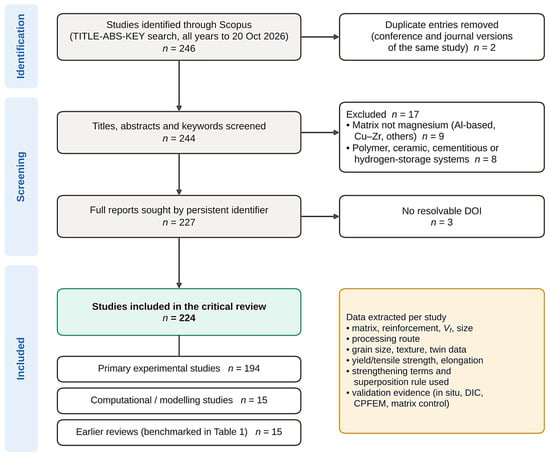
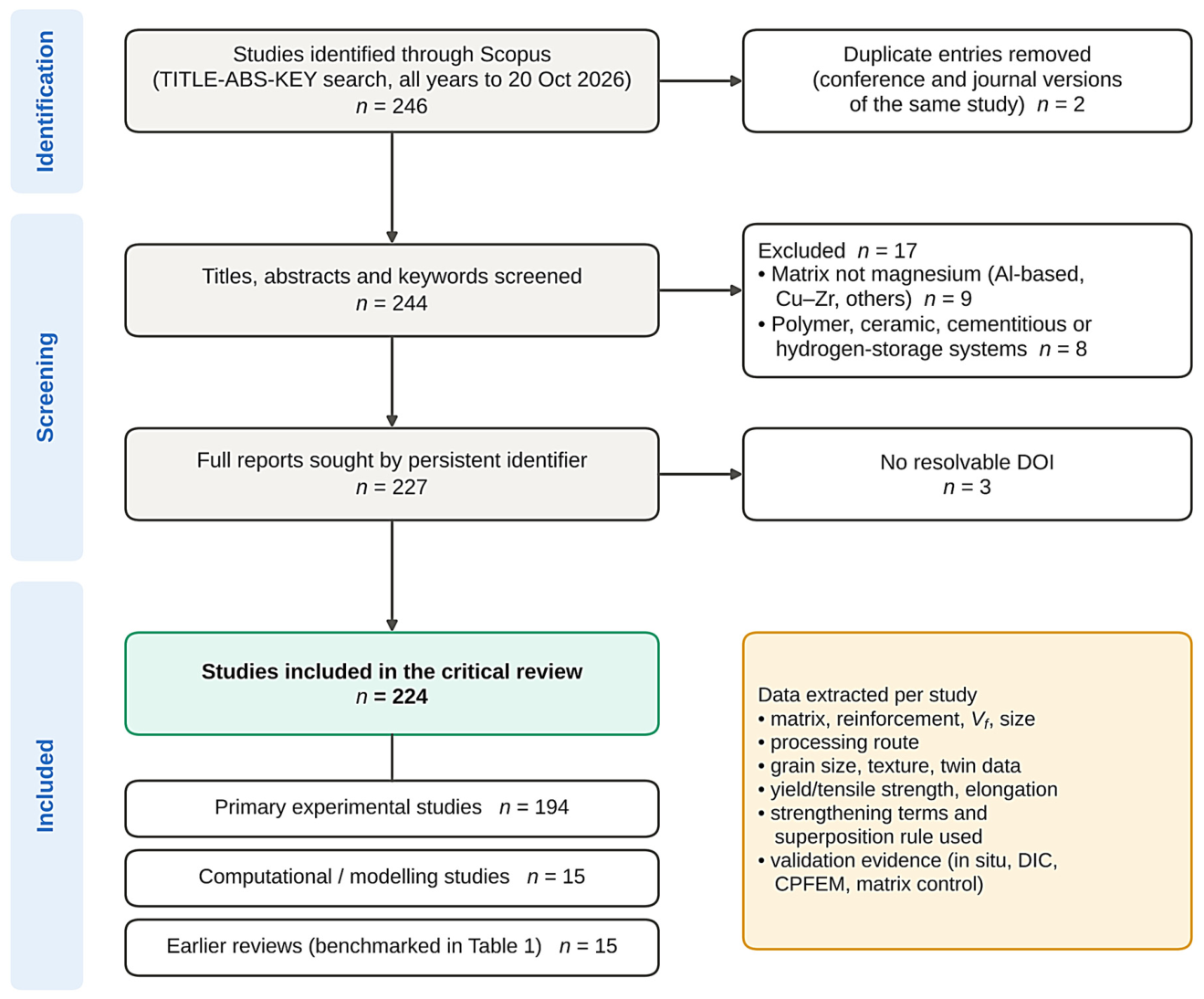
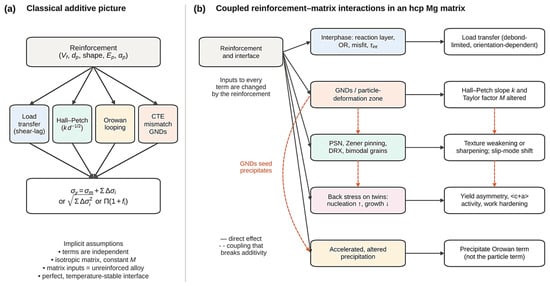
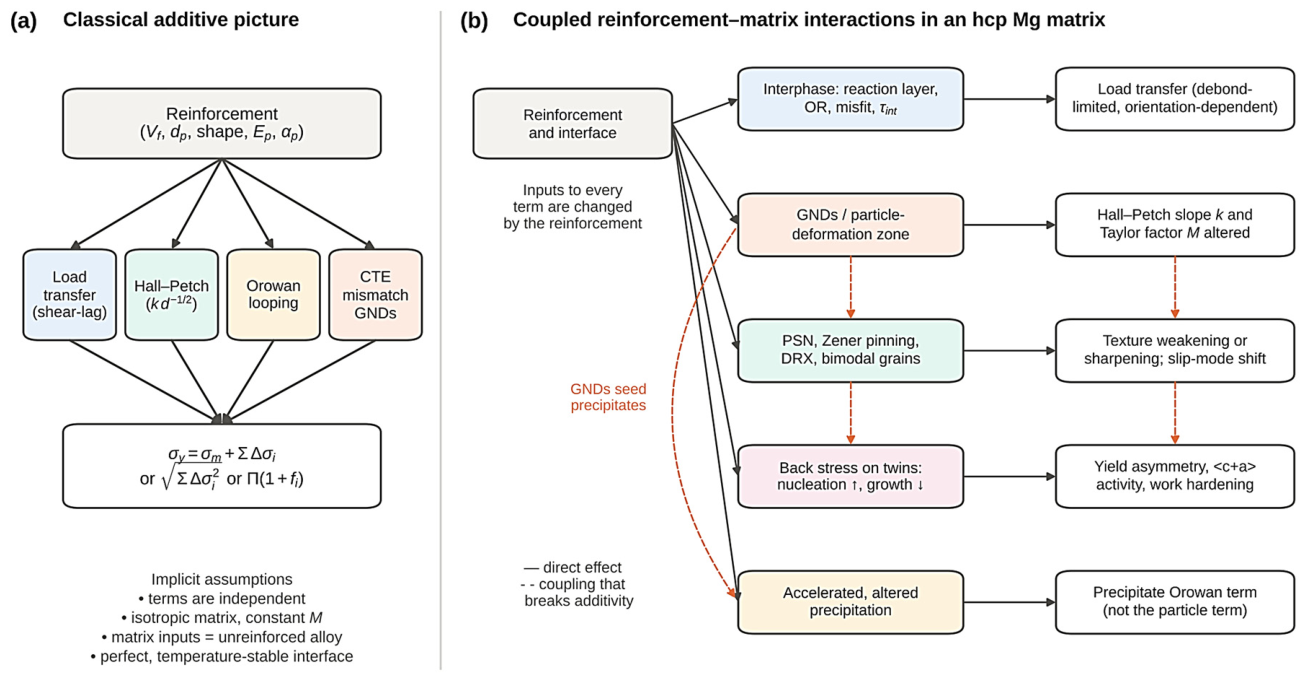
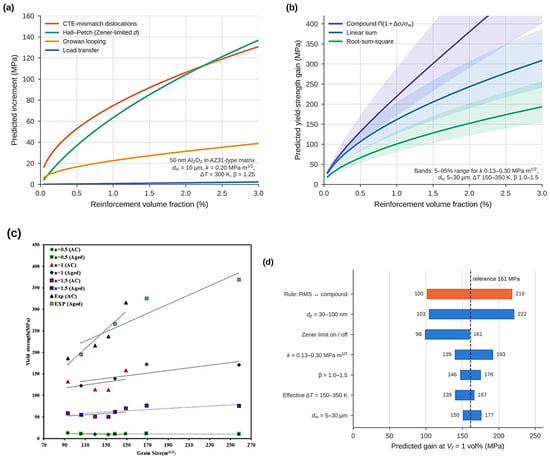
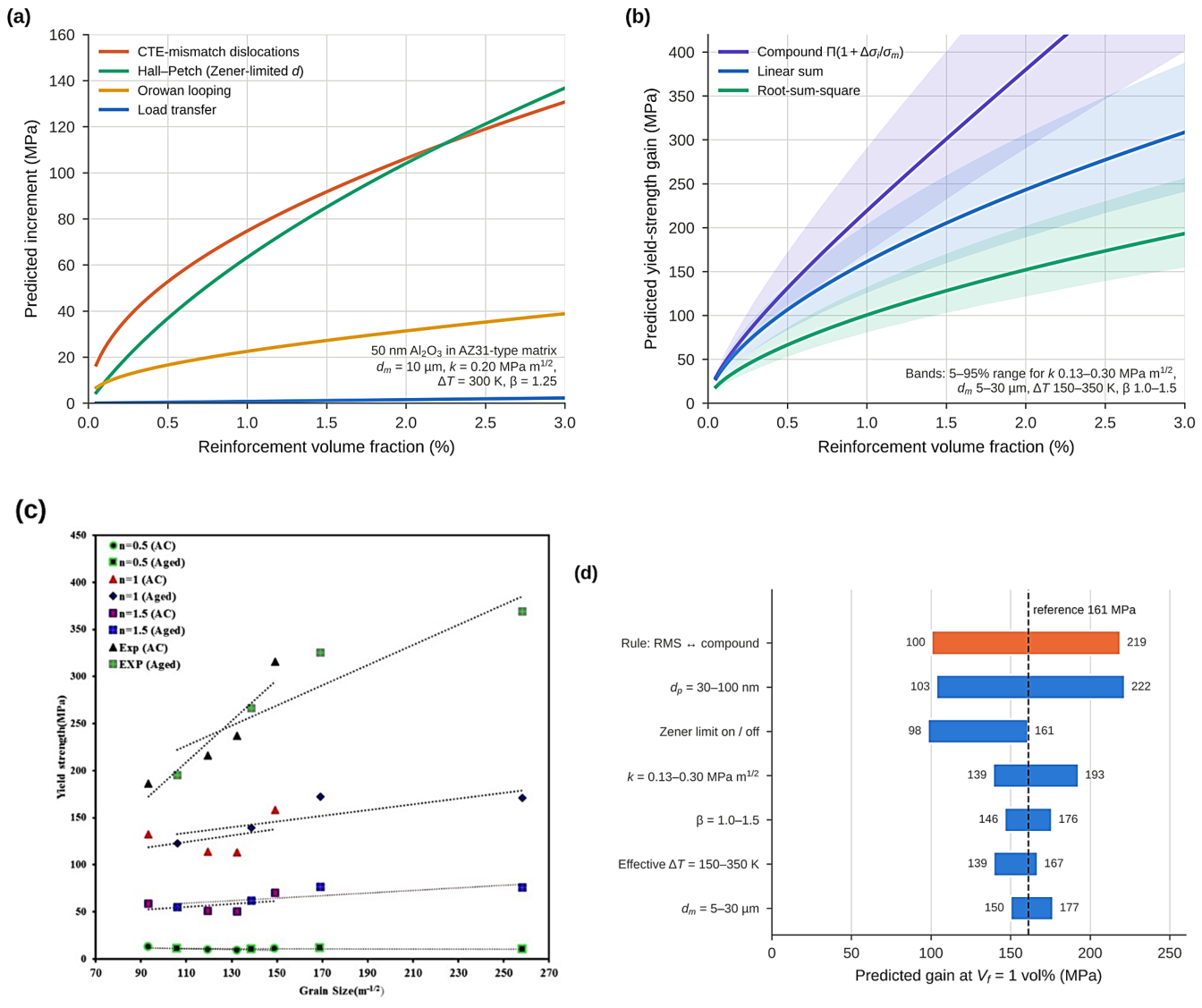
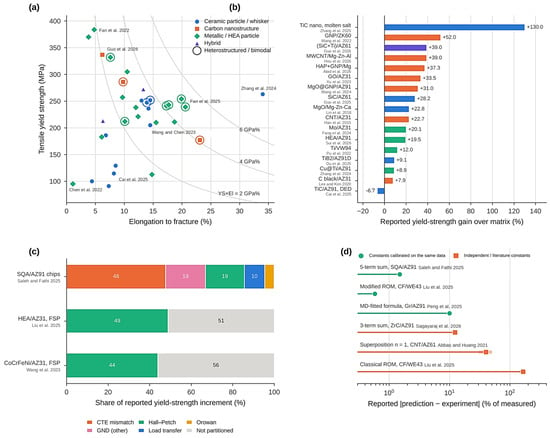
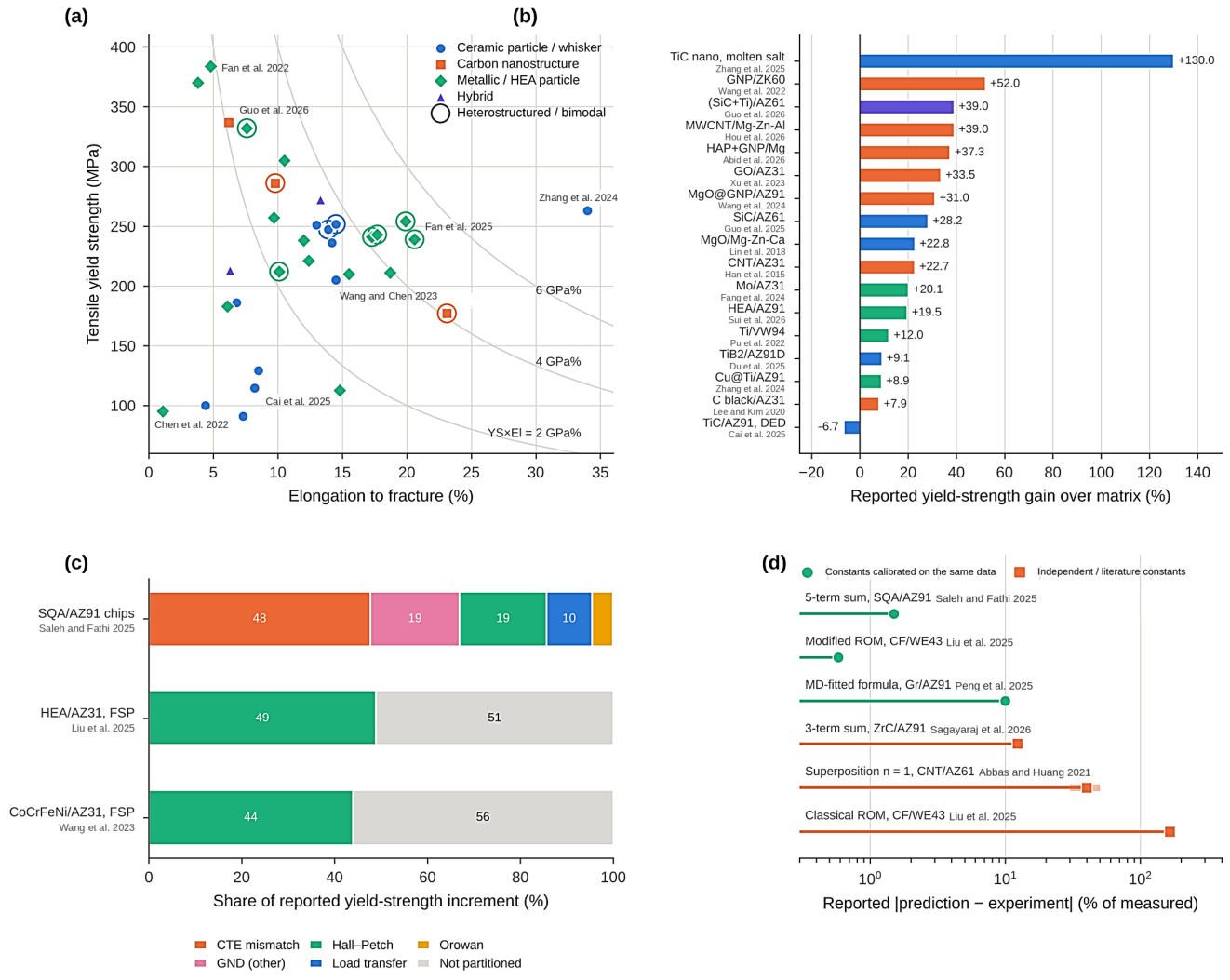
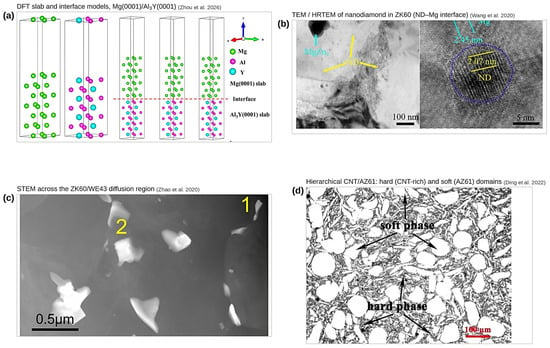
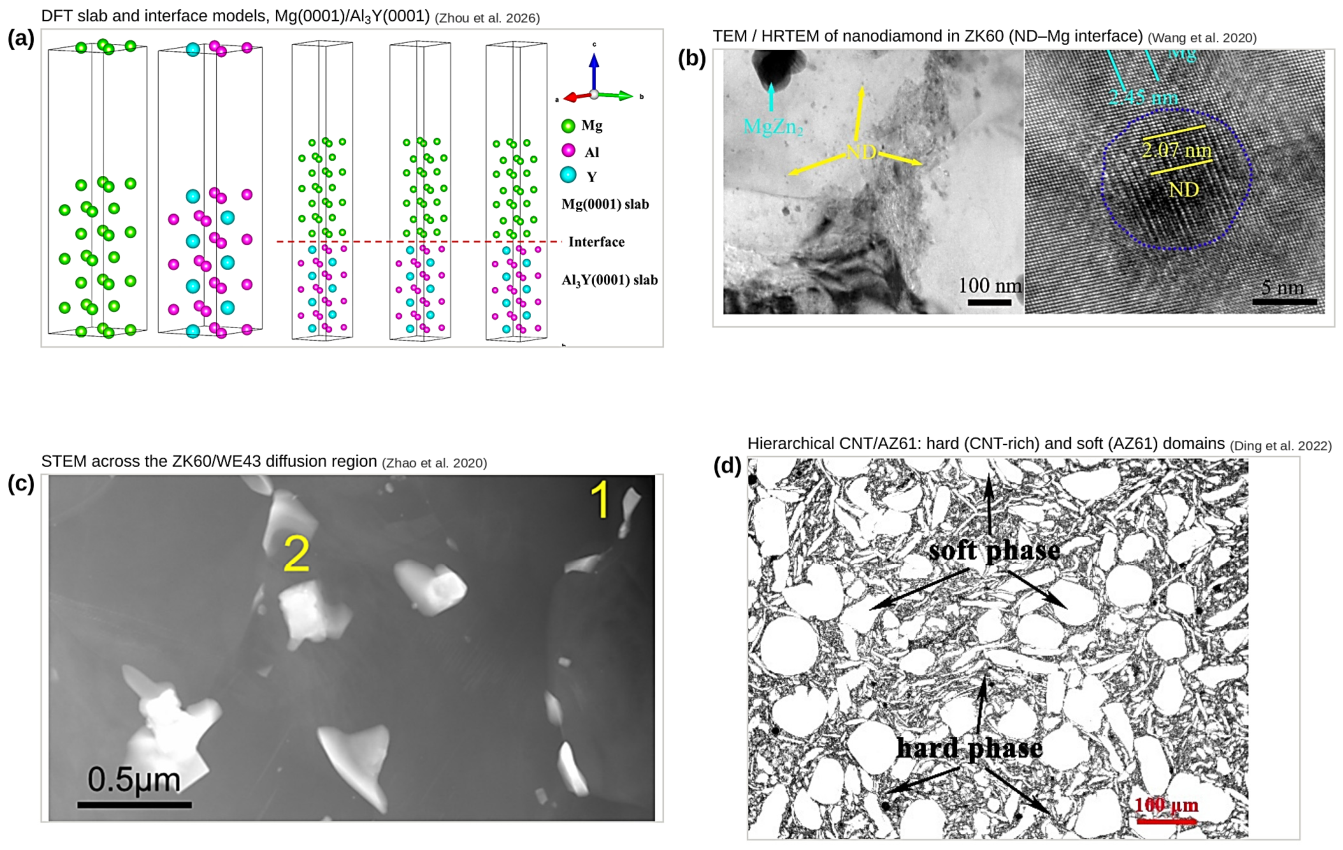
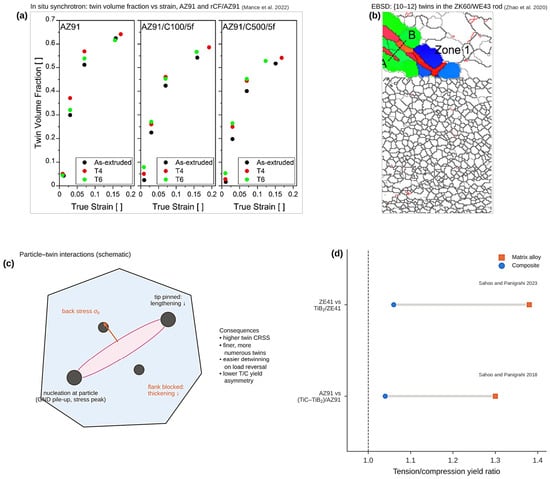
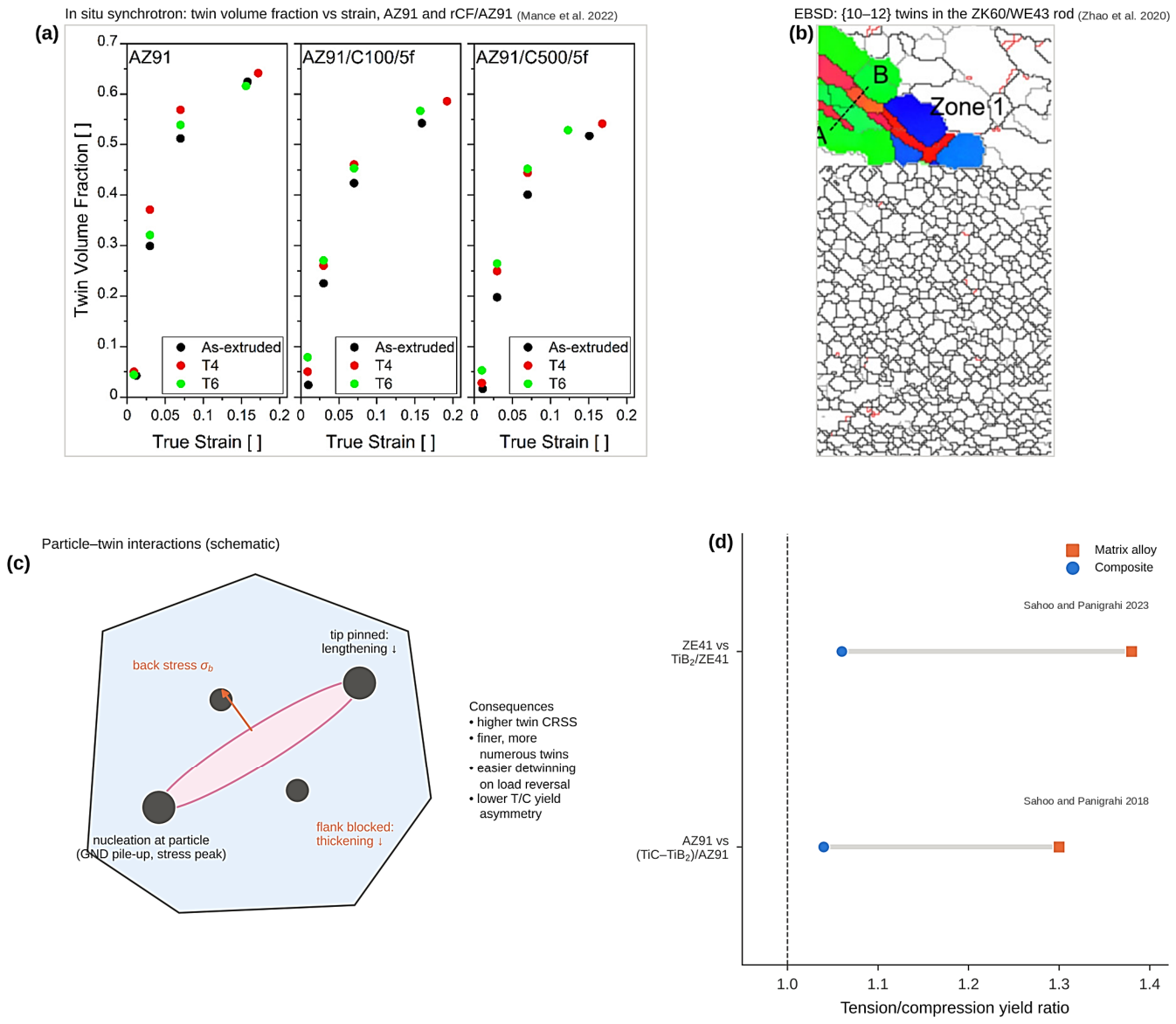
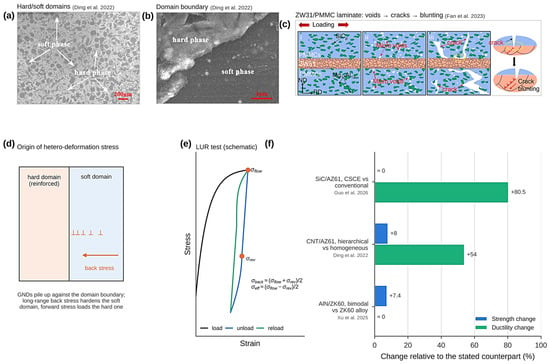
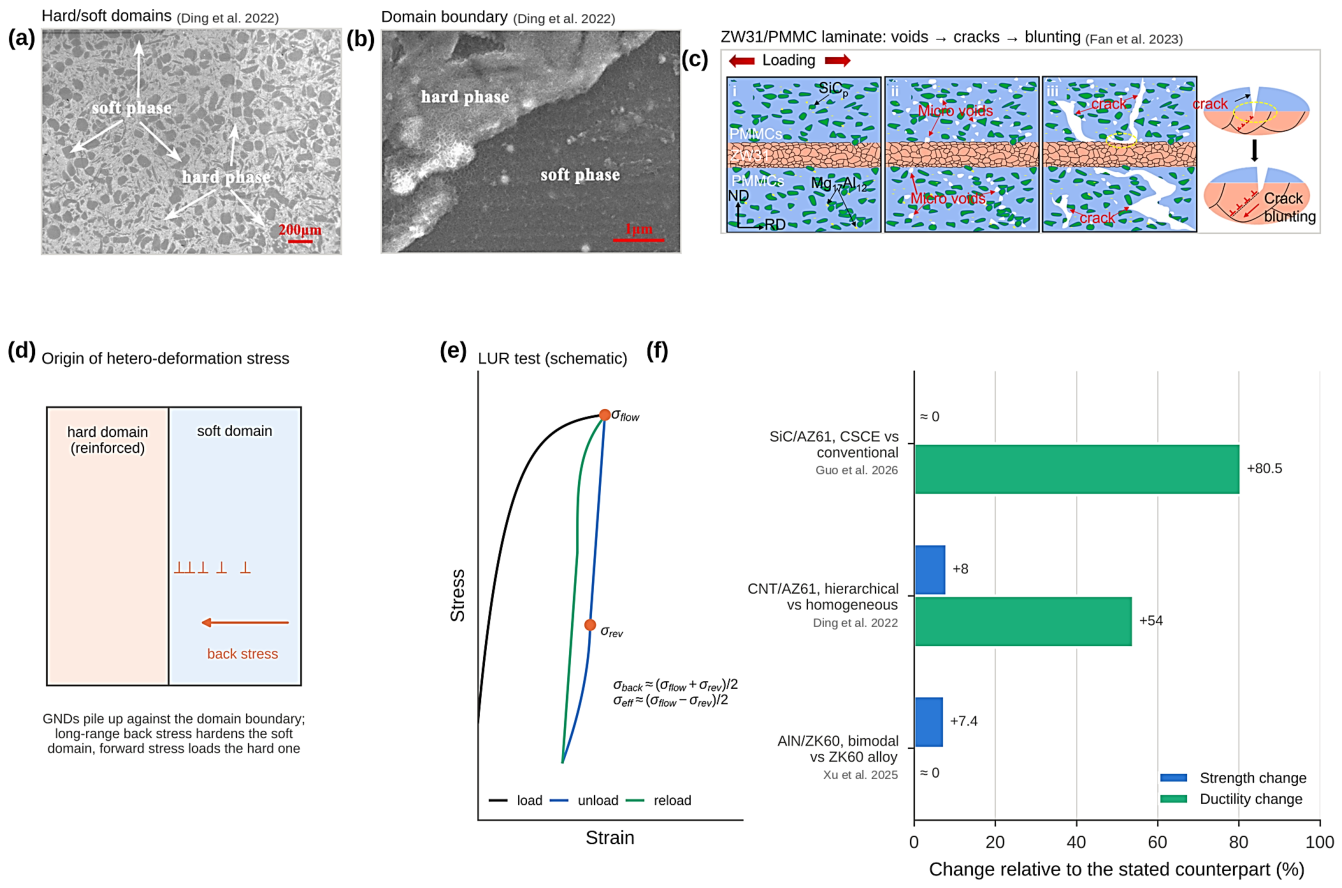
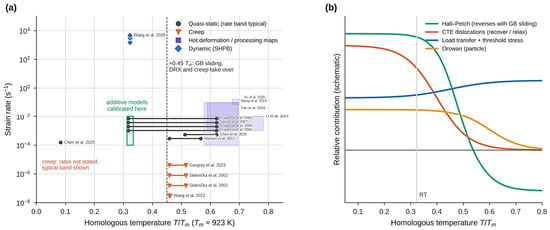
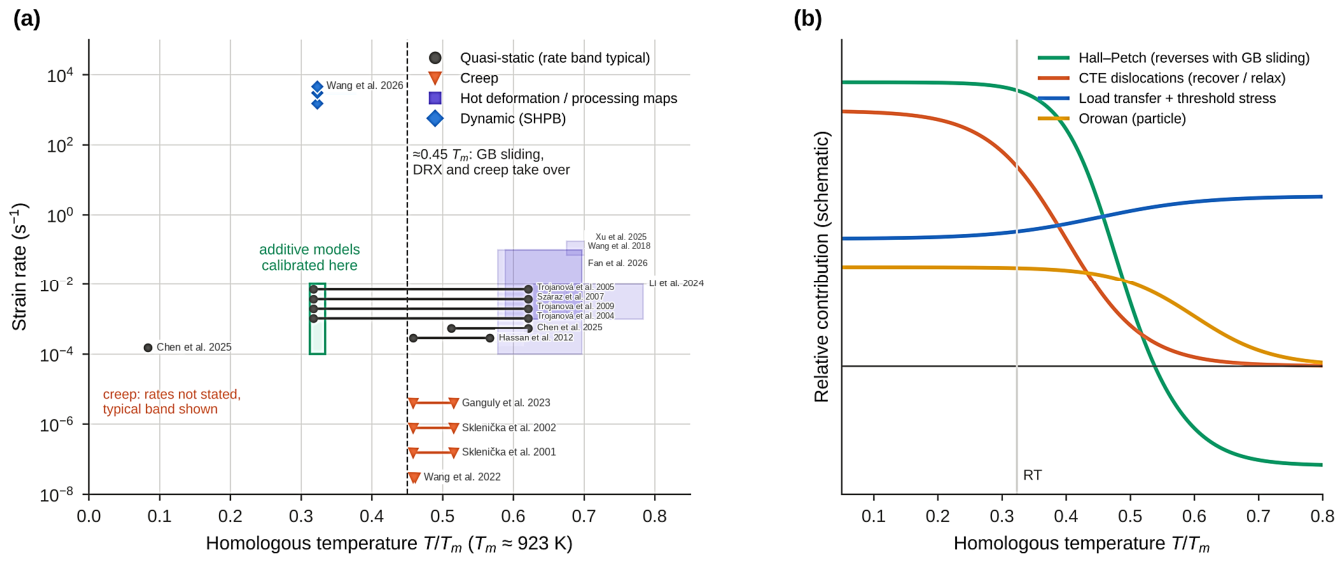
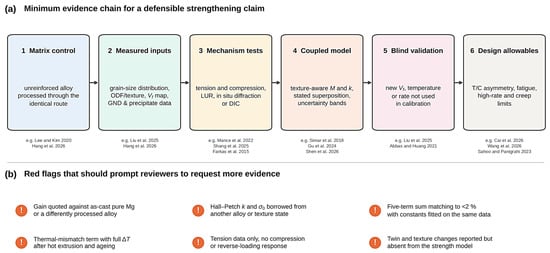
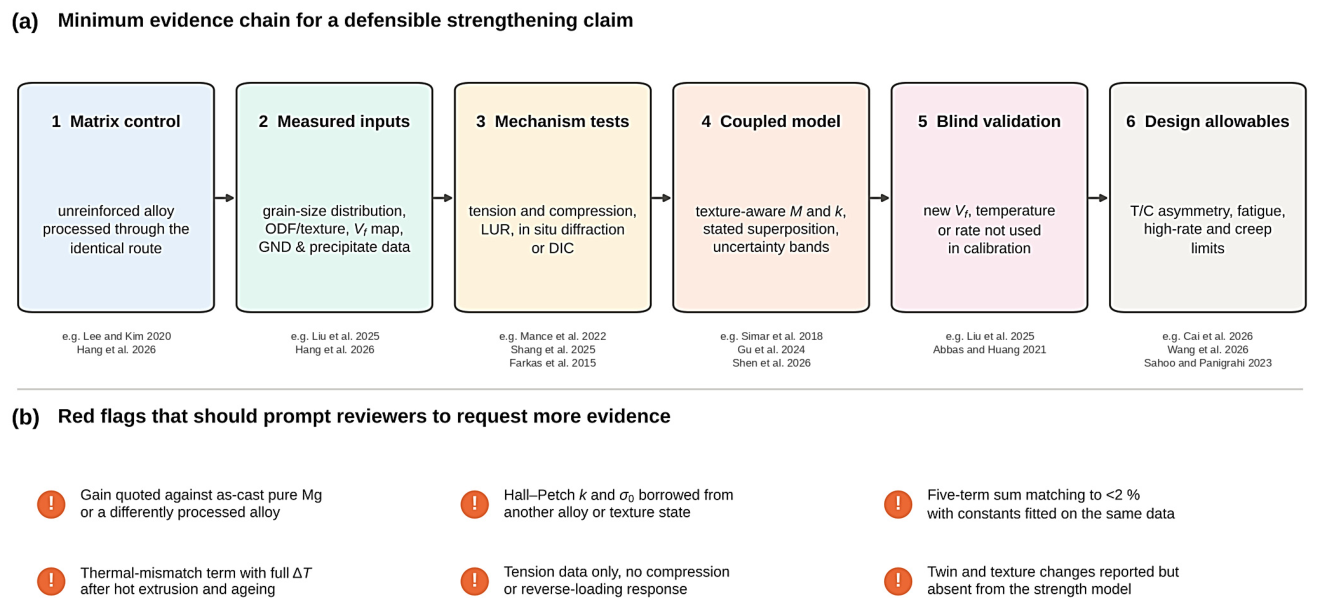

Disclaimer/Publisher’s Note: The statements, opinions and data contained in all publications are solely those of the individual author(s) and contributor(s) and not of MDPI and/or the editor(s). MDPI and/or the editor(s) disclaim responsibility for any injury to people or property resulting from any ideas, methods, instructions or products referred to in the content. |
© 2026 by the authors. Licensee MDPI, Basel, Switzerland. This article is an open access article distributed under the terms and conditions of the Creative Commons Attribution (CC BY) license.