


Abstract
Al-Cr-Fe-Ni eutectic high-entropy alloys (EHEAs) with an FCC + B2 dual-phase microstructure are promising candidates for high-temperature structural applications, yet the competitive oxidation behavior between the two phases at elevated temperatures remains unclear. In this work, four AlxCrFeNi3−x (x = 0.75, 0.8, 0.85, 0.9) EHEAs are prepared by vacuum arc melting, and their oxidation resistance at 850 °C is evaluated for up to 150 h. All alloys possess an FCC + B2 eutectic microstructure. With increasing Al content, the B2 phase fraction rises from 20.5% to 66.4%, and the microstructure evolves from an FCC matrix with dispersed B2 islands, via a lamellar eutectic transition, to a B2 matrix with isolated FCC islands. The oxidation kinetics of all alloys follow a parabolic rate law, and the Al0.85 and Al0.9 alloys exhibit the best oxidation resistance with a mass gain of only 0.49 mg/cm2 after 150 h of oxidation. The Al-rich B2 phase preferentially oxidizes to form Al2O3-rich oxide, while the Fe/Cr/Ni-rich FCC phase forms Cr2O3-rich oxide and spinel oxides. The oxide scale evolves into a bilayer structure with a dense continuous Al2O3-rich oxide inner layer and a Cr/Fe-rich oxide outer layer. An Al-depleted layer accompanied by B2-to-FCC decomposition forms in the subsurface, and its thickness decreases with rising Al content. The superior oxidation resistance of high-Al EHEAs stems from the synergistic effect of the B2 phase acting as an Al reservoir and eutectic interfaces acting as a possible short-circuit diffusion pathway, which jointly promote the formation of a continuous protective Al2O3-rich oxide scale.
1. Introduction
As an important branch of high entropy alloys (HEAs), eutectic high entropy alloys (EHEAs), a concept first proposed by Lu et al. in 2014 [1], combine the benefits of high entropy multi-component effects with the advantages of eutectic solidification. EHEAs effectively address the bottlenecks of traditional single-phase HEAs, such as poor casting fluidity, severe compositional segregation, and the difficulty of balancing high strength and high ductility, and have now become a hot research topic in the field of structural materials [2,3,4,5,6,7]. Among these alloys, the AlCoCrFeNi2.1 EHEA, which features an FCC + BCC eutectic microstructure, has attracted widespread attention due to its excellent overall mechanical properties [8,9,10]. Moreover, because the constituent elements of the AlCoCrFeNi-based HEAs are similar to those of traditional heat-resistant alloys, such as Ni-based superalloys, they represent promising candidate structural materials for components including heat exchanger tubes, industrial furnace parts, and exhaust turbine casings operating at 600–900 °C, and can substitute for conventional nickel-based superalloys to lower raw material costs and enhance high-temperature performance [11,12]. Oxidation resistance constitutes a core service performance metric for structural materials at high temperature, as it directly governs the service life and operational reliability of the components. Accordingly, a systematic investigation into their high-temperature oxidation behavior and underlying mechanisms is warranted.
For conventional heat-resistant alloys, elements such as Al and Cr are usually added to form dense, protective Cr2O3 or Al2O3 scales on the surface, thereby blocking inward diffusion of oxygen and inhibiting further oxidation of the matrix. Compared to Ni-based superalloys, AlCoCrFeNi-based high-entropy alloys have higher Al or Cr content and are expected to exhibit superior oxidation resistance at high temperatures [13]. However, in HEA systems—which consist of several principal elements—the interactions among these elements, as well as the individual role of each element, influence their oxidation behavior. Consequently, the oxidation behavior of AlCoCrFeNi-based HEAs is more complex than that of traditional superalloys [14,15,16,17,18,19]. The Al and Cr contents in AlCoCrFeNi-based HEAs are generally considered key factors in determining their oxidation resistance, as they determine the content and distribution of Al2O3 and Cr2O3 in the alloy’s surface oxide scale [20,21,22]. The high-entropy effect of the alloys also has a significant impact on their oxidation behavior. It has been reported that, compared with equiatomic AlCoCrFeNi, non-equiatomic AlCoCrFeNi and four-component AlCrFeNi show better oxidation resistance due to monocrystalline Al2O3 formation [23]. In addition to adjusting the content of constituent elements (mainly Al, Cr) in AlCoCrFeNi-based HEAs, adding appropriate amounts of alloying elements, such as Cu, Ti, Nb, and Si, can improve the alloy’s oxidation resistance by promoting the selective oxidation of Al or by optimizing the microstructure of the composite oxide scale [24,25,26,27,28,29,30,31,32]. Rare earth elements, which are beneficial for improving the adhesion and anti-spalling properties of Al2O3 scales on the surfaces of Al-containing superalloys, exhibit similar behavior in AlCoCrFeNi-based HEAs [33,34,35,36].
As a strategically scarce metal, element Co significantly increases the material cost, which restricts the large-scale industrial application of AlCoCrFeNi-based HEAs. In contrast, the Al-Cr-Fe-Ni EHEA system removes Co while retaining the FCC + B2 dual-phase eutectic structure, which has more prominent economic advantages and engineering application value [37,38,39,40]. Current studies on Co-free Al-Cr-Fe-Ni EHEAs mainly focus on the effects of Al content and preparation methods on the FCC/B2 microstructure and mechanical properties of the alloys [41,42,43,44,45]. However, few studies have focused on the effect of FCC/B2 microstructure on the high-temperature oxidation resistance of this series of alloys. Therefore, in the present work, four Al-Cr-Fe-Ni EHEAs (Al0.75CrFeNi2.25, Al0.8CrFeNi2.2, Al0.85CrFeNi2.15, Al0.9CrFeNi2.1) were designed and prepared. The relative proportions and phase morphologies of the FCC and B2 phases in the alloys were adjusted by varying the Al/Ni ratio. The oxidation behavior of the alloys at 850 °C for up to 150 h in air was studied. The oxide scale formation process and competitive oxidation mechanism between FCC and B2 phases in the alloys were revealed.
2. Experimental Materials and Methods
Four Al-Cr-Fe-Ni eutectic high-entropy alloy ingots were prepared by vacuum arc melting in a pure argon atmosphere. Based on phase diagram calculations, an Al molar fraction ranging from 0.75 to 0.9 yields an FCC + B2 dual-phase microstructure spanning the eutectic point, enabling systematic investigation of the effects of phase fraction and microstructure morphology on oxidation resistance. The nominal chemical compositions of the alloys are listed in Table 1. The purity of the metal raw materials used in the preparation was greater than 99.9 wt%. During melting, to ensure compositional homogeneity, each alloy ingot was flipped and re-melted six times, with a melting time of about 2 min each time.
Table 1.
Nominal composition of Al-Cr-Fe-Ni eutectic high-entropy alloys (EHEAs).
The isothermal oxidation tests of the Al-Cr-Fe-Ni eutectic high-entropy alloys were performed in a box-type resistance furnace (Model KSL-1500X-S, Hefei Kejing Materials Technology Co., Ltd., Hefei, China) under a static air atmosphere. Before the oxidation test, the alloy ingots were cut into 10 mm × 10 mm × 5 mm cubes by electro-discharge machining. For each alloy composition, three independent parallel specimens were included. All the surfaces of the specimens were ground using SiC papers (Jiangsu Jinyan Abrasives Co., Ltd., Changzhou, China) up to #1200, cleaned in an ultrasonic acetone bath and then dried. The alloy specimens were placed in alumina crucibles (Tangshan Kaiping Shengxing Chemistry Porcelain Factory, Tangshan, China) so that the total mass change, including spalled oxides, could be obtained. The furnace was first heated to 850 °C, then the crucibles holding the specimens were loaded into the furnace, and timing was initiated once the furnace temperature restabilized. At each predefined time interval (5, 15, 30, 50, 70, 90, 110, 130, and 150 h), the crucibles containing specimens were withdrawn from the furnace, cooled to room temperature in air, and weighed in their entirety on an analytical electronic balance (Model BSA224S, Sartorius AG, Göttingen, Germany) with an accuracy of 0.0001 g. After weighing, the specimens were immediately returned to the furnace to resume oxidation until the next time point. Three independent specimens were weighed individually and the average value was then calculated.
The phase constituents of the Al-Cr-Fe-Ni eutectic high-entropy alloys before and after oxidation were identified using X-ray diffraction (XRD, Bruker D8 Advance, Bruker AXS GmbH, Karlsruhe, Germany) with Cu Kα radiation. The microstructures and chemical compositions of the alloys before and after oxidation were analyzed using scanning electron microscopy (SEM, SU3500, Hitachi High-Tech Corporation, Tokyo, Japan) and electron probe microanalysis (EPMA, EPMA-8050G, Shimadzu Corporation, Kyoto, Japan) with wavelength-dispersive spectroscopy (WDS).
3. Results and Discussion
3.1. Microstructure of the Al-Cr-Fe-Ni EHEAs
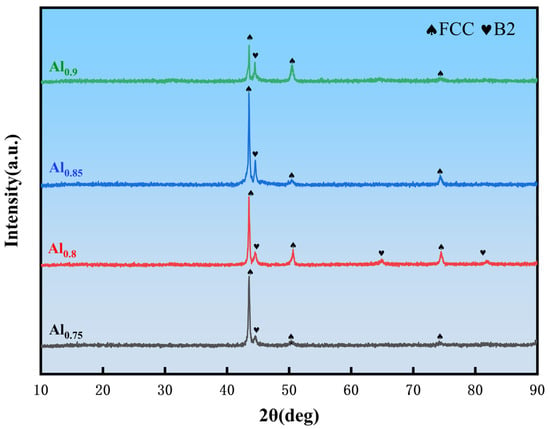
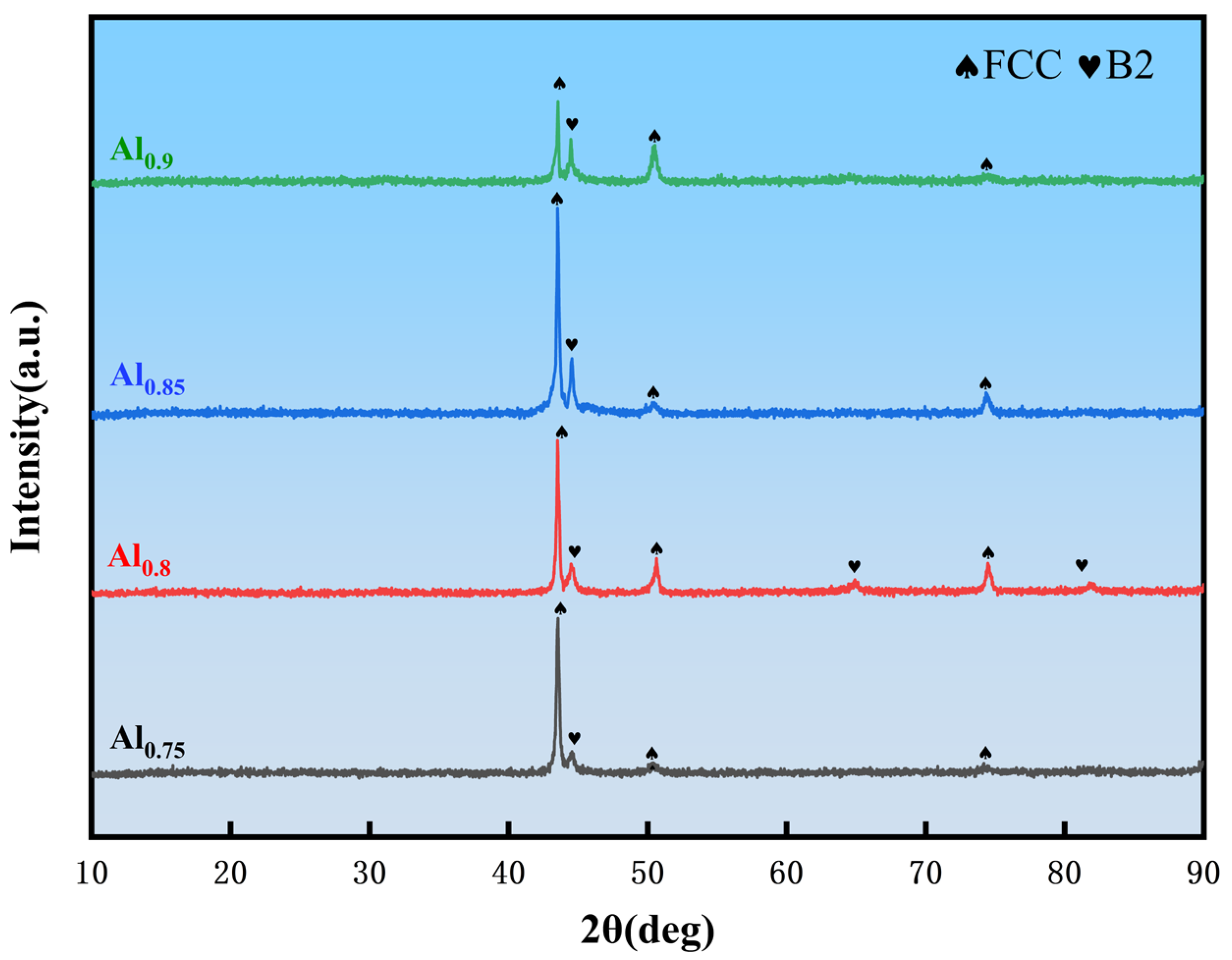
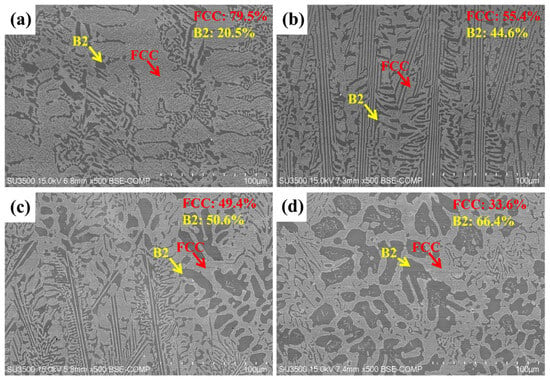
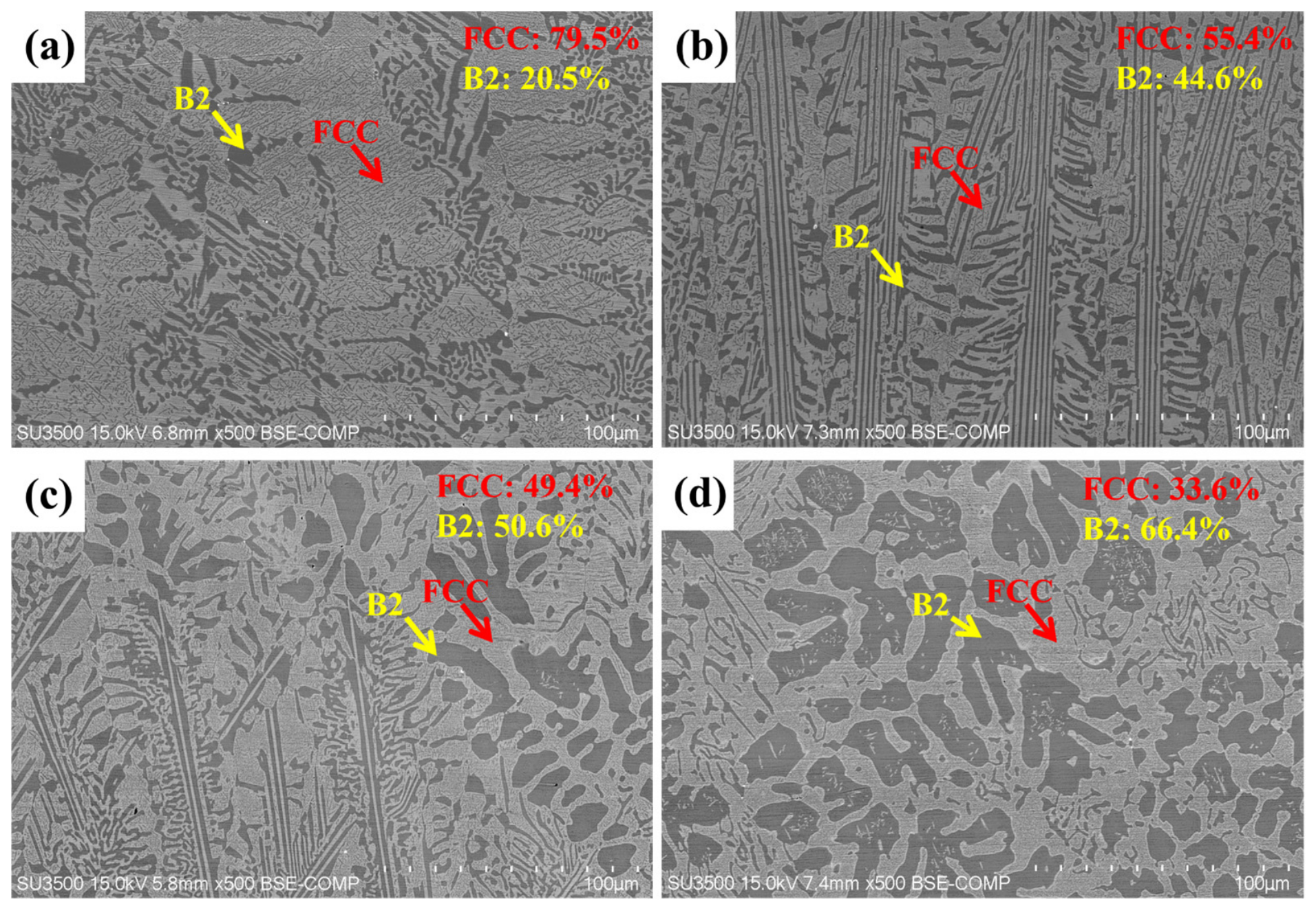
Figure 1 shows the XRD patterns of AlxCrFeNi(3−x) (x = 0.75, 0.8, 0.85, 0.9) eutectic high-entropy alloys (EHEAs). The diffraction peaks of all four alloys correspond to two phases: the FCC solid solution and the B2-type ordered body-centered cubic intermetallic. Microstructure of the four Al-Cr-Fe-Ni EHEAs is presented in Figure 2. All four alloys exhibit a typical FCC + B2 two-phase microstructure. In the back-scattered electron (BSE) images, bright areas correspond to the FCC phase enriched in Fe, Cr, and Ni, while dark areas correspond to the Al-rich B2 phase, which is consistent with previous reports [43,44,45]. Further WDS analysis results indicate that the composition ranges of the FCC phase in the four alloys are 9.0~11.9% Al, 22.5~26.0% Cr, 27.3~31.2% Fe, and 31.2~38.0% Ni (at.%), while those of the B2 phase are 21.7~26.9% Al, 10.4~16.0% Cr, 12.4~18.0% Fe, and 42.9~46.5% Ni (at.%). As the Al content in the alloy increases, the Al concentration in the two phases does not show a corresponding increase. However, the proportions of the two phases in the alloys and their morphological characteristics change significantly. Al0.75 alloy is hypo-eutectic, the FCC phase is the dominant matrix phase (79.5% area fraction), and the B2 phase is dispersed in the FCC matrix in the form of irregular islands. Al0.8 alloy is eutectic/pseudo-eutectic, the proportions of the two phases are nearly equal, and the microstructure exhibits a typical regular lamellar eutectic structure. The eutectic composition at x ≈ 0.8 in this work matches well with the results of Vo et al. [43] and Campo et al. [44] on Al0.8CrFeNi2.2 alloy. Al0.85 alloy is near-eutectic, the area fractions of the two phases are nearly equal, the interlamellar spacing of the eutectic lamellae increases, and the regularity of the lamellae decreases slightly. In some regions, the B2 phase begins to exhibit coarse rod-like or block-like features. Al0.9 alloy is hyper-eutectic, and the B2 phase becomes the dominant matrix phase (66.4% area fraction), whereas the FCC phase is distributed as isolated islands within the B2 matrix, representing a complete reversal of the microstructure observed in the Al0.75 alloy. In addition, it can be seen that primary dendrite arm spacing decreases from 45.2 ± 3.6 μm (Al0.75) to 32.8 ± 2.9 μm (Al0.9). The lamellar spacing of eutectic regions reaches a minimum of 1.8 ± 0.2 μm in the Al0.8 alloy and increases to 2.5 ± 0.3 μm in the Al0.9 alloy.
Figure 1.
XRD patterns of the as-cast Al-Cr-Fe-Ni EHEAs.
Figure 2.
Microstructure of the Al-Cr-Fe-Ni EHEAs: (a) Al0.75, (b) Al0.8, (c) Al0.85, (d) Al0.9.
3.2. Oxidation Kinetics of the Al-Cr-Fe-Ni EHEAs at 850 °C
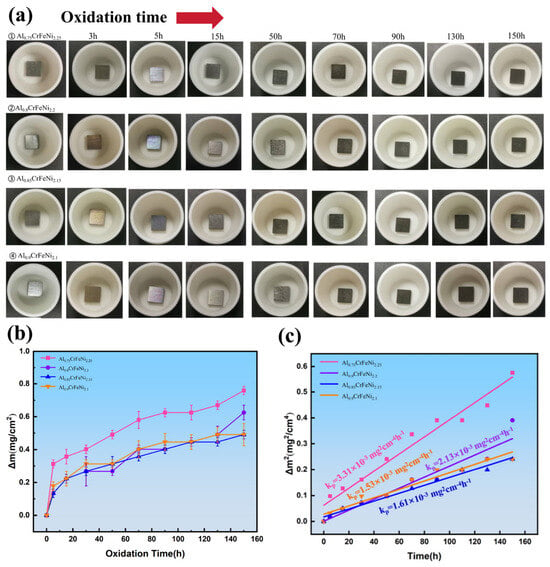
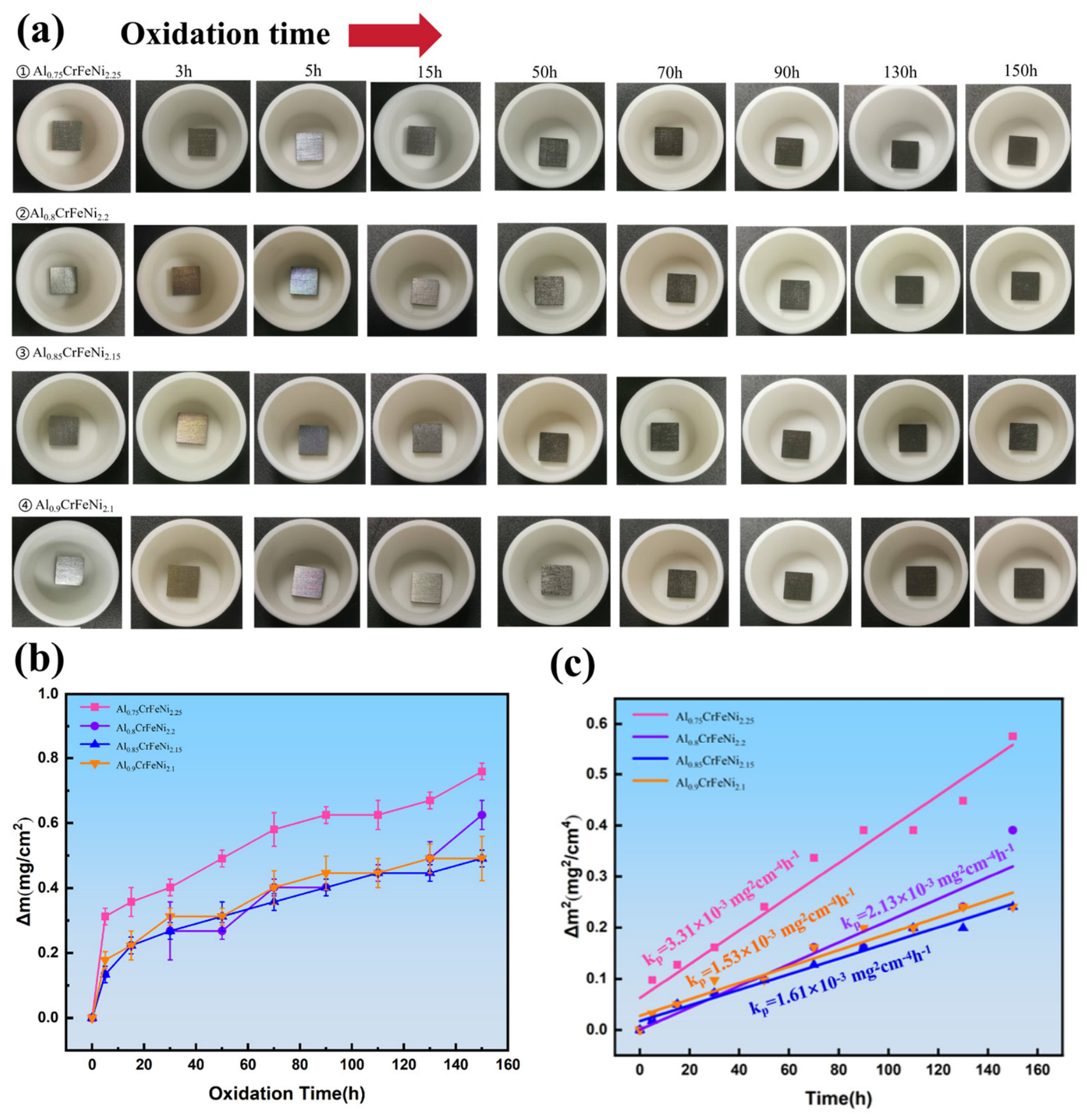
Figure 3a shows the macroscopic morphology of the four alloy specimens after oxidation at 850 °C for different times. After 5 h of oxidation, the Al0.8, Al0.85, and Al0.9 alloy specimens exhibit uniform blue and purple interference colors on their surfaces. This is an optical interference effect characteristic of nanoscale thin oxide scales, indicating that the initial oxide scales on these alloys are smooth and uniform, with thicknesses within the optical interference range. In contrast, the Al0.75 alloy specimen shows a uniform light-gray color, suggesting that its oxide scale exceeds the interference-color thickness range or that the scale uniformity is relatively poor. After 15 h of oxidation, the oxide scales gradually turn dark gray, and after 50 h, all specimens have turned a uniform dark black. Throughout the entire 150 h oxidation cycle, all specimens retain their original cubic shape, with no evidence of extensive peeling or powdering of the oxide scale. This indicates that the oxide scale adhered well to the substrate and that no catastrophic accelerated oxidation occurred.
Figure 3.
Oxidation behavior of the Al-Cr-Fe-Ni EHEAs at 850 °C: (a) macroscopic morphology; (b) oxidation kinetics curve; (c) corresponding parabolic plots.
As shown in the oxidation kinetics curves of the alloys in Figure 3b, the mass gain of all four alloys follows a parabolic pattern: the initial stage is characterized by rapid oxidation, and as the oxidation time increases, the formation of a protective oxide scale on the alloy surface causes the oxidation process to enter a steady-state phase, during which the rate of mass gain tends to level off. During the oxidation process, the Al0.75 alloy exhibited a significantly higher mass gain, while the other three alloys showed similar mass gain behavior. After 150 h of oxidation, the mass gains were 0.76 mg/cm2 for the Al0.75 alloy, 0.63 mg/cm2 for the Al0.8 alloy, and 0.49 mg/cm2 for both the Al0.85 and Al0.9 alloys. Compared with AlCoCrFeNi2.1 EHEA (~0.95 mg/cm2 at 50 h, 820 °C) [19], the Co-free Al-Cr-Fe-Ni EHEAs in this work achieve better oxidation resistance at lower material cost. The mass-gain data of the different alloys were linearly fitted, as shown in Figure 3c. The parabolic rate constants follow the sequence: Al0.75 (3.31 × 10⁻³ mg2cm−4h−1) > Al0.8 (2.13 × 10⁻³ mg2cm−4h−1) > Al0.85 (1.61 × 10⁻³ mg2cm−4h−1) > Al0.9 (1.53 × 10⁻³ mg2cm−4h−1). These results indicate that increasing the Al content improves the alloy’s oxidation resistance, but the improvement is limited when the Al content exceeds 0.85.
3.3. Oxide Scale Evolution of the Al-Cr-Fe-Ni EHEAs at 850 °C
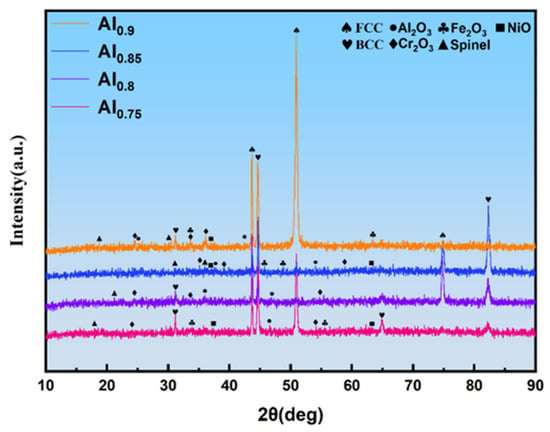
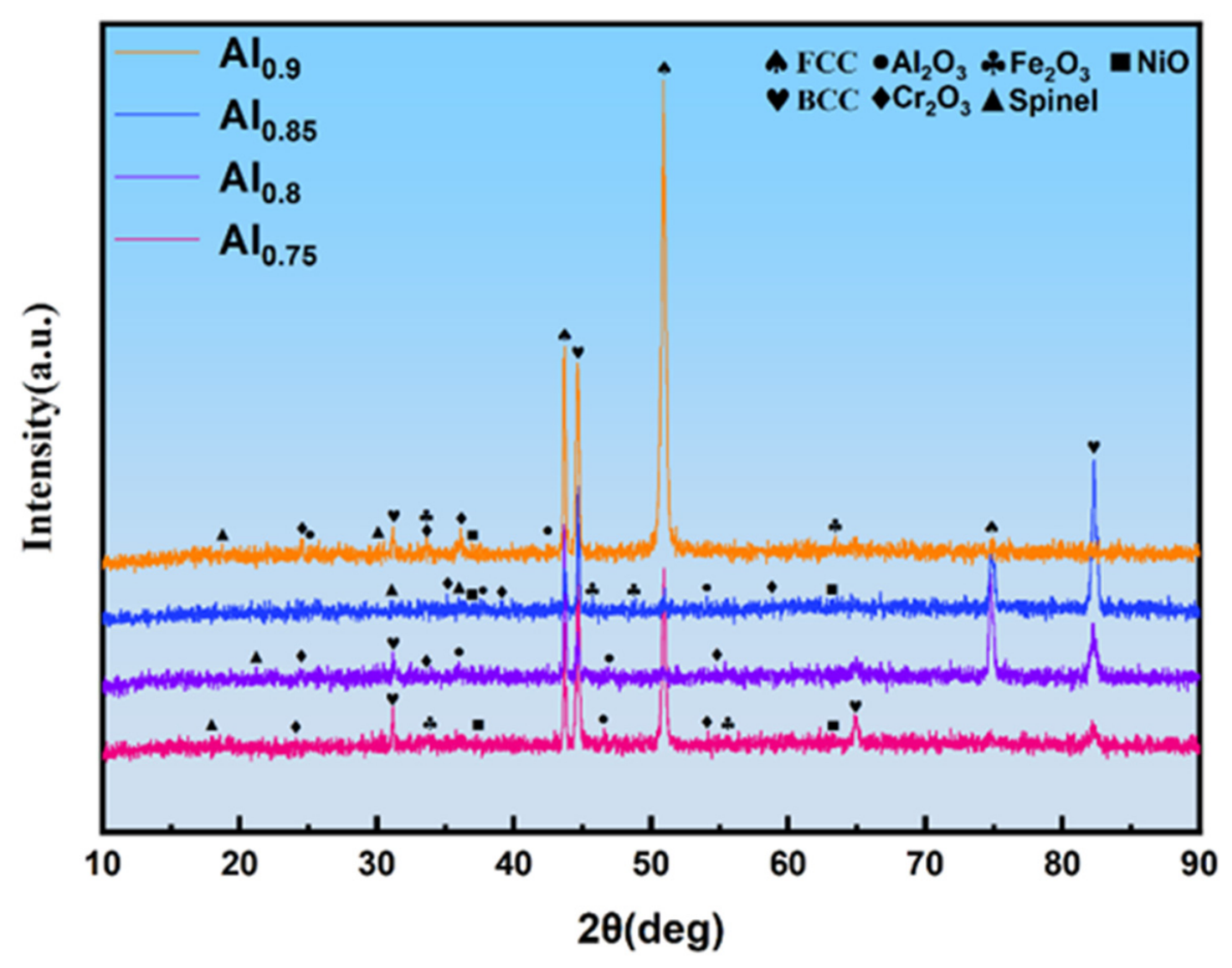
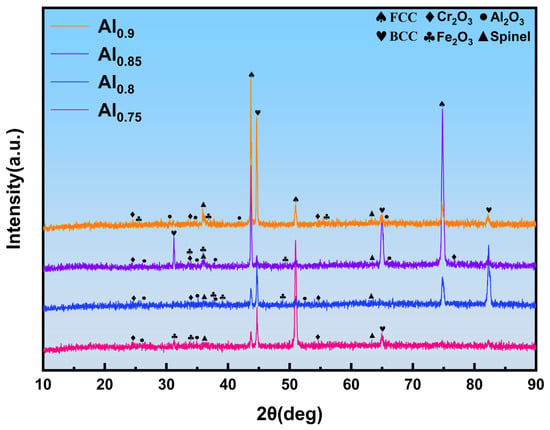
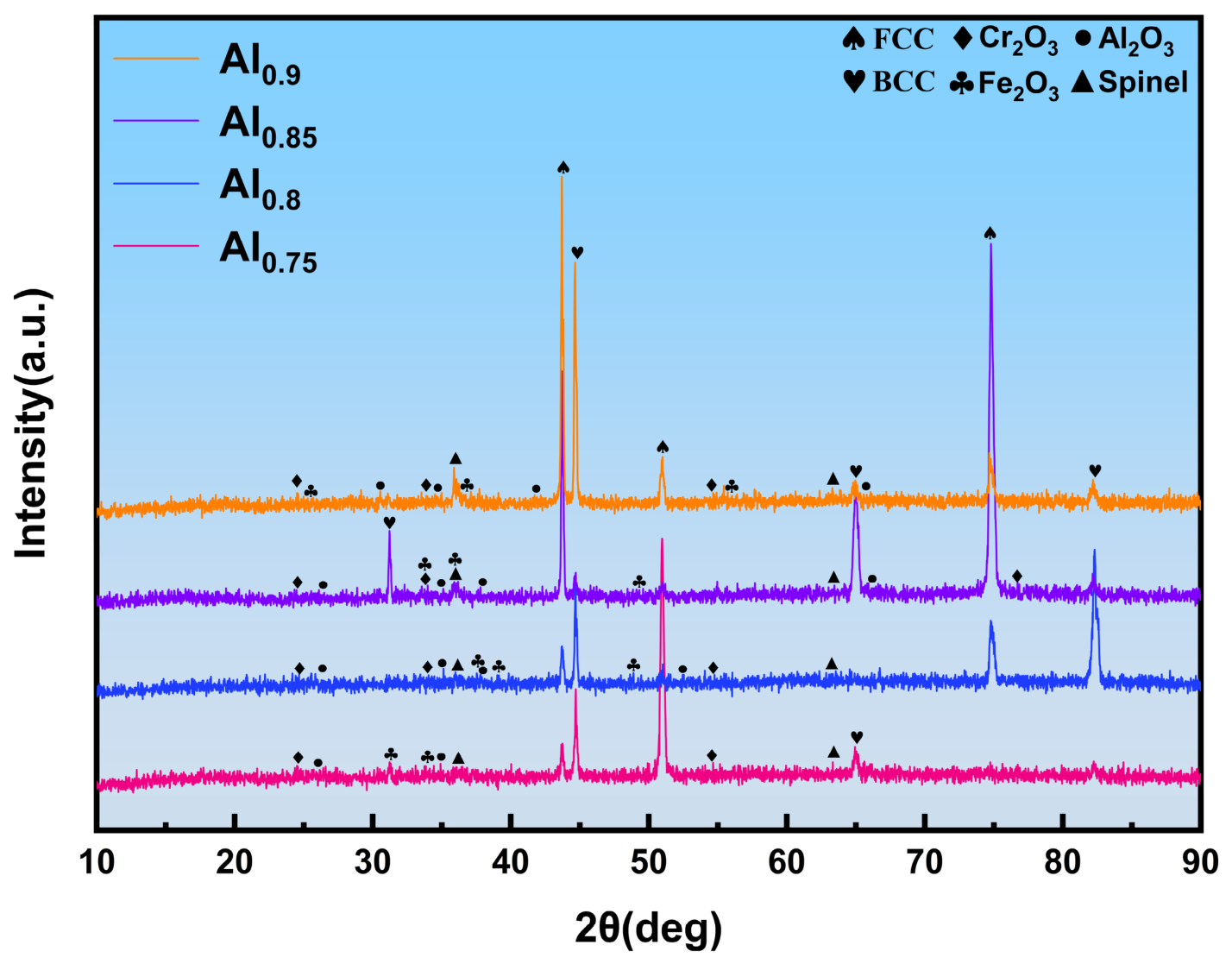
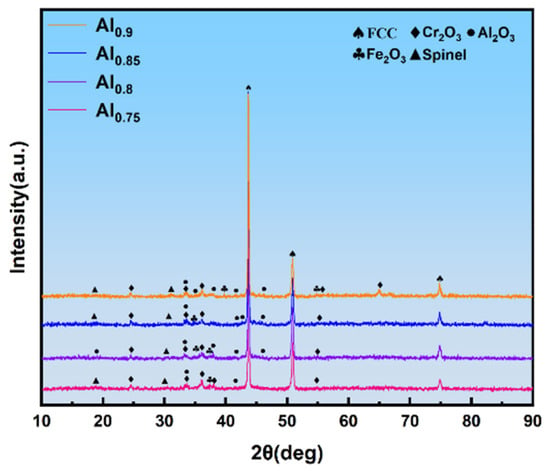
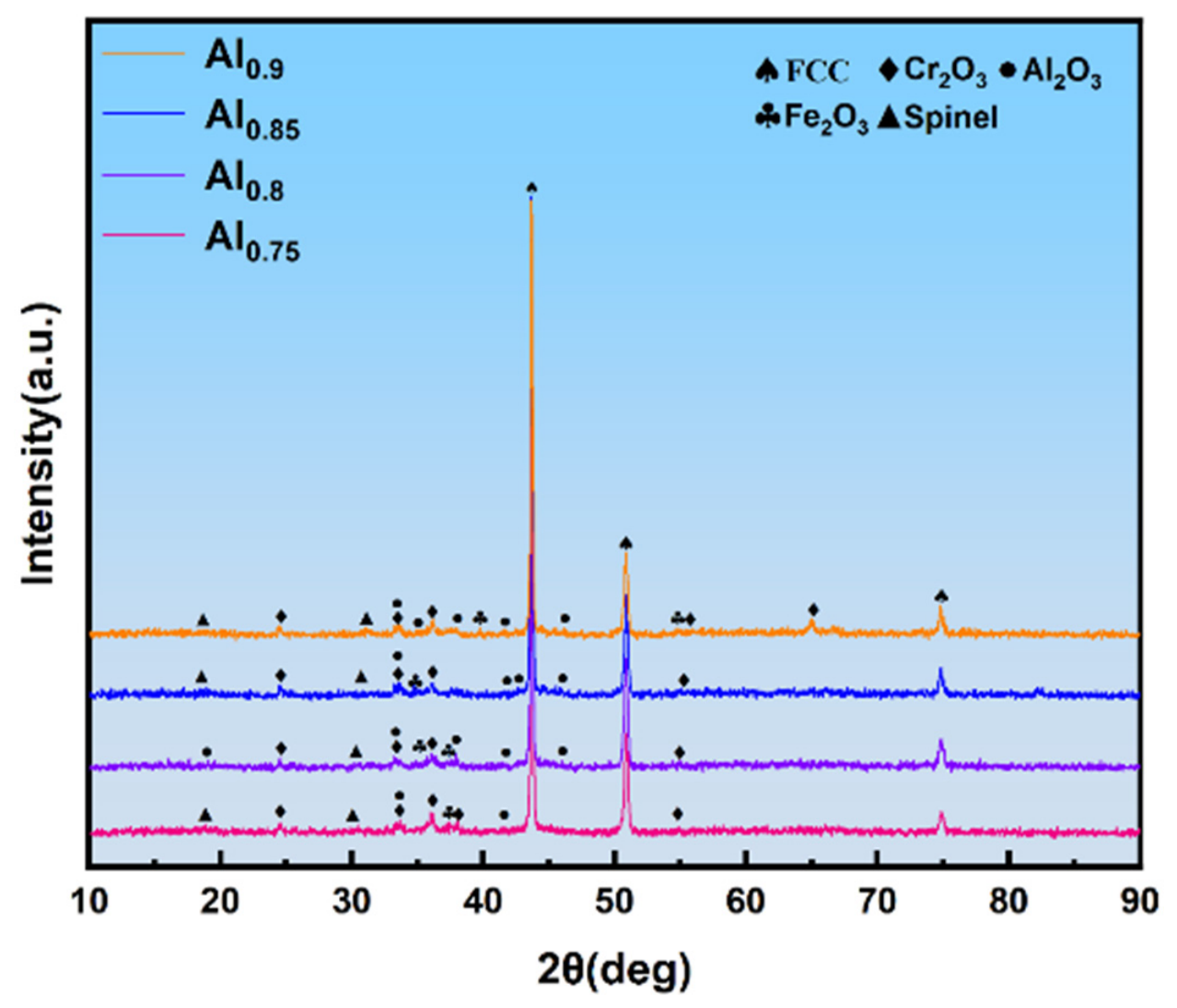
To investigate the evolution of oxide scales formed on the surfaces of Al-Cr-Fe-Ni EHEAs during oxidation at 850 °C, alloy specimens were selected for characterization after 5 h, 50 h, and 150 h of oxidation. Figure 4 shows the surface XRD patterns of the four alloys after 5 h of oxidation. The diffraction peaks of the FCC and BCC (B2) phases in all four alloys are extremely intense, indicating that X-rays can easily penetrate the initial oxide scale to reach the matrix. At this stage, the oxide scale thickness is at the nanoscale, which corresponds to the morphological feature of colorful interference patterns observed on the macroscopic surface (Figure 3a). In the early stages of oxidation, the matrix undergoes simultaneous oxidation of multiple elements, resulting in a complex composition of products that includes Cr2O3, Fe2O3, NiO, and a spinel phase; only weak characteristic Al2O3 peaks are observed. As the Al content increases, the intensity of the Al2O3 diffraction peak shows an upward trend. In the Al0.9 alloy, the Al2O3 signal is relatively more pronounced.
Figure 4.
Surface XRD patterns of the Al-Cr-Fe-Ni EHEAs after 5 h of oxidation.
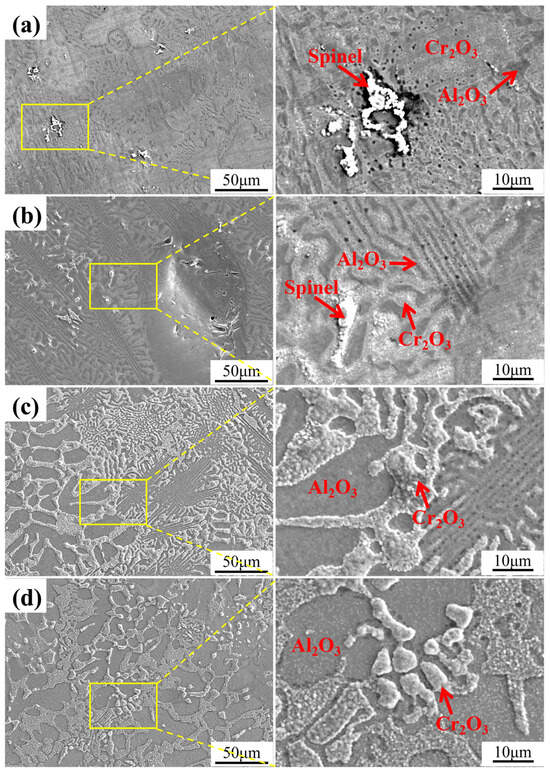
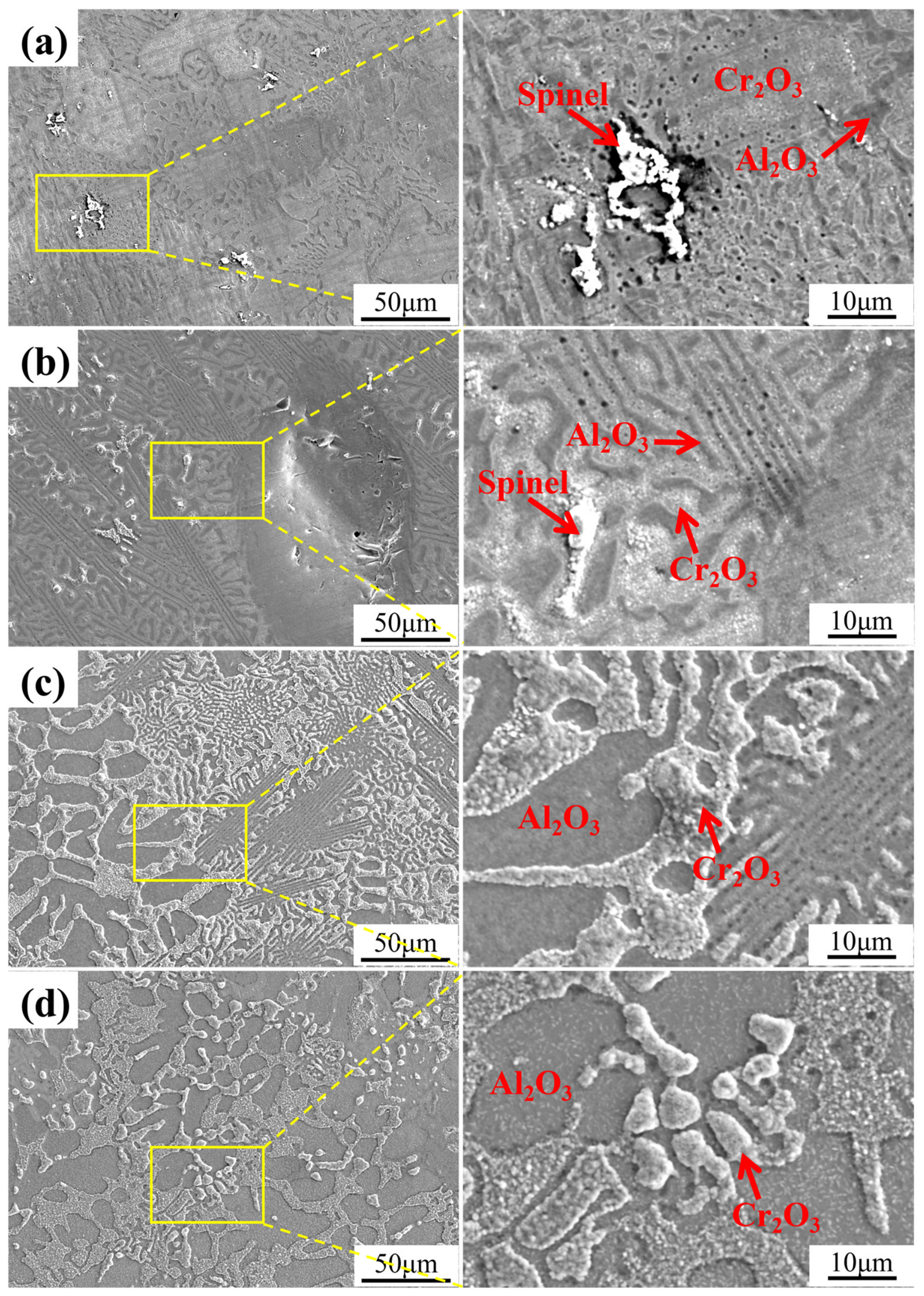
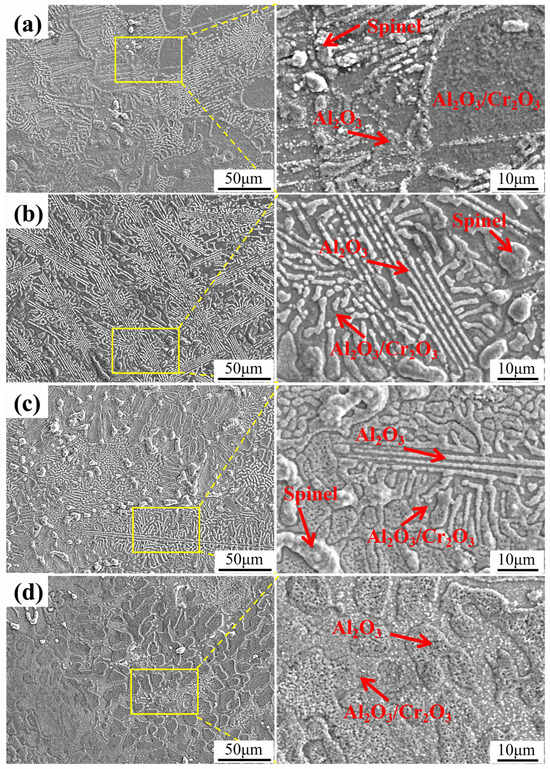
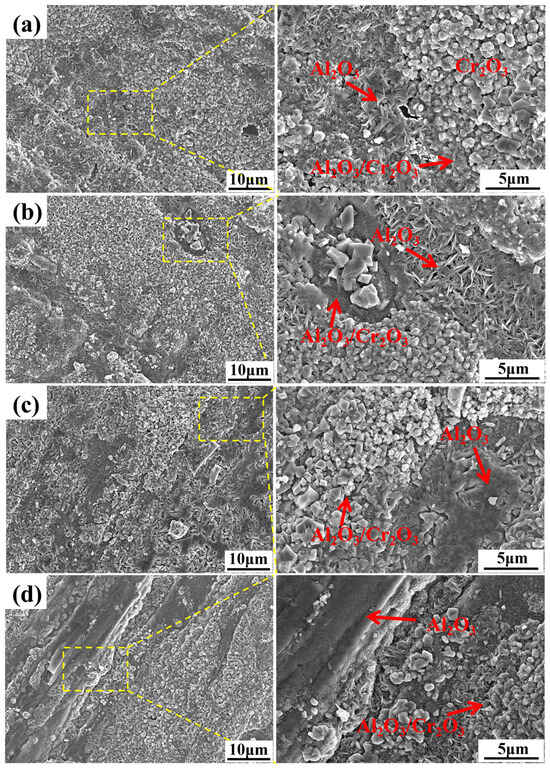
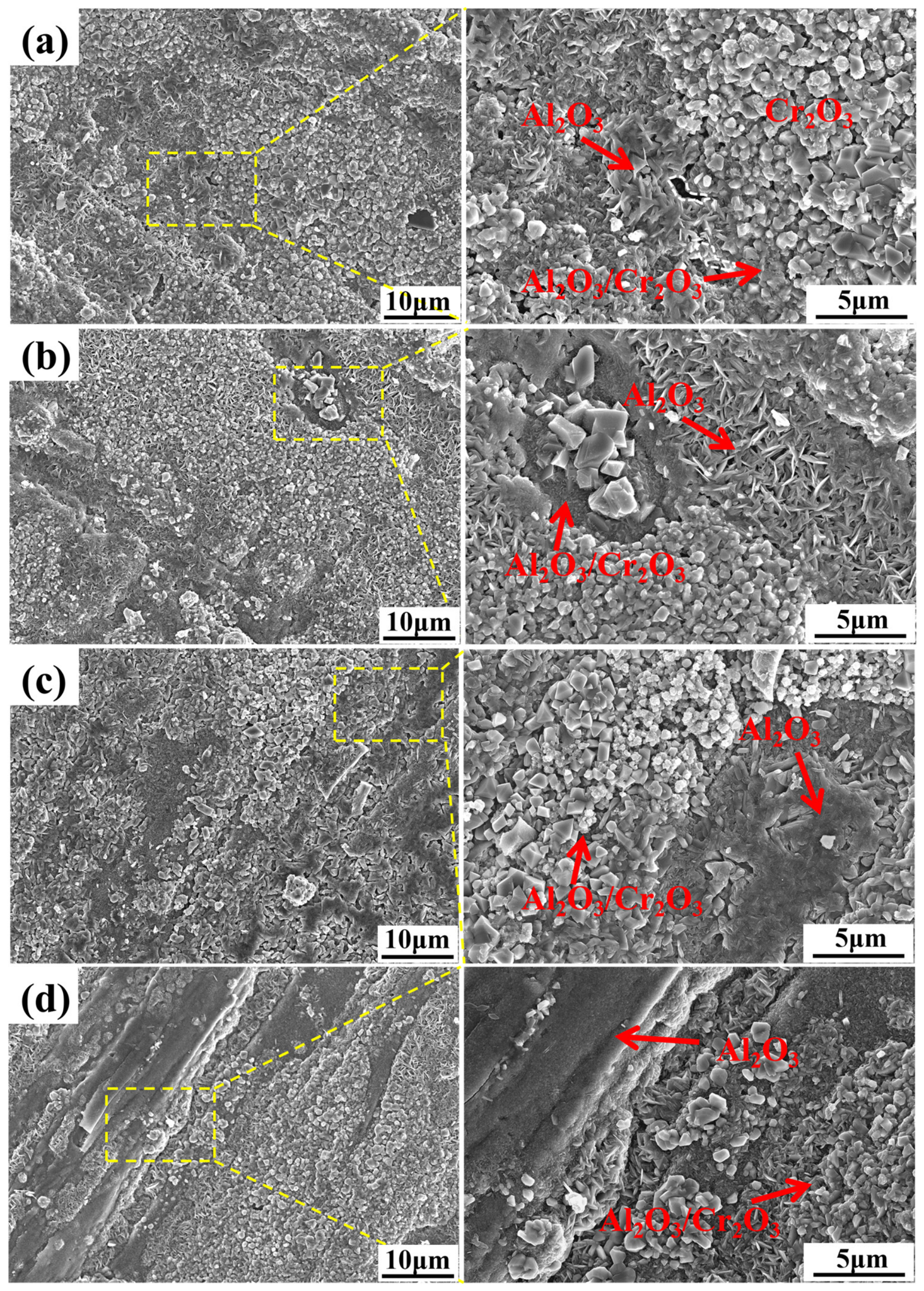
Figure 5 shows the surface BSE morphology of the Al-Cr-Fe-Ni EHEAs after 5 h of oxidation. The surface morphology of the oxide scale is consistent with the characteristics of the eutectic structure in the alloys before oxidation. The oxidation products of the Al0.75 alloy appear as scattered clusters, consisting primarily of spinel and Cr2O3-rich oxide with a low Al2O3 content; initial oxidation is dominated by mixed oxidation of the FCC phase. The Al0.8 alloy exhibits a banded oxidation morphology, with an increased proportion of Al2O3-rich oxide, enhanced selective oxidation of Al, and improved scale integrity. In the Al0.85 and Al0.9 alloys, the spinel phase has nearly disappeared, and the oxidation products consist of Al2O3-rich oxide and Cr2O3-rich oxide; among these, the surface of the Al0.9 alloy is flatter, with Al2O3 forming a continuous skeletal structure.
Figure 5.
Surface BSE morphology of the Al-Cr-Fe-Ni EHEAs after 5 h of oxidation: (a) Al0.75, (b) Al0.8, (c) Al0.85, (d) Al0.9.
All four alloys were still in the initial rapid oxidation stage, and their oxidation behavior was dominated by the selective oxidation of the two matrix phases: the Al-rich B2 phase oxidized preferentially to form Al2O3, while the Fe-Cr-Ni-rich FCC phase oxidized to form Cr2O3 and spinel phases [18,19]. To be precise, Cr2O3 is a Cr-rich mixed oxide that contains a certain amount of Fe and Ni, as well as a small amount of Al, in solid solution. As the Al content in the alloy increases, the Al content in Cr2O3 continuously decreases (from 19.22 at.% to 0.48 at.%, Table 2), while the Cr content continuously increases (from 15.86 at.% to 31.90 at.%). This indicates that the selective oxidation of Al gradually increases, and Al is no longer extensively dissolved in the Cr-based oxides. In addition, WDS analysis results indicate that the Al content in the spinel phase is extremely low (0.43~2.09 at.%), with Fe, Cr, and Ni as the primary metallic elements, consistent with the compositional characteristics of AB2O4-type spinels (FeCr2O4 or NiCr2O4).
Table 2.
Chemical composition of the main oxides formed on the alloys after 5 h of oxidation.
Figure 6 shows the surface XRD patterns of the four alloys after 50 h of oxidation. Compared with oxidation for 5 h, the intensities of the characteristic diffraction peaks for the FCC and B2 phases in the four alloys oxidized for 50 h were reduced due to the increased thickness of the surface oxide layer. The oxidation products still consist of Al2O3, Cr2O3, the spinel phase, and a small amount of Fe2O3, but the proportions of these oxides have changed significantly. The diffraction peak intensity of Al2O3 increases, gradually making it the dominant phase in the oxide scale; the peak intensity of Fe2O3 weakens, and the proportion of the spinel phase gradually decreases as the Al content increases.
Figure 6.
Surface XRD patterns of the Al-Cr-Fe-Ni EHEAs after 50 h of oxidation.
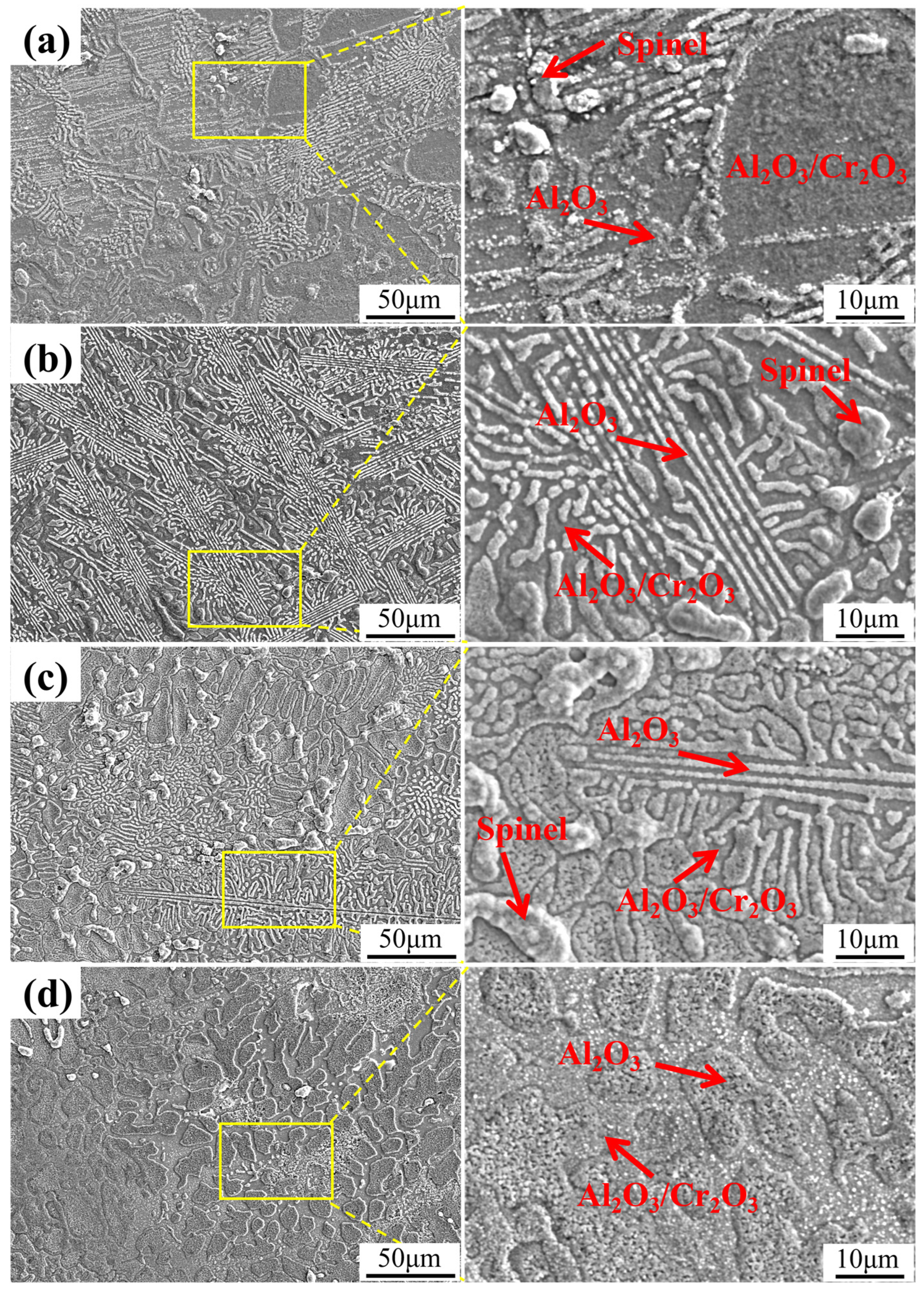
Figure 7 shows the surface BSE morphology of the Al-Cr-Fe-Ni EHEAs after 50 h of oxidation. After 50 h of oxidation, the thickness of the oxide scale increased for all four alloys, and the selective oxidation characteristics of the FCC and B2 phases became even more pronounced. On the surface of the Al0.75 alloy, bright white granular spinel phases are sparsely distributed on an Al2O3/Cr2O3 mixed oxide substrate. WDS results (Table 3) show that the spinel phase contains only 0.81 at.% Al, with Fe, Ni, and Cr as the main elements; the Al2O3-rich oxide phase contains 40.91 at.% Al, but still contains significant amounts of Cr, Ni, and Fe. The oxide scale on the surface of the Al0.8 alloy exhibits a distinct lamellar eutectic morphology, with Al2O3-rich oxide distributed along the original B2 phase bands and the spinel phase distributed in a granular manner in the gaps between the bands. The Al content in the spinel phase has decreased to 0.13 at.%, while the Al content in the Al2O3-rich oxide phase is 37.31 at.%. The increased Al content in the Al2O3/Cr2O3 mixed oxide indicates a higher degree of selective oxidation of Al. The eutectic morphological characteristics of the oxide scale on the Al0.85 alloy are more pronounced, with Al2O3-rich oxide forming a continuous skeletal structure, while the spinel phase is reduced in quantity and appears as isolated particles. WDS analysis shows that the Al content in the spinel phase is as low as 0.02 at.%, and the Al2O3-rich oxide phase maintains a high degree of purity. The surface oxide scale of the Al0.9 alloy is smoother; the spinel phase has nearly disappeared, and the oxide scale consists of Al2O3-rich oxide and a mixed Al2O3/Cr2O3 oxide, with Al2O3 distributed continuously and densely.
Figure 7.
Surface BSE morphology of the Al-Cr-Fe-Ni EHEAs after 50 h of oxidation: (a) Al0.75, (b) Al0.8, (c) Al0.85, (d) Al0.9.
Table 3.
Chemical composition of the main oxides formed on the alloys after 50 h of oxidation.
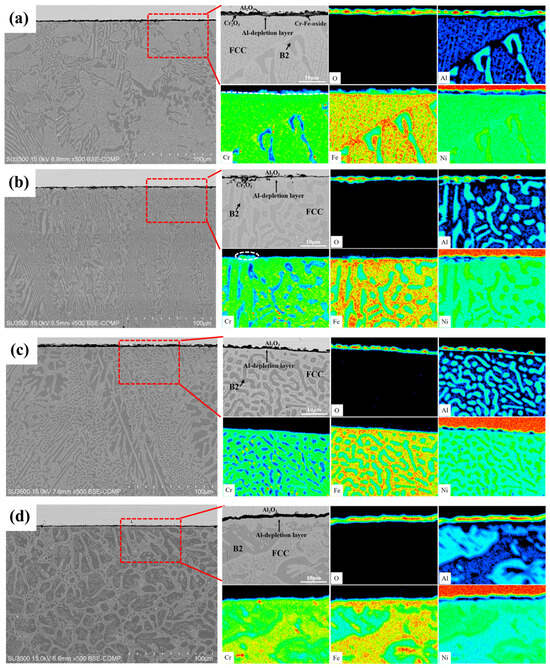
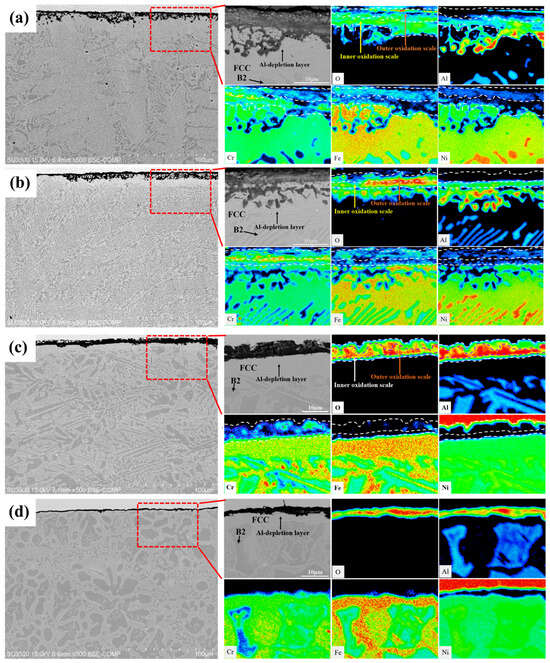
Figure 8 shows cross-sectional BSE images and EPMA elemental distribution on the surface oxide layer of the Al-Cr-Fe-Ni EHEAs after 50 h of oxidation. The oxide scales of all four alloys exhibited a bilayer structure: the outer layer consisted of Cr- and Fe-rich oxides (Cr2O3 and spinel phase) and Al2O3-rich oxide, while the inner layer mainly consisted of Al2O3-rich oxide. EPMA elemental maps showed that O was concentrated in the outermost layer of the oxide scale, Al was significantly enriched in the inner layer, and Cr and Fe were concentrated in the outer layer. The oxide scale of the Al0.75 alloy was the thickest, with the inner Al2O3-rich oxide layer exhibiting a discontinuous distribution and a relatively high proportion of Cr and Fe elements. The oxide scale of the Al0.8 alloy was thinner, and the continuity of the inner Al2O3-rich oxide layer was significantly improved. The oxide scales of the Al0.85 and Al0.9 alloys were thin and dense, with a continuous and complete Al2O3-rich oxide layer forming in the inner layer and an extremely thin layer of Cr/Fe oxides in the outer layer.
Figure 8.
Cross-sectional BSE images and EPMA elemental distribution on the surface oxide layer of the Al-Cr-Fe-Ni EHEAs after 50 h of oxidation: (a) Al0.75, (b) Al0.8, (c) Al0.85, (d) Al0.9.
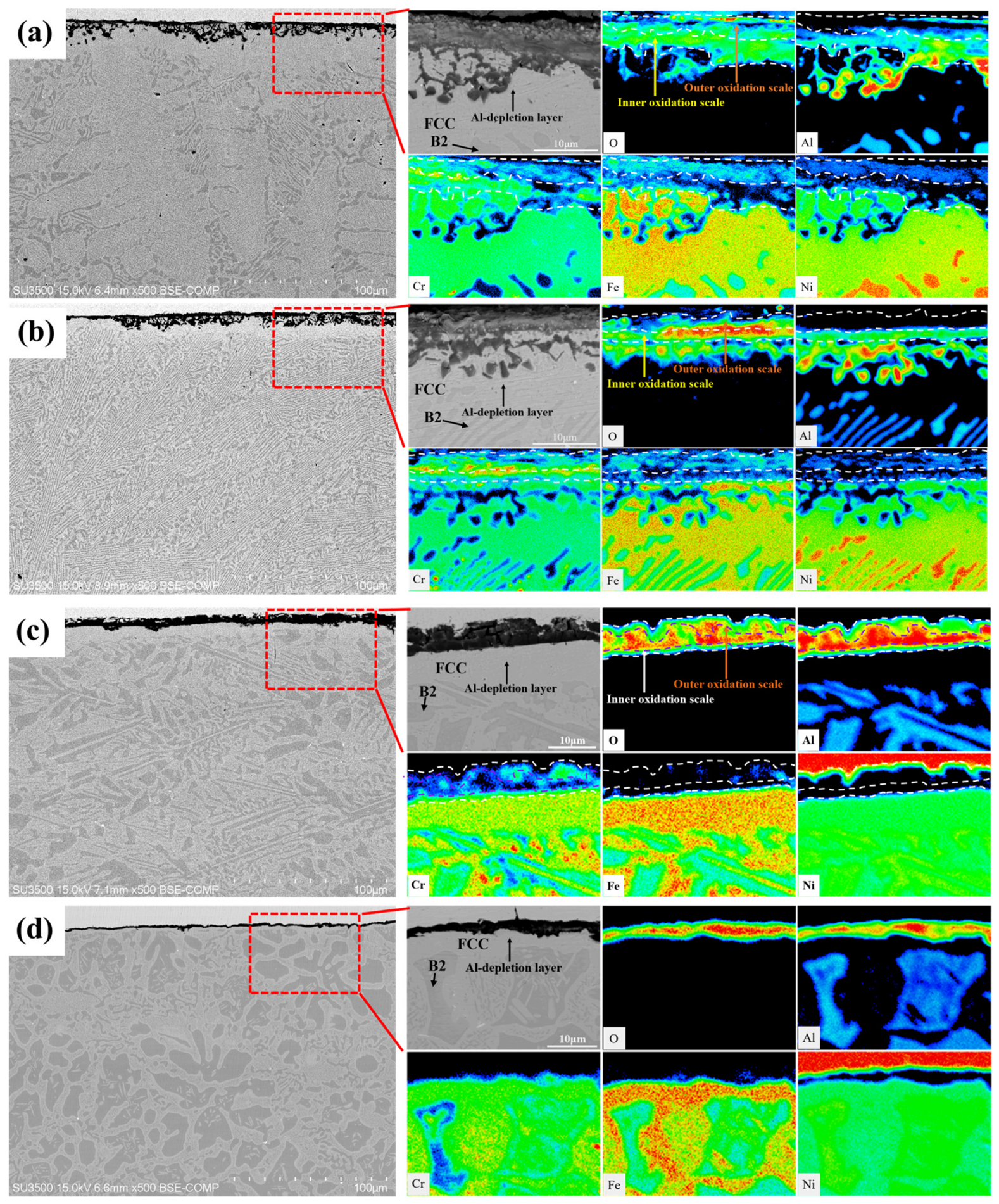
Due to the preferential oxidation and depletion of Al in the surface layer, an Al-depletion layer forms near the surface of the matrix. Such a phenomenon is typical for nearly all Al-containing alloys subjected to high-temperature oxidation [13,14,16,19]. Within this region, the Al-rich B2 phase decomposes because the Al content decreases, transforming into the FCC phase. This is because Al is the key element promoting the formation of the B2 phase [1,4,9]. Therefore, the Al-depletion layer consists primarily of the FCC phase. Quantitative measurements via ImageJ 1.5x indicate that after 50 h of oxidation, the thickness of the Al-depleted zone in the Al0.75, Al0.8, Al0.85 and Al0.9 alloys is 1.40 ± 0.36 μm, 1.14 ± 0.21 μm, 0.91 ± 0.33 μm and 0.90 ± 0.40 μm, respectively. As a general trend, thinner Al-depleted zones are formed in alloys with higher Al content. The Al0.75 alloy has a thicker and compositionally non-uniform Al-depletion layer, and the B2 phase disappears completely. The Al0.9 alloy, due to the high proportion of B2 phase in the matrix and ample Al reserves, can continuously replenish Al at the surface via diffusion, resulting in a milder degree of depletion and a thinner layer. The matrix regions distant from the oxidized surface retain the original FCC + B2 eutectic structure.
Figure 9 shows the surface XRD patterns of the four alloys after 150 h of oxidation. After 150 h of oxidation, the diffraction peak intensities of FCC in the four alloys continued to decrease, indicating further growth of the oxide scale thickness. The absence of B2 phase peaks is attributed to the preferential nucleation of Al2O3 from the B2 phase [42]. In the Al0.75 alloy, Cr2O3 and the spinel phase still accounted for a certain proportion. As the Al content increased, the proportion of Al2O3 diffraction peaks continued to rise; in the Al0.9 alloy, Al2O3 had become the dominant component of the oxide scale, while the peak intensities of Cr2O3 and the spinel phase were extremely weak.
Figure 9.
Surface XRD patterns of the Al-Cr-Fe-Ni EHEAs after 150 h of oxidation.
Figure 10 shows the surface BSE morphology of the Al-Cr-Fe-Ni EHEAs after 150 h of oxidation. After 150 h of oxidation, the four alloys entered a steady-state oxidation process, during which both the phase composition and morphology of the oxide scale stabilized. The oxide scale on the Al0.75 alloy has a rough surface with a fine-grained, multiphase mixed morphology, featuring scattered, flake-like Al2O3-rich oxide particles. WDS analysis (Table 4) shows that the Al2O3-rich oxide phase contains only 36.83 at.% Al, while Cr2O3-rich oxide and the mixed phase contain significant amounts of Fe and Ni in solid solution. The oxide scale of the Al0.8 alloy exhibits finer grain size, with locally aggregated block-like Al2O3-rich oxide grains. WDS analysis indicates that a separate Cr2O3-rich oxide phase coexists with Al2O3-rich oxide in a mixed phase, and the Al content in the Al2O3-rich oxide phase has increased to 40.11 at.%. The surface smoothness of the oxide scale on the Al0.85 alloy improved significantly, with Al2O3-rich oxide exhibiting a regular polyhedral morphology and uniform distribution. The Al2O3-rich oxide phase was close to the stoichiometric ratio, while the Ni content in the mixed phase was only 1.13 at.%. The surface oxide scale of the Al0.9 alloy exhibits a smooth, band-like structure; under high magnification, a continuous, dense Al2O3-rich oxide layer is visible. The Al content in the Al2O3-rich oxide phase reaches as high as 43.77 at.%, indicating the most pronounced selective oxidation of Al.
Figure 10.
Surface BSE morphology of the Al-Cr-Fe-Ni EHEAs after 150 h of oxidation: (a) Al0.75, (b) Al0.8, (c) Al0.85, (d) Al0.9.
Table 4.
Chemical composition of the main oxides formed on the alloys after 150 h of oxidation.
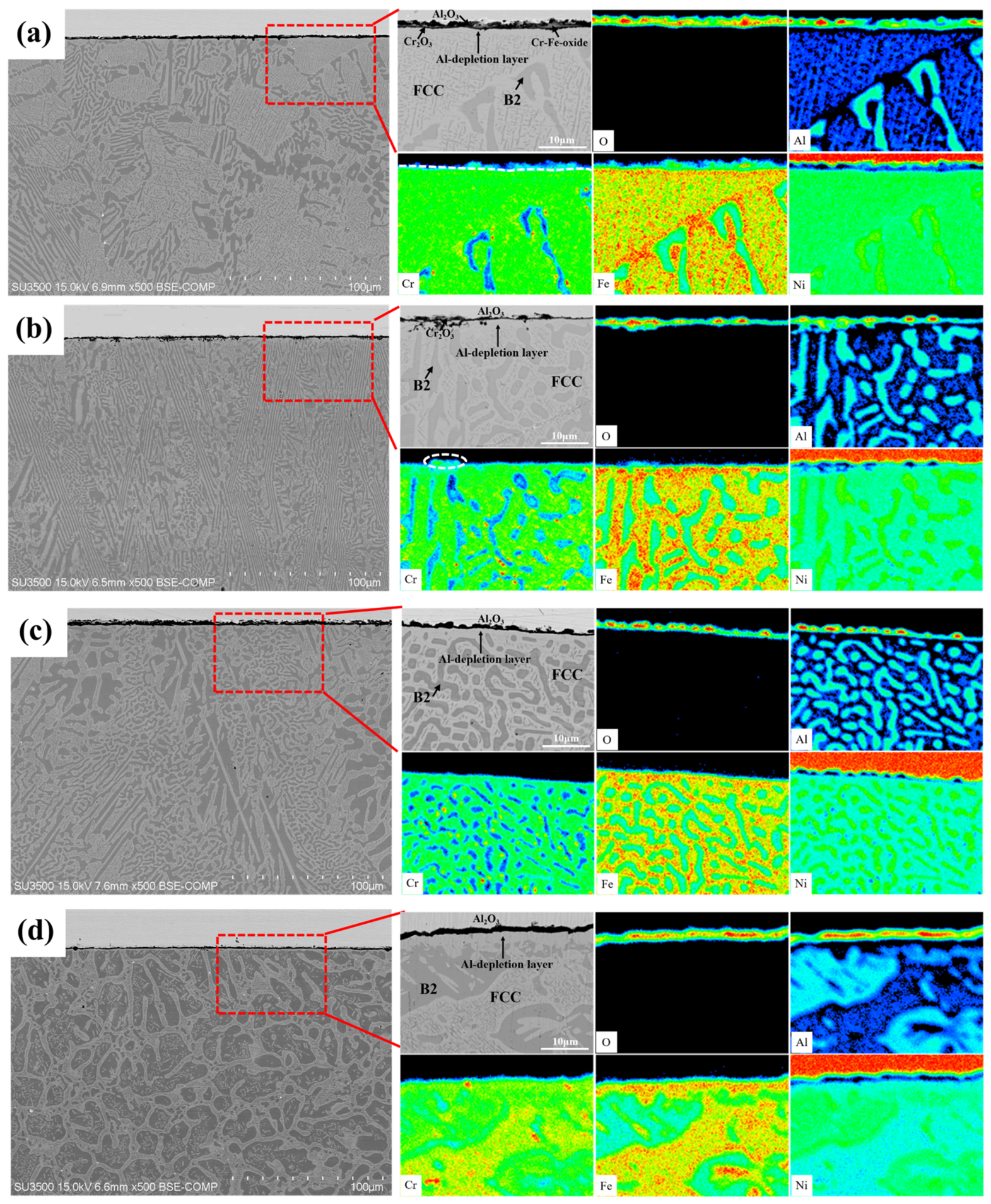
Figure 11 shows cross-sectional BSE images and EPMA elemental distribution on the surface oxide layer of the Al-Cr-Fe-Ni EHEAs after 150 h of oxidation. After prolonged oxidation, the oxide scale forms a stable bilayer structure, with the elemental distribution exhibiting distinct layering characteristics. The outer oxide layer is enriched in O, Cr, and Fe, corresponding to Cr2O3-rich oxide and a mixed Al2O3/Cr2O3 oxide, which are residual products from the initial oxidation of the alloys. The inner oxide layer is characterized by enrichment in O and Al, consisting primarily of a protective Al2O3-rich oxide phase that determines the oxide scale’s ability to block O diffusion. The Al0.75 alloy has the thickest total oxide scale, and the boundary between the inner and outer layers is indistinct. The inner Al2O3-rich oxide layer is distributed discontinuously and has high Cr and Fe contents. For the Al0.8 alloy, the oxide scale thickness decreases, and the boundary between the inner and outer layers becomes clearer. The continuity of the Al2O3-rich oxide inner layer of the oxide scale is significantly improved. The oxide scale of the Al0.85 alloy is even thinner, and the inner oxide layer forms a relatively continuous Al2O3-rich oxide framework. The oxide scale of the Al0.9 alloy is the thinnest and densest; the boundary between the inner and outer layers is clear, and the inner oxide layer consists of a complete, continuous, and dense Al2O3-rich oxide layer. The continuous oxidation and depletion of Al in the surface layer of the alloy promote the decomposition of the Al-enriched B2 phase in the subsurface layer, transforming it into a single FCC phase and forming an Al-depleted layer. This layer exhibits Ni enrichment due to the release of Ni resulting from the decomposition of the B2 phase. As the Al content in the alloy increases, the volume fraction of the B2 phase in the matrix rises, enhancing the ability of Al to diffuse and replenish the surface through the eutectic interfaces. Consequently, the thickness of the Al-depleted layer gradually decreases, and the degree of depletion diminishes: the Al-depleted layer is widest in the Al0.75 alloy, with a thickness of 17.04 ± 1.03 μm, and the B2 phase is completely decomposed; in the Al0.9 alloy, the thickness of the Al-depleted zone was 3.10 ± 0.91 μm, with residual B2 phase still present near the surface.
Figure 11.
Cross-sectional BSE images and EPMA elemental distribution on the surface oxide layer of the Al-Cr-Fe-Ni EHEAs after 150 h of oxidation: (a) Al0.75, (b) Al0.8, (c) Al0.85, (d) Al0.9.
3.4. Oxidation Mechanism of the Al-Cr-Fe-Ni EHEAs at 850 °C
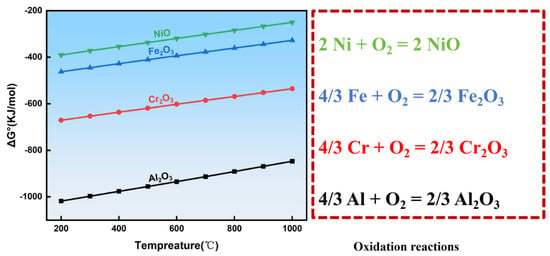
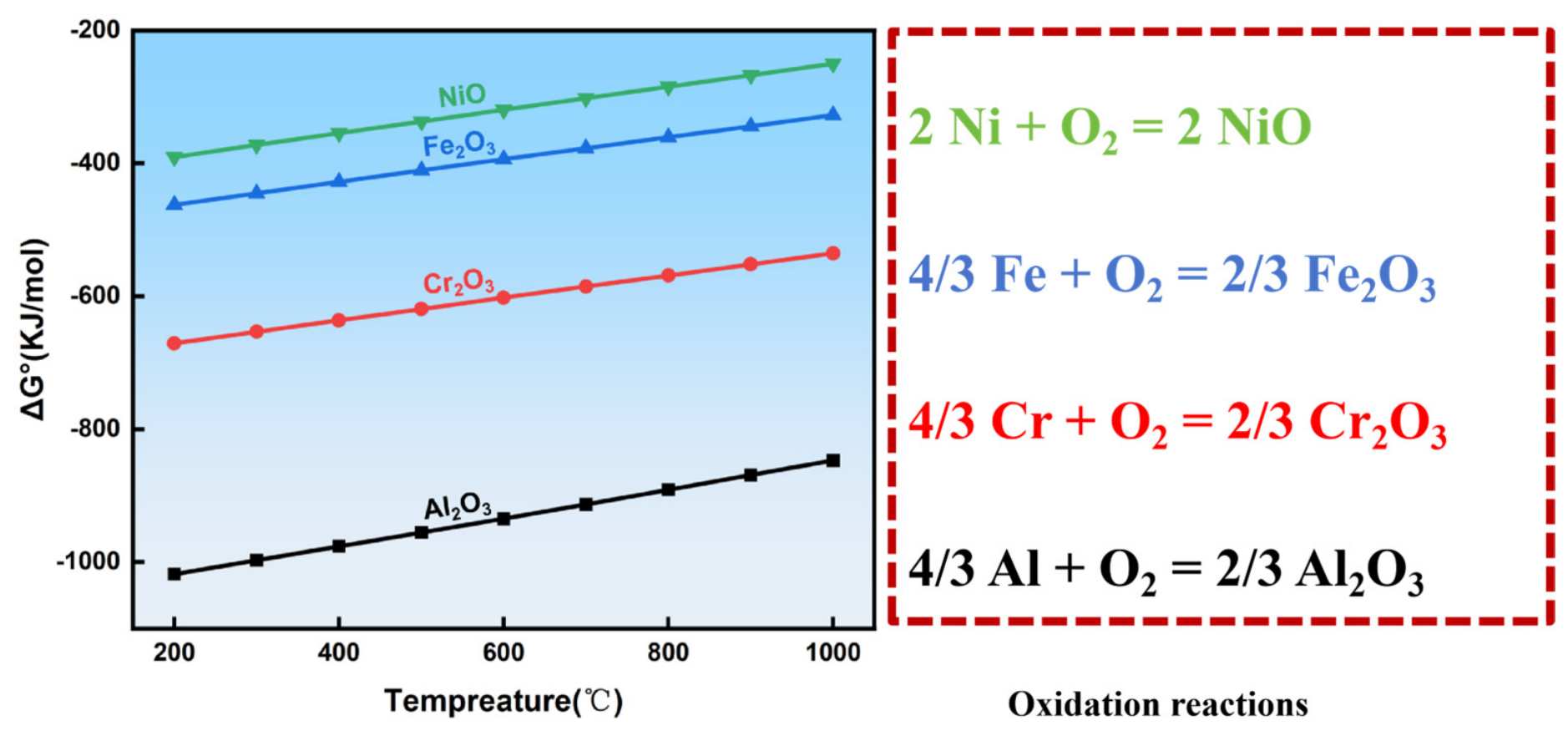
The oxidation resistance of an alloy primarily depends on the high-temperature stability of its surface oxide scale and its ability to block oxygen diffusion. In alloys containing Al and Cr, these elements enhance the alloy’s oxidation resistance by forming Al2O3 or Cr2O3 on the alloy surface [20,23]. However, the oxidation process of the alloys is influenced by other constituent elements [24,26,28]. For high-entropy alloys, the presence of multiple principal elements makes their high-temperature oxidation behavior more complex. High-temperature oxidation of alloys is a thermodynamically driven process of selective oxidation of specific elements. The standard Gibbs free energies of the major oxides in the Al-Cr-Fe-Ni eutectic high-entropy alloy were calculated using the thermodynamic software HSC 6.0, and the results are shown in Figure 12. All calculations were performed under isothermal isobaric conditions (1 atm, 850 °C) consistent with the experimental environment, covering all feasible oxidation reactions between the principal alloying elements (Al, Cr, Fe, Ni) and oxygen. The Gibbs free energy change (ΔG) of each reaction is calculated in kJ/mol. At 850 °C, the Gibbs free energies of formation for the various oxides are as follows: Al2O3 (–847.01 kJ/mol) < Cr2O3 (–535.36 kJ/mol) < Fe2O3 (–327.55 kJ/mol) < NiO (–249.95 kJ/mol). Among these, the Gibbs free energy of formation for Al2O3 is significantly lower than that of other oxides; therefore, Al is the element with the strongest oxidation affinity in the system, and selective oxidation of Al occurs preferentially. However, actual oxidation behavior is not determined solely by thermodynamics; it is also regulated by the state of the elements within the alloy [43]. The alloy matrix consists of an Al-rich B2-ordered intermetallic compound and a Cr-Fe- Ni-rich FCC disordered solid solution. Due to the significant differences in the elemental compositions of the two phases, the initial oxidation exhibits phase-specific characteristics: the Al-rich B2 phase oxidizes preferentially to form Al2O3-rich oxide, while the transition-metal-rich FCC phase oxidizes to form Cr2O3-rich oxide and spinel-type composite oxides.
Figure 12.
Gibbs free energies of the major oxides in the Al-Cr-Fe-Ni EHEAs.
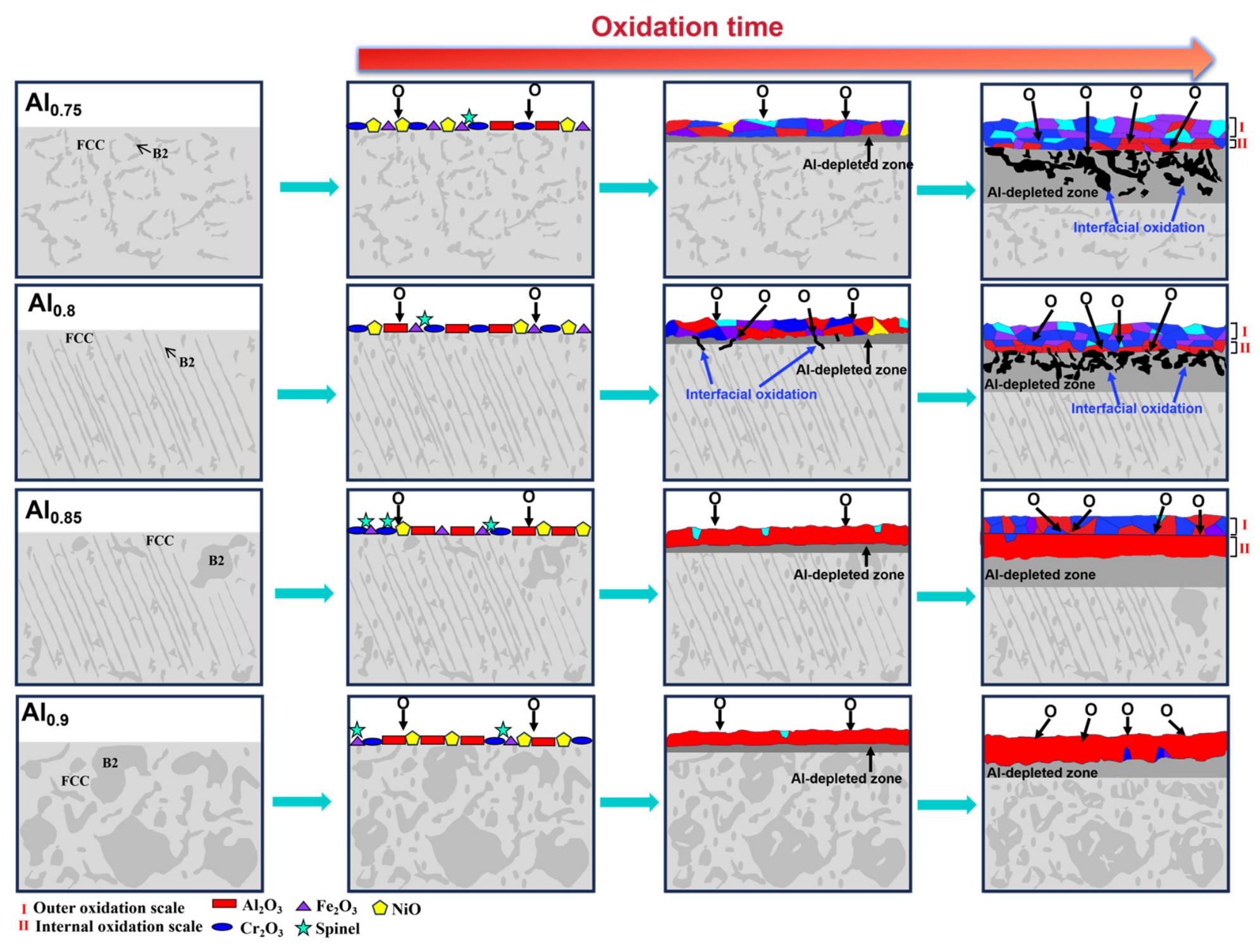
Figure 13 shows a schematic diagram of the oxidation mechanism of the four alloys at 850 °C. During the initial oxidation stage, there are no diffusion barriers at the alloy/air interface, and the surface oxidation rate far exceeds the outward diffusion rate of atoms from the matrix; the reaction process at this stage is primarily governed by the reaction kinetics at the alloy/air interface. All four Al-Cr-Fe-Ni eutectic high-entropy alloys consist of a dual-phase structure comprising FCC and B2 phases. The Al-rich B2 phase oxidizes preferentially to form Al2O3-rich oxide, while the FCC phase oxidizes to form a multiphase mixture of oxides, including Cr2O3-rich oxide, spinel, Fe2O3, and NiO. At this stage, the oxide scale is thin and discontinuous, and the distribution patterns of the various oxides correspond to the morphological characteristics of the alloy matrix’s eutectic structure.
Figure 13.
Schematic diagram of the oxidation mechanism of the Al-Cr-Fe-Ni EHEAs at 850 °C.
As the oxidation time increases, the thickening of the oxide scale inhibits the direct reaction between the metal elements in the alloy and oxygen in the air, and the oxidation process enters a steady-state phase controlled by elemental diffusion. In this oxidation process, the oxidation caused by the outward diffusion of matrix elements occurs simultaneously with the corrosion caused by the inward diffusion of oxygen from the air, with the latter playing a dominant role [29]. As the oxidation time progresses, the thickness of the oxide scale continues to increase, and the oxygen partial pressure (PO2) at the interface between the oxide scale and the alloy decreases. The oxide scale formed on the surface of high-Al-content alloys is denser and provides stronger oxygen barrier properties; therefore, the oxygen partial pressure at the interface is lower. Under low oxygen partial pressure, the oxidation reactions of other oxides formed by the constituent elements in these Al-Cr-Fe-Ni EHEAs become thermodynamically less favorable. Consequently, an inner layer composed primarily of Al2O3-rich oxide forms within the oxide scale of high-Al alloys. The oxide scale continues to thicken and gradually undergoes phase stratification. Al2O3-rich oxide accumulates internally to form an inner oxide layer, while oxides of Cr and Fe migrate outward and aggregate to form an outer oxide layer. Such composite oxide scales have also been observed in other AlCrFeNi/AlCoCrFeNi high-entropy alloys [14,15,21]. At the same time, the continuous consumption of Al causes the Al-rich B2 phase beneath the oxide scale to decompose, forming an Al-depleted zone dominated by the FCC phase. As the oxidation time continues to increase, the oxide scale on low-Al alloys provides insufficient protection, allowing oxygen atoms to continue penetrating inward. This leads to further internal oxidation, resulting in the formation of an internal oxidation zone distributed along the interface. In high-Al alloys, the continuous Al2O3-rich oxide layer effectively blocks the diffusion of oxygen atoms, suppressing interfacial reactions and resulting in a thin, uniform Al-depleted layer.
In general, the oxidation rate tends to decrease with rising Al content in the alloys [20.22.23]. However, the oxidation resistance of the Al-Cr-Fe-Ni eutectic high-entropy alloys is governed by the Al-reservoir role of the B2 phase and possible rapid diffusion along the eutectic interfaces, which promote the selective oxidation of Al to form a continuous, dense Al2O3 protective layer. The Al content in the B2 phase is significantly higher than that in the FCC phase, making it the primary carrier of Al in the alloy. As the Al content increases, the fraction of the B2 phase rises from 20.5% to 66.4%, significantly enhancing the overall supply capacity of Al and providing an ample reserve for the formation and growth of the surface Al2O3-rich oxide scale. In addition, the eutectic structure in the alloys contains a large number of two-phase interfaces, which may serve as short-circuit pathways for Al diffusion, accelerating the transport of Al to the oxide interface and promoting the lateral growth and continuous formation of Al2O3. Therefore, the Al0.85 alloy, which has a larger fraction of eutectic microstructure, exhibits oxidation resistance comparable to that of the Al0.9 alloy, which has a higher Al content. Once oxidation reaches a steady state, the Al2O3-rich oxide inner layer of the oxide scale becomes the primary barrier to oxygen diffusion, limiting the oxidation rate to a relatively low level. Al0.85 and Al0.9 alloys can form a continuous Al2O3-rich oxide inner layer earlier, resulting in a lower oxidation rate and superior oxidation resistance. During oxidation, the diffusion, depletion, and redistribution of elements in the Al-Cr-Fe-Ni eutectic high-entropy alloy primarily occur in the surface oxide scale and the subsurface Al-depleted layer. No significant compositional changes occur in the internal matrix far from the oxidation interface, and the FCC + B2 two-phase microstructure maintains good thermal stability at 850 °C for up to 150 h.
4. Conclusions
The oxidation resistance and competitive oxidation behavior of the FCC and B2 phases in the AlxCrFeNi3−x (x = 0.75, 0.8, 0.85, 0.9) EHEAs at 850 °C were investigated in this work. The main conclusions are summarized as follows:
All the alloys possess an FCC + B2 dual-phase eutectic microstructure. As the Al content increases from 0.75 to 0.9, the fraction of the B2 phase rises from 20.5% to 66.4%, and the microstructure evolves sequentially from an FCC matrix with island-shaped B2 dispersoids to a nearly equiaxed lamellar eutectic structure and finally to a B2 matrix with isolated FCC islands.
The oxidation kinetics of all four alloys at 850 °C conform well to the parabolic rate law. Increasing Al content significantly improves the oxidation resistance. The parabolic rate constants decrease in the sequence of Al0.75 > Al0.8 > Al0.85 > Al0.9, and the Al0.85 and Al0.9 alloys exhibit the best oxidation resistance with a mass gain of 0.49 mg/cm2 after 150 h of oxidation.
The oxidation process shows remarkable phase-selective competitive characteristics. The Al-rich B2 phase provides sufficient Al supply to sustain the formation and growth of the surface Al2O3-rich oxide scale. Meanwhile, abundant FCC/B2 interfaces in the eutectic structure may act as fast diffusion channels for Al atoms, accelerating Al transport to the oxidation front and promoting the lateral growth and continuity of Al2O3-rich oxide. Alloys with higher Al content form a complete, dense Al2O3-rich oxide protective layer at an earlier stage, which effectively blocks inward oxygen diffusion and thus yields a lower steady-state oxidation rate.
Author Contributions
Conceptualization, P.Z.; Methodology, S.Y., Z.Z., W.G. and L.P.; Formal analysis, S.Y., Y.L. and H.Z.; Investigation, P.Z., Y.L. and H.Z.; Data curation, S.Y., Y.L. and H.Z.; Writing—original draft, P.Z.; Writing—review & editing, S.Y. and H.Z.; Supervision, Z.Z., W.G. and L.P.; Project administration, P.Z. and Z.Z.; Funding acquisition, P.Z. All authors have read and agreed to the published version of the manuscript.
Funding
This work was supported by the National Natural Science Foundation of China (No. 52271081).
Data Availability Statement
The original contributions presented in this study are included in the article. Further inquiries can be directed to the corresponding author.
Conflicts of Interest
Author Zhou Zhou, Wei Gu and Linya Pang were employed by the company Tongshan China Resources Power Co., Ltd., The remaining authors declare that the research was conducted in the absence of any commercial or financial relationships that could be construed as a potential conflict of interest.
References
- Lu, Y.; Dong, Y.; Guo, S.; Jiang, L.; Kang, H.; Wang, T.; Wen, B.; Wang, Z.; Jie, J.; Cao, Z.; et al. A Promising new class of high-Temperature alloys: Eutectic high-entropy alloys. Sci. Rep. 2014, 4, 6200. [Google Scholar] [CrossRef] [Scilit]
- Lu, Y.; Dong, Y.; Jiang, H.; Wang, Z.; Cao, Z.; Guo, S.; Wang, T.; Li, T.; Liaw, P.K. Promising properties and future trend of eutectic high entropy alloys. Scr. Mater. 2020, 187, 202–209. [Google Scholar] [CrossRef] [Scilit]
- Zhang, Z.; Huang, Y.; Xu, Q.; Fellner, S.; Hohenwarter, A.; Wurster, S.; Song, K.; Gammer, C.; Eckert, J. Equiaxed microstructure design enables strength-ductility synergy in the eutectic high-entropy alloy. J. Mater. Res. Technol. 2024, 33, 103–114. [Google Scholar] [CrossRef] [Scilit]
- Liu, J.; Li, Z.; Lin, D.; Tang, Z.; Song, X.; He, P.; Zhang, S.; Bian, H.; Fu, W.; Song, Y. Eutectic high-entropy alloys and their applications in materials processing engineering: A review. J. Mater. Sci. Technol. 2024, 189, 211–246. [Google Scholar] [CrossRef] [Scilit]
- Chen, Z.; Zhu, W.; Wang, H.; He, Q.; Fang, Q.; Liu, X.; Li, J.; Yang, Y. Overcoming strength-toughness trade-off in a eutectic high entropy alloy by optimizing chemical and microstructural heterogeneities. Commun. Mater. 2024, 5, 12. [Google Scholar] [CrossRef] [Scilit]
- Wu, Q.; Jia, Y.; Wang, Z.; He, F.; Wei, Y.; Li, J.; Wang, J. Rapid alloy design from superior eutectic high-entropy alloys. Scr. Mater. 2022, 219, 114875. [Google Scholar] [CrossRef] [Scilit]
- Li, Y.; Shi, P.; Wang, M.; Yang, Y.; Wang, Y.; Li, Y.; Wen, Y.; Ren, W.; Min, N.; Chen, Y.; et al. Unveiling microstructural origins of the balanced strength–ductility combination in eutectic high-entropy alloys at cryogenic temperatures. Mater. Res. Lett. 2022, 10, 602–610. [Google Scholar] [CrossRef] [Scilit]
- Lozinko, A.; Zhang, Y.; Mishin, O.V.; Klement, U.; Guo, S. Microstructural characterization of eutectic and near-eutectic AlCoCrFeNi high-entropy alloys. J. Alloys Compd. 2020, 822, 153558. [Google Scholar] [CrossRef] [Scilit]
- Zheng, H.; Chen, R.; Qin, G.; Li, X.; Su, Y.; Ding, H.; Guo, J.; Fu, H. Phase separation of AlCoCrFeNi2.1 eutectic high-entropy alloy during directional solidification and their effect on tensile properties. Intermetallics 2019, 113, 106569. [Google Scholar] [CrossRef] [Scilit]
- Wani, I.S.; Bhattacharjee, T.; Sheikh, S.; Lu, Y.P.; Chatterjee, S.; Bhattacharjee, P.P.; Guo, S.; Tsuji, N. Ultrafine-grained AlCoCrFeNi2.1 eutectic high-entropy alloy. Mater. Res. Lett. 2016, 4, 174–179. [Google Scholar] [CrossRef] [Scilit]
- Hao, D.; Liu, X.; Liu, P.; Xiong, J.; Li, J. Microstructure and mechanical properties of transient liquid-phase diffusion bonding GH5188 and AlCoCrFeNi2.1 high entropy alloy. Mater. Charact. 2025, 228, 115390. [Google Scholar] [CrossRef] [Scilit]
- Li, S.; Zhang, P.; Hou, X.; Wu, T.; Liu, Z.; Wang, X.; He, P.; Narayanan, J.A. Weldability of rolled AlCoCrFeNi2.1/GH4169 dissimilar joints fabricated by electron beam welding. Mater. Sci. Eng. A 2025, 948, 149348. [Google Scholar] [CrossRef] [Scilit]
- Zhu, J.Y.; Lu, S.N.; Jin, Y.; Xu, L.N.; Xu, X.Q.; Yin, C.X.; Jia, Y. High-temperature oxidation behaviours of AlCoCrFeNi high-entropy alloy at 1073–1273 K. Oxid. Met. 2020, 94, 265–281. [Google Scholar] [CrossRef] [Scilit]
- Butler, T.M.; Weaver, M.L. Oxidation behavior of arc melted AlCoCrFeNi multi-component high-entropy alloys. J. Alloys Compd. 2016, 674, 229–244. [Google Scholar] [CrossRef] [Scilit]
- Nong, Z.-S.; Lei, Y.-N.; Zhu, J.-C. Wear and oxidation resistances of AlCrFeNiTi-based high entropy alloys. Intermetallics 2018, 101, 144–151. [Google Scholar] [CrossRef] [Scilit]
- Lu, J.; Ren, G.; Chen, Y.; Zhang, H.; Li, L.; Huang, A.; Liu, X.; Cai, H.; Shan, X.; Luo, L.; et al. Unraveling the oxidation mechanism of an AlCoCrFeNi high-entropy alloy at 1100 °C. Corros. Sci. 2022, 209, 110736. [Google Scholar] [CrossRef] [Scilit]
- Huang, A.; Li, L.; Liu, X.; Zhang, H.; Zhang, X.; Lu, J.; Chen, Y.; Zhao, X. Phase transformation-induced TGO rumpling failure of an AlCoCrFeNi high-entropy alloy after isothermal oxidation at 1200 °C. Scr. Mater. 2024, 239, 115817. [Google Scholar] [CrossRef] [Scilit]
- Zhou, Z.; Zhang, X.; Peng, X.; Xie, Y.; Yang, S.; Li, H.; Guo, H. Insights into the effects of grain size variation and FCC phase formation on the oxidation behavior of laser additively manufactured BCC AlCoCrFeNi high entropy alloy. Corros. Sci. 2024, 239, 112416. [Google Scholar] [CrossRef] [Scilit]
- Lin, G.; Cai, Z.; Dong, Y.; Wang, C.; Hu, J.; Zhang, P.; Gu, L. High-temperature oxidation behavior of AlCoCrFeNi2.1 eutectic high-entropy alloy: Microstructure evolution and microhardness. Mater. Charact. 2024, 210, 113830. [Google Scholar] [CrossRef] [Scilit]
- Wu, C.; Li, C.; Liu, Y.; Ding, Z.; Peng, H.; Zhu, X.; Su, X. Oxidation behavior of AlxCoCr2−xFeNi2.1 high-entropy alloys in solid carburizing atmosphere. Trans. Indian Inst. Met. 2026, 79, 204. [Google Scholar] [CrossRef] [Scilit]
- Gawel, R.; Rogal, Ł.; Dąbek, J.; Wójcik-Bania, M.; Przybylski, K. High temperature oxidation behaviour of non-equimolar AlCoCrFeNi high entropy alloys. Vacuum 2021, 184, 109969. [Google Scholar] [CrossRef] [Scilit]
- Sun, X.; Li, X.; Guo, S.; Zhu, L.; Teng, J.; Jiang, L.; Moverare, J.; Li, X.-H.; Peng, R.L. The impact of Al/Cr ratio on the oxidation kinetics of Y-doped AlCoCrFeNi high-entropy alloys at 1100 °C. Intermetallics 2025, 176, 108582. [Google Scholar] [CrossRef] [Scilit]
- Listyawan, T.A.; Agustianingrum, M.P.; Na, Y.S.; Lim, K.R.; Park, N. Improving high-temperature oxidation behavior by modifying Al and Co content in Al-Co-Cr-Fe-Ni high-entropy alloy. J. Mater. Sci. Technol. 2022, 129, 115–126. [Google Scholar] [CrossRef] [Scilit]
- Dąbrowa, J.; Cieślak, G.; Stygar, M.; Mroczka, K.; Berent, K.; Kulik, T.; Danielewski, M. Influence of Cu content on high temperature oxidation behavior of AlCoCrCuxFeNi high entropy alloys (x = 0; 0.5; 1). Intermetallics 2017, 84, 52–61. [Google Scholar] [CrossRef] [Scilit]
- Wang, Z.; Li, Y.; Wang, H.; Sun, W.; Xu, Y.; Wang, Z. High-temperature oxidation behavior of as-cast (Al7.5Co21.9Cr10.9Ti5.0Fe21.9Ni32.8)100-xCux high-entropy alloys at 800 °C. Intermetallics 2026, 191, 109201. [Google Scholar] [CrossRef] [Scilit]
- Zhou, Y.; Ma, J.; Peng, W.; Liu, Z.; Li, K.; Zhang, L.; Huang, P.; Zhou, S.; Zhang, X.; Qu, Y.; et al. Effect of Nb on the high-temperature oxidation properties of AlCoCrFeNi HEAs. J. Alloys Compd. 2025, 1037, 182435. [Google Scholar] [CrossRef] [Scilit]
- Tang, C.; Shi, H.; Jianu, A.; Weisenburger, A.; Victor, G.; Grosse, M.; Müller, G.; Seifert, H.J.; Steinbrück, M. High-temperature oxidation of AlCrFeNi-(Mn or Co) high-entropy alloys: Effect of atmosphere and reactive element addition. Corros. Sci. 2021, 192, 109809. [Google Scholar] [CrossRef] [Scilit]
- Erdogan, A.; Sunbul, S.E.; Icin, K.; Doleker, K.M. Microstructure, Wear and oxidation behavior of AlCrFeNiX (X = Cu, Si, Co) high entropy alloys produced by powder metallurgy. Vacuum 2021, 187, 110143. [Google Scholar] [CrossRef] [Scilit]
- Hu, J.; Gu, C.; Li, J.; Li, C.; Feng, J.; Jiang, Y. Microstructure and oxidation behavior of the Y/Ta/Hf Co-doped AlCoCrFeNi high-entropy alloys in air at 1100 °C. Corros. Sci. 2023, 212, 110930. [Google Scholar] [CrossRef] [Scilit]
- Zhang, C.; Zheng, M.; Zhu, M.; Yao, L.; Jian, Z. Oxidation behavior of (AlCoCrFeNi)92(TiC)8 high-entropy alloy at elevated temperatures. J. Mater. Eng. Perform. 2022, 32, 8100–8110. [Google Scholar] [CrossRef] [Scilit]
- Ham, G.-S.; Kim, Y.-K.; Na, Y.S.; Lee, K.-A. Effect of Ti addition on the microstructure and high-temperature oxidation property of AlCoCrFeNi high-entropy alloy. Met. Mater. Int. 2020, 27, 156–165. [Google Scholar] [CrossRef] [Scilit]
- Sun, Y.; Miao, Q.; Liang, W.; Gupta, M.; Jia, F.; Xu, J.; Yu, H.; Zang, K. High temperature oxidation-resistant AlCoCrFeNi high entropy alloy coating on TiAl alloy: Role of pre-diffusion on oxidation resistance. Appl. Surf. Sci. 2025, 689, 162501. [Google Scholar] [CrossRef] [Scilit]
- Chen, R.R.; Ren, H.; Chen, D.Z.; Gao, X.F.; Liu, T.; Yang, X.; Feng, L.; Chen, Y.; Qin, G.; Wu, S.P.; et al. Considerable improvement in the oxidation resistance of a Y/Sc Co-doped AlCoCrFeNi high-entropy alloy without loss of mechanical properties at 1100 °C. Metall. Mater. Trans. A 2025, 56, 2151–2165. [Google Scholar] [CrossRef] [Scilit]
- Tian, L.; Huang, Z.; Li, J.; Wang, Q. Cyclic oxidation of an AlCoCrFeNi high-entropy alloy with and without Y2O3 modification fabricated by laser directed energy deposition. Surf. Interfaces 2025, 72, 107331. [Google Scholar] [CrossRef] [Scilit]
- Gao, R.; Ren, H.; Chen, D.; Qin, G.; Ji, J.; Chen, R. Y/Sc Co-doping enhances cyclic oxidation resistance of AlCoCrFeNi high-entropy alloy via improved scale adhesion and spallation resistance. High Temp. Corros. Mater. 2026, 103, 62. [Google Scholar] [CrossRef] [Scilit]
- Ren, H.; Chen, R.R.; Liu, T.; Gao, X.F.; Qin, G.; Wu, S.P.; Guo, J.J. Unraveling the oxidation mechanism of Y-doped AlCoCrFeNi high-entropy alloy at 1100 °C. Appl. Surf. Sci. 2024, 652, 159316. [Google Scholar] [CrossRef] [Scilit]
- Lu, Y.; Gao, X.; Jiang, L.; Chen, Z.; Wang, T.; Jie, J.; Kang, H.; Zhang, Y.; Guo, S.; Ruan, H.; et al. Directly cast bulk eutectic and near-eutectic high entropy alloys with balanced strength and ductility in a wide temperature range. Acta Mater. 2017, 124, 143–150. [Google Scholar] [CrossRef] [Scilit]
- Chen, X.; Qi, J.Q.; Sui, Y.W.; He, Y.Z.; Wei, F.X.; Meng, Q.K.; Sun, Z. Effects of aluminum on microstructure and compressive properties of Al-Cr-Fe-Ni eutectic multi-component alloys. Mater. Sci. Eng. A 2017, 681, 25–31. [Google Scholar] [CrossRef] [Scilit]
- Jin, X.; Zhou, Y.; Zhang, L.; Du, X.; Li, B. A novel Fe20Co20Ni41Al19 eutectic high entropy alloy with excellent tensile properties. Mater. Lett. 2018, 216, 144–146. [Google Scholar] [CrossRef] [Scilit]
- Jin, X.; Bi, J.; Zhang, L.; Zhou, Y.; Du, X.; Liang, Y.; Li, B. A new CrFeNi2Al eutectic high entropy alloy system with excellent mechanical properties. J. Alloys Compd. 2019, 770, 655–661. [Google Scholar] [CrossRef] [Scilit]
- Vo, T.D.; Tieu, A.K.; Wexler, D.; Su, L.; Nguyen, C.; Deng, G. Fabrication and characterization of a low-cost Co-free Al0.8CrFeNi2.2 eutectic high entropy alloy based solid self-lubricating composite: Microstructure, mechanical and wear properties. J. Alloys Compd. 2022, 928, 167087. [Google Scholar] [CrossRef] [Scilit]
- Wu, L.; Li, X.; Gao, R. Phase transformation-mediated oxidation and the dual role of molybdenum in a eutectic AlCrFeNi high-entropy alloy. J. Mater. Sci. 2026, 61, 21558–21579. [Google Scholar] [CrossRef] [Scilit]
- Vo, T.D.; Tieu, A.K.; Wexler, D.; Su, L.; Nguyen, C.; Yang, J.; Deng, G. High temperature tribological performance of a cost-effective eutectic high entropy alloy Al0.8CrFeNi2.2: Comparison with AlCoCrFeNi2.1. Tribol. Int. 2023, 184, 108445. [Google Scholar] [CrossRef] [Scilit]
- Campo, K.N.; Wischi, M.; Rodrigues, J.F.Q.; Starck, L.F.; Sangali, M.C.; Caram, R. Directional solidification of the Al0.8CrFeNi2.2 eutectic high-entropy alloy. J. Mater. Res. Technol. 2024, 30, 8874–8881. [Google Scholar] [CrossRef] [Scilit]
- Hao, J.; Yang, M.; Fei, Q.; Du, Y.; Wang, D.; Jiang, B. Directionally solidified Al0.8CrFeNi2.2 EHEA with feather-like biomimetic structure: Microstructure and mechanical properties. J. Mater. Res. Technol. 2026, 44, 3449–3459. [Google Scholar] [CrossRef] [Scilit]

Disclaimer/Publisher’s Note: The statements, opinions and data contained in all publications are solely those of the individual author(s) and contributor(s) and not of MDPI and/or the editor(s). MDPI and/or the editor(s) disclaim responsibility for any injury to people or property resulting from any ideas, methods, instructions or products referred to in the content. |
© 2026 by the authors. Licensee MDPI, Basel, Switzerland. This article is an open access article distributed under the terms and conditions of the Creative Commons Attribution (CC BY) license.