


Abstract
Continuous carbon fiber-reinforced aluminum matrix (Cf/Al) composites offer excellent mechanical properties but face fabrication challenges due to poor wettability and the formation of brittle Al4C3 at high temperatures. Ultrasonic consolidation (UC) enables low-temperature solid-state bonding, yet the brittle carbon fibers are susceptible to damage from high shear stresses during the process. In this study, a Ti protective coating was deposited on carbon fibers via electrodeposition, and Cf/Al composites were successfully fabricated using UC. The results showed that a uniform Ti-based coating was achieved at 5 mol/L TiCl3 for 5 min. During UC, the Ti-based coating protected the fibers by absorbing shear stress through plastic flow, although it was largely separated from the fiber surface and replaced by direct mechanical interlocking with the aluminum matrix. Tensile tests revealed that the Cf/Al composites achieved significant improvements in yield strength (14.4%), ultimate tensile strength (18.5%), and fracture strain (50.5%) compared to unreinforced aluminum. Fracture surface analysis confirmed uniform fiber distribution and pull-out features, indicating effective load transfer. This work demonstrates that UC combined with Ti-based coating is a promising approach for the direct, low-temperature fabrication of high-performance Cf/Al composites.
1. Introduction
Continuous carbon fiber-reinforced aluminum matrix (Cf/Al) composites combine the high specific strength and high specific modulus of carbon fibers with the good toughness and ductility of aluminum alloys. In addition, they exhibit excellent corrosion resistance, creep resistance, and a low coefficient of thermal expansion [1,2,3]. These advantages have attracted extensive attention in aerospace, automotive lightweighting, and electronic packaging applications [4,5]. Despite their promising applications, the fabrication of Cf/Al composites still faces significant challenges. The primary issue lies in the poor wettability between carbon fibers and molten aluminum alloys, characterized by a large contact angle, which makes effective infiltration difficult at low temperatures [6]. Therefore, external pressure or elevated temperature is typically required to improve wettability during fabrication. Conventional Cf/Al manufacturing processes, such as pressure infiltration [7,8], vacuum hot pressing [9,10], and squeeze casting [11,12], generally require heating the aluminum matrix above its melting point and applying external pressure to ensure that the molten aluminum fully infiltrates the carbon fiber reinforcement. Although high temperatures improve wettability, they also promote the formation of the brittle Al4C3 interfacial phase, which deteriorates the interfacial bonding quality between carbon fibers and the aluminum matrix [13]. To suppress such detrimental interfacial reactions, researchers have proposed coating carbon fiberswith protective layers such as Ni, Cu, or TiC to isolate the fibers from direct contact with the aluminum matrix [14,15,16].
In addition, high-temperature and high-pressure processes are typically limited by the size of the processing container. The container volume directly restricts the maximum achievable dimensions of Cf/Al components [17]. Fabricating large-scale Cf/Al structures requires more complex mold systems [18]. Moreover, achieving uniform fiber distribution in large components remains challenging, and carbon fibers may segregate or settle due to density differences [19].
To overcome these limitations, some researchers have explored semi-solid rolling and other low-temperature, open-environment fabrication techniques [20]. However, the dispersion of carbon fibers within the metal matrix remains difficult to control, which has a negative effect on the performance of the composite material [21,22].
Ultrasonic consolidation (UC) offers a promising alternative for addressing these issues. UC applies normal pressure between metal foils while introducing high-frequency ultrasonic oscillation, enabling solid-state bonding between metal foils [23]. Since bonding relies primarily on the disruption of surface oxide films and intimate contact between fresh metal surfaces, the processing temperature remains far below the melting point of the metal [24]. This low-temperature processing characteristic has attracted extensive attention in the fields of metal matrix composites and smart components [25]. Meanwhile, this enables additive manufacturing of large-scale components without the need for a controlled atmosphere.
For Cf/Al composites, low-temperature processing not only effectively suppresses the formation of Al4C3 but also allows ultrasonic-induced interfacial plastic flow, which promotes matrix filling into fiber interstices and improves fiber distribution uniformity within the metal matrix. However, carbon fibers are inherently brittle and cannot withstand the high shear stresses generated during ultrasonic consolidation. They are therefore prone to fracture or even pulverization. How to effectively protect carbon fibers from ultrasonic-induced damage is a key issue determining the feasibility of UC for Cf/Al fabrication.
Previous studies by Jiao et al. [26] investigated UC-assisted fabrication of fiber-reinforced metal matrix composites, but their work mainly focused on improving the dispersion of SiC fibers and did not provide specific protection strategies for carbon fibers. Moreover, preheating and subsequent hot pressing steps in UC processes may still lead to the formation of brittle interfacial compounds. Masurtschak et al. [27] proposed embedding optical fibers into aluminum alloys using laser-machined microchannels to protect fibers from ultrasonic damage. However, this approach is limited to single-fiber protection and is not suitable for high-volume fiber reinforcement, as large-area grooving significantly reduces fabrication efficiency.
Besides modifying the matrix, surface modification can also enhance the intrinsic mechanical strength of carbon fibers. Among various approaches, metal coating deposition on carbon fiber surfaces is considered a promising solution. Metal coatings can provide additional structural support during UC processing, which has been validated in ultrasonic embedding of fiber-based sensors [28].
Titanium (Ti) exhibits good mechanical strength and plastic deformability, enabling it to effectively absorb and accommodate shear oscillation during UC through plastic flow, thereby protecting carbon fibers from direct mechanical damage. In addition, the low-temperature processing characteristic of UC can limit the formation of intermetallic phases such as TiAl3, which helps suppress the formation of harmful interfacial compounds [29,30,31]. Based on these considerations, Ti was selected as the coating material for carbon fibers in this study to enhance their resistance to ultrasonic vibration and prevent fracture during consolidation.
In this work, a direct fabrication process for continuous Cf/Al composites based on ultrasonic consolidation was developed. First, a Ti-based coating was deposited onto carbon fibers using an electrodeposition method. The effects of electrolyte composition and deposition time on coating morphology were investigated using optical microscopy (OM) and scanning electron microscopy coupled with energy-dispersive spectroscopy (SEM-EDS). Subsequently, Ti-coated carbon fibers were placed between aluminum foils, and Cf/Al composites were fabricated via UC. Cross-sectional SEM and EDS analyses were performed to reveal the protective mechanism of the Ti-based coating and its interfacial bonding behavior with the aluminum matrix. Finally, tensile tests were conducted to evaluate the mechanical properties of the composites, and fracture surface analysis was used to clarify the strengthening mechanism of carbon fibers.
2. Materials and Methods
2.1. Electrodeposition of Ti-Based Coating on Carbon Fibers
Commercial T800 continuous carbon fibers were used as reinforcement. Before electrodeposition, a degreasing solution was used to remove the organic coating from the outer surface of the carbon fibers. Subsequently, a mixed solution of K2Cr2O7 (0.1 mol/L) and H2SO4 (0.1 mol/L) was used to roughen the fiber surface and increase the density of nucleation sites for subsequent electrodeposition.
The main components of the electrodeposition solution are shown in Table 1. TiCl3, as the main salt, served as the titanium source required for the fiber surface coating. The morphology of the titanium coating on the carbon fiber surface directly affects the quality of the Cf/Al composite material during the subsequent ultrasonic consolidation process. To investigate the effects of the main salt concentration and deposition time on the surface morphology of the coating, titanium deposition was performed using the following four process combinations of TiCl3 concentration and deposition time: (1) 3 mol/L, 5 min; (2) 3 mol/L, 10 min; (3) 5 mol/L, 5 min; (4) 5 mol/L, 10 min.
Table 1.
Composition of the electrodeposition electrolyte.
In addition, KCl in the solution was used to increase its conductivity, while H2SO4 and H2BO3 acted as buffers to maintain the solution’s pH at approximately 2, creating an acidic environment. NaH2PO4 was used as a reducing agent to inhibit the oxidation of Ti3+ during the deposition process. Furthermore, since pure Ti metal has difficulty forming stable nuclei and adhering to the surface of carbon fibers, NiSO4 was added to the solution to utilize the co-deposition effect of Ni2+ to promote the nucleation and growth of Ti on the carbon fiber surface.
The voltage used for electrodeposition was 15 V, with a graphite electrode serving as the positive terminal of the regulated power supply and a carbon fiber serving as the negative terminal. Electrodeposition was conducted at 60 degrees Celsius. An ultrasonic oscillator was used to facilitate the uniform deposition of titanium metal onto the surface of the carbon fiber. After electrodeposition, SEM-EDS (S-3400, Hitachi, Tokyo, Japan) was used to observe the adhesion and elemental distribution of the titanium coating on the carbon fiber surface.
2.2. Fabrication of Cf/Al Composites via Ultrasonic Consolidation
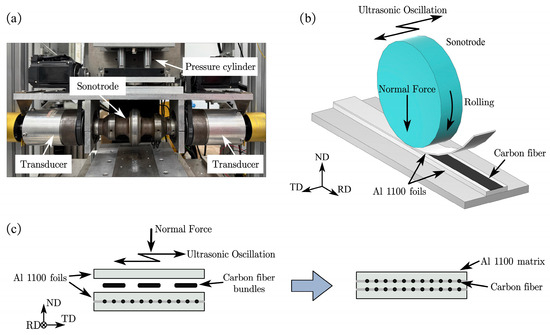
A self-developed 5 kW UC system was employed to fabricate the Cf/Al composites. As shown in Figure 1, the UC system was designed to operate at a frequency of 20 kHz, delivering a maximum tangential amplitude of approximately 27 μm and a normal force of up to 2000 N. The sonotrode was made of die steel, with a working surface diameter of 98 mm, a width of 10 mm, and a surface roughness (Ra) of approximately 5 μm.
Figure 1.
(a) Ultrasonic consolidation system; (b) the ultrasonic consolidation process; and (c) the schematic diagram of the preparation process for Cf/Al composite materials.
Al 1100 aluminum foils with a thickness of 100 μm were used as the matrix material. Because a high amplitude may induce excessively severe tangential motion at the foil–foil interface, the carbon fibers embedded therein would be subjected to intense shear stresses. Therefore, the UC amplitude used for fabricating the Cf/Al composites should be minimized while ensuring complete bonding of the aluminum matrix. This was determined through preliminary UC experiments on pure aluminum specimens without carbon fibers. The UC parameters were as follows: normal force 200 N, vibration amplitude 13 µm, and welding speed 600 mm/min. Prior to ultrasonic consolidation, the surface of the aluminum alloy foil was cleaned using only anhydrous ethanol. The fabrication process of the composite is illustrated in Figure 1c. Firstly, a layer of Al foil was ultrasonically consolidated onto a 3 mm thick aluminum alloy substrate. Ti-coated carbon fibers were then uniformly placed on the foil surface. Additional aluminum foils were subsequently stacked on top, and UC processing was repeated. This process was iterated until the target component thickness was achieved.
2.3. Characterization of Cf/Al Composites
The cross-sectional microstructure of Cf/Al composites was examined using SEM. Elemental distribution of C, Al, and Ti at the interface was analyzed using EDS mapping.
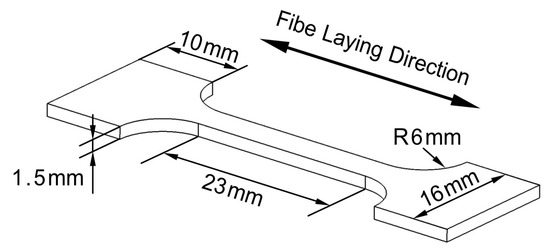
The mechanical properties of the Cf/Al alloy were then evaluated via tensile testing using a Suzhou Qiantong QT-6105S universal testing machine(Suzhou Qiantong Instrument Equipment Co., Ltd., Suzhou, China). UC aluminum alloy specimens without carbon fiber, prepared using the same process parameters, were used as controls to verify the reinforcing effect of carbon fiber on the matrix. The specimen geometry is shown in Figure 2, with a gauge length of 26 mm, width of 5 mm, and thickness of 1.5 mm. The strain rate was set to 0.001 s−1. Three samples were tested for each condition, and average values were reported. UC-processed pure Al 1100 specimens without carbon fibers were used as a control group to verify the reinforcing effect of the fibers. Fracture surfaces were analyzed using OM and SEM to elucidate the strengthening mechanism.
Figure 2.
Schematic diagram of tensile specimen dimensions.
3. Results and Discussion
3.1. Deposition Morphology of Ti Metal Coating on CF Surface
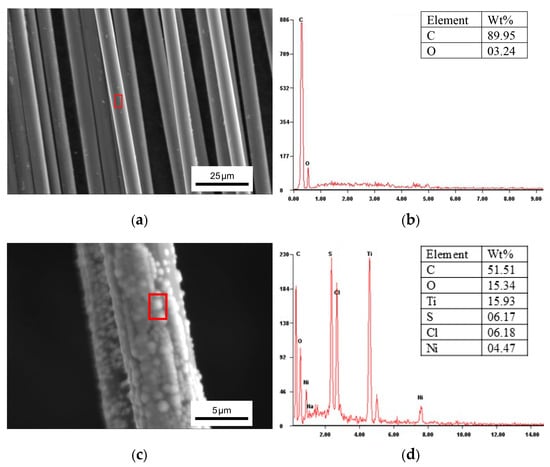
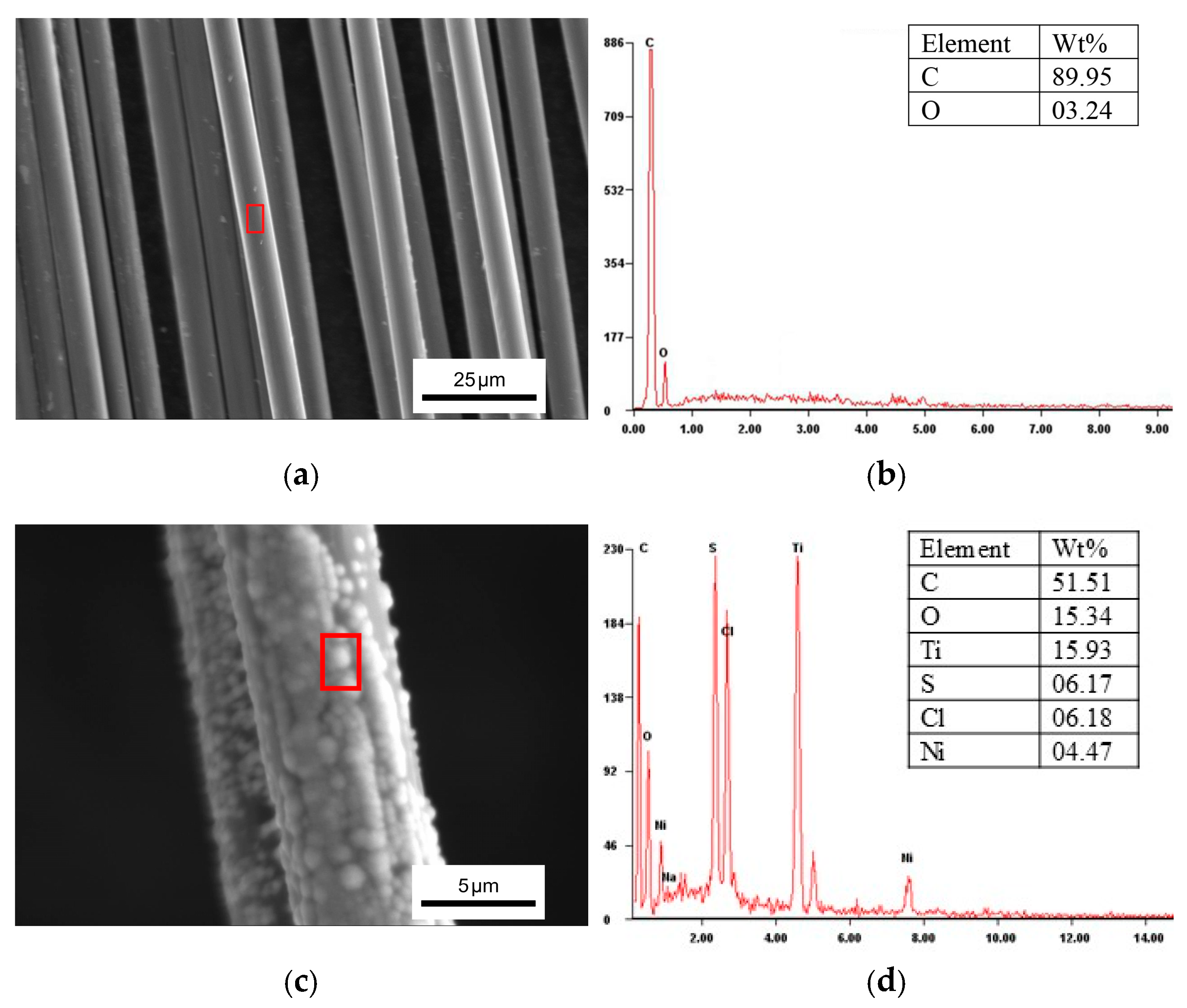
Figure 3 shows the results of the SEM-EDS characterization of the carbon fiber surface before and after electrodeposition. Figure 3a shows the initial surface morphology of the bare carbon fibers, which appear smooth and free of any adhered substances. Figure 3c shows the surface morphology of the metal-coated specimen prepared using 3 mol/L TiCl3 with a deposition time of 5 min. Comparing Figure 3a,c shows that, after electrodeposition, the smooth carbon fiber surface becomes decorated with dispersed metallic nuclei, indicating successful electrodeposition of the coating. Furthermore, the EDS elemental analysis results presented in Figure 3d confirm that these attachment regions mainly contain O and Ti, implying that the coating on the carbon fiber surface may consist primarily of TiO2. The presence of Ni demonstrates that Ti and Ni underwent co-deposition during the electrodeposition process. These results indicate that, even under a relatively low TiCl3 concentration and a short deposition time, the process can still achieve uniform nucleation and continuous coverage of the Ti-based coating on the carbon fiber surface.
Figure 3.
Surface morphologies of carbon fibers before and after Ti electrodeposition: (a) roughened carbon fiber surface; (b) elemental composition analysis of the roughened carbon fiber surface; (c) SEM image of the Ti-based coating on the carbon fiber surface; (d) elemental composition analysis of the internal region selected from the carbon fiber surface in (c).
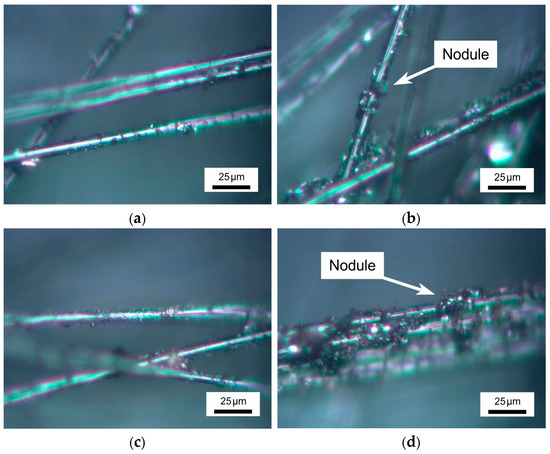
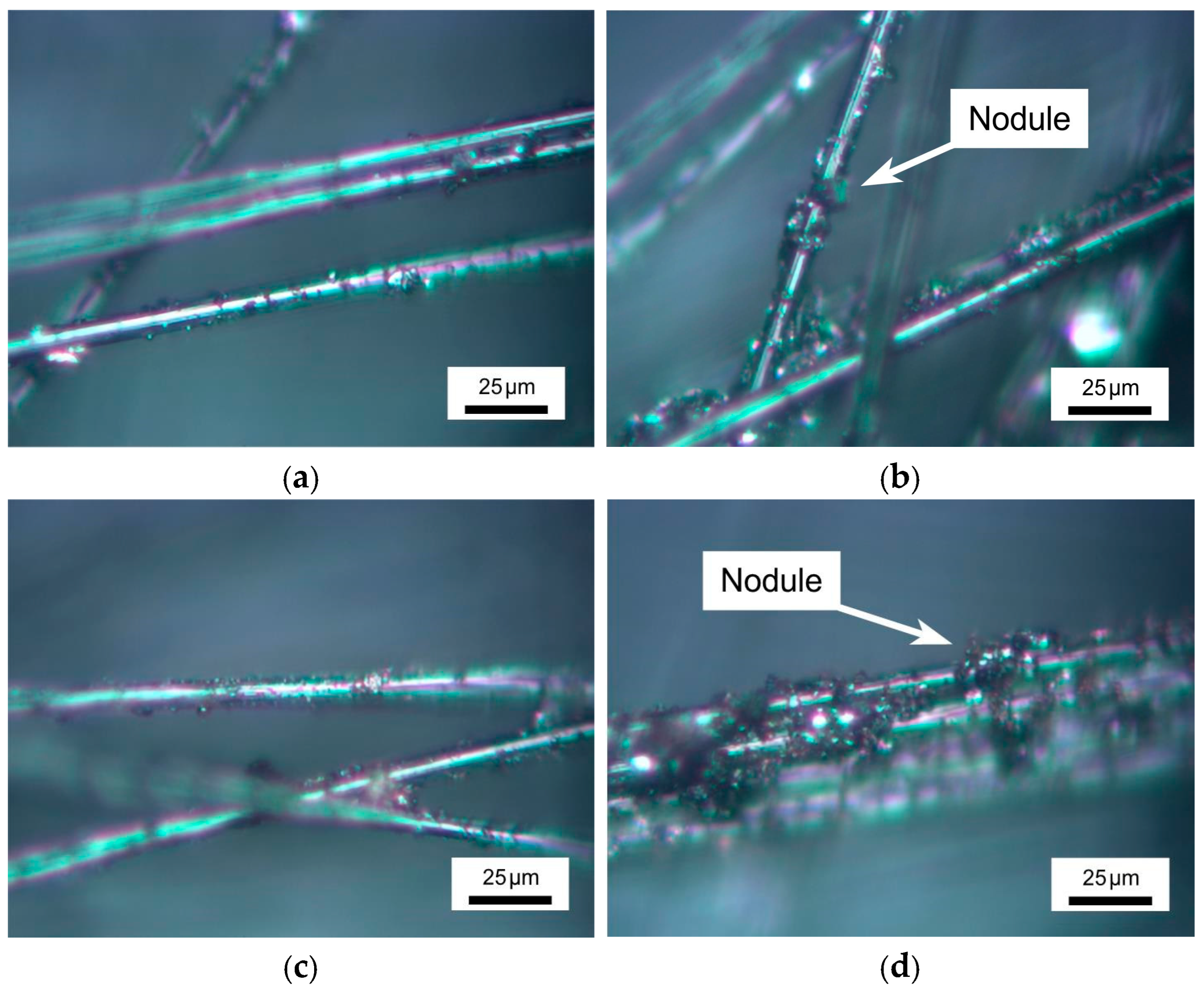
Figure 4 compares coating morphologies under different TiCl3 concentrations and deposition times. At a deposition time of 5 min, increasing the TiCl3 concentration from 3 mol/L to 5 mol/L did not result in any significant change in the overall morphology of the Ti-based coatings, which remained uniformly and densely distributed in both cases.
Figure 4.
Morphology of Ti metal coatings prepared with various TiCl3 concentrations and deposition times: (a) 3 mol/L, 5 min; (b) 3 mol/L, 10 min; (c) 5 mol/L, 5 min; (d) 5 mol/L, 10 min.
When deposition time increased to 10 min (Figure 4b,d), the uniformity of the Ti-based coatings was compromised. Notably, at a TiCl3 concentration of 5 mol/L and 10 min, significant localized agglomeration and nodules appeared. These features may induce stress concentration during UC processing, leading to fiber fracture. Therefore, the formation of such nodules during electrodeposition should be avoided.
Furthermore, the UC process typically requires large amplitudes and normal forces to achieve high-quality bonding with the metal matrix. This necessitates that the carbon fibers embedded in the aluminum matrix possess the highest possible mechanical strength. Theoretically, a thicker Ti-based coating provides more comprehensive structural support for the fibers. Theoretically, the mass of deposited metal is positively correlated with the solution concentration and the deposition time. Considering both coating uniformity and mechanical reinforcement requirements, the optimal condition selected for subsequent UC fabrication was 5 mol/L TiCl3 and 5 min deposition time.
3.2. Microstructure of Cf/Al Composites
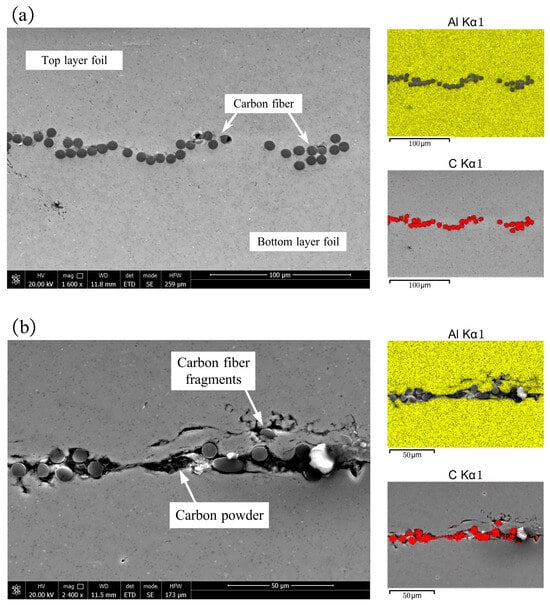
Cross-sectional SEM-EDS results of Cf/Al composites are shown in Figure 5. Figure 5a shows the bonding morphology of the Ti-coated carbon fibers with the aluminum alloy matrix. The carbon fibers were uniformly distributed near the interface of the aluminum matrix. The embedded fibers maintained their circular cross-sections without significant crushing or fracture. No significant voids or interfacial defects were observed, indicating good interfacial bonding between fibers and matrix.
Figure 5.
SEM-EDS cross-sectional images of Cf/Al composites: (a) Cf/Al composite with Ti-coated carbon fibers; (b) Cf/Al composite with uncoated carbon fibers.
In contrast, Figure 5b displays the cross-sectional morphology of a Cf/Al composite with uncoated carbon fibers. Severe interfacial defects are observed at the interface within the aluminum matrix. Some carbon fibers are crushed due to ultrasonic loading. EDS mapping shows carbon accumulation in defect regions, indicating fragmentation and dispersion of carbon debris into the interface. These carbon particles hinder intimate contact between aluminum foils, preventing metallic bonding and resulting in numerous unbonded defects. These results demonstrate that the Ti-based coating effectively protects carbon fiber integrity during UC processing, enabling high-quality Cf/Al interfaces.
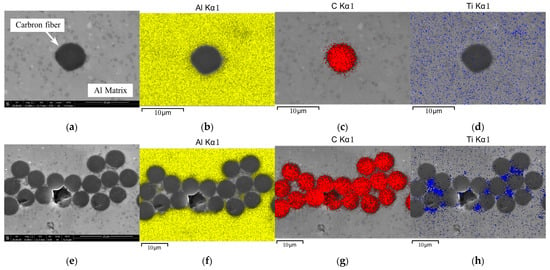
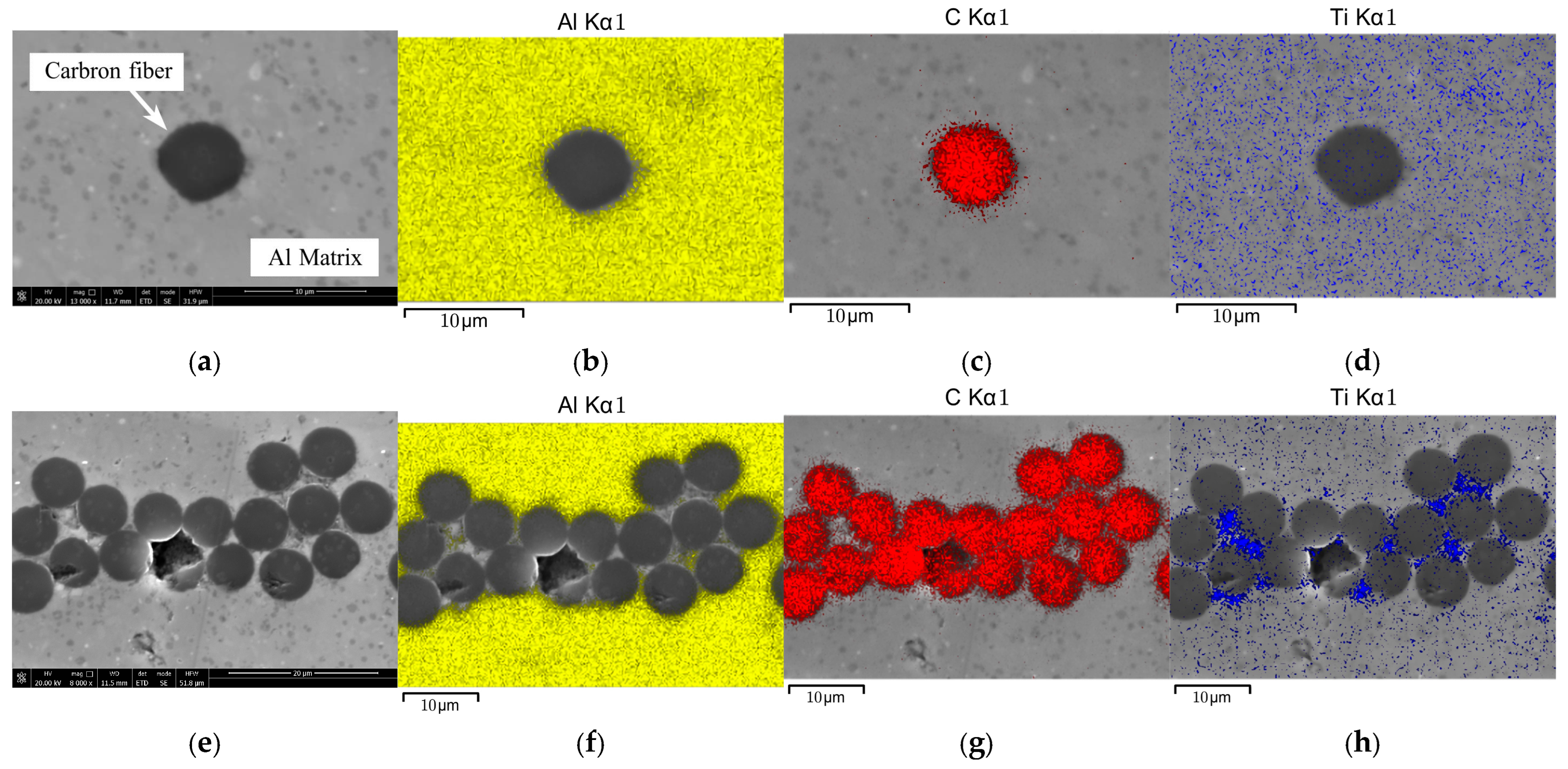
Figure 6a–d show SEM-EDS analysis of single-fiber regions within the Cf/Al composite. The aluminum matrix completely encapsulated the carbon fiber. The EDS maps for Al and C (Figure 6b,c) did not show significant interdiffusion between the carbon fiber and the aluminum matrix. This indicates that, with the introduction of the Ti-based coating, the bonding mechanism between the carbon fiber and the Al matrix was predominantly mechanical interlocking. Notably, in the Ti element map (Figure 6d), no significant Ti enrichment was detected immediately adjacent to the carbon fiber. This suggests that the Ti-based coating separated from the carbon fiber during the UC process. Given the intense plastic flow of the aluminum foil near the interface during UC, this separation of the Ti-based coating is likely related to the deformation and flow of the aluminum matrix.
Figure 6.
(a–d) Cross-sectional SEM-EDS images of a single fiber region; (e–h) cross-sectional SEM-EDS images of an aggregated fiber region.
Figure 6e–h show the elemental distribution at a location within the Cf/Al composite where carbon fibers were locally aggregated. As seen in Figure 6e, under fiber aggregation conditions, the region between the fibers could still be filled. However, the EDS analysis in Figure 6f,h reveals that the material filling the voids within the aggregated fibers was not the aluminum alloy but rather the Ti-based coating. Furthermore, no Ti enrichment was observed on the outside of the aggregated fibers. This observation provides important evidence for understanding the bonding mechanism between the Ti-coated fibers and the aluminum matrix.
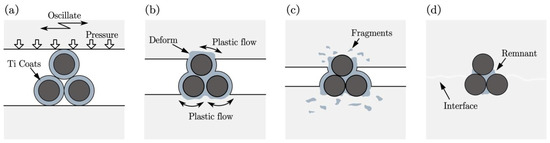
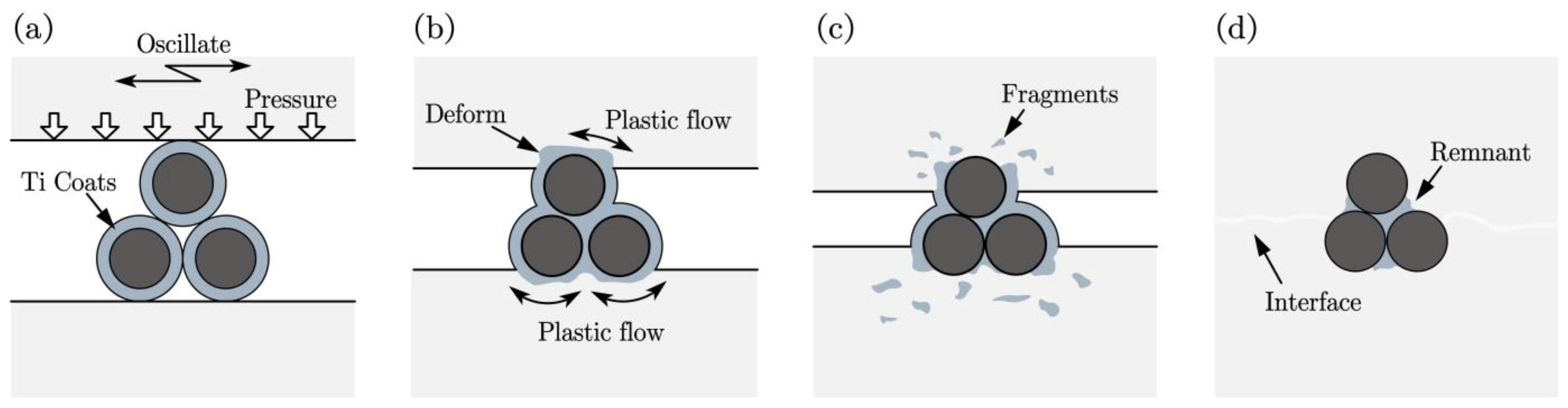
Figure 7 illustrates the proposed bonding and evolution mechanism between the Ti-coated carbon fibers and the aluminum matrix during UC. At the onset of ultrasonic consolidation, the aluminum foils are pressed together and undergo interfacial shear motion driven by the ultrasonic oscillation. The Ti-based coating undergoes plastic deformation first under shear forces (Figure 7b). This deformation of the Ti-based coating dampens the amplitude directly transmitted to the carbon fibers by the metal foils, thereby reducing the shear load on the fibers. As the aluminum foils are further pressed, the carbon fiber is embedded into the aluminum matrix. The aluminum alloy, flowing vigorously around the fiber, gradually strips the Ti-based coating from the fiber (Figure 7c).
Figure 7.
Schematic diagram of the bonding mechanism of Ti-coated Cf/Al composites: (a) Initial state under ultrasonic oscillation and pressure; (b) Plastic deformation of the Ti-based coating; (c) Stripping of the Ti-based coating and plastic flow of the aluminum matrix; (d) Complete removal of the coating and formation of a defect-free bond.
Finally, as shown in Figure 7d, the Ti-based coating on the outside of the carbon fiber is completely removed and dispersed within the aluminum matrix. The carbon fiber then comes into direct contact with the aluminum alloy matrix, which then replaces the Ti-based coating in providing support to the carbon fibers and protecting the structural integrity during subsequent UC. At the same time, at locations where fibers aggregate, the flowing aluminum matrix cannot easily penetrate the interior of the fiber bundle, leaving voids between the carbon fibers. In these regions, the remaining Ti on the inner parts of the fibers acts as the filling material. Finally, as illustrated in Figure 7d, this process leads to the formation of a virtually defect-free bond between the carbon fibers and the metallic matrix.
3.3. Tensile Properties
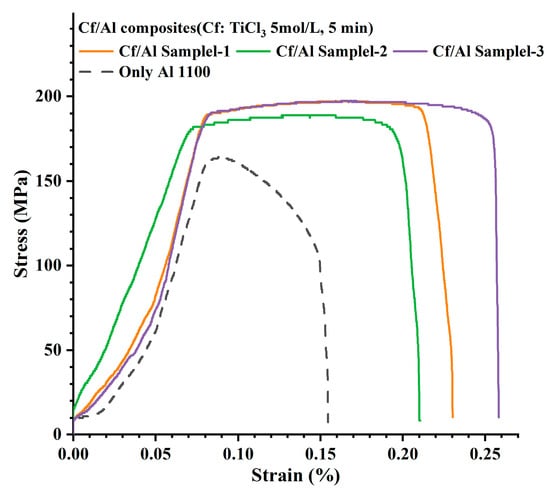
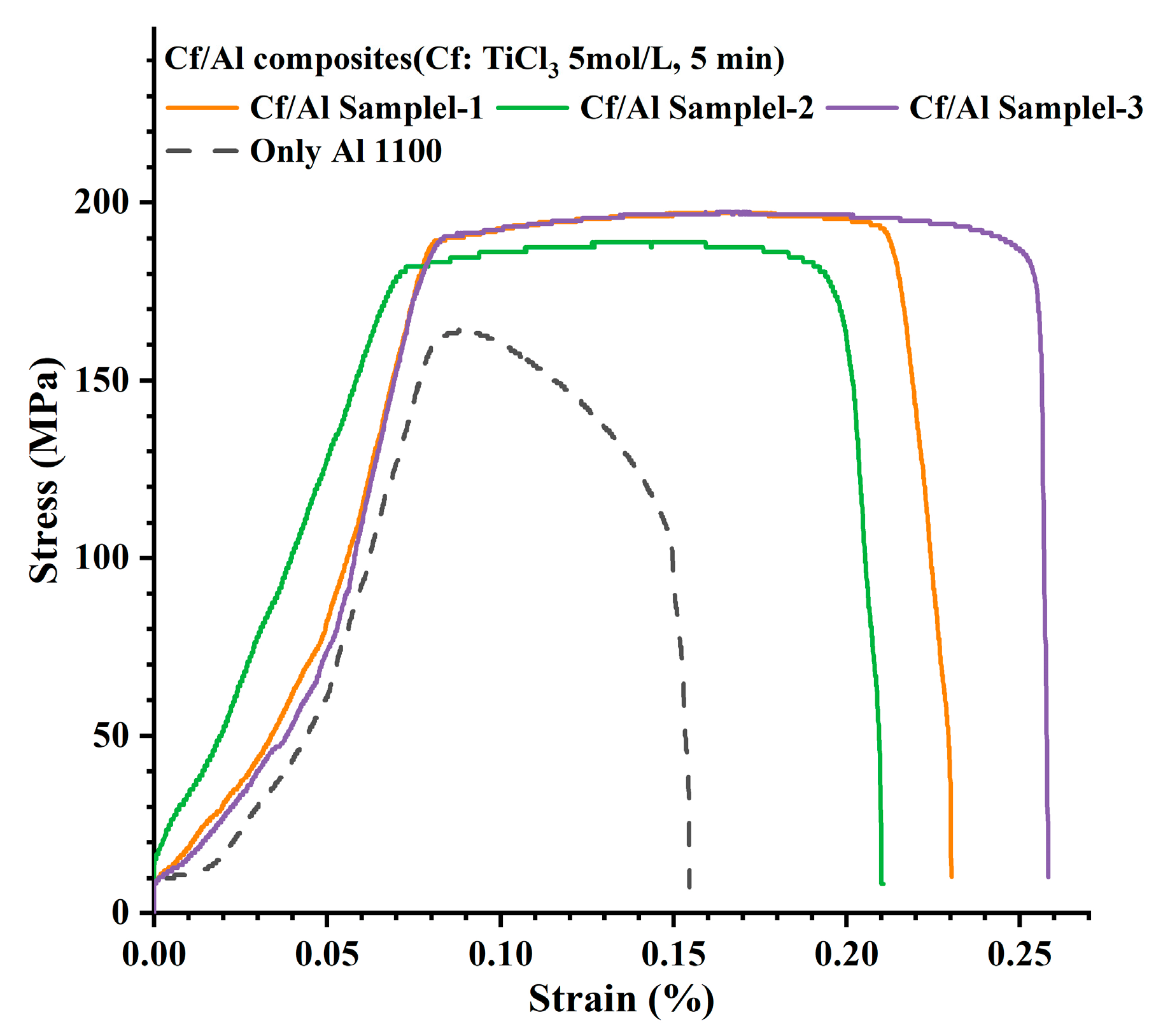
Tensile tests were conducted for both Cf/Al composites and UC-processed Al 1100 without fibers. The stress–strain curves obtained from the tests are shown in Figure 8. The Cf/Al composite was prepared by electroplating titanium–carbon fibers onto Al 1100 foil using a 5 mol/L TiCl3 solution with a deposition time of 5 min and prepared using the same UC process parameters. It can be observed that there is no significant difference in the elastic modulus between the Cf/Al composite and the unreinforced aluminum alloy. The reinforcing effect of the carbon fibers is primarily reflected in the improvement of the tensile strength.
Figure 8.
Stress–strain curves of Cf/Al composite and UC-processed Al alloy specimens. Three Cf/Al composite specimens were prepared using the same combination of electrochemical deposition conditions and UC process parameters.
Table 2 summarizes the mechanical parameters derived from the tensile testing. The Cf/Al composite exhibited an average yield strength (σ0.2) of 185.9 MPa and an average ultimate tensile strength of 194.46 MPa, representing increases of 14.4% and 18.5% compared to the UC aluminum alloy. The average maximum fracture strain of the Cf/Al composite was 0.233, which was 50.5% higher than that of the fiber-free control sample. In summary, the carbon fibers achieved a synergistic enhancement of both the strength and plasticity of the aluminum alloy matrix.
Table 2.
Comparison of tensile test results for Cf/Al composites.
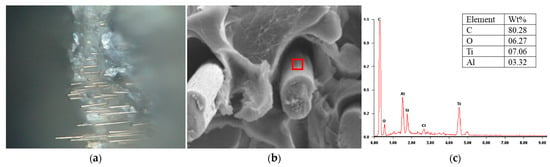
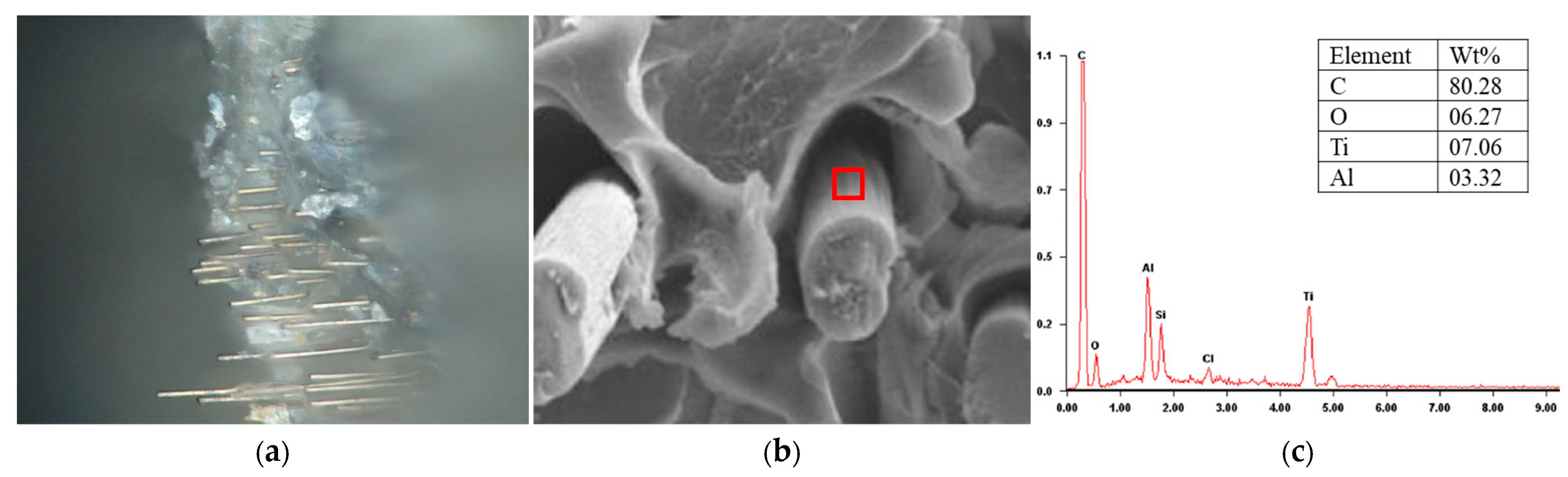
The fracture surface morphology of the Cf/Al composite tensile specimens is shown in Figure 9. The optical micrograph in Figure 9a reveals that carbon fibers were uniformly distributed across the fracture surface and exhibited fiber pull-out characteristics. SEM observation (Figure 9b) further showed that the fibers had separated from the aluminum matrix at their pulled-out positions.
Figure 9.
(a) Optical micrograph showing Cf distribution on the tensile fracture surface; (b) SEM image of the microstructure near a carbon fiber on the fracture surface; (c) EDS analysis of the carbon fiber surface within the area selected in (b).
The EDS analysis in Figure 9c shows the elemental composition on the surface of a carbon fiber exposed on the fracture surface. The Ti content was significantly lower than that observed on the coated fibers in Figure 2, while Al was detected on the fiber surface. This finding further corroborates the preceding SEM-EDS observations and the proposed bonding mechanism: during UC, the Ti-based coating separates from the carbon fiber, allowing direct contact between the fiber and the aluminum matrix, ultimately achieving reinforcement of the aluminum matrix through a mechanical interlocking mechanism.
4. Conclusions
In this study, a direct fabrication process for continuous carbon fiber-reinforced aluminum matrix (Cf/Al) composites was developed using ultrasonic consolidation (UC) technology. A titanium (Ti) coating was successfully deposited onto carbon fibers via an electrochemical method to protect the brittle fibers from ultrasonic-induced damage. The following conclusions can be drawn:
Coating Optimization: Uniform and dense Ti-based coatings were obtained on carbon fibers at a TiCl3 concentration of 5 mol/L and a deposition time of 5 min. Excessive deposition time led to localized agglomerations and protrusions, which are detrimental to fiber integrity during subsequent UC processing.
Protective Mechanism: The Ti-based coating effectively protected the carbon fibers from fracture during ultrasonic consolidation by undergoing plastic deformation, which dampened the shear stress transmitted from the vibrating aluminum foils. This allowed the fibers to maintain their circular cross-sections and structural integrity within the matrix.
Bonding Mechanism: During UC, the Ti-based coating was largely stripped from the fiber surface due to the intense plastic flow of the surrounding aluminum matrix. The final bonding between the carbon fibers and the aluminum matrix was thus achieved primarily through a mechanical interlocking mechanism, rather than by elemental diffusion.
Mechanical Performance: The fabricated Cf/Al composites exhibited significant synergistic improvements in both strength and ductility compared to unreinforced UC-processed aluminum. The average yield strength, ultimate tensile strength, and fracture strain increased by 14.4%, 18.5%, and 50.5%, respectively. Tensile fracture surfaces revealed uniform fiber distribution and pull-out characteristics, confirming effective load transfer via mechanical interlocking.
These findings demonstrate that UC technology, combined with an appropriate protective Ti-based coating, offers a viable pathway for the low-temperature, large-scale fabrication of high-performance Cf/Al composites.
Author Contributions
Conceptualization, Z.Y. and T.W.; methodology, T.W.; validation, T.W. and S.L.; formal analysis, T.W. and S.L.; investigation, T.W. and T.M.; resources, Z.Y.; data curation, T.W. and T.M.; writing—original draft preparation, T.W.; writing—review and editing, Z.Y.; visualization, T.W., S.L. and T.M.; supervision, Z.Y.; project administration, Z.Y.; funding acquisition, Z.Y. All authors have read and agreed to the published version of the manuscript.
Funding
This research was funded by the Science and Technology Plan Project of Liaoning Province, China (grant number 2025JH2/10800319).
Data Availability Statement
The original contributions presented in this study are included in the article. Further inquiries can be directed to the corresponding authors.
Conflicts of Interest
The authors declare no conflicts of interest.
References
- Mu, W.; Lin, J.; Liu, E.; He, W.; Huang, Z. Fabrication and interface optimization of continuous CF/Al composites with different reinforcement volume fraction. J. Alloys Compd. 2023, 938, 168297. [Google Scholar] [CrossRef] [Scilit]
- Zhao, C.; Zhou, J.; Zhong, K.; Bai, Y.; Qi, L. Enhancing understanding metal matrix composites through molecular dynamics simulation: A comprehensive review. Comput. Mater. Sci. 2024, 239, 112993. [Google Scholar] [CrossRef] [Scilit]
- Bai, Y.; Zhou, J.; Zhao, C.; Yun, K.; Qi, L. An experimental strategy and investigation of preparing high-strength and low- expansion carbon fiber reinforced Al matrix composite. J. Alloys Compd. 2024, 999, 174978. [Google Scholar] [CrossRef] [Scilit]
- Wang, H.; Cheng, P.; Lei, M.; Han, Z.; Li, G.; Chen, Y. A review on the mechanical properties of continuous fiber-reinforced composites fabricated by conventional and additive manufacturing. Compos. Part A Appl. Sci. Manuf. 2026, 206, 109755. [Google Scholar] [CrossRef] [Scilit]
- Setyani, A.; Wardhana, H.R.; Yuliawati; Saputra, A.S.N.; Sudaryanto. Advancements and prospects of aluminium-based metal matrix composites. AIP Conf. Proc. 2026, 3374, 050093. [Google Scholar] [CrossRef] [Scilit]
- Li, G.; Qu, Y.; Zhou, Q.; Wang, Y.; Man, C.; Zhou, S.; Li, R. Effect of fiber binding force on the molding of Cf/Al composites. Mater. Res. Express 2019, 6, 105619. [Google Scholar] [CrossRef] [Scilit]
- Cao, X.; Shi, Q.; Liu, D.; Feng, Z.; Liu, Q.; Chen, G. Fabrication of in situ carbon fiber/aluminum composites via friction stir processing: Evaluation of microstructural, mechanical and tribological behaviors. Compos. Part B Eng. 2018, 139, 97–105. [Google Scholar] [CrossRef] [Scilit]
- Zhong, K.; Zhou, J.; Zhao, C.; Yun, K.; Qi, L. Experimental investigations into mechanical response and damage mechanisms of fiber aluminum hierarchical composites. J. Alloys Compd. 2023, 944, 169103. [Google Scholar] [CrossRef] [Scilit]
- Tan, Z.; Li, Z.; Fan, G.; Kai, X.; Ji, G.; Zhang, L.; Zhang, D. Fabrication of diamond/aluminum composites by vacuum hot pressing: Process optimization and thermal properties. Compos. Part B Eng. 2013, 47, 173–180. [Google Scholar] [CrossRef] [Scilit]
- Liu, T.; He, X.; Zhang, L.; Ren, S.; Qu, X. Microstructure and performance of carbon fiber reinforced aluminum matrix composites with molybdenum carbide coating on carbon fibers. Mater. Res. Express 2024, 11, 076301. [Google Scholar] [CrossRef] [Scilit]
- Bedmar, J.; Torres, B.; Rams, J. Manufacturing of Aluminum Matrix Composites Reinforced with Carbon Fiber Fabrics by High Pressure Die Casting. Materials 2022, 15, 3400. [Google Scholar] [CrossRef] [Scilit] [PubMed]
- Alhashmy, H.A.; Nganbe, M. Laminate squeeze casting of carbon fiber reinforced aluminum matrix composites. Mater. Des. 2015, 67, 154–158. [Google Scholar] [CrossRef] [Scilit]
- Liu, J.; Zhang, Y.; Wang, W.; Yang, X.; Liu, S.; Zhang, J.; Guo, Z.; Wang, T.; Li, T. Interfacial enhancement and mechanical properties of CF/Al composites with improved interfacial structure induced by Al–Ni–Mg ternary reaction. Mater. Sci. Eng. A 2022, 831, 142040. [Google Scholar] [CrossRef] [Scilit]
- Liu, J.; Zhang, Y.; Guo, Z.; Liu, S.; Zhang, J.; Jie, J.; Fu, Y.; Li, T. Enhancement of fiber–matrix adhesion in carbon fiber reinforced Al-matrix composites with an optimized electroless plating process. Compos. Part A Appl. Sci. Manuf. 2021, 142, 106258. [Google Scholar] [CrossRef] [Scilit]
- Meng, J.; Huang, J.; Xu, X. Thermophysical properties of Cu-coated carbon fibers reinforced aluminum matrix composites by stir casting. Carbon Lett. 2023, 33, 2053–2061. [Google Scholar] [CrossRef] [Scilit]
- Si, H.; Zhou, Q.; Zhou, S.; Zhang, J.; Liu, W.; Gao, G.; Wang, Z.; Hou, P.; Qu, Y.; Li, G. Effect of interfacial stability on microstructure and properties of carbon fiber reinforced aluminum matrix composites. Surf. Interfaces 2023, 38, 102816. [Google Scholar] [CrossRef] [Scilit]
- Bai, Y.; Zhou, J.; Zhao, C.; Yun, K.; Qi, L. Enhanced strength and toughness of carbon fiber reinforced aluminum matrix composite prepared via novel indirect extrusion method. J. Alloys Compd. 2024, 1005, 176013. [Google Scholar] [CrossRef] [Scilit]
- Boppana, S.; Telagu, A.; Dayanand, S.; Mukunda, S. A Review on Carbon Fiber Reinforced Metal Matrix Composites. J. Mines Met. Fuels 2024, 72, 333–346. [Google Scholar] [CrossRef] [Scilit]
- Gao, M.; Gao, P.; Wang, Y.; Lei, T.; Ouyang, C. Study on Metallurgically Prepared Copper-Coated Carbon Fibers Reinforced Aluminum Matrix Composites. Met. Mater. Int. 2021, 27, 5425–5435. [Google Scholar] [CrossRef] [Scilit]
- Zhang, J.; Liu, J.; Lu, Y.; Liu, Y.; Li, T. Infiltration behavior and mechanism in semi-solid rolling of carbon fibers reinforced Al-matrix composite. Mater. Des. 2019, 182, 108102. [Google Scholar] [CrossRef] [Scilit]
- Piquero, T.; Vincent, H.; Vincent, C.; Bouix, J. Influence of carbide coatings on the oxidation behavior of carbon fibers. Carbon 1995, 33, 455–467. [Google Scholar] [CrossRef] [Scilit]
- Mu, W.; Lin, J.; Liu, E.; Zhou, C.; He, W. Fabrication of continuous carbon-fibers reinforced aluminum matrix composites and coating evolution during heat treatment. J. Mater. Res. Technol. 2022, 17, 1852–1867. [Google Scholar] [CrossRef] [Scilit]
- Wolcott, P.; Hehr, A.; Pawlowski, C.; Dapino, M. Process improvements and characterization of ultrasonic additive manufactured structures. J. Mater. Process. Technol. 2016, 233, 44–52. [Google Scholar] [CrossRef] [Scilit]
- Foster, D.R. Mechanical and Thermal Characterization of Ultrasonic Additive Manufacturing. Doctoral Dissertation, The Ohio State University, Columbus, OH, USA, 2014. [Google Scholar]
- Xu, C.; Cheng, Y.; Zhou, Y.; Sun, M.; Wang, Z.; He, X.; Guo, C.; Jiang, F. Structural–functional components via ultrasonic additive manufacturing: A review of fabrication and functionality. Int. J. Adv. Manuf. Technol. 2026, 143, 1341–1365. [Google Scholar] [CrossRef] [Scilit]
- Jiao, F.; Liu, M.; Jiang, F.; Zhao, J.; Li, P.; Wang, Z. Continuous carbon fiber reinforced Ti/Al3Ti metal-intermetallic laminate (MIL) composites fabricated using ultrasonic consolidation assisted hot pressing sintering. Mater. Sci. Eng. A 2019, 765, 138255. [Google Scholar] [CrossRef] [Scilit]
- Masurtschak, S.; Friel, R.; Gillner, A.; Ryll, J.; Harris, R. Fiber laser induced surface modification/manipulation of an ultrasonically consolidated metal matrix. J. Mater. Process. Technol. 2013, 213, 1792–1800. [Google Scholar] [CrossRef] [Scilit]
- Petrie, C.M.; Sridharan, N.; Subramanian, M.; Hehr, A.; Norfolk, M.; Sheridan, J. Embedded metallized optical fibers for high temperature applications. Smart Mater. Struct. 2019, 28, 055012. [Google Scholar] [CrossRef] [Scilit]
- Grassel, F.; Malaske, L.; Hoffmann, M.; Klusemann, B. (Semi-)Solid-state joining of aluminium and titanium alloys—A critical review. J. Mater. Res. Technol. 2025, 39, 3270–3291. [Google Scholar] [CrossRef] [Scilit]
- Kelly, G.S.; Just, M.S.; Advani, S.G.; Gillespie, J.W. Energy and bond strength development during ultrasonic consolidation. J. Mater. Process. Technol. 2014, 214, 1665–1672. [Google Scholar] [CrossRef] [Scilit]
- Wang, B.; Zhang, H.; Gao, C.; Lv, W. Microstructure and mechanical properties of Ti/Al laminates fabricated by ultrasonic additive manufacturing assisted by Joule heat and post-welding heat treatment. J. Mater. Res. Technol. 2023, 27, 2149–2165. [Google Scholar] [CrossRef] [Scilit]

Disclaimer/Publisher’s Note: The statements, opinions and data contained in all publications are solely those of the individual author(s) and contributor(s) and not of MDPI and/or the editor(s). MDPI and/or the editor(s) disclaim responsibility for any injury to people or property resulting from any ideas, methods, instructions or products referred to in the content. |
© 2026 by the authors. Licensee MDPI, Basel, Switzerland. This article is an open access article distributed under the terms and conditions of the Creative Commons Attribution (CC BY) license.