


Abstract
This study investigates the combustion behavior, composition-dependentl,3 combustion regimes, and temperature–time characteristics of ammonium perchlorate (AP)-based energetic compositions containing commercial aluminum (Al) and secondary Al-Si alloy powders. The secondary Al-Si powder was obtained from recycled automobile pistons and contained 75.42 wt.% Al and 10.74 wt.% Si, while the commercial Al powder contained 98.02 wt.% Al. Particle-size analysis showed similar median particle sizes for the commercial Al and secondary Al-Si powders, with D50 values of 4.429 and 4.527 μm, respectively. However, the secondary Al-Si powder exhibited a substantially broader particle-size distribution, with D10, D90, and Span values of 0.878 μm, 49.260 μm, and 10.687, respectively, compared with 3.833 μm, 5.484 μm, and 0.373 for commercial Al. Microscopic observations showed that the secondary Al-Si powder consisted predominantly of irregular and angular particles with a more heterogeneous surface morphology. AP/metal mass ratios of 60:40, 65:35, 70:30, and 75:25 were investigated. At 60:40, both compositions exhibited rapid and intense combustion, whereas at 65:35, both systems showed stable self-propagating combustion. At 70:30, the AP + Al composition exhibited intermittent combustion, while the AP + Al-Si composition maintained stable self-propagating combustion. At 75:25, both systems showed interrupted combustion. All combustion experiments were performed in triplicate, and the results are reported as mean ± standard deviation. Temperature–time profiles were obtained for all investigated AP/metal ratios, revealing distinct continuous and intermittent thermal responses corresponding to the observed combustion regimes. At 65:35, the maximum local apparent temperature reached 2552.9 ± 23.8 °C for AP + Al-Si and 1865.4 ± 19.7 °C for AP + Al. The results demonstrate that replacing commercial Al with secondary Al-Si alloy powder changes the observed combustion regimes and temperature–time response of AP-based compositions under the investigated conditions. These differences are associated with the combined effects of particle-size distribution, morphology, chemical composition, and phase composition rather than with a single material parameter.
1. Introduction
Metal powders are important fuel components of energy compositions due to their high energy density and ability to release significant heat during oxidation [1,2,3,4,5]. Among them, aluminum is widely used in solid fuels, pyrotechnic compositions and other high-energy systems due to its high specific heat of combustion, relatively low density and availability [2,5,6]. The ignition and combustion of aluminum particles depend on the chemical nature of the metal, as well as on the particle size, size distribution, surface state, oxide film and properties of the oxidizing environment [6,7,8]. Therefore, when assessing the combustion characteristics of metal fuels, it is necessary to take into account the physicochemical characteristics of the starting powder.
There is increasing interest in Al-based alloys in the development of alternative metal fuels to commercial aluminum. The presence of alloying components can change the phase composition of the material, its melting and oxidation characteristics, as well as its reaction processes at high temperatures [9,10,11,12,13]. Studies on Al-Mg and other Al-based alloys have shown that the alloy composition can influence the ignition, combustion and sintering characteristics of metallic fuels [10,11,12,13]. In this regard, Al-Si alloys are also promising metallic components for energy composites [10,11]. In addition, their production from secondary aluminum raw materials is of practical importance in terms of recycling metal waste and reducing the raw material and energy consumption required for primary aluminum production [14,15,16].
The properties of secondary Al-Si powders depend on the chemical composition of the starting material and the conditions for obtaining the powder [14,15,16]. Particles obtained by mechanical grinding may differ from commercial Al powder in terms of size distribution, shape, and surface structure [3,4,17]. Particle size is one of the main parameters affecting the heating and ignition times of the metal, the oxidation rate, and the nature of combustion [1,18,19,20]. In the case of a wide size distribution, the heating and participation of particles of different sizes in the reaction zone may not occur simultaneously. Particle morphology and surface state may also affect the conditions of contact between the metal and the oxidant and the heat-mass transfer in the reaction zone [1,2,3,4,17]. However, secondary Al-Si and commercial Al powders may differ simultaneously in terms of particle size distribution, morphology, chemical, and phase composition. Therefore, it is not sufficient to explain the differences in their combustion characteristics by the influence of a single morphological factor. A comprehensive assessment of these physicochemical characteristics of the starting powders is necessary for a reasonable interpretation of the combustion results.
Ammonium perchlorate (NH4ClO4, AP) is a widely used oxidant in energy compositions due to its high oxygen potential and thermal decomposition ability [19,20,21,22,23,24]. The combustion behavior of AP–metal systems depends on the properties of the metal fuel as well as the mass ratio of the oxidant to the fuel [18,19,20,21,22,25]. Changes in the AP/metal ratio can affect the ratio of heat release and heat loss in the reaction zone, flame propagation stability, and the ability to self-sustained combustion [20,21,22,26,27,28]. Therefore, evaluating the combustion characteristics of a metal component based on a single composition ratio does not fully describe its stable combustion range. One of the important parameters characterizing the combustion process is the change in temperature over time [19,20,28,29,30]. Although the maximum temperature characterizes the highest temperature state of the system, it does not fully reflect the dynamics of the combustion process. The nature of the temperature increase after ignition, the time to reach the maximum value and the subsequent decrease allow us to assess the temporal evolution of the reaction zone. Comparison of temperature-time profiles with the results of video monitoring of the combustion process allows us to determine the temperature features of steady self-propagating, intense and intermittent combustion regimes. In this regard, time-resolved temperature measurements are an important experimental characteristic for a comparative assessment of the combustion dynamics of AP-metal systems.
The application of secondary Al-Si alloy in energy composites has been previously investigated in a PTFE-based system, and its thermal and combustion characteristics have been compared with commercial Al [31]. However, the AP/metal ratio-dependent combustion regimes and temperature-time characteristics for AP-based composites were not considered in this work. There are limited studies in the literature that systematically compare secondary Al-Si powder and commercial Al in AP-based composites and relate the particle size distribution, morphology, chemical and phase composition of the primary powders to the AP/metal ratio-dependent combustion regimes and temperature-time characteristics [18,19,20,21,22]. In particular, the compositional boundaries of stable self-propagating combustion in AP composites using secondary Al-Si and their temperature response compared to commercial Al systems have not been sufficiently characterized.
The aim of this work is to compare the physicochemical characteristics of secondary Al-Si alloy powder and commercial Al and to evaluate their influence on the combustion regimes and temperature-time characteristics of AP-based composites. The chemical and phase composition, particle size distribution, and morphology of metal powders were determined, and the shift in combustion regimes and the temperature response of AP + Al and AP + Al-Si systems due to changes in the AP/metal mass ratio were compared.
2. Materials and Research Methods
2.1. Research Material
As a research object, a relatively small amount of commercial aluminum powder (98%) and an Al-Si alloy obtained from used automobile pistons were selected, and their chemical composition is given in Table 1. The pistons were cleaned of mechanical impurities, ground using a laboratory jaw crusher (ShD-10 Jaw crusher, Vibrotechnik, Saint Petersburg, Russia) and a laboratory disintegrator (DZG-200, NPP Techno-Center, Rybinsk, Russia) and prepared for mechanical processing. Ammonium perchlorate (NH4ClO4, AP, Changsha Yonta Industry Co., Ltd., Changsha, China) of analytical purity was used as the oxidizing component. All powders were dried at 105 °C before the experiment and stored in hermetic containers to prevent the influence of moisture. The physicochemical characteristics of secondary Al-Si alloy and commercial Al powders were comparatively characterized, and the influence of the metallic fuel type and AP/metal mass ratio on the combustion regimes and temperature–time response of AP-based compositions was evaluated.
Table 1.
Chemical composition results of commercial aluminum and secondary aluminum alloy powders.
2.2. Determination of Chemical and Phase Composition of Powders
Wavelength dispersive X-ray fluorescence spectrometry (WDXRF) and X-ray diffraction (XRD) methods were used to determine the chemical and phase composition of commercial aluminum and secondary Al-Si alloy powders. The elemental composition of the powders was determined on an Axios 1 kW wavelength dispersive X-ray fluorescence spectrometer (PANalytical B.V., Almelo, The Netherlands). WDXRF analysis was performed to determine the quantitative composition of the major elements of commercial aluminum and secondary Al-Si alloy powders and to evaluate the differences in their chemical composition. The crystalline phase composition of the studied powders was studied on a DW-XRD-27mini X-ray diffractometer (Chongqing Drawell Instrument Co., Ltd., Chongqing, China) equipped with Cu Kα radiation. Diffraction patterns were recorded in the angular range 2θ = 10–80°. The obtained diffraction patterns were analyzed to identify the crystalline phases in the pure aluminum and secondary Al-Si alloy powders. Phase identification was carried out by comparing the positions and relative intensities of the experimental diffraction reflections with standard reference patterns from the ICDD Powder Diffraction File (PDF/JCPDS) database. The corresponding ICDD PDF/JCPDS card numbers for all identified crystalline phases are indicated in the XRD patterns. To assess the reproducibility of the phase identification, XRD measurements for each powder were independently repeated at least twice under identical experimental conditions. The repeated measurements showed consistent diffraction peak positions and phase assignments. For the secondary Al-Si powder, phase assignments were based on the positions of the experimental diffraction reflections and their correspondence with the ICDD reference patterns. The XRD analysis was used to identify crystalline phases, whereas the bulk elemental composition was determined independently by WDXRF. Therefore, the phase assignments obtained from XRD were not interpreted as a direct measurement of local elemental distributions within individual particles.
2.3. Particle Size Distribution and Morphological Characterization
The particle size distribution of commercial aluminum and secondary Al-Si alloy powders was determined by laser diffraction on a Winner 2005A particle size analyzer. Before measurement, the powder samples were dispersed in distilled water. To ensure direct comparability of the results, the same sample preparation and measurement procedure was used for both powders. The particle size distribution was estimated based on the volume distribution. For quantitative comparison of the granulometric characteristics of the powders, the parameters D10, D50 and D90 were determined. The values of D10, D50 and D90 describe the equivalent particle diameters, below which 10, 50 and 90% of the total volume of the studied powder particles is smaller, respectively. In addition, particle size distribution curves were obtained for commercial Al and secondary Al-Si alloys. The morphological features of the powders were studied by scanning electron microscopy and optical microscopy. SEM studies were carried out on a Phenom XL G2 (Thermo Scientific, Eindhoven, The Netherlands) scanning electron microscope at accelerating voltages of 5, 10, 15 and 20 kV. Based on the obtained microimages, the shape, dimensional uniformity, surface morphology features, and signs of particle agglomeration were comparatively assessed. For additional assessment of the general morphology of the powders and particle distribution features, a MAGUS Lum laboratory optical microscope was used. Microscopic studies were carried out comparatively for commercial Al and secondary Al-Si alloy powders. Laser diffraction was used for quantitative determination of the bulk particle-size distribution, whereas SEM and optical microscopy were used for qualitative characterization of particle morphology, shape, surface features, and particle association. These techniques therefore provided complementary, rather than directly interchangeable, information on particle size and morphology. The laser-diffraction measurements were independently repeated three times for each powder under identical experimental conditions, and the characteristic particle-size parameters (D10, D50, D90, Dav, and Span) are presented as mean ± standard deviation (n = 3).
2.4. Preparation of AP-Metal Energetic Compositions
In preparing energetic compositions, AP was used as the oxidant, and commercially Al and secondary Al-Si alloy powders were used separately as the metal fuel. To assess the effect of the oxidant-to-metal-fuel ratio on combustion characteristics, AP/metal mass ratios of 60:40, 65:35, 70:30, and 75:25 wt.% were selected. To directly compare the experimental results, the same component ratios were used for the AP + Al and AP + Al-Si systems. During the preparation of each composition, AP and the corresponding metal fuel were weighed according to the specified mass ratio. The components were manually and mechanically mixed until a visually homogeneous powder mixture was obtained. To ensure uniform sample-preparation conditions, the same mixing method was used for all AP + Al and AP + Al-Si compositions. The prepared powder mixtures were pressed into cylindrical specimens in a steel mold with an internal diameter of 10 mm. For all compositions, pressing was carried out in the same way under a constant load of 6 MPa. The resulting cylindrical specimens were subsequently used in combustion experiments under identical ignition and ambient conditions. To assess the reproducibility of the results, the combustion experiments were repeated three times for each composition.
2.5. Thermal Characterization of AP–Metal Compositions
The features of burning and oxidation of secondary Al-Si alloy and aluminum powder were studied by the method of thermogravimetric analysis (TG). Thermogravimetric measurements were performed using a BAXIT VHT-TGA-103 thermal analyzer (Shanghai Glomro Industrial Co., Ltd., Shanghai, China) in air at a heating rate of 10 °C min−1. Powder samples with a mass of 20–30 mg were used. The upper temperature limit was selected according to the mass stabilization behavior of each composition. The AP + Al-Si composition was analyzed up to 1000 °C, whereas the AP + Al composition was analyzed up to 1200 °C to ensure that the final mass stabilization region was captured. The TG data were used for comparative evaluation of the temperature-dependent mass-change behavior of the AP + Al and AP + Al-Si compositions. The heating rate was kept at 10 °C · min−1, and powder samples with a mass of 20–30 mg were used in each experiment. Based on thermogravimetric curves, the mass change of samples, the temperature of the beginning of the oxidation process, thermal stability and the intensity of oxidation at high temperatures were evaluated.
2.6. Combustion Experiments and Temperature Measurement
Combustion experiments of the pressed AP + Al and AP + Al-Si compositions were carried out in open air under atmospheric conditions. Cylindrical samples were placed vertically on a non-flammable support and initiated from above using an electrical ignition system. The sample position, ignition procedure, and measurement conditions were kept identical for all compositions to ensure direct comparability of the combustion and temperature measurements. Video recording of the combustion process and non-contact temperature measurement were performed simultaneously using a Kelvin SMART-Spectrum A70 infrared pyrometer (EVROMIX JSC, Moscow, Russia). The measurement system is equipped with an integrated video camera, which enables synchronization of the pyrometric temperature signal with the recorded video frames. The temperature measurement range of the pyrometer is 600–3000 °C, with a metrologically confirmed range starting from 600 °C. The temperature resolution is 1 °C, the measurement time is 0.02 s, and the instrument operates in the spectral ranges of 0.7–1.1 and 1.0–1.7 μm. The manufacturer specifies a maximum permissible measurement error of ±(0.005T + 1) °C for temperatures above 400 °C.
The pyrometer was directed toward the upper region of the burning specimen corresponding to the local reaction/combustion zone monitored during the experiment. The temperature–time curves therefore represent the local apparent radiative temperature within the pyrometer measurement field, rather than the temperature of the entire visible flame. The circular marker superimposed on the video frames identifies the pyrometer measurement field. This marker indicates the spatial region from which the temperature signal was obtained and should not be interpreted as representing the geometric center of the brightest visible flame. The temperature signal and the video recorded by the integrated camera were synchronized with an accuracy of one frame. Each video frame contained telemetric information including the measured temperature, the current emissivity coefficient (ε), time, distance to the measurement object, and measurement identifier. Thus, the emissivity-related measurement parameter associated with each temperature reading was retained in the original telemetric record. The temperature values presented in this study are therefore treated as local apparent temperatures obtained under the actual optical measurement conditions, rather than as absolute thermodynamic flame temperatures. Because the combustion zone changes continuously and the optical emission may include contributions from hot condensed particles, particularly in the AP + Al-Si composition, the pyrometric values were used primarily for comparative analysis under identical experimental conditions.
The video recordings were used to assess the onset of ignition, propagation of the combustion zone, combustion stability, scattering of heated particles, and termination of combustion. The synchronized pyrometric data were used to determine the temporal temperature profiles and the maximum local apparent temperature within the measurement field. Temperature-time profiles were obtained for all investigated AP/metal mass ratios (60:40, 65:35, 70:30, and 75:25). For compositions exhibiting stable self-propagating combustion, the profiles were used for direct comparison of the temporal temperature response. For intermittent or interrupted combustion regimes, the profiles were used primarily to identify discontinuous temperature excursions and to provide temperature-resolved evidence supporting the observed combustion behavior. Compositions showing intermittent, non-self-sustained, or strongly transient combustion were evaluated primarily by their combustion-regime characteristics rather than by a representative maximum temperature. All combustion experiments were independently repeated three times for each composition. The experimental repeatability was expressed as the standard deviation (SD) of the three measurements. In addition to the experimental SD, the instrumental uncertainty associated with the pyrometer was considered separately using the manufacturer’s specified maximum permissible measurement error. At the maximum temperatures measured in this study, the corresponding instrumental uncertainties were approximately ±13.8 °C for the AP + Al-Si composition at 2552.9 °C and ±10.3 °C for the AP + Al composition at 1865.4 °C. These instrumental uncertainty values are reported separately from the experimental standard deviations because they represent the instrument specification rather than the between-experiment variability.
3. Results and Discussion
3.1. Particle-Size Distribution of Al and Secondary Al-Si Powders
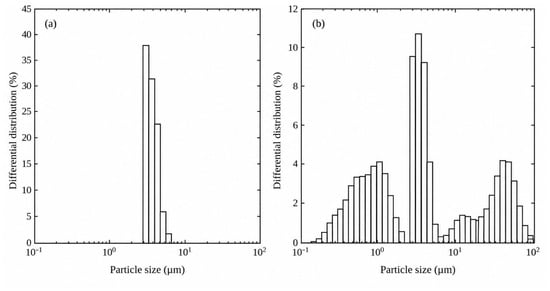
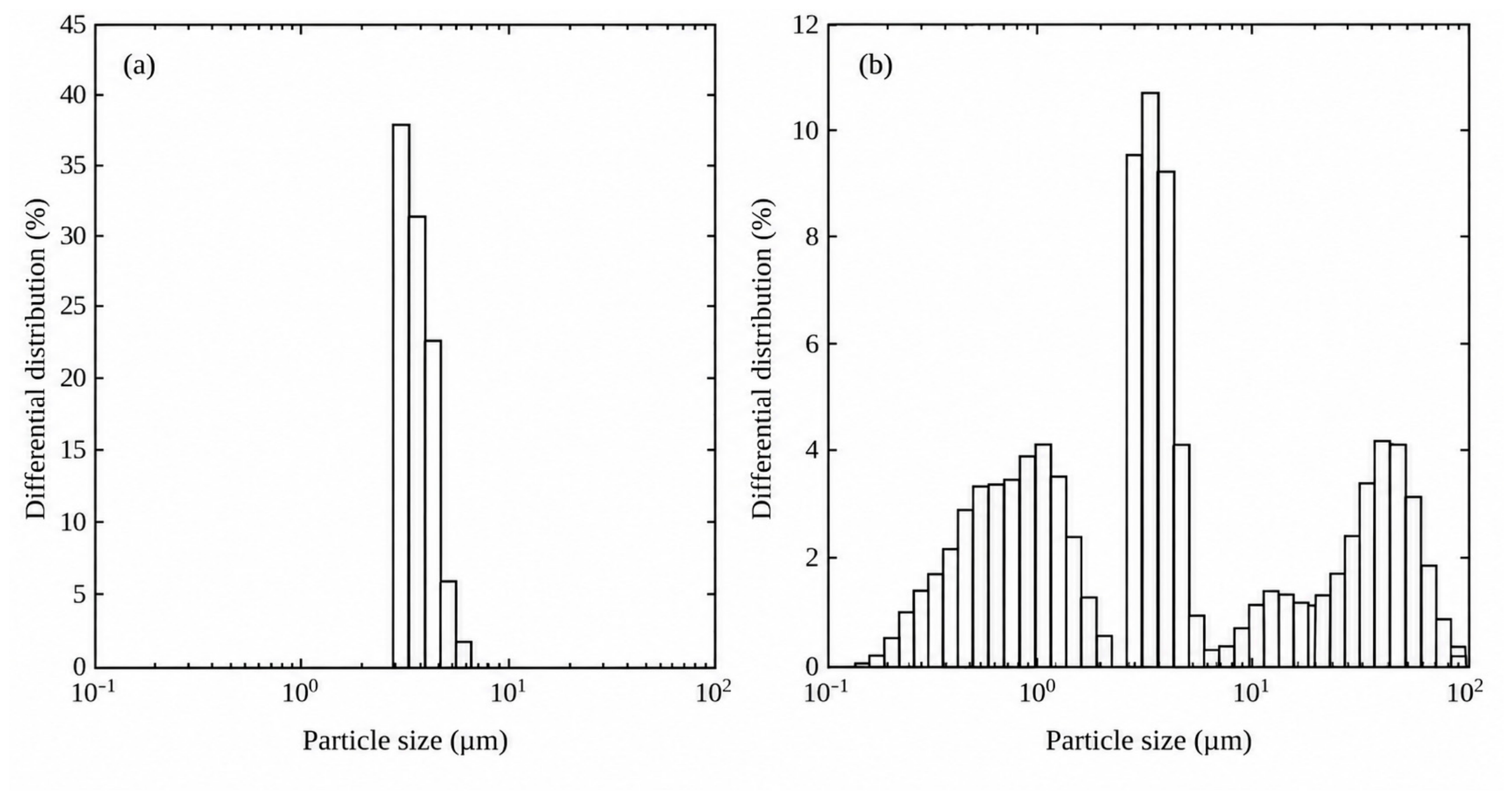
Particle size and size distribution of metal powders are important parameters that characterize the physical structure of AP-based energetic compositions. Because particle size distribution can affect the arrangement and contact of powder components, the particle size distribution of commercial Al and secondary Al-Si alloy powders was comparatively studied. This characteristic is especially important when comparing the post-combustion results of two metal fuels, since morphological features alone are not enough to explain differences in reaction characteristics; particle size distribution must also be considered. The differential particle size distribution curves obtained for commercial Al and secondary Al-Si powders are shown in Figure 1. The particle-size measurements were independently repeated three times to assess the repeatability of the results. The mean values and corresponding standard deviations of D10, D50, D90, Dav, and Span are summarized in Table 2. The relatively low standard deviations observed for the characteristic particle-size parameters confirm the good repeatability of the measurements.
Figure 1.
Particle-size distributions of (a) commercial Al powder and (b) secondary Al-Si alloy powder. Each particle-size distribution measurement was independently repeated three times under identical experimental conditions (n = 3). The corresponding characteristic particle-size parameters are presented as mean ± standard deviation in Table 2.
Table 2.
Particle-size characteristics of commercial Al and secondary Al-Si alloy powders obtained from three independent measurements (mean ± standard deviation, n = 3).
Figure 1 shows that the particle size distributions of the two powders differ significantly. The distribution of the commercial Al powder is concentrated in a relatively narrow size range and is characterized by a single main maximum (Figure 1a). In contrast, the distribution of the secondary Al-Si powder is much broader and multimodal, indicating the presence of several size populations (Figure 1b). In the Al-Si sample, the presence of a large particle fraction reaching tens of micrometers, along with submicron and several micrometer particles, broadens the overall distribution range.
To quantitatively compare the differences in the particle size distributions, the characteristic diameters D10, D50 and D90 were used. The obtained characteristic parameters are given in Table 2.
Table 2 shows that although the median particle sizes of pure Al and secondary Al-Si powders are similar, their size distributions differ significantly. The D50 values for pure Al and secondary Al-Si were 4.429 and 4.527 µm, respectively. However, the D10, D50, and D90 values represent the equivalent diameters corresponding to 10%, 50%, and 90% of the cumulative volume distribution, respectively. For commercial Al powder, D10 = 3.833 µm and D90 = 5.484 µm, indicating that most particles were concentrated in a relatively narrow size range. This result is consistent with the low value of the Span index (0.373) and the closeness of the average particle size to D50 (Dav = 4.576 µm). Thus, the single main maximum observed in Figure 1a characterizes the relatively uniform size composition of pure Al powder. Secondary Al-Si powder, by contrast, showed a much wider size distribution. Its D10 value was 0.878 µm, and its D90 value was 49.260 µm, and the corresponding Span value reached 10.687. At the same time, the Dav value was 14.455 µm, which was about three times higher than that of pure Al powder. Despite the practically identical D50 values, the higher Dav and D90 values for Al-Si indicate that the sample contains a significant proportion of large particle fractions. These results agree well with the broad, multimodal distribution profile observed in Figure 1b. Therefore, the main difference between the studied powders is not in their median size, but in the width of the particle size distribution and the ratio of different size fractions. This distinction is important when considering the commonly observed advantage of smaller particles for combustion. The secondary Al-Si powder should not be regarded simply as a finer fuel, because its D50 (4.527 μm) is nearly identical to that of commercial Al (4.429 μm), whereas its D90 is almost nine times higher and its Span is substantially larger. Thus, the observed combustion behavior is associated not with a uniformly reduced particle size, but with a highly heterogeneous particle-size population containing both submicron/fine particles and substantially larger particles. The broad size distribution in the secondary Al-Si powder may affect the mutual arrangement and contact conditions of the metallic fuel and oxidant particles. From a physical standpoint, the broad particle-size distribution of the secondary Al-Si powder implies that particles with substantially different characteristic dimensions are present simultaneously in the composite. This can lead to non-uniform packing and local differences in the contact area between the metal fuel and AP particles. During heating, particles of different sizes may also respond differently to the imposed thermal field, which can broaden the temporal distribution of their heating and reaction. Consequently, the broad PSD may contribute to differences in the continuity and temporal development of the combustion process. However, because the secondary Al-Si powder also differs from commercial Al in chemical and phase composition and morphology, the present data do not allow the contribution of PSD to be isolated quantitatively. Therefore, the presence of fine particles in the secondary Al-Si powder may contribute to a rapid initial thermal response, but the overall combustion propagation behavior cannot be inferred from the fine fraction alone. The simultaneous presence of larger particles can modify the duration and spatial distribution of heat release, so the net combustion behavior reflects the combined response of multiple particle populations rather than the behavior of an individual particle-size fraction. Therefore, in this work, particle-size distribution is considered not as a separate determining factor, but as one of the starting material properties that, together with morphological and chemical-phase characteristics, may affect the combustion process.
3.2. Chemical, Phase, and Morphological Characteristics of the Powders
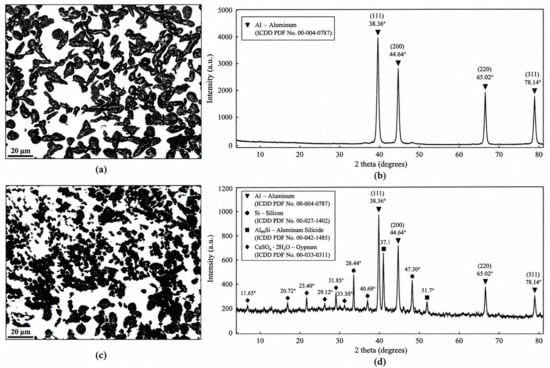
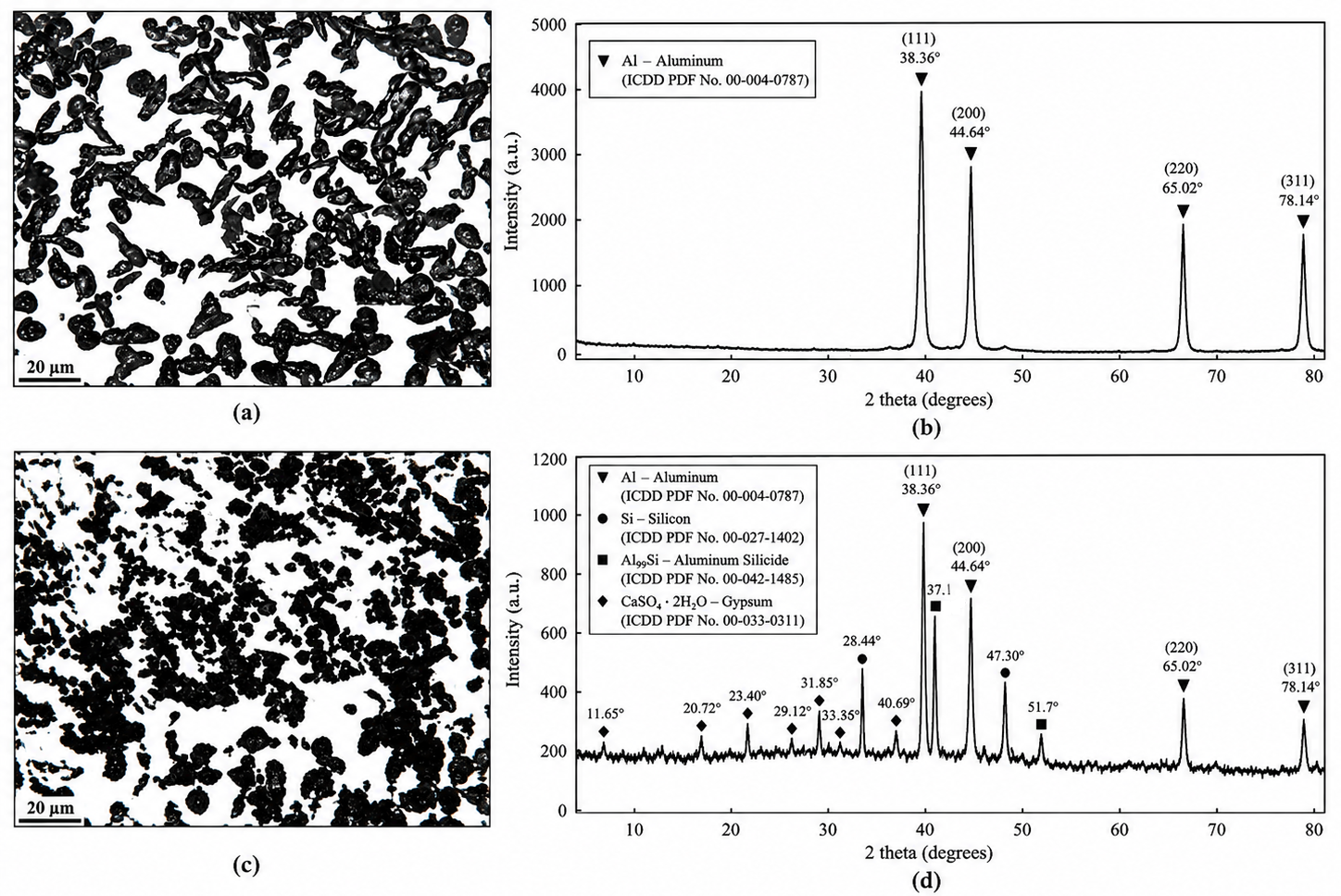
In addition to particle size distribution, the shape, surface structure, and phase composition of the powders are important parameters characterizing their physical state in AP-based compositions. In this regard, we compared the morphological features of commercial Al and secondary Al-Si powders using optical and scanning electron microscopy, and determined their phase composition by XRD. Considering the particle size distribution features identified in the previous section, together with microscopic observations, allows for a comprehensive assessment of the structural differences between the two metal powders. Figure 2 shows optical micrographs and XRD diffractograms of the studied powders. The XRD patterns presented in Figure 2 are representative of these independent measurements.
Figure 2.
Comparative morphological and phase characterization of the investigated metal powders: (a) optical micrograph and (b) representative XRD pattern of commercial Al powder; (c) optical micrograph and (d) representative XRD pattern of secondary Al-Si alloy powder. XRD measurements for each powder were independently repeated at least twice under identical experimental conditions. The corresponding ICDD PDF/JCPDS card numbers for the identified phases are indicated in the XRD patterns.
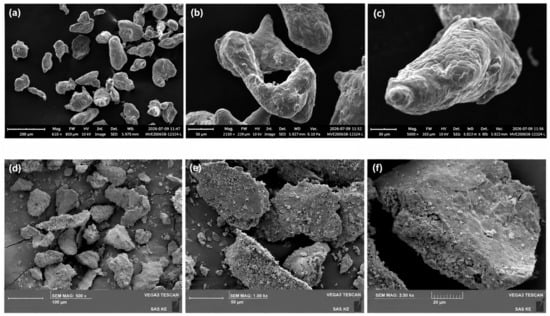
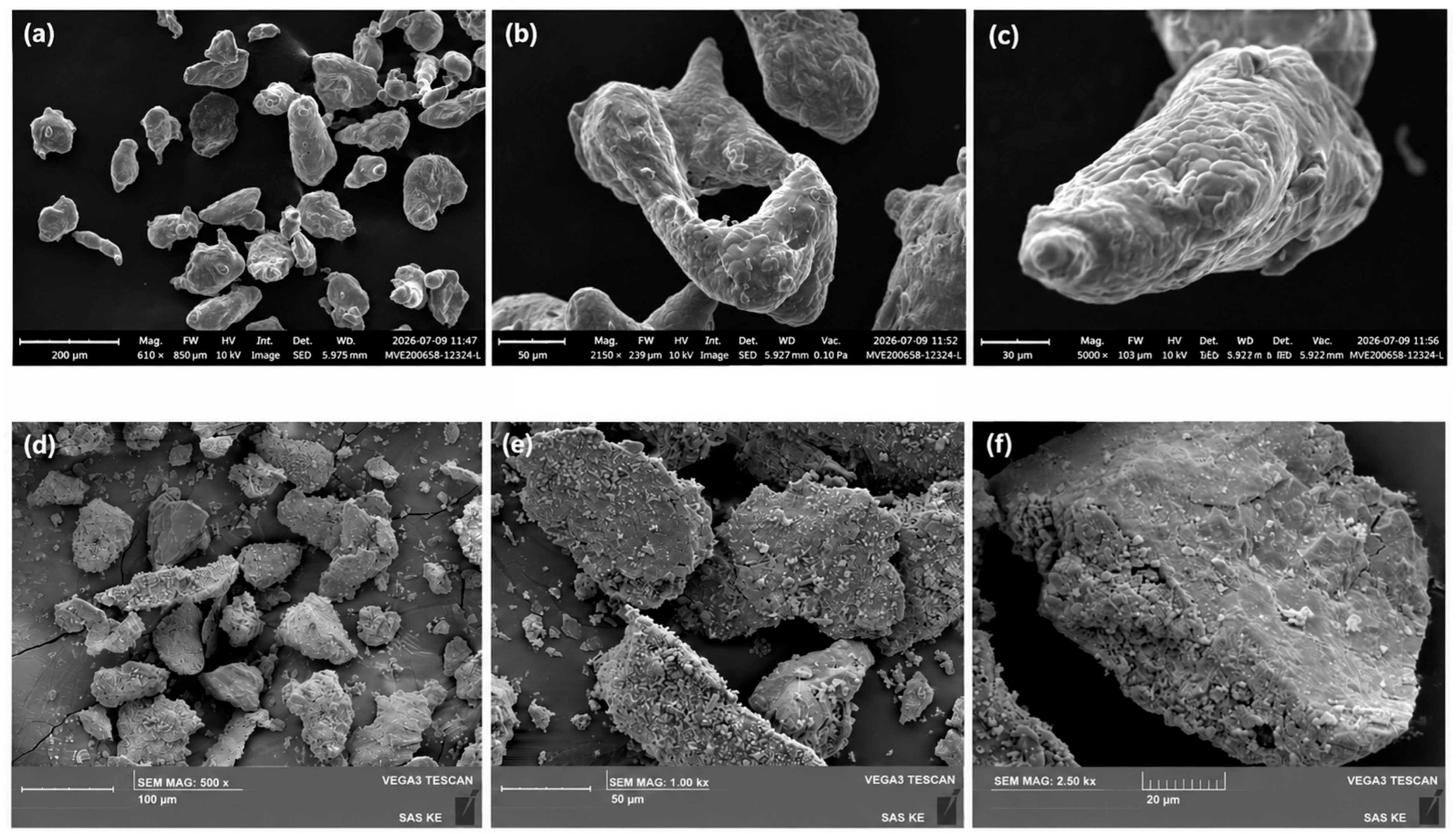
Optical microscopy showed that the morphological characteristics of the two powders were not the same (Figure 2a,c). In the commercial Al powder, the particles were mainly characterized by elongated and flake-like shapes and their size diversity was relatively low. In the secondary Al-Si powder, on the contrary, irregularly shaped and angular particles predominated, and fragments of different sizes were also observed. These observations are consistent with the particle-size distribution results obtained in Section 3.1: while a narrow distribution was found for the commercial Al, the secondary Al-Si powder was characterized by a broad and multimodal size distribution. Thus, the size diversity detected by laser diffraction was consistent with the morphological diversity observed from the microscopic images. The XRD pattern of the secondary Al-Si powder showed a more complex phase assemblage than that of commercial Al (Figure 2d). The main reflections at approximately 2θ = 38.5°, 44.7°, 65.1°, and 78.2° were assigned to metallic Al (ICDD PDF No. 00-004-0787). These reflections correspond to the characteristic reflections of the face-centered cubic Al phase and are also present in the diffractogram of the commercial Al powder. In addition to these metallic Al reflections, several lower- and intermediate-angle reflections were detected in the secondary Al-Si powder. The reflections marked with square symbols in Figure 2d were assigned to the Al99Si reference phase (ICDD PDF No. 00-042-1485), and are distinct from the principal metallic Al reflections. Additional reflections were assigned to crystalline Si (ICDD PDF No. 00-027-1402) and CaSO4·2H2O (ICDD PDF No. 00-033-0311). The Si phase is consistent with the WDXRF analysis, which showed 10.74 wt.% Si in the secondary powder. In this manuscript, the Al99Si assignment is referred to as an Al-rich Al-Si crystalline phase rather than as a stoichiometric Al-rich Al-Si crystalline phase. This terminology is used because the WDXRF result represents the bulk elemental composition of the powder, whereas XRD identifies crystalline phases and does not provide spatially resolved information on the local distribution of Al and Si within individual particles. The WDXRF analysis showed a bulk composition of 75.42 wt.% Al and 10.74 wt.% Si, while the XRD pattern indicates that the crystalline fraction is dominated by metallic Al with additional Si and an Al-rich Al-Si crystalline component. Therefore, the presence of an Al-rich Al-Si phase should not be interpreted as evidence that the entire powder particle has the Al99Si composition. More generally, bulk alloy composition does not necessarily reflect the local chemical and phase distribution within individual microstructural regions. Elemental segregation may produce local compositional and phase heterogeneity, as demonstrated for Ni-based superalloys [32]. In the present study, however, the Al-Si powder was interpreted based on the combined WDXRF and XRD results, without assuming analogous segregation behavior [32]. Whereas the low-intensity reflections of CaSO4·2H2O indicate the presence of a minor calcium sulfate phase. The independent repeated XRD measurements showed the same characteristic diffraction peak positions and consistent phase assignments for each powder, confirming the repeatability of the phase identification. Although optical microscopy revealed general morphological differences between the two powders, SEM studies were performed to compare their particle morphology and surface structure in greater detail. Comparative SEM micrographs of commercial Al and secondary Al-Si alloy powders at different magnifications are shown in Figure 3.
Figure 3.
Comparative SEM micrographs of commercial Al powder and secondary Al-Si alloy powder at different magnifications: (a–c) commercial Al powder at ×610, ×2150, and ×5000, respectively; (d–f) secondary Al-Si alloy powder at ×500, ×1000, and ×2500, respectively.
To examine the morphological differences between the two powders in greater detail, comparative SEM observations were performed at different magnifications (Figure 3). The commercial Al powder (Figure 3a–c) consists of irregular particles, with some elongated and locally deformed particles. The commercial Al powder consists predominantly of irregular and elongated particles with locally deformed surfaces (Figure 3a–c). The SEM micrographs provide qualitative information on particle morphology and surface characteristics at different magnification levels. Because SEM images represent two-dimensional projections of a limited number of particles, the apparent dimensions of individual objects in the micrographs were not used as a direct measure of the bulk particle-size distribution. The quantitative particle-size characteristics were obtained independently by laser diffraction using a volume-based distribution. At higher magnification, local folds and signs of mechanical deformation can be observed; however, the overall particle surface remains relatively smooth. In contrast, the secondary Al-Si alloy powder (Figure 3d–f) exhibits a more irregular and angular morphology. Particles of different sizes are present, and smaller fragments are frequently observed on the surfaces of larger particles. At higher magnification, the secondary Al-Si particles show a more heterogeneous surface microrelief, characterized by uneven areas, local depressions, protrusions, and attached fine fragments. Thus, the comparative SEM observations confirm that the morphological differences between the commercial Al and secondary Al-Si powders are not limited to particle shape. The commercial Al powder is characterized by a relatively uniform morphology and smoother particle surfaces, whereas the secondary Al-Si powder exhibits a more heterogeneous morphology, angular particle shapes, and a more complex surface microrelief. These observations are consistent with the particle-size distribution results, which showed a relatively narrow size distribution for commercial Al and a broad, multimodal distribution for the secondary Al-Si powder. It should be noted that the SEM observations provide qualitative information about particle morphology and surface features and do not allow direct quantification of the specific surface area. Therefore, the differences observed in the subsequent thermal and combustion characteristics cannot be attributed solely to morphology. Since the commercial Al and secondary Al-Si powders differ simultaneously in particle-size distribution, morphology, chemical composition, and phase composition, these characteristics should be considered as interrelated starting-material properties influencing the behavior of the AP-based compositions. From a physical standpoint, these differences can modify the real contact area and local packing arrangement between the metallic fuel and AP particles. The broad and multimodal PSD of the secondary Al-Si powder also implies that fine and coarse particles are present simultaneously, which can produce spatially non-uniform contact and heat-transfer conditions within the pressed composite. Consequently, the local rate at which heat generated in the reaction zone is transferred to adjacent unreacted material may differ between the AP + Al and AP + Al-Si systems. The multiphase nature of the secondary Al-Si powder may further contribute to this difference. In contrast to the predominantly metallic Al phase detected in the commercial powder, the secondary material contains metallic Al together with Si, an Al-rich Al-Si crystalline phase, and minor CaSO4·2H2O. Thus, the metallic fuel in the AP + Al-Si composition is physically and chemically heterogeneous, and its interaction with AP during heating and combustion is not equivalent to that of the commercial Al powder. Importantly, the observed combustion response cannot be interpreted simply in terms of the intrinsic oxidation enthalpy of Al and Si. Although Al and Si have comparable gravimetric energy densities, the secondary Al-Si powder contains a substantial metallic Al fraction (75.42 wt.%) and is therefore not equivalent to a pure Si fuel [33]. Therefore, the higher combustion response observed for the AP + Al-Si composition cannot be attributed to a greater heat of oxidation of Si. Instead, the experimental difference should be considered in terms of the rate and spatial distribution of heat release, heat transfer, particle–AP contact, and the heterogeneous physicochemical structure of the secondary alloy.
3.3. Thermal Behavior of AP + Al and AP + Al-Si Compositions
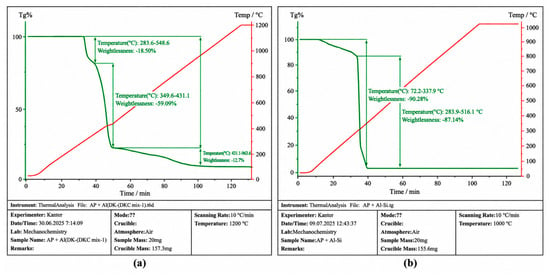
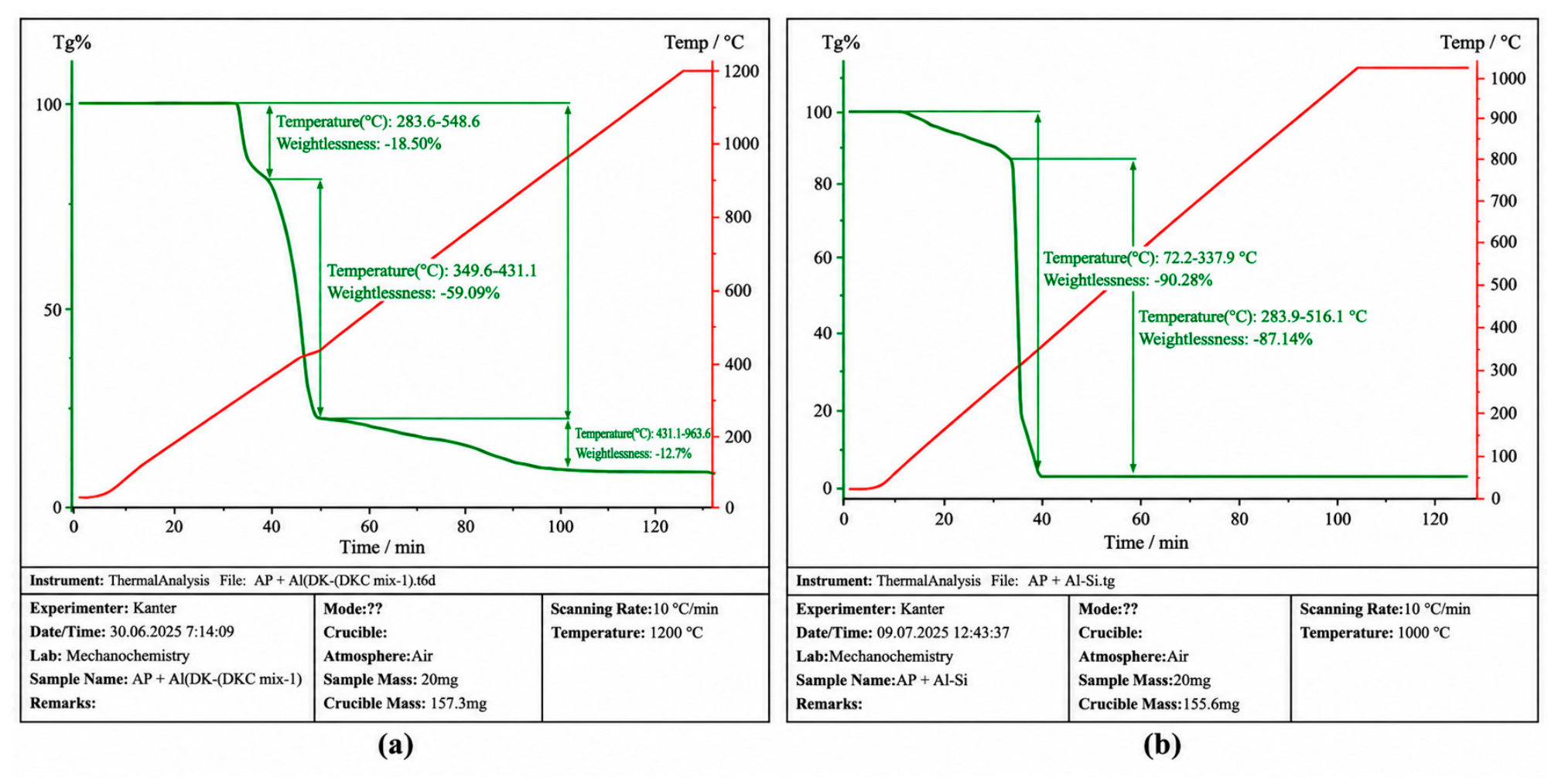
To compare the thermal mass-change behavior of the two AP-based compositions, thermogravimetric analysis was performed on samples containing 70 wt.% ammonium perchlorate and 30 wt.% metal component. Figure 4a corresponds to the AP + Al composition, whereas Figure 4b corresponds to the AP + Al-Si composition.
Figure 4.
Thermogravimetric (TG) curves of (a) AP + Al and (b) AP + Al-Si compositions at an AP-to-metal mass ratio of 70:30 (70 wt.% AP and 30 wt.% metal component), recorded in air. The temperature ranges were 25–1200 °C for AP + Al and 25–1000 °C for AP + Al-Si.
The upper temperature limit was selected according to the mass stabilization behavior of each composition. The AP + Al-Si composition was analyzed up to 1000 °C, whereas the AP + Al composition was analyzed up to 1200 °C to ensure that the final mass stabilization region was captured.
The AP + Al composition exhibited its main mass-loss process in the range of 283.6–431.1 °C, during which approximately 77.6% of the initial sample mass was lost. The mass change then proceeded more gradually at higher temperatures, and the total mass loss reached approximately 93% after the TG curve approached a stable region at the end of the measurement. Thus, approximately 7% of the initial sample mass remained as condensed residue.
The approximately 93% total mass loss should not be interpreted as decomposition of 93% of AP. The initial AP + Al composition contained 70 wt.% AP and 30 wt.% commercial Al. Therefore, the observed mass decrease represents the net mass change of the entire composite during heating. It primarily includes the release of gaseous products associated with AP thermal decomposition together with thermal transformations of the aluminum-containing fraction under the applied heating conditions. The remaining approximately 7 wt.% should not be assigned directly to unreacted aluminum. Thermogravimetric analysis measures the total mass of the composite and does not independently distinguish the contributions of AP-derived and Al-derived phases. In addition, because the measurements were performed in air, oxidation of the aluminum-containing fraction may influence the mass of the remaining condensed material. Therefore, the final residue represents the net amount of condensed material remaining after the thermal processes occurring in the AP + Al composite. The AP + Al-Si composition exhibited a different TG profile, with the main mass-change region occurring at lower temperatures than in the AP + Al composition. The mass approached a relatively stable region at higher temperatures, and the measurement was therefore performed up to 1000 °C. The shift of the main mass-change region toward lower temperatures indicates that replacing commercial Al with secondary Al-Si powder changes the overall thermal response of the AP-based composite. However, this shift should not be interpreted as direct evidence of higher intrinsic reactivity of the Al-Si powder, because the measured TG response reflects the combined behavior of AP and the metal component. The different TG profiles are consistent with the differences in the physicochemical characteristics of the starting metal powders. Commercial Al and secondary Al-Si powders differ in particle-size distribution, morphology, chemical composition, and phase composition. Therefore, the observed differences in TG behavior cannot be attributed to a single material parameter. The TG results are consequently used as a comparative characterization of the temperature-dependent mass changes of the two AP-based compositions rather than as a direct determination of individual reaction mechanisms or combustion energy release. Physically, the earlier onset of the main mass-change region in the AP + Al-Si composition indicates that the sequence of thermal events within the composite begins at lower temperatures than in the AP + Al composition. This behavior can be associated with the different interparticle contact conditions, broader particle-size distribution, and heterogeneous phase constitution of the secondary alloy powder, which modify heat transfer and the local thermal environment during AP decomposition and subsequent oxidation of the metallic fraction. Chemically, the TG response should therefore be considered as a coupled sequence in which AP undergoes thermal decomposition with release of gaseous products, while the heated metallic fraction undergoes oxidation and other high-temperature transformations. The resulting gaseous and condensed-phase processes can influence one another through heat release and heat transfer. The lower-temperature mass-change region observed for AP + Al-Si is therefore interpreted as a change in the overall coupled thermal response of the composite rather than as evidence that Si alone is intrinsically more reactive than Al.
3.4. Effect of AP-to-Metal Ratio on Combustion Regime
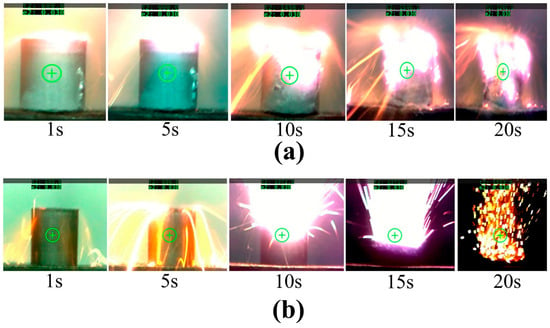
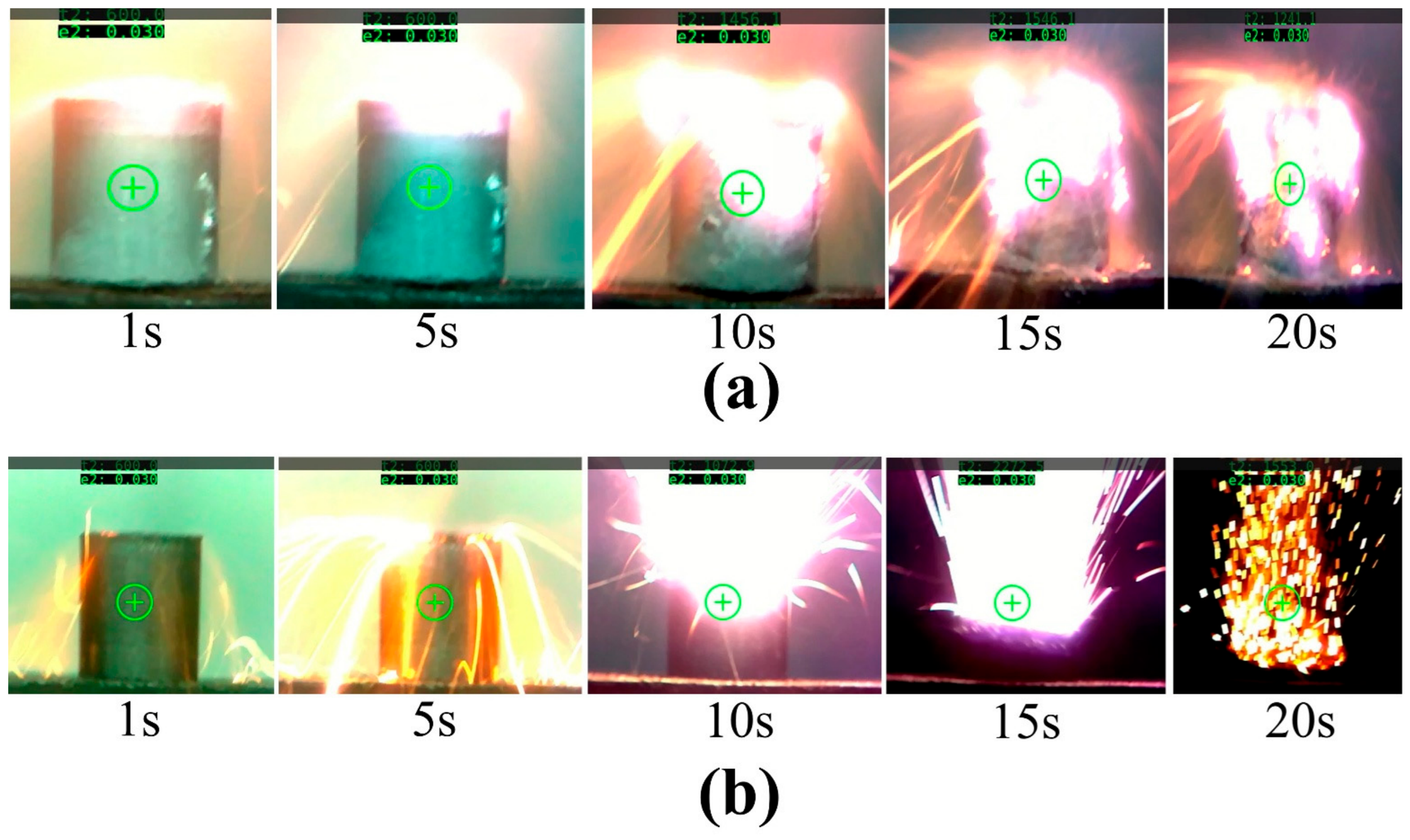
To determine the effect of the oxidizer-to-metal mass ratio on the combustion characteristics of energy compositions based on AP, comparative combustion experiments were conducted on the AP + Al and AP + Al-Si systems. For each system, the AP/metal mass ratios of 60:40, 65:35, 70:30 and 75:25 were studied. When comparing the combustion modes, the stability of combustion-front propagation, the spontaneous continuation of the process, the interruption of combustion, and the scattering of heated particles were considered. The observed combustion regime depended on the AP/metal ratio and differed between the two metal fuels at some of the tested compositions. Because only four discrete AP/metal ratios were investigated, the exact transition boundaries between combustion regimes were not determined. The classification of the combustion regimes was based on direct visual observations of the recorded combustion sequences, including the continuity of combustion-front propagation, spontaneous continuation after ignition, interruption of combustion, and ejection of incandescent particles. At an AP/metal ratio of 60:40, both systems exhibited rapid and intense combustion, while ejection of heated particles was more pronounced in the AP + Al-Si composition. At 65:35, continuous self-propagating combustion was observed in both systems. At 70:30, the two systems showed different behavior: the AP + Al composition became intermittent and did not maintain continuous spontaneous propagation, whereas the AP + Al-Si composition maintained spontaneous propagation through the sample. At 75:25, both systems exhibited interrupted combustion and did not maintain continuous spontaneous propagation. These observations were reproduced in three independent combustion experiments for each composition, and the same general regime classification was consistently obtained across the three repeats. Because the combustion sequences at 65:35 were representative of the stable self-propagating regime observed in both systems, Figure 5 presents this condition as a representative visual example. The combustion-regime classifications at the other AP/metal ratios were based on the corresponding recorded experiments and are summarized in Table 3.
Figure 5.
Representative sequential images of the combustion process of (a) AP + Al and (b) AP + Al-Si compositions at an AP-to-metal mass ratio of 65:35. The combustion experiments were independently repeated three times for each composition (n = 3), and the image sequences shown are representative of the repeated experiments.
Table 3.
Classification of combustion regimes of AP + Al and AP + Al-Si compositions as a function of the AP-to-metal mass ratio.
In the AP + Al composition (Figure 5a), a combustion zone was formed in the upper part of the sample within 1–5 s, and in the subsequent stages, combustion continued along the sample. Although a high-temperature light zone was maintained between 10 and 20 s, the scattering of heated particles was relatively limited. In the AP + Al-Si composition (Figure 5b), after the initial stage of combustion, the intensity of the reaction increased, and a burning zone with a clear light emission was observed between 5 and 15 s. At 20 s, the scattering of numerous heated particles from the reaction zone was clearly visible. Thus, although both compositions provided stable combustion at a ratio of 65:35, a clear difference was observed in the visual dynamics of their combustion process, especially in the emission of heated particles. The most significant difference between the two systems was revealed when the AP/metal ratio was changed to 70:30. Although combustion began after ignition in the AP + Al composition, the process did not continue steadily along the sample but became intermittent. The complete lack of spontaneous propagation of the combustion front may indicate that, in this composition, the heat released in the reaction zone was insufficient to maintain continuous combustion in the subsequent unburned zones. At 70:30, the two systems showed different combustion behavior: the AP + Al composition exhibited intermittent, non-self-sustained combustion, whereas the AP + Al-Si composition maintained stable self-propagating combustion. This difference indicates that combustion stability depends on the coupled effects of fuel characteristics and heat-transfer conditions, rather than on the nominal AP/metal ratio alone. In both systems, increasing the AP content and raising the AP/metal ratio to 75:25 decreased combustion stability. Although the sample initially ignited, the combustion process did not spread continuously spontaneously throughout the entire sample and combustion interruptions were observed. External thermal input was required to resume the process. Therefore, the 75:25 compositions in the AP + Al-Si system were classified as intermittent, not fully self-propagating combustion. Table 3 summarizes the combustion regimes of the studied compositions.
The results obtained showed that the AP/metal mass ratio affects not only the combustion intensity, but also the stability of the combustion regime of the studied energetic compositions. Although stable self-propagating combustion was observed in both systems at a ratio of 65:35, their behavior was different when the AP amount was increased. In the AP + Al system, stable combustion disappeared at a ratio of 70:30 and the process switched to an intermittent regime, while in the AP + Al-Si system, self-propagating combustion was preserved at this ratio. In the AP + Al-Si composition, stability was lost only at a ratio of 75:25. The observed difference in combustion stability can therefore be interpreted as the result of coupled thermal and physicochemical effects. The AP/metal ratio influences the balance between heat generation and heat loss in the reaction zone, while the particle-size distribution, morphology, phase constitution, and chemical composition of the metallic fuel modify the local contact and heat-transfer conditions. Thus, the preservation of self-propagating combustion in AP + Al-Si at 70:30 may indicate a more favorable coupled thermal response under the present experimental conditions, rather than a single dominant effect of Si or particle morphology. It is important to emphasize that this interpretation does not imply that Si oxidation provides a greater intrinsic heat release than Al oxidation. On the contrary, the higher intrinsic exothermicity of Al oxidation means that the observed persistence of combustion in the AP + Al-Si system cannot be explained simply by assuming a higher chemical heat output from the Si-containing fuel. The result instead indicates that combustion propagation depends on the balance between heat generation, heat losses, particle heating, interparticle heat transfer, and the temporal availability of reactive fuel within the reaction zone. Although the individual contributions of these material parameters cannot be quantitatively separated in the present experimental design, the combined effects determine whether heat feedback from the reaction zone is sufficient to sustain propagation through the unreacted composite. To further clarify these differences in combustion stability, temperature–time profiles for all investigated AP/metal ratios are presented and discussed in Section 3.5.
3.5. Temperature–Time Characteristics of AP + Al and AP + Al-Si Compositions
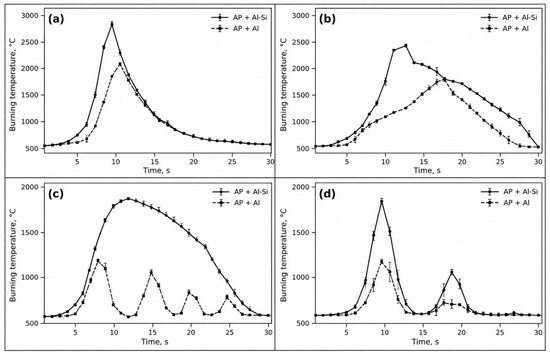
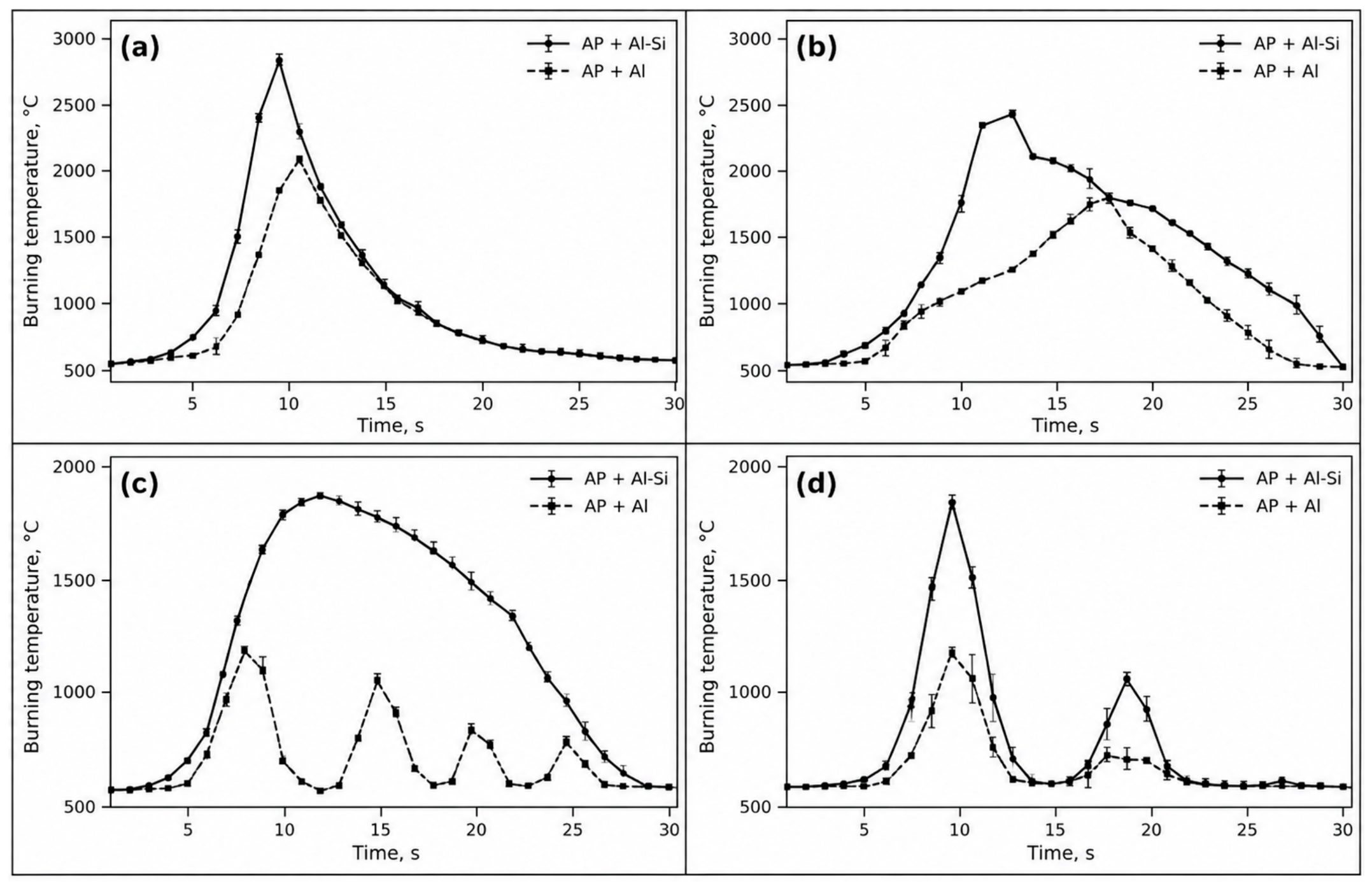
To further characterize the combustion behavior of the AP + Al and AP + Al-Si compositions, temperature–time profiles were obtained for all investigated AP/metal mass ratios, namely 60:40, 65:35, 70:30, and 75:25 (Figure 6). The measurements were performed under the same experimental conditions used for the combustion-regime observations, and three independent experiments were conducted for each composition. The temperature profiles are presented as mean ± standard deviation (SD, n = 3). The measured temperatures represent local apparent radiative temperatures within the pyrometer measurement field and are therefore used primarily to compare the temporal development and stability of the combustion response under identical experimental conditions.
Figure 6.
Temperature–time profiles of AP + Al and AP + Al-Si compositions at AP-to-metal mass ratios of (a) 60:40, (b) 65:35, (c) 70:30, and (d) 75:25. Solid lines represent AP + Al-Si and dashed lines represent AP + Al. Data are presented as mean ± standard deviation (SD, n = 3). The measured temperatures represent local apparent radiative temperatures within the pyrometer measurement field.
Figure 6 shows distinct temperature–time responses depending on both the AP/metal ratio and the type of metallic fuel. At the 60:40 ratio (Figure 6a), both compositions exhibited a rapid increase in temperature after ignition, consistent with the rapid and intense combustion regime identified from the visual observations. The AP + Al-Si composition showed a more pronounced temperature response and reached a substantially higher local apparent temperature than the AP + Al composition. The rapid increase followed by a decrease in temperature indicates that the principal high-temperature reaction zone developed over a relatively short time interval under the fuel-rich 60:40 conditions. At the 65:35 ratio (Figure 6b), both compositions exhibited stable and continuous self-propagating combustion. The temperature response of the two systems nevertheless differed substantially. For AP + Al-Si, the temperature increased rapidly after the initial stage of combustion, with the maximum reached at approximately 12–13 s. The maximum local apparent temperature was 2552.9 ± 23.8 °C (SD, n = 3). In comparison, the AP + Al composition exhibited a more gradual temperature increase, with the maximum reached at approximately 18–19 s and a maximum local apparent temperature of 1865.4 ± 19.7 °C (SD, n = 3). Thus, under the 65:35 conditions, the AP + Al-Si composition exhibited an earlier temperature maximum and a higher maximum local apparent temperature than the AP + Al composition. These differences were reproducibly observed in three independent experiments and are consistent with the different temporal combustion behavior observed in the synchronized video recordings. A particularly distinct difference between the two systems was observed at the 70:30 ratio (Figure 6c). The AP + Al-Si composition maintained a continuous temperature response over an extended time interval, which is consistent with the stable self-propagating combustion observed for this composition. In contrast, the AP + Al composition exhibited a discontinuous temperature–time response characterized by several separated temperature maxima and decreases between them. This behavior corresponds to the intermittent and non-self-sustained combustion regime identified from the visual observations. The repeated temperature excursions are consistent with successive local ignition and extinction events rather than continuous propagation of a single combustion front. Therefore, the temperature–time profile provides additional experimental evidence for the different combustion stability observed between the two systems at 70:30. At the 75:25 ratio (Figure 6d), both compositions exhibited discontinuous temperature responses, consistent with the intermittent or interrupted combustion behavior observed visually. The AP + Al-Si composition showed a pronounced initial temperature maximum followed by a decrease and a subsequent secondary temperature excursion. The AP + Al composition also exhibited a non-continuous temperature response, but with lower temperature excursions. These fluctuations indicate that the thermal response was not maintained continuously throughout the combustion process. The temperature profiles therefore support the classification of the 75:25 compositions as non-continuous combustion regimes rather than stable self-propagating combustion. The comparison of the four AP/metal ratios demonstrates that the temperature–time response changes systematically with the composition and combustion regime. At 65:35, both systems showed continuous self-propagating combustion, whereas at 70:30 the AP + Al-Si system retained a sustained thermal response while the AP + Al system exhibited intermittent temperature excursions. At 75:25, the temperature response of both systems became discontinuous. The 60:40 compositions, in contrast, showed a rapid and intense temperature response associated with the high-temperature combustion event. Thus, the temperature–time profiles provide temperature-resolved evidence that complements the combustion-regime classification based on synchronized visual observations. It should be emphasized that the experimentally measured temperatures should not be interpreted as adiabatic combustion temperatures or as absolute thermodynamic flame temperatures. The infrared pyrometer records local apparent radiative temperatures within the measurement field. Consequently, the measured signal can be influenced by the spatially heterogeneous combustion zone, the position of the reaction front, and radiation from hot condensed particles. This consideration is particularly relevant for the AP + Al-Si composition, for which more pronounced emission and ejection of incandescent particles were observed during combustion. Therefore, the temperature–time curves are interpreted primarily as a comparative measure of the temporal and spatial combustion response rather than as a direct measurement of the equilibrium temperature or total chemical energy release. The different temperature–time responses can be interpreted in conjunction with the differences in particle-size distribution, morphology, chemical composition, and phase constitution of the two metallic fuels. The secondary Al-Si powder exhibited a substantially broader particle-size distribution and more heterogeneous morphology than the commercial Al powder. These characteristics may modify particle–AP contact, particle heating, heat transfer, and the spatial and temporal development of the reaction zone. The temperature profiles therefore support the interpretation that combustion stability is governed by coupled chemical and physical processes rather than by a single material parameter. In particular, the sustained temperature response of AP + Al-Si at 70:30 is consistent with the ability of this composition to maintain thermal feedback to the unreacted material under the present experimental conditions. However, the individual contributions of Si content, particle morphology, particle-size distribution, and phase composition cannot be independently separated within the present experimental design.
Overall, the temperature-time measurements provide complementary evidence for the combustion regimes identified from the visual observations. Continuous temperature evolution is associated with stable self-propagating combustion, whereas repeated temperature excursions and pronounced temperature decreases are associated with intermittent or interrupted combustion. The complete set of temperature profiles at 60:40, 65:35, 70:30, and 75:25 therefore strengthens the experimental basis for interpreting the composition-dependent combustion behavior of the AP + Al and AP + Al-Si systems.
3.6. Proposed Reaction Mechanisms of AP + Al and AP + Al-Si Systems
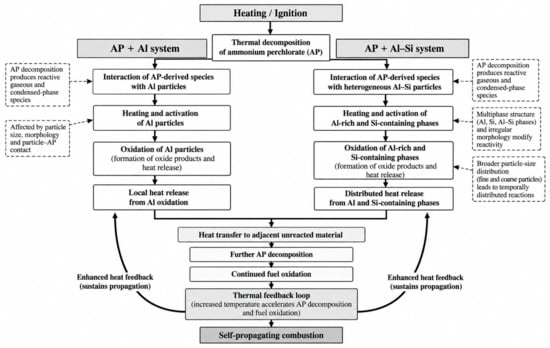
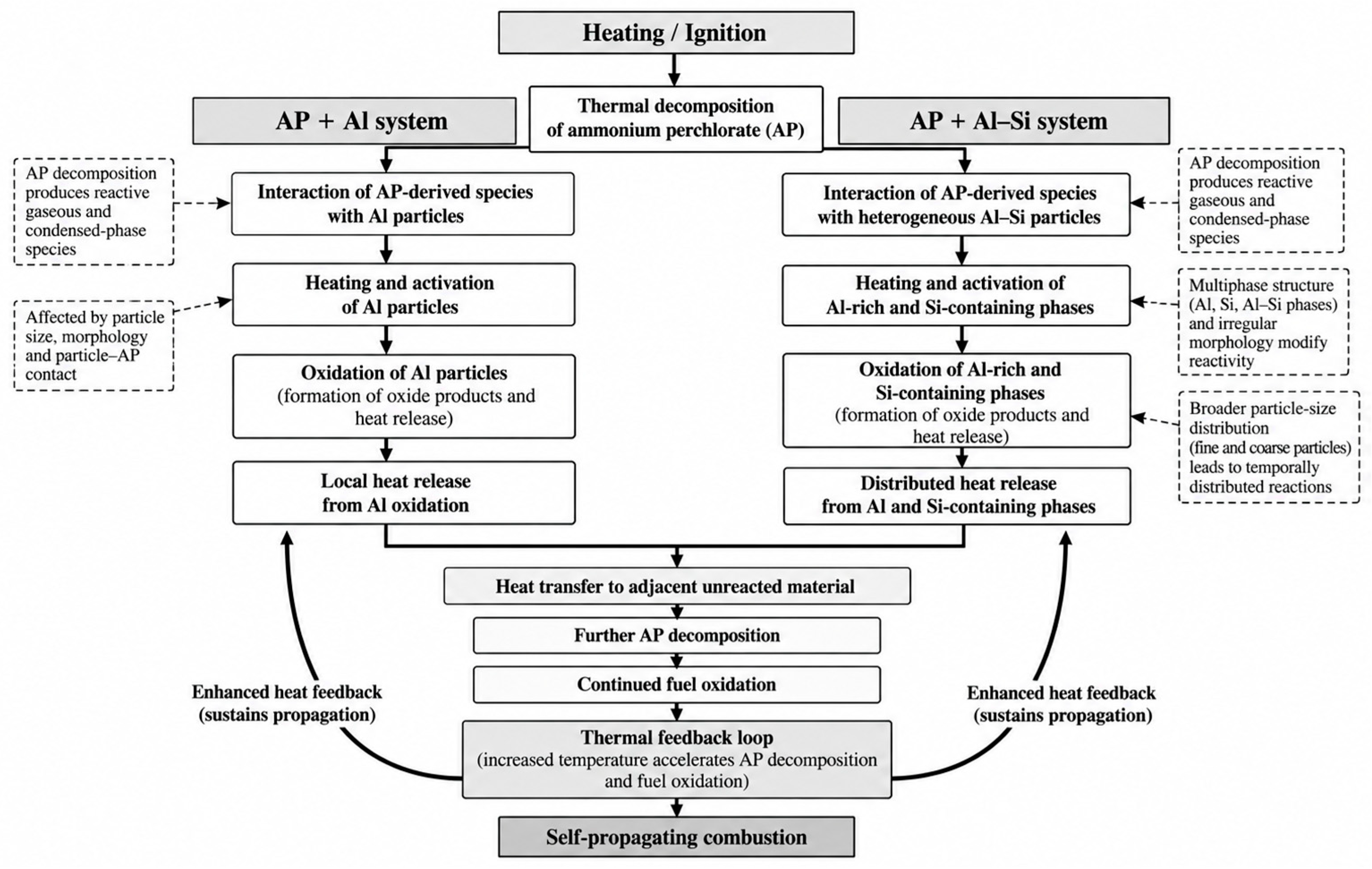
Based on the thermal, morphological, phase-composition, particle-size, and combustion observations obtained in this study, qualitative reaction mechanisms are proposed for the AP + Al and AP + Al-Si systems. The proposed mechanisms describe the dominant sequence of coupled physicochemical processes rather than a fully resolved elementary reaction network, since the present experimental data do not allow individual elementary reactions or the separate contributions of Al and Si to be quantitatively determined. For the AP + Al system, heating initiates the thermal decomposition of ammonium perchlorate (AP), accompanied by the formation of reactive gaseous and condensed-phase species [34]. These species interact with heated Al particles, followed by aluminum oxidation and heat release. The resulting heat is transferred to the adjacent unreacted AP/Al material, promoting further AP decomposition and fuel oxidation. Thus, the combustion process can be considered as a coupled sequence of AP thermal decomposition → interaction of AP-derived reactive species with Al → Al oxidation and heat release → heat transfer to adjacent unreacted material → further AP decomposition and fuel oxidation. The continuation of this thermal feedback can support combustion-front propagation. For the AP + Al-Si system, the initial AP decomposition stage is expected to follow the same general sequence, whereas the subsequent fuel-oxidation stage is affected by the heterogeneous structure of the secondary alloy powder. The presence of Al-rich and Si-containing phases, together with the broad particle-size distribution, irregular morphology, and multiphase structure, can modify particle–AP contact, particle heating, heat transfer, and the temporal distribution of heat release. Consequently, the reaction zone may develop differently from that of the AP + Al system. The AP + Al-Si process can therefore be conceptually represented as AP thermal decomposition → interaction of AP-derived reactive species with heterogeneous Al-Si particles → oxidation of Al-rich and Si-containing phases → distributed heat release and heat transfer → further AP decomposition and fuel oxidation → thermal feedback and combustion-front propagation.
As illustrated in Figure 7, the two systems share a common initial stage associated with AP thermal decomposition, but differ in the subsequent interaction between the AP-derived reactive species and the metallic fuel. In the AP + Al system, the reaction zone is mainly associated with the interaction of AP-derived reactive species with the predominantly metallic Al phase. In contrast, the AP + Al-Si system contains a more heterogeneous fuel structure comprising metallic Al, Si-containing phases, an Al-rich Al-Si crystalline phase, and minor secondary phases. Therefore, particle-size distribution, morphology, phase constitution, particle-AP contact, and heat-transfer conditions can collectively influence the development of the reaction zone. In particular, the broader particle-size distribution of the secondary Al-Si powder may result in a temporally distributed response, with particles of different size populations contributing differently during heating and oxidation. These coupled effects can modify the spatial and temporal distribution of heat release and, consequently, the thermal feedback to the adjacent unreacted material.
Figure 7.
Schematic representation of the proposed reaction mechanisms of the AP + Al and AP + Al-Si systems.
The proposed mechanisms also provide a physicochemical interpretation of the different combustion regimes observed at the 70:30 AP/metal ratio. Under this condition, the AP + Al composition exhibited intermittent combustion, whereas the AP + Al-Si composition maintained self-propagating combustion. This difference indicates that combustion sustainability depends on the coupled balance between AP decomposition, fuel oxidation, heat generation, heat loss, particle heating, and heat transfer rather than on the nominal AP/metal ratio alone. The broader particle-size distribution and heterogeneous phase constitution of the secondary Al-Si powder may contribute to a spatially and temporally distributed reaction zone, thereby affecting heat feedback to the adjacent unreacted material. Thus, the sustained combustion observed for AP + Al-Si at 70:30 is interpreted as a consequence of the combined physicochemical characteristics of the secondary alloy rather than as evidence of a single dominant effect of Si.
Overall, the proposed mechanisms indicate that AP + Al and AP + Al-Si share a common AP decomposition stage but differ in the subsequent fuel-oxidation and thermal-feedback processes because of the different physicochemical characteristics of the metallic fuels.
4. Conclusions
In this work, the physicochemical characteristics of commercial Al and secondary Al-Si powders and their combustion regimes and temperature-time response in AP-based compositions were compared. The median particle sizes of commercial Al and Al-Si powders were close to each other (D50 = 4.429 and 4.527 μm), but the size distribution widths were clearly different: Span values were 0.373 and 10.687, respectively. The secondary Al-Si powder was characterized by a wider size distribution, angular particles, and a more complex surface morphology. Changing the AP/metal ratio affected the observed combustion regime in both systems. At 60:40, both compositions exhibited rapid and intense combustion, with more pronounced ejection of heated particles in the AP + Al-Si system. At 65:35, both AP + Al and AP + Al-Si compositions showed stable self-propagating combustion. At 70:30, the AP + Al composition exhibited intermittent combustion, whereas the AP + Al-Si composition maintained stable self-propagating combustion. At 75:25, both systems exhibited intermittent combustion. These regime classifications were consistently observed across three independent experiments for each tested composition. Therefore, under the specific experimental conditions and discrete AP/metal ratios investigated in this study, stable self-propagating combustion was observed at 65:35 for both systems and additionally at 70:30 for the AP + Al-Si system. The exact transition boundaries between combustion regimes were not determined. In three independent experiments with a ratio of 65:35, the maximum local apparent temperature of the AP + Al-Si composition was 2552.9 ± 23.8 °C, and in the AP + Al system it was 1865.4 ± 19.7 °C. The temperature maximum of AP + Al-Si was reached at approximately 12–13 s, and that of AP + Al at 18–19 s. Temperature–time profiles obtained for all four investigated AP/metal ratios provided additional temperature-resolved evidence supporting the observed combustion-regime differences. In particular, the continuous response of AP + Al-Si at 70:30 contrasted with the intermittent temperature response of AP + Al, consistent with the corresponding visual observations. The results demonstrate that replacing commercial Al with secondary Al-Si powder altered the observed combustion regime at the tested AP/metal ratios and changed the temperature–time response of the AP-based compositions. However, these differences cannot be explained solely by the effect of particle morphology or Si content, since the studied powders differ simultaneously in particle size distribution, morphology, chemical and phase composition. The combined results indicate that the combustion behavior of the AP-based compositions is governed by coupled chemical and physical processes rather than by a single material parameter. AP decomposition and oxidation of the metallic fraction provide the principal sources of gaseous products and heat, while particle-size distribution, morphology, phase constitution, and interparticle contact influence the spatial and temporal development of the reaction zone and heat feedback. The ability of the AP + Al-Si composition to sustain combustion at 70:30 is therefore interpreted as a consequence of its overall physicochemical characteristics, which may provide more favorable conditions for maintaining heat transfer to the unreacted material under the present experimental conditions. Because the individual contributions of these factors were not independently varied, this interpretation should be regarded as a physicochemical interpretation of the observed behavior rather than as proof of a single reaction pathway. The proposed reaction mechanisms further indicate that the AP + Al and AP + Al-Si systems share a common AP-decomposition stage but differ in the subsequent fuel-oxidation and heat-feedback processes because of the different phase composition, particle-size distribution, morphology, and interfacial characteristics of the metallic fuels.
Author Contributions
Conceptualization, K.K.; methodology, D.M., O.C., M.Y. and B.M.; investigation, D.M., O.C. and B.M.; resources, K.K.; writing—original draft preparation, K.K., S.T. and D.M.; writing—review and editing, K.K. and S.T.; visualization, D.M., O.C., M.Y. and B.M.; funding acquisition, K.K.; All authors have read and agreed to the published version of the manuscript.
Funding
This research was funded by the Science Committee of the Ministry of Science and Higher Education of the Republic of Kazakhstan (Grant № BR28712843).
Data Availability Statement
The original contributions presented in this study are included in the article. Further inquiries can be directed to the corresponding author.
Conflicts of Interest
Author Oksana Chervyakova was employed by the company LLP “AlmaDK”, Almaty, Kazakhstan, Almaty, Kazakhstan. The author declares that the research was conducted in the absence of any commercial or financial relationships that could be construed as a potential conflict of interest.
References
- Zhang, S.; Zhu, B.; Sun, Y. Study on the combustion performance of nano/micro-sized aluminum powders regulated by polydopamine interface. Combust. Flame 2022, 240, 112027. [Google Scholar] [CrossRef] [Scilit]
- Li, Y.; Ren, H.; Wu, X.; Wang, H.; Yu, X. Nitrogen-rich energetic polymer powered aluminum particles with enhanced reactivity and energy content. Sci. Rep. 2022, 12, 8893. [Google Scholar] [CrossRef] [Scilit]
- Xiao, F.; Liu, Z.; Liang, T.; Yang, R.; Li, J.; Luo, P. Establishing the interface layer on the aluminum surface through the self-assembly of tannic acid (TA): Improving the ignition and combustion properties of aluminum. Chem. Eng. J. 2021, 420, 130523. [Google Scholar] [CrossRef] [Scilit]
- Zhu, B.; Zhang, S.; Sun, Y.; Ji, Y.; Wang, J. Fluorinated graphene improving thermal reaction and combustion characteristics of nano-aluminum powder. Thermochim. Acta 2021, 705, 179038. [Google Scholar] [CrossRef] [Scilit]
- Uhlenhake, K.E.; Yehia, O.R.; Noel, A.; Terry, B.C.; Örnek, M.; Belal, H.M.; Gunduz, I.E.; Son, S.F. On the Use of Fluorine-Containing Nano-Aluminum Composite Particles to Tailor Composite Solid Rocket Propellants. Propellants Explos. Pyrotech. 2022, 47, e202100370. [Google Scholar] [CrossRef] [Scilit]
- Jiang, Y.; Wang, Y.; Baek, J.; Wang, H.; Gottfried, J.L.; Wu, C.; Shi, X.; Zachariah, M.; Zheng, X. Ignition and combustion of perfluoroalkyl-functionalized aluminum nanoparticles and nanothermite. Combust. Flame 2022, 242, 112170. [Google Scholar] [CrossRef] [Scilit]
- Li, J.; Tang, W.; Liu, Z.; Cong, K.; Gong, L.; Li, J.; Yang, R. Microsized aluminum/ammonium dinitramide core-shell particles to improve the combustion performance of aluminum powders. J. Alloys Compd. 2022, 907, 164349. [Google Scholar] [CrossRef] [Scilit]
- Zhang, L.; Su, X.; Wang, S.; Li, X.; Zou, M. In situ preparation of Al@3-perfluorohexyl-1,2-epoxypropane@glycidyl azide polymer high-energy material. Chem. Eng. J. 2022, 450, 137118. [Google Scholar] [CrossRef] [Scilit]
- Ma, X.; Zhao, W.; Zeng, X.; Yan, S.; Liu, D.; Zhang, F.; Jiao, Q. Spherical Al–Zr alloy powders prepared by centrifugal atomization for tunable energetic behavior. Mater. Lett. 2022, 315, 131955. [Google Scholar] [CrossRef] [Scilit]
- Liao, X.; Liang, D.; Wang, F.; Xie, P.; Chen, Y.; Liu, J. Combustion and energy performance of multiple aluminum-based alloy particles. Combust. Flame 2024, 269, 113666. [Google Scholar] [CrossRef] [Scilit]
- Hu, Q.; Sun, Z.; Wang, Z. Aluminum-based alloy fuels for solid propellants: Intrinsic properties, energy enhancement and combustion rate regulation. J. Alloys Compd. 2025, 1010, 177793. [Google Scholar] [CrossRef] [Scilit]
- He, G.; Liu, L.; Zhang, W.; Li, S.; Wen, Z.; Liu, P.; Ao, W. Influence of Al–Ni alloy on the combustion and agglomeration of solid propellants. Aerosp. Sci. Technol. 2025, 157, 109849. [Google Scholar] [CrossRef] [Scilit]
- Yao, J.; Yan, S.; Liu, J.; Wang, Z.; Chang, K.; Jiao, Q. Reaction characteristics of Al–Mg alloy fuels with heterogeneous oxidation shell structures. Chem. Eng. J. 2024, 495, 153384. [Google Scholar] [CrossRef] [Scilit]
- Xiao, L.; Wang, Y.; Zheng, R.; Liu, J.; Zhao, J.; Maraseni, T.; Qian, G. Identification of recycling pathways for secondary aluminum dross with integrated hybrid life cycle assessment. Resour. Conserv. Recycl. 2023, 193, 106987. [Google Scholar] [CrossRef] [Scilit]
- Zhang, Y.; Cai, Y.; Liu, S.; Su, Z.; Jiang, T. Life cycle assessment of aluminum-silicon alloy production from secondary aluminum in China. J. Clean. Prod. 2023, 392, 136214. [Google Scholar] [CrossRef] [Scilit]
- Chen, X.; Saada, M.B.; Lavisse, B.; Ammar, A. Recent advances in the remelting process for recycling aluminium alloy chips: A critical review. Int. J. Mater. Form. 2025, 18, 42. [Google Scholar] [CrossRef] [Scilit]
- Chen, Y.; Wang, J.Q.; Wang, Y.A.; Zhu, B.Z.; Sun, Y.L. Probing the difference in improving the ignition and combustion of micro/nano-sized aluminum powder modified by Viton A. J. Mater. Sci. 2024, 59, 22091–22108. [Google Scholar] [CrossRef] [Scilit]
- Tu, C.; Chen, X.; Chen, F.; Zhuang, Y.; Cai, W.; Li, Y.; Li, W.; Zhou, C.; Xie, R. Effect of aluminum and ammonium perchlorate particle sizes on the condensed combustion products characteristics of aluminized NEPE propellants. Sci. Rep. 2024, 14, 19462. [Google Scholar] [CrossRef] [Scilit]
- Liu, M.Y.; Yu, W.H.; Li, S.P. Effect of aluminum-based additives on the ignition performance of ammonium perchlorate-based composite solid propellants. Acta Astronaut. 2023, 204, 321–330. [Google Scholar] [CrossRef] [Scilit]
- Xu, P.; Liu, J.; Dong, X.; Zhang, W.; Yang, Y.; Yang, W. Ignition and combustion of Al and ammonium perchlorate-coated Al particles in a double oxidizing air–H2O–Ar atmosphere. Combust. Flame 2023, 251, 112673. [Google Scholar] [CrossRef] [Scilit]
- Yan, X.; Xu, R.; Nie, H.; Yan, Q.; Liu, J.; Sun, Y. Mechanism of interaction between ammonium perchlorate and aluminum. J. Phys. Chem. A 2023, 127, 6532–6540. [Google Scholar] [CrossRef] [Scilit]
- Zhang, L.; Li, X.; Wang, S.; Su, X.; Zou, M. Self-assembly of composite salts induced uniform, ammonium perchlorate-catalytic, ignitable and energetic coating on aluminum fuels. Combust. Flame 2024, 260, 113109. [Google Scholar] [CrossRef] [Scilit]
- Zhang, H.J.; Nie, J.X.; Jiao, G.L.; Xu, X.; Guo, X.Y.; Yan, S.; Jiao, Q.J. Effect of the microporous structure of ammonium perchlorate on thermal behaviour and combustion characteristics. Def. Technol. 2022, 18, 1156–1166. [Google Scholar] [CrossRef] [Scilit]
- Jun, L.I.U.; Tianyu, Y.A.N.G.; Yi, X.I.A.O.; Qilong, Y.A.N.; Yunlan, S.U.N. Fine interfacial control mechanism of ammonium perchlorate and aluminum powder: Thermal reaction characteristics and kinetic studies. Chin. J. Aeronaut. 2025, 38, 103664. [Google Scholar] [CrossRef] [Scilit]
- Liu, X.L.; Hu, S.Q.; Liu, L.L.; Zhang, Y. Condensed combustion products characteristics of HTPB/AP/Al propellants under solid rocket motor conditions. Aerospace 2022, 9, 677. [Google Scholar] [CrossRef] [Scilit]
- Xu, P.; Dong, X.; Zhang, W.; Yang, Y.; Liao, X.; Liu, J. Effect of AP coating or blending on the ignition and combustion of Al particles under a high-pressure water vapour–Ar environment. Combust. Flame 2024, 263, 113382. [Google Scholar] [CrossRef] [Scilit]
- Dai, J.; Yang, T.; Sun, Y.; Zhu, B. A study on modification of aluminum powder by ammonium perchlorate and glycidyl azide polymer to improve its combustion. Combust. Flame 2024, 268, 113620. [Google Scholar] [CrossRef] [Scilit]
- Tsipilev, V.; Forat, E.; Medvedev, V.; Yakovlev, A.; Vavilov, V.; Shiryaev, V. Laser ignition of ammonium perchlorate/aluminum composition confined into PMMA capsule. Propellants Explos. Pyrotech. 2022, 47, e202100184. [Google Scholar] [CrossRef] [Scilit]
- Zhang, W.; Fan, Z.; Shu, Y.; Ren, P.; Liu, P.; Li, L.K.; Ao, W. Investigation of aluminum particle ignition dynamics in various propellant environments. Aerosp. Sci. Technol. 2024, 149, 109164. [Google Scholar] [CrossRef] [Scilit]
- Huang, L.; Cao, X.; Zhang, J.; Yang, H.; Zhang, S. Experimental investigation of an image-based method for determining the combustion temperature of aluminum particles. Acta Astronaut. 2023, 207, 403–410. [Google Scholar] [CrossRef] [Scilit]
- Ketegenov, T.; Vongay, I.; Chervyakova, O.; Kalmuratova, B.; Kononov, A.; Kamunur, K.; Nadirov, R. Enhanced Combustion Properties of Al-Si Eutectic Alloy in Energetic Mixtures. Materials 2024, 17, 4890. [Google Scholar] [CrossRef] [Scilit]
- Long, H.; Li, Y.; Wu, Y.; Lian, Y.; Zhou, J.; Liang, X.; Lin, F. Achieving crack-free and strong-ductile Ni-based superalloys via harnessing segregation to create interlocking microstructures during electron beam additive manufacturing. J. Mater. Process. Technol. 2025, 346, 119103. [Google Scholar] [CrossRef] [Scilit]
- Parimi, V.S.; Huang, S.; Zheng, X. Enhancing ignition and combustion of micron-sized aluminum by adding porous silicon. Proc. Combust. Inst. 2017, 36, 2317–2324. [Google Scholar] [CrossRef] [Scilit]
- Vaz, N.G.; Pantoya, M.L. Silicon alloying enhances fast heating rate combustion of aluminum particles. Combust. Flame 2022, 241, 112156. [Google Scholar] [CrossRef] [Scilit]

Disclaimer/Publisher’s Note: The statements, opinions and data contained in all publications are solely those of the individual author(s) and contributor(s) and not of MDPI and/or the editor(s). MDPI and/or the editor(s) disclaim responsibility for any injury to people or property resulting from any ideas, methods, instructions or products referred to in the content. |
© 2026 by the authors. Licensee MDPI, Basel, Switzerland. This article is an open access article distributed under the terms and conditions of the Creative Commons Attribution (CC BY) license.