


Abstract
Metal additive manufacturing (AM) generates complex microstructures through extreme thermal gradients and rapid solidification, critically influencing mechanical performance and industrial qualification. This review synthesizes recent advances in cellular automata (CA) and phase-field (PF) modeling to predict grain-scale microstructure evolution during AM. CA methods provide computational efficiency, enabling large-domain simulations and excelling in texture prediction and multi-layer builds. PF approaches deliver superior thermodynamic fidelity for interface dynamics, solute partitioning, and nonequilibrium rapid solidification through CALPHAD coupling. Hybrid CA–PF frameworks strategically balance efficiency and accuracy by allocating PF to solidification fronts and CA to bulk grain competition. Recent algorithmic innovations—discrete event-inspired CA, GPU acceleration, and machine learning—extend scalability while maintaining predictive capability. Validated applications across Ni-based superalloys, Ti-6Al-4V, tool steels, and Al alloys demonstrate robust process–microstructure–property predictions through EBSD and mechanical testing. Persistent challenges include computational scalability for full-scale components, standardized calibration protocols, limited in situ validation, and incomplete multi-physics coupling. Emerging solutions leverage physics-informed machine learning, digital twin architectures, and open-source platforms to enable predictive microstructure control for first-time-right manufacturing in aerospace, biomedical, and energy applications.
1. Introduction
Metal additive manufacturing (AM) has emerged as a transformative technology that enables unprecedented design freedom, geometric complexity, and rapid prototyping across the aerospace, biomedical, automotive, and energy sectors [1,2]. Unlike conventional manufacturing processes, AM builds components layer-by-layer through localized melting and rapid solidification of metallic powders or wires, inducing extreme thermal gradients, high solidification velocities, and complex thermal histories involving repeated melting and reheating cycles [3,4]. These process conditions generate heterogeneous microstructures—characterized by directional grain morphologies, crystallographic textures, phase distributions, and defects—that critically govern mechanical performance, fatigue resistance, and service life of AM components [1,5].
This review focuses primarily on metal additive manufacturing processes involving layer-by-layer solidification from the melt, specifically laser powder bed fusion (LPBF, also known as selective laser melting (SLM)), electron beam powder bed fusion (EB-PBF), and directed energy deposition (DED, including laser metal deposition and wire arc additive manufacturing). These processes share common physical phenomena—rapid solidification, steep thermal gradients (103–106 K/m), high cooling rates (103–106 K/s), and epitaxial grain growth across layers—that are amenable to cellular automata and phase-field modeling approaches. Although the fundamental modeling frameworks discussed are broadly applicable, specific examples and validation studies emphasize LPBF due to its industrial prominence and extensive experimental characterization in the literature. Solid-state processes such as friction stir additive manufacturing and ultrasonic additive manufacturing involve fundamentally different physics (plastic deformation and diffusion bonding) and are not covered in this review. Similarly, polymer-based additive manufacturing processes are excluded because of distinct material behavior and solidification mechanisms.
Predictive control of microstructure evolution during AM remains a central challenge limiting industrial qualification and adoption. Experimental characterization alone cannot efficiently explore the vast spaces of process parameters or provide a mechanistic understanding of the transient solidification phenomena that occur on microsecond time scales and micrometer-long scales [6,7]. Computational modeling offers a complementary pathway, enabling virtual exploration of process–microstructure–property relationships, optimization of scan strategies, and prediction of defect formation prior to physical fabrication [2,4,8]. Among mesoscale modeling frameworks, cellular automata (CA) and phase-field (PF) methods have emerged as the dominant approaches to simulating grain-scale microstructure evolution in metals, each offering distinct capabilities and trade-offs [2,9,10].
Cellular automata modeling employs discrete lattice representations and probabilistic switching rules to simulate grain nucleation, growth, and competitive selection with computational efficiency enabling large-domain simulations (at millimeter-to-centimeter scales) containing thousands of grains [5,11]. CA methods excel in capturing grain morphology, texture evolution, and columnar-to-equiaxed transitions across multi-track, multi-layer AM builds, making them well-suited for industrial-scale process simulations where statistical microstructural distributions suffice [5,12]. However, CA frameworks often rely on simplified interface kinetics and heuristic parameter calibration, potentially limiting predictive accuracy for detailed interfacial phenomena and transient solidification dynamics [2,8].
Phase-field modeling provides thermodynamically rigorous descriptions of interface dynamics through continuous order parameter fields governed by variational principles derived from free-energy functionals [9,10,13]. PF methods naturally incorporate diffuse-interface representations, anisotropic grain boundary properties, solute partitioning, and coupling with CALPHAD thermodynamic databases, enabling high-fidelity predictions of dendrite morphology, solute segregation, and nonequilibrium rapid solidification phenomena [9,13,14]. This physical rigor comes at substantial computational cost, restricting the applicability of PF to smaller domains (micrometer-to-millimeter scales) with limited grain populations and requiring fine spatial discretization and small time steps [2,10].
The complementary strengths of CA and PF methods—CA’s computational efficiency versus PF’s interface fidelity—motivate hybrid frameworks that strategically combine both approaches to balance predictive accuracy with computational feasibility for complex AM processes [12,15,16]. Recent advances have witnessed significant progress in algorithmic innovations (discrete event-inspired CA, GPU acceleration, and machine learning integration), coupling strategies (sequential versus concurrent thermal–microstructure coupling), and experimental validation protocols (EBSD texture analysis and synchrotron X-ray imaging) that collectively enhance model credibility and industrial relevance [5,6,17,18].
Despite these advances, persistent challenges remain: computational scalability for full-scale components, lack of standardized calibration and uncertainty quantification frameworks, limited in situ validation data for transient phenomena, incomplete physics for multicomponent alloys and mechanical coupling, and insufficient integration with digital twin architectures for real-time process control [2,4,8,18]. Addressing these challenges requires sustained interdisciplinary collaboration that bridges computational materials science, experimental characterization, and industrial AM practice [1,19].
This review synthesizes recent developments in CA, PF, and hybrid modeling approaches for metal AM microstructure prediction, with specific objectives: establish fundamental principles underlying CA and PF methodologies (Section 2); examine recent algorithmic advances in CA modeling for solidification, grain growth, and phase transformations (Section 3); analyze PF innovations addressing nonequilibrium rapid solidification, multicomponent systems, and melt pool-scale simulations (Section 4); evaluate hybrid CA–PF coupling strategies (Section 5); assess applications to process microstructure property predictions across industrially relevant alloys (Section 6); identify unresolved challenges and future directions (Section 7). The review emphasizes quantitative validation against experimental data, computational efficiency considerations, and pathways toward predictive microstructure control enabling first-time-right manufacturing for next-generation aerospace, biomedical, and energy applications.
Figure 1 shows a schematic of the process–structure–property link in additive manufacturing. Process parameters (laser power, scan speed, and strategy) determine thermal conditions (G, R, and cooling rate), which serve as inputs for CA/PF models to predict microstructural features such as grain size, texture, and phase fractions. These predictions feed into crystal plasticity and machine learning workflows for property estimation and process optimization. Validation through EBSD and mechanical testing supports model credibility for industrial deployment.
Figure 1.
Conceptual framework linking CA/PF modeling to AM process optimization.
2. Fundamentals of CA and PF
Accurate simulation of microstructure evolution is essential for understanding and optimizing material behavior during processes such as solidification, recrystallization, and grain growth. This section introduces two foundational modeling frameworks—cellular automata (CA) and phase-field (PF)—which offer distinct but complementary approaches to representing grain-scale phenomena in metals.
2.1. Cellular Automata Modeling
Cellular automata (CA) modeling has emerged as a computationally efficient framework for simulating microstructure evolution in metals, particularly for grain growth, recrystallization, and solidification phenomena. This section establishes the fundamental principles underlying CA methodologies, focusing on discrete lattice structures, neighborhood schemes, probabilistic switching rules, and coupling strategies that enable mesoscale simulation, providing a conceptual basis for the advances detailed in Section 3.
2.1.1. Core Principles
Cellular automata models discretize the spatial domain into a lattice of cells, each representing a volume element characterized by state variables such as grain orientation or phase [20,21]. The choice of lattice geometry—square, cubic, hexagonal, or irregular—fundamentally influences the accuracy of the model and computational efficiency [22]. Regular lattices are widely employed due to their simplicity, although they inherently introduce directional bias (anisotropy) that can distort isotropic growth phenomena [23,24]. Hexagonal lattices reduce numerical errors compared to square lattices, offering improved isotropy at a modest computational cost [25].
Neighborhood schemes define local interaction rules that govern state transitions. The von Neumann neighborhood (first nearest neighbors) and Moore neighborhood (first and second nearest neighbors) represent classical configurations that balance computational simplicity with physical fidelity [20,21]. Extended neighborhood schemes incorporating third- or higher-order neighbors further mitigate anisotropy and capture long-range interactions, though at increased computational expense [20,26]. Recent algorithmic innovations address lattice-induced anisotropy through weighted neighborhood schemes and virtual submesh methods, where probabilistic weights are assigned based on crystallographic orientation to reduce directional bias [23,26,27].
Probabilistic switching rules constitute the core algorithmic mechanism that allows CA models to simulate stochastic microstructural evolution [20,21,28]. Transition probabilities are formulated as probabilistic analogues of classical kinetic rate equations, with changes in the cell state governed by driving forces such as stored energy, grain boundary curvature, or thermal gradients [20]. Probabilistic CA (PCA) frameworks model state changes as Markovian processes, aligning simulations with classical nucleation and growth theories such as the Johnson–Mehl–Avrami–Kolmogorov (JMAK) model and Turnbull rate equations [20,21,29]. The stochastic nature of probabilistic switching introduces inherent uncertainty and non-repeatability, which scales inversely with model size and cellular resolution [30].
Nucleation modeling represents the initiation of new grains or phases through heterogeneous nucleation (at substrates and grain boundaries) or continuous nucleation (progressive throughout the domain) [31,32]. Conceptual models employ generalized functional forms such as Gaussian distributions for heterogeneous nucleation or power law relationships for bulk nucleation rates, avoiding alloy-specific parameterization [32]. Growth kinetics are governed by interface velocity laws that relate grain boundary migration rates to driving forces, with crystallographic anisotropy incorporated through orientation-specific kinetic coefficients [20,21,33].
Figure 2 presents a comparison of different types of CA lattice structures and neighborhood schemes. Hexagonal and irregular lattices reduce anisotropy compared to square lattices, improving isotropy in grain growth simulations.
Figure 2.
CA lattice structures: (a) square lattice with Moore neighborhood (8 neighbors), (b) hexagonal lattice with first nearest neighbors (6 neighbors), and (c) irregular lattice with variable neighborhood.
2.1.2. Computational Efficiency and Scalability
Computational efficiency in CA modeling is fundamentally constrained by the trade-off between grid resolution (cell size) and domain size (total number of cells) [30,34,35]. Fine grid resolution is necessary to accurately resolve grain boundaries and nucleation events, but increases memory requirements and computational time proportionally to cell count [30,34]. Uncertainty quantification studies demonstrate that increasing cellular resolution and model size reduces stochastic variability, with coefficients of variation decreasing inversely with the square root of cell count [30,35].
Scalability to large domains and high resolutions is achieved through parallel computing architectures, including multi-core CPUs and graphics processing units (GPUs) [34,36]. GPU-accelerated CA models exploit massive parallelism, achieving speedups of one to two orders of magnitude compared to serial CPU implementations [34,36]. Multi-GPU architectures further extend scalability, enabling simulations with billions of cells for three-dimensional microstructure evolution [34,36]. Algorithmic optimizations, including efficient neighbor-search algorithms and event-driven CA approaches that update cells only when state changes occur, further improve efficiency [37].
2.2. Phase-Field Modeling
Phase-field (PF) modeling has emerged as a rigorous thermodynamically consistent framework for simulating interface dynamics and microstructure evolution in metals, offering high fidelity in capturing interface physics and transient phenomena. This section establishes the fundamental principles underlying PF methodologies, focusing on order parameters, free-energy functional construction, governing equations, and quantitative formulations that enable detailed mesoscale simulation, providing a theoretical basis for the advances detailed in Section 4.
2.2.1. Core Principles
Phase-field models employ continuous field variables—order parameters—to represent local phase identity, composition, or microstructural state, eliminating the need for explicit interface tracking [38,39,40]. Non-conserved order parameters (e.g., phase identity φ) distinguish between solid and liquid or different crystal orientations, while conserved order parameters (e.g., composition c) represent concentration fields governed by mass conservation [40,41,42]. The diffuse interface concept smooths sharp phase boundaries into continuous profiles with characteristic interface thickness δ, allowing implicit treatment of complex interface geometries and topological changes [39,43,44].
Free-energy functionals form the thermodynamic foundation of PF models, typically decomposed into chemical (bulk), gradient, and elastic contributions [42,45,46]. To ensure thermodynamic consistency and proper representation of interface physics, the total free energy functional includes gradient energy contributions for both phase-field and composition variables. The gradient energy coefficients κφ and κc are distinct parameters that control the widths of the interface for the phase boundaries and compositional profiles, respectively. These should not be confused with the strain tensor ε appearing in the elastic energy contribution, which represents mechanical deformation. The total free energy F is expressed as [42,46,47]
where
- —chemical free-energy density, which depends on the phase-field variable φ, concentration , and temperature . It typically represents the thermodynamic driving force for phase transformation.
- —gradient energy density for the phase field, penalizing spatial variations in φ and ensuring smooth interfaces between phases. The parameter κφ controls the phase interface width.
- —gradient energy density for the composition field, penalizing spatial variations in concentration and contributing to interface energy. The parameter κc controls the compositional interface width.
- —elastic strain energy density, which accounts for mechanical interactions such as lattice mismatch or stress development during transformation, dependent on the phase field and local strain .
- —domain of integration representing the physical volume of the material system.
The evolution equations for the order parameters are derived variationally from free-energy functionals, ensuring thermodynamic consistency through gradient flow dynamics [40,42,48]. The Allen–Cahn equation governs non-conserved order parameter evolution [40,49,50]:
where
- —rate of change of the phase-field variable over time;
- —mobility coefficient, controlling the speed of interface evolution;
- —total free energy of the system;
- —functional derivative of the total free energy with respect to φ, indicating how the system evolves to reduce its free energy;
- —derivative of the chemical free energy density;
- —term resulting from the phase-field gradient energy, acting to smooth interfaces.
This equation describes interface migration driven by curvature and chemical potential differences, applicable to grain growth and solid-state phase transformations [40,42].
The Cahn–Hilliard equation governs conserved order parameter evolution (e.g., composition) [41,42,51]:
where
- —concentration field;
- —chemical free energy density;
- κc—gradient energy coefficient for composition field;
- —mobility coefficient for composition field;
- —Laplacian of concentration field;
- —variational derivative of free energy with respect to c.
This equation enforces mass conservation and describes diffusion-controlled phase separation and coarsening phenomena [41,42,52].
Coupled Allen–Cahn and Cahn–Hilliard equations enable simultaneous modeling of non-conserved phase transformations and conserved composition evolution, capturing complex microstructural phenomena such as dendritic solidification and precipitation [42,48,53].
The diffuse interface width δ is a critical parameter that balances computational efficiency and physical precision [43,54,55]. Matched asymptotic expansions rigorously link PF models to sharp interface limits, demonstrating that interface thickness can be chosen independently of physical interface width, provided appropriate corrections are applied [44,55,56]. The thin interface limit enables quantitative simulations with computationally tractable interface widths while preserving sharp interface kinetics through anti-trapping currents and modified mobility functions [55,57,58].
Crystallographic anisotropy in interface energy and mobility is incorporated through orientation-dependent functions, typically for cubic symmetry expressed as [55,59,60]
where
- —anisotropic interfacial energy as a function of angle ;
- —average (isotropic) interfacial energy;
- —strength of the fourfold anisotropy;
- —angle between the normal interface and a reference crystallographic direction.
Higher-order tensor expansions allow for the representation of hexagonal and complex crystal symmetries [61,62].
Figure 3 illustrates the concept of diffuse interface and the structure of the free-energy functional used in phase-field modeling. Figure 3a shows how a sharp interface (dashed line) is approximated by a smooth order parameter profile, φ(x), which continuously transitions between phases over a finite interfacial thickness δ. Figure 3b shows the chemical free energy function, , showing a double-well potential with minima at φ = 0 and φ = 1, corresponding to equilibrium phases.
Figure 3.
Schematic of diffuse interface concept and free-energy functional structure: (a) diffuse interface representation, (b) double-well chemical free energy.
2.2.2. Quantitative Phase-Field Formulations
Quantitative PF modeling requires an accurate representation of interface kinetics at computationally feasible interface widths [55,57,58]. For binary alloy solidification, an anti-trapping current jat is added to the solute flux [57,58]:
where
- —anti-trapping flux (accounts for interface motion to reduce artificial solute trapping);
- —anti-trapping coefficient (function of phase-field variable);
- φ—phase-field variable (e.g., order parameter distinguishing solid and liquid);
- —time derivative of the phase field;
- —spatial gradient of φ;
- —magnitude of the gradient of φ.
Integration with CALPHAD (CALculation of PHAse Diagrams) (https://calphad.org, access date: 15 November 2025), databases enables realistic thermodynamic coupling by providing composition- and temperature-dependent free energies, chemical potentials, and phase equilibria for multi-component alloys [47,63,64]. CALPHAD-coupled PF models replace double-well phenomenological potentials with experimentally validated thermodynamic data, improving predictive precision for real alloy systems [63,64,65]. Specific implementations of CALPHAD-coupled PF models are detailed in Section 4.2.
2.2.3. Computational Challenges and Acceleration
Computational efficiency in PF modeling is limited by the need to resolve thin interface regions with fine spatial discretization [43,54,55]. The thickness of the interface δ typically requires the mesh resolution Δx ≤ δ/4 for numerical stability, leading to high computational costs for three-dimensional simulations [43,55]. Adaptive meshing strategies dynamically refine grids near interfaces while maintaining coarse resolution in bulk regions, reducing the total number of cells without sacrificing accuracy [43,66,67].
Scalability to large domains and high resolutions is achieved through GPU acceleration and high-performance computing (HPC) architectures. PF algorithms are inherently parallelizable, with local update rules enabling efficient domain decomposition across multiple processors or GPU cores. Emerging machine learning approaches, including physics-informed neural networks (PINNs) and deep operator networks (DeepONet), offers promising avenues for accelerating PF simulations by learning solution operators from data, though validation and robustness remain active research areas [68,69].
2.3. Comparative Analysis of CA and Phase-Field Methods
Cellular automata and phase-field methods represent fundamentally distinct approaches to simulating microstructure evolution, each offering complementary capabilities [40,70,71]. CA methods employ discrete, rule-based frameworks that emphasize computational efficiency and grain-level morphology representation through local interaction rules on lattice structures [5,70,72].
PF methods are grounded in thermodynamics and kinetics, employing continuous field variables governed by variational principles to capture interfacial energy, transient phase changes, and anisotropic grain boundary migration with high thermodynamic fidelity [40,71,73]. By solving coupled nonlinear partial differential equations, PF simulations naturally incorporate diffuse interface representations and multi-physics coupling, enabling detailed modeling of solidification, phase transformations, and interface stability [40,73,74]. This physical rigor comes at the cost of computational intensity, which requires fine spatial discretization and small time steps that restrict domain sizes and grain counts [75,76,77].
CA methods typically simulate millimeter-to-centimeter domains containing 102–104 grains over seconds-to-minutes time scales, with the demonstrated capability to model millions of grains in three dimensions through efficient parallelization [72,78].
PF methods generally access micrometer-to-millimeter domains with 101–102 grains over microseconds-to-seconds time scales, constrained by mesh resolution requirements and numerical stability considerations [75,76,79]. Recent algorithmic advances, including nonlinear preconditioning, adaptive meshing, and GPU acceleration, have extended PF applicability to larger domains with hundreds to thousands of grains [75,80,81], though computational cost remains substantially higher than CA for equivalent domain sizes [76,77].
Table 1 presents a comparative summary of CA and PF methods across key modeling criteria, highlighting the fundamental fidelity–efficiency trade-off that guides method selection [70,77,82].
Table 1.
Comparative summary of cellular automata and phase-field methods.
CA methods are well-suited for large-scale additive manufacturing builds, where predicting texture across entire components is crucial. They are also effective for process parameter optimization when statistical grain distribution is sufficient, for quickly surveying processing windows with approximate microstructural fidelity, and for simulations where computational speed is prioritized over detailed interface physics [5,70,72,78,89].
PF models are better suited to detailed solidification scenarios that require precise treatment of interface kinetics and solute partitioning. They excel in capturing transient behaviors such as dendrite-tip instabilities and rapid solidification, modeling nonequilibrium phase transformations under significant undercooling, resolving anisotropic grain boundary migration and facet formation, and integrating multi-physics effects involving thermal, mechanical, or chemical fields [40,73,74,82,88].
Section 5 examines hybrid CA–PF frameworks that combine these complementary strengths. Section 6.5 demonstrates these trade-offs through a detailed case study of Inconel 718 LPBF with experimental validation against EBSD, XRD, SEM, and EDS measurements.
Figure 4 provides a visual comparison between cellular automata (CA) and phase-field (PF) modeling strategies. Figure 4a shows the CA approach, where the microstructure is discretized on a lattice with unique grain IDs assigned to each cell. Figure 4b illustrates the PF method, which uses continuous order parameters to represent grains with diffuse interfaces. Figure 4c presents a trade-off plot that compares computational cost and physical fidelity: CA offers low cost with moderate fidelity, PF provides high fidelity at higher computational expense, and hybrid models strike a balance between the two. Figure 4d shows the scalability of the model by plotting the accessible domain size against the grain count, highlighting differences in scale capability.
Figure 4.
Visual comparison of CA and PF modeling approaches: (a) CA lattice with discrete grain IDs, (b) PF field with continuous order parameters and diffuse interfaces, (c) computational cost vs. physical fidelity, and (d) scale accessibility comparison via domain size versus grain count.
2.4. Additive Manufacturing-Specific Modeling Considerations
Cellular automata and phase-field models developed for conventional solidification processes require several adaptations for additive manufacturing applications because of the unique thermal and kinetic conditions inherent to layer-by-layer manufacturing.
AM processes involve thermal gradients of 103–106 K/m and cooling rates of 103–106 K/s, orders of magnitude higher than conventional casting or welding [90,91,92,93]. These extreme conditions drive rapid solidification with interface velocities approaching 0.1–1 m/s, where solute trapping, velocity-dependent partitioning, and metastable phase formation deviate from the equilibrium thermodynamics assumed in many CA models [94,95,96]. Experimental studies of Ti-6Al-4V under directional solidification conditions representative of AM report cooling rates spanning 3–1000 K/s [97], while IN718 laser processing exhibits thermal gradient-to-solidification velocity ratios (G/R) below 10 K·s/mm2 in equiaxed grain formation regions [98]. Phase-field models must incorporate velocity-dependent interface kinetics and CALPHAD databases extended to metastable phases to capture these nonequilibrium phenomena quantitatively [95,96]. Okugawa et al. reported solidus temperature depressions of up to 38.4 K at cooling rates of 1.6 × 10⁶ K/s for Hastelloy-X, demonstrating the magnitude of thermodynamic changes under extreme AM conditions [94].
Unlike single-pass solidification, AM involves repeated melting and solidification cycles as subsequent layers are deposited. Grains nucleated in prior layers serve as substrates for epitaxial growth in overlying layers, producing columnar grain structures that extend through multiple layers [90,99,100,101]. Directed energy deposition of IN718 exhibits primary dendrite arm spacing variations from 12.8 μm at the bottom to 8.3 μm at the top of deposited tracks, with equiaxed grain fractions increasing from 8% (bottom) to 48% (top) due to thermal history variations [101]. CA and PF models must track grain orientation through layer interfaces and account for partial remelting of prior layers, requiring careful treatment of boundary conditions at the solid–liquid interface [90,99]. Thermal cycling also induces solid-state transformations (grain coarsening, precipitation, and phase decomposition) in previously solidified material, necessitating coupled solidification–transformation models for alloys such as Ti-6Al-4V and H13 tool steel [12,102,103].
Nucleation in AM occurs in partially melted powder particles, oxide inclusions, and solidified prior layers, creating heterogeneous nucleation site distributions that differ fundamentally from mold wall nucleation in casting [100,104,105,106]. The nucleation density (typically 1011–1012 m−3) becomes a critical calibration parameter that requires experimental validation via grain size measurements from the EBSD [104]. Andersson and Lundbäck systematically tested nucleation densities of 1 × 10¹¹, 3 × 10¹¹, and 5 × 10¹¹ m−3 for Alloy 625 CA-FE simulations, finding that 3 × 10¹¹ m−3 provided optimal agreement with experimental EBSD grain size distributions [104]. Powder particle size distribution (typically 15–45 μm for LPBF), packing density, and surface oxide characteristics influence local thermal conductivity and nucleation behavior, introducing process variability that must be quantified through uncertainty quantification frameworks [30,107]. Advanced beam shaping techniques demonstrate the influence of nucleation control on microstructure: adjustable ring mode (ARM) laser processing of Scalmalloy® aluminum alloy achieves >90% fine-grained microstructure compared to <50% for conventional circular beam processing [106].
Complex scan strategies (stripes, islands, chessboard patterns) with varying hatch spacing (50–150 μm) and rotation angles between layers create spatially varying thermal histories [90,91,108]. The overlap of the melt pool and the remelting of adjacent tracks introduce additional complexity, with the prior grain structures partially remelted and new grains nucleating in the overlap regions [90,99,101]. CA and PF models must incorporate scan path geometry and track-to-track thermal interactions, typically through coupling with finite element thermal simulations providing spatially and temporally resolved temperature fields [90,91,109]. Heat input variations from 250 J/m to 500 J/m in IN718 selective laser melting produce approximately 20% increases in average grain size, while substrate grain size reductions of 50% yield corresponding 17% reductions in deposited layer grain size, demonstrating the sensitivity of microstructure to process parameters and initial conditions [109].
AM-specific defects, including lack-of-fusion porosity, keyhole pores, hot cracking, and residual stress-induced distortion, arise from the unique thermal conditions and constrained geometry [105,108,110]. Porosity levels ≥ 1% are observed in process parameter regions exhibiting insufficient energy density or excessive scan speeds in LPBF of IN718 [111], establishing quantitative thresholds for process window definition. While most CA and PF models focus on grain structure evolution, predictive capability for defect formation requires integration with thermal–fluid simulations capturing melt pool dynamics, gas entrapment, and solidification cracking criteria [105,108]. Porosity influences local thermal conductivity and nucleation site availability, creating feedback between defect formation and microstructure evolution that is rarely captured in current models [105,108].
These AM-specific considerations necessitate careful model calibration, validation against multi-modal experimental characterization (EBSD, SEM, XRD, and in situ monitoring), and uncertainty quantification to establish predictive capability under the extreme and variable conditions characteristic of additive manufacturing processes [30,90,99,110].
3. Advances in Cellular Automata Modeling
This section explores recent developments in the application of CA methods to solidification, grain growth, and phase transformations in metallic systems. Particular attention is paid to coupled thermal–CA frameworks, advances in algorithmic strategies, and integration of these models with experimental validation.
3.1. Solidification and Dendritic Growth
The integration of CA models with thermal solvers—primarily finite element (FE), finite volume (FV), and computational fluid dynamics (CFD) methods—has enabled detailed predictions of grain morphology, texture, and competitive growth under rapid solidification conditions characteristic of additive manufacturing [90,101]. These coupled frameworks capture the interplay between thermal gradients (G), solidification velocities (R), and nucleation mechanisms that govern columnar-to-equiaxed transitions (CETs) [90,91,101]. Table 2 presents representative coupled thermal–CA frameworks, highlighting coupling strategies and validation results.
Table 2.
Coupled Thermal–CA Frameworks for Solidification Modeling.
Competitive grain growth—where grains with favorable crystallographic orientations relative to the thermal gradient grow preferentially—determines texture evolution in AM components [99,104,112]. CA models capture this phenomenon through crystallographic anisotropy in growth kinetics, with validation detailed in Section 6.2.
3.2. Grain Growth and Recrystallization
Beyond solidification, CA models simulate post-solidification grain growth and recrystallization phenomena that are critical to tailoring the final microstructures. Cellular automata models have been used to simulate β → α phase transformation and grain morphology evolution during heat treatment of additively manufactured Ti-6Al-4V. These simulations successfully capture the transition from columnar to equiaxed structures in prior β grains, with validation provided by experimental micrographs [113,114]. By incorporating temperature-dependent nucleation and growth kinetics, the models demonstrate the ability of cellular automata to extend beyond solidification modeling and effectively represent solid-state microstructure evolution [114].
CA models have been extended to simulate solid-phase grain growth under scanning heat sources, grain coarsening in heat-affected zones, and grain refinement during laser rescanning [108,115,116].
3.3. Solid-State Phase Transformations
Integration of solidification microstructure predictions with subsequent phase transformations is essential for multi-phase alloys subjected to complex thermal histories. A hybrid cellular automata–phase-field modeling framework has been applied to simulate multi-track, multi-layer directed energy deposition (DED) of H13 tool steel, as detailed in Section 5.2. This approach couples dendrite growth simulation with solid-state phase transformation analysis, enabling prediction of austenite formation, martensitic transformation, and resulting hardness distributions [12]. This integrated approach allowed the prediction of microstructure and mechanical properties in multiple deposition layers, validated against experimental hardness and microstructure data [12].
A multi-physics CA framework has been utilized to integrate solidification and kinetic phase transformation models for predicting 3D microstructure and phase distributions in Ti-6Al-4V during directed energy deposition (DED), showing strong alignment with experimental results on microhardness and phase fractions [102]. The β/α transformation in Ti-6Al-4V has been simulated using a coupled lattice Boltzmann–CA approach, enabling detailed examination of cooling rate effects on α-lath thickness and morphology. This method incorporates CALPHAD-based thermodynamic data to define phase equilibria and transformation kinetics [103]. In electron beam selective melting of Al–Cu alloys, precipitation processes have been modeled through a 3D CA framework that accounts for mixed-mode phase transformation kinetics, effectively capturing the influence of powder bed temperature and thermal cycling on precipitate formation [117].
Representative CA models for solid-state phase transformations in various alloy systems are summarized in Table 3, highlighting transformation types, validation methods, and key predictive outcomes.
Table 3.
CA models for solid-state phase transformations.
3.4. Recent Algorithmic Improvements
Accurate modeling of nucleation mechanisms is essential for predicting grain structure in additive manufacturing (AM). Among recent advances are particle-based nucleation models that explicitly represent heterogeneous nucleation sites—such as oxide particles or substrate grain boundaries—and their activation based on undercooling and thermal gradients [100,105,106]. Spatial heterogeneity in nucleation density has been incorporated into CA models to simulate texture variations in different regions during powder bed fusion (PBF) of Inconel 625, with validation provided by EBSD measurements [100]. The use of continuous nucleation models, which permit nucleation throughout the solidification process rather than instantaneously, has enhanced the realism of grain size distribution predictions and improved the modeling of columnar-to-equiaxed transition (CET).
To improve spatial resolution at the solidification front, a multi-grid CA approach with child grid refinement has been introduced. This method enables detailed tracking of dendritic tip morphology and secondary arm spacing without excessive computational cost, supported by validation against analytical models and x-ray imaging data [118]. Grid resolution itself plays a crucial role in determining the fidelity of the CA model, especially in capturing fine dendritic features. A detailed assessment of model size, resolution, and stochastic effects has quantified their influence on simulation results, offering computational strategies for uncertainty quantification and balancing trade-offs between resolution, domain size, and performance [30]. The precision of CA-based predictions also depends on proper calibration of parameters such as nucleation density, grain boundary mobility, and anisotropy coefficients, with experimental data serving as key references for tuning [30,99,104].
A distinct computational strategy has emerged in the form of a discrete event-inspired CA (DECA) model, which departs from traditional time-stepping by capturing grain growth as a series of discrete events. This paradigm change enables significant improvements in computational efficiency while preserving predictive precision, as shown by comparison with microstructure benchmark simulations [37].
Key algorithmic enhancements that improve the accuracy, efficiency, and scalability of CA modeling are summarized in Table 4, covering innovations such as particle-based nucleation, multi-grid refinement, and parallelization strategies.
Table 4.
Algorithmic Enhancements in CA Modeling.
These CA advances enable process optimization studies and motivate hybrid CA–PF frameworks (Section 5) that leverage CA efficiency with PF accuracy for complex AM phenomena.
4. Advances in Phase-Field Modeling
While cellular automata methods excel in large-scale simulations, phase-field approaches provide complementary capabilities in resolving interface physics and nonequilibrium phenomena. This section synthesizes recent advances in PF methodologies, emphasizing nonequilibrium solidification, multicomponent systems, melt pool-scale simulations, machine learning acceleration, and model benchmarking that collectively enhance predictive accuracy for complex metallurgical processes.
4.1. Nonequilibrium Rapid Solidification
Rapid solidification in AM induces significant departures from equilibrium thermodynamics at solid–liquid interfaces. Solute trapping—where the solute atoms are kinetically trapped in the solid phase—becomes pronounced at high solidification velocities, leading to velocity-dependent partition coefficients that deviate from equilibrium values [96,121,122]. Phase-field models addressing these phenomena incorporate modified interface kinetic formulations, including velocity-dependent partition coefficients and enhanced antitrapping currents, to accurately capture the transition from equilibrium to complete solute trapping [96,121,123].
A coupled computational fluid dynamics (CFD) and phase-field modeling framework has been applied to laser powder bed fusion (LPBF) for binary alloys, explicitly capturing rapid solidification kinetics. This integrated approach demonstrates strong agreement with the experimental observations of microstructures and partition coefficients under AM-relevant conditions [122]. Improvements in anti-trapping current formulations, specifically calibrated for nonequilibrium solidification regimes, have enabled accurate predictions of dendrite tip undercooling and interface morphologies [123]. These findings collectively reinforce the inadequacy of classical equilibrium assumptions when modeling high solidification rates typical of additive manufacturing processes [121,122,123].
At elevated solidification velocities, dendrite-tip instabilities arise from the complex interplay among thermal and solutal diffusion fields, interface kinetics, and capillary forces. These instabilities lead to intricate microstructural features, including cellular formations and microstructure refinement [124,125,126]. Phase-field simulations reveal that rapid solidification can induce abrupt changes in growth velocity and morphological refinement through a control mechanism switching at the solid–liquid interface, which aligns well with the experimental data [126]. The different solidification pathways observed in processes such as melt spinning versus AM have been mechanistically explained through phase-field models that track interface dynamics and nucleation behaviors at high cooling rates [125].
Experimental validation using Ti-Nb binary alloys confirms model accuracy in capturing cellular growth transitions and solute trapping at solidification velocities of up to 1 m/s [121].
Table 5 compiles representative phase-field simulations of nonequilibrium rapid solidification, detailing alloy systems, key model features, validation methods, and major insights into solute trapping and microstructure evolution.
Table 5.
Phase-field studies of nonequilibrium rapid solidification.
4.2. Multicomponent and Multiphase Systems
Integration of phase-field models with CALPHAD (CALculation of PHAse Diagrams) thermodynamic databases represents a transformative advance, enabling quantitative predictions of phase equilibria, segregation, and transformation kinetics in multicomponent alloys [10,127,128]. CALPHAD coupling provides temperature- and composition-dependent free energies, diffusion coefficients, and interfacial properties, ensuring thermodynamic consistency and extending phase-field applicability to industrially relevant alloy systems [10,127,128].
High-fidelity 3D phase-field simulations of the Ni-based superalloy CMSX-4 have been conducted with full coupling to CALPHAD thermodynamic and kinetic databases, successfully capturing eutectic transformations, γ/γ′ precipitation, and solute segregation under additive manufacturing (AM) cooling conditions with quantitative accuracy [128]. In wire arc AM, multi-phase-field (MPF) models coupled with CALPHAD data have been employed to predict solidification microstructures and segregation behavior across multiple deposition layers. Comparative analyses of quasi-equilibrium versus nonequilibrium MPF formulations have shown that nonequilibrium modeling becomes essential at cooling rates exceeding 106 K/s, especially for accurately representing solute trapping and interface kinetics [127].
For 316L stainless steel processed under rapid solidification conditions, CALPHAD-integrated MPF simulations have been used to resolve microsegregation and interfacial dynamics, highlighting the sensitivity of outcomes to interfacial mobility and permeability parameters [10]. Collectively, these studies affirm the need for CALPHAD integration to achieve quantitatively reliable phase-field predictions for complex alloy systems [10,127,128].
Multi-order-parameter phase-field models, which assign unique order parameters to individual grain orientations or phases, have enabled detailed simulation of competitive grain growth, texture evolution, and phase transformations during solidification [129,130]. In powder bed fusion AM, 3D phase-field models incorporating grain nucleation, growth, and coarsening have replicated experimentally observed grain structures, revealing stable grain evolution patterns with nucleation along melt pool boundaries and refinement during remelting cycles [129]. Further model extensions based on the Wheeler–Kobayashi–Lewis-–-Campbell (WKLC) framework, enhanced with temperature-dependent relaxation parameters, have qualitatively reproduced columnar grain morphologies observed under moving heat sources in AM melt pools [130].
A range of CALPHAD-integrated phase-field models for multicomponent alloys is presented in Table 6, showcasing how different coupling approaches capture complex solidification and segregation phenomena with experimental validation.
Table 6.
CALPHAD-coupled phase-field models for multicomponent alloys.
4.3. Melt Pool-Scale Simulations
Melt pool-scale phase-field simulations integrate macroscopic thermal–fluid dynamics with mesoscale microstructure evolution, allowing prediction of grain morphology, texture, and defect formation across entire melt pools in AM [122,132]. These multiscale frameworks couple finite element (FE) or CFD thermal models with phase-field solvers, providing realistic temperature gradients, solidification velocities, and cooling rates as inputs to microstructure simulations [122,132].
Site-specific microstructure predictions in laser powder bed fusion (LPBF) have been achieved through coupling computational fluid dynamics (CFD) with phase-field modeling. This approach successfully captures the heterogeneous grain structures that emerge from spatial variations in thermal gradients and solidification rates within the melt pool [122]. Predictive microstructure distribution maps have also been generated for Ni–Cu alloys processed via LPBF, with experimental validation conducted across a wide range of processing parameters. Using a coupled finite element–phase-field (FE–PF) framework, these studies enabled efficient mapping of process windows and identification of distinct microstructure types—including planar, cellular, and dendritic morphologies—as functions of laser power and scan speed [132].
Multiscale simulations that combine CFD and phase-field modeling have been used to analyze Al–Si alloys under LPBF conditions, directly comparing predictions from equilibrium and nonequilibrium solidification models. The resulting discrepancies highlight the limitations of equilibrium assumptions and emphasize the critical need for nonequilibrium models to accurately describe melt pool microstructure evolution [133].
The evolution of the texture in AM is governed by competitive grain growth, where grains with favorable crystallographic orientations relative to the thermal gradient direction grow preferentially. Phase-field models that incorporate orientation fields and crystallographic anisotropy successfully reproduce strong <001> fiber textures aligned with build direction, consistent with experimental EBSD measurements [9,129].
The columnar-to-equiaxed transition (CET) in AM is critically influenced by melt pool geometry, thermal gradients (G), solidification velocities (R), and nucleation undercooling. Phase-field models have elucidated mechanisms controlling CET, revealing that high G/R ratios favor columnar growth, while increased nucleation undercooling and reduced thermal gradients promote equiaxed grain formation [134,135,136].
Columnar-to-equiaxed transition (CET) mechanisms in Ni-based superalloys during additive manufacturing have been investigated using multiscale phase-field models that incorporate both heterogeneous nucleation and epitaxial grain growth. These simulations reveal that CET is governed by undercooling on the solidification front and by competitive nucleation dynamics within the melt pool, with results validated against experimentally observed grain structures [136]. In the context of direct metal laser sintering (DMLS) of AlSi10Mg, phase-field models that account for heterogeneous nucleation have been used to capture morphological transitions. These models demonstrate the sensitivity of CET behavior to variations in build orientation and cooling rates, accurately reproducing microstructural changes across different processing conditions [134,135].
4.4. Machine Learning Acceleration
Integration of machine learning (ML) techniques with phase-field modeling represents an emerging frontier aimed at overcoming computational bottlenecks inherent in high-fidelity simulations of multicomponent alloys and complex AM processes [67,68]. Physics-embedded graph networks and physics-informed neural networks (PINNs) have been proposed to accelerate phase-field energy minimization and evolution equations while preserving physical consistency [67,68].
Machine learning (ML) has been applied to accelerate phase-field modeling in wire and arc additive manufacturing (WAAM) of aluminum alloys, showing promise in reducing the computation time for microstructure predictions. Nevertheless, the integration of ML into practical simulation workflows remains in its early stages, constrained by the need for large, high-quality training datasets and rigorous validation to ensure applicability across different alloy systems and processing conditions [137].
The high computational cost associated with repeated CALPHAD database queries during phase-field simulations has driven the development of ML-based surrogate models for thermodynamic properties. These surrogates offer rapid approximations of key quantities such as free energies, chemical potentials, and phase equilibria, allowing more efficient simulations [9]. The combination of ML with phase-field methods has also been explored for alloy design and microstructure prediction, showing improved numerical stability and enhanced predictive capability in multi-scale modeling contexts when surrogate models are employed [9]. Despite these advances, wider implementation will depend on further progress in building robust, validated ML frameworks and establishing standardized protocols for coupling with physics-based models [9,137].
4.5. Model Benchmarking and Convergence
Variants of the phase-field model—including the Kim–Kim–Suzuki (KKS), Partition Coefficient Relaxation (PCR), and Finite Interface Dissipation (FID) formulations—exhibit differing performance in terms of numerical stability, convergence behavior, and physical realism under rapid solidification conditions [96,127]. Comparative evaluations of these models have assessed their ability to predict dendrite arm spacing, partition coefficients, and interface kinetics. Among them, the PCR model offers superior numerical stability and computational efficiency, whereas the FID model provides enhanced physical interpretability and greater flexibility in modeling nonequilibrium interface kinetics. However, the FID approach also shows higher sensitivity to interface width and mesh discretization, necessitating careful convergence analysis [3].
Under high cooling rates exceeding 106 K/s, the verification of convergence and interface sensitivity has confirmed the importance of nonequilibrium multi-phase-field (MPF) formulations for accurately capturing solute trapping and interface dynamics [127]. In the context of selective laser melting (SLM) of steels, quantitative multi-component phase-field models have been applied with embedded stability parameters and mesh resolution criteria to ensure convergence. These models have successfully predicted dendrite arm spacing and manganese (Mn) segregation patterns, with validation against experimental results [138].
Table 7 compares key phase-field model variants based on numerical stability, computational efficiency, and physical interpretability, providing guidance on their optimal application domains in equilibrium and nonequilibrium solidification scenarios.
Table 7.
Benchmarking of phase-field model variants.
These PF advances enable detailed microstructure predictions for AM applications and motivate hybrid CA–PF frameworks (Section 5) that balance PF accuracy with CA efficiency for complex phenomena.
5. Hybrid CA–PF
The complementary strengths of cellular automata and phase-field methods—CA’s computational efficiency for large-domain grain competition and PF’s high fidelity for interface physics—motivate hybrid frameworks that strategically combine both approaches. This section synthesizes recent advances in hybrid architectures, representative frameworks for multi-layer AM processes, and validation strategies that balance predictive accuracy with computational feasibility.
5.1. Rationale and Architectures
Hybrid frameworks leverage the complementary strengths of phase-field (PF) and cellular automata (CA) methods by assigning PF to regions near the solidification front where interfacial phenomena dominate, while using CA to simulate bulk grain competition more efficiently in regions where fine interface resolution is less critical [6,142].
The coupling strategies in hybrid CA–PF frameworks fall into two primary categories, each with distinct trade-offs [3,6,12,143]; namely, sequential coupling and concurrent coupling.
Sequential coupling involves solving thermal, fluid flow, and microstructure evolution in separate stages, with information passing unidirectionally from one module to the next [12,101,143]. This approach significantly reduces computational cost by decoupling multi-physics phenomena and enables simulation of large domains and multi-layer builds [12,144,145]. Many studies in the reviewed literature used sequential coupling, demonstrating its effectiveness in predicting grain structures in alloys such as Inconel 718, Ti-6Al-4V, and 316L stainless steel [6,12,101,143,145]. However, sequential coupling may sacrifice accuracy in capturing transient phenomena and dynamic interactions between thermal fields and microstructure evolution, particularly during rapid solidification where latent heat release and interface kinetics significantly influence thermal histories [77,146].
Concurrent coupling solves the thermal–fluid and microstructure equations simultaneously, enabling bidirectional feedback between fields and a more accurate representation of coupled physics [77,92,147]. For example, concurrent PF simulations can account for latent heat release during solidification, which modifies local temperature gradients and affects subsequent grain growth [84,92]. While concurrent coupling provides superior accuracy in capturing transient interface dynamics and texture selection mechanisms, it incurs substantially higher computational expense and often requires advanced computational architectures such as GPU acceleration or massively parallel computing [84,148,149].
Figure 5 visually summarizes the hybrid CA–PF architecture discussed in this section. Figure 5a shows the domain partitioning, where the PF region resolves detailed dendrite structures near the solidification front, and the CA region models grain competition in the bulk, linked by a transition zone. Figure 5b compares sequential and concurrent coupling strategies, while Figure 5c illustrates bidirectional information exchange between thermal, CA, and PF modules.
Figure 5.
Hybrid CA–PF architecture for microstructure simulation: (a) domain partitioning, (b) sequential and concurrent coupling strategies, and (c) information exchange between thermal, CA, and PF modules.
5.2. Representative Hybrid Frameworks
True hybrid frameworks that simultaneously employ both cellular automata and phase-field methods within integrated simulations remain limited, but demonstrate significant potential for capturing multi-scale physics in additive manufacturing. These frameworks strategically partition modeling domains or physical phenomena, assigning CA to computationally expensive bulk grain evolution and PF to interface critical regions or specific transformation stages.
5.2.1. Sequential CA–PF Coupling for H13 Tool Steel
A hybrid cellular automata–phase-field (CA–PF) modeling framework has been applied to simulate multi-track, multi-layer laser direct deposition of H13 tool steel [12]. This approach employs sequential coupling with iterative feedback, in which CA simulates dendritic solidification during melt pool freezing, followed by PF modeling of solid-state phase transformations (austenitization and martensitic transformation) during subsequent thermal cycling. The CA module captures primary dendrite growth under rapid solidification conditions, predicting dendrite arm spacing and orientation based on local thermal gradients. The PF model calculates local growth kinetics at the solid/liquid interface and feeds back the interface velocity and solid/liquid interface concentrations to the CA model. These CA-predicted grain structures then serve as initial microstructures for PF simulations of austenite formation and martensite precipitation during inter-layer reheating and cooling cycles.
The framework accurately predicted primary dendrite arm spacing (~2 μm), dendrite growth directions (showing qualitative agreement with thermal gradient orientation), and hardness distributions (570–600 HV in top layers; 430–550 HV in lower layers), all showing good agreement with experimental observations [12]. Computational efficiency was achieved through domain decomposition: CA handled the computationally tractable solidification stage across large domains (representative of practical AM components), while PF resolved thermodynamically rigorous solid-state transformations in the targeted regions experiencing phase changes. This sequential strategy enabled multi-layer, multi-track simulations that would be intractable with PF alone, while maintaining higher fidelity than pure CA approaches for phase transformation kinetics.
5.2.2. Integrated Sequential CA–PF Coupling for Ti-6Al-4V
Two distinct approaches have demonstrated sequential CA–PF coupling for Ti-6Al-4V, differing in dimensionality and computational scope.
An integrated 2D cellular automata–phase-field model has been developed to couple solidification microstructure evolution with thermal history during laser additive manufacturing [15]. The framework employs sequential coupling: a 2D CA component simulates dendrite growth and solute redistribution during solidification, while a 1D PF component provides local growth kinetics (instantaneous growth velocity and equilibrium solute partition) at the solid/liquid interface. The framework captures grain morphology transitions and phase distributions under rapid heating–cooling cycles characteristic of laser-based additive manufacturing.
The 2D implementation achieves an improvement in computational efficiency of more than five orders of magnitude compared to the 2D PF models alone, enabling efficient exploration of process parameter effects on microstructure evolution for alloys undergoing multiple phase transformations (β solidification followed by β → α transformation). Qualitative validation of grain morphology (elongated columnar β grains) and solute partitioning behavior against experimental observations and phase diagrams confirmed model accuracy for representative melt pool cross-sections [15].
Extending to three dimensions, a fully integrated multi-physics framework has been developed for powder bed fusion of Ti-6Al-4V [6]. The simulation architecture employs sequential (unidirectional) coupling: first, melt pool hydrodynamics (CFD) coupled with CA simulates β-phase grain solidification structure evolution during melt pool freezing, using nucleation and growth rules to predict grain size and orientation; subsequently, the CA-predicted grain structures serve as input for PF modeling of intragranular α(α′) precipitate microstructure from the β matrix during cooling using a three-dimensional multi-phase field model with an explicit nucleation algorithm. The coupling is explicitly unidirectional, with solidification results feeding forward to phase transformation modeling without feedback loops.
The 3D framework yielded predictions of the β grain solidification structures and subsequent α(α′) precipitate microstructure, with key features showing good qualitative agreement with experimental microstructural observations [6]. Sequential coupling effectively captured how solidification grain structure (including grain size and orientation) influences subsequent α-variant selection through crystallographic relationships, phenomena that cannot be accurately predicted by decoupled models. Integration with microelastic modeling using the crystal plasticity finite element method further enabled calculation of stress distributions arising from thermal expansion mismatch and transformation strains, providing insight into mechanical property development through von Mises stress profiles.
These Ti-6Al-4V implementations exemplify the strength of sequential hybrid CA–PF workflows in linking processing conditions to final properties through physics-based coupling of complementary modeling approaches, with the 2D model [15] offering exceptional computational efficiency (>5 orders of magnitude faster than PF alone) for parametric studies and the 3D model [6] providing a comprehensive integrated framework that covers melt pool dynamics, solidification microstructure, phase transformation, and microelastic response.
Table 8 summarizes the representative hybrid CA–PF approaches reported in the literature, highlighting coupling strategies, alloy systems, validated phenomena, and computational advantages relative to pure CA or PF implementations.
Table 8.
Hybrid CA–PF modeling approaches for additive manufacturing.
5.2.3. Limitations and Scalability
Despite their promise, hybrid CA–PF frameworks face key limitations. The high computational cost remains a barrier: multi-layer simulations of H13 steel [12] required HPC resources, while 3D Ti-6Al-4V models [6] were restricted to sub-domains. Although 2D models [15] improve efficiency, they lack the full 3D grain morphology essential to capture anisotropy. Interface mapping between discrete CA lattices and continuous PF fields introduces interpolation errors, and maintaining parameter consistency (e.g., undercooling, mobility, and anisotropy) across modules demands careful calibration.
Hybrid coupling strategies trade off fidelity for feasibility. Sequential coupling [12] is computationally efficient, but processes the solidification and phase transformation stages separately without iterative feedback between them. More integrated sequential frameworks [6] couple multiple physics (melt pool dynamics, solidification, phase transformation, and mechanical response) in a unidirectional workflow but remain computationally expensive, restricting simulations to sub-domains. Dimensionality reduction offers a practical compromise: 2D sequential models [15] achieve computational efficiency improvements exceeding five orders of magnitude compared to 2D phase-field approaches, enabling efficient parametric studies while sacrificing full 3D grain morphology representation.
Advancing CA–PF frameworks will require innovations in adaptive partitioning, interface mapping, and GPU-accelerated solvers. Full 3D integrated simulations remain costly, highlighting the need for ML surrogates trained on CA–PF data to enable rapid, physics-informed predictions for large-scale AM components.
6. Applications in Additive Manufacturing
Extending the modeling advances outlined in Section 3, Section 4 and Section 5, this section investigates how cellular automata, phase-field, and hybrid modeling frameworks contribute to predicting process–microstructure–property relationships in metal additive manufacturing. The emphasis is placed on parametric analyses of the processing conditions, alloy-specific case studies supported by experimental validation, and the integration of these models with crystal plasticity and machine learning approaches for property prediction.
6.1. Process–Microstructure Relationships
The scanning strategy—including hatch spacing, rotation angle, and pattern type—critically influences grain texture evolution by modulating thermal gradients and solidification directions [72,150,151]. Using CA–FE frameworks, studies demonstrate that unidirectional scanning produces strong <001> fiber textures aligned with the building direction, while rotating scan patterns reduce texture intensity and promote equiaxed grain structures [72,151,152]. Cellular automata simulations have been validated against EBSD data to reproduce texture transitions as a function of melt pool overlap and scan rotation angles. The results indicate that texture selection is primarily governed by the melt pool aspect ratio (depth-to-width), with clear correlations observed between the scan strategy and the resulting grain orientation distributions [151]. The influence of scanning patterns on elastic anisotropy in 316L stainless steel has also been investigated, showing that bidirectional scanning leads to more isotropic mechanical properties compared to unidirectional patterns, due to more balanced grain orientation distributions [152].
Systematic parametric studies employing coupled thermal–CA models have established quantitative relationships between process parameters and microstructural features [90,91]. Process–structure linkage maps have been constructed for Inconel 718, showing that laser power (150–400 W) and scan speed (400–1200 mm/s) significantly influence thermal gradient (G) and solidification velocity (R). The G/R ratio plays a critical role in determining the columnar-to-equiaxed transition (CET), with high values (G/R > 106 K·s/m2) that promote the formation of columnar grains [91]. Multi-scale finite volume method (FVM) and cellular automata (CA) models have been applied to investigate the effects of laser power, scan speed, and hatch spacing on melt pool geometry and grain structure, yielding predictions that closely match experimental observations [90].
Melt pool aspect ratio directly influences the solidification mode: shallow, wide pools (aspect ratio < 0.5) promote equiaxed grain nucleation, while deep, narrow pools (aspect ratio > 1.0) favor continuous columnar growth [77,92,93]. Integration of melt pool fluid dynamics with cellular automata modeling has shown that recoil pressure and thermocapillary convection significantly affect grain size and texture. These effects arise through modifications to temperature gradients and the morphology of the solidification front [93].
Table 9 outlines how key process parameters influence microstructural evolution in AM, linking specific thermal mechanisms to experimentally validated effects on grain morphology and texture.
Table 9.
Process parameter effects on microstructure.
6.2. Alloy-Specific Case Studies
6.2.1. Nickel-Based Superalloys (Inconel 625, 718)
Inconel 718 exhibits strong <001> fiber textures under typical powder bed fusion conditions, accurately predicted by the CA–FE frameworks [90,91]. Heterogeneous nucleation at melt pool boundaries plays a key role in controlling epitaxial grain growth and texture inheritance during directed energy deposition (DED). The degree of nucleation undercooling (typically 5–15 K) determines the balance between newly formed and inherited grains, influencing final texture development [99]. Spatial heterogeneity in nucleation density across different regions of Inconel 625 builds has been incorporated into CA models, successfully reproducing texture variations observed in experiments and validated through EBSD analysis [100]. The impact of wall thickness on thermal conditions and grain refinement has also been investigated in GH4169 thin-walled structures. Thinner walls (<2 mm) lead to higher cooling rates and finer grain sizes (30–80 μm) compared to thicker sections (80–150 μm), with CA–finite element model predictions closely matching experimental grain size and morphology distributions [100].
6.2.2. Tool Steels (H13)
Hybrid CA–PF frameworks predict dendrite morphology and hardness distributions in multi-track, multi-layer H13 tool steel builds [12]. Inter-track thermal effects have been shown to influence the dendrite growth direction as well as subsequent austenitization and martensite formation. Simulations predict dendrite sizes ranging from 10–30 μm, growth directions within 15° of the thermal gradient, and hardness distributions between 450 and 550 HV, all in good agreement with experimental measurements [12]. The framework demonstrated that heat from neighboring tracks affects dendrite coarsening and phase transformation kinetics, producing microstructural gradients across tracks that correlate with hardness variations [12]. Multi-layer simulations revealed texture evolution and hardness stabilization after three–five layers due to thermal cycling effects.
6.2.3. Titanium Alloys (Ti-6Al-4V)
Comprehensive simulations for Ti-6Al-4V capture β grain solidification, α phase precipitation during cooling, and resulting mechanical properties [6,85,102]. Predictions of β grain morphology in Ti-6Al-4V additive manufacturing have yielded columnar grains with widths ranging from 100 to 300 μm, alongside α-lath structures that exhibit basket-weave and colony morphologies with lath thicknesses between 1 and 5 μm. These microstructural features, along with the material’s microelastic response, have been validated against experimental observations of both the microstructure and the mechanical properties [6]. Multi-physics models combining cellular automata and kinetic phase transformation approaches have successfully simulated 3D microstructures and α/α′ phase fractions (α: 60–80%, α′: 20–40%) in agreement with measured microhardness values (320–380 HV) and phase distribution data [102]. These models reveal a strong sensitivity of α morphology to cooling rate: slow cooling (<100 K/s) leads to coarse α lamellae, whereas rapid cooling (>103 K/s) promotes the formation of fine α′ martensite [16]. Scan-resolved thermal and microstructure models have been applied to NIST benchmark specimens, enabling efficient and accurate prediction of grain structure across full-scale Ti-6Al-4V components [85]. Optimization of scan strategies has shown that rotating scan patterns reduce β grain texture intensity and promote more homogeneous α-phase distributions, contributing to improved mechanical isotropy in the final parts [85].
6.2.4. Aluminum Alloys (Al-Cu, Al-Si)
Al–Cu alloys exhibit solute trapping effects at high solidification velocities (>0.1 m/s), with velocity-dependent partition coefficients deviating from equilibrium values and affecting dendrite arm spacing (1–10 μm) and solute segregation patterns [105,153]. The bimodal grain structures in Al–Mg–Sc–Zr alloys have been modeled to capture the formation of fine equiaxed grains (10–50 μm) along melt pool boundaries and coarser columnar grains (50–150 μm) in the central region of the pool. These predictions have been validated through fatigue performance assessments and crystal plasticity finite element modeling (CPFEM) [153]. In aluminum alloys, particle-based nucleation models implemented within CA frameworks have successfully reproduced fusion boundary nucleation and epitaxial grain growth. Experimental validation confirms that oxide particles and substrate grain boundaries act as key heterogeneous nucleation sites that govern the final grain size and morphology [105]. During laser rescanning of Al–Si alloys, simulations using CA–FE models have shown a 30–50% reduction in grain size, consistent with experimental data, attributed to enhanced nucleation and remelting effects introduced by the rescanning process [108].
A summary of microstructure predictions and validation results in different alloy systems is provided in Table 10, highlighting the predictive accuracy of CA-based and hybrid models in capturing grain features, phase distributions, and mechanical properties.
Table 10.
Alloy-specific microstructure predictions and validation.
6.3. Linking Microstructure to Properties
Integration of microstructure simulations with crystal plasticity finite element methods enables direct prediction of mechanical behavior from process conditions [7,153]. Cellular automata-generated bimodal grain structures in Al–Mg–Sc–Zr alloys have been used as input for crystal plasticity finite element modeling (CPFEM), enabling accurate prediction of fatigue performance. These models highlight that fine equiaxed grains improve resistance to crack initiation, contributing positively to fatigue life [153]. In 316L stainless steel, a coupled CA–finite element framework has been applied to predict residual stresses and mechanical response, with validation provided by EBSD measurements. Simulations reveal that texture variations induced by different scan strategies result in spatially non-uniform residual stress distributions ranging from 50 to 200 MPa, which in turn influence part distortion and dimensional accuracy [7].
The integration workflow proceeds as follows: (1) CA/PF simulations predict grain size, morphology, crystallographic orientation, and phase distributions from process parameters; (2) synthetic microstructures or representative volume elements (RVEs) are generated based on simulation outputs; (3) CPFEM models incorporating crystal plasticity constitutive laws predict mechanical response (stress–strain behavior, yield strength, and anisotropy) under applied loads; (4) validation against experimental tensile, fatigue, or hardness testing establishes model credibility [7,153]. This integrated approach enables quantitative process–structure–property linkages essential for process optimization and component qualification.
Machine learning frameworks trained on CA/PF-generated microstructures enable rapid property prediction and process optimization [156,157,158]. An integrated workflow combining cellular automata (CA), crystal plasticity finite element modeling (CPFEM), and machine learning (ML) has been applied to CoCrFeMnNi high-entropy alloys for rapid prediction of tensile properties. In this approach, CA simulations generate diverse microstructures across the process parameter space; CPFEM simulations provide mechanical property data for training; and ML models—such as support vector machines and neural networks—learn microstructure–property relationships. Once trained, these ML models predict yield strength within a 5% error margin, achieving speedups of several orders of magnitude compared to full CPFEM simulations, thereby enabling efficient process optimization [158].
In IN718, melt pool depth and dendritic arm spacing have been predicted using ML models trained on thermal data generated from physics-based simulations. Validation against microscopy measurements confirms the model’s reliability for guiding process parameter optimization [157]. For Ti-6Al-4V, regression-based ML models have been employed to forecast melt pool geometry and inform process design, with experimental and CFD validation identifying laser power and scan speed as the primary variables influencing microstructural outcomes [156]. A variational autoencoder approach has also been used to construct multiscale latent space representations of spatially correlated microstructures in AlSi10Mg, enabling efficient encoding of microstructural heterogeneities and their propagation into mechanical property predictions under uncertainty [159].
These ML-enhanced workflows support the development of digital twins for real-time process control and optimization [3]. Digital twin frameworks integrate physics-based CA/PF models, ML surrogates, in situ sensor data (thermal imaging and acoustic emission), and feedback control algorithms to enable adaptive manufacturing strategies that adjust process parameters dynamically to achieve target microstructures and properties [3]. The convergence of CA/PF modeling, CPFEM, and ML represents a transformative path toward predictive, first-time-right AM manufacturing.
6.4. Validation Methodologies for CA and PF Models
Rigorous validation of CA and PF models requires systematic comparison with experimental data through hierarchical protocols that include single-track, multi-track, and multi-layer configurations [90,99]. Statistical validation metrics provide quantitative assessment beyond qualitative visual agreement. Distribution-based metrics include Kolmogorov–Smirnov tests for grain-size distributions and chi-squared tests for grain boundary character distributions [90,99,154]. Point-wise metrics such as mean absolute error and relative error enable comparison across alloy systems [90,99,100]. The correlation coefficients quantify the predictive capability of process–microstructure relationships [90,99].
Uncertainty quantification addresses experimental measurement uncertainties (EBSD resolution, thermal data noise, and process variability), model parameter uncertainties (nucleation density, interface mobility, and CALPHAD data limitations), and stochastic variability in probabilistic CA models [30,90,99]. Sensitivity analysis—including variance-based Sobol indices and Morris screening—identifies critical parameters that require careful calibration [30]. Bayesian frameworks enable rigorous parameter identification with quantified uncertainties [30]. Ensemble simulations for stochastic CA models quantify inherent variability, with predictions reported as distributions rather than single values to communicate reliability transparently [6,30,85,102].
Standardization efforts include NIST AM-Bench benchmark datasets providing controlled experiments for blind validation tests across thermal, mechanical, and microstructure predictions [85,110]. Open-source frameworks such as MicroSim facilitate reproducible research through standardized formats and validated implementations [86]. Comprehensive reporting standards require complete specification of process parameters, material properties, experimental protocols, statistical metrics with confidence intervals, model parameters and calibration procedures, numerical settings, and computational cost [90,99]. Validation across systematic process parameter variations demonstrates model robustness and generalization capability beyond single-point calibration [90,91,108].
Emerging validation approaches leverage in situ characterization including high-speed synchrotron X-ray imaging of melt pool dynamics and solidification front morphology, providing direct validation of transient phenomena [6], and infrared thermal imaging enabling validation of thermal boundary conditions driving microstructure predictions [90,91,92,93]. Machine learning-enhanced validation identifies systematic model biases across parameter spaces, guiding targeted improvements [156,157,158]. Digital twin frameworks that integrate CA/PF models with real-time sensor data represent stringent validation requiring sufficient predictive accuracy for closed-loop process control [3].
Persistent challenges include limited in situ validation data at the microsecond–micrometer scales characteristic of rapid solidification, computational expense restricting validation to small domains, and underdeveloped protocols for coupled experimental model uncertainty quantification [90,99]. Multi-physics coupling validation requires simultaneous measurement of temperature, microstructure, and stress fields, which remains experimentally challenging [7]. The transition from research tools to industrial decision-making aids requires rigorous validation with quantified uncertainties essential for regulatory acceptance and component certification in safety-critical applications.
6.5. Comparative Case Study: CA, PF, and Hybrid Approaches for IN718 LPBF
As established in Section 2.3, the cellular automata (CA) and phase-field (PF) methods present a fundamental efficiency–fidelity trade-off. This case study examines how these approaches have been applied to Inconel 718 laser powder bed fusion (LPBF)—a benchmark system for additive manufacturing microstructure modeling [90,99,101].
For IN718 LPBF, CA–FE implementations have successfully simulated part-scale microstructures with validation against EBSD texture measurements [83]. Phase-field implementations coupled with CALPHAD thermodynamic databases [84,85,95] have demonstrated accurate predictions of microsegregation and solute trapping at extreme cooling rates exceeding the 106 K/s characteristic of LPBF processing [94,96]. Hybrid CA–PF frameworks have been deployed for multi-layer IN718 builds, strategically allocating phase-field resolution to melt pool solidification regions while using cellular automata for grain propagation through bulk material and across remelted layers, with validation against both EBSD texture data and XRD phase measurements [12,15].
Table 11 summarizes the quantitative performance metrics and validation results for the CA, PF, and hybrid approaches applied specifically to IN718 LPBF. Ongoing developments include GPU-accelerated implementations [85,119] and machine learning surrogates trained on phase-field simulation data [160] to extend the accessible domain sizes and reduce computational requirements. These data-driven approaches are discussed further in Section 7.3 as part of future directions for microstructure modeling.
Table 11.
Quantitative comparison of CA, PF, and hybrid models for IN718 LPBF.
7. Challenges and Future Directions
Despite the modeling advances described in Section 3, Section 4, Section 5 and Section 6, significant challenges remain in achieving quantitative predictions for industrial-scale additive manufacturing. This section identifies unresolved computational, physical, and methodological limitations while highlighting emerging solutions and future opportunities that promise to bridge microstructure simulation with engineering performance.
7.1. Critical Assessment of Predictive Capability
Despite the substantial progress documented in Section 3, Section 4, Section 5 and Section 6, critical gaps remain between the demonstrated and required predictive capability for industrial AM qualification. Current CA and PF models exhibit three fundamental limitations: (1) computational scalability—even with GPU acceleration, part-scale simulations with scan-resolved fidelity remain computationally prohibitive for routine industrial use; (2) model form uncertainty—different formulations (e.g., KKS vs. PCR vs. FID for PF; various nucleation models for CA) yield divergent predictions under extreme AM conditions, yet systematic inter-model comparisons with quantified uncertainties are rare; and (3) validation data scarcity—in situ characterization capturing transient solidification at microsecond–micrometer scales remains experimentally challenging, limiting rigorous model validation. Experimental uncertainties (EBSD resolution and process variability) are often comparable to model–experiment discrepancies, complicating the assessment of true predictive accuracy. Processing regimes exhibiting particularly poor model reliability include ultra-high cooling rates (>106 K/s), complex scan strategies with extensive remelting, and coupled solid-state transformations post-solidification. Achieving certification-grade predictive capability requires addressing these limitations through systematic uncertainty quantification (Section 7.2), accelerated computation (Section 7.3), and standardized validation protocols (Section 7.4).
7.2. Uncertainty Quantification and Parameter Calibration
Systematic uncertainty quantification (UQ) remains underutilized despite being essential to establish the credibility of the model in safety-critical applications. CA and PF models contain numerous parameters (nucleation density, interface mobility, and anisotropy coefficients) lacking direct experimental measurement, traditionally calibrated through trial-and-error approaches that provide no quantitative uncertainty assessment. Bayesian calibration frameworks offer systematic alternatives by treating parameters as random variables, with prior distributions updated using experimental data (EBSD and thermal imaging), yielding posterior distributions that quantify parameter uncertainty and enable prediction with confidence intervals [161]. Global sensitivity analysis (e.g., Sobol indices) identifies the parameters most strongly influencing predictions, prioritizing calibration efforts and reducing experimental burden [30,107]. Surrogate models (Gaussian processes and neural networks) enable efficient uncertainty propagation at 100–1000× speedup compared to Monte Carlo sampling, making probabilistic predictions computationally tractable [162,163,164]. Future standardization requires open benchmark datasets with quantified experimental uncertainties, enabling systematic inter-model comparison and establishing confidence levels necessary for regulatory acceptance.
7.3. Accelerated Computation Through Machine Learning
Building on the ML advances detailed in Section 4.4, deployment of physics-informed neural networks and graph neural network surrogates for production environments faces three critical barriers: (1) training data requirements—surrogates require extensive high-fidelity simulation datasets spanning diverse process conditions and alloy systems, with optimal dataset sizes and sampling strategies remaining unclear; (2) generalizability—models trained on specific alloys or processes exhibit degraded accuracy when applied to new systems without retraining, limiting industrial applicability [165]; and (3) validation protocols—purely data-driven models lack mechanistic interpretability, requiring rigorous experimental validation with quantified confidence intervals before certification agencies will accept ML-accelerated predictions for component qualification [68,166,167]. Addressing these barriers requires hybrid multi-fidelity frameworks where physics-based CA/PF models provide training targets and physical constraints for data-efficient learning, combined with standardized benchmark datasets enabling systematic surrogate model comparison across research groups [160,168].
7.4. Pathways to Industrial Implementation
7.4.1. Fully Coupled Multi-Physics Frameworks
Industrial deployment requires fully coupled thermal–fluid–mechanical–microstructural frameworks capturing complex interactions governing AM defect formation and property evolution. Current sequential coupling strategies (Section 5.1 and Section 5.2) sacrifice accuracy in transient phenomena for computational tractability; future concurrent coupling with bidirectional feedback between melt pool dynamics, solidification microstructure, residual stress, and hot cracking susceptibility will enable predictive defect mitigation [3,74,125]. Integration of thermomechanical phase-field fracture models with CA/PF solidification frameworks represents a critical frontier for the concurrent prediction of microstructure and cracking [169,170], which requires algorithmic innovations in adaptive meshing and GPU-accelerated implicit solvers to achieve computational feasibility.
7.4.2. Digital Twin Architectures for Real-Time Process Control
Digital twin architectures promise real-time monitoring and adaptive control for AM, but substantial technical bottlenecks prevent industrial deployment [110,171,172]. Computational latency remains the primary barrier: layer-by-layer adaptive control requires microstructure predictions within 10–30 s inter-layer recoating times, while intra-layer control demands sub-second response. Hybrid mechanistic–ML surrogates show promise. Whitney et al. demonstrated a mean absolute error ≤4% for Ti-6Al-4V, with substantially reduced computational cost, though generalization across alloy systems without retraining remains challenging [160].
Data infrastructure challenges compound computational barriers. High-speed thermal imaging at 10,000–20,000 fps produces 5–10 GB/s data streams, while multi-modal sensor fusion generates 50–100 GB per hour [110,171]. Vandecasteele et al. demonstrated multimodal monitoring at 20 kHz, achieving a 0.95 Pearson correlation for porosity prediction, yet with 17% normalized MAE for deformation detection [173]. Real-time processing requires edge computing with >100 Gb/s network throughput and multi-GPU systems (>10 TFLOPS) for feature extraction during builds [110,171]. Current systems typically store raw sensor data for post-build analysis rather than real-time inference, limiting closed-loop control.
Regulatory acceptance for safety-critical applications requires rigorous validation with quantified confidence intervals, yet standardized frameworks remain absent. Chen et al. achieved 96% accuracy and 99% ROC-AUC for defect detection, but with a 4.4% false alarm rate potentially unacceptable for high-value aerospace components [174]. Uncertainty quantification throughout the digital twin workflow is essential; Bayesian frameworks provide tools for confidence quantification, but their integration into real-time systems remains underdeveloped. Industrial deployment will likely follow staged implementation: initial post-build quality prediction [175], followed by layer-by-layer adaptation [171,172], and ultimately real-time intra-layer control as computational and validation technologies mature.
7.4.3. Expansion to Novel Alloy Systems
Beyond the alloys examined in Section 6, high-entropy alloys (HEAs) present unique modeling challenges due to sluggish diffusion kinetics, complex phase selection, and nonequilibrium solidification pathways [158,176,177]. High-throughput computational frameworks that combine CA/PF with CALPHAD databases and deep learning surrogates enable rapid printability assessment and alloy design, achieving 1000× acceleration in defect likelihood prediction [176]. Integration with crystal plasticity finite element methods (CPFEM) facilitates microstructure-property linkage for mechanical performance prediction in CoCrFeMnNi and related HEA systems [158]. Refractory metals (tungsten, molybdenum, and tantalum) and functionally graded materials require tailored CA/PF formulations that account for extreme melting points, thermal gradients, and compositional variations [116,178]. Open-source phase-field crystal frameworks (e.g., OpenPFC) enable large-scale simulations of rapid solidification in tungsten at atomic resolution [178]. Wire-based AM of functionally graded Ti-6Al-4V demonstrates an extended CA-finite volume coupling for grain coarsening and epitaxial growth across compositional gradients [116,179].
7.4.4. Standardization and Benchmarking
Process optimization leveraging CA/PF-generated printability maps and microstructure distribution predictions will transition from research to industrial practice [85,132]. Validation against NIST AM benchmark specimens and integration with open-source high-throughput simulation platforms (e.g., CAROUSEL) support standardized certification pathways [85,110]. Digital twin implementations in wire arc AM demonstrate the integration of CFD, CA, and machine learning for the prediction of oxide formation and optimization of mechanical properties, supporting the qualification of components with increased service life [179]. Standardized benchmarking through shared datasets, open-source frameworks, and reproducible workflows is essential for industrial adoption [47,63]. Collaborative initiatives developing benchmark cases for CA/PF model comparison across AM processes, alloys, and scales will accelerate technology transfer and build confidence in computational predictions [5,110].
7.4.5. Interdisciplinary Integration
Interdisciplinary integration extends CA/PF capabilities beyond microstructure prediction to encompass defect formation (porosity and hot cracking), corrosion, oxidation, and lifetime estimation [179,180,181]. Thermomechanical phase-field fracture models predict hot-cracking susceptibility under thermal cycling [180], while reaction–diffusion models coupled with microstructure evolution capture oxidation kinetics in wire arc AM [179]. Integration with FFT-based crystal plasticity enables linking grain structure with fatigue performance and mechanical failure under service conditions [78]. Multi-scale frameworks that bridge atomistic phase-field crystal simulations, mesoscale CA/PF grain growth, and macroscale CPFEM mechanical response promise comprehensive process–structure–property–performance links [78,148,178]. Hierarchical solidification modeling addressing nucleation kinetics, dendritic growth, and grain coarsening across length scales (nm to cm) represents a critical frontier for predictive AM design [148].
Table 12 highlights the key challenges and future directions in CA and PF modeling for metal additive manufacturing, spanning computational scalability, validation, calibration, and integration with mechanical behavior, digital twins, and industrial applications.
Table 12.
Challenges and future directions in CA/PF modeling for metal AM.
Realizing these future directions requires sustained collaboration among computational materials scientists, AM practitioners, and industrial partners. The convergence of physics-based modeling, data-driven acceleration, and experimental validation promises to establish CA/PF frameworks as indispensable tools for predictive microstructure control and performance optimization in next-generation metal additive manufacturing.
8. Conclusions
This review has synthesized recent advances in cellular automata (CA), phase-field (PF), and hybrid modeling approaches to predict microstructure evolution in metal additive manufacturing, revealing significant progress in computational capabilities, material applicability, and integration with experimental and industrial workflows.
The CA and PF methods offer complementary capabilities: CA provides computational efficiency that enables large-domain simulations (mm–cm3) with thousands of grains, while PF delivers superior fidelity in capturing interface dynamics and transient solidification phenomena. Comparative studies demonstrate that CA reproduces averaged grain distributions at 10–100× lower cost than PF, motivating hybrid frameworks that strategically allocate PF to solidification fronts and CA to bulk grain competition. Algorithmic advances include discrete event-inspired CA (DECA), CALPHAD-coupled multicomponent PF models, and GPU-accelerated implementations enabling multi-layer simulations. Applications to Ni-based superalloys, Ti-6Al-4V, H13 tool steels, and Al alloys demonstrate robust process–microstructure–property predictions validated through EBSD and mechanical testing.
Persistent challenges include computational scalability (3D multicomponent PF simulations for full-scale parts remain intractable), lack of standardized calibration protocols and uncertainty quantification frameworks, experimental validation gaps for in situ characterization and transient phenomena, and incomplete physics for multicomponent alloys and mechanical coupling. Machine learning integration offers promising solutions, with physics-embedded networks achieving orders-of-magnitude speedups, although training data requirements, generalizability, and interpretability remain unresolved.
Future opportunities include fully coupled thermal–fluid–mechanical–microstructural frameworks leveraging exascale computing, applications to high-entropy alloys and refractory metals via high-throughput screening, digital twin architectures for real-time process control, and interdisciplinary extensions to defect prediction, corrosion, and lifetime estimation. Open-source platforms, standardized benchmarks, and collaborative data-sharing will accelerate industrial adoption. The convergence of physics-based modeling, ML acceleration, and experimental validation promises predictive microstructure control that enables first-time-right manufacturing and tailored design for next-generation aerospace, biomedical, and energy applications.
Funding
This work was supported by the Ministry of Science and Higher Education, Poland, Grant AGH University of Krakow no. 16.16.110.663.
Data Availability Statement
No new data were created or analyzed in this study. Data sharing is not applicable to this article.
Conflicts of Interest
The author declares no conflicts of interest.
Nomenclature
| Abbreviations | |
| 2D | Two-Dimensional |
| 3D | Three-Dimensional |
| AM | Additive Manufacturing |
| CA | Cellular Automata |
| CALPHAD | CALculation of PHAse Diagrams |
| CFD | Computational Fluid Dynamics |
| CPFEM | Crystal Plasticity Finite Element Method |
| CPU | Central Processing Unit |
| CUDA | Compute Unified Device Architecture |
| DED | Directed Energy Deposition |
| DECA | Discrete Event-Inspired Cellular Automata |
| DeepONet | Deep Operator Network |
| DMLS | Direct Metal Laser Sintering |
| EB-PBF | Electron Beam Powder Bed Fusion |
| EBSD | Electron Backscatter Diffraction |
| EDS | Energy-Dispersive X-ray Spectroscopy |
| FE | Finite Element |
| FFT | Fast Fourier Transform |
| FID | Finite Interface Dissipation |
| FVM | Finite Volume Method |
| GPU | Graphics Processing Unit |
| HEA | High-Entropy Alloy |
| HPC | High-Performance Computing |
| JMAK | Johnson-Mehl-Avrami-Kolmogorov |
| KKS | Kim-Kim-Suzuki |
| LPBF | Laser Powder Bed Fusion |
| ML | Machine Learning |
| MPF | Multi-Phase-Field |
| ODE | Ordinary Differential Equation |
| OpenMP | Open Multi-Processing |
| OpenPFC | Open-Source Phase-Field Crystal Framework |
| PBF | Powder Bed Fusion |
| PCA | Probabilistic Cellular Automata |
| PCR | Partition Coefficient Relaxation |
| PDE | Partial Differential Equation |
| PF | Phase-Field |
| PINN | Physics-Informed Neural Network |
| QPF | Quantitative Phase-Field |
| RVE | Representative Volume Element |
| SEM | Scanning Electron Microscopy |
| SLM | Selective Laser Melting |
| UQ | Uncertainty Quantification |
| WAAM | Wire and Arc Additive Manufacturing |
| XRD | X-ray Diffraction |
| Symbols | |
| a(φ) | Antitrapping Coefficient (Function of Phase-Field Variable) |
| c | Concentration Field |
| F | Total Free Energy of the System |
| fchem(φ,c,T) | Chemical Free Energy Density |
| felastic(φ,ε) | Elastic Strain Energy Density |
| G | Thermal Gradient |
| jat | Antitrapping Flux |
| Mφ | Mobility Coefficient for Phase-Field Variable |
| Mc | Mobility Coefficient for Composition Field |
| R | Solidification Velocity |
| T | Temperature |
| t | Time |
| V | Domain Volume; Solidification Velocity (Context-Dependent) |
| γ(θ) | Anisotropic Interfacial Energy |
| γ0 | Average (Isotropic) Interfacial Energy |
| δ | Interface Thickness |
| Δx | Mesh Resolution |
| ε | Strain Tensor |
| ε4 | Strength of Fourfold Anisotropy |
| θ | Angle Between Interface Normal and Crystallographic Direction |
| κφ | Gradient Energy Coefficient for Phase Field |
| κc | Gradient Energy Coefficient for Composition Field |
| ∇φ | Spatial Gradient of Phase-Field Variable |
| ∇c | Spatial Gradient of Composition Field |
| ∇2φ | Laplacian of Phase-Field Variable |
| ∇2c | Laplacian of Composition Field |
| φ | Phase-Field Variable (Order Parameter) |
References
- Hashemi, S.M.; Parvizi, S.; Baghbanijavid, H.; Tan, A.T.L.; Nematollahi, M.; Ramazani, A.; Fang, N.X.; Elahinia, M. Computational modelling of process–structure–property–performance relationships in metal additive manufacturing: A review. Int. Mater. Rev. 2022, 67, 1–46. [Google Scholar] [CrossRef] [Scilit]
- Körner, C.; Markl, M.; Koepf, J.A. Modeling and Simulation of Microstructure Evolution for Additive Manufacturing of Metals: A Critical Review. Met. Mater. Trans. A 2020, 51, 4970–4983. [Google Scholar] [CrossRef] [Scilit]
- Tan, W.; Spear, A. Multiphysics Modeling Framework to Predict Process-Microstructure-Property Relationship in Fusion-Based Metal Additive Manufacturing. Acc. Mater. Res. 2024, 5, 10–21. [Google Scholar] [CrossRef] [Scilit]
- Gatsos, T.; Elsayed, K.A.; Zhai, Y.; Lados, D.A. Review on Computational Modeling of Process–Microstructure–Property Relationships in Metal Additive Manufacturing. JOM 2020, 72, 403–419. [Google Scholar] [CrossRef] [Scilit]
- Zhi, Y.; Jiang, Y.; Ke, D.; Hu, X.; Liu, X. Review on Cellular Automata for Microstructure Simulation of Metallic Materials. Materials 2024, 17, 1370. [Google Scholar] [CrossRef] [Scilit]
- Shi, R.; Khairallah, S.; Heo, T.W.; Rolchigo, M.; McKeown, J.T.; Matthews, M.J. Integrated Simulation Framework for Additively Manufactured Ti-6Al-4V: Melt Pool Dynamics, Microstructure, Solid-State Phase Transformation, and Microelastic Response. JOM 2019, 71, 3640–3655. [Google Scholar] [CrossRef] [Scilit]
- Kuna, L.; Birnbaum, A.J.; Teferra, K. A framework for predicting residual mechanical response fields for laser powder bed fusion at the polycrystalline length scale. Addit. Manuf. 2023, 78, 103830. [Google Scholar] [CrossRef] [Scilit]
- Lindroos, M.; Pinomaa, T.; Laukkanen, A.; Antikainen, A.; Lagerbom, J.; Reijonen, J.; Lindroos, T.; Andersson, T. Opportunities of Physics-Based Multi-Scale Modeling Tools In Assessing Intra-grain Heterogeneities, Polycrystal Properties And Residual Stresses of AM Metals. In Proceedings of the World PM 2022 Congress & Exhibition, Lyon, France, 9–13 October 2022; European Powder Metallurgy Association (EPMA): Chantilly, France, 2022. [Google Scholar] [CrossRef] [Scilit]
- Zhao, Y. Understanding and design of metallic alloys guided by phase-field simulations. npj Comput. Mater. 2023, 9, 94. [Google Scholar] [CrossRef] [Scilit]
- Segawa, M.; Yamanaka, A. Multi-Phase-Field Simulation of Non-Equilibrium Solidification in 316L Stainless Steel under Rapid Cooling Condition. Mater. Trans. 2023, 64, 1160–1168. [Google Scholar] [CrossRef] [Scilit]
- Zhang, Z.; Wang, Y.; Ge, P.; Wu, T. A Review on Modelling and Simulation of Laser Additive Manufacturing: Heat Transfer, Microstructure Evolutions and Mechanical Properties. Coatings 2022, 12, 1277. [Google Scholar] [CrossRef] [Scilit]
- Bailey, N.S.; Shin, Y.C. Multi-track, multi-layer dendrite growth and solid phase transformation analysis during additive manufacturing of H13 tool steel using a combined hybrid cellular automata/phase field, solid-state phase prediction models. Int. J. Adv. Manuf. Technol. 2022, 120, 2089–2108. [Google Scholar] [CrossRef] [Scilit]
- Ghosh, S. Predictive modeling of solidification during laser additive manufacturing of nickel superalloys: Recent developments, future directions. Mater. Res. Express 2018, 5, 012001. [Google Scholar] [CrossRef] [Scilit]
- Martin, P.; Guillemot, G.; Bellet, M.; Pichot, F.; Leriche, N.; Mayi, Y.; Gandin, C.-A. Solidification path for rapid solidification—Application to multicomponent alloys for L-PBF. IOP Conf. Ser. Mater. Sci. Eng. 2023, 1281, 012062. [Google Scholar] [CrossRef] [Scilit]
- Liu, S.; Shin, Y.C. Integrated 2D cellular automata-phase field modeling of solidification and microstructure evolution during additive manufacturing of Ti6Al4V. Comput. Mater. Sci. 2020, 183, 109889. [Google Scholar] [CrossRef] [Scilit]
- Hariharan, V.; Murty, B.; Phanikumar, G. Interface Response Functions for multicomponent alloy solidification—An application to additive manufacturing. Comput. Mater. Sci. 2023, 231, 112565. [Google Scholar] [CrossRef] [Scilit]
- Patel, D.; Sharma, R.; Guo, Y.B. Computational, Data-Driven, and Physics-Informed Machine Learning Approaches for Microstructure Modeling in Metal Additive Manufacturing. Annu. Rev. Heat Transf. 2025, 28, 339–378. [Google Scholar] [CrossRef] [Scilit]
- Kouraytem, N.; Li, X.; Tan, W.; Kappes, B.; Spear, A.D. Modeling process–structure–property relationships in metal additive manufacturing: A review on physics-driven versus data-driven approaches. J. Phys. Mater. 2021, 4, 032002. [Google Scholar] [CrossRef] [Scilit]
- Ma, L.; Liu, H.; Williams, M.; Levine, L.; Ramazani, A. Integrating Phase Field Modeling and Machine Learning to Develop Process-Microstructure Relationships in Laser Powder Bed Fusion of IN718. Met. Microstruct. Anal. 2024, 13, 983–995. [Google Scholar] [CrossRef] [Scilit]
- Raabe, D. Cellular Automata in Materials Science with Particular Reference to Recrystallization Simulation. Annu. Rev. Mater. Res. 2002, 32, 53–76. [Google Scholar] [CrossRef] [Scilit]
- Hesselbarth, H.; Göbel, I. Simulation of recrystallization by cellular automata. Acta Metall. Mater. 1991, 39, 2135–2143. [Google Scholar] [CrossRef] [Scilit]
- Bhattacharjee, K.; Naskar, N.; Roy, S.; Das, S. A survey of cellular automata: Types, dynamics, non-uniformity and applications. Nat. Comput. 2018, 19, 433–461. [Google Scholar] [CrossRef] [Scilit]
- Wermiński, M.; Sitko, M.; Madej, Ł. Reducing the influence of the computational domain discretisation on grain growth in the cellular automaton austenite-to-ferrite transformation model. Mater. Res. Proc. 2025, 54, 1953–1961. [Google Scholar] [CrossRef] [Scilit]
- Zhou, J.X.; Wu, S.T.; Yin, Y.J. Effect of neighbourhood configurations on grain structure in CA models. Mater. Res. Innov. 2014, 18, S2892–S2897. [Google Scholar] [CrossRef] [Scilit]
- Ng, C.S.X.; Chen, C.-H.; Sathikh, P.M. Hexagonal cellular automata and graph theory for procedural spatial layout generation. J. Asian Arch. Build. Eng. 2025, 1–19. [Google Scholar] [CrossRef] [Scilit]
- Shi, L.; Xu, S.; Lu, H.; Chen, C.; Shuai, S.; Hu, T.; Kao, A.; Wang, J.; Ren, Z. A High-efficiency Virtual Submesh Cellular Automata Method for Solidification Simulation with Low Mesh Anisotropy. ISIJ Int. 2022, 62, 1674–1683. [Google Scholar] [CrossRef] [Scilit]
- Rollier, M.; Zielinski, K.M.; Daly, A.J.; Bruno, O.M.; Baetens, J.M. A comprehensive taxonomy of cellular automata. Commun. Nonlinear Sci. Numer. Simul. 2024, 140, 108362. [Google Scholar] [CrossRef] [Scilit]
- Raabe, D. Introduction of a scalable three-dimensional cellular automaton with a probabilistic switching rule for the discrete mesoscale simulation of recrystallization phenomena. Philos. Mag. A 1999, 79, 2339–2358. [Google Scholar] [CrossRef]
- Liu, Y.; Baudin, T.; Penelle, R. Simulation of normal grain growth by cellular automata. Scr. Mater. 1996, 34, 1679–1683. [Google Scholar] [CrossRef] [Scilit]
- Seyed-Salehi, M. Probabilistic cellular automata simulation of microstructure evolution: The role of model parameters on precision and uncertainty. Model. Simul. Mater. Sci. Eng. 2024, 33, 015011. [Google Scholar] [CrossRef] [Scilit]
- Burbelko, A.A.; Gurgul, D.; Fras´, E.; Guzik, E. Multiscale Modeling of Ductile Iron Solidification with Continuous Nucleation by a Cellular Automaton. In Proceedings of the ASME 2010 International Design Engineering Technical Conferences and Computers and Information in Engineering Conference, Montreal, QC, Canada, 15–18 August 2010; American Society of Mechanical Engineers Digital Collection: New York, NY, USA, 2011; pp. 213–222. [Google Scholar]
- Rappaz, M.; Gandin, C.-A. Probabilistic modelling of microstructure formation in solidification processes. Acta Met. et Mater. 1993, 41, 345–360. [Google Scholar] [CrossRef] [Scilit]
- Subramanian, R.S.; Amos, P.G.K. Analyzing and Extending Cellular Automaton Simulations of Dynamic Recrystallization. Complex Syst. 2023, 32, 189–209. [Google Scholar] [CrossRef] [Scilit]
- Zhang, Y.; Zhou, J.; Yin, Y.; Shen, X.; Ji, X. Multi-GPU implementation of a cellular automaton model for dendritic growth of binary alloy. J. Mater. Res. Technol. 2021, 14, 1862–1872. [Google Scholar] [CrossRef] [Scilit]
- Seyed-Salehi, M. Uncertainty Assessment of Probabilistic Cellular Automata Simulations in Microstructure Evolution. arXiv 2024, arXiv:2404.13610. Available online: https://arxiv.org/abs/2404.13610v1 (accessed on 27 November 2025).
- Eshraghi, M.; Jelinek, B.; Felicelli, S.D. Large-Scale Three-Dimensional Simulation of Dendritic Solidification Using Lattice Boltzmann Method. JOM 2015, 67, 1786–1792. [Google Scholar] [CrossRef] [Scilit]
- Stump, B.C.; Plotkowski, A.; Nutaro, J. DECA: Discrete Event inspired Cellular Automata for grain structure prediction in additive manufacturing. Comput. Mater. Sci. 2024, 237, 112901. [Google Scholar] [CrossRef] [Scilit]
- Steinbach, I. Phase-field models in materials science. Model. Simul. Mater. Sci. Eng. 2009, 17, 073001. [Google Scholar] [CrossRef] [Scilit]
- Karma, A. Phase-Field Modeling. In Handbook of Materials Modeling; Springer: Dordrecht, The Netherlands, 2005; pp. 2087–2103. [Google Scholar] [CrossRef]
- Chen, L.-Q. Phase-Field Models for Microstructure Evolution. Annu. Rev. Mater. Res. 2002, 32, 113–140. [Google Scholar] [CrossRef] [Scilit]
- Duda, F.P.; Sarmiento, A.F.; Fried, E. Coupled diffusion and phase transition: Phase fields, constraints, and the Cahn–Hilliard equation. Meccanica 2021, 56, 1707–1725. [Google Scholar] [CrossRef] [Scilit]
- Seupel, A.; Roth, S.; Kiefer, B. Phase-field modeling of chemically reactive multi-component and multi-phase systems. PAMM 2023, 22, e202200154. [Google Scholar] [CrossRef] [Scilit]
- Alber, H.-D. Asymptotics and numerical efficiency of the Allen–Cahn model for phase interfaces with low energy in solids. Contin. Mech. Thermodyn. 2017, 29, 757–803. [Google Scholar] [CrossRef] [Scilit]
- Plapp, M. Phase-Field Models. In Multiphase Microfluidics: The Diffuse Interface Model; Springer: Berlin/Heidelberg, Germany, 2012; pp. 129–175. [Google Scholar] [CrossRef] [Scilit]
- Pankratov, I.R.; Vaks, V.G. Generalized Ginzburg-Landau functionals for alloys: General equations and comparison to the phase-field method. Phys. Rev. B 2003, 68, 134208. [Google Scholar] [CrossRef] [Scilit]
- Gladkov, S.; Svendsen, B. Thermodynamic and rate variational formulation of models for inhomogeneous gradient materials with microstructure and application to phase field modeling. Acta Mech. Sin. 2015, 31, 162–172. [Google Scholar] [CrossRef] [Scilit]
- Kannenberg, T.; Prahs, A.; Svendsen, B.; Nestler, B.; Schneider, D. Chemo-mechanical benchmark for phase-field approaches. Model. Simul. Mater. Sci. Eng. 2024, 33, 015004. [Google Scholar] [CrossRef] [Scilit]
- Bartels, A.; Mosler, J. On the variational formulation and implementation of Allen-Cahn and Cahn-Hilliard-type phase field theories. PAMM 2015, 15, 273–274. [Google Scholar] [CrossRef] [Scilit]
- Guevel, A.; Rattez, H.; Alevizos, S.; Veveakis, M. Contact phase-field modeling for chemo-mechanical degradation processes. Part I: Theoretical foundations. arXiv 2019, arXiv:1906.07755. Available online: https://arxiv.org/abs/1906.07755v2 (accessed on 27 November 2025).
- Provatas, N.; Elder, K. Phase-Field Methods in Materials Science and Engineering; Wiley-VCH: Weinheim, Germany, 2010. [Google Scholar] [CrossRef] [Scilit]
- Podio-Guidugli, P. Models of phase segregation and diffusion of atomic species on a lattice. Ric. Di. Mat. 2006, 55, 105–118. [Google Scholar] [CrossRef] [Scilit]
- Avila-Davila, E.O.; Lopez-Hirata, V.M.; Saucedo-Muñoz, M.L. Application of Phase-Field Method to the Analysis of Phase Decomposition of Alloys. In Modeling and Simulation in Engineering Sciences; IntechOpen: London, UK, 2016. [Google Scholar] [CrossRef] [Scilit]
- Steinbach, I.; Salama, H. Multi-Phase-Field Approach. In Lectures on Phase Field; Springer: Cham, Switzerland, 2023; pp. 61–68. [Google Scholar] [CrossRef] [Scilit]
- Zhang, J.; Chadwick, A.F.; Chopp, D.L.; Voorhees, P.W. Phase field modeling with large driving forces. npj Comput. Mater. 2023, 9, 166. [Google Scholar] [CrossRef] [Scilit]
- Bergmann, D.-M.S.; Gutachter, B.W.; Gutachterin, E.M.A.; Zwicknagl, B. Derivation, Asymptotic Analysis and Numerical Solution of Atomistically Consistent Phase-Field Models. Ph.D. Thesis, Technische Universitaet Berlin, Berlin, Germany, 2019. [Google Scholar] [CrossRef]
- Sekerka, R.F. Irreversible thermodynamic basis of phase field models. Philos. Mag. 2011, 91, 3–23. [Google Scholar] [CrossRef] [Scilit]
- Eiken, J. The finite phase-field method—A numerical diffuse interface approach for microstructure simulation with minimized discretization error. In Materials Research Society Symposia Proceedings; Materials Research Society: Warrendale, PA, USA, 2012; pp. 62–68. [Google Scholar] [CrossRef] [Scilit]
- Oyedeji, T.D.; Yang, Y.; Egger, H.; Xu, B.-X. Variational quantitative phase-field modeling of nonisothermal sintering process. Phys. Rev. E 2023, 108, 025301. [Google Scholar] [CrossRef] [Scilit] [PubMed]
- Moelans, N.; Blanpain, B.; Wollants, P. Quantitative analysis of grain boundary properties in a generalized phase field model for grain growth in anisotropic systems. Phys. Rev. B 2008, 78, 024113. [Google Scholar] [CrossRef] [Scilit]
- McFadden, G.B.; Wheeler, A.A.; Braun, R.J.; Coriell, S.R.; Sekerka, R.F. Phase-field models for anisotropic interfaces. Phys. Rev. E 1993, 48, 2016–2024. [Google Scholar] [CrossRef] [Scilit]
- Ofori-Opoku, N.; Warren, J.A.; Voorhees, P.W. Self-consistent modeling of anisotropic interfaces and missing orientations: Derivation from phase-field crystal. Phys. Rev. Mater. 2018, 2, 083404. [Google Scholar] [CrossRef] [Scilit]
- Nani, E.; Gururajan, M. On the incorporation of cubic and hexagonal interfacial energy anisotropy in phase field models using higher order tensor terms. Philos. Mag. 2014, 94, 3331–3352. [Google Scholar] [CrossRef] [Scilit]
- Choudhury, A. Phase-Field Modeling as a Method Relevant for Modeling Phase Transformation During Interdiffusion. In Handbook of Solid State Diffusion, Volume 1; Elsevier: Amsterdam, The Netherlands, 2017; pp. 363–389. [Google Scholar] [CrossRef] [Scilit]
- Ramakrishnan, R.; Sankarasubramanian, R.; Choudhury, A.N.; Gururajan, M. Modeling Properties and Phenomena at High Temperatures: Atomistic and Phase-Field Approaches. In Treatise on Process Metallurgy: Volume 1, Process Fundamentals; Elsevier: Amsterdam, The Netherlands, 2024; pp. 201–273. [Google Scholar] [CrossRef] [Scilit]
- Zhao, Y. Integrated unified phase-field modeling (UPFM). Mater. Genome Eng. Adv. 2024, 2, e44. [Google Scholar] [CrossRef] [Scilit]
- Du, Q.; Feng, X. The phase field method for geometric moving interfaces and their numerical approximations. In Handbook of Numerical Analysis; Elsevier: Amsterdam, The Netherlands, 2020; pp. 425–508. [Google Scholar] [CrossRef] [Scilit]
- Wang, W.; Wong, T.P.; Ruan, H.; Goswami, S. Causality-Respecting Adaptive Refinement for PINNs: Enabling Precise Interface Evolution in Phase Field Modeling. arXiv 2024, arXiv:2410.20212. Available online: https://arxiv.org/abs/2410.20212v1 (accessed on 27 November 2025).
- Elfetni, S.; Kamachali, R.D. PINNs-MPF: A Physics-Informed Neural Network framework for Multi-Phase-Field simulation of interface dynamics. Eng. Anal. Bound. Elements 2024, 176, 106200. [Google Scholar] [CrossRef] [Scilit]
- Li, W.; Bazant, M.Z.; Zhu, J. Phase-Field DeepONet: Physics-informed deep operator neural network for fast simulations of pattern formation governed by gradient flows of free-energy functionals. Comput. Methods Appl. Mech. Eng. 2023, 416, 116299. [Google Scholar] [CrossRef] [Scilit]
- Liu, X.; Li, H.; Zhan, M. A review on the modeling and simulations of solid-state diffusional phase transformations in metals and alloys. Manuf. Rev. 2018, 5, 10. [Google Scholar] [CrossRef] [Scilit]
- Wang, N.; Chen, L.Q. Phase Field Methods. In Multiscale Paradigms in Integrated Computational Materials Science and Engineering; Springer Series in Materials Science; Springer: Cham, Switzerland, 2016; pp. 195–217. [Google Scholar] [CrossRef] [Scilit]
- Qiao, Y.; Grad, M.; Nonn, A. Toward an Efficient and Robust Process–Structure Prediction Framework for Filigree L-PBF 316L Stainless Steel Structures. Metals 2025, 15, 812. [Google Scholar] [CrossRef] [Scilit]
- Wang, Y.; Chen, L.; Zhou, N. Simulating Microstructural Evolution using the Phase Field Method. In Characterization of Materials; Wiley: Hoboken, NJ, USA, 2012. [Google Scholar] [CrossRef] [Scilit]
- Miyoshi, E.; Takaki, T.; Ohno, M.; Shibuta, Y. Accuracy Evaluation of Phase-field Models for Grain Growth Simulation with Anisotropic Grain Boundary Properties. ISIJ Int. 2020, 60, 160–167. [Google Scholar] [CrossRef] [Scilit]
- Zhang, Q.; Fang, G. Accelerated Phase-Field Simulations for Static and Dynamic Recrystallization. In Lecture Notes in Mechanical Engineering; Springer: Cham, Switzerland, 2024. [Google Scholar] [CrossRef] [Scilit]
- Chen, Y.; Li, D.; Gong, T.; Hao, H. Efficient Simulation Schemes for Large-Scale Phase-Field Modelling of Polycrystalline Growth During Alloy Solidification. In Smart Innovation, Systems and Technologies; Springer: Cham, Switzerland, 2019; pp. 304–307. [Google Scholar] [CrossRef] [Scilit]
- Elahi, S.; Tavakoli, R.; Romero, I.; Tourret, D. Grain growth competition during melt pool solidification—Comparing phase-field and cellular automaton models. Comput. Mater. Sci. 2022, 216, 111882. [Google Scholar] [CrossRef] [Scilit]
- Cusato, N.; Nabavizadeh, S.A.; Eshraghi, M. A Review of Large-Scale Simulations of Microstructural Evolution during Alloy Solidification. Metals 2023, 13, 1169. [Google Scholar] [CrossRef] [Scilit]
- Karma, A. Phase-Field Formulation for Quantitative Modeling of Alloy Solidification. Phys. Rev. Lett. 2001, 87, 115701. [Google Scholar] [CrossRef] [Scilit] [PubMed]
- Schwarze, C.; Kamachali, R.D.; Kühbach, M.; Mießen, C.; Tegeler, M.; Barrales-Mora, L.; Steinbach, I.; Gottstein, G. Computationally Efficient Phase-field Simulation Studies Using RVE Sampling and Statistical Analysis. Comput. Mater. Sci. 2017, 147, 204–216. [Google Scholar] [CrossRef] [Scilit]
- Oommen, V.; Shukla, K.; Desai, S.; Dingreville, R.; Karniadakis, G.E. Rethinking materials simulations: Blending direct numerical simulations with neural operators. npj Comput. Mater. 2023, 10, 145. [Google Scholar] [CrossRef] [Scilit]
- Wang, W.; Murray, J.L.; Hu, S.Y.; Chen, L.Q.; Weiland, H. Modeling of Plate-like Precipitates in Aluminum Alloys—Comparison between Phase Field and Cellular Automaton Methods. J. Phase Equilibria Diffus. 2007, 28, 258–264. [Google Scholar] [CrossRef] [Scilit]
- Zinovieva, O.; Zinoviev, A.; Gokcekaya, O.; Tang, Y. Large-scale microstructure modelling of an additively manufactured part using cellular automata. IOP Conf. Ser. Mater. Sci. Eng. 2024, 1310, 012005. [Google Scholar] [CrossRef] [Scilit]
- Takahashi, Y.; Sakane, S.; Takaki, T. Multi-phase-field microstructure prediction for multiple layers and tracks in metal additive manufacturing. IOP Conf. Ser. Mater. Sci. Eng. 2025, 1335, 012019. [Google Scholar] [CrossRef] [Scilit]
- Proell, S.D.; Brotz, J.; Kronbichler, M.; Wall, W.A.; Meier, C. A highly efficient computational approach for fast scan-resolved microstructure predictions in metal additive manufacturing on the scale of real parts. Addit. Manuf. 2024, 92, 104380. [Google Scholar] [CrossRef] [Scilit]
- Dutta, T.; Mohan, D.; Shenoy, S.; Attar, N.; Kalokhe, A.; Sagar, A.; Bhure, S.; Pradhan, S.S.; Praharaj, J.; Mridha, S.; et al. MicroSim: A high-performance phase-field solver based on CPU and GPU implementations. Comput. Mater. Sci. 2024, 246, 113438. [Google Scholar] [CrossRef] [Scilit]
- Dang, Y.; Ai, J.; Dai, J.; Zhai, C.; Sun, W. Comparative Study on Snowflake Dendrite Solidification Modeling Using a Phase-Field Model and by Cellular Automaton. Processes 2022, 10, 2337. [Google Scholar] [CrossRef] [Scilit]
- Zaeem, M.A.; Yin, H.; Felicelli, S.D. Comparison of Cellular Automaton and Phase Field Models to Simulate Dendrite Growth in Hexagonal Crystals. J. Mater. Sci. Technol. 2012, 28, 137–146. [Google Scholar] [CrossRef] [Scilit]
- Zhou, Y.; Chen, S.; Guan, T.; Cui, T.; Liang, J.; Liu, C. The Study on Simulation Theory of Solidification Microstructure of Alloy Melt Pool in the Laser Additive Manufacturing Process. In Proceedings of the 2017 International Conference on Materials Science and Biological Engineering, Yinchuan, China, 9–10 August 2017. [Google Scholar]
- Chen, Y.; Wang, Y.; Li, H.; Lu, Y.; Han, B.; Zhang, Q. Effects of process parameters on the microstructure of Inconel 718 during powder bed fusion based on cellular automata approach. Virtual Phys. Prototyp. 2023, 18, e2251032. [Google Scholar] [CrossRef] [Scilit]
- Kumar, A.; Shukla, M. Development of process-structure linkage for Inconel 718 processed by laser powder bed fusion: A numerical modeling approach. Rapid Prototyp. J. 2023, 30, 201–213. [Google Scholar] [CrossRef] [Scilit]
- Tavakoli, R.; Tourret, D. Phase-Field Study of Polycrystalline Growth and Texture Selection During Melt Pool Solidification. IOP Conf. Ser. Mater. Sci. Eng. 2023, 1281, 012011. [Google Scholar] [CrossRef] [Scilit]
- Lu, H.; Pan, J.; Gu, Y.; Hu, X.; Duan, Z.; Li, H. Effect of molten pool flow and recoil pressure on grain growth structures during laser powder bed fusion by an integrated model. Int. J. Heat Mass Transf. 2024, 223, 125219. [Google Scholar] [CrossRef] [Scilit]
- Okugawa, M.; Saito, K.; Yoshima, H.; Sawaizumi, K.; Nomoto, S.; Watanabe, M.; Nakano, T.; Koizumi, Y. Solute segregation in a rapidly solidified Hastelloy-X Ni-based superalloy during laser powder bed fusion investigated by phase-field and computational thermal-fluid dynamics simulations. Addit. Manuf. 2024, 84, 104079. [Google Scholar] [CrossRef] [Scilit]
- Fleck, M.; Querfurth, F.; Glatzel, U. Phase field modeling of solidification in multi-component alloys with a case study on the Inconel 718 alloy. J. Mater. Res. 2017, 32, 4605–4615. [Google Scholar] [CrossRef] [Scilit]
- Huang, X.; Berry, J.; Perron, A.; Arróyave, R. A comparative study of Kim-Kim-Suzuki (KKS), Partition Coefficient Relaxation (PCR), and Finite Interface Dissipation (FID) phase field models for rapid solidification. Addit. Manuf. 2023, 74, 103704. [Google Scholar] [CrossRef] [Scilit]
- Date, N.; Yamamoto, S.; Watanabe, Y.; Sato, H.; Nakano, S.; Sato, N.; Suzuki, S. Effects of Solidification Conditions on Grain Refinement Capacity of TiC in Directionally Solidified Ti6Al4V Alloy. Met. Mater. Trans. A 2021, 52, 3609–3627. [Google Scholar] [CrossRef] [Scilit]
- Pantawane, M.V.; Sharma, S.; Dasari, S.; Mantri, S.A.; Sharma, A.; Banerjee, R.; Banerjee, S.; Dahotre, N.B. Spatial Variation of Thermokinetics and Associated Microstructural Evolution in Laser Surface Engineered IN718: Precursor to Additive Manufacturing. Met. Mater. Trans. A 2021, 52, 2344–2360. [Google Scholar] [CrossRef] [Scilit]
- Yuan, L.; Ju, S.; Huang, S.; Spinelli, I.; Yang, J.; Shen, C.; Mohr, L.; Hosseinzadeh, H.; Bhaduri, A.; Brennan, M.; et al. Validation and application of cellular automaton model for microstructure evolution in IN718 during directed energy deposition. Comput. Mater. Sci. 2023, 230, 112450. [Google Scholar] [CrossRef] [Scilit]
- Xie, Q.; Yan, X.; Yin, S.; Li, X.; Liu, M.; Wang, Y.; Zhuang, L. An extended version of cellular automata model for powder bed fusion to unravel the dependence of microstructure on printing areas for Inconel 625. Addit. Manuf. 2023, 73, 103676. [Google Scholar] [CrossRef] [Scilit]
- Fang, H.; Ge, H.; Zhang, Q.; Liu, Y.; Yao, J. Numerical simulation of microstructure evolution during laser directed energy deposition for Inconel 718 using cellular automaton method coupled with Eulerian multiphase. Int. J. Heat Mass Transf. 2023, 216, 124554. [Google Scholar] [CrossRef] [Scilit]
- Liu, S.; Shin, Y.C. Prediction of 3D microstructure and phase distributions of Ti6Al4V built by the directed energy deposition process via combined multi-physics models. Addit. Manuf. 2020, 34, 101234. [Google Scholar] [CrossRef] [Scilit]
- Lee, W.; Hyun, Y.-T.; Won, J.W.; Yoon, J. Numerical simulation for β/α transformation of Ti–6Al–4V alloy using a lattice Boltzmann—Cellular automata method. J. Mater. Res. Technol. 2024, 32, 1416–1425. [Google Scholar] [CrossRef] [Scilit]
- Andersson, C.; Lundbäck, A. Modeling the Evolution of Grain Texture during Solidification of Laser-Based Powder Bed Fusion Manufactured Alloy 625 Using a Cellular Automata Finite Element Model. Metals 2023, 13, 1846. [Google Scholar] [CrossRef] [Scilit]
- Mohebbi, M.S.; Ploshikhin, V. Implementation of nucleation in cellular automaton simulation of microstructural evolution during additive manufacturing of Al alloys. Addit. Manuf. 2020, 36, 101726. [Google Scholar] [CrossRef] [Scilit]
- Mohebbi, M.M.; Ploshikhin, V.P. Cellular Automata Simulation of Fully Equiaxed Microstructure Formation in Scalmalloy® during Additive Manufacturing with Adjustable Ring Mode Laser. In Proceedings of the IVth International Conference on Simulation for Additive Manufacturing (Sim-AM 2023), Munich, Germany, 26–28 July 2023. [Google Scholar] [CrossRef] [Scilit]
- Rolchigo, M.; Carson, R.; Belak, J. Understanding Uncertainty in Microstructure Evolution and Constitutive Properties in Additive Process Modeling. Metals 2022, 12, 324. [Google Scholar] [CrossRef] [Scilit]
- Kang, K.; Yuan, L.; Phillion, A.B. A 3D simulation of grain structure evolution during laser rescanning process of powder bed fusion additive manufacturing. IOP Conf. Ser. Mater. Sci. Eng. 2023, 1281, 012009. [Google Scholar] [CrossRef] [Scilit]
- Dezfoli, A.R.A.; Lo, Y.-L.; Raza, M.M. Prediction of Epitaxial Grain Growth in Single-Track Laser Melting of IN718 Using Integrated Finite Element and Cellular Automaton Approach. Materials 2021, 14, 5202. [Google Scholar] [CrossRef] [Scilit]
- Ständer, S.C.; Barschkett, N.; Kabliman, E. CAROUSEL: An Open-Source Framework for High-Throughput Microstructure Simulations. Integr. Mater. Manuf. Innov. 2023, 12, 289–300. [Google Scholar] [CrossRef] [Scilit]
- Nope, G.d.L.; Perez-Andrade, L.; Corona-Castuera, J.; Espinosa-Arbelaez, D.; Muñoz-Saldaña, J.; Alvarado-Orozco, J. Study of volumetric energy density limitations on the IN718 mesostructure and microstructure in laser powder bed fusion process. J. Manuf. Process. 2021, 64, 1261–1272. [Google Scholar] [CrossRef] [Scilit]
- Zinovieva, O.; Zinoviev, A.; Romanova, V.; Balokhonov, R. Three-dimensional analysis of grain structure and texture of additively manufactured 316L austenitic stainless steel. Addit. Manuf. 2020, 36, 101521. [Google Scholar] [CrossRef] [Scilit]
- De Baere, D.; Valente, E.H.; Mohanty, S.; Hattel, J.H. Modelling of the microstructural evolution of Ti6Al4V parts produced by selective laser melting during heat treatment. In Proceedings of the 18th International Conference of the European Society for Precision Engineering and Nanotechnology, Venice, Italy, 4–8 June 2018. [Google Scholar]
- De Baere, D.; Mohanty, S.; Hattel, J.H. Microstructural modelling of above β-transus heat treatment of additively manufactured Ti-6Al-4V using cellular automata. Mater. Today Commun. 2020, 24, 101031. [Google Scholar] [CrossRef] [Scilit]
- Murata, K.; Chen, T.-T.; Sun, F.; Adachi, Y. Cellular automaton simulation of solid-phase grain growth under conditions involving scanning heat sources and temperature gradients. Model. Simul. Mater. Sci. Eng. 2024, 32, 085006. [Google Scholar] [CrossRef] [Scilit]
- Xiong, F.; Lian, Y.; Li, M.-J.; Ouyang, J.; Liu, Y. An extended cellular automaton finite volume method for grain nucleation–growth–coarsening during the wire-based additive manufacturing process. Addit. Manuf. 2023, 76, 103782. [Google Scholar] [CrossRef] [Scilit]
- Yu, Y.; Kenevisi, M.S.; Yan, W.; Lin, F. Modeling precipitation process of Al-Cu alloy in electron beam selective melting with a 3D cellular automaton model. Addit. Manuf. 2020, 36, 101423. [Google Scholar] [CrossRef] [Scilit]
- Yu, Y.; Li, Y.; Lin, F.; Yan, W. A multi-grid Cellular Automaton model for simulating dendrite growth and its application in additive manufacturing. Addit. Manuf. 2021, 47, 102284. [Google Scholar] [CrossRef] [Scilit]
- Wang, J.; Meng, H.; Yang, J.; Xie, Z. GPU-Based Cellular Automata Model for Multi-Orient Dendrite Growth and the Application on Binary Alloy. Crystals 2023, 13, 105. [Google Scholar] [CrossRef] [Scilit]
- Sitko, M.; Banaś, K.; Madej, L. Scaling Scientific Cellular Automata Microstructure Evolution Model of Static Recrystallization toward Practical Industrial Calculations. Materials 2021, 14, 4082. [Google Scholar] [CrossRef] [Scilit]
- Roehling, J.D.; Perron, A.; Fattebert, J.-L.; Haxhimali, T.; Guss, G.; Li, T.T.; Bober, D.; Stokes, A.W.; Clarke, A.J.; Turchi, P.E.A.; et al. Rapid Solidification in Bulk Ti-Nb Alloys by Single-Track Laser Melting. JOM 2018, 70, 1589–1597. [Google Scholar] [CrossRef] [Scilit]
- Chouhan, A.; Mädler, L.; Ellendt, N. Modeling of rapid solidification in Laser Powder Bed Fusion processes. Comput. Mater. Sci. 2024, 238, 112918. [Google Scholar] [CrossRef] [Scilit]
- Allen, J.B.; Moser, R.D.; McClelland, Z.B.; Islam, M.; Liu, L. Phase-Field Modeling of Nonequilibrium Solidification Processes in Additive Manufacturing; Engineer Research and Development Center (U.S.): Vicksburg, MS, USA, 2021. [Google Scholar] [CrossRef] [Scilit]
- Boussinot, G.; Döring, M.; Schmidt, M.; Apel, M. Strongly out-of-equilibrium growth morphologies in fast solidifying eutectics. Phys. Rev. Mater. 2022, 6, 043405. [Google Scholar] [CrossRef] [Scilit]
- Najafizadeh, N.; Chu, M.G.; Gu, Y. Selection of solidification pathway in rapid solidification processes. Phys. Rev. Mater. 2023, 7, 023403. [Google Scholar] [CrossRef] [Scilit]
- Gu, Y.; Yuan, J.; Chen, L. Switching of control mechanisms during the rapid solidification of a melt pool. Phys. Rev. Mater. 2023, 7, 103401. [Google Scholar] [CrossRef] [Scilit]
- Nomoto, S.; Segawa, M.; Watanabe, M. Non- and Quasi-Equilibrium Multi-Phase Field Methods Coupled with CALPHAD Database for Rapid-Solidification Microstructural Evolution in Laser Powder Bed Additive Manufacturing Condition. Metals 2021, 11, 626. [Google Scholar] [CrossRef] [Scilit]
- Uddagiri, M.; Shchyglo, O.; Steinbach, I.; Tegeler, M. Solidification of the Ni-based superalloy CMSX-4 simulated with full complexity in 3-dimensions. Prog. Addit. Manuf. 2023, 9, 1185–1196. [Google Scholar] [CrossRef] [Scilit]
- Yang, M.; Wang, L.; Yan, W. Phase-field modeling of grain evolutions in additive manufacturing from nucleation, growth, to coarsening. npj Comput. Mater. 2021, 7, 56. [Google Scholar] [CrossRef] [Scilit]
- Secer, R.O.; Nedjad, S.H.; Yildiz, M. Extending a phase field model of polycrystalline solidification for simulating grain evolution in metal additive manufacturing. Comput. Mater. Sci. 2024, 240, 112997. [Google Scholar] [CrossRef] [Scilit]
- Nomoto, S.; Kusano, M.; Kitano, H.; Watanabe, M. Multi-Phase Field Method for Solidification Microstructure Evolution for a Ni-Based Alloy in Wire Arc Additive Manufacturing. Metals 2022, 12, 1720. [Google Scholar] [CrossRef] [Scilit]
- Huang, X.; Seede, R.; Karayagiz, K.; Whitt, A.; Zhang, B.; Ye, J.; Karaman, I.; Elwany, A.; Arróyave, R. Predictive microstructure distribution and printability maps in laser powder bed fusion for a Ni–Cu alloy. Comput. Mater. Sci. 2024, 231, 112605. [Google Scholar] [CrossRef] [Scilit]
- O’tOole, P.I.; Patel, M.J.; Tang, C.; Gunasegaram, D.; Murphy, A.B.; Cole, I.S. Multiscale simulation of rapid solidification of an aluminium–silicon alloy under additive manufacturing conditions. Addit. Manuf. 2021, 48, 102353. [Google Scholar] [CrossRef] [Scilit]
- Azizi, H.; Provatas, N.; Mohammadi, M. Phase-Field Simulation of Microstructure Evolution in Direct Metal Laser Sintered AlSi10Mg. In TMS 2019 148th Annual Meeting & Exhibition Supplemental Proceedings; The Minerals, Metals & Materials Series; Springer International Publishing: Cham, Switzerland, 2019; pp. 311–318. [Google Scholar] [CrossRef] [Scilit]
- Azizi, H.; Ebrahimi, A.; Ofori-Opoku, N.; Greenwood, M.; Provatas, N.; Mohammadi, M. Phase-Field Simulation of Solidification Behavior of AlSi10Mg Alloys Manufactured Through Direct Metal Laser Sintering. In TMS 2020 149th Annual Meeting & Exhibition Supplemental Proceedings; The Minerals, Metals & Materials Series; Springer: Cham, Switzerland, 2020; pp. 299–307. [Google Scholar] [CrossRef] [Scilit]
- Liu, P.; Wang, Z.; Xiao, Y.; Horstemeyer, M.F.; Cui, X.; Chen, L. Insight into the mechanisms of columnar to equiaxed grain transition during metallic additive manufacturing. Addit. Manuf. 2019, 26, 22–29. [Google Scholar] [CrossRef] [Scilit]
- Kim, Y.H.; Gunasegaram, D.R.; Cleary, P.W.; Murphy, A.B. Numerical modelling of wire arc additive manufacturing: Methods, status, trends, and opportunities. J. Phys. D Appl. Phys. 2025, 58, 143001. [Google Scholar] [CrossRef] [Scilit]
- Ramazani, A.; Kundin, J.; Haase, C.; Prahl, U. Phase-Field Modeling of Microstructure Evolution of Binary and Multicomponent Alloys During Selective Laser Melting (SLM) Process. In TMS 2019 148th Annual Meeting & Exhibition Supplemental Proceedings; The Minerals, Metals & Materials Series; Springer International Publishing: Cham, Switzerland, 2019; pp. 301–309. [Google Scholar] [CrossRef] [Scilit]
- Karayagiz, K.; Johnson, L.; Seede, R.; Attari, V.; Zhang, B.; Huang, X.; Ghosh, S.; Duong, T.; Karaman, I.; Elwany, A.; et al. Finite interface dissipation phase field modeling of Ni–Nb under additive manufacturing conditions. Acta Mater. 2020, 185, 320–339. [Google Scholar] [CrossRef] [Scilit]
- Chatterjee, S.; Moelans, N. A grand-potential based phase-field approach for simulating growth of intermetallic phases in multicomponent alloy systems. Acta Mater. 2021, 206, 116630. [Google Scholar] [CrossRef] [Scilit]
- Karma, A.; Rappel, W.-J. Quantitative phase-field modeling of dendritic growth in two and three dimensions. Phys. Rev. E 1998, 57, 4323–4349. [Google Scholar] [CrossRef] [Scilit]
- Al-Athel, K.S.; Akhtar, S.S.; Abubakar, A. A Multi-Scale Model for Microstructure Evolution During a Multi-Material Additive Manufacturing Process. In Proceedings of the ASME 2022 International Mechanical Engineering Congress and Exposition, Columbus, OH, USA, 30 October–3 November 2022; American Society of Mechanical Engineers Digital Collection: New York, NY, USA, 2023. [Google Scholar] [CrossRef] [Scilit]
- Kamat, S.; Li, X.; Stump, B.; Plotkowski, A.; Tan, W. Multi-physics modeling of grain growth during solidification in electron beam additive manufacturing of Inconel 718. Model. Simul. Mater. Sci. Eng. 2022, 31, 015002. [Google Scholar] [CrossRef] [Scilit]
- Nastac, L. 3D Modeling of the Solidification Structure Evolution and of the Inter Layer/Track Voids Formation in Metallic Alloys Processed by Powder Bed Fusion Additive Manufacturing. Materials 2022, 15, 8885. [Google Scholar] [CrossRef] [Scilit]
- Zhang, Y.; Zhang, J. Modeling of solidification microstructure evolution in laser powder bed fusion fabricated 316L stainless steel using combined computational fluid dynamics and cellular automata. Addit. Manuf. 2019, 28, 750–765. [Google Scholar] [CrossRef] [Scilit]
- Wells, S.; Plotkowski, A.; Coleman, J.; Rolchigo, M.; Carson, R.; Krane, M.J.M. Uncertainty quantification for computational modelling of laser powder bed fusion. IOP Conf. Ser. Mater. Sci. Eng. 2023, 1281, 012024. [Google Scholar] [CrossRef] [Scilit]
- Wu, Y.; Senninger, O.; Gandin, C.-A. Simulation of dendritic grain structures with Cellular Automaton–Parabolic Thick Needle model. Comput. Mater. Sci. 2023, 229, 112360. [Google Scholar] [CrossRef] [Scilit]
- Ghosh, S.; Zollinger, J.; Zaloznik, M.; Banerjee, D.; Newman, C.K.; Arroyave, R. Modeling of hierarchical solidification microstructures in metal additive manufacturing: Challenges and opportunities. Addit. Manuf. 2023, 78, 103845. [Google Scholar] [CrossRef] [Scilit]
- Ma, J.; Niu, X.; Zhou, Y.; Li, W.; Liu, Y.; Shen, M.; Wang, H.; Cheng, W.; You, Z. Simulation of solidification microstructure evolution of 316L stainless steel fabricated by selective laser melting using a coupled model of smooth particle hydrodynamics and cellular automata. J. Mater. Res. Technol. 2023, 27, 600–616. [Google Scholar] [CrossRef] [Scilit]
- Camus, T.; Maisonnette, D.; Baulin, O.; Senninger, O.; Guillemot, G.; Gandin, C.A. Modelling of microstructures development in laser powder bed fusion process—Application to IN718 superalloy. IOP Conf. Ser. Mater. Sci. Eng. 2023, 1274, 012019. [Google Scholar] [CrossRef] [Scilit]
- Rolchigo, M.; Coleman, J.; Knapp, G.L.; Plotkowski, A. Grain structure and texture selection regimes in metal powder bed fusion. Addit. Manuf. 2024, 81, 104024. [Google Scholar] [CrossRef] [Scilit]
- Zinovieva, O.; Romanova, V.; Balokhonov, R. Effects of scanning pattern on the grain structure and elastic properties of additively manufactured 316L austenitic stainless steel. Mater. Sci. Eng. A 2022, 832, 142447. [Google Scholar] [CrossRef] [Scilit]
- Huang, G.; Shen, T.; Li, B. Microstructural evolution modelling and low-stress fatigue performance of bimodal-structured Al-Mg-Sc-Zr alloy produced by laser powder bed fusion additive manufacturing. Virtual Phys. Prototyp. 2024, 19, e2346287. [Google Scholar] [CrossRef] [Scilit]
- Zhan, Z.; Ling, P.; Jiang, W.; Chen, T.; Qin, Q.; Mao, L. Wall-Thickness Dependent Microstructure Evolution of GH4169 Thin-Walled Components Fabricated by Laser Powder Bed Fusion. In Proceedings of the International Conference on Computational & Experimental Engineering and Sciences, Singapore, 3–6 August 2024; Tech Science Press: Henderson, NV, USA, 2024; p. 1. [Google Scholar] [CrossRef] [Scilit]
- Kelley, G.M.; Ramulu, M. Experimental-numerical Investigation of ⍺/β-phase formation within thin electron beam melted Ti–6Al–4V. Heliyon 2024, 10, e25971. [Google Scholar] [CrossRef] [Scilit]
- Rahman, M.S.; Sattar, N.S.; Ahmed, R.U.; Ciaccio, J.; Chakravarty, U.K. A Machine Learning Framework for Melt-Pool Geometry Prediction and Process Parameter Optimization in the Laser Powder-Bed Fusion Process. J. Eng. Mater. Technol. 2024, 146, 041006. [Google Scholar] [CrossRef] [Scilit]
- Riensche, A.; Bevans, B.; King, G.; Krishnan, A.; Cole, K.; Rao, P. Predicting Microstructure Evolution in Laser Powder Bed Fusion Additive Manufacturing Using Physics-Based Machine Learning. In Proceedings of the ASME 2024 19th International Manufacturing Science and Engineering Conference, Knoxville, TN, USA, 17–21 June 2024. [Google Scholar] [CrossRef] [Scilit]
- Shen, T.; Li, B. An integrated computation framework for predicting mechanical performance of single-phase alloys manufactured using laser powder bed fusion: A case study of CoCrFeMnNi high-entropy alloy. Mater. Today Commun. 2024, 39, 109180. [Google Scholar] [CrossRef] [Scilit]
- Jones, R.E.; Hamel, C.M.; Bolintineanu, D.; Johnson, K.; de Macedo, R.B.; Fuhg, J.; Bouklas, N.; Kramer, S. Multiscale simulation of spatially correlated microstructure via a latent space representation. Int. J. Solids Struct. 2024, 301, 112966. [Google Scholar] [CrossRef] [Scilit]
- Whitney, B.C.; Spangenberger, A.G.; Rodgers, T.M.; Lados, D.A. Part-scale microstructure prediction for laser powder bed fusion Ti-6Al-4V using a hybrid mechanistic and machine learning model. Addit. Manuf. 2024, 94, 104500. [Google Scholar] [CrossRef] [Scilit]
- Chiappetta, M.; Piazzola, C.; Tamellini, L.; Reali, A.; Auricchio, F.; Carraturo, M. Data-informed uncertainty quantification for laser-based powder bed fusion additive manufacturing. Int. J. Numer. Methods Eng. 2024, 125, e7542. [Google Scholar] [CrossRef] [Scilit]
- Dehaghani, M.R.; Tang, Y.; Wang, G.G. Iterative Uncertainty Calibration for Modeling Metal Additive Manufacturing Processes Using Statistical Moment-Based Metric. J. Mech. Des. 2022, 145, 012001. [Google Scholar] [CrossRef] [Scilit]
- Saunders, R.N.; Teferra, K.; Elwany, A.; Michopoulos, J.G.; Lagoudas, D. Metal AM process-structure-property relational linkages using Gaussian process surrogates. Addit. Manuf. 2023, 62, 103398. [Google Scholar] [CrossRef] [Scilit]
- Batabyal, A.; Sagar, S.; Zhang, J.; Dube, T.; Yang, X.; Zhang, J. Gaussian Process-Based Model to Optimize Additively Manufactured Powder Microstructures from Phase Field Modeling. ASCE-ASME J. Risk Uncertain. Eng. Syst. Part B Mech. Eng. 2021, 8, 011102. [Google Scholar] [CrossRef] [Scilit]
- Qin, Y.; DeWitt, S.; Radhakrishnan, B.; Biros, G. GrainGNN: A dynamic graph neural network for predicting 3D grain microstructure. J. Comput. Phys. 2024, 510, 113061. [Google Scholar] [CrossRef] [Scilit]
- Meyer, K.A.; Ekre, F. Thermodynamically consistent neural network plasticity modeling and discovery of evolution laws. J. Mech. Phys. Solids 2023, 180, 105416. [Google Scholar] [CrossRef] [Scilit]
- Xue, T.; Gan, Z.; Liao, S.; Cao, J. Physics-embedded graph network for accelerating phase-field simulation of microstructure evolution in additive manufacturing. NPJ Comput. Mater. 2022, 8, 201. [Google Scholar] [CrossRef] [Scilit]
- Chen, Z.; Mu, H.; He, F.; Yuan, L.; Zhu, H.; Ma, N.; Pan, Z. A physics-informed machine learning approach for temperature field prediction in metallic additive manufacturing. J. Ind. Inf. Integr. 2025, 47, 100899. [Google Scholar] [CrossRef] [Scilit]
- Yang, M.; Wang, L.; Yan, W. Phase-field modeling of grain evolution in additive manufacturing with addition of reinforcing particles. Addit. Manuf. 2021, 47, 102286. [Google Scholar] [CrossRef] [Scilit]
- Liu, X.; Cai, J.; Long, J.; Guo, K.; Wei, Y. Multi-physics multi-scale simulation of microstructure evolution in entire welds of 2219-T6 aluminum alloy: An MPF-LBM study. Mater. Charact. 2023, 207, 113540. [Google Scholar] [CrossRef] [Scilit]
- Karkaria, V.; Goeckner, A.; Zha, R.; Chen, J.; Zhang, J.; Zhu, Q.; Cao, J.; Gao, R.X.; Chen, W. Towards a digital twin framework in additive manufacturing: Machine learning and bayesian optimization for time series process optimization. J. Manuf. Syst. 2024, 75, 322–332. [Google Scholar] [CrossRef] [Scilit]
- Kannapinn, M.; Roth, F.; Weeger, O. Digital twin inference from multi-physical simulation data of DED additive manufacturing processes with neural ODEs. arXiv 2024, arXiv:2412.03295. Available online: https://arxiv.org/abs/2412.03295v1 (accessed on 2 December 2025). [CrossRef] [Scilit]
- Vandecasteele, M.; Searle, S.; Iuso, D.; Nourazar, M.; Ahar, A.; Nasab, M.H.; Vrancken, B.; Booth, B. A high-speed multimodal in-situ monitoring system for detecting porosity and deformation defects in the powder bed fusion of metallic parts. In Proceedings of the Euro PM2025 Congress & Exhibition, Glasgow, UK, 14–17 September 2025; European Powder Metallury Association (EPMA): Chantilly, France, 2025. [Google Scholar] [CrossRef] [Scilit]
- Chen, L.; Bi, G.; Yao, X.; Tan, C.; Su, J.; Ng, N.P.H.; Chew, Y.; Liu, K.; Moon, S.K. Multisensor fusion-based digital twin for localized quality prediction in robotic laser-directed energy deposition. Robot. Comput. Manuf. 2023, 84, 102581. [Google Scholar] [CrossRef] [Scilit]
- Scime, L.; Siddel, D.; Baird, S.; Paquit, V. Layer-wise anomaly detection and classification for powder bed additive manufacturing processes: A machine-agnostic algorithm for real-time pixel-wise semantic segmentation. Addit. Manuf. 2020, 36, 101453. [Google Scholar] [CrossRef] [Scilit]
- Sheikh, S.; Vela, B.; Honarmandi, P.; Morcos, P.; Shoukr, D.; Kotb, A.M.; Karaman, I.; Elwany, A.; Arróyave, R. High-throughput alloy and process design for metal additive manufacturing. npj Comput. Mater. 2025, 11, 179. [Google Scholar] [CrossRef] [Scilit]
- Shen, T.; Li, B.; Zhang, J.; Xuan, F. Integrated computational materials engineering (ICME) for predicting tensile properties of additively manufactured defect-free single-phase high-entropy alloy. Virtual Phys. Prototyp. 2025, 20, e2441947. [Google Scholar] [CrossRef] [Scilit]
- Pinomaa, T.; Aho, J.; Suviranta, J.; Jreidini, P.; Provatas, N.; Laukkanen, A. OpenPFC: An open-source framework for high performance 3D phase field crystal simulations. Model. Simul. Mater. Sci. Eng. 2024, 32, 045002. [Google Scholar] [CrossRef] [Scilit]
- Staroselsky, A.; Klecka, M.; Ventura, A.; Acharya, R.; Voytovich, D.; Kulkarni, A.; Weissman, J.; Williams, R.; Burhop, M.; Zhang, T.; et al. Optimization of WAAM Process to Produce AUSC Components with Increased Service Life; OSTI.GOV (U.S. Department of Energy): Pittsburgh, PA, USA; Morgantown, WV, USA, 2022. [CrossRef] [Scilit]
- Darabi, R.; Azinpour, E.; Reis, A.; de Sa, J.C. Elasto-plastic phase-field analysis of thermal induced-cracking and its application towards metal additive manufacturing. Eur. J. Mech.-A/Solids 2024, 107, 105369. [Google Scholar] [CrossRef] [Scilit]
- Steinbach, I.; Uddagiri, M.; Salama, H.; Ali, M.A.; Shchyglo, O. Highly complex materials processes as understood by phase-field simulations: Additive manufacturing, bainitic transformation in steel and high-temperature creep of superalloys. MRS Bull. 2024, 49, 583–593. [Google Scholar] [CrossRef] [Scilit]
- Choi, J.Y.; Xue, T.; Liao, S.; Cao, J. Accelerating phase-field simulation of three-dimensional microstructure evolution in laser powder bed fusion with composable machine learning predictions. Addit. Manuf. 2024, 79, 103938. [Google Scholar] [CrossRef] [Scilit]
- Kumara, C. Modeling and simulation of microstructures in metal additive manufacturing. In Additive Manufacturing of High-Performance Metallic Materials; Elsevier: Amsterdam, The Netherlands, 2023; pp. 351–388. [Google Scholar] [CrossRef] [Scilit]
- Zinovieva, O.; Romanova, V.; Dymnich, E.; Zinoviev, A.; Balokhonov, R. A Review of Computational Approaches to the Microstructure-Informed Mechanical Modelling of Metals Produced by Powder Bed Fusion Additive Manufacturing. Materials 2023, 16, 6459. [Google Scholar] [CrossRef] [Scilit] [PubMed]
- Bayat, M.; Dong, W.; Thorborg, J.; To, A.C.; Hattel, J.H. A review of multi-scale and multi-physics simulations of metal additive manufacturing processes with focus on modeling strategies. Addit. Manuf. 2021, 47, 102278. [Google Scholar] [CrossRef] [Scilit]
- Liu, C.-M.; Gao, H.-B.; Li, L.-Y.; Wang, J.-D.; Guo, C.-H.; Jiang, F.-C. A review on metal additive manufacturing: Modeling and application of numerical simulation for heat and mass transfer and microstructure evolution. China Foundry 2021, 18, 317–334. [Google Scholar] [CrossRef] [Scilit]
- Adak, D.; Sreeramagiri, P.; Roy, S.; Balasubramanian, G. Advances and Challenges in Predictive Modeling for Additive Manufacturing of Dissimilar Metals and Complex Alloys. Materials 2023, 16, 5680. [Google Scholar] [CrossRef] [Scilit]
- Twumasi, A.; Roy, P.C.; Choi, J.Y.; Gan, Z. Brief Paper: Physics-Guided Scan Paths Optimization for Controlled Microstructure in Laser Powder Bed Fusion. In Proceedings of the ASME 2024 19th International Manufacturing Science and Engineering Conference, Knoxville, TN, USA, 17–21 June 2024. [Google Scholar] [CrossRef] [Scilit]
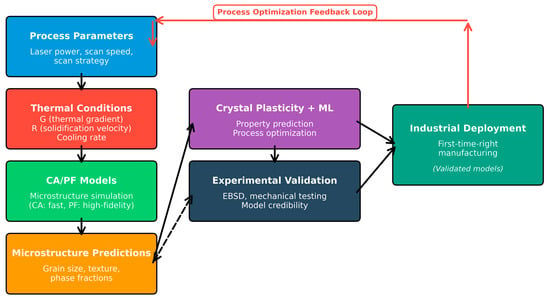
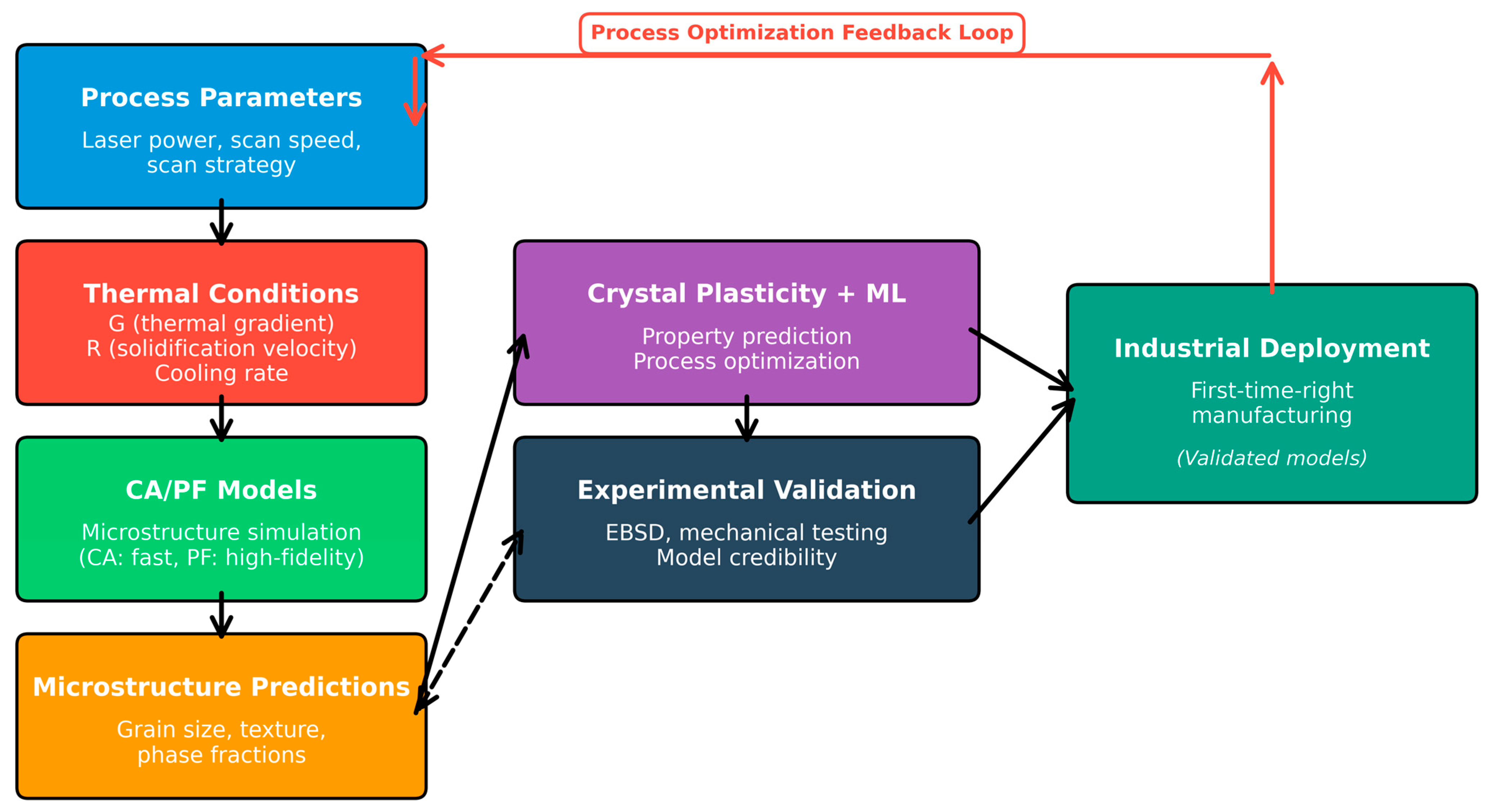
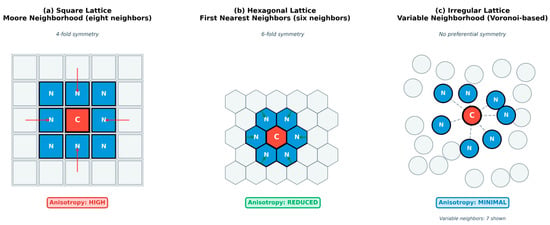
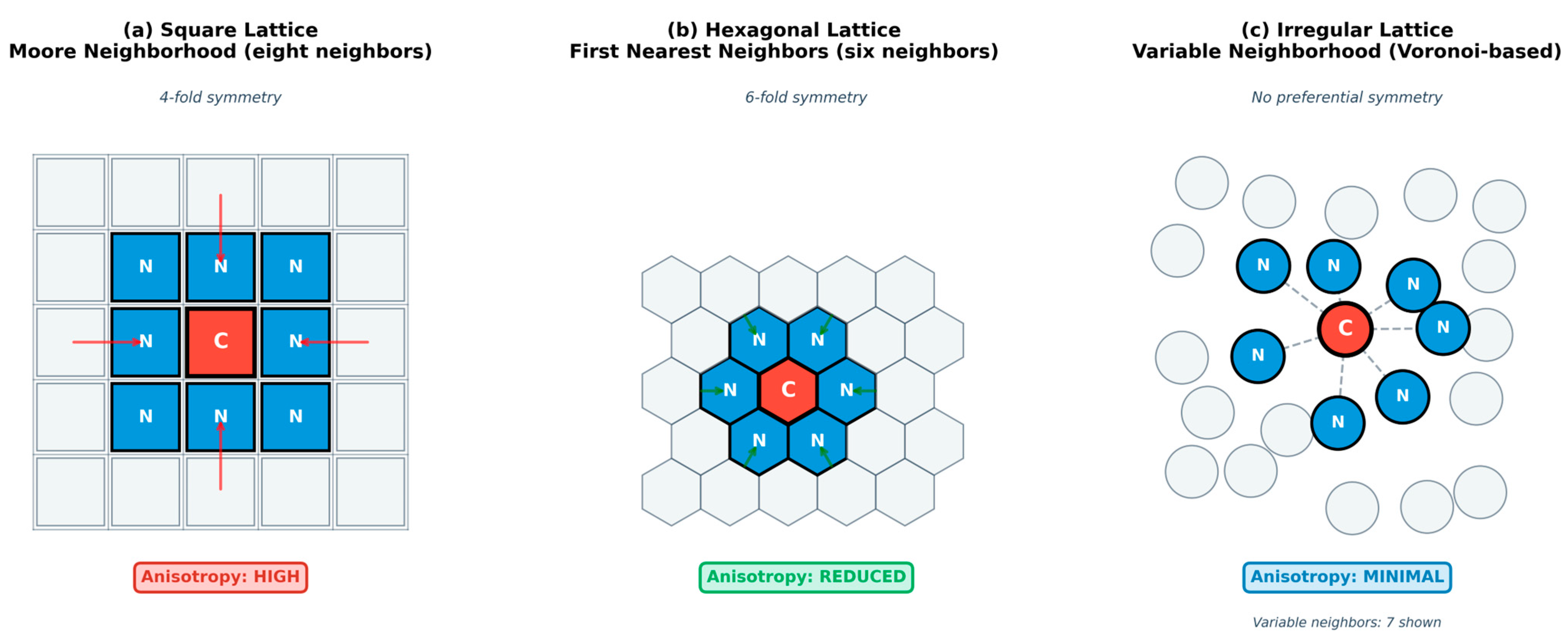
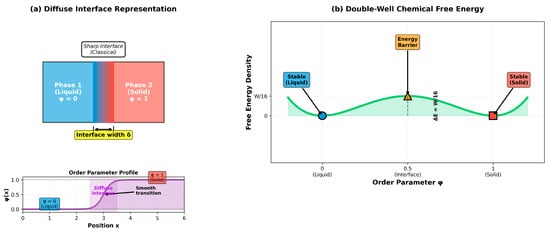
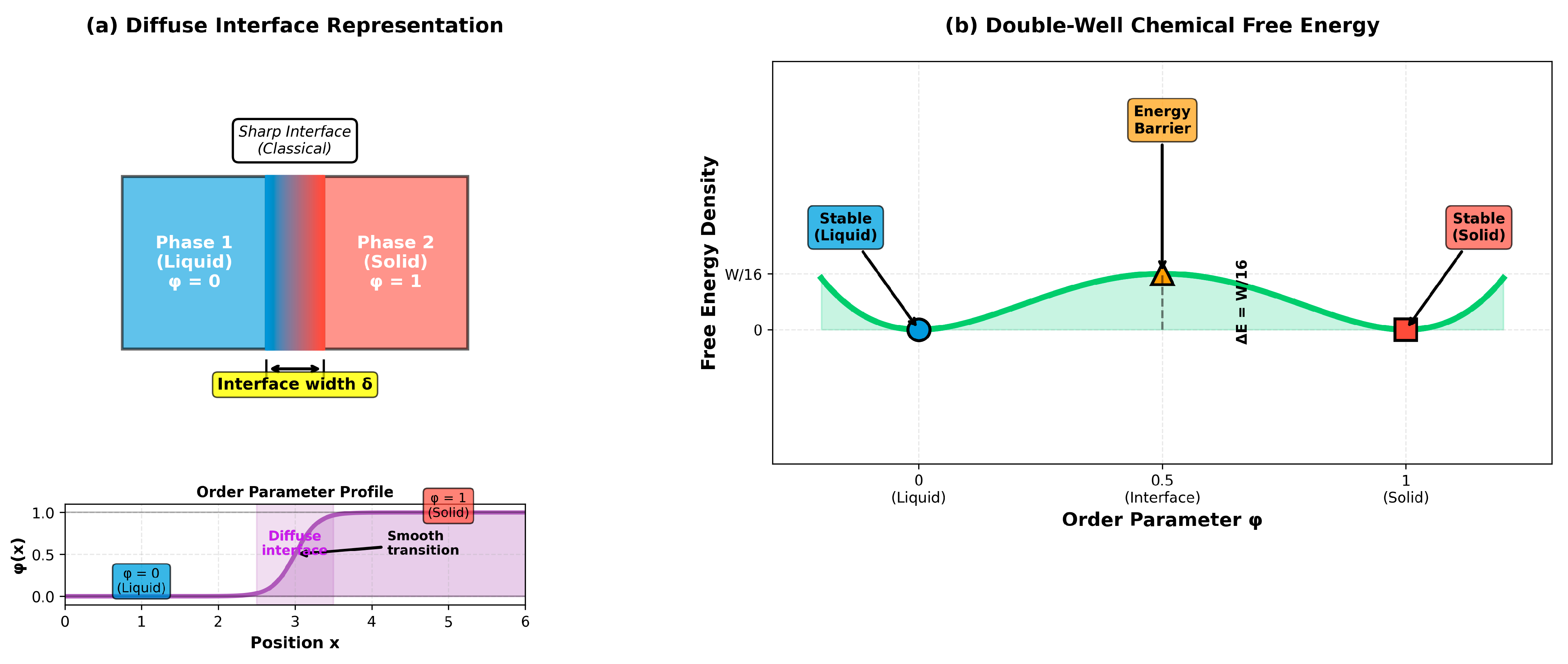
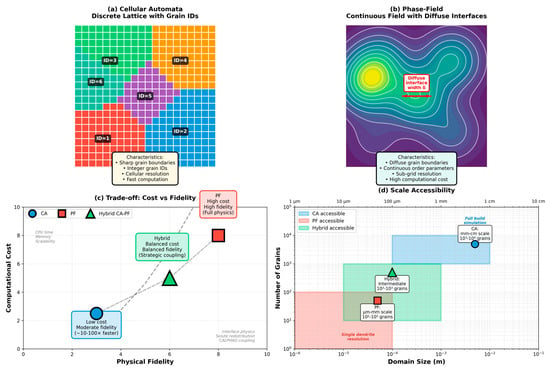
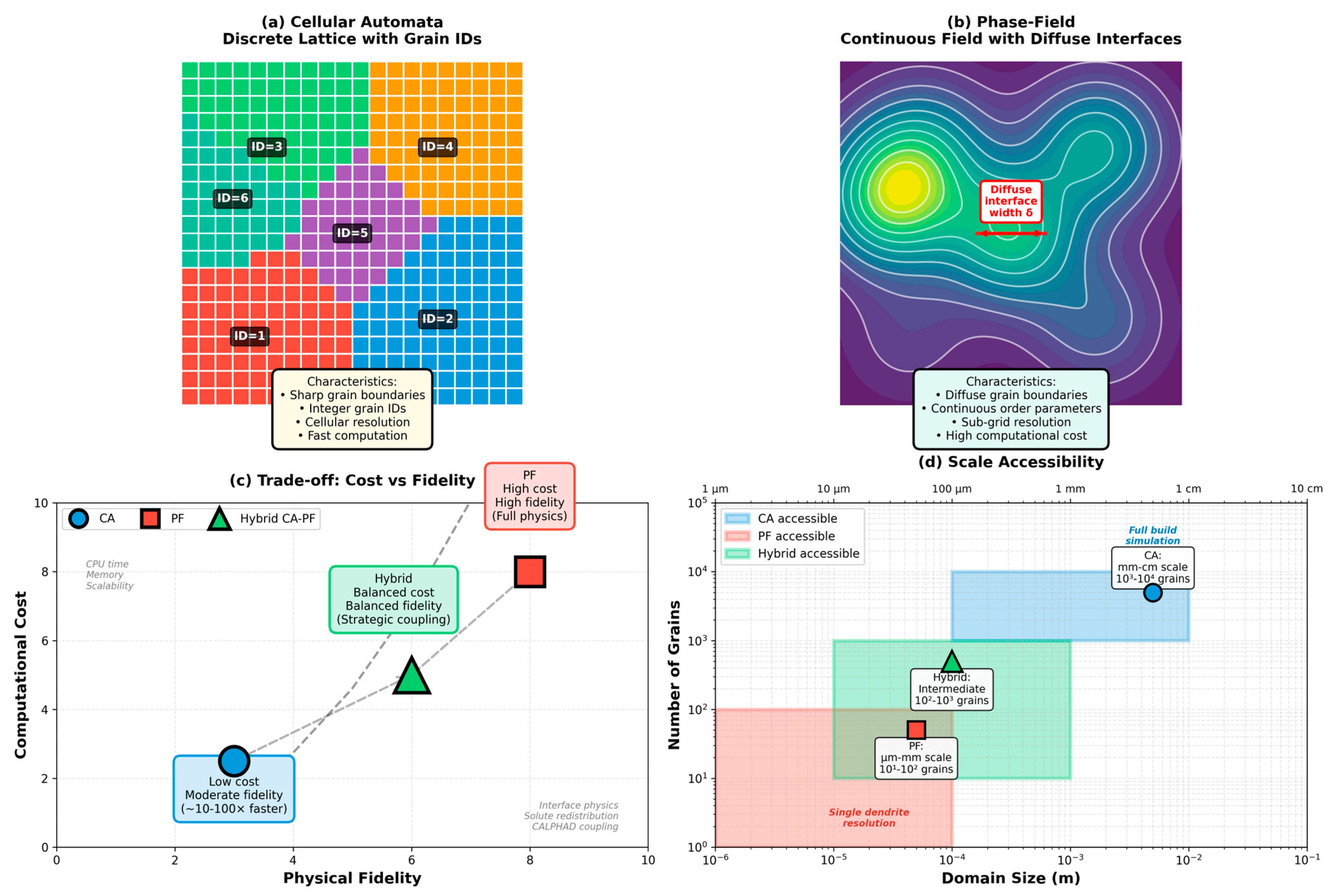
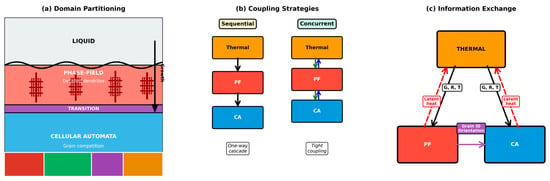
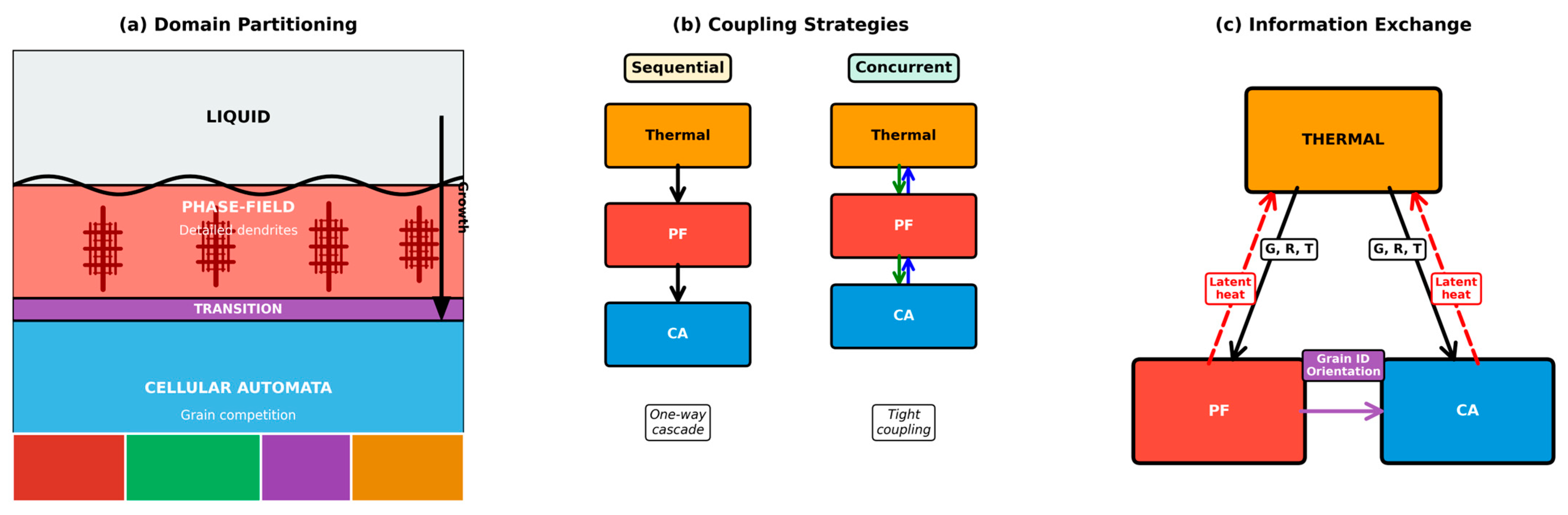

Disclaimer/Publisher’s Note: The statements, opinions and data contained in all publications are solely those of the individual author(s) and contributor(s) and not of MDPI and/or the editor(s). MDPI and/or the editor(s) disclaim responsibility for any injury to people or property resulting from any ideas, methods, instructions or products referred to in the content. |
© 2026 by the author. Licensee MDPI, Basel, Switzerland. This article is an open access article distributed under the terms and conditions of the Creative Commons Attribution (CC BY) license.