


Abstract
To address the technical challenge of balancing formability and strength in automotive aluminum alloys, this study examined an Al-4.35Mg-3.6Zn-0.2Cu alloy subjected to a combined heat-treatment schedule consisting of a two-step solution treatment (470 °C for 24 h followed by 460 °C for 30 min) and a subsequent two-step aging process (T4P: 80 °C for 12 h, followed by BH: 180 °C for 30 min). Microstructural evolution was characterized using transmission electron microscopy, and uniaxial tensile tests were performed in accordance with the GB/T 228.1-2021 standard at a strain rate of 0.2 mm/min. In the T4P condition, the matrix contained both GPI zones (~0.9 nm) and GPII zones (~1.2 nm), with no detectable T-phase precipitation. The presence of GPII zones enhanced ductility by promoting dynamic recovery after dislocation shearing, resulting in a yield strength (YS) of 178 MPa, an ultimate tensile strength (UTS) of 310 MPa, and an elongation (El) of 9%. After BH treatment, the GPII zones transformed into semi-coherent T′-Mg32(AlZnCu)49 precipitates (~2.4 nm), which strengthened the alloy through their semi-coherent interfaces. The retained GPII zones mitigated the loss of ductility, and the final mechanical properties reached a YS of 275 MPa, a UTS of 340 MPa, and an El of 8.5%, corresponding to a BH response of 97 MPa. Strengthening-mechanism calculations indicated that GP zones contributed approximately 120 MPa to the yield strength in the T4P state, whereas T′ precipitates contributed about 169.64 MPa after BH treatment. The calculated values agreed well with the experimental results, with a deviation of less than 3%. This study clarifies the precipitation sequence in the alloy—supersaturated solid solution → GPI zones → GPII zones → T′ phase—and establishes the relationship between microstructure and strength–ductility behavior. The findings provide theoretical guidance for the design and optimization of high-strength, high-formability aluminum alloys for automotive outer-panel applications.
1. Introduction
Global warming and climate change have emerged as critical global challenges for humanity. The rapid expansion of the transportation sector has contributed significantly to a sharp increase in carbon dioxide emissions [1]. To address this issue, vehicle lightweighting through the substitution of high-density steel with low-density materials such as aluminum alloys represents a viable strategy [2]. However, commercial aluminum alloys generally exhibit a fundamental trade-off between formability and strength, which substantially limits their application potential [3]. Therefore, it is imperative to redesign novel aluminum alloys that overcome this formability–strength trade-off, thereby meeting the demand for high-performance materials in automotive lightweighting.
Conventional 5xxx series aluminum alloys face two major challenges during manufacturing and application. Firstly, they are prone to localized plastic instability during stamping processes, such as the formation of Lüders bands, which leads to surface defects like wrinkles and cracks. These defects significantly compromise both surface quality and forming accuracy [4]. Secondly, when exposed to intermediate temperatures typically ranging from 150 °C to 200 °C, these alloys tend to undergo softening phenomena. This occurs due to solute atom diffusion within the matrix, resulting in coarsening of precipitates and abnormal grain growth. Consequently, the mechanical properties deteriorate substantially, failing to meet the strength requirements for crash resistance and fatigue endurance in automotive body applications [5]. These issues collectively undermine both the surface integrity and mechanical performance of the alloys, thereby severely limiting their application potential for automotive body panels and load-bearing components.
To address these issues, current domestic approaches primarily involve adding elements such as Mn, Zr, Cr, Si, Cu, and Zn to Al-Mg alloys to mitigate their softening tendency [6,7,8,9,10,11]. While precipitates like Al3Zr, Al3Cr, Mg2Si, and Al2Cu can inhibit abnormal grain growth during heat treatment and enhance the strength of Al-Mg alloys, the pinning effect of these precipitates on dislocations and their obstruction of grain boundary sliding often lead to impaired formability in subsequent processing stages. Consequently, a satisfactory balance between strength and ductility remains unattainable through these methods. Consequently, a satisfactory balance between strength and ductility remains unattainable through these methods. However, research by Jeong et al. [12] found that after aging treatment, a more uniform distribution of precipitates, combined with a high diffusion environment, increased the material’s elongation at 450 °C from 9.2% to 18.6%, significantly improving its high-temperature formability.
GP zones serve as precursors to precipitate phases. If GP zones remain stable and are utilized in a multi-step aging process, it is theoretically possible to circumvent the traditional strength–ductility trade-off. According to Graf et al. [13], Al-Mg-Zn-Cu alloys with low Zn/Mg ratios exhibit significantly lower quench sensitivity compared to commercial AA7075 alloys. In the studied Al-Mg-Zn-Cu alloy, no quench-induced precipitation occurs even at cooling rates below 1 K/s, whereas the AA7075 alloy requires cooling rates exceeding 100 K/s to achieve similar suppression of precipitation. This characteristic ensures that the Al-Mg-Zn-Cu alloy maintains stable GP zones without forming second-phase particles during relatively slow quenching, thereby enabling subsequent precipitation of GP zones through low-temperature heat treatment.
Research indicates that when dislocations cut through coherent GP zones, this process can hinder dynamic recovery and enhance dislocation storage capacity, thereby improving elongation [14,15]. Therefore, the presence of stable GP zones enables the alloy to achieve higher elongation, meeting the requirements for good formability. Plastic deformation of the alloy in this state can thus satisfy industrial formability standards. Moreover, serving as nucleation sites for secondary phases, GP zones create the potential for subsequent age-hardening treatments [16].
For automotive body aluminum alloys, the structure itself requires adequate strength. After the aforementioned processes, during the paint-baking stage following coating application, the abundant presence of dislocations and GP zonescan significantly enhance the alloy’s strength. According to research by Stemper et al. [17], slight pre-deformation (2%) after pre-aging further promotes the development of hardening precipitates before the final heat treatment. By activating dislocation-assisted nucleation and growth, a hardening response of 200 MPa was achieved. This approach resolves the long-standing conflict between formability and strength, meeting industrial requirements for both strength and ductility. In recent years, new-generation Al-Mg-Zn(-Cu) alloys have demonstrated excellent age-hardening potential through process optimization. However, current research still lacks in-depth understanding of the precipitation behavior and evolution mechanisms of atomic clusters and GP zones during the early aging stages, hindering precise microstructural control.
Therefore, this study aims to achieve an in-depth understanding of the early-stage aging precipitation behavior in Al-Mg-Zn-Cu alloys. Through the implementation of T4P and BH heat treatment strategies, we seek to clarify the specific states of precipitates at different thermal treatment stages, thereby establishing the correlation between microstructure and strengthening mechanisms. The findings are expected to provide a theoretical foundation for precise microstructural control in this alloy system. Based on process optimization and microstructure-property investigations of these alloys, this research ultimately targets the enhancement of surface quality and paint-bake response in novel Al-Mg-Zn-Cu alloys for automotive applications, paving the way for expanding the use of 5xxx series alloys from inner panels to external body panels and structural components throughout the vehicle.
2. Experiment
2.1. Alloy Preparation
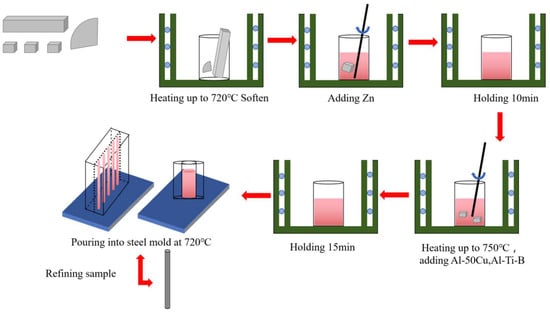
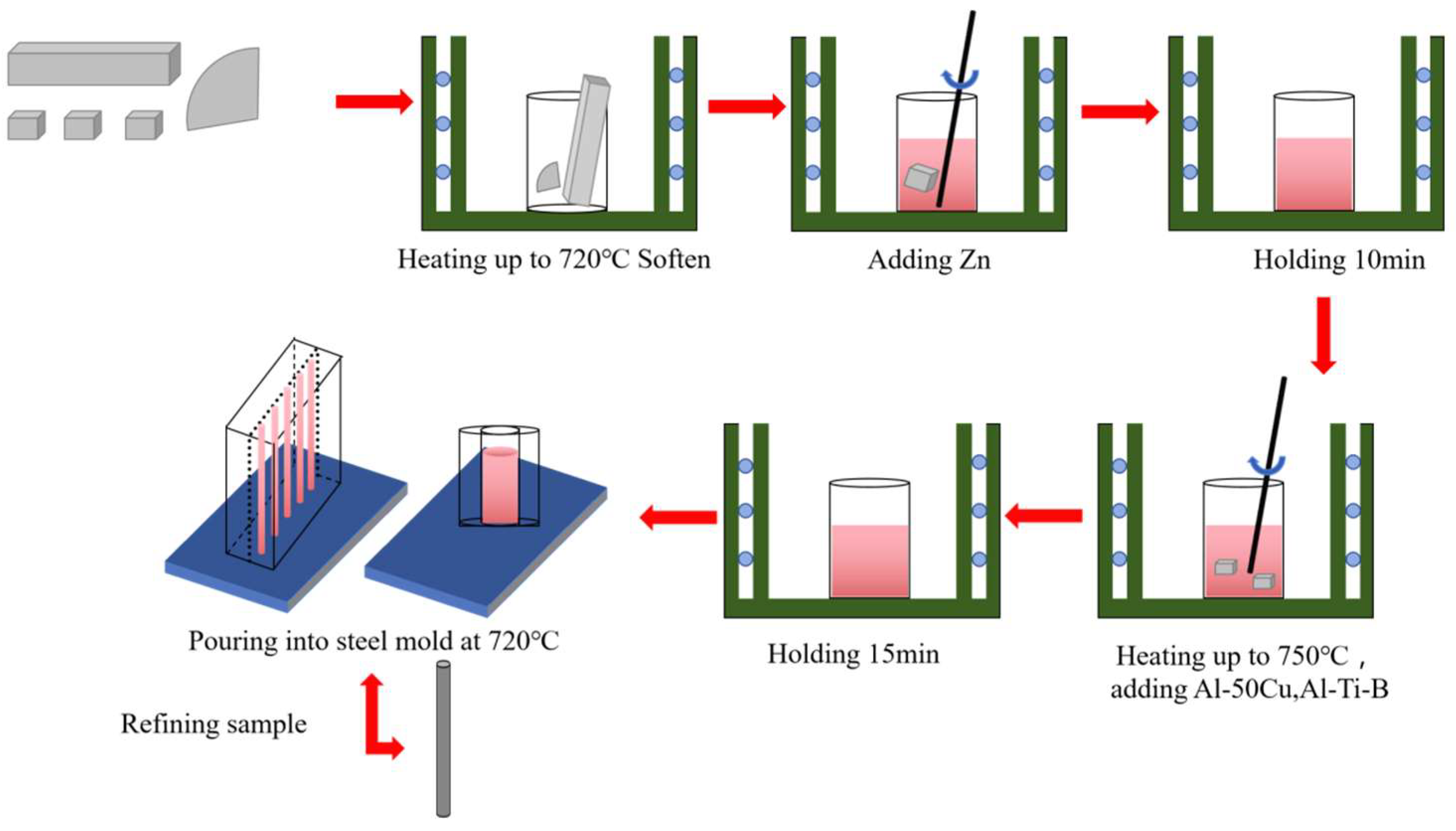
The experimental alloy was based on a 5182 (Al-Mg) alloy system, with additions of pure Zn, an Al-50Cu master alloy, and an Al-Ti-B grain refiner (The detailed melting steps are shown in Figure 1). The silicon carbide rod resistance furnace (Model KSY-15-16A) used for melting was manufactured by Luoyang Yudian Instrument Co., Ltd., Luoyang, China, holding at 720 °C for 10 min. The melt was subsequently refined and degassed using C2Cl6 before being poured into a cylindrical steel mold. The chemical composition of the final alloy is presented in Table 1 (Al as balance).
Figure 1.
Melting route of the Al-Mg-Zn-Cu alloy.
Table 1.
Chemical composition of the investigated alloy.
2.2. Heat Treatment Process
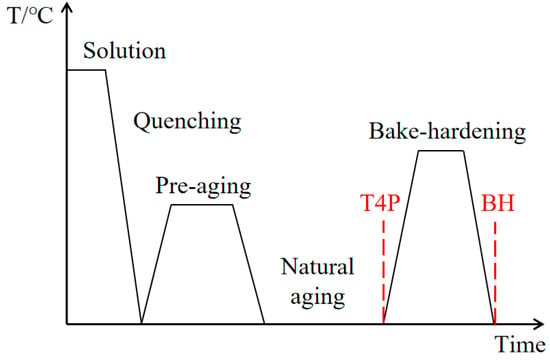
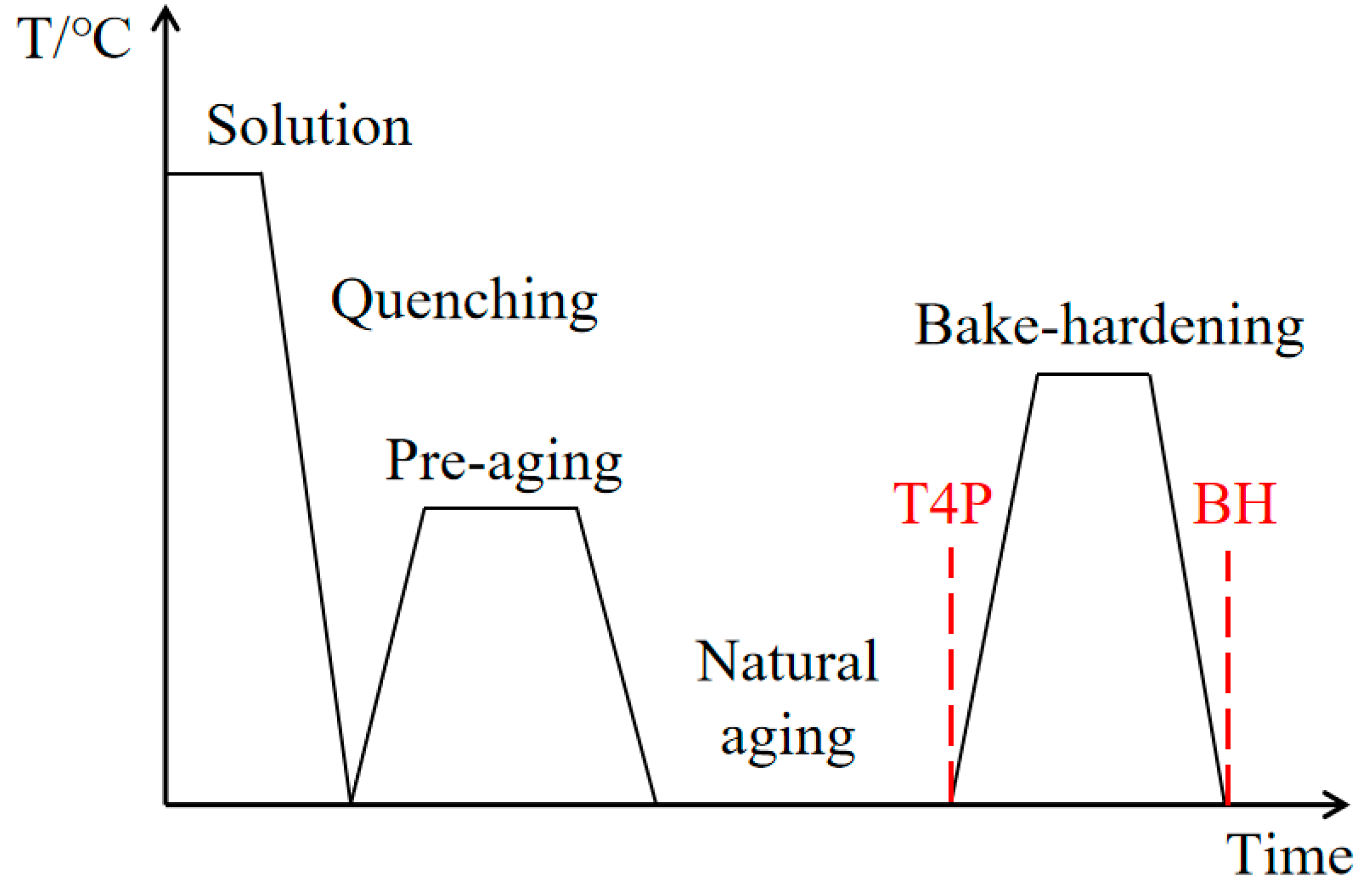
A combined “two-step solution treatment, T4P, and BH” process was employed. The pit resistance furnace (Model SG2-7.6-10A) employed for the two-step solution treatment was produced by Shanghai Jinghong Laboratory Instrument Co., Ltd., Shanghai, China at 470 °C for 24 h followed by 460 °C for 30 min (temperature accuracy ±2 °C), after which the sample was rapidly quenched in 50 °C warm water to ensure the stability of the supersaturated solid solution (The detailed heat treatment steps are shown in Figure 2).
Figure 2.
Heat treatment schedule of the Al-Mg-Zn-Cu alloy.
(1) Pre-aging (T4P) was carried out at 80 °C for 12 h, followed by natural cooling for 2 h.
(2) Paint bake aging (BH) involved treating the T4P-state alloy at 180 °C for 30 min.
The heat treatment schedule is illustrated in Figure 2.
2.3. Property Testing and Microstructural Characterization
Mechanical Properties: Tensile specimens were prepared according to GB/T 228.1-2021 standard [18]. The AG-10TA universal testing machine used for uniaxial tensile tests was supplied by Shimadzu Corporation, Kyoto, Japan. Three parallel samples were tested for each condition, and the average value was reported.
Microstructural Characterization: The Talos F200s scanning/transmission electron microscope (STEM) was manufactured by Thermo Fisher Scientific, Waltham, MA, USA. Thin foils for TEM observation were prepared by twin-jet electropolishing in an electrolyte of 30% nitric acid and 70% methanol (by volume) at −20 °C. High-angle annular dark-field (HAADF) imaging and high-resolution TEM (HRTEM) were employed to characterize the morphology and crystal structure of precipitates. Energy-dispersive X-ray spectroscopy (EDS) was used for elemental analysis. The number density and size distribution of precipitates were statistically analyzed using ImageJ (Version for Windows 64-bit, Fiji distribution) software.
Supplementary Analysis: Thermodynamic simulations were performed using Pandat 2023 software. The differential scanning calorimeter (DSC) used to determine the melting temperature of the white eutectic phase was produced by NETZSCH-Gerätebau GmbH, Selb, Germany. The X-ray diffractometer (Panalytical X’Pert Pro MRD) for phase identification was supplied by Malvern Panalytical B.V., Almelo, the Netherlands. The ZEISS ULTRA55 scanning electron microscope (SEM) equipped with an energy-dispersive spectrometer (EDS) was manufactured by Carl Zeiss AG, Oberkochen, Germany for chemical composition analysis.
3. Results
3.1. Alloy Composition and Validation of Heat Treatment Temperatures
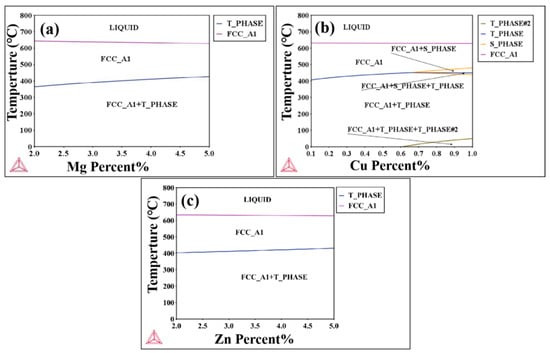
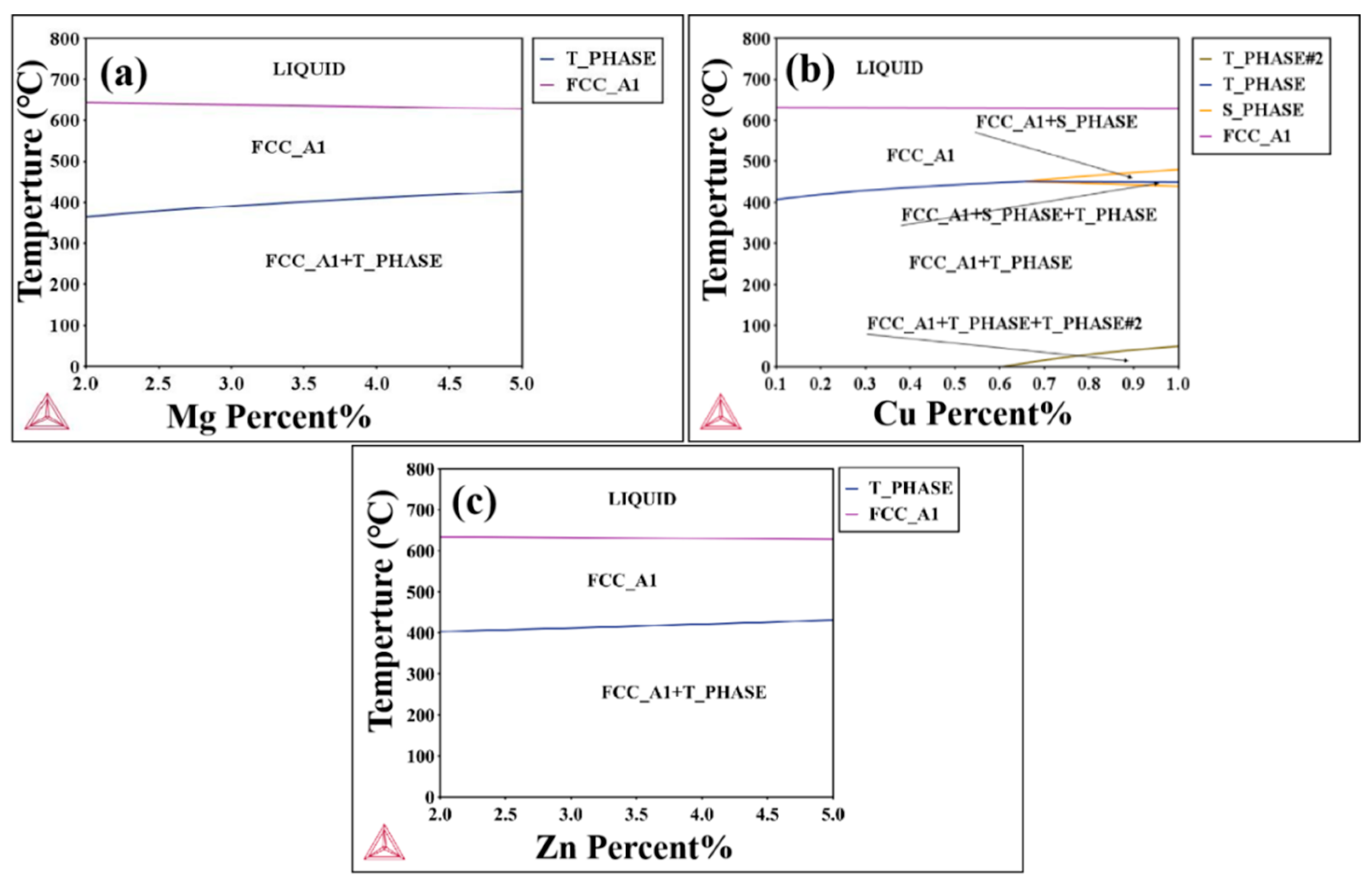
To ensure that the target T-phase (Mg32(AlZnCu)49) would be the only precipitate formed during subsequent heat treatments in the experimental Al-4.35Mg-3.6Zn-0.2Cu alloy, thermodynamic simulations were first performed using the Pandat software. By constructing binary composition-precipitate phase relationship models with Mg, Zn, and Cu as variables, respectively, the thermodynamic feasibility of the alloy composition was clarified.
Figure 3a shows the phase evolution with Mg content varying from 2 to 5 wt%, while keeping Zn fixed at 3.6 wt% and Cu at 0.2 wt%. The results indicate that within this Mg content range, only the T-phase precipitates in the Al-xMg-3.6Zn-0.2Cu system, with no secondary phases such as S-phase or η-phase observed.
Figure 3.
Calculated precipitation behavior of Al-Mg-Zn-Cu alloys with varying Mg, Zn, and Cu contents based on the Pandat database: (a) as a function of Mg content (wt%), (b) as a function of Cu content (wt%), (c) as a function of Zn content (wt%).
Figure 3c presents the simulation results with Zn content varying from 2 to 5 wt%, while maintaining Mg at 4.35 wt% and Cu at 0.2 wt%. The simulations confirm that the T-phase remains the sole stable precipitate across this Zn content range, demonstrating that the precipitate type is unaffected by variations in Zn concentration.
Figure 3b displays the phase analysis with Cu content ranging from 0 to 0.5 wt%, with Mg and Zn contents fixed at 4.35 wt% and 3.6 wt%, respectively. According to Figure 3b, when the Cu content ranges from 0 to 0.5 wt%, the alloy system still exclusively forms the T-phase, further confirming that low Cu additions do not induce the formation of any impurity phases.
In summary, the thermodynamic simulations establish that the Al-Mg-Zn-Cu system precipitates exclusively the T-phase within the composition ranges of 2–5 wt% Mg, 2–5 wt% Zn, and ≤0.5 wt% Cu. The composition of the experimental alloy (Al-4.35Mg-3.6Zn-0.2Cu) falls perfectly within this thermodynamic window, thereby providing a compositional foundation for subsequent investigation focused on the evolution behavior and strengthening mechanisms of the T-phase.
3.2. Microstructural Evolution
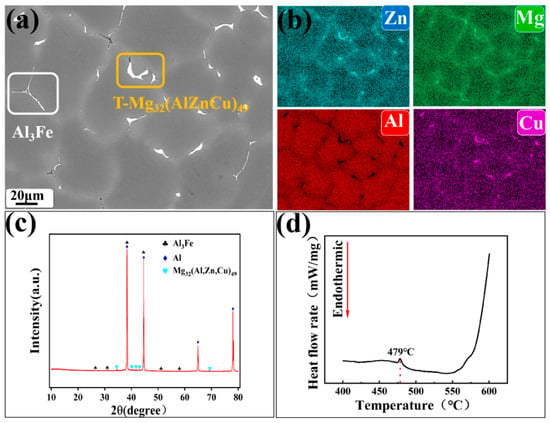
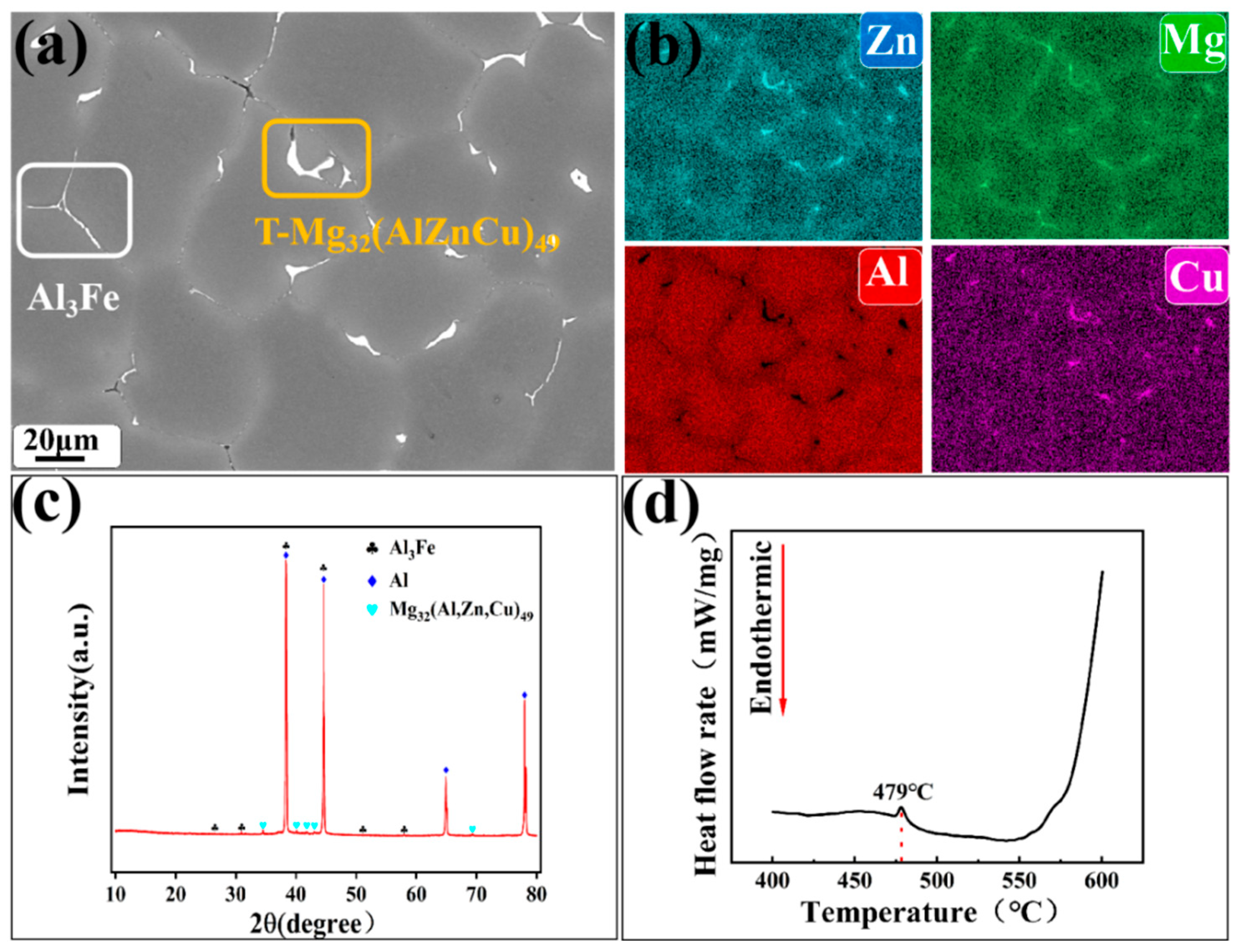
To form a supersaturated solid solution (as the foundation for subsequent aging precipitation) by achieving complete dissolution of the T-phase in the as-cast alloy, while avoiding overheating, experimental characterization was employed to determine the dissolution temperature of the T-phase. The SEM image (Figure 4a) reveals the presence of white eutectic phases within the as-cast alloy matrix. The XRD pattern (Figure 4c) further confirms that these white phases correspond to the T-phase (Mg32(AlZnCu)49), while Al3Fe is identified as an impurity phase originating from the commercial 5182 alloy, consistent with Pandat simulation results. Furthermore, SEM-EDS analysis (Figure 4b) demonstrates significant enrichment of Mg, Zn, and Cu elements within the white eutectic regions, further validating the chemical composition of the T-phase. The differential scanning calorimetry (DSC) curve (Figure 4d) shows a distinct endothermic peak at 479 °C, indicating dissolution. Combined with microstructural observations confirming only Al3Fe and T-phase presence in the as-cast structure, this 479 °C peak is identified as the dissolution temperature of the T-phase.
Figure 4.
Characterization of as-cast Al-4.35Mg-3.6Zn-0.2Cu alloy without heat treatment: (a) SEM micrograph of the as-cast microstructure, (b) EDS spectrum, (c) XRD pattern, and (d) DSC curve of the as-cast alloy.
Based on the experimentally determined T-phase dissolution temperature and referencing Stemper et al. [19] recommendation for Al-Mg-Zn-Cu alloys (selecting temperatures 10–20 °C below the dissolution temperature to prevent overheating), the first-step solution treatment temperature was established at 470 °C. Simultaneously, to ensure complete dissolution of the T-phase and achieve homogeneous distribution of solute elements within the matrix, we referred to Pan et al.’s [20] optimization of solution treatment duration for Al-Mg-Zn series alloys. To further eliminate compositional segregation and enhance solid solution homogeneity, the first-step solution treatment duration was set at 24 h. Following air cooling, a second-step solution treatment (460 °C/30 min) was supplemented, ultimately forming a two-step solution treatment process of “470 °C/24 h + 460 °C/30 min”. This process provides a homogeneous supersaturated solid solution matrix for subsequent T4P-BH aging treatments.
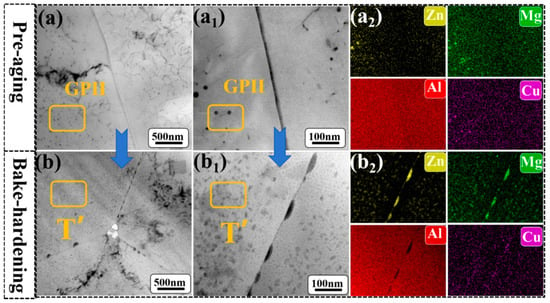
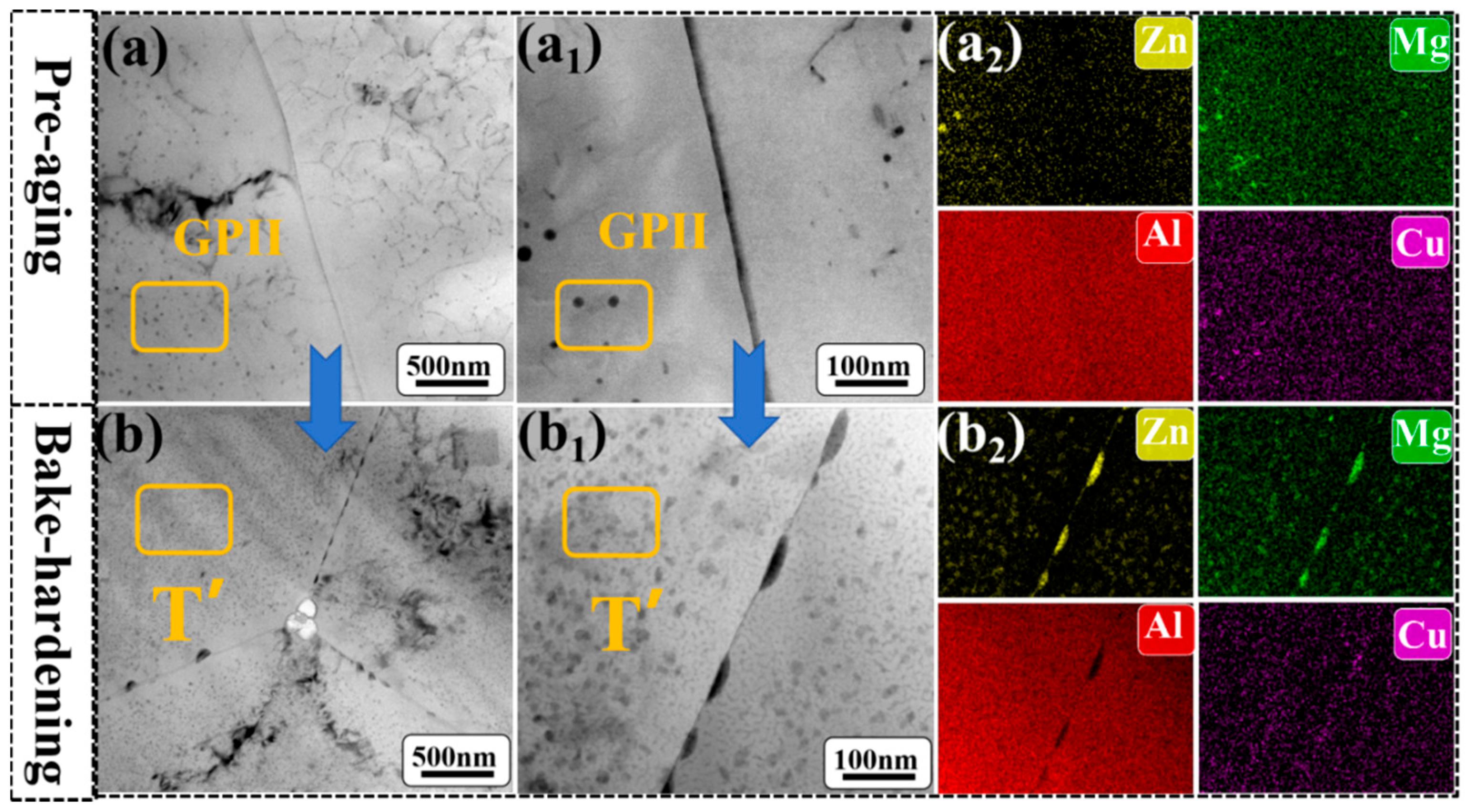
Figure 5 presents the scanning transmission electron microscopy (TEM) image and corresponding energy-dispersive X-ray spectroscopy (EDS) analysis of theAl-4.35Mg-3.6Zn-0.2Cu alloy after two-step solution treatment, respectively, in the pre-aged (80 °C/12 h) and bake-hardened (180 °C/30 min) conditions.
Figure 5.
Nanoscale precipitates in as-cast Al-4.35Mg-3.6Zn-0.2Cu alloy: (a,a1,a2) TEM micrographs and corresponding EDS spectra of the pre-aged condition; (b,b1,b2) TEM micrographs and corresponding EDS spectra of the paint-bake aged condition.
Figure 5(a,a1) show the TEM images of the T4P-treated alloy, revealing a homogeneous distribution of nanoscale precipitates with excellent size uniformity. Combined with EDS elemental mapping results (Figure 5(a2)), these precipitates exhibit significant enrichment of Mg, Zn, and Cu elements alongside reduced Al content, consistent with the chemical composition characteristics of the T-phase (Mg32(AlZnCu)49).
Figure 5(b,b1) display the STEM images of the BH-treated alloy, showing remarkable microstructural evolution compared to the T4P condition. First, the average precipitate size increased to 2–10 nm with significantly higher number density and more dense distribution. Second, the precipitate morphology transitioned from “spherical dispersion” in the T4P condition to “ellipsoidal” shape without evident agglomeration. EDS analysis (Figure 5(b2)) demonstrates that the BH-state precipitates maintain the characteristic enrichment of Mg, Zn, and Cu, with further improved elemental distribution homogeneity. This indicates that the precursors formed in the T4P condition have undergone preliminary transformation into metastable T′ phase through solute atom diffusion and structural reorganization.
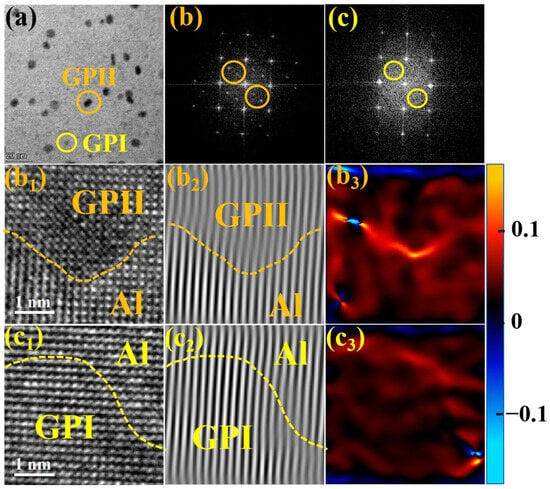
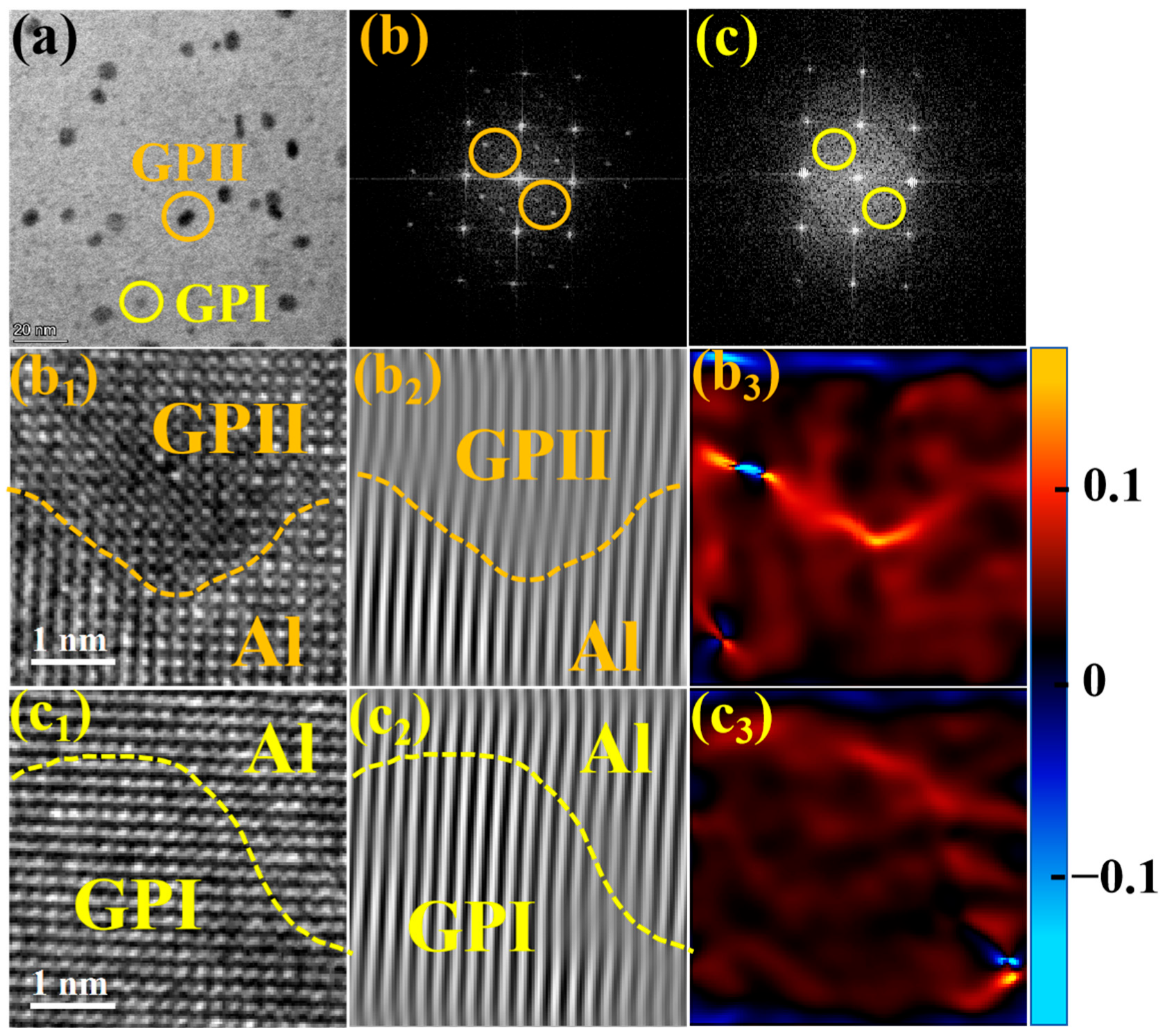
Figure 6a shows a low-magnification TEM image of intragranular precipitates in the T4P-treated alloy. The matrix contains no coarse secondary phases, only uniformly distributed nanoscale precipitates without agglomeration. This confirms that the two-step solution treatment (470 °C × 24 h + 460 °C × 30 min) achieved complete dissolution of solute atoms, while the subsequent low-temperature T4P aging promoted ordered precipitation following the energy minimization principle, forming dispersed pre-precipitation structures.
Figure 6.
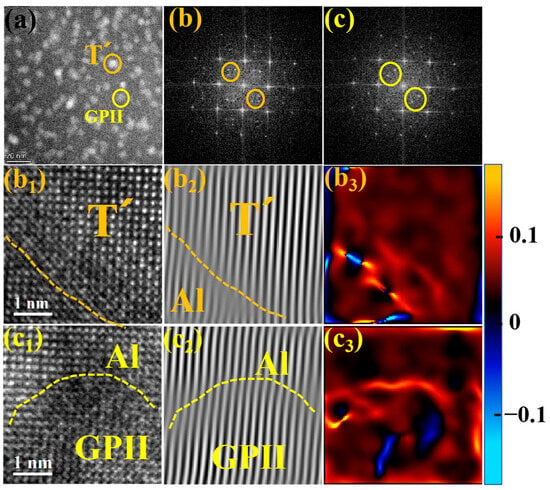
TEM characterization of precipitates in the as-cast Al-4.35Mg-3.6Zn-0.2Cu alloy under pre-aged condition: (a) TEM micrograph of intragranular precipitates; (b,b1,b2,b3) HRTEM image of a GPII zone with corresponding FFT, IFFT and GPA patterns; (c,c1,c2,c3) HRTEM image of a GPI zone with corresponding FFT, IFFT and GPA patterns.
HRTEM images along the <001>Al zone axis (Figure 6(c1)) reveal complete lattice continuity between the precipitate regions and the Al matrix, with no discernible interfacial contrast differences, indicating high structural coherence. The corresponding FFT pattern (Figure 6c) displays only characteristic diffraction spots of the Al matrix (FCC-Al structure), with no additional diffraction signals from secondary phases, confirming the absence of an independent crystal structure and suggesting these are merely localized solute atom clusters. IFFT analysis (Figure 6(c2)) shows no significant lattice mismatch at the precipitate–matrix interface, with no dislocations or distortion zones, demonstrating full coherency. The GPA map (Figure 6(c3)) shows uniform color gradients without lattice strain signals, further verifying that these precipitates induce no substantial stress field in the matrix.
Based on Geng et al.’s [21] study on early-stage precipitation in Al-Mg-Zn(-Cu) alloys, these precipitates can be identified as GPI zones—clusters of solute atoms (Mg, Zn, Cu) with disordered arrangement, maintaining the same crystal structure as the Al matrix without ordering, representing a metastable solute-rich structure in the initial aging stage.
Figure 6b series presents high-resolution characterization of another type of precipitate in the T4P-treated alloy, showing distinct structural differences from GPI zones. The HRTEM image along <001>Al (Figure 6(b1)) maintains lattice continuity with the matrix but exhibits subtle contrast variations locally. The FFT pattern (Figure 6b) reveals weak additional diffraction signals corresponding to an ordered structure, maintaining fixed orientation relationships with matrix diffraction spots, indicating the formation of an ordered transitional structure. IFFT analysis (Figure 6(b2)) clearly shows slight lattice distortion at the precipitate–matrix interface without interfacial dislocations, consistent with coherent interfaces of metastable transition phases. The GPA map (Figure 6(b3)) displays noticeable color gradient variations (strain signals) within precipitate regions, confirming localized lattice strain induced by the precipitates, associated with lattice parameter differences caused by structural ordering.
According to the definition of GPII zones in reference [21]—ordered transitional structures with compositions approaching the equilibrium phase Mg32(AlZnCu)49, maintaining coherency with the matrix but inducing lattice strain—these precipitates are identified as GPII zones, representing an intermediate transitional structure between GPI zones and the more stable metastable T′ phase(The specific data related to GPI and GPII precipitates are presented in Table 2).
Table 2.
Particle statistics of GPI and GPII zones.
Figure 7a presents a low-magnification TEM image of intragranular precipitates in the BH-treated alloy. Compared with the T4P condition (Figure 6a), the precipitates exhibit significant evolution: their average size increases from 0.9–1.2 nm in the T4P state to 2–10 nm, accompanied by a notable rise in number density and a more densely packed distribution without apparent agglomeration. Statistical analysis using Image J software (corresponding to Table 3) reveals that the precipitate structure at this stage consists of two main types—the dominant T′ phase (average size: 2.4 nm, volume number density Nv = 13.07 × 10⁵ nm−3) and a small fraction of retained GPII zones (average size: 1.2 nm, Nv = 4.308 × 10⁵ nm−3). Together, these form the strengthening structural system in the BH condition.
Figure 7.
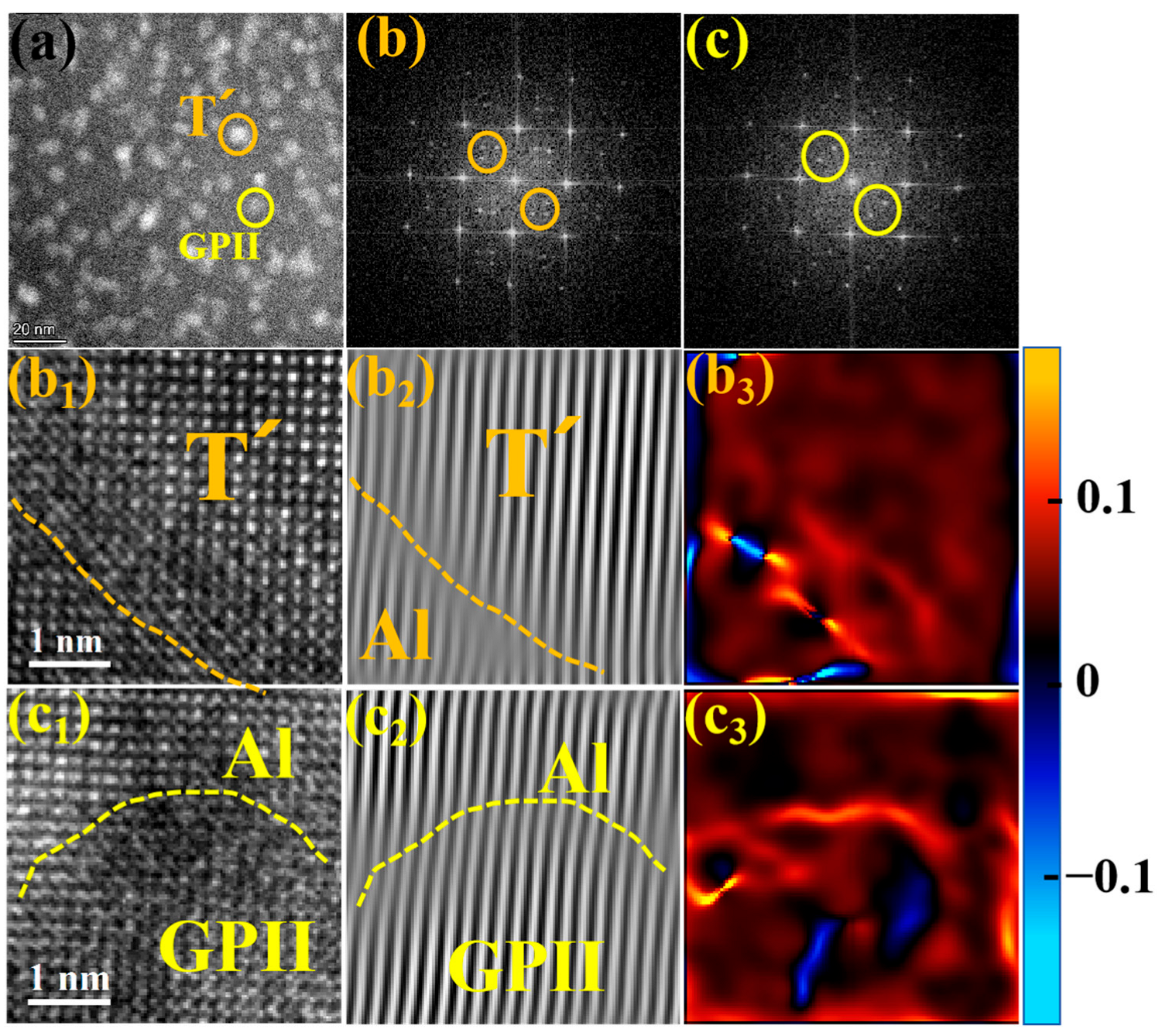
TEM characterization of precipitates in the as-cast Al-4.35Mg-3.6Zn-0.2Cu alloy after paint-bake heat treatment: (a) TEM micrograph of intragranular precipitates; (b,b1,b2,b3) HRTEM image of a GPII zone with corresponding FFT, IFFT and GPA patterns; (c,c1,c2,c3) HRTEM image of a T′ phase region with corresponding FFT, IFFT and GPA patterns.
Table 3.
Particle statistics of GPI, GPII zones and T′ phases.
Figure 7(b1) shows an HRTEM image of the T′ phase taken along the <001>Al zone axis. The T′ phase maintains certain lattice continuity with the Al matrix yet exhibits slight contrast differences at the interface. The corresponding FFT pattern (Figure 7b), in addition to the characteristic diffraction spots of the Al matrix (FCC-Al structure), displays clear extra diffraction signals located at 2/5 and 3/5 positions of the <220>Al direction. These diffraction features are consistent with the body-centered cubic T-Mg32(AlZnCu)49 phase and its precursors. Accordingly, the orientation relationship between the precipitate and the matrix can be expressed as: (100)T//(110)Al and (110)T//(010)Al [22,23]. The IFFT image of the T′ phase (Figure 7(b2)) clearly reveals pairs of edge dislocations at the T′/matrix interface—a key feature distinguishing the T′ phase from GPII zones. The GPA map of the T′ phase region (Figure 7(b3)) shows obvious color gradient variations (strain signals) around the precipitate, resulting from the lattice mismatch between the T′ phase and the Al matrix. Therefore, the precipitate in this aged condition is identified as the T′ phase (Im3, a = 1.422 nm), a precursor to the equilibrium T phase [24,25].
Figure 7c series presents high-resolution characterization of the retained GPII zones in the BH condition, showing clear structural differences from the T′ phase. The HRTEM image of a retained GPII zone (Figure 7(c1)) exhibits complete lattice continuity with the Al matrix and no noticeable interfacial contrast change, indicating that it has not transformed into the T′ phase. The corresponding FFT pattern (Figure 7c) shows much weaker secondary phase diffraction signals compared to those of the T′ phase (Figure 7b), with only faint ordered diffraction peaks, suggesting it remains in a “transitional” state without reaching the full ordering level of the T′ phase. The IFFT image (Figure 7(c2)) shows no dislocation signals at the interface between the retained GPII zone and the matrix, with only minor local lattice distortion, maintaining full coherency. In the GPA map (Figure 7(c3)), the strain signal around the retained GPII zone is only about one-third to one-half of that around the T′ phase, and the strain is confined mainly within the GPII zone, having limited impact on the overall stress field of the matrix.
While GPII zones in the T4P condition maintain full coherency with the matrix (without interfacial dislocations), after BH treatment, further ordering and growth of GPII zones lead to instability at the coherent interface due to lattice parameter differences. This eventually results in the formation of a semi-coherent interface containing interfacial dislocations. This structure significantly enhances the resistance to dislocation motion in the matrix through a “dislocation pinning effect,” which constitutes the core microscopic mechanism for the improved strength of the alloy in the BH condition.
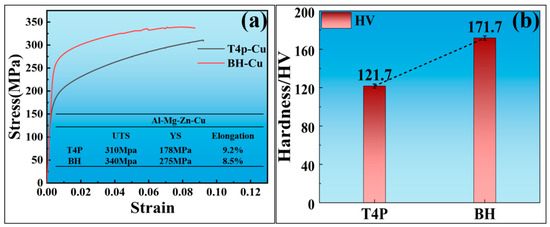
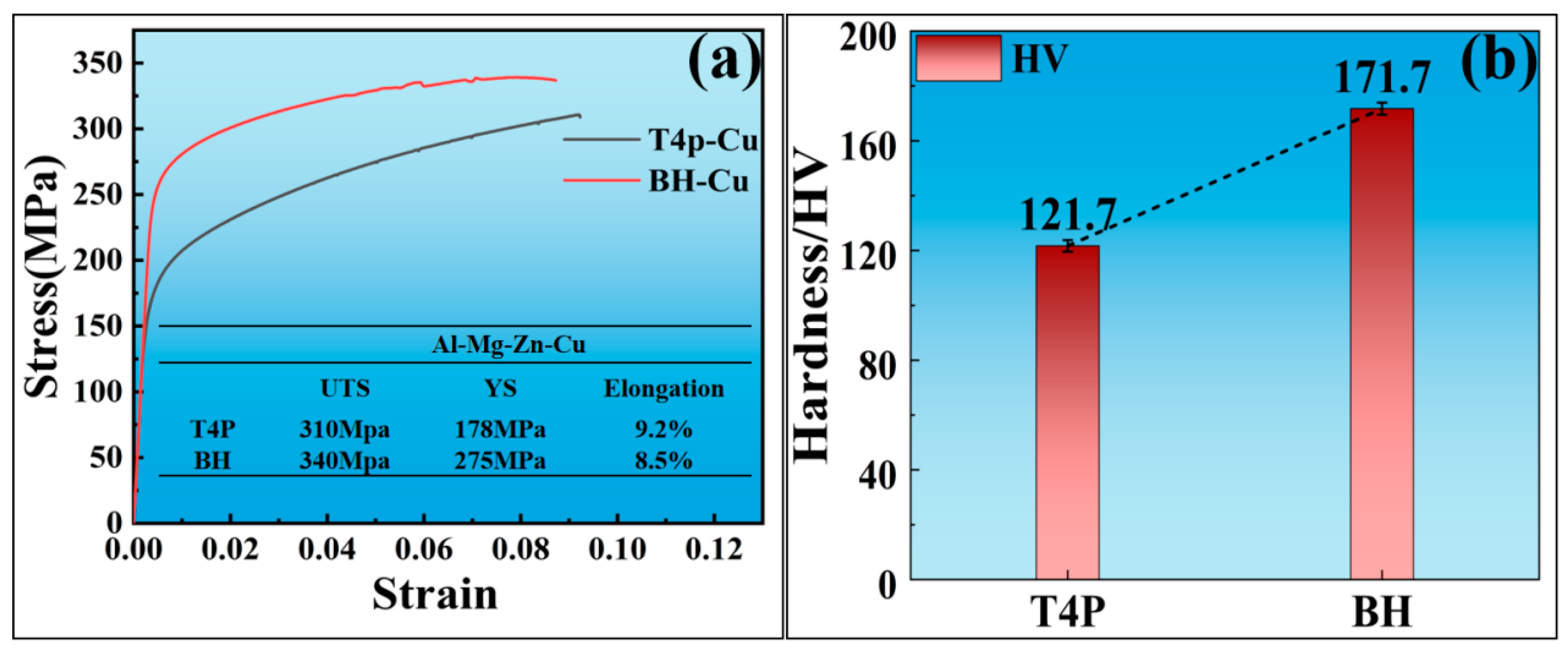
As shown in Figure 8a, the T4P condition exhibits the following mechanical properties: yield strength (YS) = 178 MPa, ultimate tensile strength (UTS) = 310 MPa, elongation (El) = 9%, and hardness = 121.7 HV. After BH treatment, these values change to: YS = 275 MPa (an increase of 35%), UTS = 340 MPa (an increase of 9%), El = 8.5% (only a 5% reduction), hardness = 171.7 HV (a 29% improvement), resulting in a BH response value of 97 MPa. This enhancement is primarily attributed to the synergistic strengthening effect of the dispersed T′ phase and high-density GPII zones, which simultaneously inhibit dislocation slip and delay the onset of localized necking. The hardness test results of Figure 8b, showing an increase of 50 HV in the BH condition compared to the T4P state, further validate the effectiveness of precipitation strengthening.
Figure 8.
Stress–strain curves and hardness of the Al-4.35Mg-3.6Zn-0.2Cu alloy in the T4P and BH conditions.
Furthermore, the moderate presence of GPII zones not only contributes to solid solution strengthening but also effectively regulates the dynamic balance between dislocation multiplication and movement. During the initial stage of plastic deformation, dislocations can glide easily through the interstices between GPII zones, preventing stress concentration that could lead to premature crack initiation, thereby prolonging the uniform deformation stage. Combining TEM observations with mechanical property data, it is evident that the coexistence of T′ precipitates and GPII zones enhances strain hardening capacity. This multi-scale precipitate synergistic strengthening mechanism provides new insights for the design of high-strength aluminum alloys.
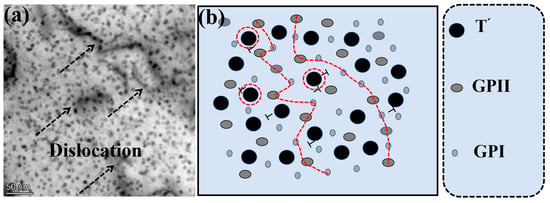
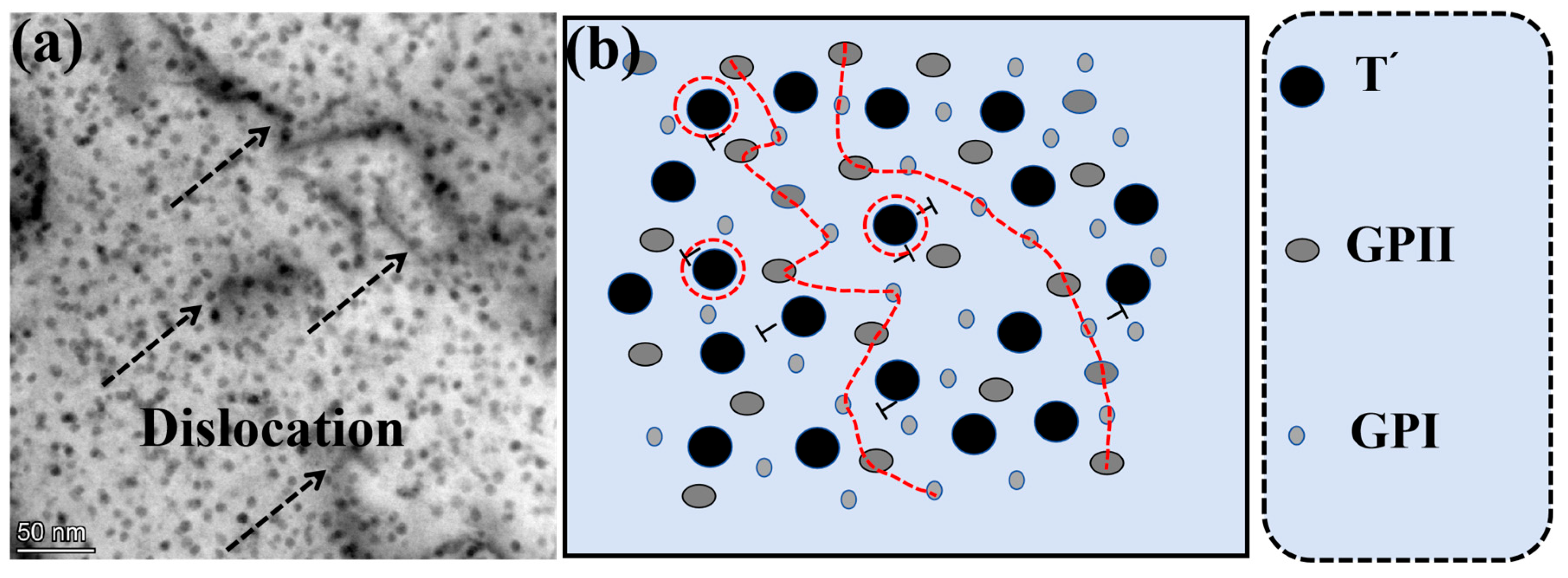
Figure 9a illustrates the strengthening mechanisms of different precipitates: GPI zones and GPII zones both undergo the shearing mechanism, while the T′-phase follows the bypassing mechanism. This provides data support for the subsequent discussion on the contribution of different precipitates to yield strength, and also verifies the aforementioned experimental interpretations: GP zones retard the decrease in elongation by storing dislocations and inhibiting dynamic recovery. Moreover, under the bake-hardening (BH) condition, GPI zones, GPII zones, and T′-phases coexist, and the residual GPI and GPII zones can delay the reduction in elongation in the BH state. The red dashed lines in the Figure 9b are schematic diagrams depicting dislocations shearing through GP zones and bypassing T′-phases.
Figure 9.
Obstruction mechanism of T′ precipitates to dislocations in the Al-4.35Mg-3.6Zn-0.2Cu alloy.
4. Analysis and Discussion
4.1. Strength Contribution of GP Zones in the T4P Condition
Feret refers to the Feret’s diameter, which is a parameter used to characterize the size of particles. It represents the distance between two parallel lines that are perpendicular to each other and tangent to the maximum and minimum extents of the particle, respectively, and is commonly used in quantitative statistical analysis of precipitate size in microstructural studies.
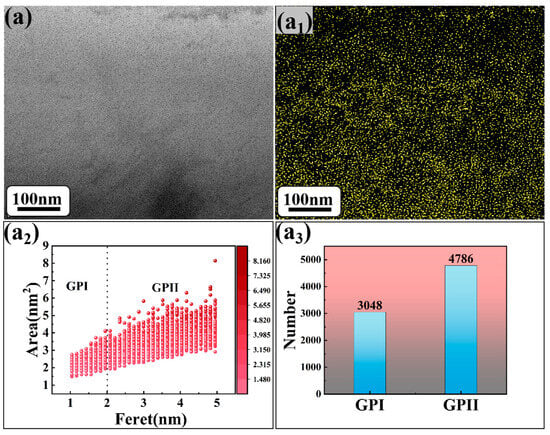
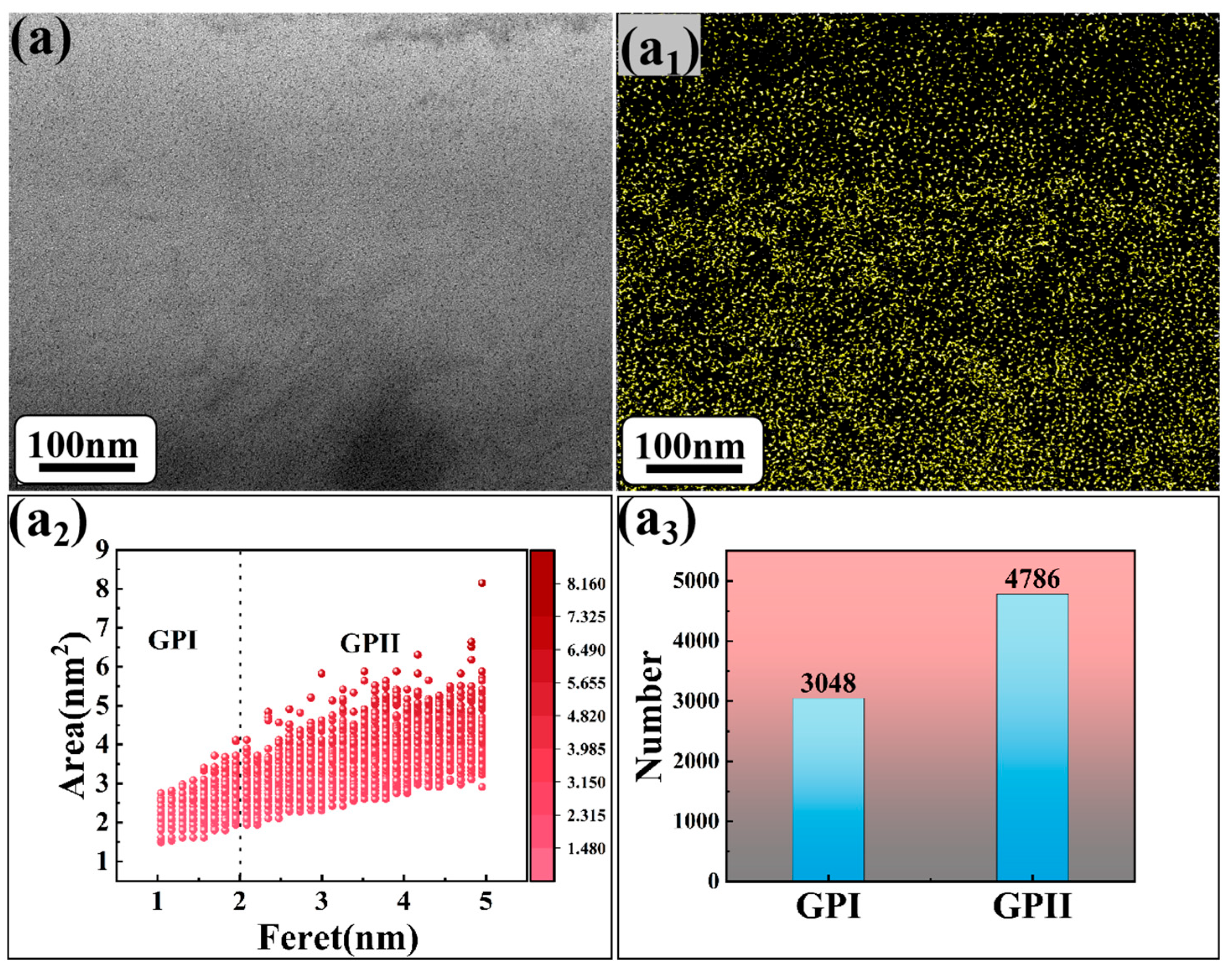
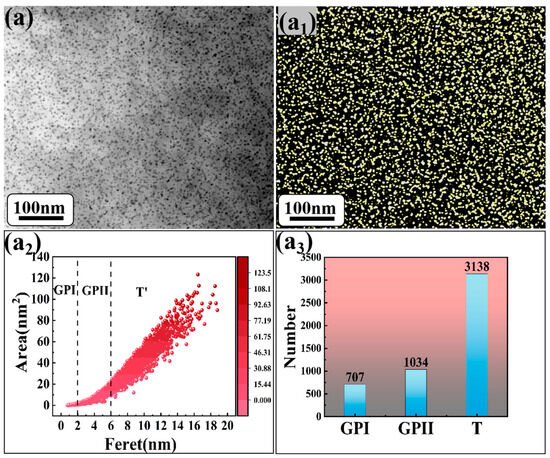
Figure 10 shows the precipitation characteristics of the Al-Mg-Zn-Cu alloy in the pre-aged condition. To provide a comprehensive illustration of the contribution of GP zones to the yield strength, the statistical information of GPI and GPII zones presented in panels a3 and a4 is summarized in Table 2.
Figure 10.
TEM characterization and quantitative statistics of precipitates in the Al-Mg-Zn-Cu alloy under pre-aged condition: (a) TEM micrograph of precipitates; (a1) precipitate number density distribution analyzed by ImageJ software; (a2) statistical analysis of precipitate size and distribution; (a3) quantitative comparison of GPI and GPII zone densities.
In terms of strengthening mechanisms, the precipitates in the Al-Mg-Zn-Cu alloy under the pre-aged condition consist of GPI and GPII zones, with order strengthening through the dislocation shearing mechanism being dominant. Based on statistical analysis of particle characteristics and the model proposed by Kulkarni et al. [26], the yield strength of the alloy can be predicted.
The yield strength of the Al–Mg–Zn–Cu alloy is determined by intrinsic strength of Al, solid solution strengthening, and precipitation strengthening. In this study, precipitation strengthening includes contributions from different types of precipitates. The overall yield strength σy of the Al–Mg–Zn–Cu alloy can be described by [27,28]:
where σ0 is the intrinsic strength of pure aluminum, taken as 45 MPa [29,30]. σss represents the solid solution strengthening contribution, which can be expressed as [31]:
where is a constant parameter and is the concentration (wt%) of alloying element j. The values of h are taken as 20, 3 and 60 MPa/(wt%) 2/3 for Mg, Zn, and Cu elements, respectively [30,32]. Based on microstructural analysis, the precipitation strengthening model is developed by considering the precipitate size distribution and their corresponding resistance strength [33]. The precipitate size distributions of the studied alloy after pre-aging heat treatment are shown in Figure 10. The precipitation strengthening contribution σp follows this formula [29,32]:
where M is the Taylor factor, taken as 3 in this study. G is the shear modulus (G = 26 GPa for Al alloys) [34], and b is the magnitude of the Burgers vector. The areal density of obstacles associated with precipitates on the slip plane, n, can be expressed as:
where r is the average radius of the spherical precipitates. The average obstacle strength f of the spherical precipitates can be referenced from literature [33]:
where is the dimensionless obstacle strength over area A, is the average shearing strength of precipitates with radius r, k is an empirical model parameter, and is the critical radius for the transition from shearable to non-shearable precipitates. The average radius of precipitates in the peak-aged condition is taken as and adjusted within a reasonable range. In this study, for the alloy was selected as 1.63 nm, a value determined from reference [35].
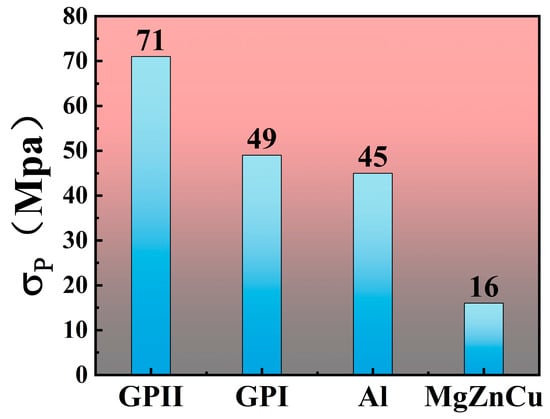
As shown in Figure 11, the calculated yield strength of the Al-Mg-Zn-Cu alloy in the pre-aged condition demonstrates a significant contribution from precipitation strengthening. After T4P treatment, GPII and GPI zones collectively provide 120 MPa to the yield strength, while the intrinsic strength of the aluminum matrix contributes 45 MPa, and the remaining Mg/Zn/Cu solute elements contribute 16 MPa. The experimental yield strength measures 178 MPa, which aligns well with the calculated value of 181 MPa. The coherency strain fields associated with GPII zones enable dislocation storage, inhibit dynamic recovery, and prolong the uniform deformation stage. Meanwhile, the homogeneously distributed GPI zones, serving as precursors to GPII zones, provide channels for dislocation glide and prevent stress concentration, ultimately achieving a high elongation of 9%.
Figure 11.
Contributions to yield strength in the pre-aged Al-Mg-Zn-Cu alloy: precipitation strengthening from GPII and GPI zones, solid solution strengthening from residual Mg/Zn/Cu solute atoms, and intrinsic strength of the aluminum matrix.
4.2. Strengthening Contributions of the T′ Phase and GP Zones in the BH Condition
Figure 12 shows the precipitation characteristics of the Al-Mg-Zn-Cu alloy in the paint-bake aged condition. To elucidate the respective contributions of GP zones and the T′ phase to the yield strength, the particle information of GPI zones, GPII zones, and T′ phase presented in panels a3 and a4 is summarized in Table 3.
Figure 12.
TEM characterization and quantitative statistics of precipitates in the Al-Mg-Zn-Cu alloy under paint-bake aged condition: (a) Bright-field TEM image of precipitates; (a1) Number density distribution of precipitates analyzed by Image J software; (a2) Size distribution and number density statistics of precipitates; (a3) Population statistics of GPII zones and T′ phase.
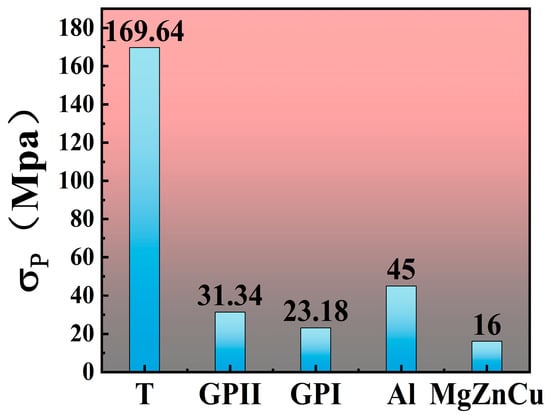
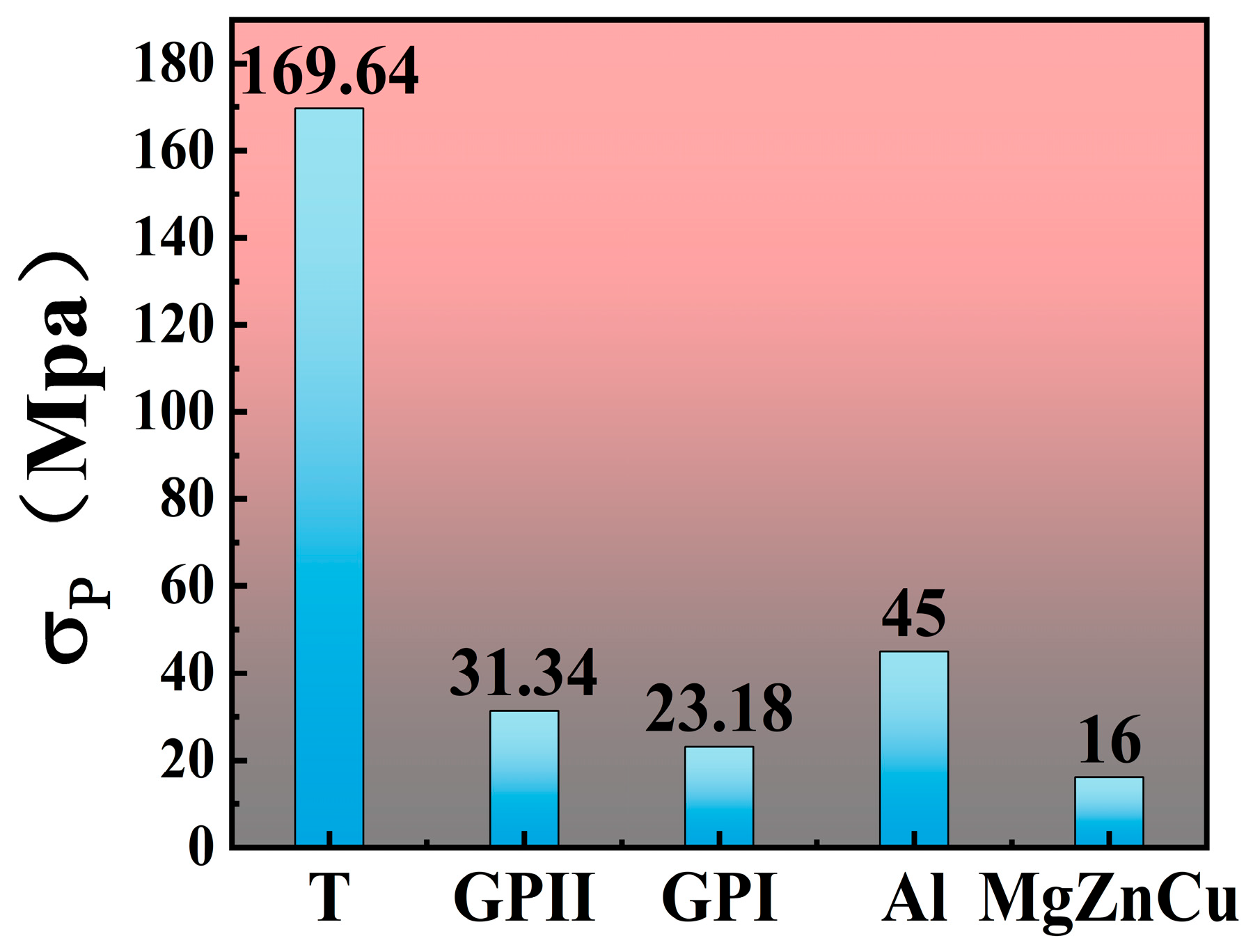
Figure 13 shows the calculated yield strength of the Al-Mg-Zn-Cu alloy in the paint-bake aged (BH) condition. The T′ phase provides a significant strengthening contribution of 169.64 MPa after BH treatment, while GPII and GPI zones collectively contribute 54.52 MPa. The intrinsic strength of the aluminum matrix accounts for 45 MPa, with the remaining Mg/Zn/Cu solute elements contributing 16 MPa. The experimentally measured yield strength is 278 MPa, which closely matches the calculated value of 285.16 MPa, demonstrating good agreement between the experimental and predicted results.
Figure 13.
Contributions to yield strength in the pre-aged Al-Mg-Zn-Cu alloy from second-phase strengthening by GPII, GPI, and T′ phases, solid solution strengthening by residual Mg/Zn/Cu solute atoms, and intrinsic strength of the aluminum matrix.
4.3. Precipitation Sequence of the Al-Mg-Zn-Cu Alloy
This study investigated the nano-scale precipitation behavior of the Al-4.35Mg-3.6Zn-0.2Cu alloy under T4P and BH conditions. The data indicate that in the T4P condition, GPI and GPII zones coexist, with the GPII zones exhibiting distinct diffraction spots in the FFT pattern of Figure 7c. In the BH condition, a mixture of GPI zones, GPII zones, and the T′ phase is observed, where the FFT pattern in Figure 7b displays complete diffraction information of the T′ phase (specifically at 2/5 and 3/5 <220>Al positions), demonstrating an evolutionary relationship with the GPII zones.
According to the data presented in Table 2 and Table 3, under the T4P condition, the particle counts for GPI and GPII zones are 3048 and 4786, respectively. In contrast, under the BH condition, the counts for GPI zones, GPII zones, and the T′ phase are 3138, 1034, and 707, respectively. These data strongly support that the T′ phase evolves from the GP zones: the increase in the number of T′ phase particles in the BH condition is accompanied by a corresponding decrease in the number of GP zones. Furthermore, the data suggest that GPII zones evolve from GPI zones, as indicated by the increase in GPII zone count coupled with the decrease in GPI zone count.
The corresponding precipitation sequence is a critical factor for optimizing heat treatment strategies. However, due to its strong dependence on precise alloy composition [23,36,37,38,39], this topic remains an active area of debate and research. Several possible precipitation sequences have been proposed for the Al-Mg-Zn system:
- SSSS (Supersaturated Solid Solution) → GP zones → Metastable η′ phase → Equilibrium η phase → Equilibrium T phase [38].
- SSSS → Solute-Vacancy Complexes → GP zones → Metastable η′ or T′ phase → Equilibrium η or T phase [37].
- SSSS → GP zones → Metastable η′ or T′ phase → Equilibrium η or T phase [39].
Based on the research by Hou et al. [40,41], the precipitation sequence identified for this alloy system is typical for age-hardenable aluminum alloys: Supersaturated Solid Solution (SSSS) → GP zones → Metastable T″ phase → Metastable T′ phase → Equilibrium T phase.
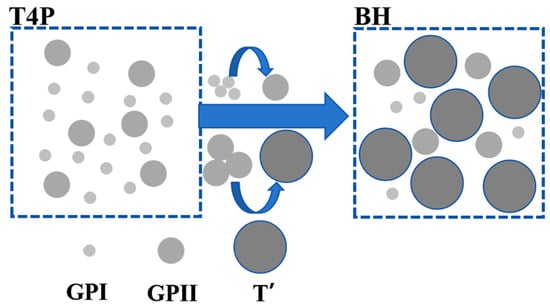
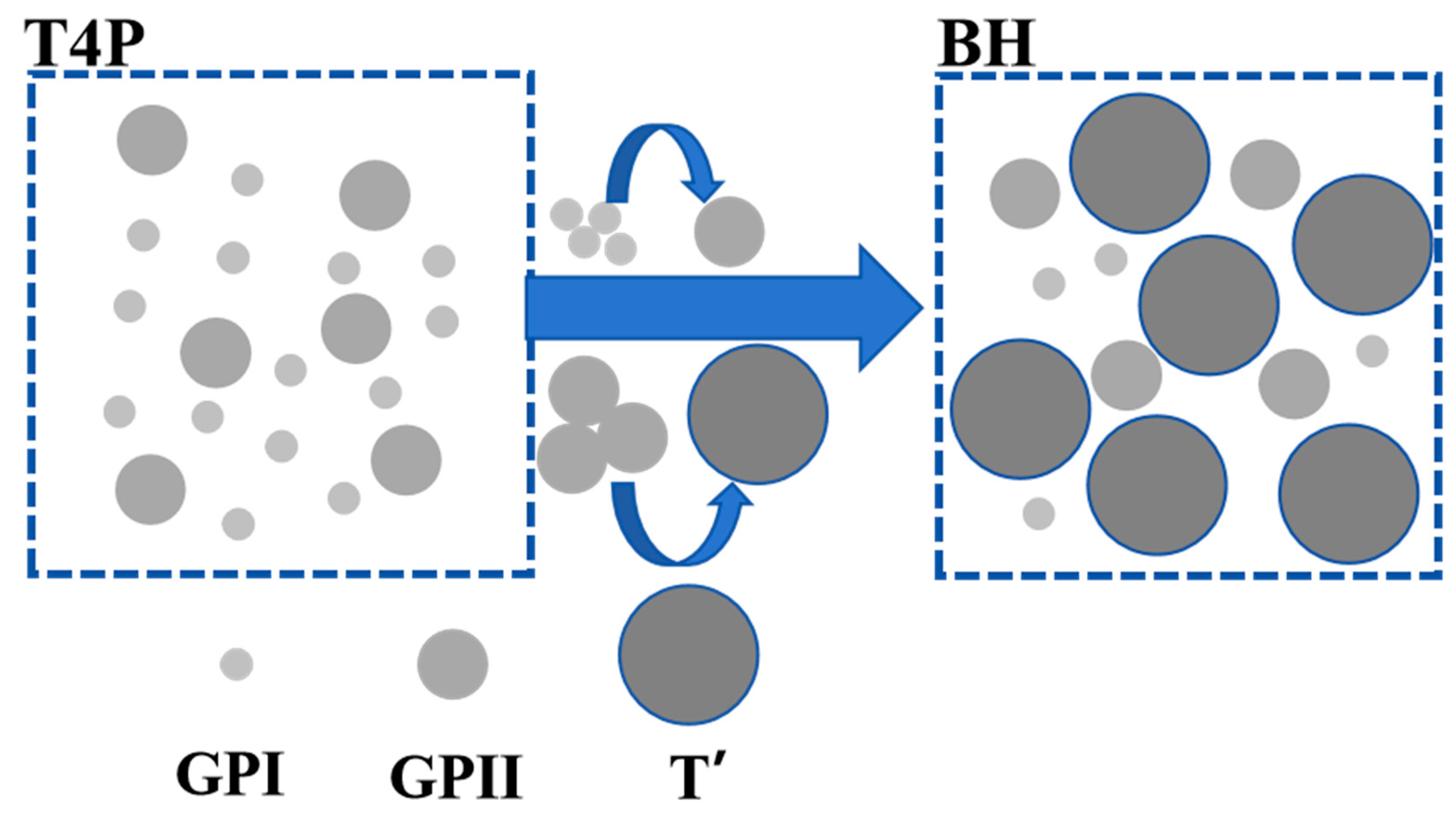
Figure 14 is a schematic diagram illustrating the transformation of GP zones into T′-phases during the aging process of the Al-Mg-Zn-Cu alloy.Based on the findings from Section 4.1 and Section 4.2, it is concluded that the precipitation sequence proposed by Hou et al. [39,40] aligns well with the experimental observations. Furthermore, regulating the precipitation sequence enables the controlled manipulation of the alloy’s microstructure, thereby achieving an optimal balance between the traditionally conflicting properties of strength and ductility.
Figure 14.
Schematic model of the precipitation sequence evolution for T-phase in Al-Mg-Zn-Cu alloy.
5. Conclusions
- The precipitation sequence of the Al-4.35Mg-3.6Zn-0.2Cu alloy was determined as SSSS → GPI zones → GPII zones → T′ phase → T phase. GPI zones are fully coherent solute clusters, GPII zones form an ordered coherent structure, and the T′ phase is a semi-coherent metastable phase characterized by paired dislocations at the interface.
- The T4P process achieves a balance between high formability (El = 9%) and adequate base strength (YS = 178 MPa) by controlling the population and size of GP zones (GPI + GPII). These GP zones contribute approximately 120 MPa to the yield strength, primarily through dislocation shearing and storage effects.
- After BH treatment, GPII zones transform into the T′ phase, resulting in an increased particle radius and enhanced lattice distortion at the Al-matrix interface. This significantly improves resistance to dislocation motion (YS = 275 MPa), while the retained GPII zones help mitigate ductility loss (El = 8%). A substantial bake-hardening response of 97 MPa is achieved, successfully resolving the traditional strength–formability trade-off.
This integrated heat treatment strategy and the controlled precipitation sequence provide both theoretical foundation and technical guidance for the design and industrial application of high-strength, high-formability aluminum alloys for automotive outer panels.
Author Contributions
Conceptualization, S.C.; Resources, H.Y., J.A. and Z.W.; Data curation, J.A., Z.W., H.Y., Z.S.; Investigation W.D., S.C. and J.A.; Methodology, S.C., Z.W. and Z.S.; Writing—original draft preparation, S.C., H.Y. and J.A.; Writing—review and editing, W.D. and H.Y.; Supervision, W.D., Z.S. and Z.W.; Project administration, W.D., Z.S. and S.C.; Funding acquisition, W.D. All authors have read and agreed to the published version of the manuscript.
Funding
This work was supported by the National Natural Science Foundation of China [grant number 52161006]. Industrial Support Plan Project of Gansu Provincial Department of Education (2021CYZC-23). Central Guidance for Local Scientific and Technological Development Funding Projects (23ZYQB309). Gansu Provincial Science and Technology Major Project (22ZD6GB019). 2022 Gansu Provincial Science and Technology Major Project “Basic Scientific Research and Development of Key Technologies for Advanced Processing of Non-ferrous Metals and Efficient Utilization of Resources” (No. 22ZD6GA008). Gansu Provincial Science and Technology Plan Project Funding (Grant No. 25JRRA069), Funding of Youth Doctoral Support for Universities in Gansu Province (2024QB-024), Foundation of Key Laboratory of Solar Power System (Grant No. 2024SPKL04).
Data Availability Statement
The original contributions presented in the study are included in the article. Further inquiries can be directed at the corresponding authors.
Conflicts of Interest
The authors declare no conflicts of interest.
References
- Sun, Y.-F.; Zhang, Y.-J.; Su, B. How Does Global Transport Sector Improve the Emissions Reduction Performance? A Demand-Side Analysis. Appl. Energy 2022, 311, 118648. [Google Scholar] [CrossRef] [Scilit]
- Zhou, D.; Kang, Z.; Su, X. Novel Collaborative Design Method for Lightweight Optimization Design of Vehicle Load-Bearing Parts. Int. J. Automot. Technol. 2023, 24, 1269–1284. [Google Scholar] [CrossRef] [Scilit]
- Han, K.; Zang, J.; He, W.; Chen, J. Strength-Plasticity Trade-off of High-Aluminum Content AlTiNbV Lightweight High-Entropy Alloy. Mater. Sci. Eng. A 2025, 926, 147863. [Google Scholar] [CrossRef] [Scilit]
- Geng, Y.; Zhang, D.; Zhang, J.; Zhuang, L. On the Suppression of Lüders Elongation in High-Strength Cu/Zn Modified 5xxx Series Aluminum Alloy. J. Alloys Compd. 2020, 834, 155138. [Google Scholar] [CrossRef] [Scilit]
- Chen, L.; Zhu, L.; Lu, L.; Yang, Z.; Ren, X.; Zhang, X. The Effect of Heat Treatment on the Microstructure and Electrochemical Corrosion Behavior of Multilayer AA6061 Alloy Fabricated by Additive Friction Stir Deposition. Appl. Surf. Sci. 2024, 650, 159167. [Google Scholar] [CrossRef] [Scilit]
- Ratchev, P.; Verlinden, B.; De Smet, P.; Van Houtte, P. Precipitation Hardening of anAl–4.2wt% Mg–0.6wt% Cu Alloy. Acta Mater. 1998, 46, 3523–3533. [Google Scholar] [CrossRef] [Scilit]
- Matsumoto, K.; Aruga, Y.; Tsuneishi, H. Effects of Zn Addition and Aging Condition on Serrated Flow in Al-Mg Alloys. In Proceedings of the 14th International Conference on Aluminium Alloys, Trondheim, Norway, 15–19 June 2014. [Google Scholar]
- Guo, M.X.; Zhang, Y.D.; Li, G.J.; Jin, S.B.; Sha, G.; Zhang, J.S.; Zhuang, L.Z.; Lavernia, E.J. Solute Clustering in Al-Mg-Si-Cu-(Zn) Alloys during Aging. J. Alloys Compd. 2019, 774, 347–363. [Google Scholar] [CrossRef] [Scilit]
- Wang, Y.; Gao, M.; Yang, B.; Zhao, E.; Liu, F.; Guan, R. Microstructural Evolution and Mechanical Property of Al–Mg–Mn Alloys with Various Solidification Cooling Rates. Mater. Charact. 2022, 184, 111709. [Google Scholar] [CrossRef] [Scilit]
- Croteau, J.R.; Griffiths, S.; Rossell, M.D.; Leinenbach, C.; Kenel, C.; Jansen, V.; Seidman, D.N.; Dunand, D.C.; Vo, N.Q. Microstructure and Mechanical Properties of Al-Mg-Zr Alloys Processed by Selective Laser Melting. Acta Mater. 2018, 153, 35–44. [Google Scholar] [CrossRef] [Scilit]
- Zhou, W.; Zhang, Z.R.; Zhao, S.L.; Zhang, Y.X.; Nagami, H.; Yang, Z.; Yang, X.Y. Effect of Cr/Mn Mass Ratio on Microstructure and Mechanical Properties of Al-Mg-Si Alloy. Chin. J. Nonferrous Met. 2022, 32, 2185–2197. [Google Scholar]
- Jeong, W.; Yang, J.; Choi, J.P.; Hwang, J.Y.; Kim, Y.W.; Park, S.J.; Choi, J.W.; Heogh, W.; Lee, H.; Park, J.; et al. Al-Based Functionally Graded Super-Intermetallic Compounds for the Turbine Blade of a High-Performance Jet Engine. Adv. Compos. Hybrid Mater. 2025, 8, 420. [Google Scholar] [CrossRef] [Scilit] [PubMed]
- Graf, G.; Spoerk-Erdely, P.; Staron, P.; Stark, A.; Mendez Martin, F.; Clemens, H.; Klein, T. Quench Rate Sensitivity of Age-Hardenable Al-Zn-Mg-Cu Alloys with Respect to the Zn/Mg Ratio: An in Situ SAXS and HEXRD Study. Acta Mater. 2022, 227, 117727. [Google Scholar] [CrossRef] [Scilit]
- Zhao, Y.H.; Liao, X.Z.; Cheng, S.; Ma, E.; Zhu, Y.T. Simultaneously Increasing the Ductility and Strength of Nanostructured Alloys. Adv. Mater. 2006, 18, 2280–2283. [Google Scholar] [CrossRef] [Scilit]
- Yang, R.; Liu, Z.; Ying, P.; Li, J.; Lin, L.; Zeng, S. Multistage-Aging Process Effect on Formation of GP Zones and Mechanical Properties in Al–Zn–Mg–Cu Alloy. Trans. Nonferrous Met. Soc. China 2016, 26, 1183–1190. [Google Scholar] [CrossRef] [Scilit]
- Stemper, L.; Mitas, B.; Kremmer, T.; Otterbach, S.; Uggowitzer, P.J.; Pogatscher, S. Age-Hardening of High Pressure Die Casting AlMg Alloys with Zn and Combined Zn and Cu Additions. Mater. Des. 2019, 181, 107927. [Google Scholar] [CrossRef] [Scilit]
- Stemper, L.; Tunes, M.A.; Dumitraschkewitz, P.; Mendez-Martin, F.; Tosone, R.; Marchand, D.; Curtin, W.A.; Uggowitzer, P.J.; Pogatscher, S. Giant Hardening Response in AlMgZn(Cu) Alloys. Acta Mater. 2021, 206, 116617. [Google Scholar] [CrossRef] [Scilit]
- GB/T 228.1-2021; Metallic Materials—Tensile Testing—Part 1: Method of Test at Room Temperature. China Standards Press: Beijing, China, 2021.
- Stemper, L.; Tunes, M.A.; Oberhauser, P.; Uggowitzer, P.J.; Pogatscher, S. Age-Hardening Response of AlMgZn Alloys with Cu and Ag Additions. Acta Mater. 2020, 195, 541–554. [Google Scholar] [CrossRef] [Scilit]
- Pan, Y.L. Study on Compositional Design, Microstructure and Properties of Novel High Strength-Toughness Al-Mg-Zn-Cu Aluminium Alloy with Good Weldability and Corrosion Resistance. Ph.D. Dissertation, University of Science and Technology Beijing, Beijing, China, 2021. [Google Scholar]
- Geng, Y.; Zhang, D.; Zhang, J.; Zhuang, L. Early-Stage Clustering and Precipitation Behavior in the Age-Hardened Al–Mg–Zn(-Cu) Alloys. Mater. Sci. Eng. A 2022, 856, 144015. [Google Scholar] [CrossRef] [Scilit]
- Löffler, H.; Kovács, I.; Lendvai, J. Decomposition Processes in Al-Zn-Mg Alloys. J. Mater. Sci. 1983, 18, 2215–2240. [Google Scholar] [CrossRef] [Scilit]
- Bigot, A.; Auger, P.; Chambreland, S.; Blavette, D.; Reeves, A. Atomic Scale Imaging and Analysis of T’ Precipitates in Al-Mg-Zn Alloys. Microsc. Microanal. Microstruct. 1997, 8, 103–113. [Google Scholar] [CrossRef] [Scilit]
- Yang, X.B.; Chen, J.H.; Liu, J.Z.; Qin, F.; Xie, J.; Wu, C.L. A High-Strength AlZnMg Alloy Hardened by the T-Phase Precipitates. J. Alloys Compd. 2014, 610, 69–73. [Google Scholar] [CrossRef] [Scilit]
- Tang, H.-P.; Wang, Q.-D.; Luo, C.; Lei, C.; Liu, T.-W.; Li, Z.-Y.; Wang, K.; Jiang, H.-Y.; Ding, W.-J. Effects of Solution Treatment on the Microstructure, Tensile Properties, and Impact Toughness of an Al–5.0Mg–3.0Zn–1.0Cu Cast Alloy. Acta Metall. Sin. (Engl. Lett.) 2021, 34, 98–110. [Google Scholar] [CrossRef] [Scilit]
- Kulkarni, A.J.; Krishnamurthy, K.; Deshmukh, S.P.; Mishra, R.S. Effect of Particle Size Distribution on Strength of Precipitation-Hardened Alloys. J. Mater. Res. 2004, 19, 2765–2773. [Google Scholar] [CrossRef] [Scilit]
- Colombo, M.; Gariboldi, E.; Bassani, P.; Albu, M.; Hofer, F. Modeling the Microstructural and Yield Strength Evolution of an Age-Hardenable Al Alloy for High Temperature Applications. MSF 2016, 879, 380–385. [Google Scholar] [CrossRef] [Scilit]
- Myhr, O. Modelling of the Age Hardening Behaviour of Al–Mg–Si Alloys. Acta Mater. 2001, 49, 65–75. [Google Scholar] [CrossRef] [Scilit]
- Li, Y.; Holmedal, B.; Li, H.; Zhuang, L.; Zhang, J.; Du, Q. Precipitation and Strengthening Modeling for Disk-Shaped Particles in Aluminum Alloys: Size Distribution Considered. Materialia 2018, 4, 431–443. [Google Scholar] [CrossRef] [Scilit]
- Shercliff, H.R.; Ashby, M.F. A Process Model for Age Hardening of Aluminium Alloys—I. The Model. Acta Metall. Mater. 1990, 38, 1789–1802. [Google Scholar] [CrossRef] [Scilit]
- Ryen, Ø.; Holmedal, B.; Nijs, O.; Nes, E.; Sjölander, E.; Ekström, H.-E. Strengthening Mechanisms in Solid Solution Aluminum Alloys. Met. Mater. Trans. A 2006, 37, 1999–2006. [Google Scholar] [CrossRef] [Scilit]
- Dixit, M.; Mishra, R.S.; Sankaran, K.K. Structure–Property Correlations in Al 7050 and Al 7055 High-Strength Aluminum Alloys. Mater. Sci. Eng. A 2008, 478, 163–172. [Google Scholar] [CrossRef] [Scilit]
- Holmedal, B. Strength Contributions from Precipitates. Philos. Mag. Lett. 2015, 95, 594–601. [Google Scholar] [CrossRef] [Scilit]
- Ding, Q.; Zhang, D.; Pan, Y.; Hou, S.; Zhuang, L.; Zhang, J. Strengthening Mechanism of Age-Hardenable Al– x Mg–3Zn Alloys. Mater. Sci. Technol. 2019, 35, 1071–1080. [Google Scholar] [CrossRef] [Scilit]
- Pan, Y.; Zhang, D.; Liu, H.; Zhuang, L.; Zhang, J. Precipitation Hardening and Intergranular Corrosion Behavior of Novel Al–Mg–Zn(-Cu) Alloys. J. Alloys Compd. 2021, 853, 157199. [Google Scholar] [CrossRef] [Scilit]
- Bergman, G.; Waugh, J.L.T.; Pauling, L. The Crystal Structure of the Metallic Phase Mg32(Al, Zn)49. Acta Crystallogr. 1957, 10, 254–259. [Google Scholar] [CrossRef] [Scilit]
- Afify, N.; Gaber, A.-F.; Abbady, G. Fine Scale Precipitates in Al-Mg-Zn Alloys after Various Aging Temperatures. MSA 2011, 2, 427–434. [Google Scholar] [CrossRef]
- Inoue, H.; Sato, T.; Kojima, Y.; Takahashi, T. The Temperature Limit for GP Zone Formation in an Al-Zn-Mg Alloy. Metall. Trans. A 1981, 12, 1429–1434. [Google Scholar] [CrossRef] [Scilit]
- Polmear, I.; John, D.S.; Nie, J.F.; Qian, M. Light Alloys: Metallurgy of the Light Metals; Academic Press: New York, NY, USA, 2017; ISBN 978-0-08-099431-4. [Google Scholar]
- Hou, S.; Liu, P.; Zhang, D.; Zhang, J.; Zhuang, L. Precipitation Hardening Behavior and Microstructure Evolution of Al–5.1 Mg–0.15Cu Alloy with 3.0Zn (Wt%) Addition. J. Mater. Sci. 2018, 53, 3846–3861. [Google Scholar] [CrossRef] [Scilit]
- Hou, S.; Zhang, D.; Ding, Q.; Zhang, J.; Zhuang, L. Solute Clustering and Precipitation of Al-5.1Mg-0.15Cu-xZn Alloy. Mater. Sci. Eng. A 2019, 759, 465–478. [Google Scholar] [CrossRef] [Scilit]

Disclaimer/Publisher’s Note: The statements, opinions and data contained in all publications are solely those of the individual author(s) and contributor(s) and not of MDPI and/or the editor(s). MDPI and/or the editor(s) disclaim responsibility for any injury to people or property resulting from any ideas, methods, instructions or products referred to in the content. |
© 2025 by the authors. Licensee MDPI, Basel, Switzerland. This article is an open access article distributed under the terms and conditions of the Creative Commons Attribution (CC BY) license (https://creativecommons.org/licenses/by/4.0/).