Article

Effect of Laser Power on the Recrystallization Temperature of an Additively Manufactured IN718

1
School of Materials Science and Engineering, Pusan National University, Busan 46241, Republic of Korea
2
High Temperature Materials Research Group, Korea Institute of Materials Science, Changwon 51508, Republic of Korea
*
Authors to whom correspondence should be addressed.
Metals 2023, 13(8), 1355; https://doi.org/10.3390/met13081355
Submission received: 7 June 2023 / Revised: 5 July 2023 / Accepted: 25 July 2023 / Published: 28 July 2023
(This article belongs to the Special Issue Additive Manufacturing of High Temperature Alloys)

Abstract

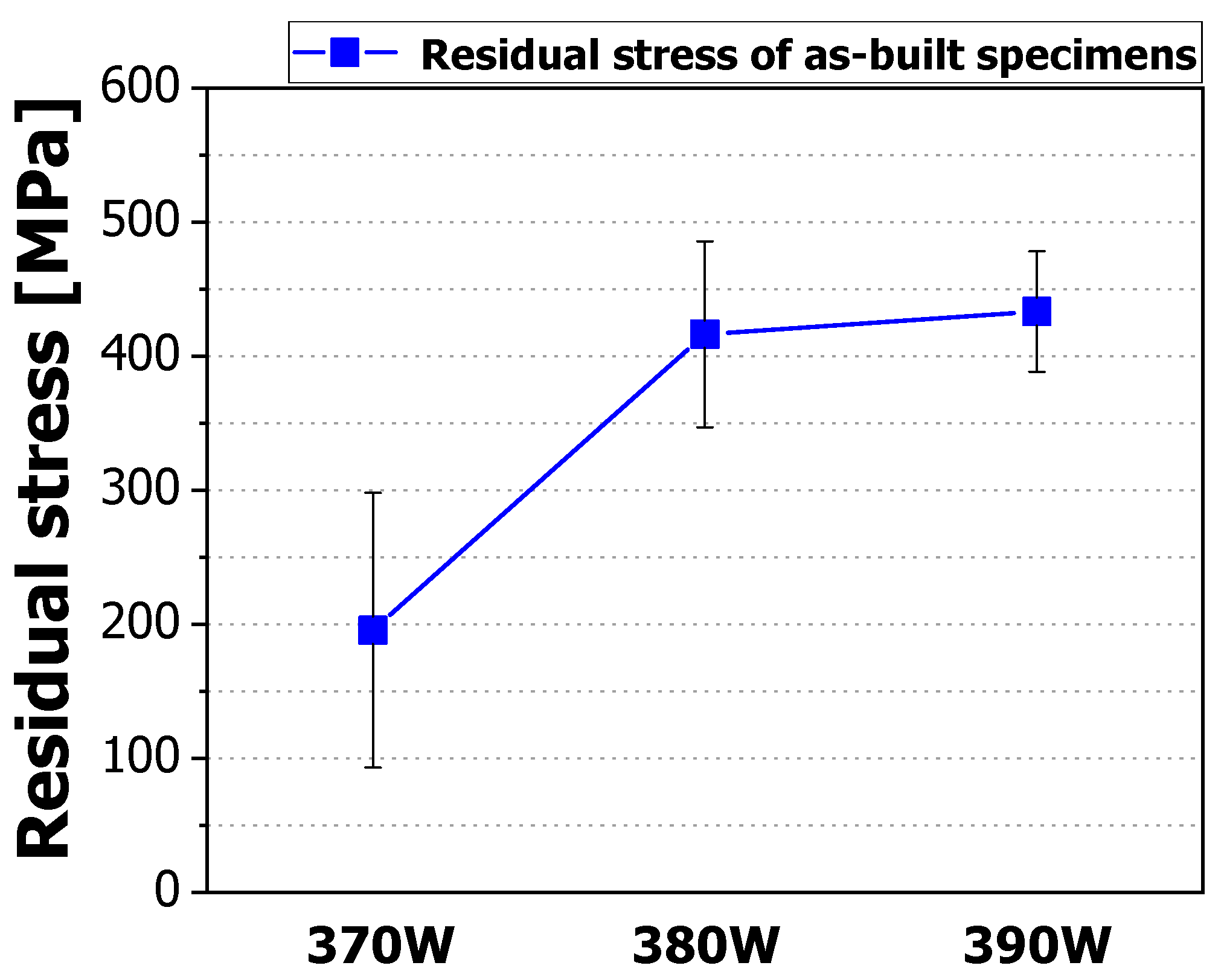
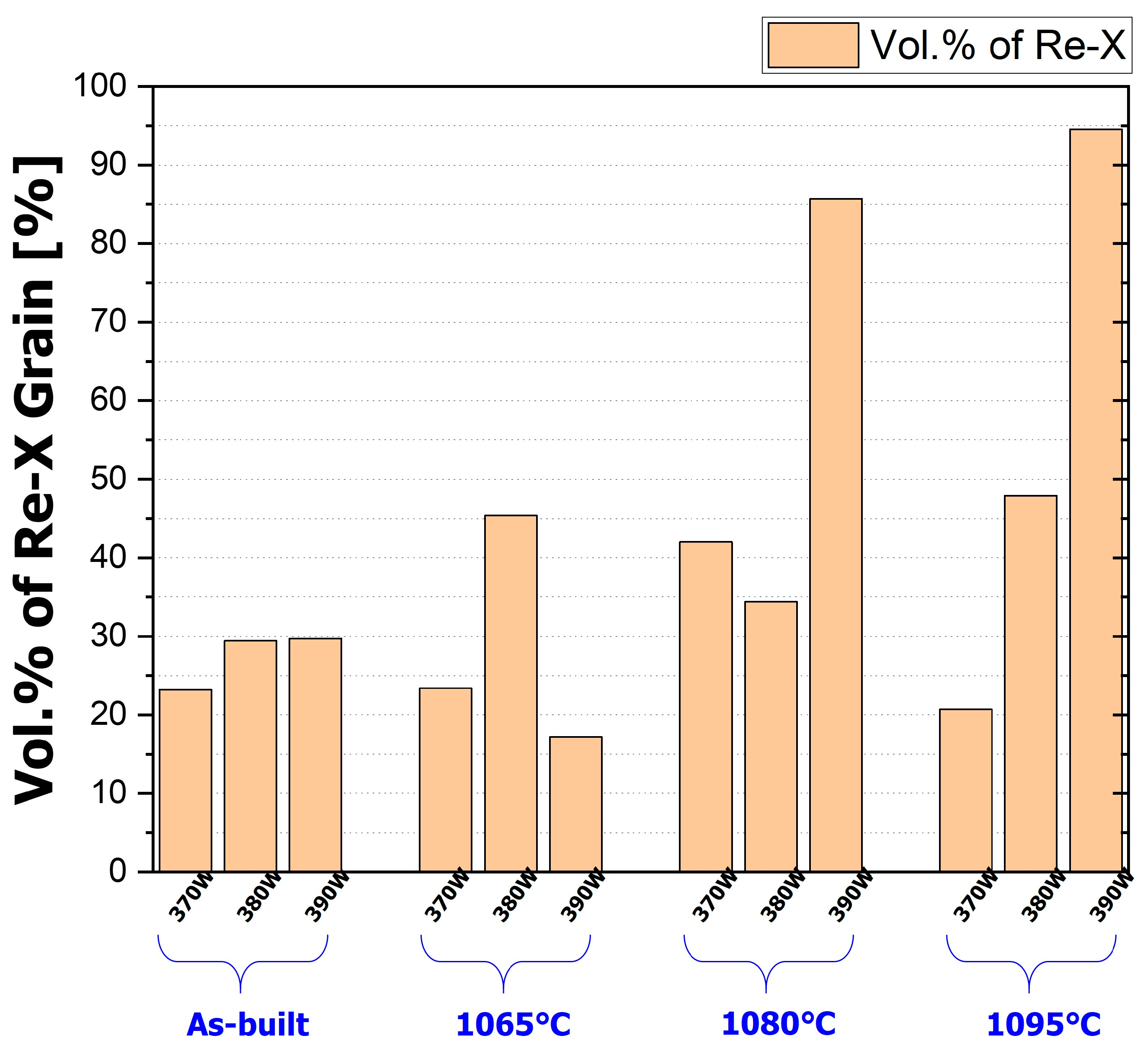
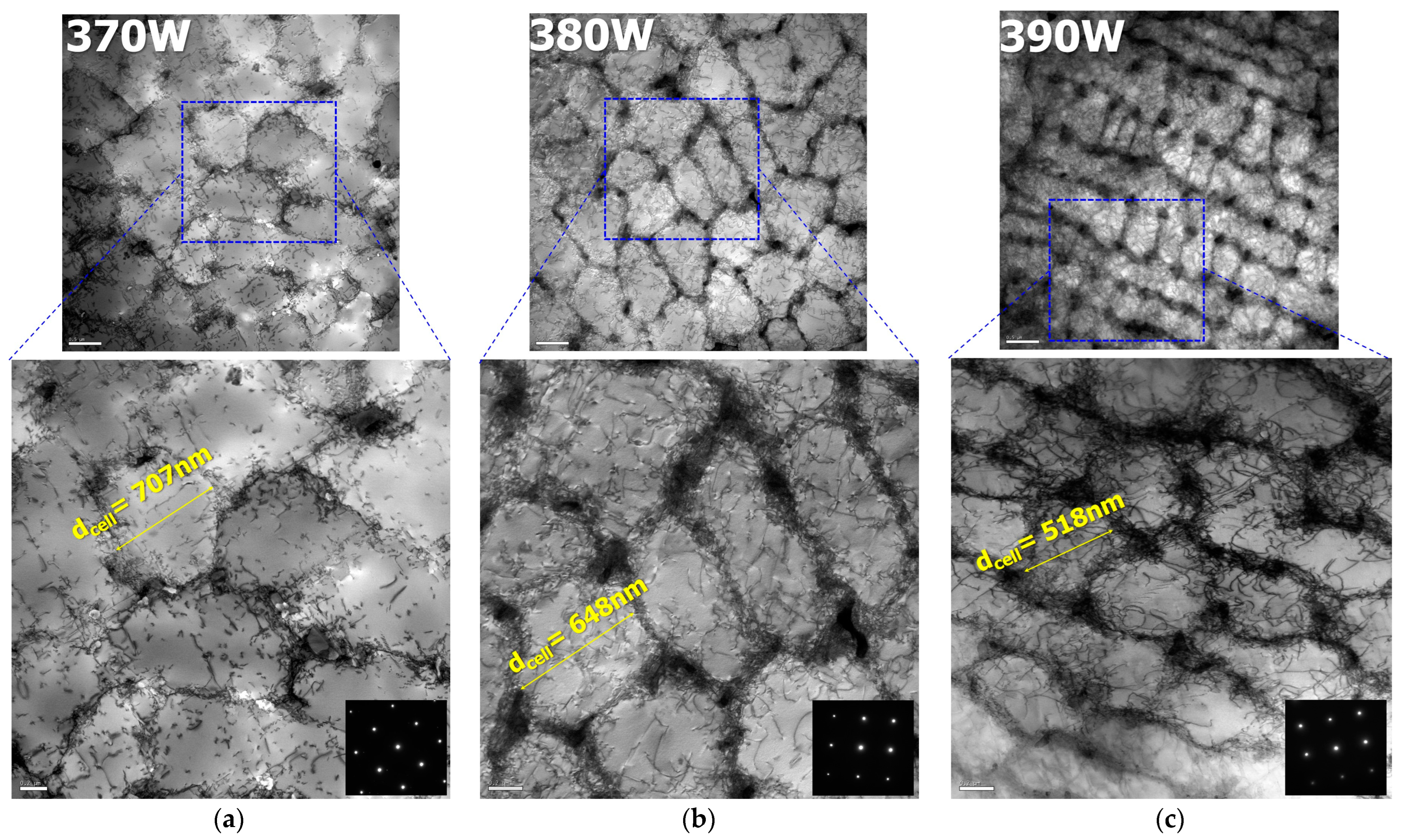
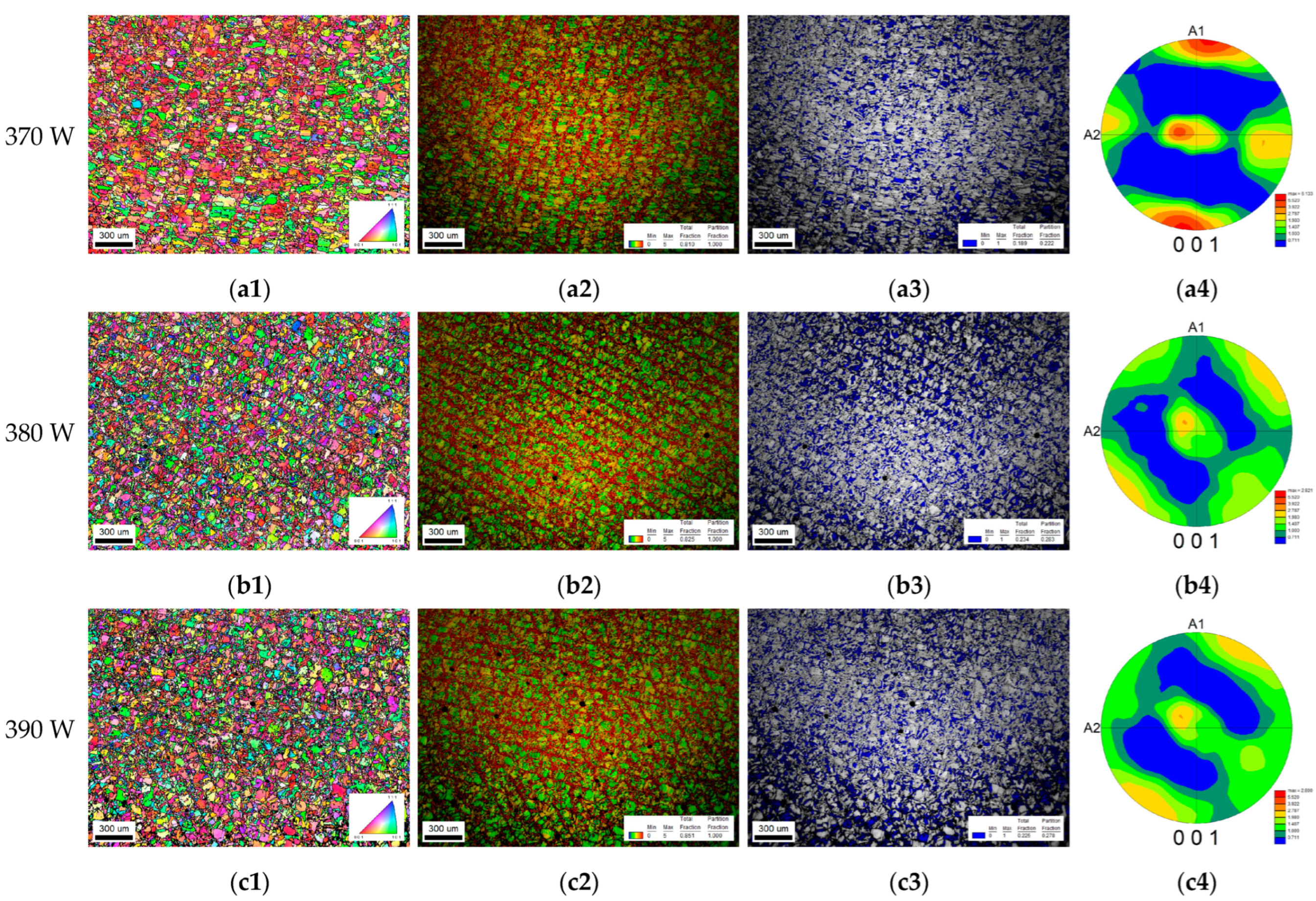
Over the past few decades, there has been much research on additive manufacturing in both the academic and the industrial spheres to overcome the limitations of conventional manufacturing methods, thereby enabling the production of complex designs for improved performance. To achieve this purpose, it is crucial to meticulously set suitable laser parameters within the context of microstructural characteristics, including type and fraction of defects, texture development, residual stress, and grain size, etc. In the present study, we focused on recrystallization behavior, a type of relaxation process for accumulated thermal stress during the L-PBF process, as a function of laser power applied on the L-PBF process. The laser power has significant effects on the amount of recrystallized grain, directly related to the recrystallization temperature. Within the range of laser power used in this study, a downward trend was observed in the recrystallization temperature as the laser power increased from 370 W to 390 W. This trend suggests that higher laser power leads to a faster cooling rate, influenced by the volume of melt pool as well as the amount of heat dissipation from the melt pool, resulting in higher thermal stress during the process.
Keywords: recrystallization temperature; driving force for recrystallization during laser powder bed fusion; laser powder bed fusion; IN718; thermal stress recrystallization temperature; driving force for recrystallization during laser powder bed fusion; laser powder bed fusion; IN718; thermal stress