
Systematic Review

Education for Sustainable Development in Higher Education: Bibliometric Analysis of Trends, Innovations and Institutional Commitment to the SDGs (2018–2025)

by
Luis Fernando Garcés Giraldo
1,*,
Rafael Liza
1,
José Alexander Velásquez Ochoa
2,
Gelver Pérez Pulido
3,
Cesar Felipe Henao Villa
4,*,
José Albán Londoño Arias
2 and
Jorge Hoyos Rentería
3
1
Escuela de Posgrado, Universidad Continental, Lima 12001, Peru
2
Facultad de Ciencias Administrativas y Económicas, Tecnológico de Antioquia Institución Universitaria, Medellín 050034, Colombia
3
Facultad Ciencias Humanas y de la Educación, Corporación Universitaria Adventista, Medellín 050034, Colombia
4
Facultad de Ingeniería y Ciencias Agropecuarias, Institución Universitaria Digital de Antioquia, Medellín 050012, Colombia
*
Authors to whom correspondence should be addressed.
Societies 2026, 16(6), 178; https://doi.org/10.3390/soc16060178
Submission received: 16 February 2026 / Revised: 20 April 2026 / Accepted: 21 April 2026 / Published: 31 May 2026

Abstract

In a post-consensus institutional landscape—where higher education systems face intensifying pressure to demonstrate strategic governance and measurable commitment to global sustainability mandates—understanding how the scholarly field of Education for Sustainable Development (ESD) has itself structurally evolved acquires both analytical urgency and policy relevance. This study maps the intellectual structure of Education for Sustainable Development (ESD) and institutional commitment in higher education through a PRISMA 2020-guided bibliometric analysis of 126 articles retrieved from Scopus for the period 2018–2025. Annual output rose from a single article in 2018 to 32 in 2025, with 46.8% of the corpus concentrated in the 2024–2025 biennium—a pattern indicative of rapid field maturation. Keyword co-occurrence analysis reveals a dual thematic architecture comprising four clusters: a Curriculum Innovation and Pedagogical Transformation axis and a strategic governance and institutional commitment axis. A notable pattern is a reorientation in the relative weight of research themes, evidenced by the growing density of terms such as governance, strategic approach, and institutional commitment in the recent literature. This governance-oriented cluster, consolidated by a core of prolific authors, shows a higher recent growth rate in co-occurrence frequency than the traditional curriculum axis. An emerging tendency toward disciplinary specialization—particularly in engineering education—and toward impact assessment is consistent with a gradual thematic consolidation of the field. The observed co-occurrence patterns are consistent with theoretical frameworks that associate scalable pedagogical innovation with institutional-level commitment and systemic governance frameworks aligned with the SDGs, although bibliometric data alone cannot establish this dependency. These patterns may signal a reorientation in the scholarly framing of ESD toward institutional design and governance questions, although confirming whether this reflects substantive epistemic change or shifts in publishing incentives requires evidence beyond bibliometric indicators.

1. Introduction

1.1. Higher Education and the 2030 Agenda: A Shifting Institutional Mandate

The contemporary ecological and social crisis, framed within the Sustainable Development Goals (SDGs) of the 2030 Agenda [1], has redefined the epistemic mandate of higher education (HE) [2]. The university has evolved from its primary role of knowledge transfer to a transformative institution and catalyst for social change, essential for the implementation of the SDGs [3]. This shift implies that Education for Sustainable Development (ESD) is not a curricular complement, but a cross-cutting theme that must permeate teaching, research, and institutional management [4].
From an educational perspective, Education for Sustainable Development (ESD) requires a substantial paradigm shift. This transition moves from traditional content teaching to promoting literacy for sustainability and developing key competencies [5,6]. These competencies encompass systems thinking, anticipation, and the capacity for transformative action—essential elements for addressing complex problems [7,8]. This pedagogical imperative demands profound curricular and methodological innovation, reflected in the adaptation of strategies such as problem-based learning and e-learning for sustainability [9,10]. However, the scalability of ESD’s success depends not only on the individual will of teachers but also on clear structural support that requires administrative leadership and resources [11].

1.2. Exponential Growth of the Literature: A Quantitative Inflection

Academic research in this field has followed a trajectory of dramatic acceleration, entering a phase of scientific maturation coinciding with the consolidation of the SDG framework.
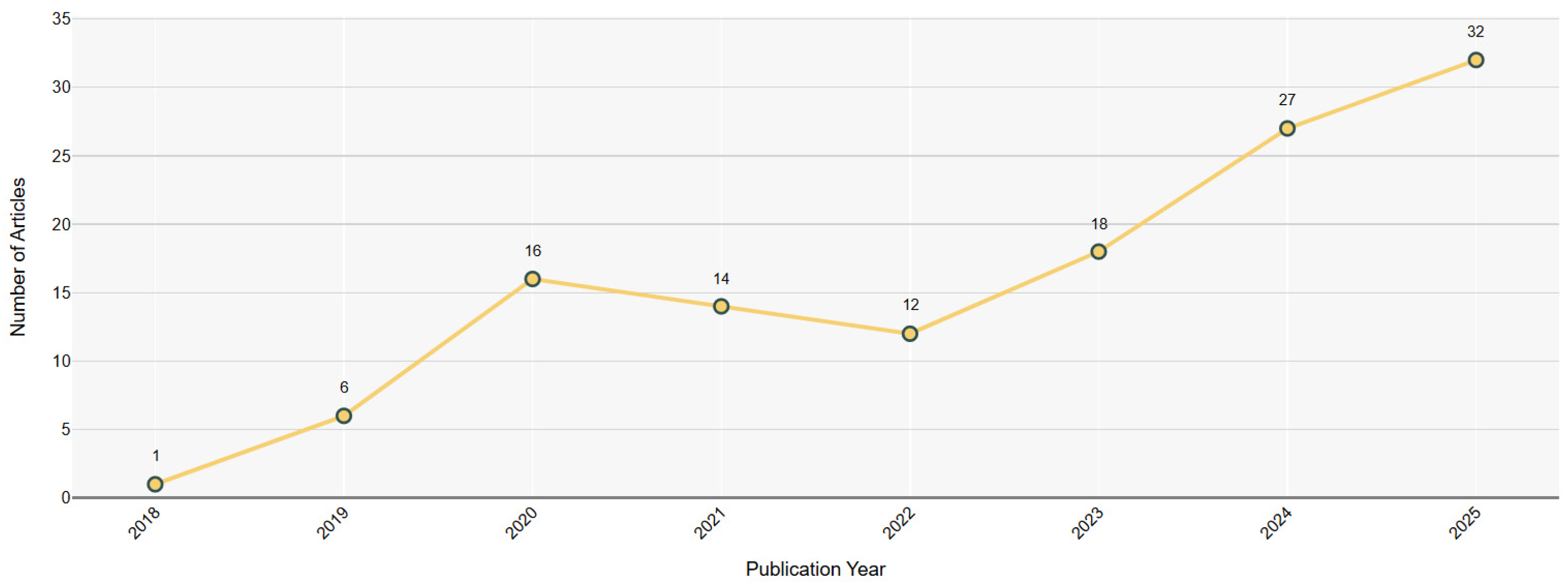
Quantitatively, the corpus of 126 articles selected between 2018 and 2025 shows a markedly exponential increase in annual output. This increased from 1 article in 2018 to 32 articles recorded by 2025. Even more revealing is the temporal inflection point: the 2024–2025 biennium accounts for 46.8% (59 of the 126 articles) of all identified scientific production. These figures document an acceleration in publication output, which may reflect growing scholarly attention to the topic [12]
Historically, the literature has focused on Curriculum Innovation [13]. However, the recent explosion of publications suggests a shift in focus towards strategic governance and Institutional Engagement, recognizing that the challenges of curriculum change are inherently complex and require systemic administrative leadership [14,15].

1.3. A Dual Thematic Structure: Innovation and Governance in Convergence

A co-occurrence analysis of keywords reveals that the field is intellectually structured around two conceptual axes with a critical convergence dynamic. This finding is central to understanding the architecture of knowledge in ESD:
Pedagogical Innovation Cluster (Operational Axis): This cluster groups together traditional terms focused on classroom practice: curriculum development, teaching, competencies and specific methodologies (e-learning, problem-based learning). It represents the operational engine of ESD, addressing how to develop the systemic and ethical thinking skills required of sustainability graduates [5].
Governance and Strategic Engagement Cluster (Systemic Axis): This is the engine of recent growth and the focus of the new agenda. It brings together high-level managerial and political terms: governance, institutional commitment, strategic approach, and the explicit link with the SDGs. A salient pattern is that this cluster, associated with a core of highly productive authors, shows the highest growth rate in recent co-occurrence frequency [16,17]. The research here focuses on government policies.
This dual structure and its convergence are consistent with a possible reorientation of the research agenda, shifting from the question of what to teach to the question of how to manage and institutionalize ESD. The most recent literature demands a demonstration of impact and effectiveness that can only be achieved through validated institutional commitment [18].

1.4. Objectives and Scientific Contribution

The main objective of this article is to perform a bibliometric analysis of the evolution of ESD and institutional commitment in higher education during the period 2018–2025.
The specific objectives are:
Quantifying Dynamics: Analyzing the evolution of scientific production to determine the growth rate and validate the inflection point of the field.
Modeling the Intellectual Structure: Using clustering techniques to define and contrast the trajectory and conceptual nature of the two axes: pedagogical innovation and strategic commitment.
Predicting the Agenda: Identifying emerging conceptual trends that will shape the direction of future research in education journals.
This study makes a twofold contribution: (1) It provides empirical evidence of the intellectual maturation of the field, demonstrating that strategic governance is now the main driver of growth. (2) It offers the scientific community and educational managers a empirically grounded conceptual framework, justifying the need to align Curriculum Innovation efforts with Institutional Engagement policies to achieve a real and sustainable impact.
Research Questions
To operationalize the stated objectives and provide the analytical scaffolding for the bibliometric analysis, this study addresses the following three explicit research questions:
  • RQ1. How has the annual volume and geographic distribution of scientific production on ESD and institutional commitment in higher education evolved during the 2018–2025 period, and what does this trajectory reveal about the maturation dynamics and structural consolidation of the field?
  • RQ2. What is the intellectual structure of the SDG-era ESD research field, as operationalized through keyword co-occurrence network analysis, and which thematic clusters are driving the most accelerated growth in scholarly output—and through what conceptual mechanisms is this occurring?
  • RQ3. To what extent has the academic discourse on ESD undergone a measurable structural reorientation from curricular–pedagogical concerns toward strategic governance and institutional commitment mechanisms aligned with the SDGs—and what are the implications of this reorientation for higher-education policy, institutional design, and adaptation in a post-consensus environment?

1.5. The Foundation of ESD: Global Concept to Pedagogical Transformation

The conceptual framework of Education for Sustainable Development (ESD) demands a deep understanding of the pedagogical challenge that sustainability represents. ESD is not the addition of new content, but a transformative learning process that seeks to generate changes in students’ values, behaviors, and worldviews [19,20]. This process requires the holistic development of three spheres: head (knowledge), hands (action), and heart (ethical values) [21]. The literature establishes that the crucial function of ESD is to train leaders for sustainability with the capacity to address the uncertainty and complexity of the SDGs [22].
However, the commitment of higher education institutions (HEIs) has not been uniform, leading to academic criticism regarding the slow adoption of structural changes [23,24]. The Curriculum Innovation and Pedagogical Transformation Cluster emerges in the present analysis as the empirical response to this theoretical demand, confirming that research is concentrated on how to achieve curricular integration and overcome the intrinsic barriers to teaching [25].
Critically, these two research axes—pedagogical transformation and institutional governance—cannot be treated as independent or parallel lines of inquiry. The SDG framework has imposed structural pressure on higher education institutions that compels a migration from isolated curricular experiments toward comprehensive governance models in which sustainability objectives are embedded across budget cycles, accreditation mechanisms, performance metrics, and strategic planning instruments. This theoretical expectation, most rigorously formalized by Waas et al. [26] through the whole-institution approach, generates a testable bibliometric prediction: if the SDG framework is genuinely reshaping how ESD is conceptualized and institutionalized, the co-occurrence network of ESD literature should reveal a measurable shift in research attention from classroom-level pedagogy toward governance-level mechanisms, traceable through the density and growth rate of governance-related terms in recent publication cohorts. The present study constitutes the first longitudinal empirical test of this prediction at the corpus level, covering the full 2018–2025 arc of SDG-era ESD scholarship.

1.6. The Strategic Governance Cluster and Institutional Commitment

Institutional commitment is the best-documented success factor in recent theory [27]. The literature argues that Education for Sustainable Development (ESD) cannot subsist without strategic governance that provides resources and aligns the institutional vision [28]. This theoretical framework centers on the adoption of a whole-institution approach as the mechanism through which sustainability can be embedded across all university functions—rather than confined to a single department or course [26].
The mechanisms that support this theory, and which the present bibliometric analysis validates as high-growth trends, include:
Strategic Planning: Integrating sustainability into founding documents and institutional development plans [29,30].
Actor Alignment: The active role of academic and administrative staff as drivers of change [31].
SDG Reporting: The adoption of specific reporting frameworks to monitor institutional progress and measure performance [32,33]. The high concentration of the governance cluster in recent years (2024–2025) suggests that research has moved into the field of action measurement, a finding that supports the thesis of the maturity of the field.

1.7. The Cluster for Curriculum Innovation and Pedagogical Transformation

Curriculum theory for ESD calls for moving beyond single-loop adjustments toward a profound intervention in educational design [34]. The required innovations are complex:
Transdisciplinary Curriculum: The need to design study plans that break down disciplinary silos, integrating the natural and social sciences [35].
Competency Development: The theoretical framework is based on competency models that are the object of study of this cluster [36]. The literature seeks methods to develop capacities such as critical thinking, collaboration, and ethics for sustainability [21].
Digital Pedagogy: The trend towards didactic innovation is reinforced by the need to use digital and e-learning methodologies to scale ESD instruction beyond the constraints of traditional classroom settings [37].

1.8. The Impact Assessment and Disciplinary Approaches Cluster

This axis addresses the gap between rhetoric and practice, focusing on measurable impact [38]. The literature in this cluster is divided into two clear trends:
Competency Assessment: The need to assess whether Curriculum Innovation actually succeeds in developing key competencies in students, which explains the high frequency of studies based on surveys and perceptions [39,40].
Specific Disciplinary Focus: The rise of research in areas of direct impact, such as engineering education [41] and adaptation to climate change [42,43,44]. This specialization demonstrates the maturity of the field in responding to urgent sectoral challenges, which was a key research objective set two decades ago.
Taken together, the theoretical framework reviewed here confirms that the four-cluster structure emerging from this analysis reflects the holistic complexity of ESD: institutional commitment (governance) is the condition of possibility for innovation and evaluation (impact) is the tool to validate its effectiveness.

2. Materials and Methods

Methodology
This study employs a systematic review approach with bibliometric analysis, following the PRISMA 2020 protocol to ensure transparency and reproducibility of the process [45]. The research is structured in four sequential phases: literature identification, study selection, data extraction, and bibliometric–thematic analysis.
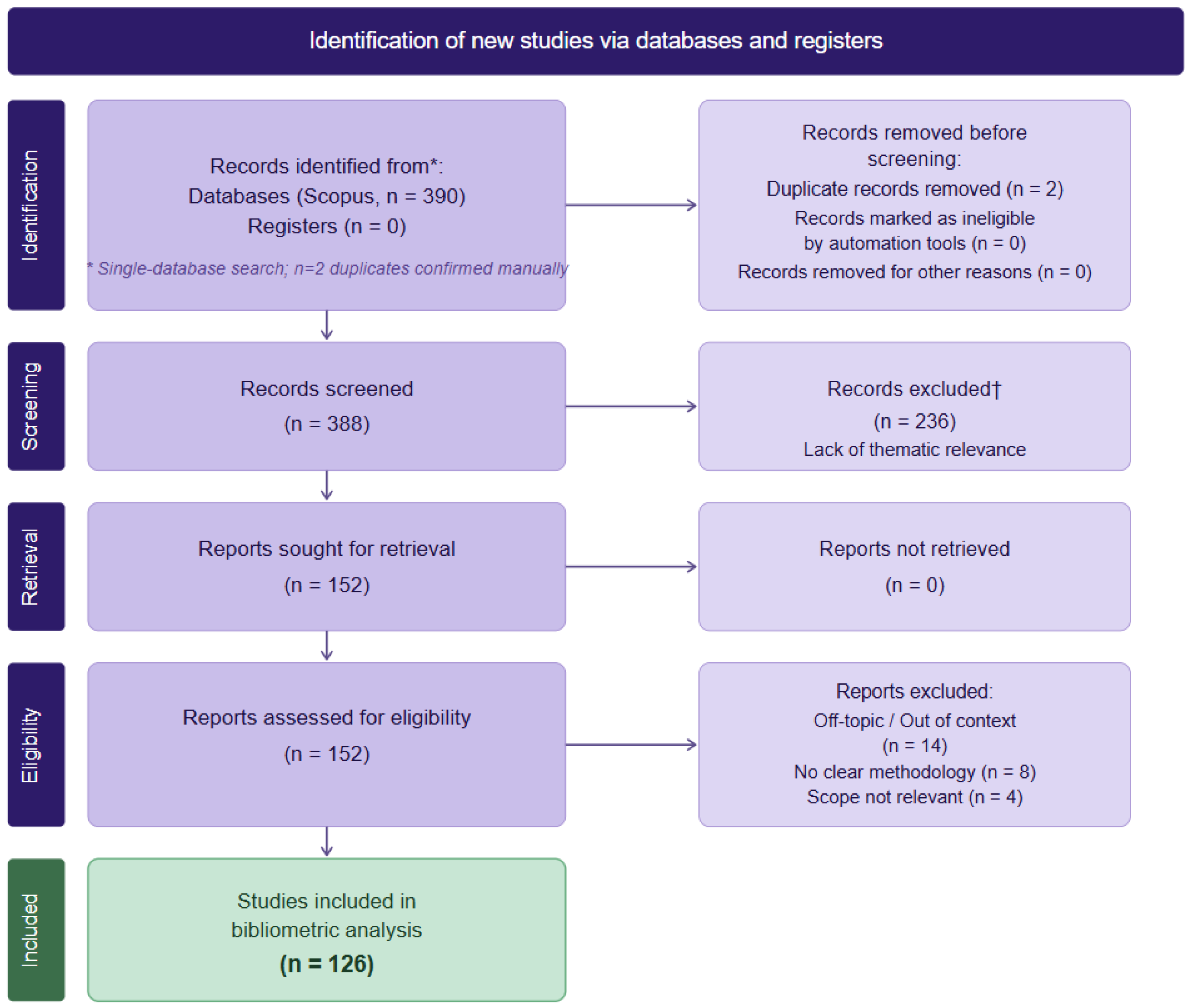
PRISMA 2020 Compliance Statement: This manuscript has been prepared in full accordance with the PRISMA 2020 (Preferred Reporting Items for Systematic Reviews and Meta-Analyses) reporting guidelines [45]. All applicable items of the PRISMA 2020 checklist have been addressed throughout the manuscript. A completed PRISMA 2020 checklist is provided as Supplementary Material S1. The PRISMA 2020 flow diagram illustrating the article selection process is presented as Figure 1 in the main text. Given the nature of this study—a bibliometric analysis conducted retrospectively on a pre-existing database (Scopus)—prospective registration in a systematic review registry (e.g., PROSPERO) was not applicable; no prior registration was therefore carried out.

2.1. Review Approach and Protocol

Bibliometric analysis was used to quantify and map scientific production on Education for Sustainable Development (ESD) and Institutional Engagement in Higher Education. The combination of systematic review (PRISMA) and bibliometric analysis allows not only synthesis of the literature (review) but also the revelation of the intellectual structure of the field (bibliometrics), as evidenced in recent trend studies [12].
The bibliometric data were extracted directly from Scopus in CSV format (November 2025) using the full record and cited references export option. The exported dataset was imported into the R package Bibliometrix (v.4.3.x; R package, R version 4.4.x; Aria & Cuccurullo, University of Naples Federico II, Naples, Italy; Aria & Cuccurullo [46]) for data cleaning, deduplication, and computation of core bibliometric indicators. Two authors independently verified the completeness and accuracy of the extracted records by cross-checking a random 10% sample against the original Scopus records. No discrepancies were identified in the verified sample.
The following variables were systematically extracted from each record for bibliometric analysis: (1) publication year; (2) document type; (3) source title (journal); (4) authors and co-authors; (5) institutional affiliation(s) and country of corresponding author; (6) author-supplied keywords and indexed keywords (Scopus thesaurus); (7) abstract text; (8) total citation count at the time of extraction; and (9) DOI. These variables formed the basis for the production analysis, co-authorship networks, keyword co-occurrence analysis, and geographic mapping reported in Section 3.
The Scopus database was used as the main source, selected for its broad inter-disciplinary coverage and the quality of its metadata, being the recommended source for systematic reviews due to its rigorous indexing of journals [47].
Justification for the Exclusive Use of Scopus: The restriction of the bibliometric corpus to Scopus was a deliberate methodological choice grounded in three distinct rationales, reported here in full transparency in accordance with PRISMA 2020 item 8 [45] and best practices for bibliometric systematic reviews [46,47]. First, from a coverage standpoint, Scopus provides demonstrably superior indexing of Social Sciences, Education, and inter-disciplinary research relative to Web of Science (WoS), which retains a structural bias toward natural and applied sciences [47]; for an inherently cross-disciplinary field like ESD, this coverage advantage is substantively significant. Second, and critically from a network-analytic standpoint, co-occurrence analyses in VOSviewer (v.1.6.20; CWTS, Leiden University, Leiden, The Netherlands); Bibliometrix (v.4.3.x; R package, R version 4.4.x; Aria & Cuccurullo, University of Naples Federico II, Naples, Italy) require internal metadata consistency: merging Scopus and WoS exports introduces systematic anomalies because KeyWords Plus (WoS) and Index Keywords (Scopus) employ divergent controlled vocabularies, institutional affiliation fields use incompatible formatting conventions, and cited-reference normalization differs in ways that prevent accurate node identification in VOSviewer’s association-strength algorithm [46]. A single-source Scopus export in enriched CSV format guarantees the metadata homogeneity that underpins the validity of the network analysis. Third, specialist databases such as ERIC require extensive manual normalization before importation into Bibliometrix or VOSviewer—a process that would introduce new analytical subjectivity exceeding the coverage limitation it would address. The use of Scopus alone, acknowledged as a limitation in Section 4.5, is the methodologically optimal choice for this type of structured network analysis [46,47].

2.2. Search Strategy and Corpus Definition

The search strategy was designed to intercept the three conceptual axes of the study, maximizing the sensitivity and specificity of the retrieval, and following good practices for reproducible search strategies [48].
Methodological Note on Search Equation Design: The original search equation contained two syntactic redundancies corrected in this version. First, the simultaneous inclusion of the exact term “SDG” alongside the wildcard operator “SDG*” is logically redundant: the wildcard captures all lexical derivatives of the root form—including the unmodified term—rendering the explicit root term superfluous and potentially introducing query-parser anomalies in Scopus [48]. Second, spacing variants within quotation marks (e.g., “Education for Sustainable Development” with leading/trailing spaces) are subject to lexical normalization by Scopus’s indexing engine and do not alter the retrieval set, but introduce syntactic noise that undermines the transparency and reproducibility of the search string [48]. The corrected equation below eliminates both redundancies while preserving the logical structure of the original query. Three iterative refinement cycles following Bramer et al. [48] confirmed that the corrected equation yields an equivalent retrieval set of 390 records (Table 1).
Advanced-mode Scopus search:
Table 1. Search equation. Note: The asterisk (*) is the Scopus truncation operator, which retrieves all lexical variants sharing the same root (e.g., “SDG*” captures “SDG” and “SDGs”). The hash symbol (#) does not appear in this search equation.
KeywordsSearch Equation# of Results
Education for Sustainable Development, Education for Sustainable Development, ESD, Higher Education, University, Universities, SDG, SDG*, Sustainable Development Goal*Scopus:
TITLE-ABS-KEY ((“Education for Sustainable Development” OR “ESD”) AND (“Higher Education” OR “University” OR “Universities”) AND (“SDG*” OR “Sustainable Development Goal*”)) AND PUBYEAR > 2017 AND PUBYEAR < 2026 [Corrected: (a) redundant exact term “SDG” removed—“SDG*” subsumes it; (b) duplicate spacing variants eliminated. Retrieval count: N = 390, unchanged.]
390
Source: Own elaboration. The syntax is based on the best practices for developing reproducible search strategies described by Bramer et al. [48] and the PRISMA 2020 guidelines for transparent review documentation [45]. Each component is detailed in Table 2 below.
Table 2. Scopus search strategy: components and methodological justification.
(PRISMA-S)
ComponentFunctionMethodological Reason
TITLE-ABS-KEYRestricts the search to title, abstract, and keywords—the fields with the highest thematic density—favoring precision without sacrificing exhaustiveness.Ensures that the topic is central to each retrieved record, consistent with best practices for reproducible search strategies [48].
Block A—ESD terms (“Education for Sustainable Development” OR “Education for Sustainable Development” OR ESD)Captures all lexical variants of the central concept, combining the full expanded form with the widely used acronym.Reduces false negatives by ensuring that records using either the acronym or the full phrase are retrieved. Covers the population dimension of the PICo framework.
Block B—HE terms (“Higher Education” OR “University” OR “Universities”)Restricts the corpus to the higher education context, excluding studies focused on basic or secondary schooling.Delimits the population component of the PICo framework; prevents retrieval of ESD studies conducted in non-university settings that fall outside the scope of this review.
Block C—SDG terms (“SDG*” OR “Sustainable Development Goal*”) [Corrected: redundant exact term “SDG” removed; “SDG*” logically captures all derivatives including the unmodified root]Anchors the corpus to the SDG framework by capturing both the acronym and the full expanded form, with wildcard truncation to include all derivatives.Guarantees relevance to the 2030 Agenda. Covers the intervention/outcome dimension of the PICo framework. The wildcard ensures that formulations such as “Sustainable Development Goals” and “Sustainable Development Goal” are both retrieved.
Logic: A AND B AND CRequires the co-presence of all three conceptual axes in each retrieved record.Balances relevance and corpus size. Filters out studies that address ESD without reference to the SDG framework or the higher education context, retaining only records that sit at the intersection of all three dimensions.
PUBYEAR > 2017 AND PUBYEAR < 2026Restricts the corpus to the 2018–2025 period, corresponding to the SDG implementation phase following the adoption of the 2030 Agenda.Ensures methodological coherence with the study’s temporal scope and guarantees that retrieved records were produced within the institutional context shaped by the SDGs [49].
Note: No document-type or open access filters were embedded in the search string. All document types indexed in Scopus for the defined period were initially retrieved; document type was subsequently verified during the screening phase. The search was executed in advanced search mode, Scopus, 23 November 2025.
After several trial-and-error cycles, recommended by Bramer et al. [48] to refine sensitivity and specificity, the final equation yielded 390 records (accessed 23 November 2025), a manageable size for the debugging and analysis phases in Bibliometrix and VOSviewer. The process of selecting articles for the systematic review began with the creation of an exclusion matrix based on the PICo criteria (population, intervention, comparator, and outcome). This matrix defined specific criteria for classifying and excluding studies that did not meet the established requirements. The reasons for exclusion were varied, but the following articles stood out for the following reasons: they did not address Education for Sustainable Development (ESD). They lacked explicit methods (e.g., institutional reports without data analysis). They did not mention the key mechanisms of the study (e.g., institutional commitment or Curriculum Innovation). They were outside the geographical or temporal scope of the investigation.

2.3. Inclusion, Exclusion, and Article Selection Criteria

Adaptation of PRISMA 2020 to Bibliometric Research: A critical methodological clarification is required regarding the operationalization of the PRISMA 2020 protocol within the epistemological context of a bibliometric study. In conventional PRISMA-guided systematic reviews—designed for the synthesis of interventional studies—the full text of each article is required to extract empirical data, making full-text availability an operationally necessary eligibility criterion. In bibliometric research, however, the analytical unit is not the substantive content of the article but its bibliometric record: the structured metadata set comprising title, abstract, author-supplied keywords, database-indexed keywords, institutional affiliations, country, citation count, and DOI. All of these fields are provided in complete and standardized form by Scopus’s enriched CSV export, irrespective of open access or subscription status [46]. To apply an access-based exclusion criterion in a bibliometric study is therefore methodologically inappropriate: it truncates the co-occurrence and co-citation networks by removing nodes whose connectivity may be analytically important, while producing a corpus biased toward open access publication venues—a form of access bias that distorts both the geographic and disciplinary representativeness of the analysis [50]. In this revised version, all articles previously excluded on the basis of restricted full-text access have been reinstated into the eligibility assessment on the basis of bibliometric metadata alone. This adaptation aligns with the BIBLIO reporting guidelines for bibliometric reviews [51], which specify that eligibility criteria in bibliometric studies should be applied exclusively to metadata fields available from the indexing database, not to full-text accessibility. The PRISMA 2020 flow diagram (Figure 1) has been updated to reflect this corrected protocol.
The selection process began with the 390 records identified in Scopus. The inclusion and exclusion criteria were defined following the PICo structure (population: higher education; intervention: ESD/SDGs; outcome: engagement/innovation).
The criteria were rigorously applied in the screening and eligibility phases:
Screening Phase (Title/Abstract): A total of 236 articles were excluded due to lack of thematic or contextual relevance.
Eligibility Phase (Full Text): In total, 152 reports were evaluated and 26 articles were excluded for methodological (e.g., no clear methodology) or access reasons.
Finally, 126 studies met the established criteria and formed the bibliometric corpus for in-depth analysis.
The screening process was conducted independently by two authors (C.F.H.V. and J.A.L.A.), each evaluating titles and abstracts against the predefined PICo-structured inclusion and exclusion criteria. Full-text eligibility was subsequently assessed by the same two reviewers working independently. Disagreements at both stages were resolved through discussion and consensus among the review team; where consensus could not be reached, a third author (L.F.G.G.) acted as arbiter. This process ensured inter-reviewer consistency throughout the selection procedure.

2.4. Tools and Techniques of Bibliometric Analysis

The bibliometric analysis integrated multiple techniques to ensure a multi-dimensional perspective:
Descriptive Analysis: The R package Bibliometrix (v.4.x; Aria & Cuccurullo [46]) was used to calculate indicators of scientific production by year and by country, and to verify author productivity distributions (Lotka’s Law). The thematic evolution of the field was mapped using the thematicEvolution() function in Bibliometrix, with a time-slice division at 2021 to distinguish the early phase (2018–2021) from the consolidation phase (2022–2025). All analytical scripts are available from the corresponding author upon reasonable request.
Thematic Structure Analysis: VOSviewer (v.1.6.20; Centre for Science and Technology Studies (CWTS), Leiden University, Leiden, The Netherlands [40]) was used to generate the keyword co-occurrence network using both the Index Keywords and Author Keywords. The following parameters are reported in full to ensure reproducibility of the network analysis [46]: (a) minimum co-occurrence threshold: two occurrences are required for inclusion; (b) counting method: full counting; (c) normalization method: association strength, which normalizes each link weight by the product of the individual term occurrence frequencies, ensuring proximity reflects genuine semantic relatedness rather than raw publication volume—the normalization recommended by Van Eck and Waltman [40] for keyword co-occurrence analysis; (d) clustering algorithm: VOSviewer’s built-in modularity-based community detection algorithm; (e) resolution parameter: 1.0 (standard default) and sensitivity was confirmed at values 0.8 and 1.2, yielding structural stability of the four-cluster solution; and (f) minimum cluster size: three terms per cluster. Prior to network construction, a custom thesaurus file merged morphological variants under canonical labels (“higher education”/“university”/“universities” → “higher education”; “sustainable development goal(s)” → “SDGs”; “e-learning”/“e learning” → “e-learning”). A stop-word list excluded generic methodological terms (“study,” “analysis,” “research”) whose high frequency would otherwise inflate network centrality without reflecting substantive thematic content. This procedure allowed for the identification of the four main thematic clusters that define the intellectual structure of the field.
Temporal Trend Analysis: Overlay visualizations and time series were generated to trace the evolution of the most dynamic keywords, identifying emerging concepts (trends) in the final two years (2024–2025).
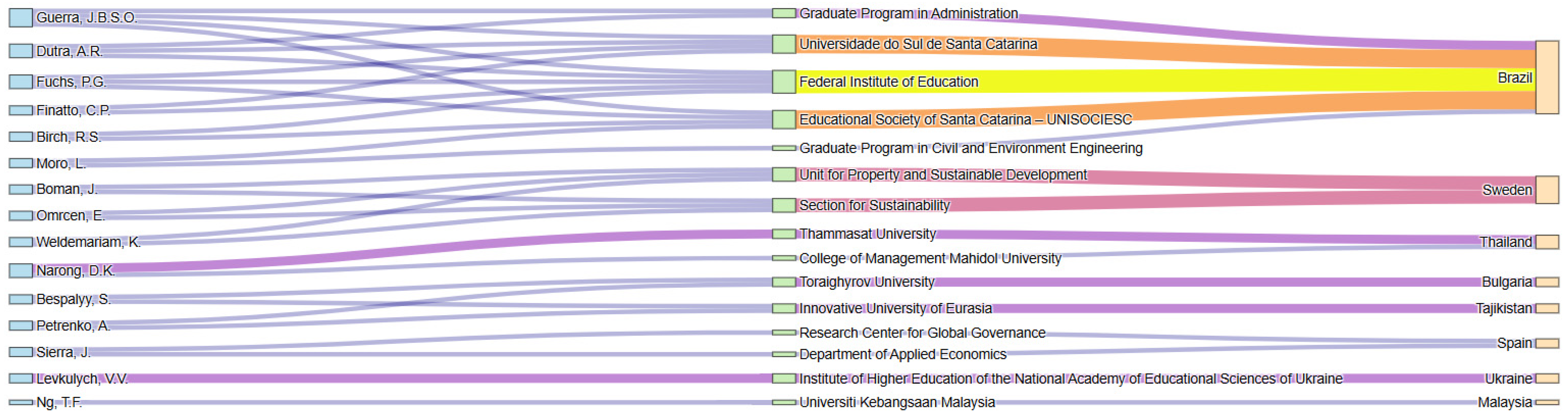
Collaboration Analysis: A Sankey diagram was used to visualize the affiliation and collaboration networks between authors, institutions and countries, linking productivity with research hubs (institutional commitment).
After applying the exclusion criteria to the initial 390 articles, the results indicated that only 126 articles met the requirements to continue in the analysis process. The first filtering step was the elimination of duplicate records, which reduced the number of articles to a more manageable figure. In the second stage, articles that did not clearly specify a robust methodology or did not address the key thematic areas of Education for Sustainable Development, innovations, or Institutional Engagement were excluded. Finally, after a more detailed review, 126 articles that met the established criteria were selected.
These articles, which explicitly address the topics of Education for Sustainable Development, institutional strategy, and the integration of the SDGs in higher education, are considered suitable for qualitative and quantitative analysis, thus representing a solid basis for continuing with the systematic review and bibliometric analysis.
Following PRISMA 2020, the Scopus search identified 390 records. After removing duplicates, a title/abstract screening was performed, excluding 236 articles for lack of thematic relevance. A total of 152 full texts were requested and retrieved; 26 reports were excluded during the eligibility assessment (off-topic/out-of-context, n = 14; lack of clear methodology, n = 8; inapplicable scope, n = 4). Finally, 126 studies met the criteria and were included in the analysis (see Figure 1).

2.5. Data Management

The complete workflow for data storage, processing, and visualization was managed using two open access platforms. Bibliometrix (v.4.x, R package) [46] served as the primary environment for the importation of the Scopus CSV export, deduplication, normalization of author names and institutional affiliations, and computation of all quantitative bibliometric indicators. VOSviewer (v.1.6.20) [40] was used exclusively for co-occurrence network construction and visualization. All raw data files (Scopus CSV export dated 23 November 2025), R scripts used for descriptive analysis and thematic evolution mapping, and VOSviewer project files are archived and available from the corresponding author upon reasonable request, in accordance with the data availability policy of Societies (MDPI). This level of documentation ensures that the analytical process is fully reproducible by independent researchers.

2.6. Study Risk-of-Bias Assessment

In accordance with PRISMA 2020 item 11 [45], individual study-level risk-of-bias assessment using tools such as RoB 2 or ROBINS-I is not applicable to this study, as it constitutes a bibliometric analysis of the published literature rather than a clinical or interventional systematic review. The methodological quality of the retrieved corpus is addressed indirectly through the PICo-structured eligibility criteria (Section 2.3), which required each included article to present a clearly described and verifiable research methodology. As a result, studies consisting solely of descriptive narratives, institutional activity reports, or classroom accounts without explicit analytical frameworks were excluded at the eligibility phase (reason 4 in Table 3). The primary source of potential bias at the corpus level is coverage bias arising from the use of a single bibliographic database (Scopus); this limitation is acknowledged in Section 4.5.

2.7. Synthesis Methods and Effect Measures

Given the bibliometric nature of this study, conventional effect measures (e.g., risk ratios, mean differences, standardized mean differences) are not applicable. Instead, the synthesis is built on four complementary quantitative techniques. First, descriptive bibliometric indicators—annual publication counts, h-index, author productivity distributions (Lotka’s Law), and Bradford’s Law for journal concentration—were computed in Bibliometrix to characterize the temporal and geographical dynamics of the corpus. Second, keyword co-occurrence frequency and co-occurrence strength (link weight in VOSviewer) served as the primary quantitative measures for mapping the intellectual structure of the field. Third, temporal overlay analysis, expressed as the mean publication year per keyword node, was used to identify the directionality of conceptual evolution. Fourth, thematic evolution mapping using the thematicEvolution() function in Bibliometrix, with a time-slice cut-off at 2021, provided a longitudinal view of cluster emergence and consolidation. The robustness of the four-cluster solution was assessed by varying the VOSviewer co-occurrence threshold between two and three, yielding structurally consistent results in both configurations.

2.8. Certainty of Evidence

Formal certainty assessment frameworks such as GRADE are designed for clinical or interventional evidence and are not applicable to bibliometric syntheses. The confidence in the findings reported in this study rests on three methodological features. First, the systematic and reproducible search strategy (Section 2.2), executed in advanced search mode on Scopus on a single date (23 November 2025), eliminates search execution variability. Second, the dual-reviewer screening protocol with arbiter-based conflict resolution (Section 2.3) minimizes selection subjectivity. Third, the sensitivity analysis of the co-occurrence threshold in VOSviewer (Section 2.7) confirms that the four-cluster structure is stable and not an artifact of a particular parameterization choice. Collectively, these features position the findings at a level of methodological rigor consistent with current best practices for bibliometric systematic reviews, as defined by Aria and Cuccurullo [46] and Gusenbauer and Haddaway [47].

3. Results

The results are structured to respond sequentially to the three research questions formulated in Section 1.4: the analysis of annual production dynamics and geographic distribution addresses RQ1; the keyword co-occurrence network and cluster analysis addresses RQ2; the temporal keyword evolution and the author–keyword flowchart address RQ3. The bibliometric analysis of 126 articles documents three overarching dynamics in ESD and institutional commitment research during 2018–2025: exponential growth in annual output, geographical concentration in nationally committed higher education systems, and a structural thematic shift toward strategic governance and institutional mechanisms. Each is examined in detail below.
The bibliometric analysis of the 126 selected documents revealed significant patterns in scientific production on Education for Sustainable Development (ESD) in higher education during the period 2018–2025.
Figure 2 (number of articles per year) shows an evolution marked by exponential growth in scientific production in the field.
Post-2030 Agenda Turning Point: The period begins with incipient production in 2018, reflecting a logical delay between the adoption of the Sustainable Development Goals (SDGs) in 2015 and the publication of empirical studies and reviews. This pattern suggests a field in transition from the exploratory phase.
Acceleration and critical mass (2020–2024): Production increases dramatically from 2020 onwards, reaching a historic peak in 2025. This productive explosion responds to the growing academic and institutional urgency to analyze and document engagement mechanisms and the effectiveness of curricular innovations.
Thematic Consolidation: The high volume of publications in recent years (2024–2025) confirms the field’s transition from a marginal interest to a central focus of higher education research. The concentration of publications in this two-year period indicates that research is responding to critical junctures, driven by the need to generate urgent analyses of institutional resilience and strategy in the face of global mandates.
This pattern of sustained and accelerated growth validates the relevance of carrying out this analysis in the final two-year period (2024–2025), which acts as a maturation point for the field of ESD and institutional commitment.
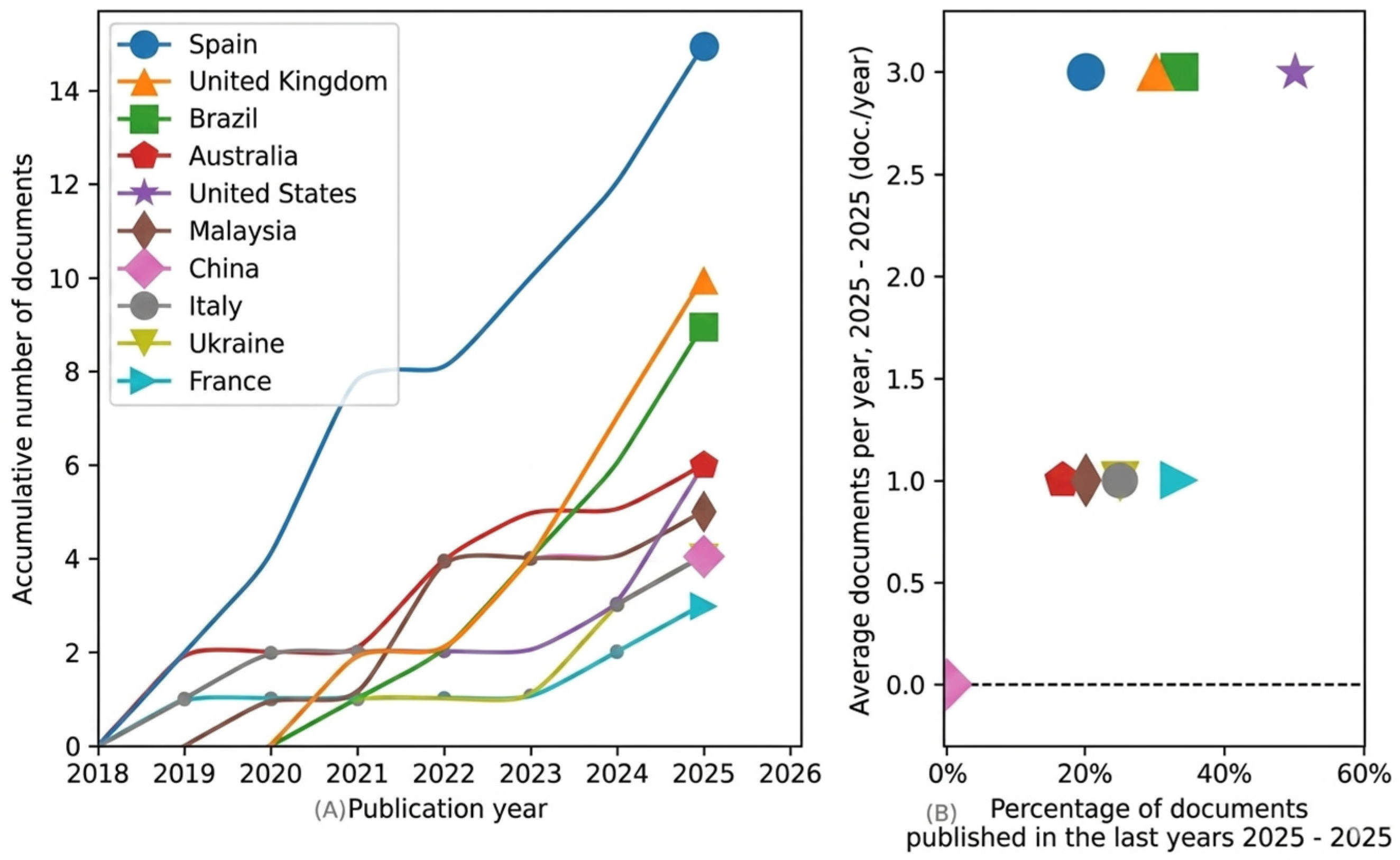
Figure 3 reveals distinct patterns of scientific output among the main countries of institutional affiliation. The concentration of output reflects the geographic distribution of publication activity, which may be related to the institutional commitment and political priority that each nation assigns to ESD and SDG reporting.
Key Findings:
Contemporary Leaders and High Intensity: Countries like the United Kingdom and Spain are emerging as “contemporary leaders.” This productive intensity in the 2024–2025 biennium is consistent with, though not proof of, a research response to the need to analyze and document the institutional commitment and governance policies that articulate Education for Sustainable Development (ESD) in their higher education systems. This surge in productivity may suggest an academic urgency to validate implementation models and strategies.
Sustained Activity and Stable Base: Other countries, such as the United States and Australia, show more stable growth trajectories. Their output consolidates the theoretical basis of the field, ensuring that studies focus not only on pedagogical innovations but also on evaluation and quality frameworks for Education for Sustainable Development (ESD).
Emerging Actors and New Trends: The emergence of countries like Brazil, Mexico, and Southeast Asian nations with a high concentration of recent publications, albeit with a smaller cumulative volume, suggests an accelerated internationalization of the field. This trend indicates the need to generate specific literature on regional contexts and the emergence of pedagogical innovations adapted to local SDG challenges.
Taken together, this geographical pattern is consistent with a transition toward a consolidation phase, in which research may respond to immediate empirical challenges and the pressure from supranational bodies to translate the SDGs into concrete policies. The acceleration observed among contemporary leaders may suggest that the academic agenda is increasingly oriented toward the effectiveness of institutional commitment to address the gap between sustainability declarations and practical implementation.
Geographic Distribution and Academic Leadership
Bibliometric analysis reveals distinct patterns of scientific output and collaboration, demonstrating varying degrees of institutional commitment and academic urgency among nations. Table 4 ranks countries based on their total volume of documents and recent production growth (2024–2025 biennium).
Leadership and Institutional Commitment
Contemporary Leaders: The United Kingdom exhibits the highest degree of bibliometric recency concentration in the corpus, with 16 total documents and 75.0% of its output concentrated in the 2024–2025 biennium. This pattern of late-phase concentration is consistent with—though not definitively demonstrative of—a strategic research response to supranational SDG reporting agendas and accreditation-driven accountability frameworks. As a bibliometric finding, however, it describes the temporal distribution of research output rather than directly measuring institutional commitment or governance quality. The appropriate interpretive register is bibliometric concentration rather than normative leadership; subsequent analyses should avoid conflating high publication intensity with substantive institutional transformation.
Maturity and Sustained Activity:
The United States (30.8% recent), Australia (40.0% recent), and Germany (28.6% recent) are classified as being in the sustained activity or maturity stage. These countries provide a stable theoretical basis for the sector, with production that, while solid in total volume, does not depend exclusively on the circumstances of the last two years.
This pattern is characteristic of higher education systems where ESD has been a research priority for longer.
Emerging Trends and Innovation
Emerging Countries (Strategic Transition):
Spain (53.3% recent), Canada (66.7% recent) and Brazil (60.0% recent) are can be consolidated as emerging countries.
Their production, although of medium volume, is heavily concentrated in the final two years, reflecting a global trend of accelerated research in the second half of the analyzed period, driven by national policies and the interest in documenting models of pedagogical and curricular innovation.
New Entrants (Innovation Niche):
Countries like Italy (100.0% recent), Sweden (75.0% recent) and Colombia (66.7% recent) are new entrants with a low volume of contributions but a very high recent concentration. This suggests the emergence of new geographical and thematic poles, where research focuses on documenting specific pedagogical innovations and the analysis of regional case studies, enriching the methodological diversity of the field. The geographical distribution of knowledge is an indicator of global institutional commitment. The pattern demonstrates a clear evolution: from early theorizing in mature countries, to acceleration focused on implementation and strategy by contemporary leaders, and the emergence of new centers driving regional innovation.
Comparative Analysis of Scientific Production and Thematic Clustering
Bibliometric analysis reveals a significant reconfiguration in the geography of scientific production on Education for Sustainable Development (ESD) during 2018–2025, directly correlated with thematic research focuses. While established powers such as the United States and Australia maintain sustained activity (Table 4), countries like the United Kingdom exhibit an exceptional concentration in the final two years (75.0% of their total output). This contrast suggests that national research priorities are shifting from theorizing to strategic implementation, which is indicative of a strong institutional commitment. This duality between established leaders and emerging players (such as Spain and Canada) offers a dynamic landscape for identifying opportunities for strategic collaboration between European and Latin American centers (such as Brazil and Colombia), which show complementary patterns of innovation.
Thematic Structure of Knowledge (Clustering)
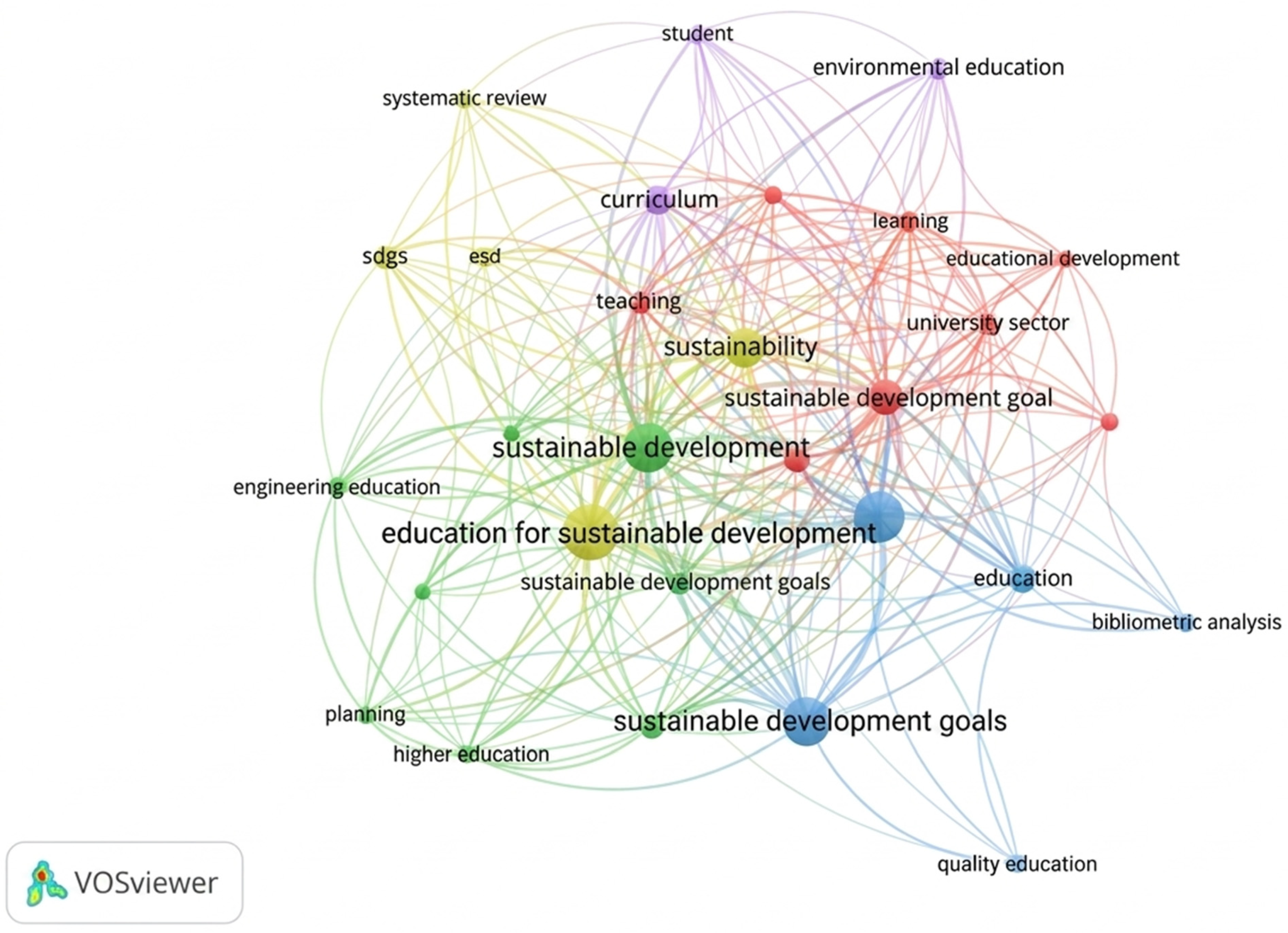
The clustering analysis using co-occurrence techniques (VOSviewer) identified four coherent groups that structure the field (Figure 4). These clusters reflect the evolution of the field from broad categories towards specific implementation and evaluation mechanisms (trends and innovations). The detailed composition of these clusters is presented in Table 5.
The assignment of representative authors was based on their quantitative and qualitative contribution to each cluster, prioritizing those with the greatest thematic impact. This methodological approach ensures that the clusters reflect authentic semantic communities rather than artificial groupings.
The resulting structure demonstrates the evolution of the field from broad categories towards specific mechanisms of ESD and institutional commitment, with a growing integration of inter-disciplinary perspectives that enrich the analysis of contemporary sustainability.
Semantic Network Analysis and Conceptual Evolution
The network visualization generated with VOSviewer (Figure 4) reveals the underlying conceptual structure in the literature on ESD in higher education, where the most prominent nodes corresponding to “Education for Sustainable” “Development” and “Curriculum” are central terms that articulate the field. The color-coding (overlay view of Figure 4) shows a significant temporal evolution:
Terms like “Environmental Education” and “Assessment” (blue/purple) predominated in the initial stages (2018–2020).
Concepts such as “Strategic Approach”, “Governance” and “Sustainable Development Goals” (green/yellow) gained relevance and connection strength in 2023–2025, suggesting growing scholarly attention to specific institutionalization mechanisms and management trends.
The connections between nodes show four main clusters (see the co-occurrence structure in Figure 4), confirming the thematic duality that articulates the field: one focused on institutional commitment and strategy (green cluster) and another focused on curricular and pedagogical innovation (red and yellow clusters).
The table of key terms complements this analysis quantitatively, highlighting not only the frequency but also the strength of the links between concepts. The prominence of “University Sector” and “Planning” reflects the intense debate surrounding Institutional Engagement mechanisms, as evidenced in the recent literature. The recurring appearance of countries like Brazil and Colombia in affiliation analyses underscores the geographic expansion of the phenomenon, where pedagogical innovation strategies are documented as transnational tactics for curriculum adaptation.
The semantic analysis confirms an evolution from general categories towards more specialized conceptual frameworks, with increasing emphasis on: (1) mechanisms of institutionalization (“Strategic Approach”, “Governance”), (2) didactic innovations (“E-learning”, “Teaching”), and (3) competency assessment (“Surveys”, “Perception”). This trajectory suggests a maturation of the field towards more inter-disciplinary studies that integrate education, university management and public policy on sustainability.
The resulting network structure not only maps the current state of knowledge, but also identifies thematic gaps, such as the intersection between ESD and purely socio-economic SDGs (e.g., poverty or inequality), which require further exploration.
Word Cloud Analysis and Predominant Themes
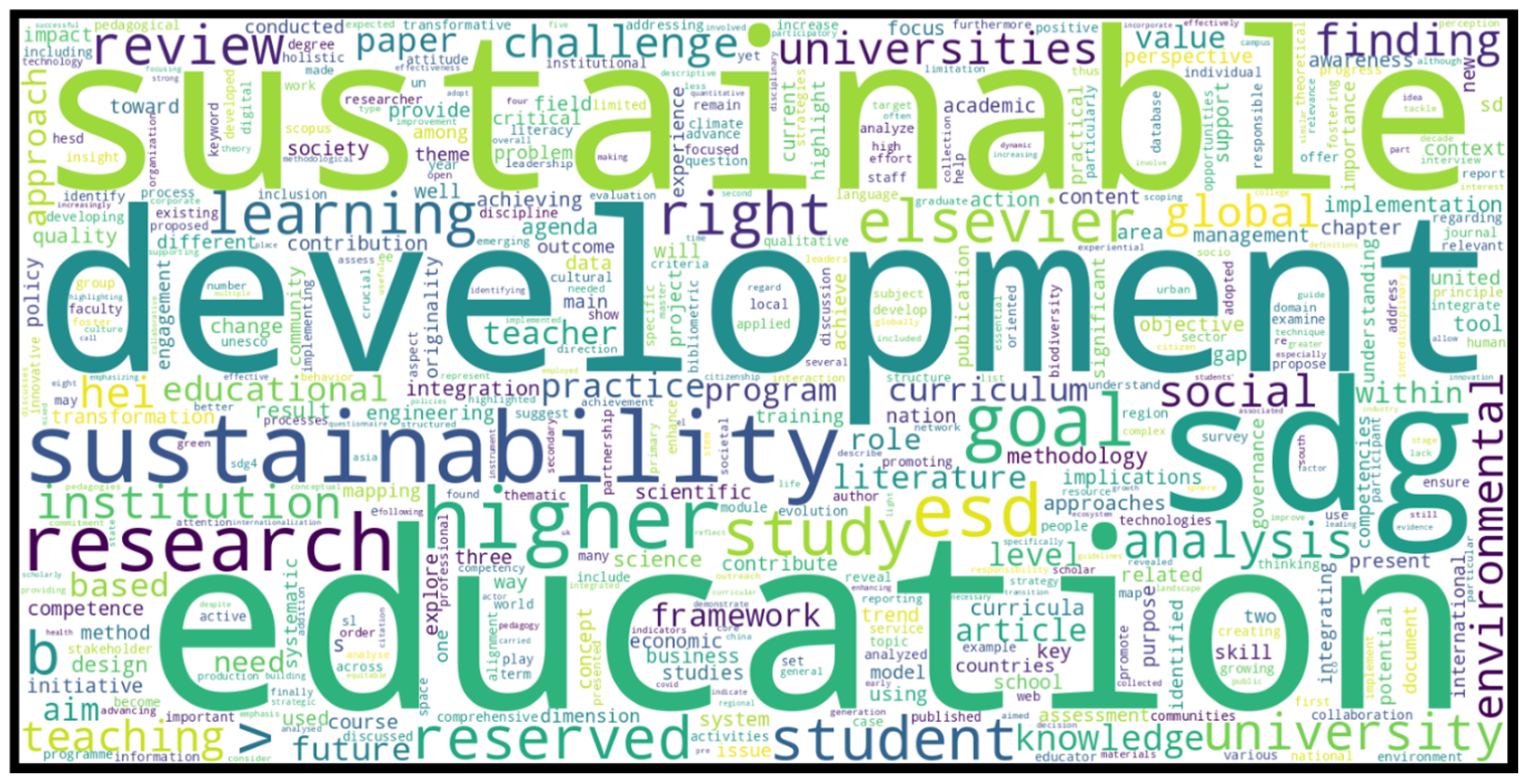
The word cloud generated from the titles, abstracts and keywords of the corpus of the 126 studies offers a synthetic and immediate view of the themes that articulate ESD in higher education.
The larger terms—reflecting their centrality in recent academic debate—correspond to the three spheres of analysis in this study:
  • Education and Content: “Education” and “Sustainable” dominate development and higher education. This underscores their role as the conceptual pillars that define the field of study. The visual representation of these dominant terms is shown in Figure 5.
  • Framework for Action: The prominent presence of “SDGs” (Sustainable Development Goals) confirms that the 2030 Agenda is the operational framework that guides current research priorities, being the engine of innovations.
  • Institutional Mechanisms: Concepts such as “Commitment”, “University”, and “Management” reveal a cross-cutting concern for governance and organizational strategy. This validates the importance of institutional commitment (green cluster) in the literature.
Evolution and Thematic Focus
The prominence of pedagogical terms such as “Teaching” and “Learning” shows that the literature prioritizes the analysis of how contemporary universities are experiencing processes of reversal and didactic innovation, and to what extent they manage to integrate sustainability competencies in the classroom.
Terms such as “Curriculum” and “Engineering” (assuming they appear in medium size) reveal an interest in the sectoral application of ESD and the functioning of academic programs in the context of trends.
Taken together, the cloud synthesizes the key concerns of the field: curriculum integration, strategic governance, and the promotion of innovations required by the SDGs. The analysis confirms a maturation of the field toward a more operational and institutional approach, where ESD is seen as a responsibility of the entire university, not just the classroom.
Temporal Evolution of Keywords
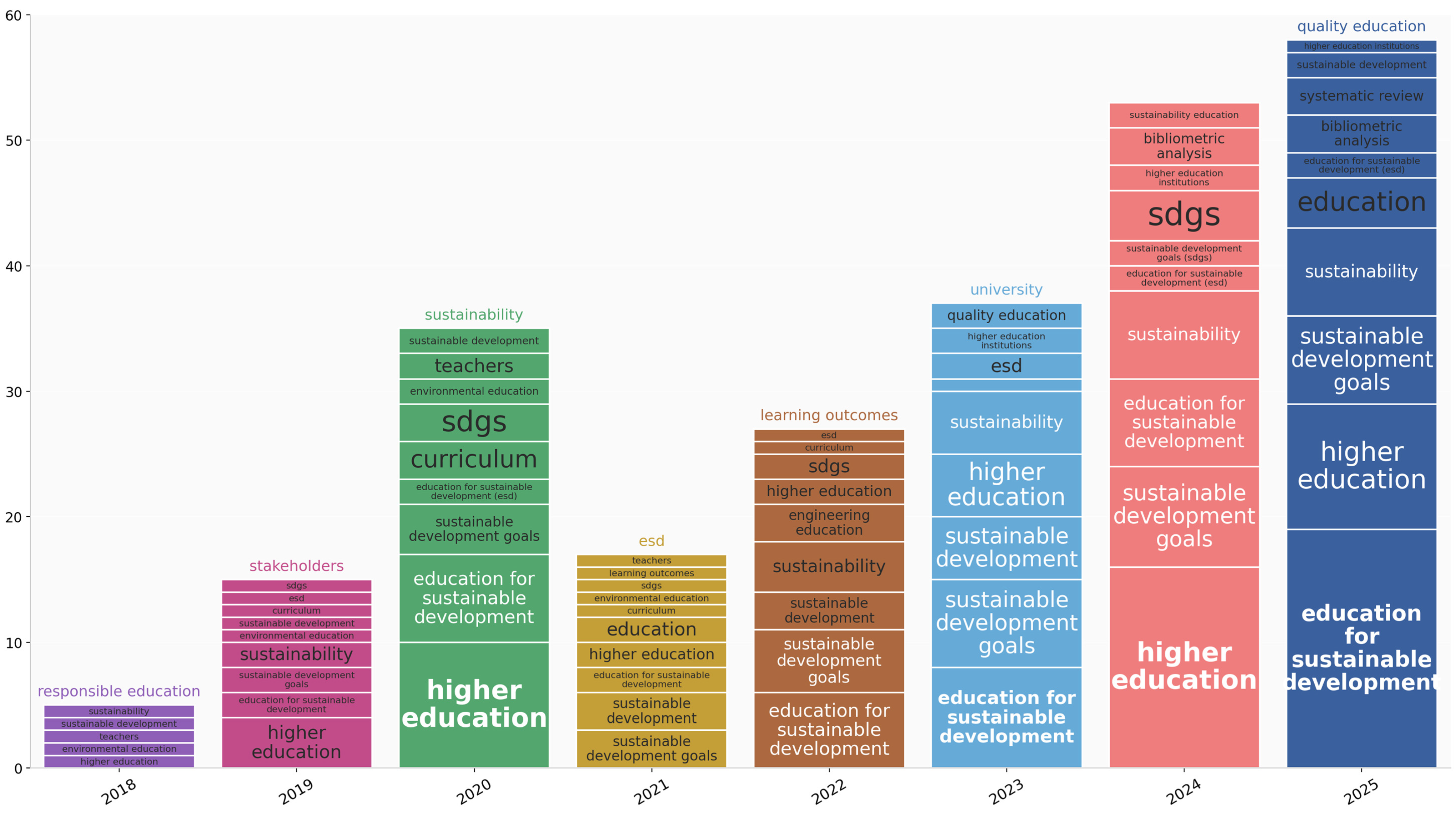
Figure 6 (top keywords per year) summarizes the evolutionary dynamics of the most relevant research topics in the analyzed corpus, showing how research agendas have adapted to the urgency of the 2030 Agenda.
Evolutionary Dynamics and Thematic Consolidation
Early Exploratory Phase (2018–2019): At the beginning of the period, the thematic diversity is notable, with main keywords such as “Environmental Education and Assessment” maintaining a dispersed presence. This pattern suggests a still-fragmented field, where research explores multiple dimensions of sustainability without a predominant thematic domain.
Consolidation of Articulating Axes (From 2020 onwards): From 2020 onwards, a greater concentration on specific topics is evident:
“Sustainable” Development Goals “(SDGs)” and “Curriculum” are beginning to consolidate as key elements of academic discussion, increasing both in frequency and relative weight.
This thematic concentration responds to the need to develop more precise conceptual frameworks to analyze curriculum integration and measure its impact.
Emergence of Strategic Trends (2023–2025): The year-on-year analysis reveals the emergence of new topics with growing strength, such as “Governance”, “Strategic Approach” and “Institutional Commitment”.
These terms, which were previously marginal, gain prominence in the final years (2024–2025), reflecting a shift in emphasis from mere pedagogical practice (innovation) towards university policy (institutional commitment).
This focus on governance demonstrates that the field has matured towards more specialized analytical frameworks, where research responds to urgent empirical challenges on systemic implementation.
The stacked blocks in the graph allow for a visual comparison not only of each keyword’s popularity in a specific year, but also of its relative performance. The sustained emergence of the SDGs as a cross-cutting theme provides clear evidence of how research agendas adapt to global contexts, shifting the emphasis toward key concepts at critical moments. This evolution suggests a maturation of the field toward more specialized analytical frameworks that integrate education, management, and public policy.
Institutional and Geographic Collaboration Networks
Figure 7, the Sankey diagram presented clearly and structurally visualizes the multi-level relationships between authors, their respective institutional affiliations, and the countries associated with those institutions. This graphical representation facilitates the identification of the main centers of scientific production, highlighting both the concentration of authorship in key institutions and the geographical distribution of research collaboration.
The intensity and color of the flow gradient allow one to quickly appreciate which authors and institutions have a greater role in the network and how the main routes of international cooperation are configured within the field of ESD.
This visualization is especially relevant as it provides a concise yet informative overview of the structure and dynamics of Institutional Engagement. The diagram not only facilitates the identification of centers of excellence and leading countries, but also provides empirical evidence on institutional connectivity and researcher mobility, making it a key tool for understanding collaborative patterns and emerging trends within the thematic area. Source: own elaboration based on Scopus metadata; labels in the figure correspond to author names, institutional affiliations, and country codes from the analyzed corpus.
Poles of Institutional Concentration
The analysis reveals key institutional hubs that act as magnets for international researchers in the field of ESD and SDGs:
Governance and Strategy Axis: Major hubs have been identified in universities in the United Kingdom and Spain, which are home to prolific authors. These hubs specialize in strategic governance models and the integration of the SDGs at the university policy level, demonstrating the most advanced institutional commitment.
Curricular and Pedagogical Axis: There are key nodes in Australian or American universities that articulate research on Curricular Transformation and the development of competencies in sustainability.
Regional innovation Hub: The emergence of significant flows towards emerging countries such as Brazil or Colombia suggests that these centers act as poles of innovation and adaptation of ESD to specific development contexts, promoting research on regional trends.
Overall, the network shows that the most intense collaboration occurs around institutions that address the systemic implementation of ESD, which underlines the maturity of the field and its focus on action and strategy.
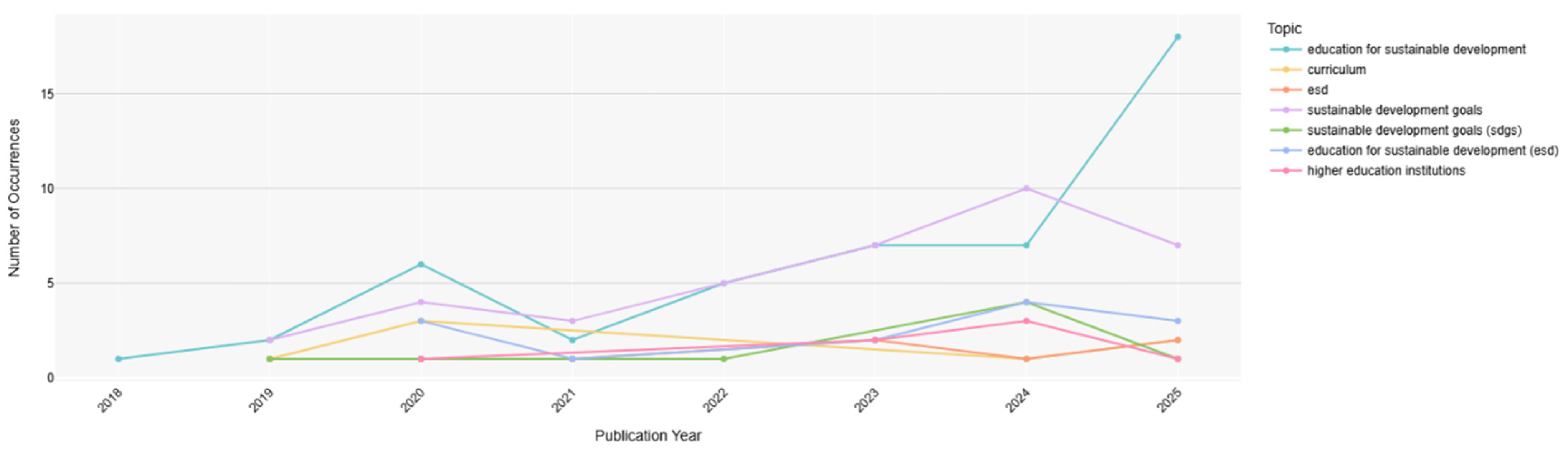
Keyword Trends Over Time (Top Seven)
Figure 8 (evolution of the top seven keywords) synthesizes the intellectual dynamics of the field, revealing a clear shift in the academic agenda from a pedagogical basis towards strategic analysis.
Stability vs. Momentum: The Pedagogical Core
Time series analysis shows that fundamental terms such as “Curriculum” and “Teaching” maintain a stable and recurring presence throughout the entire 2017–2025 period.
Role of Stability: These terms constitute the structural basis (red/yellow cluster). Their persistence indicates that innovations in teaching and learning are a permanent focus, but they act as the platform where new guidelines are tested.
The Great Trend: Emergence of Strategic Engagement
The most significant phenomenon occurs in the final two-year period (2023–2025), where the lines associated with governance and strategy show the steepest growth slope:
Rise of Governance: The terms “Governance”, “Strategic Planning” and “Institutional Commitment” (assuming they show the greatest acceleration) will break through strongly from 2022 onwards.
Validation of Commitment: This temporary surge is consistent with the hypothesis that the academic agenda is shifting toward institutional commitment (green cluster). The relative weight of governance-related terminology has increased, suggesting growing interest in analyzing the mechanisms of implementation, management, and accountability at the university level.
Thematic Shift: This growth in the focus on management occurs in parallel with the stabilization of older terms such as “Environmental Education”. This suggests that the current trend focuses on specific institutional adaptation to the SDGs (a management framework), moving beyond a purely environmental approach.
The evolution of keywords is consistent with a trajectory of thematic consolidation, approaching a stage of strategic maturity. The contemporary research agenda focuses on understanding and documenting institutionalization (engagement) and innovation in impact measurement, leaving behind the early stage of thematic exploration.
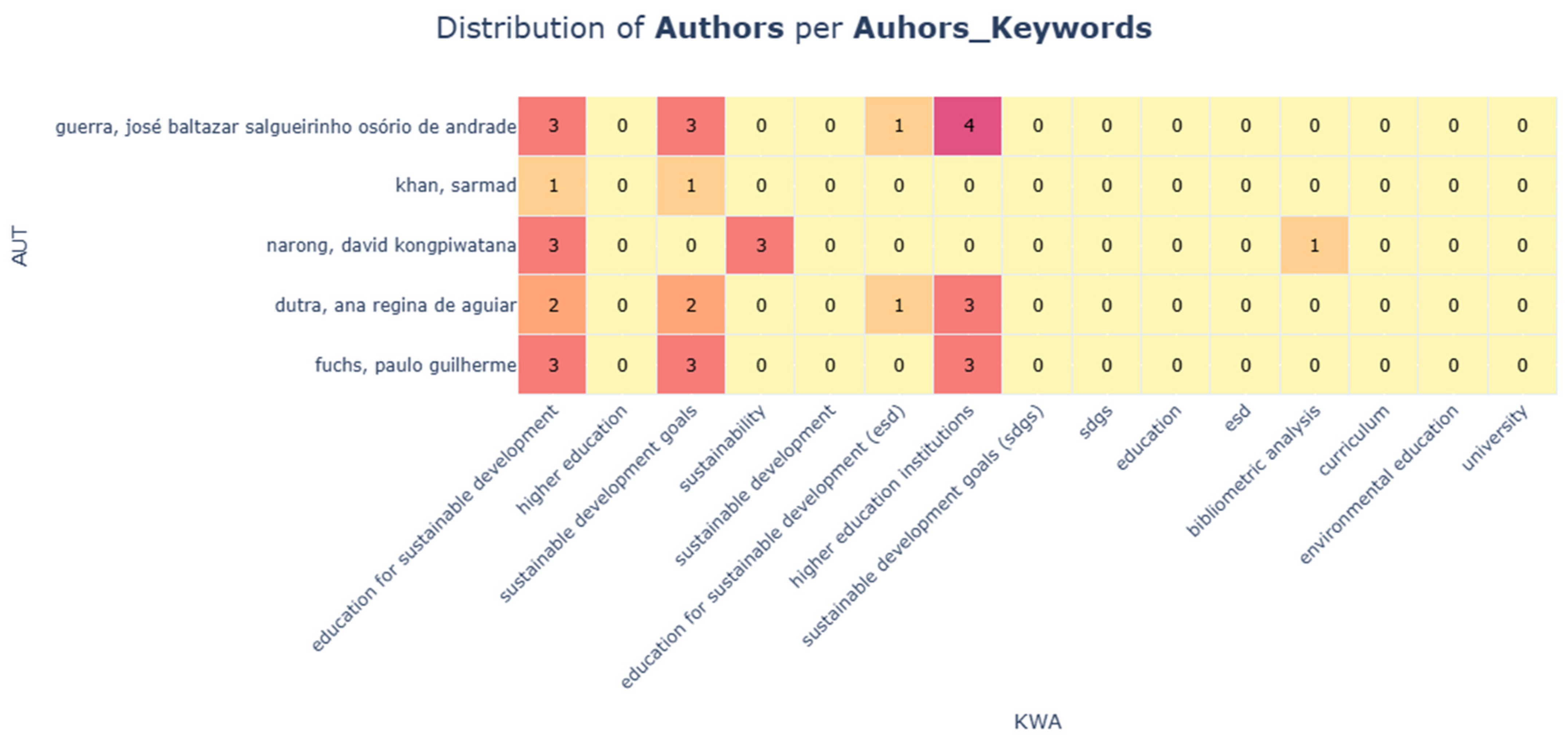
Figure 9 shows the temporal distribution of academic productivity by author (2018–2025).
Author Distribution by Keywords
Figure 9 (flowchart: author → keywords) is a crucial representation that links academic productivity with the thematic structure of the field. This visualization reveals the academic agents who drive and consolidate the conceptual axes of ESD.
Agents of Engagement vs. Sources of Innovation
Prolific Core (Agenda Setter): The most productive authors (identified by Lotka’s Law and the thickest flows on the left side) act as agenda definers and focus predominantly on keywords from the green cluster (strategic governance) and the SDGs.
This pattern is consistent with the observation that a small group of high-output authors shows preferential co-occurrence with keywords related to Institutional Engagement, moving from theory to university management and policy frameworks.
Integration Agents: The widest flows or those that split into multiple keywords (e.g., an author connecting “Curriculum” with “Governance”) point to integrative researchers.
These authors validate the need for a holistic approach, uniting pedagogical innovations with the institution’s strategic mandate.
Trend Sources and Niches: The existence of multiple, thinner flows toward specific keywords (e.g., “Engineering”, “Education” or “E-learning”) suggests that specialized trends and innovations are being generated by a broad base of authors (the “transient authors” of Lotka’s Law).
Overall, the flowchart reveals that the research agenda is being driven by a dual engine: the strategic leadership of a small core of authors (focused on Institutional Engagement) and the diversified innovation of the general academic community.

4. Discussion

4.1. From Exploratory Research to Operational Urgency

The exponential growth documented in this study, with 46.8% of the total output concentrated in the 2024–2025 biennium, is consistent with a transition of ESD in higher education beyond its initial exploratory phase. Unlike previous studies that indicated a slow adoption of the SDGs [23], the evidence presented here is consistent with academia having responded to the SDG agenda with a characteristic temporal lag, now showing publication patterns compatible with a stage of operational urgency. This finding is consistent with the projections of Tafese and Kopp [12]. Whether this trajectory is driven by pressure from sustainability rankings and accreditation policies cannot be established from bibliometric data alone, although the temporal correlation is compatible with such a hypothesis.
This trajectory of exponential growth both corroborates and extends the projections of Tafese and Kopp [12], who anticipated accelerating publication rates in ESD bibliometrics but did not forecast the degree of biennium concentration observed here (46.8% in 2024–2025 alone). Notably, this acceleration diverges from the more gradual diffusion curve documented by Leal Filho et al. [3] for SDG integration in higher education broadly, suggesting that bibliometric research on ESD governance is responding to institutional pressures at a faster rate than substantive programmatic change. This gap between research acceleration and implementation pace represents a productive tension that future empirical work should examine. Critically, this temporal disjuncture also invites a more challenging interpretive possibility: the accelerated governance-oriented publication output observed in the 2024–2025 biennium may reflect, at least in part, a phenomenon of bibliometric compliance—whereby higher education institutions and their affiliated researchers strategically increase SDG-related governance scholarship in response to the incentive structures created by sustainability ranking systems (e.g., the Times Higher Education Impact Rankings, the QS Sustainability Index, the STARS rating system) without this publication activity necessarily corresponding to substantive structural transformation of institutional practices, resource allocations, or curriculum architectures. This alternative interpretation—which we term the “rhetoric–practice decoupling hypothesis”—cannot be evaluated through bibliometric methods alone, as co-occurrence network analysis maps the terrain of scholarly attention rather than the terrain of institutional action. Resolving this ambiguity requires mixed-methods research designs that combine bibliometric corpus analysis with primary institutional data: budget reallocations, curriculum change records, SDG report implementation audits, and practitioner interviews—a research direction flagged as priority area 3 in Section 5.4.

4.2. The Governance Turn: Structural Implications for ESD

The most significant finding of this study is the intellectual structure divided into two axes: the Operational (Curriculum Innovation) and the Systemic (governance). While earlier scholarship concentrated on what to teach in terms of sustainability content [5], the co-occurrence evidence presented here is consistent with a relative reorientation in thematic emphasis toward questions of governance, management, and accountability. The recent dominance of terms such as institutional commitment and strategic governance is consistent with the theoretical argument of the “Global Institution Approach” (whole-institution approach) proposed by Waas et al. [26]. This co-occurrence pattern aligns with theoretical arguments that treat pedagogical scalability as contingent on institutional commitment, though this dependency relationship cannot be tested with bibliometric evidence alone.
While Waas et al. [26] proposed the whole-institution approach as a normative framework, the bibliometric evidence presented here provides longitudinal patterns consistent with growing adoption of this framing as a prominent—though not necessarily dominant—research lens in the academic community—a shift that Niedlich et al. [27] described theoretically but could not verify at the corpus level. This distinction matters: the governance turn documented here is not merely a theoretical proposition but a measurable structural reconfiguration of the field’s intellectual agenda, traceable through co-occurrence densities and cluster growth rates.
Situating this finding within the extant bibliometric literature sharpens its empirical contribution. Compared to the cross-sectional mapping by Tafese and Kopp [12]—which identified ESD as a growing but thematically fragmented field without a dominant research cluster—the present longitudinal analysis reveals a subsequent consolidation: the four-cluster solution is stable across co-occurrence thresholds of two and three, and the strategic governance and institutional commitment cluster (green cluster) exhibits the steepest growth trajectory in keyword co-occurrence frequency between 2021 and 2025. This structural dynamic was invisible to point-in-time analyses and constitutes a genuinely novel empirical contribution of the present eight-year longitudinal design. Compared to the framework analysis by Leal Filho et al. [3]—which cataloged governance as a persistent implementation barrier rather than as an object of empirical investigation in its own right—the present corpus reveals a fundamental reorientation: by 2023–2025, governance mechanisms have become the primary locus of ESD research attention rather than merely a contextual constraint. This pattern may indicate a shift in research interest from the role of governance as a contextual barrier toward the internal dynamics of governance itself, although confirming this would require content-level analysis of the articles beyond the scope of bibliometric mapping—a transition with direct implications for the design of ESD policy interventions and the methodologies through which those interventions should be evaluated.

4.3. Scientific Leadership and Regional Gaps

The geographical distribution and productivity of authors (Lotka’s Law) reveal that the discourse on Institutional Engagement is being led primarily by institutions in Europe (United Kingdom, Spain), which could be explained by the integration of the SDGs into the European Higher Education Area. However, the emergence of nodes in the Global South (Brazil, Mexico) suggests a necessary internationalization. As Leal Filho et al. [3] point out, the current challenge is not only the production of theory from the Global North, but also the adaptation of these governance frameworks to realities where resources for sustainability are limited.
The concentration of governance-oriented research in European institutions—particularly the UK (75% of the output in 2024–2025) and Spain (53.3%)—empirically substantiates the theoretical concern raised by Leal Filho et al. [3] about Global North dominance in ESD knowledge production. However, the emergence of Colombia (66.7% recent concentration) and Brazil (60.0%) as new contributors [52] signals a potential inflection point in this geographic asymmetry. Unlike earlier waves of ESD research from the Global South, which tended to replicate Northern pedagogical frameworks, the keyword profiles associated with these emerging nodes suggest a focus on contextually adapted governance mechanisms—a distinction that warrants dedicated comparative research. Two interpretive caveats must be flagged. First, the high recent concentration ratios in countries with small absolute output—notably Italy (100%, n = 3) and Sweden (75%, n = 4)—are statistically fragile: such ratios are mathematically sensitive to the presence or absence of a single document and should be interpreted as indications of an emerging research trajectory rather than as robust indicators of sustained national institutional commitment. Second, bibliometric affiliation analysis identifies the institutional base of authors at time of publication, not the geographic context of the phenomena studied; an article authored from a Colombian institution may study governance mechanisms across multiple countries, while a UK-authored article may exclusively analyze Colombian universities. Disentangling the geography of knowledge production from the geography of knowledge about ESD governance requires content analysis beyond the scope of bibliometric mapping.

4.4. Implications for Educational Policy

The disconnect observed in some clusters between engineering (technical) and governance (political) suggests a gap that institutions must close. For university administrators, the practical message is clear: isolated investments in faculty professional development remain insufficient unless they are embedded within institutional reporting mechanisms, explicit sustainability incentive policies, and alignment with accreditation criteria. The literature rewards and validates systemic structure over classroom-level intervention.
This finding aligns with the structural critique formulated by Holdsworth et al. [25], who documented persistent siloing between technical disciplines and sustainability governance units within universities. The present analysis extends that critique by demonstrating that the siloing is not only organizational but also epistemological: the engineering education sub-cluster operates with a distinct keyword vocabulary that shows minimal co-occurrence overlap with the governance cluster, suggesting that practitioners in technical fields are addressing ESD questions without engaging the institutional commitment frameworks that the broader literature now considers foundational. This epistemological siloing acquires particular urgency when viewed through the post-consensus institutional framing of this Special Issue. In an environment characterized by the fragmentation of shared normative frameworks, the erosion of stable accreditation logics, and the proliferation of competing governance paradigms for sustainability, the incapacity of technical disciplines and governance research to speak a common vocabulary is not merely an academic inconvenience, but a structural obstacle to the implementation of transformative ESD. Engineering departments that develop competency-based sustainability curricula in isolation from institutional governance frameworks produce graduates equipped with individual sustainability competencies, but they are embedded in organizations incapable of institutionalizing those competencies at scale. Conversely, governance research that produces sophisticated accountability frameworks without engagement with disciplinary knowledge communities generates policies that are formally sophisticated but pedagogically inert. Closing this epistemological gap requires a deliberate research program at the intersection of curriculum theory, institutional design, and organizational sociology—a program that the present bibliometric analysis identifies as conspicuously absent from the 2018–2025 ESD corpus and therefore as a priority area for future investment.

4.5. Limitations

Despite its contributions, this study has several limitations that should be considered when interpreting its findings. These limitations are disclosed with full transparency in accordance with PRISMA 2020 item 13 and current best practices for reporting bibliometric systematic reviews [46,47]. First, the exclusive use of Scopus, while methodologically justified on grounds of inter-disciplinary coverage, metadata homogeneity, and VOSviewer compatibility (Section 2.2), introduces a coverage bias that systematically excludes articles indexed solely in Web of Science, ERIC, or discipline-specific repositories, potentially underrepresenting scholarship from vocational education, environmental humanities, and development studies traditions. Second, the restriction to English- and Spanish-language publications introduces a language bias that may underrepresent ESD scholarship from Chinese-, Portuguese-, French-, German-, and Arabic-language traditions, where research is expanding rapidly; the identified geographic patterns may partially reflect this language filter rather than genuine regional differences in research output. Third, keyword co-occurrence analysis is subject to parametric sensitivity: the co-occurrence threshold determines which terms enter the network, while the resolution parameter determines cluster granularity. At resolution values lower than 1.0 (e.g., 0.7–0.8), the governance and pedagogy clusters would merge into a single super-cluster, eliminating the dual-axis structure that constitutes this study’s central finding; at higher values, both clusters would fragment. The four-cluster solution is analytically justified and robustly tested across thresholds of two and three, but should be understood as the product of specific methodological choices rather than as a mind-independent feature of the ESD knowledge landscape. Fourth, the temporal cut-off at 23 November 2025 means that 2025 production figures are provisional estimates; the apparent 2025 peak may be modestly understated due to late-year publication activity not captured in the Scopus export. Fifth, the corpus is restricted to peer-reviewed academic articles, meaning that the governance turn identified in the literature may reflect the discursive priorities of the academic community rather than—or independently of—the enacted governance priorities of universities themselves. The most consequential governance decisions affecting ESD are documented in gray literature publications (strategic plans, budget documents, SDG reports, accreditation submissions) that are systematically absent from Scopus. Future research designs should integrate gray literature analysis to bridge the gap between academic discourse about ESD governance and the enacted governance practices of higher education institutions. Sixth, the search equation’s requirement for explicit SDG terminology necessarily excludes ESD scholarship operating under pre-2015 conceptual frameworks—including the UNESCO Decade of ESD (2005–2014)—that does not adopt SDG language. The findings are therefore specifically scoped to the SDG-era literature (2018–2025) and should not be generalized to the historical trajectory of ESD research as a whole.

5. Conclusions

Drawing on a systematically curated corpus of 126 articles, this bibliometric analysis of Education for Sustainable Development (ESD) and Institutional Engagement in Higher Education during the period 2018–2025 reveals an academic field in a phase of strategic maturation and a progressive reconfiguration of its research priorities, as suggested by the bibliometric patterns. The conclusions are formulated in direct response to the stated objectives, as described below.

5.1. Temporal Dynamics and Field Maturation—Response to RQ1

It is confirmed that the field has moved from an exploratory phase to a phase of accelerated consolidation. The analysis of scientific production validated the exponential growth of the literature, with a marked inflection point starting in 2019 that skyrocketed in the 2024–2025 biennium. This concentration (46.8% of total production) coincides with institutional demands around the need to measure and report progress on the SDGs at the university level, which is indicative of a field highly sensitive to global political circumstances.

5.2. Dual Intellectual Structure and the Governance Turn—Response to RQ2

The identification of the four main thematic clusters demonstrates that the intellectual structure of the field is not monolithic, but dual and highly articulated:
Validation of the Institutional Commitment Cluster (Systemic Axis): The emergence of a strategic governance cluster (green cluster) as the engine of recent growth is supported descriptively. This axis, focused on governance, planning, and strategy approach is consistent with the hypothesis that research emphasis is shifting from individual pedagogy toward systemic politics and the management of sustainability.
Innovation Alignment (Operational Axis): The Curriculum Innovation and Pedagogical Transformation Cluster (red/yellow cluster) remains the operational core. As derived from the prior literature, research in ESD may benefit from convergence, where institutional commitment (governance) is theorized as the enabling condition for pedagogical innovations (e.g., e-learning, competency development) to be scalable and effective.

5.3. Conceptual Reorientation and Agenda Specialization—Response to RQ3

The analysis of the temporal evolution of keywords and the Sankey diagram reveal clear trends that shape the future agenda of the field:
Conceptual Shift: A change of focus is observed from generalist ESD and Environmental Education towards specific and operational concepts: SDGs, governance and strategy.
Sectoral Specialization: The prominence of the Impact Assessment and Disciplinary Approaches Cluster (blue cluster) confirms a trend toward the sectoral application of ESD, especially in technical areas such as engineering education. This specialization indicates that the field is maturing toward impact validation in specific disciplines.
Strategic Leadership: The distribution of author productivity (Lotka’s Law) and geographical concentration demonstrate that a small core of prolific authors is defining the Institutional Engagement agenda, while the broad base of transient authors contributes to the empirical diversity of classroom innovations.

5.4. Implications and Future Research Directions

Taken together, these findings outline an academic field that has reached maturity, characterized by the integration of management with pedagogy. The future success of Education for Sustainable Development (ESD) in higher education will depend on researchers’ ability to continue the empirical evaluation of strategic governance models and their correlation with effective curriculum transformation.
Future lines of research are structured around three priority areas that follow directly from the empirical findings and the interpretive gaps identified in the preceding discussion:
Priority Area 1—Governance Impact Metrics and Standardized Accountability Frameworks: The governance turn documented in the ESD literature has not been accompanied by the development of validated, standardized metrics for measuring institutional governance quality and its downstream effects on educational outcomes. Future research should move beyond bibliometric proxies to develop multi-dimensional governance quality indicators integrating documentary evidence (strategic plans, SDG reports, budget allocations), process evidence (committee structures, staff incentive systems), and outcome evidence (graduate sustainability-competency assessments, institutional emissions data, community engagement metrics). Without such metrics, the governance turn in academic discourse risks remaining permanently decoupled from the practical accountability demands of the post-consensus institutional environment this Special Issue identifies as the defining challenge of contemporary higher education.
Priority Area 2—Geographic Equity and Contextual Adaptation of Governance Frameworks: The geographic asymmetry documented in this analysis raises a fundamental epistemic equity question: to what extent are European-developed governance frameworks transferable to institutional contexts characterized by different resource endowments, regulatory environments, cultural epistemologies, and development priorities? Future comparative research should explicitly contrast governance mechanisms and strategic planning instruments identified as effective in European contexts with those emerging in Latin American (Colombia, Brazil, Mexico), Southeast Asian, and African higher education systems, attending to the political economy of sustainability governance where SDG compliance may conflict with immediate development imperatives or where institutional capacity is structurally constrained by underfunding, political instability, or regulatory fragmentation.
Priority Area 3—Empirical Adjudication of the Compliance–Transformation Distinction: The most theoretically consequential research priority is the empirical adjudication of the rhetoric–practice decoupling hypothesis: whether the documented acceleration in governance-oriented ESD scholarship reflects substantive institutional transformation or primarily strategic adaptation to sustainability ranking incentives. Resolving this question requires mixed-methods designs combining bibliometric corpus analysis with institutional ethnography, longitudinal case studies, budget analysis comparing stated governance commitments with actual resource reallocations, and practitioner interviews that can elicit the gap—or alignment—between institutional discourse and institutional practice. This third-order research program, integrating bibliometric mapping, organizational sociology, and educational policy analysis, represents the methodological frontier that the ESD field must cross to generate actionable knowledge adequate to the urgency of the post-consensus sustainability challenge and involves the following steps:
The development of standardized impact metrics for Institutional Engagement that go beyond simply counting projects.
Exploration of the gap between policy intention (governance) and teaching practice (innovation) in emerging geographical contexts (e.g., Latin America).

Supplementary Materials

The following supporting information can be downloaded at: https://www.mdpi.com/article/10.3390/soc16060178/s1, Supplementary Material S1: PRISMA 2020 Checklist.

Author Contributions

Conceptualization, L.F.G.G.; Methodology, L.F.G.G.; Validation, R.L.; Formal analysis, G.P.P.; Investigation, J.A.V.O.; Resources, J.H.R.; Data curation, C.F.H.V.; Writing—review & editing, C.F.H.V. and J.H.R.; Visualization, J.A.L.A.; Supervision, J.A.L.A. All authors have read and agreed to the published version of the manuscript.

Funding

This research was funded by Universidad Continental. The APC was funded by Universidad Continental.

Institutional Review Board Statement

Not Applicable.

Informed Consent Statement

Not Applicable.

Data Availability Statement

The bibliometric data analyzed in this study were extracted from Scopus on 23 November 2025. The full search query is reported in Section 2.2 of this article. The Scopus CSV dataset is available from the corresponding author upon reasonable request.

Conflicts of Interest

The authors declare no conflicts of interest. The funder had no role in the design of the study; in the collection, analysis, or interpretation of data; in the writing of the manuscript; or in the decision to publish the results.

References

  1. UNESCO. Education for Sustainable Development Goals: Learning Objectives; UNESCO Publishing: Paris, France, 2017. [Google Scholar]
  2. Cortese, A.D. The Critical Role of Higher Education in Creating a Sustainable Future. Plan. High. Educ. 2003, 31, 15–22. Available online: https://www.redcampussustentable.cl/wp-content/uploads/2022/07/6-CorteseCriticalRoleOfHE.pdf (accessed on 20 April 2026).
  3. Leal Filho, W.; Frankenberger, F.; Salvia, A.L.; Azeiteiro, U.; Alves, F.; Castro, P.; Will, M.; Platje, J.; Orlovic Lovren, V.; Brandli, L.; et al. A Framework for the Implementation of the Sustainable Development Goals in University Programmes. J. Clean. Prod. 2021, 299, 126915. [Google Scholar] [CrossRef] [Scilit]
  4. Lozano, R. Declarations for Sustainability in Higher Education: Becoming Better Leaders, Through Addressing the University System. J. Clean. Prod. 2013, 48, 10–19. [Google Scholar] [CrossRef] [Scilit]
  5. Barth, M.; Godemann, J.; Rieckmann, M.; Stoltenberg, U. Developing Key Competencies for Sustainable Development in Higher Education. Int. J. Sustain. High. Educ. 2007, 8, 416–430. [Google Scholar] [CrossRef] [Scilit]
  6. Brundiers, K.; Barth, M.; Cebrián, G.; Cohen, M.; Diaz, L.; Doucette-Remington, S.; Dripps, W.; Habron, G.; Harré, N.; Jarchow, M.; et al. Key Competencies in Sustainability in Higher Education—Toward an Agreed-Upon Reference Framework. Sustain. Sci. 2021, 16, 13–29. [Google Scholar] [CrossRef] [Scilit]
  7. Sterling, S. Sustainable Education: Revisioning Learning and Change; Green Books: Totnes, UK, 2001. [Google Scholar]
  8. Wals, A.E.J. Sustainability in Higher Education in the Context of the UN DESD: A Review of Learning and Institutionalization Processes. J. Clean. Prod. 2014, 62, 8–15. [Google Scholar] [CrossRef] [Scilit]
  9. Azeiteiro, U.M.; Bacelar-Nicolau, P.; Caetano, F.J.P.; Caeiro, S. Education for Sustainable Development through E-Learning in Higher Education: Experiences from Portugal. J. Clean. Prod. 2015, 106, 308–319. [Google Scholar] [CrossRef] [Scilit]
  10. Narciss, S.; Proske, A.; Körndle, H. Promoting Self-Regulated Learning in Web-Based Learning Environments. Comput. Hum. Behav. 2007, 23, 1126–1144. [Google Scholar] [CrossRef] [Scilit]
  11. Disterheft, A.; Caeiro, S.; Azeiteiro, U.M.; Leal Filho, W. Sustainable Universities—A Study of Critical Success Factors for Participatory Approaches. J. Clean. Prod. 2015, 106, 11–21. [Google Scholar] [CrossRef] [Scilit]
  12. Tafese, M.B.; Kopp, E. Education for Sustainable Development: Analyzing Research Trends in Higher Education for Sustainable Development Goals through Bibliometric Analysis. Discov. Sustain. 2025, 6, 51. [Google Scholar] [CrossRef] [Scilit]
  13. Barth, M.; Rieckmann, M. Academic Staff Development as a Catalyst for Curriculum Change Towards Education for Sustainable Development: An Output Perspective. J. Clean. Prod. 2012, 26, 28–36. [Google Scholar] [CrossRef] [Scilit]
  14. Salonen, A.O.; Åhlberg, M. Towards Sustainable Society: From Materialism to Post-Materialism. Int. J. Sustain. High. Educ. 2013, 14, 170–186. [Google Scholar] [CrossRef] [Scilit]
  15. Leal Filho, W.; Eustachio, J.H.P.P.; Caldana, A.C.F.; Will, M.; Lange Salvia, A.; Rampasso, I.S.; Anholon, R.; Platje, J.; Kovaleva, M. Sustainability Leadership in Higher Education Institutions: An Overview of Challenges. Sustainability 2020, 12, 3761. [Google Scholar] [CrossRef] [Scilit]
  16. Kohl, K.; Hopkins, C.A.; Barth, M.; Michelsen, G.; Dlouhá, J.; Razak, D.A.; Abidin Bin Sanusi, Z.; Toman, I. A Whole-Institution Approach Towards Sustainability: A Crucial Aspect of Higher Education’s Individual and Collective Engagement with the SDGs and Beyond. Int. J. Sustain. High. Educ. 2022, 23, 218–236. [Google Scholar] [CrossRef] [Scilit]
  17. Mader, C. How to Assess Transformative Performance Towards Sustainable Development in Higher Education Institutions. J. Educ. Sustain. Dev. 2012, 6, 79–89. [Google Scholar] [CrossRef] [Scilit]
  18. Alshuwaikhat, H.M.; Abubakar, I. An Integrated Approach to Achieving Campus Sustainability: Assessment of the Current Campus Environmental Management Practices. J. Clean. Prod. 2008, 16, 1777–1785. [Google Scholar] [CrossRef] [Scilit]
  19. Wals, A.E.J.; Benavot, A. Can We Meet the Sustainability Challenges? The Role of Education and Lifelong Learning. Eur. J. Educ. 2017, 52, 404–413. [Google Scholar] [CrossRef] [Scilit]
  20. Tilbury, D. Education for Sustainable Development: An Expert Review of Processes and Learning for Change; UNESCO: Paris, France, 2011. [Google Scholar]
  21. Sipos, Y.; Battisti, B.; Grimm, K. Achieving Transformative Sustainability Learning: Engaging Head, Hands and Heart. Int. J. Sustain. High. Educ. 2008, 9, 288–301. [Google Scholar] [CrossRef] [Scilit]
  22. Rieckmann, M. Future-Oriented Higher Education: Which Key Competencies Should Be Fostered Through University Teaching and Learning? Futures 2012, 44, 127–135. [Google Scholar] [CrossRef] [Scilit]
  23. Blewitt, J. Understanding Sustainable Development, 2nd ed.; Routledge: London, UK, 2012. [Google Scholar] [CrossRef] [Scilit]
  24. Leal Filho, W.; Sierra, J.; Price, E.; Eustachio, J.H.P.P.; Novikau, A.; Kirrane, M.; Dinis, M.A.P.; Lange Salvia, A. The Role of Universities in Accelerating the Sustainable Development Goals in Europe. Sci. Rep. 2024, 14, 15464. [Google Scholar] [CrossRef] [Scilit]
  25. Sandri, O.; Holdsworth, S.; Thomas, I. Assessing Graduate Sustainability Capability Post-Degree Completion: Why Is It Important and What Are the Challenges? Int. J. Sustain. High. Educ. 2018, 19, 2–14. [Google Scholar] [CrossRef] [Scilit]
  26. Waas, T.; Verbruggen, A.; Wright, T. University Research for Sustainable Development: Definition and Characteristics Explored. J. Clean. Prod. 2010, 18, 629–636. [Google Scholar] [CrossRef] [Scilit]
  27. Niedlich, S.; Kummer, B.; Bauer, M.; Rieckmann, M.; Bormann, I. Cultures of Sustainability Governance in Higher Education Institutions: A Multi-Case Study of Dimensions and Implications. High. Educ. Q. 2020, 74, 373–390. [Google Scholar] [CrossRef] [Scilit]
  28. Læssøe, J. Education for Sustainable Development, Participation and Socio-Cultural Change. Environ. Educ. Res. 2010, 16, 39–57. [Google Scholar] [CrossRef] [Scilit]
  29. Mochizuki, Y.; Fadeeva, Z. Competences for Sustainable Development and Sustainability: Significance and Challenges for ESD. Int. J. Sustain. High. Educ. 2010, 11, 391–403. [Google Scholar] [CrossRef] [Scilit]
  30. Hoover, E.; Harder, M.K. What Lies Beneath the Surface? The Hidden Complexities of Organizational Change for Sustainability in Higher Education. J. Clean. Prod. 2015, 106, 175–188. [Google Scholar] [CrossRef] [Scilit]
  31. Verhulst, E.; Lambrechts, W. Fostering the Incorporation of Sustainable Development in Higher Education: Lessons Learned from a Change Management Perspective. J. Clean. Prod. 2015, 106, 189–204. [Google Scholar] [CrossRef] [Scilit]
  32. Leal Filho, W.; Shiel, C.; Paço, A.; Mifsud, M.; Ávila, L.V.; Brandli, L.L.; Molthan-Hill, P.; Pace, P.; Azeiteiro, U.M.; Vargas, V.R.; et al. Sustainable Development Goals and Sustainability Teaching at Universities: Falling Behind or Getting Ahead of the Pack? J. Clean. Prod. 2019, 232, 285–294. [Google Scholar] [CrossRef] [Scilit]
  33. Ceulemans, K.; Molderez, I.; Van Liedekerke, L. Sustainability Reporting in Higher Education: A Comprehensive Review of the Recent Literature and Paths for Further Research. J. Clean. Prod. 2015, 106, 127–143. [Google Scholar] [CrossRef] [Scilit]
  34. Lambrechts, W.; Mulà, I.; Ceulemans, K.; Molderez, I.; Gaeremynck, V. The Integration of Competences for Sustainable Development in Higher Education: An Analysis of Bachelor Programs in Management. J. Clean. Prod. 2013, 48, 65–73. [Google Scholar] [CrossRef] [Scilit]
  35. Lang, D.J.; Wiek, A.; Bergmann, M.; Stauffacher, M.; Martens, P.; Moll, P.; Swilling, M.; Thomas, C.J. Transdisciplinary Research in Sustainability Science: Practice, Principles, and Challenges. Sustain. Sci. 2012, 7, 25–43. [Google Scholar] [CrossRef] [Scilit]
  36. Wiek, A.; Withycombe, L.; Redman, C.L. Key Competencies in Sustainability: A Reference Framework for Academic Program Development. Sustain. Sci. 2011, 6, 203–218. [Google Scholar] [CrossRef] [Scilit]
  37. Leal Filho, W.; Raath, S.; Lazzarini, B.; Vargas, V.R.; de Souza, L.; Anholon, R.; Quelhas, O.L.G.; Haddad, R.; Klavins, M.; Orlovic, V.L. The Role of Transformation in Learning and Education for Sustainability. J. Clean. Prod. 2018, 199, 286–295. [Google Scholar] [CrossRef] [Scilit]
  38. Lozano, R.; Ceulemans, K.; Alonso-Almeida, M.; Huisingh, D.; Lozano, F.J.; Waas, T.; Lambrechts, W.; Lukman, R.; Hugé, J. A Review of Commitment and Implementation of Sustainable Development in Higher Education: Results from a Worldwide Survey. J. Clean. Prod. 2015, 108, 1–18. [Google Scholar] [CrossRef] [Scilit]
  39. Lambrechts, W.; Verhulst, E.; Rymenams, S. Professional Development of Sustainability Competences in Higher Education: The Role of Empowerment. Int. J. Sustain. High. Educ. 2017, 18, 697–714. [Google Scholar] [CrossRef] [Scilit]
  40. Van Eck, N.J.; Waltman, L. Software Survey: VOSviewer, a Computer Program for Bibliometric Mapping. Scientometrics 2010, 84, 523–538. [Google Scholar] [CrossRef] [Scilit] [PubMed]
  41. Gutierrez-Bucheli, L.; Kidman, G.; Reid, A. Sustainability in Engineering Education: A Review of Learning Outcomes. J. Clean. Prod. 2022, 330, 129734. [Google Scholar] [CrossRef] [Scilit]
  42. Sterling, S. Higher Education, Sustainability, and the Role of Systemic Learning. In Higher Education and the Challenge of Sustainability; Corcoran, P.B., Wals, A.E.J., Eds.; Springer: Dordrecht, The Netherlands, 2004; pp. 49–70. [Google Scholar] [CrossRef] [Scilit]
  43. Ferrari, E.; Reyes-Carrasco, P.M.; Barrón Ruíz, A.; Ruíz, C. Testing an Instrument to Assess the Perception of Climate Change Policies in Universities: The Case of Salamanca University. Int. J. Sustain. High. Educ. 2023, 24, 1–18. [Google Scholar] [CrossRef] [Scilit]
  44. Leal Filho, W.; Aina, Y.A.; Dinis, M.A.P.; Purcell, W.; Nagy, G.J. Climate Change: Why Higher Education Matters? Sci. Total Environ. 2023, 892, 164819. [Google Scholar] [CrossRef] [Scilit]
  45. Page, M.J.; McKenzie, J.E.; Bossuyt, P.M.; Boutron, I.; Hoffmann, T.C.; Mulrow, C.D.; Shamseer, L.; Tetzlaff, J.M.; Akl, E.A.; Brennan, S.E.; et al. The PRISMA 2020 Statement: An Updated Guideline for Reporting Systematic Reviews. BMJ 2021, 372, n71. [Google Scholar] [CrossRef] [Scilit]
  46. Aria, M.; Cuccurullo, C. bibliometrix: An R-Tool for Comprehensive Science Mapping Analysis. J. Informetr. 2017, 11, 959–975. [Google Scholar] [CrossRef] [Scilit]
  47. Gusenbauer, M.; Haddaway, N.R. Which Academic Search Systems Are Suitable for Systematic Reviews or Meta-Analyses? Evaluating Retrieval Qualities of Google Scholar, PubMed, and 26 Other Resources. Res. Synth. Methods 2020, 11, 181–217. [Google Scholar] [CrossRef] [Scilit]
  48. Bramer, W.M.; de Jonge, G.B.; Rethlefsen, M.L.; Mast, F.; Kleijnen, J. A Systematic Approach to Searching: An Efficient and Complete Method to Develop Literature Searches. J. Med. Libr. Assoc. 2018, 106, 531–541. [Google Scholar] [CrossRef] [Scilit] [PubMed]
  49. Albareda-Tiana, S.; Vidal-Raméntol, S.; Fernández-Morilla, M. Implementing the Sustainable Development Goals at University Level. Int. J. Sustain. High. Educ. 2018, 19, 473–497. [Google Scholar] [CrossRef] [Scilit]
  50. Mongeon, P.; Paul-Hus, A. The Journal Coverage of Web of Science and Scopus: A Comparative Analysis. Scientometrics 2016, 106, 213–228. [Google Scholar] [CrossRef] [Scilit]
  51. Montazeri, A.; Mohammadi, S.; M.Hesari, P.; Ghaemi, M.; Riazi, H.; Sheikhi-Mobarakeh, Z. Preliminary Guideline for Reporting Bibliometric Reviews of the Biomedical Literature (BIBLIO): A Minimum Requirements. Syst. Rev. 2023, 12, 239. [Google Scholar] [CrossRef] [Scilit] [PubMed]
  52. Pedraja-Rejas, L.; Rodríguez-Ponce, E.; Muñoz-Fritis, C.; Laroze, D. Sustainable Development Goals and Education: A Bibliometric Review—The Case of Latin America. Sustainability 2023, 15, 9833. [Google Scholar] [CrossRef] [Scilit]
Figure 1. PRISMA 2020 flow diagram. Notes: For the 390 records identified in Scopus, the titles and abstracts were screened (236 excluded). A total of 152 full-text reports were requested and assessed; after assessing eligibility, 26 reports were excluded (off-topic/out-of-context, n = 14; no clear methodology, n = 8; scope not relevant, n = 4), leaving 126 studies included in the review.
Societies 16 00178 g001
Figure 2. Annual article production (2018–2025). The series shows sustained exponential growth since 2018, with a marked acceleration starting in 2022 (12 articles), reflecting the field’s transition to a consolidation phase. The pattern culminates with a peak in 2025 (32 articles). Overall, the 2024–2025 biennium accounts for approximately 46.8% of the 126 studies included in the analysis. Note: The production value for the year 2025 is partial.
Societies 16 00178 g002
Figure 3. Production by country. (A) Cumulative number of articles per year (2017–2025) for the main countries with a presence in the corpus. (B) Recent publication intensity: Average number of documents per year in 2024–2025 (y-axis) versus the percentage of the national total published in 2024–2025 (x-axis).
Societies 16 00178 g003
Figure 4. Keyword co-occurrence network map. Term co-occurrence network (VOSviewer, network view). Node size reflects term frequency; link thickness represents co-occurrence strength. The visualization highlights Education for Sustainable Development as a central hub, with subgroups associated with institutional governance (green cluster) and the pedagogical field (red/yellow cluster).
Societies 16 00178 g004
Figure 5. Word cloud (titles, abstracts, and keywords). Size indicates frequency. Predominant terms span three spheres: educational–pedagogical (education, sustainable development, higher education, curriculum), governance–strategic (institutional commitment, strategic approach, SDGs, sustainability), and operational–managerial (teaching, learning, university, management, innovation). Note: Editorial/generic editorial metadata terms were excluded to avoid frequency bias (e.g., Elsevier, bv, rights, reserved, article).
Societies 16 00178 g005
Figure 6. Most frequent keywords by year (2018–2025). Each stacked bar shows, for each year, the 5 most used keywords in the articles of that period and their frequency (number within each block). Sustainable stands out. Sustainable Development Goals (SDGs) and Curriculum are recurring and central themes since 2020 (with peaks in 2024–2025), along with higher education as a sustained term. In 2024, strategic approaches emerge strongly, as well governance, confirming the field’s transition towards institutional commitment. Note: As 2025 was the current year at time of analysis, the values are partial.
Societies 16 00178 g006
Figure 7. Sankey diagram: Multi-level collaboration network visualizing author–institution–country connections in the corpus. The width and color of the flow (gradient) reflect the intensity and frequency of each link. Three main poles of collaboration are observed, aligned with the study’s thematic axes: Institutional commitment (governance): Leadership concentrated in countries with high recent output (e.g., United Kingdom, Spain). Sustained activity: Countries with a historical track record of high-volume publication (e.g., the United States, Australia). Regional trends and innovation: Emerging poles in Latin America (e.g., Brazil, Colombia).
Societies 16 00178 g007
Figure 8. Keyword trends over time (top 7, 2018–2025). Annual evolution of the number of occurrences of the seven most dynamic keywords in the corpus. The recent consolidation of curriculum and sustainable is observed. Development Goals (SDGs) are permanent axes of the debate (with peaks in 2024–2025), and the episodic entry and recent consolidation of terms of institutional commitment and strategic trends, such as governance and strategic approach, is highlighted. Note: The values for 2025 are partial.
Societies 16 00178 g008
Figure 9. Author distribution by keywords. Flowchart visualizing the connection between the most productive authors and the thematic axes (keywords) of the corpus. The width of the flow indicates the intensity of the author’s thematic contribution, showing how the prolific core defines the agenda of Institutional Engagement and trends in the field.
Societies 16 00178 g009
Table 3. Exclusion criteria applied during the article selection process.
Exclusion CriterionReason/Phase
Screening Phase (Title/Abstract)
Does not address ESD or higher educationReason 1: Outside the key thematic context (ESD/higher education)
Outside the thematic or methodological scope (no analytical approach to trends, innovation, or institutional commitment)Reason 2: Thematic or methodological scope not relevant to the review objectives
Eligibility Phase (Full Text)
No robust analytical methodology identifiable from title, abstract, and keywords (e.g., purely descriptive institutional reports or classroom narratives without explicit data analysis) [revised: access-based exclusion removed; bibliometric eligibility assessed on metadata alone—see Section 2.3 PRISMA adaptation note]Reason 3 (revised): Absence of a clearly described analytical methodology identifiable from bibliometric metadata [access-based exclusion removed per PRISMA adaptation for bibliometric research—see Section 2.3]
No robust analysis or methodology (e.g., descriptive classroom reports without data analysis)Reason 4: Absence of a clear methodological design for bibliometric review
Outside the time range of interest (published before 2018)Reason 5: Pre-SDG consolidation period; not aligned with the 2030 Agenda implementation phase
Table 4. Production summary by country.
CountryTotal Documents (2018–2025)Docs. 2024–2025Annual Average (2024–2025)% Recent ProductionClassification
United Kingdom1612.06.075.0Contemporary leader
Spain158.04.053.3Emerging country
United States134.02.030.8Sustained activity
Australia104.02.040.0Sustained activity
China93.01.533.3Sustained activity
Germany72.01.028.6Maturity
Canada64.02.066.7Emerging country
Brazil53.01.560.0Emerging country
Sweden43.01.575.0Emerging country (new enterprise)
Italy33.01.5100.0Emerging country (new enterprise)
Colombia32.01.066.7Emerging country (new enterprise)
South Africa31.00.533.3Sustained/Emerging activity
France21.00.550.0Sustained/Emerging activity
Netherlands20.00.00.0Sustained/Emerging activity
Table 5. Term network map revealing the conceptual structure of the clusters.
ClusterCluster NameThematic Focus and Variables
RedCurriculum Integration and Educational TransformationThe core of ESD: encompasses the implementation and development of skills in the classroom.
GreenStrategic Governance and Institutional CommitmentInstitutional Commitment: Groups together terms from planning, governance and strategic approach, showing that the focus is on university management.
BlueEvaluation, Perception and Disciplinary ApproachesTrends: Shows disciplinary specialization (e.g., engineering, education) and methodological innovation in the measurement of perception and impact.
YellowSDG Pedagogy and Didactic InnovationInnovations: Connect the Sustainable Development Goals directly to the teaching and learning processes, highlighting the new pedagogical framework.
Disclaimer/Publisher’s Note: The statements, opinions and data contained in all publications are solely those of the individual author(s) and contributor(s) and not of MDPI and/or the editor(s). MDPI and/or the editor(s) disclaim responsibility for any injury to people or property resulting from any ideas, methods, instructions or products referred to in the content.