


Abstract
Background: This study examines the digital transformation of sport organizations, a process that has shifted organizational needs toward seamless, real-time digital services. Despite the growing economic scale of the sports market, digital governance within this sector remains underexplored. Methods: We performed a systematic literature review following PRISMA guidelines and a thematic analysis of 31 peer-reviewed articles in order to develop a structured conceptual framework. Results: The analysis identified eight recurring themes, namely, innovation and technology adoption, leadership and strategy, organizational change, digital tools and platforms, fan engagement, governance structures, barriers to transformation, and data management and privacy. The predominance of conceptual and exploratory studies indicates that the field remains in an early stage of development, underscoring the need for more systematic empirical investigations. The findings show that while larger organizations possess greater resources for innovation, smaller organizations face significant financial and technical barriers. Conclusions: The study concludes that digital transformation is a governance challenge that requires strategic alignment and leadership commitment rather than just technological upgrades. The framework provides a conceptual foundation for future empirical research and the development of maturity assessment tools to help sport organizations managing digital evolution.
1. Introduction
The twenty-first century has witnessed an unprecedented expansion of digital technologies across all domains of society. Internet connectivity, mobile computing, cloud infrastructures, and data analytics have transformed how individuals interact, work, and participate in organizations. Broadly defined, digital governance refers to a framework of rules, practices, relationships, and decision-making structures that an organization establishes to direct, manage, control, and evaluate its digital assets, data pipelines, and information technologies. It extends significantly beyond simple IT administration by integrating strategic alignment, risk management, data privacy protection, and stakeholder transparency into corporate or public operational structures.
As of 2025, approximately 69% of the global population, more than 5.6 billion people, uses the internet, with rapid growth continuing particularly in developing regions [1]. This pervasive digitalization has reshaped expectations toward institutions, as citizens increasingly demand seamless, real-time, and personalized digital services across public and private sectors.
This transformation is especially visible in the global sports sector, which is structurally very complex since it brings together community clubs, national federations, professional leagues, governing bodies, event organizers, and commercial partners. Beyond its economic size, sport has a strong social impact, shaping community identity and encouraging public engagement. Sports organizations face increasing pressure to operate efficiently and transparently and as a result, they are constantly expected to improve governance, accountability, and stakeholder communication, often through digital tools and platforms.
The COVID-19 pandemic accelerated the digital transformation dramatically [2]. Organizations worldwide were forced to transition to remote operations almost overnight, exposing structural weaknesses in digital readiness, governance mechanisms, and technological infrastructures. Many institutions lacked cloud-based systems, secure remote access protocols, or the digital competencies necessary to maintain continuity [2]. Conversely, organizations that had invested in digital capabilities demonstrated greater resilience and adaptability, adopting hybrid work models and digital collaboration practices that persist beyond the crisis [2].
Several theoretical frameworks explain the drivers and barriers of digital governance adoption in organizations. The Technology–Organization–Environment framework explains how technological, organizational, and environmental factors influence the adoption and implementation of innovations [3], while the Technology Acceptance Model emphasizes perceived usefulness and ease of use as key determinants of adoption [4]. Additionally, the maturity model of digital transformation stresses the role of strategic alignment, workforce capabilities, and resistance to change as critical factors shaping successful implementation [5].
These developments highlight that digital transformation is not merely a technological upgrade but a governance challenge. Effective coordination of digital initiatives requires integrating human resources, technological infrastructures, regulatory compliance, and ethical considerations into coherent decision-making frameworks. Consequently, digital governance has emerged as a critical capability enabling organizations to harness technological innovation while managing risks related to data protection, cyber security, accountability, and transparency.
Despite growing scholarly attention to digital governance in public administration and corporate sectors, its application within sport organizations remains underexplored. This gap is particularly significant given the sector’s economic scale, social influence, and complex stakeholder environment. While existing sport management research thoroughly documents isolated technology adoptions, such as individual fan platforms or athlete performance tracking, it often detaches these tools from the governance systems required to coordinate them. There is a critical gap in research regarding how sport organizations systematically align strategy, handle organizational resistance, and build holistic digital governance capabilities. Furthermore, the adoption of digital governance remains highly uneven; larger professional clubs possess greater financial and technical resources, whereas smaller grassroot organizations face severe budgetary, expertise, and structural barriers.
Digital Governance in Sport Organizations
Sport organizations share characteristics with other mainstream organizations but also exhibit unique features that influence governance processes. The sport sector encompasses a wide range of entities, including clubs, federations, leagues, associations, event organizers, and commercial partners. The global sport market reached an estimated value of $470 billion in 2024 and is projected to exceed $615 billion by 2029, highlighting its significant economic impact [6].
Sport organizations maintain strong relationships with the public, as they operate within broader social and cultural contexts and influence their communities through identity formation and social engagement [7]. This public visibility increases both opportunities and pressures related to governance, transparency, and stakeholder engagement.
Digital technologies are increasingly integrated into sport organizations across multiple domains, with recent systematic reviews highlighting a rapid acceleration over the past decade [8]. Within the sport-specific context, sport digital governance can be defined as the coordinated alignment of an organization’s strategic leadership, resource allocation, and operational regulations to manage digital tools and sensitive data responsibly. It dictates how a sport institution balances commercializing fan engagement platforms, executing digital marketing strategies, and utilizing athlete performance analytics, while strictly maintaining ethical compliance, data security, structural transparency, and institutional accountability toward its members, governing bodies, and broader community networks.
Technologies such as performance analytics, wearable technologies, artificial intelligence, and immersive media (e.g., virtual and augmented reality) are reshaping organizational operations, enhancing athlete performance analysis, supporting data-driven talent identification, and strengthening strategic decision-making and fan engagement [8,9]. At the same time, these technologies generate large volumes of sensitive data, raising critical issues related to privacy, data protection, and regulatory compliance, particularly under frameworks such as the European Union’s General Data Protection Regulation [10].
Fan engagement represents a major area of digital transformation. Communication between sport organizations and supporters has evolved from one-way broadcasting to interactive, continuous digital relationships facilitated by social media, streaming platforms, and mobile applications [11]. Emerging innovations such as blockchain-based fan tokens further enable participation and revenue generation [12].
Within sport organizations, digital governance influences organizational operations through cloud collaboration tools, customer relationship management (CRM) systems, and data analytics. CRM systems allow organizations to manage interactions with fans, sponsors, and stakeholders, enhancing loyalty and revenue generation [13]. Data-driven decision-making has also become central, replacing intuition-based approaches with analytics-supported strategies, as illustrated by the “Moneyball” phenomenon in professional baseball [14]. However, the adoption of digital governance is uneven across the sport sector. Larger organizations typically possess greater financial and technical resources, while smaller clubs and grassroot organizations may face significant barriers, including limited budgets, resistance to change, and a lack of expertise [7].
Given the growing relevance of digital governance and the limited research focusing specifically on sport organizations, this systematic review aims to develop a structured conceptual framework for digital governance in sport organizations through a systematic literature review and thematic analysis.
Our study aims to identify the key dimensions and recurring themes that characterize digital governance practices, to guide the development of a conceptually grounded instrument for evaluating sport organizations’ digital maturity.
While previous studies have explored digital transformation and governance separately, this study integrates these two perspectives into a unified conceptual framework specific to sport organizations. Unlike prior reviews that focus mainly on technological adoption or isolated governance aspects, the proposed framework integrates strategic, organizational, and technological dimensions, showing that digital transformation requires coordinated governance rather than purely technical solutions.
Furthermore, this study provides a structured set of dimensions that can serve as a basis for assessing digital governance maturity, offering a foundation for future empirical measurement tools.
2. Materials and Methods
This study adopts a systematic literature review combined with thematic analysis to develop a structured conceptual framework for digital governance in sport organizations. In emerging research areas such as digital governance in sport, systematic reviews can be particularly valuable in consolidating dispersed evidence and identifying recurring dimensions that can inform conceptual development.
Our review process followed the PRISMA (Preferred Reporting Items for Systematic Reviews and Meta-Analyses) guidelines, which provide a standardized approach for identifying, screening, and selecting relevant studies while ensuring transparency and reproducibility [15].
The literature search was conducted using two major academic databases, Scopus and Web of Science. These databases were selected due to their extensive coverage of peer-reviewed journals across multiple disciplines, including sport management and governance studies.
The search strategy was designed to identify studies addressing the intersection of digital technologies, governance, and sport organizations. To ensure a broad coverage of the relevant literature, the search queries included multiple keywords related to digitalization, governance, organizations, and sport. More specifically, the following search query was used: digital* OR computer* OR tech* OR digitized OR virtual OR electronic OR online OR artificial intelligence OR innovation AND governance OR organization OR organisation OR administration OR management OR association OR federation OR business AND sport OR physical activit* OR exercise.
The searches were conducted across titles, abstracts, and keywords where applicable.
2.1. Selection and Screening Process
The search process initially identified 1921 records across the two databases. To ensure a transparent and systematic screening procedure, the references were imported into Rayyan, an online platform specifically designed to facilitate systematic literature reviews. Rayyan supports automatic screening of duplicates of records and allows us to screen articles efficiently based on predefined inclusion and exclusion criteria.
The selection process followed the PRISMA 2020 guidelines, which structure systematic reviews into three main phases, namely, identification, screening, and inclusion [15].
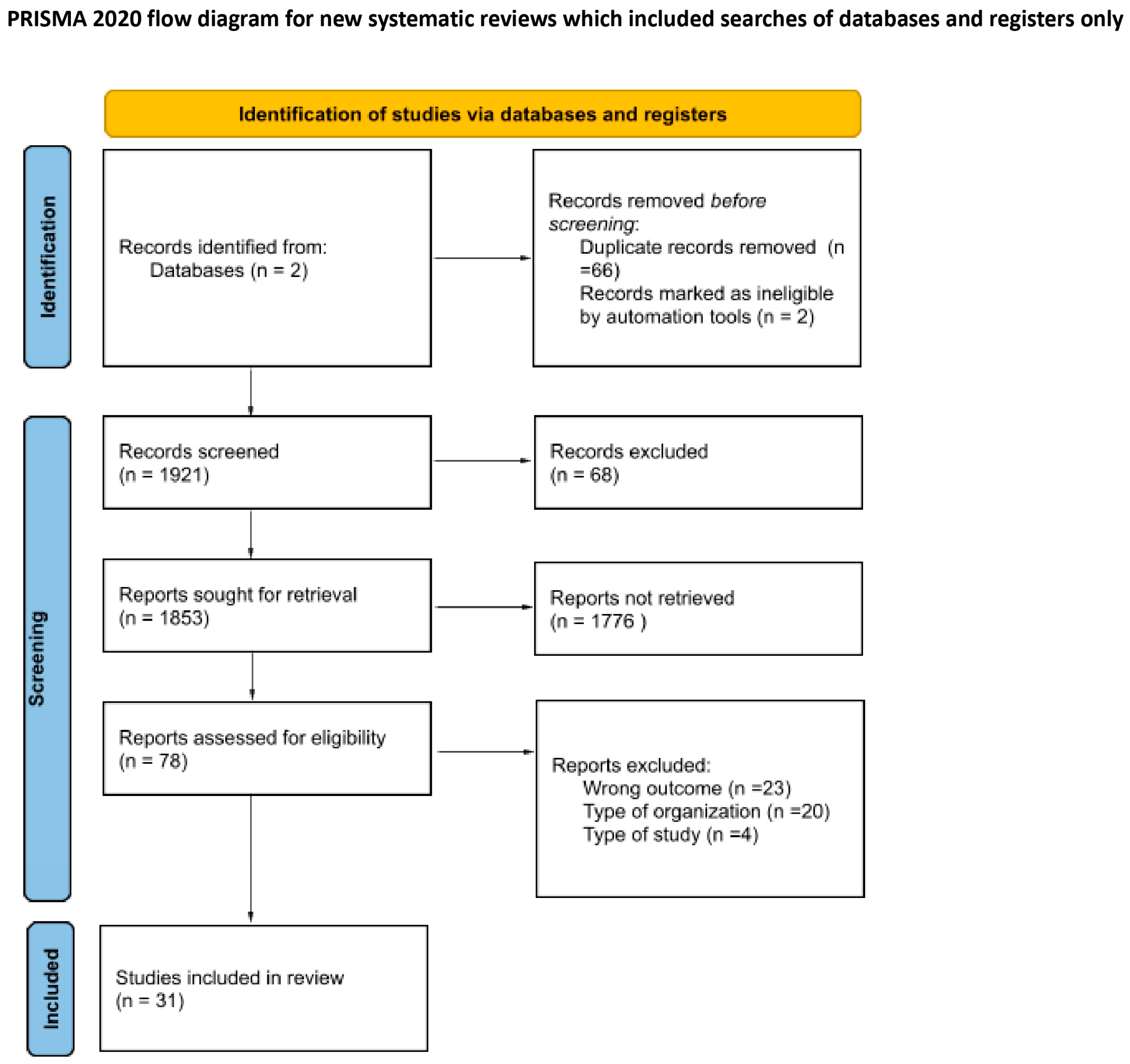
The selection process across the identification, screening, and eligibility phases is summarized in the PRISMA flow diagram (Figure 1).
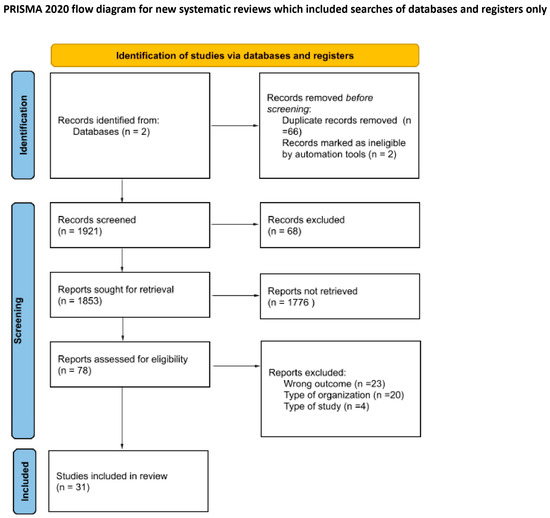
Figure 1.
PRISMA flow diagram.
To evaluate the eligibility of the retrieved papers systematically, precise inclusion and exclusion criteria were established prior to the screening phase. These criteria targeted the core conceptual focus, the context, the type of study, the language, and the temporal framework. Studies were required to meet all inclusion parameters to be considered for the final sample. More specifically studies were included if they examined digital governance, digital transformation, or the use of digital technologies within sport organizations or sport-related institutional contexts. Only peer-reviewed academic articles in English, Spanish, French and Italian published in the last 20 years were considered. Conversely, articles were excluded if they focused strictly on high-performance athletic data without a managerial component, targeted non-sport business sectors, or consisted of non-peer-reviewed gray literature such as book reviews and conference abstracts.
After completing all screening stages, 31 studies were retained for the final analysis. The table with the full list of articles and details is available in the Supplementary Materials (Table S1).
2.2. Thematic Analysis Procedure
The final set of 31 studies was analyzed using thematic analysis, a qualitative method commonly used to identify patterns, concepts, and recurring topics across a body of literature. The purpose of this analysis was not to evaluate individual study outcomes but rather to extract the key conceptual dimensions characterizing digital governance in sport organizations.
The analysis involved several steps. First, each article was carefully reviewed to identify the main topics addressed in relation to digital governance; second, recurring concepts and themes were coded and grouped into broader categories; third, these categories were compared across the studies in order to determine which themes appeared most frequently in the literature.
To enhance methodological rigor, the coding process was conducted iteratively by two researchers. Initially, the first researcher performed an open coding of all articles to identify preliminary themes. Subsequently, the second researcher reviewed the coding scheme and discussed discrepancies until a shared interpretation was reached.
This collaborative validation process allowed us to refine and consolidate the final set of eight themes, ensuring consistency and reducing subjective bias in the thematic categorization. These themes represent the most frequently discussed dimensions in the analyzed literature and collectively constitute the conceptual foundation of the proposed digital governance framework.
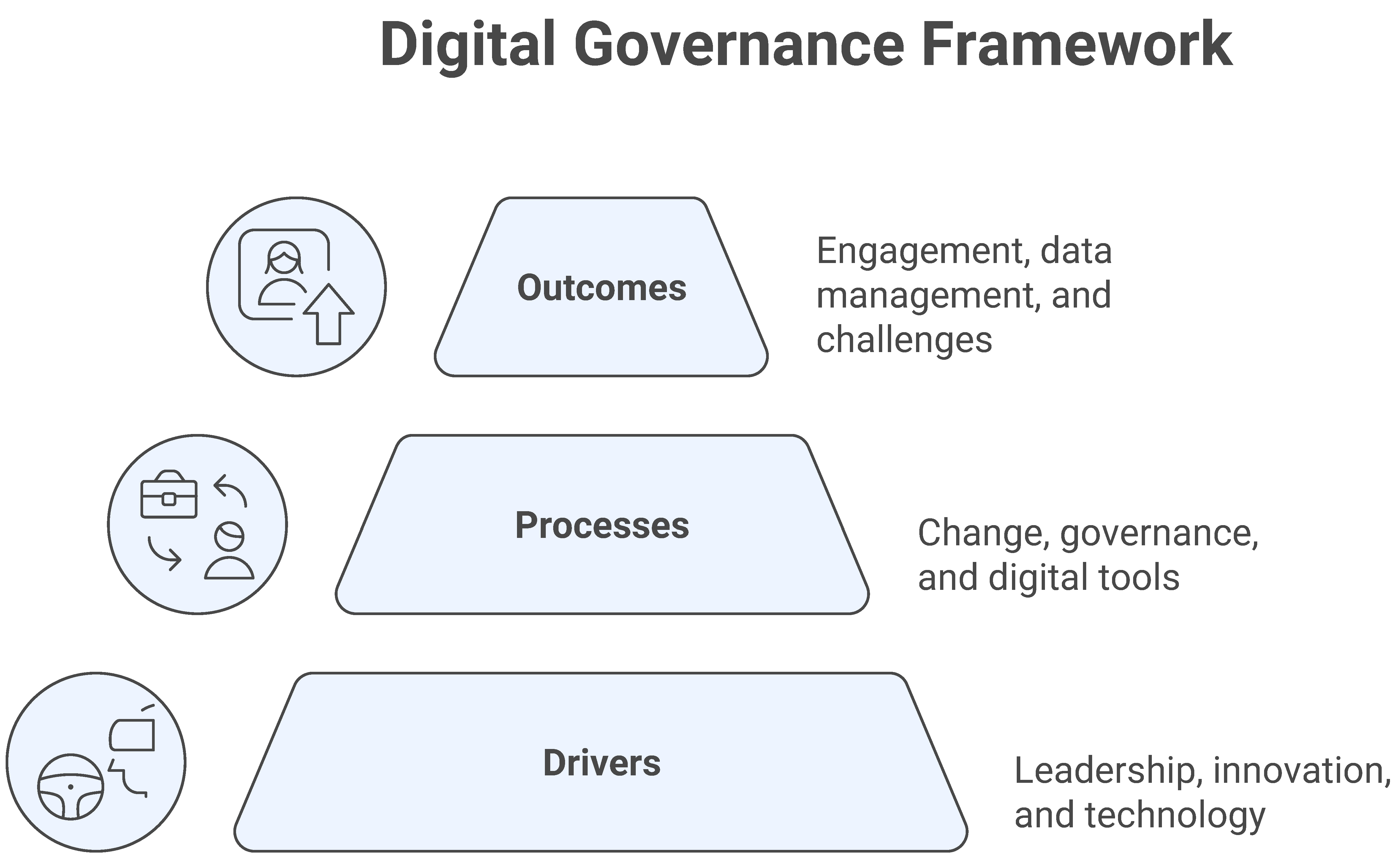
The identified themes subsequently informed the development of a conceptually grounded framework (Figure 2), which could be used to support future empirical research and the creation of assessment tools designed to measure the digital governance maturity of sport organizations.
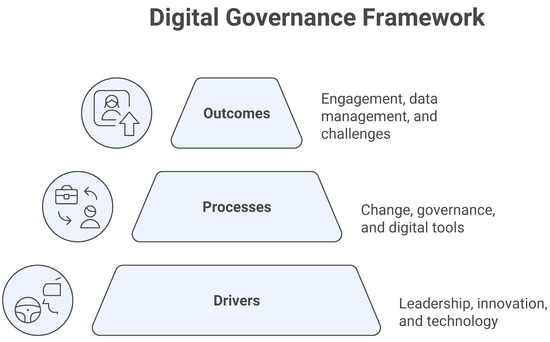
Figure 2.
Framework.
3. Results and Discussion
The studies included in this review originate from diverse geographical contexts, including Europe (e.g., Spain, Germany, Poland, Switzerland), North America (USA, Canada), Asia (China, India, Saudi Arabia, Iraq), and several global or multi-country analyses. They cover different areas of the sport sector such as voluntary sport clubs, professional leagues, football associations, public sport institutions, sport entrepreneurship, and fan markets. In terms of methodology, the literature is dominated by conceptual papers, reviews, policy analyses, and case studies, while only a limited number of studies employ empirical quantitative approaches such as surveys or mixed-methods designs.
The predominance of conceptual and exploratory studies indicates that the field remains in an early stage of development limiting the ability to generalize findings across different types of sport organizations. This underscores the need for more systematic empirical investigations to assess digital governance practices, organizational readiness, and their impact across different types of sport organizations.
Moreover, the literature tends to emphasize technological opportunities while underestimating governance complexity and organizational resistance, highlighting a gap that future research should address.
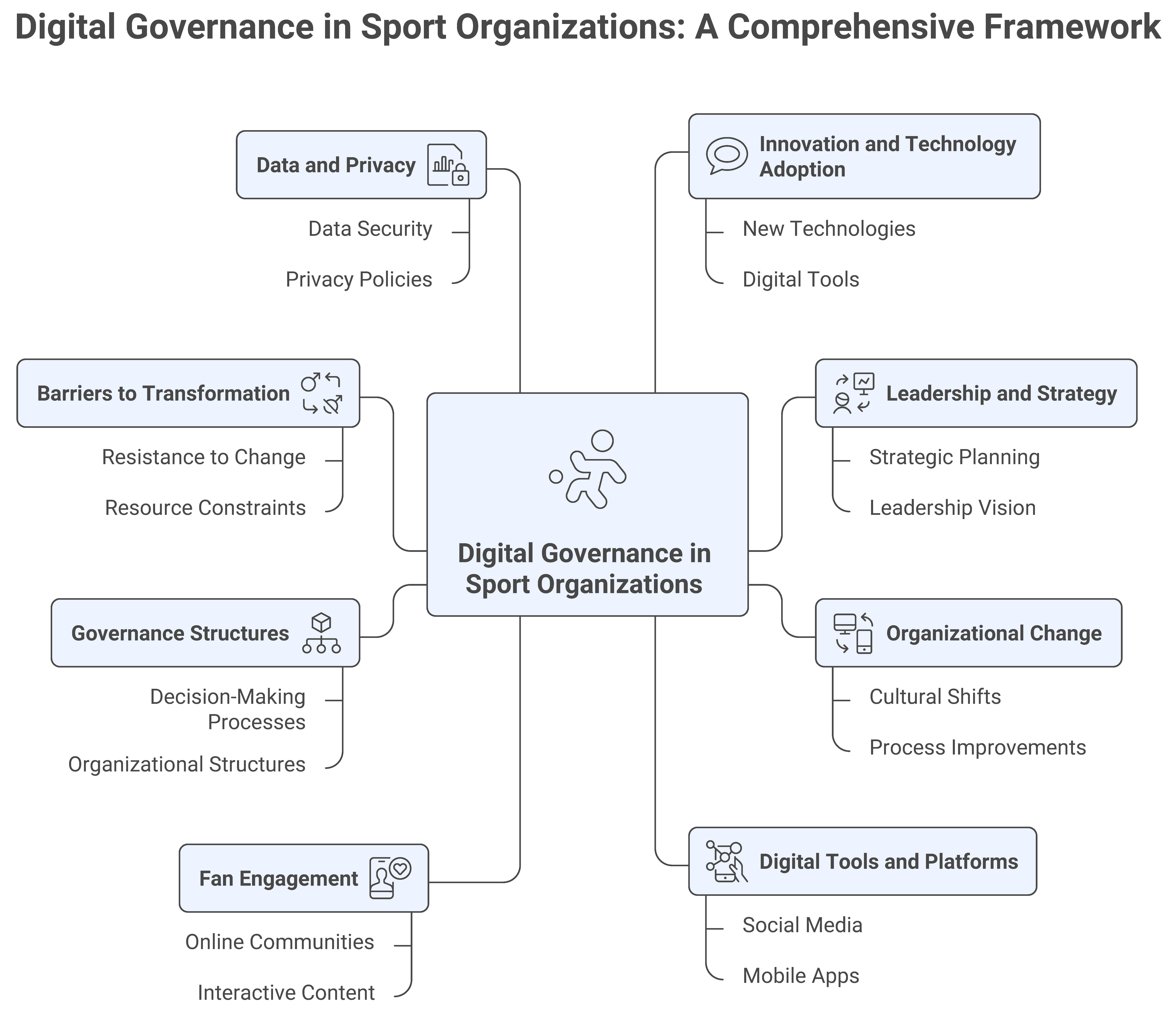
The thematic analysis of the 31 selected studies identified eight recurring themes that characterize the current academic discussion on digital governance in sport organizations. These themes capture the main dimensions through which digital transformation influences governance structures, organizational processes, and stakeholder relationships within the sport sector.
The identified themes are innovation and technology adoption, leadership and strategy, organizational change, digital tools and platforms, fan engagement, governance structures, barriers to transformation, and data management and privacy.
These themes and their descriptions are summarized in Figure 3.
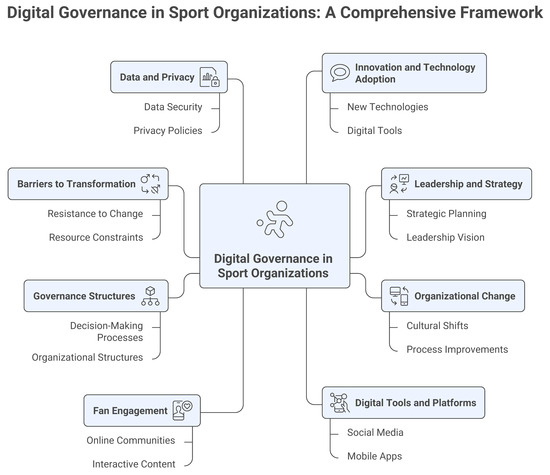
Figure 3.
Thematic analysis.
Together, these themes form a conceptual structure that reflects how digital governance is currently understood and implemented in sport organizations. While the literature approaches these topics from different disciplinary perspectives, the recurrence of these dimensions across studies suggests the presence of a common conceptual foundation that can be used to develop a framework for assessing digital governance maturity in sport organizations.
3.1. Innovation and Technology Adoption
The most frequently identified theme in the reviewed literature is innovation and technology adoption. Sport organizations increasingly integrate digital technologies into their operations in order to enhance performance, improve stakeholder interaction, and remain competitive in a rapidly evolving digital environment.
Guerrero & Maciá-Andreu (2024) state that digital transformation in sport management is closely linked to the emergence of Industry 4.0 technologies, which are reshaping organizational processes and creating new opportunities and challenges for sport organizations [16].
Other recent studies highlight the growing use of technologies such as blockchain applications, tokenization models, streaming platforms, and digital platforms that reshape stakeholder relationships and fan experiences, allowing them to participate in polls, access exclusive digital content, and strengthen the perceived involvement in club decision-making processes [17,18]. For example, some authors have analyzed how professional football clubs are exploring metaverse environments to create immersive fan experiences and alternative commercial revenue streams [18].
The adoption of smart technologies and mobile applications is also transforming sport services, enabling real-time monitoring of physical activity, data streaming, and new forms of digital interaction within sport organizations [19,20]. Infocommunication technologies, predictive analytics, and AI-based systems are transforming several areas of sport management and event organization, including safety management and operational coordination [21].
Advanced analytics, wearable technologies, and digital platforms enable organizations to collect and analyze large amounts of data, which can inform strategic decision-making and operational planning. However, the adoption of such technologies requires adequate organizational resources and technological infrastructure. As a result, larger and financially stronger organizations tend to adopt these innovations more rapidly than smaller clubs or grassroots institutions.
From a governance perspective, the integration of digital technologies creates new opportunities but also introduces additional complexities related to regulation, coordination, and strategic alignment. Consequently, innovation adoption cannot be considered purely a technological process; rather, it requires governance structures capable of managing technological change.
3.2. Leadership and Strategy
A second major theme emerging from the analysis concerns the role of leadership and strategic orientation in digital governance. Several studies emphasize that the successful implementation of digital technologies depends strongly on the commitment and vision of organizational leadership [22,23,24].
Strategic leadership plays a central role in aligning technological initiatives with broader organizational objectives. For instance, Dolles and Santomier [24] studied the case of the US National Basketball Association and illustrated how the NBA adopted a long-term digital leadership strategy centered on global media expansion, streaming services and data-driven fan engagement, suggesting that digital transformation is more effective when leadership integrates technological initiatives with wider organizational and commercial objectives, rather than seeing them as standalone operational upgrades.
Without a coherent digital strategy, investments in technology may remain fragmented and fail to produce meaningful improvements in governance processes. Furthermore, the digital literacy of top management is increasingly recognized as a critical factor influencing the success of digital transformation initiatives [25].
Strategic planning is essential for the development of technological roadmaps that can guide structural reforms and support the long-term digital evolution of sport organizations [26].
Digital transformation is also linked to sport entrepreneurship, where strategic innovation and design thinking approaches can support value co-creation and future opportunities in the sport industry [27].
In sport organizations, where decision-making structures are often influenced by traditional governance models, leadership commitment becomes particularly relevant. Leaders must not only support technological innovation but also guide the organizational transition toward more data-driven governance practices.
3.3. Organizational Change
The third theme identified across the literature is organizational change, which frequently accompanies digital transformation processes. The adoption of digital governance practices often requires adjustments in organizational culture, communication structures, and role definitions.
Several studies emphasize that technological change alone is insufficient to achieve digital transformation. Instead, organizations must adapt internal processes and encourage cultural shifts that support innovation and collaboration [27,28,29]. Resistance to change remains a common challenge, particularly in organizations with deeply rooted traditional practices.
External crises can accelerate organizational change in sport, as demonstrated during the COVID-19 pandemic when sport organizations adopted remote work, virtual competitions, and digital communication tools to maintain operations [30,31]. During the COVID-19 pandemic, several sport organizations rapidly implemented virtual competitions, remote coaching practices, and digital communication systems in order to maintain organizational continuity [30,31]. For example, in a study on personal trainer entrepreneurship, González-Serrano et al. [31] demonstrate how small sport businesses depended on digital platforms and online engagement strategies to preserve customer relationships and stay competitive during lockdown periods.
In the context of sport organizations, digital transformation may affect multiple organizational functions simultaneously, including management, marketing, athlete performance analysis, and stakeholder engagement. Consequently, governance frameworks must be flexible enough to accommodate evolving organizational structures and operational practices.
3.4. Digital Tools and Platforms
Another prominent theme relates to the use of digital tools and platforms that support governance processes and operational activities within sport organizations. These tools range from administrative and communication platforms to advanced analytics systems used for performance monitoring and strategic planning.
Research suggests that digital platforms are becoming increasingly central to the daily operations of sport organizations [32]. These technologies facilitate collaboration, data sharing, and decision-making processes across different organizational levels.
Digital tools and platforms are reshaping the competitive dynamics of the sport industry, as digital media exposure and platform-based engagement can amplify network effects and strengthen winner-takes-all dynamics among leading organizations [33]. National sport organizations are increasingly using social media platforms for communication purposes, as well as governance and stakeholder management tools. Naraine et al. [32] found that board members and executives see digital platforms as a way to increase transparency, the visibility of the organization and engagement with stakeholders, but they also mention concerns about the risks to reputation and the use of resources.
However, the literature also highlights differences in technological adoption between organizations of different sizes. Larger professional clubs often invest in sophisticated digital infrastructures, whereas smaller organizations tend to prioritize more basic administrative technologies. This disparity may create digital inequalities within the sport ecosystem, potentially affecting the competitive balance between organizations.
3.5. Fan Engagement
Fan engagement emerged as another key dimension of digital governance in sport organizations. Modern digital technologies enable sport organizations to interact with fans in ways that were previously impossible, transforming supporters from passive spectators into active participants within sport ecosystems.
Digital platforms, social media, and mobile applications allow organizations to collect feedback, personalize communication, and create interactive experiences for fans [34]. Pandita and Vapiwala [34] emphasize the increasing relevance of personalized and interactive communication models in digital fan engagement strategies, such as real-time content, gamification mechanisms, and community-building practices within social media ecosystems to maintain continuous engagement with supporters beyond live sporting events.
These technologies also support new forms of interaction among sponsors, sport organizations, media, and fans within integrated communication ecosystems [35].
Digitalization has significantly transformed sports sponsorship strategies, particularly through the increasing role of digital media, online platforms, and changing consumer behaviors in the sports marketing landscape [36].
Emerging technologies such as tokenization platforms are increasingly used in sport marketing to enhance fan engagement by enabling participatory interactions and two-way communication between clubs and their supporters [37].
From a governance perspective, fan engagement technologies also generate valuable data that can inform strategic decisions regarding marketing, ticket pricing, and event management. Consequently, digital governance frameworks must consider the management of fan-related data and the integration of stakeholder feedback into organizational decision-making processes.
3.6. Governance Structures
The adaptation of governance structures to digital transformation represents another relevant theme identified in the literature. Traditional governance models in sport organizations often rely on hierarchical decision-making and rigid administrative procedures; however, digital transformation requires more flexible and responsive governance arrangements.
Several studies highlight that existing governance structures may struggle to accommodate the rapid pace of technological innovation [38]. In particular, public sports institutions and federations often face regulatory and bureaucratic constraints that limit their ability to implement digital initiatives effectively.
This finding suggests that digital governance is not merely about adopting new technologies but about restructuring governance systems to support innovation, collaboration, and transparency.
3.7. Barriers to Digital Transformation
Despite the potential benefits of digital technologies, the literature also identifies numerous barriers to digital transformation within sport organizations. Financial constraints, limited technical expertise, and resistance to organizational change are among the most commonly reported obstacles [39,40]. Ehnold et al. [41] show that voluntary sports clubs often adopt only basic digital tools due to limited financial capacity and reliance on volunteer labor. In many cases, digitalization efforts are still fragmented and highly dependent on the digital competences of individual members, rather than formal organizational strategies.
In voluntary sports clubs, digital transformation can be constrained by limited resources, lack of strategic planning, and organizational cultural barriers [41], and it is often constrained by limited digital skills among employees and managers, organizational capacity, and the costs associated with new technologies [42].
These barriers highlight the value of developing governance frameworks that address not only technological capabilities but also human and organizational factors influencing digital transformation.
3.8. Data Management and Privacy
The final theme identified in the thematic analysis concerns data management and privacy, which has become an increasingly significant aspect of digital governance. As sport organizations collect and process large amounts of data from athletes, fans, and stakeholders, ensuring responsible data management practices becomes essential.
Several studies emphasize the role of regulatory compliance, ethical data governance, and the protection of personal information [43,44]. Failure to manage data responsibly may undermine stakeholder trust and expose organizations to legal risks.
In the context of digital governance, organizations must therefore develop policies and procedures that ensure transparency, accountability, and security in data management practices.
3.9. Implications for a Digital Governance Framework
Taken together, the eight themes identified through the thematic analysis provide a conceptual foundation for understanding digital governance in sport organizations. Rather than representing isolated factors, these themes interact with one another to shape how organizations adopt and manage digital technologies.
Leadership and strategic orientation act as primary drivers that shape the direction of digital transformation, influencing innovation adoption and organizational change processes. Governance structures provide the formal mechanisms through which digital initiatives are regulated and coordinated, while digital tools and platforms operationalize these strategies in practice. At the same time, fan engagement represents a key outcome dimension, reflecting how digital transformation reshapes stakeholder relationships. Finally, barriers to transformation and data management issues act as cross-cutting constraints that affect all dimensions of the framework.
Across the reviewed studies, several differences emerge between professional sport organizations and grassroots or voluntary clubs in how they approach digital transformation. Larger professional organizations tend to adopt digital technologies more strategically, investing in areas such as analytics, fan engagement platforms, and new digital business models. In contrast, smaller and volunteer-based clubs often introduce digital tools more gradually and face greater challenges related to limited financial resources, technical expertise, and organizational capacity.
Based on these findings, the identified themes can be integrated into a conceptual framework for evaluating digital governance maturity in sport organizations, which can support future empirical research and the development of assessment instruments such as surveys or maturity models.
3.10. Limitations
Despite its contributions, this study has several limitations. First, the research is based on a systematic literature review of studies indexed in only two academic databases. Relevant studies published in other databases or in gray literature may not have been captured. Another limitation concerns the heterogeneity of the selected studies since the reviewed articles examine digital governance from very different disciplinary perspectives. While this interdisciplinary approach enriches the analysis, the studies vary considerably in their research designs, methodological approaches, and analytical focus.
In addition, this review focuses on traditional sport organizations and does not include studies related to the eSports sector although eSports represents a rapidly growing area of digital sport ecosystems. Future research could therefore extend the analysis to include eSports in order to provide a more comprehensive understanding of digital governance in the broader sport industry.
Finally, since the study focuses primarily on the conceptual identification of key themes related to digital governance rather than providing direct empirical measurements of digital maturity in sport organizations, the proposed framework represents an initial conceptual step that requires further empirical validation through future research.
4. Conclusions
The findings of this study have several practical implications for sport organizations and stakeholders involved in governance and digital transformation. The thematic analysis reveals that digital governance includes multiple dimensions and many sport organizations still lack structured tools to assess their level of digital governance and to guide the implementation of digital transformation initiatives. These findings confirm that digital transformation in sport organizations is not only the simple adoption of technologies and requires coordinated changes in governance practices and organizational processes [45,46]. In this context, the present study proposes that leadership commitment plays a critical role in facilitating the implementation of digital governance practices, while organizational barriers may limit the effective translation of digital strategies into practice by negatively moderating this relationship.
Sport organizations, particularly smaller clubs and grassroot institutions, often recognize the value of digital technologies but struggle to integrate them effectively into their governance processes due to financial constraints, limited technical expertise, and resistance to organizational change [39,40]. Recent research has also attempted to categorize digitalization practices in voluntary sports clubs, identifying distinct profiles such as “doubters,” “open minds,” “pessimists,” and “high performers,” which reflect different levels of digital engagement and organizational readiness [47].
These findings highlight the need for structured frameworks and measurement tools that allow organizations to evaluate their digital governance maturity and identify areas requiring improvement.
The conceptual framework developed in this study provides a foundation for the development of such tools and it can support the creation of assessment instruments, such as questionnaires or maturity models that allow sport organizations to systematically evaluate their governance practices in relation to digital transformation. Furthermore, the framework can assist policy makers, sport federations, and governing bodies in developing guidelines and best practices that support the digital transition of sport organizations, providing clear guidance and evaluation mechanisms.
This review indicates that the field is still largely shaped by conceptual and exploratory contributions, highlighting a clear need for more empirical research to examine how digital governance and transformation are operationalized and experienced across different sport organizations.
Future research should also empirically test and validate this framework, aiming to develop measurement tools or maturity models to evaluate digital governance in sport organizations, exploring differences across types of organizations and countries, and further investigating ethical and regulatory issues, especially related to data governance, privacy and accountability. Building on the proposed framework, future research could further explore the interdependencies between the identified dimensions, particularly examining how leadership and governance structures influence the success of digital transformation initiatives across different organizational contexts. Comparative analyses across different types of sport organizations, such as professional and grassroot entities or large and small clubs, would also provide valuable insights into how digital governance maturity evolves under varying resource constraints.
Such evidence can support more informed strategic decisions, reduce the risks associated with technology adoption, and help sport organizations allocate resources more efficiently while improving transparency, stakeholder engagement, and overall governance performance.
Supplementary Materials
The following supporting information can be downloaded at: https://www.mdpi.com/article/10.3390/soc16060175/s1, Table S1: Systematic Review of included studies. File S1: RISMA_2020_checklist.
Author Contributions
Conceptualization, L.F., S.D.P., S.D. and S.M.; methodology, L.F. and S.D.P.; formal analysis, L.F. and S.D.P.; writing—original draft preparation, L.F. and S.D.P.; writing—review and editing, L.F., S.D.P. and S.M.; visualization, L.F.; supervision, L.F., S.D. and S.M.; project administration, S.D.; funding acquisition, S.D. All authors have read and agreed to the published version of the manuscript.
Funding
This research received no external funding.
Institutional Review Board Statement
The study was conducted in accordance with the Declaration of Helsinki, and approved by the Institutional Review Board of University of Cassino and Southern Lazio (IRB_SUSS_3.3.2026).
Informed Consent Statement
Not applicable.
Data Availability Statement
No new data were created or analyzed in this study. Data sharing is not applicable to this article.
Acknowledgments
During the preparation of this manuscript, the authors used Napkin.ai (2026) for the purposes of figures generation. The authors have reviewed and edited the output and take full responsibility for the content of this publication.
Conflicts of Interest
The authors declare no conflicts of interest.
References
- World Population Review. Internet Users by Country 2026. Available online: https://worldpopulationreview.com/country-rankings/internet-users-by-country (accessed on 2 March 2026).
- Amankwah-Amoah, J.; Khan, Z.; Wood, J.; Knight, G. COVID-19 and digitalization: The great acceleration. J. Bus. Res. 2021, 136, 602–611. [Google Scholar] [CrossRef]
- Tornatzky, L.G.; Fleischer, M. The Processes of Technological Innovation; Lexington Books: Lexington, MA, USA, 1990. [Google Scholar]
- Davis, F.D.; Bagozzi, R.P.; Warshaw, P.R. User acceptance of computer technology: A comparison of two theoretical models. Manag. Sci. 1989, 35, 982–1003. [Google Scholar] [CrossRef]
- Gökalp, E.; Martinez, V. Digital transformation maturity assessment: Development of the digital transformation capability maturity model. Int. J. Prod. Res. 2022, 60, 6282–6302. [Google Scholar] [CrossRef]
- The Business Research Company. Unlocking Growth in the Sports Market 2025–2034: Trends and Forecasts to Guide Business Strategy. Available online: https://www.thebusinessresearchcompany.com/report/sports-market (accessed on 23 March 2026).
- Barnhill, C.R.; Smith, N.L.; Oja, B.D. Organizational Behavior in Sport Management; Springer Nature: Cham, Switzerland, 2021. [Google Scholar] [CrossRef]
- Prabowo, S.A.; Marsudi, I.; Siantoro, G.; Yuhantini, E.F.; Ristiawan, B.; Khuddus, L.A.; Rizki, A.Z.; Ayubi, N. La digitalización acelera la industria del deporte en la última década: Revisión sistemática de la literatura y análisis bibliométrico. Sportis 2026, 12, 1–23. [Google Scholar] [CrossRef]
- Cossich, V.R.A.; Carlgren, D.; Holash, R.J.; Katz, L. Technological breakthroughs in sport: Current practice and future potential of artificial intelligence, virtual reality, augmented reality, and modern data visualization in performance analysis. Appl. Sci. 2023, 13, 12965. [Google Scholar] [CrossRef]
- European Parliament and the Council of the European Union. Regulation (EU) 2016/679 of the European Parliament and of the Council of 27 April 2016 on the protection of natural persons with regard to the processing of personal data and on the free movement of such data, and repealing Directive 95/46/EC (General Data Protection Regulation). Off. J. Eur. Union. 2016, L119, 1–88. [Google Scholar]
- Hajli, N. Exploring fan engagement and value co-creation in virtual sport communities: A comparative study of virtual sport communities over time. Technol. Forecast. Soc. Change 2025, 212, 123934. [Google Scholar] [CrossRef]
- Ante, L.; Saggu, A.; Schellinger, B.; Wazinski, F.-P. Voting participation and engagement in blockchain-based fan tokens. Electron. Mark. 2024, 34, 26. [Google Scholar] [CrossRef]
- Harrington, C.F. Customer relationship management and intercollegiate athletics: Opportunities and benefits for smaller institutions. Manag. Organ. Stud. 2014, 1, 1–6. [Google Scholar] [CrossRef][Green Version]
- Hayduk, T. Business analytics in sport organizations. In The Routledge Handbook of Digital Sport Management; Naraine, M.L., Hayduk, T., Doyle, J.P., Eds.; Routledge: London, UK, 2023; pp. 245–254. [Google Scholar]
- Page, M.J.; McKenzie, J.E.; Bossuyt, P.M.; Boutron, I.; Hoffmann, T.C.; Mulrow, C.D.; Shamseer, L.; Tetzlaff, J.M.; Akl, A.E.; Brennan, S.E.; et al. The PRISMA 2020 statement: An updated guideline for reporting systematic reviews. BMJ 2021, 372, n71. [Google Scholar] [CrossRef]
- Guerrero, A.M.G.; Maciá-Andreu, M.J. Digital transformation: Challenges and opportunities in sport management. Cult. Cienc. Deporte 2024, 19, 12. [Google Scholar]
- Perrino-Peña, M.; Valcarce-Torrente, M. Utilización del marketing digital en las federaciones deportivas españolas. Cult. Cienc. Deporte 2024, 19, 2151. [Google Scholar] [CrossRef]
- Heidemann, G.; Schmidt, S.L.; von der Gracht, H.A.; Beiderbeck, D. The impact of the metaverse on the future business of professional football clubs—A prospective study. Technol. Forecast. Soc. Change 2024, 208, 123573. [Google Scholar] [CrossRef]
- Cieśliński, W.; Witkowski, K.; Prystupa, E.; Pałka, T.; Piepiora, P. Smart organization–digitalization of combat sports services. Arch. Budo 2023, 19, 257–266. [Google Scholar]
- Merten, S.; Schmidt, S.L.; Winand, M. Unlocking value: Exploring digital transformation’s influence on knowledge management of national football associations. Eur. Sport Manag. Q. 2025, 25, 493–513. [Google Scholar] [CrossRef]
- Ágnes, T.N.; Szabolcs, M.; Zoltán, B.; Dénes, D.L.; József, T.G.; Gábor, M. Innovation, infocommunication and digital transformation in sport policing and certain aspects of sports. J. Infrastruct. Policy Dev. 2024, 8, 2617. [Google Scholar] [CrossRef]
- Merten, S.; Schmidt, S.L.; Winand, M. Organisational capabilities for successful digital transformation: A global analysis of national football associations in the digital age. J. Strategy Manag. 2024, 17, 408–426. [Google Scholar] [CrossRef]
- Venkitachalam, K.; Schwartz, B.; Söderman, S. Marketisation, ownership and digitalisation strategies in the sport industry—Generic insights and future research. J. Strategy Manag. 2024, 17, 393–407. [Google Scholar] [CrossRef]
- Dolles, H.; Santomier, J. Transformational digital leadership and organizational strategy: The case of the US National Basketball Association. In Digital Leadership; Edward Elgar Publishing: Cheltenham, UK, 2025; pp. 78–91. [Google Scholar]
- Ruoff, L.; Wagner, D. Assessing the implementation of digital transformation strategies in the German sport industry: An expert study. In Proceedings of the 27th GeNeMe Conference, Dresden, Germany, 25–27 September 2024. [Google Scholar] [CrossRef]
- Magaz-González, A.M.; García-Tascón, M.; Sahelices-Pinto, C.; Gallardo, A.M.; Guevara Pérez, J.C. Technology and digital transformation for the structural reform of the sports industry: Building the roadmap. Proc. Inst. Mech. Eng. Part P 2024, 238, 150–158. [Google Scholar] [CrossRef]
- Ratten, V.; Jones, P. New challenges in sport entrepreneurship for value creation. Int. Entrep. Manag. J. 2020, 16, 961–980. [Google Scholar] [CrossRef]
- Ratten, V.; Thompson, A.-J. Digital sport entrepreneurial ecosystems. Thunderbird Int. Bus. Rev. 2020, 62, 565–578. [Google Scholar] [CrossRef]
- Thompson, A.; Naraine, M.L.; Parent, M.M. Exploring the nexus of digital technology and organizational change in non-profit sport organizations. Sport Manag. Rev. 2024, 27, 661–681. [Google Scholar] [CrossRef]
- Mardosaite, V.; Jasinskas, E. Crisis innovations in sports organisations during the COVID-19 pandemic. Transform. Bus. Econ. 2022, 21, 94. [Google Scholar]
- González-Serrano, M.H.; Dos Santos, M.A.; Sendra-Garcia, J.; Calabuig, F. Sports entrepreneurship during COVID-19: Technology as an ally to maintain the competitiveness of small businesses. Technol. Forecast. Soc. Change 2023, 187, 122256. [Google Scholar]
- Naraine, M.L.; Thompson, A.; Lachance, E.L.; Séguin, B.; Taks, M.; Parent, M.M.; Hoye, R. Examining board and executive staff perceptions of social media in national sport organizations. J. Glob. Sport Manag. 2024, 9, 464–484. [Google Scholar] [CrossRef]
- Glebova, E.; Terrien, M.; Desbordes, M. Does digitalization accelerate the winner-takes-all effect in the sports industry? Phys. Cult. Sport 2023, 101, 17–24. [Google Scholar] [CrossRef]
- Pandita, D.; Vapiwala, F. Waving the flames of fan engagement: Strategies for coping with the digital transformation in sports organizations. J. Strategy Manag. 2024, 17, 427–443. [Google Scholar] [CrossRef]
- Cornwell, T.B. Digital transformation in sport sponsorship. In The Routledge Handbook of Digital Sport Management; Routledge: London, UK, 2022; pp. 116–131. [Google Scholar]
- Segovia, M.G.; Kennett, C. Digitalization and sports sponsorship strategy: A review and research agenda. Ann. Appl. Sport Sci. 2022, 10, e1066. [Google Scholar] [CrossRef]
- Stegmann, P.; Matyas, D.; Ströbel, T. Hype or opportunity? Tokenization as engagement platform in sport marketing. Int. J. Sports Mark. Spons. 2023, 24, 722–736. [Google Scholar] [CrossRef]
- Trad, B.; Layadi, I. Key requirements for implementing digital governance in Algerian sports institutions. Sustain. Sports Sci. J. 2025, 3, 15–21. [Google Scholar] [CrossRef]
- Binsaeed, R.H.; Grigorescu, A.; Yousaf, Z.; Radu, F.; Nassani, A.A.; Tabirca, A.I. Harnessing big data analytics to accelerate innovation: An empirical study on sport-based entrepreneurs. Sustainability 2023, 15, 10090. [Google Scholar] [CrossRef]
- Obaid, A.H.; Khalaf, N.Z. Identifying and diagnosing the gap in applying artificial intelligence techniques scale in managing high-performance sports organizations. Sport Sci. Health 2023, 13, 158–166. [Google Scholar] [CrossRef]
- Ehnold, P.; Faß, E.; Steinbach, D.; Schlesinger, T. Digitalization in organized sport–usage of digital instruments in voluntary sports clubs depending on club’s goals and organizational capacity. Sport Bus. Manag. Int. J. 2021, 11, 28–53. [Google Scholar] [CrossRef]
- Stegmann, P.; Lang, G. Digital transformation in voluntary sports organizations: A scoping review on multi-level drivers, promoting factors, forms and consequences. Curr. Issues Sport Sci. 2025, 10, 053. [Google Scholar] [CrossRef]
- Bowles, H.; McGee, D. Sport, surveillance and the data economy: An expanding horizon for research and governance. Int. J. Sport Policy Politics 2024, 16, 339–347. [Google Scholar] [CrossRef]
- Li, X.; Guo, X. A tripartite evolutionary game analysis of sports data rights protection from the perspective of stakeholder. PLoS ONE 2023, 18, e0292914. [Google Scholar] [CrossRef]
- Hanisch, M.; Goldsby, C.M.; Fabian, N.E.; Oehmichen, J. Digital governance: A conceptual framework and research agenda. J. Bus. Res. 2023, 162, 113777. [Google Scholar] [CrossRef]
- Dunleavy, P.; Margetts, H. Design principles for essentially digital governance. In Proceedings of the 111th Annual Meeting of the American Political Science Association, San Francisco, CA, USA, 3–6 September 2015; Available online: http://eprints.lse.ac.uk/64125/ (accessed on 23 March 2026).
- Ehnold, P.; Steinbach, D.; Schlesinger, T. Categorisation of digitalisation practises in voluntary sports clubs. Manag. Sport Leis. 2026, 31, 149–166. [Google Scholar] [CrossRef]
Disclaimer/Publisher’s Note: The statements, opinions and data contained in all publications are solely those of the individual author(s) and contributor(s) and not of MDPI and/or the editor(s). MDPI and/or the editor(s) disclaim responsibility for any injury to people or property resulting from any ideas, methods, instructions or products referred to in the content. |
© 2026 by the authors. Licensee MDPI, Basel, Switzerland. This article is an open access article distributed under the terms and conditions of the Creative Commons Attribution (CC BY) license.