1. Introduction
In the rapidly evolving hospitality landscape, firms increasingly seek to differentiate themselves not only through service quality or amenities, but by cultivating deeper emotional and relational bonds with customers [
1,
2,
3]. Traditional transactional models of hospitality—wherein guests simply pay for services and receive standardized offerings—are becoming insufficient in a competitive market saturated with alternatives [
4,
5]. Instead, brands that succeed in creating meaningful psychological connections with guests are more likely to inspire loyalty, repeat visits, and, importantly, active advocacy or “brand evangelism” [
6,
7]. In this context, anthropomorphic branding—the attribution of humanlike traits, emotions, or personalities to non-human entities such as brands, chatbots, or service robots [
8]—emerges as a promising strategy for enhancing brand–customer relationships [
9].
By humanizing brand personas or service interfaces, hotels can signal warmth, empathy, and social presence—psychological cues that may foster emotional bonds, perceived care, and relational closeness [
10,
11]. These relational cues converge with the logic of Social Exchange Theory (SET), which posits that social behavior can be understood as an exchange of valued resources: customers respond to perceived benefits (e.g., trust, empathy, relational warmth) by reciprocating with engagement, commitment, and supportive behaviors [
12,
13]. Thus, anthropomorphic branding may constitute a symbolic resource from the hotel to the guest, prompting reciprocal emotional and behavioral investment.
Despite the intuitive appeal of this logic, existing empirical research in hospitality remains fragmented and limited. On one hand, studies on service robots in hotels or restaurants have shown that anthropomorphism can influence satisfaction, usage intentions, or continuance behaviors—often through perceived warmth, enjoyment, or competence [
14]. On the other hand, many of these studies focus narrowly on functional or utilitarian outcomes (e.g., willingness to use, robot adoption), or they examine isolated phases of interaction (robot delivery, quick service), rather than long-term relational outcomes like engagement, emotional bonding, or brand advocacy [
11,
14,
15].
Moreover, the psychological mechanisms through which anthropomorphism might lead to deeper engagement remain underexplored. While some studies reference constructs such as perceived warmth, trust, or social presence, few have systematically examined perceived empathy—i.e., the guest’s sense that the brand or service entity genuinely understands and cares about their needs [
16,
17]—as a mediator in the anthropomorphism → engagement pathway. At the same time, with the rise in digitalization in hospitality (smart hotels, AI-based services, self-service kiosks, chatbots, etc.), there is a growing need to understand how technological empowerment interacts with human like branding [
14,
18]. For example, whether guests’ sense of control, autonomy and ease of use moderates the effect of anthropomorphic cues on engagement and subsequent advocacy remains largely untested [
19,
20].
Therefore, this study seeks to fill these gaps by proposing and testing a comprehensive mediated–moderated model grounded in SET. Specifically, this study examines how brand anthropomorphism influences perceived empathy and customer engagement, how empathy mediates the anthropomorphism–engagement link, how engagement leads to hotel brand evangelism, and how perceived technological empowerment moderates key paths in this chain. The current study context—hotel customers in Egypt—also addresses a geographic and cultural gap, as much of the prior robot/anthropomorphism research has been conducted in East Asia, Western Europe, or China.
In doing so, this study contributes to theory by extending SET into customer–brand exchanges, shedding light on empathy as a core psychological mechanism, and integrating technological empowerment into relational branding models. Practically, it offers actionable insights for hotel managers and service designers aiming to balance human like warmth with technological efficiency to cultivate loyal advocates rather than passive customers.
In the digital age, social change increasingly unfolds through micro-level, technology-mediated social interactions, where individual behaviors accumulate to reshape shared meanings, norms, and patterns of influence. Rather than referring to macro-institutional or policy-driven transformation, this study conceptualizes social change as a bottom-up process of social influence and normative diffusion, enacted through digitally enabled customer behaviors such as advocacy, persuasion, and voluntary recommendation. Within this framework, brand evangelism represents a form of micro-social change, whereby customers actively shape others’ perceptions and adoption of technology-mediated hospitality services through peer-to-peer communication and networked influence.
2. Literature Review and Hypothesis Development
2.1. Underpinning Theory
Social Exchange Theory (SET) provides a useful theoretical lens for explaining the proposed research model, as it emphasizes the role of reciprocal interactions and perceived benefits in shaping relational behaviors [
12,
13]. In the context of hospitality, brand anthropomorphism can be conceptualized as a symbolic “resource” that hotels provide to customers by embedding human-like traits—such as warmth, empathy, or personality—into brand communications and service experiences. According to SET, customers perceive these anthropomorphic cues as relational benefits, which can elicit affective responses, such as perceived empathy, and motivate increased engagement with the brand [
21]. The mediating role of perceived empathy reflects the psychological mechanism through which the perceived benefit of human-like understanding encourages customers to invest more attention, time, and emotional energy into interactions, consistent with the reciprocity principle of SET.
Customer engagement, in turn, functions as a form of reciprocal behavior, whereby customers respond to the relational and emotional benefits provided by the brand by actively participating in brand-related activities [
22], and ultimately promoting the brand through evangelism. Moreover, perceived technological empowerment strengthens these exchange processes by enhancing customers’ sense of control and competence during interactions, which increases the perceived value of engagement and encourages further reciprocal behaviors. Overall, SET explains the sequential pathway in the model: brand anthropomorphism provides relational benefits, perceived empathy translates these benefits into engagement, and engagement motivates reciprocal advocacy behaviors, with technological empowerment amplifying the strength of these exchanges.
SET offers a compelling framework for understanding this model because it centers on the idea that social behavior results from an exchange of valued resources, wherein individuals assess perceived benefits and costs and reciprocate accordingly [
23]. Recent syntheses confirm that SET remains highly relevant in contemporary settings—including consumer–brand relationships—highlighting how perceived relational benefits trigger reciprocal behaviors [
23].
From a social exchange perspective, repeated reciprocal interactions between customers and anthropomorphized brands generate not only relational outcomes but also socially transmissible behaviors. When customers perceive empathy and relational value, they reciprocate not only through engagement but also by influencing others within their social networks. In digitally connected environments, such reciprocal exchanges extend beyond dyadic customer–brand relationships, contributing to emergent social patterns of advocacy and normative influence, which constitute micro-level forms of social change in service ecosystems.
2.2. Brand Anthropomorphism and Customer Engagement
Anthropomorphism—the attribution of humanlike characteristics or behaviors to non-human entities—has increasingly been applied in hospitality branding and service design [
8,
24]. When a brand, or its service agents, digital interfaces, or robots, exhibits humanlike traits such as warmth, animacy, or personality, it signals to customers that the brand is capable of social and relational interaction [
21,
25]. This humanlike portrayal enhances perceived social presence and relational closeness, motivating customers to invest more time, attention, and emotional energy [
11,
15,
26]—in other words, to engage more deeply with the brand.
Empirical evidence from recent studies on hospitality robots supports this notion: perceived anthropomorphism has been shown to directly increase customer engagement within the hotel service environment [
26]. In other words, the more humanlike the hotel is perceived to be, the more willing customers are to interact, participate, and emotionally invest, supporting the proposed positive effect of brand anthropomorphism on customer engagement. Earlier, influential work by Lee and Oh [
27] demonstrated that anthropomorphic communication in branding and advertising increased perceived warmth, which, in turn, enhanced customers’ intention to visit the hotel. This suggests that anthropomorphism can foster engagement intentions even before service consumption. More recently, Song et al. [
28] found that anthropomorphism positively influences both utilitarian and hedonic values, which mediate its effect on guests’ intentions to continue using hotel robots—a form of engagement and loyalty behavior. Similarly, Li and Jiang [
29], in their study on luxury-hotel robot services, identified anthropomorphism—alongside animacy, perceived intelligence, and safety—as a critical attribute that enhances the hospitality experience, including greater guest engagement during service encounters. Based on this evidence, the following hypothesis is proposed:
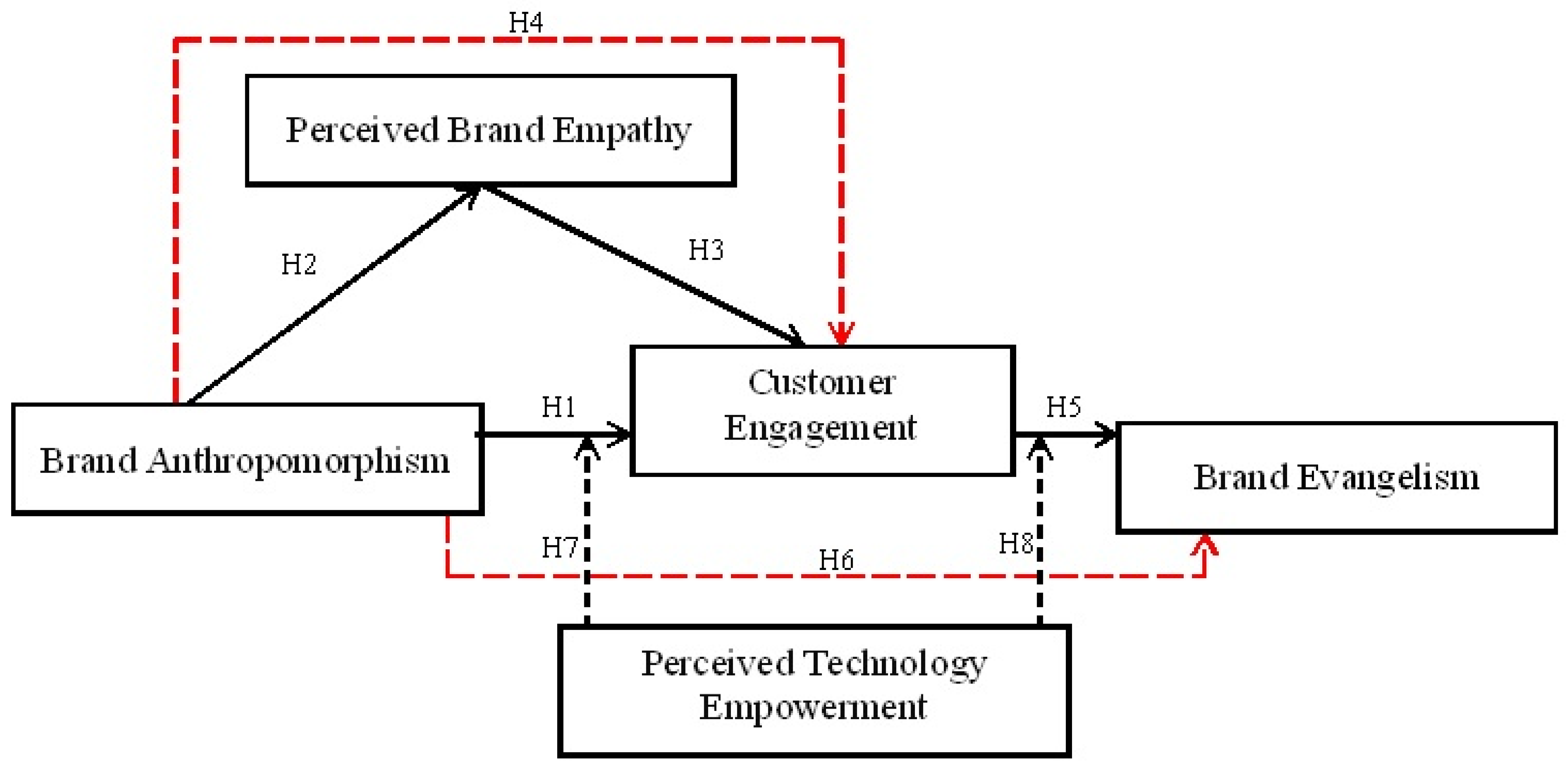
H1. Brand anthropomorphism positively influences customer engagement.
2.3. Brand Anthropomorphism and Perceived Empathy
Beyond stimulating engagement through social presence, anthropomorphic cues can also foster affective responses: customers may attribute humanlike emotions, understanding, or care to the brand [
24]. In a hospitality context—where services often involve emotional and personal aspects such as comfort, care, service recovery, and personalization—humanlike brand traits can lead customers to perceive the brand as more empathetic, capable of understanding and responding to their needs [
11,
15].
Recent studies on social robots in hotels highlight that anthropomorphism—expressed through warmth, animacy, and other humanlike cues—enhances emotional and relational perceptions, including perceived warmth, competence, and trust [
30]. Consequently, when a hotel brand exhibits anthropomorphic traits, customers are likely to experience higher perceived empathy. Cheng and Hwang [
31] demonstrated in a hospitality study on restaurant service robots that anthropomorphic design significantly influenced customer emotional responses: when robots displayed humanlike traits such as warmth and animacy, customers’ emotional reactions and acceptance were positively affected, supporting the idea that anthropomorphism can trigger empathy or empathy-like responses.
Similarly, Li and Jiang [
29], in their investigation of luxury-hotel service robots, found that perceptual attributes—including anthropomorphism, animacy, perceived intelligence, and perceived safety—enhanced the hospitality experience and led to greater customer engagement, suggesting that anthropomorphic cues strengthen relational and emotional perceptions, likely including empathy. Earlier, Zhang et al. [
32] confirmed that anthropomorphism increases perceived warmth, a construct closely related to empathy and emotional closeness toward a brand. More recently, Ma et al. [
21] showed that visually designed chatbot avatars with higher anthropomorphism significantly increased users’ perceived empathy and trust, improving the overall user experience. Based on this evidence, the following hypothesis is proposed:
H2. Brand anthropomorphism positively influences perceived empathy.
2.4. Perceived Empathy and Customer Engagement
Perceived empathy refers to a customer’s belief that a brand genuinely understands them, cares about their needs, and responds sensitively to their concerns [
16,
33]. This perception fosters a relational connection, enhancing psychological comfort, trust, and the sense of emotional support [
34]. Drawing on relational and emotional branding theories, such empathetic perceptions can encourage customers to engage more deeply with the brand, investing greater time, attention, and emotional resources [
35]. In the context of hospitality research, human-centered and emotionally driven perceptions—such as warmth, care, and human-like qualities—have been associated with higher levels of customer involvement and engagement [
36]. Therefore, when customers perceive that a brand empathizes with them, they are more likely to participate actively with brand offerings.
Recent evidence further underscores this link: Dias et al. [
37] demonstrate that empathy contributes to value co-creation, value-in-use, and customer retention. While the study does not explicitly use the term “customer engagement,” both value co-creation and retention are closely related to engagement behaviors. Similarly, Lehnert and Kuehnl [
34] propose that consumer empathy—encompassing both cognitive and affective dimensions—should be considered a core element of the customer experience, providing a theoretical foundation for empathy’s influence on engagement-like responses. Additionally, Carrilho et al. [
38] show that perceived empathy, or its absence, in AI-driven service recovery scenarios significantly impacts outcomes such as satisfaction, repurchase intention, and loyalty. The mediating role of perceived empathy in these contexts illustrates how empathy can drive downstream engagement-related behaviors. Based on this evidence, the following hypothesis is proposed:
H3. Perceived empathy positively influences customer engagement.
2.5. Perceived Empathy as a Mediator
Perceived empathy may act as a psychological mechanism—or mediator—through which anthropomorphic brand cues enhance customer engagement. Specifically, anthropomorphism shapes customers’ emotional and affective evaluations (i.e., empathy), which in turn drive behavioral investment in the brand [
21]. This mediating role aligns with dual-process models in branding and human–technology interaction, where perceptual and affective responses serve as intermediaries between design or appearance cues and behavioral outcomes. For instance, research on service robots has shown that anthropomorphic cues increase perceived warmth and social presence, subsequently leading to stronger behavioral intentions or engagement [
30].
Empirical evidence further supports this mediating effect. Ngoc Dan and Ngo Trong [
39] find that brand anthropomorphism directly influences intimacy, which then mediates the relationship between anthropomorphism and brand engagement. Gomes et al. [
40], focusing on AI and chatbots, report that anthropomorphism significantly affects customer engagement through mechanisms including enhanced satisfaction, trust, and loyalty. Similarly, Ma et al. [
21] demonstrate that highly anthropomorphic avatars are associated with higher perceived empathy and trust, which subsequently improve user experience, although the study does not explicitly measure customer engagement. Based on these findings, the following hypothesis is proposed:
H4. Perceived empathy mediates the influence of brand anthropomorphism on customer engagement.
2.6. Customer Engagement and Brand Evangelism
Customer engagement—defined as the extent to which customers are cognitively, emotionally, and behaviorally involved with a brand [
41,
42]—often serves as a precursor to deeper loyalty behaviors, including advocacy, word-of-mouth, and brand evangelism [
43,
44,
45]. In hospitality contexts, engaged customers are more likely to share their experiences, recommend hotels to others, and act as brand ambassadors. For example, research indicates that customer engagement in social media interactions or service encounters significantly enhances purchase intentions and electronic word-of-mouth (eWOM) behaviors in hotel settings [
46]. Therefore, higher levels of engagement are expected to increase the likelihood that customers will actively promote and recommend the hotel.
Empirical evidence reinforces this expectation. Purohit et al. [
6] find that hotel customers’ brand experience—which likely overlaps with engagement—is positively associated with brand evangelism. Chen et al. [
47] demonstrate that customer engagement in hotel contexts positively affects brand trust, which in turn influences behavioral intentions such as repeat visits and word-of-mouth. Additionally, Mansoor et al. [
45] examine hotel brand evangelism and report that frontline employees’ digital competence, proactive assistance, and relationship-building contribute to the emergence of brand evangelists, although these effects occur indirectly through brand image rather than directly via engagement. Based on this evidence, the following hypothesis is proposed:
H5. Customer engagement positively influences hotel brand evangelism.
2.7. Customer Engagement as a Mediator
Anthropomorphic branding may not directly drive brand evangelism; rather, it operates by stimulating customer engagement, which subsequently motivates customers to actively promote and champion the brand [
41,
44]. This mediated pathway suggests that the emotional and relational benefits derived from anthropomorphism are transformed into tangible advocacy behaviors only when customers engage meaningfully with the brand [
43,
48]. This reasoning aligns with relationship marketing and consumer brand literature, where initial brand cues foster emotional and attitudinal responses that cultivate deeper commitment and advocacy behaviors [
49,
50]. Given the well-established link between engagement and positive brand advocacy in hospitality contexts, this mediation hypothesis is both theoretically sound and practically relevant [
51,
52].
Empirical evidence supports this mediating effect. Callarisa-Fiol et al. [
26] examine perceived anthropomorphism in service robots and find that anthropomorphism positively influences customer engagement both directly and indirectly through perceived value for money and staff competence. Purohit et al. [
6] demonstrate that hotel brand experience—including interaction and emotional components, is positively associated with brand evangelism, reflecting customers’ active advocacy behaviors. Chen et al. [
47] show that customer engagement across multiple dimensions enhances brand trust, which then influences behavioral intentions such as repeat usage and word-of-mouth; while evangelism is not directly measured, these outcomes closely approximate advocacy behaviors. Additionally, Wu et al. [
53] explore perceived anthropomorphism and related attributes, such as animacy and intelligence, in hotel service robots, highlighting their effects on relational outcomes like brand love, which is strongly linked to loyalty and potential advocacy. Based on this evidence, the following hypothesis is proposed:
H6. Customer engagement mediates the influence of brand anthropomorphism on hotel brand evangelism.
2.8. Perceived Technological Empowerment as a Moderator
In increasingly digitalized hospitality environments—where AI, service robots, mobile apps, and smart technologies are prevalent—customers’ perceptions of technological empowerment, defined as feeling competent, autonomous, and in control when using these technologies [
54], can shape how they respond to anthropomorphic brand cues. When technological interfaces are intuitive, responsive, and provide customers with control over service interactions (e.g., smart-room controls, self-service kiosks, or user-friendly apps), the relational value of anthropomorphic cues is likely amplified. Recent research in smart hotel technologies highlights that guests value empowerment and control, and that such technological features positively influence both experience and engagement [
30]. Moreover, in human–AI service contexts, combining human-like interface design with functional ease-of-use produces stronger relational and behavioral outcomes [
55].
Empirical studies support the moderating role of technological empowerment. Mehmood et al. [
56] report that anthropomorphic characteristics of AI service robots positively influence customer engagement and that empathy significantly moderates the relationship between anthropomorphism and engagement. Callarisa-Fiol et al. [
26] show that perceived anthropomorphism of robots directly affects engagement, with indirect effects via perceived value for money and staff competence. Lourenco et al. [
57] demonstrate that brand anthropomorphism enhances brand identification, and that engagement drives advocacy-type behaviors in social media branding contexts. Additionally, Nguyen et al. [
58] find that self-brand congruity strengthens engagement, illustrating how user-level perceptions can moderate the impact of brand cues even if technological empowerment is not directly studied. Based on this evidence, the following hypothesis is proposed:
H7. Perceived technological empowerment positively moderates the effect of brand anthropomorphism on customer engagement.
Beyond engagement, the likelihood that customers convert engagement into evangelistic behaviors—such as recommending the hotel or publicly advocating for it—may also depend on perceived technological empowerment. When empowerment is high, customers feel capable, autonomous, and in control, reducing the effort associated with advocacy while increasing the perceived ease of sharing or recommending the brand via digital platforms, social media, or apps. Hospitality technology research suggests that digital competence, ease of use, and empowerment in service interactions facilitate customer advocacy and word-of-mouth behaviors [
45].
Empirical support for this moderating effect includes Ndhlovu and Maree [
7], who show that consumer brand engagement significantly predicts brand evangelism and consumer-based brand equity. Odoom [
59] demonstrates that consumer empowerment enhances engagement when combined with brand initiatives, suggesting that empowerment helps translate engagement into tangible outcomes. Bhandari et al. [
60] find that engagement in online brand communities positively affects brand evangelism, although moderators tested were age, gender, and community membership. Cavadas and Moreira [
61] emphasize that in digitally transformed brand–consumer relationships, empowerment becomes increasingly relevant in shaping engagement, satisfaction, and loyalty outcomes. Finally, Jam et al. [
62] report that digital technologies enabling personalized interactions foster brand evangelism, highlighting the role of tech-enabled empowerment in driving advocacy behaviors. Based on this evidence, the following hypothesis is proposed:
H8. Perceived technological empowerment positively moderates the effect of customer engagement on brand evangelism.
The theoretical framework of this study is illustrated below in
Figure 1.
3. Research Methodology
3.1. Survey Design and Measurement Instruments
The survey instrument consisted of two main sections. The first section included 33 items measuring the latent constructs of interest (see
Appendix A), while the second section collected demographic information, such as gender, age, education, occupation, monthly income, frequency of hotel stays, and familiarity with AI-enabled hotel services. To ensure conceptual rigor and content validity, all constructs were assessed using established scales adapted from prior research.
Brand anthropomorphism was measured using a 12-item scale adapted from Golossenko et al. [
8] and recently applied to hotel branding by Ruppelt et al. [
9]. Perceived empathy was assessed through a 9-item scale derived from the Perceived Empathy of Technology Scale (PETS) developed by Schmidmaier et al. [
16] and employed by Shao et al. [
17]. Brand evangelism was evaluated using a 3-item scale adapted from Mansoor and Paul [
63] and recently applied by Leong et al. [
64]. Customer engagement was measured using a 4-item scale adapted from Hsieh and Chang [
42], and perceived technological empowerment was assessed with a 5-item scale adapted from Aw et al. [
54]. All items utilized a five-point Likert scale ranging from 1 (strongly disagree) to 5 (strongly agree).
To ensure clarity and linguistic appropriateness, the questionnaire was reviewed by three tourism and hospitality marketing experts and pilot-tested with 30 hotel customers to confirm comprehensibility and item clarity.
3.2. Ethical Considerations and Informed Consent
Ethical approval was obtained from the relevant institutional review board, ensuring adherence to the Declaration of Helsinki for research involving human participants. Participation was voluntary, and respondents were fully informed about the study’s purpose, procedures, and their rights.
The questionnaire introduction emphasized confidentiality, noting that no personal identifiers would be collected and that data would be used solely for academic purposes. Participants were informed that they could withdraw at any point without consequence, and submission of the completed survey implied informed consent.
3.3. Sampling Strategy and Data Collection
Data were gathered using an online questionnaire created in Google Forms, targeting customers of five-star hotels in Egypt. This context is particularly suitable for examining brand anthropomorphism’s impact on evangelism, as these hotels provide complex, personalized services and advanced technological systems. Guests in this segment have elevated expectations, making them sensitive to human-like brand cues that foster empathy and engagement [
65,
66]. Additionally, AI-enabled and smart services allow testing of the moderating role of perceived technological empowerment, while the propensity of luxury hotel guests for word-of-mouth and advocacy makes them ideal subjects for this study.
The survey link was distributed via guest relations departments of participating hotels, with staff inviting guests to participate voluntarily during or immediately after their stay. A convenience sampling approach was employed due to accessibility and time constraints. A total of 25 hotels agreed to participate in the study. The participating hotels were not selected to represent specific individual properties but rather to represent the five-star hotel segment as a whole. Inclusion was based on the hotels’ official five-star classification, their willingness to participate, and their use of advanced, technology-enabled and personalized service systems, which are essential for examining brand anthropomorphism, perceived empathy, customer engagement, and technological empowerment.
After screening for completeness and consistency, 466 valid responses were retained. This exceeds the recommended minimum sample size of 330 for structural equation modeling (SEM) based on Hair et al.’s [
67] guideline of a 1:10 item-to-respondent ratio for 33 items, ensuring sufficient statistical power.
3.4. Data Analysis Procedure
Partial Least Squares Structural Equation Modeling (PLS-SEM) was employed using WarpPLS 8.0 to examine the measurement and structural models simultaneously. PLS-SEM was chosen for its suitability in handling complex models, multiple mediating and moderating relationships, and non-normal data distributions [
68]. Analysis followed a two-step procedure: first, evaluating the measurement model for reliability, convergent validity, and discriminant validity; second, testing the hypothesized structural relationships among constructs.
Potential common method variance (CMV) was addressed through multiple approaches. Harman’s single-factor test indicated that no single factor explained more than 50% of the variance, suggesting minimal CMV. Additionally, all constructs had Variance Inflation Factor (VIF) values below 3.3, confirming the absence of multicollinearity and further mitigating concerns of CMV. These procedures collectively support the robustness and reliability of the study’s findings.
4. Results
4.1. Participants’ Profile
The participant profile (see
Table 1) summarizes responses from 466 hotel customers, showing a nearly even gender distribution between men and women. Most respondents were between 20 and 35 years old, followed by those aged 45 to 60. Over half held an undergraduate degree, and the majority worked in either the public or private sector. Income levels varied, though nearly two-thirds reported earning between 10,000 and 20,000 EGP per month. In terms of travel habits, most guests stayed in hotels one to three times in the past year, with only a small portion exceeding seven stays. Awareness of AI-enabled hotel services was generally moderate, with over two-thirds identifying as somewhat familiar or occasional users, while none reported having no familiarity at all.
4.2. Measurement Model
The psychometric evaluation presented in
Table 2 shows that all constructs demonstrate strong reliability and validity. Factor loadings across indicators generally fall within acceptable to high ranges, supporting the suitability of the items used. Composite reliability (CR) and Cronbach’s alpha (CA) values for each construct exceed recommended thresholds (>0.70), confirming internal consistency. The average variance extracted (AVE) values indicate satisfactory convergent validity, with each construct explaining more than half of the variance in its indicators (>0.50). Variance inflation factor (VIF) scores remain low, suggesting that multicollinearity is not a concern (<3.3). Overall, the results affirm that the measurement model is robust and that the constructs are well-defined and statistically sound.
The correlation matrix presented in
Table 3 shows the relationships among the study’s latent variables alongside the square roots of their AVEs, which appear on the diagonal. Each construct’s square root of AVE is higher than its correlations with other variables, indicating strong discriminant validity. Overall, the pattern of correlations supports the distinctiveness of each construct while confirming meaningful theoretical relationships among them.
The HTMT results presented in
Table 4 provide further evidence of discriminant validity among the constructs. All HTMT ratios fall below the commonly recommended threshold of 0.85, indicating that the constructs are empirically distinct from one another. These findings confirm that each variable captures a unique aspect of the measured concepts without excessive overlap, supporting the adequacy of the measurement model.
4.3. Model Fit
The model fit and quality indices presented in
Appendix B indicate strong performance across all evaluated criteria suggested by Kock [
69]. The APC, ARS, and AARS values are statistically significant, confirming meaningful explanatory power within the model. Multicollinearity does not appear to be an issue, as reflected in low AVIF and AFVIF values. The GoF exceeds the threshold for a large effect size, demonstrating robust overall model quality. Additional diagnostic ratios—including SPR, RSCR, SSR, and NLBCDR—all reach ideal levels, reinforcing the model’s internal consistency and absence of paradoxical or suppressor effects. Residual-based measures such as SRMR and SMAR fall within acceptable limits, further supporting model adequacy. The standardized chi-square statistic is also significant, and both threshold difference ratios (STDCR and STDSR) meet recommended standards, collectively confirming that the model is statistically sound and well-fitted.
4.4. Structural Model and Hypothesis Testing
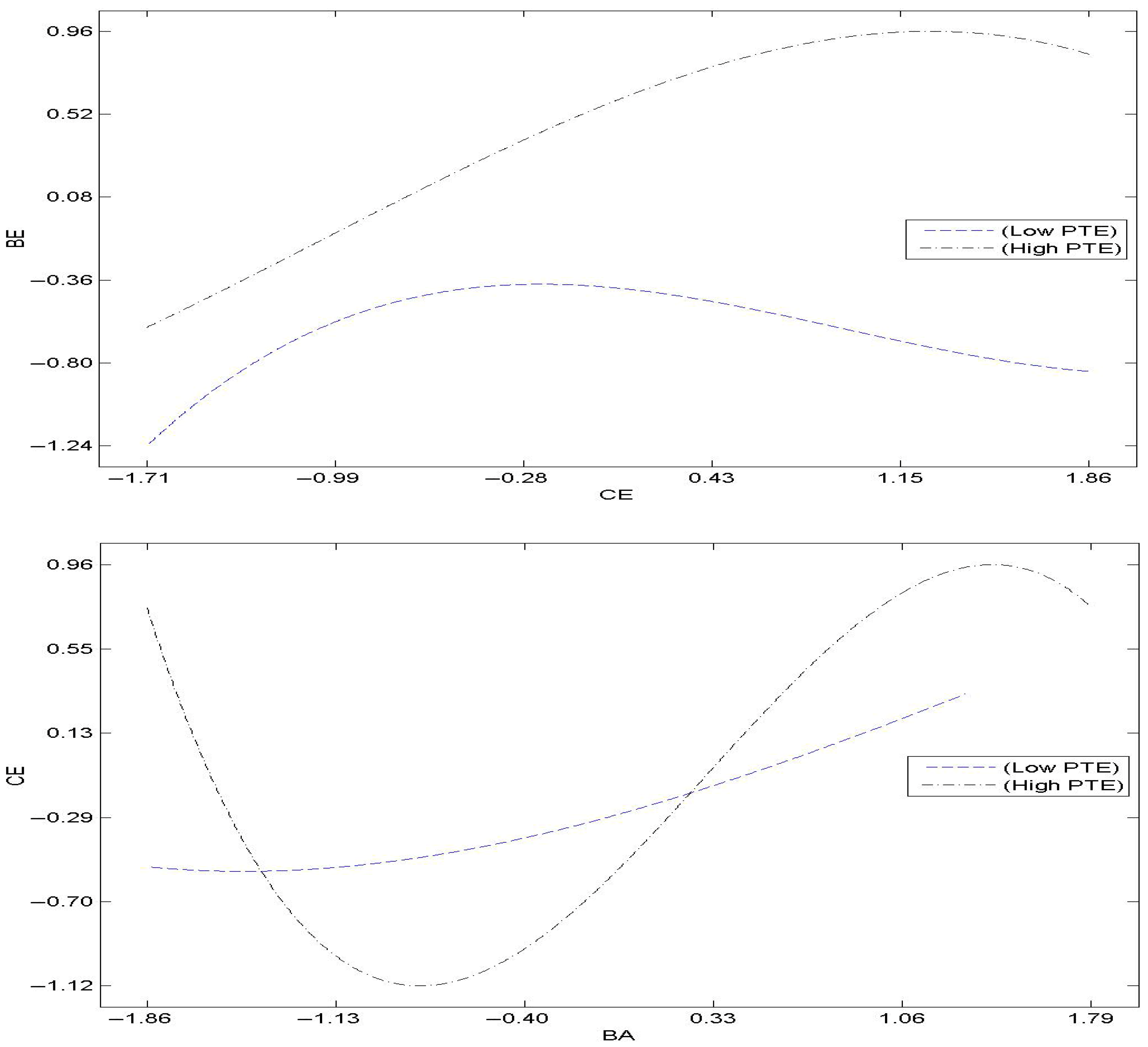
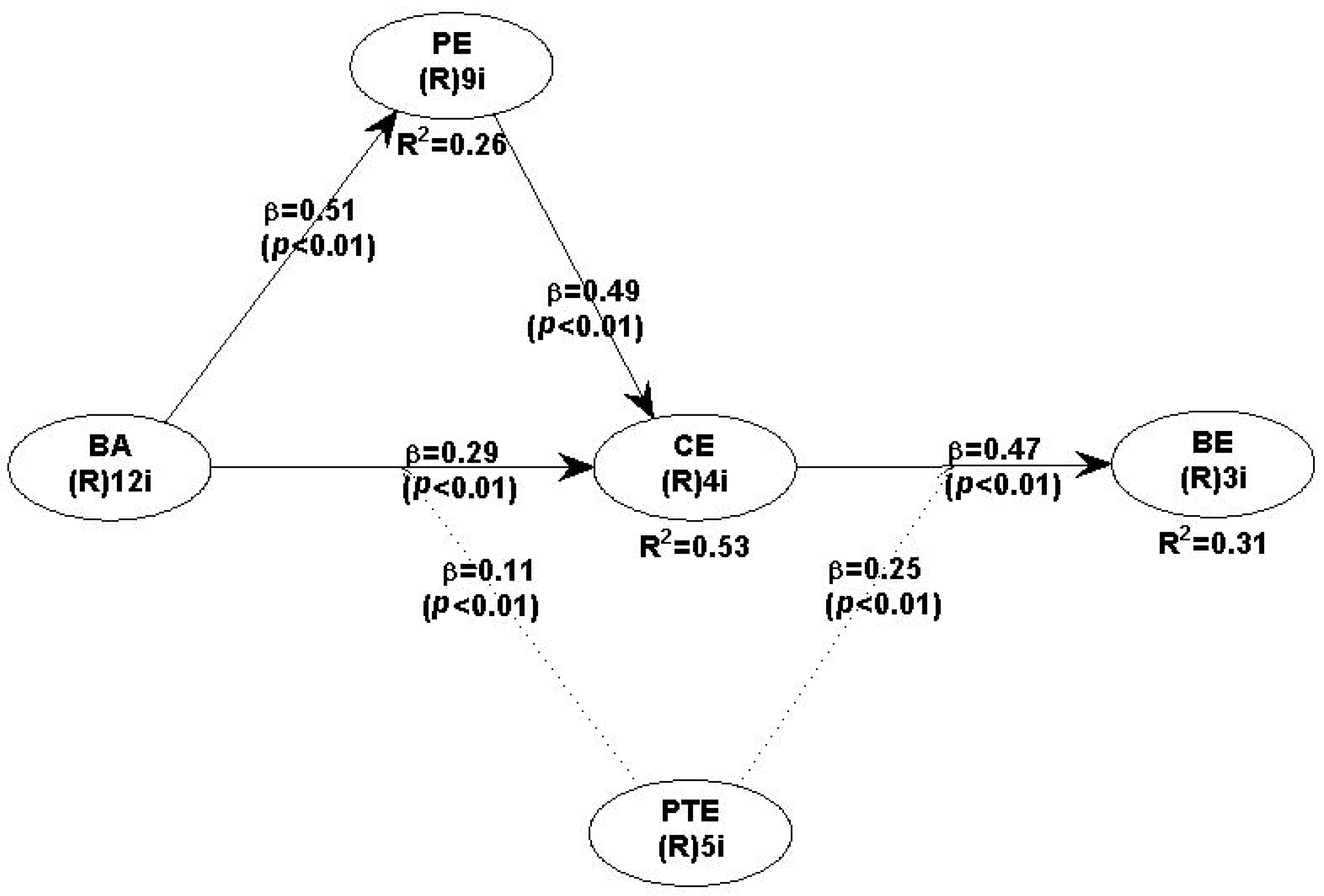
Table 5 and
Figure 2 and
Figure 3 present the structural model results which show that all hypothesized relationships are statistically significant and supported. Brand anthropomorphism positively influences customer engagement, while it also has a strong effect on perceived empathy. Perceived empathy, in turn, significantly enhances customer engagement, which subsequently drives brand evangelism. The moderating analyses indicate that perceived technological empowerment strengthens both the effect of brand anthropomorphism on engagement and the effect of engagement on brand evangelism, though with significant effect sizes. The R
2 values reveal that the model explains 26% of the variance in perceived empathy, 53% in customer engagement, and 31% in brand evangelism, demonstrating a solid explanatory power for the proposed framework.
The mediation analysis presented in
Table 6 shows that both hypothesized indirect effects are statistically significant, as indicated by the bootstrapped confidence intervals that do not cross zero as recommended by Preacher and Hayes [
70]. The first pathway demonstrates that perceived empathy significantly mediates the relationship between brand anthropomorphism and customer engagement, with a substantial indirect effect supported by a high t-value. Similarly, customer engagement serves as a significant mediator between brand anthropomorphism and brand evangelism, though with a slightly smaller indirect effect. In both cases, the lower and upper bounds of the 95% confidence intervals confirm the robustness of the mediating effects, providing strong evidence that these intermediary constructs play meaningful roles in explaining how brand anthropomorphism ultimately enhances engagement and evangelistic behaviors.
5. Discussion
This study advances understanding of how brand anthropomorphism (BA) fosters hotel brand evangelism (BE) by revealing a chain of psychological and behavioral mechanisms that closely align with patterns identified in prior hospitality and marketing research. Consistent with earlier findings, the results confirm a positive effect of BA on customer engagement (CE). Similar to previous studies showing that anthropomorphism-based communications heighten emotional attachment and willingness to pay premium prices [
27,
45,
71,
72], our results reinforce the notion that human-like brand cues encourage customers to invest more time, attention, and emotional energy in their interactions. These congruent findings collectively support social exchange theory (SET), which suggests that anthropomorphic features foster relational closeness and motivate voluntary engagement beyond transactional behavior.
The study also finds that BA positively influences perceived empathy (PE), mirroring a growing body of hospitality research showing that anthropomorphic cues—particularly those present in service robots or AI-enabled systems—activate emotional responses and increase perceptions of warmth, sensitivity, and care. This is highly consistent with recent studies demonstrating that anthropomorphic robots increase guest feelings of warmth, social presence, and engagement [
73], and that anthropomorphism combined with favorable robot attributes enhances hospitality experiences and subsequent behavioral intentions [
29]. These parallels reinforce the broader empirical consensus that emotional and relational constructs—including brand love, perceived warmth, and emotional attachment—serve as stronger predictors of engagement and behavioral outcomes than functional attributes alone [
11,
74]. Therefore, the significant role of PE in driving CE aligns with existing evidence that empathetic or socially warm perceptions derived from anthropomorphic cues intensify customers’ willingness to interact, participate, and emotionally invest in the brand.
Importantly, the observed transition from customer engagement to brand evangelism highlights how individual emotional and relational responses can translate into social influence processes. In the digital age, evangelistic behaviors—such as sharing experiences, recommending brands, and persuading others—function as mechanisms through which customers shape collective perceptions and expectations regarding technology-enabled hospitality services. These behaviors reflect a micro-social change dynamic, whereby digitally empowered individuals actively participate in redefining social norms surrounding service interactions, trust in AI-enabled systems, and humanized brand relationships.
The mediation results further integrate well with prior literature. The finding that PE partially mediates the BA→CE relationship, and that CE subsequently mediates the BA→BE relationship, echoes earlier research showing that anthropomorphism promotes engagement, which in turn predicts loyalty, advocacy, and value co-creation behaviors. This pattern aligns with findings that anthropomorphic chatbots increase customer engagement, which mediates downstream purchase and loyalty outcomes [
40], and that perceived anthropomorphism in hospitality robots enhances customer experience and engagement/value-co-creation intentions [
29]. Likewise, broader marketing studies affirm that anthropomorphic brand cues strengthen consumer engagement and advocacy behaviors [
45,
75]. Together, these converging results reinforce the social exchange logic wherein anthropomorphism triggers relational benefits (e.g., empathy), which customers reciprocate through greater engagement and evangelistic behaviors.
Finally, the moderating effect of perceived technological empowerment (PTE) provides an important extension to the literature by showing that PTE amplifies both the BA→CE and CE→BE relationships. This finding aligns with research demonstrating that technologically empowering environments—characterized by intuitive, efficient, and reliable digital systems—enhance customer engagement and loyalty in hospitality contexts. Studies on AI and IoT in hotels similarly show that well-designed technological systems elevate guest satisfaction and strengthen engagement with brand offerings [
45], while efficient and enjoyable AI-enabled service interactions foster loyalty [
76]. These parallels reinforce broader insights on technology-enabled value co-creation, which highlight that customers who feel competent and in control during technology-mediated interactions are more likely to engage deeply and advocate for the brand [
4]. Thus, the interaction effects observed in this study are consistent with prior evidence that technological empowerment enhances both relational and behavioral outcomes in digitalized service settings.
Table 7 below summarizes the research constructs, gaps, and contributions of the current study.
6. Theoretical Implications
This study contributes to theory in multiple important ways. First, it extends the application of Social Exchange Theory (SET) to the hospitality domain by empirically demonstrating how brand anthropomorphism can trigger a sequence of relational and emotional responses that culminate in brand evangelism. While SET has traditionally been applied to interpersonal or organizational exchanges, these findings highlight its relevance in customer–brand interactions, illustrating that customers perceive relational “benefits” from human-like brand traits—such as empathy—and reciprocate with engagement and advocacy behaviors. By showing that anthropomorphic cues operate as symbolic resources in the exchange process, the study enriches SET literature, suggesting that emotional and relational benefits in brand interactions can elicit voluntary, non-transactional responses, akin to reciprocity in interpersonal relationships [
27,
45]. This theoretical extension underscores that social exchange is not confined to human-to-human interactions but can meaningfully encompass human-brand interactions in service contexts.
Second, the study advances the theoretical understanding of brand anthropomorphism by integrating perceived empathy (PE) as a mediating psychological mechanism. While prior research has established that anthropomorphic cues enhance emotional attachment and engagement, this research empirically demonstrates that empathy is a key conduit through which human-like brand traits translate into customer behavioral outcomes. This mediated model provides a nuanced explanation for why anthropomorphism influences engagement: customers do not merely respond to surface-level cues of personality or warmth, but they perceive genuine human-like understanding and care, which motivates deeper engagement with the brand. These findings align with and extend recent hospitality literature suggesting that anthropomorphism fosters emotional bonds, trust, and relational loyalty, moving beyond purely functional or transactional branding strategies [
45,
72]. By explicitly identifying empathy as a mediating construct, the study contributes to emotional branding theory, showing that relational and affective processes are central to understanding how anthropomorphism impacts downstream behaviors such as advocacy and brand evangelism.
Third, the moderating role of perceived technological empowerment (PTE) highlights the intersection of relational and technological frameworks, offering a theoretical bridge between human-centric and technology-mediated approaches to brand management. The findings indicate that technology can amplify the emotional and relational effects of anthropomorphism: when customers feel competent, in control, and supported by digital tools—such as mobile apps, AI chatbots, or smart hotel systems—the impact of human-like brand traits on engagement and evangelism is strengthened. This insight extends the literature on technology-mediated brand interactions, demonstrating that digital empowerment is not merely a functional facilitator but a strategic mechanism that enhances the efficacy of anthropomorphic branding. By integrating emotional, relational, and technological perspectives, the study proposes a comprehensive mediated-moderated model that accounts for both human-like cues and technology-enabled empowerment in shaping brand advocacy behaviors.
Finally, the study contributes to theoretical discussions on hybrid service environments in hospitality. As hotels increasingly integrate AI, IoT, and other digital technologies into service delivery, understanding the interaction between anthropomorphism and technological empowerment becomes crucial. This research highlights that relational mechanisms such as empathy and engagement remain essential even in digitally mediated contexts, suggesting that technology should be leveraged to complement, rather than replace, human-like interactions. The proposed framework therefore provides a robust theoretical lens for examining how emotional, relational, and technological factors jointly drive brand evangelism, offering a foundation for future research to explore nuanced boundary conditions, additional mediators, or alternative moderating factors in digitalized hospitality and service settings.
7. Practical Implications
The findings of this study provide hotel managers with a set of actionable strategies to enhance customer loyalty, engagement, and advocacy through the strategic use of anthropomorphism, empathy, and technological empowerment.
First, incorporating anthropomorphic cues into branding and service design can significantly strengthen emotional connections with guests. Managers should consider integrating human-like characteristics into brand storytelling, marketing communications, and service interactions. This can be achieved through various channels, including service robots, virtual assistants, personalized messaging, and digital touchpoints that exhibit warmth, attentiveness, or humor. For example, chatbots or mobile apps can be programmed with friendly, conversational language that mirrors human social interactions, while in-room robots or AI assistants can display “personalized” behaviors that respond to guest preferences. Additionally, marketing campaigns that personify the hotel brand or highlight staff narratives can evoke relational warmth, making guests feel a sense of familiarity and connection with the brand.
Second, fostering perceived empathy should be prioritized as a core strategy. Hotels can operationalize empathy by training staff to recognize and respond to individual guest needs, actively listening to concerns, and demonstrating care in both routine and exceptional service encounters. Implementing structured feedback mechanisms—such as real-time satisfaction surveys or AI-driven sentiment analysis—enables managers to monitor guest expectations and tailor services accordingly. Furthermore, designing personalized experiences, such as remembering guest preferences, offering customized recommendations, or celebrating special occasions, reinforces the perception that the hotel genuinely understands and values its customers. These efforts not only increase engagement but also lay the foundation for brand evangelism, as emotionally connected guests are more likely to recommend and advocate for the brand.
Third, leveraging technological empowerment can amplify the impact of both anthropomorphic branding and customer engagement. User-friendly digital platforms, AI-powered personalization, self-service kiosks, and mobile applications that allow guests to control reservations, requests, and service customization provide a sense of autonomy, efficiency, and competence. Empowered customers feel more in control of their experience, which not only increases satisfaction but also encourages active participation with the brand. Hotels should ensure that technological tools are intuitive, responsive, and integrated across service touchpoints, so that guests experience seamless interactions that complement the human-like relational elements of the brand [
45].
Finally, integrating emotional and technological strategies is essential for maximizing behavioral outcomes. Hotels should design experiences where anthropomorphic cues and technological empowerment reinforce each other. For example, a chatbot with a human-like personality could provide personalized recommendations while also enabling guests to efficiently manage room service, reservations, or special requests. Similarly, AI-powered concierge services can combine relational warmth with actionable digital support, ensuring that guests perceive both care and competence. By simultaneously addressing emotional and functional dimensions, hotels can foster deeper engagement, stronger emotional attachment, and ultimately, brand evangelism, as guests are more likely to advocate for and promote a brand that meets both relational and practical needs.
Beyond managerial performance outcomes, these findings suggest that hotels play an active role in shaping digitally mediated social behaviors. By fostering empathetic, anthropomorphic, and empowering brand interactions, hotels can influence how customers communicate, share experiences, and shape collective expectations within their social networks. In this sense, hospitality brands act as micro-agents of social change, contributing to evolving norms of digital trust, human–technology interaction, and peer-driven influence in contemporary service environments.
8. Limitations and Future Research Avenues
While this study provides valuable insights into the mechanisms linking brand anthropomorphism, perceived empathy, engagement, technological empowerment, and brand evangelism, some limitations should be acknowledged, which also point to avenues for future research.
First, the cross-sectional research design limits the ability to draw definitive causal inferences. Although the findings suggest a logical sequence from anthropomorphism to empathy, engagement, and evangelism, the temporal ordering of these effects cannot be conclusively established. Longitudinal studies, experience sampling methods, or controlled experimental designs could provide more robust evidence of causality, capturing dynamic changes in engagement, emotional attachment, and brand advocacy over time. Such approaches would also allow researchers to explore potential feedback loops, where brand evangelism may further reinforce engagement or perceptions of empathy.
Second, the use of convenience sampling targeting customers of five-star hotels in Egypt limits the generalizability of the findings. Responses may differ in midscale or budget hotels, where service complexity and technological adoption are lower, or in other cultural contexts where expectations for human-like brand cues, empathy, and technological empowerment vary. Future research should replicate this study across diverse hotel segments and geographic regions to test the robustness of the observed relationships.
Third, the sample was restricted to hotel customers in Egypt, which may constrain the generalizability of the findings. Cultural norms, service expectations, technological adoption, and market maturity can all influence how anthropomorphism and technological empowerment affect customer perceptions and behaviors. For example, cultures with high collectivism or high uncertainty avoidance may respond differently to human-like brand cues or digital empowerment initiatives compared to individualistic or technologically mature markets. Future research should replicate and extend this model across diverse geographic regions, hotel segments (luxury vs. midscale), and customer demographics to test the robustness of the relationships and identify potential contextual moderators.
Fourth, while perceived technological empowerment was examined as a moderator, other psychological, situational, or relational factors may further shape the observed effects. Variables such as customer personality traits (e.g., need for cognition, openness to experience), prior brand experience, social influence, or perceived risk could act as moderators or mediators in the relationships between anthropomorphism, engagement, and evangelism. Incorporating these factors would provide a richer understanding of boundary conditions and help explain individual differences in responsiveness to anthropomorphic cues and technology-mediated empowerment.
Fifth, this study conceptualized brand anthropomorphism and technological empowerment at an aggregate level, without differentiating among their dimensions. Anthropomorphism encompasses multiple facets, including warmth, competence, animacy, and intentionality, each of which may uniquely influence emotional and behavioral outcomes. Similarly, technological empowerment may vary depending on the type of technology—AI-driven platforms, mobile apps, self-service kiosks, or immersive tools such as augmented reality (AR) and virtual reality (VR). Future research could examine these dimensions separately, exploring how specific anthropomorphic traits or technological features differentially affect perceived empathy, engagement, and brand advocacy. For instance, warmth may drive relational attachment, whereas competence may enhance trust in service reliability; immersive AR or VR experiences may augment emotional engagement in ways traditional digital tools cannot.
Finally, while this study focused on hotels, the framework has potential relevance in broader hospitality and service contexts, such as restaurants, airlines, or theme parks, which increasingly employ anthropomorphic and technology-mediated interactions. Future studies could investigate cross-industry applications to determine whether the integrated model of anthropomorphism, empathy, engagement, and technological empowerment generalizes beyond hotel settings. Additionally, longitudinal or experimental designs could explore the long-term sustainability of evangelistic behaviors, the role of repeated interactions, and the potential cumulative impact of multi-sensory or immersive experiences on customer-brand relationships.