


Abstract
This study develops and tests an integrated model explaining why travellers substitute conventional watches with smartwatches, incorporating functional, emotional, and health-related factors: travel convenience, perceived multifunctionality, digital travel attachment, health monitoring orientation, and smartwatch satisfaction. The majority of studies have explored technology adoption and continuation or health-oriented usage of a product but not its substitution by travellers, making it necessary to identify the main determinants of this behaviour. Because the phenomenon of interest is substitution rather than first-time adoption, the target population is travellers who already use a smartwatch; switching intention is accordingly operationalised as the intention to complete the substitution—that is, to make the smartwatch the primary timepiece during travel and to relinquish the conventional watch—rather than as an initial adoption decision. Data were gathered using an online questionnaire of 406 respondents in Indonesia who were users of smartwatches and travelled outside of their city in the last six months. The measurement model was first purified through exploratory factor analysis and then validated through confirmatory factor analysis, with convergent and discriminant validity established before the structural model was estimated. The results obtained suggest that travel convenience is positively associated with perceived multifunctionality, digital travel attachment, and health monitoring orientation. Moreover, perceived multifunctionality, digital travel attachment and health monitoring orientation are positively associated with smartwatch satisfaction, which in turn shows the strongest association with travellers’ intention to switch to smartwatches. Smartwatch satisfaction shows the strongest association with switching intention (β = 0.861, 95% CI [0.744, 0.978]) and the model accounts for 74.2% of its variance, while all ten indirect effects tested are significant, indicating that satisfaction is the channel through which the functional, emotional and health-related evaluations reach the substitution decision. These results mean that travellers are more likely to use smartwatches because of their multifunctionality and the possibility of using them to facilitate mobility, connectivity, health care, and improve the travel experience. With regard to sustainability, the findings are interpreted in relation to SDG 3 (Good Health and Well-being), through the proactive use of wearable technology for health monitoring during travel; SDG 9 (Industry, Innovation and Infrastructure), through the reconfiguration of travel consumption by digital innovation; and SDG 12 (Responsible Consumption and Production), through the device convergence that reduces the number of single-function products travellers carry. These linkages are developed conceptually in Sections 5.3 and 6.3 and were not measured directly in the present study.
1. Introduction
The last decade has witnessed many developments in the tourism industry with the application of technology such as mobiles, artificial intelligence, large-scale data analysis and connectivity of devices. Modern-day travellers increasingly use digital solutions while travelling, including searching for information, planning travel, navigation, communication, experience sharing and post-travel evaluation. This shows that technology is a major component in tourists’ experiences and destination management strategies [1,2]. Among the new technologies that are attracting increasing attention is wearable technology for its ability to provide continuous, real-time and personalised assistance throughout travel. The most obvious trend is that of wearables, especially smartwatches that have evolved from the traditional time-telling device into a single gadget with many functions.
The global smartwatch market is witnessing healthy growth due to the increasing consumer demand for such technologies. Recent studies show how wearable devices play an important role in enabling a new generation of smart tourism ecosystems and allow sustained interactions between tourists, destinations and digital technologies [3,4]. The trend has also influenced tourists’ preferences, as people now prefer to use integrated multifunctional devices instead of having several special gadgets while travelling [5,6]. Thus, modern smartwatches are key technological innovations in the development of tourism, as they contribute to changing the way travellers communicate with a destination and travel. In the past, the most important function of watches was to tell the time and to be the most important accessory for the traveller. Back then, they could only be used to indicate time, date and sometimes chronograph. However, today, with the increasing digitalisation of the tourism industry, travellers have different needs in terms of the use of technology. Today, it is important to have a device that can provide travellers with up-to-date information concerning, for example, transportation schedules, weather conditions, destination recommendations, etc. [7,8].
The trend of using integrated digital technologies for more convenient, efficient and safe travel is growing among modern tourists. Smartwatches offer a comprehensive strategy by integrating a variety of features, including communication tools, GPS navigation, contactless transactions, health tracking, and travel alerts, into a single wearable device [9,10]. Such features meet the needs of modern travellers well. Therefore, consumer demand shifted from gadgets that perform specific functions to the use of multifunctional wearables [11,12]. Generally, this is an example of behavioural change when conventional products are replaced with advanced digital ones to meet the new needs of consumers [13,14]. The development of wearable technology and the shift from regular watches to the use of smartwatches has become an increasingly important part of digital consumer behaviour in the tourism industry [15].
As technology has evolved, the development of highly efficient smart wristwatches has been adopted by tourists for many functions during travel. Unlike normal watches, which are limited to telling time, smartwatches combine many digital features in a single portable watch, allowing easy access to various useful services. GPS-enabled smartwatches offer advanced navigation, allowing tourists to confidently explore new destinations without getting lost. Tourists will also find it easier to pay for their purchases with mobile payments on smartwatches, as they will not need cash or credit cards. The devices also enable tourists to get important alerts related to transport, weather conditions, destinations and other information.
The most significant strength of the smartwatch is its capacity to track fitness and well-being indicators such as heart rate, sleep quality, physical activity, and others [16,17]. This feature is consistent with the notion of perceived multifunctionality, which refers to the perception of a device’s ability to perform several beneficial tasks simultaneously. The studies demonstrate that perceived multifunctionality increases the attractiveness and value of wearables because of the reduced number of gadgets that a person needs and easier travel [18,19]. Thus, travel convenience is a must for the adoption of wearables. Travellers are looking for products that cut down efforts, enhance accessibility and offer a better travel experience through technology integration [20,21].
As the use of technology is becoming a routine aspect of human life, it has influenced the relationship between the individual and his/her gadgets. Moreover, this relationship has transformed into an emotionally and psychologically dependent one where people feel a special bond towards their gadgets. In tourism, tourists rely on their gadgets not only because of the functions they perform but also as their source of comfort and socialising while travelling. This issue has resulted in the concept of digital travel attachment, which means an emotional attachment of tourists to technological gadgets that tourists use when travelling [22,23]. With the development of this kind of dependency in tourists when they are travelling, smartphones, smartwatches, and various other technological gadgets become their necessary travel buddies.
The dependence on travel technology has increased due to the importance of constant connectivity and personalised services available to tourists during their travels. Smartwatches create a feeling of security and comfort because the tourist is capable of communicating and receiving emergency notifications, locating himself or herself, and tracking his or her health directly from the watch [24,25]. This helps to decrease the perceived risk and build trust in tourists visiting new places. Moreover, there is a scientific base stating that people become emotionally attached to technological objects, which influence their attitude to them and result in increased satisfaction and loyalty [26,27]. In the case when smartwatches become essential parts of travel experiences, this emotional connection will help increase the level of satisfaction since the device will act both as an instrument and as an emotional one.
The COVID-19 pandemic has changed the way travellers think about health, safety and personal well-being, with health considerations now playing a critical role in travel decision-making. After the pandemic, travellers are more aware of keeping physically fit, monitoring their physiological health, and reducing health-related risks while travelling. Such a changing mindset has contributed to accelerating the adoption of digital health technologies that allow continuous health monitoring during travel experiences [28,29]. Now travellers are looking for tech-based solutions that provide assurance about their health status, especially when visiting new places, engaging in outdoor activities or travelling long distances. Therefore, wearable devices have gained popularity in tourism contexts as they may potentially facilitate proactive health management and improve travellers’ safety perception [30].
Smartwatches are among the most popular wearables for real-time health monitoring. Modern smartwatches can measure several physiological factors such as heart rate, blood oxygen saturation, sleep efficiency, activity, calories burned, and stress levels and help people to monitor their health while travelling [20,31]. The discussed features are related to the orientation of health monitoring understood as an individual’s inclination to observe, control and improve health with the help of technology. Previous research has demonstrated that individuals with higher health consciousness are more likely to perceive wearable devices as useful and relevant to their everyday lives [32,33]. In addition, smartwatches are viewed positively by health-conscious consumers since the devices support their health goals and help to reduce uncertainty while travelling [34,35]. Thus, health monitoring orientation is considered as one of the important psychological factors that affect the acceptance of wearables.
The literature related to smartwatches and wearables technology mainly revolves around technology acceptance, continued use, health application, consumer electronics adoption, and mobile technology usage. Previous studies have used the technology acceptance model and task-technology fit for the acceptance of smartwatches [36]. Meanwhile, the expectation confirmation theory, adoption of wearable technologies within organisations [37], and fitness wearable continuance behaviour [38] have been considered for the continuity of smartwatches. Some works have been done on wearable health technology and mHealth monitoring particularly regarding perceived usefulness and continuance [39]. In case of smart tourism, there is literature related to smart tourism technologies regarding traveller satisfaction, revisit intention, and experience quality [40,41]. However, very few researchers have shown interest in examining the role of smartwatches in being the replacement for watches in the context of travel. Moreover, there is little literature available where researchers tried to incorporate travel convenience, digital attachment, perceived multifunctionality, and health monitoring preference in one model to investigate smartwatch switching. Such lack of literature limits the ability to understand the impact of various factors on smartwatch satisfaction and switching intention of travellers in the tourism industry [42].
This research aims to extend understanding of the adoption of wearable technology within tourism by investigating the factors that encourage travellers to transition from traditional watches to smartwatches. It is concerned with how convenience in travel impacts on the perception of multifunctionality, emotional connection to digital travel and health monitoring capabilities. It is expected that travel convenience will be an important factor influencing tourists’ perceptions of the utility of smartwatches, emotional attachment to the devices, and awareness of health-related features in travel. The paper also examines the effects of perceived multifunctionality, digital travel attachment and health monitoring orientation on overall satisfaction with smartwatches. The research presents a holistic framework for assessing travellers’ experiences with smartwatches from functional, emotional and health-related perspectives. In addition, it examines the effect of smartwatch satisfaction on switching intention, especially the probability of replacing traditional watches for travel. Thus, the study contributes to the literature on wearable technology and tourist behaviour by proposing an integrated model that explains the antecedents and consequences of the use of smartwatches in tourism contexts based on this analysis. The study is expected to give theoretical contributions to technology switching behaviour and practical implications to smartwatch makers, wearable device developers, and tourism industry stakeholders to enhance traveller experiences using innovative digital solutions.
Before these questions are stated, the scope of the term switching in this study must be delimited. The study does not model the decision of non-users to adopt a smartwatch for the first time; the sample is composed of travellers who already use a smartwatch. What is modelled is post-adoption substitution: the intention of current smartwatch users to complete the displacement of the conventional watch, which in most markets is still owned, worn and used alongside the smartwatch rather than discarded at the moment of first purchase. Substitution of this kind is a graded and reversible process, and intention to complete it is conceptually distinct from continuance intention, which concerns only whether the incumbent behaviour with the new device will persist. The distinction is made explicit here because it governs the wording of the dependent construct (Section 2.5), the composition of the sample (Section 3.1), and the boundary conditions of the findings (Section 6.3).
Accordingly, the study is guided by four research questions:
RQ1: To what extent does travel convenience shape travellers’ perceptions of smartwatch multifunctionality, their digital travel attachment, and their health monitoring orientation?
RQ2: How does digital travel attachment relate to perceived multifunctionality and to health monitoring orientation in the travel context?
RQ3: Which of these functional, emotional and health-related evaluations are associated with smartwatch satisfaction?
RQ4: To what extent does smartwatch satisfaction account for travellers’ intention to complete the substitution of the conventional watch by a smartwatch?
The remainder of the paper is organised as follows. Section 2 develops the conceptual framework and the nine hypotheses. Section 3 describes the sample, the measures and the two-step analytical strategy. Section 4 reports the measurement and structural results. Section 5 discusses the findings against the smart tourism and wearable technology literature and relates them to the Sustainable Development Goals. Section 6 concludes with theoretical contributions, managerial implications and limitations.
2. Literature Review
The model developed below is anchored in the push–pull–mooring (PPM) framework of consumer switching [43], which adapts migration theory to explain why consumers move from an incumbent product or provider to an alternative. PPM distinguishes three families of antecedent: push factors, which repel the consumer from the incumbent; pull factors, which attract the consumer towards the alternative; and mooring factors, which anchor the consumer to the incumbent irrespective of the other two, such as switching costs, habit, and affective or symbolic ties to the existing product. The five constructs examined here—travel convenience, perceived multifunctionality, digital travel attachment, health monitoring orientation and smartwatch satisfaction—all belong to the pull family: each concerns the attractiveness of the smartwatch rather than dissatisfaction with the conventional watch or the forces retaining the traveller with it. This study is therefore explicitly an account of the pull mechanism in wearable substitution, and the contribution it claims is bounded accordingly: it specifies how travel-specific pull is generated and through what sequence it reaches switching intention, not how pull is weighed against push and mooring. The boundary is a considered one. For most travellers the conventional watch is a low-cost, low-friction incumbent that imposes no contract, no learning cost and no transfer of accumulated data, so the push and mooring forces that dominate switching in high-commitment categories such as banking or telecommunications are comparatively weak here and the pull mechanism is correspondingly more consequential. It nonetheless remains a limitation of the design rather than a property of the phenomenon, and Section 6.3 identifies the joint estimation of push, pull and mooring as the necessary next step.
2.1. Travel Convenience
Travel convenience is the extent to which technological advances reduce the effort, uncertainty, time spent and mobility constraints of travel. The existing literature is in agreement that the smart tourism technologies improve the tourists’ experience by providing real-time information, enhanced accessibility, personalisation and seamless engagement [2,44]. Similarly, studies on smart tourism satisfaction represent similar views that equate convenience with fewer travel concerns, more effective transactions, and greater destination involvement [40]. But there are different opinions on the issue of convenience. Some researchers regard it as part of smart destination infrastructure, while others connect it with digital service quality, information accessibility or technological equity between different tourist demographics [45,46]. Travel convenience remains relatively under-explored when the smartwatch research. To date, no recent study indexed in Scopus has specifically examined travel convenience as a factor influencing intention to switch from traditional watches to smartwatches. Thus, there is a large gap in the current research landscape concerning the placement of travel convenience as an antecedent of perceptions concerning smartwatches.
2.1.1. Travel Convenience and Perceived Multifunctionality
Travel convenience and multifunctionality perception can be defined as the ability of travellers to perceive certain technologies in terms of their ability to ease the execution of travel tasks and to satisfy several needs at once. Travel convenience is the degree of effectiveness and time saving of a certain technological device and the ease with which it enables people to travel. If the user finds the device very handy, he/she is more likely to notice and appreciate all possible functions of it. Devices that make the processes more convenient, as previous research has found, improve the perception of the users’ own skills and usefulness of technologies [47,48]. The study of mobile and smart technologies also revealed that more convenience increases the perception of digital devices as flexible and able to do multiple tasks at the same time [49,50]. To the best of our knowledge, there is no research on how travel convenience affects the perception of multifunctionality on smartwatch switching intention, but previous studies have suggested a positive relationship between perceptions of convenience and evaluations of integrated technological functions. Moreover, studies on wearable technology have revealed that users expect the integration of navigation, communication, payment, and health monitoring features in a single platform [51]. Therefore, it is anticipated that higher travel convenience will have a positive effect on travellers’ perception of the multifunctionality of smartwatches.
H1.
Travel convenience positively influences perceived multifunctionality.
2.1.2. Travel Convenience and Digital Travel Attachment
Increasingly, travel convenience is seen as a key factor in how travellers emotionally relate to digital technologies. When devices make travel activities more efficient, reduce uncertainty, provide instant access to information and enable smooth mobility, users tend to rely on them more regularly during trips. Through such repeated meaningful interactions, emotional attachments and psychological dependencies can gradually develop, which are key elements of digital travel attachment. Previous studies have shown that the more convenient the digital services will be, the more users will engage with them, the more they will rely on technology, and the more emotional bonds they will form with digital platforms [52,53]. Likewise, research in tourism contexts indicates that technologies that enhance travel efficiency and reduce stress may improve travellers’ trust, comfort, and attachment to digital resources [54,55]. These findings indicate positive relationships between convenience perceptions and technology attachment in general, but mainly on smartphones, tourism apps or digital platforms rather than on wearable devices. Furthermore, there is no recent research that specifically examines the impact of travel convenience on digital travel attachment when considering smartwatch switching intention. The extension of this enquiry to the adoption of smartwatches is a novel contribution to the wearable technology and tourism literature. As smartwatches provide continuous assistance throughout travel experiences, higher perceived travel convenience would be likely to develop stronger emotional ties with the devices.
H2.
Travel convenience positively influences digital travel attachment.
2.1.3. Travel Convenience and Health Monitoring Orientation
Travel convenience plays a major role in influencing the attitude and behaviours of travellers in regard to health management during travel activities. As far as technologies make it easy to do things, provide easy access to information and promise seamless travel experiences, the likelihood that people adopt a proactive approach to manage their health becomes bigger. Convenient technological tools can potentially minimise barriers to health management because they improve access to necessary information, its timeliness and actionability. Empirical studies conducted in the areas of digital health and wearable technologies have found out that there is a positive relationship between perceived convenience and intention to track one’s health using self-tracking technologies [56,57]. This can also be inferred from the studies done in mobile health and wearable technologies as it was observed that perceptions about convenience in relation to those technologies had been positively related with health awareness among users [58,59]. Despite the fact that the impact of convenience on health-related behaviours has been empirically proven in numerous studies, most of them were carried out in the context of healthcare rather than tourism. In addition, there is no recent research dedicated to studying the impact of travel convenience on the health monitoring orientation in smartwatch switching intentions. Consequently, the current research attempts to build on existing knowledge and to investigate the idea that travel convenience drives travellers to focus more on their health and consequently promotes health monitoring orientation and utility of smartwatches during travel activities.
H3.
Travel convenience positively influences health monitoring orientation.
2.2. Perceived Multifunctionality
The notion of multifunctionality is defined as the perception of people that a particular device or technology may have several capabilities that could be useful for meeting different needs on one platform. As can be seen from the previous research, the consensus among scholars is that multifunctionality has a positive influence on the assessments made by users of digital technologies due to enhanced utility, efficiency, convenience, and the necessity to have several devices [60,61]. In the field of wearable devices, multifunctionality usually means combining different characteristics, such as communication, entertainment, productivity, navigation, payments, and health tracking within one device. However, it is ambiguous what concept should be used. According to some researchers, multifunctionality is a characteristic of a technology that helps improve the perceived usefulness and value of it [12]. On the other hand, it is argued that multifunctionality helps form emotional attachment to devices that can meet various everyday needs [18]. Previously, scholars investigated the role of the multifunctionality in the context of smartphones, wearable devices, and smart consumer products; however, the influence of multifunctionality on switching intentions of using smartwatches was not researched before. Studies on smartwatches mainly concerned acceptance, usage and adoption of technologies, and health issues, but not the question of how perceptions of multifunctionality affect the substitution of watches with smartwatches [21,39].
Perceived Multifunctionality and Smartwatch Satisfaction
The perceived multifunctionality of technology is considered to be one of the most important features of wearables. It can be defined as the users’ belief that a piece of equipment can perform multiple tasks simultaneously. Simply put, this means that, in relation to smartwatches, this equipment has all kinds of features, including communication, navigation, payments, entertainment, productivity and health monitoring. Previous literature demonstrates that the addition of extra multifunctional features in digital products has a positive impact on the perception of such products among users, expressed by higher perceptions of usefulness, efficiency and general value [16]. As per the studies that were conducted specifically for wearable technologies, it was also found that the provision of wide-range services that make daily routines easier and reduce the necessity to use various gadgets leads to increased user satisfaction [62,63]. All in all, these findings prove the existence of the positive relation between perceived multifunctionality and user satisfaction. However, a large part of the literature does not pay enough attention to the switching behaviour and concentrates mainly on satisfaction after product adoption. In addition, no recent studies have investigated the effect of the perceived multifunctionality on the satisfaction of smartwatches, taking into account the intention to switch from traditional products. Hence, this issue has not been sufficiently studied yet, although it is theoretically important. The current trend of travellers using integrated technological solutions leads us to believe that the perception of multifunctionality will lead to satisfaction with smartwatches.
H4.
Perceived multifunctionality positively influences smartwatch satisfaction.
2.3. Digital Travel Attachment
Digital travel attachment is the emotional and psychological dependence of travellers on digital technologies that enable their travel experiences. Current research is unanimous in its suggestion that digital devices have transformed from functional travel tools into key travel companions that provide security, convenience, social connectivity, and emotional reassurance [64,65]. In tourism, digital attachment often means tourists’ reliance on technology for navigation, information searching, communication, content sharing, and trip planning. It is generally accepted that the stronger the attachment, the greater the technology use and the more positive the evaluations. However, the motivations underlying this attachment are debated. Some authors emphasise emotional attachments, trust and extension of self-identity as key determinants and others digital engagement, technology dependence and habitual behaviours. Some researchers argue that attachment is developed through perceived usefulness and experiential benefits, whereas others claim the key influences are identity expression and lifestyle integration. Academic interest in digital attachment in tourism and consumer technology is increasing; however, empirical evidence of its effect on switching behaviour of smartwatches is limited. Although most existing studies on smartwatches examine adoption, post-adoption, or health-related functionalities, there is limited knowledge on how emotional attachment to travel technologies affects the decision to switch from traditional watches to smartwatches. Thus, the role of digital travel attachment in influencing smartwatch switching intentions is an under-researched but relevant area for future investigation.
2.3.1. Digital Travel Attachment and Perceived Multifunctionality
Travellers’ perceptions of the capabilities and value of digital travel technology tools during travel may be impacted by their attachment to these technologies. People who have an emotional attachment to such technologies are more likely to use them often and at a greater intensity, thus allowing more exploration and appreciation of their features. Then the extra attachment can lead to a feeling that the device does many things well. Previous studies show that emotional ties with digital resources improve users’ evaluation of technological features, usefulness and value [10,66]. Similarly, studies on smart devices and technology use have demonstrated that users who are more attached to these technologies are more likely to perceive them as multipurpose and useful, with attachment fostering deep exploration and adoption into their daily lives [54,67]. The literature to date has generally supported the positive link between attachment and technology appraisal, but there is a gap in the effect of digital travel attachment on perceived multifunctionality. Moreover, the relationship has not been investigated in light of smartwatch adoption, particularly the shift from traditional watches to smartwatches in recent research. This investigation provides new perspectives for the fields of tourism and consumer technology. It is expected that this strong emotional attachment to digital travel tools will influence the perception of smartwatches as more multifunctional and more valuable during their travels.
H5.
Digital travel attachment positively influences perceived multifunctionality.
2.3.2. Digital Travel Attachment and Smartwatch Satisfaction
The theory of attachment explains the correlation between digital travel attachment and smartwatch satisfaction, implying that emotional attachment to objects/technologies influences the user’s experience of perceiving something. By digital travel attachment, we refer to the strong emotional attachment that travellers develop to their electronic devices, conceived as necessary companions to provide convenience, safety, connectivity and emotional comfort during their travels. As attachment level increases, users perform more technology-related functions and are positive about their experiences. Numerous studies have already demonstrated the positive effect of technology attachment on user satisfaction in different digital environments. For example, prior studies on smart devices indicated that technology attachment leads to higher satisfaction as well as greater perceived value and personal relevance [68,69]. In addition, prior research on wearable technologies shows that emotional attachment positively affects the satisfaction level and users’ intention to continue using the devices [70,71]. In general, positive relationships between attachment and satisfaction are evidenced, but these studies are mostly about smartphones, digital platforms or wearable technologies. The effect of digital travel attachment on smartwatch satisfaction has received little attention so far. In particular, there is almost no research on the impact of switching from traditional watches to smartwatches for people who are emotionally attached to digital travel technologies. A promising topic for novel contribution in tourism and wearable technology fields is the effect of digital travel attachment on smartwatch satisfaction. Simply put, the more travellers are attached to their digital travel technologies, the more satisfied they will be with smartwatches.
H6.
Digital travel attachment positively influences smartwatch satisfaction.
2.3.3. Digital Travel Attachment and Health Monitoring Orientation
Digital travel attachment is also expected to shape the extent to which travellers orient themselves towards health monitoring while travelling. Attachment increases the frequency, duration and breadth of interaction with a device: travellers who regard the smartwatch as an indispensable travel companion wear it continuously rather than selectively, and continuous wear is the precondition for the physiological data streams—heart rate, sleep, activity, stress—on which health monitoring depends. Attachment therefore operates as an exposure mechanism, converting a latent capability of the device into an habitual practice. Prior work supports this reasoning. Studies of emotional attachment to digital technologies report that attached users explore a wider range of device functions and derive greater experiential value from them [72,73,74], while research on wearables shows that sustained wear and engagement are the strongest correlates of self-monitoring behaviour [51,75]. The existing evidence, however, concerns smartphones and general-purpose wearables, and no study has examined whether attachment formed specifically in the travel context translates into a health monitoring orientation during travel, when routines are disrupted, sleep is irregular and physical exertion is atypical—precisely the conditions under which monitoring is most informative. This study therefore proposes that travellers who are more strongly attached to their digital travel technologies will also be more strongly oriented towards monitoring their health while travelling.
H7.
Digital travel attachment positively influences health monitoring orientation.
2.4. Health Monitoring Orientation
Health monitoring orientation can be defined as the disposition of the person to monitor, manage and improve his personal health using surveillance and prevention measures. Research shows that people who have a high level of health monitoring orientation tend to use technologies which provide users with real-time physiological information and support health-related decision-making [31,76]. Health monitoring orientation is generally related to the following activities associated with wearable technology: proactive health monitoring, fitness tracking, disease prevention and improvement of personal well-being. Still, scholars disagree about the definition of this concept. Some researchers consider health monitoring orientation as the manifestation of health consciousness and self-care intentions [77], while some see it as a behaviour which is driven by the development of digital technologies and self-monitoring features [75]. It is also stated in some research that people who have a high level of health monitoring orientation find wearable devices more useful and valuable for achieving personal health goals and managing personal life [78,79]. In the previous studies, health monitoring orientation was studied as a factor which affects the adoption and usage of wearable technologies, but its influence on the switching intentions was not studied yet. Most research is dedicated to the initial adoption of wearables and health benefits. The transition from conventional watches to smartwatches has not been widely explored.
Health Monitoring Orientation and Smartwatch Satisfaction
The importance of health monitoring orientation as a determinant influencing users’ perception of wearable technology has been widely recognised in the literature. Users who are actively monitoring their health are more likely to value devices that support their wellness management. Smartwatches are able to monitor different health variables, including heart rate, quality of sleep, physical activities and even stress levels. Individuals with active health monitoring are thus more likely to see these devices as beneficial to their health and lifestyle goals. Past studies have time and again established that health-minded consumers experience a high degree of satisfaction with the technology, owing to its compatibility with health behaviour and preventive practices of individuals [80,81]. Similar research conducted on digital health and wearables has revealed a positive relationship between mindfulness and motivation for monitoring one’s health behaviour and the satisfaction derived from the use of the technology [75,82]. The results demonstrate a positive association between health orientation and technology satisfaction, although most of the current literature relates to healthcare and fitness industries rather than tourism industry. Moreover, few studies consider the impact of health monitoring orientation on smartwatch satisfaction when considering switching from traditional watches to smartwatches. This research could also be used for the tourism industry in terms of switching of wearable technologies which would give new evidence for the current literature. The health monitoring orientation of travellers is expected to positively influence their satisfaction with the use of smartwatches.
H8.
Health monitoring orientation positively influences smartwatch satisfaction.
2.5. Smartwatch Satisfaction
Smartwatch satisfaction pertains to users’ overall assessment of their experiences with the device, based on the comparison between actual performance and prior expectations. Generally, previous research shows that satisfaction has been considered as one of the major post-adoption outcomes that influence subsequent usage, recommendations, loyalty, and decision-making concerning the technology adoption [60,83]. Satisfaction for smartwatches usually involves perceptions of the usefulness, usability, functionality, reliability, and value of smartwatches to users. Meanwhile, the major point of contention among scholars is the attribution of the main determinants of user satisfaction. Some scholars highlight technology determinants such as the quality of the system, performance of devices and integration of different features [84]. Others refer to psychological variables such as enjoyment, self-expression, trust, and emotional attachment to the device [85]. Moreover, some scholars argue that the determinants of satisfaction should include health benefits and the device’s fit with the lifestyle of users since users perceive the benefits from the adoption of smartwatches in terms of improving health and engaging in daily activities [86,87]. Although satisfaction has been widely studied as a predictor of continued usage and loyalty, there is a lack of research on the effect of satisfaction on switching intentions. In particular, most studies have investigated the users of smartwatches, but not the influence of satisfaction on the substitution of traditional watches by smartwatches among consumers.
Because satisfaction is positioned in this model as the proximal antecedent of switching intention, the dependent construct itself requires definition. Switching intention is defined here as a traveller’s intention to complete the substitution of the conventional watch by the smartwatch—to adopt the smartwatch as the primary timepiece for travel, to prefer it over an analogue or digital watch, and ultimately to relinquish the conventional device. So defined, the construct is a post-adoption substitution intention rather than either an initial adoption intention or a continuance intention. The distinction matters analytically: continuance concerns only the persistence of an existing behaviour, whereas substitution additionally requires the displacement of an incumbent product that the traveller still owns and can still choose to wear.
Smartwatch Satisfaction and Switching Intention
Satisfaction occupies a pivotal position in post-adoption models of technology use, and it is the mechanism through which functional, emotional and health-related evaluations are converted into a behavioural disposition towards the incumbent product. Expectation-confirmation reasoning holds that when a device’s realised performance meets or exceeds prior expectations, users form a positive summary evaluation that governs subsequent behavioural intentions [73,87]. In a substitution context this summary evaluation carries an additional, comparative charge: a satisfying smartwatch does not merely justify its own continued use, it progressively renders the conventional watch redundant, because every function the traveller values—timekeeping, navigation, communication, payment, notification and health monitoring—is already discharged by the single device on the wrist. The incumbent is displaced not because it fails, but because its sole remaining function has been absorbed. Prior research supports the general proposition that positive appraisals of wearable technology predict behavioural intentions and technology decisions [88,89], and that devices which satisfy personal needs are more likely to be used in place of less capable alternatives [90,91]. What remains untested is whether satisfaction with a smartwatch translates into the intention to complete the replacement of a traditional watch in the travel context. This study therefore proposes that the more satisfied travellers are with their smartwatch, the stronger their intention to substitute it for the conventional watch.
H9.
Smartwatch satisfaction positively influences switching intention.
The proposed research framework, as shown in Figure 1, depicts the process underlying tourists’ intention to switch from traditional watches to smartwatches during travel, highlighting a series of cognitive, emotional, and evaluative mechanisms. The key antecedent identified by the model is travel convenience, which shapes the perceptions of multifunctionality, digital travel attachment, and health monitoring focus. This demonstrates that convenience-oriented travellers are more likely to appreciate the multifunctional characteristics of smartwatches, develop stronger attachments to digital travel technologies, and emphasise health-related functionalities. Moreover, digital travel attachment is believed to increase the perceptions of multifunctionality and health monitoring orientation, as well as directly boost the overall satisfaction with smartwatches. The framework also indicates that perceptions of the multifunctionality and health monitoring of the device have a positive impact on the satisfaction of tourists with the smartwatch as they assess the capacity of the device to help them in navigation, communication, activity and health monitoring during their trips. Ultimately, smartwatch satisfaction is the direct determinant of switching intention, meaning that higher satisfaction levels are associated with a greater probability of switching from conventional watches to smartwatches. In sum, the framework offers an integrated perspective on how perceptions of travel convenience influence technological evaluations and user satisfaction, thereby facilitating the adoption and switching from traditional to smartwatches among tourists.
Figure 1.
The research model.
In summary, the framework specifies nine relationships: travel convenience → perceived multifunctionality (H1), travel convenience → digital travel attachment (H2), travel convenience → health monitoring orientation (H3), perceived multifunctionality → smartwatch satisfaction (H4), digital travel attachment → perceived multifunctionality (H5), digital travel attachment → smartwatch satisfaction (H6), digital travel attachment → health monitoring orientation (H7), health monitoring orientation → smartwatch satisfaction (H8), and smartwatch satisfaction → switching intention (H9). This enumeration is provided so that the hypotheses stated in Section 2.1, Section 2.2, Section 2.3, Section 2.4 and Section 2.5, the paths depicted in Figure 1 and Figure 2, and the results reported in Tables 1–6 can be read against one another without ambiguity.
Figure 2.
Structural model of the hypothesis tests.
3. Research Methods
3.1. Sample
The survey was administered via Microsoft Forms, resulting in 619 completed questionnaires. Data were collected in Indonesia through Jakpat, an Indonesian third-party online respondent panel, which promoted the survey over a two-day period; the consequences of this single-country design for generalisability are addressed in Section 6.3. Of these, 406 respondents (Table 1) met the established screening criteria, yielding a valid participation rate of 65.59%. The 213 questionnaires that were not retained (34.41%) were removed at the screening stage for failing at least one of the three eligibility criteria set out below, and not after inspection of the substantive responses. No case was deleted once the screening filter had been passed, so the analysis sample is not the product of post hoc data trimming. Eligibility was limited to individuals aged 17 or older who had travelled outside their city within the previous six months and were users of smartwatches. The sample therefore consists of travellers who have already begun using a smartwatch but who have not necessarily relinquished the conventional watch. Consistent with the post-adoption substitution framing set out in Section 1 and Section 2.5, the dependent construct captures the intention to complete that substitution rather than the decision to adopt a smartwatch for the first time; the boundary this places on the findings is stated in Section 6.3. The sample was obtained through a self-selected sampling approach facilitated by Jakpat. To incentivise participation, a monetary reward was offered through a lottery system.
Twenty-five of the 406 retained respondents (6.2%) reported that they had not previously used a smartwatch while travelling. These cases were retained deliberately. They satisfy all three inclusion criteria—they own and use a smartwatch, they had travelled outside their city within the previous six months, and they were therefore able to evaluate both the device and the travel context—and they represent precisely the segment for whom the substitution decision is least settled and therefore most informative; excluding them would bias the sample towards travellers who have already resolved the behaviour the study seeks to explain. Their retention is also unlikely to distort the estimates: at 6.2% of the sample, they cannot drive a model in which every path is significant at p < 0.001, and because the eligibility criteria required both smartwatch ownership and recent travel, these respondents differ from the remainder in the pairing of the two experiences rather than in either experience itself.
3.2. Measurements
The constructs of the current study have been derived from other studies conducted on smartwatch adoption, wearable technologies, health monitoring behaviour, technology continuance and consumer behaviour. Perceived multifunctionality was chosen as a variable based on research on the utilitarian and multifunctional uses of smartwatches and wearable devices [92,93]. The concept of travel convenience [94,95] has been developed by research on the possibility of using smart devices to increase efficiency, accessibility and convenience in travel and routine activities. Orientation towards health monitoring was developed on the basis of the study of wearable devices for health monitoring and the self-monitoring practice that is facilitated by smartwatches [96]. Digital travel attachment is grounded in the literature that deals with emotional and habitual attachment to wearable devices [97,98]. Satisfaction with smartwatches was drawn from the literature of post-adoption satisfaction and user satisfaction with the smartwatch experience [97,99]. Finally, the intention of switching has been conceptualised based on the ideas of continuance intention, substitutes, and preferences relating to smartwatches [95,98].
All indicators of all constructs were measured using a six-point Likert scale from 1 (“Strongly disagree”) to 6 (“Strongly agree”). The even-numbered scale was created to remove neutral options and to force the respondent to assume an evaluative stance. Such measurement approach is quite common in the technology adoption and consumer behaviour research as it provides higher discriminatory power and more accurate evaluation of the respondent’s perception, attitude and behavioural intentions. The six-point scale was found to be applicable in evaluating the travellers’ satisfaction with functionality, convenience, health monitoring, emotional attachment, satisfaction, and willingness to replace watches with smartwatches during trips with the smartwatch.
The switching intention scale administered to respondents spans four facets of post-adoption substitution: intended replacement of the incumbent (SI1), relative preference for the substitute (SI2, SI3), abandonment of the incumbent (SI5), and sustained commitment to the substitute on future trips (SI4). Item SI4 (“I want to continue using my smartwatch on my next travels”) is treated as an indicator of substitution rather than of continuance for two reasons. First, in a substitution context, continuance and switching are not rival constructs but sequential components of one behaviour: a traveller who intends to displace the conventional watch must also intend to keep wearing the substitute on subsequent journeys, and the absence of that commitment would signal a reversible trial rather than a completed switch. Sustained commitment is thus a necessary, though not sufficient, indicator of substitution. Second, the empirical behaviour of the item supports this treatment: in the confirmatory factor analysis reported in Section 4.2, SI4 loads at 0.875 on the switching intention factor alongside SI1 (“I intend to replace my conventional watch with a smartwatch”, λ = 0.757), which is the most explicit displacement item in the instrument, and no modification index indicated a cross-loading. Because switching intention is indicated by these two items in the estimated model, removing SI4 would leave a single-indicator latent variable that cannot be identified, so no robustness check omitting the item is possible within this specification. The boundary between substitution and continuance, and the two-item operationalisation that sharpens it, are accordingly acknowledged as measurement limitations in Section 6.3.
Two pairs of items in the administered instrument warrant comment, and in both cases the resolution is the same: neither of the items concerned was retained in the estimated model. HMO3 is printed in Table 2 in a form identical to HMO1, which is a transcription error in the compilation of that table; the item is distinct in the administered questionnaire and, in any case, was not among the indicators carried into the confirmatory factor analysis. PM3 (“I use my smartwatch to quickly receive travel information”) and TC4 (“I use my smartwatch to gain quick access to travel information”) are conceptually adjacent—PM3 concerns the breadth of functions the device delivers, TC4 the reduction in the traveller’s own effort—and PM3 was likewise not retained. The remaining question, whether perceived multifunctionality and travel convenience are empirically separable once PM3 is removed, is not settled by argument and is therefore tested formally in Section 4.2 against both the Fornell–Larcker criterion and the heterotrait–monotrait ratio, and the outcome is reported there in full.
3.3. Data Analysis Methods
The analysis of the quantitative data proceeded through five distinct stages, following the two-step procedure recommended for models estimated from previously validated scales [100,101]. First, because all constructs were adapted rather than newly generated, an exploratory factor analysis (EFA) was performed solely as a preliminary purification step to verify that the adapted items behaved as expected after translation and transfer to a travel population; an indicator was retained when its factor loading was at least 0.40. The EFA is reported for transparency and is not treated as evidence of construct validity. Second, and as the substantive test of the measurement model, a confirmatory factor analysis (CFA) was estimated by maximum likelihood, in which each indicator was constrained to load on its hypothesised construct only, and all constructs were allowed to covary freely. The CFA is the procedure appropriate to the adopted scales, and its results are reported in Section 4.2. Following the exploratory stage, the indicator set carried forward into the confirmatory analysis was reduced from the 30 administered items to 13, retaining three indicators for perceived multifunctionality (PM1, PM4, PM5) and two for each remaining construct (TC2 and TC4; HMO1 and HMO2; DTA3 and DTA5; SS1 and SS4; SI1 and SI4). Items were retained on the joint criteria of the highest exploratory loading on the intended factor, the absence of substantive content overlap with an item of another construct, and coverage of the conceptual range of the construct; PM3 and TC4, whose wording is closely similar, were not both retained. The reduction keeps the ratio of estimated parameters to cases conservative at n = 406 and avoids the redundancy that near-duplicate indicators introduce into a latent variable, and Table 2 records which items were carried forward. All reported confirmatory and structural results therefore refer to this 13-indicator specification, while the exploratory results in Table 2 refer to the full instrument; the implications of the reduction are considered in Section 6.3. Third, reliability was assessed through Cronbach’s alpha and composite reliability (CR), with values above 0.70 required for both. Fourth, convergent validity was established through standardised CFA loadings and average variance extracted (AVE > 0.50), and discriminant validity through the Fornell–Larcker criterion (the square root of each construct’s AVE exceeding its correlations with all other constructs) and the heterotrait–monotrait ratio (HTMT < 0.85). Because all measures were self-reported in a single instrument, common method bias was examined using Harman’s single-factor test. Fifth, the structural model was estimated and the hypotheses tested. Standardised path coefficients (β) are reported with 95% confidence intervals obtained by the delta method, and indirect effects with Monte Carlo confidence intervals based on 200,000 draws from the sampling distributions of the constituent paths, an approach that is asymptotically equivalent to bootstrapping for products of coefficients and does not assume the product itself to be normally distributed. Squared multiple correlations (R2) are reported for each endogenous construct. Critical ratios are reported as tests of statistical significance only: a path is supported when C.R. exceeds ±1.96 at p < 0.05, and the magnitude of a C.R. is not interpreted as an indicator of effect size, for which the standardised coefficient is the appropriate statistic. All exploratory and reliability analyses were conducted in IBM SPSS Statistics 31.0.1 and all confirmatory factor analyses and structural equation models in IBM SPSS Amos 31.0.0 [102]. Both releases were issued by IBM in 2025 and were the current production versions at the time the analysis was performed.
The fit of the structural model was evaluated with multiple indices rather than a single index. The model showed good fit across a variety of absolute, incremental, and parsimonious fit indices, which are reported in Section 4.3. The fit of the model was assessed using the chi-square statistic divided by degrees of freedom (CMIN/DF), Goodness-of-Fit Index (GFI), Adjusted GFI (AGFI), Root Mean Square Residual (RMR), Comparative Fit Index (CFI), Tucker–Lewis Index (TLI), Incremental Fit Index (IFI), Normed Fit Index (NFI), Root Mean Square Error of Approximation (RMSEA) and PCLOSE. Hair et al. [100], Kline [101] and Byrne [103] propose that a model is acceptable when CMIN/DF is less than 3.00, GFI and AGFI are greater than 0.90, CFI, TLI, IFI and NFI are greater than 0.90, RMSEA is less than 0.08, and PCLOSE is greater than 0.05. The statistics reported in Section 4.3 show that the model satisfied every one of these thresholds, which further confirmed the model’s adequacy in representing the relationships among perceived multifunctionality, travel convenience, health monitoring orientation, digital travel attachment, smartwatch satisfaction, and switching intention.
4. Results
4.1. Participants
Table 1 describes the demographic characteristics of the 406 valid participants in this study. The gender structure of the sample was balanced: 215 females (53.0%) and 191 males (47.0%). According to marital status, a slight majority were unmarried (52.5%), 46.3% were married, and only 1.2% were separated or divorced. As for the occupational status, the majority of the respondents were employed (54.9%), followed by the unemployed (29.3%) and the self-employed (15.5%). There was only one retired participant. Most educational levels were high school graduates (43.8%) and undergraduates (38.4%), indicating that most had secondary or post-secondary qualifications. The age distribution was quite heterogeneous, but young adults dominated. Significantly, 17 to 20 year olds made up 21.4% and 21 to 25 year olds 20.2%. Respondents aged 31–35 (19.7%) and other age groups, including 26–30 years (15.5%), over 40 years (12.1%) and 36–40 years (11.1%). Moreover, a large percentage (93.8%) had prior experience with smartwatches while travelling, which shows that wearable technology is quite well known in tourism. Crucially, all participants owned and used a smartwatch, which was a criterion for inclusion in the study. Overall, the sample represents a heterogeneous group of smartwatch users with different demographic characteristics, which is a good basis for the analysis of factors influencing the intention to switch from traditional watches to smartwatches while travelling.
Table 1.
Profile of participants.
4.2. Data Validity, AVE, and Reliability Tests
Table 2 indicates that all constructs met the established criteria for validity, convergent validity, and reliability. The exploratory factor analysis, conducted as a purification step, showed that all indicators had loadings well above the minimum threshold of 0.40. Specifically, perceived multifunctionality had loadings ranging from 0.765 to 0.827, which verified that the indicators successfully captured this construct. Travel convenience showed loadings between 0.797 and 0.873, whereas the health monitoring orientation had the highest indicator performance, with loadings from 0.837 to 0.919. Digital travel attachment had high loadings, from 0.794 to 0.901; satisfaction with the smartwatch, from 0.846 to 0.887; and switching intention, from 0.838 to 0.878. These findings indicate that all measurement items had strong relationships with their respective latent variables and effectively measured the underlying constructs.
Table 2.
Exploratory factor analysis, AVE, and reliability tests for the full instrument.
The 13 indicators carried forward were then submitted to confirmatory factor analysis, in which every indicator was constrained to load on its hypothesised construct alone, and the six constructs were free to covary. The measurement model fitted the data well (χ2 = 74.800, df = 50, χ2/df = 1.496, p = 0.013; GFI = 0.973, AGFI = 0.952, NFI = 0.978, IFI = 0.992, TLI = 0.988, CFI = 0.992, RMSEA = 0.035, SRMR = 0.022). All standardised loadings were significant at p < 0.001 and ranged from 0.688 (PM1) to 0.925 (HMO2), with ten of the thirteen exceeding 0.75. Average variance extracted exceeded the 0.50 threshold for every construct, ranging from 0.565 for perceived multifunctionality to 0.829 for health monitoring orientation, and composite reliability, computed as (Σλ)2/[(Σλ)2 + Σ(1 − λ2)], exceeded the 0.70 threshold for every construct, ranging from 0.795 for perceived multifunctionality to 0.907 for health monitoring orientation. Composite reliability is reported because, unlike Cronbach’s alpha, it does not assume tau-equivalence and is therefore the appropriate index within a confirmatory framework. Convergent validity is thus supported on all three conventional criteria: every standardised loading exceeds 0.68, every AVE exceeds 0.50, and every CR exceeds 0.70. The confirmatory results are reported in Table 3.
Table 3.
Confirmatory factor analysis of the measurement model (13 indicators).
At the exploratory stage, the same pattern holds across the full instrument. Average variance extracted (AVE) ranged between 0.638 for perceived multifunctionality and 0.769 for health monitoring orientation, which are far above the acceptable threshold of 0.50. Thus, each construct explains a significant variance in its indicators. Cronbach’s alpha coefficients ranged from 0.857 to 0.922, which were higher than the acceptable threshold of 0.70 and indicated excellent internal consistency. Health monitoring orientation had the highest reliability, followed by smartwatch satisfaction, switching intention, digital travel attachment, travel convenience, and perceived multifunctionality. Discriminant validity was assessed against two criteria and is reported in Table 4. The square roots of the AVE values of the constructs in the measurement model are 0.752 for perceived multifunctionality, 0.856 for travel convenience, 0.911 for health monitoring orientation, 0.864 for digital travel attachment, 0.861 for smartwatch satisfaction and 0.818 for switching intention. Thirteen of the fifteen construct pairs satisfy the Fornell–Larcker criterion comfortably. Two do not, and both are reported here rather than set aside. The correlation between perceived multifunctionality and travel convenience is 0.826, which exceeds the square root of the AVE of perceived multifunctionality (0.752); and the correlation between smartwatch satisfaction and switching intention is 0.862, which exceeds the square root of the AVE of switching intention (0.818) and marginally exceeds that of smartwatch satisfaction (0.861). Under the heterotrait–monotrait criterion, the first pair falls below the 0.85 threshold (HTMT = 0.818) while the second does not (HTMT = 0.861); the remaining thirteen ratios lie between 0.386 and 0.847. Two observations bear on the interpretation of these exceptions. The smartwatch satisfaction–switching intention result is in part an arithmetic consequence of the finding itself: a structural path of 0.861 necessarily implies a correlation of that order between the constructs it links, so the criterion penalises precisely the relationship the study set out to establish. The perceived multifunctionality–travel convenience result reflects the comparatively low AVE of perceived multifunctionality (0.565), the only construct in the model whose indicators span markedly different content, rather than an unusually high correlation by the standards of the wider construct set. Neither observation disposes of the issue, and both are carried into the limitations in Section 6.3. Common method variance was examined using Harman’s single-factor test on the 13 indicators of the measurement model. The first unrotated component accounted for 50.16% of the total variance and three components had eigenvalues greater than one, so no single factor accounts for the covariance among the measures. The figure nonetheless sits at the conventional 50% threshold rather than clearly below it, so common method variance cannot be excluded on this evidence and is recorded among the limitations in Section 6.3. In conclusion, the measurement model is psychometrically sound on convergent validity and reliability, and satisfies discriminant validity for thirteen of fifteen construct pairs, with the two exceptions stated openly above.
Table 4.
Discriminant validity: Fornell–Larcker criterion and HTMT ratios.
4.3. Hypotheses Tests
Based on the model fit summary reported below and the structural model depicted in Figure 2, the proposed model exhibits a satisfactory overall fit to the empirical data. Multiple fit indices are at or above typical cutoffs for structural equation modelling. The chi-square statistic is 97.738 with 56 degrees of freedom (p = 0.0005). Although the chi-square test is significant, this is expected at n = 406, since the statistic is sensitive to sample size, and the normed chi-square CMIN/DF = 1.745 is well below the recommended cut-off of 3.00, indicating a good fit. The Root Mean Square Residual (RMR) is 0.025, which indicates a small residual error. The Goodness-of-Fit Index (GFI) is 0.965, and the Adjusted Goodness-of-Fit Index (AGFI) is 0.942, both of which are above the 0.90 criteria. Also, incremental fit indices provide evidence for good fit of the model: NFI at 0.971, RFI at 0.959, IFI at 0.987, TLI at 0.982, and CFI at 0.987, all well above the minimum recommended value of 0.90. The Root Mean Square Error of Approximation (RMSEA) is 0.043 with a 90% confidence interval of [0.028, 0.057], the whole of which lies below the 0.08 cut-off and indeed below the 0.06 criterion for close fit, and PCLOSE is 0.787, so the hypothesis of close fit cannot be rejected. In addition, the Hoelter Critical N values of 309 (α = 0.05) and 347 (α = 0.01) exceed the suggested minimum of 200, supporting the stability of the model. Together, these indices confirm the empirical data of the structural model, and it is suitable for hypothesis testing.
The structural model estimates 35 free parameters from the 91 distinct moments of the 13 observed indicators, giving the 56 degrees of freedom reported above; the measurement model of Section 4.2, in which the constructs covary freely instead of being linked by the nine hypothesised paths, estimates 41 parameters and has 50 degrees of freedom. The difference between the two, Δχ2 = 22.94 on Δdf = 6, quantifies the cost of replacing fifteen free covariances with the nine directed paths of the framework, and the structural model retains an excellent absolute fit at that cost. No modification index exceeded 9.35, well below the value at which respecification would ordinarily be considered, and none indicated a direct structural path from travel convenience to switching intention, so the fully mediated specification is retained without modification.
These indices refer to the structural model. The measurement model assessed by confirmatory factor analysis is reported in Section 4.2 and in Table 3, and the discriminant validity and common method bias diagnostics that precede hypothesis testing are reported in Table 4.
As shown in Table 5, all nine hypotheses were supported: every structural path had a critical ratio above ±1.96 with p < 0.001, and no 95% confidence interval contained zero. The standardised coefficients, rather than the critical ratios, are used below to compare the relative magnitude of the relationships. Among the antecedents, travel convenience was positively related to perceived multifunctionality (H1: β = 0.661, 95% CI [0.543, 0.779], C.R. = 10.968, p < 0.001), digital travel attachment (H2: β = 0.558, 95% CI [0.450, 0.666], C.R. = 10.112, p < 0.001), and health monitoring orientation (H3: β = 0.222, 95% CI [0.092, 0.352], C.R. = 3.346, p < 0.001). Travellers who perceive greater convenience from wearable technology thus tend to recognise its multifunctional benefits, to form emotional attachments and to adopt health-oriented behaviours while travelling, although the last of these associations is markedly the weakest of the three. Perceived multifunctionality was positively related to smartwatch satisfaction (H4: β = 0.240, 95% CI [0.137, 0.343], C.R. = 4.544, p < 0.001), and digital travel attachment was positively related to perceived multifunctionality (H5: β = 0.280, 95% CI [0.174, 0.386], C.R. = 5.185, p < 0.001), to smartwatch satisfaction (H6: β = 0.602, 95% CI [0.485, 0.719], C.R. = 10.098, p < 0.001), and to health monitoring orientation (H7: β = 0.304, 95% CI [0.172, 0.436], C.R. = 4.534, p < 0.001). Health monitoring orientation was positively related to smartwatch satisfaction (H8: β = 0.202, 95% CI [0.125, 0.279], C.R. = 5.126, p < 0.001). The largest standardised coefficient in the model is that linking smartwatch satisfaction to switching intention (H9: β = 0.861, 95% CI [0.744, 0.978], C.R. = 14.406, p < 0.001), indicating that satisfaction is by a wide margin the strongest correlate of a traveller’s intention to replace the conventional watch, roughly 30% larger than the next strongest coefficient in the model (H1, β = 0.661). In sum, all nine hypothesised relationships were statistically significant in the predicted direction.
Table 5.
Results of the hypothesis tests.
The model accounts for a substantial share of the variance in four of the five endogenous constructs: R2 = 0.721 for perceived multifunctionality, 0.311 for digital travel attachment, 0.217 for health monitoring orientation, 0.790 for smartwatch satisfaction, and 0.742 for switching intention. The contrast is informative. Travel convenience and digital travel attachment together account for almost three-quarters of the variance in perceived multifunctionality; the three mediators together account for four-fifths of the variance in satisfaction; and satisfaction alone accounts for three-quarters of the variance in switching intention. Health monitoring orientation is the exception, being only weakly explained by the model (R2 = 0.217). The greater part of its variance therefore lies outside the travel-related constructs examined here, which is consistent with the interpretation advanced in Section 5.2 that travel convenience and attachment activate a health monitoring disposition rather than create one. Because the design is cross-sectional and all constructs were measured concurrently, these coefficients are interpreted throughout as associations consistent with the hypothesised ordering rather than as estimates of causal effects.
4.4. Mediation Analysis
The framework is explicitly sequential: travel convenience is hypothesised to reach smartwatch satisfaction through perceived multifunctionality, digital travel attachment and health monitoring orientation, and those evaluations are hypothesised to reach switching intention through satisfaction. Significant direct paths alone do not establish that these sequences transmit the effect, so the indirect effects were estimated and are reported in Table 6. Confidence intervals were obtained by Monte Carlo simulation with 200,000 draws from the sampling distributions of the constituent coefficients, an indirect effect being regarded as significant when its 95% interval excludes zero.
Table 6.
Indirect and total effects (Monte Carlo, 200,000 draws).
Every one of the ten indirect effects is significant. The three single-mediator sequences from travel convenience to satisfaction differ sharply in magnitude: the route through digital travel attachment (β = 0.336, 95% CI [0.248, 0.433]) is more than twice the route through perceived multifunctionality (β = 0.159, [0.087, 0.236]) and more than seven times the route through health monitoring orientation (β = 0.045, [0.017, 0.080]). Attachment, not functional breadth, is the principal channel through which convenience becomes satisfaction. The two serial sequences argued for in Section 2.3 and Section 5.2 are also significant, travel convenience → digital travel attachment → perceived multifunctionality → smartwatch satisfaction (β = 0.037, [0.017, 0.063]) and travel convenience → digital travel attachment → health monitoring orientation → smartwatch satisfaction (β = 0.034, [0.016, 0.058]); they are small in magnitude, as products of three coefficients must be, but their intervals exclude zero, which is what licences the attachment-as-exposure mechanism claimed there. Aggregating all five routes, the total indirect effect of travel convenience on satisfaction is β = 0.611, 95% CI [0.473, 0.759], and its total indirect effect on switching intention is β = 0.526, 95% CI [0.392, 0.678]. Because no direct path from travel convenience to switching intention was specified, and because no modification index indicated that adding one would improve fit, the effect of travel convenience on switching intention is treated as fully mediated. On the outcome side, the sequence through satisfaction transmits a substantial effect from each of the three mediators: digital travel attachment → satisfaction → switching intention (β = 0.518, [0.400, 0.647]), perceived multifunctionality → satisfaction → switching intention (β = 0.207, [0.115, 0.303]) and health monitoring orientation → satisfaction → switching intention (β = 0.174, [0.105, 0.247]). Satisfaction is therefore not merely the strongest single predictor in the model but the conduit through which every antecedent reaches the substitution decision.
5. Discussion
5.1. Hypothesis Testing and Interpretation
Hypothesis 1 asserted that travel convenience positively impacts perceived multifunctionality. Empirical evidence corroborates this hypothesis, demonstrating a positive and statistically significant association between travel convenience and perceived multifunctionality (β = 0.661, 95% CI [0.543, 0.779], C.R. = 10.968, p < 0.001), the largest of the three coefficients originating in travel convenience. The elevated critical ratio underscores travel convenience as a robust predictor of travellers’ perceptions regarding the multifunctional nature of smartwatches. This finding implies that consumers who see smartwatches as a time-saving, information-providing and trip-organising device are more likely to perceive the device as a multifunctional tool that can support a range of travel-related activities while facilitating travel. Practically, travellers are more conscious of the combined features in one wearable device as they leverage features such as navigation aid, communication aid, instant notifications and activity tracking. This is consistent with previous research, which shows that technologies that improve convenience have a positive impact on users’ perception of their capabilities and utility [47,48]. Additionally, the results are in agreement with the previous studies of Şahin et al. [50] and Hwang et al. [49], who reported a positive relationship between perceived convenience and elevated perceptions of technological versatility and value. The results are consistent with studies on wearable technologies which show that consumers prefer devices with multiple functionalities like communication, navigation, payment, and health monitoring on a single platform [51]. Hence, this study contributes to the literature by validating travel convenience as an important antecedent of perceived multifunctionality when considering smartwatch use during travel.
Hypothesis 2 posited that the convenience of travel has a positive impact on digital travel attachment. The empirical results support this hypothesis, demonstrating a significant and positive association (β = 0.558, 95% CI [0.450, 0.666], C.R. = 10.112, p < 0.001). Therefore, travellers who see the smartwatch as an innovative tool that makes travelling more convenient, easier and efficient tend to have higher emotional attachment to this technology. Smartwatches are always travel companions as they provide easy access to navigation, travel data, communication features, notifications and health features of the watch throughout the entire journey. Thus, the frequency of use makes the technology an essential component. Thus, the emotional attachment of the travellers to the smartwatch occurs because the watch can provide the traveller with feelings of comfort, safety, and connection. These results are in line with the previous study of Flavián et al. [52] and Maduku et al. [53]. The researchers showed that the use of technologies that may improve the level of convenience leads to greater engagement and dependence on this technology. The results are consistent with the previous tourism literature by Joshi et al. [54] and Rasoolimanesh [55], who found that the use of technologies to reduce the stress and uncertainty of travelling increases attachment to and reliance on digital sources.
Hypothesis 3 posited that travel convenience would positively influence health monitoring orientation. Empirical findings corroborate this hypothesis, revealing a significant and positive correlation between travel convenience and health monitoring orientation (C.R. = 3.346, p < 0.001). In standardised terms, this association (β = 0.222, 95% CI [0.092, 0.352]) is much the weakest of the three paths originating in travel convenience—roughly a third of the coefficient linking convenience to perceived multifunctionality (β = 0.661) and to digital travel attachment (β = 0.558)—although it remains significant and its confidence interval excludes zero. The model also explains only 21.7% of the variance in health monitoring orientation, against 72.1% for perceived multifunctionality. The ordering is substantively plausible: convenience is experienced first as functional ease and only secondarily as an invitation to self-monitor, so the health pathway depends heavily on dispositions that the device activates rather than creates, and that lie outside the travel constructs modelled here. Hence, the proactive health monitoring during travel will be more likely to be performed by travellers who find smartwatches to be useful in making their travels smoother and more effective. Actually, thanks to convenience features like heart rate monitoring, activity tracking, sleep analysis and fitness management, travellers can monitor their physical condition without any interruption to their trips. Thus, the convenience of smartwatches lowers the costs of health monitoring and increases the travellers’ awareness and self-monitoring activities. The obtained results are consistent with those of Alqahtani et al. [56] and Wang et al. [57], who found that perceived convenience had a significant positive effect on the intention to use wearable health technologies. According to Talukder et al. [58] and Yen [59], perceived convenience also encourages the use of self-tracking technologies to increase health consciousness and engage in preventive activities. Hence, it can be concluded that travel convenience is an important antecedent of health monitoring orientation when these findings are applied in the tourism domain.
Hypothesis 4 posited that perceived multifunctionality positively impacts smartwatch satisfaction. Empirical evidence corroborates this hypothesis, revealing a statistically significant and positive correlation between perceived multifunctionality and satisfaction (β = 0.240, 95% CI [0.137, 0.343], C.R. = 4.544, p < 0.001). The coefficient is the smaller of the two evaluative routes to satisfaction, with digital travel attachment contributing more than twice as much (β = 0.602). Thus, the more a traveller believes his or her smartwatch is able to perform several travel-related tasks, the more satisfied he or she is. Today’s travellers need integrated devices which enable communicating, navigating, accessing information, tracking health, tracking physical activities and boosting productivity, so they do not have to carry many devices. This helps them to simplify their travel procedures and increase their efficiency. This adds more value and convenience for the user and hence more satisfaction. It is in line with the results of the previous research that proves that the device’s multifunctionality leads its users to evaluate it better because of the increase in usefulness, efficiency, and general value [16]. Also, the results are in line with the previous research by Hoff et al. [62] and Uzir et al. [63], who found that user satisfaction increases when wearable devices offer a wide range of integrated services that make their life easier in different aspects. The current study contributes to the body of literature by highlighting the role of perceived multifunctionality as one of the determinants of smartwatch satisfaction when choosing to switch from a traditional watch to a smartwatch while travelling. Unlike previous studies focused on post-adoption satisfaction, Hypothesis 5 posited that digital travel attachment has a positive impact on perceived multifunctionality. The empirical results support this hypothesis, indicating a significant and positive association between digital travel attachment and perceptions of multifunctionality (β = 0.280, 95% CI [0.174, 0.386], C.R. = 5.185, p < 0.001). This means that people who are emotionally attached to their smartwatches are more aware of and appreciate the multiple functionalities of these devices. The data show that users who feel attached to their smartwatch will use this device during trips with the help of navigation, communication, informational and health aspects of smartwatches. Such a high usage of smartwatches helps people to be familiar with all functions and other aspects of using this device. These results are consistent with previous studies by Ortiz Rincon [10] and Nafees & Sujood [66], who found that there was a positive impact of emotional attachment on perception and evaluation of technology characteristics, utility and value [54,67]. Emotional attachment to smart devices enhances the perceived versatility and value of them because emotional relationships drive deeper interactions with these devices. Previous research has focused on analysing emotional attachment in the general context of technologies. This research contributes to the existing literature by proving that digital travel attachment plays an essential role in perceptions of the multifunctionality of smartwatches used in a travel context. To summarise, the results obtained show the importance of emotional attachment to wearable technologies for the consumers’ satisfaction and functional aspects of using smartwatches.
Hypothesis 6 posited that digital travel attachment positively impacts satisfaction with smartwatches. Empirical evidence corroborates this hypothesis, revealing a significant and positive association (β = 0.602, 95% CI [0.485, 0.719], C.R. = 10.098, p < 0.001), the largest coefficient in the model apart from H9. It should be emphasised that it was one of the most important antecedents of satisfaction. This underscores the significance of emotional engagement in shaping travellers’ perceptions of the usefulness of smartwatches. Data indicates that those who regard their smartwatches as key travelling companions are more prone to use them for navigation, communication, information, security, and everyday trips. The smartwatch becomes more than just a device, but rather a source of comfort, self-confidence and emotional support during travels through constant use. Therefore, users tend to rate them highly and express a lot of satisfaction with their devices. Such findings confirm the validity of the attachment theory and are in agreement with those of Hollebeek et al. [69] and Hilken et al. [68], who proved that emotional attachment makes customers appreciate digital technologies more, recognise them as important and valuable and demonstrate higher levels of satisfaction. They also agree with the findings of Nguyen et al. [70] and AL-Habashneh et al. [71], where emotional attachment to the technology enhances user satisfaction and continuance intention. Much of the previous research focused on the adoption of wearable technologies and digital devices in general. We contribute to the literature in terms of digital travel attachment as the key antecedent of smartwatch satisfaction when considering tourism in our study.
Hypothesis 7 posited that digital travel attachment positively affects health monitoring orientation. The empirical results substantiate this hypothesis, revealing a significant and positive association between these variables (β = 0.304, 95% CI [0.172, 0.436], C.R. = 4.534, p < 0.001) that is somewhat stronger than the corresponding path from travel convenience (β = 0.222). It is obvious that the travellers with emotional attachment to their smartwatches are more involved in health monitoring activities during their travelling. Specifically, people who consider their smartwatches to be travel companions interact with the devices more frequently and use a wider variety of the device’s features, such as heart rate monitoring, physical activity tracking, sleep monitoring and fitness tracking. The greater the level of emotional attachment, the greater the attention of travellers to the health-related information provided by their devices and the more actively they use it in their trips. Increased health awareness and proactive monitoring efforts are linked to emotional connection. The results of the present research are in line with some other studies by Rather [74] and Chen et al. [104], which indicated that emotional attachment to digital technologies encourages users’ participation, value perception and continued engagement with the technological functionalities of such gadgets. The results are also consistent with the findings of Li and Fang [72] and Park [73], who found that emotionally connected users gain higher experiential value from the use of digital gadgets and use their functions more intensely. However, the earlier research is related to smart phones and generic wearables, whereas the present study emphasises the effect of digital travel attachment on health monitoring orientation of travellers.
Hypothesis 8 posited that a health monitoring orientation would positively affect satisfaction with smartwatches. The findings corroborate this hypothesis, demonstrating a significant and positive association between health monitoring orientation and smartwatch satisfaction (β = 0.202, 95% CI [0.125, 0.279], C.R. = 5.126, p < 0.001), the smallest of the three coefficients converging on satisfaction. This means that tourists who manage to use their devices effectively in terms of maintaining health will give higher satisfaction ratings to smartwatches. Empirical analysis proves that nowadays health-oriented travellers widely rely on the functions of smartwatches for monitoring such physiological indicators as heart rate, physical activity, sleep duration, calories burned, fitness performance, etc. Such capabilities allow users to practice health routines when travelling and feel comfortable due to awareness of their physical condition in unfamiliar conditions. Therefore, travellers consider smartwatches as useful devices that help them both to travel and take care of themselves, which makes them more satisfied with their experience. Such findings are in line with previous studies conducted by Jamwal et al. [80] and Mak et al. [81] who argue that people with a high health orientation are usually more satisfied with wearable technology due to its contribution to prevention of diseases and self-management. Moreover, this research confirms previous studies by Bernocchi et al. [82] and Yang et al. [75], where researchers stated that health orientation and self-monitoring motivation positively affected the post-adoption perception of digital health technologies. Despite the fact that previous research mostly concentrated on the healthcare and fitness sphere, the current study expands the discussion and proves that health monitoring orientation can affect the satisfaction from using smartwatches among tourists.
Hypothesis 9 posited that satisfaction with smartwatches would positively affect the intention to switch from traditional watches to smart devices. The findings support this hypothesis, demonstrating a significant positive correlation between smartwatch satisfaction and switching intention (C.R. = 14.406, p < 0.001). This path carries the largest standardised coefficient in the model (β = 0.861, 95% CI [0.744, 0.978]), roughly 30% larger than the next strongest, and satisfaction alone accounts for 74.2% of the variance in switching intention. It is also the conduit through which the other antecedents reach the outcome, as the indirect effects in Table 6 show. Two qualifications attach to this result. Because the design is cross-sectional, it is a statement about the relative strength of association within the estimated model and not about causal priority. And because a coefficient of this magnitude implies a correlation of similar size between the two constructs, it is also the source of the discriminant validity exception reported in Section 4.2, which is revisited in Section 6.3. From the empirical data provided, it may be concluded that travellers’ perceptions of traditional watches being unsuitable for travellers’ new needs are higher when they are satisfied. There are numerous features of smartwatches (such as communication, navigation, health monitoring, activity tracking, travel alerts and connectivity), which result in increased user satisfaction in comparison with traditional watches. Thus, satisfied customers will be more likely to switch from traditional watches to smartwatches during their trips. In this regard, these results correspond to the results of previous research that stated that positive appraisals of wearable technology are important predictors of behavioural intentions and technology adoption decisions [88,89]. These results also confirm the conclusions made by Sun et al. [91] and Saputra et al. [90] that the usage of advanced wearable devices will be more common if they satisfy the personal needs of users. However, while previous researchers paid attention to the adoption and continuation of using technologies, this paper makes a contribution to the existing literature on the influence of smartwatch satisfaction on switching from traditional to smart wearable technologies.
5.2. Why These Mechanisms Operate in the Travel Context
Taken individually, the nine relationships confirm associations that the wearable technology literature would broadly anticipate. Their theoretical interest lies in why they take the particular configuration observed here, and that configuration is specific to travel rather than generic to technology use. Three features of the travel setting account for it. First, travel is a condition of elevated uncertainty and depleted informational resources: the traveller is, by definition, operating in an environment whose spatial, linguistic, transactional and temporal conventions are not habitual. Smart tourism research has long argued that technology creates value in destinations principally by absorbing this uncertainty [1,2,15]. The unusually strong association between travel convenience and both perceived multifunctionality and digital travel attachment (H1, H2) is consistent with that argument: what the traveller is evaluating is not the device’s feature list but the reduction in cognitive and logistical load that the device delivers at the moment of greatest need. Convenience in travel is therefore not a hygiene factor, as it often is in routine consumption, but the primary generative mechanism from which the other evaluations follow.
Second, the body is differently salient during travel. Itineraries impose unfamiliar physical demands—extended walking, altered sleep, irregular meals, climate change, time-zone displacement—at the same time as the traveller is removed from the health infrastructure and the social monitoring of home. This combination explains why health monitoring orientation, which in domestic settings is largely a dispositional trait of health-conscious consumers [32,35], is here reachable through both convenience (H3) and attachment (H7). The device is worn continuously not in order to monitor health but in order to navigate, communicate and pay; monitoring is the by-product of an attachment formed for other reasons. This is a mechanism that the health-technology literature, which typically samples users who acquired a device explicitly for health purposes, is not positioned to observe, and it qualifies the assumption that health-oriented wearable use is driven principally by prior health motivation. Travel appears to recruit health monitoring behaviour from travellers who did not seek it, which is consistent with post-pandemic evidence that health salience during travel has risen independently of consumers’ general health consciousness [28,29,30].
Third, travel imposes a carrying constraint that ordinary consumption does not. Every object the traveller brings must be transported, secured and retrieved, so device convergence yields a benefit at the destination that it does not yield at home, where a drawer of single-function devices costs nothing to own. This is why perceived multifunctionality operates here as a satisfaction driver (H4) rather than as a mere descriptor of capability, and it explains the direction of H5: attachment increases perceived multifunctionality because the attached traveller, carrying the device continuously, discovers functions that a selectively worn device would never surface. The finding extends the argument that consumers increasingly substitute integrated wearables for specialised gadgets [6,14,18] by locating the substitution in a context where the cost of non-integration is physically felt.
Read together, these three features explain the model’s most consequential result. Satisfaction dominates switching intention (H9) not because satisfaction is a strong predictor in general—it is a familiar antecedent in post-adoption models—but because in the travel context the conventional watch has already been functionally hollowed out. Its single remaining service, timekeeping, is discharged by a device the traveller is wearing anyway for navigation, payment, communication and health. Substitution therefore requires no trade-off to be resolved: once the smartwatch performs satisfactorily on the journey, the conventional watch has no travel-specific function left to defend. This reframes switching in the wearables context as a process of functional absorption rather than of comparative evaluation between rival products, which is how the migration and switching literature customarily models it, and it suggests that destination-level smart tourism infrastructure—wearable-compatible ticketing, contactless payment, geofenced alerts [4,44,46]—is an active, if unintentional, agent in the displacement of the traditional watch.
5.3. Implications for the Sustainable Development Goals
The abstract positions this study in relation to three Sustainable Development Goals, and the findings allow that positioning to be stated with more precision than a general appeal to sustainability would permit. The connection to SDG 3 (Good Health and Well-being), and specifically to target 3.4 on non-communicable disease prevention through health promotion, runs through H3 and H7. The relevant result is not that health-conscious travellers use health features, which would be unremarkable, but that health monitoring orientation is reached indirectly—through convenience and through attachment formed for non-health reasons. Wearables embedded in travel routines therefore appear capable of extending preventive self-monitoring to travellers who would not have sought a health device, which is precisely the population that population-level health promotion finds hardest to reach [59,75]. The contribution to SDG 3 is thus a mechanism of incidental reach, not a claim that smartwatch use improves health outcomes, which this study did not measure.
The connection to SDG 9 (Industry, Innovation and Infrastructure), particularly target 9.c on access to information and communications technology, rests on the demonstration that travellers’ evaluations of wearable technology are driven by the reduction in friction in the destination rather than by the device in isolation. Convenience, in this model, is co-produced by the device and by the destination infrastructure it connects to. The implication for innovation policy is that investment in smart destination infrastructure and investment in wearable capability are complements rather than substitutes, and that the diffusion of the former conditions the value travellers derive from the latter [3,7,45].
The connection to SDG 12 (Responsible Consumption and Production) is the most consequential and also the one requiring the greatest caution. The convergence of navigation, communication, payment, notification and health monitoring into a single wrist-worn device reduces the number of discrete products a traveller must own and carry, and the present results show that travellers both perceive and value this convergence (H4, H5). Device convergence of this kind is consistent with target 12.5 on waste reduction. It must, however, be set against two countervailing considerations that the data cannot adjudicate. Smartwatches have materially shorter replacement cycles and contain sealed batteries and rare-earth components that conventional watches do not, so a reduction in the number of devices owned does not automatically entail a reduction in lifecycle environmental burden. Nor does substitution guarantee disposal of the incumbent rather than its retention as an occasional accessory. The responsible claim is therefore narrow: the findings evidence a behavioural shift towards multifunctional consumption, which is a precondition for dematerialisation, but they do not measure dematerialisation itself. Establishing the net sustainability balance would require lifecycle data on device longevity, repairability and end-of-life treatment, which is identified in Section 6.3 as a priority for subsequent research.
6. Conclusions
The objective of this study was to explore the factors influencing travellers’ willingness to switch from traditional watches to smartwatches and to analyse travel convenience, perceived multi-functionality, digital travel attachment, health monitoring orientation and satisfaction with smartwatches. The findings indicate that travel convenience is positively associated with perceived multifunctionality, digital travel attachment and health monitoring orientation, and that it is the construct from which the remaining evaluations in the model appear to follow. In addition, digital travel attachment is taken as an important factor in the model with a positive impact on perceived multifunctionality, health monitoring orientation and smartwatch satisfaction. Findings show that perceived multifunctionality and health monitoring orientation have significant effects on smartwatch satisfaction and stress the importance of those two elements in satisfying the needs of travellers for technological diversification and health monitoring while travelling. Most notably, smartwatch satisfaction showed the strongest association with switching intention of all the relationships estimated, which underlines the importance of positive consumer experiences in the displacement of the conventional watch. Because the design is cross-sectional and all constructs were measured concurrently, these relationships are reported as associations consistent with the hypothesised ordering rather than as demonstrated causal effects. To summarise, this study is a significant contribution to the literature on wearable technology and tourism because it covers functional, emotional and health-related aspects in one comprehensive model.
6.1. Theoretical Contributions
The study provides several theoretical contributions to the literature on wearable technology, tourism behaviour and switching intentions. First, it adds to the existing knowledge concerning smartwatches in terms of switching intentions from traditional wearables to smartwatches rather than usage and adoption of the smartwatch. Previous literature has focused on acceptance, continued usage and health-related adoption of smartwatches; however, not much attention is paid to the process of transition from traditional wearables to smart wearables. Secondly, this research proposes an integrated model with functional, emotional and health-related aspects (travel convenience, perceived multifunctionality, digital travel attachment and health monitoring). This broad strategy allows greater insight into smartwatch satisfaction and switching intentions, as opposed to models that only look at utilitarian or technological perspectives. Third, the results emphasise the importance of the digital travel attachment concept as a psychological mechanism that connects consumers’ travel experience with the wearable technology evaluation. Finally, the presentation of smartwatch use in the tourism context contributes to the development of the theory of smart tourism and identifies the influence of wearable technologies on behavioural preferences of travellers in a highly digitalised setting.
6.2. Managerial Implications
The research has provided several key managerial implications for the smartwatch industry, tourism organisations, and digital service providers. The results indicate that travel convenience is a very important factor in influencing consumers’ perception of wearable technologies. Hence, manufacturers should focus on travel-related functions, such as real-time navigation, access to destination information, contactless payment, emergency notifications and integration with tourism-related applications. The role of sophisticated technologies and information is getting bigger in modern tourism [105,106]. The significant effect of perceived multifunctionality suggests that marketing campaigns should emphasise the smartwatch’s ability to integrate communication, health, travel, and productivity in one device to increase perceived value and reduce the need to use multiple devices. The important effect of digital travel attachment and health monitoring orientation means that promotion campaigns should focus on the concepts of emotional connection, security, wellness management and continuous availability while travelling. Tourism organisations could work together with wearable technology companies and offer customised services through smartwatches. Interestingly, smartwatch satisfaction proved to be the best predictor of switching intention, implying that tourism organisations should pay special attention to service quality, technological reliability, consumer experiences and engagement. In view of recent findings on the importance of customers’ satisfaction, digital engagement and service quality [107,108,109], it is expected that satisfaction enhancement would facilitate the transition from traditional watches to smartwatches and continued usage.
6.3. Limitations and Future Research
Nine limitations qualify these findings, and each indicates a direction for further work. First, and most consequentially, the design is cross-sectional: all constructs were measured at a single point in time through a single instrument, so although the hypothesised ordering is theoretically motivated and the model fits the data, the estimated coefficients establish association and not causal effect. Reverse relationships are plausible for several paths—satisfied users may become attached as readily as attached users become satisfied—and only longitudinal or experimental designs can adjudicate the direction. Panel data tracking travellers across successive trips, or an experimental manipulation of device convenience, would be the appropriate next step.
Second, the sample comprises travellers who already use a smartwatch. The model therefore explains the intention to complete a substitution that is already under way, and it cannot speak to the decision of non-users to adopt a smartwatch in the first instance, nor to the travellers who have deliberately retained the conventional watch. A design that samples both current users and non-users, and that records whether the conventional watch is still owned and worn, would permit the adoption and the substitution decisions to be modelled separately and would allow the displacement to be observed rather than inferred from intention.
Third, the dependent construct is measured as intention rather than behaviour. Intention–behaviour gaps are well documented in technology research, and they are likely to be pronounced in substitution decisions, where the incumbent product is already owned and imposes no further cost to retain. Item SI4, which captures sustained commitment to the substitute, sits at the boundary between switching and continuance; the justification for retaining it is given in Section 3.2, but a scale composed entirely of unambiguous displacement items, validated against observed disposal or non-wear of the conventional watch, would be preferable.
Fourth, the data were collected from a single country, Indonesia, through a self-selected online panel, and the resulting sample skews towards younger and more highly connected travellers: 41.6% were aged between 17 and 25, and 93.8% had already travelled with a smartwatch. Smartwatch penetration, price sensitivity, the maturity of contactless payment infrastructure and cultural attitudes towards both wearable health monitoring and wristwatches as status objects all vary considerably across markets, and each could alter the strength or even the ordering of the relationships reported here. Replication in markets with different infrastructure maturity, and cross-national comparison, are necessary before these results are generalised.
Fifth, the sustainability implications discussed in Section 5.3 are interpretive. This study measured neither environmental outcomes nor health outcomes, and no indicator of device longevity, repairability, disposal of the replaced watch, or lifecycle impact was collected. The claim advanced is limited to a behavioural shift towards multifunctional consumption; whether that shift yields a net sustainability benefit is an empirical question requiring lifecycle assessment data, and it should not be assumed from device convergence alone.
Sixth, several indicators are worded as statements of use rather than of perception. Items such as “I use my smartwatch to access various travel functions in one device” (PM1) or “I use my smartwatch to save time while traveling” (TC2) record enacted behaviour, whereas the constructs they index—perceived multifunctionality and travel convenience—are perceptual. The distinction is consequential: where both an antecedent and its outcome are anchored in reported use, shared behavioural variance may inflate the estimated association, and this offers one plausible explanation for the uniformly strong paths observed. The convergent validity reported in Section 4.2 does not resolve the concern, since internal consistency establishes that a set of items measures the same thing, not that it measures the intended thing. Future work should separate the perceptual and behavioural layers, wording perception items evaluatively (“my smartwatch is capable of…”, “my smartwatch makes travel easier”) and measuring use independently, ideally from device or application logs rather than from self-report.
Seventh, the model is deliberately parsimonious and omits constructs that the literature suggests are relevant to wearable use in travel, notably perceived price and value for money, privacy concern over continuous physiological and location data, technology anxiety, social influence and symbolic or status-related motivations for wearing a traditional watch. Privacy concern is a particularly notable omission given the health monitoring pathway. Read against the push–pull–mooring framework set out in Section 2, these omissions are systematic rather than incidental: the model estimates the pull side of the substitution decision in full but leaves push and mooring unmeasured. Incorporating dissatisfaction with the conventional watch as a push construct, and switching cost, habit and symbolic attachment to the incumbent as mooring constructs, and testing the moderating role of age, travel frequency and trip purpose, would provide the complete account that the framework calls for.
Eighth, the measurement model rests on 13 of the 30 administered indicators, with three indicators for perceived multifunctionality and two for each remaining construct. The reduction keeps the parameter-to-case ratio conservative and removes near-duplicate items, and the resulting model fits well on every index, but two-indicator constructs are minimally identified: they cannot be tested for internal structure, they are more sensitive to the particular items chosen than longer scales would be, and they leave no scope for robustness checks that drop an item, as Section 3.2 notes in the case of SI4. Replication with the full instrument, or with three or more indicators per construct, would place the measurement model on firmer ground.
Ninth, discriminant validity is not established for two of the fifteen construct pairs. The correlation between perceived multifunctionality and travel convenience (0.826) exceeds the square root of the AVE of perceived multifunctionality, and the correlation between smartwatch satisfaction and switching intention (0.862) exceeds that of switching intention and, marginally, of satisfaction; the second pair also exceeds the HTMT threshold. These are stated in Section 4.2 and are not explained away here. The satisfaction–switching intention case is partly structural, since a path coefficient of 0.861 implies a correlation of that order, but the implication cuts both ways: it is equally possible that in this operationalisation travellers did not distinguish sharply between being satisfied with a smartwatch and intending to adopt it as their timepiece, which would mean H9 partly restates rather than predicts. Instruments that separate the two more decisively—measuring satisfaction against the incumbent rather than in the abstract, or measuring switching behaviourally—are needed before the strength of H9 can be taken at face value. Relatedly, Harman’s single-factor test returned 50.16%, at rather than below the conventional threshold, so common method variance cannot be ruled out; procedural remedies such as temporal separation of the predictor and criterion measures, and a marker variable included by design, would address this directly in future work.
Author Contributions
Conceptualisation, U.S., D.S.S. and M.K.A.; methodology, U.S., C.K., D.S.S. and S.A.; formal analysis, D.S.S. and U.S.; software, D.S.S.; validation, C.K., A.C., S.A. and W.C.H.; investigation, D.S.S., M.K.A., A.C. and S.A.; data curation, D.S.S. and M.K.A.; resources, U.S., M.K.A., A.C. and S.A.; visualisation, D.S.S. and M.K.A.; writing—original draft preparation, D.S.S., U.S. and M.K.A.; writing—review and editing, C.K., A.C., S.A. and W.C.H.; supervision, U.S., C.K., A.C. and S.A.; project administration, U.S.; funding acquisition, U.S. All authors have read and agreed to the published version of the manuscript.
Funding
This research received no external funding.
Institutional Review Board Statement
The authors confirm that the study was conducted in accordance with the ethical standards of the Declaration of Helsinki. All participants took part voluntarily after being informed about the purpose of the research, their right to withdraw, and the confidentiality measures in place. No identifying details have been included in the manuscript, and the authors further confirm that the study complied with applicable institutional ethical guidelines. The study was approved by an ethical committee of Univertas Negeri Jakarta with ID: 870/UN39.14/PT.01.05/VI/2026, Approval date: 22 June 2026.
Informed Consent Statement
Informed consent was obtained from all subjects involved in the study.
Data Availability Statement
The data presented in this study are available on request.
Acknowledgments
Anuman Chanthawong is a co-corresponding author in this article. This research received partial financial support from the Indonesian Endowment Fund for Education (LPDP), representing the Indonesian Ministry of Higher Education, Science and Technology, and was administered through the EQUITY Programme under Contract Nos. 4308/B3/DT.03.08/2025 and B/284/UN39/HK.07.00/2025.
Conflicts of Interest
The authors declare no conflicts of interest.
References
- Buhalis, D.; Harwood, T.; Bogicevic, V.; Viglia, G.; Beldona, S.; Hofacker, C. Technological Disruptions in Services: Lessons from Tourism and Hospitality. J. Serv. Manag. 2019, 30, 484–506. [Google Scholar] [CrossRef] [Scilit]
- Gretzel, U.; Koo, C. Smart Tourism Cities: A Duality of Place Where Technology Supports the Convergence of Touristic and Residential Experiences. Asia Pac. J. Tour. Res. 2021, 26, 352–364. [Google Scholar] [CrossRef] [Scilit]
- Rosário, A.T.; Dias, J.C. Exploring the Landscape of Smart Tourism: A Systematic Bibliometric Review of the Literature of the Internet of Things. Adm. Sci. 2024, 14, 22. [Google Scholar] [CrossRef] [Scilit]
- Ye, B.H.; Ye, H.; Law, R. Systematic Review of Smart Tourism Research. Sustainability 2020, 12, 3401. [Google Scholar] [CrossRef] [Scilit]
- Hamzah, Z.L.; Waqas, M.; Rahman, R.; Ghazali, E. Consumer Repurchase Intention of Smart Wearable Devices: An Extension of the Technology Integration Model. Int. J. Technol. Mark. 2023, 17, 78–98. [Google Scholar] [CrossRef] [Scilit]
- Hu, M.; Pantano, E.; Stylos, N. How Does Internet of Things (IoT) Affect Travel Experience? In Tourism Marketing in Western Europe; Boukas, N., Stylidis, D., Eds.; CABI: Wallingford, UK, 2021; pp. 9–25. [Google Scholar] [CrossRef] [Scilit]
- Buhalis, D.; Papathanassis, A.; Vafeidou, M. Smart Cruising: Smart Technology Applications and Their Diffusion in Cruise Tourism. J. Hosp. Tour. Technol. 2022, 13, 626–649. [Google Scholar] [CrossRef] [Scilit]
- Mariani, M.; Baggio, R.; Fuchs, M.; Höepken, W. Business Intelligence and Big Data in Hospitality and Tourism: A Systematic Literature Review. Int. J. Contemp. Hosp. Manag. 2018, 30, 3514–3554. [Google Scholar] [CrossRef] [Scilit]
- Dwivedi, Y.K.; Hughes, L.; Baabdullah, A.M.; Ribeiro-Navarrete, S.; Giannakis, M.; Al-Debei, M.M.; Dennehy, D.; Metri, B.; Buhalis, D.; Cheung, C.M. Metaverse Beyond the Hype: Multidisciplinary Perspectives on Emerging Challenges, Opportunities, and Agenda for Research, Practice and Policy. Int. J. Inf. Manag. 2022, 66, 102542. [Google Scholar] [CrossRef] [Scilit]
- Ortiz Rincon, F.; Tommasini, E.; Rainoldi, M.; Egger, R. The Future of Wearable Devices On-Site: A Scenario Technique Approach. In Information and Communication Technologies in Tourism 2017; Schegg, R., Stangl, B., Eds.; Springer: Cham, Switzerland, 2017; pp. 285–299. [Google Scholar] [CrossRef] [Scilit]
- Park, E.; Kim, K.J.; Kwon, S.J. Understanding the Emergence of Wearable Devices as Next-Generation Tools for Health Communication. Inf. Technol. People 2016, 29, 717–732. [Google Scholar] [CrossRef] [Scilit]
- Yang, M.; Luo, M.; Jin, J.; Zhang, J. Exploring Consumer Adoption of Smart Sportswear through an Integrated Acceptance Model Based on Perceived Comfort. Sci. Rep. 2025, 15, 35878. [Google Scholar] [CrossRef] [Scilit]
- Hong, J.-C.; Lin, P.-H.; Hsieh, P.-C. The Effect of Consumer Innovativeness on Perceived Value and Continuance Intention to Use Smartwatch. Comput. Hum. Behav. 2017, 67, 264–272. [Google Scholar] [CrossRef] [Scilit]
- Jee, S.J.; Sohn, S.Y. Patent Network Based Conjoint Analysis for Wearable Device. Technol. Forecast. Soc. Change 2015, 101, 338–346. [Google Scholar] [CrossRef] [Scilit]
- Xiang, Z. Journal of Smart Tourism: A New Platform to Support and Define an Emerging Field. J. Smart Tour. 2021, 1, 1–2. [Google Scholar] [CrossRef] [Scilit]
- Chatterjee, S.; Chaudhuri, R.; Vrontis, D.; Galati, A. Digital Transformation Using Industry 4.0 Technology by Food and Beverage Companies in Post COVID-19 Period: From DCV and IDT Perspective. Eur. J. Innov. Manag. 2024, 27, 1475–1495. [Google Scholar] [CrossRef] [Scilit]
- Hazan, M. Strategic Positioning in Wearable Health Technology: Leveraging Consumer Centric Analytical Approaches for Market Leadership—A Literature Review on Advanced Applications, Addressing Adoption Challenges, and Innovative Solutions for Healthcare Technology. Master’s Thesis, Nova School of Business and Economics, Lisbon, Portugal, 2025. [Google Scholar]
- Kalantari, M. Consumers’ Adoption of Wearable Technologies: Literature Review, Synthesis, and Future Research Agenda. Int. J. Technol. Mark. 2017, 12, 274–307. [Google Scholar] [CrossRef] [Scilit]
- Kumar, D.; Jeuris, S.; Bardram, J.E.; Dragoni, N. Mobile and Wearable Sensing Frameworks for mHealth Studies and Applications: A Systematic Review. ACM Trans. Comput. Healthc. 2020, 2, 1–28. [Google Scholar] [CrossRef] [Scilit]
- Pradhan, M.K.; Oh, J.; Lee, H. Understanding Travelers’ Behavior for Sustainable Smart Tourism: A Technology Readiness Perspective. Sustainability 2018, 10, 4259. [Google Scholar] [CrossRef] [Scilit]
- Verma, B.; Tandon, U. Modelling Barriers to Wearable Technologies in Indian Context: Validating the Moderating Role of Technology Literacy. Glob. Knowl. Mem. Commun. 2024, 73, 984–1004. [Google Scholar] [CrossRef] [Scilit]
- Hwang, J.; Omidvar, M.; Sahito, N.; Kim, T. Forming Destination Loyalty in Pilgrimage Tourism: Its Antecedents, Including Tour Guides’ Professional Competencies, Memorable Pilgrimage Experiences, Brand Identification, and Brand Love. Tour. Rev. 2026, Vol. ahead-of-print, 1–20. [Google Scholar] [CrossRef] [Scilit]
- Naeem, M.; Ozuem, W. Understanding Social Motivation in Scan and Go Technology. J. Comput. Inf. Syst. 2025, 1–18. [Google Scholar] [CrossRef] [Scilit]
- Gani, M.O.; Rahman, M.S.; Bag, S.; Mia, M.P. Examining Behavioural Intention of Using Smart Health Care Technology among Females: Dynamics of Social Influence and Perceived Usefulness. Benchmarking Int. J. 2024, 31, 330–352. [Google Scholar] [CrossRef] [Scilit]
- Wang, T.; Lund, B.; Bai, T. Overcoming Barriers to Healthcare Information: The Intersection of Technology, Libraries, and Older Adults in the US and China. Public Libr. Q. 2025, 1–16. [Google Scholar] [CrossRef] [Scilit]
- Barta, S.; Gurrea, R.; Flavián, C. How Augmented Reality Increases Engagement through Its Impact on Risk and the Decision Process. Cyberpsychol. Behav. Soc. Netw. 2023, 26, 177–187. [Google Scholar] [CrossRef] [Scilit]
- Sánchez-Prieto, J.C.; Hernández-García, Á.; García-Peñalvo, F.J.; Chaparro-Peláez, J.; Olmos-Migueláñez, S. Break the Walls! Second-Order Barriers and the Acceptance of mLearning by First-Year Pre-Service Teachers. Comput. Hum. Behav. 2019, 95, 158–167. [Google Scholar] [CrossRef] [Scilit]
- Boto-García, D.; Leoni, V. Distance Traveled in Times of Pandemic: An Endogenous Switching Regression Approach. Tour. Econ. 2023, 29, 571–595. [Google Scholar] [CrossRef] [Scilit]
- Neuburger, L.; Egger, R. Travel Risk Perception and Travel Behaviour during the COVID-19 Pandemic 2020: A Case Study of the DACH Region. Curr. Issues Tour. 2021, 24, 1003–1016. [Google Scholar] [CrossRef] [Scilit]
- Pencarelli, T.; Gabbianelli, L.; Savelli, E. The Tourist Experience in the Digital Era: The Case of Italian Millennials. Sinergie Ital. J. Manag. 2020, 38, 165–190. [Google Scholar] [CrossRef] [Scilit]
- Nascimento, L.M.S.d.; Bonfati, L.V.; Freitas, M.L.B.; Mendes Junior, J.J.A.; Siqueira, H.V.; Stevan, S.L., Jr. Sensors and Systems for Physical Rehabilitation and Health Monitoring—A Review. Sensors 2020, 20, 4063. [Google Scholar] [CrossRef] [Scilit]
- Cho, J.Y.; Ko, D.; Lee, B.G. Strategic Approach to Privacy Calculus of Wearable Device User Regarding Information Disclosure and Continuance Intention. KSII Trans. Internet Inf. Syst. 2018, 12, 3356–3374. [Google Scholar] [CrossRef] [Scilit]
- Domingos, C.; Costa, P.; Santos, N.C.; Pêgo, J.M. Usability, Acceptability, and Satisfaction of a Wearable Activity Tracker in Older Adults: Observational Study in a Real-Life Context in Northern Portugal. J. Med. Internet Res. 2022, 24, e26652. [Google Scholar] [CrossRef] [Scilit]
- Navarro-Lucena, F.; Molinillo, S.; Anaya-Sánchez, R. Effects of the Spectator’s Emotional Attachment to Esports Players on the Sponsoring Brand. Acad. Rev. Latinoam. Adm. 2024, 37, 513–528. [Google Scholar] [CrossRef] [Scilit]
- Zhu, Y.; Lu, Y.; Gupta, S.; Wang, J.; Hu, P. Promoting Smart Wearable Devices in the Health-AI Market: The Role of Health Consciousness and Privacy Protection. J. Res. Interact. Mark. 2023, 17, 257–272. [Google Scholar] [CrossRef] [Scilit]
- Al-Emran, M. Evaluating the Use of Smartwatches for Learning Purposes through the Integration of the Technology Acceptance Model and Task-Technology Fit. Int. J. Hum. Comput. Interact. 2021, 37, 1874–1882. [Google Scholar] [CrossRef] [Scilit]
- Magni, D.; Scuotto, V.; Pezzi, A.; Del Giudice, M. Employees’ Acceptance of Wearable Devices: Towards a Predictive Model. Technol. Forecast. Soc. Change 2021, 172, 121022. [Google Scholar] [CrossRef] [Scilit]
- Sun, H.; Gu, C. Understanding Determinants of End-User’s Continuance Intention on Fitness Wearable Technology. Int. J. Hum. Comput. Interact. 2024, 40, 537–557. [Google Scholar] [CrossRef] [Scilit]
- Luo, Y.; Yang, L.; Ye, Q.; Liao, Q. Effects of Customization and Personalization Affordances on Perceived Value and Continuance Intention of Smartwatch Use. Technol. Forecast. Soc. Change 2023, 194, 122752. [Google Scholar] [CrossRef] [Scilit]
- Goo, J.; Huang, C.D.; Yoo, C.W.; Koo, C. Smart Tourism Technologies’ Ambidexterity: Balancing Tourist’s Worries and Novelty Seeking for Travel Satisfaction. Inf. Syst. Front. 2022, 24, 2139–2158. [Google Scholar] [CrossRef] [Scilit]
- Pai, C.; Kang, S.; Liu, Y.; Zheng, Y. An Examination of Revisit Intention Based on Perceived Smart Tourism Technology Experience. Sustainability 2021, 13, 1007. [Google Scholar] [CrossRef] [Scilit]
- Rani, N.; Chu, S.L.; Li, Q. Exploring User Micro-Behaviors towards Five Wearable Device Types in Everyday Learning-Oriented Scenarios. Int. J. Hum. Comput. Interact. 2021, 37, 1931–1946. [Google Scholar] [CrossRef] [Scilit]
- Bansal, H.S.; Taylor, S.F.; St. James, Y. “Migrating” to New Service Providers: Toward a Unifying Framework of Consumers’ Switching Behaviors. J. Acad. Mark. Sci. 2005, 33, 96–115. [Google Scholar] [CrossRef] [Scilit]
- Orden-Mejía, M.; Huertas, A. Analysis of the Attributes of Smart Tourism Technologies in Destination Chatbots That Influence Tourist Satisfaction. Curr. Issues Tour. 2022, 25, 2854–2869. [Google Scholar] [CrossRef] [Scilit]
- Li, K.Q.; Zhang, K.; Law, R. Advancements in Information Technology and Tourism Management: Four Decades on the Internet. J. Smart Tour. 2026, 6, 29–43. [Google Scholar] [CrossRef] [Scilit]
- Qiao, G.; Chen, Y.; Wang, J.; Liu, Z.; Shao, Z. The Impact of Smart Tourism Technologies on Senior Tourists’ Perceptions of Equity and Memorable Experiences. J. Hosp. Tour. Manag. 2026, 66, 101415. [Google Scholar] [CrossRef] [Scilit]
- Irani, Z.; Dwivedi, Y.K.; Williams, M.D. Understanding Consumer Adoption of Broadband: An Extension of the Technology Acceptance Model. J. Oper. Res. Soc. 2009, 60, 1322–1334. [Google Scholar] [CrossRef] [Scilit]
- Shankar, A. How Does Convenience Drive Consumers’ Webrooming Intention? Int. J. Bank Mark. 2021, 39, 312–336. [Google Scholar] [CrossRef] [Scilit]
- Hwang, C.; Chung, T.-L.; Sanders, E.A. Attitudes and Purchase Intentions for Smart Clothing: Examining U.S. Consumers’ Functional, Expressive, and Aesthetic Needs for Solar-Powered Clothing. Cloth. Text. Res. J. 2016, 34, 207–222. [Google Scholar] [CrossRef] [Scilit]
- Şahin, İ.; Cakmakoglu Arici, N.; Koç, D.E. Tour Guiding Technologies: A Bibliometric Analysis, Mapping Trends and Future Research Agenda. J. Hosp. Tour. Technol. 2026, 1–35. [Google Scholar] [CrossRef] [Scilit]
- Puri, S.; Pandey, S.; Chawla, D. Impact of Technology, Health and Consumer-Related Factors on Continued Usage Intention of Wearable Fitness Tracking (WFT) Devices. Benchmarking Int. J. 2023, 30, 3444–3464. [Google Scholar] [CrossRef] [Scilit]
- Flavián, C.; Ibáñez-Sánchez, S.; Orús, C. Enhancing the Museum Experience on the Metaverse: The Blend of Technological Embodiment and Social Presence. In Information and Communication Technologies in Tourism 2024; Berezina, K., Nixon, L., Tuomi, A., Eds.; Springer: Cham, Switzerland, 2024; pp. 146–150. [Google Scholar] [CrossRef] [Scilit]
- Maduku, D.K.; Mpinganjira, M.; Rana, N.P.; Thusi, P.; Ledikwe, A.; Mkhize, N.H. Assessing Customer Passion, Commitment, and Word-of-Mouth Intentions in Digital Assistant Usage: The Moderating Role of Technology Anxiety. J. Retail. Consum. Serv. 2023, 71, 103208. [Google Scholar] [CrossRef] [Scilit]
- Joshi, S.P.; Ghimire, B.; Dahal, R.K. The Virtual Coach: Examining the Impact of Perceived Privacy, Anthropomorphism, and Empathy on Overall Well-Being in Fitness App Users. KMC Res. J. 2024, 8, 201–234. [Google Scholar] [CrossRef] [Scilit]
- Rasoolimanesh, S.M.; Iranmanesh, M.; Seyfi, S.; Ari Ragavan, N.; Jaafar, M. Effects of Perceived Value on Satisfaction and Revisit Intention: Domestic vs. International Tourists. J. Vacat. Mark. 2023, 29, 222–241. [Google Scholar] [CrossRef] [Scilit]
- Alqahtani, N.; Bashatah, A.; Alharbi, M.K.; Syed, W. Exploring Usage and Perceived Effectiveness of Fitness Trackers and Mobile Health Applications among University Students in Saudi Arabia. Sci. Rep. 2025, 15, 37531. [Google Scholar] [CrossRef] [Scilit]
- Wang, M.; Zhao, X.; Huang, K.; Li, X.; Downey, L.; Hassounah, S.; Liu, X.; Jin, Y.; Ren, M. Healthcare Consumers’ Acceptance and Use of Digital Health Technology in LMICs and the Role of Self-Efficacy and Facilitating Conditions: A Systematic Review and Meta-Analysis. Lancet Reg. Health West. Pac. 2026, 70, 101875. [Google Scholar] [CrossRef] [Scilit]
- Talukder, M.S.; Chiong, R.; Bao, Y.; Hayat Malik, B. Acceptance and Use Predictors of Fitness Wearable Technology and Intention to Recommend: An Empirical Study. Ind. Manag. Data Syst. 2019, 119, 170–188. [Google Scholar] [CrossRef] [Scilit]
- Yen, H.-Y. Smart Wearable Devices as a Psychological Intervention for Healthy Lifestyle and Quality of Life: A Randomized Controlled Trial. Qual. Life Res. 2021, 30, 791–802. [Google Scholar] [CrossRef] [Scilit]
- Hsiao, K.-L.; Chen, C.-C. What Drives Smartwatch Purchase Intention? Perspectives from Hardware, Software, Design, and Value. Telemat. Inform. 2018, 35, 103–113. [Google Scholar] [CrossRef] [Scilit]
- Kim, K.J.; Shin, D.-H. An Acceptance Model for Smart Watches: Implications for the Adoption of Future Wearable Technology. Internet Res. 2015, 25, 527–541. [Google Scholar] [CrossRef] [Scilit]
- Hoff, T.; Kitsakos, A.; Silva, J. A Scoping Review of the Patient Experience with Wearable Technology. Digit. Health 2024, 10, 20552076241308439. [Google Scholar] [CrossRef] [Scilit]
- Uzir, M.U.H.; Bukari, Z.; Al Halbusi, H.; Lim, R.; Wahab, S.N.; Rasul, T.; Thurasamy, R.; Jerin, I.; Chowdhury, M.R.K.; Tarofder, A.K.; et al. Applied Artificial Intelligence: Acceptance-Intention-Purchase and Satisfaction on Smartwatch Usage in a Ghanaian Context. Heliyon 2023, 9, e18666. [Google Scholar] [CrossRef] [Scilit]
- Bhattacharyya, A.; Belk, R.W. Consumer Resilience and Subservience in Technology Consumption by the Poor. Consum. Mark. Cult. 2019, 22, 489–507. [Google Scholar] [CrossRef] [Scilit]
- Tang, X.; Xu, J.; Wong, J.W.C. Senior Tourism in the Digital World: A Systematic Review and Research Agenda. Tour. Rev. 2026, 1–35. [Google Scholar] [CrossRef] [Scilit]
- Nafees, S.; Sujood. The Power of Emotions: Combining Emotional Attachment Theory (EAT) and the Technology Acceptance Model (TAM) to Predict Consumers’ Intention to Use Interactive Technologies (ITs) at Tourism Destinations. Tour. Recreat. Res. 2025, 50, 1449–1466. [Google Scholar] [CrossRef] [Scilit]
- Rohit, K.; Shankar, A.; Mehrotra, A.; Yaqub, M.Z.; Gupta, P. Exploring Consumer Engagement with Smart Voice Assistants in the Era of Emerging Conversational Technologies. Mark. Intell. Plan. 2025, 43, 1696–1723. [Google Scholar] [CrossRef] [Scilit]
- Hilken, T.; Heller, J.; Keeling, D.I.; Chylinski, M.; Mahr, D.; de Ruyter, K. Bridging Imagination Gaps on the Path to Purchase with Augmented Reality: Field and Experimental Evidence. J. Interact. Mark. 2022, 57, 356–375. [Google Scholar] [CrossRef] [Scilit]
- Hollebeek, L.; Sprott, D.; Andreassen, T. Customer Engagement in Evolving Technological Environments. Eur. J. Mark. 2019, 53, 1665–1670. [Google Scholar] [CrossRef] [Scilit]
- Nguyen, K.M.; Phan, T.M.; Tran, Y.N.N.; Nguyen, A.T.; Nguyen, T.L.N.; Hoang, G.H.; Tran, T.T.; Nguyen, N.T. Evaluating the Efficacy of AI-Generated Advertising: A Cross-National Analysis of Customer Responses on Brand Perceptions and Customer Engagement with Evidence from Vietnam and Australia. J. Glob. Sch. Mark. Sci. 2026, 36, 293–341. [Google Scholar] [CrossRef] [Scilit]
- AL-Habashneh, A.G.; Mohammad, S.I.S.; Vasudevan, A.; Al-Adwan, A.S.; Mohammad, A.A.S.; Jiang, L.Q. Impact of the Quality of Financial and Banking Applications Used on Smartphone on the Customer Satisfaction of Jordanian Islamic Bank. Int. Rev. Manag. Mark. 2024, 15, 99–106. [Google Scholar] [CrossRef] [Scilit]
- Li, C.-Y.; Fang, Y.-H. Predicting Continuance Intention toward Mobile Branded Apps through Satisfaction and Attachment. Telemat. Inform. 2019, 43, 101248. [Google Scholar] [CrossRef] [Scilit]
- Park, E. User Acceptance of Smart Wearable Devices: An Expectation-Confirmation Model Approach. Telemat. Inform. 2020, 47, 101318. [Google Scholar] [CrossRef] [Scilit]
- Rather, R.A. (Ed.) Consumer Brand Relationships in Tourism: An International Perspective; Springer: Cham, Switzerland, 2024. [Google Scholar] [CrossRef] [Scilit]
- Yang, Q.; Al Mamun, A.; Wu, M.; Naznen, F. Strengthening Health Monitoring: Intention and Adoption of Internet of Things-Enabled Wearable Healthcare Devices. Digit. Health 2024, 10, 20552076241279199. [Google Scholar] [CrossRef] [Scilit]
- Cheung, M.L.; Leung, W.K.; Chan, H. Driving Healthcare Wearable Technology Adoption for Generation Z Consumers in Hong Kong. Young Consum. 2021, 22, 10–27. [Google Scholar] [CrossRef] [Scilit]
- Binyamin, S.S.; Zafar, B.A. Proposing a Mobile Apps Acceptance Model for Users in the Health Area: A Systematic Literature Review and Meta-Analysis. Health Inform. J. 2021, 27, 1460458220976737. [Google Scholar] [CrossRef] [Scilit]
- Gao, Y.; Li, H.; Luo, Y. An Empirical Study of Wearable Technology Acceptance in Healthcare. Ind. Manag. Data Syst. 2015, 115, 1704–1723. [Google Scholar] [CrossRef] [Scilit]
- Mettler, T.; Stepanovic, S. Acceptable Nudge Strategies to Incentivize the Use of Wearables and Physiolytics at Work: A Q-Methodology Examination. J. Inf. Technol. 2024, 39, 361–387. [Google Scholar] [CrossRef] [Scilit]
- Jamwal, M.; Kanojia, H.; Dhiman, N. What Motivates Users to Continually Use Wearable Medical Devices? Evidence from a Developing Nation. Int. J. Pharm. Healthc. Mark. 2024, 18, 47–66. [Google Scholar] [CrossRef] [Scilit]
- Mak, S.; Ghadimi, S.; Der-McLeod, E.; Naeem, S.; Moore, V.; Gil, L.; Chohan, M.; Zeidler, M.; Ash, G.; Fung, C. Feasibility, Acceptability, and Usability of a Novel Self-Monitoring Program Utilizing a Consumer-Grade Wearable Device Paired with Sleep-Related Patient Reported Outcomes for Veterans with Obstructive Sleep Apnea. Hum. Factors Healthc. 2026, 10, 100147. [Google Scholar] [CrossRef] [Scilit]
- Bernocchi, P.; Fiorini Aloisi, G.; Serlini, M.; Pasotti, E.; Comini, L.; Scalvini, S. Six-Month Home-Based Telemedicine Program for Heart Failure and Type 2 Diabetes Patients: Applicability, Usability of Telemonitoring Devices and Apps, and Patient Satisfaction. Healthcare 2025, 14, 90. [Google Scholar] [CrossRef] [Scilit]
- Asadi, S.; Abdullah, R.; Safaei, M.; Nazir, S. An Integrated SEM-Neural Network Approach for Predicting Determinants of Adoption of Wearable Healthcare Devices. Mob. Inf. Syst. 2019, 2019, 8026042. [Google Scholar] [CrossRef] [Scilit]
- Baudier, P.; Kondrateva, G.; Ammi, C.; Chang, V.; Schiavone, F. Digital Transformation of Healthcare during the COVID-19 Pandemic: Patients’ Teleconsultation Acceptance and Trusting Beliefs. Technovation 2023, 120, 102547. [Google Scholar] [CrossRef] [Scilit]
- Cho, W.-C.; Lee, K.Y.; Yang, S.-B. What Makes You Feel Attached to Smartwatches? The Stimulus–Organism–Response (S–O–R) Perspectives. Inf. Technol. People 2019, 32, 319–343. [Google Scholar] [CrossRef] [Scilit]
- El-Masri, M.; Al-Yafi, K.; Kamal, M.M. A Task-Technology-Identity Fit Model of Smartwatch Utilisation and User Satisfaction: A Hybrid SEM-Neural Network Approach. Inf. Syst. Front. 2023, 25, 835–852. [Google Scholar] [CrossRef] [Scilit]
- Gupta, A.; Dhiman, N.; Yousaf, A.; Arora, N. Social Comparison and Continuance Intention of Smart Fitness Wearables: An Extended Expectation Confirmation Theory Perspective. Behav. Inf. Technol. 2021, 40, 1341–1354. [Google Scholar] [CrossRef] [Scilit]
- Chiu, W.; Cho, H. The Role of Technology Readiness in Individuals’ Intention to Use Health and Fitness Applications: A Comparison between Users and Non-Users. Asia Pac. J. Mark. Logist. 2021, 33, 807–825. [Google Scholar] [CrossRef] [Scilit]
- Verma, B.; Chawla, U. Analyzing Wearable Technology Resistance among Older Adults: Exploring the Impact of Health Consciousness and Perceived Self-Efficacy. Inf. Discov. Deliv. 2025. [Google Scholar] [CrossRef] [Scilit]
- Saputra, D.E.E.; Susita, D.; Eliyana, A.; Pratama, A.S.; Muzakki, M.H.; Yazid, Z. Employees Intentions to Use Performance Management System in Regional Bank: Perspective from Generation-X. Aptisi Trans. Technopreneurship 2024, 6, 550–561. [Google Scholar] [CrossRef] [Scilit]
- Sun, W.; Liu, H.; Wen, N. What Motivates People to Continuously Engage in Online Task-Oriented Check-Ins? The Role of Perceived Social Presence. Aslib J. Inf. Manag. 2023, 75, 390–406. [Google Scholar] [CrossRef] [Scilit]
- Al-Maroof, R.S.; Alhumaid, K.; Alhamad, A.Q.; Aburayya, A.; Salloum, S. User Acceptance of Smart Watch for Medical Purposes: An Empirical Study. Future Internet 2021, 13, 127. [Google Scholar] [CrossRef] [Scilit]
- Anand, V.; Sharma, H.; Arora, K. Advancements in Wearable Devices and Machine Learning for Disease Identification and Management: A Comprehensive Survey. In Smart Electronic Devices; CRC Press: Boca Raton, FL, USA, 2025; pp. 149–165. [Google Scholar] [CrossRef] [Scilit]
- Cherian, J.; Mascia, G.; Kairamkonda, D.; Fisher, A.; McGinnis, R.S.; Ray, T.R. Wearable Sensing for Clinical Physiology Monitoring: Emerging Paradigms. Physiology 2026, 41, 310–324. [Google Scholar] [CrossRef] [Scilit]
- Larasati, T.Y.; Harwani, Y. Millennials Intention to Use Health Smartwatches: Influence of Usefulness, Ease, Social Factors, and Awareness. Int. J. Indones. Bus. Rev. 2025, 4, 296–310. [Google Scholar] [CrossRef] [Scilit]
- Haykal, A.P.; Suhud, U.; Wibowo, S.F. Adoption of Wearable Technology (Smartwatch) for Health Monitoring: Opportunities and Marketing Strategies. Greenation Int. J. Econ. Account. 2025, 3, 79–83. [Google Scholar] [CrossRef] [Scilit]
- Rabaa’i, A.; Al-lozi, E.; Hammouri, Q.; Muhammad, N.B.; Alsmadi, A.A.; Al-Gasawneh, J.A. Continuance Intention to Use Smartwatches: An Empirical Study. Int. J. Data Netw. Sci. 2022, 6, 1643–1658. [Google Scholar] [CrossRef] [Scilit]
- Rekha, I.; Timothy, P.S. Understanding the Antecedents to Smart Watch User’s Continuance Intention. Int. J. Bus. 2020, 25, 367–381. [Google Scholar]
- Nascimento, B.; Oliveira, T.; Tam, C. Wearable Technology: What Explains Continuance Intention in Smartwatches? J. Retail. Consum. Serv. 2018, 43, 157–169. [Google Scholar] [CrossRef] [Scilit]
- Hair, J.F.; Black, W.C.; Babin, B.J.; Anderson, R.E. Multivariate Data Analysis, 8th ed.; Cengage Learning: Boston, MA, USA, 2019. [Google Scholar]
- Kline, R.B. Principles and Practice of Structural Equation Modeling, 5th ed.; Guilford Press: New York, NY, USA, 2023. [Google Scholar]
- IBM Corp. IBM SPSS Statistics for Windows, Version 31.0.1; IBM SPSS Amos, Version 31.0.0; IBM Corp.: Armonk, NY, USA, 2025. [Google Scholar]
- Byrne, B.M. Structural Equation Modeling with Mplus: Basic Concepts, Applications, and Programming; Routledge: New York, NY, USA, 2013. [Google Scholar]
- Chen, X.; Luo, X.; Gao, J. Exploring the Impact of Artificial Intelligence Technologies on Tourists’ Smart Experiences: The Moderating Role of Emotional Arousal Level. Asia Pac. J. Tour. Res. 2025, 30, 57–71. [Google Scholar] [CrossRef] [Scilit]
- Suhud, U.; Sihotang, D.; Allan, M.; Hoo, W.; Benk, S.; Budak, T.; Juliana, J.; Azinuddin, M.; Khuadthong, B.; Aujirapongpan, S. Go into Debt for a Vacation: Attitude and Determinant Factors of Tourists to Use the “Pay Later” Payment Method. Int. Rev. Manag. Mark. 2026, 16, 234–241. [Google Scholar] [CrossRef] [Scilit]
- Zainal Abidin, N.H.; Fauzi, M.A.; Wider, W.; Mat Daud, W.M.N.S.; Musa, R. Metaverse in Tourism and Hospitality Industry: Science Mapping of the Current and Future Trends. J. Tour. Futures 2025, 11, 171–186. [Google Scholar] [CrossRef] [Scilit]
- Gazi, M.A.I.; Masud, A.A.; Sobhani, F.A.; Islam, M.A.; Rita, T.; Chaity, N.S.; Das, M.; Senathirajah, A.R.b.S. Exploring the Mediating Effect of Customer Satisfaction on the Relationships between Service Quality, Efficiency, and Reliability and Customer Retention, Loyalty in E-Banking Performance in Emerging Markets. Cogent Bus. Manag. 2025, 12, 2433707. [Google Scholar] [CrossRef] [Scilit]
- Madhavedi, S.; Madzri, M.; Hoo, W.; Suhud, U.; Allan, M. Factors Influencing the Effectiveness of Social Media Influencers on Consumer Purchase Intentions: A Study on Apparel and Footwear Fashion Marketing in Malaysia. Int. J. Innov. Res. Sci. Stud. 2025, 8, 704–723. [Google Scholar] [CrossRef] [Scilit]
- Suhud, U.; Allan, M.; Hoo, W.C.; Fafurida, F.; Azinuddin, M. Boosting Coffee Tourism: Linking Visit Intention and Storytelling Engagement in Holiday Contexts. GeoJ. Tour. Geosites 2025, 62, 2316–2328. [Google Scholar] [CrossRef] [Scilit]
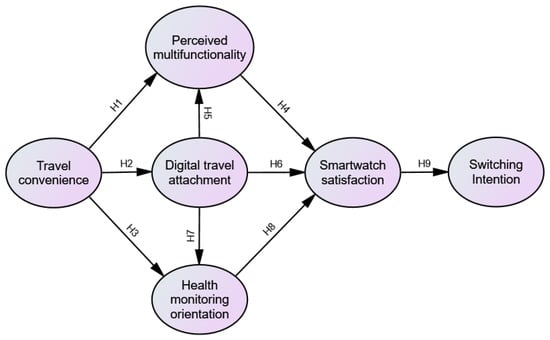
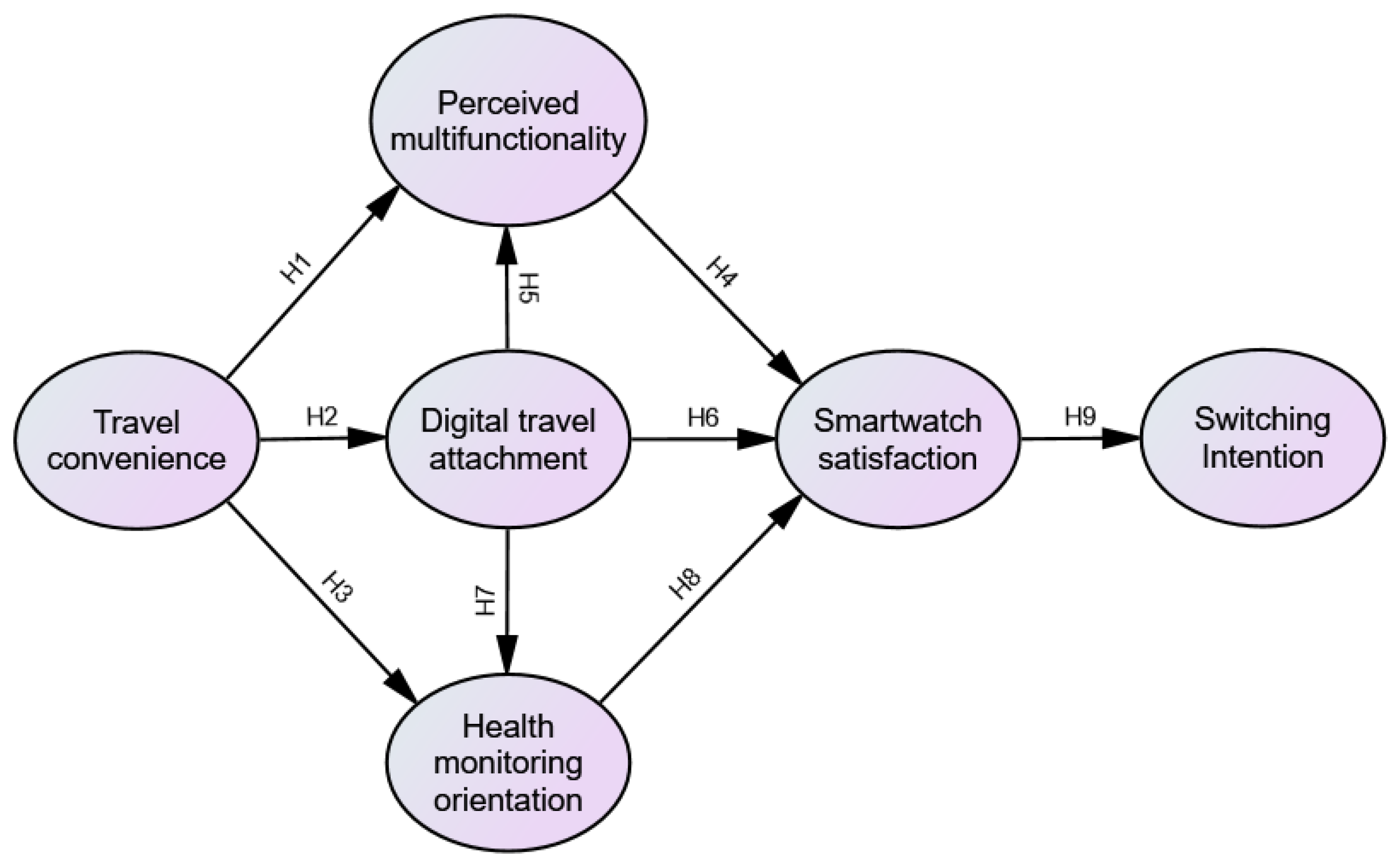
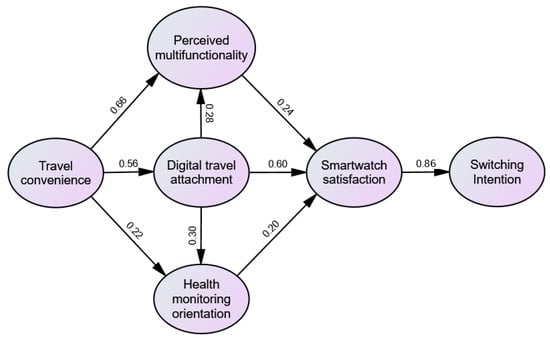
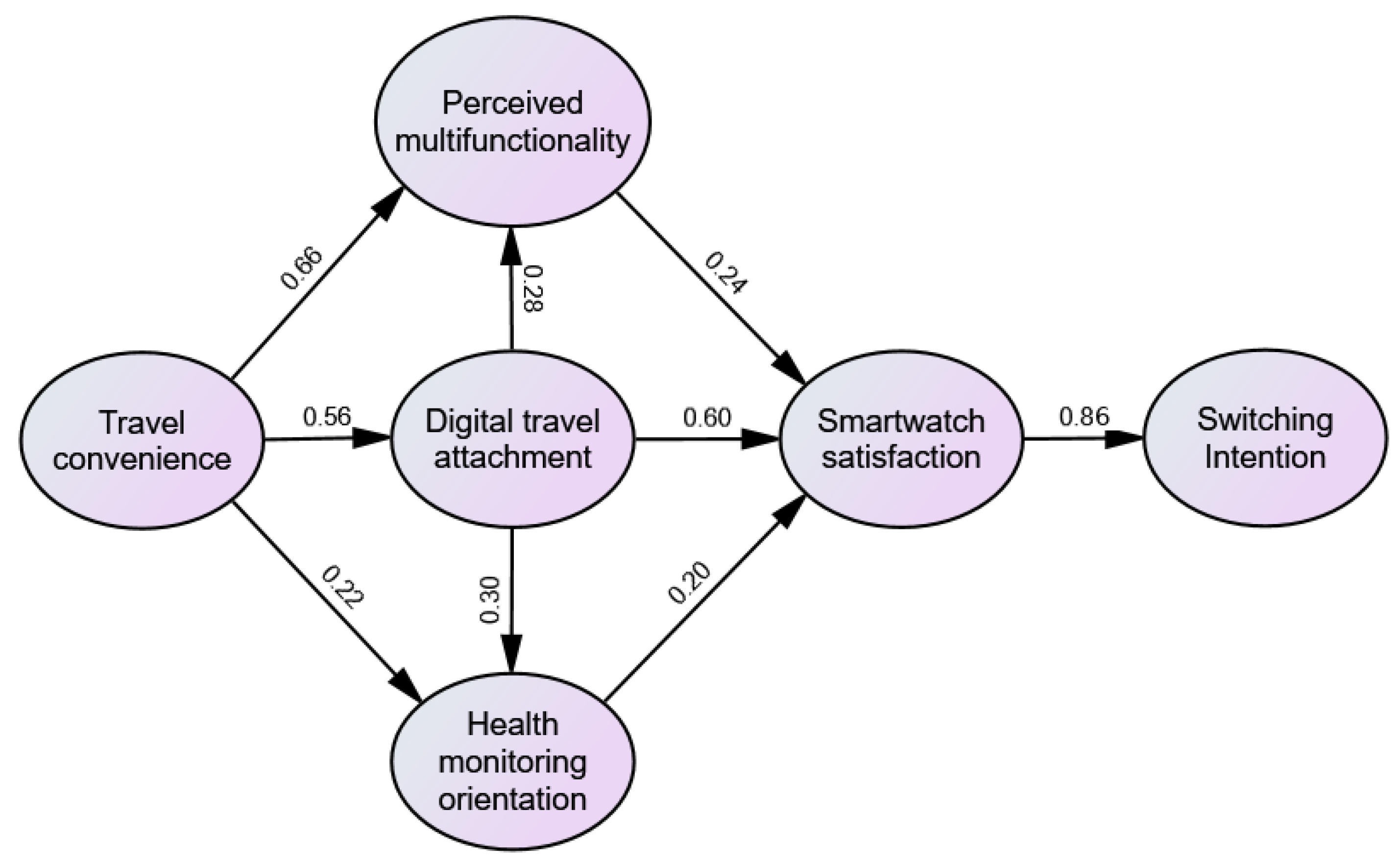

Disclaimer/Publisher’s Note: The statements, opinions and data contained in all publications are solely those of the individual author(s) and contributor(s) and not of MDPI and/or the editor(s). MDPI and/or the editor(s) disclaim responsibility for any injury to people or property resulting from any ideas, methods, instructions or products referred to in the content. |
© 2026 by the authors. Licensee MDPI, Basel, Switzerland. This article is an open access article distributed under the terms and conditions of the Creative Commons Attribution (CC BY) license.