


Abstract
Background/Objectives: The concepts of trust and distrust in health systems during health crises are significantly related to public adoption of health behaviors and health outcomes. The aim of this review is to examine trust and mistrust during times of health crisis, such as periods of viral pandemics and epidemics, and how these concepts relate to public health behaviors and, by extension, affect health outcomes. Methods: A focused search was conducted in PubMed and Scopus using a Boolean expression to identify relevant articles written in the English language and published between 2003 and 2023. The research methods comprised content analysis, thematic analysis, and a word cloud visualization to identify frequent themes related to trust and mistrust in healthcare systems. Results: The analysis included 57 studies and revealed that trust in healthcare systems, institutions, and professionals plays a significant role in shaping public health behaviors during health crises. The study also highlighted how mistrust leads to negative health outcomes, such as increased belief in conspiracy theories, vaccine hesitancy, and non-compliance with public health measures. Conclusions: The review emphasizes the importance of building and maintaining trust in healthcare systems to ensure better public health outcomes during crises. It calls for further research to better understand the nuances of trust and mistrust, aiming to inform public health strategies and interventions that could lead to more effective crisis management and improved health outcomes.
1. Introduction
In modern society, declining public trust in both healthcare and other institutions has been linked to increased questioning of science and experts. People are turning away from so-called expert systems, such as the national health systems. This decline in public trust in health authorities has been widely observed and is associated with significant consequences for public health outcomes, including reduced compliance with health recommendations and lower engagement with healthcare systems [1]. Consequently, individuals seek alternative sources of information and begin to question their trust in public health services [2].
In the literature, the terms ‘mistrust’ and ‘distrust’ are often used interchangeably to describe a lack of trust in the health system, although they have subtle differences in meaning. Distrust refers to an individual’s belief, based on past or present experiences, that the other party will not act in their best interest, often exacerbated by misinformation. For example, a patient who receives contradictory medical advice might distrust the healthcare system [3,4]. Mistrust, on the other hand, is often rooted in historical experiences of marginalization and systemic inequities, expressed through doubt, suspicion, and conspiracy thinking. A central dimension of trust, however, is the expectation of truthfulness [5,6,7,8]. For instance, marginalized communities may mistrust medical institutions due to historical injustices, such as unethical medical experiments conducted without consent. Trust is about believing not only that someone will act in your best interest but also that they will communicate honestly. Truth-telling can, at times, conflict with perceived best interests. For example, a public health authority may withhold certain information to avoid panic, or a clinician might delay delivering bad news to prevent patient distress. Such actions, while intended to protect, can undermine trust if individuals perceive them as dishonest. Understanding trust requires considering both perceived intentions and expectations of honesty [9].
The social sciences divide trust into three categories: i. interpersonal, which refers to interpersonal interactions and experience gained by the individual from others; ii. institutional, which refers to a system or institution such as a hospital; and iii. generalized, which refers to expectations from other people in general and/or strangers, promoting prosocial behavior and cooperation [10,11,12]. When a medical relationship is governed by trust, it is associated with better treatment outcomes, care provision, and adherence to medical guidelines. Conversely, a lack of trust is linked to lower adherence to medical instructions and medication, poor relationships between patients and healthcare providers, and engagement in risky behaviors [13].
This paper addresses the critical problem of declining trust in healthcare, particularly during health crises such as viral pandemics and epidemics. A survey study conducted in the U.S. showed that trust in physicians and hospitals decreased during the COVID-19 pandemic [14]. A study examining the factors contributing to the decline in trust in the health sector in the European Union during the pandemic found that public trust decreased in the majority of countries, with central and western European countries having higher levels of trust than eastern European countries. It also appeared that factors that played a role in trust levels included satisfaction with the measures taken to combat the COVID-19 pandemic, overall life satisfaction, and the socio-economic status of the countries, with countries experiencing economic crisis showing a decline in positive perceptions of health systems [15]. A study conducted in Norway found that trust in public healthcare, in treatment at hospital, and in information at hospital increased after the outbreak of the COVID-19 pandemic. These results can be understood by considering the dynamic relationship between trust in public health, trust in healthcare facilities, generalized trust, and the COVID-19 pandemic, a healthcare crisis situation [11]. Solving this problem is crucial, as doing so can lead to improved health outcomes, better public health responses, and more effective management of health crises. It is important to emphasize that distrust in times of pandemics is associated with a low tendency of individuals to follow and comply with the health measures proposed by health authorities and physicians. In particular, research has shown that low trust in health systems and the information provided by them is associated with high rates of vaccine hesitancy [1]. Despite existing studies on trust and distrust in healthcare, there is a gap in understanding how these concepts evolve during health crises and their specific impact on public health behaviors and outcomes. Therefore, this review aims to fill this gap by analyzing the conditions under which trust and mistrust arise or change during health crises and how these changes affect health outcomes. By addressing this gap, this paper aims to provide insights that can inform future research and public health strategies, ultimately leading to better health outcomes during crises.
2. Materials and Methods
2.1. Data Sources
This article was structured as a narrative literature review. A focused search of international bibliographic sources was conducted using the electronic databases PubMed and Scopus, tailored to the objectives of a narrative review. The aim was to facilitate the analytical integration of studies that highlight and differentiate the concept of trust and mistrust in healthcare systems, while also exploring various perspectives on these concepts during periods of crisis.
2.2. Search Strategy
Boolean operators AND and OR were employed to refine the search. The keywords used in the search were: (“SARS”) OR (“Ebola”) OR (“H1N1”) OR (“COVID-19”) OR (“pandemics”) AND (“trust”) OR (“mistrust”) OR (“distrust”). The specific expression was applied to the title, abstract, and keyword fields. The articles included in the search were published between 2003 and 2023. The search was conducted on 15 July 2023.
2.3. Screening and Selection
The retrieved records were evaluated based on their titles and abstracts. The criteria shown in Table 1 were used for the selection or exclusion of articles.
Table 1.
Inclusion–exclusion criteria.
2.4. Inclusion Criteria
Articles focusing on trust or mistrust in the context of SARS, Ebola, H1N1, COVID-19, and pandemics were included.
2.5. Exclusion Criteria
Articles centered specifically on vaccination and immunization policies were excluded, unless they directly addressed broader trust issues during these health crises. This decision was made to focus the analysis on systemic trust dynamics in healthcare during health crises rather than narrowing the scope to vaccination-related trust, which has been extensively covered in separate reviews.
Books and conference papers were excluded to ensure the inclusion of peer-reviewed studies with rigorous methodological standards and to maintain consistency in the quality of evidence considered. However, we acknowledge that these sources may contain valuable insights, and their exclusion represents a limitation of this review. Future studies could explore these sources to provide additional perspectives. In cases where it was necessary, the entire article was read before making the final decision on inclusion or exclusion.
3. Results
3.1. Study Characteristics
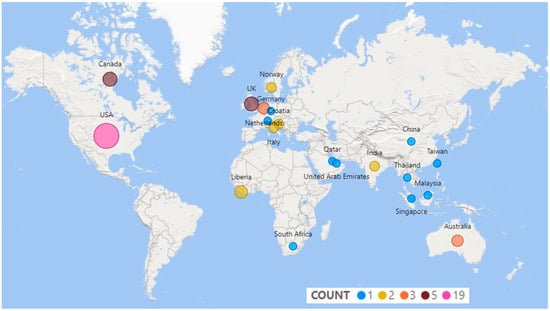
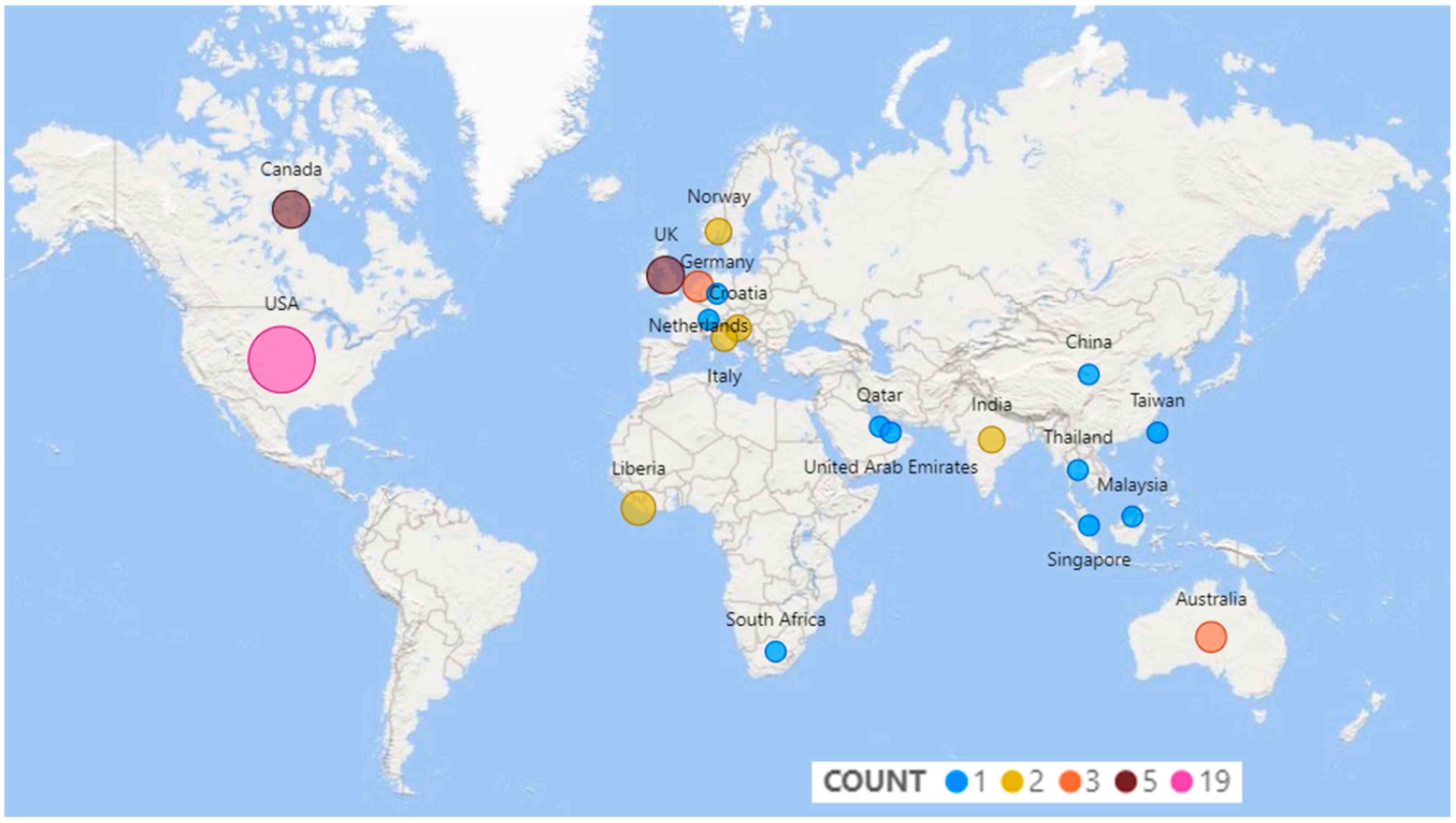
A total of 57 studies met the aforementioned criteria and were deemed eligible for inclusion. Table A1 in Appendix A shows the 57 articles that were included. Most studies (twenty-four) were conducted in North America, eighteen in Europe, nine in Asia, three in Africa and Oceania, and none in South America. The map chart in Figure 1 shows the countries where the studies were conducted, with the size and color of the bubbles indicating the number of studies.
Figure 1.
Map chart showing the countries where the studies were conducted (the size and color of the bubbles indicates the number of studies).
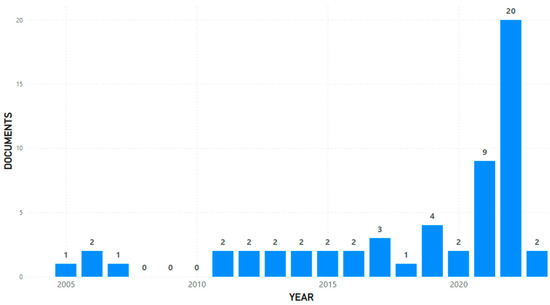
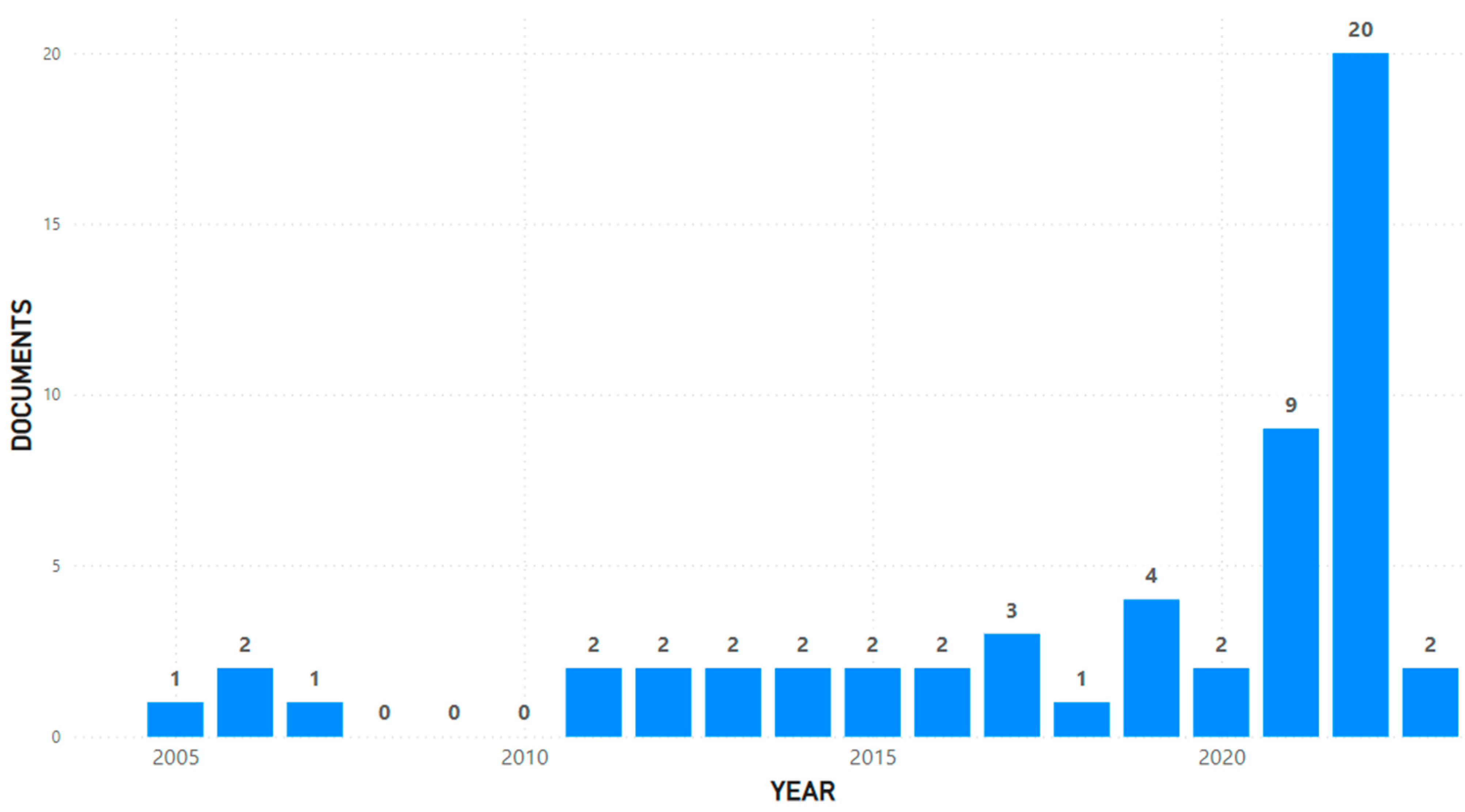
Most studies were published during the COVID-19 pandemic, with more than half (29 out of 57) published in the 2021–2022 period. The column chart in Figure 2 shows the number of published studies per year.
Figure 2.
Publications per year.
3.2. Content Analysis
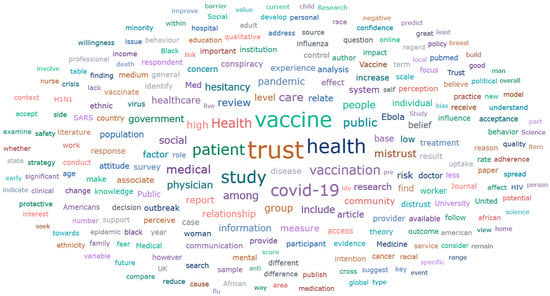
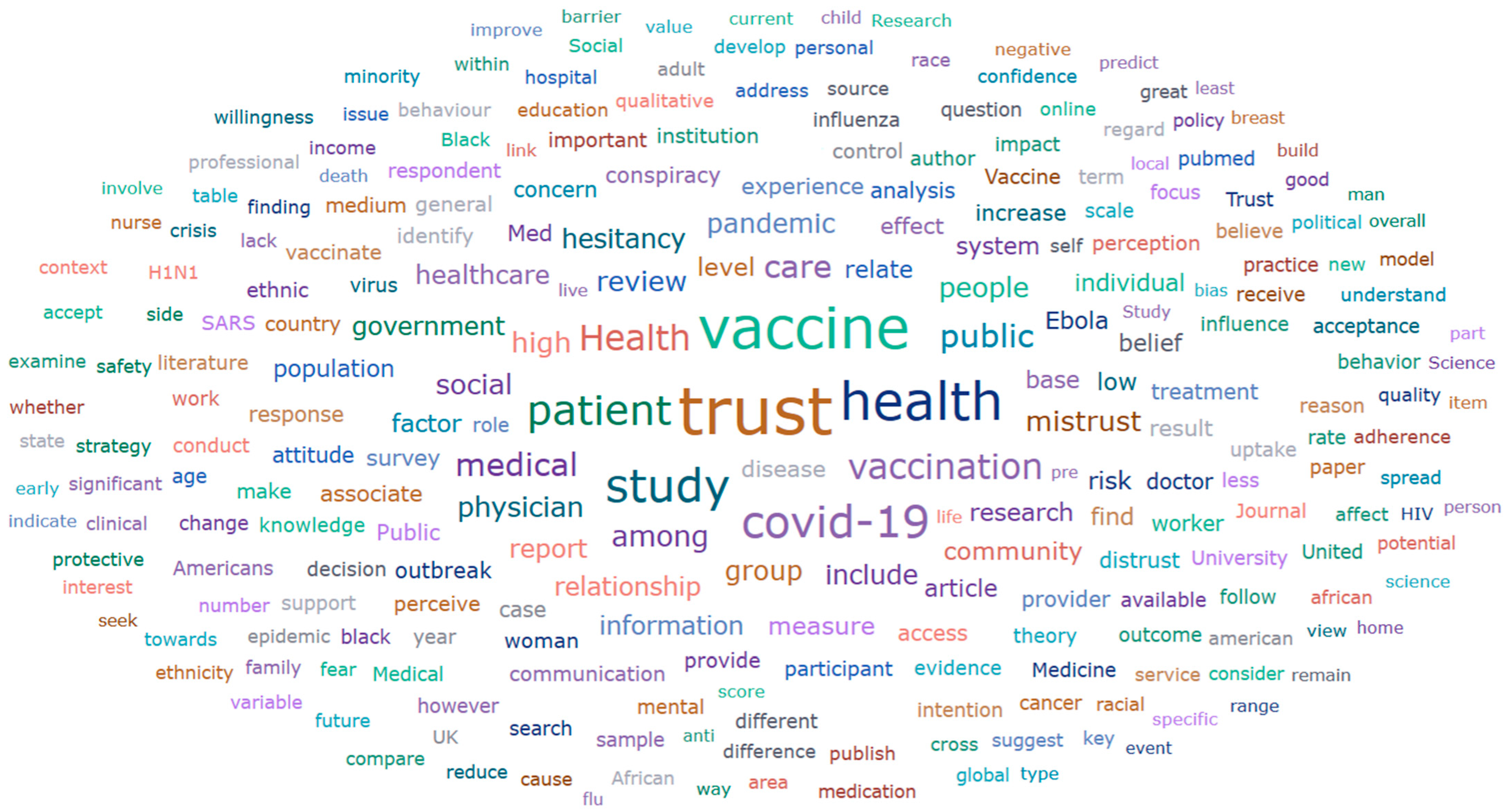
The fifty-seven papers comprise thirty-seven reviews, thirteen quantitative studies, five opinion papers, one letter to the editor, and one qualitative (observational) study. The thirty-seven reviews include twenty narrative reviews, nine systematic reviews, six scoping reviews, one rapid review, and one critical review. The words ‘vaccine(s)’/‘vaccination’ appear a total of 4817 times within the 57 documents. The words ‘health’ (4202), ‘trust’ (3828), ‘Covid’ (2303), and ‘care’/‘healthcare’ (2198) follow in frequency. In the world cloud of Figure 3, the size of each word is proportional to its frequency of occurrence. The cloud also highlights the most frequently occurring terms in the reviewed literature, providing a visual representation of dominant themes. Words such as ‘vaccine(s)’/‘vaccination’, ‘trust’, ‘health’, and ‘COVID’ appear prominently, reflecting the centrality of these topics in the discourse on trust during health crises. The word cloud is helpful for identifying key areas of emphasis within the reviewed literature. For instance, the high frequency of ‘trust’ and ‘mistrust’ underscores their foundational role in shaping public health outcomes. Additionally, the prominence of terms related to specific pandemics (‘COVID’, ‘SARS’, ‘Ebola’) reflects the targeted scope of the review.
Figure 3.
Word cloud resulting from the 57 documents.
3.3. Thematic Analysis
3.3.1. Trust in Health Systems
Trust in the healthcare system encompasses specific structures and individuals, including hospitals, healthcare institutions, medical organizations, pharmaceutical companies, healthcare providers, experts, and employees of these structures [16,17,18,19,20,21].
Sociologists argue that trust is crucial when there is a deficit in knowledge. Both interpersonal experiences and the so-called ‘leap of faith’, i.e., the decision of the individual to trust an institution or system without extensive knowledge about it, contribute to building trust towards public health professionals and institutions. Confidence in the public health system creates expectations of social protection and respect between citizens and the state, and can be shown and proved through behaviors/beliefs such as benevolence, the confidence that another party will act in one’s best interests; honesty; and integrity, the consistency between one’s words and actions, etc. [12,22]. According to the literature, power relations between citizens and health systems can put patients in vulnerable positions. When power is exercised with fairness, empathy, quality of service, and collegiality in the workplace, it can facilitate trust in health relationships. Important factors that contribute to maintaining trust include knowledge sharing, honesty, respect, creation of a professional and emotional bond, supervision (without which positive outcomes for patients cannot be achieved), authentic communication and contact, empathy, competence, support, clear boundaries, positive intentions, and forgiveness (“A patient relies on the nurse’s love and trustworthiness. S/he puts him/herself in the nurse’s hands for help”) [16,22].
3.3.2. Trust in the Doctor–Patient Relationship
The term medical trust incorporates the concept of collaborative trust between patient and physician. It involves common goals, personal contribution to the relationship, mutual respect, and honesty, and focuses on knowledge exchange and emotional and professional development of a lasting relationship, entailing employees’ commitment to communal goals and not simply personal/independent goals, sincere communications, sharing of information, and transparency with respect to one’s actions or plans, etc. [23].
Trust is vital because it allows patients to feel comfortable discussing their health concerns openly and honestly, which can lead to better health outcomes. It is positively related to ensuring adherence to the treatment protocol, maintaining high-quality care, effective communication, and establishing long-term relationships, thereby ensuring optimal clinical outcomes and overall patient satisfaction [24,25].
The therapeutic alliance also depends on the personal bond between doctor and patient [24]. When a more person-centered approach is applied to patient care, wherein medical services pay attention to both treatment and outcomes, as well as patients’ living conditions, psychological needs, feelings, and thoughts, better outcomes are achieved and there is a stronger relationship [26]. Patients who actively participate in their choice of treatment receive information from their physicians more effectively, recover more quickly, achieve better health outcomes, and show greater levels of satisfaction [24,25].
The factors that can affect a patient’s trust in their physician are the communication skills, competence, and empathy of the doctor, as well as transparency and responsible prescribing (“I feel like sometimes the doctors do not listen to what you are saying … a lack of knowledge or feelings”) [27]. Trust can also be influenced by external factors such as the healthcare system, media, and cultural beliefs. Patients may have lower levels of trust in physicians if they have had negative experiences with the healthcare system, experienced discrimination, been exposed to negative media portrayals, been withheld information, or been given inaccurate information by the medical provider (“I probably suffer more than I should because I do not have the money to pay for medication”; “You are treated different when you do not have insurance”; “Sometimes I think you are treated different based on your color, on your race”) [28].
Overall, trust in doctors is essential for effective medical care and patient satisfaction. Regarding the trust that doctors have towards their patients, the literature shows that doctors have medium or low levels of trust in their patients and may distrust them. Physicians should strive to build and maintain trust with their patients, taking into account the above factors that influence trust building in healthcare systems in general [25,27,29,30].
3.3.3. Mistrust and Conspiracy Theories
Modern democratic societies have several powerful institutions, such as governments and the legal system, designed to organize society and facilitate collective cooperation. According to studies, however, institutional trust worldwide has declined over the past twenty years. Institutional mistrust and conspiracy beliefs converge in the rejection of social instructions. During the COVID-19 pandemic, conspiracy theories emerged, reducing individuals’ interest in volunteering and collaboration, and leading to the rejection of social norms [31].
This contemporary reality is characterized by a tendency of alienation and mistrust in social relations, with changed perceptions of social norms, and reduced trust in institutions and traditional values. Belief in conspiracy theories is associated with a general tendency toward suspicion, paranoid thinking, and antisocial behavior (e.g., “Research is part of a conspiracy to harm minority groups”; “The health care system experiments on patients without them knowing”; “Patients have sometimes been deceived or misled at hospitals”) [32].
Conspiracy theories are distinguished by four common characteristics: (a) the world or an event is considered not to be as it seems, (b) the belief that there is a cover-up by powerful people, (c) the theory is accepted only by a minority, and (d) this theory is not supported by facts and evidence. Conspiracy beliefs are rooted in the psychology of mistrust and are attempts to explain world events that are threatening or inconsistent with personal expectations. Conspiracy theories are much more likely to be adopted by individuals who have higher levels of mistrust and who feel threatened by social change, feel uncertain, lack sociopolitical control, and have lower social status, less analytical thinking, and lower levels of education and income [33].
3.3.4. Medical Mistrust and Health Outcomes
Medical mistrust has been identified as a social determinant of health, a barrier to health improvement, and a factor linked to healthcare inequalities primarily in terms of ethnic and racial groups and other minorities [3,5,9,34,35]. Medical mistrust is associated with fears that the individual will be harmed by medical treatment, doubts about the accuracy or value of medical information, and questioning the integrity or motivations of the healthcare system [5,36], especially in individuals who feel discriminated against [34]. Medical mistrust differentiates itself from interpersonal distrust; it does not mean a complete lack of trust in a particular doctor, but suggests that a person’s negative beliefs lead them to think that the health provider will work against their best interest [10,13,22]. For example, a person may trust a particular clinician but have a suspicious attitude towards the wider healthcare system to which that clinician belongs.
The most common health issues associated with medical mistrust include cancer, general health, organ and blood donation, HIV, and vaccine-related concerns. Medical mistrust is often directed at public health authorities, pharmaceutical companies, and medical researchers, particularly in the context of vaccines and medication safety. For instance, suspicions about vaccine development, drug efficacy, and the motives of public health institutions have been widely documented. In these situations, higher levels of mistrust are linked to reluctance to accept diagnoses, limited engagement with healthcare providers, lower adherence to treatment protocols, reduced uptake of preventive measures, and poorer overall physical and mental health outcomes [7,9,36,37,38].
3.3.5. Medical Mistrust in Times of Health Crisis
Trust is a crucial factor in determining compliance with public health policies during health crises [11,39,40,41]. High levels of trust in society can enhance citizens’ acceptance of public health measures and positively influence health outcomes [32,33,42].
The role of public trust in managing health crises was notably evident during the COVID-19 pandemic. Research has found that high levels of citizens’ trust in government institutions were associated with effective crisis management and control efforts [11]. Additionally, societies with pre-existing high trust in medical staff, public healthcare, and hospitals experienced lower mortality rates during the pandemic [10,16,17,43].
In studies focusing on the Ebola, H1N1, SARS 2003, and COVID-19 pandemics, it is found that there are some common characteristics both in the issue of crisis management and that of trust. A common feature of all health crises has been the implementation of preventive measures to limit the spread of the virus, such as house arrest and curfew, avoidance of social contacts, contact tracing, quarantine, and closure of public facilities, often accompanied by increasing unemployment and food shortages [10,39,41,44,45,46,47]. However, these measures often led to a significant decline in public confidence, particularly during the early stages and peak of the crisis [10,48,49].
Lack of trust in government and health systems has been closely linked to public reluctance to comply with health measures [39,50,51,52,53]. This was particularly evident during the early years of the COVID-19 pandemic, with significant vaccine hesitancy contributing to the risk of virus spread [16,54,55,56,57,58,59,60,61,62,63]. Concerns over the motives of governments and pharmaceutical companies, along with issues related to rapid vaccine development, mandates, and side effects, further fueled mistrust [6,17,18,19,20,21,53,59,60,61,64,65]. This mistrust was associated with increased virus spread, reluctance to adhere to protective measures [62,63], strained relationships between communities, authorities, and health workers, and the proliferation of conspiracy theories [48,54,58,59,64].
4. Discussion
The purpose of this review was to examine the concepts of trust and mistrust in times of health crisis, such as periods of viral pandemics and epidemics, and their impact on public health behaviors. The findings indicate that during the COVID-19 period, these concepts were of greater concern to authors than during any other period, with particular emphasis on vaccines and vaccination (Figure 2 and Figure 3).
An important challenge noted was the inconsistent use of the terms ‘mistrust’ and ‘distrust’ in the literature, where ‘distrust’ is often used as a synonym for ‘mistrust’. ‘Mistrust’ is typically associated with ‘medical mistrust’, referring to skepticism towards medical treatments and healthcare providers, while ‘distrust’ often describes a lack of trust in health systems, government, and other institutions. This inconsistency complicates the clear definition and distinction of these terms, leading to confusion in their use.
The thematic analysis revealed that public trust and mistrust (or distrust) during health crises are critical determinants of public health outcomes. These concepts influence beliefs and behaviors towards health systems and their providers, and towards governing authorities. Identifying the factors that foster trust and help diminish mistrust is crucial for effective health crisis management [65]. Key indicators of mistrust include increasing complaints against doctors, legal disputes between patients and doctors, low provider communication skills, and the use of alternative therapies without disclosure to treating physicians [23].
Factors influencing the building of trust during pandemics include effective communication methods followed by the government, citizen involvement in decision-making, and active participation.
Building trust involves efforts at multiple levels, including individual, community, and institutional interactions. For individuals, healthcare providers can build trust with their patients by demonstrating empathy, cultural competence, and consistent, clear communication. For example, creating a person-centered approach that takes into account the patient’s personal experiences and preferences fosters a sense of reliability and trustworthiness. At the institutional level, clinics and hospitals serving local populations can cultivate trust by establishing a strong presence within the community, engaging in outreach programs, and maintaining transparency in their operations. Trust-building initiatives such as regular community feedback sessions, partnerships with local organizations, and the employment of diverse staff representative of the local population can help bridge gaps in trust [66,67].
Regarding government efforts, fostering trust goes beyond simply providing information through reliable people and valid sources. It requires addressing the perception of reliability itself. Populations are more likely to perceive a source as valid when it aligns with their values and demonstrates consistency, transparency, and fairness. For instance, ensuring that spokespeople have a proven track record of honesty and expertise, engaging respected community leaders to act as intermediaries, and openly acknowledging past mistakes while detailing corrective actions can enhance credibility. Tailoring interventions to the cultural, social, and environmental contexts of each community, rather than imposing external solutions, is also essential in fostering trust [68]. Flexibility and the design of differentiated interventions according to the needs of each community appear to contribute significantly to enhancing public trust and compliance [69,70].
This review has some limitations. The decision to conduct a narrative review, rather than a systematic review, represents a limitation, particularly in terms of the systematic search process and the precision of included articles. However, this methodology allows us to draw attention to key issues described in the literature, providing valuable insights aimed at fostering a deeper understanding of the subject matter. Studies related to mistrust in the context of cancer, HIV, organ and blood donation, general examinations, immunization and vaccination issues, and research participants were excluded. In addition, book or conference papers and documents in languages other than English were not included. Because of these exclusions, valuable insights that could enrich our understanding of trust and mistrust in health crises may have been omitted.
Despite these limitations, our findings provide useful information and highlight the importance of exploring the relationship between trust and health services. The existing literature demonstrates the need for further clarification of the definitions of medical mistrust and distrust, and a deeper understanding of these phenomena [71]. While we know that medical mistrust has a negative impact on health, we do not know enough about its contribution in the long run. Future research should focus on the mediating factors between mistrust, public behavioral responses, and health outcomes in order to develop interventions that will positively reshape the health system.
A challenging question for future research is how to support healthcare stakeholders—providers, patients, and managers—in promoting positive expectations and building trusting relationships. The concept of trust is multidimensional and includes not only interactions in the healthcare system, but also institutional trust in government authorities and cooperation with the community. It would be useful to devise proposals and stage interventions that will help build trust and better manage crises, e.g., improving the communication skills of government representatives or creating informational material to answer questions regarding important health decisions for the public such as vaccination. Therefore, further studies on building public trust in government and its proposed measures, beyond health systems, are needed. Such research can lead to interventions that build trust, eliminate mistrust, and improve crisis management by government and health authorities.
5. Conclusions
This review highlights the critical role of trust and mistrust in shaping public health behaviors and outcomes during health crises, such as pandemics and epidemics. The findings indicate that the concepts of trust and mistrust were particularly prominent during the COVID-19 pandemic, with a strong focus on vaccines and vaccinations dominating scientific discussions. Trust in healthcare systems and providers is associated with positive health outcomes, adherence to treatment protocols, and effective management of health crises, whereas mistrust leads to negative health behaviors, poor health outcomes, and increased belief in conspiracy theories.
It is therefore important to study further the building of public trust in government and the measures it entails overall, beyond health systems. It is important to study further the factors that mediate between distrust, behavioral responses of the public, and health outcomes in order to institute possible interventions to reverse negative results and reshape the health system to promote and not undermine trust within the relationships that govern it. The question of how we can support healthcare actors—providers, patients, and governing authorities—in creating positive expectations for each other, creating fertile ground for trusting relationships, remains unclear and creates appropriate ground for future research. We consider it important to encourage the conducting of further research, and studies on the issue of trust in health systems during pandemics with even more systematic and accurate methods.
The value of the present study is great both for the specialized scientific community and for the broader public. For the specialized scientific community, this review underscores the need for further research to better understand the nuances of trust and mistrust in healthcare, especially during health crises. Identifying the factors that influence trust can help in designing interventions that promote trust and mitigate mistrust. For the broader public, the practical applications of these findings are profound. Enhancing public trust in healthcare systems can lead to better compliance with public health measures, improved health outcomes, and more effective management of future health crises. Policymakers and healthcare providers must consider these factors to build and maintain trust, ensuring better health outcomes and stronger public health responses.
Author Contributions
Conceptualization, E.S. and M.K.; methodology, M.K. and A.A.; software, E.S. and S.P.; validation, M.K., M.S. and S.P.; investigation, E.S. and M.K.; resources, A.A. and A.T.; data curation, S.P.; writing—original draft preparation, E.S., M.K. and A.A.; writing—review and editing, S.P. and M.S.; visualization, A.T. and S.P.; supervision, M.K. and M.S.; project administration, A.A.; funding acquisition, A.T. All authors have read and agreed to the published version of the manuscript.
Funding
This research received no external funding.
Institutional Review Board Statement
Not applicable.
Informed Consent Statement
Not applicable.
Data Availability Statement
As a review article, no new data have been generated. The data for the review are the articles in Table A1.
Conflicts of Interest
The authors declare no conflicts of interest.
Appendix A
Table A1.
The 57 articles included in the review.
References
- Dopelt, K.; Abudin, A.; Yukther, S.; Shmukler, T.; Davidovitch, N. The association between levels of trust in the healthcare system and influenza vaccine hesitancy among college students in Israel. Vaccines 2023, 11, 1728. [Google Scholar] [CrossRef] [Scilit]
- Patent, V. Dysfunctional trusting and distrusting: Integrating trust and bias perspectives. J. Trust Res. 2022, 12, 66–93. [Google Scholar] [CrossRef] [Scilit]
- Jaiswal, J.; Halkitis, P.N. Towards a more inclusive and dynamic understanding of medical mistrust informed by science. Behav. Med. 2019, 45, 79–85. [Google Scholar] [CrossRef] [Scilit] [PubMed]
- Ozawa, S.; Sripad, P. How do you measure trust in the health system? A systematic review of the literature. Soc. Sci. Med. 2013, 91, 10–14. [Google Scholar] [CrossRef] [Scilit]
- Benkert, R.; Cuevas, A.; Thompson, H.S.; Dove-Medows, E.; Knuckles, D. Ubiquitous yet unclear: A systematic review of medical mistrust. Behav. Med. 2019, 45, 86–101. [Google Scholar] [CrossRef] [Scilit]
- Dobson, G.P. Wired to doubt: Why people fear vaccines and climate change and mistrust science. Front. Med. 2022, 8, 809395. [Google Scholar] [CrossRef] [Scilit] [PubMed]
- Hall, G.L.; Heath, M. Poor medication adherence in African Americans is a matter of trust. J. Racial Ethn. Health Dispar. 2021, 8, 927–942. [Google Scholar] [CrossRef] [Scilit] [PubMed]
- Mouslim, M.C.; Johnson, R.M.; Dean, L.T. Healthcare system distrust and the breast cancer continuum of care. Breast Cancer Res. Treat. 2020, 180, 33–44. [Google Scholar] [CrossRef] [Scilit]
- Williamson, L.D.; Bigman, C.A. A systematic review of medical mistrust measures. Patient Educ. Couns. 2018, 101, 1786–1794. [Google Scholar] [CrossRef] [Scilit] [PubMed]
- Thoresen, S.; Blix, I.; Wentzel-Larsen, T.; Birkeland, M.S. Trusting others during a pandemic: Investigating potential changes in generalized trust and its relationship with pandemic-related experiences and worry. Front. Psychol. 2021, 12, 698519. [Google Scholar] [CrossRef] [Scilit] [PubMed]
- Skirbekk, H.; Magelssen, M.; Conradsen, S. Trust in healthcare before and during the COVID-19 pandemic. BMC Public Health 2023, 23, 863. [Google Scholar] [CrossRef] [Scilit] [PubMed]
- Ward, P.R. Improving access to, use of, and outcomes from public health programs: The importance of building and maintaining trust with patients/clients. Front. Public Health 2017, 5, 22. [Google Scholar] [CrossRef] [Scilit]
- Bogart, L.M.; Ojikutu, B.O.; Tyagi, K.; Klein, D.J.; Mutchler, M.G.; Dong, L.; Lawrence, S.J.; Thomas, D.R.; Kellman, S. COVID-19 related medical mistrust, health impacts, and potential vaccine hesitancy among Black Americans living with HIV. JAIDS J. Acquir. Immune Defic. Syndr. 2021, 86, 200–207. [Google Scholar] [CrossRef] [Scilit] [PubMed]
- Perlis, R.H.; Ognyanova, K.; Uslu, A.; Trujillo, K.L.; Santillana, M.; Druckman, J.N.; Baum, M.A.; Lazer, D. Trust in physicians and hospitals during the COVID-19 pandemic in a 50-state survey of US adults. JAMA Netw. Open 2024, 7, e2424984. [Google Scholar] [CrossRef] [Scilit] [PubMed]
- Yaddanapudi, L.; Hahn, J.; Ladikas, M. A multifaceted analysis of decreasing trust in health institutions in the EU during the COVID-19 pandemic. Discov. Public Health 2024, 21, 117. [Google Scholar] [CrossRef] [Scilit]
- Jakovljevic, M.; Bjedov, S.; Mustac, F.; Jakovljevic, I. COVID-19 infodemic and public trust from the perspective of public and global mental health. Psychiatr. Danub. 2020, 32, 449–457. [Google Scholar] [CrossRef] [Scilit] [PubMed]
- Majid, U.; Wasim, A.; Truong, J.; Bakshi, S. Public trust in governments, health care providers, and the media during pandemics: A systematic review. J. Trust Res. 2021, 11, 119–141. [Google Scholar] [CrossRef] [Scilit]
- Ahmad, M.; Akande, A.; Majid, U. Health care provider trust in vaccination: A systematic review and qualitative meta-synthesis. Eur. J. Public Health 2022, 32, 207–213. [Google Scholar] [CrossRef] [Scilit]
- Pavlovic, D.; Sahoo, P.; Larson, H.; Karafillakis, E. Factors influencing healthcare professionals’ confidence in vaccination in Europe: A literature review. Hum. Vaccines Immunother. 2022, 18, 2041360. [Google Scholar] [CrossRef] [Scilit] [PubMed]
- Willems, L.D.; Dyzel, V.; Sterkenburg, P.S. COVID-19 Vaccination intentions amongst healthcare workers: A scoping review. Int. J. Environ. Res. Public Health 2022, 19, 10192. [Google Scholar] [CrossRef] [Scilit] [PubMed]
- Crawshaw, J.; Konnyu, K.; Castillo, G.; Van Allen, Z.; Grimshaw, J.; Presseau, J. Behavioural determinants of COVID-19 vaccination acceptance among healthcare workers: A rapid review. Public Health 2022, 210, 123–133. [Google Scholar] [CrossRef] [Scilit] [PubMed]
- Østergaard, L.R. Trust matters: A narrative literature review of the role of trust in health care systems in sub-Saharan Africa. Glob. Public Health 2015, 10, 1046–1059. [Google Scholar] [CrossRef] [Scilit]
- Choy, H.H.; Ismail, A. Indicators for medical mistrust in healthcare–a review and standpoint from Southeast Asia. Malays. J. Med. Sci. 2017, 24, 5. [Google Scholar] [CrossRef] [Scilit]
- Tofan, G.; Bodolica, V.; Spraggon, M. Governance mechanisms in the physician–patient relationship: A literature review and conceptual framework. Health Expect. 2013, 16, 14–31. [Google Scholar] [CrossRef] [Scilit] [PubMed]
- Harbishettar, V.; Krishna, K.; Srinivasa, P.; Gowda, M. The enigma of doctor-patient relationship. Indian J. Psychiatry 2019, 61, S776–S781. [Google Scholar] [CrossRef] [Scilit] [PubMed]
- Mao, Y.; Ning, W.; Zhang, N.; Xie, T.; Liu, J.; Lu, Y.; Zhu, B. The therapeutic relationship in china: A systematic review and meta-analysis. Int. J. Environ. Res. Public Health 2021, 18, 3460. [Google Scholar] [CrossRef] [Scilit]
- Luo, Y.; Liu, Y.; Chen, H.; Zhang, X.; Luo, R.; Zhu, Y.; Feng, Z.; Sun, Y.; Wang, S. How about trust in physician-patient relationship? A concept analysis of physicians’ perspectives. Patient Educ. Couns. 2023, 112, 107709. [Google Scholar] [CrossRef] [Scilit] [PubMed]
- Henry, M.S. Uncertainty, responsibility, and the evolution of the physician/patient relationship. J. Med. Ethics 2006, 32, 321–323. [Google Scholar] [CrossRef] [Scilit] [PubMed]
- Wilk, A.S.; Platt, J.E. Measuring physicians’ trust: A scoping review with implications for public policy. Soc. Sci. Med. 2016, 165, 75–81. [Google Scholar] [CrossRef] [Scilit] [PubMed]
- Gilson, L. Trust in health care: Theoretical perspectives and research needs. J. Health Organ. Manag. 2006, 20, 359–375. [Google Scholar] [CrossRef] [Scilit]
- Van Prooijen, J.-W.; Spadaro, G.; Wang, H. Suspicion of institutions: How distrust and conspiracy theories deteriorate social relationships. Curr. Opin. Psychol. 2022, 43, 65–69. [Google Scholar] [CrossRef] [Scilit]
- Pummerer, L. Belief in conspiracy theories and non-normative behavior. Curr. Opin. Psychol. 2022, 47, 101394. [Google Scholar] [CrossRef] [Scilit] [PubMed]
- Freeman, D.; Waite, F.; Rosebrock, L.; Petit, A.; Causier, C.; East, A.; Jenner, L.; Teale, A.-L.; Carr, L.; Mulhall, S. Coronavirus conspiracy beliefs, mistrust, and compliance with government guidelines in England. Psychol. Med. 2022, 52, 251–263. [Google Scholar] [CrossRef] [Scilit] [PubMed]
- Allen, J.D.; Fu, Q.; Shrestha, S.; Nguyen, K.H.; Stopka, T.J.; Cuevas, A.; Corlin, L. Medical mistrust, discrimination, and COVID-19 vaccine behaviors among a national sample US adults. SSM-Popul. Health 2022, 20, 101278. [Google Scholar] [CrossRef] [Scilit]
- Suite, D.H.; La Bril, R.; Primm, A.; Harrison-Ross, P. Beyond misdiagnosis, misunderstanding and mistrust: Relevance of the historical perspective in the medical and mental health treatment of people of color. J. Natl. Med. Assoc. 2007, 99, 879. [Google Scholar] [PubMed]
- Ho, I.K.; Sheldon, T.A.; Botelho, E. Medical mistrust among women with intersecting marginalized identities: A scoping review. Ethn. Health 2022, 27, 1733–1751. [Google Scholar] [CrossRef] [Scilit] [PubMed]
- Yetman, H.E.; Cox, N.; Adler, S.R.; Hall, K.T.; Stone, V.E. What do placebo and nocebo effects have to do with health equity? The hidden toll of nocebo effects on racial and ethnic minority patients in clinical care. Front. Psychol. 2021, 12, 788230. [Google Scholar] [CrossRef] [Scilit]
- Lieneck, C.; Bosworth, M.; Weaver, E.; Heinemann, K.; Patel, J. Protective and non-protective factors of mental health distress in the United States during the COVID-19 pandemic: A systematic review. Medicina 2021, 57, 1377. [Google Scholar] [CrossRef] [Scilit]
- Blair, R.A.; Morse, B.S.; Tsai, L.L. Public health and public trust: Survey evidence from the Ebola Virus Disease epidemic in Liberia. Soc. Sci. Med. 2017, 172, 89–97. [Google Scholar] [CrossRef] [Scilit] [PubMed]
- MacKay, M.; Colangeli, T.; Thaivalappil, A.; Del Bianco, A.; McWhirter, J.; Papadopoulos, A. A review and analysis of the literature on public health emergency communication practices. J. Community Health 2022, 47, 150–162. [Google Scholar] [CrossRef] [Scilit]
- Bhatnagar, N.; Grover, M.; Kotwal, A.; Chauhan, H. Study of recent Ebola virus outbreak and lessons learned: A scoping study. Ann. Trop. Med. Public Health 2016, 9, 145–151. [Google Scholar] [CrossRef] [Scilit]
- Magarini, F.M.; Pinelli, M.; Sinisi, A.; Ferrari, S.; De Fazio, G.L.; Galeazzi, G.M. Irrational beliefs about COVID-19: A scoping review. Int. J. Environ. Res. Public Health 2021, 18, 9839. [Google Scholar] [CrossRef] [Scilit] [PubMed]
- Deurenberg-Yap, M.; Foo, L.; Low, Y.; Chan, S.; Vijaya, K.; Lee, M. The Singaporean response to the SARS outbreak: Knowledge sufficiency versus public trust. Health Promot. Int. 2005, 20, 320–326. [Google Scholar] [CrossRef] [Scilit] [PubMed]
- Van der Weerd, W.; Timmermans, D.R.; Beaujean, D.J.; Oudhoff, J.; Van Steenbergen, J.E. Monitoring the level of government trust, risk perception and intention of the general public to adopt protective measures during the influenza A (H1N1) pandemic in the Netherlands. BMC Public Health 2011, 11, 575. [Google Scholar] [CrossRef] [Scilit]
- Kalenga, O.I.; Moeti, M.; Sparrow, A.; Nguyen, V.-K.; Lucey, D.; Ghebreyesus, T.A. The ongoing Ebola epidemic in the Democratic Republic of Congo, 2018–2019. N. Engl. J. Med. 2019, 381, 373–383. [Google Scholar] [CrossRef] [Scilit] [PubMed]
- Obilade, T.T. Ebola virus disease stigmatization; the role of societal attributes. Int. Arch. Med. 2015, 8, 1–19. [Google Scholar] [CrossRef] [Scilit]
- Shears, P.; Garavan, C. The 2018/19 Ebola epidemic the Democratic Republic of the Congo (DRC): Epidemiology, outbreak control, and conflict. Infect. Prev. Pract. 2020, 2, 100038. [Google Scholar] [CrossRef] [Scilit]
- Fong, E.; Chang, L.-Y. Community under stress: Trust, reciprocity, and community collective efficacy during SARS outbreak. J. Community Health 2011, 36, 797–810. [Google Scholar] [CrossRef] [Scilit]
- Freimuth, V.S.; Musa, D.; Hilyard, K.; Quinn, S.C.; Kim, K. Trust during the early stages of the 2009 H1N1 pandemic. J. Health Commun. 2014, 19, 321–339. [Google Scholar] [CrossRef] [Scilit]
- Woskie, L.R.; Fallah, M.P. Overcoming distrust to deliver universal health coverage: Lessons from Ebola. BMJ 2019, 366, l5482. [Google Scholar] [CrossRef] [Scilit] [PubMed]
- Arthur, R.F.; Horng, L.M.; Bolay, F.K.; Tandanpolie, A.; Gilstad, J.R.; Tantum, L.K.; Luby, S.P. Community trust of government and non-governmental organizations during the 2014-16 Ebola epidemic in Liberia. PLoS Neglected Trop. Dis. 2022, 16, e0010083. [Google Scholar] [CrossRef] [Scilit]
- Pertwee, E.; Simas, C.; Larson, H.J. An epidemic of uncertainty: Rumors, conspiracy theories and vaccine hesitancy. Nat. Med. 2022, 28, 456–459. [Google Scholar] [CrossRef] [Scilit] [PubMed]
- Bangerter, A.; Krings, F.; Mouton, A.; Gilles, I.; Green, E.G.; Clemence, A. Longitudinal investigation of public trust in institutions relative to the 2009 H1N1 pandemic in Switzerland. PLoS ONE 2012, 7, e49806. [Google Scholar] [CrossRef] [Scilit] [PubMed]
- Charura, D.; Hill, A.P.; Etherson, M.E. COVID-19 vaccine hesitancy, medical mistrust, and mattering in ethnically diverse communities. J. Racial Ethn. Health Disparities 2023, 10, 1518–1525. [Google Scholar] [CrossRef] [Scilit]
- Minaya, C.; McKay, D.; Benton, H.; Blanc, J.; Seixas, A.A. Medical mistrust, COVID-19 stress, and intent to vaccinate in racial–ethnic minorities. Behav. Sci. 2022, 12, 186. [Google Scholar] [CrossRef] [Scilit]
- Hussain, B.; Latif, A.; Timmons, S.; Nkhoma, K.; Nellums, L.B. Overcoming COVID-19 vaccine hesitancy among ethnic minorities: A systematic review of UK studies. Vaccine 2022, 40, 3413–3432. [Google Scholar] [CrossRef] [Scilit] [PubMed]
- Peters, M.D. Addressing vaccine hesitancy and resistance for COVID-19 vaccines. Int. J. Nurs. Stud. 2022, 131, 104241. [Google Scholar] [CrossRef] [Scilit]
- Biswas, M.R.; Alzubaidi, M.S.; Shah, U.; Abd-Alrazaq, A.A.; Shah, Z. A scoping review to find out worldwide COVID-19 vaccine hesitancy and its underlying determinants. Vaccines 2021, 9, 1243. [Google Scholar] [CrossRef] [Scilit]
- Yaqub, O.; Castle-Clarke, S.; Sevdalis, N.; Chataway, J. Attitudes to vaccination: A critical review. Soc. Sci. Med. 2014, 112, 1–11. [Google Scholar] [CrossRef] [Scilit] [PubMed]
- Adhikari, B.; Cheah, P.Y.; von Seidlein, L. Trust is the common denominator for COVID-19 vaccine acceptance: A literature review. Vaccine X 2022, 12, 100213. [Google Scholar] [CrossRef] [Scilit]
- Saleska, J.L.; Choi, K.R. A behavioral economics perspective on the COVID-19 vaccine amid public mistrust. Transl. Behav. Med. 2021, 11, 821–825. [Google Scholar] [CrossRef] [Scilit] [PubMed]
- Hudson, A.; Montelpare, W.J. Predictors of vaccine hesitancy: Implications for COVID-19 public health messaging. Int. J. Environ. Res. Public Health 2021, 18, 8054. [Google Scholar] [CrossRef] [Scilit]
- McFadden, S.M.; Demeke, J.; Dada, D.; Wilton, L.; Wang, M.; Vlahov, D.; Nelson, L.E. Confidence and hesitancy during the early roll-out of COVID-19 vaccines among black, Hispanic, and undocumented immigrant communities: A review. J. Urban Health 2022, 99, 3–14. [Google Scholar] [CrossRef] [Scilit]
- Blasi, F.; Aliberti, S.; Mantero, M.; Centanni, S. Compliance with anti-H1N1 vaccine among healthcare workers and general population. Clin. Microbiol. Infect. 2012, 18, 37–41. [Google Scholar] [CrossRef] [Scilit] [PubMed]
- Kużelewska, E.; Tomaszuk, M. Rise of conspiracy theories in the pandemic times. Int. J. Semiot. Law-Rev. Int. Sémiot. Jurid. 2022, 35, 2373–2389. [Google Scholar] [CrossRef] [Scilit] [PubMed]
- Wu, Q.; Jin, Z.; Wang, P. The relationship between the physician-patient relationship, physician empathy, and patient trust. J. Gen. Intern. Med. 2022, 37, 1388–1393. [Google Scholar] [CrossRef] [Scilit]
- Lansing, A.E.; Romero, N.J.; Siantz, E.; Silva, V.; Center, K.; Casteel, D.; Gilmer, T. Building trust: Leadership reflections on community empowerment and engagement in a large urban initiative. BMC Public Health 2023, 23, 1252. [Google Scholar] [CrossRef] [Scilit]
- Merenstein, Z.; Shuemaker, J.C.; Phillips, R.L. Measuring trust in primary care. Milbank Q. 2023, 101, 841–880. [Google Scholar] [CrossRef] [Scilit]
- Mohammadpour, M.; Zarifinezhad, E.; Ghanbarzadegan, A.; Naderimanesh, K.; Shaarbafchizadeh, N.; Bastani, P. Main factors affecting the readiness and responsiveness of healthcare systems during epidemic crises: A scoping review on cases of SARS, MERS, and COVID-19. Iran. J. Med. Sci. 2021, 46, 81. [Google Scholar] [CrossRef] [Scilit] [PubMed]
- Naqvi, N.; Saikia, A. Lessons learned on building trust during a global pandemic: Looking at future directions. J. Commun. Healthc. 2023, 16, 330–333. [Google Scholar] [CrossRef] [Scilit]
- Griffith, D.M.; Bergner, E.M.; Fair, A.S.; Wilkins, C.H. Using mistrust, distrust, and low trust precisely in medical care and medical research advances health equity. Am. J. Prev. Med. 2021, 60, 442–445. [Google Scholar] [CrossRef] [Scilit] [PubMed]

Disclaimer/Publisher’s Note: The statements, opinions and data contained in all publications are solely those of the individual author(s) and contributor(s) and not of MDPI and/or the editor(s). MDPI and/or the editor(s) disclaim responsibility for any injury to people or property resulting from any ideas, methods, instructions or products referred to in the content. |
© 2024 by the authors. Licensee MDPI, Basel, Switzerland. This article is an open access article distributed under the terms and conditions of the Creative Commons Attribution (CC BY) license (https://creativecommons.org/licenses/by/4.0/).