


Simple Summary
Wood-boring beetles can cause serious damage to historic wooden buildings. Lhasella potala, has been found infesting the Potala Palace in China, a UNESCO World Heritage Site. To better understand this species, we analyzed its complete mitochondrial genome and compared it with related species. The genome shows typical features of beetles and a stable gene arrangement. Our results indicate that this species is closely related to Gastrallus laevigatus and has a relatively slow rate of genetic change in some genes. Field observations show that it produces one generation per year, with peak activity from May to July. These findings improve our understanding of the evolution and bio-ecology of Ptinidae and provide baseline information for future studies on anobiids associated with wooden cultural heritage.
Abstract
Lhasella potala Zhou, Da, Zahradník & Bai, 2025, a wood-boring pest, infests wooden components of the Potala Palace and threatens structural integrity. To support conservation-oriented pest management, we sequenced and characterized its complete mitochondrial genome and conducted comparative and phylogenetic analyses within Ptinidae. The mitogenome is 15,399 bp long and contains 37 genes (13 PCGs, 22 tRNAs, two rRNAs, and a control region). It exhibits high A + T content (74.23%), positive AT-skew (0.16), and negative GC-skew (−0.26). All PCGs employed ATT, ATA, ATG, ATC, or TTG as the start codons and TAA, TAG, or single T as the stop codons. Comparisons with Lasioderma serricorne (Fabricius, 1775), Stegobium paniceum (Linnaeus, 1758), and Gastrallus laevigatus (Olivier, 1790) revealed similar genome sizes and conserved gene order. Ka/Ks analysis showed that cox1 evolves most slowly, whereas nad4 evolves fastest. Nucleotide diversity was low (Pi = 0.18–0.34). Phylogenetic analysis supports a close relationship between G. laevigatus and L. potala. Field observations indicate one generation per year, with peak activity from May to July. These results provide a basis for evolutionary studies and conservation of historic wooden architecture.
1. Introduction
The family Ptinidae Latreille, 1802 currently comprises 12 subfamilies and nearly 4200 described species worldwide, representing a morphologically and ecologically diverse group of beetles [1,2]. Among them, anobiids (historically treated as a separate family Anobiidae) have been demonstrated to form a monophyletic lineage based on molecular phylogenetic evidence [3]. Consequently, their placement within the family Ptinidae has gained broad acceptance in recent systematic treatments [4,5,6]. Many members of anobiids are characterized by their wood-boring habits, with larvae often exploiting a wide range of plant-derived substrates [7]. Notably, several anobiids are recognized as economically important pests of stored products and wooden materials. Well-known examples include the furniture beetle Anobium punctatum (DeGeer, 1774), the library beetle Nicobium castaneum (Olivier, 1790), and the book-boring beetle Falsogastrallus sauteri Pic, 1914. These species are widely distributed across different climatic regions and can cause severe damage to furniture, books, archival documents, medicinal products, and various commodities of animal and plant origin [8,9,10,11], leading to considerable economic losses and management costs.
Beyond their impact on stored products, some anobiids pose an increasing threat to historical wooden structures and cultural heritage sites. Lhasella potala is a typical member and was recorded infesting wooden structural components of the Potala Palace. Its larvae bore into and degrade the wood, potentially compromising the structural integrity of ancient buildings and posing a tangible risk to the conservation of wooden cultural heritage [12]. Indeed, evidence of its harmful activity was recorded as early as July 1988 during restoration work on the palace, when construction personnel explicitly noted that the insect posed a substantial threat to the wooden structures [13].
Mitochondrial genomes are widely used as molecular markers in phylogenetic and evolutionary studies due to their conserved gene content, relatively stable gene order, maternal inheritance, and rapid evolutionary rates. Compared with single-locus markers, complete mitochondrial genome data provide higher phylogenetic resolution and more robust support for evolutionary inference at multiple taxonomic levels [14,15]. With the increasing availability of mitogenomic data, their application has expanded beyond phylogenetic reconstruction to practical pest management. In particular, mitochondrial genomes provide reliable species-specific targets for the development of diagnostic markers, facilitating the rapid and accurate identification of morphologically similar species or early-stage invasive populations, especially in quarantine inspection and monitoring programs [16,17]. However, complete mitochondrial genomes specifically sequenced for Ptinidae remain scarce in public databases. Prior to this study, only four identified species of Ptinidae (including three anobiids: Stegobium paniceum, Gastrallus laevigatus, and Lasioderma serricorne) had reported mitogenomes available in NCBI (see Table 1). Notably, the assembly for Gastrallus laevigatus was incomplete, although it contained all 13 PCGs and two rRNAs.
Table 1.
Mitochondrial genomes of Ptinidae from NCBI. A representative entry is shown for species with multiple records.
The aims of this study were to sequence and characterize the complete mitochondrial genome of L. potala for the first time to compare its mitochondrial genome features with those of other available anobiids and to preliminarily assess its phylogenetic position within Ptinidae. To achieve these objectives, comprehensive analyses were conducted on genome structure, nucleotide composition, codon usage, and molecular evolutionary rates, with comparative assessments against three other anobiids. Furthermore, based on year-round field observations, we summarized key biological and ecological characteristics of this species. Together, these results provide useful molecular and bio-ecological data for future studies on the evolution and systematics of Ptinidae, while also contributing baseline information for further research on anobiids associated with wooden cultural heritage.
2. Materials and Methods
2.1. Specimen Collection, Identification, and Preservation
A total of 20 adult specimens of L. potala were collected from the wooden structures of the Potala Palace in Lhasa, Xizang Autonomous Region, China, in June 2024. The specimens were placed in Eppendorf tubes, flash frozen in liquid nitrogen, and stored at –80 °C for subsequent use.
2.2. DNA Extraction and Sequencing
Total genomic DNA was extracted from whole specimens using the TIANamp Genomic DNA Kit (Tiangen, Beijing, China), following the manufacturer’s protocol. The integrity of the extracted DNA was assessed using agarose gel electrophoresis (DYCP-31DN, Beijing Liuyi Biotechnology Co., Ltd., Beijing, China), and DNA purity was evaluated by measuring absorbance values with a spectrophotometer (NanoDrop 2000c, Thermo Fisher Scientific, Waltham, MA, USA). Qualified DNA samples were sent to Nanjing Genscript Biotech Co., Ltd. (Nanjing, China) for Illumina DNA library preparation and paired-end DNA sequencing. The Illumina sequencing library, with an insert size of 350 bp, was constructed using the NEBNext® UltraTM II DNA Library Prep Kit for Illumina® (New England Biolabs, Ipswich, MA, USA) and sequenced on the Illumina Novaseq 6000 platform (Illumina, San Diego, CA, USA), producing a total of 6 Gb of data.
2.3. Sequence Assembly, Annotation, and Analyses
Mitochondrial genome assembly and the annotation of PCGs and rRNAs were performed using Geneious prime 2025 (version 2025.0) [21]. The published mitochondrial genome of Lasioderma serricorne was used as the reference sequence for reference-guided assembly. The start and stop codon positions of the PCGs were manually inspected and adjusted as necessary. The newly sequenced mitochondrial genome of L. potala was deposited in GenBank.
Annotation of the tRNAs was conducted using the MITOS2 web server (http://mitos.bioinf.uni-leipzig.de/, accessed on 20 March 2025) [22]. The secondary structure models of the tRNAs were predicted using the tRNAscan-SE 2.0 web server (http://lowelab.ucsc.edu/tRNAscan-SE/, accessed on 20 March 2025), and visualized with Adobe Illustrator 2024 (version 28.8.0). The complete mitochondrial genome map was generated using OGDRAW (https://chlorobox.mpimp-golm.mpg.de/OGDraw.html, accessed on 25 March 2025) [23]. The base composition and relative synonymous codon usage (RSCU) of the complete mitochondrial genome were calculated using MEGA 11 (version 11.0) [24]. The RSCU figure was generated using the R packages ggplot2 (version 3.5.1) and aplot (version 0.2.3) in R (version 4.4.1). The AT-skew and GC-skew were calculated using the formulas: AT-skew = (A − T)/(A + T) and GC-skew = (G − C)/(G + C), following the method of Perna and Kocher [25].
2.4. Comparative Mitogenomic Analysis of Four Anobiids
Orthologous PCGs were identified from all pairwise species comparisons. Each orthologous gene pair was aligned using MAFFT (version 7.427) [26] with the default settings to preserve codon positions. The resulting alignments were used to estimate nonsynonymous (Ka) and synonymous (Ks) substitution rates with KaKs_Calculator (version 2.0) [27] under the MLWL model. Then, the Ka/Ks ratio was calculated to evaluate selective pressure on each PCG. To evaluate nucleotide-level genetic variation, orthologous sequences of the 13 PCGs and two rRNAs from all taxa were globally aligned using MAFFT (version 7.427) with the “–auto” option. Nucleotide diversity (Pi) for each gene was calculated based on these alignments using DnaSP (version 6.12.03) [28]. For structural comparisons, complete mitochondrial genome sequences were aligned with Mauve (version 2.4.0) [29] under default parameters to identify locally collinear blocks (LCBs) and to detect potential genomic rearrangements such as inversions and translocations.
2.5. Phylogenetic Analysis
In addition to the newly sequenced mitochondrial genome of L. potala, four additional mitogenomes from Ptinidae were included in the phylogenetic analysis (Table 1). To root the phylogenetic tree, two species from Dermestidae (Dermestes lardarius, NC053876.1; D. maculatus, MG457037.1), a family within the same superfamily Bostrichoidea as Ptinidae, were selected as outgroups. PhyloSuite (version 1.2.3) was used to extract gene sequences from GenBank files and import the extraction results into MAFFT (version 7.427) [26] for multiple sequence alignment. Then, MACSE (version 2.07) [30] was used to optimize PCG alignments. Gblocks (version 0.91b) [31] was used to trim the alignments of nucleotide sequences of PCGs. The nucleotide sequences of 13 PCGs and two rRNAs were concatenated using PhyloSuite to generate a combined dataset for subsequent phylogenetic analyses. ModelFinder [32] was used to select the optimal partitioning strategy and evolutionary models for concatenated datasets. Bayesian inference (BI) in MrBayes (version 3.2.7) [33] and Maximum Likelihood (ML) in IQ-TREE (version 3.0.1) [34] were conducted using plugins in PhyloSuite. Finally, phylogenetic trees were visualized and annotated using iTOL (https://itol.embl.de/, accessed on 28 March 2025) [35].
2.6. Bio-Ecological Observations
Since April 2025, bio-ecological observations of insect infestation in wooden structural components were conducted within the Potala Palace. Passive monitoring devices, including yellow sticky traps and small flight-interception traps, were deployed at each monitoring site, with a total of 28 monitoring points established. Samples were collected and recorded at weekly intervals at all sites. Based on the collected specimens and the in situ observational data obtained during the sampling process, the biological and ecological characteristics of the species were systematically compiled and analyzed.
3. Results
3.1. Structural Features and Gene Orders in L. potala Mitochondrial Genome
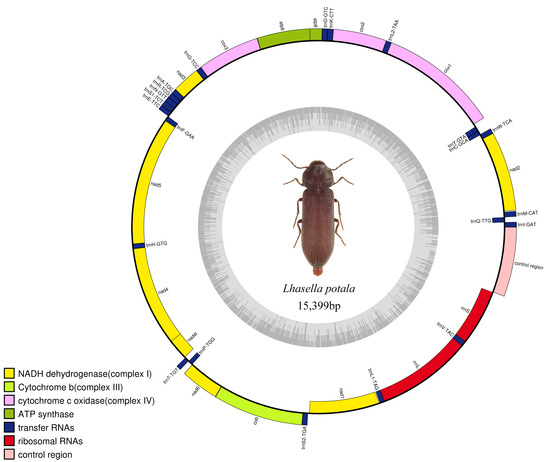
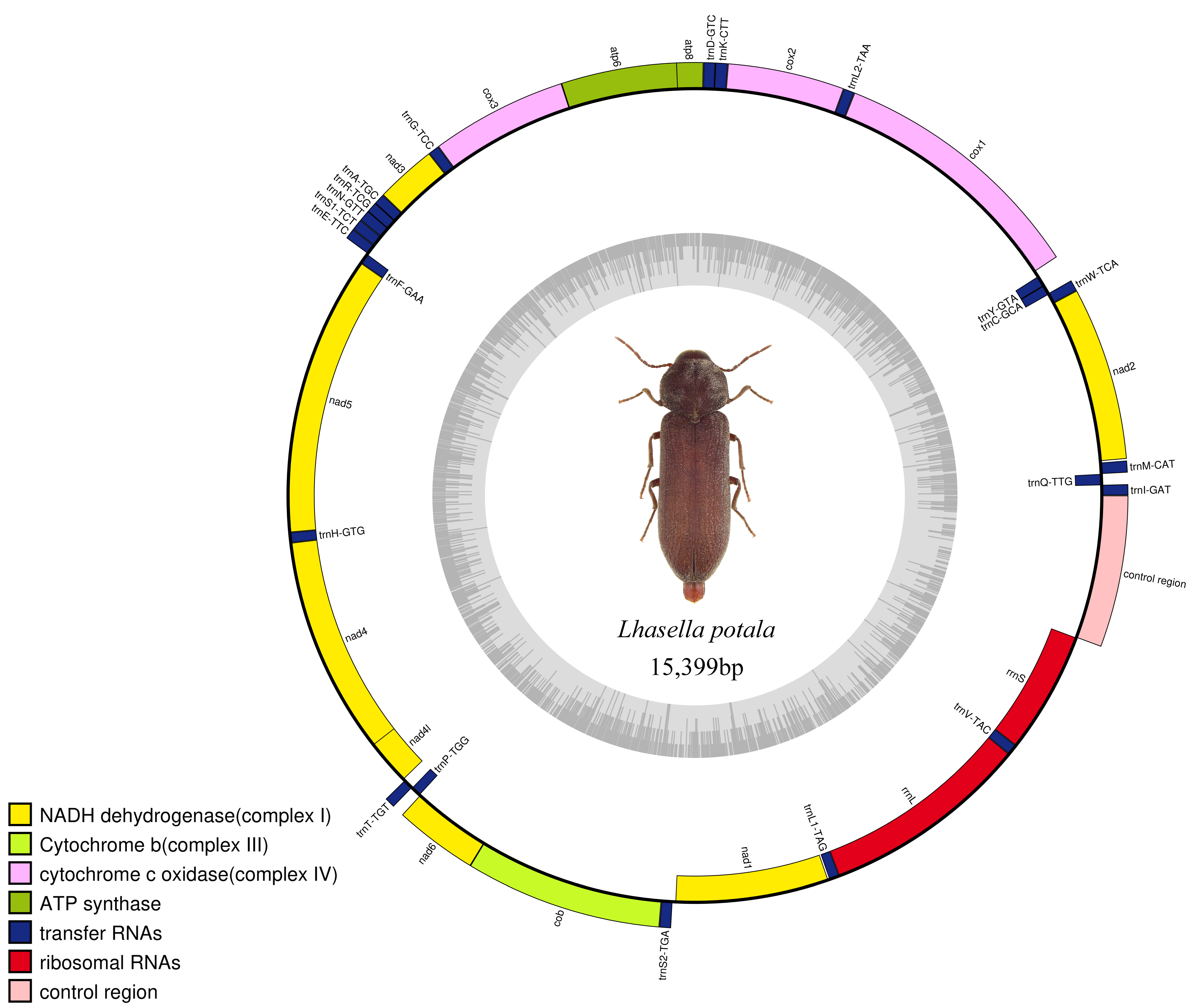
The complete mitochondrial genome of L. potala (Accession No. PV298246.1) is 15,399 bp and comprises 37 genes, including 13 protein-coding genes (PCGs: atp6, atp8, cob, cox1, cox2, cox3, nad1, nad2, nad3, nad4, nad4l, nad5, and nad6), two ribosomal RNA genes (rrnL and rrnS), and 22 transfer RNA (tRNA) genes, namely trnA-TGC, trnC-GCA, trnD-GTC, trnE-TTC, trnF-GAA, trnG-TCC, trnH-GTG, trnI-GAT, trnK-CTT, trnL1-TAG, trnL2-TAA, trnM-CAT, trnN-GTT, trnP-TGG, trnQ-TTG, trnR-TCG, trnS1-TCT, trnS2-TGA, trnT-TGT, trnV-TAC, trnW-TCA, and trnY-GTA. Additionally, a control region was identified in the non-coding portion of the genome (Figure 1). Among these genes, 4 PCGs, 2 rRNAs, and 8 tRNAs (nad1, nad4, nad4l, nad5, rrnL, rrnS, trnF-GAA, trnH-GTG, trnP-TGG, trnL1-TAG, trnV-TAC, trnQ-TTG, trnC-GCA, trnY-GTA) are located on the minority (N) strand, whereas the remaining 9 PCGs and 14 tRNAs are encoded on the majority (J) strand (Table 2). Moreover, the genome has a compact organization with a total of 18 gene junctions involving either intergenic spacers or overlapping regions. The cumulative length of intergenic spacers is 80 bp, and that of overlapping regions is 33 bp. The largest intergenic spacer (34 bp) occurs between trnY and cox1, followed by a 17 bp spacer between trnS2 and nad1. The most extensive overlap (−8 bp) is found between trnW and trnC (Table 2).
Figure 1.
A circular map of the mitochondrial genome of L. potala. The habitus image of the insect is reproduced from [12], reproduced with permission from the copyright holder, © Magnolia Press.
Table 2.
The positions and features of the genes in the L. potala mitochondrial genome.
The nucleotide composition of the complete mitochondrial genome exhibits a strong A + T bias, with the proportions of A, T, C, and G being 43.09%, 31.14%, 16.25%, and 9.51%, respectively, resulting in the A + T content of 74.23% and the G + C content of 25.77%. The PCG region is 11,018 bp in length and also shows a high A + T content (71.9%) and relatively low GC content (28.1%), with low AT-skew (−0.108) and GC-skew (−0.037) values. The tRNA region is 1438 bp in length and exhibits an even higher A + T content (76.91%) and a near-zero AT-skew (0.02), indicating a relatively conserved and balanced composition. The rRNA region is 2021 bp in length and characterized by a high T content (46.12%) and a negative AT-skew (−0.171) value, reflecting a predominance of thymine over adenine, as well as a relatively low G + C content. The control region (D-loop) is 875 bp and displays an extremely high A + T content (88.23%), which suggests the presence of regulatory or repetitive sequences, a common feature observed in the mitochondrial genomes of many insect species [36,37] (Table 3).
Table 3.
Nucleotide composition and strand bias of L. potala.
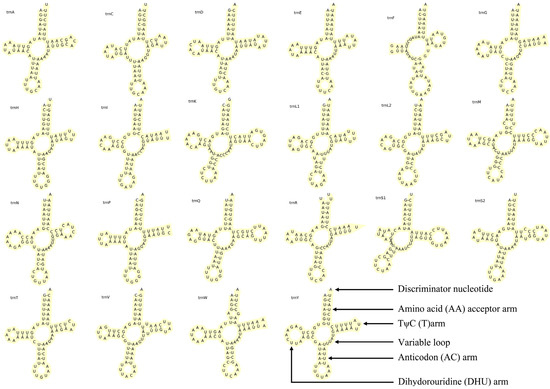
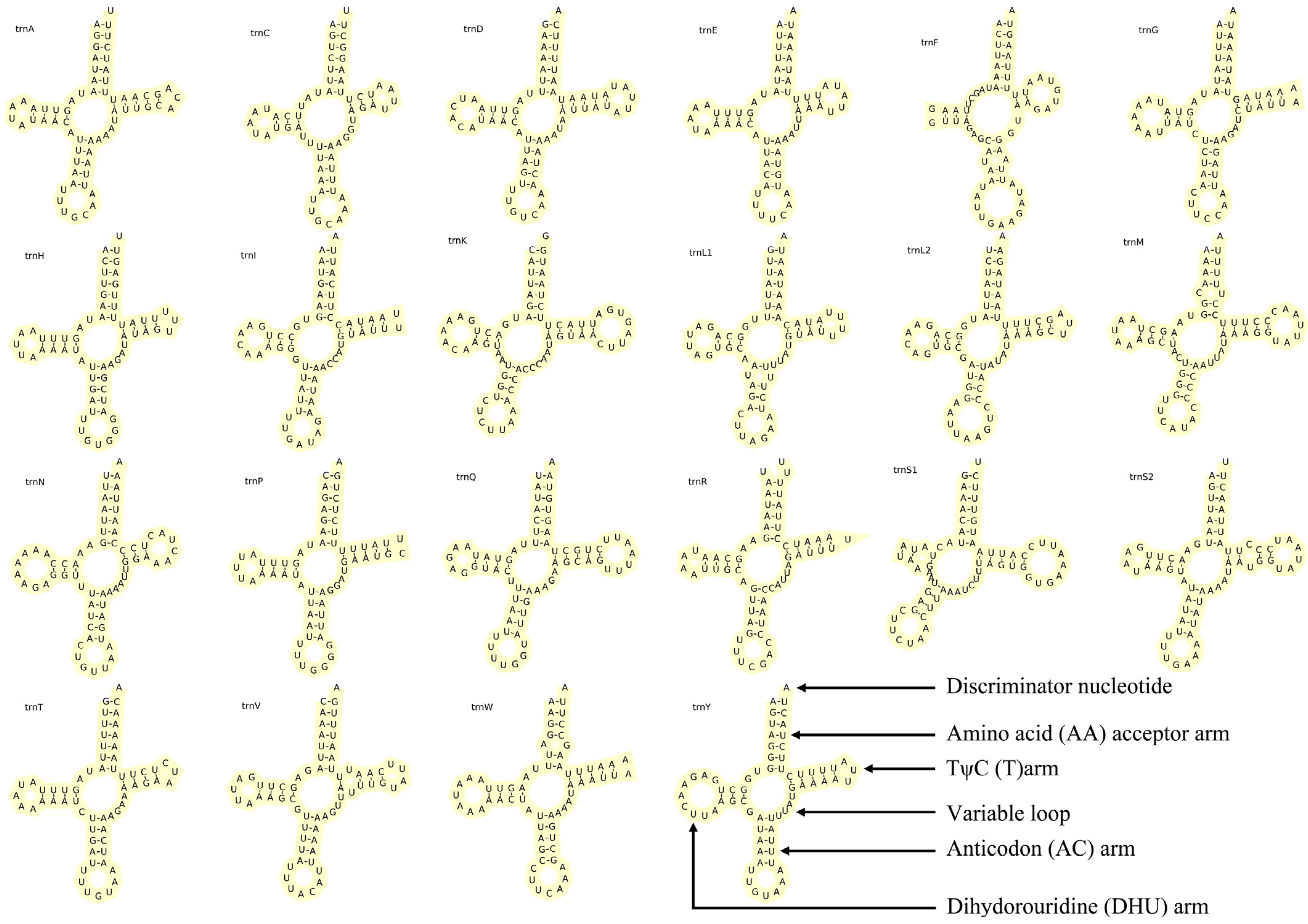
The lengths of the 22 tRNAs range from 62 to 71 bp. All tRNAs are predicted to fold into the canonical cloverleaf secondary structure, with well-formed acceptor stems, TΨC arms, anticodon arms, and DHU arms (Figure 2). We detected 23 mismatched base pairs, including one AA mismatch in trnF, and 22 GU mismatches in other tRNAs.
Figure 2.
The predicted secondary structures of tRNAs in the complete mitochondrial genome of L. potala. The 22 tRNA genes were marked with abbreviations in the top left.
3.2. PCGs and Codon Usage
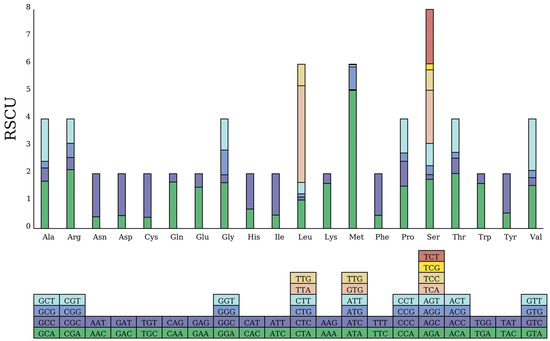
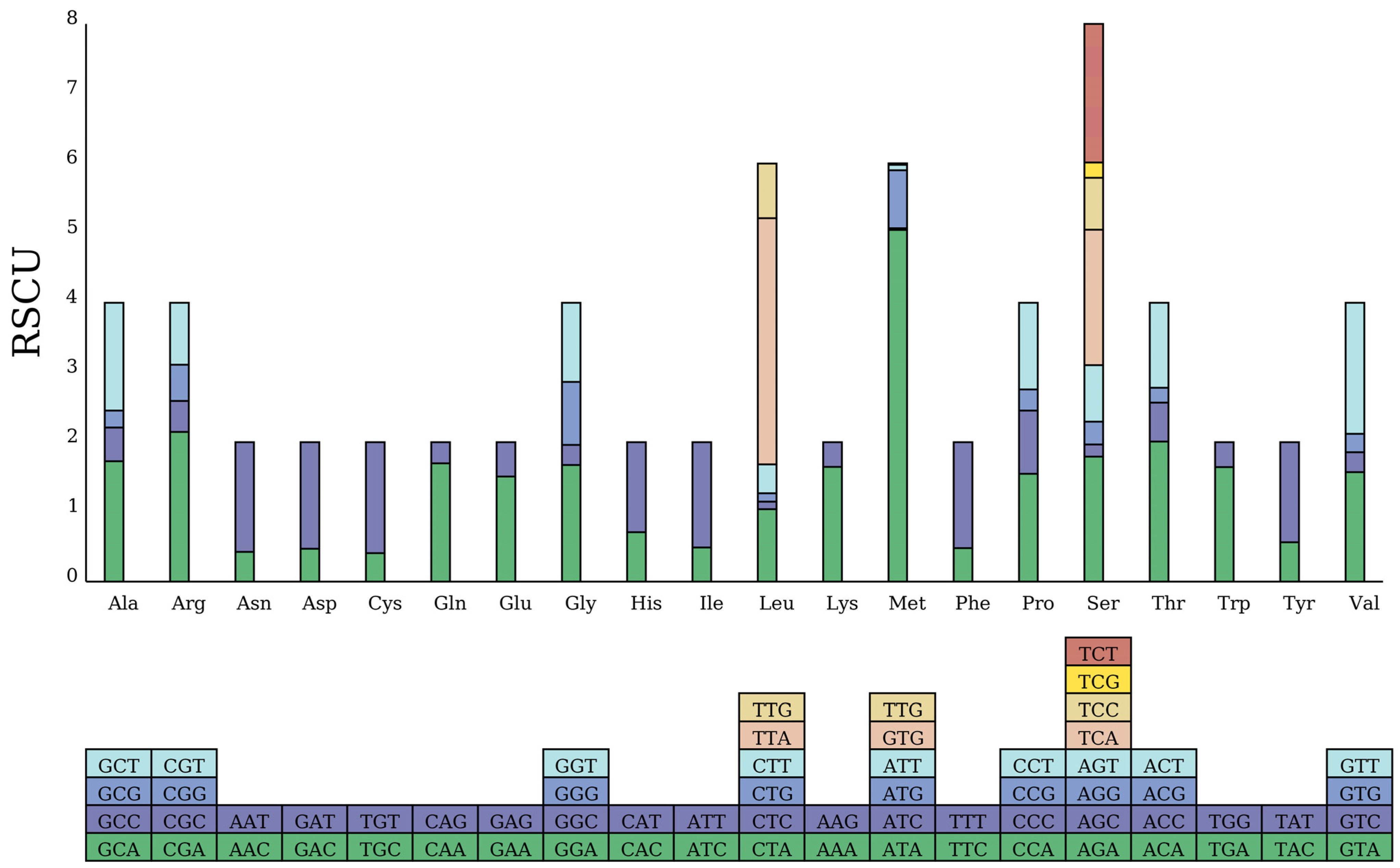
The RSCU values of the PCGs in the mitochondrial genome of L. potala are shown in Figure 3. Among the stop codons, UAA is overwhelmingly favored (RSCU = 1.85), while UAG is rarely used (RSCU = 0.15). According to the invertebrate mitochondrial genetic code, UGA is interpreted as tryptophan (Trp, RSCU = 1.64) rather than as a stop codon, representing a typical mitochondrial codon reassignment pattern widely reported in insects [38,39]. Similarly, AUA is interpreted as methionine (Met, RSCU = 5.05) instead of isoleucine, whereas AGA and AGG are interpreted as serine (Ser, RSCU = 1.79 and 0.33, respectively) rather than arginine. Moreover, the codon usage pattern shows a marked bias toward A/U-ending codons, consistent with the overall AT-rich nature of the genome. Codons such as UUU (Phe, RSCU = 1.52), AUU (Ile, RSCU = 1.51), and UUA (Leu, RSCU = 3.53) are highly preferred, whereas G/C-ending synonymous codons like GCC (Ala, RSCU = 0.48) and CGC (Arg, RSCU = 0.44) are significantly underrepresented. In addition, codon usage for certain amino acids exhibits strong specificity. For example, more than 70% of leucine residues are encoded by UUA (RSCU = 3.53), and AUA accounts for approximately 85% of methionine codons (RSCU = 5.05).
Figure 3.
Relative synonymous codon usage of L. potala. For methionine (Met), the codon AUA was overwhelmingly preferred, resulting in a disproportionately large contribution in the stacked bar plot. Other synonymous codons occurred at very low frequencies and are therefore difficult to distinguish visually.
3.3. Comparative Analysis of Mitochondrial Genomes Among Four Anobiids
3.3.1. Mitogenomic Synteny Analysis
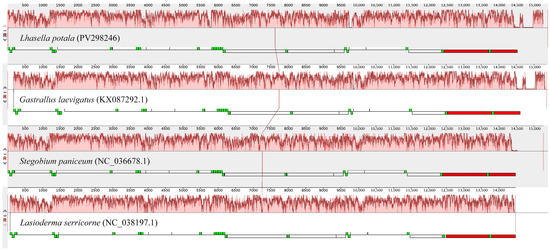
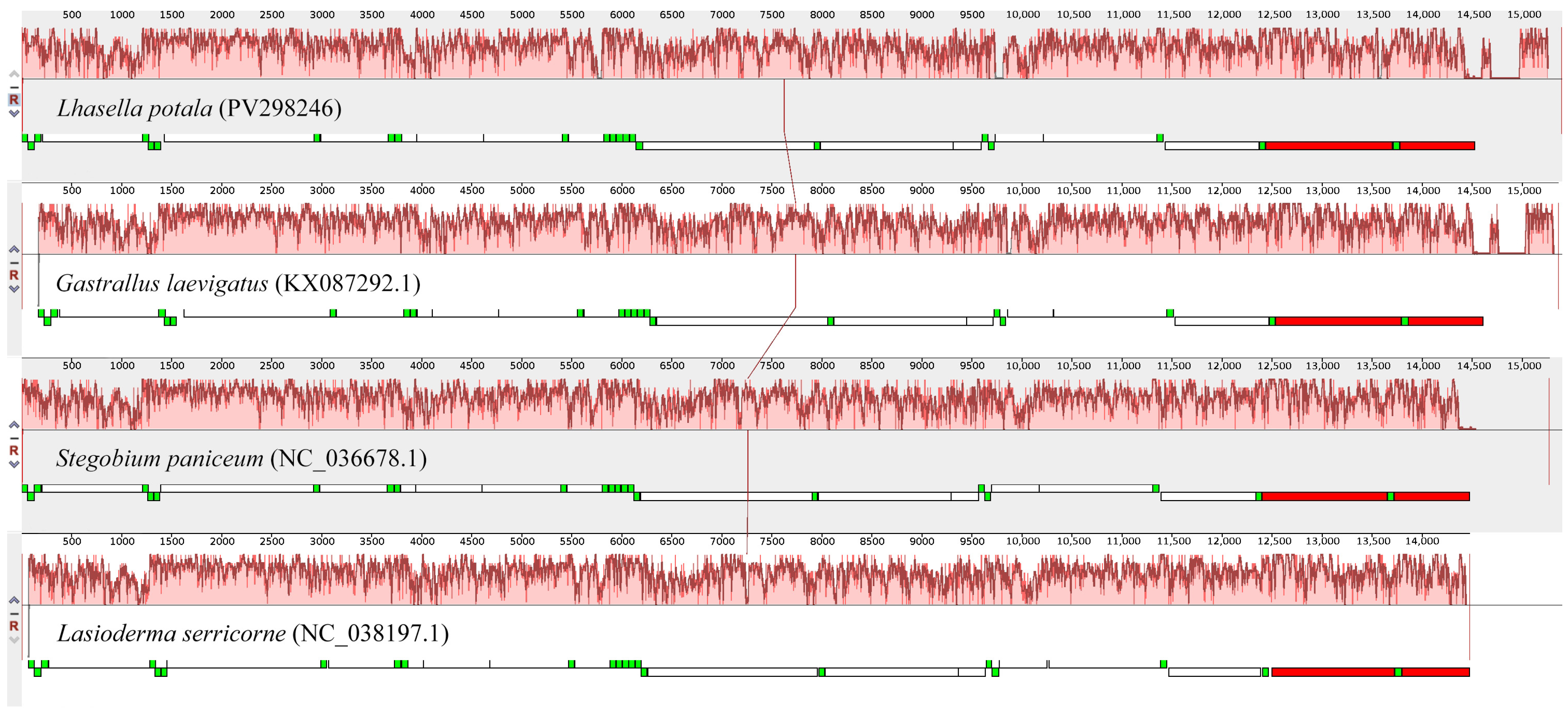
A whole-genome alignment of the mitochondrial genomes of L. potala, Lasioderma serricorne, Stegobium paniceum, and Gastrallus laevigatus was performed to assess structural conservation across these four anobiids. The analysis revealed that all four mitochondrial genomes share a similar size and exhibit high synteny, with consistent gene order and orientation. No structural rearrangements, including gene inversions or translocations, were detected, indicating that the mitochondrial genome architecture has remained highly conserved during the evolution of these species, without significant genomic reorganization (Figure 4).
Figure 4.
Progressive Mauve analyses showing the genome size variations and global rearrangement structures of four anobiids mitochondrial genomes. Each genome is displayed horizontally, and homologous regions shared among the mitochondrial genomes are shown as colored locally collinear blocks. Red connecting lines indicate syntenic relationships among corresponding regions, while the red similarity profiles represent sequence conservation across the aligned mitochondrial genomes.
3.3.2. Selective Pressure on Mitochondrial Core PCGs
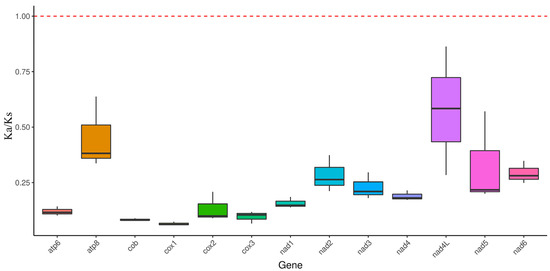
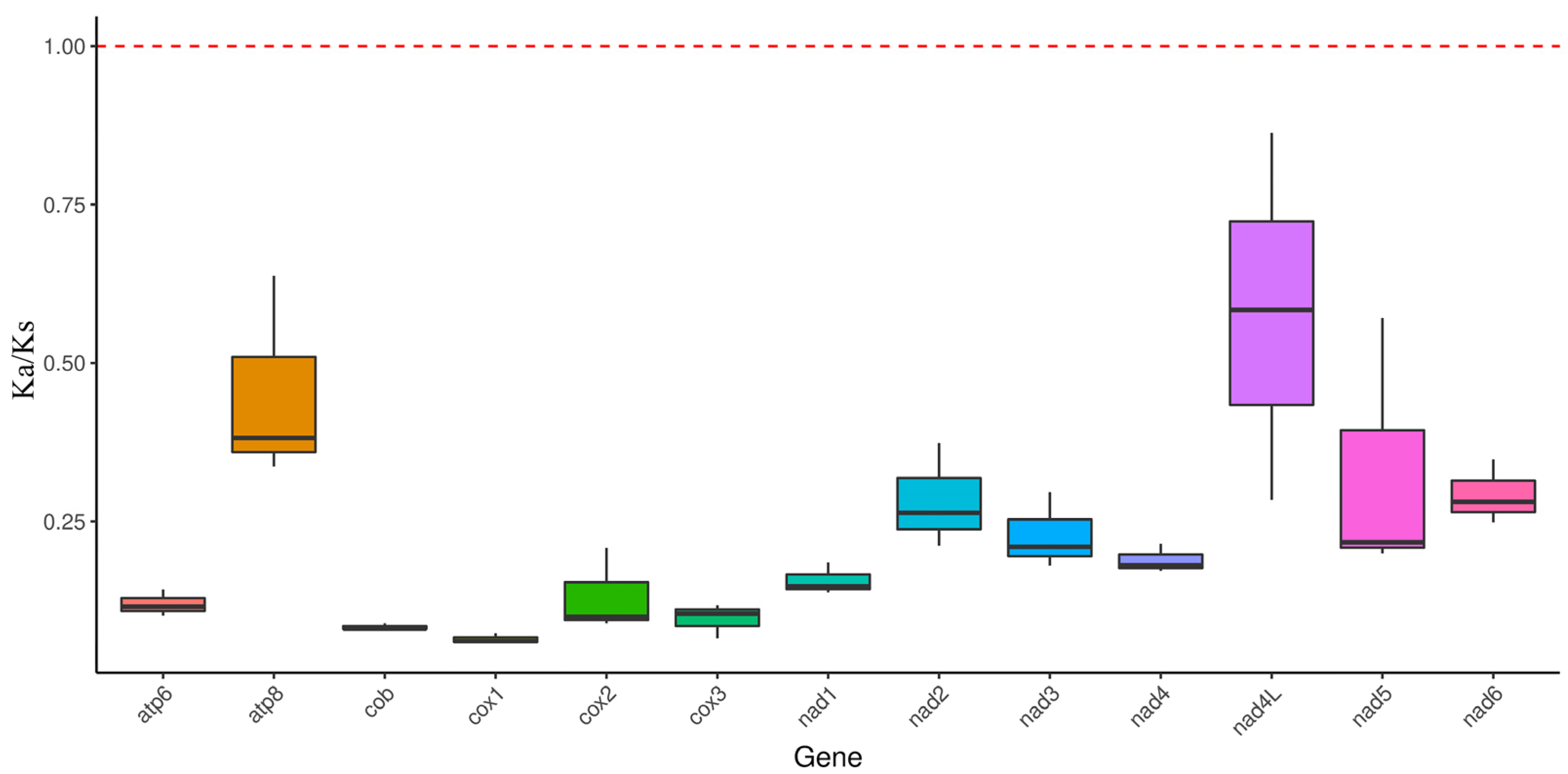
The ratio of nonsynonymous to synonymous substitution rates (Ka/Ks) is an important indicator for understanding the evolutionary dynamics of protein-coding sequences [40,41]. Comparative analyses of mitochondrial genomes were conducted among four anobiids. Ka/Ks values were calculated for the 13 PCGs (Figure 5). The results revealed that the Ka/Ks ratios for all 13 PCGs across the four anobiid species were less than 1, indicating predominant purifying selection. Among these genes, cox1 exhibited the lowest Ka/Ks ratio while nad4L displayed the highest.
Figure 5.
The Ka/Ks ratios of 13 PCGs among four anobiids. The red dashed line indicates the neutral selection threshold (Ka/Ks = 1).
3.3.3. Analysis of Mitochondrial Nucleotide Diversity (Pi)
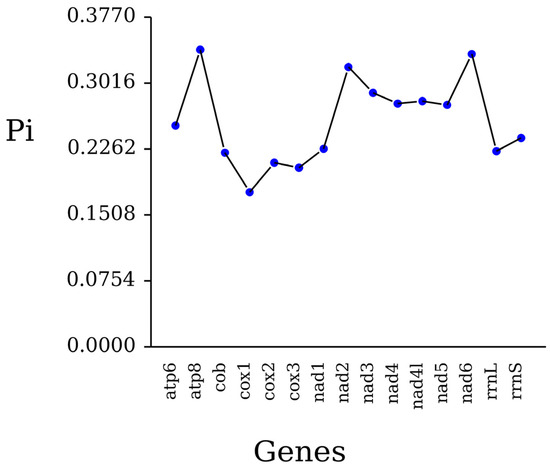
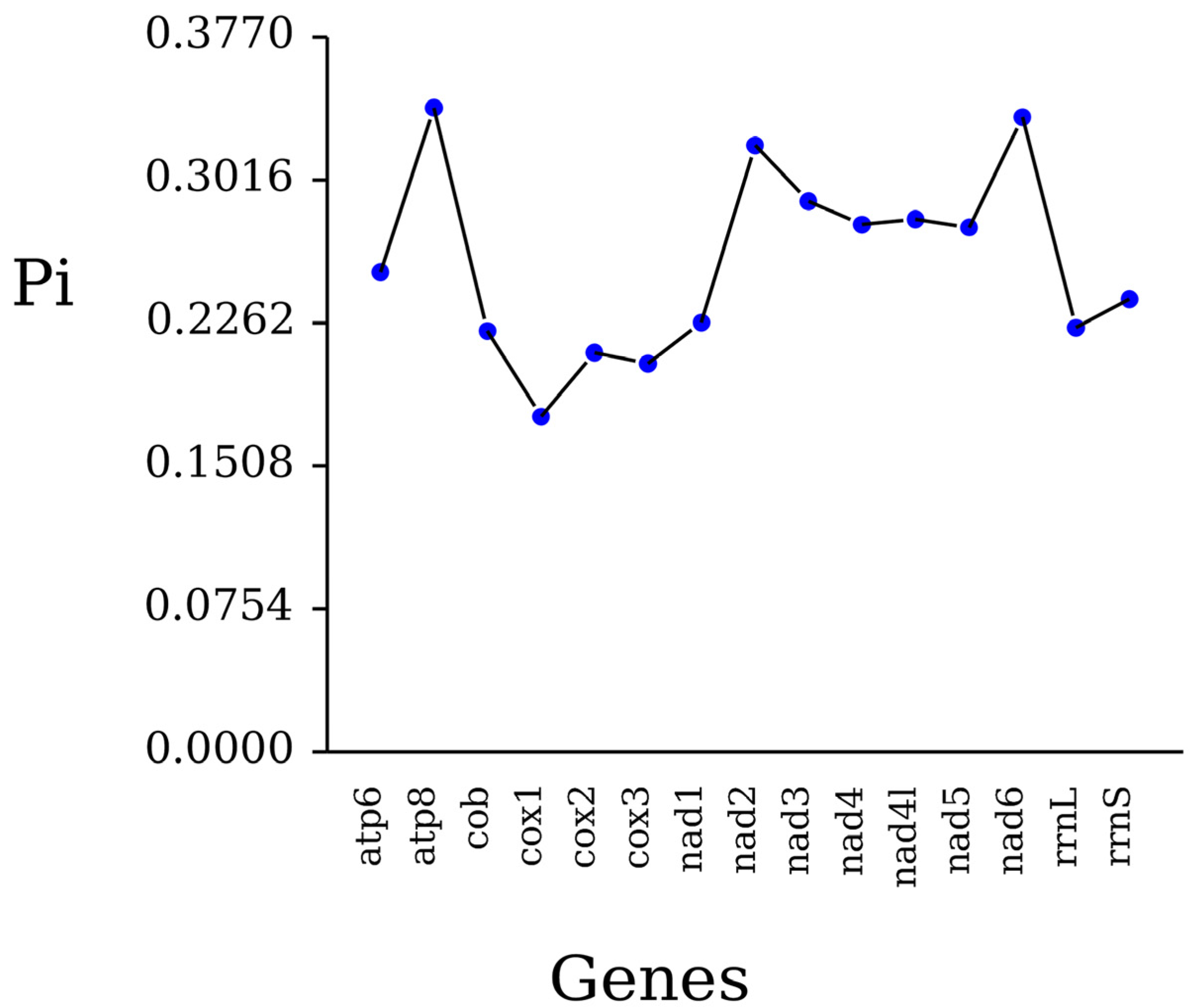
Nucleotide diversity analysis was performed on 13 PCGs and two rRNAs from four anobiids using DnaSP (version 6.12.03). The results indicated relatively low overall fluctuation in Pi values (range: 0.18–0.34), with a mean of 0.26. This suggests that nucleotide diversity across the selected gene regions is generally conserved among these species, with limited variation. Further analysis revealed that the cox1 gene was the most conserved, exhibiting the lowest Pi value (0.18), which reflects its relatively low nucleotide diversity across the examined species. In contrast, the atp8 and nad6 genes displayed comparatively higher nucleotide diversity, with Pi values of 0.34 and 0.33, respectively (Figure 6).
Figure 6.
The mitochondrial nucleotide diversity of 13 PCGs and two rRNAs among four anobiids.
3.4. Phylogenetic Relationships Inferred from Mitochondrial Genomes
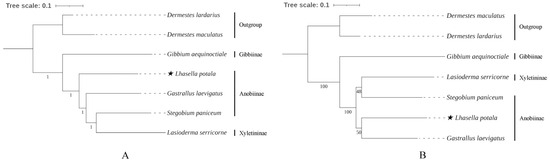
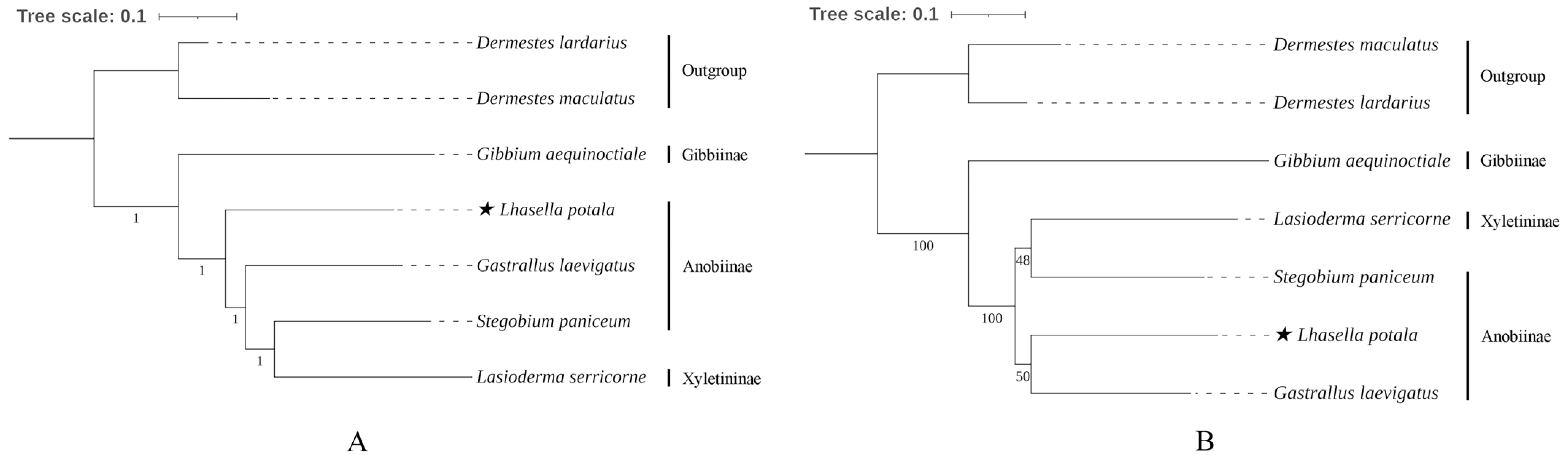
Phylogenetic trees were reconstructed using both BI and ML methods based on the concatenated nucleotide alignment of the 13 PCGs and two rRNAs (Figure 7). While all internal nodes within the family Ptinidae were strongly supported in the BI analysis (posterior probability = 1.0), the anobiids nodes in the ML tree received consistently low bootstrap support (≤50%). This marked discrepancy suggests that the phylogenetic signal in the current mitochondrial dataset is insufficient to robustly resolve the relationships among these ptinid species. Based on the available mitochondrial data, it is tentatively suggested that Gastrallus laevigatus is more closely related to L. potala (the focal species of this study) than to the other species analyzed.
Figure 7.
Phylogenetic trees reconstructed based on the concatenated nucleotide dataset of 13 PCGs and two rRNAs using BI (A) and ML (B). Numbers above branches indicate posterior probabilities (PP) in (A) and bootstrap support values (BS) in (B). The focal species studied in this paper are indicated by stars.
3.5. Bio-Ecological Notes
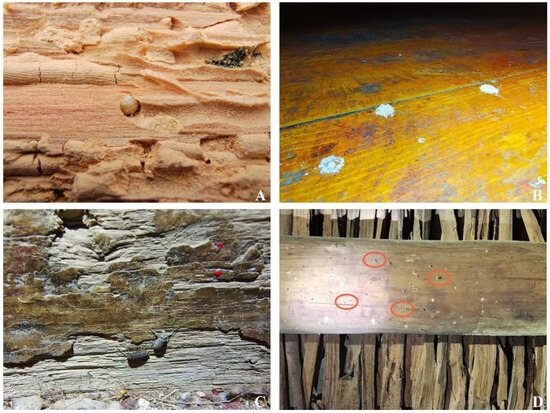
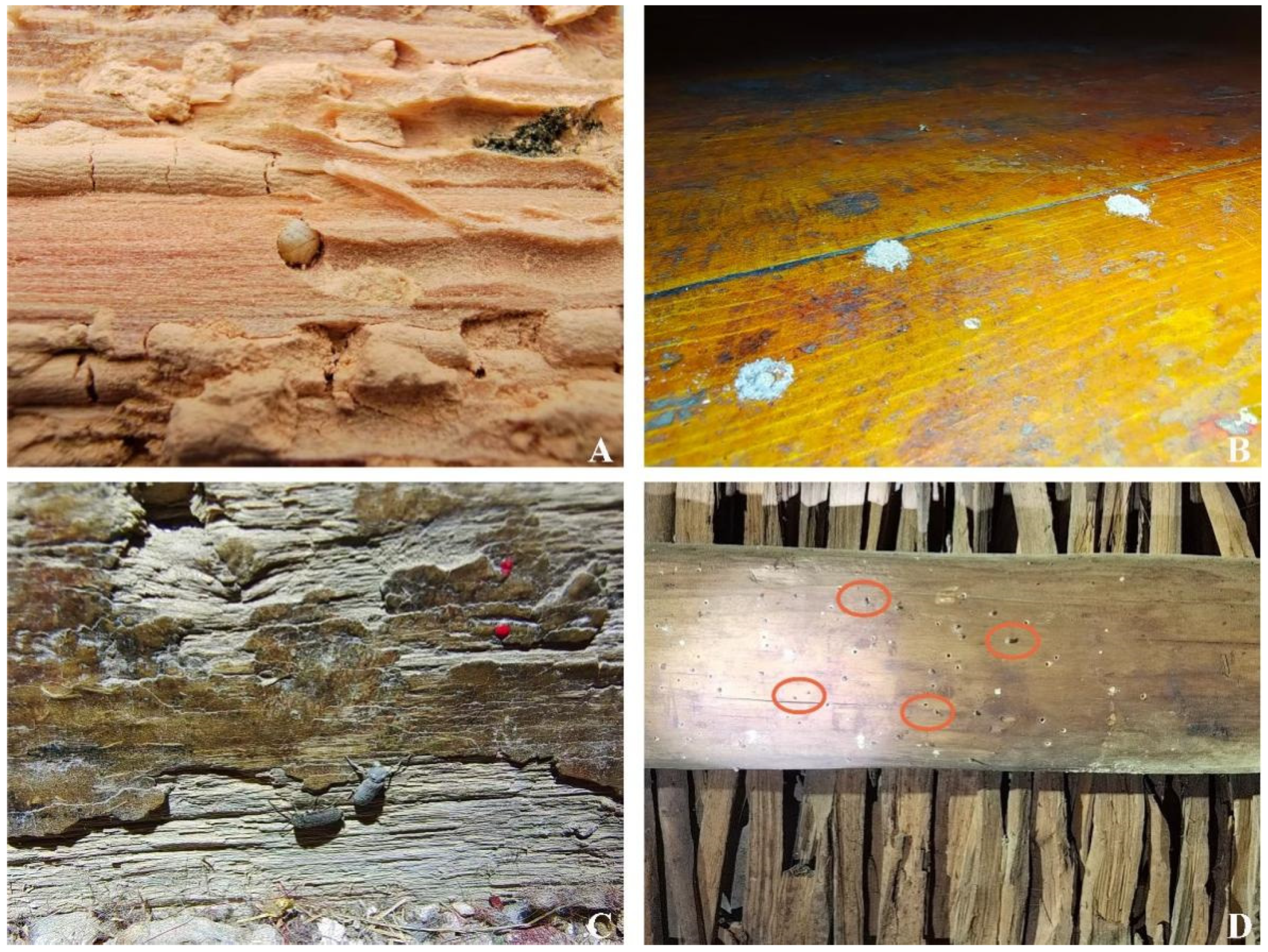
The species is univoltine, completing one generation per year. Larvae remain entirely within wooden structural components throughout their development (Figure 8A), where they feed on wood tissues and produce conspicuous frass accumulations at the gallery openings (Figure 8B). The diameter of the larval galleries is approximately 3 mm. Around May, larvae pupate within the wood and subsequently emerge as adults. Newly emerged adults are commonly observed moving on or around the surfaces of the wooden structures (Figure 8C). Adult females are generally larger than males. Adults feed little or not at all and exhibit limited flight capability. Mating typically occurs outside the galleries, after which oviposition takes place at the gallery entrances. By approximately July, adults begin to die off gradually. In addition, most field observations revealed a distinct plugging behavior at the gallery openings (Figure 8D).
Figure 8.
Habitat and biological characteristics of L. potala. (A) Larva and larval galleries within wooden structural components (from [12], reproduced with permission from the copyright holder, ©Magnolia Press). (B). Frass accumulated at the gallery opening. (C) Adult active near wooden structural components. (D) Dead adult blocking the gallery opening (indicated by red circles).
4. Discussion
4.1. Mitochondrial Genome Structure
The complete mitochondrial genome of L. potala is 15,399 bp in length and contains the full complement of 37 genes typically present in insect mitochondrial genomes, including 13 PCGs, two rRNAs, and 22 tRNAs. The genome exhibits a highly compact organization and conserved gene order, conforming to the canonical structural features of insect mitochondrial genomes [38]. The overall base composition is characterized by a notable A + T bias, with an A + T content of 74.23%. This pronounced A + T enrichment represents a common feature of arthropod mitochondrial genomes, widely attributed to the combined effects of long-term mutational pressure and selective evolutionary constraints [14,42]. Beyond a mere structural trait, this compositional bias may confer adaptive advantages by influencing key mitochondrial processes such as transcription, replication efficiency, and energy metabolism. Consequently, it likely represents an important factor shaping mitogenomic evolution in L. potala.
4.2. Mitochondrial Codon Usage
The non-standard genetic code, where UGA codes for tryptophan, and AT-rich codon usage bias observed in this study represent hallmark features of arthropod mitochondrial genomes, which are widely conserved across diverse lineages including other insects [14,43]. This convergent evolutionary pattern reflects functional coincidental. Evidence indicates that the streamlining and optimization of the mitochondrial genetic system, including codon reassignment, reflect adaptations to its unique translational environment and energy metabolism requirements [44]. More broadly, as the central genetic component of the cellular energy factory, the evolution of the mitochondrial genome is often shaped by natural selection to align with organism-specific physiological states and external environmental pressures [45]. Therefore, the codon usage pattern of L. potala can be interpreted as part of a series of fine-tuned evolutionary adjustments in its mitochondrion, optimized for functional efficiency and adaptation to its specific ecological niche over long-term evolution.
4.3. Comparative Analysis of Mitochondrial Genomes
In comparison with other anobiid species, the mitochondrial genome architecture of L. potala was found to be highly conserved, with no evidence of substantial gene rearrangements or inversions. This structural conservation indicates a relatively stable evolutionary trajectory of the mitochondrial genome in this species. In the analysis of selective pressure on mitochondrial core PCGs, cox1 displayed the lowest Ka/Ks ratio, suggesting it is the most conserved gene and has the slowest evolutionary rate within anobiids, whereas nad4L showed the highest evolutionary rate under purifying selection. Nucleotide diversity (Pi) analyses further revealed that core mitochondrial genes of L. potala exhibit generally low Pi values across the four anobiid species examined, suggesting a high degree of interspecific conservation in these regions. Notably, cox1 exhibited the lowest Pi value, reflecting its slow evolutionary rate within anobiids. This result aligns with the well-established consensus that cox1 is the most evolutionarily conserved mitochondrial protein-coding gene [46]. In contrast, the relatively higher Pi values observed for atp8 and nad6 indicate increased evolutionary variability in these loci, which may be associated with species-specific ecological adaptations [45].
4.4. Phylogenetic Implications for Ptinidae Systematics
Based on taxonomic priority, the family Anobiidae is currently treated as part of Ptinidae [2]. Although its position in the superfamily Bostrichoidea is well-established [20,47], the internal phylogenetic relationships within the family are still not well resolved, especially due to a lack of molecular phylogenetic studies. This study was limited by a small sample size and inadequate reference data for anobiid molecular systematics. Further research should include more samples and broader taxonomic representation, combining molecular and morphological evidence to provide a stronger molecular foundation for Ptinidae systematics.
4.5. Biological Characteristics
Parental care is observed in many insect species. For instance, in Nicrophorus beetles, both males and females provide extensive parental care, with a major benefit of male assistance being to help defend the brood and the carcass from competitors [48]. In Forficula auricularia, the female guards against intruders and physically blocks the nest entrance, serving as an active biological barrier [49]. In the present study, sealing of bore holes was frequently observed. However, whether this behavior represents brood guarding remains unclear. Additionally, the sex of the guarding parent (female, male, or both) requires further investigation.
5. Conclusions
In summary, the first complete mitochondrial genome of L. potala provides new insights into its genomic features, evolutionary patterns, and phylogenetic position within Ptinidae. Together with field-based observations, these results provide baseline molecular and bio-ecological data for future studies on the systematics and evolution of Ptinidae.
Author Contributions
Conceptualization, X.Z., R.S. and M.B.; methodology, X.Z. and Z.P.; software, X.Z. and R.S.; validation, R.S.; formal analysis, X.Z. and Z.P.; investigation, X.Z. and Z.P.; resources, W.D. and M.B.; writing—original draft, X.Z. and Z.P.; writing—review and editing, R.S. and M.B.; visualization, Z.P.; supervision, P.Z.; project administration, W.D. and M.B.; funding acquisition, Z.P., W.D. and M.B. All authors have read and agreed to the published version of the manuscript.
Funding
This work was funded by the Natural Science Foundation of Xizang (Grant No. XZ202301ZR0002G; XZ202601ZR0033); the National Science & Technology Fundamental Resources Investigation Program of China (Grant No. 2025FY101101); the Institute of Zoology, Chinese Academy of Sciences (Grant No. 2025IOZ06); the Ministry of Agriculture of the Czech Republic—Resolution RO0118; the State Key Laboratory of Animal Biodiversity Conservation and Integrated Pest Management (Grant No. SKLA2502); and the National Natural Science Foundation of China (Grant No. 32500361).
Data Availability Statement
The mitochondrial genome sequence generated in this study has been deposited in the NCBI GenBank database under accession number PV298246.1.
Acknowledgments
We would like to thank Tenzin Nyima (the Institute of Plateau Biology of Xizang Autonomous Region), as well as Qiongjiao Zhaxi, Jiacuo Zhaxi and Ciren Oujie (the Administration of the Potala Palace) for their generous assistance during the specimen collection process. We also sincerely thank anonymous reviewers for their valuable comments, which greatly improved the quality of this paper.
Conflicts of Interest
The authors declare no conflicts of interest.
References
- Zahradník, P. World Catalogue of Insects. Ptinidae (Coleoptera); Brill: Leiden, The Netherlands; Boston, MA, USA, 2026; in press. [Google Scholar]
- Zahradník, P.; Háva, J. Catalogue of the world genera and subgenera of the superfamilies Derodontoidea and Bostrichoidea (Coleoptera: Derodontiformia, Bostrichiformia). Zootaxa 2014, 3754, 301–352. [Google Scholar] [CrossRef] [Scilit]
- Bell, K.; Philips, T. Molecular systematics and evolution of the Ptinidae (Coleoptera: Bostrichoidea) and related families. Zool. J. Linn. Soc. 2012, 165, 88–108. [Google Scholar] [CrossRef] [Scilit]
- Elgharbawy, A.A.; Abied, M.K. A taxonomic review of Anobiinae and Dorcatominae (Ptinidae: Coleoptera) in Egypt. Egypt. Acad. J. Biol. Sci. 2019, 12, 99–110. [Google Scholar] [CrossRef] [Scilit]
- Ho, Y.H.; Hsiao, Y.; Terayama, M.; Chan, M.L. Ultramorphological characteristics of Falsogastrallus sauteri Pic (Coleoptera: Ptinidae) and a new species of Cephalonomia Westwood (Hymenoptera: Bethylidae): A book-boring beetle and its natural enemy in Taiwan. Insects 2020, 11, 223. [Google Scholar] [CrossRef] [Scilit] [PubMed]
- Zahradník, P.; Trýzna, M. Description of a new genus and species, Dundadela maculata, from Madagascar (Coleoptera: Ptinidae). Zootaxa 2023, 5244, 276–286. [Google Scholar] [CrossRef] [Scilit]
- Philips, T.K.; Bell, K.L. Ptinidae Latreille, 1802. In Handbook of Zoology, Coleoptera, Beetles, Morphology and Systematics (Elateroidea, Bostrichiformia, Cucujiformia Partim); Leschen, R.A.B., Beutel, R.G., Eds.; W DeGruyter: Berlin, Germany, 2010; Volume 2, pp. 217–225. [Google Scholar] [CrossRef] [Scilit]
- Abdelghany, A.Y.; Awadalla, S.S.; Abdel-Baky, N.F.; El-Syrafi, H.A.; Paul, G.F. Effect of high and low temperatures on the drugstore beetle (Coleoptera: Anobiidae). J. Econ. Entomol. 2010, 103, 1909–1914. [Google Scholar] [CrossRef] [Scilit]
- Serdjukova, I.R.; Toskina, I.N. Some characters of biology and physiology of the common furniture beetle Anobium punctatum DeGeer (Coleoptera Anobiidae). Russ. Entomol. J. 1996, 4, 35–43. [Google Scholar]
- Xiong, X.Z. Laboratory rearing method and life history of Falsogastrallus sauteri Pic (Coleoptera: Anobiidae). Coleopt. Bull. 1992, 46, 321–324. [Google Scholar]
- Español, F. The Iberian species of Nicobium (Coleoptera, Anobiidae). Bol. R. Soc. Esp. Hist. Nat. 1964, 62, 289–291. [Google Scholar]
- Zhou, X.; Pubu, Z.; Zhang, W.; Shen, R.R.; Da, W.; Gongga, Z.; Zhaxi, P.; Zahradnĺk, P.; Bai, M. Description of a new genus and species, Lhasella potala, from Xizang, China (Coleoptera: Ptinidae: Anobiinae). Zootaxa 2025, 5737, 427–437. [Google Scholar] [CrossRef] [Scilit]
- Jiang, H.Y.; Garsu, P.; Wang, M.X. Report on the Restoration Project of the Potala Palace, Xizang; Cultural Relics Publishing House: Beijing, China, 1994; pp. 43–83. [Google Scholar]
- Cameron, S.L. Insect mitochondrial genomics: Implications for evolution and phylogeny. Annu. Rev. Entomol. 2014, 59, 95–117. [Google Scholar] [CrossRef] [Scilit]
- Guo, Q.; Huang, W.; Sang, W.; Chen, X.; Wang, X. Characterization, comparative analyses, and phylogenetic implications of mitochondrial genomes among bark and ambrosia beetles (Coleoptera: Curculionidae, Scolytinae). Front. Ecol. Evol. 2023, 11, 1191446. [Google Scholar] [CrossRef] [Scilit]
- Ashfaq, M.; Hebert, P.D.N. DNA barcodes for bio-surveillance: Regulated and economically important arthropod plant pests. Genome 2016, 59, 933–945. [Google Scholar] [CrossRef] [Scilit]
- Li, C.; Wang, B.; Ji, Y.; Huang, L.; Wang, X.; Zhao, W.; Wang, Y.; Wang, H.; Yao, Y. Mitochondrial genome provides species-specific targets for the rapid detection of early invasive populations of Hylurgus ligniperda in China. BMC Genom. 2024, 25, 90. [Google Scholar] [CrossRef] [Scilit] [PubMed]
- Yang, W.J.; Cai, X.Y.; Xu, K.K.; Cao, Y.; Meng, Y.L.; Li, C. The complete mitochondrial genome of Stegobium paniceum (Coleoptera: Anobiidae). Mitochondrial DNA Part B 2016, 1, 815–816. [Google Scholar] [CrossRef] [Scilit] [PubMed]
- Liu, Q.; Jiang, X.; Hou, X.; Cai, R.; Tan, J.; Chen, W. The mitochondrial genome of Lasioderma serricorne (Coleoptera, Anobiidae). Mitochondrial DNA Part B 2018, 3, 64–65. [Google Scholar] [CrossRef] [Scilit]
- Zhang, H.; Han, Z.; Zhang, R.; Zhang, Y.; Wu, J.; Wang, Z. Phylogenetic analyses of Bostrichiformia and characterization of the mitogenome of Gibbium aequinoctiale (Bostrichiformia Ptinidae). Genes 2025, 16, 509. [Google Scholar] [CrossRef] [Scilit] [PubMed]
- Kearse, M.; Moir, R.; Wilson, A.; Stones-Havas, S.; Cheung, M.; Sturrock, S.; Buxton, S.; Cooper, A.; Markowitz, S.; Duran, C.; et al. Geneious basic: An integrated and extendable desktop software platform for the organization and analysis of sequence data. Bioinformatics 2012, 28, 1647–1649. [Google Scholar] [CrossRef] [Scilit]
- Bernt, M.; Donath, A.; Jühling, F.; Externbrink, F.; Florentz, C.; Fritzsch, G.; Pütz, J.; Middendorf, M.; Stadler, P.F. MITOS: Improved de novo metazoan mitochondrial genome annotation. Mol. Phylogenet. Evol. 2013, 69, 313–319. [Google Scholar] [CrossRef] [Scilit]
- Lohse, M.; Drechsel, O.; Kahlau, S.; Bock, R. OrganellarGenomeDRAW—A suite of tools for generating physical maps of plastid and mitochondrial genomes. Nucleic Acids Res. 2013, 41, W575–W581. [Google Scholar] [CrossRef] [Scilit]
- Tamura, K.; Stecher, G.; Kumar, S. MEGA11: Molecular evolutionary genetics analysis version 11. Mol. Biol. Evol. 2021, 38, 3022–3027. [Google Scholar] [CrossRef] [Scilit]
- Perna, N.T.; Kocher, T.D. Patterns of nucleotide composition at fourfold degenerate sites of animal mitochondrial genomes. J. Mol. Evol. 1995, 41, 353–358. [Google Scholar] [CrossRef] [Scilit]
- Katoh, K.; Standley, D.M. MAFFT Multiple sequence alignment software version 7: Improvements in performance and usability. Mol. Biol. Evol. 2013, 30, 772–780. [Google Scholar] [CrossRef] [Scilit] [PubMed]
- Wang, D.; Zhang, Y.; Zhang, Z.; Zhu, J.; Yu, J. KaKs_Calculator 2.0: A toolkit incorporating gamma-series methods and sliding window strategies. Genom. Proteom. Bioinform. 2010, 8, 77–80. [Google Scholar] [CrossRef] [Scilit] [PubMed]
- Rozas, J.; Ferrer-Mata, A.; Sánchez-DelBarrio, J.C.; Guirao-Rico, S.; Librado, P.; Ramos-Onsins, S.E.; Sánchez-Gracia, A. DnaSP 6: DNA sequence polymorphism analysis of large data sets. Mol. Biol. Evol. 2017, 34, 3299–3302. [Google Scholar] [CrossRef] [Scilit]
- Darling, A.E.; Mau, B.; Perna, N.T. progressiveMauve: Multiple genome alignment with gene gain, loss and rearrangement. PLoS ONE 2010, 5, e11147. [Google Scholar] [CrossRef] [Scilit]
- Ranwez, V.; Harispe, S.; Delsuc, F.; Douzery, E.J.P. MACSE: Multiple alignment of coding sequences accounting for frameshifts and stop codons. PLoS ONE 2011, 6, e22594. [Google Scholar] [CrossRef] [Scilit] [PubMed]
- Talavera, G.; Castresana, J. Improvement of phylogenies after removing divergent and ambiguously aligned blocks from protein sequence alignments. Syst. Biol. 2007, 56, 564–577. [Google Scholar] [CrossRef] [Scilit]
- Kalyaanamoorthy, S.; Minh, B.Q.; Wong, T.K.F.; von Haeseler, A.; Jermiin, L.S. ModelFinder: Fast model selection for accurate phylogenetic estimates. Nat. Methods 2017, 14, 587–589. [Google Scholar] [CrossRef] [Scilit]
- Ronquist, F.; Teslenko, M.; van der Mark, P.; Ayres, D.L.; Darling, A.; Höhna, S.; Larget, B.; Liu, L.; Suchard, M.A.; Huelsenbeck, J.P. MrBayes 3.2: Efficient Bayesian phylogenetic inference and model choice across a large model space. Syst. Biol. 2012, 61, 539–542. [Google Scholar] [CrossRef] [Scilit]
- Nguyen, L.T.; Schmidt, H.A.; von Haeseler, A.; Minh, B.Q. IQ-TREE: A fast and effective stochastic algorithm for estimating maximum-likelihood phylogenies. Mol. Biol. Evol. 2015, 32, 268–274. [Google Scholar] [CrossRef] [Scilit] [PubMed]
- Letunic, I.; Bork, P. Interactive tree of life (iTOL) v3: An online tool for the display and annotation of phylogenetic and other trees. Nucleic Acids Res. 2016, 44, W242–W245. [Google Scholar] [CrossRef] [Scilit] [PubMed]
- Zhang, D.X.; Hewitt, G.M. Insect mitochondrial control region: A review of its structure, evolution and usefulness in evolutionary studies. Biochem. Syst. Ecol. 1997, 25, 99–120. [Google Scholar] [CrossRef] [Scilit]
- Yuan, L.; Ge, X.; Xie, G.; Liu, H.; Yang, Y. First complete mitochondrial genome of Melyridae (Coleoptera, Cleroidea): Genome description and phylogenetic implications. Insects 2021, 12, 87. [Google Scholar] [CrossRef] [Scilit]
- Boore, J.L. Animal mitochondrial genomes. Nucleic Acids Res. 1999, 27, 1767–1780. [Google Scholar] [CrossRef] [Scilit] [PubMed]
- Watanabe, K.; Yokobori, S. tRNA Modification and genetic code variations in animal mitochondria. J. Nucleic Acids 2011, 2011, 623095. [Google Scholar] [CrossRef] [Scilit]
- Nei, M.; Gojobori, T. Simple methods for estimating the numbers of synonymous and nonsynonymous nucleotide substitutions. Mol. Biol. Evol. 1986, 3, 418–426. [Google Scholar] [CrossRef] [Scilit]
- Zhang, Z.; Li, J.; Zhao, X.Q.; Wang, J.; Wong, G.K.S.; Yu, J. KaKs_Calculator: Calculating Ka and Ks through model selection and model averaging. Genom. Proteom. Bioinform. 2007, 4, 259–263. [Google Scholar] [CrossRef] [Scilit]
- Song, N.; Zhang, H. The mitochondrial genomes of phytophagous scarab beetles and systematic implications. J. Insect Sci. 2018, 18, 76. [Google Scholar] [CrossRef] [Scilit]
- Wolstenholme, D.R. Animal mitochondrial DNA: Structure and evolution. Int. Rev. Cytol. 1992, 141, 173–216. [Google Scholar] [CrossRef] [Scilit]
- Sengupta, S.; Yang, X.; Higgs, P.G. The mechanisms of codon reassignments in mitochondrial genetic codes. J. Mol. Evol. 2007, 64, 662–688. [Google Scholar] [CrossRef] [Scilit] [PubMed]
- Dowling, D.K.; Friberg, U.; Lindell, J. Evolutionary implications of non-neutral mitochondrial genetic variation. Trends Ecol. Evol. 2008, 23, 546–554. [Google Scholar] [CrossRef] [Scilit] [PubMed]
- Lynch, M.; Jarrell, P.E. A method for calibrating molecular clocks and its application to animal mitochondrial DNA. Genetics 1993, 135, 1197–1208. [Google Scholar] [CrossRef] [Scilit]
- McKenna, D.D.; Shin, S.; Ahrens, D.; Balke, M.; Beza-Beza, C.; Clarke, D.J.; Donath, A.; Escalona, H.E.; Friedrich, F.; Letsch, H.; et al. The evolution and genomic basis of beetle diversity. Proc. Natl. Acad. Sci. USA 2019, 116, 24729–24737. [Google Scholar] [CrossRef] [Scilit] [PubMed]
- Scott, M.P. The ecology and behavior of burying beetles. Annu. Rev. Entomol. 1998, 43, 595–618. [Google Scholar] [CrossRef] [Scilit]
- Kölliker, M. Benefits and costs of earwig (Forficula auricularia) family life. Behav. Ecol. Sociobiol. 2007, 61, 1489–1497. [Google Scholar] [CrossRef] [Scilit]

Disclaimer/Publisher’s Note: The statements, opinions and data contained in all publications are solely those of the individual author(s) and contributor(s) and not of MDPI and/or the editor(s). MDPI and/or the editor(s) disclaim responsibility for any injury to people or property resulting from any ideas, methods, instructions or products referred to in the content. |
© 2026 by the authors. Licensee MDPI, Basel, Switzerland. This article is an open access article distributed under the terms and conditions of the Creative Commons Attribution (CC BY) license.