


Simple Summary
To estimate the evolutionary tree for all of the world’s bumblebee species, we combine (1) earlier data for mostly slow-evolving nuclear genes, with (2) new data for a fast-evolving mitochondrial gene, and (3) results from a study of genomic data. The resulting tree provides an up-to-date starting point for comparative studies of all bumblebees.
Abstract
Evolutionary trees are of central importance in biology to develop explanatory frameworks for many kinds of studies, including studies of behaviour, ecology, and conservation. Since the last major estimate of evolutionary relationships among many bumblebee species two decades ago, there have been revisions to their taxonomy, descriptions of new species, and sequencing of many rarer species. By combining: (1) earlier data mostly from slow-evolving nuclear genes as a backbone tree; with (2) new data from fast-evolving mitochondrial COI barcodes to resolve more of the twigs on the tree, including sequences obtained from rare old specimens with ancient DNA techniques; as well as (3) the results from broader genomic data for resolving deep relationships, we make a Bayesian estimate of evolutionary relationships with BEAST 2 among all 289 published and accepted extant bumblebee species, an increase of more than 29% of the species on the previous largest tree. The new tree will serve as a framework for future comparative studies that should enable broader insights into the evolution and ecology of all bumblebees. We illustrate this with an analysis of the evolution of some male morphological characters related to male mate-searching behaviour. We also present a novel map of spatial variation in net diversification rates among bumblebee species world-wide, which indicates an especially rapid net diversification within the more recent Mesoamerican and South American faunas.
Keywords:
bayesian analysis; bumblebee; COI barcode; diversification; evolutionary tree; phylogeny; trait 1. Introduction
Evolutionary trees are essential as a framework for studies in comparative biology. For bumblebees (tribe Bombini, genus Bombus) these studies have focused especially on morphology [1,2], behaviour [3,4,5], ecology [1,4,5], biogeography [1,6,7,8], and conservation [8,9,10]. Here we present an improved estimate of the evolutionary tree for bumblebees that includes all currently accepted, extant species to help support these studies. It is important when interpreting all of these studies to appreciate that the rate of discovery of bumblebee species new to science has now greatly slowed since the middle of the twentieth century, so that most bumblebee species may already be known [11]. This adds to their value as a model group.
When recent comparative studies of bumblebees have referred to an evolutionary tree they have most often used the tree estimate from Cameron et al. [12] (or its ‘nearly identical’ re-run in Hines [6]). This tree was estimated using Bayesian methods (MrBayes) from sequence data for segments of four nuclear genes (for long-wavelength rhodopsin copy 1 (‘opsin’); elongation factor-1 alpha F2 (‘Ef-1α’); arginine kinase (‘ArgK’); and phosphoenolpyruvate carboxykinase (‘PEPCK’); and one mitochondrial gene, a 16S-length sequence coding for ribosomal RNA (‘16S’). The title of the Cameron et al. paper is ‘A comprehensive phylogeny of the bumble bees’ and while it was the best dataset available at the time, it covers just 71% of the currently recognised extant species of bumblebees. The shortfall has arisen partly because a few species have been described more recently, but mainly because many species have always been very difficult to find, to identify, and to sequence (see below).
To extend the Cameron et al. tree [12] to cover all currently recognised bumblebee species, there are several advantages in supplementing the earlier analysis with DNA-sequence data from ‘barcodes’ from a standard region (COI-5P) of the COI gene. These are relatively fast-evolving mitochondrial DNA sequences [13,14], so that they are especially well suited to resolving relationships among the most closely-related missing ‘twigs’ of the tree [15]. COI barcodes are also inexpensive to acquire and already widely available for many species [16]. With improving access and sequencing methods they can now be obtained even for the rarest species from older specimens (e.g., [17,18,19]).
The problem with any tree that estimates evolutionary relationships for species that is based on only a few genes (whether nuclear or mitochondrial) is that individual genes are not always reliable for resolving the species’ tree. This is because of discordances that are known to exist among trees for individual genes [20] and which have been demonstrated for bumblebees [6,12]. Individual slow-evolving nuclear genes may also contain little or no information relating to many of the divergences, making these difficult to resolve, especially if changes took place within a short time interval that was long ago, a problem that is best resolved by using a large sample of nuclear genes [21]. Fortunately, this information is now available for bumblebees from the genomic data assembled by Sun et al. [22]. Of the total of around 16,000 genes in the bumblebee genome, Sun et al. sampled parts of ca 10,000 genes to produce an estimate of relationships among representatives of all 15 bumblebee subgenera (the major evolutionary groups of species [23]). The Sun et al. tree therefore represents the best available estimate of the deeper relationships among global bumblebee diversity. However, it includes only 19 species.
We seek to obtain an improved estimate of the evolutionary tree of relationships for all extant bumblebee species by bringing together the strengths of all three approaches. We combine: (1) the five-gene, mostly nuclear, data from Cameron et al. [12] to build a backbone for the tree [13,24]; adding (2) mitochondrial barcode data to further resolve the terminal relationships for the remaining 29% of bumblebee species; and (3) ensure that the tree has the best current estimates of deep-branch relationships as supported from the extensive cross-genome sampling of Sun et al. [22]. An important contribution here for some globally very rare species is the use of ancient DNA techniques in obtaining sequences from old specimens. Our resulting tree represents the culmination of our current knowledge of bumblebee evolutionary relationships and serves as the basis for downstream comparative studies on the biology of this fascinating group.
2. Materials and Methods
2.1. Species’ List and Species’ Identification
A fundamental part of estimating complete evolutionary trees that often goes unrecognized is: (1) the need for a complete global species’ list for a group; and (crucially) (2) the ability to identify all of the species correctly. This is not straightforward because ideas of the nature of species are far from universally agreed, with changing views through time [25,26]. This results in species’ lists for bumblebees that are not only contentious at any one time, but have a long history of change [27]. Even if conceptual issues with the species’ problem in general may never be completely resolved [25], nonetheless a research programme that seeks to maximise consistency in the interpretation of bumblebee species would clearly make comparisons easier [11,28,29,30,31]. Therefore estimating an evolutionary tree demands a single list of species that ideally requires a choice of a consistent species’ concept or definition.
What are species? Bumblebees are especially problematic for taxonomy because they are very variable, so that while nearly 3000 taxa have been named from this variation, they have been interpreted as having only around one tenth of that number of species [11]. After more than half a century of emphasis on a Reproductive Isolation Species’ Concept (known more widely and less precisely as the ‘biological’ species concept) that did not lead to a discrete testable criterion [25], there has recently been a quiet revolution among specialist taxonomists. For the last 15 years the most common practice in recognising species for bumblebees has been to apply the definition of species as Evolutionarily Independent Lineages (EILs) [32]. The practical implementation of this idea has been to assess candidates with an ‘integrative’ test, which requires corroboration from at least two test criteria that each supports the presence of separate species [33]. These criteria ideally represent successive steps on the road to speciation, and the breadth of accepted criteria leads to this idea also being seen as a Unified Concept [32]. In its application to bumblebees, the best criteria with theoretically-defined thresholds most often include: (1) support for separate species’ gene coalescents (for a pattern of evolutionarily independent lineages [34]); and (2) coincidence of discontinuous step-like changes in patterns of variation between populations for (ideally) multiple morphological differences (which can be interpreted as evidence for a lack of interbreeding between those populations [35]). The EIL definition has been accepted as the most appropriate for taxonomy [26].
Most bumblebees world-wide have been revised using the EIL definition of species within subgenera, within species groups, and for some individual species [17,35,36,37,38,39,40,41,42,43,44,45,46,47,48,49,50,51,52,53,54,55]. Among many examples, some previously proposed ‘species’ (e.g., B. applanatus, B. melanopoda [7,19]) have been shown to be no longer supported as separate species (all prospective species have been reviewed from morphological and genetic evidence). For the species’ identification for the sample of B. brevivillus that was sequenced, a species for which there are differences in interpretation [7,56,57], the identification from Santos-Junior et al. [58] is accepted. The list of world bumblebee species accepted here includes 289 species (see Figure 1, listed in Supplementary Table S1: List of extant accepted bumblebee species world-wide), of which 84 species (29%) can now be added to the Cameron et al. [12] tree.
Figure 1.
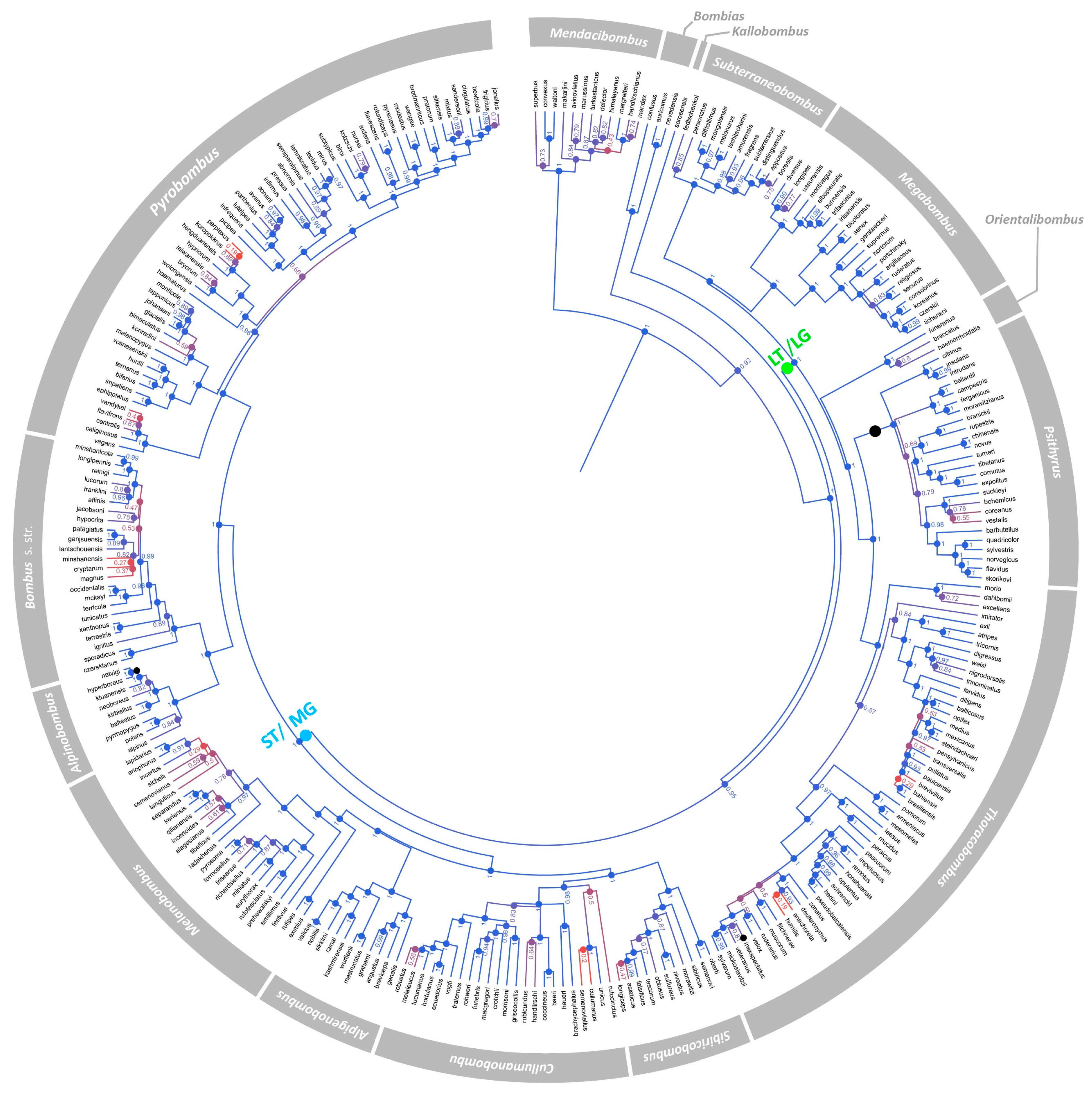
Evolutionary tree for all 289 extant accepted bumblebee species from 93 million MCMC generations (post convergence) by BEAST 2 for two mitochondrial genes, four nuclear genes, and genomic-supported group priors, with outgroups removed. Bayesian posterior support values for each node are shown with node and descendant branch colours indicating values from blue for high values to red for low values. Selected groups are indicated with larger spots: pale blue LT/LG for long-tongued Lowland Grassland species; pale green ST/MG for short-tongued Montane Grassland species; black spots for parasitic or ‘cuckoo’ species that lack workers, including the subgenus Psithyrus and B. inexspectatus, B. hyperboreus, B. natvigi. Subgenera are named in the outer grey ring. Taxon names not appearing in this figure are interpreted as synonyms (see text).
2.2. Gene Sequences
The sequences for the four nuclear genes and for the mitochondrial 16S gene used in the Cameron et al. [12] tree are all published on GenBank. The changing taxonomy and nomenclature of the species they listed has been tracked and revised for Supplementary Table S1: List of extant accepted bumblebee species world-wide. The sequence alignments used are based on Cameron et al. [12]. For a few other species, data can now be added for the same gene segments [17,41,58,59]. This data set can then be used to provide a ‘backbone’ from which to extend the tree [13,24]. This approach is feasible only because the five-gene coverage for the backbone is both extensive (70% of species) and evenly spread across the tree, including representatives of all subgenera and of all major species’ groups within subgenera.
Onto this backbone of mainly nuclear genes, all of the remaining species can be added by using data for the mitochondrial cytochrome c oxidase subunit I (COI) gene. A standard DNA segment of 657 nucleotides, the COI barcode (the COI-5P region) is widely used in species’ identification because it is rapidly-evolving [13,14] and thereby can inform even close relationships among species [15]. This gene has the additional advantage that many bumblebee COI-barcode sequences are already available from published sources [7,17,37,38,39,40,41,42,44,45,47,48,56,59]. Consequently a few more sequences were obtained from the public databases of BOLD (boldsystems.org) and GenBank (https://www.ncbi.nlm.nih.gov/genbank/ (accessed on 19 April 2026)), but only when their species’ identity could be confirmed (these databases contain substantial numbers of identification errors). Other sequences were acquired by our network of collaborators. These COI-barcode sequences had been obtained by Sanger sequencing using standardised protocols [15].
For some especially rare, supposed species from remote and inaccessible areas, including B. fedtschenkoi, B. kotzschi, B. melanopoda, B. novus, B. oberti, B. senex and B. variabilis, recent specimens were unavailable for sequencing. However, in these cases it was possible for the NHMUK Ancient DNA Laboratory to obtain nearly complete COI-barcode sequences from older museum specimens. This ‘aDNA’ approach uses specialist laboratory methods to extract DNA from a single bee leg [60]. Libraries for sequencing were built following using AmpliTaq Gold polymerase for the PCR amplification with 16 PCR cycles [61]. Libraries were shotgun sequenced on an Illumina NovaSeq. DNA read data was bioinformatically processed using the same de novo approach [62] using MitoBim [63] with starting seed sequences (listed in Supplementary Table S2: List of the seed species and COI5P barcode sequences used to obtain target-taxon barcode sequences with MitoBim). COI barcodes were then extracted from the mitochondrial genome generated from each sample. No attempt has been made to include the likely extinct species B. rubriventris (probably extinct >190 years ago, known from only one specimen [51]), although the possibly extinct B. franklini [64] is included.
The aligned gene data span 5420 nucleotide positions with a maximum of data for any one species of 4584 nucleotide positions. Gene-sequence identifiers are given in Supplementary Table S1: List of extant accepted bumblebee species world-wide with sequence identifiers.
2.3. Genomic Information
The best estimates of deep-branch relationships currently available to us are expected to be supported from the cross-genome Illumina sequencing, which represents parts of approximately 10,000 genes [22]. Their results show groups of subgenera (resolving uncertainties from the Cameron et al. tree) that are asserted here on the tree a priori by using Bayesian priors for the groups: (1) Subterraneobombus + Megabombus; (2) Orientalibombus + Thoracobombus + Psithyrus; and (3) Alpigenobombus + Melanobombus.
2.4. Age Calibration
Age calibration is made here with a Bayesian prior based on the dated tree of Hines [6], which in turn used the Cameron et al. [12] tree in combination with molecular rates and point calibration from fossils from outside of the genus Bombus. Unfortunately, fossils inside the genus Bombus [65] are not informative for calibrating this tree, because these fossils are already consistent with the Hines date estimates. We follow the procedure of Hines [6] in fixing the date of the divergence from the most recent common ancestor within the genus Bombus at 34 Ma.
2.5. Evolutionary Tree Estimation
Trees were estimated from the concatenated six-gene dataset using the Bayesian procedure BEAST 2 (version 2.7.7 [66]). The best nucleotide-substitution model for the concatenated data set according to the Bayesian information criterion in MEGA6 (version 6.06 [67]) is the general time-reversible model with a gamma-frequency distribution of changes among sites plus some invariant sites (GTR + Γ + I). The XML settings are scripted for BEAST 2 using BEAUti (version 2.7.7 [66]): to include the site model with four gamma categories; a log-normal relaxed clock model; a calibrated Yule model; priors added to identify the outgroups (Eulaema boliviensis, Geniotrigona thoracica, and Plebeia frontalis from Cameron et al. [12]) and a monophyletic ingroup, the monophyletic groups identified from Sun et al., and the most recent common ancestor node date; with the MCMC set to 100 million generations to give a sample of 10,000 trees. Tracer (version 1.6.0 [68]) was used to examine the trace files to check whether convergence was obtained. TreeAnnotator (version 2.6.6) was used to find a maximum clade-credibility tree with common ancestor heights after convergence. Trees were drawn with FigTree (version 1.4.4, http://tree.bio.ed.ac.uk/software/figtree/ (accessed on 19 April 2026)) and Illustrator (Adobe, version 26.0.1).
2.6. Diversification
The simplest representation of diversification rates from the evolutionary tree is to count the number of lineages-through-time [69], for which we use the Phytools package (version 2.5-2 [70]) on the R software platform (version 4.5.2 [71]). Our data have the advantage in this context that they include all of the known species that we consider to be currently extant within the monophyletic group of bumblebees.
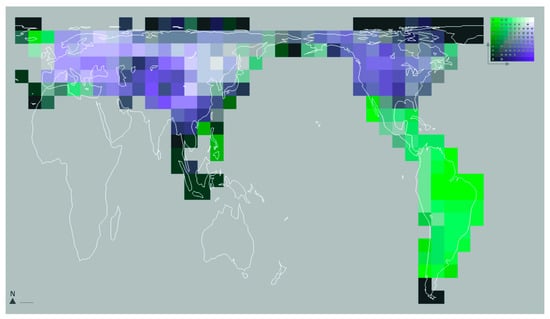
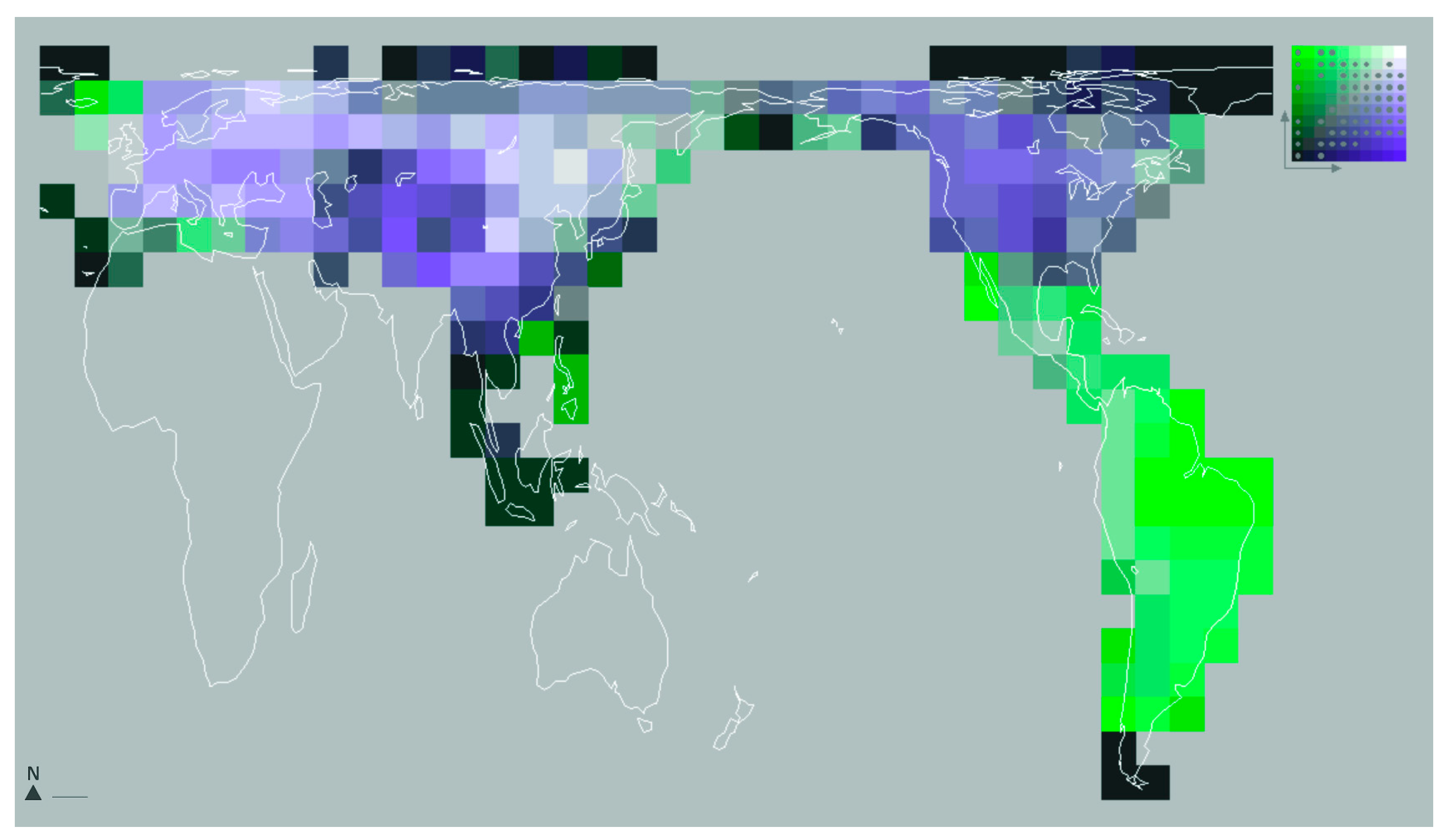
An unexplored aspect of net diversification rates has been the examination of their spatial pattern. We apply a measure of net diversification rate that is formulated here so that for each species (tree terminal) the path back to the tree root is traced and the inverse of the internode branch lengths is summed. This gives higher weight to those species with many short internodes (i.e., with rapid speciation without extinction) along this path. When the measure is summed for all species within an area’s fauna, the effect is to give high scores to those areas that currently have more species with rapid speciation in their past. However, this does not necessarily imply that this rapid speciation all took place within this area, although if bumblebees are less dispersive than some other groups [8], then this speciation is more likely to have been more closely associated with current distributions. This net diversification-rate measure has been included (as the function, inv_branch_dist()) as an extension of the Treestats package (version 1.71.10 [72]) on the R platform. These faunal scores for net diversification rates are plotted for every occupied grid cell on the map (using the Worldmap software, version 26.1.6 [73,74]). The net diversification-rate pattern can then be compared with a map for species richness (updated from [11]) by overlaying the two in different colours [75].
2.7. Character Evolution
Ancestral changes are mapped onto the tree for two morphological characters of males using the Mesquite software (version 4.02 [76]). Males are available for all species except for B. tanguticus. For a preliminary analysis, the single most likely distribution of changes in ancestral character states is mapped using stochastic character mapping [77,78]. These morphological characters are measures of sexual dimorphism that may show continuous variation (Figure 10 in [35], and [2]), but for a preliminary analysis thresholds can be applied to score the character states as categories. For male antennal length, the categorical states are defined as: (0) for antenna either not reaching beyond the wing bases (more similar to females); or (1) for antenna strongly elongated so that they reach back beyond the wing bases. For male eye size: (0) for eye similar in size to that of females; (1) for eye moderately or strongly enlarged by comparing eye breadth from the anterior aspect with ocello-ocular distance (as the threshold, species with only weakly enlarged male eye, e.g., B. cullumanus, are not included in this category).
3. Results
3.1. Dated Evolutionary Tree
The genetic data varied as expected, with parsimony-informative sites 49% for COI, 42% for 16S, and 27–29% for the nuclear genes.
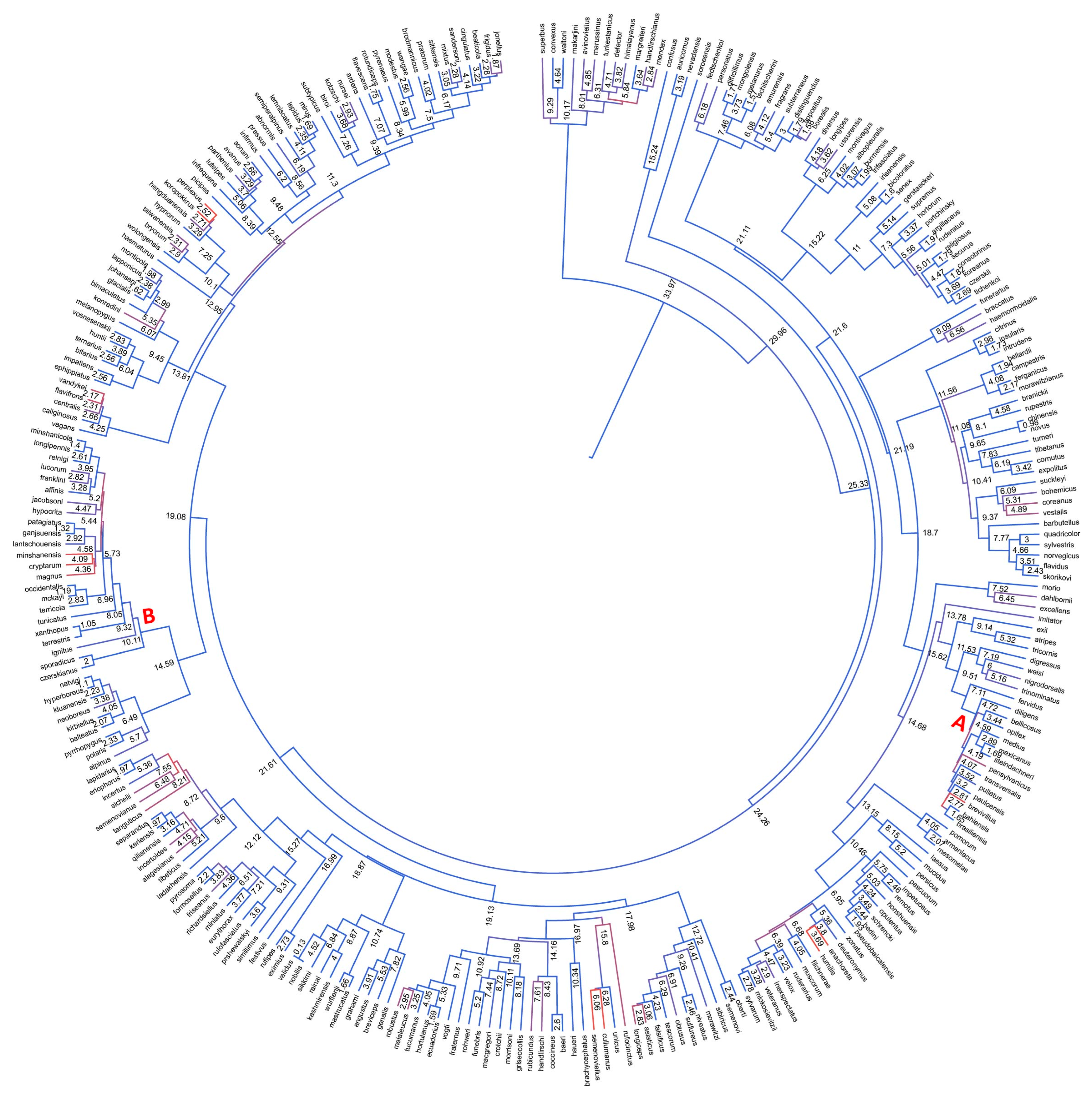
With 100 million MCMC generations, the TRACER results from BEAST 2 had converged on stable solutions by a burn-in of 7% of the generations. The post-burn-in effective sample sizes were high, with just one scoring <100. The great majority of nodes on the tree are strongly supported (Figure 1). The age of each node on the tree is estimated in Ma before the present (Figure 2).
3.2. Diversification
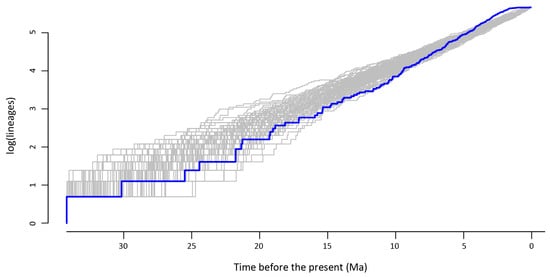
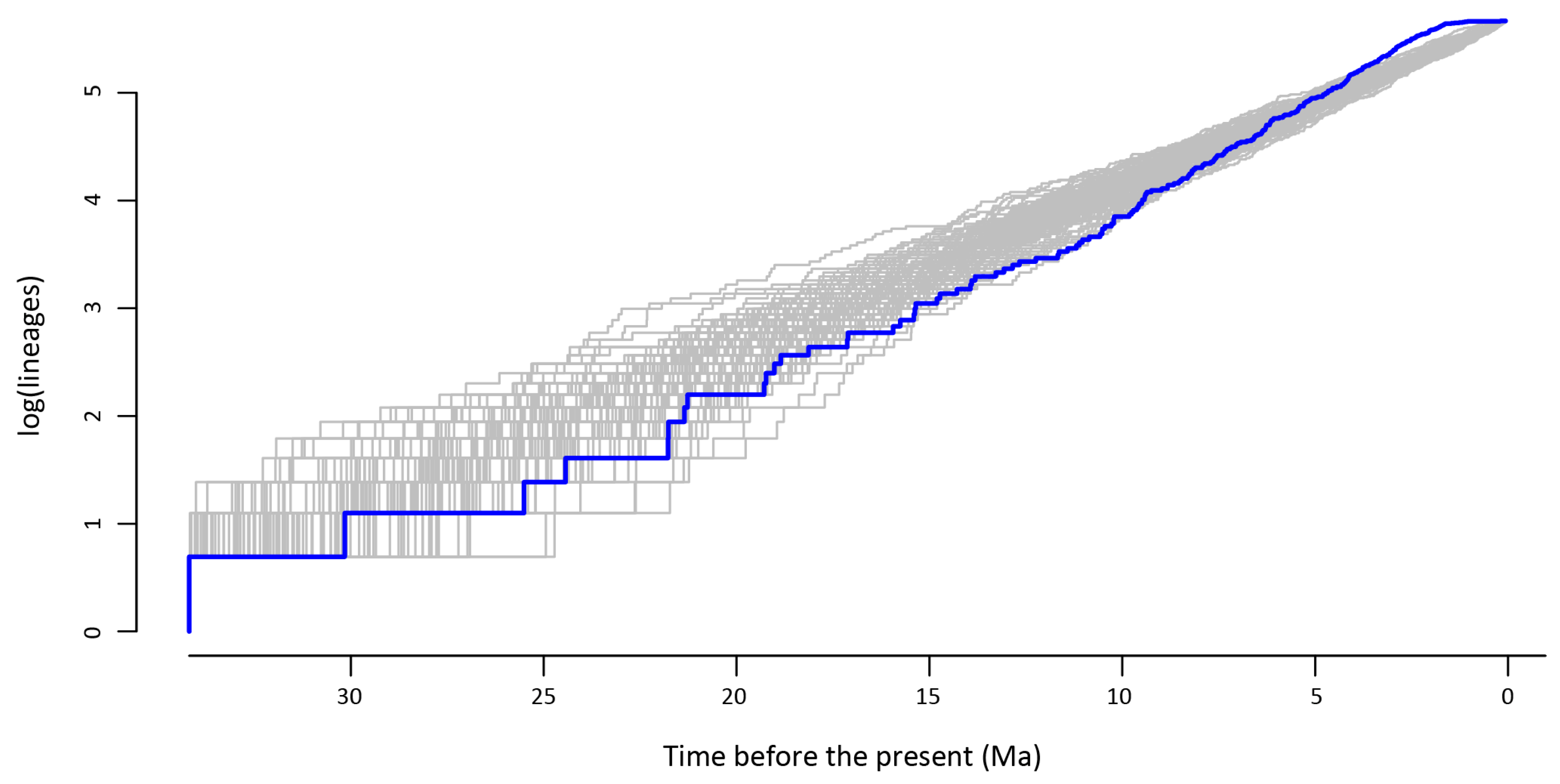
The observed number of bumblebee lineages through time is compared with simulations from a simple pure-birth model (of speciation without extinction) of lineage diversification (Figure 3), so that deviations from the observed number are usually expected to be due to extinctions. The observed number of lineages through time in Figure 2 does not yield a straight line (Figure 3, in blue), but a curve that initially deviates concavely below many of the null models (shown in grey) and finally deviates convexly above all of the null models.
Figure 3.
Number of bumblebee lineages through time from Figure 1 (in blue) compared with 100 simulations from a simple pure-birth process (in grey).
The spatial pattern in rates of net diversification (also assuming a pure-birth or speciation without extinction process as in Figure 3) is compared in Figure 4 with the map for species richness (the results of the diversification) for bumblebees. The most prominent feature of this map is that Central America, and more especially South America, is bright green (upper left of the colour key: low richness + high rates). This shows that while these areas have a lot fewer species than Asia, many of their species have more very short internodes that indicate periods in their histories of much more rapid speciation. Bright intense blue areas (lower right of the colour key: high richness + low diversification rates) are associated especially with the Himalaya, which shows many more species but with histories of more evenly long internodes indicating slower speciation. White and light grey or pale areas, especially in North-Eastern Asia, show a combination of both many species together with histories of relatively rapid speciation.
Figure 4.
Comparison of species richness (in blue, or blue/purple on some devices) overlayed with speciation rates (in green: from summing the inverse of the internode-branch lengths on the root paths on the evolutionary tree to each species from Figure 2) mapped for bumblebee faunas on an equal-area grid (cylindrical equal-area projection, orthomorphic at 46° North and South of the equator, Antarctica not shown). Both colour axes are transformed to give near-uniform frequency distributions of scores among colour classes (see the colour-scale box, upper right: colour values represented for occupied cells on the map are indicated in the scale box with grey spots). Grid cells with high scores on both green and blue axes appear white, whereas cells with low scores on both axes appear black, while areas of intermediate and precisely covarying scores appear in intermediate shades of grey. By contrast, deviations from the overall positive relationship appear as increasingly saturated green or blue, showing an ‘excess’ of one score over the other. North pointer and scale bar representing 1100 km at the equator shown at lower left. For further explanation of the data see the text.
3.3. Character Evolution
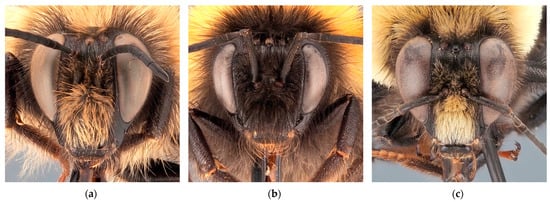
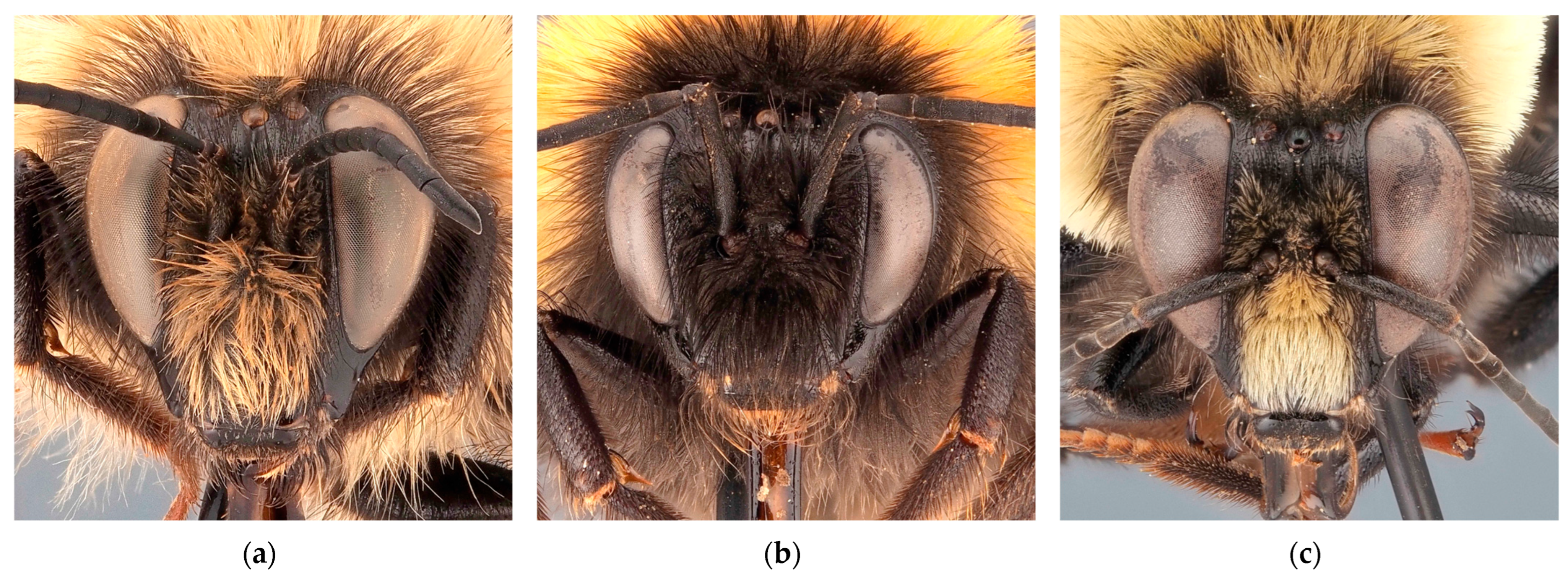
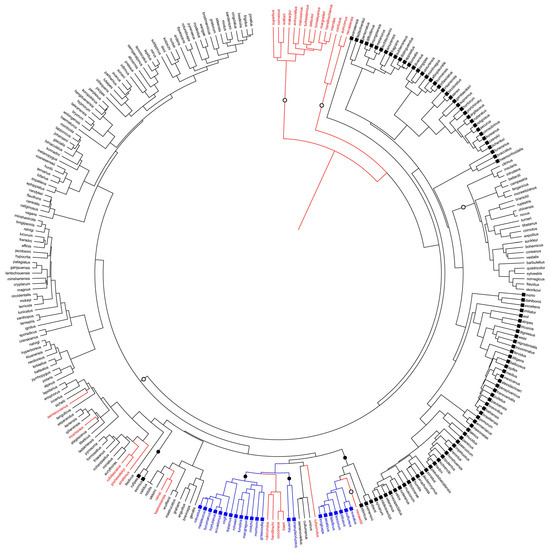
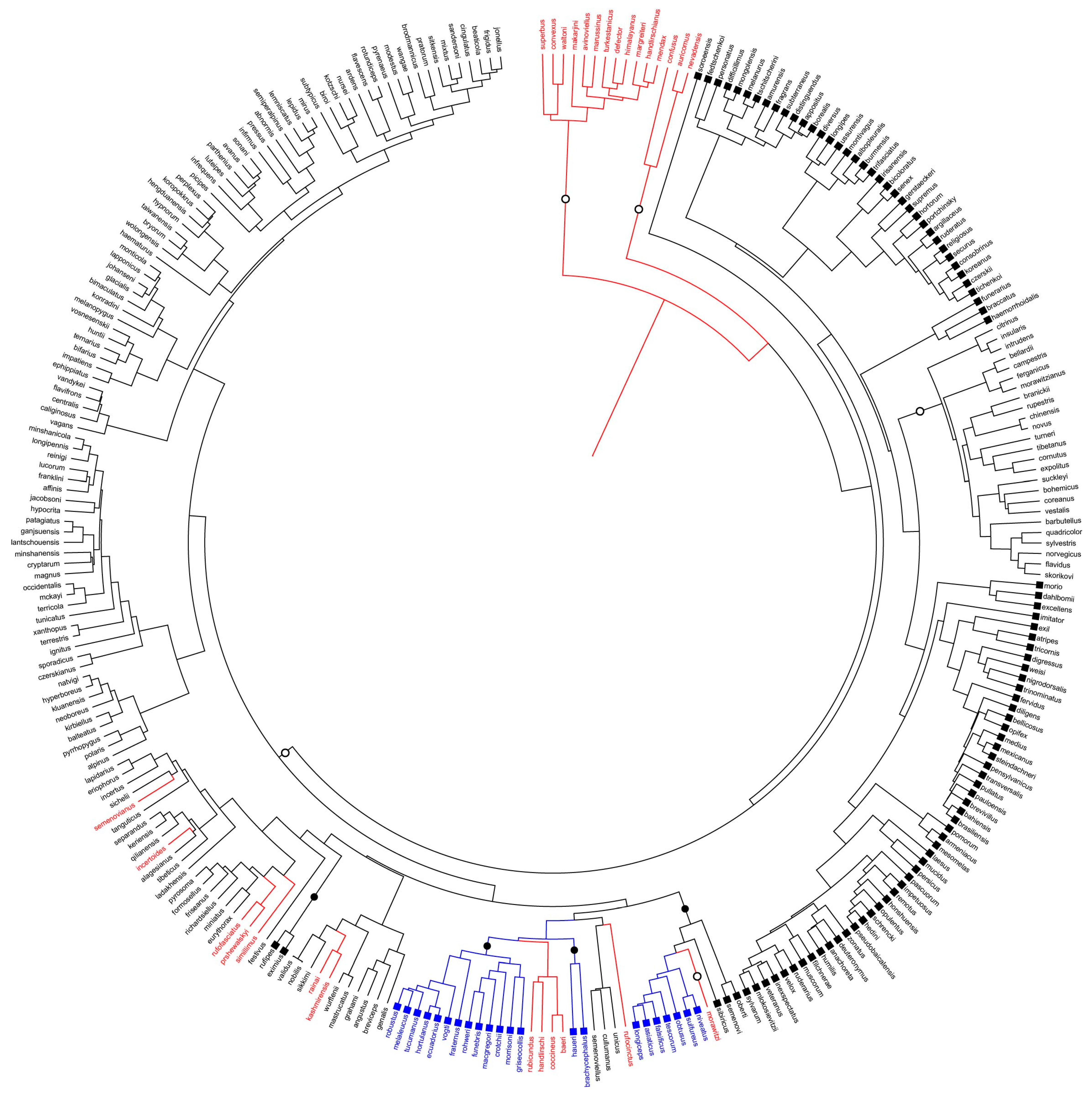
For the example of male character evolution, males of 40% bumblebee species have elongated antennae whereas males of only 17% species have moderately or strongly enlarged eyes (Figure 5). The distribution of ancestral changes of the male antennal and eye-size characters is mapped onto the tree (Figure 6). The single most likely changes in ancestral states of the eye size character are shown with changes in branch colour from black to red or to blue (or vice versa for reversals). The single most likely changes in ancestral states of the antennal length character are shown with black (increases) or white (reversals) spots on branches. For the group with the ancestral male enlarged eye state (in red, subgenera Mendacibombus, Bombias), the largest male eye is shown by B. nevadensis and the smallest male eye accepted as enlarged is shown by B. superbus. For the group with the derived male enlarged eye state (in red or blue, in the subgenera Sibiricobombus, Cullumanobombus, Melanobombus), the largest male eye is shown by B. fraternus and the smallest male eye accepted as enlarged is shown by B. rufocinctus.
Figure 5.
Anterior aspect of the heads of males of: (a) B. (Mendacibombus) mendax; (b) B. (Bombus) terrestris; and (c) B. (Sibiricobombus) niveatus. From the fit of the male eye-size character changes to the tree in Figure 6, the enlarged eye in (a) represents the ancestral enlarged state for the genus Bombus; the unenlarged eye similar in size to the female eye in (b) is a derived reduced state that is shared by most (83%) bumblebee species; and the secondarily enlarged eye in (c) is an evolutionary parallel with (a). Images by Paolo Rosa, ORBIT project, CC by 4.0.
Figure 6.
Evolutionary tree from Figure 1 with the most likely distribution on the tree of the ancestral character changes in male antennal length and male eye size fitted with stochastic character mapping. Most likely ancestral changes in male eye size are shown with changes in branch colour from red to black to red or blue (including reversals). Most likely changes in ancestral states of the antennal length are shown with spots of black (increases) or white (reversals) on branches and with squares on the terminals. Red branches indicate males combining enlarged eyes with short antennae, which is expected to indicate true territorial behaviour; the blue branches indicate males combining enlarged eyes with long antennae, which is expected to indicate scramble or ‘racing’ mate-searching behaviour; the black branches are expected to indicate male patrolling or nest-watching behaviours [35]. Taxon names not appearing in this figure are interpreted as synonyms (see text).
4. Discussion
4.1. How Does the New Tree Contribute?
The shape of the evolutionary tree for bumblebees and even its age have been understood in very broad terms for more than a century [79]. Unsurprisingly, recent molecular evidence has added many refinements [6,12,22]. Our study in turn adds more than a quarter of the world’s bumblebee species (84 species, 29%). This now covers all of the published and extant species that are currently accepted, including many that are difficult to find, to identify, and to sequence (e.g., rare species of the high mountain subgenus Mendacibombus [17] that are difficult to access in the remote high Asian mountains) making it taxonomically complete. It also uses some of the best tree-estimation techniques that are currently available [66,80]. Our tree (Figure 1) in many respects matches other recent estimates [12,22,58,59], but now with all species and broad genomic support, it improves estimates of relationships among some subgenera and provides greater confidence in our understanding of evolutionary relationships among all bumblebees. No doubt some problems remain, caused by (for example) paralogous copies of some genes [38,81]. Based upon all available evidence, future studies on bumblebee evolution will most likely converge upon a closely similar set of relationships.
The new evidence is contributed primarily for the relationships of intermediate age and for the more recent relationships. The older branching patterns among subgenera are supported primarily by the same four nuclear genes that largely reproduce the results of Cameron et al. [12], although where these differ the genomic results of Sun et al. [22] contribute. The subgenera used here had already been diagnosed so as to be monophyletic in the results of the Cameron et al. tree [23] and remain unchanged. At the intermediate levels of species groups within subgenera there is some original resolution that is contributed by new data from all six genes. The strongest original contribution is made among the species within the most recent species groups, contributed from the two fast-evolving mitochondrial genes, but primarily from including many more of the species (terminals on this tree).
4.2. Diversification
The apparent strongest and most significant reduction in the net diversification rate occurs over the last 1 Ma (Figure 3) and this has been explained previously primarily in terms of a recently greatly increased extinction rate [82]. Three causal factors were suggested: (1) rapid climatic changes; (2) human impacts such as agriculture; and (3) taxonomic uncertainty.
However, we find little evidence for apparently very young species of bumblebees in Figure 2, with only one case (the divergence between B. validus and B. nobilis) of species apparently much younger than 1 Ma. Not all processes involved in speciation may be either simultaneous or rapid [32,33]. Consequently the rarity of evidence for very young bumblebee species raises another possibility: that often it might take at least this long for species’ gene coalescents and substantial morphological differences to become detectable. These criteria have become commonly used in taxonomic revisions when recognising bumblebee species defined (as here) as evolutionarily independent lineages (Section 2.1). This might provide another explanation for some of the turn down in the tail of Figure 3.
Patterns in diversification are potentially complicated to discern from trees and all of the popular tools have faced challenges [72,83], so further developments can be expected. Nonetheless, two bumblebee groups on this tree (Figure 2: A, B) appear to show especially prominent bursts of rapid net speciation (for extant species with multiple consecutive short internode branches) that invite comment. Both of these groups are familiar for their taxonomic problems, with the constituent species being difficult to distinguish: (A) within the subgenus Thoracobombus, in the fervidus-group [7,84]; and (B) within the subgenus Bombus s. str., in the lucorum-group [36].
The map in Figure 4 shows that the highest speciation rates as measured by the sum of inverse internode lengths for bumblebee are concentrated in the faunas of Mesoamerica and South America. These high scores in the Americas are contributed especially by many species of the subgenus Thoracobombus with short internodes (Figure 2). This is consistent with the idea of a relatively recent arrival of these lineages, colonising a diversity of Mesoamerican and South American habitats that had previously been without bumblebees, which is likely to have driven the high speciation rates. This is an intriguing case. Some of this speciation among the currently South American lineages took place before (as dated in Figure 2) a land route for dispersal to South America became available at ca 3 Ma [85]. But bumblebees are very poor dispersers and establishers across oceans [7], so this rapid speciation must have taken place earlier within Mesoamerica with its complex high mountain ranges. These lineages must then since have become extirpated in Mesoamerica, perhaps caused by aridification from climate change [7]. Therefore some of the rapid speciation indicated on the map in Figure 4 for South American faunas is actually likely to have taken place within Mesoamerica.
None of these approaches to diversification explicitly includes the possible effects of varying extinction rates.
4.3. Character Evolution
The dated evolutionary tree (Figure 2) provides an improved framework for comparing the evolution of characters or traits (character states).
The greatest character-state divergence on the tree (aside from the parasitic or ‘cuckoo’ bumblebees of the subgenus Psithyrus that have a fundamentally different way of life and lack a worker caste [3,86], marked on Figure 1 with black spots) may be at the oldest node: between the subgenus Mendacibombus and the remaining extant bumblebees. This is because the bumblebees of Mendacibombus differ most strongly in morphology (e.g., in the form of the female labrum and the hind tibial disc bristles, and of the male genitalia) and in behaviour (e.g., in the extreme alpine specialization of all species; nests built with the nectar and pollen stores held outside the brood nest envelope, sometimes in hexagonal cells) from the other non-parasitic bumblebees [17,23,87]. These tibial bristles and the nest structures are shared with some species of the sister group to bumblebees, the stingless bees (tribe Meliponini) [88,89].
Otherwise, one of the most significant divergences is between the two larger monophyletic groups: first (Figure 1: large green spot LT/LG; divergence date estimated in Figure 2 as 24.3 Ma ± 4.9 Myr from the 95% of highest posterior density) the predominantly long-tongued [1], long-faced [12], and Lowland Grassland bumblebees [8]; and second (Figure 1: large blue spot ST/MG) the predominantly short-tongued [1], short-faced [12], and Montane Grassland bumblebees [8]. Tongue (=proboscis) length (associated with face (=malar area) length [90,91]) is important because it governs flower choice and hence diet [92]. These two large groups were once named as the ‘sections’ Odontobombus and Anodontobombus [93], although because sections no longer have nomenclatural status [94] the names have had to be synonymised with the subgeneric names Megabombus and Pyrobombus respectively [95]. These two large groups also differ in other important aspects of ecology, including broad trends: (1) towards preferring either surface or underground nesting sites respectively; (2) towards either early emergence and short colony development or late emergence and long colony development respectively; and (3) towards either cryptic or aposematic colour patterns of the hair [7,8] respectively (exceptions occur in both groups). Some of the shortest-tongued bumblebees are also the most active initiators of flower robbing [39].
4.4. Sexual Dimorphism and Male Mate-Searching Behaviour
Many other characters, or suites of characters, can be mapped onto the tree even when they do not associate closely with just one monophyletic group, thereby showing evidence of evolutionary convergence or parallelism. For example, while most male bumblebees have eyes of similar size to those of females (Figure 5b) and patrol circuits of pheromone-marked sites in search of females (females are presumably arrested by the male pheromones deposited at these sites so that they can be mated by returning males) [3,35,96,97], some bumblebee species (17% of species listed here) have males with either moderately or greatly enlarged eyes and pursue females in rapid flight [2,35,87,98,99,100] (Figure 5a,c). Cases of enlarged male eyes have evolved repeatedly for separate groups of bumblebees and are most likely to be the result of an ancestral state as well as multiple derived cases of parallel evolution [2,89,101,102] (Figure 6).
Enlarged male eyes for bumblebees are associated with a strong shift in male mate-searching behaviour, towards either visual scramble competition (‘racing’, associated with a combination of large eyes and long antennae, described in more detail for B. (Sibiricobombus) longiceps), or true territoriality resulting in aggressive displacement of competitors from symbolic (not resource-based) territories (‘lekking’, associated with a combination of large eyes and short antennae, described in more detail for B. (Melanobombus) rufofasciatus) [35]. Truly territorial males (high speed chases are necessary but not sufficient to characterize these) often show a higher incidence of physical damage (often with loss of parts of limbs or antennae) but crucially shows frequent replacement (turnover) of individuals on particular perches [35]. Figure 6 shows (in blue with terminal squares) that a combination for males of enlarged eyes with long antennae (8% species) characterizes most species of the subgenera Sibiricobombus and many species of Cullumanobombus, from which we expect these species to show ‘racing’ behaviour with scramble competition. Figure 6 also shows (in red with no terminal squares) that a combination for males of enlarged eyes with short antennae (9% species) characterizes species of Mendacibombus, Bombias, as well as for the species B. morawitzi, the rubicundus-group, B. kashmirensis, B. rainai, and several other species of Melanobombus, from which we expect these species to show true territorial behaviour with exclusion of competitors. Observations of several other of these species in Asia, Europe, and North America appear to be consistent with this pattern (e.g., [17,29,37]).
However, much detailed work remains to be done, to assess whether the association of these character states with these behaviours is truly a generality. More work is also needed to assess a proposed explanation that relates the likely relative advantages of these behaviours with predictable differences in the expected density and dispersion of receptive females in different habitats ([35] his Tables 2–4). These behaviours can also prove remarkably flexible in different circumstances for the same species [35]. Therefore we suggest that these behaviours are more likely to be secondary responses to differences in the structure of the habitats with which particular species have come to be associated (for other reasons) rather than imposing constraints directly on which habitats they can occupy.
4.5. Caveats and Future Work
There are many potential sources of error in estimating evolutionary trees for species from gene sequences. These include both basic problems in sampling (misidentification of samples, failing to recognise species correctly, contamination during sequencing, comparison of non-homologous sequences and alignments, incomplete lineage sorting, etc.) and problems in computation of molecular data (homoplasy, errors in specification of evolutionary models, failures in searches of possible alternative tree topologies, etc.) [80]. Our analysis is founded on a research programme of more than 40 years’ duration that has sought to reduce the effects of these problems in bumblebee studies (e.g., [12,37,38,89]). For example, with only two fast-evolving genes in our analysis, the possibilities for some misleading estimates of the more recent relationships arising from incomplete lineage sorting must be considered. This problem should be detectable in future studies when those studies can include broader genomic coverage.
One of the least certain aspects remains the dating of events on evolutionary trees. There are few informative bumblebee fossils available for the calibration of models of DNA-sequence evolution, so the precision of these estimates remains low and the implications of the uncertainty should continue to be re-examined [6,65].
We anticipate broader use of genomic data for estimating evolutionary trees for bumblebees in future studies. It will be interesting to see how those estimates compare with ours: a more extensive sampling of slow-evolving nuclear genes in genomic data should yield a more confident estimate for the older parts of the tree; it is less clear how well more broad genomic data will recover the more recent relationships, for which fast-evolving mitochondrial genes are pre-eminently suitable.
Our tree estimate is the first study to represent all of the bumblebee species world-wide. No doubt at least a few more bumblebee species will be discovered, while other taxa already known will be recognized as separate species as species’ concepts or definitions change and more data become available.
Supplementary Materials
The following supporting information can be downloaded at: https://www.mdpi.com/article/10.3390/insects17060540/s1, Table S1: List of extant accepted bumblebee species world-wide with sequence identifiers; Table S2: List of the seed species and sequences used to obtain target-taxon sequences with MitoBim.
Author Contributions
Conceptualization, methodology, formal analysis, species identification, data curation, writing—original draft preparation, P.H.W.; formulation and mapping of the inverse internode measure, P.H.W.; new data sequencing, review and editing, all authors. All authors have read and agreed to the published version of the manuscript.
Funding
Funded by the Chinese Academy of Science’s President’s International Fellowship Initiative (grant number 2026PVC0122) and the China Agriculture Research System-Bee funding for bumblebee taxonomy 2007–2026 (CARS-KXJ5).
Data Availability Statement
Gene-sequence identifiers are listed in the Supplementary Materials file.
Acknowledgments
The authors thank all of those who have provided gene sequences from earlier publications in the online repositories BOLD and GenBank that are used here, and thank especially Sydney Cameron and Heather Hines for their work on securing gene sequences, also to Baptiste Martinet and to the NHMUK Molecular Lab. We thank Jiandong An for his generous support and help in arranging access, permissions, and field work for collecting samples in China. Many other individuals have contributed specimens and discussion, especially Lincoln Best, Murat Aytekin, Alexandr Byvaltsev, Roland De Jonghe, Maurizio Mei, Alireza Monfared, Maxim Proshchalykin, Philippe Sagot. Thijs Janzen kindly programmed the inverse internode length measure in R for us and tested it. Paolo Rosa took the images of the bee heads. We thank Thijs Janzen, Lucy Bailey, and the reviewers for helpful comments on the manuscript. We thank Ian Barnes for discussion. The authors have reviewed and edited the output and take full responsibility for the content of this publication.
Conflicts of Interest
The authors declare no conflicts of interest.
Abbreviations
The following abbreviations are used in this manuscript:
| COI | Cytochrome c oxidase subunit 1 |
| DNA | Deoxyribonucleic acid |
| EIL | Evolutionarily independent lineages |
| GTR + Γ + I | General time-reversible model with gamma frequency distribution and invariant sites |
| MCMC | Markov chain Monte Carlo algorithm |
| NHMUK | Natural History Museum, United Kingdom |
| RNA | Ribonucleic acid |
| XML | Extensible mark-up language |
References
- Kawakita, A.; Sota, T.; Ito, M.; Ascher, J.S.; Tanaka, H.; Kato, M.; Roubik, D.W. Phylogeny, historical biogeography, and character evolution in bumble bees (Bombus: Apidae) based on simultaneous analysis of three nuclear gene sequences. Mol. Phylogenet. Evol. 2004, 31, 799–804. [Google Scholar] [CrossRef] [Scilit]
- Streinzer, M.; Spaethe, J. Functional morphology of the visual system and mating strategies in bumblebees (Hymenoptera, Apidae, Bombus). Zool. J. Linn. Soc. 2014, 170, 735–747. [Google Scholar] [CrossRef] [Scilit]
- Goulson, D. Bumblebees, Behaviour, Ecology, and Conservation, 2nd ed.; Oxford University Press: Oxford, UK, 2010; p. x+317. [Google Scholar]
- Woodard, S.H.; Lozier, J.D.; Goulson, D.; Williams, P.H.; Strange, J.; Jha, S. Molecular tools and bumble bees: Revealing hidden details of ecology, evolution, and behavior in a model system. Mol. Ecol. 2015, 24, 2916–2936. [Google Scholar] [CrossRef] [Scilit]
- Hines, H.M. Comparative evolution of social and ecological traits in bumble bees. Annu. Rev. Entomol. 2026, 71, 189–207. [Google Scholar] [CrossRef] [Scilit]
- Hines, H.M. Historical biogeography, divergence times, and diversification patterns of bumble bees (Hymenoptera: Apidae: Bombus). Syst. Biol. 2008, 57, 58–75. [Google Scholar] [CrossRef] [Scilit]
- Williams, P.H.; Francoso, E.; Martinet, B.; Orr, M.C.; Ren, Z.-X.; Santos Junior, J.; Thanoosing, C.; Vandame, R. When did bumblebees reach South America? Unexpectedly old montane species may be explained by Mexican stopover (Hymenoptera: Apidae). Syst. Biodivers. 2022, 20, 1–24. [Google Scholar] [CrossRef] [Scilit]
- Williams, P.H. Can biogeography help bumblebee conservation? Eur. J. Taxon. 2023, 890, 165–183. [Google Scholar] [CrossRef] [Scilit]
- Arbetman, M.P.; Gleiser, G.; Morales, C.L.; Williams, P.H.; Aizen, M.A. Global decline of bumblebees is phylogenetically structured and inversely related to species range size and pathogen incidence. Proc. R. Soc. Lond. B 2017, 284, 8. [Google Scholar] [CrossRef] [Scilit] [PubMed]
- Vereecken, N.J. A phylogenetic approach to conservation prioritization for Europe’s bumblebees (Hymenoptera: Apidae: Bombus). Biol. Conserv. 2017, 206, 21–30. [Google Scholar] [CrossRef] [Scilit]
- Williams, P.H. An annotated checklist of bumble bees with an analysis of patterns of description (Hymenoptera: Apidae, Bombini). Bull. Nat. Hist. Mus. (Entomol.) 1998, 67, 79–152. [Google Scholar]
- Cameron, S.A.; Hines, H.M.; Williams, P.H. A comprehensive phylogeny of the bumble bees (Bombus). Biol. J. Linn. Soc. 2007, 91, 161–188. [Google Scholar] [CrossRef] [Scilit]
- Trunz, V.; Packer, L.; Vieu, J.; Arrigo, N.; Praz, C.J. Comprehensive phylogeny, biogeography and new classification of the diverse bee tribe Megachilini: Can we use DNA barcodes in phylogenies of large genera? Mol. Phylogenet. Evol. 2016, 103, 245–259. [Google Scholar] [CrossRef] [Scilit]
- Lunt, D.H.; Zhang, D.X.; Szymura, J.M.; Hewitt, O.M. The insect cytochrome oxidase I gene: Evolutionary patterns and conserved primers for phylogenetic studies. Insect Mol. Biol. 1996, 5, 153–165. [Google Scholar] [CrossRef] [Scilit] [PubMed]
- Hebert, P.D.N.; Ratnasingham, S.; deWaard, J.R. Barcoding animal life: Cytochrome c oxidase subunit 1 divergences among closely related species. Proc. R. Soc. Lond. B 2003, 270, S96–S99. [Google Scholar] [CrossRef] [Scilit]
- Hebert, P.D.N.; Cywinska, A.; Ball, S.L.; DeWaard, J.R. Biological identifications through DNA barcodes. Proc. R. Soc. Lond. B Biol. Sci. 2003, 270, 313–321. [Google Scholar] [CrossRef] [Scilit] [PubMed]
- Williams, P.H.; Huang, J.-X.; Rasmont, P.; An, J.-D. Early-diverging bumblebees from across the roof of the world: The high-mountain subgenus Mendacibombus revised from species’ gene coalescents and morphology (Hymenoptera, Apidae). Zootaxa 2016, 4204, 1–72. [Google Scholar] [CrossRef] [Scilit] [PubMed]
- Williams, P.H. In a group of its own? Rediscovery of one of the world’s rarest and highest mountain bumblebees, Bombus tanguticus. J. Nat. Hist. 2018, 52, 305–321. [Google Scholar] [CrossRef] [Scilit]
- Williams, P.H.; Waite; Bailey, L.; Strang, A.; Brace, S. Bombus melanopoda: A British bumblebee on a Sumatran mountain? J. Nat. Hist. 2026; in press.
- Maddison, W.P. Gene trees in species trees. Syst. Biol. 1997, 46, 523–536. [Google Scholar] [CrossRef]
- Jarvis, E.D.; Mirarab, S.; Aberer, A.J.; Li, B.; Houde, P.; Li, C.; Ho, S.Y.W.; Faircloth, B.C.; Nabholz, B.; Howard, J.T.; et al. Whole-genome analyses resolve early branches in the tree of life of modern birds. Science 2014, 346, 1320–1331. [Google Scholar] [CrossRef] [Scilit]
- Sun, C.; Huang, J.-X.; Wang, Y.; Zhao, X.-M.; Su, L.; Thomas, G.W.C.; Zhao, M.-Y.; Zhang, X.-T.; Jungreiss, I.; Kellis, M.; et al. Genus-wide characterization of bumblebee genomes reveals variation associated with key ecological and behavioral traits of pollinators. Mol. Biol. Evol. 2020, 38, 486–501. [Google Scholar] [CrossRef] [Scilit]
- Williams, P.H.; Cameron, S.A.; Hines, H.M.; Cederberg, B.; Rasmont, P. A simplified subgeneric classification of the bumblebees (genus Bombus). Apidologie 2008, 39, 46–74. [Google Scholar] [CrossRef] [Scilit]
- Talavera, G.; Lukhtanov, V.; Pierce, N.E.; Vila, R. DNA barcodes combined with multilocus data of representative taxa can generate reliable higher-level phylogenies. Syst. Biol. 2021, 71, 382–395. [Google Scholar] [CrossRef] [Scilit]
- Wilkins, J.S. Species: The Evolution of the Idea, 2nd ed.; CRC Press: Boca Raton, FL, USA, 2018. [Google Scholar]
- Maddison, W.P.; Whitton, J. The species as a reproductive community emerging from the past. Bull. Soc. Syst. Biol. 2023, 35, 1–35. [Google Scholar] [CrossRef] [Scilit]
- Williams, P.H. Novel splitting/lumping index reflects the history of species concepts applied to bumblebees (Insecta, Apidae). Zool. J. Linn. Soc. 2022, 196, 704–719. [Google Scholar] [CrossRef] [Scilit]
- Williams, P.H. The Bumblebees of the Himalaya; AbcTaxa: Brussels, Belgium, 2022. [Google Scholar]
- Williams, P.H.; Thorp, R.W.; Richardson, L.L.; Colla, S.R. Bumble Bees of North America. An Identification Guide; Princeton University Press: Princeton, NJ, USA, 2014; p. 208. [Google Scholar]
- Williams, P.H.; Huang, J.-X.; An, J.-D. Bear wasps of the Middle Kingdom: A decade of discovering China’s bumblebees. Antenna 2017, 41, 21–24. Available online: https://www.royensoc.co.uk/publications/antenna/antenna-volume-41-1-2017/ (accessed on 19 April 2026).
- Williams, P.H. On the Distribution of Bumble Bees (Hymenoptera, Apidae) with Particular Regard to Patterns Within the British Isles. Ph.D. Thesis, University of Cambridge, Cambridge, UK, 1985. [Google Scholar]
- de Queiroz, K. Species concepts and species delimitation. Syst. Biol. 2007, 56, 879–886. [Google Scholar] [CrossRef] [Scilit]
- Schlick-Steiner, B.C.; Steiner, F.M.; Seifert, B.; Stauffer, C.; Christian, E.; Crozier, R.H. Integrative taxonomy: A multisource approach to exploring biodiversity. Annu. Rev. Entomol. 2010, 55, 421–438. [Google Scholar] [CrossRef] [Scilit]
- Zhang, J.-J.; Kapli, P.; Pavlidis, P.; Stamatakis, A. A general species delimitation method with applications to phylogenetic placements. Bioinformatics 2013, 29, 2869–2876. [Google Scholar] [CrossRef] [Scilit]
- Williams, P.H. The bumble bees of the Kashmir Himalaya (Hymenoptera: Apidae, Bombini). Bull. Br. Mus. (Nat. Hist.) (Entomol.) 1991, 60, 1–204. [Google Scholar]
- Williams, P.H. Not just cryptic, but a barcode bush: PTP re-analysis of global data for the bumblebee subgenus Bombus s. str. supports additional species (Apidae, genus Bombus). J. Nat. Hist. 2021, 55, 271–282. [Google Scholar] [CrossRef] [Scilit]
- Williams, P.H.; Altanchimeg, D.; Byvaltsev, A.; De Jonghe, R.; Jaffar, S.; Japoshvili, G.; Kahono, S.; Liang, H.; Mei, M.; Monfared, A.; et al. Widespread polytypic species or complexes of local species? Revising bumblebees of the subgenus Melanobombus world-wide (Hymenoptera, Apidae, Bombus). Eur. J. Taxon. 2020, 719, 1–120. [Google Scholar] [CrossRef] [Scilit]
- Williams, P.H.; An, J.-D.; Byvaltsev, A.; Ghisbain, G.; De Jonghe, R.; Huang, J.-X.; Mei, M.; Monfared, A.; Orr, M.C.; Raina, R.; et al. The steppe bumblebees of the subgenus Sibiricobombus revised world-wide from species’ gene coalescents and morphology despite numts (Hymenoptera, Apidae, genus Bombus). Eur. J. Taxon. 2026, 1041, 1–59. [Google Scholar] [CrossRef] [Scilit]
- Williams, P.H.; An, J.-D.; Dorji, P.; Huang, J.-X.; Japoshvili, G.; Narah, J.; Ren, Z.; Streinzer, M.; Thanoosing, C.; Tian, L.; et al. Bumblebees with big teeth: Revising the subgenus Alpigenobombus with the good, the bad and the ugly of numts (Hymenoptera: Apidae). Eur. J. Taxon. 2023, 892, 1–65. [Google Scholar] [CrossRef] [Scilit]
- Williams, P.H.; An, J.-D.; Huang, J.-X. The bumblebees of the subgenus Subterraneobombus: Integrating evidence from morphology and DNA barcodes (Hymenoptera, Apidae, Bombus). Zool. J. Linn. Soc. 2011, 163, 813–862. [Google Scholar] [CrossRef] [Scilit]
- Williams, P.H.; Berezin, M.V.; Cannings, S.G.; Cederberg, B.; Ødegaard, F.; Rasmussen, C.; Richardson, L.L.; Rykken, J.; Sheffield, C.S.; Thanoosing, C.; et al. The arctic and alpine bumblebees of the subgenus Alpinobombus revised from integrative assessment of species’ gene coalescents and morphology (Hymenoptera, Apidae, Bombus). Zootaxa 2019, 4625, 1–68. [Google Scholar] [CrossRef] [Scilit]
- Williams, P.H.; Brown, M.J.F.; Carolan, J.C.; An, J.-D.; Goulson, D.; Aytekin, A.M.; Best, L.R.; Byvaltsev, A.M.; Cederberg, B.; Dawson, R.; et al. Unveiling cryptic species of the bumblebee subgenus Bombus s. str. world-wide with COI barcodes (Hymenoptera: Apidae). Syst. Biodivers. 2012, 10, 21–56. [Google Scholar] [CrossRef] [Scilit]
- Williams, P.H.; Byvaltsev, A.M.; Sheffield, C.S.; Rasmont, P. Bombus cullumanus—An extinct European bumblebee species? Apidologie 2012, 44, 121–132. [Google Scholar] [CrossRef] [Scilit]
- Williams, P.H.; Dorji, P.; Ren, Z.-X.; Xie, Z.-H.; Orr, M.C. Bumblebees of the hypnorum-complex world-wide including two new near-cryptic species (Hymenoptera: Apidae). Eur. J. Taxon. 2022, 847, 46–72. [Google Scholar] [CrossRef] [Scilit]
- Williams, P.H.; Sagot, P.; Martinez-Lopez, O.; Ayala-Barajas, R.; Merida-Rivas, J.A.; Vandame, R. A new wave of Mesoamerican bumblebees? Revising the weisi-complex to reject numts and pseudospecies (Apidae: Bombus). Zootaxa 2024, 5514, 301–318. [Google Scholar] [CrossRef] [Scilit]
- Williams, P.H.; Sung, I.-H.; Lin, Y.-J.; Lu, S.-S. Discovering endemic species among the bumblebees of Taiwan (Apidae, genus Bombus). J. Nat. Hist. 2022, 56, 437–447. [Google Scholar] [CrossRef] [Scilit]
- Huang, J.-X.; An, J.-D.; Wu, J.; Williams, P.H. Extreme food-plant specialisation in Megabombus bumblebees as a product of long tongues combined with short nesting seasons. PLoS ONE 2015, 10, e0132358. [Google Scholar] [CrossRef] [Scilit]
- Thanoosing, C.; Orr, M.C.; Warrit, N.; Vogler, A.P.; Williams, P.H. A taxonomic re-assessment of the widespread oriental bumblebee Bombus flavescens (Hymenoptera, Apidae). J. Hymenopt. Res. 2023, 96, 507–541. [Google Scholar] [CrossRef] [Scilit]
- Sheffield, C.S.; Oram, R.; Heron, J.M. Bombus (Pyrobombus) johanseni Sladen, 1919, a valid North American bumble bee species, with a new synonymy and comparisons to other “red-banded” bumble bee species in North America (Hymenoptera, Apidae, Bombini). Zookeys 2020, 984, 59. [Google Scholar] [CrossRef] [Scilit]
- Williams, P.H.; Tang, Y.; Yao, J.; Cameron, S. The bumblebees of Sichuan (Hymenoptera: Apidae, Bombini). Syst. Biodivers. 2009, 7, 101–190. [Google Scholar] [CrossRef] [Scilit]
- Williams, P.H. Bombus rubriventris: Type locality, the history of bumblebees in the New World, and documenting invertebrate extinctions. J. Nat. Hist. 2015, 49, 1159–1171. [Google Scholar] [CrossRef] [Scilit]
- Potapov, G.S.; Kondakov, A.V.; Spitsyn, V.M.; Filippov, B.Y.; Kolosova, Y.S.; Zubril, N.A.; Bolotov, I.N. An integrative taxonomic approach confirms the valid status of Bombus glacialis, an endemic bumblebee species of the High Arctic. Polar Biol. 2017, 41, 629–642. [Google Scholar] [CrossRef] [Scilit]
- Martinet, B.; Lecocq, T.; Brasero, N.; Biella, P.; Urbanova, K.; Valterova, I.; Cornalba, M.; Gjershaug, J.O.; Michez, D.; Rasmont, P. Following the cold: Geographical differentiation between interglacial refugia and speciation in the arcto-alpine species complex Bombus monticola (Hymenoptera: Apidae). Syst. Entomol. 2018, 43, 200–217. [Google Scholar] [CrossRef] [Scilit]
- Lhomme, P.; Williams, S.D.; Ghisbain, G.; Martinet, B.; Gerard, M.; Hines, H.M. Diversification pattern of the widespread holarctic cuckoo bumble bee, Bombus flavidus (Hymenoptera: Apidae): The east side story. Insect Syst. Divers. 2021, 5, 5. [Google Scholar] [CrossRef] [Scilit]
- Duennes, M.A.; Petranek, C.; Diez de Bonilla, E.P.; Merida-Rivas, J.; Martinez-Lopez, O.; Sagot, P.; Vandame, R.; Cameron, S.A. Population genetics and geometric morphometrics of the Bombus ephippiatus species complex with implications for its use as a commercial pollinator (online resource 7). Conserv. Genet. 2017, 18, 553–572. [Google Scholar] [CrossRef] [Scilit]
- Françoso, E.; Oliveira, F.F.; Arias, M.C. An integrative approach identifies a new species of bumblebee (Hymenoptera: Apidae: Bombini) from northeastern Brazil. Apidologie 2016, 47, 171–185. [Google Scholar] [CrossRef] [Scilit]
- Franklin, H.J. The Bombidae of the New World. Part II. Species south of the United States. Trans. Am. Entomol. Soc. 1913, 39, 73–200. [Google Scholar]
- Santos-Junior, J.E.; Williams, P.H.; Rocha Dias, C.A.; Silveira, F.A.; Faux, P.; Coimbra, R.T.F.; Oliveira, U.d.; Campos, D.P.; Santos, F.R. Biogeography, divergence times and diversification patterns of bumblebees (Hymenoptera: Apidae), with emphasis on Neotropical species. Diversity 2022, 14, 238. [Google Scholar] [CrossRef] [Scilit]
- Wang, L.-H.; Liu, S.; Tang, Y.-J.; Chen, Y.-P.; Wu, J.; Li, J.-L. Using the combined gene approach and multiple analytical methods to improve the phylogeny and classification of Bombus (Hymenoptera, Apidae) in China. Zookeys 2020, 1007, 1–21. [Google Scholar] [CrossRef] [Scilit]
- Mullin, V.E.; Stephen, W.; Arce, A.N.; Nash, W.; Raine, C.; Notton, D.G.; Whiffin, A.; Blagderov, V.; Gharbi, K.; Hogan, J.; et al. First large-scale quantification study of DNA preservation in insects from natural history collections using genome-wide sequencing. Methods Ecol. Evol. 2023, 14, 360–371. [Google Scholar] [CrossRef] [Scilit]
- Meyer, M.; Kircher, M. Illumina sequencing library preparation for highly multiplexed target capture and qequencing. Cold Spring Harb. Protoc. 2010, 2010, 10. [Google Scholar] [CrossRef] [Scilit]
- Plaxton, L.; Hempel, E.; Marsh, W.A.; Portela Miguez, R.; Waurick, I.; Kitchener, A.C.; Hofreiter, M.; Lister, A.M.; Zachos, F.E.; Brace, S. Assessing the identity of rare historical museum specimens of the extinct blue antelope (Hippotragus leucophaeus) using an ancient DNA approach. Mamm. Biol. 2023, 103, 549–560. [Google Scholar] [CrossRef] [Scilit]
- Hahn, C.; Bachmann, L.; Chevreux, B. Reconstructing mitochondrial genomes directly from genomic next-generation sequencing reads—A baiting and iterative mapping approach. Nucleic Acids Res. 2013, 41, e129. [Google Scholar] [CrossRef] [Scilit]
- Schweizer, R.M.; Grummer, J.A.; Tobin, K.B.; Corpuz, R.; Geib, S.M.; Cox-Foster, D.; Kimsey, L.S.; Koch, J.B.U.; Branstetter, M.G. Museum genomics suggests long-term population decline in a putatively extinct bumble bee. Proc. Natl. Acad. Sci. USA 2025, 122, e2509749122. [Google Scholar] [CrossRef] [Scilit]
- Dehon, M.; Engel, M.S.; Gerard, M.; Atytekin, A.M.; Ghisbain, G.; Williams, P.H.; Rasmont, P.; Michez, D. Morphometric analysis of fossil bumble bees (Hymenoptera, Apidae, Bombini) reveals their taxonomic affinities. Zookeys 2019, 891, 71–118. [Google Scholar] [CrossRef] [Scilit]
- Bouckaert, R.R.; Vaughan, T.G.; Barido-Sottani, J.; Duchêne, S.; Fourment, M.; Gavryushkina, A.; Heled, J.; Jones, G.; Kühnert, D.; De Maio, N.; et al. BEAST 2.5: An advanced software platform for Bayesian evolutionary analysis. PLoS Comput. Biol. 2019, 15, 29. [Google Scholar] [CrossRef] [Scilit]
- Tamura, K.; Stecher, G.; Peterson, D.; Filipski, A.; Kumar, S. MEGA6: Molecular evolutionary genetics analysis version 6.0. Mol. Biol. Evol. 2013, 30, 2725–2729. [Google Scholar] [CrossRef] [Scilit]
- Drummond, A.J.; Rambaut, A. BEAST: Bayesian evolutionary analysis by sampling trees. BioMed Cent. Evol. Biol. 2007, 7, 214. [Google Scholar] [CrossRef] [Scilit]
- Budd, G.E.; Mann, R.P. History is written by the victors: The effect of the push of the past on the fossil record. Evolution 2018, 72, 2276–2291. [Google Scholar] [CrossRef] [Scilit]
- Revell, L.J. Phytools: An R package fo phylogenetic comparative biology (and other things). Methods Ecol. Evol. 2012, 3, 217–223. [Google Scholar] [CrossRef] [Scilit]
- R_Core_Team. R: A Language and Environment for Statistical Computing; R Foundation for Statistical Computing: Vienna, Austria, 2021; Available online: https://www.R-project.org/ (accessed on 19 April 2026).
- Janzen, T.; Etienne, R.S. Phylogenetic tree statistics: A systematic overview using the new R package ‘treestats’. Mol. Phylogenet. Evol. 2024, 200, 15. [Google Scholar] [CrossRef] [Scilit]
- Williams, P.H. Key sites for conservation: Area-selection methods for biodiversity. In Conservation in a Changing World; Mace, G.M., Balmford, A., Ginsberg, J., Eds.; Cambridge University Press: Cambridge, UK, 1998; pp. 211–249. [Google Scholar]
- Williams, P.H.; Faith, D.; Manne, L.; Sechrest, W.; Preston, C. Complementarity analysis: Mapping the performance of surrogates for biodiversity. Biol. Conserv. 2006, 128, 253–264. [Google Scholar] [CrossRef] [Scilit]
- Williams, P.H.; de Klerk, H.M.; Crowe, T.M. Interpreting biogeographical boundaries among Afrotropical birds: Spatial patterns in richness gradients and species replacement. J. Biogeogr. 1999, 26, 459–474. [Google Scholar] [CrossRef] [Scilit]
- Maddison, W.P.; Maddison, D.R. Mesquite: A Modular System for Evolutionary Analysis. 3.02. 2015. Available online: http://mesquiteproject.org (accessed on 19 April 2026).
- Nielsen, R. Mapping mutations on phylogenies. Syst. Biol. 2002, 51, 729–739. [Google Scholar] [CrossRef] [Scilit]
- Huelsenbeck, J.P.; Nielsen, R.; Bollback, J.P. Stochastic mapping of morphological characters. Syst. Biol. 2003, 52, 131–158. [Google Scholar] [CrossRef]
- Skorikov, A.S. Palaearctic bumblebees. Part I. General biology (including zoogeography). Izv. Sev. Obl. Stantsii Zashchity Rastenii Ot Vred. 1923, 4, 1–160. [Google Scholar]
- Baum, D.; Smith, S. Tree Thinking: An Introduction to Phylogenetic Biology; Roberts and Company: Greenwood Village, Colorado, USA, 2012; p. 496. [Google Scholar]
- Ricardo, P.C.; Franoçoso, E.; Arias, M.C. Mitochondrial DNA intra-individual variation in a bumblebee species: A challenge for evolutionary studies and molecular identification. Mitochondrin 2020, 53, 243–254. [Google Scholar] [CrossRef] [Scilit]
- Condamine, F.L.; Hines, H.M. Historical species losses in bumblebee evolution. Biol. Lett. 2015, 11, e20141049. [Google Scholar] [CrossRef] [Scilit]
- Title, P.O.; Henao-Diaz, L.F.; Zenil-Ferguson, R.; Vasconcelos, T. An evolving view of lineage diversification. Syst. Biol. 2025, 75, 391–405. [Google Scholar] [CrossRef] [Scilit]
- Cameron, S.A.; Williams, P.H. Phylogeny of bumble bees in the New World subgenus Fervidobombus (Hymenoptera: Apidae): Congruence of molecular and morphological data. Mol. Phylogenet. Evol. 2003, 28, 552–563. [Google Scholar] [CrossRef] [Scilit]
- O’Dea, A.; Lessios, H.A.; Coates, A.G.; Eytan, R.I.; Restrepo-Moreno, S.A.; Cione, A.L.; Collins, L.S.; de Queiroz, A.; Farris, D.W.; Norris, R.D.; et al. Formation of the Isthmus of Panama. Sci. Adv. 2016, 2016, 11. [Google Scholar] [CrossRef] [Scilit]
- Lhomme, P.; Hines, H.M. Ecology and Evolution of Cuckoo Bumble Bees. Ann. Entomol. Soc. Am. 2018, 112, 122–140. [Google Scholar] [CrossRef] [Scilit]
- Haas, A. Paarungsverhalten und Nestbau der alpinen Hummelart Bombus mendax (Hymenoptera: Apidae). Entomol. Ger. 1976, 3, 248–259. [Google Scholar] [CrossRef] [Scilit]
- Michener, C.D. The Bees of the World, 2nd ed.; John Hopkins University Press: Baltimore, MD, USA, 2007; p. xiv+913. [Google Scholar]
- Williams, P.H. A preliminary cladistic investigation of relationships among the bumble bees (Hymenoptera, Apidae). Syst. Entomol. 1985, 10, 239–255. [Google Scholar] [CrossRef] [Scilit]
- Medler, J.T. Morphometric analyses of bumblebee mouthparts. In Proceedings of the Transactions of the 11th International Congress of Entomology, Vienna, Austria, 17–25 August 1962; Volume 2, pp. 517–521. [Google Scholar]
- Medler, J.T. Morphometric studies on bumble bees. Ann. Entomol. Soc. Am. 1962, 55, 212–218. [Google Scholar] [CrossRef] [Scilit]
- Heinrich, B. Bumblebee Economics; Harvard University Press: Cambridge, MA, USA, 1979; p. viii+245. [Google Scholar]
- Krüger, E. Zur Systematik der mitteleuropäischen Hummeln (Hym.). Entomol. Mitteil. 1917, 6, 55–66. [Google Scholar]
- ICZN. International Code of Zoological Nomenclature, 4th ed.; International Commission on Zoological Nomenclature: London, UK, 1999; p. xxix+306. [Google Scholar]
- Milliron, H.E. Revised classification of the bumblebees—A synopsis (Hymenoptera: Apidae). J. Kans. Entomol. Soc. 1961, 34, 49–61. [Google Scholar]
- Awram, W.J. Flight Route Behaviour of Bumble Bees. Ph.D. Thesis, University of London, London, UK, 1970. [Google Scholar]
- Svensson, B.G. Patrolling behaviour of bumble bee males (Hymenoptera, Apidae) in a subalpine/alpine area, Swedish Lapland. Zoon 1979, 7, 67–94. [Google Scholar]
- Schremmer, F. Beobachtungen zum Paarungsverhalten der Männchen von Bombus confusus Schenck. Z. Tierpsychol. 1972, 31, 503–512. [Google Scholar]
- O’Neil, K.M.; Evans, H.E.; Bjostad, L.B. Territorial behaviour in males of three North American species of bumblebees (Hymenoptera: Apidae, Bombus). Can. J. Zool. 1991, 69, 604–613. [Google Scholar] [CrossRef] [Scilit]
- Alcock, J.; Alcock, J.P. Male behaviour in two bumblebees, Bombus nevadensis auricomus and B. griseicollis [sic] (Hymenoptera: Apidae). J. Zool. 1983, 200, 61–570. [Google Scholar] [CrossRef] [Scilit]
- Franklin, H.J. The evolution and distribution of American bumblebee kinds. Trans. Am. Entomol. Soc. 1954, 80, 43–51. [Google Scholar]
- Krüger, E. Über die Bahnflüge der Männchen der Gattungen Bombus und Psithyrus (Bombidae, Hymenoptera). Z. Tierpsychol. 1951, 8, 62–75. [Google Scholar]
Disclaimer/Publisher’s Note: The statements, opinions and data contained in all publications are solely those of the individual author(s) and contributor(s) and not of MDPI and/or the editor(s). MDPI and/or the editor(s) disclaim responsibility for any injury to people or property resulting from any ideas, methods, instructions or products referred to in the content. |
© 2026 by the authors. Licensee MDPI, Basel, Switzerland. This article is an open access article distributed under the terms and conditions of the Creative Commons Attribution (CC BY) license.